
UNITED STATES
SECURITIES AND EXCHANGE COMMISSION
Washington, D.C. 20549
Amendment No. 1
to
FORM T-3
FOR APPLICATIONS FOR QUALIFICATION OF INDENTURES
UNDER THE TRUST INDENTURE ACT OF 1939
WEATHERFORD INTERNATIONAL, LLC
(Name of Co-Applicant)*
2000 St. James Place, Houston, Texas 77056
(Address of Principal Executive Offices of Co-Applicant)
WEATHERFORD INTERNATIONAL LTD.
(Name of Co-Applicant)*
2000 St. James Place, Houston, Texas 77056
(Address of Principal Executive Offices of Co-Applicant)
Securities to be Issued Under the Indenture to be Qualified
|
Title of Class |
|
Amount |
|
[ ]% Senior Unsecured Notes Due 2024 |
|
$1,250,000,000** |
Approximate date of proposed public offering:
As soon as practicable after court approval of a rights offering for such securities pursuant to the Joint Prepackaged Plan of Reorganization of Weatherford International plc and its Affiliate Debtors under Chapter 11 of the Bankruptcy Code (as amended or supplemented, the “Plan of Reorganization”).
|
Christina M. Ibrahim |
|
Copies to: |
The Applicants hereby amend this application for qualification on such date or dates as may be necessary to delay its effectiveness until (i) the 20th day after the filing of an amendment which specifically states that it shall supersede this application for qualification, or (ii) such date as the Securities and Exchange Commission, acting pursuant to section 307(c) of the Trust Indenture Act of 1939, may determine upon the written request of the Applicants.
|
* |
The Co-Applicants listed on the following page are also included in this application as Applicants. |
|
** |
The principal amount of the Notes to be issued by each Co-Applicant will be disclosed in an amendment to this application. |
EXPLANATORY NOTE
This Amendment No. 1 to Form T-3 (this “Amendment”) is being filed on behalf of Weatherford International, LLC, Weatherford International Ltd. and their affiliates expected to be guarantors of the [ ]% Senior Unsecured Notes due 2024 (collectively, the “Applicants”). This Amendment is being filed solely to file Exhibits T3B-23, T3B-24, T3B-25, T3B-26, T3E-1, T3E-2 and T3E-3 filed herewith and to update the Index to Exhibits. This Amendment is not intended to amend or delete any other part of the Applicants’ Application for Qualification (the “Application”). All other information in the Application is unchanged and has been omitted from this Amendment.
INDEX TO EXHIBITS
|
Exhibit |
|
Description |
|
|
|
|
|
Exhibit T3A-1* |
|
Certificate of Formation of Weatherford International, LLC, a Delaware limited liability company (incorporated by reference to Exhibit 4.7 to the Registration Statement on Form S-3 of Weatherford International Ltd., a Swiss joint-stock corporation (File No. 333-194431), filed March 7, 2014) |
|
|
|
|
|
Exhibit T3A-2* |
|
Memorandum and Articles of Association of Weatherford International plc, an Irish public limited company (incorporated by reference to Exhibit 3.1 to Weatherford International plc’s Current Report on Form 8-K12B (File No. 1-36504) filed June 17, 2014) |
|
|
|
|
|
Exhibit T3A-3* |
|
Memorandum of Association of Weatherford International Ltd., a Bermuda exempted company (incorporated by reference to Annex II to the proxy statement/prospectus included in Amendment No. 1 to the Registration Statement on Form S-4 of Weatherford International Ltd., a Bermuda exempted company (File No. 333-85644) filed May 22, 2002) |
|
|
|
|
|
Exhibit T3A-4* |
|
Certificate of Incorporation of Advantage R & D, Inc., a Delaware corporation |
|
|
|
|
|
Exhibit T3A-5* |
|
Certificate of Formation of Benmore In-Depth Corp., a Texas corporation |
|
|
|
|
|
Exhibit T3A-6* |
|
Amended and Restated Articles of Incorporation of Case Services, Inc., a Texas corporation |
|
|
|
|
|
Exhibit T3A-7* |
|
Certificate of Incorporation of Colombia Petroleum Services Corp., a Delaware corporation |
|
|
|
|
|
Exhibit T3A-8* |
|
Certificate of Incorporation of Columbia Oilfield Supply, Inc., a Delaware corporation |
|
|
|
|
|
Exhibit T3A-9* |
|
Certificate of Formation of Datalog Acquisition, LLC, a Delaware limited liability company |
|
|
|
|
|
Exhibit T3A-10* |
|
Articles of Incorporation of Discovery Logging, Inc., a Texas corporation |
|
|
|
|
|
Exhibit T3A-11* |
|
Articles of Incorporation of Edinburgh Petroleum Services Americas Incorporated, a Texas corporation |
|
|
|
|
|
Exhibit T3A-12* |
|
Certificate of Formation of eProduction Solutions, LLC, a Texas limited liability company |
|
|
|
|
|
Exhibit T3A-13* |
|
Articles of Incorporation of High Pressure Integrity, Inc., a Louisiana corporation |
|
|
|
|
|
Exhibit T3A-14* |
|
Articles of Incorporation of In-Depth Systems, Inc., a Texas corporation |
|
|
|
|
|
Exhibit T3A-15* |
|
Articles of Organization of International Logging LLC, a California limited liability company |
|
|
|
|
|
Exhibit T3A-16* |
|
Articles of Organization of International Logging S.A., LLC, a Nevada limited liability company |
|
|
|
|
|
Exhibit T3A-17* |
|
Memorandum of Association of Key International Drilling Company Limited, a Bermuda exempted company |
|
|
|
|
|
Exhibit T3A-18* |
|
Certificate of Limited Partnership of PD Holdings (USA), L.P., a Delaware limited partnership, as amended |
|
|
|
|
|
Exhibit T3A-19* |
|
Certificate of Formation of Precision Drilling GP, LLC, a Delaware limited liability company |
|
|
|
|
|
Exhibit T3A-20* |
|
Articles of Incorporation of Precision Energy International Ltd., an Alberta corporation |
|
Exhibit T3A-21* |
|
Articles of Incorporation of Precision Energy Services Colombia Ltd., an Alberta corporation, as amended |
|
|
|
|
|
Exhibit T3A-22* |
|
Certificate of Amendment and Registration of Restated Articles of Precision Energy Services ULC, an Alberta unlimited liability corporation |
|
|
|
|
|
Exhibit T3A-23* |
|
Certificate of Incorporation of Precision Energy Services, Inc., a Delaware corporation, as amended |
|
|
|
|
|
Exhibit T3A-24* |
|
Certificate of Limited Partnership of Precision Oilfield Services, LLP, a Texas registered limited liability partnership, as amended |
|
|
|
|
|
Exhibit T3A-25* |
|
Memorandum of Association of Sabre Drilling Ltd., a Bermuda exempted company |
|
|
|
|
|
Exhibit T3A-26* |
|
Certificate of Incorporation of Stealth Oil & Gas, Inc., a Delaware corporation |
|
|
|
|
|
Exhibit T3A-27* |
|
Articles of Incorporation of Tooke Rockies, Inc., a Wyoming corporation |
|
|
|
|
|
Exhibit T3A-28* |
|
Articles of Incorporation of Visean Information Services Inc., a Texas corporation, as amended |
|
|
|
|
|
Exhibit T3A-29* |
|
Amended and Restated Articles of Incorporation of Visual Systems, Inc., a California corporation |
|
|
|
|
|
Exhibit T3A-30* |
|
Articles of Incorporation of Warrior Well Services, Inc., an Illinois corporation |
|
|
|
|
|
Exhibit T3A-31* |
|
Memorandum of Association of Weatherford (Nova Scotia) ULC, a Nova Scotia unlimited liability corporation |
|
|
|
|
|
Exhibit T3A-32* |
|
Certificate of Formation of Weatherford (PTWI) L.L.C., a Delaware limited liability company |
|
|
|
|
|
Exhibit T3A-33* |
|
Certificate of Formation of Weatherford Artificial Lift Systems, LLC, a Delaware limited liability company |
|
|
|
|
|
Exhibit T3A-34* |
|
Certificate of Incorporation of Weatherford Australia Pty Limited, an Australian proprietary company |
|
|
|
|
|
Exhibit T3A-35* |
|
Memorandum of Association of Weatherford Bermuda Holdings Ltd., a Bermuda exempted company |
|
|
|
|
|
Exhibit T3A-36* |
|
Certificate of Amendment and Registration of Restated Articles of Weatherford Canada Ltd., an Alberta corporation |
|
|
|
|
|
Exhibit T3A-37* |
|
Amended and Restated Memorandum of Association of Weatherford Colombia Limited, a British Virgin Islands international business company |
|
|
|
|
|
Exhibit T3A-38* |
|
Articles of Incorporation of Weatherford DISC Inc., a Nevada corporation |
|
|
|
|
|
Exhibit T3A-39* |
|
Amended and Restated Memorandum of Association of Weatherford Drilling International (BVI) Ltd., a British Virgin Islands international business company |
|
|
|
|
|
Exhibit T3A-40* |
|
Amended and Restated Memorandum of Association of Weatherford Drilling International Holdings (BVI) Ltd., a British Virgin Islands international business company |
|
|
|
|
|
Exhibit T3A-41* |
|
Articles of Association of Weatherford Eurasia Limited, an England corporation, as amended |
|
Exhibit T3A-42* |
|
Amended and Restated Articles of Association of Weatherford European Holdings (Luxembourg) S.á r.l, a Luxembourg private limited liability company |
|
|
|
|
|
Exhibit T3A-43* |
|
Articles of Organization of Weatherford Global Services LLC, a Louisiana limited liability company |
|
|
|
|
|
Exhibit T3A-44* |
|
Memorandum of Association of Weatherford Holdings (Bermuda) Ltd., a Bermuda exempted company |
|
|
|
|
|
Exhibit T3A-45* |
|
Amended and Restated Memorandum of Association of Weatherford Holdings (BVI) Ltd., a British Virgin Islands international business company |
|
|
|
|
|
Exhibit T3A-46* |
|
Articles of Association of Weatherford Holdings (Switzerland) GmbH, a Switzerland limited liability company |
|
|
|
|
|
Exhibit T3A-47* |
|
Certificate of Formation of Weatherford Holdings U.S. LLC, a Delaware limited liability company |
|
|
|
|
|
Exhibit T3A-48* |
|
Amended and Restated Articles of Association of Weatherford International (Luxembourg) Holdings S.á r.l, a Luxembourg private limited liability company |
|
|
|
|
|
Exhibit T3A-49* |
|
Memorandum of Association of Weatherford International Holding (Bermuda) Ltd., a Bermuda exempted company |
|
|
|
|
|
Exhibit T3A-50* |
|
Certificate of Formation of Weatherford Investment Holding LLC, a Delaware limited liability company |
|
|
|
|
|
Exhibit T3A-51* |
|
Certificate of Incorporation of Weatherford Investment Inc., a Delaware corporation, as amended |
|
|
|
|
|
Exhibit T3A-52* |
|
Certificate of Formation of Weatherford Latin America LLC, a Delaware limited liability company |
|
|
|
|
|
Exhibit T3A-53* |
|
Articles of Association of Weatherford Management Company Switzerland Sárl, a Switzerland limited liability company |
|
|
|
|
|
Exhibit T3A-54* |
|
Certificate of Formation of Weatherford Management, LLC, a Delaware limited liability company |
|
|
|
|
|
Exhibit T3A-55* |
|
Articles of Association of Weatherford Netherlands B.V., a Netherlands private limited liability company |
|
|
|
|
|
Exhibit T3A-56* |
|
Articles of Association of Weatherford Norge AS, a Norway limited company |
|
|
|
|
|
Exhibit T3A-57* |
|
Amended and Restated Memorandum of Association of Weatherford Oil Tool Middle East Limited, a British Virgin Islands international business company |
|
|
|
|
|
Exhibit T3A-58* |
|
Memorandum of Association of Weatherford Pangaea Holdings Ltd., a Bermuda exempted company |
|
|
|
|
|
Exhibit T3A-59* |
|
Articles of Incorporation of Weatherford Products GmbH, a Switzerland limited liability company |
|
|
|
|
|
Exhibit T3A-60* |
|
Articles of Incorporation of Weatherford Services S. de R.L., a Panama corporation, as amended |
|
Exhibit T3A-61* |
|
Memorandum of Association of Weatherford Services, Ltd., a Bermuda exempted company |
|
|
|
|
|
Exhibit T3A-62* |
|
Articles of Association of Weatherford Switzerland Trading and Development GmbH, a Switzerland limited liability company |
|
|
|
|
|
Exhibit T3A-63* |
|
Certificate of Formation of Weatherford Technology Holdings, LLC, a Delaware limited liability company, as amended |
|
|
|
|
|
Exhibit T3A-64* |
|
Articles of Association of Weatherford U.K. Limited, an England corporation |
|
|
|
|
|
Exhibit T3A-65* |
|
Certificate of Formation of Weatherford U.S. Holdings, L.L.C., a Delaware limited liability company, as amended |
|
|
|
|
|
Exhibit T3A-66* |
|
Louisiana Partnership Registration Form of Weatherford U.S., L.P., a Louisiana limited partnership |
|
|
|
|
|
Exhibit T3A-67* |
|
Certificate of Formation of Weatherford URS Holdings, LLC, a Delaware limited liability company |
|
|
|
|
|
Exhibit T3A-68* |
|
Articles of Association of Weatherford Worldwide Holdings GmbH, a Switzerland limited liability company |
|
|
|
|
|
Exhibit T3A-69* |
|
Certificate of Incorporation of Weatherford/Lamb, Inc., a Delaware corporation |
|
|
|
|
|
Exhibit T3A-70* |
|
Certificate of Formation of WEUS Holding, LLC, a Delaware limited liability company |
|
|
|
|
|
Exhibit T3A-71* |
|
Certificate of Formation of WIHBV LLC, a Delaware limited liability company |
|
|
|
|
|
Exhibit T3A-72* |
|
Memorandum of Association of WOFS Assurance Limited, a Bermuda exempted company |
|
|
|
|
|
Exhibit T3A-73* |
|
Articles of Incorporation of WOFS International Finance GmbH, a Switzerland limited liability company |
|
|
|
|
|
Exhibit T3A-74* |
|
Articles of Association of WOFS Swiss Finance GmbH, a Switzerland limited liability company |
|
|
|
|
|
Exhibit T3A-75* |
|
Certificate of Formation of WUS Holding, L.L.C., a Delaware limited liability company, as amended |
|
|
|
|
|
Exhibit T3B-1* |
|
Limited Liability Company Agreement of Weatherford International, LLC, a Delaware limited liability company (incorporated by reference to Exhibit 4.8 to the Registration Statement on Form S-3 of Weatherford International Ltd., a Swiss joint-stock corporation (File No. 333-194431), filed March 7, 2014) |
|
|
|
|
|
Exhibit T3B-2* |
|
Bye-Laws of Weatherford International Ltd., a Bermuda exempted company, as amended on May 10, 2016 (incorporated by reference to Exhibit 3.4 to the Registration Statement on Form S-3 of Weatherford International plc (File No. 333-216034) filed February 13, 2017) |
|
|
|
|
|
Exhibit T3B-3* |
|
Bye-Laws of Advantage R & D, Inc., a Delaware corporation |
|
|
|
|
|
Exhibit T3B-4* |
|
Amended and Restated By-Laws of Benmore In-Depth Corp., a Texas corporation |
|
|
|
|
|
Exhibit T3B-5* |
|
Amended and Restated Bylaws of Case Services Inc., a Texas corporation |
|
|
|
|
|
Exhibit T3B-6* |
|
By-Laws of Colombia Petroleum Services Corp., a Delaware corporation |
|
Exhibit T3B-7* |
|
Bylaws of Columbia Oilfield Supply, Inc., a Delaware corporation |
|
|
|
|
|
Exhibit T3B-8* |
|
Amended and Restated Limited Liability Company Agreement of Datalog Acquisition, LLC, a Delaware limited liability company |
|
|
|
|
|
Exhibit T3B-9* |
|
By-Laws of Discovery Logging, Inc., a Texas corporation |
|
|
|
|
|
Exhibit T3B-10* |
|
By-Laws of Edinburgh Petroleum Services Americas Incorporated, a Texas corporation |
|
|
|
|
|
Exhibit T3B-11* |
|
Company Agreement of eProduction Solutions, LLC, a Texas limited liability company |
|
|
|
|
|
Exhibit T3B-12* |
|
By-Laws of High Pressure Integrity, Inc., a Louisiana corporation |
|
|
|
|
|
Exhibit T3B-13* |
|
Bylaws of In-Depth Systems, Inc., a Texas corporation |
|
|
|
|
|
Exhibit T3B-14* |
|
Operating Agreement of International Logging LLC, a California limited liability company, as amended |
|
|
|
|
|
Exhibit T3B-15* |
|
Limited-Liability Company Agreement of International Logging S.A., LLC, a Nevada limited liability company, as amended |
|
|
|
|
|
Exhibit T3B-16* |
|
Bye-Laws of Key International Drilling Company Limited, a Bermuda exempted company |
|
|
|
|
|
Exhibit T3B-17* |
|
Agreement of Limited Partnership of PD Holdings (USA), L.P., a Delaware limited partnership, as amended |
|
|
|
|
|
Exhibit T3B-18* |
|
Limited Liability Company Agreement of Precision Drilling GP, LLC, a Delaware limited liability company |
|
|
|
|
|
Exhibit T3B-19* |
|
By-Law No. 1 of Precision Energy International Ltd., an Alberta corporation |
|
|
|
|
|
Exhibit T3B-20* |
|
By-Law Number 1 of Precision Energy Services Colombia Ltd., an Alberta corporation |
|
|
|
|
|
Exhibit T3B-21* |
|
By-Law No. 1 of Precision Energy Services ULC, an Alberta unlimited liability corporation |
|
|
|
|
|
Exhibit T3B-22* |
|
By-Law No. 2 of Precision Energy Services ULC, an Alberta unlimited liability corporation |
|
|
|
|
|
Exhibit T3B-23 |
|
Bylaws of Precision Energy Services, Inc., a Delaware corporation |
|
|
|
|
|
Exhibit T3B-24 |
|
Agreement of Limited Partnership of Precision Oilfield Services, LLP, a Texas registered limited liability partnership, as amended |
|
|
|
|
|
Exhibit T3B-25 |
|
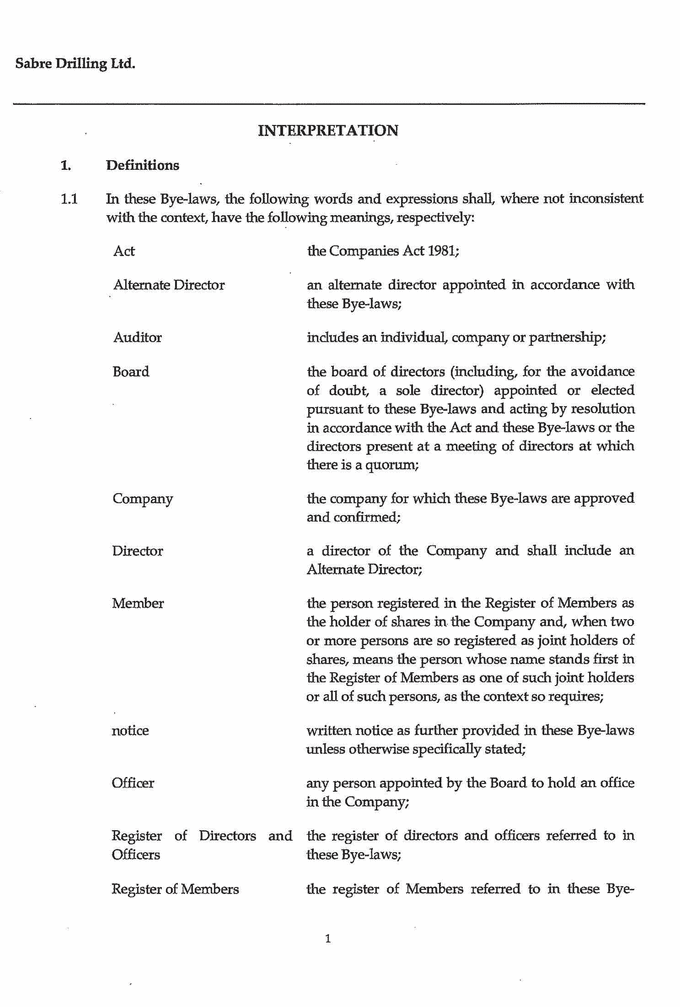
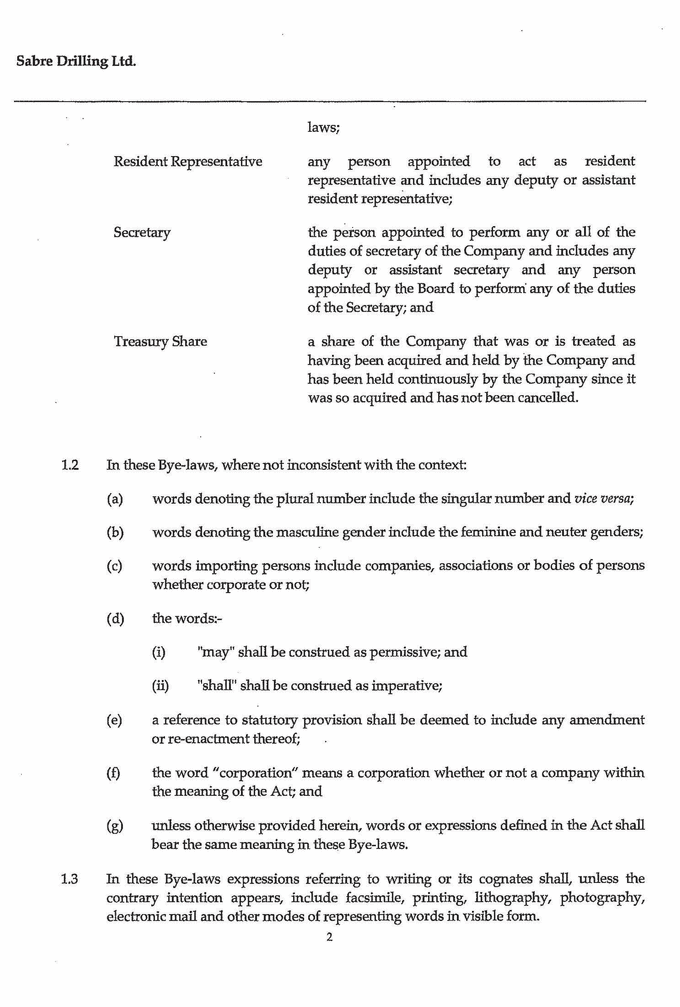
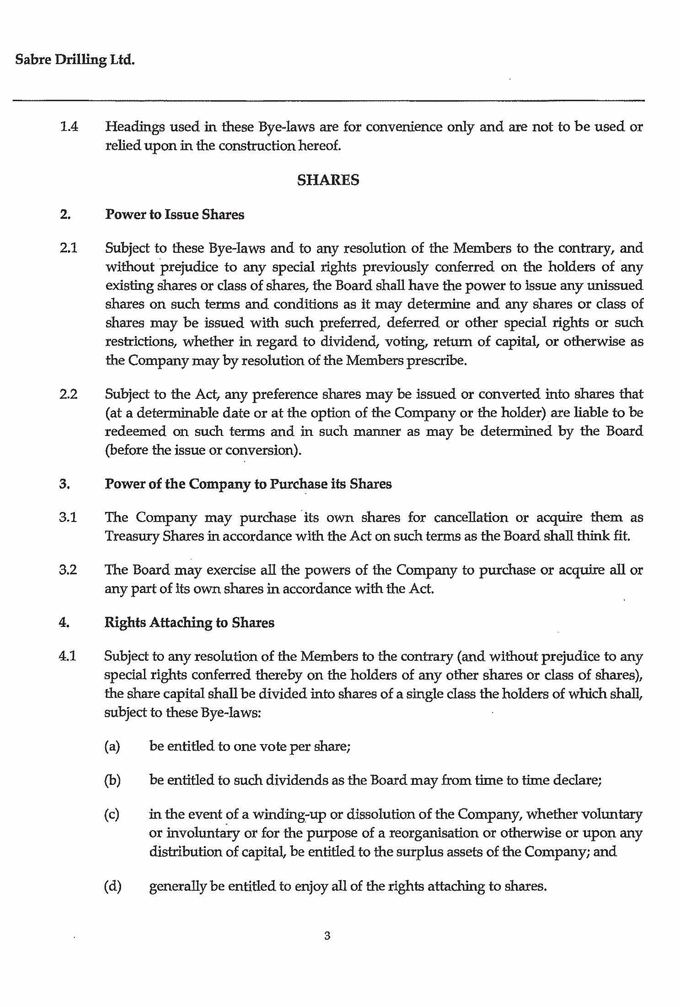
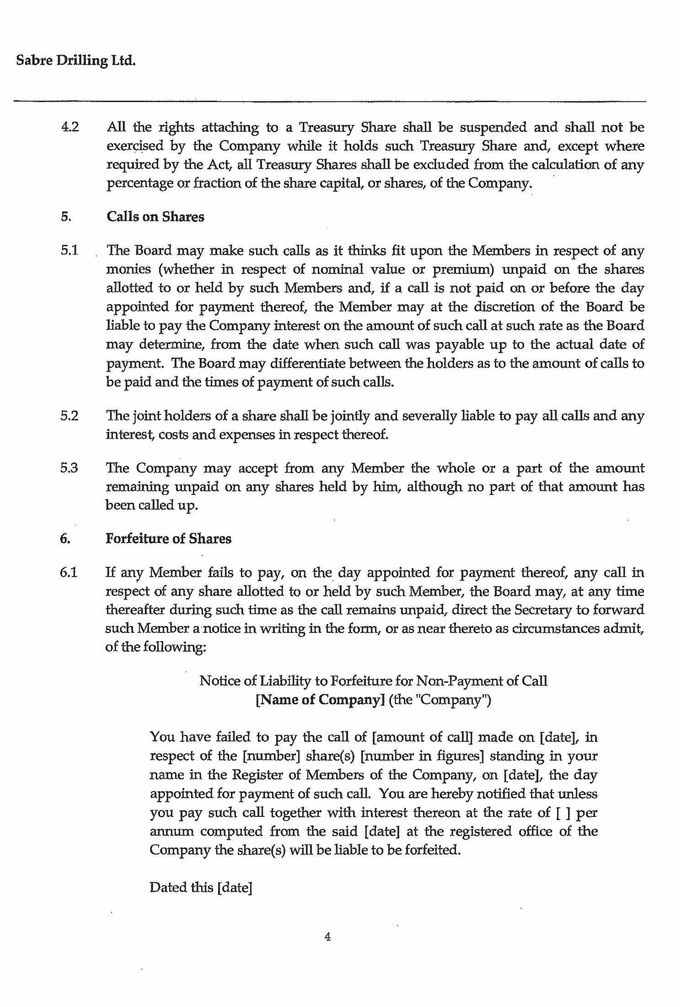
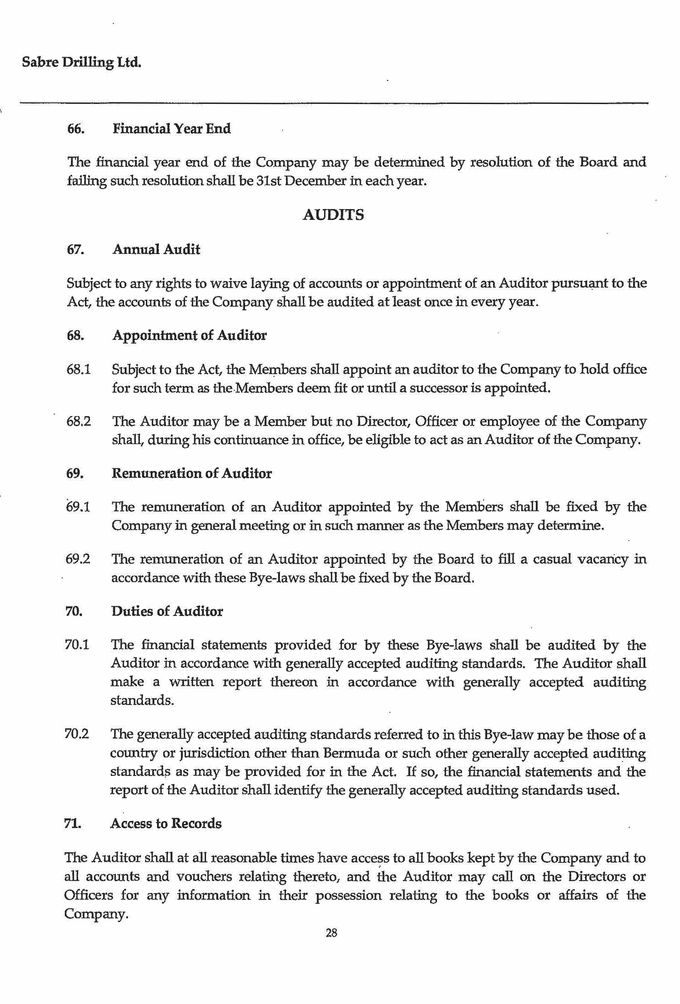
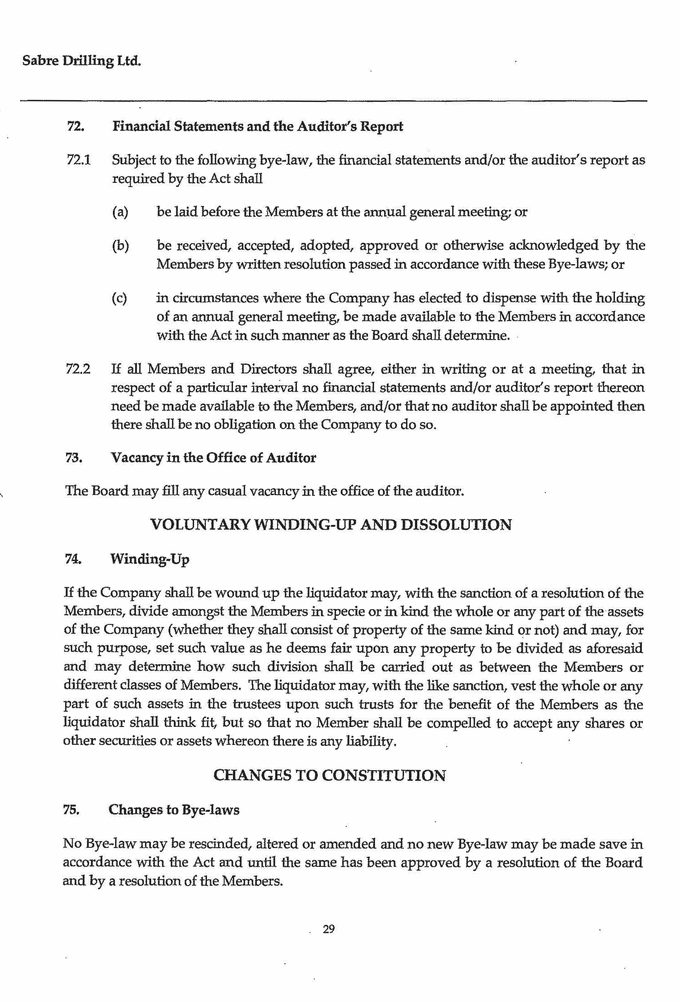
Amended and Restated Bye-Laws of Sabre Drilling Ltd., a Bermuda exempted company |
|
|
|
|
|
Exhibit T3B-26 |
|
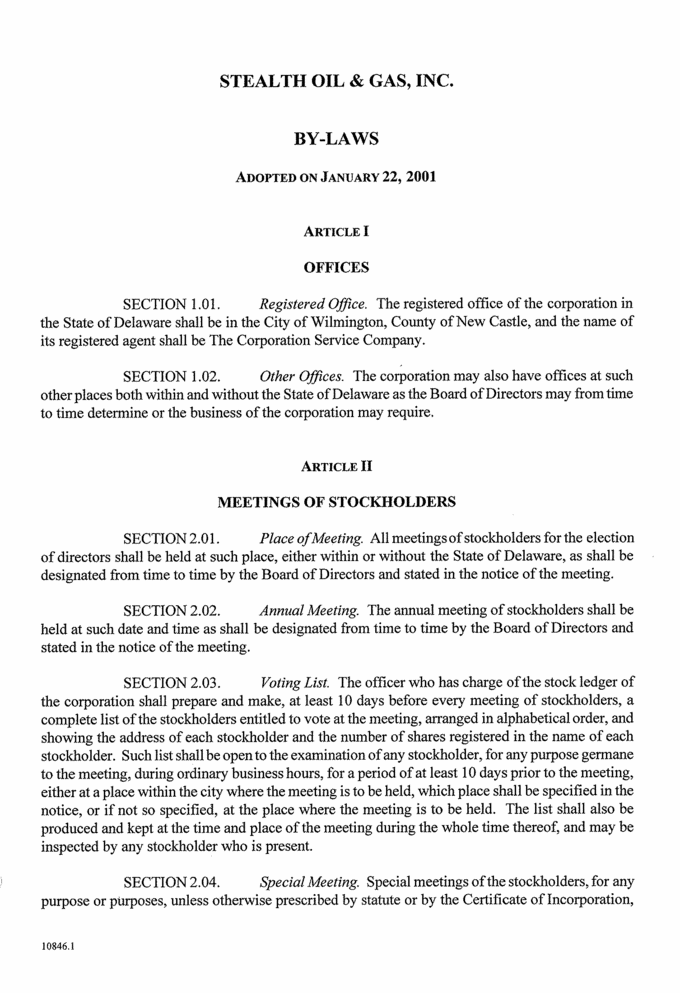
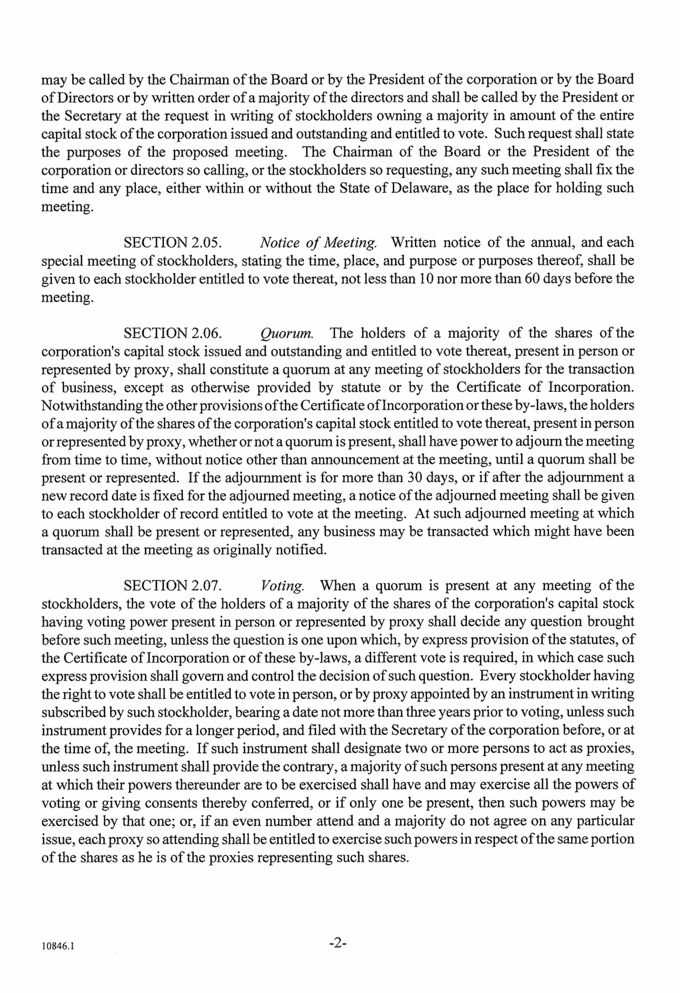
By-Laws of Stealth Oil & Gas, Inc., a Delaware corporation |
|
|
|
|
|
Exhibit T3B-27* |
|
Bylaws of Took Rockies, Inc., a Wyoming corporation |
|
|
|
|
|
Exhibit T3B-28* |
|
Amended and Restated By-Laws of Visean Information Services Inc., a Texas corporation |
|
|
|
|
|
Exhibit T3B-29* |
|
Amended and Restated Bylaws of Visual Systems, Inc., a California corporation |
|
|
|
|
|
Exhibit T3B-30* |
|
Bylaws of Warrior Well Services, Inc., an Illinois corporation |
|
|
|
|
|
Exhibit T3B-31* |
|
Articles of Association of Weatherford (Nova Scotia) ULC, a Nova Scotia unlimited liability corporation |
|
Exhibit T3B-32* |
|
Limited Liability Company Agreement of Weatherford (PTWI), L.L.C., a Delaware limited liability company |
|
|
|
|
|
Exhibit T3B-33* |
|
Limited Liability Company Agreement of Weatherford Artificial Lift Systems, LLC, a Delaware limited liability company, as amended |
|
|
|
|
|
Exhibit T3B-34* |
|
Constitution of Weatherford Australia Pty Limited, an Australian proprietary company |
|
|
|
|
|
Exhibit T3B-35* |
|
Amended and Restated Bye-Laws of Weatherford Bermuda Holdings Ltd., a Bermuda exempted company |
|
|
|
|
|
Exhibit T3B-36* |
|
By-Law No. 1 of Weatherford Canada Ltd., an Alberta corporation |
|
|
|
|
|
Exhibit T3B-37* |
|
Amended and Restated Articles of Association of Weatherford Colombia Limited, a British Virgin Islands international business company |
|
|
|
|
|
Exhibit T3B-38* |
|
By-Laws of Weatherford DISC Inc., a Nevada corporation |
|
|
|
|
|
Exhibit T3B-39* |
|
Amended and Restated Articles of Association of Weatherford Drilling International (BVI) Ltd., a British Virgin Islands international business company |
|
|
|
|
|
Exhibit T3B-40* |
|
Amended and Restated Articles of Association of Weatherford Drilling International Holdings (BVI) Ltd., a British Virgin Islands international business company |
|
|
|
|
|
Exhibit T3B-41* |
|
Regulations of Weatherford Global Services LLC, a Louisiana limited liability company, as amended |
|
|
|
|
|
Exhibit T3B-42* |
|
Bye-Laws of Weatherford Holdings (Bermuda) Ltd., a Bermuda exempted company |
|
|
|
|
|
Exhibit T3B-43* |
|
Amended and Restated Articles of Association of Weatherford Holdings (BVI) Ltd., a British Virgin Islands international business company |
|
|
|
|
|
Exhibit T3B-44* |
|
Second Amended and Restated Limited Liability Company Agreement of Weatherford Holdings U.S. LLC, a Delaware limited liability company |
|
|
|
|
|
Exhibit T3B-45* |
|
Bye-Laws of Weatherford International Holdings (Bermuda) Ltd., a Bermuda exempted company |
|
|
|
|
|
Exhibit T3B-46* |
|
Limited Liability Company Agreement of Weatherford Investment Holding LLC, a Delaware limited liability company |
|
|
|
|
|
Exhibit T3B-47* |
|
Bylaws of Weatherford Investment Inc., a Delaware corporation |
|
|
|
|
|
Exhibit T3B-48* |
|
Amended and Restated Limited Liability Company Agreement of Weatherford Latin America LLC, a Delaware limited liability company |
|
|
|
|
|
Exhibit T3B-49* |
|
Limited Liability Company Agreement of Weatherford Management, LLC, a Delaware limited liability company, as amended |
|
|
|
|
|
Exhibit T3B-50* |
|
Amended and Restated Articles of Association of Weatherford Oil Tool Middle East Limited, a British Virgin Islands international business company |
|
|
|
|
|
Exhibit T3B-51* |
|
Bye-Laws of Weatherford Pangaea Holdings Ltd., a Bermuda exempted company |
|
|
|
|
|
Exhibit T3B-52* |
|
Amended and Restated Bye-Laws of Weatherford Services, Ltd., a Bermuda exempted |
|
|
|
company |
|
|
|
|
|
Exhibit T3B-53* |
|
Limited Liability Company Agreement of Weatherford Technology Holdings, LLC, a Delaware limited liability company, as amended |
|
|
|
|
|
Exhibit T3B-54* |
|
Third Amended and Restated Limited Liability Company Agreement of Weatherford U.S. Holdings, L.L.C., a Delaware limited liability company |
|
|
|
|
|
Exhibit T3B-55* |
|
Amended and Restated Articles of Partnership in Commendam of Weatherford U.S., L.P., a Louisiana limited partnership |
|
|
|
|
|
Exhibit T3B-56* |
|
Limited Liability Company Agreement of Weatherford URS Holdings, LLC, a Delaware limited liability company |
|
|
|
|
|
Exhibit T3B-57* |
|
Bylaws of Weatherford/Lamb, Inc., a Delaware corporation |
|
|
|
|
|
Exhibit T3B-58* |
|
Limited Liability Company Agreement of WEUS Holding, LLC, a Delaware limited liability company, as amended |
|
|
|
|
|
Exhibit T3B-59* |
|
Limited Liability Company Agreement of WIHBV LLC, a Delaware limited liability company |
|
|
|
|
|
Exhibit T3B-60* |
|
Amended and Restated Bye-Laws of WOFS Assurance limited, a Bermuda exempted company |
|
|
|
|
|
Exhibit T3B-61* |
|
Limited Liability Company Agreement of WUS Holding, L.L.C., a Delaware limited liability company |
|
|
|
|
|
Exhibit T3C-1* |
|
Form of Indenture Governing the 2024 Notes to be issued by Weatherford Delaware |
|
|
|
|
|
Exhibit T3C-2* |
|
Form of Indenture Governing the 2024 Notes to be issued by Weatherford Bermuda |
|
|
|
|
|
Exhibit T3D |
|
Not applicable |
|
|
|
|
|
Exhibit T3E-1*** |
|
Disclosure Statement for the Joint Prepackaged Plan of Reorganization of Weatherford International plc and its Affiliate Debtors, dated June 28, 2019 |
|
|
|
|
|
Exhibit T3E-2 |
|
Joint Prepackaged Plan of Reorganization of Weatherford International plc and its Affiliate Debtors, dated June 28, 2019 |
|
|
|
|
|
Exhibit T3E-3 |
|
Backstop Commitment Agreement among Weatherford International plc, the other Debtors and the Commitment Parties party thereto, dated July 1, 2019 |
|
|
|
|
|
Exhibit T3F-1* |
|
Cross-reference sheet (included in Exhibit T3C-1) |
|
|
|
|
|
Exhibit T3F-2* |
|
Cross-reference sheet (included in Exhibit T3C-1) |
|
|
|
|
|
Exhibit 25.1* |
|
Form T-1 qualifying the Trustee under each Indenture to be qualified pursuant to this application |
|
|
|
|
|
Exhibit 99.1** |
|
Organizational Chart |
|
|
|
|
|
Exhibit 99.2* |
|
Directors, Executive Officers and Capitalization of each Applicant |
|
|
|
|
|
Exhibit 99.3* |
|
Principal Owners of Voting Securities of each Applicant |
|
* |
Filed previously. |
|
** |
Post Effective Date Organizational Chart to be filed by amendment. Current Organizational Chart filed previously. |
|
*** |
The exhibits related to the attached Disclosure Statement within this Amendment No. 1 to Form T-3 are available at http://www.primeclerk.com/Weatherford |
SIGNATURE
Pursuant to the requirements of the Trust Indenture Act of 1939, the applicant, Weatherford International, LLC, a limited liability company organized and existing under the laws of the State of Delaware, has duly caused this application to be signed on its behalf by the undersigned, thereunto duly authorized, and its seal to be hereunto affixed and attested, all in the City of Houston, and State of Texas, on the 1st day of July, 2019.
|
(SEAL) |
|
WEATHERFORD INTERNATIONAL, LLC | |||
|
|
|
| |||
|
Attest: |
/s/ Joshua S. Silverman |
|
By: |
/s/ Christine M. Morrison | |
|
|
Name: Joshua S. Silverman |
|
|
Name: |
Christine M. Morrison |
|
|
|
|
|
Title: |
Director for Sole Member, |
Pursuant to the requirements of the Trust Indenture Act of 1939, the applicant, Weatherford International, Ltd., an exempted company organized and existing under the laws of Bermuda, has duly caused this application to be signed on its behalf by the undersigned, thereunto duly authorized, and its seal to be hereunto affixed and attested, all in Dubai, United Arab Emirates, on the 1st day of July, 2019
|
(SEAL) |
|
WEATHERFORD INTERNATIONAL, LTD. | |||
|
|
|
| |||
|
Attest: |
/s/ Christine M. Morrison |
|
By: |
/s/ Mohammed Dadhiwala | |
|
|
Name: Christine M. Morrison |
|
|
Name: |
Mohammed Dadhiwala |
|
|
|
|
|
Title: |
Vice President |
Pursuant to the requirements of the Trust Indenture Act of 1939, the guarantors listed below have duly caused this application to be signed on its behalf by the undersigned, thereunto duly authorized, and its seal to be hereunto affixed and attested, all in the City of Houston, and State of Texas, on the 1st day of July, 2019.
|
(SEAL) |
|
ADVANTAGE R&D, INC. |
|
|
|
BENMORE IN-DEPTH CORP. |
|
|
|
CASE SERVICES, INC. |
|
|
|
COLOMBIA PETROLEUM SERVICES CORP. |
|
|
|
COLUMBIA OILFIELD SUPPLY, INC. |
|
|
|
DATALOG ACQUISITION, LLC |
|
|
|
DISCOVERY LOGGING, INC. |
|
|
|
EDINBURGH PETROLEUM SERVICES AMERICAS INCORPORATED |
|
|
|
EPRODUCTION SOLUTIONS, LLC |
|
|
|
HIGH PRESSURE INTEGRITY, INC. |
|
|
|
IN-DEPTH SYSTEMS, INC. |
|
|
|
INTERNATIONAL LOGGING LLC |
|
|
|
INTERNATIONAL LOGGING S.A., LLC |
|
|
|
PD HOLDINGS (USA), L.P. |
|
|
|
PRECISION DRILLING GP, LLC |
|
|
|
PRECISION ENERGY SERVICES, INC. |
|
|
|
PRECISION OILFIELD SERVICES, LLP |
|
|
|
STEALTH OIL & GAS, INC. |
|
|
|
VISEAN INFORMATION SERVICES INC. |
|
|
|
WEATHERFORD (PTWI), L.L.C. |
|
|
|
WEATHERFORD ARTIFICIAL LIFT SYSTEMS, LLC |
|
|
|
WEATHERFORD DISC INC. |
|
|
|
WEATHERFORD GLOBAL SERVICES LLC |
|
|
|
WEATHERFORD HOLDINGS U.S. LLC |
|
|
|
WEATHERFORD INVESTMENT HOLDING LLC |
|
|
|
WEATHERFORD INVESTMENT INC. |
|
|
|
WEATHERFORD LATIN AMERICA LLC |
|
|
|
WEATHERFORD MANAGEMENT, LLC |
|
|
|
WEATHERFORD TECHNOLOGY HOLDINGS, LLC |
|
|
|
WEATHERFORD U.S. HOLDINGS, L.L.C. |
|
|
|
WEATHERFORD U.S., L.P. |
|
|
|
WEATHERFORD URS HOLDINGS, LLC |
|
|
|
WEATHERFORD/LAMB, INC. |
|
|
|
WEUS HOLDING, LLC |
|
|
|
WIHBV LLC |
|
|
|
WUS HOLDING, L.L.C. |
|
Attest: |
/s/ Joshua S. Silverman |
|
By: |
/s/ Christine M. Morrison | |
|
|
Name: Joshua S. Silverman |
|
|
Name: |
Christine M. Morrison |
|
|
|
|
|
Title: |
Vice President |
|
(SEAL) |
|
TOOKE ROCKIES, INC. | |||
|
|
|
VISUAL SYSTEMS, INC. | |||
|
|
|
WARRIOR WELL SERVICES, INC. | |||
|
|
|
| |||
|
Attest: |
/s/ Joshua S. Silverman |
|
By: |
/s/ Christine M. Morrison | |
|
|
Name: Joshua S. Silverman |
|
|
Name: |
Christine M. Morrison |
|
|
|
|
|
Title: |
Director |
|
(SEAL) |
|
WEATHERFORD SERVICES, LTD. | |||
|
|
|
| |||
|
Attest: |
/s/ Christine M. Morrison |
|
By: |
/s/ Mohammed Dadhiwala | |
|
|
Name: Christine M. Morrison |
|
|
Name: |
Mohammed Dadhiwala |
|
|
|
|
|
Title: |
Director |
|
(SEAL) |
|
WEATHERFORD SERVICES S. DE R.L. | |||
|
|
|
| |||
|
Attest: |
/s/ Cristina Waber |
|
By: |
/s/ Valentin Mueller | |
|
|
Name: Cristina Waber |
|
|
Name: |
Valentin Mueller |
|
|
|
|
|
Title: |
Director for Member, |
Pursuant to the requirements of the Trust Indenture Act of 1939, the guarantors listed below have duly caused this application to be signed on its behalf by the undersigned, thereunto duly authorized, and its seal to be hereunto affixed and attested, all in Dubai, United Arab Emirates, on the 1st day of July, 2019.
|
(SEAL) |
|
KEY INTERNATIONAL DRILLING COMPANY LIMITED | |||
|
|
|
WEATHERFORD DRILLING INTERNATIONAL (BVI) LTD. | |||
|
|
|
| |||
|
Attest: |
/s/ Christine M. Morrison |
|
By: |
/s/ Andrew David Gold | |
|
|
Name: Christine M. Morrison |
|
|
Name: |
Andrew David Gold |
|
|
|
|
|
Title: |
President |
|
(SEAL) |
|
SABRE DRILLING LTD. | |||
|
|
|
WEATHERFORD BERMUDA HOLDINGS LTD. | |||
|
|
|
WEATHERFORD COLOMBIA LIMITED | |||
|
|
|
WEATHERFORD DRILLING INTERNATIONAL HOLDINGS (BVI) LTD. | |||
|
|
|
WEATHERFORD HOLDINGS (BERMUDA) LTD. | |||
|
|
|
WEATHERFORD INTERNATIONAL HOLDING (BERMUDA) LTD. | |||
|
|
|
WEATHERFORD PANGAEA HOLDINGS LTD. | |||
|
|
|
WOFS ASSURANCE LIMITED | |||
|
|
|
| |||
|
Attest: |
/s/ Christine M. Morrison |
|
By: |
/s/ Mohammed Dadhiwala | |
|
|
Name: Christine M. Morrison |
|
|
Name: |
Mohammed Dadhiwala |
|
|
|
|
|
Title: |
Vice President |
|
(SEAL) |
|
WEATHERFORD HOLDINGS (BVI) LTD. | |||
|
|
|
WEATHERFORD OIL TOOL MIDDLE EAST LIMITED | |||
|
|
|
| |||
|
Attest: |
/s/ Christine M. Morrison |
|
By: |
/s/ Mohammed Dadhiwala | |
|
|
Name: Christine M. Morrison |
|
|
Name: |
Mohammed Dadhiwala |
|
|
|
|
|
Title: |
Senior Vice President |
Pursuant to the requirements of the Trust Indenture Act of 1939, the guarantors listed below have duly caused this application to be signed on its behalf by the undersigned, thereunto duly authorized, and its seal to be hereunto affixed and attested, all in the City of Calgary, and Province of Alberta, on the 1st day of July, 2019.
|
(SEAL) |
|
PRECISION ENERGY INTERNATIONAL LTD. | |||
|
|
|
PRECISION ENERGY SERVICES COLOMBIA LTD. | |||
|
|
|
PRECISION ENERGY SERVICES ULC | |||
|
|
|
WEATHERFORD (NOVA SCOTIA) ULC | |||
|
|
|
WEATHERFORD CANADA LTD. | |||
|
|
|
| |||
|
Attest: |
/s/ Pamela M. Webb |
|
By: |
/s/ J. David Reed | |
|
|
Name: Pamela M. Webb |
|
|
Name: |
J. David Reed |
|
|
|
|
|
Title: |
Vice President |
Pursuant to the requirements of the Trust Indenture Act of 1939, the guarantors listed below have duly caused this application to be signed on its behalf by the undersigned, thereunto duly authorized, and its seal to be hereunto affixed and attested, all in Baar, Switzerland on the 1st day of July, 2019.
|
(SEAL) |
|
WEATHERFORD HOLDINGS (SWITZERLAND) GMBH | |||
|
|
|
WEATHERFORD MANAGEMENT COMPANY SWITZERLAND SÀRL | |||
|
|
|
WEATHERFORD WORLDWIDE HOLDINGS GMBH | |||
|
|
|
| |||
|
Attest: |
/s/ Cristina Waber |
|
By: |
/s/ Valentin Mueller | |
|
|
Name: Cristina Waber |
|
|
Name: |
Valentin Mueller |
|
|
|
|
|
Title: |
Managing Officer |
|
(SEAL) |
|
WEATHERFORD PRODUCTS GMBH | |||
|
|
|
WEATHERFORD SWITZERLAND TRADING AND DEVELOPMENT GMBH | |||
|
|
|
WOFS INTERNATIONAL FINANCE GMBH | |||
|
|
|
| |||
|
Attest: |
/s/ Cristina Waber |
|
By: |
/s/ Mathias Neuenschwander | |
|
|
Name: Cristina Waber |
|
|
Name: |
Mathias Neuenschwander |
|
|
|
|
|
Title: |
Managing Officer |
|
(SEAL) |
|
WOFS SWISS FINANCE GMBH | |||
|
|
|
| |||
|
Attest: |
/s/ Cristina Waber |
|
By: |
/s/ Arjana Cabariu-Truong | |
|
|
Name: Cristina Waber |
|
|
Name: |
Arjana Cabariu-Truong |
|
|
|
|
|
Title: |
Managing Officer |
|
(SEAL) |
|
WEATHERFORD INTERNATIONAL PLC | |||
|
|
|
| |||
|
Attest: |
/s/ Cristina Waber |
|
By: |
/s/ Valentin Mueller | |
|
|
Name: Cristina Waber |
|
|
Name: |
Valentin Mueller |
|
|
|
|
|
Title: |
Vice President |
Pursuant to the requirements of the Trust Indenture Act of 1939, the guarantors listed below have duly caused this application to be signed on its behalf by the undersigned, thereunto duly authorized, and its seal to be hereunto affixed and attested, all in Luxembourg, on the 1st day of July, 2019.
|
(SEAL) |
|
WEATHERFORD EUROPEAN HOLDINGS (LUXEMBOURG) S.À R.L. | |||
|
|
|
WEATHERFORD INTERNATIONAL (LUXEMBOURG) HOLDINGS S.À R.L. | |||
|
|
|
| |||
|
Attest: |
/s/ Cristina Waber |
|
By: |
/s/ Mathias Neuenschwander | |
|
|
Name: Cristina Waber |
|
|
Name: |
Mathias Neuenschwander |
|
|
|
|
|
Title: |
Manager A |
Pursuant to the requirements of the Trust Indenture Act of 1939, the guarantors listed below have duly caused this application to be signed on its behalf by the undersigned, thereunto duly authorized, and its seal to be hereunto affixed and attested, all in Aberdeen, United Kingdom, on the 1st day of July, 2019.
|
(SEAL) |
|
WEATHERFORD EURASIA LIMITED | |||
|
|
|
| |||
|
Attest: |
/s/ Richard Strachan |
|
By: |
/s/ Neil MacLeod | |
|
|
Name: Richard Strachan |
|
|
Name: |
Neil MacLeod |
|
|
|
|
|
Title: |
Director |
|
(SEAL) |
|
WEATHERFORD U.K. LIMITED | |||
|
|
|
| |||
|
Attest: |
/s/ Richard Strachan |
|
By: |
/s/ Alexander Olsson | |
|
|
Name: Richard Strachan |
|
|
Name: |
Alexander Olsson |
|
|
|
|
|
Title: |
Director |
Pursuant to the requirements of the Trust Indenture Act of 1939, the guarantors listed below have duly caused this application to be signed on its behalf by the undersigned, thereunto duly authorized, and its seal to be hereunto affixed and attested, all in Amsterdam, the Netherlands, on the 1st day of July, 2019.
|
(SEAL) |
|
WEATHERFORD NETHERLANDS B.V. | |||
|
|
|
| |||
|
Attest: |
/s/ Marcus Johannes van Dijk |
|
By: |
/s/ August Willem Versteeg | |
|
|
Name: Marcus Johannes van Dijk |
|
|
Name: |
August Willem Versteeg |
|
|
|
|
|
Title: |
Managing Director |
Pursuant to the requirements of the Trust Indenture Act of 1939, the guarantors listed below have duly caused this application to be signed on its behalf by the undersigned, thereunto duly authorized, and its seal to be hereunto affixed and attested, all in Stavanger, Norway, on the 1st day of July, 2019.
|
(SEAL) |
|
WEATHERFORD NORGE AS | |||
|
|
|
| |||
|
Attest: |
/s/ Arve Eide Haraldsen |
|
By: |
/s/ Geir Egil Moller Olsen | |
|
|
Name: Arve Eide Haraldsen |
|
|
Name: |
Geir Egil Moller Olsen |
|
|
|
|
|
Title: |
Chairman of the Board |
Pursuant to the requirements of the Trust Indenture Act of 1939, the guarantors listed below have duly caused this application to be signed on its behalf by the undersigned, thereunto duly authorized, and its seal to be hereunto affixed and attested, all in Australia, on the 1st day of July, 2019.
|
(SEAL) |
|
WEATHERFORD AUSTRALIA PTY LIMITED | |||
|
|
|
| |||
|
Attest: |
/s/ Antonino Gullotti |
|
By: |
/s/ Robert Antonio DeGasperis | |
|
|
Name: Antonino Gullotti |
|
|
Name: |
Robert Antonio DeGasperis |
|
|
Title: Director |
|
|
Title: |
Director |

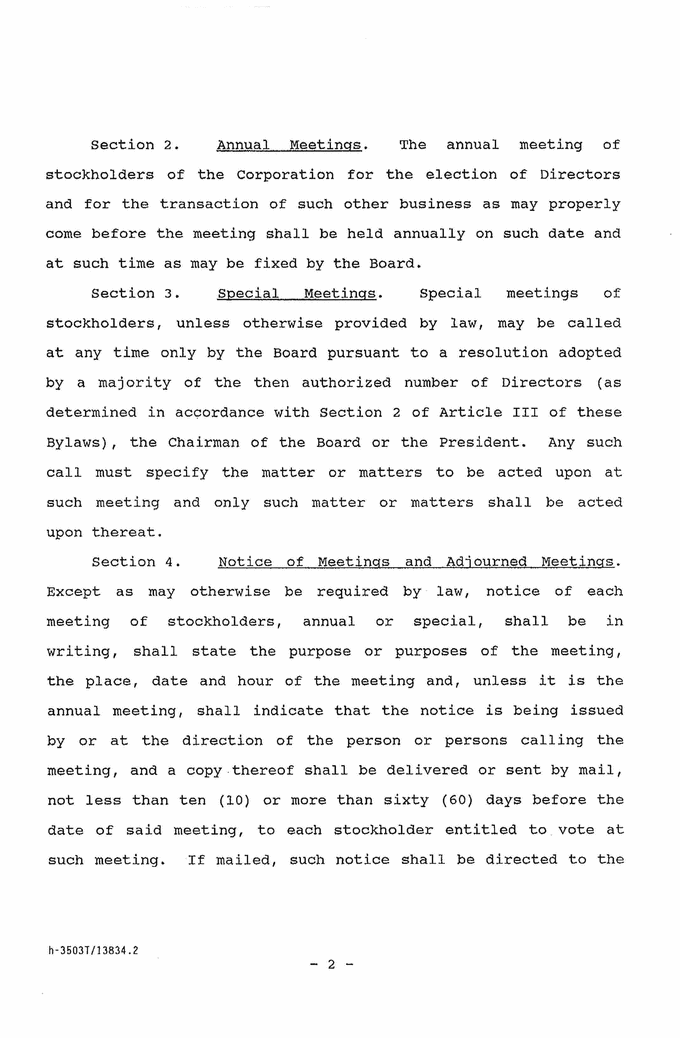
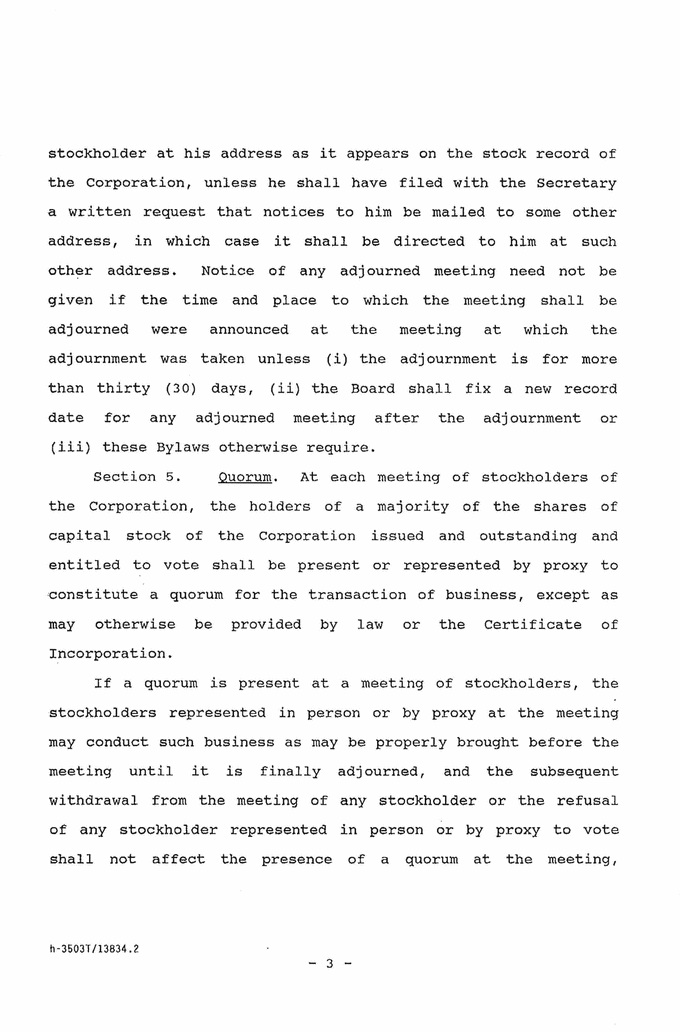
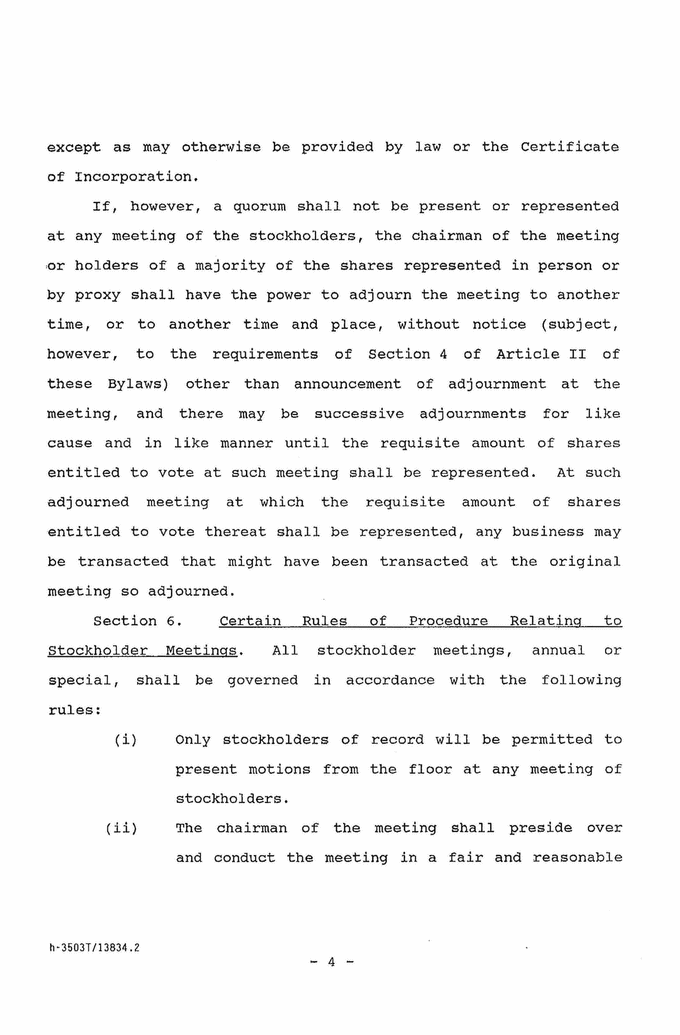
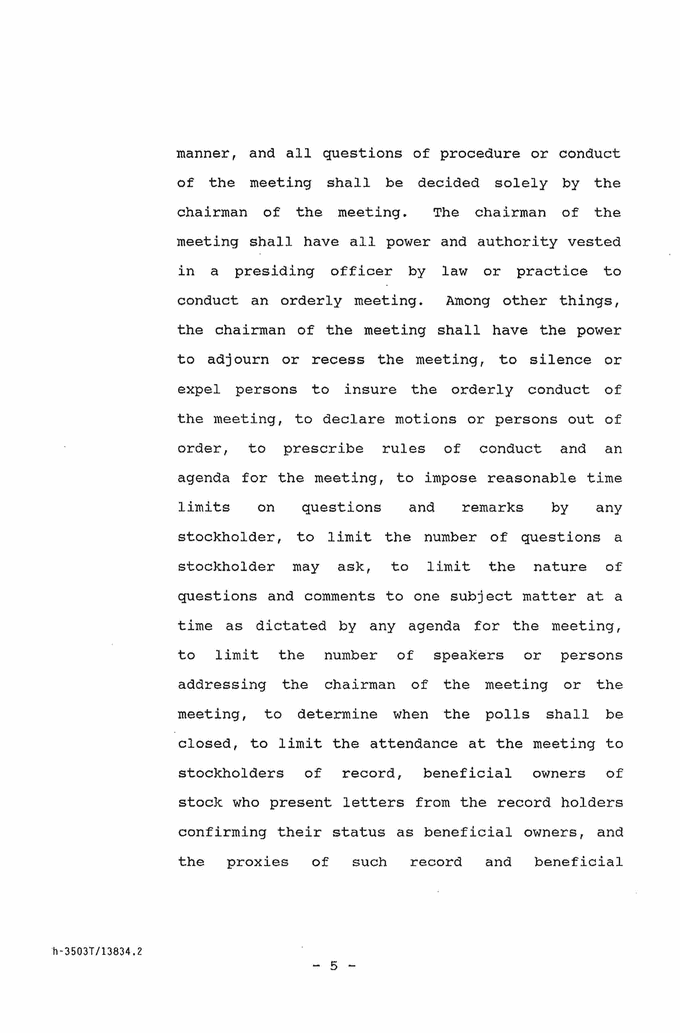
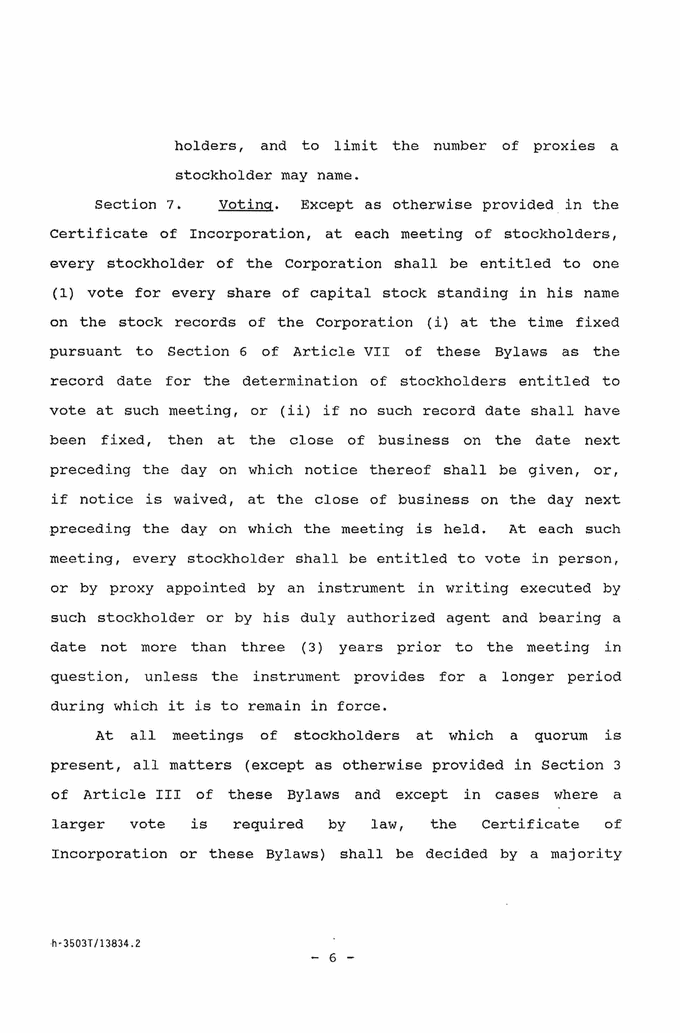
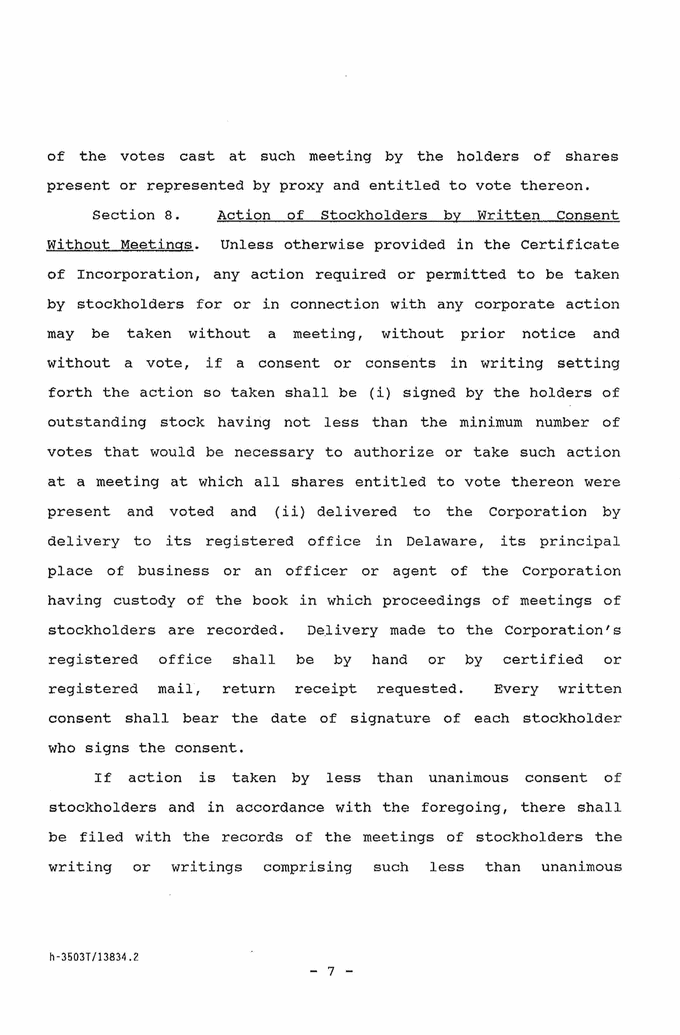
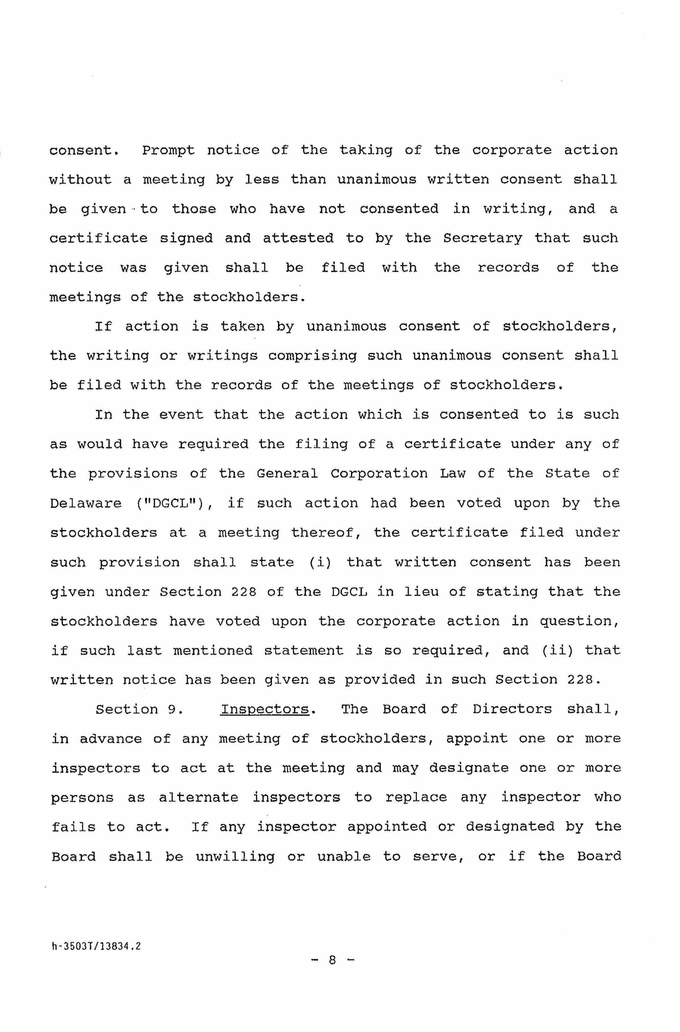
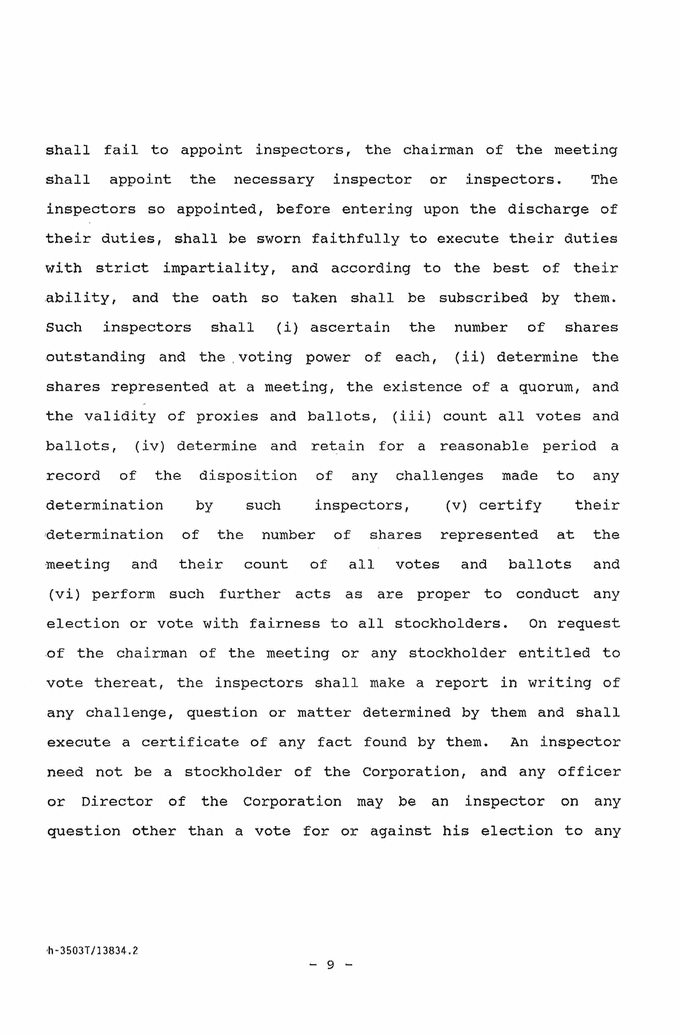
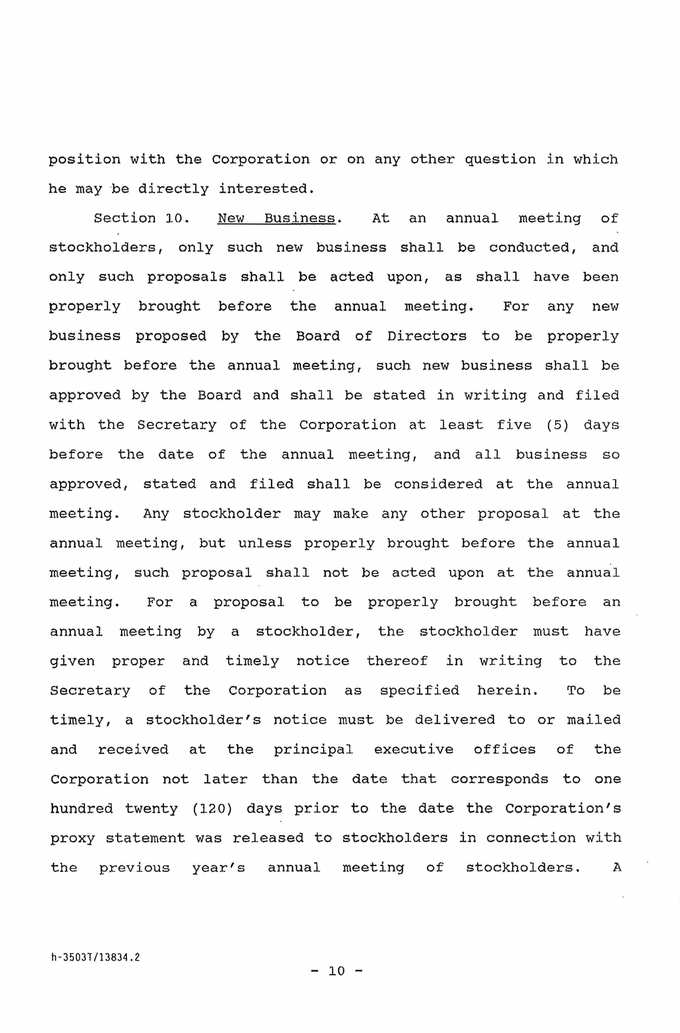
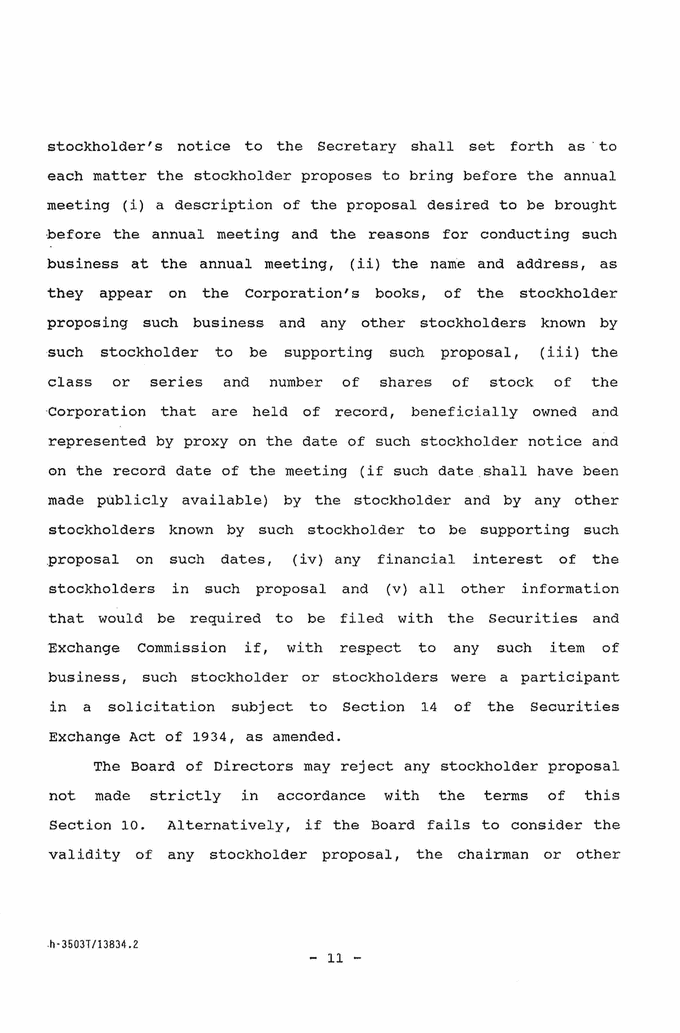
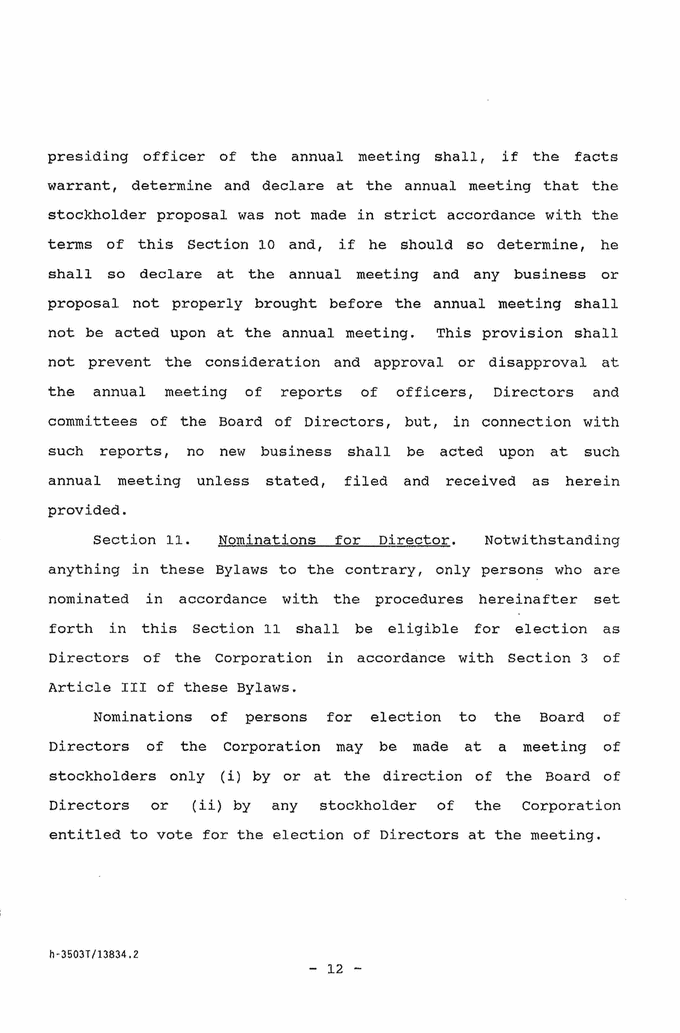
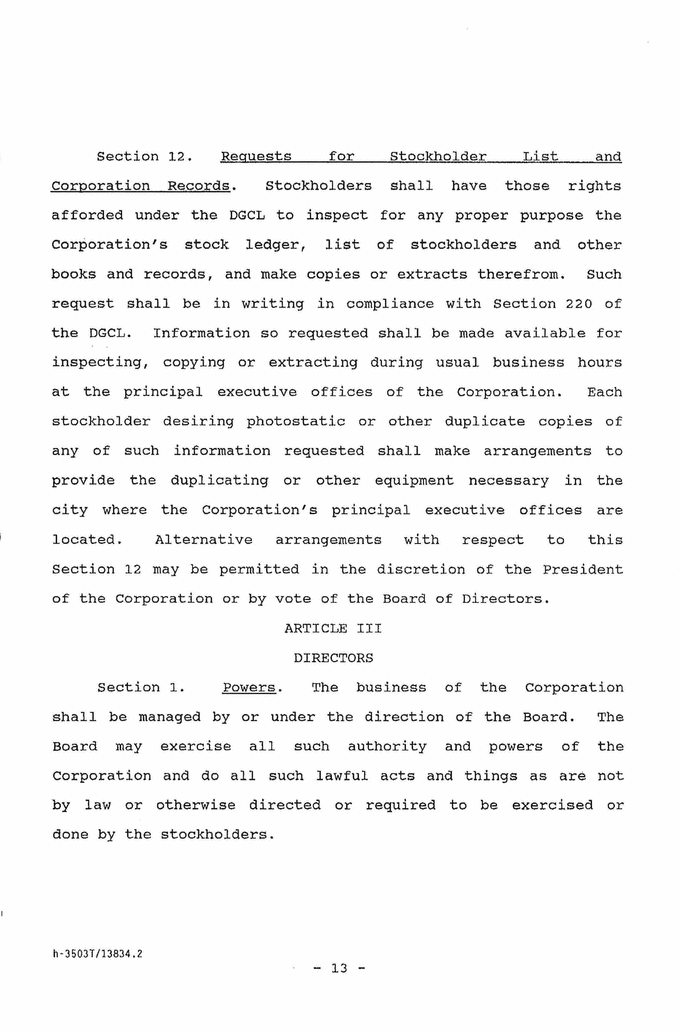
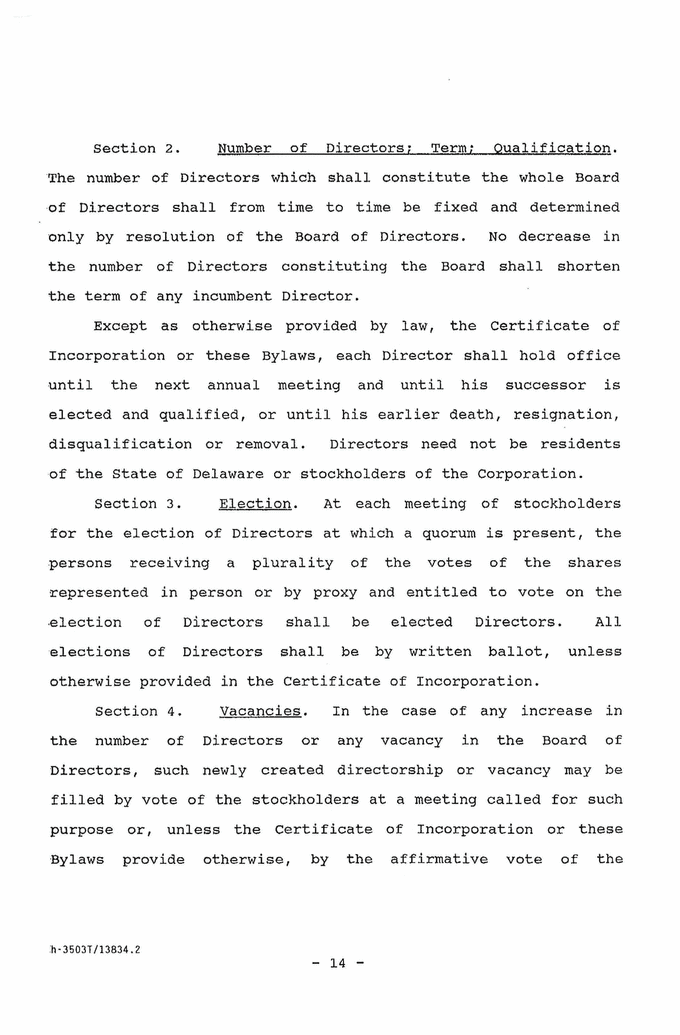

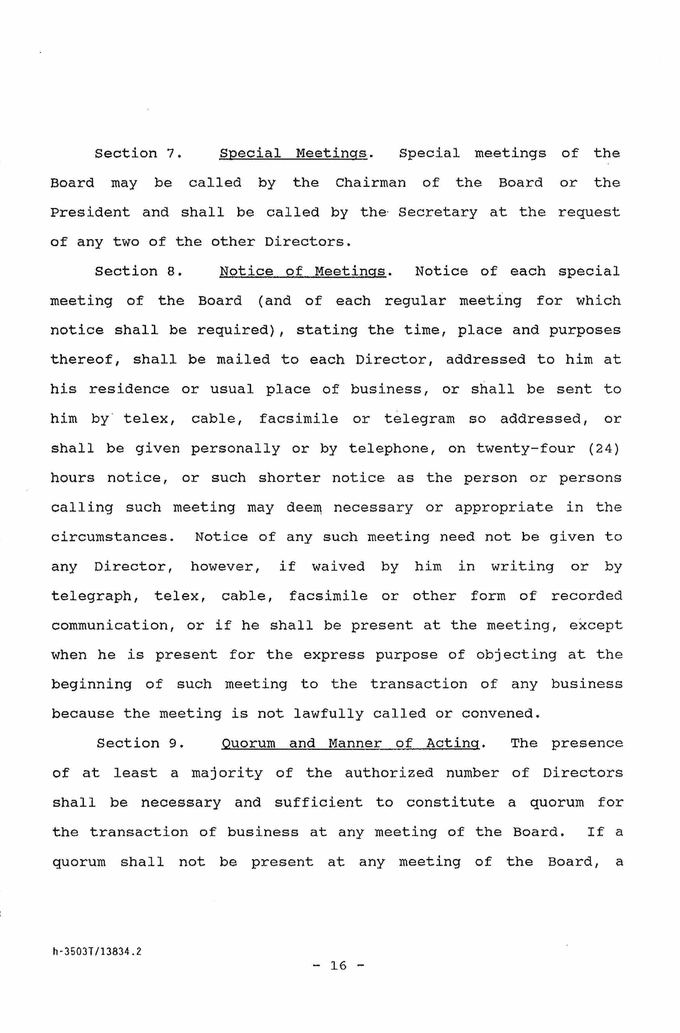
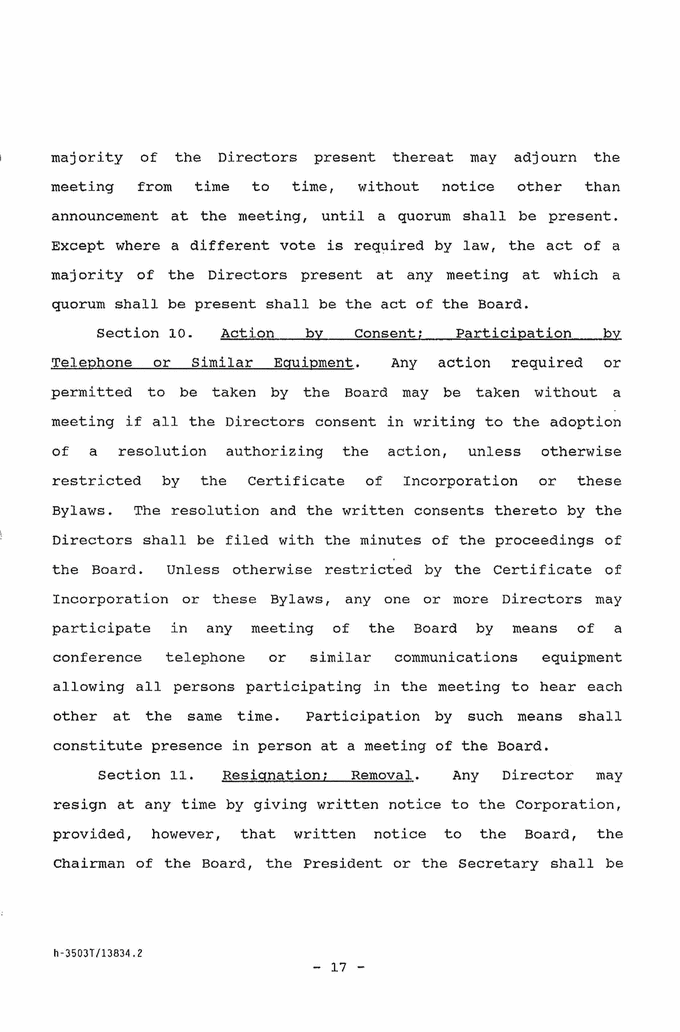
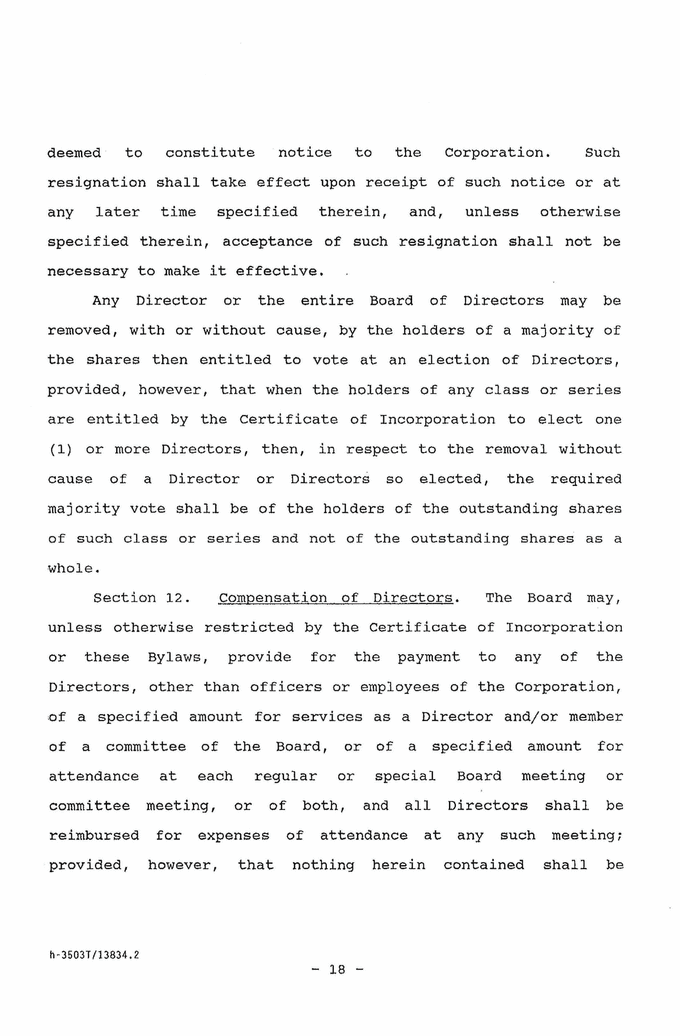


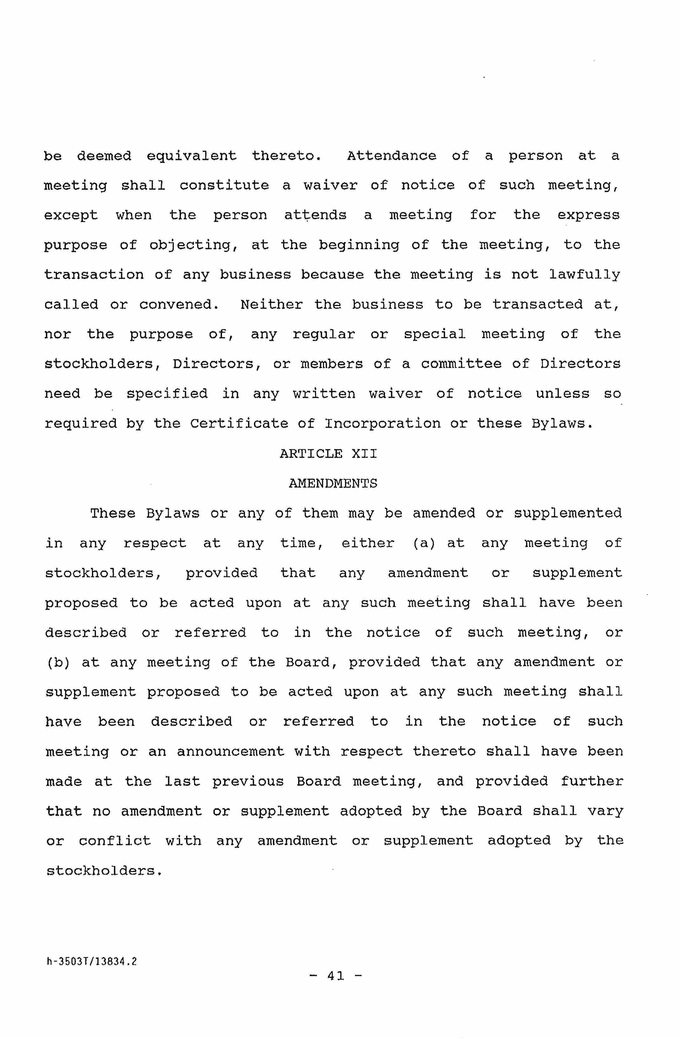
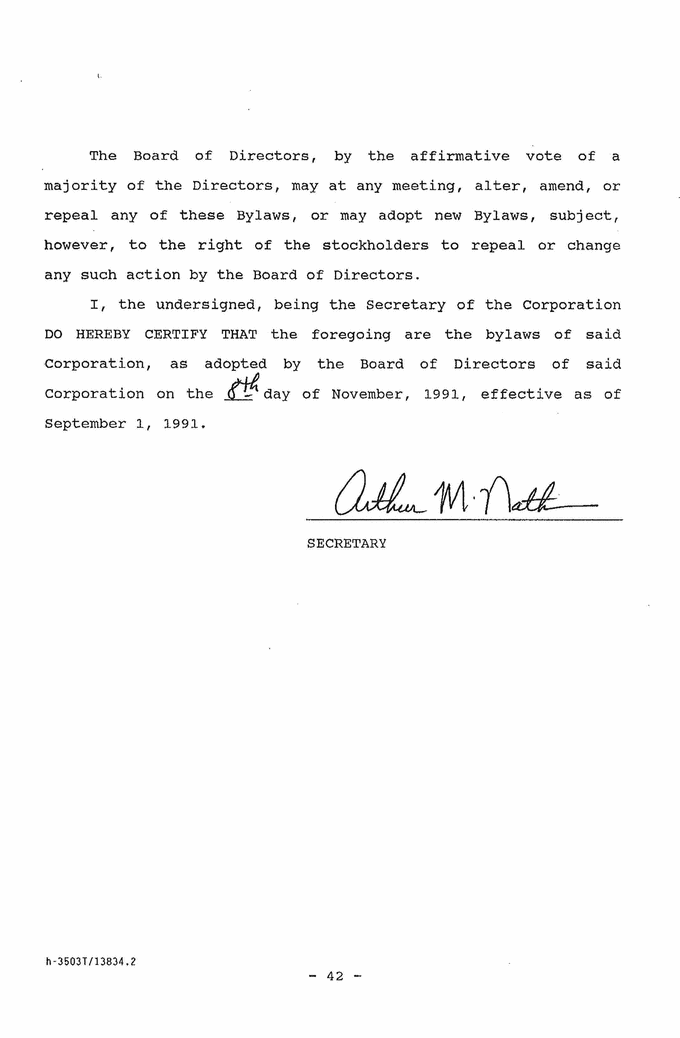
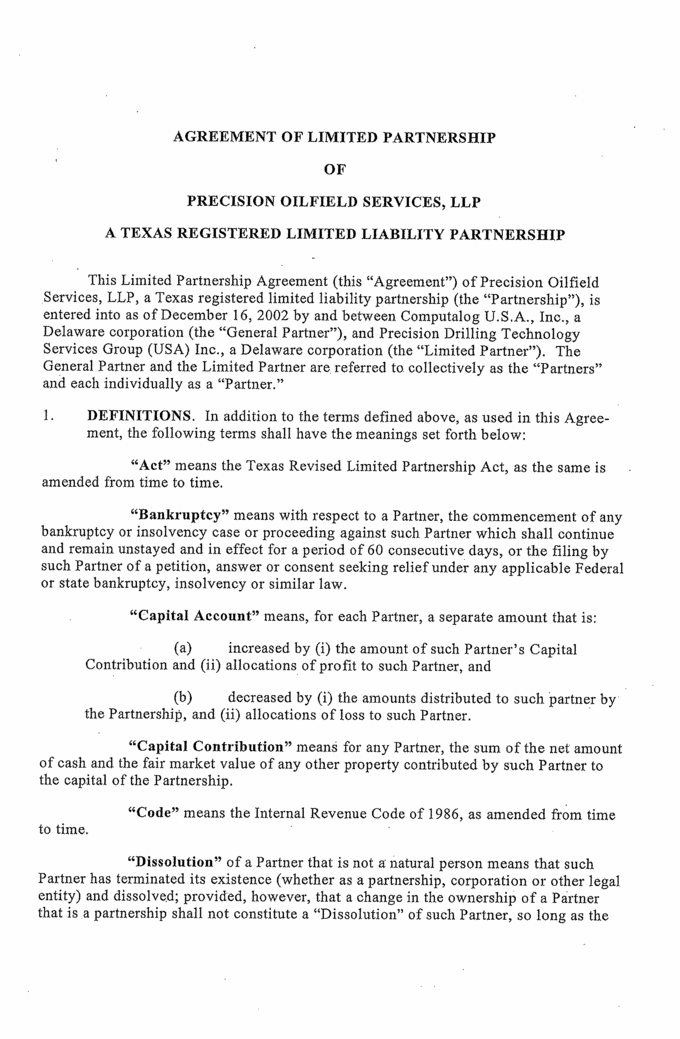
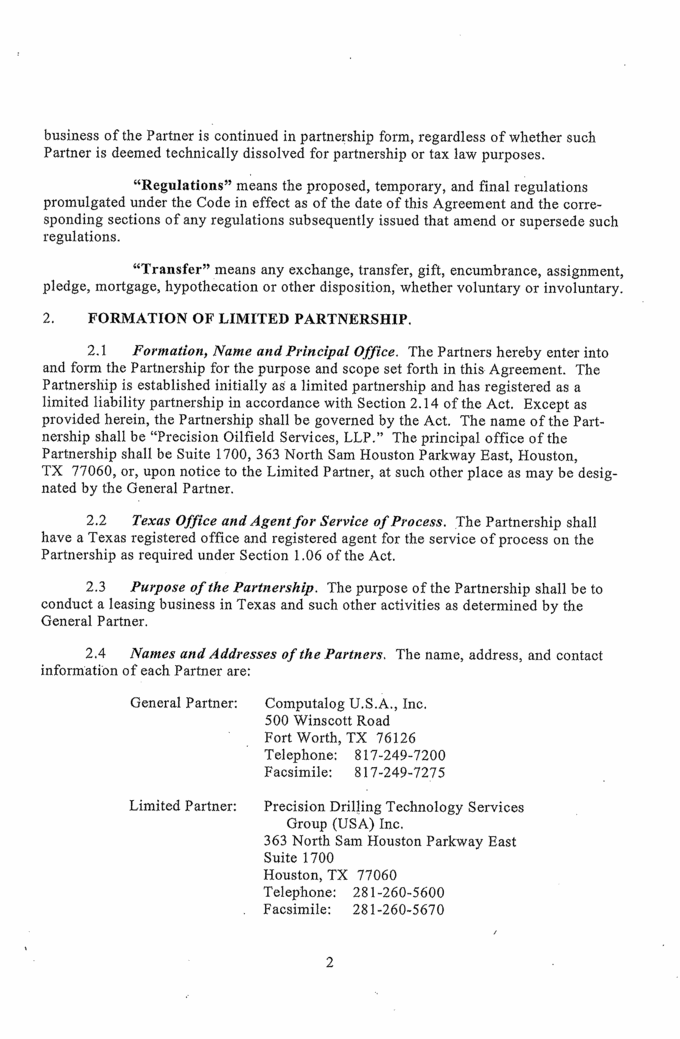

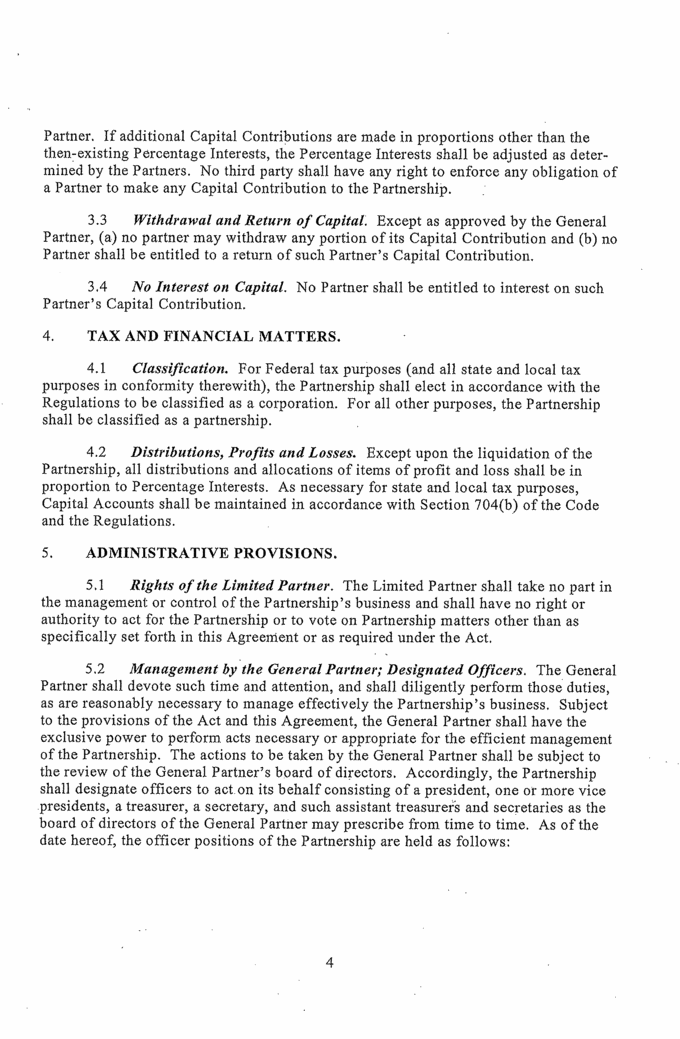
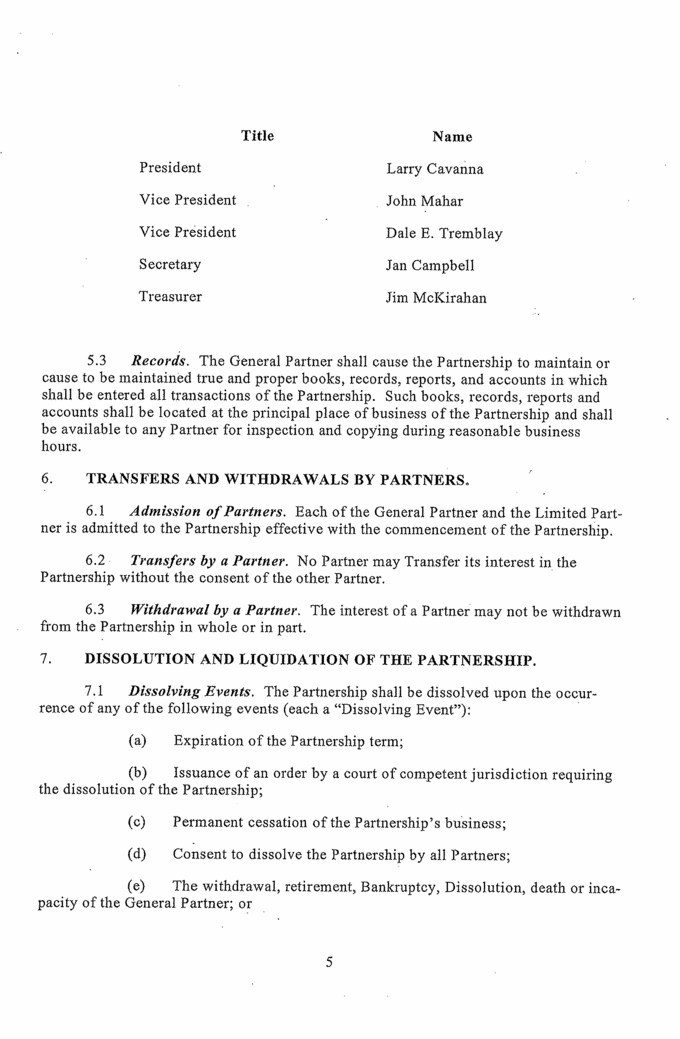
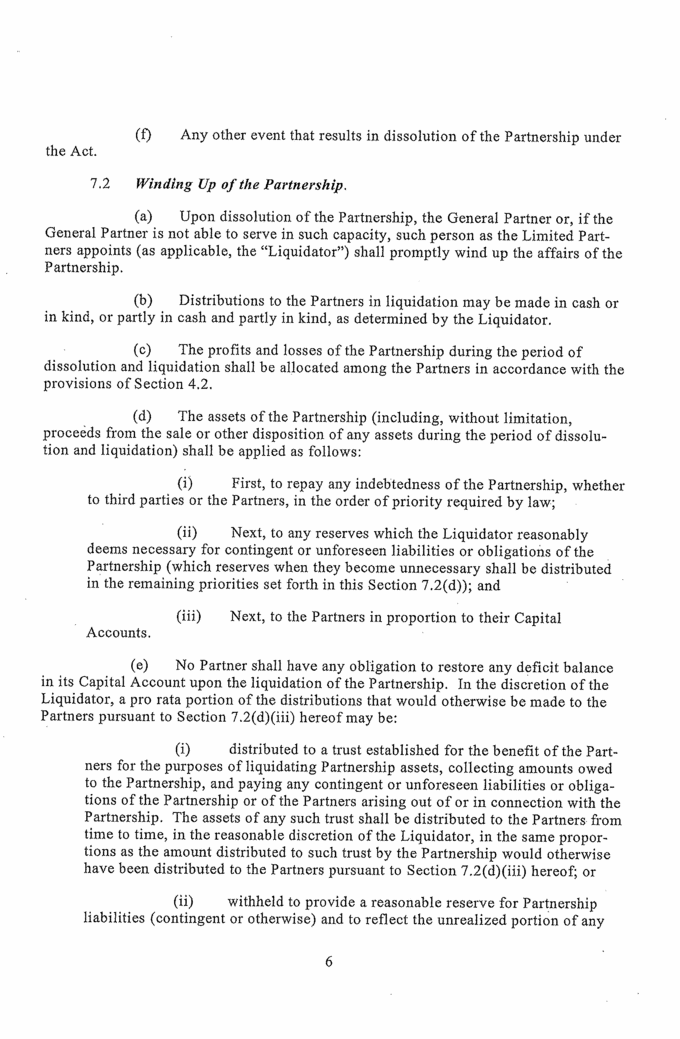
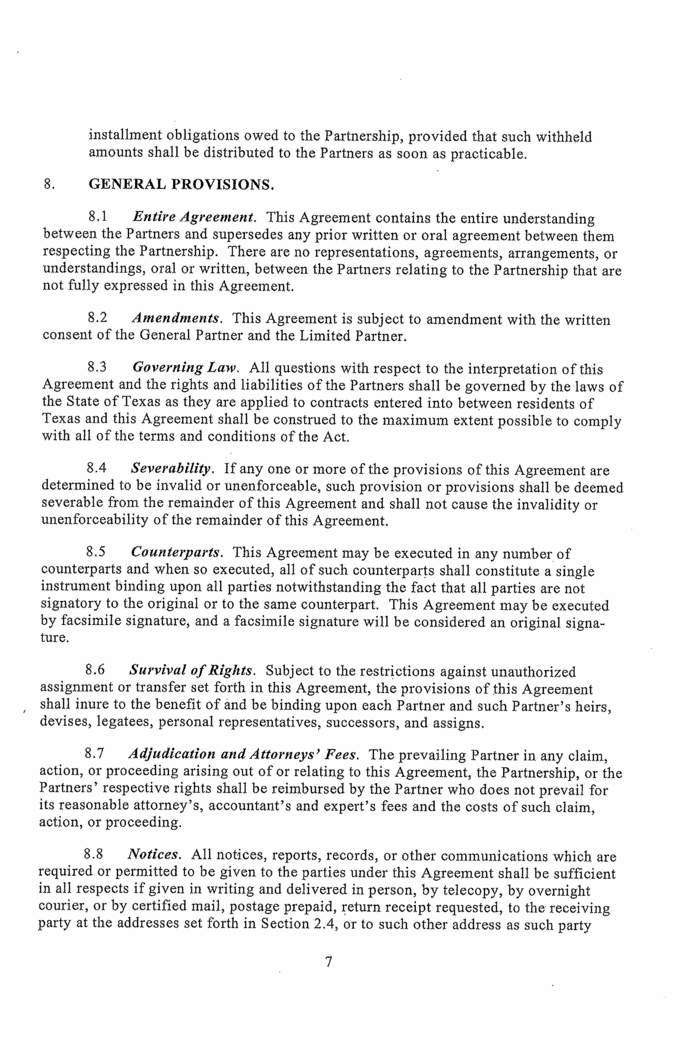
Exhibit T3B-25







IN THE UNITED STATES BANKRUPTCY COURT
FOR THE SOUTHERN DISTRICT OF TEXAS
HOUSTON DIVISION
|
------------------------------------------------------------- |
x |
|
|
In re: |
: |
Chapter 11 |
|
|
: |
|
|
WEATHERFORD INTERNATIONAL PLC, et al., |
: |
Case No. 19-[ ] |
|
|
: |
|
|
Debtors. (1) |
: |
(Joint Administration Requested) |
|
|
: |
|
|
------------------------------------------------------------- |
x |
|
DISCLOSURE STATEMENT FOR JOINT PREPACKAGED PLAN OF
REORGANIZATION FOR WEATHERFORD INTERNATIONAL PLC AND ITS
AFFILIATE DEBTORS UNDER CHAPTER 11 OF THE BANKRUPTCY CODE
|
HUNTON ANDREWS KURTH LLP |
|
LATHAM & WATKINS LLP |
|
|
|
|
|
Timothy A. (“Tad”) Davidson II (No. 240112503) |
|
George A. Davis (pro hac vice pending) |
|
Ashley L. Harper (No. 24065272) |
|
Keith A. Simon (pro hac vice pending) |
|
600 Travis Street, Suite 4200 |
|
David A. Hammerman (pro hac vice pending) |
|
Houston, Texas 77002 |
|
Annemarie V. Reilly (pro hac vice pending) |
|
Telephone: (713) 220-4200 |
|
Lisa K. Lansio (pro hac vice pending) |
|
Facsimile: (713) 220-4285 |
|
885 Third Avenue |
|
|
|
New York, New York 10022 |
|
|
|
Telephone: (212) 906-1200 |
|
|
|
Facsimile: (212) 751-4864 |
Proposed Counsel for the Debtors and Debtors-in-Possession
Dated: June 28, 2019
Houston, Texas
(1) The Debtors in these cases, along with the last four digits of each Debtor’s federal tax identification number, are: Weatherford International plc (6750); Weatherford International Ltd. (1344); and Weatherford International, LLC (5019). The location of the Debtors’ main corporate headquarters and the Debtors’ service address is: 2000 St. James Place, Houston, TX 77056.
THIS SOLICITATION OF VOTES (THE “SOLICITATION”) IS BEING CONDUCTED TO OBTAIN SUFFICIENT VOTES TO ACCEPT THE PLAN BEFORE THE FILING OF VOLUNTARY REORGANIZATION CASES UNDER CHAPTER 11 OF TITLE 11 OF THE UNITED STATES CODE (THE “BANKRUPTCY CODE”). BECAUSE THE CHAPTER 11 CASES HAVE NOT YET BEEN COMMENCED, THIS DISCLOSURE STATEMENT HAS NOT BEEN APPROVED BY THE BANKRUPTCY COURT AS CONTAINING ADEQUATE INFORMATION WITHIN THE MEANING OF SECTION 1125(a) OF THE BANKRUPTCY CODE. FOLLOWING THE COMMENCEMENT OF THE CHAPTER 11 CASE, THE DEBTORS EXPECT TO PROMPTLY SEEK ORDERS OF THE BANKRUPTCY COURT (I) APPROVING THIS DISCLOSURE STATEMENT AS CONTAINING ADEQUATE INFORMATION, (II) APPROVING THE SOLICITATION OF VOTES AS BEING IN COMPLIANCE WITH SECTIONS 1125 AND 1126(b) OF THE BANKRUPTCY CODE, AND (III) CONFIRMING THE PLAN.
DISCLOSURE STATEMENT, DATED JUNE 28, 2019
Solicitation of Votes
On the Plan of Reorganization of
WEATHERFORD INTERNATIONAL PLC, ET AL.
from the holders of outstanding
PREPETITION NOTES CLAIMS
EXISTING COMMON STOCK
THE VOTING DEADLINE FOR HOLDERS OF PREPETITION NOTES CLAIMS IS 5:00 P.M. PREVAILING CENTRAL TIME ON AUGUST 1, 2019 (UNLESS THE DEBTORS EXTEND THE VOTING DEADLINE).
THE VOTING RECORD DATE FOR DETERMINING WHICH HOLDERS OF PREPETITION NOTES MAY VOTE ON THE PLAN IS JUNE 24, 2019 (THE “PREPETITION NOTES VOTING RECORD DATE”).
A SEPARATE VOTING DEADLINE SHALL BE ESTABLISHED FOR HOLDERS OF EXISTING COMMON STOCK TO VOTE TO ACCEPT OR REJECT THE PLAN AFTER ENTRY OF AN ORDER BY THE BANKRUPTCY COURT CONDITIONALLY APPROVING THE DISCLOSURE STATEMENT AND THE SOLICITATION MATERIALS IN RESPECT OF THE PLAN.
THE VOTING RECORD DATE FOR DETERMINING WHICH HOLDERS OF EXISTING COMMON STOCK MAY VOTE ON THE PLAN IS EXPECTED TO BE JULY 2, 2019 (THE “COMMON STOCK VOTING RECORD DATE”).
THE VOTING DEADLINE FOR HOLDERS OF EXISTING COMMON STOCK IS EXPECTED TO BE 5:00 P.M. PREVAILING CENTRAL TIME ON AUGUST 13, 2019 (UNLESS THE DEBTORS EXTEND THE VOTING DEADLINE).
TO BE COUNTED AS A VOTE TO ACCEPT OR REJECT THE PLAN, THE VOTING AND CLAIMS AGENT MUST ACTUALLY RECEIVE YOUR BALLOT ON OR BEFORE THE APPLICABLE VOTING DEADLINE.
THE DEBTORS ANTICIPATE COMMENCING THE CHAPTER 11 CASES ON JULY 1, 2019 WITH AN EXPECTED FIRST DAY HEARING ON OR AROUND JULY 2, 2019. A SEPARATE NOTICE OF THE FIRST DAY HEARING WILL BE MAILED TO ALL HOLDERS OF PREPETITION NOTES. IF YOU DO NOT RECEIVE A NOTICE, PLEASE CONTACT UNDERSIGNED COUNSEL IMMEDIATELY OR CONSULT THE CASE WEBSITE MAINTAINED BY PRIME CLERK LLC AT WWW.PRIMECLERK.COM/WEATHERFORD.
RECOMMENDATION BY THE DEBTORS
The Board of Directors of Weatherford International plc and the other governing bodies of each of its affiliated Debtors have unanimously approved the transactions contemplated by the Solicitation and the Plan and recommend that all creditors and holders of equity interests whose votes are being solicited submit ballots to accept the Plan. Holders of over 66.67% in outstanding principal amount of the Prepetition Notes Claims (as defined herein) entitled to vote on the Plan (the “Consenting Noteholders”) have already agreed, subject to the terms and conditions of the Restructuring Support Agreement, to vote in favor of the Plan.
THIS DISCLOSURE STATEMENT HAS BEEN PREPARED PURSUANT TO SECTIONS 1125 AND 1126(B) OF THE BANKRUPTCY CODE AND BANKRUPTCY RULE 3016. THE SECURITIES DESCRIBED HEREIN WILL BE ISSUED TO CREDITORS AND HOLDERS OF EQUITY INTERESTS WITHOUT REGISTRATION UNDER THE UNITED STATES SECURITIES ACT OF 1933, AS AMENDED (THE “SECURITIES ACT”), OR ANY SIMILAR FEDERAL, STATE OR LOCAL LAW, AND WILL INSTEAD RELY UPON THE EXEMPTIONS SET FORTH IN SECTION 1145 OF THE BANKRUPTCY CODE AND SECTION 4(A)(2) OF THE SECURITIES ACT OR OTHER APPLICABLE EXEMPTIONS. THE DEBTORS RECOMMEND THAT POTENTIAL RECIPIENTS OF ANY SECURITIES PURSUANT TO THE PLAN CONSULT THEIR OWN LEGAL COUNSEL CONCERNING THE SECURITIES LAWS GOVERNING THE TRANSFERABILITY OF ANY SUCH SECURITIES.
THE SOLICITATION OF VOTES ON THE PLAN WITH RESPECT TO PREPETITION NOTES CLAIMS IS BEING MADE PURSUANT TO SECTION 4(A)(2) AND REGULATION D OF THE SECURITIES ACT AND ONLY WITH RESPECT TO HOLDERS OF SUCH CLAIMS THAT ARE ELIGIBLE HOLDERS OF PREPETITION NOTES CLAIMS AS DESCRIBED HEREIN; PROVIDED, HOWEVER, THAT ALL HOLDERS OF ALLOWED PREPETITION NOTES CLAIMS WILL BE ENTITLED TO RECEIVE DISTRIBUTIONS UNDER THE PLAN.
THE RIGHTS OFFERING WILL BE CONDUCTED PURSUANT TO SEPARATE RIGHTS OFFERING AND RIGHTS OFFERING PROCEDURES. ANY DISCLOSURE CONTAINED HEREIN CONCERNING THE RIGHTS OFFERING IS SOLELY FOR INFORMATION PURPOSES.
THE NEW COMMON STOCK, THE NEW WARRANTS (AND THE NEW COMMON STOCK ISSUABLE UPON EXERCISE THEREOF), THE SUBSCRIPTION RIGHTS, THE NEW TRANCHE A SENIOR UNSECURED NOTES ISSUED PURSUANT TO THE RIGHTS OFFERING, THE NEW TRANCHE B SENIOR UNSECURED NOTES (AND THE NEW COMMON STOCK ISSUABLE PURSUANT TO THE TRANCHE B EQUITY CONVERSION), AND ANY OTHER NEW SECURITIES HAVE NOT BEEN APPROVED OR DISAPPROVED BY THE SECURITIES AND EXCHANGE COMMISSION (“SEC”) OR BY ANY STATE SECURITIES COMMISSION OR SIMILAR PUBLIC, GOVERNMENTAL, OR REGULATORY AUTHORITY, AND NEITHER THE SEC NOR ANY AUTHORITY HAS PASSED UPON THE ACCURACY OR ADEQUACY OF THE INFORMATION CONTAINED IN THIS DISCLOSURE STATEMENT OR UPON THE MERITS OF PLAN. THIS DOCUMENT IS NOT A PROSPECTUS WITHIN THE MEANING OF THE EU PROSPECTUS DIRECTIVE (DIRECTIVE 2003/71/EC), AS AMENDED, THE EU PROSPECTUS REGULATION (REGULATION (EU) 2017/1129) OR ANY IMPLEMENTING LEGISLATION OR RULES RELATING THERETO OF ANY MEMBER STATE OF THE EUROPEAN ECONOMIC AREA. THIS DOCUMENT HAS NOT BEEN APPROVED OR REVIEWED BY ANY COMPETENT AUTHORITY OR REGULATORY AUTHORITY OF ANY MEMBER STATE OF THE EUROPEAN ECONOMIC AREA. NO OFFER OF SECURITIES TO THE PUBLIC IS MADE, OR WILL BE MADE IN ANY MEMBER STATE OF THE EUROPEAN ECONOMIC AREA THAT REQUIRES THE PUBLICATION OF A PROSPECTUS WITHIN THE MEANING OF THE EU PROSPECTUS DIRECTIVE, AS AMENDED, OR THE EU PROSPECTUS REGULATION.
CERTAIN STATEMENTS CONTAINED IN THIS DISCLOSURE STATEMENT, INCLUDING STATEMENTS INCORPORATED BY REFERENCE AND PROJECTED FINANCIAL INFORMATION, ARE FORWARD-LOOKING STATEMENTS AND ARE BASED ON ESTIMATES AND ASSUMPTIONS. THERE CAN BE NO ASSURANCE THAT SUCH STATEMENTS WILL BE REFLECTIVE OF ACTUAL OUTCOMES. FORWARD-LOOKING STATEMENTS ARE PROVIDED IN THIS DISCLOSURE STATEMENT PURSUANT TO THE SAFE HARBOR ESTABLISHED UNDER THE PRIVATE SECURITIES LITIGATION REFORM ACT OF 1995 AND SHOULD BE EVALUATED IN THE CONTEXT OF THE ESTIMATES, ASSUMPTIONS, UNCERTAINTIES, AND RISKS DESCRIBED HEREIN.
FURTHER, WHILE THE DEBTORS BELIEVE THE ASSUMPTIONS ON WHICH THE FORWARD-LOOKING STATEMENTS HEREIN ARE BASED ARE REASONABLE, READERS ARE CAUTIONED AGAINST RELYING ON ANY FORWARD-LOOKING STATEMENTS AS IT IS VERY DIFFICULT TO PREDICT THE IMPACT OF KNOWN FACTORS, AND IT IS IMPOSSIBLE TO ANTICIPATE ALL FACTORS THAT COULD AFFECT ACTUAL RESULTS. IMPORTANT FACTORS THAT COULD CAUSE ACTUAL RESULTS TO DIFFER MATERIALLY FROM THOSE IN THE FORWARD-LOOKING STATEMENTS HEREIN INCLUDE, BUT ARE NOT LIMITED TO, THE ABILITY TO CONFIRM AND CONSUMMATE A PLAN OF REORGANIZATION IN ACCORDANCE WITH THE TERMS OF THE RESTRUCTURING SUPPORT AGREEMENT; RISKS ATTENDANT TO THE BANKRUPTCY PROCESS, INCLUDING THE DEBTORS’ ABILITY TO OBTAIN THE APPROVAL OF THE BANKRUPTCY
COURT WITH RESPECT TO MOTIONS FILED IN THE CASES, THE OUTCOMES OF BANKRUPTCY CASES AND THE LENGTH OF TIME THAT THE DEBTORS MAY BE REQUIRED TO OPERATE IN BANKRUPTCY; THE EFFECTIVENESS OF THE OVERALL RESTRUCTURING ACTIVITIES AND ANY ADDITIONAL STRATEGIES THAT THE DEBTORS EMPLOY TO ADDRESS LIQUIDITY AND CAPITAL RESOURCES; THE ACTIONS AND DECISIONS OF CREDITORS, REGULATORS AND OTHER THIRD PARTIES THAT HAVE AN INTEREST IN THE CASES, WHICH MAY INTERFERE WITH THE ABILITY TO CONFIRM AND CONSUMMATE A PLAN OF REORGANIZATION; RESTRICTIONS ON THE DEBTORS DUE TO THE TERMS OF ANY DEBTOR-IN-POSSESSION CREDIT FACILITY ENTERED INTO IN CONNECTION WITH THE BANKRUPTCY CASES AND RESTRICTIONS IMPOSED BY THE BANKRUPTCY COURT; THE DEBTORS’ ABILITY TO REALIZE THE COST SAVINGS AND BUSINESS ENHANCEMENTS FROM THEIR TRANSFORMATION EFFORTS; THE DEBTORS’ ABILITY TO INVEST IN THEIR BUSINESSES IN ACCORDANCE WITH THEIR FORECASTED CAPITAL EXPENDITURE BUDGET; A WEAKENING OF GLOBAL ECONOMIC AND FINANCIAL CONDITIONS, CHANGES IN GOVERNMENTAL REGULATIONS AND RELATED COMPLIANCE AND LITIGATION COSTS AND THE OTHER FACTORS LISTED IN THE DEBTORS’ SEC FILINGS. THE DEBTORS ARE UNDER NO OBLIGATION TO (AND EXPRESSLY DISCLAIM ANY OBLIGATION TO) UPDATE OR ALTER ANY FORWARD-LOOKING STATEMENTS WHETHER AS A RESULT OF NEW INFORMATION, FUTURE EVENTS, OR OTHERWISE, UNLESS INSTRUCTED TO DO SO BY THE BANKRUPTCY COURT.
HOLDERS OF ALLOWED GENERAL UNSECURED CLAIMS WILL NOT BE IMPAIRED BY THE PLAN AND, AS A RESULT, THE RIGHT TO RECEIVE PAYMENT IN FULL ON ACCOUNT OF EXISTING OBLIGATIONS IN RESPECT OF SUCH CLAIMS IS NOT ALTERED BY THE PLAN. DURING THE CHAPTER 11 CASES, THE DEBTORS INTEND TO OPERATE THEIR BUSINESSES IN THE ORDINARY COURSE.
THE PLAN PROVIDES THAT HOLDERS OF IMPAIRED CLAIMS AND EXISTING COMMON STOCK ENTITLED TO VOTE WHO DO NOT SUBMIT A BALLOT VOTING TO ACCEPT OR REJECT THE PLAN, WHO VOTE TO ACCEPT THE PLAN, OR WHO VOTE TO REJECT THE PLAN BUT DO NOT OPT OUT OF THE RELEASE PROVISIONS OF THE PLAN ARE DEEMED TO HAVE GRANTED THE RELEASES THEREIN.
NO LEGAL OR TAX ADVICE IS PROVIDED TO YOU BY THIS DISCLOSURE STATEMENT. THE DEBTORS URGE EACH HOLDER OF A CLAIM OR AN EQUITY INTEREST TO CONSULT WITH ITS OWN ADVISORS WITH RESPECT TO ANY LEGAL, FINANCIAL, SECURITIES, TAX OR BUSINESS ADVICE IN REVIEWING THIS DISCLOSURE STATEMENT, THE PLAN AND EACH OF THE PROPOSED TRANSACTIONS CONTEMPLATED THEREBY. FURTHERMORE, THE BANKRUPTCY COURT’S APPROVAL OF THE ADEQUACY OF DISCLOSURE CONTAINED IN THIS DISCLOSURE STATEMENT DOES NOT CONSTITUTE THE BANKRUPTCY COURT’S APPROVAL OF THE MERITS OF THE PLAN.
IT IS THE DEBTORS’ POSITION THAT THIS DISCLOSURE STATEMENT DOES NOT CONSTITUTE, AND MAY NOT BE CONSTRUED AS, AN ADMISSION OF FACT, LIABILITY, STIPULATION OR WAIVER. RATHER, THIS DISCLOSURE STATEMENT SHALL CONSTITUTE A STATEMENT MADE IN SETTLEMENT NEGOTIATIONS RELATED TO CONTESTED MATTERS, ADVERSARY PROCEEDINGS AND OTHER PENDING OR THREATENED LITIGATION OR ACTIONS.
NO RELIANCE SHOULD BE PLACED ON THE FACT THAT A PARTICULAR LITIGATION CLAIM OR PROJECTED OBJECTION TO A PARTICULAR CLAIM IS, OR IS NOT, IDENTIFIED IN THE DISCLOSURE STATEMENT. THE DEBTORS OR THE REORGANIZED DEBTORS MAY SEEK TO INVESTIGATE, FILE AND PROSECUTE CLAIMS AND MAY OBJECT TO CLAIMS AFTER THE CONFIRMATION OR EFFECTIVE DATE OF THE PLAN IRRESPECTIVE OF WHETHER THE DISCLOSURE STATEMENT IDENTIFIES ANY SUCH CLAIMS OR OBJECTIONS TO CLAIMS.
IN REVIEWING THIS DISCLOSURE STATEMENT AND THE PLAN, AND IN DETERMINING WHETHER TO VOTE IN FAVOR OF OR AGAINST, OR TO OBJECT TO CONFIRMATION OF, THE PLAN, CREDITORS, EQUITY INTEREST HOLDERS AND STAKEHOLDERS SHOULD BE AWARE THAT THE PLAN PRESERVES ALL CAUSES OF ACTION (INCLUDING AVOIDANCE ACTIONS) AND THAT THE PLAN AUTHORIZES THE REORGANIZED DEBTORS TO PROSECUTE THE SAME.
THIS DISCLOSURE STATEMENT CONTAINS, AMONG OTHER THINGS, SUMMARIES OF THE PLAN, CERTAIN STATUTORY PROVISIONS, CERTAIN EXPECTED EVENTS IN THE DEBTORS’ TO-BE-FILED CHAPTER 11 CASES AND CERTAIN DOCUMENTS RELATED TO THE PLAN THAT ARE ATTACHED HERETO AND INCORPORATED HEREIN BY REFERENCE. ALTHOUGH THE DEBTORS BELIEVE THAT THESE SUMMARIES ARE FAIR AND ACCURATE, THESE SUMMARIES ARE QUALIFIED IN THEIR ENTIRETY TO THE EXTENT THAT THE SUMMARIES DO NOT SET FORTH THE ENTIRE TEXT OF SUCH DOCUMENTS OR STATUTORY PROVISIONS OR EVERY DETAIL OF SUCH EVENTS. IN THE EVENT OF ANY CONFLICT, INCONSISTENCY OR DISCREPANCY BETWEEN A DESCRIPTION IN THIS DISCLOSURE STATEMENT AND THE TERMS AND PROVISIONS OF THE PLAN OR ANY OTHER DOCUMENTS INCORPORATED HEREIN BY REFERENCE, THE PLAN OR SUCH OTHER DOCUMENTS WILL GOVERN AND CONTROL FOR ALL PURPOSES. EXCEPT WHERE OTHERWISE SPECIFICALLY NOTED, FACTUAL INFORMATION CONTAINED IN THIS DISCLOSURE STATEMENT HAS BEEN PROVIDED BY THE DEBTORS’ MANAGEMENT. THE DEBTORS DO NOT REPRESENT OR WARRANT THAT THE INFORMATION CONTAINED HEREIN OR ATTACHED HERETO IS WITHOUT ANY MATERIAL INACCURACY OR OMISSION.
THE DEBTORS’ MANAGEMENT HAS REVIEWED THE FINANCIAL INFORMATION PROVIDED IN THIS DISCLOSURE STATEMENT. ALTHOUGH THE DEBTORS HAVE USED THEIR REASONABLE BUSINESS JUDGMENT TO ENSURE THE ACCURACY OF THIS FINANCIAL INFORMATION, THE FINANCIAL
INFORMATION CONTAINED IN, OR INCORPORATED BY REFERENCE INTO, THIS DISCLOSURE STATEMENT HAS NOT BEEN AUDITED (UNLESS EXPRESSLY PROVIDED HEREIN).
THE DEBTORS ARE MAKING THE STATEMENTS AND PROVIDING THE FINANCIAL INFORMATION CONTAINED IN THIS DISCLOSURE STATEMENT AS OF THE DATE HEREOF WHERE FEASIBLE, UNLESS OTHERWISE SPECIFICALLY NOTED. ALTHOUGH THE DEBTORS MAY SUBSEQUENTLY UPDATE THE INFORMATION IN THIS DISCLOSURE STATEMENT, THE DEBTORS HAVE NO AFFIRMATIVE DUTY TO DO SO. HOLDERS OF CLAIMS AND EQUITY INTERESTS REVIEWING THIS DISCLOSURE STATEMENT SHOULD NOT INFER THAT, AT THE TIME OF THEIR REVIEW, THE FACTS SET FORTH HEREIN HAVE NOT CHANGED SINCE THE DISCLOSURE STATEMENT WAS FILED. THE DEBTORS HAVE NOT AUTHORIZED ANY ENTITY TO GIVE ANY INFORMATION ABOUT OR CONCERNING THE PLAN OTHER THAN THAT WHICH IS CONTAINED IN THIS DISCLOSURE STATEMENT. THE DEBTORS HAVE NOT AUTHORIZED ANY REPRESENTATIONS CONCERNING THE DEBTORS OR THE VALUE OF THEIR PROPERTY OTHER THAN AS SET FORTH IN THIS DISCLOSURE STATEMENT.
HOLDERS OF CLAIMS AND EQUITY INTERESTS ENTITLED TO VOTE TO ACCEPT OR REJECT THE PLAN MUST RELY ON THEIR OWN EVALUATION OF THE DEBTORS AND THEIR OWN ANALYSES OF THE TERMS OF THE PLAN IN DECIDING WHETHER TO VOTE TO ACCEPT OR REJECT THE PLAN. IMPORTANTLY, PRIOR TO DECIDING WHETHER AND HOW TO VOTE ON THE PLAN, EACH HOLDER OF A CLAIM OR EQUITY INTEREST IN A VOTING CLASS SHOULD REVIEW THE PLAN IN ITS ENTIRETY AND CONSIDER CAREFULLY ALL OF THE INFORMATION IN THIS DISCLOSURE STATEMENT AND ANY EXHIBITS HERETO, INCLUDING THE RISK FACTORS DESCRIBED IN GREATER DETAIL IN SECTION V HEREIN, “PLAN-RELATED RISK FACTORS.”
TABLE OF CONTENTS
|
|
|
|
Page |
|
|
|
|
|
|
I. EXECUTIVE SUMMARY |
|
1 | |
|
|
|
| |
|
A. |
Purpose and Effect of the Plan |
|
3 |
|
B. |
Classification and Treatment of Claims and Equity Interests Under the Plan |
|
5 |
|
|
|
|
|
|
II. BACKGROUND TO THE CHAPTER 11 CASES |
|
10 | |
|
|
|
| |
|
A. |
The Debtors’ Corporate History and Structure |
|
10 |
|
B. |
Overview of the Debtors’ Businesses |
|
10 |
|
C. |
Prepetition Indebtedness |
|
14 |
|
D. |
Events Leading to the Chapter 11 Filing |
|
16 |
|
|
|
|
|
|
III. ANTICIPATED EVENTS DURING THE CHAPTER 11 CASE, THE IRISH EXAMINERSHIP PROCEEDING, AND THE BERMUDA PROCEEDING |
|
23 | |
|
|
|
| |
|
A. |
Chapter 11 First Day Motions and Certain Related Relief |
|
23 |
|
B. |
Exclusive Period for Filing a Chapter 11 Plan and Soliciting Votes |
|
26 |
|
C. |
The Irish Examinership Proceeding |
|
27 |
|
D. |
The Bermuda Proceeding |
|
28 |
|
|
|
|
|
|
IV. SUMMARY OF THE PLAN |
|
29 | |
|
|
|
| |
|
A. |
General |
|
29 |
|
B. |
Administrative, DIP Facility, and Priority Tax Claims |
|
30 |
|
C. |
Classification and Treatment of Classified Claims and Equity Interests |
|
32 |
|
D. |
Acceptance or Rejection of the Plan |
|
40 |
|
E. |
Means for Implementation of the Plan |
|
41 |
|
F. |
Treatment of Executory Contracts and Unexpired Leases |
|
51 |
|
G. |
Provisions Governing Distributions |
|
56 |
|
H. |
Procedures for Resolving Contingent, Unliquidated and Disputed Claims |
|
62 |
|
I. |
Conditions Precedent to Confirmation and Consummation of the Plan |
|
64 |
|
J. |
Release, Discharge, Injunction And Related Provisions |
|
68 |
|
K. |
Retention of jurisdiction |
|
76 |
|
L. |
Miscellaneous Provisions |
|
78 |
|
|
|
|
|
|
V. PLAN-RELATED RISK FACTORS |
|
84 | |
|
|
|
| |
|
A. |
Certain Bankruptcy Law Considerations |
|
84 |
|
B. |
Additional Factors Affecting the Value of the Reorganized Debtors |
|
87 |
|
C. |
Risk Factors That May Affect the Value of Securities to be Issued Under the Plan and/or Recoveries Under the Plan |
|
90 |
|
D. |
Risk Factors that Could Negatively Impact the Debtors’ And Reorganized Debtors’ Businesses and Financial Condition |
|
92 |
|
E. |
Certain Risk Factors Relating to the Irish Examinership Proceeding |
|
101 |
|
F. |
Certain Risk Factors Relating to the Bermuda Proceeding |
|
103 |
|
|
|
|
|
|
VI. SOLICITATION AND VOTING PROCEDURES |
|
104 | |
|
|
|
| |
|
A. |
Solicitation Procedures |
|
104 |
|
B. |
Voting Procedures |
|
105 |
|
|
|
|
|
|
VII. CONFIRMATION OF THE PLAN |
|
114 | |
|
|
|
| |
|
A. |
The Confirmation Hearing |
|
114 |
|
B. |
Objections to Confirmation |
|
114 |
|
C. |
Effect of Confirmation of the Plan |
|
114 |
|
D. |
Consummation of the Plan |
|
114 |
|
E. |
Confirmation Procedures |
|
115 |
|
F. |
Statutory Requirements for Confirmation of the Plan |
|
115 |
|
G. |
Consummation of the Plan |
|
121 |
|
|
|
|
|
|
VIII. VALUATION ANALYSIS |
|
121 | |
|
|
|
| |
|
IX. EXEMPTIONS FROM SECURITIES ACT REGISTRATION |
|
121 | |
|
|
|
| |
|
X. CERTAIN TAX CONSEQUENCES OF THE PLAN |
|
122 | |
|
|
|
| |
|
A. |
Certain U.S. Federal Income Tax Consequences of the Plan |
|
123 |
|
B. |
Certain Irish Tax Consequences of the Plan |
|
145 |
|
C. |
Certain Swiss Tax Consequences of the Plan |
|
153 |
|
D. |
Certain Bermudian Tax Consequences of the Plan |
|
154 |
|
|
|
|
|
|
XI. ALTERNATIVES TO CONFIRMATION AND CONSUMMATION OF THE PLAN |
|
154 | |
|
|
|
| |
|
A. |
Liquidation Under Chapter 7 of the Bankruptcy Code |
|
154 |
|
B. |
Filing of an Alternative Plan of Reorganization |
|
154 |
EXHIBITS
|
EXHIBIT A: |
|
Plan of Reorganization |
|
|
|
|
|
EXHIBIT B: |
|
Restructuring Support Agreement |
|
|
|
|
|
EXHIBIT C: |
|
Liquidation Analysis |
|
|
|
|
|
EXHIBIT D: |
|
Financial Projections |
|
|
|
|
|
EXHIBIT E: |
|
Valuation Analysis |
|
|
|
|
|
EXHIBIT F: |
|
Organizational Structure Chart |
|
|
|
|
|
EXHIBIT G: |
|
Prepetition Indebtedness Borrowers, Guarantors, and Obligors |
|
|
|
|
|
EXHIBIT H: |
|
Backstop Commitment Agreement |
|
|
|
|
|
EXHIBIT I: |
|
Reorganization Steps Overview |
|
|
|
|
|
EXHIBIT J: |
|
Description of Reorganization Steps |
|
|
|
|
|
EXHIBIT K: |
|
Warrant Term Sheet |
THE DEBTORS HEREBY ADOPT AND INCORPORATE EACH EXHIBIT ATTACHED TO THIS DISCLOSURE STATEMENT BY REFERENCE AS THOUGH FULLY SET FORTH HEREIN.
I.
EXECUTIVE SUMMARY
Weatherford International plc (“Weatherford Parent”), an Irish public limited company, and the other debtors and debtors in possession (collectively, the “Debtors” and, together with their non-debtor subsidiaries, the “Company” or “Weatherford”), submit this disclosure statement (“Disclosure Statement”) pursuant to sections 1125 and 1126(b) of title 11 of the United States Code, 11 U.S.C. §§ 101-1532 (as amended from time to time, the “Bankruptcy Code”) and other applicable law, in connection with the solicitation of votes (the “Solicitation”) on the Joint Prepackaged Plan of Reorganization for Weatherford International plc and its Affiliate Debtors Under Chapter 11 of the Bankruptcy Code, dated June 28, 2019 (the “Plan”).(2) Subject to the approval of the board of directors of Weatherford Parent, the Debtors anticipate filing voluntary petitions for relief under chapter 11 in the United States Bankruptcy Court for the Southern District of Texas, Houston Division (the “Bankruptcy Court”) on or around July 1, 2019 (the “Chapter 11 Cases”). A copy of the Plan is attached hereto as Exhibit A.
The Debtors anticipate commencing the Chapter 11 Cases on July 1, 2019 with an expected first day hearing on or around July 2, 2019.
The Debtors are commencing this Solicitation to implement a comprehensive financial restructuring to deleverage the Company’s balance sheet to ensure the long-term viability of the Debtors’ enterprise. As a result of extensive negotiations, the Debtors and the Holders of approximately 74% of the Prepetition Notes (the “Consenting Noteholders”) entered into a restructuring support agreement (the “Restructuring Support Agreement”) dated as of May 10, 2019, a copy of which is attached hereto as Exhibit B. Under the terms of the Restructuring Support Agreement, the Consenting Noteholders have agreed, subject to the terms and conditions of the Restructuring Support Agreement, to support a restructuring of the Debtors’ existing capital structure in chapter 11 (the “Restructuring”) and vote to accept the Plan.
There are two groups whose votes for acceptance of the Plan are being solicited:
· Holders of Prepetition Notes; and
· Holders of Existing Common Stock.
The Restructuring as contemplated in the Plan results in a significant deleveraging of the Debtors’ capital structure. The Debtors’ funded debt will be reduced from approximately $8.35 billion to $2.50 billion, which will allow the Debtors to focus on long-term growth prospects and their competitive position in the market, which will in turn allow the Debtors to emerge from these Chapter 11 Cases as a stronger company.
Pursuant to section 1126(b) of the Bankruptcy Code, prior to commencement of a prepackaged chapter 11 case, the Solicitation of votes for acceptance or rejection of a plan must (i) comply with any applicable non-bankruptcy law, rule or regulation governing the adequacy of
(2) All capitalized terms used but not otherwise defined herein shall have the meanings set forth in the Plan. To the extent that a definition of a term in the text of this Disclosure Statement and the definition of such term in the Plan are inconsistent, the definition included in the Plan shall control and govern.
disclosure in connection with such Solicitation or (ii) if there is no such law, rule or other regulation, must contain adequate information as defined in section 1125(a) of the Bankruptcy Code. Pursuant to section 1125(a) of the Bankruptcy Code, “adequate information” is information of a kind, and in sufficient detail, to enable a hypothetical reasonable investor to make an informed judgment regarding the plan. To satisfy applicable disclosure requirements, the Debtors are submitting this Disclosure Statement to holders of Claims and Equity Interests who are Impaired and not deemed to have rejected the Plan.
Section 1125(g) of the Bankruptcy Code allows for the Solicitation of votes from holders prior to commencement of a chapter 11 case if such solicitation complies with applicable nonbankruptcy law and if such holder was solicited before the commencement of the case in a manner complying with applicable nonbankruptcy law.
The Solicitation of Holders of Prepetition Notes is being conducted at this time, prior to the commencement of the Chapter 11 Cases, to obtain sufficient acceptances to enable the Plan to be confirmed by the Bankruptcy Court pursuant to the provisions of the Bankruptcy Code. The Solicitation of Holders of Existing Common Stock will commence after the commencement of the Chapter 11 Cases. The Company believes that this Solicitation will minimize the disruption of its business that could result from a traditional bankruptcy case, which could be contested and protracted. The Company also believes that the Solicitation of Holders of Prepetition Notes prior to the commencement of the Chapter 11 Cases will minimize postpetition disputes, and will significantly simplify, shorten, and reduce the administrative costs of the Chapter 11 Cases.
This Executive Summary is being provided as an overview of the material items addressed in the Disclosure Statement and the Plan, which is qualified by reference to the entire Disclosure Statement and by the actual terms of the Plan (and including all exhibits attached hereto and to the Plan), and should not be relied upon for a comprehensive discussion of the Disclosure Statement and/or the Plan. This Disclosure Statement includes, without limitation, information about:
· the Debtors’ operating and financial history;
· background information, including the events leading up to the Restructuring, including the expected commencement of the Chapter 11 Cases;
· the significant events that are expected to occur during the Chapter 11 Cases;
· the Confirmation process and the solicitation and voting procedures that Holders of Claims and Equity Interests who are entitled to vote on the Plan must follow for their votes to be counted;
· the terms and provisions of the Plan, including certain effects of confirmation of the Plan, certain risk factors relating to the Debtors or the Reorganized Debtors, the Plan and the securities to be issued under the Plan and the manner in which distributions will be made under the Plan;
· the Reorganization Steps Overview, as described more fully in Exhibit I; and
· the proposed organization, operations and financing of the Reorganized Debtors if the Plan is confirmed and becomes effective.
A. PURPOSE AND EFFECT OF THE PLAN
1. Plan of Reorganization Under Chapter 11 of the Bankruptcy Code
The Debtors are reorganizing pursuant to chapter 11 of the Bankruptcy Code, which is the principal business reorganization chapter of the Bankruptcy Code. As a result, the confirmation of the Plan means that the Reorganized Debtors will continue to operate their businesses going forward and does not mean that the Debtors will be liquidated or forced to go out of business. Additionally, as discussed in greater detail in Section IV.J herein, titled “Binding Nature of the Plan,” a bankruptcy court’s confirmation of a plan binds debtors, any entity acquiring property under the plan, any holder of a claim or equity interest in a debtor and all other entities as may be ordered by the bankruptcy court in accordance with the applicable provisions of the Bankruptcy Code to the terms and conditions of the confirmed plan, whether or not such entity voted on the particular plan or affirmatively voted to reject the plan.
2. Financial Restructurings Under the Plan
The Plan contemplates certain transactions, including, without limitation, the following transactions (described in greater detail in Section IV herein):
· each Holder of an Allowed Prepetition Revolving Credit Claim will receive payment in Cash equal to such Allowed Claim from the DIP Facility;
· each Holder of an Allowed Prepetition Term Loan Claim will receive payment in Cash equal to such Allowed Claim from the DIP Facility;
· each Holder of an Allowed Prepetition A&R Claim will receive payment in Cash equal to such Allowed Claim from the Exit Facility;
· each Holder of an Allowed Prepetition Notes Claim will receive its Pro Rata share of (i) 99% of the New Common Stock, subject to dilution on account of equity issued pursuant to the New Management Incentive Plan, the New Tranche B Equity Conversion, and the New Common Stock issuable pursuant to the New Warrants and (ii) the New Tranche B Senior Unsecured Notes; provided, however, that each Holder of Allowed Prepetition Notes Claims will have the option, in its sole discretion, of converting its New Tranche B Senior Unsecured Notes pursuant to the Tranche B Equity Conversion at the mid-point of the equity value range set forth in this Disclosure Statement; provided, further that the aggregate principal amount of New Tranche B Senior Unsecured Notes converted into New Common Stock will not exceed $500,000,000. To the extent that less than $500,000,000 in principal amount of the New Tranche B Senior Unsecured Notes is converted in New Common Stock pursuant to the Tranche B Equity Conversion, any Holder of Allowed Prepetition Notes Claims that elected to convert its full Pro Rata share of New Tranche B Senior Unsecured Notes into New Common Stock in the Tranche B Equity Conversion shall also be eligible to exercise their Overallotment Rights. Procedures for the effectuation of the
Tranche B Equity Conversion and the Overallotment Rights are set forth in Article V.V of the Plan. Each Holder of Prepetition Notes issued by Weatherford International, LLC will receive New Tranche B Senior Unsecured Notes issued by Reorganized Weatherford Delaware and each Holder of Prepetition Notes issued by Weatherford International Ltd. will receive New Tranche B Senior Unsecured Notes issued by Reorganized Weatherford Bermuda;
· each Holder of an Allowed Prepetition Notes Claim will receive Subscription Rights to purchase its Pro Rata share of New Tranche A Senior Unsecured Notes pursuant to the Rights Offering (as defined below) and in accordance with the applicable Rights Offerings Procedures;
· Existing Common Stock will be cancelled and each Holder of Existing Common Stock will receive its Pro Rata share of (i) 1.0% of the New Common Stock, subject to dilution on account of the equity issued pursuant to the New Management Incentive Plan, the Tranche B Equity Conversion and the New Common Stock issuable pursuant to the New Warrants and (ii) the New Warrants;
· the Allowed DIP Facility Claims will be paid in full in Cash upon emergence;
· the Intercompany Claims will be adjusted, reinstated, compromised, or cancelled to the extent determined appropriate by the Debtors, with the consent of the Required Consenting Noteholders (and to the extent permitted by the laws of the Debtor’s jurisdiction of incorporation if non-bankruptcy law applies);
· the Intercompany Equity Interests will be reinstated for administrative convenience or cancelled as determined by the Debtors, with the reasonable consent of the Required Consenting Noteholders;
· the Unexercised Equity Interests will be cancelled, and the Holders of such Unexercised Equity Interests will not receive any distribution or retain any property on account of such Unexercised Equity Interests; and
· the legal, equitable, and contractual rights of the Holders of Allowed Other Priority Claims, Allowed Other Secured Claims, Allowed General Unsecured Claims, and Allowed Secured Tax Claims will be unaltered by the Plan.
3. Effect of the Plan on Debtors’ Capital Structure
The expected effect of the Restructuring on the Debtors’ capital structure is summarized as follows:
|
Pre-Petition Capital Structure |
|
Reorganized Capital Structure |
| |||||
|
Prepetition A&R |
|
$ |
305,000,000 |
|
Exit Facility (undrawn on Effective Date) |
|
Up to $1,000,000,000 |
|
|
|
|
|
|
|
|
|
| |
|
Prepetition Term Loan |
|
$ |
297,500,000 |
|
New Tranche A Senior Unsecured Notes |
|
Up to $1,250,000,000 |
|
|
|
|
|
|
|
|
|
| |
|
Prepetition Revolver |
|
$ |
316,742,581 |
|
New Tranche B Senior Unsecured Notes |
|
Up to $1,250,000,000 |
|
|
|
|
|
|
|
|
|
| |
|
Prepetition Notes |
|
$ |
7,427,067,000 |
|
|
|
|
|
|
|
|
|
|
|
|
|
| |
|
Total Funded Debt |
|
$ |
8,346,309,581 |
|
Total Funded Debt |
|
Up to $2,500,000,000 |
|
B. CLASSIFICATION AND TREATMENT OF CLAIMS AND EQUITY INTERESTS UNDER THE PLAN
The following table provides a summary of the classification and treatment of Claims and Equity Interests and the potential distributions to Holders of Allowed Claims and Equity Interests under the Plan.
THE PROJECTED RECOVERIES SET FORTH IN THE TABLE BELOW ARE ESTIMATES ONLY AND THEREFORE ARE SUBJECT TO CHANGE. FOR A COMPLETE DESCRIPTION OF THE DEBTORS’ CLASSIFICATION AND TREATMENT OF CLAIMS AND EQUITY INTERESTS, REFERENCE SHOULD BE MADE TO THE ENTIRE PLAN AND THE RISK FACTORS DESCRIBED IN ARTICLE V BELOW. THE TABLE IS INTENDED FOR ILLUSTRATIVE PURPOSES ONLY AND IS NOT A SUBSTITUTE FOR A REVIEW OF THE PLAN AND DISCLOSURE STATEMENT IN THEIR ENTIRETY. FOR CERTAIN CLASSES OF CLAIMS, THE ACTUAL AMOUNT OF ALLOWED CLAIMS COULD BE MATERIALLY DIFFERENT THAN THE ESTIMATED AMOUNTS SHOWN IN THE TABLE BELOW.
SUMMARY OF EXPECTED RECOVERIES
|
Class |
|
Claim/Equity |
|
Treatment of Claim/Equity Interest |
|
Projected |
|
|
1 |
|
Other Priority Claims
Expected Amount: $0 |
|
Each Holder of an Allowed Class 1 Claim will receive in full satisfaction, settlement, discharge and release of, and in exchange for, such Allowed Class 1 Claim, at the election of the Debtors or Reorganized Debtors, as applicable (with the consent of the Required Consenting Noteholders in the manner set forth in the Restructuring Support Agreement):
· Cash equal to the amount of such Allowed Class 1 Claim;
· Such other less favorable treatment as to which the Debtors or Reorganized Debtors, as applicable, and the Holder of such Allowed Class 1 Claim will have agreed upon in writing; or
· Such other treatment such that it will not be impaired pursuant to section 1124 of the Bankruptcy Code. |
|
100% |
|
|
|
|
|
|
|
|
|
|
|
2 |
|
Other Secured Claims
Expected Amount: $0 |
|
Each Holder of an Allowed Class 2 Claim will receive in full satisfaction, settlement, discharge and release of, and in exchange for, such Allowed Class 2 Claim, at the election of the Debtors or Reorganized Debtors, as applicable (with the consent of the Required Consenting Noteholders in the manner set forth in the Restructuring Support Agreement):
· Cash equal to the amount of such Allowed Class 2 Claim;
· Such other less favorable treatment as to which the Debtors or Reorganized Debtors, as applicable, and the Holder of such Allowed Class 2 Claim will have agreed upon in writing;
· The Collateral securing such Allowed Class 2 Claim; or
· Such other treatment such that it will not be impaired pursuant to section 1124 of the Bankruptcy Code. |
|
100% |
|
|
|
|
|
|
|
|
|
|
|
3 |
|
Secured Tax Claims
Expected Amount: $0 |
|
Each Holder of an Allowed Class 3 Claim will receive in full satisfaction, settlement, discharge and release of, and in exchange for, such Allowed Class 3 Claim, at the election of the Debtors or Reorganized Debtors, as applicable (with the consent of the Required Consenting Noteholders in the manner set forth in the Restructuring Support Agreement):
· Cash equal to the amount of such Allowed Class 3 Claim;
· Such other less favorable treatment as to which the Debtors or Reorganized Debtors, as applicable, and the Holder of such Allowed Class 3 Claim shall have agreed upon in writing;
· The Collateral securing such Allowed Class 3 Claim; |
|
100% |
|
|
Class |
|
Claim/Equity |
|
Treatment of Claim/Equity Interest |
|
Projected |
|
|
|
|
|
|
· Such other treatment such that it will not be impaired pursuant to section 1124 of the Bankruptcy Code; or
· Pursuant to and in accordance with sections 1129(a)(9)(C) and 1129(a)(9)(D) of the Bankruptcy Code, Cash in an aggregate amount of such Allowed Class 3 Claim payable in regular installment payments over a period ending not more than five (5) years after the Petition Date, plus simple interest at the rate required by applicable non-bankruptcy law on any outstanding balance from the Effective Date, or such lesser rate as is agreed to in writing by a particular taxing authority and the Debtors or Reorganized Debtors, as applicable, pursuant to section 1129(a)(9)(C) of the Bankruptcy Code. |
|
|
|
|
|
|
|
|
|
|
|
|
|
4 |
|
Prepetition Revolving Credit Claims
Expected Amount: $316,742,581 |
|
The Prepetition Revolving Credit Claims are deemed Allowed Secured Claims in the aggregate principal amount of $316,742,581, plus accrued and unpaid interest on such amount as of the Petition Date. To the extent not paid in full in Cash prior to the Effective Date, on the Effective Date, the Allowed Prepetition Revolving Credit Claims shall, in full satisfaction, settlement, discharge and release of, and in exchange for, such Claims, be indefeasibly paid in full in Cash and the Prepetition Revolving Credit Agreement Liens shall be deemed discharged, released, and terminated for all purposes without further action of or by any Person or Entity. |
|
100% |
|
|
|
|
|
|
|
|
|
|
|
5 |
|
Prepetition Term Loan Claims
Expected Amount: $297,500,000 |
|
The Prepetition Term Loan Claims are deemed Allowed Secured Claims in the aggregate principal amount of $297,500,000, plus accrued and unpaid interest on such amount as of the Petition Date. To the extent not paid in full in Cash prior to the Effective Date, on the Effective Date, the Allowed Prepetition Term Loan Claims shall, in full satisfaction, settlement, discharge and release of, and in exchange for, such Claims, be indefeasibly paid in full in Cash and the Prepetition Term Loan Agreement Liens shall be deemed discharged, released, and terminated for all purposes without further action of or by any Person or Entity. |
|
100% |
|
|
|
|
|
|
|
|
|
|
|
6 |
|
Prepetition A&R Claims
Expected Amount: $305,000,000 plus outstanding letters of credit in an amount of $166,000,000 |
|
The Prepetition A&R Claims are deemed Allowed in the aggregate principal amount of $305,000,000 plus accrued and unpaid interest thereon. On the Effective Date, the Allowed Prepetition A&R Claims shall, in full satisfaction, settlement, discharge and release of, and in exchange for, such Claims, be indefeasibly paid in full in Cash. Any letters of credit issued and outstanding as of the Effective Date under the Prepetition A&R Credit Agreement shall either be cash collateralized or receive such other treatment as may be acceptable to the Debtors, the Prepetition A&R Credit Agreement Agent, and the Required Consenting Noteholders. |
|
100% |
|
|
Class |
|
Claim/Equity |
|
Treatment of Claim/Equity Interest |
|
Projected |
|
|
7 |
|
Prepetition Notes Claims
Expected Amount: $7,427,067,000 |
|
The Prepetition Notes Claims are deemed Allowed in the aggregate principal amount of $7,427,067,000, plus accrued and unpaid interest thereon. On the Initial Distribution Date, each Holder of an Allowed Prepetition Notes Claim shall receive, in full satisfaction, settlement, discharge and release of, and in exchange for, such Claim, its Pro Rata share of:
· (i) 99% of the New Common Stock, subject to dilution on account of equity issued pursuant to the New Management Incentive Plan, the Tranche B Equity Conversion (as defined below), and the New Common Stock issuable pursuant to the New Warrants;
· (ii) the New Tranche B Senior Unsecured Notes in an aggregate amount of up to $1.25 billion; provided, however, that each Holder of Allowed Prepetition Notes Claims shall have the option, in its sole discretion, to convert its Pro Rata share of the New Tranche B Senior Unsecured Notes into New Common Stock (the “Tranche B Equity Conversion”) at a conversion price of $36.20 per unit or share of New Common Stock; provided, further that the aggregate principal amount of Tranche B Senior Unsecured Notes converted into New Common Stock shall not exceed $500,000,000; and
· (iii) Subscription Rights to purchase its Pro Rata share of New Tranche A Senior Unsecured Notes in an aggregate amount of up to $1.25 billion pursuant to the Rights Offering and in accordance with the applicable Rights Offerings Procedures.
To the extent that less than $500,000,000 in principal amount of the New Tranche B Senior Unsecured Notes is converted into New Common Stock pursuant to the Tranche B Equity Conversion, any Holder of Allowed Prepetition Notes Claims that elected to convert its full Pro Rata share of Tranche B Senior Unsecured Notes into New Common Stock in the Tranche B Equity Conversion shall also be eligible to exercise their Overallotment Rights. Procedures for the effectuation of the Tranche B Equity Conversion and the Overallotment Rights are set forth in Article V.V of the Plan. |
|
63% |
|
|
|
|
|
|
|
|
|
|
|
8 |
|
General Unsecured Claims
Expected Amount: $0 |
|
The legal, equitable, and contractual rights of the holders of General Unsecured Claims are unaltered by the Plan. Except to the extent that a holder of a General Unsecured Claim agrees to a different treatment, on and after the Effective Date, the Debtors shall continue to pay (if Allowed) or dispute each General Unsecured Claim in the ordinary course of business in accordance with applicable law. |
|
100% |
|
|
Class |
|
Claim/Equity |
|
Treatment of Claim/Equity Interest |
|
Projected |
|
|
9 |
|
Intercompany Claims |
|
Subject to the Restructuring Transactions, the Intercompany Claims shall be adjusted, reinstated, compromised, or cancelled to the extent determined appropriate by the Debtors, with the consent of the Required Consenting Noteholders. |
|
N/A |
|
|
|
|
|
|
|
|
|
|
|
10 |
|
Existing Common Stock |
|
On the Effective Date, the Existing Common Stock will be cancelled without further notice to, approval of or action by any Entity. Each Holder of Existing Common Stock shall receive its Pro Rata share of
· (i) 1.0% of the New Common Stock, subject to dilution on account of the equity issued pursuant to the New Management Incentive Plan, the Tranche B Equity Conversion, and the New Common Stock issuable pursuant to the New Warrants; and
· (ii) the New Warrants. |
|
Greater than 0% |
|
|
|
|
|
|
|
|
|
|
|
11 |
|
Intercompany Interests |
|
Subject to the Restructuring Transactions, the Intercompany Equity Interests shall be reinstated for administrative convenience or cancelled as determined by the Debtors, with the reasonable consent of the Required Consenting Noteholders. |
|
N/A |
|
|
|
|
|
|
|
|
|
|
|
12 |
|
Unexercised Equity Interests |
|
On the Effective Date, the Unexercised Equity Interests will be cancelled, and the Holders of such Unexercised Equity Interests shall not receive any distribution or retain any property on account of such Unexercised Equity Interests. |
|
0% |
|
II.
BACKGROUND TO THE CHAPTER 11 CASES
A. THE DEBTORS’ CORPORATE HISTORY AND STRUCTURE
Debtor Weatherford International Ltd. was originally incorporated in Delaware in 1972. In 2002, the Company restructured its corporate structure and inserted Weatherford International Ltd., a Bermuda exempted company as the group holding company. In 2009, the Company completed a share exchange transaction in which Weatherford International Ltd., which was then the parent company, became a wholly-owned subsidiary of Weatherford Switzerland for purposes of changing the Company’s place of incorporation from Bermuda to Switzerland. In June of 2014, the Company completed the change in its place of incorporation from Switzerland to Ireland, whereby Weatherford Parent became the new public holding company and parent of the Weatherford group of companies. The ordinary shares of Weatherford Parent are listed on the New York Stock Exchange (the “NYSE”). The NYSE, however, has suspended trading in the ordinary shares and has commenced proceedings to delist the ordinary shares, subject to an appeal of the NYSE’s decision by Weatherford Parent.
Weatherford Parent has approximately 255 direct and indirect subsidiaries as of the date hereof. Of those entities, however, only the three Debtor entities are liable on the Prepetition Notes (as described in further detail below). The Company’s entire organizational structure as of the date of this Disclosure Statement is attached hereto as Exhibit F.
B. OVERVIEW OF THE DEBTORS’ BUSINESSES
Weatherford is a global leading provider of equipment and services used in the drilling, evaluation, completion, production, and intervention of oil and natural gas wells. Weatherford operates in over 80 countries worldwide and has service and sales locations in nearly all of the oil and natural gas producing regions in the world.
Weatherford offers managed-pressure drilling services, including closed-loop, air, managed pressure, and underbalanced drilling; drilling services, such as directional drilling, logging while drilling, measurement while drilling, and rotary steerable systems; and tubular running services, which consist of tubular connection and installation services for the drilling, completion, and work over of oil or natural gas wells.
Weatherford also provides drilling tools comprising of drilling jars, under reamers, rotating control devices, down hole tools, drill pipe and related tools, tubular handling equipment, and other pressure-control equipment; drilling and project management services; wire line services; testing and production services; re-entry, fishing, and thru-tubing services; equipment for cementing operations; liner systems, such as liner hangers; integrated laboratory services; and surface logging systems.
In addition, Weatherford offers artificial lift systems that include reciprocating rod lift systems, progressing cavity pumps, gas lift systems, hydraulic lift systems, plunger lift systems, hybrid lift systems, and wellhead systems to produce oil or natural gas from the wells; stimulation, including pressure pumping services, coiled tubing services equipment, and reservoir stimulation hydraulic fracturing services; and completion tools, such as cased hole and flow control systems,
and well, industrial, and sand screens, as well as completion services, including upper and lower completions, and reservoir monitoring.
Weatherford has an extensive focus on research and development (“R&D”) activities which are aimed at providing efficient services to its customers. Weatherford’s R&D focuses on improving existing products and services and developing new technologies to meet customer demands for improved drilling performance and enhanced reservoir productivity. In 2018, Weatherford invested $139 million on its R&D activities.
1. The Company’s Products and Services
The Company’s business focuses on the following four sectors:
(a) Production
Weatherford’s production sector offers various production optimization services through its production ecosystem which includes the Company’s artificial-lift portfolio, testing and flow measurement solutions, and optimization software. The Company’s artificial lift systems provide a mechanical method to produce oil or gas from wells lacking sufficient reservoir pressure for natural oil and gas flow. Through its pressure pumping systems, the Company offers its customers advanced hydraulic fracturing services. Weatherford’s drilling fluids product line provides engineered fluid and chemical technology products and services used for drilling oil and gas wells.
(b) Completions
Weatherford’s completion sector offers a variety of completion products, reservoir stimulation designs, and engineering capabilities that isolate zones and unlock reserves in deepwater, unconventional, and aging reservoirs. The Company’s completion systems offer customers a range of completion tools including safety systems, production packers, flow control and sand-control technologies, which aid in maximum oil and gas production while ensuring minimal cost per barrel. In addition, through its cementation products and liner hanger product lines, the Company provides products used to install oil and gas well steel casing systems.
(c) Drilling and Evaluation
Weatherford’s drilling and evaluation sector comprises of a suite of services ranging from early well planning to reservoir management. The managed pressure drilling services delivers engineered balanced and underbalanced drilling services to enable and enhance drilling efficiency. The drilling services offer innovative tools and expert engineering to deliver accurate well placement, increase efficiency and maximize reservoir exposure. The evaluation services merge wellsite capabilities including wireline, logging while drilling, and surface logging with laboratory-fluid and core analyses to reduce reservoir uncertainty.
(d) Well Construction
Weatherford also offers well construction services where Weatherford builds or rebuilds well integrity for the full life cycle of the well. The Company’s land drilling rig business is included in its well construction sector. The services offered include tubular running services,
conventional rig services and intervention services. The Company also offers its patented drilling tools and equipment for rent.
2. Weatherford’s Customers
The vast majority of Weatherford’s customers are in the energy sector. Most of the Company’s international sales are to large international or national oil companies. As of December 31, 2018, the Eastern Hemisphere accounted for 55% of the Company’s net outstanding accounts receivables and the Western Hemisphere accounted for 45% of the Company’s net outstanding accounts receivables. As of December 31, 2018, the Company’s net outstanding accounts receivable in the U.S. accounted for 18% of the balance and Mexico accounted for approximately 10% of the balance. No other country accounted for more than 10% of the Company’s net outstanding accounts receivables balance. During 2018, 2017 and 2016, no individual customer accounted for more than 10% of the Company’s consolidated revenues.
3. Incentive and Retention Bonus Programs
All of the employees of the Weatherford enterprise are employed by certain of the Debtors’ non-Debtor affiliates. In addition, Weatherford International, LLC, is a party to service contracts with a staffing agency that provides workers to the Company. The Debtors do not employ any personnel directly. The non-Debtor affiliates have historically maintained incentive-based bonus programs that have primarily consisted of an annual cash bonus program and a long-term equity incentive program (collectively, the “Incentive and Retention Bonus Programs”). In early 2019, the non-Debtor affiliates, with the assistance of their compensation advisors, reviewed their Incentive and Retention Bonus Programs to determine whether they fulfilled the purposes of retaining and incentivizing key employees given the decline in price of Weatherford Parent stock. The Company determined that these programs did not adequately fulfill these purposes and made the decision to suspend the annual cash bonus program and the long-term equity incentive program and replace them with new programs that would more efficiently achieve the Company’s goals. The current Incentive and Retention Bonus Programs consist of the Executive Bonus Plan, the Management Bonus Plan for Non-Officers, the Technical Bonus Program, the Sales Incentive Program, the Executive Retention Program, and the Non-Officer Retention Program.
The Executive Bonus Plan (the “EBP”) provides a means of rewarding key employees based on the overall performance of Weatherford and the achievement of certain quarterly and cumulative performance goals in 2019 to be established by the compensation committee of the board. The EBP covers seventeen senior-level employees. The participants under the EBP are employed by non-Debtor affiliates. In May of 2019, the non-Debtor affiliates made the first quarterly payment under the EBP to eligible participants under the program. The second quarterly payment, if any, under the EBP will be made within 30 days after second quarter results are finalized.
The Management Bonus Plan for Non-Officers (the “MBP”) and the Technical Bonus Program for technical employees (the “TBP”) are designed to align the interests of the Company and eligible key non-officer employees of the non-Debtor affiliates. Both the MBP and the TBP reward eligible employees based on the overall performance of Weatherford and the achievement of certain quarterly goals including productivity, safety, financial metrics, and cost savings goals. Bonus payments pursuant to the MBP and the TBP are guaranteed for 2019 contingent on
continued employment through each applicable payment date and certain other requirements. Approximately 2,250 employees participate in the MBP and approximately 450 employees participate in the TBP. The TBP covers eligible engineering employees in research and development, while the MBP covers employees in management roles. Officers are not eligible to participate in either program. In April of 2019, the non-Debtor affiliates made the first quarterly payment under the MBP and the TBP to the eligible participants under the program. The second quarterly payments will be made within 30 days after second quarter results are finalized.
Approximately 600 eligible employees are entitled to earn incentive payments for the successful closing of sales to customers that result in realized revenue and profitability for the Company (the “Sales Incentive Plan”). Payments under the Sales Incentive Plan are only available for employees who remain active at the time of payment. Awards under the Sales Incentive Plan are paid on a quarterly basis. Awards under the Sales Incentive Plan are based on invoiced revenue and gross margin performance. The awards have been guaranteed at a specified threshold level for the 2019 calendar year. In May of 2019, the non-Debtor affiliates made the first quarterly payment under the Sales Incentive Plan to eligible participants under the program. The second quarterly payment will be made within 30 days after second quarter results are finalized.
The employees eligible to participate in the EBP are also eligible to receive a cash retention award which is based on the participant’s annual compensation (the “Executive Retention Program”). The retention awards are payable in advance within 30 days of a participant accepting the terms. In the event a recipient of a retention award voluntarily terminates his or her employment, or the recipient is terminated for cause, in either case, before the first anniversary of the date on which the recipient received the retention award, then such recipient will be required to promptly repay the amount of the retention award. The retention award letters issued pursuant to the Executive Retention Program also include certain restrictive covenants including non-solicitation and non-compete provisions. All payments under the Executive Retention Program were made in April of 2019.
Approximately 1,700 employees are eligible to participate in a cash retention award program for non-officers (the “Non-Officer Retention Program”). Pursuant to the program, employees are eligible to receive a quarterly cash award contingent on such employee’s continued employment. Officers are not eligible to participate in the program. The retention award letters issued pursuant to the Non-Officer Retention Program also include certain restrictive covenants including non-solicitation and non-compete provisions. In April of 2019, the non-Debtor affiliates made the first quarterly payment under the Non-Officer Retention Program to the eligible participants under the program. The second quarterly payment will be made in July of 2019.
In addition to the Incentive and Retention Bonus Programs, the non-Debtor affiliates maintain ordinary course incentive plans for non-insider employees including, but not limited to, a field bonus program and a bonus program relating to the Transformation Plan (as defined below).
4. Directors and Officers
The senior management team of Weatherford Parent consists of the following individuals:
|
Name |
|
Position |
|
Mark A. McCollum |
|
President, Chief Executive Officer and Director |
|
|
|
|
|
Christoph Bausch |
|
Executive Vice President and Chief Financial Officer |
|
|
|
|
|
Christina M. Ibrahim |
|
Executive Vice President, General Counsel, Chief Compliance Officer and Corporate Secretary |
|
|
|
|
|
Karl Blanchard |
|
Executive Vice President and Chief Operating Officer |
|
|
|
|
|
Stuart Fraser |
|
Vice President and Chief Accounting Officer |
C. PREPETITION INDEBTEDNESS
As set forth below, as of the date of this Disclosure Statement, the Debtors have outstanding funded debt obligations consisting of approximately $8.35 billion.
1. Prepetition Term Loan Agreement
On May 4, 2016, each of the Debtors entered into or guaranteed that certain Term Loan Agreement, by and among Weatherford International Ltd., Weatherford Parent, JPMorgan Chase Bank, N.A. (the “Prepetition Term Loan Agent”) and the lenders party thereto from time to time (the “Prepetition Term Loan Lenders”), as amended from time to time (the “Prepetition Term Loan Agreement”).
As amended, the Prepetition Term Loan Agreement has a maturity date of July 13, 2020. The outstanding principal amount under the Prepetition Term Loan Agreement is $297.50 million plus accrued and unpaid interest.
The Prepetition Term Loan Agreement is secured by substantially all of Weatherford Parent’s assets and certain assets of its subsidiaries.
2. Prepetition Revolving Credit Agreement
On August 16, 2018, each of the Debtors entered into or guaranteed that certain 364-Day Revolving Credit Agreement, by and among Weatherford International Ltd., Weatherford Parent, JPMorgan Chase Bank, N.A. (the “Prepetition Revolving Credit Agreement Agent”), Morgan Stanley Senior Funding, Inc. as collateral agent, and the lenders party thereto from time to time (“Prepetition Revolving Credit Agreement Lenders”) as amended from time to time (the “Prepetition Revolving Credit Agreement”).
The Prepetition Revolving Credit Agreement has a maturity date of August 15, 2019. The outstanding principal amount under the Prepetition Revolving Credit Agreement is $316.74 million plus accrued and unpaid interest.
The Prepetition Revolving Credit Agreement is secured by a junior lien on the current assets of Weatherford Parent and certain subsidiaries of Weatherford Parent.
3. Prepetition Unsecured Revolving Credit Agreement
On May 9, 2016, each of the Debtors entered into or guaranteed that certain Amended and Restated Credit Agreement, by and among Weatherford International Ltd., WOFS Assurance Limited, Weatherford Parent, by and among the other borrowers party thereto, JPMorgan Chase Bank, N.A. (the “Prepetition A&R Credit Agreement Agent”) and the lenders party thereto from time to time (the “Prepetition A&R Credit Agreement Lenders”), as amended from time to time (the “Prepetition A&R Credit Agreement” and together with the Prepetition Term Loan Agreement and the Prepetition Revolving Credit Agreement, the “Prepetition Credit Agreements”).
As amended, the Prepetition A&R Credit Agreement has a maturity date of July 12, 2019, which may be extended pursuant to certain conditions. The outstanding principal amount under the Prepetition A&R Credit Agreement is $305.00 million (plus accrued and unpaid interest), plus outstanding letters of credit in an amount of $166,000,000. The obligations arising under the Prepetition A&R Credit Agreement are unsecured.
Each of the Prepetition Credit Agreements is guaranteed by certain subsidiaries of Weatherford Parent as listed on Exhibit G.
4. Prepetition Letters of Credit
As of the date hereof, the Debtors and certain of their non-Debtor subsidiaries have entered into or guaranteed certain letter of credit facilities with a total exposure of $415.0 million. The letters of credit are held by Standard Chartered Bank, Deutsche Bank, and Citibank, among others.
5. Prepetition Notes
The Debtors have a series of unsecured Prepetition Notes that have been issued by either Debtor Weatherford International Ltd. (“Weatherford Bermuda”) or Debtor Weatherford International LLC (“Weatherford Delaware”), with each such issuance being guaranteed by Weatherford Parent. The Prepetition Notes are pari passu with one another. The total aggregate outstanding amount of the Prepetition Notes is $7.4 billion plus accrued and unpaid interest. As noted above, the three Debtor entities are the only Weatherford entities that are liable on the Prepetition Notes.
The series of Prepetition Notes are as follows:
|
Notes |
|
Issuer |
|
Current Principal Amount |
|
Maturity |
| |
|
5.125% Notes |
|
Weatherford Bermuda |
|
$ |
365,107,000 |
|
2020 |
|
|
5.875% Notes |
|
Weatherford Bermuda |
|
$ |
1,265,000,000 |
|
2021 |
|
|
7.750% Notes |
|
Weatherford Bermuda |
|
$ |
750,000,000 |
|
2021 |
|
|
4.500% Notes |
|
Weatherford Bermuda |
|
$ |
646,286,000 |
|
2022 |
|
|
Notes |
|
Issuer |
|
Current Principal Amount |
|
Maturity |
| |
|
8.250% Notes |
|
Weatherford Bermuda |
|
$ |
750,000,000 |
|
2023 |
|
|
9.875% 2024 Notes |
|
Weatherford Bermuda |
|
$ |
790,000,000 |
|
2024 |
|
|
9.875% 2025 Notes |
|
Weatherford Delaware |
|
$ |
600,000,000 |
|
2025 |
|
|
6.500% Notes |
|
Weatherford Bermuda |
|
$ |
453,045,000 |
|
2036 |
|
|
6.800% Notes |
|
Weatherford Delaware |
|
$ |
258,767,000 |
|
2037 |
|
|
7.000% Notes |
|
Weatherford Bermuda |
|
$ |
461,300,000 |
|
2038 |
|
|
9.875% 2039 Notes |
|
Weatherford Bermuda |
|
$ |
250,000,000 |
|
2039 |
|
|
6.750% Notes |
|
Weatherford Bermuda |
|
$ |
462,601,000 |
|
2040 |
|
|
5.950% Notes |
|
Weatherford Bermuda |
|
$ |
374,961,000 |
|
2042 |
|
6. General Unsecured Claims
General Unsecured Claims consist of any prepetition claims against the Debtors (other than the Prepetition Notes Claims, 510(b) Claims, or any Intercompany Claims) as of the Petition Date that are neither secured by collateral nor entitled to priority under the Bankruptcy Code or any order of the Bankruptcy Court. The Debtors expect that there will be no General Unsecured Claims.
7. Intercompany Claims
Certain Debtors hold Claims against other Debtors resulting primarily from the normal functioning of the Company’s centralized cash management system as well as, in some cases, the provision of intercompany services by one Debtor to another Debtor, such as, for example, administrative support services. Historically, such intercompany claims were recorded in the Company’s books and records. Pursuant to the Plan, for administrative convenience only, these Intercompany Claims will be adjusted, reinstated, compromised, or cancelled to the extent determined appropriate by the Debtors, with the consent of the Required Consenting Noteholders.
D. EVENTS LEADING TO THE CHAPTER 11 FILING
1. Current State of the Oil & Gas Industry and Impact on Debtors.
Weatherford’s operations have been and likely will continue to be affected by the volatility of oil and natural gas prices. The oil and gas industry has been in one of the longest, steepest, and most sustained declines in oil and gas prices in recent history. Oil and natural gas prices are
dependent on factors beyond the Company’s control, including the supply of and demand for oil, weather conditions, and political conditions, among others. As a result of the sustained market downturn, oil and gas companies around the world have dramatically curtailed capital and operating expenditures dedicated to oil and gas exploration, development and production, which in turn has contributed to the financial distress of numerous oilfield services companies. In fact, dozens of oilfield services companies, whose business is dependent on spending by oil and gas companies, have filed for bankruptcy in the last several years.
The sustained drop in oil and gas prices has impacted companies throughout the oil and gas industry including Weatherford and the majority of its customers. As spending on exploration, development, and production of oil and natural gas has decreased so has demand for Weatherford’s services and products. The decline in spending by oil and gas companies has had a significant effect on the Debtors’ financial health. To illustrate, on a consolidated basis, the Company’s cash flows from operating activities have been negative $304 million, negative $388 million, and negative $242 million in fiscal years 2016, 2017, and 2018, respectively.
In addition to the issues facing the oil and gas industry generally, Weatherford operates in a highly competitive market. The oilfield services and equipment industry is saturated with competition from various companies that operate in the same sector and the same regions of the world as Weatherford. The primary competitive factors include safety, performance, price, quality, and breadth of products and services. Weatherford also faces competition from regional suppliers in some of the sectors in which it operates as these suppliers offer limited equipment and services that are specifically tailored to the relevant local market. Some of the Company’s competitors have better financial and technical resources, which allows them to pursue more vigorous marketing and expansion activities. This heavily competitive market has impacted the Company’s ability to maintain its market share and defend or maintain the pricing for its products and services. Heavy competition has also impacted the Company’s ability to negotiate contract terms with its customers and suppliers, which has resulted in the Company accepting suboptimal terms.
The Company’s operations are also subject to extensive federal, international, state and local laws and regulations relating to environmental production, waste management and cleanup of hazardous materials, and other matters. Compliance with the various requirements imposed by these laws and regulations has also resulted in increased capital expenditures as companies in these sectors have had to make significant investments to ensure compliance.
2. Prepetition Efforts to Combat Market Downturn
The decline in the price of oil and gas and the resulting adverse market conditions have severely impacted Weatherford affecting, among other things, the Company’s cash flow, borrowing capacity, and ability to service its outstanding indebtedness. As with many of their peers, this drastic and prolonged drop in oil and gas prices has strained the Company’s liquidity for an extended period of time.
The Company took several steps to try to address its capital structure and liquidity needs without a comprehensive in-court restructuring before commencing these Chapter 11 Cases. The Company and its management team focused on cutting costs, reducing capital expenditure, and managing liquidity.
(a) The Debtors’ Cost-Reduction Initiatives and Operational Adjustments
In the second quarter of 2017 management, led by the new chief executive officer, focused on analyzing and assessing the structure and operations of the Company in order to determine where key cost-reduction initiatives could be implemented. Management and the board of directors engaged in an extensive review of all existing protocols and processes to determine which initiatives should be implemented. The ensuing cost-reduction efforts were strategic and focused on the reduction of overhead and elimination of inefficiencies across the enterprise. Specifically, the Company implemented new initiatives focused on training leaders as well as field-level supervisors and other personnel in order to improve efficiency and accountability. The initiatives also focused on flattening the organizational structure of the Company in order to improve cost efficiency and reduce organizational redundancies. In the fourth quarter of 2017, the Company eliminated the regional structure and consolidated countries into a geo-zone structure, to eliminate overhead costs and redundancies. This fundamental change in operation of the business resulted in a headcount reduction of approximately 900 and created annualized savings of approximately $114 million.
In 2018, the Company continued its cost-reduction initiatives and operational adjustments. In the first quarter of 2018, the Company, with the assistance of McKinsey Restructuring & Transformation Services, implemented its transformation plan (the “Transformation Plan”), which was aimed at reducing the Company’s overall cost structure and workforce to better align the business with current activity levels. The Transformation Plan continued into 2019 and includes a workforce reduction, organization restructure, facility consolidations, and other cost reduction and efficiency initiatives across the Company globally.
Despite implementing these efficient and strategic initiatives, the Company continued to face declining revenue and cash flow, as well as market challenges. Due to the Company’s increasingly tight liquidity, its key vendors began requiring shortened payment terms, including pay on delivery or prepayment for all supplies purchased by the Company. This contributed to additional pressure on liquidity that the Company could not sustain. Additionally, as discussed above, the highly competitive market that the Company operates in posed challenges for the Company in winning new bids, resulting in decreased revenue.
(b) The Debtors’ Strategic Divestitures
As part of the Company’s overall operations adjustments, management conducted a detailed review of all of the Company’s product lines focusing on the current state of the product line, the ability to invest in its growth, and the overall role of the product in the Company’s long-term strategy. Management and the board determined that there were product lines and sectors that could be sold in order to increase liquidity and focus on the Company’s key product lines and services.
In December of 2017, Weatherford completed the sale of its U.S. pressure pumping and pump-down perforating assets for gross cash proceeds of $430 million, the proceeds of which were used to reduce the Company’s outstanding indebtedness. In the fourth quarter of 2018, the Company completed the sales of a portion of its land drilling rigs operations for gross cash proceeds of $216 million. The sale represents two of a series of four closings pursuant to the purchase and sale agreements entered into with ADES International Holding Ltd. in July of 2018
to sell the Company’s land drilling rig operations in Algeria, Kuwait and Saudi Arabia, as well as two idle land rigs in Iraq. The sale is for an aggregate purchase price of $287.5 million. In April of 2019, the Company sold its laboratory services business to an affiliate of CSL Capital Management, L.P., and its surface data logging business to Excellence Logging, for an aggregate net purchase price of approximately $225 million in cash.
Despite several successful strategic divestitures, the Company remained overleveraged, with debt service payments hampering its ability to use the proceeds of these divestitures to invest in the business and the new initiatives.
3. The Debtors’ Financing Initiatives
Despite management’s best efforts, performance and liquidity continued to further deteriorate and it became apparent that the Company’s revenue and cash flow generating capacity would not be sufficient to service its outstanding debt on a long-term basis and to maintain the liquidity necessary to operate its businesses and maximize long-term enterprise value. The Company retained Lazard Frères & Co. LLC (“Lazard”) on May 30, 2018, to assist the Company in refinancing its revolving credit facility. The revolving credit facility was successfully extended in August of 2018.
In the third quarter of 2018, the Company reported that it had missed its cash flow projections for the quarter. In addition, Weatherford continued to face industry headwinds and was levered at over 10.0x EBITDA, a figure significantly higher those of its competitors, who have traditionally been levered at close to 2.0x EBITDA. Weatherford generated negative cash flow driven in part by approximately $600 million in annual interest payments. Its negative cash flow position began to impact the Company’s ability to win business, invest in new technologies, and compete more broadly with its better-capitalized peers. It became critical that the Company extend its liquidity runway in order to realize the benefits of the Transformation Plan, necessitating that it address approximately $2.4 billion of upcoming maturities through 2021. To that end, the Company retained Lazard on December 31, 2018 and Latham & Watkins LLP as restructuring counsel on April 1, 2019, to advise on further refinancing efforts and a possible balance sheet restructuring.
4. The Debtors’ Prepetition Restructuring Efforts
In early 2019, the Company, with the assistance of its advisors, determined that it would need to pursue a restructuring option that significantly de-leveraged the Company while giving it enough runway to implement the cost-reduction and operational adjustments it had begun in 2017 and 2018.
Management and the board of directors first considered a variety of out-of-court alternatives to achieve the necessary runway. The alternatives included a variety of potential transactions including maturity extensions of the revolving credit facilities and first lien term loan, debt-for-uptiered-debt and/or debt-for-cash exchanges, the issuance of convertible debt instruments, and debt equitization transactions to provide short- and medium-term runway so the Company could execute on its turnaround plan.
During this time, revenues continued to decline, delaying execution on the Transformation Plan and further constraining liquidity. In April, the Company met with its bank group to provide a revised forecast for fiscal year 2019 and continue to explore a refinancing of the credit facility, but was unable to reach agreement on the terms of a refinancing that would meet the Company’s holistic goals.
Beginning in mid-April of 2019, the Company and their advisors began to engage in parallel arms-length negotiations with an ad hoc group holding a substantial portion of their unsecured notes to first explore out-of-court alternatives that would be workable in conjunction with a credit facility maturity extension on terms proposed by the Company’s existing bank group and, alternatively, to develop a comprehensive financing and restructuring plan to be implemented through the Chapter 11 Cases to the extent a solution could not be reached. Despite the parties’ best efforts to achieve an out-of-court solution, it became clear that an in-court process would be required to accomplish the comprehensive balance sheet restructuring the Company needed.
Over the next several weeks, the Company, with the aid of its advisors, was able to execute a consensual Restructuring Support Agreement with the Consenting Noteholders in support of the Restructuring. The Company intends to file the Chapter 11 Cases to implement the prepackaged Plan that is contemplated by the Restructuring Support Agreement.
5. The Debtors’ Entry into the Restructuring Support Agreement(3)
On May 10, 2019, the Debtors and the Consenting Noteholders entered into the Restructuring Support Agreement whereby the Consenting Noteholders have committed, subject to the terms and conditions of the Restructuring Support Agreement, to support the Debtors in their efforts to confirm the Plan, as well as to provide additional liquidity to the Debtors both during the Chapter 11 Cases and upon emergence (as described herein in more detail). The terms of the Restructuring are reflected in the Plan.
The Restructuring Support Agreement contemplates a comprehensive deleveraging of the Company’s balance sheet and an approximately $5.85 billion reduction of its prepetition funded debt. The key provisions of the Restructuring Support Agreement are as follows:
· The Prepetition Notes will be cancelled and exchanged for (a) 99% of the New Common Stock, subject to dilution on account of equity issued pursuant to the New Management Incentive Plan, the Tranche B Equity Conversion, and the New Common Stock issuable pursuant to the New Warrants, and (b) an aggregate amount of up to $1.25 billion of New Tranche B Senior Unsecured Notes to be issued by Weatherford Delaware and Weatherford Bermuda, as applicable;
· Holders of the Prepetition Notes will have the option to convert up to $500 million of the New Tranche B Unsecured Notes to New Common Stock at the mid-point of plan equity value;
(3) This summary is qualified in its entirety by the Restructuring Support Agreement. To the extent that any provision of this summary is inconsistent with the Restructuring Support Agreement, the Restructuring Support Agreement will control.
· Holders of Prepetition Notes also will receive subscription rights in a Rights Offering (as defined below) for the New Tranche A Senior Unsecured Notes to be issued by Weatherford Delaware and Weatherford Bermuda and backstopped by certain Prepetition Noteholders;
· The Prepetition Revolving Credit Claims, the Prepetition A&R Claims, and the Prepetition Term Loan Claims will be repaid in full in cash;
· All trade claims will be paid in full in the ordinary course of business;
· The Existing Common Stock will be cancelled and exchanged for (a) 1% of the New Common Stock, and (b) three-year warrants to purchase 10% of the New Common Stock (the “New Warrants”) pursuant to the terms of the Warrant Term Sheet attached hereto as Exhibit K;
· There will be a DIP Facility which will consist of a $1.0 billion term loan facility (the “DIP Term Loan Facility”) and a $750 million revolving credit facility (the “DIP Revolving Credit Facility” and together with the DIP Term Loan Facility, the “DIP Facility”);
· The DIP Facility will be repaid or refinanced in full upon the Effective Date of the Plan through the Company’s (a) Exit Facility (as defined and described below) and (b) issuance of up to $1.25 billion of New Tranche A Senior Unsecured Notes, which notes issuance will be fully backstopped by the Consenting Noteholders.
The Restructuring Support Agreement includes certain milestones for the progress of the Chapter 11 Cases, which include the dates by which the Debtors are required to, among other things, obtain certain court orders and complete the Restructuring.(4)
|
Milestone |
|
Deadline |
|
Commencement of Chapter 11 Cases |
|
No later than July 15, 2019 |
|
Commencement of Bermuda Proceedings |
|
One calendar day after the Petition Date |
|
Filing of Chapter 11 Plan, Disclosure Statement, and Solicitation Procedures Motion |
|
One calendar day after the Petition Date |
|
Entry of interim order approving DIP Motion (as defined below) |
|
No later than July 18, 2019 |
|
Entry of final order approving DIP Motion |
|
Within 30 days after entry of Interim DIP Order |
|
Commencement of Irish Examinership Proceeding |
|
October 1, 2019 |
|
Entry of order confirming the Chapter 11 Plan |
|
No later than September 15, 2019, subject to availability of the Bankruptcy Court |
(4) The Restructuring Support Agreement was amended by the Debtors and the Consenting Noteholders in June of 2019 to, among other things, amend certain of the milestones, incorporate the Bermuda proceedings, and address certain diligence issues.
|
Milestone |
|
Deadline |
|
Entry of order of the Irish Court approving the Scheme of Arrangement |
|
No later than 70 calendar days after the Examinership Commencement Date |
|
Chapter 11 Plan Effective Date |
|
No later than fifteen calendar days after entry of the Confirmation Order by the Bankruptcy Court and entry of the order of the Irish Court approving the Scheme of Arrangement and the Bermuda Scheme |
Of key importance, the Restructuring Support Agreement provides that the Consenting Noteholders will support the Plan. The Plan provides for a comprehensive restructuring of the Debtors’ prepetition obligations, preserves the going-concern value of the Debtors’ business, maximizes creditor recoveries, provides for an equitable distribution to the Debtors’ stakeholders, and protects the jobs of thousands of employees.
6. Amortization Payment and Interest Payments Due Under Prepetition Debt
The Prepetition Credit Agreements provide for interest payments (and in the case of the Prepetition Term Loan Agreement, payments of principal) to be made on each of June 30, September 30, December 31, and March 31 (or in the case of a Eurodollar rate loan, at the end of each interest period) until maturity. Failure to make the interest and/or principal payments, as applicable, on one of the Prepetition Credit Agreements when due will result in an event of default under such Prepetition Credit Agreement and the other Prepetition Credit Agreements. The occurrence of an event of default under the Prepetition Credit Agreements allows the respective administrative agents and lenders to declare each Debtor’s obligations under the Prepetition Credit Agreements immediately due and payable and to exercise such administrative agents’ and lenders’ rights under the Prepetition Credit Agreements.
7. A&R Forbearance Agreement
In June of 2019, the Company and Prepetition A&R Credit Agreement Lenders entered into a forbearance agreement (the “A&R Forbearance Agreement”) with respect to certain defaults under the Prepetition A&R Credit Agreement. Specifically, under the Forbearance Agreement, the Prepetition A&R Credit Agreement Lenders agreed to forbear from exercising their rights and remedies, including the right to accelerate any indebtedness for a specified period of time. Under the terms of the A&R Forbearance Agreement, the Company will pay a fee for the ratable account of the Prepetition A&R Credit Agreement Lenders in an amount equal to 0.25% on the outstanding principal amount of the loans and total letter of credit exposure under the A&R Credit Agreement, with such fee due and payable on the effective date of the A&R Forbearance Agreement. Additionally, (i) to the extent such entities are not currently guarantors under the Prepetition A&R Credit Agreement, all subsidiaries of the Company who will be guarantors under the DIP Facility will join as guarantors under the Prepetition A&R Credit Agreement; provided that the aggregate amount of all guaranteed obligations and (ii) all U.S. and Canadian subsidiaries of the Company will grant a second lien security interest in favor of the Prepetition A&R Credit Agreement Lenders in the same assets that such U.S. and Canadian subsidiaries are pledging a first lien security interest in under the DIP Facility; provided that the aggregate amount of the guaranteed obligations to be secured under the Prepetition A&R Credit Agreement shall not exceed
$100,000,000; provided, further, that if the obligations under the Prepetition A&R Credit Agreement are not paid in full by November 30, 2019, such security interest of the Prepetition A&R Credit Agreement Lenders shall automatically transition from second liens to pari passu liens with the liens under the DIP Facility.
8. Formation of Equity Holder Group
In May of 2019, certain counsel contacted the Company’s legal advisors claiming to represent a group of Holders of Existing Common Stock (the “Equity Holder Group”). According to counsel for the Equity Holder Group, the Equity Holder Group holds approximately 25% of the issued and outstanding common stock of Weatherford Parent. Subsequently, Proskauer Rose LLP was retained as counsel to the Equity Holder Group.
III.
ANTICIPATED EVENTS DURING THE CHAPTER 11 CASE, THE IRISH
EXAMINERSHIP PROCEEDING, AND THE BERMUDA PROCEEDING
A. CHAPTER 11 FIRST DAY MOTIONS AND CERTAIN RELATED RELIEF
In accordance with the Restructuring Support Agreement, the Debtors anticipate filing voluntary petitions for relief under chapter 11 of the Bankruptcy Code on or around July 1, 2019. The filing of the petitions will commence the Chapter 11 Cases at which time the Debtors will be afforded the benefits and become subject to the limitations of the Bankruptcy Code.
The Debtors intend to continue operating their businesses in the ordinary course during the pendency of the Chapter 11 Cases as they have been doing prior to the intended Petition Date. To facilitate the efficient and expeditious implementation of the Plan through the Chapter 11 Cases, and to minimize disruptions to the Debtors’ operations on the Petition Date, the Debtors intend to seek to have the Chapter 11 Cases assigned to the same bankruptcy judge and administered jointly and to file various motions seeking important and urgent relief from the Bankruptcy Court. Such relief, if granted, will assist in the administration of the Chapter 11 Cases; however, there can be no assurance that the requested relief will be granted by the Bankruptcy Court.
1. First Day Motions and Other Related Relief
On the Petition Date, the Debtors intend to file multiple motions seeking various relief from the Bankruptcy Court and authorizing the Debtors to maintain their operations in the ordinary course. Such relief is designed to ensure a seamless transition between the Debtors’ prepetition and postpetition business operations, facilitate a smooth reorganization through the Chapter 11 Cases, and minimize any disruptions to the Debtors’ operations. The following is a brief overview of the relief the Debtors intend to seek on the Petition Date to maintain their operations in the ordinary course.
(a) First Day Motions
Recognizing that any interruption of the Debtors’ business, even for a brief period of time, would negatively impact their operations, customer relationships, revenue and profits, the Debtors intend to file a number of motions to help stabilize their operations and effectuate, as much as
possible, a smooth transition into operations as debtors in possession. Specifically, the Debtors will request that the Bankruptcy Court enter orders authorizing the Debtors to:
· maintain and administer customer programs and honor their obligations arising under or relating to those customer programs;
· continue insurance coverage, including performance under its insurance financing agreements, and enter into new insurance policies, if necessary;
· establish procedures to protect certain tax attributes, including stock trading restrictions, and establish record date and sell-down procedures for trading claims; and
· maintain their existing cash management system, maintain existing bank accounts and continue entering into certain intercompany transactions among the Debtors and with their non-debtor affiliates.
(b) Motion to Approve Debtor in Possession Financing
The Debtors intend to file a motion (the “DIP Motion”) to approve the DIP Facility and the use of cash collateral. The Debtors will be entering chapter 11 with minimal cash on hand. Access to the DIP Facility and the use of Cash Collateral (as such term is defined in section 363(a) of the Bankruptcy Code) is critical to ensure that the Debtors have sufficient liquidity to operate their business and administer their estates during these Chapter 11 Cases.
To address their working capital needs and fund their reorganization efforts, in the months leading up to the Petition Date, the Debtors and their advisors solicited interest in providing the DIP Facility from various parties including major banks that were current holders of the Debtors’ prepetition credit facilities. Each of the lenders submitted initial non-binding term sheets. The Debtors, with the help of their advisors, evaluated each of the proposals and considered each potential lender’s indicative proposed economics, perceived ability to fully commit and underwrite the entire facility if needed, financing structure, perceived deal risk, market flex, and proposed covenants, among other factors. The Debtors submitted counterproposals to each of the term sheets and received updated proposals from four potential lenders. The Debtors, with assistance from their advisors, then undertook similar quantitative and qualitative analyses to compare the updated proposals. Based on these analyses, the Debtors and their advisors determined that the current proposed DIP Facility was the best option reasonably available under the totality of the circumstances. The Debtors and their advisors negotiated the terms of the proposed DIP Facility with the DIP Lenders in good faith and at arm’s-length.
(c) Motion to Authorize Hedging Program
In the ordinary course of business, the Debtors have historically entered into financial derivative contracts primarily to hedge the Debtors’ exposure to foreign exchange rate risks to their cash flows. To that end, shortly after commencement of the Chapter 11 Cases, the Debtors intend to file a motion requesting that the Bankruptcy Court enter an order authorizing the Debtors to, among other things, perform under existing financial derivative contracts, enter into and perform under new postpetition financial derivative contracts, and in each case grant counterparties to such contracts superpriority administrative expense claims pari passu with the superpriority administrative expense claims provided under the DIP Order.
2. Other Procedural Motions
To facilitate a smooth and efficient administration of the Chapter 11 Cases, the Debtors intend to file several other motions that are common to chapter 11 cases of similar size and complexity as the Chapter 11 Cases, including applications to retain various professionals to assist the Debtors in the Chapter 11 Cases.
3. Solicitation Procedures Motion
Contemporaneously with the filing of their chapter 11 petitions, the Debtors will seek an order of the Bankruptcy Court scheduling a hearing to conditionally approve the Disclosure Statement for purposes of soliciting the Holders of Existing Common Stock and the Solicitation in connection therewith, and scheduling the Confirmation Hearing to consider the adequacy of the Disclosure Statement and confirmation of the Plan (the “Solicitation Procedures Motion”). Notice of these hearings will be published and mailed to all known holders of Claims and Equity Interests in accordance with orders of the Bankruptcy Court to be requested by the Debtors.
4. Timetable for Chapter 11 Cases
In accordance with the Restructuring Support Agreement, the Debtors have agreed to proceed with the implementation of the Plan through the Chapter 11 Cases. The milestones contained in the Restructuring Support Agreement are described in section II.D.5. Achieving the various milestones under the Restructuring Support Agreement is crucial to successfully reorganizing the Debtors.
5. Rights Offering and Backstop Commitment Agreement
On the Initial Distribution Date, either Weatherford Delaware or Weatherford Bermuda will issue the New Tranche A Senior Unsecured Notes up to an aggregate principal amount of up to $1.25 billion, which will be offered Pro Rata to all holders of Allowed Prepetition Notes Claims through a rights offering (the “Rights Offering”), which will be fully backstopped by the Backstop Parties pursuant to the Backstop Commitment Agreement which is attached hereto as Exhibit H. The Debtors expect to commence the Rights Offering following confirmation of the Plan. The procedures for soliciting participation from the holders of the Prepetition Notes in the Rights Offering (the “Rights Offering Procedures”) will be attached to the Confirmation Order.
The Backstop Commitment Agreement generally provides as follows:
· Each Backstop Party agrees to purchase its Commitment Percentage (as defined in the Backstop Commitment Agreement) of the New Tranche A Senior Unsecured Notes that have not been subscribed for in the Rights Offering.
· In consideration for the foregoing, the Backstop Parties have received the Backstop Commitment Premium (as defined in the Backstop Commitment Agreement).
· The Backstop Parties will be entitled to have all of the reasonable and documented out-of-pocket fees and expenses of their advisors paid by the Debtors.
· The Backstop Parties will be entitled to a termination fee payment in an amount equal to the Backstop Commitment Premium, payable in cash, under certain circumstances if the Backstop Commitment Agreement is terminated.
Because the Backstop Commitment Agreement facilitates the success of the Rights Offering and thereby significantly reduces the financing risks associated with consummation of the Plan, the Debtors submit, in their business judgment, that the payments are fair and reasonable.
6. New Warrants
Holders of Existing Common Stock will receive three-year warrants for 10.0% of the New Common Stock to be issued by Reorganized Parent, which will be subject to dilution on account of the equity issued pursuant to the New Management Incentive Plan and the Tranche B Equity Conversion, with a strike price to be set at an equity value at which the Prepetition Noteholders would receive a recovery equal to par plus accrued and unpaid interest as of the Petition Date in respect of the Prepetition Notes.
7. Exit Facility
The Debtors intend to begin marketing for secured commitments for an exit facility (the “Exit Facility”) which will be provided to the Reorganized Debtors on the Effective Date consisting of a first lien revolving credit facility in the principal amount of up to $1.00 billion. The proceeds of the Exit Facility will be used to fund general working capital needs and for general corporate purposes of Reorganized Weatherford, subject to the terms of the Exit Facility Credit Agreement.
8. Internal Reorganizations
As part of the Plan, Weatherford intends to carry out certain internal reorganizations (“Internal Reorganizations”). The Internal Reorganizations are intended to be effected substantially in accordance with those transaction steps outlined in Exhibit I (the “Reorganization Steps Overview”). Exhibit J (the “Description of Reorganization Steps”) is intended as an illustrative example of specific reorganization steps by which Weatherford Parent may effect the Internal Reorganizations. There can be no assurance that all or any of the reorganization steps outlined in the Reorganization Steps Overview or described in the Description of Reorganization Steps will actually occur or, if they do occur, will occur in the order set forth in Exhibit I or Exhibit J, as applicable. In addition, the Internal Reorganizations may be effected by means of steps not outlined in the Reorganization Steps Overview or the Description of Reorganization Steps. The Internal Reorganizations are intended to take place during the period following the confirmation of the Plan and ending on and including the Effective Date, but the actual timing of the steps comprising the Internal Reorganizations is uncertain and certain steps may occur, if at all, prior to confirmation of the Plan or after the Effective Date.
B. EXCLUSIVE PERIOD FOR FILING A CHAPTER 11 PLAN AND SOLICITING VOTES
Under the Bankruptcy Code, a debtor has the exclusive right to file and solicit acceptances of a plan or plans of reorganization for an initial period of 120 days from the date on which the
debtor filed for voluntary relief. If a debtor files a plan within this exclusive period, then the debtor has the exclusive right for 180 days from the petition date to solicit acceptances to the plan. During these exclusive periods, no other party in interest may file a competing plan of reorganization; however, a court may extend these periods upon request of a party in interest and “for cause.”
C. THE IRISH EXAMINERSHIP PROCEEDING
In accordance with the Restructuring Support Agreement, Weatherford Parent anticipates filing a petition for the appointment of an examiner to itself under part 10 of the Companies Act 2014 (Ireland) following confirmation of the Plan (the “Irish Examinership Proceeding”). The filing of the petition will commence the protection period during which Weatherford Parent will, under Irish law, have the benefit of protection against enforcement and other actions by its creditors for a period of up to 100 calendar days. Weatherford Parent intends to apply on the same date as the filing of the petition to the High Court of Ireland for the appointment of an examiner to itself on an interim basis pending the hearing of the petition which is likely to take place between one and two weeks after filing.
Weatherford Parent intends to continue operating its business in the ordinary course during the protection period, save that an examiner will be in place whose primary function will be to seek approval for its proposals for a scheme of arrangement in relation to Weatherford Parent (the “Scheme of Arrangement”).
Weatherford Parent believes that the terms of the proposals for a scheme of arrangement which will accompany the petition to have an examiner appointed to Weatherford Parent will, inter alia, deal with the: (i) cancellation of all Existing Common Stock; (ii) issue of New Common Stock and New Warrants to the Holders of Existing Common Stock; and (iii) issue of New Common Stock and New Tranche B Senior Unsecured Notes to the holders of Allowed Prepetition Notes Claims each on terms consistent with the Plan. Weatherford Parent is a guarantor of the Prepetition Revolving Credit Claims, the Prepetition Term Loan Claims, the Prepetition A&R Claims and the Prepetition Note Claims, all of which are expected to be treated in the same way in the Scheme of Arrangement as in the Plan.
1. Petition Hearing
On the petition hearing date, Weatherford Parent will apply to have the examiner’s appointment confirmed. Weatherford Parent will be required to establish that it is insolvent and that there is a reasonable prospect of the survival of both the company and its undertaking. It is intended that the petition will be accompanied by the Scheme of Arrangement.
2. Approval of Proposals for the Scheme of Arrangement
The examiner will convene meetings of classes of creditors and the shareholders of Weatherford Parent. The Scheme of Arrangement is required to be approved by in excess of 50% plus one in value and in number of at least one class of impaired creditors. The Prepetition Notes Claims class will be the only impaired class of creditors in the Scheme of Arrangement.
3. Approval by the High Court of Ireland
Once the requisite creditor class has voted in favor of the Scheme of Arrangement, the examiner will file a report containing details of the outcome of the votes of the class meetings with the High Court of Ireland and apply to the High Court of Ireland for a hearing date to confirm the Scheme of Arrangement. At such hearing the examiner will be required to establish that the proposals are fair and equitable to any class of creditors which has not accepted the proposals and whose interests would be impaired by the proposals and that the proposals are not unfairly prejudicial to the interests of any interested party.
4. Timetable for Irish Examinership Proceeding
The Irish Examinership Proceeding is a milestone under the Restructuring Support Agreement as described in section II.D.5 above.
Alternatively, Weatherford Parent may commence an alternative proceeding or implement an alternative structure that is reasonably acceptable to the Required Consenting Noteholders.
D. THE BERMUDA PROCEEDING
To implement the foregoing restructuring, in parallel with these Chapter 11 Cases, and contemporaneously with the Debtors’ commencing these Chapter 11 Cases, Weatherford Bermuda (the “Bermuda Debtor”) expects to commence “provisional liquidation” proceedings (the “Bermuda Proceedings”) pursuant to sections 161 and 170 of the Companies Act 1981 of Bermuda by presenting a “winding up” petition to the Supreme Court of Bermuda (the “Bermuda Court”). Upon the application of the Bermuda Debtor, the Bermuda Court will be requested to appoint one or more “provisional liquidators” over the Bermuda Debtor to facilitate the restructuring of the Bermuda Debtor in its chapter 11 case. The provisional liquidator(s) act as officers of the Bermuda Court, and will be required under the Bermuda Court’s order to report to the Bermuda Court from time to time on the progress of the Bermuda Debtor’s chapter 11 proceedings. The Bermuda Debtor’s application will also seek to limit the provisional liquidator(s)’ powers such that the Bermuda Debtor’s management team and boards of directors will remain in control of the Bermuda Debtor’s day-to-day operations and its chapter 11 case and the provisional liquidators will have the power to oversee the process, including the review of documents. Upon the appointment of provisional liquidators in respect of the Bermuda Debtor, a statutory stay of proceedings in Bermuda against the Bermuda Debtor or its assets will automatically arise. On the “return date” for the Bermuda petition—similar to a “second day” hearing in a chapter 11 proceeding—the Bermuda Debtor will seek to postpone its petition for a specified period, while the Bermuda Debtor administers its Chapter 11 Cases.
Prior to the Effective Date the Bermuda Debtor may, along with the provisional liquidator and subject to the direction of the Supreme Court of Bermuda, convene meetings of the impaired creditors in order to consider and if thought fit approve a scheme of arrangement pursuant to the Companies Act 1981 of Bermuda (the “Bermuda Scheme”).
It is anticipated that a terms of the Bermuda Scheme will mirror the terms of the Plan. A Bermuda Scheme is a mechanism for ensuring that all of the impaired creditors of the Bermuda Debtor are bound by the terms of the Plan and will be binding on impaired creditors after (i) a
majority in number of those impaired creditors voting, representing three-quarters in value of those voting, vote in person or by proxy in favor of the scheme at a meeting convened at the direction of the court for the purpose of considering the Bermuda Scheme; and (ii) the Bermuda Court subsequently makes an order approving the Bermuda Scheme; and (iii) a copy of that order is delivered to the Registrar of Companies in Bermuda for registration.
Although impaired creditors who have claims in Class 7 in both the Plan and a Bermuda Scheme will be asked to vote on both the Plan and the Bermuda Scheme, they will only receive a single distribution in respect of such a claim if allowed. Impaired creditors who have claimed only in a Bermuda Scheme will not be prejudiced as a result and will receive a single distribution in the same way as all other claims which are allowed under a Bermuda Scheme and the Plan.
The Bermuda Scheme and the Plan are expected to be inter-conditional; one is expected not to become effective without the other. Impaired creditors should expect to receive a separate circular explaining the Bermuda Scheme. It is anticipated that the meeting to consider the Bermuda Scheme will be held after the meetings convened to vote on the Plan.
Alternatively, instead of a Bermuda Scheme, after the Confirmation of the Plan by the Bankruptcy Court, applications may be made by the Bermuda Debtor and the provisional liquidator(s) to the Bermuda Court seeking orders that, conditional upon the Confirmation Order, (i) the Bermuda Court recognize the Confirmation Order as a matter of Bermuda law; (ii) the Bermuda Court permanently restrain creditors and shareholders of the Bermuda Debtor from pursing claims against the Bermuda Debtor in breach of their obligations under the chapter 11 plan; and (iii) the Bermuda Court dismiss the winding up petition, thereby removing the provisional liquidators from office and terminating the Bermuda Proceedings.
IV.
SUMMARY OF THE PLAN
A. GENERAL
This section of the Disclosure Statement summarized the Plan, a copy of which is annexed hereto as Exhibit A. This summary is qualified in its entirety by reference to the Plan. YOU SHOULD READ THE PLAN IN ITS ENTIRETY BEFORE VOTING TO ACCEPT OR REJECT THE PLAN.
In general, a chapter 11 plan (1) divided claims and equity interests into separate classes, (2) specifies the consideration that each class is to receive under the plan and (3) contains other provisions necessary to implement the plan. Under the Bankruptcy Code, “claims” and “equity interests,” rather than “creditors” and “shareholders,” are classified because creditors and shareholders may hold claims and equity interests in more than one class. Under section 1124 of the Bankruptcy Code, a class of claims is “impaired” under a plan unless the plan (1) leaves unaltered the legal, equitable, and contractual rights of each holder of a claim in such class or (2) provides, among other things, for the cure of certain existing defaults and reinstatement of the maturity of claims in such class. Under the Plan, Classes 7, 10, and 12 are impaired, and holders of Claims or Interests in such Classes are entitled to vote to accept or reject the Plan unless such Classes of Claims or Interests are deemed to reject the Plan (e.g., Class 12) or subject to an objection filed by the Debtors. Ballots are being furnished herewith to all holders of Claims in
Classes 7 and 10 that are entitled to vote to facilitate their voting to accept or reject the Plan. Class 12 is deemed to reject the Plan, and, therefore, holders of Claims or Interests in such Class will not vote on the Plan.
B. ADMINISTRATIVE, DIP FACILITY, AND PRIORITY TAX CLAIMS
1. Administrative Claims
Subject to sub-paragraph (a) below, on the later of the Effective Date or the date on which an Administrative Claim becomes an Allowed Administrative Claim, or, in each such case, as soon as practicable thereafter, each Holder of an Allowed Administrative Claim (other than an Allowed Professional Fee Claim) will receive, in full satisfaction, settlement, discharge and release of, and in exchange for, such Claim either (i) Cash equal to the amount of such Allowed Administrative Claim; or (ii) such other less favorable treatment as to which the Debtors (with the consent of the Required Consenting Noteholders in the manner set forth in the Restructuring Support Agreement) or Reorganized Debtors, as applicable, and the Holder of such Allowed Administrative Claim will have agreed upon in writing; provided, however, Administrative Claims incurred by any Debtor in the ordinary course of business may be paid in the ordinary course of business following the occurrence of the Effective Date by the applicable Reorganized Debtor in accordance with such applicable terms and conditions relating thereto without further notice to or order of the Bankruptcy Court.
(a) Professional Fee Claims
Professionals or other Entities asserting a Professional Fee Claim for services rendered before the Effective Date must File and serve on the Reorganized Debtors and such other Entities who are designated in the Confirmation Order an application for final allowance of such Professional Fee Claim no later than the Professional Fees Bar Date; provided that the Reorganized Debtors will pay Professionals in the ordinary course of business for any work performed after the Effective Date, including those reasonable and documented fees and expenses incurred by Professionals in connection with the implementation and consummation of the Plan, in each case without further application or notice to or order of the Bankruptcy Court.
Objections to any Professional Fee Claim must be Filed and served on the Reorganized Debtors and the requesting party by no later than thirty (30) days after the Filing of the applicable final request for payment of the Professional Fee Claim. Each Holder of an Allowed Professional Fee Claim will be paid in full in Cash by the Reorganized Debtors, including from the Professional Fee Claim Reserve, within five (5) Business Days after entry of the order approving such Allowed Professional Fee Claim. The Reorganized Debtors will not commingle any funds contained in the Professional Fee Claim Reserve and will use such funds to pay only the Professional Fee Claims, as and when allowed by order of the Bankruptcy Court. Notwithstanding anything to the contrary contained in the Plan, the failure of the Professional Fee Claim Reserve to satisfy in full the Professional Fee Claims will not, in any way, operate or be construed as a cap or limitation on the amount of Professional Fee Claims due and payable by the Reorganized Debtors. The Professional Fee Claim Reserve will be maintained in trust for the Professionals and will not be considered property of the Debtors’ Estates; provided that the Reorganized Debtors will have a reversionary interest in the Unused Cash Reserve Amount. To the extent that funds held in the Professional Fee Claim Reserve do not or are unable to satisfy the full amount of the Allowed Professional Fee
Claims, such Professionals will have an Allowed Administrative Claim for any such deficiency, which will be satisfied in full in Cash accordance with Article II.A of the Plan.
2. DIP Facility Claims
The DIP Facility Claims will be Allowed in the full amount due and owing under the DIP Financing Documents, including all principal, accrued and accruing postpetition interest, costs, fees and expenses. On the Effective Date, the Allowed DIP Facility Claims will, in full satisfaction, settlement, discharge and release of, and in exchange for such DIP Facility Claims, be indefeasibly paid in full in Cash from the proceeds of the Exit Facility (or, in the case of “Swap Obligations” and “Banking Services Obligations” be treated as the applicable Holder thereof shall otherwise agree), any unused commitments under the Revolving Credit Facility (as defined in the CIP Credit Agreement) shall be deemed terminated, and the DIP Facility Liens will be deemed discharged, released, and terminated for all purposes without further action of or by any Person or Entity; provided that the DIP Contingent Obligations shall survive the Effective Date on an unsecured basis and shall be paid by the Reorganized Debtors as and when due.
3. Priority Tax Claims
Subject to Article VIII of the Plan, on, or as soon as reasonably practicable after, the later of (i) the Initial Distribution Date if such Priority Tax Claim is an Allowed Priority Tax Claim as of the Effective Date or (ii) the next Subsequent Distribution Date after the date on which such Priority Tax Claim becomes an Allowed Priority Tax Claim, each Holder of an Allowed Priority Tax Claim will receive in full satisfaction, settlement, discharge and release of, and in exchange for, such Allowed Priority Tax Claim, at the election of the Debtors or Reorganized Debtors, as applicable: (A) Cash equal to the amount of such Allowed Priority Tax Claim; (B) such other less favorable treatment as to which the Debtors (with the consent of the Required Consenting Noteholders in the manner set forth in the Restructuring Support Agreement) or Reorganized Debtors, as applicable, and the Holder of such Allowed Priority Tax Claim have agreed upon in writing; (C) such other treatment such that it will not be Impaired pursuant to section 1124 of the Bankruptcy Code; or (D) pursuant to and in accordance with sections 1129(a)(9)(C) and 1129(a)(9)(D) of the Bankruptcy Code, Cash in an aggregate amount of such Allowed Priority Tax Claim payable in regular installment payments over a period ending not more than five (5) years after the Petition Date, plus simple interest at the rate required by applicable non-bankruptcy law on any outstanding balance from the Effective Date, or such lesser rate as is agreed to in writing by a particular taxing authority and the Debtors or Reorganized Debtors, as applicable, pursuant to section 1129(a)(9)(C) of the Bankruptcy Code; provided, however, Priority Tax Claims incurred by any Debtor in the ordinary course of business may be paid in the ordinary course of business following the occurrence of the Effective Date by the applicable Reorganized Debtor in accordance with such applicable terms and conditions relating thereto without further notice to or order of the Bankruptcy Court. Any installment payments to be made under clause (C) or (D) above will be made in equal quarterly Cash payments beginning on the first applicable Subsequent Distribution Date, and continuing on each Subsequent Distribution Date thereafter until payment in full of the applicable Allowed Priority Tax Claim.
C. CLASSIFICATION AND TREATMENT OF CLASSIFIED CLAIMS AND EQUITY INTERESTS
1. Summary
The Plan constitutes a separate plan of reorganization for each Debtor. All Claims and Equity Interests, except Administrative Claims, DIP Facility Claims, and Priority Tax Claims, are placed in the Classes set forth below. For all purposes under the Plan, each Class will contain sub-Classes for each of the Debtors (i.e., there will be twelve (12) Classes for each Debtor); provided, that any Class that is vacant as to a particular Debtor will be treated in accordance with Article III.D of the Plan.
The categories of Claims and Equity Interests listed below classify Claims and Equity Interests for all purposes, including, without limitation, for voting, confirmation and distribution pursuant hereto and pursuant to sections 1122 and 1123(a)(1) of the Bankruptcy Code. The Plan deems a Claim or Equity Interest to be classified in a particular Class only to the extent that the Claim or Equity Interest qualifies within the description of that Class and will be deemed classified in a different Class to the extent that any remaining portion of such Claim or Equity Interest qualifies within the description of such different Class. A Claim or Equity Interest is in a particular Class only to the extent that any such Claim or Equity Interest is Allowed in that Class and has not been paid, released, disallowed or otherwise settled prior to the Effective Date.
Summary of Classification and Treatment of Classified Claims and Equity Interests
|
Class |
|
Claim/Equity Interest |
|
Status |
|
Voting Rights |
|
|
1. |
|
Other Priority Claims |
|
Unimpaired |
|
Deemed to Accept |
|
|
2. |
|
Other Secured Claims |
|
Unimpaired |
|
Deemed to Accept |
|
|
3. |
|
Secured Tax Claims |
|
Unimpaired |
|
Deemed to Accept |
|
|
4. |
|
Prepetition Revolving Credit Claims |
|
Unimpaired |
|
Deemed to Accept |
|
|
5. |
|
Prepetition Term Loan Claims |
|
Unimpaired |
|
Deemed to Accept |
|
|
6. |
|
Prepetition A&R Claims |
|
Unimpaired |
|
Deemed to Accept |
|
|
7. |
|
Prepetition Notes Claims |
|
Impaired |
|
Entitled to Vote |
|
|
8. |
|
General Unsecured Claims |
|
Unimpaired |
|
Deemed to Accept |
|
|
9. |
|
Intercompany Claims |
|
Unimpaired |
|
Deemed to Accept |
|
|
10. |
|
Existing Common Stock(5) |
|
Impaired |
|
Entitled to Vote |
|
|
11. |
|
Intercompany Equity Interests |
|
Unimpaired |
|
Deemed to Accept |
|
|
12. |
|
Unexercised Equity Interests |
|
Impaired |
|
Deemed to Reject |
|
(5) This class excludes the Unexercised Equity Interests that are classified in Class 12.
2. Classification and Treatment of Claims and Equity Interests
(a) Class 1 — Other Priority Claims
· Classification: Class 1 consists of the Other Priority Claims.
· Treatment: Subject to Article VIII of the Plan, on, or as soon as reasonably practicable after, the later of (i) the Initial Distribution Date if such Class 1 Claim is an Allowed Class 1 Claim as of the Effective Date or (ii) the next Subsequent Distribution Date after the date on which such Class 1 Claim becomes an Allowed Class 1 Claim, each Holder of an Allowed Class 1 Claim will receive in full satisfaction, settlement, discharge and release of, and in exchange for, such Allowed Class 1 Claim, at the election of the Debtors or Reorganized Debtors, as applicable (with the consent of the Required Consenting Noteholders in the manner set forth in the Restructuring Support Agreement): (A) Cash equal to the amount of such Allowed Class 1 Claim; (B) such other less favorable treatment as to which the Debtors or Reorganized Debtors, as applicable, and the Holder of such Allowed Class 1 Claim will have agreed upon in writing; or (C) such other treatment such that it will not be impaired pursuant to section 1124 of the Bankruptcy Code; provided, however, Class 1 Claims incurred by any Debtor in the ordinary course of business may be paid in the ordinary course of business following the occurrence of the Effective Date by the applicable Reorganized Debtor in accordance with the terms and conditions of any agreements relating thereto without further notice to or order of the Bankruptcy Court.
· Voting: Class 1 is an Unimpaired Class, and the Holders of Claims in Class 1 are conclusively deemed to have accepted the Plan pursuant to section 1126(f) of the Bankruptcy Code. Therefore, the Holders of Claims in Class 1 are not entitled to vote to accept or reject the Plan.
(b) Class 2 — Other Secured Claims
· Classification: Class 2 consists of the Other Secured Claims. Class 2 consists of separate subclasses for each Other Secured Claim.
· Treatment: Subject to Article VIII of the Plan, on, or as soon as reasonably practicable after, the later of (i) the Initial Distribution Date if such Class 2 Claim is an Allowed Class 2 Claim as of the Effective Date or (ii) the next Subsequent Distribution Date after the date on which such Class 2 Claim becomes an
Allowed Class 2 Claim, each Holder of an Allowed Class 2 Claim will receive in full satisfaction, settlement, discharge and release of, and in exchange for, such Allowed Class 2 Claim, at the election of the Debtors or Reorganized Debtors, as applicable (with the consent of the Required Consenting Noteholders in the manner set forth in the Restructuring Support Agreement): (A) Cash equal to the amount of such Allowed Class 2 Claim; (B) such other less favorable treatment as to which the Debtors or Reorganized Debtors, as applicable, and the Holder of such Allowed Class 2 Claim will have agreed upon in writing; (C) the Collateral securing such Allowed Class 2 Claim; or (D) such other treatment such that it will not be impaired pursuant to section 1124 of the Bankruptcy Code; provided, however, Class 2 Claims incurred by any Debtor in the ordinary course of business may be paid in the ordinary course of business following the occurrence of the Effective Date by the applicable Reorganized Debtor in accordance with the terms and conditions of any agreements relating thereto without further notice to or order of the Bankruptcy Court.
· Voting: Class 2 is an Unimpaired Class, and the Holders of Claims in Class 2 are conclusively deemed to have accepted the Plan pursuant to section 1126(f) of the Bankruptcy Code. Therefore, the Holders of Claims in Class 2 are not entitled to vote to accept or reject the Plan.
(c) Class 3 - Secured Tax Claims
· Classification: Class 3 consists of the Secured Tax Claims.
· Treatment: Subject to Article VIII of the Plan, on, or as soon as reasonably practicable after, the later of (i) the Initial Distribution Date if such Class 3 Claim is an Allowed Class 3 Claim as of the Effective Date or (ii) the next Subsequent Distribution Date after the date on which such Class 3 Claim becomes an Allowed Class 3 Claim, each Holder of an Allowed Class 3 Claim will receive in full satisfaction, settlement, discharge and release of, and in exchange for, such Allowed Class 3 Claim, at the election of the Debtors or Reorganized Debtors, as applicable (with the consent of the Required Consenting Noteholders in the manner set forth in the Restructuring Support Agreement): (A) Cash equal to the amount of such Allowed Class 3 Claim; (B) such other less favorable treatment as to which the Debtors or Reorganized Debtors, as applicable, and the Holder of such Allowed Class 3 Claim will have agreed upon in writing; (C) the Collateral securing such Allowed Class 3 Claim; (D) such other treatment such that it will not be impaired pursuant to section 1124 of the Bankruptcy Code; or (E) pursuant to and in accordance with sections 1129(a)(9)(C) and 1129(a)(9)(D) of the Bankruptcy Code, Cash in an aggregate amount of such Allowed Class 3 Claim payable in regular installment payments over a period ending not more than five (5) years after the Petition Date, plus simple interest at the rate required by applicable non-bankruptcy law on any outstanding balance from the Effective Date, or such lesser rate as is agreed to in writing by a particular taxing authority and the Debtors or Reorganized
Debtors, as applicable, pursuant to section 1129(a)(9)(C) of the Bankruptcy Code; provided, however, Class 3 Claims incurred by any Debtor in the ordinary course of business may be paid in the ordinary course of business following the occurrence of the Effective Date by the applicable Reorganized Debtor in accordance with such applicable terms and conditions relating thereto without further notice to or order of the Bankruptcy Court. Any installment payments to be made under clause (D) or (E) above will be made in equal quarterly Cash payments beginning on the first applicable Subsequent Distribution Date, and continuing on each Subsequent Distribution Date thereafter until payment in full of the applicable Allowed Class 3 Claim.
· Voting: Class 3 is an Unimpaired Class, and the Holders of Claims in Class 3 are conclusively deemed to have accepted the Plan pursuant to section 1126(f) of the Bankruptcy Code. Therefore, the Holders of Claims in Class 3 are not entitled to vote to accept or reject the Plan.
(d) Class 4 — Prepetition Revolving Credit Claims
· Classification: Class 4 consists of the Prepetition Revolving Credit Claims.
· Allowance: The Prepetition Revolving Credit Claims are deemed Allowed in the aggregate principal amount of $316,742,581 plus accrued and unpaid interest thereon.
· Treatment: To the extent not paid in full in Cash prior to the Effective Date, on the Effective Date, the Allowed Prepetition Revolving Credit Claims will, in full satisfaction, settlement, discharge and release of, and in exchange for, such Claims, be indefeasibly paid in full in Cash and the Prepetition Revolving Credit Agreement Liens will be deemed discharged, released, and terminated for all purposes without further action of or by any Person or Entity.
· Voting: Class 4 is an Unimpaired Class, and the Holders of Claims in Class 4 will be conclusively deemed to have accepted the Plan pursuant to section 1126(f) of the Bankruptcy Code. Therefore, Holders of Claims in Class 4 are not entitled to vote to accept or reject the Plan.
(e) Class 5 — Prepetition Term Loan Claims
· Classification: Class 5 consists of the Prepetition Term Loan Claims.
· Allowance: The Prepetition Term Loans Claims are deemed Allowed in the aggregate principal amount of $297,500,000 plus accrued and unpaid interest thereon.
· Treatment: To the extent not paid in full in Cash prior to the Effective Date, on the Effective Date, the Allowed Prepetition Term Loan Claims will, in full
satisfaction, settlement, discharge and release of, and in exchange for, such Claims, be indefeasibly paid in full in Cash and the Prepetition Term Loan Agreement Liens will be deemed discharged, released, and terminated for all purposes without further action of or by any Person or Entity.
· Voting: Class 5 is an Unimpaired Class, and the Holders of Claims in Class 5 will be conclusively deemed to have accepted the Plan pursuant to section 1126(f) of the Bankruptcy Code. Therefore, Holders of Claims in Class 5 are not entitled to vote to accept or reject the Plan.
(f) Class 6 — Prepetition A&R Claims
· Classification: Class 6 consists of the Prepetition A&R Claims.
· Allowance: The Prepetition A&R Claims are deemed Allowed in the aggregate principal amount of $305,000,000 plus accrued and unpaid interest thereon plus outstanding letters of credit in an amount of $166,000,000.
· Treatment: On the Effective Date, the Allowed Prepetition A&R Claims will, in full satisfaction, settlement, discharge and release of, and in exchange for, such Claims, be indefeasibly paid in full in Cash. Any letters of credit issued and outstanding as of the Effective Date under the Prepetition A&R Credit Agreement will either be cash collateralized or receive such other treatment as may be acceptable to the Debtors, the Prepetition A&R Credit Agreement Agent, and the Required Consenting Noteholders.
· Voting: Class 6 is an Unimpaired Class, and the Holders of Claims in Class 6 will be conclusively deemed to have accepted the Plan pursuant to section 1126(f) of the Bankruptcy Code. Therefore, Holders of Claims in Class 6 are not entitled to vote to accept or reject the Plan.
(g) Class 7 — Prepetition Notes Claims
· Classification: Class 7 consists of the Prepetition Notes Claims.
· Allowance: The Prepetition Notes Claims are deemed Allowed in the aggregate principal amount of $7,427,067,000, plus accrued and unpaid interest thereon, consisting of:
· $365,107,000 in aggregate principal amount, plus accrued and unpaid interest on account of the 5.125% Notes;
· $750,000,000 in aggregate principal amount, plus accrued and unpaid interest on account of the 7.750% Notes;
· $1,265,000,000 in aggregate principal amount, plus accrued and unpaid interest on account of the 5.875% Notes;
· $646,286,000 in aggregate principal amount, plus accrued and unpaid interest on account of the 4.500% Notes;
· $750,000,000 in aggregate principal amount, plus accrued and unpaid interest on account of the 8.250% Notes;
· $790,000,000 in aggregate principal amount, plus accrued and unpaid interest on account of the 9.875% 2024 Notes;
· $453,045,000 in aggregate principal amount, plus accrued and unpaid interest on account of the 6.500% Notes;
· $461,300,000 in aggregate principal amount, plus accrued and unpaid interest on account of the 7.000% Notes;
· $250,000,000 in aggregate principal amount, plus accrued and unpaid interest on account of the 9.875% 2039 Notes;
· $462,601,000 in aggregate principal amount, plus accrued and unpaid interest on account of the 6.750% Notes;
· $374,961,000 in aggregate principal amount, plus accrued and unpaid interest on account of the 5.950% Notes;
· $600,000,000 in aggregate principal amount, plus accrued and unpaid interest on account of the 9.875% 2025 Notes; and
· $258,767,000 in aggregate principal amount, plus accrued and unpaid interest on account of the 6.8000% Notes.
· Treatment: On the Initial Distribution Date, each Holder of an Allowed Prepetition Notes Claim will receive, in full satisfaction, settlement, discharge and release of, and in exchange for, such Claim, its Pro Rata share of (i) 99% of the New Common Stock, subject to dilution on account of equity issued pursuant to the New Management Incentive Plan, the Tranche B Equity Conversion (as defined below), and the New Common Stock issuable pursuant to the New Warrants and (ii) the New Tranche B Senior Unsecured Notes; provided, however, that each of such Holders will have the option, in its sole discretion, to convert its Pro Rata share of $500,000,000 in principal amount of the New Tranche B Senior Unsecured Notes into New Common Stock (the “Tranche B Equity Conversion”) at a conversion price of $36.20 per share of New Common Stock; provided, further that the aggregate principal amount of New Tranche B Senior Unsecured Notes converted into New Common Stock will not exceed $500,000,000. To the extent that less than $500,000,000 in principal amount of the New Tranche B Senior Unsecured Notes is converted in New Common Stock pursuant to the Tranche B Equity Conversion, any such Holder that elected to convert its full Pro Rata share of New Tranche B Senior Unsecured Notes into New Common Stock in the Tranche B Equity Conversion will also be eligible to exercise its Overallotment Rights. Procedures for the
effectuation of the Tranche B Equity Conversion and the Overallotment Rights are set forth in Article V.V of the Plan. In addition, each of such Holders will receive Subscription Rights to purchase its Pro Rata share of New Tranche A Senior Unsecured Notes pursuant to the Rights Offering and in accordance with the applicable Rights Offerings Procedures.
· Voting: Class 7 is Impaired, and Holders of Claims in Class 7 are entitled to vote to accept or reject the Plan.
(h) Class 8 — General Unsecured Claims
· Classification: Class 8 consists of the General Unsecured Claims.
· Treatment: The legal, equitable, and contractual rights of the holders of General Unsecured Claims are unaltered by the Plan. Except to the extent that a holder of a General Unsecured Claim agrees to a different treatment, on and after the Effective Date, the Debtors will continue to pay (if Allowed) or dispute each General Unsecured Claim in the ordinary course of business in accordance with applicable law.
· Voting: Class 8 is an Unimpaired Class, and the Holders of Claims in Class 8 are conclusively deemed to have accepted the Plan pursuant to section 1126(f) of the Bankruptcy Code. Therefore, the Holders of Claims in Class 8 are not entitled to vote to accept or reject the Plan.
(i) Class 9 — Intercompany Claims
· Classification: Class 9 consists of the Intercompany Claims.
· Treatment: Subject to the Restructuring Transactions, the Intercompany Claims will be adjusted, reinstated, compromised, or cancelled to the extent determined appropriate by the Debtors, with the consent of the Required Consenting Noteholders.
· Voting: Class 9 is an Unimpaired Class and the Holders of Claims in Class 9 are conclusively deemed to have accepted the Plan pursuant to section 1126(f) of the Bankruptcy Code. Therefore, the Holders of Claims in Class 9 are not entitled to vote to accept or reject the Plan.
(j) Class 10 — Existing Common Stock
· Classification: Class 10 consists of the Existing Common Stock.(6)
· Treatment: On the Effective Date, the Existing Common Stock will be cancelled without further notice to, approval of or action by any Entity. On the
(6) This class excludes the Unexercised Equity Interests that are classified in Class 12.
Initial Distribution Date, each Holder of Existing Common Stock will receive its Pro Rata share of (i) 1.0% of the New Common Stock, subject to dilution on account of the equity issued pursuant to the New Management Incentive Plan, the Tranche B Equity Conversion and the New Common Stock issuable pursuant to the New Warrants and (ii) the New Warrants.
The foregoing is offered solely for settlement purposes under Rule 408 of the Federal Rules of Evidence and analogous state law, and such settlement is conditioned on the Bankruptcy Court confirming the Plan and the occurrence of the Effective Date.
· Voting: Class 10 is Impaired, and the Holders of Existing Common Stock in Class 10 are entitled to vote to accept or reject the Plan.
(k) Class 11 — Intercompany Equity Interests
· Classification: Class 11 consists of Intercompany Equity Interests.
· Treatment: Subject to the Restructuring Transactions and the applicable law of the Debtors’ jurisdiction of incorporation, the Intercompany Equity Interests will be reinstated for administrative convenience or cancelled as determined by the Debtors, with the reasonable consent of the Required Consenting Noteholders.
· Voting: Class 11 is an Unimpaired Class and the Holders of Claims in Class 11 are conclusively deemed to have accepted the Plan pursuant to section 1126(f) of the Bankruptcy Code. Therefore, the Holders of Claims in Class 11 are not entitled to vote to accept or reject the Plan.
(l) Class 12 — Unexercised Equity Interests
· Classification: Class 12 consists of Unexercised Equity Interests.
· Treatment: On the Effective Date, the Unexercised Equity Interests will be cancelled, and the Holders of such Unexercised Equity Interests will not receive any distribution or retain any property on account of such Unexercised Equity Interests.
· Voting: Class 12 is Impaired, and the Holders of Unexercised Equity Interests in Class 12 will be conclusively deemed to have rejected the Plan pursuant to section 1126(g) of the Bankruptcy Code. Therefore, Holders of Unexercised Equity Interests in Class 12 will not be entitled to vote to accept or reject the Plan.
3. Special Provision Governing Unimpaired Claims
Except as otherwise provided herein, nothing under the Plan will affect or limit the Debtors’ or the Reorganized Debtors’ rights and defenses (whether legal or equitable) in respect
of any Unimpaired Claims, including, without limitation, all rights in respect of legal and equitable defenses to or setoffs or recoupments against any such Unimpaired Claims.
4. Elimination of Vacant Classes
Any Class of Claims that is not occupied as of the commencement of the Confirmation Hearing by an Allowed Claim or a claim temporarily allowed under Bankruptcy Rule 3018, or as to which no vote is cast, will be deemed eliminated from the Plan for purposes of voting to accept or reject the Plan and for purposes of determining acceptance or rejection of the Plan by such Class pursuant to section 1129(a)(8) of the Bankruptcy Code.
D. ACCEPTANCE OR REJECTION OF THE PLAN
1. Presumed Acceptance of Plan
Classes 1-6 and 8, 9, and 11 are Unimpaired under the Plan. Therefore, the Holders of Claims or Equity Interests in such Classes are deemed to have accepted the Plan pursuant to section 1126(f) of the Bankruptcy Code and are not entitled to vote to accept or reject the Plan.
2. Presumed Rejection of Plan
Class 12 is Impaired and Holders of Unexercised Equity Interests in Class 12 are not entitled to receive or retain any property under the Plan. Accordingly, under section 1126(g) of the Bankruptcy Code, the votes of Holders of Unexercised Equity Interests in Class 12 will not be solicited and such Holders are deemed to reject the Plan.
3. Voting Classes
Classes 7 and 10 are Impaired and entitled to vote under the Plan. The Holders of Claims in Class 7 and Existing Common Stock in Class 10 as of the Voting Record Date are entitled to vote to accept or reject the Plan.
4. Acceptance by Impaired Class of Claims
Pursuant to section 1126(c) of the Bankruptcy Code and except as otherwise provided in section 1126(e) of the Bankruptcy Code, an Impaired Class of Claims has accepted the Plan if the Holders of at least two-thirds (2/3) in dollar amount and more than one-half (1/2) in number of the Allowed Claims in such Class actually voting have voted to accept the Plan.
Pursuant to section 1126(d) of the Bankruptcy Code and except as otherwise provided in section 1126(e) of the Bankruptcy Code, an Impaired Class of Equity Interests has accepted the Plan if the Holders of at least two-thirds (2/3) in amount of the Allowed Equity Interests in such Class actually have voted to accept the Plan.
5. Confirmation Pursuant to Sections 1129(a)(10) and 1129(b) of the Bankruptcy Code; Cram Down
Section 1129(a)(10) of the Bankruptcy Code will be satisfied for purposes of Confirmation by acceptance of the Plan by Class 7. The Debtors request confirmation of the Plan under section 1129(b) of the Bankruptcy Code with respect to any Impaired Class that does not accept the Plan pursuant to section 1126 of the Bankruptcy Code. The Debtors reserve the right, in accordance
with the terms of the Restructuring Support Agreement, to modify the Plan or any Exhibit or Plan Schedule in order to satisfy the requirements of section 1129(b) of the Bankruptcy Code, if necessary.
6. Votes Solicited in Good Faith
The Debtors have, and upon the Confirmation Date will be deemed to have, solicited votes on the Plan from the Voting Classes in good faith and in compliance with the applicable provisions of the Bankruptcy Code, including, without limitation, sections 1125 and 1126 of the Bankruptcy Code, and any applicable non-bankruptcy law, rule, or regulation governing the adequacy of disclosure in connection with the solicitation. Accordingly, the Debtors, the Reorganized Debtors, and each of their respective Related Parties will be entitled to, and upon the Confirmation Date are hereby granted, the protections of section 1125(e) of the Bankruptcy Code.
E. MEANS FOR IMPLEMENTATION OF THE PLAN
1. Restructuring Transactions
Without limiting any rights and remedies of the Debtors or Reorganized Debtors under the Plan or applicable law, but in all cases subject to the terms and conditions of the Restructuring Support Agreement (if applicable), the DIP Financing Documents (if applicable), and the Restructuring Documents and any consents or approvals required thereunder, the entry of the Confirmation Order will constitute authorization for the Reorganized Debtors to take, or to cause to be taken, all actions necessary or appropriate to consummate and implement the provisions of the Plan, including but not limited to the actions set forth in the Reorganization Steps Overview, prior to, on and after the Effective Date, including such actions as may be necessary or appropriate to effectuate a corporate restructuring of their respective businesses, to otherwise simplify the overall corporate structure of the Reorganized Debtors, or to reincorporate certain of the Debtors under the laws of jurisdictions other than the laws of which the applicable Debtors are presently formed or incorporated. Such restructuring may include one or more mergers, amalgamations, consolidations, restructures, dispositions, liquidations, dissolutions, or creations of one or more new Entities, as may be determined by the Debtors or Reorganized Debtors to be necessary or appropriate (with the consent of the Required Consenting Noteholders), including the steps described in the Reorganization Steps Overview, but in all cases subject to the terms and conditions of the Plan, the DIP Financing Documents (if applicable), and the Restructuring Documents and any consents or approvals required hereunder or thereunder (collectively, the “Restructuring Transactions”).
All such Restructuring Transactions taken, or caused to be taken, will be deemed to have been authorized and approved by the Bankruptcy Court. The actions to effectuate the Restructuring Transactions may include: (i) the execution and delivery of appropriate agreements or other documents of merger, amalgamation, consolidation, restructuring, disposition, liquidation, or dissolution containing terms that are consistent with the terms of the Plan and that satisfy the applicable requirements of applicable state law and such other terms to which the applicable Entities may agree; (ii) the execution and delivery of appropriate instruments of transfer, assignment, assumption, or delegation of any asset, property, right, liability, duty, or obligation on terms consistent with the terms of the Plan and having such other terms to which the applicable Entities may agree; (iii) the filing of appropriate certificates or articles of merger, amalgamation,
consolidation, or dissolution pursuant to applicable state law; (iv) the creation of one or more new Entities; and (v) all other actions that the applicable Entities determine to be necessary or appropriate, including making filings or recordings that may be required by applicable state law in connection with such transactions, in each case in form and substance reasonably acceptable to the Required Consenting Noteholders, and in all cases subject to the terms and conditions of the Plan, the DIP Financing Documents (if applicable), and the Restructuring Documents and any consents or approvals required thereunder.
2. Continued Corporate Existence
Subject to the Restructuring Transactions permitted by Article V.A of the Plan, after the Effective Date, the Reorganized Debtors will continue to exist as separate legal Entities in accordance with the applicable law in the respective jurisdiction in which they are incorporated or formed and pursuant to their respective certificates or articles of incorporation and by-laws, or other applicable corporate governance documents, in effect immediately prior to the Effective Date, except to the extent such certificates or articles of incorporation and by-laws, or other applicable corporate governance documents, are amended, restated or otherwise modified under the Plan (subject to such amendment, restatement, or replacement being in accordance with the law of the Debtor’s jurisdiction of incorporation to the extent such non-bankruptcy law is applicable), including pursuant to the Amended/New Corporate Governance Documents. Notwithstanding anything to the contrary herein, the Claims against a particular Debtor or Reorganized Debtor will remain the obligations solely of such Debtor or Reorganized Debtor and will not become obligations of any other Debtor or Reorganized Debtor solely by virtue of the Plan or the Chapter 11 Cases.
3. Vesting of Assets in the Reorganized Debtors Free and Clear of Liens and Claims
Except as otherwise expressly provided in the Plan, the Confirmation Order, or any Restructuring Document, pursuant to sections 1123(a)(5), 1123(b)(3), 1141(b) and (c) and other applicable provisions of the Bankruptcy Code, on and after the Effective Date, all property and assets of the Estates of the Debtors, including all claims, rights, and Litigation Claims of the Debtors, and any other assets or property acquired by the Debtors or the Reorganized Debtors during the Chapter 11 Cases or under or in connection with the Plan (other than the Professional Fee Claim Reserve and any rejected Executory Contracts and/or Unexpired Leases), will vest in the Reorganized Debtors free and clear of all Claims, Liens, charges, and other encumbrances, subject to the applicable law of the Debtor’s jurisdiction of incorporation, where such non-bankruptcy law is applicable, Liens which survive the occurrence of the Effective Date as described in Article III of the Plan (including, without limitation, the Liens that secure the Exit Facility). On and after the Effective Date, the Reorganized Debtors may (i) operate their respective businesses, (ii) use, acquire, and dispose of their respective property and (iii) compromise or settle any Claims, in each case without notice to, supervision of or approval by the Bankruptcy Court and free of any restrictions of the Bankruptcy Code or the Bankruptcy Rules, other than restrictions expressly imposed by the Plan or the Confirmation Order.
4. Exit Facility Loan Documents
On the Effective Date, the Debtors and the Reorganized Debtors, as applicable, will be authorized to execute and deliver, and to consummate the transactions contemplated by, the Exit
Facility Loan Documents, in each case in form and substance acceptable to the Required Consenting Noteholders in the manner set forth in the Restructuring Support Agreement and to the Exit Facility Lenders and without further notice to or order of the Bankruptcy Court, act or action under applicable law, regulation, order, or rule or the vote, consent, authorization or approval of any Person or Entity (other than as expressly required by the Exit Facility Loan Documents). On the Effective Date, the Exit Facility Loan Documents will constitute legal, valid, binding and authorized indebtedness and obligations of the Reorganized Debtors, enforceable in accordance with their respective terms and such indebtedness and obligations will not be, and will not be deemed to be, enjoined or subject to discharge, impairment, release or avoidance under the Plan, the Confirmation Order or on account of the Confirmation or Consummation of the Plan.
5. New Senior Unsecured Notes Indentures
On the Effective Date, the Debtors and the Reorganized Debtors, as applicable, will be authorized to execute and deliver, and to consummate the transactions contemplated by, the New Senior Unsecured Notes Indentures and other New Senior Unsecured Notes Documents in each case in form and substance acceptable to the Required Consenting Noteholders in the manner set forth in the Restructuring Support Agreement, and with respect to the New Tranche A Senior Unsecured Notes Indentures, in form and substance acceptable to the Backstop Parties, and without further notice to or order of the Bankruptcy Court, act or action under applicable law, regulation, order, or rule or the vote, consent, authorization or approval of any Person or Entity (other than as expressly required by the New Senior Unsecured Notes Indentures). On the Effective Date, the New Senior Unsecured Notes Indentures will constitute legal, valid, binding and authorized indebtedness and obligations of the Reorganized Debtors, enforceable in accordance with their respective terms and such indebtedness and obligations will not be, and will not be deemed to be, enjoined or subject to discharge, impairment, release or avoidance under the Plan, the Confirmation Order or on account of the Confirmation or Consummation of the Plan.
6. New Common Stock; Book Entry
On the Effective Date, subject to the terms and conditions of the Plan and the Restructuring Transactions and as described more fully in the Reorganization Steps Overview, Reorganized Parent will issue the New Common Stock pursuant to the Plan and the Amended/New Corporate Governance Documents.
Distributions of the New Common Stock and the New Warrants may be made by delivery or book-entry transfer thereof by the applicable Distribution Agent in accordance with the Plan and the Amended/New Corporate Governance Documents. Upon the Effective Date, after giving effect to the transactions contemplated hereby, the authorized share capital or other equity securities of Reorganized Parent will be that number of shares of New Common Stock as may be designated in the Amended/New Corporate Governance Documents.
7. Listing of New Securities and Transfer Restrictions
Reorganized Parent will use its commercially reasonable efforts to list the New Common Stock for trading on a national securities exchange reasonably acceptable to the Debtors and the Required Consenting Noteholders, with such listing to be effective as soon as practical after the Effective Date. On the Effective Date, Reorganized Parent will be a registrant under the Securities Exchange Act of 1934, as amended. Each share of New Common Stock will have the same rights,
including with respect to voting, dividend, capital, redemption, and information rights. The New Common Stock will constitute a single class of equity securities in Reorganized Parent on the Effective Date and, other than the New Common Stock issued under the New Management Incentive Plan and the New Warrants, there will exist no other equity securities, warrants, options, or other agreements to acquire any equity interest in Reorganized Parent as of the Effective Date.
8. New Registration Rights Agreement
Subject to the Restructuring Transactions permitted by Article V.A of the Plan, on the Effective Date, Reorganized Parent will enter into the New Registration Rights Agreement, which will become effective and binding in accordance with its terms and conditions upon the parties thereto, in each case without further notice to or order of the Bankruptcy Court, act or action under applicable law, regulation, order, or rule or the vote, consent, authorization or approval of any Entity (other than as expressly required by the New Registration Rights Agreement).
9. New Management Incentive Plan
As soon as reasonably practicable after the Effective Date, Reorganized Parent will adopt the New Management Incentive Plan, which will be on the terms and conditions (including any and all awards granted thereunder) determined by the New Board (including with respect to participants, allocation, timing, and the form and structure of the options, warrants, and/or equity compensation thereunder). The New Common Stock issued under the New Management Incentive Plan will dilute all of the New Common Stock equally.
10. New Warrants
On the Effective Date, Reorganized Parent will enter into and consummate the transactions contemplated by the New Warrant Agreement (including issuing the New Warrants), which will become effective and binding in accordance with their respective terms and conditions upon the parties thereto, in each case without further notice to or order of the Bankruptcy Court, act or action under applicable law, regulation, order, or rule or the vote, consent, authorization or approval of any Person or Entity (other than as expressly required by the New Warrant Agreement and the New Warrants, as applicable).
11. Plan Securities and Related Documentation; Exemption from Securities Laws
On and after the Effective Date, the Debtors and the Reorganized Debtors, as applicable, are authorized to and will provide or issue, as applicable, the New Common Stock, the New Warrants, and the New Senior Unsecured Notes to be distributed and issued under the Plan (collectively, the “Plan Securities”) and any and all other notes, stock, instruments, certificates, and other documents or agreements required to be distributed, issued, executed or delivered pursuant to or in connection with the Plan (collectively, the “Plan Securities and Documents”), in each case in form and substance acceptable to the Required Consenting Noteholders in the manner set forth in the Restructuring Support Agreement, and without further notice to or order of the Bankruptcy Court, act or action under applicable law, regulation, order, or rule or the vote, consent, authorization or approval of any Entity.
The offer, distribution, and issuance, as applicable, of the Plan Securities and Documents under the Plan (including New Common Stock issued pursuant to the Tranche B Equity Conversion) will be exempt, or will be effected in a manner that is exempt, from registration and prospectus delivery requirements under applicable securities laws (including, as applicable, Section 5 of the Securities Act, Article 3(1) of Directive 2003/71/EC of the European Parliament and of the Council (as amended), Article 3(1) of Regulation (EU) 2017/1129 of the European Parliament and of the Council, or any similar state or local law requiring the registration and/or delivery of a prospectus for offer or sale of a security or registration or licensing of an issuer of a security) pursuant to section 1145(a) of the Bankruptcy Code and/or other applicable exemptions; provided, however, that New Tranche A Senior Unsecured Notes issued to the Backstop Parties pursuant to the Backstop Commitment Agreement (but not the New Tranche A Senior Unsecured Notes issued to Holders of Allowed Prepetition Notes Claims in the Rights Offering pursuant to Article III.B.7(c) of the Plan) will be issued and distributed pursuant to Section 4(a)(2) of the Securities Act and other applicable exemptions. An offering of Plan Securities provided in reliance on the exemption from registration under the Securities Act pursuant to section 1145(a) of the Bankruptcy Code may be sold without registration to the extent permitted under section 1145 of the Bankruptcy Code and is deemed to be a public offering, and such Plan Securities may be resold without registration to the extent permitted under section 1145 of the Bankruptcy Code and other applicable law.
Persons who purchase securities pursuant to the exemption from registration set forth in Section 4(a)(2) of the Securities Act or Regulation D promulgated thereunder will hold “restricted securities.” Resales of such restricted securities would not be exempted by section 1145 of the Bankruptcy Code from registration under the Securities Act or other applicable law. Holders of restricted securities would, however, be permitted to resell Plan Securities without registration if they are able to comply with the applicable provisions of Rule 144 under the Securities Act or Rule 144A under the Securities Act or any other applicable registration exemption under the Securities Act, or if such securities are registered with the SEC.
12. Release of Liens and Claims
To the fullest extent provided under section 1141(c) and other applicable provisions of the Bankruptcy Code, except as otherwise provided herein (including, without limitation, Article V.D, V.E, V.F, and V.G of the Plan) or in any contract, instrument, release or other agreement or document entered into or delivered in connection with the Plan, on the Effective Date and concurrently with the applicable distributions made pursuant to Article VII of the Plan, all Liens, Claims, mortgages, deeds of trust, or other security interests against the assets or property of the Debtors or the Estates will (subject to the laws of the Debtor’s jurisdiction of incorporation where such non-bankruptcy law is applicable) be fully released, canceled, terminated, extinguished and discharged, in each case without further notice to or order of the Bankruptcy Court, act or action under applicable law, regulation, order, or rule or the vote, consent, authorization or approval of any Person or Entity. The filing of the Confirmation Order with any federal, state, or local agency or department will constitute good and sufficient evidence of, but will not be required to effect, the termination of such Liens, Claims and other interests to the extent provided in the immediately preceding sentence. Any Person or Entity holding such Liens, Claims or interests will, pursuant to section 1142 of the Bankruptcy Code and in the case of any DIP Liens at the sole cost and expense of the Reorganized Debtors, promptly execute and deliver to the Reorganized Debtors
such instruments of termination, release, satisfaction and/or assignment (in recordable form) as may be reasonably requested by the Reorganized Debtors.
13. Corporate Governance Documents of the Reorganized Debtors
The respective corporate governance documents of each of the Debtors will be amended and restated or replaced (as applicable) by the New/Amended Corporate Governance Documents (subject to such amendment, restatement, or replacement being in accordance with the law of the Debtor’s jurisdiction of incorporation to the extent such non-bankruptcy law is applicable). Such corporate governance documents will (if permissible under the law of the Debtor’s jurisdiction of incorporation if such non-bankruptcy law is applicable): (i) to the extent required by section 1123(a)(6) of the Bankruptcy Code, include a provision prohibiting the issuance of non-voting equity securities; (ii) authorize the issuance of New Common Stock in an amount not less than the amount necessary to permit the distributions thereof required or contemplated by the Plan (including as a result of the exercise of New Warrants); and (iii) to the extent necessary or appropriate, include such provisions as may be needed to effectuate and consummate the Plan and the transactions contemplated herein. After the Effective Date, the Reorganized Debtors may, subject to the terms and conditions of the New/Amended Corporate Governance Documents, amend and restate their respective corporate governance documents as permitted thereby and by applicable law.
14. Directors and Officers of the Reorganized Debtors
The New Board will be composed of seven (7) directors, one of whom will be Mark A. McCollum, the chief executive officer of the Debtors, and six (6) of whom will be designated by the Ad Hoc Noteholder Committee (in consultation with Mark A. McCollum, the chief executive officer of the Debtors and subject to the obligation of the Ad Hoc Noteholder Committee to meet and interview upon reasonable notice any existing members of the Debtors’ boards of directors who express interest in serving on the New Board).
Pursuant to and to the extent required by section 1129(a)(5) of the Bankruptcy Code, the Debtors will disclose in the Plan Supplement the identity and affiliations of any Person proposed to serve on the New Board or as an officer of each of the Reorganized Debtors, and, to the extent such Person is an insider other than by virtue of being a director or an officer, the nature of any compensation for such Person. Each such director and officer will serve from and after the Effective Date pursuant to applicable law and the terms of the Amended/New Corporate Governance Documents and the other constituent and corporate governance documents of the applicable Reorganized Debtors. The existing boards of directors and other governing bodies of the Debtors will be deemed to have resigned on and as of the Effective Date, in each case without further notice to or order of the Bankruptcy Court, act or action under applicable law, regulation, order, or rule or the vote, consent, authorization or approval of any Person or Entity.
15. Corporate Action
Each of the Debtors and the Reorganized Debtors may take any and all actions to execute, deliver, File or record such contracts, instruments, releases and other agreements or documents and take such actions as may be necessary or appropriate to effectuate and implement the
provisions of the Plan, including, without limitation, the issuance and the distribution of the securities to be issued pursuant hereto, in each case in form and substance acceptable to the Required Consenting Noteholders in the manner set forth in the Restructuring Support Agreement and to the extent permitted by the DIP Financing Documents, and without further notice to or order of the Bankruptcy Court, act or action under applicable law, regulation, order, or rule or any requirement of further action, vote or other approval or authorization by the security holders, officers or directors of the Debtors or the Reorganized Debtors or by any other Person (subject to such actions being in accordance with the law of the Debtor’s jurisdiction of incorporation to the extent such non-bankruptcy law is applicable).
Prior to, on or after the Effective Date (as appropriate), to the extent permitted by the law of the Debtor’s jurisdiction of incorporation to the extent such non-bankruptcy law is applicable, all matters provided for pursuant to the Plan that would otherwise require approval of the stockholders, directors, officers, managers, members or partners of the Debtors (as of prior to the Effective Date) will be deemed to have been so approved and will be in effect prior to, on or after the Effective Date (as appropriate) pursuant to applicable law and without any requirement of further action by such Person or Entity or the need for any approvals, authorizations, actions or consents of or from any such Person or Entity.
As of the Effective Date, all matters provided for in the Plan involving the legal or corporate structure of the Debtors or the Reorganized Debtors (including, without limitation, the adoption of the Amended/New Corporate Governance Documents and similar constituent and corporate governance documents, and the selection of directors and officers for, each of the Reorganized Debtors), and any legal or corporate action required by the Debtors or the Reorganized Debtors in connection with the Plan, to the extent permitted by the law of the Debtor’s jurisdiction of incorporation to the extent such non-bankruptcy law is applicable, will be deemed to have occurred and will be in full force and effect in all respects, in each case without further notice to or order of the Bankruptcy Court, act or action under applicable law, regulation, order, or rule or any requirement of further action, vote or other approval or authorization by any Person or Entity.
On and after the Effective Date, the appropriate officers of the Debtors and the Reorganized Debtors are authorized to issue, execute, and deliver, and consummate the transactions contemplated by, the contracts, agreements, documents, guarantees, pledges, consents, securities, certificates, resolutions and instruments contemplated by or described in the Plan in the name of and on behalf of the Debtors and the Reorganized Debtors, in each case in form and substance acceptable to the Required Consenting Noteholders in the manner set forth in the Restructuring Support Agreement, and without further notice to or order of the Bankruptcy Court, act or action under applicable law, regulation, order, or rule or any requirement of further action, vote or other approval or authorization by any Person or Entity. The secretary and any assistant secretary of the Debtors and the Reorganized Debtors will be authorized to certify or attest to any of the foregoing actions.
16. Cancellation of Notes, Certificates and Instruments
On the Effective Date, except to the extent otherwise provided in the Plan (including, without limitation, Article II.B, Article V.B, Article V.E, and Article V.K of the Plan), all notes, indentures, instruments, certificates, agreements and other documents evidencing or relating to any Impaired
Claim (including, for the avoidance of doubt and without limitation, the Prepetition Notes Indentures and the Prepetition Notes, or any Claim being paid in full in Cash under the Plan, will be fully released, terminated, extinguished and discharged (including, in respect of DIP Facility Documents, any duties or obligations of the DIP Agent thereunder), in each case without further notice to or order of the Bankruptcy Court, act or action under applicable law, regulation, order, or rule or any requirement of further action, vote or other approval or authorization by any Person or Entity and in the case of any Claim being paid in full in Cash upon the indefeasible payment of such Claim in full in Cash as contemplated by the Plan; provided that the Prepetition Debt Documents and the DIP Facility Documents will continue in effect for the limited purpose of (i) allowing Holders of Claims thereunder to receive, and allowing and preserving the rights of the Prepetition Agents, the Prepetition Notes Indenture Trustee or other applicable Distribution Agents thereunder to make, distributions under the Plan; (ii) permitting the Prepetition Notes Indenture Trustee to exercise its Prepetition Notes Indenture Trustee Charging Lien against such distributions for payment of any unpaid portion of the Prepetition Notes Indenture Trustee Fees and Expenses; (iii) preserving any rights of the DIP Agent to payment of fees, expenses, and indemnification obligations and otherwise allowing the DIP Agent to take any actions contemplated by the Plan, and (iv) preserving the DIP Contingent Claims as contemplated by Article II.B of the Plan; provided further that, upon completion of the distribution with respect to a specific Prepetition Debt Claim, the Prepetition Debt Documents in connection thereto and any and all notes, securities and instruments issued in connection with such Prepetition Debt Claim shall terminate completely without further notice or action and be deemed surrendered. For the avoidance of doubt, nothing in this paragraph will affect or impair the Prepetition Notes Indenture Trustee Charging Lien, which will remain in full force and effect as of and after the Effective Date. For the avoidance of doubt, nothing contained in the Plan or the Confirmation Order shall in any way limit or affect the standing of the Prepetition Notes Indenture Trustee or the DIP Agent to appear and be heard in the Chapter 11 Cases or any other proceeding in which they are or may become party on and after the Effective Date, to enforce any provisions of the Plan or otherwise.
17. Existing Equity Interests
On the Effective Date, the Equity Interests in Weatherford Parent will be terminated and cancelled without further notice to or order of the Bankruptcy Court, act or action under applicable law, regulation, order, or rule or any requirement of further action, vote or other approval or authorization by any Person or Entity.
On the Effective Date, the Intercompany Equity Interests will remain effective and outstanding, except to the extent modified pursuant to the terms of the Reorganization Steps Overview (provided such steps are taken in accordance with applicable law to the extent such non-bankruptcy law is applicable), and will be owned and held by the same applicable Person(s) that held and/or owned such Intercompany Equity Interests immediately prior to the Effective Date. Each Parent Subsidiary will continue to be governed by the terms and conditions of its applicable corporate governance documents as in effect immediately prior to the Effective Date, except as amended or modified by the Plan, where such amendment or modification is permitted under the law of the Parent Subsidiary’s jurisdiction of incorporation to the extent such non-bankruptcy law is applicable.
18. Sources of Cash for Plan Distributions
All Cash necessary for the Debtors or the Reorganized Debtors, as applicable, to make payments required pursuant to the Plan will be obtained from their respective Cash balances, including Cash from operations, the Rights Offering, and the Exit Facility Credit Agreement. The Debtors and the Reorganized Debtors, as applicable, may also make such payments using Cash received from their subsidiaries through their respective consolidated cash management systems and the incurrence of intercompany transactions, in all cases subject to the terms and conditions of the Restructuring Documents. For the avoidance of doubt, Weatherford Bermuda and Weatherford Delaware may make payments on behalf of Weatherford Parent that would otherwise be considered prepetition claims of Weatherford Parent in the Irish Scheme of Arrangement so long as such payments are in the ordinary course of business and otherwise in accordance with the terms of the Plan and the DIP Orders.
19. Funding and Use of Professional Fee Claim Reserve
On or before the Effective Date, the Debtors will fund the Professional Fee Claim Reserve in such amount as determined by the Debtors, with the consent of the Required Consenting Noteholders or as determined by order of the Bankruptcy Court, as necessary in order to be able to pay in full in Cash the obligations and liabilities for which such reserve was established.
The Cash contained in the Professional Fee Claim Reserve will be used solely to pay the obligations and liabilities for which such reserve was established, with the Unused Cash Reserve Amount (if any) being returned to the Reorganized Debtors within three (3) Business Days after determining the Unused Cash Reserve Amount. The Debtors and the Reorganized Debtors, as applicable, will maintain detailed records of all payments made from the Professional Fee Claim Reserve, such that all payments and transactions will be adequately and promptly documented in, and readily ascertainable from, their respective books and records.
The Professional Fee Claim Reserve will be maintained in trust for the Professionals and will not be considered property of the Debtors’ Estates; provided that the Reorganized Debtors will have a reversionary interest in the Unused Cash Reserve Amount. To the extent that funds held in the Professional Fee Claim Reserve do not or are unable to satisfy the full amount of the Allowed Professional Fee Claims, such Professionals will have an Allowed Administrative Claim for any such deficiency, which will be satisfied in full in Cash accordance with Article II.A of the Plan.
After the Effective Date, neither the Debtors nor the Reorganized Debtors will deposit any other funds or property into the Professional Fee Claim Reserve without further order of the Bankruptcy Court or otherwise commingle funds in the Professional Fee Claim Reserve. To the extent the Professional Fee Claim Reserve is insufficient to pay in full in Cash the obligations and liabilities for which such reserve was established, then the Reorganized Debtors will, within five (5) Business Days, pay such obligations and liabilities from either Cash on hand or by drawing under the Exit Facility Credit Agreement to the extent of any availability thereunder.
20. Payment of Fees and Expenses of Certain Creditors
The Debtors will, on and after the Effective Date and to the extent invoiced in accordance with the terms of the applicable engagement letter, pay the Ad Hoc Noteholder Committee Fees and Expenses (whether accrued prepetition or postpetition and to the extent not otherwise paid
during the Chapter 11 Cases), without the need for application by any such parties to the Bankruptcy Court, and without notice and a hearing pursuant to section 1129(a)(4) of the Bankruptcy Code or otherwise.
21. Payment of Fees and Expenses of the Prepetition Notes Indenture Trustee
The Debtors will, on and after the Effective Date, and upon the presentment of invoices in customary form (which may be redacted to preserve any confidential or privileged information), pay the Prepetition Notes Indenture Trustee Fees and Expenses (in each case whether accrued prepetition or postpetition and to the extent not otherwise paid during the Chapter 11 Cases), without the need for application by any party to the Bankruptcy Court, and without notice and a hearing pursuant to section 1129(a)(4) of the Bankruptcy Code or otherwise. Nothing herein will be deemed to impair, waive, or discharge the Prepetition Notes Indenture Trustee Charging Lien for any amounts not paid pursuant to the Plan and otherwise claimed by the Prepetition Notes Indenture Trustee pursuant to and in accordance with the Prepetition Notes Indentures. From and after the Effective Date, the Reorganized Debtors will pay any Prepetition Notes Indenture Trustee Fees and Expenses in full in Cash without further court approval.
22. Tranche B Equity Conversion and Overallotment Rights
Holders of Allowed Prepetition Notes Claims may elect to receive shares of New Common Stock in lieu of the New Tranche B Senior Unsecured Notes in partial satisfaction of the applicable Allowed Prepetition Notes Claims; provided, however, that such Holders shall not be allowed to exchange, in aggregate principal amount, more than $500,000,000 of New Tranche B Senior Unsecured Notes (the “Tranche B Conversion Notes”) for shares of New Common Stock. Each Holder of New Tranche B Senior Unsecured Notes shall be entitled to exchange its pro rata share of the Tranche B Conversion Notes, in accordance with its percentage ownership of the Prepetition Notes (the “Conversion Pro Rata Share”). The number of shares of New Common Stock available to be received in lieu of New Tranche B Senior Unsecured Notes shall be determined by dividing such Holder’s Conversion Pro Rata share of the Tranche B Conversion Notes by the value of a share of New Common Stock as provided in the Disclosure Statement. If any of such Holders do not elect to exchange their full amount of Tranche B Conversion Notes, each of the Holders of the Prepetition Notes that has elected to exchange its full Conversion Pro Rata Share of Tranche B Conversion Notes for shares of New Common Stock (a “Participating Holder”) will be eligible to receive additional shares of New Common Stock in lieu of New Tranche B Senior Unsecured Notes that were not subscribed for by Holders of the Prepetition Notes (the “Overallotment Right”).
Holders of the Prepetition Notes will be able to elect to receive New Common Stock in lieu of New Tranche B Senior Unsecured Notes by using the subscription form that will be delivered during the Chapter 11 Cases. The subscription form must be returned to the Voting and Claims Agent on or before the Business Day that is not less than ten (10) Business Days prior to the Effective Date. When such Holders return their subscription forms, they will indicate the maximum principal amount of New Tranche B Senior Unsecured Notes they elect to exchange for shares of New Common Stock, which amount may include their Overallotment Right (such Holder’s, “Election Amount”).
If such Holders do not elect to receive shares of New Common Stock in exchange for all of the Tranche B Conversion Notes, then Participating Holders shall be allocated any unsubscribed for Tranche B Conversion Notes on a pro rata basis in accordance with the Participating Holder’s Election Amount. Shares of New Common Stock elected to be received in lieu of New Tranche B Senior Unsecured Notes will be issued on the Effective Date together with the other Plan Securities to be issued to the Holders of the Prepetition Notes under Article III of the Plan.
23. Rights Offering
The Debtors will distribute the Subscription Rights for the $1,250,000,000.00 Rights Offering to the Holders of Prepetition Notes as set forth in the Plan and the Rights Offering Procedures. Pursuant to the Rights Offering Procedures and the Plan, the Rights Offering will be open to all Holders of Prepetition Notes. The Rights Offering will commence within three (3) Business Days following entry of the Confirmation Order by the Bankruptcy Court and will conclude on the first Business Day that is not less than 10 days thereafter and prior to the Effective Date. Upon exercise of the Subscription Rights by the Holders of Prepetition Notes pursuant to the terms of the Rights Offering Procedures and the Plan, the Reorganized Debtors will be authorized to issue the New Tranche A Senior Unsecured Notes on the Effective Date in accordance with the Plan and the Rights Offering Procedures. Pursuant to the Backstop Commitment Agreement, the Backstop Commitment Parties will purchase any New Tranche A Senior Unsecured Notes not subscribed for by Holders of Prepetition Notes in the Rights Offering at the per note purchase price set forth in the Rights Offering Procedures and the Backstop Commitment Agreement. On the Effective Date, the rights and obligations of the Debtors under the Backstop Commitment Agreement will vest in the Reorganized Debtors.
F. TREATMENT OF EXECUTORY CONTRACTS AND UNEXPIRED LEASES
1. Assumption of Executory Contracts and Unexpired Leases
On the Effective Date, all Executory Contracts and Unexpired Leases of the Debtors will be assumed by the Debtors in accordance with, and subject to, the provisions and requirements of sections 365 and 1123 of the Bankruptcy Code, except for those Executory Contracts and Unexpired Leases that:
(a) have been assumed or rejected by the Debtors by prior order of the Bankruptcy Court;
(b) are the subject of a motion to reject filed by the Debtors pending on the Effective Date;
(c) (are identified by the Debtors (with the consent of the Required Consenting Noteholders) and Filed in the Plan Supplement, which Plan Schedule may be amended by the Debtors (with the consent of the Required Consenting Noteholders) to add or remove Executory Contracts and Unexpired Leases by filing with the Bankruptcy Court an amended Plan Schedule and serving it on the affected non-Debtor contract parties at least seven (7) days prior to the Plan Objection Deadline; or
(d) are rejected or terminated by the Debtors pursuant to the terms of the Plan.
Without amending or altering any prior order of the Bankruptcy Court approving the assumption or rejection of any Executory Contract or Unexpired Lease, entry of the Confirmation Order by the Bankruptcy Court will constitute approval of such assumptions pursuant to sections 365(a) and 1123 of the Bankruptcy Code.
To the extent any provision in any Executory Contract or Unexpired Lease assumed or assumed and assigned (as applicable) pursuant to the Plan or any prior order of the Bankruptcy Court (including, without limitation, any “change of control” provision) (a) prohibits, restricts or conditions (or purports to prohibit, restrict or condition), (b) is modified, breached or terminated (or deemed modified, breached or terminated), (c) increases, accelerates or otherwise alters any obligations or liabilities of the Debtors or Reorganized Debtors (or purports to increase, accelerate or otherwise alter any obligations or liabilities of the Debtors or Reorganized Debtors), or (d) results in the creation or imposition of any Lien upon any property or asset of any of the Debtors or Reorganized Debtors (or purports to result in the creation or imposition of any Lien upon any property or asset or any of the Debtors or Reorganized Debtors), in each case as a result of (i) the commencement of these Chapter 11 Cases or the insolvency or financial condition of any Debtor at any time before the closing of its respective Chapter 11 Case, (ii) any Debtor’s or any Reorganized Debtor’s assumption or assumption and assignment (as applicable) of such Executory Contract or Unexpired Lease or (iii) the Confirmation or Consummation of the Plan, then such provision will, to the extent provided by Section 365 of the Bankruptcy Code, not entitle the non-debtor party thereto to modify, declare a breach, terminate, increase, accelerate or alter any of the obligations or liabilities of the Debtors or the Reorganized Debtors under, or create or impose any Lien upon any property or asset of any of the Debtors or Reorganized Debtors under any such Executory Contract or Unexpired Lease or to exercise any other default-related rights or remedies solely with respect thereto, and any required consent under any such contract or lease will be deemed satisfied by the Confirmation of the Plan, in each case subject to the remaining terms and conditions of Article VI of the Plan.
Each Executory Contract and Unexpired Lease assumed and/or assigned pursuant to the Plan will revest in and be fully enforceable by the applicable Reorganized Debtor or the applicable assignee in accordance with its terms and conditions, except as modified by the provisions of the Plan, any order of the Bankruptcy Court approving its assumption and/or assignment, or applicable law.
The inclusion or exclusion of a contract or lease on any schedule or exhibit will not constitute an admission by any Debtor that such contract or lease is an Executory Contract or Unexpired Lease or that any Debtor has any liability thereunder.
2. Cure of Defaults; Assignment of Executory Contracts and Unexpired Leases
Any defaults under each Executory Contract and Unexpired Lease to be assumed, or assumed and assigned, pursuant to the Plan will be satisfied, pursuant to and to the extent required by section 365(b)(1) of the Bankruptcy Code, by payment of the applicable default amount in Cash on the Effective Date or on such other terms as the Bankruptcy Court may order or the parties to such Executory Contracts or Unexpired Leases may otherwise agree in writing (with the consent of the Required Consenting Noteholders) (the “Cure Claim Amount”).
In the event of an assumption, or an assumption and assignment, of an Executory Contract or Unexpired Lease under the Plan, at least twenty-one (21) days prior to the Plan Objection
Deadline (or, in the case of an Executory Contract or Unexpired Lease removed from the Plan Schedule after such date, no later than one (1) Business Day after such removal), the Debtors will File and serve upon counterparties to such Executory Contracts and Unexpired Leases, a notice of the proposed assumption, or proposed assumption and assignment, which will: (a) list the applicable Cure Claim Amount, if any; (b) if applicable, identify the party to which the Executory Contract or Unexpired Lease will be assigned; (c) describe the procedures for filing objections thereto; and (d) explain the process by which related disputes will be resolved by the Bankruptcy Court.
Any objection by a counterparty to an Executory Contract or Unexpired Lease to a proposed assumption, or proposed assumption and assignment under the Plan, or any related cure amount, must be Filed, served and actually received by the Debtors prior to the Plan Objection Deadline (notwithstanding anything in the Schedules or a proof of Claim to the contrary). Any counterparty to an Executory Contract or Unexpired Lease that fails to object timely to the proposed assumption, or proposed assumption and assignment, or cure amount will be deemed to have consented to such matters and will be deemed to have forever released and waived any objection to such proposed assumption, proposed assumption and assignment, and cure amount. The Confirmation Order will constitute an order of the Bankruptcy Court approving each proposed assumption, or proposed assumption and assignment, of Executory Contracts and Unexpired Leases pursuant to sections 365 and 1123 of the Bankruptcy Code as of the Effective Date.
In the event of a dispute regarding (a) the amount of any cure payment, (b) the ability of any Debtor or assignee to provide “adequate assurance of future performance” (within the meaning of section 365 of the Bankruptcy Code) under the Executory Contract or Unexpired Lease to be assumed, or assumed and assigned or (c) any other matter pertaining to assumption or assignment, the applicable cure payments required by section 365(b)(1) of the Bankruptcy Code will be made following the entry of a Final Order resolving the dispute and approving such assumption or assumption and assignment; provided, however, that following the resolution of any such dispute, the Debtors or the Reorganized Debtors, as applicable, may elect to reject such Executory Contract or Unexpired Lease in lieu of assuming or assigning it. The Debtors or the Reorganized Debtors, as applicable, will be authorized to effect such rejection by filing a written notice of rejection with the Bankruptcy Court and serving such notice on the applicable counterparty within ten (10) days of the entry of such Final Order.
Subject to any cure claims Filed with respect thereto, assumption or assumption and assignment of any Executory Contract or Unexpired Lease pursuant to the Plan will result in the full release and satisfaction of any Claims or defaults, whether monetary or nonmonetary, including defaults of provisions restricting the change in control or ownership interest composition or other bankruptcy-related defaults, arising under any assumed Executory Contract or Unexpired Lease at any time prior to the effective date of assumption or assumption and assignment, in each case as provided in section 365 of the Bankruptcy Code, in each case subject to the remaining terms and conditions of Article VI the Plan. Any proofs of Claim filed with respect to an Executory Contract or Unexpired Lease that has been assumed or assumed and assigned by Final Order will be deemed disallowed and expunged (subject to any cure claims Filed with respect thereto), without further notice to or action, order, or approval of the Bankruptcy Court.
With respect to any Executory Contract or Unexpired Lease assumed and assigned pursuant to the Plan, upon and as of the Effective Date, the applicable assignee will be deemed to be substituted as a party thereto for the applicable Debtor party to such assigned Executory
Contract or Unexpired Lease and, accordingly, the Debtors and the Reorganized Debtors will be relieved, pursuant to and to the extent set forth in section 365(k) of the Bankruptcy Code, from any further liability under such assigned Executory Contract or Unexpired Lease.
3. Rejection of Executory Contracts and Unexpired Leases
The Debtors reserve the right (with the consent of the Required Consenting Noteholders), at any time prior to the Effective Date, except as otherwise specifically provided herein, to seek to reject any Executory Contract or Unexpired Lease and to file a motion requesting authorization for the rejection of any such contract or lease. All Executory Contracts and Unexpired Leases listed on a Plan Schedule will be deemed rejected as of the Effective Date. The Confirmation Order will constitute an order of the Bankruptcy Court approving the rejections described in Article VI of the Plan pursuant to sections 365 and 1123 of the Bankruptcy Code as of the Effective Date. Rejection of any Executory Contract or Unexpired Lease pursuant to the Plan or otherwise will not constitute a termination of any preexisting obligations owed to the Debtors or the Reorganized Debtors, as applicable, under such Executory Contracts or Unexpired Leases.
4. Claims on Account of the Rejection of Executory Contracts or Unexpired Leases
All proofs of Claim with respect to Claims arising from the rejection of Executory Contracts or Unexpired Leases, pursuant to the Plan or the Confirmation Order, if any, must be filed with the Bankruptcy Court within thirty (30) days after service of an order of the Bankruptcy Court (including the Confirmation Order) approving such rejection.
Any Person or Entity that is required to file a proof of Claim arising from the rejection of an Executory Contract or an Unexpired Lease that fails to timely do so will be forever barred, estopped and enjoined from asserting such Claim, and such Claim will not be enforceable, against the Debtors, the Reorganized Debtors or the Estates, and the Debtors, the Reorganized Debtors and their Estates and their respective assets and property will be forever discharged from any and all indebtedness and liability with respect to such Claim unless otherwise ordered by the Bankruptcy Court or as otherwise provided herein. All such Claims will, as of the Effective Date, be subject to the permanent injunction set forth in Article X.G of the Plan.
5. D&O Liability Insurance Policies
On the Effective Date, each D&O Liability Insurance Policy will be deemed and treated as an Executory Contract that is and will be assumed by the Debtors (and assigned to the applicable Reorganized Debtors, if necessary) pursuant to section 365(a) and section 1123 of the Bankruptcy Code as to which no proof of Claim, request for administrative expense, or cure claim need be Filed, and all Claims arising from the D&O Liability Insurance Policies will survive the Effective Date and be Unimpaired. Unless previously effectuated by separate order entered by the Bankruptcy Court, entry of the Confirmation Order will constitute the Bankruptcy Court’s approval of the Debtors’ assumption of each of the D&O Liability Insurance Policies. In furtherance of the foregoing, the Reorganized Debtors will maintain and continue in full force and effect such D&O Liability Insurance Policies for the benefit of the insured Persons at levels (including with respect to coverage and amount) no less favorable than those existing as of the date of entry of the Confirmation Order for a period of no less than six (6) years following the Effective Date; provided, however, that, after assumption of the D&O Liability Insurance Policies,
nothing in the Plan otherwise alters the terms and conditions of the D&O Liability Insurance Policies. Confirmation and Consummation of the Plan will not impair or otherwise modify any available defenses of the Reorganized Debtors under the D&O Liability Insurance Policies. For the avoidance of doubt, the D&O Liability Insurance Policies will continue to apply with respect to actions, or failures to act, that occurred on or prior to the Effective Date, subject to the terms and conditions of the D&O Liability Insurance Policies. The Debtors are further authorized to take such actions, and to execute and deliver such documents, as may be reasonably necessary or appropriate to implement, maintain, cause the binding of, satisfy any terms or conditions of, or otherwise secure for the insureds the benefits of the D&O Tail Policy, without further notice to or order of the Bankruptcy Court or approval or consent of any Person or Entity.
6. Indemnification Provisions
On the Effective Date, all Indemnification Provisions will be deemed and treated as Executory Contracts that are and will be assumed by the Debtors (and assigned to the applicable Reorganized Debtors, if necessary) pursuant to section 365(a) and section 1123 of the Bankruptcy Code as to which no proof of Claim, request for administrative expense, or cure claim need be Filed, and all Claims arising from the Indemnification Provisions will survive the Effective Date and be Unimpaired. Unless previously effectuated by separate order entered by the Bankruptcy Court, entry of the Confirmation Order will constitute the Bankruptcy Court’s approval of the Debtors’ assumption of each of the Indemnification Provisions. Confirmation and Consummation of the Plan will not impair or otherwise modify any available defenses of the Reorganized Debtors or other applicable parties under the Indemnification Provisions. For the avoidance of doubt, the Indemnification Provisions will continue to apply with respect to actions, or failures to act, that occurred on or prior to the Effective Date, subject to the terms and conditions of the Indemnification Provisions.
7. Employment Plans
All employment agreements and severance policies, and all employment and service provider, compensation, bonus, retention, change of control, equity, benefit, pension and/or welfare plans and similar plans, policies, programs, agreements and arrangements of the Debtors and applicable to any of the Debtors’ current or former officers, directors, members, partners, employees, service providers, or retirees (collectively, the “Employment Plans”) will be maintained, continued in full force and effect and assumed by the applicable Debtors (and assigned to the applicable Reorganized Debtors, if necessary) pursuant to sections 365(a) and 1123 of the Bankruptcy Code as to which no proof of Claim, request for administrative expense, or cure claim need be Filed. All Claims arising from the Employment Plans will be Unimpaired.
8. Insurance Contracts
On the Effective Date, and without limiting the terms or provisions of Paragraph E of this Article VI, each Insurance Contract will be deemed and treated as an Executory Contract that is and will be assumed by the Debtors pursuant to section 365(a) and section 1123 of the Bankruptcy Code as to which no proof of Claim, request for administrative expense, or cure claim need be Filed. Unless previously effectuated by separate order entered by the Bankruptcy Court, entry of the Confirmation Order will constitute the Bankruptcy Court’s approval of the Debtors’ assumption of each of the Insurance Contracts. Confirmation and
Consummation of the Plan will not impair or otherwise modify any available defenses of the Reorganized Debtors or any insurer under the Insurance Contracts.
9. Extension of Time to Assume or Reject
Notwithstanding anything to the contrary set forth in Article VI of the Plan, in the event of a dispute as to whether a contract is executory or a lease is unexpired, the right of the Reorganized Debtors to move to assume or reject such contract or lease will be extended until the date that is ten (10) days after entry of a Final Order by the Bankruptcy Court determining that the contract is executory or the lease is unexpired. The deemed assumption provided for in Article VI.A of the Plan will not apply to any such contract or lease, and any such contract or lease will be assumed or rejected only upon motion of the Reorganized Debtors following the Bankruptcy Court’s determination that the contract is executory or the lease is unexpired.
10. Modifications, Amendments, Supplements, Restatements, or Other Agreements
Unless otherwise provided in the Plan, each Executory Contract or Unexpired Lease that is assumed by the Debtors or the Reorganized Debtors will include all modifications, amendments, supplements, restatements, or other agreements that in any manner affect such Executory Contract or Unexpired Lease, and all rights related thereto, if any, including all easements, licenses, permits, rights, privileges, immunities, options, rights of first refusal, and any other interests, unless any of the foregoing has been previously rejected or repudiated or is rejected or repudiated hereunder. Modifications, amendments, supplements, and restatements to prepetition Executory Contracts and Unexpired Leases that have been executed by the Debtors during the Chapter 11 Cases will not be deemed to alter the prepetition nature of the Executory Contract or Unexpired Lease, or the validity, priority, or amount of any Claims that may arise in connection therewith.
G. PROVISIONS GOVERNING DISTRIBUTIONS
1. Distributions for Claims Allowed as of the Effective Date
Except as otherwise provided in the “Treatment” sections in Article III of the Plan (including in respect of the DIP Facility Claims which shall be indefeasibly paid in full in cash on the Effective Date), initial distributions to be made on account of Claims that are Allowed Claims as of the Effective Date will be made on the Initial Distribution Date or as soon thereafter as is practicable. Any payment or distribution required to be made under the Plan on a day other than a Business Day will be made on the next succeeding Business Day. Distributions on account of Disputed Claims that first become Allowed Claims after the Effective Date will be made pursuant to Article VIII of the Plan.
2. No Postpetition Interest on Claims
Unless otherwise specifically provided for in the Plan, the Confirmation Order or Final Order of the Bankruptcy Court, or required by applicable bankruptcy law (including, without limitation, as required pursuant to section 506(b) or section 511 of the Bankruptcy Code), postpetition interest will not accrue or be paid on any Claims (except DIP Facility Claims) and no
Holder of a Claim (except a DIP Facility Claim) will be entitled to interest accruing on or after the Petition Date on any Claim.
3. Distributions by the Reorganized Debtors or Other Applicable Distribution Agent
Other than as specifically set forth below or as otherwise provided in the Plan, the Reorganized Debtors or other applicable Distribution Agent will make all distributions required to be distributed under the Plan. Distributions on account of the Allowed Prepetition Debt Claims and Allowed DIP Facility Claims will be made to the Prepetition Agents, the Prepetition Notes Indenture Trustee, and the DIP Facility Agent, respectively, and such agent or trustee will be, and will act as, the Distribution Agent with respect to its respective Class of Claims in accordance with the terms and conditions of the Plan and the applicable debt documents. All distributions to Holders of Prepetition Debt Claims and DIP Facility Claims will be deemed completed when made by the Reorganized Debtors to the Prepetition Agents, the Prepetition Notes Indenture Trustee (or as directed by the Prepetition Notes Indenture Trustee), and the DIP Facility Agent, or as otherwise provided in the Plan, as applicable. The Reorganized Debtors may employ or contract with other Entities to assist in or make the distributions required by the Plan and may pay the reasonable fees and expenses of such Entities and the Distribution Agents in the ordinary course of business. No Distribution Agent will be required to give any bond or surety or other security for the performance of its duties unless otherwise ordered by the Bankruptcy Court. The DIP Agent shall not have any liability to any person with respect to distributions made or directed to be made by the DIP Agent.
The distributions of New Common Stock and New Tranche B Senior Unsecured Notes to be made under the Plan to Holders of Allowed Prepetition Notes Claims shall be made by the Debtors or Reorganized Debtors, as applicable, to the Prepetition Notes Indenture Trustee, which, subject to the right of the Prepetition Notes Indenture Trustee to assert its Prepetition Notes Indenture Trustee Charging Lien against such distributions, shall transmit (or cause to be transmitted) such distributions to Holders of Allowed Prepetition Notes Claims in accordance with the Prepetition Notes Indenture or as set forth below. Notwithstanding anything to the contrary in the Plan, the Prepetition Notes Indenture Trustee may transfer or direct the transfer of such distributions through the facilities of DTC and, in such event, will be entitled to recognize and deal for all purposes under the Plan with Holders of the Prepetition Notes to the extent consistent with the policies or customary practices of DTC. If such distributions cannot be made through the facilities of DTC, the Debtors or Reorganized Debtors, as applicable, shall implement procedures in consultation with the Prepetition Notes Indenture Trustee to make distributions with respect to the Prepetition Notes. The Debtors or Reorganized Debtors (as applicable) shall use their best efforts to make the New Common Stock and New Tranche B Senior Unsecured Notes to be distributed to Holders of the Prepetition Notes eligible for distribution through the facilities of DTC. The distributions of Subscription Rights under the Plan to Holders of Allowed Prepetition Notes Claims shall be made by the Voting and Claims Agent as provided in the Rights Offering Procedures. The obligations of the Prepetition Notes Indenture Trustee under the Prepetition Notes Indentures, the Prepetition Notes, and the Plan shall be deemed fully satisfied upon DTC’s receipt of the distributions with respect to the Prepetition Notes.
The distributions of New Common Stock and New Warrants to be made under the Plan to Holders of Allowed Existing Common Stock shall be made by the Debtors or Reorganized Debtors, as applicable, and may include the distribution of that New Common Stock and New
Warrants through the facilities of DTC. The Debtors or Reorganized Debtors (as applicable) shall use their best efforts to make the New Common Stock and New Warrants to be distributed to Holders of the Existing Common Stock eligible for distribution through the facilities of DTC.
4. Delivery and Distributions; Undeliverable or Unclaimed Distributions
(a) Record Date for Distributions
On the Distribution Record Date, the Claims Register (and the Debtors’ books and records with respect to the Holders of Equity Interests in Weatherford Parent) will be closed. Accordingly, the Debtors, the Reorganized Debtors or other applicable Distribution Agent will have no obligation to recognize the assignment, transfer or other disposition of, or the sale of any participation in, any Allowed Claim (other than DIP Facility Claims and Prepetition Debt Claims) or Allowed Equity Interest that occurs after the close of business on the Distribution Record Date, and will be entitled for all purposes herein to recognize and distribute securities, property, notices and other documents only to those Holders of Allowed Claims (other than DIP Facility Claims and Prepetition Debt Claims) or Allowed Equity Interest who are Holders of such Claims or Equity Interests, or participants therein, as of the close of business on the Distribution Record Date. The Reorganized Debtors or other applicable Distribution Agent will be entitled to recognize and deal for all purposes under the Plan with only those record holders stated on the Claims Register, or their books and records, as of the close of business on the Distribution Record Date; provided, however, that the Distribution Record Date will not apply to the DIP Facility Claims, Prepetition Debt Claims, or any securities of the Debtors deposited with DTC.
(b) Delivery of Distributions in General
Except as otherwise provided herein, the Debtors, the Reorganized Debtors or other applicable Distribution Agent, as applicable, will make distributions to Holders of Allowed Claims and Allowed Equity Interests, or in care of their authorized agents, as appropriate, at the address for each such Holder or agent as indicated on the Debtors’ or other applicable Distribution Agent’s books and records as of the date of any such distribution; provided, however, that the manner of such distributions will be determined in the discretion of the applicable Distribution Agent (subject to the terms and conditions of the DIP Credit Agreement and the relevant Prepetition Debt Documents, if applicable); provided further, that the address for each Holder of an Allowed Claim will be deemed to be the address set forth in the latest proof of Claim, if any, Filed by such Holder pursuant to Bankruptcy Rule 3001 as of the Distribution Record Date and the address for each Holder of an Allowed Equity Interest will be deemed to be the address set forth in the Debtors’ books and records, or as may be held by the applicable transfer agent or similar such agency.
(c) Minimum Distributions
Notwithstanding anything herein to the contrary, no Distribution Agent will be required to make distributions or payments of less than $100.00 (whether in Cash or otherwise) or to make partial distributions or payments of fractions of dollars, New Senior Unsecured Notes, or New Common Stock, in each case with respect to Impaired Claims or Impaired Equity Interests. With respect to Impaired Claims and Impaired Equity Interests, whenever any payment or distribution of a fraction of a dollar, a fraction of a New Senior Unsecured Note in less than the denominational requirement, or a fraction of a share of New Common Stock under the Plan would otherwise be called for, the actual payment or distribution will reflect a rounding of such fraction down to the
nearest whole dollar, or minimum denomination of New Senior Unsecured Note, or share of New Common Stock (and no Cash will be distributed in lieu of such fractional New Common Stock). For the avoidance of doubt, DTC shall be considered a single holder for purposes of distributions.
No Distribution Agent will have any obligation to make a distribution on account of an Allowed Claim that is Impaired under the Plan if: (a) the aggregate amount of all distributions authorized to be made on the Subsequent Distribution Date in question is or has an economic value less than $25,000, unless such distribution is a final distribution; or (b) the amount to be distributed to the specific Holder of an Allowed Claim on such Subsequent Distribution Date does not constitute a final distribution to such Holder and is or has an economic value less than $25.00, which will be treated as an undeliverable distribution under Article VII.D.4 of the Plan.
(d) Undeliverable Distributions
· Holding of Certain Undeliverable Distributions: If the distribution to any Holder of an Allowed Claim or an Allowed Equity Interest is returned to the Distribution Agent as undeliverable or is otherwise unclaimed, no further distributions will be made to such Holder unless and until the Distribution Agent is notified in writing of such Holder’s then current address in accordance with the time frames described in Article VII.D.4(b) of the Plan, at which time all currently due but missed distributions will be made to such Holder on the next Subsequent Distribution Date (or such earlier date as determined by the applicable Distribution Agent). Undeliverable distributions will remain in the possession of the Reorganized Debtors or in the applicable reserve, subject to Article VII.D.4(b) of the Plan, until such time as any such distributions become deliverable. Undeliverable distributions will not be entitled to any additional interest, dividends or other accruals of any kind on account of their distribution being undeliverable.
· Failure to Claim Undeliverable Distributions: Any Holder of an Allowed Claim or an Allowed Equity Interest (or any successor or assignee or other Person or Entity claiming by, through, or on behalf of, such Holder) that does not assert a right pursuant to the Plan for an undeliverable or unclaimed distribution within ninety (90) days after the later of the Effective Date or the date such distribution is due will be deemed to have forfeited its rights for such undeliverable or unclaimed distribution and will be forever barred and enjoined from asserting any such rights for an undeliverable or unclaimed distribution against the Debtors or their Estates, the Reorganized Debtors or their respective assets or property, or any Distribution Agent. In such case, any Cash, Plan Securities, or other property reserved for distribution on account of such Claim or Equity Interest will become the property of the Reorganized Debtors, free and clear of any Claims or other rights of such Holder with respect thereto and notwithstanding any federal or state escheat laws to the contrary. Any such Cash, Plan Securities, or other property will thereafter be distributed or allocated in accordance with the applicable terms and conditions of the Plan. Nothing contained in the Plan will require the Debtors, the Reorganized Debtors, or any Distribution Agent to attempt to locate any Holder of an Allowed Claim or an Allowed Equity Interest.
· Failure to Present Checks: Checks issued by the Distribution Agent on account of Allowed Claims or Allowed Equity Interests will be null and void if not negotiated within ninety (90) days after the issuance of such check. Requests for reissuance of any check will be made directly to the Distribution Agent by the Holder of the relevant Allowed Claim or Allowed Equity Interest with respect to which such check originally was issued. Any Holder of an Allowed Claim or Allowed Equity Interest holding an un-negotiated check that does not request reissuance of such un-negotiated check within ninety (90) days after the date of mailing or other delivery of such check will have its rights for such un-negotiated check discharged and be forever barred, estopped and enjoined from asserting any such right against the Debtors, their Estates, the Reorganized Debtors, or their respective assets or property. In such case, any Cash held for payment on account of such Claims or Equity Interests will become the property of the Reorganized Debtors, free and clear of any Claims or other rights of such Holder with respect thereto and notwithstanding any federal or state escheat laws to the contrary. Any such Cash will thereafter be distributed or allocated in accordance with the applicable terms and conditions of the Plan.
5. Compliance with Tax Requirements
In connection with the Plan and all distributions hereunder, the Reorganized Debtors or other applicable Distribution Agent will comply with all withholding and reporting requirements imposed by any federal, state, local, or foreign taxing authority, and all distributions hereunder will be subject to any such withholding and reporting requirements. Notwithstanding any provision in the Plan to the contrary, the Reorganized Debtors or other applicable Distribution Agent will be authorized to take any and all actions that may be necessary or appropriate to comply with such withholding and reporting requirements. All Persons holding Claims or Equity Interests will be required to provide any information necessary to effect information reporting and the withholding of such taxes (or establish eligibility for an exclusion for the withholding of taxes), and each Holder of an Allowed Claim or an Allowed Equity Interest will have the sole and exclusive responsibility for the satisfaction and payment of any tax obligations imposed by any Governmental Unit, including income, withholding, and other tax obligations, on account of such distribution. Any amounts withheld or reallocated pursuant to Article VII.E of the Plan will be treated as if distributed to the Holder of the Allowed Claim.
6. [Intentionally Omitted]
7. Means of Cash Payment
Payments of Cash made pursuant to the Plan will be in U.S. dollars and will be made, at the option of the applicable Distribution Agent, by checks drawn on, or wire transfer from, a domestic bank selected by such Distribution Agent. Cash payments to foreign creditors may be made, at the option of the applicable Distribution Agent, in such funds and by such means as are necessary or customary in a particular foreign jurisdiction. All Cash distributions to be made under the Plan to the DIP Agent on account of the DIP Facility Claims shall be made by wire transfer.
8. Timing and Calculation of Amounts to Be Distributed
Except as otherwise provided in the “Treatment” sections in Article III of the Plan or as ordered by the Bankruptcy Court, on the Initial Distribution Date (or if a Claim is not an Allowed Claim on the Effective Date, on the Subsequent Distribution Date occurring after such Claim becomes an Allowed Claim, or as soon as reasonably practicable thereafter), each Holder of an Allowed Claim will receive the full amount of the distributions that the Plan provides for Allowed Claims in the applicable Class. If and to the extent that there are Disputed Claims, distributions on account of any such Disputed Claims will be made pursuant to the provisions set forth in the applicable class treatment or in Article VIII of the Plan. Except as otherwise provided herein, Holders of Claims will not be entitled to interest, dividends or accruals on the distributions provided for herein, regardless of whether such distributions are delivered on or at any time after the Effective Date.
9. Setoffs
Without altering or limiting any of the rights and remedies of the Debtors and the Reorganized Debtors under section 502(d) of the Bankruptcy Code, all of which rights and remedies are hereby reserved, the Debtors and the Reorganized Debtors may, but will not be required to, withhold (but not setoff except as set forth below) from the distributions called for hereunder on account of any Allowed Claim an amount equal to any claims, Causes of Action and Litigation Claims of any nature that the Debtors or the Reorganized Debtors may hold against the Holder of any such Allowed Claim; provided that, at least ten (10) days prior to effectuating such withholding, the Debtors or the Reorganized Debtors, as applicable, will provide written notice thereof to the applicable Holder of such Claim, and all objections and defenses of such Holder to such withholding are preserved. In the event that any such claims, Causes of Action or Litigation Claims are adjudicated by Final Order or otherwise resolved against the applicable Holder, the Debtors and the Reorganized Debtors may, pursuant to section 553 of the Bankruptcy Code or applicable non-bankruptcy law, set off against any Allowed Claim and the distributions to be made pursuant hereto on account of such Allowed Claim (before any distribution is made on account of such Allowed Claim), the amount of such adjudicated or resolved claims, Causes of Action or Litigation Claims. Neither the failure to effect such a setoff nor the allowance of any Claim hereunder will constitute a waiver or release by the Debtors or the Reorganized Debtors of any such claims, Causes of Action or Litigation Claims, all of which are reserved unless expressly released or compromised pursuant to the Plan or the Confirmation Order. Notwithstanding anything to the contrary herein, the Allowed DIP Facility Claims and the Allowed Prepetition Debt Claims and the distributions to be made pursuant hereto on account of such Claims will not be subject to set off by the Debtors or the Reorganized Debtors pursuant to section 553 of the Bankruptcy Code or applicable non-bankruptcy law and the Debtors and the Reorganized Debtors hereby waive any and all rights of set off against such Claims.
H. PROCEDURES FOR RESOLVING CONTINGENT, UNLIQUIDATED AND DISPUTED CLAIMS
1. Resolution of Disputed Claims and Equity Interests
(a) Allowance of Claims and Equity Interests
After the Effective Date, and except as otherwise provided in the Plan, the Reorganized Debtors will have and will retain any and all available rights and defenses that the Debtors had with respect to any Claim or Equity Interest, including, without limitation, the right to assert any objection to Claims and Equity Interests based on the limitations imposed by section 502 or section 510 of the Bankruptcy Code. The Debtors and the Reorganized Debtors may contest the amount and validity of any Disputed Claim or Disputed Equity Interest in the ordinary course of business in the manner and venue in which such Claim or Equity Interest would have been determined, resolved or adjudicated if the Chapter 11 Cases had not been commenced.
(b) Prosecution of Objections to Claims and Equity Interests
After the Confirmation Date but before the Effective Date, the Debtors (in consultation with the Ad Hoc Noteholder Committee), and after the Effective Date, the Reorganized Debtors, will have the authority to File objections to Claims and Equity Interests (other than those that are Allowed under the Plan, including the DIP Facility Claims) and settle, compromise, withdraw or litigate to judgment objections to any and all such Claims and Equity Interests, regardless of whether such Claims and Equity Interests are in an Unimpaired Class or otherwise; provided, however, this provision will not apply to Professional Fee Claims, which may be objected to by any party-in-interest in these Chapter 11 Cases. From and after the Effective Date, the Reorganized Debtors may settle or compromise any Disputed Claim and Disputed Equity Interest without any further notice to or action, order or approval of the Bankruptcy Court. The Reorganized Debtors will have the sole authority to administer and adjust the Claims Register and their respective books and records to reflect any such settlements or compromises without any further notice to or action, order or approval of the Bankruptcy Court.
(c) Claims Estimation
After the Confirmation Date but before the Effective Date, the Debtors (in consultation with the Ad Hoc Noteholder Committee), and after the Effective Date, the Reorganized Debtors may at any time request that the Bankruptcy Court estimate any Disputed Claim or contingent or unliquidated Claim pursuant to applicable law, including, without limitation, section 502(c) of the Bankruptcy Code, and the Bankruptcy Court will retain jurisdiction under 28 U.S.C. §§ 157 and 1334 to estimate any such Claim, whether for allowance or to determine the maximum amount of such Claim, including during the litigation concerning any objection to any Claim or during the pendency of any appeal relating to any such objection. All of the aforementioned Claims objection, estimation and resolution procedures are cumulative and not exclusive of one another. Claims may be estimated and subsequently compromised, settled, withdrawn or resolved by any mechanism approved by the Bankruptcy Court. The rights and objections of all parties are reserved in connection with any such estimation.
(d) No Filings of Proofs of Claim or Equity Interests
Except as otherwise provided in the Plan, including, without limitation Article VI.G, Holders of Claims or Equity Interests, including the Prepetition Notes Indenture Trustee with respect to the Prepetition Notes Indentures and the Prepetition Notes and the DIP Agent with respect to the DIP Facility Claims, will not be required to File a proof of Claim or proof of interest, and no parties should File a proof of Claim or proof of interest. The Debtors do not intend to object in the Bankruptcy Court to the allowance of Claims Filed or Equity Interests Filed; provided, however, that the Debtors and the Reorganized Debtors, as applicable, reserve the right to object to any Claim or Equity Interest that is entitled, or deemed to be entitled, to a distribution under the Plan or is rendered Unimpaired under the Plan. Instead, the Debtors intend to make distributions, as required by the Plan, in accordance with the books and records of the Debtors. Unless disputed by a Holder of a Claim or an Equity Interest, the amount set forth in the books and records of the Debtors will constitute the amount of the Allowed Claim or Allowed Equity Interest of such Holder. If any such Holder of a Claim or an Equity Interest disagrees with the Debtors’ books and records with respect to the Allowed amount of such Holder’s Claim or Equity Interest, such Holder must so advise the Debtors in writing, in which event the Claim or Equity Interest will become a Disputed Claim or a Disputed Equity Interest. The Debtors intend to attempt to resolve any such disputes consensually or through judicial means outside the Bankruptcy Court subject to the consent of the Required Consenting Noteholders. Nevertheless, the Debtors may, in their discretion and in consultation with the Ad Hoc Noteholder Committee, File with the Bankruptcy Court (or any other court of competent jurisdiction) an objection to the allowance of any Claim or Equity Interest or any other appropriate motion or adversary proceeding with respect thereto. All such objections will be litigated to Final Order; provided, however, that the Debtors may, with the consent of the Required Consenting Noteholders, compromise, settle, withdraw or resolve by any other method approved by the Bankruptcy Court any objections to Claims or Equity Interests.
2. No Distributions Pending Allowance
Notwithstanding any other provision of the Plan to the contrary, no payments or distributions of any kind or nature will be made with respect to all or any portion of a Disputed Claim or Disputed Equity Interest unless and until all objections to such Disputed Claim or Disputed Equity Interest have been settled or withdrawn or have been determined by Final Order, and the Disputed Claim or Disputed Equity Interest is or becomes Allowed by Final Order; provided, that, notwithstanding the foregoing, payments or distributions under the Plan to Holders of Allowed Prepetition Notes Claims will be made in full on the Initial Distribution Date, regardless of whether such Holders hold any Disputed Claims.
3. Distributions on Account of Disputed Claims and Disputed Equity Interests Once They Are Allowed and Additional Distributions on Account of Previously Allowed Claims and Allowed Equity Interests
On each Subsequent Distribution Date (or such earlier date as determined by the Reorganized Debtors in their sole discretion), the Reorganized Debtors or other applicable Distribution Agent will make distributions (a) on account of any Disputed Claim and Disputed Equity Interest that has become Allowed during the preceding calendar quarter, and (b) on account of previously Allowed Claims and Allowed Equity Interests of property that would have been distributed to the Holders thereof on the dates distributions previously were made to Holders of
Allowed Claims and Allowed Equity Interests in such Class had the Disputed Claims and Disputed Equity Interests that have become Allowed or disallowed been Allowed or disallowed, as applicable, on such dates. Such distributions will be made pursuant to the applicable provisions of Article VII of the Plan. For the avoidance of doubt, but without limiting the terms or conditions of Article VII.B of the Plan, any dividends or other distributions arising from property distributed to holders of Allowed Claims and Allowed Equity Interests in a Class and paid to such Holders under the Plan will also be paid, in the applicable amounts, to any Holder of a Disputed Claim and Disputed Equity Interest in such Class that becomes Allowed after the date or dates that such dividends or other distributions were earlier paid to holders of Allowed Claims and Allowed Equity Interests in such Class.
4. Reserve for Disputed Claims and Disputed Equity Interests
The Debtors, the Reorganized Debtors, and the Distribution Agent may establish such appropriate reserves for Disputed Claims and Disputed Equity Interests in the applicable Class(es) as it determines necessary and appropriate, in each case with the consent of the Required Consenting Noteholders or as approved by order of the Bankruptcy Court. Without limiting the foregoing, reserves (if any) for Disputed Claims and Disputed Equity Interests will equal, as applicable, an amount of property equal to 100% of distributions to which Holders of Disputed Claims and Disputed Equity Interests in each applicable Class would otherwise be entitled under the Plan as of such date if such Disputed Claims and Disputed Equity Interests were Allowed based on the Debtors’ books and records; provided, however, that the Debtors and the Reorganized Debtors, as applicable, will have the right to file a motion seeking to estimate any Disputed Claims or Disputed Equity Interest.
I. CONDITIONS PRECEDENT TO CONFIRMATION AND CONSUMMATION OF THE PLAN
1. Conditions Precedent to Confirmation
Unless satisfied or waived pursuant to the provisions of Article IX.C of the Plan, the following are conditions precedent to Confirmation of the Plan.
(a) The Plan and the Restructuring Documents are in form and substance acceptable to the Debtors and the Required Consenting Noteholders in the manner set forth in the Restructuring Support Agreement, and, to the extent required by the DIP Credit Agreement, in form and substance satisfactory or reasonably satisfactory, as applicable, to the DIP Agent and the DIP Required Lenders in the manner set forth in the DIP Facility Documents and otherwise consistent with the Restructuring Term Sheet and the Restructuring Support Agreement;
(b) The Confirmation Order has been entered by the Bankruptcy Court, and such order is in form and substance consistent in all respects with the Restructuring Term Sheet and the Restructuring Support Agreement and otherwise reasonably acceptable to the Debtors and to the Required Consenting Noteholders in the manner set forth in the Restructuring Support Agreement and, to the extent required by the DIP Credit Agreement, in form and substance satisfactory or reasonably satisfactory, as applicable, to the DIP Agent and the DIP Required Lenders in the manner set forth in the DIP Facility Documents; and
(c) The Restructuring Support Agreement is in full force and effect and has not been terminated in accordance with its terms.
2. Conditions Precedent to Consummation
Unless satisfied or waived pursuant to the provisions of Article IX.C of the Plan, the following are conditions precedent to Consummation of the Plan.
(a) The Confirmation Order has become a Final Order and such order has not been amended, modified, vacated, stayed, or reversed;
(b) The Bankruptcy Court has entered one or more Final Orders (which may include the Confirmation Order), in form and substance acceptable to the Debtors and Required Consenting Noteholders, authorizing the assumption, assumption and assignment and rejection of the Executory Contracts and Unexpired Leases by the Debtors as contemplated in the Plan and the Plan Supplement;
(c) The Plan and the Restructuring Documents have not been amended or modified other than in a manner in form and substance consistent in all respects with the Restructuring Term Sheet, otherwise acceptable to the Debtors and the Required Consenting Noteholders in the manner set forth in the Restructuring Support Agreement and, to the extent required by the Credit Agreement, in form and substance satisfactory or reasonably satisfactory, as applicable, to the DIP Agent and the DIP Required Lenders in the manner set forth in the DIP Facility Documents;
(d) The Restructuring Documents have been filed, tendered for delivery, and been effectuated or executed by all Entities party thereto (as appropriate), and in each case in full force and effect. All conditions precedent to the effectiveness of such Restructuring Documents, including, without limitation, the Exit Facility Credit Agreement and the New Senior Unsecured Notes Indentures, have been satisfied or waived pursuant to the terms of such applicable Restructuring Documents (or will be satisfied concurrently with the occurrence of the Effective Date) and such agreements have closed or will close simultaneously with the effectiveness of the Plan;
(e) Any documents governing the New Tranche A Senior Unsecured Notes, which shall be in form and substance acceptable to the Debtors and the Backstop Parties, each in their sole discretion, and otherwise reasonably satisfactory to the Required Consenting Noteholders, have become effective or will become effective concurrently with effectiveness of the Plan and all conditions precedent to issuance of the New Tranche A Senior Unsecured Notes have been satisfied or waived;
(f) Any documents governing the New Tranche B Senior Unsecured Notes, which shall be in form and substance acceptable to the Debtors and the Required Consenting Noteholders, have become effective or will become effective concurrently with effectiveness of the Plan and all conditions precedent to issuance of the New Tranche B Senior Unsecured Notes have been satisfied or waived;
(g) All DIP Facility Claims have been indefeasibly paid in full in Cash, or will have been paid in full in Cash simultaneously with the effectiveness of the Plan, in accordance with the terms of the DIP Credit Agreement;
(h) The Debtors have received, or concurrently with the occurrence of the Effective Date will receive, $1,250,000,000 as contemplated in connection with the Backstop Commitment Agreement and the Rights Offering provided to the Prepetition Noteholders;
(i) Any Amended/New Corporate Governance Documents, which shall be in form and substance acceptable to the Required Consenting Noteholders in their sole discretion, have become effective or will become effective concurrently with the effectiveness of the Plan;
(j) The Irish Scheme of Arrangement has been approved by the High Court of Ireland, or such other structure as is reasonably acceptable to the Required Consenting Noteholders, and to the extent required by the DIP Credit Agreement, the DIP Agent and the Required Lenders, and has become effective in accordance with its terms or will become effective concurrently with effectiveness of the Plan;
(k) The appointment of provisional liquidators has been approved and the implementation of a scheme of arrangement in Bermuda under section 99 of the Companies Act 1981 of Bermuda has been sanctioned by the Bermuda court, or such other structure as is reasonably acceptable to the Required Consenting Noteholders, and to the extent required by the DIP Credit Agreement, the DIP Agent and the Required Lenders, and has become effective in accordance with its terms or will become effective concurrently with effectiveness of the Plan.
(l) All consents, actions, documents, certificates and agreements necessary to implement the Plan and the transactions contemplated by the Plan have been, as applicable, obtained and not otherwise subject to unfulfilled conditions, effected or executed and delivered to the required parties and, to the extent required, filed with the applicable governmental units in accordance with applicable laws, and in each case in full force and effect;
(m) All governmental approvals and consents, including Bankruptcy Court approval and Irish Takeover Panel approval, that are applicable and legally required for the consummation of the Plan have been obtained, not be subject to unfulfilled conditions and be in full force and effect, and, to the extent applicable, all applicable waiting periods under the Hart-Scott-Rodino Antitrust Improvements Act of 1976, as amended, and any foreign jurisdictions has expired;
(n) The New Board has been selected in accordance with the Restructuring Support Agreement.
(o) The Executive Arrangements, as defined in the Restructuring Support Agreement, relating to change in control and severance matters have been modified in a manner acceptable to the Required Consenting Noteholders;
(p) The Restructuring Support Agreement is in full force and effect and has not been terminated in accordance with its terms;
(q) The Professional Fee Claim Reserve has been funded in full in Cash by the Debtors in accordance with the terms and conditions of the Plan;
(r) The DIP Final Order is in full force and effect and there are no events of default existing and continuing thereunder or under the DIP Financing Documents; and
(s) To the extent invoiced, all Ad Hoc Noteholder Committee Fees and Expenses and Prepetition Notes Indenture Trustee Fees and Expenses have been paid in full in Cash.
3. Waiver of Conditions
Subject to section 1127 of the Bankruptcy Code, the conditions to Confirmation and Consummation of the Plan set forth in Article IX of the Plan may be waived by the Debtors, with the
consent of the Required Consenting Noteholders in the manner set forth in the Restructuring Support Agreement, or, in the case of Article IX. B.15, B.19 and B.9 of the Plan, the Required Consenting Noteholders in their sole discretion, without notice, leave or order of the Bankruptcy Court or any formal action other than proceeding to confirm or consummate the Plan. The failure of the Debtors or Reorganized Debtors to exercise any of the foregoing rights will not be deemed a waiver of any other rights, and each right will be deemed an ongoing right that may be asserted at any time.
4. Effect of Non-Occurrence of Conditions to Confirmation or Consummation
If the Confirmation or the Consummation of the Plan does not occur with respect to one or more of the Debtors, then the Plan will, with respect to such applicable Debtor or Debtors, be null and void in all respects and nothing contained in the Plan or the Disclosure Statement will: (1) constitute a waiver or release of any claims by or Claims against or Equity Interests in the Debtors; (2) prejudice in any manner the rights of the Debtors, any Holders or any other Entity; (3) constitute an Allowance of any Claim or Equity Interest; or (4) constitute an admission, acknowledgment, offer or undertaking by the Debtors, any Holders or any other Entity in any respect.
J. RELEASE, DISCHARGE, INJUNCTION AND RELATED PROVISIONS
1. General
Pursuant to section 1123 of the Bankruptcy Code, and in consideration for the classification, distributions, releases and other benefits provided under the Plan, upon the Effective Date, the provisions of the Plan shall constitute a good faith compromise and settlement of all Claims and Equity Interests and controversies resolved pursuant to the Plan. The entry of the Confirmation Order shall constitute the Bankruptcy Court’s approval of the compromise or settlement of all such Claims, Equity Interests and controversies, as well as a finding by the Bankruptcy Court that any such compromise or settlement is in the best interests of the Debtors, their Estates, and any Holders of Claims and Equity Interests and is fair, equitable and reasonable.
Notwithstanding anything contained herein to the contrary, the allowance, classification and treatment of all Allowed Claims and Equity Interests and their respective distributions (if any) and treatments hereunder, takes into account the relative priority and rights of the Claims and the Equity Interests in each Class in connection with any contractual, legal and equitable subordination rights relating thereto whether arising under general principles of equitable subordination, section 510 of the Bankruptcy Code or otherwise. As of the Effective Date, any and all contractual, legal and equitable subordination rights, whether arising under general principles of equitable subordination, section 510 of the Bankruptcy Code or otherwise, relating to the allowance, classification and treatment of all Allowed Claims and Equity Interests and their respective distributions (if any) and treatments hereunder, are settled, compromised, terminated and released pursuant hereto; provided, however, that nothing contained herein shall preclude any Person or Entity from exercising their rights pursuant to and consistent with the terms of the Plan and the contracts, instruments, releases, indentures, and other agreements or documents delivered under or in connection with the Plan.
2. Release of Claims and Causes of Action
(a) Release by the Debtors and their Estates. Pursuant to section 1123(b) and any other applicable provisions of the Bankruptcy Code, and except as otherwise expressly provided in the Plan, effective as of the Effective Date, for good and valuable consideration provided by each of the Released Parties, the adequacy and sufficiency of which is hereby confirmed, the Debtors and the Reorganized Debtors, in their respective individual capacities and as debtors-in-possession, and on behalf of themselves and their respective Estates, including, without limitation, any successor to the Debtors or any Estate representative appointed or selected pursuant to section 1123(b)(3) of the Bankruptcy Code (collectively, the “Debtor Releasing Parties”) shall be deemed to have conclusively, absolutely, unconditionally, irrevocably, and forever provided a full discharge, waiver and release to each of the Released Parties (and each such Released Party so released shall be deemed forever released, waived and discharged by the Debtor Releasing Parties) and their respective assets and properties (the “Debtor Release”) from any and all Claims, Causes of Action, Litigation Claims and any other debts, obligations, rights, suits, damages, actions, remedies, and liabilities whatsoever, whether known or unknown, foreseen or unforeseen, whether directly or derivatively held, existing as of the Effective Date or thereafter arising, in law, at equity or otherwise, whether for tort, contract, violations of federal or state securities laws, or otherwise, based in whole or in part upon any act or omission, transaction, or other occurrence or circumstances existing or taking place prior to or on the Effective Date arising from or related in any way in whole or in part to any of the Debtors or their Affiliates, including, without limitation, (i) the Chapter 11 Cases, the Disclosure Statement, the Plan, the Restructuring Support Agreement, the Restructuring Documents, and the DIP Financing Documents, (ii) the subject matter of, or the transactions or events giving rise to, any Claim or Equity Interest that is treated in the Plan, (iii) the business or contractual arrangements between any Debtor and any Released Parties, (iv) the negotiation, formulation or preparation of the Restructuring Support Agreement, the Plan, the Disclosure Statement, the Plan Supplement, the Restructuring Documents, the DIP Financing Documents, or related agreements, instruments or other documents, (v) the restructuring of Claims or Equity Interests prior to or during the Chapter 11 Cases, (vi) the purchase, sale, or rescission of the purchase or sale of any Equity Interest of the Debtors or the Reorganized Debtors, and/or (vii) the Confirmation or Consummation of the Plan or the solicitation of votes on the Plan that such Debtor Releasing Party would have been legally entitled to assert (whether individually or collectively) or that any Holder of a Claim or Equity Interest or other Entity would have been legally entitled to assert for, or on behalf or in the name of, any Debtor, its respective Estate or any Reorganized Debtor (whether directly or derivatively) against any of the Released
Parties; provided, however, that the foregoing provisions of this Debtor Release shall not operate to waive or release: (i) any Causes of Action arising from willful misconduct, actual fraud, or gross negligence of such applicable Released Party as determined by Final Order of the Bankruptcy Court or any other court of competent jurisdiction; and/or (ii) the rights of such Debtor Releasing Party to enforce the Plan and the contracts, instruments, releases, indentures, and other agreements or documents delivered under or in connection with the Plan or assumed pursuant to the Plan or assumed pursuant to Final Order of the Bankruptcy Court. The foregoing release shall be effective as of the Effective Date without further notice to or order of the Bankruptcy Court, act or action under applicable law, regulation, order, or rule or the vote, consent, authorization or approval of any Person and the Confirmation Order shall permanently enjoin the commencement or prosecution by any Person or Entity, whether directly, derivatively or otherwise, of any claims, obligations, suits, judgments, damages, demands, debts, rights, Causes of Action, or liabilities released pursuant to this Debtor Release. Notwithstanding the foregoing, nothing in Article X.B of the Plan shall or shall be deemed to (i) prohibit the Debtors or the Reorganized Debtors from asserting and enforcing any claims, obligations, suits, judgments, demands, debts, rights, Causes of Action or liabilities they may have against any Person that is based upon an alleged breach of a confidentiality or non-compete obligation owed to the Debtors or the Reorganized Debtors and/or (ii) operate as a release or waiver of any Intercompany Claims or any obligations of any Entity arising after the Effective Date under the Exit Facility Loan Documents or any document, instrument or agreement set forth in the Plan Supplement, in each case unless otherwise expressly provided for in the Plan.
Entry of the Confirmation Order shall constitute the Bankruptcy Court’s approval, pursuant to Bankruptcy Rule 9019, of the Debtor Release, which includes by reference each of the related provisions and definitions contained herein, and further, shall constitute the Bankruptcy Court’s finding that the Debtor Release is: (i) in exchange for the good and valuable consideration provided by the Released Parties; (ii) a good faith settlement and compromise of the Claims released by the Debtor Release; (iii) in the best interest of the Debtors and their Estates; (iv) fair, equitable and reasonable; and (v) given and made after due notice and opportunity for hearing.
(b) Release By Third Parties. Except as otherwise expressly provided in the Plan, effective as of the Effective Date, to the fullest extent permitted by applicable law, for good and valuable consideration provided by each of the Released Parties, the adequacy and sufficiency of which is hereby confirmed, and without limiting or otherwise modifying the scope of the Debtor Release provided by the Debtor Releasing Parties
above, each Non-Debtor Releasing Party (together with the Debtor Releasing Parties, the “Releasing Parties”) shall be deemed to have conclusively, absolutely, unconditionally, irrevocably, and forever provided a full discharge, waiver and release to each of the Released Parties (and each such Released Party so released shall be deemed forever released, waived and discharged by the Non-Debtor Releasing Parties) and their respective assets and properties (the “Third Party Release”) from any and all Claims, Causes of Action, Litigation Claims and any other debts, obligations, rights, suits, damages, actions, remedies, and liabilities whatsoever, whether known or unknown, foreseen or unforeseen, whether directly or derivatively held, existing as of the Effective Date or thereafter arising, in law, at equity or otherwise, whether for tort, contract, violations of federal or state securities laws, or otherwise, based in whole or in part upon any act or omission, transaction, or other occurrence or circumstances existing or taking place prior to or on the Effective Date arising from or related in any way in whole or in part to any of the Debtors or their Affiliates, including, without limitation, (i) the Chapter 11 Cases, the Disclosure Statement, the Plan, the Restructuring Support Agreement, the Restructuring Documents, and the DIP Financing Documents, (ii) the subject matter of, or the transactions or events giving rise to, any Claim or Equity Interest that is treated in the Plan, (iii) the business or contractual arrangements between any Debtor and any Released Parties, (iv) the negotiation, formulation or preparation of the Restructuring Support Agreement, the Plan, the Disclosure Statement, the Plan Supplement, the Restructuring Documents, the DIP Financing Documents, or related agreements, instruments or other documents, (v) the restructuring of Claims or Equity Interests prior to or during the Chapter 11 Cases, (vi) the purchase, sale or rescission of the purchase or sale of any Equity Interest of the Debtors or the Reorganized Debtors, and/or (vii) the Confirmation or Consummation of the Plan or the solicitation of votes on the Plan that such Non-Debtor Releasing Party would have been legally entitled to assert (whether individually or collectively) against any of the Released Parties; provided, however, that the foregoing provisions of this Third Party Release shall not operate to waive or release (i) any Causes of Action arising from willful misconduct, actual fraud, or gross negligence of such applicable Released Party as determined by Final Order of the Bankruptcy Court or any other court of competent jurisdiction; (ii) the rights of such Non-Debtor Releasing Party to enforce the Plan and the contracts, instruments, releases, indentures, and other agreements and documents delivered under or in connection with the Plan or assumed pursuant to the Plan or Final Order of the Bankruptcy Court; and/or (iii) any obligations of any Entity arising after the Effective Date under the Exit Facility Loan Documents or any document, instrument or agreement set forth in the Plan Supplement. The foregoing release
shall be effective as of the Effective Date without further notice to or order of the Bankruptcy Court, act or action under applicable law, regulation, order, or rule or the vote, consent, authorization or approval of any Person and the Confirmation Order shall permanently enjoin the commencement or prosecution by any Person or Entity, whether directly, derivatively or otherwise, of any claims, obligations, suits, judgments, damages, demands, debts, rights, Causes of Action, or liabilities released pursuant to this Third Party Release.
Entry of the Confirmation Order shall constitute the Bankruptcy Court’s approval of the Third Party Release, which includes by reference each of the related provisions and definitions contained herein, and further, shall constitute the Bankruptcy Court’s finding that the Third Party Release is: (i) in exchange for the good and valuable consideration provided by the Released Parties; (ii) a good faith settlement and compromise of the Claims released by the Third Party Release; (iii) in the best interest of the Debtors and all Holders of Claims and Equity Interests; (iv) fair, equitable and reasonable; and (v) given and made after due notice and opportunity for hearing.
3. Waiver of Statutory Limitations on Releases
Each of the Releasing Parties in each of the releases contained above expressly acknowledges that although ordinarily a general release may not extend to Claims which the Releasing Party does not know or suspect to exist in its favor, which if known by it may have materially affected its settlement with the party released, they have carefully considered and taken into account in determining to enter into the above releases the possible existence of such unknown losses or claims. Without limiting the generality of the foregoing, each Releasing Party expressly waives any and all rights conferred upon it by any statute or rule of law which provides that a release does not extend to claims which the claimant does not know or suspect to exist in its favor at the time of providing the release, which if known by it may have materially affected its settlement with the released party. The releases contained in the Plan are effective regardless of whether those released matters are presently known, unknown, suspected or unsuspected, foreseen or unforeseen.
4. Discharge of Claims and Equity Interests
To the fullest extent provided under section 1141(d)(1)(A) and other applicable provisions of the Bankruptcy Code, except as otherwise expressly provided by the Plan (including, without limitation, Article V.D and V.E of the Plan) or the Confirmation Order, effective as of the Effective Date, all consideration distributed under the Plan shall be in exchange for, and in complete satisfaction, settlement, discharge, and release of, all Claims, Equity Interests and Causes of Action of any kind or nature whatsoever against the Debtors or any of their respective assets or properties, including any interest accrued on such Claims or Equity Interests from and after the Petition Date, and regardless of whether any property shall have been abandoned by order of the Bankruptcy Court, distributed or retained pursuant to the Plan on account of such Claims, Equity Interests or Causes of Action.
Except as otherwise expressly provided by the Plan (including, without limitation, Article V.D and V.E of the Plan) or the Confirmation Order, upon the Effective Date, the Debtors and their Estates shall be deemed discharged and released under and to the fullest extent provided under sections 524 and 1141(d)(1)(A) and other applicable provisions of the Bankruptcy Code from any and all Claims of any kind or nature whatsoever, including, but not limited to, demands and liabilities that arose before the Confirmation Date, and all debts of the kind specified in sections 502(g), 502(h), or 502(i) of the Bankruptcy Code. Such discharge shall void any judgment obtained against the Debtors or the Reorganized Debtors at any time, to the extent that such judgment relates to a discharged Claim.
Except as otherwise expressly provided by the Plan (including, without limitation, Article V.D and V.E of the Plan) or the Confirmation Order, upon the Effective Date: (i) the rights afforded herein and the treatment of all Claims and Equity Interests shall be in exchange for and in complete satisfaction, settlement, discharge, and release of all Claims and Equity Interests of any nature whatsoever, including any interest accrued on such Claims from and after the Petition Date, against the Debtors or any of their respective assets, property, or Estates; (ii) all Claims and Equity Interests shall be satisfied, discharged, and released in full, and each of the Debtor’s liability with respect thereto shall be extinguished completely without further notice or action; and (iii) all Entities shall be precluded from asserting against the Debtors, the Estates, the Reorganized Debtors, each of their respective successors and assigns, and each of their respective assets and properties, any such Claims or Equity Interests, whether based upon any documents, instruments or any act or omission, transaction, or other activity of any kind or nature that occurred prior to the Effective Date or otherwise.
5. Exculpation
Effective as of the Effective Date, to the fullest extent permitted by law, the Exculpated Parties shall neither have nor incur any liability to any Person or Entity for any claims or Causes of Action arising prior to or on the Effective Date for any act taken or omitted to be taken in connection with, or related to, formulating, negotiating, preparing, disseminating, implementing, administering, confirming or effecting the Confirmation or Consummation of the Plan, the Disclosure Statement, the Restructuring Documents, the DIP Financing Documents, or any contract, instrument, release or other agreement or document created or entered into in connection with the Plan, including the Restructuring Support Agreement, or any other prepetition or postpetition act taken or omitted to be taken in connection with or in contemplation of the restructuring of the Debtors, the approval of the Disclosure Statement or Confirmation or Consummation of the Plan; provided, however, that the foregoing provisions of this exculpation shall not operate to waive or release: (i) any Causes of Action arising from willful misconduct, actual fraud, or gross negligence of such applicable Exculpated Party as determined by Final Order of the Bankruptcy Court or any other court of competent jurisdiction; and/or (ii) the rights of any Person or Entity to enforce the Plan and the contracts, instruments, releases, indentures, and other agreements and documents delivered under or in connection with the Plan or assumed pursuant to the Plan or Final Order of the Bankruptcy Court; provided, further, that each Exculpated Party shall be entitled to rely upon the advice of counsel concerning its respective duties pursuant to, or in connection with, the above referenced documents, actions or inactions. The foregoing exculpation shall be effective as of the Effective Date without further notice to or order of the Bankruptcy Court, act or action under applicable law, regulation, order, or rule or the vote, consent, authorization or approval of any Person. Notwithstanding the foregoing, nothing in Article X.E
of the Plan shall or shall be deemed to prohibit the Debtors or the Reorganized Debtors from asserting and enforcing any claims, obligations, suits, judgments, demands, debts, rights, Causes of Action or liabilities they may have against any Person that is based upon an alleged breach of a confidentiality or non-compete obligation owed to the Debtors or the Reorganized Debtors, in each case unless otherwise expressly provided for in the Plan.
6. Preservation of Causes of Action
(a) Maintenance of Causes of Action
Except as otherwise provided in Article X of the Plan (including, without limitation, and for the avoidance of doubt, the Releases contained in Article X.B of the Plan and Exculpation contained in Article X.E of the Plan) or elsewhere in the Plan or the Confirmation Order, after the Effective Date, the Reorganized Debtors shall retain all rights to commence, pursue, litigate or settle, as appropriate, any and all Litigation Claims, whether existing as of the Petition Date or thereafter arising, in any court or other tribunal including, without limitation, in an adversary proceeding Filed in the Chapter 11 Cases. The Reorganized Debtors, as the successors-in-interest to the Debtors and the Estates, may, and shall have the exclusive right to, enforce, sue on, settle, compromise, transfer or assign (or decline to do any of the foregoing) any or all of such Litigation Claims without notice to or approval from the Bankruptcy Court.
(b) Preservation of All Causes of Action Not Expressly Settled or Released
The Debtors expressly reserve all Causes of Action and Litigation Claims for later adjudication by the Debtors or the Reorganized Debtors (including, without limitation, Causes of Action and Litigation Claims not specifically identified or of which the Debtors may presently be unaware or which may arise or exist by reason of additional facts or circumstances unknown to the Debtors at this time or facts or circumstances that may change or be different from those the Debtors now believe to exist) and, therefore, no preclusion doctrine, including, without limitation, the doctrines of res judicata, collateral estoppel, issue preclusion, claim preclusion, waiver, estoppel (judicial, equitable or otherwise) or laches shall apply to such Causes of Action or Litigation Claims upon or after the Confirmation or Consummation of the Plan based on the Disclosure Statement, the Plan or the Confirmation Order, except in each case where such Causes of Action or Litigation Claims have been expressly waived, relinquished, released, compromised or settled in the Plan (including, without limitation, and for the avoidance of doubt, the Releases contained in Article X.B of the Plan and Exculpation contained in Article X.E of the Plan) or any other Final Order (including, without limitation, the Confirmation Order). In addition, the Debtors and the Reorganized Debtors expressly reserve the right to pursue or adopt any claims alleged in any lawsuit in which any of the Debtors are a plaintiff, defendant or an interested party, against any Person or Entity, including, without limitation, the plaintiffs or co-defendants in such lawsuits.
7. Injunction
EXCEPT AS OTHERWISE EXPRESSLY PROVIDED IN THE PLAN OR THE CONFIRMATION ORDER, FROM AND AFTER THE EFFECTIVE DATE, ALL PERSONS AND ENTITIES ARE, TO THE FULLEST EXTENT PROVIDED UNDER SECTION 524 AND OTHER APPLICABLE PROVISIONS OF THE BANKRUPTCY CODE, PERMANENTLY ENJOINED FROM (I) COMMENCING OR CONTINUING, IN ANY MANNER OR IN ANY PLACE, ANY SUIT, ACTION OR OTHER PROCEEDING;
(II) ENFORCING, ATTACHING, COLLECTING, OR RECOVERING IN ANY MANNER ANY JUDGMENT, AWARD, DECREE, OR ORDER; (III) CREATING, PERFECTING, OR ENFORCING ANY LIEN OR ENCUMBRANCE; (IV) ASSERTING A SETOFF OR RIGHT OF SUBROGATION OF ANY KIND; OR (V) COMMENCING OR CONTINUING IN ANY MANNER ANY ACTION OR OTHER PROCEEDING OF ANY KIND, IN EACH CASE ON ACCOUNT OF OR WITH RESPECT TO ANY CLAIM, DEMAND, LIABILITY, OBLIGATION, DEBT, RIGHT, CAUSE OF ACTION, EQUITY INTEREST, OR REMEDY RELEASED OR TO BE RELEASED, EXCULPATED OR TO BE EXCULPATED, SETTLED OR TO BE SETTLED OR DISCHARGED OR TO BE DISCHARGED PURSUANT TO THE PLAN OR THE CONFIRMATION ORDER AGAINST ANY PERSON OR ENTITY SO RELEASED, DISCHARGED, OR EXCULPATED (OR THE PROPERTY OR ESTATE OF ANY PERSON OR ENTITY SO RELEASED, DISCHARGED, OR EXCULPATED). ALL INJUNCTIONS OR STAYS PROVIDED FOR IN THE CHAPTER 11 CASES UNDER SECTION 105 OR SECTION 362 OF THE BANKRUPTCY CODE, OR OTHERWISE, AND IN EXISTENCE ON THE CONFIRMATION DATE, SHALL REMAIN IN FULL FORCE AND EFFECT UNTIL THE EFFECTIVE DATE.
8. Binding Nature Of Plan
ON THE EFFECTIVE DATE, AND EFFECTIVE AS OF THE EFFECTIVE DATE, THE PLAN SHALL BIND, AND SHALL BE DEEMED BINDING UPON, THE DEBTORS, THE REORGANIZED DEBTORS, ANY AND ALL HOLDERS OF CLAIMS AGAINST AND EQUITY INTERESTS IN THE DEBTORS, ALL PERSONS AND ENTITIES THAT ARE PARTIES TO OR ARE SUBJECT TO THE SETTLEMENTS, COMPROMISES, RELEASES, DISCHARGES, AND INJUNCTIONS DESCRIBED IN THE PLAN, EACH PERSON AND ENTITY ACQUIRING PROPERTY UNDER THE PLAN, ANY AND ALL NON-DEBTOR PARTIES TO EXECUTORY CONTRACTS AND UNEXPIRED LEASES WITH THE DEBTORS AND THE RESPECTIVE SUCCESSORS AND ASSIGNS OF EACH OF THE FOREGOING, TO THE MAXIMUM EXTENT PERMITTED BY APPLICABLE LAW, AND NOTWITHSTANDING WHETHER OR NOT SUCH PERSON OR ENTITY (I) SHALL RECEIVE OR RETAIN ANY PROPERTY, OR INTEREST IN PROPERTY, UNDER THE PLAN, (II) HAS FILED A PROOF OF CLAIM OR INTEREST IN THE CHAPTER 11 CASES OR (III) FAILED TO VOTE TO ACCEPT OR REJECT THE PLAN, AFFIRMATIVELY VOTED TO REJECT THE PLAN OR IS CONCLUSIVELY PRESUMED TO REJECT THE PLAN.
9. Protection Against Discriminatory Treatment
To the extent provided by section 525 of the Bankruptcy Code and the Supremacy Clause of the United States Constitution, all Persons and Entities, including Governmental Units, shall not discriminate against the Reorganized Debtors or deny, revoke, suspend or refuse to renew a license, permit, charter, franchise or other similar grant to, condition such a grant to, discriminate with respect to such a grant, against the Reorganized Debtors, or another Person or Entity with whom the Reorganized Debtors have been associated, solely because any Debtor has been a debtor under chapter 11 of the Bankruptcy Code, has been insolvent before the commencement of the Chapter 11 Cases (or during the Chapter 11 Cases but before the Debtors are granted or denied a discharge) or has not paid a debt that is dischargeable in the Chapter 11 Cases.
10. Integral Part of Plan
Each of the provisions set forth in the Plan with respect to the settlement, release, discharge, exculpation, injunction, indemnification and insurance of, for or with respect to Claims and/or Causes of Action are an integral part of the Plan and essential to its implementation. Accordingly, each Entity that is a beneficiary of such provision shall have the right to independently seek to enforce such provision and such provision may not be amended, modified, or waived after the Effective Date without the prior written consent of such beneficiary.
K. RETENTION OF JURISDICTION
Pursuant to sections 105(c) and 1142 of the Bankruptcy Code and notwithstanding the entry of the Confirmation Order and the occurrence of the Effective Date, the Bankruptcy Court will, on and after the Effective Date, retain exclusive jurisdiction over the Chapter 11 Cases and all Entities with respect to all matters related to the Chapter 11 Cases, the Debtors and the Plan as legally permissible, including, without limitation, jurisdiction to:
(a) allow, disallow, determine, liquidate, classify, estimate or establish the priority or secured or unsecured status of any Claim or Equity Interest, including, without limitation, the resolution of any request for payment of any Administrative Claim and the resolution of any and all objections to the allowance or priority of any such Claim or Equity Interest;
(b) grant or deny any applications for allowance of compensation or reimbursement of expenses authorized pursuant to the Bankruptcy Code or the Plan, for periods ending on or before the Effective Date; provided, however, that, from and after the Effective Date, the Reorganized Debtors will pay Professionals in the ordinary course of business for any work performed after the Effective Date and such payment will not be subject to the approval of the Bankruptcy Court;
(c) resolve any matters related to the assumption, assignment or rejection of any Executory Contract or Unexpired Lease and to adjudicate and, if necessary, liquidate, any Claims arising therefrom, including, without limitation, those matters related to any amendment to the Plan after the Effective Date to add Executory Contracts or Unexpired Leases to the list of Executory Contracts and Unexpired Leases to be assumed or rejected (as applicable);
(d) resolve any issues related to any matters adjudicated in the Chapter 11 Cases;
(e) ensure that distributions to Holders of Allowed Claims or Allowed Equity Interests are accomplished pursuant to the provisions of the Plan;
(f) decide or resolve any motions, adversary proceedings, contested or litigated matters and any other Causes of Action that are pending as of the Effective Date or that may be commenced in the future, and grant or deny any applications involving the Debtors that may be pending on the Effective
Date or instituted by the Reorganized Debtors after the Effective Date, provided, however that the Reorganized Debtors will reserve the right to commence actions in all appropriate forums and jurisdictions;
(g) enter such orders as may be necessary or appropriate to implement or consummate the provisions of the Plan and all other contracts, instruments, releases, indentures and other agreements or documents adopted in connection with the Plan, the Plan Supplement or the Disclosure Statement;
(h) resolve any cases, controversies, suits or disputes that may arise in connection with the Consummation, interpretation or enforcement of the Plan or any Person or Entity’s obligations incurred in connection with the Plan;
(i) hear and determine all Causes of Action that are pending as of the Effective Date or that may be commenced in the future;
(j) issue injunctions and enforce them, enter and implement other orders or take such other actions as may be necessary or appropriate to restrain interference by any Person or Entity with Consummation or enforcement of the Plan;
(k) enforce the terms and conditions of the Plan, the Confirmation Order, and the Restructuring Documents;
(l) resolve any cases, controversies, suits or disputes with respect to the Release, the Exculpation, the indemnification and other provisions contained in Article X of the Plan and enter such orders or take such others actions as may be necessary or appropriate to implement or enforce all such provisions;
(m) hear and determine all Litigation Claims;
(n) enter and implement such orders or take such other actions as may be necessary or appropriate if the Confirmation Order is modified, stayed, reversed, revoked or vacated;
(o) resolve any other matters that may arise in connection with or relate to the Plan, the Disclosure Statement, the Confirmation Order or any release or exculpation adopted in connection with the Plan; and
(p) enter an order concluding or closing the Chapter 11 Cases.
Notwithstanding the foregoing, (i) any dispute arising under or in connection with the Exit Loan Facility or the New Senior Unsecured Notes Indentures or any other contract or agreement binding on the Reorganized Debtors that contains provisions governing jurisdiction for litigation of disputes thereunder will be addressed in accordance with the provisions of the applicable document and (ii) if the Bankruptcy Court abstains from exercising, or declines to exercise, jurisdiction or is otherwise without jurisdiction over any matter arising in, arising under, or related
to the Chapter 11 Cases, including the matters set forth in this Article of the Plan, the provisions of Article XI of the Plan will have no effect upon and will not control, prohibit, or limit the exercise of jurisdiction by any other court having jurisdiction with respect to such matter.
L. MISCELLANEOUS PROVISIONS
1. Substantial Consummation
“Substantial Consummation” of the Plan, as defined in 11 U.S.C. § 1101(2), will be deemed to occur on the Effective Date.
2. Payment of Statutory Fees; Post-Effective Date Fees and Expenses
All fees payable pursuant to section 1930 (a) of the Judicial Code, as determined by the Bankruptcy Court at a hearing pursuant to section 1128 of the Bankruptcy Code to the extent necessary, shall be paid by each of the Debtors or the Reorganized Debtors (or the Distribution Agent on behalf of each of the Debtors or Reorganized Debtors), as applicable, for each quarter (including any fraction thereof) until the earliest to occur of the entry of (a) a final decree closing such Debtor’s Chapter 11 Case, (b) an order dismissing such Debtor’s Chapter 11 Case, or (c) an order converting such Debtor’s Chapter 11 Case to a case under chapter 7 of the Bankruptcy Code.
The Reorganized Debtors will pay the liabilities and charges that they incur on or after the Effective Date for Professionals’ fees, disbursements, expenses, or related support services (including reasonable fees, costs and expenses incurred by Professionals relating to the preparation of interim and final fee applications and obtaining Bankruptcy Court approval thereof) in the ordinary course of business and without application or notice to, or order of, the Bankruptcy Court, including, without limitation, the reasonable fees, expenses, and disbursements of the Distribution Agents and the fees, costs and expenses incurred by Professionals in connection with the implementation, enforcement and Consummation of the Plan and the Restructuring Documents.
3. Statutory Committee
On the Effective Date, the current and former members of the Committee, if any, and their respective officers, employees, counsel, advisors and agents, will be released and discharged of and from all further authority, duties, responsibilities and obligations related to and arising from and in connection with the Chapter 11 Cases and the Committee will dissolve; provided, however, that following the Effective Date, the Committee will continue in existence and have standing and a right to be heard for the limited purpose of pursuing claims and final fee applications filed pursuant to sections 330 and 331 of the Bankruptcy Code. Following the completion of the Committee’s remaining duties set forth above, the Committee will be dissolved, and the retention or employment of the Committee’s respective attorneys, accountants and other agents will terminate without further notice to, or action by, any Entity.
4. Conflicts
In the event that a provision of the Restructuring Documents or the Disclosure Statement (including any and all exhibits and attachments thereto) conflicts with a provision of the Plan or the Confirmation Order, the provision of the Plan and the Confirmation Order (as applicable) will govern and control to the extent of such conflict. In the event that a provision of the Plan conflicts
with a provision of the Confirmation Order, the provision of the Confirmation Order will govern and control to the extent of such conflict.
5. Modification of Plan
Effective as of the date hereof and subject to the limitations and rights contained in the Plan: (a) the Debtors reserve the right, in accordance with the Bankruptcy Code and the Bankruptcy Rules, to amend or modify the Plan prior to the entry of the Confirmation Order in a way that is in form and substance consistent in all material respects with the Restructuring Term Sheet and otherwise acceptable to the Debtors and the Required Consenting Noteholders in the manner set forth in the Restructuring Support Agreement, and to the extent required by the DIP Credit Agreement, shall be in form and substance satisfactory or reasonably satisfactory, as applicable, to the DIP Agent and the DIP Required Lenders in the manner set forth in the DIP Facility Documents, in accordance with section 1127(a) of the Bankruptcy Code; and (b) after the entry of the Confirmation Order, the Debtors or the Reorganized Debtors, as applicable, may, upon order of the Bankruptcy Court, amend or modify the Plan in a way that is in form and substance consistent in all material respects with the Restructuring Term Sheet and otherwise acceptable to the Debtors and the Required Consenting Noteholders in the manner set forth in the Restructuring Support Agreement, and to the extent required by the DIP Credit Agreement, shall be in form and substance satisfactory or reasonably satisfactory, as applicable, to the DIP Agent and the DIP Required Lenders in the manner set forth in the DIP Facility Documents, in accordance with section 1127(b) of the Bankruptcy Code or to remedy any defect or omission or reconcile any inconsistency in the Plan in such manner as may be necessary to carry out the purpose and intent of the Plan. A Holder of a Claim or Equity Interest that has accepted the Plan will be deemed to have accepted the Plan, as altered, amended or modified, if the proposed alteration, amendment or modification does not materially and adversely change the treatment of the Claim or Equity Interest of such Holder.
6. Revocation or Withdrawal of Plan
The Debtors reserve the right to revoke or withdraw the Plan prior to the Effective Date and/or to File subsequent chapter 11 plans, with respect to one or more of the Debtors. If the Debtors revoke or withdraw the Plan, or if Confirmation or Consummation of the Plan does not occur with respect to one or more of the Debtors, then with respect to the applicable Debtor or Debtors for which the Plan was revoked or withdrawn or for which Confirmation or Consummation of the Plan did not occur: (1) the Plan will be null and void in all respects; (2) any settlement or compromise embodied in the Plan, assumption or rejection of Executory Contracts or Unexpired Leases effected by the Plan and any document or agreement executed pursuant hereto will be deemed null and void except as may be set forth in a separate order entered by the Bankruptcy Court; and (3) nothing contained in the Plan will: (a) constitute a waiver or release of any Claims by or against, or any Equity Interests in, the applicable Debtors or any other Entity; (b) prejudice in any manner the rights of the applicable Debtors or any other Entity; or (c) constitute an admission, acknowledgement, offer or undertaking of any sort by the applicable Debtors or any other Entity.
7. Successors and Assigns
The Plan will be binding upon and inure to the benefit of the Debtors, the Reorganized Debtors, all present and former Holders of Claims and Equity Interests, other parties-in-interest,
and their respective heirs, executors, administrators, successors, and assigns. The rights, benefits, and obligations of any Person or Entity named or referred to in the Plan will be binding on, and will inure to the benefit of, any heir, executor, administrator, successor, or assign of such Person or Entity.
8. Reservation of Rights
Except as expressly set forth herein, the Plan will have no force or effect unless and until the Bankruptcy Court enters the Confirmation Order and the Plan is Consummated. Neither the filing of the Plan, any statement or provision contained herein, nor the taking of any action by the Debtors or any other Entity with respect to the Plan will be or will be deemed to be an admission or waiver of any rights of: (1) the Debtors with respect to the Holders of Claims or Equity Interests or other Entity; or (2) any Holder of a Claim or an Equity Interest or other Entity prior to the Effective Date.
9. Further Assurances
The Debtors or the Reorganized Debtors, as applicable, all Holders of Claims receiving distributions hereunder and all other Entities will, from time to time, prepare, execute and deliver any agreements or documents and take any other actions as may be necessary or advisable to effectuate the provisions and intent of the Plan or the Confirmation Order.
10. Severability
If, prior to the Confirmation Date, any term or provision of the Plan is determined by the Bankruptcy Court to be invalid, void, or unenforceable, the Bankruptcy Court will have the power to alter and interpret such term or provision to make it valid or enforceable to the maximum extent practicable, consistent with the original purpose of the term or provision held to be invalid, void, or unenforceable, and such term or provision will then be applicable as altered or interpreted. Notwithstanding any such holding, alteration or interpretation, the remainder of the terms and provisions of the Plan will remain in full force and effect and will in no way be affected, impaired, or invalidated by such holding, alteration, or interpretation. The Confirmation Order will constitute a judicial determination and will provide that each term and provision of the Plan, as it may have been altered or interpreted in accordance with the foregoing, is valid and enforceable pursuant to its terms.
11. Service of Documents
Any notice, direction or other communication given regarding the matters contemplated by the Plan (each, a “Notice”) must be in writing, sent by personal delivery, electronic mail, courier or facsimile and addressed as follows:
If to the Debtors:
Weatherford International plc
2000 St. James Place
Houston, Texas 77056
Fax: (713) 836-5032
Attn: Christina M. Ibrahim
Email: christina.ibrahim@weatherford.com
with a copy to:
Latham & Watkins LLP
885 Third Avenue
New York, NY 10022
Attn: George A. Davis and Keith A. Simon
Direct Dial: (212) 906-1200
Fax: (212) 751-4864
Email: george.davis@lw.com and keith.simon@lw.com
If to the Ad Hoc Noteholder Committee:
Akin Gump Strauss Hauer & Feld LLP
One Bryant Park
Bank of America Tower
New York, NY 10036-6745
Attn: Michael S Stamer, Meredith Lahaie
Direct Dial: (212) 872-1000
Fax: (212) 872-1002
Email: mstamer@akingump.com and mlahaie@akingump.com
and -
2001 K Street N.W.
Washington, DC 20006
Attn: Kate Doorley
Direct Dial: (202) 887-4592
Fax: (202) 887-4288
Email: kdoorley@akingump.com
A Notice is deemed to be given and received (a) if sent by personal delivery or courier, on the date of delivery if it is a Business Day and the delivery was made prior to 4:00 p.m. (local time in place of receipt) and otherwise on the next Business Day, or (b) if sent by facsimile, on the Business Day following the date of confirmation of transmission by the originating facsimile, or (c) if sent by electronic mail, when the sender receives an email from the recipient acknowledging receipt, provided that an automatic “read receipt” does not constitute acknowledgment of an email for purposes of this Section. Any party may change its address for service from time to time by providing a Notice in accordance with the foregoing. Any element of a party’s address that is not specifically changed in a Notice will be assumed not to be changed. Sending a copy of a Notice to a party’s legal counsel as contemplated above is for information purposes only and does not constitute delivery of the Notice to that party. The failure to send a copy of a Notice to legal counsel does not invalidate delivery of that Notice to a party.
12. Exemption from Transfer Taxes Pursuant to Section 1146(a) of the Bankruptcy Code
Pursuant to and to the fullest extent permitted by section 1146(a) of the Bankruptcy Code, any issuance, transfer, or exchange of a security, or the making or delivery of an instrument of transfer of property, pursuant to or in connection with the Plan or the Restructuring Documents will not be subject to any Stamp or Similar Tax or governmental assessment in the United States or by any other Governmental Unit, and the Confirmation Order will direct the appropriate federal, state or local (domestic or foreign) governmental officials or agents to forgo the collection of any such Stamp or Similar Tax or governmental assessment and to accept for filing and recordation instruments or other documents evidencing such action or event without the payment of any such Stamp or Similar Tax or governmental assessment. Such exemption specifically applies, without limitation, to (i) all actions, agreements and documents necessary to evidence and implement the provisions of, transactions contemplated by and the distributions to be made under the Plan or the Restructuring Documents, (ii) the issuance and distribution of the New Common Stock or Plan Securities and Documents, and (iii) the maintenance or creation of security interests or any Lien as contemplated by the Plan or the Restructuring Documents.
13. Governing Law
Except to the extent that the Bankruptcy Code, the Bankruptcy Rules or other federal law is applicable, or to the extent that a Restructuring Document or an exhibit or schedule to the Plan provides otherwise, the rights and obligations arising under the Plan will be governed by, and construed and enforced in accordance with, the laws of New York, without giving effect to the principles of conflicts of law of such jurisdiction.
14. Tax Reporting and Compliance
The Reorganized Debtors are hereby authorized, on behalf of the Debtors, to request an expedited determination under section 505(b) of the Bankruptcy Code of the tax liability of the Debtors for all taxable periods ending after the Petition Date through and including the Effective Date.
15. Schedules
All exhibits and schedules to the Plan, including the Exhibits and Plan Schedules, are incorporated herein and are a part of the Plan as if set forth in full herein.
16. No Strict Construction
The Plan is the product of extensive discussions and negotiations between and among, inter alia, the Debtors, the Consenting Noteholders, and their respective professionals. Each of the foregoing was represented by counsel of its choice who either participated in the formulation and documentation of, or was afforded the opportunity to review and provide comments on, the Plan, the Disclosure Statement, the Exhibits and the Plan Schedules, and the agreements and documents ancillary or related thereto. Accordingly, unless explicitly indicated otherwise, the general rule of contract construction known as “contra proferentem” or other rule of strict construction will not apply to the construction or interpretation of any provision of the Plan, the Disclosure Statement, the Exhibits or the Plan Schedules, or the documents ancillary and related thereto.
17. Entire Agreement
Except as otherwise provided herein or therein, the Plan and the Restructuring Documents supersede all previous and contemporaneous negotiations, promises, covenants, agreements, understandings, and representations on such subjects, all of which have become merged and integrated into the Plan and the Restructuring Documents.
18. Closing of Chapter 11 Cases
The Reorganized Debtors will, promptly after the full administration of the Chapter 11 Cases, File with the Bankruptcy Court all documents required by Bankruptcy Rule 3022 and any applicable order of the Bankruptcy Court to close the Chapter 11 Cases.
19. 2002 Notice Parties
After the Effective Date, the Debtors and the Reorganized Debtors, as applicable, are authorized to limit the list of Entities receiving documents pursuant to Bankruptcy Rule 2002 to those Entities who have Filed a renewed request after the Confirmation Hearing to receive documents pursuant to Bankruptcy Rule 2002.
V.
PLAN-RELATED RISK FACTORS
PRIOR TO VOTING TO ACCEPT OR REJECT THE PLAN, ALL HOLDERS OF CLAIMS OR EQUITY INTERESTS THAT ARE IMPAIRED SHOULD READ AND CONSIDER CAREFULLY THE FACTORS SET FORTH HEREIN, AS WELL AS ALL OTHER INFORMATION SET FORTH OR OTHERWISE REFERENCED IN THIS DISCLOSURE STATEMENT. ALTHOUGH THESE RISK FACTORS ARE MANY, THESE FACTORS SHOULD NOT BE REGARDED AS CONSTITUTING THE ONLY RISKS PRESENT IN CONNECTION WITH THE DEBTORS’ BUSINESSES, THE PLAN OR THE IMPLEMENTATION OF THE PLAN.
A. CERTAIN BANKRUPTCY LAW CONSIDERATIONS
1. General
Although the Debtors believe that the Chapter 11 Cases will be of short duration and will not be materially disruptive to their businesses, the Debtors cannot be certain that this will be the case. Although the Plan is designed to minimize the length of the Chapter 11 Cases, it is impossible to predict with certainty the amount of time that one or more of the Debtors may spend in bankruptcy or to assure parties in interest that the Plan will be confirmed. Even if confirmed on a timely basis, the Chapter 11 Cases could have an adverse effect on the Debtors’ businesses. Among other things, it is possible that bankruptcy proceedings could adversely affect the Debtors’ relationships with their key customers and employees. The cases will also involve additional expense and may divert some of the attention of the Debtors’ management away from business operations.
2. Parties in Interest May Object to the Debtors’ Classification of Claims and Equity Interests.
Section 1122 of the Bankruptcy Code provides that a plan may place a claim or an equity interest in a particular class only if such claim or equity interest is substantially similar to the other claims or equity interests in such class. The Debtors believe that the classification of Claims and Equity Interests under the Plan complies with the requirements set forth in the Bankruptcy Code because the Debtors created Classes of Claims and Equity Interests, each encompassing Claims or Equity Interests, as applicable, that are substantially similar to the other Claims and Equity Interests in each such Class. Nevertheless, there can be no assurance that the Bankruptcy Court will reach the same conclusion.
3. The Debtors May Fail to Satisfy the Vote Requirement.
If votes are received in number and amount sufficient to enable the Bankruptcy Court to confirm the Plan, the Debtors intend to seek, as promptly as practicable thereafter, confirmation of the Plan. In the event that sufficient votes are not received, the Debtors may seek to accomplish an alternative chapter 11 plan of reorganization. There can be no assurance that the terms of any such alternative chapter 11 plan would be similar or as favorable to the Holders of Allowed Claims as those proposed in the Plan.
4. The Debtors May Not Be Able to Secure Confirmation of the Plan.
In the event that any impaired class of claims or equity interests does not accept or is deemed not to accept a plan of reorganization, a bankruptcy court may nevertheless confirm such plan at the proponent’s request if at least one impaired class has voted to accept the plan (with such acceptance being determined without including the vote of any “insider” in such class), and as to each impaired class that has not accepted the plan, the bankruptcy court determines that the plan “does not discriminate unfairly” and is “fair and equitable” with respect to the dissenting impaired classes. Should any Class vote to reject the Plan, then these requirements must be satisfied with respect to such rejecting Classes.
Even if the requisite acceptances are received, there can be no assurance that the Bankruptcy Court will confirm the Plan. A non-accepting Holder of an Allowed Claim or Equity Interest might challenge either the adequacy of this Disclosure Statement or whether the balloting procedures and voting results satisfy the requirements of the Bankruptcy Code or Bankruptcy Rules. Even if the Bankruptcy Court determined that the Disclosure Statement, the balloting procedures and voting results were appropriate, the Bankruptcy Court could still decline to confirm the Plan if it found that any of the statutory requirements for confirmation were not met, including the requirement that the terms of the Plan do not “unfairly discriminate” and are “fair and equitable” to non-accepting Classes. If the Plan is not confirmed, it is unclear what distributions holders of Claims or Equity Interests ultimately would receive with respect to their Claims or Equity Interests in a subsequent plan of reorganization.
5. Non-Consensual Confirmation of the Plan May Be Necessary.
In the event that any impaired class of claims or equity interests does not accept a chapter 11 plan, a bankruptcy court may nevertheless confirm such a plan at the proponents’ request if at least one impaired class has accepted the plan (with such acceptance being determined without including the vote of any “insider” in such class), and, as to each impaired class that has not accepted the plan, the bankruptcy court determines that the plan “does not discriminate unfairly” and is “fair and equitable” with respect to the dissenting impaired classes. The Debtors believe that the Plan satisfies these requirements and the Debtors may request such non-consensual confirmation in accordance with subsection 1129(b) of the Bankruptcy Code. Nevertheless, in the event that the Voting Classes do not accept the Plan, there can be no assurance that the Bankruptcy Court will reach this conclusion.
6. Risk of Termination of the Restructuring Support Agreement.
As more fully set forth in sections 9-11 of the Restructuring Support Agreement, the Restructuring Support Agreement contains certain provisions that give the Required Consenting Noteholders (as defined in the Restructuring Support Agreement) the ability to terminate the Restructuring Support Agreement upon the occurrence of certain events or conditions. In the event the Restructuring Support Agreement is terminated, the Debtors may be forced to file an alternative plan that lacks the same broad noteholder support. The termination of the Restructuring Support Agreement could result in protracted Chapter 11 Cases, which could significantly and detrimentally impact the Debtors’ relationships with vendors, suppliers, and major customers.
7. The Effective Date May Not Occur.
As more fully set forth in Article IX of the Plan, the Effective Date is subject to a number of conditions precedent. If such conditions precedent are not met or waived, the Effective Date will not take place. There can be no assurance as to such timing or as to whether the Effective Date will, in fact, occur.
8. The Exit Facility Credit Agreement and the Transactions Contemplated Thereby, May Not Become Effective.
Although the Debtors believe that the Exit Facility Credit Agreement will become effective shortly after the Confirmation Date, there can be no assurance as to such timing or as to whether the Exit Facility Credit Agreement and the transactions contemplated thereunder, will become effective.
9. Contingencies Will Not Affect Votes of the Voting Classes to Accept or Reject the Plan.
The distributions available to Holders of Allowed Claims and Equity Interests under the Plan can be affected by a variety of contingencies. The occurrence of any and all such contingencies, which could affect distributions available to Holders of Allowed Claims and Equity Interests under the Plan, will not affect the validity of the vote taken by the Voting Classes to accept or reject the Plan or require any sort of revote by the Impaired Classes.
10. The Debtors Cannot State with Certainty What Recovery Will be Available to Holders of Allowed Prepetition Notes Claims.
The estimated Claims and recoveries set forth in this Disclosure Statement are based on various assumptions, and the actual Allowed amounts of Claims may significantly differ from the estimates. Should one or more of the underlying assumptions ultimately prove to be incorrect, the actual Allowed amounts of Claims may vary from the estimated amounts contained in this Disclosure Statement. Moreover, the Debtors cannot determine with any certainty at this time the number or amount of Claims that will ultimately be Allowed. Accordingly, because certain Claims under the Plan will be paid on a Pro Rata basis, the Debtors cannot state with certainty what recoveries will be available to Holders of Allowed Prepetition Notes Claims.
11. Conversion into Chapter 7 Cases.
If no plan of reorganization can be confirmed, or if the Bankruptcy Court otherwise finds that it would be in the best interest of holders of Claims and Interests, the Chapter 11 Cases may be converted to cases under chapter 7 of the Bankruptcy Code, pursuant to which a trustee would be appointed or elected to liquidate the Debtors’ assets for distribution in accordance with the priorities established by the Bankruptcy Code. See Section XI.A hereof, as well as the Liquidation Analysis attached hereto as Exhibit C, for a discussion of the effects that a chapter 7 liquidation would have on the recoveries of holders of Claims and Equity Interests.
12. Releases, Injunctions, and Exculpation Provisions May Not Be Approved.
The Plan provides for certain releases, injunctions, and exculpations. However, such releases, injunctions, and exculpations are subject to objection by parties in interest and may not be approved. If the releases are not approved, certain Released Parties may not support the Plan.
B. ADDITIONAL FACTORS AFFECTING THE VALUE OF THE REORGANIZED DEBTORS
1. Claims Could be More than Projected.
There can be no assurance that the estimated Allowed amount of Claims in certain Classes will not be significantly more than projected, which in turn, could cause the value of distributions to be reduced substantially. Inevitably, some assumptions will not materialize, and unanticipated events and circumstances may affect the ultimate results. Therefore, the actual amount of Allowed Claims may vary materially from the Debtors’ projections and feasibility analysis.
2. Projections and other Forward-Looking Statements Are Not Assured and Actual Results May Vary.
Certain of the information contained in the Disclosure Statement, including the Financial Projections in Exhibit D, is, by nature, forward-looking, and contains estimates and assumptions, which might ultimately prove to be incorrect, and projections, which may be materially different from actual future experiences. There are uncertainties associated with any projections and estimates, and they should not be considered assurances or guarantees of the amount of funds or the amount of Claims in the various Classes that might be allowed.
3. Post-Effective Date Indebtedness.
Following the Effective Date, the Reorganized Debtors will have approximately $1 billion of secured funded indebtedness and a $500 million letter of credit from the Exit Facility, and up to $2.500 billion of unsecured funded indebtedness composed of up to $1.250 billion principal amount of New Tranche A Senior Unsecured Notes and up to $1.250 billion principal amount of New Tranche B Senior Unsecured Notes. The Reorganized Debtors’ ability to service their debt obligations will depend, among other things, on their future operating performance, which depends partly on economic, financial, competitive, and other factors beyond the Reorganized Debtors’ control. The Reorganized Debtors may not be able to generate sufficient cash from operations to meet their debt service obligations as well as fund necessary capital expenditures and investments in sales and marketing. In addition, if the Reorganized Debtors need to refinance their debt, obtain additional financing, or sell assets or equity, they may not be able to do so on commercially reasonable terms, if at all.
4. Restrictive Covenants of Indebtedness.
The financing agreements governing the Reorganized Debtors’ indebtedness will contain various covenants that may limit the discretion of the Reorganized Debtors’ management by restricting the Reorganized Debtors’ ability to, among other things, incur additional indebtedness, incur liens, pay dividends or make certain restricted payments, consummate certain asset sales, enter into certain transactions with affiliates, merge, consolidate and/or sell or dispose of all or
substantially all of their assets. In addition, it is expected that certain of the agreements will require the Reorganized Debtors to meet certain financial covenants. As a result of these covenants, the Reorganized Debtors will be limited in the manner in which they conduct their businesses and they may be unable to engage in favorable business activities or finance future operations or capital needs.
Any failure to comply with the restrictions of the financing agreements may result in an event of default. An event of default may allow the creditors to accelerate the related debt as well as any other debt to which a cross-acceleration or cross-default provision applies. If the Reorganized Debtors are unable to repay amounts outstanding under their financing agreements when due, the lenders thereunder could, subject to the terms of the financing agreements, seek to foreclose on the collateral that is pledged to secure the indebtedness outstanding under such facility.
5. Transfers or Issuances Of Existing Common Stock or New Common Stock, Before or in Connection with the Debtors’ Chapter 11 Cases, May Impair The Debtors’ Ability To Utilize Their U.S. Federal Income Tax Net Operating Loss Carryforwards In Future Years.
Under U.S. federal income tax law, a corporation is generally permitted to deduct from taxable income net operating losses carried forward from prior years. The Debtors’ U.S. consolidated group, of which Weatherford Delaware will become the parent prior to the Effective Date, had consolidated net operating losses and net operating loss carryforwards of approximately $2 billion as of December 31, 2017, of which approximately 85% will be allocable to Weatherford Delaware. The Debtors believe that their U.S. consolidated group generated additional net operating losses for the 2018 taxable year. The U.S. group’s ability to utilize its net operating loss carryforwards to offset future taxable income and to reduce its U.S. federal income tax liability is subject to certain requirements and restrictions. Since the Weatherford Parent (and indirectly the U.S. group) will experience an “ownership change,” as defined in Section 382 of the U.S. Internal Revenue Code of 1986, as amended (the “IRC”), the U.S. group’s ability to use its net operating loss carryforwards may be substantially limited, which could have a negative impact on its financial position and results of operations. Generally, there is an “ownership change” if one or more stockholders owning 5% or more of a corporation’s common stock have aggregate increases in their ownership of such stock of more than 50 percentage points over the prior three-year period. Under IRC Section 382, absent an applicable exception, if a corporation undergoes an “ownership change,” the amount of its net operating losses that may be utilized to offset future table income generally is subject to an annual limitation. Even if the net operating loss carryforwards are subject to limitation under IRC Section 382, the net operating losses can be further reduced by the amount of discharge of indebtedness arising in a Chapter 11 Case under IRC Section 108. The Debtors intend to request that the Bankruptcy Court approve restrictions on certain transfers of Existing Common Stock to limit the risk of an “ownership change” occurring prior to the issuance of New Common Stock.
6. Transfers of Prepetition Note Claims During the Debtors’ Chapter 11 Cases, May Impair The Debtors’ Ability To Utilize Their U.S. Federal Income Tax Net Operating Loss Carryforwards In Future Years, and May be Subject to a Sell Down Order.
Under the Plan, each Holder of an Allowed Prepetition Notes Claim will receive its Pro Rata share of (i) 99% of the New Common Stock, subject to dilution on account of equity issued pursuant to the New Management Incentive Plan, the New Tranche B Equity Conversion, and the New Common Stock issuable pursuant to the New Warrants, (ii) the New Tranche B Senior Unsecured Notes and (iii) Subscription Rights to purchase its Pro Rata share of New Tranche A Senior Unsecured Notes pursuant to the Rights Offering. As a result, the consummation of the Plan is expected to result in an “ownership change” of Weatherford Delaware and all other members of the U.S. Group. The Debtors believe that the application of IRC Section 382(l)(5) could result in significant future savings and are seeking to protect the continued existence of the their significant tax attributes (including net operating losses ranging between $1.5 billion to $2 billion that are expected to remain after taking into account the impact of the Restructuring Transactions) without annual limitations on the use of its net operating losses and net unrealized built-in loss pursuant to IRC Section 382(l)(5). Refer to Article X under the caption “Certain U.S. Federal Income Tax Consequences of the Plan—Consequences to the Debtors—Section 382 Limitation on Net Operating Losses and Built-In Losses” for a discussion on IRC Section 382 and the exception under IRC Section 382(l)(5).
Accordingly, the Debtors will file a First Day Motion to seek an order establishing a record date and sell-down procedures for trading claims. Pursuant to the First Day Motion:
i. The Record Date will be set as of the date the First Day Motion is filed.
ii. A date will be set in August 2019 (the “Reporting Deadline”), at which time the Holder of any Prepetition Notes Claim who would own more than 4.75% of the New Common Stock on emergence shall be required to provide notice of its Prepetition Note Claims, including the amount of such Claims and date of acquisition. For this purpose, the person or Entity required to file such notice is the beneficial owner determined under the rules set forth in IRC Section 382 and the regulations thereunder, described below in Article X under the caption “Certain U.S. Federal Income Tax Consequences of the Plan—Consequences to the Debtors—Section 382 Limitation on Net Operating Losses and Built-In Losses.” If, after the Reporting Deadline, the Holder acquires or disposes of Prepetition Notes Claims, it is required to report such changes in ownership within the time period specified in the motion.
iii. In connection with confirmation of the Plan, the Debtors will seek an additional motion requiring a Holder who would own more than 4.75% of the New Common Stock at emergence (A) to not make any purchases of Prepetition Notes Claims without providing notice before such acquisition and obtaining advance approval of the Debtors, (B) to notify the Debtors of any sale of Prepetition Note Claims within a specified time period of such sale, and (C) giving Debtors the authority (but not requiring Debtors) to require such Holders to sell down their holdings of Prepetition Note Claims to an amount determined by the Debtors that will permit the Debtors to qualify for the benefits of IRC section 382(l)(5).
For purposes of this section, the amounts of Prepetition Notes Claims required to be sold in a sell down procedure may depend, in part, on whether such Claims were acquired more than eighteen months before the Petition Date.
7. The New Common Stock Will be Subject to Trading Restrictions in Order to Protect the Reorganized Debtors’ Tax Attributes.
In order to preserve the Debtors’ tax attributes post-emergence, the Debtors intend to impose trading restrictions on the New Common Stock in a form similar to those used by U.S. debtor corporations emerging from bankruptcy.
C. RISK FACTORS THAT MAY AFFECT THE VALUE OF SECURITIES TO BE ISSUED UNDER THE PLAN AND/OR RECOVERIES UNDER THE PLAN
1. The Valuation of the Reorganized Debtors May Not Be Adopted by the Bankruptcy Court.
Parties in interest in these Chapter 11 Cases may oppose confirmation of the Plan by alleging that the value of the Reorganized Debtors is higher than estimated by the Debtors and that the Plan thereby improperly limits or extinguishes their rights to recoveries under the Plan. At the Confirmation Hearing, the Bankruptcy Court will hear evidence regarding the views of the Debtors and opposing parties, if any, with respect to the valuation of the Reorganized Debtors. Based on that evidence, the Bankruptcy Court will determine the appropriate valuation for the Reorganized Debtors for purposes of the Plan.
2. The Estimated Valuation of the Reorganized Debtors, the New Common Stock, the New Warrants, and the New Senior Unsecured Notes and the Estimated Recoveries to Holders of Allowed Claims and Equity Interests Are Not Intended to Represent the Private or Public Sale Values.
The Debtors’ estimated recoveries to Holders of Allowed Claims and Allowed Equity Interests are not intended to represent the private or public sale values of the Reorganized Debtors’ securities. The estimated recoveries are based on numerous assumptions (the realization of many of which is beyond the control of Reorganized Debtors), including, without limitation: (a) the successful reorganization of the Debtors; (b) an assumed date for the occurrence of the Effective Date; (c) the Debtors’ ability to achieve the operating and financial results included in the Financial Projections; and (d) the Debtors’ ability to maintain adequate liquidity to fund operations.
3. There May Be a Lack of a Trading Market For the New Common Stock.
Although Weatherford Parent will use commercially reasonable efforts to list the New Common Stock on a national securities exchange, there can be no assurance that there will be an active trading market for the New Common Stock or the other Plan Securities. In addition, there may be trading restrictions on shares of New Common Stock (or any interest therein) following the Effective Time. Accordingly, there can be no assurance that any market will develop or as to the liquidity of any market that may develop for any such securities.
4. The New Common Stock Will be Subordinated to the New Senior Unsecured Notes and Other Indebtedness of Reorganized Parent.
In any subsequent liquidation, dissolution, or winding up of Reorganized Parent, the New Common Stock would rank below all debt claims against Reorganized Parent. As a result, holders of the New Common Stock would not be entitled to receive any payment or other distribution of assets upon the liquidation, dissolution, or winding up of Reorganized Parent until after all applicable holders of debt have been paid in full.
5. The New Warrants May Not Become Exercisable Prior to Expiration.
There can be no assurance that the total enterprise value of the Reorganized Debtors will ever reach the thresholds at which the New Warrants become exercisable prior to the expiration of the New Warrants.
6. The Reorganized Debtors May Not Be Able to Achieve Projected Financial Results or Service Their Debt.
Although the Financial Projections represent management’s view based on current known facts and assumptions about the future operations of the Reorganized Debtors there is no guarantee that the Financial Projections will be realized. The Reorganized Debtors may not be able to meet their projected financial results or achieve projected revenues and Cash flows assumed in projecting future business prospects. To the extent the Reorganized Debtors do not meet their projected financial results or achieve projected revenues and Cash flows, the Reorganized Debtors may lack sufficient liquidity to continue operating as planned after the Effective Date, may be unable to service their debt obligations as they come due or may not be able to meet their operational needs. Any one of these failures may preclude the Reorganized Debtors from, among other things: (a) taking advantage of future opportunities; (b) growing their businesses; or (c) responding to future changes in the oil and gas industry. Further, a failure of the Reorganized Debtors to meet their projected financial results or achieve projected revenues and cash flows could lead to cash flow and working capital constraints, which constraints may require the Reorganized Debtors to seek additional working capital. The Reorganized Debtors may not be able to obtain such working capital when it is required.
7. A Small Number of Holders Will Own a Significant Percentage of the New Common Stock.
Consummation of the Plan will result in a small number of holders owning a significant percentage of the outstanding New Common Stock. Accordingly, these holders may, among other things, have significant influence over the business and affairs of the Reorganized Debtors and have the power to elect directors or managers and approve or disapprove of proposed mergers and other material corporate transactions.
8. If a United States Person is Treated as Owning At Least 10% of the New Common Stock, Such Holder May be Subject to Adverse U.S. Federal Income Tax Consequences.
Many of Weatherford Parent’s non-U.S. subsidiaries are classified as “controlled foreign corporations” for U.S. federal income tax purposes due to the application of certain ownership
attribution rules within a multinational corporate group (although there is a legislative proposal to significantly limit the application of these rules). If a United States person is treated as owning (directly, indirectly or constructively) at least 10% of the value or voting power of Weatherford Parent’s shares, such person may be treated as a “United States shareholder” with respect to one or more of Weatherford Parent’s controlled foreign corporation subsidiaries. In addition, if Weatherford Parent’s shares are treated as owned more than 50% (by voting power or value) by United States shareholders, Weatherford Parent itself would be treated as a controlled foreign corporation. A United States shareholder of a controlled foreign corporation may be required to annually report and include in its U.S. taxable income, as ordinary income, its pro rata share of “Subpart F income,” “global intangible low-taxed income” and investments in U.S. property by controlled foreign corporations, whether or not Weatherford Parent makes any distributions to such United States shareholder. An individual United States shareholder generally would not be allowed certain tax deductions or foreign tax credits that would be allowed to a corporate United States shareholder. A failure by a United States shareholder to comply with its reporting obligations may subject the United States shareholder to significant monetary penalties and may extend the statute of limitations with respect to the United States shareholder’s U.S. federal income tax return for the year for which such reporting was due. Weatherford Parent cannot provide any assurances that it will assist investors in determining whether it or any of its non-U.S. subsidiaries are controlled foreign corporations. Weatherford Parent also cannot guarantee that it will furnish to United States shareholders information that may be necessary for them to comply with the aforementioned obligations. The risk of being subject to increased reporting and compliance obligations and taxation could impact the demand for, and value of, New Common Stock.
D. RISK FACTORS THAT COULD NEGATIVELY IMPACT THE DEBTORS’ AND REORGANIZED DEBTORS’ BUSINESSES AND FINANCIAL CONDITION(7)
1. DIP Facility.
The DIP Facility is intended to provide liquidity to the Debtors during the pendency of the Chapter 11 Cases. If the Chapter 11 Cases take longer than expected to conclude, or in the event of a breach of a milestone or another event of default under the DIP Facility, which could occur if the Plan is not confirmed on the proposed timeline, the Debtors may exhaust or lose access to their financing. There is no assurance that they will be able to obtain additional financing from their existing lenders or otherwise. In either such case, the liquidity necessary for the orderly functioning of the Debtors’ businesses may be materially impaired.
2. Fluctuations in Oil and Gas Prices May Continue to Adversely Affect the Debtors’ and the Reorganized Debtors’ Financial Condition, Financial Results, Cash Flows, Access to Capital and Ability to Grow.
Demand for the Debtors’ services and products is tied to the level of exploration, development and production activity and the corresponding capital expenditures by oil and natural gas companies, including national oil companies. The level of exploration, development, and production activity is directly affected by fluctuations in oil and natural gas prices, which historically have been volatile and are likely to continue to be volatile in the future, especially
(7) Additional factors are provided in the Company’s 10-K and 10-Q, filed with the Securities and Exchange Commission on February 15, 2019 and May 10, 2019, respectively.
given current geopolitical and economic conditions. Therefore, declines in oil and natural gas prices or sustained low oil and natural gas prices or customer perceptions that oil and natural gas prices will remain depressed or will further decrease in the future could result in a continued reduction in the demand and pricing for the Debtors’ equipment and will likely continue at lower rates for the Debtors’ services.
Prices for oil and natural gas are highly volatile and are subject to large fluctuations in response to relatively minor changes in the supply of and demand for oil and natural gas. Factors that can or could cause these price fluctuations include: excess supply of crude oil relative to demand; domestic and international drilling activity; global market uncertainty; the risk of slowing economic growth or recession in the United States, China, Europe or emerging markets; the ability of the Organization of the Petroleum Exporting Countries (“OPEC”) to set and maintain production levels for oil; the decision of OPEC to abandon production quotas and/or member-country quota compliance within OPEC; oil and gas production levels by non-OPEC countries; the nature and extent of governmental regulation, including environmental regulation; technological advances affecting energy consumption; adverse weather conditions and a variety of other economic factors that are beyond the Debtors’ control. Any perceived or actual further reduction in oil and natural gas prices will depress the immediate levels of exploration, development and production activity and decrease spending by the Debtors’ customers, which could have a material adverse effect on the Debtors’ businesses, financial conditions and results of operations.
Sustained lower oil and natural gas prices have led to a significant decrease in spending by the Debtors’ customers over the past several years, and thus significant decreases in the Debtors’ revenues. Further decreases in oil and natural gas prices could lead to further cuts in spending and lower revenues. The Debtors’ customers also take into account the volatility of energy prices and other risk factors when determining whether to pursue capital projects and higher perceived risks generally mandate higher required returns. Any of these factors could affect the demand for oil and natural gas and could have a material adverse effect on the Debtors’ businesses, financial conditions, results of operations and cash flow.
3. The Credit Risks of the Debtors’ Concentrated Customer Base in the Energy Industry Could Result in Operating Losses and Negatively Impact Liquidity.
The concentration of the Debtors’ customer base in the energy industry may impact the Debtors overall exposure to credit risk as customers may be similarly affected by prolonged changes in economic and industry conditions. Some of the Debtors’ customers are experiencing financial distress as a result of continued low commodity prices and may be forced to seek protection under applicable bankruptcy laws. Furthermore, countries that rely heavily upon income from hydrocarbon exports have been negatively and significantly affected by low oil prices, which could affect the Debtors’ ability to collect from customers in these countries, particularly national oil companies. Laws in some jurisdictions in which the Debtors operate could make collection difficult or time consuming. The Debtors perform on-going credit evaluations of customers and do not generally require collateral in support of trade receivables. While the Debtors maintain reserves for potential credit losses, the Debtors cannot assure such reserves will be sufficient to meet write-offs of uncollectible receivables or that losses from such receivables will be consistent with the Debtors’ expectations. Additionally, in the event of a bankruptcy of
any of the Debtors’ customers, the Debtors may be treated as an unsecured creditor and may collect substantially less, or none, of the amounts owed to the Debtors by such customer.
4. Reductions in Capital Spending by Customers May Continue to Have an Adverse Effect on the Debtors’ and the Reorganized Debtors’ Business, Financial Condition and Financial Results.
Sustained low oil and natural gas prices have led to lower capital expenditures by the Debtors’ customers. Most of the Debtors’ contracts can be cancelled by a customer at any time. Low commodity prices, the short-term tenor of most of the Debtors’ contracts and the extreme financial stress experienced by customers (some of whom may have to seek bankruptcy protection) have combined to generate demands by many of the Debtors’ customers for reductions in the prices of the Debtors’ products and services. Further reductions in capital spending or requests for further cost reductions by the Debtors’ customers could directly impact the Debtors’ business by reducing demand for services and products and have a material adverse effect on the Debtors’ business, financial condition, results of operations and prospects. Spending by exploration and production companies can also be impacted by conditions in the capital markets, which have been volatile in recent years. Limitations on the availability of capital or higher costs of capital may cause exploration and production companies to make additional reductions to capital budgets even if oil and natural gas prices increase from current levels. Any such cuts in spending will curtail drilling programs as well as discretionary spending on well services, which may result in a reduction in the demand for the Debtors’ services, the rates the Debtors can charge and the utilization of their assets. Moreover, reduced discovery rates of new oil and natural gas reserves or a decrease in the development rate of reserves in the Debtors’ market areas, whether due to increased governmental regulation, limitations on exploration and drilling activity or other factors, could also have a material adverse impact on the Debtors’ businesses, even in a stronger oil and natural gas price environment. With respect to national oil company customers, the Debtors are also subject to risk of policy, regime, currency and budgetary changes all of which may affect their capital expenditures.
5. Severe or Unseasonable Weather Could Adversely Affect Demand for the Debtors’ or the Reorganized Debtors’ Products and Services.
Variation from normal weather patterns, such as cooler or warmer summers and winters, can have a significant impact on demand. Adverse weather conditions, such as hurricanes in the Gulf of Mexico or extreme winter conditions in Canada, Russia and the North Sea, may interrupt or curtail operations, or the Debtors’ customers’ operations, cause supply disruptions or loss of productivity or result in a loss of revenue or damage to equipment and facilities, which may or may not be insured. Any of these outcomes could have a material adverse effect on the Debtors’ business, financial condition and results of operations.
6. Competition in the Oilfield Services Industry Is Intense and Many of the Debtors’ Competitors Have Greater Financial and Other Resources Than The Debtors Do.
The Debtors’ businesses are highly competitive, particularly with respect to the marketing of products and services to customers as well as securing equipment and trained personnel. Currently the oilfield service industry has excess capacity relative to customer demand, and, in
most cases, multiple sources of comparable oilfield services are available from a number of different competitors. This competitive environment could impact the Debtors’ ability to maintain market share, defend, maintain or increase pricing for products and services and negotiate acceptable contract terms with customers and suppliers. In order to remain competitive, the Debtors must continue to add value for customers by providing, relative to their peers, new technologies, reliable products and services and competent personnel. The anticipated timing and cost of the development of competitive technology and new product introductions can impact the Debtors’ financial results, particularly if one of the Debtors’ competitors were to develop competing technology that accelerates the obsolescence of any of the Debtors’ products or services. Additionally, the Debtors may be disadvantaged competitively and financially by a significant movement of exploration and production operations to areas of the world in which they are not currently active, particularly if one or more of the Debtors’ competitors is already operating in that area of the world.
Mergers, combinations and consolidations in the Debtors’ industry could result in existing competitors increasing their market share and may result in stronger competitors, which in turn, could have a material adverse effect on the Debtors’ business, financial condition and results of operations. The Debtors may not be able to compete successfully in an increasingly consolidated industry and cannot predict with certainty how industry consolidation will affect other competitors or the Debtors.
7. Liability Claims Resulting From Catastrophic Incidents Could Have a Material Adverse Effect on the Debtors’ and the Reorganized Debtors’ Business, Financial Condition and Financial Results.
Drilling for and producing hydrocarbons, and the associated products and services that the Debtors provide, include inherent dangers that may lead to property damage, personal injury, death or the discharge of hazardous materials into the environment. Many of these events are outside the Debtors’ control. Typically, the Debtors provide products and services at a well site where personnel and equipment are located together with personnel and equipment of the Debtors’ customer and third parties, such as other service providers. At many sites, the Debtors depend on other companies and personnel to conduct drilling operations in accordance with appropriate safety standards. From time to time, personnel are injured or equipment or property is damaged or destroyed as a result of accidents, failed equipment, faulty products or services, failure of safety measures, uncontained formation pressures or other dangers inherent in drilling for oil and natural gas. Any of these events can be the result of human error. With increasing frequency, products and services are deployed on more challenging prospects both onshore and offshore, where the occurrence of the types of events mentioned above can have an even more catastrophic impact on people, equipment and the environment. Such events may expose the Debtors to significant potential losses.
8. The Debtors May Not Be Fully Indemnified Against Financial Losses In All Circumstances Where Damage To Or Loss Of Property, Personal Injury, Death Or Environmental Harm Occur.
As is customary in the Debtors’ industry, the Debtors’ contracts typically require that customers and other third parties indemnify the Debtors for claims arising from the injury or death of their employees (and those of their other contractors), the loss or damage of their equipment
(and that of their other contractors), damage to the well or reservoir and pollution originating from the customer’s equipment or from the reservoir (including uncontained oil flow from a reservoir) and claims arising from catastrophic events, such as a well blowout, fire, explosion and from pollution below the surface. Conversely, the Debtors typically indemnify their customers and certain other third parties for claims arising from the injury or death of the Debtors’ employees, the loss or damage of the Debtors’ equipment (other than equipment lost in the hole) or pollution originating from the Debtors’ equipment.
The Debtors’ indemnification arrangements may not protect the Debtors in every case. For example, from time to time the Debtors may enter into contracts with less favorable indemnities or perform work without a contract that provides protection. The Debtors’ indemnity arrangements may also be held to be overly broad in some courts and/or contrary to public policy in some jurisdictions, and to that extent may be unenforceable. Additionally, some jurisdictions which permit indemnification nonetheless limit its scope by statute. The Debtors may be subject to claims brought by third parties or government agencies with respect to which they are not indemnified. Furthermore, the parties from which indemnity is sought may not be solvent, may become bankrupt, may lack resources or insurance to honor their indemnities or may not otherwise be able to satisfy their indemnity obligations to the Debtors. The lack of enforceable indemnification could expose the Debtors to significant potential losses.
Further, the Debtors’ assets are generally are not insured against loss from political violence such as war, terrorism or civil commotion. If assets are damaged or destroyed as a result of an uninsured cause, the Debtors could recognize a loss of those assets.
9. The Debtors’ Businesses May Be Exposed To Uninsured Claims And, As A Result, Litigation Might Result In Significant Potential Losses. The Cost Of The Debtors’ Insured Risk Management Program May Increase.
In the ordinary course of business, the Debtors become the subject of various claims and litigation. The Debtors maintain liability insurance, which includes insurance against damage to people, property and the environment, up to maximum limits of $435 million, subject to self-insured retentions and deductibles.
These insurance policies are subject to exclusions, limitations and other conditions and may not apply in all cases, for example where willful wrongdoing on the Debtors part is alleged. It is possible an unexpected judgment could be rendered against the Debtors in cases in which the Debtors could be uninsured and beyond the amounts the Debtors currently have reserved or anticipate incurring, and in some cases those potential losses could be material.
The Debtors’ insurance may not be sufficient to cover any particular loss or insurance may not cover all losses. For example, although the Debtors maintain product liability insurance, this type of insurance is limited in coverage and it is possible an adverse claim could arise in excess of that coverage. Additionally, insurance rates have in the past been subject to wide fluctuation and may be unavailable on terms that the Debtors or the Debtors’ customers believe are economically acceptable. Reductions in coverage, changes in the insurance markets and accidents affecting the Debtors’ industry may result in further cost increases and higher deductibles and retentions in future years and may also result in reduced activity levels in certain markets. Any of these events would have an adverse impact on the Debtors’ financial performance.
10. The Debtors’ Operations Are Subject To Numerous Laws And Regulations, Including Environmental Laws And Regulations, That May Expose The Debtors To Significant Liabilities And Could Reduce Business Opportunities And Revenues.
The Debtors are subject to various laws and regulations relating to the energy industry in general and the environment in particular. These laws are often complex and may not always be applied consistently in emerging markets. These laws and regulations often change and can cover broad subject matters, including tax, trade, customs (import/export) and the environment. In the case of environmental regulations, an environmental claim could arise with respect to one or more of the Debtors’ current businesses, products or services, or a business or property that one of the Debtors’ predecessors owned or used, and such claims could involve material expenditures. Generally, environmental laws have in recent years become more stringent and have sought to impose greater liability on a larger number of potentially responsible parties. The scope of regulation of the Debtors’ industry and the Debtors’ products and services may increase further, including possible increases in liabilities or funding requirements imposed by governmental agencies. The Debtors also cannot ensure that future business in the deepwater Gulf of Mexico, if any, will be profitable in light of regulations that have been, and may continue to be, promulgated and in light of the current risk environment and insurance markets. Additional regulations on deepwater drilling elsewhere in the world could be imposed, and those regulations could limit the Debtors’ business where they are imposed.
In addition, members of the U.S. Congress, the U.S. Environmental Protection Agency and various agencies of several states within the U.S. frequently review, consider and propose more stringent regulation of hydraulic fracturing, a service the Debtors previously provided (and may, in the future, resume providing) to clients. Regulators are investigating whether any chemicals used in the fracturing process might adversely affect groundwater or whether the fracturing processes could lead to other unintended effects or damages. In recent years, several cities and states within the U.S. passed new laws and regulations concerning or banning hydraulic fracturing. A significant portion of North American service activity today is directed at prospects that require hydraulic fracturing in order to produce hydrocarbons. Therefore, additional regulation could increase the costs of conducting business by subjecting fracturing to more stringent regulation. Such regulation, among other things, may change construction standards for wells intended for hydraulic fracturing, require additional certifications concerning the conduct of hydraulic fracturing operations, change requirements pertaining to the management of water used in hydraulic fracturing operations, require other measures intended to prevent operational hazards or ban hydraulic fracturing completely. Any such federal, state, local or foreign legislation could increase the costs of providing services or could materially reduce potential business opportunities and revenues if the Debtors’ customers decrease their levels of activity in response to such regulation or if the Debtors are not able to pass along any cost increases to customers. The Debtors are unable to predict whether changes in laws or regulations or any other governmental proposals or responses will ultimately occur, and accordingly, are unable to assess the potential financial or operational impact they may have on the Debtors’ businesses.
11. A Significant Portion of the Debtors’ Revenue is Derived From the Debtors’ Non-United States Operations, Which Exposes the Debtors to Risks Inherent in Doing Business in the Over 80 Countries in Which They Operate.
The Debtors’ non-United States operations accounted for approximately $4.1 billion of their consolidated revenue in both 2018 and 2017 and $4.2 billion in 2016. Operations in countries other than the United States are subject to various risks, including:
· volatility in political, social and economic conditions;
· exposure to expropriation of the Debtors’ assets or other governmental actions;
· social unrest, acts of terrorism, war or other armed conflict;
· confiscatory taxation or other adverse tax policies;
· deprivation of contract rights;
· trade and economic sanctions or other restrictions imposed by the European Union, the United States or other countries;
· exposure under the United States Foreign Corrupt Practices Act or similar legislation;
· restrictions on the repatriation of income or capital;
· currency exchange controls;
· inflation; and
· currency exchange rate fluctuations and devaluations.
12. The Debtors May Not Be Able To Complete Their Strategic Divestitures And May Not Achieve The Intended Benefits Of Any Acquisition, Divestiture Or Joint Venture.
From time to time, the Debtors may pursue strategic divestitures, acquisitions, investments and joint ventures “transactions”. Such divestitures can be complex in nature and may be affected by unanticipated developments, such as the recent significant and sustained decrease in the price of crude oil, delays in obtaining regulatory, governmental, customer or other third party approvals and challenges in establishing processes and infrastructure for both the underlying business and for potential investors or buyers of the business, which may result in such divestiture being delayed, or in limited circumstances not being completed at all, any of which could have a negative impact on the Debtors’ ability to repay indebtedness or their liquidity and otherwise expose the Debtors to increased competitive pressures and additional risks.
Even if successful, any of these contemplated or other future transactions may reduce earnings for a number of reasons, and pose many other risks that could adversely affect the Debtors’ operations or financial results, including:
· these transactions have and do require significant investment of time and resources, may disrupt business, distract management from other responsibilities and may result in losses on disposal or continued financial involvement in any divested business, including through indemnification, guarantee or other financial arrangements, for a period of time following the transaction, which may adversely affect the Debtors’ financial results, including cash flow, repayment of indebtedness or compliance with debt covenants;
· acquired entities or joint ventures may not operate profitably, which could adversely affect operating income or operating margins, and the Debtors may be unable to recover their investments;
· the Debtors may not be able to effectively influence the operations of joint ventures, or may be exposed to certain liabilities if the Debtors’ joint venture partners do not fulfill their obligations; and
· the Debtors may not be able to fully realize the intended or expected benefits of consummating such transactions, including receiving the expected cash proceeds.
13. The Ability to Retain or Attract Employees, Including Executive Officers and Other Key Personnel, Could Have a Material Adverse Effect on the Debtors’ Businesses.
The Debtors’ businesses are dependent on their ability to attract, develop, and retain qualified employees and workers. The Debtors’ ability to meet employment and staffing needs is subject to external and internal factors such as the current and future prices of oil and natural gas, the demand for workers by companies in the Debtors’ industry, the Debtors’ reputation within the labor market (particularly in a highly competitive industry), and the Debtors’ workers’ perception of opportunities with the Debtors as compared to the Debtors’ peers (including as to financial performance and incentives related thereto). If the Debtors are unable to attract and retain adequate numbers and an appropriate mix of qualified workers, the quality of products and services provided to customers may decrease and financial performance may be adversely affected. Further, the Debtors depend on the contributions of key personnel for future success. Departures of key employees can cause disruptions to, and uncertainty in, the Debtors’ businesses and operations. Future departures of key employees, including changes in senior management, could disrupt the Debtors’ businesses and have a materially adverse effect on the Debtors’ financial condition and results of operations.
14. If Another Party Claims That the Debtors Have Infringed its Intellectual Property Rights, the Debtors May be Subject to Litigation or May Need to Take Remedial Steps to Eliminate or Mitigate Liability.
A third party may claim that the Debtors sell equipment or perform services that infringes upon the third party’s patent rights or unlawfully uses the third party’s trade secrets. Addressing such claims of patent infringement or trade secret misappropriation could result in significant legal and other costs and may adversely impact the Debtors’ businesses. To resolve such claims, the Debtors may be required to enter into license agreements that require them to make royalty payments to continue selling equipment or providing of services. Alternatively, the development
of non-infringing technologies could be costly. If an allegation of patent infringement or trade secret misappropriation cannot be resolved through a license agreement, the Debtors might not be able to continue selling particular equipment or providing particular services, which could adversely affect their financial conditions, results of operations, and cash flow.
15. The Debtors and Holders of Allowed Claims and Allowed Equity Interests May Suffer Adverse U.S. Federal Income Tax Consequences as a Result of the Implementation of the Plan
Following the Effective Date, the Reorganized Debtors intend to continue to operate under Weatherford Parent, which is expected to be an Irish tax resident following the Irish Migration (as defined below). The United States Internal Revenue Service (the “IRS”) may, however, assert that Weatherford Parent should be treated as a U.S. corporation for U.S. federal income tax purposes pursuant to IRC Section 7874. For U.S. federal tax purposes, a corporation generally is classified as either a U.S. corporation or a foreign corporation by reference to the jurisdiction of its organization or incorporation. Because Weatherford Parent is an Irish incorporated entity, it would generally be classified as a foreign corporation under these rules. IRC Section 7874 provides (i) an exception to this general rule under which a foreign incorporated entity may, in certain circumstances, be treated as a U.S. corporation for U.S. federal income tax purposes, or, in the alternative, (ii) for certain adverse tax consequences in certain cases where a foreign incorporated entity is treated as a non-U.S. corporation for U.S. federal income tax purposes.
The application of IRC Section 7874 to Weatherford Parent is unclear and subject to factual uncertainty and may result in significant adverse tax consequences. For additional information regarding the application of IRC Section 7874, see Article X below.
16. The Rights Of The Debtors’ Shareholders Are Governed By Irish Law; Irish Law Differs From The Laws In Effect In The United States And May Afford Less Protection To Holders Of The Debtors’ Securities.
As an Irish company, Weatherford Parent is governed by the Irish Companies Act, which differs in some material respects from laws generally applicable to U.S. corporations and shareholders, including, among others, provisions relating to interested directors, mergers and acquisitions, takeovers, shareholder lawsuits and indemnification of directors. Likewise, the duties of directors and officers of an Irish company generally are owed to the company alone, as a separate legal entity, and not to individual shareholders (save in the case of insolvency, where the directors will primarily owe their duties to a company’s creditors). Shareholders of Irish companies generally do not have a personal right of action against directors or officers of the company and may exercise such rights of action on behalf of the company only in limited circumstances. Accordingly, holders of the Debtors’ securities may have more difficulty protecting their interests than would holders of securities of a corporation incorporated in a jurisdiction of the United States. Additionally, while Weatherford Parent is an Irish company, Weatherford Parent currently holds shareholders meetings in Switzerland, and in the future may hold shareholders meetings in Ireland which may make attendance in person more difficult for some investors.
17. Weatherford Parent Is Incorporated In Ireland and a Significant Portion of the Debtors’ Assets are Located Outside the United States. As a Result, it Might Not Be Possible For Shareholders to Enforce Civil Liability Provisions of the Federal or State Securities Laws of the United States.
Weatherford Parent is organized under the laws of Ireland, and a significant portion of the Debtors’ assets are located outside the United States. The United States currently does not have a treaty with Ireland providing for the reciprocal recognition and enforcement of judgments in civil and commercial matters. As such, a shareholder who obtains a court judgment based on the civil liability provisions of U.S. federal or state securities laws may be unable to enforce the judgment against the Debtors in Ireland. In addition, there is some doubt as to whether the courts of Ireland and other countries would recognize or enforce judgments of U.S. courts obtained against the Debtors or the Debtors’ directors or officers based on the civil liabilities provisions of the federal or state securities laws of the United States or would hear actions against the Debtors or those persons based on those laws. The laws of Ireland do, however, as a general rule, provide that if an order of recognition by the Irish Court is granted, the judgments of the courts of the United States have the same validity in Ireland as if rendered by Irish Courts. Certain important requirements must be satisfied before the Irish Courts will recognize the U.S. judgment. These include the following: the judgment must be a money judgment for a liquidated sum, the originating court must have been a court of competent jurisdiction, the judgment must be final and conclusive, and the judgment may not be recognized if it was obtained by fraud or its recognition would be contrary to Irish public policy. Any judgment obtained in contravention of the rules of natural justice or that is irreconcilable with an earlier foreign judgment would not be enforced in Ireland.
18. Weatherford Parent Will Require “Profits Available for Distribution” to Pay Dividends and Generally to Make Share Repurchases and Redemptions.
Under Irish law, dividends may only be paid, and share repurchases and redemptions may generally only be made, by Weatherford Parent from its “profits available for distribution”. Immediately following the Effective Date, Weatherford Parent may not have any profits available for distribution. In such circumstances, no dividends, other distributions, share repurchases or redemptions will be permitted under Irish law until such time as Weatherford Parent has generated sufficient profits available for distribution from its business activities or, to the extent possible, reorganized its capital structure to create such profits.
E. CERTAIN RISK FACTORS RELATING TO THE IRISH EXAMINERSHIP PROCEEDING
1. General.
The Irish proceeding, the examinership in relation to Weatherford Parent, will be of shorter duration than the Chapter 11 Cases and will run concurrently with the Chapter 11 Cases. It will entail the same risks with regard to the Debtors’ business.
2. Parties in Interest May Object to the Appointment of an Examiner to the Weatherford Parent.
Section 509 of the Companies Act 2014 (Ireland) provides that the High Court of Ireland may appoint an examiner to an Irish registered company if it is insolvent, has not been put into liquidation, no receiver has been appointed for three consecutive days prior to the presentation of the petition and that there is a reasonable prospect of the survival of both the company and its undertaking. In the case of the latter proof, Weatherford Parent, as the ultimate parent company of the Weatherford group, will be required to satisfy the High Court of Ireland that it has an undertaking in its own right and that there is a reasonable prospect of survival of its undertaking as a going concern. Weatherford Parent believes that it will be possible to satisfy each of these proofs but there can be no assurance that the High Court of Ireland will reach the same conclusion.
3. The Examiner May Not Put the Proposals Before the Members and Creditors of Weatherford Parent and Seek their Approval by the High Court of Ireland.
The examiner, when appointed, will be an independent officer of the High Court of Ireland and will be free to adopt or decline to adopt the terms of the proposals for a scheme of arrangement accompanying the petition to have an examiner appointed to Weatherford Parent. Weatherford Parent believes that the examiner will adopt and put the proposals before meetings of Weatherford Parent’s shareholders and creditors and subsequently seek their approval by the High Court of Ireland, because the proposals will, insofar as Weatherford Parent is concerned, mirror the Plan and the Plan represents the best solution achievable for the Debtors, their creditors and shareholders. There can be no assurance however that the examiner will reach the same conclusion.
4. The Examiner May Fail to Satisfy the Vote Requirement.
Section 541 of the Companies Act 2014 (Ireland) provides that at least one class of creditors whose claims would be impaired by the scheme of arrangement must have voted in favor of the scheme of arrangement. A class is deemed to vote in favor if a majority in number and value of claims of those present and voting at the class meeting convened by the examiner votes in favor. In the event that the only class which will be impaired, the Prepetition Notes Claims creditors (entitled to claim pursuant to guarantees provided by Weatherford Parent), do not vote in favor of the scheme of arrangement it cannot be approved by the High Court of Ireland and will therefore not become effective. In such circumstances, such alternative structure as is approved by the Required Consenting Noteholders may be put in place.
5. Parties in Interest May Object to the Examiner’s Classification of Claims.
The examiner will be required, pursuant to section 539 of the Companies Act 2014 (Ireland), to place creditors in classes of creditors and provide equal treatment for each claim within a particular class unless the holder of a particular claim agrees to less favorable treatment. It is likely that in considering any objection to the basis upon which classes have been formulated the High Court of Ireland would take the view that each class must be confined to those parties whose rights are not so dissimilar as to make it impossible for them to consult together with a view
to their common interest. There can be no assurance that the High Court of Ireland will decide that the examiner’s formulation of classes was correct.
6. The Examiner May Not Be Able to Secure Confirmation of the Proposals for a Scheme of Arrangement.
Section 541 of the Companies Act 2014 (Ireland) provides that the High Court of Ireland is precluded from confirming proposals for a scheme of arrangement unless it is satisfied that the proposals are fair and equitable in relation to any class of members or creditors that has not accepted the proposals and whose interests or claims would be impaired by implementation of the proposals and not unfairly prejudicial to the interests of any interested party. Whether proposals are fair and equitable or not unfairly prejudicial to any party will usually be assessed by reference to how such party would be treated in a liquidation, pursuant to Part 11 of the Companies Act 2014 (Ireland), of Weatherford Parent. A shareholder or creditor should not be unfairly prejudiced and a class of shareholders or creditors should not be considered to have been treated unfairly or inequitably if that party’s treatment approximates to, or is better than, the manner in which such party would be treated in a liquidation of Weatherford Parent. Any creditor or shareholder whose interests would be impaired by the proposals if implemented and who did not vote in favor of the proposals may object to the proposals in the High Court of Ireland at the hearing convened to confirm the proposals. Weatherford Parent believes that the terms of the Plan insofar as they relate to Weatherford Parent would not, if mirrored in a scheme of arrangement pursuant to Part 10 of the Companies Act 2014 (Ireland), be unfair or inequitable to any class of shareholders or creditors of Weatherford Parent and would not be unfairly prejudicial to the interests of any interested party. There is no assurance however that the High Court of Ireland will reach the same conclusion.
F. CERTAIN RISK FACTORS RELATING TO THE BERMUDA PROCEEDING
1. Risk that the Bermuda Court Will Not Sanction the Bermuda Scheme or Grant Recognition of the Confirmation Order.
Prior to the Effective Date, the Bermuda Debtor intends to put forward the Bermuda Scheme in Bermuda or alternatively seek recognition of the Confirmation Order in Bermuda. In the event that the Bermuda Scheme is put forward, the Bermuda Court is expected to direct that a meeting of creditors affected by the Bermuda Scheme be convened at which point such creditors are expected to approve the Bermuda Scheme. There is a risk that the creditors will not approve the Bermuda Scheme in accordance with the requisite majority under Bermuda law (a majority of those present and voting and seventy-five percent in value of those present and voting. There is a risk that the Bermuda Court will not sanction the scheme, which may affect the Bermuda Debtor’s ability to ensure that certain creditors are bound by the terms of the Confirmation order. There is a risk that, in the event that the Bermuda Debtor applies for recognition of the Confirmation Order, the Bermuda Court will not grant such recognition, which may affect the Bermuda Debtor’s ability to effectuate certain relief granted pursuant to the Confirmation Order in Bermuda.
2. The Bermuda Debtor’s Bye-Laws Restrict Shareholders From Bringing Legal Action Against the Bermuda Debtor’s Officers and Directors.
The Bermuda Debtor’s bye-laws contain a broad waiver by its shareholders of any claim or right of action, both individually and on the Bermuda Debtor’s behalf, against any of its officers
or directors. The waiver applies to any action taken by an officer or director, or the failure of an officer or director to take any action, in the performance of his or her duties, except with respect to any matter involving any fraud or dishonesty on the part of the officer or director. This waiver limits the right of shareholders to assert claims against the Bermuda Debtor’s officers and directors unless the act or failure to act involves fraud or dishonesty.
VI.
SOLICITATION AND VOTING PROCEDURES
A. SOLICITATION PROCEDURES
Each Eligible Holder(8) of a Prepetition Notes Claim as of June 24, 2019 (the “Prepetition Notes Voting Record Date”) is entitled to vote to accept or reject the Plan and shall receive the Solicitation Package (as defined below) in accordance with the solicitation procedures described herein.
Each Holder of Existing Common Stock as of July 2, 2019 (the “Common Stock Voting Record Date” and together with the Prepetition Notes Voting Record Date, the “Record Date”) is entitled to vote to accept or reject the Plan and shall receive the Solicitation Package (as defined below) in accordance with the solicitation procedures described herein.
The discussion of the procedures below is a summary of the solicitation and voting process. Detailed voting instructions will be provided with each ballot.
PLEASE REFER TO THE INSTRUCTIONS ACCOMPANYING THE BALLOTS
FOR MORE INFORMATION REGARDING VOTING
REQUIREMENTS TO ENSURE THAT YOUR BALLOT IS PROPERLY AND TIMELY
SUBMITTED SUCH THAT YOUR VOTE MAY BE COUNTED.
1. The Voting and Claims Agent
The Debtors have sought authority to retain Prime Clerk LLC (“Prime Clerk”) to, among other things, act as Voting and Claims Agent.
Specifically, the Voting and Claims Agent will assist the Debtors with: (a) mailing notices of the Confirmation Hearing for the Plan; (b) mailing Solicitation Packages (as defined and described below); (c) soliciting votes on the Plan; (d) receiving, tabulating, and reporting on ballots cast for or against the Plan by Holders of Claims against and Equity Interests in the Debtors; (e) responding to inquiries from creditors and stakeholders relating to the Plan, the Disclosure Statement, the Ballots and matters related thereto, including, without limitation, the procedures and requirements for voting to accept or reject the Plan and objecting to the Plan; and (f) if necessary, contacting creditors regarding the Plan and their Ballots.
(8) “Eligible Holder” means a holder of Prepetition Notes who certifies that they are (i) located inside the United States and are (a) “qualified institutional buyers” (as defined in Rule 144A under the Securities Act) or (b) “accredited investors” (as defined in Rule 501(a) of Regulation D under the Securities Act) or (ii) located outside the United States and are persons other than “U.S. persons” (as defined in Rule 902 under the Securities Act).
2. Contents of the Solicitation Package
The following documents and materials will collectively constitute the Solicitation Package:
· a cover letter from the Debtors explaining the solicitation process and urging Holders of Claims and Equity Interests in the Voting Classes to vote to accept the Plan;
· this Disclosure Statement (and exhibits annexed thereto, including the Plan); and
· to the extent applicable, a ballot and/or notice, appropriate for the specific creditor (as may be modified for particular classes and with instruction attached thereto).
B. VOTING PROCEDURES
Before voting to accept or reject the Plan, each eligible holder of a Prepetition Notes Claim and each holder of Existing Common Stock as of the applicable Record Date (each an “Eligible Holder”) should carefully review the Plan attached hereto as Exhibit A. All descriptions of the Plan set forth in this Disclosure Statement are subject to the terms and conditions of the Plan.
1. Voting Deadline
All Eligible Holders have been sent a Ballot together with this Disclosure Statement. Such holders should read the Ballot carefully and follow the instructions contained therein. Please use only the Ballot that accompanies this Disclosure Statement to cast your vote. Special procedures are set forth below for holders of securities through a broker, dealer, commercial bank, trust company, or other agent or nominee (“Nominee”).
IF YOU ARE AN ELIGIBLE HOLDER OF ALLOWED PREPETITION NOTES CLAIMS, FOR YOUR VOTE TO BE COUNTED, YOUR VOTE MUST BE RECEIVED BY THE VOTING AND CLAIMS AGENT AT THE ADDRESS SET FORTH BELOW ON OR BEFORE THE PREPETITION NOTES VOTING DEADLINE OF 5:00 P.M., PREVAILING CENTRAL TIME, ON AUGUST 1, 2019, UNLESS EXTENDED BY THE DEBTORS.
AS SET FORTH IN THE BALLOTS, A SEPARATE VOTING DEADLINE WILL BE ESTABLISHED FOR HOLDERS OF EXISTING COMMON STOCK. SUCH HOLDERS OF EXISTING COMMON STOCK WILL RECEIVE FURTHER INFORMATION AND INSTRUCTIONS FOR VOTING AT THAT TIME.
AN ELIGIBLE HOLDER HOLDING THE PREPETITION NOTES IN “STREET NAME” THROUGH A NOMINEE MAY VOTE AS FURTHER DESCRIBED BELOW.
IF YOU MUST RETURN YOUR BALLOT TO YOUR NOMINEE, YOU MUST RETURN YOUR BALLOT TO THEM IN SUFFICIENT TIME FOR THEM TO PROCESS IT AND RETURN THE MASTER BALLOT TO THE VOTING AND CLAIMS AGENT BEFORE THE VOTING DEADLINE.
IF A BALLOT IS DAMAGED OR LOST, YOU MAY CONTACT THE VOTING AND CLAIMS AGENT AT THE NUMBER SET FORTH BELOW TO RECEIVE A REPLACEMENT BALLOT. ANY BALLOT THAT IS EXECUTED AND RETURNED BUT WHICH DOES NOT
INDICATE A VOTE FOR ACCEPTANCE OR REJECTION OF THE PLAN WILL NOT BE COUNTED.
IF YOU HAVE ANY QUESTIONS CONCERNING VOTING PROCEDURES, YOU MAY CONTACT THE VOTING AND CLAIMS AGENT AT:
Weatherford International plc Balloting Center
c/o Prime Clerk LLC
One Grand Central Place, 60 East 42nd Street, Suite 1440,
New York, NY 10165
Attention: Weatherford International plc Ballot Processing
Tel: 844-233-5155 (domestic) or 917-942-6392 (international)
Questions (but not documents) may be directed to weatherfordballots@PrimeClerk.com (please reference “Weatherford” in the subject line).
Additional copies of this Disclosure Statement are available upon request made to the Voting and Claims Agent, at the telephone numbers or e-mail address set forth immediately above.
2. Voting Instructions
Under the Plan, Eligible Holders of Claims and Holders Equity Interests in the Voting Classes are entitled to vote to accept or reject the Plan. Those Holders may so vote by completing a Ballot or a Beneficial Holder Ballot as applicable, and returning it to the Voting and Claims Agent prior to the Voting Deadline. Each Ballot will also allow Holders of Claims and Equity Interests in the Voting Classes to opt-out of the Third Party Release set forth in Article X of the Plan. Any Holder of Claims or Equity Interests in the Voting Classes that opts out of the Third Party Release will not receive a Debtor Release or a Third Party Release from the Releasing Parties.
PLEASE REFER TO THE INSTRUCTIONS ATTACHED TO THE BALLOTS OR BENEFICIAL HOLDER BALLOTS THAT YOU HAVE RECEIVED FOR MORE DETAILED INFORMATION REGARDING THE VOTING REQUIREMENTS, RULES AND PROCEDURES APPLICABLE TO VOTING YOUR CLAIM.
To be counted as votes to accept or reject the Plan, all Ballots, pre-validated Beneficial Holder Ballots and Master Ballots, as applicable, (all of which will clearly indicate the appropriate return address) must be properly executed, completed, dated and delivered according to the instructions contained thereon, so that they are actually received on or before the Voting Deadline by the Voting and Claims Agent at the following address:
Weatherford Balloting Center
c/o Prime Clerk LLC
One Grand Central Place
60 East 42nd Street
Suite 1440
New York, NY 10165
If you have any questions on the procedures for voting on the Plan, please call the Voting and Claims Agent at: 844-233-5155 (Toll Free) 917-942-6392 (International)
3. Voting Procedures
The Debtors are providing the Solicitation Packages to eligible holders of the Prepetition Notes Claims, which are defined as Holders who certified that they are (i) located inside the United States and are (a) “qualified institutional buyers” (as defined in Rule 144A under the Securities Act) or (b) “accredited investors” (as defined in Rule 501(a) of Regulation D under the Securities Act) or (ii) located outside the United States and are persons other than “U.S. persons” (as defined in Rule 902 under the Securities Act), and record holders of the Existing Common Stock. Record holders may include Nominees. If such entities do not hold Prepetition Notes Claims or Existing Common Stock for their own account, they must provide copies of the Solicitation Package to their customers that are the Eligible Holders thereof as of the Record Date. Any Eligible Holder of Prepetition Notes Claims or Existing Common Stock who has not received a Ballot should contact his, her, or its Nominee, or the Voting and Claims Agent.
Holders of Prepetition Notes Claims and Existing Common Stock should provide all of the information requested by the Ballot. Holders of Prepetition Notes Claims and Existing Common Stock should complete and return all Ballots received in the enclosed, self-addressed, postage-paid envelope provided with each such Ballot either to the Voting and Claims Agent or their Nominee, as applicable.
The applicable indenture trustee under the Prepetition Notes Claims will not vote on behalf of its respective holders. Holders of the Prepetition Notes Claims must submit their own Ballot.
4. Parties Entitled to Vote
Under the Bankruptcy Code, only holders of claims or interests in “impaired” classes are entitled to vote on a plan. Under section 1124 of the Bankruptcy Code, a class of claims or interests is deemed to be “impaired” under a plan unless: (i) the plan leaves unaltered the legal, equitable, and contractual rights to which such claim or interest entitles the holder thereof; or (ii) notwithstanding any legal right to an accelerated payment of such claim or interest, the plan cures all existing defaults (other than defaults resulting from the occurrence of events of bankruptcy) and reinstates the maturity of such claim or interest as it existed before the default.
If, however, the holder of an impaired claim or interest will not receive or retain any distribution under the plan on account of such claim or interest, the Bankruptcy Code deems such holder to have rejected the plan, and, accordingly, holders of such claims and interests do not actually vote on the plan. If a claim or interest is not impaired by the plan, the Bankruptcy Code deems the holder of such claim or interest to have accepted the plan and, accordingly, holders of such claims and interests are not entitled to vote on the Plan.
A vote may be disregarded if the Bankruptcy Court determines, pursuant to section 1126(e) of the Bankruptcy Code, that it was not solicited or procured in good faith or in accordance with the provisions of the Bankruptcy Code.
The Bankruptcy Code defines “acceptance” of a plan by a class of claims as acceptance by creditors in that class that hold at least two-thirds (2/3) in dollar amount and more than one-half (1/2) in number of the claims that cast ballots for acceptance or rejection of the plan.
Pursuant to section 1126(d) of the Bankruptcy Code and except as otherwise provided in section 1126(e) of the Bankruptcy Code, an impaired class of equity interests has accepted a plan if the holders of at least two-thirds (2/3) in amount of the allowed equity interests in such class actually have voted to accept the plan.
The claims and equity interests in the following classes are impaired under the Plan and entitled to vote to accept or reject the Plan:
· Class 7 — Prepetition Notes Claims
· Class 10 — Existing Common Stock
(a) Beneficial Holders
An Eligible Holder who holds Prepetition Notes Claims as a record holder in its own name should vote on the Plan by completing and signing a Ballot (a “Beneficial Holder Ballot”) and returning it directly to the Voting and Claims Agent on or before the Voting Deadline using the enclosed self-addressed, postage paid envelope.
An Eligible Holder holding the Unsecured Notes Claims in “street name” through a Nominee may vote on the Plan by one of the following two methods (as selected by such Eligible Holder’s Nominee):
· Complete and sign the enclosed Beneficial Holder Ballot. Return the Beneficial Holder Ballot to your Nominee as promptly as possible and in sufficient time to allow such Nominee to process your instructions and return a completed Master Ballot to the Voting and Claims Agent by the Voting Deadline. If no self-addressed, postage-paid envelope was enclosed for this purpose, contact the Voting and Claims Agent for instructions; or
· Complete and sign the pre-validated Beneficial Holder Ballot (as described below) provided to you by your Nominee. Return the pre-validated Beneficial Holder Ballot to the Voting and Claims Agent by the Voting Deadline using the return envelope provided in the Solicitation Package.
Any Beneficial Holder Ballot returned to a Nominee by an Eligible Holder will not be counted for purposes of acceptance or rejection of the Prepackaged Plan until such Nominee properly completes and delivers to the Voting and Claims Agent that Beneficial Holder Ballot (properly validated) or a Master Ballot casting the vote of such Eligible Holder.
If any Eligible Holder owns the Prepetition Notes Claims through more than one Nominee, such Eligible Holder may receive multiple mailings containing the Beneficial Holder Ballots. The Eligible Holder should execute a separate Beneficial Holder Ballot for each block of the Prepetition Notes Claims that it holds through any particular Nominee and return each Beneficial Holder Ballot to the respective Nominee in the return envelope provided therewith. Eligible Holders who
execute multiple Beneficial Holder Ballots with respect to the Prepetition Notes Claims in a single class held through more than one Nominee must indicate on each Beneficial Holder Ballot the names of all such other Nominees and the additional amounts of such Prepetition Notes Claims so held and voted.
(b) Nominees
A Nominee that, on the Record Date, is the record holder of the Prepetition Notes Claims for one or more Eligible Holders can obtain the votes of the Eligible Holders of such Prepetition Notes Claims, consistent with customary practices for obtaining the votes of securities held in “street name,” in one of the following two ways:
· Pre-Validated Ballots
The Nominee may “pre-validate” a Beneficial Holder Ballot by: (i) signing the Beneficial Holder Ballot and indicating on the Beneficial Holder Ballot the name of the Nominee and DTC Participant Number; (ii) the amount and the account number of the Prepetition Notes Claims held by the Nominee for the Eligible Holder; and (iii) forwarding such Beneficial Holder Ballot, together with this Disclosure Statement, a pre-addressed, postage-paid return envelope addressed to, and provided by, the Voting and Claims Agent, and other materials requested to be forwarded, to the Eligible Holder for voting.
The Eligible Holder must then complete the information requested in Item 2 and Item 3 of the Beneficial Holder Ballot, and return the Beneficial Holder Ballot directly to the Voting and Claims Agent in the pre-addressed, postage paid return envelope so that it is RECEIVED by the Voting and Claims Agent on or before the Voting Deadline. A list of the Eligible Holders to whom “pre-validated” Beneficial Holder Ballots were delivered should be maintained by Nominees for inspection for at least one year from the Voting Deadline.
· Master Ballots
If the Nominee elects not to pre-validate Beneficial Holder Ballots, the Nominee may obtain the votes of Eligible Holders by forwarding to the Eligible Holders the unsigned Beneficial Holder Ballots, together with this Disclosure Statement, a pre-addressed, postage-paid return envelope provided by, and addressed to, the Nominee, and other materials requested to be forwarded. Each such Eligible Holder must then indicate his, her, or its vote on the Beneficial Holder Ballot, complete the information requested on the Beneficial Holder Ballot, review the certifications contained on the Beneficial Holder Ballot, execute the Beneficial Holder Ballot, and return the Beneficial Holder Ballot to the Nominee. After collecting the Beneficial Holder Ballots, the Nominee should, in turn, complete a Master Ballot compiling the votes and other information from the Beneficial Holder Ballots, execute the Master Ballot, and deliver the Master Ballot to the Voting and Claims Agent so that it is RECEIVED by the Voting and Claims Agent on or before the Voting Deadline. All Beneficial Holder Ballots returned by Eligible Holders should either be forwarded to the Voting and Claims Agent (along with the Master Ballot) or retained by Nominees for inspection for at least one year from the Voting Deadline.
EACH NOMINEE SHOULD ADVISE ITS ELIGIBLE HOLDERS TO RETURN THEIR BENEFICIAL HOLDER BALLOTS TO THE NOMINEE BY A DATE CALCULATED BY THE NOMINEE TO ALLOW IT TO PREPARE AND RETURN THE MASTER BALLOT TO
THE VOTING AND CLAIMS AGENT SO THAT IT IS RECEIVED BY THE VOTING AND CLAIMS AGENT ON OR BEFORE THE VOTING DEADLINE.
5. Miscellaneous
All Ballots must be signed by the holder of record of the Prepetition Notes Claims or the Existing Common Stock, as applicable, or any person who has obtained a properly completed Ballot proxy from the record holder of the Prepetition Notes Claims or the Existing Common Stock, as applicable, on such date. For purposes of voting to accept or reject the Plan, the Eligible Holders of the Prepetition Notes Claims and Existing Common Stock will be deemed to be the “holders” of the claims represented by such Prepetition Notes or Existing Common Stock. Unless otherwise ordered by the Bankruptcy Court, Ballots that are signed, dated, and timely received, but on which a vote to accept or reject the Plan has not been indicated, will not be counted. The Debtors, in their sole discretion, may request that the Voting and Claims Agent attempt to contact such voters to cure any such defects in the Ballots. Any ballot marked to both accept and reject the Plan will not be counted. If you return more than one Ballot voting different Prepetition Notes Claims or Existing Common Stock, the Ballots are not voted in the same manner, and you do not correct this before the Voting Deadline, those Ballots will not be counted. An otherwise properly executed Ballot (other than a Master Ballot) that attempts to partially accept and partially reject the Plan will likewise not be counted.
The Ballots provided to Eligible Holders will reflect the principal amount of such Eligible Holder’s Claim; however, when tabulating votes, the Voting and Claims Agent may adjust the amount of such Eligible Holder’s Claim by multiplying the principal amount by a factor that reflects all amounts accrued between the Record Date and the Petition Date including, without limitation, interest.
Nominees are authorized to collect votes to accept or to reject the Plan from Beneficial Holders in accordance with their customary practices, including the use of a “voting instruction form” in lieu of (or in addition to) a Beneficial Owner Ballot, as well as collecting votes from Beneficial Holders through online voting, by phone, facsimile, or other electronic means.
Under the Bankruptcy Code, for purposes of determining whether the requisite votes for acceptance have been received, only holders of the Prepetition Notes Claims or Existing Common Stock, as applicable, who actually vote will be counted. The failure of a holder to deliver a duly executed Ballot to the Voting and Claims Agent or its Nominee will be deemed to constitute an abstention by such holder with respect to voting on the Plan and such abstentions will not be counted as votes for or against the Plan.
Except as provided below, unless the Ballot is timely submitted to the Voting and Claims Agent before the Voting Deadline together with any other documents required by such Ballot, the Debtors may, in their sole discretion, reject such Ballot as invalid, and therefore decline to utilize it in connection with seeking confirmation of the Plan.
6. Fiduciaries and Other Representatives
If a Beneficial Holder Ballot is signed by a trustee, executor, administrator, guardian, attorney-in-fact, officer of a corporation, or another, acting in a fiduciary or representative
capacity, such person should indicate such capacity when signing and, if requested, must submit proper evidence satisfactory to the Debtors of authority to so act. Authorized signatories should submit the separate Beneficial Holder Ballot of each Eligible Holder for whom they are voting.
UNLESS THE BALLOT OR THE MASTER BALLOT IS SUBMITTED TO THE VOTING AND CLAIMS AGENT ON OR PRIOR TO THE APPLICABLE VOTING DEADLINE, SUCH BALLOT WILL BE REJECTED AS INVALID AND WILL NOT BE COUNTED AS AN ACCEPTANCE OR REJECTION OF THE PLAN; PROVIDED, HOWEVER, THAT THE DEBTORS RESERVE THE RIGHT, IN THEIR SOLE DISCRETION, TO REQUEST THE BANKRUPTCY COURT TO ALLOW SUCH BALLOT TO BE COUNTED.
7. Agreements Upon Furnishing Ballots
The delivery of an accepting Ballot pursuant to one of the procedures set forth above will constitute the agreement of the creditor with respect to such Ballot to accept: (i) all of the terms of, and conditions to, this Solicitation; and (ii) the terms of the Plan including the injunction, releases, and exculpations set forth in sections 10.5, 10.6, 10.7, 10.8, and 10.9 therein. All parties in interest retain their rights under the Bankruptcy Code and the Plan, including, but not limited to the right to object to confirmation of the Plan pursuant to section 1128 of the Bankruptcy Code, subject to any applicable terms of the Restructuring Support Agreement.
8. Change of Vote
Any party who has previously submitted to the Voting and Claims Agent prior to the applicable Voting Deadline a properly completed Ballot may revoke such Ballot and change its vote by submitting to the Voting and Claims Agent prior to the applicable Voting Deadline a subsequent, properly completed Ballot voting for acceptance or rejection of the Plan.
9. Waivers of Defects, Irregularities, etc.
Unless otherwise directed by the Bankruptcy Court, all questions as to the validity, form, eligibility (including time of receipt), acceptance, and revocation or withdrawals of Ballots will be determined by the Voting and Claims Agent and/or the Debtors, as applicable, in their sole discretion, which determination will be final and binding. The Debtors reserve the right, in consultation with the Required Consenting Noteholders, to reject any and all Ballots submitted by any of their respective creditors not in proper form, the acceptance of which would, in the opinion of the Debtors or their counsel, as applicable, be unlawful. The Debtors further reserve their respective rights, in consultation with the Required Consenting Noteholders, to waive any defects or irregularities or conditions of delivery as to any particular Ballot by any of their creditors. The interpretation (including the Ballot and the respective instructions thereto) by the applicable Debtor, unless otherwise directed by the Bankruptcy Court, will be final and binding on all parties. Unless waived, any defects or irregularities in connection with deliveries of Ballots must be cured within such time as the Debtors (or the Bankruptcy Court) determines. Neither the Debtors nor any other person will be under any duty to provide notification of defects or irregularities with respect to deliveries of Ballots nor will any of them incur any liabilities for failure to provide such notification. Unless otherwise directed by the Bankruptcy Court, delivery of such Ballots will not be deemed to have been made until such irregularities have been cured or waived. Ballots
previously furnished (and as to which any irregularities have not theretofore been cured or waived) will be invalidated.
10. Further Information, Additional Copies
If you have any questions or require further information about the voting procedures for voting your Prepetition Notes Claims and/or Existing Common Stock as applicable, or about the packet of material you received, or if you wish to obtain an additional copy of the Plan, this Disclosure Statement, or any exhibits to such documents, please contact the Voting and Claims Agent.
11. Filing of the Plan Supplement
The Debtors will file the Plan Supplement no later than seven (7) days prior to the Confirmation Hearing. The Debtors will transmit a copy of the Plan Supplement to the Distribution List, as defined herein. Additionally, parties may request (and obtain at the Debtors’ expense) a copy of the Plan Supplement by: (a) calling the Voting and Claims Agent at 844-233-5155 (Toll Free) 917-942-6392 (International); (b) writing to Weatherford International plc Balloting Center, c/o Prime Clerk LLC, One Grand Central Place, 60 East 42nd Street Suite 1440, New York, NY 10165; and/or (c) visiting the Debtors’ restructuring website at: http://www.primeclerk.com/Weatherford. Parties may also obtain any documents filed in the Chapter 11 Cases for a fee via PACER at https://www.txs.uscourts.gov/bankruptcy.
The Plan Supplement will include all Exhibits and Plan Schedules that were not already filed as exhibits to the Plan or this Disclosure Statement, all of which are incorporated by reference into, and are an integral part of, the Plan, as all of the same may be amended, supplemented, or modified from time to time.
As used herein, the term “Distribution List” means (a) the Office of the United States Trustee, (b) counsel to the Ad Hoc Noteholders Committee, (c) counsel to the Prepetition Notes Indenture Trustee, (d) Depository Trust Company (the “Transfer Agent”), (e) the Internal Revenue Service, and (f) all parties that, as of the applicable date of determination, have filed requests for notice in this Chapter 11 Cases pursuant to Bankruptcy Rule 2002.
12. Tabulation of Votes
THE FOLLOWING IS IMPORTANT INFORMATION REGARDING VOTING THAT SHOULD BE READ CAREFULLY BY ALL HOLDERS OF CLAIMS AND EQUITY INTERESTS IN THE VOTING CLASSES.
· FOR YOUR VOTE TO BE COUNTED, YOUR BALLOT, PRE-VALIDATED BENEFICIAL HOLDER BALLOT OR MASTER BALLOT, AS APPLICABLE, MUST BE PROPERLY EXECUTED, COMPLETED, DATED AND DELIVERED SUCH THAT IT IS ACTUALLY RECEIVED ON OR BEFORE THE APPLICABLE VOTING DEADLINE BY THE VOTING AND CLAIMS AGENT.
· A HOLDER OF A CLAIM OR EQUITY INTEREST MAY CAST ONLY ONE VOTE PER EACH CLAIM OR EQUITY INTEREST SO HELD. BY SIGNING AND
RETURNING A BALLOT, BENEFICIAL HOLDER BALLOT OR MASTER BALLOT, EACH HOLDER OF A CLAIM OR EQUITY INTEREST WILL CERTIFY TO THE BANKRUPTCY COURT AND THE DEBTORS THAT NO OTHER BALLOTS, BENEFICIAL HOLDER BALLOTS OR MASTER BALLOTS WITH RESPECT TO SUCH CLAIM OR EQUITY INTEREST HAS BEEN CAST OR, IF ANY OTHER BALLOT, BENEFICIAL HOLDER BALLOTS OR MASTER BALLOTS HAVE BEEN CAST WITH RESPECT TO SUCH CLAIM OR EQUITY INTEREST, SUCH EARLIER BALLOT, BENEFICIAL HOLDER BALLOTS OR MASTER BALLOTS ARE THEREBY SUPERSEDED AND REVOKED.
· ANY BALLOT, BENEFICIAL HOLDER BALLOT OR MASTER BALLOT THAT IS RECEIVED AFTER THE APPLICABLE VOTING DEADLINE WILL NOT BE COUNTED TOWARD CONFIRMATION OF THE PLAN UNLESS THE DEBTORS HAVE GRANTED AN EXTENSION OF THE VOTING DEADLINE IN WRITING WITH RESPECT TO SUCH BALLOT, BENEFICIAL HOLDER BALLOT OR MASTER BALLOT.
· ADDITIONALLY, THE FOLLOWING BALLOTS, BENEFICIAL HOLDER BALLOTS AND MASTER BALLOTS WILL NOT BE COUNTED:
· any Ballot, Beneficial Holder Ballot or Master Ballot that is illegible or contains insufficient information to permit the identification of the Holder of the Claim or Equity Interest;
· any Ballot, Beneficial Holder Ballot or Master Ballot cast by or on behalf of an entity that does not hold a Claim or Equity Interest in one of the Voting Classes;
· any Ballot, Beneficial Holder Ballot or Master Ballot cast for a Claim listed in the Schedules as contingent, unliquidated or disputed for which the applicable bar date has passed and no proof of claim was timely filed;
· any Ballot, Beneficial Holder Ballot or Master Ballot that (a) is properly completed, executed and timely filed, but does not indicate an acceptance or rejection of the Plan, or (b) indicates both an acceptance and rejection of the Plan, or (c) partially accepts and partially rejects the Plan;
· any Ballot, Beneficial Holder Ballot or Master Ballot cast for a Claim that is subject to an objection pending as of the Voting Record Date (except as otherwise provided herein);
· any Ballot, Beneficial Holder Ballot or Master Ballot sent to the Debtors, the Debtors’ agents/representatives (other than the Voting and Claims Agent), any indenture trustee or the Debtors’ financial or legal advisors;
· any Ballot, Beneficial Holder Ballot or Master Ballot transmitted by facsimile, telecopy or electronic mail;
· any unsigned Ballot, Beneficial Holder Ballot or Master Ballot; or
· any Ballot, Beneficial Holder Ballot or Master Ballot not cast in accordance with the procedures described herein.
VII.
CONFIRMATION OF THE PLAN
A. THE CONFIRMATION HEARING
The Debtors intend to file voluntary petitions to commence the Chapter 11 Cases and to request that the Bankruptcy Court schedule a hearing to consider approval of the Disclosure Statement and confirmation of the Plan (the “Confirmation Hearing”) as soon as possible, at the United States Bankruptcy Court for the Southern District of Texas. Further information regarding the Confirmation Hearing, including the exact date and time on which it will be held and the timing and procedures for objecting to this Disclosure Statement or the Plan, will be included in the order scheduling the Confirmation Hearing.
B. OBJECTIONS TO CONFIRMATION
Section 1128(b) of the Bankruptcy Code provides that any party in interest may object to the confirmation of a plan of reorganization. Any objection to confirmation of the Plan must be in writing, must conform to the Bankruptcy Rules and the Local Rules, must set forth the name of the objector, the nature and amount of Claims or Equity Interests held or asserted by the objector against the Debtors’ estates or properties, the basis for the objection and the specific grounds therefore, and must be filed with the Bankruptcy Court.
UNLESS AN OBJECTION TO CONFIRMATION IS TIMELY FILED, IT MAY NOT BE CONSIDERED BY THE BANKRUPTCY COURT.
C. EFFECT OF CONFIRMATION OF THE PLAN
Article X of the Plan contains certain provisions relating to (a) the compromise and settlement of Claims, (b) the release of the Released Parties by the Debtors and certain Holders of Claims and Equity Interests, and each of their respective Related Persons, and (c) exculpation of certain parties. It is important to read such provisions carefully so that you understand the implications of these provisions with respect to your Claim or Equity Interest such that you may cast your vote accordingly.
THE PLAN SHALL BIND ALL HOLDERS OF CLAIMS AGAINST AND EQUITY INTERESTS IN THE DEBTORS TO THE MAXIMUM EXTENT PERMITTED BY APPLICABLE LAW, NOTWITHSTANDING WHETHER OR NOT SUCH HOLDER (A) WILL RECEIVE OR RETAIN ANY PROPERTY OR INTEREST IN PROPERTY UNDER THE PLAN, (B) HAS FILED A PROOF OF CLAIM OR EQUITY INTEREST IN THE CHAPTER 11 CASES OR (C) FAILED TO VOTE TO ACCEPT OR REJECT THE PLAN OR VOTED TO REJECT THE PLAN.
D. CONSUMMATION OF THE PLAN
It will be a condition to Confirmation of the Plan that all provisions, terms and conditions of the Plan are approved in the Confirmation Order unless otherwise satisfied or waived pursuant
to the provisions of Article IX of the Plan. Following Confirmation, the Plan will be consummated on the Effective Date.
E. CONFIRMATION PROCEDURES
Section 1128(a) of the Bankruptcy Code requires the Bankruptcy Court, after appropriate notice, to hold a hearing on confirmation of a plan of reorganization. On the first day of the Debtors’ Chapter 11 Cases, the Debtors will request that the Bankruptcy Court schedule the Confirmation Hearing on shortened notice. Notice of the Confirmation Hearing will be provided to all known creditors and equity holders or their representatives. The Confirmation Hearing may be adjourned from time to time by the Bankruptcy Court without further notice except for an announcement of the adjourned or continued date made at the Confirmation Hearing or any subsequent adjourned Confirmation Hearing.
Section 1128(b) of the Bankruptcy Code provides that any party in interest may object to confirmation of a plan. Any objection to confirmation of the Plan must be in writing, must conform to the Bankruptcy Rules, must set forth the name of the objecting party, the nature and amount of Claims or Equity Interests held or asserted by the objecting party against the Debtors’ Estates, the basis for the objection and the specific grounds therefor, and must be filed with the Bankruptcy Court so as to be actually received no later than the date and time designated in the notice of the Confirmation Hearing.
F. STATUTORY REQUIREMENTS FOR CONFIRMATION OF THE PLAN
At the Confirmation Hearing, the Bankruptcy Court will determine whether the Plan satisfies the requirements of section 1129 of the Bankruptcy Code. The Debtors believe that: (i) the Plan satisfies or will satisfy all of the statutory requirements of chapter 11 of the Bankruptcy Code; (ii) the Debtors have complied or will have complied with all of the requirements of chapter 11 of the Bankruptcy Code; and (iii) the Plan has been proposed in good faith. Specifically, the Debtors believe that the Plan satisfies or will satisfy the applicable confirmation requirements of section 1129 of the Bankruptcy Code set forth below:
· The Plan complies with the applicable provisions of the Bankruptcy Code;
· The Debtors complied with the applicable provisions of the Bankruptcy Code;
· The Plan has been proposed in good faith and not by any means forbidden by law;
· Any payment made or promised under the Plan for services or for costs and expenses in, or in connection with, the Chapter 11 Cases, or in connection with the Plan and incident to the cases, has been or will be disclosed to the Bankruptcy Court, and any such payment: (a) made before the confirmation of the Plan is reasonable; or (b) if it is to be fixed after confirmation of the Plan, is subject to the approval of the Bankruptcy Court for the determination of reasonableness;
· The Debtors have disclosed the identity and affiliations of any individual proposed to serve, after confirmation of the Plan, as a director, officer, or voting trustee of the Debtors, an affiliate of the Debtors participating in the Plan with the Debtors, or a successor to the Debtors under the Plan. The appointment to, or continuance in, such
office by such individual, will be consistent with the interests of creditors and equity security holders and with public policy and the Debtors will have disclosed the identity of any insider that the Reorganized Debtors will employ or retain, and the nature of any compensation for such insider;
· Either each Holder of an Impaired Claim or Equity Interest will have accepted the Plan, or will receive or retain under the Plan on account of such Claim, property of a value, as of the Effective Date of the Plan, that is not less than the amount that such Holder would receive or retain if the Debtors were liquidated on that date under chapter 7 of the Bankruptcy Code;
· Each Class of Claims or Equity Interests that is entitled to vote on the Plan will either have accepted the Plan or will not be impaired under the Plan, or the Plan can be confirmed without the approval of such Voting Class pursuant to section 1129(b) of the Bankruptcy Code;
· Except to the extent that the Holder of a particular Claim will agree to a different treatment of its Claim, the Plan provides that Administrative Claims and Other Priority Claims will be paid in full in Cash on the Effective Date, or as soon thereafter as is reasonably practicable, and that Priority Tax Claims will be paid in accordance with section 1129(a)(9)(C) of the Bankruptcy Code;
· At least one Class of Impaired Claims or Equity Interests will accept the Plan, determined without including any acceptance of the Plan by any insider holding a Claim or Equity Interest in that Class;
· Confirmation of the Plan will not likely be followed by the liquidation or the need for further financial reorganization of the Debtors or any successor thereto under the Plan; and
· All outstanding fees payable pursuant to section 1930 of title 28 of the United States Code will be paid when due.
1. Best Interests of Creditors Test/Liquidation Analysis
Often called the “best interests” test, section 1129(a)(7) of the Bankruptcy Code requires that a bankruptcy court find, as a condition to confirmation, that a chapter 11 plan provide, with respect to each class, that each holder of a claim or an equity interest in such class either (a) has accepted the plan or (b) will receive or retain under the plan property of a value, as of the effective date of the plan, that is not less than the amount that such holder would receive or retain if the debtor or debtors are liquidated under chapter 7 of the Bankruptcy Code. To make these findings, the Bankruptcy Court must: (a) estimate the cash liquidation proceeds that a chapter 7 trustee would generate if the chapter 11 cases were converted to a chapter 7 case and the assets of the particular debtors’ estate were liquidated; (b) determine the liquidation distribution that each non-accepting holder of a claim or an equity interest would receive from such liquidation proceeds under the priority scheme dictated in chapter 7; and (c) compare such holder’s liquidation distribution to the distribution under the chapter 11 plan that such holder would receive if the chapter 11 plan were confirmed.
In chapter 7 cases, creditors and interest holders of a debtor are paid from available assets generally in the following order, with no junior class receiving any payments until all amounts due to senior classes have been paid in full: (a) holders of secured claims (to the extent of the value of their collateral); (b) holders of priority claims; (c) holders of unsecured claims; (d) holders of debt expressly subordinated by its terms or by order of the bankruptcy court; and (e) holders of equity interests.
Accordingly, the Cash amount that would be available for satisfaction of claims (other than secured claims) would consist of the proceeds resulting from the disposition of the unencumbered assets of the debtors, augmented by the unencumbered Cash held by the debtors at the time of the commencement of the liquidation. Such Cash would be reduced by the amount of the costs and expenses of the liquidation and by such additional administrative and priority claims that may result from termination of the debtor’s business and the use of chapter 7 for purposes of a liquidation.
As described in more detail in the liquidation analysis attached hereto as Exhibit C (the “Liquidation Analysis”), the Debtors believe that confirmation of the Plan will provide each Holder of an Allowed Claim or Equity Interest in each Class with a recovery greater than or equal to the value of any distributions if the Chapter 11 Cases were converted to a case under chapter 7 of the Bankruptcy Code because, among other reasons, proceeds received in a chapter 7 liquidation are likely to be significantly discounted due to the distressed nature of the sale of the Debtors’ assets and the fees and expenses of a chapter 7 trustee would likely further reduce Cash available for distribution. In addition, distributions in a chapter 7 case may not occur for a longer period of time than distributions under the Plan, thereby reducing the present value of such distributions. In this regard, it is possible that distribution of the proceeds of a liquidation could be delayed for a significant period while the chapter 7 trustee and its advisors become knowledgeable about, among other things, the Chapter 11 Cases and the Claims against the Debtors.
2. Feasibility
Section 1129(a)(11) of the Bankruptcy Code requires that the bankruptcy court find that confirmation is not likely to be followed by the liquidation of the Reorganized Debtors or the need for further financial reorganization, unless the plan contemplates such liquidation. For purposes of demonstrating that the Plan meets this “feasibility” standard, the Debtors have analyzed the ability of the Reorganized Debtors to meet their obligations under the Plan and to retain sufficient liquidity and capital resources to conduct their businesses.
The Debtors believe that the Plan meets the feasibility requirement set forth in section 1129(a)(11) of the Bankruptcy Code. In connection with the development of the Plan and for the purposes of determining whether the Plan satisfies this feasibility standard, the Debtors analyzed the ability of the Reorganized Debtors to satisfy their financial obligations while maintaining sufficient liquidity and capital resources. Financial projections of the Reorganized Debtors for the years ending 2019, 2020, 2021, and 2022 (the “Financial Projections”) are attached hereto as Exhibit D.
In general, as illustrated by the Financial Projections, the Debtors believe that as a result of the transactions contemplated by the Plan, including the Exit Facility Credit Agreement, the Rights Offerings, and the Backstop Commitment, the Reorganized Debtors should have sufficient
cash flow and availability to make all payments required pursuant to the Plan while conducting ongoing business operations. The Debtors believe that confirmation and consummation is, therefore, not likely to be followed by the liquidation or further reorganization of the Reorganized Debtors. Accordingly, the Debtors believe that the Plan satisfies the feasibility requirement of section 1129(a)(11) of the Bankruptcy Code.
THE FINANCIAL PROJECTIONS, INCLUDING THE UNDERLYING ASSUMPTIONS, SHOULD BE CAREFULLY REVIEWED IN EVALUATING THE PLAN. WHILE MANAGEMENT BELIEVES THE ASSUMPTIONS UNDERLYING THE FINANCIAL PROJECTIONS, WHEN CONSIDERED ON AN OVERALL BASIS, ARE REASONABLE IN LIGHT OF CURRENT CIRCUMSTANCES AND EXPECTATIONS, NO ASSURANCE CAN BE GIVEN THAT THE FINANCIAL PROJECTIONS WILL BE REALIZED.
THE FINANCIAL PROJECTIONS HAVE NOT BEEN EXAMINED OR COMPILED BY INDEPENDENT ACCOUNTANTS. THE DEBTORS MAKE NO REPRESENTATION OR WARRANTY AS TO THE ACCURACY OF THE FINANCIAL PROJECTIONS OR THEIR ABILITY TO ACHIEVE THE PROJECTED RESULTS. MANY OF THE ASSUMPTIONS ON WHICH THE PROJECTIONS ARE BASED ARE INHERENTLY SUBJECT TO SIGNIFICANT ECONOMIC AND COMPETITIVE UNCERTAINTIES AND CONTINGENCIES WHICH ARE BEYOND THE CONTROL OF THE DEBTORS. INEVITABLY, SOME ASSUMPTIONS WILL NOT MATERIALIZE AND UNANTICIPATED EVENTS AND CIRCUMSTANCES MAY AFFECT THE ACTUAL FINANCIAL RESULTS. THEREFORE, THE ACTUAL RESULTS ACHIEVED THROUGHOUT THE PERIOD OF THE FINANCIAL PROJECTIONS MAY VARY FROM THE PROJECTED RESULTS AND THE VARIATIONS MAY BE MATERIAL. ALL HOLDERS OF CLAIMS THAT ARE ENTITLED TO VOTE TO ACCEPT OR REJECT THE PLAN ARE URGED TO EXAMINE CAREFULLY ALL OF THE ASSUMPTIONS ON WHICH THE FINANCIAL PROJECTIONS ARE BASED IN CONNECTION WITH THEIR EVALUATION OF THE PLAN.
BASED ON THE FINANCIAL PROJECTIONS SET FORTH IN EXHIBIT D HERETO, THE DEBTORS BELIEVE THAT THEY WILL BE ABLE TO MAKE ALL DISTRIBUTIONS AND PAYMENTS UNDER THE PLAN AND THAT CONFIRMATION OF THE PLAN IS NOT LIKELY TO BE FOLLOWED BY LIQUIDATION OF THE REORGANIZED DEBTORS OR THE NEED FOR FURTHER FINANCIAL REORGANIZATION OF THE REORGANIZED DEBTORS.
3. Acceptance by Impaired Classes
The Bankruptcy Code requires, as a condition to confirmation, that, except as described in the following section, each class of claims or equity interests that is impaired under a plan, accept the plan. A class that is not “impaired” under a plan is deemed to have accepted the plan and, therefore, solicitation of acceptances with respect to such class is not required. A class is “impaired” unless the plan: (a) leaves unaltered the legal, equitable and contractual rights to which the claim or the equity interest entitles the holder of such claim or equity interest; (b) cures any default and reinstates the original terms of such obligation; or (c) provides that, on the consummation date, the holder of such claim or equity interest receives Cash equal to the allowed amount of that claim or, with respect to any equity interest, any fixed liquidation preference to
which the holder of such equity interest is entitled to any fixed price at which the debtor may redeem the security.
The Bankruptcy Code defines “acceptance” of a plan by a class of (i) Claims as acceptance by creditors in that class that hold at least two-thirds (2/3) in dollar amount and more than one-half (1/2) in number of the Claims that cast ballots for acceptance or rejection of the Plan and (ii) Equity Interests as acceptance by interest holders in that class that hold at least two-thirds (2/3) in amount of the Equity Interests that cast ballots for acceptance or rejection of the Plan. Holders of Claims or Equity Interests that fail to vote are not counted in determining the thresholds for acceptance of the Plan.
Claims in Classes 1, 2, 3, 4, 5, 6, 8, and 9 and Equity Interests in Class 11 are not Impaired under the Plan, and, as a result, the Holders of such Claims and Equity Interests are deemed to have accepted the Plan. Accordingly, the Debtors are not required to solicit their vote.
Claims in Class 7 and Equity Interests in Class 10 are Impaired under the Plan, and as a result, the Holders of Claims in Class 7 and Equity Interests in Class 10 are entitled to vote on the Plan. Pursuant to section 1129 of the Bankruptcy Code, the Holders of Claims and Equity Interests in the Voting Classes must accept the Plan for the Plan to be confirmed without application of the “fair and equitable test” to Classes 7 and 10 and without considering whether the Plan “discriminates unfairly” with respect to Classes 7 and 10 as both standards are described herein. As explained above, Class 7 will have accepted the Plan if the Plan is accepted by at least two-thirds (2/3) in amount and a majority in number of the Claims of Class 7 (other than any Claims of creditors designated under section 1126(e) of the Bankruptcy Code) that will have voted to accept or reject the Plan, and Class 10 will have accepted the Plan if the Plan is accepted by Holders of Equity Interests holding at least two-thirds (2/3) in amount of such interests that have voted to accept or reject the Plan.
Unexercised Equity Interests in Class 12 are Impaired and deemed to have rejected the Plan. The Debtors, therefore, will request confirmation of the Plan, as it may be modified from time to time, under section 1129(b) of the Bankruptcy Code as more fully described below.
4. Confirmation Without Acceptance by All Impaired Classes
Section 1129(b) of the Bankruptcy Code allows a bankruptcy court to confirm a plan even if less than all impaired classes entitled to vote on the plan have accepted it, provided that the plan has been accepted by at least one impaired class of claims. Pursuant to section 1129(b) of the Bankruptcy Code, notwithstanding an impaired Class’s rejection or deemed rejection of the Plan, the Plan will be confirmed, at the Debtors’ request, in a procedure commonly known as “cram down,” so long as the Plan does not “discriminate unfairly” and is “fair and equitable” with respect to each Class of Claims or Equity Interests that is impaired under, and has not accepted, the Plan.
5. No Unfair Discrimination
This test applies to classes of claims or equity interests that are of equal priority and are receiving different treatment under the Plan. The test does not require that the treatment be the same or equivalent, but that such treatment be “fair.” In general, bankruptcy courts consider whether a plan discriminates unfairly in its treatment of classes of claims of equal rank (e.g.,
classes of the same legal character). Bankruptcy courts will take into account a number of factors in determining whether a plan discriminates unfairly, and, accordingly, a plan could treat two classes of unsecured creditors differently without unfairly discriminating against either class.
6. Fair and Equitable Test
This test applies to classes of different priority and status (e.g., secured versus unsecured) and includes the general requirement that no class of claims receive more than 100% of the amount of the allowed claims in such class. As to the dissenting class, the test sets different standards depending on the type of claims or equity interests in such class:
· Secured Claims. The condition that a plan be “fair and equitable” to a non-accepting class of secured claims includes the requirements that: (a) the holders of such secured claims retain the liens securing such claims to the extent of the allowed amount of the claims, whether the property subject to the liens is retained by the debtor or transferred to another entity under the plan; and (b) each holder of a secured claim in the class receives deferred Cash payments totaling at least the allowed amount of such claim with a present value, as of the effective date of the plan, at least equivalent to the value of the secured claimant’s interest in the debtor’s property subject to the liens.
· Unsecured Claims. The condition that a plan be “fair and equitable” to a non-accepting class of unsecured claims includes the following requirement that either: (a) the plan provides that each holder of a claim of such class receive or retain on account of such claim property of a value, as of the effective date of the plan, equal to the allowed amount of such claim; or (b) the holder of any claim or any equity interest that is junior to the claims of such class will not receive or retain under the plan on account of such junior claim or junior equity interest any property.
· Equity Interests. The condition that a plan be “fair and equitable” to a non-accepting class of equity interests includes the requirements that either:
o the plan provides that each holder of an equity interest in that class receives or retains under the plan on account of that equity interest property of a value, as of the effective date of the plan, equal to the greater of: (a) the allowed amount of any fixed liquidation preference to which such holder is entitled; (b) any fixed redemption price to which such holder is entitled; or (c) the value of such interest; or
o if the class does not receive the amount required in the paragraph directly above, no class of equity interests junior to the non-accepting class may receive a distribution under the plan.
As noted above, the Debtors will seek confirmation of the Plan under section 1129(b) of the Bankruptcy Code, to the extent applicable, in view of the deemed rejection by Class 12. To the extent that any of the Voting Classes votes to reject the Plan, the Debtors reserve the right to seek (a) confirmation of the Plan under section 1129(b) of the Bankruptcy Code and/or (b) modify the Plan in accordance with Article XII of the Plan.
The votes of Holders of Unexercised Equity Interests in Class 12 are not being solicited because, under Article III of the Plan, there will be no distribution to such Holders and, therefore, such Holders are conclusively deemed to have rejected the Plan pursuant to section 1126(g) of the Bankruptcy Code.
Notwithstanding the deemed rejection by Class 12, the Debtors do not believe that the Plan discriminates unfairly against any Impaired Class of Claims or Equity Interests. The Debtors believe that the Plan and the treatment of all Classes of Claims and Equity Interests under the Plan satisfy the foregoing requirements for non-consensual confirmation of the Plan.
G. CONSUMMATION OF THE PLAN
The Plan will be consummated on the Effective Date. For a more detailed discussion of the conditions precedent to the consummation of the Plan and the impact of failure to meet such conditions, see Article IX.B of the Plan.
VIII.
VALUATION ANALYSIS
Attached hereto as Exhibit E is a valuation analysis of the Reorganized Debtors, which was performed and prepared by Lazard and is incorporated by reference herein.
IX.
EXEMPTIONS FROM SECURITIES ACT REGISTRATION
The Solicitation is being made before the Petition Date only to Eligible Holders of Prepetition Notes Claims who are (i) located inside the United States and are (a) “qualified institutional buyers” (as defined in Rule 144A under the Securities Act) or (b) “accredited investors” (as defined in Rule 501(a) of Regulation D under the Securities Act) or (ii) located outside the United States and are persons other than “U.S. persons” (as defined in Rule 902 under the Securities Act).
The issuance of and the distribution under the Plan of the New Common Stock, the New Warrants (and the New Common Shares issuable upon exercise thereof), the Subscription Rights, the New Tranche B Senior Unsecured Notes (and the New Common Shares issuable upon conversion thereof), and the New Tranche A Senior Unsecured Notes issued pursuant to the Rights Offering will be exempt from registration under the Securities Act and any other applicable securities laws pursuant to section 1145 of the Bankruptcy Code. No offer of securities to the public is made, or will be made, in any member state of the European Economic Area that requires the publication of a prospectus within the meaning of the EU Prospectus Directive (Directive 2003/71/EC), as amended, or the EU Prospectus Regulation (Regulation (EU) 2017/1129).
Section 1145 of the Bankruptcy Code generally exempts from registration under the Securities Act the offer or sale under a chapter 11 plan of a security of the debtor, of an affiliate participating in a joint plan with the debtor, or of a successor to the debtor under a plan, if such securities are offered or sold in exchange for a claim against, or an interest in, the debtor or such affiliate, or principally in such exchange and partly for cash. Section 1145 of the Bankruptcy Code also exempts from registration the offer of a security through any right to subscribe sold in the manner provided in the prior sentence, and the sale of a security upon the exercise of such right.
In reliance upon this exemption, the New Common Stock, the New Warrants (and the New Common Stock issuable upon exercise thereof), the Subscription Rights, the New Tranche B Senior Unsecured Notes (and the New Common Stock issuable upon conversion thereof), and the New Tranche A Senior Unsecured Notes issued pursuant to the Rights Offering will be exempt from the registration requirements of the Securities Act, and state and local securities laws. These securities may be resold without registration under the Securities Act or other federal or state securities laws pursuant to the exemption provided by section 4(a)(1) of the Securities Act, unless the holder is an “underwriter” with respect to such securities, as that term is defined in section 1145(b) of the Bankruptcy Code. In addition, such section 1145 exempt securities generally may be resold without registration under state securities laws pursuant to various exemptions provided by the respective laws of the several states.
The issuance and sale, as applicable, of the New Tranche A Unsecured Notes to the Backstop Parties under the Backstop Commitment Agreement is being made in reliance on the exemption from registration set forth in section 4(a)(2) of the Securities Act and Regulation D thereunder. Such securities will be considered “restricted securities” and may not be transferred except pursuant to an effective registration statement or under an available exemption from the registration requirements of the Securities Act, such as, under certain conditions, the resale provisions of Rule 144 of the Securities Act.
Notwithstanding the foregoing, persons deemed to be affiliates of the Reorganized company may be able to sell securities without registration pursuant to the resale limitations of Rule 144 of the Securities Act which, in effect, permit the resale of securities received by such underwriters pursuant to a chapter 11 plan, subject to applicable volume limitations, notice and manner of sale requirements, and certain other conditions. Parties who believe they may be statutory underwriters as defined in section 1145 of the Bankruptcy Code are advised to consult with their own legal advisers as to the availability of the exemption provided by Rule 144. In any case, recipients of new securities issued under the prepackaged Plan are advised to consult with their own legal advisers as to the availability of any such exemption from registration under state law in any given instance and as to any applicable requirements or conditions to such availability.
Listing. Reorganized Parent will use its commercially reasonable efforts to have the New Common Stock listed on a nationally recognized exchange reasonably acceptable to the Required Consenting Noteholders as soon as practicable after the Effective Date of the Plan, subject to meeting applicable listing requirements. No assurance can be given that a holder of such securities will be able to sell such securities in the future or as to the price at which any sale may occur.
X.
CERTAIN TAX CONSEQUENCES OF THE PLAN
The following discussions summarize certain U.S., Irish, Swiss and Bermudian tax consequences expected to result from the implementation of the Plan. These discussions are only for general information purposes and describe only certain tax consequences applicable to the Debtors and to certain Holders of Prepetition Notes Claims and Existing Common Stock. They are not a complete analysis of all tax consequences and, in particular, do not address any tax consequences relating to the Backstop Commitment Agreement, the New Tranche A Senior Unsecured Notes to be acquired pursuant to the exercise of the Subscription Rights or the receipt of property by Holders of Prepetition Notes Claims and Existing Common Stock other than in their
capacity as such pursuant to the Plan (e.g., these discussions do not discuss the treatment of any commitment fee or similar arrangement or the treatment of consideration received in respect of any new money investment when the right to participate in such new money investment does not itself constitute consideration received by Holders of Prepetition Notes Claims or Existing Common Stock pursuant to the Plan). In addition, these discussions do not address tax consequences that may be relevant to Holders of Claims other than Prepetition Notes Claims or of Equity Interests other than Existing Common Stock.
The following discussions assume that the Internal Reorganizations will occur prior to or on the Effective Date and in accordance with the Description of Reorganization Steps and that Weatherford Parent will continue as the parent of the group following the Effective Date. If any of these assumptions is incorrect or incomplete, or if there is any variation in the implementation of the Restructuring Transactions, including the Internal Reorganizations, or the Plan, the actual tax consequences could differ, perhaps substantially, from those described below.
THE TAX CONSEQUENCES OF THE RESTRUCTURING TRANSACTIONS, INCLUDING THE INTERNAL REORGANIZATIONS, AND THE IMPLEMENTATION OF THE PLAN ARE COMPLEX AND THE FOLLOWING DISCUSSIONS DO NOT ADDRESS ALL ASPECTS OF TAXATION THAT MAY BE RELEVANT TO A PARTICULAR HOLDER IN LIGHT OF SUCH HOLDER’S INDIVIDUAL CIRCUMSTANCES. ALL HOLDERS SHOULD CONSULT THEIR TAX ADVISORS REGARDING THE PARTICULAR TAX CONSEQUENCES TO THEM OF THE RESTRUCTURING TRANSACTIONS, INCLUDING THE INTERNAL REORGANIZATIONS, THE IMPLEMENTATION OF THE PLAN AND THE RECEIPT, OWNERSHIP AND DISPOSITION OF PROPERTY AND RIGHTS RECEIVED PURSUANT TO THE PLAN.
A. CERTAIN U.S. FEDERAL INCOME TAX CONSEQUENCES OF THE PLAN
1. Introduction
The following discussion summarizes certain U.S. federal income tax consequences of the Internal Reorganizations and the implementation of the Plan to the Debtors and to U.S. Holders (as defined below) and, to a limited extent, Non-U.S. Holders (as defined below) of Prepetition Notes Claims and Existing Common Stock. This summary is based upon the provisions of the IRC, proposed, temporary and final Treasury regulations (the “Treasury Regulations”) promulgated under the IRC, judicial decisions, and published administrative rules and pronouncements of the IRS, all as in effect on the date hereof. These authorities are subject to differing interpretations and may be changed, perhaps retroactively, resulting in U.S. federal income tax consequences that differ, perhaps substantially, from those discussed below. Due to the lack of definitive judicial and administrative authority in a number of areas, substantial uncertainty may exist with respect to some of the tax consequences described below. We may seek a private letter ruling from the IRS regarding the application of IRC Section 382(l)(5) (and other matters), which is discussed below, but no assurance can be given that we will request such ruling or, if we do, that the IRS will issue it. We have not obtained, nor do we intend to obtain, any other ruling from the IRS, and no legal opinion of counsel will be rendered, with respect to the statements made in the following summary. No assurance can be given that the IRS will not assert, or that a court would not sustain, a different position than discussed herein.
This summary does not address state, local or non-income tax consequences of the Restructuring Transactions, including the Internal Reorganizations, or the implementation of the Plan, nor does it purport to address all aspects of U.S. federal income taxation that may be relevant to a Holder in light of its individual circumstances or to a Holder that may be subject to special tax rules (such as persons who are related to the Debtors within the meaning of the IRC, persons who actually or constructively own or will own 10% or more (by vote or value) of the equity interests of any Debtor (and any person that is related to such an owner), persons who own or will own 5% or more (by vote or value) of the Equity Interests in Weatherford Parent, persons liable for alternative minimum tax, U.S. Holders whose functional currency is not the U.S. dollar, U.S. expatriates, broker-dealers, banks, mutual funds, insurance companies, financial institutions, small business investment companies, regulated investment companies, tax-exempt organizations, controlled foreign corporations, passive foreign investment companies, partnerships (or other entities or arrangements treated as partnerships or pass-throughs), beneficial owners of partnerships (or other entities or arrangements treated as partnerships or pass-throughs), subchapter S corporations, persons who hold Claims or Equity Interests other than Prepetition Notes Claims or Existing Common Stock, persons who hold Prepetition Notes or Existing Common Stock or will hold consideration received pursuant to the Plan as part of a straddle, hedge, conversion transaction, or other integrated investment, persons subject to special tax accounting rules as a result of any item of gross income with respect to the Prepetition Notes or Existing Common Stock being taken into account in an applicable financial statement, persons using a mark-to-market method of accounting, and Holders of Prepetition Notes Claims or Existing Common Stock who are themselves in bankruptcy). Furthermore, this summary assumes that the Prepetition Notes, Existing Common Stock, and any consideration received pursuant to the Plan, are, or will be (as applicable), held as capital assets within the meaning of Section 1221 of the IRC (generally, property held for investment). This summary also assumes that Prepetition Notes will be respected as debt and Existing Common Stock will be respected as equity for U.S. federal income tax purposes in accordance with their form.
2. Consequences to the Debtors
(a) The Irish Migration
Weatherford Parent is an Irish public limited company that is a Swiss tax resident. As part of the Internal Reorganizations, Weatherford Parent intends to change its tax residency from Switzerland to Ireland (the “Irish Migration”). The Debtors do not expect to recognize any material gain or loss for U.S. federal income tax purposes as a result of the Irish Migration.
(b) The U.S. Group Reorganization
For U.S. federal income tax purposes, Weatherford Holdings U.S. LLC has elected to be classified as an association taxable as a corporation and is the parent of a group filing consolidated returns (the “U.S. Group”). Weatherford U.S. Holdings, L.L.C. has also elected to be classified as an association taxable as a corporation for U.S. federal income tax purposes and is a direct, wholly-owned subsidiary of Weatherford Holdings U.S. LLC and a member of the U.S. Group. For U.S. federal income tax purposes, Weatherford Delaware is disregarded as an entity separate from Weatherford U.S. Holdings, L.L.C. Prior to the Effective Date and as part of the Internal Reorganizations, Weatherford Holdings U.S. LLC will merge with and into Weatherford U.S. Holdings, L.L.C. in accordance with Delaware law with Weatherford U.S. Holdings, L.L.C. as the
surviving entity (the “First U.S. Merger”). Following the First U.S. Merger, Weatherford U.S. Holdings, L.L.C. will merge with and into Weatherford Delaware in accordance with Delaware law with Weatherford Delaware as the surviving entity (the “Second U.S. Merger”). In connection with the Second U.S. Merger, Weatherford Delaware will elect to be classified as an association taxable as a corporation for U.S. federal income tax purposes. The First U.S. Merger and the Second U.S. Merger, together with certain related transactions comprise the “U.S. Group Reorganization.” The Debtors do not expect to recognize any material gain or loss for U.S. federal income tax purposes as a result of the U.S. Group Reorganization or the U.S. Group Reorganization to cause a termination of the existing U.S. Group.
(c) Application of IRC Section 7874 to Weatherford Parent
Following the Effective Date, the Reorganized Debtors intend to continue to operate under Weatherford Parent, which is expected to be an Irish tax resident following the Irish Migration described above.
The IRS may, however, assert that Weatherford Parent should be treated as a U.S. corporation for U.S. federal income tax purposes pursuant to IRC Section 7874. For U.S. federal income tax purposes, a corporation generally is classified as either a U.S. corporation or a foreign corporation by reference to the jurisdiction of its organization or incorporation. Because Weatherford Parent is an Irish incorporated entity, it would generally be classified as a foreign corporation under these rules. IRC Section 7874 provides an exception to this general rule under which a foreign incorporated entity may, in certain circumstances, be treated as a U.S. corporation for U.S. federal income tax purposes.
Under IRC Section 7874, a corporation created or organized outside the United States (i.e., a foreign corporation) will nevertheless be treated as a U.S. corporation for U.S. federal income tax purposes when (i) the foreign corporation directly or indirectly acquires substantially all of the assets held directly or indirectly by a U.S. corporation (including the indirect acquisition of assets of the U.S. corporation by acquiring the outstanding shares of the U.S. corporation), (ii) the shareholders of the acquired U.S. corporation hold, by vote or value, at least 80% (or 60% if the Third Country Rule, as defined below, applies) of the shares of the foreign acquiring corporation after the acquisition by reason of holding shares in the U.S. acquired corporation (the “Section 7874 Percentage”), and (iii) the foreign corporation’s “expanded affiliated group” does not have substantial business activities in the foreign corporation’s country of organization or incorporation relative to such expanded affiliated group’s worldwide activities. The Treasury Regulations promulgated under IRC Section 7874 (the “Section 7874 Regulations”) generally provide that if (i) there is an acquisition of substantially all of the assets held directly or indirectly by a U.S. corporation after which the shareholders of the acquired U.S. corporation hold, by vote or value, at least 60% of the shares of the foreign acquiring corporation by reason of holding shares in the U.S. acquired corporation, and (ii) in a related acquisition, such foreign acquiring corporation acquires another foreign corporation exceeding a certain threshold value, and the foreign acquiring corporation is not tax resident in the foreign country in which the acquired foreign corporation was tax resident prior to the transactions, then the foreign acquiring corporation will be treated as a domestic corporation for U.S. federal income tax purposes (the “Third Country Rule”). For purposes of IRC Section 7874, multiple acquisitions of U.S. corporations by a foreign corporation, if treated as part of a plan or series of related transactions, may be treated as a single acquisition. If multiple acquisitions of U.S. corporations are treated as a single acquisition, all shareholders of
the acquired U.S. corporations would be aggregated for purposes of calculating the Section 7874 Percentage. Moreover, certain acquisitions of U.S. corporations over a 36-month period will impact the Section 7874 Percentage, making it more likely that IRC Section 7874 will apply to a foreign acquiring corporation.
If the Section 7874 Percentage is at least 60% but less than 80% and the Third Country Rule does not apply, the acquiring foreign corporation and its affiliates may be subject to adverse tax consequences including, but not limited to, restrictions on the use of tax attributes with respect to “inversion gain” recognized over a 10-year period following the Effective Date and disqualification of dividends paid from preferential “qualified dividend income” rates. Furthermore, certain “disqualified individuals” (including officers and directors of a U.S. corporation) may be subject to an excise tax on certain stock-based compensation.
The Section 7874 Regulations treat certain creditor claims against a U.S. corporation in a case under Chapter 11 of the Bankruptcy Code as stock for purposes of IRC Section 7874. The Section 7874 Regulations also exclude “disqualified stock” from the calculation of the Section 7874 Percentage. “Disqualified stock” is stock issued by a foreign acquiring corporation in exchange for “nonqualified property,” which includes certain obligations issued by a member of an “expanded affiliated group”, along with certain other property. The Section 7874 Regulations are complex and include other rules that could impact the calculation of the Section 7874 Percentage.
Weatherford Parent and its “expanded affiliated group” are not expected to have substantial business activities in Ireland relative to the expanded affiliated group’s worldwide activities for purposes of IRC Section 7874. It is expected that the New Common Stock issued in exchange for Prepetition Notes Claims with respect to Prepetition Notes issued by Weatherford Bermuda may constitute “disqualified stock.”
Although it is not free from doubt, based upon the existing capital structure of Weatherford Delaware, which is owned by Weatherford Parent and its affiliates, the Debtors believe that as a result of the implementation of the Plan and the Restructuring Transactions, Weatherford Parent should not be treated as acquiring directly or indirectly substantially all of the properties of a U.S. corporation and, as a result, Weatherford Parent is not expected to be treated as a U.S. corporation or otherwise subject to the adverse tax consequences of IRC Section 7874. If it is determined that Weatherford Parent has acquired directly or indirectly substantially all of the properties of Weatherford Delaware and certain Holders of Allowed Claims of Weatherford Delaware and its direct or indirect subsidiaries own 80% (or 60% if the Third Country Rule applies) or more by vote of value of Weatherford Parent, as determined under IRC Section 7874, by reason of holding Claims against Weatherford Delaware and its direct or indirect subsidiaries prior to the Restructuring Transactions, Weatherford Parent would be treated as a U.S. corporation for U.S. federal income tax purposes. If Weatherford Parent is treated as a U.S. corporation for U.S. federal income tax purposes, the taxable year of Weatherford Delaware’s consolidated group could end on or prior to the Effective Date, which could result in additional adverse tax consequences. In addition, although Weatherford Parent would be treated as a U.S. corporation for U.S. federal income tax purposes, it would generally also be considered an Irish tax resident for Irish tax and other non-U.S. tax purposes. If it is determined that Weatherford Parent has acquired directly or indirectly substantially all of the properties of Weatherford Delaware and certain Holders of Allowed Claims of Weatherford Delaware and its direct or indirect subsidiaries own 60% or more,
but less than 80%, by vote or value of Weatherford Parent by reason of holding Claims against Weatherford Delaware and its direct or indirect subsidiaries prior to the Restructuring Transactions (and the Third Country Rule does not apply), Weatherford Parent would be respected as a non-U.S. corporation but IRC Section 7874 would apply to cause certain adverse U.S. federal income tax consequences.
IRC Section 7874 could also apply to treat Weatherford Parent as a U.S. corporation, or otherwise impose adverse tax consequences to Weatherford Parent and its affiliates, if Weatherford Parent is treated as acquiring, as a result of the Internal Reorganizations, substantially all of the assets held directly or indirectly by a U.S. corporation, notwithstanding that such U.S. corporation was already a direct or indirect affiliate of Weatherford Parent during the period before the Internal Reorganizations.
Although it is not free from doubt, the Debtors believe that as a result of the Internal Reorganizations, Weatherford Parent should not be treated as an acquiring directly or indirectly substantially all of the properties of a U.S. corporation and, as a result, Weatherford Parent is not expected to be treated as a U.S. corporation or otherwise subject to the adverse tax consequences of IRC Section 7874.
The above determinations, however, are subject to detailed regulations and administrative guidance, the application of which is uncertain in numerous respects (and would be impacted by changes in such regulations) and are subject to factual uncertainties. No assurance can be given that the IRS would not take a contrary position regarding IRC Section 7874’s application to Weatherford Parent or that such position, if asserted, would not be sustained. Accordingly, holders of Allowed Claims and New Common Stock should contact their own tax advisors regarding IRC Section 7874’s potential application of the transactions contemplated by the Plan, the Restructuring and the Internal Reorganizations.
This discussion of certain U.S. federal income tax consequences assumes that the transactions discussed in this Disclosure Statement do not cause Weatherford Parent to be treated as a U.S. corporation pursuant to IRC Section 7874 or otherwise subject to adverse tax consequences under IRC Section 7874. The law and the Treasury Regulations promulgated under IRC Section 7874 are, however, unclear and there can be no assurance that the IRS will agree with this conclusion.
(d) Cancellation of Indebtedness Income and Reduction of Tax Attributes
Weatherford Delaware will realize cancellation of indebtedness (“COD”) income when the Plan is consummated. Although not entirely clear, Weatherford Delaware believes that the amount of COD income it realizes should equal the excess of the adjusted issue price of the Prepetition Notes issued by Weatherford Delaware over the sum of (i) the issue price of the New Tranche B Senior Unsecured Notes issued by Weatherford Delaware (the “New Delaware Notes”) and (ii) the fair market value of the New Common Stock, in each case, received by Holders on account of their Allowed Prepetition Notes Claims in respect of the Prepetition Notes issued by Weatherford Delaware. The amount of COD income that will be realized by Weatherford Delaware is uncertain because, among other things, it will depend in part on the fair market value of the New Common Stock and the issue price of the New Delaware Notes distributed under the Plan on the Effective Date.
Under IRC Section 108, COD income realized by a debtor will be excluded from gross income if the discharge of debt occurs in a case brought under the Bankruptcy Code, the debtor is under the court’s jurisdiction in such case and the discharge is granted by the court or is pursuant to a plan approved by the court (the “Bankruptcy Exception”). Because Weatherford Delaware is in bankruptcy although it is not free from doubt, the Debtors believe that the Bankruptcy Exception should apply and, as a result, that Weatherford Delaware should be entitled to exclude from gross income any COD income realized as a result of the implementation of the Plan.
Under IRC Section 108(b), a debtor that excludes COD income from gross income under the Bankruptcy Exception generally must reduce certain tax attributes by the amount of the excluded COD income. Attributes subject to reduction include net operating losses (“NOLs”), NOL carryforwards and certain other losses, credits and carryforwards, and the debtor’s tax basis in its assets (including stock of subsidiaries). In the case of a group of corporations filing a consolidated return, such as the U.S. Group, the attribute reduction rules apply first to the separate attributes of or attributable to the particular corporation whose debt is being discharged, and then, if necessary, to certain attributes of other members of the group. Accordingly, COD income of a debtor would result first in the reduction of any NOLs and other attributes, including asset basis, of or attributable to such debtor, and then, potentially, of consolidated NOLs and/or basis of or attributable to other members of the group. The reduction in a debtor’s tax basis in its assets generally does not have to exceed the excess of (i) its tax basis in assets held immediately after the discharge of indebtedness over (ii) the amount of liabilities remaining immediately after the discharge of indebtedness (the “Liability Floor”). NOLs for the taxable year of the discharge and NOL carryovers to such year generally are the first attributes subject to reduction. However, a debtor may elect under IRC Section 108(b)(5) (the “Section 108(b)(5) Election”) to reduce its basis in its depreciable property first. If a debtor makes a Section 108(b)(5) Election, the Liability Floor does not apply to the reduction in basis of depreciable property.
For tax periods through the tax year ending December 31, 2017, the U.S. Group reported on its consolidated federal income tax return approximately $2 billion of consolidated NOLs and NOL carryforwards, of which approximately 85% will be allocable to Weatherford Delaware. The U.S. Group likely generated additional NOLs for the tax year ending December 31, 2018. However, the amount of the U.S. Group’s 2018 and 2019 NOLs, if any, will not be determined until it prepares its federal income tax return for such period. Moreover, the U.S. Group’s NOLs are subject to audit and possible challenge by the IRS. Accordingly, the amount of the U.S. Group’s NOLs ultimately may vary from the amount set forth above.
Current estimates indicate that the application of IRC Section 108(b) (assuming no Section 108(b)(5) Election is made) will result in the reduction of a portion of the U.S. Group’s consolidated NOLs that are allocable to Weatherford Delaware, but will not result in a reduction in the U.S. Group’s consolidated NOLs that are allocable to other members or the members’ basis in their assets. However, the ultimate effect of the attribute reduction rules is uncertain because, among other things, it will depend on the amount of COD income realized by Weatherford Delaware.
(e) Section 382 Limitation on Net Operating Losses and Built-In Losses
Under IRC Section 382, if a corporation or a consolidated group of corporations with NOLs, interest deductions suspended under IRC Section 163(j) (collectively with NOLs and
certain other tax attributes, the “Pre-Change Tax Attributes”) or built-in losses (a “loss corporation”) undergoes an “ownership change,” the loss corporation’s use of its Pre-Change Tax Attributes and recognized built-in losses (“RBILs”) generally will be subject to an annual limitation in the post-change period. In general, an “ownership change” occurs if the percentage of the value of the loss corporation’s stock owned by one or more direct or indirect “five percent shareholders” increases by more than fifty percentage points over the lowest percentage of value owned by the five percent shareholders at any time during the applicable testing period (an “Ownership Change”). The testing period generally is the shorter of (i) the three-year period preceding the testing date or (ii) the period of time since the most recent Ownership Change of the corporation.
Subject to the special bankruptcy rules discussed below, the amount of the annual limitation on a loss corporation’s use of its Pre-Change Tax Attributes and RBILs is generally equal to the product of the applicable long-term tax-exempt rate (as published by the IRS for the month in which the Ownership Change occurs) and the value of the loss corporation’s outstanding stock immediately before the Ownership Change (excluding certain capital contributions). If a loss corporation has a net unrealized built-in gain (a “NUBIG”) immediately prior to the Ownership Change, the annual limitation may be increased as certain gains are recognized during the five-year period beginning on the date of the Ownership Change (the “Recognition Period”). If a loss corporation has a net unrealized built-in loss (a “NUBIL”) immediately prior to the Ownership Change, certain losses recognized during the Recognition Period also would be subject to the annual limitation and thus may reduce the amount of Pre-Change Tax Attributes that could be used by the loss corporation during the Recognition Period.
A NUBIG or NUBIL is generally the difference immediately prior to the Ownership Change between the fair market value of a loss corporation’s assets (or, if greater, the relevant amount of a loss corporation’s relevant liabilities) and its tax basis in the assets, subject to a statutorily-defined threshold amount. The amount of a loss corporation’s NUBIG or NUBIL must be adjusted for built-in items of income or deduction that would be attributable to a pre-change period if recognized during the Recognition Period. The NUBIG or NUBIL of a consolidated group generally is calculated on a consolidated basis, subject to special rules.
If a loss corporation has a NUBIG immediately prior to an Ownership Change, any recognized built-in gains (“RBIGs”) will increase the annual limitation in the taxable year the RBIGs are recognized. An RBIG generally is any gain (and certain income) with respect to an asset held immediately before the date of the Ownership Change that is recognized during the Recognition Period to the extent of the fair market value of the asset over its tax basis immediately prior to the Ownership Change. The annual limitation, however, will not be increased to the extent that the aggregate amount of all RBIGs that are recognized during the Recognition Period exceed the NUBIG. On the other hand, if a loss corporation has a NUBIL immediately prior to an Ownership Change, any RBILs will be subject to the annual limitation in the same manner as Pre-Change Tax Attributes. An RBIL generally is any loss (and certain deductions) with respect to an asset held immediately before the date of the Ownership Change that is recognized during the Recognition Period to the extent of the excess of the tax basis of the asset over its fair market value immediately prior to the Ownership Change. Once the aggregate amount of all RBILs that are recognized during the Recognition Period exceeds the NUBIL, such excess RBILs are not subject to the annual limitation. RBIGs and RBILs may be recognized during the Recognition Period for
depreciable and amortizable assets that are not actually disposed of by the loss corporation. It is uncertain whether Weatherford Delaware will have a NUBIG or NUBIL on the Effective Date.
The consummation of the Plan is expected to result in an Ownership Change of Weatherford Delaware and all other members of the U.S. Group. With respect to Weatherford Delaware, because the Ownership Change will occur in a case brought under the Bankruptcy Code, although it is not free from doubt, the Debtors believe that one of the following two special rules should apply in determining Weatherford Delaware’s ability to utilize in post-Effective Date tax periods Pre-Change Tax Attributes and RBILs attributable to tax periods preceding the Effective Date.
Under IRC Section 382(l)(5), an Ownership Change in bankruptcy will not result in any annual limitation on the debtor’s Pre-Change Tax Attributes and RBILs arising during the Recognition Period if the stockholders and qualified creditors of the debtor receive at least 50% of the stock (by vote and value) of the reorganized debtor (or of a controlling corporation if also in bankruptcy) in the bankruptcy reorganization as a result of being shareholders or creditors of the debtor. Instead, the debtor’s pre-change NOLs are reduced by the amount of any interest deductions with respect to debt converted into stock in the bankruptcy reorganization that were allowed in the three full taxable years preceding the taxable year in which the Ownership Change occurs and in the part of the taxable year prior to and including the date of the Ownership Change attributable to the bankruptcy reorganization (the “Plan Ownership Change”). If any Pre-Change Tax Attributes and built-in losses of the debtor already are subject to an annual usage limitation under IRC Section 382 at the time of an Ownership Change, subject to IRC Section 382(l)(5), those Pre-Change Tax Attributes and built-in losses generally will continue to be subject to such limitation.
A qualified creditor is any creditor who has held the debt of the debtor for at least eighteen months prior to the petition date or who has held “ordinary course indebtedness” that has been owned at all times by such creditor. A creditor who does not become a direct or indirect five percent shareholder of the reorganized debtor (or of a controlling corporation if also in bankruptcy) generally may be treated by the debtor as having always held any debt owned immediately before the Ownership Change, unless the creditor’s participation in formulating the plan of reorganization makes evident to the debtor that the creditor has not owned the debt for the requisite period.
A debtor may elect not to apply IRC Section 382(l)(5) to an Ownership Change that otherwise satisfies its requirements. This election must be made on the debtor’s federal income tax return for the taxable year in which the Ownership Change occurs. If IRC Section 382(l)(5) applies to an Ownership Change (and the debtor does not elect out), any subsequent Ownership Change of the debtor within the two-year period following the date of the Plan Ownership Change will result in the debtor being unable to use any pre-change losses in any taxable year ending after such subsequent Ownership Change to offset future taxable income.
If an Ownership Change pursuant to a bankruptcy plan does not satisfy the requirements of IRC Section 382(l)(5), or if a debtor elects not to apply IRC Section 382(l)(5), the debtor’s use of its Pre-Change Tax Attributes and RBILs arising during the Recognition Period will be subject to an annual limitation as determined under IRC Section 382(l)(6). In such case, the amount of the annual limitation generally will be equal to the product of the applicable long-term tax-exempt rate (2.19% for June 2019) and the value of the debtor’s outstanding stock immediately after the
bankruptcy reorganization, provided such value may not exceed the value of the debtor’s gross assets immediately before the Ownership Change, subject to certain adjustments. If any Pre-Change Tax Attributes and built-in losses of the debtor already are subject to an annual limitation at the time of an Ownership Change subject to IRC Section 382(l)(6), those Pre-Change Tax Attributes and built-in losses will generally be subject to the lower of the two annual limitations.
The Debtors believe that the application of IRC Section 382(l)(5) could result in significant future savings and are seeking to protect the continued existence of their significant tax attributes (including net operating losses ranging from $1.5 billion to $2 billion that are expected to remain after taking into account the impact of the Restructuring Transactions) without annual limitations on the use of its net operating losses and NUBIL pursuant to IRC Section 382(l)(5). Accordingly, the Debtors will file a First Day Motion to seek an order establishing a record date and sell-down procedures for trading claims. However, it is uncertain whether the Ownership Change expected to result from the consummation of the Plan may satisfy all of the requirements of IRC Section 382(l)(5), as such determination will depend on several factors, including the extent to which Holders of the Prepetition Notes immediately prior to consummation of the Plan may be treated as qualified creditors of Weatherford Delaware for purposes of IRC Section 382(l)(5) and whether the stockholders and qualified creditors of Weatherford Delaware will be treated as receiving at least 50% of the stock (by vote and value) of Weatherford Delaware (or Weatherford Parent) as a result of being creditors or direct or indirect shareholders of Weatherford Delaware. The Debtors may seek a private letter ruling from the IRS regarding the application of IRC Section 382(l)(5), but no assurance can be given that we will request such ruling or, if we do, that the IRS will issue it. Furthermore, even if the Plan satisfies the requirements of IRC Section 382(l)(5), Weatherford Delaware may elect not to apply IRC Section 382(l)(5), in which case, the U.S. Group’s Pre-Change Tax Attributes remaining after reduction for excluded COD income arising during the Recognition Period may be subject to an annual limitation generally equal to the product of the long-term tax-exempt rate for the month in which the Plan Ownership Change occurs and the value of Weatherford Delaware’s outstanding stock immediately after consummation of the Plan pursuant to IRC Section 382(l)(6). Pre-Change Tax Attributes not utilized in a given year due to the annual limitation may be carried forward for use in future years. To the extent that the annual limitation of the reorganized U.S. Group exceeds its taxable income (for purposes of IRC Section 382) in a given year, the excess will increase the annual limitation in future taxable years.
There is uncertainty as to whether the U.S. Group’s Pre-Change Tax Attributes allocable to members of the U.S. Group other than Weatherford Delaware would qualify for the benefits of IRC 382(l)(5) or 382(l)(6). As a result, the utilization of those Tax Attributes following the Ownership Change upon the consummation of the Plan may be significantly restricted.
3. Consequences to U.S. Holders
(a) Definition of U.S. Holder
A “U.S. Holder” is a beneficial owner of the Prepetition Notes or Existing Common Stock that, for U.S. federal income tax purposes, is or is treated as:
· an individual who is a citizen or resident of the United States;
· a corporation created or organized under the laws of the United States, any state thereof, or the District of Columbia;
· an estate, the income of which is subject to U.S. federal income tax regardless of its source; or
· a trust that (1) is subject to the primary supervision of a U.S. court and the control of one or more “United States persons” (within the meaning of IRC Section 7701(a)(30)), or (2) has a valid election in effect to be treated as a United States person for U.S. federal income tax purposes.
If a partnership or other entity or arrangement classified as a partnership for U.S. federal income tax purposes holds Prepetition Notes, Existing Common Stock, New Tranche B Senior Unsecured Notes, New Common Stock or New Warrants, the tax treatment of a partner in such partnership generally will depend upon the status of the partner and the activities of the partnership. Beneficial owners of the Prepetition Notes, Existing Common Stock, New Tranche B Senior Unsecured Notes, New Common Stock or New Warrants who are partners in a partnership holding any of such instruments should consult their tax advisors.
(b) Internal Reorganizations
(1) The Irish Migration
U.S. Holders of Prepetition Notes and Existing Common Stock are not expected to recognize gain or loss for U.S. federal income tax purposes as a result of the Irish Migration, nor is the Irish Migration expected to alter U.S. Holders’ U.S. federal income tax bases or holding periods in their Prepetition Notes or Existing Common Stock.
(2) The U.S. Group Reorganization
U.S. Holders of Prepetition Notes and Existing Common Stock are not expected to recognize gain or loss for U.S. federal income tax purposes as a result of the U.S. Group Reorganization, nor is the U.S. Group Reorganization expected to alter U.S. Holders’ U.S. federal income tax bases or holding periods in their Prepetition Notes or Existing Common Stock.
(c) Exchanges of Prepetition Notes Claims and Existing Common Stock Pursuant to the Plan
(1) Exchange of Prepetition Notes Claims for New Tranche B Senior Unsecured Notes and New Common Stock
The Debtors intend to take the position (and this discussion of certain U.S. federal income tax consequences of the Plan assumes) that the receipt of New Common Stock in respect of Prepetition Notes Claims will not be treated as a contribution of the Prepetition Notes to Weatherford Parent for U.S. federal income tax purposes. Instead, the Debtors intend to take the position for U.S. federal income tax purposes that the Holders of Prepetition Notes Claims receive the New Common Stock from the respective issuer of such Prepetition Notes in partial exchange for such Prepetition Notes. To the extent a Holder of Prepetition Notes Claims receives New Tranche B Senior Unsecured Notes in respect of such Prepetition Notes Claims, the transaction
will be treated as an “exchange” of such Prepetition Notes for New Tranche B Senior Unsecured Notes if it results in a “significant modification” of such Prepetition Notes.
Under applicable Treasury Regulations, the modification of the terms of a debt instrument (including pursuant to an exchange of a new debt instrument for the existing debt instrument) generally is a significant modification if, based on all of the facts and circumstances and taking into account all modifications of the debt instrument, the legal rights or obligations that are altered and the degree to which they are altered is “economically significant.” A modification that adds, deletes, or alters customary accounting or financial covenants is not a significant modification. A modification that changes the timing of payments due under a debt instrument is a significant modification if it results in a material deferral of scheduled payments. However, a deferral of one or more scheduled payments is not a material deferral if it is within a safe-harbor period beginning on the original due date of the first scheduled payment that is deferred and extending for a period equal to the lesser of five years or 50% of the original term of the instrument. A change in the yield of a debt instrument is a significant modification if the yield of the modified instrument (as computed under the applicable Treasury Regulations) varies from the annual yield of the unmodified instrument (determined as of the date of the modification) by more than the greater of (i) 25 basis points or (ii) 5% of the annual yield of the unmodified instrument.
Based on such applicable Treasury Regulations and the Debtors’ expectations of the terms of the New Tranche B Senior Unsecured Notes, the Debtors anticipate, and the remainder of this discussion assumes, that an exchange of Prepetition Notes for New Tranche B Senior Unsecured Notes will be treated as a significant modification of the Prepetition Notes and thus as an “exchange” of such Prepetition Notes for new debt instruments for U.S. federal income tax purposes.
An exchange of Prepetition Notes for New Tranche B Senior Unsecured Notes and New Common Stock will be a fully taxable transaction unless the exchange constitutes, or is a part of, a “reorganization” within the meaning of IRC Section 368(a) or other tax-free transaction. Although it is not free from doubt, the Debtors believe that the exchange of Prepetition Notes for New Common Stock does not qualify as a tax-free transaction. With respect to the exchange of Prepetition Notes for New Tranche B Senior Unsecured Notes, the Debtors believe such exchange should qualify as a tax-free reorganization within the meaning of IRC Section 368(a) if both the Prepetition Notes and the New Tranche B Senior Unsecured Notes are treated as “securities” under the relevant provisions of the IRC. Neither the IRC nor the Treasury Regulations define the term “security,” and it has not been clearly defined by judicial decisions. Whether a debt instrument is a security is determined based on all of the facts and circumstances. Factors evaluated include whether the holder of such debt instrument is subject to a material level of entrepreneurial risk and the holder’s degree of participation and continuing interest in the debtor’s business, but most authorities conclude that the term to maturity of the debt instrument is one of the most significant factors. In this regard, debt instruments with a term of ten years or more generally have qualified as securities, whereas debt instruments with a term of less than five years generally have not qualified as securities. Although it is not free from doubt, the Debtors intend to take the position, and the remainder of this discussion assumes, that the Prepetition Notes and the New Tranche B Senior Unsecured Notes are properly treated as “securities” for U.S. federal income tax purposes and that the exchanges of such Prepetition Notes for New Tranche B Senior Unsecured Notes either constitute, or are a part of, “reorganizations” within the meaning of IRC Section 368(a).
Based on the position that the Prepetition Notes and the New Tranche B Senior Unsecured Notes are properly treated as “securities” for U.S. federal income tax purposes, a U.S. Holder will not recognize any loss on an exchange of the principal portion of Prepetition Notes for New Tranche B Senior Unsecured Notes and New Common Stock and will generally recognize gain equal to the lesser of (i) the fair market value of the New Common Stock and (ii) the amount of gain, if any, realized on the exchange. A U.S. Holder would also recognize income in respect of any amount attributable to unpaid interest (that accrued during the U.S. Holder’s holding period) on the exchanged Prepetition Notes, to the extent such amounts were not previously taxed (which would be taxable as interest to the extent not previously included in income). Whether any amount is attributable to such unpaid interest is further discussed below under “Certain U.S. Federal Income Tax Consequences of the Plan—Accrued Interest.” A U.S. Holder will generally have an initial tax basis in the New Tranche B Senior Unsecured Notes equal to the U.S. Holder’s adjusted tax basis in the Prepetition Notes exchanged pursuant to the Plan, increased by any gain recognized on the exchange and decreased by the fair market value of the New Common Stock received in the exchange. A U.S. Holder will generally have an initial tax basis in the New Common Stock equal to the fair market value of such New Common Stock as of the Effective Date. A U.S. Holder’s holding period in the New Tranche B Senior Unsecured Notes will generally include the holding period of the Prepetition Notes exchanged therefor, and the U.S. Holder’s holding period in the New Common Stock will generally begin on the day following the Effective Date. See below under the caption under the caption “Accrued Interest” for a discussion of the tax basis and holding period of New Tranche B Senior Unsecured Notes or New Common Stock, if any, received for accrued and unpaid interest on the Prepetition Notes.
Any gain recognized will be capital gain and generally long-term capital gain if the U.S. Holder has held the Prepetition Notes for more than one year as of the Effective Date, provided that such gain will be treated as ordinary income to the extent of any accrued market discount (unless an election to include market discount in income currently as it accrues was made by the U.S. Holder). If any accrued market discount on Prepetition Notes remains, the New Tranche B Senior Unsecured Notes will generally be treated as having accrued market discount to such extent, as further discussed below.
(2) Exchange of Existing Common Stock for New Common Stock and New Warrants
It is intended that the exchange of Existing Common Stock for New Common Stock and New Warrants as a “recapitalization” within the meaning of IRC Section 368(a)(1)(E). As such, a U.S. Holder will not recognize any gain or loss on an exchange of Existing Common Stock for New Common Stock and New Warrants. A U.S. Holder will generally have an aggregate initial tax basis in the New Common Stock and New Warrants equal to the U.S. Holder’s adjusted tax basis in the Existing Common Stock exchanged pursuant to the Plan. Such basis will be allocated between the New Common Stock and New Warrants in proportion to their relative fair market values. A U.S. Holder’s holding period in the New Common Stock and New Warrants will generally include the holding period of the Existing Common Stock exchanged therefor.
(d) Consequences of Owning and Disposing of New Delaware Notes, New Bermuda Notes, New Common Stock and New Warrants Received Pursuant to the Plan
(1) New Delaware Notes
(a) Issue Price
The issue price of a debt instrument issued in exchange for another debt instrument depends on whether either debt instrument is considered “traded on an established market” (“publicly traded”). If the New Delaware Notes are treated as publicly traded for U.S. federal income tax purposes, the “issue price” of such New Delaware Notes will be their fair market value as of their issue date. If the Prepetition Notes issued by Weatherford Delaware are, but the New Delaware Notes are not, treated as publicly traded for U.S. federal income tax purposes, then the issue price of such New Delaware Notes received in exchange for Prepetition Notes issued by Weatherford Delaware will be the fair market value of such Prepetition Notes exchanged for New Delaware Notes, as determined on the issue date of the New Delaware Notes. If neither the Prepetition Notes issued by Weatherford Delaware nor the New Delaware Notes are treated as publicly traded, then the issue price of such New Delaware Notes will be their principal amount.
The New Delaware Notes will be considered to be publicly traded if, at any time during the 31-day period ending 15 days after their issue date, such New Delaware Notes are traded on an “established market.” The New Delaware Notes will be considered to trade on an established market if (i) there is a price for an executed purchase or sale of such New Delaware Notes that is reasonably available within a reasonable period of time after the sale; (ii) there is at least one price quote for such New Delaware Notes from at least one reasonably identifiable broker, dealer or pricing service, which price quote is substantially the same as the price for which the person receiving the quoted price could purchase or sell such New Delaware Notes (a “firm quote”); or (iii) there is at least one price quote for such New Delaware Notes other than a firm quote, available from at least one such broker, dealer, or pricing service. The Prepetition Notes issued by Weatherford Delaware will be considered publicly traded for this purpose if they meet any of the prongs described above during the same period.
Treasury Regulations require Weatherford Delaware to make a determination as to whether the Prepetition Notes or New Delaware Notes issued by it are publicly traded, and if Weatherford Delaware determines that either are publicly traded, to determine the fair market value of the New Delaware Notes on their issue date which will establish their “issue price.” The Treasury Regulations require Weatherford Delaware to make such determinations available to U.S. Holders in a commercially reasonable fashion, including by electronic publication, within 90 days of the issue date of the New Delaware Notes issued by it. The Treasury Regulations provide that each of these determinations is binding on a Holder unless the Holder satisfies certain conditions. Certain rules apply as to whether a sales price or quote may establish the fair market value of the New Delaware Notes and under what conditions Weatherford Delaware may otherwise establish the fair market value of such New Delaware Notes.
Because the relevant trading period for determining whether the Prepetition Notes and New Delaware Notes issued by Weatherford Delaware are publicly traded has not yet occurred, Weatherford Delaware is unable to determine the issue price of such New Delaware Notes at this
time. It does appear likely that either the New Delaware Notes, the Prepetition Notes issued by Weatherford Delaware or both will be publicly traded during the relevant period, in which case the issue price of such New Delaware Notes will be their fair market value as of their issue date or, if such New Delaware Notes are not publicly traded during the relevant period, the fair market value of the Prepetition Notes issued by Weatherford Delaware and exchanged for New Delaware Notes as of such date.
(b) Payments of Qualified Stated Interest
Payments of qualified stated interest on New Delaware Notes generally will be taxable to a U.S. Holder as ordinary income at the time such interest is received or accrued, in accordance with such U.S. Holder’s method of tax accounting for U.S. federal income tax purposes. Qualified stated interest generally means stated interest that is unconditionally payable in cash or in property (other than debt instruments of the issuer) at least annually at a single fixed rate or a single qualified floating rate. The stated interest on the New Delaware Notes is expected to be treated as qualified stated interest.
(c) Original Issue Discount
The New Delaware Notes will be treated as issued with original issue discount (“OID”) for U.S. federal income tax purposes if their “stated redemption price at maturity” exceeds their “issue price” by at least a statutorily defined de minimis amount (generally, 0.0025 multiplied by the product of the stated redemption price at maturity and the number of complete years to maturity, or the weighted average maturity as defined under the OID rules in the case of certain self-amortizing obligations). The “stated redemption price at maturity” of the New Delaware Notes is the total of all payments to be made under such New Delaware Notes other than qualified stated interest.
If the New Delaware Notes were treated as having been issued with more than de minimis OID, U.S. Holders would be required to include the OID in ordinary income on an annual basis under a constant yield accrual method regardless of such U.S. Holder’s regular method of accounting for U.S. federal income tax purposes, subject to reduction in the case of any premium, as discussed below. A U.S. Holder must include in income in each taxable year the sum of the daily portions of OID for each day on which it held New Delaware Notes during the taxable year. To determine the daily portions of OID, the amount of OID allocable to an accrual period is determined, and a ratable portion of such OID is allocated to each day in the accrual period. An accrual period may be of any length and the length of the accrual periods may vary over the life of the New Delaware Notes, provided that no accrual period may be longer than one year and each scheduled payment of interest or principal on such New Delaware Notes must occur on either the first day or last day of an accrual period. The amount of OID allocable to an accrual period will equal (A) the product of (i) the New Delaware Notes’ adjusted issue price at the beginning of the accrual period and (ii) the New Delaware Notes’ yield to maturity (adjusted to reflect the length of the accrual period), less (B) any qualified stated interest allocable to the accrual period.
The New Delaware Notes adjusted issue price at any time generally will be their original issue price, increased by the amount of OID on such New Delaware Notes accrued for each prior accrual period and decreased by the amount of payments on such New Delaware Notes other than payments of qualified stated interest. The New Delaware Notes’ yield to maturity is the discount
rate that, when used in computing the present value of all principal and interest payments to be made on the New Delaware Notes, produces an amount equal to the New Delaware Notes’ original issue price.
Stated interest and OID (if any) on the New Delaware Notes are expected to be treated as U.S. source for foreign tax credit limitation purposes.
(d) Market Discount
As discussed above, a U.S. Holder that acquired a Prepetition Note issued by Weatherford Delaware at any time other than at its original issuance at a market discount would generally be required to treat any gain recognized on the exchange of such Prepetition Note on the Effective Date as ordinary income to the extent of accrued market discount, unless an election to include market discount in income currently as it accrues was made by the U.S. Holder.
If any accrued market discount remains, the New Delaware Notes would be treated as having accrued market discount to the extent of such remaining market discount accrued on the Prepetition Notes that was not previously included in income by the U.S. Holder. In addition, if the U.S. Holder’s initial tax basis in New Delaware Notes is less than the New Delaware Notes’ issue price, such difference would be treated as market discount, unless the difference is less than 0.25% of the New Delaware Notes’ stated redemption price at maturity multiplied by the number of complete years from the Effective Date to maturity (in which case, the difference is de minimis market discount).
Market discount generally will be treated as accruing on a straight-line basis over the term of the New Delaware Notes or, at the U.S. Holder’s election, under a constant yield method. If a constant yield election is made, it will apply only to the Delaware Notes held by the U.S. Holder and may not be revoked. A U.S. Holder may elect to include market discount in income as it accrues over the remaining term of the Delaware Notes.
(e) Amortizable Bond Premium
To the extent a U.S. Holder’s initial tax basis in New Delaware Notes is greater than the stated redemption price at maturity of the New Delaware Notes, the U.S. Holder generally will be considered to have acquired the New Delaware Notes with amortizable bond premium (and the New Delaware Notes would not have any OID with respect to such U.S. Holder). Generally, a U.S. Holder that acquires a debt obligation at a premium may elect to amortize bond premium from the acquisition date to the debt’s maturity date under a constant yield method. Once made, this election applies to all debt obligations held or subsequently acquired by the U.S. Holder on or after the first day of the first taxable year to which the election applies and may not be revoked without the consent of the IRS. The amount amortized in any taxable year generally is treated as an offset to payments of qualified stated interest on the related debt obligation.
If a U.S. Holder’s initial adjusted tax basis in New Delaware Notes is less than the stated redemption price at maturity of the New Delaware Notes but greater than their issue price, the U.S. Holder generally will be considered to have acquisition premium with respect to the New Delaware Notes. In such case, the U.S. Holder may reduce the accrual of OID on the New Delaware Notes
by a fraction the numerator of which is the excess of the U.S. Holder’s initial adjusted basis over the issue price and the denominator of which is the stated redemption price over such issue price.
(f) Sale or Other Taxable Disposition
A U.S. Holder of New Delaware Notes will recognize gain or loss upon the sale, redemption, retirement or other taxable disposition of the New Delaware Notes equal to the difference between the amount realized upon the disposition (less a portion allocable to any accrued interest that has not yet been included in income by the U.S. Holder, which generally will be taxable as ordinary income) and the U.S. Holder’s adjusted tax basis in the New Delaware Notes. In general, a U.S. Holder’s adjusted tax basis in New Delaware Notes will be its initial tax basis in such New Delaware Notes, increased by any accrued OID previously included in the U.S. Holder’s income with respect to the New Delaware Notes and by market discount, if any, previously included in the U.S. Holder’s income with respect to the New Delaware Notes (pursuant to an election to include market discount in income currently as it accrues), and reduced (but not below zero) by any amortizable bond premium with respect to the New Delaware Notes that the U.S. Holder has previously amortized. Any gain or loss on the sale, redemption, retirement or other taxable disposition of the New Delaware Notes generally will be capital gain or loss, and generally will be long-term capital gain or loss if the U.S. Holder has held the New Delaware Notes for more than one year as of the date of disposition, except that any such gain will be treated as ordinary income to the extent of any accrued market discount carried over from the Prepetition Notes and any market discount accrued on the New Delaware Notes. As discussed below, the deductibility of capital losses is subject to significant limitations. Any such gain or loss will generally be U.S. source for foreign tax credit limitation purposes.
(2) New Bermuda Notes
In general, the U.S. federal income tax consequences to a U.S. Holder of owning and disposing of New Tranche B Unsecured Senior Notes issued by Weatherford Bermuda (“New Bermuda Notes”) should be determined in the same manner as set forth above with regard to the ownership and disposition of New Delaware Notes except as set forth below. If any taxes are withheld and additional amounts are paid, such withholding tax and additional amounts will be included in the gross income of a U.S. Holder as additional interest income. In addition, qualified stated interest paid and OID, if any, accrued with respect to New Bermuda Notes will constitute foreign source income for foreign tax credit limitation purposes. The limitation on foreign taxes eligible for credit is calculated separately with respect to specific classes of income. For this purpose, interest paid by Weatherford Bermuda with respect to the New Bermuda Notes will generally constitute “passive category income.” The rules relating to the determination of the foreign tax credit are complex, and you should consult your tax advisor regarding the availability of a foreign tax credit in your particular circumstances.
(3) New Common Stock
(a) Passive Foreign Investment Company Rules
Weatherford Parent would be classified as a passive foreign investment company (a “PFIC”), for any taxable year if either: (i) at least 75% of its gross income is “passive income” for purposes of the PFIC rules or (ii) at least 50% of the value of its assets (determined on the basis of
a quarterly average) produce or are held for the production of passive income. For this purpose, Weatherford Parent is treated as owning its proportionate share of the assets and earning its proportionate share of the income of any other corporation in which it owns, directly or indirectly, 25% or more of the stock (by value). Under the PFIC rules, if Weatherford Parent were considered a PFIC at any time that a U.S. holder holds New Common Stock or New Warrants, Weatherford Ireland would continue to be treated as a PFIC with respect to such holder’s investment unless (a) it ceases to be a PFIC and (b) the U.S. holder made a “deemed sale” election under the PFIC rules.
Weatherford Parent believes it has not been a PFIC in prior taxable years, including its 2018 taxable year, and based on its current and projected methods of operation, does not expect to be treated as a PFIC for U.S. federal income tax purposes for the current taxable year or in the foreseeable future. This is a factual determination, however, that must be made annually after the close of each taxable year. Therefore, there can be no assurance that Weatherford Parent will not be classified as a PFIC for the current taxable year or for any future taxable year.
If Weatherford Parent is treated as a PFIC with respect to a U.S. Holder of New Common Stock or New Warrants for any taxable year, such holder generally would suffer adverse tax consequences, that may include having gains realized on the disposition of the New Common Stock or New Warrants treated as ordinary income rather than capital gain and being subject to punitive interest charges on the receipt of certain distributions and on the proceeds of the sale or other disposition of the New Common Stock or New Warrants. In addition, the U.S. Holder would be deemed to own shares in any of Weatherford Parent’s subsidiaries that are also PFICs and generally would be subject to the treatment described above with respect to any distribution on or disposition of such shares. If Weatherford Parent is considered a PFIC, a U.S. Holder of New Common Stock or New Warrants will also be subject to information reporting requirements on an annual basis. U.S. Holders should consult their tax advisors about the potential application of the PFIC rules to them. This discussion of certain U.S. federal income tax consequences of the Plan assumes that Weatherford Parent has never been and will not become a PFIC.
(b) Distributions
The gross amount of any distributions Weatherford Parent makes to U.S. Holders (including the amount of any tax withheld) with respect to New Common Stock generally will be includible in such holder’s gross income as dividend income on the date of receipt by the holder, but only to the extent the distribution is paid out of Weatherford Parent’s current or accumulated earnings and profits (as determined under U.S. federal income tax principles). The dividends will not be eligible for the dividends-received deduction allowed to corporations in respect of dividends received from other U.S. corporations. To the extent the amount of the distribution exceeds Weatherford Parent’s current and accumulated earnings and profits (as determined under U.S. federal income tax principles), such excess amount will be treated first as a tax-free return of the U.S. Holder’s tax basis in its New Common Stock, and then, to the extent such excess amount exceeds its tax basis in its New Common Stock, as capital gain.
With respect to certain non-corporate U.S. Holders, including individual U.S. Holders, dividends may be taxed at the lower capital gain rates applicable to “qualified dividend income,” provided (i) the New Common Stock is readily tradable on an established securities market in the United States, (ii) certain holding period requirements are met and (iii) the U.S. Holder is not under
an obligation to make related payments with respect to positions in substantially similar or related property.
Any dividends will constitute foreign source income for foreign tax credit limitation purposes. If the dividends are taxed as qualified dividend income (as discussed above), the amount of the dividend taken into account for purposes of calculating the foreign tax credit limitation will in general be limited to the gross amount of the dividend, multiplied by the reduced tax rate applicable to qualified dividend income and divided by the highest tax rate normally applicable to dividends. The limitation on foreign taxes eligible for credit is calculated separately with respect to specific classes of income. For this purpose, dividends distributed by us with respect to New Common Stock will generally constitute “passive category income.” The rules relating to the determination of the foreign tax credit are complex, and you should consult your tax advisor regarding the availability of a foreign tax credit in your particular circumstances.
(c) Sale or Other Taxable Disposition
Upon a sale or other taxable disposition of New Common Stock, a U.S. Holder will recognize a capital gain or loss for U.S. federal income tax purposes in an amount equal to the difference between the amount realized (generally, the sum of cash and the fair market value of other property received) and the U.S. Holder’s tax basis in such New Common Stock. Any such gain or loss generally will be U.S. source gain or loss and will be treated as long-term capital gain or loss if the U.S. Holder’s holding period in the New Common Stock exceeds one year at the time of the disposition. Non-corporate U.S. Holders (including individuals) generally will be subject to U.S. federal income tax on long-term capital gain at preferential rates. As discussed below, the deductibility of capital losses is subject to significant limitations. Capital gain or loss, if any, recognized by a U.S. Holder generally will be treated as U.S. source income or loss for U.S. foreign tax credit purposes. U.S. Holders are encouraged to consult their own tax advisors regarding the availability of the U.S. foreign tax credit in their particular circumstances.
(4) New Warrants
(a) Exercise
U.S. Holders generally will not recognize gain or loss for U.S. federal income tax purposes on the exercise of New Warrants. Shares of New Common Stock received by a U.S. Holder upon exercise of New Warrants will generally have a tax basis equal to the New Warrant’s exercise price plus the U.S. Holder’s basis in the exercised New Warrants. A U.S. Holder’s holding period in shares of New Common Stock received upon exercise of New Warrants generally will begin on the exercise date.
(b) Sale or Other Taxable Disposition
Upon a sale or other taxable disposition of New Warrants, a U.S. Holder will recognize a capital gain or loss for U.S. federal income tax purposes in an amount equal to the difference between the amount realized (generally, the sum of cash and the fair market value of other property received) and the U.S. Holder’s tax basis in such New Warrants. Any such gain or loss generally will be U.S. source gain or loss and will be treated as long-term capital gain or loss if the U.S. Holder’s holding period in the New Warrants exceeds one year at the time of the disposition. Non-
corporate U.S. Holders (including individuals) generally will be subject to U.S. federal income tax on long-term capital gain at preferential rates. As discussed below, the deductibility of capital losses is subject to significant limitations. Capital gain or loss, if any, recognized by a U.S. Holder generally will be treated as U.S. source income or loss for U.S. foreign tax credit purposes. U.S. Holders are encouraged to consult their own tax advisors regarding the availability of the U.S. foreign tax credit in their particular circumstances.
(5) Limitation on Use of Capital Losses
A U.S. Holder who recognizes capital losses will be subject to limits on its use of capital losses. For a non-corporate U.S. Holder, capital losses may be used to offset any capital gains (without regard to holding periods) plus ordinary income to the extent of the lesser of (i) $3,000 ($1,500 for married individuals filing separate returns) or (ii) the excess of the capital losses over the capital gains. A non-corporate U.S. Holder may carry over unused capital losses and apply them to capital gains and a portion of their ordinary income for an unlimited number of years. For corporate U.S. Holders, losses from the sale or exchange of capital assets may only be used to offset capital gains. A corporate U.S. Holder that has more capital losses than can be used in a tax year may be allowed to carry over the excess capital losses for use in other tax years. Corporate U.S. Holders may only carry over unused capital losses for the five years following the capital loss year, but are allowed to carry back unused capital losses to the three years preceding the capital loss year.
4. Consequences to Non-U.S. Holders
(a) Definition of Non-U.S. Holder
A “Non-U.S. Holder” means a beneficial owner of Prepetition Notes or Existing Common Stock that is not a U.S. Holder and is, for U.S. federal income tax purposes, an individual, corporation (or other entity classified as a corporation for U.S. federal income tax purposes), estate or trust.
If a partnership or other entity or arrangement classified as a partnership for U.S. federal income tax purposes holds Prepetition Notes, Existing Common Stock, New Tranche B Senior Unsecured Notes, New Common Stock or New Warrants, the tax treatment of a partner in such partnership generally will depend upon the status of the partner and the activities of the partnership. Beneficial owners of the Prepetition Notes, Existing Common Stock, New Tranche B Senior Unsecured Notes, New Common Stock or New Warrants who are partners in a partnership holding any of such instruments should consult their tax advisors.
Non-U.S. Holders should consult their tax advisors regarding any applicable income tax treaties that may provide for different rules than those described below.
(b) Gain Recognition
Whether a Non-U.S. Holder realizes gain or loss on the exchange of Prepetition Notes issued by Weatherford Delaware for New Delaware Notes and New Common Stock, or upon the sale or other taxable disposition of the New Delaware Notes, New Common Stock or New Warrants received in the exchange, and the amount of such gain or loss should generally be determined in the same manner as set forth above in connection with U.S. Holders.
In the event any gain is recognized on the exchange of Prepetition Notes issued by Weatherford Delaware for New Delaware Notes and New Common Stock or upon the subsequent sale or other taxable disposition of New Delaware Notes, New Bermuda Notes, New Common Stock or New Warrants received in the exchange, a Non-U.S. Holder will generally not be subject to U.S. federal income tax unless:
· the gain is effectively connected with the Non-U.S. Holder’s conduct of a trade or business within the United States (and, if required by an applicable income tax treaty, the Non-U.S. Holder maintains a permanent establishment in the such United States to which gain is attributable); or
· the Non-U.S. Holder is a nonresident alien individual present in the United States for 183 days or more during the taxable year of the disposition and certain other requirements are met.
Gain described in the first bullet point above generally will generally be subject to U.S. federal income tax on a net income basis at the regular graduated rates. A Non-U.S. Holder that is a foreign corporation also may be subject to a branch profits tax at a rate of 30% (or such lower rate specified by an applicable income tax treaty) on such effectively connected gain, as adjusted for certain items.
Gain recognized by a Non-U.S. Holder described in the second bullet point above will generally be subject to U.S. federal income tax at a rate of 30% (or such lower rate specified by an applicable income tax treaty), which may be offset by U.S. source capital losses of the Non-U.S. Holder (even though the individual is not considered a resident of the United States), provided the Non-U.S. Holder has timely filed U.S. federal income tax returns with respect to such losses.
(c) Payments of Qualified Stated Interest on New Delaware Notes
Interest paid on New Delaware Notes to a Non-U.S. Holder that is not effectively connected with the Non-U.S. Holder’s conduct of a trade or business within the United States generally will not be subject to U.S. federal income tax, or withholding tax of 30% (or such lower rate specified by an applicable income tax treaty), provided that:
· the Non-U.S. Holder does not, actually or constructively, own 10% or more of the total combined voting power of all classes of Weatherford Delaware voting stock;
· the Non-U.S. Holder is not a controlled foreign corporation related to Weatherford Delaware through actual or constructive stock ownership; and
· either (1) the Non-U.S. Holder certifies in a statement provided to the applicable withholding agent under penalties of perjury that it is not a United States person and provides its name and address; (2) a securities clearing organization, bank or other financial institution that holds customers’ securities in the ordinary course of its trade or business and holds the New Delaware Notes on behalf of the Non-U.S. Holder certifies to the applicable withholding agent under penalties of perjury that it, or the financial institution between it and the Non-U.S. Holder, has received from the Non-U.S. Holder a statement under penalties of perjury that such holder is not a United States person and provides a copy of such statement to the applicable withholding
agent; or (3) the Non-U.S. Holder holds the New Delaware Notes directly through a “qualified intermediary” (within the meaning of applicable Treasury Regulations) and certain conditions are satisfied.
If a Non-U.S. Holder does not satisfy the requirements above, such Non-U.S. Holder may be entitled to a reduction in or an exemption from withholding on such interest as a result of an applicable tax treaty. To claim such entitlement, the Non-U.S. Holder must provide the applicable withholding agent with a properly executed IRS Form W-8BEN or W-8BEN-E (or other applicable documentation) claiming a reduction in or exemption from withholding tax under the benefit of an income tax treaty between the United States and the country in which the Non-U.S. Holder resides or is established.
If interest paid to a Non-U.S. Holder is effectively connected with the Non-U.S. Holder’s conduct of a trade or business within the United States (and, if required by an applicable income tax treaty, the Non-U.S. Holder maintains a permanent establishment in the United States to which such interest is attributable), the Non-U.S. Holder will be exempt from the U.S. federal withholding tax described above. To claim the exemption, the Non-U.S. Holder must furnish to the applicable withholding agent a valid IRS Form W-8ECI, certifying that interest paid on the New Delaware Notes is not subject to withholding tax because it is effectively connected with the conduct by the Non-U.S. Holder of a trade or business within the United States.
Any such effectively connected interest generally will be subject to U.S. federal income tax at the regular graduated rates. A Non-U.S. Holder that is a corporation also may be subject to a branch profits tax at a rate of 30% (or such lower rate specified by an applicable income tax treaty) on such effectively connected interest, as adjusted for certain items.
The certifications described above must be provided to the applicable withholding agent prior to the payment of interest and must be updated periodically. Non-U.S. Holders that do not timely provide the applicable withholding agent with the required certification, but that qualify for a reduced rate under an applicable income tax treaty, may obtain a refund of any excess amounts withheld by timely filing an appropriate claim for refund with the IRS. Non-U.S. Holders should consult their tax advisors regarding their entitlement to benefits under any applicable income tax treaty.
5. Accrued Interest
To the extent that a Holder of a Claim receives consideration that is attributable to unpaid accrued interest on the Claim, the Holder may be required to treat such consideration as a payment of interest. There is general uncertainty regarding the extent to which the receipt of cash or other property should be treated as attributable to unpaid accrued interest in the case of an exchange of debt claims with accrued interest in bankruptcy. While not free from doubt, for U.S. federal income tax purposes, the Debtors intend to take the position that distributions in full or partial satisfaction of Allowed Claims are allocated first to unpaid and accrued interest (as determined for U.S. federal income tax purposes) of Allowed Claims, with any excess allocated to the principal amount of such Claims. To the extent any property received pursuant to the Plan is considered attributable to unpaid accrued interest, a Holder will recognize ordinary income to the extent the value of the property exceeds the amount of unpaid accrued interest previously included in gross income by the Holder. A Holder’s tax basis in such property (other than cash) should be equal to the amount
of interest income treated as satisfied by the receipt of the property, and its holding period in the property should begin on the day after the Effective Date. A Holder generally will be entitled to recognize a loss to the extent any accrued interest previously included in its gross income for U.S. federal income tax purposes is not paid in full.
6. Information Reporting and Backup Withholding
The Debtors and applicable withholding agents will withhold all amounts required by law to be withheld from payments of interest and dividends, whether in connection with distributions under the Plan or in connection with payments made on account of consideration received pursuant to the Plan, and will comply with all applicable information reporting requirements. The IRS may make the information returns reporting such interest and dividends and withholding available to the tax authorities in the country in which a Non-U.S. Holder is resident. In general, information reporting requirements may apply to certain distributions or payments under the Plan. Additionally, under the backup withholding rules, a Holder may be subject to backup withholding with respect to distributions or payments made pursuant to the Plan unless that Holder: (a) comes within certain exempt categories (which generally include corporations) and, when required, demonstrates that fact; or (b) timely provides a correct taxpayer identification number and certifies under penalty of perjury that the taxpayer identification number is correct and that the Holder is not subject to backup withholding (generally in the form of a properly executed IRS Form W-9 for a U.S. Holder, and, for a Non-U.S. Holder, in the form of a properly executed applicable IRS Form W-8 (or otherwise establishes such Non-U.S. Holder’s eligibility for an exemption). Backup withholding is not an additional tax but is, instead, an advance payment that may be refunded to the extent it results in an overpayment of tax; provided that the required information is timely provided to the IRS.
In addition, from an information reporting perspective, Treasury Regulations generally require disclosure by a taxpayer on its U.S. federal income tax return of certain types of transactions in which the taxpayer participated, including, among other types of transactions, certain transactions that result in the taxpayer’s claiming a loss in excess of specified thresholds. Holders are urged to consult their tax advisors regarding these regulations and whether the transactions contemplated by the Plan would be subject to these regulations and require disclosure on the Holders’ tax returns.
7. Additional Withholding Tax on Payments Made to Foreign Accounts
Withholding taxes may be imposed under IRC Sections 1471 to 1474 (such Sections commonly referred to as the Foreign Account Tax Compliance Act, or “FATCA”) on certain types of U.S. source payments, including dividends, interest and certain foreign “passthru payments” made to a “foreign financial institution” or a “non-financial foreign entity” (each as defined in the IRC), unless (1) the foreign financial institution undertakes certain diligence, reporting and withholding obligations, (2) the non-financial foreign entity either certifies it does not have any “substantial United States owners” (as defined in the IRC) or furnishes identifying information regarding each substantial United States owner, or (3) the foreign financial institution or non-financial foreign entity otherwise qualifies for an exemption from these rules. If the payee is a foreign financial institution and is subject to the diligence, reporting and withholding requirements in (1) above, it must enter into an agreement with the U.S. Department of the Treasury requiring, among other things, that it undertake to identify accounts held by certain “specified United States
persons” or “United States-owned foreign entities” (each as defined in the IRC), annually report certain information about such accounts, and withhold 30% on certain payments to non-compliant foreign financial institutions and certain other account holders. Foreign financial institutions located in jurisdictions that have an intergovernmental agreement with the United States governing FATCA may be subject to different rules.
Prior to the issuance of recently proposed Treasury Regulations, withholding under FATCA would have also applied to payments of gross proceeds from the sale or other disposition of property on or after January 1, 2019. However, the proposed Treasury Regulations eliminate FATCA withholding on payments of gross proceeds entirely. Taxpayers generally may rely on these proposed Treasury Regulations until final Treasury Regulations are issued.
THE FOREGOING DISCUSSION OF U.S. FEDERAL INCOME TAX CONSIDERATIONS IS FOR GENERAL INFORMATION PURPOSES ONLY AND IS NOT TAX ADVICE. EACH HOLDER SHOULD CONSULT ITS OWN TAX ADVISOR REGARDING THE FEDERAL, STATE, LOCAL AND FOREIGN TAX CONSEQUENCES OF THE PLAN DESCRIBED HEREIN. NEITHER THE DEBTORS NOR THEIR ADVISORS WILL HAVE ANY LIABILITY TO ANY PERSON OR HOLDER ARISING FROM OR RELATED TO THE FEDERAL, STATE, LOCAL AND FOREIGN TAX CONSEQUENCES OF THE PLAN OR THE FOREGOING DISCUSSION.
B. CERTAIN IRISH TAX CONSEQUENCES OF THE PLAN
1. Introduction
The following is a summary of certain material Irish tax considerations for the Debtors and for the Non-Irish Holders (as defined below) as a result of the implementation of the Plan. The summary does not purport to be a comprehensive description of all of the tax considerations that may be relevant to the Debtors and each of the Non-Irish Holders. The summary relates only to the position of persons who are the absolute beneficial owners of the Prepetition Debt or the Existing Common Stock and may not apply to certain other classes of persons such as dealers in securities or shares.
The summary is based upon Irish tax laws and the practice of the Irish Revenue Commissioners as at the date of the Plan and correspondence with the Irish Revenue Commissioners. Changes in law and/or administrative practice may result in alteration of the tax considerations described below.
The summary does not constitute tax advice and is intended only as a general guide. The summary is not exhaustive and Non-Irish Holders should consult their own tax advisors about the Irish tax consequences (and tax consequences under the laws of other relevant jurisdictions) of the Plan.
2. Consequences to the Debtors
(a) The Irish Migration
As a result of the Irish Migration, Weatherford Parent will cease to be tax resident in Switzerland and will become Irish tax resident. The change of residence from Switzerland to Ireland does not trigger any Irish tax charge. A summary of some of the material Irish tax considerations for Weatherford Parent operating as an Irish resident company are set out below.
(1) Taxation of Income and Capital Gains
Weatherford Parent will be liable to Irish corporation tax on trading profits at a rate of 12.5%. Dividends received will typically be exempt where received from an Irish resident subsidiary or taxable at 25% where received from subsidiaries outside Ireland. A tax credit is available for any foreign tax paid on the underlying profits out of which the dividend has been paid and any withholding tax that was incurred when the dividend was paid. Any interest income received by Weatherford Parent is subject to tax at 25%.
Weatherford Parent will be liable to Irish capital gains tax at a rate of 33% on any chargeable gains accruing on the disposal of assets by Weatherford Parent. There is a capital gains tax exemption for companies on the disposal of substantial shareholdings in trading subsidiaries resident in the EU or double tax treaty partner jurisdictions provided certain conditions are met.
(2) Withholding Taxes on Outbound Payments
Dividends paid by Weatherford Parent may be subject to Irish dividend withholding tax (“DWT”). DWT is applied at a rate of 20%. There are a number of exemptions that allow dividends to be paid without the deduction of DWT. See further details below under the caption “Consequences to Non-Irish Holders—Consequences of Owning and Disposing of New Tranche B Unsecured Notes, New Common Stock and New Warrants Received Pursuant to the Plan— New Common Stock—Dividend Withholding Tax.”
Interest payments by Weatherford Parent may be subject to Irish interest withholding tax (“IWT”). There are several exemptions to IWT that may apply on interest payments to lenders resident in double tax treaty partner countries.
(b) Other Internal Reorganizations
The other transactions occurring as part of the Internal Reorganizations are intended to be carried out in a manner such that they will not be subject to Irish corporation tax or capital gains tax.
In particular, Weatherford Parent is not subject to Irish capital gains tax on the disposal of shares while it remains tax resident in Switzerland (a country with which Ireland has a double tax treaty) and the shares transferred by Weatherford Parent as part of the Internal Reorganizations do not derive their value from Irish land, buildings, exploration or mineral rights.
The Internal Reorganizations involve the issuance of shares in an Irish company. While there is no stamp duty or capital duty on the issuance of Irish shares, Irish stamp duty may arise
on the transfer of assets where the consideration for the transfer comprises the issuance of Irish shares. However, stamp duty reorganization relief should apply to the Internal Reorganizations to ensure no stamp duty arises.
3. Consequences to Non-Irish Holders
(a) Definition of Non-Irish Holder
Non-Irish Holder means any Holder of Prepetition Notes Claim or Existing Common Stock that is not resident or ordinarily resident in Ireland for tax purposes and who does not hold their Prepetition Notes Claim or Existing Common Stock in connection with a trade or business carried on in Ireland.
(b) The Irish Migration
There are no material Irish tax consequences to Non-Irish Holders of Prepetition Notes Claims arising from the Irish Migration. Once Weatherford Parent becomes an Irish tax resident company, Non-Irish Holders of Existing Common Stock will have the same Irish tax considerations as those described below under the caption “—Consequences of Owning and Disposing of New Common Stock.”
(c) Satisfaction of Prepetition Notes Claims and Exchange of Existing Common Stock Pursuant to the Plan
There should be no material Irish tax consequences to Non-Irish Holders arising from either the satisfaction of Prepetition Notes Claims by the issuance of New Tranche B Senior Unsecured Notes and New Common Stock or the issuance of New Common Stock and New Warrants in exchange for Existing Common Stock.
(d) Consequences of Owning and Disposing of New Tranche B Senior Unsecured Notes, New Common Stock and New Warrants Received Pursuant to the Plan
(1) New Tranche B Senior Unsecured Notes
(a) Interest
Payments of interest by Weatherford Bermuda or Weatherford Delaware on New Tranche B Senior Unsecured Notes to Non-Irish Holders should not be subject to IWT.
(b) Disposition
Dispositions of New Tranche B Senior Unsecured Notes by Non-Irish Holders should not be subject to Irish tax.
(c) Encashment Tax
Irish encashment tax may be required to be withheld at the standard rate (currently 20%) from any interest paid in respect of the New Tranche B Senior Unsecured Notes where such interest is paid or collected by a person in Ireland on behalf of any holder of the New Tranche B Senior
Unsecured Notes. Non-Irish Holders of the notes should therefore note that the appointment of an Irish collection agent or an Irish paying agent could result in the deduction of 20% encashment tax by such agent from interest payments on the New Tranche B Senior Unsecured Notes. A Non-Irish Holder of New Tranche B Senior Unsecured Notes that is not resident in Ireland for tax purposes may claim an exemption from this withholding tax by submitting an appropriate declaration of non-Irish tax residency to the Irish agent.
(2) New Common Stock
(a) Capital Gains Tax
Non-Irish Holders of New Common Stock should not be liable for Irish capital gains tax on gains realized on a subsequent disposal of their New Common Stock. The rate of capital gains tax in Ireland (where applicable) is typically 33%.
(b) Stamp Duty
The rate of stamp duty (where applicable) on transfers of shares of Irish incorporated companies is 1% of the price paid or the market value of the shares acquired, whichever is greater. Where Irish stamp duty arises it is generally a liability of the transferee. Irish stamp duty may be payable in respect of transfers of New Common Stock depending on the manner in which the New Common Stock is held.
Shares held through DTC. A transfer of New Common Stock effected by means of the transfer of book-entry interests in DTC should not be subject to Irish stamp duty. On the basis that most New Common Stock will be held through DTC most transfers of New Common Stock should be exempt from Irish stamp duty.
Shares held outside of DTC or transferred into or out of DTC. A transfer of New Common Stock where any party to the transfer holds such New Common Stock outside of DTC may be subject to Irish stamp duty. Shareholders wishing to transfer their New Common Stock into (or out of) DTC may do so without giving rise to Irish stamp duty provided that:
· there is no change in the beneficial ownership of such New Common Stock as a result of the transfer; and
· the transfer into (or out of) DTC is not effected in contemplation of a sale of such New Common Stock by a beneficial owner to a third party.
A registered New Common Stock holder may transfer New Common Stock into his or her own broker account (or vice versa) without giving rise to Irish stamp duty, provided that there is no change in the beneficial ownership of the New Common Stock as a result of the transfer and the transfer is not made in contemplation of a subsequent sale of the New Common Stock to a third party.
Any transfer of New Common Stock that is subject to Irish stamp duty will not be registered in the name of the transferee unless an instrument of transfer is duly stamped and provided to the transfer agent. Weatherford Parent, in its absolute discretion and insofar as the Irish Companies Act or any other applicable law permits, may, or may provide that a subsidiary of Weatherford
Parent will, pay Irish stamp duty arising on a transfer of New Common Stock on behalf of the transferee of such New Common Stock. If stamp duty resulting from the transfer of New Common Stock that would otherwise be payable by the transferee is paid by Weatherford Parent or any of its subsidiaries on behalf of the transferee, then in those circumstances, Weatherford Parent will, on its behalf or on behalf of its subsidiary (as the case may be), be entitled to (i) seek reimbursement of the stamp duty from the transferee or the transferor (at its discretion), (ii) set-off the stamp duty against any dividends payable to the transferee of that New Common Stock and (iii) claim a first and permanent lien on the New Common Stock on which stamp duty has been paid by Weatherford Parent or its subsidiary for the amount of stamp duty paid. Weatherford Parent’s lien shall extend to all dividends paid on that New Common Stock. Parties to a share transfer may assume that any Irish stamp duty arising in respect of a transaction in Weatherford Parent’s New Common Stock has been paid unless one or both of such parties is otherwise notified by Weatherford Parent.
Due to the potential Irish stamp duty charge on transfers of New Common Stock held outside DTC, it is strongly recommended that shareholders who do not hold their shares through DTC (or through a broker who in turn holds such New Common Stock through DTC) should, upon the Plan being implemented, consider holding the New Common Stock received by them through DTC.
(c) Dividend Withholding Tax
General. Distributions made by Weatherford Parent should, in the absence of one of many exemptions, be subject to DWT at the rate of 20%.
For DWT purposes, a distribution includes any distribution that may be made by Weatherford Parent to its shareholders including cash dividends, non-cash dividends and additional stock taken in lieu of a cash dividend. Where an exemption does not apply in respect of a distribution made to a particular shareholder, Weatherford Parent is responsible for withholding DWT prior to making such distribution.
Irish domestic law provides that a non-Irish resident shareholder should not be subject to DWT on dividends received from Weatherford Parent if such shareholder is beneficially entitled to the dividend and is either:
· a person (not being a company) resident for tax purposes in a territory with which Ireland has signed a double taxation agreement (a “Relevant Territory,” see https://www.revenue.ie/en/tax-professionals/tax-agreements/double-taxation-treaties/index.aspx) (including the United States) and is neither resident nor ordinarily resident in Ireland;
· a company resident for tax purposes in a Relevant Territory, provided such company is not under the control, whether directly or indirectly, of a person or persons who is or are resident in Ireland;
· a company that is controlled, directly or indirectly, by persons resident in a Relevant Territory and who is or are (as the case may be) not controlled by, directly or indirectly, persons who are not resident in a Relevant Territory;
· a company whose principal class of shares (or those of its 75% direct or indirect parent) is substantially and regularly traded on a stock exchange in Ireland, on a recognized stock exchange in a Relevant Territory or on such other stock exchange approved by the Irish Minister for Finance; or
· a company that is wholly owned, directly or indirectly, by two or more companies where the principal class of shares of each of such companies is substantially and regularly traded on a stock exchange in Ireland, on a recognized stock exchange in a Relevant Territory or on such other stock exchange approved by the Irish Minister for Finance;
and provided, in all cases noted above (but subject to the discussion under the caption “—Shares held by U.S. resident shareholders” below), Weatherford Parent or, in respect of shares held through DTC, any qualifying intermediary appointed by Weatherford Parent, has received from the shareholder, where required, the relevant DWT Forms prior to the payment of the dividend. In practice, in order to ensure sufficient time to process the receipt of relevant DWT Forms, the shareholder where required should furnish the relevant DWT Forms to:
· its broker (and the relevant information is further transmitted to any qualifying intermediary appointed by Weatherford Parent) before the record date for the dividend (or such later date before the dividend payment date as may be notified to the shareholder by the broker) if its shares are held through DTC, or
· Weatherford Parent’s transfer agent at least seven business days before the record date for the dividend if its shares are held outside of DTC.
Shareholders that are required to file DWT Forms in order to receive dividends free of DWT should note that such forms are generally valid, subject to a change in circumstances, until 31st December of the fifth year after the year in which such forms were completed.
For Non-Irish Holders that cannot avail themselves of one of Ireland’s domestic law exemptions from DWT, it may be possible for such shareholders to rely on the provisions of a double tax treaty to which Ireland is party to reduce the rate of DWT.
A list of the various DWT Forms can be found at https://www.revenue.ie/en/companies-and-charities/dividend-withholding-tax/exemptions-for-non-residents.aspx.
U.S. Resident Shareholders. Dividends paid in respect of New Common Stock that are owned by a U.S. resident and held through DTC should not be subject to DWT provided the address of the beneficial owner of such New Common Stock in the records of the broker holding such New Common Stock is in the United States (and such broker has further transmitted the relevant information to a qualifying intermediary appointed by Weatherford Parent). It is strongly recommended that such shareholders ensure that their information is properly recorded by their brokers (so that such brokers can further transmit the relevant information to a qualifying intermediary appointed by Weatherford Parent).
Dividends paid in respect of New Common Stock that are held outside of DTC should not be subject to DWT if the shareholder satisfies the conditions of one of the exemptions referred to above including the requirement to provide a valid DWT Form (together with a completed IRS issued Form 6166) to Weatherford Parent’s transfer agent at least seven business days before the
record date for the dividend to confirm its U.S. residence and claim an exemption. It is strongly recommended that Non-Irish Holders of New Common Stock who are U.S. residents and who wish to hold their New Common Stock outside of DTC complete the appropriate DWT Form and IRS Form 6166 and provide them to Weatherford Parent’s transfer agent.
If any Non-Irish Holder of New Common Stock that is resident in the United States receives a dividend from which DWT has been withheld, the Non-Irish Holder should generally be entitled to apply for a refund of such DWT from the Irish Revenue Commissioners, provided the Non-Irish Holder is beneficially entitled to the dividend.
Residents of Other Relevant Territories. Non-Irish Holders of New Common Stock who are residents of Relevant Territories, other than the United States, must satisfy the conditions of one of the exemptions referred to above including the requirement to furnish valid DWT Forms, in order to receive dividends without suffering DWT.
If such Non-Irish Holders of New Common Stock hold their shares through DTC, they must provide the appropriate DWT Forms to their brokers (so that such brokers can further transmit the relevant information to a qualifying intermediary appointed by Weatherford Parent) before the record date for the dividend (or such later date before the dividend payment date as may be notified to the shareholder by the broker).
If such Non-Irish Holders of New Common Stock hold their New Common Stock outside of DTC, they must provide the appropriate DWT Forms to Weatherford Parent’s transfer agent at least seven business days before the record date for the dividend. It is strongly recommended that Non-Irish Holders who are residents of Relevant Territories other than the United States and receive New Common Stock pursuant to the Plan complete the appropriate DWT Forms and provide them to their brokers or Weatherford Parent’s transfer agent, as the case may be, as soon as possible after receiving their New Common Stock.
Partnerships. Dividends paid in respect of New Common Stock held through DTC that are owned by a partnership formed under the laws of a Relevant Territory and where all the underlying partners are residents in a Relevant Territory should be entitled to exemption from DWT if all of the partners complete the appropriate DWT Forms and provide them to their brokers (so that such brokers can further transmit the relevant information to a qualifying intermediary appointed by Weatherford Parent) before the record date for the dividend (or such later date before the dividend payment date as may be notified to the shareholder by the broker). If any partner is not a resident of a Relevant Territory, no partner is entitled to exemption from DWT.
Other Shareholders. Non-Irish Holders of New Common Stock that do not fall within any of the categories specifically referred to above may nonetheless fall within other exemptions from DWT. If any Non-Irish Holders are exempt from DWT, but receive dividends subject to DWT, such Non-Irish Holders may apply for refunds of such DWT from the Irish Revenue Commissioners.
Weatherford Parent intends to put in place an agreement with an entity that is recognized by the Irish Revenue Commissioners as a “qualifying intermediary,” which will provide for certain arrangements relating to distributions in respect of shares of New Common Stock that are held through DTC, which are referred to as the “Deposited Securities.” The agreement is expected to
provide that the qualifying intermediary will distribute or otherwise make available to Cede & Co., as nominee for DTC, any cash dividend or other cash distribution with respect to the Deposited Securities after Weatherford Parent delivers or causes to be delivered to the qualifying intermediary the cash to be distributed.
(d) Irish Income Tax
Irish income tax may arise for certain persons in respect of dividends received from Irish resident companies.
A Non-Irish Holder of New Common Stock that is entitled to an exemption from DWT generally has no liability to Irish income tax on a dividend from Weatherford Parent. A Non-Irish Holder that is not entitled to an exemption from DWT generally has no additional Irish income tax liability. The DWT deducted by Weatherford Parent discharges the liability to income tax.
(e) Capital Acquisitions Tax
Capital Acquisitions Tax (“CAT”) comprises principally gift tax and inheritance tax. CAT could apply to a gift or inheritance of New Common Stock irrespective of the place of residence, ordinary residence or domicile of the parties. This is because New Common Stock will be regarded as property situated in Ireland for Irish CAT purposes as the share register of Weatherford Parent must be held in Ireland. The person who receives the gift or inheritance has primary liability for CAT.
CAT is currently levied at a rate of 33% above certain tax-free thresholds. The appropriate tax-free threshold is dependent upon (i) the relationship between the donor and the donee and (ii) the aggregation of the values of previous gifts and inheritances received by the donee from persons within the same group threshold. Gifts and inheritances passing between spouses are exempt from CAT. Children have a tax-free threshold of €310,000 in respect of taxable gifts or inheritances received from their parents. Non-Irish Holders of New Common Stock should consult their own tax advisors as to whether CAT is creditable or deductible in computing any domestic tax liabilities.
There is also a “small gift exemption” from CAT whereby the first €3,000 of the taxable value of all taxable gifts taken by a donee from any one donor, in each calendar year, is exempt from CAT and is also excluded from any future aggregation. This exemption does not apply to an inheritance.
(3) New Warrants
(a) General
There should no Irish tax consequences for Non-Irish Holders on the ownership or exercise of New Warrants. A transfer or disposal of New Warrants by a Non-Irish Holder should not be subject to Irish income tax or capital gains tax.
(b) Stamp Duty
The disposal or assignment of New Warrants will be subject to Irish stamp duty at 1% on the higher of the price paid or market value of the New Warrant at the time of transfer. Stamp duty is payable by the transferee within 44 days of transfer.
(c) Capital Acquisitions Tax
The New Warrants may be regarded as Irish property for CAT purposes. The discussion above on CAT in respect of the New Common Stock applies equally to the New Warrants. See the discussion above under the caption “Consequences to Non-Irish Holders—Consequences of Owning and Disposing of New Common Stock—Capital Acquisitions Tax”).
C. CERTAIN SWISS TAX CONSEQUENCES OF THE PLAN
The following is a summary of certain Swiss tax consequences of the Internal Reorganizations to the Debtors and to Holders of Prepetition Notes Claims or Existing Common Stock who are tax resident outside of Switzerland and have neither a taxable presence in Switzerland nor a registration as a Swiss Securities Dealer as defined in Art. 13 of the Swiss Stamp Duty Law (“Non-Swiss Holders”). This summary is based upon current Swiss tax laws, applicable court decisions and practices of the relevant Swiss tax administrations, which are subject to prospective or retroactive change. The summary does not constitute tax or legal advice and the comments below are of a general nature only.
There are not expected to be any material Swiss tax consequences to the Debtors or to Non-Swiss Holders as a result of the Internal Reorganizations, including the Irish Migration, other than that Weatherford Parent will generally no longer be subject to taxation in Switzerland.
In implementing the Plan, including the Internal Reorganizations, the Debtors intend to ensure that debt issuances by Swiss companies of the Weatherford group do not qualify as bond or bond-like instruments and/or that the proceeds of debt issuances by non-Swiss companies of the Weatherford group will be used in such a way that payments of interest, including periodic interest payments and other payments that are treated like interest payments for Swiss tax purposes, are not subject to Swiss withholding taxes. More specifically, the Debtors intend that none of such proceeds are used in a manner that would trigger a flow back of funds to Switzerland. Alternatively, the Debtors intend that such debt will not be treated as bonds or bond-like instruments under applicable Swiss tax law. The flow back of funds to Switzerland from the issuance of bonds or bond-like instruments by non-Swiss subsidiaries of Weatherford Parent would generally cause interest payments to be subject to Swiss withholding tax.
The Debtors intend to obtain rulings from Swiss tax authorities confirming, among other things, that no Swiss income or withholding tax or stamp duties will be due as a result of the Irish Migration, that following the Irish Migration Weatherford Parent will no longer being subject to taxation in Switzerland, and that either the Debtors’ intended use of proceeds from debt issued by Weatherford Parent’s non-Swiss Subsidiaries will not result in a flow back of funds to Switzerland or that the intended terms of such debt will not result in it being treated as bonds or bond-like instruments for Swiss tax purposes. No assurance can be given, however, that the Swiss tax authorities will provide such confirmations. Moreover, the Debtors have not obtained, nor do the
Debtors intend to obtain, a legal opinion of counsel with respect to these conclusions. No assurance can be given that Swiss tax authorities will not assert different positions than those discussed herein.
EXISTING AND PROSPECTIVE HOLDERS OF CLAIMS AND EQUITY INTERESTS ARE URGED TO CONSULT THEIR TAX ADVISORS ABOUT THE APPLICATION OF THE SWISS TAX RULES TO THEIR PARTICULAR CIRCUMSTANCES. THEY ARE IN PARTICULAR ADVISED TO REVIEW HOW THE SWISS FEDERAL AND CANTONAL/COMMUNAL TAX CONSEQUENCES OF THE RESTRUCTURING TRANSACTIONS AND THE IMPLEMENTATION OF THE PLAN APPLY TO THEM.
D. CERTAIN BERMUDIAN TAX CONSEQUENCES OF THE PLAN
At the present time, there is no Bermuda income or profits tax, withholding tax, capital gains tax, capital transfer tax, estate duty or inheritance tax payable by Holders of Prepetition Notes or New Tranche B Senior Unsecured Notes in respect of such notes. Weatherford Bermuda has obtained an assurance from the Minister of Finance of Bermuda under the Exempted Undertakings Tax Protection Act 1966 that, in the event that any legislation is enacted in Bermuda imposing any tax computed on profits or income, or computed on any capital asset, gain or appreciation or any tax in the nature of estate duty or inheritance tax, such tax shall not, until March 31, 2035, be applicable to Weatherford Bermuda or to any of its operations or shares, debentures or other obligations except insofar as such tax applies to persons ordinarily resident in Bermuda or is payable by Weatherford Bermuda in respect of real property owned or leased by it in Bermuda.
XI.
ALTERNATIVES TO CONFIRMATION AND CONSUMMATION OF THE PLAN
A. LIQUIDATION UNDER CHAPTER 7 OF THE BANKRUPTCY CODE
If the Plan or an alternative chapter 11 plan of reorganization cannot be confirmed, the Chapter 11 Cases may be converted to cases under chapter 7 of the Bankruptcy Code in which case, a trustee would be elected or appointed to liquidate the Debtors’ assets. A discussion of the effect a chapter 7 liquidation would have on the recovery of Holders of Claims is set forth in Section VII.F herein, titled “Statutory Requirements for Confirmation of the Plan.” The Debtors believe that liquidation under chapter 7 would result in (i) smaller distributions being made to creditors entitled to a recovery than those provided for in the Plan based on the liquidation value of the Debtors’ assets and because of the additional administrative expenses involved in the appointment of a trustee and attorneys and other professionals to assist such trustee, (ii) additional expenses and claims, some of which would be entitled to priority, which would be generated during the liquidation and from the rejection of unexpired leases and executory contracts in connection with the cessation of the Debtors’ operations, and (iii) the failure to realize the greater, going-concern value of all of the Debtors’ assets.
B. FILING OF AN ALTERNATIVE PLAN OF REORGANIZATION
If the Plan is not confirmed, the Debtors or any other party in interest could attempt to formulate a different chapter 11 plan of reorganization. Such a plan might involve either a reorganization and continuation of the Debtors’ businesses or an orderly liquidation of the Debtors’
assets. As discussed above, during the negotiations prior to the filing of the Chapter 11 Cases and the Plan, the Debtors explored various alternatives to the Plan.
The Debtors believe that the Plan, and the associated Exit Facility, Rights Offering, and Backstop Commitment Agreement enables the Debtors to emerge from chapter 11 successfully and expeditiously, preserving their businesses and allowing their creditors to realize the highest recoveries under the circumstances. In a liquidation under chapter 11 of the Bankruptcy Code, the assets of the Debtors would be sold in an orderly fashion over a more extended period of time than in a liquidation under chapter 7, and a trustee need not be appointed. Accordingly, creditors would receive greater recoveries than in a chapter 7 liquidation. Although a chapter 11 liquidation is preferable to a chapter 7 liquidation, the Debtors believe that a liquidation under chapter 11 is a much less attractive alternative to creditors than the Plan because the Plan provides for a greater return to creditors.
The prolonged continuation of the Chapter 11 Cases is likely to adversely affect the Debtors’ businesses and operations. So long as the Chapter 11 Cases continue, senior management of the Debtors will be required to spend a significant amount of time and effort dealing with the Debtors’ reorganization instead of focusing exclusively on business operations. In addition, the longer the Chapter 11 Cases continue, the more likely it is that the Debtors’ vendors and service providers will lose confidence in the Debtors’ ability to reorganize their businesses successfully and will seek to establish alternative commercial relationships. Furthermore, so long as the Chapter 11 Cases continue, the Debtors will be required to incur substantial costs for professional fees and other expenses associated with the proceedings. The prolonged continuation of the Chapter 11 Cases may also result in the termination of the Restructuring Support Agreement which would be value destructive for all parties in interest. In addition, the Debtors may no longer be permitted to use cash collateral on a consensual basis. Under these circumstances, it is unlikely the Debtors could successfully reorganize without damage to their business operations and material decreases in recoveries for creditors.
RECOMMENDATION
In the opinion of the Debtors, the Plan is preferable to the alternatives described in this Disclosure Statement because it provides for a larger distribution to the Debtors’ creditors than would otherwise result in a liquidation under chapter 7 of the Bankruptcy Code. In addition, any alternative other than confirmation of the Plan could result in extensive delays and increased administrative expenses resulting in smaller distributions to Holders of Allowed Claims and Equity Interests than that which is proposed under the Plan. Accordingly, the Debtors recommend that Holders of Claims and Equity Interests entitled to vote on the Plan support confirmation of the Plan and vote to accept the Plan.
Respectfully submitted,
|
|
/s/ Christoph Bausch |
|
|
Weatherford International plc |
|
|
By: Christoph Bausch |
|
|
Title: Executive Vice President and Chief Financial Officer |
|
|
Dated: June 28, 2019 |
Prepared by:
|
HUNTON ANDREWS KURTH LLP |
|
LATHAM & WATKINS LLP |
|
|
|
|
|
Timothy A. (“Tad”) Davidson II (No. 240112503) |
|
George A. Davis (pro hac vice pending) |
|
Ashley L. Harper (No. 24065272) |
|
Keith A. Simon (pro hac vice pending) |
|
600 Travis Street, Suite 4200 |
|
David A. Hammerman (pro hac vice pending) |
|
Houston, Texas 77002 |
|
Annemarie V. Reilly (pro hac vice pending) |
|
Telephone: (713) 220-4200 |
|
Lisa K. Lansio (pro hac vice pending) |
|
Facsimile: (713) 220-4285 |
|
885 Third Avenue |
|
|
|
New York, New York 10022 |
|
|
|
Telephone: (212) 906-1200 |
|
|
|
Facsimile: (212) 751-4864 |
Proposed Counsel for the Debtors and Debtors-in-Possession
EXHIBIT C
Liquidation Analysis
LIQUIDATION ANALYSIS
INTRODUCTION
Often referred to as the “best interests of creditors” test, section 1129(a)(7) of the Bankruptcy Code(1) requires that a Bankruptcy Court find, as a condition to confirmation of a plan of reorganization, that each holder of a claim or interest in each impaired class either (i) has accepted the plan; or (ii) will receive or retain under the plan property of a value, as of the effective date of the confirmed plan, that is not less than the amount such holder would receive if the debtor was liquidated under chapter 7 of the Bankruptcy Code.(2)
To conduct this Liquidation Analysis, the Debtors and their advisors have taken the following steps:
i) estimated the cash proceeds that a chapter 7 trustee (a “Trustee”) would generate if each Debtor’s chapter 11 case was converted to a chapter 7 case on the Effective Date and the assets of such Debtor’s estate were liquidated (the “Liquidation Proceeds”);
ii) determined the distribution that each holder of a Claim or Interest would receive from the Liquidation Proceeds under the priority scheme set forth in chapter 7 (the “Liquidation Distribution”); and
iii) compared each holder’s Liquidation Distribution to the distribution such holder would receive under the Debtors’ chapter 11 Plan if the Plan were confirmed and consummated (the “Plan Distribution”).
This Liquidation Analysis represents an estimate of cash distributions and recovery percentages based on a hypothetical chapter 7 liquidation of the Debtors’ assets. It is therefore a hypothetical analysis based on certain assumptions discussed herein and in the Disclosure Statement. As such, asset values and claims discussed herein may differ materially from amounts referred to in the Plan and Disclosure Statement. The Liquidation Analysis should be read in conjunction with the assumptions, qualifications, and explanations set forth in the Disclosure Statement and the Plan in their entirety, as well as the notes and assumptions set forth below.
The determination of the costs of, and proceeds from, the hypothetical liquidation of the Debtors’ assets in a chapter 7 case involves the use of estimates and assumptions that, although considered reasonable by the Debtors based on their business judgment and input from their advisors, are subject to significant business, economic, and competitive uncertainties and contingencies beyond the control of the Debtors, their management and their advisors. The Liquidation Analysis was prepared for the sole purpose of generating a reasonable, good faith estimate of the proceeds that
(1) Capitalized terms used but not otherwise defined herein have the meanings ascribed to them in the Disclosure Statement, to which this Liquidation Analysis is attached as Exhibit C or the Plan attached to the Disclosure Statement as Exhibit A.
(2) Additional references to chapter 7 throughout this exhibit assumed to encompass similar insolvency proceedings in non-US jurisdictions. Local / jurisdictional laws and/or rules governing liquidation priorities outside the US are assumed to be generally consistent with those set forth in chapter 7 of the Bankruptcy Code. Any deviations of such laws and/or rules would not materially impact the conclusions of this analysis.
would be generated if the Debtors’ assets were liquidated in accordance with chapter 7 of the Bankruptcy Code. The Liquidation Analysis is not intended, and should not be used, for any other purpose.
All of the limitations and risk factors set forth in the Disclosure Statement are applicable to this Liquidation Analysis and are incorporated by reference herein. The underlying financial information in the Liquidation Analysis was prepared using policies that are generally consistent with those applied in historical financial statements but was not compiled or examined by independent accountants and was not prepared to comply with GAAP or SEC reporting requirements.
THE DEBTORS AND THEIR ADVISORS MAKE NO REPRESENTATIONS OR WARRANTIES REGARDING THE ACCURACY OF THE ESTIMATES CONTAINED HEREIN OR A CHAPTER 7 TRUSTEE’S ABILITY TO ACHIEVE FORECASTED RESULTS. IN THE EVENT THESE CHAPTER 11 CASES ARE CONVERTED TO A CHAPTER 7 LIQUIDATION, ACTUAL RESULTS COULD VARY FROM THE ESTIMATES SET FORTH IN THIS LIQUIDATION ANALYSIS.
BASIS OF PRESENTATION
The Liquidation Analysis has been prepared assuming that the Debtors’ chapter 7 liquidation commences on or about September 30, 2019 (the “Liquidation Date”). The pro forma values referenced herein are projected as of the Liquidation Date and utilize the March 31, 2019 balance sheet and projected results of operations and cash flow over the projection period to the assumed Liquidation Date. The Debtors have assumed that the Liquidation Date is a reasonable proxy for the anticipated Effective Date. The Liquidation Analysis was prepared on a legal entity basis for each Debtor (and non-debtor) and, for presentation purposes, summarized into a consolidated report.
In preparing the Liquidation Analysis, the Debtors estimated Allowed Claims based on a review of the Debtors’ financial statements and projected results of operations and cash flow over the projection period to account for estimated liabilities, as necessary. The cessation of business in a liquidation is likely to trigger certain claims and funding requirements that would otherwise not exist under the Plan absent a liquidation. Such claims could include chapter 7 administrative expense claims, including, wind down costs, trustee fees, and professional fees, among other claims. Some of these claims and funding obligations could be significant and would be entitled to administrative or priority status in payment from liquidation proceeds. The Debtors’ estimates of Allowed Claims set forth in the Liquidation Analysis should not be relied on for the purpose of determining the value of any distribution to be made on account of Allowed Claims or Interests under the Plan.
NOTHING CONTAINED IN THE LIQUIDATION ANALYSIS IS INTENDED TO BE, OR CONSTITUTES, A CONCESSION, ADMISSION, OR ALLOWANCE OF ANY CLAIM BY THE DEBTORS. THE ACTUAL AMOUNT OR PRIORITY OF ALLOWED CLAIMS IN THE CHAPTER 11 CASES COULD MATERIALLY DIFFER FROM THE ESTIMATED AMOUNTS SET FORTH AND USED IN THE LIQUIDATION ANALYSIS. THE DEBTORS RESERVE ALL RIGHTS TO SUPPLEMENT, MODIFY, OR AMEND THE ANALYSIS SET FORTH HEREIN.
Chapter 7 administrative expense claims that arise in a liquidation scenario would be paid in full from the Liquidation Proceeds prior to proceeds being made available for distribution to holders of Allowed Claims. Under the “absolute priority rule,” no junior creditor may receive any distributions until all senior creditors are paid in full, and no equity holder may receive any distribution until all creditors are paid in full. The assumed distributions to creditors as reflected in the Liquidation Analysis are estimated in accordance with the absolute priority rule.
This Liquidation Analysis does not include any recoveries or related litigation costs resulting from any potential preference, fraudulent transfer, or other litigation or avoidance actions that may be available under the Bankruptcy Code because of the cost of such litigation, the uncertainty of the outcome, and potential disputes regarding these matters. In addition, the Liquidation Analysis assumes all customer contracts are terminated on the Liquidation Date. Rejection damages claims have not, however, been estimated for purposes of this analysis, though such claims could be material. Finally, the Liquidation Analysis does not include estimates for the tax consequences that may be triggered upon the liquidation and sale of assets in the manner described above. Such tax consequences could be material.
LIQUIDATION PROCESS
The Debtors’ liquidation would be conducted pursuant to chapter 7 of the Bankruptcy Code. The Debtors have assumed that their liquidation would occur over approximately six months during which the Trustee would efficiently and effectively monetize substantially all the assets on the consolidated balance sheet and administer and wind-down the estates.(3)
As part of the Trustee’s liquidation process, the initial step would be to develop a liquidation plan designed to generate proceeds from the sale of assets that it would then distribute to creditors. This liquidation process would have three major components:
i) Cash proceeds from asset sales (“Gross Distribution Proceeds”);
ii) Costs to liquidate the business and administer the estates under chapter 7 (“Liquidation Adjustments”);
iii) Remaining proceeds available for distribution to claimants (“Net Distribution Proceeds”).
i) Gross Distribution Proceeds
The Gross Distribution Proceeds reflect the proceeds the Trustee would generate from a hypothetical chapter 7 liquidation. Under section 704 of the Bankruptcy Code, a Trustee must, among other duties, collect and convert property of the Estates as expeditiously as is compatible with the best interests of parties in interest, which could result in potentially distressed recoveries. This Liquidation Analysis assumes the Trustee will market the assets on an accelerated timeline and consummate the sale transactions within six months from the Liquidation Date. Asset values in the liquidation process will likely be materially reduced due to, among other things, (i) the
(3) Although the Liquidation Analysis assumes the liquidation process would occur over a six-month period, it is possible the disposition and recovery from certain assets could take shorter or longer to realize.
accelerated time frame in which the assets are marketed and sold; (ii) negative vendor / customer reaction; and (iii) the generally forced nature of the sale.
The Debtors have assumed the Trustee will retain lawyers, financial advisors, and investment bankers to support the sale and transition of assets over the six-month liquidation period.
ii) The Liquidation Adjustments
The Liquidation Adjustments reflect the costs the Trustee would incur to monetize the assets and wind down the estates in chapter 7 and include the following:
· Expenses necessary to efficiently and effectively monetize the assets (the “Wind Down Budget”);
· Chapter 7 professional fees;
· Chapter 7 Trustee fees; and
· Employee severance paid pursuant to local laws.
iii) Net Distribution Proceeds
The Net Distribution Proceeds reflect amounts available to Holders of Claims after the Liquidation Adjustments are netted against the Gross Distribution Proceeds. Under this analysis, the Liquidation Proceeds are distributed to Holders of Claims against, and Equity Interests in, the Debtors in accordance with the Bankruptcy Code’s priority scheme:
· Superpriority Carve-Out Claims — Claims attributed to accrued and unpaid fees for the U.S. Trustee and Clerk of the Bankruptcy Court, and certain professionals;
· Superpriority DIP Claims — Claims attributed to the DIP Credit Agreement, including accrued and unpaid principal and interest as of the Liquidation Date;
· Other Priority Claims — there are no assumed Other Priority Claims for purposes of the Liquidation Analysis;
· Other Secured Claims — there are no assumed Other Secured Claims for purposes of the Liquidation Analysis;
· Secured Tax Claims — Claims attributed to accrued and unpaid income, sales and use, franchise, property, VAT and other taxes;
· Prepetition Revolving Credit Claims — There are no assumed Prepetition Revolving Credit Claims for purposes of the Liquidation Analysis;
· Prepetition Term Loan Claims — There are no assumed Prepetition Term Loan Claims for purposes of the Liquidation Analysis;
· Chapter 11 Administrative Expense & Priority Claims — Claims for post-petition accounts payable, post-petition intercompany claims, post-petition accrued expenses, claims arising under section 503(b)(9) of the Bankruptcy Code, and certain unsecured claims entitled to priority under section 507 of the Bankruptcy Code;
· Prepetition A&R Claims — Claims arising from the unsecured senior revolving credit agreement;
· Prepetition Notes Claims — Claims arising from unsecured senior notes, including (collectively, the “Prepetition Notes”):
· 5.125% Senior Notes due 2020
· 5.875% Senior Notes due 2021
· 7.75% Senior Notes due 2021
· 4.50% Senior Notes due 2022
· 8.25% Senior Notes due 2023
· 9.875% Senior Notes due 2024
· 9.875% Senior Notes due 2025
· 6.50% Senior Notes due 2036
· 6.80% Senior Notes due 2037
· 7.00% Senior Notes due 2038
· 9.875% Senior Notes due 2039
· 6.75% Senior Notes due 2040
· 5.95% Senior Notes due 2042
· General Unsecured Claims — Claims arising from non-priority debt, including certain pre-petition liabilities not subject to first-day relief and various other unsecured liabilities;
· Intercompany Claims — Claims arising from amounts the Debtors owe to other Debtors and/or non-debtor entities;
· Existing Common Stock — Claims arising from common equity interests in Weatherford International plc resulting from the issuance of common stock; and
· Intercompany Interests — Claims arising from equity interests in other Debtors and non-debtor subsidiaries.
CONCLUSION
The Debtors have determined, as summarized in the table below, on the Effective Date, that the Plan will provide all Holders of Allowed Claims and Interests with a recovery that is not less than what they would otherwise receive pursuant to a liquidation of the Debtors’ assets under chapter 7 of the Bankruptcy Code. Accordingly, the Plan satisfies the requirement of 1129(a)(7) of the Bankruptcy Code.
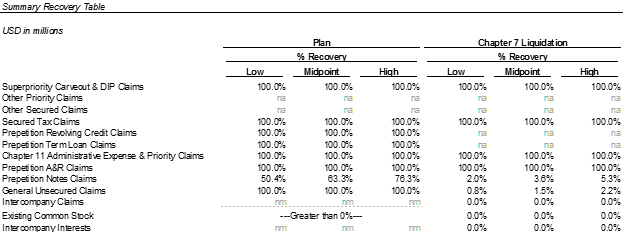
The Liquidation Analysis should be reviewed with the accompanying “Specific Notes to the Liquidation Analysis” set forth on the following pages. The below tables reflect the consolidation of the standalone liquidation analyses for each Debtor and non-debtor.
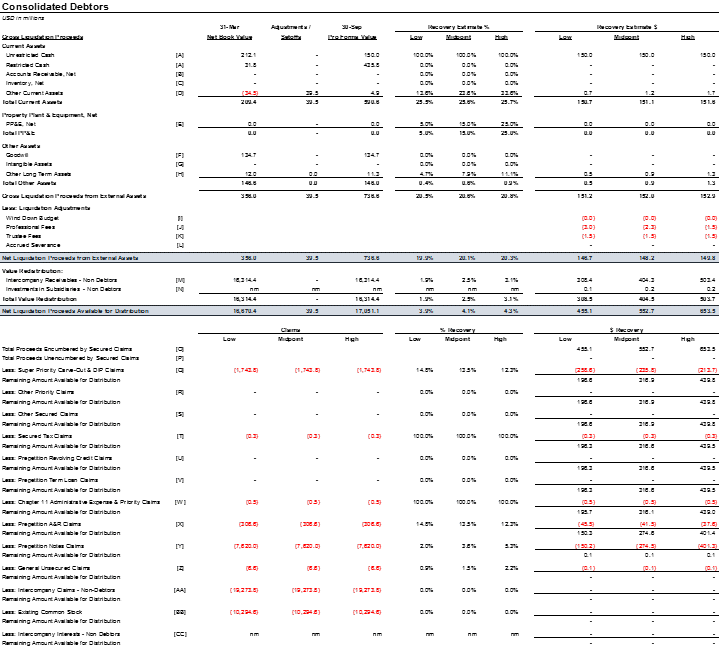
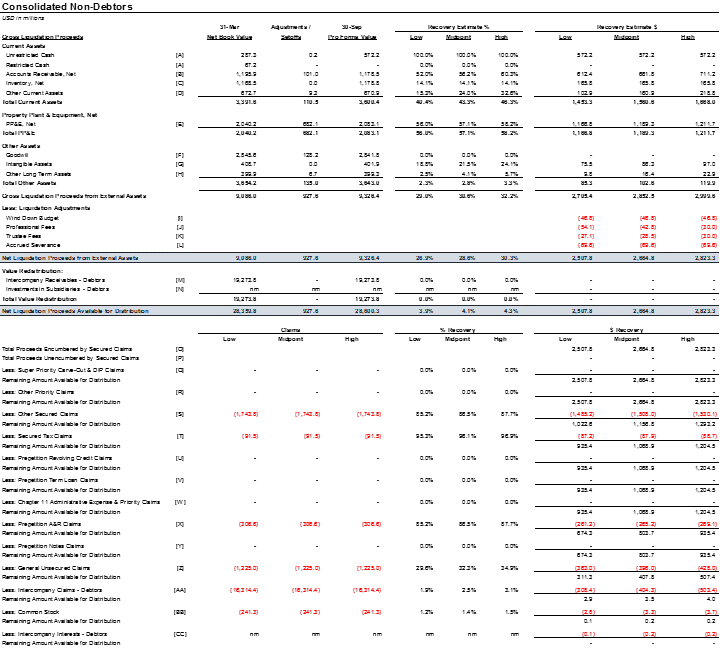
SPECIFIC NOTES TO THE LIQUIDATION ANALYSIS
Gross Liquidation Proceeds from External Assets
The below table summarizes asset recoverability percentages for the Debtors’ and non-debtors’ assets. Net Distribution Proceeds on the sale of non-debtor assets are recovered by the Debtors via settlement of intercompany receivables and/or equity distributions factoring the priority of claims that reside at each non-debtor (reference Value Redistribution section below).
|
Note |
|
Asset Type / Assumptions |
|
Debtors’ |
|
Non- |
|
|
A |
|
Unrestricted cash consist of all cash and liquid investments, if applicable, with maturities of three months or less in bank accounts, and restricted cash consist of cash collateralizing letters of credit. The Liquidation Analysis assumes cash collateralized letters of credit are drawn on the Liquidation Date and are not recoverable. |
|
26 |
% |
100 |
% |
|
|
|
|
|
|
|
|
|
|
B |
|
Accounts Receivable consist of trade amounts owed for equipment and services provided to oil & natural gas exploration and production customers. The analysis assumes that customers would terminate contracts at the Liquidation Date and offset the costs associated with switching to a new provider against amounts owed. The interruption of business caused by the liquidation could further impact the ability of the Trustee to collect on these amounts. |
|
NA |
|
56 |
% |
|
|
|
|
|
|
|
|
|
|
C |
|
Inventory consist of a wide variety of raw materials as well as parts and components made by other manufacturers and suppliers used as part of manufacturing operations. Additionally, Inventory includes items that are sold to outside customers, or used as spares, consumables, or replacement parts to support oilfield services provided to customers on a contract service or rental basis. |
|
NA |
|
14 |
% |
|
|
|
|
|
|
|
|
|
|
D |
|
Other Current Assets consist of prepaid (1) customs and duties fees, insurance, rent, taxes and other miscellaneous prepaid items; (2) supplier, customer and other miscellaneous deposits; (3) deferred charges; and (4) deferred tax assets. Prepaid expenses are assumed to be recoverable to the extent such amounts can be refunded or used to offset expenses included in the Wind Down |
|
24 |
% |
24 |
% |
|
|
|
|
|
|
|
|
|
|
Note |
|
Asset Type / Assumptions |
|
Debtors’ |
|
Non- |
|
|
|
|
Budget. Additionally, Other Current Assets include rig assets currently marketed for sale. |
|
|
|
|
|
|
|
|
|
|
|
|
|
|
|
E |
|
Property, Plant & Equipment (“PP&E”) includes drilling tools, manufacturing equipment, service equipment and rental equipment used in providing services across four primary offerings: (1) Production, (2) Completions, (3) Drilling and Evaluation and (4) Well Construction. Additionally, PP&E includes domestic and international owned real estate, as well as other miscellaneous assets (automobiles, FF&E, leasehold improvements, etc.). The Liquidation Analysis assumes all active customer contracts are terminated upon conversion to a chapter 7 but the Debtors have not quantified respective rejection damages claims for purposes of the Liquidation Analysis. Such claims could be material. |
|
15 |
% |
57 |
% |
|
|
|
|
|
|
|
|
|
|
F |
|
Goodwill represents the excess of consideration paid over the fair value of net tangible and identifiable intangible assets acquired in business combinations. |
|
0 |
% |
0 |
% |
|
|
|
|
|
|
|
|
|
|
G |
|
Intangible Assets, excluding goodwill, consist of acquired technology, licenses, patents, customer relationships and other identifiable intangible assets. Intangible Assets are amortized over their estimated economic lives generally ranging from two to 20 years, except for intangible assets with indefinite lives, which are not amortized, but tested for impairment. |
|
NA |
|
22 |
% |
|
|
|
|
|
|
|
|
|
|
H |
|
Other Long-Term Assets consist of (1) capitalized debt issuance costs; (2) deferred charges/deposits; and (3) deferred tax assets. Certain deposits are assumed to be recoverable to the extent such amounts can be refunded or used to offset expenses included in the Wind Down Budget. |
|
8 |
% |
4 |
% |
Liquidation Adjustments
I. Wind Down Budget
· The Wind Down Budget includes the expenses the Trustee will incur to efficiently and effectively monetize the assets over the six-month liquidation period. These expenses
relate to labor, building rent, warehouses and facilities expenses, transportation expense, insurance, health and safety expenses, and taxes. The Liquidation Analysis assumes total wind down costs of approximately $47 million for the Debtors and non-debtors over the six-month period following the Liquidation Date.
J. Professional Fees
· The post-conversion Professional Fees include estimates for certain professionals that will provide assistance and services during the wind down period. The Liquidation Analysis assumes the Trustee will retain lawyers, financial advisors, and investment bankers to assist in the liquidation. These advisors will assist in marketing the Debtors’ assets, litigating claims and resolving tax litigation matters, and resolving other matters relating to the wind down of the Debtors’ estates. The Liquidation Analysis estimates Professional Fees at a range of 1% to 2% of Gross Liquidation Proceeds from External Assets.
K. Trustee Fees
· Section 326(a) of the Bankruptcy Code provides that Trustee Fees may not exceed 3% of distributable proceeds in excess of $1 million. The Liquidation Analysis assumes the Trustee Fees would be 1% of Gross Liquidation Proceeds from External Assets.
L. Severance Costs
· In certain locations, local laws require the accrual of eventual separation payments that will be due upon the termination of employees regardless of the reason for separation. The Liquidation Analysis assumes total severance payments for the Debtors and non-debtors of approximately $70 million.
Value Redistribution
For purposes of determining the recoverability of (i) intercompany receivables owed to the Debtors from non-debtor entities and (ii) the Debtors’ equity interests in non-debtor subsidiaries, individual liquidation analyses were performed on each Debtor and non-debtor entity on a standalone basis. The recoverability of the Debtors’ intercompany receivables and investments in subsidiaries was calculated prior to determining the proceeds available for distribution to the Debtors’ claimants.
M. Intercompany Receivables
Historically, the Debtors and their subsidiaries created intercompany loans on an as-needed basis pursuant to various transactions related to intercompany trade debt, note agreements, overhead and expense allocations, and other intercompany charges. In addition, there are several entities that act as cash poolers for the organization. Intercompany loan agreements reflect arm’s length interest rates in effect at the commencement of the loans. The recoverability of Intercompany Receivables owed to the Debtors is assumed to be approximately 3%, or $404 million.
N. Investments in Subsidiaries
The Debtors’ Investments in Subsidiaries include the Debtors’ equity interests in debtor and non-debtor subsidiaries. The Liquidation Analysis assumes de minimis recoveries on the Debtors’ equity interests in non-debtor entities.
Net Liquidation Proceeds Available for Distribution
Based on the Liquidation Analysis, the Net Liquidation Proceeds Available for Distribution to the Debtors’ claimants range from approximately $455 million to $654 million. As discussed below, these proceeds are divided between proceeds encumbered by secured claims and proceeds unencumbered by secured claims.
O. Proceeds Encumbered by Secured Claims
The Liquidation Analysis assumes a range of approximately $455 million to $654 million in proceeds encumbered by secured claims at the Debtors.
P. Proceeds Unencumbered by Secured Claims
The Liquidation Analysis assumes there are no proceeds unencumbered by secured claims.
Claims
Q. DIP Claims and DIP Carveout Claims
DIP Claims
The Bankruptcy Code grants superpriority status to claims made pursuant to the Debtors’ DIP Credit Agreement. The Liquidation Analysis assumes DIP Claims outstanding as of the Liquidation Date include unpaid principal and interest in the amount of approximately $1,744 million.
Carve-Out Claims
The proposed DIP Order grants superpriority status to chapter 11 Professional Persons for fees incurred prior to notice of conversion to a chapter 7 liquidation, allowed by the Bankruptcy Court, and payable under the Bankruptcy Code. Additionally, the proposed DIP Order provides for payment of fees to chapter 11 Professionals, subject to the Post Carve-Out Trigger Notice Cap (as defined in the proposed DIP Order), incurred after the date the DIP Agent issues a default notice (assumed conversion to a chapter 7 liquidation thereafter).
The DIP Credit Agreement is guaranteed by certain non-debtor entities. Claims at guarantor non-debtor entities are treated as secured claims (classified as Other Secured Claims at non-debtors). The Liquidation Analysis assumes the Liquidation Proceeds (from Debtors and non-debtor guarantors, in the aggregate) would be sufficient to satisfy 100% of the DIP Claims and DIP Carve-Out Claims.
R. Other Priority Claims
The Liquidation Analysis assumes there will be no Other Priority Claims as of the Liquidation Date.
S. Other Secured Claims
The Liquidation Analysis assumes there will be no Other Secured Claims at the Debtors as of the Liquidation Date. Reference above treatment for claims arising from the DIP credit Agreement for non-debtor guarantors.
T. Secured Tax Claims
Secured Tax Claims consist of accrued and unpaid income, sales and use, franchise, property, VAT and other taxes owed at the Debtors and non-debtors. The Liquidation Analysis assumes the Liquidation Proceeds would be sufficient to satisfy approximately 100% and 96% of the Secured Tax Claims at the Debtors and non-debtors, respectively.
U. Prepetition Revolving Credit Claims
The Liquidation Analysis assumes there will be no Prepetition Revolving Claims at the Debtors as of the Liquidation Date.
V. Prepetition Term Loan Claims
The Liquidation Analysis assumes there will be no Prepetition Revolving Claims at the Debtors as of the Liquidation Date.
W. Chapter 11 Administrative Expense & Priority Claims
Chapter 11 Administrative Expense & Priority Claims consist of estimated post-petition accrued operating expenditures and other administrative and professional services. The Liquidation Analysis assumes approximately $1 million in Chapter 11 Administrative Expense & Priority Claims at the Liquidation Date. The Liquidation Analysis further assumes the Liquidation Proceeds would be sufficient to satisfy approximately 100% of the Chapter 11 Administrative Expense & Priority Claims.
X. Prepetition A&R Claims
Prepetition A&R Claims consist of claims arising from the unsecured senior revolving credit agreement for accrued and unpaid principal, interest and fees through June 30, 2019. The Prepetition A&R Claims are guaranteed by certain non-debtor entities. The Liquidation Analysis assumes approximately $307 million in Prepetition A&R Claims at the Liquidation Date. The Liquidation Analysis further assumes the Liquidation Proceeds (at the Debtors and non-debtor guarantors) would be sufficient to satisfy approximately 100% of the Prepetition A&R Claims.
Y. Prepetition Notes Claims
Prepetition Note Claims consist of claims arising Claims arising from the Senior unsecured Notes for accrued and unpaid principal, interest and fees through June 30, 2019. The Liquidation
Analysis assumes approximately $7,620 million in Prepetition Note Claims at the Liquidation Date. The Liquidation Analysis further assumes the Liquidation Proceeds would be sufficient to satisfy approximately 4% of the Prepetition Note Claims.
Z. General Unsecured Claims
General Unsecured Claims consist certain pre-petition liabilities not subject to first-day relief (applicable to Debtors), and other accrued and unpaid operating, administrative and professional services-related expenditures at non-debtors outstanding on the Liquidation Date. The actual amount of General Unsecured Claims could vary materially from these estimates. No order has been entered by the Bankruptcy Court estimating or otherwise fixing the amount of General Unsecured Claims at the Debtors. The Liquidation Analysis assumes approximately $7 million and $1,225 million in General Unsecured Claims at the Liquidation Date at the Debtors and non-debtors, respectively. The Liquidation Analysis further assumes the Liquidation Proceeds would be sufficient to satisfy approximately 2% and 32% of the General Unsecured Claims at the Debtors and non-debtors, respectively.
AA. Intercompany Claims
Intercompany Claims consist of amounts owed by and between the Debtors and/or non-debtor entities for pre-petition intercompany activity. The Liquidation Analysis assumes approximately $19,274 million in Intercompany Claims owed by the Debtors to non-debtors at the Liquidation Date. The Liquidation Analysis further assumes there would be no recovery on these Claims. See Value Redistribution section above for further detail on recoverability of amounts owed by the non-debtors to the Debtors.
BB. Existing Common Stock
Existing Common Stock consist of common equity interests in Weatherford International arising from the issuance of common stock. The Liquidation Analysis assumes there would be no recovery on these Interests.
CC. Intercompany Interests
Intercompany Interests consist of the Debtors’ equity interests held by other Debtors and non-debtor subsidiaries. The Liquidation Analysis assumes there would be no recovery on these Interests. See Value Redistribution section above for further detail on the recoverability of the Debtors’ equity interests in non-debtor subsidiaries.
EXHIBIT D
Financial Projections
Financial Projections
The Debtors believe that the Plan(1) meets the feasibility requirement set forth in section 1129(a)(11) of the Bankruptcy Code, as confirmation is not likely to be followed by liquidation or the need for further financial reorganization of the Debtors or any successor under the Plan. In connection with the planning and development of a plan of reorganization and for the purposes of determining whether such plan would satisfy this feasibility standard, the Debtors analyzed their ability to satisfy their financial obligations while maintaining sufficient liquidity and capital resources.
The Debtors do not, as a matter of course, publish their business plans or strategies, projections or anticipated financial position. Accordingly, the Debtors do not anticipate that they will, and disclaim any obligation to, furnish updated business plans or the Financial Projections to holders of Claims or other parties in interest going forward, or to include such information in documents required to be filed with the SEC or otherwise make such information public, unless required to do so by the SEC or other regulatory bodies pursuant to the provisions of the Plan.
In connection with the Disclosure Statement, the Debtors’ management team (“Management”) prepared the Financial Projections for the years 2019 through 2022 (the “Projection Period”). The Financial Projections were prepared by Management and are based on several assumptions made by Management with respect to the future performance of the Reorganized Debtors’ operations.
The Debtors have prepared the Financial Projections based on information available to them, including information derived from public sources that have not been independently verified. No representation or warranty, expressed or implied, is provided in relation to fairness, accuracy, correctness, completeness, or reliability of the information, opinions, or conclusions expressed herein.
THESE FINANCIAL PROJECTIONS WERE NOT PREPARED WITH A VIEW TOWARD COMPLIANCE WITH PUBLISHED GUIDELINES OF THE SEC OR GUIDELINES ESTABLISHED BY THE AMERICAN INSTITUTE OF CERTIFIED PUBLIC ACCOUNTANTS FOR PREPARATION AND PRESENTATION OF PROSPECTIVE FINANCIAL INFORMATION.
ALTHOUGH MANAGEMENT HAS PREPARED THE FINANCIAL PROJECTIONS IN GOOD FAITH AND BELIEVES THE ASSUMPTIONS TO BE REASONABLE, IT IS IMPORTANT TO NOTE THAT NEITHER THE DEBTORS NOR THE REORGANIZED DEBTORS CAN PROVIDE ANY ASSURANCE THAT SUCH ASSUMPTIONS WILL BE REALIZED. AS DESCRIBED IN DETAIL IN THE DISCLOSURE STATEMENT, A VARIETY OF RISK FACTORS COULD AFFECT THE REORGANIZED DEBTORS’ FINANCIAL RESULTS AND MUST BE CONSIDERED. ACCORDINGLY, THE FINANCIAL PROJECTIONS SHOULD BE REVIEWED IN CONJUNCTION WITH A REVIEW OF THE
(1) Capitalized terms used but not otherwise defined herein have the meanings ascribed to them in the Disclosure Statement, to which these Financial Projections are attached as Exhibit D or the Plan attached to the Disclosure Statement as Exhibit A.
DISCLOSURE STATEMENT AND THE ASSUMPTIONS DESCRIBED HEREIN, INCLUDING ALL RELEVANT QUALIFICATIONS AND FOOTNOTES.
The Financial Projections contain certain forward-looking statements, all of which are based on various estimates and assumptions. Such forward looking statements are subject to inherent uncertainties and to a wide variety of significant business, economic, and competitive risks, including those summarized herein. When used in the Financial Projections, the words, “anticipate,” “believe,” “estimate,” “will,” “may,” “intend,” “expect,” and similar expressions should be generally identified as forward-looking statements. Although the Debtors believe that their plans, intentions, and expectations reflected in the forward-looking statements are reasonable, they cannot be sure that they will be achieved. These statements are only predictions and are not guarantees of future performance or results. Forward-looking statements are subject to risks and uncertainties that could cause actual results to differ materially from those contemplated by a forward-looking statement. All forward-looking statements attributable to the Debtors or Persons or Entities acting on their behalf are expressly qualified in their entirety by the cautionary statements set forth herein. Forward-looking statements speak only as of the date on which they are made. Except as required by law, the Debtors expressly disclaim any obligation to update any forward-looking statement, whether because of new information, future events, or otherwise.
The financial projections should be read in conjunction with the assumptions, qualifications, and explanations set forth in the Disclosure Statement and the Plan in their entirety as well as the notes and assumptions set forth below.
The Financial Projections are subject to inherent risks and uncertainties, most of which are difficult to predict and many of which are beyond Management’s control. Although Management believes these assumptions are reasonable under the circumstances, such assumptions are subject to significant uncertainties, including, but not limited to, (a) changes in capital spending on oil field services in various end markets; (b) oil, natural gas, and other commodity pricing; (c) applicable laws and regulations; (d) interest rates and inflation; (e) business combinations among the Debtors’ competitors, suppliers and customers; (f) severe or unseasonable weather; and (g) availability and cost of steel, fuel and other raw materials. Additional information regarding these uncertainties are described in Article V of the Disclosure Statement. Should one or more of the risks or uncertainties referenced in the Disclosure Statement occur, or should underlying assumptions prove incorrect, actual results and plans could differ materially from those expressed in the Financial Projections. Further, new factors could cause actual results to differ materially from those described in the Financial Projections, and it is not possible to predict all such factors, or to the extent to which any such factor or combination of factors may cause actual results to differ from those contained in the Financial Projections. The Financial Projections herein are not, and must not be viewed as, a representation of fact, prediction or guaranty of the reorganized Debtors’ future performance.
1) General Assumptions
A. Overview
The Debtors and their consolidated subsidiaries are a leading provider of equipment and services to the oil and natural gas exploration and production industry. The Debtors principal business is to provide equipment and services to the oil and natural gas exploration and production
industry, both onshore and offshore. Product and services include: (1) Production, (2) Completions, (3) Drilling and Evaluation and (4) Well Construction. Demand for the Debtors services and products depends upon commodity prices for oil and gas, the number of oil and natural gas wells drilled, the depth and drilling conditions of wells, the number of well completions, the depletion and age of existing wells and the level of workover activity worldwide. Technology is critical to the oil and natural gas marketplace as a result of the maturity of the world’s oil and natural gas reservoirs, the acceleration of production decline rates and the focus on complex well designs, including deep-water prospects. Clients continue to seek, test and use production-enabling technologies at an increasing rate. The Debtors have invested a substantial amount of our time and resources into building our technology offerings, which helps us to provide our clients with more efficient tools to find and produce oil and natural gas. Products and services are provided worldwide and in a variety of distinct segments with various other competitors and suppliers.
Presentation
The Financial Projections are presented on a basis of accounting consistent with Generally Accepted Accounting Principles (“GAAP”). GAAP requires that majority-owned subsidiaries be reported under the consolidation method of accounting. As a result, the Company has shown the results of all consolidated entities within the Financial Projections presented herein.
B. Accounting Policies
The Financial Projections have been prepared using accounting policies that are materially consistent with those applied in the Company’s historical financial statements. The Financial Projections do not reflect the formal implementation of reorganization accounting pursuant to FASB Accounting Standards Codification Topic 852, Reorganizations (“ASC 852”). Overall, the implementation of ASC 852 is not anticipated to have a material impact on the underlying economics of the Plan.
C. Methodology
In developing the Financial Projections, Management reviewed current utilization of products and services by region and segment, as well as backlog of firm orders. Management evaluates customer activity in relevant markets and their capital spending outlook to assess whether contracts are likely to be renewed. Depending on the service line, customer and location, contracts vary in their terms and provisions.
D. Market Forecast
The Financial Projections were prepared based on the level of spending in the energy industry, which is heavily influenced by the current and expected future prices of oil and natural gas. Changes in expenditures result in an increased or decreased demand for products and services. Rig activity is an indicator of the level of spending for the exploration and production of oil and natural gas reserves.
E. Plan Consummation
The Financial Projections assume that the Plan will be consummated on or around September 30, 2019.
2) Assumptions with Respect to the Projected Cash Flow Statement
A. Overview
The projected results of operations and cash flows over the projected period to the assumed emergence date of September 30, 2019.
B. Working Capital
Working capital assumptions are based on movements in accounts receivable, accounts payable, and other accrued current assets and liabilities. Projected balances are based on the historical cash conversion cycle of the Company’s specific business units. Prospective working capital assumptions were supplemented by Management as deemed appropriate.
C. Capital Structure
The reorganized Company’s estimated post-emergence capital structure is assumed to be effective beginning October 1, 2019 or shortly thereafter. The Financial Projections assume the following key assumptions at emergence:
· A first lien secured Exit RCF Facility maturing 2024, with $1.0 billion in commitments and a $500 million LC Sub-Facility. The Exit Facility is assumed to have no amounts drawn as of the effective date and $415 million of letters of credit under the LC Sub-facility, reducing the Company’s availability by that amount as of the Effective Date. The Exit Facility bears cash interest at an annual rate of LIBOR plus 300 basis points, an unused commitment fee of 50 basis points, and fees on outstanding letters of credit at an annual rate of 200 basis points.
· $1.25 billion of Tranche A Exit Senior Notes maturing in 2024. $500 million of the Tranche A Exit Senior Notes are callable at the Company’s option prior to maturity at 103% of par. The Tranche A Exit Senior Notes accrue cash interest at an annual rate of 9%, payable semi-annually.
· $1.25 billion of Tranche B Exit Senior Notes maturing in 2026. $500 million of the Tranche B Exit Senior Notes can be converted into equity at the option of the Unsecured Noteholders prior to emergence at the midpoint of the Plan equity value. The Tranche B Exit Senior Notes accrue cash interest at an annual rate of 8%, payable semi-annually.
3) Assumptions with Respect to the Projected Income Statement
A. Revenue
The Financial Projections include revenue generated by product and services sales, either separately or bundled together to provide integrated solutions up to, and including, integrated well construction where the Company is responsible for the entire process of drilling, constructing and
completing a well. Higher or lower activity and productivity related to the increase in rig count, and utilization in the Company’s product lines, are major factors in revenue generation.
B. Operating Expenses
Operating costs (“OpEx”) are based on the Company’s ability to manage the workforce, supply chain and business processes, information technology systems and technological innovation and commercialization, including the impact of restructuring, business enhancements, and transformation efforts. OpEx is projected based on historical operating costs and expected utilization of products and services currently under contract and expectations regarding future contracts. OpEx is projected by segment and region.
Furthermore, through the Company’s transformation program, Management continue to see improvements in operating efficiency, ongoing lowering of non-productive time, improvements in collaboration with customers and continuing progress towards transformation targets.
C. General and Administrative Expenses
General and Administrative Costs (“G&A”) are primarily comprised of labor costs, legal expenses, and other expenses associated with corporate overhead. Projected G&A is based primarily on historical G&A costs, adjusted for recent cost reduction efforts. Annual G&A is projected to be approximately $30 million in 2019 with annual increases of 2% to 4% through the projection period.
D. Depreciation and Amortization
Depreciation and amortization reflects the anticipated book expenses based on the carrying asset values.
E. Interest Expense
Post-emergence interest expense is forecasted based on the Company’s pro forma capital structure as more fully described in the Capital Structure section included herein and the Plan and the exhibits thereto.
F. Income Tax (Expense) Benefit
Income tax expenses are forecasted based on the projected earnings and tax rates by jurisdiction where the Company’s earnings are generated.
G. Capital Expenditures
Forecasted capital expenditures were prepared with consideration for the needs of the Company’s fixed assets. Capital expenditures primarily relate to maintaining and continuing to invest in the Company’s worldwide drill pipe and rental equipment inventory, sustaining its drilling rig fleet by keeping each rig in proper working condition, as well as capital outlays required for customer-related rig upgrades. Capital expenditures also include capitalized corporate
expenditures, such as expenditures required to maintain the Company’s information technology equipment and software.
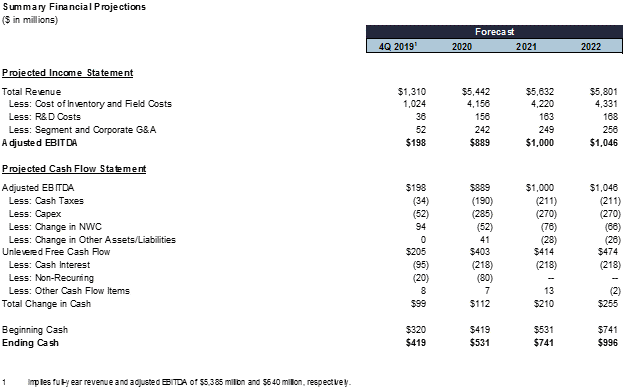
EXHIBIT E
Valuation Analysis
Valuation Analysis of Reorganized Weatherford
THE INFORMATION CONTAINED HEREIN IS NOT A PREDICTION OR GUARANTEE OF THE ACTUAL MARKET VALUE THAT MAY BE REALIZED THROUGH THE SALE OF ANY SECURITIES TO BE ISSUED PURSUANT TO THE PLAN. THE INFORMATION IS PRESENTED SOLELY FOR THE PURPOSE OF PROVIDING ADEQUATE INFORMATION UNDER SECTION 1125 OF THE BANKRUPTCY CODE TO ENABLE THE HOLDERS OF CLAIMS ENTITLED TO VOTE TO ACCEPT OR REJECT THE PLAN TO MAKE AN INFORMED JUDGMENT ABOUT THE PLAN AND SHOULD NOT BE USED OR RELIED UPON FOR ANY OTHER PURPOSE, INCLUDING THE PURCHASE OR SALE OF CLAIMS AGAINST THE DEBTORS OR ANY OF THEIR AFFILIATES.(1)
A. Estimated Valuation
Solely for the purposes of the Plan and the Disclosure Statement, Lazard Frères & Co. LLC (“Lazard”), as investment banker to the Debtors, has estimated a range of total enterprise value (“Enterprise Value”) for Reorganized Weatherford on a consolidated going-concern basis and pro forma for the transactions contemplated by the Plan (the “Valuation Analysis”). The Valuation Analysis is based on financial information and projections provided by the Debtors’ management, including the Financial Projections attached to the Disclosure Statement as Exhibit D (collectively the “Projections”), and information provided by other sources. The Valuation Analysis assumes that the Effective Date will occur on September 30, 2019. The valuation estimates set forth herein represent valuation analyses of Reorganized Weatherford generally based on the application of customary valuation techniques deemed appropriate by Lazard.
Based on the Projections and solely for the purposes of the Plan, Lazard estimates that the potential range of Reorganized Weatherford’s operations on a going concern basis (the “Enterprise Value”) is approximately $4.80 to $6.80 billion. Based on the potential range of Enterprise Value and assumed net cash of $320 million as of the Effective Date, Lazard estimates an imputed range of potential equity value of $2.62 to $4.62 billion, following the issuance of the $1.25 billion of Tranche A Exit Notes and $1.25 billion of Tranche B Exit Notes. For purposes of the Valuation Analysis, Lazard assumed that, between the date of filing of the Disclosure Statement and the assumed Effective Date, no material changes that would affect estimated valuation will occur. Reorganized Weatherford’s assumed net cash is the sum of (i) $1,158 million of balance sheet cash as of the Effective Date (including restricted cash) and (ii) $ 1.25 billion of Tranche A Exit Notes proceeds, less the sum of (i) $1.0 billion of DIP Term Loan repayment, (ii) $715 million of DIP RCF repayment, (iii) $307 million of Unsecured RCFs repayment, and (iv) $67 million of exit costs.
The value of the New Warrants has been estimated using a Black-Scholes valuation model and reflecting the estimated range of Reorganized Weatherford’s equity value above. Based on that analysis, the value of the New Warrants is estimated at $3.8 million to $38.9 million, with a midpoint of $15.5 million.
(1) All capitalized terms used but not otherwise defined herein shall have the meanings ascribed to them in the Disclosure Statement for the Joint Chapter 11 Plan of Reorganization for Weatherford and Its Debtor Affiliates (the “Disclosure Statement”), to which this Valuation Analysis is attached as Exhibit E.
Lazard’s Valuation Analysis does not constitute an opinion as to fairness from a financial point of view of the consideration to be received or paid under the Plan, of the terms and provisions of the Plan, or with respect to any other matters.
B. Valuation Methodology
The consolidated value of Reorganized Weatherford was estimated by primarily relying on two generally accepted valuation techniques: (i) Discounted Cash Flow (“DCF”) Analysis and (ii) Comparable Company Analysis. While the precedent transaction methodology is sometimes used, it was believed that this methodology has less relevance when assessing the Enterprise Value of Reorganized Weatherford due to the lack of recent comparable transactions, among other factors.
(i) Discounted Cash Flow Analysis:
DCF analysis is a forward-looking enterprise valuation methodology that estimates the value of an asset or business by calculating the present value of expected future cash flows to be generated by that asset or business. Under this methodology, projected future cash flows are discounted by the business’ weighted average cost of capital (the “Discount Rate”). The Discount Rate reflects the estimated rate of return that would be required by debt and equity investors to invest in the business based on its capital structure. The Enterprise Value of the firm is determined by calculating the present value of the unlevered after-tax free cash flows based on the Projections provided by management plus an estimate for the value of the firm beyond the Projection Period, known as the terminal value. The range of potential terminal values was calculated by applying a multiple to earnings before interest, taxes, depreciation and amortization (“EBITDA”) and by deriving a value using an assumed perpetuity growth rate applied to the unlevered after-tax free cash flow in the final year of the Projection Period. The terminal value was then discounted back to the assumed Effective Date.
(ii) Comparable Public Company Analysis:
Comparable Public Company Analysis estimates the value of a company relative to other publicly traded companies with similar operating and financial characteristics. A set of publicly traded companies was selected based on similar business and financial characteristics to Reorganized Weatherford. Criteria for the selected reference group included, among other relevant characteristics, similarity in business, business risks, growth prospects, product mix, customer base, margins, market presence, size and scale of operations. The selected reference group may not be comparable to Reorganized Weatherford in all aspects, and may differ materially in others.
In deriving Enterprise Value ranges under the Comparable Public Company Analysis methodology, EBITDA multiples were the primary valuation metric. Based on 2016, 2017 and 2018 historical multiples of this reference group, 2019, 2020 and 2021 projected multiples of this reference group and certain qualitative judgments based on differences between the characteristics of Reorganized Weatherford and the
selected reference group, a range of multiples was then applied to Reorganized Weatherford’s implied 2019, 2020 and 2021 EBITDA.
THE VALUATION ANALYSIS REFLECTS WORK PERFORMED BY LAZARD ON THE BASIS OF INFORMATION IN RESPECT OF THE BUSINESSES AND ASSETS OF THE DEBTORS AVAILABLE TO LAZARD AS OF JUNE 13, 2019. IT SHOULD BE UNDERSTOOD THAT, ALTHOUGH SUBSEQUENT DEVELOPMENTS MAY AFFECT LAZARD’S CONCLUSIONS, LAZARD DOES NOT HAVE ANY OBLIGATION TO UPDATE, REVISE, OR REAFFIRM ITS VALUATION ANALYSIS AND DOES NOT INTEND TO DO SO.
LAZARD DID NOT INDEPENDENTLY VERIFY THE PROJECTIONS OR OTHER INFORMATION THAT LAZARD USED IN THE VALUATION ANALYSIS, AND NO INDEPENDENT VALUATIONS OR APPRAISALS OF THE DEBTORS WERE SOUGHT OR OBTAINED IN CONNECTION THEREWITH. THE VALUATION ANALYSIS WAS DEVELOPED SOLELY FOR PURPOSES OF THE PLAN AND THE ANALYSIS OF POTENTIAL RELATIVE RECOVERIES TO CREDITORS THEREUNDER. THE VALUATION ANALYSIS REFLECTS THE APPLICATION OF VARIOUS VALUATION TECHNIQUES, DOES NOT PURPORT TO BE AN OPINION AND DOES NOT PURPORT TO REFLECT OR CONSTITUTE AN APPRAISAL, LIQUIDATION VALUE, OR ESTIMATE OF THE ACTUAL MARKET VALUE THAT MAY BE REALIZED THROUGH THE SALE OF ANY SECURITIES TO BE ISSUED OR ASSETS TO BE SOLD PURSUANT TO THE PLAN, WHICH MAY BE SIGNIFICANTLY DIFFERENT THAN THE AMOUNTS SET FORTH IN THE VALUATION ANALYSIS.
THE VALUE OF AN OPERATING BUSINESS IS SUBJECT TO NUMEROUS UNCERTAINTIES AND CONTINGENCIES THAT ARE DIFFICULT TO PREDICT AND WILL FLUCTUATE WITH CHANGES IN FACTORS AFFECTING THE FINANCIAL CONDITION AND PROSPECTS OF SUCH A BUSINESS. AS A RESULT, THE VALUATION ANALYSIS IS NOT NECESSARILY INDICATIVE OF ACTUAL OUTCOMES, WHICH MAY BE SIGNIFICANTLY MORE OR LESS FAVORABLE THAN THOSE SET FORTH HEREIN. BECAUSE SUCH ESTIMATES ARE INHERENTLY SUBJECT TO UNCERTAINTIES, NEITHER THE DEBTORS, LAZARD, NOR ANY OTHER PERSON ASSUMES RESPONSIBILITY FOR THEIR ACCURACY. IN ADDITION, THE POTENTIAL VALUATION OF NEWLY ISSUED SECURITIES IS SUBJECT TO ADDITIONAL UNCERTAINTIES AND CONTINGENCIES, ALL OF WHICH ARE DIFFICULT TO PREDICT. ACTUAL MARKET PRICES OF SUCH SECURITIES AT ISSUANCE WILL DEPEND UPON, AMONG OTHER THINGS, PREVAILING INTEREST RATES, CONDITIONS IN THE FINANCIAL AND COMMODITY MARKETS, THE ANTICIPATED INITIAL SECURITIES HOLDINGS OF PREPETITION CREDITORS, SOME OF WHICH MAY PREFER TO LIQUIDATE THEIR INVESTMENT RATHER THAN HOLD IT ON A LONG-TERM BASIS, THE POTENTIALLY DILUTIVE IMPACT OF CERTAIN EVENTS, INCLUDING THE ISSUANCE OF EQUITY SECURITIES PURSUANT TO ANY MANAGEMENT INCENTIVE COMPENSATION PLAN, AND OTHER FACTORS THAT GENERALLY INFLUENCE THE PRICES OF SECURITIES.
Lazard assumed that the Projections were reasonably prepared in good faith and on a basis reflecting the Debtors’ best estimates and judgments as to the future operating and financial performance of Reorganized Weatherford. The Valuation Analysis assumes that the actual performance of Reorganized Weatherford will correspond to the Projections in all material respects. If the business performs at levels below or above those set forth in the Projections, such performance may have a materially negative or positive impact, respectively, on the Valuation Analysis and estimated potential ranges of Enterprise Value therein.
In preparing the Valuation Analysis, Lazard: (a) reviewed certain historical financial information of the Debtors for recent years and interim periods; (b) reviewed certain financial and operating data of the Debtors, including the Projections; (c) discussed the Debtors’ operations and future prospects with the Debtors’ senior management team and third-party advisors; (d) reviewed certain publicly available financial data for, and considered the market value of, public companies that Lazard deemed generally relevant in analyzing the value of Reorganized Weatherford; (e) considered certain economic and industry information that Lazard deemed generally relevant to Reorganized Weatherford; and (f) conducted such other studies, analyses, inquiries, and investigations as deemed appropriate. Lazard assumed and relied on the accuracy and completeness of all financial and other information furnished to it by the Debtors’ management and other parties as well as publicly available information.
The Valuation Analysis does not constitute a recommendation to any holder of Allowed Claims or any other person as to how such person should vote or otherwise act with respect to the Plan. Lazard has not been requested to, and does not express any view as to, the potential value of Reorganized Weatherford’s securities on issuance or at any other time.
Lazard did not estimate the value of any tax attributes nor did it estimate the impact of any cancellation of indebtedness income on the Reorganized Debtors’ Projections. Such matters are subject to many uncertainties and contingencies that are difficult to predict. Any changes to the assumptions on the availability of tax attributes or the impact of cancellation of indebtedness income on the Reorganized Debtor’s Projections could materially impact Lazard’s valuation analysis.
THE SUMMARY SET FORTH ABOVE DOES NOT PURPORT TO BE A COMPLETE DESCRIPTION OF THE VALUATION ANALYSIS PERFORMED BY LAZARD. THE PREPARATION OF A VALUATION ANALYSIS INVOLVES VARIOUS DETERMINATIONS AS TO THE MOST APPROPRIATE AND RELEVANT METHODS OF FINANCIAL ANALYSIS AND THE APPLICATION OF THESE METHODS IN THE PARTICULAR CIRCUMSTANCES AND, THEREFORE, SUCH AN ANALYSIS IS NOT READILY SUITABLE TO SUMMARY DESCRIPTION. THE VALUATION ANALYSIS PERFORMED BY LAZARD IS NOT NECESSARILY INDICATIVE OF ACTUAL VALUES OR FUTURE RESULTS, WHICH MAY BE SIGNIFICANTLY MORE OR LESS FAVORABLE THAN THOSE DESCRIBED HEREIN.
LAZARD IS ACTING AS INVESTMENT BANKER TO THE DEBTORS, AND HAS NOT BEEN, WILL NOT BE RESPONSIBLE FOR, AND WILL NOT PROVIDE ANY TAX, ACCOUNTING, ACTUARIAL, LEGAL, OR OTHER SPECIALIST ADVICE.
EXHIBIT G
Prepetition Indebtedness Borrowers, Guarantors, and Obligors
Chapter 11 Filing Entities
Weatherford International plc
Weatherford International Ltd.
Weatherford International, LLC
All Weatherford Entities
|
|
|
Entity |
|
Jurisdiction |
|
Revolver |
|
TL |
|
A&R |
|
Revolver |
|
TL |
|
TL |
|
A&R |
|
A&R |
|
DIP |
|
DIP |
|
1. |
|
Weatherford International Ltd. |
|
Bermuda |
|
X |
|
X |
|
X |
|
X |
|
X |
|
|
|
X |
|
X |
|
X |
|
X |
|
2. |
|
WOFS Assurance Limited |
|
Bermuda |
|
X |
|
|
|
|
|
X |
|
|
|
X |
|
X |
|
|
|
|
|
X |
|
3. |
|
Weatherford Australia Pty Limited |
|
Australia |
|
|
|
|
|
|
|
X |
|
X |
|
|
|
X |
|
X |
|
|
|
X |
|
4. |
|
Key International Drilling Company Limited |
|
Bermuda |
|
|
|
|
|
|
|
X |
|
X |
|
|
|
X |
|
X |
|
|
|
X |
|
5. |
|
Sabre Drilling Ltd. |
|
Bermuda |
|
|
|
|
|
|
|
X |
|
X |
|
|
|
X |
|
|
|
|
|
X |
|
6. |
|
Weatherford Bermuda Holdings Ltd. |
|
Bermuda |
|
|
|
|
|
|
|
X |
|
X |
|
|
|
X |
|
|
|
|
|
X |
|
7. |
|
Weatherford International Holding (Bermuda) Ltd. |
|
Bermuda |
|
|
|
|
|
|
|
X |
|
X |
|
|
|
X |
|
|
|
|
|
X |
|
8. |
|
Weatherford Pangaea Holdings Ltd. |
|
Bermuda |
|
|
|
|
|
|
|
X |
|
X |
|
|
|
X |
|
|
|
|
|
X |
|
9. |
|
Weatherford Services, Ltd. |
|
Bermuda |
|
|
|
|
|
|
|
X |
|
X |
|
|
|
X |
|
X |
|
|
|
X |
|
10. |
|
Weatherford Holdings (Bermuda) Ltd. |
|
Bermuda |
|
|
|
|
|
|
|
X |
|
|
|
X |
|
X |
|
|
|
|
|
X |
|
|
|
Entity |
|
Jurisdiction |
|
Revolver |
|
TL |
|
A&R |
|
Revolver |
|
TL |
|
TL |
|
A&R |
|
A&R |
|
DIP |
|
DIP |
|
11. |
|
Weatherford Colombia Limited |
|
British Virgin Islands |
|
|
|
|
|
|
|
X |
|
X |
|
|
|
X |
|
X |
|
|
|
X |
|
12. |
|
Weatherford Drilling International (BVI) Ltd. |
|
British Virgin Islands |
|
|
|
|
|
|
|
X |
|
X |
|
|
|
X |
|
X |
|
|
|
X |
|
13. |
|
Weatherford Drilling International Holdings (BVI) Ltd. |
|
British Virgin Islands |
|
|
|
|
|
|
|
X |
|
X |
|
|
|
X |
|
|
|
|
|
X |
|
14. |
|
Weatherford Holdings (BVI) Ltd. |
|
British Virgin Islands |
|
|
|
|
|
|
|
X |
|
X |
|
|
|
X |
|
X |
|
|
|
X |
|
15. |
|
Weatherford Oil Tool Middle East Limited |
|
British Virgin Islands |
|
|
|
|
|
|
|
X |
|
X |
|
|
|
X |
|
X |
|
|
|
X |
|
16. |
|
Weatherford Canada Ltd. |
|
Canada |
|
|
|
|
|
|
|
X |
|
X |
|
|
|
X |
|
|
|
|
|
X |
|
17. |
|
Weatherford (Nova Scotia) ULC |
|
Canada |
|
|
|
|
|
|
|
X |
|
X |
|
|
|
X |
|
|
|
|
|
X |
|
18. |
|
Precision Energy Services ULC |
|
Canada |
|
|
|
|
|
|
|
|
|
|
|
|
|
|
|
|
|
|
|
X |
|
19. |
|
Precision Energy International Ltd. |
|
Canada |
|
|
|
|
|
|
|
|
|
|
|
|
|
|
|
|
|
|
|
X |
|
20. |
|
Precision Energy Services Colombia Ltd. |
|
Canada |
|
|
|
|
|
|
|
|
|
|
|
|
|
|
|
|
|
|
|
X |
|
21. |
|
Weatherford Eurasia Limited |
|
England |
|
|
|
|
|
|
|
X |
|
X |
|
|
|
X |
|
|
|
|
|
X |
|
|
|
|
|
|
|
|
|
|
|
|
|
|
|
|
|
|
|
|
|
|
|
|
|
|
|
|
|
Entity |
|
Jurisdiction |
|
Revolver |
|
TL |
|
A&R |
|
Revolver |
|
TL |
|
TL |
|
A&R |
|
A&R |
|
DIP |
|
DIP |
|
22. |
|
Weatherford U.K. Limited |
|
England |
|
|
|
|
|
|
|
X |
|
X |
|
|
|
X |
|
X |
|
|
|
X |
|
23. |
|
Weatherford International plc |
|
Ireland |
|
|
|
|
|
|
|
X |
|
X |
|
|
|
X |
|
|
|
X |
|
X |
|
24. |
|
Weatherford European Holdings (Luxembourg) S.à r.l. |
|
Luxembourg |
|
|
|
|
|
|
|
X |
|
X |
|
|
|
X |
|
|
|
|
|
X |
|
25. |
|
Weatherford International (Luxembourg) Holdings S.à r.l. |
|
Luxembourg |
|
|
|
|
|
|
|
X |
|
X |
|
|
|
X |
|
|
|
|
|
X |
|
26. |
|
Weatherford Netherlands B.V. |
|
Netherlands |
|
|
|
|
|
|
|
X |
|
|
|
X |
|
X |
|
|
|
|
|
X |
|
27. |
|
[Weatherford Investments Holding B.V.](9) |
|
Netherlands |
|
|
|
|
|
|
|
X |
|
X |
|
|
|
|
|
|
|
|
|
|
|
28. |
|
Weatherford Norge AS |
|
Norway |
|
|
|
|
|
|
|
X |
|
X |
|
|
|
X |
|
X |
|
|
|
X |
|
29. |
|
Weatherford Services S. de R.L. |
|
Panama |
|
|
|
|
|
|
|
X |
|
|
|
X |
|
X |
|
|
|
|
|
X |
|
30. |
|
Weatherford Management Company Switzerland Sàrl |
|
Switzerland |
|
|
|
|
|
|
|
X |
|
X |
|
|
|
X |
|
|
|
|
|
X |
|
31. |
|
Weatherford Products GmbH |
|
Switzerland |
|
|
|
|
|
|
|
X |
|
X |
|
|
|
X |
|
X |
|
|
|
X |
|
32. |
|
Weatherford Switzerland Trading and Development GmbH |
|
Switzerland |
|
|
|
|
|
|
|
X |
|
X |
|
|
|
X |
|
|
|
|
|
X |
(9) Paperwork seeking dissolution has been filed with the Dutch authorities.
|
|
|
|
|
|
|
|
|
|
|
|
|
|
|
|
|
|
|
|
|
|
|
|
|
|
|
|
|
Entity |
|
Jurisdiction |
|
Revolver |
|
TL |
|
A&R |
|
Revolver |
|
TL |
|
TL |
|
A&R |
|
A&R |
|
DIP |
|
DIP |
|
33. |
|
Weatherford Worldwide Holdings GmbH |
|
Switzerland |
|
|
|
|
|
|
|
X |
|
X |
|
|
|
X |
|
|
|
|
|
X |
|
34. |
|
WOFS International Finance GmbH |
|
Switzerland |
|
|
|
|
|
|
|
X |
|
X |
|
|
|
X |
|
|
|
|
|
X |
|
35. |
|
WOFS Swiss Finance GmbH |
|
Switzerland |
|
|
|
|
|
|
|
X |
|
X |
|
|
|
X |
|
|
|
|
|
X |
|
36. |
|
Weatherford Holdings (Switzerland) GmbH |
|
Switzerland |
|
|
|
|
|
|
|
X |
|
|
|
X |
|
X |
|
|
|
|
|
X |
|
37. |
|
PD Holdings (USA), L.P. |
|
DE |
|
|
|
|
|
|
|
X |
|
X |
|
|
|
X |
|
|
|
|
|
X |
|
38. |
|
Precision Energy Services, Inc. |
|
DE |
|
|
|
|
|
|
|
X |
|
X |
|
|
|
X |
|
X |
|
|
|
X |
|
39. |
|
Weatherford Artificial Lift Systems, LLC |
|
DE |
|
|
|
|
|
|
|
X |
|
X |
|
|
|
X |
|
X |
|
|
|
X |
|
40. |
|
Weatherford Investment Inc. |
|
DE |
|
|
|
|
|
|
|
X |
|
X |
|
|
|
X |
|
|
|
|
|
X |
|
41. |
|
Weatherford International, LLC |
|
DE |
|
|
|
|
|
|
|
X |
|
X |
|
|
|
X |
|
|
|
X |
|
X |
|
42. |
|
Weatherford Holdings U.S. LLC |
|
DE |
|
|
|
|
|
|
|
X |
|
X |
|
|
|
X |
|
|
|
|
|
X |
|
43. |
|
Weatherford/Lamb, Inc. |
|
DE |
|
|
|
|
|
|
|
X |
|
X |
|
|
|
X |
|
|
|
|
|
X |
|
|
|
Entity |
|
Jurisdiction |
|
Revolver |
|
TL |
|
A&R |
|
Revolver |
|
TL |
|
TL |
|
A&R |
|
A&R |
|
DIP |
|
DIP |
|
44. |
|
Weatherford U.S. Holdings, L.L.C. |
|
DE |
|
|
|
|
|
|
|
X |
|
X |
|
|
|
X |
|
|
|
|
|
X |
|
45. |
|
Weatherford U.S., L.P. |
|
LA |
|
|
|
|
|
|
|
X |
|
X |
|
|
|
X |
|
X |
|
|
|
X |
|
46. |
|
WEUS Holding, LLC |
|
DE |
|
|
|
|
|
|
|
X |
|
X |
|
|
|
X |
|
X |
|
|
|
X |
|
47. |
|
Precision Oilfield Services, LLP |
|
TX |
|
|
|
|
|
|
|
X |
|
|
|
X |
|
X |
|
|
|
|
|
X |
|
48. |
|
Visual Systems, Inc. |
|
CA |
|
|
|
|
|
|
|
X |
|
|
|
X |
|
X |
|
|
|
|
|
X |
|
49. |
|
Columbia Oilfield Supply, Inc. |
|
DE |
|
|
|
|
|
|
|
|
|
|
|
|
|
|
|
|
|
|
|
X |
|
50. |
|
eProduction Solutions, LLC |
|
TX |
|
|
|
|
|
|
|
|
|
|
|
|
|
|
|
|
|
|
|
X |
|
51. |
|
Advantage R&D, Inc. |
|
DE |
|
|
|
|
|
|
|
|
|
|
|
|
|
|
|
|
|
|
|
X |
|
52. |
|
Discovery Logging, Inc. |
|
TX |
|
|
|
|
|
|
|
|
|
|
|
|
|
|
|
|
|
|
|
X |
|
53. |
|
Case Services, Inc. |
|
TX |
|
|
|
|
|
|
|
|
|
|
|
|
|
|
|
|
|
|
|
X |
|
54. |
|
Warrior Well Services, Inc. |
|
IL |
|
|
|
|
|
|
|
|
|
|
|
|
|
|
|
|
|
|
|
X |
|
55. |
|
Datalog Acquisition, LLC |
|
DE |
|
|
|
|
|
|
|
|
|
|
|
|
|
|
|
|
|
|
|
X |
|
56. |
|
Edinburgh Petroleum Services Americas Incorporated |
|
TX |
|
|
|
|
|
|
|
|
|
|
|
|
|
|
|
|
|
|
|
X |
|
57. |
|
Weatherford Global Services LLC |
|
LA |
|
|
|
|
|
|
|
|
|
|
|
|
|
|
|
|
|
|
|
X |
|
|
|
Entity |
|
Jurisdiction |
|
Revolver |
|
TL |
|
A&R |
|
Revolver |
|
TL |
|
TL |
|
A&R |
|
A&R |
|
DIP |
|
DIP |
|
58. |
|
International Logging S.A., LLC |
|
NV |
|
|
|
|
|
|
|
|
|
|
|
|
|
|
|
|
|
|
|
X |
|
59. |
|
In-Depth Systems, Inc. |
|
TX |
|
|
|
|
|
|
|
|
|
|
|
|
|
|
|
|
|
|
|
X |
|
60. |
|
Benmore In-Depth Corp. |
|
TX |
|
|
|
|
|
|
|
|
|
|
|
|
|
|
|
|
|
|
|
X |
|
61. |
|
Weatherford Technology Holdings, LLC |
|
DE |
|
|
|
|
|
|
|
|
|
|
|
|
|
|
|
|
|
|
|
X |
|
62. |
|
Stealth Oil & Gas, Inc. |
|
DE |
|
|
|
|
|
|
|
|
|
|
|
|
|
|
|
|
|
|
|
X |
|
63. |
|
Weatherford Management, LLC |
|
DE |
|
|
|
|
|
|
|
|
|
|
|
|
|
|
|
|
|
|
|
X |
|
64. |
|
Weatherford (PTWI), L.L.C. |
|
DE |
|
|
|
|
|
|
|
|
|
|
|
|
|
|
|
|
|
|
|
X |
|
65. |
|
Weatherford Latin America LLC |
|
DE |
|
|
|
|
|
|
|
|
|
|
|
|
|
|
|
|
|
|
|
X |
|
66. |
|
Weatherford Investment Holding LLC |
|
DE |
|
|
|
|
|
|
|
|
|
|
|
|
|
|
|
|
|
|
|
X |
|
67. |
|
WIHBV LLC |
|
DE |
|
|
|
|
|
|
|
|
|
|
|
|
|
|
|
|
|
|
|
X |
|
68. |
|
WUS Holding, L.L.C. |
|
DE |
|
|
|
|
|
|
|
|
|
|
|
|
|
|
|
|
|
|
|
X |
|
69. |
|
Weatherford DISC Inc. |
|
NV |
|
|
|
|
|
|
|
|
|
|
|
|
|
|
|
|
|
|
|
X |
|
70. |
|
High Pressure Integrity, Inc. |
|
LA |
|
|
|
|
|
|
|
|
|
|
|
|
|
|
|
|
|
|
|
X |
|
|
|
Entity |
|
Jurisdiction |
|
Revolver |
|
TL |
|
A&R |
|
Revolver |
|
TL |
|
TL |
|
A&R |
|
A&R |
|
DIP |
|
DIP |
|
71. |
|
Tooke Rockies, Inc. |
|
WY |
|
|
|
|
|
|
|
|
|
|
|
|
|
|
|
|
|
|
|
X |
|
72. |
|
Colombia Petroleum Services Corp. |
|
DE |
|
|
|
|
|
|
|
|
|
|
|
|
|
|
|
|
|
|
|
X |
|
73. |
|
International Logging LLC |
|
CA |
|
|
|
|
|
|
|
|
|
|
|
|
|
|
|
|
|
|
|
X |
|
74. |
|
Precision Drilling GP, LLC |
|
DE |
|
|
|
|
|
|
|
|
|
|
|
|
|
|
|
|
|
|
|
X |
|
75. |
|
Visean Information Services Inc. |
|
TX |
|
|
|
|
|
|
|
|
|
|
|
|
|
|
|
|
|
|
|
X |
|
76. |
|
Weatherford URS Holdings, LLC |
|
DE |
|
|
|
|
|
|
|
|
|
|
|
|
|
|
|
|
|
|
|
X |
IN THE UNITED STATES BANKRUPTCY COURT
FOR THE SOUTHERN DISTRICT OF TEXAS
HOUSTON DIVISION
|
|
x |
|
|
In re: |
: |
Chapter 11 |
|
|
: |
|
|
WEATHERFORD INTERNATIONAL PLC, et al., |
: |
Case No. 19-[ ] |
|
|
: |
|
|
Debtors. (1) |
: |
(Joint Administration Requested) |
|
|
: |
|
|
|
x |
|
JOINT PREPACKAGED PLAN OF REORGANIZATION
FOR WEATHERFORD INTERNATIONAL PLC AND ITS AFFILIATE DEBTORS UNDER CHAPTER 11 OF THE BANKRUPTCY CODE
|
HUNTON ANDREWS KURTH LLP |
|
LATHAM & WATKINS LLP |
|
|
|
|
|
Timothy A. (“Tad”) Davidson II (No. 240112503) |
|
George A. Davis (pro hac vice pending) |
|
Ashley L. Harper (No. 24065272) |
|
Keith A. Simon (pro hac vice pending) |
|
600 Travis Street, Suite 4200 |
|
David A. Hammerman (pro hac vice pending) |
|
Houston, Texas 77002 |
|
Annemarie V. Reilly (pro hac vice pending) |
|
Telephone: (713) 220-4200 |
|
Lisa K. Lansio (pro hac vice pending) |
|
Facsimile: (713) 220-4285 |
|
885 Third Avenue |
|
|
|
New York, New York 10022 |
|
|
|
Telephone: (212) 906-1200 |
|
|
|
Facsimile: (212) 751-4864 |
|
|
|
|
|
Proposed Counsel for the Debtors and Debtors-in-Possession | ||
Dated: June 28, 2019
Houston, Texas
NO CHAPTER 11 CASES HAVE BEEN COMMENCED AT THIS TIME. THIS PREPACKAGED PLAN OF REORGANIZATION, AND THE SOLICITATION MATERIALS ACCOMPANYING THIS PLAN, HAVE NOT BEEN APPROVED BY THE BANKRUPTCY COURT AS CONTAINING “ADEQUATE INFORMATION” WITHIN THE MEANING OF SECTION 1125(a) OF THE BANKRUPTCY CODE. IN THE EVENT THE CHAPTER 11 CASES ARE COMMENCED, THE DEBTORS EXPECT TO PROMPTLY SEEK AN ORDER OF THE BANKRUPTCY COURT (1) APPROVING THE SOLICITATION OF VOTES AS HAVING BEEN IN COMPLIANCE WITH SECTIONS 1126(b) AND 1125(g) OF THE BANKRUPTCY CODE; (2) APPROVING THE ADEQUACY OF THE DISCLOSURE STATEMENT; AND (3) CONFIRMING THE PLAN PURSUANT TO SECTION 1129 OF THE BANKRUPTCY CODE. THE DEBTORS RESERVE THE RIGHT TO CONSUMMATE THE RESTRUCTURING TRANSACTIONS WITHOUT COMMENCING ANY CHAPTER 11 CASES.
(1) The Debtors in these cases, along with the last four digits of each Debtor’s federal tax identification number, are: Weatherford International plc (6750); Weatherford International Ltd. (1344); and Weatherford International, LLC (5019). The location of the Debtors’ main corporate headquarters and the Debtors’ service address is: 2000 St. James Place, Houston, TX 77056.
TABLE OF CONTENTS
|
ARTICLE I. RULES OF INTERPRETATION, COMPUTATION OF TIME AND DEFINED TERMS |
1 | ||
|
|
|
| |
|
A. |
Rules of Interpretation; Computation of Time |
1 | |
|
B. |
Defined Terms |
2 | |
|
|
| ||
|
ARTICLE II. ADMINISTRATIVE, DIP FACILIty, AND PRIORITY TAX CLAIMS |
20 | ||
|
|
| ||
|
A. |
Administrative Claims |
20 | |
|
|
1. |
Professional Fee Claims |
20 |
|
B. |
DIP Facility Claims |
21 | |
|
C. |
Priority Tax Claims |
21 | |
|
|
| ||
|
ARTICLE III. CLASSIFICATION AND TREATMENT OF CLASSIFIED CLAIMS AND EQUITY INTERESTS |
22 | ||
|
|
| ||
|
A. |
Summary |
22 | |
|
B. |
Classification and Treatment of Claims and Equity Interests |
23 | |
|
|
1. |
Class 1 - Other Priority Claims |
23 |
|
|
2. |
Class 2 - Other Secured Claims |
24 |
|
|
3. |
Class 3 - Secured Tax Claims |
24 |
|
|
4. |
Class 4 — Prepetition Revolving Credit Claims |
25 |
|
|
5. |
Class 5 — Prepetition Term Loan Claims |
26 |
|
|
6. |
Class 6 — Prepetition A&R Claims |
26 |
|
|
7. |
Class 7 - Prepetition Notes Claims |
26 |
|
|
8. |
Class 8 — General Unsecured Claims |
28 |
|
|
9. |
Class 9 — Intercompany Claims |
28 |
|
|
10. |
Class 10 — Existing Common Stock |
29 |
|
|
11. |
Class 11 — Intercompany Equity Interests |
29 |
|
|
12. |
Class 12 — Unexercised Equity Interests |
29 |
|
C. |
Special Provision Governing Unimpaired Claims |
30 | |
|
D. |
Elimination of Vacant Classes |
30 | |
|
|
| ||
|
ARTICLE IV. ACCEPTANCE OR REJECTION OF THE PLAN |
30 | ||
|
|
| ||
|
A. |
Presumed Acceptance of Plan |
30 | |
|
B. |
Presumed Rejection of Plan |
30 | |
|
C. |
Voting Classes |
30 | |
|
D. |
Acceptance by Impaired Class of Claims |
31 | |
|
E. |
Confirmation Pursuant to Sections 1129(a)(10) and 1129(b) of the Bankruptcy Code; Cram Down |
31 | |
|
F. |
Votes Solicited in Good Faith |
31 | |
|
|
| ||
|
ARTICLE V. MEANS FOR IMPLEMENTATION OF THE PLAN |
31 | ||
|
|
| ||
|
A. |
Restructuring Transactions |
31 | |
|
B. |
Continued Corporate Existence |
33 | |
|
C. |
Vesting of Assets in the Reorganized Debtors Free and Clear of Liens and Claims |
33 | |
|
D. |
Exit Facility Loan Documents |
33 | |
|
E. |
New Senior Unsecured Notes Indentures |
34 | |
|
F. |
New Common Stock; Book Entry |
34 | |
|
G. |
Listing of New Securities and Transfer Restrictions |
34 | |
|
H. |
New Registration Rights Agreement |
35 | |
|
I. |
New Management Incentive Plan |
35 | |
|
J. |
New Warrants |
35 | |
|
K. |
Plan Securities and Related Documentation; Exemption from Securities Laws |
35 | |
|
L. |
Release of Liens and Claims |
36 | |
|
M. |
Corporate Governance Documents of the Reorganized Debtors |
36 | |
|
N. |
Directors and Officers of the Reorganized Debtors |
37 | |
|
O. |
Corporate Action |
37 | |
|
P. |
Cancellation of Notes, Certificates and Instruments |
38 | |
|
Q. |
Existing Equity Interests |
39 | |
|
R. |
Sources of Cash for Plan Distributions |
39 | |
|
S. |
Funding and Use of Professional Fee Claim Reserve |
40 | |
|
T. |
Payment of Fees and Expenses of Certain Creditors |
40 | |
|
U. |
Payment of Fees and Expenses of the Prepetition Notes Indenture Trustee |
40 | |
|
V. |
Tranche B Equity Conversion and Overallotment Rights |
41 | |
|
W. |
Rights Offering |
42 | |
|
|
| ||
|
ARTICLE VI. TREATMENT OF EXECUTORY CONTRACTS AND UNEXPIRED LEASES |
42 | ||
|
|
| ||
|
A. |
Assumption of Executory Contracts and Unexpired Leases |
42 | |
|
B. |
Cure of Defaults; Assignment of Executory Contracts and Unexpired Leases |
43 | |
|
C. |
Rejection of Executory Contracts and Unexpired Leases |
45 | |
|
D. |
Claims on Account of the Rejection of Executory Contracts or Unexpired Leases |
45 | |
|
E. |
D&O Liability Insurance Policies |
45 | |
|
F. |
Indemnification Provisions |
46 | |
|
G. |
Employment Plans |
46 | |
|
H. |
Insurance Contracts |
46 | |
|
I. |
Extension of Time to Assume or Reject |
46 | |
|
J. |
Modifications, Amendments, Supplements, Restatements, or Other Agreements |
47 | |
|
|
| ||
|
ARTICLE VII. PROVISIONS GOVERNING DISTRIBUTIONS |
47 | ||
|
|
| ||
|
A. |
Distributions for Claims Allowed as of the Effective Date |
47 | |
|
B. |
No Postpetition Interest on Claims |
47 | |
|
C. |
Distributions by the Reorganized Debtors or Other Applicable Distribution Agent |
48 | |
|
D. |
Delivery and Distributions; Undeliverable or Unclaimed Distributions |
49 | |
|
|
1. |
Record Date for Distributions |
49 |
|
|
2. |
Delivery of Distributions in General |
49 |
|
|
3. |
Minimum Distributions |
49 |
|
|
4. |
Undeliverable Distributions |
50 |
|
E. |
Compliance with Tax Requirements |
51 | |
|
F. |
[Intentionally Omitted] |
51 | |
|
G. |
Means of Cash Payment |
51 | |
|
H. |
Timing and Calculation of Amounts to Be Distributed |
51 | |
|
I. |
Setoffs |
52 | |
|
ARTICLE VIII. PROCEDURES FOR RESOLVING CONTINGENT, UNLIQUIDATED, AND DISPUTED CLAIMS AND EQUITY INTERESTS |
52 | ||
|
|
| ||
|
A. |
Resolution of Disputed Claims and Equity Interests |
52 | |
|
|
1. |
Allowance of Claims and Equity Interests |
52 |
|
|
2. |
Prosecution of Objections to Claims and Equity Interests |
53 |
|
|
3. |
Claims Estimation |
53 |
|
|
4. |
No Filings of Proofs of Claim or Equity Interests |
53 |
|
B. |
No Distributions Pending Allowance |
54 | |
|
C. |
Distributions on Account of Disputed Claims and Disputed Equity Interests Once They Are Allowed and Additional Distributions on Account of Previously Allowed Claims and Allowed Equity Interests |
54 | |
|
D. |
Reserve for Disputed Claims and Disputed Equity Interests |
55 | |
|
|
| ||
|
ARTICLE IX. CONDITIONS PRECEDENT TO CONFIRMATION AND CONSUMMATION OF THE PLAN |
55 | ||
|
|
| ||
|
A. |
Conditions Precedent to Confirmation |
55 | |
|
B. |
Conditions Precedent to Consummation |
55 | |
|
C. |
Waiver of Conditions |
57 | |
|
D. |
Effect of Non-Occurrence of Conditions to Confirmation or Consummation |
58 | |
|
|
| ||
|
ARTICLE X. RELEASE, DISCHARGE, INJUNCTION AND RELATED PROVISIONS |
58 | ||
|
|
| ||
|
A. |
General |
58 | |
|
B. |
Release of Claims and Causes of Action |
59 | |
|
C. |
Waiver of Statutory Limitations on Releases |
61 | |
|
D. |
Discharge of Claims and Equity Interests |
62 | |
|
E. |
Exculpation |
62 | |
|
F. |
Preservation of Causes of Action |
63 | |
|
|
1. |
Maintenance of Causes of Action |
63 |
|
|
2. |
Preservation of All Causes of Action Not Expressly Settled or Released |
63 |
|
G. |
Injunction |
64 | |
|
H. |
Binding Nature Of Plan |
64 | |
|
I. |
Protection Against Discriminatory Treatment |
65 | |
|
J. |
Integral Part of Plan |
65 | |
|
|
| ||
|
ARTICLE XI. RETENTION OF JURISDICTION |
65 | ||
|
|
| ||
|
ARTICLE XII. MISCELLANEOUS PROVISIONS |
67 | ||
|
|
| ||
|
A. |
Substantial Consummation |
67 | |
|
B. |
Payment of Statutory Fees; Post-Effective Date Fees and Expenses |
67 | |
|
C. |
Statutory Committee |
67 | |
|
D. |
Conflicts |
68 | |
|
E. |
Modification of Plan |
68 | |
|
F. |
Revocation or Withdrawal of Plan |
68 | |
|
G. |
Successors and Assigns |
69 | |
|
H. |
Reservation of Rights |
69 | |
|
I. |
Further Assurances |
69 | |
|
J. |
Severability |
69 | |
|
K. |
Service of Documents |
70 |
|
L. |
Exemption from Transfer Taxes Pursuant to Section 1146(a) of the Bankruptcy Code |
71 |
|
M. |
Governing Law |
71 |
|
N. |
Tax Reporting and Compliance |
71 |
|
O. |
Schedules |
71 |
|
P. |
No Strict Construction |
72 |
|
Q. |
Entire Agreement |
72 |
|
R. |
Closing of Chapter 11 Cases |
72 |
|
S. |
2002 Notice Parties |
72 |
JOINT PREPACKAGED PLAN OF REORGANIZATION FOR
WEATHERFORD INTERNATIONAL PLC AND ITS AFFILIATE DEBTORS
UNDER CHAPTER 11 OF THE BANKRUPTCY CODE
Weatherford International plc; Weatherford International Ltd.; and Weatherford International, LLC (each a “Debtor” and, collectively, the “Debtors”) jointly propose the following prepackaged chapter 11 plan of reorganization (the “Plan”) for the resolution of the outstanding Claims (as defined below) against, and Equity Interests (as defined below) in, each of the Debtors. Although proposed jointly for administrative purposes, this Plan constitutes a separate Plan for each Debtor for the resolution of outstanding Claims against and Equity Interests in each Debtor pursuant to the Bankruptcy Code (as defined below). The Debtors are the proponents of this Plan within the meaning of section 1129 of the Bankruptcy Code. Reference is made to the Disclosure Statement (as such term is defined herein and distributed contemporaneously herewith) for a discussion of the Debtors’ history, business, results of operations, historical financial information, and projections, and for a summary and analysis of this Plan, the treatment provided for herein and certain related matters. There also are other agreements and documents, which will be filed with the Bankruptcy Court (as defined below), that are referenced in this Plan or the Disclosure Statement as Exhibits and Plan Schedules. All such Exhibits and Plan Schedules are incorporated into and are a part of this Plan as if set forth in full herein. Subject to certain restrictions and requirements set forth in 11 U.S.C. § 1127, Fed. R. Bankr. P. 3019 and the terms and conditions set forth in this Plan, the Debtors reserve the right to alter, amend, modify, revoke or withdraw this Plan prior to its substantial consummation.
ARTICLE I.
RULES OF INTERPRETATION, COMPUTATION OF TIME AND DEFINED TERMS
A. Rules of Interpretation; Computation of Time
For purposes herein: (a) in the appropriate context, each term, whether stated in the singular or the plural, will include both the singular and the plural, and pronouns stated in the masculine, feminine or neuter gender will include the masculine, feminine and the neuter gender; (b) any reference herein to a contract, lease, instrument, release, indenture, or other agreement or document being in a particular form or on particular terms and conditions means that the referenced item will be substantially in that form or substantially on those terms and conditions; (c) except as otherwise provided herein, any reference herein to a contract, lease, instrument, release, indenture, or other agreement or document will mean as it may be amended, modified or supplemented from time to time; (d) any reference to an Entity as a Holder of a Claim or an Equity Interest includes that Entity’s successors and assigns; (e) unless otherwise specified, all references herein to “Articles”, “Sections”, “Exhibits” and “Plan Schedules” are references to Articles, Sections, Exhibits and Plan Schedules hereof or hereto; (f) unless otherwise stated, the words ‘‘herein,’’ “hereof,” “hereunder” and ‘‘hereto’’ refer to this Plan in its entirety rather than to a particular portion of this Plan; (g) subject to the provisions of any contract, certificate of incorporation, by-law, instrument, release, indenture, or other agreement or document entered into in connection with this Plan and except as expressly provided in Article XII.C of this Plan, the rights and
obligations arising pursuant to this Plan will be governed by, and construed and enforced in accordance with the applicable federal law, including the Bankruptcy Code and Bankruptcy Rules; (h) except as otherwise specifically provided herein, any provision in this Plan, the Exhibits and Plan Schedules hereto, and the Plan Supplement will be in form and substance consistent in all respects with the Restructuring Support Agreement and subject to the consent and consultation rights of the parties thereto (as specified in the Restructuring Support Agreement) in all respects; (i) captions and headings to Articles and Sections are inserted for convenience of reference only and are not intended to be a part of or to affect the interpretation hereof; (j) the rules of construction set forth in section 102 of the Bankruptcy Code will apply to this Plan; (k) references to a specific article, section, or subsection of any statute, rule, or regulation expressly referenced herein will, unless otherwise specified, include any amendments to or successor provisions of such article, section, or subsection; (l) any term used in capitalized form herein that is not otherwise defined but that is used in the Bankruptcy Code or the Bankruptcy Rules will have the meaning assigned to that term in the Bankruptcy Code or the Bankruptcy Rules, as the case may be; (m) references to “shareholders,” “directors,” and/or “officers” will also include “members” and/or “managers,” as applicable, as such terms are defined under the applicable state limited liability company laws; and (n) all references to statutes, regulations, orders, rules of courts, and the like will mean as amended from time to time, and as applicable to the Chapter 11 Cases, unless otherwise stated. Except as otherwise specifically provided in this Plan to the contrary, references in this Plan to “the Debtors” or to “the Reorganized Debtors” will mean “the Debtors and the Reorganized Debtors”, as applicable, to the extent the context requires.
Unless otherwise specifically stated herein, the provisions of Bankruptcy Rule 9006(a) will apply in computing any period of time prescribed or allowed herein. If the date on which a transaction may occur pursuant to this Plan will occur on a day that is not a Business Day, then such transaction will instead occur on the next succeeding Business Day.
B. Defined Terms
Unless the context otherwise requires, the following terms will have the following meanings when used in capitalized form herein:
“510(b) Equity Claim” means any Claim subordinated pursuant to section 510(b) of the Bankruptcy Code.
“Accrued Professional Compensation” means, with respect to a particular Professional, an Administrative Claim of such Professional for compensation for services rendered or reimbursement of costs, expenses or other charges incurred on or after the Petition Date and prior to and including the Effective Date.
“Ad Hoc Noteholder Committee” means that certain ad hoc committee of Holders of the Prepetition Notes represented by Akin Gump Strauss Hauer & Feld LLP and Evercore Group L.L.C.
“Ad Hoc Noteholder Committee Fees and Expenses” means all unpaid reasonable and documented fees and out-of-pocket expenses of the Ad Hoc Noteholder Committee Professionals incurred in connection with the Chapter 11 Cases.
“Ad Hoc Noteholder Committee Professionals” means, collectively, (i) Akin Gump Strauss Hauer & Feld LLP, Arthur Cox, one local law firm (and, with the consent of the Debtors, more than one local law firm) in each relevant jurisdiction outside of the United States and England & Wales, as legal counsel to the Ad Hoc Noteholder Committee and (ii) Evercore Group L.L.C, as financial advisor to the Ad Hoc Noteholder Committee.
“Administrative Claim” means a Claim for costs and expenses of administration of the Chapter 11 Cases that are Allowed under sections 503(b), 507(a)(2), 507(b), or 1114(e)(2) of the Bankruptcy Code other than the DIP Facility Claims, including, without limitation: (a) any actual and necessary costs and expenses incurred on or after the Petition Date and through the Effective Date of preserving the Estates and operating the businesses of the Debtors; (b) Professional Fee Claims and any other compensation for legal, financial, advisory, accounting, and other services and reimbursement of expenses Allowed by the Bankruptcy Court under sections 328, 330, 331 or 503(b) of the Bankruptcy Code to the extent incurred on or after the Petition Date and through the Effective Date; (c) all fees and charges assessed against the Estates under section 1930, chapter 123, of title 28, United States Code; (d) all requests for compensation or expense reimbursement for making a substantial contribution in the Chapter 11 Cases Allowed pursuant to sections 503(b)(3), (4) and (5) of the Bankruptcy Code; and (e) the Cure Claim Amounts.
“Affiliate” means an “affiliate”, as defined in section 101(2) of the Bankruptcy Code.
“Affiliate Debtor(s)” means, individually or collectively, any Debtor or Debtors other than Weatherford Parent.
“Allowed” means, with respect to a Claim or Equity Interest: (a) any Claim or Equity Interest as to which no objection to allowance has been interposed (either in the Bankruptcy Court or in the ordinary course of business) on or before the applicable time period fixed by applicable non-bankruptcy law or such other applicable period of limitation fixed by the Bankruptcy Code, the Bankruptcy Rules or the Bankruptcy Court, or as to which any objection has been determined by a Final Order, either before or after the Effective Date, to the extent such objection is determined in favor of the respective Holder; (b) any Claim or Equity Interest as to which the liability of the Debtors and the amount thereof are determined by a Final Order of a court of competent jurisdiction other than the Bankruptcy Court, either before or after the Effective Date; or (c) any Claim or Equity Interest expressly deemed Allowed by this Plan, including, without limitation, the DIP Facility Claims.
“Amended/New Corporate Governance Documents” means, as applicable, the amended and restated or new applicable corporate governance documents of the Reorganized Debtors in substantially the form Filed with the Plan Supplement, which documents will be acceptable to the Required Consenting Noteholders in their sole discretion.
“Avoidance Actions” means any and all avoidance, recovery, subordination or similar actions or remedies that may be brought by and on behalf of the Debtors or their Estates under the Bankruptcy Code or applicable non-bankruptcy law, including, without limitation, actions or remedies arising under chapter 5 of the Bankruptcy Code.
“Backstop Commitment Agreement” means that certain Backstop Commitment Agreement entered into by Weatherford Parent and the Backstop Parties prior to the Petition Date in the form attached to this Plan or to the Disclosure Statement or Filed with the Plan Supplement and in form and substance acceptable to the Backstop Parties.
“Backstop Parties” means those parties that agree to backstop the Rights Offering for the New Tranche A Senior Unsecured Notes pursuant to the Backstop Commitment Agreement, each in its respective capacity as such.
“Ballots” means the ballots accompanying the Disclosure Statement upon which Holders of Impaired Claims and Equity Interests entitled to vote will, among other things, indicate their acceptance or rejection of this Plan in accordance with this Plan and the procedures governing the solicitation process, and which must be actually received by the Voting and Claims Agent on or before the Voting Deadline.
“Bankruptcy Code” means title 11 of the United States Code, 11 U.S.C. §§ 101-1532, as amended from time to time and as applicable to the Chapter 11 Cases.
“Bankruptcy Court” means the United States Bankruptcy Court for the Southern District of Texas, having jurisdiction over the Chapter 11 Cases and, to the extent of the withdrawal of any reference under section 157 of title 28 of the United States Code and/or the Order of the United States District Court for the Southern District of Texas pursuant to section 157(a) of the Judicial Code, the United States District Court for the Southern District of Texas.
“Bankruptcy Rules” means the Federal Rules of Bankruptcy Procedure and the Local Rules of the Bankruptcy Court, in each case as amended from time to time and as applicable to the Chapter 11 Cases.
“Business Day” means any day, other than a Saturday, Sunday or “legal holiday” (as defined in Bankruptcy Rule 9006(a)).
“Cash” means the legal tender of the United States of America or the equivalent thereof.
“Causes of Action” means any claims, causes of action (including Avoidance Actions), demands, actions, suits, obligations, liabilities, cross-claims, counterclaims, offsets, or setoffs of any kind or character whatsoever, in each case whether known or unknown, contingent or non-contingent, matured or unmatured, suspected or unsuspected, foreseen or unforeseen, direct or indirect, choate or inchoate, existing or hereafter arising, under statute, in contract, in tort, in law, or in equity, or pursuant to any other theory of law, federal or state, whether asserted or assertable directly or derivatively in law or equity or otherwise by way of claim, counterclaim, cross-claim, third party action, action for indemnity or contribution or otherwise, based in whole or in part upon any act or omission or other event occurring prior to the Petition Date or during the course of the Chapter 11 Cases, including through the Effective Date.
“Chapter 11 Case(s)” means (a) when used with reference to a particular Debtor, the case under chapter 11 of the Bankruptcy Code that will be commenced by such Debtor in the Bankruptcy Court, and (b) when used with reference to all Debtors, the cases under chapter 11 of the Bankruptcy Code that will be commenced by the Debtors in the Bankruptcy Court.
“Claim” means any “claim” (as defined in section 101(5) of the Bankruptcy Code) against any Debtor.
“Claims Register” means the official register of Claims and Equity Interests maintained by the Voting and Claims Agent.
“Class” means a category of Holders of Claims or Equity Interests as set forth in Article III hereof pursuant to section 1122(a) of the Bankruptcy Code.
“Collateral” means any property or interest in property of the Debtors’ Estates that is subject to a valid and enforceable Lien to secure a Claim.
“Committee” means the official committee of unsecured creditors appointed in the Chapter 11 Cases, if any.
“Confirmation” means the occurrence of the Confirmation Date, subject to all conditions specified in Article IX of this Plan having been satisfied or waived pursuant to Article IX of this Plan.
“Confirmation Date” means the date on which the clerk of the Bankruptcy Court enters the Confirmation Order on the docket of the Bankruptcy Court in the Chapter 11 Cases.
“Confirmation Hearing” means the combined hearing held by the Bankruptcy Court pursuant to sections 105(d)(2)(B)(vi) and 1128 of the Bankruptcy Code to consider (i) approval of the Disclosure Statement under sections 1125 and 1126(b) of the Bankruptcy Code and (ii) confirmation of this Plan, as such hearing may be adjourned or continued from time to time.
“Confirmation Order” means the order of the Bankruptcy Court (i) approving the Disclosure Statement and (ii) confirming this Plan pursuant to sections 1125, 1126(b) and 1129 of the Bankruptcy Code, which shall, to the extent required by the DIP Credit Agreement, be in form and substance satisfactory or reasonably satisfactory, as applicable, to the DIP Agent and the Required DIP Lenders.
“Consenting Noteholders” means those Holders of the Prepetition Notes that are party to the Restructuring Support Agreement as “Consenting Noteholders” thereunder.
“Consummation” means the occurrence of the Effective Date.
“Cure Claim Amount” has the meaning set forth in Article VI.B of this Plan.
“D&O Liability Insurance Policies” means all insurance policies (including, without limitation, the D&O Tail Policy, any general liability policies, any errors and omissions policies, and, in each case, any agreements, documents, or instruments related thereto) issued at any time and providing coverage for liability of any Debtor’s directors, managers, and officers.
“D&O Tail Policy” means that certain directors’ & officers’ liability insurance policy purchased by the Debtors on or about June, 2019.
“Debtor Release” has the meaning set forth in Article X.B hereof.
“Debtor Releasing Parties” has the meaning set forth in Article X.B hereof.
“DIP Agent” means Citibank, N.A., or its duly appointed successor, in its capacity as administrative agent and collateral agent under the DIP Credit Agreement.
“DIP Credit Agreement” means that certain Senior Secured Superpriority Debtor-in-Possession Credit Agreement, dated as of June, 2019, by and among the Debtors, the DIP Agent, and the DIP Lenders, as amended, amended and restated, supplemented or otherwise modified from time to time in accordance with the terms thereof prior to the Effective Date.
“DIP Contingent Obligations” means all contingent obligations not due and payable under the DIP Financing Documents on the Effective Date, including any and all indemnification and expense reimbursement obligations of the Debtors that are contingent as of the Effective Date.
“DIP Facility” means the debtor-in-possession financing facility provided by the DIP Lenders consisting of a (i) up to $750,000,000 debtor-in-possession first lien revolving credit facility provided by certain lenders (the “DIP Revolver Loan”) and (ii) a $1,000,000,000 debtor-in-possession term loan facility provided by certain of the Consenting Noteholders and fully backstopped by certain of the Consenting Noteholders (the “DIP Term Loan”).
“DIP Facility Claims” means any and all Claims arising from, under, or in connection with the DIP Credit Agreement or any other DIP Financing Documents, including Claims for all principal amounts outstanding, interest, fees, expenses, costs, and other charges and all other “Obligations,” “Swap Obligations,” and “Banking Services Obligations” as defined in the DIP Credit Agreement.
“DIP Facility Liens” means the Liens securing the payment of the DIP Facility Claims.
“DIP Final Order” means the “Final Order” as defined in the DIP Credit Agreement.
“DIP Financing Documents” means the “Loan Documents” and the “Swap Agreements” as defined in the DIP Credit Agreement, as well as any documents evidencing “Banking Services Obligations” (as defined in the DIP Credit Agreement), and the DIP Orders, in each case as amended, amended and restated, supplemented or otherwise modified from time to time in accordance with the terms thereof prior to the Effective Date.
“DIP Lenders” means the banks, financial, institutions, and other lenders party to the DIP Facilities from time to time, and each arranger, bookrunner, syndication agent, manager, and documentation agent party to the DIP Credit Agreement from time to time.
“DIP Orders” means, collectively, the “Interim Order” as defined in the DIP Credit Agreement and the DIP Final Order.
“DIP Revolver Loan” has the meaning set forth in the definition of “DIP Facility”.
“DIP Required Lenders” shall mean the “Required Lenders” as defined in the DIP Credit Agreement.
“DIP Term Loan” has the meaning set forth in the definition of “DIP Facility”.
“Disclosure Statement” means that certain Disclosure Statement for the Joint Prepackaged Plan Of Reorganization For Weatherford International plc And Its Affiliate Debtors Under Chapter 11 Of The Bankruptcy Code, dated as of June 28, 2019 (as amended, supplemented, or modified from time to time).
“Disputed” means any Claim or Equity Interest, or any portion thereof, that has not been Allowed, but has not been disallowed pursuant to this Plan or a Final Order of the Bankruptcy Court.
“Distribution Agent” means the Reorganized Debtors or any party designated by the Reorganized Debtors to serve as distribution agent under this Plan. For purposes of distributions under this Plan to the Holders of Allowed DIP Facility Claims, Allowed Prepetition Debt Claims and Allowed Prepetition Notes Claims, the DIP Agent, the Prepetition Agents, and the Prepetition Notes Indenture Trustee, respectively, will be and will act as the Distribution Agent.
“Distribution Record Date” means the date for determining which Holders of Claims and Equity Interests are eligible to receive distributions under this Plan, which date will be the Effective Date, subject to Article VII.D of this Plan. The Distribution Record Date shall not apply to securities of the Debtors deposited with DTC, the holders of which shall receive a distribution in accordance with Article VII of this Plan and, as applicable, the customary procedures of DTC.
“DTC” means the Depository Trust Company.
“Effective Date” means the first Business Day on which the conditions specified in Article IX of this Plan, have been satisfied or waived in accordance with the terms of Article IX.
“Election Amount” has the meaning set forth in Article V.W of this Plan.
“Employment Plans” has the meaning set forth in Article VI.G of this Plan.
“Entity” means an “entity” as defined in section 101(15) of the Bankruptcy Code.
“Equity Interest” means (a) any Equity Security or other ownership interest in any Debtor, including, without limitation, all issued, unissued, authorized or outstanding units, shares of stock and other ownership interests, together with (i) any options, warrants or contractual rights to purchase or acquire any such Equity Securities at any time with respect to any Debtor, and all rights arising with respect thereto and (ii) the rights of any Person or Entity to purchase or demand the issuance of any of the foregoing and will include: (1) conversion, exchange, voting, participation, and dividend rights; (2) liquidation preferences; (3) options, warrants, and call and put rights; (4) share-appreciation rights; and (5) all Unexercised Equity Interests; and (b) any 510(b) Equity Claim, in each case, as in existence immediately prior to the Effective Date.
“Equity Security” means an “equity security” as defined in section 101(16) of the Bankruptcy Code.
“Estate(s)” means, individually, the estate of each of the Debtors and, collectively, the estates of all of the Debtors created under section 541 of the Bankruptcy Code.
“Exchange Act” means the Securities Exchange Act of 1934, 15 U.S.C. §§ 78a et seq., as now in effect or hereafter amended, and any rules and regulations promulgated thereunder.
“Exculpated Parties” means, collectively: (a) the Debtors; (b) the Reorganized Debtors; (c) the Prepetition Agents; (d) the New Senior Unsecured Notes Indenture Trustee; (e) the DIP Agent; (f) the DIP Lenders; (g) the Prepetition Notes Indenture Trustee; (h) the Ad Hoc Noteholder Committee and the members thereof in their capacities as such; (i) the Consenting Noteholders; (j) the Backstop Parties; (k) the Distribution Agents; (l) the Exit Facility Lenders; (m) the Exit Facility Agent, and (n) with respect to each of the foregoing Entities in clauses (a) through (m), each such Entity’s Related Persons, in each case solely in their capacity as such.
“Exculpation” means the exculpation provision set forth in Article X.F hereof.
“Executory Contract” means a contract to which any Debtor is a party that is subject to assumption or rejection under section 365 of the Bankruptcy Code.
“Exhibit” means an exhibit annexed to either this Plan or as an appendix to the Disclosure Statement (as such exhibits are amended, modified or otherwise supplemented from time to time).
“Existing Common Stock” means all ordinary shares of $0.0001 each in share capital of Weatherford Parent issued and outstanding immediately prior to the Effective Date.
“Exit Facility” means the secured revolving credit facility in the principal amount of up to $1,000,000,000, including a letter of credit sublimit of $500,000,000, as contemplated under the Exit Facility Credit Agreement.
“Exit Facility Agent” means the administrative agent and collateral agent under the Exit Facility Credit Agreement, solely in its capacity as such.
“Exit Facility Credit Agreement” means the credit agreement, in substantially the form as Filed with the Plan Supplement, the terms and conditions of which are acceptable to the Debtors and the Consenting Noteholders in the manner set forth in the Restructuring Support Agreement.
“Exit Facility Lenders” means each of the lenders under the Exit Facility Credit Agreement, solely in their respective capacities as such.
“Exit Facility Loan Documents” means the Exit Facility Credit Agreement, and other documents (including UCC financing statements), contracts, and agreements entered into with respect to, or in connection with, the Exit Facility Credit Agreement.
“File” or “Filed” or “Filing” means file, filed or filing with the Bankruptcy Court or its authorized designee in the Chapter 11 Cases.
“Final Order” means an order or judgment of the Bankruptcy Court, or court of competent jurisdiction with respect to the subject matter, as entered on the docket in any Chapter 11 Case or the docket of any court of competent jurisdiction, and as to which the time to appeal, or seek certiorari or move for a new trial, reargument, or rehearing has expired and no appeal or petition for certiorari or other proceedings for a new trial, reargument, or rehearing has been timely taken, or as to which any appeal that has been taken or any petition for certiorari that has been or may be timely Filed has been withdrawn or resolved by the highest court to which the order or judgment was appealed or from which certiorari was sought or the new trial, reargument, or rehearing will have been denied, resulted in no stay pending appeal of such order, or has otherwise been dismissed with prejudice; provided, however, that the possibility that a motion under Rule 60 of the Federal Rules of Civil Procedure, or any analogous rule under the Bankruptcy Rules, may be filed with respect to such order will not preclude such order from being a Final Order.
“General Unsecured Claim” means any Claim that is not a/an: Administrative Claim; DIP Facility Claim; Professional Fee Claim; Priority Tax Claim; Secured Tax Claim; Other Priority Claim; Other Secured Claim; Intercompany Claim; Prepetition Debt Claim; or 510(b) Equity Claim.
“Governmental Unit” means a “governmental unit” as defined in section 101(27) of the Bankruptcy Code.
“Holder” means either a Prepetition Noteholder or an Entity holding a Claim or Equity Interest, as the context requires.
“Impaired” means, when used in reference to a Claim or Equity Interest, a Claim or Equity Interest that is “impaired” within the meaning of section 1124 of the Bankruptcy Code.
“Indemnification Provisions” means, collectively, each of the provisions in existence as of the Effective Date (whether in bylaws, certificates of formation or incorporation, board resolutions, employment contracts or otherwise) whereby any Debtor agrees to indemnify, reimburse, provide contribution or advance fees and expenses to or for the benefit of, defend, exculpate, or limit the liability of, any Indemnified Party.
“Indemnified Parties” means each of the Debtors’ and their respective Subsidiaries’ respective current and former directors, officers, and managers in their respective capacities as such.
“Initial Distribution Date” means the date that is as soon as practicable after the Effective Date, but no later than five (5) Business Days after the Effective Date, when, subject to the “Treatment” sections in Article III hereof, distributions under this Plan will be made to Holders of Allowed Claims and Allowed Equity Interests; provided that any applicable distributions under this Plan on account of the DIP Facility Claims and the Prepetition Debt Claims will be made to the applicable Distribution Agent on the Effective Date, and each such Distribution Agent will make its respective distributions as soon as practicable thereafter.
“Insurance Contract” means all insurance policies and all surety bonds and related agreements of indemnity that have been issued at any time to, or provide coverage to, any of the
Debtors and all agreements, documents, or instruments relating thereto. For the avoidance of doubt, each of the D&O Liability Insurance Policies will constitute an Insurance Contract.
“Intercompany Claim” means any Claim against any of the Debtors held by another Debtor, other than an Administrative Claim.
“Intercompany Equity Interest” means direct and indirect Equity Interests in a Debtor other than Weatherford Parent held by another Debtor or an affiliate of a Debtor.
“Irish Examinership Proceedings” means the examinership process under the Companies Act 2014 of Ireland (as amended) with respect to, and commenced by, Weatherford Parent.
“Irish Scheme of Arrangement” means the scheme of arrangement with respect to Weatherford Parent submitted by the examiner of Weatherford Parent in the Irish Examinership Proceedings which is in form and substance acceptable to the Required Consenting Noteholders, and, to the extent required by the DIP Credit Agreement, the DIP Agent and the DIP Required Lenders, and on terms consistent with this Plan in all material respects.
“Lien” means a “lien” as defined in section 101(37) of the Bankruptcy Code, and, with respect to any property or asset, includes, without limitation, any mortgage, lien, pledge, charge, security interest or other encumbrance of any kind, or any other type of preferential arrangement that has the practical effect of creating a security interest, in respect of such property or asset.
“Litigation Claims” means the claims, rights of action, suits or proceedings, whether in law or in equity, whether known or unknown, that any Debtor or any Estate may hold against any Person or Entity, including, without limitation, the Causes of Action of the Debtors or their Estates, in each case solely to the extent of the Debtors’ or their Estates’ interest therein. A non-exclusive list of the Litigation Claims held by the Debtors as of the Effective Date will be Filed with the Plan Supplement, which will be deemed to include any derivative actions filed against any Debtor as of the Effective Date.
“Local Rules” means the Local Rules of Bankruptcy Practice and Procedure of the United States Bankruptcy Court for the Southern District of Texas.
“New Board” means the initial board of directors of Reorganized Parent to be put in place on and as of the Effective Date in accordance with the Restructuring Support Agreement.
“New Common Stock” means the ordinary shares in the share capital of Reorganized Parent to be issued pursuant to this Plan and the Irish Scheme of Arrangement (and subject to the Restructuring Transactions) and the Amended/New Corporate Governance Documents.
“New Management Incentive Plan” means a post-Effective Date equity incentive plan providing for the issuance from time to time, as approved by the New Board, of equity and equity-based awards with respect to New Common Stock in the aggregate and on a fully-diluted basis, of up to five percent (5%) of the New Common Stock issued or to be issued as of the Effective Date.
“New Registration Rights Agreement” means the registration rights agreement with respect to the New Common Stock, in substantially the form Filed with the Plan Supplement, which
agreement will contain terms and conditions as are acceptable to the Required Consenting Noteholders in their sole discretion.
“New Senior Unsecured Notes” means, collectively, the New Tranche A Senior Unsecured Notes and the New Tranche B Senior Unsecured Notes.
“New Senior Unsecured Notes Documents” means the New Senior Unsecured Notes, the New Senior Unsecured Notes Indentures, and other documents, contracts, and agreements entered into with respect, or in connection with, the New Senior Unsecured Notes Indentures.
“New Senior Unsecured Notes Indentures” means, collectively, the New Tranche A Senior Unsecured Notes Indentures and New Tranche B Senior Unsecured Notes Indentures.
“New Senior Unsecured Notes Indenture Trustee” means the indenture trustee under each of the New Senior Unsecured Notes Indentures.
“New Tranche A Senior Unsecured Notes” means the new senior unsecured notes to be issued by Reorganized Weatherford Delaware and Reorganized Weatherford Bermuda on the Effective Date pursuant to the Rights Offering in an aggregate principal amount of $1,250,000,000 which will have a five year maturity, the subscription for which in the Rights Offering, pursuant to the Backstop Commitment Agreement, will be fully backstopped by the Backstop Parties, and will have the terms set forth in the New Tranche A Senior Unsecured Notes Indentures.
“New Tranche A Senior Unsecured Notes Indentures” means the indenture or indentures governing the New Tranche A Senior Unsecured Notes, in substantially the form Filed with the Plan Supplement, which indenture or indentures will contain terms and conditions consistent with the Restructuring Support Agreement and otherwise acceptable to the initial holders of the New Tranche A Senior Unsecured Notes and the Debtors, and otherwise reasonably acceptable to the Required Consenting Noteholders.
“New Tranche B Senior Unsecured Notes” means the new senior unsecured notes to be issued by Reorganized Weatherford Delaware and Reorganized Weatherford Bermuda on the Effective Date in an aggregate principal amount of $1,250,000,000, which will have a seven year maturity and will have the terms set forth in the New Tranche B Senior Unsecured Notes Indentures.
“New Tranche B Senior Unsecured Notes Indentures” means the indentures governing the New Tranche B Senior Unsecured Notes, in substantially the form Filed with the Plan Supplement, which indentures will contain terms and conditions as are consistent with the Restructuring Support Agreement and otherwise acceptable to the Debtors and the Required Consenting Noteholders.
“New Warrants” means the warrants contemplated under the New Warrant Agreement.
“New Warrant Agreement” means the documents governing the New Warrants, Filed with the Plan Supplement, which will be consistent in all material respects with the New Warrant Term Sheet and reasonably acceptable to the Required Consenting Noteholders.
“New Warrant Term Sheet” means the term sheet attached to the Disclosure Statement.
“Non-Debtor Releasing Parties” means, collectively: (a) the Prepetition Agents; (b) the New Senior Unsecured Notes Indenture Trustee; (c) the DIP Agent; (d) the DIP Lenders; (e) the Prepetition Notes Indenture Trustee; (f) the Ad Hoc Noteholder Committee and the members thereof in their capacities as such; (g) the Consenting Noteholders; (h) the Backstop Parties; (i) the Distribution Agents; (j) the Exit Facility Lenders; (k) the Exit Facility Agent; (l) the Holders of Existing Common Stock and Unexercised Equity Interests that do not affirmatively opt out of the Release; and (m) the Prepetition Noteholders that are not party to the Restructuring Support Agreement and do not affirmatively opt out of the Release.
“Notice” has the meaning set forth in Article XII.J of this Plan.
“Other Priority Claim” means any Claim accorded priority in right of payment under section 507(a) of the Bankruptcy Code, other than a Priority Tax Claim or an Administrative Claim or a DIP Facility Claim.
“Other Secured Claim” means any Secured Claim other than an Administrative Claim, Secured Tax Claim, DIP Facility Claim, or Prepetition Credit Agreement Claim.
“Overallotment Right” has the meaning set forth in Article V.U of this Plan.
“Participating Holder” has the meaning set forth in Article V.U of this Plan.
“Parent Subsidiary” means each direct and indirect, wholly-owned subsidiary of Weatherford Parent.
“Person” means a “person” as defined in section 101(41) of the Bankruptcy Code and also includes any natural person, corporation, general or limited partnership, limited liability company, firm, trust, association, government, governmental agency or other Entity, whether acting in an individual, fiduciary or other capacity.
“Petition Date” means the date on which the Debtors commence the Chapter 11 Cases.
“Plan Objection Deadline” means the date and time by which objections to Confirmation and Consummation of this Plan must be Filed with the Bankruptcy Court.
“Plan Schedule” means a schedule annexed to this Plan or an appendix to the Disclosure Statement (as amended, modified or otherwise supplemented from time to time), which shall, to the extent required by the DIP Credit Agreement, be in form and substance satisfactory or reasonably satisfactory, as applicable, to the DIP Agent and the Required DIP Lenders.
“Plan Securities” has the meaning set forth in Article V.I of this Plan.
“Plan Securities and Documents” has the meaning set forth in Article V.I of this Plan.
“Plan Supplement” means, collectively, the compilation of documents and forms of documents, and all exhibits, attachments, schedules, agreements, documents and instruments
referred to therein, ancillary or otherwise, including, without limitation, the Exhibits and Plan Schedules, all of which shall, to the extent required by the DIP Credit Agreement, be in form and substance satisfactory or reasonably satisfactory, as applicable, to the DIP Agent and the DIP Required Lenders and are incorporated by reference into, and are an integral part of, this Plan, as all of the same may be amended, supplemented, or modified from time to time, in a manner in form and substance consistent in all respects with the Restructuring Support Agreement and to the extent required by the DIP Credit Agreement, in form and substance satisfactory or reasonably satisfactory, as applicable, to the DIP Agent and the Required DIP Lenders. The Exhibits and Plan Schedules (or substantially final forms thereof) will be Filed with the Bankruptcy Court at least seven (7) days prior to the Confirmation Hearing.
“Prepetition Agents” means, collectively, the Prepetition A&R Credit Agreement Agent, the Prepetition Revolving Credit Agreement Agent, and the Prepetition Term Loan Agreement Agent.
“Prepetition A&R Credit Agreement” means that certain Amended and Restated Credit Agreement, dated as of May 9, 2016, by and among Weatherford International Ltd., Weatherford International plc, WOFS Assurance Limited, the Prepetition A&R Credit Agreement Agent, and the Prepetition A&R Credit Agreement Lenders, as amended, supplemented, or modified from time to time prior to the Petition Date.
“Prepetition A&R Credit Agreement Agent” means JPMorgan Chase Bank, N.A., in its capacity as administrative agent under the Prepetition Term Loan Agreement.
“Prepetition A&R Claims” means any and all Claims arising from, under or in connection with the Prepetition A&R Credit Agreement (including, without limitation, any and all “Indebtedness” as defined therein) or any other Prepetition Loan Document relating to the Prepetition A&R Credit Agreement.
“Prepetition A&R Credit Agreement Lenders” means the lenders party to the Prepetition A&R Credit Agreement from time to time.
“Prepetition Debt Claims” means, collectively, the Prepetition A&R Credit Agreement Claims, the Prepetition Revolving Credit Agreement Claims, the Prepetition Term Loan Agreement Claims, and the Prepetition Notes Claims.
“Prepetition Debt Documents” means, collectively, the Prepetition A&R Credit Agreement, the Prepetition Revolving Credit Agreement, the Prepetition Term Loan Agreement, the Prepetition Loan Documents, the Prepetition Notes, and the Prepetition Notes Indentures.
“Prepetition Loan Documents” means, as applicable, the “Loan Documents” as defined in the Prepetition A&R Credit Agreement, the Prepetition Revolving Credit Agreement, and the Prepetition Term Loan Agreement, in each case as amended, supplemented, or modified from time to time prior to the Petition Date.
“Prepetition Noteholders” means, collectively, the record holders of and owners of beneficial interests in the Prepetition Notes.
“Prepetition Notes” means, collectively, (i) those certain 5.125% senior unsecured notes due 2020, issued by Weatherford International Ltd. pursuant to the applicable Prepetition Notes Indenture, in an aggregate principal amount outstanding of $365,107,000 (the “5.125% Notes”); (ii) those certain 7.750% senior unsecured notes due 2021, issued by Weatherford International Ltd. pursuant to the applicable Prepetition Notes Indenture, in an aggregate principal amount outstanding of $750,000,000 (the “7.750% Notes”); (iii) those certain 5.875% exchangeable senior unsecured notes due 2021, issued by Weatherford International Ltd. pursuant to the applicable Prepetition Notes Indenture, in an aggregate principal amount outstanding of $1,265,000,000 (the “5.875% Notes”); (iv) those certain 4.500% senior unsecured notes due 2022, issued by Weatherford International Ltd. pursuant to the applicable Prepetition Notes Indenture, in an aggregate principal amount outstanding of $646,286,000 (the “4.500% Notes”); (v) those certain 8.250% senior unsecured notes due 2023, issued by Weatherford International Ltd. pursuant to the applicable Prepetition Notes Indenture, in an aggregate principal amount outstanding of $750,000,000 (the “8.250% Notes”); (vi) those certain 9.875% senior unsecured notes due 2024, issued by Weatherford International Ltd. pursuant to the applicable Prepetition Notes Indenture, in an aggregate principal amount outstanding of $790,000,000 (the “9.875% 2024 Notes”); (vii) those certain 6.500% senior unsecured notes due 2036, issued by Weatherford International Ltd. pursuant to the applicable Prepetition Notes Indenture, in an aggregate principal amount outstanding of $453,045,000 (the “6.500% Notes”); (viii) those certain 7.000% senior unsecured notes due 2038, issued by Weatherford International Ltd. pursuant to the applicable Prepetition Notes Indenture, in an aggregate principal amount outstanding of $461,300,000 (the “7.000% Notes”); (ix) those certain 9.875% senior unsecured notes due 2039, issued by Weatherford International Ltd. pursuant to the applicable Prepetition Notes Indenture, in an aggregate principal amount outstanding of $250,000,000 (the “9.875% 2039 Notes”); (x) those certain 6.750% senior unsecured notes due 2040, issued by Weatherford International Ltd. pursuant to the applicable Prepetition Notes Indenture, in an aggregate principal amount outstanding of $462,601,000 (the “6.750% Notes”); (xi) those certain 5.950% senior unsecured notes due 2042, issued by Weatherford International Ltd. pursuant to the applicable Prepetition Notes Indenture, in an aggregate principal amount outstanding of $374,961,000 (the “5.950% Notes”); (xii) those certain 9.875% senior unsecured notes due 2025, issued by Weatherford International LLC pursuant to the applicable Prepetition Notes Indenture, in an aggregate principal amount outstanding of $600,000,000 (the “9.875% 2025 Notes”); and (xiii) those certain 6.800% senior unsecured notes due 2037, issued by Weatherford International LLC pursuant to the applicable Prepetition Notes Indenture, in an aggregate principal amount outstanding of $258,767,000 (the “6.800% Notes”).
“Prepetition Notes Claims” means any and all Claims arising from, under, or in connection with the Prepetition Notes, the Prepetition Notes Indentures or any document or agreement related to the Prepetition Notes or the Prepetition Notes Indentures.
“Prepetition Notes Indentures” means, collectively, (i) that certain Indenture, dated as of October 1, 2003, by and between Weatherford International Ltd., as issuer, the Prepetition Notes Indenture Trustee, as indenture trustee, and certain of the Debtors, as guarantors, governing the 5.125% Notes, the 7.750% Notes, the 5.875% Notes, the 4.500% Notes, the 8.250% Notes, the 9.875% 2024 Notes, the 6.500% Notes, the 7.00% Notes, the 9.875% 2039 Notes, the 6.750% Notes, and the 5.950% Notes, and (ii) that certain Indenture, dated as of June 18, 2007, by and between Weatherford International LLC, as issuer, the Prepetition Notes Indenture Trustee, as indenture trustee, and certain of the Debtors, as guarantors, governing the 9.875% 2025 Notes and
the 6.800% Notes, and with respect to each such Indenture, as amended, restated, modified, supplemented, or replaced from time to time prior to the Petition Date.
“Prepetition Notes Indenture Trustee” means Deutsche Bank Trust Company Americas, solely in its capacity as indenture trustee and in each other capacity for which it serves under or in connection with the Prepetition Notes Indentures; provided that if the context requires only certain of the foregoing capacities, then only in such capacity(ies).
“Prepetition Notes Indenture Trustee Charging Lien” means any Lien or other priority in payment in favor of the Prepetition Notes Indenture Trustee against distributions to be made to Holders of Allowed Prepetition Notes Claims for payment of any Prepetition Notes Indenture Trustee Fees and Expenses, which Lien or other priority in payment arose prior to the Effective Date and pursuant to the Prepetition Notes Indentures.
“Prepetition Notes Indenture Trustee Fees and Expenses” means the reasonable and documented compensation, fees, expenses, disbursements and indemnity claims incurred by the Prepetition Notes Indenture Trustee, including without limitation, attorneys’ and agents’ fees, expenses and disbursements, incurred by the Prepetition Notes Indenture Trustee, whether prior to or after the Petition Date and whether prior to or after consummation of this Plan, in each case to the extent payable or reimbursable under the Prepetition Notes Indentures. For the avoidance of doubt, the Prepetition Notes Indenture Trustee Fees and Expenses shall also include those fees and expenses incurred in connection with the Irish Examinership Proceedings.
“Prepetition Revolving Credit Agreement” means that certain 364-Day Revolving Credit Agreement, dated as of August 16, 2018, by and among Weatherford International Ltd., the other borrowers party thereto, the Prepetition Revolving Credit Agreement Agent, and the Prepetition Revolving Credit Agreement Lenders, as amended, supplemented, or modified from time to time prior to the Petition Date.
“Prepetition Revolving Credit Agreement Agent” means JPMorgan Chase Bank, N.A., in its capacity as administrative agent under the Prepetition Revolving Credit Agreement.
“Prepetition Revolving Credit Claims” means any and all Claims arising from, under or in connection with the Prepetition Revolving Credit Agreement (including, without limitation, any and all “Indebtedness” as defined therein) or any other Prepetition Loan Document relating to the Prepetition Revolving Credit Agreement.
“Prepetition Revolving Credit Agreement Lenders” means the lenders party to the Prepetition Credit Agreement from time to time.
“Prepetition Revolving Credit Agreement Liens” means the Liens securing the payment of the Prepetition Revolving Credit Agreement Claims.
“Prepetition Term Loan Agreement” means that certain Term Loan Agreement, dated as of May 4, 2016, by and among Weatherford International Ltd., the Prepetition Term Loan Agent and the Prepetition Term Loan Lenders, as amended, supplemented, or modified from time to time prior to the Petition Date.
“Prepetition Term Loan Administrative Agent” means JPMorgan Chase Bank, N.A., in its capacity as administrative agent under the Prepetition Term Loan Agreement.
“Prepetition Term Loan Claims” means any and all Claims arising from, under or in connection with the Prepetition Term Loan Agreement (including, without limitation, any and all “Indebtedness” as defined therein) or any other Prepetition Loan Document relating to the Prepetition Term Loan Agreement.
“Prepetition Term Loan Agreement Lenders” means the lenders party to the Prepetition Term Loan Agreement from time to time.
“Prepetition Term Loan Agreement Liens” means the Liens securing the payment of the Prepetition Term Loan Agreement Claims.
“Priority Tax Claim” means any Claim of a Governmental Unit of the kind specified in section 507(a)(8) of the Bankruptcy Code.
“Pro Rata” means the proportion that an Allowed Claim or Allowed Equity Interest in a particular class bears to the aggregate amount of Allowed Claims or Allowed Equity Interests in that Class.
“Professional” means any Person or Entity retained by the Debtors in the Chapter 11 Cases pursuant to section 327, 328, or 363 of the Bankruptcy Code (other than an ordinary course professional).
“Professional Fee Claim” means a Claim for Accrued Professional Compensation under sections 328, 330, 331, or 503 of the Bankruptcy Code.
“Professional Fee Claim Reserve” means the reserve established and maintained by the Reorganized Debtors from Cash on hand existing immediately prior to the Effective Date to pay in full in Cash the Professional Fee Claims incurred on or prior to the Effective Date, as and when such claims become Allowed.
“Related Persons” means, with respect to any Person, such Person’s predecessors, successors, assigns and present and former Affiliates (whether by operation of law or otherwise) and subsidiaries, and each of their respective current and former officers, directors, principals, employees, shareholders, members (including ex officio members and managing members), managers, managed accounts or funds, management companies, fund advisors, advisory or subcommittee board members, partners, agents, financial advisors, attorneys, accountants, investment bankers, investment advisors, consultants, representatives, and other professionals, in each case acting in such capacity at any time on or after the date of the Restructuring Support Agreement, and any Person claiming by or through any of them, including such Related Persons’ respective heirs, executors, estates, servants, and nominees; provided, however, that no insurer of any Debtor will constitute a Related Person.
“Release” means the release given by the Releasing Parties to the Released Parties as set forth in Article X.B hereof.
“Released Party” means, collectively: (a) the Debtors; (b) the Reorganized Debtors; (c) the Prepetition Agents; (d) the New Senior Unsecured Notes Indenture Trustee; (e) the DIP Agent; (f) the DIP Lenders; (g) the Prepetition Notes Indenture Trustee; (h) the Ad Hoc Noteholder Committee and the members thereof in their capacities as such; (i) the Consenting Noteholders; (j) the Backstop Parties; (k) the Distribution Agents; (l) the Exit Facility Lenders; (m) the Exit Facility Agent, and (n) with respect to each of the foregoing Entities in clauses (a) through (m), each such Entity’s Related Persons, in each case solely in their capacity as such.
“Releasing Party” has the meaning set forth in Article X.B hereof.
“Reorganization Steps Overview” means the description of the steps of the Restructuring Transactions, substantially in the form Filed with the Plan Supplement in form and substance reasonably acceptable to the Debtors and the Required Consenting Noteholders and, to the extent required by the DIP Credit Agreement, in form and substance satisfactory or reasonably satisfactory, as applicable, to the DIP Agent and the Required DIP Lenders.
“Reorganized Debtors” means, subject to the Restructuring Transactions, the Debtors as reorganized pursuant to this Plan on or after the Effective Date, and their respective successors.
“Reorganized Parent” means, subject to the Restructuring Transactions, Weatherford International plc, an Irish public limited company, as reorganized pursuant to this Plan on the Effective Date, its successor, or a newly-formed entity that issues the New Common Stock under this Plan.
“Reorganized Weatherford Bermuda” means, subject to the Restructuring Transactions, Weatherford International Ltd., a Bermuda exempted company, as reorganized pursuant to this Plan on the Effective Date, and its successors.
“Reorganized Weatherford Delaware” means, subject to the Restructuring Transactions, Weatherford International, LLC, a Delaware limited liability company, as reorganized pursuant to this Plan on the Effective Date, and its successors.
“Required Consenting Noteholders” means the “Required Consenting Noteholders” under, and as defined in, the Restructuring Support Agreement.
“Restructuring Documents” means, collectively, the documents and agreements (and the exhibits, schedules, annexes and supplements thereto) necessary to implement, or entered into in connection with, this Plan, including, without limitation, the Plan Supplement, the Exhibits, the Plan Schedules, the Amended/New Corporate Governance Documents, the Exit Facility Loan Documents, the New Senior Unsecured Notes Documents, the New Warrant Agreement, and the Plan Securities and Documents, which documents and agreements shall, to the extent required by the DIP Credit Agreement, be in form and substance satisfactory or reasonably satisfactory, as applicable, to the DIP Agent and the Required DIP Lenders.
“Restructuring Support Agreement” means that certain Restructuring Support Agreement, dated as of May 10, 2019, by and among the Debtors and the Consenting Noteholders (as amended, supplemented or modified from time to time).
“Restructuring Term Sheet” means the term sheet attached as Exhibit A to the Restructuring Support Agreement, a copy of which is attached to the Disclosure Statement as Exhibit B.
“Restructuring Transaction” has the meaning ascribed thereto in Article V.A of this Plan.
“Rights Offering” means that certain rights offering pursuant to which each holder of Prepetition Notes is entitled to receive Subscription Rights to acquire the New Tranche A Senior Unsecured Notes on a Pro Rata basis in accordance with the Rights Offering Procedures and which will be backstopped by the Backstop Parties pursuant to the Backstop Commitment Agreement.
“Rights Offering Procedures” means the procedures for the implementation of the Rights Offering as described in the Disclosure Statement, in form and substance acceptable to the Required Consenting Noteholders.
“Scheduled” means with respect to any Claim, the status and amount, if any, of such Claim as set forth in the Schedules.
“Schedules” means the schedules of assets and liabilities, schedules of Executory Contracts, and statement of financial affairs Filed by the Debtors pursuant to section 521 of the Bankruptcy Code and the applicable Bankruptcy Rules, as such Schedules may be amended, modified, or supplemented from time to time, if any such Schedules are required to be Filed by order of the Bankruptcy Court.
“SEC” means the U.S. Securities and Exchange Commission.
“Secured Claim” means a Claim that is secured by a Lien on property in which any of the Debtors’ Estates have an interest or that is subject to setoff under section 553 of the Bankruptcy Code, to the extent of the value of the Claim holder’s interest in such Estate’s interest in such property or to the extent of the amount subject to setoff, as applicable, as determined pursuant to section 506(a) of the Bankruptcy Code or, in the case of setoff, pursuant to section 553 of the Bankruptcy Code.
“Secured Tax Claim” means any Secured Claim which, absent its secured status, would be entitled to priority in right of payment under section 507(a)(8) of the Bankruptcy Code.
“Securities Act” means the Securities Act of 1933, 15 U.S.C. §§ 77c-77aa, as now in effect or hereafter amended, and the rules and regulations promulgated thereunder.
“Stamp or Similar Tax” means any stamp tax, recording tax, conveyance fee, intangible or similar tax, mortgage tax, personal or real property tax, real estate transfer tax, sales tax, use tax, transaction privilege tax (including, without limitation, such taxes on prime contracting and owner-builder sales), privilege taxes (including, without limitation, privilege taxes on construction contracting with regard to speculative builders and owner builders), and other similar taxes or fees imposed or assessed by any Governmental Unit.
“Subscription Rights” means the subscription rights to acquire New Tranche A Senior Unsecured Notes in accordance with the Rights Offering Procedures.
“Subsequent Distribution” means any distribution of property under this Plan to Holders of Allowed Claims or Allowed Equity Interests other than the initial distribution given to such Holders on the Initial Distribution Date.
“Subsequent Distribution Date” means the last Business Day of the month following the end of each calendar quarter after the Effective Date; provided, however, that if the Effective Date is within thirty (30) days of the end of a calendar quarter, then the first Subsequent Distribution Date will be the last Business Day of the month following the end of the first (1st) calendar quarter after the calendar quarter in which the Effective Date falls.
“Tranche B Conversion Notes” has the meaning set forth in Article V.U of this Plan.
“Tranche B Equity Conversion” has the meaning set forth in Article III.B.7(c) hereof.
“Third Party Release” has the meaning set forth in Article X.B hereof.
“Unexercised Equity Interests” means any and all unexercised options, performance, stock units, restricted stock units, restricted stock awards, warrants, calls, rights, puts, awards, commitments, or any other agreements, arrangements, or commitments of any character, kind, or nature to acquire, exchange for, or convert into an Equity Interest, as in existence immediately prior to the Effective Date.
“Unexpired Lease” means a lease to which any Debtor is a party that is subject to assumption or rejection under section 365 of the Bankruptcy Code.
“Unimpaired” means, with respect to a Class of Claims or Equity Interests, a Claim or an Equity Interest that is “unimpaired” within the meaning of section 1124 of the Bankruptcy Code.
“Unused Cash Reserve Amount” means the remaining Cash, if any, in the Professional Fee Claim Reserve after all obligations and liabilities for which such reserve was established are paid, satisfied, and discharged in full in Cash or are disallowed by Final Order in accordance with this Plan.
“Voting and Claims Agent” means Prime Clerk LLC, in its capacity as solicitation, notice, claims and balloting agent for the Debtors.
“Voting Classes” means Classes 7 and 10.
“Voting Deadline” means the date and time by which all Ballots must be received by the Voting and Claims Agent in accordance with the Disclosure Statement.
“Voting Record Date” means the date for determining which Holders of Claims and Equity Interests in the Voting Classes are entitled, as applicable, to receive the Disclosure Statement and to vote to accept or reject this Plan.
“Weatherford Bermuda” means Weatherford International Ltd, a Bermuda company, as debtor-in-possession in these Chapter 11 Cases.
“Weatherford Delaware” means Weatherford International, LLC, a Delaware limited liability company, as debtor-in-possession in these Chapter 11 Cases.
“Weatherford Parent” means Weatherford International plc, an Irish public limited company, as debtor-in-possession in these Chapter 11 Cases.
ARTICLE II.
ADMINISTRATIVE, DIP FACILITY, AND PRIORITY TAX CLAIMS
A. Administrative Claims
Subject to sub-paragraph 1 below, on the later of the Effective Date or the date on which an Administrative Claim becomes an Allowed Administrative Claim, or, in each such case, as soon as practicable thereafter, each Holder of an Allowed Administrative Claim (other than an Allowed Professional Fee Claim) will receive, in full satisfaction, settlement, discharge and release of, and in exchange for, such Claim either (i) Cash equal to the amount of such Allowed Administrative Claim; or (ii) such other less favorable treatment as to which the Debtors (with the consent of the Required Consenting Noteholders in the manner set forth in the Restructuring Support Agreement) or Reorganized Debtors, as applicable, and the Holder of such Allowed Administrative Claim will have agreed upon in writing; provided, however, Administrative Claims incurred by any Debtor in the ordinary course of business may be paid in the ordinary course of business following the occurrence of the Effective Date by the applicable Reorganized Debtor in accordance with such applicable terms and conditions relating thereto without further notice to or order of the Bankruptcy Court.
1. Professional Fee Claims
Professionals or other Entities asserting a Professional Fee Claim for services rendered before the Effective Date must File and serve on the Reorganized Debtors and such other Entities who are designated in the Confirmation Order an application for final allowance of such Professional Fee Claim no later than the Professional Fees Bar Date; provided that the Reorganized Debtors will pay Professionals in the ordinary course of business for any work performed after the Effective Date, including those reasonable and documented fees and expenses incurred by Professionals in connection with the implementation and consummation of this Plan, in each case without further application or notice to or order of the Bankruptcy Court.
Objections to any Professional Fee Claim must be Filed and served on the Reorganized Debtors and the requesting party by no later than thirty (30) days after the Filing of the applicable final request for payment of the Professional Fee Claim. Each Holder of an Allowed Professional Fee Claim will be paid in full in Cash by the Reorganized Debtors, including from the Professional Fee Claim Reserve, within five (5) Business Days after entry of the order approving such Allowed Professional Fee Claim. The Reorganized Debtors will not commingle any funds contained in the Professional Fee Claim Reserve and will use such funds to pay only the Professional Fee Claims, as and when allowed by order of the Bankruptcy Court. Notwithstanding anything to the contrary contained in this Plan, the failure of the Professional Fee Claim Reserve to satisfy in full the Professional Fee Claims will not, in any way, operate or be construed as a cap or limitation on the amount of Professional Fee Claims due and payable by the Reorganized Debtors. The Professional
Fee Claim Reserve will be maintained in trust for the Professionals and will not be considered property of the Debtors’ Estates; provided that the Reorganized Debtors will have a reversionary interest in the Unused Cash Reserve Amount. To the extent that funds held in the Professional Fee Claim Reserve do not or are unable to satisfy the full amount of the Allowed Professional Fee Claims, such Professionals will have an Allowed Administrative Claim for any such deficiency, which will be satisfied in full in Cash accordance with Article II.A of this Plan.
B. DIP Facility Claims
The DIP Facility Claims will be Allowed in the full amount due and owing under the DIP Financing Documents, including all principal, accrued and accruing postpetition interest, costs, fees and expenses. On the Effective Date, the Allowed DIP Facility Claims will, in full satisfaction, settlement, discharge and release of, and in exchange for such the DIP Facility Claims, be indefeasibly paid in full in Cash from the proceeds of the Exit Facility (or, in the case of “Swap Obligations” and “Banking Services Obligations” be treated as the applicable Holder thereof shall otherwise agree), any unused commitments under the Revolving Credit Facility (as defined in the CIP Credit Agreement) shall be deemed terminated, and the DIP Facility Liens will be deemed discharged, released, and terminated for all purposes without further action of or by any Person or Entity; provided that the DIP Contingent Obligations shall survive the Effective Date on an unsecured basis and shall be paid by the Reorganized Debtors as and when due.
C. Priority Tax Claims
Subject to Article VIII hereof, on, or as soon as reasonably practicable after, the later of (i) the Initial Distribution Date if such Priority Tax Claim is an Allowed Priority Tax Claim as of the Effective Date or (ii) the next Subsequent Distribution Date after the date on which such Priority Tax Claim becomes an Allowed Priority Tax Claim, each Holder of an Allowed Priority Tax Claim will receive in full satisfaction, settlement, discharge and release of, and in exchange for, such Allowed Priority Tax Claim, at the election of the Debtors or Reorganized Debtors, as applicable: (A) Cash equal to the amount of such Allowed Priority Tax Claim; (B) such other less favorable treatment as to which the Debtors (with the consent of the Required Consenting Noteholders in the manner set forth in the Restructuring Support Agreement) or Reorganized Debtors, as applicable, and the Holder of such Allowed Priority Tax Claim have agreed upon in writing; (C) such other treatment such that it will not be Impaired pursuant to section 1124 of the Bankruptcy Code; or (D) pursuant to and in accordance with sections 1129(a)(9)(C) and 1129(a)(9)(D) of the Bankruptcy Code, Cash in an aggregate amount of such Allowed Priority Tax Claim payable in regular installment payments over a period ending not more than five (5) years after the Petition Date, plus simple interest at the rate required by applicable non-bankruptcy law on any outstanding balance from the Effective Date, or such lesser rate as is agreed to in writing by a particular taxing authority and the Debtors or Reorganized Debtors, as applicable, pursuant to section 1129(a)(9)(C) of the Bankruptcy Code; provided, however, Priority Tax Claims incurred by any Debtor in the ordinary course of business may be paid in the ordinary course of business following the occurrence of the Effective Date by the applicable Reorganized Debtor in accordance with such applicable terms and conditions relating thereto without further notice to or order of the Bankruptcy Court. Any installment payments to be made under clause (C) or (D) above will be made in equal quarterly Cash payments beginning on the first applicable Subsequent Distribution
Date, and continuing on each Subsequent Distribution Date thereafter until payment in full of the applicable Allowed Priority Tax Claim.
ARTICLE III.
CLASSIFICATION AND TREATMENT
OF CLASSIFIED CLAIMS AND EQUITY INTERESTS
A. Summary
This Plan constitutes a separate plan of reorganization for each Debtor. All Claims and Equity Interests, except Administrative Claims, DIP Facility Claims, and Priority Tax Claims, are placed in the Classes set forth below. For all purposes under this Plan, each Class will contain sub-Classes for each of the Debtors (i.e., there will be twelve (12) Classes for each Debtor); provided, that any Class that is vacant as to a particular Debtor will be treated in accordance with Article III.D below.
The categories of Claims and Equity Interests listed below classify Claims and Equity Interests for all purposes, including, without limitation, for voting, confirmation and distribution pursuant hereto and pursuant to sections 1122 and 1123(a)(1) of the Bankruptcy Code. This Plan deems a Claim or Equity Interest to be classified in a particular Class only to the extent that the Claim or Equity Interest qualifies within the description of that Class and will be deemed classified in a different Class to the extent that any remaining portion of such Claim or Equity Interest qualifies within the description of such different Class. A Claim or Equity Interest is in a particular Class only to the extent that any such Claim or Equity Interest is Allowed in that Class and has not been paid, released, disallowed or otherwise settled prior to the Effective Date.
Summary of Classification and Treatment of Classified Claims and Equity Interests
|
Class |
|
Claim/Equity Interest |
|
Status |
|
Voting Rights |
|
1. |
|
Other Priority Claims |
|
Unimpaired |
|
Deemed to Accept |
|
2. |
|
Other Secured Claims |
|
Unimpaired |
|
Deemed to Accept |
|
3. |
|
Secured Tax Claims |
|
Unimpaired |
|
Deemed to Accept |
|
4. |
|
Prepetition Revolving Credit Claims |
|
Unimpaired |
|
Deemed to Accept |
|
5. |
|
Prepetition Term Loan Claims |
|
Unimpaired |
|
Deemed to Accept |
|
6. |
|
Prepetition A&R Claims |
|
Unimpaired |
|
Deemed to Accept |
|
7. |
|
Prepetition Notes Claims |
|
Impaired |
|
Entitled to Vote |
|
8. |
|
General Unsecured Claims |
|
Unimpaired |
|
Deemed to Accept |
|
9. |
|
Intercompany Claims |
|
Unimpaired |
|
Deemed to Accept |
|
Class |
|
Claim/Equity Interest |
|
Status |
|
Voting Rights |
|
10. |
|
Existing Common Stock(2) |
|
Impaired |
|
Entitled to Vote |
|
11. |
|
Intercompany Equity Interests |
|
Unimpaired |
|
Deemed to Accept |
|
12. |
|
Unexercised Equity Interests |
|
Impaired |
|
Deemed to Reject |
B. Classification and Treatment of Claims and Equity Interests
1. Class 1 - Other Priority Claims
(a) Classification: Class 1 consists of the Other Priority Claims.
(b) Treatment: Subject to Article VIII hereof, on, or as soon as reasonably practicable after, the later of (i) the Initial Distribution Date if such Class 1 Claim is an Allowed Class 1 Claim as of the Effective Date or (ii) the next Subsequent Distribution Date after the date on which such Class 1 Claim becomes an Allowed Class 1 Claim, each Holder of an Allowed Class 1 Claim will receive in full satisfaction, settlement, discharge and release of, and in exchange for, such Allowed Class 1 Claim, at the election of the Debtors or Reorganized Debtors, as applicable (with the consent of the Required Consenting Noteholders in the manner set forth in the Restructuring Support Agreement): (A) Cash equal to the amount of such Allowed Class 1 Claim; (B) such other less favorable treatment as to which the Debtors or Reorganized Debtors, as applicable, and the Holder of such Allowed Class 1 Claim will have agreed upon in writing; or (C) such other treatment such that it will not be impaired pursuant to section 1124 of the Bankruptcy Code; provided, however, Class 1 Claims incurred by any Debtor in the ordinary course of business may be paid in the ordinary course of business following the occurrence of the Effective Date by the applicable Reorganized Debtor in accordance with the terms and conditions of any agreements relating thereto without further notice to or order of the Bankruptcy Court.
(c) Voting: Class 1 is an Unimpaired Class, and the Holders of Claims in Class 1 are conclusively deemed to have accepted this Plan pursuant to section 1126(f) of the Bankruptcy Code. Therefore, the Holders of Claims in Class 1 are not entitled to vote to accept or reject this Plan.
(2) This class excludes the Unexercised Equity Interests that are classified in Class 12.
2. Class 2 - Other Secured Claims
(a) Classification: Class 2 consists of the Other Secured Claims. Class 2 consists of separate subclasses for each Other Secured Claim.
(b) Treatment: Subject to Article VIII hereof, on, or as soon as reasonably practicable after, the later of (i) the Initial Distribution Date if such Class 2 Claim is an Allowed Class 2 Claim as of the Effective Date or (ii) the next Subsequent Distribution Date after the date on which such Class 2 Claim becomes an Allowed Class 2 Claim, each Holder of an Allowed Class 2 Claim will receive in full satisfaction, settlement, discharge and release of, and in exchange for, such Allowed Class 2 Claim, at the election of the Debtors or Reorganized Debtors, as applicable (with the consent of the Required Consenting Noteholders in the manner set forth in the Restructuring Support Agreement): (A) Cash equal to the amount of such Allowed Class 2 Claim; (B) such other less favorable treatment as to which the Debtors or Reorganized Debtors, as applicable, and the Holder of such Allowed Class 2 Claim will have agreed upon in writing; (C) the Collateral securing such Allowed Class 2 Claim; or (D) such other treatment such that it will not be impaired pursuant to section 1124 of the Bankruptcy Code; provided, however, Class 2 Claims incurred by any Debtor in the ordinary course of business may be paid in the ordinary course of business following the occurrence of the Effective Date by the applicable Reorganized Debtor in accordance with the terms and conditions of any agreements relating thereto without further notice to or order of the Bankruptcy Court.
(c) Voting: Class 2 is an Unimpaired Class, and the Holders of Claims in Class 2 are conclusively deemed to have accepted this Plan pursuant to section 1126(f) of the Bankruptcy Code. Therefore, the Holders of Claims in Class 2 are not entitled to vote to accept or reject this Plan.
3. Class 3 - Secured Tax Claims
(a) Classification: Class 3 consists of the Secured Tax Claims.
(b) Treatment: Subject to Article VIII hereof, on, or as soon as reasonably practicable after, the later of (i) the Initial Distribution Date if such Class 3 Claim is an Allowed Class 3 Claim as of the Effective Date or (ii) the next Subsequent Distribution Date after the date on which such Class 3 Claim becomes an Allowed Class 3 Claim, each Holder of an Allowed Class 3 Claim will receive in full satisfaction, settlement, discharge and release of, and in exchange for, such Allowed Class 3 Claim, at the election of the Debtors or Reorganized Debtors, as applicable (with the consent of the Required Consenting Noteholders in the manner set forth in the Restructuring Support Agreement): (A) Cash equal to the amount of such Allowed Class 3 Claim; (B) such other less favorable treatment as to which the Debtors or Reorganized Debtors, as applicable, and the Holder of such
Allowed Class 3 Claim will have agreed upon in writing; (C) the Collateral securing such Allowed Class 3 Claim; (D) such other treatment such that it will not be impaired pursuant to section 1124 of the Bankruptcy Code; or (E) pursuant to and in accordance with sections 1129(a)(9)(C) and 1129(a)(9)(D) of the Bankruptcy Code, Cash in an aggregate amount of such Allowed Class 3 Claim payable in regular installment payments over a period ending not more than five (5) years after the Petition Date, plus simple interest at the rate required by applicable non-bankruptcy law on any outstanding balance from the Effective Date, or such lesser rate as is agreed to in writing by a particular taxing authority and the Debtors or Reorganized Debtors, as applicable, pursuant to section 1129(a)(9)(C) of the Bankruptcy Code; provided, however, Class 3 Claims incurred by any Debtor in the ordinary course of business may be paid in the ordinary course of business following the occurrence of the Effective Date by the applicable Reorganized Debtor in accordance with such applicable terms and conditions relating thereto without further notice to or order of the Bankruptcy Court. Any installment payments to be made under clause (D) or (E) above will be made in equal quarterly Cash payments beginning on the first applicable Subsequent Distribution Date, and continuing on each Subsequent Distribution Date thereafter until payment in full of the applicable Allowed Class 3 Claim.
(c) Voting: Class 3 is an Unimpaired Class, and the Holders of Claims in Class 3 will be conclusively deemed to have accepted this Plan pursuant to section 1126(f) of the Bankruptcy Code. Therefore, Holders of Claims in Class 3 are not entitled to vote to accept or reject this Plan.
4. Class 4 — Prepetition Revolving Credit Claims
(a) Classification: Class 4 consists of the Prepetition Revolving Credit Claims.
(b) Allowance: The Prepetition Revolving Credit Claims are deemed Allowed in the aggregate principal amount of $316,742,581 plus accrued and unpaid interest thereon.
(c) Treatment: To the extent not paid in full in Cash prior to the Effective Date, on the Effective Date, the Allowed Prepetition Revolving Credit Claims will, in full satisfaction, settlement, discharge and release of, and in exchange for, such Claims, be indefeasibly paid in full in Cash and the Prepetition Revolving Credit Agreement Liens will be deemed discharged, released, and terminated for all purposes without further action of or by any Person or Entity.
(d) Voting: Class 4 is an Unimpaired Class, and the Holders of Claims in Class 4 will be conclusively deemed to have accepted this Plan pursuant to section 1126(f) of the Bankruptcy Code. Therefore, Holders of Claims in Class 4 are not entitled to vote to accept or reject this Plan.
5. Class 5 — Prepetition Term Loan Claims
(a) Classification: Class 5 consists of the Prepetition Term Loan Claims.
(b) Allowance: The Prepetition Term Loans Claims are deemed Allowed in the aggregate principal amount of $297,500,000 plus accrued and unpaid interest thereon.
(c) Treatment: To the extent not paid in full in Cash prior to the Effective Date, on the Effective Date, the Allowed Prepetition Term Loan Claims will, in full satisfaction, settlement, discharge and release of, and in exchange for, such Claims, be indefeasibly paid in full in Cash and the Prepetition Term Loan Agreement Liens will be deemed discharged, released, and terminated for all purposes without further action of or by any Person or Entity.
(d) Voting: Class 5 is an Unimpaired Class, and the Holders of Claims in Class 5 will be conclusively deemed to have accepted this Plan pursuant to section 1126(f) of the Bankruptcy Code. Therefore, Holders of Claims in Class 5 are not entitled to vote to accept or reject this Plan.
6. Class 6 — Prepetition A&R Claims
(a) Classification: Class 6 consists of the Prepetition A&R Claims.
(b) Allowance: The Prepetition A&R Claims are deemed Allowed in the aggregate principal amount of $305,000,000 plus accrued and unpaid interest thereon plus outstanding letters of credit in an amount of $166,000,000.
(c) Treatment: On the Effective Date, the Allowed Prepetition A&R Claims will, in full satisfaction, settlement, discharge and release of, and in exchange for, such Claims, be indefeasibly paid in full in Cash. Any letters of credit issued and outstanding as of the Effective Date under the Prepetition A&R Credit Agreement will either be cash collateralized or receive such other treatment as may be acceptable to the Debtors, the Prepetition A&R Credit Agreement Agent, and the Required Consenting Noteholders.
(d) Voting: Class 6 is an Unimpaired Class, and the Holders of Claims in Class 6 will be conclusively deemed to have accepted this Plan pursuant to section 1126(f) of the Bankruptcy Code. Therefore, Holders of Claims in Class 6 are not entitled to vote to accept or reject this Plan.
7. Class 7 - Prepetition Notes Claims
(a) Classification: Class 7 consists of the Prepetition Notes Claims.
(b) Allowance: The Prepetition Notes Claims are deemed Allowed in the aggregate principal amount of $7,427,067,000, plus accrued and unpaid interest thereon, consisting of:
(i) $365,107,000 in aggregate principal amount, plus accrued and unpaid interest on account of the 5.125% Notes;
(ii) $750,000,000 in aggregate principal amount, plus accrued and unpaid interest on account of the 7.750% Notes;
(iii) $1,265,000,000 in aggregate principal amount, plus accrued and unpaid interest on account of the 5.875% Notes;
(iv) $646,286,000 in aggregate principal amount, plus accrued and unpaid interest on account of the 4.500% Notes;
(v) $750,000,000 in aggregate principal amount, plus accrued and unpaid interest on account of the 8.250% Notes;
(vi) $790,000,000 in aggregate principal amount, plus accrued and unpaid interest on account of the 9.875% 2024 Notes;
(vii) $453,045,000 in aggregate principal amount, plus accrued and unpaid interest on account of the 6.500% Notes;
(viii) $461,300,000 in aggregate principal amount, plus accrued and unpaid interest on account of the 7.000% Notes;
(ix) $250,000,000 in aggregate principal amount, plus accrued and unpaid interest on account of the 9.875% 2039 Notes;
(x) $462,601,000 in aggregate principal amount, plus accrued and unpaid interest on account of the 6.750% Notes;
(xi) $374,961,000 in aggregate principal amount, plus accrued and unpaid interest on account of the 5.950% Notes;
(xii) $600,000,000 in aggregate principal amount, plus accrued and unpaid interest on account of the 9.875% 2025 Notes; and
(xiii) $258,767,000 in aggregate principal amount, plus accrued and unpaid interest on account of the 6.8000% Notes.
(c) Treatment: On the Initial Distribution Date, each Holder of an Allowed Prepetition Notes Claim will receive, in full satisfaction, settlement, discharge and release of, and in exchange for, such Claim, its Pro Rata share of (i) 99% of the New Common Stock, subject to dilution on account of equity issued pursuant to the New Management Incentive Plan, the Tranche
B Equity Conversion (as defined below), and the New Common Stock issuable pursuant to the New Warrants and (ii) the New Tranche B Senior Unsecured Notes; provided, however, that each of such Holders will have the option, in its sole discretion, to convert its Pro Rata share of $500,000,000 in principal amount of the New Tranche B Senior Unsecured Notes into New Common Stock (the “Tranche B Equity Conversion”) at a conversion price of $36.20 per share of New Common Stock; provided, further that the aggregate principal amount of New Tranche B Senior Unsecured Notes converted into New Common Stock will not exceed $500,000,000. To the extent that less than $500,000,000 in principal amount of the New Tranche B Senior Unsecured Notes is converted in New Common Stock pursuant to the Tranche B Equity Conversion, any such Holder that elected to convert its full Pro Rata share of New Tranche B Senior Unsecured Notes into New Common Stock in the Tranche B Equity Conversion will also be eligible to exercise its Overallotment Rights. Procedures for the effectuation of the Tranche B Equity Conversion and the Overallotment Rights are set forth in Article V.U hereof. In addition, each of such Holders will receive Subscription Rights to purchase its Pro Rata share of New Tranche A Senior Unsecured Notes pursuant to the Rights Offering and in accordance with the applicable Rights Offerings Procedures.
(d) Voting: Class 7 is Impaired, and Holders of Claims in Class 7 are entitled to vote to accept or reject this Plan.
8. Class 8 — General Unsecured Claims
(a) Classification: Class 8 consists of the General Unsecured Claims.
(b) Treatment: The legal, equitable, and contractual rights of the holders of General Unsecured Claims are unaltered by this Plan. Except to the extent that a holder of a General Unsecured Claim agrees to a different treatment, on and after the Effective Date, the Debtors will continue to pay (if Allowed) or dispute each General Unsecured Claim in the ordinary course of business in accordance with applicable law.
(c) Voting: Class 8 is an Unimpaired Class, and the Holders of Claims in Class 8 are conclusively deemed to have accepted this Plan pursuant to section 1126(f) of the Bankruptcy Code. Therefore, the Holders of Claims in Class 8 are not entitled to vote to accept or reject this Plan.
9. Class 9 — Intercompany Claims
(a) Classification: Class 9 consists of the Intercompany Claims.
(b) Treatment: Subject to the Restructuring Transactions, the Intercompany Claims will be adjusted, reinstated, compromised, or cancelled to the extent
determined appropriate by the Debtors, with the consent of the Required Consenting Noteholders.
(c) Voting: Class 9 is an Unimpaired Class and the Holders of Claims in Class 9 are conclusively deemed to have accepted this Plan pursuant to section 1126(f) of the Bankruptcy Code. Therefore, the Holders of Claims in Class 9 are not entitled to vote to accept or reject this Plan.
10. Class 10 — Existing Common Stock
(a) Classification: Class 10 consists of the Existing Common Stock.(3)
(b) Treatment: On the Effective Date, the Existing Common Stock will be cancelled without further notice to, approval of or action by any Entity. On the Initial Distribution Date, each Holder of Existing Common Stock will receive its Pro Rata share of (i) 1.0% of the New Common Stock, subject to dilution on account of the equity issued pursuant to the New Management Incentive Plan, the Tranche B Equity Conversion and the New Common Stock issuable pursuant to the New Warrants and (ii) the New Warrants.
The foregoing is offered solely for settlement purposes under Rule 408 of the Federal Rules of Evidence and analogous state law, and such settlement is conditioned on the Bankruptcy Court confirming this Plan and the occurrence of the Effective Date.
(c) Voting: Class 10 is Impaired, and the Holders of Existing Common Stock in Class 10 are entitled to vote to accept or reject this Plan.
11. Class 11 — Intercompany Equity Interests
(a) Classification: Class 11 consists of Intercompany Equity Interests.
(b) Treatment: Subject to the Restructuring Transactions and the applicable law of the Debtors’ jurisdiction of incorporation, the Intercompany Equity Interests will be reinstated for administrative convenience or cancelled as determined by the Debtors, with the reasonable consent of the Required Consenting Noteholders.
(c) Voting: Class 11 is an Unimpaired Class and the Holders of Claims in Class 11 are conclusively deemed to have accepted this Plan pursuant to section 1126(f) of the Bankruptcy Code. Therefore, the Holders of Claims in Class 11 are not entitled to vote to accept or reject this Plan.
12. Class 12 — Unexercised Equity Interests
(a) Classification: Class 12 consists of Unexercised Equity Interests.
(3) This class excludes the Unexercised Equity Interests that are classified in Class 12.
(b) Treatment: On the Effective Date, the Unexercised Equity Interests will be cancelled, and the Holders of such Unexercised Equity Interests will not receive any distribution or retain any property on account of such Unexercised Equity Interests.
(c) Voting: Class 12 is Impaired, and the Holders of Unexercised Equity Interests in Class 12 will be conclusively deemed to have rejected this Plan pursuant to section 1126(g) of the Bankruptcy Code. Therefore, Holders of Unexercised Equity Interests in Class 12 will not be entitled to vote to accept or reject this Plan.
C. Special Provision Governing Unimpaired Claims
Except as otherwise provided herein, nothing under this Plan will affect or limit the Debtors’ or the Reorganized Debtors’ rights and defenses (whether legal or equitable) in respect of any Unimpaired Claims, including, without limitation, all rights in respect of legal and equitable defenses to or setoffs or recoupments against any such Unimpaired Claims.
D. Elimination of Vacant Classes
Any Class of Claims that is not occupied as of the commencement of the Confirmation Hearing by an Allowed Claim or a claim temporarily allowed under Bankruptcy Rule 3018, or as to which no vote is cast, will be deemed eliminated from this Plan for purposes of voting to accept or reject this Plan and for purposes of determining acceptance or rejection of this Plan by such Class pursuant to section 1129(a)(8) of the Bankruptcy Code.
ARTICLE IV.
ACCEPTANCE OR REJECTION OF THE PLAN
A. Presumed Acceptance of Plan
Classes 1-6 and 8, 9, and 11 are Unimpaired under this Plan. Therefore, the Holders of Claims or Equity Interests in such Classes are deemed to have accepted this Plan pursuant to section 1126(f) of the Bankruptcy Code and are not entitled to vote to accept or reject this Plan.
B. Presumed Rejection of Plan
Class 12 is Impaired and Holders of Unexercised Equity Interests in Class 12 are not entitled to receive or retain any property under this Plan. Accordingly, under section 1126(g) of the Bankruptcy Code, the votes of Holders of Unexercised Equity Interests in Class 12 will not be solicited and such Holders are deemed to reject this Plan.
C. Voting Classes
Classes 7 and 10 are Impaired and entitled to vote under this Plan. The Holders of Claims in Class 7 and Existing Common Stock in Class 10 as of the Voting Record Date are entitled to vote to accept or reject this Plan.
D. Acceptance by Impaired Class of Claims
Pursuant to section 1126(c) of the Bankruptcy Code and except as otherwise provided in section 1126(e) of the Bankruptcy Code, an Impaired Class of Claims has accepted this Plan if the Holders of at least two-thirds (2/3) in dollar amount and more than one-half (1/2) in number of the Allowed Claims in such Class actually voting have voted to accept this Plan.
Pursuant to section 1126(d) of the Bankruptcy Code and except as otherwise provided in section 1126(e) of the Bankruptcy Code, an Impaired Class of Equity Interests has accepted this Plan if the Holders of at least two-thirds (2/3) in amount of the Allowed Equity Interests in such Class actually have voted to accept this Plan.
E. Confirmation Pursuant to Sections 1129(a)(10) and 1129(b) of the Bankruptcy Code; Cram Down
Section 1129(a)(10) of the Bankruptcy Code will be satisfied for purposes of Confirmation by acceptance of this Plan by Class 7. The Debtors request confirmation of this Plan under section 1129(b) of the Bankruptcy Code with respect to any Impaired Class that does not accept this Plan pursuant to section 1126 of the Bankruptcy Code. The Debtors reserve the right, in accordance with the terms of the Restructuring Support Agreement, to modify this Plan or any Exhibit or Plan Schedule in order to satisfy the requirements of section 1129(b) of the Bankruptcy Code, if necessary.
F. Votes Solicited in Good Faith
The Debtors have, and upon the Confirmation Date will be deemed to have, solicited votes on this Plan from the Voting Classes in good faith and in compliance with the applicable provisions of the Bankruptcy Code, including, without limitation, sections 1125 and 1126 of the Bankruptcy Code, and any applicable non-bankruptcy law, rule, or regulation governing the adequacy of disclosure in connection with the solicitation. Accordingly, the Debtors, the Reorganized Debtors, and each of their respective Related Parties will be entitled to, and upon the Confirmation Date are hereby granted, the protections of section 1125(e) of the Bankruptcy Code.
ARTICLE V.
MEANS FOR IMPLEMENTATION OF THE PLAN
A. Restructuring Transactions
Without limiting any rights and remedies of the Debtors or Reorganized Debtors under this Plan or applicable law, but in all cases subject to the terms and conditions of the Restructuring Support Agreement (if applicable), the DIP Financing Documents (if applicable), and the Restructuring Documents and any consents or approvals required thereunder, the entry of the Confirmation Order will constitute authorization for the Reorganized Debtors to take, or to cause to be taken, all actions necessary or appropriate to consummate and implement the provisions of this Plan, including but not limited to the actions set forth in the Reorganization Steps Overview, prior to, on and after the Effective Date, including such actions as may be necessary or appropriate to effectuate a corporate restructuring of their respective businesses, to otherwise simplify the overall corporate structure of the Reorganized Debtors, or to reincorporate certain of the Debtors
under the laws of jurisdictions other than the laws of which the applicable Debtors are presently formed or incorporated. Such restructuring may include one or more mergers, amalgamations, consolidations, restructures, dispositions, liquidations, dissolutions, or creations of one or more new Entities, as may be determined by the Debtors or Reorganized Debtors to be necessary or appropriate (with the consent of the Required Consenting Noteholders), including the steps described in the Reorganization Steps Overview, but in all cases subject to the terms and conditions of this Plan, the DIP Financing Documents (if applicable), and the Restructuring Documents and any consents or approvals required hereunder or thereunder (collectively, the “Restructuring Transactions”).
All such Restructuring Transactions taken, or caused to be taken, will be deemed to have been authorized and approved by the Bankruptcy Court. The actions to effectuate the Restructuring Transactions may include: (i) the execution and delivery of appropriate agreements or other documents of merger, amalgamation, consolidation, restructuring, disposition, liquidation, or dissolution containing terms that are consistent with the terms of this Plan and that satisfy the applicable requirements of applicable state law and such other terms to which the applicable Entities may agree; (ii) the execution and delivery of appropriate instruments of transfer, assignment, assumption, or delegation of any asset, property, right, liability, duty, or obligation on terms consistent with the terms of this Plan and having such other terms to which the applicable Entities may agree; (iii) the filing of appropriate certificates or articles of merger, amalgamation, consolidation, or dissolution pursuant to applicable state law; (iv) the creation of one or more new Entities; and (v) all other actions that the applicable Entities determine to be necessary or appropriate, including making filings or recordings that may be required by applicable state law in connection with such transactions, in each case in form and substance reasonably acceptable to the Required Consenting Noteholders, and in all cases subject to the terms and conditions of this Plan, the DIP Financing Documents (if applicable), and the Restructuring Documents and any consents or approvals required thereunder.
B. Continued Corporate Existence
Subject to the Restructuring Transactions permitted by Article V.A of this Plan, after the Effective Date, the Reorganized Debtors will continue to exist as separate legal Entities in accordance with the applicable law in the respective jurisdiction in which they are incorporated or formed and pursuant to their respective certificates or articles of incorporation and by-laws, or other applicable corporate governance documents, in effect immediately prior to the Effective Date, except to the extent such certificates or articles of incorporation and by-laws, or other applicable corporate governance documents, are amended, restated or otherwise modified under this Plan (subject to such amendment, restatement, or replacement being in accordance with the law of the Debtor’s jurisdiction of incorporation to the extent such non-bankruptcy law is applicable), including pursuant to the Amended/New Corporate Governance Documents. Notwithstanding anything to the contrary herein, the Claims against a particular Debtor or Reorganized Debtor will remain the obligations solely of such Debtor or Reorganized Debtor and will not become obligations of any other Debtor or Reorganized Debtor solely by virtue of this Plan or the Chapter 11 Cases.
C. Vesting of Assets in the Reorganized Debtors Free and Clear of Liens and Claims
Except as otherwise expressly provided in this Plan, the Confirmation Order, or any Restructuring Document, pursuant to sections 1123(a)(5), 1123(b)(3), 1141(b) and (c) and other applicable provisions of the Bankruptcy Code, on and after the Effective Date, all property and assets of the Estates of the Debtors, including all claims, rights, and Litigation Claims of the Debtors, and any other assets or property acquired by the Debtors or the Reorganized Debtors during the Chapter 11 Cases or under or in connection with this Plan (other than the Professional Fee Claim Reserve and any rejected Executory Contracts and/or Unexpired Leases), will vest in the Reorganized Debtors free and clear of all Claims, Liens, charges, and other encumbrances, subject to the applicable law of the Debtor’s jurisdiction of incorporation, where such non-bankruptcy law is applicable, Liens which survive the occurrence of the Effective Date as described in Article III of this Plan (including, without limitation, the Liens that secure the Exit Facility). On and after the Effective Date, the Reorganized Debtors may (i) operate their respective businesses, (ii) use, acquire, and dispose of their respective property and (iii) compromise or settle any Claims, in each case without notice to, supervision of or approval by the Bankruptcy Court and free of any restrictions of the Bankruptcy Code or the Bankruptcy Rules, other than restrictions expressly imposed by this Plan or the Confirmation Order.
D. Exit Facility Loan Documents
On the Effective Date, the Debtors and the Reorganized Debtors, as applicable, will be authorized to execute and deliver, and to consummate the transactions contemplated by, the Exit Facility Loan Documents, in each case in form and substance acceptable to the Required Consenting Noteholders in the manner set forth in the Restructuring Support Agreement and to the Exit Facility Lenders and without further notice to or order of the Bankruptcy Court, act or action under applicable law, regulation, order, or rule or the vote, consent, authorization or approval of any Person or Entity (other than as expressly required by the Exit Facility Loan Documents). On the Effective Date, the Exit Facility Loan Documents will constitute legal, valid, binding and authorized indebtedness and obligations of the Reorganized Debtors, enforceable in accordance with their respective terms and such indebtedness and obligations will not be, and will not be
deemed to be, enjoined or subject to discharge, impairment, release or avoidance under this Plan, the Confirmation Order or on account of the Confirmation or Consummation of this Plan.
E. New Senior Unsecured Notes Indentures
On the Effective Date, the Debtors and the Reorganized Debtors, as applicable, will be authorized to execute and deliver, and to consummate the transactions contemplated by, the New Senior Unsecured Notes Indentures and other New Senior Unsecured Notes Documents in each case in form and substance acceptable to the Required Consenting Noteholders in the manner set forth in the Restructuring Support Agreement, and with respect to the New Tranche A Senior Unsecured Notes Indentures, in form and substance acceptable to the Backstop Parties, and without further notice to or order of the Bankruptcy Court, act or action under applicable law, regulation, order, or rule or the vote, consent, authorization or approval of any Person or Entity (other than as expressly required by the New Senior Unsecured Notes Indentures). On the Effective Date, the New Senior Unsecured Notes Indentures will constitute legal, valid, binding and authorized indebtedness and obligations of the Reorganized Debtors, enforceable in accordance with their respective terms and such indebtedness and obligations will not be, and will not be deemed to be, enjoined or subject to discharge, impairment, release or avoidance under this Plan, the Confirmation Order or on account of the Confirmation or Consummation of this Plan.
F. New Common Stock; Book Entry
On the Effective Date, subject to the terms and conditions of this Plan and the Restructuring Transactions and as described more fully in the Reorganization Steps Overview, Reorganized Parent will issue the New Common Stock pursuant to this Plan and the Amended/New Corporate Governance Documents.
Distributions of the New Common Stock and the New Warrants may be made by delivery or book-entry transfer thereof by the applicable Distribution Agent in accordance with this Plan and the Amended/New Corporate Governance Documents. Upon the Effective Date, after giving effect to the transactions contemplated hereby, the authorized share capital or other equity securities of Reorganized Parent will be that number of shares of New Common Stock as may be designated in the Amended/New Corporate Governance Documents.
G. Listing of New Securities and Transfer Restrictions
Reorganized Parent will use its commercially reasonable efforts to list the New Common Stock for trading on a national securities exchange reasonably acceptable to the Debtors and the Required Consenting Noteholders, with such listing to be effective as soon as practical after the Effective Date. On the Effective Date, Reorganized Parent will be a registrant under the Securities Exchange Act of 1934, as amended. Each share of New Common Stock will have the same rights, including with respect to voting, dividend, capital, redemption, and information rights. The New Common Stock will constitute a single class of equity securities in Reorganized Parent on the Effective Date and, other than the New Common Stock issued under the New Management Incentive Plan and the New Warrants, there will exist no other equity securities, warrants, options, or other agreements to acquire any equity interest in Reorganized Parent as of the Effective Date.
H. New Registration Rights Agreement
Subject to the Restructuring Transactions permitted by Article V.A of this Plan, on the Effective Date, Reorganized Parent will enter into the New Registration Rights Agreement, which will become effective and binding in accordance with its terms and conditions upon the parties thereto, in each case without further notice to or order of the Bankruptcy Court, act or action under applicable law, regulation, order, or rule or the vote, consent, authorization or approval of any Entity (other than as expressly required by the New Registration Rights Agreement).
I. New Management Incentive Plan
As soon as reasonably practicable after the Effective Date, Reorganized Parent will adopt the New Management Incentive Plan, which will be on the terms and conditions (including any and all awards granted thereunder) determined by the New Board (including with respect to participants, allocation, timing, and the form and structure of the options, warrants, and/or equity compensation thereunder). The New Common Stock issued under the New Management Incentive Plan will dilute all of the New Common Stock equally.
J. New Warrants
On the Effective Date, Reorganized Parent will enter into and consummate the transactions contemplated by the New Warrant Agreement (including issuing the New Warrants), which will become effective and binding in accordance with their respective terms and conditions upon the parties thereto, in each case without further notice to or order of the Bankruptcy Court, act or action under applicable law, regulation, order, or rule or the vote, consent, authorization or approval of any Person or Entity (other than as expressly required by the New Warrant Agreement and the New Warrants, as applicable).
K. Plan Securities and Related Documentation; Exemption from Securities Laws
On and after the Effective Date, the Debtors and the Reorganized Debtors, as applicable, are authorized to and will provide or issue, as applicable, the New Common Stock, the New Warrants, and the New Senior Unsecured Notes to be distributed and issued under this Plan (collectively, the “Plan Securities”) and any and all other notes, stock, instruments, certificates, and other documents or agreements required to be distributed, issued, executed or delivered pursuant to or in connection with this Plan (collectively, the “Plan Securities and Documents”), in each case in form and substance acceptable to the Required Consenting Noteholders in the manner set forth in the Restructuring Support Agreement, and without further notice to or order of the Bankruptcy Court, act or action under applicable law, regulation, order, or rule or the vote, consent, authorization or approval of any Entity.
The offer, distribution, and issuance, as applicable, of the Plan Securities and Documents under this Plan (including New Common Stock issued pursuant to the Tranche B Equity Conversion) will be exempt, or will be effected in a manner that is exempt, from registration and prospectus delivery requirements under applicable securities laws (including, as applicable, Section 5 of the Securities Act, Article 3(1) of Directive 2003/71/EC of the European Parliament and of the Council (as amended), Article 3(1) of Regulation (EU) 2017/1129 of the European Parliament and of the Council, or any similar state or local law requiring the registration and/or
delivery of a prospectus for offer or sale of a security or registration or licensing of an issuer of a security) pursuant to section 1145(a) of the Bankruptcy Code and/or other applicable exemptions; provided, however, that New Tranche A Senior Unsecured Notes issued to the Backstop Parties pursuant to the Backstop Commitment Agreement (but not the New Tranche A Senior Unsecured Notes issued to Holders of Allowed Prepetition Notes Claims in the Rights Offering pursuant to Article III.B.7(c) of this Plan) will be issued and distributed pursuant to Section 4(a)(2) of the Securities Act and other applicable exemptions. An offering of Plan Securities provided in reliance on the exemption from registration under the Securities Act pursuant to section 1145(a) of the Bankruptcy Code may be sold without registration to the extent permitted under section 1145 of the Bankruptcy Code and is deemed to be a public offering, and such Plan Securities may be resold without registration to the extent permitted under section 1145 of the Bankruptcy Code and other applicable law.
Persons who purchase securities pursuant to the exemption from registration set forth in Section 4(a)(2) of the Securities Act or Regulation D promulgated thereunder will hold “restricted securities.” Resales of such restricted securities would not be exempted by section 1145 of the Bankruptcy Code from registration under the Securities Act or other applicable law. Holders of restricted securities would, however, be permitted to resell Plan Securities without registration if they are able to comply with the applicable provisions of Rule 144 under the Securities Act or Rule 144A under the Securities Act or any other applicable registration exemption under the Securities Act, or if such securities are registered with the SEC.
L. Release of Liens and Claims
To the fullest extent provided under section 1141(c) and other applicable provisions of the Bankruptcy Code, except as otherwise provided herein (including, without limitation, Article V.D, V.E, V.F, and V.G of this Plan) or in any contract, instrument, release or other agreement or document entered into or delivered in connection with this Plan, on the Effective Date and concurrently with the applicable distributions made pursuant to Article VII hereof, all Liens, Claims, mortgages, deeds of trust, or other security interests against the assets or property of the Debtors or the Estates will (subject to the laws of the Debtor’s jurisdiction of incorporation where such non-bankruptcy law is applicable) be fully released, canceled, terminated, extinguished and discharged, in each case without further notice to or order of the Bankruptcy Court, act or action under applicable law, regulation, order, or rule or the vote, consent, authorization or approval of any Person or Entity. The filing of the Confirmation Order with any federal, state, or local agency or department will constitute good and sufficient evidence of, but will not be required to effect, the termination of such Liens, Claims and other interests to the extent provided in the immediately preceding sentence. Any Person or Entity holding such Liens, Claims or interests will, pursuant to section 1142 of the Bankruptcy Code and in the case of any DIP Liens at the sole cost and expense of the Reorganized Debtors, promptly execute and deliver to the Reorganized Debtors such instruments of termination, release, satisfaction and/or assignment (in recordable form) as may be reasonably requested by the Reorganized Debtors.
M. Corporate Governance Documents of the Reorganized Debtors
The respective corporate governance documents of each of the Debtors will be amended and restated or replaced (as applicable) by the New/Amended Corporate Governance Documents
(subject to such amendment, restatement, or replacement being in accordance with the law of the Debtor’s jurisdiction of incorporation to the extent such non-bankruptcy law is applicable). Such corporate governance documents will (if permissible under the law of the Debtor’s jurisdiction of incorporation if such non-bankruptcy law is applicable): (i) to the extent required by section 1123(a)(6) of the Bankruptcy Code, include a provision prohibiting the issuance of non-voting equity securities; (ii) authorize the issuance of New Common Stock in an amount not less than the amount necessary to permit the distributions thereof required or contemplated by this Plan (including as a result of the exercise of New Warrants); and (iii) to the extent necessary or appropriate, include such provisions as may be needed to effectuate and consummate this Plan and the transactions contemplated herein. After the Effective Date, the Reorganized Debtors may, subject to the terms and conditions of the New/Amended Corporate Governance Documents, amend and restate their respective corporate governance documents as permitted thereby and by applicable law.
N. Directors and Officers of the Reorganized Debtors
The New Board will be composed of seven (7) directors, one of whom will be Mark A. McCollum, the chief executive officer of the Debtors, and six (6) of whom will be designated by the Ad Hoc Noteholder Committee (in consultation with Mark A. McCollum, the chief executive officer of the Debtors and subject to the obligation of the Ad Hoc Noteholder Committee to meet and interview upon reasonable notice any existing members of the Debtors’ boards of directors who express interest in serving on the New Board).
Pursuant to and to the extent required by section 1129(a)(5) of the Bankruptcy Code, the Debtors will disclose in the Plan Supplement the identity and affiliations of any Person proposed to serve on the New Board or as an officer of each of the Reorganized Debtors, and, to the extent such Person is an insider other than by virtue of being a director or an officer, the nature of any compensation for such Person. Each such director and officer will serve from and after the Effective Date pursuant to applicable law and the terms of the Amended/New Corporate Governance Documents and the other constituent and corporate governance documents of the applicable Reorganized Debtors. The existing boards of directors and other governing bodies of the Debtors will be deemed to have resigned on and as of the Effective Date, in each case without further notice to or order of the Bankruptcy Court, act or action under applicable law, regulation, order, or rule or the vote, consent, authorization or approval of any Person or Entity.
O. Corporate Action
Each of the Debtors and the Reorganized Debtors may take any and all actions to execute, deliver, File or record such contracts, instruments, releases and other agreements or documents and take such actions as may be necessary or appropriate to effectuate and implement the provisions of this Plan, including, without limitation, the issuance and the distribution of the securities to be issued pursuant hereto, in each case in form and substance acceptable to the Required Consenting Noteholders in the manner set forth in the Restructuring Support Agreement and to the extent permitted by the DIP Financing Documents, and without further notice to or order of the Bankruptcy Court, act or action under applicable law, regulation, order, or rule or any requirement of further action, vote or other approval or authorization by the security holders, officers or directors of the Debtors or the Reorganized Debtors or by any other Person (subject to
such actions being in accordance with the law of the Debtor’s jurisdiction of incorporation to the extent such non-bankruptcy law is applicable).
Prior to, on or after the Effective Date (as appropriate), to the extent permitted by the law of the Debtor’s jurisdiction of incorporation to the extent such non-bankruptcy law is applicable, all matters provided for pursuant to this Plan that would otherwise require approval of the stockholders, directors, officers, managers, members or partners of the Debtors (as of prior to the Effective Date) will be deemed to have been so approved and will be in effect prior to, on or after the Effective Date (as appropriate) pursuant to applicable law and without any requirement of further action by such Person or Entity or the need for any approvals, authorizations, actions or consents of or from any such Person or Entity.
As of the Effective Date, all matters provided for in this Plan involving the legal or corporate structure of the Debtors or the Reorganized Debtors (including, without limitation, the adoption of the Amended/New Corporate Governance Documents and similar constituent and corporate governance documents, and the selection of directors and officers for, each of the Reorganized Debtors), and any legal or corporate action required by the Debtors or the Reorganized Debtors in connection with this Plan, to the extent permitted by the law of the Debtor’s jurisdiction of incorporation to the extent such non-bankruptcy law is applicable, will be deemed to have occurred and will be in full force and effect in all respects, in each case without further notice to or order of the Bankruptcy Court, act or action under applicable law, regulation, order, or rule or any requirement of further action, vote or other approval or authorization by any Person or Entity.
On and after the Effective Date, the appropriate officers of the Debtors and the Reorganized Debtors are authorized to issue, execute, and deliver, and consummate the transactions contemplated by, the contracts, agreements, documents, guarantees, pledges, consents, securities, certificates, resolutions and instruments contemplated by or described in this Plan in the name of and on behalf of the Debtors and the Reorganized Debtors, in each case in form and substance acceptable to the Required Consenting Noteholders in the manner set forth in the Restructuring Support Agreement, and without further notice to or order of the Bankruptcy Court, act or action under applicable law, regulation, order, or rule or any requirement of further action, vote or other approval or authorization by any Person or Entity. The secretary and any assistant secretary of the Debtors and the Reorganized Debtors will be authorized to certify or attest to any of the foregoing actions.
P. Cancellation of Notes, Certificates and Instruments
On the Effective Date, except to the extent otherwise provided in this Plan (including, without limitation, Article II.B, Article V.B, Article V.E, and Article V.K of this Plan), all notes, indentures, instruments, certificates, agreements and other documents evidencing or relating to any Impaired Claim (including, for the avoidance of doubt and without limitation, the Prepetition Notes Indentures and the Prepetition Notes, or any Claim being paid in full in Cash under this Plan, will be fully released, terminated, extinguished and discharged (including, in respect of DIP Facility Documents, any duties or obligations of the DIP Agent thereunder), in each case without further notice to or order of the Bankruptcy Court, act or action under applicable law, regulation, order, or rule or any requirement of further action, vote or other approval or authorization by any Person or Entity and in the case of any Claim being paid in full in Cash upon the indefeasible payment of such Claim in full in Cash as contemplated by this Plan; provided that the Prepetition Debt
Documents and the DIP Facility Documents will continue in effect for the limited purpose of (i) allowing Holders of Claims thereunder to receive, and allowing and preserving the rights of the Prepetition Agents, the Prepetition Notes Indenture Trustee or other applicable Distribution Agents thereunder to make, distributions under this Plan; (ii) permitting the Prepetition Notes Indenture Trustee to exercise its Prepetition Notes Indenture Trustee Charging Lien against such distributions for payment of any unpaid portion of the Prepetition Notes Indenture Trustee Fees and Expenses; (iii) preserving any rights of the DIP Agent to payment of fees, expenses, and indemnification obligations and otherwise allowing the DIP Agent to take any actions contemplated by this Plan, and (iv) preserving the DIP Contingent Claims as contemplated by Article II.B of this Plan; provided further that, upon completion of the distribution with respect to a specific Prepetition Debt Claim, the Prepetition Debt Documents in connection thereto and any and all notes, securities and instruments issued in connection with such Prepetition Debt Claim shall terminate completely without further notice or action and be deemed surrendered. For the avoidance of doubt, nothing in this paragraph will affect or impair the Prepetition Notes Indenture Trustee Charging Lien, which will remain in full force and effect as of and after the Effective Date. For the avoidance of doubt, nothing contained in this Plan or the Confirmation Order shall in any way limit or affect the standing of the Prepetition Notes Indenture Trustee or the DIP Agent to appear and be heard in the Chapter 11 Cases or any other proceeding in which they are or may become party on and after the Effective Date, to enforce any provisions of this Plan or otherwise.
Q. Existing Equity Interests
On the Effective Date, the Equity Interests in Weatherford Parent will be terminated and cancelled without further notice to or order of the Bankruptcy Court, act or action under applicable law, regulation, order, or rule or any requirement of further action, vote or other approval or authorization by any Person or Entity.
On the Effective Date, the Intercompany Equity Interests will remain effective and outstanding, except to the extent modified pursuant to the terms of the Reorganization Steps Overview (provided such steps are taken in accordance with applicable law to the extent such non-bankruptcy law is applicable), and will be owned and held by the same applicable Person(s) that held and/or owned such Intercompany Equity Interests immediately prior to the Effective Date. Each Parent Subsidiary will continue to be governed by the terms and conditions of its applicable corporate governance documents as in effect immediately prior to the Effective Date, except as amended or modified by this Plan, where such amendment or modification is permitted under the law of the Parent Subsidiary’s jurisdiction of incorporation to the extent such non-bankruptcy law is applicable.
R. Sources of Cash for Plan Distributions
All Cash necessary for the Debtors or the Reorganized Debtors, as applicable, to make payments required pursuant to this Plan will be obtained from their respective Cash balances, including Cash from operations, the Rights Offering, and the Exit Facility Credit Agreement. The Debtors and the Reorganized Debtors, as applicable, may also make such payments using Cash received from their subsidiaries through their respective consolidated cash management systems and the incurrence of intercompany transactions, in all cases subject to the terms and conditions of the Restructuring Documents. For the avoidance of doubt, Weatherford Bermuda and Weatherford Delaware may make payments on behalf of Weatherford Parent that would otherwise be
considered prepetition claims of Weatherford Parent in the Irish Scheme of Arrangement so long as such payments are in the ordinary course of business and otherwise in accordance with the terms of this Plan and the DIP Orders.
S. Funding and Use of Professional Fee Claim Reserve
On or before the Effective Date, the Debtors will fund the Professional Fee Claim Reserve in such amount as determined by the Debtors, with the consent of the Required Consenting Noteholders or as determined by order of the Bankruptcy Court, as necessary in order to be able to pay in full in Cash the obligations and liabilities for which such reserve was established.
The Cash contained in the Professional Fee Claim Reserve will be used solely to pay the obligations and liabilities for which such reserve was established, with the Unused Cash Reserve Amount (if any) being returned to the Reorganized Debtors within three (3) Business Days after determining the Unused Cash Reserve Amount. The Debtors and the Reorganized Debtors, as applicable, will maintain detailed records of all payments made from the Professional Fee Claim Reserve, such that all payments and transactions will be adequately and promptly documented in, and readily ascertainable from, their respective books and records.
The Professional Fee Claim Reserve will be maintained in trust for the Professionals and will not be considered property of the Debtors’ Estates; provided that the Reorganized Debtors will have a reversionary interest in the Unused Cash Reserve Amount. To the extent that funds held in the Professional Fee Claim Reserve do not or are unable to satisfy the full amount of the Allowed Professional Fee Claims, such Professionals will have an Allowed Administrative Claim for any such deficiency, which will be satisfied in full in Cash accordance with Article II.A of this Plan.
After the Effective Date, neither the Debtors nor the Reorganized Debtors will deposit any other funds or property into the Professional Fee Claim Reserve without further order of the Bankruptcy Court or otherwise commingle funds in the Professional Fee Claim Reserve. To the extent the Professional Fee Claim Reserve is insufficient to pay in full in Cash the obligations and liabilities for which such reserve was established, then the Reorganized Debtors will, within five (5) Business Days, pay such obligations and liabilities from either Cash on hand or by drawing under the Exit Facility Credit Agreement to the extent of any availability thereunder.
T. Payment of Fees and Expenses of Certain Creditors
The Debtors will, on and after the Effective Date and to the extent invoiced in accordance with the terms of the applicable engagement letter, pay the Ad Hoc Noteholder Committee Fees and Expenses (whether accrued prepetition or postpetition and to the extent not otherwise paid during the Chapter 11 Cases), without the need for application by any such parties to the Bankruptcy Court, and without notice and a hearing pursuant to section 1129(a)(4) of the Bankruptcy Code or otherwise.
U. Payment of Fees and Expenses of the Prepetition Notes Indenture Trustee
The Debtors will, on and after the Effective Date, and upon the presentment of invoices in customary form (which may be redacted to preserve any confidential or privileged information), pay the Prepetition Notes Indenture Trustee Fees and Expenses (in each case whether accrued prepetition or postpetition and to the extent not otherwise paid during the Chapter 11 Cases),
without the need for application by any party to the Bankruptcy Court, and without notice and a hearing pursuant to section 1129(a)(4) of the Bankruptcy Code or otherwise. Nothing herein will be deemed to impair, waive, or discharge the Prepetition Notes Indenture Trustee Charging Lien for any amounts not paid pursuant to this Plan and otherwise claimed by the Prepetition Notes Indenture Trustee pursuant to and in accordance with the Prepetition Notes Indentures. From and after the Effective Date, the Reorganized Debtors will pay any Prepetition Notes Indenture Trustee Fees and Expenses in full in Cash without further court approval.
V. Tranche B Equity Conversion and Overallotment Rights
Holders of Allowed Prepetition Notes Claims may elect to receive shares of New Common Stock in lieu of New Tranche B Senior Unsecured Notes in partial satisfaction of the applicable Allowed Prepetition Notes Claims; provided, however, that such Holders shall not be allowed to exchange, in aggregate principal amount, more than $500,000,000 of New Tranche B Senior Unsecured Notes (the “Tranche B Conversion Notes”) for shares of New Common Stock. Each Holder of New Tranche B Senior Unsecured Notes shall be entitled to exchange its pro rata share of the Tranche B Conversion Notes, in accordance with its percentage ownership of the Prepetition Notes (the “Conversion Pro Rata Share”). The number of shares of New Common Stock available to be received in lieu of New Tranche B Senior Unsecured Notes shall be determined by dividing such Holder’s Conversion Pro Rata share of the Tranche B Conversion Notes by the value of a share of New Common Stock as provided in the Disclosure Statement. If any of such Holders do not elect to exchange their full amount of Tranche B Conversion Notes, each of the Holders of the Prepetition Notes that has elected to exchange its full Conversion Pro Rata Share of Tranche B Conversion Notes for shares of New Common Stock (a “Participating Holder”) will be eligible to receive additional shares of New Common Stock in lieu of New Tranche B Senior Unsecured Notes that were not subscribed for by Holders of the Prepetition Notes (the “Overallotment Right”).
Holders of the Prepetition Notes will be able to elect to receive New Common Stock in lieu of New Tranche B Senior Unsecured Notes by using the subscription form that will be delivered during the Chapter 11 Cases. The subscription form must be returned to the Voting and Claims Agent on or before the Business Day that is not less than ten (10) Business Days prior to the Effective Date. When such Holders return their subscription forms, they will indicate the maximum principal amount of New Tranche B Senior Unsecured Notes they elect to exchange for shares of New Common Stock, which amount may include their Overallotment Right (such Holder’s, “Election Amount”).
If such Holders do not elect to receive shares of New Common Stock in exchange for all of the Tranche B Conversion Notes, then Participating Holders shall be allocated any unsubscribed for Tranche B Conversion Notes on a pro rata basis in accordance with the Participating Holder’s Election Amount. Shares of New Common Stock elected to be received in lieu of New Tranche B Senior Unsecured Notes will be issued on the Effective Date together with the other Plan Securities to be issued to the Holders of the Prepetition Notes under Article III of this Plan.
W. Rights Offering
The Debtors will distribute the Subscription Rights for the $1,250,000,000.00 Rights Offering to the Holders of Prepetition Notes as set forth in this Plan and the Rights Offering Procedures. Pursuant to the Rights Offering Procedures and this Plan, the Rights Offering will be open to all Holders of Prepetition Notes. The Rights Offering will commence within three (3) Business Days following entry of the Confirmation Order by the Bankruptcy Court and will conclude on the first Business Day that is not less than 10 days thereafter and prior to the Effective Date. Upon exercise of the Subscription Rights by the Holders of Prepetition Notes pursuant to the terms of the Rights Offering Procedures and this Plan, the Reorganized Debtors will be authorized to issue the New Tranche A Senior Unsecured Notes on the Effective Date in accordance with this Plan and the Rights Offering Procedures. Pursuant to the Backstop Commitment Agreement, the Backstop Commitment Parties will purchase any New Tranche A Senior Unsecured Notes not subscribed for by Holders of Prepetition Notes in the Rights Offering at the per note purchase price set forth in the Rights Offering Procedures and the Backstop Commitment Agreement. On the Effective Date, the rights and obligations of the Debtors under the Backstop Commitment Agreement will vest in the Reorganized Debtors.
ARTICLE VI.
TREATMENT OF EXECUTORY CONTRACTS AND UNEXPIRED LEASES
A. Assumption of Executory Contracts and Unexpired Leases
On the Effective Date, all Executory Contracts and Unexpired Leases of the Debtors will be assumed by the Debtors in accordance with, and subject to, the provisions and requirements of sections 365 and 1123 of the Bankruptcy Code, except for those Executory Contracts and Unexpired Leases that:
(i) have been assumed or rejected by the Debtors by prior order of the Bankruptcy Court;
(ii) are the subject of a motion to reject filed by the Debtors pending on the Effective Date;
(iii) are identified by the Debtors (with the consent of the Required Consenting Noteholders) and Filed in the Plan Supplement, which Plan Schedule may be amended by the Debtors (with the consent of the Required Consenting Noteholders) to add or remove Executory Contracts and Unexpired Leases by filing with the Bankruptcy Court an amended Plan Schedule and serving it on the affected non-Debtor contract parties at least seven (7) days prior to the Plan Objection Deadline; or
(iv) are rejected or terminated by the Debtors pursuant to the terms of this Plan.
Without amending or altering any prior order of the Bankruptcy Court approving the assumption or rejection of any Executory Contract or Unexpired Lease, entry of the Confirmation Order by the Bankruptcy Court will constitute approval of such assumptions pursuant to sections 365(a) and 1123 of the Bankruptcy Code.
To the extent any provision in any Executory Contract or Unexpired Lease assumed or assumed and assigned (as applicable) pursuant to this Plan or any prior order of the Bankruptcy Court (including, without limitation, any “change of control” provision) (a) prohibits, restricts or conditions (or purports to prohibit, restrict or condition), (b) is modified, breached or terminated (or deemed modified, breached or terminated), (c) increases, accelerates or otherwise alters any obligations or liabilities of the Debtors or Reorganized Debtors (or purports to increase, accelerate or otherwise alter any obligations or liabilities of the Debtors or Reorganized Debtors), or (d) results in the creation or imposition of any Lien upon any property or asset of any of the Debtors or Reorganized Debtors (or purports to result in the creation or imposition of any Lien upon any property or asset or any of the Debtors or Reorganized Debtors), in each case as a result of (i) the commencement of these Chapter 11 Cases or the insolvency or financial condition of any Debtor at any time before the closing of its respective Chapter 11 Case, (ii) any Debtor’s or any Reorganized Debtor’s assumption or assumption and assignment (as applicable) of such Executory Contract or Unexpired Lease or (iii) the Confirmation or Consummation of this Plan, then such provision will, to the extent provided by Section 365 of the Bankruptcy Code, not entitle the non-debtor party thereto to modify, declare a breach, terminate, increase, accelerate or alter any of the obligations or liabilities of the Debtors or the Reorganized Debtors under, or create or impose any Lien upon any property or asset of any of the Debtors or Reorganized Debtors under any such Executory Contract or Unexpired Lease or to exercise any other default-related rights or remedies solely with respect thereto, and any required consent under any such contract or lease will be deemed satisfied by the Confirmation of this Plan, in each case subject to the remaining terms and conditions of this Article VI.
Each Executory Contract and Unexpired Lease assumed and/or assigned pursuant to this Plan will revest in and be fully enforceable by the applicable Reorganized Debtor or the applicable assignee in accordance with its terms and conditions, except as modified by the provisions of this Plan, any order of the Bankruptcy Court approving its assumption and/or assignment, or applicable law.
The inclusion or exclusion of a contract or lease on any schedule or exhibit will not constitute an admission by any Debtor that such contract or lease is an Executory Contract or Unexpired Lease or that any Debtor has any liability thereunder.
B. Cure of Defaults; Assignment of Executory Contracts and Unexpired Leases
Any defaults under each Executory Contract and Unexpired Lease to be assumed, or assumed and assigned, pursuant to this Plan will be satisfied, pursuant to and to the extent required by section 365(b)(1) of the Bankruptcy Code, by payment of the applicable default amount in Cash on the Effective Date or on such other terms as the Bankruptcy Court may order or the parties to such Executory Contracts or Unexpired Leases may otherwise agree in writing (with the consent of the Required Consenting Noteholders) (the “Cure Claim Amount”).
In the event of an assumption, or an assumption and assignment, of an Executory Contract or Unexpired Lease under this Plan, at least twenty-one (21) days prior to the Plan Objection Deadline (or, in the case of an Executory Contract or Unexpired Lease removed from the Plan Schedule after such date, no later than one (1) Business Day after such removal), the Debtors will File and serve upon counterparties to such Executory Contracts and Unexpired Leases, a notice of the proposed assumption, or proposed assumption and assignment, which will: (a) list the applicable Cure Claim Amount, if any; (b) if applicable, identify the party to which the Executory
Contract or Unexpired Lease will be assigned; (c) describe the procedures for filing objections thereto; and (d) explain the process by which related disputes will be resolved by the Bankruptcy Court.
Any objection by a counterparty to an Executory Contract or Unexpired Lease to a proposed assumption, or proposed assumption and assignment under this Plan, or any related cure amount, must be Filed, served and actually received by the Debtors prior to the Plan Objection Deadline (notwithstanding anything in the Schedules or a proof of Claim to the contrary). Any counterparty to an Executory Contract or Unexpired Lease that fails to object timely to the proposed assumption, or proposed assumption and assignment, or cure amount will be deemed to have consented to such matters and will be deemed to have forever released and waived any objection to such proposed assumption, proposed assumption and assignment, and cure amount. The Confirmation Order will constitute an order of the Bankruptcy Court approving each proposed assumption, or proposed assumption and assignment, of Executory Contracts and Unexpired Leases pursuant to sections 365 and 1123 of the Bankruptcy Code as of the Effective Date.
In the event of a dispute regarding (a) the amount of any cure payment, (b) the ability of any Debtor or assignee to provide “adequate assurance of future performance” (within the meaning of section 365 of the Bankruptcy Code) under the Executory Contract or Unexpired Lease to be assumed, or assumed and assigned or (c) any other matter pertaining to assumption or assignment, the applicable cure payments required by section 365(b)(1) of the Bankruptcy Code will be made following the entry of a Final Order resolving the dispute and approving such assumption or assumption and assignment; provided, however, that following the resolution of any such dispute, the Debtors or the Reorganized Debtors, as applicable, may elect to reject such Executory Contract or Unexpired Lease in lieu of assuming or assigning it. The Debtors or the Reorganized Debtors, as applicable, will be authorized to effect such rejection by filing a written notice of rejection with the Bankruptcy Court and serving such notice on the applicable counterparty within ten (10) days of the entry of such Final Order.
Subject to any cure claims Filed with respect thereto, assumption or assumption and assignment of any Executory Contract or Unexpired Lease pursuant to this Plan will result in the full release and satisfaction of any Claims or defaults, whether monetary or nonmonetary, including defaults of provisions restricting the change in control or ownership interest composition or other bankruptcy-related defaults, arising under any assumed Executory Contract or Unexpired Lease at any time prior to the effective date of assumption or assumption and assignment, in each case as provided in section 365 of the Bankruptcy Code, in each case subject to the remaining terms and conditions of this Article VI. Any proofs of Claim filed with respect to an Executory Contract or Unexpired Lease that has been assumed or assumed and assigned by Final Order will be deemed disallowed and expunged (subject to any cure claims Filed with respect thereto), without further notice to or action, order, or approval of the Bankruptcy Court.
With respect to any Executory Contract or Unexpired Lease assumed and assigned pursuant to this Plan, upon and as of the Effective Date, the applicable assignee will be deemed to be substituted as a party thereto for the applicable Debtor party to such assigned Executory Contract or Unexpired Lease and, accordingly, the Debtors and the Reorganized Debtors will be relieved, pursuant to and to the extent set forth in section 365(k) of the Bankruptcy Code, from any further liability under such assigned Executory Contract or Unexpired Lease.
C. Rejection of Executory Contracts and Unexpired Leases
The Debtors reserve the right (with the consent of the Required Consenting Noteholders), at any time prior to the Effective Date, except as otherwise specifically provided herein, to seek to reject any Executory Contract or Unexpired Lease and to file a motion requesting authorization for the rejection of any such contract or lease. All Executory Contracts and Unexpired Leases listed on a Plan Schedule will be deemed rejected as of the Effective Date. The Confirmation Order will constitute an order of the Bankruptcy Court approving the rejections described in this Article VI pursuant to sections 365 and 1123 of the Bankruptcy Code as of the Effective Date. Rejection of any Executory Contract or Unexpired Lease pursuant to this Plan or otherwise will not constitute a termination of any preexisting obligations owed to the Debtors or the Reorganized Debtors, as applicable, under such Executory Contracts or Unexpired Leases.
D. Claims on Account of the Rejection of Executory Contracts or Unexpired Leases
All proofs of Claim with respect to Claims arising from the rejection of Executory Contracts or Unexpired Leases, pursuant to this Plan or the Confirmation Order, if any, must be filed with the Bankruptcy Court within thirty (30) days after service of an order of the Bankruptcy Court (including the Confirmation Order) approving such rejection.
Any Person or Entity that is required to file a proof of Claim arising from the rejection of an Executory Contract or an Unexpired Lease that fails to timely do so will be forever barred, estopped and enjoined from asserting such Claim, and such Claim will not be enforceable, against the Debtors, the Reorganized Debtors or the Estates, and the Debtors, the Reorganized Debtors and their Estates and their respective assets and property will be forever discharged from any and all indebtedness and liability with respect to such Claim unless otherwise ordered by the Bankruptcy Court or as otherwise provided herein. All such Claims will, as of the Effective Date, be subject to the permanent injunction set forth in Article X.G hereof.
E. D&O Liability Insurance Policies
On the Effective Date, each D&O Liability Insurance Policy will be deemed and treated as an Executory Contract that is and will be assumed by the Debtors (and assigned to the applicable Reorganized Debtors, if necessary) pursuant to section 365(a) and section 1123 of the Bankruptcy Code as to which no proof of Claim, request for administrative expense, or cure claim need be Filed, and all Claims arising from the D&O Liability Insurance Policies will survive the Effective Date and be Unimpaired. Unless previously effectuated by separate order entered by the Bankruptcy Court, entry of the Confirmation Order will constitute the Bankruptcy Court’s approval of the Debtors’ assumption of each of the D&O Liability Insurance Policies. In furtherance of the foregoing, the Reorganized Debtors will maintain and continue in full force and effect such D&O Liability Insurance Policies for the benefit of the insured Persons at levels (including with respect to coverage and amount) no less favorable than those existing as of the date of entry of the Confirmation Order for a period of no less than six (6) years following the Effective Date; provided, however, that, after assumption of the D&O Liability Insurance Policies, nothing in this Plan otherwise alters the terms and conditions of the D&O Liability Insurance Policies. Confirmation and Consummation of this Plan will not impair or otherwise modify any available defenses of the Reorganized Debtors under the D&O Liability Insurance Policies. For the avoidance of doubt, the D&O Liability Insurance Policies will continue to apply with respect to actions, or failures to act, that occurred on or prior to the Effective Date, subject to the terms
and conditions of the D&O Liability Insurance Policies. The Debtors are further authorized to take such actions, and to execute and deliver such documents, as may be reasonably necessary or appropriate to implement, maintain, cause the binding of, satisfy any terms or conditions of, or otherwise secure for the insureds the benefits of the D&O Tail Policy, without further notice to or order of the Bankruptcy Court or approval or consent of any Person or Entity.
F. Indemnification Provisions
On the Effective Date, all Indemnification Provisions will be deemed and treated as Executory Contracts that are and will be assumed by the Debtors (and assigned to the applicable Reorganized Debtors, if necessary) pursuant to section 365(a) and section 1123 of the Bankruptcy Code as to which no proof of Claim, request for administrative expense, or cure claim need be Filed, and all Claims arising from the Indemnification Provisions will survive the Effective Date and be Unimpaired. Unless previously effectuated by separate order entered by the Bankruptcy Court, entry of the Confirmation Order will constitute the Bankruptcy Court’s approval of the Debtors’ assumption of each of the Indemnification Provisions. Confirmation and Consummation of this Plan will not impair or otherwise modify any available defenses of the Reorganized Debtors or other applicable parties under the Indemnification Provisions. For the avoidance of doubt, the Indemnification Provisions will continue to apply with respect to actions, or failures to act, that occurred on or prior to the Effective Date, subject to the terms and conditions of the Indemnification Provisions.
G. Employment Plans
All employment agreements and severance policies, and all employment and service provider, compensation, bonus, retention, change of control, equity, benefit, pension and/or welfare plans and similar plans, policies, programs, agreements and arrangements of the Debtors and applicable to any of the Debtors’ current or former officers, directors, members, partners, employees, service providers, or retirees (collectively, the “Employment Plans”) will be maintained, continued in full force and effect and assumed by the applicable Debtors (and assigned to the applicable Reorganized Debtors, if necessary) pursuant to sections 365(a) and 1123 of the Bankruptcy Code as to which no proof of Claim, request for administrative expense, or cure claim need be Filed. All Claims arising from the Employment Plans will be Unimpaired.
H. Insurance Contracts
On the Effective Date, and without limiting the terms or provisions of Paragraph E of this Article VI, each Insurance Contract will be deemed and treated as an Executory Contract that is and will be assumed by the Debtors pursuant to section 365(a) and section 1123 of the Bankruptcy Code as to which no proof of Claim, request for administrative expense, or cure claim need be Filed. Unless previously effectuated by separate order entered by the Bankruptcy Court, entry of the Confirmation Order will constitute the Bankruptcy Court’s approval of the Debtors’ assumption of each of the Insurance Contracts. Confirmation and Consummation of this Plan will not impair or otherwise modify any available defenses of the Reorganized Debtors or any insurer under the Insurance Contracts.
I. Extension of Time to Assume or Reject
Notwithstanding anything to the contrary set forth in Article VI of this Plan, in the event of a dispute as to whether a contract is executory or a lease is unexpired, the right of the Reorganized Debtors to move to assume or reject such contract or lease will be extended until the date that is ten (10) days after entry of a Final Order by the Bankruptcy Court determining that the contract is executory or the lease is unexpired. The deemed assumption provided for in Article VI.A of this Plan will not apply to any such contract or lease, and any such contract or lease will be assumed or rejected only upon motion of the Reorganized Debtors following the Bankruptcy Court’s determination that the contract is executory or the lease is unexpired.
J. Modifications, Amendments, Supplements, Restatements, or Other Agreements
Unless otherwise provided in this Plan, each Executory Contract or Unexpired Lease that is assumed by the Debtors or the Reorganized Debtors will include all modifications, amendments, supplements, restatements, or other agreements that in any manner affect such Executory Contract or Unexpired Lease, and all rights related thereto, if any, including all easements, licenses, permits, rights, privileges, immunities, options, rights of first refusal, and any other interests, unless any of the foregoing has been previously rejected or repudiated or is rejected or repudiated hereunder. Modifications, amendments, supplements, and restatements to prepetition Executory Contracts and Unexpired Leases that have been executed by the Debtors during the Chapter 11 Cases will not be deemed to alter the prepetition nature of the Executory Contract or Unexpired Lease, or the validity, priority, or amount of any Claims that may arise in connection therewith.
ARTICLE VII.
PROVISIONS GOVERNING DISTRIBUTIONS
A. Distributions for Claims Allowed as of the Effective Date
Except as otherwise provided in the “Treatment” sections in Article III hereof (including in respect of the DIP Facility Claims which shall be indefeasibly paid in full in cash on the Effective Date), initial distributions to be made on account of Claims that are Allowed Claims as of the Effective Date will be made on the Initial Distribution Date or as soon thereafter as is practicable. Any payment or distribution required to be made under this Plan on a day other than a Business Day will be made on the next succeeding Business Day. Distributions on account of Disputed Claims that first become Allowed Claims after the Effective Date will be made pursuant to Article VIII hereof.
B. No Postpetition Interest on Claims
Unless otherwise specifically provided for in this Plan, the Confirmation Order or Final Order of the Bankruptcy Court, or required by applicable bankruptcy law (including, without limitation, as required pursuant to section 506(b) or section 511 of the Bankruptcy Code), postpetition interest will not accrue or be paid on any Claims (except DIP Facility Claims) and no Holder of a Claim (except a DIP Facility Claim) will be entitled to interest accruing on or after the Petition Date on any Claim.
C. Distributions by the Reorganized Debtors or Other Applicable Distribution Agent
Other than as specifically set forth below or as otherwise provided in this Plan, the Reorganized Debtors or other applicable Distribution Agent will make all distributions required to be distributed under this Plan. Distributions on account of the Allowed Prepetition Debt Claims and Allowed DIP Facility Claims will be made to the Prepetition Agents, the Prepetition Notes Indenture Trustee, and the DIP Facility Agent, respectively, and such agent or trustee will be, and will act as, the Distribution Agent with respect to its respective Class of Claims in accordance with the terms and conditions of this Plan and the applicable debt documents. All distributions to Holders of Prepetition Debt Claims and DIP Facility Claims will be deemed completed when made by the Reorganized Debtors to the Prepetition Agents, the Prepetition Notes Indenture Trustee (or as directed by the Prepetition Notes Indenture Trustee), and the DIP Facility Agent, or as otherwise provided in this Plan, as applicable. The Reorganized Debtors may employ or contract with other Entities to assist in or make the distributions required by this Plan and may pay the reasonable fees and expenses of such Entities and the Distribution Agents in the ordinary course of business. No Distribution Agent will be required to give any bond or surety or other security for the performance of its duties unless otherwise ordered by the Bankruptcy Court. The DIP Agent shall not have any liability to any person with respect to distributions made or directed to be made by the DIP Agent.
The distributions of New Common Stock and New Tranche B Senior Unsecured Notes to be made under this Plan to Holders of Allowed Prepetition Notes Claims shall be made by the Debtors or Reorganized Debtors, as applicable, to the Prepetition Notes Indenture Trustee, which, subject to the right of the Prepetition Notes Indenture Trustee to assert its Prepetition Notes Indenture Trustee Charging Lien against such distributions, shall transmit (or cause to be transmitted) such distributions to Holders of Allowed Prepetition Notes Claims in accordance with the Prepetition Notes Indenture or as set forth below. Notwithstanding anything to the contrary in this Plan, the Prepetition Notes Indenture Trustee may transfer or direct the transfer of such distributions through the facilities of DTC and, in such event, will be entitled to recognize and deal for all purposes under this Plan with Holders of the Prepetition Notes to the extent consistent with the policies or customary practices of DTC. If such distributions cannot be made through the facilities of DTC, the Debtors or Reorganized Debtors, as applicable, shall implement procedures in consultation with the Prepetition Notes Indenture Trustee to make distributions with respect to the Prepetition Notes. The Debtors or Reorganized Debtors (as applicable) shall use their best efforts to make the New Common Stock and New Tranche B Senior Unsecured Notes to be distributed to Holders of the Prepetition Notes eligible for distribution through the facilities of DTC. The distributions of Subscription Rights under this Plan to Holders of Allowed Prepetition Notes Claims shall be made by the Voting and Claims Agent as provided in the Rights Offering Procedures. The obligations of the Prepetition Notes Indenture Trustee under the Prepetition Notes Indentures, the Prepetition Notes, and this Plan shall be deemed fully satisfied upon DTC’s receipt of the distributions with respect to the Prepetition Notes.
The distributions of New Common Stock and New Warrants to be made under this Plan to Holders of Allowed Existing Common Stock shall be made by the Debtors or Reorganized Debtors, as applicable, and may include the distribution of that New Common Stock and New Warrants through the facilities of DTC. The Debtors or Reorganized Debtors (as applicable) shall use their best efforts to make the New Common Stock and New Warrants to be distributed to Holders of the Existing Common Stock eligible for distribution through the facilities of DTC.
D. Delivery and Distributions; Undeliverable or Unclaimed Distributions
1. Record Date for Distributions
On the Distribution Record Date, the Claims Register (and the Debtors’ books and records with respect to the Holders of Equity Interests in Weatherford Parent) will be closed. Accordingly, the Debtors, the Reorganized Debtors or other applicable Distribution Agent will have no obligation to recognize the assignment, transfer or other disposition of, or the sale of any participation in, any Allowed Claim (other than DIP Facility Claims and Prepetition Debt Claims) or Allowed Equity Interest that occurs after the close of business on the Distribution Record Date, and will be entitled for all purposes herein to recognize and distribute securities, property, notices and other documents only to those Holders of Allowed Claims (other than DIP Facility Claims and Prepetition Debt Claims) or Allowed Equity Interest who are Holders of such Claims or Equity Interests, or participants therein, as of the close of business on the Distribution Record Date. The Reorganized Debtors or other applicable Distribution Agent will be entitled to recognize and deal for all purposes under this Plan with only those record holders stated on the Claims Register, or their books and records, as of the close of business on the Distribution Record Date; provided, however, that the Distribution Record Date will not apply to the DIP Facility Claims, Prepetition Debt Claims, or any securities of the Debtors deposited with DTC.
2. Delivery of Distributions in General
Except as otherwise provided herein, the Debtors, the Reorganized Debtors or other applicable Distribution Agent, as applicable, will make distributions to Holders of Allowed Claims and Allowed Equity Interests, or in care of their authorized agents, as appropriate, at the address for each such Holder or agent as indicated on the Debtors’ or other applicable Distribution Agent’s books and records as of the date of any such distribution; provided, however, that the manner of such distributions will be determined in the discretion of the applicable Distribution Agent (subject to the terms and conditions of the DIP Credit Agreement and the relevant Prepetition Debt Documents, if applicable); provided further, that the address for each Holder of an Allowed Claim will be deemed to be the address set forth in the latest proof of Claim, if any, Filed by such Holder pursuant to Bankruptcy Rule 3001 as of the Distribution Record Date and the address for each Holder of an Allowed Equity Interest will be deemed to be the address set forth in the Debtors’ books and records, or as may be held by the applicable transfer agent or similar such agency.
3. Minimum Distributions
Notwithstanding anything herein to the contrary, no Distribution Agent will be required to make distributions or payments of less than $100.00 (whether in Cash or otherwise) or to make partial distributions or payments of fractions of dollars, New Senior Unsecured Notes, or New Common Stock, in each case with respect to Impaired Claims or Impaired Equity Interests. With respect to Impaired Claims and Impaired Equity Interests, whenever any payment or distribution of a fraction of a dollar, a fraction of a New Senior Unsecured Note in less than the denominational requirement, or a fraction of a share of New Common Stock under this Plan would otherwise be called for, the actual payment or distribution will reflect a rounding of such fraction down to the nearest whole dollar, or minimum denomination of New Senior Unsecured Note, or share of New Common Stock (and no Cash will be distributed in lieu of such fractional New Common Stock). For the avoidance of doubt, DTC shall be considered a single holder for purposes of distributions.
No Distribution Agent will have any obligation to make a distribution on account of an Allowed Claim that is Impaired under this Plan if: (a) the aggregate amount of all distributions authorized to be made on the Subsequent Distribution Date in question is or has an economic value less than $25,000, unless such distribution is a final distribution; or (b) the amount to be distributed to the specific Holder of an Allowed Claim on such Subsequent Distribution Date does not constitute a final distribution to such Holder and is or has an economic value less than $25.00, which will be treated as an undeliverable distribution under Article VII.D.4 below.
4. Undeliverable Distributions
(a) Holding of Certain Undeliverable Distributions
If the distribution to any Holder of an Allowed Claim or an Allowed Equity Interest is returned to the Distribution Agent as undeliverable or is otherwise unclaimed, no further distributions will be made to such Holder unless and until the Distribution Agent is notified in writing of such Holder’s then current address in accordance with the time frames described in Article VII.D.4(b) hereof, at which time all currently due but missed distributions will be made to such Holder on the next Subsequent Distribution Date (or such earlier date as determined by the applicable Distribution Agent). Undeliverable distributions will remain in the possession of the Reorganized Debtors or in the applicable reserve, subject to Article VII.D.4(b) hereof, until such time as any such distributions become deliverable. Undeliverable distributions will not be entitled to any additional interest, dividends or other accruals of any kind on account of their distribution being undeliverable.
(b) Failure to Claim Undeliverable Distributions
Any Holder of an Allowed Claim or an Allowed Equity Interest (or any successor or assignee or other Person or Entity claiming by, through, or on behalf of, such Holder) that does not assert a right pursuant to this Plan for an undeliverable or unclaimed distribution within ninety (90) days after the later of the Effective Date or the date such distribution is due will be deemed to have forfeited its rights for such undeliverable or unclaimed distribution and will be forever barred and enjoined from asserting any such rights for an undeliverable or unclaimed distribution against the Debtors or their Estates, the Reorganized Debtors or their respective assets or property, or any Distribution Agent. In such case, any Cash, Plan Securities, or other property reserved for distribution on account of such Claim or Equity Interest will become the property of the Reorganized Debtors, free and clear of any Claims or other rights of such Holder with respect thereto and notwithstanding any federal or state escheat laws to the contrary. Any such Cash, Plan Securities, or other property will thereafter be distributed or allocated in accordance with the applicable terms and conditions of this Plan. Nothing contained in this Plan will require the Debtors, the Reorganized Debtors, or any Distribution Agent to attempt to locate any Holder of an Allowed Claim or an Allowed Equity Interest.
(c) Failure to Present Checks
Checks issued by the Distribution Agent on account of Allowed Claims or Allowed Equity Interests will be null and void if not negotiated within ninety (90) days after the issuance of such check. Requests for reissuance of any check will be made directly to the Distribution Agent by the Holder of the relevant Allowed Claim or Allowed Equity Interest with respect to which such check originally was issued. Any Holder of an Allowed Claim or Allowed Equity Interest holding
an un-negotiated check that does not request reissuance of such un-negotiated check within ninety (90) days after the date of mailing or other delivery of such check will have its rights for such un-negotiated check discharged and be forever barred, estopped and enjoined from asserting any such right against the Debtors, their Estates, the Reorganized Debtors, or their respective assets or property. In such case, any Cash held for payment on account of such Claims or Equity Interests will become the property of the Reorganized Debtors, free and clear of any Claims or other rights of such Holder with respect thereto and notwithstanding any federal or state escheat laws to the contrary. Any such Cash will thereafter be distributed or allocated in accordance with the applicable terms and conditions of this Plan.
E. Compliance with Tax Requirements
In connection with this Plan and all distributions hereunder, the Reorganized Debtors or other applicable Distribution Agent will comply with all withholding and reporting requirements imposed by any federal, state, local, or foreign taxing authority, and all distributions hereunder will be subject to any such withholding and reporting requirements. Notwithstanding any provision in this Plan to the contrary, the Reorganized Debtors or other applicable Distribution Agent will be authorized to take any and all actions that may be necessary or appropriate to comply with such withholding and reporting requirements. All Persons holding Claims or Equity Interests will be required to provide any information necessary to effect information reporting and the withholding of such taxes (or establish eligibility for an exclusion for the withholding of taxes), and each Holder of an Allowed Claim or an Allowed Equity Interest will have the sole and exclusive responsibility for the satisfaction and payment of any tax obligations imposed by any Governmental Unit, including income, withholding, and other tax obligations, on account of such distribution. Any amounts withheld or reallocated pursuant to this Article VII.E will be treated as if distributed to the Holder of the Allowed Claim.
F. [Intentionally Omitted]
G. Means of Cash Payment
Payments of Cash made pursuant to this Plan will be in U.S. dollars and will be made, at the option of the applicable Distribution Agent, by checks drawn on, or wire transfer from, a domestic bank selected by such Distribution Agent. Cash payments to foreign creditors may be made, at the option of the applicable Distribution Agent, in such funds and by such means as are necessary or customary in a particular foreign jurisdiction. All Cash distributions to be made under this Plan to the DIP Agent on account of the DIP Facility Claims shall be made by wire transfer.
H. Timing and Calculation of Amounts to Be Distributed
Except as otherwise provided in the “Treatment” sections in Article III hereof or as ordered by the Bankruptcy Court, on the Initial Distribution Date (or if a Claim is not an Allowed Claim on the Effective Date, on the Subsequent Distribution Date occurring after such Claim becomes an Allowed Claim, or as soon as reasonably practicable thereafter), each Holder of an Allowed Claim will receive the full amount of the distributions that this Plan provides for Allowed Claims in the applicable Class. If and to the extent that there are Disputed Claims, distributions on account of any such Disputed Claims will be made pursuant to the provisions set forth in the applicable class treatment or in Article VIII hereof. Except as otherwise provided herein, Holders of Claims
will not be entitled to interest, dividends or accruals on the distributions provided for herein, regardless of whether such distributions are delivered on or at any time after the Effective Date.
I. Setoffs
Without altering or limiting any of the rights and remedies of the Debtors and the Reorganized Debtors under section 502(d) of the Bankruptcy Code, all of which rights and remedies are hereby reserved, the Debtors and the Reorganized Debtors may, but will not be required to, withhold (but not setoff except as set forth below) from the distributions called for hereunder on account of any Allowed Claim an amount equal to any claims, Causes of Action and Litigation Claims of any nature that the Debtors or the Reorganized Debtors may hold against the Holder of any such Allowed Claim; provided that, at least ten (10) days prior to effectuating such withholding, the Debtors or the Reorganized Debtors, as applicable, will provide written notice thereof to the applicable Holder of such Claim, and all objections and defenses of such Holder to such withholding are preserved. In the event that any such claims, Causes of Action or Litigation Claims are adjudicated by Final Order or otherwise resolved against the applicable Holder, the Debtors and the Reorganized Debtors may, pursuant to section 553 of the Bankruptcy Code or applicable non-bankruptcy law, set off against any Allowed Claim and the distributions to be made pursuant hereto on account of such Allowed Claim (before any distribution is made on account of such Allowed Claim), the amount of such adjudicated or resolved claims, Causes of Action or Litigation Claims. Neither the failure to effect such a setoff nor the allowance of any Claim hereunder will constitute a waiver or release by the Debtors or the Reorganized Debtors of any such claims, Causes of Action or Litigation Claims, all of which are reserved unless expressly released or compromised pursuant to this Plan or the Confirmation Order. Notwithstanding anything to the contrary herein, the Allowed DIP Facility Claims and the Allowed Prepetition Debt Claims and the distributions to be made pursuant hereto on account of such Claims will not be subject to set off by the Debtors or the Reorganized Debtors pursuant to section 553 of the Bankruptcy Code or applicable non-bankruptcy law and the Debtors and the Reorganized Debtors hereby waive any and all rights of set off against such Claims.
ARTICLE VIII.
PROCEDURES FOR RESOLVING CONTINGENT,
UNLIQUIDATED, AND DISPUTED CLAIMS AND EQUITY INTERESTS
A. Resolution of Disputed Claims and Equity Interests
1. Allowance of Claims and Equity Interests
After the Effective Date, and except as otherwise provided in this Plan, the Reorganized Debtors will have and will retain any and all available rights and defenses that the Debtors had
with respect to any Claim or Equity Interest, including, without limitation, the right to assert any objection to Claims and Equity Interests based on the limitations imposed by section 502 or section 510 of the Bankruptcy Code. The Debtors and the Reorganized Debtors may contest the amount and validity of any Disputed Claim or Disputed Equity Interest in the ordinary course of business in the manner and venue in which such Claim or Equity Interest would have been determined, resolved or adjudicated if the Chapter 11 Cases had not been commenced.
2. Prosecution of Objections to Claims and Equity Interests
After the Confirmation Date but before the Effective Date, the Debtors (in consultation with the Ad Hoc Noteholder Committee), and after the Effective Date, the Reorganized Debtors, will have the authority to File objections to Claims and Equity Interests (other than those that are Allowed under this Plan, including the DIP Facility Claims) and settle, compromise, withdraw or litigate to judgment objections to any and all such Claims and Equity Interests, regardless of whether such Claims and Equity Interests are in an Unimpaired Class or otherwise; provided, however, this provision will not apply to Professional Fee Claims, which may be objected to by any party-in-interest in these Chapter 11 Cases. From and after the Effective Date, the Reorganized Debtors may settle or compromise any Disputed Claim and Disputed Equity Interest without any further notice to or action, order or approval of the Bankruptcy Court. The Reorganized Debtors will have the sole authority to administer and adjust the Claims Register and their respective books and records to reflect any such settlements or compromises without any further notice to or action, order or approval of the Bankruptcy Court.
3. Claims Estimation
After the Confirmation Date but before the Effective Date, the Debtors (in consultation with the Ad Hoc Noteholder Committee), and after the Effective Date, the Reorganized Debtors may at any time request that the Bankruptcy Court estimate any Disputed Claim or contingent or unliquidated Claim pursuant to applicable law, including, without limitation, section 502(c) of the Bankruptcy Code, and the Bankruptcy Court will retain jurisdiction under 28 U.S.C. §§ 157 and 1334 to estimate any such Claim, whether for allowance or to determine the maximum amount of such Claim, including during the litigation concerning any objection to any Claim or during the pendency of any appeal relating to any such objection. All of the aforementioned Claims objection, estimation and resolution procedures are cumulative and not exclusive of one another. Claims may be estimated and subsequently compromised, settled, withdrawn or resolved by any mechanism approved by the Bankruptcy Court. The rights and objections of all parties are reserved in connection with any such estimation.
4. No Filings of Proofs of Claim or Equity Interests
Except as otherwise provided in this Plan, including, without limitation Article VI.G, Holders of Claims or Equity Interests, including the Prepetition Notes Indenture Trustee with respect to the Prepetition Notes Indentures and the Prepetition Notes and the DIP Agent with respect to the DIP Facility Claims, will not be required to File a proof of Claim or proof of interest, and no parties should File a proof of Claim or proof of interest. The Debtors do not intend to object in the Bankruptcy Court to the allowance of Claims Filed or Equity Interests Filed; provided, however, that the Debtors and the Reorganized Debtors, as applicable, reserve the right to object to any Claim or Equity Interest that is entitled, or deemed to be entitled, to a distribution under this Plan or is rendered Unimpaired under this Plan. Instead, the Debtors intend to make distributions,
as required by this Plan, in accordance with the books and records of the Debtors. Unless disputed by a Holder of a Claim or an Equity Interest, the amount set forth in the books and records of the Debtors will constitute the amount of the Allowed Claim or Allowed Equity Interest of such Holder. If any such Holder of a Claim or an Equity Interest disagrees with the Debtors’ books and records with respect to the Allowed amount of such Holder’s Claim or Equity Interest, such Holder must so advise the Debtors in writing, in which event the Claim or Equity Interest will become a Disputed Claim or a Disputed Equity Interest. The Debtors intend to attempt to resolve any such disputes consensually or through judicial means outside the Bankruptcy Court subject to the consent of the Required Consenting Noteholders. Nevertheless, the Debtors may, in their discretion and in consultation with the Ad Hoc Noteholder Committee, File with the Bankruptcy Court (or any other court of competent jurisdiction) an objection to the allowance of any Claim or Equity Interest or any other appropriate motion or adversary proceeding with respect thereto. All such objections will be litigated to Final Order; provided, however, that the Debtors may, with the consent of the Required Consenting Noteholders, compromise, settle, withdraw or resolve by any other method approved by the Bankruptcy Court any objections to Claims or Equity Interests.
B. No Distributions Pending Allowance
Notwithstanding any other provision of this Plan to the contrary, no payments or distributions of any kind or nature will be made with respect to all or any portion of a Disputed Claim or Disputed Equity Interest unless and until all objections to such Disputed Claim or Disputed Equity Interest have been settled or withdrawn or have been determined by Final Order, and the Disputed Claim or Disputed Equity Interest is or becomes Allowed by Final Order; provided, that, notwithstanding the foregoing, payments or distributions under this Plan to Holders of Allowed Prepetition Notes Claims will be made in full on the Initial Distribution Date, regardless of whether such Holders hold any Disputed Claims.
C. Distributions on Account of Disputed Claims and Disputed Equity Interests Once They Are Allowed and Additional Distributions on Account of Previously Allowed Claims and Allowed Equity Interests
On each Subsequent Distribution Date (or such earlier date as determined by the Reorganized Debtors in their sole discretion), the Reorganized Debtors or other applicable Distribution Agent will make distributions (a) on account of any Disputed Claim and Disputed Equity Interest that has become Allowed during the preceding calendar quarter, and (b) on account of previously Allowed Claims and Allowed Equity Interests of property that would have been distributed to the Holders thereof on the dates distributions previously were made to Holders of Allowed Claims and Allowed Equity Interests in such Class had the Disputed Claims and Disputed Equity Interests that have become Allowed or disallowed been Allowed or disallowed, as applicable, on such dates. Such distributions will be made pursuant to the applicable provisions of Article VII of this Plan. For the avoidance of doubt, but without limiting the terms or conditions of Article VII.B or Paragraph B of this Article VIII, any dividends or other distributions arising from property distributed to holders of Allowed Claims and Allowed Equity Interests in a Class and paid to such Holders under this Plan will also be paid, in the applicable amounts, to any Holder of a Disputed Claim and Disputed Equity Interest in such Class that becomes Allowed after the date or dates that such dividends or other distributions were earlier paid to holders of Allowed Claims and Allowed Equity Interests in such Class.
D. Reserve for Disputed Claims and Disputed Equity Interests
The Debtors, the Reorganized Debtors, and the Distribution Agent may establish such appropriate reserves for Disputed Claims and Disputed Equity Interests in the applicable Class(es) as it determines necessary and appropriate, in each case with the consent of the Required Consenting Noteholders or as approved by order of the Bankruptcy Court. Without limiting the foregoing, reserves (if any) for Disputed Claims and Disputed Equity Interests will equal, as applicable, an amount of property equal to 100% of distributions to which Holders of Disputed Claims and Disputed Equity Interests in each applicable Class would otherwise be entitled under this Plan as of such date if such Disputed Claims and Disputed Equity Interests were Allowed based on the Debtors’ books and records; provided, however, that the Debtors and the Reorganized Debtors, as applicable, will have the right to file a motion seeking to estimate any Disputed Claims or Disputed Equity Interest.
ARTICLE IX.
CONDITIONS PRECEDENT TO CONFIRMATION
AND CONSUMMATION OF THE PLAN
A. Conditions Precedent to Confirmation
Unless satisfied or waived pursuant to the provisions of Article IX.C hereof, the following are conditions precedent to Confirmation of this Plan.
1. This Plan and the Restructuring Documents are in form and substance acceptable to the Debtors and the Required Consenting Noteholders in the manner set forth in the Restructuring Support Agreement, and, to the extent required by the DIP Credit Agreement, in form and substance satisfactory or reasonably satisfactory, as applicable, to the DIP Agent and the DIP Required Lenders in the manner set forth in the DIP Facility Documents and otherwise consistent with the Restructuring Term Sheet and the Restructuring Support Agreement;
2. The Confirmation Order has been entered by the Bankruptcy Court, and such order is in form and substance consistent in all respects with the Restructuring Term Sheet and the Restructuring Support Agreement and otherwise reasonably acceptable to the Debtors and to the Required Consenting Noteholders in the manner set forth in the Restructuring Support Agreement and, to the extent required by the DIP Credit Agreement, in form and substance satisfactory or reasonably satisfactory, as applicable, to the DIP Agent and the DIP Required Lenders in the manner set forth in the DIP Facility Documents; and
3. The Restructuring Support Agreement is in full force and effect and has not been terminated in accordance with its terms.
B. Conditions Precedent to Consummation
Unless satisfied or waived pursuant to the provisions of Article IX.C hereof, the following are conditions precedent to Consummation of this Plan.
1. The Confirmation Order has become a Final Order and such order has not been amended, modified, vacated, stayed, or reversed;
2. The Bankruptcy Court has entered one or more Final Orders (which may include the Confirmation Order), in form and substance acceptable to the Debtors and Required Consenting Noteholders, authorizing the assumption, assumption and assignment and rejection of the Executory Contracts and Unexpired Leases by the Debtors as contemplated in this Plan and the Plan Supplement;
3. This Plan and the Restructuring Documents have not been amended or modified other than in a manner in form and substance consistent in all respects with the Restructuring Term Sheet, otherwise acceptable to the Debtors and the Required Consenting Noteholders in the manner set forth in the Restructuring Support Agreement and, to the extent required by the Credit Agreement, in form and substance satisfactory or reasonably satisfactory, as applicable, to the DIP Agent and the DIP Required Lenders in the manner set forth in the DIP Facility Documents;
4. The Restructuring Documents have been filed, tendered for delivery, and been effectuated or executed by all Entities party thereto (as appropriate), and in each case in full force and effect. All conditions precedent to the effectiveness of such Restructuring Documents, including, without limitation, the Exit Facility Credit Agreement and the New Senior Unsecured Notes Indentures, have been satisfied or waived pursuant to the terms of such applicable Restructuring Documents (or will be satisfied concurrently with the occurrence of the Effective Date) and such agreements have closed or will close simultaneously with the effectiveness of this Plan;
5. Any documents governing the New Tranche A Senior Unsecured Notes, which shall be in form and substance acceptable to the Debtors and the Backstop Parties, each in their sole discretion, and otherwise reasonably satisfactory to the Required Consenting Noteholders, have become effective or will become effective concurrently with effectiveness of this Plan and all conditions precedent to issuance of the New Tranche A Senior Unsecured Notes have been satisfied or waived;
6. Any documents governing the New Tranche B Senior Unsecured Notes, which shall be in form and substance acceptable to the Debtors and the Required Consenting Noteholders, have become effective or will become effective concurrently with effectiveness of this Plan and all conditions precedent to issuance of the New Tranche B Senior Unsecured Notes have been satisfied or waived;
7. All DIP Facility Claims have been indefeasibly paid in full in Cash, or will have been paid in full in Cash simultaneously with the effectiveness of this Plan, in accordance with the terms of the DIP Credit Agreement;
8. The Debtors have received, or concurrently with the occurrence of the Effective Date will receive, $1,250,000,000 as contemplated in connection with the Backstop Commitment Agreement and the Rights Offering provided to the Prepetition Noteholders;
9. Any Amended/New Corporate Governance Documents, which shall be in form and substance acceptable to the Required Consenting Noteholders in their sole discretion, have become effective or will become effective concurrently with the effectiveness of this Plan;
10. The Irish Scheme of Arrangement has been approved by the High Court of Ireland, or such other structure as is reasonably acceptable to the Required Consenting Noteholders, and to the extent required by the DIP Credit Agreement, the DIP Agent and the Required Lenders, and has become effective in accordance with its terms or will become effective concurrently with effectiveness of this Plan;
11. The appointment of provisional liquidators has been approved and the implementation of a scheme of arrangement in Bermuda under section 99 of the Companies Act 1981 of Bermuda has been sanctioned by the Bermuda court, or such other structure as is reasonably acceptable to the Required Consenting Noteholders, and to the extent required by the DIP Credit Agreement, the DIP Agent and the Required Lenders, and has become effective in accordance with its terms or will become effective concurrently with effectiveness of this Plan.
12. All consents, actions, documents, certificates and agreements necessary to implement this Plan and the transactions contemplated by this Plan have been, as applicable, obtained and not otherwise subject to unfulfilled conditions, effected or executed and delivered to the required parties and, to the extent required, filed with the applicable governmental units in accordance with applicable laws, and in each case in full force and effect;
13. All governmental approvals and consents, including Bankruptcy Court approval and Irish Takeover Panel approval, that are applicable and legally required for the consummation of this Plan have been obtained, not be subject to unfulfilled conditions and be in full force and effect, and, to the extent applicable, all applicable waiting periods under the Hart-Scott-Rodino Antitrust Improvements Act of 1976, as amended, and any foreign jurisdictions has expired;
14. The New Board has been selected in accordance with the Restructuring Support Agreement;
15. The Executive Arrangements, as defined in the Restructuring Support Agreement, relating to change in control and severance matters have been modified in a manner acceptable to the Required Consenting Noteholders;
16. The Restructuring Support Agreement is in full force and effect and has not been terminated in accordance with its terms;
17. The Professional Fee Claim Reserve has been funded in full in Cash by the Debtors in accordance with the terms and conditions of this Plan;
18. The DIP Final Order is in full force and effect and there are no events of default existing and continuing thereunder or under the DIP Financing Documents; and
19. To the extent invoiced, all Ad Hoc Noteholder Committee Fees and Expenses and Prepetition Notes Indenture Trustee Fees and Expenses have been paid in full in Cash.
C. Waiver of Conditions
Subject to section 1127 of the Bankruptcy Code, the conditions to Confirmation and Consummation of this Plan set forth in this Article IX may be waived by the Debtors, with the
consent of the Required Consenting Noteholders in the manner set forth in the Restructuring Support Agreement, or, in the case of Article IX.B.15, B.19, and B.9, the Required Consenting Noteholders in their sole discretion, without notice, leave or order of the Bankruptcy Court or any formal action other than proceeding to confirm or consummate this Plan. The failure of the Debtors or Reorganized Debtors to exercise any of the foregoing rights will not be deemed a waiver of any other rights, and each right will be deemed an ongoing right that may be asserted at any time.
D. Effect of Non-Occurrence of Conditions to Confirmation or Consummation
If the Confirmation or the Consummation of this Plan does not occur with respect to one or more of the Debtors, then this Plan will, with respect to such applicable Debtor or Debtors, be null and void in all respects and nothing contained in this Plan or the Disclosure Statement will: (1) constitute a waiver or release of any claims by or Claims against or Equity Interests in the Debtors; (2) prejudice in any manner the rights of the Debtors, any Holders or any other Entity; (3) constitute an Allowance of any Claim or Equity Interest; or (4) constitute an admission, acknowledgment, offer or undertaking by the Debtors, any Holders or any other Entity in any respect.
ARTICLE X.
RELEASE, DISCHARGE, INJUNCTION AND RELATED PROVISIONS
A. General
Pursuant to section 1123 of the Bankruptcy Code, and in consideration for the classification, distributions, releases and other benefits provided under this Plan, upon the Effective Date, the provisions of this Plan shall constitute a good faith compromise and settlement of all Claims and Equity Interests and controversies resolved pursuant to this Plan. The entry of the Confirmation Order shall constitute the Bankruptcy Court’s approval of the compromise or settlement of all such Claims, Equity Interests and controversies, as well as a finding by the Bankruptcy Court that any such compromise or settlement is in the best interests of the Debtors, their Estates, and any Holders of Claims and Equity Interests and is fair, equitable and reasonable.
Notwithstanding anything contained herein to the contrary, the allowance, classification and treatment of all Allowed Claims and Equity Interests and their respective distributions (if any) and treatments hereunder, takes into account the relative priority and rights of the Claims and the Equity Interests in each Class in connection with any contractual, legal and equitable subordination rights relating thereto whether arising under general principles of equitable subordination, section 510 of the Bankruptcy Code or otherwise. As of the Effective Date, any and all contractual, legal and equitable subordination rights, whether arising under general principles of equitable subordination, section 510 of the Bankruptcy Code or otherwise, relating to the allowance, classification and treatment of all Allowed Claims and Equity Interests and their respective distributions (if any) and treatments hereunder, are settled, compromised, terminated and released pursuant hereto; provided, however, that nothing contained herein shall preclude any Person or Entity from exercising their rights pursuant to and consistent with the terms of this Plan and the contracts, instruments, releases, indentures, and other agreements or documents delivered under or in connection with this Plan.
B. Release of Claims and Causes of Action
1. Release by the Debtors and their Estates. Pursuant to section 1123(b) and any other applicable provisions of the Bankruptcy Code, and except as otherwise expressly provided in this Plan, effective as of the Effective Date, for good and valuable consideration provided by each of the Released Parties, the adequacy and sufficiency of which is hereby confirmed, the Debtors and the Reorganized Debtors, in their respective individual capacities and as debtors-in-possession, and on behalf of themselves and their respective Estates, including, without limitation, any successor to the Debtors or any Estate representative appointed or selected pursuant to section 1123(b)(3) of the Bankruptcy Code (collectively, the “Debtor Releasing Parties”) shall be deemed to have conclusively, absolutely, unconditionally, irrevocably, and forever provided a full discharge, waiver and release to each of the Released Parties (and each such Released Party so released shall be deemed forever released, waived and discharged by the Debtor Releasing Parties) and their respective assets and properties (the “Debtor Release”) from any and all Claims, Causes of Action, Litigation Claims and any other debts, obligations, rights, suits, damages, actions, remedies, and liabilities whatsoever, whether known or unknown, foreseen or unforeseen, whether directly or derivatively held, existing as of the Effective Date or thereafter arising, in law, at equity or otherwise, whether for tort, contract, violations of federal or state securities laws, or otherwise, based in whole or in part upon any act or omission, transaction, or other occurrence or circumstances existing or taking place prior to or on the Effective Date arising from or related in any way in whole or in part to any of the Debtors or their Affiliates, including, without limitation, (i) the Chapter 11 Cases, the Disclosure Statement, this Plan, the Restructuring Support Agreement, the Restructuring Documents, and the DIP Financing Documents, (ii) the subject matter of, or the transactions or events giving rise to, any Claim or Equity Interest that is treated in this Plan, (iii) the business or contractual arrangements between any Debtor and any Released Parties, (iv) the negotiation, formulation or preparation of the Restructuring Support Agreement, this Plan, the Disclosure Statement, the Plan Supplement, the Restructuring Documents, the DIP Financing Documents, or related agreements, instruments or other documents, (v) the restructuring of Claims or Equity Interests prior to or during the Chapter 11 Cases, (vi) the purchase, sale, or rescission of the purchase or sale of any Equity Interest of the Debtors or the Reorganized Debtors, and/or (vii) the Confirmation or Consummation of this Plan or the solicitation of votes on this Plan that such Debtor Releasing Party would have been legally entitled to assert (whether individually or collectively) or that any Holder of a Claim or Equity Interest or other Entity would have been legally entitled to assert for, or on behalf or in the name of, any Debtor, its respective Estate or any Reorganized Debtor (whether directly or derivatively) against any of the Released Parties; provided, however, that the foregoing provisions of this Debtor Release shall not operate to waive or release: (i) any Causes of Action arising from willful misconduct, actual fraud, or gross negligence of such applicable Released Party as determined by Final Order of the Bankruptcy Court or any other court of competent jurisdiction; and/or (ii) the rights of such Debtor Releasing Party to enforce this Plan and the contracts, instruments, releases, indentures, and other agreements or documents delivered under or in connection with this Plan or assumed pursuant to this Plan or assumed pursuant to Final Order of the Bankruptcy Court. The foregoing release shall be effective as of the Effective Date without further notice to or order of the Bankruptcy Court, act or action under applicable law, regulation, order, or rule or the vote, consent,
authorization or approval of any Person and the Confirmation Order shall permanently enjoin the commencement or prosecution by any Person or Entity, whether directly, derivatively or otherwise, of any claims, obligations, suits, judgments, damages, demands, debts, rights, Causes of Action, or liabilities released pursuant to this Debtor Release. Notwithstanding the foregoing, nothing in this Article X.B shall or shall be deemed to (i) prohibit the Debtors or the Reorganized Debtors from asserting and enforcing any claims, obligations, suits, judgments, demands, debts, rights, Causes of Action or liabilities they may have against any Person that is based upon an alleged breach of a confidentiality or non-compete obligation owed to the Debtors or the Reorganized Debtors and/or (ii) operate as a release or waiver of any Intercompany Claims or any obligations of any Entity arising after the Effective Date under the Exit Facility Loan Documents or any document, instrument or agreement set forth in the Plan Supplement, in each case unless otherwise expressly provided for in this Plan.
Entry of the Confirmation Order shall constitute the Bankruptcy Court’s approval, pursuant to Bankruptcy Rule 9019, of the Debtor Release, which includes by reference each of the related provisions and definitions contained herein, and further, shall constitute the Bankruptcy Court’s finding that the Debtor Release is: (i) in exchange for the good and valuable consideration provided by the Released Parties; (ii) a good faith settlement and compromise of the Claims released by the Debtor Release; (iii) in the best interest of the Debtors and their Estates; (iv) fair, equitable and reasonable; and (v) given and made after due notice and opportunity for hearing.
2. Release By Third Parties. Except as otherwise expressly provided in this Plan, effective as of the Effective Date, to the fullest extent permitted by applicable law, for good and valuable consideration provided by each of the Released Parties, the adequacy and sufficiency of which is hereby confirmed, and without limiting or otherwise modifying the scope of the Debtor Release provided by the Debtor Releasing Parties above, each Non-Debtor Releasing Party (together with the Debtor Releasing Parties, the “Releasing Parties”) shall be deemed to have conclusively, absolutely, unconditionally, irrevocably, and forever provided a full discharge, waiver and release to each of the Released Parties (and each such Released Party so released shall be deemed forever released, waived and discharged by the Non-Debtor Releasing Parties) and their respective assets and properties (the “Third Party Release”) from any and all Claims, Causes of Action, Litigation Claims and any other debts, obligations, rights, suits, damages, actions, remedies, and liabilities whatsoever, whether known or unknown, foreseen or unforeseen, whether directly or derivatively held, existing as of the Effective Date or thereafter arising, in law, at equity or otherwise, whether for tort, contract, violations of federal or state securities laws, or otherwise, based in whole or in part upon any act or omission, transaction, or other occurrence or circumstances existing or taking place prior to or on the Effective Date arising from or related in any way in whole or in part to any of the Debtors or their Affiliates, including, without limitation, (i) the Chapter 11 Cases, the Disclosure Statement, this Plan, the Restructuring Support Agreement, the Restructuring Documents, and the DIP Financing Documents, (ii) the subject matter of, or the transactions or events giving rise to, any Claim or Equity Interest that is treated in this Plan, (iii) the business or contractual arrangements between any Debtor and any Released Parties, (iv) the negotiation, formulation or preparation of the Restructuring Support Agreement, this Plan, the Disclosure Statement, the Plan Supplement, the Restructuring Documents, the DIP Financing Documents, or related agreements, instruments or other
documents, (v) the restructuring of Claims or Equity Interests prior to or during the Chapter 11 Cases, (vi) the purchase, sale or rescission of the purchase or sale of any Equity Interest of the Debtors or the Reorganized Debtors, and/or (vii) the Confirmation or Consummation of this Plan or the solicitation of votes on this Plan that such Non-Debtor Releasing Party would have been legally entitled to assert (whether individually or collectively) against any of the Released Parties; provided, however, that the foregoing provisions of this Third Party Release shall not operate to waive or release (i) any Causes of Action arising from willful misconduct, actual fraud, or gross negligence of such applicable Released Party as determined by Final Order of the Bankruptcy Court or any other court of competent jurisdiction; (ii) the rights of such Non-Debtor Releasing Party to enforce this Plan and the contracts, instruments, releases, indentures, and other agreements and documents delivered under or in connection with this Plan or assumed pursuant to this Plan or Final Order of the Bankruptcy Court; and/or (iii) any obligations of any Entity arising after the Effective Date under the Exit Facility Loan Documents or any document, instrument or agreement set forth in the Plan Supplement. The foregoing release shall be effective as of the Effective Date without further notice to or order of the Bankruptcy Court, act or action under applicable law, regulation, order, or rule or the vote, consent, authorization or approval of any Person and the Confirmation Order shall permanently enjoin the commencement or prosecution by any Person or Entity, whether directly, derivatively or otherwise, of any claims, obligations, suits, judgments, damages, demands, debts, rights, Causes of Action, or liabilities released pursuant to this Third Party Release.
Entry of the Confirmation Order shall constitute the Bankruptcy Court’s approval of the Third Party Release, which includes by reference each of the related provisions and definitions contained herein, and further, shall constitute the Bankruptcy Court’s finding that the Third Party Release is: (i) in exchange for the good and valuable consideration provided by the Released Parties; (ii) a good faith settlement and compromise of the Claims released by the Third Party Release; (iii) in the best interest of the Debtors and all Holders of Claims and Equity Interests; (iv) fair, equitable and reasonable; and (v) given and made after due notice and opportunity for hearing.
C. Waiver of Statutory Limitations on Releases
Each of the Releasing Parties in each of the releases contained above expressly acknowledges that although ordinarily a general release may not extend to Claims which the Releasing Party does not know or suspect to exist in its favor, which if known by it may have materially affected its settlement with the party released, they have carefully considered and taken into account in determining to enter into the above releases the possible existence of such unknown losses or claims. Without limiting the generality of the foregoing, each Releasing Party expressly waives any and all rights conferred upon it by any statute or rule of law which provides that a release does not extend to claims which the claimant does not know or suspect to exist in its favor at the time of providing the release, which if known by it may have materially affected its settlement with the released party. The releases contained in this Plan are effective regardless of whether those released matters are presently known, unknown, suspected or unsuspected, foreseen or unforeseen.
D. Discharge of Claims and Equity Interests
To the fullest extent provided under section 1141(d)(1)(A) and other applicable provisions of the Bankruptcy Code, except as otherwise expressly provided by this Plan (including, without limitation, Article V.D and V.E of this Plan) or the Confirmation Order, effective as of the Effective Date, all consideration distributed under this Plan shall be in exchange for, and in complete satisfaction, settlement, discharge, and release of, all Claims, Equity Interests and Causes of Action of any kind or nature whatsoever against the Debtors or any of their respective assets or properties, including any interest accrued on such Claims or Equity Interests from and after the Petition Date, and regardless of whether any property shall have been abandoned by order of the Bankruptcy Court, distributed or retained pursuant to this Plan on account of such Claims, Equity Interests or Causes of Action.
Except as otherwise expressly provided by this Plan (including, without limitation, Article V.D and V.E of this Plan) or the Confirmation Order, upon the Effective Date, the Debtors and their Estates shall be deemed discharged and released under and to the fullest extent provided under sections 524 and 1141(d)(1)(A) and other applicable provisions of the Bankruptcy Code from any and all Claims of any kind or nature whatsoever, including, but not limited to, demands and liabilities that arose before the Confirmation Date, and all debts of the kind specified in sections 502(g), 502(h), or 502(i) of the Bankruptcy Code. Such discharge shall void any judgment obtained against the Debtors or the Reorganized Debtors at any time, to the extent that such judgment relates to a discharged Claim.
Except as otherwise expressly provided by this Plan (including, without limitation, Article V.D and V.E of this Plan) or the Confirmation Order, upon the Effective Date: (i) the rights afforded herein and the treatment of all Claims and Equity Interests shall be in exchange for and in complete satisfaction, settlement, discharge, and release of all Claims and Equity Interests of any nature whatsoever, including any interest accrued on such Claims from and after the Petition Date, against the Debtors or any of their respective assets, property, or Estates; (ii) all Claims and Equity Interests shall be satisfied, discharged, and released in full, and each of the Debtor’s liability with respect thereto shall be extinguished completely without further notice or action; and (iii) all Entities shall be precluded from asserting against the Debtors, the Estates, the Reorganized Debtors, each of their respective successors and assigns, and each of their respective assets and properties, any such Claims or Equity Interests, whether based upon any documents, instruments or any act or omission, transaction, or other activity of any kind or nature that occurred prior to the Effective Date or otherwise.
E. Exculpation
Effective as of the Effective Date, to the fullest extent permitted by law, the Exculpated Parties shall neither have nor incur any liability to any Person or Entity for any claims or Causes of Action arising prior to or on the Effective Date for any act taken or omitted to be taken in connection with, or related to, formulating, negotiating, preparing, disseminating, implementing, administering, confirming or effecting the Confirmation or Consummation of this Plan, the Disclosure Statement, the Restructuring Documents, the DIP Financing Documents, or any contract, instrument, release or other agreement or document created or entered into in connection with this Plan, including the Restructuring Support Agreement, or any other prepetition or postpetition act taken or omitted to be taken in connection with or in contemplation of the
restructuring of the Debtors, the approval of the Disclosure Statement or Confirmation or Consummation of this Plan; provided, however, that the foregoing provisions of this exculpation shall not operate to waive or release: (i) any Causes of Action arising from willful misconduct, actual fraud, or gross negligence of such applicable Exculpated Party as determined by Final Order of the Bankruptcy Court or any other court of competent jurisdiction; and/or (ii) the rights of any Person or Entity to enforce this Plan and the contracts, instruments, releases, indentures, and other agreements and documents delivered under or in connection with this Plan or assumed pursuant to this Plan or Final Order of the Bankruptcy Court; provided, further, that each Exculpated Party shall be entitled to rely upon the advice of counsel concerning its respective duties pursuant to, or in connection with, the above referenced documents, actions or inactions. The foregoing exculpation shall be effective as of the Effective Date without further notice to or order of the Bankruptcy Court, act or action under applicable law, regulation, order, or rule or the vote, consent, authorization or approval of any Person. Notwithstanding the foregoing, nothing in this Article X.E shall or shall be deemed to prohibit the Debtors or the Reorganized Debtors from asserting and enforcing any claims, obligations, suits, judgments, demands, debts, rights, Causes of Action or liabilities they may have against any Person that is based upon an alleged breach of a confidentiality or non-compete obligation owed to the Debtors or the Reorganized Debtors, in each case unless otherwise expressly provided for in this Plan.
F. Preservation of Causes of Action
1. Maintenance of Causes of Action
Except as otherwise provided in this Article X (including, without limitation, and for the avoidance of doubt, the Releases contained in Article X.B and Exculpation contained in Article X.E hereof) or elsewhere in this Plan or the Confirmation Order, after the Effective Date, the Reorganized Debtors shall retain all rights to commence, pursue, litigate or settle, as appropriate, any and all Litigation Claims, whether existing as of the Petition Date or thereafter arising, in any court or other tribunal including, without limitation, in an adversary proceeding Filed in the Chapter 11 Cases. The Reorganized Debtors, as the successors-in-interest to the Debtors and the Estates, may, and shall have the exclusive right to, enforce, sue on, settle, compromise, transfer or assign (or decline to do any of the foregoing) any or all of such Litigation Claims without notice to or approval from the Bankruptcy Court.
2. Preservation of All Causes of Action Not Expressly Settled or Released
The Debtors expressly reserve all Causes of Action and Litigation Claims for later adjudication by the Debtors or the Reorganized Debtors (including, without limitation, Causes of Action and Litigation Claims not specifically identified or of which the Debtors may presently be unaware or which may arise or exist by reason of additional facts or circumstances unknown to the Debtors at this time or facts or circumstances that may change or be different from those the Debtors now believe to exist) and, therefore, no preclusion doctrine, including, without limitation, the doctrines of res judicata, collateral estoppel, issue preclusion, claim preclusion, waiver, estoppel (judicial, equitable or otherwise) or laches shall apply to such Causes of Action or Litigation Claims upon or after the Confirmation or Consummation of this Plan based on the Disclosure Statement, this Plan or the Confirmation Order, except in each case where such Causes of Action or Litigation Claims have been expressly waived, relinquished, released, compromised or settled in this Plan (including, without limitation, and for the avoidance of doubt, the Releases
contained in Article X.B and Exculpation contained in Article X.E hereof) or any other Final Order (including, without limitation, the Confirmation Order). In addition, the Debtors and the Reorganized Debtors expressly reserve the right to pursue or adopt any claims alleged in any lawsuit in which any of the Debtors are a plaintiff, defendant or an interested party, against any Person or Entity, including, without limitation, the plaintiffs or co-defendants in such lawsuits.
G. Injunction
EXCEPT AS OTHERWISE EXPRESSLY PROVIDED IN THIS PLAN OR THE CONFIRMATION ORDER, FROM AND AFTER THE EFFECTIVE DATE, ALL PERSONS AND ENTITIES ARE, TO THE FULLEST EXTENT PROVIDED UNDER SECTION 524 AND OTHER APPLICABLE PROVISIONS OF THE BANKRUPTCY CODE, PERMANENTLY ENJOINED FROM (I) COMMENCING OR CONTINUING, IN ANY MANNER OR IN ANY PLACE, ANY SUIT, ACTION OR OTHER PROCEEDING; (II) ENFORCING, ATTACHING, COLLECTING, OR RECOVERING IN ANY MANNER ANY JUDGMENT, AWARD, DECREE, OR ORDER; (III) CREATING, PERFECTING, OR ENFORCING ANY LIEN OR ENCUMBRANCE; (IV) ASSERTING A SETOFF OR RIGHT OF SUBROGATION OF ANY KIND; OR (V) COMMENCING OR CONTINUING IN ANY MANNER ANY ACTION OR OTHER PROCEEDING OF ANY KIND, IN EACH CASE ON ACCOUNT OF OR WITH RESPECT TO ANY CLAIM, DEMAND, LIABILITY, OBLIGATION, DEBT, RIGHT, CAUSE OF ACTION, EQUITY INTEREST, OR REMEDY RELEASED OR TO BE RELEASED, EXCULPATED OR TO BE EXCULPATED, SETTLED OR TO BE SETTLED OR DISCHARGED OR TO BE DISCHARGED PURSUANT TO THIS PLAN OR THE CONFIRMATION ORDER AGAINST ANY PERSON OR ENTITY SO RELEASED, DISCHARGED, OR EXCULPATED (OR THE PROPERTY OR ESTATE OF ANY PERSON OR ENTITY SO RELEASED, DISCHARGED, OR EXCULPATED). ALL INJUNCTIONS OR STAYS PROVIDED FOR IN THE CHAPTER 11 CASES UNDER SECTION 105 OR SECTION 362 OF THE BANKRUPTCY CODE, OR OTHERWISE, AND IN EXISTENCE ON THE CONFIRMATION DATE, SHALL REMAIN IN FULL FORCE AND EFFECT UNTIL THE EFFECTIVE DATE.
H. Binding Nature Of Plan
ON THE EFFECTIVE DATE, AND EFFECTIVE AS OF THE EFFECTIVE DATE, THIS PLAN SHALL BIND, AND SHALL BE DEEMED BINDING UPON, THE DEBTORS, THE REORGANIZED DEBTORS, ANY AND ALL HOLDERS OF CLAIMS AGAINST AND EQUITY INTERESTS IN THE DEBTORS, ALL PERSONS AND ENTITIES THAT ARE PARTIES TO OR ARE SUBJECT TO THE SETTLEMENTS, COMPROMISES, RELEASES, DISCHARGES, AND INJUNCTIONS DESCRIBED IN THIS PLAN, EACH PERSON AND ENTITY ACQUIRING PROPERTY UNDER THIS PLAN, ANY AND ALL NON-DEBTOR PARTIES TO EXECUTORY CONTRACTS AND UNEXPIRED LEASES WITH THE DEBTORS AND THE RESPECTIVE SUCCESSORS AND ASSIGNS OF EACH OF THE FOREGOING, TO THE MAXIMUM EXTENT PERMITTED BY APPLICABLE LAW, AND NOTWITHSTANDING WHETHER OR NOT SUCH PERSON OR ENTITY (I) SHALL RECEIVE OR RETAIN ANY PROPERTY, OR INTEREST IN PROPERTY, UNDER THIS PLAN, (II) HAS FILED A PROOF OF CLAIM OR INTEREST IN THE CHAPTER 11 CASES OR (III) FAILED TO VOTE TO
ACCEPT OR REJECT THIS PLAN, AFFIRMATIVELY VOTED TO REJECT THIS PLAN OR IS CONCLUSIVELY PRESUMED TO REJECT THIS PLAN.
I. Protection Against Discriminatory Treatment
To the extent provided by section 525 of the Bankruptcy Code and the Supremacy Clause of the United States Constitution, all Persons and Entities, including Governmental Units, shall not discriminate against the Reorganized Debtors or deny, revoke, suspend or refuse to renew a license, permit, charter, franchise or other similar grant to, condition such a grant to, discriminate with respect to such a grant, against the Reorganized Debtors, or another Person or Entity with whom the Reorganized Debtors have been associated, solely because any Debtor has been a debtor under chapter 11 of the Bankruptcy Code, has been insolvent before the commencement of the Chapter 11 Cases (or during the Chapter 11 Cases but before the Debtors are granted or denied a discharge) or has not paid a debt that is dischargeable in the Chapter 11 Cases.
J. Integral Part of Plan
Each of the provisions set forth in this Plan with respect to the settlement, release, discharge, exculpation, injunction, indemnification and insurance of, for or with respect to Claims and/or Causes of Action are an integral part of this Plan and essential to its implementation. Accordingly, each Entity that is a beneficiary of such provision shall have the right to independently seek to enforce such provision and such provision may not be amended, modified, or waived after the Effective Date without the prior written consent of such beneficiary.
ARTICLE XI.
RETENTION OF JURISDICTION
Pursuant to sections 105(c) and 1142 of the Bankruptcy Code and notwithstanding the entry of the Confirmation Order and the occurrence of the Effective Date, the Bankruptcy Court will, on and after the Effective Date, retain exclusive jurisdiction over the Chapter 11 Cases and all Entities with respect to all matters related to the Chapter 11 Cases, the Debtors and this Plan as legally permissible, including, without limitation, jurisdiction to:
1. allow, disallow, determine, liquidate, classify, estimate or establish the priority or secured or unsecured status of any Claim or Equity Interest, including, without limitation, the resolution of any request for payment of any Administrative Claim and the resolution of any and all objections to the allowance or priority of any such Claim or Equity Interest;
2. grant or deny any applications for allowance of compensation or reimbursement of expenses authorized pursuant to the Bankruptcy Code or this Plan, for periods ending on or before the Effective Date; provided, however, that, from and after the Effective Date, the Reorganized Debtors will pay Professionals in the ordinary course of business for any work performed after the Effective Date and such payment will not be subject to the approval of the Bankruptcy Court;
3. resolve any matters related to the assumption, assignment or rejection of any Executory Contract or Unexpired Lease and to adjudicate and, if necessary, liquidate, any Claims arising therefrom, including, without limitation, those matters related to any amendment to this Plan after
the Effective Date to add Executory Contracts or Unexpired Leases to the list of Executory Contracts and Unexpired Leases to be assumed or rejected (as applicable);
4. resolve any issues related to any matters adjudicated in the Chapter 11 Cases;
5. ensure that distributions to Holders of Allowed Claims or Allowed Equity Interests are accomplished pursuant to the provisions of this Plan;
6. decide or resolve any motions, adversary proceedings, contested or litigated matters and any other Causes of Action that are pending as of the Effective Date or that may be commenced in the future, and grant or deny any applications involving the Debtors that may be pending on the Effective Date or instituted by the Reorganized Debtors after the Effective Date, provided, however that the Reorganized Debtors will reserve the right to commence actions in all appropriate forums and jurisdictions;
7. enter such orders as may be necessary or appropriate to implement or consummate the provisions of this Plan and all other contracts, instruments, releases, indentures and other agreements or documents adopted in connection with this Plan, the Plan Supplement or the Disclosure Statement;
8. resolve any cases, controversies, suits or disputes that may arise in connection with the Consummation, interpretation or enforcement of this Plan or any Person or Entity’s obligations incurred in connection with this Plan;
9. hear and determine all Causes of Action that are pending as of the Effective Date or that may be commenced in the future;
10. issue injunctions and enforce them, enter and implement other orders or take such other actions as may be necessary or appropriate to restrain interference by any Person or Entity with Consummation or enforcement of this Plan;
11. enforce the terms and conditions of this Plan, the Confirmation Order, and the Restructuring Documents;
12. resolve any cases, controversies, suits or disputes with respect to the Release, the Exculpation, the indemnification and other provisions contained in Article X hereof and enter such orders or take such others actions as may be necessary or appropriate to implement or enforce all such provisions;
13. hear and determine all Litigation Claims;
14. enter and implement such orders or take such other actions as may be necessary or appropriate if the Confirmation Order is modified, stayed, reversed, revoked or vacated;
15. resolve any other matters that may arise in connection with or relate to this Plan, the Disclosure Statement, the Confirmation Order or any release or exculpation adopted in connection with this Plan; and
16. enter an order concluding or closing the Chapter 11 Cases.
Notwithstanding the foregoing, (i) any dispute arising under or in connection with the Exit Loan Facility or the New Senior Unsecured Notes Indentures or any other contract or agreement binding on the Reorganized Debtors that contains provisions governing jurisdiction for litigation of disputes thereunder will be addressed in accordance with the provisions of the applicable document and (ii) if the Bankruptcy Court abstains from exercising, or declines to exercise, jurisdiction or is otherwise without jurisdiction over any matter arising in, arising under, or related to the Chapter 11 Cases, including the matters set forth in this Article of this Plan, the provisions of this Article XI will have no effect upon and will not control, prohibit, or limit the exercise of jurisdiction by any other court having jurisdiction with respect to such matter.
ARTICLE XII.
MISCELLANEOUS PROVISIONS
A. Substantial Consummation
“Substantial Consummation” of this Plan, as defined in 11 U.S.C. § 1101(2), will be deemed to occur on the Effective Date.
B. Payment of Statutory Fees; Post-Effective Date Fees and Expenses
All fees payable pursuant to section 1930 (a) of the Judicial Code, as determined by the Bankruptcy Court at a hearing pursuant to section 1128 of the Bankruptcy Code to the extent necessary, shall be paid by each of the Debtors or the Reorganized Debtors (or the Distribution Agent on behalf of each of the Debtors or Reorganized Debtors), as applicable, for each quarter (including any fraction thereof) until the earliest to occur of the entry of (a) a final decree closing such Debtor’s Chapter 11 Case, (b) an order dismissing such Debtor’s Chapter 11 Case, or (c) an order converting such Debtor’s Chapter 11 Case to a case under chapter 7 of the Bankruptcy Code.
The Reorganized Debtors will pay the liabilities and charges that they incur on or after the Effective Date for Professionals’ fees, disbursements, expenses, or related support services (including reasonable fees, costs and expenses incurred by Professionals relating to the preparation of interim and final fee applications and obtaining Bankruptcy Court approval thereof) in the ordinary course of business and without application or notice to, or order of, the Bankruptcy Court, including, without limitation, the reasonable fees, expenses, and disbursements of the Distribution Agents and the fees, costs and expenses incurred by Professionals in connection with the implementation, enforcement and Consummation of this Plan and the Restructuring Documents.
C. Statutory Committee
On the Effective Date, the current and former members of the Committee, if any, and their respective officers, employees, counsel, advisors and agents, will be released and discharged of and from all further authority, duties, responsibilities and obligations related to and arising from and in connection with the Chapter 11 Cases and the Committee will dissolve; provided, however, that following the Effective Date, the Committee will continue in existence and have standing and a right to be heard for the limited purpose of pursuing claims and final fee applications filed pursuant to sections 330 and 331 of the Bankruptcy Code. Following the completion of the
Committee’s remaining duties set forth above, the Committee will be dissolved, and the retention or employment of the Committee’s respective attorneys, accountants and other agents will terminate without further notice to, or action by, any Entity.
D. Conflicts
In the event that a provision of the Restructuring Documents or the Disclosure Statement (including any and all exhibits and attachments thereto) conflicts with a provision of this Plan or the Confirmation Order, the provision of this Plan and the Confirmation Order (as applicable) will govern and control to the extent of such conflict. In the event that a provision of this Plan conflicts with a provision of the Confirmation Order, the provision of the Confirmation Order will govern and control to the extent of such conflict.
E. Modification of Plan
Effective as of the date hereof and subject to the limitations and rights contained in this Plan: (a) the Debtors reserve the right, in accordance with the Bankruptcy Code and the Bankruptcy Rules, to amend or modify this Plan prior to the entry of the Confirmation Order in a way that is in form and substance consistent in all material respects with the Restructuring Term Sheet and otherwise acceptable to the Debtors and the Required Consenting Noteholders in the manner set forth in the Restructuring Support Agreement, and to the extent required by the DIP Credit Agreement, shall be in form and substance satisfactory or reasonably satisfactory, as applicable, to the DIP Agent and the DIP Required Lenders in the manner set forth in the DIP Facility Documents, in accordance with section 1127(a) of the Bankruptcy Code; and (b) after the entry of the Confirmation Order, the Debtors or the Reorganized Debtors, as applicable, may, upon order of the Bankruptcy Court, amend or modify this Plan in a way that is in form and substance consistent in all material respects with the Restructuring Term Sheet and otherwise acceptable to the Debtors and the Required Consenting Noteholders in the manner set forth in the Restructuring Support Agreement, and to the extent required by the DIP Credit Agreement, shall be in form and substance satisfactory or reasonably satisfactory, as applicable, to the DIP Agent and the DIP Required Lenders in the manner set forth in the DIP Facility Documents, in accordance with section 1127(b) of the Bankruptcy Code or to remedy any defect or omission or reconcile any inconsistency in this Plan in such manner as may be necessary to carry out the purpose and intent of this Plan. A Holder of a Claim or Equity Interest that has accepted this Plan will be deemed to have accepted this Plan, as altered, amended or modified, if the proposed alteration, amendment or modification does not materially and adversely change the treatment of the Claim or Equity Interest of such Holder.
F. Revocation or Withdrawal of Plan
The Debtors reserve the right to revoke or withdraw this Plan prior to the Effective Date and/or to File subsequent chapter 11 plans, with respect to one or more of the Debtors. If the Debtors revoke or withdraw this Plan, or if Confirmation or Consummation of this Plan does not occur with respect to one or more of the Debtors, then with respect to the applicable Debtor or Debtors for which this Plan was revoked or withdrawn or for which Confirmation or Consummation of this Plan did not occur: (1) this Plan will be null and void in all respects; (2) any settlement or compromise embodied in this Plan, assumption or rejection of Executory Contracts or Unexpired Leases effected by this Plan and any document or agreement executed pursuant
hereto will be deemed null and void except as may be set forth in a separate order entered by the Bankruptcy Court; and (3) nothing contained in this Plan will: (a) constitute a waiver or release of any Claims by or against, or any Equity Interests in, the applicable Debtors or any other Entity; (b) prejudice in any manner the rights of the applicable Debtors or any other Entity; or (c) constitute an admission, acknowledgement, offer or undertaking of any sort by the applicable Debtors or any other Entity.
G. Successors and Assigns
This Plan will be binding upon and inure to the benefit of the Debtors, the Reorganized Debtors, all present and former Holders of Claims and Equity Interests, other parties-in-interest, and their respective heirs, executors, administrators, successors, and assigns. The rights, benefits, and obligations of any Person or Entity named or referred to in this Plan will be binding on, and will inure to the benefit of, any heir, executor, administrator, successor, or assign of such Person or Entity.
H. Reservation of Rights
Except as expressly set forth herein, this Plan will have no force or effect unless and until the Bankruptcy Court enters the Confirmation Order and this Plan is Consummated. Neither the filing of this Plan, any statement or provision contained herein, nor the taking of any action by the Debtors or any other Entity with respect to this Plan will be or will be deemed to be an admission or waiver of any rights of: (1) the Debtors with respect to the Holders of Claims or Equity Interests or other Entity; or (2) any Holder of a Claim or an Equity Interest or other Entity prior to the Effective Date.
I. Further Assurances
The Debtors or the Reorganized Debtors, as applicable, all Holders of Claims receiving distributions hereunder and all other Entities will, from time to time, prepare, execute and deliver any agreements or documents and take any other actions as may be necessary or advisable to effectuate the provisions and intent of this Plan or the Confirmation Order.
J. Severability
If, prior to the Confirmation Date, any term or provision of this Plan is determined by the Bankruptcy Court to be invalid, void, or unenforceable, the Bankruptcy Court will have the power to alter and interpret such term or provision to make it valid or enforceable to the maximum extent practicable, consistent with the original purpose of the term or provision held to be invalid, void, or unenforceable, and such term or provision will then be applicable as altered or interpreted. Notwithstanding any such holding, alteration or interpretation, the remainder of the terms and provisions of this Plan will remain in full force and effect and will in no way be affected, impaired, or invalidated by such holding, alteration, or interpretation. The Confirmation Order will constitute a judicial determination and will provide that each term and provision of this Plan, as it may have been altered or interpreted in accordance with the foregoing, is valid and enforceable pursuant to its terms.
K. Service of Documents
Any notice, direction or other communication given regarding the matters contemplated by this Plan (each, a “Notice”) must be in writing, sent by personal delivery, electronic mail, courier or facsimile and addressed as follows:
If to the Debtors:
Weatherford International plc
2000 St. James Place
Houston, Texas 77056
Fax: (713) 836-5032
Attn: Christina M. Ibrahim
Email: christina.ibrahim@weatherford.com
with a copy to:
Latham & Watkins LLP
885 Third Avenue
New York, NY 10022
Attn: George A. Davis and Keith A. Simon
Direct Dial: (212) 906-1200
Fax: (212) 751-4864
Email: george.davis@lw.com and keith.simon@lw.com
If to the Ad Hoc Noteholder Committee:
Akin Gump Strauss Hauer & Feld LLP
One Bryant Park
Bank of America Tower
New York, NY 10036-6745
Attn: Michael S Stamer, Meredith Lahaie
Direct Dial: (212) 872-1000
Fax: (212) 872-1002
Email: mstamer@akingump.com and mlahaie@akingump.com
and -
2001 K Street N.W.
Washington, DC 20006
Attn: Kate Doorley
Direct Dial: (202) 887-4592
Fax: (202) 887-4288
Email: kdoorley@akingump.com
A Notice is deemed to be given and received (a) if sent by personal delivery or courier, on the date of delivery if it is a Business Day and the delivery was made prior to 4:00 p.m. (local time in place of receipt) and otherwise on the next Business Day, or (b) if sent by facsimile, on the Business Day following the date of confirmation of transmission by the originating facsimile, or (c) if sent by electronic mail, when the sender receives an email from the recipient acknowledging receipt, provided that an automatic “read receipt” does not constitute acknowledgment of an email for purposes of this Section. Any party may change its address for service from time to time by providing a Notice in accordance with the foregoing. Any element of a party’s address that is not specifically changed in a Notice will be assumed not to be changed. Sending a copy of a Notice to a party’s legal counsel as contemplated above is for information purposes only and does not constitute delivery of the Notice to that party. The failure to send a copy of a Notice to legal counsel does not invalidate delivery of that Notice to a party.
L. Exemption from Transfer Taxes Pursuant to Section 1146(a) of the Bankruptcy Code
Pursuant to and to the fullest extent permitted by section 1146(a) of the Bankruptcy Code, any issuance, transfer, or exchange of a security, or the making or delivery of an instrument of transfer of property, pursuant to or in connection with this Plan or the Restructuring Documents will not be subject to any Stamp or Similar Tax or governmental assessment in the United States or by any other Governmental Unit, and the Confirmation Order will direct the appropriate federal, state or local (domestic or foreign) governmental officials or agents to forgo the collection of any such Stamp or Similar Tax or governmental assessment and to accept for filing and recordation instruments or other documents evidencing such action or event without the payment of any such Stamp or Similar Tax or governmental assessment. Such exemption specifically applies, without limitation, to (i) all actions, agreements and documents necessary to evidence and implement the provisions of, transactions contemplated by and the distributions to be made under this Plan or the Restructuring Documents, (ii) the issuance and distribution of the New Common Stock or Plan Securities and Documents, and (iii) the maintenance or creation of security interests or any Lien as contemplated by this Plan or the Restructuring Documents.
M. Governing Law
Except to the extent that the Bankruptcy Code, the Bankruptcy Rules or other federal law is applicable, or to the extent that a Restructuring Document or an exhibit or schedule to this Plan provides otherwise, the rights and obligations arising under this Plan will be governed by, and construed and enforced in accordance with, the laws of New York, without giving effect to the principles of conflicts of law of such jurisdiction.
N. Tax Reporting and Compliance
The Reorganized Debtors are hereby authorized, on behalf of the Debtors, to request an expedited determination under section 505(b) of the Bankruptcy Code of the tax liability of the Debtors for all taxable periods ending after the Petition Date through and including the Effective Date.
O. Schedules
All exhibits and schedules to this Plan, including the Exhibits and Plan Schedules, are incorporated herein and are a part of this Plan as if set forth in full herein.
P. No Strict Construction
This Plan is the product of extensive discussions and negotiations between and among, inter alia, the Debtors, the Consenting Noteholders, and their respective professionals. Each of the foregoing was represented by counsel of its choice who either participated in the formulation and documentation of, or was afforded the opportunity to review and provide comments on, this Plan, the Disclosure Statement, the Exhibits and the Plan Schedules, and the agreements and documents ancillary or related thereto. Accordingly, unless explicitly indicated otherwise, the general rule of contract construction known as “contra proferentem” or other rule of strict construction will not apply to the construction or interpretation of any provision of this Plan, the Disclosure Statement, the Exhibits or the Plan Schedules, or the documents ancillary and related thereto.
Q. Entire Agreement
Except as otherwise provided herein or therein, this Plan and the Restructuring Documents supersede all previous and contemporaneous negotiations, promises, covenants, agreements, understandings, and representations on such subjects, all of which have become merged and integrated into this Plan and the Restructuring Documents.
R. Closing of Chapter 11 Cases
The Reorganized Debtors will, promptly after the full administration of the Chapter 11 Cases, File with the Bankruptcy Court all documents required by Bankruptcy Rule 3022 and any applicable order of the Bankruptcy Court to close the Chapter 11 Cases.
S. 2002 Notice Parties
After the Effective Date, the Debtors and the Reorganized Debtors, as applicable, are authorized to limit the list of Entities receiving documents pursuant to Bankruptcy Rule 2002 to those Entities who have Filed a renewed request after the Confirmation Hearing to receive documents pursuant to Bankruptcy Rule 2002.
Dated: June 28, 2019
|
|
Respectfully submitted, | |
|
|
| |
|
|
WEATHERFORD INTERNATIONAL PLC AND ITS AFFILIATE DEBTORS | |
|
|
|
|
|
|
By: |
/s/ Christoph Bausch |
|
|
Title: |
Executive Vice President and Chief Financial Officer |
BACKSTOP COMMITMENT AGREEMENT
AMONG
WEATHERFORD INTERNATIONAL PLC
THE OTHER DEBTORS
AND
THE COMMITMENT PARTIES PARTY HERETO
Dated as of July 1, 2019
|
|
TABLE OF CONTENTS
|
|
|
Page | |
|
|
|
| |
|
ARTICLE I DEFINITIONS |
2 | ||
|
|
|
| |
|
Section 1.1 |
Definitions |
2 | |
|
Section 1.2 |
Construction |
11 | |
|
|
|
| |
|
ARTICLE II BACKSTOP COMMITMENT |
12 | ||
|
|
|
| |
|
Section 2.1 |
The Rights Offering; Subscription Rights |
12 | |
|
Section 2.2 |
The Commitment |
13 | |
|
Section 2.3 |
Commitment Party Default; Replacement of Defaulting Commitment Parties |
13 | |
|
Section 2.4 |
Assignment of Commitment Rights |
14 | |
|
Section 2.5 |
Escrow Account Funding |
15 | |
|
Section 2.6 |
Closing |
16 | |
|
|
|
| |
|
ARTICLE III BACKSTOP COMMITMENT PAYMENT AND EXPENSE REIMBURSEMENT |
16 | ||
|
|
|
| |
|
Section 3.1 |
Amount Payable by the Debtors |
16 | |
|
Section 3.2 |
Expense Reimbursement |
17 | |
|
|
|
| |
|
ARTICLE IV REPRESENTATIONS AND WARRANTIES OF THE DEBTORS |
18 | ||
|
|
|
| |
|
Section 4.1 |
Organization and Qualification |
18 | |
|
Section 4.2 |
Corporate Power and Authority |
18 | |
|
Section 4.3 |
Execution and Delivery; Enforceability |
19 | |
|
Section 4.4 |
Authorized and Issued Equity Interests |
19 | |
|
Section 4.5 |
Rights Offering Notes |
19 | |
|
Section 4.6 |
No Conflict |
20 | |
|
Section 4.7 |
Consents and Approvals |
20 | |
|
Section 4.8 |
Arm’s-Length |
21 | |
|
Section 4.9 |
Financial Statements |
21 | |
|
Section 4.10 |
Company SEC Documents |
21 | |
|
Section 4.11 |
Absence of Certain Changes |
21 | |
|
Section 4.12 |
No Violation; Compliance with Laws |
22 | |
|
Section 4.13 |
Legal Proceedings |
22 | |
|
Section 4.14 |
Labor Relations |
22 | |
|
Section 4.15 |
Intellectual Property |
22 | |
|
Section 4.16 |
Real Property |
23 | |
|
Section 4.17 |
No Undisclosed Relationships |
24 | |
|
Section 4.18 |
Licenses and Permits |
24 | |
|
Section 4.19 |
Environmental |
24 | |
|
Section 4.20 |
Taxes |
25 | |
|
Section 4.21 |
Employee Benefit Plans |
26 | |
|
Section 4.22 |
Internal Control Over Financial Reporting |
27 | |
|
Section 4.23 |
Disclosure Controls and Procedures |
27 | |
|
Section 4.24 |
Material Contracts |
27 | |
|
Section 4.25 |
No Unlawful Payments |
27 | |
|
Section 4.26 |
Compliance with Money Laundering and Sanctions Laws |
28 | |
TABLE OF CONTENTS (cont’d)
|
|
|
Page | |
|
|
|
| |
|
Section 4.27 |
No Broker’s Fees |
28 | |
|
Section 4.28 |
Investment Company Act |
29 | |
|
Section 4.29 |
Insurance |
29 | |
|
|
|
| |
|
ARTICLE V REPRESENTATIONS AND WARRANTIES OF THE COMMITMENT PARTIES |
29 | ||
|
|
|
| |
|
Section 5.1 |
Organization |
29 | |
|
Section 5.2 |
Organizational Power and Authority |
29 | |
|
Section 5.3 |
Execution and Delivery |
29 | |
|
Section 5.4 |
No Conflict |
30 | |
|
Section 5.5 |
Consents and Approvals |
30 | |
|
Section 5.6 |
No Registration |
30 | |
|
Section 5.7 |
Purchasing Intent |
31 | |
|
Section 5.8 |
Sophistication; Investigation |
31 | |
|
Section 5.9 |
No Broker’s Fees |
31 | |
|
Section 5.10 |
Sufficient Funds |
31 | |
|
Section 5.11 |
Additional Securities Law Matters |
31 | |
|
|
|
| |
|
ARTICLE VI ADDITIONAL COVENANTS |
31 | ||
|
|
|
| |
|
Section 6.1 |
Confirmation Order; Plan and Disclosure Statement |
31 | |
|
Section 6.2 |
Reasonable Best Efforts |
33 | |
|
Section 6.3 |
Blue Sky |
34 | |
|
Section 6.4 |
Use of Proceeds |
34 | |
|
Section 6.5 |
Unsubscribed Notes Legend |
34 | |
|
Section 6.6 |
Commitment Party Termination; Replacement of Terminating Commitment Parties |
34 | |
|
|
|
| |
|
ARTICLE VII CONDITIONS TO THE OBLIGATIONS OF THE PARTIES |
35 | ||
|
|
|
| |
|
Section 7.1 |
Conditions to the Obligations of the Commitment Parties |
35 | |
|
Section 7.2 |
Waiver of Conditions to Obligations of Commitment Parties |
37 | |
|
Section 7.3 |
Conditions to the Obligations of the Debtors |
37 | |
|
|
|
| |
|
ARTICLE VIII INDEMNIFICATION AND CONTRIBUTION |
39 | ||
|
|
|
| |
|
Section 8.1 |
Indemnification Obligations |
39 | |
|
Section 8.2 |
Indemnification Procedure |
39 | |
|
Section 8.3 |
Settlement of Indemnified Claims |
40 | |
|
Section 8.4 |
Contribution |
40 | |
|
Section 8.5 |
Treatment of Indemnification Payments |
41 | |
|
Section 8.6 |
No Survival |
41 | |
|
|
| ||
|
ARTICLE IX TERMINATION |
41 | ||
|
|
|
| |
|
Section 9.1 |
Consensual Termination |
41 | |
|
Section 9.2 |
Automatic Termination; Termination by the Commitment Parties |
41 | |
|
Section 9.3 |
Termination by the Debtors |
43 | |
|
Section 9.4 |
Effect of Termination |
44 | |
TABLE OF CONTENTS (cont’d)
|
|
|
Page | |
|
|
| ||
|
ARTICLE X GENERAL PROVISIONS |
44 | ||
|
|
|
| |
|
Section 10.1 |
Notices |
44 | |
|
Section 10.2 |
Assignment; Third Party Beneficiaries |
45 | |
|
Section 10.3 |
Prior Negotiations; Entire Agreement |
46 | |
|
Section 10.4 |
Governing Law; Venue |
46 | |
|
Section 10.5 |
Binding Agreement |
47 | |
|
Section 10.6 |
Waiver of Jury Trial |
47 | |
|
Section 10.7 |
Counterparts |
47 | |
|
Section 10.8 |
Waivers and Amendments; Rights Cumulative; Consent |
47 | |
|
Section 10.9 |
Headings |
48 | |
|
Section 10.10 |
Specific Performance |
48 | |
|
Section 10.11 |
Damages |
48 | |
|
Section 10.12 |
No Reliance |
48 | |
|
Section 10.13 |
Publicity |
48 | |
|
Section 10.14 |
Settlement Discussions |
49 | |
|
Section 10.15 |
No Recourse |
49 | |
SCHEDULES
Exhibit A Rights Offering Procedures
Exhibit B New Tranche A Senior Unsecured Notes Term Sheet
Schedule 1 Commitment Schedule
BACKSTOP COMMITMENT AGREEMENT
THIS BACKSTOP COMMITMENT AGREEMENT (this “Agreement”), dated as of July 1, 2019, is made by and among Weatherford International Plc, an Irish public limited company (including as debtor in possession and a reorganized debtor, as applicable, the “Company”), and each of the other Debtors (as defined below), on the one hand, and each Commitment Party (as defined below), on the other hand. The Company, the other Debtors and each Commitment Party is referred to herein, individually, as a “Party” and, collectively, as the “Parties”. Capitalized terms that are used but not otherwise defined in this Agreement shall have the meanings given to them in Section 1.1 hereof or, if not defined therein, shall have the meanings given to them in the Plan (as defined below).
RECITALS
WHEREAS, the Debtors and the Commitment Parties are party to a Restructuring Support Agreement (including the terms and conditions set forth in the Restructuring Term Sheet (the “Restructuring Term Sheet”) attached as Exhibit A to the Restructuring Support Agreement), dated May 10, 2019 (the Restructuring Term Sheet, the Restructuring Support Agreement and all other exhibits thereto, as may be amended, supplemented or otherwise modified from time to time, the “Restructuring Support Agreement”), which (a) provides for the restructuring of the Prepetition Notes Claims and certain of the Debtors’ other obligations, the cancellation of the existing equity interests of the Company and the recapitalization of the Debtors in accordance with the terms provided in the Restructuring Term Sheet through (x) jointly-administered voluntary cases to be commenced by the Debtors (the “Chapter 11 Cases”) under chapter 11 of title 11 of the United States Code, 11 U.S.C. §§ 101—1532 (as amended, the “Bankruptcy Code”), in the United States Bankruptcy Court for the Southern District of Texas (the “Bankruptcy Court”), (y) an examinership proceeding to be commenced by the Company under the laws of Ireland (the “Examinership Proceeding”) and (z) a provisional liquidation proceeding under the laws of Bermuda (the “Bermudian Proceeding” and, together with the Chapter 11 Cases and Examinership Proceeding, the “Cases”) and (b) requires that the Plan be consistent with the Restructuring Support Agreement;
WHEREAS, pursuant to the Plan and this Agreement, the Company will conduct a rights offering for an aggregate principal amount of $1,250,000,000 of Rights Offering Notes (as defined below); and
WHEREAS, subject to the terms and conditions contained in this Agreement, each Commitment Party has agreed to purchase (on a several and not a joint basis) its Commitment Percentage (as defined below) of the Unsubscribed Notes (as defined below), if any.
NOW, THEREFORE, in consideration of the mutual promises, agreements, representations, warranties and covenants contained herein, the Debtors and each of the Commitment Parties hereby agrees as follows:
ARTICLE I
DEFINITIONS
Section 1.1 Definitions. Except as otherwise expressly provided in this Agreement, whenever used in this Agreement (including any Exhibits and Schedules hereto), the following terms shall have the respective meanings specified therefor below or in the Plan, as applicable:
“Advisors” means Akin Gump Strauss Hauer & Feld LLP (“Akin Gump”), Evercore (“Evercore”), and one local law firm in each relevant jurisdiction outside of the United States and England & Wales.
“Affiliate” means, with respect to any Person, any other Person that, directly or indirectly, Controls or is Controlled by or is under common Control with such Person, and shall include the meaning of “affiliate” set forth in section 101(2) of the Bankruptcy Code as if such person were a debtor. “Affiliated” has a correlative meaning.
“Affiliated Fund” means (a) any investment fund or separately managed account the primary investment advisor or sub-advisor to which is a Commitment Party or an Affiliate thereof or (b) one or more special purpose vehicles that are wholly owned by one or more Commitment Party and its Affiliated Funds, created for the purpose of holding the Rights Offering Backstop Commitment, and in each case with respect to which such Commitment Party remains obligated to fund the Rights Offering Backstop Commitment.
“Agreement” has the meaning set forth in the Preamble.
“Antitrust Authorities” means the United States Federal Trade Commission, the Antitrust Division of the United States Department of Justice, the attorneys general of the several states of the United States and any other Governmental Entity, whether domestic or foreign, having jurisdiction pursuant to, or enforcing, the Antitrust Laws, and “Antitrust Authority” means any of them.
“Antitrust Laws” means the Sherman Act, the Clayton Act, the HSR Act, the Federal Trade Commission Act, and any other Law, whether domestic or foreign, governing agreements in restraint of trade, monopolization, pre-merger notification, the lessening of competition through merger or acquisition or anti-competitive conduct, and any foreign investment Laws.
“Available Notes” means, with respect to Section 2.3, the amount of a Defaulting Commitment Party’s Rights Offering Backstop Commitment, and with respect to Section 6.6, the amount of a Terminating Commitment Party’s Rights Offering Backstop Commitment.
“Bankruptcy Code” has the meaning set forth in the Recitals.
“Bankruptcy Court” has the meaning set forth in the Recitals.
“Bankruptcy Rules” means the Federal Rules of Bankruptcy Procedure as promulgated by the United States Supreme Court under section 2075 of title 28 of the United States
Code, 28 U.S.C. § 2075, as applicable to the Chapter 11 Cases and the general, local, and chambers rules of the Bankruptcy Court.
“Business Day” means any day, other than a Saturday, Sunday or legal holiday, as defined in Bankruptcy Rule 9006(a).
“Cases” has the meaning set forth in the Recitals.
“Chapter 11 Cases” has the meaning set forth in the Recitals.
“Closing” has the meaning set forth in Section 2.6(a).
“Closing Date” has the meaning set forth in Section 2.6(a).
“Code” means the Internal Revenue Code of 1986, as amended.
“Commitment Party” means each Party listed as such on the Commitment Schedule. Unless the context otherwise requires, each reference herein to a Commitment Party shall be deemed also to include a reference to such Commitment Party’s Related Purchaser, if applicable.
“Commitment Party Default” means the failure by any Commitment Party to deliver and pay an amount equal to the product of (a) the Per Note Purchase Price and (b) such Commitment Party’s Commitment Percentage multiplied by the amount of any Unsubscribed Notes, by the Escrow Account Funding Date in accordance with Section 2.5(b).
“Commitment Party Replacement” has the meaning set forth in Section 2.3(a).
“Commitment Party Replacement Period” has the meaning set forth in Section 2.3(a).
“Commitment Payment” has the meaning set forth in Section 3.1.
“Commitment Percentage” means, with respect to any Commitment Party, such Commitment Party’s pro rata portion of the Rights Offering that such Commitment Party is willing to backstop as set forth opposite such Commitment Party’s name under the column titled “Commitment Percentage” on the Commitment Schedule.
“Commitment Schedule” means Schedule 1 to this Agreement, as amended, supplemented or otherwise modified from time to time in accordance with this Agreement.
“Company” has the meaning set forth in the Preamble.
“Company Benefit Plan” means any “employee benefit plan” (as such term is defined in Section 3(3) of ERISA), other than a Foreign Plan or a Multiemployer Plan, established, sponsored, maintained or contributed to or required to be contributed to by any Debtor.
“Company Organizational Documents” means collectively, the organizational documents of the Company including any certificate of formation or applicable articles of incorporation, limited liability company agreement, bylaws, or any similar documents.
“Company SEC Documents” means all of the reports, schedules, forms, statements and other documents (including exhibits and other information incorporated therein) filed with the SEC by the Debtors.
“Confirmation Order” means an order of the Bankruptcy Court that is not stayed confirming the Plan pursuant to section 1129 of the Bankruptcy Code.
“Contract” means any agreement, contract or instrument, including any loan, note, bond, mortgage, indenture, guarantee, deed of trust, license, franchise, commitment, lease, franchise agreement, letter of intent, memorandum of understanding or other obligation, and any amendments thereto, whether written or oral, but excluding the Plan.
“Control” means, with respect to any Person, the possession, directly or indirectly, of the power to direct or cause the direction of the management and policies of such Person, whether through the ownership of voting securities or by contract or agency or otherwise.
“Debtors” means, collectively: the Company, Weatherford International Ltd, a Bermuda exempted company, and Weatherford International, LLC, a Delaware limited liability company.
“Defaulting Commitment Party” means, in respect of a Commitment Party Default that is continuing, the applicable defaulting Commitment Party.
“Deferred Compensation Liability” means the amount, as of immediately prior to the date hereof and on and as of the Closing Date, of all distributions that may become payable in respect of any non-qualified deferred compensation plan established, maintained, sponsored, or contributed, or required to be contributed, by a Debtor or any of its Subsidiaries, including any supplemental retirement plan, and account balances thereunder.
“Definitive Documentation” means the definitive documents and agreements governing the Restructuring Transactions as set forth in the Restructuring Support Agreement. “Definitive Documents” has a correlative meaning.
“DIP Facility” means any credit agreement for debtor-in-possession financing.
“DIP Orders” means, collectively, any Interim DIP Order, Final DIP Order, and any other interim or Final Order authorizing the Debtors to obtain postpetition financing or use cash collateral.
“Disclosure Statement” means the disclosure statement with respect to the Plan.
“DTC” means the Depositary Trust Company.
“Effective Date” has the meaning set forth in the Plan.
“Environmental Laws” means all applicable laws (including common law), rules, regulations, codes, ordinances, orders in council, Orders, decrees, treaties, directives, judgments or legally binding agreements promulgated or entered into by or with any Governmental Entity, relating in any way to the environment, preservation or reclamation of natural resources, the generation, management, Release or threatened Release of, or exposure to, any Hazardous Material or to health and safety matters (to the extent relating to the environment or Hazardous Materials).
“ERISA” means the Employee Retirement Income Security Act of 1974.
“ERISA Affiliate” means any trade or business (whether or not incorporated) that, together with any of the Debtors, is, or at any relevant time during the past six years was, treated as a single employer or under common control under or within the meaning of Section 414 of the Code or Section 4001 of ERISA.
“Escrow Account” has the meaning set forth in Section 2.5(a).
“Escrow Account Funding Date” has the meaning set forth in Section 2.5(b).
“Exchange Act” means the Securities Exchange Act of 1934, as amended.
“Existing Commitment Party Purchaser” has the meaning set forth in Section 2.4(b).
“Exit Facilities” means, collectively (a) a secured revolving credit facility in the principal amount of up to $1,000,000,000, including a letter of credit sublimit of $500,000,000, the terms of which shall be in form and substance reasonably acceptable to the Company and the Requisite Commitment Parties, (b) the Rights Offering Notes and (c) the new senior unsecured notes in an aggregate principal amount of $1,250,000,000 (subject to the Tranche B Equity Conversion) with a 7-year maturity, on terms and conditions set forth in the Restructuring Term Sheet, and reasonably acceptable to the Company and the Requisite Commitment Parties.
“Expense Reimbursement” has the meaning set forth in Section 3.2.
“FCPA” has the meaning set forth in Section 4.25.
“Final DIP Order” means an Order authorizing use of cash collateral and/or debtor-in-possession financing, which is a Final Order.
“Final Order” means, as applicable, an Order of the Bankruptcy Court or other court of competent jurisdiction with respect to the relevant subject matter that has not been reversed, stayed, reconsidered, readjudicated, modified, or amended, and as to which the time to appeal or seek certiorari has expired and no appeal or petition for certiorari has been timely taken, or as to which any appeal that has been taken or any petition for certiorari that has been or may be filed has been resolved by the highest court to which the Order could be appealed or from which certiorari could be sought or the new trial, reargument, or rehearing shall have been denied, resulted in no modification of such Order, or has otherwise been dismissed with prejudice.
“Financial Statements” has the meaning set forth in Section 4.9.
“Foreign Plan” means any employee pension benefit plan or any other material employee benefit, plan, program, practice, policy, agreement or arrangement governed by or subject to the Laws of a jurisdiction other than the United States of America.
“Funding Amount” has the meaning set forth in Section 2.5(b).
“Funding Notice” has the meaning set forth in Section 2.5(a).
“Funding Notice Date” has the meaning set forth in Section 2.5(a).
“GAAP” means United States generally accepted accounting principles.
“Governmental Entity” has the meaning of “governmental unit” set forth in section 101(27) of the Bankruptcy Code.
“Hazardous Materials” means all pollutants, contaminants, wastes, chemicals, materials, substances and constituents, including explosive or radioactive substances or petroleum or any fraction thereof, petroleum distillates, petroleum products, natural gas, asbestos or asbestos containing materials, polychlorinated biphenyls or radon gas, of any nature subject to regulation or which can give rise to liability under any Environmental Law or any third party claim.
“HSR Act” means the Hart-Scott-Rodino Antitrust Improvements Act of 1976, as amended from time to time.
“Indemnified Claim” has the meaning set forth in Section 8.2.
“Indemnified Person” has the meaning set forth in Section 8.1.
“Indemnifying Party” has the meaning set forth in Section 8.1.
“Intellectual Property Rights” has the meaning set forth in Section 4.15.
“Interim DIP Order” means an Order authorizing use of cash collateral and/or debtor-in-possession financing on an interim basis.
“Investment Company Act” has the meaning set forth in Section 4.28.
“IRS” means the United States Internal Revenue Service.
“Joint Ventures” has the meaning set forth in Section 4.25.
“Knowledge of the Company” means the actual knowledge, after reasonable inquiry of their direct reports, of Mark A. McCollum, Christoph Bausch, Karl Blanchard and Stuart Fraser.
“Law” means any law (statutory or common), statute, regulation, rule, code or ordinance enacted, adopted, issued or promulgated by any Governmental Entity.
“Legal Proceedings” has the meaning set forth in Section 4.13.
“Lien” means any lien, adverse claim, charge, option, right of first refusal, servitude, security interest, mortgage, pledge, deed of trust, easement, encumbrance, restriction on transfer, conditional sale or other title retention agreement, defect in title, lien or judicial lien as defined in sections 101(36) and (37) of the Bankruptcy Code or other restrictions of a similar kind.
“Losses” has the meaning set forth in Section 8.1.
“Material Adverse Effect” means any effect, change, condition, circumstance, development or event that, individually in the aggregate, has had, or would reasonably be expected to have, a material adverse effect on the business, assets, liabilities, properties or condition (financial or otherwise) of the Debtors and their Subsidiaries taken as a whole, other than any effect, change, condition, circumstance or event: (i) that has occurred prior to the date of this Agreement or that contributed to or gave rise to the filing of the Chapter 11 Cases, (ii) arising from the filing or existence of any of the Cases, or (iii) arising from compliance with the terms of this Agreement or the Restructuring Support Agreement, including without limitation, seeking approval of the Disclosure Statement, and seeking to confirm or consummate the Plan or Scheme of Arrangement.
“Material Contracts” means all “plans of acquisition, reorganization, arrangement, liquidation or succession” and “material contracts” (as such terms are defined in Items 601(b)(2) and 601(b)(10) of Regulation S-K under the Exchange Act) to which any of the Debtors is a party.
“Milestone” has the meaning set forth in the Restructuring Support Agreement.
“Money Laundering Laws” has the meaning set forth in Section 4.26(a).
“Multiemployer Plan” means a multiemployer plan as defined in Section 4001(a)(3) of ERISA to which any of the Debtors or any ERISA Affiliate is making or accruing an obligation to make contributions, has within any of the preceding six plan years made or accrued an obligation to make contributions, or each such plan with respect to which any such entity has any actual or contingent liability or obligation.
“Noteholders” means all holders of the Prepetition Notes Claims.
“Note Purchase Price” means an amount equal to the product of the (a) Per Note Purchase Price and (b) the principal amount of Rights Offering Notes to be purchased.
“Order” means any judgment, order, award, injunction, writ, permit, license or decree of any Governmental Entity or arbitrator of applicable jurisdiction.
“Outside Date” has the meaning set forth in Section 9.2(a)(i).
“Partial Noteholder Termination” has the meaning set forth in Section 9.2(a)(iii).
“Party” has the meaning set forth in the Preamble.
“Per Note Purchase Price” means $1.00 per $1.00 principal amount of Rights Offering Notes.
“Permitted Liens” means (a) Liens for Taxes that (i) are not yet delinquent or (ii) are being contested in good faith by appropriate proceedings and for which adequate reserves have been made with respect thereto; (b) landlord’s, operator’s, vendors’, carriers’, warehousemen’s, mechanics’, materialmen’s, repairmen’s and other similar Liens for labor, materials or supplies provided with respect to any Real Property or personal property any such lien is incurred in the ordinary course of business consistent with past practice and as otherwise not prohibited under this Agreement, for amounts that are not more than sixty (60) days delinquent and that do not materially detract from the value of, or materially impair the use of, any of the Real Property or personal property of any of the Debtors; (c) zoning, building codes and other land use Laws regulating the use or occupancy of any Real Property or the activities conducted thereon that are imposed by any Governmental Entity having jurisdiction over such Real Property (but excluding any violation thereof); provided, that no such zoning, building codes and other land use Laws prohibit the use or occupancy of such Real Property; (d) easements, covenants, conditions, minor encroachments, restrictions and other similar matters adversely affecting title to any Real Property and other title defects and encumbrances that do not or would not materially impair the use or occupancy of such Real Property or the operation of the Debtors’ business; (e) Liens permitted under the DIP Facility as of the date hereof; and (f) Liens that, pursuant to the Confirmation Order, will not survive beyond the Effective Date.
“Person” means an individual, firm, corporation (including any non-profit corporation), partnership, limited liability company, joint venture, association, trust, Governmental Entity or other entity or organization.
“Plan” means the Debtors’ joint plan of reorganization dated June , 2019, to be approved by the Confirmation Order, including the Plan Supplement and all exhibits, supplements, appendices and schedules thereto, which shall be in form and substance reasonably satisfactory to the Requisite Commitment Parties, as may be amended, supplemented, or modified from time to time in accordance with its terms and with the Restructuring Support Agreement and in a manner that is reasonably satisfactory to the Requisite Commitment Parties.
“Plan Supplement” has the meaning set forth in the Plan.
“Prepetition Notes Claims” has the meaning set forth in the Plan.
“Real Property” means, collectively, all right, title and interest (including any leasehold estate) in and to any and all parcels of or interests in real property owned in fee or leased by any of the Debtors or any of their Subsidiaries, together with, in each case, all easements, hereditaments and appurtenances relating thereto, all improvements and appurtenant fixtures incidental to the ownership or lease thereof.
“Related Party” means, with respect to any Person, (a) any former, current or future director, officer, agent, Affiliate, employee, general or limited partner, member, manager or stockholder of such Person and (b) any former, current or future director, officer, agent, Affiliate, employee, general or limited partner, member, manager or stockholder of any of the foregoing.
“Related Purchaser” means, with respect to any Commitment Party, any reasonably creditworthy Affiliate or Affiliated Fund of such Commitment Party (other than any portfolio company of such Commitment Party or its Affiliates).
“Release” means any spilling, leaking, seepage, pumping, pouring, emitting, emptying, discharging, injecting, escaping, leaching, dumping, disposing, depositing, emanating or migrating in, into, onto or through the environment. “Released” has a correlative meaning.
“Replacing Commitment Parties” has the meaning set forth in Section 2.3(a).
“Replacing Terminating Commitment Parties” has the meaning set forth in Section 6.7.
“Representatives” means, with respect to any Person, such Person’s directors, officers, members, partners, managers, employees, agents, investment bankers, attorneys, accountants, advisors and other representatives.
“Requisite Commitment Parties” means the Commitment Parties holding at least sixty-six and two-thirds percent (66 2/3%) of the aggregate Rights Offering Backstop Commitments as of the date on which the consent or approval of the Requisite Commitment Parties is solicited.
“Restructuring” has the meaning set forth in the Restructuring Support Agreement.
“Restructuring Support Agreement” has the meaning set forth in the Recitals.
“Restructuring Term Sheet” has the meaning set forth in the Recitals.
“Restructuring Transactions” means, collectively, the transactions contemplated by the Restructuring Support Agreement.
“Rights Offering” means the rights offering to the Noteholders to purchase Rights Offering Notes for the Rights Offering Amount that is backstopped by the Commitment Parties in connection with the Restructuring Transactions substantially on the terms reflected in the Restructuring Support Agreement and this Agreement, and in accordance with the Rights Offering Procedures and the Plan.
“Rights Offering Amount” means an aggregate principal amount equal to $1,250,000,000.
“Rights Offering Approval Obligations” means the obligations of the Company and the other Debtors under this Agreement and the Rights Offering Approval Order.
“Rights Offering Approval Order” means an Order of the Bankruptcy Court that is not stayed (under Bankruptcy Rule 6004(h) or otherwise) that (a) approves the Rights Offering Procedures, and (b) authorizes the Debtors to assume this Agreement pursuant to section 365 of the Bankruptcy Code, which Order may be the Confirmation Order.
“Rights Offering Backstop Commitment” has the meaning set forth in Section 2.2.
“Rights Offering Expiration Time” means the time and the date on which the rights offering subscription forms must be duly delivered to the Rights Offering Subscription Agent in accordance with the Rights Offering Procedures and the Plan, together with the applicable aggregate Note Purchase Price, if applicable.
“Rights Offering Notes” means the New Tranche A Senior Unsecured Notes as defined in the Plan and as described on Exhibit B hereto.
“Rights Offering Participants” means those Noteholders who duly subscribe for Rights Offering Notes in accordance with the Rights Offering Procedures and the Plan.
“Rights Offering Procedures” means the procedures with respect to the Rights Offering that are approved by the Bankruptcy Court pursuant to the Rights Offering Approval Order and are as attached as Exhibit A hereto, which procedures shall be reasonably satisfactory to the Requisite Commitment Parties and the Company.
“Rights Offering Subscription Agent” means Prime Clerk or another subscription agent appointed by the Company and reasonably satisfactory to the Requisite Commitment Parties.
“Sanctions” means any sanctions administered or enforced by the U.S. government (including without limitation, the U.S. Department of the Treasury’s Office of Foreign Assets Control or the U.S. Department of State), the United Nations Security Council, the European Union, Her Majesty’s Treasury or other applicable jurisdictions.
“SEC” means the U.S. Securities and Exchange Commission.
“Securities Act” means the Securities Act of 1933, as amended.
“SOX” has the meaning set forth in Section 4.10.
“Subscription Rights” means the subscription rights to purchase Rights Offering Notes.
“Subsidiary” means, with respect to any Person, any corporation, partnership, joint venture or other legal entity as to which such Person (either alone or through or together with any other subsidiary), (a) owns, directly or indirectly, more than fifty percent (50%) of the stock or other equity interests, (b) has the power to elect a majority of the board of directors or similar governing body, or (c) has the power to direct the business and policies.
“Taxes” means all taxes, assessments, duties, levies or other mandatory governmental charges paid to a Governmental Entity, including all federal, state, local, foreign and other income, franchise, profits, gross receipts, capital gains, capital stock, transfer, property, sales, use, value-added, occupation, excise, severance, windfall profits, stamp, payroll, social security,
withholding and other taxes, assessments, duties, levies or other mandatory governmental charges of any kind whatsoever paid to a Governmental Entity (whether payable directly or by withholding and whether or not requiring the filing of a return), all estimated taxes, deficiency assessments, additions to tax, penalties and interest thereon and shall include any liability for such amounts as a result of being a member of a combined, consolidated, unitary or affiliated group, as successor, by contract, as withholding agent, or otherwise.
“Terminating Commitment Parties” has the meaning set forth in Section 9.2(a)(iii).
“Terminating Commitment Party Replacement” has the meaning set forth in Section 6.7.
“Terminating Commitment Party Replacement Period” has the meaning set forth in Section 6.7.
“Transaction Agreements” has the meaning set forth in Section 4.2(a).
“Transfer” means to sell, transfer, assign, pledge, hypothecate, participate, donate or otherwise encumber or dispose of, directly or indirectly (including through derivatives, options, swaps, pledges, forward sales, participations or other transactions in which any Person receives the right to own or acquire) any current or future interest in a Subscription Right, a Note Claim, a Rights Offering Note, a Note or any other economic interest or right arising therefrom. “Transfer” used as a noun has a correlative meaning.
“Unfunded Pension Liability” means the excess of a Company Benefit Plan’s amount of unfunded benefit liabilities under Section 4001(a)(18) of ERISA, over the current value of that Company Benefit Plan’s assets, determined in accordance with the assumptions used for funding the Company Benefit Plan pursuant to Section 412 of the Code for the applicable plan year.
“Unsubscribed Notes” means the Rights Offering Notes that have not been subscribed for in the Rights Offering by Noteholders in accordance with the Rights Offering Procedures and the Plan.
“willful or intentional breach” has the meaning set forth in Section 9.4(a).
Section 1.2 Construction. In this Agreement, unless the context otherwise requires:
(a) references to Articles, Sections, Exhibits and Schedules are references to the articles and sections or subsections of, and the exhibits and schedules attached to, this Agreement;
(b) references in this Agreement to “writing” or comparable expressions include a reference to a written document transmitted by means of electronic mail in portable document format (pdf), facsimile transmission or comparable means of communication;
(c) words expressed in the singular number shall include the plural and vice versa; words expressed in the masculine shall include the feminine and neuter gender and vice versa;
(d) the words “hereof”, “herein”, “hereto” and “hereunder”, and words of similar import, when used in this Agreement, shall refer to this Agreement as a whole, including all Exhibits and Schedules attached to this Agreement, and not to any provision of this Agreement;
(e) the term “this Agreement” shall be construed as a reference to this Agreement as the same may have been, or may from time to time be, amended, modified, varied, novated or supplemented;
(f) “include”, “includes” and “including” are deemed to be followed by “without limitation” whether or not they are in fact followed by such words;
(g) references to “day” or “days” are to calendar days;
(h) references to “the date hereof” means the date of this Agreement;
(i) unless otherwise specified, references to a statute means such statute as amended from time to time and includes any successor legislation thereto and any rules or regulations promulgated thereunder in effect from time to time; and
(j) references to “dollars” or “$” refer to currency of the United States of America, unless otherwise expressly provided.
ARTICLE II
BACKSTOP COMMITMENT
Section 2.1 The Rights Offering; Subscription Rights.
(a) On and subject to the terms and conditions hereof, including entry of the Rights Offering Approval Order by the Bankruptcy Court, the Company shall conduct the Rights Offering pursuant to and in accordance with the Rights Offering Procedures, the Plan and this Agreement.
(b) From time to time following the commencement of the Rights Offering and prior to the Rights Offering Expiration Time (and any permitted extensions thereof), the Company shall notify, or use its commercially reasonable efforts to cause the Rights Offering Subscription Agent to notify, the Commitment Parties (within 48 hours of receipt of such request by the Company) of the aggregate number of Subscription Rights known by the Company or the Rights Offering Subscription Agent to have been exercised pursuant to the Rights Offering as of the most recent practicable time before such notification. The Rights Offering will be conducted and the offer and sale of the Unsubscribed Notes purchased by the Commitment Parties pursuant to this Agreement will be conducted, in reliance upon the exemption from registration under the Securities Act provided in Section 1145 of the Bankruptcy Code to the maximum extent permitted
by Law or otherwise in reliance upon such other exemption from the registration requirements of the Securities Act as may be applicable.
Section 2.2 The Commitment. On and subject to the terms and conditions hereof, including entry of the Confirmation Order, each Commitment Party agrees, severally and not jointly (in accordance with its Commitment Percentage), to purchase, and the Company agrees to sell to such Commitment Party (or Related Purchaser), on the Closing Date, for an amount equal to the product of (a) the Per Note Purchase Price and (b) the principal amount of Unsubscribed Notes in an amount equal to the product of (x) such Commitment Party’s Commitment Percentage and (y) the aggregate principal amount of Unsubscribed Notes, rounded among the Commitment Parties solely to avoid fractional Rights Offering Notes as the Requisite Commitment Parties may determine in their sole discretion (provided that in no event shall such rounding reduce the aggregate commitment of the Commitment Parties). The obligations of the Commitment Parties to purchase such Unsubscribed Notes as described in this Section 2.2 shall be referred to as the “Rights Offering Backstop Commitment.” To the extent that the Commitment Parties are required to purchase Unsubscribed Notes in accordance with the Rights Offering Backstop Commitment, the Company shall provide notice of such requirement to each Commitment Party.
Section 2.3 Commitment Party Default; Replacement of Defaulting Commitment Parties.
(a) Upon the occurrence of a Commitment Party Default, the Commitment Parties and their respective Related Purchasers (other than any Defaulting Commitment Party) shall have the right and opportunity (but not the obligation), within five (5) Business Days (or such shorter period as may be necessary to consummate the Rights Offering in compliance with applicable securities laws and regulations) after receipt of written notice from the Company to all Commitment Parties of such Commitment Party Default, which notice shall be given promptly following the occurrence of such Commitment Party Default and to all Commitment Parties substantially concurrently (such period, the “Commitment Party Replacement Period”), to make arrangements for one or more of the Commitment Parties and their respective Related Purchasers (other than the Defaulting Commitment Party) to purchase all or any portion of the Available Notes (such purchase, a “Commitment Party Replacement”) on the terms and subject to the conditions set forth in this Agreement and in such amounts as may be agreed upon by all of the Commitment Parties electing to purchase all or any portion of the Available Notes, or, if no such arrangements are made, based upon the relative applicable Commitment Percentages of any such Commitment Parties and their respective Related Purchasers (other than any Defaulting Commitment Party) (such Commitment Parties the “Replacing Commitment Parties”). Any Available Notes purchased by a Replacing Commitment Party (and any commitment and applicable aggregate Note Purchase Price associated therewith) shall be included, among other things, in the determination of (x) the Unsubscribed Notes of such Replacing Commitment Party for all purposes hereunder, (y) the Commitment Percentage of such Replacing Commitment Party for purposes of Section 2.5(b) and Section 3.1 and (z) the Rights Offering Backstop Commitment of such Replacing Commitment Party for purposes of the definition of “Requisite Commitment Parties.” If a Commitment Party Default occurs, the Outside Date shall be delayed only to the extent necessary to allow for the Commitment Party Replacement to be completed within the Commitment Party Replacement Period and prior to the Outside Date (as so delayed).
(b) Notwithstanding anything in this Agreement to the contrary, if a Commitment Party is a Defaulting Commitment Party, or if this Agreement is terminated with respect to such Commitment Party as a result of its default hereunder, it shall be obligated to repay its ratable portion of the Commitment Payment to the Replacing Commitment Parties ratably in proportion to their respective Commitment Party Replacement (or, if there are no such Replacing Commitment Parties and this Agreement is not terminated by the Debtors as to all Commitment Parties under Section 9.3(b) hereof, the Company); provided, that, for the avoidance of doubt, such reduction shall not reduce the amount of the Commitment Payment payable to each Commitment Party that is not a Defaulting Commitment Party.
(c) Notwithstanding Section 2.3(a) above, nothing in this Agreement shall be deemed to require a Commitment Party to pay more than its Commitment Percentage in its purchase of the Unsubscribed Notes.
(d) For the avoidance of doubt, notwithstanding anything to the contrary set forth in Section 9.4 but subject to Section 10.11, no provision of this Agreement shall relieve any Defaulting Commitment Party from liability hereunder, or limit the availability of the remedies set forth in Section 10.10, in connection with any such Defaulting Commitment Party’s Commitment Party Default. Any Defaulting Commitment Party shall be liable to each Commitment Party that is not a Defaulting Commitment Party, and to the Company, as a result of any breach of its obligations hereunder. For the avoidance doubt, nothing in this provision shall require the Company to issue any Rights Offering Notes pursuant to this Agreement to any Defaulting Commitment Party.
Section 2.4 Assignment of Commitment Rights.
(a) Each Commitment Party shall have the right to assign, by written notice to the Company no later than two (2) Business Days prior to the Closing Date, all or any portion of its Rights Offering Backstop Commitment to one or more of its Related Purchasers, which notice of assignment shall (i) be addressed to the Company and signed by such Commitment Party and each Related Purchaser, (ii) specify the principal amount of Rights Offering Notes to be delivered to or issued in the name of each such Related Purchaser, and (iii) contain a confirmation by each such Related Purchaser of the accuracy of the representations made by each Commitment Party under this Agreement as applied to such Related Purchaser; provided that no such assignment shall relieve such Commitment Party from any of its obligations under this Agreement.
(b) Each Commitment Party shall have the right to Transfer all or any portion of its Rights Offering Backstop Commitment, to any other Commitment Party or such other Commitment Party’s Related Purchaser (each, an “Existing Commitment Party Purchaser”); provided, that (a) such Existing Commitment Party Purchaser shall have been a Commitment Party or its Related Purchaser as of immediately prior to such Transfer and (b) if applicable, such Existing Commitment Party Purchaser shall deliver to the Company a joinder to this Agreement, in a form reasonably acceptable to the Company and the Requisite Commitment Parties, that contains a confirmation of the accuracy of the representations made by each Commitment Party under this Agreement as applied to such Person; provided further that such assignment shall relieve such Commitment Party from all of its obligations under this Agreement.
(c) Except as set forth in Section 2.4(a) and (b), no Commitment Party shall have the right to Transfer all or any portion of its Rights Offering Backstop Commitment to any Person, including the Company or any of its Affiliates.
(d) The Parties hereby agree that, notwithstanding anything to the contrary set forth in Section 14 of the Restructuring Support Agreement, if any Commitment Party acquires additional Claims against or Interests in any Debtor from any Person that is not a Commitment Party during the period that the Restructuring Support Agreement is effective, such Commitment Party shall report its updated holdings to the legal advisors to the Company within five (5) Business Days of such acquisition. No report shall be required for any acquisition of additional Claims against or Interests in any Debtor from any Person that is a Commitment Party.
(e) For the avoidance of doubt, nothing in this Agreement shall restrict the ability of a Commitment Party to transfer any Rights Offering Notes (including the associated Subscription Rights) in compliance with Section 13 of the Restructuring Support Agreement, and any such transfer shall not impair or otherwise affect the rights and obligations of such Commitment Party under this Agreement, including, for the avoidance of doubt, result in any change to such Commitment Party’s Commitment Percentage.
Section 2.5 Escrow Account Funding.
(a) Funding Notice. No later than the seventh (7th) Business Day following the Rights Offering Expiration Time, the Rights Offering Subscription Agent shall, on behalf of the Company, deliver to each Commitment Party a written notice (the “Funding Notice,” and the date of such delivery, the “Funding Notice Date”) (which may be delivered by email to any Commitment Party at the email address provided by such Commitment Party) setting forth (i) the principal amount of Rights Offering Notes elected to be purchased by the Rights Offering Participants, and the aggregate Note Purchase Price therefor; (ii) the aggregate principal amount of Unsubscribed Notes, if any, and the aggregate Note Purchase Price therefor; (iii) the Commitment Party’s Commitment Percentage and the aggregate principal amount of Rights Offering Notes (based upon such Commitment Party’s Commitment Percentage) to be issued and sold by the Company to such Commitment Party on account of any Unsubscribed Notes, and the aggregate Note Purchase Price therefor; (iv) if applicable, the principal amount of Rights Offering Notes such Commitment Party is subscribed for in the Rights Offering and for which such Commitment Party had not yet paid to the Rights Offering Subscription Agent the aggregate Note Purchase Price therefor, (v) the aggregate Note Purchase Price in respect of (iii) and (iv); and (vi) subject to the last sentence of Section 2.5(b), the escrow account designated in escrow agreements reasonably acceptable to the Company and the Requisite Commitment Parties (the “Escrow Account”), to which such Commitment Party shall deliver and pay the aggregate Note Purchase Price for such Commitment Party’s Commitment Percentage of the Unsubscribed Notes and, if not previously paid, the aggregate Note Purchase Price for the Rights Offering Notes such Commitment Party has subscribed for in the Rights Offering. The Company shall promptly direct the Rights Offering Subscription Agent to provide any written backup, information and documentation relating to the information contained in the applicable Funding Notice as any Commitment Party may reasonably request.
(b) Escrow Account Funding. No later than the second (2nd) Business Day following receipt of the Funding Notice (the “Escrow Account Funding Date”), each Commitment Party shall deliver and pay an amount equal to the sum of (i) the aggregate Note Purchase Price for such Commitment Party’s Commitment Percentage of the Unsubscribed Notes, plus (ii) the aggregate Note Purchase Price for the Rights Offering Notes issuable pursuant to such Commitment Party’s exercise of the Subscription Rights that such Commitment Party exercised in the Rights Offering (the “Funding Amount”), by wire transfer of immediately available funds in U.S. dollars into the Escrow Account in satisfaction of such Commitment Party’s Rights Offering Backstop Commitment and the Subscription Rights that such Commitment Party exercised. If the Closing does not occur, all amounts deposited by the Commitment Parties in the Escrow Account shall be returned promptly to the Commitment Parties in accordance with the terms of the escrow agreement.
Section 2.6 Closing.
(a) Subject to Article VII and Article IX, unless otherwise mutually agreed in writing between the Debtors and the Requisite Commitment Parties, the closing of the Rights Offering (the “Closing”) shall take place electronically at 10:00 a.m., New York City time, on the date on which all of the conditions set forth in Article VII shall have been satisfied or waived in accordance with this Agreement (other than conditions that by their terms are to be satisfied at the Closing, but subject to the satisfaction or waiver of such conditions). The date on which the Closing actually occurs shall be referred to herein as the “Closing Date”.
(b) At the Closing, the funds held in the Escrow Account shall be released and utilized in accordance with the Plan.
(c) At the Closing, the Debtors shall take all necessary actions with the New Senior Unsecured Notes Indenture Trustee and DTC to have the Rights Offering Notes be issued in book-entry form, and shall notify the Commitment Parties of any actions required to be taken by, or on behalf of the Commitment Parties through their respective brokers, for the Rights Offering Notes purchased by the Commitment Parties on the Closing Date to be credited to the respective accounts of the Commitment Parties in accordance with applicable procedures of DTC.
ARTICLE III
BACKSTOP COMMITMENT PAYMENT AND EXPENSE REIMBURSEMENT
Section 3.1 Amount Payable by the Debtors. In consideration for the Rights Offering Backstop Commitments and the other agreements of the Commitment Parties in this Agreement, the Debtors have paid or caused to be paid on or prior to the execution of this Agreement, an aggregate payment in an amount equal to $62,500,000.00, which payment has been paid in cash to the Commitment Parties or their designees based upon their respective Commitment Percentages (the “Commitment Payment”). The Commitment Payment is and has been fully earned, nonrefundable (except as otherwise provided in Section 2.3(b) and Section 9.4(b) of this Agreement) and non-avoidable and has been paid by the Debtors, free and clear of any withholding or deduction for any applicable Taxes or any other claim, setoff, or reserve. The Commitment
Payment has been paid regardless of the principal amount of Unsubscribed Notes (if any) actually existing or purchased. The provisions for the payment of the Commitment Payment and Expense Reimbursement, and the indemnification provided herein, are an integral part of the transactions contemplated by this Agreement and without these provisions the Commitment Parties would not have entered into this Agreement.
Section 3.2 Expense Reimbursement. Until the earlier to occur of (i) the Closing and (ii) the termination of this Agreement in accordance with its terms, regardless of whether the Restructuring Transactions are consummated, the Debtors agree to pay in cash (i) all reasonable and documented out-of-pocket fees and expenses (including travel costs and expenses) of all of the Advisors incurred on behalf of the Commitment Parties in connection with the Cases and/or the Restructuring (whether incurred before or after the Petition Date), including the negotiation, preparation and implementation of the Transaction Agreements and the other agreements and transactions contemplated hereby and thereby, in each case, in accordance with the engagement letters of such Advisor signed by the Debtors, including, without limitation, any success fees earned and payable under such engagement letters, and in each case, without further order of, or application to, the Bankruptcy Court by such Advisors, as applicable and (ii) any applicable filing or other similar fees required to be paid in all applicable jurisdictions (such payment obligations, the “Expense Reimbursement”).
(a) Simultaneously with the execution of this Agreement, the Debtors shall pay (i) all reasonable and documented fees and expenses of Akin Gump incurred or estimated to be incurred prior to and including the date hereof and (ii) an amount equal to $1,000,000 to Akin Gump (the “Akin Advance Payment”) and an amount equal to $1,000,000 to Evercore (the “Evercore Advance Payment”) and such amounts shall be considered as advance payments.
(b) If, as of the earlier of the Closing or the termination of this Agreement in accordance with Article IX, as applicable, and after the application of the Akin Advance Payment or the Evercore Advance Payment, as applicable, to fees and expenses of Akin Gump and/or Evercore included in the Expense Reimbursement, there remain outstanding amounts in the Akin Advance Payment or the Evercore Advance Payment, as applicable (any such amount the “Advance Payment Surplus”), then Akin Gump and/or Evercore, as applicable, shall repay their portion (if any) of the Advance Payment Surplus to the Company either within ten (10) days of Closing or within ten (10) days following the termination of this Agreement in accordance with Article IX, as applicable; provided, that, in the event Closing occurs, the “Expense Reimbursement” shall also include (for all purposes including determination of the existence of an Advance Payment Surplus) all fees and expenses reasonably expected to be incurred by Akin Gump and/or Evercore, as applicable, related to the Restructuring Transactions following Closing (such portion of the Expense Reimbursement in such scenario, the “Post-Closing Expenses”), which shall be paid in connection with Closing as an advance payment.
(c) Any Expense Reimbursement incurred by Akin Gump or Evercore in excess of the Akin Advance Payment or Evercore Advance Payment (including for Post-Closing Expenses), as applicable, and any other Expense Reimbursement due to any other person, shall be due and payable by the Company contemporaneously with Closing and shall not be due and payable prior thereto.
ARTICLE IV
REPRESENTATIONS AND WARRANTIES OF THE DEBTORS
Except as disclosed in the Company SEC Documents filed with the SEC on or after December 31, 2017 and publicly available on the SEC’s Electronic Data-Gathering, Analysis and Retrieval system prior to the date hereof (excluding any disclosures contained in the “Forward-Looking Statements” or “Risk Factors” sections thereof, or any other statements that are similarly predictive, cautionary or forward looking in nature), the Company, on behalf of itself and each of the other Debtors, jointly and severally, hereby represents and warrants to the Commitment Parties (unless otherwise set forth herein, as of the date of this Agreement and as of the Closing Date) as set forth below.
Section 4.1 Organization and Qualification. Each of the Debtors and each of their Subsidiaries (a) is a duly organized and validly existing public limited corporation, limited liability company, exempted company, corporation, limited partnership or other such form of entity, as the case may be, and, if applicable, in good standing (or the equivalent thereof) under the Laws of the jurisdiction of its incorporation or organization (except where the failure to have such authority or qualification would not reasonably be expected to have, individually or in the aggregate, a Material Adverse Effect), (b) has the public limited corporate, limited liability company, exempted company, corporate, limited partnership or other applicable power and authority to own its property and assets and to transact the business in which it is currently engaged and presently proposes to engage and (c) except where the failure to have such authority or qualification would not reasonably be expected to have, individually or in the aggregate, a Material Adverse Effect, is duly qualified and is authorized to do business and is in good standing in each jurisdiction where the conduct of its business as currently conducted requires such qualifications.
Section 4.2 Corporate Power and Authority. Each of the Debtors has the requisite power and authority (corporate or otherwise) (i) (A) subject to entry of the Rights Offering Approval Order, the Confirmation Order, and any other applicable orders of the Bankruptcy Court, to enter into, execute and deliver this Agreement and to perform the Rights Offering Approval Obligations and (B) subject to entry of the Rights Offering Approval Order, the Confirmation Order, and any other applicable orders of the Bankruptcy Court, to perform each of its other obligations hereunder and (ii) subject to entry of the Rights Offering Approval Order, the Confirmation Order, and any other applicable orders of the Bankruptcy Court, to consummate the transactions contemplated herein and in the Plan, to enter into, execute and deliver all agreements to which it will be a party as contemplated by this Agreement and the Plan (this Agreement, the Plan, the Disclosure Statement, the debtor-in-possession credit agreement for the DIP Facility to be entered into in accordance with the DIP Orders, the Exit Facilities, and such other agreements and any Plan supplements or documents referred to herein or therein or hereunder or thereunder, collectively with the Restructuring Support Agreement, the “Transaction Agreements”) and to perform its obligations under each of the Transaction Agreements (other than this Agreement). Subject to the receipt of the foregoing Orders, as applicable, the execution and delivery of this Agreement and each of the other Transaction Agreements and the consummation of the transactions contemplated hereby and thereby have been or will be duly authorized by all requisite corporate action on behalf of the Debtors and no other corporate proceedings on the part of the Debtors are or will be
necessary to authorize this Agreement or any of the other Transaction Agreements or to consummate the transactions contemplated hereby or thereby.
Section 4.3 Execution and Delivery; Enforceability. Each of the Debtors that has entered into this Agreement or any other Transaction Agreement, as applicable, has the requisite power and authority (corporate or otherwise) to enter into, execute and deliver this Agreement and, subject to entry of the Confirmation Order, each other Transaction Agreement to which it is a party. This Agreement will constitute, and each other Transaction Agreement upon execution will constitute, valid and legally binding obligations of the Debtors, as applicable, that are parties hereto or thereto, enforceable against the Debtors, as applicable, in accordance with their respective terms, except as enforceability may be limited by bankruptcy, insolvency, reorganization or other similar laws limiting creditors’ rights generally or by equitable principles relating to enforceability.
Section 4.4 Authorized and Issued Equity Interests.
(a) All of the outstanding shares of capital stock of each of the Debtors are duly authorized, validly issued, fully paid, and nonassessable, and all such shares (other than those of the Company) are owned by the Company or another wholly owned subsidiary of the Company free and clear of all liens, preemptive rights, rights of first refusal, subscription, and similar rights that would not be cancelled and extinguished on or prior to the Effective Date except as shall be permitted under the Plan or as shall be described in the Disclosure Statement (including liens granted under the exit financing obtained by the Debtors).
(b) Except as set forth in the Company SEC Documents, the Company Organizational Documents and this Agreement, as of the Closing Date, none of the Debtors or any of their respective Subsidiaries will be party to or otherwise bound by or subject to any outstanding option, warrant, call, right, security, commitment, Contract, arrangement or undertaking (including any preemptive right) that (i) obligates the Debtors or their respective Subsidiaries to issue, deliver, sell or transfer, or repurchase, redeem or otherwise acquire, or cause to be issued, delivered, sold or transferred, or repurchased, redeemed or otherwise acquired, any units or shares of the capital stock of, or other equity or voting interests in, any of the Debtors or their respective Subsidiaries or any security convertible or exercisable for or exchangeable into any units or capital stock of, or other equity or voting interest in, any of the Debtors or their respective Subsidiaries, (ii) obligates any of the Debtors or their respective Subsidiaries to issue, grant, extend or enter into any such option, warrant, call, right, security, commitment, Contract, arrangement or undertaking, (iii) restricts the Transfer of any units or shares of capital stock of any of the Debtors or their respective Subsidiaries (other than any restrictions included in the Exit Facilities or any corresponding pledge agreement or in the organizational documents of any joint venture of the Debtors or their subsidiaries) or (iv) relates to the voting of any equity interests in any of the Debtors or their respective Subsidiaries, except as to voting rights attendant to any such equity interests or as set forth in the organizational documents thereof.
Section 4.5 The Rights Offering Notes. The Rights Offering Notes to be purchased by the Commitment Parties from the Debtors will (A) on the Closing Date, be in the form contemplated by the indenture governing such Rights Offering Notes, have been duly authorized for issuance and sale pursuant to this Agreement and the Indenture governing such Rights Offering Notes and (B) at the Closing Date, will have been duly executed by the Debtors and, when
authenticated in the manner provided for in the Indenture governing such Rights Offering Notes and delivered against payment of the purchase price therefor, will constitute valid and binding obligations of the Company, except as enforceability may be limited by bankruptcy, insolvency, reorganization or other similar laws limiting creditors’ rights generally or by equitable principles relating to enforceability. The guarantees by the guarantors (the “Guarantees”) on the Closing Date when issued will be in the respective forms contemplated by the Indenture governing such Guarantee and have been duly authorized for issuance pursuant to the Indenture governing such Guarantee; the Guarantees, at the Closing Date, have been duly executed by each of the guarantors and, when the applicable Rights Offering Notes have been authenticated in the manner provided for in the Indenture governing such Guarantee and issued and delivered against payment of the purchase price therefor, such Guarantee will constitute a valid and binding agreement of the applicable guarantor, enforceable against such guarantor in accordance with its terms, except as enforceability may be limited by bankruptcy, insolvency, reorganization or other similar laws limiting creditors’ rights generally or by equitable principles relating to enforceability.
Section 4.6 No Conflict. Assuming the consents described in clauses (a) through (e) of Section 4.7 are obtained, the execution and delivery by the Company and, if applicable, any other Debtor, of this Agreement, the Plan and the other Transaction Agreements, the compliance by the Company and, if applicable, any other Debtor, with the provisions hereof and thereof and the consummation of the transactions contemplated herein and therein will not (a) conflict with, or result in a breach, modification or violation of, any of the terms or provisions of, or constitute a default under (with or without notice or lapse of time, or both), or result, except to the extent specified in the Plan, in the acceleration of, or the creation of any Lien under, or cause any payment or consent to be required under any Contract to which any Debtor will be bound as of the Closing Date after giving effect to the Plan or to which any of the property or assets of any Debtor will be subject as of the Closing Date after giving effect to the Plan, (b) result in any violation of the provisions of any of the Debtors’ organizational documents (in the case of each of (a) and (b), other than, for the avoidance of doubt, a breach or default that would be triggered as a result of the Cases or the Company’s or any Debtor’s undertaking to implement the Restructuring Transactions through the Cases), or (c) result in any violation of any Law or Order applicable to any Debtor or any of their properties, except in each of the cases described in clause (a) or (c) for any conflict, breach, modification, violation, default, acceleration or Lien which would not reasonably be expected to have, individually or in the aggregate, a Material Adverse Effect and would not materially and adversely affect the ability of the Debtors to perform their obligations under, or to consummate the transactions contemplated by, the Transaction Agreements, including the Rights Offering.
Section 4.7 Consents and Approvals. No consent, approval, authorization, Order, registration or qualification of or with any Governmental Entity having jurisdiction over any of the Debtors or any of their properties is required for the execution and delivery by the Company and, to the extent relevant, the other Debtors, of this Agreement, the Plan and the other Transaction Agreements, the compliance by the Company and, to the extent relevant, the other Debtors, with the provisions hereof and thereof and the consummation of the transactions contemplated herein and therein, except for (a) the entry of the Rights Offering Approval Order authorizing the Debtors to assume this Agreement and perform the Rights Offering Approval Obligations, (b) entry by the Bankruptcy Court, or any other court of competent jurisdiction, of Orders as may be necessary in the Cases from time-to-time; (c) the entry of the Confirmation Order, (d) filings, notifications,
authorizations, approvals, consents, clearances or termination or expiration of all applicable waiting periods under any Antitrust Laws in connection with the transactions contemplated by this Agreement, (e) such consents, approvals, authorizations, registrations or qualifications as may be required under state securities or “Blue Sky” Laws in connection with the purchase of the Unsubscribed Notes by the Commitment Parties, the issuance of the Subscription Rights, the issuance of the Rights Offering Notes pursuant to the exercise of the Subscription Rights or the issuance of Rights Offering Notes as payment of the Commitment Payment and (f) any consents, that if not made or obtained, would not reasonably be expected to have, individually or in the aggregate, a Material Adverse Effect.
Section 4.8 Arm’s-Length. The Debtors acknowledge and agree that (a) each of the Commitment Parties is acting solely in the capacity of an arm’s-length contractual counterparty to the Debtors with respect to the transactions contemplated hereby (including in connection with determining the terms of the Rights Offering) and not as a financial advisor or a fiduciary to, or an agent of, the Company or any of its Subsidiaries and (b) no Commitment Party is advising the Company or any of its Subsidiaries as to any legal, tax, investment, accounting or regulatory matters in any jurisdiction.
Section 4.9 Financial Statements. The audited consolidated balance sheets of the Company as at December 31, 2018 and the related consolidated statements of operations and of cash flows for the fiscal year then ended, as filed with the SEC (the “Financial Statements”), in each case, present fairly in all material respects the consolidated financial condition of the Company as at such date, and the consolidated results of its operations and its consolidated cash flows for the fiscal year then ended. All such Financial Statements, including the related schedules and notes thereto, have been prepared in accordance with GAAP applied consistently throughout the periods involved (except as disclosed therein).
Section 4.10 Company SEC Documents. The Debtors and each of their Subsidiaries, if applicable, have filed with or furnished to the SEC all reports, schedules, forms, statements and other documents (including exhibits and other information incorporated therein) required to be filed or furnished by them since December 31, 2017 under the Exchange Act or the Securities Act. As of their respective dates, and, if amended, as of the date of the last such amendment, each of the Company SEC Documents, including any financial statements or schedules included therein, (a) did not contain any untrue statement of a material fact or omit to state a material fact required to be stated in such Company SEC Document or necessary in order to make the statements in such Company SEC Document, in light of the circumstances under which they were made, not misleading and (b) complied in all material respects with the applicable requirements of the Exchange Act, the Securities Act and the Sarbanes-Oxley Act of 2002 (“SOX”), as the case may be, and the applicable rules and regulations of the SEC under the Exchange Act, the Securities Act and SOX, as the case may be.
Section 4.11 Absence of Certain Changes. Since December 31, 2018, no event, development, occurrence, circumstance, effect, condition, result, state of facts or change has occurred or exists that has had or would be reasonably expected to have, individually or in the aggregate, a Material Adverse Effect.
Section 4.12 No Violation; Compliance with Laws. (a) The Company is not in violation of its charter or bylaws, and (b) no other Debtor or any of its Subsidiaries is in violation of its respective charter or bylaws, certificate of formation or limited liability company operating agreement or similar organizational document in any material respect. None of the Debtors or their Subsidiaries is or has been at any time since December 31, 2017 in violation of any Law or Order, except for any such violations that have not had and would not reasonably be expected to have, individually or in the aggregate, a Material Adverse Effect.
Section 4.13 Legal Proceedings. Other than the Cases and any adversary proceedings or contested motions commenced in connection therewith, (a) there are no material legal, governmental, administrative, judicial or regulatory investigations, audits, actions, suits, claims, arbitrations, demands, demand letters, claims, notices of noncompliance or violations, or proceedings (“Legal Proceedings”) pending or, to the Knowledge of the Company, threatened to which any of the Debtors or their Subsidiaries is a party or to which any property of any of the Debtors or their Subsidiaries is the subject which, if adversely determined, could reasonably be expected to have, individually or in the aggregate, a Material Adverse Effect and would not materially and adversely affect the ability of the Debtors to perform their obligations under, or to consummate the transactions contemplated by, the Transaction Agreements, including the Rights Offering, and (b) no event, development, occurrence, circumstance, effect, condition, result, state of facts or change has occurred or circumstances exist that may give rise to, or serve as a basis for, any such Legal Proceeding, in each case that in any manner draws into question the validity or enforceability of this Agreement, the Plan or the other Transaction Agreements or that would reasonably be expected to have, in the aggregate, a Material Adverse Effect.
Section 4.14 Labor Relations. Except as would not reasonably be expected to have, individually or in the aggregate, a Material Adverse Effect: (a) There are no strikes or other labor disputes pending or, to the Knowledge of the Company, threatened against any of the Debtors or their respective Subsidiaries; (b) to the Knowledge of the Company, the hours worked and payments made to employees of any of the Debtors or any of their respective Subsidiaries have not been in violation of the Fair Labor Standards Act of 1938 or any other applicable Law dealing with such matters; (c) all payments due from any of the Debtors or their Subsidiaries or for which any claim may be made against any of the Debtors or their Subsidiaries, on account of wages and employee health and welfare insurance and other benefits have been paid or accrued as a liability on the books of any of the Debtors or their respective Subsidiaries, as applicable, to the extent required by GAAP; (d) each of the Debtors and their Subsidiaries has complied and is currently in compliance with all Laws and legal requirements in respect of personnel, employment and employment practices (including for purposes of classification); and (e) the Debtors and their respective Subsidiaries have not and are not engaged in any unfair labor practice. Except as would not reasonably be expected to have, individually or in the aggregate, a Material Adverse Effect, the consummation of the transactions contemplated by the Transaction Agreements will not give rise to a right of termination or right of renegotiation on the part of any union under any material collective bargaining agreement to which any of the Debtors (or any predecessor) or any of their respective Subsidiaries is a party or by which any of the Debtors (or any predecessor) or any of their respective Subsidiaries is bound.
Section 4.15 Intellectual Property. Except as would not reasonably be expected to have, individually or in the aggregate, a Material Adverse Effect, (a) each of the Debtors and each of
their Subsidiaries owns, or possesses the right to use, all of the patents, patent rights, trademarks, service marks, trade names, copyrights, mask works, domain names, and any and all applications or registrations for any of the foregoing (collectively, “Intellectual Property Rights”) that are reasonably necessary for the operation of their respective businesses, without infringement upon the rights of any other Person (of which any of the Debtors and their Subsidiaries has been notified in writing), (b) to the Knowledge of the Company, none of the Debtors nor their respective Subsidiaries nor any Intellectual Property Right, proprietary right, product, process, method, substance, part, or other material now employed, sold or offered by or contemplated to be employed, sold or offered by such Person, is interfering with, infringing upon, misappropriating or otherwise violating any valid Intellectual Property Rights of any Person, and (c) no claim or litigation regarding any of the foregoing is pending or, to the Knowledge of the Company, threatened.
Section 4.16 Title to Real and Personal Property.
(a) Real Property. Each of the Debtors and each of their respective Subsidiaries has valid fee simple title to, or a valid leasehold interest in, or valid easements or other limited property interests in, all of its Real Properties and has valid title to its personal properties and assets, in each case, except for Permitted Liens and except for defects in title that do not materially interfere with its ability to conduct its business as currently conducted or to utilize such properties and assets for their intended purposes, and except where the failure (or failures) to have such title would not reasonably be expected to have, individually or in the aggregate, a Material Adverse Effect; provided, however, the enforceability of the Debtors’ leasehold title in any leased Real Properties may be limited by applicable bankruptcy, insolvency, fraudulent transfer, reorganization, moratorium and other laws affecting creditor’s rights generally or general principles of equity, including the Cases. To the Knowledge of the Company, all such properties and assets are free and clear of Liens, other than Permitted Liens.
(b) Leased Real Property. Other than as a consequence of the Cases, each of the Debtors and each of their respective Subsidiaries is in compliance with all obligations under all leases to which it is a party that have not been rejected in the Cases, except where the failure to comply would not reasonably be expected to have, individually or in the aggregate, a Material Adverse Effect, and none of the Debtors or their Subsidiaries has received written notice of any good faith claim asserting that such leases are not in full force and effect, except leases in respect of which the failure to be in full force and effect would not reasonably be expected to have, individually or in the aggregate, a Material Adverse Effect. Each of the Debtors and each of their Subsidiaries enjoys peaceful and undisturbed possession under all such leases, other than leases in respect of which the failure to enjoy peaceful and undisturbed possession would not reasonably be expected to have, individually or in the aggregate, a Material Adverse Effect.
(c) Personal Property. Other than as a consequence of the Cases, each of the Debtors and each of their Subsidiaries owns or possesses the right to use all of its personal property, including all Intellectual Property Rights and all licenses and rights with respect to any of the foregoing used in the conduct of their businesses, without any conflict (of which any of the Debtors and their Subsidiaries has been notified in writing) with the rights of others, and free from any burdensome restrictions on the present conduct of the Debtors or their respective Subsidiaries, as
the case may be, except where such conflicts and restrictions would not reasonably be expected to have, individually or in the aggregate, a Material Adverse Effect.
Section 4.17 No Undisclosed Relationships. There are no Contracts or other direct or indirect relationships existing as of the date hereof between or among any of the Debtors or their Subsidiaries, on the one hand, and any director, officer or greater than five percent (5%) stockholder of any of the Debtors, or Affiliate thereof, on the other hand that is required by the Exchange Act to be described in the Company’s filings with the SEC and that is not so described. A correct and complete copy of any Contract existing as of the date hereof between or among any of the Debtors or their Subsidiaries, on the one hand, and any director, officer or greater than five percent (5%) stockholder of any of the Debtors or their Subsidiaries, or Affiliate thereof, on the other hand, that is required by the Exchange Act to be described in the Company’s filings with the SEC is filed as an exhibit to, or incorporated by reference as indicated in, the Annual Report on Form 10-K for the fiscal year ended December 31, 2018 or such subsequently filed Quarterly Report on Form 10-Q or Current Report on Form 8-K.
Section 4.18 Licenses and Permits. The Debtors and their Subsidiaries possess all licenses, certificates, permits and other authorizations issued by, have made all declarations and filings with and have maintained all financial assurances required by, the appropriate Governmental Entities that are necessary for the ownership or lease of their respective properties and the conduct of the business, except where the failure to possess, make or give the same would not reasonably be expected to have, individually or in the aggregate, a Material Adverse Effect. None of the Debtors or their Subsidiaries (a) has received notice of any revocation or modification of any such license, certificate, permit or authorization or (b) has any reason to believe that any such license, certificate, permit or authorization will not be renewed in the ordinary course except to the extent that any of the foregoing would not reasonably be expected to have, individually or in the aggregate, a Material Adverse Effect.
Section 4.19 Environmental. Except as would not reasonably be expected to have, individually or in the aggregate, a Material Adverse Effect: (a) no written notice, claim, demand, request for information, Order, complaint or penalty has been received by any of the Debtors or their Subsidiaries, and there are no Legal Proceedings pending or, to the Knowledge of the Company, threatened which allege a violation of or liability under any Environmental Laws (including with respect to exposure to Hazardous Materials), in each case relating to any of the Debtors or their Subsidiaries, (b) each Debtor and each of their respective Subsidiaries has received (including timely application for renewal of the same), and maintained in full force and effect, all environmental permits, licenses and other approvals, and has maintained all financial assurances, in each case to the extent necessary for its operations to comply with all applicable Environmental Laws and is, and since January 1, 2017, has been, in compliance with the terms of such permits, licenses and other approvals and with all applicable Environmental Laws, (c) to the Knowledge of the Company, no Hazardous Material is located at, on or under any property currently or formerly owned, operated or leased by any of the Debtors or their Subsidiaries that has given rise or would reasonably be expected to give rise to any cost, liability or obligation of any of the Debtors under any Environmental Laws, (d) to the Knowledge of the Company, no Hazardous Material has been Released, generated, owned, treated, stored, transported or handled by any of the Debtors or their Subsidiaries, and none of the Debtors or their Subsidiaries has arranged for or permitted the disposal of Hazardous Material at any location in a manner that has given rise or would reasonably
be expected to give rise to any cost, liability or obligation of any of the Debtors or their Subsidiaries under any Environmental Laws, and (e) no agreements in which any of the Debtors or their Subsidiaries has expressly assumed responsibility for any known obligation of any other Person arising under or relating to Environmental Laws that remains unresolved. Notwithstanding the generality of any other representations and warranties in this Agreement, the representations and warranties in this Section 4.19 constitute the sole and exclusive representations and warranties in this Agreement with respect to any environmental, health or safety matters, including any arising under or relating to Environmental Laws.
Section 4.20 Taxes.
(a) Except as would not reasonably be expected to be material to the Debtors and their Subsidiaries taken as a whole, (i) each of the Debtors and their Subsidiaries have filed or caused to be filed all U.S. federal, state, provincial, local and non-U.S. Tax returns required to have been filed by it and (ii) taken as a whole, each such Tax return is true and correct.
(b) Each of the Debtors and their Subsidiaries has timely paid or caused to be timely paid all Taxes shown to be due and payable by it on the returns referred to in clause (a) and all other Taxes or assessments (or made adequate provision (in accordance with GAAP) for the payment of all Taxes due) with respect to all periods or portions thereof ending on or before the date hereof, which Taxes, if not paid or adequately provided for, would reasonably be expected to be material to the Debtors taken as a whole, excluding Taxes being contested in good faith by appropriate proceedings and for which the Debtors or their Subsidiaries have set aside on their books adequate reserves in accordance with GAAP.
(c) As of the date hereof, with respect to the Debtors, other than in connection with the Cases and other than Taxes or assessments that are being contested in good faith and are not expected to result in significant negative adjustments that would be material to the Debtors taken as a whole, (i) no claims have been asserted in writing with respect to any material Taxes, (ii) no presently effective waivers or extensions of statutes of limitation with respect to Taxes have been given or requested and (iii) no Tax returns are being examined by, and no written notification of intention to examine has been received from, the IRS or any other Governmental Entity.
(d) None of the Debtors nor any of their Subsidiaries will be required to include any material item of income in, or exclude any material item of deduction from, taxable income for a taxable period (or portion thereof) ending after the Closing Date as a result of any (1) installment sale or open transaction disposition made or entered into prior to the Closing, (2) prepaid amount received prior to the Closing, (3) election under Section 108(i) of the Code (or any similar provision of state, local or non-U.S. Law), or (4) any adjustment pursuant to Section 481(a) of the Code (or any similar provision of state, local or non-U.S. Law) made or requested prior to the Closing or, to the Knowledge of the Company, proposed by any Governmental Entity prior to the Closing. None of the Debtors and their Subsidiaries has any material liability pursuant to or attributable to Section 965 of the Code.
(e) The Debtors and each Subsidiary have complied in all material respects with all applicable laws, rules, and regulations relating to the payment and withholding of Taxes,
and have, within the time and in the manner prescribed by law, withheld from employee wages and paid over to the proper Governmental Entity all material required amounts.
Section 4.21 Employee Benefit Plans.
(a) None of the Debtors nor any of their ERISA Affiliates sponsor, maintain, contribute to, or has an obligation to contribute to, or has any outstanding liability (contingent or otherwise) to any Multiemployer Plan or any plan that is subject to Section 412 of the Code, Section 302 of ERISA or Title IV of ERISA, other than the Trico Industries Inc. Retirement Plan. No condition exists that could reasonably be expected to result in any material liability or obligation (contingent or otherwise) to the Debtors under Title IV of ERISA (other than required premium payments or contributions in the normal course). No Company Benefit Plan has any Unfunded Pension Liability in excess of $7.0 million with respect to any single Company Benefit Plan and in excess of $10.0 million with respect to all Company Benefit Plans. The Deferred Compensation Liabilities are unfunded and would not reasonably be expected to result, individually or in the aggregate, in a Material Adverse Effect to the Debtors.
(b) As of December 31, 2018, no single Foreign Plan that is a defined benefit employee pension plan (within the meaning of U.S. Accounting Standards Codification Topic 715-30) has unfunded liabilities in excess of $30.0 million, and the aggregate of unfunded liabilities for all Foreign Plans that are defined benefit employee pension plans are not in excess of $50.0 million.
(c) Except as would not reasonably be expected to result, individually or in the aggregate, in a Material Adverse Effect to the Debtors, there are no pending, or to the Knowledge of the Company, threatened claims, sanctions, actions or lawsuits, asserted or instituted against any Company Benefit Plan or Foreign Plan or any Person as fiduciary or sponsor of any Company Benefit Plan, or Foreign Plan in each case other than claims for benefits in the normal course.
(d) Except as would not reasonably be expected to result, individually or in the aggregate, in a Material Adverse Effect to the Debtors, none of the Company Benefit Plans or Foreign Plans obligates any Debtor or any Debtor Subsidiary to provide, nor has any Debtor or any of their respective Subsidiaries promised or agreed to provide or otherwise has any liability (contingent or otherwise) with respect to, retiree or post-employment health, welfare or life insurance or benefits, other than as required under Part 6 of Subtitle B of Title I of ERISA, Section 4980B of the Code or any similar Law for which the covered Person pays the full cost of coverage.
(e) Except as would not reasonably be expected to result, individually or in the aggregate, in a Material Adverse Effect to the Debtors, (i) all compensation and benefit arrangements of the Debtors and their respective Subsidiaries and all Company Benefits Plans and Foreign Plans comply and have complied in both form and operation with their terms and all applicable Laws and legal requirements and (ii) none of the Debtors has any obligation to provide any individual with a “gross up” or similar payment in respect of any Taxes that may become payable under Section 409A or 4999 of the Code. Other than the Change in Control Agreements covering certain executives of the Company that have been previously disclosed to the Commitment Parties, no compensation or benefit plan, practice, program, policy, agreement, or arrangement exists that as a result of the Cases or any transactions related thereto,
including the transactions contemplated by this Agreement, could reasonably be expected to result in the acceleration of the time of payment or vesting, or an increase in the amount of compensation or benefit due to any employee, director, or other service provider of any of the Debtors or any of their Subsidiaries.
Section 4.22 Internal Control Over Financial Reporting. The Company has established and maintains a system of internal control over financial reporting (as defined in Rules 13a-15(f) and 15d-15(f) promulgated under the Exchange Act) that complies with the requirements of the Exchange Act and has been designed to provide reasonable assurances regarding the reliability of financial reporting and the preparation of financial statements for external purposes in accordance with GAAP and to the Knowledge of the Company, there are no material weaknesses in the Company’s internal control over financial reporting as of the date hereof.
Section 4.23 Disclosure Controls and Procedures. The Company maintains disclosure controls and procedures (within the meaning of Rules 13a-15(e) and 15d-15(e) promulgated under the Exchange Act) designed to ensure that information required to be disclosed by the Company in the reports that it files and submits under the Exchange Act is recorded, processed, summarized and reported within the time periods specified in the SEC’s rules and forms, including that information required to be disclosed by the Company in the reports that it files and submits under the Exchange Act is accumulated and communicated to management of the Company as appropriate to allow timely decisions regarding required disclosure.
Section 4.24 Material Contracts. Other than as a result of a rejection motion filed by any of the Debtors in the Cases, all Material Contracts are valid, binding and enforceable by and against the Debtor party thereto and, to the Knowledge of the Company, each other party thereto, and no written notice to terminate, in whole or part, any Material Contract has been delivered to any of the Debtors. Other than as a result of the filing of the Cases or any rejection motion filed by any of the Debtors in the Cases, none of the Debtors nor, to the Knowledge of the Company, any other party to any Material Contract, is in material default or breach under the terms thereof. Each Material Contract has been publicly filed with the SEC.
Section 4.25 No Unlawful Payments. Since January 1, 2014, none of the Debtors, their respective Subsidiaries or, to the Knowledge of the Company, any joint ventures of which the Debtors or their respective subsidiaries own at least forty-nine percent (49%) interest (such joint ventures, together with the Subsidiaries of such joint ventures, the “Joint Ventures”) nor, to the Knowledge of the Company, any of their respective directors, officers, employees or agents has in any material respect: (a) used any funds of any of the Debtors or their respective Subsidiaries or, to the Knowledge of the Company, the Joint Ventures for any unlawful contribution, gift, entertainment or other unlawful expense, in each case relating to political activity; (b) made any direct or indirect unlawful payment to any foreign or domestic government official or employee; (c) otherwise violated or is in violation of any provision of the U.S. Foreign Corrupt Practices Act of 1977, as amended, and the rules and regulations thereunder (“FCPA”), or the UK Bribery Act 2010; or (d) made any bribe, rebate, payoff, influence payment, kickback or other similar unlawful payment. No material Legal Proceeding by or before any Governmental Entity or any arbitrator involving any of the Debtors, their respective Subsidiaries and the Joint Ventures with respect to the FCPA, UK Bribery Act 2010 or similar applicable anti-corruption laws is pending or, to the Knowledge of the Company, threatened. The Debtors, their respective Subsidiaries and to the
Knowledge of the Company, the Joint Ventures have implemented and maintain in effect policies and procedures designed to ensure compliance by the Debtors, their respective Subsidiaries and the Joint Ventures and their respective directors, officers, employees and agents with the FCPA, UK Bribery Act 2010 and any other applicable anti-corruption laws.
Section 4.26 Compliance with Money Laundering and Sanctions Laws.
(a) The operations of the Debtors and their respective Subsidiaries and, to the Knowledge of the Company, the Joint Ventures are and, since January 1, 2014 have been at all times, conducted in compliance in all material respects with applicable financial recordkeeping and reporting requirements of the U.S. Currency and Foreign Transactions Reporting Act of 1970, the USA Patriot Act (Title III of Pub. L. 107-56 (signed into law October 26, 2001)), the money laundering statutes of all jurisdictions in which the Debtors, their respective Subsidiaries and the Joint Ventures operate (and the rules and regulations promulgated thereunder) and any related or similar Laws (collectively, the “Money Laundering Laws”) and no material Legal Proceeding by or before any Governmental Entity or any arbitrator involving any of the Debtors or their respective Subsidiaries, or, to the Knowledge of the Company, the Joint Ventures with respect to Money Laundering Laws is pending or, to the Knowledge of the Company, threatened. The Debtors, their respective Subsidiaries and, to the Knowledge of the Company, the Joint Ventures, have implemented and maintain in effect policies and procedures designed to ensure compliance by the Debtors, their respective Subsidiaries, and the Joint Ventures, and their respective directors, officers, employees and agents with applicable Money Laundering Laws.
(b) None of the Debtors, their Subsidiaries or to the Knowledge of the Company, the Joint Ventures nor, to the Knowledge of the Company, any of their respective directors, officers, employees or other Persons acting on their behalf with express authority to so act is currently subject to any U.S. sanctions administered by the Office of Foreign Assets Control of the U.S. Treasury Department. None of the Debtors, their respective Subsidiaries, nor, to the Knowledge of the Company, the Joint Ventures, nor to the Knowledge of the Company, any of their respective current or former directors, officers, employees, agents, Controlled Affiliates or other Persons acting on their behalf with express authority to so act, has engaged since January 1, 2014, or is engaged, in any transaction(s) or activities which would result in a violation of Sanctions in any material respect. The Company will not directly or indirectly use the proceeds of the Rights Offering, or lend, contribute or otherwise make available such proceeds to any other Debtor, its Subsidiaries, joint venture partner (including the Joint Ventures) or other Person, for the purpose of financing the activities of any Person that, to the Knowledge of the Company, is currently subject to any Sanctions. No material Legal Proceeding by or before any Governmental Entity or any arbitrator involving any of the Debtors, their respective Subsidiaries and the Joint Ventures with respect to Sanctions is pending or, to the Knowledge of the Company, threatened. The Debtors, their respective Subsidiaries and, to the Knowledge of the Company, the Joint Ventures, have implemented and maintain in effect policies and procedures designed to ensure compliance by the Debtors, their respective Subsidiaries and the Joint Ventures, and their respective directors, officers, employees and agents with applicable Sanctions.
Section 4.27 No Broker’s Fees. None of the Debtors or any of their respective Subsidiaries is a party to any Contract with any Person (other than this Agreement) that would
give rise to a valid claim against the Commitment Parties for a brokerage commission, finder’s fee or like payment in connection with the Rights Offering or the sale of the Unsubscribed Notes.
Section 4.28 Investment Company Act. None of the Debtors or any of their respective Subsidiaries is, or immediately after giving effect to the consummation of the Restructuring will be, an “investment company” as defined in, or subject to regulation under, the Investment Company Act of 1940, as amended (the “Investment Company Act”), and this conclusion is based on one or more bases or exclusions other than Sections 3(c)(1) and 3(c)(7) of the Investment Company Act, including that none of the Debtors or their Subsidiaries comes within the basic definition of ‘investment company’ under section 3(a)(1) of the Investment Company Act.
Section 4.29 Insurance. Except as would not reasonably be expected to have, individually or in the aggregate, a Material Adverse Effect: (a) the Debtors and their respective Subsidiaries have insured their properties and assets against such risks and in such amounts as are customary for companies engaged in similar businesses in similar geographies; (b) all premiums due and payable in respect of material insurance policies maintained by the Debtors and their respective Subsidiaries have been paid; (c) the Company reasonably believes that the insurance maintained by or on behalf of the Debtors and their respective Subsidiaries is adequate in all material respects; and (d) as of the date hereof, to the Knowledge of the Company, none of the Debtors or their respective Subsidiaries has received notice from any insurer or agent of such insurer with respect to any material insurance policies of the Debtors or their respective Subsidiaries of any cancellation or termination of such policies, other than such notices which are received in the ordinary course of business or for policies that have expired in accordance with their terms.
ARTICLE V
REPRESENTATIONS AND WARRANTIES OF THE COMMITMENT PARTIES
Each Commitment Party, severally (in accordance with its Commitment Percentage) and not jointly, represents and warrants as to itself only (unless otherwise set forth herein, as of the date of this Agreement and as of the Closing Date) as set forth below.
Section 5.1 Organization. Such Commitment Party is a legal entity duly organized, validly existing and, if applicable, in good standing (or the equivalent thereof) under the Laws of its jurisdiction of incorporation or organization.
Section 5.2 Organizational Power and Authority. Such Commitment Party has the requisite power and authority (corporate or otherwise) to enter into, execute and deliver this Agreement and each other Transaction Agreement to which such Commitment Party is a party and to perform its obligations hereunder and thereunder and has taken all necessary action (corporate or otherwise) required for the due authorization, execution, delivery and performance by it of this Agreement and the other Transaction Agreements.
Section 5.3 Execution and Delivery; Enforceability. This Agreement and each other Transaction Agreement to which such Commitment Party is a party (a) has been, or prior to its execution and delivery will be, duly and validly executed and delivered by such Commitment Party
and (b) assuming due and valid execution and delivery hereof and thereof by the Company and the other Debtors (as applicable) will constitute valid and legally binding obligations of such Commitment Party, enforceable against such Commitment Party in accordance with their respective terms, except as enforceability may be limited by bankruptcy, insolvency, reorganization or other similar Laws limiting creditors’ rights generally or by equitable principles relating to enforceability.
Section 5.4 No Conflict. Assuming that the consents referred to in clauses (a) and (b) of Section 5.5 are obtained, the execution and delivery by such Commitment Party of this Agreement and each other Transaction Agreement to which such Commitment Party is a party, the compliance by such Commitment Party with all of the provisions hereof and thereof and the consummation of the transactions contemplated herein and therein (a) will not conflict with, or result in breach, modification, termination or violation of, any of the terms or provisions of, or constitute a default under (with or without notice or lapse of time or both), or result in the acceleration of, or the creation of any Lien under, any Contract to which such Commitment Party is party or is bound or to which any of the property or assets or such Commitment Party are subject, (b) will not result in any violation of the provisions of the certificate of incorporation or bylaws (or comparable constituent documents) of such Commitment Party and (c) will not result in any material violation of any Law or Order applicable to such Commitment Party or any of its properties, except in each of the cases described in clauses (a) or (c), for any conflict, breach, modification, termination, violation, default, acceleration or Lien which would not reasonably be expected, individually or in the aggregate, to prohibit, materially delay, or materially and adversely impact such Commitment Party’s performance of its obligations under this Agreement.
Section 5.5 Consents and Approvals. No consent, approval, authorization, Order, registration or qualification of or with any Governmental Entity having jurisdiction over such Commitment Party or any of its properties is required for the execution and delivery by such Commitment Party of this Agreement and each other Transaction Agreement to which such Commitment Party is a party, the compliance by such Commitment Party with the provisions hereof and thereof and the consummation of the transactions (including the purchase by such Commitment Party of its Commitment Percentage of the Unsubscribed Notes or its portion of the Rights Offering Notes) contemplated herein and therein, except (a) any consent, approval, authorization, Order, registration or qualification which, if not made or obtained, would not reasonably be expected, individually or in the aggregate, to prohibit, materially delay, or materially and adversely impact such Commitment Party’s performance of its obligations under this Agreement and each other Transaction Agreement to which such Commitment Party is a party and (b) filings, notifications, authorizations, approvals, consents, clearances or termination or expiration of all applicable waiting periods under any Antitrust Laws in connection with the transactions contemplated by this Agreement.
Section 5.6 No Registration. Such Commitment Party understands that (a) any Unsubscribed Notes issued to such Commitment Party, have not been registered under the Securities Act or any state or foreign securities or “blue sky” laws by reason of a specific exemption from the registration provisions of the Securities Act, the availability of which depends on, among other things, the bona fide nature of the investment intent and the accuracy of such Commitment Party’s representations as expressed herein or otherwise made pursuant hereto, and (b) such Unsubscribed Notes cannot be sold unless subsequently registered under the Securities Act or an exemption from registration is available.
Section 5.7 Purchasing Intent. Such Commitment Party is acquiring the Unsubscribed Notes for its own account or accounts or funds over which it holds voting discretion or exercises discretionary investment management, not otherwise as a nominee or agent, and not otherwise with the view to, or for resale in connection with, any distribution thereof not in compliance with the Securities Act, any applicable securities or “blue sky” laws of any state of the United States or other applicable securities Laws, and such Commitment Party has no present intention of selling, granting any other participation in, or otherwise distributing the same, except in compliance with the Securities Act, any applicable securities or “blue sky” laws of any state of the United States and any applicable securities Laws.
Section 5.8 Sophistication; Investigation. Such Commitment Party has such knowledge and experience in financial and business matters such that it is capable of evaluating the merits and risks of its investment in the Unsubscribed Notes. Such Commitment Party understands and accepts that its investment in the Unsubscribed Notes involve risks. Such Commitment Party has received such documentation as it has deemed necessary to make an informed investment decision in connection with its investment in the Unsubscribed Notes, has had adequate time to review such documents prior to making its decision to invest, has had a full opportunity to ask questions of and receive answers from the Company or any person or persons acting on behalf of the Company concerning the terms and conditions of an investment in the Company and has made an independent decision to invest in any Unsubscribed Notes based upon the foregoing and other information available to it, which it has deemed adequate for this purpose. With the assistance of each Commitment Party’s own professional advisors, to the extent that such Commitment Party has deemed appropriate, such Commitment Party has made its own legal, tax, accounting and financial evaluation of the merits and risks of an investment in any Unsubscribed Notes. Such Commitment Party understands and is able to bear any economic risks associated with such investment. Except for the representations and warranties expressly set forth in this Agreement or any other Transaction Agreement, such Commitment Party has independently evaluated the merits and risks of its decision to enter into this Agreement and disclaims reliance on any representations or warranties, either express or implied, by or on behalf of any Debtors.
Section 5.9 No Broker’s Fees. Such Commitment Party is not a party to any Contract with any Person (other than the Transaction Agreements and any Contract giving rise to the Expense Reimbursement hereunder) that would give rise to a valid claim against any of the Debtors for a brokerage commission, finder’s fee or like payment in connection with the Rights Offering or the sale of the Unsubscribed Notes.
Section 5.10 Sufficient Funds. Such Commitment Party has sufficient assets and the financial capacity to perform all of its obligations under this Agreement, including the ability to fully exercise all Subscription Rights that are issued to it pursuant to the Rights Offering and fund such Commitment Party’s Rights Offering Backstop Commitment.
Section 5.11 Additional Securities Law Matters.
(a) Such Commitment Party has been advised by the Company that the Unsubscribed Notes are characterized as “restricted securities” under the Securities Act inasmuch as they are being acquired from the Company in a transaction not involving a public offering and that such Commitment Party must continue to bear the economic risk of the investment in such
Unsubscribed Notes, if applicable, unless the offer and sale of its Unsubscribed Notes is subsequently registered under the Securities Act and all applicable state or foreign securities or “blue sky” laws or an exemption from such registration is available.
(b) Such Commitment Party is either (i) a “qualified institutional buyer” within the meaning of Rule 144A of the Securities Act or an “accredited investor” within the meaning of Rule 501(a) of the Securities Act or (ii) not a “U.S. Person” as such term is defined in Regulation S under the Securities Act.
(c) No such Commitment Party, its Affiliates or any person acting on its or any of their behalf has engaged, or will engage, in any form of general solicitation or general advertising (within the meaning of Rule 502(c) of the Securities Act) or directed selling efforts (within the meaning of Regulations S) in connection with the offering of any Unsubscribed Notes.
(d) Such Commitment Party is not purchasing any Unsubscribed Notes as a result of any advertisement, article, notice or other communication regarding the Unsubscribed Notes published in any newspaper, magazine or similar media or broadcast over television or radio or presented at any seminar or, to such Commitment Party’s knowledge, any other general solicitation or general advertising (within the meaning of Rule 502(c) of the Securities Act) or directed selling efforts (within the meaning of Regulations S).
ARTICLE VI
ADDITIONAL COVENANTS
Section 6.1 Confirmation Order; Plan and Disclosure Statement. The Debtors shall support and make commercially reasonable efforts, consistent with the Restructuring Support Agreement and the Plan, to (a) obtain the entry of the Rights Offering Approval Order and, to the extent it is a separate order therefrom, the Confirmation Order, and (b) cause the Rights Offering Approval Order and, to the extent it is a separate order therefrom, the Confirmation Order, to become a Final Order (and request that such Order become effective immediately upon entry by the Bankruptcy Court pursuant to a waiver of Rules 3020 and 6004(h) of the Bankruptcy Rules, as applicable), consistent with the Bankruptcy Code, the Bankruptcy Rules, and the Restructuring Support Agreement. The Debtors shall provide counsel to the Commitment Parties copies of any proposed pleadings seeking entry of the Rights Offering Approval Order and, to the extent it is a separate order therefrom, the Confirmation Order, the proposed Plan and the Disclosure Statement and any proposed amendment, modification, supplement or change to the Plan or the Disclosure Statement and a reasonable opportunity to review and comment on such pleadings prior to such pleadings being filed with the Bankruptcy Court and documents, and each such pleading, amendment, modification, supplement or change to the Plan or the Disclosure Statement must be in form and substance reasonably acceptable to the Requisite Commitment Parties and the Debtors. The Debtors shall provide to counsel to each of the Commitment Parties a copy of the proposed Confirmation Order (together with copies of any briefs, pleadings and motions related thereto) and a reasonable opportunity to review and comment on such Order, briefs, pleadings and motions prior to such Order, briefs, pleadings and motions being filed with the Bankruptcy Court, and such proposed Order, briefs, pleadings and motions must be in form and substance reasonably acceptable to the Requisite Commitment Parties and the Debtors. The Confirmation Order entered
by the Bankruptcy Court shall be in form and substance reasonably acceptable to the Requisite Commitment Parties and the Debtors. Any amendments, modifications, changes or supplements to the Confirmation Order, and any of the pleadings seeking entry of such Order, shall be in form and substance reasonably acceptable to the Requisite Commitment Parties and the Debtors.
Section 6.2 Reasonable Best Efforts.
(a) Without in any way limiting any other respective obligation of the Debtors or any Commitment Party in this Agreement, each Party shall use reasonable best efforts to take or cause to be taken all actions, and do or cause to be done all things, reasonably necessary, proper or advisable in order to consummate and make effective the transactions contemplated by this Agreement and the Plan, including using reasonable best efforts in:
(i) timely preparing and filing all documentation reasonably necessary to effect all necessary notices, reports and other filings of such Person and to obtain as promptly as practicable all consents, registrations, approvals, permits and authorizations necessary or advisable to be obtained from any third party or Governmental Entity; and
(ii) cooperating with the defense of any Legal Proceedings in any way challenging (A) this Agreement (B) the Rights Offering Approval Order and, to the extent it is a separate order therefrom, the Confirmation Order, or (C) the consummation of the transactions contemplated hereby and thereby, including seeking to have any stay or temporary restraining Order entered by any Governmental Entity vacated or reversed; and
(b) Subject to applicable Laws or applicable rules relating to the exchange of information, and in accordance with the Restructuring Support Agreement, the Commitment Parties and the Debtors shall have the right to review in advance, and to the extent practicable each will consult with the other on all of the information relating to Commitment Parties or the Debtors, as the case may be, and any of their respective Subsidiaries, that appears in any filing made with, or written materials submitted to, any third party and/or Governmental Entity in connection with the transactions contemplated by this Agreement or the Plan; provided, however, that the Commitment Parties are not required to provide for review in advance declarations or other evidence submitted in connection with any filing with the Bankruptcy Court. Notwithstanding the foregoing, under no circumstances may any Party make any public disclosure of any kind that would disclose either: (i) the holdings of any Commitment Party (including Schedule I, which shall not be publicly disclosed or filed) or (ii) the identity of any Commitment Party without the prior written consent of such Commitment Party or the order of a Bankruptcy Court or other court with competent jurisdiction; provided, that, the Debtors may disclose such identities of the Commitment Parties, upon prior consultation with the Commitment Parties, to the extent that, upon the advice of counsel, they are required to do so by any governmental or regulatory authority (including as it may be directed by the SEC) or court of competent jurisdiction. In exercising the foregoing rights, the Parties shall act as reasonably and as promptly as practicable.
(c) Nothing contained in this Section 6.2 shall limit the ability of any Commitment Party to consult with the Debtors, to appear and be heard, or to file objections, concerning any matter arising in the Cases to the extent not inconsistent with the Transaction Agreements.
(d) Notwithstanding anything to the contrary in this Section 6.2, nothing in this Agreement will require Fidelity to make, seek or receive any filings, notifications, consents, determinations, authorizations, permits, approvals, licenses or the like, or provide any documentation or information to any regulatory or self-regulatory body having jurisdiction over the Company or Fidelity other than information that is already included in this Agreement or is otherwise in the public domain.
Section 6.3 Blue Sky. The Company shall, on or before the Closing Date, use reasonable best efforts to obtain an exemption for, or to qualify the offer and sale of the Unsubscribed Notes to the Commitment Parties pursuant to this Agreement under applicable securities and “Blue Sky” Laws of the states of the United States (or to obtain an exemption from such qualification) and any applicable foreign jurisdictions, and shall provide evidence of any such action so taken to the Commitment Parties on or prior to the Closing Date. The Company shall use reasonable best efforts to timely make all filings and reports relating to the offer and sale of the Unsubscribed Notes issued hereunder required under applicable securities and “Blue Sky” Laws of the states of the United States. The Company shall pay all fees and expenses in connection with satisfying its obligations under this Section 6.4.
Section 6.4 Use of Proceeds. The Debtors will apply the proceeds from the exercise of the Subscription Rights and the sale of the Unsubscribed Notes for the purposes identified in the Plan.
Section 6.5 Unsubscribed Notes Legend. Each certificate evidencing any Unsubscribed Notes shall be stamped or otherwise imprinted with a legend (the “Legend”) in substantially the following form:
“THE SECURITIES REPRESENTED BY THIS CERTIFICATE WERE ORIGINALLY ISSUED ON [DATE OF ISSUANCE], HAVE NOT BEEN REGISTERED UNDER THE UNITED STATES SECURITIES ACT OF 1933, AS AMENDED (THE “ACT”), OR ANY OTHER APPLICABLE STATE SECURITIES LAWS, AND MAY NOT BE SOLD OR TRANSFERRED IN THE ABSENCE OF AN EFFECTIVE REGISTRATION STATEMENT UNDER THE ACT OR AN AVAILABLE EXEMPTION FROM REGISTRATION THEREUNDER.”
Section 6.6 Commitment Party Termination; Replacement of Terminating Commitment Parties.
(a) Upon the exercise of a Partial Noteholder Termination, the Commitment Parties and their respective Related Purchasers (other than any Terminating Commitment Parties) shall have the right and opportunity (but not the obligation), within ten (10) days (or such shorter period as may be necessary to consummate the Rights Offering in compliance with applicable
securities laws and regulations) after receipt of written notice from the Company to all Commitment Parties of such Partial Noteholder Termination, which notice shall be given promptly following the occurrence of such Partial Noteholder Termination and to all Commitment Parties substantially concurrently (such period, the “Terminating Commitment Party Replacement Period”), to make arrangements for one or more of the remaining Commitment Parties and/or their respective Related Purchasers (other than the Terminating Commitment Parties) to purchase all or any portion of the Available Notes (such purchase, a “Terminating Commitment Party Replacement”) on the terms and subject to the conditions set forth in this Agreement and in such amounts as may be agreed upon by all of the Commitment Parties electing to purchase all or any portion of the Available Notes (such Commitment Parties the “Replacing Terminating Commitment Parties”). Any Available Notes purchased by a Replacing Terminating Commitment Party (and any commitment and applicable aggregate Note Purchase Price associated therewith) shall be included, among other things, in the determination of (x) the Unsubscribed Notes of such Replacing Terminating Commitment Party for all purposes hereunder, (y) the Commitment Percentage of such Replacing Terminating Commitment Party for purposes of Section 2.5(b) and Section 3.1 and (z) the Rights Offering Backstop Commitment of such Replacing Terminating Commitment Party for purposes of the definition of “Requisite Commitment Parties.” In the event the Commitment Parties and their respective Related Purchasers (other than any Terminating Commitment Parties), fail to make arrangements for one or more of the Commitment Parties and/or their respective Related Purchasers (other than the Terminating Commitment Parties) to purchase all of the Available Notes as described in this Section 6.6(a) within the Terminating Commitment Party Replacement Period, then each of the Company and the Requisite Commitment Parties Shall have the right to terminate this Agreement.
(b) Notwithstanding anything in this Agreement to the contrary, if this Agreement is terminated with respect to a Commitment Party that is a Terminating Commitment Party hereunder, it shall not be entitled to any of the Commitment Payment applicable to such Terminating Commitment Party and it shall be obligated to repay its ratable portion of the Commitment Payment to any Replacing Terminating Commitment Parties ratably in proportion to their respective Commitment Party Replacements (or, if there are no such Replacing Commitment Parties and this Agreement is not terminated by the Debtors as to all Commitment Parties under Section 9.3(b) hereof, whether or not the Commitment Parties terminate the Agreement under Section 6.6(a) above, the Company); provided, that, for the avoidance of doubt, such reduction shall not reduce the amount of the Commitment Payment payable to each Commitment Party that is not a Terminating Commitment Party.
(c) Nothing in this Section 6.6 shall be deemed to require a Commitment Party to pay more than its Commitment Percentage in its purchase of the Unsubscribed Notes.
ARTICLE VII
CONDITIONS TO THE OBLIGATIONS OF THE PARTIES
Section 7.1 Conditions to the Obligations of the Commitment Parties. The obligations of each Commitment Party to consummate the transactions contemplated hereby shall be subject to (unless waived in accordance with Section 7.2) the satisfaction of the following conditions prior to or at the Closing:
(a) Rights Offering Approval Order. The Bankruptcy Court shall have entered the Rights Offering Approval Order, which shall be in form and substance satisfactory to the Requisite Commitment Parties, and such Order shall be a Final Order.
(b) Confirmation Order. The Bankruptcy Court shall have entered the Confirmation Order, which shall be in form and substance reasonably satisfactory to the Requisite Commitment Parties, and such Order shall be a Final Order.
(c) Rights Offering. The Rights Offering shall have been conducted, in all material respects, in accordance with the Rights Offering Approval Order, the Rights Offering Procedures, the Plan and this Agreement, as applicable.
(d) Effective Date. The Effective Date shall have occurred, or shall be deemed to have occurred concurrently with the Closing, as applicable, in accordance with the terms and conditions in the Plan and in the Confirmation Order.
(e) Expense Reimbursement. The Debtors shall have paid all Expense Reimbursements accrued or anticipated to accrue through the Closing Date pursuant to Section 3.2; provided, that invoices for such Expense Reimbursement must have been received by the Debtors at least three (3) Business Days prior to the Closing Date in order to be required to be paid as a condition to Closing.
(f) Antitrust Approvals. All applicable waiting periods under any Antitrust Laws, or imposed by any Antitrust Authority, in connection with the transactions contemplated by this Agreement shall have been terminated or expired and all authorizations, approvals, consents or clearances under the Antitrust Laws or otherwise required by a Governmental Entity in connection with the transactions contemplated by this Agreement shall have been obtained.
(g) No Legal Impediment to Issuance. No Law or Order shall have become effective or been enacted, adopted or issued by any Governmental Entity that prohibits the implementation of the Plan or the transactions contemplated by this Agreement;
(h) Representations and Warranties.
(i) The representations and warranties of the Debtors contained in Sections 4.1 (Organization and Qualification), 4.2 (Corporate Power and Authority), 4.3 (Execution and Delivery; Enforceability), 4.4 (Authorized and Issued Equity Interests), 4.5 (Issuance), 4.6(b) (No Conflict), 4.14 (Labor Relations), 4.19 (Environmental), 4.21 (Employee Benefit Plans) and 4.27 (No Broker’s Fees) shall be true and correct in all material respects on and as of the Closing Date after giving effect to the Plan (except for such representations and warranties made as of a specified date, which shall be true and correct in all material respects only as of the specified date).
(ii) The representations and warranties of the Debtors contained in this Agreement other than those referred to in clauses (i) and (ii) above shall be true and correct (disregarding all materiality or Material Adverse Effect qualifiers) on and as of the Closing Date after giving effect to the Plan with the same effect as if made
on and as of the Closing Date after giving effect to the Plan (except for such representations and warranties made as of a specified date, which shall be true and correct only as of the specified date), except where the failure to be so true and correct does not constitute, individually or in the aggregate, a Material Adverse Effect.
(i) Covenants. The Debtors shall have performed and complied, in all material respects, with all of their respective covenants and agreements contained in this Agreement that contemplate, by their terms, performance or compliance prior to the Closing Date.
(j) Material Adverse Effect. Since the date of this Agreement, there shall not have occurred, and there shall not exist, any event, development, occurrence, circumstance, effect, condition, result, state of facts or change that has had or would be reasonably expected to have, individually or in the aggregate, a Material Adverse Effect.
(k) Officer’s Certificate. The Commitment Parties shall have received on and as of the Closing Date a certificate of the chief executive officer or chief financial officer of the Company confirming that the conditions set forth in Sections 7.1(h) (Representations and Warranties), (i) (Covenants) and (j) (Material Adverse Effect) have been satisfied.
(l) Funding Notice. The Commitment Parties shall have received the Funding Notice in accordance with the terms of Section 2.5.
(m) Exit Facilities. Each Exit Facility shall have become effective, shall be for the amount set forth for such Exit Facility in the Restructuring Support Agreement, if applicable, and shall otherwise be in form and substance substantially in accordance with the Restructuring Support Agreement, or as otherwise set forth in the Plan and reasonably acceptable to the Requisite Commitment Parties.
(n) Restructuring Support Agreement. The Restructuring Support Agreement remains in full force and effect in accordance with its terms and shall not have been terminated in accordance with its terms.
Section 7.2 Waiver of Conditions to Obligations of Commitment Parties. All or any of the conditions set forth in Section 7.1 may only be waived in whole or in part with respect to all Commitment Parties by a written instrument executed by the Requisite Commitment Parties in their sole discretion and if so waived, all Commitment Parties shall be bound by such waiver, provided that any such waiver that would have the effect of amending, restating, modifying, or changing this Agreement or any of such Commitment Party’s rights hereunder in a manner that would otherwise require any Commitment Party’s consent pursuant to Section 10.8 (other than any such consent predicated on Section 10.8(d)(ii)) shall also require the consent of such Commitment Party.
Section 7.3 Conditions to the Obligations of the Debtors. The obligations of the Debtors to consummate the transactions contemplated hereby with the Commitment Parties is subject to (unless waived by the Debtors) the satisfaction of each of the following conditions:
(a) Rights Offering Approval Order. The Bankruptcy Court shall have entered the Rights Offering Approval Order in form and substance satisfactory to the Debtors.
(b) Confirmation Order. The Bankruptcy Court shall have entered the Confirmation Order in form and substance satisfactory to the Debtors.
(c) Effective Date. The Effective Date shall have occurred, or shall be deemed to have occurred concurrently with the Closing, as applicable, in accordance with the terms and conditions in the Plan and in the Confirmation Order.
(d) Antitrust Approvals. All applicable waiting periods under any Antitrust Laws, or imposed by any Antitrust Authority in connection with the transactions contemplated by this Agreement shall have been terminated or expired and all authorizations, approvals, consents or clearances under the Antitrust Laws or otherwise required by any Governmental Entity in connection with the transactions contemplated by this Agreement shall have been obtained.
(e) No Legal Impediment to Issuance. No Law or Order shall have become effective or been enacted, adopted or issued by any Governmental Entity that prohibits the implementation of the Plan or the transactions contemplated by this Agreement.
(f) Representations and Warranties. The representations and warranties of the Commitment Parties contained in this Agreement shall be true and correct in all material respects on and as of the Closing Date with the same effect as if made on and as of the Closing Date (except for such representations and warranties made as of a specified date, which shall be true and correct in all material respects only as of the specified date), except where the failure to be so true and correct would not, individually or in the aggregate, prevent or materially impede the Commitment Parties from consummating the transactions contemplated by this Agreement.
(g) Covenants. The Commitment Parties shall have performed and complied, in all material respects, with all of their covenants and agreements contained in this Agreement and in any other document delivered pursuant to this Agreement, except where the failure to perform or comply would not, individually or in the aggregate, prevent or materially impede the Commitment Parties from consummating the transactions contemplated by this Agreement.
(h) Exit Facilities. Each Exit Facility shall have become effective, shall be for the amount set forth for such Exit Facility in the Restructuring Support Agreement, if applicable, and shall otherwise be in form and substance substantially in accordance with the Restructuring Support Agreement, or as otherwise set forth in the Plan and reasonably acceptable to the Debtors (provided, that to the extent inconsistent with the Restructuring Support Agreement or this Agreement, any economic treatment provided thereunder shall be acceptable to the Company in its sole discretion).
(i) Restructuring Support Agreement. The Restructuring Support Agreement remains in full force and effect in accordance with its terms and shall not have been terminated in accordance with its terms.
ARTICLE VIII
INDEMNIFICATION AND CONTRIBUTION
Section 8.1 Indemnification Obligations. The Company and the other Debtors (the “Indemnifying Parties” and each, an “Indemnifying Party”) shall, jointly and severally, indemnify and hold harmless each Commitment Party and its Affiliates, equity holders, members, partners, general partners, managers and its and their respective Representatives and controlling persons (each, an “Indemnified Person”) from and against any and all losses, claims, damages, liabilities and costs and expenses (other than Taxes of the Commitment Parties except to the extent otherwise provided for in this Agreement) arising out of a claim asserted by a third-party (collectively, “Losses”) that any such Indemnified Person may incur or to which any such Indemnified Person may become subject arising out of or in connection with this Agreement, including the Rights Offering Backstop Commitment, the Rights Offering, the payment of the Commitment Payment or the use of the proceeds of the Rights Offering, or any claim, challenge, litigation, investigation or proceeding relating to any of the foregoing, regardless of whether any Indemnified Person is a party thereto, whether or not such proceedings are brought by the Company, the other Debtors, their respective equity holders, Affiliates, creditors or any other Person, and reimburse each Indemnified Person upon demand for reasonable documented (with such documentation subject to redaction to preserve attorney client and work product privileges) legal or other third-party expenses incurred in connection with investigating, preparing to defend or defending, or providing evidence in or preparing to serve or serving as a witness with respect to, any lawsuit, investigation, claim or other proceeding relating to any of the foregoing (including in connection with the enforcement of the indemnification obligations set forth herein), irrespective of whether or not the transactions contemplated by this Agreement or the Plan are consummated or whether or not this Agreement is terminated; provided, that the foregoing indemnity will not, as to any Indemnified Person, apply to Losses (a) as to a Defaulting Commitment Party, its Related Parties or any Indemnified Person related thereto, caused by a Commitment Party Default by such Commitment Party, or (b) to the extent they are found by a final, non-appealable judgment of a court of competent jurisdiction to arise from the fraud, bad faith, willful misconduct or gross negligence of such Indemnified Person.
Section 8.2 Indemnification Procedure. Promptly after receipt by an Indemnified Person of notice of the commencement of any claim, challenge, litigation, investigation or proceeding (an “Indemnified Claim”), such Indemnified Person will, if a claim is to be made hereunder against the Indemnifying Party in respect thereof, notify the Indemnifying Party in writing of the commencement thereof; provided, that (a) the omission to so notify the Indemnifying Party will not relieve the Indemnifying Party from any liability that it may have hereunder except to the extent it has been materially prejudiced by such failure and (b) the omission to so notify the Indemnifying Party will not relieve the Indemnifying Party from any liability that it may have to such Indemnified Person otherwise than on account of this Article VIII. In case any such Indemnified Claims are brought against any Indemnified Person and it notifies the Indemnifying Party of the commencement thereof, the Indemnifying Party will be entitled to participate therein, and, at its election by providing written notice to such Indemnified Person, the Indemnifying Party will be entitled to assume the defense thereof, with counsel reasonably acceptable to such Indemnified Person; provided, that if the parties (including any impleaded parties) to any such Indemnified Claims include both such Indemnified Person and the
Indemnifying Party and based on advice of such Indemnified Person’s counsel there are legal defenses available to such Indemnified Person that are different from or additional to those available to the Indemnifying Party, such Indemnified Person shall have the right to select separate counsel to assert such legal defenses and to otherwise participate in the defense of such Indemnified Claims. Upon receipt of notice from the Indemnifying Party to such Indemnified Person of its election to so assume the defense of such Indemnified Claims with counsel reasonably acceptable to the Indemnified Person, the Indemnifying Party shall not be liable to such Indemnified Person for expenses incurred by such Indemnified Person in connection with the defense thereof or participation therein (other than reasonable costs of investigation) unless (i) such Indemnified Person shall have employed separate counsel (in addition to any local counsel) in connection with the assertion of legal defenses in accordance with the proviso to the immediately preceding sentence (it being understood, however, that the Indemnifying Party shall not be liable for the expenses of more than one separate counsel representing the Indemnified Persons who are parties to such Indemnified Claims (in addition to one local counsel in each jurisdiction in which local counsel is required)), (ii) the Indemnifying Party shall not have employed counsel reasonably acceptable to such Indemnified Person to represent such Indemnified Person within a reasonable time after the Indemnifying Party has received notice of commencement of the Indemnified Claims from, or delivered on behalf of, the Indemnified Person, (iii) after the Indemnifying Party assumes the defense of the Indemnified Claims, the Indemnified Person determines in good faith that the Indemnifying Party has failed or is failing to defend such claim and provides written notice of such determination and the basis for such determination, and such failure is not reasonably cured within ten (10) Business Days of receipt of such notice, or (iv) the Indemnifying Party shall have authorized in writing the employment of counsel for such Indemnified Person.
Section 8.3 Settlement of Indemnified Claims. In connection with any Indemnified Claim for which an Indemnified Person is assuming the defense in accordance with this Article VIII, the Indemnifying Party shall not be liable for any settlement of any Indemnified Claims effected by such Indemnified Person without the written consent of the Indemnifying Party (which consent shall not be unreasonably withheld, conditioned or delayed). If any settlement of any Indemnified Claims is consummated with the written consent of the Indemnifying Party or if there is a final judgment for the plaintiff in any such Indemnified Claims, the Indemnifying Party agrees to indemnify and hold harmless each Indemnified Person from and against any and all Losses by reason of such settlement or judgment to the extent such Losses are otherwise subject to indemnification by the Indemnifying Party hereunder in accordance with, and subject to the limitations of, this Article VIII. The Indemnifying Party shall not, without the prior written consent of an Indemnified Person (which consent shall be granted or withheld, conditioned or delayed in the Indemnified Person’s sole discretion), effect any settlement of any pending or threatened Indemnified Claims in respect of which indemnity or contribution has been sought hereunder by such Indemnified Person unless (a) such settlement includes an unconditional release of such Indemnified Person in form and substance satisfactory to such Indemnified Person from all liability on the claims that are the subject matter of such Indemnified Claims and (b) such settlement does not include any statement as to or any admission of fault, culpability or a failure to act by or on behalf of any Indemnified Person.
Section 8.4 Contribution. If for any reason the foregoing indemnification is unavailable to any Indemnified Person or insufficient to hold it harmless from Losses that are subject to
indemnification pursuant to Section 8.1, then the Indemnifying Party shall contribute to the amount paid or payable by such Indemnified Person as a result of such Loss in such proportion as is appropriate to reflect not only the relative benefits received by the Indemnifying Party, on the one hand, and such Indemnified Person, on the other hand, but also the relative fault of the Indemnifying Party, on the one hand, and such Indemnified Person, on the other hand, as well as any relevant equitable considerations. It is hereby agreed that the relative benefits to the Indemnifying Party, on the one hand, and all Indemnified Persons, on the other hand, shall be deemed to be in the same proportion as (a) the total value received or proposed to be received by the Company pursuant to the issuance and sale of the Unsubscribed Notes in the Rights Offering contemplated by this Agreement and the Plan bears to (b) the Commitment Payment paid to the Commitment Parties. The Indemnifying Parties also agree that no Indemnified Person shall have any liability based on their comparative or contributory negligence or otherwise to the Indemnifying Parties, any Person asserting claims on behalf of or in right of any of the Indemnifying Parties, or any other Person in connection with an Indemnified Claim.
Section 8.5 Treatment of Indemnification Payments. All amounts paid by an Indemnifying Party to an Indemnified Person under this Article VIII shall, to the extent permitted by applicable Law, be treated as adjustments to the Per Note Purchase Price for all Tax purposes. The provisions of this Article VIII are an integral part of the transactions contemplated by this Agreement and without these provisions the Commitment Parties would not have entered into this Agreement.
Section 8.6 No Survival. All representations, warranties, covenants and agreements made in this Agreement shall not survive the Closing Date except for covenants and agreements that by their terms are to be satisfied after the Closing Date, which covenants and agreements shall survive until satisfied in accordance with their terms.
ARTICLE IX
TERMINATION
Section 9.1 Consensual Termination. This Agreement may be terminated and the transactions contemplated hereby may be abandoned at any time prior to the Closing Date by mutual written consent of the Debtors and the Requisite Commitment Parties.
Section 9.2 Automatic Termination; Termination by the Commitment Parties.
(a) Notwithstanding anything to the contrary in this Agreement, this Agreement shall terminate automatically without any further action or notice by any Party at 5:00 p.m., New York City time on the fifth (5th) Business Day following the occurrence of any of the following events; provided that, the Requisite Commitment Parties may waive such termination or extend any applicable dates in accordance with Section 10.7:
(i) the Closing Date has not occurred by 11:59 p.m., New York City time on November 30, 2019 (the “Outside Date”);
(ii) the Restructuring Support Agreement is terminated in accordance with its terms (other than any termination pursuant to Section 10(b) or Section 10(c) of the Restructuring Support Agreement);
(iii) a Commitment Party exercises its termination rights pursuant to Section 10(b) or Section 10(c) of the Restructuring Support Agreement (a “Partial Noteholder Termination”), provided, that, any such termination of this Agreement on account thereof shall only be effective with respect to such Commitment Party that exercised its termination rights under the Restructuring Support Agreement (the “Terminating Commitment Parties”);
(iv) the Company or any of the other Debtors files any motion, application or adversary proceeding (or any of the Company or any of the other Debtors supports any such motion, application, or adversary proceeding filed or commenced by any third party) challenging the validity or enforceability, or seeking avoidance or subordination, of the Prepetition Notes Claims; or
(v) an acceleration of the obligations or termination of commitments under the DIP Facility.
(b) This Agreement may be terminated by the Requisite Commitment Parties, upon written notice to the Company upon the occurrence of any of the following events:
(i) (A) the Company or the other Debtors shall have breached any representation, warranty, covenant or other agreement made by the Company or the other Debtors in this Agreement or any such representation or warranty shall have become inaccurate and such breach or inaccuracy would, individually or in the aggregate, cause a condition set forth in Section 7.1(i) (Representations and Warranties), Section 7.1(j) (Covenants) or Section 7.1(k) (Material Adverse Effect) not to be satisfied, (B) the Commitment Parties shall have delivered written notice of such breach or inaccuracy to the Debtors, (C) notwithstanding anything to the contrary in Section 9.2(b), such breach or inaccuracy is not cured by the Company or the other Debtors by the tenth (10th) Business Day after receipt of such notice and (D) as a result of such failure to cure, any condition set forth in Section 7.1(j) (Representations and Warranties), Section 7.1(k) (Covenants), or Section 7.1(l) (Material Adverse Effect) is not capable of being satisfied; provided, that, this Agreement shall not terminate automatically pursuant to this Section 9.2(b)(i) if the Commitment Parties are then in willful or intentional breach of this Agreement;
(ii) any Law or final and non-appealable Order shall have been enacted, adopted or issued by any Governmental Entity that prohibits the implementation of the Plan, the Rights Offering or the transactions contemplated by this Agreement or the other Transaction Agreements, in each case, on substantially the terms provided for therein, in a way that cannot be remedied in all material respects by the Debtors in a manner reasonably satisfactory to the Requisite Commitment Parties;
(iii) the Company or any other Debtor (A) amends or modifies, or files a pleading seeking authority to amend or modify, the Definitive Documentation in a
manner that is materially inconsistent with this Agreement and the Restructuring Support Agreement; (B) suspends or revokes the Transaction Agreements; or (C) publicly announces its intention to take any such action listed in sub-clauses (A) or (B) of this subsection;
(iv) any of the Rights Offering Approval Order or Confirmation Order is terminated, reversed, stayed, dismissed, vacated, or reconsidered, or any such Order is modified or amended after entry without the prior written consent of the Requisite Commitment Parties; or
(v) any of the Milestones have not been achieved, extended, or waived within three (3) Business Days after the date of such Milestone as set forth in the Restructuring Support Agreement.
Section 9.3 Termination by the Debtors.
This Agreement may be terminated by the Debtors upon written notice to each Commitment Party upon the occurrence of any of the following events, subject to the rights of the Debtors to fully and conditionally waive, in writing, on a prospective or retroactive basis the occurrence of such event:
(a) any Law or final and non-appealable Order shall have been enacted, adopted or issued by any Governmental Entity that prohibits the implementation of the Plan or the Rights Offering or the transactions contemplated by this Agreement or the other Transaction Agreements, in each case, on substantially the terms provided for therein, in a way that cannot be remedied in all material respects by the Debtors in a manner reasonably satisfactory to the Requisite Commitment Parties;
(b) subject to the right of the Commitment Parties to arrange a Commitment Party Replacement in accordance with Section 2.3(a) (which will be deemed to cure any breach by the replaced Commitment Party pursuant to this subsection (b)), (i) any Commitment Party shall have breached any representation, warranty, covenant or other agreement made by such Commitment Party in this Agreement or any such representation or warranty shall have become inaccurate and such breach or inaccuracy would, individually or in the aggregate, cause a condition set forth in Section 7.3(g) (Representations and Warranties) or Section 7.3(h) (Covenants) not to be satisfied, (ii) the Debtors shall have delivered written notice of such breach or inaccuracy to such Commitment Party, (iii) such breach or inaccuracy is not cured by such Commitment Party by the tenth (10th) Business Day after receipt of such notice and (iv) as a result of such failure to cure, any condition set forth in Section 7.3(g) (Representations and Warranties) or Section 7.3(h) (Covenants) is not capable of being satisfied; provided, that this Agreement shall not terminate automatically pursuant to this Section 9.3(b) if any Debtor is then in willful or intentional breach of this Agreement; or
(c) the Rights Offering Approval Order or Confirmation Order is terminated, reversed, stayed, dismissed, vacated, or reconsidered, or any such Order is modified or amended after entry without the prior acquiescence or written consent (not to be unreasonably withheld, conditioned or delayed) of the Debtors in a manner that prevents or prohibits the consummation
of the Restructuring Transactions contemplated in this Agreement or any of the Definitive Documents in a way that cannot be remedied by the Commitment Parties subject to the reasonable satisfaction of the Debtors.
Section 9.4 Effect of Termination.
(a) Upon termination of this Agreement pursuant to this Article IX, this Agreement shall forthwith become void and there shall be no further obligations or liabilities on the part of the Parties; provided, that (i) the obligations of the Debtors to pay the Expense Reimbursement pursuant to Article III and to satisfy their indemnification obligations pursuant to Article VIII shall survive the termination of this Agreement and shall remain in full force and effect, in each case, until such obligations have been satisfied, (ii) the provisions set forth in Article VIII, this Section 9.4 and Article X shall survive the termination of this Agreement in accordance with their terms, (iii) pursuant to and in accordance with Sections 2.3(b) and 6.5(b), the obligations of the Commitment Parties to repay the Commitment Payment in the event of termination of this Agreement under the circumstances set forth in Section 2.3 and Section 6.5 shall survive the termination of this Agreement and shall remain in full force and effect until such obligations have been satisfied and (iv) subject to Section 10.11 (Damages), nothing in this Section 9.4 shall relieve any Party from liability for its fraud, gross negligence or any willful or intentional breach of this Agreement. For purposes of this Agreement, “willful or intentional breach” means a breach of this Agreement that is a consequence of an act undertaken by the breaching Party with the knowledge that the taking of such act would, or would reasonably be expected to, cause a breach of this Agreement.
(b) If this Agreement is terminated for any reason other than by the Debtors pursuant to Section 9.3(b), the Commitment Parties shall be entitled to keep the full Commitment Payment. If this Agreement is terminated by the Debtors pursuant to Section 9.3(b), the Commitment Parties shall be required to, within two (2) Business Days following such proper termination, return the full Commitment Payment to the Company. For the avoidance of doubt, other than the Company’s payment of the Commitment Payment, which has been paid to the Commitment Parties at or prior to the effectiveness of this Agreement, the Commitment Parties shall not and do not have any additional recourse against the Debtors for any obligations or liabilities relating to or arising from this Agreement, except for liability for gross negligence or willful or intentional breach of this Agreement pursuant to Section 9.2(a). For the avoidance of doubt, the automatic stay arising pursuant to section 362 of the Bankruptcy Code shall be deemed waived or modified solely for purposes of providing notice or exercising termination rights hereunder and under the Restructuring Support Agreement and shall not prohibit a party from taking any action necessary to effectuate the termination of this Agreement pursuant to and in accordance with its terms.
ARTICLE X
GENERAL PROVISIONS
Section 10.1 Notices. All notices and other communications in connection with this Agreement shall be in writing and shall be deemed given if delivered personally, sent via electronic facsimile (with confirmation), mailed by registered or certified mail (return receipt requested) or
delivered by an express courier (with confirmation) to the Parties at the following addresses (or at such other address for a Party as may be specified by like notice):
(a) If to any Debtor:
Weatherford
2000 St. James Place
Houston, Texas 77056
Attn: Christina Ibrahim, EVP, General Counsel & Chief Compliance Officer
Phone: (713) 836-4000
Fax: (713) 836-5032
E-mail: Christina.Ibrahim@Weatherford.com
Attn: Douglas Johns
with copies (which shall not constitute notice) to:
Latham & Watkins LLP
885 Third Avenue
New York, New York 10022
Phone: (212) 906-1200
Fax: (212) 751-4864
Attention: George Davis (george.davis@lw.com)
Keith Simon (keith.simon@lw.com)
David Hammerman (david.hammerman@lw.com)
Andrew Sorkin (Andrew.sorkin@lw.com)
(b) If to the Commitment Parties:
To each Commitment Party at the addresses or e-mail addresses set forth below the Commitment Party’s signature in its signature page to this Agreement.
with a copy (which shall not constitute notice) to:
Akin Gump Strauss Hauer & Feld LLP
One Bryant Park
New York, New York 10036
Phone: (212) 872-1000
Fax: (212) 872-1002
Attention: Michael S. Stamer, Esq. (mstamer@akingump.com)
Meredith Lahaie, Esq. (mlahaie@akingump.com)
Stephen B. Kuhn, Esq. (skuhn@akingump.com)
Section 10.2 Assignment; Third Party Beneficiaries. Neither this Agreement nor any of the rights, interests or obligations under this Agreement shall be assigned by any Party (whether by operation of Law or otherwise) without the prior written consent of the Debtors and the
Requisite Commitment Parties, other than an assignment by a Commitment Party expressly permitted by Section 2.4 and any purported assignment in violation of this Section 10.2 shall be void ab initio. Except as provided in Article VIII with respect to the Indemnified Persons, this Agreement (including the documents and instruments referred to in this Agreement) is not intended to and does not confer upon any Person any rights or remedies under this Agreement other than the Parties. Notwithstanding anything to the contrary herein, each Party hereto recognizes, acknowledges and agrees that this Agreement binds only the desk or business unit that executes this Agreement and shall not be binding on any other desk, business unit or affiliate, unless such desk, business unit or affiliate separately becomes a Party hereto.
Section 10.3 Prior Negotiations; Entire Agreement.
(a) This Agreement (including the agreements attached as Exhibits to and the documents and instruments referred to in this Agreement) and the Restructuring Support Agreement constitute the entire agreement of the Parties and supersede all prior agreements, arrangements or understandings, whether written or oral, among the Parties with respect to the subject matter of this Agreement, except that the Parties hereto acknowledge that any confidentiality agreements heretofore executed among the Parties will each continue in full force and effect.
(b) Notwithstanding anything to the contrary in the Plan (including any amendments, supplements or modifications thereto) or the Confirmation Order (and any amendments, supplements or modifications thereto) or an affirmative vote to accept the Plan submitted by any Commitment Party, nothing contained in the Plan (including any amendments, supplements or modifications thereto) or Confirmation Order (including any amendments, supplements or modifications thereto) shall alter, amend or modify the rights of the Commitment Parties under this Agreement unless such alteration, amendment or modification has been made in accordance with Section 10.8.
Section 10.4 Governing Law; Venue. THIS AGREEMENT SHALL BE GOVERNED BY, AND CONSTRUED IN ACCORDANCE WITH, THE LAWS OF THE STATE OF NEW YORK, WITHOUT REGARD TO SUCH STATE’S CHOICE OF LAW PROVISIONS WHICH WOULD REQUIRE OR PERMIT THE APPLICATION OF THE LAW OF ANY OTHER JURISDICTION. BY ITS EXECUTION AND DELIVERY OF THIS AGREEMENT, EACH OF THE PARTIES IRREVOCABLY AND UNCONDITIONALLY AGREES FOR ITSELF THAT ANY LEGAL ACTION, SUIT, OR PROCEEDING AGAINST IT WITH RESPECT TO ANY MATTER ARISING UNDER, ARISING OUT OF, OR IN CONNECTION WITH THIS AGREEMENT OR FOR RECOGNITION OR ENFORCEMENT OF ANY JUDGMENT RENDERED IN ANY SUCH ACTION, SUIT, OR PROCEEDING, SHALL BE BROUGHT IN THE BANKRUPTCY COURT, OR IF THE BANKRUPTCY COURT DOES NOT HAVE JURISDICTION TO HEAR SUCH ACTION, SUIT OR PROCEEDING, ANY STATE OR FEDERAL COURT LOCATED IN NEW YORK COUNTY, NEW YORK, AND BY EXECUTING AND DELIVERING THIS AGREEMENT, EACH OF THE PARTIES IRREVOCABLY ACCEPTS AND SUBMITS ITSELF TO THE EXCLUSIVE JURISDICTION OF SUCH COURT, GENERALLY AND UNCONDITIONALLY, WITH RESPECT TO ANY SUCH ACTION, SUIT OR PROCEEDING. THE PARTIES HEREBY AGREE THAT MAILING OF PROCESS OR OTHER PAPERS IN CONNECTION WITH ANY SUCH
ACTION OF PROCEEDING TO AN ADDRESS PROVIDED IN WRITING BY THE RECIPIENT OF SUCH MAILING, OR IN SUCH OTHER MANNER AS MAY BE PERMITTED BY LAW, SHALL BE VALID AND SUFFICIENT SERVICE THEREOF AND HEREBY WAIVE ANY OBJECTIONS TO SERVICE ACCOMPLISHED IN THE MANNER HEREIN PROVIDED.
Section 10.5 Binding Agreement. Each party hereto agrees that this Agreement is a binding and enforceable agreement with respect to the subject matter contained herein or therein (including an obligation to negotiate in good faith).
Section 10.6 Waiver of Jury Trial. EACH PARTY HEREBY WAIVES ALL RIGHTS TO TRIAL BY JURY IN ANY JURISDICTION IN ANY ACTION, SUIT OR PROCEEDING BROUGHT TO RESOLVE ANY DISPUTE AMONG THE PARTIES UNDER THIS AGREEMENT, WHETHER IN CONTRACT, TORT OR OTHERWISE.
Section 10.7 Counterparts. This Agreement may be executed by facsimile, portable document format (pdf) or other electronic transmission, in any number of counterparts, all of which will be considered one and the same agreement and will become effective when counterparts have been signed by each of the Parties and delivered to each other Party (including via facsimile or other electronic transmission), it being understood that each Party need not sign the same counterpart.
Section 10.8 Waivers and Amendments; Rights Cumulative; Consent. This Agreement may be amended, restated, modified, or changed only by a written instrument signed by the Debtors and the Requisite Commitment Parties (other than a Defaulting Commitment Party); provided that, in addition, each Commitment Party’s prior written consent shall be required for any amendment that would have the effect of: (a) modifying such Commitment Party’s Commitment Percentage, (b) increasing the Per Note Purchase Price to be paid in respect of the Rights Offering Notes, (c) increasing the Rights Offering Amount without each Commitment Party having the opportunity (but not the obligation) to participate pro rata in such increase; (d) amending any of the following: (i) this Section 10.8 or (ii) the definition of “Requisite Commitment Parties”; or (e) otherwise having a materially adverse and disproportionate effect on such Commitment Party; provided, further, that a written instrument signed by the Debtors and the Requisite Commitment Parties (other than a Defaulting Commitment Party) shall be required to amend, restate, modify or change any provision that gives the Requisite Commitment Parties consent rights with respect to any matter. The terms and conditions of this Agreement may be waived (i) by the Debtors only by a written instrument executed by the Debtors and (ii) by the Commitment Parties only by a written instrument executed by the Requisite Commitment Parties (provided that each Commitment Party’s prior written consent shall be required for any waiver having the effects referred to in the first proviso of this Section 10.8). No delay on the part of any Party in exercising any right, power or privilege pursuant to this Agreement will operate as a waiver thereof, nor will any waiver on the part of any Party of any right, power or privilege pursuant to this Agreement, nor will any single or partial exercise of any right, power or privilege pursuant to this Agreement, preclude any other or further exercise thereof or the exercise of any other right, power or privilege pursuant to this Agreement. Except as otherwise provided in this Agreement, the rights and remedies provided pursuant to this Agreement are cumulative and are not exclusive of any rights or remedies which any Party otherwise may have at law or in equity.
For the avoidance of doubt, nothing in this Agreement shall affect or otherwise impair the rights, including consent rights, of the Commitment Parties under the Restructuring Support Agreement or any other Definitive Document.
Section 10.9 Headings. The headings in this Agreement are for reference purposes only and will not in any way affect the meaning or interpretation of this Agreement.
Section 10.10 Specific Performance. The Parties agree that irreparable damage would occur if any provision of this Agreement were not performed in accordance with the terms hereof and that the Parties shall be entitled to an injunction or injunctions without the necessity of posting a bond to prevent breaches of this Agreement or to enforce specifically the performance of the terms and provisions hereof, in addition to any other remedy to which they are entitled at law or in equity. Unless otherwise expressly stated in this Agreement, no right or remedy described or provided in this Agreement is intended to be exclusive or to preclude a Party from pursuing other rights and remedies to the extent available under this Agreement, at law or in equity.
Section 10.11 Damages. Notwithstanding anything to the contrary in this Agreement, none of the Parties will be liable for, and none of the Parties shall claim or seek to recover, any punitive, special, indirect or consequential damages or damages for lost profits. Notwithstanding anything to the contrary in this Agreement, each Commitment Party agrees that in the event of any breach of this Agreement by a Related Purchaser of such Commitment Party to whom such Commitment Party has Transferred all or a portion of its Rights Offering Backstop Commitment hereunder pursuant to Section 2.4, such Commitment Party and its Related Purchaser will be jointly and severally liable for any damages caused by such breach of this Agreement.
Section 10.12 No Reliance. No Commitment Party or any of its Related Parties shall have any duties or obligations to the other Commitment Parties in respect of this Agreement, the Plan or the transactions contemplated hereby or thereby, except those expressly set forth herein. Without limiting the generality of the foregoing, (a) no Commitment Party or any of its Related Parties shall be subject to any fiduciary or other implied duties to the other Commitment Parties, (b) no Commitment Party or any of its Related Parties shall have any duty to take any discretionary action or exercise any discretionary powers on behalf of any other Commitment Party, (c) no Commitment Party or any of its Related Parties shall have any duty to the other Commitment Parties to obtain, through the exercise of diligence or otherwise, to investigate, confirm, or disclose to the other Commitment Parties any information relating to the Company or any of its Subsidiaries that may have been communicated to or obtained by such Commitment Party or any of its Affiliates in any capacity, (d) no Commitment Party may rely, and each Commitment Party confirms that it has not relied, on any due diligence investigation that any other Commitment Party or any Person acting on behalf of such other Commitment Party may have conducted with respect to the Company or any of its Affiliates or any of their respective securities, and (e) each Commitment Party acknowledges that no other Commitment Party is acting as a placement agent, initial purchaser, underwriter, broker or finder with respect to its Unsubscribed Notes or Commitment Percentage of its Rights Offering Backstop Commitment.
Section 10.13 Publicity. At all times prior to the Closing Date or the earlier termination of this Agreement in accordance with its terms, the Debtors and the Commitment Parties shall consult with each other prior to issuing any press releases (and provide each other a reasonable
opportunity to review and comment upon such release) or otherwise making public announcements with respect to the transactions contemplated by this Agreement, it being understood that nothing in this Section 10.13 shall prohibit any Party from filing any motions or other pleadings or documents with the Bankruptcy Court in connection with the Cases. Except as required by applicable Law or as ordered by the Bankruptcy Court or other court of competent jurisdiction, no Party or its advisors shall disclose to any Person (including, for the avoidance of doubt, any other Party) the Commitment Percentage of any Commitment Party set forth on the Commitment Schedule without such Commitment Party’s prior written consent.
Section 10.14 Settlement Discussions. This Agreement and the transactions contemplated herein are part of a proposed settlement of a dispute between the Parties. Nothing herein shall be deemed an admission of any kind. Pursuant to Section 408 of the U.S. Federal Rules of Evidence and any applicable state rules of evidence, this Agreement and all negotiations relating thereto shall not be admissible into evidence in any Legal Proceeding, except to the extent filed with, or disclosed to, the Bankruptcy Court in connection with the Cases (other than a Legal Proceeding to approve or enforce the terms of this Agreement).
Section 10.15 No Recourse. Notwithstanding anything that may be expressed or implied in this Agreement, and notwithstanding the fact that certain of the Parties may be partnerships or limited liability companies, each Party covenants, agrees and acknowledges that no recourse under this Agreement or any documents or instruments delivered in connection with this Agreement shall be had against any Party’s Affiliates, or any of such Party’s Affiliates’ or respective Related Parties in each case other than the Parties to this Agreement and each of their respective successors and permitted assignees under this Agreement, whether by the enforcement of any assessment or by any legal or equitable proceeding, or by virtue of any applicable Law, it being expressly agreed and acknowledged that no personal liability whatsoever shall attach to, be imposed on or otherwise be incurred by any of the Related Parties, as such, for any obligation or liability of any Party under this Agreement or any documents or instruments delivered in connection herewith for any claim based on, in respect of or by reason of such obligations or liabilities or their creation; provided, however, nothing in this Section 10.15 shall relieve or otherwise limit the liability of any Party hereto, any Related Purchaser, or any of their respective successors or permitted assigns for any breach or violation of its obligations under this Agreement or such other documents or instruments. For the avoidance of doubt, prior to the Effective Date, none of the Parties will have any recourse, be entitled to commence any proceeding or make any claim under this Agreement or in connection with the transactions contemplated hereby except against any of the Parties, any Related Purchaser, or their respective successors and permitted assigns, as applicable.
[Signature Page Follows]
IN WITNESS WHEREOF, the undersigned Parties have duly executed this Agreement as of the date first above written.
|
|
WEATHERFORD INTERNATIONAL PLC | |
|
|
| |
|
|
By: |
/s/ Valentin Muller |
|
|
|
Name: Valentin Muller |
|
|
|
Title: Vice President |
|
|
| |
|
|
WEATHERFORD INTERNATIONAL LTD | |
|
|
| |
|
|
By: |
/s/ Mohammed Dadhiwala |
|
|
|
Name: Mohammed Dadhiwala |
|
|
|
Title: Vice President |
|
|
| |
|
|
WEATHERFORD INTERNATIONAL, LLC | |
|
|
| |
|
|
By: |
/s/ Christine M. Morrison |
|
|
|
Name: Christine M. Morrison |
|
|
|
Title: Vice President |
[Signature page to Backstop Commitment Agreement]
|
|
[Commitment Parties Signatures] |
[Signature page to Backstop Commitment Agreement]
Exhibit A
Rights Offering Procedures
See Attached.
WEATHERFORD RIGHTS OFFERING PROCEDURES
Pursuant to the Joint Prepackaged Plan of Reorganization for Weatherford International plc and Its Affiliate Debtors Under Chapter 11 of the Bankruptcy Code (as such plan of reorganization may be amended or modified from time to time, the “Plan”) of Weatherford International plc and its affiliated debtors (the “Debtors”), each Holder of an Allowed Prepetition Notes Claim1 is being granted a subscription right (each, a “Subscription Right”) to purchase its Pro Rata share of New Tranche A Senior Unsecured Notes (the “Offered Securities”) to be issued by Weatherford International, LLC and Weatherford International Ltd., each as reorganized pursuant to the Plan on the Effective Date (collectively, the “Companies”), pursuant to the Plan, as more fully described in these Rights Offering Procedures. The Allowed Prepetition Notes Claims are claims arising under or based upon the Prepetition Notes.
The offering of the Offered Securities is referred to as the “Rights Offering.”
The Offered Securities are being solicited and will be distributed and issued by the Debtors without registration under the Securities Act of 1933, as amended (the “Securities Act”), or any state or local law requiring registration for offer and sale of a security, in reliance upon the exemption provided in section 1145 of the Bankruptcy Code.
None of the Subscription Rights distributed in connection with these Rights Offering Procedures have been or will be registered under the Securities Act, nor any state or local law requiring registration for offer and sale of a security. To exercise the Subscription Rights, the Holder of the underlying Prepetition Notes must electronically deliver such Prepetition Notes into an account maintained by Prime Clerk LLC, the Subscription Agent for the Rights Offering (the “Subscription Agent”) through the Automated Tender Offer Program (“ATOP”) of the Depository Trust Company (“DTC”), so that they are received by the Subscription Expiration Deadline (as defined below). The Subscription Rights will not be detachable or otherwise transferable separately from the underlying Prepetition Notes. Rather, the Subscription Rights, together with the underlying Prepetition Notes with respect to which such Subscription Rights were allocated, will trade together and will be evidenced by the underlying Prepetition Notes until the Subscription Expiration Deadline, subject to such limitations, if any, that would be applicable to the transferability of the underlying Prepetition Notes; provided, that following the exercise of any Subscription Rights, the Holder thereof shall be prohibited from selling, transferring, assigning, pledging, hypothecating, participating, donating or otherwise encumbering or disposing of, directly or indirectly (including through derivatives, options, swaps, forward sales or other transactions in which any person receives the right to own or acquire any current or future interest in the Subscription Rights, the Allowed Prepetition Notes Claims, the Offered Securities, or the New Tranche A Senior Unsecured Notes) (each of the above, a “Transfer”) the Prepetition Notes corresponding to such Subscription Rights until the termination of the Rights Offering.
1 Capitalized terms used but not defined herein shall have the meanings assigned to them in the Plan.
Resale restrictions are discussed in more detail in Section IX of the Disclosure Statement for Joint Prepackaged Plan of Reorganization for Weatherford International plc and Its Affiliate Debtors Under Chapter 11 of the Bankruptcy Code (as such disclosure statement may be amended from time to time, the “Disclosure Statement”), entitled “Exemptions from Securities Act Registration.”
The Rights Offering is being conducted by the Companies in good faith and in compliance with the Bankruptcy Code. In accordance with section 1125(e) of the Bankruptcy Code, a debtor or any of its agents that participate, in good faith and in compliance with the applicable provisions of the Bankruptcy Code, in the offer, issuance, sale, or purchase of a security, offered or sold under the plan of the debtor, of an affiliate participating in a joint plan with the debtor, or of a newly organized debtor under the plan, is not liable, on account of such participation, for violation of any applicable law, rule, or regulation governing the offer, issuance, sale or purchase of securities.
The Rights Offering is not being made into any jurisdiction outside the United States of America and the European Economic Area where it is, or would be, either (i) unlawful or illegal to do so or (ii) such Rights Offering cannot be made unless a prospectus is issued or published (“Restricted Jurisdiction”).
This document is not a prospectus within the meaning of the EU Prospectus Directive (Directive 2003/71/EC), as amended, the EU Prospectus Regulation (Regulation (EU) 2017/1129) or any implementing legislation or rules relating thereto of any member state of the European Economic Area, or elsewhere. This document has not been approved or reviewed by any competent authority or any regulatory authority of any member state of the European Economic Area. No offer of securities to the public is made or will be made, in any Member State of the European Economic Area or in, or to, any other jurisdiction that requires the publication of a prospectus.
Noteholders and Nominees of Noteholders (each as defined below) should note the following dates and times relating to the Rights Offering:
|
Date |
|
Calendar Date |
|
Event |
|
Subscription Commencement Date |
|
[ · ], 2019 |
|
Commencement of the Rights Offering. |
|
|
|
|
|
|
|
Subscription Expiration Deadline |
|
5:00 p.m. (Prevailing Eastern Time) on [ · ], 2019 |
|
The deadline for Noteholders to subscribe for Offered Securities. On or before the Subscription Expiration Deadline, (i) the Subscription Agent must receive a Noteholder’s duly completed and executed Beneficial Holder Subscription Form (with accompanying IRS Form W-9 or appropriate IRS Form W-8, as applicable), and (ii) the bank, broker, or other financial institution holding the Prepetition Notes in “street name” for the Noteholder at DTC (each, a “Nominee”) must deliver the Prepetition Notes into the appropriate “envelope” on DTC’s ATOP platform.. Prepetition Notes delivered into ATOP will be frozen and may not thereafter be transferred. |
|
|
|
|
|
Noteholders who are not Backstop Parties must deliver the Purchase Price (as defined below) by the Subscription Expiration Deadline.
All Noteholders must confirm that they are not located in a Restricted Jurisdiction. Noteholders who are located in the European Economic Area must confirm that they are “qualified investors”.
Noteholders who are Backstop Parties must deliver the Purchase Price no later than the Backstop Funding Deadline (as defined below). |
To Noteholders and Nominees of Noteholders:
On June 28, 2019, the Debtors filed the Plan and the Disclosure Statement. Pursuant to the Plan, each Holder of an Allowed Prepetition Notes Claim from the Subscription Commencement Date to the Subscription Expiration Deadline (each such Holder, a “Noteholder”) has the right to participate in the Rights Offering in accordance with the terms and conditions of the Plan and these Rights Offering Procedures.
Pursuant to the Plan and these Rights Offering Procedures, each Noteholder will be allocated Subscription Rights to subscribe for its Pro Rata share of Offered Securities, and may irrevocably exercise such Subscription Rights by (x) timely and properly executing and delivering its Beneficial Holder Subscription Form (with accompanying IRS Form W-9 or appropriate IRS Form W-8, as applicable), the form of which is attached to these Rights Offering Procedures as Annex 1 (the “Beneficial Holder Subscription Form”) to the Subscription Agent, (y) having its Prepetition Notes delivered into the appropriate “envelope” on DTC’s ATOP platform, and (z) funding in cash the aggregate purchase price (the “Purchase Price”) for its Subscribed Securities (as defined below) in accordance with the instructions provided herein. Please note that all Beneficial Holder Subscription Forms (with accompanying IRS Form W-9 or appropriate IRS Form W-8, as applicable) must be returned to the Subscription Agent prior to the Subscription Expiration Deadline. In addition, Beneficial Holders must direct their Nominees to submit the necessary instructions into ATOP and receive the corresponding ATOP confirmation number (also known as a “voluntary offering instruction” or “VOI”) on or before the Subscription Expiration Deadline. Therefore, Beneficial Holders should allocate sufficient time to coordinate with their Nominee on the submission of the appropriate instructions into ATOP and the delivery of Beneficial Holder Subscription Forms (with accompanying IRS Forms) to the Subscription Agent.
Noteholders who are located in the European Economic Area must confirm that they are “qualified investors” within the meaning of Article 2 (1) (e) of the EU Prospectus Directive (Directive 2003/71/EC), as amended and Article 2 (e) of the EU Prospectus Regulation (Regulation (EU) 2017/1129). Otherwise such Noteholders will not be entitled to participate in the Rights Offering unless the issuer is satisfied that there would be no obligation on its part to publish or issue a prospectus. Noteholders located in a Restricted Jurisdiction will not be entitled to participate in the Rights Offering.
As part of the exercise process, following exercise of Subscription Rights, the underlying Prepetition Notes held through DTC will be frozen from trading, as described below. All Beneficial Holder Subscription Forms and/or other instructions required by the Nominee must be returned to the applicable Nominee in sufficient time to allow such Nominee to process and deliver the applicable underlying Prepetition Notes through ATOP. By instructing its Nominee to submit the underlying Prepetition Notes through ATOP, the Holder is (i) authorizing its Nominee to irrevocably exercise Subscription Rights associated with the amount of Prepetition Notes as to which the instruction pertains; and (ii) certifying that it understands that, once submitted, the underlying Prepetition Notes will be frozen from trading until the Effective Date or the termination of the Rights Offering. Beneficial Holders that participate in the Rights Offering shall be prohibited from transferring the underlying Prepetition Notes, and the Prepetition Notes Indenture Trustee shall be prohibited from effectuating any such requested transfers. If the Rights Offering is not terminated, on the Effective Date (a) the underlying Prepetition Notes will be cancelled pursuant to the Plan; (b) the Holder will receive any Subscribed Securities (as defined below) and (c) the Holder will additionally receive other recoveries distributed to its applicable Class(es) pursuant to the Plan.
If a Noteholder holds Prepetition Notes underlying the Subscription Rights that it wishes to exercise through multiple Nominees, it must complete, execute and deliver a separate Beneficial Holder Subscription Form with respect to each such Nominee.
The amount of time necessary for a Nominee to process and deliver the applicable Prepetition Notes through ATOP may vary. Holders are urged to consult with their Nominees to determine the necessary deadline to return their Beneficial Holder Subscription Forms to their Nominee, which may be earlier than the Subscription Expiration Deadline, as well as any other steps required by such Nominee, which may vary from Nominee to Nominee. Failure to submit such Beneficial Holder Subscription Form (or other instructions required by the Nominee) on a timely basis will result in forfeiture of a Noteholder’s Subscription Rights. None of the Debtors, the Subscription Agent or any of the Backstop Parties will have any liability for any such failure.
No Noteholder shall be entitled to participate in the Rights Offering unless cash in an amount equal to the Purchase Price of its Subscribed Securities, calculated in accordance with its Beneficial Holder Subscription Form, is received by the Subscription Agent (i) in the case of a Noteholder that is not a Backstop Party, on or before the Subscription Expiration Deadline and (ii) in the case of a Noteholder that is a Backstop Party, no later than the Backstop Funding Deadline, provided that the Backstop Parties may deposit their Purchase Price in the Escrow Account (as defined in the Backstop Commitment Agreement), in accordance with the terms of the Backstop Commitment Agreement. If the Rights Offering is terminated for any reason, the Purchase Price previously received by the Subscription Agent will be returned to the applicable Noteholders as provided in Section 7 hereof and the deposited Prepetition Notes will be released by the Subscription Agent. No interest will be paid on any advanced funding of the Purchase Price or on any returned Purchase Price.
Before electing to participate in the Rights Offering, all Noteholders should review the Disclosure Statement (including the risk factors described in the section entitled “Plan-Related Risk Factors”) and the Plan, and, in each case, any amendments, supplements or other modifications thereto, in addition to these Rights Offering Procedures and the instructions contained in the Beneficial Holder Subscription Form. A copy of the Disclosure Statement is
available from the Subscription Agent and on the Debtors’ restructuring website at http://www.primeclerk.com/Weatherford.
In order to participate in the Rights Offering, you must complete all the steps outlined below. If all of the steps outlined below are not completed by the Subscription Expiration Deadline, you shall be deemed to have forever and irrevocably relinquished and waived your right to participate in the Rights Offering.
1. Participation in the Rights Offering
Noteholders have the right, but not the obligation, to participate in the Rights Offering.
Subject to the terms and conditions set forth in the Plan and these Rights Offering Procedures, each Noteholder is entitled to subscribe for up to its Pro Rata share of Offered Securities at the Purchase Price.
SUBJECT TO THE TERMS AND CONDITIONS OF THE PLAN AND THESE RIGHTS OFFERING PROCEDURES, ALL SUBSCRIPTIONS SET FORTH IN THE BENEFICIAL HOLDER SUBSCRIPTION FORM ARE IRREVOCABLE.
2. Subscription Period
The Rights Offering will commence on the Subscription Commencement Date and will expire on the Subscription Expiration Deadline. Each Noteholder intending to purchase Offered Securities in the Rights Offering must affirmatively elect to exercise its Subscription Rights in the manner set forth in the Rights Offering Instructions (consistent herewith, including as described in Section 5 hereof) on or prior to the Subscription Expiration Deadline and must pay for any exercised Subscription Rights by the applicable deadline.
Any exercise (including payment by any Noteholder that is not a Backstop Party) of Subscription Rights after the Subscription Expiration Deadline will not be allowed and any purported exercise received by the Subscription Agent after the Subscription Expiration Deadline, regardless of when the documents or payment relating to such exercise were sent, will not be honored.
The Subscription Expiration Deadline may be extended by the Debtors with the consent of the Required Consenting Noteholders or as required by law. Any such extension will be followed by a public announcement thereof no later than 9:00 a.m. (Prevailing Eastern Time) on the next Business Day after the previously scheduled Subscription Expiration Deadline.
3. Delivery of the Beneficial Holder Subscription Form
Each Noteholder may exercise all or any portion of such Noteholder’s Subscription Rights, but subject to the terms and conditions of the Plan and these Rights Offering Procedures, the exercise of any Subscription Rights will be irrevocable. In order to facilitate the exercise of the Subscription Rights, beginning on the Subscription Commencement Date, the Subscription Agent will furnish, or cause to be furnished, to each Noteholder or its Nominee, as applicable, the Beneficial Holder Subscription Form, together with appropriate instructions for the proper completion and due execution by, and timely delivery by or on behalf of, the Noteholder of the
Beneficial Holder Subscription Form and the payment of the Purchase Price for that amount of Offered Securities set forth in Item 2 of such Noteholder’s Beneficial Holder Subscription Form (the “Subscribed Securities”). To effectuate delivery of the aforementioned documents, the Subscription Agent is authorized to rely on (i) information or registers provided by the Prepetition Notes Indenture Trustee and (ii) securities position reports requested and obtained from DTC for purposes of distribution. In addition, appropriate service of the aforementioned documents will be deemed completed by the Subscription Agent upon delivery of such documents to DTC and the applicable Nominees (or such Nominees’ agents); provided, however, that the Subscription Agent will instruct such Nominees (or their agents) to immediately distribute such documents to the underlying Noteholders in accordance with their customary procedures.
4. Exercise of Subscription Rights
(a) In order to validly exercise Subscription Rights, each Noteholder that is not a Backstop Party must:
(i) instruct its Nominees to electronically deliver the Prepetition Notes underlying the Subscription Rights that are being exercised through ATOP such that they are received by the Subscription Expiration Deadline;
(ii) return a duly completed and executed Beneficial Holder Subscription Form (with accompanying IRS Form W-9 or appropriate IRS Form W-8, as applicable) to the Subscription Agent (or its Nominee if otherwise directed by its Nominee) so that such documents are actually received by the Subscription Agent on or before the Subscription Expiration Deadline; and
(iii) no later than the Subscription Expiration Deadline, pay the Purchase Price for all Subscribed Securities to the Subscription Agent by wire transfer of immediately available funds in accordance with the instructions included in Item 4 of the Beneficial Holder Subscription Form.
(b) In order to validly exercise Subscription Rights, each Noteholder that is a Backstop Party must:
(i) instruct its Nominees to electronically deliver the Prepetition Notes underlying the Subscription Rights that are being exercised through ATOP, such that they are received by the Subscription Expiration Deadline;
(ii) return a duly completed and executed Beneficial Holder Subscription Form (with accompanying IRS Form W-9 or appropriate IRS Form W-8, as applicable) to the Subscription Agent or its Nominee (as directed by its Nominee), so that such documents are actually received by the Subscription Agent on or before the Subscription Expiration Deadline; and
(iii) no later than the deadline specified in the Funding Notice (as defined in the Backstop Commitment Agreement) (such deadline, the “Backstop Funding Deadline”), pay the Purchase Price for all Subscribed Securities to the Subscription Agent or to the Escrow Account established and maintained by a third party satisfactory to the Backstop Parties and the Companies by wire transfer of
immediately available funds in accordance with the instructions included in the Funding Notice.
(c) With respect to 5(a) and 5(b) above, a Noteholder that holds Allowed Prepetition Notes Claims through a Nominee must duly complete, execute and return its Beneficial Holder Subscription Form in accordance with the instructions herein directly to its Nominee (or as otherwise directed by its Nominee) in sufficient time to allow its Nominee to process its instructions and deliver to the Subscription Agent its completed Beneficial Holder Subscription Form (with accompanying IRS Form W-9 or appropriate IRS Form W-8, as applicable) on or before the Subscription Expiration Deadline. Noteholders that are Backstop Parties must deliver their payment of the Purchase Price for their Subscribed Securities directly to the Subscription Agent or to the Escrow Account, as applicable, and in accordance with the instructions in the Funding Notice no later than Backstop Funding Deadline.
(d) Any Noteholder that is not a Backstop Party and that does not hold an Allowed Prepetition Notes Claim through a Nominee must deliver their completed Beneficial Holder Subscription Form (with accompanying IRS Form W-9 or appropriate IRS Form W-8, as applicable) and payment directly to the Subscription Agent on or before the Subscription Expiration Deadline.
(e) Noteholders who are located in the European Economic Area must confirm and certify that they are “qualified investors” within the meaning of Article 2(1)(e) of the EU Prospectus Directive (Directive 2003/71/(EC), as amended and Article 2 (e) of the EU Prospectus Regulation (Regulation (EU) 2017/1129). All Noteholders located outside the United States of America and the European Economic Area must confirm that they are not located in a Restricted Jurisdiction.
(f) In the event that funds received by the Subscription Agent in payment for such Noteholder’s Subscribed Securities are less than the Purchase Price for the Subscribed Securities of such Noteholder, the amount of Subscribed Securities deemed to be purchased by the Noteholder will be equal to the quotient of (i) the amount of such funds received and (ii) the Purchase Price, up to such Noteholder’s Pro Rata share of Offered Securities. For the avoidance of doubt, the principal amount(s) of underlying Prepetition Notes held by a Noteholder that is electronically delivered through ATOP will control, regardless of the principal amount(s) reflected on the Beneficial Holder Subscription Form, for purposes of making any Subscription Rights calculations or otherwise.
(g) The payments of cash made in accordance with the Rights Offering will be deposited and held by the Subscription Agent in a segregated bank account established by the Subscription Agent for this purpose, until disbursed to the Companies in connection with the settlement of the Rights Offering on the Effective Date or returned to subscribing Noteholders as provided in Section 7. The Subscription Agent may not use such funds for any other purpose prior to such Effective Date and may not encumber or permit such funds to be encumbered with any lien or similar encumbrance. Such funds held in the segregated bank account or otherwise by the Subscription Agent shall not be deemed part of the Debtors’ bankruptcy estate.
5. Transfer Restriction; Revocation
(a) The Subscription Rights will not be detachable or otherwise transferable separately from the Prepetition Notes. If any Subscription Rights are transferred by a Noteholder in contravention of the foregoing, the Subscription Rights will be cancelled, and neither such Noteholder nor the purported transferee will receive any Offered Securities otherwise purchasable on account of such transferred Subscription Rights.
(b) The Subscription Rights together with the underlying Prepetition Notes with respect to which such Subscription Rights were allocated, will trade together as a unit, subject to such limitations, if any, that would be applicable to the transferability of the underlying Prepetition Notes.
(c) Once a Noteholder has properly exercised its Subscription Rights, subject to the terms and conditions contained in these Rights Offering Procedures and the Backstop Commitment Agreement in the case of any Backstop Party, such exercise will be irrevocable. Moreover, following the exercise of any Subscription Rights, the Holder thereof shall be prohibited from transferring or assigning the Prepetition Notes, as applicable, corresponding to such Subscription Rights until the termination of the Rights Offering.
6. Termination/Return of Payment
Unless the Effective Date has occurred, the Rights Offering will be deemed automatically terminated without any action of any party upon the earlier of (i) revocation of the Plan or rejection of the Plan by all classes entitled to vote, (ii) termination of the Restructuring Support Agreement in accordance with its terms (other than termination on and as a result of the occurrence of the Effective Date), (iii) termination of the Backstop Commitment Agreement in accordance with its terms, and (iv) November 30, 2019, if the closing of the Rights Offering has not occurred on or prior to that date, which may be extended by the Debtors with the consent of the Required Consenting Noteholders. If the Rights Offering is terminated, any cash paid to the Subscription Agent will be returned, without interest, and all deposited Prepetition Notes shall be released by the Subscription Agent, to the applicable Noteholder as soon as reasonably practicable thereafter, but in any event within six (6) Business Days after the date on which the Rights Offering is terminated.
7. Settlement of the Rights Offering and Distribution of the Subscribed Securities
The settlement of the Rights Offering is conditioned on confirmation of the Plan by the Bankruptcy Court, compliance by the Debtors with these Rights Offering Procedures, satisfaction of the conditions precedent set forth in the Backstop Commitment Agreement and the occurrence of the Effective Date. The Debtors intend that the Subscribed Securities will be issued in book-entry form in accordance with the practices and procedures of DTC, and that DTC, or its nominee, will be the holder of record of such Subscribed Securities. The Companies will cause the Subscribed Securities to be credited to the accounts at DTC through which the respective Noteholders or Nominees, as applicable, held the Prepetition Notes underlying the applicable Allowed Prepetition Notes Claims (as evidenced by the Noteholder’s ATOP submission), and, for Prepetition Notes held through Nominees, the Nominees will arrange for the credit of the Subscribed Securities to the individual accounts of the applicable Noteholders.
If for any reason the Subscribed Securities cannot be issued in book-entry form in accordance with the practices and procedures of DTC, the Subscribed Securities will be issued directly to the subscribing Noteholders, subject to the terms of the Plan and applicable law, including compliance with section 1145 of the Bankruptcy Code. After the initial issuance of the Subscribed Securities, however, Noteholders may freely transfer such Subscribed Securities in accordance with the procedures of [•], the indenture trustee for the New Tranche A Senior Unsecured Notes (the “Tranche A Notes Trustee”), subject to any applicable transfer restrictions under applicable law.
8. Fractional Rights; Minimum Denominations
No fractional Subscription Rights will be issued in the Rights Offering. All security allocations (including each Noteholder’s Subscribed Securities) will be calculated and rounded down to the nearest minimum denomination of $1,000 and integral multiples of $1,000 in excess thereof. No compensation shall be paid, whether in cash or otherwise, in respect of any rounded-down amounts.
9. Validity of Exercise of Subscription Rights
All questions concerning the timeliness, viability, form, and eligibility of any exercise of Subscription Rights (including each Noteholder’s Subscribed Securities) will be determined in good faith by the Debtors in consultation with the Required Consenting Noteholders and, if necessary, subject to a final and binding determination by the Bankruptcy Court. The Debtors, with the consent of the Required Consenting Noteholders, may waive any defect or irregularity, or permit a defect or irregularity to be corrected within such time as they may determine in good faith, or reject the purported exercise of any Subscription Rights. Beneficial Holder Subscription Forms will be deemed not to have been received or accepted until all irregularities have been waived or cured within such time as the Debtors determine in good faith and with the consent of the Required Consenting Noteholders. In addition, the Debtors, with the consent of the Required Consenting Noteholders, may permit any such defect or irregularity to be cured within such time as they may determine in good faith to be appropriate.
For the avoidance of doubt and notwithstanding the above, the Debtors and their agents are not required to inform parties of any defect or irregularity with their submission of documents or payments and may reject such submissions without previously notifying the party prior to such rejection. Additionally, each such irregularity or defect if reviewed, will be done so on an individual submission basis.
Before exercising any Subscription Rights, Noteholders should read the Disclosure Statement and the Plan for information relating to the Debtors and risk factors to be considered.
10. Modification of Procedures
The Debtors reserve the right, with the consent of the Required Consenting Noteholders, to modify or adopt additional procedures consistent with the provisions of these Rights Offering Procedures to effectuate the Rights Offering and to issue the Subscribed Securities; provided, however, that the Debtors shall provide prompt written notice to each Noteholder (which may be through such Noteholder’s applicable Nominee) of any material modification to these Rights
Offering Procedures made after the commencement of the Rights Offering, which such notice may be provided through posting such notice on the Subscription Agent’s website at https://cases.primeclerk.com/weatherford. In so doing, the Debtors, with the consent of the Required Consenting Noteholders, may execute and enter into agreements and take further action that the Debtors determine in good faith are necessary and appropriate to effect and implement the Rights Offering and the issuance of the Subscribed Securities.
11. DTC
Some or all of the Prepetition Notes are held in book-entry form in accordance with the practices and procedures of the DTC. The Debtors intend to comply with the practices and procedures of DTC for the purpose of conducting the Rights Offering, and, subject to compliance with Section 11 hereof, these Rights Offering Procedures will be deemed appropriately modified to achieve such compliance.
Without limiting the foregoing, the Companies intend that, to the extent practicable, the Offered Securities will be issued in book entry form, and that DTC, or its nominee, will be the holder of record of such Offered Securities. The ownership interest of each Holder of such Offered Securities, and transfers of ownership interests therein, is expected to be recorded on the records of the direct and indirect participants in DTC. It is expected that all Subscribed Securities will be allocated to exercising Noteholders through DTC on or as soon as practicable after the Effective Date. To the extent the Offered Securities are not eligible to be held through DTC, the Offered Securities allocated to Noteholders shall be reflected on the records of the Debtors or the Tranche A Notes Trustee (as applicable) based on the information provided in Item 6 on the Beneficial Holder Subscription Form.
12. Inquiries and Transmittal of Documents; Subscription Agent
The Rights Offering Instructions should be carefully read and strictly followed.
Questions relating to the Rights Offering should be directed to the Subscription Agent at the following phone number or email address: +1 (844) 233-5155 (domestic toll-free) or +1 (917) 942-6392 (for international calls) or weatherfordsubscription@primeclerk.com. To obtain copies of the documents, please visit https://cases.primeclerk.com/weatherford.
The risk of non-delivery of all documents and payments to the Subscription Agent and any Nominee is on the Noteholder electing to exercise its Subscription Rights and not the Debtors or the Subscription Agent.
Nominees (or Noteholders that are instructed by their Nominees to return the Beneficial Holder Subscription Form directly to the Subscription Agent) must return the Beneficial Holder Subscription Form and the appropriate IRS tax form by no later than the Subscription Expiration Deadline to the following:
Weatherford Rights Offering
c/o Prime Clerk LLC
One Grand Central Place
60 East 42nd Street, Suite 1440
New York, NY 10165
Email: weatherfordsubscription@primeclerk.com
All documents relating to the Rights Offering are available from the Subscription Agent at this address. In addition, these documents, together with all filing made with the Court by the Debtors, are available free of charge from the Debtors’ restructuring website at http://www.primeclerk.com/Weatherford.
Only choose one method of return. If you choose to return the applicable documents via email, do not follow up with hard copies.
13. Backstop Commitment Agreement
The Debtors are party to that certain Backstop Commitment Agreement (the “Backstop Commitment Agreement”) dated July 1, 2019 with the Backstop Parties. In the event of any conflict between these Rights Offering Procedures and the terms of the Backstop Commitment Agreement, the terms of the Backstop Commitment Agreement will control.
Exhibit B
New Tranche A Senior Unsecured Notes Term Sheet
See Attached.
WEATHERFORD RIGHTS OFFERING INSTRUCTIONS
Terms used and not defined herein shall have the meaning assigned to them in the Plan.
To elect to participate in the Rights Offering, you must follow the instructions set out below:
1. Insert the principal amount of your Prepetition Notes that you hold in Item 1 of your Beneficial Holder Subscription Form. If your Nominee holds the Prepetition Notes issued by the Debtors on your behalf and you do not know the principal amount, please contact your Nominee immediately. Please note that the principal amount of your Prepetition Notes electronically delivered by your Nominee through ATOP will control for all purposes to the extent of any discrepancies.
2. Complete the calculation in Item 1a-1m of your Beneficial Holder Subscription Form, which calculates your Maximum Participation Amount (i.e., the maximum amount of Offered Securities you are entitled to purchase in the Rights Offering). Such amount must be rounded down to the nearest $1,000 increment.
3. Complete the calculation in Item 2a-2m of your Beneficial Holder Subscription Form, which calculates the Purchase Price for the amount of Offered Securities which you elect to purchase. If you do not wish to purchase all of the Offered Securities to which you are entitled, you must provide instructions to your Nominee to submit ONLY the relevant portion of your Prepetition Notes into the ATOP system (as reflected in Item 5 of your Beneficial Holder Subscription Form). For example, if you only wish to subscribe for 50% of your Offered Securities, then submit, or request that your Nominee submit, only 50% of your Prepetition Notes through ATOP. Beneficial Holders will be prohibited from trading only the portion of their underlying Prepetition Notes on account of which they wish to subscribe.
4. Read Item 4 of your Beneficial Holder Subscription Form.
5. Read, complete and sign the certification in Item 5 of your Beneficial Holder Subscription Form and all other requested information in the remaining items.
6. Read, complete and sign an IRS Form W-9 if you are a U.S. person. If you are a non-U.S. person, read, complete and sign an appropriate IRS Form IRS Form W-8. These forms may be obtained from the IRS at its website: www.irs.gov.
7. Instruct your Nominee to electronically deliver via ATOP your Prepetition Notes to the Subscription Agent by the Subscription Expiration Deadline.
8. Return your signed Beneficial Holder Subscription Form (with accompanying IRS Form W-9 or appropriate IRS Form W-8, as applicable) to the Subscription Agent prior to the Subscription Expiration Deadline or to your Nominee in sufficient time to allow your Nominee to process your instructions and prepare and deliver your Beneficial Holder Subscription Form to the Subscription Agent (or otherwise follow the instructions of your Nominee) prior to the Subscription Expiration Deadline.
9. Arrange for full payment of the Purchase Price in immediately available funds, calculated in accordance with Item 2 of your Beneficial Holder Subscription Form. A Noteholder who is not a Backstop Party should follow the payment instructions as provided in Item 4 of the Beneficial Holder Subscription Form. Any Backstop Party should follow the payment instructions that will be provided in the Funding Notice, except to the extent of any Purchase Price previously paid by such Backstop Party to the Subscription Agent or the Escrow Account in accordance with the terms of the Backstop Commitment Agreement.
10. For Backstop Parties ONLY, confirm that you are a Backstop Party by checking the appropriate box in Item 5 of your Beneficial Holder Subscription Form, so that the Nominee will receive confirmation that payment does not have to be made prior to the Subscription Expiration Deadline. (This instruction is only for Backstop Parties).
The Subscription Expiration Deadline is 5:00 p.m. (Prevailing Eastern Time) on [ · ], 2019.
Beneficial Holder Subscription Forms (with accompanying IRS Form W-9 or appropriate IRS Form W-8, as applicable) must be received by the Subscription Agent and the underlying Prepetition Notes must be delivered into ATOP by the Subscription Expiration Deadline or the subscription represented by your Beneficial Holder Subscription Form will not be recognized, and the associated Subscription Rights will be deemed forever relinquished and waived.
If you hold your Prepetition Notes through a Nominee, please note that, unless otherwise directed by your Nominee, the Beneficial Holder Subscription Form (with accompanying IRS Form W-9 or appropriate IRS Form W-8, as applicable) must be received by your Nominee in sufficient time to allow such Nominee to process and deliver your underlying Prepetition Notes through ATOP to the Subscription Agent by the Subscription Expiration Deadline or the subscription represented by your Beneficial Holder Subscription Form will not be recognized, and the associated Subscription Rights will be deemed forever relinquished and waived
Further, the full payment of the Purchase Price by Noteholders who are not Backstop Parties must be received by the Subscription Agent by the Subscription Expiration Deadline or the subscription represented by your Beneficial Holder Subscription Form will not be recognized, and the associated Subscription Rights will be deemed forever relinquished and waived.
Noteholders that are Backstop Parties must deliver the Purchase Price for their Subscribed Securities directly to the Subscription Agent or to the Escrow Account, as applicable, pursuant to the Funding Notice (except to the extent of any funding amounts previously provided by any such Noteholders to the Subscription Agent or the Escrow Account in accordance with the terms of the Backstop Commitment Agreement) no later than the Backstop Funding Deadline.
Questions relating to the Rights Offering should be directed to the Subscription Agent at the following phone number or email address: +1 (844) 233-5155 (domestic toll-free) or +1 (917) 942-6392 (for international calls) or weatherfordsubscription@primeclerk.com. To obtain copies of the documents, please visit https://cases.primeclerk.com/weatherford.
Nominees (or Noteholders that are instructed by their Nominees to return the Beneficial Holder Subscription Form directly to the Subscription Agent) must return the Beneficial Holder Subscription Form and the appropriate IRS tax form by no later than the Subscription Expiration Deadline to the following:
Weatherford Rights Offering
c/o Prime Clerk LLC
One Grand Central Place
60 East 42nd Street, Suite 1440
New York, NY 10165
Email: weatherfordsubscription@primeclerk.com
Only choose one method of return. If you choose to return the applicable documents via email, do not follow up with hard copies.
Annex 1
Beneficial Holder Subscription Form
WEATHERFORD RIGHTS OFFERING
BENEFICIAL HOLDER SUBSCRIPTION FORM
FOR USE BY NOTEHOLDERS IN CONNECTION WITH THE DEBTORS’
PROPOSED CONFIRMATION OF THE PLAN AND THE RELATED
DISCLOSURE STATEMENT DATED June 28, 2019
SUBSCRIPTION EXPIRATION DEADLINE
The Subscription Expiration Deadline is 5:00 p.m. (Prevailing Eastern Time) on [ · ], 2019.
Backstop Parties must deliver the appropriate funding amounts directly to the Subscription Agent or the Escrow Account, as applicable (except to the extent of any funding amounts previously provided by any such Backstop Party to the Subscription Agent or the Escrow Account in accordance with the terms of the Backstop Commitment Agreement), no later than the deadline specified in the Funding Notice (the “Backstop Funding Deadline”).
If you hold your Prepetition Notes through a Nominee, your duly completed and executed Beneficial Holder Subscription Form (with accompanying IRS Form W-9 or appropriate IRS Form W-8, as applicable) must be received by your Nominee (or as otherwise directed by your Nominee) in sufficient time to allow such Nominee to deliver your underlying Prepetition Notes through ATOP and your Beneficial Holder Subscription Form to the Subscription Agent by the Subscription Expiration Deadline or the subscription represented by your Beneficial Holder Subscription Form will not be recognized and will be deemed forever relinquished and waived.
Further, you must complete (or otherwise coordinate for the completion of) a wire transfer of the Purchase Price to the Subscription Agent in accordance with the wire instructions by the Subscription Expiration Deadline, or in accordance with the Funding Notice if you are a Backstop Party, or the subscription represented by your Beneficial Holder Subscription Form will not be recognized and will be deemed forever relinquished and waived.
The Offered Securities are being solicited under and will be distributed and issued by the Debtors without registration under the Securities Act of 1933, as amended (the “Securities Act”), in reliance upon the exemption provided in section 1145 of the Bankruptcy Code. None of the Offered Securities have been registered under the Securities Act, nor any state or local law requiring registration for offer or sale of a security. No offer of securities to the public is being made, or will be made, in any Member State of the European Economic Area that requires the publication of a prospectus or in, or to, any Restricted Jurisdiction.
Please consult the Plan and the Rights Offering Procedures for additional information with respect to this Beneficial Holder Subscription Form. Any terms capitalized but not defined herein shall have the meaning as set forth in the Plan.
Each Noteholder is entitled to subscribe for its Pro Rata share of Offered Securities. The maximum amount of Offered Securities for which a Noteholder is entitled to subscribe (calculated based on the principal amount of underlying Prepetition Notes electronically delivered via ATOP) is referred to as the “Maximum Participation Amount.”
To subscribe, fill out all Items below (unless marked as optional).
[REMAINDER OF PAGE INTENTIONALLY LEFT BLANK]
Item 1. Amount of Prepetition Notes and Calculation of Maximum Amount of Offered Securities
The undersigned Noteholder certifies that it is a beneficial Holder of Prepetition Notes in the following principal amount and that the person executing this form is an authorized signatory of that beneficial Holder. For purposes of this Beneficial Holder Subscription Form, do not adjust the principal (face) amount for any accrued or unmatured interest. The amounts below must correspond to the principal amounts of Prepetition Notes that your Nominee electronically delivers via ATOP. If there is a discrepancy between Item 1 and the amount delivered via ATOP, the amount submitted through ATOP shall control. (If a Nominee holds your Prepetition Notes on your behalf and you do not know the principal amount, please contact your Nominee immediately). The undersigned Noteholder also certifies that (i) in the event it is located in the European Economic Area, it is a “qualified investor” and that (ii) it is not otherwise located in a Restricted Jurisdiction.
IMPORTANT NOTE: IF YOU HOLD YOUR NOTES THROUGH MORE THAN ONE NOMINEE, YOU MUST COMPLETE AND RETURN A SEPARATE BENEFICIAL HOLDER SUBSCRIPTION FORM TO EACH APPLICABLE NOMINEE. YOU MAY NOT AGGREGATE POSITIONS HELD BY DIFFERENT NOMINEES ON A SINGLE BENEFICIAL HOLDER SUBSCRIPTION FORM.
[Insert principal amount of Prepetition Notes electronically delivered through ATOP and calculate Maximum Amount of Offered Securities for each CUSIP held]
|
If you own the |
|
CUSIP/ISIN |
|
Principal Amount |
|
Rights Factor |
|
The Maximum Amount of |
|
5.125% senior unsecured notes due 2020, issued by Weatherford International Ltd. |
|
[ · ] / [ · ]2 |
|
$ |
x |
[Factor] |
= |
Item 1a (Round down to the nearest $1,000 increment) |
|
7.750% senior unsecured notes due 2021, issued by Weatherford International Ltd. |
|
[ · ] / [ · ] |
|
$ |
x |
[Factor] |
= |
Item 1b (Round down to the nearest $1,000 increment) |
2 Trustee to provide CUSIPs
|
If you own the |
|
CUSIP/ISIN |
|
Principal Amount |
|
Rights Factor |
|
The Maximum Amount of |
|
5.875% exchangeable senior unsecured notes due 2021, issued by Weatherford International Ltd. |
|
[ · ] / [ · ] |
|
$ |
x |
[Factor] |
= |
Item 1c (Round down to the nearest $1,000 increment) |
|
4.500% senior unsecured notes due 2022, issued by Weatherford International Ltd. |
|
[ · ] / [ · ] |
|
$ |
x |
[Factor] |
= |
Item 1d (Round down to the nearest $1,000 increment) |
|
8.250% senior unsecured notes due 2023, issued by Weatherford International Ltd. |
|
[ · ] / [ · ] |
|
$ |
x |
[Factor] |
= |
Item 1e (Round down to the nearest $1,000 increment) |
|
If you own the |
|
CUSIP/ISIN |
|
Principal Amount |
|
Rights Factor |
|
The Maximum Amount of |
|
9.875% senior unsecured notes due 2024, issued by Weatherford International Ltd. |
|
[ · ] / [ · ] |
|
$ |
x |
[Factor] |
= |
Item 1f (Round down to the nearest $1,000 increment) |
|
6.500% senior unsecured notes due 2036, issued by Weatherford International Ltd. |
|
[ · ] / [ · ] |
|
$ |
x |
[Factor] |
= |
Item 1g (Round down to the nearest $1,000 increment) |
|
7.000% senior unsecured notes due 2038, issued by Weatherford International Ltd. |
|
[ · ] / [ · ] |
|
$ |
x |
[Factor] |
= |
Item 1h (Round down to the nearest $1,000 increment) |
|
If you own the |
|
CUSIP/ISIN |
|
Principal Amount |
|
Rights Factor |
|
The Maximum Amount of |
|
9.875% senior unsecured notes due 2039, issued by Weatherford International Ltd. |
|
[ · ] / [ · ] |
|
$ |
x |
[Factor] |
= |
Item 1i (Round down to the nearest $1,000 increment) |
|
6.750% senior unsecured notes due 2040, issued by Weatherford International Ltd. |
|
[ · ] / [ · ] |
|
$ |
x |
[Factor] |
= |
Item 1j (Round down to the nearest $1,000 increment) |
|
5.950% senior unsecured notes due 2042, issued by Weatherford International Ltd. |
|
[ · ] / [ · ] |
|
$ |
x |
[Factor] |
= |
Item 1k (Round down to the nearest $1,000 increment) |
|
If you own the |
|
CUSIP/ISIN |
|
Principal Amount |
|
Rights Factor |
|
The Maximum Amount of | |
|
9.875% senior unsecured notes due 2025, issued by Weatherford International, LLC |
|
[ · ] / [ · ] |
|
$ |
|
x |
[Factor] |
= |
Item 1l (Round down to the nearest $1,000 increment) |
|
6.800% senior unsecured notes due 2037, issued by Weatherford International, LLC |
|
[ · ] / [ · ] |
|
$ |
|
x |
[Factor] |
= |
Item 1m (Round down to the nearest $1,000 increment) |
|
Total Maximum Participation Amount (Total of Items 1a-1m): |
|
| |||||||
Item 2. Purchase Price for Offered Securities
By filling in the following blanks, you are subscribing for the amount of Offered Securities specified below (specify an amount of Offered Securities, which is not greater than the Maximum Participation Amount calculated in Item 1 above), on the terms and subject to the conditions set forth in the Plan and the Rights Offering Procedures.
|
2a |
(Insert amount of Offered Securities you elect to purchase — not to exceed the amount in Item 1a calculated in Item 1 above) |
x |
$[1,000] (Per $1,000 principal amount of Offered Securities) |
= |
$ Item 2a — Purchase Price |
|
|
|
|
|
|
|
|
2b |
(Insert amount of Offered Securities you elect to purchase — not to exceed the amount in Item 1b calculated in Item 1 above) |
x |
$[1,000] (Per $1,000 principal amount of Offered Securities) |
= |
$ Item 2b — Purchase Price |
|
2c |
(Insert amount of Offered Securities you elect to purchase — not to exceed the amount in Item 1c calculated in Item 1 above) |
x |
$[1,000] (Per $1,000 principal amount of Offered Securities) |
= |
$ Item 2c — Purchase Price |
|
|
|
|
|
|
|
|
2d |
(Insert amount of Offered Securities you elect to purchase — not to exceed the amount in Item 1d calculated in Item 1 above) |
x |
$[1,000] (Per $1,000 principal amount of Offered Securities) |
= |
$ Item 2d — Purchase Price |
|
|
|
|
|
|
|
|
2e |
(Insert amount of Offered Securities you elect to purchase — not to exceed the amount in Item 1e calculated in Item 1 above) |
x |
$[1,000] (Per $1,000 principal amount of Offered Securities) |
= |
$ Item 2e — Purchase Price |
|
2f |
(Insert amount of Offered Securities you elect to purchase — not to exceed the amount in Item 1f calculated in Item 1 above) |
x |
$[1,000] (Per $1,000 principal amount of Offered Securities) |
= |
$ Item 2f — Purchase Price |
|
|
|
|
|
|
|
|
2g |
(Insert amount of Offered Securities you elect to purchase — not to exceed the amount in Item 1g calculated in Item 1 above) |
x |
$[1,000] (Per $1,000 principal amount of Offered Securities) |
= |
$ Item 2g — Purchase Price |
|
|
|
|
|
|
|
|
2h |
(Insert amount of Offered Securities you elect to purchase — not to exceed the amount in Item 1h calculated in Item 1 above) |
x |
$[1,000] (Per $1,000 principal amount of Offered Securities) |
= |
$ Item 2h — Purchase Price |
|
2i |
(Insert amount of Offered Securities you elect to purchase — not to exceed the amount in Item 1i calculated in Item 1 above) |
x |
$[1,000] (Per $1,000 principal amount of Offered Securities) |
= |
$ Item 2i — Purchase Price |
|
|
|
|
|
|
|
|
2j |
(Insert amount of Offered Securities you elect to purchase — not to exceed the amount in Item 1j calculated in Item 1 above) |
x |
$[1,000] (Per $1,000 principal amount of Offered Securities) |
= |
$ Item 2j — Purchase Price |
|
|
|
|
|
|
|
|
2k |
(Insert amount of Offered Securities you elect to purchase — not to exceed the amount in Item 1k calculated in Item 1 above) |
x |
$[1,000] (Per $1,000 principal amount of Offered Securities) |
= |
$ Item 2k — Purchase Price |
|
2l |
(Insert amount of Offered Securities you elect to purchase — not to exceed the amount in Item 1l calculated in Item 1 above) |
x |
$[1,000] (Per $1,000 principal amount of Offered Securities) |
= |
$ Item 2l — Purchase Price | ||||||
|
|
|
|
|
|
| ||||||
|
2m |
(Insert amount of Offered Securities you elect to purchase — not to exceed the amount in Item 1m calculated in Item 1 above) |
x |
$[1,000] (Per $1,000 principal amount of Offered Securities) |
= |
$ Item 2m — Purchase Price | ||||||
|
|
|
|
|
|
|
| |||||
|
Total Offered Securities Electing to Purchase: |
|
(Indicate total amount of Offered Securities you elect to purchase from Items 2a-2m in each row above) |
|
Total Purchase Price for Offered Securities: |
|
$ (Indicate total Purchase Price of Offered Securities you elect to purchase by adding Items 2a-2m in each row above) | |||||
Item 3. Principal Amount and Nominee/ DTC Information. Holders electing to participate in the Rights Offering must electronically deliver their applicable underlying Prepetition Notes via DTC’s Automated Tender Offer Program (“ATOP”) or your applicable depository.
The undersigned hereby certifies that the undersigned has electronically delivered their underlying Prepetition Notes via DTC’s ATOP system in the following principal amount(s). (Noteholders must coordinate with their Nominee to tender their Prepetition Notes in order to obtain the DTC ATOP Confirmation Number from their Nominee, as applicable, to complete this table prior to returning this Beneficial Holder Subscription Form):
|
CUSIP/ISIN |
|
Principal Amount Tendered |
|
DTC ATOP Confirmation |
|
Euroclear or Clearstream |
|
Nominee Holding | |
|
[ · ]/[ · ] |
|
$ |
|
|
|
|
|
|
|
|
[ · ]/[ · ] |
|
$ |
|
|
|
|
|
|
|
|
[ · ]/[ · ] |
|
$ |
|
|
|
|
|
|
|
|
[ · ]/[ · ] |
|
$ |
|
|
|
|
|
|
|
|
[ · ]/[ · ] |
|
$ |
|
|
|
|
|
|
|
|
[ · ]/[ · ] |
|
$ |
|
|
|
|
|
|
|
|
[ · ]/[ · ] |
|
$ |
|
|
|
|
|
|
|
|
[ · ]/[ · ] |
|
$ |
|
|
|
|
|
|
|
|
[ · ]/[ · ] |
|
$ |
|
|
|
|
|
|
|
|
[ · ]/[ · ] |
|
$ |
|
|
|
|
|
|
|
|
[ · ]/[ · ] |
|
$ |
|
|
|
|
|
|
|
|
[ · ]/[ · ] |
|
$ |
|
|
|
|
|
|
|
|
[ · ]/[ · ] |
|
$ |
|
|
|
|
|
|
|
Item 4. Payment and Delivery Instructions
Payment of the Purchase Price calculated pursuant to Item 2 above shall be made by wire transfer ONLY of immediately available funds.
YOUR BENEFICIAL HOLDER SUBSCRIPTION FORM (WITH ACCOMPANYING IRS FORM W-9 OR APPROPRIATE IRS FORM W-8, AS APPLICABLE) MUST BE RECEIVED BY THE SUBSCRIPTION AGENT AND THE UNDERLYING PREPETITION NOTES MUST BE DELIVERED INTO ATOP BY THE SUBSCRIPTION EXPIRATION DEADLINE OR THE SUBSCRIPTION REPRESENTED BY YOUR BENEFICIAL HOLDER SUBSCRIPTION FORM WILL NOT BE RECOGNIZED, AND THE ASSOCIATED SUBSCRIPTION RIGHTS WILL BE DEEMED FOREVER RELINQUISHED AND WAIVED.
IF YOU HOLD YOUR PREPETITION NOTES THROUGH A NOMINEE, PLEASE NOTE THAT, UNLESS OTHERWISE DIRECTED BY YOUR NOMINEE, THE BENEFICIAL HOLDER SUBSCRIPTION FORM (WITH ACCOMPANYING IRS FORM W-9 OR APPROPRIATE IRS FORM W-8, AS APPLICABLE) MUST BE RECEIVED BY YOUR NOMINEE IN SUFFICIENT TIME TO ALLOW SUCH NOMINEE TO PROCESS AND DELIVER YOUR UNDERLYING PREPETITION NOTES THROUGH ATOP TO THE SUBSCRIPTION AGENT BY THE SUBSCRIPTION EXPIRATION DEADLINE OR THE SUBSCRIPTION REPRESENTED BY YOUR BENEFICIAL HOLDER SUBSCRIPTION FORM WILL NOT BE RECOGNIZED, AND THE ASSOCIATED SUBSCRIPTION RIGHTS WILL BE DEEMED FOREVER RELINQUISHED AND WAIVED.
NOTEHOLDERS WHO ARE NOT BACKSTOP PARTIES MUST DELIVER FULL PAYMENT OF THE PURCHASE PRICE SO AS TO BE RECEIVED BY THE SUBSCRIPTION AGENT BY THE SUBSCRIPTION EXPIRATION DEADLINE OR THE SUBSCRIPTION REPRESENTED BY SUCH NOTEHOLDER’S BENEFICIAL HOLDER SUBSCRIPTION FORM WILL NOT BE RECOGNIZED, AND THE ASSOCIATED SUBSCRIPTION RIGHTS WILL BE DEEMED FOREVER RELINQUISHED AND WAIVED.
NOTEHOLDERS WHO ARE BACKSTOP PARTIES MUST DELIVER THE PURCHASE PRICE IN ACCORDANCE WITH THE INSTRUCTIONS IN THE FUNDING NOTICE.
Nominees (or Noteholders that are instructed by their Nominees to return the Beneficial Holder Subscription Form directly to the Subscription Agent) must return the Beneficial Holder Subscription Form and the appropriate IRS tax form by no later than the Subscription Expiration Deadline to the following:
Weatherford Rights Offering
c/o Prime Clerk LLC
One Grand Central Place
60 East 42nd Street, Suite 1440
New York, NY 10165
Email: weatherfordsubscription@primeclerk.com
Only choose one method of return. If you choose to return the applicable documents via email, do not follow up with hard copies.
For Noteholders other than Backstop Parties, payment of the Purchase Price calculated in Item 2 above shall be made by wire transfer ONLY in accordance with the following instructions:
U.S. Wire Instructions:
|
Account Name: |
|
|
Bank Account No.: |
|
|
ABA/Routing No.: |
|
|
Bank Name: |
|
|
Bank Address: |
|
|
Reference: |
[Insert Form Number in memo field]1 |
International Wire Instructions:
|
Correspondent/Intermediary Bank SWIFT |
|
|
|
Correspondent/Intermediary Bank Name |
|
|
|
Correspondent/Intermediary Bank Address |
|
|
|
Beneficiary Account Number |
|
|
|
Beneficiary Name |
|
|
|
Beneficiary Address |
|
|
|
Memo, Special Instructions, Originator to Beneficiary Information, Bank to Bank Information |
|
[Insert Form Number in memo field] |
Please note that the failure to include the claimant name or form number in the reference field of any domestic or international wire payment may result in the rejection of the corresponding rights offering submission. In addition, please also note that payments cannot be aggregated, and one wire should be sent per Beneficial Holder Subscription Form submission.
1 Upon submission of your Beneficial Holder Subscription Form, the Subscription Agent will provide you with a form number that must be included in the wire reference section.
Item 5. Certification.
The undersigned Noteholder certifies that (i) as of the date hereof, the undersigned is the beneficial Holder of the Prepetition Notes set forth in Item 1 above and will continue to be the beneficial owner thereof through the Subscription Expiration Deadline, (ii) the undersigned has received a copy of the Plan, the Disclosure Statement, the Rights Offering Procedures and the Rights Offering Instructions, (iii) the undersigned understands that the exercise of its Subscription Rights under the Rights Offering is subject to all the terms and conditions set forth in the Plan and the Rights Offering Procedures and (iv) the undersigned Noteholder is not located in the European Economic Area or is a “qualified investor” within the meaning of Article 2(1)(c) of the EU Prospectus Directive (Directive 2003/71/EC), as amended and Article 2 (e) of the EU Prospectus Regulation (Regulation (EU) 2017/1129) and (v) the undersigned Noteholder is not otherwise located in a Restricted Jurisdiction.
For Noteholders who hold Prepetition Notes through Nominees: By electing to subscribe for the amount of Offered Securities designated under Item 2 above, the undersigned Noteholder is hereby instructing its Nominee to arrange for delivery of its Beneficial Holder Subscription Form and underlying Prepetition Notes shown in Item 1 via ATOP to the Subscription Agent.
The undersigned Noteholder acknowledges that, by executing this Beneficial Holder Subscription Form, the undersigned has elected to subscribe for the amount of Offered Securities associated with the amounts tendered through ATOP and designated under Item 2 above and will be bound to pay for the Offered Securities it has subscribed for and that it may be liable to the Debtors to the extent of any nonpayment.
|
Date: |
|
| ||
|
|
|
| ||
|
Name of Noteholder: |
|
| ||
|
|
|
| ||
|
U.S. Federal Tax EIN/SSN (optional): |
|
| ||
If Non-U.S. person, check here and attach appropriate IRS Form W- 8 o
If U.S. person, check here and attach IRS Form W-9 o
If Backstop Party, check here o (ONLY CHECK THIS BOX IF YOU ARE CERTAIN THIS APPLIES TO YOU. IF YOU ARE UNSURE, DO NOT CHECK THIS BOX AND PLEASE CONTACT THE SUBSCRIPTION AGENT.)
|
Signature: |
|
| ||||
|
|
|
| ||||
|
Name of Signatory: |
|
| ||||
|
|
|
| ||||
|
Title: |
|
| ||||
|
|
|
| ||||
|
Address: |
|
| ||||
|
|
|
| ||||
|
Telephone Number: |
|
| ||||
|
|
|
| ||||
|
Email: |
|
| ||||
Item 6. Registration Information2
In the event the Offered Securities will not be eligible to be initially distributed through DTC, please indicate on the lines provided below the Noteholder’s name and address as you would like it to be reflected on the Debtors’ or the Tranche A Notes Trustee’s records (as applicable) (this will apply to all Offered Securities):3
Registered Holder Name:4
Registered Holder Name (continued from above, if necessary):
Address 1:
Address 2:
City, State, and Zip Code:
Foreign Country Name:
Telephone Number:
E-Mail Address:
U.S. Tax Identification Number:
Check here if non-US (no TIN) ¨
Check here if located in the European Economic Area ¨. If so, please confirm you are a “qualified investor” ¨
Check here if located outside the United States of America and the Economic Area. ¨ If so, please state the jurisdiction in which you are located
2 This section is required. If you fail to complete this section (including the “account type” information requested below), we will be unable to register the applicable securities in your name.
3 After the initial issuance of securities, Noteholders may transfer such securities to third parties in accordance with the procedures of the Tranche A Notes Trustee or the Debtors (as applicable).
4 Registration in the name of DTC or Cede & Co. is not permitted in this section. In addition, if the resulting securities are being registered to a trust, you must provide the name of the trustee and the trust date. Failure to provide this information will result in a delay in delivery of the resulting securities.
[Remainder of page left intentionally blank. Please make sure to complete the “account type” on the following page.]
Please indicate the “account type” that may be used in connection with registration of your Subscribed Securities.
Please check only one box:
o INDIVIDUAL ACCOUNT;
o IRA ACCOUNT;
o CORPORATIONS (S-CORP): (ASSOCIATED, ASSOCIATES, ASSOCIATION, CO, CO. COMPANY, CORP, CORPORATE/PARTNER, ENTERPRISE(S), FUND, GROUP, INCORPORATED, INC, INTERNATIONAL, INTL, LIMITED, LTD, LIFETIME LIMITED COMPANY, LLC, L.L.C., PARTNER, PARTNERS, PLC, PUBLIC LIMITED COMPANY);
o PARTNERSHIP: (LP, L P, L.P., LLP, LIMITED PARTNERSHIP, LIFETIME LIMITED PARTNERSHIP);
o BANK;
o NOMINEE ACCOUNTS;
o THE NEW C-CORP;
o NON-PROFIT: (CEMETERY, CHURCH, COLLEGE, COMMISSION FOR CHILDREN WITH, COMMISSION FOR HANDICAPPED, COMMISSION MINISTRIES INC, COMMISSION OF PUBLIC WORKS, COMMISSION OF BANKING & FOUNDATIONS, HOSPITAL, SCHOOL, SYNAGOGUE, UNIVERSITY);
o FIDUCIARY ACCOUNT: (CUSTODIAN, CO-TRUSTEE, ESTATE, EXECUTOR, EXECUTRIX, FBO, F/B/O, FAO, FIDUCIARY TRUST, ITF, LIFE TEN, PENSION PLAN, INDIVIDUAL NAME PROFIT SHARING PLAN, RETIREMENT PLAN, 401K PLAN, SELL TRANSFER PLEDGE, STATE UNIFORM TRANSFER TO MINOR’S ACT, TTEE, TTEES, UW, UTMA, UGMA, USUFRUCT, UNIFIED, UNIF GIFT MIN ACT, UNIF TRUST MIN ACT, UNIFIED GIFT TO MINORS ACT, UNIFORM GIFT TO MINORS, UNIFORM TRANSFER TO MINORS, GRANT (GRANTOR ANNUITY TRUST));
o TENANTS IN COMMON;
o TENANTS BY ENTIRETY: (TEN ENT, TENANTS ENT, TENANTS ENTIRETY, TENANTS BY ENTIRETY, TENANTS BY ENTIRETIES);
o JOINT TENANTS: (JT TEN, JT TEN WROS, JT WROS, J/T/W/R/S, JOINT TENANCY, JOINT TENANTS WITH RIGHT OF SURVIVORSHIP, JT OWNERSHIP, IF JT ACCOUNT WITH TOD); or
o COMMUNITY PROPERTY: (COM PROP, COMM PROP, COM PROPERTY, COMM PROPERTY, MARITAL PROPERTY, HWACP, HUSBAND & WIFE AS COMMUNITY PROPERTY).
Item 7. Wire information in the event a refund is needed:5
|
Account Name: |
|
|
Bank Account No.: |
|
|
ABA/Routing No.: |
|
|
Bank Name: |
|
|
Bank Address: |
|
|
Reference: |
|
AS INDICATED ABOVE, TO THE EXTENT THE RIGHTS OFFERING SECURITIES ARE DTC ELIGIBLE SUCH SECURITIES WILL ONLY BE DELIVERED TO THE ACCOUNT ASSOCIATED WITH THE UNDERLYING APPLICABLE PREPETITION NOTES POSITION ELECTRONICALLY DELIVERED VIA DTC’S ATOP.
****
[REMAINDER OF PAGE INTENTIONALLY LEFT BLANK]
5 If payment of the Purchase Price will be made by your Nominee on your behalf, the wire information in this Item 7 should be your Nominee’s information, and any refund will be issued to your Nominee.
PLEASE RETURN THIS BENEFICIAL HOLDER SUBSCRIPTION FORM (WITH ACCOMPANYING IRS FORM W-9 OR APPROPRIATE IRS FORM W- 8, AS APPLICABLE) TO THE SUBSCRIPTION AGENT.
IF YOU HOLD YOUR PREPETITION NOTES THROUGH A NOMINEE, PLEASE RETURN THIS BENEFICIAL HOLDER SUBSCRIPTION FORM (WITH ACCOMPANYING IRS FORM W-9 OR APPROPRIATE IRS FORM W- 8, AS APPLICABLE) ONLY TO YOUR NOMINEE (OR AS OTHERWISE DIRECTED BY YOUR NOMINEE). DO NOT RETURN THIS FORM DIRECTLY TO THE SUBSCRIPTION AGENT (UNLESS OTHERWISE DIRECTED TO DO SO BY YOUR NOMINEE).
Questions relating to the Rights Offering should be directed to the Subscription Agent at the following phone number or email address: +1 (844) 233-5155 (domestic toll-free) or +1 (917) 942-6392 (for international calls) or weatherfordsubscription@primeclerk.com. To obtain copies of the documents, please visit https://cases.primeclerk.com/weatherford.
Nominees (or Noteholders that are instructed by their Nominees to return the Beneficial Holder Subscription Form directly to the Subscription Agent) must return the Beneficial Holder Subscription Form and the appropriate IRS tax form by no later than the Subscription Expiration Deadline to the following:
Weatherford Rights Offering
c/o Prime Clerk LLC
60 East 42nd Street, Suite 1440
New York, NY 10022
Email: weatherfordsubscription@primeclerk.com
Only choose one method of return. If you choose to return the applicable documents via email, do not follow up with hard copies.
WEATHERFORD INTERNATIONAL, LLC
SUMMARY OF TERMS AND CONDITIONS OF THE TRANCHE A EXIT SENIOR
UNSECURED NOTES
Capitalized terms used but not defined herein shall have the meanings assigned to them in the Restructuring Term Sheet.
|
Issuer: |
Weatherford International, LLC (“WIL-Delaware”)1. |
|
|
|
|
Guarantors: |
Weatherford International PLC, Weatherford International Ltd. and all of the guarantors of the Exit Revolver (the “Guarantors”). |
|
|
|
|
Issue: |
Up to $1.25 billion aggregate principal amount of senior unsecured notes (the “Tranche A Exit Senior Unsecured Notes”). |
|
|
|
|
Security: |
None. |
|
|
|
|
Distribution: |
144A-for-life.2 |
|
|
|
|
Use of Proceeds: |
Working capital, general corporate purposes, payment of transaction fees and expenses and repayment of outstanding amounts under DIP Facilities. |
|
|
|
|
Holders/Backstop Commitments: |
Certain members of the Noteholder Committee will fully backstop the Tranche A Exit Senior Unsecured Notes (the “Exit Backstop Parties”). |
|
|
|
|
Backstop Fees: |
5.00%, payable to the Exit Backstop Parties on a date to be agreed in the definitive backstop agreement; provided that such time shall be prior to the commencement of the Chapter 11 Cases. |
|
|
|
|
Maturity Date: |
5 years from the Effective Date of the Chapter 11 Plan. |
|
|
|
|
Interest Rate: |
8.00% in the event the Tranche A Exit Senior Unsecured Notes are rated Ba2 or better by Moody’s Investors Services, Inc. (“Moody’s”), and 9.00% in the event the Tranche A Exit Senior Unsecured Notes are rated Ba3 or worse by Moody’s, in each case plus flex as set forth on Annex A hereto. |
|
|
|
|
Default Rate: |
Additional 2.00%. |
1 WFT to confirm which entity will issue the notes.
2 To be discussed with the Exit Backstop Parties.
|
Call Protection: |
· Prior to the second anniversary of the issuance date, par, plus accrued interest plus a customary make whole premium using a discount rate equal to the treasury rate on a comparable treasury note plus 50 basis points; |
|
|
|
|
|
· On or after the second anniversary but prior to the third anniversary of the issuance date, the prepayment amount shall be at 100% of par plus one-half of the interest rate, plus accrued interest; |
|
|
|
|
|
· On or after the third anniversary but prior to the fourth anniversary of the issuance date, the prepayment amount shall be at 100% of par plus one-quarter of the interest rate, plus accrued interest; and |
|
|
|
|
|
· On or after the fourth anniversary of issuance, the prepayment amount shall be at par plus accrued interest. |
|
|
|
|
|
Notwithstanding the foregoing, the Issuer shall be permitted to redeem up to $500 million of the Tranche A Exit Senior Unsecured Notes at 103% of par plus accrued interest. |
|
|
|
|
Representations and Warranties: |
Customary for exit financings of this type to be included in a customary securities purchase agreement to be executed among the Issuer, the Guarantors, the Exit Backstop Parties and any other purchasers of Exit Senior Secured Notes at the time of initial issuance. |
|
|
|
|
Affirmative Covenants: |
Customary for exit financings of this type, including, without limitation, standard public company financial reporting requirements. |
|
|
|
|
Negative Covenants: |
Customary for exit financings of this type, including but not limited to restrictions on debt, liens, restricted payments, asset sales and investments. Debt covenant shall permit, among other things, up to a $1.0 billion first lien Exit Revolver and $1.25 billion of New Unsecured Notes (Tranche B) (plus, in each case, interest and fees accrued thereon). |
|
|
|
|
Financial Covenants: |
None. |
|
|
|
|
Amendments: |
100% approval for pricing changes, maturity extensions, voting rights and other customary “sacred rights” for exit financings of this type. |
|
|
|
|
|
Greater than 50.0% approval for other amendments and waivers. |
|
|
|
|
Expenses: |
All reasonable and documented out-of-pocket expenses (including, without limitation, reasonable fees, disbursements and other charges of one outside counsel for the trustee, one outside counsel for the Exit Backstop Parties taken as a whole and one local counsel as reasonably required in each applicable jurisdiction) of the trustee and Exit Backstop Parties in connection with the negotiation and issuance of the Exit Senior Secured Notes and the transactions contemplated thereby shall be paid by the Issuer from time to time. |
|
|
|
|
Governing Law: |
New York. |