
UNITED STATES
SECURITIES AND EXCHANGE COMMISSION
Washington, D.C. 20549
FORM T-3
FOR APPLICATIONS FOR QUALIFICATION OF INDENTURES
UNDER THE TRUST INDENTURE ACT OF 1939
WEATHERFORD INTERNATIONAL, LLC
(Name of Co-Applicant)*
2000 St. James Place, Houston, Texas 77056
(Address of Principal Executive Offices of Co-Applicant)
WEATHERFORD INTERNATIONAL LTD.
(Name of Co-Applicant)*
2000 St. James Place, Houston, Texas 77056
(Address of Principal Executive Offices of Co-Applicant)
Securities to be Issued Under the Indenture to be Qualified
|
Title of Class |
|
Amount |
|
8.00% Senior Unsecured Notes Due 2026 |
|
$1,250,000,000** |
Approximate date of proposed public offering:
On, or as soon as practicable following, the effective date (the “Effective Date”) under the Joint Prepackaged Plan of Reorganization of Weatherford International plc and its Affiliate Debtors under Chapter 11 of the Bankruptcy Code (as amended or supplemented, the “Plan of Reorganization”).
|
Christina M. Ibrahim |
|
Copies to: |
The Applicants hereby amend this application for qualification on such date or dates as may be necessary to delay its effectiveness until (i) the 20th day after the filing of an amendment which specifically states that it shall supersede this application for qualification, or (ii) such date as the Securities and Exchange Commission, acting pursuant to section 307(c) of the Trust Indenture Act of 1939, may determine upon the written request of the Applicants.
* The Co-Applicants listed on the following page are also included in this application as Applicants.
** The principal amount of the Notes to be issued by each Co-Applicant will be disclosed in an amendment to this application.
The 8.00% Senior Unsecured Notes due 2026 (the “2026 Notes”) will be issued by either Weatherford International, LLC (“Weatherford Delaware”) or Weatherford International Ltd. (“Weatherford Bermuda” and together with Weatherford Delaware, the “Issuers”). Each of the Issuers will guarantee the 2026 Notes that they do not issue. The following affiliates of the Issuers are expected to be guarantors (the “Guarantors” and, together with the Issuers, the “Applicants”) of the 2026 Notes as of the Effective Date and are co-applicants on this application.
Table of Co-Applicants
Name of Guarantors
Advantage R&D, Inc.
Benmore In-Depth Corp.
Case Services, Inc.
Colombia Petroleum Services Corp.
Columbia Oilfield Supply, Inc.
Datalog Acquisition, LLC
Discovery Logging, Inc.
Edinburgh Petroleum Services Americas Incorporated
eProduction Solutions, LLC
High Pressure Integrity, Inc.
In-Depth Systems, Inc.
International Logging LLC
International Logging S.A., LLC
Key International Drilling Company Limited
PD Holdings (USA), L.P.
Precision Drilling GP, LLC
Precision Energy International Ltd.
Precision Energy Services Colombia Ltd.
Precision Energy Services ULC
Precision Energy Services, Inc.
Precision Oilfield Services, LLP
Sabre Drilling Ltd.
Stealth Oil & Gas, Inc.
Tooke Rockies, Inc.
Visean Information Services Inc.
Visual Systems, Inc.
Warrior Well Services, Inc.
Weatherford (Nova Scotia) ULC
Weatherford (PTWI), L.L.C.
Weatherford Artificial Lift Systems, LLC
Weatherford Australia Pty Limited
Weatherford Bermuda Holdings Ltd.
Weatherford Canada Ltd.
Weatherford Colombia Limited
Weatherford DISC Inc.
Weatherford Drilling International (BVI) Ltd.
Weatherford Drilling International Holdings (BVI) Ltd.
Weatherford Eurasia Limited
Weatherford European Holdings (Luxembourg) S.à r.l.
Weatherford Global Services LLC
Weatherford Holdings (Bermuda) Ltd.
Weatherford Holdings (BVI) Ltd.
Weatherford Holdings (Switzerland) GmbH
Weatherford Holdings U.S. LLC
Weatherford International (Luxembourg) Holdings S.à r.l.
Weatherford International Holding (Bermuda) Ltd.
Weatherford International plc
Weatherford Investment Holding LLC
Weatherford Investment Inc.
Weatherford Latin America LLC
Weatherford Management Company Switzerland Sàrl
Weatherford Management, LLC
Weatherford Netherlands B.V.
Weatherford Norge AS
Weatherford Oil Tool Middle East Limited
Weatherford Pangaea Holdings Ltd.
Weatherford Products GmbH
Weatherford Services S. de R.L.
Weatherford Services, Ltd.
Weatherford Switzerland Trading and Development GmbH
Weatherford Technology Holdings, LLC
Weatherford U.K. Limited
Weatherford U.S. Holdings, L.L.C.
Weatherford U.S., L.P.
Weatherford URS Holdings, LLC
Weatherford Worldwide Holdings GmbH
Weatherford/Lamb, Inc.
WEUS Holding, LLC
WIHBV LLC
WOFS Assurance Limited
WOFS International Finance GmbH
WOFS Swiss Finance GmbH
WUS Holding, L.L.C.
GENERAL
1. General Information.
The form of organization of and the state or other sovereign power under the laws of which each Applicant is organized are as follows:
|
Name |
|
Form of Organization |
|
Jurisdiction |
|
Weatherford International, LLC |
|
Limited liability company |
|
Delaware |
|
Weatherford International Ltd. |
|
Exempted company |
|
Bermuda |
|
Weatherford International plc |
|
Public limited company |
|
Ireland |
|
Advantage R&D, Inc. |
|
Corporation |
|
Delaware |
|
Benmore In-Depth Corp. |
|
Corporation |
|
Texas |
|
Case Services, Inc. |
|
Corporation |
|
Texas |
|
Colombia Petroleum Services Corp. |
|
Corporation |
|
Delaware |
|
Columbia Oilfield Supply, Inc. |
|
Corporation |
|
Delaware |
|
Datalog Acquisition, LLC |
|
Limited liability company |
|
Delaware |
|
Discovery Logging, Inc. |
|
Corporation |
|
Texas |
|
Edinburgh Petroleum Services Americas Incorporated |
|
Corporation |
|
Texas |
|
eProduction Solutions, LLC |
|
Limited liability company |
|
Texas |
|
High Pressure Integrity, Inc. |
|
Corporation |
|
Louisiana |
|
In-Depth Systems, Inc. |
|
Corporation |
|
Texas |
|
International Logging LLC |
|
Limited liability company |
|
California |
|
International Logging S.A., LLC |
|
Limited liability company |
|
Nevada |
|
Key International Drilling Company Limited |
|
Exempted company |
|
Bermuda |
|
PD Holdings (USA), L.P. |
|
Limited partnership |
|
Delaware |
|
Precision Drilling GP, LLC |
|
Limited liability company |
|
Delaware |
|
Precision Energy International Ltd. |
|
Corporation |
|
Canada |
|
Precision Energy Services Colombia Ltd. |
|
Corporation |
|
Canada |
|
Precision Energy Services ULC |
|
Unlimited liability corporation |
|
Canada |
|
Precision Energy Services, Inc. |
|
Corporation |
|
Delaware |
|
Precision Oilfield Services, LLP |
|
Limited liability partnership |
|
Texas |
|
Sabre Drilling Ltd. |
|
Exempted company |
|
Bermuda |
|
Stealth Oil & Gas, Inc. |
|
Corporation |
|
Delaware |
|
Tooke Rockies, Inc. |
|
Corporation |
|
Wyoming |
|
Visean Information Services Inc. |
|
Corporation |
|
Texas |
|
Visual Systems, Inc. |
|
Corporation |
|
California |
|
Warrior Well Services, Inc. |
|
Corporation |
|
Illinois |
|
Weatherford (Nova Scotia) ULC |
|
Unlimited liability corporation |
|
Canada |
|
Weatherford (PTWI), L.L.C. |
|
Limited liability company |
|
Delaware |
|
Weatherford Artificial Lift Systems, LLC |
|
Limited liability company |
|
Delaware |
|
Weatherford Australia Pty Limited |
|
Proprietary company |
|
Australia |
|
Weatherford Bermuda Holdings Ltd. |
|
Exempted company |
|
Bermuda |
|
Weatherford Canada Ltd. |
|
Corporation |
|
Canada |
|
Weatherford Colombia Limited |
|
International business company |
|
British Virgin Islands |
|
Weatherford DISC Inc. |
|
Corporation |
|
Nevada |
|
Weatherford Drilling International (BVI) Ltd. |
|
International business company |
|
British Virgin Islands |
|
Weatherford Drilling International Holdings (BVI) Ltd. |
|
International business company |
|
British Virgin Islands |
|
Weatherford Eurasia Limited |
|
Corporation |
|
England |
|
Weatherford European Holdings (Luxembourg) S.à r.l. |
|
Private limited liability company |
|
Luxembourg |
|
Weatherford Global Services LLC |
|
Limited liability company |
|
Louisiana |
|
Weatherford Holdings (Bermuda) Ltd. |
|
Exempted company |
|
Bermuda |
|
Weatherford Holdings (BVI) Ltd. |
|
International business company |
|
British Virgin Islands |
|
Weatherford Holdings (Switzerland) GmbH |
|
Limited liability company |
|
Switzerland |
|
Weatherford Holdings U.S. LLC |
|
Limited liability company |
|
Delaware |
|
Weatherford International (Luxembourg) Holdings S.à r.l. |
|
Private limited liability company |
|
Luxembourg |
|
Weatherford International Holding (Bermuda) Ltd. |
|
Exempted company |
|
Bermuda |
|
Weatherford Investment Holding LLC |
|
Limited liability company |
|
Delaware |
|
Weatherford Investment Inc. |
|
Limited liability company |
|
Delaware |
|
Weatherford Latin America LLC |
|
Limited liability company |
|
Delaware |
|
Weatherford Management Company Switzerland Sàrl |
|
Limited liability company |
|
Switzerland |
|
Weatherford Management, LLC |
|
Limited liability company |
|
Delaware |
|
Weatherford Netherlands B.V. |
|
Private limited liability company |
|
Netherlands |
|
Weatherford Norge AS |
|
Limited company |
|
Norway |
|
Weatherford Oil Tool Middle East Limited |
|
International business company |
|
British Virgin Islands |
|
Weatherford Pangaea Holdings Ltd. |
|
Exempted company |
|
Bermuda |
|
Weatherford Products GmbH |
|
Limited liability company |
|
Switzerland |
|
Weatherford Services S. de R.L. |
|
Corporation |
|
Panama |
|
Weatherford Services, Ltd. |
|
Exempted company |
|
Bermuda |
|
Weatherford Switzerland Trading and Development GmbH |
|
Limited liability company |
|
Switzerland |
|
Weatherford Technology Holdings, LLC |
|
Limited liability company |
|
Delaware |
|
Weatherford U.K. Limited |
|
Corporation |
|
England |
|
Weatherford U.S. Holdings, L.L.C. |
|
Limited liability company |
|
Delaware |
|
Weatherford U.S., L.P. |
|
Limited partnership |
|
Louisiana |
|
Weatherford URS Holdings, LLC |
|
Limited liability company |
|
Delaware |
|
Weatherford Worldwide Holdings GmbH |
|
Limited liability company |
|
Switzerland |
|
Weatherford/Lamb, Inc. |
|
Corporation |
|
Delaware |
|
WEUS Holding, LLC |
|
Limited liability company |
|
Delaware |
|
WIHBV LLC |
|
Limited liability company |
|
Delaware |
|
WOFS Assurance Limited |
|
Exempted company |
|
Bermuda |
|
WOFS International Finance GmbH |
|
Limited liability company |
|
Switzerland |
|
WOFS Swiss Finance GmbH |
|
Limited liability company |
|
Switzerland |
|
WUS Holding, L.L.C. |
|
Limited liability company |
|
Delaware |
2. Securities Act Exemption Applicable.
Prior to the Effective Date, the Applicants intend to distribute, under the terms and subject to the conditions set forth in the Disclosure Statement for Joint Prepackaged Plan of Reorganization for Weatherford International plc and its Affiliate Debtors under Chapter 11 of the Bankruptcy Code (as may be amended or supplemented, the “Disclosure Statement”) and the accompanying Plan of Reorganization, copies of which will be filed by amendment as Exhibits T3E-1 and T3E-2 to this application, respectively, $1.25 billion of the 2026 Notes to holders of (i) those certain 5.125% senior unsecured notes due 2020, issued by Weatherford Bermuda; (ii) those certain 7.750% senior unsecured notes due 2021, issued by Weatherford Bermuda; (iii) those certain 5.875% exchangeable senior unsecured notes due 2021, issued by Weatherford Bermuda; (iv) those certain 4.500% senior unsecured notes due 2022, issued by Weatherford Bermuda; (v) those certain 8.250% senior unsecured notes due 2023, issued by Weatherford Bermuda; (vi) those certain 9.875% senior unsecured notes due 2024, issued by Weatherford Bermuda; (vii) those certain 6.500% senior unsecured notes due 2036, issued by Weatherford Bermuda; (viii) those certain 7.000% senior unsecured notes due 2038, issued by Weatherford Bermuda; (ix) those certain 9.875% senior unsecured notes due 2039, issued by Weatherford Bermuda; (x) those certain 6.750% senior unsecured notes due 2040, issued by Weatherford Bermuda; (xi) those certain 5.950% senior unsecured notes due 2042, issued by Weatherford Bermuda; (xii) those certain 9.875% senior unsecured notes due 2025, issued by Weatherford Delaware; and (xiii) those certain 6.800% senior unsecured notes due 2037, issued by Weatherford Delaware (collectively, the “Old Notes”).
The 2026 Notes will be issued pursuant to the indentures to be qualified under this application (together, the “Indentures”), copies of which are included herein as Exhibits T3C-1 and T3C-2.
Generally, Section 1145(a)(1) of Title 11 of the United States Code (the “Bankruptcy Code”) exempts an offer and sale of securities under a plan of reorganization from registration under the Securities Act of 1933, as amended (the “Securities Act”), and state securities laws if three principal requirements are satisfied: (i) the securities must be offered and sold under a plan of reorganization and must be securities of the debtor, an affiliate participating in a joint plan of reorganization with the debtor or a successor to the debtor under the plan of reorganization; (ii) the recipients of the securities must hold a claim against, an interest in, or an administrative expense claim against the debtor; and (iii) the securities must be issued entirely in exchange for the recipient’s claim against or interest in the debtor, or principally in such exchange and partly for cash or property.
The Applicants believe that the offer of the 2026 Notes under the solicitation of acceptances for the Plan of Reorganization and the exchange of the Old Notes for the 2026 Notes, together with certain other consideration, under the Plan of Reorganization will satisfy the requirements of Section 1145(a)(1) of the Bankruptcy Code and, therefore, such offer and exchange is exempt from the registration requirements referred to above. To the extent that the solicitation of acceptances of the Plan of Reorganization constitutes an offer of new securities not exempt from registration under Section 1145(a)(1) of the Bankruptcy Code, the Applicants will also rely on Section 4(a)(2) of the Securities Act and, to the extent applicable, Regulation D promulgated thereunder.
AFFILIATIONS
3. Affiliates.
(a) The diagrams filed herewith under Exhibit 99.1 which is incorporated herein by reference indicate the relationship of the Applicants to each of their affiliates as of the date of this Application and their expected affiliation after the Effective Date, as applicable. Except as otherwise disclosed above, the Issuers expect all of the entities to exist upon consummation of the Plan of Reorganization, in the ownership described above. Additional entities may be formed in connection with the consummation of the Plan of Reorganization or thereafter.
(b) Certain directors and executive officers of the Applicants may be deemed their “affiliates” by virtue of their respective positions in each entity. See Item 4, “Directors and Executive Officers.”
(c) Certain persons may be deemed to be “affiliates” of the Applicants by virtue of their holdings of voting securities of the Applicants. See Item 5, “Principal Owners of Voting Securities.”
MANAGEMENT AND CONTROL
4. Directors and Executive Officers.
(a) Directors and Executive Officers of the Issuers. The names of the executive officers and managers and the mailing address and telephone number of the Issuers as of the date of this application are as set forth on Exhibit 99.2 hereto, which is incorporated herein by reference.
(b) Directors and Executive Officers of the Guarantors. The names of the executive officers and directors, managers or managing members, as applicable, and the mailing address and telephone number, of each of the Guarantors as of the date of this application are as set forth on Exhibit 99.2 hereto, which is incorporated herein by reference.
(c) Directors and Executive Officers of the Applicants on the Effective Date. On the Effective Date, a slate of directors and officers will be appointed pursuant to the Plan of Reorganization, which slate may consist of new and current directors and officers.
5. Principal Owners of Voting Securities.
(a) Following the Effective Date, it is expected that certain holders of claims under the Old Notes may receive 10% or more of a class of the Issuers’ voting securities pursuant to the Plan of Reorganization.
(a) As of June 27, 2019, the ownership of voting securities of the Issuers is set forth on Exhibit 99.3 hereto, which is incorporated herein by reference.
(b) As of June 27, 2019, the ownership of voting securities of each Guarantor is set forth on Exhibit 99.3 hereto, which is incorporated herein by reference.
UNDERWRITERS
6. Underwriters.
(a) The following table sets forth information regarding all persons who have acted as an underwriter of any securities of the Applicants within three years prior to the date of the filing of this Application.
|
Name |
|
Mailing Address |
|
Offering |
|
Barclays Capital Inc. |
|
745 Seventh Avenue |
|
Weatherford Delaware’s February 2018 Offering of 9.875% Senior notes due 2025 Weatherford Bermuda’s June 2016 Offering of 7.750% Senior Notes due 2021 and 8.250% Senior Notes due 2023 |
|
BBVA Securities Inc. |
|
1345 Avenue of the Americas |
|
Weatherford Delaware’s February 2018 Offering of 9.875% Senior notes due 2025 Weatherford Bermuda’s June 2016 Offering of 7.750% Senior Notes due 2021 and 8.250% Senior Notes due 2023 |
|
Citigroup Global Markets Inc. |
|
388 Greenwich Street |
|
Weatherford Delaware’s February 2018 Offering of 9.875% Senior notes due 2025 Weatherford Bermuda’s June 2016 Offering of 7.750% Senior Notes due 2021 and 8.250% Senior Notes due 2023 |
|
Deutsche Bank Securities Inc. |
|
60 Wall Street |
|
Weatherford Delaware’s February 2018 Offering of 9.875% Senior notes due 2025 Weatherford Bermuda’s June 2016 Offering of 7.750% Senior Notes due 2021 and 8.250% Senior Notes due 2023 |
|
J.P. Morgan Securities LLC |
|
383 Madison Avenue |
|
Weatherford Delaware’s February 2018 Offering of 9.875% Senior notes due 2025 Weatherford International plc’s November 2016 Offering of (i) 84,500,000 Ordinary Shares, (ii) Warrant to Purchase 84,500,000 Ordinary Shares and (iii) 84,500,000 Ordinary Shares Issuable upon Exercise of the Warrant Weatherford Bermuda’s June 2016 Offering of 7.750% Senior Notes due 2021 and 8.250% Senior Notes due 2023 |
|
Morgan Stanley & Co. LLC |
|
1585 Broadway |
|
Weatherford Delaware’s February 2018 Offering of 9.875% Senior notes due 2025 Weatherford Bermuda’s November 2016 Offering of 9.875% Senior Notes due 2024 Weatherford Bermuda’s June 2016 Offering of 7.750% Senior Notes due 2021 and 8.250% Senior Notes due 2023 |
|
MUFG Securities Americas Inc. |
|
1221 Avenue of the Americas |
|
Weatherford Bermuda’s June 2016 Offering of 7.750% Senior Notes due 2021 and 8.250% Senior Notes due 2023 |
|
RBC Capital Markets, LLC |
|
Three World Financial Center |
|
Weatherford Delaware’s February 2018 Offering of 9.875% Senior notes due 2025 Weatherford Bermuda’s June 2016 Offering of 7.750% Senior Notes due 2021 and 8.250% Senior Notes due 2023 |
|
Skandinaviska Enskilda Banken AB |
|
245 Park Avenue, 33rd Floor |
|
Weatherford Delaware’s February 2018 Offering of 9.875% Senior notes due 2025 Weatherford Bermuda’s June 2016 Offering of 7.750% Senior Notes due 2021 and 8.250% Senior Notes due 2023 |
|
Standard Chartered Bank |
|
1095 Avenue of the Americas |
|
Weatherford Delaware’s February 2018 Offering of 9.875% Senior notes due 2025 Weatherford Bermuda’s June 2016 Offering of 7.750% Senior Notes due 2021 and 8.250% Senior Notes due 2023 |
|
TD Securities (USA) LLC |
|
31 West 52nd Street, 9th Floor |
|
Weatherford Delaware’s February 2018 Offering of 9.875% Senior notes due 2025 Weatherford Bermuda’s June 2016 Offering of 7.750% Senior Notes due 2021 and 8.250% Senior Notes due 2023 |
|
UniCredit Capital Markets LLC |
|
150 East 42nd Street |
|
Weatherford Delaware’s February 2018 Offering of 9.875% Senior notes due 2025 Weatherford Bermuda’s June 2016 Offering of 7.750% Senior Notes due 2021 and 8.250% Senior Notes due 2023 |
|
Wells Fargo Securities, LLC |
|
375 Park Avenue |
|
Weatherford Delaware’s February 2018 Offering of 9.875% Senior notes due 2025 Weatherford Bermuda’s June 2016 Offering of 7.750% Senior Notes due 2021 and 8.250% Senior Notes due 2023 |
(b) No person is acting, or has proposed to act, as a principal underwriter of the 2026 Notes proposed to be offered pursuant to the Indentures.
CAPITAL SECURITIES
7. Capitalization.
(a) The information with respect to each authorized class of securities of the Issuers and each Guarantor as of May 31, 2019 is set forth in the capitalization table attached to this application as Exhibit 99.2 hereto, which is incorporated herein by reference.
(b) Each holder of common stock of Weatherford Bermuda and the Guarantors that are corporations has one vote on all matters to be voted upon by stockholders with no cumulative voting rights. Weatherford Delaware and the
Guarantors that are limited liability companies are either controlled by their members or their board of managers. The Guarantors that are partnerships are controlled by their general partner or their board of directors.
(c) As of the Effective Date, the listed classes of securities in Exhibit 99.2 will be cancelled and will no longer be outstanding. On the Effective Date, Weatherford International plc’s capital structure will consist of new publicly tradable shares of common stock (the “New Common Stock”), the [ ]% Senior Unsecured Notes due 2024, the 2026 Notes and warrants to purchase shares of the New Common Stock. The amount authorized and outstanding of the foregoing securities will be decided in connection with the confirmation of the Plan of Reorganization.
INDENTURE SECURITIES
8. Analysis of Indenture Provisions.
The 2026 Notes will be subject to the Indentures among the Applicants and Deutsche Bank Trust Company Americas, as trustee (the “Trustee”). The following is a general description of certain provisions of the Indentures, and the description is qualified in its entirety by reference to the forms of Indentures included herein as Exhibits T3C-1 and T3C-2. Capitalized terms used below and not defined herein have the meanings ascribed to them in the Indentures.
(a) Events of Default; Withholding of Notice of Default.
The Indentures contain certain customary events of default, including: (1) default in the payment of any interest when it becomes due and payable, and continuance of such default for a period of 30 days (unless the entire amount of the payment is deposited with the trustee or with a paying agent prior to the expiration of the 30-day period), (2) default in the payment of principal at maturity, (3) default in the performance or breach of any other covenant or warranty in the applicable indenture, which default continues uncured for a period of 60 days after (i) receipt of written notice from the trustee or (ii) the applicable Issuer and the trustee receive written notice from the holders of not less than 25% in principal amount of the 2026 Notes as provided in the applicable Indenture, and (4) certain voluntary or involuntary events of bankruptcy, insolvency or reorganization of the applicable Issuer.
If a default occurs and is continuing and is actually known to the Trustee, the Trustee must send to each holder of the 2026 Notes notice of the default within 90 days after it occurs, unless such default shall have been cured or waived before the giving of such notice. Except in the case of certain defaults in payment with respect to any New Note, the Trustee may withhold notice if and so long as it in good faith determines that withholding notice is in the interests of the holders of the 2026 Notes.
(b) Authentication and Delivery of the 2026 Notes; Application of Proceeds.
The 2026 Notes will be signed by one or more officers of the applicable Issuer. No New Note will be entitled to any benefit under the applicable Indenture unless it bears a certificate of authentication executed by the Trustee in manual or facsimile signature. The Trustee may appoint an authenticating agent.
The Issuers will not receive any proceeds from the issuance of the 2026 Notes pursuant to the Plan of Reorganization.
(d) Satisfaction and Discharge.
Each Indenture will be discharged and will cease to be of further effect as to all outstanding 2026 Notes thereunder if (i)(1) all the 2026 Notes thereunder theretofore authenticated and delivered have been delivered to the Trustee for cancellation or (2) all the 2026 Notes thereunder not theretofore delivered to the Trustee for cancellation (a) have become due and payable, (b) will become due and payable at their Stated Maturity within one year or (c) have been called for redemption or are to be called for redemption within one year under arrangements satisfactory to the Trustee for the giving of notice of redemption by the Trustee in the name, and at the expense, of the applicable Issuer and such Issuer has deposited with the Trustee amounts of consideration sufficient to satisfy such Issuer’s obligations under the Indenture and pay all other sums due and payable under the Indenture by such Issuer with respect to the 2026 Notes issued by such Issuer; and (ii) the applicable Issuer has delivered to the Trustee an officers’ certificate and an opinion of counsel stating
that all conditions precedent under such Indenture relating to the satisfaction and discharge of such Indenture have been complied with.
(e) Evidence of Compliance with Conditions and Covenants.
Each Issuer is required to deliver to the Trustee within 120 days after the end of each fiscal year of such Issuer an officers’ certificate stating whether the signers thereof have knowledge of any failure by such Issuer to comply with all conditions and covenants then required to be performed under the applicable Indenture and, if so, specifying each such failure and the nature thereof. Each Issuer is required to deliver to the Trustee within 30 days after such Issuer becomes aware of the occurrence of any event of default or default under the applicable Indenture, written notice setting forth the details of such event of default or default, its status and the action that such Issuer is taking or proposing to take in respect thereto.
9. Other Obligors.
Other than the Applicants, no other person is an obligor with respect to the 2026 Notes.
Contents of application for qualification. This application for qualification comprises:
(a) Pages numbered 1 through 10, consecutively.
(b) The statement of eligibility and qualification on Form T-1 of the Trustee under the Indentures to be qualified (filed as Exhibit 25.1 hereto).
(c) The exhibits listed on the Index to Exhibits attached hereto in addition to those filed as part of the Form T-1 statement of eligibility and qualification of the Trustee.
INDEX TO EXHIBITS
|
Exhibit |
|
Description |
|
|
|
|
|
Exhibit T3A-1 |
|
Certificate of Formation of Weatherford International, LLC, a Delaware limited liability company (incorporated by reference to Exhibit 4.7 to the Registration Statement on Form S-3 of Weatherford International Ltd., a Swiss joint-stock corporation (File No. 333-194431), filed March 7, 2014) |
|
|
|
|
|
Exhibit T3A-2 |
|
Memorandum and Articles of Association of Weatherford International plc, an Irish public limited company (incorporated by reference to Exhibit 3.1 to Weatherford International plc’s Current Report on Form 8-K12B (File No. 1-36504) filed June 17, 2014) |
|
|
|
|
|
Exhibit T3A-3 |
|
Memorandum of Association of Weatherford International Ltd., a Bermuda exempted company (incorporated by reference to Annex II to the proxy statement/prospectus included in Amendment No. 1 to the Registration Statement on Form S-4 of Weatherford International Ltd., a Bermuda exempted company (File No. 333-85644) filed May 22, 2002) |
|
|
|
|
|
Exhibit T3A-4 |
|
Certificate of Incorporation of Advantage R & D, Inc., a Delaware corporation |
|
|
|
|
|
Exhibit T3A-5 |
|
Certificate of Formation of Benmore In-Depth Corp., a Texas corporation |
|
|
|
|
|
Exhibit T3A-6 |
|
Amended and Restated Articles of Incorporation of Case Services, Inc., a Texas corporation |
|
|
|
|
|
Exhibit T3A-7 |
|
Certificate of Incorporation of Colombia Petroleum Services Corp., a Delaware corporation |
|
|
|
|
|
Exhibit T3A-8 |
|
Certificate of Incorporation of Columbia Oilfield Supply, Inc., a Delaware corporation |
|
|
|
|
|
Exhibit T3A-9 |
|
Certificate of Formation of Datalog Acquisition, LLC, a Delaware limited liability company |
|
|
|
|
|
Exhibit T3A-10 |
|
Articles of Incorporation of Discovery Logging, Inc., a Texas corporation |
|
|
|
|
|
Exhibit T3A-11 |
|
Articles of Incorporation of Edinburgh Petroleum Services Americas Incorporated, a Texas corporation |
|
|
|
|
|
Exhibit T3A-12 |
|
Certificate of Formation of eProduction Solutions, LLC, a Texas limited liability company |
|
|
|
|
|
Exhibit T3A-13 |
|
Articles of Incorporation of High Pressure Integrity, Inc., a Louisiana corporation |
|
|
|
|
|
Exhibit T3A-14 |
|
Articles of Incorporation of In-Depth Systems, Inc., a Texas corporation |
|
|
|
|
|
Exhibit T3A-15 |
|
Articles of Organization of International Logging LLC, a California limited liability company |
|
|
|
|
|
Exhibit T3A-16 |
|
Articles of Organization of International Logging S.A., LLC, a Nevada limited liability company |
|
|
|
|
|
Exhibit T3A-17 |
|
Memorandum of Association of Key International Drilling Company Limited, a Bermuda exempted company |
|
|
|
|
|
Exhibit T3A-18 |
|
Certificate of Limited Partnership of PD Holdings (USA), L.P., a Delaware limited partnership, as amended |
|
|
|
|
|
Exhibit T3A-19 |
|
Certificate of Formation of Precision Drilling GP, LLC, a Delaware limited liability company |
|
|
|
|
|
Exhibit T3A-20 |
|
Articles of Incorporation of Precision Energy International Ltd., an Alberta corporation |
|
Exhibit T3A-21 |
|
Articles of Incorporation of Precision Energy Services Colombia Ltd., an Alberta corporation, as amended |
|
|
|
|
|
Exhibit T3A-22 |
|
Certificate of Amendment and Registration of Restated Articles of Precision Energy Services ULC, an Alberta unlimited liability corporation |
|
|
|
|
|
Exhibit T3A-23 |
|
Certificate of Incorporation of Precision Energy Services, Inc., a Delaware corporation, as amended |
|
|
|
|
|
Exhibit T3A-24 |
|
Certificate of Limited Partnership of Precision Oilfield Services, LLP, a Texas registered limited liability partnership, as amended |
|
|
|
|
|
Exhibit T3A-25 |
|
Memorandum of Association of Sabre Drilling Ltd., a Bermuda exempted company |
|
|
|
|
|
Exhibit T3A-26 |
|
Certificate of Incorporation of Stealth Oil & Gas, Inc., a Delaware corporation |
|
|
|
|
|
Exhibit T3A-27 |
|
Articles of Incorporation of Tooke Rockies, Inc., a Wyoming corporation |
|
|
|
|
|
Exhibit T3A-28 |
|
Articles of Incorporation of Visean Information Services Inc., a Texas corporation, as amended |
|
|
|
|
|
Exhibit T3A-29 |
|
Amended and Restated Articles of Incorporation of Visual Systems, Inc., a California corporation |
|
|
|
|
|
Exhibit T3A-30 |
|
Articles of Incorporation of Warrior Well Services, Inc., an Illinois corporation |
|
|
|
|
|
Exhibit T3A-31 |
|
Memorandum of Association of Weatherford (Nova Scotia) ULC, a Nova Scotia unlimited liability corporation |
|
|
|
|
|
Exhibit T3A-32 |
|
Certificate of Formation of Weatherford (PTWI) L.L.C., a Delaware limited liability company |
|
|
|
|
|
Exhibit T3A-33 |
|
Certificate of Formation of Weatherford Artificial Lift Systems, LLC, a Delaware limited liability company |
|
|
|
|
|
Exhibit T3A-34 |
|
Certificate of Incorporation of Weatherford Australia Pty Limited, an Australian proprietary company |
|
|
|
|
|
Exhibit T3A-35 |
|
Memorandum of Association of Weatherford Bermuda Holdings Ltd., a Bermuda exempted company |
|
|
|
|
|
Exhibit T3A-36 |
|
Certificate of Amendment and Registration of Restated Articles of Weatherford Canada Ltd., an Alberta corporation |
|
|
|
|
|
Exhibit T3A-37 |
|
Amended and Restated Memorandum of Association of Weatherford Colombia Limited, a British Virgin Islands international business company |
|
|
|
|
|
Exhibit T3A-38 |
|
Articles of Incorporation of Weatherford DISC Inc., a Nevada corporation |
|
|
|
|
|
Exhibit T3A-39 |
|
Amended and Restated Memorandum of Association of Weatherford Drilling International (BVI) Ltd., a British Virgin Islands international business company |
|
|
|
|
|
Exhibit T3A-40 |
|
Amended and Restated Memorandum of Association of Weatherford Drilling International Holdings (BVI) Ltd., a British Virgin Islands international business company |
|
|
|
|
|
Exhibit T3A-41 |
|
Articles of Association of Weatherford Eurasia Limited, an England corporation, as amended |
|
Exhibit T3A-42 |
|
Amended and Restated Articles of Association of Weatherford European Holdings (Luxembourg) S.á r.l, a Luxembourg private limited liability company |
|
|
|
|
|
Exhibit T3A-43 |
|
Articles of Organization of Weatherford Global Services LLC, a Louisiana limited liability company |
|
|
|
|
|
Exhibit T3A-44 |
|
Memorandum of Association of Weatherford Holdings (Bermuda) Ltd., a Bermuda exempted company |
|
|
|
|
|
Exhibit T3A-45 |
|
Amended and Restated Memorandum of Association of Weatherford Holdings (BVI) Ltd., a British Virgin Islands international business company |
|
|
|
|
|
Exhibit T3A-46 |
|
Articles of Association of Weatherford Holdings (Switzerland) GmbH, a Switzerland limited liability company |
|
|
|
|
|
Exhibit T3A-47 |
|
Certificate of Formation of Weatherford Holdings U.S. LLC, a Delaware limited liability company |
|
|
|
|
|
Exhibit T3A-48 |
|
Amended and Restated Articles of Association of Weatherford International (Luxembourg) Holdings S.á r.l, a Luxembourg private limited liability company |
|
|
|
|
|
Exhibit T3A-49 |
|
Memorandum of Association of Weatherford International Holding (Bermuda) Ltd., a Bermuda exempted company |
|
|
|
|
|
Exhibit T3A-50 |
|
Certificate of Formation of Weatherford Investment Holding LLC, a Delaware limited liability company |
|
|
|
|
|
Exhibit T3A-51 |
|
Certificate of Incorporation of Weatherford Investment Inc., a Delaware corporation, as amended |
|
|
|
|
|
Exhibit T3A-52 |
|
Certificate of Formation of Weatherford Latin America LLC, a Delaware limited liability company |
|
|
|
|
|
Exhibit T3A-53 |
|
Articles of Association of Weatherford Management Company Switzerland Sárl, a Switzerland limited liability company |
|
|
|
|
|
Exhibit T3A-54 |
|
Certificate of Formation of Weatherford Management, LLC, a Delaware limited liability company |
|
|
|
|
|
Exhibit T3A-55 |
|
Articles of Association of Weatherford Netherlands B.V., a Netherlands private limited liability company |
|
|
|
|
|
Exhibit T3A-56 |
|
Articles of Association of Weatherford Norge AS, a Norway limited company |
|
|
|
|
|
Exhibit T3A-57 |
|
Amended and Restated Memorandum of Association of Weatherford Oil Tool Middle East Limited, a British Virgin Islands international business company |
|
|
|
|
|
Exhibit T3A-58 |
|
Memorandum of Association of Weatherford Pangaea Holdings Ltd., a Bermuda exempted company |
|
|
|
|
|
Exhibit T3A-59 |
|
Articles of Incorporation of Weatherford Products GmbH, a Switzerland limited liability company |
|
|
|
|
|
Exhibit T3A-60 |
|
Articles of Incorporation of Weatherford Services S. de R.L., a Panama corporation, as amended |
|
Exhibit T3A-61 |
|
Memorandum of Association of Weatherford Services, Ltd., a Bermuda exempted company |
|
|
|
|
|
Exhibit T3A-62 |
|
Articles of Association of Weatherford Switzerland Trading and Development GmbH, a Switzerland limited liability company |
|
|
|
|
|
Exhibit T3A-63 |
|
Certificate of Formation of Weatherford Technology Holdings, LLC, a Delaware limited liability company, as amended |
|
|
|
|
|
Exhibit T3A-64 |
|
Articles of Association of Weatherford U.K. Limited, an England corporation |
|
|
|
|
|
Exhibit T3A-65 |
|
Certificate of Formation of Weatherford U.S. Holdings, L.L.C., a Delaware limited liability company, as amended |
|
|
|
|
|
Exhibit T3A-66 |
|
Louisiana Partnership Registration Form of Weatherford U.S., L.P., a Louisiana limited partnership |
|
|
|
|
|
Exhibit T3A-67 |
|
Certificate of Formation of Weatherford URS Holdings, LLC, a Delaware limited liability company |
|
|
|
|
|
Exhibit T3A-68 |
|
Articles of Association of Weatherford Worldwide Holdings GmbH, a Switzerland limited liability company |
|
|
|
|
|
Exhibit T3A-69 |
|
Certificate of Incorporation of Weatherford/Lamb, Inc., a Delaware corporation |
|
|
|
|
|
Exhibit T3A-70 |
|
Certificate of Formation of WEUS Holding, LLC, a Delaware limited liability company |
|
|
|
|
|
Exhibit T3A-71 |
|
Certificate of Formation of WIHBV LLC, a Delaware limited liability company |
|
|
|
|
|
Exhibit T3A-72 |
|
Memorandum of Association of WOFS Assurance Limited, a Bermuda exempted company |
|
|
|
|
|
Exhibit T3A-73 |
|
Articles of Incorporation of WOFS International Finance GmbH, a Switzerland limited liability company |
|
|
|
|
|
Exhibit T3A-74 |
|
Articles of Association of WOFS Swiss Finance GmbH, a Switzerland limited liability company |
|
|
|
|
|
Exhibit T3A-75 |
|
Certificate of Formation of WUS Holding, L.L.C., a Delaware limited liability company, as amended |
|
|
|
|
|
Exhibit T3B-1 |
|
Limited Liability Company Agreement of Weatherford International, LLC, a Delaware limited liability company (incorporated by reference to Exhibit 4.8 to the Registration Statement on Form S-3 of Weatherford International Ltd., a Swiss joint-stock corporation (File No. 333-194431), filed March 7, 2014) |
|
|
|
|
|
Exhibit T3B-2 |
|
Bye-Laws of Weatherford International Ltd., a Bermuda exempted company, as amended on May 10, 2016 (incorporated by reference to Exhibit 3.4 to the Registration Statement on Form S-3 of Weatherford International plc (File No. 333-216034) filed February 13, 2017) |
|
|
|
|
|
Exhibit T3B-3 |
|
By-Laws of Advantage R & D, Inc., a Delaware corporation |
|
|
|
|
|
Exhibit T3B-4 |
|
Amended and Restated By-Laws of Benmore In-Depth Corp., a Texas corporation |
|
|
|
|
|
Exhibit T3B-5 |
|
Amended and Restated Bylaws of Case Services Inc., a Texas corporation |
|
|
|
|
|
Exhibit T3B-6 |
|
By-Laws of Colombia Petroleum Services Corp., a Delaware corporation |
|
Exhibit T3B-7 |
|
Bylaws of Columbia Oilfield Supply, Inc., a Delaware corporation |
|
|
|
|
|
Exhibit T3B-8 |
|
Amended and Restated Limited Liability Company Agreement of Datalog Acquisition, LLC, a Delaware limited liability company |
|
|
|
|
|
Exhibit T3B-9 |
|
By-Laws of Discovery Logging, Inc., a Texas corporation |
|
|
|
|
|
Exhibit T3B-10 |
|
By-Laws of Edinburgh Petroleum Services Americas Incorporated, a Texas corporation |
|
|
|
|
|
Exhibit T3B-11 |
|
Company Agreement of eProduction Solutions, LLC, a Texas limited liability company |
|
|
|
|
|
Exhibit T3B-12 |
|
By-Laws of High Pressure Integrity, Inc., a Louisiana corporation |
|
|
|
|
|
Exhibit T3B-13 |
|
Bylaws of In-Depth Systems, Inc., a Texas corporation |
|
|
|
|
|
Exhibit T3B-14 |
|
Operating Agreement of International Logging LLC, a California limited liability company, as amended |
|
|
|
|
|
Exhibit T3B-15 |
|
Limited-Liability Company Agreement of International Logging S.A., LLC, a Nevada limited liability company, as amended |
|
|
|
|
|
Exhibit T3B-16 |
|
Bye-Laws of Key International Drilling Company Limited, a Bermuda exempted company |
|
|
|
|
|
Exhibit T3B-17 |
|
Agreement of Limited Partnership of PD Holdings (USA), L.P., a Delaware limited partnership, as amended |
|
|
|
|
|
Exhibit T3B-18 |
|
Limited Liability Company Agreement of Precision Drilling GP, LLC, a Delaware limited liability company |
|
|
|
|
|
Exhibit T3B-19 |
|
By-Law No. 1 of Precision Energy International Ltd., an Alberta corporation |
|
|
|
|
|
Exhibit T3B-20 |
|
By-Law Number 1 of Precision Energy Services Colombia Ltd., an Alberta corporation |
|
|
|
|
|
Exhibit T3B-21 |
|
By-Law No. 1 of Precision Energy Services ULC, an Alberta unlimited liability corporation |
|
|
|
|
|
Exhibit T3B-22 |
|
By-Law No. 2 of Precision Energy Services ULC, an Alberta unlimited liability corporation |
|
|
|
|
|
Exhibit T3B-23* |
|
Bylaws of Precision Energy Services, Inc., a Delaware corporation |
|
|
|
|
|
Exhibit T3B-24* |
|
Agreement of Limited Partnership of Precision Oilfield Services, LLP, a Texas registered limited liability partnership, as amended |
|
|
|
|
|
Exhibit T3B-25* |
|
Amended and Restated Bye-Laws of Sabre Drilling Ltd., a Bermuda exempted company |
|
|
|
|
|
Exhibit T3B-26* |
|
By-Laws of Stealth Oil & Gas, Inc., a Delaware corporation |
|
|
|
|
|
Exhibit T3B-27 |
|
Bylaws of Tooke Rockies, Inc., a Wyoming corporation |
|
|
|
|
|
Exhibit T3B-28 |
|
Amended and Restated By-Laws of Visean Information Services Inc., a Texas corporation |
|
|
|
|
|
Exhibit T3B-29 |
|
Amended and Restated Bylaws of Visual Systems, Inc., a California corporation |
|
|
|
|
|
Exhibit T3B-30 |
|
Bylaws of Warrior Well Services, Inc., an Illinois corporation |
|
|
|
|
|
Exhibit T3B-31 |
|
Articles of Association of Weatherford (Nova Scotia) ULC, a Nova Scotia unlimited liability corporation |
|
Exhibit T3B-32 |
|
Limited Liability Company Agreement of Weatherford (PTWI), L.L.C., a Delaware limited liability company |
|
|
|
|
|
Exhibit T3B-33 |
|
Limited Liability Company Agreement of Weatherford Artificial Lift Systems, LLC, a Delaware limited liability company, as amended |
|
|
|
|
|
Exhibit T3B-34 |
|
Constitution of Weatherford Australia Pty Limited, an Australian proprietary company |
|
|
|
|
|
Exhibit T3B-35 |
|
Amended and Restated Bye-Laws of Weatherford Bermuda Holdings Ltd., a Bermuda exempted company |
|
|
|
|
|
Exhibit T3B-36 |
|
By-Law No. 1 of Weatherford Canada Ltd., an Alberta corporation |
|
|
|
|
|
Exhibit T3B-37 |
|
Amended and Restated Articles of Association of Weatherford Colombia Limited, a British Virgin Islands international business company |
|
|
|
|
|
Exhibit T3B-38 |
|
By-Laws of Weatherford DISC Inc., a Nevada corporation |
|
|
|
|
|
Exhibit T3B-39 |
|
Amended and Restated Articles of Association of Weatherford Drilling International (BVI) Ltd., a British Virgin Islands international business company |
|
|
|
|
|
Exhibit T3B-40 |
|
Amended and Restated Articles of Association of Weatherford Drilling International Holdings (BVI) Ltd., a British Virgin Islands international business company |
|
|
|
|
|
Exhibit T3B-41 |
|
Regulations of Weatherford Global Services LLC, a Louisiana limited liability company, as amended |
|
|
|
|
|
Exhibit T3B-42 |
|
Bye-Laws of Weatherford Holdings (Bermuda) Ltd., a Bermuda exempted company |
|
|
|
|
|
Exhibit T3B-43 |
|
Amended and Restated Articles of Association of Weatherford Holdings (BVI) Ltd., a British Virgin Islands international business company |
|
|
|
|
|
Exhibit T3B-44 |
|
Second Amended and Restated Limited Liability Company Agreement of Weatherford Holdings U.S. LLC, a Delaware limited liability company |
|
|
|
|
|
Exhibit T3B-45 |
|
Bye-Laws of Weatherford International Holdings (Bermuda) Ltd., a Bermuda exempted company |
|
|
|
|
|
Exhibit T3B-46 |
|
Limited Liability Company Agreement of Weatherford Investment Holding LLC, a Delaware limited liability company |
|
|
|
|
|
Exhibit T3B-47 |
|
Bylaws of Weatherford Investment Inc., a Delaware corporation |
|
|
|
|
|
Exhibit T3B-48 |
|
Amended and Restated Limited Liability Company Agreement of Weatherford Latin America LLC, a Delaware limited liability company |
|
|
|
|
|
Exhibit T3B-49 |
|
Limited Liability Company Agreement of Weatherford Management, LLC, a Delaware limited liability company, as amended |
|
|
|
|
|
Exhibit T3B-50 |
|
Amended and Restated Articles of Association of Weatherford Oil Tool Middle East Limited, a British Virgin Islands international business company |
|
|
|
|
|
Exhibit T3B-51 |
|
Bye-Laws of Weatherford Pangaea Holdings Ltd., a Bermuda exempted company |
|
|
|
|
|
Exhibit T3B-52 |
|
Amended and Restated Bye-Laws of Weatherford Services, Ltd., a Bermuda exempted company |
|
Exhibit T3B-53 |
|
Limited Liability Company Agreement of Weatherford Technology Holdings, LLC, a Delaware limited liability company, as amended |
|
|
|
|
|
Exhibit T3B-54 |
|
Third Amended and Restated Limited Liability Company Agreement of Weatherford U.S. Holdings, L.L.C., a Delaware limited liability company |
|
|
|
|
|
Exhibit T3B-55 |
|
Amended and Restated Articles of Partnership in Commendam of Weatherford U.S., L.P., a Louisiana limited partnership |
|
|
|
|
|
Exhibit T3B-56 |
|
Limited Liability Company Agreement of Weatherford URS Holdings, LLC, a Delaware limited liability company |
|
|
|
|
|
Exhibit T3B-57 |
|
Bylaws of Weatherford/Lamb, Inc., a Delaware corporation |
|
|
|
|
|
Exhibit T3B-58 |
|
Limited Liability Company Agreement of WEUS Holding, LLC, a Delaware limited liability company, as amended |
|
|
|
|
|
Exhibit T3B-59 |
|
Limited Liability Company Agreement of WIHBV LLC, a Delaware limited liability company |
|
|
|
|
|
Exhibit T3B-60 |
|
Amended and Restated Bye-Laws of WOFS Assurance limited, a Bermuda exempted company |
|
|
|
|
|
Exhibit T3B-61 |
|
Limited Liability Company Agreement of WUS Holding, L.L.C., a Delaware limited liability company |
|
|
|
|
|
Exhibit T3C-1 |
|
Form of Indenture Governing the 2026 Notes to be issued by Weatherford Delaware |
|
|
|
|
|
Exhibit T3C-2 |
|
Form of Indenture Governing the 2026 Notes to be issued by Weatherford Bermuda |
|
|
|
|
|
Exhibit T3D |
|
Not applicable |
|
|
|
|
|
Exhibit T3E-1* |
|
Disclosure Statement for the Joint Prepackaged Plan of Reorganization of Weatherford International plc and its Affiliate Debtors, dated [ · ], 2019 |
|
|
|
|
|
Exhibit T3E-2* |
|
Joint Prepackaged Plan of Reorganization of Weatherford International plc and its Affiliate Debtors, dated [ · ], 2019 |
|
|
|
|
|
Exhibit T3F-1 |
|
Cross-reference sheet (included in Exhibit T3C-1) |
|
|
|
|
|
Exhibit T3F-2 |
|
Cross-reference sheet (included in Exhibit T3C-2) |
|
|
|
|
|
Exhibit 25.1 |
|
Form T-1 qualifying the Trustee under each Indenture to be qualified pursuant to this application |
|
|
|
|
|
Exhibit 99.1** |
|
Organizational Chart |
|
|
|
|
|
Exhibit 99.2 |
|
Directors, Executive Officers and Capitalization of each Applicant |
|
|
|
|
|
Exhibit 99.3 |
|
Principal Owners of Voting Securities of each Applicant |
* To be filed by amendment.
** Post-Effective Date Organizational Chart to be filed by amendment.
SIGNATURE
Pursuant to the requirements of the Trust Indenture Act of 1939, the applicant, Weatherford International, LLC, a limited liability company organized and existing under the laws of the State of Delaware, has duly caused this application to be signed on its behalf by the undersigned, thereunto duly authorized, and its seal to be hereunto affixed and attested, all in the City of Houston, and State of Texas, on the 28th day of June, 2019.
|
(SEAL) |
|
WEATHERFORD INTERNATIONAL, LLC | |||
|
|
|
| |||
|
Attest: |
/s/ Joshua S. Silverman |
|
By: |
/s/ Christine M. Morrison | |
|
|
Name: Joshua S. Silverman |
|
|
Name: |
Christine M. Morrison |
|
|
|
|
Title: |
Director for Sole Member, | |
Pursuant to the requirements of the Trust Indenture Act of 1939, the applicant, Weatherford International, Ltd., an exempted company organized and existing under the laws of Bermuda, has duly caused this application to be signed on its behalf by the undersigned, thereunto duly authorized, and its seal to be hereunto affixed and attested, all in Dubai, United Arab Emirates, on the 28th day of June, 2019
|
(SEAL) |
|
WEATHERFORD INTERNATIONAL, LTD. | |||
|
|
|
| |||
|
Attest: |
/s/ Christine M. Morrison |
|
By: |
/s/ Mohammed Dadhiwala | |
|
|
Name: Christine M. Morrison |
|
|
Name: |
Mohammed Dadhiwala |
|
|
|
|
Title: |
Vice President | |
Pursuant to the requirements of the Trust Indenture Act of 1939, the guarantors listed below have duly caused this application to be signed on its behalf by the undersigned, thereunto duly authorized, and its seal to be hereunto affixed and attested, all in the City of Houston, and State of Texas, on the 28th day of June, 2019.
|
(SEAL) |
|
ADVANTAGE R&D, INC. |
|
|
|
|
BENMORE IN-DEPTH CORP. |
|
|
|
|
CASE SERVICES, INC. |
|
|
|
|
COLOMBIA PETROLEUM SERVICES CORP. |
|
|
|
|
COLUMBIA OILFIELD SUPPLY, INC. |
|
|
|
|
DATALOG ACQUISITION, LLC |
|
|
|
|
DISCOVERY LOGGING, INC. |
|
|
|
|
EDINBURGH PETROLEUM SERVICES AMERICAS INCORPORATED |
|
|
|
|
EPRODUCTION SOLUTIONS, LLC |
|
|
|
|
HIGH PRESSURE INTEGRITY, INC. |
|
|
|
|
IN-DEPTH SYSTEMS, INC. |
|
|
|
|
INTERNATIONAL LOGGING LLC |
|
|
|
|
INTERNATIONAL LOGGING S.A., LLC |
|
|
|
|
PD HOLDINGS (USA), L.P. |
|
|
|
|
PRECISION DRILLING GP, LLC |
|
|
|
|
PRECISION ENERGY SERVICES, INC. |
|
|
|
|
PRECISION OILFIELD SERVICES, LLP |
|
|
|
|
STEALTH OIL & GAS, INC. |
|
|
|
|
VISEAN INFORMATION SERVICES INC. |
|
|
|
|
WEATHERFORD (PTWI), L.L.C. |
|
|
|
|
WEATHERFORD ARTIFICIAL LIFT SYSTEMS, LLC |
|
|
|
|
WEATHERFORD DISC INC. |
|
| ||
|
|
|
WEATHERFORD GLOBAL SERVICES LLC |
|
| ||
|
|
|
WEATHERFORD HOLDINGS U.S. LLC |
|
| ||
|
|
|
WEATHERFORD INVESTMENT HOLDING LLC |
|
| ||
|
|
|
WEATHERFORD INVESTMENT INC. |
|
| ||
|
|
|
WEATHERFORD LATIN AMERICA LLC |
|
| ||
|
|
|
WEATHERFORD MANAGEMENT, LLC |
|
| ||
|
|
|
WEATHERFORD TECHNOLOGY HOLDINGS, LLC |
|
| ||
|
|
|
WEATHERFORD U.S. HOLDINGS, L.L.C. |
|
| ||
|
|
|
WEATHERFORD U.S., L.P. |
|
| ||
|
|
|
WEATHERFORD URS HOLDINGS, LLC |
|
| ||
|
|
|
WEATHERFORD/LAMB, INC. |
|
| ||
|
|
|
WEUS HOLDING, LLC |
|
| ||
|
|
|
WIHBV LLC |
|
| ||
|
|
|
WUS HOLDING, L.L.C. |
|
| ||
|
|
|
|
|
| ||
|
Attest: |
/s/ Joshua S. Silverman |
|
By: |
/s/ Christine M. Morrison |
|
|
|
|
Name: Joshua S. Silverman |
|
|
Name: Christine M. Morrison |
|
|
|
|
|
|
Title: Vice President |
|
| |
|
|
|
| ||||
|
|
|
| ||||
|
(SEAL) |
|
TOOKE ROCKIES, INC. | ||||
|
|
|
VISUAL SYSTEMS, INC. | ||||
|
|
|
WARRIOR WELL SERVICES, INC. | ||||
|
|
|
| ||||
|
Attest: |
/s/ Joshua S. Silverman |
|
By: |
/s/ Christine M. Morrison | ||
|
|
Name: Joshua S. Silverman |
|
|
Name: Christine M. Morrison | ||
|
|
|
|
|
Title: Director | ||
|
|
|
| ||||
|
|
|
| ||||
|
(SEAL) |
|
WEATHERFORD SERVICES, LTD. | ||||
|
|
|
| ||||
|
Attest: |
/s/ Christine M. Morrison |
|
By: |
/s/ Mohammed Dadhiwala | ||
|
|
Name: Christine M. Morrison |
|
|
Name: Mohammed Dadhiwala | ||
|
|
|
|
|
Title: Director | ||
|
|
|
| ||||
|
(SEAL) |
|
WEATHERFORD SERVICES S. DE R.L. | ||||
|
|
|
| ||||
|
Attest: |
/s/ Cristina Waber |
|
By: |
/s/ Valentin Mueller | ||
|
|
Name: Cristina Waber |
|
|
Name: Valentin Mueller | ||
|
|
|
|
|
Title: Director for Member, | ||
Pursuant to the requirements of the Trust Indenture Act of 1939, the guarantors listed below have duly caused this application to be signed on its behalf by the undersigned, thereunto duly authorized, and its seal to be hereunto affixed and attested, all in Dubai, United Arab Emirates, on the 28th day of June, 2019.
|
(SEAL) |
|
KEY INTERNATIONAL DRILLING COMPANY LIMITED | ||
|
|
|
WEATHERFORD DRILLING INTERNATIONAL (BVI) LTD. | ||
|
|
|
| ||
|
|
|
| ||
|
Attest: |
/s/ Christine M. Morrison |
|
By: |
/s/ Andrew David Gold |
|
|
Name: Christine M. Morrison |
|
|
Name: Andrew David Gold |
|
|
|
|
|
Title: President |
|
|
|
| ||
|
|
|
| ||
|
(SEAL) |
|
SABRE DRILLING LTD. | ||
|
|
|
WEATHERFORD BERMUDA HOLDINGS LTD. | ||
|
|
|
WEATHERFORD COLOMBIA LIMITED | ||
|
|
|
WEATHERFORD DRILLING INTERNATIONAL HOLDINGS (BVI) LTD. | ||
|
|
|
WEATHERFORD HOLDINGS (BERMUDA) LTD. | ||
|
|
|
WEATHERFORD INTERNATIONAL HOLDING (BERMUDA) LTD. | ||
|
|
|
WEATHERFORD PANGAEA HOLDINGS LTD. | ||
|
|
|
WOFS ASSURANCE LIMITED | ||
|
|
|
| ||
|
Attest: |
/s/ Christine M. Morrison |
|
By: |
/s/ Mohammed Dadhiwala |
|
|
Name: Christine M. Morrison |
|
|
Name: Mohammed Dadhiwala |
|
|
|
|
|
Title: Vice President |
|
|
|
| ||
|
(SEAL) |
|
WEATHERFORD HOLDINGS (BVI) LTD. | ||
|
|
|
WEATHERFORD OIL TOOL MIDDLE EAST LIMITED | ||
|
|
|
| ||
|
Attest: |
/s/ Christine M. Morrison |
|
By: |
/s/ Mohammed Dadhiwala |
|
|
Name: Christine M. Morrison |
|
|
Name: Mohammed Dadhiwala |
|
|
|
|
|
Title: Senior Vice President |
Pursuant to the requirements of the Trust Indenture Act of 1939, the guarantors listed below have duly caused this application to be signed on its behalf by the undersigned, thereunto duly authorized, and its seal to be hereunto affixed and attested, all in the City of Calgary, and Province of Alberta, on the 28th day of June, 2019.
|
(SEAL) |
|
PRECISION ENERGY INTERNATIONAL LTD. | ||
|
|
|
PRECISION ENERGY SERVICES COLOMBIA LTD. | ||
|
|
|
PRECISION ENERGY SERVICES ULC | ||
|
|
|
WEATHERFORD (NOVA SCOTIA) ULC | ||
|
|
|
WEATHERFORD CANADA LTD. | ||
|
|
|
| ||
|
Attest: |
/s/ Pamela M. Webb |
|
By: |
/s/ J. David Reed |
|
|
Name: Pamela M. Webb |
|
|
Name: J. David Reed |
|
|
|
|
|
Title: Vice President |
Pursuant to the requirements of the Trust Indenture Act of 1939, the guarantors listed below have duly caused this application to be signed on its behalf by the undersigned, thereunto duly authorized, and its seal to be hereunto affixed and attested, all in Baar, Switzerland on the 28th day of June, 2019.
|
(SEAL) |
|
WEATHERFORD HOLDINGS (SWITZERLAND) GMBH | ||
|
|
|
WEATHERFORD MANAGEMENT COMPANY SWITZERLAND SÀRL | ||
|
|
|
WEATHERFORD WORLDWIDE HOLDINGS GMBH | ||
|
|
|
| ||
|
Attest: |
/s/ Cristina Waber |
|
By: |
/s/ Valentin Mueller |
|
|
Name: Cristina Waber |
|
|
Name: Valentin Mueller |
|
|
|
|
|
Title: Managing Officer |
|
|
|
| ||
|
|
|
| ||
|
(SEAL) |
|
WEATHERFORD PRODUCTS GMBH | ||
|
|
|
WEATHERFORD SWITZERLAND TRADING AND DEVELOPMENT GMBH | ||
|
|
|
WOFS INTERNATIONAL FINANCE GMBH | ||
|
|
|
| ||
|
Attest: |
/s/ Cristina Waber |
|
By: |
/s/ Mathias Neuenschwander |
|
|
Name: Cristina Waber |
|
|
Name: Mathias Neuenschwander |
|
|
|
|
|
Title: Managing Officer |
|
|
|
| ||
|
|
|
| ||
|
(SEAL) |
|
WOFS SWISS FINANCE GMBH | ||
|
|
|
| ||
|
Attest: |
/s/ Cristina Waber |
|
By: |
/s/ Arjana Cabariu-Truong |
|
|
Name: Cristina Waber |
|
|
Name: Arjana Cabariu-Truong |
|
|
|
|
|
Title: Managing Officer |
|
|
|
| ||
|
|
|
| ||
|
(SEAL) |
|
WEATHERFORD INTERNATIONAL PLC | ||
|
|
|
| ||
|
Attest: |
/s/ Cristina Waber |
|
By: |
/s/ Valentin Mueller |
|
|
Name: Cristina Waber |
|
|
Name: Valentin Mueller |
|
|
|
|
|
Title: Vice President |
Pursuant to the requirements of the Trust Indenture Act of 1939, the guarantors listed below have duly caused this application to be signed on its behalf by the undersigned, thereunto duly authorized, and its seal to be hereunto affixed and attested, all in Luxembourg, on the 28th day of June, 2019.
|
(SEAL) |
|
WEATHERFORD EUROPEAN HOLDINGS (LUXEMBOURG) S.À R.L. | ||
|
|
|
WEATHERFORD INTERNATIONAL (LUXEMBOURG) HOLDINGS S.À R.L. | ||
|
|
|
| ||
|
Attest: |
/s/ Cristina Waber |
|
By: |
/s/ Mathias Neuenschwander |
|
|
Name: Cristina Waber |
|
|
Name: Mathias Neuenschwander |
|
|
|
|
|
Title: Manager A |
Pursuant to the requirements of the Trust Indenture Act of 1939, the guarantors listed below have duly caused this application to be signed on its behalf by the undersigned, thereunto duly authorized, and its seal to be hereunto affixed and attested, all in Aberdeen, United Kingdom, on the 28th day of June, 2019.
|
(SEAL) |
|
WEATHERFORD EURASIA LIMITED | ||
|
|
|
| ||
|
Attest: |
/s/ Richard Strachan |
|
By: |
/s/ Neil MacLeod |
|
|
Name: Richard Strachan |
|
|
Name: Neil MacLeod |
|
|
|
|
|
Title: Director |
|
|
|
| ||
|
|
|
| ||
|
(SEAL) |
|
WEATHERFORD U.K. LIMITED | ||
|
|
|
| ||
|
Attest: |
/s/ Richard Strachan |
|
By: |
/s/ Alexander Olsson |
|
|
Name: Richard Strachan |
|
|
Name: Alexander Olsson |
|
|
|
|
|
Title: Director |
Pursuant to the requirements of the Trust Indenture Act of 1939, the guarantors listed below have duly caused this application to be signed on its behalf by the undersigned, thereunto duly authorized, and its seal to be hereunto affixed and attested, all in Amsterdam, the Netherlands, on the 28th day of June, 2019.
|
(SEAL) |
|
WEATHERFORD NETHERLANDS B.V. | ||
|
|
|
| ||
|
Attest: |
/s/ Marcus Johannes van Dijk |
|
By: |
/s/ August Willem Versteeg |
|
|
Name: Marcus Johannes van Dijk |
|
|
Name: August Willem Versteeg |
|
|
|
|
|
Title: Managing Director |
Pursuant to the requirements of the Trust Indenture Act of 1939, the guarantors listed below have duly caused this application to be signed on its behalf by the undersigned, thereunto duly authorized, and its seal to be hereunto affixed and attested, all in Stavanger, Norway, on the 28th day of June, 2019.
|
(SEAL) |
|
WEATHERFORD NORGE AS | ||
|
|
|
| ||
|
Attest: |
/s/ Arve Eide Haraldsen |
|
By: |
/s/ Geir Egil Moller Olsen |
|
|
Name: Arve Eide Haraldsen |
|
|
Name: Geir Egil Moller Olsen |
|
|
|
|
|
Title: Chairman of the Board |
Pursuant to the requirements of the Trust Indenture Act of 1939, the guarantors listed below have duly caused this application to be signed on its behalf by the undersigned, thereunto duly authorized, and its seal to be hereunto affixed and attested, all in Australia, on the 28th day of June, 2019.
|
(SEAL) |
|
WEATHERFORD AUSTRALIA PTY LIMITED | ||
|
|
|
| ||
|
Attest: |
/s/ Antonino Gullotti |
|
By: |
/s/ Robert Antonio DeGasperis |
|
|
Name: Antonino Gullotti |
|
|
Name: Robert Antonio DeGasperis |
|
|
Title: Director |
|
|
Title: Director |
CERTIFICATE OF INCORPORATION
OF
INTERLEASING, INC.
FIRST: The name of the Corporation is Interleasing, Inc.
SECOND: The registered office of the Corporation in the State of Delaware is located at Corporation Trust Center, 1209 Orange Street in the City of Wilmington, County of New Castle. The name and address of its registered agent is The Corporation Trust Company, Corporation Trust Center, 1209 Orange Street, Wilmington, Delaware.
THIRD: The nature of the business and purposes to be conducted or promoted by the Corporation is to engage in any lawful act or activity for which corporations may be organized under the General Corporation Law of Delaware.
FOURTH: The total number of shares of stock that the Corporation shall have authority to issue is 1,000 shares of common stock of the par value of $1.00 each.
FIFTH: The name and mailing address of the incorporator is:
|
Name |
|
Mailing Address |
|
Martin F. Doublesin |
|
1301 McKinney, Suite 5100 |
|
|
|
Houston, Texas 77010-3095 |
SIXTH: The names and mailing addresses of the persons who are to serve as directors of the Corporation until the first annual meeting of the stockholders or until their successors are elected and qualify are:
|
Name |
|
Mailing Address |
|
Glynn G. Davies |
|
No. 800, 600 - 6th Avenue S.W. |
|
|
|
Calgary, Alberta, Canada T2P 0S5 |
|
|
|
|
|
Gerald M. Hillis |
|
No. 800, 600 - 6th Avenue S.W. |
|
|
|
Calgary, Alberta, Canada T2P 0S5 |
SEVENTH: Elections of directors need not be by written ballot unless the by-laws of the Corporation shall so provide. The Board of Directors is expressly authorized to adopt, amend or repeal the by-laws of the Corporation.
EIGHTH: A director of the Corporation shall not be personally liable to the Corporation or its stockholders for monetary damages for breach of fiduciary duty as a director, except for liability (i) for any breach of the director’s duty of loyalty to the Corporation or its stockholders, (ii) for acts or omissions not in good faith or which involve intentional misconduct or a knowing violation of law, (iii) under Section 174 of the General Corporation Law of the State of Delaware, or (iv) for any transaction from which the director derived an improper personal benefit. If the Delaware General Corporation Law hereafter is amended to authorize the further elimination or limitation of the liability of directors, then the liability of a director of the Corporation, in addition to the limitation on personal liability provided herein, shall be limited to the fullest extent permitted by the amended Delaware General Corporation Law. Any repeal or modification of this paragraph by the stockholders of the Corporation shall be prospective only, and shall not adversely affect any limitation on the personal liability of a director of the Corporation existing at the time of such repeal or modification.
The undersigned, being the incorporator hereinbefore named, for the purpose of forming a corporation pursuant to the General Corporation Law of the State of Delaware, does make this Certificate, hereby declaring and certifying that this is my act and deed and the facts herein stated are true, and accordingly have hereunto set my hand this 26th day of August, 1993.
|
|
/s/ Martin F. Doublesin |
|
|
Martin F. Doublesin |
INTERLEASING, INC.
CERTIFICATE OF AMENDMENT
TO
CERTIFICATE OF INCORPORATION
Interleasing, Inc. (the “Company”), a corporation organized and existing under and by virtue of the General Corporation Law of the State of Delaware (“DGCL”), does hereby certify:
FIRST: That the Board of Directors of the Company, by Written Consent of Directors in Lieu of Special Meeting dated April 12, 1999, unanimously adopted resolutions proposing and declaring advisable the following amendment to the Certificate of Incorporation of the Company and directed that such amendment be considered by the sole stockholder of the Company:
To amend Article First of the Certificate of Incorporation in its entirety to read as follows:
“FIRST: The name of the corporation is Advantage Engineering Services, Inc.”
SECOND: That by Written Consent of Sole Stockholder in Lieu of Special Meeting dated April 12, 1999, in accordance with Section 228 of the DGCL, the holder of all of the shares of Common Stock of the Company entitled to vote on such amendment voted in favor of such amendment.
THIRD: That the aforesaid amendment was duly adopted in accordance with the applicable provisions of Section 242 of the DGCL.
IN WITNESS WHEREOF, the Company has caused this Certificate to be signed on April 14, 1999, by Brian G. Petovello, its Secretary.
|
|
INTERLEASING, INC. | |
|
|
| |
|
|
By: |
/s/ Brian G. Petovello |
|
|
|
Brian G. Petovello |
|
|
|
Secretary |
|
|
STATE OF DELAWARE |
|
|
SECRETARY OF STATE |
|
|
DIVISION OF CORPORATIONS |
|
|
FILED 06:00 PM 04/03/2002 |
|
|
020215755 — 2349181 |
STATE of DELAWARE
CERTIFICATE of AMENDMENT of
CERTIFICATE of INCORPORATION
· First: That at a meeting of the Board of Directors of Advantage Engineering services, Inc. resolutions were duly adopted setting forth a proposed amendment of the Certificate of Incorporation of said corporation, declaring said amendment to be advisable and calling a meeting of the stockholders of said corporation for consideration thereof. The resolution setting forth the proposed amendment is as follows:
Resolved, feat the Certificate of Incorporation of this corporation be amended by changing the Article thereof numbered “1” so that, as amended, said Article shall be and read as follows:
“The name of the Corporation is Advantage R. &. D, Inc.”
· Second: That thereafter, pursuant to resolution of its Board of Directors, a special meeting of the stockholders of said corporation was duly called and held, upon notice in accordance with Section 222 of the General Corporation Law of the State of Delaware at which meeting fee necessary number of shares as required by statute were voted in favor of the amendment.
· Third: That said amendment was duly adopted in accordance with the provisions of Section 242 of the General Corporation Law of the State of Delaware.
· Fourth: That the capital of said corporation shall not be reduced under or by reason of said amendment.
|
|
BY: |
/s/ Jan Campbell |
|
|
|
(Authorized Officer) |
|
|
|
|
|
|
NAME: |
Jan Campbell; Secretary |
|
|
|
(Type or Print) |

CERTIFICATE OF FORMATION
OF
BENMORE IN-DEPTH CORP.
The undersigned, a natural person of the age of eighteen years or more, acting as organizer of a corporation being formed pursuant to the provisions of Chapters 20 and 21 and the provisions of Title 1, to the extent applicable to corporations, under the Texas For-Profit Corporation Law, hereby adopts the following Certificate of Formation for such corporation.
ARTICLE I
The entity being formed is a Texas For-Profit Corporation. The name of the entity being formed is BENMORE IN-DEPTH CORP. (the “Corporation”).
ARTICLE II
The registered office of the Corporation in the State of Texas is located at 4265 San Felipe, Suite 1200, Houston, Texas 77027. The name of its registered agent at such address is Gary W. Miller.
ARTICLE III
The initial board of directors shall consist of two (2) members. The number of the members of subsequent board of directors shall be fixed by, or in the manner provided in, the bylaws. The name and address of the persons who will serve as directors until the first annual meeting of shareholders or until their successors are elected and qualified are:
|
Colin Smith |
Kirkton Avenue |
|
|
Pitmedden Industrial Estate |
|
|
Dyce Aberdeen, Scotland AB21 0BF |
|
|
|
|
Stuart Tait |
Kirkton Avenue |
|
|
Pitmedden Industrial Estate |
|
|
Dyce Aberdeen, Scotland AB21 0BF |
ARTICLE IV
The total number of shares which the Corporation shall have authority to issue is 1,000,000 shares of common stock, par value $0.01 per share.
ARTICLE V
The purpose for which the Corporation is organized is the transaction of any and all lawful business for which corporations may be organized under the Texas For-Profit Corporation Law, as amended from time to time, and further to do such things as may be incident to, and necessary or appropriate to effect, any and all of such purposes.
ARTICLE VI
A director of the Corporation shall not be liable to the Corporation or its shareholders for monetary damages for an act or omission (or alleged act or omission) in the director’s capacity as a director, except that this Article VI does not eliminate or limit the liability of a director for:
(1) a breach of a director’s duty of loyalty to the Corporation or its shareholders;
(2) an act or omission not in good faith or that involves intentional misconduct or a knowing violation of the law;
(3) a transaction from which a director received an improper benefit, whether or not the benefit resulted from an action taken within the scope of the director’s office;
(4) an act or omission for which the liability of a director is expressly provided by statute;
(5) an act related to an unlawful stock repurchase or payment of a dividend; or
(6) any other act, omission, transaction or breach of duty as to which any Texas statute provides that the liability of directors may not be eliminated or limited.
No amendment to or repeal of this Article VI will apply to or have any effect on the liability or alleged liability of any director of the Corporation for or with respect to any acts or omissions of the director occurring prior to such amendment or repeal.
ARTICLE VII
Any action required by the Texas For-Profit Corporation Law to be taken at any annual or special meeting of shareholders of the Corporation, or any action which may be taken at any annual or special meeting of the shareholders, may be taken without a meeting, without prior notice and without a vote, if a consent or consents in writing, setting forth the action so taken, shall be signed by the holders of outstanding stock having not less than the minimum number of votes that would be necessary to authorize or take such action at a meeting at which all shares entitled to vote thereon were present and voted.
ARTICLE VIII
The name and address of the organizer is Gary W. Miller, 4265 San Felipe, Suite 1200, Houston, Texas 77027.
ARTICLE IX
This document becomes effective when the document is filed by the Texas Secretary of State.
IN WITNESS WHEREOF, I have hereunto set my hand this 3rd day of December, 2010.
|
|
/s/ Gary W. Miller |
|
|
Gary W. Miller |

AMENDED AND RESTATED
ARTICLES OF INCORPORATION
OF
CASE SERVICES, INC.
ARTICLE ONE
These Amended and Restated Articles of Incorporation (the “Restated Articles”) amend and restate in their entirety the original Articles of Incorporation of Case Services, Inc. (the “Corporation”), which were filed with the Secretary of State of the State of Texas on January 20, 1988 and which were amended by Articles of Amendment to the Articles of Incorporation filed with the Secretary of State of the State of Texas on June 29, 2000. These Amended and Restated Articles of Incorporation have been duly adopted in accordance with the applicable provisions of Articles 4.04 and 4.07 of the Texas Business Corporation Act (the “TBCA”).
ARTICLE TWO
Each amendment effected by these Restated Articles has been effected in conformity with the provisions of Article 4.01 et. seq. of the TBCA.
ARTICLE THREE
The amendments contained in these Restated Articles were adopted by the sole shareholder of the Corporation on January 28, 2005 and have been approved in the manner required by the TBCA and the constituent documents of the Corporation. There are 1,000 shares outstanding and entitled to vote on such amendments, and all of such shares voted for, and none of such shares voted against, such amendments.
ARTICLE FOUR
The Articles of Incorporation of the Corporation are hereby amended by these Restated Articles by deleting one provision, altering seven provisions and adding four provisions. The provision that has been deleted is former Article VIII, which sets forth the name and address of the incorporator of the Corporation, such deletion made in accordance with Article 4.07.C(2) of the TBCA. The provisions that are altered are: (i) Article One, the name of the Corporation; (ii) Article Two, the language providing for duration of the Corporation; (iii) Article Three, the language providing for the purpose of the Corporation; (iv) Article Four, concerning the capitalization of the Corporation, which reduces the number of shares that the Corporation is authorized to issue, establishes a par value of $.01 per share of capital stock, and eliminates the two classes of common stock, Class A and Class B, and the provisions regarding voting rights, dividend rights, liquidation rights, rights to share in earnings and any other rights pertinent
thereto; (v) Article Five, the language providing for initial consideration for issuance of the Corporation’s shares; (vi) Article Six, which is replaced in its entirety by a new Article providing for denial of preemptive rights; and (vii) Article Seven, which is replaced in its entirety by a new Article providing for denial of cumulative voting. The provisions that have been added are: (i) Article Eight, regarding the registered office and registered agent of the Corporation; (ii) Article Nine, regarding the number, names and addresses of the directors of the Corporation; (iii) Article Ten, regarding indemnification of the Corporation’s directors; and (iv) Article Eleven, regarding action taken by written consent of the shareholders.
ARTICLE FIVE
The Restated Articles accurately copy the articles of incorporation of the Corporation and all amendments thereto that are in effect to date and as further amended by the Restated Articles, and the Restated Articles contain no other change in any provisions thereof.
ARTICLE SIX
The text of the Restated Articles, which restate the entire articles of incorporation of the Corporation, as amended and supplemented by all certificates of amendment previously issued by the Secretary of State of Texas and as further amended by these Restated Articles, is as follows:
“ARTICLE ONE
The name of the corporation is Case Services, Inc.
ARTICLE TWO
The period of the corporation’s duration is perpetual.
ARTICLE THREE
The purpose for which the corporation is organized is to engage in any lawful business for which corporations may be organized under the laws of the State of Texas.
ARTICLE FOUR
The corporation shall have authority to issue One Thousand (1,000) shares of capital stock consisting of One Thousand (1,000) shares of Common Stock, $.01 par value per share.
ARTICLE FIVE
The corporation will not commence business until it has received for the issuance of its shares consideration of the value of One Thousand Dollars ($1,000.00), consisting of money, labor done or property actually received.
ARTICLE SIX
No shareholder shall be entitled as a matter of right to any preemptive or preferential right to subscribe for, purchase, or receive additional unissued or treasury shares of any class of the corporation, whether now or later authorized, or any notes, bonds, debentures, warrants, options or other securities convertible into or entitling the holder to purchase shares. Such additional shares, notes, bonds, debentures, warrants, options or other securities convertible into or entitling the holder to purchase shares may be issued or disposed of as the Board of Directors in its absolute discretion deems advisable.
ARTICLE SEVEN
At each election of directors of the corporation, each shareholder entitled to vote at such election shall have the right to vote, in person or by proxy, only the number of shares owned by him or her for as many persons as there are directors to be elected, and no shareholder
shall ever have the right or be permitted to cumulate his or her votes on any basis, any and all rights of cumulative voting being hereby expressly denied.
ARTICLE EIGHT
The address of the registered office of the corporation is 1021 Main Street, Suite 1150, Houston, Texas 77002 and the name of its registered agent at such address is CT Corporation System.
ARTICLE NINE
The number of directors constituting the Board of Directors is two (2), and the name and address of each person who is to serve as a director until the first annual meeting of the shareholders or until his successor is elected and qualified are:
|
NAME |
|
ADDRESS |
|
Burt M. Martin |
|
515 Post Oak Blvd., Suite 600 |
|
|
|
Houston, Texas 77027 |
|
|
|
|
|
E. Lee Colley, III |
|
515 Post Oak Blvd., Suite 600 |
|
|
|
Houston, Texas 77027 |
The number of directors of the corporation set forth above shall constitute the authorized number of directors until changed by amendment to the bylaws of the corporation or by resolution of the Board of Directors.
ARTICLE TEN
A director of the corporation shall not be personally liable to the corporation or its shareholders for monetary damages for any act or omission in his or her capacity as a director, except to the extent otherwise expressly provided by a statute of the State of Texas. Any repeal
or modification of this Article shall be prospective only, and shall not adversely affect any limitation of the personal liability of a director of the corporation existing at the time of the repeal or modification.
ARTICLE ELEVEN
Any action required by the Texas Business Corporation Act to be taken at any annual or special meeting of shareholders, or any action that may be taken at any annual or special meeting of shareholders, may be taken without a meeting, without prior notice, and without a vote, if a consent or consents in writing, setting forth the action so taken, shall be signed by the holder or holders of shares having not less than the minimum number of votes that would be necessary to take such action at a meeting at which the holders of all shares entitled to vote on the action were present and voted.”
IN WITNESS WHEREOF, these Amended and Restated Articles of Incorporation, which amend and restate the provisions of the Articles of Incorporation of Case Services, Inc., have been signed by Burt M. Martin, its Senior Vice President and Secretary, this 28th day of January, 2005.
|
|
By: |
/s/ Burt M. Martin |
|
|
Name: |
Burt M. Martin |
|
|
Title: |
Senior Vice President and Secretary |
|
CERTIFICATE OF INCORPORATION |
|
|
| |
|
OF | |
|
| |
|
COLOMBIA PETROLEUM SERVICES CORP. |
1. The name of the corporation is:
|
COLOMBIA PETROLEUM SERVICES CORP. |
|
2. The address of its registered office in the State of Delaware is 100 West Tenth Street in the City of Wilmington, County of New Castle. The name of its registered agent at such address is The Corporation Trust Company.
3. The nature of the business or purposes to be conducted or promoted is to engage in any lawful act or activity for which corporations may be organized under the General Corporation Law of Delaware.
4. The total number of shares of stock which the corporation shall have authority to issue is One Thousand (1,000) and the par value of each of such shares is One Dollar ($1.00) amounting in the aggregate to One Thousand Dollars ($1,000.00).
5. The board of directors is authorized to make, alter or repeal the by-laws of the corporation. Election of directors need not be by ballot.
6. The name and mailing address of the incorporator is:
|
|
L. M. Custis |
|
|
100 West Tenth Street |
|
|
Wilmington, Delaware 19801 |
I, THE UNDERSIGNED, being the incorporator hereinbefore named, for the purpose of forming a corporation pursuant to the General Corporation Law of Delaware, do make this certificate, hereby declaring and certifying that this is my act and deed and the facts herein stated are true, and accordingly have hereunto set my hand this 4th day of October, 1983.
|
|
/s/ L. M. Custis |
|
|
L. M. Custis |
|
|
received for record |
|
|
oct 4 1983 |
|
|
leo j. dugan, jr., Recorder |
|
|
|
state of delaware |
|
|
|
secretary of state |
|
|
|
division of corporations |
|
|
|
filed 10:00 am 01/29/1992 |
|
|
|
722029050 — 2018479 |
CERTIFICATE OF AMENDMENT
OF CERTIFICATE OF INCORPoration
OF COLOMBIA PETROLEUM SERVICEs CORP.
COLOMBIA PETROLEUM SERVICEs CORP., a corporation organised and existing under the General Corporation Law of the State of Delaware does hereby certify:
The amendment to the Corporation’s Certificate of Incorporation set forth in the following resolutions approved by the Corporation’s Board of Directors and stockholders was duly adopted in accordance with the provisions of section 242 of the General Corporation Law of the State of Delaware:
RESOLVED, that the Certificate of Incorporation of the corporation be amended by striking Article 3 in its entirety and replacing therefor:
3. The nature of the business or purposes to be conducted or promoted is to engage in the supply of drilling equipment and corresponding tests; drilling of wells. In relation with such services, the company may render those of supply, maintenance of equipment, elements and tools. In addition and in relation with such services, the company may perform directly the activities necessary for the rendering of the principal service such as civil works, transportation of equipment and personnel, telecommunications, etc.
In Witness whereof, colombia petroleum services corp. has caused this certificate to be signed and attested by its duly authorised officers this 18th day of January, 1992.
|
|
colombia petroleum services corp. |
|
|
|
|
|
/s/ James F. Farr |
|
|
James F. Farr |
|
|
President |
|
ATTEST: |
|
|
|
|
|
/s/ Sherrie L. Vondrak |
|
|
Sherrie L. Vondrak |
|
|
Asst. Secretary |
|
|
|
State of Delaware |
|
|
Secretary of State |
|
|
Division of Corporations |
|
|
Delivered 07:57 PM 09/24/2004 |
|
|
FILED 07:57 PM 09/24/2004 |
|
|
SRV 040694778 — 3855953 FILE |
CERTIFICATE OF INCORPORATION
OF
COLUMBIA OILFIELD SUPPLY, INC.
ARTICLE I
The name of the corporation is Columbia Oilfield Supply, Inc. (the “Corporation”).
ARTICLE II
The address of the Corporation’s registered office in the State of Delaware is 1209 Orange Street, Wilmington, New Castle County, Delaware 19801. The name of its registered agent at such address is The Corporation Trust Company.
ARTICLE III
The nature of the business or purposes to be conducted or promoted is to engage in any lawful act or activity for which corporations may be organized under the General Corporation Law of the State of Delaware.
ARTICLE IV
The total number of shares of stock which the Corporation has the authority to issue is 1,000 shares of common stock, with a par value of $0.10 per share.
ARTICLE V
The name and mailing address of the sole incorporator is as follows: Mary Ellen Scanlan, Esq., Holland & Hart LLP, 555-l7th Street, Suite 3200, Denver, CO 80202.
ARTICLE VI
The Corporation is to have perpetual existence.
ARTICLE VII
In furtherance and not in limitation of the powers conferred by statute, the Board of Directors of the Corporation is expressly authorized to make, alter, or repeal the Bylaws of the Corporation.
ARTICLE VIII
The initial Board of Directors shall consist of five members, and the names and addresses of the persons who are to serve as directors until the first annual meeting of the stockholders, or until their successors are elected and qualified, are as follows:
|
Names |
|
Mailing Addresses |
|
Michael J. McNulty |
|
4200, 150 - 6th Avenue S.W. |
|
|
|
Calgary, Alberta T2P 3Y7 |
|
|
|
CANADA |
|
|
|
|
|
Doug Strong |
|
4200, 150 — 6th Avenue S.W. |
|
|
|
Calgary, Alberta T2P 3Y7 |
|
|
|
CANADA |
|
|
|
|
|
Kevin Quinn |
|
363 North Sam Houston Parkway |
|
|
|
Houston, TX 77060 |
|
|
|
|
|
Pat McCollum |
|
500 Winscott Road |
|
|
|
Fort Worth, TX 76126 |
|
|
|
|
|
Joe Kinder |
|
363 North Sam Houston Parkway |
|
|
|
Houston, TX 77060 |
ARTICLE IX
Meetings of stockholders may be held within or without the State of Delaware, as the Bylaws of the Corporation may provide. The books of the Corporation may be kept outside the State of Delaware at such place or places as may be designated from time to time by the Board of Directors or in the Bylaws of the Corporation. Election of directors need not be by written ballot unless the Bylaws of the Corporation so provide.
ARTICLE X
The Corporation shall indemnify, to the fullest extent permitted by Section 145 of the General Corporation Law of Delaware, as amended from time to time, each of its directors and officers. In addition, the Corporation may indemnify such of its employees, fiduciaries and agents as it may deem advisable. The personal liability of a director of the Corporation to the Corporation or its stockholders for monetary damages for breach of fiduciary duty as a director shall be limited to the fullest extent permitted by the General Corporation Law of the State of Delaware, as it now exists or may hereafter be amended. Any repeal or modification of this paragraph by the stockholders of the Corporation shall not adversely affect any right or protection of a director of the Corporation existing at the time of such repeal or modification.
ARTICLE XI
The Corporation expressly elects not to be governed by Section 203 of the General Corporation Law of the State of Delaware.
ARTICLE XII
The Corporation reserves the right to amend, alter, change, or repeal any provisions contained in this Certificate of Incorporation in the manner now or hereafter prescribed herein and by the laws of the State of Delaware, and all rights conferred upon stockholders herein are granted subject to this reservation.
I, THE UNDERSIGNED, for the purpose of forming a corporation under the laws of the State of Delaware, do make, file, and record this Certificate, and do certify that the facts herein stated are true, and I have accordingly hereunto set my hand this the 24th day of September, 2004.
|
|
/s/ Mary Ellen Scanlan |
|
|
Mary Ellen Scanlan (Incorporator) |
|
|
Holland & Hart LLP |
|
|
555-17th Street, Suite 3200 |
|
|
Denver, CO 80202 |
|
|
303-295-8042 |
|
State of Delaware |
|
|
Secretary of State |
|
|
Division of Corporations |
|
|
Delivered 04:54 PM 12/03/2010. |
|
|
FILED 04:54 PM 12/03/2010 |
|
|
SRV 101148341 — 4145259 FILE |
|
CERTIFICATE OF FORMATION
OF
DATALOG ACQUISITION, LLC
First: The name of the limited liability company is Datalog Acquisition, LLC.
Second: The address of its registered office in the State of Delaware is Corporation Trust Center, 1209 Orange Street, in the City of Wilmington, Delaware 19801. The name of its registered agent at such address is The Corporation Trust Company.
IN WITNESS WHEREOF, the undersigned has executed this Certificate of Formation of Datalog Acquisition, LLC this 3rd day of December, 2010.
The effective date of the Certificate of Formation shall be December 3, 2010 at 7:30 pm Eastern Standard Time.
|
|
By: |
/s/ Pam Davis |
|
|
|
Pam Davis |
|
|
|
Authorized Person |


ARTICLES OF INCORPORATION
OF
DISCOVERY LOGGING, INC.
ARTICLE ONE
The name of the corporation is Discovery Logging, Inc..
ARTICLE TWO
The period of its duration is perpetual.
ARTICLE THREE
The purpose or purposes for which the corporation is organized are:
To transact any and all lawful business for which a corporation may be authorized under the Texas Business Corporation Act.
ARTICLE FOUR
The aggregate number of shares which the corporation shall have authority to issue if Twenty Thousand (20,000) shares without par value.
ARTICLE FIVE
The corporation will not commence business until it has received for the issuance of its shares consideration of the value of $1,000.00.
ARTICLE SIX
The address of its registered office is 4000 W. Illinois, Apt. 201, Midland, Texas 79703, and the name of its registered agent at such address is John P. Chirico, Jr..
ARTICLE SEVEN
The number of initial directors is two, and the names and addresses of the directors are:
John P. Chirico, Jr.. 4000 W. Illinois, Apt. 201, Midland, Texas 79703

ARTICLES OF INCORPORATION
OF
EDINBURGH PETROLEUM SERVICES AMERICAS INCORPORATED
The undersigned, a natural person eighteen years of age or more, acting as incorporator of a corporation under the Texas Business Corporation Act, hereby adopts the following articles of incorporation for such corporation.
ARTICLE ONE
The name of the corporation is Edinburgh Petroleum Services Americas Incorporated.
ARTICLE TWO
The period of duration of the corporation is perpetual.
ARTICLE THREE
The purpose for which the corporation is organized is to transact any lawful business for which corporations may be incorporated under the laws of the State of Texas.
ARTICLE FOUR
The aggregate number of shares of stock which the corporation shall have authority to issue is 10,000 shares of Common Stock, par value $1.00 per share.
ARTICLE FIVE
The corporation will not commence business until it has received for the issuance of its shares consideration of the value of One Thousand Dollars ($1,000.00), consisting of money, labor done or property actually received.
ARTICLE SIX
No shareholder shall be entitled as a matter of right to subscribe for, purchase or receive additional unissued or treasury shares of any class of capital stock of the corporation, whether now or later authorized, or any bond, debenture, warrant, option or other security convertible into or entitling the holder to purchase such shares. Such additional shares, bonds, debentures, warrants, options or other securities convertible into or entitling the holder to purchase shares of any class of capital stock of the corporation may be issued or disposed of as the board of directors in its absolute discretion shall deem advisable.
ARTICLE SEVEN
The corporation is a close corporation.
ARTICLE EIGHT
At each election for directors of the corporation, each shareholder entitled to vote at such election shall have the right to vote, in person or by proxy, only the number of shares of capital stock of the corporation owned by him for as many persons as there are directors to be elected, and no shareholder shall ever have the right or be permitted to cumulate his votes on any basis, any and all rights of cumulative voting being hereby expressly denied.
ARTICLE NINE
Upon resolution duly adopted by the board of directors, the corporation shall be entitled to purchase shares of its capital stock to the extent of the aggregate of the available unrestricted capital surplus and the available unrestricted reduction surplus.
ARTICLE TEN
A director of the corporation shall not be liable to the corporation or its shareholders for monetary damages for an act or omission in the capacity of the director as a director, except that the liability of a director of the corporation shall not be eliminated or limited to the extent that the director is found liable for:
(a) a breach of the duty of loyalty of the director to the corporation or its shareholders;
(b) an act or omission not in good faith that constitutes a breach of duty of the director to the corporation or an act or omission that involves intentional misconduct or a knowing violation of the law;
(c) a transaction from which the director received an improper benefit, whether or not the benefit resulted from an action taken within the scope of the office of the director; or
(d) an act or omission for which the liability of a director is expressly provided by an applicable statute.
ARTICLE ELEVEN
The address of the initial registered office of the corporation is c/o Young & Handel, 24th Floor, Niels Esperson Building, 808 Travis, Houston, Texas 77002, and the name of the
initial registered agent of the corporation at such address is Randel R. Young.
ARTICLE TWELVE
The number of directors constituting the initial board of directors shall be two, and the names and addresses of the persons who shall serve as directors until the first annual meeting of the shareholders or until their successors are elected and qualified are Douglas E. Meikle, Edinburgh Petroleum Services Ltd., University Research Park, Riccarton, Edinburgh EH14 4AP, United Kingdom, and Laurence Ormerod, Edinburgh Petroleum Services Ltd., University Research Park, Riccarton, Edinburgh EH14 4AP, United Kingdom.
ARTICLE THIRTEEN
The name and address of the incorporator is Kathryn Payne Beller, Young & Handel, 24th Floor, Niels Esperson Building, 808 Travis, Houston, Texas 77002.
IN WITNESS WHEREOF, the undersigned has set her hand this 18th day of July, 1991.
|
|
/s/ Kathryn Payne Beller |
|
|
Kathryn Payne Beller |
|
|
In the Office of the Texas Certificate of Formation Section Article 1-Entity Name and Type The filing entity beg formed is a limited liability company. The name of the entity is: eProduction Solutions, LLC The name must contain the words "limited liability company,""limited company,"or an abbreviation of one of these phrases. Article 2 -Registered Agent and Registered Office (See instructions.Select and complete either A orB 1111d complete C.) lgJ A. The initial registered agent is an organization (cannot be entity nan1ed above) by the name of: C T Corporation System OR 0 B. The initial registered agent is an individual resident of the state whose name is set forth below: First Name Last Name Sujfu; M.l C. The business address of the registered agent and the registered office address is: TX 75201-4234 350 N. St. Paul Street, Suite 2900 Dallas Street Address City Article 3-Governing Authority State Zip Code {Select and complete either A orB and provide the name and address of each governing person.) 0 A. The limited liability company will have managers. The name and address of each initial lgJ B. The limited liability company will not have managers. The company will be governed by its members, and the name and address of each initial member are set forth below. manager are set forth below. · NAME (Enter lhe name of either an individual or an organization.but not both.) OR ADDRESS Form 205 4 TXOiiODOC -OIV09/2011 C TSystomOnliac GOVERNING PERSON 1 200 IFINDIVIDUAL First NameM.I. Last NameS!iffix IF ORGANIZATION Weatherford Artificial Lift Systems, Inc. OrgonfzaUon Nome 0 St. James PlaceHoustonTX USA77056 Street or Mailinf( AddressCity SrareCountn' Zip Code Form205 (Revised 05/11) Submit in duplicate to: Secretary of State P.O. Box 13697 Austin, TX 78711-3697 512 463-5555 FAX: 512 463-5709 Filin Fee: $300 This space reserved for office use. FILED Secretary of State of Limited Liability Company MAR 28 2013 Corporations |
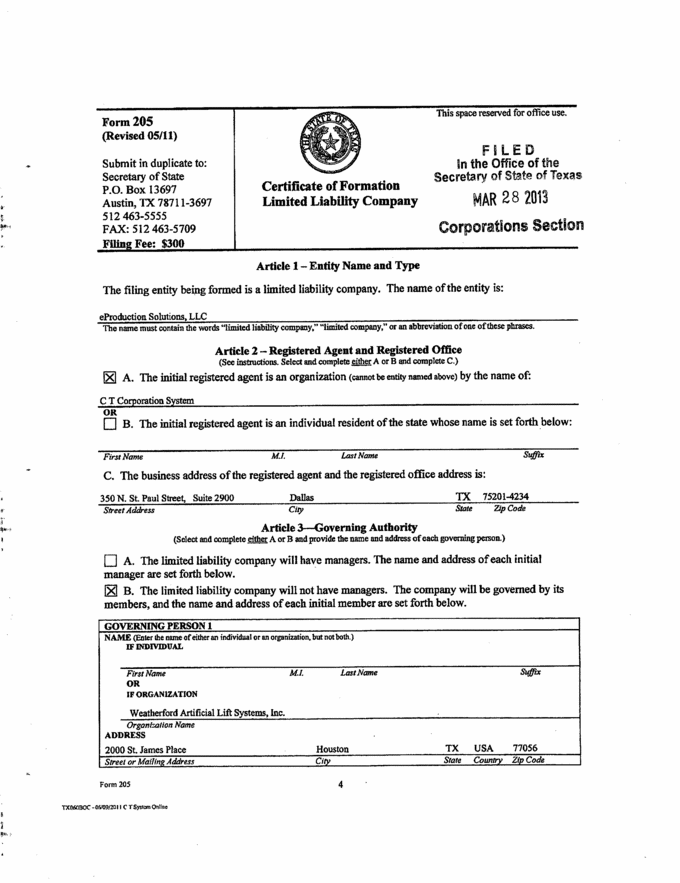
|
|
NAME (Enter the name of either an individual or an organization, but not botb.) ADDRESS NAME (Enter the name of either an individual or an organization, but not both.) ADDRESS Article 4-Purpose The purpose for which the company is formed is for the transaction of any and all lawful purposes for which a limited liability company may be organized under the Texas Business Organizations Code. Supplemental Provisions/Information Text Area: [The attached addendum, if any,is incorporated herein by reference.] Fonn 205 5 TXll61l80C'-001111912011 C T Systtm Onli"" The filing entity is being formed as a limited liability company under a plan of conversion.The name of the converting entity is eProduction Solutions, Inc. The address of the converting entity is 2000 St. James Place, Houston, TX 77056. The converting entity is a Texas corporation.The converting entity was incorporated in the State ofTexas on November 21, 2000. GOVERNING PERSON 3 IPINDIVIDUAL First NameM.L Last NameSuffix OR IF ORGANIZATION Organization Name Street or Mailing AddressCityStateCountry ZtpColk GOVERNING PERSON 2 IF INDIVIDUAL First NameM.l. Last NameSuffa OR IP ORGANIZATION Organi:ation Name Street or MailinJ! AddressCityStateCountry Zio Corle |
|
|
I ! Organizer The name and address of the organizer: Pam Davis Name 2000 St. James Place Houston Texas 77056 Street or Mailing Address City State Zip Code Effectiveness of FlUng (Select either A, B, or C.) A. 0 This document becomes effective when the document is filed by the secretary of state. B. 18] This document becomes effective at a later date, which is not more than ninety (90) days from the date of signing. The delayed effective date is: March 31, 2013 at 11:50 p.m. Eastern Time C. 0This document takes effect upon the occurrence of the future event or fact, other than the passage of time. The 90th day after the date of signing is: The following event or fact will cause the document to take-e-f-fe-c-t -in-t-h-e-m-a-n-n-e-r d-e-s-cr-i-be-d-b-e-l-ow--: ----1! Execution The undersigned affirms that the person designated as registered agent has consented to the appointment. The undersigned signs this document subject to the penalties imposed by law for the submission of a materially false or fraudulent instrument and certifies under penalty of perjury that the undersigned is authorized to execute the filing instrument. Date: March 28, 2013 Signature of organizer Pam Davis Printedor typed name of organizer 6 Form2G5 TX060BOC • 0111091201I C T Sy=n Online |
|
ARTICLES OF INCORPORATION |
* |
UNITED STATES OF AMERICA |
|
|
* |
|
|
OF |
* |
STATE OF LOUISIANA |
|
|
* |
|
|
HIGH PRESSURE INTEGRITY, INC. |
* |
PARISH OF ORLEANS |
|
|
* |
|
|
* * * * * * * * * * * * * * * * |
* |
|
BE IT KNOWN, that on this 16 day of October, 1985, BEFORE ME, Michael P. Fanell, a Notary Public duly appointed and commissioned in and for the Parish of Orleans, State of Louisiana, and residing therein,
PERSONALLY CAME AND APPEARED the subscriber hereto, who declared unto me, Notary, in the presence of the undersigned competent witnesses, that he is of the full age of majority and that, availing himself of provisions of the Business Corporation Law of the State of Louisiana, he does hereby form a corporation subject to the following Articles of Incorporation, to wit:
1.
The name of the Corporation is High Pressure Integrity, Inc.
2.
The purpose of the Corporation is to engage in any lawful activity for which corporations may be formed under the business corporation law of the State of Louisiana.
3.
The aggregate number of shares which the Corporation shall have the authority to issue is ten thousand (10,000) shares of common stock; said shares shall be denominated “common stock” shall be the only class of shares issued, and shall have no par value.
4.
The name and post office address of the incorporator of this Corporation is:
J.V. Carisella
4417 Lorino Street
Metairie, Louisiana 70006
5.
Shareholders shall have preemptive rights. In the event any shareholder does not exercise his preemptive right the
shares in respect of which such rights are not exercised shall then be offered pro rata to the remaining shareholders who shall have preemptive rights to such shares, ad infinitum, before any such shares may be offered to outside purchasers.
6.
Cash, property or share dividends, shares issuable to shareholders in connection with a reclassification of stock, and the redemption price of redeemed shares, which are not claimed by the shareholders entitled thereto within eighteen months after the dividend or redemption price becomes payable or the shares become issuable, despite reasonable efforts by the Corporation to pay the dividend or redemption price or deliver the certificates for the shares to such shareholders within such time, shall, at the expiration of such time, revert in full ownership to the Corporation, and the Corporation’s obligation to pay such dividend or redemption price or issue such shares, as the case may be, shall thereupon cease; provided that the Board of Directors may, at any time, for any reason satisfactory to it, but need not, authorize (a) payment of the amount of any cash or property dividend or redemption price or (b) issuance of any shares, ownership of which has reverted to the Corporation pursuant to this provision, to the entity who or which would entitled thereto had such reversion not occurred.
7.
Any director or shareholder absent from a meeting of the Board of Directors or Shareholders, may, upon written appointment of a representative, be represented by any shareholder or other director, who may cast the vote of the absent director or shareholder according to the written instructions, general or special, of the absent director or shareholder, filed with the Secretary.
8.
Whenever by any provision of law, these Articles of Incorporation or the by-laws of this Corporation, the affirmative vote of the shareholders is required to authorize or constitute
corporate action, the consent in writing to such corporate action signed by shareholders holding that proportion of the total voting power on the particular question which is required by these Articles of Incorporation, the by-laws, or by law, whichever requirement is higher, shall be sufficient for the purpose, without necessity for a meeting of shareholders.
9.
In the election of directors, each shareholder of record shall have the right to multiply the number of votes to which he may be entitled by the number of directors to be elected, and to cast all such votes for one candidate, or distribute them among any two or more candidates.
THUS DONE AND PASSED in multiple originals at New Orleans, Louisiana, on the day, month, and year hereinabove written, in the presence of the undersigned competent witnesses who sign with me, Notary, 3nd with the said appearer, after due reading of the whole.
|
WITNESSES: |
|
|
|
|
|
|
|
/s/ [ILLEGIBLE] |
|
/s/ J.V. Carisella |
|
|
|
J.V. CARISELLA |
|
/s/ [ILLEGIBLE] |
|
|
|
|
|
|
|
|
/s/ [ILLEGIBLE] |
|
|
|
NOTARY PUBLIC |
|
|
|
|
|
|
| ||
|
| ||
|
| ||
|
|

I, the undersigned natural person of the age of eighteen (18) years or more, acting as incorporator of a corporation under the Texas Business Corporation Act (the “Act”), do hereby adopt the following Articles of Incorporation for such corporation:
ARTICLE I
The name of the corporation is IN-DEPTH SYSTEMS, INC. (the “Corporation”).
ARTICLE II
The period of its duration is perpetual.
ARTICLE III
The purpose for which the Corporation is organized is the transaction of any and all lawful business for which corporations may be incorporated under the Texas Business Corporation Act.
ARTICLE IV
The aggregate number of shares which the Corporation shall have authority to issue is Five Million (5,000,000) shares of common stock, no par value per share.
Cumulative voting by the shareholders at any election of directors of the Corporation, or upon any other matter, is specifically prohibited.
No shareholder of the Corporation shall be entitled to any rights, preemptive or otherwise, to acquire, subscribe for or purchase any securities of the Corporation now or hereafter authorized to be issued, or securities held in the treasury of the Corporation, whether issued or sold for cash or other consideration or as a dividend or otherwise. Preemptive rights are specifically denied. Any such securities may be issued or disposed of by the board of directors to such persons and on such terms as in its discretion it shall deem advisable.
ARTICLE V
The Corporation will not commence business until it has received for the issuance of shares consideration of the value of at least One Thousand Dollars ($1,000.00) consisting of money, labor done or property actually received.
ARTICLE VI
The address of the Corporation’s initial registered office is 1990 Post Oak Blvd. Suite 2430, Houston, TX 77056 and the name of its initial registered agent at such address is J. M. Webb.
ARTICLE VII
The number of directors constituting the initial board of directors is two (2), and the names and addresses of the persons who are to serve as directors until the first annual meeting of the shareholders or until their successors are duly elected and qualified to serve are:
|
NAME |
|
ADDRESS |
|
Joe Zierolf |
|
1990 Post Oak Blvd., Suite 2430 |
|
|
|
Houston, TX 77056 |
|
|
|
|
|
David Wesson |
|
1990 Post Oak Blvd. Suite 2430 |
|
|
|
Houston, TX 77056 |
The board of directors shall have the power to alter, amend or repeal the by-laws of the Corporation or to adopt new by-laws.
ARTICLE VIII
The name and adddress of the incorporator is:
|
NAME |
|
ADDRESS |
|
B. A. Lauterbach |
|
1990 Post Oak Boulevard |
|
|
|
Suite 2430 |
|
|
|
Houston, Texas 77056 |
ARTICLE IX
The directors of the Corporation shall not be personally liable in any form or manner to the Corporation or its shareholders for monetary damages for any act or omission to act of any director in his or her capacity as a director of the Corporation, unless the Act shall specifically provide contrary. This provision is intended to limit the liability of the members of the board of directors of the Corporation to the extent permissible under the laws of the State of Texas. The directors of the Corporation shall be entitled to the full benefit and protection of all provisions of the Act which limit director liability or provide for director indemnity.
ARTICLE X
Any action required by the Act to be taken at any annual or special meeting of shareholders, or any action which may be taken at any annual or special meeting of shareholders, may be taken without a meeting, without prior notice, and without a vote, if a consent or consents in writing, setting forth the action so taken, shall be signed by the holder or holders of shares having not less than the minimum number of votes that would be necessary to take such action at a meeting at which the holders of all shares entitled to vote on the action were present and voted.
|
DATE: |
March 20, 2001 |
|
|
|
/s/ Barbara Lauterbach | |
|
|
Barbara Lauterbach, Incorporator | |
01048476 «f;l h FILED Stale of U1o Slate of California Articles of Organization • Convorslon RTANT::::;Ji;.;daiilr;;c;;;;;u.;;;;boforocomPfoiiOUthis-fOiin,-·· ----Tr.l• Sp"o For Filing U<o Ooly --§!!! Jnl m!ill --------------------------- ----..-----------------------·---.. ds 'l..lmlt!Jdant ------------PURPOSE OP<HP. LIMITEO LIAS"TY COMPANY IS TO ENGAGE IN ANY LAWFUL AOT OR ACTIVITY FOR WHICH IILIMITED L!Aa!LilY J,!AY B§jl.llQ. IZellUNOilR T!ijl_BEVERLY;lli-'\JJA.liM!}!(\' liAAll!TY COMPANY ACT. ----_ •....------liMITED LIABILITY COMPANY WILL BE MANAGED BY {Choel< only ono) MAILING ADDRI'$$ OF Tl!a C}I1EP UXECUTIVeOFr!CE --------·--;:C::ITY;f==....._ STATEZIP CODE Oak Boulevard,Sullo 600 Ccrpor0Uona Coda sottlon HiO!S. !!om o: lllhe ugent loon !ndMduol, on\er bueiOO$$ Of rcsldontlol oddros!lrt Cal!forol&. Hom 7: If lho «'f\'/OI"tlf tndi.,idua! or ¢¢tporalo 13gent. Choo:.:.tho box sndom!t tho rMI!Ing ilddtos111f oration Syatom o:---ifiANINDtViOUAt, AO"Oim"Ss oF AoENrFORSr:Rvlct; oF PRocess iN cA--· cllY-"-- ----- "if···-..--:s::r::-Ar::t----z·ir·cooe--MAILING AODRESS Of' THE AOSNT FOR SER\'!C£!. OF PROCESS 1$ li!E $MIE AS THE AOI!NTS BUSINESS 0/t m:.Si1JtlJfT!Al AODRESS IN !Tf:M t). En_tttyJnf tP. Jll>•L.... ------------------·----------------------·---------·-·-- ---=-- -----:CONVERTING f'NTITY =: cTioN --s ;; ?. -e -:-_ 1 1 S TflhT E<lVALEO ORF-XCEGOEO THE VOTE REQUIRED. IF A VOT61'1AS REQUIRED,PROVIDE THE fOLLOWING f_QBJ;AQ : SS_ Common· o29,740----------- majortty PART OP.TH!S CERTIFICATE._ OP MY OWN l<NOWLI!OGE. I DECLARE IAM n!E PERSON WHO t!XECUTF.P THIS INSTRUMENT, WHICH EXeCUTION IS MY ACT AND OEf<O, OATFf\ --:--------- --- --·------ rvPeoili>RINT iiAME AND Tina of''AvTHoiiizeo PoRsoil--$10 AT !RG OF AUTHOIVZE PERsON rvnoi1--PR!Nr NAMaArlo r1rie oFAiiiHo'Riieo peR's-oil-- State of California Secretary of State Limit(ld Liability Company LIMI1EO UASIUTV COMPANY (End lhanotnG Yillh tho words 'UJn!lc compMy" mny bo obbrov!ated to 'Ltd." srtd 'C<J.t tespo¢Uv<Jiy,) LLogglng<.:---------MANAGER0 MOR!l THAN ONe MANAGER AGENT rORSEnVICE-or PROcriS-s (l m·u: e;;to;·-,j\O'n ntOclth a oro {QTporo!lon thl\1 )}as filed n rtlffca\& puuvant to Ca!lromfa 1119 1 !1_o,. - ENDORSED • In tho office of the Secretary of DEC ·-8 20!0 d llab)ll\y Company,• 01 !ho nbbt6YIIl\IM9 •Lt.C' 01 L.l,G." Tho wor ------------------D AL _I-IMITEO LIABILITY COMPANY MEMBE_R HoustonTX77027 o'agen t ror.seN\ 0 proceu.Tho oo ·t mny bu-;n-,r.dlvi \9 onl!ty Is a conrom!n flmltad !}3rtncH$hlp, Ofl!Of lho m'tnng MdrOS$ th& ageo\'9 mailing atld're.ss Is tha enmo Mlhtt otldros.sln ltoi'I'IO.) OA .-= -=l-s= 1 v; IMPO Co _l'ottod 1. NAMe 011 !12!. ?. THE _ _9 9-ft..li_Y. 3. THE 4[:ZJ ONE 515 Post "6 --NAMf! OP In Cal!fotnl lho tlgent's tho C 1' Corp D TJIE _s:o y !f!•'Jt -8.i.N-AM:E;OF --_L _ d of - 12, TilE PIUNCPI AL lW<MS Of 'niG PLAN OF CONVERSION WERE API>ROV£1) BY A VOTOF THE NUMBER Of I»TERESTS OR SHAREO OF EACH CLAS STA'fE THE ClASS AND NUMBER OF OUTSTANDING INTEHESTS ENTrllOO T(lVOTo AND :rne PERCENTAOE VO_TE REOUIREQ OF EACH G'!\ ' Addltlonollnlormatlon i3-:AOiiJriONAL'iN oRhWlON SSTFORTilON THe AlTACHEOA<l S.IF NIY,IS INCORPORATED HEREIN BY THIS HEFEI\ENCE ANO MADE A 11. ICE TIFY liNDR Pf.NALTY OF PeRJURY UNDER THo lAWS Of THE $YATE OF CALifORNIA THATTHE FOHEOOING IS TRUE AND CORRECT Docombar 3, 2010 ---·"M.f}v x:)-\ _JameM.Hudgins, VIce President Joseph c. Honry, Vlco Prosldonlond Soorotary l LC-JA !REV 1)-!J20JO)AI'VHOVI!O £IV StCftETAHY OP STATE

|
|
IIIUIIIIIIIIIIIIIIU1111111111111111 'Ol010l' ROSSMILLER $ocreterv of Stole 204 NortllC•hlon etrnl &ullt4 Careon City, Novade 8DYOI.C&ao lf71) 684..0701 Web1lto: www.nv1oo.gov 20100905507-39 ·----·--Filing Date nnd Time 12/03/2010 3:00PM Llmlted·Liabllity Company AIOYIBPMIIH'OR OffiOI UBI OIII.Y Commerolol Regltlerad fllltnll 3.OfiiiO!UIIon D•te:(op n,J) II,Name and Addrtaa ofeaoh Manauuror MIII100h111 Member: (ol\llollod<llllonalptgolf morothan ·-:]:iirL .:·-··.·· ·····..--··-.. _...................· ·····...............-........-................-..,_........................··-..1..,....... _....... · .. · ·· ........ ,, ...,,.......... It· ' ' ".. ,,&titt '"ZIP OOdii. "' ... ..... ' .".......... . ... ,........'.. .. . . . .. ........ . . ... ....... •··......_"........' Ci!l' ' " " ..... ..., .............. . . . ...· ..... Articles of Organization (PURSUANT TO NRS CHAPTER 86) Filed in the office of Ross Miller Secretary of State State of NcYada Document Numl r Entity Number C2657-1992 |

|
|
AMENDED 2nd May 2016 |
FORM C2
The Companies (Incorporation by Registration) Act, 1970
MEMORANDUM OF ASSOCIATION
OF
KEY INTERNATIONAL DRILLING COMPANY LIMITED
(hereinafter; referred to as “the Company”).
1. The liability of the members of the Company is limited to the amount (if any) for the time being unpaid on the shares respectively held by them.
2. We, the undersigned, namely,
|
|
|
|
|
BERMUDIAN |
|
|
|
NUMBER OF |
|
|
|
|
|
STATUS |
|
|
|
SHARES |
|
NAME |
|
ADDRESS |
|
(Yes/No) |
|
NATIONALITY |
|
SUBSCRIBED |
|
Walter Maddocks |
|
Pembroke, Bermuda |
|
No |
|
British |
|
One |
|
|
|
|
|
|
|
|
|
|
|
C.F. Alexander Cooper |
|
Pembroke, Bermuda |
|
Yes |
|
British |
|
One |
|
|
|
|
|
|
|
|
|
|
|
Alan Leslie Brown |
|
Warwick, Bermuda |
|
Yes |
|
British |
|
One |
do hereby respectively agree to take such number of shares of the Company as may be allotted to us respectively by the provisional directors of the Company, not exceeding the number of shares for which we have respectively subscribed, and to satisfy such calls as may be made by the provisional directors of the Company in pursuance of Section 5 of The Companies Act, 1948, in respect of the shares allotted to us respectively.
3. The Company is to be an exempted/XXX* Company as defined by the Companies (Incorporation by Registration) Act, 1970.
4. The Company has power to hold land situate in these Islands not exceeding in all, including the following parcels:—
5. The minimum share capital of the Company shall be U.S. $12,000.00 divided into shares of a par value of not less than ten cents each, and having a proposed par value of $1.00 each.
* Delete as applicable.
Amendment inserted by Members’ resolution on 2nd May 2016
6. The objects for which the Company is formed and incorporated are unrestricted.
7. The following are provisions regarding the powers of the Company —
Subject to paragraph 6, the Company may do all such things as are incidental or conducive to the attainment of its objects and shall have the capacity, rights, powers and privileges of a natural person, and —
(i) pursuant to Section 42 of the Act, the Company shall have the power to issue preference shares which are, at the option of the holder, liable to be redeemed;
(ii) pursuant to Section 42A of the Act, the Company shall have the power to purchase its own shares for cancellation; and
(iii) pursuant to Section 42B of the Act, the Company shall have the power to acquire its own shares to be held as treasury shares.
Signed by each subscriber in the presence of at least one witness attesting the signature thereof:—
|
[ILLEGIBLE] |
|
[ILLEGIBLE] |
|
[ILLEGIBLE] |
|
[ILLEGIBLE] |
|
[ILLEGIBLE] |
|
[ILLEGIBLE] |
|
|
|
|
|
|
|
|
|
(Subscribers) |
|
(Witnesses) |
CERTIFICATE OF LIMITED PARTNERSHIP
OF
PD HOLDINGS (USA), L.P.
This Certificate of Limited Partnership of PD Holdings (USA), L.P. (the “Partnership”) is being duly executed and filed by Precision Drilling GP, Inc., a Delaware corporation, as the sole general partner, to form a limited partnership under Section 17-201 of the Delaware Revised Uniform Limited Partnership Act.
1. Name. The name of the Partnership is PD Holdings (USA), L.P.
2. Registered Office. The address of the Partnership’s registered office is 1209 Orange Street, Wilmington, County of New Castle, Delaware, 19801.
3. Registered Agent. The name and address of the registered agent of the Partnership for service of process is The Corporation Trust Company, 1209 Orange Street, Wilmington, County of New Castle, Delaware, 19801.
4. General Partner. The name, mailing address and street address of the business of the general partner of the Partnership is:
|
|
Precision Drilling GP, Inc. |
|
|
363 N Sam Houston Pkwy E Ste 1700 |
|
|
Houston, TX 77060-2424 |
5. Certificated Nature of the Limited Partnership Interests. The Partnership and all the general partners thereof, and all the limited partners thereof, by the acquisition of interests therein, hereby specify, acknowledge and agree that all interests in the Partnership, both general partner interests and limited partner interests, are securities governed by Article 8 and all other provisions of the Uniform Commercial Code as adopted and amended in the State of Delaware (the “UCC”), and pursuant to the terms of Section 8-103 of the UCC, such interests shall be “securities” for all purposes of such Article 8 and under all other provisions of the UCC.
6. Effective Date and Time. This Certificate of Limited Partnership will become effective at 11:58 p.m. on December 31, 2003, in accordance with the provisions of Sections 17-201 and 17-217 of the Delaware Revised Uniform Limited Partnership Act
Executed effective as of the 17 day of December, 2003.
|
|
PRECISION DRILLING GP, INC., | |
|
|
the sole general partner | |
|
|
| |
|
|
By: |
/s/ Jan M. Campbell |
|
|
|
Jan M. Campbell, Secretary |
|
|
|
State of Delaware Secretary of State Division of Corporations Delivered 11:37 AM 12/22/2003 FILED 10:51 AM 12/22/2003 SRV 030825512 — 3129143 FILE |
|
State of Delaware Secretary of State Division of Corporations Delivered 06:14 PM 12/12/2018 FILED 06:14 PM 12/12/2018 SR 20188120763 - File Number 3129143 |
|
STATE OF DELAWARE
AMENDMENT TO THE CERTIFICATE OF
LIMITED PARTNERSHIP
The undersigned, desiring to amend the Certificate of Limited Partnership pursuant to the provisions of Section 17-202 of the Revised Uniform Limited Partnership Act of the State of Delaware, does hereby certify as follows:
FIRST: The name of the Limited Partnership is PD HOLDINGS (USA), L.P.
SECOND: Article 4 of the Certificate of Limited Partnership shall be amended as follows:
General Partner. The name, mailing address and street address of the business of the general partner of the Partnership is: Precision Drilling GP, LLC, 2000 St. James Place, Houston, Texas 77056.
IN WITNESS WHEREOF, the undersigned executed this Amendment to the Certificate of Limited Partnership on this 20th, day of November, A.D. 2018.
|
|
PRECISION DRILLING GP, LLC, | |
|
|
the sale general partner | |
|
|
| |
|
|
By: |
/s/ Christine M. Morrison |
|
|
|
General Partner(s) |
|
|
|
|
|
|
Name: |
Christine M. Morrison |
|
|
|
Print or Type |
|
|
State of Delaware Secretary of State Division of Corporations Delivered 06:20 PM 08/22/2018 FILED 06:20 PM 08/22/2018 SR 20186310010 - File Number 3740493 |
CERTIFICATE OF FORMATION
OF
PRECISION DRILLING GP, LLC
This Certificate of Formation of Precision Drilling GP, LLC has been duly executed and is being filed by the undersigned, as an authorized person, to form a limited liability company under the Delaware Limited Liability Company Act (6 Del.C. §18-101, et seq.).
1. The name of the limited liability company is Precision Drilling GP, LLC.
2. The address of its registered office in the State of Delaware is: Corporation Trust Center, 1209 Orange Street, in the City of Wilmington, New Castle County, Delaware 19801. The name of its registered agent at such address is: The Corporation Trust Company.
3. This Certificate of Formation shall be effective upon filing with the Delaware Secretary of State.
IN WITNESS WHEREOF, the undersigned has executed this Certificate of Formation of Precision Drilling GP, LLC on the 22 day of August, 2018.
|
|
/s/ Ann Poland | |
|
|
Name: |
Ann Poland |
|
|
Title: |
Authorized Person |
Articles of Incorporation
For
PRECISION ENERGY INTERNATIONAL LTD.
|
Share Structure: |
|
SCHEDULE “A” ATTACHED |
|
Share Transfers |
|
NO SHARES OF THE CORPORATION SHALL BE TRANSFERRED |
|
Restrictions: |
|
WITHOUT THE APPROVAL OF THE BOARD OF DIRECTORS. |
|
Number of Directors: |
|
|
|
Min Number of Directors: |
|
1 |
|
Max Number of Directors: |
|
11 |
|
Business Restricted To: |
|
NONE |
|
Business Restricted From: |
|
NONE |
|
Other Provisions: |
|
SCHEDULE “B” ATTACHED |
Registration Authorized By: JAN M. CAMPBELL
SECRETARY
|
|
|
FILED Namequest Corporate Services Inc. |
Incorporate Alberta Corporation - Registration Statement
|
Service Request Number: |
|
6432714 |
|
Alberta Corporation Type: |
|
Named Alberta Corporation |
|
Legal Entity Name: |
|
PRECISION ENERGY INTERNATIONAL LTD. |
|
French Equivalent Name: |
|
|
|
Nuans Number: |
|
81192591 |
|
Nuans Date: |
|
2004/09/01 |
|
French Nuans Number: |
|
|
|
French Nuans Date: |
|
|
|
|
|
|
|
REGISTERED ADDRESS |
|
|
|
Street: |
|
#4200, 150 - 6TH AVENUE S.W. |
|
Legal Description: |
|
CALGARY |
|
Province: |
|
ALBERTA |
|
Postal Code: |
|
T2P 3Y7 |
|
|
|
|
|
RECORDS ADDRESS |
|
|
|
Street: |
|
#4200, 150 - 6TH AVENUE S.W. |
|
Legal Description: |
|
CALGARY |
|
Province: |
|
ALBERTA |
|
Postal Code: |
|
T2P 3Y7 |
|
|
|
|
|
ADDRESS FOR SERVICE BY MAIL |
|
|
|
Post Office Box: |
|
|
|
Province: |
|
|
|
Postal Code: |
|
|
|
Internet Mail ID: |
|
|
|
|
|
|
|
Share Structure: |
|
SCHEDULE “A” ATTACHED |
|
Share Transfers Restrictions: |
|
NO SHARES OF THE CORPORATION SHALL BE TRANSFERRED WITHOUT THE APPROVAL OF THE BOARD OF DIRECTORS. |
|
Number of Directors: |
|
|
|
Min Number Of Directors: |
|
1 |
|
Max Number Of Directors: |
|
11 |
|
Business Restricted To: |
|
NONE |
|
Business Restricted From: |
|
NONE |
|
Other Provisions: |
|
SCHEDULE “B” ATTACHED |
|
|
|
|
|
Professional Endorsement Provided: |
|
|
|
Future Dating Required: |
|
|
|
Registration Date: |
|
2004/09/02 |
|
|
|
|
|
Director |
|
|
|
|
|
|
|
Last Name: |
|
SWARTOUT |
|
First Name: |
|
HANK |
|
Middle Name: |
|
B. |
|
Street/Box Number: |
|
4200, 150 - 6 AVE SW |
|
City: |
|
CALGARY |
|
Province: |
|
ALBERTA |
|
Postal Code: |
|
T2P 3Y7 |
|
Country: |
|
|
|
Resident Canadian: |
|
Y |
|
|
|
|
|
Last Name: |
|
TREMBLAY |
|
First Name: |
|
DALE |
|
Middle Name: |
|
E. |
|
Street/Box Number: |
|
4200, 150 - 6 AVE SW |
|
City: |
|
CALGARY |
|
Province: |
|
ALBERTA |
|
Postal Code: |
|
T2P 3Y7 |
|
Country: |
|
|
|
Resident Canadian: |
|
Y |
|
|
|
|
|
Last Name: |
|
MCNULTY |
|
First Name: |
|
MICHAEL |
|
Middle Name: |
|
J. |
|
Street/Box Number: |
|
4200, 150 - 6 AVE SW |
|
City: |
|
CALGARY |
|
Province: |
|
ALBERTA |
|
Postal Code: |
|
T2P 3Y7 |
|
Country: |
|
|
|
Resident Canadian: |
|
Y |
Attachment
|
Attachment Type |
|
Microfilm Bar Code |
|
Date Recorded |
|
Share Structure |
|
ELECTRONIC |
|
2004/09/02 |
|
Other Rules or Provisions |
|
ELECTRONIC |
|
2004/09/02 |
|
Registration Authorized By: |
JAN M. CAMPBELL |
|
|
|
SECRETARY |
|
SCHEDULE “A”
Attached to and forming part of the Articles of Incorporation of PRECISION ENERGY INTERNATIONAL LTD.
THE CLASSES OF SHARES AND ANY MAXIMUM NUMBER OF SHARES THAT THE CORPORATION IS AUTHORIZED TO ISSUE ARE:
1. An unlimited number of Class “A” Common voting shares, the holders of which are entitled:
(a) to receive notice of and to attend and vote at all meetings of shareholders, except meetings at which only holders of a specified class of shares are entitled to vote;
(b) to receive any dividend declared by the Corporation on this class of shares; provided that the Corporation shall be entitled to declare dividends on the Class “B” Common voting shares, the Class “C” Common non-voting shares and the Preferred shares, or on any of such classes of shares without being obliged to declare any dividends on the Class “A” Common voting shares of the Corporation;
(c) subject to the rights, privileges, restrictions and conditions attaching to any other class of shares of the Corporation, to receive the remaining property of the Corporation upon dissolution in equal rank with the holders of all other Common shares of the Corporation; and
(d) to the rights, privileges and restrictions normally attached to common shares;
2. An unlimited number of Class “B” Common voting shares, the holders of which are entitled:
(a) to receive notice of and to attend and vote at all meetings of shareholders, except meetings at which only holders of a specified class of shares are entitled to vote;
(b) to receive any dividend declared by the Corporation on this class of shares; provided that the Corporation shall be entitled to declare dividends on the Class “A” Common voting shares, the Class “C” Common non-voting shares and the Preferred shares, or on any of such classes of shares without being obliged to declare any dividends on the Class “B” Common voting shares of the Corporation;
(c) subject to the rights, privileges, restrictions and conditions attaching to any other class of shares
of the Corporation, to receive the remaining property of the Corporation upon dissolution in equal rank with the holders of all other Common shares of the Corporation; and
(d) to the rights, privileges and restrictions normally attached to common shares;
3. An unlimited number of Class “C” Common non-voting shares, the holders of which are entitled:
(a) to receive any dividend declared by the Corporation on this class of shares; provided that the Corporation shall be entitled to declare dividends on the Class “A” Common voting shares, the Class “B” Common voting shares and the Preferred shares, or on any of such classes of shares without being obliged to declare any dividends on the Class “C” Common non-voting shares of the Corporation; and
(b) subject to the rights, privileges, restrictions and conditions attaching to any other class of shares of the Corporation, to receive the remaining property of the Corporation upon dissolution in equal rank with the holders of all other Common shares of the Corporation;
4. An unlimited number of Preferred shares, which as a class, have attached thereto the following rights, privileges, restrictions and conditions:
(a) the Preferred shares may from time to time be issued in one or more series, and the Directors may fix from time to time before such issue the number of Preferred shares which is to comprise each series and the designation, rights, privileges, restrictions and conditions attaching to each series of Preferred shares including, without limiting the generality of the foregoing, any voting rights, the rate or amount of dividends or the method of calculating dividends, the dates of payment thereof, the terms and conditions of redemption, purchase and conversion if any, and any sinking fund or other provisions;
(b) the Preferred shares of each series shall, with respect to the payment of dividends and the distribution of assets or return of capital in the event of liquidation, dissolution or winding-up of the Corporation, whether voluntary or involuntary, or any other return of capital or distribution of the assets of the Corporation amongst its shareholders for the purpose of winding up its affairs, be entitled to preference over the voting and non-voting Common shares and over any other shares of the Corporation ranking by their terms junior to the Preferred shares of that series. The Preferred shares of any series may also be given such other preferences, not inconsistent with these Articles, over the
Common shares and any other such Preferred shares as may be fixed in accordance with clause (4) (a); and
(c) if any cumulative dividends or amounts payable on the return of capital in respect of a series of Preferred shares are not paid in full, all series of Preferred shares shall participate ratably in respect of accumulated dividends and return of capital.
SCHEDULE “B”
Attached to and forming part of the Articles of Incorporation of PRECISION ENERGY INTERNATIONAL LTD.
OTHER RULES OR PROVISIONS
1. The number of shareholders for the time being of the Corporation shall be limited to fifty (50) or less (exclusive of persons who are in the employment of the Corporation or that of an affiliate, and persons who, having been formerly in the employment of the Corporation or that of an affiliate, were, while in such employment and have continued after the termination of such employment, to be shareholders of the Corporation) provided that where two or more persons hold one or more shares in the Corporation jointly, they shall be treated as a single shareholder.
2. The directors may, between annual general meetings, appoint one or more additional directors of the Corporation to serve until the next annual general meeting, but the number of additional directors shall not at any time exceed one-third (1/3) of the number of directors who held office at the expiration of the last annual meeting of the Corporation.
3. No invitation shall be made to the public to subscribe for any shares, debentures or securities (as the term “securities” is defined by the Securities Act (Alberta) or any successor legislation) of the Corporation.
Articles of Incorporation
Business Corporations Act
Section 6
1. Name of Corporation
PRECISION ENERGY INTERNATIONAL LTD.
2. The classes of shares, and any maximum number of shares that the corporation is authorized to issue:
Schedule ‘A’ attached
3. Restrictions on share transfers (if any):
No shares of the Corporation shall be transferred without the approval of the Board of Directors.
4. Number, or minimum and maximum number, of directors that the corporation may have:
Minimum of One (1); Maximum of Eleven (11).
5. If the corporation is restricted FROM carrying on a certain business, or restricted TO carrying on a certain business, specify the restriction(s):
None.
6. Other rules or provisions (if any):
Schedule ‘B’ attached.
|
7. Date authorized by Incorporators: |
2004/09/02 |
| |
|
|
|
Year / Month / Day |
|
|
Incorporators |
|
|
|
|
|
|
|
Name of Person Authorizing (please print) |
|
Address: (including postal code) |
|
JAN M. CAMPBELL |
|
4200, 150 - 6th Avenue S.W. |
|
|
|
Calgary, AB T2P 3Y7 |
|
Identification |
|
|
|
D/L 36122-703 |
|
|
|
|
|
|
|
Name of Person Authorizing (please print) |
|
Address: (including postal code) |
|
|
|
|
|
Identification |
|
|
|
|
|
|
|
Name of Person Authorizing (please print) |
|
Address: (including postal code) |
|
|
|
|
|
Identification |
|
|
|
|
|
|
|
Name of Person Authorizing (please print) |
|
Address: (including postal code) |
|
|
|
|
|
Identification |
|
|
This information is being collected for the purposes of corporate registry records in accordance with the Business Corporations Act. Questions about the collection of this information can be directed to the Freedom of Information and Protection of Privacy Coordinator for Alberta Registries, Box 3140, Edmonton, Alberta T5J 2G7, (780) 427-7013.
SCHEDULE “A”
Attached to and forming part of the
Articles of Incorporation of
PRECISION ENERGY INTERNATIONAL LTD.
THE CLASSES OF SHARES AND ANY MAXIMUM NUMBER OF SHARES THAT THE CORPORATION IS AUTHORIZED TO ISSUE ARE:
1. An unlimited number of Class “A” Common voting shares, the holders of which are entitled:
(a) to receive notice of and to attend and vote at all meetings of shareholders, except meetings at which only holders of a specified class of shares are entitled to vote;
(b) to receive any dividend declared by the Corporation on this class of shares; provided that the Corporation shall be entitled to declare dividends on the Class “B” Common voting shares, the Class “C” Common non-voting shares and the Preferred shares, or on any of such classes of shares without being obliged to declare any dividends on the Class “A” Common voting shares of the Corporation;
(c) subject to the rights, privileges, restrictions and conditions attaching to any other class of shares of the Corporation, to receive the remaining property of the Corporation upon dissolution in equal rank with the holders of all other Common shares of the Corporation; and
(d) to the rights, privileges and restrictions normally attached to common shares;
2. An unlimited number of Class “B” Common voting shares, the holders of which are entitled:
(a) to receive notice of and to attend and vote at all meetings of shareholders, except meetings at which only holders of a specified class of shares are entitled to vote;
(b) to receive any dividend declared by the Corporation on this class of shares; provided that the Corporation shall be entitled to declare dividends on the Class “A” Common voting shares, the Class “C” Common non-voting shares and the Preferred shares, or on any of such classes of shares without being obliged to declare any dividends on the Class “B” Common voting shares of the Corporation;
(c) subject to the rights, privileges, restrictions and conditions attaching to any other class of shares of the Corporation, to receive the remaining property of the Corporation upon dissolution in equal rank with the holders of all other Common shares of the Corporation; and
(d) to the rights, privileges and restrictions normally attached to common shares;
3. An unlimited number of Class “C” Common non-voting shares, the holders of which are entitled:
(a) to receive any dividend declared by the Corporation on this class of shares; provided that the Corporation shall be entitled to declare dividends on the Class “A” Common voting shares, the Class “B” Common voting shares and the Preferred shares, or on any of such classes of shares without being obliged to declare any dividends on the Class “C” Common non-voting shares of the Corporation; and
(b) subject to the rights, privileges, restrictions and conditions attaching to any other class of shares of the Corporation, to receive the remaining property of the Corporation upon dissolution in equal rank with the holders of all other Common shares of the Corporation;
4. An unlimited number of Preferred shares, which as a class, have attached thereto the following rights, privileges, restrictions and conditions:
(a) the Preferred shares may from time to time be issued in one or more series, and the Directors may fix from time to time before such issue the number of Preferred shares which is to comprise each series and the designation, rights, privileges, restrictions and conditions attaching to each series of
Preferred shares including, without limiting the generality of the foregoing, any voting rights, the rate or amount of dividends or the method of calculating dividends, the dates of payment thereof, the terms and conditions of redemption, purchase and conversion if any, and any sinking fund or other provisions;
(b) the Preferred shares of each series shall, with respect to the payment of dividends and the distribution of assets or return of capital in the event of liquidation, dissolution or winding-up of the Corporation, whether voluntary or involuntary, or any other return of capital or distribution of the assets of the Corporation amongst its shareholders for the purpose of winding up its affairs, be entitled to preference over the voting and non-voting Common shares and over any other shares of the Corporation ranking by their terms junior to the Preferred shares of that series. The Preferred shares of any series may also be given such other preferences, not inconsistent with these Articles, over the Common shares and any other such Preferred shares as may be fixed in accordance with clause (4)(a); and
(c) if any cumulative dividends or amounts payable on the return of capital in respect of a series of Preferred shares are not paid in full, all series of Preferred shares shall participate ratably in respect of accumulated dividends and return of capital.
SCHEDULE “B”
Attached to and forming part of the
Articles of Incorporation of
PRECISION ENERGY INTERNATIONAL LTD.
OTHER RULES OR PROVISIONS
1. The number of shareholders for the time being of the Corporation shall be limited to fifty (50) or less (exclusive of persons who are in the employment of the Corporation or that of an affiliate, and persons who, having been formerly in the employment of the Corporation or that of an affiliate, were, while in such employment and have continued after the termination of such employment, to be shareholders of the Corporation) provided that where two or more persons hold one or more shares in the Corporation jointly, they shall be treated as a single shareholder.
2. The directors may, between annual general meetings, appoint one or more additional directors of the Corporation to serve until the next annual general meeting, but the number of additional directors shall not at any time exceed one-third (1/3) of the number of directors who held office at the expiration of the last annual meeting of the Corporation.
3. No invitation shall be made to the public to subscribe for any shares, debentures or securities (as the term “securities” is defined by the Securities Act (Alberta) or any successor legislation) of the Corporation.
SCHEDULE “B”
Attached to and forming part of the
Articles of Incorporation of
PRECISION ENERGY INTERNATIONAL LTD.
OTHER RULES OR PROVISIONS
1. The number of shareholders for the time being of the Corporation shall be limited to fifty (50) or less (exclusive of persons who are in the employment of the Corporation or that of an affiliate, and persons who, having been formerly in the employment of the Corporation or that of an affiliate, were, while in such employment and have continued after the termination of such employment, to be shareholders of the Corporation) provided that where two or more persons hold one or more shares in the Corporation jointly, they shall be treated as a single shareholder.
2. The directors may, between annual general meetings, appoint one or more additional directors of the Corporation to serve until the next annual general meeting, but the number of additional directors shall not at any time exceed one-third (1/3) of the number of directors who held office at the expiration of the last annual meeting of the Corporation.
3. No invitation shall be made to the public to subscribe for any shares, debentures or securities (as the term “securities” is defined by the Securities Act (Alberta) or any successor legislation) of the Corporation.
|
|
CORPORATE ACCESS NUMBER |
|
|
|
|
|
20676070 |

BUSINESS CORPORATIONS ACT
CERTIFICATE
OF
INCORPORATION
676070 ALBERTA LTD.
WAS INCORPORATED IN ALBERTA ON NOVEMBER 27, 1995
|
|
|
|
|
|
| |
|
|
| |
|
|
| |
|
|
| |
|
|
| |
|
|
| |
|
|
[ILLEGIBLE] | |
|
|
Registrar of Corporations | |
|
|
| |
|
|
| |
|
|
| |
|
|
| |
|
|
| |
|
|
|

REG 3066 (95/09)
|
|
BUSINESS CORPORATIONS ACT |
FORM 1 |
|
Alberta |
Consumer and |
|
|
|
Corporate Affairs |
ARTICLES OF INCORPORATION |
1. NAME OF CORPORATION.
ALBERTA LTD.
2. THE CLASSES AND ANY MAXIMUM NUMBER OF SHARES THAT THE CORPORATION IS AUTHORIZED TO ISSUE.
Unlimited number of common shares without nominal or par value to which shares shall be attached the following rights (i) to vote at any meeting of shareholders of the Corporation; (ii) to receive any dividend declared by the Corporation; and (iii) to receive the remaining property of the Corporation upon dissolution.
3. RESTRICTIONS ON SHARE TRANSFERS (IF ANY).
No shares of the Corporation shall be transferred without the approval of the directors, provided that approval of any transfer of shares may be given as aforesaid after the transfer has been effected upon the records of the Corporation, in which event, unless the said approval stipulates otherwise, the said transfer shall be valid and shall take effect as from the date of its very entry upon the books of the Corporation.
4. NUMBER, OR MINIMUM AND MAXIMUM NUMBER, OF DIRECTORS THAT THE CORPORATION MAY HAVE
Minimum one (1) - Maximum eleven (11).
5. IF THE CORPORATION IS RESTRICTED FROM CARRYING ON A CERTAIN BUSINESS, OR RESTRICTED TO CARRYING ON CERTAIN BUSINESS, SPECIFY THE RESTRICTION(S).
None.
6. OTHER RULES OR PROVISIONS (IF ANY).
See Schedule “A” attached hereto.
7. DATE: November 27, 1995
|
INCORPORATORS NAMES: |
ADDRESS (INCLUDE POSTAL CODE) |
SIGNATURE |
|
|
|
|
|
Karin Groepper |
1400, 350 - 7th Avenue S.W. |
[ILLEGIBLE] |
|
|
Calgary, Alberta, T2P 3N9 |
FILED B |
|
|
|
|
|
|
|
NOV 27 1995 |
|
FOR DEPARTMENTAL USE ONLY |
|
|
|
|
|
Registrar of Corporations |
|
CORPORATE ACCESS NO. |
|
Province of Alberta |
SCHEDULE “A” - ARTICLES OF INCORPORATION
a. The number of shareholders of the Corporation, exclusive of
i. persons who are in its employment or that of an affiliate, and;
ii. persons who, having been formerly in its employment or that of an affiliate, were, while in that employment, shareholders of the Corporation and have continued to be shareholders of that Corporation after termination of that employment,
is limited to not more than 50 persons, 2 or more persons who are the joint registered owners of 1 or more shares being counted as 1 shareholder.
b. Any invitation to the public to subscribe for the securities of the Corporation is prohibited.
c. The directors of the corporation may, without authorization of the shareholders:
i. borrow money on the credit of the Corporation;
ii. issue, reissue, sell or pledge debt obligations of the Corporation;
iii. subject to the Business Corporations Act of Alberta, give a guarantee on behalf of the Corporation to secure performance of an obligation of any person, and;
iv. mortgage, hypothecate, pledge or otherwise create a security interest in all or any property of the Corporation, owned or subsequently acquired, to secure any obligation of the Corporation.
d. The directors may, by resolution, delegate the powers referred to in subsection (c) hereof to a director, a committee of directors or an officer.
e. The directors may, between annual general meetings, appoint one or more additional directors of the Corporation to serve until the next annual general meeting, but the number of additional directors shall not at any time exceed 1/3 of the number of directors who held office at the expiration of the last annual general meeting of the Corporation.
f. Meetings of the shareholders may be held at any place within Alberta or at any of the following cities: Vancouver, British Columbia; Victoria, British Columbia; Winnipeg, Manitoba; Toronto, Ontario; Ottawa, Ontario; Montreal Quebec; or Halifax, Nova Scotia.
|
|
CORPORATE ACCESS NUMBER |
|
|
|
|
|
20676070 |

BUSINESS CORPORATIONS ACT
CERTIFICATE
OF
AMENDMENT
676070 ALBERTA LTD.
CHANGED ITS NAME TO RTI INTERNATIONAL LIMITED ON JANUARY 3, 1996.
|
|
|
|
|
|
| |
|
|
| |
|
|
| |
|
|
| |
|
|
| |
|
|
| |
|
|
[ILLEGIBLE] | |
|
|
Registrar of Corporations | |
|
|
| |
|
|
| |
|
|
| |
|
|
| |
|
|
| |
|
|
|

REG 3066 (95/09)
|
|
BUSINESS CORPORATIONS ACT |
FORM 4 |
|
|
(SECTION 27 OR 171) |
|
ARTICLES OF AMENDMENT
|
1. NAME OF CORPORATION: |
|
2. CORPORATE ACCESS NUMBER |
|
|
|
|
|
676070 ALBERTA LTD. |
|
20676070 |
3. THE ARTICLES OF THE ABOVE-NAMED CORPORATION ARE AMENDED AS FOLLOWS:
Pursuant to Section 167(3) of the Business Corporations Act (Alberta), Article 1 of the Articles of Incorporation be amended by changing the Corporation’s name to RTI INTERNATIONAL LIMITED.
|
DATE |
|
SIGNATURE |
|
TITLE |
|
|
|
|
|
|
|
January 2, 1996 |
|
[ILLEGIBLE] |
|
First Director |
CORPORATE ACCESS NUMBER: 206760704

BUSINESS CORPORATIONS ACT
CERTIFICATE
OF
AMENDMENT
RTI INTERNATIONAL LIMITED
CHANGED ITS NAME TO PRECISION ENERGY SERVICES COLOMBIA LTD. ON
2004/11/30.
|
|
| |
|
|
This is to certify that this is an original | |
|
|
Certificate produced by |
[ILLEGIBLE] |
|
|
of Namequest Corporate Services Inc. | |
|
|
who is an accredited user of the | |
|
|
Corporate Registry system. | |

Name Change Alberta Corporation - Registration Statement
|
Service Request Number: |
|
6712217 |
|
Corporate Access Number: |
|
206760704 |
|
Legal Entity Name: |
|
RTI INTERNATIONAL LIMITED |
|
French Equivalent Name: |
|
|
|
Legal Entity Status: |
|
Active |
|
|
|
|
|
Alberta Corporation Type: |
|
Named Alberta Corporation |
|
New Legal Entity Name: |
|
PRECISION ENERGY SERVICES COLOMBIA LTD. |
|
New French Equivalent Name: |
|
|
|
Nuans Number: |
|
81904515 |
|
Nuans Date: |
|
2004/11/22 |
|
French Nuans Number: |
|
|
|
French Nuans Date: |
|
|
|
| ||
|
Professional Endorsement Provided: | ||
|
Future Dating Required: | ||
Annual Return
|
File Year |
|
Date Filed |
|
2004 |
|
2004/11/10 |
|
2003 |
|
2003/11/18 |
|
2002 |
|
2002/12/17 |
Attachment
No Records returned
|
Registration Authorized By: |
JAN CAMPBELL |
|
|
AGENT OF CORPORATION |
|
|
FILED |
|
|
Namequest Corporate Services Inc. |
Articles of Amendment
Business Corporations Act
Section 29 or 177
|
1. Name of Corporation |
2. Corporate Access Number |
|
|
|
|
RTI International Limited |
20676070 |
3. Item number 1 of the Articles of the above named corporation are amended in accordance with Section 173(1)(a) of the Business Corporations Act.
“Name of the Corporation:
Precision Energy Services Colombia Ltd.”
|
/s/ Jan M. Campbell |
|
JAN M. CAMPBELL |
|
Nov. 22/04 |
|
Authorized Signature |
|
Name of Person Authorizing (please print) |
|
Date |
|
(applicable for societies only) |
|
|
|
|
|
D/L 36122-703 |
|
SECRETARY |
|
Identification |
|
Title (please print) |
|
(not applicable for societies) |
|
|
This information is being collected for the purposes of corporate registry records in accordance with the Business Corporations Act. Questions about the collection of this information can be directed to the Freedom of Information and Protection of Privacy Coordinator for Alberta Registries, Box 3140, Edmonton, Alberta T5J 2G7, (780) 427-7013.
REG 3054 (Rev. 2003/05)
CORPORATE ACCESS NUMBER: 2011901994

BUSINESS CORPORATIONS ACT
CERTIFICATE
OF
AMENDMENT AND REGISTRATION
OF RESTATED ARTICLES
PRECISION ENERGY SERVICES ULC
AMENDED ITS ARTICLES ON 2006/12/29.

|
Name/Structure Change Alberta Corporation - Registration Statement | |||
|
|
|
| |
|
Alberta Amendment Date: 2006/12/29 | |||
|
| |||
|
Service Request Number: 9510155 | |||
|
Corporate Access Number: 2011901994 | |||
|
Legal Entity Name: |
PRECISION ENERGY SERVICES ULC | ||
|
French Equivalent Name: |
| ||
|
Legal Entity Status: |
Active | ||
|
|
|
| |
|
Alberta Corporation Type: |
Named Alberta Corporation | ||
|
New Legal Entity Name: |
PRECISION ENERGY SERVICES ULC | ||
|
New French Equivalent Name: |
| ||
|
Nuans Number: |
86081757 | ||
|
Nuans Date: |
2006/03/13 | ||
|
French Nuans Number: |
| ||
|
French Nuans Date: |
| ||
|
|
|
| |
|
Share Structure: |
SEE ELECTRONIC ATTACHMENT | ||
|
Share Transfers Restrictions: |
SEE ELECTRONIC ATTACHMENT | ||
|
Number of Directors: |
| ||
|
Min Number Of Directors: |
1 | ||
|
Max Number Of Directors: |
10 | ||
|
Business Restricted To: |
NONE | ||
|
Business Restricted From: |
NONE | ||
|
Other Provisions: |
SEE ELECTRONIC ATTACHMENT | ||
|
BCA Section/Subsection: |
173(1)(E)(D) | ||
|
|
|
| |
|
Professional Endorsement Provided: |
| ||
|
Future Dating Required: |
| ||
|
|
|
| |
|
Annual Return |
| ||
|
File Year |
|
Date Filed |
|
|
2006 |
|
2006/12/17 |
|
Attachment
|
Attachment Type |
|
Microfilm Bar Code |
|
Date Recorded |
|
Statutory Declaration |
|
10000902000372768 |
|
2005/09/01 |
|
Other Rules or Provisions |
|
ELECTRONIC |
|
2005/09/01 |
|
Restrictions on Share Transfers |
|
ELECTRONIC |
|
2005/09/01 |
|
Other Rules or Provisions |
|
ELECTRONIC |
|
2006/03/31 |
|
Share Structure |
|
ELECTRONIC |
|
2006/12/29 |
Registration Authorized By: RICHARD A. MILLER
SOLICITOR
Authorized Capital of Precision Energy Services ULC (the “Corporation”)
The maximum numbers of shares of each class that the Corporation is authorized to issue are an unlimited number of Common Shares without nominal or par value and 1,000,000 Class A Preferred Shares without nominal or par value, in each case having the designation, rights, privileges, restrictions and conditions set out below.
A. Common Shares
The Corporation is authorized to issue an unlimited number of Common Shares, which constitute a separate and distinct class of shares and which, as a class, have and are subject to the following rights, privileges, restrictions and conditions:
1. Voting Right
Except for meetings at which only holders of another specified class or series of shares of the Corporation are entitled to vote separately as a class or series, each holder of a Common Share shall be entitled to receive notice of, to attend and to vote at all meetings of the shareholders of the Corporation. Each holder of a Common Share shall be entitled to one (1) vote for each Common Share held.
2. Dividends
Subject to the rights of the holders of any shares of the Corporation having rights or privileges superior to the Common Shares with respect to priority in the payment of dividends,
(a) each holder of a Common Share shall be entitled to receive dividends as and when declared and payable, and
(b) dividends may be declared and paid on the Common Shares to the complete exclusion of the other classes of shares of the Corporation;
provided that no dividend shall at any time be declared or paid on the Common Shares if there are reasonable grounds for believing that, after the payment of the dividend, the realizable value of the Corporation’s assets would be less than the aggregate of the Corporation’s liabilities, the stated capital of the common shares and the non-participating shares of any class and the total of the redemption prices of the preferred shares of any class then issued and outstanding, plus any declared and unpaid non-cumulative dividends and any unpaid cumulative dividends on those preferred shares.
3. Liquidation, Dissolution or Winding-Up
Subject to the rights of the holders of any shares of the Corporation having rights or privileges superior to the Common Shares with respect to priority of distribution on a liquidation, dissolution or winding-up, each holder of a Common Share shall be entitled to participate, on a proportionate basis, in a distribution of the remaining property of the Corporation in the event of the liquidation, dissolution or winding-up of the Corporation, whether voluntary or involuntary.
4. Ranking
The rights, privileges and entitlements of a Common Share rank ratably and on a parity with those of all other Common Shares. Except where otherwise specifically stated, the rights, privileges and entitlements of the Common Shares rank
(a) ratably and on a parity with the rights, privileges and entitlements of the common shares of any other class,
(b) in subordination to the rights, privileges and entitlements of the non-participating shares of any class with respect to priority of distribution on a liquidation, dissolution or winding-up, and
(c) in subordination to the rights, privileges and entitlements of the preferred shares of any class.
B. Class A Preferred Shares
The Corporation is authorized to issue 1,000,000 Class A Preferred Shares, which constitute a separate and distinct class of shares and which, as a class, have and are subject to the following rights, privileges, restrictions and conditions:
1. Issuance
All of the authorized number of the Class A Preferred Shares shall be issued to Weatherford Canada Ltd. pursuant to the declaration and payment of a stock dividend on the Common Shares (the “Stock Dividend”) as of 9:00 a.m. (Central standard time) on December 31, 2006 (the “Effective Time”).
2. Non-Voting Feature
Except where required by the Business Corporations Act (Alberta), a holder of a Class A Preferred Share shall not, as such, be entitled to receive notice of, to attend or to vote at meetings of shareholders of the Corporation.
3. Redemption Price
The Class A Preferred Shares shall be redeemable at an aggregate redemption price (the “Aggregate Redemption Price”) equal to the fair market value of that portion of the Corporation’s partnership interest in Weatherford Canada Partnership equal to a 56.142% interest (the “Partnership Interest”) in Weatherford Canada Partnership, at the Effective Time, plus any declared and unpaid non-cumulative dividends and any unpaid cumulative dividends on the Class A Preferred Shares. The redemption price (the “Unit Redemption Price”) of each Class A Preferred Share shall be equal to the quotient obtained by dividing the Aggregate Redemption Price by the number of Class A Preferred Shares issued pursuant to the Stock Dividend.
4. Redemption Price Adjustment Clause
If, at a particular time (the “Adjustment Time”) after the Effective Time,
(a) the Corporation and the holders of the Class A Preferred Shares acknowledge in writing, or
(b) the Minister of National Revenue, the Canada Revenue Agency, the tax or fiscal authority of any province or territory or a court or tribunal of competent jurisdiction determines (and neither the Corporation nor the holders of the Class A Preferred Shares have objected to or appealed from the determination),
that the actual aggregate fair market value of the Partnership Interest at the Effective Time (the “Redetermined FMV”) was greater than or less than the amount which was previously understood by the Corporation and the holders of the Class A Preferred Shares to be the aggregate fair market value of the Partnership Interest at the Effective Time (the “Understood FMV”), the Aggregate Redemption Price shall be decreased by the amount by which the Understood FMV exceeds the Redetermined FMV or shall be increased by the amount by which the Redetermined FMV exceeds the Understood FMV, as the case may be, and the Unit Redemption Price shall be adjusted accordingly; provided that,
(c) if some, but not all, of the Class A Preferred Shares have been redeemed, purchased or otherwise acquired by the Corporation before the Adjustment Time,
(i) the amount, if any, by which the Aggregate Redemption Price as so adjusted (the “Adjusted ARP”) exceeds the Aggregate Redemption Price as initially quantified (the “Initial ARP”) shall, on a pro rata basis, be added to the Unit Redemption Prices of the Class A Preferred Shares that are issued and
outstanding at the Adjustment Time, or
(ii) the amount, if any, by which the Initial ARP exceeds the Adjusted ARP shall, on a pro rata basis, be subtracted from the Unit Redemption Prices of the Class A Preferred Shares that are issued and outstanding at the Adjustment Time, provided that, if such subtraction results in a negative amount, the amount shall constitute a debt owing by the holders of the Class A Preferred Shares (calculated on a proportionate basis if there is more than one holder) to the Corporation and the total of the Unit Redemption Prices of those Class A Preferred Shares shall be nil, or
(d) if all of the Class A Preferred Shares have been redeemed, purchased or otherwise acquired by the Corporation before the Adjustment Time,
(i) where the Adjusted ARP exceeds the Initial ARP, the amount of such excess shall constitute a debt owing by the Corporation to the former holders of the Class A Preferred Shares (calculated on a proportionate basis if there is more than one holder), or
(ii) where the Initial ARP exceeds the Adjusted ARP, the amount of such excess shall constitute a debt owing by the former holders of the Class A Preferred shares (calculated on a proportionate basis if there is more than one holder) to the Corporation.
5. Redemption on Demand of Corporation
The Corporation may redeem the Class A Preferred Shares on its demand. To so redeem some or all of the Class A Preferred Shares, the Corporation shall give at least 30 days’ written notice of the redemption by mailing the notice to the holders of the Class A Preferred Shares to be redeemed, specifying the date and place of redemption and the number of Class A Preferred Shares to be redeemed. The notice may be given by prepaid post addressed to each holder of Class A Preferred Shares at that holder’s address as it appears in the records of the Corporation. If the notice is given by the Corporation and if an amount sufficient to redeem the specified Class A Preferred Shares is deposited with a chartered bank or trust company in Canada, as specified in the notice, on or before the date fixed for redemption, those Class A Preferred Shares are redeemed as of the date fixed for redemption and thereafter a holder of Class A Preferred Shares specified in the notice, as such, has no rights against the Corporation except, upon surrendering the certificate for those Class A Preferred Shares, to receive payment of the Unit Redemption Price of each specified Class A Preferred Share held by that holder,
plus any declared and unpaid non-cumulative dividends and any unpaid cumulative dividends on that Class A Preferred Share.
6. Redemption on Demand of Holder
The Corporation is required to redeem Class A Preferred Shares on the demand of the holder thereof. To require the Corporation to redeem some or all of the holder’s Class A Preferred Shares, the holder shall deliver a written notice (a “Retraction Notice”) specifying the number of Class A Preferred Shares to be redeemed, together with the share certificate representing those Class A Preferred Shares, to the Corporation at its registered office, whereupon the Corporation shall redeem those Class A Preferred Shares within 30 days after the date on which the Retraction Notice and the share certificate are so delivered, for an amount equal to the total of the Unit Redemption Prices of the Class A Preferred Shares specified in the Retraction Notice, plus any declared and unpaid non-cumulative dividends and any unpaid cumulative dividends on those Class A Preferred Shares. The Corporation is not obligated to comply with this provision if, and so long as, the redemption would be contrary to any applicable law. If at any time an applicable law prohibits the Corporation from redeeming Class A Preferred Shares held by a holder who has delivered a Retraction Notice and the requisite share certificate, the Corporation shall thereafter, without further notice or demand by the holder, redeem those Class A Preferred Shares as soon as the redemption is permitted by the applicable law, or, if the redemption of some but not all of the Class A Preferred Shares is then permitted by the applicable law, the Corporation shall redeem such number of the Class A Preferred Shares as is then permitted and shall subsequently redeem, in one or more stages, the remaining Class A Preferred Shares that are the subject of the Retraction Notice as soon as such further redemption is permitted by the applicable law. If more than one holder has delivered a Retraction Notice and the requisite share certificate to the Corporation and the Corporation is permitted to redeem some but not all of the holders’ Class A Preferred Shares, the number of each holder’s Class A Preferred Shares to be redeemed shall be determined on a proportionate basis.
7. Dividends - Before Delivery of Retraction Notice
Until a holder of a Class A Preferred Share has delivered a Retraction Notice and the requisite share certificate to the Corporation, the holder shall in each financial period, in the discretion of the directors of the Corporation, be entitled, out of any or all profits or surplus available for dividends, to receive, in respect of each Class A Preferred Share held by the holder, non-cumulative dividends at an annual rate (the “Specified Rate”) that shall be expressed as a percentage of the Unit Redemption Price
of the Class A Preferred Share and shall be equal to the prescribed rate of interest (as determined under paragraph 4301(c) of the Income Tax Regulations (Canada)) at the time the Class A Preferred Share was issued, such dividends to be payable on such date and at such place as the directors may determine. Each dividend shall be non-cumulative whether or not earned, and if in any financial period or within 6 months after that financial period the directors in their discretion do not declare the dividend, then the right of the holder to that dividend for that financial period shall be forever extinguished. A holder of a Class A Preferred Share shall not be entitled to receive dividends on that share other than or in excess of the dividends provided for in this paragraph and the succeeding paragraph.
8. Dividends - After Delivery of Retraction Notice
If, after a holder of a Class A Preferred Share has delivered a Retraction Notice and the requisite share certificate to the Corporation, an applicable law has prohibited the Corporation from redeeming that Class A Preferred Share (the “Unredeemed Share”) within 30 days after the date on which the Retraction Notice and the share certificate were so delivered, the holder of the Unredeemed Share shall thereafter in each financial period until the Unredeemed Share is redeemed, be entitled, out of any or all profits or surplus available for dividends, to receive, as and when declared by the directors of the Corporation, fixed cumulative preferential dividends at the Specified Rate on the Unit Redemption Price of each Unredeemed Share held by the holder, payable annually on the last day of each financial period. If on any cumulative dividend payment date the cumulative dividend payable on that date is not paid in full on all Unredeemed Shares, the cumulative dividend, or the unpaid part thereof, shall be paid at a subsequent date, as and when declared by the directors. No dividend shall at any time be declared or paid on any other shares of the Corporation (except the shares of any other class whose entitlement to dividends ranks in priority to or on a parity with that of the Class A Preferred Shares) unless all accrued cumulative dividends on the Unredeemed Shares shall have been declared and paid before that time. For greater certainty, where a holder has delivered a Retraction Notice and the requisite share certificate to the Corporation and an applicable law prohibits the Corporation from redeeming the holder’s Class A Preferred Shares, nothing in this paragraph shall be construed as absolving or relieving the Corporation of its obligation to redeem those Class A Preferred Shares as soon as the redemption is permitted by the applicable law.
9. Dividends - Exclusion of Other Classes
Subject to the rights of the shares of any other class whose entitlement to dividends ranks in priority to that of the Class A Preferred Shares, dividends may be declared and paid on the Class A Preferred Shares to the complete exclusion of the other classes of shares of the Corporation.
10. Dividends on Other Classes
No dividend shall at any time be declared or paid on any other shares of the Corporation if there are reasonable grounds for believing that, after the payment of the dividend, the realizable value of the Corporation’s assets would be less than the aggregate of the Corporation’s liabilities, the stated capital of the common shares and the non-participating shares of any class and the total of the Unit Redemption Prices of the Class A Preferred Shares then issued and outstanding, plus any declared and unpaid non-cumulative dividends and any unpaid cumulative dividends on those Class A Preferred Shares. For greater certainty, for the purposes of this paragraph, the Class A Preferred Shares issued pursuant to the Stock Dividend shall not be construed as being “then issued and outstanding” at the Effective Time and nothing in this paragraph shall preclude the declaration and payment of the Stock Dividend.
11. Purchase for Cancellation
Except where the Corporation redeems preferred shares pursuant to the redemption provisions set out in these Articles, the Corporation shall not make any payment to purchase or otherwise acquire shares of any class issued by the Corporation if there are reasonable grounds for believing that, after the payment of the purchase or acquisition price, the realizable value of the Corporation’s assets would be less than the aggregate of the Corporation’s liabilities, the stated capital of the common shares and the non-participating shares of any class and the total of the Unit Redemption Prices of the Class A Preferred Shares then issued and outstanding, plus any declared and unpaid non-cumulative dividends and any unpaid cumulative dividends on those Class A Preferred Shares.
12. Minimum Purchase Price
The Corporation shall not purchase, redeem or cancel a Class A Preferred Share for a price less than the lesser of
(a) the Unit Redemption Price of the Class A Preferred Share so purchased, redeemed or cancelled, and
(b) the quotient obtained when
(i) the amount by which the realizable value of
the Corporation’s property exceeds the aggregate of its liabilities immediately before the purchase, redemption or cancellation and the amount payable on the purchase, redemption or cancellation of the shares of any class whose entitlement on a purchase, redemption or cancellation ranks in priority to that of the Class A Preferred Shares
is divided by the aggregate of
(ii) the number of issued and outstanding shares of any class, including the Class A Preferred Shares, whose entitlement on a purchase, redemption or cancellation ranks on a parity with that of the Class A Preferred Shares.
13. Liquidation, Dissolution or Winding-Up
In the event of the liquidation, dissolution or winding-up of the Corporation, whether voluntary or involuntary, each holder of a Class A Preferred Share shall be entitled to receive, before any distribution of any property of the Corporation among the holders of any other shares of the Corporation (except the shares of any other class whose entitlement on a liquidation, dissolution or winding-up ranks in priority to or on a parity with that of the Class A Preferred Shares), an amount equal to, but not greater than, the total of the Unit Redemption Prices of the Class A Preferred Shares held by the holder, plus any declared and unpaid non-cumulative dividends and any unpaid cumulative dividends on those Class A Preferred Shares.
14. Ranking
The rights, privileges and entitlements of a Class A Preferred Share rank ratably and on a parity with those of all other Class A Preferred Shares. Except where otherwise specifically stated, the rights, privileges and entitlements of the Class A Preferred Shares rank
(a) in priority to the rights, privileges and entitlements of the common shares and the non-participating shares of any class, and
(b) ratably and on a parity with the rights, privileges and entitlements of the preferred shares of any other class.
15. Interpretation
Where a term is defined in the above description of the rights, privileges, restrictions and conditions of the Class A Preferred Shares, the definition applies only in the context of the Class A Preferred Shares, and not in the context of any other shares.
Step 1
Form 4
|
ALBERTA |
ARTICLES OF AMENDMENT |
|
1. Name of Corporation |
2. Corporate Access Number |
|
|
|
|
PRECISION ENERGY SERVICES ULC |
2011901994 |
3. The Articles of Amalgamation of the Corporation are amended as follows:
Section 3 of the Articles of Amalgamation of the Corporation is amended in the following manner and in the following order:
(a) Pursuant to section 173(l)(e) of the Business Corporations Act (Alberta) (the “ABCA”), the Articles of Amalgamation of the Corporation are amended by adding to the rights, privileges, restrictions and conditions applicable to the common shares in the capital of the Corporation the rights, privileges, restrictions and conditions set out in the attachment which is applicable to this section and which is incorporated into this form.
(b) Pursuant to section 173(l)(d) of the ABCA, the Articles of Amalgamation of the Corporation are amended by creating a new class of preferred shares to be designated as “Class A preferred shares” and to have the rights, privileges, restrictions and conditions set out in the attachment which is applicable to this section and which is incorporated into this form.
(c) Pursuant to sections 173(l)(d) and (e) of the ABCA, the Articles of Amalgamation of the Corporation are amended so that, after giving effect to the amendments described in paragraphs (a) and (b) above:
(i) Section 3 of the Articles of Amalgamation of the Corporation is deleted and replaced with the following:
“An unlimited number of common shares without nominal or par value and 1,000,000 Class A preferred shares without nominal or par value, in each case having attached thereto the rights, privileges, restrictions and conditions as set out in the attachment which is applicable to this section and which is incorporated into this form.”; and
(ii) The attachment which is applicable to this section and which is incorporated into this form shall become an attachment to the Articles of Amalgamation of the Corporation.
|
Date |
Signature |
|
Title |
|
|
|
|
|
|
December 29, 2006 |
/s/ Burt M. Martin |
|
Senior Vice President and Secretary |
|
|
Burt M. Martin |
|
|
Authorized Capital of Precision Energy Services ULC (the “Corporation”)
The maximum numbers of shares of each class that the Corporation is authorized to issue are an unlimited number of Common Shares without nominal or par value and 1,000,000 Class A Preferred Shares without nominal or par value, in each case having the designation, rights, privileges, restrictions and conditions set out below.
A. Common Shares
The Corporation is authorized to issue an unlimited number of Common Shares, which constitute a separate and distinct class of shares and which, as a class, have and are subject to the following rights, privileges, restrictions and conditions:
1. Voting Right
Except for meetings at which only holders of another specified class or series of shares of the Corporation are entitled to vote separately as a class or series, each holder of a Common Share shall be entitled to receive notice of, to attend and to vote at all meetings of the shareholders of the Corporation. Each holder of a Common Share shall be entitled to one (1) vote for each Common Share held.
2. Dividends
Subject to the rights of the holders of any shares of the Corporation having rights or privileges superior to the Common Shares with respect to priority in the payment of dividends,
(a) each holder of a Common Share shall be entitled to receive dividends as and when declared and payable, and
(b) dividends may be declared and paid on the Common Shares to the complete exclusion of the other classes of shares of the Corporation;
provided that no dividend shall at any time be declared or paid on the Common Shares if there are reasonable grounds for believing that, after the payment of the dividend, the realizable value of the Corporation’s assets would be less than the aggregate of the Corporation’s liabilities, the stated capital of the common shares and the non-participating shares of any class and the total of the redemption prices of the preferred shares of any class then issued and outstanding, plus any declared and unpaid non-cumulative dividends and any unpaid cumulative dividends on those preferred shares.
3. Liquidation, Dissolution or Winding-Up
Subject to the rights of the holders of any shares of the Corporation having rights or privileges superior to the Common Shares with respect to priority of distribution on a liquidation, dissolution or winding-up, each holder of a Common Share shall be entitled to participate, on a proportionate basis, in a distribution of the remaining
property of the Corporation in the event of the liquidation, dissolution or winding-up of the Corporation, whether voluntary or involuntary.
4. Ranking
The rights, privileges and entitlements of a Common Share rank ratably and on a parity with those of all other Common Shares. Except where otherwise specifically stated, the rights, privileges and entitlements of the Common Shares rank
(a) ratably and on a parity with the rights, privileges and entitlements of the common shares of any other class,
(b) in subordination to the rights, privileges and entitlements of the non-participating shares of any class with respect to priority of distribution on a liquidation, dissolution or winding-up, and
(c) in subordination to the rights, privileges and entitlements of the preferred shares of any class.
B. Class A Preferred Shares
The Corporation is authorized to issue 1,000,000 Class A Preferred Shares, which constitute a separate and distinct class of shares and which, as a class, have and are subject to the following rights, privileges, restrictions and conditions:
1. Issuance
All of the authorized number of the Class A Preferred Shares shall be issued to Weatherford Canada Ltd. pursuant to the declaration and payment of a stock dividend on the Common Shares (the “Stock Dividend”) as of 9:00 a.m. (Central standard time) on December 31, 2006 (the “Effective Time”).
2. Non-Voting Feature
Except where required by the Business Corporations Act (Alberta), a holder of a Class A Preferred Share shall not, as such, be entitled to receive notice of, to attend or to vote at meetings of shareholders of the Corporation.
3. Redemption Price
The Class A Preferred Shares shall be redeemable at an aggregate redemption price (the “Aggregate Redemption Price”) equal to the fair market value of that portion of the Corporation’s partnership interest in Weatherford Canada Partnership equal to a 56.142% interest (the “Partnership Interest”) in Weatherford Canada Partnership, at the Effective Time, plus any declared and unpaid non-cumulative dividends and any unpaid cumulative dividends on the Class A Preferred Shares. The redemption price (the “Unit Redemption Price”) of each Class A Preferred Share shall be equal to the quotient obtained by dividing the Aggregate Redemption Price by the number of Class A Preferred Shares issued pursuant to the Stock Dividend.
4. Redemption Price Adjustment Clause
(ii) where the Initial ARP exceeds the Adjusted ARP, the amount of such excess shall constitute a debt owing by the former holders of the Class A Preferred shares (calculated on a proportionate basis if there is more than one holder) to the Corporation.
5. Redemption on Demand of Corporation
The Corporation may redeem the Class A Preferred Shares on its demand. To so redeem some or all of the Class A Preferred Shares, the Corporation shall give at least 30 days’ written notice of the redemption by mailing the notice to the holders of the Class A Preferred Shares to be redeemed, specifying the date and place of redemption and the number of Class A Preferred Shares to be redeemed. The notice may be given by prepaid post addressed to each holder of Class A Preferred Shares at that holder’s address as it appears in the records of the Corporation. If the notice is given by the Corporation and if an amount sufficient to redeem the specified Class A Preferred Shares is deposited with a chartered bank or trust company in Canada, as specified in the notice, on or before the date fixed for redemption, those Class A Preferred Shares are redeemed as of the date fixed for redemption and thereafter a holder of Class A Preferred Shares specified in the notice, as such, has no rights against the Corporation except, upon surrendering the certificate for those Class A Preferred Shares, to receive payment of the Unit Redemption Price of each specified Class A Preferred Share held by that holder, plus any declared and unpaid non-cumulative dividends and any unpaid cumulative dividends on that Class A Preferred Share.
6. Redemption on Demand of Holder
The Corporation is required to redeem Class A Preferred Shares on the demand of the holder thereof. To require the Corporation to redeem some or all of the holder’s Class A Preferred Shares, the holder shall deliver a written notice (a “Retraction Notice”) specifying the number of Class A Preferred Shares to be redeemed, together with the share certificate representing those Class A Preferred Shares, to the Corporation at its registered office, whereupon the Corporation shall redeem those Class A Preferred Shares within 30 days after the date on which the Retraction Notice and the share certificate are so delivered, for an amount equal to the total of the Unit Redemption Prices of the Class A Preferred Shares specified in the Retraction Notice, plus any declared and unpaid non-cumulative dividends and any unpaid cumulative dividends on those Class A Preferred Shares. The Corporation is not obligated to comply with this provision if, and so long as, the redemption would be contrary to any applicable law. If at any time an applicable law prohibits the Corporation from redeeming Class A Preferred Shares held by a holder who has delivered a Retraction Notice and the requisite share certificate, the Corporation shall thereafter, without further notice or demand by the holder, redeem those Class A Preferred Shares as soon as the redemption is permitted by the applicable law, or, if the redemption of some but not all of the Class A Preferred Shares is then permitted by the applicable law, the Corporation shall redeem such number of the Class A Preferred Shares as is then permitted and shall subsequently redeem, in one or more stages, the remaining Class A Preferred Shares that are the subject of the Retraction Notice as soon as such further redemption is permitted by the applicable law. If more than one holder has delivered a Retraction Notice and the requisite share certificate to
the Corporation and the Corporation is permitted to redeem some but not all of the holders’ Class A Preferred Shares, the number of each holder’s Class A Preferred Shares to be redeemed shall be determined on a proportionate basis.
7. Dividends - Before Delivery of Retraction Notice
Until a holder of a Class A Preferred Share has delivered a Retraction Notice and the requisite share certificate to the Corporation, the holder shall in each financial period, in the discretion of the directors of the Corporation, be entitled, out of any or all profits or surplus available for dividends, to receive, in respect of each Class A Preferred Share held by the holder, non-cumulative dividends at an annual rate (the “Specified Rate”) that shall be expressed as a percentage of the Unit Redemption Price of the Class A Preferred Share and shall be equal to the prescribed rate of interest (as determined under paragraph 4301(c) of the Income Tax Regulations (Canada)) at the time the Class A Preferred Share was issued, such dividends to be payable on such date and at such place as the directors may determine. Each dividend shall be non-cumulative whether or not earned, and if in any financial period or within 6 months after that financial period the directors in their discretion do not declare the dividend, then the right of the holder to that dividend for that financial period shall be forever extinguished. A holder of a Class A Preferred Share shall not be entitled to receive dividends on that share other than or in excess of the dividends provided for in this paragraph and the succeeding paragraph.
8. Dividends - After Delivery of Retraction Notice
If, after a holder of a Class A Preferred Share has delivered a Retraction Notice and the requisite share certificate to the Corporation, an applicable law has prohibited the Corporation from redeeming that Class A Preferred Share (the “Unredeemed Share”) within 30 days after the date on which the Retraction Notice and the share certificate were so delivered, the holder of the Unredeemed Share shall thereafter in each financial period until the Unredeemed Share is redeemed, be entitled, out of any or all profits or surplus available for dividends, to receive, as and when declared by the directors of the Corporation, fixed cumulative preferential dividends at the Specified Rate on the Unit Redemption Price of each Unredeemed Share held by the holder, payable annually on the last day of each financial period. If on any cumulative dividend payment date the cumulative dividend payable on that date is not paid in full on all Unredeemed Shares, the cumulative dividend, or the unpaid part thereof, shall be paid at a subsequent date, as and when declared by the directors. No dividend shall at any time be declared or paid on any other shares of the Corporation (except the shares of any other class whose entitlement to dividends ranks in priority to or on a parity with that of the Class A Preferred Shares) unless all accrued cumulative dividends on the Unredeemed Shares shall have been declared and paid before that time. For greater certainty, where a holder has delivered a Retraction Notice and the requisite share certificate to the Corporation and an applicable law prohibits the Corporation from redeeming the holder’s Class A Preferred Shares, nothing in this paragraph shall be construed as absolving or relieving the Corporation of its obligation to redeem those Class A Preferred Shares as soon as the redemption is permitted by the applicable law.
9. Dividends - Exclusion of Other Classes
Subject to the rights of the shares of any other class whose entitlement to dividends ranks in priority to that of the Class A Preferred Shares, dividends may be declared and paid on the Class A Preferred Shares to the complete exclusion of the other classes of shares of the Corporation.
10. Dividends on Other Classes
No dividend shall at any time be declared or paid on any other shares of the Corporation if there are reasonable grounds for believing that, after the payment of the dividend, the realizable value of the Corporation’s assets would be less than the aggregate of the Corporation’s liabilities, the stated capital of the common shares and the non-participating shares of any class and the total of the Unit Redemption Prices of the Class A Preferred Shares then issued and outstanding, plus any declared and unpaid non-cumulative dividends and any unpaid cumulative dividends on those Class A Preferred Shares. For greater certainty, for the purposes of this paragraph, the Class A Preferred Shares issued pursuant to the Stock Dividend shall not be construed as being “then issued and outstanding” at the Effective Time and nothing in this paragraph shall preclude the declaration and payment of the Stock Dividend.
11. Purchase for Cancellation
Except where the Corporation redeems preferred shares pursuant to the redemption provisions set out in these Articles, the Corporation shall not make any payment to purchase or otherwise acquire shares of any class issued by the Corporation if there are reasonable grounds for believing that, after the payment of the purchase or acquisition price, the realizable value of the Corporation’s assets would be less than the aggregate of the Corporation’s liabilities, the stated capital of the common shares and the non-participating shares of any class and the total of the Unit Redemption Prices of the Class A Preferred Shares then issued and outstanding, plus any declared and unpaid non-cumulative dividends and any unpaid cumulative dividends on those Class A Preferred Shares.
12. Minimum Purchase Price
The Corporation shall not purchase, redeem or cancel a Class A Preferred Share for a price less than the lesser of
(a) the Unit Redemption Price of the Class A Preferred Share so purchased, redeemed or cancelled, and
(b) the quotient obtained when
(i) the amount by which the realizable value of the Corporation’s property exceeds the aggregate of its liabilities immediately before the purchase, redemption or cancellation and the amount payable on the purchase, redemption or cancellation of the shares of any class whose entitlement on a purchase, redemption or cancellation ranks in priority to that of the Class A Preferred Shares
is divided by the aggregate of
(ii) the number of issued and outstanding shares of any class, including the Class A Preferred Shares, whose entitlement on a purchase, redemption or cancellation ranks on a parity with that of the Class A Preferred Shares.
13. Liquidation, Dissolution or Winding-Up
In the event of the liquidation, dissolution or winding-up of the Corporation, whether voluntary or involuntary, each holder of a Class A Preferred Share shall be entitled to receive, before any distribution of any property of the Corporation among the holders of any other shares of the Corporation (except the shares of any other class whose entitlement on a liquidation, dissolution or winding-up ranks in priority to or on a parity with that of the Class A Preferred Shares), an amount equal to, but not greater than, the total of the Unit Redemption Prices of the Class A Preferred Shares held by the holder, plus any declared and unpaid non-cumulative dividends and any unpaid cumulative dividends on those Class A Preferred Shares.
14. Ranking
The rights, privileges and entitlements of a Class A Preferred Share rank ratably and on a parity with those of all other Class A Preferred Shares. Except where otherwise specifically stated, the rights, privileges and entitlements of the Class A Preferred Shares rank
(a) in priority to the rights, privileges and entitlements of the common shares and the non-participating shares of any class, and
(b) ratably and on a parity with the rights, privileges and entitlements of the preferred shares of any other class.
15. Interpretation
Where a term is defined in the above description of the rights, privileges, restrictions and conditions of the Class A Preferred Shares, the definition applies only in the context of the Class A Preferred Shares, and not in the context of any other shares.
FILED
JUN 18 1987
10 AM
[ILLEGIBLE]
SECRETARY OF STATE
8701690063
CERTIFICATE OF INCORPORATION
OF
PENWOOD, INC.
ARTICLE I
The name of the corporation is Penwood, Inc.
ARTICLE II
The address of its registered office in the State of Delaware is located at the Corporation Trust Center, 1209 Orange Street, New Castle County, Wilmington, Delaware 19801. The name of its registered agent at such address is The Corporation Trust Company.
ARTICLE III
The nature of the business or purposes to be conducted or promoted is to engage in any lawful act or activity for which corporations may be organized under the General Corporation Law of Delaware.
ARTICLE IV
The total number of shares of common stock which the corporation shall be authorized to issue is One Thousand (1,000) shares, par value $0.01 per share (the “Common Stock”).
A description of the Common Stock and a statement of the designations, preferences, limitations and relative rights of such class of Common Stock and the limitations on or denial of the voting rights of the shares of such class of stock are as follows:
1. Dividends. The holders of the Common Stock shall be entitled to receive, when, as and if declared by the board of directors, out of funds legally available therefor, dividends payable in cash, stock or otherwise.
2. Voting Rights. Each holder of Common Stock shall be entitled to one vote for each share held.
The corporation shall have the authority to purchase, directly or indirectly, its own shares to the extent permitted under the General Corporation Law of the State of Delaware.
ARTICLE V
The name and mailing address of the incorporator is:
|
Name: |
Arthur M. Nathan |
|
|
|
|
Mailing Address: |
3500 RepublicBank Center |
|
|
700 Louisiana |
|
|
Houston, Texas 77002 |
ARTICLE VI
The number of directors of the corporation shall be fixed by the bylaws of the corporation in the manner provided in the bylaws. None of the directors need be a stockholder or a resident of the State of Delaware. The number constituting the initial board shall be one (1) and the name and mailing address of the persons who are to serve as directors until the first annual meeting of the stockholders or until their successors are elected and qualified are as follows:
|
Name: |
J. Derek P. Jones |
|
|
|
|
Mailing Address: |
3300 S. Gessner Suite 207 |
|
|
Houston, Texas 77063 |
ARTICLE VII
No holder of Common Stock of this corporation shall have a preemptive right to purchase any shares of capital stock in the corporation.
ARTICLE VIII
All corporate powers shall be exercised by the Board of Directors except as otherwise provided by law or by this certificate of incorporation. In furtherance and not in limitation of the rights, powers, privileges and discretionary authority granted or conferred by the General Corporation Law of the State of Delaware or other statutes or laws of the State of Delaware, the board of directors is expressly authorized:
A. To make, amend, alter or repeal the Bylaws of the corporation;
B. To authorize and cause to be executed mortgages and liens upon the real and personal property of the corporation;
C. To set apart out of any funds of the corporation available for dividends, the reserve or reserves for any proper purpose and to reduce any such reserve in the manner in which it was created; and
D. To adopt from time to time bylaw provisions with respect to indemnification of directors, officers, employees, agents and other persons as it shall deem expedient and in the best interests of the corporation and to the extent permitted by law.
ARTICLE IX
The corporation is to have perpetual existence. The private property or assets of the stockholders of the corporation shall not to any extent whatsoever be subject to the payment of the debts of the corporation.
ARTICLE X
No stockholder shall be entitled to cumulate his votes at any election of directors.
ARTICLE XI
The corporation shall indemnify any person who was or is a party or is threatened to be made a party to any threatened, pending or completed action, suit or proceeding, whether civil, criminal, administrative or investigative (other than an action by or in the right of the corporation) by reason of the fact that he is or was a director, officer, employee or agent of the corporation, or is or was serving at the request of the corporation as a director, officer, employee or agent of another corporation, partnership, joint venture, trust or other enterprise, against expenses (including attorneys’ fees), judgments, fines and amounts paid in settlement actually and reasonably incurred by him in connection with such action, suit or proceeding if he acted in good faith and in a manner he reasonably believed to be in or not opposed to the best interests of the corporation, and, with respect to any criminal action or proceeding, had no reasonable cause to believe his conduct was unlawful. The termination of any action, suit or proceeding by judgment, order, settlement, conviction, or upon a plea of nolo contendere or its equivalent, shall not, of itself, create a presumption that the person did not act in good faith and in a manner which he reasonably believed to be in or not opposed to the best interests of the corporation, and, with respect to any criminal action or proceeding, had reasonable cause to believe that his conduct was unlawful.
The corporation shall indemnify any person who was or is a party or is threatened to be made a party to any threatened, pending or completed action or suit by or in the right of the corporation to procure a judgment in its favor by reason of the fact that he is or was a director, officer, employee or agent of the corporation, or is or was serving at the request of the corporation as a director, officer, employee or agent of another corporation, partnership, joint venture, trust or other enterprise against expenses (including attorneys’ fees) actually and reasonably incurred by him in connection with the defense or settlement of such action or suit if he acted in good faith and in a manner he reasonably believed to be in or not opposed to the best interests of the corporation and except that no indemnification shall be made in respect of any claim, issue or matter as to which such person shall have been adjudged to be liable for negligence or misconduct in the performance of his duty to the corporation unless and only to the extent that the Court of Chancery or the court in which such action or suit was brought shall determine upon application that, despite the adjudication of liability but in view of all the circumstances of the case, such person is fairly and reasonably entitled to indemnity for such expenses which the Court of Chancery or such other court shall deem proper.
Any indemnification under the first two paragraphs of this Article XI (unless ordered by a court) shall be made by the corporation only as authorized in the specific case upon a determination that indemnification of the director, officer employee or agent is proper in the circumstances because he has met the applicable standard of conduct set forth above. Such determination shall be made (a) by the board of directors by a majority vote of a quorum consisting of directors who were not parties to such action, suit or proceeding, or (b) if such a quorum is not obtainable, or, even if obtainable a quorum of disinterested directors so directs, by independent legal counsel in a written opinion, or (c) by the stockholders.
Expenses incurred by an officer or director in defending a civil or criminal action, suit or proceeding shall be paid by the corporation in advance of the final disposition of such action, suit or proceeding as authorized by the board of directors in the specific case upon receipt of an undertaking by or on behalf of such director or officer to repay such amount unless it shall ultimately be determined that he is entitled to be indemnified by the corporation as authorized in this section. Such expenses incurred by other employees and agents shall be so paid upon the terms and conditions, if any, as the board of directors deems appropriate.
The indemnification provided by this Certificate of Incorporation is not deemed exclusive of any other rights to which those seeking indemnification may be entitled under any agreement, vote of stockholders or disinterested directors or otherwise, both as to action in his official capacity and as to action in another capacity while holding such office, and shall continue as to a person who has ceased to be a director, officer, employee or agent and shall inure to the benefit of the heirs, executors and administrators of such a person.
The corporation may purchase and maintain insurance on behalf of any person who is or was a director, officer, employee or agent of the corporation, or is or was serving at the request of the corporation as a director, officer, employee or agent of another corporation, partnership, joint venture, trust or other enterprise against any liability asserted against him and incurred by him in any such capacity, or arising out of his status as such, whether or not the corporation would have the power to indemnify him against such liability under this Article.
There will be no personal liability on the part of any directors of the corporation to the corporation or to the stockholders of the corporation for monetary damages for breach of fiduciary duty as a director, provided the liability of a director is not eliminated pursuant to this provision (i) for any breach of the director’s duty of loyalty to the corporation or the stockholders of the corporation, (ii) for acts or omissions not in good faith or which involve intentional misconduct or a knowing violation of law, (iii) any unlawful payment of dividend or unlawful stock purchase or redemption in violation of Section 174 of the General Corporation Law of Delaware, or (iv) for any transaction from which the director derived an improper personal benefit.
ARTICLE XII
Whenever a compromise or arrangement is proposed between this corporation and its creditors or any class of them and/or between this corporation and its stockholders or any class of them, any court of equitable jurisdiction within the State of Delaware may, on the application in a summary way of this corporation or of any creditor or stockholder thereof or on the application of any receiver or receivers appointed for this corporation under the provisions of Section 291 of Title 8 of the Delaware Code or on the application of trustees in dissolution or of any receiver or receivers appointed for this corporation under the provisions of Section 279 of Title 8 of the Delaware Code order a meeting of the creditors or class of creditors, and/or of the stockholders or class of stockholders of this corporation, as the case may be, to be summoned in such manner as the said court
directs. If a majority in number representing three-fourths in value of the creditors or class of creditors, and/or of the stockholders or class of stockholders of this corporation, as the case may be, agree to any compromise or arrangement and to any reorganization of this corporation as a consequence of such compromise or arrangement, the said compromise or arrangement and the said reorganization shall, if sanctioned by the court to which the said application has been made, be binding on all the creditors or class of creditors, and/or on all the stockholders or class of stockholders, of this corporation, as the case may be, and also on this corporation.
I, the undersigned, being the incorporator hereinbefore named, for the purpose of forming a corporation pursuant to the General Corporation Law of the State of Delaware, do make this certificate, hereby declaring that this is my act and deed and that the facts herein stated are true and accordingly have hereunto set my hand this 17th day of June, 1987.
|
|
/s/ Arthur M. Nathan |
|
|
Arthur M. Nathan |
|
STATE OF TEXAS |
§ |
|
|
§ |
|
COUNTY OF HARRIS |
§ |
Before me, the undersigned authority, on this date personally appeared Arthur M. Nathan, known to me to be the person whose name is subscribed to the foregoing certificate, and acknowledged to me that he executed said certificate as his free act and deed and that the facts therein stated are true.
Given under my hand and seal this 17th day of June, 1987.
|
|
|
|
|
|
| |
|
|
/s/ Cynthia L. Hughes | |
|
|
Notary Public in and for | |
|
|
The State of TEXAS | |
|
|
| |
|
|
| |
|
|
| |
|
|
| |
|
|
|
/s/ Cynthia L. Hughes |
|
February 7,1991 |
|
Printed Name of Notary Public |

AMN 31/01
FILED
JUL 17 1987
10 AM
[ILLEGIBLE]
SECRETARY OF STATE
877198085
CERTIFICATE OF AMENDMENT
TO THE
CERTIFICATE OF INCORPORATION
OF
PENWOOD, INC.
Pursuant to the provisions of Section 24 2 of the General Corporation Law of the State of Delaware, PENWOOD, INC. adopts this Certificate of Amendment to the Certificate of Incorporation of Penwood, Inc. (the “Corporation”) which increases its authorized capital stock, grants preemptive rights to stockholders and grants cumulate voting rights to stockholders.
ARTICLE I
The name of the corporation is Penwood, Inc.
ARTICLE II
The following amendment to the Certificate of Incorporation was adopted by the stockholder of the Corporation on July 13, 1987, in the manner prescribed by the General Corporation Law of the State of Delaware.
ARTICLE IV of the Certificate of Incorporation is hereby amended to read as follows:
ARTICLE IV
The total number of shares of all classes of stock which the corporation is authorized to issue is Two Million One Hundred Thousand (2,100,000) shares, divided into the following:
(i) One hundred thousand (100,000) shares of Preferred Stock, of the par value of $0.01 per share, (hereinafter called “Preferred Stock”); and
(ii) Two million (2,000,000) shares of Common Stock, of the par value of $0.01 per share (hereinafter called “Common Stock”).
The shares of Preferred Stock may be issued from time to time in one or more classes or series. The Board of Directors is hereby vested with authority to affix by resolution or resolutions the designations and the powers, preferences and relative, participating, optional or other special rights, and qualifications, limitations or restrictions thereof, including without limitation the dividend rate, voting rights, conversion rights, redemption price, and liquidation preference, of any class or series of shares of Preferred Stock and to fix the number of shares constituting any such class or series, and to increase or decrease the number of shares of any such class or series (but not below the number of shares thereof then outstanding). In case the number of shares of any such class or series shall be so
decreased, the shares constituting such decrease shall resume the status which they had prior to the adoption of the resolution or resolutions originally fixing the number of shares of such class or series.
A description of the Common Stock and a statement of the designations, preferences, limitations and relative rights of such class of Common Stock and the limitations on or denial of the voting rights of the shares of such class of stock are as follows:
(1) Dividends. Subject to all of the rights of the Preferred Stock or any class or series thereof, and on the conditions set forth in any resolution of the Board of Directors providing for the issuance of any class or series of Preferred Stock, the holders of the Common Stock shall be entitled to receive, when, as and if declared by the Board of Directors, out of funds legally available therefor, dividends payable in cash, stock or otherwise.
(2) Voting Rights. Each holder of Common Stock shall be entitled to one vote for each share held.
Subject to all of the rights of the Preferred Stock or any class or series thereof, and on the conditions set forth in any resolution of the board of directors providing for the issuance of any class or series of Preferred Stock, the corporation shall have the authority to purchase, directly or indirectly, its own shares to the extent permitted under the General Corporation Law of the State of Delaware.
ARTICLE VII of the Certificate of Incorporation is hereby amended to read as follows:
ARTICLE VII
Each holder of stock of this corporation shall have the first right (subject to pragmatic adjustments to avoid the issuance of fractional shares) to purchase shares of stock or Equity Securities of this corporation that may hereafter from time to time be issued, sold or exchanged (whether or not presently authorized), including shares from the treasury of the corporation, in the ratio that the number of shares of Common Stock which he holds (or would hold if the Equity Security which he holds was then converted into or exchanged for Common Stock in accordance with the terms of such Equity Security) at the time of the issue. sale or exchange bears to the total number of shares of Common Stock (and Common Stock which would be issued if the Equity Securities were then converted into or exchanged for Common Stock) issued and outstanding. This right shall be deemed irrevocably waived by any holder of stock who does not exercise this preemptive right and pay for the stock or Equity Security described in the preceding sentence within forty-five (45) days
after the corporation sends a notice in writing to the holder of the stock inviting the holder to exercise the preemptive right. The time of an issue, sale or exchange shall be the date on which the written notice is sent to the holder of the stock inviting the holder to exercise the preemptive rights described in this Article VII. “Equity Security” means (a) the Common Stock, (b) the Preferred Stock, (c) other capital stock of the corporation (“capital stock”) (d) any security convertible into or exchangeable for a security described in (a), (b), (c), (e) or (f) of this Article VII, (e) any security containing profit participation features, and (f) any security which grants the holders the right or option to purchase or otherwise acquire a security described in (a), (b), (c), (d), or (e) of this Article VII. This provision may not be amended except upon an affirmative vote of one hundred percent (100%) of the issued and outstanding voting stock (or stock convertible into voting stock) of the corporation held by the holders (or successors) of the Common Stock which is issued and outstanding on July 31, 1987.
ARTICLE X of the Certificate of Incorporation is hereby amended to read as follows:
ARTICLE X
At each election for directors, every stockholder entitled to vote at such election shall have the right to vote in person or by proxy the number of shares owned by him for as many persons as there are directors to be elected and for whose election he has a right to vote. Each stockholder is entitled to cumulate his votes in any election of directors but any stockholder who intends to cumulate his votes must give written notice of his intention to the secretary of the corporation on or before the day preceding the election at which such stockholder intends to cumulate his votes. This provision may not be amended except upon an affirmative vote of one hundred percent (100%) of the issued and outstanding voting stock (or stock convertible into voting stock) of the corporation held by the holders (or successors) of the Common Stock which is issued and outstanding on July 31, 1987.
ARTICLE III
The number of shares of the Corporation outstanding at the time of such adoption was one thousand (1,000) shares of Common Stock, all of which shares of Common Stock are entitled to vote thereon.
ARTICLE IV
All of the outstanding shares of Common Stock have voted for such amendment.
ARTICLE V
The amendment will not effect a change in the amount of the Corporation’s stated capital.
|
DATED: |
July 13, 1987 |
| |
|
|
| ||
|
By |
/s/ J. Derek P. Jones |
| |
|
|
J. Derek P. Jones, President |
| |
|
|
| ||
|
|
| ||
|
ATTEST: |
| ||
|
|
| ||
|
By |
/s/ Arthur M. Nathan |
| |
|
|
Arthur M. Nathan, Assistant Secretary |
| |
|
STATE OF TEXAS |
§ |
|
|
§ |
|
COUNTY OF HARRIS |
§ |
I Michael J. Daugherty, Notary Public, do hereby certify that on this 13th day of July, 1987, personally appeared before me J. Derek P. Jones, who being by me first duly sworn, declared that he is the President of Penwood, Inc., a Delaware corporation, that he signed the foregoing document as President of such corporation, and that the statements therein contained are true.
IN WITNESS WHEREOF, I have hereunto set my hand and seal the day and year first written above.
|
|
|
/s/ Michael J. Daugherty | |
|
|
MICHAEL J. DAUGHERTY |
Notary Public, in and for the | |
|
NOTARY PUBLIC STATE OF TEXAS |
State of Texas | ||
|
MY COMMISSION EXPIRES |
| ||
|
JUNE 8, 1991 |
| ||
|
|
|
| |
|
My Commission Expires: |
| ||
|
|
| ||
|
|
|
| |
|
|
|
| |
|
WOO205/010/dpk |
|
| |

FILED
OCT 2 1989
[ILLEGIBLE]
SECRETARY OF STATE
10 AM
729275070
CERTIFICATE OF AMENDMENT
OF
CERTIFICATE OF INCORPORATION
OF
PENWOOD, INC.
PENWOOD, INC., a corporation organized and existing under and by virtue of the General Corporation Law of the State of Delaware, DOES HEREBY CERTIFY:
FIRST: That the Board of Directors of said corporation, by the unanimous written consent of its members, filed with the minutes of the board, adopted a resolution proposing and declaring advisable the following amendment to the Certificate of Incorporation of said corporation:
RESOLVED, that the Certificate of Incorporation of Penwood, Inc. be amended by changing Article I thereof so that, as amended, said Article I shall be and read as follows:
“ARTICLE I
The name of the corporation is Computalog Wireline Services, Inc.”
SECOND: That the aforesaid amendment was duly adopted in accordance with the applicable provisions of sections 242 and 228 of the General Corporation Law of the State of Delaware.
DATED: September 26, 1989.
|
|
|
PENWOOD, INC. | |
|
|
|
| |
|
|
|
| |
|
|
|
By: |
/s/ Derek P. Jones |
|
|
|
|
J. Derek P. Jones, President |
|
ATTEST: |
|
| |
|
|
|
| |
|
/s/ Lynn A. Evans |
|
| |
|
Lynn A. Evans, Secretary |
|
| |
|
THE STATE OF TEXAS |
§ |
|
|
§ |
|
COUNTY OF HARRIS |
§ |
BEFORE ME, the undersigned authority, on this day personally appeared J. Derek P. Jones, President of Penwood, Inc., and acknowledged to me that he signed the foregoing Certificate of Amendment to Certificate of Incorporation for the purposes and considerations and in the capacity therein expressed.
SUBSCRIBED AND SWORN TO on this 26th day of September, 1989, to certify which witness my hand and seal of office.
|
|
|
/s/ Sharon E. Miller | |
|
|
SHARON E. MILLER |
NOTARY PUBLIC, in and for the | |
|
MY COMMISSION EXPIRES |
State of TEXAS | ||
|
APRIL 9, 1992 |
| ||
|
My Commission Expires: |
|
/s/ Sharon E. Miller | |
|
April 9, 1992 |
|
Printed Name of Notary Public | |

WOO208/84
|
State of Delaware |
|
|
Secretary of State |
|
|
Division of Corporations |
|
|
Delivered 01:25 PM 11/24/2004 |
|
|
FILED 01:25 PM 11/24/2004 |
|
|
SRV 040849555 — 2129688 FILE |
|
STATE OF DELAWARE
CERTIFICATE OF AMENDMENT
OF
CERTIFICATE OF INCORPORATION
The Corporation organized and existing under and by virtue of the General Corporation Law of the State of Delaware does hereby certify:
FIRST: Pursuant to the unanimous Written Consent of the Board of Directors and sole shareholder of Computalog U.S.A., Inc. (the “Corporation”) executed on November 24, 2004 (the “Written Consent”), the following resolution was adopted:
RESOLVED, that the Certificate of Incorporation of this Corporation be amended by changing Article IV so that, as amended, said Article shall be and read as follows:
ARTICLE IV
The corporation is authorized to issue one thousand one hundred (1,100) shares of common stock of $1.00 par value per share.
SECOND: Shareholder approval of the foregoing amendment was obtained by means of the Written Consent.
THIRD: The foregoing amendment was duly adopted in accordance with the provisions of Section 242 of the General Corporation Law of the State of Delaware.
FOURTH: That the capital of said Corporation shall not be reduced under or by reason of said amendment.
IN WITNESS WHEREOF, said Corporation has caused this certificate to be signed this 24th day of November, 2004.
|
|
By: |
/s/ Jan Campbell |
|
|
|
Jan Campbell, Secretary |
Exhibit T3A-24 Form 207 (revised 5/01) Return in Duplicate to: Secretary of State P.O. Box 13697 Austin, TX 78711-3697 FAX: 512/463-5709 Filing Fee: $750 Certificate of limited Partnership Pursuant to Article 6132a-l This space reserved for office use. FILED in the Office of the Secretary of State of Texas DEC 16 2002 Corporations Section 1. Name of Limited Partnership The name of the limited partnership is as set forth below: Precision Oilfield Services LLP The name must contain the words “Limited Partnership,” or “Limited,” or the abbreviation “L.P.,” or”Ltd.” as the last words or letters of its name. The name must not be the same as, deceptively similar to or similar to that of an existing corporate, limited liability company, or limited partnership name on file with the secretary of state, A preliminary check for “name availability” is recommended. 2. Principal Office The address of the principal office in the United States where records of the partnership are to be kept or made available is set forth below: Address: 363 North Sam Houston Parkway East, Suite 1700 City Houston State TX Zip Code 77060 Country USA 3. Registered Agent and Registered Office (Select and complete either A or B, then complete C.) R A. The initial registered agent is a corporation by the name set forth below: OR The Corporation Trust Company £ B. The initial registered agent is an individual resident of the state whose name is set forth below: First Name Middle Initial Last Name Suffix C. The business address of the registered agent and the registered office address is: Street Address City Zip Code TX 811 Dallas Avenue Houston 77002 4. General Partner Information The name, mailing address, and the street address of the business or residence of each general partner is as follows: General Partner 1 Legal Entity: The general partner is a legal entity named: Computalog U.S.A., Inc., a Delaware corporation Individual: The general partner is an individual whose name is set forth below: First Name M.I. Last Name Suffix
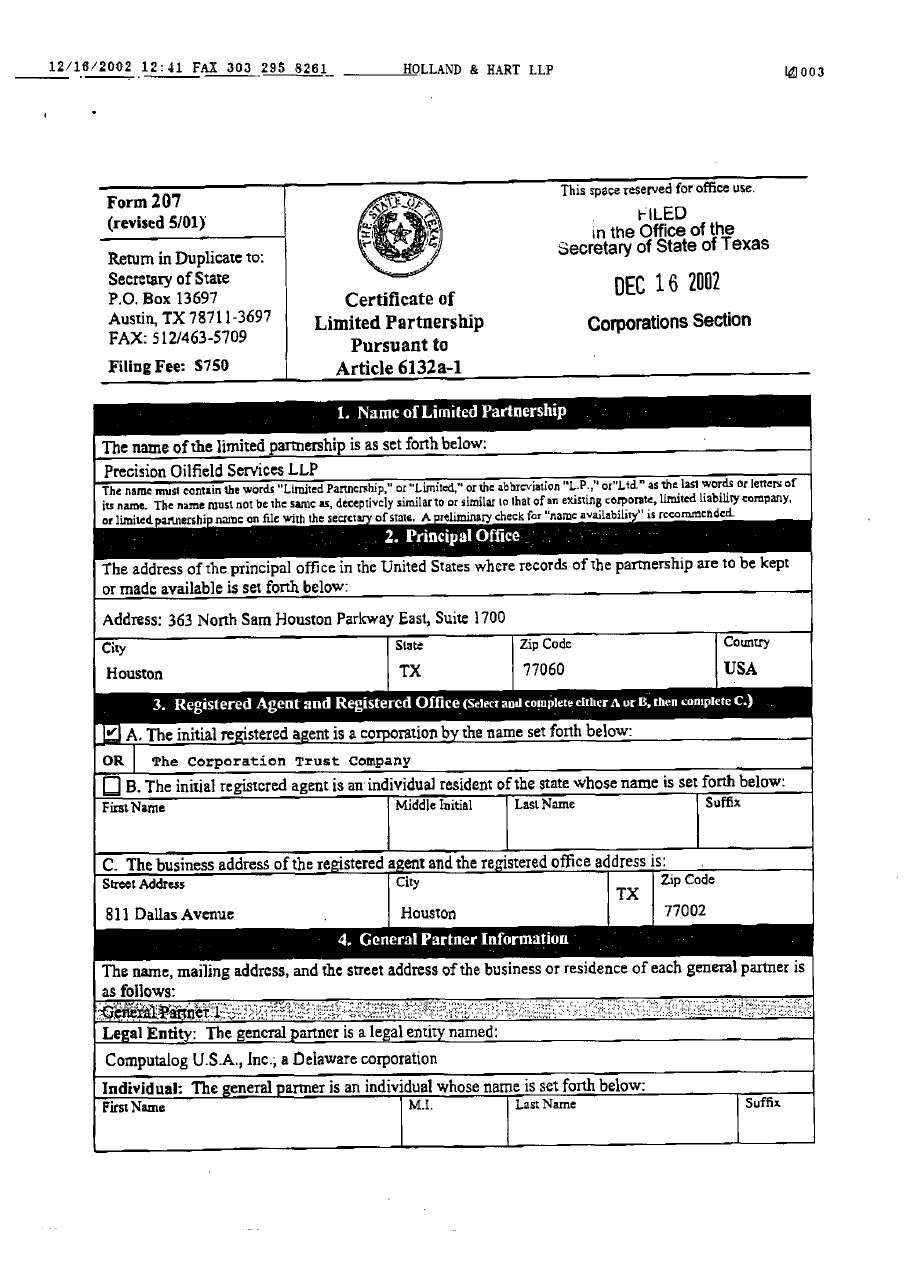
MAILING ADDRESS OF GENERAL PARTNER 1 Mailing Address City State Zip Code 500 Winscott Road Port worth TX 76126 STREET ADDRESS OF GENERAL PARTNER 1 Street Address City State Zip Code 500 winscott Road Fort Worth TX 76126 General Partner 2 Legal Entity: The general partner is a legal entity named: N/A Individual: The general partner is an individual whose name is set forth below: Partner 2–First Name M.I. Last Name Suffix MAILING ADDRESS OF GENERAL PARTNER 2 Mailing Address City State Zip Code STREET ADDRESS OF GENERAL PARTNER 2 Street Address City State Zip Code 5 – Supplemental Information Text Area: [The attached addendum are incorporated herein by reference.] Effective Date of Filing R A. This document will become effective when the document is filed by the secretary of state. OR £ B. This document will become effective at a later date, which is not more than ninety (90) days from the date of its filing by the secretary of state. The delayed effective date is Execution The undersigned sign this document subject to the penalties imposed by law for the submission of a false or fraudulent document. Name Name Computalog U.S.A., Inc., by Jan Campbell, Secretary [ILLEGIBLE] Signature of General Partner 1 Signature of General Partner 2

FILED In the Office of the Secretary of State of Texas APR 17 2007 Corporations Section CERTIFICATE OF AMENDMENT TO THE CERTIFICATE OF LIMITED PARTNERSHIP 80015283 Pursuant to the provisions of Section 2.02 of the Texas Revised Partnership Act, the undersigned limited partnership desires to amend its certificate of limited partnership and for that purpose submits the following certificate of amendment. 1. The name of the limited partnership is Precision Oilfield Services LLP. File Number 800152803. (State the name of the limited partnership as currently shown in the records of the secretary of state. If the amendment changes the name of the partnership, state the old name and not the new name here.) 2. The certificate of limited partnership is amended as follows: 2. Principal Office The address of the principal office in the United States where records of the partnership are to be kept or made available is set forth below: 515 Post Oak Blvd., Suite 600, Houston, TX 77027 USA 4. General Partner Information: General Partner 1 Legal Entity: The general partner is a legal entity named: Precision Energy Services, Inc. Mailing Address of General Partner 1: 515 Post Oak Blvd., Suite 600, Houston, TX 77027 USA Street Address of General Partner 1: 515 Post Oak Blvd., Suite 600, Houston, TX 77027 USA Dated: April 16, 2007. Precision Oilfield Services LLP (Name of Limited Partnership) By: Precision Energy Services, Inc., Its General Partner /s/ Burt M. Martin Burt M. Martin Senior Vice President and Secretary
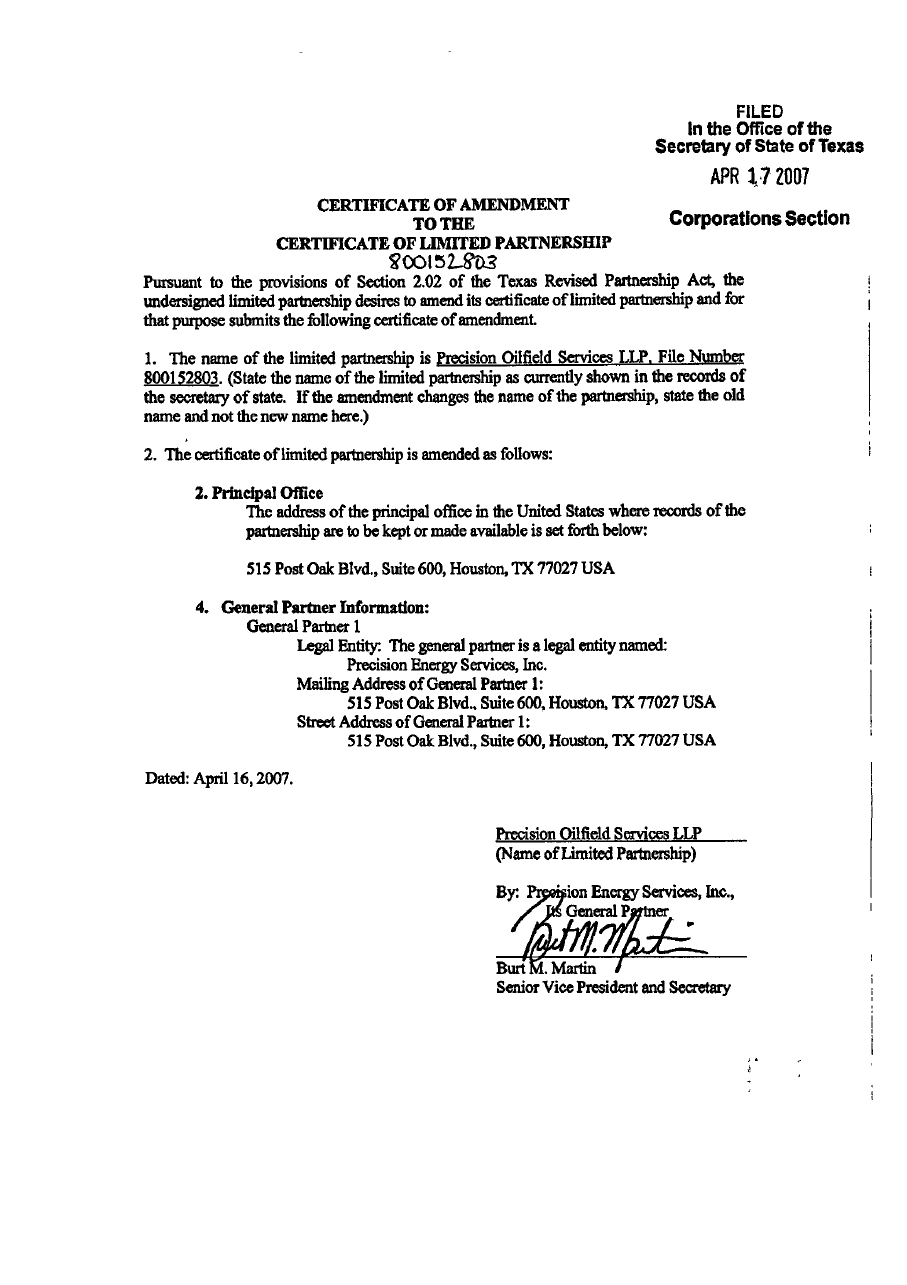
FORM NO. 2

BERMUDA
THE COMPANIES ACT 1981
MEMORANDUM OF ASSOCIATION OF
COMPANY LIMITED BY SHARES
(Section 7(1) and (2))
MEMORANDUM OF ASSOCIATION
OF
Sabre Drilling Ltd.
(hereinafter referred to as “the Company”)
1. The liability of the members of the Company is limited to the amount (if any) for the time being unpaid on the shares respectively held by them.
2. We, the undersigned, namely,
|
|
|
|
|
BERMUDIAN |
|
|
|
NUMBER OF |
|
|
|
|
|
STATUS |
|
|
|
SHARES |
|
NAME |
|
ADDRESS |
|
(Yes/No) |
|
NATIONALITY |
|
SUBSCRIBED |
|
Marcello Ausenda |
|
Clarendon House |
|
Yes |
|
British |
|
One |
|
|
|
2 Church Street |
|
|
|
|
|
|
|
|
|
Hamilton HM 11 |
|
|
|
|
|
|
|
|
|
Bermuda |
|
|
|
|
|
|
|
|
|
|
|
|
|
|
|
|
|
David W.P. Cooke |
|
” |
|
Yes |
|
British |
|
One |
|
|
|
|
|
|
|
|
|
|
|
David W. J. Astwood |
|
” |
|
Yes |
|
British |
|
One |
do hereby respectively agree to take such number of shares of the Company as may be allotted to us respectively by the provisional directors of the Company, not exceeding the number of shares for which we have respectively subscribed, and to satisfy such calls as may be made by the directors, provisional directors or promoters of the Company in respect of the shares allotted to us respectively.
3. The Company is to be an exempted company as defined by the Companies Act 1981 (the “Act”).
4. The Company, with the consent of the Minister of Finance, has power to hold land situate in Bermuda not exceeding in all, including the following parcels:- N/A
5. The authorised share capital of the Company is US$100.00 divided into shares of US$1.00 each.
6. The objects for which the Company is formed and incorporated are unrestricted.
7. The following are provisions regarding the powers of the Company —
Subject to paragraph 4, the Company may do all such things as are incidental or conducive to the attainment of its objects and shall have the capacity, rights, powers and privileges of a natural person, and —
(i) pursuant to Section 42 of the Act, the Company shall have the power to issue preference shares which are, at the option of the holder, liable to be redeemed;
(ii) pursuant to Section 42A of the Act, the Company shall have the power to purchase its own shares for cancellation; and
(iii) pursuant to Section 42B of the Act, the Company shall have the power to acquire its own shares to be held as treasury shares.
Signed by each subscriber in the presence of at least one witness attesting the signature thereof
|
[ILLEGIBLE] |
|
[ILLEGIBLE] |
|
[ILLEGIBLE] |
|
[ILLEGIBLE] |
|
[ILLEGIBLE] |
|
[ILLEGIBLE] |
|
|
|
|
|
(Subscribers) |
|
(Witnesses) |
SUBSCRIBED this 29th day of April, 2014.
|
|
STATE OF DELAWARE |
|
|
SECRETARY OF STATE |
|
|
DIVISION OF CORPORATIONS |
|
|
FILED 09:00 AM 01/22/2001 |
|
|
010034275 - 3346988 |
CERTIFICATE OF INCORPORATION
STEALTH OIL & GAS, INC.
First: The name of the Corporation is Stealth Oil & Gas, Inc.
Second: The address of the Corporation’s registered office in the State of Delaware is 2711 Centerville Road, Suite 400 in the City of Wilmington, County of New Castle. The name of the Corporation’s registered agent at such address is Corporation Service Company.
Third: The nature of the business and purpose to be conducted or promoted by the Corporation is to engage in any lawful act or activity for which corporations may be organized under the General Corporation Law of the State of Delaware.
Fourth: The total number of shares of stock that the Corporation shall have authority to issue is One Thousand (1,000) shares of Common Stock, with a par value of $1.00 per share.
Fifth: The name of the incorporator is Nadia Matt, whose mailing address is 515 Post Oak Blvd., Suite 600, Houston, Texas 77027.
Sixth: The Corporation shall have perpetual existence.
Seventh: Election of directors need not be by written ballot unless the bylaws of the Corporation shall so provide.
Eighth: All of the powers of the Corporation, insofar as the same may be lawfully vested by this Certificate of Incorporation in the Board of Directors of the Corporation, are hereby conferred upon the Board of Directors of the Corporation.
In furtherance and not in limitation of the foregoing provisions of this Article Eighth, and for the purpose of the orderly management of the business and the conduct of the affairs of the Corporation, the Board of Directors of the Corporation shall have the power to adopt, amend or repeal from time to time the by-laws of the Corporation, subject to the right of the stockholders of the Corporation entitled to vote thereon to adopt, amend or repeal bylaws of the Corporation.
Ninth: The Corporation reserves the right to amend, alter, change or repeal any provision contained in this Certificate of Incorporation, in the manner now or hereafter prescribed by statute, and all rights conferred upon stockholders herein are granted subject to this reservation.
THE UNDERSIGNED, being the incorporator hereinbefore named, for the purpose of forming a corporation pursuant to the General Corporation Law of the State of Delaware, does make this Certificate, hereby declaring and certifying that this is my act and deed and the facts herein stated are true. Accordingly, I have hereunto set my hand this 22nd day of January, 2001.
|
|
/s/ Nadia Matt |
|
|
Nadia Matt |
CERTIFICATE OF INCORPORATION
STEALTH OIL & GAS, INC.
First: The name of the Corporation is Stealth Oil & Gas, Inc.
Second: The address of the Corporation’s registered office in the State of Delaware is 2711 Centerville Road, Suite 400 in the City of Wilmington, County of New Castle. The name of the Corporation’s registered agent at such address is Corporation Service Company.
Third: The nature of the business and purpose to be conducted or promoted by the Corporation is to engage in any lawful act or activity for which corporations may be organized under the General Corporation Law of the State of Delaware.
Fourth: The total number of shares of stock that the Corporation shall have authority to issue is One Thousand (1,000) shares of Common Stock, with a par value of $1.00 per share.
Fifth: The name of the incorporator is Nadia Matt, whose mailing address is 515 Post Oak Blvd., Suite 600, Houston, Texas 77027.
Sixth: The Corporation shall have perpetual existence.
Seventh: Election of directors need not be by written ballot unless the bylaws of the Corporation shall so provide.
Eighth: All of the powers of the Corporation, insofar as the same may be lawfully vested by this Certificate of Incorporation in the Board of Directors of the Corporation, are hereby conferred upon the Board of Directors of the Corporation.
In furtherance and not in limitation of the foregoing provisions of this Article Eighth, and for the purpose of the orderly management of the business and the conduct of the affairs of the Corporation, the Board of Directors of the Corporation shall have the power to adopt, amend or repeal from time to time the by-laws of the Corporation, subject to the right of the stockholders of the Corporation entitled to vote thereon to adopt, amend or repeal bylaws of the Corporation.
Ninth: The Corporation reserves the right to amend, alter, change or repeal any provision contained in this Certificate of Incorporation, in the manner now or hereafter prescribed by statute, and all rights conferred upon stockholders herein are granted subject to this reservation.
THE UNDERSIGNED, being the incorporator hereinbefore named, for the purpose of forming a corporation pursuant to the General Corporation Law of the State of Delaware, does make this Certificate, hereby declaring and certifying that this is my act and deed and the facts herein stated are true. Accordingly, I have hereunto set my hand this 22nd day of January, 2001.
|
|
/s/ Nadia Matt |
|
|
Nadia Matt |
|
|
Wyoming Secretary of State |
|
|
|
State Capitol Building, Room 110 |
|
| |
|
200 West 24th Street |
|
Max Maxfield, WY Secretary of State | |
|
Cheyenne, WY 82002-0020 |
|
| |
|
Ph. 307.777.7311 |
|
FILED: 05/18/2011 09:52 AM | |
|
Fax 307.777.5339 |
|
| |
|
Email: business@state.wy.us |
|
ID: 2011-000601749 |
Profit Corporation
Articles of Incorporation
1. Corporation name:
Tooke Rockies, Inc.
2. Name and physical address of its registered agent:
(The registered agent may be an individual resident in Wyoming, a domestic or foreign entity authorized to transact business in Wyoming, having a business office identical with such registered office. The registered agent must have a physical address in Wyoming. A Post Office Box or Drop Box is not acceptable. If the registered office includes a suite number, it must he included in the registered office address.)
CT Corporation System
1720 Carey Avenue, Suite 200
Cheyenne, Wyoming 82001
3. Mailing address of the corporation:
515 Post Oak Boulevard, Suite 600
Houston, Texas 77027
Attn: Darryl Kitay
4. Principal office address:
515 Post Oak Boulevard, Suite 600
Houston, Texas 77027
5. Number and class of shares the corporation will have the authority to issue:
50,000 without par value
6. Incorporators (list names and addresses of each incorporator):
|
James M. Hudgins 515 Post Oak Boulevard Suite 600 Houston, Texas 77027 |
|

P-ArticlesIncorporation - Revised 07/17/2009
7. Execution (all incorporators must sign):
|
|
Signature: |
/s/ James M. Hudgins |
|
Date: |
05/13/2011 | ||||
|
|
|
|
|
|
(mm/dd/yyyy) | ||||
|
|
Print Name: |
James M. Hudgins |
|
|
| ||||
|
|
|
|
|
| |||||
|
|
Signature: |
|
|
Date: |
| ||||
|
|
|
|
|
|
(mm/dd/yyyy) | ||||
|
|
Print Name: |
|
|
|
| ||||
|
|
|
|
|
| |||||
|
|
Signature: |
|
|
Date: |
| ||||
|
|
|
|
|
|
(mm/dd/yyyy) | ||||
|
|
Print Name: |
|
|
|
| ||||
|
|
| ||||||||
|
Contact Person: |
Pam Davis |
|
| ||||||
|
Daytime Phone Number: |
(713) 693-4184 |
Email: |
pam.davis@weatherford.com | ||||||
Checklist
o Filing Fee: $100.00 Make check or money order payable to Wyoming Secretary of State.
o The Articles must be in compliance with Wyoming Statutes 17-16-120 and 17-16-202.
o The Articles must be accompanied by a written consent to appointment executed by the registered agent.
o For consistency the Secretary of State’s Office will only keep one version of the agent’s name on file.
o Please submit one originally signed document and one exact photocopy of the filing.
o Please review form prior to submitting to the Secretary of State to ensure all areas have been completed to avoid a delay in the processing of your documents.
Other Requirements:
· An annual report will be due annually on the first day of the anniversary month of formation. If not paid within sixty (60) days from the due date, the entity will be subject to dissolution/revocation.
|
|
ARTICLES OF INCORPORATION |
FILED |
|
|
PURSUANT TO ARTICLE 3.02 |
In the Office of the |
|
|
TEXAS BUSINESS CORPORATION ACT |
Secretary of State of Texas |
|
|
|
MAY 01 2003 |
|
|
Article 1 - Corporate Name |
Corporations Section |
The name of the Corporation is VISEAN ONLINE INC.
Article 2 - Registered Agent and Registered Office
The initial registered agent is an individual resident of the state whose name is Mr. Matt Connolly. The business address of the registered agent and the registered office address is
5409 West Loop South, Suite 555,
, Bellaire, Texas 77401.
Article 3 - Directors
The number of directors constituting the initial board of directors and the names and addresses of the persons who are to serve as directors until the first annual meeting of shareholders or until their successors are elected and qualified are:
|
Matt Connolly |
5409 West Loop South |
|
|
Suite 555, Bellaire |
|
|
, Texas 77401 |
|
Frank Simonton Jr. |
1010 Lamar |
|
|
Suite 850, Houston |
|
|
, Texas 77002 |
Article 4 - Authorized Shares
The total number of shares the Corporation is authorized to issue is 100,000 and the shares shall have no par value. There is reserved exclusively to the shareholders the right to fix the consideration to be received for shares without par value. Prior to the issuance of such shares, the shareholders shall fix the consideration to be received for such shares, by a vote of the holders of a majority of all shares entitled to vote thereon.
Article 5 - Initial Capitalization
The Corporation will not commence business until it has received for the issuance of its shares consideration of the value of one thousand dollars ($1,000) .
Article 6 - Duration
The period of duration is perpetual.
Article 7 - Purpose
The purpose for which the Corporation is organized is the transaction of any and all lawful business for which corporations may be incorporated under the Texas Business Corporation Act.
Article 8 - Power to Amend Bylaws Reserved by Shareholders
The power to amend the bylaws is reserved exclusively to the shareholders.
Article 9 - Director’s Limited Liability
A director of the Corporation shall not be liable to the Corporation or its shareholders for monetary damages for an act or omission in the director’s capacity as a director, except to the extent the director is found liable for: (1) a breach of the director’s duty of loyalty to the Corporation or its shareholders; (2) an act or omission not in good faith that constitutes a breach of duty of the director to the Corporation or an act or omission that involves intentional misconduct or a knowing violation of the law; (3) a transaction from which the director received an improper benefit, whether or not the benefit resulted from an action taken within the scope of the director’s office; or (4) an act or omission for which the liability of a director is expressly provided by an applicable statute.
Article 10 - Transactions with Interested Directors
An otherwise valid contract or transaction between the Corporation and one or more of its directors or officers, or between the Corporation and any other domestic or foreign corporation or other entity in which one or more of its directors or officers are directors or officers or have a financial interest, shall be valid notwithstanding whether the director or officer is present at or participates in the meeting of the board or committee thereof which authorizes the contract or transaction, or solely because his, her or their votes are counted for such purpose, if any one of the following is satisfied: (1) the material facts as to his or her relationship or interest and as to the contract or transaction are disclosed or are known to the board of directors or the committee, and the board or committee in good faith authorizes the contract or transaction by the affirmative vote of a majority of the disinterested directors, even though the disinterested directors be less than a quorum; or (2) the material facts as to his or her relationship or interest and as to the contract or transaction are disclosed or are known to the shareholders entitled to vote thereon, and the contract or transaction is specifically approved in good faith by vote of the shareholders; or (3) the contract or transaction is fair as to the Corporation as of the time it is authorized, approved, or ratified by the board of directors, a committee thereof, or the shareholders. Common or interested directors may be counted in determining the presence of a quorum at a meeting of the board of directors or of a committee which authorizes the contract or transaction.
Incorporator
The name and address of the incorporator is:
|
Frank H. Simonton Jr., Attorney |
Suite 850, 1010 Lamar, Houston, Texas |
|
|
77002 |
The undersigned incorporator signs these articles of incorporation subject to the penalty imposed by Article 10.02, Texas Business Corporation Act, for the submission of a false or fraudulent document.
|
|
/s/ Frank H. Simonton Jr., Attorney |
|
|
Frank H. Simonton Jr. Attorney |
|
Form 404 |
Articles of Amendment Pursuant to Article 4.04, |
This space reserved for office use |
|
(revised 9/05) |
FILED | |
|
Return in duplicate to: |
In the Office of the | |
|
Secretary of State |
Secretary of State of Texas | |
|
P.O. Box 13697 Austin, TX 78711-3697 512 463-5555 |
JAN 23 2006 Corporations Section | |
|
FAX: 512/463-5709 |
Texas Business |
|
|
Filing Fee: $150 |
Corporation Act |
|

Article 1 —Name
The name of the corporation is as set forth below:
|
VISEAN ONLINE INC |
State the name of the entity as it is currently shown in the records of the secretary of state. If the amendment changes the name of the entity, state the old name and not the new name in Article 1.
|
The filing number issued to the corporation by the secretary of state is: |
800201114 |
Article 2—Amended Name
(If the purpose of the articles of amendment is to change the name of the corporation, then use the following statement)
The amendment changes the articles of incorporation to change the article that names the corporation. The article in the Articles of Incorporation is amended to read as follows:
The name of the corporation is (state the new name of the corporation below)
|
VISEAN INFORMATION SERVICES INC |
The name of the entity must contain an organizational designation or accepted abbreviation of such term. The name must not be the same as, deceptively similar to, or similar to that of an existing corporate, limited liability company, or limited partnership name on file with the secretary of state. A preliminary check for “name availability” is recommended.
Article 3 —Amendment to Registered Agent/Registered Office
The amendment changes the articles of incorporation to change the article stating the registered agent and the registered office address of the corporation. The article is amended to read as follows:
Registered Agent of the Corporation
(Complete either A or B, but not both. Also complete C.)
o A. The registered agent is an organization (cannot be corporation named above) by the name of:
OR
x B. The registered agent is an individual resident of the state whose name is set forth below.
|
First Name |
|
MI |
|
Last Name |
|
Suffix |
|
Matt |
|
|
|
Connolly |
|
MR |
|
Registered Office of the Corporation (Cannot be a P.O. Box.) |
|
C. The business address of the registered agent and the registered office address is: |
|
Street Address |
|
City |
|
State |
|
Zip Code |
|
2100 West Loop South STE 900 |
|
HOUSTON |
|
TX |
|
77027 |
Article 4 — Other Altered, Added, or Deleted Provisions
Other changes or additions to the articles of incorporation may be made in the space provided below. If the space provided is insufficient to meet your needs, you may incorporate the additional text by providing an attachment to this form. Please read the instructions to this form for further information on format.
Text Area (The attached addendum, if any, is incorporated herein by reference.)
Article 5—Statement of Approval
The amendments to the articles of incorporation have been approved in the manner required by the Texas Business Corporation Act and by the constituent documents of the corporation.
Effectiveness of Filing
A. o This document will become effective when the document is filed by the secretary of state.
OR
B. o This document will become effective at a later date, which is not more than ninety (90) days
from the date of its filing by the secretary of state. The delayed effective date is
Execution
The undersigned signs this document subject to the penalties imposed by law for the submission of a false or fraudulent document.
|
1|18|06 |
|
|
|
Date |
|
|
|
|
|
[ILLEGIBLE] |
|
|
|
Signature of Authorized Officer |
|
|
|
Reset |
|
Form 424 |
|
This space reserved for office use. |
|
(Revised 12/09) |
| |
|
Submit in duplicate to: |
FILED | |
|
Secretary of State |
In the Office of the | |
|
P.O. Box 13697 |
Secretary of State of Texas | |
|
Austin, TX 78711-3697 |
JUL 27 2010 | |
|
512 463-5555 |
Corporations Section | |
|
FAX: 512/463-5709 |
Certificate of Amendment |
|
|
Filing Fee: See instructions |
|
|

Entity Information
The name of the filing entity is;
|
Visean Information Services Inc. |
State the name of the entity as currently shown in the records of the secretary of state. If the amendment changes the name of the entity, state the old name and not the new name.
|
The filing entity is a: (Select the appropriate entity type below.) |
|
|
x For-profit Corporation |
o Professional Corporation |
|
o Nonprofit Corporation |
o Professional Limited Liability Company |
|
o Cooperative Association |
o Professional Association |
|
o Limited Liability Company |
o Limited Partnership |
|
The file number issued to the filing entity by the secretary of state is: |
800201114 | |
|
The date of formation of the entity is: |
May 1, 2003 | |
Amendments
1. Amended Name
(If the purpose of the certificate of amendment is to change the name of the entity, use the following statement)
The amendment changes the certificate of formation to change the article or provision that names the filing entity. The article or provision is amended to read as follows:
The name of the filing entity is: (state the new name of the entity below)
The name of the entity must contain an organizational designation or accepted abbreviation of such term, as applicable.
2. Amended Registered Agent/Registered Office
The amendment changes the certificate of formation to change the article or provision stating the name of the registered agent and the registered office address of the filing entity. The article or provision is amended to read as follows:
Registered Agent
(Complete either A or B, but not both. Also complete C.)
o A. The registered agent is an organization (cannot be entity named above) by the name of:
OR
o B. The registered agent is an individual resident of the state whose name is:
|
|
|
|
|
|
|
|
|
First Name |
|
M.I. |
|
Last Name |
|
Suffix |
The person executing this instrument affirms that the person designated as the new registered agent has consented to serve as registered agent.
C. The business address of the registered agent and the registered office address is:
|
|
|
|
|
TX |
|
|
|
Street Address (No P.O. Box) |
|
City |
|
State |
|
Zip Code |
3. Other Added, Altered, or Deleted Provisions
Other changes or additions to the certificate of formation may be made in the space provided below. If the apace provided is insufficient, incorporate the additional text by providing an attachment to this form. Please read the instructions to this form for further information on format.
Text Area (The attached addendum, if any, is incorporated herein by reference.)
o Add each of the following provisions to the certificate of formation, the identification or reference of the added provision and the full text are as follows:
x Alter each of the following provisions of the certificate of formation. The identification or reference of the altered provision and the full text of the provision as amended are as follows:
Article 8 - Power to Amend Bylaws
The Board of Directors of the Corporation shall have the power to adopt, amend or repeal from time to time the bylaws of the Corporation, subject to the right of the shareholders of the Corporation entitled to vote thereon to adopt, amend or repeal bylaws of the Corporation.
o Delete each of the provisions identified below from the certificate of formation.
Statement of Approval
The amendments to the certificate of formation have been approved in the manner required by the Texas Business Organizations Code and by the governing documents of the entity.
Effectiveness of Filing (Select either A, B, or C.)
|
A. x This document becomes effective when the document is filed by the secretary of state, | ||
|
B. o This document becomes effective at a later date, which is not more than ninety (90) days from the date of signing. The delayed | ||
|
effective date is: |
| |
|
C. o This document takes effect upon the occurrence of a future event or fact, other than the passage of time. The 90th day after the | ||
|
date of signing is: |
| |
The following event or fact will cause the document to take effect in the manner described below:
Execution
The undersigned signs this document subject to the penalties imposed by law for the submission of a materially false or fraudulent instrument and certifies under penalty of perjury that the undersigned is authorized under the provisions of law governing the entity to execute the filing instrument.
|
Date: |
July 23, 2010 |
|
| |
|
|
|
|
| |
|
|
By: |
| ||
|
|
|
Joseph C. Henry | ||
|
|
|
Signature of authorized person | ||
|
|
|
| ||
|
|
|
Joseph C. Henry, Vice President and Secretary | ||
|
|
|
Printed or typed name of authorized person (see instructions) | ||
Exhibit T3A-29
A0715695
|
|
ENDORSED - FILED |
|
|
in the office of the Secretary of State |
|
|
of the State of California |
|
|
MAY 23 2011 |
AMENDED AND RESTATED
ARTICLES OF INCORPORATION
OF
VISUAL SYSTEMS, INC.
The undersigned, Joseph C. Henry, hereby certifies as follows:
ONE: He is the duly elected and qualified Vice President and Secretary of said corporation.
TWO: The Articles of Incorporation of said corporation shall be amended and restated to read in full as follows:
I
The name of this corporation is VISUAL SYSTEMS, INC. (the “Corporation”).
II
The purpose of the Corporation is to engage in any lawful act or activity for which a corporation may be organized under the General Corporation Law of California other than the banking business, the trust company business or the practice of a profession permitted to be incorporated by the California Corporations Code.
III
The Corporation is authorized to issue one class of stock to be designated “Common Stock.” The total number of shares that the Corporation is authorized to issue is One Thousand (1,000) shares, all of which shares shall be Common Stock, no par value.
IV
The liability of the directors of this Corporation for monetary damages shall be eliminated to the fullest extent permitted under California law.
This Corporation is authorized to provide indemnification of agents (as defined in Section 317 of the California Corporations Code) through bylaw provisions, agreements with the agents, vote of shareholders or disinterested directors or otherwise, in excess of the indemnification otherwise permitted by Section 317 of the California Corporations Code, subject only to applicable limits set forth in Section 204 of the California Corporations Code with respect to actions for breach of duty to the Corporation and its shareholders.
THREE: The foregoing amendment of the Articles of Incorporation has been duly approved by the Board of Directors.
FOUR: The foregoing amendment has been duly approved by the required vote of shareholders in accordance with Section 902 and 903 of the California Corporations Code. The Corporation has only one class of stock outstanding, known as common stock, which is entitled
to vote with respect to the amendment. The total number of outstanding shares of common stock entitled to vote with respect to the foregoing amendment was One Hundred (100) shares of common stock. The number of shares voting in favor of the foregoing amendment equaled or exceeded the vote required, such required vote being a majority of the outstanding shares of each class of stock.
(The remainder of this page intentionally left blank)
IN WITNESS WHEREOF, the undersigned hereby declares under penalty of perjury under the laws of the State of California that the matters set forth in this certificate are true and correct and of the undersigned’s own knowledge.
Executed at Houston, Texas on May 19, 2011.
|
|
/s/ Joseph C. Henry |
|
|
Joseph C. Henry, Vice President and Secretary |
Exhibit T3A-30 6057-021-3 STATE OF ILLINOIS File Number CLAY COUNTY 127, 797 THIS INSTRUMENT WAS FILED FOR RECORD IN THE RECORDERS OFFICE OF CLAY COUNTY, AFORE SAID ON THE 13th DAY OF July 1999 AT 11:45 O’CLOCK A.M. AS MICROFILMED DOCUMENT # 127,797 [ILLEGIBLE] RECORDER State of Illinois Office of The Secretary of State Whereas, ARTICLES OF INCORPORATION OF WARRIOR WELL SERVICES, INC. INCORPORATED UNDER THE LAWS OF THE STATE OF ILLINOIS HAVE BEEN FILED IN THE OFFICE OF THE SECRETARY OF STATE AS PROVIDED BY THE BUSINESS CORPORATION ACT OF ILLINOIS, IN FORCE JULY 1, A.D. 1984. Now Therefore, I, Jesse White, Secretary of State of the State of Illinois, by virtue of the powers vested in me by law, do hereby issue this certificate and attach hereto a copy of the Application of the aforesaid corporation. In Testimony Whereof, I hereto set my hand and cause to be affixed the Great Seal of the State of Illinois, at the City of Springfield, this 6TH day of JULY A.D. 1999 and of the Independence of the United States the two hundred and 24TH. [ILLEGIBLE] Secretary of State C-212.3

Form BCA-2.10 (Rev. Jan. 1999) Jesse White Secretary of State Department of Business Services Springfield, IL 62756 http://www.sos.state.il.us Payment must be made by certi- fied check, cashier’s check, Illi- nois attorney’s check, Illinois C.P.A’s check or money order, payable to “Secretary of State.” ARTICLES OF INCORPORATION This space for use by Secretary of State FILED JUL 6 1999 JESSE WHITE SECRETARY OF STATE | SUBMIT IN DUPLICATE! This space for use by Secretary of State Date 7-6-99 Franchise Tax $ 25.00 Filing Fee $ 75.00 100.00 Approved: [ILLEGIBLE] 1. CORPORATE NAME: WARRIOR WELL SERVICES, INC. (The corporate name must contain the word “corporation”, “company,” “incorporated,” “limited” or an abbreviation thereof.) 2. Initial Registered Agent: Robert G.. Coble First Name Middle Initial Last name Initial Registered Office: 832 West North Avenue Number Street Suite # Flora IL Clay 62839 City County Zip Code 3. Purpose or purposes for which the corporation is organized: (If not sufficient space to cover this point, add one or more sheets of this size.) The transaction of any or all lawful businesses for which corporations may be incorporated under the Illinois Business Corporation Act of 1983. 4. Paragraph 1: Authorized Shares, Issued Shares and Consideration Received: Par Value Number of Shares Number of Shares Consideration to be Class per Share Authorized Proposed to be Issued Received Therefor common $ N/A 100,000 100,000 $1,000.00 TOTAL = $1,000.00 Paragraph 2: The preferences, qualifications, limitations, restrictions and special or relative rights in respect of the shams of each class are: (If not sufficient space to cover this point, add one or more sheets of this size.) (over)
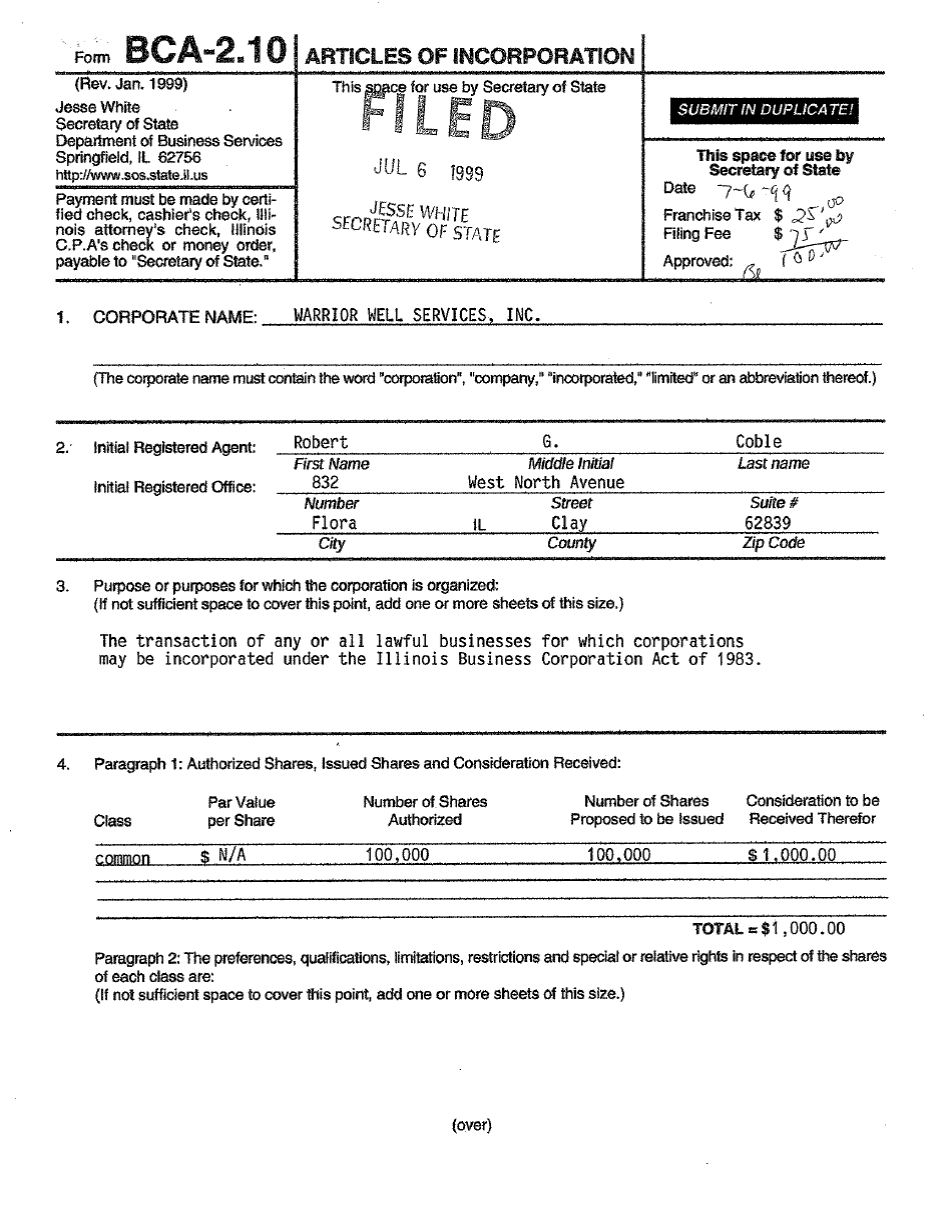
5.OPTIONAL: (a) Number of directors constituting the initial board of directors of the corporation: (b) Names and addresses of the persons who are to serve as directors until the first annual meeting of shareholders or until their successors are elected and qualify: Name Residential Address City, State, ZIP 6. OPTIONAL: (a) It is estimated that the value of all property to be owned by the corporation for the following year wherever located will be: $ (b) it is estimated that the value of the property to be located within the State of Illinois during the following year will be: $ (c) It is estimated that the gross amount of business that will be transacted by the corporation during the following year will be: $ (d) It is estimated that the gross amount of business that will be transacted from places of business in the State of Illinois during the following year will be: $ 7. OPTIONAL: OTHER PROVISIONS Attach a separate sheet of this size for any other provision to be included in the Articles of Incorporation, e.g., authorizing preemptive rights, denying cumulative voting, regulating internal affairs, voting majority requirements, fixing a duration other than perpetual, etc. 8. NAME(S) & ADDRESS(ES) OF INCORPORATOR(S) The undersigned incorporator(s) hereby declare(s), under penalties of perjury, that the statements made in the foregoing Articles of Incorporation are true. Dated [ILLEGIBLE] , 1999 (Month & Day) Year Signature and Name 1. [ILLEGIBLE] Signature Brent Burgess (Type or Print Name) 2. Signature (Type or Print Name) 3. Signature (Type or Print Name) Address 1. 832 West North Avenue Street Flora IL 62839 City/Town State ZIP Code 2. Street City/Town State ZIP Code 3. Street City/Town State ZIP Code (Signatures must be in BLACK INK on original document. Carbon copy, photocopy or rubber stamp signatures may only be used on conformed copies.) NOTE: If a corporation acts as incorporator, the name of the corporation and the state of incorporation shall be shown and the execution shall be by its president or vice president and verified by him, and attested by its secretary or assistant secretary. FEE SCHEDULE · The initial franchise tax is assessed at the rate of 15/100 of 1 percent ($1.50 per $1,000) on the paid-in capital represented in this state, with a minimum of $25. · The filing fee is $75. · The minimum total due (franchise tax + filing fee) is $100. (Applies when the Consideration to be Received as set forth in Item 4 does not exceed $16,667) · The Department of Business Services in Springfield will provide assistance in calculating the total fees if necessary. Illinois Secretary of State Springfield, IL 62756 Department of Business Services Telephone (217) 782-9522 or 782-9523 C-162.20
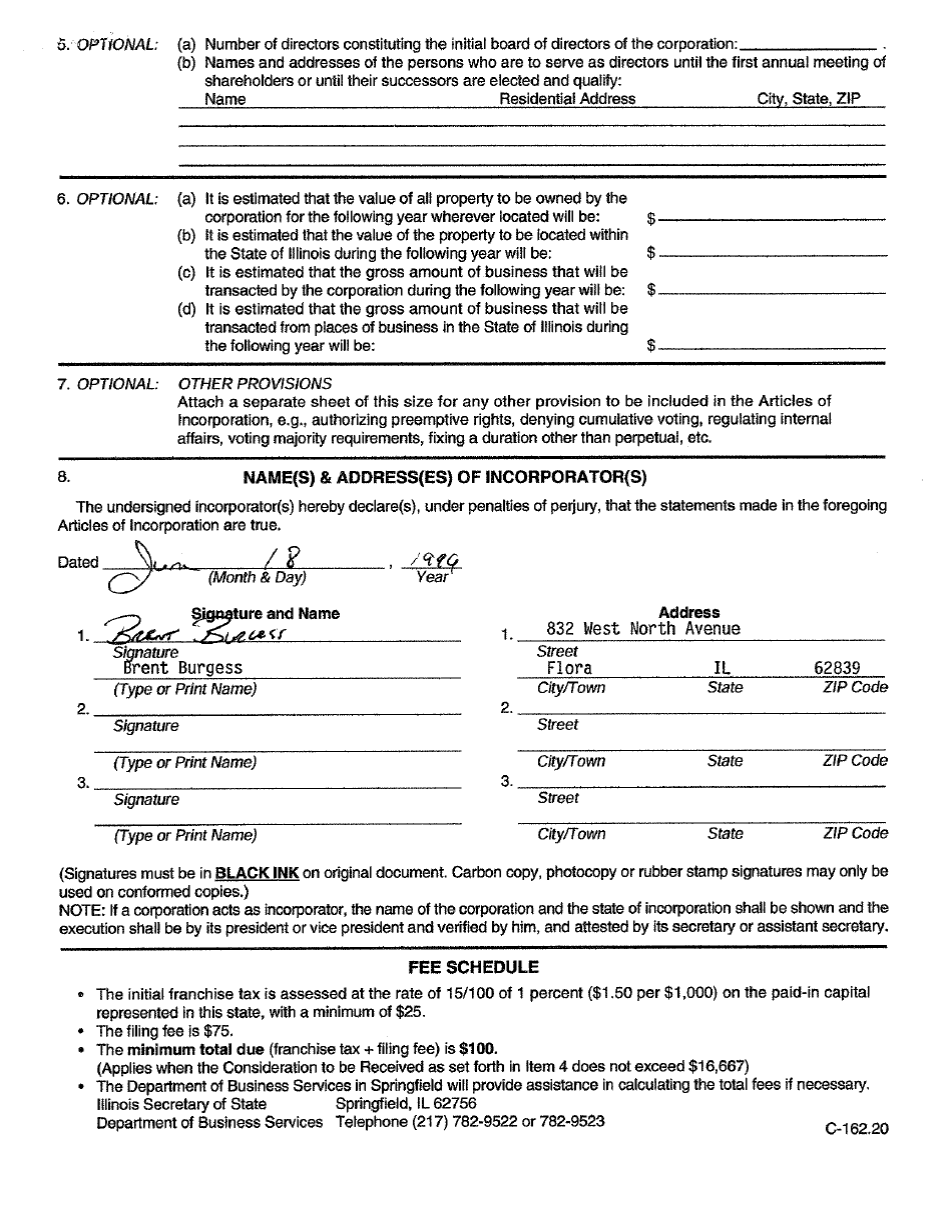
FORM BCA 5.10/5.20 (rev. Dec 2003) STATEMENT OP CHANGE OF REGISTERED AGENT AND/OR REGISTERED OFFICE Business Corporation Act Jesse White, Secretary of State Department of Business Services Springfield, IL, 62756 217-782-3847 www.cyberdriveillions.com Remit payment in the form of a check or money order payable to Secretary of State. FILED FEB 21 2007 JESSE WHITE SECRETARY OF STATE File# 6057-021-3 Filling Fee:$25 Approved: IL Submit in duplicates Type or Print clearly in black Ink Do not write above this line 1. Corporate Name: Warrior Well Services, Inc. 2. State or Country of Incorporation: Illinois 3. Name and Address of Registered Agent and Registered Office as they appear on the records of the Office of the Secretary of State (before change): Registered Agent Robert G Coble First Name Middle Name Last Name Registered Office 832 W. North Ave, POB 538 Number Street Suite No. (P.O. Box alone is unacceptable) FLORA, IL 62839 Clay City ZlP Code County 4. Name and Address of Registered Agent and Registered Office shall ha (after all changes herein reported): Registered Agent C T Corporation System First Name Middle Name Last Name Registered Office 208 S LaSalle Street, Suite 814 Number Street Suite No. (P.O. Box alone is unacceptable) Chicago, IL 60604 Cook City Zip Code County 5. The address of the registered office and the address of the business office of the registered agent, as changed, will be Identical. 6. The above change was authorized by; (“X” one box only) a. T Resolution duly adopted by the board of directors. (Note 5) b. £ Action of the registered agent (Note 6) SEE REVERSE FOR SIGNATURE(S). Printed by authority of the State of Illinois - 4/05 - 25M -C-135.17 [ILLEGIBLE]
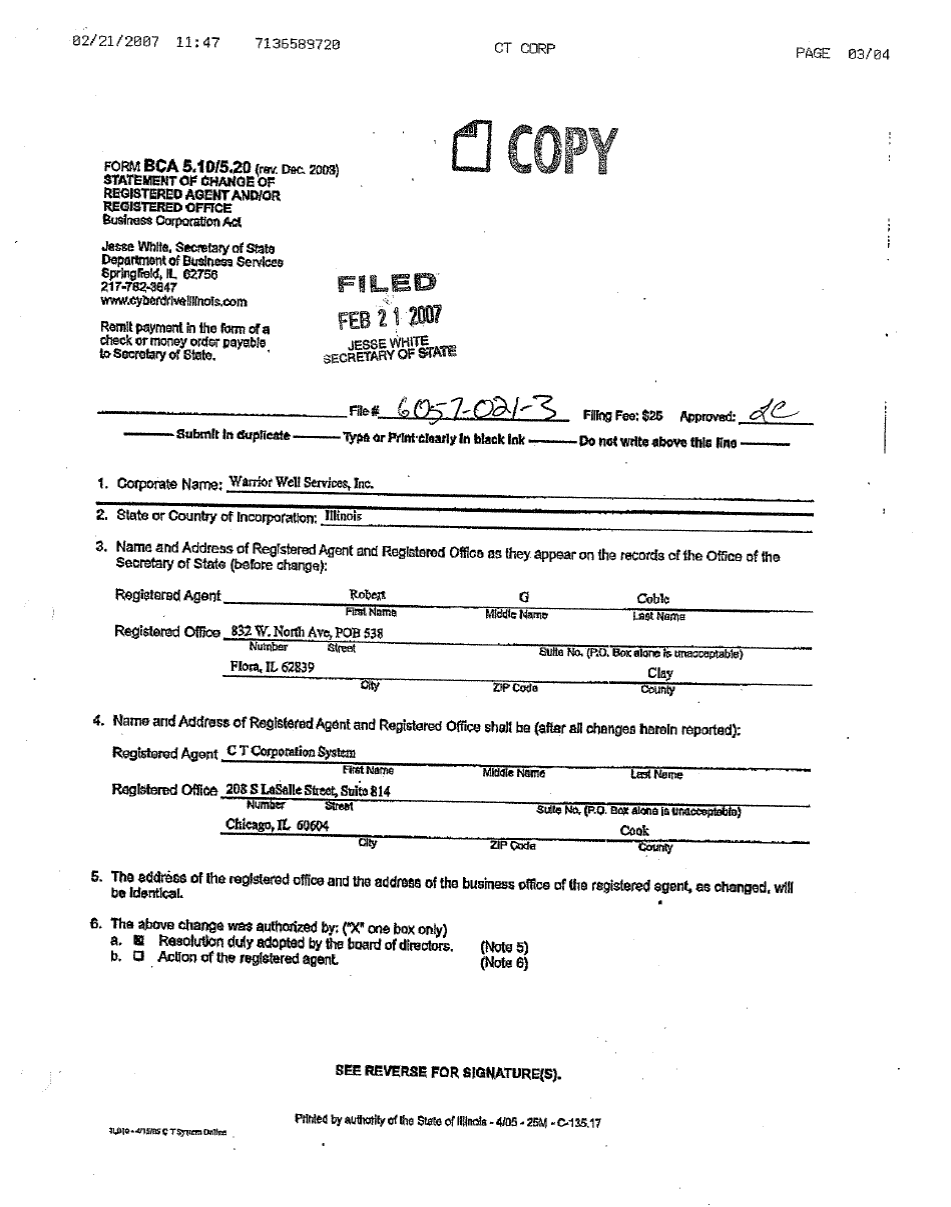
7. If authorized by the board of directors, sign here. See Note 5 below. The undersigned corporation has caused this statement to be signed by a duly authorized officer who affirms, under penalties of perjury, that the facts stated herein are true and correct. Dated February [ILLEGIBLE] , 2007 Warrior Well Services, Inc Month & Day Year Exact Name of corporation [ILLEGIBLE] Any Authorized Officer Signature Burt M. Martin, Senior Vice President and Secretary Name and Title (type or print) If change of registered office by registered agent, sign here. See Note 6 below. The undersigned, under penalties of perjury, affirms that the facts stated herein ere true and correct. Dated , Month & Day Year Exact Name of Corporation Name (type of print) If Registered Agent to a corporation. Name and Title of officer who is signing on Its’ NOTES 1. The registered office may, but need not be, the same as the principal office of the corporation. However, the registered office and the office address of the registered agent must be the same. 2. The registered office must include a street or road address (P.O. Box alone is unacceptable). 3. A corporation cannot act as its own registered agent. 4. If the registered office is changed from one county to another, the corporation must file with the Recorder of Deeds of the new county a certified copy of the Articles of Incorporation and a certified copy of the Statement of Change of Registered Office. Such certified copies may be obtained ONLY from the Secretary of State. 5. Any change of registered agent must be by resolution adopted by the board of directors. This statement must be signed by a duly authorized officer. 6. The registered agent may report a change of the registered office of the corporation for which he/she is a registered agent. When the agent reports such a change, this statement must be signed by the registered agent. If a corporation is acting as the registered agent, a duly authorized officer of such corporation must sign this statement. Printed by authority of the State of Illinois - 4/05 - 25M – C-135.17 [ILLEGIBLE]
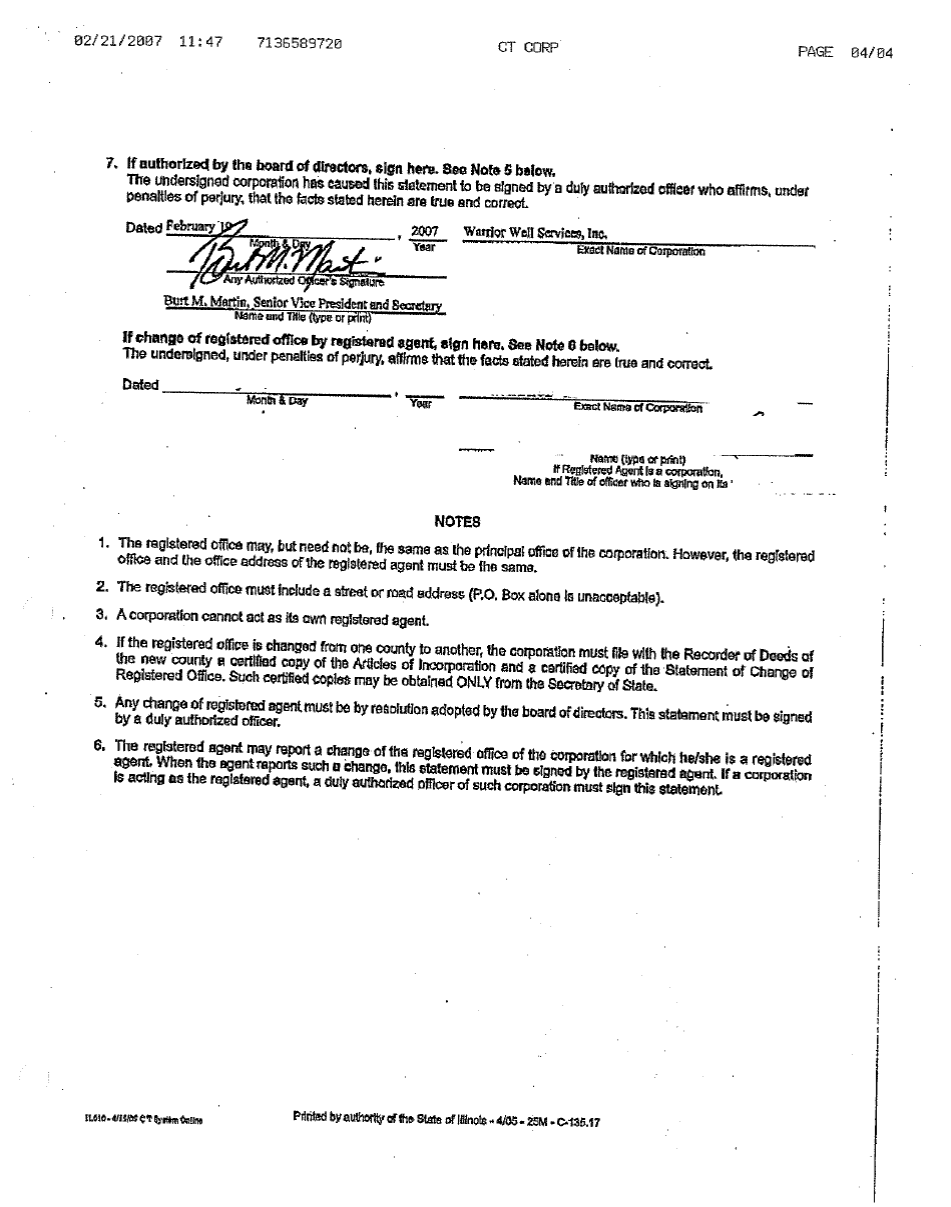
MEMORANDUM OF ASSOCIATION
OF
WEATHERFORD (NOVA SCOTIA) ULC
1. The name of the Company is Weatherford (Nova Scotia) ULC.
2. There are no restrictions on the objects and powers of the Company and the Company shall expressly have the following powers:
(1) to sell or dispose of its undertaking, or a substantial part thereof;
(2) to distribute any of its property in specie among its members; and
(3) to amalgamate with any company or other body of persons.
3. The liability of the members is unlimited.
The undersigned is desirous of being formed into a company in pursuance of this Memorandum of Association, and agrees to take the number and kind of shares in the capital stock of the Company written opposite its name below:
|
Weatherford Canada Ltd. |
Address: |
515 Post Oak Blvd., Suite 600, Houston. TX 77027 | |
|
|
|
Number of shares subscribed: Ten common shares | |
|
|
|
| |
|
/s/ Burt M. Martin |
|
|
|
|
per: Burt M. Martin, Senior Vice President & Secretary |
|
| |
TOTAL SHARES TAKEN: Ten common shares
Dated this 23rd day of June, 2004.
|
Witness to above signature: |
|
/s/ Nadia Matt |
|
|
|
Signature of Witness: |
|
|
|
|
|
|
Nadia Matt | |
|
|
Print Name and Address | |
|
|
| |
|
|
515 Post Oak Boulevard, Suite 600, Houston, Texas 77027, U.S.A. | |
|
|
Print Address |

Exhibit T3A-32
|
State of Delaware |
|
|
Secretary of State |
|
|
Division of Corporations |
|
|
Delivered 06:44 PM 11/20/2009 |
|
|
FILED 06:00 PM 11/20/2009 |
|
|
SRV 091037866 - 4756217 FILE |
|
CERTIFICATE OF FORMATION
OF
WEATHERFORD (PTWI), L.L.C.
First: The name of the limited liability company is Weatherford (PTWI), L.L.C.
Second: The address of its registered office in the State of Delaware is Corporation Trust Center, 1209 Orange Street, in the City of Wilmington, Delaware 19801. The name of its registered agent at such address is The Corporation Trust Company.
IN WITNESS WHEREOF, the undersigned has executed this Certificate of Formation of Weatherford (PTWI), L.L.C. this 20th day of November, 2009.
|
|
By: |
/s/ Pam Davis |
|
|
|
Pam Davis |
|
|
|
Authorized Person |
Exhibit T3A-33
|
|
State of Delaware |
|
|
Secretary of State |
|
|
Division of Corporations |
|
|
Delivered 03:14 PM 03/28/2013 |
|
|
FILED 03:14 PM 03/28/2013 |
|
|
SRV 130373089 - 2308484 FILE |
CERTIFICATE OF FORMATION
OF
WEATHERFORD ARTIFICIAL LIFT SYSTEMS, LLC
This Certificate of Formation of Weatherford Artificial Lift Systems, LLC has been duly executed and is being filed by the undersigned, as an authorized person, to form a limited liability company under the Delaware Limited Liability Company Act (6 Del.C. §18-101, et seq.).
1. The name of the limited liability company is Weatherford Artificial Lift Systems, LLC.
2. The address of its registered office in the State of Delaware is: Corporation Trust Center, 1209 Orange Street, in the City of Wilmington, New Castle County, Delaware 19801. The name of its registered agent at such address is: The Corporation Trust Company.
3. This Certificate of Formation shall be effective on March 31, 2013 at 11:55 p.m. Eastern Time.
IN WITNESS WHEREOF, the undersigned has executed this Certificate of Formation of Weatherford Artificial Lift Systems, LLC on the 28th day of March, 2013.
|
|
/s/ Pam Davis |
|
|
Name: Pam Davis |
|
|
Title: Authorized Person |
|
790912 |
|
|

COMPANIES ACT, 1961
Section 16 (3)
CERTIFICATE
OF
INCORPORATION OF PROPRIETARY
COMPANY
THIS IS TO CERTIFY that WEATHERFORD AUSTRALIA PTY. LIMITED is on and from the fifteenth day of December, 1980, incorporated under the Companies Act, 1961, and that the company is a company limited by shares and that the company is a proprietary company.
GIVEN under my hand and seal at Perth in the State of Western Australia this fifteenth day of December, 1980.
|
|
|
|
| |
|
[ILLEGIBLE] | |
|
Deputy Commissioner for Corporate Affairs. | |
|
| |
|
| |
|
|

63984/2/77—3M–2594
FORM NO. 2

BERMUDA
THE COMPANIES ACT 1981
MEMORANDUM OF ASSOCIATION OF
COMPANY LIMITED BY SHARES
(Section 7(1) and (2))
MEMORANDUM OF ASSOCIATION
OF
Weatherford Bermuda Holdings Ltd.
(hereinafter referred to as “the Company”)
1. The liability of the members of the Company is limited to the amount (if any) for the time being unpaid on the shares respectively held by them.
2. We, the undersigned, namely,
|
|
|
|
|
BERMUDIAN |
|
|
|
NUMBER OF |
|
|
|
|
|
|
STATUS |
|
|
|
SHARES |
|
|
NAME |
|
ADDRESS |
|
(Yes/No) |
|
NATIONALITY |
|
SUBSCRIBED |
|
|
|
|
|
|
|
|
|
|
|
|
|
David W.P. Cooke |
|
Clarendon House |
|
Yes |
|
British |
|
One |
|
|
|
|
2 Church Street |
|
|
|
|
|
|
|
|
|
|
Hamilton HM 11 |
|
|
|
|
|
|
|
|
|
|
Bermuda |
|
|
|
|
|
|
|
|
|
|
|
|
|
|
|
|
|
|
|
Graham B.R. Collis |
|
” |
|
Yes |
|
British |
|
One |
|
|
|
|
|
|
|
|
|
|
|
|
|
James M. Macdonald |
|
” |
|
Yes |
|
British |
|
One |
|
do hereby respectively agree to take such number of shares of the Company as may be allotted to us respectively by the provisional directors of the Company, not exceeding the number of shares for which we have respectively subscribed, and to satisfy such calls as may be made by the directors, provisional directors or promoters of the Company in respect of the shares allotted to us respectively.
3. The Company is to be an exempted Company as defined by the Companies Act 1981.
4. The Company, with the consent of the Minister of Finance, has power to hold land situate in Bermuda not exceeding in all, including the following parcels:-
N/A
5. The authorised share capital of the Company is US$12,000 divided into shares of US$1.00 each. The minimum subscribed share capital of the Company is US$12,000.
6. The objects for which the Company is formed and incorporated are -
(i) To act and or to perform all the functions of a holding company in all its branches and to coordinate the policy and administration of (i) any entity or entities wherever incorporated, established or carrying on business which are in any manner directly or indirectly owned or controlled by the Company or by the same entity in any manner directly or indirectly owning or controlling the Company or (ii) any group of which the Company or any such entity owned or controlled by, or under common ownership or control with, the Company is a member;
(ii) To provide and or procure financing and financial investment, management and advisory services and administrative services to any entity in which the Company owns, directly or indirectly an equity interest (regardless of whether the same carries any voting rights or preferred rights or restrictions); and, in connection with any of the foregoing, to provide and or procure credit, credit enhancement, financial accommodation, guarantees, loans and or advances with or without interest or benefit to the Company to any such entity and to lend to, deposit with and or charge or otherwise encumber in favour of any financial institution, fund and or trust, all or any property of the Company and or any interest therein to provide security or collateral for any financing provided to any such entity;
(iii) To act as an investment company and for that purpose to acquire, hold upon any terms, either in the name of the Company or that of any nominee, personal property of all kinds, including without limitation, shares, stock, debentures, debenture stock, ownership interests, swaps, hedging securities (including put and call options) annuities, notes, mortgages, bonds, obligations and other securities, foreign exchange, foreign currency deposits and commodities, issued or guaranteed by any company, partnership or other entity wherever incorporated, established or carrying on business, or by any government, sovereign, ruler, commissioners, public body or authority, supreme, municipal, local or otherwise, by original subscription, tender, purchase, exchange, underwriting, participation in syndicates or in any other manner and whether or not fully paid up, and to make thereon as called up or in advance of calls or otherwise and to subscribe for the same, whether conditionally or absolutely, and to hold the same with a view to investment, but with the power to vary any investments, and to exercise and enforce all rights and powers conferred by or incident to the ownership thereof, and to invest and deal with the moneys of the Company upon such securities and in such manner as may be from time to time
determined (including, without limitation, entering into, investing in and reinvesting in futures and forward contracts, derivative financial investments, foreign exchange contracts and related options thereon).
(iv) packaging of goods of all kinds;
(v) buying, selling and dealing in goods of all kinds;
(vi) designing and manufacturing of goods of all kinds;
(vii) mining and quarrying and exploration for metals, minerals, fossil fuel and precious stones of all kinds and their preparation for sale or use;
(viii) exploring for, the drilling for, the moving, transporting and refining petroleum and hydro carbon products including oil and oil products;
(ix) scientific research including the improvement discovery and development of processes, inventions, patents and designs and the construction, maintenance and operation of laboratories and research centres;
(x) land, sea and air undertakings including the land, ship and air carriage of passengers, mails and goods of all kinds;
(xi) ships and aircraft owners, managers, operators, agents, builders and repairers;
(xii) acquiring, owning, selling, chartering, repairing or dealing in ships and aircraft;
(xiii) travel agents, freight contractors and forwarding agents;
(xiv) dock owners, wharfingers, warehousemen;
(xv) ship chandlers and dealing in rope, canvas oil and ship stores of all kinds;
(xvi) all forms of engineering;
(xvii) farmers, livestock breeders and keepers, graziers, butchers, tanners and processors of and dealers in all kinds of live and dead stock, wool, hides, tallow, grain, vegetables and other produce;
(xviii) acquiring by purchase or otherwise and holding as an investment inventions, patents, trade marks, trade names, trade secrets, designs and the like;
(xix) buying, selling, hiring, letting and dealing in conveyances of any sort;
(xx) employing, providing, hiring out and acting as agent for artists, actors, entertainers of all sorts, authors, composers, producers, directors, engineers and experts or specialists of any kind;
(xxi) to acquire by purchase or otherwise and hold, sell, dispose of and deal in real property situated outside Bermuda and in personal property of all kinds wheresoever situated; and
(xxii) to enter into any guarantee, contract of indemnity or suretyship and to assure, support or secure with or without consideration or benefit the performance of any obligations of any person or persons and to guarantee the fidelity of individuals filling or about to fill situations of trust or confidence.
7. Powers of the Company
1. The Company shall, pursuant to the Section 42 of the Companies Act 1981, have the power to issue preference shares which are, at the option of the holder, liable to be redeemed.
2. The Company shall, pursuant to Section 42A of the Companies Act 1981, have the power to purchase its own shares.
Signed by each subscriber in the presence of at least one witness attesting the signature thereof
|
[ILLEGIBLE] |
|
[ILLEGIBLE] |
|
|
|
|
|
[ILLEGIBLE] |
|
[ILLEGIBLE] |
|
|
|
|
|
[ILLEGIBLE] |
|
[ILLEGIBLE] |
|
|
|
|
|
|
|
|
|
(Subscribers) |
|
(Witnesses) |
SUBSCRIBED this 2nd day of April, 2002.
THE COMPANIES ACT 1981
FIRST SCHEDULE
A company limited by shares may exercise all or any of the following powers subject to any provision of the law or its memorandum:
1. [Deleted]
2. to acquire or undertake the whole or any part of the business, property and liabilities of any person carrying on any business that the company is authorised to carry on;
3. to apply for register, purchase, lease, acquire, hold, use, control, licence, sell, assign or dispose of patents, patent rights, copyrights, trade makers, formulae, licences, inventions, processes, distinctive makers and similar rights;
4. to enter into partnership or into any arrangement for sharing of profits, union of interests, co-operation, joint venture, reciprocal concession or otherwise with any person carrying on or engaged in or about to carry on or engage in any business or transaction that the company is authorised to carry on or engage in or any business or transaction capable of being conducted so as to benefit the company;
5. to take or otherwise acquire and hold securities in any other body corporate having objects altogether or in part similar to those of the company or carrying on any business capable of being conducted so as to benefit the company;
6. subject to section 96 to lend money to any employee or to any person having dealings with the company or with whom the company proposes to have dealings or to any other body corporate any of those shares are held by the company;
7. to apply for, secure or acquire by grant, legislative enactment, assignment, transfer, purchase or otherwise and to exercise, carry out and enjoy any charter, licence, power, authority, franchise, concession, right or privilege, that any government or authority or any body corporation or other public body may be empowered to grant, and to pay for, aid in and contribute toward carrying it into effect and to assume any liabilities or obligations incidental thereto;
8. to establish and support or aid in the establishment and support of associations, institutions, funds or trusts for the benefit of employees or former employees of the company or its predecessors, or the dependants or connections of such employees or former employees, and grant pensions and allowances, and make payments towards insurance or for any object similar to those set forth in this paragraph, and to subscribe or guarantee money for charitable, benevolent, educational and religious objects or for any exhibition or for any public, general or useful objects;
9. to promote any company for the purpose of acquiring or taking over any of the property and liabilities of the company or for any other purpose that may benefit the company;
10. to purchase, lease, take in exchange, hire or otherwise acquire any personal property and any rights or privileges that the company considers necessary or convenient for the purposes of its business;
11. to construct, maintain, alter, renovate and demolish any buildings or works necessary or convenient for its objects;
12. to take land in Bermuda by way of lease or letting agreement for a term not exceeding twenty-one years, being land “bona fide” required for the purposes of the business of the company and with the consent of the Minister granted in his discretion to take land in Bermuda by way of lease or letting agreement for a similar period in order to provide accommodation or recreational facilities for its officers and employees and when no longer necessary for any of the above purposes to terminate or transfer the lease or letting agreement;
13. except to the extent, if any, as may be otherwise expressly provided in its incorporating Act or memorandum and subject to the provisions of this Act every company shall have power to invest the moneys of the Company by way of mortgage of real or personal property of every description in Bermuda or elsewhere and to sell, exchange, vary, or dispose of such mortgage as the company shall from time to time determine;
14. to construct, improve, maintain, work, manage, carry out or control any roads, ways, tramways, branches or sidings, bridges, reservoirs, watercourses, wharves, factories, warehouses, electric works, shops, stores and other works and conveniences that may advance the interests of the company and contribute to, subsidise or otherwise assist or take part in the construction, improvement, maintenance, working, management, carrying out or control thereof;
15. to raise and assist in raising money for, and aid by way of bonus, loan, promise, endorsement, guarantee or otherwise, any person and guarantee the performance or fulfilment of any contracts or obligations of any person, and in particular guarantee the payment of the principal of and interest on the debt obligations of any such person;
16. to borrow or raise or secure the payment of money in such manner as the company may think fit;
17. to draw, make, accept, endorse, discount, execute and issue bills of exchange, promissory notes, bills of lading, warrants and other negotiable or transferable instruments;
18. when properly authorised to do so, to sell, lease, exchange or otherwise dispose of the undertaking of the company or any part thereof as an entirety or substantially as an entirety for such consideration as the company thinks fit;
19. to sell, improve, manage, develop, exchange, lease, dispose of, turn to account or otherwise deal with the property of the company in the ordinary course of its business;
20. to adopt such means of making known the products of the company as may seem expedient, and in particular by advertising, by purchase and exhibition of works of art or interest, by publication of books and periodicals and by granting prizes and rewards and making donations;
21. to cause the company to be registered and recognised in any foreign jurisdiction, and designate persons therein according to the laws of that foreign jurisdiction or to represent the company and to accept service for and on behalf of the company of any process or suit;
22. to allot and issue fully-paid shares of the company in payment or part payment of any property purchase or otherwise acquired by the company or for any past services performed for the company;
23. to distribute among the members of the company in cash, kind, specie or otherwise as may be resolved, by way of dividend, bonus or in any other manner considered advisable, any property of the company, but not so as to decrease the capital of the company unless the distribution is made for the purpose of enabling the company to be dissolved or the distribution, apart from this paragraph, would be otherwise lawful;
24. to establish agencies and branches;
25. to take or hold mortgages, hypothecs, liens and charges to secure payment of the purchase price, or of any unpaid balance of the purchase price, of any part of the property of the company of whatsoever kind sold by the company, or for any money due to the company from purchasers and others and to sell or otherwise dispose of any such mortgage, hypothec, lien or charge;
26. to pay all costs and expenses of or incidental to the incorporation and organisation of the company;
27. to invest and deal with the moneys of the company not immediately required for the objects of the company in such manner as may be determined;
28. to do any of the things authorised by this subsection and all things authorised by its memorandum as principals, agents, contractors, trustees or otherwise, and either alone or in conjunction with others;
29. to do all such other things as are incidental or conducive to the attainment of the objects and the exercise of the powers of the company.
Every company may exercise its powers beyond the boundaries of Bermuda to the extent to which the laws in force where the powers are sought to be exercised permit.
CORPORATE ACCESS NUMBER: 2010240824

BUSINESS CORPORATIONS ACT
CERTIFICATE
OF
AMENDMENT AND REGISTRATION
OF RESTATED ARTICLES
WEATHERFORD CANADA LTD.
AMENDED ITS ARTICLES ON 2004/09/29.

Step 10
Form 4
|
ALBERTA |
ARTICLES OF AMENDMENT |
|
1. Name of Corporation |
2. Corporate Access Number |
|
|
|
|
WEATHERFORD CANADA LTD. |
2010240824 |
3. The Articles of Amalgamation of the Corporation are amended as follows:
Pursuant to section 173(l)(d) of the Business Corporations Act (Alberta), section 3 of the Articles of Amalgamation of the Corporation is amended by creating a new class of preferred shares to be designated as “Class A preferred shares” and in order to give further effect to such amendment:
(a) Section 3 of the Articles of Amalgamation of the Corporation is deleted and replaced with the following:
“An unlimited number of common shares without nominal or par value and an unlimited number of Class A preferred shares without nominal or par value having attached thereto the rights, privileges, restrictions and conditions as set out in the attachment which is applicable to this section and which is incorporated into this form.”; and
(b) The attachment which is applicable to this section and which is incorporated into this form shall become an attachment to the Articles of Amalgamation of the Corporation.
|
Date |
Signature |
|
Title |
|
|
|
|
|
|
September 29, 2004 |
/s/ Burt M. Martin |
|
Senior Vice President and Secretary |
|
|
Burt M. Martin |
|
|
Data entered on CORES
SEP 29 2004
|
|
[ILLEGIBLE] |
|
Accredited User
THE CLASSES, AND ANY MAXIMUM NUMBER OF SHARES THAT THE CORPORATION IS AUTHORIZED TO ISSUE:
An unlimited number of common shares without nominal or par value and an unlimited number of Class A preferred shares without nominal or par value having attached thereto the rights, privileges, restrictions and conditions as set out as follows:
1. COMMON SHARES
The rights, privileges, restrictions and conditions attaching to the common shares in the capital of the Corporation (the “Common Shares”) are as follows:
a) Voting Rights: The holders of the Common Shares shall be entitled to receive notice of and to attend all annual and special meetings of the shareholders of the Corporation and to one vote in respect of each Common Share held at all such meetings.
b) Payment of Dividends: The holders of the Common Shares shall be entitled to receive dividends if, as and when declared by the board of directors out of the assets of the Corporation properly applicable to the payment of dividends in such amount and payable at such times and at such place or places in Canada as the board of directors may from time to time determine. Subject to the rights of the holders of any other class of shares of the Corporation entitled to receive dividends in priority to or ratably with the Common Shares, the board of directors may in their sole discretion declare dividends on the Common Shares to the exclusion of any other class of shares of the Corporation.
c) Participation upon Liquidation, Dissolution or Winding-Up: In the event of the liquidation, dissolution or winding-up of the Corporation or other distribution of assets of the Corporation among its shareholders for the purpose of winding-up its affairs, the holders of the Common Shares shall, subject to the rights of the holders of any other class of shares of the Corporation entitled to receive the assets of the Corporation upon such a distribution in priority to the Common Shares, be entitled to participate ratably in any distribution of the assets of the Corporation.
2. CLASS A PREFERRED SHARES
The rights, privileges, restrictions and conditions attaching to the Class A preferred shares in the capital of the Corporation (the “Class A Preferred Shares”) are as follows:
a) Issue Price: The consideration for the issue of each Class A Preferred Share shall be equal to $10 (the “Class A Issue Price”).
b) Voting Rights: The holders of the Class A Preferred Shares shall be entitled to receive notice of and to attend all annual and special meetings of the shareholders
of the Corporation. With respect to all voting matters other than the election of the directors of the Corporation, the holders of the Class A Preferred Shares shall be entitled to exercise one vote in respect of each Class A Preferred Share. With respect to the election of the directors of the Corporation, the holders of the Class A Preferred Shares, as a class, shall be entitled to exercise that number of votes which is required to elect that number of directors which is equal to a whole number and which is equal to 10% (or such higher percentage as is necessary in order to equal the next whole number) of the total number of directors of the Corporation.
c) Dividends:
(i) Defined Term: In this paragraph 2(c) “Prevailing Market Dividend Rate” means, on any date, the prevailing market yield expressed as a percentage per annum and determined by the Corporation on such date based on an “approved rating” (as defined in National Instrument 44-101 of the Canadian Securities Administrators) for redeemable and retractable preferred shares issued by Canadian issuers, as determined by an “approved rating organization” (as defined in National Instrument 44-101 of the Canadian Securities Administrators) selected by the Corporation (or, if after the date upon which these Class A Preferred Share provisions become effective, such basis of rating or method of determining such rating is altered, modified or otherwise revised, such other rating as is equivalent as nearly as possible to an “approved rating” or as determined in such other manner as is generally recognized as appropriate for making such determination).
(ii) Payment of Dividends: Subject to the Business Corporations Act (Alberta) (the “ABCA”), each holder of a Class A Preferred Share shall be entitled to receive, and the Corporation shall pay on such holder’s Class A Preferred Shares, as and when declared and payable, fixed, preferential, cumulative dividends calculated at the rate equal to the Prevailing Market Dividend Rate in effect as at the date of issuance of such Class A Preferred Shares. All dividends on the Class A Preferred Shares shall be declared and paid in equivalent amounts per share on each outstanding Class A Preferred Share. Dividends in respect of a Class A Preferred Share for the financial year of the Corporation in which the Class A Preferred Share is issued shall accrue from the date of issue of that Class A Preferred Share. Dividends declared on the Class A Preferred Shares in respect of any given financial year of the Corporation shall be payable on the last business day of the third month
following the end of such financial year. The board of directors shall be entitled to declare part of a fixed, preferential, cumulative dividend for any financial year of the Corporation notwithstanding that the dividend for that financial year may not be declared in full. If within three months after the expiration of any financial year of the Corporation the board of directors in its discretion does not declare any dividend on a Class A Preferred Share for that financial year, or only declares a part of a fixed, preferential, cumulative dividend, then the rights of the holder of that Class A Preferred Share to the undeclared dividend or undeclared part of that dividend for that financial year of the Corporation shall accrue and be paid on the next following date upon which dividends are paid on the Class A Preferred Shares or such other date as may be specified in these Class A Preferred Share provisions. A holder of a Class A Preferred Share shall not be entitled to any dividends other than or in excess of the fixed, preferential, cumulative dividends provided for in these Class A Preferred Share provisions.
(iii) Method of Payment: Dividends declared on the Class A Preferred Shares may be paid, at the option of the Corporation, in cash, property or additional Class A Preferred Shares or any combination thereof less any tax required to be withheld by the Corporation. With respect to any payment in cash, cheques of the Corporation payable at par at any branch of the Corporation’s banker in Canada may be issued in respect of the dividends on the Class A Preferred Shares and delivery of such cheque in the required amount to a holder of Class A Preferred Shares shall satisfy the dividends on such holder’s Class A Preferred Shares. Dividends that are represented by a cheque which has not been presented to the Corporation’s banker for payment or that otherwise remains unclaimed for a period of six years from the date on which the dividends were declared to be payable shall be forfeited to the Corporation. Except with the consent in writing of the holders of all Class A Preferred Shares outstanding, the Corporation shall not, in a particular financial year of the Corporation or within the three months immediately after the end of that financial year: (A) declare, pay or set apart for payment any dividend on the Common Shares or shares of any other class of the Corporation ranking junior to the Class A Preferred Shares with respect to the payment of dividends; (B) redeem, purchase or otherwise acquire for value less than all of the then outstanding Class A Preferred
Shares; or (C) purchase or otherwise acquire for value any Common Shares or shares of any other class of the Corporation ranking junior to the Class A Preferred Shares with respect to the payment of dividends while any Class A Preferred Shares are outstanding, unless in each case, all declared and unpaid dividends on the Class A Preferred Shares have been paid in full or set apart for payment and the fixed, preferential, cumulative dividend for that year on the Class A Preferred Shares then outstanding has been declared and paid in full or set apart for payment.
d) Dissolution: In the event of the liquidation, dissolution or winding-up of the Corporation, whether voluntary or involuntary, or other distribution of the property of the Corporation among its shareholders for the purposes of liquidation, dissolution or winding-up, each holder of a Class A Preferred Share shall be entitled to preference over the holders of the Common Shares and the holders of shares of any other class of the Corporation ranking junior to the Class A Preferred Shares with respect to the return of capital. Each holder of a Class A Preferred Share shall be entitled to receive from the Corporation the Class A Issue Price for each of that holder’s Class A Preferred Shares, together with all declared and unpaid dividends on each of that holder’s Class A Preferred Shares.
e) Purchase for Cancellation: Subject to paragraph 2(h) of these Class A Preferred Share provisions and the ABCA, the Corporation may purchase for cancellation any part of the outstanding Class A Preferred Shares at the lowest price at which, in the opinion of the board of directors, those Class A Preferred Shares are obtainable but not exceeding the Class A Issue Price per share, plus an amount equal to all dividends, if any, declared and unpaid on those Class A Preferred Shares to and including the date fixed for purchase, together with the costs of purchase, less any tax required to be withheld by the Corporation. The Corporation may purchase Class A Preferred Shares in response to tenders received by the Corporation upon request for tenders, except when the purchase is made on the open market or all holders of the Class A Preferred Shares consent to the purchase. If the Corporation requests tenders, then the Corporation shall send a request for tenders to each holder of Class A Preferred Shares. The Corporation may accept only the lowest tenders. If, in response to the invitation for tenders, two or more shareholders submit tenders at the same price and the tenders are accepted by the Corporation as to only part of the Class A Preferred Shares offered, then the Corporation may accept only part of the Class A Preferred Shares offered in each tender in proportion as nearly as possible to the total number of Class A Preferred Shares offered in each tender (disregarding fractions). The Corporation shall send a notice to each holder of Class A Preferred Shares whose tender has been accepted, either in whole or in part, notifying the holder of the number of Class A Preferred Shares which have been accepted. A holder of Class A Preferred Shares shall have a period of 10 days after the Corporation sends its notice of acceptance to surrender the share certificate or certificates representing not less than the number of Class A
Preferred Shares accepted by the Corporation. All surrendered share certificates shall be endorsed in blank or assigned for transfer and, if required by the Corporation, the endorsement or assignment shall be guaranteed by a chartered bank or trust company. The share certificates shall also be accompanied by any other supporting documents required by the Corporation. Upon receipt of the surrendered share certificate or certificates from a holder of Class A Preferred Shares, the Corporation shall send to that holder a cheque in immediately available funds in payment for the Class A Preferred Shares or, if applicable, the non-cash consideration agreed upon by the Corporation and that holder. If the number of Class A Preferred Shares accepted by the Corporation from a holder of Class A Preferred Shares is less than the number of Class A Preferred Shares represented by the share certificate or certificates surrendered by the holder, a new certificate for the balance of that holder’s Class A Preferred Shares shall be issued to that holder at the expense of the Corporation. Upon completion of any share purchase under these Class A Preferred Share provisions, the purchased Class A Preferred Shares shall be cancelled and shall cease to be entitled to dividends or any other participation in the property of the Corporation, the certificates representing them shall be cancelled and the holders of those Class A Preferred Shares shall not be entitled to exercise any of the rights of shareholders in respect of them. The Corporation shall send a notice to a holder of Class A Preferred Shares whose tender has not been accepted notifying the holder that none of the holder’s Class A Preferred Shares have been accepted for purchase by the Corporation. Any notice or document required to be sent under these Class A Preferred Share provisions shall be sent in accordance with these provisions. A notice or document sent in accordance with these provisions shall be deemed to be given on the date on which it is delivered or, if mailed, on the earlier of the date of actual receipt and three business days after the date of mailing. Any notice, cheque or other document required to be sent by the Corporation to a holder of Class A Preferred Shares shall be sent by prepaid first class mail or delivered and shall be addressed to the holder at that holder’s address as it appears on the records of the Corporation or, in the event of the address of any holder of Class A Preferred Shares not so appearing, then at the last known address of that holder. Any notice, certificate or other document required to be sent by a holder of Class A Preferred Shares to the Corporation shall be sent by prepaid first class mail or delivered to the Corporation at the address of its registered office.
f) Redemption:
(i) Optional Redemption: The Corporation may, subject to this paragraph and paragraph 2(h) of these Class A Preferred Share provisions and the ABCA, upon giving notice as prescribed in these Class A Preferred Share provisions, redeem any Class A Preferred Share upon payment of the Class A Issue Price for that Class A Preferred Share, plus an amount equal to all declared and unpaid dividends on that Class A Preferred Share, less any
tax required to be withheld by the Corporation (the “Redemption Price”).
(ii) Partial Redemption: If only some of the Class A Preferred Shares are at any time to be redeemed, then those Class A Preferred Shares shall be selected by lot in the manner which the board of directors determines or, if the board of directors does not so determine, on a pro rata basis, disregarding fractions, according to the number of Class A Preferred Shares held by each registered holder of Class A Preferred Shares.
(iii) Method of Redemption: In the case of the redemption of Class A Preferred Shares under the provisions of these Class A Preferred Share provisions, the Corporation shall, at least 30 days before the date specified for redemption or such shorter time period as may be acceptable to the holders of the Class A Preferred Shares (the “Redemption Date”), send by prepaid first class mail or deliver to each person who at the date of mailing or delivery is a registered holder of Class A Preferred Shares to be redeemed a notice (the “Redemption Notice”) in the form attached as Appendix “A” hereto and giving notice of the intention of the Corporation to redeem those Class A Preferred Shares. The Redemption Notice shall be addressed to each holder of Class A Preferred Shares to be redeemed at that holder’s address as it appears on the records of the Corporation or, in the event of the address of any holder of Class A Preferred Shares not so appearing, then at the last known address of that holder. The Redemption Notice shall set out the Redemption Price, the Redemption Date, the place or places of redemption and, if only some of the Class A Preferred Shares held by that holder are to be redeemed, then the number of Class A Preferred Shares to be redeemed. The accidental failure to give a Redemption Notice to one or more of the holders of Class A Preferred Shares shall not affect the validity of the redemption, but upon a failure being discovered, notice shall be given as soon as is reasonably possible to that holder or holders, and such notice shall have the same effect as if given 30 days before the Redemption Date. On or after the Redemption Date, the Corporation shall pay or cause to be paid to or to the order of the registered holder of each Class A Preferred Share to be redeemed the Redemption Price, on presentation and surrender of the certificate representing that Class A Preferred Share at the registered office of the Corporation or any other place designated in the
Redemption Notice. If only some of the Class A Preferred Shares represented by any certificate are redeemed, then a new certificate for the balance of the holder’s Class A Preferred Shares shall be issued at the expense of the Corporation. The Corporation shall have the right, at any time after the mailing or delivery of the Redemption Notice, to deposit the Redemption Price of each Class A Preferred Share called for redemption, or of each Class A Preferred Share which is represented by a certificate which has not at the date of the deposit been surrendered by the holder of the certificate in connection with the redemption, to a special account maintained by the Corporation with a branch of a Canadian chartered bank or trust company (the “Trustee”) designated by the Corporation in the Redemption Notice. The Redemption Price shall be paid without interest to or to the order of the respective holders whose Class A Preferred Shares have been called for redemption, upon presentation and surrender to the Trustee of the certificates representing those Class A Preferred Shares. Upon that deposit being made (or upon the Redemption Date, whichever is later) the Class A Preferred Shares in respect of which the deposit has been made shall be deemed to have been redeemed and the rights of the holders of those Class A Preferred Shares after the deposit (or the Redemption Date, as the case may be) shall be limited to receiving the Redemption Price, without interest, upon presentation and surrender to the Trustee of the certificate or certificates representing the Class A Preferred Shares which have been redeemed. Any interest accrued on the Redemption Price shall belong to the Corporation. Subject to these Class A Preferred Share provisions, on and after the Redemption Date, the Class A Preferred Shares called for redemption shall cease to be entitled to dividends or any other participation in the property of the Corporation and the holders of the Class A Preferred Shares called for redemption shall not be entitled to exercise any of the rights of shareholders in respect of those Class A Preferred Shares unless payment of the Redemption Price is not made upon presentation of certificates in accordance with the foregoing provisions, in which case the rights of the holders of the Class A Preferred Shares that have been called for redemption shall remain unaffected. Any Redemption Price represented by a cheque that has not been presented for payment or that otherwise remains unclaimed (including money held on deposit to the special account) for a period of six years from the Redemption Date shall be
forfeited to the Corporation. The Class A Preferred Shares which have been redeemed and in respect of which the Redemption Price has been paid shall be cancelled.
g) Retraction: Subject to the ABCA, every holder of Class A Preferred Shares shall be entitled to require the Corporation to redeem the Class A Preferred Shares held by that holder upon payment of the Class A Issue Price for each Class A Preferred Share, together with all declared and unpaid dividends on the Class A Preferred Share, less any tax required to be withheld by the Corporation (the “Retraction Price”) provided that the Retraction Date (as defined below) shall not be earlier than the third anniversary of the date of issuance of the Class A Preferred Shares to be redeemed by the Corporation. In the case of the redemption of Class A Preferred Shares under these Class A Preferred Share provisions, the holder shall surrender the certificate or certificates representing the Class A Preferred Shares to be redeemed at the registered office of the Corporation accompanied by a notice (the “Retraction Notice”) in the form attached as Appendix “B” hereto signed by the holder requiring the Corporation to redeem all or a specified number of the Class A Preferred Shares represented by the Retraction Notice. As soon as is practicable following receipt of a Retraction Notice and, in any event, within 30 days of receipt of a Retraction Notice, whichever is earlier (the “Retraction Date”), the Corporation shall pay or cause to be paid to or to the order of the holder of the Class A Preferred Shares to be redeemed the Retraction Price. If only some of the Class A Preferred Shares represented by any certificate are redeemed, then a new certificate for the balance of the holder’s Class A Preferred Shares shall be issued at the expense of the Corporation. After the Retraction Date, the Class A Preferred Shares tendered for redemption shall cease to be entitled to dividends and the holders of those Class A Preferred Shares shall not be entitled to exercise any of the rights of shareholders in respect of the Class A Preferred Shares unless payment of the Retraction Price is not made, in which case the rights of the holders of the Class A Preferred Shares that have been tendered for redemption shall remain unaffected.
h) Restrictions on Dividends and Retirement of Shares: While any of the Class A Preferred Shares are outstanding, the Corporation shall not:
(i) declare, pay or set apart for payment any dividends (other than stock dividends) on the Common Shares or any other shares of the Corporation ranking junior to the Class A Preferred Shares with respect to the payment of dividends or the return of capital in the event of the liquidation, dissolution or winding-up of the Corporation;
(ii) redeem, purchase or otherwise pay off or retire for value, or make any capital distribution in respect of, any shares of the Corporation ranking junior to the Class A Preferred Shares with respect to the payment of dividends or the return of capital in the event of the liquidation, dissolution
or winding-up of the Corporation (except through the use of the net cash proceeds from a substantially concurrent issue of shares ranking junior to the Class A Preferred Shares with respect to the payment of dividends or the return of capital in the event of the liquidation, dissolution or winding-up of the Corporation);
(iii) redeem, purchase or otherwise pay off or retire for value, or make any capital distribution in respect of, any shares of the Corporation ranking junior to the Class A Preferred Shares with respect to the payment of dividends or the return of capital in the event of the liquidation, dissolution or winding-up of the Corporation (except in connection with the redemption of any of those shares on a particular date pursuant to a retraction privilege attaching to them); or
(iv) redeem, purchase or otherwise pay off or retire for value less than all of the Class A Preferred Shares (except in connection with the redemption of Class A Preferred Shares pursuant to a retraction privilege set out in paragraph 2(g) of these Class A Preferred Share provisions);
unless, in each case, all dividends then payable on the Class A Preferred Shares and on all other shares of the Corporation ranking senior to or on a parity with the Class A Preferred Shares with respect to the payment of dividends have been declared and paid or set apart for payment or unless the action has been approved by the holders of the Class A Preferred Shares.
i) Ranking: The rights, privileges and entitlements of a Class A Preferred Share rank ratably and on a parity with those of all other Class A Preferred Shares. Except where otherwise specifically stated, the rights, privileges and entitlements of the Class A Preferred Shares rank in priority to the rights, privileges and entitlements of the Common Shares.
j) Creation and Issuance of Additional Shares: While any of the Class A Preferred Shares are outstanding, the Corporation shall not, without the prior approval of the holders of the Class A Preferred Shares, create or issue any shares ranking senior to the Class A Preferred Shares with respect to the payment of dividends or the return of capital in the event of the liquidation, dissolution or winding-up of the Corporation.
k) Amendments: Paragraphs 2(a) to (l) inclusive of these Class A Preferred Share provisions may be deleted, varied, modified, amended or amplified in accordance with the ABCA, but only with the prior approval of the holders of the Class A Preferred Shares given as specified in paragraph 2(l) of these Class A Preferred Share provisions.
l) Approval of Holders of Class A Preferred Shares: The approval of the holders of Class A Preferred Shares with respect to any matter referred to in these Class A Preferred Share provisions or any other matter requiring the consent of the holders of the Class A Preferred Shares shall be given in the manner required by law, subject to a minimum requirement that the approval shall be given by resolution signed by all of the holders of the then outstanding Class A Preferred Shares or passed by the affirmative vote of at least 2/3 of the votes cast by the holders of Class A Preferred Shares who voted in respect of that resolution at a meeting of the holders of the Class A Preferred Shares duly called for that purpose and at which holders of not less than 1/3 of all Class A Preferred Shares then outstanding are present in person or represented by proxy in accordance with the ABCA or any applicable by-law of the Corporation. If at a meeting called to obtain approval with respect to any matter in these Class A Preferred Share provisions or any other matter requiring the consent of the holders of the Class A Preferred Shares, when originally held, the holders of at least 1/3 of all Class A Preferred Shares then outstanding are not present in person or represented by proxy within 30 minutes after the time fixed for the meeting, then the meeting shall be adjourned to a date, being not less than 15 days later, and to a time and place as may be fixed by the person appointed to chair the meeting. At the adjourned meeting the holders of Class A Preferred Shares present in person or represented by proxy, whether or not they hold more or less than 1/3 of all Class A Preferred Shares then outstanding, shall be entitled to transact the business for which the meeting was originally called and a resolution duly passed and carried by not less than 2/3 of the votes cast on a poll at the adjourned meeting shall constitute the approval of the holders of the Class A Preferred Shares. Notice of any original meeting of the holders of the Class A Preferred Shares shall be given not less than 21 days prior to the date fixed for the meeting and shall specify in general terms the purpose for which the meeting is called. Notice of an adjourned meeting shall be given not less than 10 days prior to the date fixed for the adjourned meeting, but such notice need not specify the purpose for which the meeting is called. The formalities to be observed with respect to the giving of notice and to the conduct of any meeting shall be those required by the ABCA and prescribed in the by-laws of the Corporation with respect to meetings of shareholders. On every poll taken at a meeting of holders of Class A Preferred Shares, each holder present in person or represented by proxy shall be entitled to one vote for each Class A Preferred Share held by that holder.
APPENDIX “A”
Redemption Notice
To: Weatherford Investment (Luxembourg) SARL
Weatherford Canada Ltd. hereby irrevocably elects to redeem Class A preferred shares in the capital of Weatherford Canada Ltd. for a Redemption Price of $ . The Redemption Date shall be no later than , 20 .
Dated as of the day of , 20 .
|
|
WEATHERFORD CANADA LTD. |
| |
|
|
Per: |
|
|
Instructions:
1. This Redemption Notice must be completed and signed by Weatherford Canada Ltd. and this Redemption Notice must be sent to Weatherford Investment (Luxembourg) SARL at its office in Luxembourg, Grand-Duchy of Luxembourg or at its registered office with a copy to Weatherford International, Inc. at its office in Houston, Texas (Attention: Tax Director).
2. In order to receive the Redemption Price, Weatherford Investment (Luxembourg) SARL shall surrender the share certificate(s) representing the Class A preferred shares to be redeemed to Weatherford Canada Ltd. at its office in Nisku, Alberta or at its registered office.
3. If less than all of the Class A preferred shares represented by the share certificate(s) issued to Weatherford Investment (Luxembourg) SARL are to be redeemed, then a share certificate representing the remaining Class A preferred shares will be issued to Weatherford Investment (Luxembourg) SARL.
4. The Redemption Date must be a business day and must not be less than 30 days after the date upon which this Redemption Notice is received by Weatherford Investment (Luxembourg) SARL.
APPENDIX “B”
Retraction Notice
To: Weatherford Canada Ltd.
Weatherford Investment (Luxembourg) SARL hereby irrevocably requests Weatherford Canada Ltd. to redeem Class A preferred shares in the capital of Weatherford Canada Ltd. for a Retraction Price of $ .The Retraction Date shall be no later than , 20 .
Dated as of the day of , 20 .
|
|
WEATHERFORD INVESTMENT (LUXEMBOURG) SARL |
| |
|
|
Per: |
|
|
Instructions:
1. This Retraction Notice must be completed and signed by Weatherford Investment (Luxembourg) SARL and this Retraction Notice, together with the share certificate(s) representing the Class A preferred shares to be redeemed, must be surrendered to Weatherford Canada Ltd. at its office in Nisku, Alberta or at its registered office with a copy to Weatherford International, Inc. at its office in Houston, Texas (Attention: Tax Director).
2. If less than all of the Class A preferred shares represented by the attached share certificate(s) are to be redeemed, then a share certificate representing the remaining Class A preferred shares will be issued to Weatherford Investment (Luxembourg) SARL.
3. The Retraction Date must be a business day and must not be less than 30 days after the date upon which this Retraction Notice is received by Weatherford Canada Ltd. and shall not be earlier than the third anniversary of the date of issuance of the Class A preferred shares to be redeemed.

TERRITORY OF THE BRITISH VIRGIN ISLANDS
THE BVI BUSINESS COMPANIES ACT
AMENDED AND RESTATED
MEMORANDUM OF ASSOCIATION
AND
ARTICLES OF ASSOCIATION
OF
WEATHERFORD COLOMBIA LIMITED
Incorporated on the 18 March 1994
as an International Business Company,
and was automatically re-registered as a
BVI Business Company on January 1, 2007
Approved by written resolutions of the Shareholders on the
28 April 2016
Filed the 28 April 2016
To disapply Part IV of the
Transitional Provisions
CITCO B.V.I. Limited
Flemming House
P.O. Box 662
Road Town
Tortola
British Virgin Islands
TERRITORY OF THE BRITISH VIRGIN ISLANDS
BVI BUSINESS COMPANIES ACT
AMENDED AND RESTATED
MEMORANDUM OF ASSOCIATION
OF
WEATHERFORD COLOMBIA LIMITED
1. NAME
The name of the company is Weatherford Colombia Limited (the “Company”).
2. STATUS
The Company is a company limited by shares.
The Company was first incorporated as an international business company on 18 March 1994 and was, immediately prior to the date of automatic re-registration in accordance with the BVI Business Companies Act (the “Act”), governed by the International Business Companies Act (Cap 291).
3. REGISTERED OFFICE AND REGISTERED AGENT
At the date of notice to disapply Part IV of Schedule 2 of the Act, the registered office of the Company was Flemming House, P. O. Box 662, Road Town, Tortola, British Virgin Islands.
At the time of notice to disapply Part IV of Schedule 2 of the Act, the registered agent of the Company was CITCO B.V.I. Limited of Flemming House, P. O. Box 662, Road Town, Tortola, British Virgin Islands VG1110.
4. CAPACITY AND POWERS
Subject to the Act and any other British Virgin Islands legislation, the Company has, irrespective of corporate benefit:
(a) full capacity to carry on or undertake any business or activity, do any act or enter into any transaction; and
(b) for the purposes of subparagraph (a), full rights, powers and privileges.
5. NUMBER AND CLASSES OF SHARES
The Company is authorised to issue up to a maximum of 50,000 shares made up of one class and one series of shares of US$1.00 par value each.
6. RIGHTS ATTACHING TO SHARES
Subject to the Articles, the terms of the issue of any share, or any Resolution of Members to the contrary (and, for greater clarity, without prejudice to any special rights conferred thereby on the holders of any other shares), a share of the Company confers on the holder:
(a) the right to one vote at a meeting of the Members or on any Resolution of Members;
(b) the right to an equal share in any Distribution paid by the Company; and
(c) the right to an equal share in the distribution of the surplus assets of the Company on a winding up.
7. VARIATION OF CLASS RIGHTS
The rights attached to any class or series of shares (unless otherwise provided by the terms of issue of the shares of that class or series), whether or not the Company is being wound-up, may be varied with the consent in writing of all the holders of the issued shares of that class or series or with the sanction of a resolution passed by a majority of the votes cast at a separate meeting of the holders of the shares of the class or series.
8. RIGHTS NOT VARIED BY THE ISSUE OF SHARES PARI PASSU
Rights conferred upon the holders of the shares of any class or series issued with preferred or other rights shall not, unless otherwise expressly provided by the terms of issue of the shares of that class or series, be deemed to be varied by the creation or issue of further shares ranking pari passu therewith.
9. REGISTERED SHARES
The Company shall issue registered shares only, and such shares may be in full or fractional form. The Company is not authorised to issue bearer shares, convert registered shares to bearer shares, or exchange registered shares for bearer shares.
10. AMENDMENT OF MEMORANDUM AND ARTICLES OF ASSOCIATION
Subject to Clause 7, the Company may amend its Memorandum or Articles by a Resolution of Members or a Resolution of Directors, save that no amendment may be made by a Resolution of Directors:
(a) to restrict the rights or powers of the Members to amend the Memorandum or Articles;
(b) to change the percentage of Members required to pass a Resolution of Members to amend the Memorandum or Articles;
(c) in circumstances where the Memorandum or Articles cannot be amended by the Members;
(d) to clauses 6, 7, 8 or this clause 10.
11. DEFINITIONS
The meanings of words in this Memorandum are as defined in the Articles annexed hereto.
We, CITCO B.V.I. Limited., registered agent of the Company, of Flemming House, P.O. Box 662, Road Town, Tortola, British Virgin Islands in our capacity as registered agent to the Company hereby apply for the disapplication of Part IV of Schedule 2 of the Act this 28 April 2016.
|
|
CITCO B.V.I Limited |
|
|
Registered Agent |
|
|
|
|
|
/s/ Salemon Weyers and Hannah Sagala |
|
|
Per: Salemon Weyers and Hannah Sagala |
|
|
For and on behalf of |
|
|
CITCO B.V.I. Limited |
TERRITORY OF THE BRITISH VIRGIN ISLANDS
BVI BUSINESS COMPANIES ACT
AMENDED AND RESTATED
ARTICLES OF ASSOCIATION
OF
WEATHERFORD COLOMBIA LIMITED
(a company limited by shares)
TABLE OF CONTENTS
|
INTERPRETATION | |
|
| |
|
1. |
Definitions |
|
|
|
|
SHARES | |
|
| |
|
2. |
Power to Issue Shares |
|
3. |
Power of the Company to Purchase its Shares |
|
4. |
Treatment of Purchased, Redeemed or Acquired Shares |
|
5. |
Treasury Shares |
|
6. |
Consideration |
|
7. |
Forfeiture of Shares |
|
8. |
Share Certificates |
|
9. |
Fractional Shares |
|
| |
|
REGISTRATION OF SHARES | |
|
| |
|
10. |
Register of Members |
|
11. |
Registered Holder Absolute Owner |
|
12. |
Transfer of Registered Shares |
|
13. |
Transmission of Registered Shares |
|
14. |
Morgages and Charges of Shares |
|
| |
|
ALTERATION OF SHARES | |
|
| |
|
15. |
Power to Alter Shares |
|
16. |
Restrictions on the Division of Shares |
|
|
|
|
DISTRIBUTIONS | |
|
| |
|
17. |
Distributions |
|
18. |
Power to Set Aside Profits |
|
19. |
Unauthorised Distributions |
|
20. |
Distributions to Joint Holders of Shares |
|
|
|
|
MEETINGS OF MEMBERS | |
|
| |
|
21. |
General Meetings |
|
22. |
Location |
|
23. |
Requisitioned General Meetings |
|
24. |
Notice |
|
25. |
Giving Notice |
|
26. |
Service of Notice |
|
27. |
Participating in Meetings by Telephone |
|
28. |
Quorum at General Meetings |
|
29. |
Chairman to Preside |
|
30. |
Voting on Resolutions |
|
31. |
Power to Demand a Vote on a Poll |
|
32. |
Voting by Joint Holders of Shares |
|
33. |
Instrument of Proxy |
|
34. |
Representation of Members |
|
35. |
Adjournment of General Meetings |
|
36. |
Business at Adjourned Meetings |
|
37. |
Directors Attendance at General Meetings |
|
DIRECTORS AND OFFICERS | |
|
| |
|
38. |
Election of Directors |
|
39. |
Number of Directors |
|
40. |
Term of Office of Directors |
|
41. |
Alternate and Reserve Directors |
|
42. |
Removal of Directors |
|
43. |
Vacancy in the Office of Director |
|
44. |
Remuneration of Directors |
|
45. |
Resignation of directors |
|
46. |
Directors to Manage Business |
|
47. |
Committees of Directors |
|
48. |
Officers and Agents |
|
49. |
Removal of Officers and Agents |
|
50. |
Duties of Officers |
|
51. |
Remuneration of Officers |
|
52. |
Standard of Care |
|
53. |
Conflicts of Interest |
|
54. |
Indemnification and Exculpation |
|
|
|
|
MEETINGS OF THE BOARD OF DIRECTORS | |
|
| |
|
55. |
Board Meetings |
|
56. |
Notice of Board Meetings |
|
57. |
Participation in Meetings by Telephone |
|
58. |
Quorum at Board Meetings |
|
59. |
Board to Continue in the Event of Vacancy |
|
60. |
Chairman to Preside |
|
61. |
Powers of Sole Director |
|
62. |
Proceedings if One Director |
|
|
|
|
CORPORATE RECORDS | |
|
| |
|
63. |
Documents to be Kept |
|
64. |
Form and Use of Seal |
|
|
|
|
ACCOUNTS | |
|
| |
|
65. |
Books of Account |
|
66. |
Form of Records |
|
67. |
Financial Statements |
|
68. |
Distribution of Accounts |
|
|
|
|
AUDITS | |
|
| |
|
69. |
Audit |
|
70. |
Appointment of Auditor |
|
71. |
Remuneration of Auditor |
|
72. |
Duties of Auditor |
|
73. |
Access to Records |
|
74. |
Auditor Entitled to Notice |
|
|
|
|
VOLUNTARY LIQUIDATION | |
|
| |
|
75. |
Liquidation |
|
FUNDAMENTAL CHANGES | |
|
| |
|
76. |
Changes |
|
77. |
Continuation under Foreign Law |
INTERPRETATION
1. Definitions
1.1 In these Articles, the following words and expressions shall, where not inconsistent with the context, have the following meanings, respectively:
|
Act |
BVI Business Companies Act, as from time to time amended or restated; |
|
|
|
|
Articles |
these Articles of Association as originally registered or as from time to time amended or restated; |
|
|
|
|
Board |
the board of directors appointed or elected pursuant to these Articles and acting by Resolution of Directors; |
|
|
|
|
Company |
Weatherford Colombia Limited; |
|
|
|
|
Distribution |
(a) the direct or indirect transfer of an asset, other than the Company’s own shares, to or for the benefit of a Member; or |
|
|
|
|
|
(b) the incurring of a debt to or for the benefit of a Member; |
|
|
|
|
|
in relation to shares held by a Member and whether by means of the purchase of an asset, the purchase, redemption or other acquisition of shares, a transfer of indebtedness or otherwise, and includes a dividend; |
|
|
|
|
Member |
a person whose name is entered in the register of members as the holder of one or more shares, or fractional shares, in the Company; |
|
|
|
|
Memorandum |
the Memorandum of Association of the Company as originally registered or as from time to time amended or restated; |
|
|
|
|
Resolution of Directors |
(a) a resolution approved at a duly constituted meeting of directors or of a committee of directors of the Company by the affirmative |
|
|
vote of a simple majority of the directors present who voted and did not abstain; or |
|
|
|
|
|
(b) a resolution consented to in writing by all of the directors or of all the members of the committee, as the case may be; |
|
|
|
|
Resolution of Members |
(a) a resolution approved at a duly constituted meeting of Members by the affirmative vote of a simple majority of the votes of those Members entitled to vote and voting on the resolution; or |
|
|
|
|
|
(b) a resolution consented to in writing by a simple majority of the Members entitled to vote thereon; |
|
|
|
|
Seal |
the common seal of the Company; |
|
|
|
|
Secretary |
the person appointed to perform any or all of the duties of secretary of the Company and includes any deputy or assistant secretary and any person appointed by the Board to perform any of the duties of the Secretary; and |
|
|
|
|
Treasury Share |
a share of the Company that was previously issued but was repurchased, redeemed or otherwise acquired by the Company and not cancelled. |
1.2 In these Articles, where not inconsistent with the context:
(a) words denoting the plural number include the singular number and vice versa;
(b) words denoting the masculine gender include the feminine and neuter genders;
(c) words importing persons include companies, associations or bodies of persons whether corporate or not;
(d) a reference to voting in relation to shares shall be construed as a reference to voting by Members holding the shares, except that it is the votes
allocated to the shares that shall be counted and not the number of Members who actually voted and a reference to shares being present at a meeting shall be given a corresponding construction;
(e) a reference to money is unless otherwise stated a reference to the currency in which shares of the Company shall be issued;
(f) the words:-
(i) “may” shall be construed as permissive; and
(ii) “shall” shall be construed as imperative; and
(g) unless otherwise provided herein, words or expressions defined in the Act shall bear the same meaning in these Articles.
1.3 In these Articles, expressions referring to writing or its cognates shall, unless the contrary intention appears, include facsimile, printing, lithography, photography, electronic mail and other modes of representing words in visible form.
1.4 Headings used in these Articles are for convenience only and are not to be used or relied upon in the construction hereof.
SHARES
2. Power to Issue Shares
Subject to the provisions of the Memorandum, the unissued shares of the Company shall be at the disposal of the Board which may, without prejudice to any rights previously conferred on the holders of any existing shares or class or series of shares, offer, allot, grant options over or otherwise dispose of the shares to such persons, at such times and upon such terms and conditions as the Company may by Resolution of Directors determine.
3. Power of the Company to Purchase its Shares
Subject to these Articles (and in particular, but without limitation, Article 14.4), the Company may by Resolution of Directors purchase, redeem or otherwise acquire and hold its own shares without the consent of the member whose shares are being purchased and on such terms and conditions as the Board may determine in its absolute discretion. Sections 60, 61 and 62 of the Act shall not apply to the Company.
4. Treatment of Purchased, Redeemed or Acquired Shares
4.1 Subject to Article 4.2, a share that the Company purchases, redeems or otherwise acquires may be cancelled or held by the Company as a Treasury Share.
4.2 The Company may only hold a share that has been purchased, redeemed or otherwise acquired as a Treasury Share if the number of shares purchased, redeemed or otherwise acquired, when aggregated with shares of the same class already held by the Company as Treasury Shares, does not exceed 50% of the shares of that class previously issued by the Company, excluding shares that have been cancelled.
5. Treasury Shares
5.1 Treasury Shares may be transferred by the Company and the provisions of the Act, the Memorandum and these Articles that apply to the issue of shares apply to the transfer of Treasury Shares.
5.2 All the rights and obligations attaching to a Treasury Share are suspended and shall not be exercised by or against the Company while it holds the share as a Treasury Share.
6. Consideration
6.1 A share may be issued for consideration, in any form or a combination of forms, including money, a promissory note or other written obligation to contribute money or property, real property, personal property (including goodwill and know-how), services rendered or a contract for future services.
6.2 No share may be issued for a consideration, which is in whole or part, other than money unless the Board passes a resolution stating:
(a) the amount to be credited for the issue of the share; and
(b) that, in its opinion, the present cash value of the non-money consideration and money consideration, if any, is not less than the amount to be credited for the issue of the share.
6.3 No share may be issued by the Company that:
(a) increases the liability of a person to the Company; or
(b) imposes a new liability on a person to the Company,
unless that person, or an authorised agent of that person, agrees in writing to becoming the holder of the share.
6.4 The consideration for a share with par value shall not be less than the par value of the share.
6.5 A bonus share issued by the Company shall be deemed to have been fully paid for on issue.
7. Forfeiture of Shares
7.1 Where a share is not fully paid for on issue, the Board may, subject to the terms on which the share was issued, at any time serve upon the Member a written notice of call specifying a date for payment to be made.
7.2 The written notice of call shall name a further date not earlier than the expiration of fourteen days from the date of service of the notice on or before which the payment required by the notice is to be made and shall contain a statement that in the event of non-payment at or before the time named in the notice, the share will be liable to be forfeited.
7.3 Where a notice complying with the foregoing provisions has been issued and the requirements of the notice have not been complied with, the Board by Resolution of Directors may, at any time before tender of payment forfeit and cancel the share to which the notice relates and direct that the register of members be updated.
7.4 Upon forfeiture and cancellation pursuant to Article 7.3, the Company shall be under no obligation to refund any moneys to that Member and that Member shall be discharged from any further obligation to the Company as regards the forfeited share.
8. Share Certificates
8.1 The Company shall not be required to issue certificates in respect of its shares to a Member, but may elect to do so by the determination of any one director or the Secretary in his sole discretion, upon the request and at the expense of the Member.
8.2 If the Company issues share certificates, the certificates shall be signed by at least one director or such other person who may be authorised by Resolution of Directors to sign share certificates, or shall be under the common seal of the Company, with or without the signature of any director, and the signatures and common seal may be facsimiles.
8.3 Any Member receiving a share certificate for registered shares shall indemnify and hold the Company and its directors and officers harmless from any loss or liability which it or they may incur by reason of wrongful or fraudulent use or
representation made by any person by virtue of the possession thereof. If a share certificate for registered shares is worn out or lost it may be renewed on production of the worn out certificate or on satisfactory proof of its loss together with such indemnity as may be required by a Resolution of Directors.
9. Fractional Shares
The Company may issue fractional shares and a fractional share shall have the corresponding fractional rights, obligations and liabilities of a whole share of the same class or series of shares.
REGISTRATION OF SHARES
10. Register of Members
10.1 The Board shall cause there to be kept a register of members in which there shall be recorded the name and address of each Member, the number of each class and series of shares held by each Member, the date on which the name of each Member was entered in the register of members and the date upon which any person ceased to be a Member.
10.2 The register of members may be in such form as the Board may approve, but if it is in magnetic, electronic or other data storage form, the Company must be able to produce legible evidence of its contents. Unless the Board otherwise determines, the magnetic, electronic or other data storage form shall be the original register of members.
11. Registered Holder Absolute Owner
11.1 The entry of the name of a person in the register of members as a holder of a share in the Company is prima facie evidence that legal title in the share vests in that person.
11.2 The Company may treat the holder of a registered share as the only person entitled to:
(a) exercise any voting rights attaching to the share;
(b) receive notices;
(c) receive a Distribution in respect of the share; and
(d) exercise other rights and powers attaching to the share.
12. Transfer of Registered Shares
12.1 Registered shares in the Company shall only be transferred by a written instrument of transfer signed by the transferor and containing the name and address of the transferee.
12.2 The instrument of transfer shall also be signed by the transferee if registration as a holder of the share imposes a liability to the Company on the transferee.
12.3 The instrument of transfer shall be sent to the Company for registration.
12.4 The Company shall, on receipt of an instrument of transfer, enter the name and address of the transferee of the share in the register of members unless the Board resolves to refuse or delay the registration of the transfer for reasons that shall be specified in the resolution.
12.5 Subject to Article 12.9, the Board is permitted to pass a Resolution of Directors refusing or delaying the registration of a transfer where it reasonably determines that it is in the best interest of the Company to do so. Without limiting the generality of the foregoing, the Board may refuse or delay the registration of a transfer of shares if the transferor has failed to pay an amount due in respect of those shares.
12.6 Where the Board passes a resolution to refuse or delay the registration of a transfer, the Company shall, as soon as practicable, send the transferor and the transferee a notice of the refusal or delay.
12.7 The transfer of a share is effective when the name of the transferee is entered in the register of members and the Company shall not be required to treat a transferee of a share in the Company as a Member until the transferee’s name has been entered in the register of members.
12.8 If the Board is satisfied that an instrument of transfer has been signed but that the instrument has been lost or destroyed, it may resolve:
(a) to accept such evidence of the transfer of the shares as it considers appropriate; and
(b) that the transfer of shares be recorded, including by the entry of the transferee’s name in the register of members.
12.9 Notwithstanding anything to the contrary contained in these Articles, the Board shall not decline to register any transfer of shares, nor may they suspend registration thereof where such transfer is executed by any bank or other person to whom such shares have been charged by way of security, or by any nominee
or agent of such bank or person, whether the transfer is effected for the purpose of any mortgage or pursuant to the power of sale under such mortgage or charge, and a certificate by any officer of such bank or person that the shares were so charged and the transfer was so executed shall be conclusive evidence of such facts.
12.10 Notwithstanding anything to the contrary contained in these Articles, the Board shall not register any shares of the Company or issue any shares in breach of the terms of any charge or other encumbrance over any of the Company’s shares entered into by any of the members of the Company where the Board has notice of the charge or other encumbrance, and for the purpose of this Article 12.10, each Director shall be deemed to have knowledge of (i) any charge or encumbrance details of which have been entered in the register of members of the Company pursuant to Section 66(8) of the Act and Article 14.2 below, and (ii) any subsequent charge or encumbrance over any shares of the Company created pursuant to the terms of any charge or encumbrance referred to in (i) above.
13. Transmission of Registered Shares
13.1 Subject to the Act, the executor or administrator of the estate of a deceased Member, the guardian of an incompetent Member, the liquidator of an insolvent Member or the trustee of a bankrupt Member shall be the only person recognised by the Company as having any title to the Member’s share.
13.2 Any person becoming to a share in consequence of the death, incompetence or bankruptcy of any Member or otherwise by operation of law may be registered as a Member upon such evidence being produced as may reasonably be required by the Board. An application by any such person to be registered as a Member shall for all purposes be deemed to be a transfer of the share of the deceased, incompetent or bankrupt Member and the Board shall treat it as such.
13.3 Any person who has become entitled to a share or shares in consequence of the death, incompetence or bankruptcy of any Member may, instead of being registered himself, request in writing that some person to be named by him be registered as the transferee of such share and such request shall likewise be treated as if it were a transfer.
14. Morgages and Charges of Shares
14.1 Members may mortgage or charge their registered shares in the Company and upon satisfactory evidence thereof the Company shall give effect to the terms of any valid mortgage or charge.
14.2 There may be entered in the register of members of the Company at the request of the registered holder of such shares:
(a) a statement that the shares are mortgaged or charged;
(b) the name of the mortgagee or chargee; and
(c) the date on which the particulars of subparagraphs (a) and (b) are entered in the register of members.
14.3 Where particulars of a mortgage or charge are entered in the register of members, such particulars may be canceled only:
(a) with the written consent of the named mortgagee or chargee or anyone authorised to act on his behalf; or
(b) upon evidence satisfactory to the directors of the discharge of the liability secured by the mortgage or charge and the issue of such indemnities as the directors shall consider necessary or desirable.
14.4 Whilst particulars of a mortgage or charge over shares are entered in the register of members pursuant to this Article:
(a) no transfer of any share the subject of those particulars shall be effected;
(b) the Company may not purchase, redeem or otherwise acquire any such shares; and
(c) no replacement certificate shall be issued in respect of such shares,
in each case without the written consent of the named mortgagee or chargee or anyone authorised to act on his behalf.
ALTERATION OF SHARES
15. Power to Alter Shares
15.1 The Company may amend the Memorandum to increase or reduce the maximum number of shares that the Company is authorised to issue, or to authorise the Company to issue an unlimited number of shares.
15.2 Subject to the Memorandum and these Articles, the Company may:
(a) divide its shares, including issued shares, into a larger number of shares; or
(b) combine its shares, including issued shares, into a smaller number of shares;
provided that, where shares are divided or combined, the aggregate par value (if any) of the new shares must be equal to the aggregate par value (if any) of the original shares.
15.3 A division or combination of shares, including issued shares, of a class or series shall be for a larger or smaller number, as the case may be, of shares in the same class or series.
16. Restrictions on the Division of Shares
The Company shall not divide its shares if it would cause the maximum number of shares that the Company is authorised to issue to be exceeded.
DISTRIBUTIONS
17. Distributions
17.1 The Board may, by Resolution of Directors, authorise a Distribution by the Company to Members at such time and of such an amount as it thinks fit if it is satisfied, on reasonable grounds, that immediately after the Distribution, the value of the Company’s assets exceeds its liabilities and the Company is able to pay its debts as they fall due. The resolution shall include a statement to that effect.
17.2 Notice of any Distribution that may have been authorised shall be given to each Member entitled to the Distribution in the manner provided in Article 25 and all Distributions unclaimed for three years after having been authorised may be forfeited by Resolution of Directors for the benefit of the Company.
18. Power to Set Aside Profits
The Board may, before authorising any Distribution, set aside out of the profits of the Company such sum as it thinks proper as a reserve fund, and may invest the sum so set apart as a reserve fund in such securities as it may select.
19. Unauthorised Distributions
19.1 If, after a Distribution is authorised and before it is made, the Board ceases to be satisfied on reasonable grounds that immediately after the Distribution the value of the Company’s assets exceeds its liabilities and the Company is able to pay its debts as they fall due, such Distribution is deemed not to have been authorised.
19.2 A Distribution made to a Member at a time when, immediately after the Distribution, the value of the Company’s assets did not exceed its liabilities and
the Company was not able to pay its debts as they fell due, is subject to recovery in accordance with the provisions of the Act.
20. Distributions to Joint Holders of Shares
If two or more persons are registered as joint holders of any shares, any one of such persons may give an effectual receipt for any Distribution payable in respect of such shares.
MEETINGS OF MEMBERS
21. General Meetings
The Board, by Resolution of Directors, may convene meetings of the Members of the Company at such times and in such manner as the Board considers necessary or desirable.
22. Location
Any meeting of the Members may be held in such place within or outside the British Virgin Islands as the Board considers appropriate.
23. Requisitioned General Meetings
The Board shall call a meeting of the Members if requested in writing to do so by Members entitled to exercise at least thirty percent of the voting rights in respect of the matter for which the meeting is being requested.
24. Notice
24.1 The Board shall give not less than seven days’ notice of meetings of Members to those persons whose names, on the date the notice is given, appear as Members in the register of members of the Company and are entitled to vote at the meeting.
24.2 A meeting of Members held in contravention of the requirement in Article 24.1 is valid if Members holding a ninety percent majority of the total voting rights on all the matters to be considered at the meeting have waived notice of the meeting and, for this purpose, the presence of a Member at the meeting shall be deemed to constitute waiver on his part.
24.3 The inadvertent failure of the Board to give notice of a meeting to a Member, or the fact that a Member has not received notice, does not invalidate the meeting.
25. Giving Notice
25.1 A notice may be given by the Company to any Member either by delivering it to such Member in person or by sending it to such Member’s address in the register of members or to such other address given for the purpose. Notice may be sent by mail, courier service, cable, telex, telecopier, facsimile or other mode of representing words in a legible form.
25.2 Any notice required to be given to a Member shall, with respect to any shares held jointly by two or more persons, be given to whichever of such persons is named first in the register of members and notice so given shall be sufficient notice to all the holders of such shares.
26. Service of Notice
Any notice shall be deemed to have been served at the time when the same would be delivered in the ordinary course of transmission and, in proving such service, it shall be sufficient to prove that the notice was properly addressed and prepaid, if posted, and the time when it was posted, delivered to the courier or to the cable company or transmitted by telex, facsimile or other method as the case may be.
27. Participating in Meetings by Telephone
A Member shall be deemed to be present at a meeting of Members if he participates by telephone or other electronic means and all Members participating in the meeting are able to hear each other.
28. Quorum at General Meetings
28.1 A meeting of Members is properly constituted if at the commencement of the meeting there are present in person or by proxy not less than fifty percent of the votes of the shares or class or series of shares entitled to vote on Resolutions of Members to be considered at the meeting.
28.2 If within two hours from the time appointed for the meeting a quorum is not present, the meeting, if convened upon the requisition of Members, shall be dissolved; in any other case it shall stand adjourned to the next business day at the same time and place or to such other time and place as the Board may determine, and if at the adjourned meeting there are present within one hour from the time appointed for the meeting in person or by proxy not less than one third of the votes of the shares or each class or series of shares entitled to vote on the resolutions to be considered by the meeting, those present shall constitute a quorum but otherwise the meeting shall be dissolved.
28.3 If a quorum is present, notwithstanding the fact that such quorum may be represented by only one person then such person may resolve any matter and a certificate signed by such person accompanied where such person be a proxy by a copy of the proxy form shall constitute a valid Resolution of Members.
29. Chairman to Preside
At every meeting of Members, the chairman of the Board shall preside as chairman of the meeting. If there is no chairman of the Board or if the chairman of the Board is not present at the meeting, the Members present shall choose one of their number to be the chairman. If the Members are unable to choose a chairman for any reason, then the person representing the greatest number of voting shares present in person or by proxy at the meeting shall preside as chairman.
30. Voting on Resolutions
At any meeting of the Members the chairman shall be responsible for deciding in such manner as he shall consider appropriate whether any resolution has been carried or not and the result of his decision shall be announced to the meeting and recorded in the minutes thereof.
31. Power to Demand a Vote on a Poll
31.1 At any meeting of Members a resolution put to the vote of the meeting shall, in the first instance, be voted upon by a show of hands and, subject to any rights or restrictions for the time being lawfully attached to any class of shares and subject to the provisions of these Articles, every Member present in person and every person holding a valid proxy at such meeting shall be entitled to one vote and shall cast such vote by raising his hand.
31.2 If the chairman shall have any doubt as to the outcome of any resolution put to the vote, he shall cause a poll to be taken of all votes cast upon such resolution, but if the chairman shall fail to take a poll then any Member present in person or by proxy who disputes the announcement by the chairman of the result of any vote may immediately following such announcement demand that a poll be taken and the chairman shall thereupon cause a poll to be taken. If a poll is taken at any meeting, the result thereof shall be duly recorded in the minutes of that meeting by the chairman.
32. Voting by Joint Holders of Shares
The following shall apply where shares are jointly owned: (a) if two or more persons hold shares jointly each of them may be present in person or by proxy at a meeting of Members and may speak as a Member; (b) if only one of the joint owners is present in
person or by proxy he may vote on behalf of all of them; and (c) if two or more of the joint owners are present in person or by proxy they must vote as one.
33. Instrument of Proxy
33.1 A Member may be represented at a meeting of Members by a proxy (who need not be a Member) who may speak and vote on behalf of the Member.
33.2 An instrument appointing a proxy shall be in such form as the Board may from time to time determine or such other form as the chairman of the meeting shall accept as properly evidencing the wishes of the Member appointing the proxy and, subject to Article 33.5, the decision of the chairman of any general meeting as to the validity of any appointment of a proxy shall be final.
33.3 The chairman of any meeting at which a vote is cast by proxy or on behalf of any person other than an individual may call for a notarially certified copy of such proxy or authority which shall be produced within seven days of being so requested or the votes cast by such proxy or on behalf of such person shall be disregarded.
33.4 The instrument appointing a proxy shall be produced at the place appointed for the meeting before the time for holding the meeting at which the person named in such instrument proposes to vote.
33.5 Any Member may irrevocably appoint a proxy and in such case: (i) such appointment shall be irrevocable in accordance with the terms of the instrument of appointment; (ii) the Company shall be given notice of the appointment, such notice to include the name, address, telephone number and electronic mail address of the proxy, and the Company shall give to such proxy notice of all meetings of shareholders of the Company; (iii) such proxy shall be the only person entitled to vote the relevant Shares at any meeting at which such proxy is present; and (iv) the Company shall be obliged to recognise the proxy until such time as such proxy shall notify the Company in writing that the appointment of such proxy is no longer in force
34. Representation of Members
34.1 Any person other than an individual which is a Member may by resolution in writing (certified or signed by a duly authorised person) of its directors or other governing body authorise such person as it thinks fit to act as its representative (in this Article, “Representative”) at any meeting of the Members or at the meeting of the Members of any class or series of shares and the Representative shall be entitled to exercise the same powers on behalf of the Member which he represents as that Member could exercise if it were an individual.
34.2 The right of a Representative shall be determined by the law of the jurisdiction where, and by the documents by which, the Member is constituted or derives its existence. In case of doubt, the Board may in good faith seek legal advice from any qualified person and unless and until a court of competent jurisdiction shall otherwise rule, the Board may rely and act upon such advice without incurring any liability to any Member.
35. Adjournment of General Meetings
The chairman may, with the consent of the meeting, adjourn any meeting from time to time, and from place to place.
36. Business at Adjourned Meetings
No business shall be transacted at any adjourned meeting other than the business left unfinished at the meeting from which the adjournment took place.
37. Directors Attendance at General Meetings
Directors of the Company may attend and speak at any meeting of Members of the Company and at any separate meeting of the holders of any class or series of shares in the Company.
DIRECTORS AND OFFICERS
38. Election of Directors
38.1 The first registered agent of the Company shall, within six months of the date of incorporation of the Company, appoint one or more persons as the first director or directors of the Company. Thereafter, the directors shall be elected by a Resolution of Directors or a Resolution of Members.
38.2 No person shall be appointed as a director or nominated as a reserve director unless he has consented in writing to act as a director or to be nominated as a reserve director.
38.3 A director shall not require a share qualification, and may be an individual or a company.
38.4 Any director which is a body corporate may appoint any person its duly authorised representative for the purpose of representing it at Board meetings or with respect to unanimous written consents.
39. Number of Directors
The maximum number of directors may be fixed either by a Resolution of Directors or a Resolution of Members, provided that if the maximum number of directors is fixed by a Resolution of Members, then any change to the maximum number of directors shall only be made by a Resolution of Members.
40. Term of Office of Directors
Each director shall hold office for the term, if any, as may be specified in the resolution appointing him or until his earlier death, resignation or removal.
41. Alternate and Reserve Directors
41.1 A director may at any time appoint any person (including another director) to be his alternate director and may at any time terminate such appointment. An appointment and a termination of appointment shall be by notice in writing signed by the director and deposited at the Registered Office or delivered at a meeting of the Board.
41.2 The appointment of an alternate director shall terminate on the happening of any event which, if he were a director, would cause him to vacate such office or if his appointor ceases for any reason to be a director.
41.3 An alternate director has the same rights as the appointing director in relation to any directors’ meeting and any written resolution circulated for written consent, save that he may not himself appoint an alternate director or a proxy. Any exercise by the alternate director of the appointing director’s powers in relation to the taking of decisions by the directors is as effective as if the powers were exercised by the appointing director.
41.4 If an alternate director is himself a director or attends a meeting of the Board as the alternate director of more than one director, his voting rights shall be cumulative.
41.5 Unless the Board determines otherwise, an alternate director may also represent his appointor at meetings of any committee of the directors on which his appointor serves; and this Article shall apply equally to such committee meetings as to meetings of the Board.
41.6 Where the Company has only one Member who is an individual and that Member is also the sole director, the sole member/director may, by instrument in writing, nominate a person who is not disqualified from being a director under the Act as a reserve director in the event of his death.
41.7 The nomination of a person as a reserve director ceases to have effect if: (a) before the death of the sole Member/director who nominated him he resigns as reserve director, or the sole Member/director revokes the nomination in writing, or (b) the sole Member/director who nominated him ceases to be the sole Member/director for any reason other than his death.
42. Removal of Directors
42.1 A director may be removed from office, with or without cause:
(a) by a Resolution of Members at a meeting of the Members called for the purpose of removing the director or for purposes including the removal of the director; or
(b) by a Resolution of Members consented to in writing by all of the Members entitled to vote thereon.
42.2 Notice of a meeting called under Article 42.1(a) shall state that the purpose of the meeting is, or the purposes of the meeting include, the removal of a director.
43. Vacancy in the Office of Director
43.1 Notwithstanding Article 38, the Board may appoint one or more directors to fill a vacancy on the Board.
43.2 For the purposes of this Article, there is a vacancy on the Board if a director dies or otherwise ceases to hold office as a director prior to the expiration of his term of office or there is otherwise a vacancy in the number of directors as fixed pursuant to Article 39.
43.3 The term of any appointment under this Article may not exceed the term that remained when the person who has ceased to be a director left or otherwise ceased to hold office.
44. Remuneration of Directors
With the prior or subsequent approval by a Resolution of Members, the Board may, by a Resolution of Directors, fix the emoluments of directors with respect to services to be rendered in any capacity to the Company.
45. Resignation of directors
A director may resign his office by giving written notice of his resignation to the Company and the resignation shall have effect from the date the notice is received by the Company or from such later date as may be specified in the notice.
46. Directors to Manage Business
46.1 The business and affairs of the Company shall be managed by, or under the direction or supervision of, the Board.
46.2 The Board has all the powers necessary for managing, and for directing and supervising, the business and affairs of the Company.
46.3 The Board may authorise the payment of all expenses incurred preliminary to and in connection with the formation and registration of the Company and may exercise all such powers of the Company as are not by the Act or by the Memorandum or these Articles required to be exercised by the Members of the Company, subject to any delegation of such powers as may be authorised by these Articles and to such requirements as may be prescribed by a Resolution of Members; but no requirement made by a Resolution of Members shall prevail if it is inconsistent with these Articles nor shall such requirement invalidate any prior act of the Board which would have been valid if such requirement had not been made.
46.4 Subject to the provisions of the Act, all cheques, promissory notes, draft, bills of exchange and other negotiable instruments and all receipts for moneys paid to the Company, shall be signed, drawn, accepted, endorsed or otherwise executed, as the case may be, in such manner as shall from time to time be determined by Resolution of Directors.
47. Committees of Directors
47.1 The Board may, by a Resolution of Directors, designate one or more committees of directors, each consisting of one or more directors.
47.2 Each committee of directors has such powers and authorities of the Board, including the power and authority to affix the Seal, as are set forth in these Articles or the Resolution of Directors establishing the committee, except that the Board has no power to delegate the following powers to a committee of directors:
(a) to amend the Memorandum or these Articles;
(b) to designate committees of directors;
(c) to delegate powers to a committee of directors;
(d) to appoint or remove directors;
(e) to appoint or remove an agent;
(f) to approve a plan of merger, consolidation or arrangement;
(g) to make a declaration of solvency or approve a liquidation plan; or
(h) to make a determination that the Company will, immediately after a proposed Distribution, meet the solvency test set out in the Act.
47.3 A committee of directors, where authorised by the Board, may appoint a sub-committee.
47.4 The meetings and proceedings of each committee of directors consisting of two or more directors shall be governed mutatis mutandis by the provisions of these Articles regulating the proceedings of directors so far as the same are not superseded by any provisions in the resolution establishing the committee.
48. Officers and Agents
48.1 The Board may, by a Resolution of Directors, appoint any person, including a person who is a director, to be an officer or agent of the Company. Such officers may consist of a chairman of the Board, a vice chairman of the Board, a president and one or more vice presidents, secretaries and treasurers and such other officers as may from time to time be deemed desirable. Any number of offices may be held by the same person.
48.2 Each officer or agent has such powers and authorities of the Board, including the power and authority to affix the Seal, as are set forth in these Articles or the Resolution of Directors appointing the officer or agent, except that no officer or agent has any power or authority with respect to the following:
(a) to amend the Memorandum or these Articles;
(b) to change the registered office or agent;
(c) to designate committees of directors;
(d) to delegate powers to a committee of directors;
(e) to appoint or remove directors;
(f) to appoint or remove an agent;
(g) to fix emoluments of directors;
(h) to approve a plan of merger, consolidation or arrangement;
(i) to make a declaration of solvency or approve a liquidation plan;
(j) to make a determination that the Company will, immediately after a proposed distribution, meet the solvency test set out in the Act; or
(k) to authorise the Company to continue as a company incorporated under the laws of a jurisdiction outside the British Virgin Islands.
49. Removal of Officers and Agents
The officers and agents of the Company shall hold office until their successors are duly elected and qualified, but any officer or agent elected or appointed by the Board may be removed at any time, with or without cause, by Resolution of Directors. Any vacancy occurring in any office of the Company may be filled by Resolution of Directors.
50. Duties of Officers
In the absence of any specific allocation of duties it shall be the responsibility of the chairman of the Board to preside at meetings of directors and Members, the vice chairman to act in the absence of the chairman, the president to manage the day to day affairs of the Company, the vice presidents to act in order of seniority in the absence of the president but otherwise to perform such duties as may be delegated to them by the president, the Secretary to maintain the register of members, register or directors, minute books, records (other than financial records) of the Company, and Seal and to ensure compliance with all procedural requirements imposed on the Company by applicable law, and the treasurer to be responsible for the financial affairs of the Company.
51. Remuneration of Officers
The emoluments of all officers shall be fixed by Resolution of Directors.
52. Standard of Care
A director, when exercising powers or performing duties as a director, shall exercise the care, diligence, and skill that a reasonable director would exercise in the same circumstances taking into account, but without limitation, (a) the nature of the Company, (b) the nature of the decision, and (c) the position of the director and the nature of the responsibilities undertaken by him.
53. Conflicts of Interest
53.1 A director shall, forthwith after becoming aware of the fact that he is interested in a transaction entered into or to be entered into by the Company, disclose the interest to the Board, unless the transaction or proposed transaction (a) is between the director and the Company and (b) is to be entered into in the ordinary course of the Company’s business and on usual terms and conditions.
53.2 A transaction entered into by the Company in respect of which a director is interested is voidable by the Company unless the director complies with Article 53.1 or (a) the material facts of the interest of the director in the transaction are known by the Members entitled to vote at a meeting of Members and the transaction is approved or ratified by a Resolution of Members or (b) the Company received fair value for the transaction.
53.3 For the purposes of this Article, a disclosure is not made to the Board unless it is made or brought to the attention of every director on the Board.
53.4 A director who is interested in a transaction entered into or to be entered into by the Company may vote on a matter relating to the transaction, attend a meeting of directors at which a matter relating to the transaction arises and be included among the directors present at the meeting for the purposes of a quorum and sign a document on behalf of the Company, or do any other thing in his capacity as director that relates to the transaction.
54. Indemnification and Exculpation
54.1 Subject to Article 54.2 the Company shall indemnify against all expenses, including legal fees, and against all judgments, fines and amounts paid in settlement and reasonably incurred in connection with legal, administrative or investigative proceedings any person who:
(a) is or was a party or is threatened to be made a party to any threatened, pending or completed proceedings, whether civil, criminal, administrative or investigative, by reason of the fact that the person is or was a director, an officer or a liquidator of the Company; or
(b) is or was, at the request of the Company, serving as a director, officer or liquidator of, or in any other capacity is or was acting for, another body corporate or a partnership, joint venture, trust or other enterprise.
54.2 Article 54.1 does not apply to a person referred to in that paragraph unless the person acted honestly and in good faith and in what he believed to be the best interests of the Company and, in the case of criminal proceedings, the person had no reasonable cause to believe that his conduct was unlawful.
54.3 The decision of the Board as to whether the person acted honestly and in good faith and in what he believed to be the best interests of the Company and as to whether the person had no reasonable cause to believe that his conduct was unlawful is, in the absence of fraud, sufficient for the purposes of these Articles, unless a question of law is involved.
54.4 The termination of any proceedings by any judgment, order, settlement, conviction or the entering of a nolle prosequi does not, by itself, create a presumption that the person did not act honestly and in good faith and with a view to the best interests of the Company or that the person had reasonable cause to believe that his conduct was unlawful.
54.5 If a person referred to in this Article has been successful in defence of any proceedings referred to therein, the person is entitled to be indemnified against all expenses, including legal fees, and against all judgments, fines and amounts paid in settlement and reasonably incurred by the person in connection with the proceedings.
54.6 Expenses, including legal fees, incurred by a director (or former director) in defending any legal, administrative or investigative proceedings may be paid by the Company in advance of the final disposition of such proceedings upon receipt of an undertaking by or on behalf of the director (or former director, as the case may be) to repay the amount if it shall ultimately be determined that the director (or former director, as the case may be) is not entitled to be indemnified by the Company.
54.7 The indemnification and advancement of expenses provided by, or granted under these Articles are not exclusive of any other rights to which the person seeking indemnification or advancement of expenses may be entitled under any agreement, Resolution of Members, resolution of disinterested directors or otherwise, both as to acting in the person’s official capacity and as to acting in another capacity while serving as a director of the Company.
54.8 The Company may purchase and maintain insurance in relation to any person who is or was a director, an officer or a liquidator of the Company, or who at the request of the Company is or was serving as a director, an officer or a liquidator of, or in any other capacity is or was acting for, another body corporate or a partnership, joint venture, trust or other enterprise, against any liability asserted against the person and incurred by the person in that capacity, whether or not the Company has or would have had the power to indemnify the person against the liability under Article 54.1.
MEETINGS OF THE BOARD OF DIRECTORS
55. Board Meetings
The Board or any committee thereof may meet at such times and in such manner and places within or outside the British Virgin Islands as it may determine to be necessary or desirable. Any director or the Secretary of the Company may call a Board meeting.
56. Notice of Board Meetings
A director shall be given reasonable notice of a Board meeting, but a Board meeting held without reasonable notice having been given to all directors shall be valid if all the directors entitled to vote at the meeting waive notice of the meeting, and for this purpose, the presence of a director at the meeting shall be deemed to constitute waiver on his part (except where a director attends a meeting for the express purpose of objecting to the transaction of business on the grounds that the meeting is not properly called). The inadvertent failure to give notice of a meeting to a director, or the fact that a director has not received the notice, does not invalidate the meeting.
57. Participation in Meetings by Telephone
A director shall be deemed to be present at a meeting of directors if he participates by telephone or other electronic means and all directors participating in the meeting are able to hear each other.
58. Quorum at Board Meetings
The quorum necessary for the transaction of business at a meeting of directors shall be two directors.
59. Board to Continue in the Event of Vacancy
The continuing directors may act notwithstanding any vacancy in their body, save that if their number is reduced below the number fixed by or pursuant to these Articles as the necessary quorum for a Board meeting, the continuing directors or director may act only for the purpose of appointing directors to fill any vacancy that has arisen or summoning a meeting of Members.
60. Chairman to Preside
At every Board meeting the chairman of the Board shall preside as chairman of the meeting. If there is not a chairman of the Board or if the chairman of the Board is not present at the meeting, the vice chairman of the Board shall preside. If there is no vice chairman of the Board or if the vice chairman of the Board is not present at the meeting, the directors present shall choose one of their number to be chairman of the meeting.
61. Powers of Sole Director
If the Company shall have only one director the provisions herein contained for Board meetings shall not apply but such sole director shall have full power to represent and act for the Company in all matters as are not by the Act or the Memorandum or these Articles required to be exercised by the Members of the Company.
62. Proceedings if One Director
If the Company shall have only one director, in lieu of minutes of a meeting the director shall record in writing and sign a note or memorandum (or adopt a resolution in writing) concerning all matters requiring a Resolution of Directors and such note, memorandum or resolution in writing shall be kept in the minute book. Such a note, memorandum or resolution in writing shall constitute sufficient evidence of such resolution for all purposes.
CORPORATE RECORDS
63. Documents to be Kept
63.1 The Company shall keep the following documents at the office of its registered agent:
(a) the Memorandum and these Articles;
(b) the register of members or a copy of the register of members;
(c) the register of directors or a copy of the register of directors;
(d) the register of charges or a copy of the register of charges;
(e) copies of all notices and other documents filed by the Company in the previous ten years.
63.2 Where the Company keeps a copy of its register of members or register of directors at the office of its registered agent, it shall within 15 days of any change in the register, notify the registered agent, in writing, of the change, and it shall provide the registered agent with a written record of the physical address of the place or places at which the original register of members or the original register of directors is kept.
63.3 Where the place at which the original register of members or the original register of directors is changed, the Company shall provide the registered agent with the physical address of the new location of the records within 14 days of the change of location.
63.4 The Company shall keep the following records at the office of its registered agent or at such other place or places, within or outside the British Virgin Islands, as the Board may determine:
(a) the minutes of meetings and Resolutions of Members and of classes of Members; and
(b) the minutes of meetings and Resolutions of Directors and committees of directors.
63.5 Where any of the minutes or resolutions described in the previous paragraph are kept at a place other than at the office of the Company’s registered agent, the Company shall provide the registered agent with a written record of the physical address of the place or places at which the records are kept.
63.6 Where the place at which any of the records described in Article 63.4 is changed, the Company shall provide the registered agent with the physical address of the new location of the records within 14 days of the change of location.
63.7 The Company’s records shall be kept in written form or either wholly or partly as electronic records.
64. Form and Use of Seal
The Board shall provide for the safe custody of the Seal. An imprint thereof shall be kept at the office of the registered agent of the Company. The Seal when affixed to any written instrument shall be witnessed by any one director, the Secretary or Assistant Secretary, or by any person or persons so authorised from time to time by Resolution of Directors.
ACCOUNTS
65. Books of Account
The Company shall keep records and underlying documentation that:
(a) are sufficient to show and explain the Company’s transactions; and
(b) will, at any time, enable the financial position of the Company to be determined with reasonable accuracy.
66. Form of Records
66.1 The records required to be kept by the Company under the Act, the Mutual Legal Assistance (Tax Matters Act), 2003, the Memorandum or these Articles shall be kept in written form or either wholly or partly as electronic records complying with the requirements of the Electronic Transactions Act (British Virgin Islands).
66.2 The records and underlying documentation shall be kept for a period of at least five years from the date of completion of the relevant transaction or the company terminates the business relationship to which the records and underlying documentation relate.
67. Financial Statements
67.1 If required by a Resolution of Members, the Board shall cause to be made out and served on the Members or laid before a meeting of Members a profit and loss account and balance sheet of the Company for such period and on such recurring basis as the Members think fit.
67.2 The Company’s profit and loss account and balance sheet shall be drawn up so as to give respectively a true and fair view of the profit or loss of the Company for that financial period, and a true and fair view of the state of affairs of the Company as at the end of that financial period.
68. Distribution of Accounts
A copy of such profit and loss account and balance sheet shall be served on every Member in the manner and with similar notice to that prescribed herein for calling a meeting of Members or upon such shorter notice as the Members may agree to accept.
AUDITS
69. Audit
The Company may by Resolution of Members call for the accounts to be examined by an auditor.
70. Appointment of Auditor
70.1 The first auditor shall be appointed by Resolution of Directors; subsequent auditors shall be appointed by a Resolution of Members.
70.2 The auditor may be a Member of the Company but no director or other officer shall be eligible to be an auditor of the Company during his continuance in office.
71. Remuneration of Auditor
The remuneration of the auditor of the Company:
(a) in the case of an auditor appointed by the Board, may be fixed by Resolution of Directors; and
(b) subject to the foregoing, shall be fixed by Resolution of Members or in such manner as the Company may by Resolution of Members determine.
72. Duties of Auditor
The auditor shall examine each profit and loss account and balance sheet required to be served on every Member of the Company or laid before a meeting of the Members of the Company and shall state in a written report whether or not:
(a) in its opinion the profit and loss account and balance sheet give a true and fair view respectively of the profit and loss for the period covered by the accounts, and of the state of affairs of the Company at the end of that period; and
(b) all the information and explanations required by the auditor have been obtained.
73. Access to Records
Every auditor of the Company shall have right of access at all times to the books of account of the Company, and shall be entitled to require from the directors and officers of the Company such information and explanations as he thinks necessary for the performance of the duties of the auditor.
74. Auditor Entitled to Notice
The auditor of the Company shall be entitled to receive notice of, and to attend any meetings of Members of the Company at which the Company’s profit and loss account and balance sheet are to be presented.
VOLUNTARY LIQUIDATION
75. Liquidation
The Company may be liquidated in accordance with the Act only if (a) it has no liabilities; or (b) it is able to pay its debts as they fall due and the value of its assets equals or exceeds its liabilities. The Board shall be permitted to pass a Resolution of Directors for the appointment of an eligible individual as a voluntary liquidator (or two or more eligible individuals as joint voluntary liquidators) of the Company if the Members have, by a Resolution of Members, approved the liquidation plan in accordance with the Act.
FUNDAMENTAL CHANGES
76. Changes
Notwithstanding section 175 of the Act, the Board may sell, transfer, lease, exchange or otherwise dispose of the assets of the Company without the sale, transfer, lease, exchange or other disposition being authorised by a Resolution of Members.
77. Continuation under Foreign Law
The Company may by Resolution of Members or by Resolution of Directors continue as a company incorporated under the laws of a jurisdiction outside the British Virgin Islands in the manner provided under those laws.
We, CITCO B.V.I. Limited., registered agent of the Company, of Flemming House, P.O. Box 662, Road Town, Tortola, British Virgin Islands in our capacity as registered agent to the Company hereby apply for the disapplication of Part IV of Schedule 2 of the Act this 28 April 2016.
|
|
CITCO B.V.I Limited |
|
|
Registered Agent |
|
|
|
|
|
/s/ Salemon Weyers /s/ Hannah Sagala |
|
|
Per: Salemon Weyers and Hannah Sagala |
|
|
For and on behalf of |
|
|
CITCO B.V.I. Limited |
ROSS MILLER Secretary of State 204 North Carson Street, Suite 4 Carson City, Nevada 89701-4520 (775) 684-5708 Website: www.nvsos.gov *040104* Articles of Incorporation (PURSUANT TO NRS CHAPTER 78) Filed in the office of Ross Miller Secretary of State State of Nevada Document Number 20140340931-77 Filing Date and Time 05/08/2014 9:30 AM Entity Number E0245292014-8 USE BLACK INK ONLY-DO NOT HIGHLIGHT ABOVE SPACE IS FOR OFFICE USE ONLY 1. Name of Corporation: Weatherford DISC Inc. 2. Registered Agent for Service of Process: (check only one box) Commercial Registered Agent: The Corporation Trust Company of Nevada Name Noncommercial Registered Agent (name and address below) OR Office or Position with Entity Street Address City Nevada Zip Code 311 South Division Street Carson City Nevada 89703 Mailing Address (if different from street address) City Zip Code 3. Authorized Stock: (number of shares corporation is authorized to Issue) Number of shares with par value 100 Per value per share: $ 25.00 Number of shares without per value: 4. Names and Addresses of the Board of Directors/Trustees:(each Director/Trustee must be a natural person at least 18 years of age: attach additional page if more than two directors/trustees) 1) Alejandro Cestero Name 2000 St. James Place Street Address Houston City TX State 77056 Zip Code 2) Name Street Address City State Zip Code 5. Purpose: (optional: required only if Benefit Corporation status selected) The purpose of the corporation shall be: 6. Benefit Corporation: (see Instructions) Yes 7. Name Address and Signature of Incorporator: (attach additional page if more than one incorporator) I declare, to the best of my knowledge under penalty of parjury, that the Information contained herein is correct and acknowledge that pursuant to NRS 239,330, It is a category C felony to knowingly offer any false or forged instrument for filing in the Office of the Secretary of State. Centuryica Jefferson name Incorporator Signature 2000 St. James Place Address Houston City TX State 77056 Zip Code 8. Certificate of Acceptance of Appointment of Registered Agent: I hereby accept appointment as Registered Agent for the above named Entity. Authorized Signature of Registered Agent or On Behalf of Registered Agent Entity Date This form must be accompanied by appropriate fees. Nevada Secretary of State NRS 78 Articles Revised: 11-13-13 Jayna Nickell Ass. Secretary
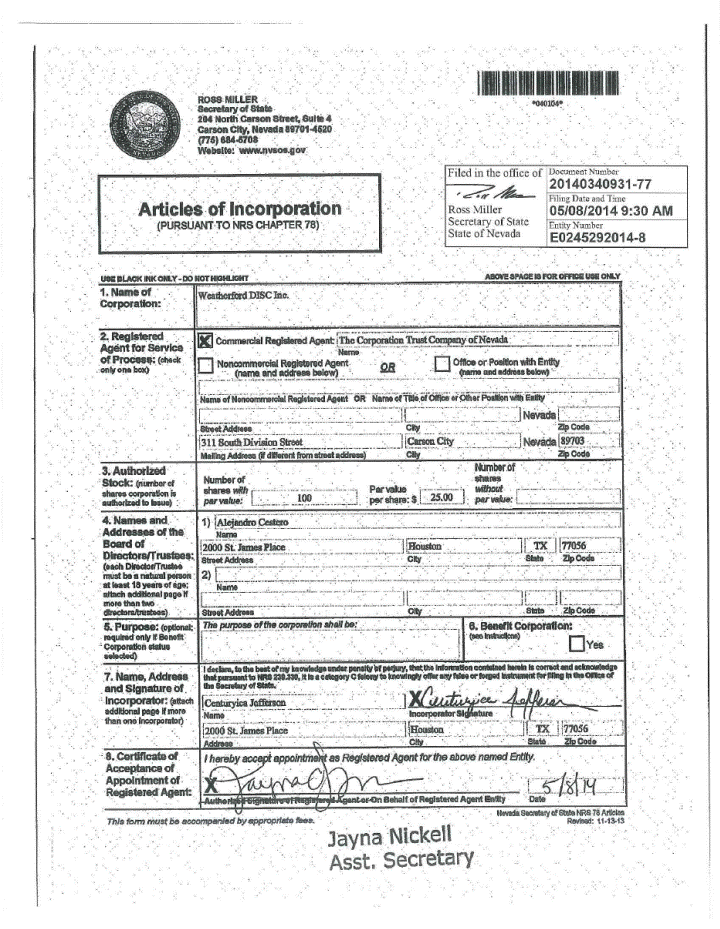
Exhibit T3A-39

TERRITORY OF THE BRITISH VIRGIN ISLANDS
THE BVI BUSINESS COMPANIES ACT
AMENDED AND RESTATED
MEMORANDUM OF ASSOCIATION
AND
ARTICLES OF ASSOCIATION
OF
WEATHERFORD DRILLING INTERNATIONAL (BVI) LTD.
Incorporated on the 14th December 2005
as an International Business Company,
and was automatically re-registered as a
BVI Business Company on the 1st January 2007
Approved by written resolutions of the sole member on
9 May 2016
Filed the 10 day of May 2016
To disapply Part IV of the
Transitional Provisions
Harneys Corporate Services Limited
Craigmuir Chambers
P.O. Box 71
Road Town
Tortola
British Virgin Islands
TERRITORY OF THE BRITISH VIRGIN ISLANDS
BVI BUSINESS COMPANIES ACT
AMENDED AND RESTATED
MEMORANDUM OF ASSOCIATION
OF
WEATHERFORD DRILLING INTERNATIONAL (BVI) LTD.
1. NAME
The name of the company is Weatherford Drilling International (BVI) Ltd. (the “Company”).
2. STATUS
The Company is a company limited by shares.
The Company was first incorporated as an international business company on 14 December 2005 and was, immediately prior to the date of automatic re-registration in accordance with the BVI Business Companies Act (the “Act”), governed by the International Business Companies Act (Cap 291).
3. REGISTERED OFFICE AND REGISTERED AGENT
At the date of notice to disapply Part IV of Schedule 2 of the Act, the registered office of the Company was Craigmuir Chambers, P.O. Box 71, Road Town, Tortola, British Virgin Islands.
At the time of notice to disapply Part IV of Schedule 2 of the Act, the registered agent of the Company was Harneys Corporate Services Limited of Craigmuir Chambers, P.O. Box 71, Road Town, Tortola, British Virgin Islands VG1110.
4. CAPACITY AND POWERS
Subject to the Act and any other British Virgin Islands legislation, the Company has, irrespective of corporate benefit:
(a) full capacity to carry on or undertake any business or activity, do any act or enter
into any transaction; and
(b) for the purposes of subparagraph (a), full rights, powers and privileges.
5. NUMBER AND CLASSES OF SHARES
The Company is authorised to issue up to a maximum of one share made up of one class and one series of shares of US$1.00 par value each.
6. RIGHTS ATTACHING TO SHARES
Subject to the Articles, the terms of the issue of any share, or any Resolution of Members to the contrary (and, for greater clarity, without prejudice to any special rights conferred thereby on the holders of any other shares), a share of the Company confers on the holder:
(a) the right to one vote at a meeting of the Members or on any Resolution of Members;
(b) the right to an equal share in any Distribution paid by the Company; and
(c) the right to an equal share in the distribution of the surplus assets of the Company on a winding up.
7. VARIATION OF CLASS RIGHTS
The rights attached to any class or series of shares (unless otherwise provided by the terms of issue of the shares of that class or series), whether or not the Company is being wound-up, may be varied with the consent in writing of all the holders of the issued shares of that class or series or with the sanction of a resolution passed by a majority of the votes cast at a separate meeting of the holders of the shares of the class or series.
8. RIGHTS NOT VARIED BY THE ISSUE OF SHARES PARI PASSU
Rights conferred upon the holders of the shares of any class or series issued with preferred or other rights shall not, unless otherwise expressly provided by the terms of issue of the shares of that class or series, be deemed to be varied by the creation or issue of further shares ranking pari passu therewith.
9. REGISTERED SHARES
The Company shall issue registered shares only, and such shares may be in full or fractional form. The Company is not authorised to issue bearer shares, convert registered shares to bearer shares, or exchange registered shares for bearer shares.
10. AMENDMENT OF MEMORANDUM AND ARTICLES OF ASSOCIATION
Subject to Clause 7 and Article 14.4(g) of the Articles, the Company may amend its Memorandum or Articles by a Resolution of Members or a Resolution of Directors, save that no amendment may be made by a Resolution of Directors:
(a) to restrict the rights or powers of the Members to amend the Memorandum or Articles;
(b) to change the percentage of Members required to pass a Resolution of Members to amend the Memorandum or Articles;
(c) in circumstances where the Memorandum or Articles cannot be amended by the Members;
(d) to clauses 6, 7, 8 or this clause 10.
11. DEFINITIONS
The meanings of words in this Memorandum are as defined in the Articles annexed hereto.
We, Harneys Corporate Services Limited, registered agent of the Company, of Craigmuir Chambers, P.O. Box 71, Road Town, Tortola, British Virgin Islands in our capacity as registered agent to the Company hereby apply for the disapplication of Part IV of Schedule 2 of the Act this 10 May 2016.
|
|
Harneys Corporate Services Limited |
|
|
Registered Agent |
|
|
|
|
|
/s/ Macia Payne |
|
|
Per: Macia Payne |
|
|
For and on behalf of |
|
|
Harneys Corporate Services Limited |
TERRITORY OF THE BRITISH VIRGIN ISLANDS
BVI BUSINESS COMPANIES ACT
AMENDED AND RESTATED
ARTICLES OF ASSOCIATION
OF
WEATHERFORD DRILLING INTERNATIONAL (BVI) LTD.
(a company limited by shares)
TABLE OF CONTENTS
|
|
INTERPRETATION |
|
|
|
|
|
|
1. |
Definitions |
|
|
|
|
|
|
|
SHARES |
|
|
|
|
|
|
2. |
Power to Issue Shares |
|
|
3. |
Power of the Company to Purchase its Shares |
|
|
4. |
Treatment of Purchased, Redeemed or Acquired Shares |
|
|
5. |
Treasury Shares |
|
|
6. |
Consideration |
|
|
7. |
Forfeiture of Shares |
|
|
8. |
Share Certificates |
|
|
9. |
Fractional Shares |
|
|
|
|
|
|
|
REGISTRATION OF SHARES |
|
|
|
|
|
|
10. |
Register of Members |
|
|
11. |
Registered Holder Absolute Owner |
|
|
12. |
Transfer of Registered Shares |
|
|
13. |
Transmission of Registered Shares |
|
|
14. |
Mortgages and Charges of Shares |
|
|
|
|
|
|
|
ALTERATION OF SHARES |
|
|
|
|
|
|
15. |
Power to Alter Shares |
|
|
16. |
Restrictions on the Division of Shares |
|
|
|
|
|
|
|
DISTRIBUTIONS |
|
|
|
|
|
|
17. |
Distributions |
|
|
18. |
Power to Set Aside Profits |
|
|
19. |
Unauthorised Distributions |
|
|
20. |
Distributions to Joint Holders of Shares |
|
|
|
|
|
|
|
MEETINGS OF MEMBERS |
|
|
|
|
|
|
21. |
General Meetings |
|
|
22. |
Location |
|
|
23. |
Requisitioned General Meetings |
|
|
24. |
Notice |
|
|
25. |
Giving Notice |
|
|
26. |
Service of Notice |
|
|
27. |
Participating in Meetings by Telephone |
|
|
28. |
Quorum at General Meetings |
|
|
29. |
Chairman to Preside |
|
|
30. |
Voting on Resolutions |
|
|
31. |
Power to Demand a Vote on a Poll |
|
|
32. |
Voting by Joint Holders of Shares |
|
|
33. |
Instrument of Proxy |
|
|
34. |
Representation of Members |
|
|
35. |
Adjournment of General Meetings |
|
|
36. |
Business at Adjourned Meetings |
|
|
37. |
Directors Attendance at General Meetings |
|
|
|
DIRECTORS AND OFFICERS |
|
|
|
|
|
|
38. |
Election of Directors |
|
|
39. |
Number of Directors |
|
|
40. |
Term of Office of Directors |
|
|
41. |
Alternate and Reserve Directors |
|
|
42. |
Removal of Directors |
|
|
43. |
Vacancy in the Office of Director |
|
|
44. |
Remuneration of Directors |
|
|
45. |
Resignation of directors |
|
|
46. |
Directors to Manage Business |
|
|
47. |
Committees of Directors |
|
|
48. |
Officers and Agents |
|
|
49. |
Removal of Officers and Agents |
|
|
50. |
Duties of Officers |
|
|
51. |
Remuneration of Officers |
|
|
52. |
Standard of Care |
|
|
53. |
Conflicts of Interest |
|
|
54. |
Indemnification and Exculpation |
|
|
|
|
|
|
|
MEETINGS OF THE BOARD OF DIRECTORS |
|
|
|
|
|
|
55. |
Board Meetings |
|
|
56. |
Notice of Board Meetings |
|
|
57. |
Participation in Meetings by Telephone |
|
|
58. |
Quorum at Board Meetings |
|
|
59. |
Board to Continue in the Event of Vacancy |
|
|
60. |
Chairman to Preside |
|
|
61. |
Powers of Sole Director |
|
|
62. |
Proceedings if One Director |
|
|
|
|
|
|
|
CORPORATE RECORDS |
|
|
|
|
|
|
63. |
Documents to be Kept |
|
|
64. |
Form and Use of Seal |
|
|
|
|
|
|
|
ACCOUNTS |
|
|
|
|
|
|
65. |
Books of Account |
|
|
66. |
Form of Records |
|
|
67. |
Financial Statements |
|
|
68. |
Distribution of Accounts |
|
|
|
|
|
|
|
AUDITS |
|
|
|
|
|
|
69. |
Audit |
|
|
70. |
Appointment of Auditor |
|
|
71. |
Remuneration of Auditor |
|
|
72. |
Duties of Auditor |
|
|
73. |
Access to Records |
|
|
74. |
Auditor Entitled to Notice |
|
|
|
|
|
|
|
VOLUNTARY LIQUIDATION |
|
|
|
|
|
|
75. |
Liquidation |
|
|
|
FUNDAMENTAL CHANGES |
|
|
|
|
|
|
76. |
Changes |
|
|
77. |
Continuation under Foreign Law |
|
INTERPRETATION
1. Definitions
1.1 In these Articles, the following words and expressions shall, where not inconsistent with the context, have the following meanings, respectively:
|
Act |
|
BVI Business Companies Act, as from time to time amended or restated; |
|
|
|
|
|
Articles |
|
these Articles of Association as originally registered or as from time to time amended or restated; |
|
|
|
|
|
Board |
|
the board of directors appointed or elected pursuant to these Articles and acting by Resolution of Directors; |
|
|
|
|
|
Company |
|
Weatherford Drilling International (BVI) Ltd.; |
|
|
|
|
|
Distribution |
|
(a) the direct or indirect transfer of an asset, other than the Company’s own shares, to or for the benefit of a Member; or |
|
|
|
|
|
|
|
(b) the incurring of a debt to or for the benefit of a Member; |
|
|
|
|
|
|
|
in relation to shares held by a Member and whether by means of the purchase of an asset, the purchase, redemption or other acquisition of shares, a transfer of indebtedness or otherwise, and includes a dividend; |
|
|
|
|
|
Member |
|
a person whose name is entered in the register of members as the holder of one or more shares, or fractional shares, in the Company; |
|
|
|
|
|
Memorandum |
|
the Memorandum of Association of the Company as originally registered or as from time to time amended or restated; |
|
|
|
|
|
Resolution of Directors |
|
(a) a resolution approved at a duly constituted meeting of directors or of a committee of directors of the Company by the affirmative |
|
|
|
vote of a simple majority of the directors present who voted and did not abstain; or |
|
|
|
|
|
|
|
(b) a resolution consented to in writing by all of the directors or of all the members of the committee, as the case may be; |
|
|
|
|
|
Resolution of Members |
|
(a) a resolution approved at a duly constituted meeting of Members by the affirmative vote of a simple majority of the votes of those Members entitled to vote and voting on the resolution; or |
|
|
|
|
|
|
|
(b) a resolution consented to in writing by a simple majority of the Members entitled to vote thereon; |
|
|
|
|
|
Seal |
|
the common seal of the Company; |
|
|
|
|
|
Secretary |
|
the person appointed to perform any or all of the duties of secretary of the Company and includes any deputy or assistant secretary and any person appointed by the Board to perform any of the duties of the Secretary; and |
|
|
|
|
|
Treasury Share |
|
a share of the Company that was previously issued but was repurchased, redeemed or otherwise acquired by the Company and not cancelled. |
1.2 In these Articles, where not inconsistent with the context:
(a) words denoting the plural number include the singular number and vice versa;
(b) words denoting the masculine gender include the feminine and neuter genders;
(c) words importing persons include companies, associations or bodies of persons whether corporate or not;
(d) a reference to voting in relation to shares shall be construed as a reference to voting by Members holding the shares, except that it is the votes
allocated to the shares that shall be counted and not the number of Members who actually voted and a reference to shares being present at a meeting shall be given a corresponding construction;
(e) a reference to money is unless otherwise stated a reference to the currency in which shares of the Company shall be issued;
(f) the words:-
(i) “may” shall be construed as permissive; and
(ii) “shall” shall be construed as imperative; and
(g) unless otherwise provided herein, words or expressions defined in the Act shall bear the same meaning in these Articles.
1.3 In these Articles, expressions referring to writing or its cognates shall, unless the contrary intention appears include facsimile, printing, lithography, photography, electronic mail and other modes of representing words in visible form.
1.4 Headings used in these Articles are for convenience only and are not to be used or relied upon in the constrction hereof.
SHARES
2. Power to Issue Shares
Subject to the provisions of the Memorandum, the unissued shares of the Company shall be at the disposal of the Board which may, without prejudice to any rights previously conferred on the holders of any existing shares or class or series of shares, offer, allot, grant options over or otherwise dispose of the shares to such persons, at such times and upon such terms and conditions as the Company may by Resolution of Directors determine.
3. Power of the Company to Purchase its Shares
Subject to these Articles (and in particular, but without limitation, Article 14.4), the Company may by Resolution of Directors purchase, redeem or otherwise acquire and hold its own shares. Sections 60, 61 and 62 of the Act shall not apply to the Company.
4. Treatment of Purchased, Redeemed or Acquired Shares
4.1 Subject to Article 4.2, a share that the Company purchases, redeems or otherwise acquires may be cancelled or held by the Company as a Treasury Share.
4.2 The Company may only hold a share that has been purchased, redeemed or otherwise acquired as a Treasury Share if the number of shares purchased, redeemed or otherwise acquired, when aggregated with shares of the same class already held by the Company as Treasury Shares, does not exceed 50% of the shares of that class previously issued by the Company, excluding shares that have been cancelled.
5. Treasury Shares
5.1 Treasury Shares may be transferred by the Company and the provisions of the Act, the Memorandum and these Articles that apply to the issue of shares apply to the transfer of Treasury Shares.
5.2 All the rights and obligations attaching to a Treasury Share are suspended and shall not be exercised by or against the Company while it holds the share as a Treasury Share.
6. Consideration
6.1 A share may be issued for consideration, in any form or a combination of forms, including money, a promissory note or other written obligation to contribute money or property, real property, personal property (including goodwill and know-how), services rendered or a contract for future services.
6.2 No share may be issued for a consideration, which is in whole or part, other than money unless the Board passes a resolution stating:
(a) the amount to be credited for the issue of the share; and
(b) that, in its opinion, the present cash value of the non-money consideration and money consideration, if any, is not less than the amount to be credited for the issue of the share.
6.3 No share may be issued by the Company that:
(a) increases the liability of a person to the Company; or
(b) imposes a new liability on a person to the Company,
unless that person, or an authorised agent of that person, agrees in writing to becoming the holder of the share.
6.4 The consideration for a share with par value shall not be less than the par value of the share.
6.5 A bonus share issued by the Company shall be deemed to have been fully paid for on issue.
7. Forfeiture of Shares
7.1 Where a share is not fully paid for on issue, the Board may, subject to the terms on which the share was issued, at any time serve upon the Member a written notice of call specifying a date for payment to be made.
7.2 The written notice of call shall name a further date not earlier than the expiration of fourteen days from the date of service of the notice on or before which the payment required by the notice is to be made and shall contain a statement that in the event of non-payment at or before the time named in the notice, the share will be liable to be forfeited.
7.3 Where a notice complying with the foregoing provisions has been issued and the requirements of the notice have not been complied with, the Board by Resolution of Directors may, at any time before tender of payment forfeit and cancel the share to which the notice relates and direct that the register of members be updated.
7.4 Upon forfeiture and cancellation pursuant to Article 7.3, the Company shall be under no obligation to refund any moneys to that Member and that Member shall be discharged from any further obligation to the Company as regards the forfeited share.
8. Share Certificates
8.1 The Company shall not be required to issue certificates in respect of its shares to a Member, but may elect to do so by the determination of any one director or the Secretary in his sole discretion, upon the request and at the expense of the Member.
8.2 If the Company issues share certificates, the certificates shall be signed by at least one director or such other person who may be authorised by Resolution of Directors to sign share certificates, or shall be under the common seal of the Company, with or without the signature of any director, and the signatures and common seal may be facsimiles.
8.3 Subject to Article 14.4(c), any Member receiving a share certificate for registered shares shall indemnify and hold the Company and its directors and officers harmless from any loss or liability which it or they may incur by reason of wrongful or fraudulent use or representation made by any person by virtue of the possession thereof. If a share certificate for registered shares is worn out or lost it may be renewed on production of the worn out certificate or on
satisfactory proof of its loss together with such indemnity as may be required by a Resolution of Directors.
9. Fractional Shares
The Company may issue fractional shares and a fractional share shall have the corresponding fractional rights, obligations and liabilities of a whole share of the same class or series of shares.
REGISTRATION OF SHARES
10. Register of Members
10.1 The Board shall cause there to be kept a register of members in which there shall be recorded the name and address of each Member, the number of each class and series of shares held by each Member, the date on which the name of each Member was entered in the register of members and the date upon which any person ceased to be a Member.
10.2 The register of members may be in such form as the Board may approve, but if it is in magnetic, electronic or other data storage form, the Company must be able to produce legible evidence of its contents. Unless the Board otherwise determines, the magnetic, electronic or other data storage form shall be the original register of members.
11. Registered Holder Absolute Owner
11.1 The entry of the name of a person in the register of members as a holder of a share in the Company is prima facie evidence that legal title in the share vests in that person.
11.2 The Company may treat the holder of a registered share as the only person entitled to:
(a) exercise any voting rights attaching to the share;
(b) receive notices;
(c) receive a Distribution in respect of the share; and
(d) exercise other rights and powers attaching to the share.
12. Transfer of Registered Shares
12.1 Registered shares in the Company shall only be transferred by a written instrument of transfer signed by the transferor and containing the name and address of the transferee.
12.2 The instrument of transfer shall also be signed by the transferee if registration as a holder of the share imposes a liability to the Company on the transferee.
12.3 The instrument of transfer shall be sent to the Company for registration.
12.4 The Company shall, on receipt of an instrument of transfer, enter the name and address of the transferee of the share in the register of members unless the Board resolves to refuse or delay the registration of the transfer for reasons that shall be specified in the resolution.
12.5 Subject to Article 12.9, the Board is permitted to pass a Resolution of Directors refusing or delaying the registration of a transfer where it reasonably determines that it is in the best interest of the Company to do so. Without limiting the generality of the foregoing, the Board may refuse or delay the registration of a transfer of shares if the transferor has failed to pay an amount due in respect of those shares.
12.6 Where the Board passes a resolution to refuse or delay the registration of a transfer, the Company shall, as soon as practicable, send the transferor and the transferee a notice of the refusal or delay.
12.7 The transfer of a share is effective when the name of the transferee is entered in the register of members and the Company shall not be required to treat a transferee of a share in the Company as a Member until the transferee’s name has been entered in the register of members.
12.8 If the Board is satisfied that an instrument of transfer has been signed but that the instrument has been lost or destroyed, it may resolve:
(a) to accept such evidence of the transfer of the shares as it considers appropriate; and
(b) that the transfer of shares be recorded, including by the entry of the transferee’s name in the register of members.
12.9 Notwithstanding anything to the contrary contained in these Articles, the Board shall not decline to register any transfer of shares, nor may they suspend registration thereof where such transfer is executed (a) by any bank or other person to whom such shares have been charged by way of security, (b) by any
nominee or agent of such bank or person, or (c) by any receiver, administrative receiver, manager or other person appointed by any bank or other person to whom such shares have been charged pursuant to the relevant security document, whether the transfer is effected for the purpose of any mortgage or pursuant to the power of sale under such mortgage or charge, and a certificate by any officer of such bank or person that the shares were so charged and the transfer was so executed shall be conclusive evidence of such facts.
12.10 Notwithstanding anything to the contrary contained in these Articles, the Board shall not register any shares of the Company or issue any shares in breach of the terms of any charge or other encumbrance over any of the Company’s shares entered into by any of the members of the Company where the Board has notice of the charge or other encumbrance, and for the purpose of this Article 12.10, each Director shall be deemed to have knowledge of (i) any charge or encumbrance details of which have been entered in the register of members of the Company pursuant to Section 66(8) of the Act and Article 14.2 below, and (ii) any subsequent charge or encumbrance over any shares of the Company created pursuant to the terms of any charge or encumbrance referred to in (i) above.
13. Transmission of Registered Shares
13.1 The executor or administrator of the estate of a deceased Member, the guardian of an incompetent Member, the liquidator of an insolvent Member or the trustee of a bankrupt Member shall be the only person recognised by the Company as having any title to the Member’s share.
13.2 Any person becoming entitled by operation of law or otherwise to a share in consequence of the death, incompetence or bankruptcy of any Member may be registered as a Member upon such evidence being produced as may reasonably be required by the Board. An application by any such person to be registered as a Member shall for all purposes be deemed to be a transfer of the share of the deceased, incompetent or bankrupt Member and the Board shall treat it as such.
13.3 Any person who has become entitled to a share or shares in consequence of the death, incompetence or bankruptcy of any Member may, instead of being registered himself, request in writing that some person to be named by him be registered as the transferee of such share and such request shall likewise be treated as if it were a transfer.
14. Mortgages and Charges of Shares
14.1 Members may mortgage or charge their registered shares in the Company and upon satisfactory evidence thereof the Company shall give effect to the terms of any valid mortgage or charge.
14.2 There may be entered in the register of members of the Company at the request of the registered holder of such shares:
(a) a statement that the shares are mortgaged or charged;
(b) the name of the mortgagee or chargee; and
(c) the date on which the particulars of subparagraphs (a) and (b) are entered in the register of members.
14.3 Where particulars of a mortgage or charge are entered in the register of members, such particulars may be canceled only:
(a) with the written consent of the named mortgagee or chargee or anyone authorised to act on his behalf; or
(b) upon evidence satisfactory to the directors of the discharge of the liability secured by the mortgage or charge and the issue of such indemnities as the directors shall consider necessary or desirable.
14.4 Whilst particulars of a mortgage or charge over shares are entered in the register of members pursuant to this Article:
(a) no transfer of any share the subject of those particulars shall be effected;
(b) the Company may not purchase, redeem or otherwise acquire any such shares;
(c) no replacement certificate shall be issued in respect of such shares;
(d) such shares shall be exempt from all liens (whether present or future) in favour of the Company that would otherwise arise pursuant to these Articles;
(e) for so long as such security remains unreleased, the Company shall not claim any lien (howsoever arising) in respect of such share or forfeit, sell or accept as surrendered such share;
(f) any pre-emptive rights or similar rights conferred on existing members or any other party by the Memorandum or Articles, any members’ agreement or otherwise shall not apply to and no such existing member or other party shall be entitled to exercise any such right; and
(g) no amendments may be made to the Memorandum or the Articles,
in each case without the written consent of the named mortgagee or chargee or anyone authorised to act on his behalf.
ALTERATION OF SHARES
15. Power to Alter Shares
15.1 The Company may amend the Memorandum to increase or reduce the maximum number of shares that the Company is authorised to issue, or to authorise the Company to issue an unlimited number of shares.
15.2 Subject to the Memorandum and these Articles, the Company may:
(a) divide its shares, including issued shares, into a larger number of shares; or
(b) combine its shares, including issued shares, into a smaller number of shares;
provided that, where shares are divided or combined, the aggregate par value (if any) of the new shares must be equal to the aggregate par value (if any) of the original shares.
15.3 A division or combination of shares, including issued shares, of a class or series shall be for a larger or smaller number, as the case may be, of shares in the same class or series.
16. Restrictions on the Division of Shares
The Company shall not divide its shares if it would cause the maximum number of shares that the Company is authorised to issue to be exceeded.
DISTRIBUTIONS
17. Distributions
17.1 The Board may, by Resolution of Directors, authorise a Distribution by the Company to Members at such time and of such an amount as it thinks fit if it is satisfied, on reasonable grounds, that immediately after the Distribution, the value of the Company’s assets exceeds its liabilities and the Company is able to pay its debts as they fall due. The resolution shall include a statement to that effect.
17.2 Notice of any Distribution that may have been authorised shall be given to each Member entitled to the Distribution in the manner provided in Article 25 and all
Distributions unclaimed for three years after having been authorised may be forfeited by Resolution of Directors for the benefit of the Company.
18. Power to Set Aside Profits
The Board may, before authorising any Distribution, set aside out of the profits of the Company such sum as it thinks proper as a reserve fund, and may invest the sum so set apart as a reserve fund in such securities as it may select.
19. Unauthorised Distributions
19.1 If, after a Distribution is authorised and before it is made, the Board ceases to be satisfied on reasonable grounds that immediately after the Distribution the value of the Company’s assets exceeds its liabilities and the Company is able to pay its debts as they fall due, such Distribution is deemed not to have been authorised.
19.2 A Distribution made to a Member at a time when, immediately after the Distribution, the value of the Company’s assets did not exceed its liabilities and the Company was not able to pay its debts as they fell due, is subject to recovery in accordance with the provisions of the Act.
20. Distributions to Joint Holders of Shares
If two or more persons are registered as joint holders of any shares, any one of such persons may give an effectual receipt for any Distribution payable in respect of such shares.
MEETINGS OF MEMBERS
21. General Meetings
The Board, by Resolution of Directors, may convene meetings of the Members of the Company at such times and in such manner as the Board considers necessary or desirable.
22. Location
Any meeting of the Members may be held in such place within or outside the British Virgin Islands as the Board considers appropriate.
23. Requisitioned General Meetings
The Board shall call a meeting of the Members if requested in writing to do so by Members entitled to exercise at least thirty percent of the voting rights in respect of the matter for which the meeting is being requested.
24. Notice
24.1 The Board shall give not less than seven days’ notice of meetings of Members to those persons whose names, on the date the notice is given, appear as Members in the register of members of the Company and are entitled to vote at the meeting.
24.2 A meeting of Members held in contravention of the requirement in Article 24.1 is valid if Members holding a ninety percent majority of the total voting rights on all the matters to be considered at the meeting have waived notice of the meeting and, for this purpose, the presence of a Member at the meeting shall be deemed to constitute waiver on his part.
24.3 The inadvertent failure of the Board to give notice of a meeting to a Member, or the fact that a Member has not received notice, does not invalidate the meeting.
25. Giving Notice
25.1 A notice may be given by the Company to any Member either by delivering it to such Member in person or by sending it to such Member’s address in the register of members or to such other address given for the purpose. Notice may be sent by mail, courier service, cable, telex, telecopier, facsimile or other mode of representing words in a legible form.
25.2 Any notice required to be given to a Member shall, with respect to any shares held jointly by two or more persons, be given to whichever of such persons is named first in the register of members and notice so given shall be sufficient notice to all the holders of such shares.
26. Service of Notice
Any notice shall be deemed to have been served at the time when the same would be delivered in the ordinary course of transmission and, in proving such service, it shall be sufficient to prove that the notice was properly addressed and prepaid, if posted, and the time when it was posted, delivered to the courier or to the cable company or transmitted by telex, facsimile or other method as the case may be.
27. Participating in Meetings by Telephone
A Member shall be deemed to be present at a meeting of Members if he participates by telephone or other electronic means and all Members participating in the meeting are able to hear each other.
28. Quorum at General Meetings
28.1 A meeting of Members is properly constituted if at the commencement of the meeting there are present in person or by proxy not less than fifty percent of the votes of the shares or class or series of shares entitled to vote on Resolutions of Members to be considered at the meeting.
28.2 If within two hours from the time appointed for the meeting a quorum is not present, the meeting, if convened upon the requisition of Members, shall be dissolved; in any other case it shall stand adjourned to the next business day at the same time and place or to such other time and place as the Board may determine, and if at the adjourned meeting there are present within one hour from the time appointed for the meeting in person or by proxy not less than one third of the votes of the shares or each class or series of shares entitled to vote on the resolutions to be considered by the meeting, those present shall constitute a quorum but otherwise the meeting shall be dissolved.
28.3 If a quorum is present, notwithstanding the fact that such quorum may be represented by only one person then such person may resolve any matter and a certificate signed by such person accompanied where such person be a proxy by a copy of the proxy form shall constitute a valid Resolution of Members.
29. Chairman to Preside
At every meeting of Members, the chairman of the Board shall preside as chairman of the meeting. If there is no chairman of the Board or if the chairman of the Board is not present at the meeting, the Members present shall choose one of their number to be the chairman. If the Members are unable to choose a chairman for any reason, then the person representing the greatest number of voting shares present in person or by proxy at the meeting shall preside as chairman.
30. Voting on Resolutions
At any meeting of the Members the chairman shall be responsible for deciding in such manner as he shall consider appropriate whether any resolution has been carried or not and the result of his decision shall be announced to the meeting and recorded in the minutes thereof.
31. Power to Demand a Vote on a Poll
31.1 At any meeting of Members a resolution put to the vote of the meeting shall, in the first instance, be voted upon by a show of hands and, subject to any rights or restrictions for the time being lawfully attached to any class of shares and subject to the provisions of these Articles, every Member present in person and every
person holding a valid proxy at such meeting shall be entitled to one vote and shall cast such vote by raising his hand.
31.2 If the chairman shall have any doubt as to the outcome of any resolution put to the vote, he shall cause a poll to be taken of all votes cast upon such resolution, but if the chairman shall fail to take a poll then any Member present in person or by proxy who disputes the announcement by the chairman of the result of any vote may immediately following such announcement demand that a poll be taken and the chairman shall thereupon cause a poll to be taken. If a poll is taken at any meeting, the result thereof shall be duly recorded in the minutes of that meeting by the chairman.
32. Voting by Joint Holders of Shares
The following shall apply where shares are jointly owned: (a) if two or more persons hold shares jointly each of them may be present in person or by proxy at a meeting of Members and may speak as a Member; (b) if only one of the joint owners is present in person or by proxy he may vote on behalf of all of them; and (c) if two or more of the joint owners are present in person or by proxy they must vote as one.
33. Instrument of Proxy
33.1 A Member may be represented at a meeting of Members by a proxy (who need not be a Member) who may speak and vote on behalf of the Member.
33.2 An instrument appointing a proxy shall be in such form as the Board may from time to time determine or such other form as the chairman of the meeting shall accept as properly evidencing the wishes of the Member appointing the proxy and, subject to Article 33.5, the decision of the chairman of any general meeting as to the validity of any appointment of a proxy shall be final.
33.3 The chairman of any meeting at which a vote is cast by proxy or on behalf of any person other than an individual may call for a notarially certified copy of such proxy or authority which shall be produced within seven days of being so requested or the votes cast by such proxy or on behalf of such person shall be disregarded.
33.4 The instrument appointing a proxy shall be produced at the place appointed for the meeting before the time for holding the meeting at which the person named in such instrument proposes to vote.
33.5 Any Member may irrevocably appoint a proxy and in such case: (i) such appointment shall be irrevocable in accordance with the terms of the instrument of appointment; (ii) the Company shall be given notice of the appointment, such notice to include the name, address, telephone number and electronic mail
address of the proxy, and the Company shall give to such proxy notice of all meetings of Members of the Company; (iii) such proxy shall be the only person entitled to vote the relevant shares at any meeting at which such proxy is present; and (iv) the Company shall be obliged to recognise the proxy until such time as such proxy shall notify the Company in writing that the appointment of such proxy is no longer in force
34. Representation of Members
34.1 Any person other than an individual which is a Member may by resolution in writing (certified or signed by a duly authorised person) of its directors or other governing body authorise such person as it thinks fit to act as its representative (in this Article, “Representative”) at any meeting of the Members or at the meeting of the Members of any class or series of shares and the Representative shall be entitled to exercise the same powers on behalf of the Member which he represents as that Member could exercise if it were an individual.
34.2 The right of a Representative shall be determined by the law of the jurisdiction where, and by the documents by which, the Member is constituted or derives its existence. In case of doubt, the Board may in good faith seek legal advice from any qualified person and unless and until a court of competent jurisdiction shall otherwise rule, the Board may rely and act upon such advice without incurring any liability to any Member.
35. Adjournment of General Meetings
The chairman may, with the consent of the meeting, adjourn any meeting from time to time, and from place to place.
36. Business at Adjourned Meetings
No business shall be transacted at any adjourned meeting other than the business left unfinished at the meeting from which the adjournment took place.
37. Directors Attendance at General Meetings
Directors of the Company may attend and speak at any meeting of Members of the Company and at any separate meeting of the holders of any class or series of shares in the Company.
DIRECTORS AND OFFICERS
38. Election of Directors
38.1 The first registered agent of the Company shall, within six months of the date of incorporation of the Company, appoint one or more persons as the first director or directors of the Company. Thereafter, the directors shall be elected by a Resolution of Directors or a Resolution of Members.
38.2 No person shall be appointed as a director or nominated as a reserve director unless he has consented in writing to act as a director or to be nominated as a reserve director.
38.3 A director shall not require a share qualification, and may be an individual or a company.
38.4 Any director which is a body corporate may appoint any person its duly authorised representative for the purpose of representing it at Board meetings or with respect to unanimous written consents.
39. Number of Directors
The maximum number of directors may be fixed either by a Resolution of Directors or a Resolution of Members, provided that if the maximum number of directors is fixed by a Resolution of Members, then any change to the maximum number of directors shall only be made by a Resolution of Members.
40. Term of Office of Directors
Each director shall hold office for the term, if any, as may be specified in the resolution appointing him or until his earlier death, resignation or removal.
41. Alternate and Reserve Directors
41.1 A director may at any time appoint any person (including another director) to be his alternate director and may at any time terminate such appointment. An appointment and a termination of appointment shall be by notice in writing signed by the director and deposited at the Company’s registered office or delivered at a meeting of the Board.
41.2 The appointment of an alternate director shall terminate on the happening of any event which, if he were a director, would cause him to vacate such office or if his appointor ceases for any reason to be a director.
41.3 An alternate director has the same rights as the appointing director in relation to any directors’ meeting and any written resolution circulated for written consent, save that he may not himself appoint an alternate director or a proxy. Any exercise by the alternate director of the appointing director’s powers in relation to the taking of decisions by the directors is as effective as if the powers were exercised by the appointing director.
41.4 If an alternate director is himself a director or attends a meeting of the Board as the alternate director of more than one director, his voting rights shall be cumulative.
41.5 Unless the Board determines otherwise, an alternate director may also represent his appointor at meetings of any committee of the directors on which his appointor serves; and this Article shall apply equally to such committee meetings as to meetings of the Board.
41.6 Where the Company has only one Member who is an individual and that Member is also the sole director, the sole member/director may, by instrument in writing, nominate a person who is not disqualified from being a director under the Act as a reserve director in the event of his death.
41.7 The nomination of a person as a reserve director ceases to have effect if: (a) before the death of the sole Member/director who nominated him he resigns as reserve director, or the sole Member/director revokes the nomination in writing, or (b) the sole Member/director who nominated him ceases to be the sole Member/director for any reason other than his death.
42. Removal of Directors
42.1 A director may be removed from office, with or without cause:
(a) by a Resolution of Members at a meeting of the Members called for the purpose of removing the director or for purposes including the removal of the director; or
(b) by a Resolution of Members consented to in writing by all of the Members entitled to vote thereon.
42.2 Notice of a meeting called under Article 42.1(a) shall state that the purpose of the meeting is, or the purposes of the meeting include, the removal of a director.
43. Vacancy in the Office of Director
43.1 Notwithstanding Article 38, the Board may appoint one or more directors to fill a vacancy on the Board.
43.2 For the purposes of this Article, there is a vacancy on the Board if a director dies or otherwise ceases to hold office as a director prior to the expiration of his term of office or there is otherwise a vacancy in the number of directors as fixed pursuant to Article 39.
43.3 The term of any appointment under this Article may not exceed the term that remained when the person who has ceased to be a director left or otherwise ceased to hold office.
44. Remuneration of Directors
With the prior or subsequent approval by a Resolution of Members, the Board may, by a Resolution of Directors, fix the emoluments of directors with respect to services to be rendered in any capacity to the Company.
45. Resignation of directors
A director may resign his office by giving written notice of his resignation to the Company and the resignation shall have effect from the date the notice is received by the Company or from such later date as may be specified in the notice.
46. Directors to Manage Business
46.1 The business and affairs of the Company shall be managed by, or under the direction or supervision of, the Board.
46.2 The Board has all the powers necessary for managing, and for directing and supervising, the business and affairs of the Company.
46.3 The Board may authorise the paymerit of all expenses incurred preliminary to and in connection with the formation and registration of the Company and may exercise all such powers of the Company as are not by the Act or by the Memorandum or these Articles required to be exercised by the Members of the Company, subject to any delegation of such powers as may be authorised by these Articles and to such requirements as may be prescribed by a Resolution of Members; but no requirement made by a Resolution of Members shall prevail if it is inconsistent with these Articles nor shall such requirement invalidate any prior act of the Board which would have been valid if such requirement had not been made.
46.4 Subject to the provisions of the Act, all cheques, promissory notes, draft, bills of exchange and other negotiable instruments and all receipts for moneys paid to the Company, shall be signed, drawn, accepted, endorsed or otherwise executed, as the case may be, in such manner as shall from time to time be determined by Resolution of Directors.
47. Committees of Directors
47.1 The Board may, by a Resolution of Directors, designate one or more committees of directors, each consisting of one or more directors.
47.2 Each committee of directors has such powers and authorities of the Board, including the power and authority to affix the Seal, as are set forth in these Articles or the Resolution of Directors establishing the committee, except that the Board has no power to delegate the following powers to a committee of directors:
(a) to amend the Memorandum or these Articles;
(b) to designate committees of directors;
(c) to delegate powers to a committee of directors;
(d) to appoint or remove directors;
(e) to appoint or remove an agent;
(f) to approve a plan of merger, consolidation or arrangement;
(g) to make a declaration of solvency or approve a liquidation plan; or
(h) to make a determination that the Company will, immediately after a proposed Distribution, meet the solvency test set out in the Act.
47.3 A committee of directors, where authorised by the Board, may appoint a sub-committee.
47.4 The meetings and proceedings of each committee of directors consisting of two or more directors shall be governed mutatis mutandis by the provisions of these Articles regulating the proceedings of directors so far as the same are not superseded by any provisions in the resolution establishing the committee.
48. Officers and Agents
48.1 The Board may, by a Resolution of Directors, appoint any person, including a person who is a director, to be an officer or agent of the Company. Such officers may consist of a chairman of the Board, a vice chairman of the Board, a president and one or more vice presidents, secretaries and treasurers and such other officers as may from time to time be deemed desirable. Any number of offices may be held by the same person.
48.2 Each officer or agent has such powers and authorities of the Board, including the power and authority to affix the Seal, as are set forth in these Articles or the
Resolution of Directors appointing the officer or agent, except that no officer or agent has any power or authority with respect to the following:
(a) to amend the Memorandum or these Articles;
(b) to change the registered office or agent;
(c) to designate committees of directors;
(d) to delegate powers to a committee of directors;
(e) to appoint or remove directors;
(f) to appoint or remove an agent;
(g) to fix emoluments of directors;
(h) to approve a plan of merger, consolidation or arrangement;
(i) to make a declaration of solvency or approve a liquidation plan;
(j) to make a determination that the Company will, immediately after a proposed distribution, meet the solvency test set out in the Act; or
(k) to authorise the Company to continue as a company incorporated under the laws of a jurisdiction outside the British Virgin Islands.
49. Removal of Officers and Agents
The officers and agents of the Company shall hold office until their successors are duly elected and qualified, but any officer or agent elected or appointed by the Board may be removed at any time, with or without cause, by Resolution of Directors. Any vacancy occurring in any office of the Company may be filled by Resolution of Directors.
50. Duties of Officers
In the absence of any specific allocation of duties it shall be the responsibility of the chairman of the Board to preside at meetings of directors and Members, the vice chairman to act in the absence of the chairman, the president to manage the day to day affairs of the Company, the vice presidents to act in order of seniority in the absence of the president but otherwise to perform such duties as may be delegated to them by the president, the Secretary to maintain the register of members, register or directors, minute books, records (other than financial records) of the Company, and Seal and to ensure compliance with all procedural requirements imposed on the Company by applicable law, and the treasurer to be responsible for the financial affairs of the Company.
51. Remuneration of Officers
The emoluments of all officers shall be fixed by Resolution of Directors.
52. Standard of Care
A director, when exercising powers or performing duties as a director, shall exercise the care, diligence, and skill that a reasonable director would exercise in the same circumstances taking into account, but without limitation, (a) the nature of the Company, (b) the nature of the decision, and (c) the position of the director and the nature of the responsibilities undertaken by him.
53. Conflicts of Interest
53.1 A director shall, forthwith after becoming aware of the fact that he is interested in a transaction entered into or to be entered into by the Company, disclose the interest to the Board, unless the transaction or proposed transaction (a) is between the director and the Company and (b) is to be entered into in the ordinary course of the Company’s business and on usual terms and conditions.
53.2 A transaction entered into by the Company in respect of which a director is interested is voidable by the Company unless the director complies with Article 53.1 or (a) the material facts of the interest of the director in the transaction are known by the Members entitled to vote at a meeting of Members and the transaction is approved or ratified by a Resolution of Members or (b) the Company received fair value for the transaction.
53.3 For the purposes of this Article, a disclosure is not made to the Board unless it is made or brought to the attention of every director on the Board.
53.4 A director who is interested in a transaction entered into or to be entered into by the Company may vote on a matter relating to the transaction, attend a meeting of directors at which a matter relating to the transaction arises and be included among the directors present at the meeting for the purposes of a quorum and sign a document on behalf of the Company, or do any other thing in his capacity as director that relates to the transaction.
54. Indemnification and Exculpation
54.1 Subject to Article 54.2 the Company shall indemnify against all expenses, including legal fees, and against all judgments, fines and amounts paid in settlement and reasonably incurred in connection with legal, administrative or investigative proceedings any person who:
(a) is or was a party or is threatened to be made a party to any threatened, pending or completed proceedings, whether civil, criminal, administrative or investigative, by reason of the fact that the person is or was a director, an officer or a liquidator of the Company; or
(b) is or was, at the request of the Company, serving as a director, officer or liquidator of, or in any other capacity is or was acting for, another body corporate or a partnership, joint venture, trust or other enterprise.
54.2 Article 54.1 does not apply to a person referred to in that paragraph unless the person acted honestly and in good faith and in what he believed to be the best interests of the Company and, in the case of criminal proceedings, the person had no reasonable cause to believe that his conduct was unlawful.
54.3 The decision of the Board as to whether the person acted honestly and in good faith and in what he believed to be the best interests of the Company and as to whether the person had no reasonable cause to believe that his conduct was unlawful is, in the absence of fraud, sufficient for the purposes of these Articles, unless a question of law is involved.
54.4 The termination of any proceedings by any judgment, order, settlement, conviction or the entering of a nolle prosequi does not, by itself, create a presumption that the person did not act honestly and in good faith and with a view to the best interests of the Company or that the person had reasonable cause to believe that his conduct was unlawful.
54.5 If a person referred to in this Article has been successful in defence of any proceedings referred to therein, the person is entitled to be indemnified against all expenses, including legal fees, and against all judgments, fines and amounts paid in settlement and reasonably incurred by the person in connection with the proceedings.
54.6 Expenses, including legal fees, incurred by a director (or former director) in defending any legal, administrative or investigative proceedings may be paid by the Company in advance of the final disposition of such proceedings upon receipt of an undertaking by or on behalf of the director (or former director, as the case may be) to repay the amount if it shall ultimately be determined that the director (or former director, as the case may be) is not entitled to be indemnified by the Company.
54.7 The indemnification and advancement of expenses provided by, or granted under these Articles are not exclusive of any other rights to which the person seeking indemnification or advancement of expenses may be entitled under any agreement, Resolution of Members, resolution of disinterested directors or
otherwise, both as to acting in the person’s official capacity and as to acting in another capacity while serving as a director of the Company.
54.8 The Company may purchase and maintain insurance in relation to any person who is or was a director, an officer or a liquidator of the Company, or who at the request of the Company is or was serving as a director, an officer or a liquidator of, or in any other capacity is or was acting for, another body corporate or a partnership, joint venture, trust or other enterprise, against any liability asserted against the person and incurred by the person in that capacity, whether or not the Company has or would have had the power to indemnify the person against the liability under Article 54.1.
MEETINGS OF THE BOARD OF DIRECTORS
55. Board Meetings
The Board or any committee thereof may meet at such times and in such manner and places within or outside the British Virgin Islands as it may determine to be necessary or desirable. Any director or the Secretary of the Company may call a Board meeting.
56. Notice of Board Meetings
A director shall be given reasonable notice of a Board meeting, but a Board meeting held without reasonable notice having been given to all directors shall be valid if all the directors entitled to vote at the meeting waive notice of the meeting, and for this purpose, the presence of a director at the meeting shall be deemed to constitute waiver on his part (except where a director attends a meeting for the express purpose of objecting to the transaction of business on the grounds that the meeting is not properly called). The inadvertent failure to give notice of a meeting to a director, or the fact that a director has not received the notice, does not invalidate the meeting.
57. Participation in Meetings by Telephone
A director shall be deemed to be present at a meeting of directors if he participates by telephone or other electronic means and all directors participating in the meeting are able to hear each other.
58. Quorum at Board Meetings
The quorum necessary for the transaction of business at a meeting of directors shall be two directors.
59. Board to Continue in the Event of Vacancy
The continuing directors may act notwithstanding any vacancy in their body, save that if their number is reduced below the number fixed by or pursuant to these Articles as the necessary quorum for a Board meeting, the continuing directors or director may act only for the purpose of appointing directors to fill any vacancy that has arisen or summoning a meeting of Members.
60. Chairman to Preside
At every Board meeting the chairman of the Board shall preside as chairman of the meeting. If there is not a chairman of the Board or if the chairman of the Board is not present at the meeting, the vice chairman of the Board shall preside. If there is no vice chairman of the Board or if the vice chairman of the Board is not present at the meeting, the directors present shall choose one of their number to be chairman of the meeting.
61. Powers of Sole Director
If the Company shall have only one director the provisions herein contained for Board meetings shall not apply but such sole director shall have full power to represent and act for the Company in all matters as are not by the Act or the Memorandum or these Articles required to be exercised by the Members of the Company.
62. Proceedings if One Director
If the Company shall have only one director, in lieu of minutes of a meeting the director shall record in writing and sign a note or memorandum (or adopt a resolution in writing) concerning all matters requiring a Resolution of Directors and such note, memorandum or resolution in writing shall be kept in the minute book. Such a note, memorandum or resolution in writing shall constitute sufficient evidence of such resolution for all purposes.
CORPORATE RECORDS
63. Documents to be Kept
63.1 The Company shall keep the following documents at the office of its registered agent:
(a) the Memorandum and these Articles;
(b) the register of members or a copy of the register of members;
(c) the register of directors or a copy of the register of directors;
(d) the register of charges or a copy of the register of charges;
(e) copies of all notices and other documents filed by the Company in the previous ten years.
63.2 Where the Company keeps a copy of its register of members or register of directors at the office of its registered agent, it shall within 15 days of any change in the register, notify the registered agent, in writing, of the change, and it shall provide the registered agent with a written record of the physical address of the place or places at which the original register of members or the original register of directors is kept.
63.3 Where the place at which the original register of members or the original register of directors is changed, the Company shall provide the registered agent with the physical address of the new location of the records within 14 days of the change of location.
63.4 The Company shall keep the following records at the office of its registered agent or at such other place or places, within or outside the British Virgin Islands, as the Board may determine:
(a) the minutes of meetings and Resolutions of Members and of classes of Members; and
(b) the minutes of meetings and Resolutions of Directors and committees of directors.
63.5 Where any of the minutes or resolutions described in the previous paragraph are kept at a place other than at the office of the Company’s registered agent, the Company shall provide the registered agent with a written record of the physical address of the place or places at which the records are kept.
63.6 Where the place at which any of the records described in Article 63.4 is changed, the Company shall provide the registered agent with the physical address of the new location of the records within 14 days of the change of location.
63.7 The Company’s records shall be kept in written form or either wholly or partly as electronic records.
64. Form and Use of Seal
The Board shall provide for the safe custody of the Seal. An imprint thereof shall be kept at the office of the registered agent of the Company. The Seal when affixed to any written instrument shall be witnessed by any one director, the Secretary or Assistant Secretary, or by any person or persons so authorised from time to time by Resolution of Directors.
ACCOUNTS
65. Books of Account
The Company shall keep records and underlying documentation that:
(a) are sufficient to show and explain the Company’s transactions; and
(b) will, at any time, enable the financial position of the Company to be determined with reasonable accuracy.
66. Form of Records
66.1 The records required to be kept by the Company under the Act, the Mutual Legal Assistance (Tax Matters Act), 2003, the Memorandum or these Articles shall be kept in written form or either wholly or partly as electronic records complying with the requirements of the Electronic Transactions Act (British Virgin Islands).
66.2 The records and underlying documentation shall be kept for a period of at least five years from the date of completion of the relevant transaction or the company terminates the business relationship to which the records and underlying documentation relate.
67. Financial Statements
67.1 If required by a Resolution of Members, the Board shall cause to be made out and served on the Members or laid before a meeting of Members a profit and loss account and balance sheet of the Company for such period and on such recurring basis as the Members think fit.
67.2 The Company’s profit and loss account and balance sheet shall be drawn up so as to give respectively a true and fair view of the profit or loss of the Company for that financial period, and a true and fair view of the state of affairs of the Company as at the end of that financial period.
68. Distribution of Accounts
A copy of such profit and loss account and balance sheet shall be served on every Member in the manner and with similar notice to that prescribed herein for calling a meeting of Members or upon such shorter notice as the Members may agree to accept.
AUDITS
69. Audit
The Company may by Resolution of Members call for the accounts to be examined by an auditor.
70. Appointment of Auditor
70.1 The first auditor shall be appointed by Resolution of Directors; subsequent auditors shall be appointed by a Resolution of Members.
70.2 The auditor may be a Member of the Company but no director or other officer shall be eligible to be an auditor of the Company during his continuance in office.
71. Remuneration of Auditor
The remuneration of the auditor of the Company:
(a) in the case of an auditor appointed by the Board, may be fixed by Resolution of Directors; and
(b) subject to the foregoing, shall be fixed by Resolution of Members or in such manner as the Company may by Resolution of Members determine.
72. Duties of Auditor
The auditor shall examine each profit and loss account and balance sheet required to be served on every Member of the Company or laid before a meeting of the Members of the Company and shall state in a written report whether or not:
(a) in its opinion the profit and loss account and balance sheet give a true and fair view respectively of the profit and loss for the period covered by the accounts, and of the state of affairs of the Company at the end of that period; and
(b) all the information and explanations required by the auditor have been obtained.
73. Access to Records
Every auditor of the Company shall have right of access at all times to the books of account of the Company, and shall be entitled to require from the directors and officers
of the Company such information and explanations as he thinks necessary for the performance of the duties of the auditor.
74. Auditor Entitled to Notice
The auditor of the Company shall be entitled to receive notice of, and to attend any meetings of Members of the Company at which the Company’s profit and loss account and balance sheet are to be presented.
VOLUNTARY LIQUIDATION
75. Liquidation
The Company may be liquidated in accordance with the Act only if (a) it has no liabilities; or (b) it is able to pay its debts as they fall due and the value of its assets equals or exceeds its liabilities. The Board shall be permitted to pass a Resolution of Directors for the appointment of an eligible individual as a voluntary liquidator (or two or more eligible individuals as joint voluntary liquidators) of the Company if the Members have, by a Resolution of Members, approved the liquidation plan in accordance with the Act.
FUNDAMENTAL CHANGES
76. Changes
Notwithstanding section 175 of the Act, the Board may sell, transfer, lease, exchange or otherwise dispose of the assets of the Company without the sale, transfer, lease, exchange or other disposition being authorised by a Resolution of Members.
77. Continuation under Foreign Law
The Company may by Resolution of Members or by Resolution of Directors continue as a company incorporated under the laws of a jurisdiction outside the British Virgin Islands in the manner provided under those laws.
Exhibit T3A-40
We, Harneys Corporate Services Limited, registered agent of the Company, of Craigmuir Chambers, P.O. Box 71, Road Town, Tortola, British Virgin Islands in our capacity as registered agent to the Company hereby apply for the disapplication of Part IV of Schedule 2 of the Act this 10 May 2016.
|
|
Harneys Corporate Services Limited |
|
|
Registered Agent |
|
|
|
|
|
/s/ Macia Payne |
|
|
Per: Macia Payne |
|
|
For and on behalf of |
|
|
Harneys Corporate Services Limited |

TERRITORY OF THE BRITISH VIRGIN ISLANDS
THE BVI BUSINESS COMPANIES ACT
AMENDED AND RESTATED
MEMORANDUM OF ASSOCIATION
AND
ARTICLES OF ASSOCIATION
OF
WEATHERFORD DRILLING INTERNATIONAL HOLDINGS (BVI) LTD.
Incorporated on the 22nd July 2005
as an International Business Company,
and was automatically re-registered as a
BVI Business Company on the 1st January 2007
Approved by written resolutions of the sole member on
9 May 2016
Filed the 10 day of May 2016
To disapply Part IV of the
Transitional Provisions
Harneys Corporate Services Limited
Craigmuir Chambers
P.O. Box 71
Road Town
Tortola
British Virgin Islands
TERRITORY OF THE BRITISH VIRGIN ISLANDS
BVI BUSINESS COMPANIES ACT
AMENDED AND RESTATED
MEMORANDUM OF ASSOCIATION
OF
WEATHERFORD DRILLING INTERNATIONAL HOLDINGS (BVI) LTD.
1. NAME
The name of the company is Weatherford Drilling International Holdings (BVI) Ltd. (the “Company”).
2. STATUS
The Company is a company limited by shares.
The Company was first incorporated as an international business company on 22 July 2005 and was, immediately prior to the date of automatic re-registration in accordance with the BVI Business Companies Act (the “Act”), governed by the International Business Companies Act (Cap 291).
3. REGISTERED OFFICE AND REGISTERED AGENT
At the date of notice to disapply Part IV of Schedule 2 of the Act, the registered office of the Company was Craigmuir Chambers, P.O. Box 71, Road Town, Tortola, British Virgin Islands.
At the time of notice to disapply Part IV of Schedule 2 of the Act, the registered agent of the Company was Harneys Corporate Services Limited of Craigmuir Chambers, P.O. Box 71, Road Town, Tortola, British Virgin Islands VG1110.
4. CAPACITY AND POWERS
Subject to the Act and any other British Virgin Islands legislation, the Company has, irrespective of corporate benefit:
(a) full capacity to carry on or undertake any business or activity, do any act or enter
into any transaction; and
(b) for the purposes of subparagraph (a), full rights, powers and privileges.
5. NUMBER AND CLASSES OF SHARES
The Company is authorised to issue up to a maximum of 50,000 shares made up of one class and one series of shares of US$1.00 par value each.
6. RIGHTS ATTACHING TO SHARES
Subject to the Articles, the terms of the issue of any share, or any Resolution of Members to the contrary (and, for greater clarity, without prejudice to any special rights conferred thereby on the holders of any other shares), a share of the Company confers on the holder:
(a) the right to one vote at a meeting of the Members or on any Resolution of Members;
(b) the right to an equal share in any Distribution paid by the Company; and
(c) the right to an equal share in the distribution of the surplus assets of the Company on a winding up.
7. VARIATION OF CLASS RIGHTS
The rights attached to any class or series of shares (unless otherwise provided by the terms of issue of the shares of that class or series), whether or not the Company is being wound-up, may be varied with the consent in writing of all the holders of the issued shares of that class or series or with the sanction of a resolution passed by a majority of the votes cast at a separate meeting of the holders of the shares of the class or series.
8. RIGHTS NOT VARIED BY THE ISSUE OF SHARES PARI PASSU
Rights conferred upon the holders of the shares of any class or series issued with preferred or other rights shall not, unless otherwise expressly provided by the terms of issue of the shares of that class or series, be deemed to be varied by the creation or issue of further shares ranking pari passu therewith.
9. REGISTERED SHARES
The Company shall issue registered shares only, and such shares may be in full or fractional form. The Company is not authorised to issue bearer shares, convert registered shares to bearer shares, or exchange registered shares for bearer shares.
10. AMENDMENT OF MEMORANDUM AND ARTICLES OF ASSOCIATION
Subject to Clause 7 and Article 14.4(g) of the Articles, the Company may amend its Memorandum or Articles by a Resolution of Members or a Resolution of Directors, save that no amendment may be made by a Resolution of Directors:
(a) to restrict the rights or powers of the Members to amend the Memorandum or Articles;
(b) to change the percentage of Members required to pass a Resolution of Members to amend the Memorandum or Articles;
(c) in circumstances where the Memorandum or Articles cannot be amended by the Members;
(d) to clauses 6, 7, 8 or this clause 10.
11. DEFINITIONS
The meanings of words in this Memorandum are as defined in the Articles annexed hereto.
We, Harneys Corporate Services Limited, registered agent of the Company, of Craigmuir Chambers, P.O. Box 71, Road Town, Tortola, British Virgin Islands in our capacity as registered agent to the Company hereby apply for the disapplication of Part IV of Schedule 2 of the Act this 10 May 2016.
|
|
Harneys Corporate Services Limited |
|
|
Registered Agent |
|
|
|
|
|
/s/ Macia Payne |
|
|
Per: Macia Payne |
|
|
For and on behalf of |
|
|
Harneys Corporate Services Limited |
TERRITORY OF THE BRITISH VIRGIN ISLANDS
BVI BUSINESS COMPANIES ACT
AMENDED AND RESTATED
ARTICLES OF ASSOCIATION
OF
WEATHERFORD DRILLING INTERNATIONAL HOLDINGS (BVI) LTD.
(a company limited by shares)
TABLE OF CONTENTS
|
INTERPRETATION | |
|
|
|
|
1. |
Definitions |
|
|
|
|
SHARES | |
|
|
|
|
2. |
Power to Issue Shares |
|
3. |
Power of the Company to Purchase its Shares |
|
4. |
Treatment of Purchased, Redeemed or Acquired Shares |
|
5. |
Treasury Shares |
|
6. |
Consideration |
|
7. |
Forfeiture of Shares |
|
8. |
Share Certificates |
|
9. |
Fractional Shares |
|
|
|
|
REGISTRATION OF SHARES | |
|
|
|
|
10. |
Register of Members |
|
11. |
Registered Holder Absolute Owner |
|
12. |
Transfer of Registered Shares |
|
13. |
Transmission of Registered Shares |
|
14. |
Mortgages and Charges of Shares |
|
|
|
|
ALTERATION OF SHARES | |
|
|
|
|
15. |
Power to Alter Shares |
|
16. |
Restrictions on the Division of Shares |
|
|
|
|
DISTRIBUTIONS | |
|
|
|
|
17. |
Distributions |
|
18. |
Power to Set Aside Profits |
|
19. |
Unauthorised Distributions |
|
20. |
Distributions to Joint Holders of Shares |
|
|
|
|
MEETINGS OF MEMBERS | |
|
|
|
|
21. |
General Meetings |
|
22. |
Location |
|
23. |
Requisitioned General Meetings |
|
24. |
Notice |
|
25. |
Giving Notice |
|
26. |
Service of Notice |
|
27. |
Participating in Meetings by Telephone |
|
28. |
Quorum at General Meetings |
|
29. |
Chairman to Preside |
|
30. |
Voting on Resolutions |
|
31. |
Power to Demand a Vote on a Poll |
|
32. |
Voting by Joint Holders of Shares |
|
33. |
Instrument of Proxy |
|
34. |
Representation of Members |
|
35. |
Adjournment of General Meetings |
|
36. |
Business at Adjourned Meetings |
|
37. |
Directors Attendance at General Meetings |
|
DIRECTORS AND OFFICERS | |
|
|
|
|
38. |
Election of Directors |
|
39. |
Number of Directors |
|
40. |
Term of Office of Directors |
|
41. |
Alternate and Reserve Directors |
|
42. |
Removal of Directors |
|
43. |
Vacancy in the Office of Director |
|
44. |
Remuneration of Directors |
|
45. |
Resignation of directors |
|
46. |
Directors to Manage Business |
|
47. |
Committees of Directors |
|
48. |
Officers and Agents |
|
49. |
Removal of Officers and Agents |
|
50. |
Duties of Officers |
|
51. |
Remuneration of Officers |
|
52. |
Standard of Care |
|
53. |
Conflicts of Interest |
|
54. |
Indemnification and Exculpation |
|
|
|
|
MEETINGS OF THE BOARD OF DIRECTORS | |
|
|
|
|
55. |
Board Meetings |
|
56. |
Notice of Board Meetings |
|
57. |
Participation in Meetings by Telephone |
|
58. |
Quorum at Board Meetings |
|
59. |
Board to Continue in the Event of Vacancy |
|
60. |
Chairman to Preside |
|
61. |
Powers of Sole Director |
|
62. |
Proceedings if One Director |
|
|
|
|
CORPORATE RECORDS | |
|
|
|
|
63. |
Documents to be Kept |
|
64. |
Form and Use of Seal |
|
|
|
|
ACCOUNTS | |
|
|
|
|
65. |
Books of Account |
|
66. |
Form of Records |
|
67. |
Financial Statements |
|
68. |
Distribution of Accounts |
|
|
|
|
AUDITS | |
|
|
|
|
69. |
Audit |
|
70. |
Appointment of Auditor |
|
71. |
Remuneration of Auditor |
|
72. |
Duties of Auditor |
|
73. |
Access to Records |
|
74. |
Auditor Entitled to Notice |
|
|
|
|
VOLUNTARY LIQUIDATION | |
|
|
|
|
75. |
Liquidation |
|
FUNDAMENTAL CHANGES | |
|
|
|
|
76. |
Changes |
|
77. |
Continuation under Foreign Law |
INTERPRETATION
1. Definitions
1.1 In these Articles, the following words and expressions shall, where not inconsistent with the context, have the following meanings, respectively:
|
Act |
BVI Business Companies Act, as from time to time amended or restated; |
|
|
|
|
Articles |
these Articles of Association as originally registered or as from time to time amended or restated; |
|
|
|
|
Board |
the board of directors appointed or elected pursuant to these Articles and acting by Resolution of Directors; |
|
|
|
|
Company |
Weatherford Drilling International Holdings (BVI) Ltd.; |
|
|
|
|
Distribution |
(a) the direct or indirect transfer of an asset, other than the Company’s own shares, to or for the benefit of a Member; or
(b) the incurring of a debt to or for the benefit of a Member;
in relation to shares held by a Member and whether by means of the purchase of an asset, the purchase, redemption or other acquisition of shares, a transfer of indebtedness or otherwise, and includes a dividend; |
|
|
|
|
Member |
a person whose name is entered in the register of members as the holder of one or more shares, or fractional shares, in the Company; |
|
|
|
|
Memorandum |
the Memorandum of Association of the Company as originally registered or as from time to time amended or restated; |
|
|
|
|
Resolution of Directors |
(a) a resolution approved at a duly constituted meeting of directors or of a committee of |
|
|
directors of the Company by the affirmative vote of a simple majority of the directors present who voted and did not abstain; or
(b) a resolution consented to in writing by all of the directors or of all the members of the committee, as the case may be; |
|
|
|
|
Resolution of Members |
(a) a resolution approved at a duly constituted meeting of Members by the affirmative vote of a simple majority of the votes of those Members entitled to vote and voting on the resolution; or
(b) a resolution consented to in writing by a simple majority of the Members entitled to vote thereon; |
|
|
|
|
Seal |
the common seal of the Company; |
|
|
|
|
Secretary |
the person appointed to perform any or all of the duties of secretary of the Company and includes any deputy or assistant secretary and any person appointed by the Board to perform any of the duties of the Secretary; and |
|
|
|
|
Treasury Share |
a share of the Company that was previously issued but was repurchased, redeemed or otherwise acquired by the Company and not cancelled. |
1.2 In these Articles, where not inconsistent with the context:
(a) words denoting the plural number include the singular number and vice versa;
(b) words denoting the masculine gender include the feminine and neuter genders;
(c) words importing persons include companies, associations or bodies of persons whether corporate or not;
(d) a reference to voting in relation to shares shall be construed as a reference to voting by Members holding the shares, except that it is the votes allocated to the shares that shall be counted and not the number of Members who actually voted and a reference to shares being present at a meeting shall be given a corresponding construction;
(e) a reference to money is unless otherwise stated a reference to the currency in which shares of the Company shall be issued;
(f) the words:-
(i) “may” shall be construed as permissive; and
(ii) “shall” shall be construed as imperative; and
(g) unless otherwise provided herein, words or expressions defined in the Act shall bear the same meaning in these Articles.
1.3 In these Articles, expressions referring to writing or its cognates shall, unless the contrary intention appears, include facsimile, printing, lithography, photography, electronic mail and other modes of representing words in visible form.
1.4 Headings used in these Articles are for convenience only and are not to be used or relied upon in the construction hereof.
SHARES
2. Power to Issue Shares
Subject to the provisions of the Memorandum, the unissued shares of the Company shall be at the disposal of the Board which may, without prejudice to any rights previously conferred on the holders of any existing shares or class or series of shares, offer, allot, grant options over or otherwise dispose of the shares to such persons, at such times and upon such terms and conditions as the Company may by Resolution of Directors determine.
3. Power of the Company to Purchase its Shares
Subject to these Articles (and in particular, but without limitation, Article 14.4), the Company may by Resolution of Directors purchase, redeem or otherwise acquire and hold its own shares. Sections 60, 61 and 62 of the Act shall not apply to the Company.
4. Treatment of Purchased, Redeemed or Acquired Shares
4.1 Subject to Article 4.2, a share that the Company purchases, redeems or otherwise acquires may be cancelled or held by the Company as a Treasury Share.
4.2 The Company may only hold a share that has been purchased, redeemed or otherwise acquired as a Treasury Share if the number of shares purchased, redeemed or otherwise acquired, when aggregated with shares of the same class already held by the Company as Treasury Shares, does not exceed 50% of the shares of that class previously issued by the Company, excluding shares that have been cancelled.
5. Treasury Shares
5.1 Treasury Shares may be transferred by the Company and the provisions of the Act, the Memorandum and these Articles that apply to the issue of shares apply to the transfer of Treasury Shares.
5.2 All the rights and obligations attaching to a Treasury Share are suspended and shall not be exercised by or against the Company while it holds the share as a Treasury Share.
6. Consideration
6.1 A share may be issued for consideration, in any form or a combination of forms, including money, a promissory note or other written obligation to contribute money or property, real property, personal property (including goodwill and know-how), services rendered or a contract for future services.
6.2 No share may be issued for a consideration, which is in whole or part, other than money unless the Board passes a resolution stating:
(a) the amount to be credited for the issue of the share; and
(b) that, in its opinion, the present cash value of the non-money consideration and money consideration, if any, is not less than the amount to be credited for the issue of the share.
6.3 No share may be issued by the Company that:
(a) increases the liability of a person to the Company; or
(b) imposes a new liability on a person to the Company,
unless that person, or an authorised agent of that person, agrees in writing to becoming the holder of the share.
6.4 The consideration for a share with par value shall not be less than the par value of the share.
6.5 A bonus share issued by the Company shall be deemed to have been fully paid for on issue.
7. Forfeiture of Shares
7.1 Where a share is not fully paid for on issue, the Board may, subject to the terms on which the share was issued, at any time serve upon the Member a written notice of call specifying a date for payment to be made.
7.2 The written notice of call shall name a further date not earlier than the expiration of fourteen days from the date of service of the notice on or before which the payment required by the notice is to be made and shall contain a statement that in the event of non-payment at or before the time named in the notice, the share will be liable to be forfeited.
7.3 Where a notice complying with the foregoing provisions has been issued and the requirements of the notice have not been complied with, the Board by Resolution of Directors may, at any time before tender of payment forfeit and cancel the share to which the notice relates and direct that the register of members be updated.
7.4 Upon forfeiture and cancellation pursuant to Article 7.3, the Company shall be under no obligation to refund any moneys to that Member and that Member shall be discharged from any further obligation to the Company as regards the forfeited share.
8. Share Certificates
8.1 The Company shall not be required to issue certificates in respect of its shares to a Member, but may elect to do so by the determination of any one director or the Secretary in his sole discretion, upon the request and at the expense of the Member.
8.2 If the Company issues share certificates, the certificates shall be signed by at least one director or such other person who may be authorised by Resolution of Directors to sign share certificates, or shall be under the common seal of the Company, with or without the signature of any director, and the signatures and common seal may be facsimiles.
8.3 Subject to Article 14.4(c), any Member receiving a share certificate for registered shares shall indemnify and hold the Company and its directors and officers harmless from any loss or liability which it or they may incur by reason of
wrongful or fraudulent use or representation made by any person by virtue of the possession thereof. If a share certificate for registered shares is worn out or lost it may be renewed on production of the worn out certificate or on satisfactory proof of its loss together with such indemnity as may be required by a Resolution of Directors.
9. Fractional Shares
The Company may issue fractional shares and a fractional share shall have the corresponding fractional rights, obligations and liabilities of a whole share of the same class or series of shares.
REGISTRATION OF SHARES
10. Register of Members
10.1 The Board shall cause there to be kept a register of members in which there shall be recorded the name and address of each Member, the number of each class and series of shares held by each Member, the date on which the name of each Member was entered in the register of members and the date upon which any person ceased to be a Member.
10.2 The register of members may be in such form as the Board may approve, but if it is in magnetic, electronic or other data storage form, the Company must be able to produce legible evidence of its contents. Unless the Board otherwise determines, the magnetic, electronic or other data storage form shall be the original register of members.
11. Registered Holder Absolute Owner
11.1 The entry of the name of a person in the register of members as a holder of a share in the Company is prima facie evidence that legal title in the share vests in that person.
11.2 The Company may treat the holder of a registered share as the only person entitled to:
(a) exercise any voting rights attaching to the share;
(b) receive notices;
(c) receive a Distribution in respect of the share; and
(d) exercise other rights and powers attaching to the share.
12. Transfer of Registered Shares
12.1 Registered shares in the Company shall only be transferred by a written instrument of transfer signed by the transferor and containing the name and address of the transferee.
12.2 The instrument of transfer shall also be signed by the transferee if registration as a holder of the share imposes a liability to the Company on the transferee.
12.3 The instrument of transfer shall be sent to the Company for registration.
12.4 The Company shall, on receipt of an instrument of transfer, enter the name and address of the transferee of the share in the register of members unless the Board resolves to refuse or delay the registration of the transfer for reasons that shall be specified in the resolution.
12.5 Subject to Article 12.9, the Board is permitted to pass a Resolution of Directors refusing or delaying the registration of a transfer where it reasonably determines that it is in the best interest of the Company to do so. Without limiting the generality of the foregoing, the Board may refuse or delay the registration of a transfer of shares if the transferor has failed to pay an amount due in respect of those shares.
12.6 Where the Board passes a resolution to refuse or delay the registration of a transfer, the Company shall, as soon as practicable, send the transferor and the transferee a notice of the refusal or delay.
12.7 The transfer of a share is effective when the name of the transferee is entered in the register of members and the Company shall not be required to treat a transferee of a share in the Company as a Member until the transferee’s name has been entered in the register of members.
12.8 If the Board is satisfied that an instrument of transfer has been signed but that the instrument has been lost or destroyed, it may resolve:
(a) to accept such evidence of the transfer of the shares as it considers appropriate; and
(b) that the transfer of shares be recorded, including by the entry of the transferee’s name in the register of members.
12.9 Notwithstanding anything to the contrary contained in these Articles, the Board shall not decline to register any transfer of shares, nor may they suspend registration thereof where such transfer is executed (a) by any bank or other person to whom such shares have been charged by way of security, (b) by any
nominee or agent of such bank or person, or (c) by any receiver, administrative receiver, manager or other person appointed by any bank or other person to whom such shares have been charged pursuant to the relevant security document, whether the transfer is effected for the purpose of any mortgage or pursuant to the power of sale under such mortgage or charge, and a certificate by any officer of such bank or person that the shares were so charged and the transfer was so executed shall be conclusive evidence of such facts.
12.10 Notwithstanding anything to the contrary contained in these Articles, the Board shall not register any shares of the Company or issue any shares in breach of the terms of any charge or other encumbrance over any of the Company’s shares entered into by any of the members of the Company where the Board has notice of the charge or other encumbrance, and for the purpose of this Article 12.10, each Director shall be deemed to have knowledge of (i) any charge or encumbrance details of which have been entered in the register of members of the Company pursuant to Section 66(8) of the Act and Article 14.2 below, and (ii) any subsequent charge or encumbrance over any shares of the Company created pursuant to the terms of any charge or encumbrance referred to in (i) above.
13. Transmission of Registered Shares
13.1 The executor or administrator of the estate of a deceased Member, the guardian of an incompetent Member, the liquidator of an insolvent Member or the trustee of a bankrupt Member shall be the only person recognised by the Company as having any title to the Member’s share.
13.2 Any person becoming entitled by operation of law or otherwise to a share in consequence of the death, incompetence or bankruptcy of any Member may be registered as a Member upon such evidence being produced as may reasonably be required by the Board. An application by any such person to be registered as a Member shall for all purposes be deemed to be a transfer of the share of the deceased, incompetent or bankrupt Member and the Board shall treat it as such.
13.3 Any person who has become entitled to a share or shares in consequence of the death, incompetence or bankruptcy of any Member may, instead of being registered himself, request in writing that some person to be named by him be registered as the transferee of such share and such request shall likewise be treated as if it were a transfer.
14. Mortgages and Charges of Shares
14.1 Members may mortgage or charge their registered shares in the Company and upon satisfactory evidence thereof the Company shall give effect to the terms of any valid mortgage or charge.
14.2 There may be entered in the register of members of the Company at the request of the registered holder of such shares:
(a) a statement that the shares are mortgaged or charged;
(b) the name of the mortgagee or chargee; and
(c) the date on which the particulars of subparagraphs (a) and (b) are entered in the register of members.
14.3 Where particulars of a mortgage or charge are entered in the register of members, such particulars may be canceled only:
(a) with the written consent of the named mortgagee or chargee or anyone authorised to act on his behalf; or
(b) upon evidence satisfactory to the directors of the discharge of the liability secured by the mortgage or charge and the issue of such indemnities as the directors shall consider necessary or desirable.
14.4 Whilst particulars of a mortgage or charge over shares are entered in the register of members pursuant to this Article:
(a) no transfer of any share the subject of those particulars shall be effected;
(b) the Company may not purchase, redeem or otherwise acquire any such shares;
(c) no replacement certificate shall be issued in respect of such shares;
(d) such shares shall be exempt from all liens (whether present or future) in favour of the Company that would otherwise arise pursuant to these Articles;
(e) for so long as such security remains unreleased, the Company shall not claim any lien (howsoever arising) in respect of such share or forfeit, sell or accept as surrendered such share;
(f) any pre-emptive rights or similar rights conferred on existing members or any other party by the Memorandum or Articles, any members’ agreement or otherwise shall not apply to and no such existing member or other party shall be entitled to exercise any such right; and
(g) no amendments may be made to the Memorandum or the Articles,
in each case without the written consent of the named mortgagee or chargee or anyone authorised to act on his behalf.
ALTERATION OF SHARES
15. Power to Alter Shares
15.1 The Company may amend the Memorandum to increase or reduce the maximum number of shares that the Company is authorised to issue, or to authorise the Company to issue an unlimited number of shares.
15.2 Subject to the Memorandum and these Articles, the Company may:
(a) divide its shares, including issued shares, into a larger number of shares; or
(b) combine its shares, including issued shares, into a smaller number of shares;
provided that, where shares are divided or combined, the aggregate par value (if any) of the new shares must be equal to the aggregate par value (if any) of the original shares.
15.3 A division or combination of shares, including issued shares, of a class or series shall be for a larger or smaller number, as the case may be, of shares in the same class or series.
16. Restrictions on the Division of Shares
The Company shall not divide its shares if it would cause the maximum number of shares that the Company is authorised to issue to be exceeded.
DISTRIBUTIONS
17. Distributions
17.1 The Board may, by Resolution of Directors, authorise a Distribution by the Company to Members at such time and of such an amount as it thinks fit if it is satisfied, on reasonable grounds, that immediately after the Distribution, the value of the Company’s assets exceeds its liabilities and the Company is able to pay its debts as they fall due. The resolution shall include a statement to that effect.
17.2 Notice of any Distribution that may have been authorised shall be given to each Member entitled to the Distribution in the manner provided in Article 25 and all
Distributions unclaimed for three years after having been authorised may be forfeited by Resolution of Directors for the benefit of the Company.
18. Power to Set Aside Profits
The Board may, before authorising any Distribution, set aside out of the profits of the Company such sum as it thinks proper as a reserve fund, and may invest the sum so set apart as a reserve fund in such securities as it may select.
19. Unauthorised Distributions
19.1 If, after a Distribution is authorised and before it is made, the Board ceases to be satisfied on reasonable grounds that immediately after the Distribution the value of the Company’s assets exceeds its liabilities and the Company is able to pay its debts as they fall due, such Distribution is deemed not to have been authorised.
19.2 A Distribution made to a Member at a time when, immediately after the Distribution, the value of the Company’s assets did not exceed its liabilities and the Company was not able to pay its debts as they fell due, is subject to recovery in accordance with the provisions of the Act.
20. Distributions to Joint Holders of Shares
If two or more persons are registered as joint holders of any shares, any one of such persons may give an effectual receipt for any Distribution payable in respect of such shares.
MEETINGS OF MEMBERS
21. General Meetings
The Board, by Resolution of Directors, may convene meetings of the Members of the Company at such times and in such manner as the Board considers necessary or desirable.
22. Location
Any meeting of the Members may be held in such place within or outside the British Virgin Islands as the Board considers appropriate.
23. Requisitioned General Meetings
The Board shall call a meeting of the Members if requested in writing to do so by Members entitled to exercise at least thirty percent of the voting rights in respect of the matter for which the meeting is being requested.
24. Notice
24.1 The Board shall give not less than seven days’ notice of meetings of Members to those persons whose names, on the date the notice is given, appear as Members in the register of members of the Company and are entitled to vote at the meeting.
24.2 A meeting of Members held in contravention of the requirement in Article 24.1 is valid if Members holding a ninety percent majority of the total voting rights on all the matters to be considered at the meeting have waived notice of the meeting and, for this purpose, the presence of a Member at the meeting shall be deemed to constitute waiver on his part.
24.3 The inadvertent failure of the Board to give notice of a meeting to a Member, or the fact that a Member has not received notice, does not invalidate the meeting.
25. Giving Notice
25.1 A notice may be given by the Company to any Member either by delivering it to such Member in person or by sending it to such Member’s address in the register of members or to such other address given for the purpose. Notice may be sent by mail, courier service, cable, telex, telecopier, facsimile or other mode of representing words in a legible form.
25.2 Any notice required to be given to a Member shall, with respect to any shares held jointly by two or more persons, be given to whichever of such persons is named first in the register of members and notice so given shall be sufficient notice to all the holders of such shares.
26. Service of Notice
Any notice shall be deemed to have been served at the time when the same would be delivered in the ordinary course of transmission and, in proving such service, it shall be sufficient to prove that the notice was properly addressed and prepaid, if posted, and the time when it was posted, delivered to the courier or to the cable company or transmitted by telex, facsimile or other method as the case may be.
27. Participating in Meetings by Telephone
A Member shall be deemed to be present at a meeting of Members if he participates by telephone or other electronic means and all Members participating in the meeting are able to hear each other.
28. Quorum at General Meetings
28.1 A meeting of Members is properly constituted if at the commencement of the meeting there are present in person or by proxy not less than fifty percent of the votes of the shares or class or series of shares entitled to vote on Resolutions of Members to be considered at the meeting.
28.2 If within two hours from the time appointed for the meeting a quorum is not present, the meeting, if convened upon the requisition of Members, shall be dissolved; in any other case it shall stand adjourned to the next business day at the same time and place or to such other time and place as the Board may determine, and if at the adjourned meeting there are present within one hour from the time appointed for the meeting in person or by proxy not less than one third of the votes of the shares or each class or series of shares entitled to vote on the resolutions to be considered by the meeting, those present shall constitute a quorum but otherwise the meeting shall be dissolved.
28.3 If a quorum is present, notwithstanding the fact that such quorum may be represented by only one person then such person may resolve any matter and a certificate signed by such person accompanied where such person be a proxy by a copy of the proxy form shall constitute a valid Resolution of Members.
29. Chairman to Preside
At every meeting of Members, the chairman of the Board shall preside as chairman of the meeting. If there is no chairman of the Board or if the chairman of the Board is not present at the meeting, the Members present shall choose one of their number to be the chairman. If the Members are unable to choose a chairman for any reason, then the person representing the greatest number of voting shares present in person or by proxy at the meeting shall preside as chairman.
30. Voting on Resolutions
At any meeting of the Members the chairman shall be responsible for deciding in such manner as he shall consider appropriate whether any resolution has been carried or not and the result of his decision shall be announced to the meeting and recorded in the minutes thereof.
31. Power to Demand a Vote on a Poll
31.1 At any meeting of Members a resolution put to the vote of the meeting shall, in the first instance, be voted upon by a show of hands and, subject to any rights or restrictions for the time being lawfully attached to any class of shares and subject to the provisions of these Articles, every Member present in person and every
person holding a valid proxy at such meeting shall be entitled to one vote and shall cast such vote by raising his hand.
31.2 If the chairman shall have any doubt as to the outcome of any resolution put to the vote, he shall cause a poll to be taken of all votes cast upon such resolution, but if the chairman shall fail to take a poll then any Member present in person or by proxy who disputes the announcement by the chairman of the result of any vote may immediately following such announcement demand that a poll be taken and the chairman shall thereupon cause a poll to be taken. If a poll is taken at any meeting, the result thereof shall be duly recorded in the minutes of that meeting by the chairman.
32. Voting by Joint Holders of Shares
The following shall apply where shares are jointly owned: (a) if two or more persons hold shares jointly each of them may be present in person or by proxy at a meeting of Members and may speak as a Member; (b) if only one of the joint owners is present in person or by proxy he may vote on behalf of all of them; and (c) if two or more of the joint owners are present in person or by proxy they must vote as one.
33. Instrument of Proxy
33.1 A Member may be represented at a meeting of Members by a proxy (who need not be a Member) who may speak and vote on behalf of the Member.
33.2 An instrument appointing a proxy shall be in such form as the Board may from time to time determine or such other form as the chairman of the meeting shall accept as properly evidencing the wishes of the Member appointing the proxy and, subject to Article 33.5, the decision of the chairman of any general meeting as to the validity of any appointment of a proxy shall be final.
33.3 The chairman of any meeting at which a vote is cast by proxy or on behalf of any person other than an individual may call for a notarially certified copy of such proxy or authority which shall be produced within seven days of being so requested or the votes cast by such proxy or on behalf of such person shall be disregarded.
33.4 The instrument appointing a proxy shall be produced at the place appointed for the meeting before the time for holding the meeting at which the person named in such instrument proposes to vote.
33.5 Any Member may irrevocably appoint a proxy and in such case: (i) such appointment shall be irrevocable in accordance with the terms of the instrument of appointment; (ii) the Company shall be given notice of the appointment, such notice to include the name, address, telephone number and electronic mail
address of the proxy, and the Company shall give to such proxy notice of all meetings of Members of the Company; (iii) such proxy shall be the only person entitled to vote the relevant shares at any meeting at which such proxy is present; and (iv) the Company shall be obliged to recognise the proxy until such time as such proxy shall notify the Company in writing that the appointment of such proxy is no longer in force
34. Representation of Members
34.1 Any person other than an individual which is a Member may by resolution in writing (certified or signed by a duly authorised person) of its directors or other governing body authorise such person as it thinks fit to act as its representative (in this Article, “Representative”) at any meeting of the Members or at the meeting of the Members of any class or series of shares and the Representative shall be entitled to exercise the same powers on behalf of the Member which he represents as that Member could exercise if it were an individual.
34.2 The right of a Representative shall be determined by the law of the jurisdiction where, and by the documents by which, the Member is constituted or derives its existence. In case of doubt, the Board may in good faith seek legal advice from any qualified person and unless and until a court of competent jurisdiction shall otherwise rule, the Board may rely and act upon such advice without incurring any liability to any Member.
35. Adjournment of General Meetings
The chairman may, with the consent of the meeting, adjourn any meeting from time to time, and from place to place.
36. Business at Adjourned Meetings
No business shall be transacted at any adjourned meeting other than the business left unfinished at the meeting from which the adjournment took place.
37. Directors Attendance at General Meetings
Directors of the Company may attend and speak at any meeting of Members of the Company and at any separate meeting of the holders of any class or series of shares in the Company.
DIRECTORS AND OFFICERS
38. Election of Directors
38.1 The first registered agent of the Company shall, within six months of the date of incorporation of the Company, appoint one or more persons as the first director or directors of the Company. Thereafter, the directors shall be elected by a Resolution of Directors or a Resolution of Members.
38.2 No person shall be appointed as a director or nominated as a reserve director unless he has consented in writing to act as a director or to be nominated as a reserve director.
38.3 A director shall not require a share qualification, and may be an individual or a company.
38.4 Any director which is a body corporate may appoint any person its duly authorised representative for the purpose of representing it at Board meetings or with respect to unanimous written consents.
39. Number of Directors
The maximum number of directors may be fixed either by a Resolution of Directors or a Resolution of Members, provided that if the maximum number of directors is fixed by a Resolution of Members, then any change to the maximum number of directors shall only be made by a Resolution of Members.
40. Term of Office of Directors
Each director shall hold office for the term, if any, as may be specified in the resolution appointing him or until his earlier death, resignation or removal.
41. Alternate and Reserve Directors
41.1 A director may at any time appoint any person (including another director) to be his alternate director and may at any time terminate such appointment. An appointment and a termination of appointment shall be by notice in writing signed by the director and deposited at the Company’s registered office or delivered at a meeting of the Board.
41.2 The appointment of an alternate director shall terminate on the happening of any event which, if he were a director, would cause him to vacate such office or if his appointor ceases for any reason to be a director.
41.3 An alternate director has the same rights as the appointing director in relation to any directors’ meeting and any written resolution circulated for written consent, save that he may not himself appoint an alternate director or a proxy. Any exercise by the alternate director of the appointing director’s powers in relation to the taking of decisions by the directors is as effective as if the powers were exercised by the appointing director.
41.4 If an alternate director is himself a director or attends a meeting of the Board as the alternate director of more than one director, his voting rights shall be cumulative.
41.5 Unless the Board determines otherwise, an alternate director may also represent his appointor at meetings of any committee of the directors on which his appointor serves; and this Article shall apply equally to such committee meetings as to meetings of the Board.
41.6 Where the Company has only one Member who is an individual and that Member is also the sole director, the sole member/director may, by instrument in writing, nominate a person who is not disqualified from being a director under the Act as a reserve director in the event of his death.
41.7 The nomination of a person as a reserve director ceases to have effect if: (a) before the death of the sole Member/director who nominated him he resigns as reserve director, or the sole Member/director revokes the nomination in writing, or (b) the sole Member/director who nominated him ceases to be the sole Member/director for any reason other than his death.
42. Removal of Directors
42.1 A director may be removed from office, with or without cause:
(a) by a Resolution of Members at a meeting of the Members called for the purpose of removing the director or for purposes including the removal of the director; or
(b) by a Resolution of Members consented to in writing by all of the Members entitled to vote thereon.
42.2 Notice of a meeting called under Article 42.1(a) shall state that the purpose of the meeting is, or the purposes of the meeting include, the removal of a director.
43. Vacancy in the Office of Director
43.1 Notwithstanding Article 38, the Board may appoint one or more directors to fill a vacancy on the Board.
43.2 For the purposes of this Article, there is a vacancy on the Board if a director dies or otherwise ceases to hold office as a director prior to the expiration of his term of office or there is otherwise a vacancy in the number of directors as fixed pursuant to Article 39.
43.3 The term of any appointment under this Article may not exceed the term that remained when the person who has ceased to be a director left or otherwise ceased to hold office.
44. Remuneration of Directors
With the prior or subsequent approval by a Resolution of Members, the Board may, by a Resolution of Directors, fix the emoluments of directors with respect to services to be rendered in any capacity to the Company.
45. Resignation of directors
A director may resign his office by giving written notice of his resignation to the Company and the resignation shall have effect from the date the notice is received by the Company or from such later date as may be specified in the notice.
46. Directors to Manage Business
46.1 The business and affairs of the Company shall be managed by, or under the direction or supervision of, the Board.
46.2 The Board has all the powers necessary for managing, and for directing and supervising, the business and affairs of the Company.
46.3 The Board may authorise the payment of all expenses incurred preliminary to and in connection with the formation and registration of the Company and may exercise all such powers of the Company as are not by the Act or by the Memorandum or these Articles required to be exercised by the Members of the Company, subject to any delegation of such powers as may be authorised by these Articles and to such requirements as may be prescribed by a Resolution of Members; but no requirement made by a Resolution of Members shall prevail if it is inconsistent with these Articles nor shall such requirement invalidate any prior act of the Board which would have been valid if such requirement had not been made.
46.4 Subject to the provisions of the Act, all cheques, promissory notes, draft, bills of exchange and other negotiable instruments and all receipts for moneys paid to the Company, shall be signed, drawn, accepted, endorsed or otherwise executed, as the case may be, in such manner as shall from time to time be determined by Resolution of Directors.
47. Committees of Directors
47.1 The Board may, by a Resolution of Directors, designate one or more committees of directors, each consisting of one or more directors.
47.2 Each committee of directors has such powers and authorities of the Board, including the power and authority to affix the Seal, as are set forth in these Articles or the Resolution of Directors establishing the committee, except that the Board has no power to delegate the following powers to a committee of directors:
(a) to amend the Memorandum or these Articles;
(b) to designate committees of directors;
(c) to delegate powers to a committee of directors;
(d) to appoint or remove directors;
(e) to appoint or remove an agent;
(f) to approve a plan of merger, consolidation or arrangement;
(g) to make a declaration of solvency or approve a liquidation plan; or
(h) to make a determination that the Company will, immediately after a proposed Distribution, meet the solvency test set out in the Act.
47.3 A committee of directors, where authorised by the Board, may appoint a sub-committee.
47.4 The meetings and proceedings of each committee of directors consisting of two or more directors shall be governed mutatis mutandis by the provisions of these Articles regulating the proceedings of directors so far as the same are not superseded by any provisions in the resolution establishing the committee.
48. Officers and Agents
48.1 The Board may, by a Resolution of Directors, appoint any person, including a person who is a director, to be an officer or agent of the Company. Such officers may consist of a chairman of the Board, a vice chairman of the Board, a president and one or more vice presidents, secretaries and treasurers and such other officers as may from time to time be deemed desirable. Any number of offices may be held by the same person.
48.2 Each officer or agent has such powers and authorities of the Board, including the power and authority to affix the Seal, as are set forth in these Articles or the
Resolution of Directors appointing the officer or agent, except that no officer or agent has any power or authority with respect to the following:
(a) to amend the Memorandum or these Articles;
(b) to change the registered office or agent;
(c) to designate committees of directors;
(d) to delegate powers to a committee of directors;
(e) to appoint or remove directors;
(f) to appoint or remove an agent;
(g) to fix emoluments of directors;
(h) to approve a plan of merger, consolidation or arrangement;
(i) to make a declaration of solvency or approve a liquidation plan;
(j) to make a determination that the Company will, immediately after a proposed distribution, meet the solvency test set out in the Act; or
(k) to authorise the Company to continue as a company incorporated under the laws of a jurisdiction outside the British Virgin Islands.
49. Removal of Officers and Agents
The officers and agents of the Company shall hold office until their successors are duly elected and qualified, but any officer or agent elected or appointed by the Board may be removed at any time, with or without cause, by Resolution of Directors. Any vacancy occurring in any office of the Company may be filled by Resolution of Directors.
50. Duties of Officers
In the absence of any specific allocation of duties it shall be the responsibility of the chairman of the Board to preside at meetings of directors and Members, the vice chairman to act in the absence of the chairman, the president to manage the day to day affairs of the Company, the vice presidents to act in order of seniority in the absence of the president but otherwise to perform such duties as may be delegated to them by the president, the Secretary to maintain the register of members, register or directors, minute books, records (other than financial records) of the Company, and Seal and to ensure compliance with all procedural requirements imposed on the Company by applicable law, and the treasurer to be responsible for the financial affairs of the Company.
51. Remuneration of Officers
The emoluments of all officers shall be fixed by Resolution of Directors.
52. Standard of Care
A director, when exercising powers or performing duties as a director, shall exercise the care, diligence, and skill that a reasonable director would exercise in the same circumstances taking into account, but without limitation, (a) the nature of the Company, (b) the nature of the decision, and (c) the position of the director and the nature of the responsibilities undertaken by him.
53. Conflicts of Interest
53.1 A director shall, forthwith after becoming aware of the fact that he is interested in a transaction entered into or to be entered into by the Company, disclose the interest to the Board, unless the transaction or proposed transaction (a) is between the director and the Company and (b) is to be entered into in the ordinary course of the Company’s business and on usual terms and conditions.
53.2 A transaction entered into by the Company in respect of which a director is interested is voidable by the Company unless the director complies with Article 53.1 or (a) the material facts of the interest of the director in the transaction are known by the Members entitled to vote at a meeting of Members and the transaction is approved or ratified by a Resolution of Members or (b) the Company received fair value for the transaction.
53.3 For the purposes of this Article, a disclosure is not made to the Board unless it is made or brought to the attention of every director on the Board.
53.4 A director who is interested in a transaction entered into or to be entered into by the Company may vote on a matter relating to the transaction, attend a meeting of directors at which a matter relating to the transaction arises and be included among the directors present at the meeting for the purposes of a quorum and sign a document on behalf of the Company, or do any other thing in his capacity as director that relates to the transaction.
54. Indemnification and Exculpation
54.1 Subject to Article 54.2 the Company shall indemnify against all expenses, including legal fees, and against all judgments, fines and amounts paid in settlement and reasonably incurred in connection with legal, administrative or investigative proceedings any person who:
(a) is or was a party or is threatened to be made a party to any threatened, pending or completed proceedings, whether civil, criminal, administrative or investigative, by reason of the fact that the person is or was a director, an officer or a liquidator of the Company; or
(b) is or was, at the request of the Company, serving as a director, officer or liquidator of, or in any other capacity is or was acting for, another body corporate or a partnership, joint venture, trust or other enterprise.
54.2 Article 54.1 does not apply to a person referred to in that paragraph unless the person acted honestly and in good faith and in what he believed to be the best interests of the Company and, in the case of criminal proceedings, the person had no reasonable cause to believe that his conduct was unlawful.
54.3 The decision of the Board as to whether the person acted honestly and in good faith and in what he believed to be the best interests of the Company and as to whether the person had no reasonable cause to believe that his conduct was unlawful is, in the absence of fraud, sufficient for the purposes of these Articles, unless a question of law is involved.
54.4 The termination of any proceedings by any judgment, order, settlement, conviction or the entering of a nolle prosequi does not, by itself, create a presumption that the person did not act honestly and in good faith and with a view to the best interests of the Company or that the person had reasonable cause to believe that his conduct was unlawful.
54.5 If a person referred to in this Article has been successful in defence of any proceedings referred to therein, the person is entitled to be indemnified against all expenses, including legal fees, and against all judgments, fines and amounts paid in settlement and reasonably incurred by the person in connection with the proceedings.
54.6 Expenses, including legal fees, incurred by a director (or former director) in defending any legal, administrative or investigative proceedings may be paid by the Company in advance of the final disposition of such proceedings upon receipt of an undertaking by or on behalf of the director (or former director, as the case may be) to repay the amount if it shall ultimately be determined that the director (or former director, as the case may be) is not entitled to be indemnified by the Company.
54.7 The indemnification and advancement of expenses provided by, or granted under these Articles are not exclusive of any other rights to which the person seeking indemnification or advancement of expenses may be entitled under any agreement, Resolution of Members, resolution of disinterested directors or
otherwise, both as to acting in the person’s official capacity and as to acting in another capacity while serving as a director of the Company.
54.8 The Company may purchase and maintain insurance in relation to any person who is or was a director, an officer or a liquidator of the Company, or who at the request of the Company is or was serving as a director, an officer or a liquidator of, or in any other capacity is or was acting for, another body corporate or a partnership, joint venture, trust or other enterprise, against any liability asserted against the person and incurred by the person in that capacity, whether or not the Company has or would have had the power to indemnify the person against the liability under Article 54.1.
MEETINGS OF THE BOARD OF DIRECTORS
55. Board Meetings
The Board or any committee thereof may meet at such times and in such manner and places within or outside the British Virgin Islands as it may determine to be necessary or desirable. Any director or the Secretary of the Company may call a Board meeting.
56. Notice of Board Meetings
A director shall be given reasonable notice of a Board meeting, but a Board meeting held without reasonable notice having been given to all directors shall be valid if all the directors entitled to vote at the meeting waive notice of the meeting, and for this purpose, the presence of a director at the meeting shall be deemed to constitute waiver on his part (except where a director attends a meeting for the express purpose of objecting to the transaction of business on the grounds that the meeting is not properly called). The inadvertent failure to give notice of a meeting to a director, or the fact that a director has not received the notice, does not invalidate the meeting.
57. Participation in Meetings by Telephone
A director shall be deemed to be present at a meeting of directors if he participates by telephone or other electronic means and all directors participating in the meeting are able to hear each other.
58. Quorum at Board Meetings
The quorum necessary for the transaction of business at a meeting of directors shall be two directors.
59. Board to Continue in the Event of Vacancy
The continuing directors may act notwithstanding any vacancy in their body, save that if their number is reduced below the number fixed by or pursuant to these Articles as the necessary quorum for a Board meeting, the continuing directors or director may act only for the purpose of appointing directors to fill any vacancy that has arisen or summoning a meeting of Members.
60. Chairman to Preside
At every Board meeting the chairman of the Board shall preside as chairman of the meeting. If there is not a chairman of the Board or if the chairman of the Board is not present at the meeting, the vice chairman of the Board shall preside. If there is no vice chairman of the Board or if the vice chairman of the Board is not present at the meeting, the directors present shall choose one of their number to be chairman of the meeting.
61. Powers of Sole Director
If the Company shall have only one director the provisions herein contained for Board meetings shall not apply but such sole director shall have full power to represent and act for the Company in all matters as are not by the Act or the Memorandum or these Articles required to be exercised by the Members of the Company.
62. Proceedings if One Director
If the Company shall have only one director, in lieu of minutes of a meeting the director shall record in writing and sign a note or memorandum (or adopt a resolution in writing) concerning all matters requiring a Resolution of Directors and such note, memorandum or resolution in writing shall be kept in the minute book. Such a note, memorandum or resolution in writing shall constitute sufficient evidence of such resolution for all purposes.
CORPORATE RECORDS
63. Documents to be Kept
63.1 The Company shall keep the following documents at the office of its registered agent:
(a) the Memorandum and these Articles;
(b) the register of members or a copy of the register of members;
(c) the register of directors or a copy of the register of directors;
(d) the register of charges or a copy of the register of charges;
(e) copies of all notices and other documents filed by the Company in the previous ten years.
63.2 Where the Company keeps a copy of its register of members or register of directors at the office of its registered agent, it shall within 15 days of any change in the register, notify the registered agent, in writing, of the change, and it shall provide the registered agent with a written record of the physical address of the place or places at which the original register of members or the original register of directors is kept.
63.3 Where the place at which the original register of members or the original register of directors is changed, the Company shall provide the registered agent with the physical address of the new location of the records within 14 days of the change of location.
63.4 The Company shall keep the following records at the office of its registered agent or at such other place or places, within or outside the British Virgin Islands, as the Board may determine:
(a) the minutes of meetings and Resolutions of Members and of classes of Members; and
(b) the minutes of meetings and Resolutions of Directors and committees of directors.
63.5 Where any of the minutes or resolutions described in the previous paragraph are kept at a place other than at the office of the Company’s registered agent, the Company shall provide the registered agent with a written record of the physical address of the place or places at which the records are kept.
63.6 Where the place at which any of the records described in Article 63.4 is changed, the Company shall provide the registered agent with the physical address of the new location of the records within 14 days of the change of location.
63.7 The Company’s records shall be kept in written form or either wholly or partly as electronic records.
64. Form and Use of Seal
The Board shall provide for the safe custody of the Seal. An imprint thereof shall be kept at the office of the registered agent of the Company. The Seal when affixed to any written instrument shall be witnessed by any one director, the Secretary or Assistant Secretary, or by any person or persons so authorised from time to time by Resolution of Directors.
ACCOUNTS
65. Books of Account
The Company shall keep records and underlying documentation that:
(a) are sufficient to show and explain the Company’s transactions; and
(b) will, at any time, enable the financial position of the Company to be determined with reasonable accuracy.
66. Form of Records
66.1 The records required to be kept by the Company under the Act, the Mutual Legal Assistance (Tax Matters Act), 2003, the Memorandum or these Articles shall be kept in written form or either wholly or partly as electronic records complying with the requirements of the Electronic Transactions Act (British Virgin Islands).
66.2 The records and underlying documentation shall be kept for a period of at least five years from the date of completion of the relevant transaction or the company terminates the business relationship to which the records and underlying documentation relate.
67. Financial Statements
67.1 If required by a Resolution of Members, the Board shall cause to be made out and served on the Members or laid before a meeting of Members a profit and loss account and balance sheet of the Company for such period and on such recurring basis as the Members think fit.
67.2 The Company’s profit and loss account and balance sheet shall be drawn up so as to give respectively a true and fair view of the profit or loss of the Company for that financial period, and a true and fair view of the state of affairs of the Company as at the end of that financial period.
68. Distribution of Accounts
A copy of such profit and loss account and balance sheet shall be served on every Member in the manner and with similar notice to that prescribed herein for calling a meeting of Members or upon such shorter notice as the Members may agree to accept.
AUDITS
69. Audit
The Company may by Resolution of Members call for the accounts to be examined by an auditor.
70. Appointment of Auditor
70.1 The first auditor shall be appointed by Resolution of Directors; subsequent auditors shall be appointed by a Resolution of Members.
70.2 The auditor may be a Member of the Company but no director or other officer shall be eligible to be an auditor of the Company during his continuance in office.
71. Remuneration of Auditor
The remuneration of the auditor of the Company:
(a) in the case of an auditor appointed by the Board, may be fixed by Resolution of Directors; and
(b) subject to the foregoing, shall be fixed by Resolution of Members or in such manner as the Company may by Resolution of Members determine.
72. Duties of Auditor
The auditor shall examine each profit and loss account and balance sheet required to be served on every Member of the Company or laid before a meeting of the Members of the Company and shall state in a written report whether or not:
(a) in its opinion the profit and loss account and balance sheet give a true and fair view respectively of the profit and loss for the period covered by the accounts, and of the state of affairs of the Company at the end of that period; and
(b) all the information and explanations required by the auditor have been obtained.
73. Access to Records
Every auditor of the Company shall have right of access at all times to the books of account of the Company, and shall be entitled to require from the directors and officers
of the Company such information and explanations as he thinks necessary for the performance of the duties of the auditor.
74. Auditor Entitled to Notice
The auditor of the Company shall be entitled to receive notice of, and to attend any meetings of Members of the Company at which the Company’s profit and loss account and balance sheet are to be presented.
VOLUNTARY LIQUIDATION
75. Liquidation
The Company may be liquidated in accordance with the Act only if (a) it has no liabilities; or (b) it is able to pay its debts as they fall due and the value of its assets equals or exceeds its liabilities. The Board shall be permitted to pass a Resolution of Directors for the appointment of an eligible individual as a voluntary liquidator (or two or more eligible individuals as joint voluntary liquidators) of the Company if the Members have, by a Resolution of Members, approved the liquidation plan in accordance with the Act.
FUNDAMENTAL CHANGES
76. Changes
Notwithstanding section 175 of the Act, the Board may sell, transfer, lease, exchange or otherwise dispose of the assets of the Company without the sale, transfer, lease, exchange or other disposition being authorised by a Resolution of Members.
77. Continuation under Foreign Law
The Company may by Resolution of Members or by Resolution of Directors continue as a company incorporated under the laws of a jurisdiction outside the British Virgin Islands in the manner provided under those laws.
We, Harneys Corporate Services Limited, registered agent of the Company, of Craigmuir Chambers, P.O. Box 71, Road Town, Tortola, British Virgin Islands in our capacity as registered agent to the Company hereby apply for the disapplication of Part IV of Schedule 2 of the Act this 10 May 2016.
|
|
Harneys Corporate Services Limited |
|
|
Registered Agent |
|
|
|
|
|
/s/ Macia Payne |
|
|
Per: Macia Payne |
|
|
For and on behalf of |
|
|
Harneys Corporate Services Limited |
THE COMPANIES ACT 1985 PRIVATE COMPANY LIMITED BY SHARES #148 2310512016 COMPANIES HOUSE ARTICLES OF ASSOCIATION OF A20 WEATHERFORD EURASIA LIMITED Company Number 02440463 (as amended pursuant to a special resolution passed on 3 May 2016) PRELIMINARY (a) The Regulations contained in Table A in the Schedule to the Companies (Tables A to F) Regulations 1985 as amended by the Companies (Tables A to F) (Amendment) Regulations 1985 (such Table being hereinafter called ..Table A") shall apply to the Company save an so far as they are excluded or varied hereby and such Regulations (save as so excluded or varied) and the Articles hereinafter contained shall be the regulations of the Company (b) In these Articles the expression "the Act" means the Companies Act 1985, but so that any reference in these Articles to any provision of the Act shall be deemed to include a reference to any statutory modification or re-enactment of that provision for the time being In force ALLOTMENT OF SHARES 2 (a) Shares which are comprised in the authorised share capital with which the Company is incorporated shall be under the control of the Directors who may (subject to Section 80 of the Act and to paragraph (d) below) allot, grant options over or otherwise dispose of the same, to such persons, on such terms and in such manner as they think fit (b) All shares which are not comprised in the authorised share capital with which the Company is incorporated and which the Directors propose to issue shall first be offered to the Members in proportion as nearly as may be to the number of the existing shares held by them respectively unless the Company in General Meeting shall by Special Resolution otherwise direct. The offer shall be made by notice specifying the number of shares offered, and limiting a period (not being less than fourteen days) within which the offer, if not accepted, will be deemed to be declined After the expiration of that period, those shares so deemed to be declined shall be offered in the proportion aforesaid to the persons who have, within the said period, accepted all the shares offered to them, such further offer shall be made an like terms in the same manner and limited by a like period as the original offer Any shares not accepted pursuant to such offer or further offer as aforesaid or not capable of being offered as aforesaid except by way of fractions and any shares released from the provisions of this Article by any such Special Resolution as aforesaid shall be under the control of the Directors, who may allot, grant options over or otherwise dispose of the same to such persons, on such terms, and in such manner as they think fit, provided that, in the case of shares not accepted as aforesaid, such shares shall not be disposed of on terms which are more favourable to the subscribers therefor than the terms on which they were offered to the Members The foregoing provisions of this paragraph (b) shall have effect subject to Section 80 of the Act (c) In accordance with Section 91(1) of the Act Sections 89(1) and 90(1) to (6) (inclusive) of the Act shall not apply to the Company (d) The Directors arc generally and unconditionally authorised for the purposes of Section 80 of the Act, to exercise any power of the Company to allot and grant rights to subscribe for or convert securities Into shares of the Company up to the amount of the authorised share capital with which the Company is incorporated at any time or times during the period of five years from the date of incorporation and the Directors may, after that period, allot any shares or grant any such rights under this authority in pursuance of an offer or agreement so to do made by the Company within that LO\6543675
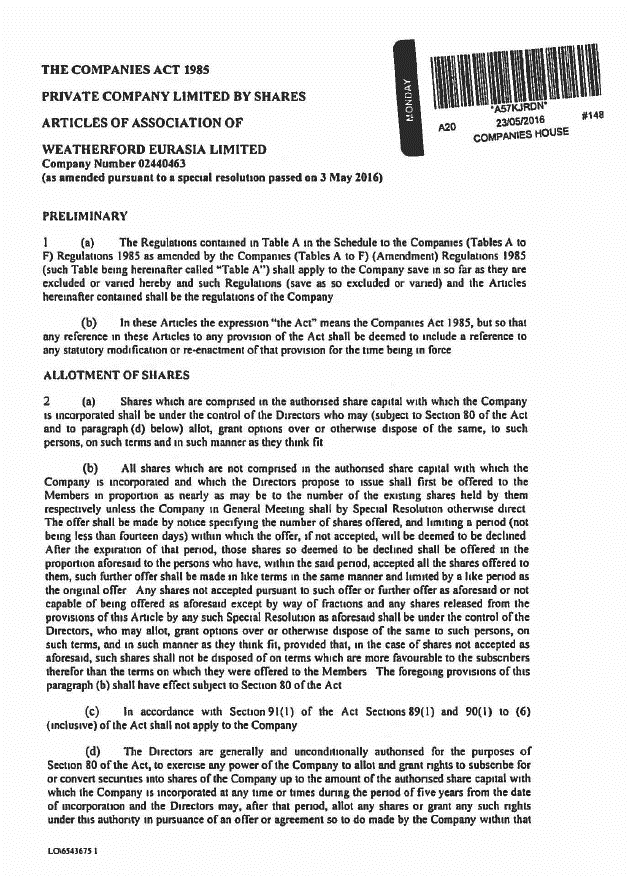
period the authority hereby given may at any time (subject to the said Section 80) be renewed, revoked or varied by Ordinary Resolution of the Company in General Meeting SHARES 3 4 (Deleted by Special Resolution on 30 March 1993) The liability of any Member in default in respect of a call shall be increased by the addition at the end of the first sentence of Clause 18 in Table A of the words "and all expenses that may have been incurred by the Company by reason of such non-payment" 4 A Exception in the case or Financial lnstitutions 4 A 1 Notwithstanding anything contained in these articles or otherwise, the d rectors shall not refuse to register, nor suspend registration of, any transfer of shares where such transfer IS a) in favour of any bank, lender or financial institution (or any affiliate of, or nominee or other entity acting on behalf of, such a bank, lender or financial institution) (a "Financial institution") to which or whom such shares are being transferred by way of security (whether such Financial Institution is acting as agent, trustee or otherwise), b) duly executed by a Financial institution to which or whom such shares (including any further shares in the company acquired by reason of its holding of such shares) are to be transferred as aforesaid pursuant to a power of sale or other power under any security document which creates any security interest over such shares, c) delivered to the company for registration by a Financial institution an order to perfect its security over such shares, d) duly executed by a receiver appointed by a Financial Institution pursuant to any security document which creates any security interest over such shares, and/or e) in favour of a purchaser of shares from any such Financial institution or receiver as referred to an paragraphs (a) to (d) inclusive above 4A 2 Any present or future hen on shares howsoever arising which the company has shall not apply in respect of any shares which have been charged by way of security to, or otherwise secured in favour of, a Financial lnstitution or which are transferred in accordance With the provisions of this Article 4A 3 Any power of directors to forfeit any share which has been called but retains unpaid after notice requiring payment has been given pursuant to the articles shall not apply in respect of any shares that have been charged by way of security to a Financial Institution or that are transferred in accordance with this article 4A 4A 4A certificate executed by, an the case of 4A l(a), 4A l(b), 4A l(c), 4A l(e) and 4A 2 above, the Financial Institution to which or whom such security interest has been or IS being granted, or an official of such Financial institution, certifying that the aforementioned shares are or are to be subject to such security, shall be conclusive evidence of such a fact 4A S A certificate executed by, in the case of of 4A l(d) above, the receiver appointed as above, certifying that such transfer has been executed in accordance with the provision of this Article, shall be conclusive evidence of such fact 2 LO\6543675 1
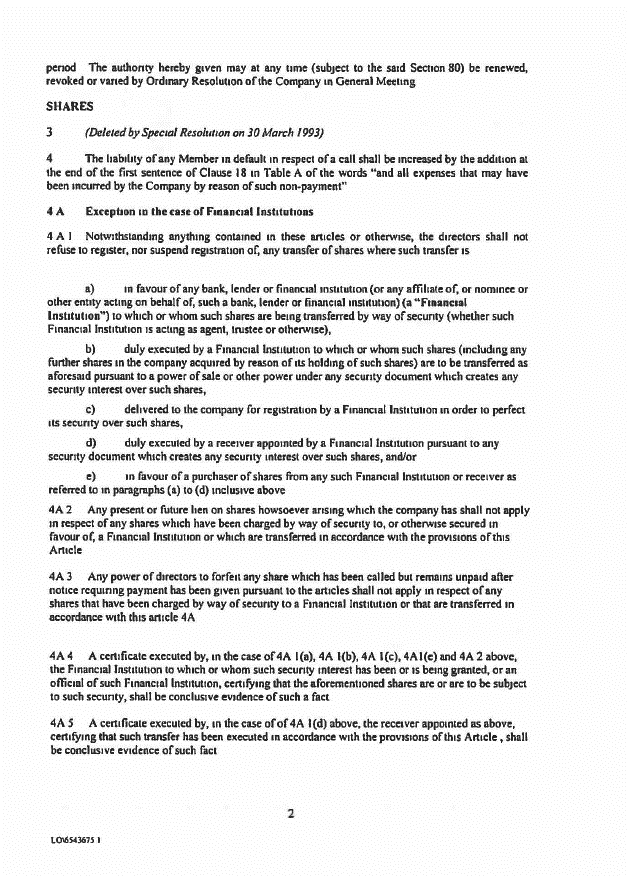
GENERAL MEETINGS AND RESOLUTIONS 5 (a) A notice convening a General Meeting shall be required to specify the general nature (a) of the: business to be transacted only in the case of special business and Clause 3& an Table A shall be modified accordingly All business shall be deemed special that 15 transacted at an Extraordinary General Meeting, and also all that is transacted at an Annual General Meeting, with the: exception of declaring a dividend, the consideration of the accounts, balance sheets, and the reports of the Directors and Auditors, and the appointment of, and the fixing of the remuneration of the Auditors (b) Every notice convening a General Meeting shall comply with the provisions of Section 372(3) of the Act as to giving information to Members in regard to their right to appoint proxies, and notices of and other communications relating to any General Meeting which any Member is entitled to receive shall be sent to the Directors and to the Auditors for the tame beans of the Company 6 (a) Clause 40 in Table A shall be: read and construed as if the words "at the tame when the Meeting proceeds to business" were added at the end of the first sentence (b) If a quorum is not present within half an hour from the time appointed for a General Meeting the General Meeting shall stand adjourned to the same day in the next week at the same time and place or to such other day and at such other time and place as the Directors may determine, and if at the adjourned General Meeting a quorum is not present within half an hour from the time appointed therefor such adjourned General Meeting shall be dissolved (c) Clause 4l in Table A shall not apply to the Company APPOINTMENT OF DIRECTORS 7 Clause 64 in Table A shall not apply to the Company (a) (b) The maximum number and minimum number respectively of the Directors may be determined from time to time by Ordinary Resolution in General Meeting of the Company Subject to and an default of any such determination there shall be no maximum number of Directors and the minimum number of Directors shall be one Whensoever the minimum number of the Directors shall be one, a sole Director shall have authority to exercise all the powers and discretions by Table A and by these Articles expressed to be vested in the Directors generally, and Clause 89 in Table A shall be modified accordingly (c) The Directors shall not be required to retire by rotation and Clauses 73 to 80 (inclusive) in Table A shall not apply to the Company (d) No person shall be appointed a Director at any General Meeting unless either- (i) he is recommended by the Directors, or (ii) not less than fourteen nor more than thirty-five clear days before the date appointed for the General Meeting, notice executed by a Member qualified to vote at the General Meeting has been given to the Company of the intention to propose that person for appointment, together with notice executed by that person of its willingness to be appointed (e) Subject to paragraph (d) above, the Company may by Ordinary Resolution in General Meeting appoint any person who is willing to act to be a Director, either to fill a vacancy or as an additional Director 3 LO\6543675 1
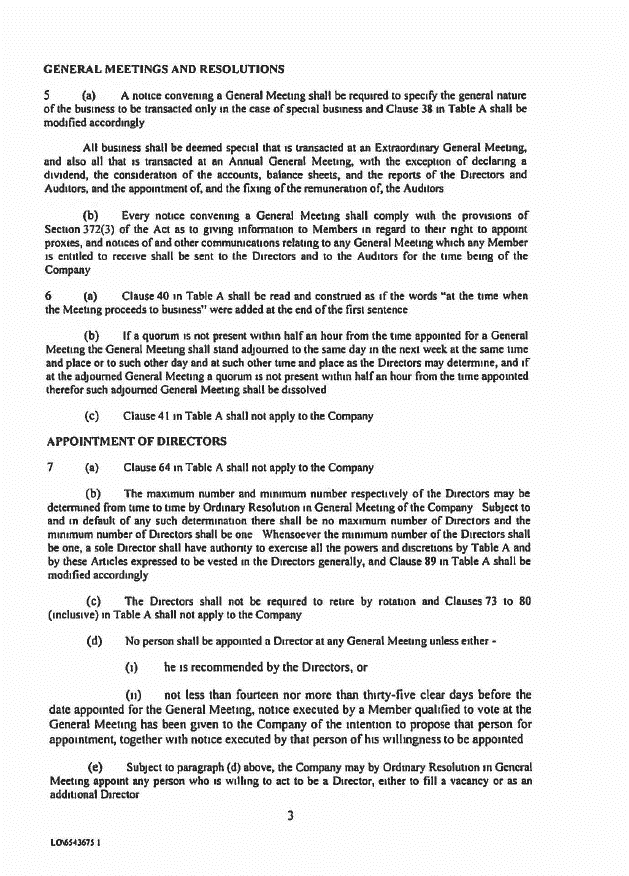
(f) The Directors may appoint a person who is willing to act to be a Director, either to fill a vacancy or as an additional Director, provided that the apartment does not cause the number of Directors to exceed any number determined in accordance with paragraph (b) above as the maximum number of Directors and for the time being an force BORROWING POWERS 8 The Directors may exercise all the powers of the Company to borrow money without limit as to amount and upon such terms and in such manner as they think fit, and subject (in the case of any security convertible into shares) to Section 80 of the Act to grant any mortgage, charge or standard security over its undertaking, property and uncalled capital, or any pan thereof, and to issue debentures, debenture stock, and other securities whether outright or as security for any debt, liability or obligation of the Company or of any third party ALTERNATE DIRECTORS 9 (a) An alternate Director shall not be entitled as such to receive any remuneration from the Company, save that he may be paid by the Company such pan (if any) of the remuneration otherwise payable to his appointor as such appointor may by notice in writing to the Company from time to time direct, and the first sentence of Clause 66 in Table A shall be modified accordingly (b) A Director, or any such other person as is mentioned in Clause 65 in Table A, may act as an alternate Director to represent more than one Director, and an alternate Director shall be entitled at any meeting of the Directors or of any committee of the Directors to one vote for every Director whom he represents in addition to his own vote (If any) as a Director, but he shall count as only one for the purpose of determining whether a quorum as present DISQUALIFICATION OF DIRECTORS 10 The office of a Director shall be vacated if he becomes incapable by reason of illness or injury of managing and administering has property and affairs, and Clause 81 in Table A shall be modified accordingly GRATUITIES AND PENSIONS II (a) The Directors may exercise the powers of the Company conferred by Clause 3(t) of the Memorandum of Association of the Company and shall be entitled to retain any benefits received by them or any of them by reason of the exercise of any such powers (b) Clause 87 in Table A shall not apply to the Company PROCEEDINGS OF DIRECTORS 12 (a) A Director may vote:, at any meeting of the Directors or of any committee of the Directors, on any resolution, notwithstanding that it in any way concerns or relates to a matter an which he has, directly or indirectly any kind of interest whatsover, and if he shall vote on any such resolution as aforesaid his vote shall be counted, and in relation to any such resolution as aforesaid he shall (whether or not he shall vote on the same) be taken into account in calculating the quorum present at the meeting (b) Clauses 94 to 97 (inclusive) in Table A shall not apply to the Company INDEMNITY 13 (a) Every Director or other officer of the Company shall be indemnified out of the assets of the Company against all losses or liabilities which he may sustain or incur in or about the execution 4 LO/6543675 1
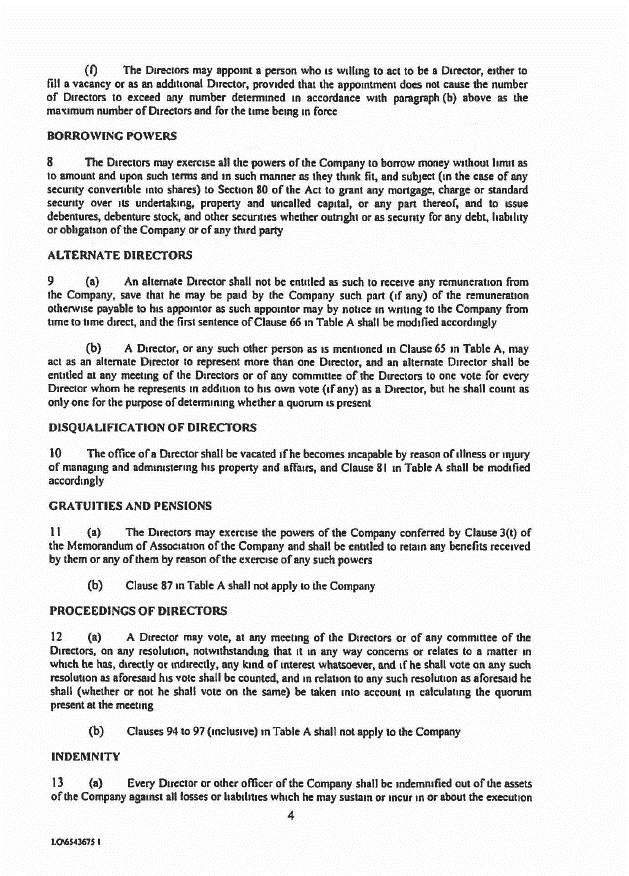
of the duties of his office or otherwise in relation thereto, including any liability incurred by him in defending any proceedings, whether civil or criminal, in which judgment IS given in his favour or in which he is acquired or in connection with any application under Section 144 or Section 727 of the Act in which relief is granted to him by the Court, and no Director or other officer shall be liable for any Joss, damage or misfortune which may happen to or be incurred by the Company in the execution of the duties of his office or in relation thereto But this Article shall only have effect in so far as Its provisions are not avoided by Section 310 of the Act (b) Clause 118 in Table A shall not apply to the Company TRANSFER OF SHARES 14 (Deleted by Special Resolution on 30 March 1993) Names and addresses of Subscribers Instant Companies Limited 2 Baches Street London Nl 6UB Swift Incorporations Limited 2 Baches Street London N1 6UB 2 Dated this 1st day of August, 1989 Witness to the above signatures, Terry Jayne 2 Baches Street London N1 6UB s LO/6543675 1
The regulations of Table A to the Companies Act 1985 apply to the Company save in so far as they are not excluded or varied by its Articles of Association. Table A THE COMPANIES ACT 1985 Regulations for Management of a Company Limited by Shares INTERPRETATION 1. In these regulations: 'the Act' means the Companies Act 1985 including any statutory modification or re-enactment thereof for the time being in force. 'the Articles' means the articles of the company. 'clear days' in relation to the period of a notice means that period excluding the day when the notice is given or deemed to be given and the day for which it is given or on which it is to take effect. 'executed' includes any mode of execution. 'office' means the registered office of the company. 'the holder' in relation to shares means the member whose name is entered in the register of members as the holder of the shares. 'the seal' means the common seal of the company. 'secretary' means the Secretary of the company or any other person appointed to perform the duties of the Secretary of the company, including a joint, assistant or deputy Secretary. 'the United Kingdom' means Great Britain and Northern Ireland. Unless the context otherwise requires, words or expressions contained in these regulations bear the same meaning as in the Act but excluding any statutory modification thereof not in force when these regulations become binding on the company. SHARE CAPITAL 2. Subject to the provisions of the Act and without prejudice to any rights attached to any existing shares, any share may be issued with such rights or restrictions as the company may by ordinary resolution determine. 3. Subject to the provisions of the Act, shares may be issued which are to be redeemed or are to be liable to be redeemed at the option of the company or the holder on such terms and in such manner as may be provided by the articles. 4. The company may exercise the powers of paying commissions conferred by the Act. Subject to the provisions of the Act, any such commission may be satisfied by the payment of cash or by the allotment of fully or partly paid shares or partly in one way and partly in the other. 5. Except as required by law, no person shall be recognised by the company as holding any share upon any trust and (except as otherwise provided by the articles or by law) the company shall not be bound by or recognise any interest in any share except an absolute right to the entirety thereof in the holder. SHARE CERTIFICATES 6. Every member, upon becoming the holder of any shares, shall be entitled without payment to one certificate for all the shares of each class held by him (and, upon transferring a part of his holding of shares of any class, to a certificate for the balance of such holding) or several certificates each for one or more of his shares upon payment for every certificate after the first of such reasonable sum as the directors may determine. Every certificate shall be sealed with the seal and shall specify the number, class and distinguishing numbers (if any) of the shares to which it relates and the amount or respective amounts paid up thereon. The company shall not be bound to issue more than one certificate for shares held jointly by several persons and delivery of a certificate to one joint holder shall be a sufficient delivery to all of them. 7. If a share certificate is defaced, worn-out, lost or destroyed, it may be renewed on such terms (if any) as to evidence and indemnity and payment of the expenses reasonably incurred by the company in investigating evidence as the directors may determine but otherwise free of charge, and (in the case of defacement or wearing-out) on delivery up of the old certificate. LIEN 8. The company shall have first and paramount lien on every share (not being a fully paid share) for all moneys (whether presently payable or not) payable at a fixed time or called in respect of that share. The directors may at any time declare any share to be wholly or in part exempt from the provisions of this regulation. The company's lien on a share shall extend to any amount payable in respect of it. 9. The company may sell in such manner as the directors determine any shares on which the company has a lien if a sum in respect of which the lien exists is presently payable and is not paid within fourteen clear days' after notice has been given to the holder of the share or to the person entitled to it in consequence of the death or bankruptcy of the holder, demanding payment and stating that if the notice is not complied, with the shares may be sold. 10. To give effect to a sale the directors may authorise some person to execute an instrument of transfer of the shares sold to, or in accordance with the directions of the purchaser. The title of the transferee to the shares shall not be affected by any irregularity in or invalidity of the proceedings in reference to the sale. 11. The net proceeds of the sale, after payment of the costs, shall be applied in payment of so much of the sum for which the lien exists as is presently payable, and any residue shall (upon surrender to the company for cancellation of the certificate for the shares sold and subject to a like lien for any moneys not presently payable as existed upon the shares before the sale) be paid to the person entitled to the shares at the date of the sale. CALLS ON SHARES AND FORFEITURE 12. Subject to the terms of allotment, the directors may make calls upon the members in respect of any moneys unpaid on their shares (whether in respect of nominal value or premium) and each member shall (subject to receiving it leave fourteen clear days' notice specifying when and where payment is to be made) pay to the company as required by the notice the amount called on his shares. A call may be required to be paid by instalments. A call may, before receipt by the company of any sum due thereunder, be revoked in whole or part and payment of a call may be postponed in whole or part. A person upon whom a call is made shall remain liable for calls made upon him notwithstanding the subsequent transfer of the shares in respect whereof he call was made. 13. A call shall be deemed to have been made at the time when the resolution of the directors authorising the call was passed. 14. The joint holders of a share shall be jointly and severally liable to pay all calls in respect thereof. 15. If a call remains unpaid after it has become due and payable the person from whom it is due and payable shall pay interest on the amount unpaid from the day it became due and payable until it is paid at the rate fixed by the terms of allotment of the share or in the notice of the call or, if no rate is fixed, at the appropriate rate (as defined by the Act) but the directors may waive payment of the interest wholly or in part. 16. An amount payable in respect of a share on allotment or at any fixed date, whether in respect of nominal value or premium or as an instalment of a call, shall be deemed to be a call and if it is not paid the provisions of the articles shall apply as if that amount had become due and payable by virtue of a call. 17. Subject to the terms of allotment, the directors may make arrangements on the issue of shares for a difference between the holders in the amounts and times of payment of calls on their shares. 18. If a call remains unpaid after it has become due and payable the directors may give to the person from whom it is due not less than fourteen clear days' notice requiring payment of the amount unpaid together with any interest which may have accrued. The notice shall name the place where payment is to be made and shall state that if the notice is not complied with the shares in respect of which the call was made will be liable to be forfeited. 19. If the notice is not complied with any share in respect of which it was given may, before the payment required by the notice has been made, be forfeited by a resolution of the directors and the forfeiture shall include all dividends or other monies payable in respect of the forfeited shares and not paid before the forfeiture. 20. Subject to the provisions of the Act, a forfeited share may be sold, re-allotted or otherwise disposed of on such terms and in such manner as the directors determine either to the person who was before the forfeiture the holder or to any other person and at any time before sale, reallotment or other disposition, the forfeiture may be cancelled on such terms as the directors think fit. Where for the purposes of its disposal a forfeited share is to be transferred to any person the directors may authorise some person to execute an instrument of transfer on the share to that person. 21. A person any of whose shares have been forfeited shall cease to be a member in respect of them and shall surrender to the Company for cancellation the certificate for the shares forfeited but shall remain liable to the company for all moneys which at the date of forfeiture were presently payable by him to the company in respect of those shares with interest at the rate at which interest was payable on those moneys before the forfeiture or, if no interest was so payable, at the appropriate rate (as defined in the Act) from the date of forfeiture until payment but the directors may waive payment wholly or in part or enforce payment without any allowance for the value of the shares at the time of forfeiture or for any consideration received on their disposal. 22. A statutory declaration by a director or the Secretary that a share has been forfeited on a specified date shall be conclusive evidence of the facts stated in it as against all persons claiming to be entitled to the share and the declaration shall (subject to the execution of an instrument of transfer if necessary) constitute a good title to the share and the person to whom the share is disposed of shall not be bound to see to the application of the consideration, if any, nor shall his title to the share be affected by any irregularity in or invalidity of the proceedings in reference to the forfeiture of disposal of the share. TRANSFER OF SHARES 23. The instrument of transfer of a share may be in any usual form or in any other form which the directors may approve and shall be executed by or on behalf of the transferor and, unless the share is fully paid, by or on behalf of the transferee. 24. The directors may refuse to register the transfer of a share which is not fully paid to a person of whom they do not approve and they may refuse to register the transfer of a share on which the company has a lien. They may also refuse to register a transfer unless: a) it is lodged at the office or at such other place as the directors may appoint and is accompanied by the certificate for the shares to which it relates and such other evidence as the directors may reasonably require to show the rights of the transferor to make the transfer; b) it is in respect of only one class of shares, and; c) it is in favour of not more than four transferees. 25. If the directors refuse to register a transfer of a share, they shall within two months after the date on which the transfer was lodged with the company send to the transferee notice of the refusal. 26. The registration of transfer of shares or transfers of any class of shares may be suspended at such times and for such periods (not exceeding 30 days in any year) as the directors may determine. 27. No fee shall be charged for the registration of any instrument of transfer or other document relating to or affecting the title to any share. 28. The company shall be entitled to retain any instrument of transfer which is registered, but any instrument of transfer which the directors refuse to register shall be returned to the person lodging it when notice of the refusal is given. TRANSMISSION OF SHARES 29. If a member dies the survivor or survivors where he was a joint holder, and his personal representatives where he was a sole holder or only survivor of joint holders, shall be the only persons recognised by the company as having any title to his interest; but nothing herein contained shall release the estate of a deceased member from any liability in respect of any share which has been jointly held by him.
30. A person becoming entitled to a share in consequence of the death or bankruptcy of a member may, upon such evidence being produced as the directors may properly require, elect either to become the holder of the share or to have some person nominated by him registered as the transferee. If he elects to become the holder he shall give notice to the company to that effect. If he elects to have another person registered he shall execute an instrument of transfer of the share to that person. All the articles relating to the transfer of shares shall apply to the notice or instrument of transfer as if it were an instrument of transfer executed by the member and the death or bankruptcy of the member had not occurred. 31. A person becoming entitled to a share in consequence of the death or bankruptcy of a member shall have the rights to which he would be entitled if he were the holder of the share, except that he shall not, before being registered as the holder of the share, be entitled in respect of it to attend or vote at any meeting of the company or at any separate meeting of the holders of any class of shares in the company. ALTERATION OF SHARE CAPITAL 32. The company may by ordinary resolution: a) increase its share capital by new shares of such amount as the resolution prescribes; b) consolidate and divide all or any of its share capital into shares of larger amount than its existing shares; c) subject to the provisions of the Act sub-divide its shares, or any of them, into shares of smaller amount and the resolution may determine that, as between the shares resulting from the sub-division, any of them may have any preference or advantage as compared with the others; and d) cancel shares which, at the date of the passing of the resolution, have not been taken or agreed to be taken by any person and diminish the amount of its share capital by the amount of the share so cancelled. 33. Whenever as a result of a consolidation of shares any members would become entitled to fractions of a share, the directors may, on behalf of those members, sell the shares representing the fractions for the best price reasonably obtainable to any person (including, subject to the provisions of the Act, the company) and distribute the net proceeds of sale in due proportion among those members, and the directors may authorise some person to execute an instrument of transfer of the shares to, or in accordance with the directions of the purchaser. The transferee shall not be bound to see to the application of the purchase money nor shall his title to the shares be affected by any irregularity in or invalidity of the proceedings in reference to the sale. 34. Subject to the provisions of the Act, the company may by special resolution reduce its share capital, any capital redemption reserve and any share premium account in any way. PURCHASE OF OWN SHARES 35. Subject to the provisions of the Act, the company may purchase its own shares (including any redeemable shares) and, if it is a private company, make a payment in respect of the redemption of purchase of its own shares otherwise than out of distributable profits of the company or the proceeds of a fresh issue of shares. GENERAL MEETINGS 36. All general meetings other than annual general meetings shall be called extraordinary general meetings. 37. The directors may call general meetings and, on the requisition of members pursuant to the provisions of the Act, shall forthwith proceed to convene an extraordinary general meeting for a date not later than eight weeks after receipt of the requisition. If there are not within the United Kingdom sufficient directors to call a general meeting, any director or any member of the company may call a general meeting. NOTICE OF GENERAL MEETINGS 38. An annual general meeting and an extraordinary general meeting called for the passing of a special resolution or a resolution appointing a person as a director shall be called by a least 21 clear days' notice. All other extraordinary general meetings by at least 14 clear days' notice but a general meeting may be called by shorter notice if it is so agreed: a) in the case of an annual general meeting, by all the members entitled to attend and vote thereat; and b) in the case of any other meeting by a majority in number of the members having a right to attend and vote being a majority together holding not less than 95% in nominal value of the shares giving that right. The notice shall specify the time and place of the meeting and the general nature of the business to be transacted and, in case of an annual general meeting, shall specify the meeting as such. Subject to the provisions of the articles and to any restrictions imposed on any shares, the notice shall be given to all the members, to all persons entitled to share in consequence of the death or bankruptcy of a member and to the directors and auditors. 39. The accidental omission to give notice of a meeting to, or the non-receipt of notice of a meeting by , any person entitled to receive notice shall not invalidate the proceedings at that meeting. PROCEEDINGS AT GENERAL MEETINGS 40. No business shall be transacted at any meeting unless a quorum is present. Two persons entitled to vote upon the business to be transacted, each being a member or a proxy for a member or a duly authorised representative of a corporation, shall be a quorum. 41. If such a quorum is not present within half an hour from the time appointed for the meeting, or if during a meeting such a quorum ceases to be present, the meeting shall stand adjourned to the same day in the next week at the same time and place or to such time and place as the directors may determine. 42. The chairman, if any, of the board of directors or in his absence some other director nominated by the directors shall preside as chairman of the meeting, but if neither the chairman nor such other director (if any) be present within 15 minutes after the time appointed for holding the meeting and willing to act, the directors present shall elect one of their number to be chairman and, if there is only one director present and willing to act, he shall be chairman. 43. If no director is willing to act as chairman, or if no director is present within 15 minutes after the time appointed for holding the meeting, the members present and entitled to vote shall choose one of their number to be chairman. 44. A director shall, notwithstanding that he is not a member, be entitled to attend and speak at any general meeting and at any separate meeting of the holders of any class of shares in the company. 45. The chairman may, with the consent of a meeting at which a quorum is present (and shall if so directed by the meeting). adjourn the meeting from time to time and from place to place, but no business shall be transacted at an adjourned meeting other than business which might properly have been transacted at the meeting had the adjournment not taken place. When a meeting is adjourned for 14 days or more, at least seven clear days' notice shall be given specifying the time and place of the adjourned meeting and the general nature of he business to be transacted. Otherwise it shall not be necessary to give any such notice. 46. A resolution put to the vote of a meeting shall be decided on a show of hands unless before, or on the declaration of the result of the show of hands a poll is duly demanded. Subject to the provisions of the Act, a poll may be demanded. a) by the chairman; or b) by at least two members having the right to vote at the meeting; or c) by a member or members representing not less than one-tenth of total voting rights of all the members having the right to vote at the meeting or d) by a member or members holding shares conferring a right to vote at the meeting being shares on which an aggregate sum has been paid up to equal to not less that one-tenth of the total sum paid-up on the shares conferring that right; and a demand by a person as proxy for a member shall be the same as a demand by the member. 47. Unless a poll is duly demanded a declaration by the chairman that a resolution has been carried or carried unanimously, or by a particular majority, or lost, or not carried by a particular majority and an entry to that effect in the minutes of the meeting shall be conclusive evidence of the fact without proof of the number or proportion of the votes recorded in favour of or against the resolution. 48. The demand for a poll may, before the poll is taken, be withdrawn but only with the consent of the chairman and a demand so withdrawn shall not be taken to have invalidated the result of the show of hands declared before the demand was made. 49. A poll shall be taken as the chairman directs and he may appoint scrutineers (who need not be members) and fix a time and place for declaring the result of the poll. The result of the poll shall be deemed to be the resolution of the meeting at which the poll was demanded. 50. In the case of an equality of votes, whether on a show of hands or on a poll, the chairman shall be entitled to a casting vote in addition to any other vote he may have. 51. A poll demanded on the election of a chairman or on a question of adjournment shall be taken forthwith. A poll demanded on any other question shall be taken either forthwith or at such time and place as the chairman directs not being more than thirty days after the poll is demanded. The demand for a poll shall not prevent the continuance of a meeting for the transaction of any business other than the question on which the poll was demanded. If a poll is demanded before the declaration of the result of a show of hands and the demand is duly withdrawn, the meeting shall continue as if the demand had not been made. 52. No notice need be given of a poll not taken forthwith if the time and place at which it is to be taken are announced at the meeting at which it is demanded. In any other case a least seven clear days' notice shall be given specifying the time and place at which the poll is to be taken. 53. A resolution in writing executed by or on behalf of each member who would have been entitled to vote upon it if it had been proposed at a general meeting at which he was present shall be as effectual as if it had been passed at a general meeting duly convened and held and may consist of several instruments in the like form each executed by or on behalf of one or more members. VOTES OF MEMBERS 54. Subject to any rights or restriction attached to any shares, on a show of hands every member (who being an individual) is present in person or (being a corporation) is present by a duly authorised representative, not being himself a member entitled to vote, shall have one vote and on a poll every member shall have one vote for every share of which he is the holder. 55. In the case of joint holders the vote of the senior who tenders a vote, whether in person or by proxy, shall be accepted to the exclusion of the votes of the other joint holders; and seniority shall be determined by the order in which the names of the holders stand in the register of members. 56. A member in respect of whom an order has been made by any court having jurisdiction (whether in the United Kingdom or elsewhere) in matters concerning mental disorder may vote, whether on a show of hands or on a poll, by his receiver, curator bonis or other person authorised in that behalf appointed by that court, and any such receiver, curator bonis or other person may, on a poll, vote by proxy. Evidence to the satisfaction of the directors of the authority of the person claiming to exercise the right to vote shall be deposited at the office, or at such other place as is specified in accordance with the articles for the deposit of instruments of proxy, not less than 48 hours before the time appointed for holding the meeting or adjourned meeting at which the right to vote is to be exercised and in default the right to vote shall not be exercisable. 57. No member shall vote at any general meeting or at any separate meeting of the holders of any class of shares in the company, either in person or by proxy, in respect of any share held by him unless all moneys presently payable by him in respect of that share have been paid. 58. No objection shall be raised to the qualification of any voter except at the meeting or adjourned meeting at which the vote objected to is tendered, and every vote not disallowed at the meeting shall be valid. Any objection made in due time shall be referred to the chairman whose decision shall be final and conclusive. 59. On a poll votes may be given whether personally or by proxy. A member may appoint more than one proxy to attend on the same occasion. 60. An instrument appointing a proxy shall be in writing, executed by or on behalf of the appointor and shall be in the following form (or in a form as near thereto as circumstances allow or in any other form which is usual or which the directors may approve): '.......................................................PLC/Limited I/We, ............................., of .............................., being a member/members of the above-named company, hereby appoint ............................. of ........................., or failing him, .......................... of ............................. as my/our proxy vote in my/our names) and on my/our behalf at the annual/extraordinary general meeting of the company to be held on ......................19 ........ , and at any adjournment thereof. Signed on .......................19.......; 61. Where it is desired to afford members an opportunity of instructing the proxy how he shall act the instrument appointing a proxy shall be in the following form (or in a form as near thereto as circumstances allow or in any other form which is usual or which the directors may approve): '......................................................PLC/Limited I/We, ..................................., of .................................., being a member/members of the abovenamed company hereby appoint ............................. of ........................., or failing him, ....................... of ............................. as my/our proxy vote in my/our name(s) and on my/our behalf at the annual/extraordinary meeting of the company to be held on ..................... 19 ......., and at any adjournment thereof. This form is to be used in respect of the resolutions mentioned below as follows: Resolution No. 1 *for *against Resolution No. 2 *for *against. *Strike out whichever is not desired. Unless otherwise instructed, the proxy may vote as he thinks fit or may abstain from voting. Signed this..........day of ..........................19...........'. 62. The instrument appointing a proxy and any authority under which it is executed or a copy of such authority certified notarially or in some other way
approved by the directors may: a) be deposited at the office or at such other place within the United Kingdom as is specified in the notice convening the meeting or in any instrument of proxy sent out by the company in relation to the meeting not less than 48 hour before the time for holding the meeting or adjourned meeting at which the person named in the instrument proposes to vote; or b) in the case of a poll taken more than 48 hours after is demanded, be deposited as aforesaid after the poll has been demanded and not less than 24 hours before the time appointed for the taking of the poll; or c) where the poll is not taken forthwith but is taken not more than 48 hours after it was demanded, be delivered at the meeting at which the poll was demanded to the chairman or to the Secretary or to any director. and an instrument of proxy which is not deposited or delivered in a manner so permitted shall be invalid. 63. A vote given to poll demand by proxy or by the duly authorised representative of a corporation shall be valid notwithstanding the previous determination of the authority of the person voting or demanding a poll unless notice of the determination was received by the company at the office or at such other place at which the instrument of proxy was duly deposited before the commencement of the meeting or adjourned meeting at which the vote is given or the poll demanded or (in the case of a poll taken otherwise than on the same day as the meeting or adjourned meeting) the time-appointed for taking the poll. NUMBER OF DIRECTORS 64. Unless otherwise determined by ordinary resolution, the number of directors (other than alternate directors) shall not be subject to any maximum but shall be not less than two. ALTERNATE DIRECTORS 65. Any director (other than an alternate director) may appoint any other director, or any other person approved by resolution of the directors and willing to act, to be an alternate director and may remove from office an alternate director so appointed to him. 66. An alternate director shall be entitled to receive notice of all meetings of directors and of all meetings of committees of directors of which his appointor is a member, to attend and vote at any such meeting at which the director appointing him is not personally present, and generally to perform all the functions of his appointor as a director in his absence but shall not be entitled to receive any remuneration from the company for his services as an alternate director. But is shall not be necessary to give notice of such a meeting to an alternate director who is absent from the United Kingdom. 67. An alternate director shall cease to be an alternate director if his appointor ceases to be a director, but, if a director retires by rotation or otherwise but is reappointed or deemed to have been reappointed at the meeting at which he retires, any appointment of an alternate director made by him which was in force immediately prior to his retirement shall continue after his reappointment. 68. Any appointment or removal of an alternate director shall be by notice to the company signed by the director making or revoking the appointment or in any other manner approved by the directors. 69. Save as otherwise provided in the articles, an alternative director shall be deemed for all purposes to be a director and shall alone be responsible for his own acts and defaults and he shall not be deemed to be the agent of the director appointing him. POWERS OF DIRECTORS 70. Subject to the provisions of the Act, the memorandum and the articles and to any directions given by special resolution, the business of the company shall be managed by the directors who may exercise all the powers of the company; No alteration of the memorandum or articles and no such direction shall invalidate any prior act of the directors which would have been valid if that alteration had not been made or that direction had not been given. The powers given by the regulation shall not be limited by any special power given to the director by the articles and a meeting of directors at which a quorum is present may exercise all power exercisable by the directors. 71. The directors may, by power of attorney or otherwise, appoint any person to be the agent of the company for such purposes and on such conditions as they determine, including authority for the agent to delegate all or any of his powers. DELEGATION OF DIRECTORS' POWERS 72. The directors may delegate any of their power to any committee consisting of one or more directors; They may also delegate to any managing director or any director holding any other executive office such of their powers as they consider desirable to be exercised by him. Any such delegation may be made subject to any such conditions the directors may impose, and either collaterally with or to the exclusion of their own powers and may be revoked or altered. Subject to any such conditions, the proceedings of a committee with two or more members shall be governed by the articles regulating the proceedings of directors so far as they are capable of applying. APPOINTMENT AND RETIREMENT OF DIRECTORS 73. At the first annual general meeting all the directors shall retire from office, and at every subsequent annual general meeting one-third of the directors who are subject to retirement by rotation or, if their number is not three or a multiple of three, the number nearest to one-third shall retire from office; but, if there is only one director who is subject to retirement by rotation, he shall retire. 74. Subject to the provisions of the Act, the directors to retire by rotation shall be those who have been longest in office since their last appointment or reappointment, but as between persons who became or were last reappointed, directors on the same day those to retire shall (unless they otherwise agree among themselves) be determined by lot. 75. If the company, at the meeting at which a director retires by rotation, does not fill the vacancy the retiring director shall, if willing to act, be deemed to have been reappointed unless at the meeting it is resolved not to fill the vacancy or unless a resolution for the reappointment of the director is put to the meeting and lost. 76. No person other than a director retiring by rotation shall be appointed or reappointed a director at any general meeting unless: a) he is recommended by the directors b) not less than 14 nor more than 35 clear days' before the date appointed for the meeting, notice executed by a member qualified to vote at the meeting has been given to the company of the intention to propose that person for appointment or reappointment stating the particulars which would, if he were so appointed or reappointed, be required to be included in the company's register of directors together with notice executed by that person of his willingness to be appointed or reappointed. 77. Not less than seven days nor more than 28 clear days' before the date appointed for holding a general meeting shall be given to all who are entitled to receive notice of the meeting of any person (other than a director retiring by rotation at the meeting) who is recommended by the directors for appointment or reappointment as a director at the meeting or in respect of whom notice has duly been given to the company of the intention to propose him at the meeting for appointment or reappointment as a director, The notice shall give the particulars of that person which would, if he were so appointed or reappointed, be required to be included in the company's register of directors. 78. Subject as aforesaid, the company may by ordinary resolution appoint a person who is willing to act to be a director either to fill a vacancy or as an additional director and may also determine the rotation in which any additional directors are to retire. 79. The directors may appoint a person who is willing to act to be a director, either to fill a vacancy or as an additional director, provided that the appointment does not cause the number of directors to exceed any number fixed by or in accordance with the articles as the maximum number of directors. A director so appointed shall hold office only until the next following annual general meeting and shall not be taken into account in determining the directors who are to retire by rotation at the meeting. If not reappointed at such annual general meeting, he shall vacate office at the conclusion thereof. 80. Subject as aforesaid, a director who retires at an annual general meeting may, if willing to act, be reappointed it he is not reappointed. If he shall retain office until the meeting appoints someone in his place, or if it does not do so, until the end of the meeting. DISQUALIFICATION AND REMOVAL OF DIRECTORS 81. The office of a director shall be vacated if: a) he ceases to be a director by virtue of any provision of the Act or he becomes prohibited by law from being a director; or b) he becomes bankrupt or makes any arrangement or composition with his creditors generally; or c) he is, or may be, suffering from mental disorder and either i) he is admitted to hospital in pursuance of an application for admission for treatment under the Mental Health Act 1983 or, in Scotland, an application for admission under Mental Health (Scotland) Act 1960, or ii) an order is made by a court having jurisdiction (whether in the United Kingdom or elsewhere) in matters concerning mental disorder for his detention or for the appointment of a receiver, curator bonis or other person to exercise powers with respect to his property or affairs; or d) he resigns his office by notice to the company; or e) he shall for more than six consecutive months have been absent without permission of the directors from meetings of directors held during that period and the directors resolve that his office be vacated. REMUNERATION OF DIRECTORS 82. The directors shall be entitled to such remuneration as the company may by ordinary resolution determine and, unless the resolution provides otherwise, the remuneration shall be deemed to accrue from day to day. DIRECTORS' EXPENSES 83. The directors may be paid all travelling , hotel, and other expenses properly incurred by them in connection with their attendance at meetings of directors or committees of directors or general meetings or separate meetings of the holders of any class of shares or of debentures of the company or otherwise in connection with the discharge of their duties. DIRECTORS' APPOINTMENTS AND INTERESTS 84. Subject to the provisions of the Act, the directors may appoint one more of their number to the office of managing director or to any other executive office under the company and may enter into an agreement or arrangement with any director for his employment by the company or for the provision by him of any service outside the scope of the ordinary duties of a director. Any such appointment, agreement of arrangement may be made upon such terms as the directors determine and they may remunerate any such director for his services as they think fit. Any appointment of a director to an executive office shall terminate if he ceases to be a director but without prejudice to any claim to damages for breach of the contract of service between the director and the company. A managing director and a director holding any other executive office shall not be subject to retirement by rotation. 85. Subject to the provisions of the Act, and provided that he has disclosed to the directors the nature and extent of any material interest of his, a director notwithstanding his office: a) may be partly to, or otherwise interested in, any transaction or arrangement with the company or in which the company is otherwise interested; b) may be a director or other officer of, or employed by, or partly to any transaction or arrangement with, or otherwise interested in, any body corporate promoted by the company or in which the company is otherwise interested; and c) shall not, by reason of his office, be accountable to the company for any benefit which he derives from any such office or employment of from any such transaction or arrangement or from any interest in any such body corporate and no such transaction or arrangement shall be liable to be avoided on the ground of any such interest of benefit. 86. For the purposes of regulation 85: a) a general notice given to the directors that a director is to be regarded as having an interest of the nature and extend specified in the notice in any transaction or arrangement in which a specified person or class of persons is interested shall be deemed to be a disclosure that the director has an interest in any such transaction of the nature and extent so specified; and b) an interest of which a director has no knowledge and of which it is unreasonable to expect him to have knowledge shall not be treated as an interest of his. DIRECTORS' GRATUITIES AND PENSIONS 87. The directors may provide benefits, whether by the payment of gratuities or pension or by insurance or otherwise, for any director who has held but no longer holds any executive office or employment with the company or with any body corporate which is or has been a subsidiary of the company or a predecessor in business of the company or any such subsidiary, and for any member of his family (including a spouse and a former spouse) or any person who is or was dependent on him, and may (as well before as after he ceases to hold such office or employment) contribute to any fund and pay premiums for the purchase or provision of any such benefit. PROCEEDINGS OF DIRECTORS 88. Subject to the provisions of the articles, the directors may regulate their proceedings as they think fit. A director may, and the Secretary at the request of a director shall, call a meeting of the directors. It shall not be necessary to give notice of a meeting to a director who is absent from the United Kingdom. Questions arising at a meeting shall be decided by a majority of votes. In the case of an equality of votes, the chairman shall have a second or casting vote. A director who is also an alternate director shall be entitled in the absence of his appointor to a separate vote on behalf of his appointor in addition to his own vote. 89. The quorum for the transaction of the business of the directors may be fixed by the directors and unless so fixed at any other number shall be two. A person who holds office only as an alternate director shall, if his appointor is not present, be counted in the quorum. 90. The continuing directors or a sole continuing director may act notwithstanding any vacancies in their number, but, if the number of directors is less than the number fixed as the quorum, the continuing directors or director
may act only for the purpose of filling vacancies or of calling a general meeting. 91. The directors may appoint one of their number to be the chairman of the board of directors and may at any time remove him from that office. Unless he is unwilling to do so, the director so appointed shall preside at every meeting of directors at which he is present. But if there is no director holding that office, or if the director holding it is unwilling to preside or is not present within five minutes after the time appointed for the meeting, the directors present may appoint one of their number to be chairman of the meeting. 92. All acts done by a meeting of directors, or of a committee of directors, or by a person acting as a director shall, notwithstanding that it be afterwards discovered that there was a defect in the appointment on any director or that any of them were disqualified from holding office, or had vacated office, or were not entitled to vote, be as valid as if every such person had been duly appointed and was qualified and had continued to be director and had been entitled to vote. 93. A resolution in writing signed by all the directors entitled to receive notice of a meeting of directors or of a committee of directors shall be as valid and effectual as if it had been passed at a meeting of directors or (as the case may be) a committee of directors duly convened and held and may consist of several documents in the like form each signed by one or more directors; but a resolution signed by an alternate director need not also be signed by his appointor and, if it is signed by a director who has appointed an alternate director, it need not be signed by the alternate director in that capacity. 94. Save as otherwise provided by the articles a director shall not vote at a meeting of directors or of a committee of directors on any resolution concerning a matter in which he has, directly or indirectly, an interest or duty which is material and which conflicts or may conflict with the interests of the company unless his interest or duty arises only because the case falls within one or more of the following paragraphs. a) the resolution relates to the giving to him of a guarantee, security, or indemnity in respect of money lent to, or an obligation incurred by him for the benefit of, the company or any of its subsidiaries; b) the resolution relates to the giving to a third party of a guarantee, security, or indemnity in respect of an obligation of the company or any of its subsidiaries for which the director has assumed responsibility in whole or part and whether alone or jointly with others under a guarantee or indemnity or by the giving of security. c) his interest arises by virtue of his subscribing or agreeing to subscribe for any shares, debentures or other securities of the company or any of its subsidiaries, or by virtue of his being, or intending to become, a participant in the underwriting or sub-underwriting of an offer of any such shares, debentures, or other securities by the company or any of its subsidiaries for subscription, purchase or exchange; d) the resolution in any way to a retirement benefits scheme which has been approved, or is conditional upon approval, by the Board of Inland Revenue for taxation purposes. For the purposes of this regulation, an interest of a person who is, for any purpose of the Act (excluding any statutory modification thereof not in force when this regulation becomes binding on the company), connected with a director shall be treated as an interest of his director and in relation to an alternate director, an interest of his appointor shall be treated as an interest of the alternate director without prejudice to any interest which the alternate director has otherwise. 95. A director shall not be counted in the quorum present at a meeting in relation to a resolution on which he is not entitled to vote. 96. The company may by ordinary resolution suspend or relax to any extent, either by generally or in respect of any particular matter, any provision of the articles prohibiting a director from voting at a meeting of directors or of a committee of directors. 97. Where proposals are under consideration concerning the appointment of two or more directors to offices or employment with the company or any body corporate in which the company is interested the proposals may be divided and considered in relation to each director separately and (provided he is not for another reason precluded form voting) each of the directors concerned shall be entitled to vote and be counted in the quorum in respect of each resolution except that concerning his own appointment. 98. If a question arises at a meeting of directors or of a committee of directors as to the right of a director to vote, the question may, before the conclusion of the meeting, be referred to the chairman of the meeting and his ruling in relation to any director other than himself be final and conclusive. SECRETARY 99. Subject to the provisions of the Act, the Secretary shall be appointed by the directors for such term, at such remuneration and upon such conditions as they may think fit; and any Secretary so appointed may be removed by them. Minutes 100. The directors shall cause minutes to be made in books kept for the purpose: a) of all appointments of officers made by the directors; and b) of all proceedings at meetings of the company of the holders of any class of shares in the company, and of directors, and of committees of directors, including the names of the directors present at each such meeting. THE SEAL 101. The seal shall only be used by the authority of directors or of a committee of directors authorised by the directors. The directors may determine who shall sign any instrument to which the seal is affixed and unless otherwise so determined it shall be signed by a director and by the Secretary or by a second director. DIVIDENDS 102. Subject to the provisions of the Act, the company may by ordinary resolution declare dividends in accordance with the respective rights of the members, but no dividend shall exceed the amount recommended by the directors. 103. Subject to the provisions of the Act, the directors may pay interim dividends if it appears to them that they are justified by the profits of the company available for distribution. If the share capital is divided into different classes, the directors may pay interim dividends on shares which confer deferred or nonpreferred rights with regard to dividend as well as on shares which confer preferential rights with regard to divided, but no interim dividend shall be paid on shares carrying deferred on non-preferred rights if, at the time of payment, any preferential dividend is in arrears. The directors may also pay at intervals settled by them any dividend payable at a fixed rate if it appears to them that the profits available for distribution justify the payment. Provided the directors act in good faith they shall not incur any liability to the holders of shares conferring preferred rights for any loss they may suffer by lawful payment of an interim dividend on any shares having deferred or non-preferred rights. 104. Except as otherwise provided by the rights attached to shares, all dividends shall be declared and paid according to the amounts paid up on the shares on which the dividend is paid. All dividends shall be apportioned and paid proportionally to the amounts paid up on the shares during any portion or portions of the period in respect of which the dividend is paid; but if any share is issued on terms providing that it shall rank for dividend as from a particular date that share shall rank for dividend accordingly. 105. A general meeting declaring a dividend may, upon the recommendation of the directors, direct that it shall be satisfied wholly or partly by the distribution of assets and, where any difficulty arises in regard to the distribution, the directors may settle the same and in particular may issue fractional certificates and fix the value for distribution of any assets and may determine that cash shall be paid to any member upon the footing of the value so fixed in order to adjust the rights of members and may vest any assets in trustees. 106. Any dividend or other moneys payable in respect of a share may be paid by cheque sent by post to the registered address of the person entitled or, if two or more persons are the holders of the share or are jointly entitled to it by reason of the death or bankruptcy of the holder, to the registered address of that one of those persons who is first named in the register of members or to such person and to such address as the person or persons entitled may in writing direct. Every cheque shall be made payable to the order of the person or persons entitled or to such other person as the person or persons entitled may in writing direct and payment of the cheque shall be a good discharge to the company. Any joint holder or other person jointly entitled to a share as aforesaid may give receipts for any dividend or other moneys payable in respect of the share. 107. No dividend or other moneys payable in respect of a share shall bear interest against the company unless otherwise provided by the rights attached to the share. 108. Any dividend which has remained unclaimed for 12 years from the date when it became due for payment shall, if the directors so resolve, be forfeited and cease to remain owing by the company. ACCOUNTS 109. No member shall (as such) have any right of inspecting any accounting record or other book or document of the company except as conferred by statute or authorised by the directors or by ordinary resolution of the company. CAPITALISATION OF PROFITS 110. The directors may with the authority of an ordinary resolution of the company; a) subject as hereinafter provided, resolve to capitalise any undivided profits of the company not required for paying any preferential dividend (whether or not they are available for distribution) or any sum standing to the credit of the company's share premium account or capital redemption reserve; b) appropriate the sum resolved to be capitalised to the members who would have been entitled to it if it were distributed by way of dividend and in the same proportions and apply such sum on their behalf either in or towards paying up the amounts, if any, for the time being unpaid on any shares held by them respectively, or in paying up in full unissued shares or debentures of the company of a nominal amount equal to that sum, and allot the shares or debentures credited as fully to those members, or as they may direct, in those proportions, or partly in one way and partly in other but the share premium account, the capital redemption reserve, and any profits which are not available for distribution, may for the purposes of this regulation, only be applied in paying up unissued shares to be allotted to members credited as fully paid. c) make such provision by the issue of fractional certificates or by payment in cash or otherwise as they determine in the case of shares or debentures becoming distributable under this regulation in fractions; and d) authorise any person to enter on behalf of all the members concerned into an agreement with the company providing for the allotment to them respectively, credited as fully paid, of any shares or debentures to which they are entitled upon such capitalisation, any agreement made under such authority being binding on all such members. NOTICES 111. Any notice to be given to or by any person pursuant to the articles shall be in writing except that a notice calling a meeting of the directors need not be in writing. 112. The company may give notice to a member either personally or by sending it by post in a prepaid envelope addressed to the member at his registered address or by leaving it at that address. In case of joint holders of a share, all notices shall be given to the joint holder whose name stands first in the register of members in respect of the joint holding and notice so given shall be sufficient notice to all the joint holders. A member whose registered address is not within the United Kingdom and who gives to the company an address within the United Kingdom at which notices may be given to him shall be entitled to have notices given to him at that address, but otherwise no such member shall be entitled to receive any notice from the company. 113. A member present, either in person or by proxy, at any meeting of the company or of the holders of any class of shares in the company shall be deemed to have received notice of the meeting and, where requisite, of the purposes for which it was called. 114. Everybody who becomes entitled to a share shall be bound by any notice in respect of that share which, before his name is entered in the register of members, has been duly given to a person from whom he derives his title. 115. Proof that an envelope containing a notice was properly addressed, prepaid and posted shall be conclusive evidence that the notice was given. A notice shall be deemed to be given at the expiration of 48 hours after the envelope containing it was posted. 116. A notice may be given by the company to the persons entitled to a share in consequence of the death or bankruptcy of a member by sending or delivering it, in any manner authorised by the articles for the giving of notice to a member, addressed to them by name, or by the title or representatives of the deceased, or trustee of the bankrupt, or by any like description at the address, if any, within the United Kingdom supplied for that purpose by the persons claiming to be so entitled. Until such an address has been supplied, a notice may be given in any manner in which it might have been given if the death or bankruptcy had not occurred. WINDING UP 117. If the company is wound-up, the liquidator may, with the sanction of an extraordinary resolution of the company and any other sanction required by the Act, divide among the members in specie the whole or any part of the assets of the company and may, for that purpose, value any assets and determine how the division shall be carried out as between the members or different classes of members. The liquidator may, with the like sanction, vest the whole or any part of the assets in trustees upon such trusts for the benefit of the members as he with the like sanction determines, but no member shall be compelled to accept any assets upon which there is liability. INDEMNITY 118. Subject to the provisions of the Act but without prejudice to any indemnity to which a director may otherwise be entitled, every director or other officer or auditor of the company shall be indemnified out of the assets of the company against any liability incurred by him in defending any proceedings, whether civil or criminal, in which judgement is given in his favour or in which he is acquitted or in connection with any application in which relief is granted to him by the court from liability for negligence, default, breach of duty or breach of trust in relation to the affairs of the company.
Weatherford European Holdings (Luxembourg) S.à r.l.
Société à responsabilité limitée
Siège social: 8-10, Avenue de la Gare, L-1610 Luxembourg
Grand-Duché de Luxembourg
R.C.S. Luxembourg: B 150992
ASSEMBLEE GENERALE
EXTRAORDINAIRE
DU 4 SEPTEMBRE 2018
In the year two thousand and eighteen, on the fourth day of September.
Before Us Maître Blanche MOUTRIER, notary residing in Esch/Alzette, Grand Duchy of Luxembourg, acting in replacement of Maître Jacques KESSELER, notary residing in Pétange, Grand Duchy of Luxembourg, who will be the depositary of the present deed.
There appeared:
Weatherford International (Luxembourg) Holdings S.à r.l., a Luxembourg private limited liability company (“société à responsabilité limitée”), having its registered office at 8-10, Avenue de la Gare, L-1610 Luxembourg, Grand Duchy of Luxembourg, and registered with the Luxembourg Trade and Companies Register (“R.C.S. Luxembourg”) under number B 146622, the sole shareholder of the Company (the “Sole Shareholder”),
Here represented by Mrs. Sofia Afonso Da Chao Conde, notary clerk, with professional address at 13 Route de Luxembourg, L-4761 Pétange, Grand Duchy of Luxembourg, by virtue of a power of attorney given under private seal.
Such proxy after having been signed “ne varietur” by the proxy holder acting on behalf of the appearing party and the undersigned notary, shall remain attached to the present deed to be filed with such deed with the registration authorities.
The appearing party, represented as stated above, has requested the undersigned notary to record the following:
I. The appearing party is the sole shareholder of Weatherford European Holdings (Luxembourg) S.à r.l., a Luxembourg private limited liability company (“société à responsabilité limitée”), having its registered office at 8-10, Avenue de la Gare, L-1610 Luxembourg, Grand Duchy of Luxembourg, and registered with the Luxembourg Trade and Companies Register (“R.C.S. Luxembourg”) under number B 150992 (the “Company”).
II. The 1,308,755 (one million three hundred eight thousand seven hundred fifty-five) shares, with a nominal value of USD 50 (fifty United States Dollars) each, representing the entirety of the share capital of the Company being represented, the meeting can therefore validly decide on all the items of the agenda of which the Sole Shareholder expressly states having been duly informed beforehand.
III. The agenda of the meeting is the following:
AGENDA
1. Waiving of notice right;
2. Amendment and full restatement of the Company’s articles of association; and
3. Miscellaneous.
After the foregoing was approved by the Sole Shareholder, represented as stated above, the following resolutions have been taken:
FIRST RESOLUTION: The Sole Shareholder resolves to waive its right to the prior notice of the current meeting; the Sole Shareholder acknowledges being sufficiently informed on the agenda and considers the meeting to be validly convened and therefore agrees to deliberate and vote upon all the items of the agenda. The Sole Shareholder further resolves that all the relevant documentation has been put at the disposal of the Sole Shareholder within a sufficient period of time in order to allow it to examine carefully each document.
SECOND RESOLUTION: The Sole Shareholder resolves to amend and fully restate the Company’s articles of association to make them compliant with the new provisions of the law of 10 August 1915, as amended. The restated articles of association of the Company shall read as follows:
“Name - Object - Registered office - Duration
Art. 1. There is hereby formed a “société à responsabilité limitée”, private limited liability company (the “Company”), governed by the present articles of association (the “Articles”) and by current Luxembourg laws (the “Law”), in particular the law of 10 August 1915 on commercial companies, as amended (the “Commercial Companies Law”).The Company may change its corporate form subject to the relevant provisions of the Commercial Companies Law.
Art. 2. The Company’s name is “Weatherford European Holdings (Luxembourg) S.à r.l.”.
Art. 3. The Company’s purpose is:
(1) To take participations and interests, in any form whatsoever, in any commercial, industrial, financial or other, Luxembourg or foreign companies or enterprises;
(2) To acquire through participations, contributions, underwriting, purchases or options, negotiation or in any other way any securities, rights and interest in property as the Company shall deem fit;
(3) Generally to hold, manage, develop, sell or dispose of the same, in whole or in part, for such consideration as the Company may think fit, and in particular for shares or securities of any company purchasing the same;
(4) To enter into, assist or participate in financial, commercial and other transactions;
(5) To grant to any holding company, subsidiary, or fellow subsidiary, or any other company which belongs to the same group of companies of the Company (the “Affiliates”) any assistance, loans, advances or guarantees (in the latter case, even in favour of a third party lender of the Affiliates);
(6) To borrow and raise money in any manner including by issuing bonds and to secure the repayment of any money borrowed;
(7) The purpose of the Company is also (i) the acquisition by purchase, registration or in any other manner as well as the transfer by sale, exchange or otherwise of intellectual and industrial property rights, (ii) the granting of license on such intellectual and industrial property rights, and (iii) the holding and the management of intellectual and industrial property rights;
(8) Generally to do all such other things as may appear to the Company to be incidental or conducive to the attainment of the above objects or any of them;
(9) The Company can perform all commercial, technical and financial operations, connected directly or indirectly in all areas as described above in order to facilitate the accomplishment of its purpose.
Art. 4. The Company has its registered office in the City of Luxembourg, Grand-Duchy of Luxembourg.
Subject to the provisions of the Law, the board of managers may transfer the registered office of the Company within the same municipality or to any other municipality in the Grand Duchy of Luxembourg and amend these Articles accordingly. The registered office of the Company may also be transferred by means of a resolution of an extraordinary general meeting of shareholders or of the sole shareholder (as the case may be) adopted under the conditions required by the Law.
The Company by a resolution of the board of managers may establish offices and branches (whether or not a permanent establishment) both in the Grand Duchy of Luxembourg and abroad.
In the event that the board of managers should determine that extraordinary political, economic or social developments have occurred or are imminent that would interfere with the normal activities of the Company at its registered office or with the ease of communication between such office and persons abroad, the registered office may be temporarily transferred abroad until the complete cessation of these extraordinary circumstances; such temporary measures shall have no effect on the nationality of the Company which, notwithstanding the temporary transfer of its registered office, will remain a Luxembourg company. Such temporary measures will be taken and notified to any interested parties by the board of managers of the Company.
Art. 5. The Company is constituted for an unlimited duration.
Art. 6. The life of the Company does not come to an end by death, suspension of civil rights, bankruptcy or insolvency of any shareholder.
Art. 7. The creditors, representatives, rightful owner or heirs of any shareholder are not allowed, in any circumstances, to require the sealing of the assets and documents of the Company, nor to interfere in any manner in the management of the Company. They must for the exercise of their rights refer to financial statements and to the decisions of the meetings of shareholders or of the sole shareholder (as the case may be).
Capital - Share
Art. 8. The Company’s share capital is set at USD 65,437,750 (sixty-five million four hundred thirty-seven thousand seven hundred fifty United States Dollars), represented by 1,308,755 (one million three hundred eight thousand seven hundred fifty-five) shares with a nominal value of USD 50 (fifty United States Dollars) each.
The amount of the share capital of the Company may be increased or reduced by means of a resolution of the extraordinary general meeting of shareholders or of the sole shareholder (as the case may be) adopted under the conditions required for the amendment of the Articles.
Art. 9. The shares of the Company are in registered form only.
Each share confers an identical voting right and each shareholder has voting rights commensurate to his shareholding.
In case of share(s) subject to an usufruct duly notified to or accepted by the Company in accordance with article 1690 of the civil code, voting rights are exercised by the bare owner except for the decisions related to the allocation of profits which belong to the usufructuary.
Art. 10. The shares are freely transferable among the shareholders.
Shares (or usufruct and bare ownership thereof) may not be transferred “inter vivos” to non-shareholders unless shareholders holding at least seventy-five percent (75%) of the shares of the Company shall have agreed thereto, except when the Company has one single shareholder or when the shares to be transferred represent the full amount of all the shares issued by the Company.
If a shareholder intends to transfer share(s) to a third party, such shareholder must send a notice to the Company with all relevant details of the proposed transfer, including the identity of the transferee, the transfer price (the “Proposed Transfer Price”), and, if relevant the conditions applicable to the transfer.
If the proposed transfer is not approved by the shareholders in accordance with this Article, the shareholders may, within three (3) months from the date of the refusal, acquire the share(s) on a prorata basis between them (unless otherwise agreed between them) or procure the acquisition of the share(s) by another party at a price corresponding to the lower of the Proposed Transfer Price or the nominal value of the share(s), except if the transferring shareholder renounce to the sale of its share(s). Upon request of the board of managers, the three-month period can be extended for a maximum period of six (6) months by the judge presiding the chamber of the district court (Tribunal d’Arrondissement) dealing with commercial matters and sitting as in summary proceedings.
To the extent that the shareholders have not proposed to acquire share(s), the Company may within the same timeframe and with the consent of the transferring shareholder, decide to reduce its share capital by an amount corresponding to the aggregate nominal value of the relevant share(s) and redeem and cancel such share(s) at a price corresponding to the lower of the Proposed Transfer Price or the nominal value of the share(s).
If following the expiry of the above-mentioned periods, the shares have not been acquired or redeemed in accordance with the preceding paragraphs, the transferring shareholder may freely sell its share(s) to the proposed transferee at the transfer price and conditions which were notified to the Company.
Furthermore, the provisions of Article 710-13 of the Commercial Companies Law shall apply.
The shares are indivisible with regard to the Company, which admits only one owner per share. In case a share is owned by several persons, they shall appoint a single representative who shall represent them in respect of the Company. The Company has the right to suspend the exercise of all rights attached to that share, except for relevant information rights, until such representative has been appointed.
In the event of death, the shares of the deceased shareholder may only be transferred to new shareholders subject to the approval of such transfer given by the remaining shareholders holding at least seventy-five percent (75%) of the shares owned by the remaining shareholders. Such approval is however not required in case the shares are transferred either to parents, descendants or the surviving spouse or any other legal heir of the deceased shareholder.
However, shares allocated against sweat contributions may not be transferred neither to shareholder(s) nor to non-shareholder(s).
Art. 11. The Company shall have power to redeem its own shares subject to the relevant provisions of the Commercial Companies Law.
Such redemption shall be carried out by means of a resolution of an extraordinary general meeting of the shareholders or of the sole shareholder (as the case may be), adopted under the conditions required for the amendment of the Articles, provided that such redemption has been proposed to each shareholder in the proportion of the capital represented by their shares.
However, if the redemption price is in excess of the nominal value of the shares to be redeemed, the redemption may only be decided to the extent that the excess purchase price may not exceed total profits made since the end of the last financial year for which the annual accounts have been approved, plus any profits carried forward and sums drawn from reserves available for this purpose, less losses carried forward and any sums to be placed to reserve pursuant to the requirements of the Law or of the Articles.
The board of managers is authorized to cancel the redeemed shares held in treasury, to resolve on the corresponding decrease of the share capital of the Company and to take or authorize any person to take any necessary steps for the purpose of obtaining execution and publication of the amendment of the first paragraph of Article 8 of these Articles.
Management
Art. 12. The Company will be managed by a board of managers composed of one or several manager(s) A and one or several manager(s) B. The managers need not be shareholders of the Company.
The managers shall be appointed and designated as manager A or manager B, and their remuneration determined, by a resolution of the general meeting of shareholders taken by simple majority of the votes cast, or of the sole shareholder (as the case may be). The remuneration of the managers can be modified by a resolution taken at the same majority conditions.
The general meeting of shareholders or the sole shareholder (as the case may be) may, at any time and “ad nutum”, remove and replace any manager.
All powers not expressly reserved by the Law or the Articles to the general meeting of shareholders or to the sole shareholder (as the case may be) fall within the competence of the board of managers.
In dealing with third parties, the board of managers will have all powers to act in the name of the Company in all circumstances and to carry out and approve all acts and operations consistent with the Company’s object, provided the terms of these Articles have been complied with.
The Company shall be bound towards third parties in all matters by (i) the single signature of any manager A or manager B for all matters not exceeding the equivalent of EUR 10,000.- (ten thousand Euro), (ii) the joint signature of at least one manager A and at least one manager B, (iii) the single signature of any manager A or as the case may be, by the joint or single signature(s) of any persons to whom such signatory power has been validly delegated in accordance with these Articles.
The board of managers may from time to time subdelegate its powers for specific tasks to one or several ad hoc agent(s) who need not be shareholder(s) or manager(s) of the Company.
The board of managers will determine the powers, duties and remuneration (if any) of its agent(s), the duration of the period of representation and any other relevant conditions of his/their agency.
Art. 13. The board of managers may appoint among its members a chairman to chair the meeting. It may also appoint a secretary, who needs not to be a manager, who shall be responsible for keeping the minutes of the meetings of the board of managers or for such other matter as may be specified by the board of managers.
The board of managers shall meet when convened by either a manager A or a manager B.
Notice of any meeting of the board of managers shall be given to all managers at least 24 (twenty-four) hours in advance of the time set for such meeting except in the event of emergency, the nature of which is to be set forth in the minute of the meeting.
Any convening notice shall specify the time and place of the meeting and the nature of the business to be transacted.
Convening notices can be given to each manager by word of mouth, in writing or by fax, cable, telegram, telex, electronic means or by any other suitable communication means.
The notice may be waived by the consent, in writing or by fax, cable, telegram, telex, electronic means or by any other suitable communication means, of each manager.
The meeting will be duly held without prior notice if all the managers are present or duly represented.
No separate notice is required for meetings held at times and places specified in a schedule previously adopted by a resolution of the board of managers.
Any manager may act at any meeting of the board of managers by appointing in writing or by fax, cable, telegram, telex or electronic means another manager as his/her/its proxy.
A manager may represent more than one manager.
The managers may participate in a board of managers meeting by phone, videoconference, or any other suitable telecommunication means allowing all persons participating in the meeting to hear each other at the same time.
Such participation in a meeting is deemed equivalent to a participation in person at a meeting of the managers and the meeting is deemed to be held at the registered office of the Company.
The board of managers can validly deliberate and act only if a majority of its members is present or represented, including at least one manager A and one manager B.
Resolutions of the board of managers are validly taken by the majority of the votes cast provided that at least a manager A and a manager B agreed on those resolutions. The resolutions
of the board of managers will be recorded in minutes signed by all the managers present or represented at the meeting. Any transcript of or excerpt from these minutes shall be signed by the chairman or a manager A and a manager B.
Resolutions in writing approved and signed by all managers shall have the same effect as resolutions passed at a managers’ meeting and shall be deemed to be taken at the registered office of the Company. The date of such resolutions shall be the date of the last signature.
In such cases, written resolutions can either be documented in a single document or in several separate documents having the same content.
Written resolutions may be transmitted by ordinary mail, fax, cable, telegram, telex, electronic means, or any other suitable telecommunication means.
Any manager who has, directly or indirectly, a patrimonial interest conflicting with the interest of the Company in connection with a transaction falling within the competence of the board of managers, must inform the board of managers of such conflict of interest and must have his declaration recorded in the minutes of the board meeting. The relevant manager may not take part in the discussions relating to such transaction or vote on such transaction. Any such conflict of interest must be reported to the next general meeting of shareholders prior to such meeting taking any resolution on any other item.
Where, by reason of a conflicting interest, the number of managers required in order to validly deliberate and vote is not met, the board of managers may in its sole discretion either deliberate and take the decision at the majority of the non-conflicted managers or decide to submit the decision on this specific item to the general meeting of shareholders.
The conflict of interest rules shall not apply where the decision of the board of managers relates to day-to-day transactions entered into under normal conditions.
Art. 14. Any manager does not contract in his function any personal obligation concerning the commitments regularly taken by him in the name of the Company; as a representative of the Company, he is only responsible for the execution of his mandate.
Art. 15. The daily management of the Company, as well as, the representation of the Company in relation to such daily management may be delegated to one or more managers, officers or other agents, acting individually or jointly. Their appointment, removal and powers shall be determined by a resolution of the board of managers.
General meetings of shareholders
Art. 16. In case of plurality of shareholders, decisions of the shareholders are taken as follows:
Except in case of proposed amendments to these Articles, the holding of a shareholders meeting is not compulsory as long as the shareholders number is less than 60 (sixty). In such case, each shareholder shall receive the whole text of each resolution or decision to be taken, transmitted in writing or by fax, cable, telegram, telex, electronic means or any other suitable telecommunication means. Each shareholder shall vote in writing.
If the shareholders number exceeds 60 (sixty), the decisions of the shareholders are taken by meetings of the shareholders. In such a case 1 (one) general meeting shall be held at least annually in the Grand Duchy of Luxembourg within 6 (six) months of the closing of the last financial year. Other general meetings of shareholders may be held at any time specified in the notice of the meeting.
Art. 17. General meetings of shareholders are convened and written shareholders resolutions are proposed by the board of managers, failing which by shareholders representing more than half of the share capital of the Company.
Written notices convening a general meeting and setting forth the agenda shall be made pursuant to the Law and shall be sent to each shareholder at least 8 (eight) days before the meeting, except for the annual general meeting for which the notice shall be sent at least 21 (twenty-one) days prior to the date of the meeting.
All notices must specify the time and place of the meeting.
If all shareholders are present or represented at the general meeting and state that they have been duly informed of the agenda of the meeting, the general meeting may be held without prior notice.
Any shareholder may act at any general meeting by appointing in writing or by fax, cable, telegram, telex, electronic means or by any other suitable telecommunication means another person who needs not be shareholder.
Each shareholder may participate in general meetings of shareholders. Each share entitles to one vote in general meetings of shareholders.
The board of managers may suspend the voting rights of any shareholder in breach of his obligations under these Articles or under any relevant contractual arrangement entered into by such shareholder and to which the Company is a party.
A shareholder may individually decide not to exercise, temporarily or permanently, all or part of his voting rights. The waiving shareholder is bound by such waiver which is mandatory for the Company upon notification to the latter.
In case the voting rights of one or several shareholders are suspended in accordance with this Article or the exercise of the voting rights has been waived by one or several shareholders, such shareholders may attend any general meeting of the Company but the shares they hold are not taken into account for the determination of the conditions of quorum and majority to be complied with at the general meetings of the Company or to determine if written resolutions have been validly adopted.
Shareholders may take part in the meeting by conference call, through video conference or by any other means of communication allowing for their identification, allowing all persons taking part in the meeting to hear one another on a continuous basis, and allowing for an effective participation of all such persons in the meeting. In such case, at least one (1) shareholder or his proxy-holder shall be physically present at the registered office of the Company and the meeting shall be deemed held at the registered office of the Company.
Each shareholder may vote at a general meeting through a signed voting form sent by post, electronic mail, facsimile or any other means of communication to the Company’s registered office or to the address specified in the convening notice. The shareholders may only use voting forms provided by the Company which contain at least the place, date and time of the meeting, the agenda of the meeting, the proposals submitted to the shareholders, as well as for each proposal three boxes allowing the shareholder to vote in favour thereof, against, or abstain from voting by ticking the appropriate box.
Voting forms which, for a proposed resolution, do not show (i) a vote in favour or (ii) a vote against the proposed resolution or (iii) an abstention are void with respect to such resolution. The Company shall only take into account voting forms received on the day preceding the date of the general meeting to which they relate.
The board of managers may determine further conditions that must be fulfilled by the shareholders for them to take part in any general meeting of shareholders.
An attendance list must be kept at all general meetings of shareholders.
Resolutions at the meetings of shareholders or resolutions proposed in writing to the shareholders are validly taken in so far as they are adopted by shareholders representing more than half of the share capital of the Company.
If this quorum is not formed at a first meeting or at the first consultation, the shareholders are immediately convened or consulted a second time by registered letter and resolutions will be taken at the majority of the vote cast, regardless of the portion of capital represented.
However, resolutions to amend the Articles shall only be taken by an extraordinary general meeting of shareholders, by shareholders representing at least three-quarters of the share capital of the Company.
A sole shareholder exercises alone the powers devolved to the meeting of shareholders by the Law.
Except in case of current operations concluded under normal conditions, contracts concluded between the sole shareholder and the Company have to be recorded in minutes or drawn-up in writing.
Financial year - Balance sheet
Art. 18. The Company’s financial year begins on 1 January and closes on 31 December.
Art. 19. Each year, as of 31 December, the board of managers will draw up the balance sheet which will contain a record of the properties of the Company together with its debts and liabilities and be accompanied by an annex containing a summary of all its commitments and the debts of the manager(s), statutory auditor(s) (if any) and shareholder(s) toward the Company.
At the same time the board of managers will prepare a profit and loss account, which will be submitted to the general meeting of shareholders together with the balance sheet.
Art. 20. Each shareholder may inspect at the head office the inventory, the balance sheet and the profit and loss account.
If the shareholders’ number exceeds 60 (sixty), such inspection shall be permitted only during the 15 (fifteen) days preceding the annual general meeting of shareholders.
Supervision of the company
Art. 21. If the shareholders number exceeds 60 (sixty), the supervision of the Company shall be entrusted to one or more statutory auditor(s) (“commissaire(s)”), who may or may not be shareholder(s).
Each statutory auditor shall serve for a term ending on the date of the annual general meeting of shareholders following their appointment dealing with the approval of the annual accounts.
At the end of this period and of each subsequent period, the statutory auditor(s) can be renewed in its/their function by a new resolution of the general meeting of shareholders or of the sole shareholder (as the case may be) until the holding of the next annual general meeting dealing with the approval of the annual accounts.
Where the thresholds of the law of 19 December 2002 on the Luxembourg Trade and Companies Register are met, the Company shall have its annual accounts audited by one or more qualified auditor(s) (“réviseurs d’entreprises agréé(s)”) appointed by the general meeting of shareholders or the sole shareholder (as the case may be) amongst the qualified auditors registered in the Financial Sector Supervisory Commission (“Commission de Surveillance du Secteur Financier”)’s public register.
Notwithstanding the thresholds above mentioned, at any time, one or more qualified auditors may be appointed by resolution of the general meeting of shareholders or of the sole shareholder (as the case may be) that shall decide the terms and conditions of his/her/its/their mandate.
Dividend - Reserves
Art. 22. The credit balance of the profit and loss account, after deduction of the expenses, costs, amortisations, charges and provisions represents the net profit of the Company.
Every year 5% (five percent) of the net profit will be transferred to the statutory reserve. This deduction ceases to be compulsory when the statutory reserve amounts to one tenth of the issued share capital, as decreased or increased from time to time, but shall again become compulsory if the statutory reserve falls below such one tenth.
Upon recommendation of the board of managers, the general meeting of shareholders at the majority vote determined by the Law or the sole shareholder (as the case may be) may decide at any time that the excess be distributed to the shareholder(s) proportionally to the shares they hold, as dividends or be carried forward or transferred to an extraordinary reserve. In case of share(s) subject to an usufruct duly notified to or accepted by the Company in accordance with article 1690 of the civil code, the usufructuary is entitled to receive the dividend distribution, if any.
Art. 23. Notwithstanding the provisions of the preceding article, the board of managers, may decide to pay interim dividends, on the basis of a statement of accounts prepared by the board of managers, dated no more than two months, and showing that sufficient funds are available for distribution, it being understood that the amount to be distributed may not exceed realised profits since the end of the last financial year for which the annual accounts have been approved, increased by profits carried forward and available reserves, less losses carried forward and sums to be allocated to a reserve to be established according to the Law or the Articles. If the Company has appointed a statutory auditor (“commissaire”) or a qualified auditor (“réviseur d’entreprises agree”), such statutory auditor or qualified auditor shall verify that the conditions for an interim dividend distribution are satisfied.
Winding-up - Liquidation
Art. 24. The general meeting of shareholders under the conditions provided for by the Law, or the sole shareholder (as the case may be) may resolve the dissolution of the Company.
Where the Company has a single shareholder, and subject to the conditions provided for by the Law, the Company may be dissolved without being liquidated in accordance with the provisions of article 1865 bis, paragraphs 2 et seq of the civil code.
Art. 25. Except in the case of article 24 paragraph 2 above, the general meeting of shareholders with the consent of half of shareholders holding three quarters of the share capital shall appoint one or more liquidator(s), physical or legal person(s) and determine the method of liquidation, the powers of the liquidator(s) and their remuneration.
When the liquidation of the Company is closed, the liquidation proceeds of the Company will be allocated to the shareholders proportionally to the shares they hold.
Applicable law
Art. 26. Reference is made to the provisions of the Law for which no specific provision is made in these Articles.”
Nothing else being on the agenda and nobody wishing to address the meeting, the meeting was closed.
In faith of which, we, the undersigned notary, set our hand and seal in Pétange, on the day named at the beginning of the document.
The undersigned notary, who understands and speaks English, states herewith that at the request of the above appearing person, the present deed is worded in English, followed by a French version; at the request of the same appearing person and in case of divergences between the English and the French texts, the English version will prevail.
The documents having been read to the proxy holder, said person signed with us, the notary, the present original deed.
SUIT LA TRADUCTION FRANCAISE DU TEXTE QUI PRECEDE
L’an deux mille dix-huit, le quatrième jour du mois de septembre.
Par-devant Nous Maître Blanche MOUTRIER, notaire de résidence á Esch/Alzette, Grand-Duché de Luxembourg, agissant en remplacement de Maître Jacques KESSELER, notaire de résidence à Pétange, Grand-Duché de Luxembourg, lequel restera dépositaire du présent acte.
A comparu :
Weatherford International (Luxembourg) Holdings S.à r.l., une société à responsabilité limitée de droit luxembourgeois, ayant son siège social sis au 8-10, Avenue de la Gare, L-1610 Luxembourg, Grand-Duché de Luxembourg, immatriculée auprès du Registre de Commerce et des Sociétés de Luxembourg (R.C.S. Luxembourg) sous le numéro B 146622, 1’associé unique de la Société (l’« Associé Unique »),
Ici représentée par Mme Sofia Afonso Da Chao Conde, clerc de notaire, dont l’adresse professionnelle est sise au 13 Route de Luxembourg, L-4761 Pétange, Grand-Duché de Luxembourg, en vertu d’une procuration donnée sous seing privé.
Ladite procuration ayant été signée « ne varietur » par le mandataire agissant au nom de la partie comparante et le notaire instrumentant, restera annexée au présent acte afin d’être soumise avec lui aux formalités d’enregistrement.
La partie comparante, représentée comme décrit ci-dessus, a requis du notaire instrumentant d’acter ce qui suit:
I. La partie comparante est 1’associé unique de Weatherford European Holdings (Luxembourg) S.à r.l., une société à responsabilité limitée de droit luxembourgeois, ayant son siège social sis au 8-10, Avenue de la Gare, L-1610 Luxembourg, Grand-Duché de Luxembourg, et immatriculée auprès du Registre de Commerce et des Sociétés de Luxembourg (R.C.S. Luxembourg) sous le numéro B 150992 (la « Société »).
II. Les 1.308.755 (un million trois cent huit mille sept cent cinquante-cinq) parts sociales, d’une valeur nominale de 50 USD (cinquante Dollars des Etats-Unis) chacune, représentant l’intégralité du capital social de la Société étant représentées, l’assemblée peut valablement se prononcer sur tous les points portés à l’ordre du jour dont l’Associé Unique déclare expressément avoir été dûment informé au préalable.
III. L’ordre du jour de l’assemblée est le suivant:
ORDRE DU JOUR
1. Renonciation au droit de convocation ;
2. Modification et refonte intégrate des statuts de la Société ; et
3. Divers.
Suite à l’approbation de ce qui précède par l’Associé Unique, représenté tel qu’indiqué plus haut, les résolutions suivantes ont été adoptées :
PREMIERE RESOLUTION: L’Associé Unique décide de renoncer à son droit de convocation préalable à la présente assemblée ; l’Associé Unique reconnaît avoir été suffisamment informé de l’ordre du jour et considère l’assemblée valablement convoquée et accepte par conséquent de délibérer et de voter sur tous les éléments portés à l’ordre du jour. L’Associé Unique décide en outre que toute la documentation pertinente a été mise à disposition de l’Associé Unique dans un délai suffisant afin de lui permettre un examen attentif de chaque document.
DEUXIEME RESOLUTION: L’Associé Unique décide de modifier et de refondre intégralement les statuts de la Société afin de les rendre conforme aux nouvelles dispositions de la loi du 10 août 1915, telle que modifiée. Les statuts refondus de la Société sont rédigés comme suit :
«Art. 1. Il est constitué par cet acte une société à responsabilité limitée (la “Société”), régie par les présents statuts (les “Statuts”) et par les lois luxembourgeoises actuellement en vigueur (la “Loi”), notamment par la loi du 10 août 1915 sur les sociétés commerciales, telle que modifiée (la “Loi sur les Sociétés Commerciales”). La Société peut changer sa forme sociale conformément aux dispositions applicables de la Loi sur les Sociétés Commerciales.
Art. 2. La dénomination de la Société est “Weatherford European Holdings (Luxembourg) S.à r.l.”.
Art. 3. L’objet de la Société est:
(1) De prendre des participations et intérêts, sous quelque forme que ce soit, dans toutes sociétés ou entreprises commerciales, industrielles, financières ou autres, luxembourgeoises ou étrangères ;
(2) D’acquérir par voie de participation, d’apport, de souscription, d’achats ou options, négociations ou sous quelque forme que ce soit tous titres, droits et intérêts en propriété que la Société jugera opportuns;
(3) De manière générale de les détenir, les gérer, les mettre en valeur, vendre ou les céder, en tout ou en partie, pour la contrepartie que la Société jugera adaptée, et en particulier contre les parts ou titres de toute société les acquérant ;
(4) De conclure, d’assister ou de participer à des transactions financières, commerciales ou autres;
(5) D’octroyer à toute société holding, filiale, ou tout autre société liée d’une manière ou d’une autre à la Société, ou toute autre société qui appartient au même groupe de sociétés que la Société (les “Affiliées”), tous concours, prêts, avances ou garanties (dans ce dernier cas; même en faveur d’un tiers prêteur des Affiliées);
(6) D’emprunter ou de lever des fonds de quelque manière que ce soit, y compris par voie d’émission d’obligations et de garantir le remboursement de toute somme empruntée;
(7) L’objet de la société est aussi (i) l’acquisition par achat, enregistrement ou de toute autre manière ainsi que le transfert par vente, échange ou par tout autre moyen de droits de propriété intellectuelle et industrielle, (ii) l’octroi de licences relatives à de tels droits de propriété intellectuelle et industrielle, et (iii) la détention et la gestion de droits de propriété intellectuelle et industrielle;
(8) Généralement de faire toutes les autres choses que la Société juge circonstancielles ou favorables à la réalisation des objets ci-dessus ou de chacun d’entre eux.
(9) La Société peut réaliser toutes opérations commerciales, techniques et financières se rattachant directement ou indirectement à tous les domaines décrits ci-dessus, afin de faciliter l’accomplissement de son objet.
Art. 4. Le siège social de la Société est établi dans la commune de Luxembourg, Grand-Duché de Luxembourg.
Sous réserve des dispositions de la Loi, le conseil de gérance peut transférer le siège social de la Société au sein de la même commune ou vers toute autre commune au Grand-Duché de Luxembourg et modifier les présents Statuts en conséquence. Le siège social de la Société peut aussi être transféré par une résolution de l’assemblée générate extraordinaire des associés ou de l’associé unique (selon le cas) adopteé conformément aux conditions requises par la Loi.
La Société, par une résolution du conseil de gérance peut établir des bureaux ou succursales (sous forme d’établissement permanent ou non) tant au Grand-Duché de Luxembourg qu’à l’étranger.
Au cas où le conseil de gérance estimerait que des événements extraordinaires d’ordre politique, économique ou social de nature à compromettre l’activité normale de la Société à son siège social, ou la communication aisée avec ce siège ou de ce siège avec l’étranger se sont produits ou sont imminents, il pourra transférer provisoirement le siège social à l’étranger jusqu’à cessation compléte de ces circonstances anormales ; ces mesures provisoires n’auront toutefois aucun effet sur la nationalité de la Société laquelle, nonobstant ce transfert provisoire du siège, restera luxembourgeoise. De telles mesures provisoires seront prises et portées à la connaissance des tiers par le conseil de gérance de la Société.
Art. 5. La Société est constitutée pour une durée indéterminée.
Art. 6. Le décès, l’interdiction, la faillite ou la déconfiture d’un des associés ne mettent pas fin à la Société.
Art. 7. Les créanciers, représentants, ayants droit ou héritiers des associés ne pourront, pour quelque motif que ce soit, requérir l’apposition de scellés sur les biens et documents de la Société, ni s’immiscer en aucune manière dans les actes de son administration. Ils doivent pour l’exercice de leurs droits s’en rapporter aux inventaires sociaux et aux décisions des assemblées des associés ou de l’associé unique (selon le cas).
Capital - Parts sociales
Art. 8. Le capital social de la Société est fixé à 65.437.750 USD (soixante-cinq millions quatre cent trente-sept mille sept cent cinquante Dollars Américains) représenté par 1.308.755 (un million trois cent huit mille sept cent cinquante-cinq) parts sociales ayant une valeur nominale de 50 USD (cinquante Dollars Américains) chacune.
Le montant du capital social de la Société peut être augmenté ou réduit au moyen d’une résolution de l’assemblée générale extraordinaire des associés ou de l’associé unique (selon le cas), adoptée selon les conditions requises pour la modification des Statuts.
Art. 9. Les parts sociales de la Société sont sous forme nominative uniquement.
Chaque part sociale confère un droit de vote identique et chaque associé a des droits de vote proportionnels au nombres de parts sociales qu’il détient.
Dans le cas de part(s) sociale(s) grevées d’un usufruit dûment notiflé à ou accepté par la Société conformément à Particle 1690 du code civil, les droits de vote sont exercés par le nu-propriétaire sauf pour les décisions relatives à l’allocation des bénéfices qui appartiennent à l’usufruitier.
Art. 10. Les parts sociales sont librement cessibles entre associés.
Aucune cession de parts sociales (ou de 1’usufruit ou de la nue-propriété de ces parts sociales) entre vifs à un tiers non-associé ne peut être effectuée sans l’agrément donné par des associés représentant au moins soixante-quinze pourcents (75%) des parts sociales de la Société, sauf lorsque la Société a un associé unique ou lorsque les parts sociales devant être transférées représentent le montant total de toutes les parts sociales émises par la Société.
Si un associé souhaite céder ses part(s) sociale(s) à un tiers, cet associé doit envoyer une notification à la Société avec tous détails pertinents relatifs à la cession proposée, en ce inclus l’identité du cessionnaire, le prix de cession (le “Prix de Cession Proposé”), et, le cas échéant, les conditions applicables à la cession.
Si la cession proposée n’est pas approuvée par les associés conformément à cet Article, les associés peuvent dans un délai de trois (3) mois à partir de la date de refus, acquérir les part(s) sociale(s) au prorata entre eux (sauf accord contraire entre eux) ou faire acquérir les parts sociales par une autre partie à un prix correspondant à la valeur la plus basse entre le Prix de Cession Proposé ou la valeur nominale des part(s) sociale(s) à moins que l’associé cédant ne renonce à la vente de ses part(s) sociale(s). Sur demande du conseil de gérance, la période de trois mois peut être étendue pour une durée maximale de six (6) mois par le magistrat présidant la chambre du Tribunal d’Arrondissement siégeant en matière commerciale et comme en matière de référé.
Dans la mesure où les associés n’ont pas proposé d’acquérir des part(s) sociale(s), la Société peut durant la même période et avec le consentement de l’associé cédant, décider de réduire son capital social d’un montant correspondant à la valeur nominale totale des parts sociales concernées en rachetant et annulant ces parts sociales à un prix correspondant à la valeur la plus basse entre le Prix de Cession Proposé ou la valeur nominale des part(s) sociale(s).
Si après l’expiration des délais mentionnés ci-dessus, les parts sociales n’ont pas été acquises ou rachetées en conformité avec les paragraphes précédents, l’associé cédant est autorisé à librement céder ses part(s) sociale(s) au cessionnaire proposé au prix de cession et aux conditions qui avaient été notifiées à la Société.
De plus, les dispositions de l’Article 710-13 de la Loi sur les Sociétés Commerciales sont applicables.
Les parts sociales sont indivisibles à l’égard de la Société, qui ne reconnaît qu’un seul propriétaire pour chacune d’elle. Dans le cas où une part sociale serait détenue par plusieurs personnes, elles doivent designer un mandataire unique qui doit les représenter vis-à-vis de la Société. La Société est autorisée à suspendre l’exercice de tous les droits attachés à cette part sociale, sauf les droits d’information, jusqu’à ce qu’un tel mandataire ait été nommé.
En cas de décès, les parts sociales de l’associé défunt peuvent seulement être transférées à de nouveaux associés dans la mesure où un tel transfert a été approuvé par les associés restants détenant au minimum soixante quinze pourcents (75%) des parts sociales détenues par les associés restants. Une telle approbation n’est cependant pas requise dans le cas où les parts sociales sont transférées soit à des parents, descendants ou au conjoint survivant ou tout autre héritier légal de l’associé défunt.
Cependant, les parts sociales alloués en échange d’apports en industrie ne peuvent être transférées ni aux associé(s) ni aux non-associé(s).
Art. 11. La Société est autorisée à racheter ses propres parts sociales, sous réserve des dispositions de la Loi sur les Sociétés Commerciales applicables.
Un tel rachat sera décidé par une résolution de l’assemblée générate extraordinaire des associés ou de l’associé unique (selon le cas), adoptée selon les conditions requises pour la modification des Statuts, à condition qu’un tel rachat ait été proposé à chaque associé en proportion de sa participation dans le capital social representée par ses parts sociales.
Néanmoins, si le prix de rachat excède la valeur nominale des parts sociales devant être rachetées, le rachat ne pourra être décidé que dans la mesure où le supplément du prix d’achat n’excède pas le total des bénéfices réalisés depuis la fin du dernier exercice social dont les comptes annuels ont été approuvés, augmenté des bénéfices reportés et de toutes sommes provenant de réserves disponibles à cet effet, et diminué des pertes reportées ainsi que des sommes à porter en réserve conformément aux exigences de la Loi ou des Statuts.
Le conseil de gérance est autorisé à annuler les parts sociales rachetées auto-détenues et à procéder à la réduction du capital social correspondante de la Société et à prendre ou autoriser toute personne à prendre toutes les mesures nécessaires afin d’obtenir l’execution et la publication de la modification du premier paragraphe de l’Article 8 de ces Statuts.
Gérance
Art. 12. La Société sera gérée par un conseil de gérance composé d’un ou plusieurs gérant(s) A et un ou plusieurs gérant(s) B. Les gérants ne sont pas obligatoirement associés de la Société.
Les gérants sont nommés et désignés en tant que gerant A ou gérant B, et leur rémunération fixée, par une résolution de l’assemblée générale des associés prise à la majorité simple des voix, ou par l’associé unique (selon le cas). La remuneration des gérants peut être modifiée par une résolution prise aux mêmes conditions de majorité.
L’assemblée générale des associés ou l’associé unique (selon le cas) peut, à tout moment et “ad nutum”, révoquer et remplacer tout gérant.
Tous les pouvoirs non expressément réservés à l’assemblée générale des associés ou à l’associé unique (selon le cas) par la Loi ou les Statuts seront de la compétence du conseil de gérance.
Vis-à-vis des tiers, le conseil de gérance, aura tous pouvoirs pour agir en toutes circonstances au nom de la Société et pour réaliser et approuver tous actes et toutes opérations en relation avec l’objet social de la Société dans la mesure où les termes de ces Statuts auront été respectés.
La Société sera engagée vis à vis des tiers par (i) la signature individuelle de tout gérant A ou gérant B pour toutes questions n’excédant pas l’équivalent de 10.000 EUR (dix mille Euros), (ii) par la signature conjointe d’au moins un gérant A et au moins un gérant B, (iii) la signature individuelle de tout gérant A ou par la signature conjointe ou individuelle de toute personne à qui de tels pouvoirs ont été valablement délégués conformément aux présents statuts.
Le conseil de gérance peut, au fil du temps, sous-déléguer ses pouvoirs pour des tâches particulières à un ou plusieurs agent(s) ad hoc qui n’a(ont) pas à être associé(s) ou gérant(s) de la Société.
Le conseil de gérance déterminera les pouvoirs, les responsabilités et la rémunération (s’il y a lieu) de cet/ces agent(s), la durée de son/leur mandat ainsi que toutes autres conditions de son/leur mandat.
Art. 13. Les réunions du conseil de gérance peuvent être présidées par un gérant présent et désigné à cet effet par le conseil de gérance. Il peut aussi désigner un secrétaire, lequel n’est pas nécessairement un gérant, qui sera responsable de la conservation des procés-verbaux des réunions du conseil de gérance ou de l’exécution de toute autre tâche spécifiée par le conseil de gérance.
Le conseil de gérance se réunira sur convocation d’un gérant A ou d’un gérant B.
La convocation à toute réunion du conseil de gérance doit être envoyée à chaque gérant au moins 24 (vingt-quatre) heures avant la date prévue pour la réunion, sauf en cas d’urgence, la nature de cette urgence devant être déterminée dans le procès verbal de la réunion du conseil de gérance.
Toute convocation devra spécifier l’heure et le lieu de la réunion et la nature des activités à traiter.
Les convocations peuvent être faites aux gérants oralement, par écrit ou par téléfax, câble, télégramme, télex, moyens électroniques ou par tout autre moyen de communication approprié.
Chaque gérant peut renoncer à cette convocation par écrit ou par téléfax, câble, télégramme, télex, moyens électroniques ou par tout autre moyen de communication approprié.
La réunion du conseil de gérance se tiendra valablement sans convocation si tous les gérants sont présents ou dûment représentés.
Une convocation spécifique n’est pas requise pour les réunions du conseil de gérance qui se tiendront à l’heure et au lieu précisés dans une précédente résolution du conseil de gérance.
Tout gérant peut prendre part aux réunions des gérants en désignant par écrit ou par téléfax, câble, télégramme, télex, ou moyens électroniques un autre gérant pour le représenter.
Un gérant peut représenter plus d’un gérant.
Les gérants peuvent participer à une réunion du conseil de gérance par téléphone, vidéoconférence ou par tout autre moyen de communication approprié permettant à l’ensemble des personnes présentes lors de cette réunion de communiquer simultanément.
Une telle participation à une réunion du conseil de gérance est réputée équivalente à une présence physique à la réunion des gérants et la réunion est réputée être tenue au siège social de la Société.
Le conseil de gérance peut valablement délibérer et agir seulement si une majorité des gérants y est présente ou représentée, incluant au moins un gérant A et un gérant B.
Les délibérations du conseil de gérance sont valablement prises par la majorité des votes à condition qu’au moins un gérant A et un gérant B aient approuvé ces résolutions. Les délibérations du conseil de gérance seront transcrites dans un procès-verbal, qui sera signé par tous les gérants présents ou représentés à la réunion. Tout extrait ou copie de ce procès-verbal devra être signe par le président ou par un gérant A et un gérant B.
Les résolutions écrites approuvées et signées par tous les gérants auront le même effet que celles passées lors d’une réunion des gérants et seront réputées être prises au siège social de la Société. La date de telles résolutions sera celle de la dernière signature.
Dans ce cas, les résolutions écrites peuvent être documentées soit dans un seul document, soit dans plusieurs documents séparés comprenant le même contenu.
Les résolutions écrites peuvent être transmises par courrier, fax, cable, télégramme, télex, moyens électroniques, ou tout autre moyen de télécommunication approprié.
Tout gérant qui a, directement ou indirectement, un intérêt patrimonial opposé à celui de la Société à l’occasion d’une opération relevant de la compétence du conseil de gérance, doit informer le conseil de gérance de ce conflit d’intérêts et doit faire mentionner cette déclaration au procés-verbal de la réunion du conseil de gérance. Le gérant concerné ne pourra pas prendre part aux discussions relatives à cette opération ou voter sur cette opération. Un tel conflit d’intérêts devra être signalé à la prochaine assemblée générate des associés avant qu’une telle assemblée ne vote sur d’autres résolutions.
Quand, en raison d’un conflit d’intérêts, le nombre de gérants requis pour délibérer et voter valablement n’est pas atteint, le conseil de gérance peut à sa seule discrétion soit délibérer et prendre la décision à la majorité des gérants n’étant pas dans une situation de conflit d’intérêts, soit décider de soumettre la décision sur ce point spécifique à l’assemblée générale des associés.
Les règies de conflit d’intérêt ne s’appliquent pas lorsque la décision du conseil de gérance concerne des opérations courantes conclues dans conditions normales.
Art. 14. Aucun gérant ne contracte dans le cadre de ses fonctions aucune obligation personnelle concernant les engagements régulièrement pris par lui au nom de la Société ; en tant que représentant de la Société, il n’est responsable que pour l’exécution de son mandat.
Art. 15. La gestion journaliére de la Société, ainsi que la représentation de la Société relative à cette gestion journalière peuvent être déléguées à un ou plusieurs gérants, directeurs ou autres agents, agissant individuellement ou conjointement. Leur désignation, révocation et pouvoirs seront déterminés par une résolution du conseil de gérance.
Assemblée générale des associés
Art. 16. En cas de pluralité d’associés, les décisions des associés sont prises comme suit :
Sauf en cas de proposition de modification de ces Statuts, la tenue d’une assemblée d’associés n’est pas obligatoire tant que le nombre d’associés n’excède pas 60 (soixante). Dans un tel cas, chaque associé recevra le texte entier de toute résolution ou décision à prendre, transmis par écrit ou par téléfax, cable, télégramme, télex, moyens électroniques ou par tout autre moyen de communication approprié. Chaque associé votera par écrit.
Si le nombre d’associés est supérieur à 60 (soixante), les décisions des associés sont prises par assemblée des associés. Dans un tel cas 1 (une) assemblée générale sera tenue au minimum annuellement au Grand Duché du Luxembourg dans les 6 (six) mois suivant la clôture du dernier exercice social. D’autres assemblées générates d’associés peuvent être tenues à tout moment telle que spécifié dans la convocation à l’assemblée.
Art. 17. Les assemblées générates des associés sont convoquées et des résolutions écrites d’associés sont proposées par le conseil de gérance ou, à défaut, par des associés représentant plus de la moitié du capital social de la Société.
Des convocations écrites convoquant une assemblée générale et indiquant l’ordre du jour sont faites conformément à la Loi et sont adressées à chaque associé au moins 8 (huit) jours avant l’assemblée, sauf pour l’assemblée générale annuelle pour laquelle les convocations seront envoyées au moins 21 (vingt-et-un) jours avant la date de l’assemblée.
Toutes les convocations doivent mentionner la date et le lieu de l’assemblée générale.
Si tous les associés sont présents ou représentés à l’assemblée générale et indiquent avoir été dûment informés de l’ordre du jour de l’assemblée, l’assemblée générale peut se tenir sans convocation préalable.
Tout associé peut se faire représenter à toute assemblée générale en désignant par écrit ou par telefax, câble, télégramme, moyens électroniques ou tout autre moyen de télécommunication approprié un tiers qui peut ne pas être associé.
Chaque associé a le droit de participer aux assemblées générales des associés. Chaque part sociale donne droit à une voix aux assemblée générales des associés.
Le conseil de gérance peut suspendre les droits de vote de tout associé qui est en défaut de remplir les obligations lui incombant en vertu des Statuts ou en vertu de tout engagement contractuel pris par un tel associé et auquel la Société est partie.
Un associé peut individuellement décider de ne pas exercer, temporairement ou de manière permanente, tout ou partie de ses droits de vote. L’associé qui y renonce est lié par une telle renonciation qui s’impose à la Société dés sa notification à cette dernière.
Dans le cas où les droits de vote d’un ou plusieurs associés sont suspendus conformément à cet Article ou dans le cas où un ou plusieurs associés ont renoncé à leur(s) droit(s) de vote, de tels associés peuvent participer à toute assemblée générale de la Société mais les parts sociales qu’ils détiennent ne sont pas prises en compte pour la détermination des conditions de quorum et de majorité devant être respectées aux assemblées générales de la Société ou pour déterminer si des résolutions écrites ont été valablement adoptées.
Les associés peuvent participer à l’assemblée par conférence téléphonique, conférence vidéo, ou tout autre moyen de communication permettant leur identification, permettant aux personnes participant à l’assemblée de s’entendre simultanément, et permettant une participation effective de ces personnes à l’assemblée. Dans ce cas, au moins un (1) associé ou son mandataire doit être physiquement présent au siège social de la Société et l’assemblée sera réputée être tenue au siège social de la Société.
Chaque associé peut voter à l’assemblée générale par un formulaire de vote envoyé par la poste, courrier électronique, facsimile ou tout autre moyen de communication, au siège social de la Société ou à l’adresse spécifiée dans la convocation. Les associés peuvent uniquement utiliser les formulaires de vote fournis par la Société qui contiennent au moins le lieu, la date et 1’heure de l’assemblée, l’ordre du jour de l’assemblée, les propositions soumises au vote des associés, ainsi que pour toute proposition trois cases permettant à l’associé de voter en faveur de, contre, ou de s’abstenir en cochant la case appropriée.
Les formulaires de vote qui, pour une résolution proposée, ne montrent pas (i) un vote en faveur de ou (ii) un vote contre la resolution proposée ou (iii) une abstention sont nuls concernant cette resolution. La Société prendra uniquement en compte les formulaires de vote recus le jour précédant la date de l’assemblée générale à laquelle ils se rapportent.
Le conseil de gérance peut déterminer des conditions supplémentaires qui doivent être remplies par les associés pour qu’ils prennent part à toute assemblée générale des associés.
Une liste de présence doit être tenue à toutes les assemblées générales des associés.
Les résolutions prises en assemblées des associés ou les résolutions proposées par écrit aux associés ne sont valablement adoptées que pour autant qu’elles sont prises par des associés représentant plus de la moitié du capital social de la Société.
Si ce quorum n’est pas atteint lors de la premiére assemblée générale ou sur première consultation, les associés sont immédiatement convoqués ou consultés une seconde fois par lettre recommandée, et les résolutions seront adoptées à la majorité des votes exprimés quelle que soit la portion du capital représenté.
Toutefois, les décisions ayant pour objet une modification des Statuts ne pourront être prises qu’en assemblée générale extraordinaire des associés, par des associés représentant au moins les trois-quarts du capital social de la Société.
Un associé unique exerce seul les pouvoirs dévolus à l’assemblée générale des associés par les dispositions de la Loi.
Excepté en cas d’opérations courantes conclues dans des conditions normales, les contrats conclus entre l’associé unique et la Société doivent être inscrits dans un procès verbal ou établis par écrit.
Exercice social - Comptes annuels
Art. 18. L’exercice social de la Société commence le ler janvier et se termine le 31 décembre.
Art. 19. Chaque année, au 31 décembre, le conseil de gérance établira le bilan qui contiendra l’inventaire des avoirs de la Société et de toutes ses dettes et obligations annexe contenant le résumé de tous ses engagements, ainsi que les dettes du (des) gérant(s), du (des) commissaire(s) (s’il en existe) et du (des) associé(s) envers la Société.
Dans le même temps, le conseil de gérance préparera un compte de profits et pertes qui sera soumis à l’assemblée générale des associés avec le bilan.
Art. 20. Chaque associé peut prendre communication au siège social de la Société de l’inventaire, du bilan et du compte de profits et pertes.
Si le nombre des associés excède 60 (soixante), une telle communication ne sera autorisée que pendant les 15 (quinze) jours précédant l’assemblée générale annuelle des associés.
Surveillance de la société
Art. 21. Si le nombre des associés excède 60 (soixante), la surveillance de la Société sera confiée à un ou plusieurs commissaire(s) aux comptes, associé(s) ou non.
Chaque commissaire aux comptes sera nommé pour une période expirant à la date de la prochaine assemblée générale annuelle des associés, suivant sa nomination, se prononçant sur l’approbation des comptes annuels.
A l’expiration de cette période, et de chaque période subsequent, le(s) commissaire(s) aux comptes pourra/pourront être renouvelé(s) dans ses/leurs fonction(s) par une nouvelle décision de
l’assemblée générale des associés ou de l’associé unique (selon le cas) jusqu’à la tenue de la prochaine assemblée générale annuelle des associés se prononçant sur l’approbation des comptes annuels.
Lorsque les seuils de la loi du 19 décembre 2002 sur le registre du commerce et des sociétés sont atteints, la Société confiera le contrôle de ses comptes annuels à un ou plusieurs réviseur(s) d’entreprises agréé(s) nommés par l’assemblée générale des associées ou l’associé unique (selon le cas), parmi les membres inscrits au registre public des réviseurs d’entreprises agréés tenu par la Commission de Surveillance du Secteur Financier.
Nonobstant les seuils ci-dessus mentionnés, à tout moment, un ou plusieurs réviseur(s) d’entreprises agréé(s) peuvent être nommés par résolution de l’assemblée générale des associés ou l’associé unique (selon le cas) qui décide des termes et conditions de son/leurs mandat(s).
Dividendes - Réserves
Art. 22. L’excédent favorable du compte de profits et pertes, après déduction des frais, charges et amortissements et provisions, constitue le bénéfice net de la Société.
Chaque année, 5% (cinq pour cent) du bénéfice net seront affectés à la réserve légale. Ces prélèvements cesseront d’être obligatoires lorsque la réserve légale aura atteint un dixième du capital social tel qu’augmenté ou réduit le cas échéant, mais devront être repris si la réserve légale est inférieure à ce seuil d’un dixième.
Sur recommandation du conseil de gérance, l’assemblée générale des associés, à la majorité prévue par la Loi, ou l’associé unique (selon le cas) peut décider à tout moment que l’excédent sera distribué entre les associés au titre de dividendes au pro rata de leur participation dans le capital de la Société ou reporté à nouveau ou transféré à une réserve spéciale. Dans le cas de part(s) sociale(s) grevées d’un usufruit dûment notifié à ou accepté par la Société conformément aux dispositions de l’article 1690 du code civil, l’usufruitier est autorisé à recevoir la distribution de dividendes, s’il y en a une.
Article 23. Nonobstant les dispositions de l’article précédent, le conseil de gérance, peut décider de payer des acomptes sur dividendes sur base d’un état comptable préparé par le conseil de gérance et ne datant pas de plus de (2) mois, duquel il devra ressortir que des fonds suffisants sont disponibles pour la distribution, étant entendu que les fonds à distribuer ne peuvent pas excéder le montant des bénéfices réalisés depuis le dernier exercice social pour lequel des comptes annuels ont été approuvés, augmenté des bénéfices reportés et des réserves distribuables diminué des pertes reportées et des sommes à porter en réserve en vertu de la Loi ou des Statuts. Si la Société a nommé un commissaire ou un réviseur d’entreprises agréé, un tel commissaire ou réviseur d’entreprises agréé vérifiera que les conditions pour une distribution d’acompte sur dividende sont satisfaites.
Dissolution - Liquidation
Art. 24. L’assemblée générale des associés, selon les conditions requises par la Loi, ou l’associé unique (selon le cas), peut décider de la dissolution de la Société.
Lorsque la Société a un associé unique, et conformément aux conditions prévues par la Loi, la Société peut être dissoute sans être liquidée conformément aux dispositions de l’article 1865 bis, paragraphes 2 et suiv. du code civil.
Art. 25. Sauf dans le cas de l’article 24 paragraphe 2 ci-dessus, l’assemblée générale des associés, avec le consentement de la moitié des associés détenant les trois quarts du capital social nommera un
ou un réviseur d’entreprises agréé, un tel commissaire ou réviseur d’entreprises agréé vérifiera que les conditions pour une distribution d’acompte sur dividende sont satisfaites.
Dissolution - Liquidation
Art. 24. L’assemblée générale des associés, selon les conditions requises par la Loi, ou l’associé unique (selon le cas), peut décider de la dissolution de la Société.
Lorsque la Société a un associé unique, et conformément aux conditions prévues par la Loi, la Société peut être dissoute sans être liquidée conformément aux dispositions de l’article 1865 bis, paragraphes 2 et suiv. du code civil.
Art. 25. Sauf dans le cas de l’article 24 paragraphe 2 ci-dessus, l’assemblée générale des associés, avec le consentement de la moitié des associés détenant les trois quarts du capital social nommera un ou plusieurs liquidateur(s), personne(s) physique(s) ou morale(s) et déterminera la méthode de liquidation, les pouvoirs des liquidateur(s) ainsi que leur rémunération.
Lorsque la liquidation de la Société est close, le produit de la liquidation de la Société sera alloué aux associés proportionnellement aux parts sociales qu’ils détiennent.
Droit Applicable
Art. 26. II est renvoyé aux dispositions de la Loi lorsque les présents Statuts ne contiennent aucune disposition spécifique.»
Plus rien ne figurant à l’ordre du jour et aucune requête supplémentaire n’ayant été formulée, l’assemblée a été clôturée.
Dont acte, fait et passé à Pétange, le jour mentionné en tête de ce document.
Le notaire soussigné, qui comprend et parle anglais, declare par les présentes qu’à la demande de la partie comparante susnommée, le présent acte est rédigé en anglais, suivi d’une traduction française; à la demande de la même partie comparante et en cas de divergences entre les versions anglaise et française, la version anglaise fera foi.
Les documents ayant été lus au mandataire, ladite personne a signé avec nous, notaire, l’original du présent acte.

W. Fox McKeithenARTICLES OF ORGANIZATION Secretary of State(RDS. 12:1301)Domestic Limited Liability Company Return to: Commercial Division Enclose $75.00 filing fee P. O. Box 94125 Make remittance payable to Baton Rouge, LA 70804-9125 Secretary of State Phone (225) 925-4704 Do not send cash Web Site: STATE OF Check one:( ) Business ( ) Nonprofit PARISH/COUNTY OF1. The name of this limited liability company is :2. This company is formed for the purpose of: (check one)( )Engaging in any lawful activity for which limited liability companies may be formed.( )(use for limiting activity)3. The duration of this limited liability company is : (may be perpetual)4. Other provisions:Signatures:On this day of , 200, before me, personally appeared, to me known to be the person described in and who executed the foregoing instrument, and acknowledged that he executed it as his free act and deed.Notary365 Rev. 03/03(See instructions on back) Louisiana terrehanne gem-trim-, l.l.c. perpetual fox mckeithen secretary of state received & filed date - Dec 30 2004 trust for Darrell r.penningten by: Roland Randolph Pennington, trustee 29th December relend Randolph Pennington
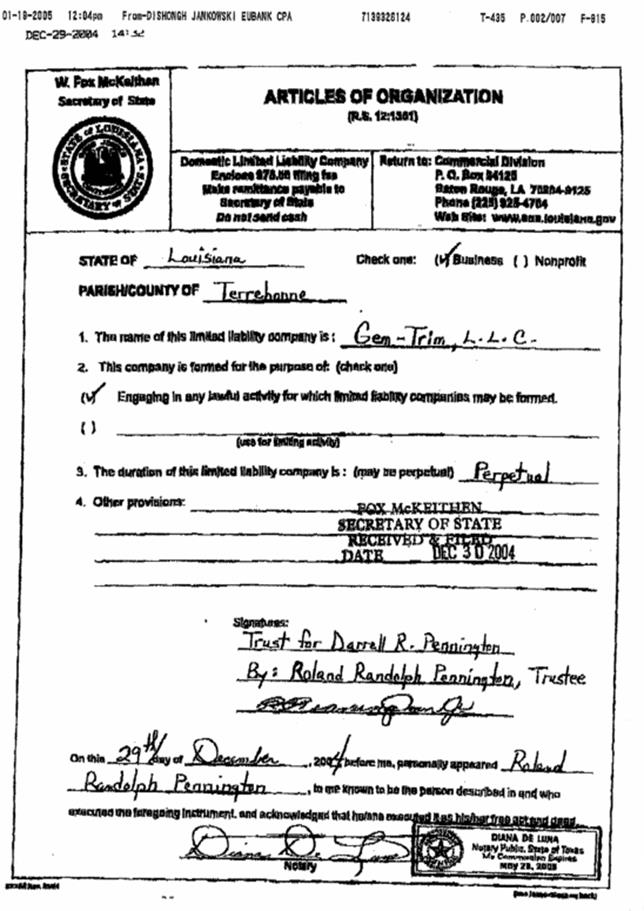
W. Fox McKeithen Secretary of State LIMITED LIABILITY COMPANY INITIAL REPORT (R.S. 12: 1305 (E) 1. The name of this limited liability company is: Gem-Trim, L.L.C. 2. The location and municipal address, not a post office box only, of this limited liability company's registered office: 8550 United Plaza Boulevard, Baton Rouge, LA 70809 3. The full name and municipal address, not a post office box only, of each of this limited liability company’s registered agent(s) is/are: C.T. Corporation System 8550 United Plaza Boulevard, Baton Rouge, LA 70809 4. The names and municipal addresses, not a post office box only, of the first managers, or the members: Roland Randolph Pennington 6614 Dixie Drive, Houston, Texas 77087 To be signed by each person who signed the articles of organization: Trust for Darrell R. Pennington By: Roland Randolph Pennington, Trustee. AGENT’S AFFIDAVIT AND ACKNOWLEDGEMENT OF ACCEPTANCE I hereby acknowledge and accept the appointment of registered agent for and on behalf of the above named limited liability company. Registered agent(s) signature(s): VICTOR ALFAND ASSISTANT SECRETARY Sworn to and subscribed before me, the undersigned Notary Public, on this date: 12/24/01 Notary Signature
FORM NO. 2

BERMUDA
THE COMPANIES ACT 1981
MEMORANDUM OF ASSOCIATION OF
COMPANY LIMITED BY SHARES
(Section 7(1) and (2))
MEMORANDUM OF ASSOCIATION
OF
Weatherford Holdings (Bermuda) Ltd.
(hereinafter referred to as “the Company”)
1. The liability of the members of the Company is limited to the amount (if any) for the time being unpaid on the shares respectively held by them.
2. We, the undersigned, namely,
|
|
|
|
|
BERMUDIAN |
|
|
|
NUMBER OF |
|
|
|
|
|
STATUS |
|
|
|
SHARES |
|
NAME |
|
ADDRESS |
|
(Yes/No) |
|
NATIONALITY |
|
SUBSCRIBED |
|
|
|
|
|
|
|
|
|
|
|
Marcello Ausenda |
|
Clarendon House |
|
Yes |
|
British |
|
One |
|
|
|
2 Church Street |
|
|
|
|
|
|
|
|
|
Hamilton HM 11 |
|
|
|
|
|
|
|
|
|
Bermuda |
|
|
|
|
|
|
|
|
|
|
|
|
|
|
|
|
|
Dawn C. Griffiths |
|
“ |
|
Yes |
|
British |
|
One |
|
|
|
|
|
|
|
|
|
|
|
David W. A. Astwood |
|
“ |
|
Yes |
|
British |
|
One |
do hereby respectively agree to take such number of shares of the Company as may be allotted to us respectively by the provisional directors of the Company, not exceeding the number of shares for which we have respectively subscribed, and to satisfy such calls as may be made by the directors, provisional directors or promoters of the Company in respect of the shares allotted to us respectively.
3. The Company is to be an exempted company as defined by the Companies Act 1981 (the “Act”).
4. The Company, with the consent of the Minister of Finance, has power to hold land situate in Bermuda not exceeding in all, including the following parcels:- N/A
5. The authorised share capital of the Company is US$100.00 divided into shares of US$1.00 each.
6. The objects for which the Company is formed and incorporated are unrestricted.
7. The following are provisions regarding the powers of the Company —
Subject to paragraph 6, the Company may do all such things as are incidental or conducive to the attainment of its objects and shall have the capacity, rights, powers and privileges of a natural person, and —
(i) pursuant to Section 42 of the Act, the Company shall have the power to issue preference shares which are, at the option of the holder, liable to be redeemed;
(ii) pursuant to Section 42A of the Act, the Company shall have the power to purchase its own shares for cancellation; and
(iii) pursuant to Section 42B of the Act, the Company shall have the power to acquire its own shares to be held as treasury shares.
Signed by each subscriber in the presence of at least one witness attesting the signature thereof
|
/s/ [ILLEGIBLE] |
|
/s/ [ILLEGIBLE] |
|
|
|
|
|
/s/ [ILLEGIBLE] |
|
/s/ [ILLEGIBLE] |
|
|
|
|
|
/s/ [ILLEGIBLE] |
|
/s/ [ILLEGIBLE] |
|
|
|
|
|
|
|
|
|
|
|
|
|
|
|
|
|
(Subscribers) |
|
(Witnesses) |
SUBSCRIBED this 14th day of November, 2016.

TERRITORY OF THE BRITISH VIRGIN ISLANDS
THE BVI BUSINESS COMPANIES ACT
AMENDED AND RESTATED
MEMORANDUM OF ASSOCIATION
AND
ARTICLES OF ASSOCIATION
OF
WEATHERFORD HOLDINGS (BVI) LTD.
Incorporated on the 1st September 2004
as an International Business Company,
and was automatically re-registered as a
BVI Business Company on the 1st January 2007
Approved by written resolutions of the sole member on
9 May 2016
Filed the 10 day of May 2016
To disapply Part IV of the
Transitional Provisions
Harneys Corporate Services Limited
Craigmuir Chambers
P.O. Box 71
Road Town
Tortola
British Virgin Islands
TERRITORY OF THE BRITISH VIRGIN ISLANDS
BVI BUSINESS COMPANIES ACT
AMENDED AND RESTATED
MEMORANDUM OF ASSOCIATION
OF
WEATHERFORD HOLDINGS (BVI) LTD.
1. NAME
The name of the company is Weatherford Holdings (BVI) Ltd. (the “Company”).
2. STATUS
The Company is a company limited by shares.
The Company was first incorporated as an international business company on 1 September 2004 and was, immediately prior to the date of automatic re-registration in accordance with the BVI Business Companies Act (the “Act”), governed by the International Business Companies Act (Cap 291).
3. REGISTERED OFFICE AND REGISTERED AGENT
At the date of notice to disapply Part IV of Schedule 2 of the Act, the registered office of the Company was Craigmuir Chambers, P.O. Box 71, Road Town, Tortola, British Virgin Islands.
At the time of notice to disapply Part IV of Schedule 2 of the Act, the registered agent of the Company was Harneys Corporate Services Limited of Craigmuir Chambers, P.O. Box 71, Road Town, Tortola, British Virgin Islands VG1110.
4. CAPACITY AND POWERS
Subject to the Act and any other British Virgin Islands legislation, the Company has, irrespective of corporate benefit:
(a) full capacity to carry on or undertake any business or activity, do any act or enter
into any transaction; and
(b) for the purposes of subparagraph (a), full rights, powers and privileges.
5. NUMBER AND CLASSES OF SHARES
The Company is authorised to issue up to a maximum of 10,000 shares made up of one class and one series of shares of US$1.00 par value each.
6. RIGHTS ATTACHING TO SHARES
Subject to the Articles, the terms of the issue of any share, or any Resolution of Members to the contrary (and, for greater clarity, without prejudice to any special rights conferred thereby on the holders of any other shares), a share of the Company confers on the holder:
(a) the right to one vote at a meeting of the Members or on any Resolution of Members;
(b) the right to an equal share in any Distribution paid by the Company; and
(c) the right to an equal share in the distribution of the surplus assets of the Company on a winding up.
7. VARIATION OF CLASS RIGHTS
The rights attached to any class or series of shares (unless otherwise provided by the terms of issue of the shares of that class or series), whether or not the Company is being wound-up, may be varied with the consent in writing of all the holders of the issued shares of that class or series or with the sanction of a resolution passed by a majority of the votes cast at a separate meeting of the holders of the shares of the class or series.
8. RIGHTS NOT VARIED BY THE ISSUE OF SHARES PARI PASSU
Rights conferred upon the holders of the shares of any class or series issued with preferred or other rights shall not, unless otherwise expressly provided by the terms of issue of the shares of that class or series, be deemed to be varied by the creation or issue of further shares ranking pari passu therewith.
9. REGISTERED SHARES
The Company shall issue registered shares only, and such shares may be in full or fractional form. The Company is not authorised to issue bearer shares, convert registered shares to bearer shares, or exchange registered shares for bearer shares.
10. AMENDMENT OF MEMORANDUM AND ARTICLES OF ASSOCIATION
Subject to Clause 7 and Article 14.4(g) of the Articles, the Company may amend its Memorandum or Articles by a Resolution of Members or a Resolution of Directors, save that no amendment may be made by a Resolution of Directors:
(a) to restrict the rights or powers of the Members to amend the Memorandum or Articles;
(b) to change the percentage of Members required to pass a Resolution of Members to amend the Memorandum or Articles;
(c) in circumstances where the Memorandum or Articles cannot be amended by the Members;
(d) to clauses 6, 7, 8 or this clause 10.
11. DEFINITIONS
The meanings of words in this Memorandum are as defined in the Articles annexed hereto.
We, Harneys Corporate Services Limited, registered agent of the Company, of Craigmuir Chambers, P.O. Box 71, Road Town, Tortola, British Virgin Islands in our capacity as registered agent to the Company hereby apply for the disapplication of Part IV of Schedule 2 of the Act this 10 May 2016.
|
|
Harneys Corporate Services Limited |
|
|
Registered Agent |
|
|
|
|
|
/s/ Macia Payne |
|
|
Per: Macia Payne |
|
|
For and on behalf of |
|
|
Harneys Corporate Services Limited |
TERRITORY OF THE BRITISH VIRGIN ISLANDS
BVI BUSINESS COMPANIES ACT
AMENDED AND RESTATED
ARTICLES OF ASSOCIATION
OF
WEATHERFORD HOLDINGS (BVI) LTD.
(a company limited by shares)
TABLE OF CONTENTS
|
INTERPRETATION | |
|
|
|
|
1. |
Definitions |
|
|
|
|
SHARES | |
|
| |
|
2. |
Power to Issue Shares |
|
3. |
Power of the Company to Purchase its Shares |
|
4. |
Treatment of Purchased, Redeemed or Acquired Shares |
|
5. |
Treasury Shares |
|
6. |
Consideration |
|
7. |
Forfeiture of Shares |
|
8. |
Share Certificates |
|
9. |
Fractional Shares |
|
|
|
|
REGISTRATION OF SHARES | |
|
| |
|
10. |
Register of Members |
|
11. |
Registered Holder Absolute Owner |
|
12. |
Transfer of Registered Shares |
|
13. |
Transmission of Registered Shares |
|
14. |
Mortgages and Charges of Shares |
|
|
|
|
ALTERATION OF SHARES | |
|
| |
|
15. |
Power to Alter Shares |
|
16. |
Restrictions on the Division of Shares |
|
|
|
|
DISTRIBUTIONS | |
|
| |
|
17. |
Distributions |
|
18. |
Power to Set Aside Profits |
|
19. |
Unauthorised Distributions |
|
20. |
Distributions to Joint Holders of Shares |
|
|
|
|
MEETINGS OF MEMBERS | |
|
| |
|
21. |
General Meetings |
|
22. |
Location |
|
23. |
Requisitioned General Meetings |
|
24. |
Notice |
|
25. |
Giving Notice |
|
26. |
Service of Notice |
|
27. |
Participating in Meetings by Telephone |
|
28. |
Quorum at General Meetings |
|
29. |
Chairman to Preside |
|
30. |
Voting on Resolutions |
|
31. |
Power to Demand a Vote on a Poll |
|
32. |
Voting by Joint Holders of Shares |
|
33. |
Instrument of Proxy |
|
34. |
Representation of Members |
|
35. |
Adjournment of General Meetings |
|
36. |
Business at Adjourned Meetings |
|
37. |
Directors Attendance at General Meetings |
|
DIRECTORS AND OFFICERS | |
|
|
|
|
38. |
Election of Directors |
|
39. |
Number of Directors |
|
40. |
Term of Office of Directors |
|
41. |
Alternate and Reserve Directors |
|
42. |
Removal of Directors |
|
43. |
Vacancy in the Office of Director |
|
44. |
Remuneration of Directors |
|
45. |
Resignation of directors |
|
46. |
Directors to Manage Business |
|
47. |
Committees of Directors |
|
48. |
Officers and Agents |
|
49. |
Removal of Officers and Agents |
|
50. |
Duties of Officers |
|
51. |
Remuneration of Officers |
|
52. |
Standard of Care |
|
53. |
Conflicts of Interest |
|
54. |
Indemnification and Exculpation |
|
|
|
|
MEETINGS OF THE BOARD OF DIRECTORS | |
|
| |
|
55. |
Board Meetings |
|
56. |
Notice of Board Meetings |
|
57. |
Participation in Meetings by Telephone |
|
58. |
Quorum at Board Meetings |
|
59. |
Board to Continue in the Event of Vacancy |
|
60. |
Chairman to Preside |
|
61. |
Powers of Sole Director |
|
62. |
Proceedings if One Director |
|
|
|
|
CORPORATE RECORDS | |
|
| |
|
63. |
Documents to be Kept |
|
64. |
Form and Use of Seal |
|
|
|
|
ACCOUNTS | |
|
| |
|
65. |
Books of Account |
|
66. |
Form of Records |
|
67. |
Financial Statements |
|
68. |
Distribution of Accounts |
|
AUDITS | |
|
69. |
Audit |
|
70. |
Appointment of Auditor |
|
71. |
Remuneration of Auditor |
|
72. |
Duties of Auditor |
|
73. |
Access to Records |
|
74. |
Auditor Entitled to Notice |
|
|
|
|
VOLUNTARY LIQUIDATION | |
|
| |
|
75. |
Liquidation |
|
FUNDAMENTAL CHANGES | |
|
|
|
|
76. |
Changes |
|
77. |
Continuation under Foreign Law |
INTERPRETATION
1. Definitions
1.1 In these Articles, the following words and expressions shall, where not inconsistent with the context, have the following meanings, respectively:
|
Act |
|
BVI Business Companies Act, as from time to time amended or restated; |
|
|
|
|
|
Articles |
|
these Articles of Association as originally registered or as from time to time amended or restated; |
|
|
|
|
|
Board |
|
the board of directors appointed or elected pursuant to these Articles and acting by Resolution of Directors; |
|
|
|
|
|
Company |
|
Weatherford Holdings (BVI) Ltd.; |
|
|
|
|
|
Distribution |
|
(a) the direct or indirect transfer of an asset, other than the Company’s own shares, to or for the benefit of a Member; or
(b) the incurring of a debt to or for the benefit of a Member;
in relation to shares held by a Member and whether by means of the purchase of an asset, the purchase, redemption or other acquisition of shares, a transfer of indebtedness or otherwise, and includes a dividend; |
|
|
|
|
|
Member |
|
a person whose name is entered in the register of members as the holder of one or more shares, or fractional shares, in the Company; |
|
|
|
|
|
Memorandum |
|
the Memorandum of Association of the Company as originally registered or as from time to time amended or restated; |
|
|
|
|
|
Resolution of Directors |
|
(a) a resolution approved at a duly constituted meeting of directors or of a committee of directors of the Company by the affirmative |
|
|
|
vote of a simple majority of the directors present who voted and did not abstain; or
(b) a resolution consented to in writing by all of the directors or of all the members of the committee, as the case may be; |
|
| ||
|
|
|
|
|
Resolution of Members |
|
(a) a resolution approved at a duly constituted meeting of Members by the affirmative vote of a simple majority of the votes of those Members entitled to vote and voting on the resolution; or
(b) a resolution consented to in writing by a simple majority of the Members entitled to vote thereon; |
|
| ||
|
|
|
|
|
Seal |
|
the common seal of the Company; |
|
|
|
|
|
Secretary |
|
the person appointed to perform any or all of the duties of secretary of the Company and includes any deputy or assistant secretary and any person appointed by the Board to perform any of the duties of the Secretary; and |
|
|
|
|
|
Treasury Share |
|
a share of the Company that was previously issued but was repurchased, redeemed or otherwise acquired by the Company and not cancelled. |
1.2 In these Articles, where not inconsistent with the context:
(a) words denoting the plural number include the singular number and vice versa;
(b) words denoting the masculine gender include the feminine and neuter genders;
(c) words importing persons include companies, associations or bodies of persons whether corporate or not;
(d) a reference to voting in relation to shares shall be construed as a reference to voting by Members holding the shares, except that it is the votes
allocated to the shares that shall be counted and not the number of Members who actually voted and a reference to shares being present at a meeting shall be given a corresponding construction;
(e) a reference to money is unless otherwise stated a reference to the currency in which shares of the Company shall be issued;
(f) the words:-
(i) “may” shall be construed as permissive; and
(ii) “shall” shall be construed as imperative; and
(g) unless otherwise provided herein, words or expressions defined in the Act shall bear the same meaning in these Articles.
1.3 In these Articles, expressions referring to writing or its cognates shall, unless the contrary intention . appears, include facsimile, printing, lithography, photography, electronic mail and other modes of representing words in visible form.
1.4 Headings used in these Articles are for convenience only and are not to be used or relied upon in the construction hereof.
SHARES
2. Power to Issue Shares
Subject to the provisions of the Memorandum, the unissued shares of the Company shall be at the disposal of the Board which may, without prejudice to any rights previously conferred on the holders of any existing shares or class or series of shares, offer, allot, grant options over or otherwise dispose of the shares to such persons, at such times and upon such terms and conditions as the Company may by Resolution of Directors determine.
3. Power of the Company to Purchase its Shares
Subject to these Articles (and in particular, but without limitation, Article 14.4), the Company may by Resolution of Directors purchase, redeem or otherwise acquire and hold its own shares. Sections 60, 61 and 62 of the Act shall not apply to the Company.
4. Treatment of Purchased, Redeemed or Acquired Shares
4.1 Subject to Article 4.2, a share that the Company purchases, redeems or otherwise acquires may be cancelled or held by the Company as a Treasury Share.
4.2 The Company may only hold a share that has been purchased, redeemed or otherwise acquired as a Treasury Share if the number of shares purchased, redeemed or otherwise acquired, when aggregated with shares of the same class already held by the Company as Treasury Shares, does not exceed 50% of the shares of that class previously issued by the Company, excluding shares that have been cancelled.
5. Treasury Shares
5.1 Treasury Shares may be transferred by the Company and the provisions of the Act, the Memorandum and these Articles that apply to the issue of shares apply to the transfer of Treasury Shares.
5.2 All the rights and obligations attaching to a Treasury Share are suspended and shall not be exercised by or against the Company while it holds the share as a Treasury Share.
6. Consideration
6.1 A share may be issued for consideration, in any form or a combination of forms, including money, a promissory note or other written obligation to contribute money or property, real property, personal property (including goodwill and know-how), services rendered or a contract for future services.
6.2 No share may be issued for a consideration, which is in whole or part, other than money unless the Board passes a resolution stating:
(a) the amount to be credited for the issue of the share; and
(b) that, in its opinion, the present cash value of the non-money consideration and money consideration, if any, is not less than the amount to be credited for the issue of the share.
6.3 No share may be issued by the Company that:
(a) increases the liability of a person to the Company; or
(b) imposes a new liability on a person to the Company,
unless that person, or an authorised agent of that person, agrees in writing to becoming the holder of the share.
6.4 The consideration for a share with par value shall not be less than the par value of the share.
6.5 A bonus share issued by the Company shall be deemed to have been fully paid for on issue.
7. Forfeiture of Shares
7.1 Where a share is not fully paid for on issue, the Board may, subject to the terms on which the share was issued, at any time serve upon the Member a written notice of call specifying a date for payment to be made.
7.2 The written notice of call shall name a further date not earlier than the expiration of fourteen days from the date of service of the notice on or before which the payment required by the notice is to be made and shall contain a statement that in the event of non-payment at or before the time named in the notice, the share will be liable to be forfeited.
7.3 Where a notice complying with the foregoing provisions has been issued and the requirements of the notice have not been complied with, the Board by Resolution of Directors may, at any time before tender of payment forfeit and cancel the share to which the notice relates and direct that the register of members be updated.
7.4 Upon forfeiture and cancellation pursuant to Article 7.3, the Company shall be under no obligation to refund any moneys to that Member and that Member shall be discharged from any further obligation to the Company as regards the forfeited share.
8. Share Certificates
8.1 The Company shall not be required to issue certificates in respect of its shares to a Member, but may elect to do so by the determination of any one director or the Secretary in his sole discretion, upon the request and at the expense of the Member.
8.2 If the Company issues share certificates, the certificates shall be signed by at least one director or such other person who may be authorised by Resolution of Directors to sign share certificates, or shall be under the common seal of the Company, with or without the signature of any director, and the signatures and common seal may be facsimiles.
8.3 Subject to Article 14.4(c), any Member receiving a share certificate for registered shares shall indemnify and hold the Company and its directors and officers harmless from any loss or liability which it or they may incur by reason of wrongful or fraudulent use or representation made by any person by virtue of the possession thereof. If a share certificate for registered shares is worn out or lost it may be renewed on production of the worn out certificate or on
satisfactory proof of its loss together with such indemnity as may be required by a Resolution of Directors.
9. Fractional Shares
The Company may issue fractional shares and a fractional share shall have the corresponding fractional rights, obligations and liabilities of a whole share of the same class or series of shares.
REGISTRATION OF SHARES
10. Register of Members
10.1 The Board shall cause there to be kept a register of members in which there shall be recorded the name and address of each Member, the number of each class and series of shares held by each Member, the date on which the name of each Member was entered, in the register of, members and the date upon which any person ceased to be a Member.
10.2 The register of members may be in such form as the Board may approve, but if it is in magnetic, electronic or other data storage form, the Company must be able to produce legible evidence of its contents. Unless the Board otherwise determines, the magnetic, electronic or other data storage form shall be the original register of members.
11. Registered Holder Absolute Owner
11.1 The entry of the name of a person in the register of members as a holder of a share in the Company is prima facie evidence that legal title in the share vests in that person.
11.2 The Company may treat the holder of a registered share as the only person entitled to:
(a) exercise any voting rights attaching to the share;
(b) receive notices;
(c) receive a Distribution in respect of the share; and
(d) exercise other rights and powers attaching to the share.
12. Transfer of Registered Shares
12.1 Registered shares in the Company shall only be transferred by a written instrument of transfer signed by the transferor and containing the name and address of the transferee.
12.2 The instrument of transfer shall also be signed by the transferee if registration as a holder of the share imposes a liability to the Company on the transferee.
12.3 The instrument of transfer shall be sent to the Company for registration.
12.4 The Company shall, on receipt of an instrument of transfer, enter the name and address of the transferee of the share in the register of members unless the Board resolves to refuse or delay the registration of the transfer for reasons that shall be specified in the resolution.
12.5 Subject to Article 12.9, the Board is permitted to pass a Resolution of Directors refusing or delaying the registration of a transfer where it reasonably determines that it is in the best interest of the Company to do so. Without limiting the generality of the foregoing, the Board may refuse or delay the registration of a transfer of shares if the transferor has failed to pay an amount due in respect of those shares.
12.6 Where the Board passes a resolution to refuse or delay the registration of a transfer, the Company shall, as soon as practicable, send the transferor and the transferee a notice of the refusal or delay.
12.7 The transfer of a share is effective when the name of the transferee is entered in the register of members and the Company shall not be required to treat a transferee of a share in the Company as a Member until the transferee’s name has been entered in the register of members.
12.8 If the Board is satisfied that an instrument of transfer has been signed but that the instrument has been lost or destroyed, it may resolve:
(a) to accept such evidence of the transfer of the shares as it considers appropriate; and
(b) that the transfer of shares be recorded, including by the entry of the transferee’s name in the register of members.
12.9 Notwithstanding anything to the contrary contained in these Articles, the Board shall not decline to register any transfer of shares, nor may they suspend registration thereof where such transfer is executed (a) by any bank or other person to whom such shares have been charged by way of security, (b) by any
nominee or agent of such bank or person, or (c) by any receiver, administrative receiver, manager or other person appointed by any bank or other person to whom such shares have been charged pursuant to the relevant security document, whether the transfer is effected for the purpose of any mortgage or pursuant to the power of sale under such mortgage or charge, and a certificate by any officer of such bank or person that the shares were so charged and the transfer was so executed shall be conclusive evidence of such facts.
12.10 Notwithstanding anything to the contrary contained in these Articles, the Board shall not register any shares of the Company or issue any shares in breach of the terms of any charge or other encumbrance over any of the Company’s shares entered into by any of the members of the Company where the Board has notice of the charge or other encumbrance, and for the purpose of this Article 12.10, each Director shall be deemed to have knowledge of (i) any charge or encumbrance details of which have been entered in the register of members of the Company pursuant to Section 66(8) of the Act and Article 14.2 below, and (ii) any subsequent charge or encumbrance over any shares of the Company created pursuant to the terms of any charge or encumbrance referred to in (i) above.
13. Transmission of Registered Shares
13.1 The executor or administrator of the estate of a deceased Member, the guardian of an incompetent Member, the liquidator of an insolvent Member or the trustee of a bankrupt Member shall be the only person recognised by the Company as having any title to the Member’s share.
13.2 Any person becoming entitled by operation of law or otherwise to a share in consequence of the death, incompetence or bankruptcy of any Member may be registered as a Member upon such evidence being produced as may reasonably be required by the Board. An application by any such person to be registered as a Member shall for all purposes be deemed to be a transfer of the share of the deceased, incompetent or bankrupt Member and the Board shall treat it as such.
13.3 Any person who has become entitled to a share or shares in consequence of the death, incompetence or bankruptcy of any Member may, instead of being registered himself, request in writing that some person to be named by him be registered as the transferee of such share and such request shall likewise be treated as if it were a transfer.
14. Mortgages and Charges of Shares
14.1 Members may mortgage or charge their registered shares in the Company and upon satisfactory evidence thereof the Company shall give effect to the terms of any valid mortgage or charge.
14.2 There may be entered in the register of members of the Company at the request of the registered holder of such shares:
(a) a statement that the shares are mortgaged or charged;
(b) the name of the mortgagee or chargee; and
(c) the date on which the particulars of subparagraphs (a) and (b) are entered in the register of members.
14.3 Where particulars of a mortgage or charge are entered in the register of members, such particulars may be canceled only:
(a) with the written consent of the named mortgagee or chargee or anyone authorised to act on his behalf; or
(b) upon evidence satisfactory to the directors of the discharge of the liability secured by the mortgage or charge and the issue of such indemnities as the directors shall consider necessary or desirable.
14.4 Whilst particulars of a mortgage or charge over shares are entered in the register of members pursuant to this Article:
(a) no transfer of any share the subject of those particulars shall be effected;
(b) the Company may not purchase, redeem or otherwise acquire any such shares;
(c) no replacement certificate shall be issued in respect of such shares;
(d) such shares shall be exempt from all liens (whether present or future) in favour of the Company that would otherwise arise pursuant to these Articles;
(e) for so long as such security remains unreleased, the Company shall not claim any lien (howsoever arising) in respect of such share or forfeit, sell or accept as surrendered such share;
(f) any pre-emptive rights or similar rights conferred on existing members or any other party by the Memorandum or Articles, any members’ agreement or otherwise shall not apply to and no such existing member or other party shall be entitled to exercise any such right; and
(g) no amendments may be made to the Memorandum or the Articles,
in each case without the written consent of the named mortgagee or chargee or anyone authorised to act on his behalf.
ALTERATION OF SHARES
15. Power to Alter Shares
15.1 The Company may amend the Memorandum to increase or reduce the maximum number of shares that the Company is authorised to issue, or to authorise the Company to issue an unlimited number of shares.
15.2 Subject to the Memorandum and these Articles, the Company may:
(a) divide its shares, including issued shares, into a larger number of shares; or
(b) combine its shares, including issued shares, into a smaller number of shares;
provided that, where shares are divided or combined, the aggregate par value (if any) of the new shares must be equal to the aggregate par value (if any) of the original shares.
15.3 A division or combination of shares, including issued shares, of a class or series shall be for a larger or smaller number, as the case may be, of shares in the same class or series.
16. Restrictions on the Division of Shares
The Company shall not divide its shares if it would cause the maximum number of shares that the Company is authorised to issue to be exceeded.
DISTRIBUTIONS
17. Distributions
17.1 The Board may, by Resolution of Directors, authorise a Distribution by the Company to Members at such time and of such an amount as it thinks fit if it is satisfied, on reasonable grounds, that immediately after the Distribution, the value of the Company’s assets exceeds its liabilities and the Company is able to pay its debts as they fall due. The resolution shall include a statement to that effect.
17.2 Notice of any Distribution that may have been authorised shall be given to each Member entitled to the Distribution in the manner provided in Article 25 and all
Distributions unclaimed for three years after having been authorised may be forfeited by Resolution of Directors for the benefit of the Company.
18. Power to Set Aside Profits
The Board may, before authorising any Distribution, set aside out of the profits of the Company such sum as it thinks proper as a reserve fund, and may invest the sum so set apart as a reserve fund in such securities as it may select.
19. Unauthorised Distributions
19.1 If, after a Distribution is authorised and before it is made, the Board ceases to be satisfied on reasonable grounds that immediately after the Distribution the value of the Company’s assets exceeds its liabilities and the Company is able to pay its debts as they fall due, such Distribution is deemed not to have been authorised.
19.2 A Distribution made to a Member at a time when, immediately after the Distribution, the value of the Company’s assets did not exceed its liabilities and the Company was not able to pay its debts as they fell due, is subject to recovery in accordance with the provisions of the Act.
20. Distributions to Joint Holders of Shares
If two or more persons are registered as joint holders of any shares, any one of such persons may give an effectual receipt for any Distribution payable in respect of such shares.
MEETINGS OF MEMBERS
21. General Meetings
The Board, by Resolution of Directors, may convene meetings of the Members of the Company at such times and in such manner as the Board considers necessary or desirable.
22. Location
Any meeting of the Members may be held in such place within or outside the British Virgin Islands as the Board considers appropriate.
23. Requisitioned General Meetings
The Board shall call a meeting of the Members if requested in writing to do so by Members entitled to exercise at least thirty percent of the voting rights in respect of the matter for which the meeting is being requested.
24. Notice
24.1 The Board shall give not less than seven days’ notice of meetings of Members to those persons whose names, on the date the notice is given, appear as Members in the register of members of the Company and are entitled to vote at the meeting.
24.2 A meeting of Members held in contravention of the requirement in Article 24.1 is valid if Members holding a ninety percent majority of the total voting rights on all the matters to be considered at the meeting have waived notice of the meeting and, for this purpose, the presence of a Member at the meeting shall be deemed to constitute waiver on his part.
24.3 The inadvertent failure of the Board to give notice of a meeting to a Member, or the fact that a Member has not received notice, does not invalidate the meeting.
25. Giving Notice
25.1 A notice may be given by the Company to any Member either by delivering it to such Member in person or by sending it to such Member’s address in the register of members or to such other address given for the purpose. Notice may be sent by mail, courier service, cable, telex, telecopier, facsimile or other mode of representing words in a legible form.
25.2 Any notice required to be given to a Member shall, with respect to any shares held jointly by two or more persons, be given to whichever of such persons is named first in the register of members and notice so given shall be sufficient notice to all the holders of such shares.
26. Service of Notice
Any notice shall be deemed to have been served at the time when the same would be delivered in the ordinary course of transmission and, in proving such service, it shall be sufficient to prove that the notice was properly addressed and prepaid, if posted, and the time when it was posted, delivered to the courier or to the cable company or transmitted by telex, facsimile or other method as the case may be.
27. Participating in Meetings by Telephone
A Member shall be deemed to be present at a meeting of Members if he participates by telephone or other electronic means and all Members participating in the meeting are able to hear each other.
28. Quorum at General Meetings
28.1 A meeting of Members is properly constituted if at the commencement of the meeting there are present in person or by proxy not less than fifty percent of the votes of the shares or class or series of shares entitled to vote on Resolutions of Members to be considered at the meeting.
28.2 If within two hours from the time appointed for the meeting a quorum is not present, the meeting, if convened upon the requisition of Members, shall be dissolved; in any other case it shall stand adjourned to the next business day at the same time and place or to such other time and place as the Board may determine, and if at the adjourned meeting there are present within one hour from the time appointed for the meeting in person or by proxy not less than one third of the votes of the shares or each class or series of shares entitled to vote on the resolutions to be considered by the meeting, those present shall constitute a quorum but otherwise the meeting shall be dissolved.
28.3 If a quorum is present, notwithstanding the fact that such quorum may be represented by only one person then such person may resolve any matter and a certificate signed by such person accompanied where such person be a proxy by a copy of the proxy form shall constitute a valid Resolution of Members.
29. Chairman to Preside
At every meeting of Members, the chairman of the Board shall preside as chairman of the meeting. If there is no chairman of the Board or if the chairman of the Board is not present at the meeting, the Members present shall choose one of their number to be the chairman. If the Members are unable to choose a chairman for any reason, then the person representing the greatest number of voting shares present in person or by proxy at the meeting shall preside as chairman.
30. Voting on Resolutions
At any meeting of the Members the chairman shall be responsible for deciding in such manner as he shall consider appropriate whether any resolution has been carried or not and the result of his decision shall be announced to the meeting and recorded in the minutes thereof.
31. Power to Demand a Vote on a Poll
31.1 At any meeting of Members a resolution put to the vote of the meeting shall, in the first instance, be voted upon by a show of hands and, subject to any rights or restrictions for the time being lawfully attached to any class of shares and subject to the provisions of these Articles, every Member present in person and every
person holding a valid proxy at such meeting shall be entitled to one vote and shall cast such vote by raising his hand.
31.2 If the chairman shall have any doubt as to the outcome of any resolution put to the vote, he shall cause a poll to be taken of all votes cast upon such resolution, but if the chairman shall fail to take a poll then any Member present in person or by proxy who disputes the announcement by the chairman of the result of any vote may immediately following such announcement demand that a poll be taken and the chairman shall thereupon cause a poll to be taken. If a poll is taken at any meeting, the result thereof shall be duly recorded in the minutes of that meeting by the chairman.
32. Voting by Joint Holders of Shares
The following shall apply where shares are jointly owned: (a) if two or more persons hold shares jointly each of them may be present in person or by proxy at a meeting of Members and may speak as a Member; (b) if only one of the joint owners is present in person or by proxy he may vote on behalf of all of them; and (c) if two or more of the joint owners are present in person or by proxy they must vote as one.
33. Instrument of Proxy
33.1 A Member may be represented at a meeting of Members by a proxy (who need not be a Member) who may speak and vote on behalf of the Member.
33.2 An instrument appointing a proxy shall be in such form as the Board may from time to time determine or such other form as the chairman of the meeting shall accept as properly evidencing the wishes of the Member appointing the proxy and, subject to Article 33.5, the decision of the chairman of any general meeting as to the validity of any appointment of a proxy shall be final.
33.3 The chairman of any meeting at which a vote is cast by proxy or on behalf of any person other than an individual may call for a notarially certified copy of such proxy or authority which shall be produced within seven days of being so requested or the votes cast by such proxy or on behalf of such person shall be disregarded.
33.4 The instrument appointing a proxy shall be produced at the place appointed for the meeting before the time for holding the meeting at which the person named in such instrument proposes to vote.
33.5 Any Member may irrevocably appoint a proxy and in such case: (i) such appointment shall be irrevocable in accordance with the terms of the instrument of appointment; (ii) the Company shall be given notice of the appointment, such notice to include the name, address, telephone number and electronic mail
address of the proxy, and the Company shall give to such proxy notice of all meetings of Members of the Company; (iii) such proxy shall be the only person entitled to vote the relevant shares at any meeting at which such proxy is present; and (iv) the Company shall be obliged to recognise the proxy until such time as such proxy shall notify the Company in writing that the appointment of such proxy is no longer in force
34. Representation of Members
34.1 Any person other than an individual which is a Member may by resolution in writing (certified or signed by a duly authorised person) of its directors or other governing body authorise such person as it thinks fit to act as its representative (in this Article, “Representative”) at any meeting of the Members or at the meeting of the Members of any class or series of shares and the Representative shall be entitled to exercise the same powers on behalf of the Member which he represents as that Member could exercise if it were an individual.
34.2 The right of a Representative shall be determined by the law of the jurisdiction where, and by the documents by which, the Member is constituted or derives its existence. In case of doubt, the Board may in good faith seek legal advice from any qualified person and unless and until a court of competent jurisdiction shall otherwise rule, the Board may rely and act upon such advice without incurring any liability to any Member.
35. Adjournment of General Meetings
The chairman may, with the consent of the meeting, adjourn any meeting from time to time, and from place to place.
36. Business at Adjourned Meetings
No business shall be transacted at any adjourned meeting other than the business left unfinished at the meeting from which the adjournment took place.
37. Directors Attendance at General Meetings
Directors of the Company may attend and speak at any meeting of Members of the Company and at any separate meeting of the holders of any class or series of shares in the Company.
DIRECTORS AND OFFICERS
38. Election of Directors
38.1 The first registered agent of the Company shall, within six months of the date of incorporation of the Company, appoint one or more persons as the first director or directors of the Company. Thereafter, the directors shall be elected by a Resolution of Directors or a Resolution of Members.
38.2 No person shall be appointed as a director or nominated as a reserve director unless he has consented in writing to act as a director or to be nominated as a reserve director.
38.3 A director shall not require a share qualification, and may be an individual or a company.
38.4 Any director which is a body corporate may appoint any person its duly authorised representative for the purpose of representing it at Board meetings or with respect to unanimous written consents,
39. Number of Directors
The maximum number of directors may be fixed either by a Resolution of Directors or a Resolution of Members, provided that if the maximum number of directors is fixed by a Resolution of Members, then any change to the maximum number of directors shall only be made by a Resolution of Members.
40. Term of Office of Directors
Each director shall hold office for the term, if any, as may be specified in the resolution appointing him or until his earlier death, resignation or removal.
41. Alternate and Reserve Directors
41.1 A director may at any time appoint any person (including another director) to be his alternate director and may at any time terminate such appointment. An appointment and a termination of appointment shall be by notice in writing signed by the director and deposited at the Company’s registered office or delivered at a meeting of the Board.
41.2 The appointment of an alternate director shall terminate on the happening of any event which, if he were a director, would cause him to vacate such office or if his appointor ceases for any reason to be a director.
41.3 An alternate director has the same rights as the appointing director in relation to any directors’ meeting and any written resolution circulated for written consent, save that he may not himself appoint an alternate director or a proxy. Any exercise by the alternate director of the appointing director’s powers in relation to the taking of decisions by the directors is as effective as if the powers were exercised by the appointing director.
41.4 If an alternate director is himself a director or attends a meeting of the Board as the alternate director of more than one director, his voting rights shall be cumulative.
41.5 Unless the Board determines otherwise, an alternate director may also represent his appointor at meetings of any committee of the directors on which his appointor serves; and this Article shall apply equally to such committee meetings as to meetings of the Board.
41.6 Where the Company has only one Member who is an individual and that Member is also the sole director, the sole member/director may, by instrument in writing, nominate a person who is not disqualified from being a director under the Act as a reserve director in the event of his death.
41.7 The nomination of a person as a reserve director ceases to have effect if: (a) before the death of the sole Member/director who nominated him he resigns as reserve director, or the sole Member/director revokes the nomination in writing, or (b) the sole Member/director who nominated him ceases to be the sole Member/director for any reason other than his death.
42. Removal of Directors
42.1 A director may be removed from office, with or without cause:
(a) by a Resolution of Members at a meeting of the Members called for the purpose of removing the director or for purposes including the removal of the director; or
(b) by a Resolution of Members consented to in writing by all of the Members entitled to vote thereon.
42.2 Notice of a meeting called under Article 42.1(a) shall state that the purpose of the meeting is, or the purposes of the meeting include, the removal of a director.
43. Vacancy in the Office of Director
43.1 Notwithstanding Article 38, the Board may appoint one or more directors to fill a vacancy on the Board.
43.2 For the purposes of this Article, there is a vacancy on the Board if a director dies or otherwise ceases to hold office as a director prior to the expiration of his term of office or there is otherwise a vacancy in the number of directors as fixed pursuant to Article 39.
43.3 The term of any appointment under this Article may not exceed the term that remained when the person who has ceased to be a director left or otherwise ceased to hold office.
44. Remuneration of Directors
With the prior or subsequent approval by a Resolution of Members, the Board may, by a Resolution of Directors, fix the emoluments of directors with respect to services to be rendered in any capacity to the Company.
45. Resignation of directors
A director may resign his office by giving written notice of his resignation to the Company and the resignation shall have effect from the date the notice is received by the Company or from such later date as may be specified in the notice.
46. Directors to Manage Business
46.1 The business and affairs of the Company shall be managed by, or under the direction or supervision of, the Board.
46.2 The Board has all the powers necessary for managing, and for directing and supervising, the business and affairs of the Company.
46.3 The Board may authorise the payment of all expenses incurred preliminary to and in connection with the formation and registration of the Company and may exercise all such powers of the Company as are not by the Act or by the Memorandum or these Articles required to be exercised by the Members of the Company, subject to any delegation of such powers as may be authorised by these Articles and to such requirements as may be prescribed by a Resolution of Members; but no requirement made by a Resolution of Members shall prevail if it is inconsistent with these Articles nor shall such requirement invalidate any prior act of the Board which would have been valid if such requirement had not been made.
46.4 Subject to the provisions of the Act, all cheques, promissory notes, draft, bills of exchange and other negotiable instruments and all receipts for moneys paid to the Company, shall be signed, drawn, accepted, endorsed or otherwise executed, as the case may be, in such manner as shall from time to time be determined by Resolution of Directors.
47. Committees of Directors
47.1 The Board may, by a Resolution of Directors, designate one or more committees of directors, each consisting of one or more directors.
47.2 Each committee of directors has such powers and authorities of the Board, including the power and authority to affix the Seal, as are set forth in these Articles or the Resolution of Directors establishing the committee, except that the Board has no power to delegate the following powers to a committee of directors:
(a) to amend the Memorandum or these Articles;
(b) to designate committees of directors;
(c) to delegate powers to a committee of directors;
(d) to appoint or remove directors;
(e) to appoint or remove an agent;
(f) to approve a plan of merger, consolidation or arrangement;
(g) to make a declaration of solvency or approve a liquidation plan; or
(h) to make a determination that the Company will, immediately after a proposed Distribution, meet the solvency test set out in the Act.
47.3 A committee of directors, where authorised by the Board, may appoint a sub-committee.
47.4 The meetings and proceedings of each committee of directors consisting of two or more directors shall be governed mutatis mutandis by the provisions of these Articles regulating the proceedings of directors so far as the same are not superseded by any provisions in the resolution establishing the committee.
48. Officers and Agents
48.1 The Board may, by a Resolution of Directors, appoint any person, including a person who is a director, to be an officer or agent of the Company. Such officers may consist of a chairman of the Board, a vice chairman of the Board, a president and one or more vice presidents, secretaries and treasurers and such other officers as may from time to time be deemed desirable. Any number of offices may be held by the same person.
48.2 Each officer or agent has such powers and authorities of the Board, including the power and authority to affix the Seal, as are set forth in these Articles or the
Resolution of Directors appointing the officer or agent, except that no officer or agent has any power or authority with respect to the following:
(a) to amend the Memorandum or these Articles;
(b) to change the registered office or agent;
(c) to designate committees of directors;
(d) to delegate powers to a committee of directors;
(e) to appoint or remove directors;
(f) to appoint or remove an agent;
(g) to fix emoluments of directors;
(h) to approve a plan of merger, consolidation or arrangement;
(i) to make a declaration of solvency or approve a liquidation plan;
(j) to make a determination that the Company will, immediately after a proposed distribution, meet the solvency lest set out in the Act; or
(k) to authorise the Company to continue as a company incorporated under the laws of a jurisdiction outside the British Virgin Islands.
49. Removal of Officers and Agents
The officers and agents of the Company shall hold office until their successors are duly elected and qualified, but any officer or agent elected or appointed by the Board may be removed at any time, with or without cause, by Resolution of Directors. Any vacancy occurring in any office of the Company may be filled by Resolution of Directors.
50. Duties of Officers
In the absence of any specific allocation of duties it shall be the responsibility of the chairman of the Board to preside at meetings of directors and Members, the vice chairman to act in the absence of the chairman, the president to manage the day to day affairs of the Company, the vice presidents to act in order of seniority in the absence of the president but otherwise to perform such duties as may be delegated to them by the president, the Secretary to maintain the register of members, register or directors, minute books, records (other than financial records) of the Company, and Seal and to ensure compliance with all procedural requirements imposed on the Company by applicable law, and the treasurer to be responsible for the financial affairs of the Company.
51. Remuneration of Officers
The emoluments of all officers shall be fixed by Resolution of Directors.
52. Standard of Care
A director, when exercising powers or performing duties as a director, shall exercise the care, diligence, and skill that a reasonable director would exercise in the same circumstances taking into account, but without limitation, (a) the nature of the Company, (b) the nature of the decision, and (c) the position of the director and the nature of the responsibilities undertaken by him.
53. Conflicts of Interest
53.1 A director shall, forthwith after becoming aware of the fact that he is interested in a transaction entered into or to be entered into by the Company, disclose the interest to the. Board, unless the transaction or proposed transaction (a) is between the director and the Company and (b) is to be entered into in the ordinary course of the Company’s business and on usual terms and conditions.
53.2 A transaction entered into by the Company in respect of which a director is interested is voidable by the Company unless the director complies with Article 53.1 or (a) the material facts of the interest of the director in the transaction are known by the Members entitled to vote at a meeting of Members and the transaction is approved or ratified by a Resolution of Members or (b) the Company received fair value for the transaction.
53.3 For the purposes of this Article, a disclosure is not made to the Board unless it is made or brought to the attention of every director on the Board.
53.4 A director who is interested in a transaction entered into or to be entered into by the Company may vote on a matter relating to the transaction, attend a meeting of directors at which a matter relating to the transaction arises and be included among the directors present at the meeting for the purposes of a quorum and sign a document on behalf of the Company, or do any other thing in his capacity as director that relates to the transaction.
54. Indemnification and Exculpation
54.1 Subject to Article 54.2 the Company shall indemnify against all expenses, including legal fees, and against all judgments, fines and amounts paid in settlement and reasonably incurred in connection with legal, administrative or investigative proceedings any person who:
(a) is or was a party or is threatened to be made a party to any threatened, pending or completed proceedings, whether civil, criminal, administrative or investigative by reason of the fact that the person is or was a director, an officer or a liquidator of the Company; or
(b) is or was, at the request of the Company, serving as a director, officer or liquidator of, or in any other capacity is or was acting for, another body corporate or a partnership, joint venture, trust or other enterprise.
54.2 Article 54.1 does not apply to a person referred to in that paragraph unless the person acted honestly and in good faith and in what he believed to be the best interests of the Company and, in the case of criminal proceedings, the person had no reasonable cause to believe that his conduct was unlawful.
54.3 The decision of the Board as to whether the person acted honestly and in good faith and in what he believed to be the best interests of the Company and as to whether the person had no reasonable cause to believe that his conduct was unlawful is, in the absence of fraud, sufficient for the purposes of these Articles, unless a question of law is involved.
54.4 The termination of any proceedings by any judgment, order, settlement, conviction or the entering of a nolle prosequi does not, by itself, create a presumption that the person did not act honestly and in good faith and with a view to the best interests of the Company or that the person had reasonable cause to believe that his conduct was unlawful.
54.5 If a person referred to in this Article has been successful in defence of any proceedings referred to therein, the person is entitled to be indemnified against all expenses, including legal fees, and against all judgments, fines and amounts paid in settlement and reasonably incurred by the person in connection with the proceedings.
54.6 Expenses, including legal fees, incurred by a director (or former director) in defending any legal, administrative or investigative proceedings may be paid by the Company in advance of the final disposition of such proceedings upon receipt of an undertaking by or on behalf of the director (or former director, as the case may be) to repay the amount if it shall ultimately be determined that the director (or former director, as the case may be) is not entitled to be indemnified by the Company.
54.7 The indemnification and advancement of expenses provided by, or granted under these Articles are not exclusive of any other rights to which the person seeking indemnification or advancement of expenses may be entitled under any agreement, Resolution of Members, resolution of disinterested directors or
otherwise, both as to acting in the person’s official capacity and as to acting in another capacity while serving as a director of the Company.
54.8 The Company may purchase and maintain insurance in relation to any person who is or was a director, an officer or a liquidator of the Company, or who at the request of the Company is or was serving as a director, an officer or a liquidator of, or in any other capacity is or was acting for, another body corporate or a partnership, joint venture, trust or other enterprise, against any liability asserted against the person and incurred by the person in that capacity, whether or not the Company has or would have had the power to indemnify the person against the liability under Article 54.1.
MEETINGS OF THE BOARD OF DIRECTORS
55. Board Meetings
The Board or any committee thereof may meet at such times and in such manner and places within or outside the British Virgin Islands as it may determine to be necessary or desirable. Any director or the Secretary of the Company may call a Board meeting.
56. Notice of Board Meetings
A director shall be given reasonable notice of a Board meeting, but a Board meeting held without reasonable notice having been given to all directors shall be valid if all the directors entitled to vote at the meeting waive notice of the meeting, and for this purpose, the presence of a director at the meeting shall be deemed to constitute waiver on his part (except where a director attends a meeting for the express purpose of objecting to the transaction of business on the grounds that the meeting is not properly called). The inadvertent failure to give notice of a meeting to a director, or the fact that a director has not received the notice, does not invalidate the meeting.
57. Participation in Meetings by Telephone
A director shall be deemed to be present at a meeting of directors if he participates by telephone or other electronic means and all directors participating in the meeting are able to hear each other.
58. Quorum at Board Meetings
The quorum necessary for the transaction of business at a meeting of directors shall be two directors.
59. Board to Continue in the Event of Vacancy
The continuing directors may act notwithstanding any vacancy in their body, save that if their number is reduced below the number fixed by or pursuant to these Articles as the necessary quorum for a Board meeting, the continuing directors or director may act only for the purpose of appointing directors to fill any vacancy that has arisen or summoning a meeting of Members.
60. Chairman to Preside
At every Board meeting the chairman of the Board shall preside as chairman of the meeting. If there is not a chairman of the Board or if the chairman of the Board is not present at the meeting, the vice chairman of the Board shall preside. If there is no vice chairman of the Board or if the vice chairman of the Board is not present at the meeting, the directors present shall choose one of their number to be chairman of the meeting.
61. Powers of Sole Director
If the Company shall have only one director the provisions herein contained for Board meetings shall not apply but such sole director shall have full power to represent and act for the Company in all matters as are not by the Act or the Memorandum or these Articles required to be exercised by the Members of the Company.
62. Proceedings if One Director
If the Company shall have only one director, in lieu of minutes of a meeting the director shall record in writing and sign a note or memorandum (or adopt a resolution in writing) concerning all matters requiring a Resolution of Directors and such note, memorandum or resolution in writing shall be kept in the minute book. Such a note, memorandum or resolution in writing shall constitute sufficient evidence of such resolution for all purposes.
CORPORATE RECORDS
63. Documents to be Kept
63.1 The Company shall keep the following documents at the office of its registered agent:
(a) the Memorandum and these Articles;
(b) the register of members or a copy of the register of members;
(c) the register of directors or a copy of the register of directors;
(d) the register of charges or a copy of the register of charges;
(e) copies of all notices and other documents filed by the Company in the previous ten years.
63.2 Where the Company keeps a copy of its register of members or register of directors at the office of its registered agent, it shall within 15 days of any change in the register, notify the registered agent, in writing, of the change, and it shall provide the registered agent with a written record of the physical address of the place or places at which the original register of members or the original register of directors is kept.
63.3 Where the place at which the original register of members or the original register of directors is changed, the Company shall provide the registered agent with the physical address of the new location of the records within 14 days of the change of location.
63.4 The Company shall keep the following records at the office of its registered agent or at such other place or places, within or outside the British Virgin Islands, as the Board may determine:
(a) the minutes of meetings and Resolutions of Members and of classes of Members; and
(b) the minutes of meetings and Resolutions of Directors and committees of directors.
63.5 Where any of the minutes or resolutions described in the previous paragraph are kept at a place other than at the office of the Company’s registered agent, the Company shall provide the registered agent with a written record of the physical address of the place or places at which the records are kept.
63.6 Where the place at which any of the records described in Article 63.4 is changed, the Company shall provide the registered agent with the physical address of the new location of the records within 14 days of the change of location.
63.7 The Company’s records shall be kept in written form or either wholly or partly as electronic records.
64. Form and Use of Seal
The Board shall provide for the safe custody of the Seal. An imprint thereof shall be kept at the office of the registered agent of the Company. The Seal when affixed to any written instrument shall be witnessed by any one director, the Secretary or Assistant Secretary, or by any person or persons so authorised from time to time by Resolution of Directors.
ACCOUNTS
65. Books of Account
The Company shall keep records and underlying documentation that:
(a) are sufficient to show and explain the Company’s transactions; and
(b) will, at any time, enable the financial position of the Company to be determined with reasonable accuracy.
66. Form of Records
66.1 The records required to be kept by the Company under the Act, the Mutual Legal Assistance (Tax Matters Act), 2003, the Memorandum or these Articles shall be kept in written form or, either wholly or partly as electronic records complying with the requirements of the Electronic Transactions Act (British Virgin Islands).
66.2 The records and underlying documentation shall be kept for a period of at least five years from the date of completion of the relevant transaction or the company terminates the business relationship to which the records and underlying documentation relate.
67. Financial Statements
67.1 If required by a Resolution of Members, the Board shall cause to be made out and served on the Members or laid before a meeting of Members a profit and loss account and balance sheet of the Company for such period and on such recurring basis as the Members think fit
67.2 The Company’s profit and loss account and balance sheet shall be drawn up so as to give respectively a true and fair view of the profit or loss of the Company for that financial period, and a true and fair view of the state of affairs of the Company as at the end of that financial period.
68. Distribution of Accounts
A copy of such profit and loss account and balance sheet shall be served on every Member in the manner and with similar notice to that prescribed herein for calling a meeting of Members or upon such shorter notice as the Members may agree to accept.
AUDITS
69. Audit
The Company may by Resolution of Members call for the accounts to be examined by an auditor.
70. Appointment of Auditor
70.1 The first auditor shall be appointed by Resolution of Directors; subsequent auditors shall be appointed by a Resolution of Members.
70.2 The auditor may be a Member of the Company but no director or other officer shall be eligible to be an auditor of the Company during his continuance in office.
71. Remuneration of Auditor
The remuneration of the auditor of the Company:
(a) in the case of an auditor appointed by the Board, may be fixed by Resolution of Directors; and
(b) subject to the foregoing, shall be fixed by Resolution of Members or in such manner as the Company may by Resolution of Members determine.
72. Duties of Auditor
The auditor shall examine each profit and loss account and balance sheet required to be served on every Member of the Company or laid before a meeting of the Members of the Company and shall state in a written report whether or not:
(a) in its opinion the profit and loss account and balance sheet give a true and fair view respectively of the profit and loss for the period covered by the accounts, and of the state of affairs of the Company at the end of that period; and
(b) all the information and explanations required by the auditor have been obtained.
73. Access to Records
Every auditor of the Company shall have right of access at all times to the books of account of the Company, and shall be entitled to require from the directors and officers
of the Company such information and explanations as he thinks necessary for the performance of the duties of the auditor.
74. Auditor Entitled to Notice
The auditor of the Company shall be entitled to receive notice of, and to attend any meetings of Members of the Company at which the Company’s profit and loss account and balance sheet are to be presented.
VOLUNTARY LIQUIDATION
75. Liquidation
The Company may be liquidated in accordance with the Act only if (a) it has no liabilities; or (b) it is able to pay its debts as they fall due and the value of its assets equals or exceeds its liabilities. The Board shall be permitted to pass a Resolution of Directors for the appointment of an eligible individual as a voluntary liquidator (or two or more eligible individuals as joint voluntary liquidators) of the Company if the Members have, by a Resolution of Members, approved the liquidation plan in accordance with the Act.
FUNDAMENTAL CHANGES
76. Changes
Notwithstanding section 175 of the Act, the Board may sell, transfer, lease, exchange or otherwise dispose of the assets of the Company without the sale, transfer, lease, exchange or other disposition being authorised by a Resolution of Members.
77. Continuation under Foreign Law
The Company may by Resolution of Members or by Resolution of Directors continue as a company incorporated under the laws of a jurisdiction outside the British Virgin Islands in the manner provided under those laws.
We, Harneys Corporate Services Limited, registered agent of the Company, of Craigmuir Chambers, P.O. Box 71, Road Town, Tortola, British Virgin Islands in our capacity as registered agent to the Company hereby apply for the disapplication of Part IV of Schedule 2 of the Act this 10 May 2016.
|
|
Harneys Corporate Services Limited |
|
|
Registered Agent |
|
|
|
|
|
/s/ Macia Payne |
|
|
Per: Macia Payne |
|
|
For and on behalf of |
|
|
Harneys Corporate Services Limited |
|
ARTICLES OF ASSOCIATION |
|
STATUTEN |
|
|
|
|
|
of |
|
der |
|
|
|
|
|
Weatherford Holdings (Switzerland) |
|
Weatherford Holdings (Switzerland) |
|
(Weatherford Holdings (Switzerland) Sàrl) |
|
(Weatherford Holdings (Switzerland) Sàrl) |
|
|
|
|
| |
|
|
|
|
|
|
|
I. NAME, DOMICILE, DURATION, AND PURPOSE OF THE COMPANY |
|
I. FIRMA, SITZ, DAUER UNDZWECK DER GESELLSCHAFT |
|
|
|
|
|
Article 1 |
|
Artikel 1 |
|
|
|
|
|
Name, Domicile, Duration |
|
Firma, Sitz, Dauer |
|
|
|
|
|
Under the firm name of Weatherford Holdings (Switzerland) GmbH (Weatherford Holdings (Switzerland) Sàrl) (Weatherford Holdings (Switzerland) LLC) with domicile in Baar, canton of Zug, there exists for an unlimited period of time a limited liability company which is governed by Art. 772 seq. of the Swiss Code of Obligations (CO). |
|
Unter der Firma Weatherford Holdings (Switzerland) GmbH (Weatherford Holdings (Switzerland) Sàrl) (Weatherford Holdings (Switzerland) LLC) besteht mit Sitz in Baar, Kanton Zug, auf unbestimmte Dauer eine Gesellschaft mit beschrankter Haftung im Sinne von Art. 772 ff. des Schweizerischen Obligationenrechts (OR). |
|
|
|
|
|
Article 2 |
|
Artikel 2 |
|
|
|
|
|
Purpose |
|
Zweck |
|
|
|
|
|
Acquisition, holding, administration and transfer of participations in entities in Switzerland and abroad, either directly or indirectly, in particular in entities which are active in the field of services providing with respect to the use of natural energy and of the financing of such activities. |
|
Erwerb, Halten, Verwaltung und Verausserung von Beteiligungen an Unternehmen im In- und Ausland, ob direkt oder indirekt, insbesondere an Unternehmen, die im Bereich der Erbringung von Dienstleistungen zur Nutzung von natürlichen Energiequellen und der Finanzierung dieser Aktivitäten tätig sind. |
|
|
|
|
|
The Company may establish branch offices and subsidiaries in Switzerland and abroad. The Company may acquire, administer and transfer patents, |
|
Die Gesellschaft kann Zweigniederlassungen und Tochtergesellschaften im In- und Ausland errichten. Die Gesellschaft kann Patente, Handelsmarken |

|
trademarks and technical as well as industrial know-how. The Company may engage in any commercial, financial or other activities which are directly or indirectly related to the purpose of the Company. |
|
und technisches und industrielles Know-how erwerben, verwalten und übertragen. Die Gesellschaft kann alle finanziellen, kommerziellen und anderen Tätigkeiten ausüben, welche mit dem Zweck der Gesellschaft direkt oder indirekt in Zusammenhang stehen. |
|
|
|
|
|
The Company may also participate in the financing, including by means of the providing of guarantees and sureties of any kind, of other entities of the group to which the Company belongs in the general interest of such group. |
|
Die Gesellschaft kann im Übrigen im Rahmen des allgemeinen Gruppeninteresses an Finanzierungen von mittelbaren und unmittelbaren Tochtergesellschaften teilnehmen, namentlich Garantien und Bürgschaften jeglicher Art eingehen, solange im Interesse der Gruppe. |
|
|
|
|
|
II. COMPANY CAPITAL, QUOTAS |
|
II. STAMMKAPITAL, STAMMANTEILE |
|
|
|
|
|
Article 3 |
|
Artikel 3 |
|
|
|
|
|
Company Capital |
|
Stammkapital |
|
|
|
|
|
The company capital amounts to CHF 20,000 and is divided in 200 quotas of CHF 100. |
|
Das Stammkapital der Gesellschaft beträgt CHF 20,000 und ist eingeteilt in 200 Stammanteile zujeCHFlOO. |
|
|
|
|
|
All quotas shall be fully paid in. The quotaholders are not obliged to make supplementary financial contributions. |
|
Alle Stammanteile sind voll zu liberieren. Eine Nachschusspflicht der Gesellschafter besteht nicht. |
|
|
|
|
|
Article 4 |
|
Artikel 4 |
|
|
|
|
|
Quotaholders’ book |
|
Anteilbuch |
|
|
|
|
|
The Company shall keep a quotaholders’ book containing the following information: |
|
Die Gesellschaft führt über die Stammanteile ein Anteilbuch, in dem eingetragen werden: |
|
|
|
|
|
1. names and addresses of the quotaholders; |
|
1. die Gesellschafter mit Namen und Adresse; |
|
|
|
|
|
2. number, par value and categories, if any, of the quotas of each quotaholder; |
|
2. die Anzahl, der Nennwert sowie allenfalls die Kategorien der Stammanteile jedes Gesellschafters; |
|
|
|
|
|
3. names and addresses of beneficiaries; |
|
3. die Nutzniesser mit Namen und Adresse; |
|
|
|
|
|
4. names and addresses of pledgees. |
|
4. die Pfandgläubiger mit Namen und Adresse. |
|
|
|
|
|
The quotaholders’ book shall be kept by the managing officers of the Company. |
|
Zuständig fur die Führung des Anteilbuches ist die Geschäftsführung. |
|
Article 5 |
|
Artikel 5 |
|
|
|
|
|
Transfer of Quotas, Withdrawal, Expulsion |
|
Übertragung, Austritt, Ausschluss |
|
|
|
|
|
The requirement of the approval by the quotaholders’ meeting to the transfer of quotas is waived. |
|
Auf das Erfordernis der Zustimmung der Gesellschafterversammlung zur Abtretung von Stammanteilen wird verzichtet. |
|
|
|
|
|
The transfer of a quota as well as the obligation to transfer must be in writing in order to be valid. |
|
Die Abtretung eines Gesellschaftsanteiles sowie die Verpflichtung zur Abtretung bedürfen zu ihrer Gültigkeit der schriftlichen Form. |
|
|
|
|
|
Article 6 |
|
Artikel 6 |
|
|
|
|
|
Capital Increase |
|
Kapitalerhöhung |
|
|
|
|
|
Any capital increase is subject to the approval by two thirds (2/3) of the represented votes representing at the same time the absolute majority of the entire capital entitled to vote. |
|
Eine Kapitalerhöhung bedarf der Zustimmung von mindestens zwei Drittel (2/3) der vertretenen Stimmen, die zugleich die absolute Mehrheit des gesamten stimmberechtigten Stammkapitals auf sich vereinigen. |
|
|
|
|
|
Each quotaholder has a preemptive right proportional to his prior quota. |
|
Die bisherigen Gesellschafter haben ein Bezugsrecht im Verhältnis ihrer bisherigen Stammanteile. |
|
|
|
|
|
The managing officers shall amend the articles of association as soon as the resolutions and supporting documents, required by law or by the articles of association, are available. |
|
Die Geschäftsführung nimmt die Statutenänderung vor, sobald die gesetzlich und statutarisch erforderlichen Beschlüsse und Belege vorliegen. |
|
|
|
|
|
III. COMPANY ORGANIZATION |
|
III. ORGANISATION DER GESELLSCHAFT |
|
|
|
|
|
a) The quotaholders’ meeting |
|
a) Die Gesellschafterversammlung |
|
|
|
|
|
Article 7 |
|
Artikel 7 |
|
|
|
|
|
Powers |
|
Befugnisse |
|
|
|
|
|
The quotaholders’ meeting is the supreme body of the Company. |
|
Die Gesellschafterversammlung ist das oberste Organ der Gesellschaft. |
|
|
|
|
|
It shall have the following inalienable powers: |
|
Ihr stehen die folgenden unübertragbaren Befugnisse zu: |
|
|
|
|
|
1. the amendment of the articles of incorporation; |
|
1. die Änderung der Statuten; |
|
|
|
|
|
2. the appointment and removal of managing officers; |
|
2. die Bestellung und die Abberafung von Geschäftsführern; |
|
3 the appointment and removal of the auditors and of the group auditor; |
|
3. die Bestellung und die Abberufung der Mitglieder der Revisionsstelle und des Konzernrechnungsprüfers; |
|
|
|
|
|
4. the approval of the annual report and the consolidated financial statements; |
|
4. die Genehmigung des Jahresberichtes und der Konzernrechnung; |
|
|
|
|
|
5. the approval of the annual financial statements as well as the resolution on the use of the balance sheet profit, in particular, the declaration of dividends and the profit sharing by managing officers; |
|
5. die Genehmigung der Jahresrechnung sowie die Beschlussfassung über die Verwendung des Bilanzgewinnes, insbesondere die Festsetzung der Dividende und der Tantieme; |
|
|
|
|
|
6. the determination of the remuneration of managing officers; |
|
6. die Festsetzung der Entschädigung der Geschaftsführer; |
|
|
|
|
|
7. the release of the managing officers; |
|
7. die Entlastung der Geschaftsfuhrer; |
|
|
|
|
|
8. the approval of the assignment of quotas or the recognition as a quotaholder with voting rights, so far as stipulated by law or these articles; |
|
8. die Zustimmung zur Abtretung von Stammanteilen beziehungsweise die Anerkennung als stimmberechtigter Gesellschafter, soweit Gesetz und Statuten dies vorsehen; |
|
|
|
|
|
9. the approval of the establishment of a security interest on quotas if the articles of association so provide; |
|
9. die Zustimmung zur Bestellung eines Pfandrechts an Stammanteilen, falls die Statuten dies vorsehen; |
|
|
|
|
|
10. the passing of resolutions on the exercise of the right of first offer, right of first refusal, or the right of purchase stipulated in the articles of association; |
|
10. die Beschlussfassung über die Ausübung statutarischer Vorhand-, Vorkaufs- oder Kaufsrechte; |
|
|
|
|
|
11. the authorization of the managing officers to acquire own quotas on behalf of the Company or the approval of such acquisition; |
|
11. die Ermächtigung der Geschäftsführer zum Erwerb eigener Stammanteile durch die Gesellschaft oder die Genehmigung eines solchen Erwerbs; |
|
|
|
|
|
12. the adoption of regulations regarding the obligation to provide ancillary performances if the articles of association refer thereto; |
|
12. die nähere Regelung von Nebenleistungspflichten in einem Reglement, falls die Statuten auf ein Reglement verweisen; |
|
|
|
|
|
13. the approval of activities of the managing officers and the quotaholders that violate the duty of loyalty or the prohibition to compete, if the articles of association waive the requirement of the approval by all quotaholders; |
|
13. die Zustimmung zu Tätigkeiten der Geschäftsführer und der Gesellschafter, die gegen die Treuepflicht oder das Konkurrenzverbot verstossen, sofern die Statuten auf das Erfordernis der Zustimmung aller Gesellschafter verziehten; |
|
14. the resolution on whether the court should be requested to expel a member for valid reasons; |
|
14. die Beschlussfassung darüber, ob dem Gericht beantragt werden soil, einen Gesellschafter aus wichtigem Grund auszuschliessen; |
|
|
|
|
|
15. the expulsion of quotaholders for reasons provided for in the articles of incorporation; |
|
15. Der Ausschluss eines Gesellschafters aus in den Statuten vorgesehenen Gründen; |
|
|
|
|
|
16. the dissolution of the Company. |
|
16. die Auflösung der Gesellschaft; |
|
|
|
|
|
17. the approval of business activities of the managing officers for which the articles of association require the approval of the quotaholders; |
|
17. die Genehmigung von Geschäften der Geschäftsführer, für die die Statuten die Zustimmung der Gesellschafterversammlung fordern; |
|
|
|
|
|
18. the resolution on items reserved to the quotaholders’ meeting by law, or by the articles of association, or which are submitted by the managing officers. |
|
18. die Beschlussfassung über die Gegenstände, die das Gesetz oder die Statuten der Gesellschafterversammlung vorbehalten oder die ihr die Geschäftsführer vorlegen. |
|
|
|
|
|
Article 8 |
|
Artikel 8 |
|
|
|
|
|
Calling of Meetings |
|
Einberufung |
|
|
|
|
|
The ordinary meeting of quotaholders shall be held annually within six months after the end of the fiscal year. |
|
Die ordentliche Gesellschafterversammlung findet alljährlich innerhalb von sechs Monaten nach Abschluss des Geschäftsjahres start. |
|
|
|
|
|
Extraordinary meetings of quotaholders shall be called either upon a resolution of the quotaholders or the managing officers or if one or several quotaholders representing at least one tenth of the Company capital request such a meeting in writing and by stating the purpose. In this case the quotaholders’ meeting shall be called by the managing officers within one month after the receipt of such request. |
|
Ausserordentliche Gesellschafterversammlungen sind auf Beschluss der Gesellschafterversammlung oder der Geschäftsführung einzuberufen oder wenn ein oder mehrere Gesellschafter, die zusammen mindestens den zehnten Teil des Stammkapitals vertreten, schriftlich unter Angabe des Zweckes dies verlangen. Die Geschäftsführung hat in diesem Fall die Gesellschafterversammlung auf einen Termin innerhalb eines Monates vom Eingang des Begehrens an einzuberufen. |
|
|
|
|
|
Ordinary and extraordinary quotaholders’ meetings shall be called by the managing officers in writing (including facsimile or e-mail) to the quotaholders registered in the quotaholders’ book at least 10 days prior to the meeting date stating the agenda items. The business report and the auditors’ report shall be sent to the quotaholders together with the invitation to the ordinary |
|
Die Einberufung der ordentlichen und der ausserordentlichen Gesellschafterversammlung erfolgt durch die Geschäftsführung schriftlich (einschliesslich Telefax oder E-Mail) an die im Anteilbuch verzeichneten Gesellschafter unter Angabe der Verhandlungsgegenstände und unter Beobachtung einer Frist von mindestens 10 Tagen vor der Versammlung. Geschäftsbericht |
|
quotaholders’ meeting. |
|
und Revisionsbericht sind den Gesellschaftern spätestens zusammen mit der Einladung zur ordentlichen Generalversammlung zuzustellen. |
|
|
|
|
|
No resolutions shall be passed on matters for which no proper notice has been given, with the exception of requests to call an extraordinary quotaholders’ meeting or requests for the election of auditors based on a respective motion of a quotaholder. |
|
Über Gegenstände, die nicht in dieser Weise angekündigt sind, können Beschlüsse nicht gefasst werden, ausser über einen Antrag auf Einberufung einer ausserordentlichen Gesellschafterversammlung und einen Antrag auf Wahl einer Revisionsstelle in Folge eines Begehrens eines Gesellschafters. |
|
|
|
|
|
The managing officers determine the place of the meeting. |
|
Die Gesellschafterversammlung findet an einem von der Geschäftsfuhrung zu bestimmenden Ort statt. |
|
|
|
|
|
Article 9 |
|
Artikel 9 |
|
|
|
|
|
Meeting of all Quotaholders |
|
Universalversammlung |
|
|
|
|
|
All quotaholders may, if no objection is raised, hold a quotaholders’ meeting without observing the formalities for the calling of such a meeting. All matters within the powers of the quotaholders’ meeting may validly be discussed and decided upon at such a meeting, as long as all quotaholders are present. |
|
Sämtliche Gesellschafter können, falls kein Widerspruch erhoben wird, eine Gesellschafterversammlung ohne Einhaltung der für die Einberufung vorgeschriebenen Formvorschriften abhalten. In dieser Versammlung kann über alle in den Geschäftskreis der Gesellschafterversammlung fallenden Gegenstände gültig verhandelt und Beschluss gefasst werden, solange sämtliche Gesellschafter anwesend sind. |
|
|
|
|
|
Article 10 |
|
Artikel 10 |
|
|
|
|
|
Chairman, Scrutineer, Secretary |
|
Vorsitz, Stimmenzähler, Protokollführer |
|
|
|
|
|
The chairman of the managing officers or, in his absence, a chairman appointed by the quotaholders’ meeting for the day shall chair the quotaholders’ meeting. |
|
Der Vorsitzende der Geschäftsführung oder in seiner Abwesenheit ein von der Gesellschafterversammlung gewählter Tagespräsident leitet die Gesellschafterversammlung. |
|
|
|
|
|
The chairman shall designate the scrutineer as well as a secretary in charge of keeping the minutes. These designees need not to be quotaholders. |
|
Der Vorsitzende bezeichnet die Stimmenzähler sowie den Protokollführer, die nicht Gesellschafter zu sein brauchen. |
|
Article 11 |
|
Artikel 11 |
|
|
|
|
|
Quotaholders’ Right to Vote, Proxy, Vote by Circular Resolution |
|
Stimmrecht der Gesellschafter, Vertretung, schriftliche Abstimmung |
|
|
|
|
|
Each quotaholder’s voting right shall be proportional to the total nominal value of his quota. However, a quotaholder may not exercise his voting right if a vote is taken regarding his release. |
|
Das Stimmrecht jedes Gesellschafters bemisst sich nach dem gesamten Nennwert seiner Stammanteile. Ein Gesellschafter darf nicht stimmen, wenn über seine Entlastung Beschluss gefasst wird. |
|
|
|
|
|
A quotaholder may be represented by a third party by way of a written power of attorney. |
|
Ein Gesellschafter kann sich durch einen Dritten vertreten lassen. Vertreter haben sich durch eine schriftliche Vollmacht auszuweisen. |
|
|
|
|
|
Instead of holding an actual meeting, the quotaholders may also take resolutions regarding all or some of the agenda items by correspondence in writing. The calling for a vote by correspondence shall be made in writing (including by facsimile or e-mail) stating the agenda items at least ten days prior to the vote. Resolutions which have to be notarized may not be taken by correspondence. Article 9 remains reserved. |
|
Sofern nicht ein Gesellschafter die mündliche Beratung verlangt, kann an Stelle der Beschlussfassung in der Versammlung fur alle oder für einzelne Gegenstände die schriftliche Abstimmung angeordnet werden. In diesem Fall erfolgt die Einladung zur Abstimmung schriftlich (einschliesslich Telefax oder E-Mail) mindestens zehn Tage im Voraus und unter Angabe der Gegenstande. Beschlüsse, die einer öffentlichen Beurkundung bedürfen, sind von der schriftlichen Beschlussfassung ausgenommen. Artikel 9 bleibt vorbehalten. |
|
|
|
|
|
Article 12 |
|
Artikel 12 |
|
|
|
|
|
Quorum |
|
Beschlussfähigkeit |
|
|
|
|
|
Subject to mandatory law and the articles of association, the quotaholders’ meeting shall be able to pass resolutions if at least half of the Company capital is present or validly represented. |
|
Die Gesellschafterversammlung ist vorbehaltlich zwingender gesetzlicher und statutarischer Bestimmungen beschlussfähig, wenn mindestens die Halfte des Stammkapitals anwesend oder vertreten ist. |
|
|
|
|
|
Article 13 |
|
Artikel 13 |
|
|
|
|
|
Resolutions, Elections |
|
Beschlussfassung, Wahlen |
|
|
|
|
|
Resolutions shall be deemed passed and elections shall be deemed effective if taken by an absolute majority of quotaholders’ votes cast, excluding blank and invalid votes, unless mandatory law or these articles of association provide otherwise. In case of a tie, a resolution shall be deemed failed and an election shall be decided by drawing lots. |
|
Die Gesellschafterversammlung fasst ihre Beschlüsse und vollzieht ihre Wahlen mit der absoluten Mehrheit der abgegebenen Stimmen, unter Ausschluss der leeren und ungültigen Stimmen, soweit zwingende gesetzliche Bestimmungen oder Statuten nichts anderes bestimmen. Bei Stimmengleichheit gilt ein |
|
|
|
Beschluss als nicht zustande gekommen; bei Wahlen entscheidet das Los. |
|
|
|
|
|
Elections and the passing of resolutions shall be conducted openly, unless the chairman orders or the quotaholders’ meeting asks for a secret vote. |
|
Abstimmungen und Wahlen erfolgen offen, sofern nicht der Vorsitzende die geheime Stimmabgabe anordnet oder die Gesellschafterversammlung diese beschliesst. |
|
|
|
|
|
Article 14 |
|
Artikel 14 |
|
|
|
|
|
Minutes |
|
Protokoll |
|
|
|
|
|
Resolutions and elections of the quotaholders’ meeting shall be recorded in minutes which shall be signed and thereby approved by the chairman, the secretary and the scrutineers if scrutineers are appointed. |
|
Über die Beschlüsse und Wahlen der Gesellschafterversammlung ist ein Protokoll zu führen, das vom Vorsitzenden, von den Stimmenzählern, falls solche bezeichnet werden, und vom Protokollführer zu unterzeichnen ist und damit als genehmigt gilt. |
|
|
|
|
|
Article 15 |
|
Artikel 15 |
|
|
|
|
|
Information and Inspection Rights of the Quotaholders |
|
Auskunfts- und Einsichtsrecht der Gesellschafter |
|
|
|
|
|
The quotaholders shall have the right to get informed about the business of the Company and to inspect the Company’s books and records and to establish an overview of the financial situation of the Company. They shall exclusively address the chairman of the managing officers for that purpose. |
|
Die Gesellschafter haben das Recht, Auskunft über alle Gesellschaftsangelegenheiten zu erhalten, in die Bücher und Akten der Gesellschaft Einsicht zu nehmen und für sich eine Übersicht über den Stand des gemeinschaftlichen Vermogens anzufertigen. Sie wenden sich ausschliesslich an den Vorsitzenden der Geschäftsführung. |
|
|
|
|
|
Access to information and records of the Company may be denied if the Company has Auditors and as far as the quotaholder cannot state a plausible interest for the inspection. |
|
Hat die Gesellschaft eine Revisionsstelle, kann einem Gesellschafter Einsicht in die Bücher und Akten der Gesellschaft verweigert werden, soweit er kein berechtigtes Interesse an der Einsichtnahme glaubhaft machen kann. |
|
|
|
|
|
b) The Managing Officers |
|
b) Die Geschäftsführung |
|
|
|
|
|
Article 16 |
|
Artikel 16 |
|
|
|
|
|
Appointment, Election
The managing officers of the Company shall be appointed by a resolution of the quotaholders’ meeting. Quotaholders or third parties may be appointed as managing officer. |
|
Bestellung, Wahl
Die Geschäftsführung wird durch Beschluss der Gesellschafterversammlung bestellt. Sie kann sowohl einzelnen oder alien Gesellschaftern als auch Dritten übertragen werden. |
|
The chairman of the managing officers shall be designated by the managing officers. |
|
Den Vorsitz in der Geschäftsführung führt ein von der Geschäftsführung bestimmtes Mitglied der Geschäftsführung. |
|
|
|
|
|
The signature authority of the managing officers is determined by resolution of the managing officers. |
|
Die Zeichnungsberechtigung der Geschäftsführer wird durch Beschluss der Geschaftsführung festgelegt. |
|
|
|
|
|
At least one of the managing officers or executive directors residing in Switzerland must be able to represent the Company. |
|
Wenigstens ein in der Schweiz wohnhafter Geschäftsführer oder Direktor muss die Gesellschaft vertreten können. |
|
|
|
|
|
Article 17 |
|
Artikel 17 |
|
|
|
|
|
Powers and Duties |
|
Befugnisse, Pflichten |
|
|
|
|
|
The managing officers shall have the authority to act on behalf of the Company and to perform all acts which may be deemed as being within the purpose of the Company. |
|
Die zur Geschäftsführung befugten Personen sind ermächtigt, im Namen der Gesellschaft alle Rechtshandlungen vorzunehmen, die der Zweck der Gesellschaft mit sich bringen kann. |
|
|
|
|
|
Subject to the duties listed in the following paragraph, the managing officers may delegate their duties to one or more managing officers or to third parties, provided such delegation is provided for in management regulations. |
|
Unter Vorbehalt der im nachfolgenden Abschnitt aufgeführten Aufgaben ist die Geschäftsführung berechtigt, Aufgaben und Kompetenzen im Rahmen eines von ihr zu erstellenden Organisationsreglements an einzelne oder mehrere Mitglieder der Geschäftsführung oder an Dritte zu übertragen. |
|
|
|
|
|
The managing officers shall have the following non-transferable and inalienable duties: |
|
Die Geschäftsführung hat unter Vorbehalt von Absatz 7 folgende unübertragbare und unentziehbare Aufgaben: |
|
|
|
|
|
1. the ultimate management of the Company and the giving of the necessary directives; |
|
1. die Oberleitung der Gesellschaft und die Erteilung der nötigen Weisungen; |
|
|
|
|
|
2. the establishment of the organization within the framework of the law and the articles of association; |
|
2. die Festlegung der Organisation im Rahmen von Gesetz und Statuten; |
|
|
|
|
|
3. the structuring of the accounting system and of the financial controls, as well as the approval of the financial planning insofar as this is necessary to manage the Company; |
|
3. die Ausgestaltung des Rechnungswesens und der Finanzkontrolle sowie der Finanzplanung, sofern diese für die Führung der Gesellschaft notwendig ist; |
|
|
|
|
|
4. the supervision of persons entrusted with parts of the management, in particular in view of compliance with the law, the articles of association, regulations and directives; |
|
4. die Aufsicht über die Personen, denen Teile der Geschäftsführung übertragen sind, namentlich im Hinblick auf die Befolgung der Gesetze,Statuten, Reglemente und Weisungen; |
|
5. the preparation of the business report (annual financial statements, annual report and the consolidated financial statements, if applicable); |
|
5. die Erstellung des Geschäftsberichtes (Jahresrechnung, Jahresbericht und gegebenenfalls Konzernrechnung); |
|
|
|
|
|
6. the preparation of the quotaholders’ meeting as well as the implementation of its resolutions; |
|
6. die Vorbereitung der Gesellschafterversammlung sowie die Ausführung ihrer Beschlüsse; |
|
|
|
|
|
7. the notification of the court in the case of overindebtedness. |
|
7. die Benachrichtigung des Gerichts im Falle der Überschuldung. |
|
|
|
|
|
The chairman of the managing officers or the sole managing officer has the following duties: |
|
Der Vorsitzende der Geschäftsführung beziehungsweise der einzige Geschäftsführer hat folgende Aufgaben: |
|
|
|
|
|
1. to call and chair the quotaholders’ meetings; |
|
1. die Einberufung und Leitung der Gesellschafterversammlung; |
|
|
|
|
|
2. to make notifications to the quotaholders; |
|
2. Bekanntmachungen gegenüber den Gesellschaftern; |
|
|
|
|
|
3. to assure the filing of the necessary applications with the commercial register. |
|
3. die Sicherstellung der erforderlichen Anmeldungen beim Handelsregister. |
|
|
|
|
|
The managing officers furthermore appoint the managers, procuration holders and holders of commercial powers of attorney. |
|
Die Geschäftsführung ernennt weiter die Direktoren, die Prokuristen sowie die Handlungsbevollmächtigten. |
|
|
|
|
|
The managing officers may also pass resolutions with regard to those matters which are not, according to mandatory law, these articles of association or regulations of the quotaholders’ meeting, reserved or transferred to another body of the Company. |
|
Im Übrigen kann die Geschäftsführung in alien Angelegenheiten Beschluss fassen, die nicht nach Gesetz, Statuten oder Reglement der Gesellschafterversammlung oder einem anderen Organ der Gesellschaft vorbehalten oder übertragen sind. |
|
|
|
|
|
Article 18 |
|
Artikel 18 |
|
|
|
|
|
Calling of Meetings of the Managing Officers |
|
Einberufung zur Geschäftsführersitzung |
|
|
|
|
|
The managing officers shall meet whenever the course of the business requires such meetings. A managing officers’ meeting shall also be called upon written and substantiated request by any of its members. |
|
Die Geschäftsführung versammelt sich, so oft die Geschäfte es erfordern. Die Geschäftsführung tritt auch zusammen, wenn eines ihrer Mitglieder die ubrigen Mitglieder schriftlich unter Angabe der Gründe um Einberufung einer Sitzung ersucht. |
|
|
|
|
|
A meeting shall be called at least five working days prior to the date of the meeting. This period may be shortened in urgent cases. Day, time, and |
|
Die Einberufung hat mindestens fünf Werktage vor der Sitzung zu erfolgen. In dringenden Fallen kann diese Frist verkürzt werden. Tag, Zeit |
|
location of the meeting as well as the agenda items shall be announced together with the calling. No resolutions may be passed on agenda items which have not been duly announced, unless all managing officers are present. |
|
und Ort der Sitzung und die Verhandlungsgegenstände (Traktandenliste) sind bei der Einberufung bekannt zu geben. Über Gegenstände, die in der Einberufung nicht aufgeführt sind, können Beschlüsse nur gefasst werden, wenn samtliche Mitglieder der Geschäftsführung anwesend sind. |
|
|
|
|
|
Article 19 |
|
Artikel 19 |
|
|
|
|
|
Chairing of Meetings |
|
Vorsitz |
|
|
|
|
|
The chairman of the managing officers or, in his absence, another managing officer, presides over the meeting. |
|
Der Vorsitzende der Geschäftsführung oder in seiner Abwesenheit ein anderes Mitglied, übernimmt den Vorsitz der Geschäftsführersitzungen. |
|
|
|
|
|
Article 20 |
|
Artikel 20 |
|
|
|
|
|
Quorum, Voting |
|
Beschlussfähigkeit, Beschlussfassung |
|
|
|
|
|
The presence of the simple majority of the managing officers shall constitute a quorum. The managing officers may establish a higher quorum. The presence of a single member is sufficient for ascertainment resolutions (art. 781 para 5, cipher 5 in connection with Art. 652g CO). |
|
Die Geschäftsführung ist beschlussfähig, wenn die einfache Mehrheit der Mitglieder anwesend ist. Sie kann höhere Präsenzquoren einfuhren. Für öffentlich zu beurkundende Feststellungsbeschlüsse genügt die Anwesenheit eines einzelnen Mitglieds (Art. 781 Abs. 5 Ziffi 5 in Verbindung mit Art. 652g OR). |
|
|
|
|
|
Resolutions of the managing officers may be taken by means of a circular letter (including facsimile or e-mail) unless a managing officer requests deliberation in a meeting. |
|
Beschlüsse der Geschäftsführung können auch auf dem Zirkulationsweg per Briefpost (einschliesslich Telefax oder E-Mail) gefasst werden, sofern nicht ein Mitglied Beratung in einer Sitzung verlangt. |
|
|
|
|
|
Resolutions shall be adopted and elections shall be made with a majority of votes cast. In case of a tie, the chairman shall have the casting vote. |
|
Die Geschäftsführung fasst ihre Beschlüsse und vollzieht ihre Wahlen mit der Mehrheit der abgegebenen Stimmen. Bei Stimmengleichheit gibt der Vorsitzende den Stichentscheid. |
|
|
|
|
|
Article 21 |
|
Artikel 21 |
|
|
|
|
|
Minutes |
|
Protokoll |
|
|
|
|
|
Deliberations and resolutions shall be recorded in minutes, which shall be signed by the chairman of the meeting and the secretary. Circular resolutions shall be recorded in the next minutes of a |
|
Über die Verhandlungen und Beschlüsse wird ein Protokoll geführt, das vom Vorsitzenden und vom Protokollführer zu unterzeichnen ist. Zirkulationsbeschlüsse sind in das nächste |
|
meeting of the managing officers. The minutes shall be approved by the managing officers in the course of the next meeting. |
|
Protokoll der Geschäftsführung aufzunehmen. Die Protokolle sind von der Geschäftsführung jeweils in der nächsten Sitzung zu genehmigen. |
|
|
|
|
|
c) The Auditors |
|
c) Die Revisionsstelle |
|
|
|
|
|
Article 22 |
|
Artikel 22 |
|
|
|
|
|
Election, Independence, Term of Office |
|
Wahl, Unabhängigkeit, Amtsdauer |
|
|
|
|
|
The audit according to Art. 818 CO shall be conferred to auditors. The auditors may also be a fiduciary company or an auditing company. |
|
Die Revision gemäss Art. 818 OR wird einer Revisionsstelle übertragen. Als Revisionsstelle kann auch eine Treuhand- oder Revisionsgesellschaft bestellt werden. |
|
|
|
|
|
The quotaholders’ meeting may waive the election of auditors if: |
|
Die Gesellschafterversammlung kann auf die Wahl einer Revisionsstelle verzichten, wenn: |
|
|
|
|
|
1. the Company is not required to conduct an ordinary audit; |
|
1. die Gesellschaft nicht zur ordentlichen Revision verpflichtet ist; |
|
|
|
|
|
2. all the quotaholders agree; and |
|
2. sämtliche Gesellschafter zustimmen; und |
|
|
|
|
|
3. the Company does not have more than an annual average of 10 full-time employment positions. |
|
3. die Gesellschaft nicht mehr als zehn Vollzeitstellen im Jahresdurchschnitt hat. |
|
|
|
|
|
The waiver shall be valid for all subsequent years. However, each quotaholder shall be entitled to request a limited audit and the election of auditors no later than 10 days before the quotaholders’ meeting. In such case, the quotaholders’ meeting shall only be entitled to pass the resolutions pursuant to Article 7 sections 4 and 5 once the auditors’ report is available. |
|
Der Verzicht gilt auch für die nachfolgenden Jahre. Jeder Gesellschafter hat jedoch das Recht, spätestens 10 Tage vor der Gesellschafterversammlung die Durchführung einer eingeschränkten Revision und die Wahl einer entsprechenden Revisionsstelle zu verlangen. Die Gesellschafterversammlung darf diesfalls die Beschlüsse nach Artikel 7 Ziffer 4 und 5 erst fassen, wenn der Revisionsbericht vorliegt. |
|
|
|
|
|
Individuals as well as legal entities or commercial companies may be elected as auditors. At least one of the auditors must have its legal domicile or branch in Switzerland. |
|
Als Revisionsstelle können eine oder mehrere natürliche oder juristische Personen oder Personengesellschaften gewählt werden. Wenigstens ein Mitglied der Revisionsstelle muss seinen Wohnsitz, seinen Sitz oder eine eingetragene Zweigniederlassung in der Schweiz haben. |
|
|
|
|
|
If the Company is obliged to have an ordinary audit, the quotaholders’ meeting elects a licensed audit expert according to the provisions of the Law on Oversight of Auditors of December 16, 2005. |
|
Muss die Gesellschaft ihre Jahresrechnung durch eine Revisionsstelle ordentlich prüfen lassen, wahlt die Gesellschafterversammlung einen zugelassenen Revisionsexperten nach den Vorschriften des Revisionsaufsichtsgesetzes vom 16. Dezember 2005 als Revisionsstelle. |
|
If the Company is obliged to have a limited audit, the quotaholders’ meeting must appoint a licensed auditor according to the provisions of the Law on Oversight of Auditors of December 16, 2005, unless the election of an auditor has been waived. |
|
Ist die Gesellschaft zur eingeschränkten Revision verpflichtet, muss als Revisionsstelle ein zugelassener Revisor nach den Vorschriften des Revisionsaufsichtsgesetzes vom 16. Dezember 2005 bezeichnet werden. Vorbehalten bleibt der Verzicht auf die Wahl einer Revisionsstelle. |
|
|
|
|
|
The term of office of the auditors shall be one year, ending on the day of the quotaholders’ meeting during which the final auditors’ report must be presented. The auditors may be reelected. The auditors may at any time be removed without notice. |
|
Die Revisionsstelle wird für eine Amtsdauer von einem Jahr gewählt. Die Amtsdauer endet mit der Gesellschafterversammlung, welcher der letzte Bericht zu erstatten ist. Wiederwahl ist möglich. Die Revisionsstelle kann jederzeit und fristlos abberufen werden. |
|
|
|
|
|
The auditors shall conduct the audit according to Art. 728 - 729c CO. |
|
Der Revisionsstelle obliegt die Prüfung und Berichterstattung gemäss Art. 728 - 729c OR. |
|
|
|
|
|
IV. FISCAL YEAR, FINANCIAL STATEMENTS AND PROFIT DISTRIBUTION |
|
IV. GESCHÄFTSJAHR, RECHNUNGSABSCHLUSS UND GEWINNVERWENDUNG |
|
|
|
|
|
Article 23 |
|
Artikel 23 |
|
|
|
|
|
Fiscal Year and Financial Statements |
|
Geschäftsjahr und Rechnungsabschluss |
|
|
|
|
|
The fiscal year shall end on December 31st of each calendar year. |
|
Das Geschäftsjahr endet am 31. Dezember jedes Kalenderjahres. |
|
|
|
|
|
The financial statements shall be established in accordance with Art. 801 CO. |
|
Die Jahresrechnung ist gemäss den gesetzlichen Bestimmungen von Art. 801 OR aufzustellen. |
|
|
|
|
|
Article 24 |
|
Artikel 24 |
|
|
|
|
|
Profit Distribution |
|
Gewinnverwendung |
|
|
|
|
|
A portion of 5 % of the annual profit shall be allocated to the general reserve, until such reserve reaches 20 % of the paid-in Company capital. |
|
Aus dem ausgewiesenen Jahresgewinn ist jährlich ein Betrag von 5% der allgemeinen Reserve zuzuweisen, bis diese 20% des einbezahlten Stammkapitals erreicht hat. |
|
|
|
|
|
Subject to mandatory law, the remaining balance sheet profit may be allocated at the discretion of the quotaholders’ meeting. |
|
Der verbleibende Bilanzgewinn steht unter Vorbehalt der zwingenden gesetzlichen Bestimmungen zur freien Verfügung der Gesellschafterversammlung. |
|
V. DISSOLUTION, LIQUIDATION |
|
V. AUFLÖSUNG, LIQUIDATION |
|
|
|
|
|
Article 25 |
|
Artikel 25 |
|
|
|
|
|
Dissolution in General |
|
Auflösung im Allgemeinen |
|
|
|
|
|
The quotaholders’ meeting may, at any time, by two thirds (2/3) of the represented votes representing the absolute majority of all votes pass a resolution to dissolve the Company in accordance with the law and these articles of association. Moreover, the Company shall be dissolved if required by mandatory law. |
|
Die Gesellschafterversammlung kann jederzeit mit zwei Dritteln (2/3) der vertretenen Stimmen, die zugleich die absolute Mehrheit des gesamten stimmberechtigten Stammkapitals auf sich vereinigen, die Auflösung der Gesellschaft nach Massgabe der gesetzlichen und statutarischen Vorschriften beschliessen. Ansonsten gelten die gesetzlichen Auflösungsgründe. |
|
|
|
|
|
Article 26 |
|
Artikel 26 |
|
|
|
|
|
Liquidation |
|
Liquidation |
|
|
|
|
|
The liquidation shall be governed by the relevant statutory provisions, in particular Art. 739 et seq. CO in connection with Art. 826 CO. |
|
Die Liquidation erfolgt nach den gesetzlichen Bestimmungen, insbesondere nach Art. 739 ff. OR in Verbindung mit Art. 826 OR. |
|
|
|
|
|
Subject to the limitations contained in Art. 739 CO, the powers of the quotaholders’ meeting shall remain in force during the liquidation proceedings. The financial statements relating to the liquidation shall be subject to approval by the quotaholders’ meeting. |
|
Die Befugnisse der Gesellschafterversammlung bleiben auch während der Liquidation mit der Einschränkung gemäss Art. 739 OR bestehen. Insbesondere unterliegt die Liquidationsrechnung der Genehmigung durch die Gesellschafterversammlung. |
|
|
|
|
|
The managing officers shall conduct the liquidation proceedings, unless such proceedings have been conferred to a third party by means of a resolution of the quotaholders’ meeting. |
|
Die Geschäftsführung besorgt die Liquidation, sofern diese nicht durch Beschluss der Gesellschafterversammlung Dritten übertragen wird. |
|
|
|
|
|
The liquidators are entitled to freely dispose of the assets of the Company. |
|
Die Liquidatoren sind berechtigt, die Aktiven der Gesellschaft freihändig zu veräussern. |
|
|
|
|
|
VI. MISCELLANEOUS |
|
VI. VERSCHIEDENE BESTIMMUNGEN |
|
|
|
|
|
Article 27 |
|
Artikel 27 |
|
|
|
|
|
Publications, Notices |
|
Publikationsorgan, Mitteilungen |
|
|
|
|
|
All publications of the Company shall be made in the Swiss Gazette of Commerce. |
|
Publikationsorgan der Gesellschaft ist das Schweizerische Handelsamtsblatt. |
|
|
|
|
|
Communications to the quotaholders shall be made in writing to the last address recorded in |
|
Die Mitteilungen an die Gesellschafter effolgen schriftlich an ihre letzte im Anteilbuch |
|
the quotaholders’ book (including facsimile or e-mail) or by publication in the Swiss Gazette of Commerce, unless mandatory law provides otherwise. |
|
eingetragene Adresse (einschliesslich Telefax oder E-Mail) oder durch Veröffentlichung im Schweizerischen Handelsamtsblatt, sofern das Gesetz nicht zwingend etwas anderes bestimmt. |
|
|
|
|
|
Baar, 12. Oktober 2016 |
|
|
|
|
|
|
|
Notarielle Beglaubigung |
|
Notarial Legalisation |
|
|
|
|
|
Hiermit beglaubige ich, Notar des Kantons Zug, Philip Oehen, Rechtsanwalt, dass die vorliegenden Statuten derjenigen Fassung entsprechen, wie sie heute von der Erschienenen gutgeheissen wurden. |
|
The Notary Public of the Canton of Zug, Philip Oehen, attorney at law, hereby certifies that the present Articles of Association comply with the approved Articles of Association by the appeared. |
|
|
|
|
|
Baar, 12. Oktober 2016 |
|
|
Der Notar / Notary Public

Philip Oehen
|
|
State of Delaware |
|
|
Secretary of State |
|
|
Division of Corporations |
|
|
Delivered 06:10 PM 06/26/2015 |
|
|
FILED 05:52 PM 06/26/2015 |
|
|
SRV 150981962 - 5775233 FILE |
STATE of DELAWARE
LIMITED LIABILITY COMPANY
CERTIFICATE of FORMATION
First: The name of the Limited Liability Company is Weatherford Holdings U.S. LLC.
Second: The address of the Company’s registered office in the State of Delaware is 1209 Orange Street, Wilmington, Delaware 19801. The name of the Company’s registered agent at such address is The Corporation Trust Company.
In Witness Whereof, the undersigned has executed this Certificate of Formation this 26th day of June 2015.
|
|
By: |
/s/ Charity R. Kohl |
|
|
Name: |
Charity R. Kohl |
|
|
Title: |
Authorized Person |
Weatherford International (Luxembourg) Holdings S.à r.l.
Société à responsabilité limitée
Siège social: 8-10, Avenue de la Gare, L-1610 Luxembourg
Grand-Duché de Luxembourg
R.C.S. Luxembourg: B 146622
ASSEMBLEE GENERALE
EXTRAORDINAIRE
DU 4 SEPTEMBRE 2018
In the year two thousand and eighteen, on the fourth day of September.
Before Us Maître Blanche MOUTRIER, notary residing in Esch/Alzette, Grand Duchy of Luxembourg, acting in replacement of Maître Jacques KESSELER, notary residing in Pétange, Grand Duchy of Luxembourg, who will be the depositary of the present deed,
There appeared:
Weatherford Bermuda Holdings Ltd., an exempted limited company incorporated under the laws of Bermuda, having its registered office at 2, Church Street, Clarendon House, HM11 Hamilton, Bermuda, and registered with the Registrar of Company of Bermuda (“ROC”) under number 31959, the sole shareholder of the Company (the “Sole Shareholder”),
Here represented by Mrs. Sofia Afonso-Da Chao Conde, notary clerk, with professional address at 13 Route de Luxembourg, L-4761 Pétange, Grand Duchy of Luxembourg, by virtue of a power of attorney given under private seal.
Such proxy after having been signed “ne varietur” by the proxy holder acting on behalf of the appearing party and the undersigned notary, shall remain attached to the present deed to be filed with such deed with the registration authorities.
The appearing party, represented as stated above, has requested the undersigned notary to record the following:
I. The appearing party is the sole shareholder of Weatherford International (Luxembourg) Holdings S.à r.l., a Luxembourg private limited liability company (“société à responsabilité limitée”), having its registered office at 8-10, Avenue de la Gare, L-1610 Luxembourg, Grand Duchy of Luxembourg, and registered with the Luxembourg Trade and Companies Register (“R.C.S. Luxembourg”) under number B 146622 (the “Company”).
II. The 800 (eight hundred) initial shares having a nominal value of USD 25 (twenty-five United States Dollars) each; and the 58,719 (fifty-eight thousand seven hundred nineteen) class A shares;
58,719 (fifty-eight thousand seven hundred nineteen) class B shares; 58,719 (fifty-eight thousand seven hundred nineteen) class C shares; 58,719 (fifty-eight thousand seven hundred nineteen) class D shares; 58,719 (fifty-eight thousand seven hundred nineteen) class E shares; 58,719 (fifty-eight thousand seven hundred nineteen) class F shares; 58,719 (fifty-eight thousand seven hundred nineteen) class G shares; 58,719 (fifty-eight thousand seven hundred nineteen) class H shares and 58,719 (fifty-eight thousand seven hundred nineteen) class I shares, each having a nominal value of USD 25 (twenty-five United States Dollars), representing the entirety of the share capital of the Company being represented, the meeting can therefore validly decide on all the items of the agenda of which the Sole Shareholder expressly states having been duly informed beforehand.
III. The agenda of the meeting is the following:
AGENDA
1. Waiving of notice right;
2. Amendment and full restatement of the Company’s articles of association; and
3. Miscellaneous.
After the foregoing was approved by the Sole Shareholder, represented as stated above, the following resolutions have been taken:
FIRST RESOLUTION: The Sole Shareholder resolves to waive its right to the prior notice of the current meeting; the Sole Shareholder acknowledges being sufficiently informed on the agenda and considers the meeting to be validly convened and therefore agrees to deliberate and vote upon all the items of the agenda. The Sole Shareholder further resolves that all the relevant documentation has been put at the disposal of the Sole Shareholder within a sufficient period of time in order to allow it to examine carefully each document.
SECOND RESOLUTION: The Sole Shareholder resolves to amend and fully restate the Company’s articles of association to make them compliant with the new provisions of the law of 10 August 1915, as amended. The restated articles of association of the Company shall read as follows:
“Name - Object - Registered office - Duration
Art. 1. There is hereby formed a “société à responsabilité limitée”, private limited liability company (the “Company”), governed by the present articles of association (the “Articles”) and by current Luxembourg laws (the “Law”), in particular the law of 10 August 1915 on commercial companies, as amended (the “Commercial Companies Law”). The Company may change its corporate form subject to the relevant provisions of the Commercial Companies Law.
Art. 2. The Company’s name is “Weatherford International (Luxembourg) Holdings S.à r.l.”.
Art. 3. The Company’s purpose is:
(1) To take participations and interests, in any form whatsoever, in any commercial, industrial, financial or other, Luxembourg or foreign companies or enterprises;
(2) To acquire through participations, contributions, underwriting, purchases or options, negotiation or in any other way any securities, rights and interest in property as the Company shall deem fit;
(3) Generally to hold, manage, develop, sell or dispose of the same, in whole or in part, for such consideration as the Company may think fit, and in particular for shares or securities of any company purchasing the same;
(4) To enter into, assist or participate in financial, commercial and other transactions;
(5) To grant to any holding company, subsidiary, or fellow subsidiary, or any other company which belongs to the same group of companies of the Company (the “Affiliates”) any assistance, loans, advances or guarantees (in the latter case, even in favour of a third party lender of the Affiliates);
(6) To borrow and raise money in any manner including by issuing bonds and to secure the repayment of any money borrowed;
(7) The purpose of the Company is also (i) the acquisition by purchase, registration or in any other manner as well as the transfer by sale, exchange or otherwise of intellectual and industrial property rights, (ii) the granting of license on such intellectual and industrial property rights, and (iii) the holding and the management of intellectual and industrial property rights;
(8) Generally to do all such other things as may appear to the Company to be incidental or conducive to the attainment of the above objects or any of them.
(9) The Company can perform all commercial, technical and financial operations, connected directly or indirectly in all areas as described above in order to facilitate the accomplishment of its purpose.
Art. 4. The Company has its registered office in the City of Luxembourg, Grand-Duchy of Luxembourg.
Subject to the provisions of the Law, the board of managers may transfer the registered office of the Company within the same municipality or to any other municipality in the Grand Duchy of Luxembourg and amend these Articles accordingly. The registered office of the Company may also be transferred by means of a resolution of an extraordinary general meeting of shareholders or of the sole shareholder (as the case may be) adopted under the conditions required by the Law.
The Company by a resolution of the board of managers may establish offices and branches (whether or not a permanent establishment) both in the Grand Duchy of Luxembourg and abroad.
In the event that the board of managers should determine that extraordinary political, economic or social developments have occurred or are imminent that would interfere with the normal activities of the Company at its registered office or with the ease of communication between such office and persons abroad, the registered office may be temporarily transferred abroad until the complete cessation of these extraordinary circumstances; such temporary measures shall have no effect on the nationality of the Company which, notwithstanding the temporary transfer of its registered office, will remain a Luxembourg company. Such temporary measures will be taken and notified to any interested parties by the board of managers of the Company.
Art. 5. The Company is constituted for an unlimited duration.
Art. 6. The life of the Company does not come to an end by death, suspension of civil rights, bankruptcy or insolvency of any shareholder.
Art. 7. The creditors, representatives, rightful owner or heirs of any shareholder are not allowed, in any circumstances, to require the sealing of the assets and documents of the Company, nor to interfere in any manner in the management of the Company. They must for the exercise of their rights refer to financial statements and to the decisions of the meetings of shareholders or of the sole shareholder (as the case may be).
Capital - Share
Art. 8. The share capital of the Company is set at USD 13,231,775 (thirteen million two hundred thirty-one thousand seven hundred seventy-five United States Dollars) represented by 529,271 (five hundred twenty-nine thousand two hundred seventy-one) shares, divided into (i) 800 (eight hundred) initial shares having a nominal value of USD 25 (twenty-five United States Dollar) each (the “Initial Shares”) and (ii) 9 (nine) classes of shares, each having a nominal value of USD 25 (twenty-five United States Dollars), as follows:
· 58,719 (fifty-eight thousand seven hundred nineteen) class A shares (the “Class A Shares”);
· 58,719 (fifty-eight thousand seven hundred nineteen) class B shares (the “Class B Shares”);
· 58,719 (fifty-eight thousand seven hundred nineteen) class C shares (the “Class C Shares”);
· 58,719 (fifty-eight thousand seven hundred nineteen) class D shares (the “Class D Shares”);
· 58,719 (fifty-eight thousand seven hundred nineteen) class E shares (the “Class E Shares”);
· 58,719 (fifty-eight thousand seven hundred nineteen) class F shares (the “Class F Shares”);
· 58,719 (fifty-eight thousand seven hundred nineteen) class G shares (the “Class G Shares”);
· 58,719 (fifty-eight thousand seven hundred nineteen) class H shares (the “Class H Shares”); and
· 58,719 (fifty-eight thousand seven hundred nineteen) class I shares (the “Class I Shares”).
All the Class A Shares, the Class B Shares, the Class C Shares, the Class D Shares, the Class E Shares, the Class F Shares, the Class G Shares, the Class H Shares and the Class I Shares will be collectively referred to as the “Classes of Shares” as the case may be, or individually as a “Class of Shares”. All the Initial Shares and the Classes of Shares will be collectively referred to as the “shares” as the case may be, or individually as a “share”.
Any share premium paid on shares shall be attached to such shares and be exclusively reserved to the benefit of the holder of such shares.
The financial rights and conditions attached to the different Classes of Shares are further detailed in Art. 22.
The amount of the share capital of the Company may be increased or reduced by means of a resolution of the extraordinary general meeting of shareholders or of the sole shareholder (as the case may be) adopted under the conditions required for the amendment of the Articles.
Art. 9. The shares of the Company are in registered form only.
Each share confers an identical voting right and each shareholder has voting rights commensurate to his shareholding.
In case of share(s) subject to an usufruct duly notified to or accepted by the Company in accordance with article 1690 of the civil code, voting rights are exercised by the bare owner except for the decisions related to the allocation of profits which belong to the usufructuary.
Art. 10. The shares are freely transferable among the shareholders.
Shares (or usufruct and bare ownership thereof) may not be transferred “inter vivos” to non-shareholders unless shareholders holding at least seventy-five percent (75%) of the shares of the Company shall have agreed thereto, except when the Company has one single shareholder or when the shares to be transferred represent the full amount of all the shares issued by the Company.
If a shareholder intends to transfer share(s) to a third party, such shareholder must send a notice to the Company with all relevant details of the proposed transfer, including the identity of the transferee, the transfer price (the “Proposed Transfer Price”), and, if relevant the conditions applicable to the transfer.
If the proposed transfer is not approved by the shareholders in accordance with this Article, the shareholders may, within three (3) months from the date of the refusal, acquire the share(s) on a prorata basis between them (unless otherwise agreed between them) or procure the acquisition of the share(s) by another party at a price corresponding to the lower of the Proposed Transfer Price or the nominal value of the share(s), except if the transferring shareholder renounce to the sale of its share(s). Upon request of the board of managers, the three-month period can be extended for a maximum period of six (6) months by the judge presiding the chamber of the district court (Tribunal d’Arrondissement) dealing with commercial matters and sitting as in summary proceedings.
To the extent that the shareholders have not proposed to acquire share(s), the Company may within the same timeframe and with the consent of the transferring shareholder, decide to reduce its share capital by an amount corresponding to the aggregate nominal value of the relevant share(s) and redeem and cancel such share(s) at a price corresponding to the lower of the Proposed Transfer Price or the nominal value of the share(s).
If following the expiry of the above-mentioned periods, the shares have not been acquired or redeemed in accordance with the preceding paragraphs, the transferring shareholder may freely sell its share(s) to the proposed transferee at the transfer price and conditions which were notified to the Company.
Furthermore, the provisions of Article 710-13 of the Commercial Companies Law shall apply.
The shares are indivisible with regard to the Company, which admits only one owner per share. In case a share is owned by several persons, they shall appoint a single representative who shall represent them in respect of the Company. The Company has the
right to suspend the exercise of all rights attached to that share, except for relevant information rights, until such representative has been appointed.
In the event of death, the shares of the deceased shareholder may only be transferred to new shareholders subject to the approval of such transfer given by the remaining shareholders holding at least seventy-five percent (75%) of the shares owned by the remaining shareholders. Such approval is however not required in case the shares are transferred either to parents, descendants or the surviving spouse or any other legal heir of the deceased shareholder.
However, shares allocated against sweat contributions may not be transferred neither to shareholder(s) nor to non-shareholder(s).
Art. 11. The Company shall have power to redeem one or more entire Class(es) of Shares through the redemption and cancellation of all the shares in issue in such Class(es) of Shares subject to the relevant provisions of the Commercial Companies Law.
Such redeemed Class(es) of Shares shall be cancelled through a reduction of the share capital. The Redemption and cancellation of shares shall always be made on all the shares of the Class of Shares concerned.
Such redemption of Class(es) of Shares shall be carried out by means of a resolution of an extraordinary general meeting of the shareholders or of the sole shareholder (as the case may be), adopted under the conditions required for the amendment of the Articles, provided that such redemption has been proposed to each shareholder of the same class in the proportion of the capital or of the class of shares concerned represented by their shares.
In the event of a reduction of share capital through the repurchase and the cancellation of a Class of Shares (i) such Class of Shares gives right to the Total Cancellation Amount (as defined below) to the holders thereof pro rata to their holding in such class (with the limitation however to the Available Amount (as defined below)) and (ii) the holders of shares of the repurchased and cancelled Class of Shares shall receive from the Company an amount equal to the Cancellation Value Per Share (as defined below) for each share of the relevant Class of Shares held by them and cancelled.
Upon redemption and cancellation of the shares of the relevant Class of Shares, the Cancellation Value Per Share will become due and payable by the Company.
|
Available |
|
means for a Class(es) of Shares, the total amount of undistributed net profits of the Company, including profits made since the date of the Interim Accounts, increased by (i) any freely distributable reserves including all funds available for distribution plus any profits carried forward and sums drawn from reserves available for this purpose, (ii) the amount of the share capital reduction and legal reserve reduction relating to the Class(es) of Shares to be cancelled, knowing that the amount to be distributed may not exceed the total available sums for distribution as calculated in accordance with Article 461-3 2° of the Commercial Companies Law, but reduced by (i) any losses (including carried forward losses) and (ii) any sums to be placed into reserve(s) pursuant to the requirements of the Law or of the Articles, each as set out in the relevant Interim Accounts (without for the avoidance of doubt, any double counting) so that: |
|
|
|
AA = (NP + P+ CR) - (L+ LR) Whereby: AA = Available Amount NP = net profits (including carried forward profits) P = any freely distributable reserves CR = the amount of the share capital reduction and legal reserve reduction relating to the Class of Shares to be cancelled L = losses (including carried forward losses) LR = any sums to be placed into reserve(s) pursuant to the requirements of law or of the Articles. |
|
|
|
|
|
Cancellation |
|
means the amount calculated by dividing the Total Cancellation Amount by the number of shares in issue in the Class of Shares to be repaid and cancelled. |
|
|
|
|
|
Interim |
|
means the interim accounts of the Company as at the relevant Interim Account Date. |
|
|
|
|
|
Interim |
|
means the date no earlier than eight (8) days before the date of the repurchase and cancellation of the relevant Class of Shares. |
|
|
|
|
|
Total |
|
shall be an amount determined by the managers in accordance with Article 461-3 2° of the Commercial Companies Law, and approved by the general meeting of the shareholders or of the sole shareholder (as the case may be) on the basis of the relevant Interim Accounts. The Total Cancellation Amount for each Class of Shares shall be the Available Amount of such class as at the time of its cancellation. |
|
|
|
|
|
|
|
Nevertheless the board of managers may provide for a Total Cancellation Amount different from the Available Amount provided however that (i) the Total Cancellation Amount shall never be higher than such Available Amount, (ii) such different Total Cancellation Amount shall be notified by the managers to all the shareholders of the Company through written notice and that (iii) this Total Cancellation Amount has not been disputed in writing by any shareholders of the Company within 3 (three) days following receipt of the written notice from the managers. |
Subject to the prior redemption of all Classes of Shares, the redemption of Initial Shares, when proposed by the board of managers, shall be carried out by a resolution of an extraordinary general meeting of the shareholders or of the sole shareholder (as the case may be), adopted under the conditions required for amendment of the Articles, provided that such redemption has been proposed to each shareholder of such class of Initial Shares in the proportion of the Initial Shares represented by their shares.
However, if the redemption price is in excess of the nominal value of the Initial Shares to be redeemed, the redemption may only be decided to the extent that the excess purchase price may not exceed total profits made since the end of the last financial year for which the annual accounts have been approved, plus any profits carried forward and sums drawn from reserves available for this purpose, less losses carried forward and any sums to be placed to reserve pursuant to the requirements of the Law or of the Articles.
The board of managers is authorized to cancel the redeemed shares held in treasury, to resolve on the corresponding decrease of the share capital of the Company and to take or authorize any person to take any necessary steps for the purpose of obtaining execution and publication of the amendment of the first and second paragraphs of Article 8 of these Articles.
Management
Art. 12. The Company will be managed by a board of managers composed of one or several category A manager(s) and one or several category B manager(s). The managers need not be shareholders of the Company.
The managers shall be appointed and designated as category A manager or category B manager, and their remuneration determined, by a resolution of the general meeting of shareholders taken by simple majority of the votes cast, or of the sole shareholder (as the case may be). The remuneration of the managers can be modified by a resolution taken at the same majority conditions.
The general meeting of shareholders or the sole shareholder (as the case may be) may, at any time and “ad nutum”, remove and replace any manager.
All powers not expressly reserved by the Law or the Articles to the general meeting of shareholders or to the sole shareholder (as the case may be) fall within the competence of the board of managers.
In dealing with third parties, the board of managers will have all powers to act in the name of the Company in all circumstances and to carry out and approve all acts and operations consistent with the Company’s object, provided the terms of these Articles have been complied with.
The Company shall be bound towards third parties in all matters by (i) the single signature of any category A or category B manager for all matters not exceeding the equivalent of EUR 10,000 (ten thousand Euro), (ii) the joint signature of at least one category A manager and at least one category B manager, (iii) the single signature of any category A manager or as the case may be, by the joint or single signature(s) of any persons to whom such signatory power has been validly delegated in accordance with these Articles.
The board of managers may from time to time subdelegate its powers for specific tasks to one or several ad hoc agent(s) who need not be shareholder(s) or manager(s) of the Company.
The board of managers will determine the powers, duties and remuneration (if any) of its agent(s), the duration of the period of representation and any other relevant conditions of his/their agency.
Art. 13. The board of managers may appoint among its members a chairman to chair the meeting. It may also appoint a secretary, who needs not to be a manager, who shall be responsible for keeping the minutes of the meetings of the board of managers or for such other matter as may be specified by the board of managers.
The board of managers shall meet when convened by either a category A manager or a category B manager.
Notice of any meeting of the board of managers shall be given to all managers at least 24 (twenty-four) hours in advance of the time set for such meeting except in the event of emergency, the nature of which is to be set forth in the minute of the meeting.
Any convening notice shall specify the time and place of the meeting and the nature of the business to be transacted.
Convening notices can be given to each manager by word of mouth, in writing or by fax, cable, telegram, telex, electronic means or by any other suitable communication means.
The notice may be waived by the consent, in writing or by fax, cable, telegram, telex, electronic means or by any other suitable communication means, of each manager.
The meeting will be duly held without prior notice if all the managers are present or duly represented.
No separate notice is required for meetings held at times and places specified in a schedule previously adopted by a resolution of the board of managers.
Any manager may act at any meeting of the board of managers by appointing in writing or by fax, cable, telegram, telex or electronic means another manager as his/her/its proxy.
A manager may represent more than one manager.
The managers may participate in a board of managers meeting by phone, videoconference, or any other suitable telecommunication means allowing all persons participating in the meeting to hear each other at the same time.
Such participation in a meeting is deemed equivalent to a participation in person at a meeting of the managers and the meeting is deemed to be held at the registered office of the Company.
The board of managers can validly deliberate and act only if a majority of its members is present or represented, including at least one category A manager and one category B manager.
Resolutions of the board of managers are validly taken by the majority of the votes cast provided that at least a category A manager and a category B manager agreed on those resolutions. The resolutions of the board of managers will be recorded in minutes signed by all the managers present or represented at the meeting. Any transcript of or excerpt from these minutes shall be signed by the chairman or a category A manager and a category B manager.
Resolutions in writing approved and signed by all managers shall have the same effect as resolutions passed at a managers’ meeting and shall be deemed to be taken at the registered office of the Company. The date of such resolutions shall be the date of the last signature.
In such cases, written resolutions can either be documented in a single document or in several separate documents having the same content.
Written resolutions may be transmitted by ordinary mail, fax, cable, telegram, telex, electronic means, or any other suitable telecommunication means.
Any manager who has, directly or indirectly, a patrimonial interest conflicting with the interest of the Company in connection with a transaction falling within the competence of the board of managers, must inform the board of managers of such conflict of interest and must have his declaration recorded in the minutes of the board meeting. The relevant manager may not take part in the discussions relating to such transaction or vote on such transaction. Any such conflict of interest must be reported to the next general meeting of shareholders prior to such meeting taking any resolution on any other item.
Where, by reason of a conflicting interest, the number of managers required in order to validly deliberate and vote is not met, the board of managers may in its sole discretion either deliberate and take the decision at the majority of the non-conflicted managers or decide to submit the decision on this specific item to the general meeting of shareholders.
The conflict of interest rules shall not apply where the decision of the board of managers relates to day-to-day transactions entered into under normal conditions.
Art. 14. Any manager does not contract in his function any personal obligation concerning the commitments regularly taken by him in the name of the Company; as a representative of the Company, he is only responsible for the execution of his mandate.
Art. 15. The daily management of the Company, as well as, the representation of the Company in relation to such daily management may be delegated to one or more managers, officers or other agents, acting individually or jointly. Their appointment, removal and powers shall be determined by a resolution of the board of managers.
General meetings of shareholders
Art. 16. In case of plurality of shareholders, decisions of the shareholders are taken as follows:
Except in case of proposed amendments to these Articles, the holding of a shareholders meeting is not compulsory as long as the shareholders number is less than 60 (sixty). In such case, each shareholder shall receive the whole text of each resolution or decision to be taken, transmitted in writing or by fax, cable, telegram, telex, electronic means or any other suitable telecommunication means. Each shareholder shall vote in writing.
If the shareholders number exceeds 60 (sixty), the decisions of the shareholders are taken by meetings of the shareholders. In such a case 1 (one) general meeting shall be held at least annually in the Grand Duchy of Luxembourg within 6 (six) months of the closing of the last financial year. Other general meetings of shareholders may be held at any time specified in the notice of the meeting.
Art. 17. General meetings of shareholders are convened and written shareholders resolutions are proposed by the board of managers, failing which by shareholders representing more than half of the share capital of the Company.
Written notices convening a general meeting and setting forth the agenda shall be made pursuant to the Law and shall be sent to each shareholder at least 8 (eight) days before the meeting, except for the annual general meeting for which the notice shall be sent at least 21 (twenty-one) days prior to the date of the meeting.
All notices must specify the time and place of the meeting.
If all shareholders are present or represented at the general meeting and state that they have been duly informed of the agenda of the meeting, the general meeting may be held without prior notice.
Any shareholder may act at any general meeting by appointing in writing or by fax, cable, telegram, telex, electronic means or by any other suitable telecommunication means another person who needs not be shareholder.
Each shareholder may participate in general meetings of shareholders. Each share entitles to one vote in general meetings of shareholders.
The board of managers may suspend the voting rights of any shareholder in breach of his obligations under these Articles or under any relevant contractual arrangement entered into by such shareholder and to which the Company is a party.
A shareholder may individually decide not to exercise, temporarily or permanently, all or part of his voting rights. The waiving shareholder is bound by such waiver which is mandatory for the Company upon notification to the latter.
In case the voting rights of one or several shareholders are suspended in accordance with this Article or the exercise of the voting rights has been waived by one or several shareholders, such shareholders may attend any general meeting of the Company but the shares they hold are not taken into account for the determination of the conditions of quorum and majority to be complied with at the general meetings of the Company or to determine if written resolutions have been validly adopted.
Shareholders may take part in the meeting by conference call, through video conference or by any other means of communication allowing for their identification, allowing all persons taking part in the meeting to hear one another on a continuous basis, and allowing for an effective participation of all such persons in the meeting. In such case, at least one (1) shareholder or his proxy-holder shall be physically present at the registered office of the Company and the meeting shall be deemed held at the registered office of the Company.
Each shareholder may vote at a general meeting through a signed voting form sent by post, electronic mail, facsimile or any other means of communication to the Company’s registered office or to the address specified in the convening notice. The shareholders may only use voting forms provided by the Company which contain at least the place, date and time of the meeting, the agenda of the meeting, the proposals submitted to the shareholders, as well as for each proposal three boxes allowing the shareholder to vote in favour thereof, against, or abstain from voting by ticking the appropriate box.
Voting forms which, for a proposed resolution, do not show (i) a vote in favour or (ii) a vote against the proposed resolution or (iii) an abstention are void with respect to such resolution. The Company shall only take into account voting forms received on the day preceding the date of the general meeting to which they relate.
The board of managers may determine further conditions that must be fulfilled by the shareholders for them to take part in any general meeting of shareholders.
An attendance list must be kept at all general meetings of shareholders.
Resolutions at the meetings of shareholders or resolutions proposed in writing to the shareholders are validly taken in so far as they are adopted by shareholders representing more than half of the share capital of the Company.
If this quorum is not formed at a first meeting or at the first consultation, the shareholders are immediately convened or consulted a second time by registered letter and resolutions will be taken at the majority of the vote cast, regardless of the portion of capital represented.
However, resolutions to amend the Articles shall only be taken by an extraordinary general meeting of shareholders, by shareholders representing at least three-quarters of the share capital of the Company.
A sole shareholder exercises alone the powers devolved to the meeting of shareholders by the Law.
Except in case of current operations concluded under normal conditions, contracts concluded between the sole shareholder and the Company have to be recorded in minutes or drawn-up in writing.
Financial year - Balance sheet
Art. 18. The Company’s financial year begins on 1 January and closes on 31 December.
Art. 19. Each year, as of 31 December, the board of managers will draw up the balance sheet which will contain a record of the properties of the Company together with its debts and liabilities and be accompanied by an annex containing a summary of all its commitments and the debts of the manager(s), statutory auditor(s) (if any) and shareholder(s) toward the Company.
At the same time the board of managers will prepare a profit and loss account, which will be submitted to the general meeting of shareholders together with the balance sheet.
Art. 20. Each shareholder may inspect at the head office the inventory, the balance sheet and the profit and loss account.
If the shareholders number exceeds 60 (sixty), such inspection shall be permitted only during the 15 (fifteen) days preceding the annual general meeting of shareholders.
Supervision of the company
Art. 21. If the shareholders number exceeds 60 (sixty), the supervision of the Company shall be entrusted to one or more statutory auditor(s) (“commissaire(s)”), who may or may not be shareholder(s).
Each statutory auditor shall serve for a term ending on the date of the annual general meeting of shareholders following their appointment dealing with the approval of the annual accounts.
At the end of this period and of each subsequent period, the statutory auditor(s) can be renewed in its/their function by a new resolution of the general meeting of shareholders or of the sole shareholder (as the case may be) until the holding of the next annual general meeting dealing with the approval of the annual accounts.
Where the thresholds of the law of 19 December 2002 on the Luxembourg Trade and Companies Register are met, the Company shall have its annual accounts audited by one or more qualified auditor(s) (“réviseurs d’entreprises agréé(s)”) appointed by the general meeting of shareholders or the sole shareholder (as the case may be) amongst the qualified auditors registered in the Financial Sector Supervisory Commission (“Commission de Surveillance du Secteur Financier”)’s public register.
Notwithstanding the thresholds above mentioned, at any time, one or more qualified auditors may be appointed by resolution of the general meeting of shareholders or of the sole shareholder (as the case may be) that shall decide the terms and conditions of his/her/its/their mandate.
Dividend - Reserves
Art. 22. The credit balance of the profit and loss account, after deduction of the expenses, costs, amortisations, charges and provisions represents the net profit of the Company.
Every year 5% (five percent) of the net profit will be transferred to the statutory reserve. This deduction ceases to be compulsory when the statutory reserve amounts to one tenth of the issued share capital, as decreased or increased from time to time, but shall again become compulsory if the statutory reserve falls below such one tenth.
Upon recommendation of the board of managers, the general meeting of shareholders at the majority vote determined by the Law or the sole shareholder (as the case may be) may decide at any time that the excess be distributed to the shareholder(s) proportionally to the shares they hold, as dividends or be carried forward or transferred to an extraordinary reserve in accordance with the provisions set forth hereafter.
The balance of the net profits may be distributed to the shareholder(s) commensurate to his/her/its/their shareholding in the Company.
In a year in which the Company resolves to make dividend distributions, such distribution on the Class(es) of Shares shall be made on the following order of priority:
· First, the holders of the Initial Shares shall be entitled to receive dividend distributions with respect to such year in an amount of zero point ten per cent (0.10%) of the nominal value of the Initial Shares held by them, then;
· the holders of Class A Shares shall be entitled to receive dividend distributions with respect to such year in an amount of zero point fifteen per cent (0.15%) of the nominal value of the Class A Shares held by them, then;
· the holders of Class B Shares shall be entitled to receive dividend distributions with respect to such year in an amount of zero point twenty per cent (0.20%) of the nominal value of the Class B Shares held by them, then;
· the holders of Class C Shares shall be entitled to receive dividend distributions with respect to such year in an amount of zero point twenty-five per cent (0.25%) of the nominal value of the Class C Shares held by them, then;
· the holders of Class D Shares shall be entitled to receive dividend distributions with respect to such year in an amount of zero point thirty per cent (0.30%) of the nominal value of the Class D Shares held by them, then;
· the holders of Class E Shares shall be entitled to receive dividend distributions with respect to such year in an amount of zero point thirty-five per cent (0.35%) of the nominal value of the Class E Shares held by them, then;
· the holders of Class F Shares shall be entitled to receive dividend distributions with respect to such year in an amount of zero point forty per cent (0.40%) of the nominal value of the Class F Shares held by them, then;
· the holders of Class G Shares shall be entitled to receive dividend distributions with respect to such year in an amount of zero point forty-five per cent (0.45%) of the nominal value of the Class G Shares held by them, then;
· the holders of Class H Shares shall be entitled to receive dividend distributions with respect to such year in an amount of zero point fifty per cent (0.50%) of the nominal value of the Class H Shares held by them, and then;
· the holders of Class I Shares shall be entitled to receive the remainder of any dividend distribution.
At any time when the last outstanding Class of Shares (by reverse alphabetical order, e.g. initially the Class I Shares) have been repurchased and cancelled at the time of the distribution the dividend attached to such redeemed Class of Shares shall automatically replace the dividend attached to the then last outstanding Class of Shares.
In any case, dividends can only be distributed to the extent that the Company has distributable sums within the meaning of the Law and in accordance with the other applicable provisions of the Law (the “Maximum Amount Distributable”).
In case of share(s) subject to an usufruct duly notified to or accepted by the Company in accordance with article 1690 of the civil code, the usufructuary is entitled to receive the dividend distribution, if any.
Art. 23. Notwithstanding the provisions of the preceding article, the board of managers, may decide to pay interim dividends, on the basis of a statement of accounts prepared by the board of managers, dated no more than two months, and showing that sufficient funds are available for distribution, it being understood that the amount to be distributed may not exceed realised profits since the end of the last financial year for which the annual accounts have been approved, increased by profits carried forward and available reserves, less losses carried forward and sums to be allocated to a reserve to be established according to the Law or the Articles. If the Company has appointed a statutory auditor (“commissaire”) or a qualified auditor (“réviseur d’entreprises agréé”), such statutory auditor or qualified auditor shall verify that the conditions for an interim dividend distribution are satisfied.
Winding-up - Liquidation
Art. 24. The general meeting of shareholders under the conditions provided for by the Law, or the sole shareholder (as the case may be) may resolve the dissolution of the Company.
Where the Company has a single shareholder, and subject to the conditions provided for by the Law, the Company may be dissolved without being liquidated in accordance with the provisions of article 1865 bis, paragraphs 2 et seq of the civil code.
Art. 25. Except in the case of article 24 paragraph 2 above, the general meeting of shareholders with the consent of half of shareholders holding three quarters of the share
capital shall appoint one or more liquidator(s), physical or legal person(s) and determine the method of liquidation, the powers of the liquidator(s) and their remuneration.
When the liquidation of the Company is closed, the liquidation proceeds of the Company will be allocated to the shareholders proportionally to the shares they hold.
Applicable law
Art. 26. Reference is made to the provisions of the Law for which no specific provision is made in these Articles.”
Nothing else being on the agenda and nobody wishing to address the meeting, the meeting was closed.
In faith of which, we, the undersigned notary, set our hand and seal in Pétange, on the day named at the beginning of the document.
The undersigned notary, who understands and speaks English, states herewith that at the request of the above appearing person, the present deed is worded in English, followed by a French version; at the request of the same appearing person and in case of divergences between the English and the French texts, the English version will prevail.
The documents having been read to the proxy holder, said person signed with us, the notary, the present original deed.
SUIT LA TRADUCTION FRANCAISE DU TEXTE QUI PRECEDE
L’an deux mille dix-huit, le quatrième jour du mois de septembre.
Par-devant Nous Maître Blanche MOUTR1ER, notaire de résidence à Esch/Alzette, Grand-Duché de Luxembourg, agissant en remplacement de Maître Jacques KESSELER, notaire de résidence à Pétange, Grand-Duché de Luxembourg, lequel restera dépositaire du présent acte.
A comparu :
Weatherford Bermuda Holdings Ltd., une société à responsabilité limitée exemptée (“exempted limited company”) constituée selon les lois des Bermudes, ayant son siège social sis au 2, Church Street, Clarendon House, HM11 Hamilton, Bermudes, immatriculée auprès du Registre des Sociétés des Bermudes (“Registrar of Company (ROC)”) sous le numéro 31959, l’associé unique de la Société (l’« Associé Unique »),
Ici représentée par Mme Sofia Afonso-Da Chao Conde, clerc de notaire, dont l’adresse professionnelle est sise au 13 Route de Luxembourg, L-4761 Pétange, Grand-Duché de Luxembourg, en vertu d’une procuration donnée sous seing privé.
Ladite procuration ayant été signée « ne varietur » par le mandataire agissant au nom de la partie comparante et le notaire instrumentant, restera annexée au présent acte afin d’être soumise avec lui aux formalités d’enregistrement.
La partie comparante, représentée comme décrit ci-dessus, a requis du notaire instrumentant d’acter ce qui suit:
I. La partie comparante est l’associé unique de Weatherford International (Luxembourg) Holdings S.à r.l., une société à responsabilité limitée de droit luxembourgeois, ayant
son siège social sis 8-10, Avenue de la Gare, L-1610 Luxembourg, Grand-Duché de Luxembourg, et immatriculée auprès du Registre de Commerce et des Sociétés de Luxembourg (R.C.S. Luxembourg) sous le numéro B 146622 (la « Société »).
II. Les 800 (huit cents) parts sociales initiales, d’une valeur nominale de 25 USD (vingt-cinq Dollars des Etats-Unis) chacune ; et les 58.719 (cinquante-huit mille sept cent dix-neuf) parts sociales de classe A ; 58.719 (cinquante-huit mille sept cent dix-neuf) parts sociales de classe B ; 58.719 (cinquante-huit mille sept cent dix-neuf) parts sociales de classe C ; 58.719 (cinquante-huit mille sept cent dix-neuf) parts sociales de classe D ; 58.719 (cinquante-huit mille sept cent dix-neuf) parts sociales de classe E ; 58.719 (cinquante-huit mille sept cent dix-neuf) parts sociales de classe F ; 58.719 (cinquante-huit mille sept cent dix-neuf) parts sociales de classe G ; 58.719 (cinquante-huit mille sept cent dix-neuf) parts sociales de classe H et 58.719 (cinquante-huit mille sept cent dix-neuf) parts sociales de classe I, chacune d’une valeur nominale de 25 USD (vingt-cinq Dollars des Etats-Unis), représentant l’intégralité du capital social de la Société étant représentées, l’assemblée peut valablement se prononcer sur tous les points portés à l’ordre du jour dont l’Associé Unique déclare expressément avoir été dûment informé au préalable.
III. L’ordre du jour de l’assemblée est le suivant :
ORDRE DU JOUR
1. Renonciation au droit de convocation ;
2. Modification et refonte intégrale des statuts de la Société ; et
3. Divers.
Suite à l’approbation de ce qui précède par l’Associé Unique, représenté tel qu’indiqué plus haut, les résolutions suivantes ont été adoptées :
PREMIERE RESOLUTION: L’Associé Unique décide de renoncer à son droit de convocation préalable à la présente assemblée; l’Associé Unique reconnaît avoir été suffisamment informé de l’ordre du jour et considère l’assemblée valablement convoquée et accepte par conséquent de délibérer et de voter sur tous les éléments portés à l’ordre du jour. L’Associé Unique décide en outre que toute la documentation pertinente a été mise à disposition de l’Associé Unique dans un délai suffisant afin de lui permettre un examen attentif de chaque document.
DEUXIEME RESOLUTION: L’Associé Unique décide de modifier et de refondre intégralement les statuts de la Société afin de les rendre conforme aux nouvelles dispositions de la loi du 10 août 1915, telle que modifiée. Les statuts refondus de la Société sont rédigés comme suit :
«Dénomination - Objet - Siège Social — Durée
Art. 1. Il est constitué par cet acte une société à responsabilité limitée (la “Société”), régie par les présents statuts (les “Statuts”) et par les lois luxembourgeoises actuellement en vigueur (la “Loi”), notamment par la loi du 10 août 1915 sur les sociétés commerciales, telle que modifiée (la “Loi sur les Sociétés Commerciales”). La Société peut changer sa forme sociale conformément aux dispositions applicables de la Loi sur les Sociétés Commerciales.
Art. 2. La dénomination de la Société est “Weatherford International (Luxemboug) Holdings S.à r.l.”.
Art. 3. L’objet de la Société est:
(1) De prendre des participations et intérêts, sous quelque forme que ce soit, dans toutes sociétés ou entreprises commerciales, industrielles, financières ou autres, luxembourgeoises ou étrangères ;
(2) D’acquérir par voie de participation, d’apport, de souscription, d’achats ou options, négociations ou sous quelque forme que ce soit tous titres, droits et intérêts en propriété que la Société jugera opportuns;
(3) De maniére générale de les détenir, les gérer, les mettre en valeur, vendre ou les céder, en tout ou en partie, pour la contrepartie que la Société jugera adaptée, et en particulier contre les parts ou titres de toute société les acquérant ;
(4) De conclure, d’assister ou de participer à des transactions financiéres, commerciales ou autres;
(5) D’octroyer à toute société holding, filiale, ou tout autre société liée d’une maniére ou d’une autre à la Société, ou toute autre société qui appartient au même groupe de sociétés que la Société (les “Affiliées”), tous concours, prêts, avances ou garanties (dans ce dernier cas; même en faveur d’un tiers prêteur des Affiliées);
(6) D’emprunter ou de lever des fonds de quelque maniére que ce soit, y compris par voie d’emission d’obligations et de garantir le remboursement de toute somme empruntée;
(7) L’objet de la société est aussi (i) l’acquisition par achat, enregistrement ou de toute autre maniére ainsi que le transfert par vente, échange ou par tout autre moyen de droits de propriété intellectuelle et industrielle, (ii) l’octroi de licences relatives à de tels droits de propriété intellectuelle et industrielle, et (iii) la détention et la gestion de droits de propriété intellectuelle et industrielle.
(8) Généralement de faire toutes les autres choses que la Société juge circonstancielles ou favorables à la réalisation des objets ci-dessus ou de chacun d’entre eux.
(9) La Société peut réaliser toutes opérations commerciales, techniques et financiéres se rattachant directement ou indirectement à tous les domaines décrits ci-dessus, afin de faciliter l’accomplissement de son objet.
Art. 4. Le siège social de la Société est établi dans la commune de Luxembourg, Grand-Duché de Luxembourg.
Sous réserve des dispositions de la Loi, le conseil de gérance peut transférer le siège social de la Société au sein de la même commune ou vers toute autre commune au Grand-Duché de Luxembourg et modifier les présents Statuts en conséquence. Le siège social de la Société peut aussi être transféré par une résolution de l’assemblée générale extraordinaire des associés ou de l’associé unique (selon le cas) adoptée conformément aux conditions requises par la Loi.
La Société, par une résolution du conseil de gérance peut établir des bureaux ou succursales (sous forme d’établissement permanent ou non) tant au Grand-Duché de Luxembourg qu’à 1’étranger.
Au cas où le conseil de gérance estimerait que des événements extraordinaires d’ordre politique, économique ou social de nature à compromettre l’activité normale de la Société à son siège social, ou la communication aisée avec ce siège ou de ce siège avec l’étranger se sont produits ou sont imminents, il pourra transférer provisoirement le siège social à 1’etranger jusqu’à cessation complète de ces circonstances anormales ; ces mesures provisoires n’auront toutefois aucun effet sur la nationalité de la Société laquelle, nonobstant ce transfert provisoire du siège, restera luxembourgeoise. De telles mesures provisoires seront prises et portées à la connaissance des tiers par le conseil de gérance de la Société.
Art. 5. La Société est constituée pour une durée indéterminée.
Art. 6. Le décès, l’interdiction, la faillite ou la déconfiture d’un des associés ne mettent pas fin à la Société.
Art. 7. Les créanciers, représentants, ayants droit ou héritiers des associés ne pourront, pour quelque motif que ce soit, requérir l’apposition de scellés sur les biens et documents de la Société, ni s’immiscer en aucune manière dans les actes de son administration. Ils doivent pour l’exercice de leurs droits s’en rapporter aux inventaires sociaux et aux décisions des assemblées des associés ou de l’associé unique (selon le cas).
Capital - Parts sociales
Art. 8. Le capital social de la Société est fixé à 13.231.775 USD (treize millions deux cent trente-et-un mille sept cent soixante-quinze Dollars Américains) représenté par 529.271 (cinq cent vingt-neuf mille deux cent soixante-et-onze) parts sociales divisées en (i) 800 (huit cents) parts sociales ordinaires d’une valeur nominale de 25 USD (vingt-cinq Dollars américains) chacune (les « Parts Sociales Ordinaires ») et en (ii) 9 (neuf) classes de parts sociales, chacune ayant une valeur nominale de 25 USD (vingt-cinq Dollars américains) comme suit:
· 58.719 (cinquante-huit mille sept cent dix-neuf) parts sociales de classe A (les « Parts Sociales de Classe A ») ;
· 58.719 (cinquante-huit mille sept cent dix-neuf) parts sociales de classe B (les « Parts Sociales de Classe B ») ;
· 58.719 (cinquante-huit mille sept cent dix-neuf) parts sociales de classe C (les « Parts Sociales de Classe C »);
· 58.719 (cinquante-huit mille sept cent dix-neuf) parts sociales de classe D (les « Parts Sociales de Classe D »);
· 58.719 (cinquante-huit mille sept cent dix-neuf) parts sociales de classe E (les « Parts Sociales de Classe E »);
· 58.719 (cinquante-huit mille sept cent dix-neuf) parts sociales de classe F (les « Parts Sociales de Classe F »);
· 58.719 (cinquante-huit mille sept cent dix-neuf) parts sociales de classe G (les « Parts Sociales de Classe G »);
· 58.719 (cinquante-huit mille sept cent dix-neuf) parts sociales de classe H (les « Parts Sociales de Classe H ») ; et
· 58.719 (cinquante-huit mille sept cent dix-neuf) parts sociales de classe I (les « Parts Sociales de Classe I »)
L’ensemble des Parts Sociales de Classe A, des Parts Sociales de Classe B, des Parts Sociales de Classe C, des Parts Sociales de Classe D, des Parts Sociales de Classe E, des Parts Sociales de Classe F, des Parts Sociales de Classe G, des Parts Sociales de Classe H et des Parts Sociales de Classe I sont dénommées collectivement les « Classes de Parts Sociales » selon le cas, ou individuellement une « Classe de Parts Sociales ».Toutes les Parts Sociales Ordinaires et les Classes de Parts Sociales seront collectivement désignées en tant que « parts » selon le cas, et individuellement une « part ».
Toute prime d’émission payée sur les parts sera attachée à ces parts et exclusivement réservé au bénéfice du détenteur de ces parts.
Les droits et conditions attachés aux différentes Classes de Parts Sociales sont détaillés plus en détails à l’Art. 22.
Le montant du capital social de la Société peut être augmenté ou réduit au moyen d’une résolution de l’assemblée générale extraordinaire des associés ou de l’associé unique (selon le cas), adoptée selon les conditions requises pour la modification des Statuts.
Art. 9. Les parts sociales de la Société sont sous forme nominative uniquement.
Chaque part sociale confère un droit de vote identique et chaque associé a des droits de vote proportionnels au nombres de parts sociales qu’il détient.
Dans le cas de part(s) sociale(s) grevées d’un usufruit dûment notifié à ou accepté par la Société conformément à l’article 1690 du code civil, les droits de vote sont exercés par le nu-propriétaire sauf pour les décisions relatives à l’allocation des bénéfices qui appartiennent à l’usufruitier.
Art. 10. Les parts sociales sont librement cessibles entre associés.
Aucune cession de parts sociales (ou de l’usufruit ou de la nue-propriété de ces parts sociales) entre vifs à un tiers non-associé ne peut être effectuée sans l’agrément donné par des associés représentant au moins soixante-quinze pourcents (75%) des parts sociales de la Société, sauf lorsque la Société a un associé unique ou lorsque les parts sociales devant être transférées représentent le montant total de toutes les parts sociales émises par la Société.
Si un associé souhaite céder ses part(s) sociale(s) à un tiers, cet associé doit envoyer une notification à la Société avec tous details pertinents relatifs à la cession proposée, en ce inclus l’identité du cessionnaire, le prix de cession (le “Prix de Cession Proposé”), et, le cas échéant, les conditions applicables à la cession.
Si la cession proposée n’est pas approuvée par les associés conformement à cet Article, les associés peuvent dans un délai de trois (3) mois à partir de la date de refus, acquérir les part(s) sociale(s) au prorata entre eux (sauf accord contraire entre eux) ou faire acquérir les parts sociales par une autre partie à un prix correspondant à la valeur la plus basse entre le Prix de Cession Proposé ou la valeur nominale des part(s) sociale(s) à moins que l’associé cédant ne renonce à la vente de ses part(s) sociale(s). Sur demande du conseil de gérance, la période de trois mois peut être étendue pour une durée maximale de six (6) mois par le magistrat présidant la chambre du Tribunal d’Arrondissement siégeant en matière commerciale et comme en matière de référé.
Dans la mesure où les associés n’ont pas proposé d’acquérir des part(s) sociale(s), la Société peut durant la même période et avec le consentement de l’associé cédant, décider de réduire son capital social d’un montant correspondant à la valeur nominale totale des parts sociales concernées en rachetant et annulant ces parts sociales à un prix correspondant à la valeur la plus basse entre le Prix de Cession Proposé ou la valeur nominale des part(s) sociale(s).
Si aprés l’expiration des délais mentionnés ci-dessus, les parts sociales n’ont pas été acquises ou rachetées en conformité avec les paragraphes précédents, l’associé cédant est autorisé à librement céder ses part(s) sociale(s) au cessionnaire proposé au prix de cession et aux conditions qui avaient été notifiées a la Société.
De plus, les dispositions de l’Article 710-13 de la Loi sur les Sociétés Commerciales sont applicables.
Les parts sociales sont indivisibles à l’égard de la Société, qui ne reconnaît qu’un seul propriétaire pour chacune d’elle. Dans le cas où une part sociale serait détenue par plusieurs personnes, elles doivent désigner un mandataire unique qui doit les représenter vis-à-vis de la Société. La Société est autorisée à suspendre l’exercice de tous les droits attachés à cette part sociale, sauf les droits d’information, jusqu’à ce qu’un tel mandataire ait été nommé.
En cas de décés, les parts sociales de l’associé défunt peuvent seulement être transférées à de nouveaux associés dans la mesure où un tel transfert a été approuvé par les associés restants détenant au minimum soixante quinze pourcents (75%) des parts sociales détenues par les associés restants. Une telle approbation n’est cependant pas requise dans le cas où les parts sociales sont transférées soit à des parents, descendants ou au conjoint survivant ou tout autre héritier légal de l’associé defunt.
Cependant, les parts sociales alloués en échange d’apports en industrie ne peuvent être transférées ni aux associé(s) ni aux non-associé(s).
Art. 11. La Société a le pouvoir de racheter en entier une ou plusieurs Classe(s) de Parts Sociales au moyen du rachat et de l’annulation de l’ensemble des parts sociales émises dans une(de) telle(s) Classe(s) de Parts Sociales conformément aux dispositions applicables de la Loi sur les Sociétés Commerciales.
Une(De) telle(s) Classe(s) de Parts Sociales rachetée(s) sera(ont) annulée(s) au moyen d’une réduction du capital social. Le rachat et l’annulation des parts sociales portera toujours sur l’intégralité des parts sociales de la Classe de Parts Sociales concernée.
Un tel rachat de Classe(s) de Parts Sociales sera décidé par une résolution de l’assemblée générale extraordinaire des associés ou de l’associé unique (selon le cas), adoptée selon les conditions requises pour la modification des Statuts, à condition qu’un tel rachat ait été proposé à chaque associé de la même classe en proportion de sa participation dans le capital social ou dans la classe de parts sociales concernée représentée par ses parts sociales.
En cas de réduction du capital social par le rachat et l’annulation d’une Classe de Parts Sociales (i) cette Classe de Parts Sociales donnera droit au Montant Total d’Annulation (tel que défini ci-dessous) aux détenteurs au pro-rata de leur détention dans une telle classe (limité toutefois au Montant Disponible (tel que défini ci-dessous)) et (ii) les détenteurs de parts sociales de la Classe de Parts Sociales rachetée et annulée recevront de la Société un montant égal à la Valeur d’Annulation par Part Sociale (telle que definie ci-dessous) pour chaque part sociale de la Classe de Parts Sociales correspondante détenue par eux et annulée.
En cas de rachat et d’annulation des parts sociales de la Classe de Parts Sociales correspondante, la Valeur d’Annulation par Part Sociale deviendra due et payable par la Société.
|
Montant |
|
signifie pour (i) une Classe de Parts Sociales, le montant total des bénéfices nets non distribués de la Société, y compris les bénéfices réalisés depuis la date des Comptes Intérimaires, augmenté par (i) toute prime d’émission librement distribuable et toute autre réserve librement distribuable incluant tous les fonds disponibles pour la distribution ainsi que les bénéfices reportés en avant et les sommes retirées des réserves disposibles pour ce but, (ii) le montant de la réduction de capital social et de la réduction de la réserve légale relatif à la (aux) Classe(s) de Parts Sociales devant être annulée(s), étant entendu que le montant devant être distribué ne peut excéder la totalité des sommes disponibles pour la distribution telle que |
|
|
|
calculée conformément à l’article 461-3 2° de la Loi sur les Sociétés Commerciales, mais diminué de (i) toutes pertes (incluant les pertes reportées) et de (ii) toutes sommes à porter en réserve(s) en vertu d’une obligation de la Loi ou des Statuts, tel que décrits dans les Comptes Intérimaires correspondants (pour lever tout doute, sans double calcul) de sorte que: |
|
|
|
|
|
|
|
MD = (BN + PE + RC) - (P + RL) |
|
|
|
|
|
|
|
où: |
|
|
|
|
|
|
|
MD = Montant Disponible |
|
|
|
|
|
|
|
BN = bénéfices nets (incluant les profits reportés en avant) |
|
|
|
|
|
|
|
PE = toute prime d’émission librement distribuable et les autres réserves librement distribuables |
|
|
|
|
|
|
|
RC = montant de la réduction de capital social et de la réduction de la réserve légale en relation avec la Classe de Parts Sociales devant être annulée |
|
|
|
|
|
|
|
P = pertes (incluant les pertes reportée en avant) |
|
|
|
|
|
|
|
RL = toutes sommes qui devront être placées en réserve(s) suivant les exigences de la loi ou des Statuts. |
|
|
|
|
|
Valeur |
|
signifie le montant calculé en divisant le Montant Total d’Annulation par le nombre de Parts Sociales émises dans la Classe de Parts Sociales devant être rachetée et annulée. |
|
|
|
|
|
Comptes |
|
signifie les comptes intérimaires de la Société à la Date du Compte Intérimaire correspondant. |
|
|
|
|
|
Date du |
|
signifie la date qui ne peut être supérieure à huit (8) jours précédant la date de rachat et d’annulation de la Classe de Parts Sociales correspondante. |
|
|
|
|
|
Montant |
|
sera un montant déterminé par les gérants conformément à l’article 461-3 2° de la Loi sur les Sociétés Commerciales, et approuvé par l’assemblée générale des associés ou par l’associé unique (selon le cas) sur la base des Comptes Intérimaires correspondants. Le Montant Total d’Annulation pour chaque Classe de Parts Sociales sera le Montant Disponible d’une telle classe au moment de son annulation. |
|
|
|
|
|
|
|
Néanmoins, les gérants pourront déterminer un Montant Total d’Annulation différent du Montant |
|
|
|
Disponible à condition toutefois que (i) le Montant Total d’Annulation ne soit jamais supérieur au Montant Total Disponible, (ii) que ce Montant Total d’Annulation soit notifié par les gérants à l’ensemble des associés de la Société par écrit et que (iii) ce Montant Total d’Annulation n’ait pas été contesté par écrit par un associé dans les 3 (trois) jours suivant la réception de cette notification de la part des gérants. |
Sous réserve du rachat préalable de toutes les Classes de Parts Sociales, le rachat des Parts Sociales Ordinaires, lorsqu’il aura été proposé par le conseil de gérance, sera décidé par une résolution de l’assemblée générale extraordinaire des associés ou de l’associé unique (selon le cas), adoptée selon les conditions requises pour la modification des Statuts, à condition qu’un tel rachat ait été proposé à chaque associé de cette classe de Parts Sociales Ordinaires en proportion de sa participation dans les Parts Sociales Ordinaires représentée par ses parts sociales.
Néanmoins, si le prix de rachat excède la valeur nominale des Parts Sociales Ordinaires devant être rachetées, le rachat ne pourra être décidé que dans la mesure où le supplément du prix d’achat n’excède pas le total des bénéfices réalisés depuis la fin du dernier exercice social dont les comptes annuels ont été approuvés, augmenté des bénéfices reportés et de toutes sommes provenant de réserves disponibles à cet effet, et diminué des pertes reportées ainsi que des sommes à porter en réserve conformément aux exigences de la Loi ou des Statuts.
Le conseil de gérance est autorisé à annuler les parts sociales rachetées auto-détenues et à procéder à la reduction du capital social correspondante de la Société et à prendre ou autoriser toute personne à prendre toutes les mesures nécessaires afin d’obtenir l’exécution et la publication de la modification des premier et deuxième paragraphes de l’Article 8 de ces Statuts.
Gérance
Art. 12. La Société sera gérée par un conseil de gérance composé d’un ou plusieurs gérant(s) de catégorie A et un ou plusieurs gérant(s) de catégorie B. Le(s) gérant(s) ne sont pas obligatoirement associés de la Société.
Les gérants sont nommés et désignés en tant que gérant de catégorie A ou gérant de catégorie B et leur rémunération fixée, par une résolution de l’assemblée générale des associés prise à la majorité simple des voix, ou par l’associé unique (selon le cas). La rémunération des gérants peut être modifiée par une resolution prise aux mêmes conditions de majorité.
L’assemblée générale des associés ou l’associé unique (selon le cas) peut, à tout moment et “ad nutum”, révoquer et remplacer tout gérant.
Tous les pouvoirs non expressément réservés à l’assemblée générale des associés ou à l’associé unique (selon le cas) par la Loi ou les Statuts seront de la compétence du conseil de gérance.
Vis-à-vis des tiers, le conseil de gérance, aura tous pouvoirs pour agir en toutes circonstances au nom de la Société et pour réaliser et approuver tous actes et toutes opérations en relation avec l’objet social de la Société dans la mesure où les termes de ces Statuts auront été respectés.
La Société sera engagée vis-à-vis des tiers en toutes circonstances par (i) la signature individuelle de tout gérant de catégorie A ou de catégorie B pour toute question n’excédant pas 1’équivalent de 10.000
EUR (dix-mille Euro), (ii) par la signature conjointe d’au moins un gérant de catégorie A et au moins un gérant de catégorie B, (iii) la signature individuelle de tout gérant de catégorie A ou, selon le cas, par la signature conjointe ou individuelle de toute personne à qui de tels pouvoirs ont été valablement délégués conformément aux présents Statuts.
Le conseil de gérance peut, au fil du temps, sous-déléguer ses pouvoirs pour des tâches particulières à un ou plusieurs agent(s) ad hoc qui n’a(ont) pas á être associé(s) ou gerant(s) de la Société.
Le conseil de gérance déterminera les pouvoirs, les responsabilités et la rémunération (s’il y a lieu) de cet/ces agent(s), la durée de son/leur mandat ainsi que toutes autres conditions de son/leur mandat.
Art. 13. Les réunions du conseil de gérance peuvent être présidées par un gérant présent et désigné à cet effet par le conseil de gérance. II peut aussi désigner un secrétaire, lequel n’est pas nécessairement un gérant, qui sera responsable de la conservation des procés verbaux des réunions du conseil de gérance ou de l’exécution de toute autre tâche spécifiée par le conseil de gérance.
Le conseil de gérance se réunira sur convocation d’un gérant de catégorie A ou d’un gérant de catégorie B.
La convocation à toute réunion du conseil de gérance doit être envoyée a chaque gérant au moins 24 (vingt-quatre) heures avant la date prévue pour la réunion, sauf en cas d’urgence, la nature de cette urgence devant être déterminée dans le procès verbal de la réunion du conseil de gérance.
Toute convocation devra spécifier l’heure et le lieu de la réunion et la nature des activités a traiter.
Les convocations peuvent être faites aux gérants oralement, par écrit ou par téléfax, câble, télégramme, télex, moyens électroniques ou par tout autre moyen de communication approprié.
Chaque gérant peut renoncer á cette convocation par écrit ou par téléfax, câble, télégramme, télex, moyens électroniques ou par tout autre moyen de communication approprié.
La réunion du conseil de gérance se tiendra valablement sans convocation si tous les gérants sont présents ou dûment représentés.
Une convocation spécifique n’est pas requise pour les réunions du conseil de gérance qui se tiendront à l’heure et au lieu précisés dans une précédente résolution du conseil de gérance.
Tout gérant peut prendre part aux réunions des gérants en désignant par écrit ou par téléfax, câble, télégramme telex, ou moyens électroniques un autre gérant pour le représenter.
Un gérant peut représenter plus d’un gérant.
Les gérants peuvent participer à une réunion du conseil de gérance par téléphone, vidéoconférence ou par tout autre moyen de communication approprié permettant à l’ensemble des personnes présentes lors de cette réunion de communiquer simultanément.
Une telle participation à une réunion du conseil de gérance est réputée équivalente à une présence physique à la reunion des gérants et la réunion est réputée être tenue au siege social de la Société.
Le conseil de gérance peut valablement délibérer et agir seulement si une majorité des gérants y est présente ou représentée, incluant au moins un gérant de catégorie A et un gérant de catégorie B.
Les délibérations du conseil de gérance sont valablement prises par la majorité des votes a condition qu’au moins un gérant de catégorie A et un gérant de catégorie B aient approuvé ces
résolutions. Les délibérations du conseil de gérance seront transcrites dans un procès-verbal, qui sera signé par tous les gérants présents ou représentés à la reunion. Tout extrait ou copie de ce procès-verbal devra être signé par le président ou par un gérant de catégorie A et un gérant de catégorie B.
Les résolutions écrites approuvées et signées par tous les gérants auront le même effet que celles passées lors d’une réunion des gérants et seront réputées être prises au siège social de la Société. La date de telles résolutions sera celle de la dernière signature.
Dans ce cas, les résolutions écrites peuvent être documentées soit dans un seul document, soit dans plusieurs documents séparés comprenant le même contenu.
Les résolutions écrites peuvent être transmises par courrier, fax, câble, télégramme, télex, moyens électroniques, ou tout autre moyen de télecommunication approprié.
Tout gérant qui a, directement ou indirectement, un intérêt patrimonial opposé a celui de la Société à l’occasion d’une opération relevant de la compétence du conseil de gérance, doit informer le conseil de gérance de ce conflit d’intérêts et doit faire mentionner cette déclaration au procès-verbal de la réunion du conseil de gérance. Le gérant concerné ne pourra pas prendre part aux discussions relatives à cette opération ou voter sur cette opération. Un tel conflit d’intérêts devra être signalé à la prochaine assemblée générale des associés avant qu’une telle assemblée ne vote sur d’autres résolutions.
Quand, en raison d’un conflit d’intérêts, le nombre de gérants requis pour délibérer et voter valablement n’est pas atteint, le conseil de gérance peut à sa seule discrétion soit délibérer et prendre la décision à la majorité des gérants n’étant pas dans une situation de conflit d’intérêts, soit décider de soumettre la décision sur ce point spécifique à l’assemblée générale des associés.
Les régles de conflit d’intérêt ne s’appliquent pas lorsque la decision du conseil de gérance concerne des opérations courantes conclues dans conditions normales.
Art. 14. Aucun gérant ne contracte dans le cadre de ses fonctions aucune obligation personnelle concernant les engagements régulièrement pris par lui au nom de la Société ; en tant que représentant de la Société, il n’est responsable que pour l’exécution de son mandat.
Art. 15. La gestion journalière de la Société, ainsi que la représentation de la Société relative à cette gestion journalière peuvent être déléguées à un ou plusieurs gérants, directeurs ou autres agents, agissant individuellement ou conjointement. Leur désignation, révocation et pouvoirs seront déterminés par une résolution du conseil de gérance.
Assemblée générale des associés
Art. 16. En cas de pluralité d’associés, les décisions des associés sont prises comme suit :
Sauf en cas de proposition de modification de ces Statuts, la tenue d’une assemblée d’associés n’est pas obligatoire tant que le nombre d’associés n’excéde pas 60 (soixante). Dans un tel cas, chaque associé recevra le texte entier de toute résolution ou décision à prendre, transmis par écrit ou par téléfax, câble, télégramme, télex, moyens électroniques ou par tout autre moyen de communication approprié. Chaque associé votera par écrit.
Si le nombre d’associés est supérieur a 60 (soixante), les décisions des associés sont prises par assemblée des associés. Dans un tel cas 1 (une) assemblée générale sera tenue au minimum annuellement au Grand Duché du Luxembourg dans les 6 (six) mois suivant la clôture du dernier exercice social. D’autres assemblées générales d’associés peuvent être tenues à tout moment telle que spécifié dans la convocation à l’assemblée.
Art. 17. Les assemblées générales des associés sont convoquées et des résolutions écrites d’associés sont proposées par le conseil de gérance ou, à défaut, par des associés représentant plus de la moitié du capital social de la Société.
Des convocations écrites convoquant une assemblée générale et indiquant l’ordre du jour sont faites conformément à la Loi et sont adressées à chaque associé au moins 8 (huit) jours avant l’assemblée, sauf pour 1’assemblée générale annuelle pour laquelle les convocations seront envoyées au moins 21 (vingt-et-un) jours avant la date de 1’assemblée.
Toutes les convocations doivent mentionner la date et le lieu de 1’assemblée générale.
Si tous les associés sont présents ou représentés à 1’assemblée générale et indiquent avoir été dûment informés de l’ordre du jour de 1’assemblée, 1’assemblée générale peut se tenir sans convocation préalable.
Tout associé peut se faire représenter à toute assemblée générale en désignant par écrit ou par téléfax, câble, télégramme, moyens électroniques ou tout autre moyen de télécommunication approprié un tiers qui peut ne pas être associé.
Chaque associé a le droit de participer aux assemblées générales des associés. Chaque part sociale donne droit à une voix aux assemblée générales des associés.
Le conseil de gérance peut suspendre les droits de vote de tout associé qui est en défaut de remplir les obligations lui incombant en vertu des Statuts ou en vertu de tout engagement contractuel pris par un tel associé et auquel la Société est partie.
Un associé pent individuellement décider de ne pas exercer, temporairement ou de manière permanente, tout ou partie de ses droits de vote. L’associé qui y renonce est lié par une telle renonciation qui s’impose a la Société dés sa notification à cette dernière.
Dans le cas où les droits de vote d’un ou plusieurs associés sont suspendus conformément à cet Article ou dans le cas où un ou plusieurs associés ont renoncé à leur(s) droit(s) de vote, de tels associés peuvent participer a toute assemblée générale de la Société mais les parts sociales qu’ils détiennent ne sont pas prises en compte pour la détermination des conditions de quorum et de majorité devant être respectées aux assemblées générales de la Société ou pour déterminer si des résolutions écrites ont été valablement adoptées.
Les associés peuvent participer à 1’assemblée par conférence téléphonique, conférence vidéo, ou tout autre moyen de communication permettant leur identification, permettant aux personnes participant à 1’assemblée de s’entendre simultanément, et permettant une participation effective de ces personnes à 1’assemblée. Dans ce cas, au moins un (1) associé ou son mandataire doit être physiquement presént au siege social de la Société et 1’assemblée sera réputée être tenue au siège social de la Société.
Chaque associé peut voter à 1’assemblée générale par un formulaire de vote envoyé par la poste, courrier électronique, facsimile ou tout autre moyen de communication, au siège social de la Société ou à l’adresse spécifiée dans la convocation. Les associés peuvent uniquement utiliser les formulaires de vote fournis par la Société qui contiennent au moins le lieu, la date et l’heure de 1’assemblée, l’ordre du jour de 1’assemblée, les propositions soumises au vote des associés, ainsi que pour toute proposition trois cases permettant à l’associé de voter en faveur de, contre, ou de s’abstenir en cochant la case appropriée.
Les formulaires de vote qui, pour une resolution proposée, ne montrent pas (i) un vote en faveur de ou (ii) un vote contre la résolution proposée ou (iii) une abstention sont nuls concernant cette résolution. La Société prendra uniquement en compte les formulaires de vote reçus le jour précédant la date de 1’assemblée générale à laquelle ils se rapportent.
Le conseil de gérance peut déterminer des conditions supplémentaires qui doivent être remplies par les associés pour qu’ils prennent part à toute assemblée générale des associés.
Une liste de présence doit être tenue à toutes les assemblées générales des associés.
Les résolutions prises en assemblées des associés ou les résolutions proposées par écrit aux associés ne sont valablement adoptées que pour autant qu’elles sont prises par des associés représentant plus de la moitié du capital social de la Société.
Si ce quorum n’est pas atteint lors de la premiére assemblée générale ou sur premiére consultation, les associés sont immédiatement convoqués ou consultés une seconde fois par lettre recommandée, et les résolutions seront adoptées à la majorité des votes exprimés quelle que soit la portion du capital représenté.
Toutefois, les décisions ayant pour objet une modification des Statuts ne pourront être prises qu’en assemblée générale extraordinaire des associés, par des associés représentant au moins les trois-quarts du capital social de la Société.
Un associé unique exerce seul les pouvoirs dévolus à l’assemblée générale des associés par les dispositions de la Loi.
Excepté en cas d’opérations courantes conclues dans des conditions normales, les contrats conclus entre l’associé unique et la Société doivent être inscrits dans un procés verbal ou établis par écrit.
Exercice social - Comptes annuels
Art. 18. L’exercice social de la Société commence le 1er Janvier et se termine le 31 décembre.
Art. 19. Chaque année, au 31 décembre, le conseil de gérance établira le bilan qui contiendra l’inventaire des avoirs de la Société et de toutes ses dettes et obligations annexe contenant le résumé de tous ses engagements, ainsi que les dettes du (des) gérant(s), du (des) commissaire(s) (s’il en existe) et du (des) associé (s) envers la Société.
Dans le même temps, le conseil de gérance préparera un compte de profits et pertes qui sera soumis à l’assemblée générale des associés avec le bilan.
Art. 20. Chaque associé peut prendre communication au siége social de la Société de l’inventaire, du bilan et du compte de profits et pertes.
Si le nombre des associés excéde 60 (soixante), une telle communication ne sera autorisée que pendant les 15 (quinze) jours precedant l’assemblée générale annuelle des associés.
Surveillance de la société
Art. 21. Si le nombre des associés excède 60 (soixante), la surveillance de la Société sera confiée à un ou plusieurs commissaire(s) aux comptes, associé(s) ou non.
Chaque commissaire aux comptes sera nommé pour une période expirant à la date de la prochaine assemblée générale annuelle des associés, suivant sa nomination, se prononçant sur l’approbation des comptes annuels.
A l’expiration de cette période, et de chaque période subséquente, le(s) commissaire(s) aux comptes pourra/pourront être renouvele(s) dans ses/leurs fonction(s) par une nouvelle décision de l’assemblée générale des associés ou de l’associé unique (selon le cas) jusqu’à la tenue de la prochaine assemblée générale annuelle des associés se prononçant sur l’approbation des comptes annuels.
Lorsque les seuils de la loi du 19 décembre 2002 sur le registre du commerce et des sociétés sont atteints, la Société confiera le contrôle de ses comptes annuels à un ou plusieurs réviseur(s) d’entreprises agréé(s) nommés par l’assemblée générale des associées ou l’associé unique (selon le cas), parmi les membres inscrits au registre public des réviseurs d’entreprises agréés tenu par la Commission de Surveillance du Secteur Financier.
Nonobstant les seuils ci-dessus mentionnés, à tout moment, un ou plusieurs réviseur(s) d’entreprises agréé(s) peuvent être nommés par resolution de l’assemblée générale des associés ou l’associé unique (selon le cas) qui décide des termes et conditions de son/leurs mandat(s).
Dividendes - Réserves
Art. 22. L’excédent favorable du compte de profits et pertes, après déduction des frais, charges et amortissements et provisions, constitue le bénéfice net de la Société.
Chaque année, 5% (cinq pour cent) du bénéfice net seront affectés à la réserve legale. Ces prélévements cesseront d’être obligatoires lorsque la réserve legale aura atteint un dixième du capital social tel qu’augmenté ou réduit le cas échéant, mais devront être repris si la réserve légale est inférieure à ce seuil d’un dixième.
Sur recommandation du conseil de gérance, l’assemblée générale des associés, à la majorité prévue par la Loi, ou l’associé unique (selon le cas) peut décider à tout moment que l’excédent sera distribué entre les associés au titre de dividendes au pro rata de leur participation dans le capital de la Société ou reporté a nouveau ou transféré a une réserve spéciale conformément aux dispositions ci-dessous.
La balance des profits nets peut être distribuée à/aux associe(s) en proportion de leur participation dans la Société.
Dans une année au cours de laquelle la Société décide de distribuer des dividendes, cette distribution sur la ou les Classe(s) de Parts Sociales sera effectuée dans l’ordre de priorité suivant :
· Dans un premier temps, les détenteurs de Parts Sociales Initiales auront droit à recevoir des distributions de dividendes en rapport avec cette année pour un montant de zéro virgule dix pourcent (0,10%) de la valeur nominale des Parts Sociales Initiales détenues par eux, puis;
· les détenteurs de Parts Sociales de Classe A auront droit à recevoir des distributions de dividendes en rapport avec cette année pour un montant de zéro virgule quinze pourcent (0,15%) de la valeur nominale des Parts Sociales de Classe A détenues par eux, puis :
· les détenteurs de Parts Sociales de Classe B auront droit à recevoir des distributions de dividendes en rapport avec cette année pour un montant de zéro virgule vingt pourcent (0,20%) de la valeur nominale des Parts Sociales de Classe B détenues par eux, puis:
· les détenteurs de Parts Sociales de Classe C auront droit à recevoir des distributions de dividendes en rapport avec cette année pour un montant de zéro virgule vingt-cinq pourcent (0,25%) de la valeur nominale des Parts Sociales de Classe C détenues par eux, puis :
· les détenteurs de Parts Sociales de Classe D auront droit à recevoir des distributions de dividendes en rapport avec cette année pour un montant de zéro virgule
trente pourcent (0,30%) de la valeur nominale des Parts Sociales de Classe D détenues par eux, puis :
· les détenteurs de Parts Sociales de Classe E auront droit à recevoir des distributions de dividendes en rapport avec cette année pour un montant de zéro virgule trente-cinq pourcent (0,35%) de la valeur nominale des Parts Sociales de Classe E détenues par eux, puis :
· les détenteurs de Parts Sociales de Classe F auront droit à recevoir des distributions de dividendes en rapport avec cette année pour un montant de zéro virgule quarante pourcent (0,40%) de la valeur nominale des Parts Sociales de Classe F détenues par eux, puis :
· les détenteurs de Parts Sociales de Classe G auront droit à recevoir des distributions de dividendes en rapport avec cette année pour un montant de zéro virgule quarante-cinq pourcent (0,45%) de la valeur nominale des Parts Sociales de Classe G détenues par eux, puis :
· les détenteurs de Parts Sociales de Classe H auront droit à recevoir des distributions de dividendes en rapport avec cette année pour un montant de zéro virgule cinquante pourcent (0,50%) de la valeur nominale des Parts Sociales de Classe H détenues par eux.
· les détenteurs de Parts Sociales de Classe I auront droit à recevoir le restant de toute distribution de dividendes.
A tout moment où la dernière Classe de Parts Sociales restante (par ordre alphabétique inversé, i.e. la Classe de Parts Sociales I) a été rachetée et annulée au moment de la distribution, le dividende préférentiel attaché a cette Classe de Parts Sociales remplacera automatiquement le dividende préférentiel attaché à la dernière Classe de Parts Sociales restante.
Dans tous les cas, des dividendes pourront uniquement être distribues dans la mesure où la Société a des fonds distribuables au sens de la Loi et conformément aux autres dispositions applicables de la Loi (le « Montant Maximum Distribuable »).
Dans le cas de part(s) sociale(s) grevées d’un usufruit dùment notifié à ou accepté par la Société conformément aux dispositions de l’article 1690 du code civil, l’usufruitier est autorisé à recevoir la distribution de dividendes, s’il y en a une.
Article 23. Nonobstant les dispositions de l’article precédent, le conseil de gérance, peut décider de payer des acomptes sur dividendes sur base d’un état comptable prepare par le conseil de gérance et ne datant pas de plus de (2) mois, duquel il devra ressortir que des fonds suffisants sont disponibles pour la distribution, étant entendu que les fonds à distribuer ne peuvent pas excéder le montant des bénefices réalisés depuis le dernier exercice social pour lequel des comptes annuels ont été approuvés, augmenté des bénéfices reportés et des réserves distribuables diminué des pertes reportées et des sommes à porter en réserve en vertu de la Loi ou des Statuts. Si la Société a nommé un commissaire ou un réviseur d’entreprises agréé, un tel commissaire ou réviseur d’entreprises agréé verifiera que les conditions pour une distribution d’acompte sur dividende sont satisfaites.
Dissolution - Liquidation
Art. 24. L’assemblée générale des associés, selon les conditions requises par la Loi, ou l’associé unique (selon le cas), peut décider de la dissolution de la Société.
Lorsque la Société a un associé unique, et conformément aux conditions prévues par la Loi, la Société peut être dissoute sans être liquidée conformément aux dispositions de l’article 1865 bis, paragraphes 2 et suiv. du code civil.
Art. 25. Sauf dans le cas de l’article 24 paragraphe 2 ci-dessus, l’assemblée générale des associés, avec le consentement de la moitié des associés détenant les trois quarts du capital social nommera un ou plusieurs liquidateur(s), personne(s) physique(s) ou morale(s) et déterminera la méthode de liquidation, les pouvoirs des liquidateur(s) ainsi que leur rémunération.
Lorsque la liquidation de la Société est close, le produit de la liquidation de la Société sera alloué aux associés proportionnellement aux parts sociales qu’ils détiennent.
Droit Applicable
Art. 26. Il est renvoyé aux dispositions de la Loi lorsque les présents Statuts ne contiennent aucune disposition spécifique.»
Plus rien ne figurant a l’ordre du jour et aucune requête supplémentaire n’ayant été formulée, l’assemblée a été cloturée.
Dont acte, fait et passé à Pétange, le jour mentionné en tête de ce document.
Le notaire soussigné, qui comprend et parle anglais, déclare par les présentes qu’a la demande de la partie comparante susnommée, le présent acte est rédigé en anglais, suivi d’une traduction française ; à la demande de la même partie comparante et en cas de divergences entre les versions anglaise et française, la version anglaise fera foi.
Les documents ayant été lus au mandataire, ladite personne a signé avec nous, notaire, l’original du présent acte.

FORM NO. 2

BERMUDA
THE COMPANIES ACT 1981
MEMORANDUM OF ASSOCIATION OF
COMPANY LIMITED BY SHARES
(Section 7(1) and (2))
MEMORANDUM OF ASSOCIATION
OF
Weatherford International Holding (Bermuda) Ltd.
(hereinafter referred to as “the Company”)
1. The liability of the members of the Company is limited to the amount (if any) for the time being unpaid on the shares respectively held by them.
2. We, the undersigned, namely,
|
NAME |
|
ADDRESS |
|
BERMUDIAN |
|
NATIONALITY |
|
NUMBER OF |
|
|
|
|
|
|
|
|
|
|
|
David W.P. Cooke |
|
Clarendon House |
|
Yes |
|
British |
|
One |
|
|
|
2 Church Street |
|
|
|
|
|
|
|
|
|
Hamilton HM 11 |
|
|
|
|
|
|
|
|
|
Bermuda |
|
|
|
|
|
|
|
|
|
|
|
|
|
|
|
|
|
Graham B. R. Collis |
|
“ |
|
Yes |
|
British |
|
One |
|
|
|
|
|
|
|
|
|
|
|
David W.J. Astwood |
|
“ |
|
Yes |
|
British |
|
One |
do hereby respectively agree to take such number of shares of the Company as may be allotted to us respectively by the provisional directors of the Company, not exceeding the number of shares for which we have respectively subscribed, and to satisfy such calls as may be made by the directors, provisional directors or promoters of the Company in respect of the shares allotted to us respectively.
3. The Company is to be an exempted company as defined by the Companies Act 1981 (the “Act”).
4. The Company, with the consent of the Minister of Finance, has power to hold land situate in Bermuda not exceeding in all, including the following parcels:- N/A
5. The authorised share capital of the Company is US$100.00 divided into shares of US$1.00 each.
6. The objects for which the Company is formed and incorporated are unrestricted.
7. The following are provisions regarding the powers of the Company —
Subject to paragraph 6, the Company may do all such things as are incidental or conducive to the attainment of its objects and shall have the capacity, rights, powers and privileges of a natural person, and —
(i) pursuant to Section 42 of the Act, the Company shall have the power to issue preference shares which are, at the option of the holder, liable to be redeemed;
(ii) pursuant to Section 42A of the Act, the Company shall have the power to purchase its own shares for cancellation; and
(iii) pursuant to Section 42B of the Act, the Company shall have the power to acquire its own shares to be held as treasury shares.
Signed by each subscriber in the presence of at least one witness attesting the signature thereof
|
/s/ [ILLEGIBLE] |
|
/s/ [ILLEGIBLE] |
|
|
|
|
|
|
|
|
|
/s/ [ILLEGIBLE] |
|
/s/ [ILLEGIBLE] |
|
|
|
|
|
|
|
|
|
/s/ [ILLEGIBLE] |
|
/s/ [ILLEGIBLE] |
|
|
|
|
|
|
|
|
|
|
|
|
|
|
|
|
|
|
|
|
|
(Subscribers) |
|
(Witnesses) |
SUBSCRIBED this 11th day of March, 2016.
|
State of Delaware |
|
|
|
Secretary of State |
|
|
|
Division of Corporations |
|
|
|
Delivered 04:15 PM 01/13/2017 |
|
|
|
FILED 04:15 PM 01/13/2017 |
|
|
|
SR 20170232386 - File Number 6281745 |
|
|
State of Delaware
Limited Liability Company
Certificate Of Formation
First: The name of the limited liability company is Weatherford Investment Holding LLC.
Second: The address of its registered office in the State of Delaware is: Corporation Trust Center, 1209 Orange Street, in the City of Wilmington, County of New Castle, Delaware 19801. The name of its registered agent at such address is The Corporation Trust Company.
Third: This Certificate of Formation shall become effective on January 15, 2017 at 1:30 p.m. Eastern Standard Time.
IN WITNESS WHEREOF, the undersigned has executed this Certificate of Formation of Weatherford Investment Holding LLC this 13th day of January 2017.
|
|
By: |
/s/ Charity R. Kohl |
|
|
|
Charity R. Kohl |
|
|
|
Authorized Person |
Exhibit T3A-51
|
|
State of Delaware Secretary of State Division of Corporations Delivered 01:00 PM 01/14/2017 FILED 01:00 PM 01/14/2017 SR 20170254586 - File Number 6285088 |
CERTIFICATE OF INCORPORATION
OF
WEATHERFORD INVESTMENT INC.
FIRST: The name of the corporation is Weatherford Investment Inc. (the “Corporation”).
SECOND: The address of the initial registered office of the Corporation in the State of Delaware is Corporation Trust Center, 1209 Orange Street, Wilmington, County of New Castle, Delaware 19801 U.S.A. The name of such registered agent at such address is The Corporation Trust Company.
THIRD: The nature of the business or purposes to be conducted or promoted by the Corporation is to engage in any lawful act or activity for which corporations may be organized under the General Corporation Law of the State of Delaware (the “DGCL”).
FOURTH: The Corporation shall have the authority to issue 20,000,000 shares of common stock, par value $27.00 per share.
FIFTH: The incorporator of the Corporation is Charity R. Kohl, whose mailing address is 2000 St. James Place, Houston, Texas 77056.
SIXTH: The name and mailing address of each person who is to serve as a director of the Corporation until the first annual meeting of the stockholders or until his or her successor is elected and qualified are as follows:
|
Name |
|
Mailing Address |
|
|
|
|
|
Charity R. Kohl |
|
2000 St. James Place |
|
|
|
Houston, Texas 77056 |
SEVENTH: The duration of the Corporation shall be perpetual.
EIGHTH: This Certificate of Incorporation shall become effective on January 15, 2017 at 1:01 p.m. Eastern Standard Time.
THE UNDERSIGNED, being the sole incorporator hereinbefore named, for the purpose of forming a corporation pursuant to the DGCL, does make this certificate, hereby declaring and certifying that the facts stated are true, and accordingly have hereunto set her hand this 14th day of January, 2017.
|
|
By: |
/s/ Charity R. Kohl |
|
|
Name: |
Charity R. Kohl |
|
|
Its: |
Sole Incorporator |
|
|
State of Delaware |
|
|
Secretary of State |
|
|
Division of Corporations |
|
|
Delivered 04:30 PM 12/14/2017 |
|
|
FILED 04:30 PM 12/14/2017 |
|
|
SR 20177581811 - File Number 6285088 |
CERTIFICATE OF AMENDMENT
OF
CERTIFICATE OF INCORPORATION
Weatherford Investment Inc., a corporation organized and existing under and by virtue of the General Corporation Law of the State of Delaware, does hereby certify:
FIRST: That the Board of Directors of said Weatherford Investment Inc., by written consent of its sole member, adopted resolutions setting forth a proposed amendment of the Certificate of Incorporation of said corporation, declaring said amendment to be advisable. The resolution setting forth the proposed amendment is as follows:
RESOLVED, that the Certificate of Incorporation of Weatherford Investment Inc. be amended by changing the Fourth Article thereof so that, as amended, said Article shall be and read as follows:
FOURTH: The Corporation shall have the authority to issue 20,000,000 shares of common stock, par value $0.01 per share.
SECOND: That in lieu of a meeting and vote of stockholders, the stockholders have given unanimous written consent to said amendment in accordance with the provisions of Section 228 of the General Corporation Law of the State of Delaware.
THIRD: That the aforesaid amendment was duly adopted in accordance with the applicable provisions of Sections 242 and 228 of the General Corporation Law of the State of Delaware.
IN WITNESS WHEREOF, said Weatherford Investment Inc. has caused this certificate to be signed by Charity R. Kohl, its Vice President and Secretary, this 14th day of December 2017.
|
|
By |
/s/ Charity R. Kohl |
|
|
|
Charity R. Kohl |
|
State of Delaware |
|
|
Secretary of State |
|
|
Division of Corporations |
|
|
Delivered 01:19 PM 07/10/2018 |
|
|
FILED 01:19 PM 07/10/2018 |
|
|
SR 20185583281 - File Number 6285088 |
|
CERTIFICATE OF AMENDMENT
OF
CERTIFICATE OF INCORPORATION
Weatherford Investment Inc., a corporation organized and existing under and by virtue of the General Corporation Law of the State of Delaware, does hereby certify:
FIRST: The name of the corporation is Weatherford Investment Inc. (the “Corporation”).
SECOND: That the Board of Directors of the Corporation, by written consent of its sole member, adopted resolutions setting forth a proposed amendment of the Certificate of Incorporation of the Corporation, declaring said amendment to be advisable. The resolution setting forth the proposed amendment is as follows:
RESOLVED, that the Certificate of Incorporation of Weatherford Investment Inc. be amended by changing the Fourth Article thereof so that, as amended, said Article shall be and read as follows:
FOURTH: The Corporation shall have the authority to issue 5,000 shares of common stock, par value $0.01 per share.
Upon this Certificate of Amendment becoming effective pursuant to the General Corporation Law of the State of Delaware (the “Effective Time”), the shares of common stock issued and outstanding or held in treasury immediately prior to the Effective Time (the “Old Common Stock”) shall be reclassified into a different number of shares of common stock (the “New Common Stock”) such that each 4,000 shares of Old Common Stock shall, at the Effective Time, be automatically reclassified into one share of New Common Stock. From and after the Effective Time, certificates representing the Old Common Stock shall represent the number of shares of New Common Stock into which such Old Common Stock shall have been reclassified pursuant to the immediately preceding sentence.
From and after the Effective Time, the term “New Common Stock” as used in this Article FOURTH shall mean the common stock as provided in the Certificate of Incorporation, as amended by this Certificate of Amendment.
THIRD: That in lieu of a meeting and vote of stockholders, the stockholders have given unanimous written consent to said amendment in accordance with the provisions of Section 228
of the General Corporation Law of the State of Delaware.
FOURTH: That the aforesaid amendment was duly adopted in accordance with the applicable provisions of Sections 242 and 228 of the General Corporation Law of the State of Delaware.
FIFTH: This Certificate of Amendment shall be deemed effective upon its filing with the Secretary of State of the State of Delaware.
IN WITNESS WHEREOF, the Corporation has caused this certificate to be signed by Christine M. Morrison, its Vice President and Secretary, this 10th day of July 2018.
|
|
By |
/s/ Christine M. Morrison |
|
|
|
Christine M. Morrison |
|
|
|
State of Delaware |
|
|
|
Secretary of State |
|
|
|
Division of Corporations |
|
|
|
Delivered 02:02 PM 05/28/2015 |
|
|
|
FILED 01:46 PM 05/28/2015 |
|
|
|
SRV 150804783 - 5755406 FILE |
STATE of DELAWARE
LIMITED LIABILITY COMPANY
CERTIFICATE of FORMATION
First: The name of the Limited Liability Company is Weatherford Latin America LLC.
Second: The address of the Company’s registered office in the State of Delaware is 1209 Orange Street, Wilmington, Delaware 19801. The name of the Company’s registered agent at such address is: The Corporation Trust Company.
In Witness Whereof, the undersigned has executed this Certificate of Formation this 28th day of May 2015.
|
|
By: |
/s/ Charity R. Kohl |
|
|
Name: |
Charity R. Kohl |
|
|
Title: |
Authorized Person |
|
ARTICLES OF |
|
STATUTEN |
|
|
|
|
|
of |
|
der |
|
|
|
|
|
Weatherford Management |
|
Weatherford Management Company |
|
(Weatherford Management Company |
|
(Weatherford Management Company |
|
|
|
|
| |
|
|
|
|
|
|
|
I. NAME, DOMICILE, DURATION, AND PURPOSE OF THE COMPANY |
|
I. FIRMA, SITZ, DAUER UND ZWECK DER GESELLSCHAFT |
|
|
|
|
|
Article 1 |
|
Artikel 1 |
|
|
|
|
|
Name, Domicile, Duration |
|
Firma, Sitz, Dauer |
|
|
|
|
|
Under the firm name of Weatherford Management Company Switzerland Sàrl (Weatherford Management Company Switzerland GmbH) (Weatherford Management Company Switzerland LLC) with domicile in Baar, canton of Zug, there exists for an unlimited period of time a limited liability company which is governed by Art. 772 seq. of the Swiss Code of Obligations (CO). |
|
Unter der Firma Weatherford Management Company Switzerland Sàrl (Weatherford Management Company Switzerland GmbH) (Weatherford Management Company Switzerland LLC) besteht mit Sitz in Baar, Kanton Zug, auf unbestimmte Dauer eine Gesellschaft mit beschrankter Haftung im Sinne von Art. 772 ff. des Schweizerischen Obligationenrechts (OR). |
|
|
|
|
|
Article 2 |
|
Artikel 2 |
|
|
|
|
|
Purpose |
|
Zweck |
|
|
|
|
|
The purpose of the Company is the management of the Weatherford group of companies, including consultancy and administration of the Weatherford group of companies. |
|
Die Gesellschaft bezweckt das Verwalten von Weatherford Gruppen-Gesellschaften, inklusive Beratung und Administration dieser. |
|
|
|
|
|
The Company may hold participations in other enterprises in Switzerland and abroad and may establish branch offices and subsidiaries in Switzerland and abroad. The Company may acquire, administer and transfer patents, trademarks, and |
|
Die Gesellschaft kann Zweigniederlassungen und Tochtergesellschaften im In-und Ausland errichten. Die Gesellschaft kann Patente, Handelsmarken und technisches und industrielles Know-how erwerben, verwalten und übertragen. |

|
technical as well as industrial know-how. The Company may engage in any commercial, financial or other activities which are directly or indirectly related to the purpose of the Company. |
|
Die Gesellschaft kann alle finanziellen, kommerziellen und anderen Tatigkeiten ausiiben, welche mit dem Zweck der Gesellschaft direkt oder indirekt in Zusammenhang stehen. |
|
|
|
|
|
The Company may also participate in the financing, including by means of the providing of guarantees and sureties of any kind, of other entities of the group to which the Company belongs in the general interest of such group. |
|
Die Gesellschaft kann im Übrigen im Rahmen des allgemeinen Gruppeninteresses an Finanzierungen von mittelbaren und unmittelbaren Tochtergesellschaften teilnehmen, namentlich Garantien und Bürgschaften jeglicher Art ein-gehen, solange im Interesse der Gruppe. |
|
|
|
|
|
II. COMPANY CAPITAL, QUOTAS |
|
II. STAMMKAPITAL, STAMMANTEILE |
|
|
|
|
|
Article 3 |
|
Artikel 3 |
|
|
|
|
|
Company Capital |
|
Stammkapital |
|
|
|
|
|
The company capital amounts to CHF 20,000 and is divided in 200 quotas of CHF 100.00 each. |
|
Das Stammkapital der Gesellschaft betragt CHF 20,000 und ist eingeteilt in 200 Stammanteile zu je CHF 100.00. |
|
|
|
|
|
All quotas shall be fully paid in. The quotaholders are not obliged to make supplementary financial contributions. |
|
Alle Stammanteile sind voll zu liberieren. Eine Nachschusspflicht der Gesellschafter besteht nicht. |
|
|
|
|
|
Article 4 |
|
Artikel 4 |
|
|
|
|
|
Quotaholders’ book |
|
Anteilbuch |
|
|
|
|
|
The Company shall keep a quotaholders’ book containing the following information: |
|
Die Gesellschaft fuhrt iiber die Stammanteile ein Anteilbuch, in dem eingetragen werden: |
|
|
|
|
|
1. names and addresses of the quotaholders; |
|
1. die Gesellschafter mit Namen und Adresse; |
|
|
|
|
|
2. number, par value and categories, if any, of the quotas of each quotaholder; |
|
2. die Anzahl, der Nennwert sowie allenfalls die Kategorien der Stammanteile jedes Gesellschafters; |
|
|
|
|
|
3. names and addresses of beneficiaries; |
|
3. die Nutzniesser mit Namen und Adresse; |
|
|
|
|
|
4. names and addresses of pledgees. |
|
4. die Pfandglaubiger mit Namen und Adresse. |
|
|
|
|
|
The quotaholders’ book shall be kept by the managing officers of the Company. |
|
Zuständig für die Führung des Anteilbuches ist die Geschäftsführung. |
|
Article 5 |
|
Artikel 5 |
|
|
|
|
|
Transfer of Quotas, Withdrawal, Expulsion |
|
Übertragung, Austritt, Ausschluss |
|
|
|
|
|
The requirement of the approval by the quotaholder’s meeting to the transfer of quotas is waived. |
|
Auf das Erfordernis der Zustimmung der Gesellschafterversammlung zur Abtretung von Stammanteilen wird verzichtet. |
|
|
|
|
|
The transfer of a quota as well as the obligation to transfer must be in writing in order to be valid. |
|
Die Abtretung eines Gesellschaftsanteiles sowie die Verpflichtung zur Abtretung bedürfen zu ihrer Gültigkeit der schriftlichen Form. |
|
|
|
|
|
Article 6 |
|
Artikel 6 |
|
|
|
|
|
Capital Increase |
|
Kapitalerhöhung |
|
|
|
|
|
Any capital increase is subject to the approval by two thirds (2/3) of the represented votes representing at the same time the absolute majority of the entire capital entitled to vote. |
|
Eine Kapitalerhohung bedarf der Zustimmung von mindestens zwei Drittel (2/3) der vertretenen Stimmen, die zugleich die absolute Mehrheit des gesamten stimmberechtigten Stammkapitals auf sich vereinigen. |
|
|
|
|
|
Each quotaholder has a preemptive right proportional to his prior quota. |
|
Die bisherigen Gesellschafter haben ein Bezugsrecht im Verhaltnis ihrer bisherigen Stammanteile. |
|
|
|
|
|
The managing officers shall amend the articles of association as soon as the resolutions and supporting documents, required by law or by the articles of association, are available. |
|
Die Geschäftsführung nimmt die Statutenänderung vor, sobald die gesetzlich und statutarisch erforderlichen Beschlüsse und Belege vorliegen. |
|
|
|
|
|
III. COMPANY ORGANIZATION |
|
III. ORGANISATION DER GESELLSCHAFT |
|
|
|
|
|
a) The quotaholders’ meeting |
|
a) Die Gesellschafterversammlung |
|
|
|
|
|
Article 7 |
|
Artikel 7 |
|
|
|
|
|
Powers |
|
Befugnisse |
|
|
|
|
|
The quotaholders’ meeting is the supreme body of the Company. |
|
Die Gesellschafterversammlung ist das oberste Organ der Gesellschaft. |
|
|
|
|
|
It shall have the following inalienable powers: |
|
Ihr stehen die folgenden unubertragbaren Befugnisse zu: |
|
|
|
|
|
1. the amendment of the articles of association; |
|
1. die Änderung der Statuten; |
|
|
|
|
|
2. the appointment and removal of managing |
|
2. die Bestellung und die Abberufung von |
|
officers; |
|
Geschäftsfuhrern; |
|
|
|
|
|
3. the appointment and removal of the auditors and of the group auditor; |
|
3. die Bestellung und die Abberufung der Mitglieder der Revisionsstelle und des Konzernrechnungsprüfers; |
|
|
|
|
|
4. the approval of the annual report and the consolidated financial statements; |
|
4. die Genehmigung des Jahresberichtes und der Konzernrechnung; |
|
|
|
|
|
5. the approval of the annual financial statements as well as the resolution on the use of the balance sheet profit, in particular, the declaration of dividends and the profit sharing by managing officers; |
|
5. die Genehmigung der Jahresrechnung sowie die Beschlussfassung tiber die Verwendung des Bilanzgewinnes, insbesondere die Festsetzung der Dividende und der Tantieme; |
|
|
|
|
|
6. the determination of the remuneration of managing officers; |
|
6. die Festsetzung der Entschadigung der Geschaftsfuhrer; |
|
|
|
|
|
7. the release of the managing officers; |
|
7. die Entlastung der Geschäftsfuhrer; |
|
|
|
|
|
8. the approval of the assignment of quotas or the recognition as a quotaholder with voting rights, so far as stipulated by law or these articles; |
|
8. die Zustimmung zur Abtretung von Stammanteilen beziehungsweise die Anerkennung als stimmberechtigter Gesellschafter, soweit Gesetz und Statuten dies vorsehen; |
|
|
|
|
|
9. the approval of the establishment of a security interest on quotas if the articles of association so provide; |
|
9. die Zustimmung zur Bestellung eines Pfandrechts an Stammanteilen, falls die Statuten dies vorsehen; |
|
|
|
|
|
10. the passing of resolutions on the exercise of the right of first offer, right of first refusal, or the right of purchase stipulated in the articles of association; |
|
10. die Beschlussfassung iiber die Ausiibung statutarischer Vorhand-, Vorkaufs- oder Kaufsrechte; |
|
|
|
|
|
11. the authorization of the managing officers to acquire own quotas on behalf of the Company or the approval of such acquisition; |
|
11. die Ermächtigung der Geschäftsführer zum Erwerb eigener Stammanteile durch die Gesellschaft oder die Genehmigung eines solchen Erwerbs; |
|
|
|
|
|
12. the adoption of regulations regarding the obligation to provide ancillary performances if the articles of association refer thereto; |
|
12. die nähere Regelung von Nebenleistungspflichten in einem Reglement, falls die Statuten auf ein Reglement verweisen; |
|
|
|
|
|
13. the approval of activities of the managing officers and the quotaholders that violate the duty of loyalty or the prohibition to compete, if the articles of association waive the requirement of the approval by all quotaholders; |
|
13. die Zustimmung zu Tätigkeiten der Geschäftsführer und der Gesellschafter, die gegen die Treuepflicht „oder das Konkurrenzverbot verstossenv sofem die Statuten auf das Erfordernis der Zustimmung allex Gesellschafter |
|
|
|
verzichten; |
|
|
|
|
|
14. the resolution on whether the court should be requested to expel a member for valid reasons; |
|
14. die Beschlussfassung dartiber, ob dem Gericht beantragt werden soil, einen Gesellschafter aus wichtigem Grund auszuschliessen; |
|
|
|
|
|
15. the expulsion of quotaholders for reasons provided for in the articles of association; |
|
15. Der Ausschluss eines Gesellschafters aus in den Statuten vorgesehenen Grtinden; |
|
|
|
|
|
16. the dissolution of the Company. |
|
16. die Auflösung der Gesellschaft; |
|
|
|
|
|
17. the approval of business activities of the managing officers for which the articles of association require the approval of the quotaholders; |
|
17. die Genehmigung von Geschäften der Geschäftsführer, fur die die Statuten die Zustimmung der Gesellschafterversammlung fordern; |
|
|
|
|
|
18. the resolution on items reserved to the quotaholders’ meeting by law, or by the articles of association, or which are submitted by the managing officers. |
|
18. die Beschlussfassung über die Gegenstände, die das Gesetz oder die Statuten der Gesellschafterversammlung vorbehalten oder die ihr die Geschäftsführer vorlegen. |
|
|
|
|
|
Article 8 |
|
Artikel 8 |
|
|
|
|
|
Calling of Meetings |
|
Einberufung |
|
|
|
|
|
The ordinary meeting of quotaholders shall be held annually within six months after the end of the fiscal year. |
|
Die ordentliche Gesellschafterversammlung findet alljährlich innerhalb von sechs Monaten nach Abschluss des Geschaftsjahres statt. |
|
|
|
|
|
Extraordinary meetings of quotaholders shall be called either upon a resolution of the quotaholders or the managing officers or if one or several quotaholders representing at least one tenth of the Company capital request such a meeting in writing and by stating the purpose. In this case the quotaholders’ meeting shall be called by the managing officers within one month after the receipt of such request. |
|
Ausserordentliche Gesellschafterversammlungen sind auf Beschluss der Gesellschafterversammlung oder der Geschäftsführung einzuberufen oder wenn ein oder mehrere Gesellschafter, die zusammen mindestens den zehnten Teil des Stamrnkapitals vertreten, schriftlich unter Angabe des Zweckes dies verlangen. Die Geschäftsführung hat in diesem Fall die Gesellschafterversammlung auf einen Termin innerhalb eines Monates vom Eingang des Begehrens an einzuberufen. |
|
|
|
|
|
Ordinary and extraordinary quotaholders’ meetings shall be called by the managing officers in writing (including facsimile or e-mail) to the quotaholders registered in the quotaholders’ book at least 10 days prior to the meeting date stating the agenda items. The business report and the auditors’ report shall be sent to the quotaholders together |
|
Die Einberufung der ordentlichen und der ausserordentlichen Gesellschafterversammlung erfolgt durch die Geschäftsführung schriftlich (einschliesslich Telefax oder E-Mail) an die im Anteilbuch verzeichneten Gesellschafter unter Angabe der Verhandlungsgegenstände und unter Beobachtung einer Frist von mindestens |
|
with the invitation to the ordinary quotaholders’ meeting. |
|
10 Tagen vor der Versammlung. Geschäftsbericht und Revisionsbericht sind den Gesellschaftern spätestens zusammen mit der Einladung zur ordentlichen Generalversammlung zuzustellen. |
|
|
|
|
|
No resolutions shall be passed on matters for which no proper notice has been given, with the exception of requests to call an extraordinary quotaholders’ meeting or requests for the election of auditors based on a respective motion of a quotaholder. |
|
Über Gegenstände, die nicht in dieser Weise angekündigt sind, konnen Beschlusse nicht gefasst werden, ausser iiber einen Antrag auf Einberufung einer ausserordentlichen Gesellschafterversammlung und einen Antrag auf Wahl einer Revisionsstelle in Folge eines Begehrens eines Gesellschafters. |
|
|
|
|
|
The managing officers determine the place of the meeting. |
|
Die Gesellschafterversammlung findet an einem von der Geschäftsführung zu bestimmenden Ort statt. |
|
|
|
|
|
Article 9 |
|
Artikel 9 |
|
|
|
|
|
Meeting of all Quotaholders |
|
Universalversammlung |
|
|
|
|
|
All quotaholders may, if no objection is raised, hold a quotaholders’ meeting without observing the formalities for the calling of such a meeting. All matters within the powers of the quotaholders’ meeting may validly be discussed and decided upon at such a meeting, as long as all quotaholders are present. |
|
Sämtliche Gesellschafter konnen, falls kein Widerspruch erhoben wird, eine Gesellschafterversammlung ohne Einhaltung der fur die Einberufung vorgeschriebenen Formvorschriften abhalten. In dieser Versammlung kann über alle in den Geschaftskreis der Gesellschafterversammlung fallenden Gegenstände giiltig verhandelt und Beschluss gefasst werden, solange samtliche Gesellschafter anwesend sind. |
|
|
|
|
|
Article 10 |
|
Artikel 10 |
|
|
|
|
|
Chairman, Scrutineer, Secretary |
|
Vorsitz, Stimmenzähler, Protokollfuhrer |
|
|
|
|
|
The chairman of the managing officers or, in his absence, a chairman appointed by the quotaholders’ meeting for the day shall chair the quotaholders’ meeting. |
|
Der Vorsitzende der Geschäftsführung oder in seiner Abwesenheit ein von der Gesellschafterversammlung gewählter Tagespräsident leitet die Gesellschafterversammlung. |
|
|
|
|
|
The chairman shall designate the scrutineer as well as a secretary in charge of keeping the minutes. These designees need not to be quotaholders. |
|
Der Vorsitzende bezeichnet die Stimmenzähler sowie den Protokollführer, die nicht Gesellschafter zu sein brauchen. |
|
Article 11 |
|
Artikel 11 |
|
|
|
|
|
Quotaholders’ Right to Vote, Proxy, Vote by Circular Resolution |
|
Stimmrecht der Gesellschafter, Vertretung, schriftliche Abstimmung |
|
|
|
|
|
Each quotaholder’s voting right shall be proportional to the total nominal value of his quota. However, a quotaholder may not exercise his voting right if a vote is taken regarding his release. |
|
Das Stimmrecht jedes Gesellschafters bemisst sich nach dem gesamten Nennwert seiner Stammanteile. Ein Gesellschafter darf nicht stimmen, wenn iiber seine Entlastung Beschluss gefasst wird. |
|
|
|
|
|
A quotaholder may be represented by a third party by way of a written power of attorney. |
|
Ein Gesellschafter kann sich durch einen Dritten vertreten lassen. Vertreter haben sich durch eine schriftliche Vollmacht auszuweisen. |
|
|
|
|
|
Instead of holding an actual meeting, the quotaholders may also take resolutions regarding all or some of the agenda items by correspondence in writing. The calling for a vote by correspondence shall be made in writing (including by facsimile or e-mail) stating the agenda items at least ten days prior to the vote. Resolutions which have to be notarized may not be taken by correspondence. |
|
Sofern nicht ein Gesellschafter die mundliche Berarung verlangt, kann an Stelle der Beschlussfassung in der Versammlung fur alle oder fur einzelne Gegenstände die schriftliche Abstimmung angeordnet werden. In diesem Fall erfolgt die Einladung zur Abstimmung schriftlich (einschliesslich Telefax oder E-Mail) mindestens zehn Tage im Voraus und unter Angabe der Gegenstände. Beschlüsse, die einer öffentlichen Beurkundung bedürfen, sind von der schriftlichen Beschlussfassung ausgenommen. |
|
|
|
|
|
Article 12 |
|
Artikel 12 |
|
|
|
|
|
Quorum |
|
Beschlussfähigkeit |
|
|
|
|
|
Subject to mandatory law and the articles of association, the quotaholders’ meeting shall be able to pass resolutions if at least half of the Company capital is present or validly represented. |
|
Die Gesellschafterversammlung ist vorbehaltlich zwingender gesetzlicher und statutarischer Bestimmungen beschlussfahig, wenn mindestens die Halfte des Stammkapitals anwesend oder vertreten ist. |
|
|
|
|
|
Article 13 |
|
Artikel 13 |
|
|
|
|
|
Resolutions, Elections |
|
Beschlussfassung, Wahlen |
|
|
|
|
|
Resolutions shall be deemed passed and elections shall be deemed effective if taken by an absolute majority of quotaholders’ votes cast, excluding blank and invalid votes, unless mandatory law or these articles of association provide otherwise. In case of a tie, a resolution shall be deemed failed and an election shall be decided by drawing lots. |
|
Die Gesellschafterversammlung fasst ihre Beschliisse und vollzieht ihre Wahlen mit der absoluten Mehrheit der abgegebenen Stimmen, unter Ausschluss der leeren und ungültigen Stimmen, soweit zwingende gesetzliche Bestimmungen oder Statuten nichts anderes bestimmen. Bei Stimmengleichheit gilt ein Beschluss als nicht zustande gekommen; bei |
|
Elections and the passing of resolutions shall be conducted openly, unless the chairman orders or the quotaholders’ meeting asks for a secret vote. |
|
Wahlen entscheidet das Los. Abstimmungen und Wahlen erfolgen offen, sofern nicht der Vorsitzende die geheime Stimmabgabe anordnet oder die Gesellschafterversammlung diese beschliesst. |
|
|
|
|
|
Article 14 |
|
Artikel 14 |
|
|
|
|
|
Minutes |
|
Protokoll |
|
|
|
|
|
Resolutions and elections of the quotaholders’ meeting shall be recorded in minutes which shall be signed and thereby approved by the chairman, the secretary and the scrutineers if scrutineers are appointed. |
|
Über die Beschliisse und Wahlen der Gesellschafterversammlung ist ein Protokoll zu fiihren, das vom Vorsitzenden, von den Stimmenzahlern, falls solche bezeichnet werden, und vom Protokollfuhrer zu unterzeichnen ist und damit als genehmigt gilt. |
|
|
|
|
|
Article 15 |
|
Artikel 15 |
|
|
|
|
|
Information and Inspection Rights of the Quotaholders |
|
Auskunfts- und Einsichtsrecht der Gesellschafter |
|
|
|
|
|
The quotaholders shall have the right to get informed about the business of the Company and to inspect the Company’s books and records and to establish an overview of the financial situation of the Company. They shall exclusively address the chairman of the managing officers for that purpose. |
|
Die Gesellschafter haben das Recht, Auskunft iiber alle Gesellschaftsangelegenheiten zu erhalten, in die Biicher und Akten der Gesellschaft Einsicht zu nehmen und fur sich eine Übersicht über den Stand des gemeinschaftlichen Vermögens anzufertigen. Sie wenden sich ausschliesslich an den Vorsitzenden der Geschäftsführung. |
|
|
|
|
|
Access to information and records of the Company may be denied if the Company has Auditors and as far as the quotaholder cannot state a plausible interest for the inspection. |
|
Hat die Gesellschaft eine Revisionsstelle, kann einem Gesellschafter Einsicht in die Biicher und Akten der Gesellschaft verweigert werden, soweit er kein berechtigtes Interesse an der Einsichtnahme glaubhaft machen kann. |
|
|
|
|
|
b) The Managing Officers |
|
b) Die Geschäftsführung |
|
|
|
|
|
Article 16 |
|
Artikel 16 |
|
Appointment, Election |
|
Bestellung, Wahl |
|
|
|
|
|
The managing officers of the Company shall be appointed by a resolution of the quotaholders’ meeting. Quotaholders or third parties may be appointed as managing officer. |
|
Die Geschäftsführung wird durch Beschluss der Gesellschafterversammlung bestellt. Sie kann sowohl einzelnen oder alien Gesellschaftem als auch Dritten übertragen werden. |
|
The chairman of the managing officers shall be designated by the managing officers. |
|
Den Vorsitz in der Geschäftsführung führt ein von der Geschäftsführung bestimmtes Mitglied der Geschäftsführung. |
|
|
|
|
|
The signature authority of the managing officers is determined by resolution of the managing officers. |
|
Die Zeichnungsberechtigung der Geschäftsführer wird durch Beschluss der Geschäftsführung festgelegt. |
|
|
|
|
|
At least one of the managing officers or executive directors residing in Switzerland must be able to represent the Company. |
|
Wenigstens ein in der Schweiz wohnhafter Geschäftsführer oder Direktor muss die Gesellschaft vertreten können. |
|
|
|
|
|
Article 17 |
|
Artikel 17 |
|
|
|
|
|
Powers and Duties |
|
Befugnisse, Pflichten |
|
|
|
|
|
The managing officers shall have the authority to act on behalf of the Company and to perform all acts which may be deemed as being within the purpose of the Company. |
|
Die zur Geschäftsführung befugten Personen sind ermächtigt, im Namen der Gesellschaft alle Rechtshandlungen vorzunehmen, die der Zweck der Gesellschaft mit sich bringen kann. |
|
|
|
|
|
Subject to the duties listed in the following paragraph, the managing officers may delegate their duties to one or more managing officers or to third parties, provided such delegation is provided for in management regulations. |
|
Unter Vorbehalt der im nachfolgenden Abschnitt aufgefuhrten Aufgaben ist die Geschäftsführung berechtigt, Aufgaben und Kompetenzen im Rahmen eines von ihr zu erstellenden Organisationsreglements an einzelne oder mehrere Mitglieder der Geschäftsführung oder an Dritte zu übertragen. |
|
|
|
|
|
The managing officers shall have the following non-transferable and inalienable duties: |
|
Die Geschäftsführung hat unter Vorbehalt von Absatz 7 folgende uniibertragbare und unentziehbare Aufgaben: |
|
|
|
|
|
1. the ultimate management of the Company and the giving of the necessary directives; |
|
1. die Oberleitung der Gesellschaft und die Erteilung der notigen Weisungen; |
|
|
|
|
|
2. the establishment of the organization within the framework of the law and the articles of association; |
|
2. die Festlegung der Organisation im Rahmen von Gesetz und Statuten; |
|
|
|
|
|
3. the structuring of the accounting system and of the financial controls, as well as the approval of the financial planning insofar as this is necessary to manage the Company; |
|
3. die Ausgestaltung des Rechnungswesens und der Finanzkontrolle sowie der Finanzplanung, sofern diese fur die Führung der Gesellschaft notwendig ist; |
|
|
|
|
|
4. the supervision of persons entrusted with parts of the management, in particular in view of compliance with the law, the articles of association, regulations and directives; |
|
4. die Aufsicht iiber die Personen, denen Teile der Geschäftsführung übertragen sind, namentlich im Hinblick auf Befolgung der Gesetze, Statuten, Reglemente und Weisungen; |
|
5. the preparation of the business report (annual financial statements, annual report and the consolidated financial statements, if applicable); |
|
5. die Erstellung des Geschaftsberichtes (Jahresrechnung, Jahresbericht und gegebenenfalls Konzernrechnung); |
|
|
|
|
|
6. the preparation of the quotaholders’ meeting as well as the implementation of its resolutions; |
|
6. die Vorbereitung der Gesellschafterversammlung sowie die Ausfuhrung ihrer Beschlilsse; |
|
|
|
|
|
7. the notification of the court in the case of overindebtedness. |
|
7. die Benachrichtigung des Gerichts im Falle der Überschuldung. |
|
|
|
|
|
The chairman of the managing officers or the sole managing officer has the following duties: |
|
Der Vorsitzende der Geschäftsführung beziehungsweise der einzige Geschäftsführer hat folgende Aufgaben: |
|
|
|
|
|
1. to call and chair the quotaholders’ meetings; |
|
1. die Einberufung und Leitung der Gesellschafterversammlung; |
|
|
|
|
|
2. to make notifications to the quotaholders; |
|
2. Bekanntmachungen gegeniiber den Gesellschaftern; |
|
|
|
|
|
3. to assure the filing of the necessary applications with the commercial register. |
|
3. die Sicherstellung der erforderlichen Anmeldungen beim Handelsregister. |
|
|
|
|
|
The managing officers furthermore appoint the managers, procuration holders and holders of commercial powers of attorney. |
|
Die Geschäftsführung ernennt weiter die Direktoren, die Prokuristen sowie die Handlungsbevollmachtigten. |
|
|
|
|
|
The managing officers may also pass resolutions with regard to those matters which are not, according to mandatory law, these articles of association or regulations of the quotaholders’ meeting, reserved or transferred to another body of the Company. |
|
Im Übrigen kann die Geschäftsführung in alien Angelegenheiten Beschluss fassen, die nicht nach Gesetz, Statuten oder Reglement der Gesellschafterversammlung oder einem anderen Organ der Gesellschaft vorbehalten oder übertragen sind. |
|
|
|
|
|
Article 18 |
|
Artikel 18 |
|
|
|
|
|
Calling of Meetings of the Managing Officers |
|
Einberufung zur Geschäftsführersitzung |
|
|
|
|
|
The managing officers shall meet whenever the course of the business requires such meetings. A managing officers’ meeting shall also be called upon written and substantiated request by any of its members. |
|
Die Geschäftsführung versammelt sich, so oft die Geschafte es erfordern. Die Geschäftsführung tritt auch zusammen, wenn eines ihrer Mitglieder die übrigen Mitglieder schriftlich unter Angabe der Griinde um Einberufung einer Sitzung ersucht. |
|
|
|
|
|
A meeting shall be called at least five working days prior to the date of the meeting. This period may be shortened in urgent cases. Day, time, and |
|
Die Einberufung hat mindestens funf Werktage vor der Sitzung zu erfolgen. In dringenden Fällen kann diese Frist verkürzt werden. Tag, |
|
location of the meeting as well as the agenda items shall be announced together with the calling. No resolutions may be passed on agenda items which have not been duly announced, unless all managing officers are present. |
|
Zeit und Ort der Sitzung und die Verhandlungsgegenstande (Traktandenliste) sind bei der Einberufung bekannt zu geben. Uber Gegenstände, die in der Einberufung nicht aufgefuhrt sind, konnen Beschlusse nur gefasst werden, wenn samtliche Mitglieder der Geschäftsführung anwesend sind. |
|
|
|
|
|
Article 19 |
|
Artikel 19 |
|
|
|
|
|
Chairing of Meetings |
|
Vorsitz |
|
|
|
|
|
The chairman of the managing officers or, in his absence, another managing officer, presides over the meeting. |
|
Der Vorsitzende der Geschäftsführung oder in seiner Abwesenheit ein anderes Mitglied, ubernimmt den Vorsitz der Geschäftsführersitzungen. |
|
|
|
|
|
Article 20 |
|
Artikel 20 |
|
|
|
|
|
Quorum, Voting |
|
Beschlussfähigkeit, Beschlussfassung |
|
|
|
|
|
The presence of the absolute majority of the managing officers shall constitute a quorum. The managing officers may establish a higher quorum. The presence of a single member is sufficient for ascertainment resolutions (art. 781 para 5, cipher 5 in connection with Art. 652g CO). |
|
Die Geschäftsführung ist beschlussfähig, wenn die absolute Mehrheit der Mitglieder anwesend ist. Sie kann höhere Prasenzquoren einführen. Für öffentlich zu beurkundende Feststellungsbeschliisse genügt die Anwesenheit eines einzelnen Mitglieds (Art. 781 Abs. 5 Ziff. 5 in Verbindung mit Art. 652g OR). |
|
|
|
|
|
Resolutions of the managing officers may be taken by means of a circular letter (including facsimile or e-mail) unless a managing officer requests deliberation in a meeting. |
|
Beschlüsse der Geschäftsführung können auch auf dem Zirkulationsweg per Briefpost (einschliesslich Telefax oder E-Mail) gefasst werden, sofern nicht ein Mitglied Beratung in einer Sitzung verlangt. |
|
|
|
|
|
Resolutions shall be adopted and elections shall be made with a majority of votes cast. In case of a tie, the chairman shall have the casting vote. |
|
Die Geschäftsführung fasst ihre Beschlüsse und vollzieht ihre Wahlen mit der Mehrheit der abgegebenen Stimmen. Bei Stimmengleichheit gibt der Vorsitzende den Stichentscheid. |
|
|
|
|
|
Article 21 |
|
Artikel 21 |
|
|
|
|
|
Minutes |
|
Protokoll |
|
|
|
|
|
Deliberations and resolutions shall be recorded in minutes, which shall be signed by the chairman of the meeting and the secretary. Circular resolutions shall be recorded in the next minutes of a |
|
Über die Verhandlungen und Beschlüsse wird ein Protokoll gefuhrt, das vom Vorsitzenden und vom Protokollführer zu unterzeichnen ist. Zirkulationsbeschlüsse sind in das näehste |
|
meeting of the managing officers. The minutes shall be approved by the managing officers in the course of the next meeting. |
|
Protokoll der Geschäftsführung aufzunehmen. Die Protokolle sind von der Geschäftsführung jeweils in der nächsten Sitzung zu genehmigen. |
|
|
|
|
|
c) The Auditors |
|
c) Die Revisionsstelle |
|
|
|
|
|
Article 22 |
|
Artikel 22 |
|
|
|
|
|
Election, Independence, Term of Office |
|
Wahl, Unabhängigkeit, Amtsdauer |
|
|
|
|
|
The audit according to Art. 818 CO shall be conferred to auditors. The auditors may also be a fiduciary company or an auditing company. |
|
Die Revision gemäss Art. 818 OR wird einer Revisionsstelle übertragen. Als Revisionsstelle kann auch eine Treuhand- oder Revisionsgesellschaft bestellt werden. |
|
|
|
|
|
The quotaholders’ meeting may waive the election of auditors if: |
|
Die Gesellschafterversammlung kann auf die Wahl einer Revisionsstelle verzichten, wenn: |
|
|
|
|
|
1. the Company is not required to conduct an ordinary audit; |
|
1. die Gesellschaft nicht zur ordentlichen Revision verpflichtet ist; |
|
|
|
|
|
2. all the quotaholders agree; and |
|
1. sämtliche Gesellschafter zustimmen; und |
|
|
|
|
|
3. the Company does not have more than an annual average of 10 full-time employment positions. |
|
3. die Gesellschaft nicht mehr als zehn Vollzeitstellen im Jahresdurchschnitt hat. |
|
|
|
|
|
The waiver shall be valid for all subsequent years. However, each quotaholder shall be entitled to request a limited audit and the election of auditors no later than 10 days before the quotaholders’ meeting. In such case, the quotaholders’ meeting shall only be entitled to pass the resolutions pursuant to Article 7 sections 4 and 5 once the auditors’ report is available. |
|
Der Verzicht gilt auch fur die nachfolgenden Jahre. Jeder Gesellschafter hat jedoch das Recht, spätestens 10 Tage vor der Gesellschafterversammlung die Durchfuhrung einer eingeschrankten Revision und die Wahl einer entsprechenden Revisionsstelle zu verlangen. Die Gesellschafterversammlung darf diesfalls die Beschltisse nach Artikel 7 Ziffer 4 und 5 erst fassen, wenn der Revisionsbericht vorliegt. |
|
|
|
|
|
Individuals as well as legal entities or commercial companies may be elected as auditors. At least one of the auditors must have its legal domicile or branch in Switzerland. |
|
Als Revisionsstelle können eine oder mehrere narurliche oder juristische Personen oder Personengesellschaften gewählt werden. Wenigstens ein Mitglied der Revisionsstelle muss seinen Wohnsitz, seinen Sitz oder eine eingetragene Zweigniederlassung in der Schweiz haben. |
|
|
|
|
|
If the Company is obliged to have an ordinary audit, the quotaholders’ meeting elects a licensed audit expert according to the provisions of the Law on Oversight of Auditors of December 16, 2005. |
|
Muss die Gesellschaft ihre Jahresrechnung durch eine Revisionsstelle ordentlich priifen lassen, wählt die Gesellschafterversammlung einen zugelassenen Revisionsexperten nach den Vorschriften des Revisionsaufsichtsgesetzes |
|
|
|
vom 16. Dezember 2005 als Revisionsstelle. |
|
|
|
|
|
If the Company is obliged to have a limited audit, the quotaholders’ meeting must appoint a licensed auditor according to the provisions of the Law on Oversight of Auditors of December 16, 2005, unless the election of an auditor has been waived. |
|
1st die Gesellschaft zur eingeschränkten Revision verpflichtet, muss als Revisionsstelle ein zugelassener Revisor nach den Vorschriften des Revisionsaufsichtsgesetzes vom 16. Dezember 2005 bezeichnet werden. Vorbehalten bleibt der Verzicht auf die Wahl einer Revisionsstelle. |
|
|
|
|
|
The term of office of the auditors shall be one year, ending on the day of the quotaholders’ meeting during which the final auditors’ report must be presented. The auditors may be reelected. The auditors may at any time be removed without notice. |
|
Die Revisionsstelle wird fur eine Amtsdauer von einem Jahr gewahlt. Die Amtsdauer endet mit der Gesellschafterversammlung, welcher der letzte Bericht zu erstatten ist. Wiederwahl ist moglich. Die Revisionsstelle kann jederzeit und fristlos abbemfen werden. |
|
|
|
|
|
The auditors shall conduct the audit according to Art. 728 - 729c CO. |
|
Der Revisionsstelle obliegt die Prüfung und Berichterstattung gemass Art. 728 - 729c OR. |
|
|
|
|
|
IV. FISCAL YEAR, FINANCIAL STATEMENTS AND PROFIT DISTRIBUTION |
|
IV. GESCHÄFTSJAHR, RECHNUNGSABSCHLUSS UND GEWLNNVERWENDUNG |
|
|
|
|
|
Article 23 |
|
Artikel 23 |
|
|
|
|
|
Fiscal Year and Financial Statements |
|
Geschäftsjahr und Rechnungsabschluss |
|
|
|
|
|
The fiscal year shall end at a date to be determined by the managing officers. |
|
Das Geschäftsjahr wird durch die Geschäftsführung festgelegt. |
|
|
|
|
|
The financial statements shall be established in accordance with Art. 801 CO. |
|
Die Jahresrechnung ist gemäss den gesetzlichen Bestimmungen von Art. 801 OR aufzustellen. |
|
|
|
|
|
Article 24 |
|
Artikel 24 |
|
Profit Distribution |
|
Gewinnverwendung |
|
|
|
|
|
A portion of 5 % of the annual profit shall be allocated to the general reserve, until such reserve reaches 20 % of the paid-in Company capital. |
|
Aus dem ausgewiesenen Jahresgewinn ist jahrlich ein Betrag von 5% der allgemeinen Reserve zuzuweisen, bis diese 20% des einbezahlten Stammkapitals erreicht hat. |
|
|
|
|
|
Subject to mandatory law, the remaining balance sheet profit may be allocated at the discretion of the quotaholders’ meeting. |
|
Der verbleibende Bilanzgewinn steht unter Vorbehalt der zwingenden gesetzlichen Bestimmungen zur freien Verfugung der Gesellschafterversammlung. |
|
V. DISSOLUTION, LIQUIDATION |
|
V. AUFLÖSUNG, LIQUIDATION |
|
|
|
|
|
Article 25 |
|
Artikel 25 |
|
|
|
|
|
Dissolution in General |
|
Auflösung im Allgemeinen |
|
|
|
|
|
The quotaholders’ meeting may, at any time, by two thirds (2/3) of the represented votes representing the absolute majority of all votes pass a resolution to dissolve the Company in accordance with the law and these articles of association. Moreover, the Company shall be dissolved if required by mandatory law. |
|
Die Gesellschafterversammlung kann jederzeit mit zwei Dritteln (2/3) der vertretenen Stimmen, die zugleich die absolute Mehrheit des gesamten stimmberechtigten Stammkapitals auf sich vereinigen, die Auflosung der Gesellschaft nach Massgabe der gesetzlichen und statutarischen Vorschriften beschliessen. Ansonsten gelten die gesetzlichen Auflosungsgriinde. |
|
|
|
|
|
Article 26 |
|
Artikel 26 |
|
|
|
|
|
Liquidation |
|
Liquidation |
|
|
|
|
|
The liquidation shall be governed by the relevant statutory provisions, in particular Art. 739 et seq. CO in connection with Art. 826 CO. |
|
Die Liquidation erfolgt nach den gesetzlichen Bestimmungen, insbesondere nach Art. 739 ff. OR in Verbindung mit Art. 826 OR. |
|
|
|
|
|
Subject to the limitations contained in Art. 739 CO, the powers of the quotaholders’ meeting shall remain in force during the liquidation proceedings. The financial statements relating to the liquidation shall be subject to approval by the quotaholders’ meeting. |
|
Die Befugnisse der Gesellschafterversammlung bleiben auch während der Liquidation mit der Einschrankung gemäss Art. 739 OR bestehen. Insbesondere unterliegt die Liquidationsrechnung der Genehmigung durch die Gesellschafterversammlung. |
|
|
|
|
|
The managing officers shall conduct the liquidation proceedings, unless such proceedings have been conferred to a third party by means of a resolution of the quotaholders’ meeting. |
|
Die Geschäftsführung besorgt die Liquidation, sofern diese nicht durch Beschluss der Gesellschafterversammlung Dritten übertragen wird. |
|
|
|
|
|
The liquidators are entitled to freely dispose of the assets of the Company. |
|
Die Liquidatoren sind berechtigt, die Aktiven der Gesellschaft freihändig zu veraussern. |
|
|
|
|
|
VI. MISCELLANEOUS |
|
VI. VERSCHIEDENE BESTIMMUNGEN |
|
|
|
|
|
Article 27 |
|
Artikel 27 |
|
|
|
|
|
Publications, Notices |
|
Publikationsorgan, Mitteilungen |
|
|
|
|
|
All publications of the Company shall be made in the Swiss Gazette of Commerce. |
|
Publikationsorgan der Gesellscgaft ist das Schweizerische Handelsamtsblatt. |
|
Communications to the quotaholders shall be made in writing to the last address recorded in the quotaholders’ book (including facsimile or e-mail) or by publication in the Swiss Gazette of Commerce, unless mandatory law provides otherwise. |
|
Die Mitteilungen an die Gesellschafter erfolgen schriftlich an ihre letzte im Anteilbuch eingetragene Adresse (einschliesslich Telefax oder E-Mail) oder durch Veroffentlichung im Schweizerischen Handelsamtsblatt, sofern das Gesetz nicht zwingend etwas anderes bestimmt. |
|
Notarielle Beglaubigung |
|
Notarial Legalisation |
|
|
|
|
|
Hiermit beglaubige ich, Notar des Kantons Zug, Philip Oehen, Rechtsanwalt, dass die vorliegenden Statuten derjenigen Fassung ent-sprechen, wie sie heute von der Erschienenen gutgeheissen wurden. |
|
The Notary Public of the Canton of Zug, Philip Oehen, attorney at law, hereby certifies that the present Articles of Association comply with the approved Articles of Association by the appeared. |
Baar, 27 September 2016
Der Notar / Notary Public
Philip Oehen
|
|
|
State of Delaware |
|
|
|
Secretary of State |
|
|
|
Division of Corporations |
|
|
|
Delivered 03:14 PM 03/28/2013 |
|
|
|
FILED 03:14 PM 03/28/2013 |
|
|
|
SRV 130373096 - 2566453 FILE |
CERTIFICATE OF FORMATION
OF
WEATHERFORD MANAGEMENT, LLC
This Certificate of Formation of Weatherford Management, LLC has been duly executed and is being filed by the undersigned, as an authorized person, to form a limited liability company under the Delaware Limited Liability Company Act (6 Del.C. §18-101, et seq.).
1. The name of the limited liability company is Weatherford Management, LLC.
2. The address of its registered office in the State of Delaware is: Corporation Trust Center, 1209 Orange Street, in the City of Wilmington, New Castle County, Delaware 19801. The name of its registered agent at such address is: The Corporation Trust Company.
3. This Certificate of Formation shall be effective on March 31, 2013 at 11:55 p.m. Eastern Time.
IN WITNESS WHEREOF, the undersigned has executed this Certificate of Formation of Weatherford Management, LLC on the 28th day of March, 2013.
|
|
/s/ Pam Davis | |
|
|
Name: |
Pam Davis |
|
|
Title: |
Authorized Person |
Exhibit T3A-55 - 1 - [ILLEGIBLE] Lubbers en Dijk notarissen Koningslaan 4 - 1075 AC Amsterdam telefoon: 020 - 5736311 fax: 020 - 6799828 e-mail: mai1@lubbers.nl Dossier: 2005.003545.01/YL OPRICHTING BESLOTEN VENNOOTSCHAP Op vierentwintig augustus tweeduizend vijf is voor mlj, mr. Gerard Strang, notaris te Amsterdam, verschenen: mevrouw Yvonne Ernestina Luberti-Karssen, geboren te Amsterdam op dertig november negentienhonderd negenenveertig, woonplaats kiezende ten kantore van Lubbers en Dijk notarissen te 1075 AC Amsterdam, Koningslaan 4, te dezen handelend als schrittelijk gemachtigde van: de vennootschap naar het recht van Cyprus: Weatherford Global Products Limited, kantoorhoudende te PC8047 Paphos, Cyprus, Griva Digenl 58, hlema te noemen: "de oprichter". De comparant, handelend als gemeld, verklaarde dat de genoemde oprichter hierbij een besloten vennootschap met beperkte aansprakelijkheid opricht en daarvoor vaststelt de volgende Statuten Naam, zetel, duur en doel Artikel 1 1. De vennootschap draagt de naam: Weatherford Holding B.V. Zij is gevestigd te Amsterdam maar kan ook elders kantoren of bedrijfsveslkjingen hebben. De vennootschap is aangegaan voor onbepaalde tijd. 2. De vennootschap heeft ten doel: a. het oprichten van, het op enigertel wijze deelnemen In, het op andere wijze een belang nemen In, het besturen van en het toezicht houden op, het verstrekken van adviezen en het verienen van diensten aan andere vennootschappen en ondernemingen, van welke aard ook; b. het verebekken van periodleke ultkeringen; c. het financieren van ondermemingen en vennootschappen; d. het lenen, uitlenen en bijeenbrengen van gelden daaronder begrepen, het uitgeven van obligaties, schuldbrieven of andere waardepapieren, alsmede het aangaan van daarmee samenhangende overeenkomsten; e. het verstrekken van garanties, het verbinden van de vennootschap ten behoeve van ondernemingen en vennootschappen waarmee de vennootschap in een groep is verbonden en ten behoeve van derden; f. het voor eigen rekening of voor rekening van derden verkrijgen, vervreemden, bezwaren, exploiteren, huren, verhuren en op andere wijze in gebrulk of genot verkrijgen en geven van registergoederen; g. het verhandelen van valuta, effecten en vermogenswaarden in het algemeen; h. het exptolteren en verhandelen van palenten, merkrechten, vergunningen, know how en andere industriele eigendomsrechten; i. het verrichten van alle soorten industriele, financiele en commerciele activiteiten; en al hetgeen met vorenstaande verband houdt of daartoe bevorderlijk kan zljn, alles in de ruimste zin van het woord. Kapitaal, aandelen 2005/rep.nr.
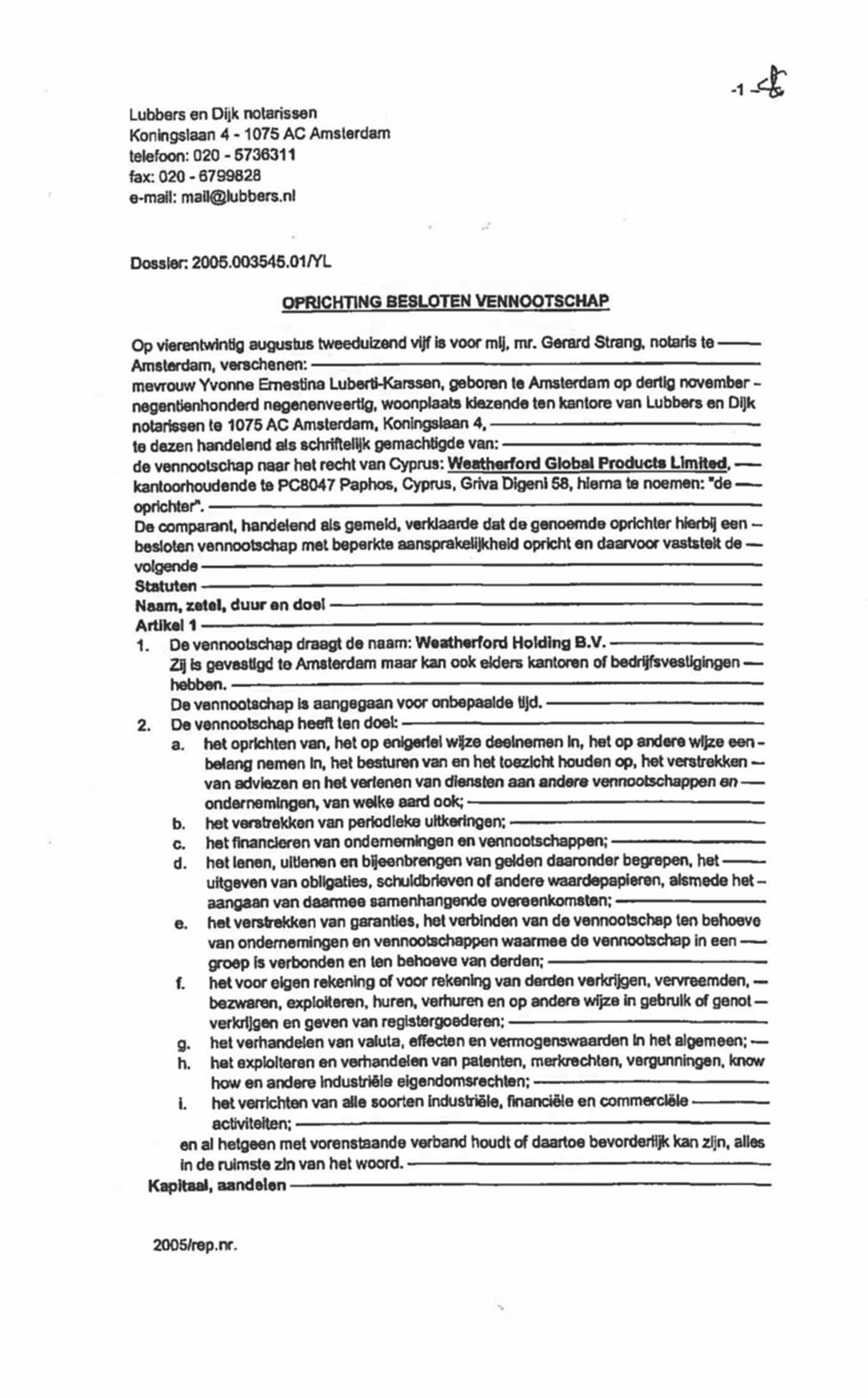
- 2 - Artikel 2 1. Het maatschappelljk kapitaal bedraagt nsgentidulzend euro (€ 90.000,-), verdeeld in negenhonderd (900) aandelen van nominaal éénhonderd euro (€ 100,-) elk. 2. De aandelen luiden op naam. Aandeelbewijzen warden niet uitgegeven. 3. De vennootschap is niet bevoegd te bedingen dat bij het nemen van een aandeel daarop minder dan het nominale bedrag wordt gestort. 4. De vennootschap verleent geen medewerking aan de ultgifte van certificaten van aandelen. 5. Ingeval van vruchtgebrulk of pandrecht op aandelen komt het stemrecht slechts toe aan de aandeelhouder. Eigen aandelen Artikel 3 1. De vennootschap kan blj ultgjfte van aandelen geen eigen aandelen nemen. De vennootschap mag volgestorte eigen aandelen of cerfiticaten daarvan verkrljgen, doch slechts om niet of met inachtneming van het dlenaangaande in de wet bepaalde. 2. De vennootschap mag niet, met het oog op het nemen of verkrijgen door anderen van aandelen in haar kapitaal of van certificaten daarvan, zekerheld stellen, een koersgarantie geven, zich op andere wijze sterk maken of zich hoofdelijk of anderszins naast of voor anderen verblnden. Dlt verbod geldt ook voor haar dochtermaatschappijen. De vennootschap is bevoegd leningen met het oog op het nemen of verkrijgen van aandelen In haar kapitaal of van certificaten daarvan te verstrekken tot ten hoogste het bedrag van de ultkeerbare reserves, doch slechts met goedkeuring van de algemene vergadering. De vennootschap houdt krachtens de wet een nlet-ultkeerbare reserve aan tot het ultstaande bedrag van de genoemde leningen. 3. Vervreemding van of vestiging van een beperkt recht op eigen aandelen geschiedt krachtens besluit van de algemene vergadering. Op het vervreemden is het in artikel 7 bepaatde van toepassing. Terugbetaling op aandelen Artikel 4. Terugbetaling op aandelen kan slechts geschleden, nadal de statuten zijn gewijzigd en overeenkomstig die wijziging. De terugbetallng geschiedt steeds naar evenredigheid op alle aandelen; van het vereiste van evenredigheid mag worden afgeweken met instemming van alle betrokken aandeelhouders. Het gestorte kapitaal mag niet kielner worden dan het ten tilde van het besiult van de algemene vergadering tot statutenwijziging door de wet voorgeschreven minimum kapitaal. Register van aandeelhouders Artikel 5 1. De directie houdt een register waarin de namen en adressen van alle houders van aandelen zijn opgenomen met vermelding van de datum waarop zij de aandelen hebben verkregen, ingeval van levering de datum van erkenning of betekening, alsmede van het op ieder aandeel gestorte bedrag. 2. ledere aandeelhouder, pandhouder en vruchtgebruiker van aandelen is verplicht er voor te zorgen dat zijn adres bij de vennootschap bekend is. 3. Het register wordt regelmatig bijgehouden; elke aantekening wordt door de directie
- 3 - [ILLEGIBLE] ondertekend. Levering van aandelen Artikel 6 De levering van aandelen of de vestiging of de levering van een beperkt recht daarop geschiedt door een daartoe bestemde ten overstaan van een in Nederland standplaats hebbende notaris verteden akte waarbij de betrokkenen partij zijn. Blokkeringsregeling Artikel 7 1. Een aandeelhouder is siechts met goedkeuring van de algemene vergadering bevoegd een of meer van zljn aandelen te vervreemden. 2. Een aandeelhouder geeft van zljn verzoek om goedkeuring per brief kennls aan de directie. Hij vermeldt daarbij het aantal aandelen, waarop het verzoek betrekking heeft, de naam en het adres van degene aan wie hij de aandelen wil overdragen en het door deze geboden bedrag. Hiervan doet de directie onmiddeijk mededeling aan alle aandeelhouders, die hij daarbij tevens oproept tot een algemene vergadering. 3. De algemene vergadering spreekt zich over het verzoek uit binnen drie maanden nadat de in lid 2 genoemde brief is verzonden. De overdracht moet plaatevlnden binnen drie maanden nadat de goedkeuring is verleend of geacht wordt te zijn verleend; de goedkeuring wordt geacht te zijn verleend Indian de algemene vergadering zich niet tijdig heeft ultgesproken danwel niet gelijktijdlg met de weigering van de goedkeuring, aan de verzoeker opgave doet van één of meer gegadigden die bereld zijn al de aandelen waarop het verzoek betrekking heeft tegen contante betaling te kopen. De vennootschap kan slechts met instemming van de verzoeker als gegadigde optreden. 4. De prijs wordt door de verzoeker en de door hem aanvaarde gegadigden In onderting overteg vastgesteld. Indien binnen één maand na de aanwljzing van de gegadlgden geen overeenstemming over de prijs wordt berelkt, wordt de prijs vastgesteld door een - Indian de aanbleder dit verlangt, onafhankelijke - deskundige, door de verzoeker en de gegadigden in onderting overleg te benoemen en indien zij het daarover binnen twee maanden na de aanwijzing van de gegadigden niet eens worden, op verzoek van de meest gerede partij aan te wijzen door de Kantonrechter binnen wiens kanton de vennootschap statutalr is gevestigd. De deskundige brengt de ultslag van zljn taxatie schritftenijk tar kennis van de verzoeker en de gegadigden. 5. De verzoeker moet binnen een maand nadat de uitslag van de taxatie aan hem is medegedeeld schriftelljk mededeling doen of hij tot verkoop besluit. 6. De bepalingen van dit artikel gelden niet indien de aandeelhouder krachtens de wet tot overdracht van zijn aandeel aan een eerdere houder verplicht is. Bestuur Artikel 8 1. De vennootschap wordt bestuurd door een directie bestaande ult één of meer directeuren die worden benoemd door de algemene vergadering. 2. De algemene vergadering stelt het aantal en de bezoldiging van de directeuren vast. 3. De directeuren kunnen te allen tijde door de algemene vergadering worden
- 4 - geschorst of ontslagen. Een schoreing kan nimrner langer dan drie maanden duren. 4. Ingeval van ontstentenis of belet van een directeur zijn de overige dlrecleuren of is de andere directeur met het bestuur belast. Ingeval van ontstentenis of belet van alle directeuren of van de enlge directeur, is tijdelljk met het bestuur belast, degene die daartoe door de algemene vergadering is aangewezen. Artikel 9 1. De directie is belast met het besturen van de vennootschap. 2. De directie vertegenwoordigt de vennootschep. De bevoegdheid tot vertegenwoordlglng komt mede aan ledere directeur toe, ook in geval van tegenstrijdig belang. 3. De directie kan functionarlssen met algemene of beperkte vertegenwoordlgingsbevoegdheid aanstelten. Elk hunner vertegenwoordigt de vennootschep met Inachtneming van de begrenzing aan zijn bevoegdheid gesteid, Hun titutatuur wordt door de directie bepaald. 4. Ongeacht of er sprake is van een tegenstrijdig belang worden rechtshandellngen van de vennootschap jegens de houder van allo aandelen of jegens een deelgenoot in enlge huweiyksgemaenschap of gemeenschap van een geregistreerd partnerschap waartoe alle aandelen behoren, waarbij de vennootschap wordt vertegenwoordigd door deze aandaelhouder of door een van de deelgenoten, schriftelijk vastgelegd. Voor de toepassing van de vorige zin worden aandelen gehouden door de vennootschap of Kaar dochtermaatschappijen niet meegeteld. Het in dit ild bepaalde is niet van toepassing op rechtshandelingen die onder de bedongen voorwaarden tot de gewone bedriffiaultoefening van de vennootschap behoren. 5. De directle houdt van de genomen aandeelhouderabeslulten aantekening. 6. Besluiten van de directle kunnen schriftelijk - waaronder begrepen per electronlsch mailbericht of telefaxbertcht - worden genomen, in plaats van in een vergadering. Boekjaar, jaarrekenlng, jaarverslag Artlkel 10 1. Het boekjaar van de vennootschap is gelijk aan het kalenderjaar. 2. De balans met de winst en verllesrekening met als bijlage de toellchtlng op deze stukken, tezamen genoemd de jaarrekenlng, worden opgemaakt door de directie en telkenjare blnnen vljf maanden na aftoop van een boekjaar met het jaarverslag voor de aandeelhauders ter Irtzage gelegd ten kantore van de vennootschap. De algemene vergadering is bevoegd am op grand van bijzondere omstandigheden de termljn van vljf maanden met ten hoogste zes maanden te verlengen. 3. De jaarrekenlng wordt ondertekend door alle directeuren: ontbreekt de handtekening van één of meer hunner, dan wordt daarvan onder opgave van de reden melding gemaakt 4. De jaarrekening, het jaarverslag en de gegevens welke krachtens artlkel 392 lid 1 van de wet eraan dienen te worden toegevoegd liggen vanaf da dag van oproeping tot de vergadering, bestamd tot behandellng van de jaarrekenlng, ten kantore van da vennootschap voor aandeelhouders ter irtzage. Zij kunnen vanaf de dag van oproeping kasteloos afschriften verkrijgen. 5. De jaanekening kan nlet worden vastgesteld Indian de wet de benoeming van een registeraccountant of een Accountant Adrninfstratleconsulent als bedoeid in artikel
- 5 - [ILLEGIBLE] 393 lid 1 van de wet, voorschrijfl en het tot vaststelling bevoegde orgaan geen kennis heeft kunnen nemen van de accountantsverklaring die aan de jaarrekening moest zijn toegevoegd, onverminderd het bepaalde in afdelingen 8 en 9 van titel 9 van book 2 van de wet. 6. De algemene vergadering is het tot vaststelling van de jaarrekening bevoegde orgaan. 7. De dlrectle is verplicht de jaarrekening en de administratie zeven Jaar lang te bewaren. De op een gegevensdrager aangebrachte gegevens, uitgezonderd de op papier gestelde balans en winst- en verliesrekening, kunnen op een andere gegevensdrager worden overgebracht en bewaard mits de overbrenging geschiedt met juiste en voliedige weergave der gegevens en deze gegevens gedurende de volledige bewaartijd beschikbaar zijn en binnen redelijke tijd leesbaar kunnen worden gemaakt. 8. De directie is bevoegd een deskundige te benoemen (en is ingeval de wet de benoeming als bedoeld in lid 5 van dit artikel voorschrijft en de algemene vergadering de benoeming achterwege liet, verplicht een registeraccountant of een Accountant-Administratieconsulent als bedoeld in artikel 393 lid 1 van de wet als deskundige en tot het verrichten van de door de wet voorgeschreven werkzaamheden te benoemen) om regelmatig toezicht te houden op de administratie en om versiag aan de directie uit te brengen omtrent het ontwerp van de jaarrekening. Winst Artikel 11 1. De winst is ter beschlkking van de algemene vergadering met inachtneming van de eventuele verplichting tot het aanhouden van wettelljke reserves. 2. Tot het geheel of gedeeltelijk opheffen van reserves anders dan door vaststelling van de jaarrekening is de algemene vergadering bevoegd. Ten lastse van de door de wet voorgeschreven reserves mag een tekort slechts worden gedelgd voorzover de wet dat toestaat. 3. De vennootschap kan aan de aandeelhouders en andere gerechtigden tot de voor uitkering vatbare winst slechts uitkeringen doen voorzover haar elgen vermogan groter is dan het bedrag van het gestorte en opgevraagde deel van het kapitaal vermeerderd met de reserves die krachtens de wet of de statuten moeten worden aangehouden. 4. Bij de berekerding van de winstverdeling tallen de aandelen die de vennootschap in haar elgen kapitaal houdt niet mee en daarop wordt geen winst uitgekeerd, behoudens indien en voorzover het betreft met vruchtgebruik belaste aandelen waarop reeds ten tijde van de verkrijging door de vennootschap een vruchtgebruik gevestigd was. Zij geven evernin recht op een aandeel in het liquidatiesatdo. 5. De directie is bevoegd een interim-dividend ult te keren, voorzover er winst in de vennootschap is en onverminderd het bepaaide in lid 3. Algemene vergadering Artikel 12 1. De algemene vergaderingen worden gehouden in de statutalre plaats van vestiging of in Den Helder. 2. Jaarlijks, binnen zes maanden na afloop van een boekjaar, wordt een algemene vergadering gehouden.
- 6 - 3. De agenda van de Jaarvergadering vermeidt len minste de voigende onderwerpen: a. verslag van de directie omtrent de zaken van de vennootschap en het gevoerde bestuur gedurende het afgelopen boekjaar; b. vaststelling van de jaarrekening; c. décharge van de directeuren: d. winstbestemming; e. voorziening in vacatures. Artikel 13 1. De oproeping voor de algemene vergadering geschiedt door de directie. 2. De termijn voor oproeping bedraagt ten minste vijftien dagen (de dag van de oproeping en die van de vergadering niet medegerekend). 3. De oproeping vindt plaats bij brief gericht aan de in het aandeelhoudersregister vermelde adressen van de aandeelhouders. 4. Bij de oproeping worden de te behandelen onderwerpen vermeld; indien het betreft een voorstel te besluiten tot vermindering van kapitaal door intrekklng van aandeien of door het bedrag van de aandelen bij statutenwijzlglng te verminderen, vermeldt de oproeping het doel van de kapitaalvermindering en de wijze van uitvoering. 5. Voorstellen van aandeelhouders kunnen alleen dan op de vergadering in behandeling worden genomen, indien zij zo tijdig schrftelijk bij de directie ten kantore van de vennootschap zijn ingedlend, dat zlj, met inachtneming van de voor de oproeping gesteide termijn, kunnen worden aangekondlgd. Artikel 14. 1. Indien in een algemene vergadering het gehele geplaatste kapitaal is vertegenwoordigd, kunnen geidige besluiten worden genomen over alle aan de orde komende onderwerpen, mits met algemene stemmen, ook al zijn de door de wet of statuten gegeven voorschriften voor het oproepen en houden van vergaderingen niet in acht genomen. Indien evenwel stechts het voorschrift omtrent de plaats van vergadering niet in acht genomen is, is voor besluitvorming niet unanlmiteit vereist. 2. Ongeacht of een vergadering Is bijeengeroepen met inachtneming van het bepaalde in het vorlge artikel, kunnen de besiulten van aandeelhouders, in plaats van in algemene vergaderingen, ook buiten vergadering worden genomen, mits alle stemgerechtigde aandeelhouders zich schrtftelijk - waaronder begrepen per electronisch mailbericht of telefaxbericht - ten gunste van het voorstel uitspreken. Artikel 15 1. De algemene vergadering voorzlet in het voorzitterschap. 2. Eik aandeel, waarvoor de presentielijst is getekend, geeft recht tot het uitbrengen van één stem, behoudens het bepaalde bij de wet. 3. Aandeelhouders kunnen zlch laten vertegenwoordigen, mils bij schriftelijke volmacht. 4. Alle besluiten van de algemene vergadering worden genomen met volstrekte meerderheid van stemmen. Vereffening Artikel 16 Bij haar besluit tot ontbinding van de vennootschap en daama bepaait de algemene vergadering door benoeming, schorsing en ontslag wie vereffenaars zijn; deze besluiten worden genomen met volstrekte meerderheid van stemmen.
- 7 - [ILLEGIBLE] De bepalingan van deze statuten blijven gedurende de vereffening voorzover mogelijk van kracht. SLOTVERKLARINGEN Tenslotte verklaarde de comparant, handelend als gemeld: 1. Het geplaatste en gestorte kapitaal bedraagt bij de oprichting achttiendulzend euro (€ 18.000,-), te weten éénhonderdtachtig (180) aandelen, alie bij de oprichter gepiaatst. Storting op de bij de oprichting geplaatste aandelen in vreemd geld is toegestaan. 2. De storting op de door de oprichter genomen aandeien ad achttienduizend euro (€ 18.000,-) is geschied à pari door inbreng in geld, waarvan blijkt uit een aan deze akte te hechten bankverklaring als bedoeld in artikel 203 a lid 1 van de wet; deze storting wordt door de vennootschap aanvaard. 3. Bij de oprichtlng worden voor de eerste maal benoemd tot directeuren: a. de heer Burt Michael Martin, geboren te Mississippi, gemeente Hattlesburg (Verenigde Staten van Amerika) op zes november negentienhonderd drieenzestig, houder van bultenlands paspoort nummer 132281042, afgegevan te Houston (Verenigde Staten van Amerika) op achttien jull negentienhonderd zevenennegentig, wonende te Beilalre, Texas 77401, Welford 4817 (Verenigde Staten van Amerika), en b. de heer Peter Robert Tuinman, geboren te Alkmaar op achttlen februarl negentienhonderd drleenzeventig, houder van Nederlands paspoort nummer NG4791712, afgegevan te Schagan op acht juni tweeduizend vier, wonende te 1817 GH Alkmaar, Bachlaan 55. 4. Het eerste boekjaar van de vennootschap eindigt ultimo tweeduizendzes. De voor oprichting van de vennootschap verelste ministertele verklaring van geen bezwaar is verleend bij beschlkking van drieentwintig augustus tweeduizend vijf, nummer B.V. 133.5989, en wordt aan deze akte gehecht. Van de volmacht aan de comparant is mij, notaris, gebieken uit de aan deze minuut te hechten akte. De comparant is mij, notaris, bekend. Deze akte, opgemaakt in minuut, is verleden te Amsterdam op de datum als in het hoofd van deze akte vermeld. Nadat de inhoud van deze akte zakelljk aan de comparant is opgegeven en toegeilcht, heeft deze verlklaard van de inhoud van deze akte te hebben kennlsgenomen en op volledige voorlezing daarvan geen prijs te stellen. Vervolgens is deze akte na beperkte voorlezing overeenkomstig de wet door de comparant en mij, notaris, ondertekend. [ILLEGIBLE]
-1 - Lubbers en Dijk notarissen Koningslaan 4 -1075 AC Amsterdam telefoon: 020 - 5736311 fax: 020-6799828 e-mail: mail@lubbers.nl File: 2005.003545.01/YL Unofficial translation FOUNDATION OF A PRIVATE LIMITED COMPANY On the twenty-fourth day of August two thousand and five before me, Gerard Strang, civil-law notary in Amsterdam, came: Mrs Yvonne Ernestina Luberti-Karssen, born at Amsterdam on the thirtieth day of November nineteen hundred and forty-nine, choosing domicile at the office-address of Lubbers en Dijk notarissen, 1075 AC Amsterdam, Koningsiaan 4 acting in this matter as agent authorized in writing of: the company existing under the laws of Cyprus: Weatherford Global Products Limited, with registered office at PC8047 Paphos, Cyprus, Griva Digenl 58, hereinafter to be called: "the founder". The appearer, acting as stated hereinbefore, declared that the founder hereby founds a private limited company and that it will hereby lay down for this company the following Articles of Association Name, seat, object and duration Article 1 1. The company bears the name: Weatherford Holding B.V. It has its registered office in Amsterdam but may also have offices or business establishments elsewhere. The company has been formed for an indefinite period. 2. The object of the company is a. to Incorporate, to participate in any way in, to manage and to supervise, to render advice and services to other companies, to in any other way take interest in companies and enterprises of any nature; b. to provide regular payments; c. to finance companies and enterprises; d. to lend and to borrow moneys, and to revise funds, to issue bonds debentures and other securities, as well as entering into agreements pertaining thereto; e. to give guarantees, to bind the company and to encumber assets of the company in favour of companies and enterprises with which the company forms a group and in favour of third parties; f. to, for its own account or the account of third persons, acquire, alienate, encumber, exploit, lease, let and to in any other way obtain and give use or benefit of real estate; g. to trade in currencies, securities and assets in general; h. to exploit and to trade in patents, trademark rights, licences, know how and other industrial property rights; i. to perform all kinds of industrial, financial and commercial activities; as well as to do all that is connected therewith or may be conducive thereto, all this in the widest sense. Capital, shares Article 2
-2 - 1. The authorized capital amounts to ninety thousand euro (€ 90,000.-), divided into nine hundred (900) shares of one hundred euro (€ 100.-) each. 2. The shares will be registered shares. Share certificates will not be issued. 3. The company is not entitled to stipulate that, when a share is taken, the amount to be paid thereon will be lower than the nominal amount. 4. The company grants no cooperation to the issue of depository receipts for shares. 5. In case of usufruct or pledge on shares, only the shareholder is entitled to exercise the voting rights. Company shares Article 3 1. When issuing shares, the company shall not be entitled to subscribe for its own shares. The company may acquire fully paid up shares in its own capital or depository receipts thereof, but only without a consideration or subject to the relevant provisions of the law. 2. With a view to the taking or acquisition by other parties of shares in the company capital or of depository receipts thereof, the company is not allowed to grant security, to give a price guarantee, to answer for a third party in any other way or to bind itself severally or otherwise in addition to or for other parties. This prohibition also applies to its subsidiary companies. The company is entitled to furnish loans with a view to the taking or acquisition of shares in its capital or of depository receipts thereof to a maximum equal to the amount of the distributable reserves but only subject to the approval of the general meeting. By virtue of The Act, the company will keep a non-distributable reserve equal to the outstanding amount of the loans referred to. 3. Alienation or creation of a limited right to company shares will take place by virtue of a resolution of the general meeting. The provisions of article 7 will be applicable to alienation. Repayment on shares Article 4 Repayment on shares can only be made after the articles of association have been amended and in accordance with such amendment. Repayment will always be made on all shares proportionately; the requirement of proportion may be deviated from with the consent of all the shareholders concerned. The paid capital shall not be lower than the minimum capital prescribed by The Act at the time of the resolution of the general meeting to amend the articles of association. Register of shareholders Article 5 1. The board of management will keep a register in which the names and addresses of all the holders of shares, the date when they have acquired the shares, in case of delivery the date of acknowledgement or serving and the amount paid on every share will be recorded. 2. Every shareholder, pledgee and usufructuary of shares shall see to it that his address is known to the company. 3. The register will be kept up-to-date; every annotation will be signed by the board of
- 3 - management. Delivery of shares Article 6 Shares will be delivered or a limited right on shares will be created or delivered by means of a relative deed, passed before a civil-law notary In the Netherlands, to which the persons concerned will be a party. Blocking clause Article 7 1. A shareholder is only entitled to alienate one or more of his shares subject to the approval of the general meeting. 2. A shareholder will notify the board of management of his request for approval by letter. In said letter he will state the number of shares to which the request relates, the name and address of the party to whom he wants to transfer the shares and the amount offered by such party. The board of management will immediately notify all the shareholders thereof, simultaneously calling the shareholders to attend a general meeting. 3. Within three months after the letter referred to in paragraph 2 has been sent, the general meeting will decide on the request. The transfer shall be made within three months after the approval has been granted or is deemed to have been granted; the approval will be deemed to have been granted if the general meeting has not timely decided on the request or has not notified the petitioner, simultaneously with the refusal of the approval, of the name(s) of one or more prospective buyers willing to buy all the shares to which the request relates against payment in cash. The company may only act as prospective buyer subject to the consent of the petitioner. 4. The price will be fixed by the petitioner and the prospective buyers accepted by him by mutual consultation. If within one month after the designation of the prospective buyers no agreement about the price has been reached, the price will be fixed by an expert, being Independent if so desired by the tenderer, to be appointed by the petitioner and the prospective buyers by mutual consultation, and, if they do not come to terms in this respect within two months after the designation of the prospective buyers, to be appointed at the request of the willing party by the Cantonal Court of the canton within which the company has its registered office by virtue of the articles of association. The expert will notify the petitioner and the prospective buyers in writing of the result of his appraisal. 5. Within one month after the petitioner has been notified of the result of the appraisal, he shall state in writing whether he decides to sell the shares. 6. The provisions of this article do not apply if the shareholder has to transfer his share by virtue of the law to a former holder of such share. Management Article 8 1. The company will be managed by a board of management consisting of one or several managing directors, who will be appointed by the general meeting.

- 4 – 2. The general meeting will fix the number and the salary of the managing directors. 3. The managing directors may at any time be suspended or dismissed by the general meeting. A period of suspension can never exceed three months. 4. In the event of a managing director being absent or unable to attend, the other managing directors or the other managing director will be charged with the management. In the event of all the managing directors or the sole managing director being absent or unable to attend, the person designated for this purpose by the general meeting will temporarily be charged with the management. Article 9 1. The board of management is charged with the management of the company. 2. The board of management shall represent the company. The power to represent the company shall also vest in each individual managing director, also in the event of a conflict of interests. 3. The management board may appoint staff members with general or limited power to represent the company. Each staff member shall be authorised to represent the company with due observance of any restrictions imposed on him. The management board shall determine their titles. 4. Regardless of whether or not there is a contradictory interests, legal acts of the company towards the holders of all shares or towards a joint owner of any matrimonial community of property or a community of property of a registered partnership of which all shares form part, in which respect the company will be represented by this shareholder or by one of the joint owners, will be laid down In writing. For the application of the preceding sentence, shares held by the company or its subsidiary companies will not be taken into account. The provisions of the present paragraph will not be applicable to legal acts forming part of the normal conduct of business of the company under the conditions stipulated. 5. The board of management will make annotations of the shareholders’ resolutions passed. 6. Resolutions of the board of management may be taken by unanimous written consent in lieu of a meeting, which will be understood to include electronical mail or telefax message. Financial year, annual account, annual report Article 10 1. The financial year of the company coincides with the calendar year. 2. The balance sheet and the profit and loss account and annexed thereto the explanatory memorandum on these documents, jointly called the annual account, will be drafted by the board of management and will, together with the annual report, be deposited every year at the office of the company for inspection by shareholders within five months after the end of a financial year. On the ground of special circumstances, the general meeting is entitled to extend the period of five months by a maximum of six months. 3. The annual account will be signed by all the managing directors; If the signature(s) of one or more of them should be lacking, the reason thereof will be stated. 4. The annual account, the annual report and the data to be added thereto under article
- 5 – 392, paragraph 1 of The Act, will be open to the inspection of shareholders at the office of the company from the date of the convening notice for the meeting destined to consider the annual account. From the date of the convening notice they may obtain copies free of charge. 5. The annual account cannot be confirmed if The Act prescribes the appointment of a register accountant or an accountant/administrative consultant as referred to in paragraph 1 of article 393 of The Act and the body competent to confirm the annual account has not been able to take cognizance of the accountant’s certificate which should have been added to the annual account, without prejudice to the provisions of sections 8 and 9 of title 9 of The Act. 6. The general meeting is the body competent to confirm the annual account. 7. The board of management shall retain the annual account and the accounting records during a period of seven years. The data installed on a data carrier, with the exception of the balance sheet and profit and loss account on paper, may be transposed to an other data carrier and filed, provided the data will be transposed in an accurate and complete rendering and such date will be available during the full storage time and may be retrieved and transcribed within a reasonable period. 8. The board of management is entitled to appoint an expert (and, in case The Act prescribes the appointment as referred to in paragraph 5 of this article and the general meeting failed to make the appointment, the board of management shall appoint a register accountant or an accountant/administrative consultant as referred to in paragraph 1 of article 393 of The Act to be expert and to perform the activities prescribed by The Act) in order to regularly supervise the keeping of accounts and to report to the board of management on the draft of the annual account. Profit Article 11 1. The profit will be available to the general meeting with due observance of the obligation, if any, to keep statutary reserves. 2. The general meeting is entitled to fully or partially cancel reserves in an other way than by confirmation of the annual account. A deficit can only be charged against the reserves prescribed by The Act as far as allowed by law. 3. The company may only make payments to the shareholders and other parties entitled to profit susceptible of distribution insofar as its common equity exceeds the amount of the paid and claimed part of the capital, increased by the reserves to be kept by virtue of The Act or the articles of association. 4. In the calculation of the appropriation of profit, the shares held by the company in its own capital will be disregarded and no profit will be distributed on them except if and insofar as shares subject to usufruct are concerned on which a right of usufruct was created already at the time of the acquisition by the company. They do not carry the right to a share in the liquidation balance either. 5. The board of management is entitled to distribute an Interim dividend insofar as profit is available in the company and without prejudice to the provisions of paragraph 3. General meeting Article 12 1. The general meetings will be held in the place where the company has its registered
- 6 – office by virtue of the articles of association. 2. Annually, within six months after the end of a financial year, a general meeting will be held. 3. The agenda of the annual meeting will at least contain the following subjects: a. the report of the board of management on the affairs of the company and the management conducted during the past financial year; b. confirmation of the annual account; c. discharge to the managing directors; d. the appropriation of profit; e. filling of vacancies. Article 13 1. The general meeting will be convened by the board of management. 2. The period for convening will be at least fifteen days (exclusive of the day of convening and that of the meeting). 3. The convening will take place by letter to the addresses of the shareholders laid down in the register of shareholders. 4. The convening notice will contain the subjects to be considered: if a proposal relates to resolutions to reduce the capital by means of withdrawal of shares or by reduction of the amount of the shares by means of an amendment of the articles of association, the convening notice will state the object of the capital reduction and the manner in which it will be realised. 5. Proposals of shareholders can only be taken into consideration at the meeting if they have been submitted to the board of management at the office of the company so timely and in writing that they can be announced with due observance of the period fixed for convening. Article 14 1. If in a general meeting the entire issued capital is represented, valid resolutions can be passed on all subjects brought up for consideration provided this is done unanimously even if the regulations of The Act or the articles of association for the convening and holding of meetings have not been observed. If, however, only the regulation as regards the place of the meeting has not been observed, unanimity will not be required for the passing of resolutions. 2. Irrespective of whether a meeting has been convened with due observance of the provisions of the preceding article, resolutions of shareholders may, instead of in general meetings, also be passed without a meeting being held provided all the shareholders entitled to cast votes have expressed themselves in favour of the proposal in writing - which will be understood to include by electronical mail or telefax message. Article 15 1. The general meeting will designate its chairman. 2. Every share for which the attendance-list has been signed will carry the right to cast one vote without prejudice to the regulations of The Act. 3. Shareholders may have themselves represented provided this is done by means of a written warrant of attorney. 4. All resolutions of the general meeting will be passed by an absolute majority of votes. Liquidation Article 16
- 7 – In its resolution to dissolvethe company and subsequently, the general meeting will determine who will be the liquidators by means of appointment, suspension and dismissal; these resolutions will be passed by an absolute majority of votes. During the liquidation the provisions of these articles of association will continue to be effective as far as possible. FINAL STATEMENTS In conclusion the appearer, acting as stated hereinbefore, declared: 1. On foundation of the company, the subscribed capital amounts to eighteen thousand euro (€ 18,000.—) viz. one hundred and eighty (180) shares, all issued to the founder, which shares have been paid up in full. Payment on these shares in foreign currency is permitted. 2. Payment on the shares taken at par by the founder has been made by means of a contribution in cash, which is evident from a bank statement to be appended to the present deed as referred to in article 203 a paragraph 1 of the Act; this payment is accepted by the company. 3. On foundation of the company, the following person are appointed managing directors for the first term of office: a. Mr Burt Michael Martin, born in Mississippi, Hattlesburg (United States of America), on the sixth day of November nineteen hundred and sixty-three, holder of foreign passport with number 132281042, issued in Houston (United States of America) on the eighteenth day of July nineteen hundred and ninety-seven, residing in Bellaire, Texas 77401, Welford 4817 (United States of - America), and b. Mr Peter Robert Tulnman. born in Alkmaar (the Netherlands), on the eighteenth day of February nineteen hundred and seventy-three, holder of Dutch passport with number NG4791712, issued in Schagen (the Netherlands) on the eighth day of June two thousand and four, residing in 1817 GH Alkmaar, Bachlaan 55. 4. The first financial year of the company ends as at the end of the year two thousand and six. The ministerial certificate of no objections, required for the incorporation of the company, - was granted blj decision of the twenty-third day of August two thousand and five, number B.V. 133.5989, to be appended to this original. The power of attorney to the appearer is evident to me, the civil-law notary, from the deed to be appended to this original. The person appearing is known to me, civil-law notary. This instrument, drawn up in the original, was executed at Amsterdam, at the date named in the beginning of this instrument. After the sum and substance of the contents of this instrument had been stated to the appearer and clarified by me, civil-law notary, the appearer declared that she had acquainted herself with the contents of this instrument and did not wish it to be read out In full. Thereupon this instrument after being read out to a limited extent in conformity with the law, was signed by the appearer and me, civil-law notary.
Buren advocaten belastingadviseurs notarissen AFSCHRIFT van de akte van statutenwijziging van de besloten vennootschap met beperkte aansprakelijkheid: Weatherford Holding B.V. statutair gevestigd te Amsterdam. na statutenwijziging genaamd: Weatherford Netherlands B.V. statutair gevestigd te Amsterdam. Aktedatum 29 september 2014 True copy of the notarial deed of amendment to the articles of association of the private company with limited liability: Weatherford Holding B.V. with statutory seat at Amsterdam. presently known as: Weatherford Netherlands B.V. with statutory seat at Amsterdam, the Netherlands. Execution date September 25, 2014
1 [ILLEGIBLE] 027298/IHN/QDF/Akte van statutenwijziging van Weatherford Holding B.V. Heden, vijfentwintig september twee duizend veertien, verscheen voor mij, mr. Ingrid de Haan, hierna te noemen: “notaris” als waarnemer van mr. Steven van der Waal, notaris met plaats van vestiging’s-Gravenhage: mevrouw Quirijne Duijf, geboren te Zoetermeer op dertien maart negentienhonderd negenentachtig, woonplaats kiezende ten kantore van voornoemde notaris aan de Johan de Wittlaan 15, 2517 JR ‘s-Gravenhage. De comparante verklaarde: 1. Huidiqe statuten De statuten van Weatherford Holding B.V., een besloten vennootschap met beperkte aansprakelijkheid, opgericht naar Nederlands recht, statutair gevestigd te Amsterdam en kantoorhoudende te: Schrijnwerkersweg 6, 1786 PC Den Helder, ingeschreven in het handelsregister van de Kamer van Koophandel onder nummer: 34231980, deze vennootschap hierna vender te noemen: de “vennootschap”, werden vastgesteld bij akte van oprichting verleden op vierentwintig augustust tweeduizend vijf, voor mr. G. Strang, notaris te Amsterdam. De desttjds vereiste minsteriele verklaring van geen bezwaar is verkregen op drieëntwmtig augustust weeduizend vijf onder nummer B.V. 133.5989. De statuten van de vennootschap luiden op heden niet anders dan zoals zij bij voormelde akte werden vastgesteld. 2. Besluit tot wijziging van de statuten Blijkens het aan deze akte gehechte schriftelijke besluit, hierna te noemen: het “Besluit”, heeft de enig aandeelhouder van de vennootschap op elf augustus twee duizend veertien besloten de statuten van de vennootschap integraal te wijzigen en deze akte te doen passeren. 3. Wijziging van de statuten De comparante verklaarde vervolgens ter uitvoering van het Besluit de statuten van de vennootschap te wijzigen als volgt: “STATUTEN IN DELING Deze statuten zijn ingedeeld in de volgende hoofdstukken: Hoofdstuk 1. Definities en algemene bepalingen Hoofdstuk 2. Naam, zetel, doel Hoofdstuk 3. Kapitaal, aandelen, stortingsplicht, register van de vennootschap Hoofdstuk 4. Vruchtgebruik, pandrecht, certificaten van aandelen Hoofdstuk 5. Wijzigingen kapitaal Hoofdstuk 6. Overdracht van aandelen Hoofdstuk 7. Aandeelhoudersrechten, -plichten en -eisen Hoofdstuk 8. Algemene vergadering Hoofdstuk 9. Bestuur Document nummer: 1157566
2 [ILLEGIBLE] Hoofdstuk 10. Boekjaar, jaarrekening, jaarverslag, kwijting Hoofdstuk 11. Winst, uitkeringen, tussentijdse uitkeringen HOOFDSTUK 1. DEFINITIES EN ALGEMENE BEPALINGEN Artikel 1.1 - Definities Onder de navolgende begrippen wordt in deze statuten verstaan: aandeel: een overdraagbaar aandeel op naam in het kapitaal van de vennootschap, vertegenwoordigend rechten die stemrecht en/of een aanspraak op uitkering van winst of reserves omvatten; aandeelhouder: een houder van een of meer aandelen; accountant: een registeraccountant of andere accountant (als bedoeld in artikel 2:393 Burgerlijk Wetboek) dan wel een organisatie waarin deze samenwerkt; algemene vergadering: (i) het orgaan dat gevormd wordt door alle stemgerechtigde aandeelhouders alsmede door alle pandhouders en vruchtgebruikers aan wie het stemrecht op aandelen toekomt respectievelijk (ii) een bijeenkomst van aandeelhouders en overige vergadergerechtigden; artikel: een artikel opgenomen in de statuten van de vennootschap, tenzij uitdrukkelijk anders blijkt; bestuur: het orgaan dat gevormd wordt door alle bestuurders als bedoeld in artikel 9.1; blokkeringsregeling: de regeling inzake de beperking van de overdraagbaarheid van een aandeel als bedoeld in artikel 6.2; jaarrekening: de balans en de winst- en verliesrekening met de toelichting; schriftelijk: bij brief, fax of e-mail, of bij boodschap die via een ander gangbaar communicatiemiddel wordt overgebracht en op schrift kan worden ontvangen op voorwaarde dat de identiteit van de verzender met afdoende zekerheid kan worden vastgesteld (tenzij deze statuten anders bepalen); vennootschap: de besloten vennootschap met beperkte aansprakelijkheid die wordt beheerst door deze statuten; vergadergerechtigden: houders van vergaderrecht, in deze statuten: aandeelhouders, aandeelhouders die vanwege vruchtgebruik of pandrecht op hun aandelen geen stemrecht hebben en vruchtgebruikers en pandhouders die stemrecht hebben en van wie het vergaderrecht niet is opgeschort; vergaderrecht: het recht om, in persoon of bij schriftelijk gevolmachtfgde, de algemene vergadering bij te wonen en daar het woord te voeren. Artikel 1.2 - Vennootschapsrechtelijke structuur De vennootschap heeft twee organen, te weten de algemene vergadering en het bestuur. Artikel 1.3 - Interpretatie a. Definitieaanduidingen die in het enkelvoud zijn aangegeven omvatten eveneens het meervoud en omgekeerd, tenzij uitdrukkelijk anders aangegeven. b. Aan de titels en kopjes boven de bepalingen in deze statuten komt geen zelfstandige betekenis toe. Artikel 1.4 - Eenpersoonsvennootschap
3 [ILLEGIBLE] Rechtshandelingen van de vennootschap tegenover de houder van alle aandelen in het kapitaal van de vennootschap, waarbij de vennootschap wordt vertegenwoordigd door deze aandeelhouder, worden schriftelijk vastgelegd, tenzij het rechtshandelingen betreffen die onder de bedongen voorwaarden tot de gewone bedrijfsuitoefening van de vennootschap behoren. Artikel 1.5 - Toepasselijk recht Op deze statuten is Nederlands recht van toepassing. HOOFDSTUK 2. NAAM, ZETEL, DOEL Artikel 2.1 - Naam en zetel 1. De naam van de vennootschap is: Weatherford Netherlands B.V. 2. De vennootschap is statutair gevestigd te Amsterdam. Artikel 2.2 - Doel Het doel van de vennootschap is: a. het produceren, fabriceren en verwerken van, het verlenen van diensten met betrekking tot het kopen of andere wijze verkrijgen, verpakken, verkopen, importeren, exporteren van, het handelen in en op andere wijze omzetten van of beschikken over grondstoffen en industriële producten. b. het oprichten van, het financieren van, het deelnemen in, het besturen van en het toezicht houden op (personen)vennootschappen en andere ondernemingen; c. het bijeenbrengen van gelden door bankleningen, door uitgifte van obligaties en andere schuldbrieven, of door op andere wijze gelden te lenen, het verstrekken van geldleningen, het verstrekken van garanties al dan niet voor schulden van anderen, het zich op andere wijze sterk maken of zich hoofdelijk naast of voor anderen verbinden; d. het verkrijgen, vervreemden, beheren, exploiteren, ontwikkelen en op elke andere wijze commercialiseren van onroerende zaken, effecten en andere goederen, daaronder begrepen patenten, vergunningen, auteursrechten, merkrechten, licenties, geheime precedes of formules, ontwerpen en andere industriële en inteliectuele eigendomsrechten; e. het verlenen van diensten op administratief, technisch, financieel, economisch, commercieel of bestuurlijk gebied aan (personen)vennootschappen en andere ondernemingen; en f. het verrichten van alle handelingen, al dan niet in samenwerking met anderen, die met de hiervoor genoemde doelstellingen direct of indirect verband houden, alles in de ruimste zin. HOOFDSTUK 3. KAPITAAL, AANDELEN, STORTTNGSPLICHT, REGISTER VAN DE VENNOOTSCHAP Artikel 3.1 - Kapitaal 1. De vennootschap heeft een in een of meer aandelen verdeeld kapitaal. 2. Elk aandeel is nominaal groot eenhonderd Euro (EUR 100). Artikel 3.2 - Aandelen op naam, nummering, geen aandeelbewijzen 1. De aandelen luiden op naam. 2. De aandelen zijn doorlopend genummerd van nummer 1 af. Document nummer: 1157566
4 [ILLEGIBLE] 3. Aandeelbewijzen worden niet uitgegeven. Artikel 3.3 - Stortingsplicht 1. Op de verplichting tot storting op aandelen is net bepaalde in de artlkelen 2:191 tot en met 2:191b, artikel 2:193 en artikel 2:199 Burgerlijk Wetboek van toepassing. 2. De algemene vergadering kan bepalen dat de storting op aandelen anders dan in geld kan plaatsvinden. Artikel 3.4 - Register van de vennootschap 1. Het bestuur houdt een register van de vennootschap, waarop het bepaalde in artikel 2:194 Burgerlijk Wetboek van toepassing is. 2. Iedere aandeelhouder, vruchtgebruiker en pandhouder is verplicht ervoor te zorgen dat zijn adres bij de vennootschap bekend is. Mededelingen namens de vennootschap worden gedaan aan het in het register van de vennootschap opgenomen adres. HOOFDSTUK 4. VRUCHTGEBRUIK, PANDRECHT, CERTIFICATEN VAN AANDELEN Artikel 4.1 - Beperkte rechten, notariële akte Voor het vestigen en leveren van een beperkt recht op een aandeel is een daartoe bestemde akte vereist, die ten overstaan van een in Nederland gevestigde notaris is verleden en waarbij de betrokkenen partij zijn. Artikel 4.2 - Vruchtgebruik 1. Op aandelen kan vruchtgebruik worden gevestigd. 2. De vruchtgebruiker zonder stemrecht heeft geen vergaderrecht. 3. Op het vruchtgebruik is overigens het bepaalde in artikel 2:197 Burgerlijk Wetboek van toepassing. Artikel 4.3 – Pandrecht 1. Op aandelen kan pandrecht worden gevestigd. 2. De pandhouder zonder stemrecht heeft geen vergaderrecht. 3. Op het pandrecht is overigens het bepaalde in artikel 2:198 Burgerlijk Wetboek van toepassing. Artikel 4.4 - Certificaten van aandelen Aan certificaten van aandelen is geen vergaderrecht verbonden. HOOFDSTUK 5. WIJZIGINGEN KAPITAAL Artikel 5.1 – Uitgifte; notariële akte Voor de uitgifte van een aandeel is een daartoe bestemde akte vereist, die ten overstaan van een in Nedertand gevestigde notaris is verleden en waarbij de betrokkenen partij zijn. Artikel 5.2 - Uitgifte; bevoegd orgaan De algemene vergadering neemt een besluit tot uitgifte van aandelen. Artikel 5.3 - Voorwaarden van uitgifte Bij het besluit tot uitgifte van aandelen worden de koers en de verdure voorwaarden van de uitgifte bepaald. De koers van uitgifte mag niet beneden pari zijn. Artikel 5.4 - Voorkeursrecht bij uitgifte
5 [ILLEGIBLE] Het wettelijk voorkeursrecht kan, telkens voor een enkele uitgifte, door de algemene vergadering worden beperkt of uitgesloten. Artikel 5.5 - Opties Het bepaalde in de artikelen 5.2 tot en met 5.4 is van overeenkomstige toepassing op het verlenen van rechten tot het nemen van aandelen, maar niet op de uitgifte van aandelen aan een persoon die een al eerder verkregen recht tot dit nemen van aandelen uitoefent. Artikel 5.6 - Verkrijging eigen aandelen 1. De vennootschap kan bij uitgifte van aandelen geen eigen aandelen nemen. 2. Het bestuur beslist over de verkrijging door de vennootschap van aandelen in het kapitaal van de vennootschap. 3. Verkrijging door de vennootschap van niet volgestorte aandelen in haar kapitaal is nietig. De vennootschap mag, behalve om niet, geen volgestorte eigen aandelen verkrijgen indien het eigen vermogen, vermtnderd met de verkrijgingsprijs, kleiner is dan de reserves die krachtens de wet of de statuten moeten worden aangehouden of indien het bestuur weet of redelijkerwijs behoort te voorzien dat de vennootschap na de verkrijging niet zal kunnen blijven voortgaan met het betalen van haar opeisbare schulden. 4. De vorige leden gelden niet voor aandelen die de vennootschap onder algemene titel verkrijgt. 5. Onder aandelen in dit artikel zijn certificaten daarvan begrepen. Artikel 5.7 - Vervreemding eigen aandelen 1. Vervreemding van eigen aandelen vindt plaats met inachtneming van de blokkeringsregeling. 2. Onder aandelen in dit artikel zijn certificaten daarvan begrepen. Artikel 5.8 - Kapitaalvermindering 1. De algemene vergadering kan besluiten tot vermindering van het geplaatste kapitaal met inachtneming van het bepaalde in artikel 2:208 Burgerlijk Wetboek. 2. Een besluit tot terugbetating of ontheffing van de stortingsplicht in de zin van artikel 2:208 Burgerlijk Wetboek is slechts toegestaan, voor zover het eigen vermogen groter is dan de reserves die krafchtens de wet of statuten moeten worden aangehouden. 3. Een besluit van de algemene vergadering als in lid 2 bedoeld, heeft geen gevolg zolang het bestuur geen goedkeuring heeft verleend. Het bestuur weigert slechts de goedkeuring indien het weet of redelijkerwijs behoort te voorzien dat de vennootschap na de uitkering niet zal kunnen blijven voortgaan met het betalen van haar opeisbare schulden. HOOFDSTUK 6. OVERDRACHT VAN AANDELEN Artikel 6.1 – Levering van aandelen; notariële akte Voor de levering van een aandeel, waaronder begrepen de levering ten titel van inkoop of verkoop van een aandeel gehouden door de vennootschap In haar eigen kapitaal, is een daartoe bestemde akte vereist, die ten overstaan van een in Nederland gevestigde notaris is verleden en waarbij de betrokkenen partij Document nummer: 1157566
6 [ILLEGIBLE] zijn. Artikel 6.2 – Blokkeringsregeling; goedkeuringsregeling 1. Elke overdracht van aandelen heeft de goedkeuring van de algemene vergadering nodig. 2. De aandeelhouder die aandelen wenst over te dragen, hierna te noemen: de “verzoeker”, moet daartoe schriftelljk goedkeuring verzoeken aan het bestuur onder opgave van de aandelen die hij wenst over te dragen en, indien bekend, de naam van degene(n) aan wie de verzoeker de aandelen wenst over te dragen. 3. Het bestuur is verplicht een algemene vergadering bijeen te roepen, te houden binnen vier weken na ontvangst van het verzoek. 4. Binnen vijf weken na ontvangst van het verzoek moet daarop zijn beslist en moet de beslissing schriftelijk aan de verzoeker zijn meegedeeld. Bij gebreke van een beslissing wordt de goedkeuring geacht te zijn verleend. 5. Als de algemene vergadering de goedkeuring wetgert, moet zij een of meer gegadigden aanwijzen die bereid en in staat zijn alle aandelen waarop het verzoek betrekking heeft tegen gelijktijdige betaling in geld te kopen, hierna te noemen: de “gegadigden”. Blijft deze aanwijzing achterwege of wordt bij de mededeling van de beslissing aan de verzoeker geen opgave van een of meer gegadigden gedaan, dan wordt de verzochte goedkeuring geacht te zijn verleend. 6. Wordt de verzochte goedkeuring verleend of wordt deze geacht te zijn verleend, dan moet de overdracht waarop het verzoek betrekking had binnen drie maanden hierna plaatsvinden. 7. Partijen stellen in onderling overleg de prijs van de aangeboden aandelen vast. Komen partijen niet binnen vier weken na de verzendtng van de mededeling bedoeld in lid 4 van dit artikel tot overeenstemming over de prijs, dan wordt de prijs vastgesteld door drie deskundigen, van wie ten minste één een accountant moet zijn. De deskundigen worden door partijen in onderling overleg aangewezen en bij gebreke van overeenstemming daarover binnen twee weken na ommekomst van voormelde vier weken, worden de deskundigen benoemd door de kantonrechter in wiens ambtsgebied de vennootschap statutair is gevestigd, op verzoek van de meest gerede partij. 8. De verzoeker is op elk moment bevoegd zich terug te trekken, mits dit plaatsvindt binnen één maand nadat hem bekend is aan welke gegadigden hij alle aandelen waarop het aanbod betrekking heeft kan overdragen en tegen welke prijs. 9. Nadat de in het vorige lid vermelde termijn is verstreken, moeten de aandelen binnen vier weken warden geleverd tegen gelijktijdige betaling in geld van de verschuldigde prijs, tenzij wat de betaling betreft partijen ierover anders zijn overeengekomen. 10. Alle in dit artikel vermelde schriftelijke kennisgevingen kunnen slechts bij aangetekende brief, bij deurwaardersexploot of tegen ontvangstbewijs
7 [ILLEGIBLE] plaatsvinden. HOOFDSTUK 7. AANDEELHOUDERSRECHTEN, -PLICHTEN EN -EISEN Artikel 7.1 - Werking overdracht aandeel tegenover de vennootschap De levering van een aandeel of de levering van een beperkt recht daarop vereenkomstig het bepaalde in het vorige hoofdstuk werkt ook van rechtswege egenover de vennootschap.Behalve als de vennootschap zelf bij de rechtshandellng partij is, kunnen de aan het aandeel verbonden rechten pas worden uitgeoefend nadat de vennootschap de rechtshandeling heeft erkend of de akte aan haar Is betekend, dan wel de vennootschap de rechtshandeling heeft erkend door inschrijving in het register van de vennootschap. Artikel 7.2 - Aandeel in gemeenschap Als een aandeel, een beperkt recht daarop of een voor een aandeel uitgegeven certificaat met vergaderrecht tot een gemeenschap behoort, anders dan een wettelijke gemeenschap als bedoeld in Boek 1 Burgerlijk Wetboek, kunnen de deelgenoten zich slechts door één schriftelrjk aan te wijzen persoon tegenover de vennootschap doen vertegenwoordigen. Artikel 7.3 - Aandeelhoudersverplichtingen en -eisen Er zijn geen verplichtingen en/of eisen als bedoeld in artikel 2:192 lid 1 onder a respectievelijk artikel 2:192 lid 1 onder b Burgerlijk Wetboek aan het aandeelhouderschap verbonden. HOOFDSTUK 8. ALGEMENE VERGADERING Artikel 8.1 – Algemene vergadering Tijdens elk boekjaar wordt ten minste één algemene vergadering gehouden often minste één maal overeenkomstig artikel 8.7 besloten. Artikel 8.2 – Plaats van vergadering 1. Een algemene vergadering wordt gehouden in de plaats waar de vennootschap statutair is gevestigd of in Den Helder. 2. Een algemene vergadering kan elders worden gehouden, mits alle vergadergerechtigden hebben ingestemd met de plaats van de vergadering en de bestuurders voorafgaand aan de besluitvormtng in de gelegenheid zijn- gesteld om advies uit te brengen. Artikel 8.3 – Oproeping 1. Het bestuur, iedere aandeelhouder en iedere andere vergadergerechtigde is bevoegd een algemene vergadering bijeen te roepen. 2. De oproeping vindt plaats door middel van oproepingsbrieven gericht aan de adressen van de aandeelhouders en overige vergadergerechtigden, zoals deze zijn vermeld in het register van de vennootschap. De oproeping vindt plaats op een termijn van ten minste acht dagen, de dag van oproeping en die van de vergadering niet meegerekend. Als een aandeelhouder of een andere vergadergerechtigde hiermee instemt, kan de oproeping plaatsvinden door een langs elektronische weg toegezonden leesbaar en reproduceerbaar bericht aan het adres dat door de aandeelhouder respectievelijk andere vergadergerechtigde voor dit doel aan de Document nummer: 1157566
8 [ILLEGIBLE] vennootschap bekend is gemaakt. De oproeping vermeldt de te behandelen onderwerpen. Artikel 8.4 – Bijwonen; woord voeren; stemrecht; adviesrecht 1. Iedere vergadergerechtigde is bevoegd de algemene vergadering bij te wonen en daarin het woord te voeren. 2. Iedere aandeelhouder en iedere vruchtgebruiker en pandhouder met stemrecht is bevoegd in de algemene vergadering stemrecht uit te oefenen, onverminderd het bepaalde in artikel 2:228 lid 6 Burgerlijk Wetboek. 3. Bestuurders hebben het recht de vergadering bij te wonen en hebben als zodanig een raadgevende stem. 4. De in de voorafgaande leden vermelde bevoegdheden kunnen ook door middel van een elektronisch communicatiemiddel worden uitgeoeFend, op voorwaarde dat wordt voldaan aan het bepaalde in artikel 2:227a lid 2 Burgerlijk Wetboek. Het bestuur kan voorwaarden stellen aan het gebruik van het elektronisch communicatiemiddel. Deze voorwaarden worden bij de oproeping bekend gemaakt. 5. De vergaderrechten en het stemrecht kunnen worden uitgeoefend door een- schriftelijk gevolmachtigde. Aan de eis van schriftelijkheid van de volmacht wordt voldaan als de volmacht elektronisch is vastgetegd. Artikel 8.5 – Voorzitterschap en notulen De algemene vergadering voorziet zelf in haar leiding. Tenzij een notarieel proces-verbaal wordt opgemaakt, worden van het verhandelde in elke algemene vergadering notulen gehouden door een secretaris die door de voorzitter wordt aangewezen. De voorzitter kan ook zichzelf daartoe aanwijzen. De notulen worden vastgesteld door de voorzitter en secretaris en als blijk daarvan door hen ondertekend. Artikel 8.6 – Besluitvorming 1. Elk aandeel geeft recht op het uitbrengen van één stem. 2. Alle besluiten worden bij volstrekte meerderheid van de uitgebrachte stemmen genomen. 3. Staken de stemmen bij verkiezing van personen, dan beslist het lot. Staken de stemmen bij een andere stemming dan is het voorstel verworpen. 4. Voor een aandeel dat toebehoort aan de vennootschap of aan een dochtermaatschappij daarvan, kan in de algemene vergadering geen stem worden uitgebracht. 5. Blanco stemmen, nietige stemmen en stemonthoudingen gelden niet als uitgebrachte stemmen. Artikel 8.7 – Besluitvorming buiten vergadering Besluitvorming van aandeelhouders kan op andere wijze dan in een vergadering geschieden, mits alle vergadergerechtigden vooraf schriftelijk met deze wijze van besluitvorming hebben ingestemd. De Instemming kan langs elektronische weg plaatsvinden. De stemmen worden schriftelijk uitgebracht. De stemmen kunnen ook langs elektronische weg worden uitgebracht. Aan het vereiste van schriftelijkheid van de stemmen wordt ook voldaan als het besluit – onder
9 [ILLEGIBLE] vermelding van de wijze waarop leder van de aandeelhouders heeft gestemd schriftelijk of elektronisch is vastgelegd. De bestuurders worden voorafgaand aan de besluitvorming in de gelegenheid gesteld om advies uit te brengen. HOOFDSTUK9. BESTUUR Artikel 9.1 – Samenstelling 1. Het bestuur bestaat uit één (1) of meer (rechts)personen. 2. Tenminste de helft van de bestuurders dient Nederlands ingezetene te zijn. 3. Het aantal bestuurders wordt vastgesteld door de algemene vergadering. Artikel 9.2 – Benoeming, schorsing en ontslag 1. De bestuurders worden door de algemene vergadering benoemd. 2. Bestuurders kunnen door de algemene vergadering worden geschorst en ontslagen. Artikel 9.3 – Bezoldtging De algemene vergadering stelt de beloning en de verdere arbeidsvoorwaarden van ieder van de bestuurders vast. Artikel 9.4 – Bestuurstaak, taakverdeling, tegenstrijdig belang 1. Het bestuur Is belast met het besturen van de vennootschap. 2. Bij de vervulling van hun taak richten de bestuurders zich naar het belang van de vennootschap en de met haar verbonden onderneming. 3. Het bestuur vergadert wanneer een bestuurder daarom verzoekt, maar tenminste eenmaal tijdens elk boekjaar. 4. Vergaderingen van het bestuur worden gehouden in de plaats waar de vennootschap statutair gevestigd is of enige andere plaats in Nederland. 5. Iedere bestuurder heeft één stem. 6. Het bestuur besluit met volstrekte meerderheid van stemmen in een vergadering waarin tenminste de helft van de bestuurders aanwezig of vertegenwoordigd is. 7. Een bestuurder neemt niet deel aan de beraadslaging en besluitvorming als - hij daarbij een direct of indirect persoonlijk belang heeft dat tegenstrijdig is met het belang van de vennootschap en de met haar verbonden onderneming. Wanneer alle bestuurders een tegenstrijdig belang hebben en hierdoor geen bestuursbesluit kan worden genomen, is het bestuur niettemin bevoegd het bestuursbesluit te nemen indien wordt voldaan aan het vereiste quorum als opgenomen in lid 6 van dit artikel. Artikel 9.5 – Vertegenwoordiging 1. Het bestuur vertegenwoordigt de vennootschap. 2. De bevoegdheid tot vertegenwoordiging komt ook toe aan iedere bestuurder-zelfstandig handelend. 3. De bevoegdheid tot vertegenwoordiging komt verder toe aan personen die daartoe door het bestuur zijn aangewezen, dit binnen de grenzen van de volmacht. Artikel 9.6 – Belet of ontstentenis Document nummer: 1157566
10 [ILLEGIBLE] 1. Bij belet of ontstentenis van een of meer bestuurders zljn de overige bestuurders of is de enig overgebleven bestuurder tijdelijk met het bestuur belast. Bij belet of ontstentenis van alle bestuurders is een door de algemene vergadering daartoe aan te wijzen persoon voor de duur van het belet of de ontstentenis, met het bestuur belast. 2. Onder belet wordt verstaan schorsing en het geval waarin om welke reden dan ook gedurende een aaneengesloten periode van minimaal tweeënzeventig uur door de vennootschap geen contact met een bestuurder kan worden verkregen, met dien verstande dat de algemene vergadering kan besluiten dat een andere periode van toepassing is. HOOFDSTUK 10. BOEKJAAR, JAARREKENING, JAARVERSLAG, KWIJTING Artikel 10.1 - Boekjaar Het boekjaar van de vennootschap is gelijk aan het kalenderjaar. Artikel 10.2 - Jaarrekening en jaarverslag 1. Jaarlijks binnen vijf maanden na afloop van het boekjaar van de vennootschap, tenzij sprake is van verlenging van deze termtjn met ten hoogste zes maanden door de algemene vergadering op grond van bijzondere omstandigheden, wordt door het bestuur een jaarrekening opgemaakt en ook - tenzij artikel 2:403 of artikel 2:396 lid 7 Burgerlijk Wetboek voor de vennootschap geldt - het jaarverslag. De jaarrekening wordt ondertekend door alle in functie zijnde bestuurders. Ontbreekt de ondertekening van een of meer bestuurders, dan wordt daarvan onder opgave van de reden melding gemaakt. 2. De vennootschap zorgt ervoor dat de opgemaakte jaarrekening, het jaarverslag en de op grond van artikel 2:392 lid 1 Burgerlijk Wetboek toe te voegen gegevens op haar kantoor ter inzage aanwezig zijn. 3. De jaarrekening wordt vastgesteld door de algemene vergadering. Nadat het voorstel tot vaststelling van de jaarrekening aan de orde is geweest, zal aan de algemene vergadering het voorstel worden gedaan om kwijting te verlenen aan de bestuurders voor het door hen in het betreffende boekjaar -gevoerde beleid, voor zover dat beleld uit de jaarrekening of het jaarverslag blijkt of dat beleid aan de algemene vergadering bekend is gemaakt. Als alle aandeelhouders ook bestuurder van de vennootschap zijn, geldt ondertekening van de jaarrekening door alle bestuurders ook als vaststelling zoals bedoeld in de eerste zin van dit artikellid, op voorwaarde dat alle overige vergadergerechtigden in de gelegenheid zijn gesteld om kennis te nemen van de opgemaakte jaarrekening en met deze wijze van vaststelling- hebben ingestemd zoals bedoeld in artikel 8.7. Deze vaststelling strekt ook - tot kwijting aan de bestuurders. HOOFDSTUK 11. WINST, UITKERINGEN, TUSSENTIJDSE UITKERINGEN Artikel 11.1 - Winst en uitkeringen 1. De algemene vergadering is bevoegd tot bestemming van de winst die door de vaststelling van de jaarrekening is bepaald en tot vaststelling van uitkeringen, voor zover het eigen vermogen groter is dan de reserves die
11 [ILLEGIBLE] krachtens de wet of de statuten moeten worden aangehouden. 2. Een besluit dat strekt tot uitkering heeft geen gevolgen zolang het bestuur geen goedkeuring heeft verleend. Het bestuur weigert slechts de goedkeuring indien het weet of redelijkerwijs behoort te voorzien dat de vennootschap na de uitkering niet zat kunnen blijven voortgaan met het betalen van haar opeisbare schulden. 3. Bij de berekening van de winstverdeling tellen aandelen, die de vennootschap in haar kapitaal houdt, niet mee. Artikel 11.2 - Tussentijdse uitkeringen De algemene vergadering is bevoegd tot vaststelling van tussentijdse uitkeringen. Het bepaalde in artikel 11.1 is van overeenkomstige toepassing.” AANHECHTING STUKKEN Aan deze akte wordt een kople van het Besluit gehecht. SLOT De comparante is mij, notaris, bekend.WAARVAN AKTE, in minuut verleden te ‘s-Gravenhage, op de datum in het hoofd van deze akte vermeld. Alvorens over te gaan tot verlijden van de akte, heb ik, notaris, aan de comparante mededeling gedaan van de zakelijke inhoud van de akte en daarop een toelichting gegeven en daarbij tevens gewezen op de gevolgen die uit de inhoud van de akte voortvloeien. De comparante heeft daarna verklaard van de inhoud van de akte kennis te hebben genomen na daartoe tijdig tevoren in de gelegenheid te zijn gesteld, daarmee in te stemmen en op volledige voorlezing van de akte geen prijs te stellen. Onmiddellijk na beperkte voorlezing is deze akte door de comparante en mij, notaris, ondertekend om tien uur. Volgt ondertekening. UITGEGEVEN VOOR AFSCHRIFT door mij, mr. Ingrid de Haan, als waarnemer van mr. Steven van der Waal, notaris te ‘s-Gravenhage, op 25 september 2014 om 10.25 uur. [ILLEGIBLE] Document nummer: 1157566
Buren advocaten belastingadviseurs notarissen TRUE COPY of the notarial deed of amendment to the articles of association of the private company with limited liability: Weatherford Holding B.V. with statutory seat at Amsterdam, the Netherlands. presently known as: Weatherford Netherlands B.V. with statutory seat at Amsterdam, the Netherlands. Execution date September 25, 2014
1 027298/IHN/QDF/English office translation of the notarial deed of amendment to the articles of association of Weatherford Holding B.V. On this day, the twenty-fifth day of September, two thousand and fourteen, appeared before me, Ingrid de Haan, hereinafter also referred to as: “civil-law notary”, acting as a substitute of Steven van der Waal, civil law notary officiating at The Hague, the Netherlands: Ms. Qulrijne Duijf, born in Zoetermeer, the Netherlands, on the thirteenth day of March, nineteen hundred eighty-nine, for these purposes electing as her domicile the offices of the aforementioned civil-law notary at Johan de Wittlaan 15, 2517 JR The Hague, the Netherlands. The appearing person declared: 1. Present articles. The articles of association of Weatherford Holding B.V., a private company with limited liability (besloten vennootschap metbeperkte aansprakefijkheid) organized under the laws of the Netherlands, having its corporate seat (statutaire zetel) in Amsterdan, the Netherlands, and with business address at: Schrijnwerkersweg 6,1786 PC Den Helder, the Netherlands, registered with the trade register of the Chamber of Commerce (Kamer van Koophandel) under number: 34231980, this company hereinafter referred to as: the “company”, were established by a deed of incorporation executed on the twenty-fourth day of August, two thousand and five, before G. Strang, civil law notary in Amsterdam, the Netherlands. The at time required ministerial declaration of no-objection was acquired on the twenty-third day of August, two thousand and five, under number B.V. 133.5989. The company’s articles of association now read as established in the abovementioned document. 2. Resolution to amend the articles of association. According to the attached written resolution, hereinafter: the “Resolution”, the sole shareholder of the company resolved on the eleventh day of August, two thousand and fourteen to fully amend the company’s articles of association and to have this deed executed. 3. Amendment of the articles of association. Pursuant to the Resolution, the appearing person declared to fully amend the company’s articles of association as follows: “ARTICLES OF ASSOCIATION CHAPTER DIVISION These articles are divided into the following chapters: Chapter 1. General provisions Chapter 2. Name, registered office, objects Chapter 3. Capital, shares, payment obligation, registers Chapter 4. Usufruct, pledge, depositary receipts for shares Chapter 5. Share capital movements Document number: 1157570
2 Chapter 6. Transfer of shares Chapter 7. Shareholders’ rights Chapter 8. General meeting Chapter 9. Management board Chapter 10. Financial year, annual report, financial statements, discharge from liability Chapter 11. Profit, profit appropriation and distributions CHAPTER 1. DEFINITIONS Article 1.1 - Definitions In these articles of association, the terms set out below have the following meanings: share: a transferable registered share in the capital of the company, which share entails the right to vote and/or the entitlement to distributions of profit or of reserves; shareholder: a holder of one or more shares; accountant: a registered accountant or other accountant (as referred to in Section 2:393 of the Dutch Civil Code) or an organization in which such accountants participate; general meeting: (i) the corporate body composing of all shareholders with the right to vote as well as pledgees (pandhouders) and usufructuaries (vruchtgebruikers) who have the right to vote respectively (ii) a meeting of shareholders and other persons who have the right to attend the meeting (vergadergerechtigden); article: an article included in the company’s articles of association, unless explicitly stipulated otherwise; management board: the corporate body composed of all managing directors as meant by article 9.1; transfer restrictions: the provisions concerning a restriction on the transferability of a share, as referred to in article 6.2; financial statements: the balance sheet and the profit and loss accounts with explanatory notes; written/in writing: by letter, fax or email or message transmitted through any other current means of communication, which can be received in written form, provided that the identity of the sender can be established with adequate certainty (unless otherwise provided in these articles of association); company: the private company with limited liability (besloten vennootschap met beperkte aansprakelijkheid) which is governed by these articles of association; attendees to the general meeting: holders of the right to attend the general meeting; in these articles of association means: shareholders who have the right to vote, shareholders who, pursuant to a right of usufruct or pledge, do not have the right to vote, and usufructuaries and pledgees who have the right to vote and those whose right to attend general meetings has not been Document number: 1157570
3 suspended; right to attend general meetings: the right to attend and address the general meeting, in person or by written proxy. Article 1.2 - Corporate structure The company has two corporate bodies, comprising of the general meeting and the management board. Article 1.3 - Interpretation a. Definitions in the singular form include the plural form and vice versa, unless explicitly stipulated otherwise. b. Headings inserted above the provisions of these articles of association have no independent meaning. Article 1.4 – Sole shareholder company Legal acts performed by the company in respect of the holder of all the shares in the company’s capital - by which the company is represented by such shareholder - shall be laid down in writing, unless these legal acts, under the stipulated conditions, form part of the company’s day-to-day business operations. Article 1.5 – Governing law These articles of association shall be governed by Dutch law. CHAPTER 2. NAME, REGISTERED OFFICE, OBJECTIVES Article 2.1 - Name and registered office 1. The name of the company is: Weatherford Netherlands B.V. 2. The company has its registered office in Amsterdam, the Netherlands. Article 2.2 - Objectives The company’s objectives are: a. to produce, manufacture and process, to render services with respect to the purchase or in any other manner obtain, pack, sell, import, export, trade in and in any other manner turnover or dispose raw materials and industrial products. b. to incorporate, to finance, to participate in, to manage and to supervise companies and other enterprises; c. to raise funds by way of bank loans, by way of issue of securities (bonds or notes), or by borrowing moneys in any other way, to lend moneys, to provide guarantees including guarantees for debts of other persons, and to bind the company jointly or severally with or for others in any other way; d. to acquire, to dispose of, to manage, to exploit, to develop, and to commercialize in any other way real estate, securities and any other assets, including patents, permits, copyrights, trademarks, licenses, secret processes or formula’s, designs and other industrial and intellectual property rights; e. to render administrative, technical, financial, economic, commercial or managerial services to companies, partnerships and other enterprises; f. to engage in all activities, whether or not in collaboration with others, which directly and indirectly relate to those objects, all this in the broadest Document number: 1157570
4 sense. CHAPTER 3. CAPITAL, SHARES, OBLIGATION OF PAYMENT ON SHARES, REGISTER OF THE COMPANY Article 3.1 - Capital 1. The company has a capital divided into one or more shares. 2. Each share has a nominal value of one hundred Euro (EUR 100). Article 3.2 – Registered shares, numbering, no share certificates 1. The shares are registered. 2. The shares are numbered consecutively from 1 onwards. 3. Share certificates shall not be issued. Article 3.3 – Obligation of payment on shares 1. The provisions of Sections 2:191 up to and including 2:191(b), Section 2:193 and Section 2:199 of the Dutch Civil Code shall apply to the obligation to pay up shares. 2. The general meeting may resolve that the shares may be paid up other than in cash. Article 3.4 – Register of the company 1. The management board must keep a register of the company, to which the provisions of Section 2:194 of the Dutch Civil Code shall apply. 2. Each shareholder, usufructuary and pledgee is obliged to ensure that his address is known to the company. Notices made on behalf of the company will be sent to the address included in the register of the company. CHAPTER 4. RIGHT OF USUFRUCT, RIGHT OF PLEDGE, DEPOSITARY RECEIPTS OF SHARES Article 4.1 – Limited rights, notarial deed The vesting of a limited right on a share and the transfer thereof shall require a notarial deed (notariële akte), executed before a civil-law notary officiating in the Netherlands, the parties to which deed shall be the persons concerned. Article 4.2 – Right of usufruct 1. A right of usufruct may be vested on the shares. 2. A usufructuary without voting rights shall not have the right to attend general meetings. 3. In all other respects, the provisions of Section 2:197 of the Dutch Civil Code apply to the usufruct. Article 4.3 – Right of pledge 1. A right of pledge may be vested on the shares. 2. A pledgee without voting rights shall not have the right to attend general meetings. 3. In all other respects, the provisions of Section 2:198 of the Dutch Civil Code apply to the right of pledge. Article 4.4 - Depositary receipts of shares The right to attend general meetings shall not be attached to depositary Document number: 1157570
5 receipts of shares. CHAPTER 5. CHANGES IN THE CAPITAL Article 5.1 – Issuance; notarial deed The issuance of a share requires a notarial deed, executed before a civil-law notary officiating in the Netherlands, the parties to which deed shall be the persons concerned. Article 5.2 - Issuance, authorized corporate body The general meeting shall resolve to an issuance of shares. Article 5.3 - Conditions of issuance On adoption of a resolution to issue shares, the subscription price for the shares and the other conditions of the issuance shall also be determined. The subscription price may not be below par. Article 5.4 – Pre-emptive right in respect of an issue The statutory pre-emption right may, each time for a specific issuance, be limited or excluded by the general meeting. Article 5.5 - Options The provisions of articles 5.2 up to and including 5.4 apply mutatis mutandis to the granting of rights to subscribe for shares, but do not apply to the issuance of shares to a person exercising a previously acquired right to subscribe to shares. Article 5.6 - Acquisition of own shares 1. The company may not subscribe for shares in its own capital upon the issuance of shares. 2. The management board decides on a repurchase of shares by the company in its own capital. 3. An acquisition by the company of not fully paid up shares in its own capital shall be null and void. Unless acquired for no consideration, the company may not acquire fully paid-up shares in its own capital, if its net assets (eigen vermogen) less the acquisition price is less than the reserves which must be maintained by law or under the articles of association or if the management board knows or could reasonably foresee (weet of redelijkerwijs behoort te voorzien) that as a result of the acquisition the company will not be able to continue to pay its due and payable debts (opeisbare schulden). 4. The previous paragraphs do not apply to shares acquired by the company under universal title (algemene titel). 5. Where reference is made in this article to shares this also includes reference to depositary receipts thereof. Article 5.7 – Transfer by the company of its own shares 1. Transfer of shares held by the company in its own capital shall take place with due observance of the provisions of the transfer restrictions. 2. Where reference is made in this article to shares this also includes reference to depositary receipts thereof. Document number: 1157570
6 Article 5.8 – Capital reduction 1. The general meeting may resolve to reduce the issued capital with due observance of the provisions of Section 2:208 of the Dutch Civil Code. 2. A resolution to repayment or release of the obligation to pay up shares as meant in Section 2:208 of the Dutch Civil Code is only permitted, to the extent the net assets exceed the reserves which must be maintained pursuant to the law or the articles of association. 3. A resolution of the general meeting shall not have effect as long as the management board has not given its approval thereto. The management board will only refrain from giving its approval if the management board knows or could reasonably foresee that, after the distribution, the company will not be able to continue to pay its debts that are due and payable. CHAPTER 6. TRANSFER OF SHARES Article 6.1 – Transfer of shares; notarial deed The transfer of a share, which includes a transfer under the title of a repurchase (inkoop) or a sale by the company of shares held in its own capital, requires a notarial deed, executed before a civil-law notary officiating in the Netherlands, the parties to which deed shall be the persons concerned. Article 6.2 - Transfer restrictions; approval procedure 1. Each transfer of shares requires the approval of the general meeting. 2. A shareholder who wishes to transfer shares, hereinafter referred to as: the “applicant”, shall request written approval to do so from the management board, stating the shares he wishes to transfer and, if known, the name of the person or persons to whom the applicant wishes to transfer the shares. 3. The management board is obliged to convene a general meeting, to be held within four weeks after receiving the request. 4. Within five weeks after receiving the request, it shall be decided on and the applicant shall be informed of the decision in writing. If a decision is not taken, approval will be deemed to have been granted. 5. If the general meeting refuses to grant approval, it shall designate one or more prospective buyers who are prepared and able to purchase all the shares to which the request relates on payment in cash, hereinafter referred to as: the “prospective buyers”. If no prospective buyers are designated or if, when the applicant is informed of the decision, no prospective buyers are mentioned, the requested approval will be deemed to have been granted. 6. If the requested approval is granted or deemed to have been granted, the transfer to which the request relates shall be effected within three months. 7. After mutual consultation, the parties will determine the price of the shares offered by agreement. If the parties fail to reach agreement on the price within four weeks after the notification referred to in paragraph 4 of this article has been sent, the price will be determined by three experts, of Document number: 1157570
7 which at least one shall be an accountant, to be appointed at the request of either party by the District Court (kantonrechter) of the jurisdiction in which the company has its registered office, unless one or more experts are appointed by the parties in mutual consultation. 8. The applicant will at any moment have the right to withdraw, provided he does so within one month after it has become known to him to which prospective buyers he can transfer all the shares to which the offer relates and at what price. 9. After expiry of the period referred to in the previous paragraph, the shares shall be transferred within four weeks, on payment in cash of the price due, unless the parties have agreed otherwise as far as the payment is concerned. 10. All written notifications referred to in this article may only be sent by registered letter, by means of a bailiff’s notification or by recorded delivery. CHAPTER 7. SHAREHOLDERS’ RIGHTS, OBLIGATIONS AND REQUIREMENTS Article 7.1 - Effect of the transfer towards the company The transfer of a share or the transfer of a limited right thereto in accordance with the provisions of the previous chapter has effect vis-à-vis the company by operation of law. Unless the company is a party to the legal act, the rights attached to the shares cannot be exercised until the company has either acknowledged the legal act or has been served with the deed or has acknowledged the legal act by recording it in the register of the company. Article 7.2 – Share in community If a share, a limited right thereto or a depositary receipt for a share to which a right to attend meetings is attached forms part of a community (gemeenschap), which is not a statutory community as referred to in Book 1 of the Dutch Civil Code, the joint owners may only be represented towards the company by one person designated in writing for this purpose. Article 7.3 – Shareholder’s obligations and requirements None of the obligations and/or requirements as meant in Section 2:192 paragraph 1 sub a or 2:192 paragraph 1 sub b of the Dutch Civil Code are attached to the shareholding. CHAPTER 8. GENERAL MEETING Article 8.1 – General meeting During each financial year at least one general meeting shall be held or at least one resolution shall be taken in accordance with article 8.7. Article 8.2 - Place of the meeting 1. A general meeting shall be held in the place where the company has its registered office or Den Helder, the Netherlands. 2. A general meeting may be held elsewhere provided that all holders of the right to attend general meetings have given their consent thereto and - Document number: 1157570
8 prior to the decision making - the managing directors have been given the opportunity to render advice. Article 8.3 – Convocation 1. The management board and each attendee to the general meeting is authorized to convene a general meeting. 2. General meetings shall be convened by convening notices addressed to the addresses of the shareholders and other attendees to the general meeting, as listed in the register of the company. Convocation shall take place within a notice period of at least eight days, excluding the day on which the general meeting is convened and that on which the general meeting is held. If a shareholder or another attendee to the general meeting consents hereto, convocation may also take place by an electronic, legible and reproducible message to the address made known to the company for this purpose by the shareholder respectively by the other attendees to the general meeting. The convening notice shall specify the matters to be discussed. Article 8.4 – Attending; addressing; voting right; advisory right 1. Each attendee to the general meeting is authorised to attend and address the general meeting. 2. Each shareholder as well as each usufructuary and pledgee who has the right to vote, is authorised to exercise the voting rights at the general meeting, subject to the provisions of Section 2:228 paragraph 6 of the Dutch Civil Code. 3. Managing directors have the right to attend the general meeting and as such have an advisory vote. 4. The powers referred to in the previous paragraphs may also be exercised through electronic means of communication, provided that the provisions of Section 2:227a, paragraph 2 of the Dutch Civil Code are complied with. The management board may impose terms and conditions to the use of electronic means of communication. These terms and conditions must be disclosed in the convening notice. 5. The right to attend a general meeting and the voting rights may be exercised by a written proxy holder. Article 8.5 – Chairmanship and minutes The general meeting appoints its chairman. Unless a notarial record is drawn up, minutes of the proceedings of each general meeting shall be kept by a secretary designated thereto by the chairman. The chairman may also designate himself for this purpose. The minutes shall be adopted by the chairman and the secretary and then signed by the chairman and secretary of that meeting as confirmation. Article 8.6 – Adopting resolutions 1. Each share gives the right to cast one vote. 2. All resolutions shall be adopted by an absolute majority (volstrekte Document number: 1157570
9 meerderheid) of the votes cast. 3. In case of a tie voting with respect to the election of persons, lots must be drawn to decide who has been elected. In case of a tie voting with respect to any other proposal, such proposal shall be deemed rejected. 4. No votes shall be cast at the general meeting in respect of a share held by the company or by one of its subsidiaries. 5. Blank votes, invalid votes and abstentions shall be regarded as not having been cast. Article 8.7 – Adopting resolutions without holding a general meeting Shareholders may adopt resolutions without holding a general meeting, provided that all attendees to the general meetings have consented to this manner of adopting resolutions in advance and in writing. Such consent may be given electronically. The votes shall be cast in writing. The votes may also be cast electronically. The requirement that votes shall be cast in writing will also be met if the resolution is recorded in writing or electronically, which resolution specifies the manner in which each shareholder has cast his vote. Prior to the adoption of the proposed resolutions, the managing directors shall be given the opportunity to render their advice. CHAPTER 9. MANAGEMENT BOARD Article 9.1 - Composition 1. The management board consists of one (1) or more (legal) persons. 2. The number of managing directors is determined by the general meeting. Article 9.2 – Appointment, suspension and dismissal 1. Managing directors are appointed by the general meeting. 2. At least half of the managing directors shall be Dutch residents. 3. Managing directors may be suspended or dismissed by the general meeting. Article 9.3 - Remuneration The general meeting shall determine the remuneration and further terms and conditions of employment of each managing director. Article 9.4 – Duties of the management board and division of duties 1. The management board is charged with the management of the company. 2. In the performance of their duties, the managing directors shall act in the interest of the company and its affiliated business. 3. The management board shall meet whenever a managing director so requires but at least once during each financial year. 4. Meetings of the management board shall be held in the place where the company has its statutory seat or any other place in the Netherlands. 5. Each managing director may cast one vote. 6. The management board must adopt resolutions by an absolute majority of votes in a meeting in which at least half of the managing directors are present or represented. 7. A managing director may not take part in the discussions and the adoption Document number: 1157570
10 of resolutions (beraadslaging en besluitvorming) if he has a direct or indirect personal interest conflicting with the interests of the company and its affiliated business. If a board resolution cannot be adopted as a result thereof, the management board shall nevertheless be authorized to adopt the board resolution if the quorum mentioned as referred to in paragraph 6 of this article is met. Article 9.5 Representation 1. The management board represents the company. 2. The authority to represent the company is also vested in each managing director acting solely. 3. The authority to represent the company is furthermore vested in persons appointed for this purpose by the management board, within the limits of the power of attorney. Article 9.6 - Absence or inability to act 1. If one or more managing directors are absent or unable to act, the remaining managing directors, or the sole remaining managing director, shall be temporarily charged with the management of the company. If all the managing directors re absent or unable to act, a person can be appointed by the general meeting for this purpose and will be temporarily, for the duration of the absence of the inability to act, charged with the management of the company. 2. ‘Absent’ is understood to mean suspension and in case for whatever reason during a consecutive period of at least seventy-two hours the company cannot contact a managing director, with the provision that the general meeting can decide another period is applicable. CHAPTER 10. FINANCIAL YEAR, FINANCIAL STATEMENTS, DISCHARGE Article 10.1 – Financial year The company’s financial year coincides with the calendar year. Article 10.2 – Financial statements and annual report 1. Annually, within five months after the end of the company’s financial year, unless this period has been extended by the general meeting by a maximum of six months on account of special circumstances, the management board shall prepare the financial statements and also, unless Sections 2:403 or 2:396 paragraph (7) of Book 2 of the Dutch Civil Code apply to the company, the annual report The financial statements must be signed by all the managing directors in office. If the signature of one or more managing directors is missing, the reason thereof shall be stated. 2. The company shall ensure that the financial statements, the annual report and the supplemental information to be included pursuant to Section 2:392(1) of the Dutch Civil Code are available for inspection at its offices. 3. The financial statements shall be adopted by the general meeting. After the proposal to adopt the financial statements has come up for discussion, a Document number: 1157570
11 proposal will be made to the general meeting to grant discharge to the managing directors for the conducted management in the relevant financial year, in so far as the conducted management is evident from the financial statements or from the annual report or in so far the conducted management has been made known to the general meeting. If all shareholders are also the managing directors of the company, the signing of the financial statements by all the managing directors shall also constitute adoption as referred to in the first sentence of this paragraph, provided that all the other attendees to the general meeting have been provided with the opportunity to inspect the financial statements and have agreed to this manner of adoption as referred to in Article 8.7. Such adoption will also serve as a discharge for the managing directors. CHAPTER 11. PROFIT, DISTRIBUTIONS AND INTERIM DISTRIBUTIONS Article 11.1 – Profit and distributions 1. The general meeting is authorized to appropriate the profit determined by the adoption of the financial statements and to adopt resolutions regarding distributions, to the extent the net assets exceed the reserves which must be maintained by law or the articles of association. 2. A resolution to make a distribution shall not have any effect as long as the management board has not given its approval. The management board will only refrain from giving its approval if it knows or ought to reasonably foresee that, after the distribution, the company will not be able to continue to pay its debts that are due and payable. 3. In calculating the profit appropriation, shares held by the company in its own capital shall not be taken into account. Article 11.2 - Interim distributions The general meeting is authorized to adopt resolutions regarding interim distributions. The provisions of Article 11.1, paragraph 2 apply mutatis mutandis.” ATTACHMENTS To this deed a (fax) copy of the Resolution is attached. END The appearing person is known to me, civil-law notary. WITNESSED THIS DEED, the original of which was drawn up and executed in The Hague, the Netherlands, on the date first written above. Prior to the execution of this deed, I, civil-law notary, informed the appearing person of the substance of the deed and gave her an explanation thereon, and furthermore pointed out the consequences which will result from this deed. Subsequently, the appearing person declared to have taken note of the contents of this deed after timely being given the opportunity thereto and waived a full reading of this deed. Immediately after a limited reading, this deed was signed by the appearing person and me, civil-law notary at ten hours. Document number: 1157570
Exhibit T3A-56 Brønnøysundregistrene Firmaattest Organisasjonsnummer: 955 516 850 Organisasjonsform: Aksjeselskap Stiftelsesdato: 22.12.1989 Registrert i Foretaksregisteret: 23.03.1990 Foretaksnavn: WEATHERFORD NORGE AS Forretningsadresse: Stokkamyrveien 17 4313 SANDNES Kommune: 1102 SANDNES Land: Norge Postadresse: Postboks 8023 4068 STAVANGER Telefon: 51 81 44 00 E-postadresse: norway@eu.weatherford.com Aksjekapital NOK: 2 708 000,00 Styre: Styrets leder: Stig Wølstad-Knudsen Tyttebærstien 25 4324 SANDNES Styremedlem: Arve Eide Haraldsen Hege Juul Bruheim Harry Titlestad Representant for de Ansatte Terje Nysted Representant for de ansatte Geir Stale Sunde Representant for de ansatte Signatur: To styremedlemmer i fellesskap. Styrets leder alene. Revisor: Godkjent revisjonsselskap Organisasjonsnummer 935 174 627 KPMG AS Sørkedalsveien 6 0369 OSLO Vedtektsfestet formal: Handel, produksjon og tjenesteyting. Eie aksjer og andeler i selskaper som driver produksjon og handel og alt som hermed star i forbindelse innen petroleumsrelatert industri. Utskriftsdato 11.01.2018 Organisasjonsnr 955 516 850 Side 1 av 1
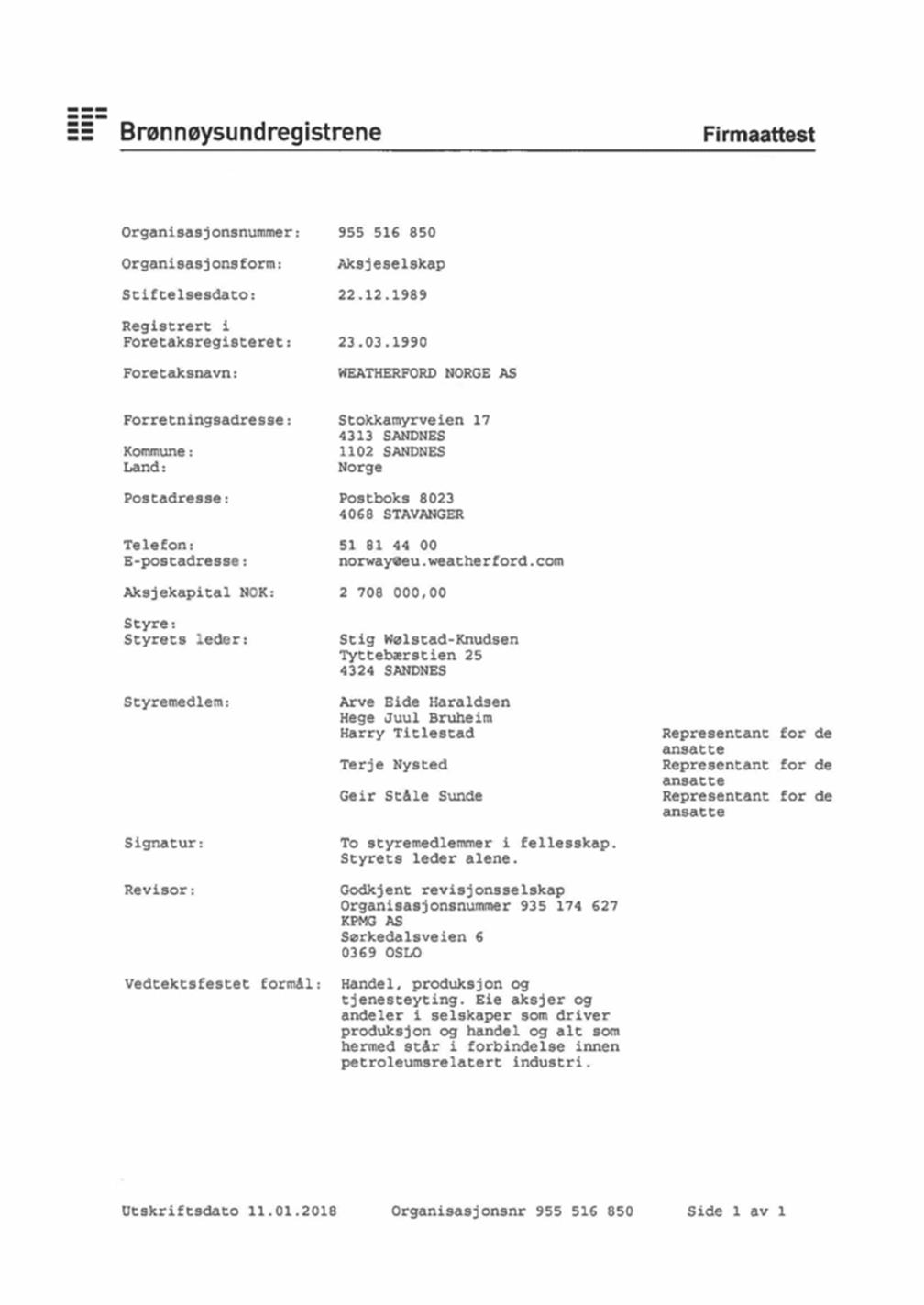
Brønnøysundregistrene Firmaattest Foretaksregisteret, Postboks 900, 8910 Brønnøysund Opplysningstelefonen: 75 00 75 00 Organisasjonsnummer 974 760 673 Telefaks: 75 00 75 05 Internett: http://www.brreg.no Firmaattesten inneholder opplysninger registrert i Foretaksregisteret om et bestemt foretak identifisert med organisasjonsnummer Opplysningene omfatter forhold som er registrert i Foretaksregisteret pr. utskriftsdato. Meldepliktige forhold som ikke er meldt, og som er i strid med det som er registrert, kan ikke gjøres gjeldende overfor tredjemann, med mindre denne kjente til eller burde kjent forholdet, jf foretaksregisterloven § 10-1 Enhver har rett til a gjøre seg kjent med det som er registrert i Foretaksregisteret. Dette gjelder imidlertid ikke fødse summer.
VEDTEKTER for WEATHERFORD NORGE AS (Vedtatt av generalforsamlingen den 14. september 2012) § 1 Selskapets navn er WEATHERFORD NORGE AS. § 2 Selskapets forretningskontor er i Sandnes, med adresse: Stokkamyrveien 17, 4300 Sandnes § 3 Selskapets formal er handel, produksjon og tjenestcyting. Videre er form alet a eie aksjer og andeler j selskaper som driver produksjon og handel og alt som hermed star i forbindelse innen petroleumsrelatert innen industri. § 4 Selskapets aksjekapital er kr. 2 708 000 fordelt pa 3385 aksjer á kr. 800 § 5 Selskapets styre bestar eiter generalforsamlingens nærmere beslutning av 7-8 medlemmer, som velges av generalforsamlingen for [ILLEGIBLE] ad gangen, hvorav 3 styremedlemmer velges av og blant selskapets ansatte. og de øvrige styremedlemmer velges av selskapets aksjonæser. For hver representant som velges av de ansatte velges det ett varamedlem av og blant de ansatte. Styret velger selv sin leder. Generalforsamlingen velger varaleder_blant.styremedlemmene. Styrets-medlemmer-elles varamedlemmer behøver ikkc være aksjonærer. Over styrets forhandlinger føres protokoll. § 6 Selskapets firma tegnes av to styremedlemmer i forening, eller av styreformannen alene. Styret kan meddele prokura. § 7 Ordinær generalforsamling avholdes hvert ar snarest mulig og innen 20. juni. § 8 Pa den ordinaire generalforsamlingen behandles følgende saker: 1. Styrets beretning om selskapets drift i det forløpne ar. 2. Fastsetting av resultatregnskap og balanse. 3. Beslutning om anvendelse av arsoverskudd eller dekning av underskudd i henhold til den fastsatte balanse og om utdeling av utbytte. 4 Godtgjørclse for styret og for revisor. 5 Valg til styret. 6. Fastscttelse av revisors godtgjørelse og valg av ny revisor. 7. Andre saker som etter lov eller vedtekter hører under generalforsamlingen.
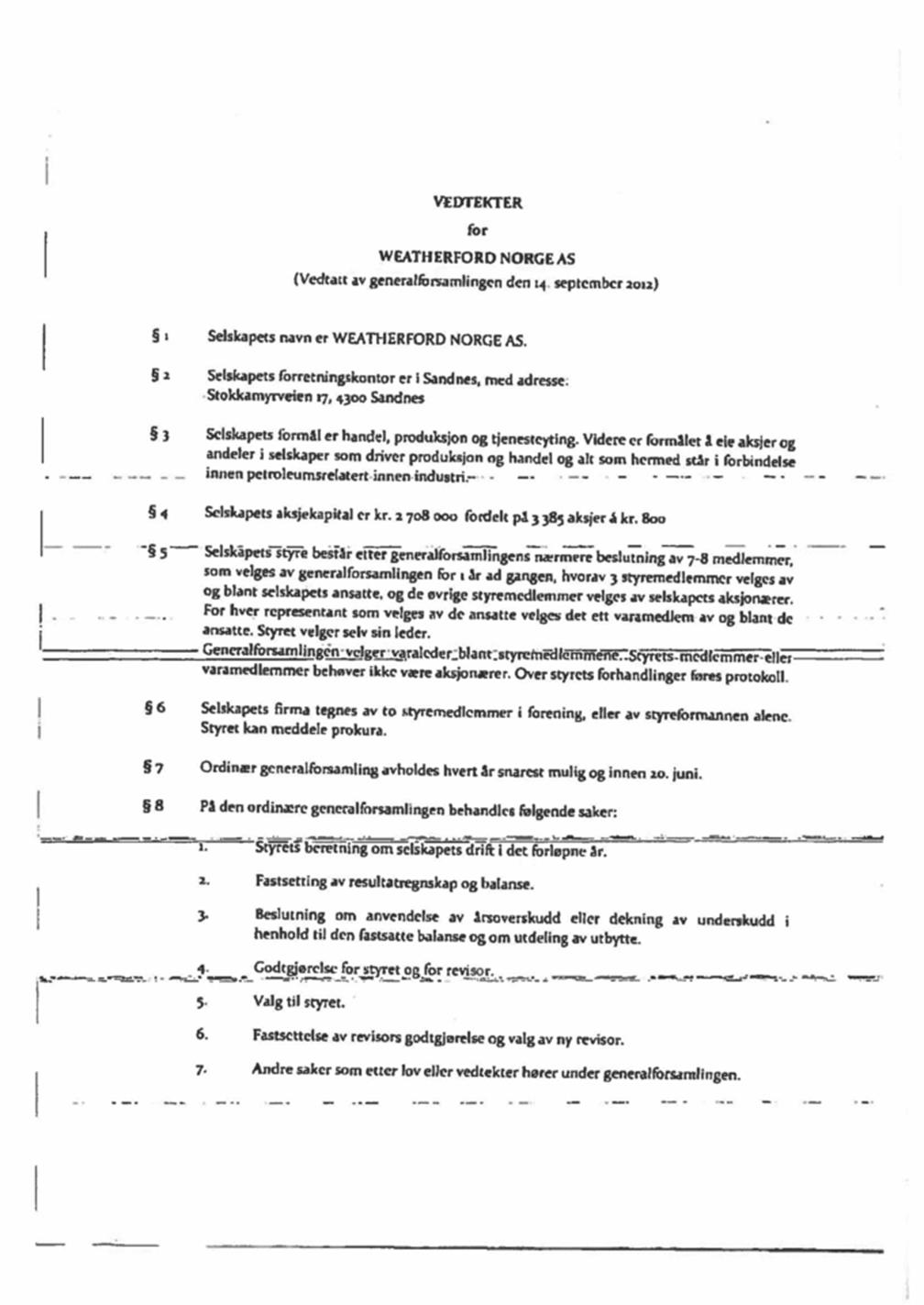
[ILLEGIBLE] Pa generalforsamlingen kan aksjonerer møte ved fullmektig. Skriftlig fullmakt skal i safall forelegges for møteleder for godkjennelse. § 9 For øvrig gjelder alle selskapets anliggender aksjelovens bestemmelser. *** [ILLEGIBLE]


TERRITORY OF THE BRITISH VIRGIN ISLANDS
THE BVI BUSINESS COMPANIES ACT
AMENDED AND RESTATED
MEMORANDUM OF ASSOCIATION
AND
ARTICLES OF ASSOCIATION
OF
WEATHERFORD OIL TOOL MIDDLE EAST LIMITED
Incorporated on the 22nd September 1992
as an International Business Company,
and was automatically re-registered as a
BVI Business Company on the 1st January 2007
Approved by written resolutions of the sole member on
9 May 2016
Filed the 10 day of May 2016
To disapply Part IV of the
Transitional Provisions
Harneys Corporate Services Limited
Craigmuir Chambers
P.O. Box 71
Road Town
Tortola
British Virgin Islands
TERRITORY OF THE BRITISH VIRGIN ISLANDS
BVI BUSINESS COMPANIES ACT
AMENDED AND RESTATED
MEMORANDUM OF ASSOCIATION
OF
WEATHERFORD OIL TOOL MIDDLE EAST LIMITED
1. NAME
The name of the company is Weatherford Oil Tool Middle East Limited (the “Company”).
2. STATUS
The Company is a company limited by shares.
The Company was first incorporated as an international business company on 22 September 1992 and was, immediately prior to the date of automatic re-registration in accordance with the BVI Business Companies Act (the “Act”), governed by the International Business Companies Act (Cap 291).
3. REGISTERED OFFICE AND REGISTERED AGENT
At the date of notice to disapply Part IV of Schedule 2 of the Act, the registered office of the Company was Craigmuir Chambers, P.O. Box 71, Road Town, Tortola, British Virgin Islands.
At the time of notice to disapply Part IV of Schedule 2 of the Act, the registered agent of the Company was Harneys Corporate Services Limited of Craigmuir Chambers, P.O. Box 71, Road Town, Tortola, British Virgin Islands VG1110.
4. CAPACITY AND POWERS
Subject to the Act and any other British Virgin Islands legislation, the Company has, irrespective of corporate benefit:
(a) full capacity to carry on or undertake any business or activity, do any act or enter
into any transaction; and
(b) for the purposes of subparagraph (a), full rights, powers and privileges.
5. NUMBER AND CLASSES OF SHARES
The Company is authorised to issue up to a maximum of 50,000 shares made up of one class and one series of shares of US$1.00 par value each.
6. RIGHTS ATTACHING TO SHARES
Subject to the Articles, the terms of the issue of any share, or any Resolution of Members to the contrary (and, for greater clarity, without prejudice to any special rights conferred thereby on the holders of any other shares), a share of the Company confers on the holder:
(a) the right to one vote at a meeting of the Members or on any Resolution of Members;
(b) the right to an equal share in any Distribution paid by the Company; and
(c) the right to an equal share in the distribution of the surplus assets of the Company on a winding up.
7. VARIATION OF CLASS RIGHTS
The rights attached to any class or series shares (unless otherwise provided by the terms of issue of the shares of that class or series), whether or not the Company is being wound-up, may be varied with the consent in writing of all the holders of the issued shares of that class or series or with the sanction of a resolution passed by a majority of the votes cast at a separate meeting of the holders of the shares of the class or series.
8. RIGHTS NOT VARIED BY THE ISSUE OF SHARES PARI PASSU
Rights conferred upon the holders of the shares of any class or series issued with preferred or other rights shall not, unless otherwise expressly provided by the terms of issue of the shares of that class or series, be deemed to be varied by the creation or issue of further shares ranking pari passu therewith.
9. REGISTERED SHARES
The Company shall issue registered shares only, and such shares may be in full or fractional form. The Company is not authorised to issue bearer shares, convert registered shares to bearer shares, or exchange registered shares for bearer shares.
10. AMENDMENT OF MEMORANDUM AND ARTICLES OF ASSOCIATION
Subject to Clause 7 and Article 14.4(g) of the Articles, the Company may amend its Memorandum or Articles by a Resolution of Members or a Resolution of Directors, save that no amendment may be made by a Resolution of Directors:
(a) to restrict the rights or powers of the Members to amend the Memorandum or Articles;
(b) to change the percentage of Members required to pass a Resolution of Members to amend the Memorandum or Articles;
(c) in circumstances where the Memorandum or Articles cannot be amended by the Members;
(d) to clauses 6,7,8 or this clause 10.
11. DEFINITIONS
The meanings of words in this Memorandum are as defined in the Articles annexed hereto.
We, Harneys Corporate Services Limited, registered agent of the Company, of Craigmuir Chambers, P.O. Box 71, Road Town, Tortola, British Virgin Islands in our capacity as registered agent to the Company hereby apply for the disapplication of Part IV of Schedule 2 of the Act this 10 May 2016.
|
|
Harneys Corporate Services Limited |
|
|
Registered Agent |
|
|
|
|
|
/s/ Macia Payne |
|
|
Per: Macia Payne |
|
|
For and on behalf of |
|
|
Harneys Corporate Services Limited |
TERRITORY OF THE BRITISH VIRGIN ISLANDS
BVI BUSINESS COMPANIES ACT
AMENDED AND RESTATED
ARTICLES OF ASSOCIATION
OF
WEATHERFORD OIL TOOL MIDDLE EAST LIMITED
(a company limited by shares)
TABLE OF CONTENTS
|
INTERPRETATION |
| ||
|
|
|
|
|
|
1. |
|
Definitions |
|
|
|
|
|
|
|
SHARES |
| ||
|
|
|
| |
|
2. |
|
Power to Issue Shares |
|
|
3. |
|
Power of the Company to Purchase its Shares |
|
|
4. |
|
Treatment of Purchased, Redeemed or Acquired Shares |
|
|
5. |
|
Treasury Shares |
|
|
6. |
|
Consideration |
|
|
7. |
|
Forfeiture of Shares |
|
|
8. |
|
Share Certificates |
|
|
9. |
|
Fractional Shares |
|
|
|
|
|
|
|
REGISTRATION OF SHARES |
| ||
|
|
|
|
|
|
10. |
|
Register of Members |
|
|
11. |
|
Registered Holder Absolute Owner |
|
|
12. |
|
Transfer of Registered Shares |
|
|
13. |
|
Transmission of Registered Shares |
|
|
14. |
|
Mortgages and Charges of Shares |
|
|
|
|
|
|
|
ALTERATION OF SHARES |
| ||
|
|
|
|
|
|
15. |
|
Power to Alter Shares |
|
|
16. |
|
Restrictions on the Division of Shares |
|
|
|
|
|
|
|
DISTRIBUTIONS |
| ||
|
|
|
|
|
|
17. |
|
Distributions |
|
|
18. |
|
Power to Set Aside Profits |
|
|
19. |
|
Unauthorised Distributions |
|
|
20. |
|
Distributions to Joint Holders of Shares |
|
|
|
|
|
|
|
MEETINGS OF MEMBERS |
| ||
|
|
|
|
|
|
21. |
|
General Meetings |
|
|
22. |
|
Location |
|
|
23. |
|
Requisitioned General Meetings |
|
|
24. |
|
Notice |
|
|
25. |
|
Giving Notice |
|
|
26. |
|
Service of Notice |
|
|
27. |
|
Participating in Meetings by Telephone |
|
|
28. |
|
Quorum at General Meetings |
|
|
29. |
|
Chairman to Preside |
|
|
30. |
|
Voting on Resolutions |
|
|
31. |
|
Power to Demand a Vote on a Poll |
|
|
32. |
|
Voting by Joint Holders of Shares |
|
|
33. |
|
Instrument of Proxy |
|
|
34. |
|
Representation of Members |
|
|
35. |
|
Adjournment of General Meetings |
|
|
36. |
|
Business at Adjourned Meetings |
|
|
37. |
|
Directors Attendance at General Meetings |
|
|
|
|
|
|
|
DIRECTORS AND OFFICERS |
| ||
|
|
|
| |
|
38. |
|
Election of Directors |
|
|
39. |
|
Number of Directors |
|
|
40. |
|
Term of Office of Directors |
|
|
41. |
|
Alternate and Reserve Directors |
|
|
42. |
|
Removal of Directors |
|
|
43. |
|
Vacancy in the Office of Director |
|
|
44. |
|
Remuneration of Directors |
|
|
45. |
|
Resignation of directors |
|
|
46. |
|
Directors to Manage Business |
|
|
47. |
|
Committees of Directors |
|
|
48. |
|
Officers and Agents |
|
|
49. |
|
Removal of Officers and Agents |
|
|
50. |
|
Duties of Officers |
|
|
51. |
|
Remuneration of Officers |
|
|
52. |
|
Standard of Care |
|
|
53. |
|
Conflicts of Interest |
|
|
54. |
|
Indemnification and Exculpation |
|
|
|
|
| |
|
MEETINGS OF THE BOARD OF DIRECTORS |
| ||
|
|
|
|
|
|
55. |
|
Board Meetings |
|
|
56. |
|
Notice of Board Meetings |
|
|
57. |
|
Participation in Meetings by Telephone |
|
|
58. |
|
Quorum at Board Meetings |
|
|
59. |
|
Board to Continue in the Event of Vacancy |
|
|
60. |
|
Chairman to Preside |
|
|
61. |
|
Powers of Sole Director |
|
|
62. |
|
Proceedings if One Director |
|
|
|
|
|
|
|
CORPORATE RECORDS |
| ||
|
|
|
|
|
|
63. |
|
Documents to be Kept |
|
|
64. |
|
Form and Use of Seal |
|
|
|
|
|
|
|
ACCOUNTS |
| ||
|
|
|
|
|
|
65. |
|
Books of Account |
|
|
66. |
|
Form of Records |
|
|
67. |
|
Financial Statements |
|
|
68. |
|
Distribution of Accounts |
|
|
|
|
|
|
|
AUDITS |
| ||
|
|
|
|
|
|
69. |
|
Audit |
|
|
70. |
|
Appointment of Auditor |
|
|
71. |
|
Remuneration of Auditor |
|
|
72. |
|
Duties of Auditor |
|
|
73. |
|
Access to Records |
|
|
74. |
|
Auditor Entitled to Notice |
|
|
|
|
|
|
|
VOLUNTARY LIQUIDATION |
| ||
|
|
|
| |
|
75. |
|
Liquidation |
|
|
FUNDAMENTAL CHANGES |
| ||
|
|
|
| |
|
76. |
|
Changes |
|
|
77. |
|
Continuation under Foreign Law |
|
INTERPRETATION
1. Definitions
1.1 In these Articles, the following words and expressions shall, where not inconsistent with the context, have the following meanings, respectively:
|
Act |
|
BVI Business Companies Act, as from time to time amended or restated; |
|
|
|
|
|
Articles |
|
these Articles of Association as originally registered or as from time to time amended or restated; |
|
|
|
|
|
Board |
|
the board of directors appointed or elected pursuant to these Articles and acting by Resolution of Directors; |
|
|
|
|
|
Company |
|
Weatherford Oil Tool Middle East Limited; |
|
|
|
|
|
Distribution |
|
(a) the direct or indirect transfer of an asset, other than the Company’s own shares, to or for the benefit of a Member; or |
|
|
|
|
|
|
|
(b) the incurring of a debt to or for the benefit of a Member; |
|
|
|
|
|
|
|
in relation to shares held by a Member and whether by means of the purchase of an asset, the purchase, redemption or other acquisition of shares, a transfer of indebtedness or otherwise, and includes a dividend; |
|
|
|
|
|
Member |
|
a person whose name is entered in the register of members as the holder of one or more shares, or fractional shares, in the Company; |
|
|
|
|
|
Memorandum |
|
the Memorandum of Association of the Company as originally registered or as from time to time amended or restated; |
|
|
|
|
|
Resolution of Directors |
|
(a) a resolution approved at a duly constituted meeting of directors or of a committee of directors of the Company by the affirmative |
|
|
|
vote of a simple majority of the directors present who voted and did not abstain; or |
|
|
|
|
|
|
|
(b) a resolution consented to in writing by all of the directors or of all the members of the committee, as the case may be; |
|
|
|
|
|
Resolution of Members |
|
(a) a resolution approved at a duly constituted meeting of Members by the affirmative vote of a simple majority of the votes of those Members entitled to vote and voting on the resolution; or |
|
|
|
|
|
|
|
(b) a resolution consented to in writing by a simple majority of the Members entitled to vote thereon; |
|
|
|
|
|
Seal |
|
the common seal of the Company; |
|
|
|
|
|
Secretary |
|
the person appointed to perform any or all of the duties of secretary of the Company and includes any deputy or assistant secretary and any person appointed by the Board to perform any of the duties of the Secretary; and |
|
|
|
|
|
Treasury Share |
|
a share of the Company that was previously issued but was repurchased, redeemed or otherwise acquired by the Company and not cancelled. |
1.2 In these Articles, where not inconsistent with the context:
(a) words denoting the plural number include the singular number and vice versa;
(b) words denoting the masculine gender include the feminine and neuter genders;
(c) words importing persons include companies, associations or bodies of persons whether corporate or not;
(d) a reference to voting in relation to shares shall be construed as a reference to voting by Members holding the shares, except that it is the votes
allocated to the shares that shall be counted and not the number of Members who actually voted and a reference to shares being present at a meeting shall be given a corresponding construction;
(e) a reference to money is unless otherwise stated a reference to the currency in which shares of the Company shall be issued;
(f) the words:-
(i) “may” shall be construed as permissive; and
(ii) “shall” shall be construed as imperative; and
(g) unless otherwise provided herein, words or expressions defined in the Act shall bear the same meaning in these Articles.
1.3 In these Articles, expressions referring to writing or its cognates shall, unless the contrary intention appears, include facsimile, printing, lithography, photography, electronic mail and other modes of representing words in visible form.
1.4 Headings used in these Articles are for convenience only and or relied upon in the construction hereof
2. Power to Issue Shares
Subject to the provisions of the Memorandum, the unissued shares of the Company shall be at the disposal of the Board which may, without prejudice to any rights previously conferred on the holders of any existing shares or class or series of shares, offer, allot, grant options over or otherwise dispose of the shares to such persons, at such times and upon such terms and conditions as the Company may by Resolution of Directors determine.
3. Power of the Company to Purchase its Shares
Subject to these Articles (and in particular, but without limitation, Article 14.4), the Company may by Resolution of Directors purchase, redeem or otherwise acquire and hold its own shares. Sections 60, 61 and 62 of the Act shall not apply to the Company.
4. Treatment of Purchased, Redeemed or Acquired Shares
4.1 Subject to Article 4.2, a share that the Company purchases, redeems or otherwise acquires may be cancelled or held by the Company as a Treasury Share.
4.2 The Company may only hold a share that has been purchased, redeemed or otherwise acquired as a Treasury Share if the number of shares purchased, redeemed or otherwise acquired, when aggregated with shares of the same class already held by the Company as Treasury Shares, does not exceed 50% of the shares of that class previously issued by the Company, excluding shares that have been cancelled.
5. Treasury Shares
5.1 Treasury Shares may be transferred by the Company and the provisions of the Act, the Memorandum and these Articles that apply to the issue of shares apply to the transfer of Treasury Shares.
5.2 All the rights and obligations attaching to a Treasury Share are suspended and shall not be exercised by or against the Company while it holds the share as a Treasury Share.
6. Consideration
6.1 A share may be issued for consideration, in any form or a combination of forms, including money, a promissory note or other written obligation to contribute money or property, real property, personal property (including goodwill and know-how), services rendered or a contract for future services.
6.2 No share may be issued for a consideration which is in whole or part, other than money unless the Board passes a resolution stating:
(a) the amount to be credited for the issue of the share; and
(b) that, in its opinion, the present cash value of the non-money consideration and money consideration, if any, is not less than the amount to be credited for the issue of the share.
6.3 No share may be issued by the Company that:
(a) increases the liability of a person to the Company; or
(b) imposes a new liability on a person to the Company,
unless that person, or an authorised agent of that person, agrees in writing to becoming the holder of the share.
6.4 The consideration for a share with par value shall not be less than the par value of the share.
6.5 A bonus share issued by the Company shall be deemed to have been fully paid for on issue.
7. Forfeiture of Shares
7.1 Where a share is not fully paid for on issue, the Board may, subject to the terms on which the share was issued, at any time serve upon the Member a written notice of call specifying a date for payment to be made.
7.2 The written notice of call shall name a further date not earlier than the expiration of fourteen days from the date of service of the notice on or before which the payment required by the notice is to be made and shall contain a statement that in the event of non-payment at or before the time named in the notice, the share will be liable to be forfeited.
7.3 Where a notice complying with the foregoing provisions has been issued and the requirements of the notice have not been complied with, the Board by Resolution of Directors may, at any time before tender of payment forfeit and cancel the share to which the notice relates and direct that the register of members be updated.
7.4 Upon forfeiture and cancellation pursuant to Article 7.3, the Company shall be under no obligation to refund any moneys to that Member and that Member shall be discharged from any further obligation to the Company as regards the forfeited share.
8. Share Certificates
8.1 The Company shall not be required to issue certificates in respect of its shares to a Member, but may elect to do so by the determination of any one director or the Secretary in his sole discretion, upon the request and at the expense of the Member.
8.2 If the Company issues share certificates, the certificates shall be signed by at least one director or such other person who may be authorised by Resolution of Directors to sign share certificates, or shall be under the common seal of the Company, with or without the signature of any director, and the signatures and common seal may be facsimiles.
8.3 Subject to Article 14.4(c), any Member receiving a share certificate for registered shares shall indemnify and hold the Company and its directors and officers harmless from any loss or liability which it or they may incur by reason of wrongful or fraudulent use or representation made by any person by virtue of the possession thereof. If a share certificate for registered shares is worn out or lost it may be renewed on production of the worn out certificate or on
satisfactory proof of its loss together with such indemnity as may be required by a Resolution of Directors.
9. Fractional Shares
The Company may issue fractional shares and a fractional share shall have the corresponding fractional rights, obligations and liabilities of a whole share of the same class or series of shares.
REGISTRATION OF SHARES
10. Register of Members
10.1 The Board shall cause there to be kept a register of members in which there shall be recorded the name and address of each Member, the number of each class and series of shares held by each Member, the date on which the name of each Member was entered in the register of members and the date upon which any person ceased to be a Member.
10.2 The register of members may be in such form as the Board may approve, but if it is in magnetic, electronic or other data storage form, the Company must be able to produce legible evidence of its contents. Unless the Board otherwise determines, the magnetic, electronic or other data storage form shall be the original register of members.
11. Registered Holder Absolute Owner
11.1 The entry of the name of a person in the register of members as a holder of a share in the Company is prima facie evidence that legal title in the share vests in that person.
11.2 The Company may treat the holder of a registered share as the only person entitled to:
(a) exercise any voting rights attaching to the share;
(b) receive notices;
(c) receive a Distribution in respect of the share; and
(d) exercise other rights and powers attaching to the share.
12. Transfer of Registered Shares
12.1 Registered shares in the Company shall only be transferred by a written instrument of transfer signed by the transferor and containing the name and address of the transferee.
12.2 The instrument of transfer shall also be signed by the transferee if registration as a holder of the share imposes a liability to the Company on the transferee.
12.3 The instrument of transfer shall be sent to the Company for registration.
12.4 The Company shall, on receipt of an instrument of transfer, enter the name and address of the transferee of the share in the register of members unless the Board resolves to refuse or delay the registration of the transfer for reasons that shall be specified in the resolution.
12.5 Subject to Article 12.9, the Board is permitted to pass a Resolution of Directors refusing or delaying the registration of a transfer where it reasonably determines that it is in the best interest of the Company to do so. Without limiting the generality of the foregoing. the Board may refuse or delay the registration of a transfer of share if the transferor has failed to pay an amount due in respect of those shares.
12.6 Where the Board passes a resolution to refuse delay the registration of a transfer, the Company shall, as soon as practicable, send the transferor and the transferee a notice of the refusal or delay.
12.7 The transfer of a share is effective when the name of the transferee is entered in the register of members and the Company shall not be required to treat a transferee of a share in the Company as a Member until the transferee’s name has been entered in the register of members.
12.8 If the Board is satisfied that an instrument of transfer has been signed but that the instrument has been lost or destroyed, it may resolve:
(a) to accept such evidence of the transfer of the shares as it considers appropriate; and
(b) that the transfer of shares be recorded, including by the entry of the transferee’s name in the register of members.
12.9 Notwithstanding anything to the contrary contained in these Articles, the Board shall not decline to register any transfer of shares, nor may they suspend registration thereof where such transfer is executed (a) by any bank or other person to whom such shares have been charged by way of security, (b) by any
nominee or agent of such bank or person, or (c) by any receiver, administrative receiver, manager or other person appointed by any bank or other person to whom such shares have been charged pursuant to the relevant security document, whether the transfer is effected for the purpose of any mortgage or pursuant to the power of sale under such mortgage or charge, and a certificate by any officer of such bank or person that the shares were so charged and the transfer was so executed shall be conclusive evidence of such facts.
12.10 Notwithstanding anything to the contrary contained in these Articles, the Board shall not register any shares of the Company or issue any shares in breach of the terms of any charge or other encumbrance over any of the Company’s shares entered into by any of the members of the Company where the Board has notice of the charge or other encumbrance, and for the purpose of this Article 12.10, each Director shall be deemed to have knowledge of (i) any charge or encumbrance details of which have been entered in the register of members of the Company pursuant to Section 66(8) of the Act and Article 14.2 below, and (ii) any subsequent charge or encumbrance over any shares of the Company created pursuant to the terms of any charge or encumbrance referred to in (i) above.
13. Transmission of Registered Shares
13.1 The executor or administrator of the estate of a deceased Member, the guardian of an incompetent Member, the liquidator of an insolvent Member or the trustee of a bankrupt Member shall be the only person recognised by the Company as having any title to the Member’s share.
13.2 Any person becoming entitled by operation of law or otherwise to a share in consequence of the death, incompetence or bankruptcy of any Member may be registered as a Member upon such evidence being produced as may reasonably be required by the Board. An application by any such person to be registered as a Member shall for all purposes be deemed to be a transfer of the share of the deceased, incompetent or bankrupt Member and the Board shall treat it as such.
13.3 Any person who has become entitled to a share or shares in consequence of the death, incompetence or bankruptcy of any Member may, instead of being registered himself, request in writing that some person to be named by him be registered as the transferee of such share and such request shall likewise be treated as if it were a transfer.
14. Mortgages and Charges of Shares
14.1 Members may mortgage or charge their registered shares in the Company and upon satisfactory evidence thereof the Company shall give effect to the terms of any valid mortgage or charge.
14.2 There may be entered in the register of members of the Company at the request of the registered holder of such shares:
(a) a statement that the shares are mortgaged or charged;
(b) the name of the mortgagee or chargee; and
(c) the date on which the particulars of subparagraphs (a) and (b) are entered in the register of members.
14.3 Where particulars of a mortgage or charge are entered in the register of members, such particulars may be canceled only:
(a) with the written consent of the named mortgagee or chargee or anyone authorised to act on his behalf; or
(b) upon evidence satisfactory to the directors of the discharge of the liability secured by the mortgage or charge and the issue of such indemnities as the directors shall consider necessary or desirable.
14.4 Whilst particulars of a mortgage or charge over shares are entered in the register of members pursuant to this Article.
(a) no transfer of any share the subject of those particulars shall be effected;
(b) the Company may not purchase, redeem or otherwise acquire any such shares;
(c) no replacement certificate shall be issued in respect of such shares;
(d) such shares shall be exempt from all liens (whether present or future) in favour of the Company that would otherwise arise pursuant to these Articles;
(e) for so long as such security remains unreleased, the Company shall not claim any lien (howsoever arising) in respect of such share or forfeit, sell or accept as surrendered such share;
(f) any pre-emptive rights or similar rights conferred on existing members or any other party by the Memorandum or Articles, any members’ agreement or otherwise shall not apply to and no such existing member or other party shall be entitled to exercise any such right; and
(g) no amendments may be made to the Memorandum or the Articles,
in each case without the written consent of the named mortgagee or chargee or anyone authorised to act on his behalf.
ALTERATION OF SHARES
15. Power to Alter Shares
15.1 The Company may amend the Memorandum to increase or reduce the maximum number of shares that the Company is authorised to issue, or to authorise the Company to issue an unlimited number of shares.
15.2 Subject to the Memorandum and these Articles, the Company may:
(a) divide its shares, including issued shares, into a larger number of shares; or
(b) combine its shares, including issued shares, into a smaller number of shares;
provided that, where shares are divided or combined, the aggregate par value (if any) of the new shares must be equal to the aggregate par value (if any) of the original shares.
15.3 A division or combination of shares, including issued shares, of a class or series shall be for a larger or smaller number, as the case may be, of shares in the same class or series.
16. Restrictions on the Division of Shares
The Company shall not divide its shares if it would cause the maximum number of shares that the Company is authorised to issue to be exceeded.
DISTRIBUTIONS
17. Distributions
17.1 The Board may, by Resolution of Directors, authorise a Distribution by the Company to Members at such time and of such an amount as it thinks fit if it is satisfied, on reasonable grounds, that immediately after the Distribution, the value of the Company’s assets exceeds its liabilities and the Company is able to pay its debts as they fall due. The resolution shall include a statement to that effect.
17.2 Notice of any Distribution that may have been authorised shall be given to each Member entitled to the Distribution in the manner provided in Article 25 and all
Distributions unclaimed for three years after having been authorised may be forfeited by Resolution of Directors for the benefit of the Company.
18. Power to Set Aside Profits
The Board may, before authorising any Distribution, set aside out of the profits of the Company such sum as it thinks proper as a reserve fund, and may invest the sum so set apart as a reserve fund in such securities as it may select.
19. Unauthorised Distributions
19.1 If, after a Distribution is authorised and before it is made, the Board ceases to be satisfied on reasonable grounds that immediately after the Distribution the value of the Company’s assets exceeds its liabilities and the Company is able to pay its debts as they fall due, such Distribution is deemed not to have been authorised.
19.2 A Distribution made to a Member at a time when, immediately after the Distribution, the value of the Company’s assets did not exceed its liabilities and the Company was not able to pay its debts as they fell due, is subject to recovery in accordance with the provisions of the Act.
20. Distributions to Joint Holders of Shares
If two or more persons are registered as joint holders of any shares, any one of such persons may give an effectual receipt for any Distribution payable in respect of such shares.
MEETINGS OF MEMBERS
21. General Meetings
The Board, by Resolution of Directors, may convene meetings of the Members of the Company at such times and in such manner as the Board considers necessary or desirable.
22. Location
Any meeting of the Members may be held in such place within or outside the British Virgin Islands as the Board considers appropriate.
23. Requisitioned General Meetings
The Board shall call a meeting of the Members if requested in writing to do so by Members entitled to exercise at least thirty percent of the voting rights in respect of the matter for which the meeting is being requested.
24. Notice
24.1 The Board shall give not less than seven days’ notice of meetings of Members to those persons whose names, on the date the notice is given, appear as Members in the register of members of the Company and are entitled to vote at the meeting.
24.2 A meeting of Members held in contravention of the requirement in Article 24.1 is valid if Members holding a ninety percent majority of the total voting rights on all the matters to be considered at the meeting have waived notice of the meeting and, for this purpose, the presence of a Member at the meeting shall be deemed to constitute waiver on his part.
24.3 The inadvertent failure of the Board to give notice of a meeting to a Member, or the fact that a Member has not received notice, does not invalidate the meeting.
25. Giving Notice
25.1 A notice may be given by the Company to any Member either by delivering it to such Member in person or by sending it to such Member’s address in the register of members or to such other address given for the purpose. Notice may be sent by mail, courier service, cable, telex, telecopier, facsimile or other mode of representing words in a legible form.
25.2 Any notice required to be given to a Member shall, with respect to any shares held jointly by two or more persons, be given to whichever of such persons is named first in the register of members and notice so given shall be sufficient notice to all the holders of such shares.
26. Service of Notice
Any notice shall be deemed to have been served at the time when the same would be delivered in the ordinary course of transmission and, in proving such service, it shall be sufficient to prove that the notice was properly addressed and prepaid, if posted, and the time when it was posted, delivered to the courier or to the cable company or transmitted by telex, facsimile or other method as the case may be.
27. Participating in Meetings by Telephone
A Member shall be deemed to be present at a meeting of Members if he participates by telephone or other electronic means and all Members participating in the meeting are able to hear each other.
28. Quorum at General Meetings
28.1 A meeting of Members is properly constituted if at the commencement of the meeting there are present in person or by proxy not less than fifty percent of the votes of the shares or class or series of shares entitled to vote on Resolutions of Members to be considered at the meeting.
28.2 If within two hours from the time appointed for the meeting a quorum is not present, the meeting, if convened upon the requisition of Members, shall be dissolved; in any other case it shall stand adjourned to the next business day at the same time and place or to such other time and place as the Board may determine, and if at the adjourned meeting there are present within one hour from the time appointed for the meeting in person or by proxy not less than one third of the votes of the shares or each class or series of shares entitled to vote on the resolutions to be considered by the meeting, those present shall constitute a quorum but otherwise the meeting shall be dissolved.
28.3 If a quorum is present notwithstanding the fact such quorum may be represented by only one person then such person may resolve any matter and a certificate signed by such person accompanied where such person be a proxy by a copy of the proxy form shall constitute a valid Resolution of Members.
29. Chairman to Preside
At every meeting of Members, the chairman of the Board shall preside as chairman of the meeting. If there is no chairman of the Board or if the chairman of the Board is not present at the meeting, the Members present shall choose one of their number to be the chairman. If the Members are unable to choose a chairman for any reason, then the person representing the greatest number of voting shares present in person or by proxy at the meeting shall preside as chairman.
30. Voting on Resolutions
At any meeting of the Members the chairman shall be responsible for deciding in such manner as he shall consider appropriate whether any resolution has been carried or not and the result of his decision shall be announced to the meeting and recorded in the minutes thereof.
31. Power to Demand a Vote on a Poll
31.1 At any meeting of Members a resolution put to the vote of the meeting shall, in the first instance, be voted upon by a show of hands and, subject to any rights or restrictions for the time being lawfully attached to any class of shares and subject to the provisions of these Articles, every Member present in person and every
person holding a valid proxy at such meeting shall he entitled to one vote and shall cast such vote by raising his hand.
31.2 If the chairman shall have any doubt as to the outcome of any resolution put to the vote, he shall cause a poll to be taken of all votes cast upon such resolution, but if the chairman shall fail to take a poll then any Member present in person or by proxy who disputes the announcement by the chairman of the result of any vote may immediately following such announcement demand that a poll be taken and the chairman shall thereupon cause a poll to be taken. If a poll is taken at any meeting, the result thereof shall be duly recorded in the minutes of that meeting by the chairman.
32. Voting by Joint Holders of Shares
The following shall apply where shares are jointly owned: (a) if two or more persons hold shares jointly each of them may be present in person or by proxy at a meeting of Members and may speak as a Member; (b) if only one of the joint owners is present in person or by proxy he may vote on behalf of all of them; and (c) if two or more of the joint owners are present in person or by proxy must vote as one.
33. Instrument of Proxy
33.1 A Member may be represented at a meeting of Members by a proxy (who need not be a Member) who may speak and vote on behalf of the Member.
33.2 An instrument appointing a proxy shall be in such form as the Board may from time to time determine or such other form as the chairman of the meeting shall accept as properly evidencing the wishes of the Member appointing the proxy and, subject to Article 33.5, the decision of the chairman of any general meeting as to the validity of any appointment of a proxy shall be final.
33.3 The chairman of any meeting at which a vote is cast by proxy or on behalf of any person other than an individual may call for a notarially certified copy of such proxy or authority which shall be produced within seven days of being so requested or the votes cast by such proxy or on behalf of such person shall be disregarded.
33.4 The instrument appointing a proxy shall be produced at the place appointed for the meeting before the time for holding the meeting at which the person named in such instrument proposes to vote.
33.5 Any Member may irrevocably appoint a proxy and in such case: (i) such appointment shall be irrevocable in accordance with the terms of the instrument of appointment; (ii) the Company shall be given notice of the appointment, such notice to include the name, address, telephone number and electronic mail
address of the proxy, and the Company shall give to such proxy notice of all meetings of Members of the Company; (iii) such proxy shall be the only person entitled to vote the relevant shares at any meeting at which such proxy is present; and (iv) the Company shall be obliged to recognise the proxy until such time as such proxy shall notify the Company in writing that the appointment of such proxy is no longer in force
34. Representation of Members
34.1 Any person other than an individual which is a Member may by resolution in writing (certified or signed by a duly authorised person) of its directors or other governing body authorise such person as it thinks fit to act as its representative (in this Article, “Representative”) at any meeting of the Members or at the meeting of the Members of any class or series of shares and the Representative shall be entitled to exercise the same powers on behalf of the Member which he represents as that Member could exercise if it were an individual.
34.2 The right of a Representative shall be determined by the law of the jurisdiction where, and by the documents by which, Member is constituted or derives its existence. In case or doubt, the Board may in good faith seek legal advice from any qualified person and unless and until a court of competent jurisdiction shall otherwise rule, the Board may rely and act upon such advice without incurring any liability to any Member.
35. Adjournment of General Meetings
The chairman may, with the consent of the meeting, adjourn any meeting from time to time, and from place to place.
36. Business at Adjourned Meetings
No business shall be transacted at any adjourned meeting other than the business left unfinished at the meeting from which the adjournment took place.
37. Directors Attendance at General Meetings
Directors of the Company may attend and speak at any meeting of Members of the Company and at any separate meeting of the holders of any class or series of shares in the Company.
DIRECTORS AND OFFICERS
38. Election of Directors
38.1 The first registered agent of the Company shall, within six months of the date of incorporation of the Company, appoint one or more persons as the first director or directors of the Company. Thereafter, the directors shall be elected by a Resolution of Directors or a Resolution of Members.
38.2 No person shall be appointed as a director or nominated as a reserve director unless he has consented in writing to act as a director or to be nominated as a reserve director.
38.3 A director shall not require a share qualification, and may be an individual or a company.
38.4 Any director which is a body corporate may appoint any person its duly authorised representative for the purpose of representing it at Board meetings or with respect to unanimous written consents.
39. Number of Directors
The maximum number of directors may be fixed either by a Resolution of Directors or a Resolution of Members, provided that if the maximum number of directors is fixed by a Resolution of Members, then any change to the maximum number of directors shall only be made by a Resolution of Members.
40. Term of Office of Directors
Each director shall hold office for the term, if any, as may be specified in the resolution appointing him or until his earlier death, resignation or removal.
41. Alternate and Reserve Directors
41.1 A director may at any time appoint any person (including another director) to be his alternate director and may at any time terminate such appointment. An appointment and a termination of appointment shall be by notice in writing signed by the director and deposited at the Company’s registered office or delivered at a meeting of the Board.
41.2 The appointment of an alternate director shall terminate on the happening of any event which, if he were a director, would cause him to vacate such office or if his appointor ceases for any reason to be a director.
41.3 An alternate director has the same rights as the appointing director in relation to any directors’ meeting and any written resolution circulated for written consent, save that he may not himself appoint an alternate director or a proxy. Any exercise by the alternate director of the appointing director’s powers in relation to the taking of decisions by the directors is as effective as if the powers were exercised by the appointing director.
41.4 If an alternate director is himself a director or attends a meeting of the Board as the alternate director of more than one director, his voting rights shall be cumulative.
41.5 Unless the Board determines otherwise, an alternate director may also represent his appointor at meetings of any committee of the directors on which his appointor serves; and this Article shall apply equally to such committee meetings as to meetings of the Board.
41.6 Where the Company has only one Member who is an individual and that Member is also the sole director, the sole member/director may, by instrument in writing, nominate a person who is not disqualified from being a director under the Act as a reserve director in the event of his death.
41.7 The nomination person as a reserve director ceases to have effect if: (a) before the death of the sole Member/director who nominated him he resigns as reserve director, or the sole Member/director revokes the nomination in writing, or (b) the sole Member/director who nominated him ceases to be the sole Member/director for any reason other than his death.
42. Removal of Directors
42.1 A director may be removed from office, with or without cause:
(a) by a Resolution of Members at a meeting of the Members called for the purpose of removing the director or for purposes including the removal of the director; or
(b) by a Resolution of Members consented to in writing by all of the Members entitled to vote thereon.
42.2 Notice of a meeting called under Article 42.1(a) shall state that the purpose of the meeting is, or the purposes of the meeting include, the removal of a director.
43. Vacancy in the Office of Director
43.1 Notwithstanding Article 38, the Board may appoint one or more directors to fill a vacancy on the Board.
43.2 For the purposes of this Article, there is a vacancy on the Board if a director dies or otherwise ceases to hold office as a director prior to the expiration of his term of office or there is otherwise a vacancy in the number of directors as fixed pursuant to Article 39.
43.3 The term of any appointment under this Article may not exceed the term that remained when the person who has ceased to be a director left or otherwise ceased to hold office.
44. Remuneration of Directors
With the prior or subsequent approval by a Resolution of Members, the Board may, by a Resolution of Directors, fix the emoluments of directors with respect to services to be rendered in any capacity to the Company.
45. Resignation of directors
A director may resign his office by giving written notice of his resignation to the Company and the resignation shall have effect from date the notice is received by the Company or from such later date as may be specified in the notice.
46. Directors to Manage Business
46.1 The business and affairs of the Company shall be managed by, or under the direction or supervision of, the Board.
46.2 The Board has all the powers necessary for managing, and for directing and supervising, the business and affairs of the Company.
46.3 The Board may authorise the payment of all expenses incurred preliminary to and in connection with the formation and registration of the Company and may exercise all such powers of the Company as are not by the Act or by the Memorandum or these Articles required to be exercised by the Members of the Company, subject to any delegation of such powers as may be authorised by these Articles and to such requirements as may be prescribed by a Resolution of Members; but no requirement made by a Resolution of Members shall prevail if it is inconsistent with these Articles nor shall such requirement invalidate any prior act of the Board which would have been valid if such requirement had not been made.
46.4 Subject to the provisions of the Act, all cheques, promissory notes, draft, bills of exchange and other negotiable instruments and all receipts for moneys paid to the Company, shall be signed, drawn, accepted, endorsed or otherwise executed, as the case may be, in such manner as shall from time to time be determined by Resolution of Directors.
47. Committees of Directors
47.1 The Board may, by a Resolution of Directors, designate one or more committees of directors, each consisting of one or more directors.
47.2 Each committee of directors has such powers and authorities of the Board, including the power and authority to affix the Seal, as are set forth in these Articles or the Resolution of Directors establishing the committee, except that the Board has no power to delegate the following powers to a committee of directors:
(a) to amend the Memorandum or these Articles;
(b) to designate committees of directors;
(c) to delegate powers to a committee of directors;
(d) to appoint or remove directors;
(e) to appoint or remove an agent;
(f) to approve a plan of merger, consolidation or arrangement;
(g) to make a declaration of solvency approve a liquidation plan; or
(h) to make a determination that the Company will, immediately after a proposed Distribution, meet the solvency test set out in the Act.
47.3 A committee of directors, where authorised by the Board, may appoint a sub-committee.
47.4 The meetings and proceedings of each committee of directors consisting of two or more directors shall be governed mutatis mutandis by the provisions of these Articles regulating the proceedings of directors so far as the same are not superseded by any provisions in the resolution establishing the committee.
48. Officers and Agents
48.1 The Board may, by a Resolution of Directors, appoint any person, including a person who is a director, to be an officer or agent of the Company. Such officers may consist of a chairman of the Board, a vice chairman of the Board, a president and one or more vice presidents, secretaries and treasurers and such other officers as may from time to time be deemed desirable. Any number of offices may be held by the same person.
48.2 Each officer or agent has such powers and authorities of the Board, including the power and authority to affix the Seal, as are set forth in these Articles or the
Resolution of Directors appointing the officer or agent, except that no officer or agent has any power or authority with respect to the following:
(a) to amend the Memorandum or these Articles;
(b) to change the registered office or agent;
(c) to designate committees of directors;
(d) to delegate powers to a committee of directors;
(e) to appoint or remove directors;
(f) to appoint or remove an agent;
(g) to fix emoluments of directors;
(h) to approve a plan of merger, consolidation or arrangement;
(i) to make a declaration of solvency or approve a liquidation plan;
(j) to make a determination that the Company will, immediately after a proposed distribution, meet the solvency test set out in the Act; or
(k) to authorise the Company to continue as a company incorporated under the laws of a jurisdiction outside the British Virgin Islands.
49. Removal of Officers and Agents
The officers and agents of the Company shall hold office until their successors are duly elected and qualified, but any officer or agent elected or appointed by the Board may be removed at any time, with or without cause, by Resolution of Directors. Any vacancy occurring in any office of the Company may be filled by Resolution of Directors.
50. Duties of Officers
In the absence of any specific allocation of duties it shall be the responsibility of the chairman of the Board to preside at meetings of directors and Members, the vice chairman to act in the absence of the chairman, the president to manage the day to day affairs of the Company, the vice presidents to act in order of seniority in the absence of the president but otherwise to perform such duties as may be delegated to them by the president, the Secretary to maintain the register of members, register or directors, minute books, records (other than financial records) of the Company, and Seal and to ensure compliance with all procedural requirements imposed on the Company by applicable law, and the treasurer to be responsible for the financial affairs of the Company.
51. Remuneration of Officers
The emoluments of all officers shall be fixed by Resolution of Directors.
52. Standard of Care
A director, when exercising powers or performing duties as a director, shall exercise the care, diligence, and skill that a reasonable director would exercise in the same circumstances taking into account, but without limitation, (a) the nature of the Company, (b) the nature of the decision, and (c) the position of the director and the nature of the responsibilities undertaken by him.
53. Conflicts of Interest
53.1 A director shall, forthwith after becoming aware of the fact that he is interested in a transaction entered into or to be entered into by the Company, disclose the interest to the Board, unless the transaction or proposed transaction (a) is between the director and the Company and (b) is to be entered into in the ordinary course of the Company’s business and on usual terms and conditions.
53.2 A transaction entered into by the Company in respect of which a director is interested is voidable by the Company unless the director complies with Article 53.1 or (a) the material facts of the interest of the director in the transaction are known by the Members entitled to vote at a meeting of Members and the transaction is approved or ratified by a Resolution of Members or (b) the Company received fair value for the transaction.
53.3 For the purposes of this Article, a disclosure is not made to the Board unless it is made or brought to the attention of every director on the Board.
53.4 A director who is interested in a transaction entered into or to be entered into by the Company may vote on a matter relating to the transaction, attend a meeting of directors at which a matter relating to the transaction arises and be included among the directors present at the meeting for the purposes of a quorum and sign a document on behalf of the Company, or do any other thing in his capacity as director that relates to the transaction.
54. Indemnification and Exculpation
54.1 Subject to Article 54.2 the Company shall indemnify against all expenses, including legal fees, and against all judgments, fines and amounts paid in settlement and reasonably incurred in connection with legal, administrative or investigative proceedings any person who:
(a) is or was a party or is threatened to be made a party to any threatened, pending or completed proceedings, whether civil, criminal, administrative or investigative, by reason of the fact that the person is or was a director, an officer or a liquidator of the Company; or
(b) is or was, at the request of the Company, serving as a director, officer or liquidator of, or in any other capacity is or was acting for, another body corporate or a partnership, joint venture, trust or other enterprise.
54.2 Article 54.1 does not apply to a person referred to in that paragraph unless the person acted honestly and in good faith and in what he believed to be the best interests of the Company and, in the case of criminal proceedings, the person had no reasonable cause to believe that his conduct was unlawful.
54.3 The decision of the Board as to whether the person acted honestly and in good faith and in what he believed to be the best interests of the Company and as to whether the person had no reasonable cause to believe that his conduct was unlawful is, in the absence of fraud, sufficient for the purposes of these Articles, unless a question of law is involved.
54.4 The termination of any proceedings by any judgment, order, settlement, conviction or the entering of a nolle prosequi does not, by itself, create a presumption that the person did not act honestly and in good faith and with a view to the best interests of the Company or that the person had reasonable cause to believe that his conduct was unlawful.
54.5 If a person referred to in this Article has been successful in defence of any proceedings referred to therein, the person is entitled to be indemnified against all expenses, including legal fees, and against all judgments, fines and amounts paid in settlement and reasonably incurred by the person in connection with the proceedings.
54.6 Expenses, including legal fees, incurred by a director (or former director) in defending any legal, administrative or investigative proceedings may be paid by the Company in advance of the final disposition of such proceedings upon receipt of an undertaking by or on behalf of the director (or former director, as the case may be) to repay the amount if it shall ultimately be determined that the director (or former director, as the case may be) is not entitled to be indemnified by the Company.
54.7 The indemnification and advancement of expenses provided by, or granted under these Articles are not exclusive of any other rights to which the person seeking indemnification or advancement of expenses may be entitled under any agreement, Resolution of Members, resolution of disinterested directors or
otherwise, both as to acting in the person’s official capacity and as to acting in another capacity while serving as a director of the Company.
54.8 The Company may purchase and maintain insurance in relation to any person who is or was a director, an officer or a liquidator of the Company, or who at the request of the Company is or was serving as a director, an officer or a liquidator of, or in any other capacity is or was acting for, another body corporate or a partnership, joint venture, trust or other enterprise, against any liability asserted against the person and incurred by the person in that capacity, whether or not the Company has or would have had the power to indemnify the person against the liability under Article 54.1.
MEETINGS OF THE BOARD OF DIRECTORS
55. Board Meetings
The Board or any committee thereof may meet at such times and in such manner and places within or outside the British Virgin Islands as it may determine to be necessary or desirable. Any director or the Secretary of the Company may call a Board meeting.
56. Notice of Board Meetings
A director shall be given reasonable notice of a Board meeting, but a Board meeting held without reasonable notice having been given to all directors shall be valid if all the directors entitled to vote at the meeting waive notice of the meeting, and for this purpose, the presence of a director at the meeting shall be deemed to constitute waiver on his part (except where a director attends a meeting for the express purpose of objecting to the transaction of business on the grounds that the meeting is not properly called). The inadvertent failure to give notice meeting to a director, or the fact that a director has not received the notice, does not invalidate the meeting.
57. Participation in Meetings by Telephone
A director shall be deemed to be present at a meeting of directors if he participates by telephone or other electronic means and all directors participating in the meeting are able to hear each other.
58. Quorum at Board Meetings
The quorum necessary for the transaction of business at a meeting of directors shall be two directors.
59. Board to Continue in the Event of Vacancy
The continuing directors may act notwithstanding any vacancy in their body, save that if their number is reduced below the number fixed by or pursuant to these Articles as the necessary quorum for a Board meeting, the continuing directors or director may act only for the purpose of appointing directors to fill any vacancy that has arisen or summoning a meeting of Members.
60. Chairman to Preside
At every Board meeting the chairman of the Board shall preside as chairman of the meeting. If there is not a chairman of the Board or if the chairman of the Board is not present at the meeting, the vice chairman of the Board shall preside. If there is no vice chairman of the Board or if the vice chairman of the Board is not present at the meeting, the directors present shall choose one of their number to be chairman of the meeting.
61. Powers of Sole Director
If the Company shall have only one director the provisions herein contained for Board meetings shall not apply but such sole director shall have full power to represent and act for the Company in all matters as are not by the Act or the Memorandum or these Articles required to be exercised by the Members of the Company.
62. Proceedings if One Director
If the Company shall have only one director, in lieu of minutes of a meeting the director shall record in writing and sign a note or memorandum (or adopt a resolution in writing) concerning all matters requiring a Resolution of Directors and such note, memorandum or resolution writing shall be kept in the minute book. Such a note, memorandum or resolution in writing shall constitute sufficient evidence of such resolution for all purposes.
CORPORATE RECORDS
63. Documents to be Kept
63.1 The Company shall keep the following documents at the office of its registered agent:
(a) the Memorandum and these Articles;
(b) the register of members or a copy of the register of members;
(c) the register of directors or a copy of the register of directors;
(d) the register of charges or a copy of the register of charges;
(e) copies of all notices and other documents filed by the Company in the previous ten years.
63.2 Where the Company keeps a copy of its register of members or register of directors at the office of its registered agent, it shall within 15 days of any change in the register, notify the registered agent, in writing, of the change, and it shall provide the registered agent with a written record of the physical address of the place or places at which the original register of members or the original register of directors is kept.
63.3 Where the place at which the original register of members or the original register of directors is changed, the Company shall provide the registered agent with the physical address of the new location of the records within 14 days of the change of location.
63.4 The Company shall keep the following records at the office of its registered agent or at such other place or places, within or outside the British Virgin Islands, as the Board may determine.
(a) the minutes of meetings and Resolutions of Members and of classes of Members; and
(b) the minutes of meeting and Resolutions of Directors and committees of directors.
63.5 Where any of the minutes on resolutions described in the previous paragraph are kept at a place other than at the office of the Company’s registered agent, the Company shall provide the registered agent with a written record of the physical address of the place or places at which the records are kept.
63.6 Where the place at which any of the records described in Article 63.4 is changed, the Company shall provide the registered agent with the physical address of the new location of the records within 14 days of the change of location.
63.7 The Company’s records shall be kept in written form or either wholly or partly as electronic records.
64. Form and Use of Seal
The Board shall provide for the safe custody of the Seal. An imprint thereof shall be kept at the office of the registered agent of the Company. The Seal when affixed to any written instrument shall be witnessed by any one director, the Secretary or Assistant Secretary, or by any person or persons so authorised from time to time by Resolution of Directors.
ACCOUNTS
65. Books of Account
The Company shall keep records and underlying documentation that:
(a) are sufficient to show and explain the Company’s transactions; and
(b) will, at any time, enable the financial position of the Company to be determined with reasonable accuracy.
66. Form of Records
66.1 The records required to be kept by the Company under the Act, the Mutual Legal Assistance (Tax Matters Act), 2003, the Memorandum or these Articles shall be kept in written form or either wholly or partly as electronic records complying with the requirements of the Electronic Transactions Act (British Virgin Islands).
66.2 The records and underlying documentation shall be kept for a period of at least five years from the date of completion of the relevant transaction or the company terminates the business relationship to which the records and underlying documentation relate.
67. Financial Statements
67.1 If required by a Resolution of Members, the Board shall cause to be made out and served on the Members or laid before a meeting of Members a profit and loss account and balance sheet of the Company for such period and on such recurring basis as the Members think fit.
67.2 The Company’s profit and loss account and balance sheet shall be drawn up so as to give respectively a true and fair view of the profit or loss of the Company for that financial period, and a true and fair view of the state of affairs of the Company as at the end of that financial period.
68. Distribution of Accounts
A copy of such profit and loss account and balance sheet shall be served on every Member in the manner and with similar notice to that prescribed herein for calling a meeting of Members or upon such shorter notice as the Members may agree to accept.
AUDITS
69. Audit
The Company may by Resolution of Members call for the accounts to be examined by an auditor.
70. Appointment of Auditor
70.1 The first auditor shall be appointed by Resolution of Directors; subsequent auditors shall be appointed by a Resolution of Members.
70.2 The auditor may be a Member of the Company but no director or other officer shall be eligible to be an auditor of the Company during his continuance in office.
71. Remuneration of Auditor
The remuneration of the auditor of the Company.
(a) in the case of an auditor appointed by the Board, may be fixed by Resolution of Directors; and
(b) subject to the foregoing shall be fixed by Resolution of Members or in such manner as the Company may by Resolution of Members determine.
72. Duties of Auditor
The auditor shall examine each profit and loss account and balance sheet required to be served on every Member of the Company or laid before a meeting of the Members of the Company and shall state in a written report whether or not:
(a) in its opinion the profit and loss account and balance sheet give a true and fair view respectively of the profit and loss for the period covered by the accounts, and of the state of affairs of the Company at the end of that period; and
(b) all the information and explanations required by the auditor have been obtained.
73. Access to Records
Every auditor of the Company shall have right of access at all times to the books of account of the Company, and shall be entitled to require from the directors and officers
of the Company such information and explanations as he thinks necessary for the performance of the duties of the auditor.
74. Auditor Entitled to Notice
The auditor of the Company shall be entitled to receive notice of, and to attend any meetings of Members of the Company at which the Company’s profit and loss account and balance sheet are to be presented.
VOLUNTARY LIQUIDATION
75. Liquidation
The Company may be liquidated in accordance with the Act only if (a) it has no liabilities; or (b) it is able to pay its debts as they fall due and the value of its assets equals or exceeds its liabilities. The Board shall be permitted to pass a Resolution of Directors for the appointment of an eligible individual as a voluntary liquidator (or two or more eligible individuals as joint voluntary liquidators) of the Company if the Members have, by a Resolution of Members, approved the liquidation plan in accordance with the Act.
FUNDAMENTAL CHANGES
76. Changes
Notwithstanding section 175 of the Act, the Board may sell, transfer, lease, exchange or otherwise dispose of the assets of the Company without the sale, transfer, lease, exchange or other disposition being authorised by a Resolution of Members.
77. Continuation under Foreign Law
The Company may by Resolution of Members or by Resolution of Directors continue as a company incorporated under the laws of a jurisdiction outside the British Virgin Islands in the manner provided under those laws.
We, Harneys Corporate Services Limited, registered agent of the Company, of Craigmuir Chambers, P.O. Box 71, Road Town, Tortola, British Virgin Islands in our capacity as registered agent to the Company hereby apply for the disapplication of Part IV of Schedule 2 of the Act this 10 May 2016.
|
|
Harneys Corporate Services Limited |
|
|
Registered Agent |
|
|
|
|
|
|
|
|
/s/ Macia Payne |
|
|
Per: Macia Payne |
|
|
For and on behalf of |
|
|
Harneys Corporate Services Limited |
FORM NO. 2

BERMUDA
THE COMPANIES ACT 1981
MEMORANDUM OF ASSOCIATION OF
COMPANY LIMITED BY SHARES
(Section 7(1) and (2))
MEMORANDUM OF ASSOCIATION
OF
Weatherford Pangaea Holdings Ltd.
(hereinafter referred to as “the Company”)
1. The liability of the members of the Company is limited to the amount (if any) for the time being unpaid on the shares respectively held by them.
2. We, the undersigned, namely,
|
NAME |
|
ADDRESS |
|
BERMUDIAN STATUS |
|
NATIONALITY |
|
NUMBER OF SHARES |
|
|
|
|
|
|
|
|
|
|
|
|
|
David W.P. Cooke |
|
Clarendon House |
|
Yes |
|
British |
|
One |
|
|
|
|
2 Church Street |
|
|
|
|
|
|
|
|
|
|
Hamilton HM 11 |
|
|
|
|
|
|
|
|
|
|
Bermuda |
|
|
|
|
|
|
|
|
|
|
|
|
|
|
|
|
|
|
|
Jason Piney |
|
“ |
|
No |
|
British |
|
One |
|
|
|
|
|
|
|
|
|
|
|
|
|
Emily Costa |
|
“ |
|
No |
|
British |
|
One |
|
do hereby respectively agree to take such number of shares of the Company as may be allotted to us respectively by the provisional directors of the Company, not exceeding the number of shares for which we have respectively subscribed, and to satisfy such calls as may be made by the directors, provisional directors or promoters of the Company in respect of the shares allotted to us respectively.
3. The Company is to be an exempted company as defined by the Companies Act 1981 (the “Act”).
4. The Company, with the consent of the Minister of Finance, has power to hold land situate in Bermuda not exceeding in all, including the following parcels:- N/A
5. The authorised share capital of the Company is US$100.00 divided into shares of US$1.00 each.
6. The objects for which the Company is formed and incorporated are unrestricted.
7. The following are provisions regarding the powers of the Company —
Subject to paragraph 4, the Company may do all such things as are incidental or conducive to the attainment of its objects and shall have the capacity, rights, powers and privileges of a natural person, and —
(i) pursuant to Section 42 of the Act, the Company shall have the power to issue preference shares which are, at the option of the holder, liable to be redeemed;
(ii) pursuant to Section 42A of the Act, the Company shall have the power to purchase its own shares for cancellation; and
(iii) pursuant to Section 42B of the Act, the Company shall have the power to acquire its own shares to be held as treasury shares.
Signed by each subscriber in the presence of at least one witness attesting the signature thereof
|
/s/ [ILLEGIBLE] |
|
/s/ [ILLEGIBLE] |
|
|
|
|
|
|
|
|
|
/s/ [ILLEGIBLE] |
|
/s/ [ILLEGIBLE] |
|
|
|
|
|
|
|
|
|
/s/ [ILLEGIBLE] |
|
/s/ [ILLEGIBLE] |
|
|
|
|
|
|
|
|
|
|
|
|
|
|
|
|
|
|
|
|
|
(Subscribers) |
|
(Witnesses) |
SUBSCRIBED this 10th day of September, 2014.
Exhibit T3A-59
|
ARTICLES OF INCORPORATION |
|
STATUTEN
|
|
|
|
|
|
of |
|
der |
|
|
|
|
|
Weatherford Products GmbH (Weatherford Products LLC) |
|
Weatherford Products GmbH (Weatherford Products LLC) |
|
|
|
|
|
I. NAME, DOMICILE, DURATION, AND PURPOSE OF THE COMPANY |
|
I. FIRMA, SITZ, DAUER UND ZWECK DER GESELLSCHAFT |
|
|
|
|
|
Article 1 |
|
Artikel 1 |
|
|
|
|
|
Name, Domicile, Duration |
|
Firma, Sitz, Dauer |
|
|
|
|
|
Under the firm name of Weatherford Products GmbH (Weatherford Products LLC) with domicile in Baar, there exists for an unlimited period of time a limited liability company which is governed by Art. 772 seq. of the Swiss Code of Obligations (CO). |
|
Unter der Firma Weatherford Products GmbH (Weatherford Products LLC) besteht mit Sitz in Baar auf unbestimmte Dauer eine Gesellschaft mit beschränkter Haftung im Sinne von Art. 772 ff. des Schweizerischen Obligationenrechts (OR). |
|
|
|
|
|
Article 2 |
|
Artikel2 |
|
|
|
|
|
Purpose |
|
Zweck |
|
|
|
|
|
The purpose of the Company is the performance of procurement and supply chain functions in connection with the sale of oil and gas products, in particular in the Sub-Sahara Africa region. |
|
Zweck der Gesellschaft ist die Erbringung von Beschaffungs- und Lieferdienstleistungen im Zusammenhang mit dem Verkauf von Öl- und Gasprodukten, insbesondere in der Sub-Sahara Afrika Region. |
|
|
|
|
|
The Company may establish branch offices and subsidiaries in Switzerland and abroad. The Company may acquire, administer and transfer patents, trademarks and technical as well as industrial know-how. The Company may engage in any commercial, financial or other activities which are directly or indirectly related to the purpose of the Company. |
|
Die Gesellschaft kann Zweigniederlassungen und Tochtergesellschaften im Inund Ausland errichten. Die Gesellschaft kann Patente, Handelsmarken und technisches und industrielles Know-how erwerben, verwalten und übertragen. Die Gesellschaft kann alle finanziellen, kommerziellen und anderen Tätigkeiten ausüben, welche mit dem Zweck der Gesellschaft direkt oder indirekt in Zusammenhang stehen. |

|
The Corporation may also participate in group financings, particularly, by granting loans to its direct or indirect quota holders or other group companies, or by granting guarantees or other securities of any kind to third parties for such quota holders’ or other group companies’ liabilities, even if such loans or securities are in the sole interest of the direct or indirect quota holders or other group companies and are granted without consideration. |
|
Die Gesellschaft kann sich an Gruppenfinanzierungen beteiligen, insbesondere indem sie ihren direkten oder indirekten Gesellschaftern oder anderen Gruppengesellschaften Kredite gewährt oder für deren Verbindlichkeiten gegenüber Dritten Garantien oder andere Sicherheiten aller Art gewährt, auch wenn diese Kredite oder Sicherheiten im ausschliesslichen Interesse ihrer direkten oder indirekten Gesellschafter oder anderen Konzerngesellschaften liegen und unentgeltlich gewährt werden. |
|
|
|
|
|
The Company may engage in any activity which is directly or indirectly related to any of the aforementioned purposes. |
|
Die Gesellschaft kann alle übrigen Geschäfte tätigen, welche die vorgenannten Zwecke unmittelbar oder mittelbar fördern. |
|
|
|
|
|
Article 3 |
|
Artikel 3 |
|
|
|
|
|
Company Capital |
|
Stammkapital |
|
|
|
|
|
The company capital amounts to CHF 20,000 and is divided in: |
|
Das Stammkapital der Gesellschaft beträgt CHF 20’000 und ist eingeteilt in: |
|
|
|
|
|
· 100 quotas of CHF 200 |
|
· 100 Stammanteile à CHF 200 |
|
|
|
|
|
All quotas shall be fully paid in. The quotaholders are not obliged to make supplementary financial contributions. |
|
Alle Stammanteile sind voll zu liberieren. Eine Nachschusspflicht der Gesellschafter besteht nicht. |
|
|
|
|
|
Article 4 |
|
Artikel 4 |
|
|
|
|
|
Quotaholders’ book |
|
Anteilbuch |
|
|
|
|
|
The Company shall keep a quotaholders’ book containing the following information: |
|
Die Gesellschaft führt über die Stammanteile ein Anteilbuch, in dem eingetragen werden: |
|
|
|
|
|
1. names and addresses of the quotaholders; 2. number, par value and categories, if any, of the quotas of each quotaholder; |
|
1. die Gesellschafter mit Namen und Adresse; 2. die Anzahl, der Nennwert sowie allenfalls die Kategorien der Stammanteile jedes Gesellschafters; |
|
|
|
|

|
3. names and addresses of beneficiaries; 4. names and addresses of pledgees.
The quotaholders’ book shall be kept by the managing officers of the Company. |
|
3. die Nutzniesser mit Namen und Adresse; 4. die Pfandgläubiger mit Namen und Adresse.
Zuständig für die Führung des Anteilbuches ist die Geschäftsführung |
|
|
|
|
|
Article 5 |
|
Artikel 5 |
|
|
|
|
|
Transfer of Quotas, Withdrawal, Expulsion |
|
Übertragung, Austritt, Ausschluss |
|
|
|
|
|
The transfer of a quota and of all rights connected therewith with regard to ownership or a limited right in rem (pledge, usufruct) shall only be valid vis-à-vis the Company if such assignment has been communicated to the Company and has been registered in the quotaholders’ book. |
|
Die Abtretung eines Gesellschaftsanteiles und aller damit verbundenen Rechte zu Eigentum oder zu einem beschränkten dinglichen Recht (Pfand, Nutzniessung) ist der Gesellschaft gegenüber nur dann wirksam, wenn sie ihr mitgeteilt und in das Anteilbuch eingetragen worden ist. |
|
|
|
|
|
An approval of the quotaholders’ meeting for a transfer of a quota is not required. |
|
Auf das Erfordernis der Zustimmung der Gesellschafterversammlung zur Abtretung wird verzichtet. |
|
|
|
|
|
Article 6 |
|
Artikel 6 |
|
|
|
|
|
Capital Increase |
|
Kapitalerhöhung |
|
|
|
|
|
Any capital increase is subject to the approval by two thirds (2/3) of the represented votes representing at the same time the absolute majority of the entire capital entitled to vote. |
|
Eine Kapitalerhöhung bedarf der Zustimmung von mindestens zwei Drittel (2/3) der vertretenen Stimmen, die zugleich die absolute Mehrheit des gesamten stimmberechtigten Stammkapitals auf sich vereinigen. |
|
|
|
|
|
Each quotaholder has a preemptive right proportional to his prior quota. |
|
Die bisherigen Gesellschafter haben ein Bezugsrecht im Verhältnis ihrer bisherigen Stammanteile. |
|
|
|
|
|
The managing officers shall amend the articles of incorporation as soon as the resolutions and supporting documents, required by law or by the articles of incorporation, are available. |
|
Die Geschäftsführung nimmt die Statutenänderung vor, sobald die gesetzlich und statutarisch erforderlichen Beschlüsse und Belege vorliegen. |

|
II. COMPANY ORGANIZATION |
|
II. ORGANISATION DER GESELLSCHAFT |
|
|
|
|
|
a) The quotaholders’ meeting |
|
a) Die Gesellschafterversammlung |
|
|
|
|
|
Article 7 |
|
Artikel 7 |
|
|
|
|
|
Powers |
|
Befugnisse |
|
|
|
|
|
The quotaholders’ meeting is the supreme body of the Company. |
|
Die Gesellschafterversammlung ist das oberste Organ der Gesellschaft. |
|
|
|
|
|
It shall have the following inalienable powers: |
|
Ihr stehen die folgenden unübertragbaren Befugnisse zu: |
|
|
|
|
|
1. the amendment of the articles of incorporation; |
|
1. die Änderung der Statuten; |
|
2. the appointment and removal of managing officers; |
|
2. die Bestellung und die Abberufung von Geschäftsführern; |
|
3. the appointment and removal of the auditors and of the group auditor; |
|
3. die Bestellung und die Abberufung der Mitglieder der Revisionsstelle und des Konzernrechnungsprüfers; |
|
4. the approval of the annual report and the consolidated financial statements; |
|
4. die Genehmigung des Jahresberichtes und der Konzernrechnung; |
|
5. the approval of the annual financial statements as well as the resolution on the use of the balance sheet profit, in particular, the declaration of dividends and the profit sharing by managing officers; |
|
5. die Genehmigung der Jahresrechnung sowie die Beschlussfassung über die Verwendung des Bilanzgewinnes, insbesondere die Festsetzung der Dividende und der Tantieme; |
|
6. the determination of the remuneration of managing officers; |
|
6. die Festsetzung der Entschädigung der Geschäftsführer; |
|
7. the release of the managing officers; |
|
7. die Entlastung der Geschäftsführer; |
|
8. the approval of the assignment of quotas or the recognition as a quotaholder with voting rights, so far as stipulated by law or these articles; |
|
8. die Zustimmung zur Abtretung von Stammanteilen beziehungsweise die Anerkennung als stimmberechtigter Gesellschafter, soweit Gesetz und Statuten dies vorsehen; |
|
9. the approval of the establishment of a security interest on quotas if the articles of incorporation so provide; |
|
9. die Zustimmung zur Bestellung eines Pfandrechts an Stammanteilen, falls die Statuten dies vorsehen; |
|
10. the passing of resolutions on the exercise of the right of first offer, right of first refusal, or the right of |
|
10. die Beschlussfassung über die Ausübung statutarischer Vorhand-, Vorkaufs- oder Kaufsrechte; |
|
purchase stipulated in the articles of incorporation; |
|
|
|
11. the authorization of the managing officers to acquire own quotas on behalf of the Company or the approval of such acquisition; |
|
11. die Ermächtigung der Geschäftsführer zum Erwerb eigener Stammanteile durch die Gesellschaft oder die Genehmigung eines solchen Erwerbs; |
|
12. the adoption of regulations regarding the obligation to provide ancillary performances if the articles of incorporation refer thereto; |
|
12. die nähere Regelung von Nebenleistungspflichten in einem Reglement, falls die Statuten auf ein Reglement verweisen; |
|
13. the approval of activities of the managing officers and the quotaholders that violate the duty of loyalty or the prohibition to compete, if the articles of incorporation waive the requirement of the approval by all quotaholders; |
|
13. die Zustimmung zu Tätigkeiten der Geschäftsführer und der Gesellschafter, die gegen die Treuepflicht oder das Konkurrenzverbot verstossen, sofern die Statuten auf das Erfordernis der Zustimmung aller Gesellschafter verzichten; |
|
14. the resolution on whether the court should be requested to expel a member for valid reasons; |
|
14. die Beschlussfassung darüber, obdem Gericht beantragt werden soll, einen Gesellschafter aus wichtigem Grund auszuschliessen; |
|
15. the expulsion of quotaholders for reasons provided for in the articles of incorporation; |
|
15. der Ausschluss eines Gesellschafters aus in den Statuten vorgesehenen Gründen; |
|
16. the dissolution of the Company. |
|
16. die Auflösung der Gesellschaft; |
|
17. the approval of business activities of the managing officers for which the articles of incorporation require the approval of the quotaholders; |
|
17. die Genehmigung von Geschäften der Geschäftsführer, für die die Statuten die Zustimmung der Gesellschafterversammlung fordern; |
|
18. the resolution on items reserved to the quotaholders’ meeting by law, or by the articles of incorporation, or which are submitted by the managing officers. |
|
18. die Beschlussfassung über die Gegenstände, die das Gesetz oder die Statuten der Gesellschafterversammlung vorbehalten oder die ihr die Geschäftsführer vorlegen. |
|
|
|
|
|
Article 8 |
|
Artikel 8 |
|
|
|
|
|
Calling of Meetings |
|
Einberufung |
|
|
|
|
|
The ordinary meeting of quotaholders shall be held annually within six months after the end of the fiscal year. |
|
Die ordentliche Gesellschafterversammlung findet alljährlich innerhalb von sechs Monaten nach Abschluss des Geschäftsjahres start. |
|
Extraordinary meetings of quotaholders shall be called either upon a resolution of the quotaholders or the managing officers or if one or several quotaholders representing at least one tenth of the Company capital request such a meeting in writing and by stating the purpose. In this case the quotaholders’ meeting shall be called by the managing officers within one month after the receipt of such request.
|
|
Ausserordentliche Gesellschafterversammlungen sind auf Beschluss der Gesellschafterversammlung oder der Geschäftsführung einzuberufen oder wenn ein oder mehrere Gesellschafter, die zusammen mindestens den zehnten Teil des Stammkapitals vertreten, schriftlich unter Angabe des Zweckes dies verlangen. Die Geschäftsführung hat in diesem Fall die Gesellschafterversammlung auf einen Termin innerhalb eines Monates vom Eingang des Begehrens an einzuberufen. |
|
|
|
|
|
Ordinary and extraordinary quotaholders’ meetings shall be called by the managing officers in writing (including facsimile or e-mail) to the quotaholders registered in the quotaholders’ book at least 10 days prior to the meeting date stating the agenda items. The business report and the auditors’ report shall be sent to the quotaholders together with the invitation to the ordinary quotaholders’ meeting. |
|
Die Einberufung der ordentlichen und der ausserordentlichen Gesellschafterversammlung erfolgt durch die Geschäftsführung schriftlich (einschliesslich Telefax oder E-Mail) an die im Anteilbuch verzeichneten Gesellschafter unter Angabe der Verhandlungsgegenstände und unter Beobachtung einer Frist von mindestens 10 Tagen vor der Versammlung. Geschäftsbericht und Revisionsbericht sind den Gesellschaftern spätestens zusammen mit der Einladung zur ordentlichen Gesellschafterversammlung zuzustellen. |
|
|
|
|
|
No resolutions shall be passed on matters for which no proper notice has been given, with the exception of requests to call an extraordinary quotaholders’ meeting or requests for the election of auditors based on a respective motion of a quotaholder. |
|
Über Gegenstände, die nicht in dieser Weise angekündigt sind, können Beschlüsse nicht gefasst werden, ausser über einen Antrag auf Einberufung einer ausserordentlichen Gesellschafterversammlung und einen Antrag auf Wahl einer Revisionsstelle in Folge eines Begehrens eines Gesellschafters. |
|
|
|
|
|
The managing officers determine the place of the meeting. |
|
Die Gesellschafterversammlung findet an einem von der Geschäftsführung zu bestimmenden Ort statt. |
|
|
|
|
|
Article 9 |
|
Artikel 9 |
|
|
|
|
|
Meeting of all Quotaholders |
|
Universalversammlung |
|
|
|
|
|
All quotaholders may, if no objection is raised, hold a quotaholders’ meeting without observing the formalities for the |
|
Sämtliche Gesellschafter können, falls kein Widerspruch erhoben wird, eine Gesellschafterversammlung ohne Einhaltung |

|
calling of such a meeting. All matters within the powers of the quotaholders’ meeting may validly be discussed and decided upon at such a meeting, as long as all quotaholders are present.
|
|
der für die Einberufung vorgeschriebenen Formvorschriften abhalten. In dieser Versammlung kann über alle in den Geschäftskreis der Gesellschafterversammlung fallenden Gegenstände gültig verhandelt und Beschluss gefasst werden, solange sämtliche Gesellschafter anwesend sind. |
|
|
|
|
|
Article 10 |
|
Artikel 10 |
|
|
|
|
|
Chairman, Scrutineer, Secretary |
|
Vorsitz, Stimmenzähler, Protokollführer |
|
|
|
|
|
The chairman of the managing officers or, in his absence, a chairman appointed by the quotaholders’ meeting for the day shall chair the quotaholders’ meeting. |
|
Der Vorsitzende der Geschäftsführung oder in seiner Abwesenheit ein von der Gesellschafterversammlung gewählter Tagespräsident leitet die Gesellschafterversammlung. |
|
|
|
|
|
The chairman shall designate the scrutineer as well as a secretary in charge of keeping the minutes. These designees need not to be quotaholders. |
|
Der Vorsitzende bezeichnet die Stimmenzähler sowie den Protokollftührer, die nicht Gesellschafter zu sein brauchen. |
|
|
|
|
|
Article 11 |
|
Artikel 11 |
|
|
|
|
|
Quotaholders’ Right to Vote, Proxy, Vote by Circular Resolution |
|
Stimmrecht der Gesellschafter, Vertretung, schriftliche Abstimmung |
|
|
|
|
|
Each quotaholder’s voting right shall be proportional to the total nominal value of his quota. However, a quotaholder may not exercise his voting right if a vote is taken regarding his release. |
|
Das Stimmrecht jedes Gesellschafters bemisst sich nach dem gesamten Nennwert seiner Stammanteile. Ein Gesellschafter darf nicht stimmen, wenn über seine Entlastung Beschluss gefasst wird. |
|
|
|
|
|
A quotaholder may be represented by a third party by way of a written power of attorney. |
|
Ein Gesellschafter kann sich durch einen Dritten vertreten lassen. Vertreter haben sich durch eine schriftliche Vollmacht auszuweisen. |
|
|
|
|
|
Instead of holding an actual meeting, the quotaholders may also take resolutions regarding all or some of the agenda items by correspondence in writing. The calling for a vote by correspondence |
|
Sofern nicht ein Gesellschafter die mündliche Beratung verlangt, kann an Stelle der Beschlussfassung in der Versammlung für alle order für einzelne Gegenstandet die schriftliche Abstimmung angeordnet werden. |
|
shall be made in writing (including by facsimile or e-mail) stating the agenda items at least ten days prior to the vote. Resolutions which have to be notarized may not be taken by correspondence. Article 9 remains reserved. |
|
In diesem Fall erfolgt die Einladung zur Abstimmung schriftlich ( einschliesslich Telefax oder E-Mail) mindestens zehn Tage im Voraus und unter Angabe der Gegenstände. Beschlüsse, die einer öffentlichen Beurkundung bedürfen, sind von der schriftlichen Beschlussfassung ausgenommen. Atikel 9 bleibt vorbehalten. |
|
|
|
|
|
Article 12 |
|
Artikel 12 |
|
|
|
|
|
Quorum |
|
Beschlussfähigkeit |
|
|
|
|
|
Subject to mandatory law and the articles of incorporation, the quotaholders’ meeting shall be able to pass resolutions if at least half of the Company capital is present or validly represented. |
|
Die Gesellschafterversammlung ist vorbehaltlich zwingender gesetzlicher und statutarischer Bestimmungen beschlussfähig, wenn mindestens die Hälfte des Stammkapitals anwesend oder vertreten ist. |
|
|
|
|
|
Article 13 |
|
Artikel 13 |
|
|
|
|
|
Resolutions, Elections |
|
Beschlussfassung, Wahlen |
|
|
|
|
|
Resolutions shall be deemed passed and elections shall be deemed effective if taken by an absolute majority of quotaholders’ votes cast, excluding blank and invalid votes, unless mandatory law or these articles of incorporation provide otherwise. In case of a tie, a resolution shall be deemed failed and an election shall be decided by drawing lots. |
|
Die Gesellschafterversammlung fasst ihre Beschlüsse und vollzieht ihre Wahlen mit der absoluten Mehrheit der abgegebenen Stimmen, unter Ausschluss der leeren und ungültigen Stimmen, soweit zwingende gesetzliche Bestimmungen oder Statuten nichts anderes bestimmen. Bei Stimmengleichheit gilt ein Beschluss als nicht zustande gekommen; bei Wahlen entscheidet das Los. |
|
|
|
|
|
Elections and the passing of resolutions shall be conducted openly, unless the chairman orders or the quotaholders’ meeting asks for a secret vote. |
|
Abstimmungen und Wahlen erfolgen offen, sofern nicht der Vorsitzende die geheime Stimmabgabe anordnet oder die Gesellschafterversammlung diese beschliesst. |
|
Article 14 |
|
Artikel 14 |
|
|
|
|
|
Minutes |
|
Protokoll |
|
|
|
|
|
Resolutions and elections of the quotaholders’ meeting shall be recorded in minutes which shall be signed and thereby approved by the chairman, the secretary and the scrutineers if scrutineers are appointed. |
|
Über die Beschlüsse und Wahlen der Gesellschafterversammlung ist ein Protokoll zu führen, das vom Vorsitzenden, von den Stimmenzählern, falls solche bezeichnet werden, und vom Protokollführer zu unterzeichnen ist und damit als genehmigt gilt. |
|
|
|
|
|
Article 15 |
|
Artikel 15 |
|
|
|
|
|
Information and Inspection Rights of the Quotaholders |
|
Auskunfts- und Einsichtsrecht der Gesellschafter |
|
|
|
|
|
The quotaholders shall have the right to get informed about the business of the Company and to inspect the Company’s books and records and to establish an overview of the financial situation of the Company. They shall exclusively address the chairman of the managing officers for that purpose. |
|
Die Gesellschafter haben das Recht, Auskunft über alle Gesellschaftsangelegenheiten zu erhalten, in die Bücher und Akten der Gesellschaft Einsicht zu nehmen und für sich eine Übersicht über den Stand des gemeinschaftlichen Vermögens anzufertigen. Sie wenden sich ausschliesslich an den Vorsitzenden der Geschäftsführung. |
|
|
|
|
|
Access to information and records of the Company may be denied if the Company has Auditors and as far as the quotaholder cannot state a plausible interest for the inspection. |
|
Hat die Gesellschaft eine Revisionsstelle, kann einem Gesellschafter Einsicht in die Bücher und Akten der Gesellschaft verweigert werden, soweit er kein berechtigtes Interesse an der Einsichtnahme glaubhaft machen kann. |
|
|
|
|
|
b) The Managing Officers |
|
b) Die Geschäftsführung |
|
|
|
|
|
Article 16 |
|
Artikel 16 |
|
|
|
|
|
Appointment, Election |
|
Bestellung, Wahl |
|
|
|
|
|
The managing officers of the Company shall be appointed by a resolution of the quotaholders’ meeting. Quotaholders or third parties may be appointed as managing officer.
The signature authority of the managing officers is determined by resolution of |
|
Die Geschäftsführung wird durch Beschluss der Gesellschafterversammlung bestellt. Sie kann sowohl einzelnen oder allen Gesellschaftem als auch Dritten übertragen werden.
Die Zeichnungsberechtigung der Geschäftsführer wird durch Beschluss der |

|
the managing officers |
|
Geschäftsführung festgelegt. |
|
|
|
|
|
The chairman of the managing officers shall be designated by the managing officers. |
|
Den Vorsitz in der Geschäftsführung führt ein von der Geschäftsführung bestimmtes Mitglied der Geschäftsführung. |
|
|
|
|
|
Article 17 |
|
Artikel 17 |
|
|
|
|
|
Powers and Duties |
|
Befugnisse, Pflichten |
|
|
|
|
|
The managing officers shall have the authority to act on behalf of the Company and to perform all acts which may be deemed as being within the purpose of the Company. |
|
Die zur Geschäftsführung befugten Personen sind ermächtigt, im Namen der Gesellschaft alle Rechtshandlungen vorzunehmen, die der Zweck der Gesellschaft mit sich bringen kann. |
|
|
|
|
|
Subject to the duties listed in the following paragraph, the managing officers may delegate their duties to one or more managing officers or to third parties, provided such delegation is provided for in management regulations. |
|
Unter Vorbehalt der im nachfolgenden Abschnitt aufgeführten Aufgaben ist die Geschäftsführung berechtigt, Aufgaben und Kompetenzen im Rahmen eines von ihr zu erstellenden Organisationsreglements an einzelne oder mehrere Mitglieder der Geschäftsführung oder an Dritte zu übertragen. |
|
|
|
|
|
The managing officers shall have the following non-transferable and inalienable duties: |
|
Die Geschäftsführung hat folgende un-übertragbare und unentziehbare Aufgaben: |
|
|
|
|
|
1. the ultimate management of the Company and the giving of the necessary directives; |
|
1. die Oberleitung der Gesellschaft und die Erteilung der nötigen Weisungen; |
|
2. the establishment of the organization within the framework of the law and the articles of incorporation; |
|
2. die Festlegung der Organisation im Rahmen von Gesetz und Statuten; |
|
3. the structuring of the accounting system and of the financial controls, as well as the approval of the financial planning insofar as this is necessary to manage the Company; |
|
3. die Ausgestaltung des Rechnungswesens und der Finanzkontrolle sowie der Finanzplanung, sofern diese für die Führung der Gesellschaft notwendig ist; |
|
4. the supervision of persons entrusted with parts of the management, in particular in view of compliance with the law, the articles of incorporation, regulations and directives;
|
|
4. die Aufsicht über die Personen, denen Teile der Geschäftsführung übertragen sind, namentlich im Hinblick auf die Befolgung der Gesetze, Statuten, Reglemente und Weisungen; |

|
5. the preparation of the business report (annual financial statements, annual report and the consolidated financial statements, if applicable); |
|
5. die Erstellung des Geschäftsberichtes (Jahresrechnung, Jahresbericht und gegebenenfalls Konzernrechnung); |
|
6. the preparation of the quotaholders’ meeting as well as the implementation of its resolutions; |
|
6. die Vorbereitung der Gesellschafterversammlung sowie die Ausführung ihrer Beschlüsse; |
|
7. the notification of the court in the case of overindebtedness. |
|
7. die Benachrichtigung des Gerichts im Falle der Überschuldung. |
|
|
|
|
|
The chairman of the managing officers or the sole managing officer has the following duties: |
|
Der Vorsitzende der Geschäftsführung beziehungsweise der einzige Geschäftsführer hat folgende Aufgaben: |
|
|
|
|
|
1. to call and chair the quotaholders’ meetings; |
|
1. die Einberufung und Leitung der Gesellschafterversammlung; |
|
2. to make notifications to the quotaholders; |
|
2. Bekanntmachungen gegenüber den Gesellschaftem; |
|
3. to assure the filing of the necessary applications with the commercial register. |
|
3. die Sicherstellung der erforderlichen Anmeldungen beim Handelsregister. |
|
|
|
|
|
The managing officers furthermore appoint the managers, procuration holders and holders of commercial powers of attorney. |
|
Die Geschäftsführung emennt weiter die Direktoren, die Prokuristen sowie die Handlungsbevollmächtigten. |
|
|
|
|
|
The managing officers may also pass resolutions with regard to those matters which are not, according to mandatory law, these articles of incorporation or regulations of the quotaholders’ meeting, reserved or transferred to another body of the Company. |
|
Im Übrigen kann die Geschäftsführung in allen Angelegenheiten Beschluss fassen, die nicht nach Gesetz, Statuten oder Reglement der Gesellschafterversammlung oder einem anderen Organ der Gesellschaft vorbehalten oder übertragen sind. |
|
|
|
|
|
Article 18 |
|
Artikel 18 |
|
|
|
|
|
Calling of Meetings of the Managing Officers |
|
Einberufung zur Geschäftsführersitzung |
|
|
|
|
|
The managing officers shall meet whenever the course of the business requires such meetings. A managing officers’ meeting shall also be called upon written and substantiated request by any of its members. |
|
Die Geschäftsführung versammelt sich, so oft die Geschäfte es erfordem. DieGeschäftsführung tritt auch zusammen, wenn eines ihrer Mitglieder die übrigen Mitglieder schriftlich unter Angabe der Gründe um Einberufung einer Sitzung ersucht. |

|
A meeting shall be called at least five working days prior to the date of the meeting. This period may be shortened in urgent cases. Day, time, and location of the meeting as well as the agenda items shall be announced together with the calling. No resolutions may be passed on agenda items which have not been duly announced, unless all managing officers are present. |
|
Die Einberufung hat mindestens fünf Werktage vor der Sitzung zu erfolgen. In dringenden Fällen kann diese Frist verkürzt werden. Tag, Zeit und Ort der Sitzung und die Verhandlungsgegenstände (Traktandenliste) sind bei der Einberufung bekannt zu geben. Über Gegenstände, die in der Einberufung nicht aufgeführt sind, können Beschlüsse nur gefasst werden, wenn sämtliche Mitglieder der Geschäftsführung anwesend sind. |
|
|
|
|
|
Article 19 |
|
Artikel 19 |
|
|
|
|
|
Chairing of Meetings |
|
Vorsitz |
|
|
|
|
|
The chairman of the managing officers or, in his absence, another managing officer, presides over the meeting. |
|
Der Vorsitzende der Geschäftsführung oder in seiner Abwesenheit ein anderes Mitglied, übernimmt den Vorsitz der Geschäftsführersitzung. |
|
|
|
|
|
Article 20 |
|
Artikel 20 |
|
|
|
|
|
Quorum, Voting |
|
Beschlussfähigkeit, Beschlussfassung |
|
|
|
|
|
The presence of the absolute majority of the managing officers shall constitute aquorum. The managing officers may establish a higher quorum. The presence of a single member is sufficient for ascertainment resolutions (Art. 781 para. 5, cipher 5 in connection with Art. 652g CO). |
|
Die Geschäftsführung ist beschlussfähig, wenn die absolute Mehrheit der Mitglieder anwesend ist. Sie kann höhere Präsenzquoren einführen. Für öffentlich zu beurkundende Feststellungsbeschlüsse genügt die Anwesenheit eines einzelnen Mitglieds (Art. 781 Abs. 5 Ziff. 5 in Verbindung mit Art. 652g OR). |
|
|
|
|
|
Resolutions of the managing officers may be taken by means of a circular letter (including facsimile or e-mail) unless a managing officer requests deliberation in a meeting. |
|
Beschlüsse der Geschäftsführung können auch auf dem Zirkulationsweg per Briefpost (einschliesslich Telefax oder E-Mail) gefasst werden, sofern nicht ein Mitglied Beratung in einer Sitzung verlangt. |
|
|
|
|
|
Resolutions shall be adopted and elections shall be made with a majority of votes cast. In case of a tie, the chairman shall have the casting vote. |
|
Die Geschäftsführung fasst ihre Beschlüsse und vollzieht ihre Wahlen mit der Mehrheit der abgegebenen Stimmen. Bei Stimmengleichheit gibt der Vorsitzende den Stichentscheid. |
|
Article 21 |
|
Artikel 21 |
|
|
|
|
|
Minutes |
|
Protokoll |
|
|
|
|
|
Deliberations and resolutions shall be recorded in minutes, which shall be signed by the chairman of the meeting and the secretary. Circular resolutions shall be recorded in the next minutes of a meeting of the managing officers. The minutes shall be approved by the managing officers in the course of the next meeting. |
|
Über die Verhandlungen und Beschlüsse wird ein Protokoll geführt, das vom Vorsitzenden und vom Protokollführer zu unterzeichnen ist. Zirkulationsbeschlüsse sind in das nächste Protokoll der Geschäftsführung aufzunehmen. Die Protokolle sind von der Geschäftsführung jeweils in der nächsten Sitzung zu genehmigen. |
|
|
|
|
|
c) The Auditors |
|
c) Die Revisionsstelle |
|
|
|
|
|
Article 22 |
|
Artikel 22 |
|
|
|
|
|
Election, Independence, Term of Office |
|
Wahl, Unabhängigkeit, Amtsdauer |
|
|
|
|
|
The audit according to Art. 818 CO shall be conferred to auditors. The auditors may also be a fiduciary company or an auditing company. |
|
Die Revision gemäss Art. 818 OR wird einer Revisionsstelle übertragen. Als Revisionsstelle kann auch eine Treuhandoder Revisionsgesellschaft gewählt werden. |
|
|
|
|
|
The quotaholders’ meeting may waive the election of auditors if: |
|
Die Gesellschafterversammlung kann auf die Wahl einer Revisionsstelle verzichten, wenn: |
|
|
|
|
|
1. the Company is not required to conduct an ordinary audit; |
|
1. die Gesellschaft nicht zur ordentlichen Revision verpflichtet ist; |
|
2. all the quotaholders agree; and |
|
2. sämtliche Gesellschafter zustimmen; und |
|
3. the Company does not have more than an annual average of 10 fulltime employment positions. |
|
3. die Gesellschaft nicht mehr als zehn Vollzeitstellen im Jahresdurchschnitt hat. |
|
|
|
|
|
The waiver shall be valid for all subsequent years. However, each quotaholder shall be entitled to request a limited audit and the election of auditors no later than 10 days before the quotaholders’ meeting. In such case, the quotaholders’ meeting shall only be entitled to pass the |
|
Der Verzicht gilt auch für die nachfolgenden Jahre. Jeder Gesellschafter hat jedoch das Recht, spätestens 10 Tage vor der Gesellschafterversammlung die Durchführung einer eingeschränkten Revision und die Wahl einer entsprechenden Revisionsstelle zu verlangen. Die Gesellschafterversammlung |
|
resolutions pursuant to Article 7 sections 4 and 5 once the auditors’ report is available. |
|
darf diesfalls die Beschlüsse nach Artikel 7 Ziffer 4 und 5 erst fassen, wenn der Revisionsbericht vorliegt. |
|
|
|
|
|
Individuals as well as legal entities or commercial companies may be elected as auditors. At least one of the auditors must have its legal domicile or branch in Switzerland. |
|
Als Revisionsstelle können eine oder mehrere natürliche oder juristische Personen oder Personengesellschaften gewählt werden. Wenigstens ein Mitglied der Revisionsstelle muss seinen Wohnsitz, seinen Sitz oder eine eingetragene Zweigniederlassung in der Schweiz haben. |
|
|
|
|
|
If the Company is obliged to have an ordinary audit, the quotaholders’ meeting elects a licensed audit expert according to the provisions of the Law on Oversight of Auditors of December 16, 2005. |
|
Muss die Gesellschaft ihre Jahresrechnung durch eine Revisionsstelle ordentlich prüfen lassen, wählt die Gesellschafterversammlung einen zugelassenen Revisionsexperten nach den Vorschriften des Revisionsaufsichtsgesetzes vom 16. Dezember 2005 als Revisionsstelle. |
|
|
|
|
|
If the Company is obliged to have a limited audit, the quotaholders’ meeting elects a licensed auditor according to the provisions of the Law on Oversight of Auditors of December 16, 2005, unless the election of an auditor has been waived. |
|
Ist die Gesellschaft zur eingeschränkten Revision verpflichtet, wird als Revisionsstelle ein zugelassener Revisor nach den Vorschriften des Revisionsaufsichtsgesetzes vom 16. Dezember 2005 gewählt. Vorbehalten bleibt der Verzicht auf die Wahl einer Revisionsstelle. |
|
|
|
|
|
The term of office of the auditors shall be one year, ending on the day of the quotaholders’ meeting during which the final auditors’ report must be presented. The auditors may be re-elected. The auditors may at any time be removed without notice. |
|
Die Revisionsstelle wird für eine Amtsdauer von einem Jahr gewählt. Die Amtsdauer endet mit der Gesellschafterversammlung, welcher der letzte Bericht zu erstatten ist. Wiederwahl ist möglich. Die Revisionsstelle kann jederzeit und fristlos abberufen werden. |
|
|
|
|
|
The auditors shall conduct the audit according to Art. 728 — 729c CO. |
|
Der Revisionsstelle obliegt die Prüfung und Berichterstattung gemäss Art. 728 - 729c OR. |

|
III. FISCAL YEAR, FINANCIAL STATEMENTS AND PROFIT DISTRIBUTION |
|
III. GESCHÄFTSJAHR, RECHNUNGSABSCHLUSS UND GEWINNVERWENDUNG |
|
|
|
|
|
Article 23 |
|
Artikel 23 |
|
|
|
|
|
Fiscal Year and Financial Statements |
|
Geschäftsjahr und Rechnungsabschluss |
|
|
|
|
|
The fiscal year shall end at a date to be determined by the managing officers. |
|
Das Geschäftsjahr wird durch die Geschäftsführung festgelegt. |
|
|
|
|
|
The financial statements shall be established in accordance with Art. 801 CO. |
|
Die Jahresrechnung ist gemäss den gesetzlichen Bestimmungen von Art. 801 OR aufzustellen. |
|
|
|
|
|
Article 24 |
|
Artikel 24 |
|
|
|
|
|
Profit Distribution |
|
Gewinnverwendung |
|
|
|
|
|
A portion of 5 % of the annual profit shall be allocated to the general reserve, until such reserve reaches 20 % of the paid-in Company capital. |
|
Aus dem ausgewiesenen Jahresgewinn ist jährlich ein Betrag von 5% der allgemeinen Reserve zuzuweisen, bis diese 20% des einbezahlten Stammkapitals erreicht hat. |
|
|
|
|
|
Subject to mandatory law, the remaining balance sheet profit may be allocated at the discretion of the quotaholders’ meeting. |
|
Der verbleibende Bilanzgewinn steht unter Vorbehalt der zwingenden gesetzlichen Bestimmungen zur freien Verfügung der Gesellschafterversammlung. |

|
IV. DISSOLUTION, LIQUIDATION |
|
IV. AUFLÖSUNG, LIQUIDATION |
|
|
|
|
|
Article 25 |
|
Artikel 25 |
|
|
|
|
|
Dissolution in General |
|
Auflösung im Allgemeinen |
|
|
|
|
|
The quotaholders’ meeting may, at any time, by two thirds (2/3) of the represented votes representing the absolute majority of all votes pass a resolution to dissolve the Company in accordance with the law and these articles of incorporation. Moreover, the Company shall be dissolved if required by mandatory law. |
|
Die Gesellschafterversammlung kann jederzeit mit zwei Dritteln (2/3) der vertretenen Stimmen, die zugleich die absolute Mehrheit des gesamten stimmberechtigten Stammkapitals auf sich vereinigen, die Auflӧsung der Gesellschaft nach Massgabe der gesetzlichen und statutarischen Vorschriften beschliessen. Ansonsten gelten die gesetzlichen Auflӧsungsgründe. |
|
|
|
|
|
Article 26 |
|
Artikel 26 |
|
|
|
|
|
Liquidation |
|
Liquidation |
|
|
|
|
|
The liquidation shall be governed by the relevant statutory provisions, in particular Art. 739 et seq. CO in connection with Art. 826 CO. |
|
Die Liquidation erfolgt nach den gesetzlichen Bestimmungen, insbesondere nach Art. 739 ff. OR in Verbindung mit Art. 826 OR. |
|
|
|
|
|
Subject to the limitations contained in Art. 739 CO, the powers of the quotaholders’ meeting shall remain in force during the liquidation proceedings. The financial statements relating to the liquidation shall be subject to approval by the quotaholders’ meeting. |
|
Die Befugnisse der Gesellschafterversammlung bleiben auch während der Liquidation mit der Einschränkung gemäss Art. 739 OR bestehen. Insbesondere unterliegt die Liquidationsrechnung der Genehmigung durch die Gesellschafterversammlung. |
|
|
|
|
|
The managing officers shall conduct the liquidation proceedings, unless such proceedings have been conferred to a third party by means of a resolution of the quotaholders’ meeting. |
|
Die Geschäftsführung besorgt die Liquidation, sofern diese nicht durch Beschluss der Gesellschafterversammlung Dritten übertragen wird. |
|
|
|
|
|
The liquidators are entitled to freely dispose of the assets of the Company. |
|
Die Liquidatoren sind berechtigt, die Aktiven der Gesellschaft freihändig zu veräussern. |
|
V. MISCELLANEOUS |
|
V. VERSCHIEDENE BESTIMMUNGEN |
|
|
|
|
|
Article 27 |
|
Artikel 27 |
|
|
|
|
|
Publications, Notices |
|
Publikationsorgan, Mitteilungen |
|
|
|
|
|
All publications of the Company shall be made in the Swiss Official Gazette of Commerce. |
|
Publikationsorgan der Gesellschaft ist das Schweizerische Handelsamtsblatt. |
|
|
|
|
|
Communications to the quotaholders shall be made in writing to the last address recorded in the quotaholders’ book (including facsimile or e-mail) or by publication in the Swiss Official Gazette of Commerce, unless mandatory law provides otherwise. |
|
Die Mitteilungen an die Gesellschafter erfolgen schriftlich an ihre letzte im Anteilbuch eingetragene Adresse (einschliesslich Telefax oder E-Mail) oder durch Veröffentlichung im Schweizerischen Handelsamtsblatt, sofern das Gesetz nicht zwingend etwas anderes bestimmt. |
|
|
|
|
|
Zug, 5 August 2014 |
|
|
|
|
|
|
|
/s/ ILLEGIBLE |
|
|

|
ATTESTATION |
|
NOTARIELLE BEGLAUBIGUNG |
|
|
|
|
|
The Notary Public of the Canton of Zug, Philipp Andermatt, attorney at law, hereby certifies that the present articles of incorporation comply with the articles of incorporation by the attendee. |
|
Hiermit beglaubige ich, Urkundsperson des Kantons Zug, Philipp Andermatt, Rechtsanwalt, dass die vorliegenden Statuten derjenigen Fassung entsprechen, wie sie heute von der erschienen Person gutgeheissen wurden. |
|
|
|
|
|
Zug, 5 August 2014 |
|
|
|
|
|
|
|
Die Urkundsperson: |
|
|
|
|
|
|
|
Philipp Andermatt |
|
|
The undersigned, GABRIEL AURELIO GALINDO and CASTILLERO, of full age, males, and domiciled in Republic of Pa.nama, for the purpose of forming a auant to the provisions of the establish, form and constitute the following: ARTICLmS OF INCORPORATION 1. The name of the corporation is WEATHERFORD PRODUCTS AND SERVICES, S. A. 2. The general purposes of the corporation are to do any and all of the things hereinafter set forth to the same extent as nat ural persons might or could do such things in any part of the oforld, namely: a) To establish, transact and carry on generally a financial investment and brokerage business in all its branches, and to or ganize or carry on and undertake any business,t ansaction or oper ation commonly undertaken by financiers, capitalists, promoters, unde riters of shares, stock or other.securities or obligations of per.sons1 companies, corporations, partnerships or associations or by dealers in land, options oconcessions or by merchants, manufacturers and traders, to carry on any other trade or business whatsoever which can be advantageously carried on by the corpora tion in connection with or aa ancillary to the general business of the corporation as hereinabove or hereinafter stated or referred to. b) To invest the capital of the corporation, accretions to capital and the income of the corporation or any part thereof as the aoard of Directors may determine, in real property including the construction and alteration of buildings, and in personal prop erty of any description whatsoever, including mortgages, bonds, stocks, shares and other securities, and from time to time to change said investments by sale, exchange or otherw se 1 and to invest the proceeds of any sale or sales in other investments of a like nature. a) To establish, transact and carry othe business of a manufacturing, merchandising and trading company; to manufacture, purchase, lease, sublease and aoguire by contract, license or other-
wise, and to hold,ownl mortgage,pledge, sell, invest, trade, the account of others, raw materials, goods, wares, merchandise, commodities and other property of every kind, nature and descrip tion. d) o establish, transact and carry on the business of export ers, importers and forwarders as principal, factor, agent, broker, trustee, commission merchant or otherwise, in the Republic of Pana ma, and in any and all colonies, dependencies, dominions, posses sions, states, territories and countries foreiqn thereto; to export from arid import into the Republic of Panama.and from and into any and all colonies, dependencies, dominions, possessions, states, territories and countries foreign thereto, as principal, faotor, agent, broker, trustee, commission merchant or otherwise, raw materials, goods, wares, merchandise, commodities and other proper ty of every kind, nature and description; to deal in bills of ladin, warehouse receipts and any and all other documents necessary or incidental to the oonduot of such business; to aot as faotor, agent, broker, representative, trustee or commission merchant for any person or company. e) To establish,transact and carry on the general construc tion, en9ineering and oonbraoting business,including but not lim ited to the designing, oonstruoting, enlarging, repairing, main taining, removing, or otherwise engaging,in any work upon, build ings, l:'oads, highways, plants, bridges, piers, docks, oanals, mines, shafts, water works, railroads, railway struatures7 and to·extend and reoeiv('l any contracts or as&ignment of contracts fox: or in relation to, ol:' oonneoted with the foregoing; and to manufacture and furnish the materials and supplies oonnec·ted with the foregoing. £)To purchase,.build, hire, charter,or other.wise,own, hold, use, and dispose of steam and other ships and vessels and ·their appurtenancest to establish, operate and maintain ateam and other ships and vessels between any cities, towns and ports in the
- 3 - Republic of Panama or in any part of the world, to trans ort passengers, raw materials, goods, commodities, animals and other property of every ltind description. y g)To apply for, purchase, register or in any manner to ac quire, to hold, own, use, operate and introduce, to sell, lease, assign, pledge or in any manner dispose of, and in any manner deal with patents, patent rights, licences, copyrights, trade marks, trade names, formulae, secret processes, inventions, provements, and processes used in connection with or secured under leases, patents or similar rights granted by the Republic of Panama or by any othet country or government or otherwise; and to acquire, own, use, deal in or with, and in any manner dispose of any and all in ventions, improvements, and processes, labels, designs, brands or other rights, and to work, operate, exerQise or develop the same and to carry on any business which the corporation may deem advan tageous to effectuate, directly or indirectly, these purposes or any of them. h) To gUarantee or become liable for the payment of money or for the p rformanoe of any obligations, and generally to transact all kinds of guarantee business, also to transaat all kinds of trust and agency business. i) To purchase or otherwise acquire, open and work mines, forests, quarries,fisheries and factories, and to stock, cultivate and prove any of the lands from time to time belonging to the corporation, or·in which the corporation shall be interested, to erect buildings thereon, and sell or otherwise dispose of the produce thereof. j) To acquire by original subscription, syndicate participa tion, tender, purchase, or otherwise and to hold, sell, exchange, surrender, lease, assign, transfer, mortgage, change, convert, turn to account, deal in, pledge or otherwise dispose of shares, stocks, debenture stocks, aorip, debentures, bonds, mortgages, notes, \>Tar rants, qoupons, drafts, ob igations, securities, produce, conoes-
-4-sions, options, patents, annuities, licences, business concerns and goodwill, claims, privileges, tion of all kinds, commercial instruments, and contracts of every nature and kind, issued, anteed by any other person or company and irrespective !ness which it may be carrying on or authorized to carry on, and irrespective of the locality in which it operates, or issued, created or guaranteed by any government, public body or authority, municipal, local or otherwise, and whether of the Republic of Panama or elsewhere, and while the owner thereof to receive, and dispose of interest and dividends thereon and income therefrom, and to exercise all the rights, powers and privileges of ownership, including the right to vote thereon. k) To acquire and undertake tha whole or any part of the bus iness, prope ty and liabilities of any person or company carrying on any business or possessed of property suitable for the purposes of this oo oration, and to oarr,y on, conduct, assist, subsidize, contribute to, dissolve or liquidate any business so acqUired, or any other business which can be advantageously carried on by the corporationt to organize, incorporate, reorganize, aid, assist fi or to amalgamate, consolidate or merge with, nancially ootherwise, any subsidiary or affiliated company, or any other company and to do any and all things necessary or convenient to carry such nurooses1 into effect. l) To draw, make, accept, indorse, discount, execute, issue and deal in promissory notes, bills of exchange, bills of lading, warrants, debentures and other negotiable or transferable instru ments. m) To purchase, take on lease or in Kchange,hire or other wise acquire, hold, sell, mortgage or pledge, t ansfer or otherwise dispose of any real and personal property and any rights and privi leges which the corporation may think necessary or donvenient for the purposes of its businessand to pay for any such property and any rights, interests or privileges acquired by the corporation by
- 5 - means of money or other property, rights or interes corporation, or by issuing therefor or assisning an bonds, debentures,. notes, certificates of indebtedness obligations, or any of them, however evidenced. n) To purchase or otherwise acquire, hold, sell, pledge, transfer or otherwise dispose of, and to reissue its own capital stock, bonds, debentures, notes or other securities, obligations or evidences of indebtedness of this corporation from time to time to such extent and in such manner and upon such terms as the Board of Directors shall determine, provided that shares o£ its wn capital stock belonging to this corporation shall not be voted upon di rectly or indirectly. o) To borrow money, to issue bonds, promissonotes, bills of exchange, debentures, debenture stock and other obligationS!, se curities and evidences of indebtedness, whether secured by mortgage, pledge, deed of trust or otherwise, or unsecured, for money borrowe or in payment of p operty, real or personal, purchased or acquired, for labor done or for any other lawful object; to mortgage or pledg all or any part o£ its properties, rights, interests, easements and franchises, including after acquired property or rights, and any and all shares of stock, bonds, debentures or other securities, obligations or evidences of indebtedness at any time owned or held by it. p) To insure with any other person or company against losses, damages, risks and liabilities of all kinds which may affect this corporation. q) To establish and support or aid in the establishment and support of aasooiations, institutions, funds, trusts and conve niences calculated to benefit employees or exwemployees of the cor poration or the dependents or connections of such persons, and to grant pensions and allowances, and to make payments towards insur ance, and to subscribe or guarantee money for charitable or benev olent objects or for any exhibition or for any public, general or
- 6 - useful objects. r) To make and carry into effect any agreemen '; for sharing profits, union of interests, oooperation,£; -a ture, reciprocal concession or otherwise, with and to manage or supervise any person or company, carrying on or engaged in,or about to carry on or engage in, any business or transaction which this corporation is authori2ed to carry on or engage in, or any business or transaction capable of being conducted so as to benefit this corporation directly or indireotlyJ to accept by way of con sideration for any such agreement or contract or for management services cash or any stock,debentures or securities of any person or company. s) To establish or promote and to cause to be incor.porated any company for the purpose of acquiring all or any of the property and liabilities of this corporation, or for any other purpose which may seem caloulat$d to benefit this corporation directly or in directly. t) To·enter into, makev perform and carry out contracts of every kind for any lawful purpose7 to enter into any arrangements with any governments ¢r authorities, municipal, local or otherwise and to obtaifrom any such government or authority, any rights, privileges and concessions which the corporation may consider desir able to obtain, and to carry out, exercise, and comply with any such arrangements, rights, privileges and concessions. u) To sell, lease or otherwise dispose of the whole or any part of the assets, rights, property or undertakings of the corpora tion for cash, shares, debentures, bonds# mortgages or other se curities of any other company, or for sueconsideration as the Board of Directors may think fit; to improve, manage, develop, exchange, mortgage, turn to account or otherwise deal witht all or any part of the assets, rights and property of the corporation. v) To lend or advance money or give credit to, or give guar antee or become security for, stockholders, officers or directors of the. corporation, any person, firm or corporation in which the co -
- 1 - poration bas any direct or indirect beneficial located, customers or others having dealings with the cpr•a1 on such terms as the Soard of Directors may deem c =· w) To have one or more offices and to carry ,.---'-4 any or all of its operations and business and to do alii such things as are conducive or incidental tthe attainment of its corporate purposes in the Republ:l.o of Panama and in any and all colonies, dependencies, dominions, possessions, states, territories and countries foreign thereto; and to lteep the books and accounts of the corporation, including the Stock Register, at any place or places, either within or without the Republic of Panama1 and to procure the registration or qualification or recognition of the corporation in or under the laws of any colony, dependency, do minion, possession, state, territory or countin the world. x) To provide for the management of the affairs of the corpo ration abroad in such manner and by such means as the directors may .from time to time deem suitable and appropriate and for the dele gation to an attorney or attorneys of the corporation, who may be any person or persons, of such powers, authorities and discretions as the directors may think fit. y) To distribute in specie by way of dividend or othe ise, among the stocltholders, customers o:r: employees of the corporation, any shares of stook or securities belonging to the corporation or any property or assets of the corporation. z) To do any and all of the above acts and things and to have and exercise any and all of the above powers in any part of the world and either as principal, agent, faoto:r:, broker, commission merchant, trustee, attorney, contractor or otherwise and either alone or in conjunction with others and either by or through agents, trustees or otherwise, and to do all such other things as are incidental or conducive to the attainment of the above purposes or any of them. It is hereby declared that the word "company" wherever used in this Article 2 shall be deemed to include any partnership or
- 8 body of persons, whether incorporated or not inco:rpc':Jr i. and whether organized or domiciled in the Republic elsewhere, and the intention is that the purposes paragraph of this Article 2 shall, except where otherwise in auoh paragraph1 be in no wise limited or restricted by reference or inference, from the terms of any other paragraph and that in the event of any ambiguity this Arti<: le 2 shall be construed in such a way as to widen and not to restrict the powers of the corporation. With these purposes the corporation shall have all the powers outlined in Article 19 of Law 32 of 1927 of the Republic of Panama as well as any other powers which may be granted to the corporation by any other laws in force. 3. eauthorized capital of the corporation shall con (a) sist of TEN THOUSAND DOLLARS ($10#000.00) U.S.Cy., divided into TEN THOUSAND (10,000) shares of the par value of ONE DOLLAR ($1.00) each. Shares may be issued to bearer. (b)The voting power shall be vested exclusively in the holders of such shares, one vote for each share so held. (c)Any holder of a certificate for shares issued to bearer may exchange such certificate for a certificate or certif icates for a like number of shares of the same class issued in his name; and the holder of a certificate for shares issued in the name of the otmer thereof may exchange it for a certificate or certificates for a like number of shares issued to bearer. 4. The number of shares of stock which each subscriber to these Articles of Inoo oration agrees to take is as follows: ADDRESSES NAMES GABRIEL AURELIO GALINDO NO. OF SHARES Bank of America Building 50th Street,Panama, R.P. 1 CECILIO AUGUSTO CASTILLERO Bank of America Building 50th Street, Panama, R.P. 1 . ····. 5. e liability of each stockholder is limited to the amount, if any, unpaid on his shares.
- - 6. The domicile of the corporation is in the Re Panama, 7. The duration of the corpoxation1s existence is to be per petual. B.(a) The number of the first directors of the corporation '··-is to be THREE (3) NAMES and their namea and addresses are as follows: ADDRESSES EUGENE L.BUrLER 1323 D.Vistawood Drive Houston, Texas 77077 u.s. A. FRIEDRICH H.LANGER 3023 Kenrosa Street Houston, Texas 77043 u. s. A. RURT K. BUSHATI Robert-Koch-Str.19A 3012 Lan enhagen West Germany (b) Subject to the provi·sions of the law and of these Articles of Incorporation, the number and term o£ office of direc tors shall be fixed by or determined in the manner prescribed in the By-taws of the corporation.Except as otherwise provided in the By-Laws of the corporationin case of vacancies in the Board of Directors, a major ty of the direotors then in office may elect directors to fill suoh vacancies.rt is not necessary that direc tors be stockholders. Directors may be removed at any time, withou cause, by the vote of the holders of a majority of the outstanding shares entitled to vote for directors.A majority of the directors shall constitute a quorum at any meeting of the Board of Directors. (c) The Board of Directors may exercise all of the power of the corporation exoept such as are by lawby these Articles of Incorporation or by the By-Laws conferred upon or reserved to the stockholders. {d) At any meeting of t11e directors, any director may be represented and vote by proxy or proxies (who need not be direc tors) appointed by an instrument in writing, public or private,
- 10 - with or without power of substitution. (e) A director may hod any remunerativeV"'f-1''"' with the corporation in addition to the office of , 'L rector shall be disqualified from entering into co:ntl,ac s · ··M -, ments or dealings with the corporation and no such I'I01rtt-.1' ::.ij ;;;;aiPI'"". rangements or dealings shall be voided, whether they be with director or with a corporation in which he is interested as me.mber or director or officer or otherwise, and no director to aoaount to the corporation for any profit arising out of any such contract, arrangement or dealing, provided that such director discloses to ·the directors of the corporation his interest in such contract, arrangement or dealing at or before the time such arrangement or dealing is determined upon or entered into and such contract, arrangement or dealing is approved by the Board of Di-reotors. (f) The Board of Directors may appoint two or more of their number to constitute an Exeoutive Committee or any other com mittee or committees, who shall have and exercise the powers of the Board of Directors in the management of the business and affairs of the corporation to the extent and subject to the restrictions ex pre$sed in the Articles of Inoo oration, the By-Laws or the res olution appointing such committee or committees. 9 • All the meetings of the stockholders and of the Board of Directors of the corporation shall be held at the office of the corporation in the Republic of Panama or at any other place or \ places, within or without the Republic of Panama. 10.(a)The first officers of the coxporation shall be: NAME EUGENE L. BUTLER FRIEDRICH H.LANGER KURT K.BUSHATI PHILIP M. MNFRO LESLIE D. TALBERT OFli'IC!ll President Viae-President Vice-President seoretaey Treasurer
- 11 - he same person may be elected or appo (b) corp9ration to two or more offices. 11. his qorporation reserves the right to oles of Incorporation as fr9m time to time amended, in the manner now or herea.fter prescribed by law, and aJ.l rig-hts conferred on officers, directors and stockholders herein are granted subject to this reservation. IN WI ESS WHEREOF we.hexeby sign and execute these Articles of Inco oration, in the City of Vanama, Hepublio of Panama, this 2&th day of January, 1981. Gabriel AureliG Galindo
Yo, LIBORIO GARCIA A., Notario PUblico Primero del Circuito de Pcnama, con cedula ,(6-.12-43)·, Certifico que.este documento es una copia fiel y e acta el original que reposa en la EscriPublica No. (320) de esta Notar:La· Panama, 28 de Enero de 1981.-

(j· inlingua Tra-nslation Service 150 Offices In 20 Countries • A Name You Can Trust Worldwrde T.l20l8 FOR THE DISTRICT OF PANAMA (TAX STAMP PAID) FIFTY-TWO of S.A., Notary of legal the Section Thousand Thirteen Eighty-One now e is capital is 3110 Southwest Freeway • Suite 200 • Houston, Texas 77098 • Telephone (713) 528:1(\1.5 · REPUBLIC OF PANAMA Ministry of Treasury and Finance NOTARY OFFICE NO. 1 (GOVERNMENT AND NOTARY S OTARY PAPER - Fee:3 Ba boas PUBLIC DOCUMENT NUM ER EIGHT HOUSAND FOUR HUNDRED AND ---------------------------------(8452)--------------------For the Officialgistration of. Certificate of Amendment the Corporation named WEATHERFORD PRODUCTS AND SERVICES whereby the name is changed to WEATHERFORD SERVICES, S.A., and the authorized capital is increased. Panama, September 14, 1983. In Panama City, Capital of the·Republic and Seat of the District bearing the same name, on September fourteen (14), Year Nineteen Hundred and Eighty-Three (1983), before me, PEDRO OSCAR BOLIVAR, Notary Public No. 1 for the Diptrict Panama, holder of Personal Identification Card No. Eight - Ninety-Nine-Seven Hundred and Four (8-99-704), personally appeared Doctor CECILIO AUGUSTO CASTILLERO, a male, of age, married, an attorney, a Panamanian, resident of this City, holder of Personal Identification Card No. Six - Twenty-Four-Eight Hundred and Sixty-Two (6-24-862), known me, in his capacity of Legal Representative of the attorney ARIAS, FABREGA & FABREGA, which is the Resident Agent for mentioned corporation registered in the Public Registry, of Business Entities, on Card File No. Zero Sixty-Seven Ninety-Three (067093), Roll No. Five Thousand Three Hundred Ninety-Three (5393),·Frame No. Zero One Hundred and (0113), since' ebruary nine (9), Nineteen Hundred and (1981), and he submitted to me for its registration, as I indeed enter in the record, a document executed in English, accompanied by its respective Spanish..translation, which con amendment to the Articles of Incorporation, whereby the nam changed to WEATHERFOU SERVICES,S,A., and the authorized increased.E83-024135 TAMPS) -------to firm and tains an
... The contents of the mentioned document are transcribed and copied in this Instrument. Having read this Instrument to the declarant in the presence of witnesses to the Instrument, namely Messrs. RENE VERGARA, holder of Personal Identification Card No. Eight - One·Hundred and Ninety-Six - Six Hundred and One {8-196-601), and NATZUL POZO BELUCHE, holder of Personal Identification Card No. Eight - Two Hund"r' ed and Nine - One Thousand Four Hundred and Ninety?Four (8-209-1494.), both of them of legal age and residents of this City, who are known to me and who are qualified to perform their office, all of them approved and ratified it, and they have signed said Instrument for the record before me, the Notary, and I bear witness thereof. THIS DOCUMENT IS IDENTIFIED UNDER NUMBER .EIGHt THOUSAND FOUR HUNDRED AND FIFTY-TWO ---------7--(8452)--------------------- (Signed)CECILIO AUGUSTO CASTILLERO. ----Rene Vergara.----Natzul Pozo Beluche.-----PEDRO OSCAR BOLIVAR, Notary Public N.c. 1. TRANSLATION CERTIFICATE OF AMENDMENT {By unanimous consent of the Shareholders) We, the undersigned, WEATHERFORD/LAMB, INC., holders of all the issued and outstanding shares entitled to vote of Weatherford Products & Services, S.A., a Panamanian corporation, hereby agree and consent to amend, and hereby do amend the Articles of Incorpora tion of said corporation so that hereinafter Articles One (l) and Three (3) of the Articles of Incorporation shall read as follows: "1.The name of the corporation is WEATHERFORD SERVICES, S.A." "3. (a) The authorized capital of the corporation shall consist of FIFTY THOUSAND DOLLARS OF THE UNITED STATES OF AMERICA (US$50,000.00), divided into FIFTY-THOUSAND (50,000) shares, each with a par value of ONE DOLLAR (US$1.00). -2-
(b) Only the holders of said shares shall be entitled to vote on the basis of one vote per share held." Subscribed. in Houston, Texas, United States of America, on September eight (8), Nineteen Hundred and Eighty-Three {1983). WEATHERFORD/LAMB, INC.By: (Signed) Eugene L. Butts. CERTIFICATE OF THE SECRETARY I, the undersigned, K. Grant Hutchins, Secretary of Weatherford Products & Services, S.A., h reby certify that the persons who executed the attached Certificate of Amendment are the holders of all the issued and outstanding shares entitled to vote. subscribed in Houston, Texas, United States of America, on September eight (8), Nineteen Hundred and Eighty-Three (1983). (Signed) K. Grant Hutchins, Secretary. STATE OF TEXAS, COUNTY OF HARRIS, UNITED STATES OF AMERICA BEFORE ME, the undersigned authority, persona.lly appeared on this day, K. GRANT HUTCHINS, Secretary of Weatherford Products & Services, S.A., a Panamanian corporation, known to me as the person whose signature is subscribed in the foregoing instrument, and who acknowledged to me that he executed the same in his capacity expressed therein as the act and deed of the said corporation. Given under my hand and seal of office on September eight (8), Nineteen Hundred and Eighty-Three (1983)• . (Signed} Pamela s. Weber, Notary Public in and for the State of Texas - My commission expires August 28, 1984. NOTARY SEAL. The above is a true and accurate translation of its English original. E83-024136 -3-
Panama, September 14, 1983. {Signed) Zully Franceschi de Martinez, Public Interpreter, I.O. CArd No. 4-100-2586. SEAL. -------------This copy agrees with its original, and I issue, seal and sign .said in Panama City, theRepublic of Panama, on September fourteen (14), Year Nineteen Hundred and Eighty-Three (1983). NOTARY SEAL - Republic of Panama (Signed - PEORO 0. BOLIVAR, Notary Public No. 1) PUBLIC REGISTRY OFFICE - Panama This Document was filed at 9:18:31 a.m., September 19, 1983, Volume 160, Page Entry no. 5690 - Daily Register by (Signed - Gilberta Pitti) Fee: 51.60 Balboas Payment No. 304921 by (Signed - Illegible Signature) (SEAL OF THE REPUBLIC OF PANAMA - PUBLIC REGISTRY OFFICE) STAMPED - Have it entered on the record (Signed - Gonzalo Campos - Section Chief) Gonzalo Cornejo Campos (SEAL OF PANAMA - PUBLIC REGISTRY OFFICE) THE FOREGOING DOCUMENT HAS BEEN REGISTERED IN THE PUBLIC REGISTRY. (Microfilm Section (For Business Firms) ·File Card No. 067093 Roll No. 1173.2 Picture Frame No. 0150 Fee: 51.60 Balboas Panama, September 21, 1983 Head of Microfilm (Signed) -4-
· SEAL OF PANAMA REPUBLIC OF PANAMA Ministry of Treasury and Finance The undersigned, Officer of the Oirectorate of Administrative Services for the Ministry of the Government and Justice, duly authorized for this act, CERTIFIES that the foregoing signature of Maysa E. De Williams, who is named in this document as Head of Microfilm, is authentic,September 21, 1983. Panama, October 13, 1983.(Signed) The Oirector of the Administration and Accounting Department of the Ministry of Foreign Affairs, CERTIFIES that the foregoing signature which reads:URANIO B. DE SILVERO, is the authentic signature of the Officer who, on October 13, 1983, held the office of (Illegible) of the Ministry of the Government and Justice. Panama, October 13, 1983. (Signed) REPUBLIC OF PANAMA MINISTRY OF FOREIGN AFFAIRS Authentication No, 28651 A-83-18683 -5-
PtJBLI'C DEED NuMBER SIX THQDS:AND EIGHT HuNpREJ3 SIXT';(-T.l:W$E-(6·,86J) WER,EBX :A. WR:J;'l''l'Etj .R OL:OTIOJ:'f }I.W?}WVED BY. T.l{E: I'AR,TNERS IN. LIEU OF '.tiRE AN;l:'ll],l\.LGENERALMEETING. OF THRLIMiirED· L:tABILIT-X' COMPANYN D WEATHERFOim SERYICES S. PE P;,.L,.,. ·ELF;CTING NEW WMI :CS.TRATORS,I):I(Q ARTIGLE 7 . OF 'l't!E INCORI?QR,ATJ:ON CIJARTER,, AND RA'l'IFY-ING THE .AC'!iS OF THE .AD:!UN'ISTRATORS1 IS· NOTARIZED. Pa;Ii ma, June 4, 20·1a. In 't.he city. ·o.f P;;mama,, Capital 0f the Rep.ublic q:qd Head .of;. the Not!3;r:ii?-l Ci:toi.iit ·by t'lie sqnie name, on. the 4 h day· .of the m0n'th 'Of :June of the yeftl?• 2 18, before Fir'S,t Notary Publi me, Atto:rney at'-Law HERMES A:R!EL GRTEGA BEN(fTE.Z, of tl;le C:i:rcuit of P.ana'[lla, Witrb, Persona:!. I entt'ty c.ard No. 8-3S4-··940, pe:r:!!Ona'lly appe&i'ed boctor of Laws R.O"l:' CARLOS· D:PRLIN'G 'l'.UDI'SCO, male·, oflegal. age, married, -lawyer,Panam ni¥tn., domd:dleC,! in th:J.·s City, \•tith Bersonfil Ident;l.ty ard ·N6. lhs:oo.-.lW7, who:m : ;· )mow, in h,is c.a)?acity as .Legal R.eJ;Jr.esentat.ive 0f .the law .f.irm MIAS, ·FAEREGA & F.lffiREGA., .recorded at El13ctror;t;L.o folio rtU\!1l;>e.r ·347 M of the LegP.-:1 Pe:rsQns I?:i,v:i.!'Jio.q. 9f t:he :Public 'R,.eghitry· .office, Resident Ag.ent of the; 'l;ijiti d lial;>ili company named WEA'l'!JER; ORo' SERV.i<;!ES $. DE R.L. recordedat the PublicRegfst:ry Of:fiC€), Mi.c;rofiJ;q1s(!'4e.rcantile) piv;±,s·ion, at Microj adl<:.et 15'3 9, D.ooumapt :t.70.1i8·7 a13 of December .2-8, 2009, and J?.:Ceaented to me· :for notarizat:ionl and ·I do notarize according to the contents anq. scope of Arti0lt;J 1?·5.1 o:f the C!iyil t;:!ode, a \'loc;:(J.ment e:x:e !J.tecl; ±o. E:q lisb, togetb,er wi:Cll. the oorieSJ;>onding .tramilation into a Written Resolutil:on apJ?rovad by t:P."? :Pa;rtne'r's in G!?neral Meet:i,ng 9f. the limited lia)Jili.ty c.Qmpan:y Spanish., lieu of containing .the .A7mua:J. named ATHERFOiffi ·I'JE;J:l,Vrc!'ES: S. DE R..L. ,el.ecting new Administrators 1 ·----------
2 amending Art;:ic1e 7 g"l; th"e Indorporil.t·iqil Charte:rr,. and ratifying the CJ.Cts Of J;;lie Adm;i.ni:strCJ.tors. The contents ot the a:Eoremention. document are t:t'ans ribed in a copy of this Inst;:wment. --OnC? this .D.eed w.asread to the appear-ing party in .the presence of attesting .witnesses·, SILVIA CRTSTE.L RERN.liNDEZ ARAuz·, with Personal Ident-ity-Card No, 4-716-159; and JOHANA ELIDIA ARRIA FUENTE , with :Pe+so;nal IC\entity card No. -71.1-.1379, of full age.·1 domiciled in this City, whom I .know ·and ar.e ·qualified to hold En.lCh office, they found. it in o:tder, appr.mred' it and they all sigp. it as evideiJ.ce, l;Jefore me, the ·Notary, t.o all of which I ab::est. THIS IS tiEED NUMBER. S:tx THOUBANB EIGHT HUNDRED /?IXTY-THREE (q 1 8'63) (Sgd.) ROY C1WLOS DURLING TtlJJISCo· - :SILVIA CRISTEL HERNiiNDEz· ARAtJ.!il - JOHANA ELIDIA BARRiil. FUENTES - Attorney-at-Law HEaMES AE!EJ.> QRTEGA BENfTEZ, :First Notary J?ilbli<:l of the .circuit of l?anama. TRANSLATION WEATH·ERFORD SERVICES·, S. DE R.L, WRITTEN .RESOLUTION :1\DOJ;'TED B'!:HE..l?J\;!l.TNERS I:('f LIEU OF TI'IE 'ANNUAL GENERAL MEE'.ri G we, tp.e· unders;i:.gp.ed, .l:ie·ing tl:J.e. t¢1;-;ality of pa:rtner.s· of Weatherfor.d SemceEi, s. de R.L., e:x;isting ·under the. laws a limited liability company organized and o£ the' Republic .of Panama, witP. registered and 1oth F.loors.,. ·wes.t Boulevard·, Santa. M.ar.i:a afficre at P.·H ARIFA; 9th Busi'ti.\'>S)t .Di.strict, Piinal't(a,. ReJ;>ul;Jliq CifPanama. (the ·'lCompany1 . ')do. hereby adopt the resolutions by Written Consent in Lie\).. ol: l;lhe· ·An.nu?).l General Meeting attach.ed hereto as Annex A, IN . ·WI.T ES.SWHERE.OF, the1m.dersisned haveexecuted this Written Reso1uti·on on April 30, 2018'. l?ARTNERS·: WeatAerforQ. Holdin:;r Gll\bH:
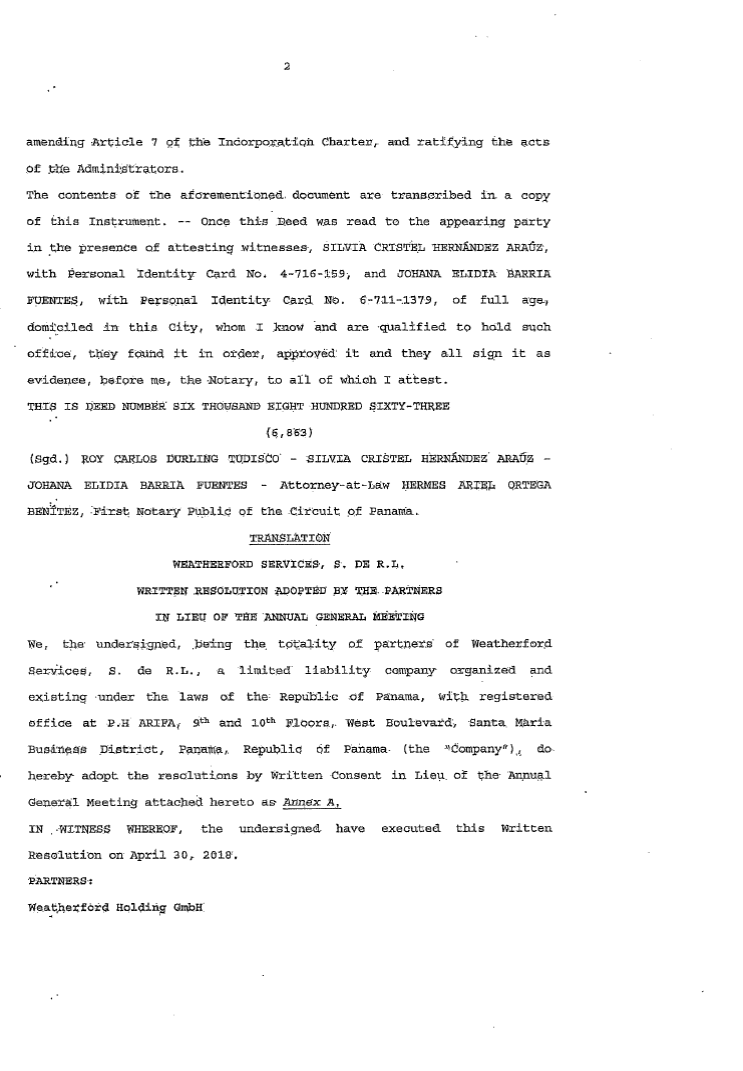
a (Sgd.} Kurt MayerManaging Di<J;ector Weathe:1::flord s·e:.tvices, L't!i. 1Sg'ci,) Frec;1.e:l:'ico Justus,. Vice President, Annex A .WEATHE FORD SERVICE.S S. DE .L, WRITTltES\)J;tf';t'IOi'l ADOPTED. BY THE· PAR')?NER!> Ap,:til 3 0 , ;:!018 ADMINI;:!TRATORS. R.ESOI.VEO,t·hat James c. Parent b , <=l]lovep. a.El AP,ministr<'l.tot of the Company -effective .<tS of April 9, 2'0;1.8. RESQINED, tl;J.at steven F. C_ar.v::tl.lhp be appointed as an Administrator o:f the..compan:y; effective as of April 9, 2018. RESOLVED, that Charity R. Kohl be removed as Administrator of the Company eff!;lot'iv.e as: of Ji.';Pril 2·6, 2018. RESQLVEO, that Chr-istine .M. Morrison be appo'inted. a.s an Adiil.:i.J.l.is.tr<ttor of the Compa-p:y effective as. of April 26, 2018. RESOLVED, that Mohammed Da<!!hiwg.la, and Tan Kah Huan b re-appointed as Administrat<Ors o:f; the Compan:Y. RE·SQLVE!J., that the fol].owing indiviP,ua:t.s constitute the entire s.late -of AdministTators of the Com.l?any, holding the offipe· set foxth opposite theh' ::respedt:l.ve names·, until .their respeC'tive· 81.li:rc$!:J;So;r are eJ.. ct:ed ?Tid gtraJ.ified or unt.il tli.ei;r e<l.i'lier resignation, re)Uoval or deathl Christine 'M. Morris.on 8teve·n F. Carvq,lho Mohammeq Padh:l,W:a,la Tan .Kah Huan RESOLVED, 'that Article Sf?'ven ·of· the IIJ,COrporation Cha':r;t!;l.X o.f; thiS Company :P.e, amended in order that henceforth it ili"eads as. fo·liows: "ARTICLE. SEVEN: (Administrators) (a) The administrators of t:P,e. ·compa,tt:y (.th$ Admin:i,strato.;r:s'f) shall be: ---·----------
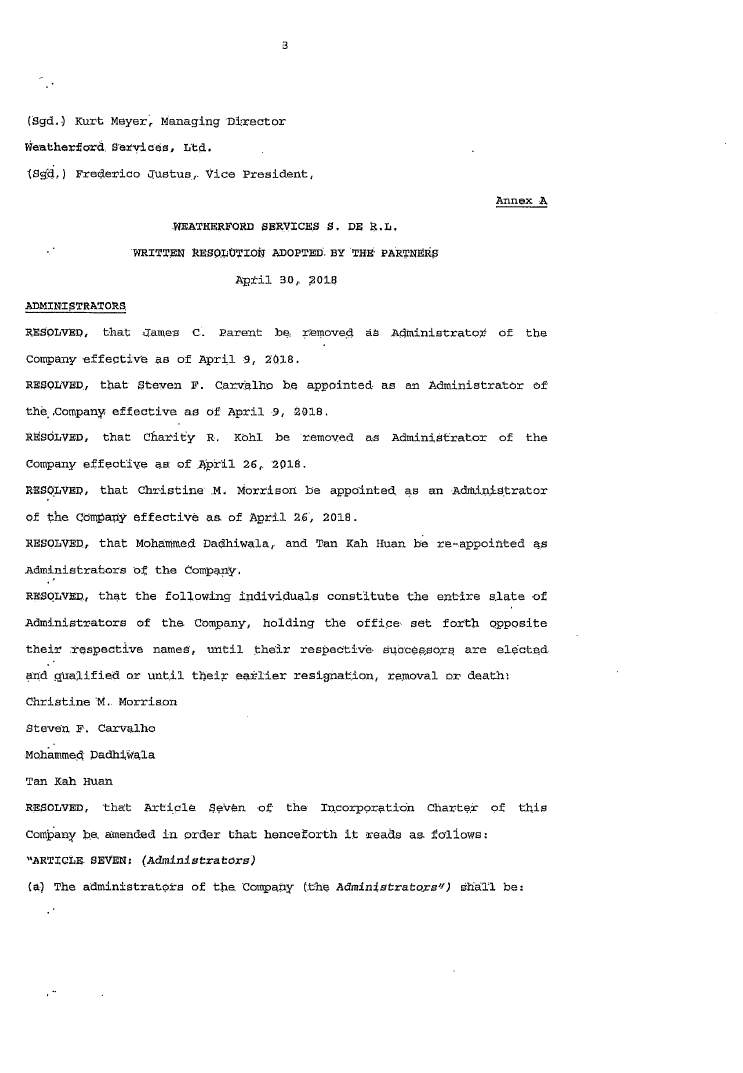
4 ---.l:) Steven F. Carvalho, m l , citizen o:t; the. Qaited· States ·of America, with, passport number 54g487.9.56. ---2) <:: i$tine M .. Morris<m, female, citiz-en of the ·un;lted :States of Amepca, with passport :number 5525190"3'0. ---3) T\l.P. Ka.h Ruan, .m.al. ·, cit:j.zen of .tlingapo:r:e, with passport. numl::>er E64562'7SB·, ---4) M0hammed Dadhiwala, mal!'!, c;\,'tize:p. of United Kingdom of Great Britai:it <md. orl:::hern ·:rreland,. with ;passport numbe·r GBR 5'10915691. {h) 'l'he Administrators are hereby granted, with broad powe: ;:l3, in o:t?de:t? that they may represe:P.t the Company, any one of them acti-ng singly, inolut;i'i.ng., :Put :not lim;it;·ed ·to, delegatil1£r powers to third parties1 in the R.epub).ic of Panama and in any other pCJ.rt of the ·worlt;J,, {c) The Administrat·ors shall have f li and complete dise;retion to manage MO. cc;m<;luc:t the bu:;!iness• and af·fCJ.irs of the company, teo make all decisions affecting the business 'a:rid affairs of the Company a:(ld to take ?-11 s1,1ch q;ct;:il:?nl'! 'afl' it c;l.eems necessary., a<;lvisablor appropriate to accomplish. the purposes of the Company as set f0:rth in, thil;l C4-a tBr,. Notwithstanding the· fl:>.:r:Elgoing,. the Administrator shall reg;qire special authorization. tr9m the Members to carry outacts or enter intQ contracts beyondthe normalcourseof :Pu:s'iness of tl):e Comp<;my., includi g, inter lia, to transfer its assets, a d. to encumber them ·to secure debt§ of the Ct;lmpany. {d)· 'The Members: shall appoint and remove the Admimistra:tors." RESbLVED 'FURTHER{ to S:1;lthorize and instruct Ari s I ]fabreg;;t anc;l Fabrega., Resident Agentfl for the CGn\p.emy, t.o nota;rize and file these· reso·lutions witPo the Panama Public Registry. RATIFACT.ION. OF ACTS OF AD1:UNISTRATORS· RESOLVED, tliat all acts. and pro¢ceedin s of ·the Administrators of t'he Company done .CJ.nd performed .fox: the y-eCJ.r :end d April 01 2018, as - -----..----------·---------
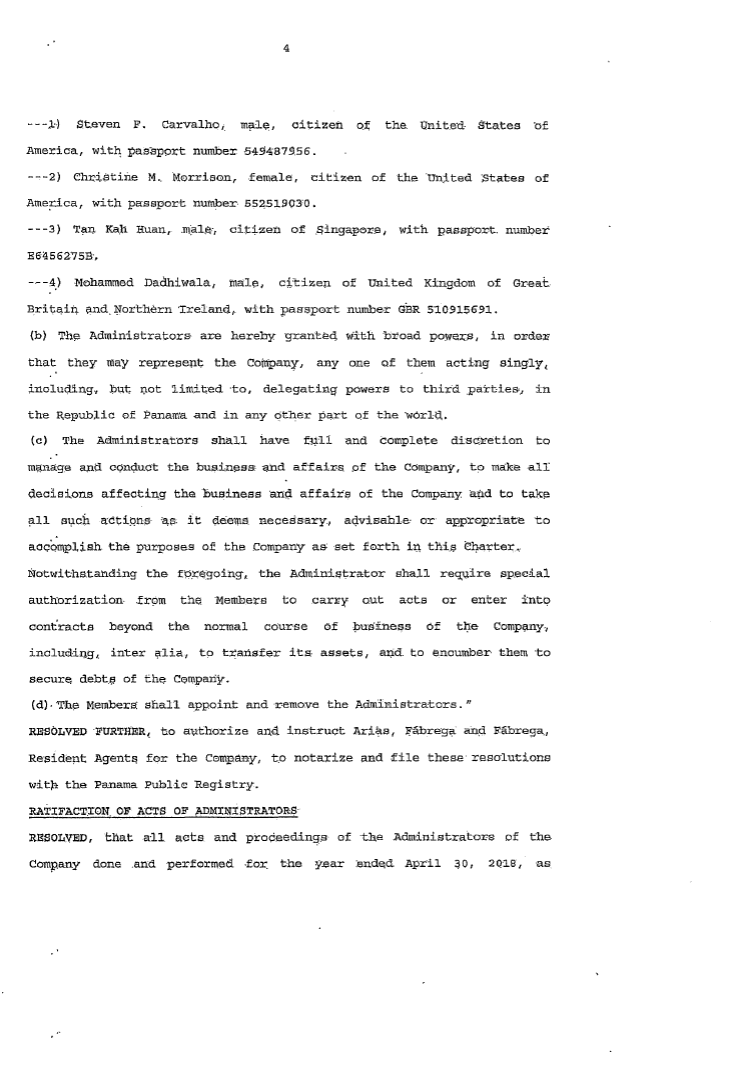
5 evidenced by the minuteS' and books of acoourttl3 ·of the Coll!pany, be' a!).d the; .?ame. tl-.re herel;ly approveP.-ratified, sanctioned and cqnfi;qne,Q.•. j)he re$olutions. adopted by virtue of. this Written Co:D.serit ·of the Partners in· Lieu of the Annual General Meeting shall have the same force and e:t:feot as if p_dppted at the Annual General Meeting-of sa:id Partners pursuant to the iaws of Panama. The Written consent of tl:le Partner!;! may :O.e signed bearing a facsimile signatur<;J. This is a -tr-ue translation of o:dg±nal dooum·ent in English, the Panama, June 4, 201.8. {Sgd.·) Irma S. de Davis, Certified P'qblic Translator., ID NQ., B-137-549 - (SEAD} This o<;>py t.hat:, I i.!oH3lj.e, sea·l and sign in the City of J:i.anama, Republic conf0rms to the of Panama on this 4th day of the month of June. :2Q1B ori-ginal document . (l;lgd.) t·torney-q.t;.-:[..a,w Hermes. Ar.i.e:). Ortega Benitez, li!irs-t Notary Publia - {SEAL OF THE FIRST NO'FARY PUBLIC'S OFFICE; OF THE CIRCUIT OF PANAMA R);:PDBLIC OF PANAMA) P.AI'j'l?.UBLI(] RE{;l;I:'STRQli'FJ:C.E SIGNBD BY 1 l.,ILI% RUIZ HE!mERA DATE: J'\Jlm 6., 2 Q 18. 15:54, 45 -05:0.0 A<;TJ;O : COMPI)ETION..OF PROC!EPURE PLACE: :P AMA, PANAMA EVJ:DENCE OF REGISTRATI-ON PRCJ.CE_DURE REQUESTJ?:P lJNPER EN;L'R'¥ J;ruMBER 229167/201:8 ('D) )i'Il;llilD AT THIS· ·REG:L';lTR,Y' OFFICE ON JUNJ;i 1:\, 2.018 AT 04:.5-5 P.M.. !;!AS BEEN c;QMPLETED,. OWNiiJR OF DOCUMENX WEl\.THERFO· El.WI(iES ,S. J:?E R.L. DOCUMENT.' FI·LED· PUBLIC DEED 'NO . .6863 AUTHOlHZED B:Y: HERMES ARIEL OR'rEGA BB]f:f:TEZ;, FIRST NOTARY PUBLIC
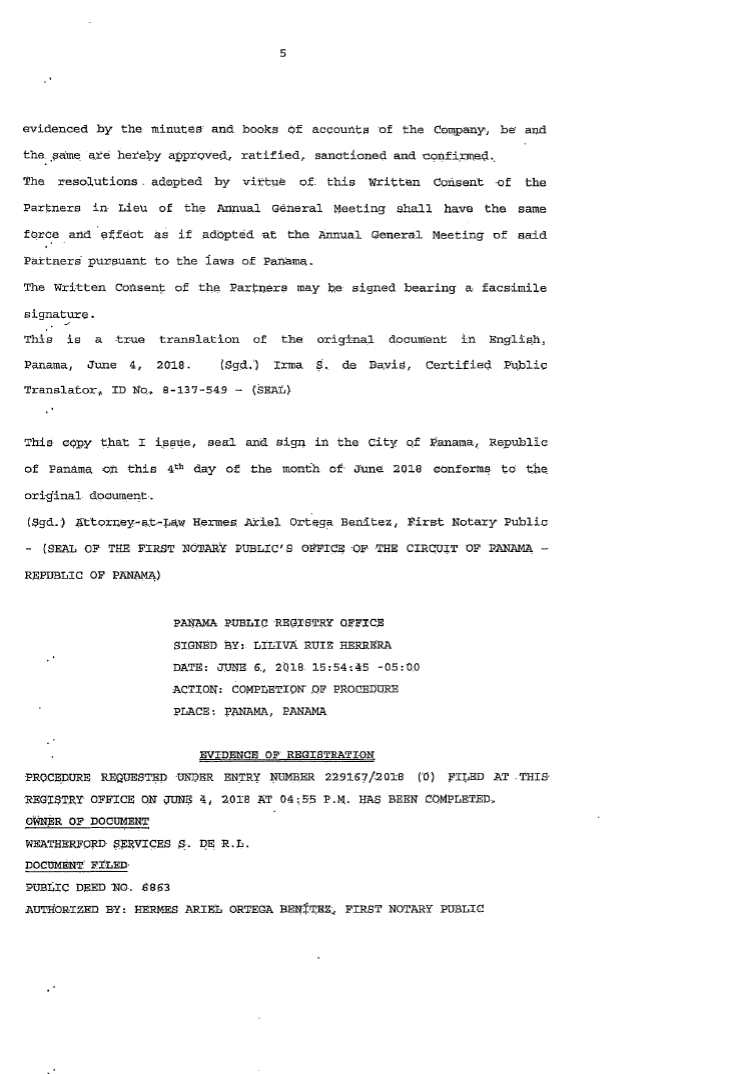
I)}I.TE: JUNE 4, :2018 NUMBER OF CQl?IES: 1 PAYMENT'EVIDENCE-SUB TTED CARD·PkYMENT VOUCHER 998 21J; FDR f?IXTY-FIVE BALBOAS (B/.65;00) (l?ana:ma, leg?-1 currency) PAYMENT DATE·, JUNE 4.1018 ELECTRONIC ENTRIES ·MADE (ON REAL ESTATE OR MICROJACKET-) eCH,ANGEQF (MERCANTILEDIVISION) FOLIO NO. 1539 (L) E:tqTR;YISIQ. 1\DMJ;NISTRATORS OF Tlffi COMPANY SIGNED BY LILIVA RIJIZ HERRER,A DATE 0F REGISTRATJ;ON: WEDN;E.SDAY, Jl;JNE 6, 201· ( 03:54 l? .M..). ThiS' document bears 'tl!e valid electrqnic s·ignatur.e .of· L!L:EVA RUIZ l!EI\RERA. (Here. follows-bar code) ======== ====================================================== ====== Thi·s. is ·<?. true translatio document in Spanish. Davis, Oert.ified !?.@;lie Panama, June 11, 2018.• Translator, INo.
CER'l'IFICATE OF AMENDMENT TO THE ARTICLES OF INCORPORATION OF WEATHERFORD SERVICES S.A. We, the undersigned, RAMZl Al.rBEURElTffi, President and JOSEPH C.HENRY, Assistant Secretary, of WEATHERFORD SERVICES S.A., a corporation organised and existing in accordance with the laws of the Republic of Panama, to be transfonned and converted into a limited liability company C'Sociedad de Responsabilidad Lirnitada") registered in the Republic of Panama, to be called WEATHERFORD SERVICES S. de R.L., with a capital ofUSD FIFTY THOUSAND DOLLARS (USD$ 50,000.00-) divided into FIFTY THOUSAND QUOTAS (50,000) of the value ofUSD $ONE DOLLAR (USD$ 1.00-) each, pursuant to the provisions of Law No. 4 of January 9111 2009 of the Republic of Panama do hereby certify that the Articles of , Incorporation of said corporation have been amended and restated to comply with the laws of the Republic of Panama so that henceforth said Articles of Incorporation now to be referred to as the Limited Liability Company Agreement in English and Spanish read as follows: ARUCU ONE: (Name} The name of the Sooiedadde Responsabili.dad Limltada is Weathe ford Serv ees S. de R.L. ARTICLE TWO: . {Nature o£ Business and Purposes) The general purposes of the company are to do any and all of the things and to exercise in accordance with this Charter any and all of the powers hereinafter set ,. forth in any part of the world, namely: ----------------------------- (a) To establish and carry on any financial and investment activity, financing companies, asset management ---------w---•------------------(b) To carry on any lawful business in any part of the world and do any and all of the above acts and to have any and all of the above powers, alone or with others and through agents or otherwise, and as trustee, without conducting trust business in the Republic of Panama and to do all such other things as are incidental to the attainment of the The above purposes. --------------------------------------------------purposes specified in each paragraph of this Article Two shall not be restricted by reference to or inference from, any other paragraph,
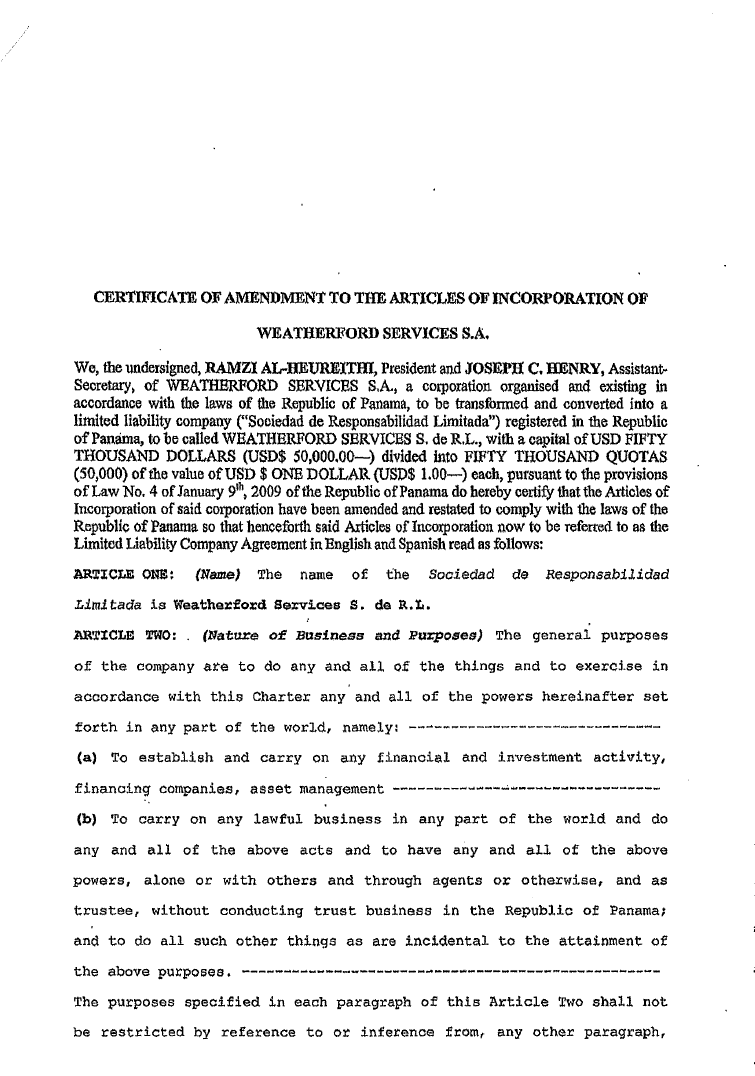
. ' ..·· andin the event of any ambiguity this Article Secondshall be construed in such a way as to widen and not to xestrict the powers of the company. ------------------------------------------------------AR'l'ICLJ!: '.I!HREE: (Members o£ the company) The members of the company are; --------------------------------------------------------------- Weatherford Holding GmbH, Incorporated under the laws of Germany on 7th December1989 with Registration Number Hannover B 51470 -Federal Republic of Germany and principal office at Hainbauser Weg 150. 30855 Langenhagen, Germany and Weatherford Kopp GmbH . · Incorporated under the laws of Gennany on August 291h 2001, with Registration Number Osnabrock B 100895 and principal office at Friedrich-Ebert-Str. 131 49811 Lingen, Germany. (a) The capital of the M'l'ICLE FOUR: (Oapi tal of the company) company shall be USD FIFTY THOUSAND DOLLARS (USD$ 50,000.00-) divided into FIFTY THOUSAND QUOTAS (50,000) of the value ofUSD $ONE DOLLAR (USD$ 1.00-) each ---------------------------(b)The members.have subscribed and fully paid in cash the quotas of the company in the following proportions:----------------------------1.Weatherford Holding Gmbli, 49,999 Quotas Incorporated under the laws of Germany on 7th December, 1989 with Registration Number HannoverB 51470-Federal Republic ofGennany and principal office at Hainhauser Weg 150, 30855 LangenhageDt Oernuiny ··. 2. Weatherford Kopp GmbH 1Quota Incorporated under tbe laws of Germany on August 291h 2001, with Registration Number Osnabrock B 100895 and principal office at Friedrich-Ebert Str. 131 49811 Lingen, Gennany. (c) The liability of the members for the obligations of the company shall be limited to the amount, if any, promised but unpaid on their
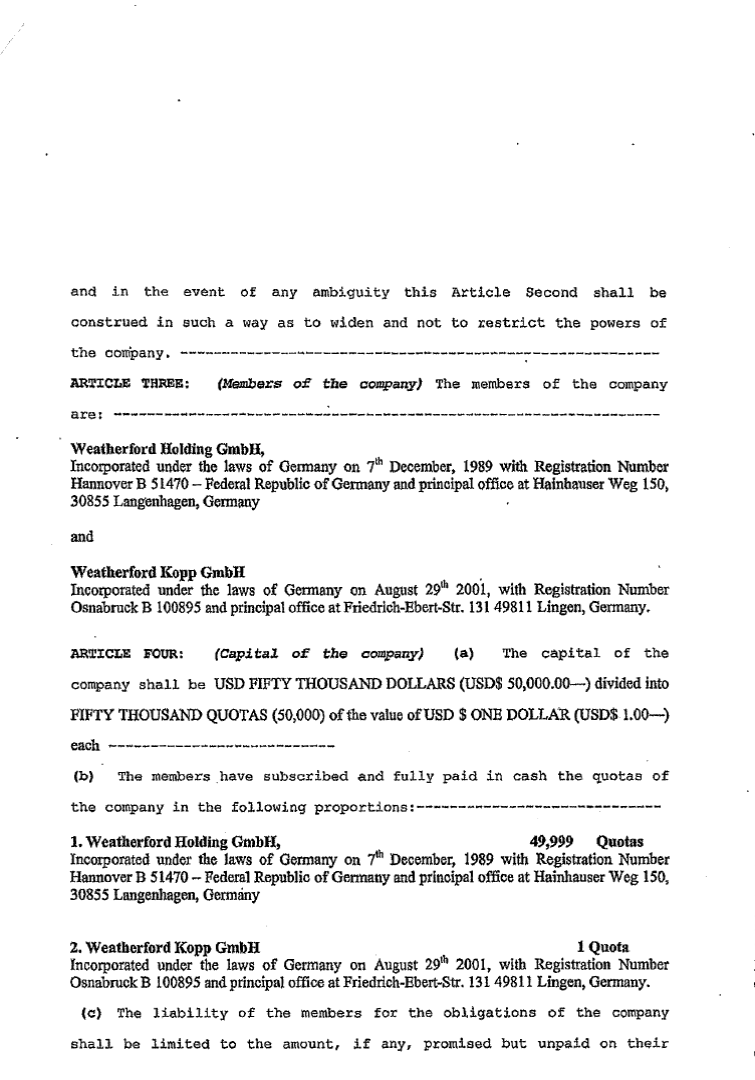
•' quotas. -------------------------------------------------------------{d)Each quota of the value of ONE DOLLAR (USD $1.00) shall 9ive the owner thereof the right to one (1) vote.---------------(e) In the event of the death of a member who is a natural person, the company shall continue in existence only with the surviving members and, in such case, the heirs 9f the deceased member shall only have the right to receive an amount equal to the value of the quotas held by the deceased member at the time of death in exchange for the quotas held by such membel::".---------------------------------------------------The domicile of tl;le company AR ICLE FIVE: (Domic:l.1e o£ the conpany) shall be at P.R. Plaza 2000 Buildin9, 16th Floor, sotn streett Panama, Republic of Panama, but· the company may establish its center of operations, offices and branches anywhere in the world as from time to time determined by the members or adrninistrators.-------------------- ( ationJ The duration of tbe company shall be unlimited AR ICL£ SIX: unlaes the company is previously terminated in accordance with the provisions of this instrument.------------------------------------AR ICLE SEVEN: (Adminietrators)------------------------------------- The Administrator of the company shall be Joseph C. Hen:ry.male.citizen (a) of the United States of America, with passport number 017394698. Notwithstandingthe shall require special foregoing, the Administrators of the company authorization from the members to carry out acts or enter into contracts beyond the normal coutse of business of the company, including, inter alia,totransferits assets,andto encumber them to secure debts of the company.------------------------ (b) he members shall appoint and remove administrators. -----------
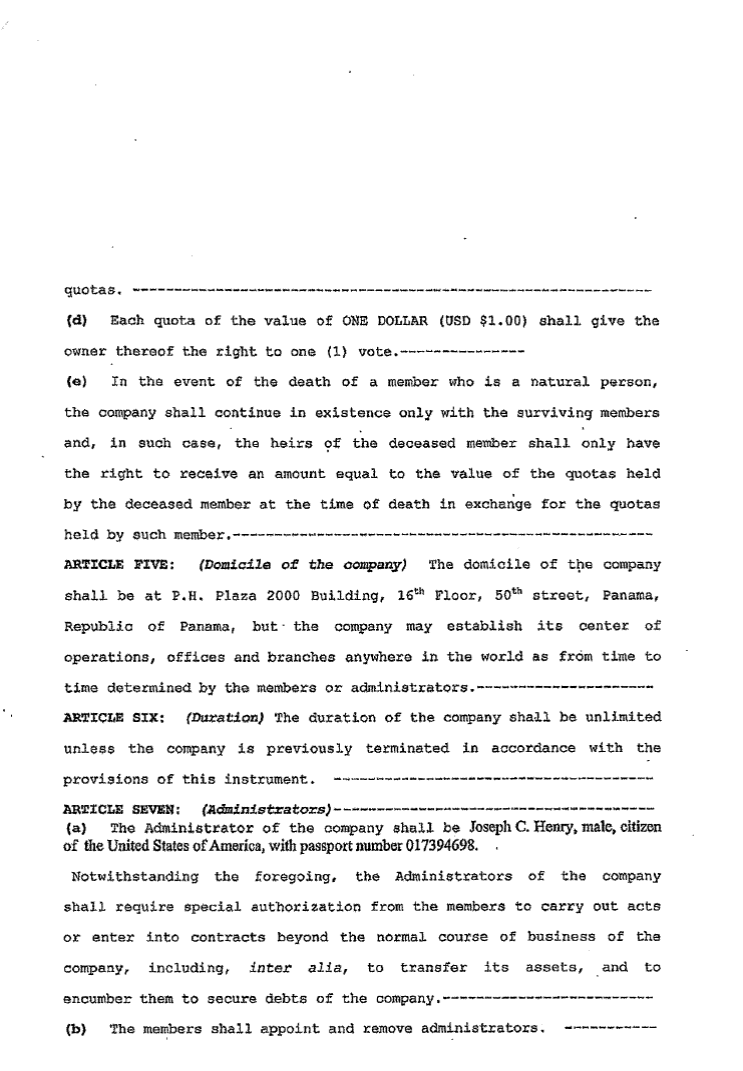
.· AR'r:ICLE EIGR'r: (Meetings o1! the members)(a) So long as the number of members of this company is not greater than five (5), it shall not be necessary to hold meetings of members. Nevertheless, meetings of the members may be called at any time by the administrators or by members who represent not less than 25% of the capital of the company. The administrator (s) shall be able to consult the members in by registered mail and the. The replies shall be filed (b) writing; by facsimile, telegram, cable or members shall reply in the same manner. and kept by the company, and minutes thereof shall be drawn and signed by an Administrator, or whomever is so appointed the by administrator(s), and said replies shall be counted as votes.-------- Meetings of the members may be held at any place or places, (c) within or outside the Republic of l?anama. At any meeting of the members, any member may be represented and vote by proxy (who need not be a member) appointed by instrument in writing, with or without power of substitution.Meetings of the members shall be deemed to be among persons present if the pal:ticipants are in direct communication by telephone, videooonference,electronic or other means of and are communications. Resolutions of themembers shallbe valid effective if adopted in writing without a meeting, even if they signed at different times and places.------------------------------AR'.rlCLE Nl'NE! (Fiscal year) The fiscal year of the company shall be of each year.------------------------ The firm of Arias, Fabrega & Fabrega, from January AR'.CICLE TEN: with address l8t to Decembr 31st (Resident Agent) at Plaza 2000 uilding, 50th Street, l?anama, Republic of
Panama,isherebyauthorizedtosecuretheprotocolizationand recordation at the J?ublic Registry of Panama of any document of the company.--------------------------------------------------------------ARTICLE ELEVEN: (Indemnification) (a) No administrator or attorney in fact of this company shall be liable, responsible or accountable in damages or otherwise to the company or any of the members for any act or omission performed or omitted (i) in good faith on behalf of the company, {ii) in a manner reasonably believed by such administrator or attorney in fact to be within the scope of the authority granted to such person by this charter, by the members or by the administrators, and(iii) in a manner not constituting gross negligence, willful misconduct, fraud or breach of a fiduciary duty.--------------------- (b) This company shall, to the fullest extent permitted by applicable law, indemnify any person who was, is, or is threatened to be made a n' amed defendant or respondent in a proceeding because the person is or was an administrator, employee, or agent of the company from and against any and all of the judgments, penalties (including excise and similar taxes), fines, settlements, and reasonable expenses {including court costs and attorney's fees) actually incurred by the person in connection with the proceeding, and the indemnification provided for herein shall not be deemed exclusive of any other rights to which those indemnified may be entitled under any agreement, vote of members or administrators or otherwise, both as to action in his official capacity and as to action in another capacity while holding such office, and shall continue as to a person who has ceased to be an Administrator, officer, employee, or agent and shall inure to the benefit of the heirs, ·,
e eoutors, and administrators of such a person; provided, however, that if the person is found liable to the company or is found liable on the basis that personal benefit was improperly received by the person, the indemnification ;tncurred by the is limitedtoreasonable expensesactually (i) person in connection·with the proceeding, and (ii) shall not be made in respect of any proceeding in which the person shall have been found liab'le for wrongful or intentional misconduct in the performance of his duty to the company.--------------------------ARTICL2TWELVE:{TERMINATION) In addition to the reasons already stated in this Instrument, this limited liability company shall be terminated and dissolved by any one of the following circumstances:---,. (a)The agreement of the members; ----------------------------------(b)Where only one member remains in existence, ------------------'· JOSEPH C. HENRY Assistant - Secretary RAMZI AL-HEUREITm President
07/01/95 15:22 CDP BDA 7 713 622 0913 ND.91B P004 Lt{t ... FORM NO.2 • BERMUDA THF. COMPANIES ACT 1981 MEMORANDUM OF ASSOCIATION; OF COMPANY LIMITEn BY SHARES (Section 7!(1) and (2)) MEMORANDUM \OF AS?OOIATION . l . . 1F ! .. . .............,., ...........:::..-- .-. -:.. .':?.:..........-.......,....,.. (hereinafter referre4 to as "!he Company"} I I Thliability of the members of the Companis limited to tht amount (if af.ly) f?r ,the time being ] 1. · upaid on the shares rE."spectively held by the,. 2. We, the undersigned, namely•. l \ BER UDIAN I STi\TUS ' (Y).s!No) l I 1 Yes NAME ADDRESS NATIONALITY ' NUMBER OF · SHARES SUBSCRIBED .•· Sir Bayard Di,lJ. one. sbare. Pev¢n slu"re, Bermuda , 'les B.rl:ti.sh One share Charles <r.M. 'Col.lil:l Devonshi;i;e, Bermuda 'j Ye.s J.aroes 1\. Pe.a:rro.an Pembroke, Bermuda· Ire-iUsb. .., .l .} i I clc1 h<·reby respectively 'lgrtr to takt:-suc:h nu"1ber of shar<>s of th<' Company as may be allotted to u.s respectively by the provisional directorof tl)e Company. not exceeding th:e nu ber of shares for which we have respectively subscribed, and to satisfy such calls as may be made by the directors, provisional din:ctors or promoters of thCom any in rc:spcct of the shares a!Uotted !o us res dvely. I i 1 JUL '96 13: 18 441 295 953''0"· PAGE. 0.04
07/01/96 15:22 CDP BDR 713 622 0913 NO.918 P0.05 (0 :. 3. 1 ·1' • in all. including hfoHowing par<:E'Is · nil I• . The CQmpany oes not propose• to carry on business in Bermuda. SUlbject to paraqraph 5. 7 hereof - . j' l I r • l • 4 . 4 US :).2, 000.00I ,4ivid ·n_d into shares of 6, The authori;;e-d sh;mc9.phal of the Compa_ny is's I J us 1.. 00 ' I \ ·i each. The minimu0_ s tbscr hed h rl;" capital Ir I· I· . . ·of l he Company is $ US 12,000.00 I i I r ' 1 t· r The objects for which the Company is,fo md ad incorporated an ...!. ) ! !· 7. r·· d.e<tl in l) to acquire by purchasor otherwis, hot-a, personal and real property of all )dneis; sell, di . (.s) . a q.f . !'' 'I I } - c+us .ve or..the t; I I, - I ' I 2) as set out in paragraphs (b} to (nl . ana . (pl to Secon d Schedule to the Col!lPanies lj.ct l9Bl ' •, 1 I I. all of which objects shall be considerd as independent bjeo, s, ahd provided 'th t noth:in9 in the said obje9ts snall be taken as autl'lot;izinq -t'tle company to carry on business iX: Bermuda save a:pe)':'mitted way of th:eXGe tionl contained in the sev ral paraqra,J?l\S of Sechon 129 (1) o;f the Co'XnpahJ.eS Ao,t l98,·l qr in accordance with a l:l.oenoe g. ranted unde-r S.ection 1 I9']', of the said 1\dI t.· ! I B. l) The co pany shall not have the wer set out in para aph l of the First Schedule to the Companies ct 1981. J • Delete as applicable. J UL 1 '96 1 3: 1 9
07/01/96 15:22 NO.::l18 CDP BDR 713 622 0913 P006 \0 (j I I I' I ! l ·· j··................ -..A..........,,,.. c. '· ;• · I,•' ', • ' I ... ................... (Subscriber. ) (Witn<!SS<.'S) ..., I SUBSCRIBED this day of 30th November 1 441 295 9530 I ';:JS 1::3:20 JUL PAGE. 006
07/01/96 15:22 CDP BDR 7 713 622 0913 N0.91B P007 1\t3; ! I l I. I .1 i STAMP DUT'( (To be affixed) • I'·I -• Duly sta"!llpe .tntlramount of 'eD $3000 betng stamp duty O\l. th.e of $li 1 oo:o 1 OQ ,, ., , . .m ni'mn:m ca.ptta:l of the compa.,ny t.I • ' 1 : It ' . r· JUL.l '96 13:20 1 441 295 9530 PAGE.0. 17

07/1:31/96 15:22 CDP BDA 713 622 0913 ND.918 P008 ( l') FIRST SCREDULE A r;ompany limited by sharmay exercise aii or any o£ the Ioliowing powers uhj«:t to any provision of the. law or its meco. r a.l)di.lm-l. oy otller bmhua' gpable o£-A4ilbs ooAueaisav to9 QA mqied OA itl COQUerriM wit4s J>\I$!Qi:$S Ot fikcJy to e.,b.m lA• "al oH1 0{ eF makoiag pFe ilie:IJle ftt\y e£ it!$ pt t) 4)lr Ngal;6;-to acquire or und ri.ak.e the whQle or any part or the buSinct;s, propttty and liabilities of any person carrying on an:y busi.Q 2. that the r;ompany .is.ai.ahori:zto a.rry on; Oj .\It S.' to apply for register, purchase, lease, acquire, hold, e. controi, lir.;enc:e, sclt assign or dispose of patents, pate -n rights, q,pydgl\ts, trade marks, formulae, llc <;es, inventior s,. I>l'distinctive marks and similar rights; to enter imo partnershjp or into any arrangement for sharing of profitS, union of intereJts, oo-o ration, joint ve.nt.Ut'e, iedproeal roncession or otherwise with any ptr$Qn, carrying on or eng:aged in or aoout l(j cany on or engage in any 4. l business o r transaction that the company is authorized to car,ry · .... on or eng.lge in or a11y business or t tl .;do:n r;apable of ' l. being conducted so as to benefit the c:O ny; 5. o tal<e or otherntisc acquire and hold curities in any other '· b,xly corporate having objet:tS ;dtogether .or in pan similar to those of the company or carryiQg on ny pusiness r;apable o£ heing «>ndw:;ted so as to benefit the company; · 6:• subject to sectiol,'l 96 to lend money to any employte or to any person having dealing$ witl:l the romp< ny or with whom the company proposes to have dealings or to any other body ror rate any of whose shares are held by the company; 7. to apply for, e;a,rc or acquire by grant, l islath·e en; ctme11 , a ignment, transfer, purchase <>r othenll'ise and to exerc , (arry otit and enjoy ;my ch.;nter, Jiren<e, p9wer, a\lthority, franchise, concession. right or pdvilege, that any government o'r authority or any body ccrpor:ue or other pu.hllc body may he tmpoweroo 10 grant, and to P."Y [or, aid in and ('Qntribt;\le tow rd c;u·f}·ing h Into erfC('t and to assumt! :any liabilities or obligations indden al thereto: to establi$h and_ support or aid in the es ,ablishment and 8. I s•...pport o{ asso<i: tions, lnst!Bnions, flm<ls o.r tru ls for the 1 441 295 JUL '86 1::3:20 9530 PAGE.008
15:23 07/01/96 CDP BDA 7 713 622 0913 N0.91.8 P009 q(\3 benefit of employees or former employees of the company or iu pr cess<)rs, or the dependantS or connections of such allo:Wan:c;esand male payments towards insurance or for any· object similar to those set forth in this paragraph, and !01ll· subecribe or gu.axantee money for charlt,ab e, benevole:n.t.. educatiomil ot :reUgi<>us objects or for any exhibition or fox any p'll.bljc. general or u.set objects; to promote any company for the purpose o£ acquiring' or. taking over any of the property and liabilities of the (:Ompany;, or for a11y oih• purpose that may beTJefit the company;' to p'Urchaie, lease, take in exchange, hire or otherwise acquirt; any personal property and any righrs or privileges that the. company considers necessary or convenient fo.r the pur of its business; to construct, maintain, alter; renovate and demolish any buildings or works necessary or ol}.venictlt for its objects; to taM lartd in Bermud'a by way of l.ease or letting agreement for a term hot ex. ¢9i.ng twemy-<,>ne years. being land ''bona fide'' required for the p.urposes of the business o[ the company ar:td wlth the COl'iSent of the Minfst<:r granled in his discretion to tak(llal)d in Betltlilda by way of lease or letting iigreement fpr a similar period in otder to provide accommodation or recre tional facilities. for its officers and employees a.nd when no longer necessary fo:r any o£ the above purposes to termlnat, or transfer the lease or letting agreement; employe Qt {ormei' employees, and grant pensions and 9. 10. ll. I l2. L except to the extent, if any, as may be otherwise expressly provided, in ils incorporating Act or memorandum and sulJ.. ject to the provisions of this Acl f!.\'e:ry company 5hall have power to Invest the .nwneys o( the Company by way of mort• age of real or personal property of every description in Btl'n1\lc.la or elsell'here and to sell. exchange, ,·:trv. or dlsp<>. e o£ such mortgage as the company shall from time to time detennine: 1 . to constru<:t, improvt, mahnai.n, work. m;mage, carry o.ut or control any roads, ways, tramways, branches or sidings, bridge?, reservoirs, wati:r<:ol,,r es, wharves, (actorics, warehouses. eicctrk 14. works, shops. stores and other works and con\'eniences tha.t rna}' advan.ce the interem o£ .the <"Ompany nd contribute to, subsidize or () herwhe ;miSt or tnk.a part in the ;onstructiQn, I improvement, malrnenance, \''orking. ma·nagement, out or control thereof; c;'lrryin JUL 1 441 295 '98 13:20 9530 PAGE. 008
07/01!95 15:23 CDP EDA 713 622 0913 N0.918 P010 \c?( l) to raise and asst in raising mo ey (or, and aid by 'Way of bonus. loan, promise, endon.ement, guarantee or otherwise,. any person and guarantee thperformance or fulfilment of: any amtracts or obligations of any person, and h1 particuJ;u• guarantee the pa)'lllent of the principal of and interest on th1: debt obligations of any such person; 15. 16. to bonow or raise or secute the payment of money in sud1 manner as the o>mpany may think !it; to draw, make, accept, endor.;e, discount, exec"'te and issul! bills of excltange, proJJiissory noteS, bills o£ ladlng, warrants and 9 e:r lleg9tiable or transferable instruments; 17. 18; when properly thodted 0 ao so, to sell, lease; e change or othdjspose of the underta ng' of the company or any part thereof as an entirety or substantially aan eJititety for .such. con$iderat1on as the company thinh {it; ] 19. to s.ell.improve, manage, develop. diange, lease, dispose o . turn to acoount or otherwise deal with the pToperty of the C'Dmy in the ordinary course of its business: 20. to adopt such means o( making known the products of the rompany as: TMY seem expedient, and in particular by advelr· ., ' !:•wtising, by purcha:;e an<l exhibition of worl:.s of art or 1nterest, by publication o£ boot.,: and periodicals rmd by granlin.g pti.res and rewards and making donations; 21. to tau.se the company to be rtgistered and recognized in arny fortign jurisdiction, and designate persons. therein accordilllg w the la-ws o£ that foreign j\lrisdlc:tion Qr to represent the a>mpany and to accept s<!rvice for and on behalf of the wmpany o( anr process 0)':' suit; to allot ant\ tssue runy paid shares o{ the company in paymeo1t. (.Jr part payment of· any property J)urdlased or otller:wise ac;qui:red by tM company or for any pa$t services periorml!d for: the oompany; 22. 2 . to distribute ; morig the members of the company ill r:1 h. kind, specie or otherwise as m:y be resolved, by wa.y of dhi· dend, bonus or in any other manner considered advi ble, any property of the company, but not so as. to decrease tine capital of the company unless the distribution is made {or the pUrPQse of enabling the c-ompany to be di·ssolved or tihe Afi i1fi9S2 l I,·. p .jn . JUL 1 '96 13:21
l I CDP EDR 713 622 0913 07/01/96 15:23 NO.918 P011 tVI) I I I l f I distribution, apax.t from this paragraph, would l>e otherwi.se law(w; to establish agen(ies and branches; I 21. I l ,. to take or hold mortgages, hypothecs, liens a:rd charges to 2.?. secure payment of the purchase price, or of any unpaid "bai -Lnce of the purchase price, of any part of the property. of the company of whatsoever J:,ind sol<J by Ute mparay.or :{OT any money due to the C(ltnpany from plltcllasers and others and to sell or othetWise di$poof any Sl!ch mortgage; h the<:, lken or charge; ' '· to pay all costs .and expenses of or incidental to the inoor poratil)n and QJ:ganitation o£ th¢ company; ' i to in:ve,st and deal wil,h the moneys of the company not immediateiy required for the objects o[ the company in .snch m nner s inay be determxn ; to do any of tM lhings a1.1thorized by this subsection ;"J.nd .aJl thi!lgs aurhori.zcd by its memorandum as prindpab, agents. oontractors, tr tor otherwise, a.eithef alone or '1n epn junc_tion with others; 26. 27. 28. 29. to do 11 such other things as are incidental or conducive to tlie at ·inment of the objects anq the erdse of the pow:as of the i;:01llpany. Every company may exercise its powers beyond the boundaries of nermuda to the extent io which, the lawS. forc;e where the powers are sought to he exercised permit. [ I 1 JUL '96 13:21 441 295 9530 PAGE. 01 1
CDP BDR 713 622 0913 ND.918 P012 SECOND SCHEDUl,.E A !=Ompay may l>y reference indude in itmemorandt1m any of the ronowing objects lhat is to say the business of-( } (b) (c) d) (e) insurance and re-Insurance of all kinds: packflging of goods ol all kinds; buying, selling and dealing in goods of all kinds; designing and manufacturing of goods of all kinds; mining-aM quarrying and exploration [or metals, mlnerals, fossil fuels and ptedous tones of ; ll l:inds and th ir prepara tion for sale or u,se; exploring Cor, the drilling [or, 1he moving, transporting and refining petroleum and hydro Ci\ bon products induding oil (t) ana oil products; - scicntilil.: re earch inCluding the improv ment, discovery and development of processes, im•entions, patents and designs and the co!lstructi:on, maintenance and operation of laboratories and research centres; land, sea and air undertakings including the lal'ld, ship and air carriage o£ passengers. mails and goods of all kinds; (g) 1 {h) (l) ships and aircraft owners, managers, opera to. agents. builders and repairers; acquiring, owning, selling, chartering, repairing or dealing in ships and aircraft; lj) (k) travel agents. freight contrac1oand {anvarding agent&; dock owners, wharfinger. warehousemen; ship chandlers and dealing in tope. canvas oil and ship .scores of all kinds; (I) (m) (ll) all forms of engineeringi [O) deuel9piRg-J epe;: 'i g, !idrviciu.g: gf i; i E tidn Wii' ;onsuL. •.taQ£4 to ;u· tber tPtQfl_)*i or huth tUi (p) farme-rs, livestock breeders and keepers, graziers. butchers. tanners and processors of and deal<.-rs in all kinds of live and <kad s ock. wool, hides. taJlow, grain. vegetables and other produce; I I 441. 295 9580 PAGE.012 JUL 1 '96 18:21
07101196 15:24 CDP BDA 713 622 0913 N0.918 P0i3 \\ \ ) . acquiring by purchasor otherwise and holding as an invest" ment in'\' tlons, patents, tl'l!d' mar. tr de natnes, tm e secrcu. f:S)gps anthlike; buying, selling, hiring. lening and <le:1ling in ·onveyanr.es ol any SQrt; and employing, prQ''iding, h ing out and acting as nge11t for (q) (r) (s) artists. actors. enterl:liners of all soru, authors, composers, or gpec\ulin or pr«lucets, dir«tors. engineers and expem any lind. ...., . ; I L. .. . •, ., . . j' l : - 1' i' I,., I ' r I I ;._; JUL '96 13:21
Exhibit T3A-62
|
ARTICLES OF |
|
STATUTEN |
|
ASSOCIATION |
|
|
|
|
|
|
|
of |
|
der |
|
|
|
|
|
Weatherford Switzerland Trading and Development GmbH |
|
Weatherford Switzerland Trading and Development GmbH |
|
(Weatherford Switzerland Trading and Development Sàrl) |
|
(Weatherford Switzerland Trading and Development Sàrl) |
|
(Weatherford Switzerland Trading and Development LLC) |
|
(Weatherford Switzerland Trading and Development LLC) |
|
|
|
|
|
|
|
|
|
|
|
|
|
I. NAME, DOMICILE, DURATION, AND PURPOSE OF THE COMPANY |
|
I. FIRMA, SITZ, DAUER UND ZWECK DER GESELLSCHAFT |
|
|
|
|
|
Article 1 |
|
Artikel 1 |
|
|
|
|
|
Name, Domicile, Duration |
|
Firma, Sitz, Dauer |
|
|
|
|
|
Under the firm name of Weatherford Switzerland Trading and Development GmbH (Weatherford Switzerland Trading and Development Sàrl) (Weatherford Switzerland Trading and Development LLC) with domicile in Baar, canton of Zug, there exists for an unlimited period of time a limited liability company which is governed by Art. 772 seq. of the Swiss Code of Obligations (CO). |
|
Unter der Firma Weatherford Switzerland Trading and Development GmbH (Weatherford Switzerland Trading and Development Sàrl) (Weatherford Switzerland Trading and Development LLC) besteht mit Sitz in Baar, Kanton Zug, auf unbestimmte Dauer eine Gesellschaft mit beschränkter Haftung im Sinne von Art. 772 ff. des Schweizerischen Obligationenrechts (OR). |
|
|
|
|
|
Article 2 |
|
Artikel 2 |
|
|
|
|
|
Purpose |
|
Zweck |
|
|
|
|
|
The purpose of the Company is the development of all activities relating to intellectual property rights in Switzerland and abroad in favor or for the account of the Weatherford group of companies, in particular the acquisition, transfer, sale, trading, management, administration, license or sub-license of all manner of intellectual property, including without limitation patents, trade marks, trade names, designs and application therefore and |
|
Zweck der Gesellschaft ist die Abwicklung sämtlicher Geschäfte im Bereich der Immaterialegüterrechte in der Schweiz oder im Ausland zugusten oder für Rechnung von Unternehmen der Weatherford Gruppe, insbesondere Erwerb, Uebertragen, Verkauf, Handel, Verwaltung, Entwicklung, Lizenzierung oder Unter-Lizenzierung von Immaterialegüterrechten jeglicher Art, insbesondere von Patenten, Handelsmarken, |
|
|
|
|
|
|
|
|

|
technical as well as industrial know-how. |
|
Design und diesbezügliche Anwendungen und technischen sowie industriellen Know-how. |
|
|
|
|
|
The purpose of the Company is also the acquisition, transfer, sale, trading, management and leasing of oil rigs as well as oil equipment and devices, and/or the provision of oilfield related services, from and to entities of the Weatherford group of companies and/or third party entities. |
|
Die Gesellschaft bezweckt auch den Erwerb, die Übertragung, den Verkauf, den Handel, die Verwaltung oder die Vermietung von Bohrinseln sowie Ölanlagen und -Geräten und die Besorgung von Ölfeld-Dienstleistungen von und an Unternehmen der Weatherford Gruppe und/oder Dritte. |
|
|
|
|
|
Such activities may be conducted directly by the Company and/or through subsidiaries and branches in Switzerland and abroad. The Company may establish branch offices and subsidiaries in Switzerland and abroad. The Company may engage in any commercial, financial or other activities which are directly or indirectly related to the purpose of the Company. |
|
Solche Aktivitäten können direkt von der Gesellschaft oder/und von Zweigniederlassungen und Tochtergesellschaften in der Schweiz und im Ausland durchgeführt werden. Die Gesellschaft kann Tochtergesellschaften und Zweigniederlassungen in der Schweiz und im Ausland errichten. Die Gesellschaft kann alle kommerziellen, finanziellen und anderen Tätigkeiten ausüben, welche mit dem Zweck der Gesellschaft direkt oder indirekt in Zusammenhang stehen. |
|
|
|
|
|
The Company may also participate in the financing, including by means of the providing of guarantees and sureties of any kind, of other entities of the Weatherford Group of companies in the general interest of such group. |
|
Die Gesellschaft kann im Übrigen im Rahmen des allgemeinen Gruppeninteresses an die Finanzierung von anderen Gesellschatfen der Weatherfortd Gruppe von Unternehmen teilnehmen, insbesondere Garantien und Bürgschaften jeglicher Art eingehen. |
|
|
|
|
|
II. COMPANY CAPITAL, QUOTAS |
|
II. STAMMKAPITAL, STAMMANTEILE |
|
|
|
|
|
Article 3 |
|
Artikel 3 |
|
|
|
|
|
Company Capital |
|
Stammkapital |
|
|
|
|
|
The company capital amounts to CHF 20,000 and is divided in 20 quotas of CHF 1,000. |
|
Das Stammkapital der Gesellschaft beträgt CHF 20,000 und ist eingeteilt in 20 Stammanteile zu je CHF 1,000. |
|
|
|
|
|
All quotas shall be fully paid in. The quotaholders are not obliged to make supplementary financial contributions. |
|
Alle Stammanteile sind voll zu liberieren. Eine Nachschusspflicht der Gesellschafter besteht nicht. |
|
|
|
|
|
|
|
|
|
Article 4 |
|
Artikel 4 |
|
|
|
|
|
Quotaholders’ book |
|
Anteilbuch |
|
|
|
|
|
The Company shall keep a quotaholders’ book containing the following information: |
|
Die Gesellschaft führt über die Stammanteile ein Anteilbuch, in dem eingetragen werden: |
|
|
|
|
|
1. names and addresses of the quotaholders; |
|
1. die Gesellschafter mit Namen und Adresse; |
|
|
|
|
|
2. number, par value and categories, if any, of the quotas of each quotaholder; |
|
2. die Anzahl, der Nennwert sowie allenfalls die Kategorien der Stammanteile jedes Gesellschafters; |
|
|
|
|
|
3. names and addresses of beneficiaries; |
|
3. die Nutzniesser mit Namen und Adresse; |
|
|
|
|
|
4. names and addresses of pledgees. |
|
4. die Pfandgläubiger mit Namen und Adresse. |
|
|
|
|
|
The quotaholders’ book shall be kept by the managing officers of the Company. |
|
Zuständig für die Führung des Anteilbuches ist die Geschäftsführung. |
|
|
|
|
|
Article 5 |
|
Artikel 5 |
|
|
|
|
|
Transfer of Quotas, Withdrawal, Expulsion |
|
Übertragung, Austritt, Ausschluss |
|
|
|
|
|
The requirement of the approval by the quotaholders’ meeting to the transfer of quotas is waived. |
|
Auf das Erfordernis der Zustimmung der Gesellschafterversammlung zur Abtretung von Stammanteilen wird verzichtet. |
|
|
|
|
|
The transfer of a quota as well as the obligation to transfer must be in writing in order to be valid. |
|
Die Abtretung eines Gesellschaftsanteiles sowie die Verpflichtung zur Abtretung bedürfen zu ihrer Gültigkeit der schriftlichen Form. |
|
|
|
|
|
Article 6 |
|
Artikel 6 |
|
|
|
|
|
Capital Increase |
|
Kapitalerhöhung |
|
|
|
|
|
Any capital increase is subject to the approval by two thirds (2/3) of the represented votes representing at the same time the absolute majority of the entire capital entitled to vote. |
|
Eine Kapitalerhöhung bedarf der Zustimmung von mindestens zwei Drittel (2/3) der vertretenen Stimmen, die zugleich die absolute Mehrheit des gesamten stimmberechtigten Stammkapitals auf sich vereinigen. |
|
|
|
|
|
|
|
|
|
Each quotaholder has a preemptive right proportional to his prior quota. |
|
Die bisherigen Gesellschafter haben ein Bezugsrecht im Verhältnis ihrer bisherigen Stammanteile. |
|
|
|
|
|
The managing officers shall amend the articles of incorporation as soon as the resolutions and supporting documents, required by law or by the articles of incorporation, are available. |
|
Die Geschäftsführung nimmt die Statutenänderung vor, sobald die gesetzlich und statutarisch erforderlichen Beschlüsse und Belege vorliegen. |
|
|
|
|
|
III. COMPANY ORGANIZATION |
|
III. ORGANISATION DER GESELLSCHAFT |
|
|
|
|
|
a) The quotaholders’ meeting |
|
a) Die Gesellschafterversammlung |
|
|
|
|
|
Article 7 |
|
Artikel 7 |
|
|
|
|
|
Powers |
|
Befugnisse |
|
|
|
|
|
The quotaholders’ meeting is the supreme body of the Company. |
|
Die Gesellschafterversammlung ist das oberste Organ der Gesellschaft. |
|
|
|
|
|
It shall have the following inalienable powers: |
|
Ihr stehen die folgenden unübertragbaren Befugnisse zu: |
|
|
|
|
|
1. the amendment of the articles of incorporation; |
|
1. die Änderung der Statuten; |
|
2. the appointment and removal of managing officers; |
|
2. die Bestellung und die Abberufung von Geschäftsführern; |
|
3. the appointment and removal of the auditors and of the group auditor; |
|
3. die Bestellung und die Abberufung der Mitglieder der Revisionsstelle und des Konzernrechnungsprüfers; |
|
4. the approval of the annual report and the consolidated financial statements; |
|
4. die Genehmigung des Jahresberichtes und der Konzernrechnung; |
|
5. the approval of the annual financial statements as well as the resolution on the use of the balance sheet profit, in particular, the declaration of dividends and the profit sharing by managing officers; |
|
5. die Genehmigung der Jahresrechnung sowie die Beschlussfassung über die Verwendung des Bilanzgewinnes, insbesondere die Festsetzung der Dividende und der Tantieme; |
|
6. the determination of the remuneration of managing officers; |
|
6. die Festsetzung der Entschädigung der Geschäftsführer; |
|
7. the release of the managing officers; |
|
7. die Entlastung der Geschäftsführer; |
|
8. the approval of the assignment of quotas or the recognition as a quotaholder |
|
8. die Zustimmung zur Abtretung von Stammanteilen beziehungsweise die |
|
|
|
|
|
|
|
|
|
with voting rights, so far as stipulated by law or these articles; |
|
Anerkennung als stimmberechtigter Gesellschafter, soweit Gesetz und Statuten dies vorsehen; |
|
9. the approval of the establishment of a security interest on quotas if the articles of incorporation so provide; |
|
9. die Zustimmung zur Bestellung eines Pfandrechts an Stammanteilen, falls die Statuten dies vorsehen; |
|
10. the passing of resolutions on the exercise of the right of first offer, right of first refusal, or the right of purchase stipulated in the articles of incorporation; |
|
10. die Beschlussfassung über die Ausübung statutarischer Vorhand-, Vorkaufs- oder Kaufsrechte; |
|
11. the authorization of the managing officers to acquire own quotas on behalf of the Company or the approval of such acquisition; |
|
11. die Ermächtigung der Geschäftsführer zum Erwerb eigener Stammanteile durch die Gesellschaft oder die Genehmigung eines solchen Erwerbs; |
|
12. the adoption of regulations regarding the obligation to provide ancillary performances if the articles of incorporation refer thereto; |
|
12. die nähere Regelung von Nebenleistungspflichten in einem Reglement, falls die Statuten auf ein Reglement verweisen; |
|
13. the approval of activities of the managing officers and the quotaholders that violate the duty of loyalty or the prohibition to compete, if the articles of incorporation waive the requirement of the approval by all quotaholders; |
|
13. die Zustimmung zu Tätigkeiten der Geschäftsführer und der Gesellschafter, die gegen die Treuepflicht oder das Konkurrenzverbot verstossen, sofern die Statuten auf das Erfordernis der Zustimmung aller Gesellschafter verzichten; |
|
14. the resolution on whether the court should be requested to expel a member for valid reasons; |
|
14. die Beschlussfassung darüber, ob dem Gericht beantragt werden soll, einen Gesellschafter aus wichtigem Grund auszuschliessen; |
|
15. the expulsion of quotaholders for reasons provided for in the articles of incorporation; |
|
15. der Ausschluss eines Gesellschafters aus in den Statuten vorgesehenen Gründen; |
|
16. the dissolution of the Company. |
|
16. die Auflösung der Gesellschaft; |
|
17. the approval of business activities of the managing officers for which the articles of incorporation require the approval of the quotaholders; |
|
17. die Genehmigung von Geschäften der Geschäftsführer, für die die Statuten die Zustimmung der Gesellschafterversammlung fordern; |
|
18. the resolution on items reserved to the quotaholders’ meeting by law, or by the articles of incorporation, or which are submitted by the managing officers. |
|
18. die Beschlussfassung über die Gegenstände, die das Gesetz oder die Statuten der Gesellschafterversammlung vorbehalten oder die ihr die Geschäftsführer vorlegen. |
|
|
|
|
|
|
|
|
|
Article 8 |
|
Artikel 8 |
|
|
|
|
|
Calling of Meetings |
|
Einberufung |
|
|
|
|
|
The ordinary meeting of quotaholders shall be held annually within six months after the end of the fiscal year. |
|
Die ordentliche Gesellschafterversammlung findet alljährlich innerhalb von sechs Monaten nach Abschluss des Geschäftsjahres statt. |
|
|
|
|
|
Extraordinary meetings of quotaholders shall be called either upon a resolution of the quotaholders or the managing officers or if one or several quotaholders representing at least one tenth of the Company capital request such a meeting in writing and by stating the purpose. In this case the quotaholders’ meeting shall be called by the managing officers within one month after the receipt of such request. |
|
Ausserordentliche Gesellschafterversammlungen sind auf Beschluss der Gesellschafterversammlung oder der Geschäftsflührung einzuberufen oder wenn ein oder mehrere Gesellschafter, die zusammen mindestens den zehnten Teil des Stammkapitals vertreten, schriftlich unter Angabe des Zweckes dies verlangen. Die Geschäftsführung hat in diesem Fall die Gesellschafterversammlung auf einen Termin innerhalb eines Monates vom Eingang des Begehrens an einzuberufen. |
|
|
|
|
|
Ordinary and extraordinary quotaholders’ meetings shall be called by the managing officers in writing (including facsimile or e-mail) to the quotaholders registered in the quotaholders’ book at least 10 days prior to the meeting date stating the agenda items. The business report and the auditors’ report shall be sent to the quotaholders together with the invitation to the ordinary quotaholders’ meeting. |
|
Die Einberufung der ordentlichen und der ausserordentlichen Gesellschafterversammlung erfolgt durch die Geschäftsführung schriftlich (einschliesslich Telefax oder E-Mail) an die im Anteilbuch verzeichneten Gesellschafter unter Angabe der Verhandlungsgegenstände und unter Beobachtung einer Frist von mindestens 10 Tagen vor der Versammlung. Geschäftsbericht und Revisionsbericht sind den Gesellschaftern spätestens zusammen mit der Einladung zur ordentlichen Generalversammlung zuzustellen. |
|
|
|
|
|
No resolutions shall be passed on matters for which no proper notice has been given, with the exception of requests to call an extraordinary quotaholders’ meeting or requests for the election of auditors based on a respective motion of a quotaholder. |
|
Über Gegenstände, die nicht in dieser Weise angekündigt sind, können Beschlüsse nicht gefasst werden, ausser über einen Antrag auf Einberufung einer ausserordentlichen Gesellschafterversammlung und einen Antrag auf Wahl einer Revisionsstelle in Folge eines Begehrens eines Gesellschafters. |
|
|
|
|
|
The managing officers determine the place of the meeting. |
|
Die Gesellschafterversammlung findet an einem von der Geschäftsführung zu bestimmenden Ort statt. |
|
|
|
|
|
|
|
|

|
Article 9 |
|
Artikel 9 |
|
|
|
|
|
Meeting of all Quotaholders |
|
Universalversammlung |
|
|
|
|
|
All quotaholders may, if no objection is raised, hold a quotaholders’ meeting without observing the formalities for the calling of such a meeting. All matters within the powers of the quotaholders’ meeting may validly be discussed and decided upon at such a meeting, as long as all quotaholders are present. |
|
Sämtliche Gesellschafter können, falls kein Widerspruch erhoben wird, eine Gesellschafterversammlung ohne Einhaltung der für die Einberufung vorgeschriebenen Formvorschriften abhalten. In dieser Versammlung kann über alle in den Geschäftskreis der Gesellschafterversammlung fallenden Gegenstände gültig verhandelt und Beschluss gefasst werden, solange sämtliche Gesellschafter anwesend sind. |
|
|
|
|
|
Article 10 |
|
Artikel 10 |
|
|
|
|
|
Chairman, Scrutineer, Secretary |
|
Vorsitz, Stimmenzähler, Protokollführer |
|
|
|
|
|
The chairman of the managing officers or, in his absence, a chairman appointed by the quotaholders’ meeting for the day shall chair the quotaholders’ meeting. |
|
Der Vorsitzende der Geschäftsführung oder in seiner Abwesenheit ein von der Gesellschafterversammlung gewählter Tagespräsident leitet die Gesellschafterversammlung. |
|
|
|
|
|
The chairman shall designate the scrutineer as well as a secretary in charge of keeping the minutes. These designees need not to be quotaholders. |
|
Der Vorsitzende bezeichnet die Stimmenzähler sowie den Protokollführer, die nicht Gesellschafter zu sein brauchen. |
|
|
|
|
|
Article 11 |
|
Artikel 11 |
|
|
|
|
|
Quotaholders’ Right to Vote, Proxy, Vote by Circular Resolution |
|
Stimmrecht der Gesellschafter, Vertretung, schriftliche Abstimmung |
|
|
|
|
|
Each quotaholder’s voting right shall be proportional to the total nominal value of his quota. However, a quotaholder may not exercise his voting right if a vote is taken regarding his release. |
|
Das Stimmrecht jedes Gesellschafters bemisst sich nach dem gesamten Nennwert seiner Stammanteile. Ein Gesellschafter darf nicht stimmen, wenn über seine Entlastung Beschluss gefasst wird. |
|
|
|
|
|
A quotaholder may be represented by a third party by way of a written power of attorney. |
|
Ein Gesellschafter kann sich durch einen Dritten vertreten lassen. Vertreter haben sich durch eine schriftliche Vollmacht |
|
|
|
|
|
|
|
|
|
|
|
auszuweisen. |
|
|
|
|
|
Instead of holding an actual meeting, the quotaholders may also take resolutions regarding all or some of the agenda items by correspondence in writing. The calling for a vote by correspondence shall be made in writing (including by facsimile or e-mail) stating the agenda items at least ten days prior to the vote. Resolutions which have to be notarized may not be taken by correspondence. Article 9 remains reserved. |
|
Sofern nicht ein Gesellschafter die mündliche Beratung verlangt, kann an Stelle der Beschlussfassung in der Versammlung für alle oder für einzelne Gegenstände die schriftliche Abstimmung angeordnet werden. In diesem Fall erfolgt die Einladung zur Abstimmung schriftlich (einschliesslich Telefax oder E-Mail) mindestens zehn Tage im Voraus und unter Angabe der Gegenstände Beschlüsse, die einer öffentlichen Beurkundung bedürfen, sind von der schriftlichen Beschlussfassung ausgenommen. Artikel 9 bleibt vorbehalten. |
|
|
|
|
|
Article 12 |
|
Artikel 12 |
|
|
|
|
|
Quorum |
|
Beschlussfähigkeit |
|
|
|
|
|
Subject to mandatory law and the articles of incorporation, the quotaholders’ meeting shall be able to pass resolutions if at least half of the Company capital is present or validly represented. |
|
Die Gesellschafterversammlung ist vorbehaltlich zwingender gesetzlicher und statutarischer Bestimmungen beschlussfähig, wenn mindestens die Hälfte des Stammkapitals anwesend oder vertreten ist. |
|
|
|
|
|
Article 13 |
|
Artikel 13 |
|
|
|
|
|
Resolutions, Elections |
|
Beschlussfassung, Wahlen |
|
|
|
|
|
Resolutions shall be deemed passed and elections shall be deemed effective if taken by an absolute majority of quotaholders’ votes cast, excluding blank and invalid votes, unless mandatory law or these articles of incorporation provide otherwise. In case of a tie, a resolution shall be deemed failed and an election shall be decided by drawing lots. |
|
Die Gesellschafterversammlung fasst ihre Beschlüsse und vollzieht ihre Wahlen mit der absoluten Mehrheit der abgegebenen Stimmen, unter Ausschluss der leeren und ungültigen Stimmen, soweit zwingende gesetzliche Bestimmungen oder Statuten nichts anderes bestimmen. Bei Stimmengleichheit gilt ein Beschluss als nicht zustande gekommen; bei Wahlen entscheidet das Los. |
|
|
|
|
|
Elections and the passing of resolutions shall be conducted openly, unless the chairman orders or the quotaholders’ meeting asks for a secret vote. |
|
Abstimmungen und Wahlen erfolgen offen, sofern nicht der Vorsitzende die geheime Stimmabgabe anordnet oder die Gesellschafterversammlung diese beschliesst. |
|
|
|
|
|
|
|
|
|
Article 14 |
|
Artikel 14 |
|
|
|
|
|
Minutes |
|
Protokoll |
|
|
|
|
|
Resolutions and elections of the quotaholders’ meeting shall be recorded in minutes which shall be signed and thereby approved by the chairman, the secretary and the scrutineers if scrutineers are appointed. |
|
Über die Beschlüsse und Wahlen der Gesellschafterversammlung ist ein Protokoll zu führen, das vom Vorsitzenden, von den Stimmenzählern, falls solche bezeichnet werden, und vom Protokollführer zu unterzeichnen ist und damit als genehmigt gilt. |
|
|
|
|
|
Article 15 |
|
Artikel 15 |
|
|
|
|
|
Information and Inspection Rights of the Quotaholders |
|
Auskunfts- und Einsichtsrecht der Gesellschafter |
|
|
|
|
|
The quotaholders shall have the right to get informed about the business of the Company and to inspect the Company’s books and records and to establish an overview of the financial situation of the Company. They shall exclusively address the chairman of the managing officers for that purpose. |
|
Die Gesellschafter haben das Recht, Auskunft über alle Gesellschaftsangelegenheiten zu erhalten, in die Bücher und Akten der Gesellschaft Einsicht zu nehmen und für sich eine Übersicht über den Stand des gemeinschaftlichen Vermögens anzufertigen. Sie wenden sich ausschliesslich an den Vorsitzenden der Geschäftsführung. |
|
|
|
|
|
Access to information and records of the Company may be denied if the Company has Auditors and as far as the quotaholder cannot state a plausible interest for the inspection. |
|
Hat die Gesellschaft eine Revisionsstelle, kann einem Gesellschafter Einsicht in die Bücher und Akten der Gesellschaft verweigert werden, soweit er kein berechtigtes Interesse an der Einsichtnahme glaubhaft machen kann. |
|
|
|
|
|
b) The Managing Officers |
|
b) Die Geschäftsführung |
|
|
|
|
|
Article 16 |
|
Artikel 16 |
|
|
|
|
|
Appointment, Election |
|
Bestellung, Wahl |
|
|
|
|
|
The managing officers of the Company shall be appointed by a resolution of the quotaholders’ meeting. Quotaholders or third parties may be appointed as managing officer. |
|
Die Geschäftsführung wird durch Beschluss der Gesellschafterversammlung bestellt. Sie kann sowohl einzelnen oder allen Gesell schaftern als auch Dritten übertragen werden. |
|
|
|
|
|
The chairman of the managing officers shall |
|
Den Vorsitz in der Geschäftsführung führt |
|
|
|
|
|
|
|
|
|
be designated by the managing officers. |
|
ein von der Geschäftsführung bestimmtes Mitglied der Geschäftsführung. |
|
|
|
|
|
The signature authority of the managing officers is determined by resolution of the managing officers |
|
Die Zeichnungsberechtigung der Geschäftsführer wird durch Beschluss der Geschäftsführung festgelegt. |
|
|
|
|
|
At least one of the managing officers or executive directors residing in Switzerland must be able to represent the Company. |
|
Wenigstens ein in der Schweiz wohnhafter Geschäftsführer oder Direktor muss die Gesellschaft vertreten können. |
|
|
|
|
|
Article 17 |
|
Artikel 17 |
|
|
|
|
|
Powers and Duties |
|
Befugnisse, Pflichten |
|
|
|
|
|
The managing officers shall have the authority to act on behalf of the Company and to perform all acts which may be deemed as being within the purpose of the Company. |
|
Die zur Geschäftsführung befugten Personen sind ermächtigt, im Namen der Gesellschaft alle Rechtshandlungen vorzunehmen, die der Zweck der Gesellschaft mit sich bringen kann. |
|
|
|
|
|
Subject to the duties listed in the following paragraph, the managing officers may delegate their duties to one or more managing officers or to third parties, provided such delegation is provided for in management regulations. |
|
Unter Vorbehalt der im nachfolgenden Abschnitt aufgeführten Aufgaben ist die Geschäftsführung berechtigt, Aufgaben und Kompetenzen im Rahmen eines von ihr zu erstellenden Organisationsreglements an einzelne oder mehrere Mitglieder der Geschäftsführung oder an Dritte zu übertragen. |
|
|
|
|
|
The managing officers shall have the following non-transferable and inalienable duties: |
|
Die Geschäftsführung hat unter Vorbehalt von Absatz 7 folgende unübertragbare und unentziehbare Aufgaben: |
|
|
|
|
|
1. the ultimate management of the Company and the giving of the necessary directives; |
|
1. die Oberleitung der Gesellschaft und die Erteilung der nötigen Weisungen; |
|
2. the establishment of the organization within the framework of the law and the articles of incorporation; |
|
2. die Festlegung der Organisation im Rahmen von Gesetz und Statuten; |
|
3. the structuring of the accounting system and of the financial controls, as well as the approval of the financial planning insofar as this is necessary to manage the Company; |
|
3. die Ausgestaltung des Rechnungswesens und der Finanzkontrolle sowie der Finanzplanung, sofern diese für die Führung der Gesellschaft notwendig ist; |
|
4. the supervision of persons entrusted with parts of the management, in particular in view of compliance with the |
|
4. die Aufsicht über die Personen, denen Teile der Geschäftsführung übertragen sind, namentlich im Hinblick auf |
|
|
|
|
|
|
|
|

|
law, the articles of incorporation, regulations and directives; |
|
die Befolgung der Gesetze, Statuten, Reglemente und Weisungen; |
|
5. the preparation of the business report (annual financial statements, annual report and the consolidated financial statements, if applicable); |
|
5. die Erstellung des Geschäftsberichtes (Jahresrechnung, Jahresbericht und gegebenenfalls Konzernrechnung); |
|
6. the preparation of the quotaholders’ meeting as well as the implementation of its resolutions; |
|
6. die Vorbereitung der Gesellschafterversammlung sowie die Ausführung ihrer Beschlüsse; |
|
7. the notification of the court in the case of overindebtedness. |
|
7. die Benachrichtigung des Gerichts im Falle der Überschuldung. |
|
|
|
|
|
The chairman of the managing officers or the sole managing officer has the following duties: |
|
Der Vorsitzende der Geschäftsführung beziehungsweise der einzige Geschäftsführer hat folgende Aufgaben: |
|
|
|
|
|
1. to call and chair the quotaholders’ meetings; |
|
1. die Einberufung und Leitung der Gesellschafterversammlung; |
|
2. to make notifications to the quotaholders; |
|
2. Bekanntmachungen gegenüber den Gesellschaftern; |
|
3. to assure the filing of the necessary applications with the commercial register. |
|
3. die Sicherstellung der erforderlichen Anmeldungen beim Handelsregister. |
|
|
|
|
|
The managing officers furthermore appoint the managers, procuration holders and holders of commercial powers of attorney. |
|
Die Geschäftsführung ernennt weiter die Direktoren, die Prokuristen sowie die Handlungsbevollmächtigten. |
|
|
|
|
|
The managing officers may also pass resolutions with regard to those matters which are not, according to mandatory law, these articles of incorporation or regulations of the quotaholders’ meeting, reserved or transferred to another body of the Company. |
|
Im Übrigen kann die Geschäftsführung in allen Angelegenheiten Beschluss fassen, die nicht nach Gesetz, Statuten oder Reglement der Gesellschafterversammlung oder einem anderen Organ der Gesellschaft vorbehalten oder übertragen sind. |
|
|
|
|
|
Article 18 |
|
Artikel 18 |
|
|
|
|
|
Calling of Meetings of the Managing Officers |
|
Einberufung zur Geschäftsführersitzung |
|
|
|
|
|
The managing officers shall meet whenever the course of the business requires such meetings. A managing officers’ meeting shall also be called upon written and substantiated request by any of its members. |
|
Die Geschäftsführung versammelt sich, so oft die Geschäfte es erfordern. Die Geschäftsführung tritt auch zusammen, wenn eines ihrer Mitglieder die übrigen Mitglieder schriftlich unter Angabe der Gründe um Einberufung einer Sitzung ersucht. |
|
|
|
|
|
A meeting shall be called at least five working |
|
Die Einberufung hat mindestens fünf Werk tage |
|
|
|
|
|
|
|
|
|
days prior to the date of the meeting. This period may be shortened in urgent cases. Day, time, and location of the meeting as well as the agenda items shall be announced together with the calling. No resolutions may be passed on agenda items which have not been duly announced, unless all managing officers are present. |
|
vor der Sitzung zu erfolgen. In dringenden Fällen kann diese Frist verkürzt werden. Tag, Zeit und Ort der Sitzung und die Verhandlungsgegenstände (Traktandenliste) sind bei der Einberufung bekannt zu geben. Über Gegenstände, die in der Einberufung nicht aufgeführt sind, können Beschlüsse nur gefasst werden, wenn sämtliche Mitglieder der Geschäftsführung anwesend sind. |
|
|
|
|
|
Article 19 |
|
Artikel 19 |
|
|
|
|
|
Chairing of Meetings |
|
Vorsitz |
|
|
|
|
|
The chairman of the managing officers or, in his absence, another managing officer, presides over the meeting. |
|
Der Vorsitzende der Geschäftsführung oder in seiner Abwesenheit ein anderes Mitglied, übernimmt den Vorsitz der Geschäftsführersitzungen. |
|
|
|
|
|
Article 20 |
|
Artikel 20 |
|
|
|
|
|
Quorum, Voting |
|
Beschlussfähigkeit, Beschlussfassung |
|
|
|
|
|
The presence of the absolute majority of the managing officers shall constitute a quorum. The managing officers may establish a higher quorum. The presence of a single member is sufficient for ascertainment resolutions (art. 781 para 5, cipher 5 in connection with Art. 652g CO). |
|
Die Geschäftsführung ist beschlussfähig, wenn die absolute Mehrheit der Mitglieder anwesend ist. Sie kann höhere Präsenzquoren einführen. Für öffentlich zu beurkundende Feststellungsbeschlüsse genügt die Anwesenheit eines einzelnen Mitglieds (Art. 781 Abs. 5 Ziff. 5 in Verbindung mit Art. 652g OR). |
|
|
|
|
|
Resolutions of the managing officers may be taken by means of a circular letter (including facsimile or e-mail) unless a managing officer requests deliberation in a meeting. |
|
Beschlüsse der Geschäftsführung können auch auf dem Zirkulationsweg per Briefpost (einschliesslich Telefax oder E-Mail) gefasst werden, sofern nicht ein Mitglied Beratung in einer Sitzung verlangt. |
|
|
|
|
|
Resolutions shall be adopted and elections shall be made with a majority of votes cast. In case of a tie, the chairman shall have the |
|
Die Geschäftsführung fasst ihre Beschlüsse und vollzieht ihre Wahlen mit der Mehrheit der abgegebenen Stimmen. Bei Stimmengleichheit |
|
|
|
|
|
|
|
|
|
casting vote. |
|
gibt der Vorsitzende den Stichentscheid. |
|
|
|
|
|
Article 21 |
|
Artikel 21 |
|
|
|
|
|
Minutes |
|
Protokoll |
|
|
|
|
|
Deliberations and resolutions shall be recorded in minutes, which shall be signed by the chairman of the meeting and the secretary. Circular resolutions shall be recorded in the next minutes of a meeting of the managing officers. The minutes shall be approved by the managing officers in the course of the next meeting. |
|
Über die Verhandlungen und Beschlüsse wird ein Protokoll geführt, das vom Vorsitzenden und vom Protokollführer zu unterzeichnen ist. Zirkulationsbeschlüsse sind in das nächste Protokoll der Geschäftsführung aufzunehmen. Die Protokolle sind von der Geschäftsführung jeweils in der nächsten Sitzung zu genehmigen. |
|
|
|
|
|
c) The Auditors |
|
c) Die Revisionsstelle |
|
|
|
|
|
Article 22 |
|
Artikel 22 |
|
|
|
|
|
Election, Independence, Term of Office |
|
Wahl, Unabhängigkeit, Amtsdauer |
|
|
|
|
|
The audit according to Art. 818 CO shall be conferred to auditors. The auditors may also be a fiduciary company or an auditing company. |
|
Die Revision gemäss Art. 818 OR wird einer Revisionsstelle übertragen. Als Revisionsstelle kann auch eine Treuhand- oder Revisionsgesellschaft bestellt werden. |
|
|
|
|
|
The quotaholders’ meeting may waive the election of auditors if: |
|
Die Gesellschafterversammlung kann auf die Wahl einer Revisionsstelle verzichten, wenn: |
|
|
|
|
|
1. the Company is not required to conduct an ordinary audit; |
|
1. die Gesellschaft nicht zur ordentlichen Revision verpflichtet ist; |
|
2. all the quotaholders agree; and |
|
2. sämtliche Gesellschafter zustimmen; und |
|
3. the Company does not have more than an annual average of 10 full-time employment positions. |
|
3. die Gesellschaft nicht mehr als zehn Vollzeitstellen im Jahresdurchschnitt hat. |
|
|
|
|
|
The waiver shall be valid for all subsequent years. However, each quotaholder shall be entitled to request a limited audit and the election of auditors no later than 10 days before the quotaholders’ meeting. In such case, the quotaholders’ meeting shall only be entitled to pass the resolutions pursuant to Article |
|
Der Verzicht gilt auch für die nachfolgenden Jahre. Jeder Gesellschafter hat jedoch das Recht, spätestens 10 Tage vor der Gesellschafterversammlung die Durchführung einer eingeschrankten Revision und die Wahl einer entsprechenden Revisionsstelle |
|
|
|
|
|
|
|
|
|
7 sections 4 and 5 once the auditors’ report is available. |
|
zu verlangen. Die Gesellschafterversammlung darf diesfalls die Beschlüsse nach Artikel 7 Ziffer 4 und 5 erst fassen, wenn der Revisionsbericht vorliegt. |
|
|
|
|
|
Individuals as well as legal entities or commercial companies may be elected as auditors. At least one of the auditors must have its legal domicile or branch in Switzerland. |
|
Als Revisionsstelle können eine oder mehrere natürliche oder juristische Personen oder Personengesellschaften gewählt werden. Wenigstens ein Mitglied der Revisionsstelle muss seinen Wohnsitz, seinen Sitz oder eine eingetragene Zweigniederlassung in der Schweiz haben. |
|
|
|
|
|
If the Company is obliged to have an ordinary audit, the quotaholders’ meeting elects a licensed audit expert according to the provisions of the Law on Oversight of Auditors of December 16, 2005. |
|
Muss die Gesellschaft ihre Jahresrechnung durch eine Revisionsstelle ordentlich prüfen lassen, wählt die Gesellschafterversammlung einen zugelassenen Revisionsexpertennach den Vorschriften des Revisionsaufsichtsgesetzes vom 16. Dezember 2005 als Revisionsstelle. |
|
|
|
|
|
If the Company is obliged to have a limited audit, the quotaholders’ meeting must appoint a licensed auditor according to the provisions of the Law on Oversight of Auditors of December 16, 2005, unless the election of an auditor has been waived. |
|
Ist die Gesellschaft zur eingeschränkten Revision verpflichtet, muss als Revisionsstelle ein zugelassener Revisor nach den Vorschriften des Revisionsaufsichtsgesetzes vom 16. Dezember 2005 bezeichnet werden. Vorbehalten bleibt der Verzicht auf die Wahl einer Revisionsstelle. |
|
|
|
|
|
The term of office of the auditors shall be one year, ending on the day of the quotaholders’ meeting during which the final auditors’ report must be presented. The auditors may be re-elected. The auditors may at any time be removed without notice. |
|
Die Revisionsstelle wird für eine Amtsdauer von einem Jahr gewählt. Die Amtsdauer endet mit der Gesellschafterversammlung, welcher der letzte Bericht zu erstatten ist. Wiederwahl ist möglich. Die Revisionsstelle kann jederzeit und fristlos abberufen werden. |
|
|
|
|
|
The auditors shall conduct the audit according to Art. 728 – 729c CO. |
|
Der Revisionsstelle obliegt die Prüfung und Berichterstattung gemäss Art. 728 - 729c OR. |
|
|
|
|
|
|
|
|

|
IV. FISCAL YEAR, FINANCIAL STATEMENTS AND PROFIT DISTRIBUTION |
|
IV. GESCHÄFTSJAHR, RECHNUNGSABSCHLUSS UND GEWINNVERWENDUNG |
|
|
|
|
|
Article 23 |
|
Artikel 23 |
|
|
|
|
|
Fiscal Year and Financial Statements |
|
Geschäftsjahr und Rechnungsabschluss |
|
|
|
|
|
The fiscal year shall end at a date to be determined by the managing officers. |
|
Das Geschäftsjahr wird durch die Geschäftsführung festgelegt. |
|
|
|
|
|
The financial statements shall be established in accordance with Art. 801 CO. |
|
Die Jahresrechnung ist gemäss den gesetzlichen Bestimmungen von Art. 801 OR aufzustellen. |
|
|
|
|
|
Article 24 |
|
Artikel 24 |
|
|
|
|
|
Profit Distribution |
|
Gewinnverwendung |
|
|
|
|
|
A portion of 5 % of the annual profit shall be allocated to the general reserve, until such reserve reaches 20 % of the paid-in Company capital. |
|
Aus dem ausgewiesenen Jahresgewinn ist jährlich ein Betrag von 5% der allgemeinen Reserve zuzuweisen, bis diese 20% des einbezahlten Stammkapitals erreicht hat. |
|
|
|
|
|
Subject to mandatory law, the remaining balance sheet profit may be allocated at the discretion of the quotaholders’ meeting. |
|
Der verbleibende Bilanzgewinn steht unter Vorbehalt der zwingenden gesetzlichen Bestimmungen zur freien Verfügung der Gesellschafterversammlung. |
|
|
|
|
|
V. DISSOLUTION, LIQUIDATION |
|
V. AUFLÖSUNG, LIQUIDATION |
|
|
|
|
|
Article 25 |
|
Artikel 25 |
|
|
|
|
|
Dissolution in General |
|
Auflösung im Allgemeinen |
|
|
|
|
|
The quotaholders’ meeting may, at any time, by two thirds (2/3) of the represented votes representing the absolute majority of all votes pass a resolution to dissolve the Company in accordance with the law and these articles of incorporation. Moreover, the Company shall be dissolved if required by mandatory law. |
|
Die Gesellschafterversammlung kann jederzeit mit zwei Dritteln (2/3) der vertretenen Stimmen, die zugleich die absolute Mehrheit des gesamten stimmberechtigten Stammkapitals auf sich vereinigen, die Auflösung der Gesellschaft nach Massgabe der gesetzlichen und statutarischen Vorschriften beschliessen. Ansonsten gelten die |
|
|
|
|
|
|
|
|
|
|
|
gesetzlichen Auflösungsgründe. |
|
|
|
|
|
Article 26 |
|
Artikel 26 |
|
|
|
|
|
Liquidation |
|
Liquidation |
|
|
|
|
|
The liquidation shall be governed by the relevant statutory provisions, in particular Art. 739 et seq. CO in connection with Art. 826 CO. |
|
Die Liquidation erfolgt nach den gesetzlichen Bestimmungen, insbesondere nach Art. 739 ff. OR in Verbindung mit Art. 826 OR. |
|
|
|
|
|
Subject to the limitations contained in Art. 739 CO, the powers of the quotaholders’ meeting shall remain in force during the liquidation proceedings. The financial statements relating to the liquidation shall be subject to approval by the quotaholders’ meeting. |
|
Die Befugnisse der Gesellschafterversammlung bleiben auch während der Liquidation mit der Einschränkung gemäss Art. 739 OR bestehen. Insbesondere unterliegt die Liquidationsrechnung der Genehmigung durch die Gesellschafterversammlung. |
|
|
|
|
|
The managing officers shall conduct the liquidation proceedings, unless such proceedings have been conferred to a third party by means of a resolution of the quotaholders’ meeting. |
|
Die Geschäftsführung besorgt die Liquidation, sofern diese nicht durch Beschluss der Gesellschafterversammlung Dritten übertragen wird. |
|
|
|
|
|
The liquidators are entitled to freely dispose of the assets of the Company. |
|
Die Liquidatoren sind berechtigt, die Aktiven der Gesellschaft freihändig zu veräussern. |
|
|
|
|
|
VI. MISCELLANEOUS |
|
VI. VERSCHIEDENE BESTIMMUNGEN |
|
|
|
|
|
Article 27 |
|
Artikel 27 |
|
|
|
|
|
Publications, Notices |
|
Publikationsorgan, Mitteilungen |
|
|
|
|
|
All publications of the Company shall be made in the Swiss Gazette of Commerce. |
|
Publikationsorgan der Gesellschaft ist das Schweizerische Handelsamtsblatt. |
|
|
|
|
|
Communications to the quotaholders shall be made in writing to the last address recorded in the quotaholders’ book (including facsimile or e-mail) or by publication in the Swiss Gazette of Commerce, unless mandatory law provides otherwise. |
|
Die Mitteilungen an die Gesellschafter erfolgen schriftlich an ihre letzte im Anteilbuch eingetragene Adresse (einschliesslich Telefax oder E-Mail) oder durch Veröffentlichung im Schweizerischen Handelsamtsblatt, sofern das Gesetz nicht zwingend |
|
|
|
|
|
|
|
|
|
|
|
etwas anderes bestimmt. |
|
|
|
|
|
The English version is a translation of the German original and shall not have binding effect. |
|
Die englische Fassung ist eine Übersetzung des deutschen Originaltextes und ohne rechtliche Verbindlichkeit. |
|
|
|
|
|
Notarielle Beglaubigung |
|
Notarial Legalisation |
|
|
|
|
|
Hiermit beglaubige ich, Notar des Kantons Zug, Philip Oehen, Rechtsanwalt, dass die vorliegenden Statuten derjenigen Fassung entsprechen, wie sie heute von der Erschienenen gutgeheissen wurden. |
|
The Notary Public of the Canton of Zug, Philip Oehen, attorney at law, hereby certifies that the present Articles of Association comply with the approved Articles of Association by the appeared. |
|
|
|
|
|
Baar, 18. Mai 2016 |
|
|
|
|
Der Notar / Notary Public |
|
|
|
|
|
|
|
|
|
|
|
|
|
|
|
Philip Oehen |
|
Exhibit T3A-63
|
State of Delaware |
|
|
Secretary of State |
|
|
Division of Corporations |
|
|
Delivered 12:32 PM 11/08/2010 |
|
|
FILED 12:30 PM 11/08/2010 |
|
|
SRV 101066125 — 4895188 FILE |
|
CERTIFICATE OF FORMATION
OF
WEATHERFORD JSB LLC
1. The name of the limited liability company is Weatherford JSB LLC.
2. The address of its registered office in the State of Delaware is: Corporation Trust Center, 1209 Orange Street, in the City of Wilmington, Delaware 19801. The name of its registered agent at such address is The Corporation Trust Company.
IN WITNESS WHEREOF, the undersigned has executed this Certificate of Formation of Weatherford JSB LLC this 8th day of November, 2010.
|
|
By: |
/s/ Pam Davis |
|
|
|
Pam Davis |
|
|
|
Authorized Person |
|
|
State of Delaware |
|
|
Secretary of State |
|
|
Division of Corporations |
|
|
Delivered 05:42 PM 08/18/2014 |
|
|
FILED 05:36 PM 08/18/2014 |
|
|
SRV 141083150 — 4895188 FILE |
STATE OF DELAWARE
CERTIFICATE OF AMENDMENT
1. Name of Limited Liability Company: Weatherford JSB LLC
2. The Certificate of Formation of the limited liability company is hereby amended as follows:
1. The name of the limited liability company is Weatherford Technology Holdings, LLC.
IN WITNESS WHEREOF, the undersigned have executed this Certificate on the 18 day of August, A.D. 2014.
|
|
By: |
/s/ Charity R. Kohl |
|
|
|
Authorized Person(s) |
|
|
|
|
|
|
|
|
|
|
Name: |
Charity R. Kohl - Manager |
|
|
|
Print or Type |
DLN4
Company No.00862925
PRIVATE COMPANY LIMITED BY SHARES
ARTICLES OF ASSOCIATION
(adopted pursuant to a special resolution passed on 18
Nov 1998 and as amended pursuant to a special
resolution passed on 3 May 2016)
of
WEATHERFORD U.K. LIMITED
PRELIMINARY
1 The regulations contained in Table A in The Companies (Tables A to F) Regulations 1985 (as amended so as to affect companies first registered on the date of adoption of these Articles) shall, except as provided in these Articles and so far as not inconsistent with the provisions of these Articles, apply to the Company to the exclusion of all other regulations or Articles of Association References in these Articles to regulations arc to regulations in Table A, unless otherwise stated None of the regulations contained in Part 1 of Table A in the First Schedule to the Companies Act 1948 shall apply to the Company and are hereby excluded
SHARE CAPITAL
2 The share capital of the Company at the date of adoption of these Articles is £6,155,000 divided into 1,000 ordinary shares of £1 each and 6,154,000 non-redeemable cumulative preference shares of £1 each (“Preference Shares”) The rights of the Preference Shares and the limitations and restrictions to which they are subject are as follows -
2 1 Income The holders of the Preference Shares shall be entitled, in priority to any payment of dividend to the holders of any other class of shares, to be paid in respect of each financial year or other accounting period of the Company, a cumulative preferential dividend (“preferential dividend”) at the rate of 1% above LIBOR (as defined below) less any applicable tax credit on the nominal amount for the time being paid up or credited as paid up on such Preference Shares The holders of the Preference Shares shall not be entitled to any further right of participation in the profits of the Company
For the purpose of this Article “LIBOR” means the rate of interest quoted by National Westminster Bank plc (“the Bank”) at which the Bank would offer deposits on the London Interbank Market in sterling of an amount comparable to the nominal value of the Preference Shares for the time being issued for a period of 3 months The calculation of interest shall take place at 3 monthly intervals, the first such calculation to be made on the day upon which the Preference Shares or any of them are first allotted in the event that the Bank is unable or unwilling to quote any rate the Company may obtain a quotation from any clearing bank registered in the United Kingdom If the London Interbank Market ceases to exist the Company may specify such alternative method of calculation as the Company reasonably believes represents

the cost to clearing banks in the United Kingdom of obtaining funds in sterling of the amounts and for the periods envisaged in this Article
2 2 Payment The preferential dividend shall be paid pro rata on the amount paid up or credited as paid up on the Preference Shares half-yearly on 28th February and 31st August (or, if any such date is a Saturday, Sunday or public holiday in London, on the first business day following such date) (‘‘fixed dividend dates”) in each year in respect of the half-years ending on those respective dates, save that the first such payment in respect of each Preference Share shall be made on the fixed dividend date next following the date of allotment of such Preference Share Payments of preferential dividends shall be made to holders on the register at any date selected by the directors up to 42 days prior to the relevant fixed dividend date The preferential dividend shall accrue on a daily basis
Unless the Company has insufficient profits available for distribution and the Company is thereby prohibited from paying dividends by the Act (in which case the preferential dividend shall accumulate) the preferential dividend shall (notwithstanding Regulations 102 to 108 (inclusive) in Table A or any other provision of these Articles and, in particular, notwithstanding that there has not been a recommendation of the directors or resolution of the Company in general meeting) be paid immediately on the due date and if not then paid shall be a debt due by the Company and shall be payable in priority to any other dividend
The Company shall procure that each of its subsidiaries (if any) which has any profits available for distribution shall from time to time declare and pay to the Company such dividends as are necessary to permit lawful and prompt payment by the Company of the preferential dividend
2 3 Capital On a return of capital on winding-up or otherwise, the holders of the Preference Shares shall be entitled, in priority to any payment to the holders of any other class of shares, to the repayment of a sum equal to the nominal amount paid up or credited as paid up on the Preference Shares held by them respectively, together with a sum equal to all arrears and accruals (if any) of the preferential dividend irrespective of whether or not such dividend has been declared or earned or become due and payable, to be calculated down to and including the date of commencement of the winding-up (in the case of a winding-up) or the return of capital (in any other case) The holders of the Preference Shares shall not be entitled to any further right of participation in the assets of the Company
2 4 General Meetings the holders of the Preference Shares shall, by virtue of and in respect of their holdings of Preference Shares, have the right to receive notice of, attend, speak and vote at a general meeting of the Company only -
2 4 1 if and when, at the date of the notice convening such meeting, the preferential dividend on the Preference Shares is six months or more in arrears (and, for this purpose, the preferential dividend shall be deemed to be payable half-yearly on the dates and in respect of the periods specified in Article 2 2), or
2 4 2 if a resolution is to be proposed abrogating, varying or modifying any of the rights or privileges of the holders of the Preference Shares (in which case they shall only be entitled to vote on such resolution)
Except in the circumstances set out in paragraphs 2 4 1 and 2 4 2 above, the holders of the Preference Shares shall not have the right to receive notice of, attend, speak or vote at any general meeting of the Company
2 5 Voting Whenever the holders of the Preference Shares are entitled to vote on a resolution at a general meeting of the Company, on a show of hands, every such holder who is present in person or (being a corporation) by a representative shall have one vote and, on a poll, every such holder who is present in person or by proxy shall have one vote in respect of each fully-paid Preference Share registered in the name of such holder
DISAPPLICATION OF PROVISIONS
3 In accordance with section 91(1) of the Act, sections 89(1) and 90(1) to 90(6) inclusive of the Act shall not apply to the Company
LIEN
4 The Company shall have a first and paramount lien on every share (whether fully paid or not) standing registered in the name of any person indebted or under liability to the Company for all moneys presently payable by him or his estate to the Company, whether he is the sole registered holder or is one of two or more joint holders, and also for all moneys (whether then payable or not) payable at a fixed time or called in respect of such share Regulation 8 shall be modified accordingly
TRANSFER OF SHARES
5 The directors may, in their absolute discretion and without giving any reasons, decline to register the transfer of any share whether or not it is a fully paid share Regulation 24 shall not apply
5A. Exception in the case of Financial Institutions
5A 1 Notwithstanding anything contained in these articles or otherwise, the directors shall not refuse to register, nor suspend registration of, any transfer of shares where such transfer is
5A 1 1 in favour of any bank, lender or financial institution (or any affiliate of, or nominee or other entity acting on behalf of, such a bank, lender or financial institution) (a “Financial Institution”) to which or whom such shares are being transferred by way of security (whether such Financial Institution is acting as agent, trustee or otherwise),
5A 1 2 duly executed by a Financial Institution to which or whom such shares (including any further shares in the company acquired by reason of its holding of such shares) are to be transferred as aforesaid pursuant to a power of sale or other power under any security document which creates any security interest over such shares,
5A 1 3 delivered to the company for registration by a Financial Institution in order to perfect its security over such shares,
5A 1 4 duly executed by a receiver appointed by a Financial Institution pursuant to any security document which creates any security interest over such shares, and/or
5A 1 5 in favour of a purchaser of shares from any such Financial Institution or receiver as referred to in paragraphs (5A 1 1) to (5A 1 4) inclusive above
5A 2 Any present or future lien on shares howsoever arising which the company has shall not apply in respect of any shares which have been charged by way of security to, or otherwise secured
in favour of, a Financial Institution or which are transferred in accordance with the provisions of this Article
5A 3 Any power of directors to forfeit any share which has been called but remains unpaid after notice requiring payment has been given pursuant to the articles shall not apply in respect of any shares that have been charged by way of security to a Financial Institution or that are transferred in accordance with this article 5A
5A 4 A certificate executed by, in the case of 5A 1(5A 1 1), 5A 1(5A 1 2), 5A 1(5A 1 3), 5A 1(5A 1 5) and 5A 2 above, the Financial Institution to which or whom such security interest has been or is being granted, or an official of such Financial institution, certifying that the aforementioned shares are or are to be subject to such security, shall be conclusive evidence of such a fact
5A 5 A certificate executed by, in the case of 5A 1(5A 1 4) above, the receiver appointed as above, certifying that such transfer has been executed in accordance with the provisions of this Article, shall be conclusive evidence of such fact
CLASS RIGHTS
6 Whenever the capital of the Company is divided into different classes of shares the special rights attached to any class may be varied or abrogated either whilst the Company is a going concern or during or in contemplation of a winding up only with the consent in writing of the holders of 75 per cent of the issued shares of that class Without prejudice to the generality of this Article, the special rights attached to the Preference Shares shall be deemed to be varied -
6 1 by the Company
6 1 1 altering its memorandum or articles of association, or
6 1 2 varying in any way (whether directly or indirectly) the rights attached to any of the shares of the class concerned, or
6 1 3 applying by way of capitalisation any sum in or towards paying up any share or loan capital of the Company, or
6 1 4 entering into a contract to purchase any of its own shares, or
6 1 5 redeeming any of its shares, or
6 1 6 passing a resolution that it be wound up,
6 2 by the Company or any of its subsidiaries for the time being
6 2 1 altering, increasing, reducing, sub-dividing or consolidating its authorised or issued share capital, or
6 2 2 granting any option or other right to subscribe for shares, or
6 2 3 disposing of its undertaking or any substantial part thereof, or
6 2 4 disposing of or acquiring any interest in any share in the capital of any company, or
6 2 5 calling a meeting to effect or approve any matter which would by virtue of this Article 6 be a variation of the class rights of the Preference Shares
GENERAL MEETINGS
7 A written resolution to be given by a corporation which is a member of the Company may be signed, on its behalf, by a director or the secretary of that corporation or by the attorney or authorised representative of that corporation Regulation 53 shall be extended accordingly Regulation 53 (as extended by this Article 7) shall also apply (with appropriate modifications) to written resolutions of any class of members of the Company
8 A form of proxy (together with the original or a certified copy of any letter or power of attorney, if the form of proxy has been signed by an attorney) must -
8 1 for the general meeting or adjourned meeting at which it is to be used, be delivered -
8 1 1 either to the place specified in (or in a note to) the notice convening the meeting for the delivery of forms of proxy, at least one hour before the time fixed for the start of that meeting, or
8 1 2 to the Secretary of the Company or the chairman of the meeting at the place where the meeting is to be held, on the day of, and before the time fixed for the start of, the meeting, and
8 2 in the case of a poll which is not to be taken at or on the same day as the general meeting or adjourned meeting at which the relevant resolution has been proposed, be delivered -
8 2 1 either to the place specified in (or in a note to) the notice convening the meeting for the delivery of forms of proxy, at least one hour before the time fixed for taking the poll, or
8 2 2 to the Secretary of the Company or the chairman of the meeting at the place where the poll is to be taken, on the day, and before the time, fixed for taking the poll
If no place is specified in (or in a note to) the notice convening the meeting for the delivery of forms of proxy, then such forms may be delivered instead to the Company’s registered office A form of proxy will be valid for any adjournment of a meeting in addition to the meeting to which it relates, unless it is stated on the relevant form that the form of proxy cannot be used at any such adjournment If a form of proxy relates to more than one meeting (including any adjournment of any such meeting) and has been delivered as required by this Article 8 for or in respect of one of those meetings, it will be valid for all subsequent meetings to which it relates and need not be re-delivered Regulation 62 shall not apply
NUMBER OF DIRECTORS
9 The minimum number of directors shall be one Regulation 64 shall be modified accordingly
ALTERNATE DIRECTORS
10 An alternate director shall (unless he is not in the United Kingdom at the relevant time) be entitled to receive notices of meetings of the directors and, if the director who appointed him is a member of any committee of directors, of that committee Such alternate director shall also be entitled to attend and vote as a director at, and to be counted as part of the quorum for, any such meeting at which the director who appointed him is not present and generally at any such meeting to perform, as a director, all functions of the director who appointed him in relation to the proceedings at any such meeting which an alternate director attends, the provisions of these Articles shall apply as if that alternate director were a director
11 If an alternate director is also himself a director or attends any meeting as an alternate for more than one director, his voting rights shall be cumulative but he will only be counted once for any quorum requirements
12 If any director who has appointed an alternate director is for the time being absent from the United Kingdom or temporarily unable to act because of ill health or disability, then that alternate director may sign, in his place, any written resolution of the directors
13 An alternate director will not, except as set out in these Articles, have power to act as a director, nor will such alternate director be deemed to be a director under these Articles or the agent of the director who appointed him
14 Regulations 66 and 69 shall not apply
15 An alternate director shall be entitled to contract to be interested in and to benefit from any contracts, arrangements or transactions, to be repaid expenses and to be indemnified to the same extent as if he were a director Such alternate director shall not be entitled to receive any remuneration from the Company for acting as an alternate director unless the director who appointed him instructs the Company in writing to pay part of the remuneration payable by the Company to that director to the alternate director instead
DELEGATION OF DIRECTORS’ POWERS
16 The directors may, in addition to the powers contained in Regulation 72, delegate any of their powers or discretions (including any power or discretion the exercise of which involves or may involve the payment of remuneration to, or the conferring of any other benefit upon, all or any of the directors) to committees comprising one or more directors and, if desired, one or more other named persons who have been co-opted onto such committee in accordance with the provisions of this Article 16
17 If any power or discretion has been delegated to a committee under Article 16, any reference in these Articles to the exercise by the directors of that power or discretion shall be interpreted accordingly, as if it was a reference to the exercise of the same by that committee
18 Any committee appointed under Article 16 shall, when exercising any powers or discretions delegated to it, abide by any regulations imposed by the directors which may then subsist Any such regulations may provide for or permit the co-option to the committee of persons other than directors and for such persons to have voting rights as members of that committee, but directors must form a majority of the members of such committee and no resolution of the committee will be valid unless it has been approved by a majority of the votes cast on that resolution and that majority included at least one director
19 Regulation 72 shall be modified accordingly
APPOINTMENT AND RETIREMENT OF DIRECTORS
20 A director shall not retire by rotation References to retirement by rotation in Regulations 73 to 80 inclusive shall accordingly be ignored
21 A director appointed to fill a vacancy or as an addition to the Board of directors shall not retire at the next Annual General Meeting after his appointment, Regulations 78 and 79 shall be modified accordingly
DISQUALIFICATION AND REMOVAL OF DIRECTORS
22 A director shall cease to be a director -
22 1 in any of the circumstances specified in Regulation 81, or
22 2 if he offers, in writing, to resign and the directors resolve to accept his offer, or
22 3 if he becomes incapable by reason of illness or injury of managing and administering his property and affairs, paragraph (c) of Regulation 81 shall be modified accordingly, or
22 4 if a notice signed by the holders of more than 50 per cent of the issued share capital of the Company requiring him to vacate his office is delivered to the Company’s registered office
REMUNERATION OF DIRECTORS
23 A director who serves on any committee or who carries out any other services which, in the opinion of the directors, are outside the scope of the ordinary duties of a director may be paid such extra remuneration of any kind or may receive such other benefits as the directors may determine Regulation 82 shall be extended accordingly
PROCEEDINGS OF DIRECTORS
24 On any contract, arrangement or matter in which a director is in any way interested, directly or indirectly, such director may vote and may be counted in the quorum present at any meeting at which such contract, arrangement or matter is being considered Any such director may (unless agreed otherwise) retain for his own absolute use and benefit all profits and advantages which he may derive or receive (directly or indirectly) from or as a result of any such contract, arrangement or matter Regulations 94 to 98 shall not apply
25 Any director or other person may participate in a meeting of the directors or of a committee of the directors by means of conference telephone or similar communications equipment whereby all persons participating in the meeting can hear each other and any persons participating in the meeting in this manner shall be deemed to be present in person at that meeting Such a meeting shall be deemed to take place where the largest group of those participating is assembled or, if there is no such group, where the Chairman of the meeting is located
INDEMNITY
26 Subject to the provisions of and so far as may be permitted by law, every director, auditor, secretary or other officer of the Company shall be indemnified by the Company out of its own funds against and/or exempted by the Company from all costs, charges, losses, expenses and liabilities incurred by him in the actual or purported execution and/or discharge of his duties and/or the exercise or purported exercise of his powers and/or otherwise in relation to or in connection with his duties, powers or office Regulation 118 shall not apply
INSURANCE
27 Without restricting or reducing in any way the scope of the provisions of Regulation 87 or any provision of these Articles, the directors shall have the power to purchase and maintain insurance for, or for the benefit of, any persons who are or were at any time directors, officers, employees or auditors of any Associated Company or who are or were at any time trustees of any pension fund or employees’ share scheme in which employees of any Associated Company are interested, (including, without limitation, insurance against any liability incurred by such persons in respect of any act or omission in the actual or purported execution and/or discharge of their duties and/or in the exercise or purported exercise of their powers and/or otherwise in relation to their duties, powers or offices in relation to any Associated Company, or any such pension fund or employees’ share scheme)
28 In these Articles, “Associated Company” means the Company, any holding company of the Company or any other body, whether or not incorporated, in which the Company or any such holding company or any of the predecessors of the Company or of any such holding company has or had any interest (whether direct or indirect) or which is in any way allied to or associated with the Company, or any subsidiary undertaking of the Company or of any such other body
MAJORITY RIGHTS
29 The holder or holders of, in aggregate, over 50 per cent of the issued ordinary shares ( the Majority’) shall be entitled to do any of the following from time to time and to the extent that these provisions are inconsistent with any other provision of these Articles, the following provisions shall prevail -
29 1 The Majority may at any time and from time to time appoint any person to be a director or remove from office any director (whether or not initially appointed by the Majority) If such person has been appointed to an executive office which will automatically cease when he is removed by the Majority such removal shall be treated as an act of the Company and shall take effect without restricting or limiting in any way any claim for damages for breach of any contract of service between him and the Company which that person may have,
29 2 no unissued shares shall be issued or agreed to be issued or put under option without the prior consent of the Majority,
29 3 any or all powers of the directors may be restricted in such respects and to such extent as the Majority may by notice to the Company at any time and on any occasion prescribe,
30 Any appointment, removal, consent or notice made or given under Article 29 shall be in writing, signed by the Majority, and shall be sent or delivered to the Company at its registered office No person dealing with the Company shall be required to see or enquire as to whether the powers of the directors have been in any way restricted under these Articles or as to whether any requisite consent of the Majority has been obtained No obligation incurred or security given or transaction effected by the Company to or with any third party shall be invalid or ineffective unless the third party had, at the time, express notice that the incurring of such obligation or the giving of such security or the effecting of such transaction exceeded of the powers of the directors
Exhibit T3A-65
|
STATE OF DELAWARE |
|
|
SECRETARY OF STATE |
|
|
DIVISION OF CORPORATIONS |
|
|
FILED 09:05 AM 04/03/2002 |
|
|
020215034 — 3510084 |
|
CERTIFICATE OF FORMATION
OF
WEATHERFORD U.S. HOLDINGS, L.L.C.
This Certificate of Formation of Weatherford U.S. Holdings, L.L.C. (the “Company”), dated April 3, 2002, is being duly executed and filed by Nadia Matt, as an authorized person, to form a limited liability company under the Delaware Limited Liability Company Act.
FIRST. The name of the limited liability company formed hereby is Weatherford U.S. Holdings, L.L.C.
SECOND. The address of the registered office of the Company in the State of Delaware is c/o Corporation Service Company, 2711 Centerville Road, Suite 400, Wilmington, Delaware 19808.
THIRD. The name and address of the registered agent for service of process on the Company in the State of Delaware is Corporation Service Company, 2711 Centerville Road, Suite 400, Wilmington, Delaware 19808.
IN WITNESS WHEREOF, the undersigned has executed this Certificate of Formation as of the date first above written.
|
|
/s/ Nadia Matt |
|
|
Nadia Matt |
|
|
Authorized Person |
CERTIFICATE OF AMENDMENT
OF
WEATHERFORD U.S. HOLDINGS, L.L.C.
1. The name of the limited liability company is Weatherford U.S. Holdings, L.L.C.
2. The Certificate of Formation of the limited liability company is hereby amended as follows;
The address of its registered office in the State of Delaware is Corporation Trust Center, 1209 Orange Street, in the City of Wilmington, County of New Castle. The name of its registered agent at such address is The Corporation Trust Company.
IN WITNESS WHEREOF, the undersigned has executed this Certificate of Amendment of Weatherford U.S. Holdings, L.L.C, this 27th day of November 2002.
|
|
/s/ Jennifer McBurnett |
|
|
Jennifer McBurnett, Authorized Person |
|
|
STATE OF DELAWARE |
|
|
SECRETARY OF STATE |
|
|
DIVISION OF CORPORATIONS |
|
|
FILED 03:30 PM 12/04/2002 |
|
|
020745276 — 3510084 |
W. Fox McKeithen Secretary of State LOUISIANA PARTNERSHIP REGISTRATION FORM (R.S. 9:3401) Enclose $75.00 filing fee Return to: Commercial Division Make remittance payable to P.O. Box 94125 Secretary of State Baton Rouge, LA 70804-9125 Do Not Send Cash Phone (225) 925-4704 Web Site: www.sec.state.la.us CHECK ONE: ( ) Original Filing ( ) Amendment Current Partnership Name: Weatherford U.S., L.P. Previous Partnership Name: Louisiana municipal address of principal place of business: 202 Industrial Boulevard, Houma, Louisiana 70363 Effective date of contract: December 27, 1995 Telephone (985) 872-3266 Month, Day, Year Name and municipal address of each partner: (Attach addendum if needed) WUS Holding, L.L.C., General Partner Name 515 Post Oak Boulevard, Suite ^00, Houston, Texas 77027 Address Weatherford Limited Partner, L.L.C., Limited Partner Name 300 Delaware Avenue, 9th Floor, Wilmington, Delaware 19801 Address Name Address December 10, 2002 Signature, Title and Telephone of person completing form Date Burt M. Martin, Assistant Secretary of WEUS Holding, Inc., Sole Member of WUS Holding, L.L.C.
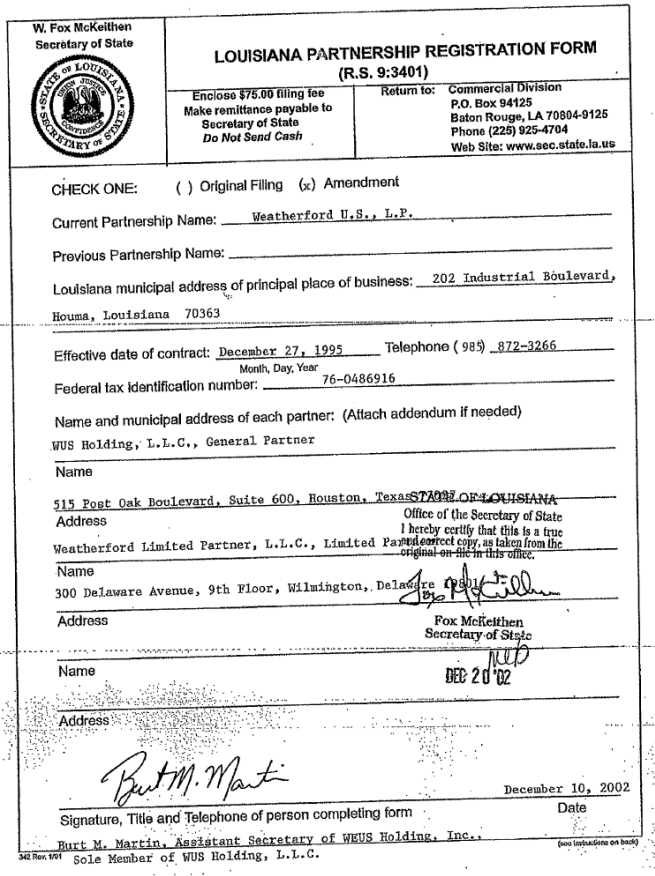
Exhibit T3A-67
|
State of Delaware |
|
|
|
Secretary of State |
|
|
|
Division of Corporations |
|
|
|
Delivered 11:26 AM 06/27/2016 |
|
|
|
FILED 11:26 AM 06/27/2016 |
|
|
|
SR 20164651260 - File Number 6080230 |
|
|
State of Delaware
Limited Liability Company
Certificate Of Formation
First: The name of the limited liability company is Weatherford URS Holdings, LLC.
Second: The address of its registered office in the State of Delaware is: Corporation Trust Center, 1209 Orange Street, in the City of Wilmington, Delaware 19801. The name of its registered agent at such address is The Corporation Trust Company.
IN WITNESS WHEREOF, the undersigned has executed this Certificate of Formation of Weatherford URS Holdings, LLC this 27th day of June 2016.
|
|
|
By: |
/s/ Charity R. Kohl |
|
|
|
|
Charity R. Kohl |
|
|
|
|
Authorized Person |
|
ARTICLES OF ASSOCIATION |
|
STATUTEN |
|
|
|
|
|
of |
|
der |
|
|
|
|
|
Weatherford Worldwide Holdings GmbH (Weatherford Worldwide Holdings Sàrl) (Weatherford Worldwide Holdings LLC) |
|
Weatherford Worldwide Holdings GmbH (Weatherford Worldwide Holdings Sàrl) (Weatherford Worldwide Holdings LLC) |
|
|
|
|
| |
|
|
|
|
|
|
|
I. NAME, DOMICILE, DURATION, AND PURPOSE OF THE COMPANY |
|
I. FIRMA, SITZ, DAUER UND ZWECK DER GESELLSCHAFT |
|
|
|
|
|
Article 1 |
|
Artikel 1 |
|
|
|
|
|
Name, Domicile, Duration |
|
Firma, Sitz, Dauer |
|
|
|
|
|
Under the firm name of Weatherford Worldwide Holdings GmbH (Weatherford Worldwide Holdings Sàrl) (Weatherford Worldwide Holdings LLC) with domicile in Baar, canton of Zug, there exists for an unlimited period of time a limited liability company which is governed by Art. 772 seq. of the Swiss Code of Obligations (CO). |
|
Unter der Firma Weatherford Worldwide Holdings GmbH (Weatherford Worldwide Holdings Sàrl) (Weatherford Worldwide Holdings LLC) besteht mit Sitz in Baar, Kanton Zug, auf unbestimmte Dauer eine Gesellschaft mit beschränkter Haftung im Sinne von Art. 772 ff. des Schweizerischen Obligationenrechts (OR). |
|
|
|
|
|
Article 2 |
|
Artikel 2 |
|
|
|
|
|
Purpose |
|
Zweck |
|
|
|
|
|
Acquisition, holding, administration and transfer of participations in entities in Switzerland and abroad, either directly or indirectly, in particular in entities which are active in the field of services providing with respect to the use of natural energy and of the financing of such activities. |
|
Erwerb, Halten, Verwaltung und Veräusserung von Beteiligungen an Unternehmen im In- und Ausland, ob direkt oder indirekt, insbesondere an Unternehmen, die im bereich der Erbringung von Dienstleistungen zur Nutzung von natürlichen Energiequellen und der Finanzierung dieser Aktivitäten tätig sind. |
|
|
|
|
|
The Company may establish branch offices and subsidiaries in Switzerland and abroad. The |
|
Die Gesellschaft kann Zweigniederlassungen und Tochtergesellschaften im In- und Ausland |

|
Company may acquire, administer and transfer patents, trademarks and technical as well as industrial know-how. The Company may engage in any commercial, financial or other activities which are directly or indirectly related to the purpose of the Company. In particular, the company and its subsidiaries may perform the following business activities: Provision of oil and gas fields services (including works of drilling oil and gas wells); The renting and provision of machinery and other equipment as well as their installation on the relevant facilities or fields; Import of chemicals related to petroleum and gas and the import and trade of radioactive materials for the petroleum industry, as well as trading in the necessary explosives for business operations. |
|
errichten. Die Gesellschaft kann Patente, Handelsmarken und technisches und industrielles Know-how erwerben, verwalten und übertragen. Die Gesellschaft kann alle finanziellen, kommerziellen und anderen Tätigkeiten ausüben, welche mit dem Zweck der Gesellschaft direkt oder indirekt in Zusammenhang stehen. Insbesondere kann die Gesellschaft und deren Tochtergesellschaften die folgenden Geschäftstätigkeiten ausüben: Erbringung von Dienstleistungen im Bereich der Herstellung und Bewirtschaftung von Öl und Gas Anlagen (u.a. Bohrungen von Öl und Gas Quellen); die Miete und die Bereitstellung von Maschinen und anderer Ausrüstung sowie deren Installation auf den entsprechenden Anlagen bzw. Feldern; Import von Chemikalien im Zusammenhang mit Petroleum und Gas und der Import und Handel von radioaktiven Stoffen fur die Petroleum Industrie, sowie der Handel mit den fur die Geschäftstätigkeit notwendigen Sprengstoffmaterialen. |
|
|
|
|
|
The Company may also participate in the financing, including by means of the providing of guarantees and sureties of any kind, of other entities of the group to which the Company belongs in the general interest of such group. |
|
Die Gesellschaft kann im Übrigen im Rahmen des allgemeinen Gruppeninteresses an Finanzierungen von mittelbaren und unmittelbaren Tochtergesellschaften teilnehmen, namentlich Garantien und Bürgschaften jeglicher Art eingehen, solange im Interesse der Gruppe. |
|
|
|
|
|
II. COMPANY CAPITAL, QUOTAS |
|
II. STAMMKAPITAL, STAMMANTEILE |
|
|
|
|
|
Article 3 |
|
Artikel 3 |
|
|
|
|
|
Company Capital |
|
Stammkapital |
|
|
|
|
|
The company capital amounts to CHF 21,000 and is divided in 21 quotas of CHF 1,000. |
|
Das Stammkapital der Gesellschaft beträgt CHF 21,000 und ist eingeteilt in 21 Stammanteile zu je CHF 1,000. |
|
|
|
|
|
All quotas shall be fully paid in. The quotaholders are not obliged to make supplementary financial contributions. |
|
Alle Stammanteile sind voll zu liberieren. Eine Nachschusspflicht der Gesellschafter besteht nicht. |
|
|
|
|
|
Article 4 |
|
Artikel 4 |
|
|
|
|
|
Quotaholders’ book |
|
Anteilbuch |
|
|
|
|
|
The Company shall keep a quotaholders’ book containing the following information: |
|
Die Gesellschaft führt über die Stammanteile ein Anteilbuch, in dem eingetragen werden: |
|
1. names and addresses of the quotaholders; |
|
1. die Gesellschafter mit Namen und Adresse; |
|
|
|
|
|
2. number, par value and categories, if any, of the quotas of each quotaholder; |
|
2. die Anzahl, der Nennwert sowie alienfalls die Kategorien der Stammanteile jedes Gesellschafters; |
|
|
|
|
|
3. names and addresses of beneficiaries; |
|
3. die Nutzniesser mit Namen und Adresse; |
|
|
|
|
|
4. names and addresses of pledgees. |
|
4. die Pfandgläubiger mit Namen und Adresse. |
|
|
|
|
|
The quotaholders’ book shall be kept by the managing officers of the Company. |
|
Zuständig für die Führung des Anteilbuches ist die Geschäftsführung. |
|
|
|
|
|
Article 5 |
|
Artikel 5 |
|
|
|
|
|
Transfer of Quotas, Withdrawal, Expulsion |
|
Übertragung, Austritt, Ausschluss |
|
|
|
|
|
The requirement of the approval by the quotaholders' meeting to the transfer of quotas is waived. |
|
Auf das Erf ordemis der Zustimmung der Gesellschafterversammlung zur Abtretung von Stammanteilen wird verzichtet. |
|
|
|
|
|
The transfer of a quota as well as the obligation to transfer must be in writing in order to be valid. |
|
Die Abtretung eines Gesellschaftsanteiles sowie die Verpflichtung zur Abtretung bedürfen zu ihrer Gültigkeit der schriftlichen Form. |
|
|
|
|
|
Article 6 |
|
Artikel 6 |
|
|
|
|
|
Capital Increase |
|
Kapitalerhohung |
|
|
|
|
|
Any capital increase is subject to the approval by two thirds (2/3) of the represented votes representing at the same time the absolute majority of the entire capital entitled to vote. |
|
Eine Kapitalerhöhung bedarf der Zustimmung von mindestens zwei Drittel (2/3) der vertretenen Stimmen, die zugleich die absolute Mehrheit des gesamten stimmberechtigten Stammkapitals auf sich vereinigen. |
|
|
|
|
|
Each quotaholder has a preemptive right proportional to his prior quota. |
|
Die bisherigen Gesellschafter haben ein Bezugsrecht im Verhältnis ihrer bisherigen Stammanteile. |
|
|
|
|
|
The managing officers shall amend the articles of association as soon as the resolutions and supporting documents, required by law or by the articles of association, are available. |
|
Die Geschäftsführung nirnmt die Statutenänderung vor, sobald die gesetzlich und statutarisch erforderlichen Beschltisse und Belege vorliegen. |
|
III. COMPANY ORGANIZATION |
|
III. ORGANISATION DER GESELLSCHAFT |
|
|
|
|
|
a) The quotaholders’ meeting |
|
a) Die Gesellschafterversammlung |
|
|
|
|
|
Article 7 |
|
Artikel 7 |
|
|
|
|
|
Powers |
|
Befugnisse |
|
|
|
|
|
The quotaholders’ meeting is the supreme body of the Company. |
|
Die Gesellschafterversammlung ist das oberste Organ der Gesellschaft. |
|
|
|
|
|
It shall have the following inalienable powers: |
|
Ihr stehen die folgenden uniibertragbaren Befugnisse zu: |
|
|
|
|
|
1. the amendment of the articles of incorporation; |
|
1. die Änderung der Statuten; |
|
|
|
|
|
2. the appointment and removal of managing officers; |
|
2. die Bestellung und die Abberufung von Geschäftsführern; |
|
|
|
|
|
3. the appointment and removal of the auditors and of the group auditor; |
|
3. die Bestellung und die Abberufung der Mitglieder der Revisionsstelle und des Konzernrechnungsprüfers; |
|
|
|
|
|
4. the approval of the annual report and the consolidated financial statements; |
|
4. die Genehmigung des Jahresberichtes und der Konzernrechnung; |
|
|
|
|
|
5. the approval of the annual financial statements as well as the resolution on the use of the balance sheet profit, in particular, the declaration of dividends and the profit sharing by managing officers; |
|
5. die Genehmigung der Jahresrechnung sowie die Beschlussfassung über die Verwendung des Bilanzgewinnes, insbesondere die Festsetzung der Dividende und der Tantieme; |
|
|
|
|
|
6. the determination of the remuneration of managing officers; |
|
6. die Festsetzung der Entschädigung der Geschäftsführer; |
|
|
|
|
|
7. the release of the managing officers; |
|
7. die Entlastung der Geschäftsführer; |
|
|
|
|
|
8. the approval of the assignment of quotas or the recognition as a quotaholder with voting rights, so far as stipulated by law or these articles; |
|
8. die Zustimmung zur Abtretung von Stammanteilen beziehungsweise die Anerkennung als stimmberechtigter Gesellschafter, soweit Gesetz und Statuten dies vorsehen; |
|
|
|
|
|
9. the approval of the establishment of a security interest on quotas if the articles of association so provide; |
|
9. die Zustimmung zur Bestellung eines Pfandrechts an Stammanteilen, falls die Statuten dies vorsehen; |
|
|
|
|
|
10. the passing of resolutions on the exercise of the right of first offer, right of first |
|
10. die Beschlussfassung über die Ausubung statutarischer Vorhand-, Vorkaufs- oder |
|
refusal, or the right of purchase stipulated in the articles of association; |
|
Kaufsrechte; |
|
|
|
|
|
11. the authorization of the managing officers to acquire own quotas on behalf of the Company or the approval of such acquisition; |
|
11. die Ermächtigung der Geschäftsführer zum Erwerb eigener Stammanteile durch die Gesellschaft oder die Genehmigung eines solchen Erwerbs; |
|
|
|
|
|
12. the adoption of regulations regarding the obligation to provide ancillary performances if the articles of association refer thereto; |
|
12. die nähere Regelung von Nebenleistungspflichten in einem Reglement, falls die Statuten auf ein Reglement verweisen; |
|
|
|
|
|
13. the approval of activities of the managing officers and the quotaholders that violate the duty of loyalty or the prohibition to compete, if the articles of association waive the requirement of the approval by all quotaholders; |
|
13. die Zustimmung zu Tätigkeiten der Geschäftsführer und der Gesellschafter, die gegen die Treuepflicht oder das Konkurrenzverbot verstossen, sofern die Statuten auf das Erfordernis der Zustimmung aller Gesellschafter verzichten; |
|
|
|
|
|
14. the resolution on whether the court should be requested to expel a member for valid reasons; |
|
14. die Beschlussfassung darüber, ob dem Gericht beantragt werden soil, einen Gesellschafter aus wichtigem Grund auszuschliessen; |
|
|
|
|
|
15. the expulsion of quotaholders for reasons provided for in the articles of incorporation; |
|
15. Der Ausschluss eines Gesellschafters aus in den Statuten vorgesehenen Gründen; |
|
|
|
|
|
16. the dissolution of the Company. |
|
16. die Auflosung der Gesellschaft; |
|
|
|
|
|
17. the approval of business activities of the managing officers for which the articles of association require the approval of the quotaholders; |
|
17. die Genehmigung von Geschaften der Geschäftsführer, für die die Statuten die Zustimmung der Gesellschafterversammlung fordern; |
|
|
|
|
|
18. the resolution on items reserved to the quotaholders’ meeting by law, or by the articles of association, or which are submitted by the managing officers. |
|
18. die Beschlussfassung über die Gegenstände, die das Gesetz oder die Statuten der Gesellschafterversammlung vorbehalten oder die ihr die Geschäftsführer vorlegen. |
|
|
|
|
|
Article 8 |
|
Artikel 8 |
|
|
|
|
|
Calling of Meetings |
|
Einberufung |
|
|
|
|
|
The ordinary meeting of quotaholders shall be held annually within six months after the end of the fiscal year. |
|
Die ordentliche Gesellschafterversammlung findet alljährlich innerhalb von sechs Monaten nach Abschluss des Geschäftsjahres statt. |
|
Extraordinary meetings of quotaholders shall be called either upon a resolution of the quotaholders or the managing officers or if one or several quotaholders representing at least one tenth of the Company capital request such a meeting in writing and by stating the purpose. In this case the quotaholders’ meeting shall be called by the managing officers within one month after the receipt of such request. |
|
Ausserordentliche Gesellschafterversammlungen sind auf Beschluss der Gesellschafterversammlung oder der Geschäftsfuhrung einzuberufen oder wenn ein oder mehrere Gesellschafter, die zusammen mindestens den zehnten Teil des Stammkapitals vertreten, schriftlich unter Angabe des Zweckes dies verlangen. Die Geschäftsführung hat in diesem Fall die Gesellschafterversammlung auf einen Termin innerhalb eines Monates vom Eingang des Begehrens an einzuberufen. |
|
|
|
|
|
Ordinary and extraordinary quotaholders’ meetings shall be called by the managing officers in writing (including facsimile or e-mail) to the quotaholders registered in the quotaholders’ book at least 10 days prior to the meeting date stating the agenda items. The business report and the auditors’ report shall be sent to the quotaholders together with the invitation to the ordinary quotaholders’ meeting. |
|
Die Einberufung der ordentlichen und der ausserordentlichen Gesellschafterversammlung erfolgt durch die Geschäftsführung schriftlich (einschliesslich Telefax oder E-Mail) an die im Anteilbuch verzeichneten Gesellschafter unter Angabe der Verhandlungsgegenstande und unter Beobachtung einer Frist von mindestens 10 Tagen vor der Versammlung. Geschäftsbericht und Revisionsbericht sind den Gesellschaftern spätestens zusammen mit der Einladung zur ordentlichen Generalversammlung zuzustellen. |
|
|
|
|
|
No resolutions shall be passed on matters for which no proper notice has been given, with the exception of requests to call an extraordinary quotaholders’ meeting or requests for the election of auditors based on a respective motion of a quotaholder. |
|
Über Gegenstände, die nicht in dieser Weise angekündigt sind, können Beschlüsse nicht gefasst werden, ausser über einen Antrag auf Einberufung einer ausserordentlichen Gesellschaf terversammlung und einen Antrag auf Wahl einer Revisionsstelle in Folge eines Begehrens eines Gesellschafters. |
|
|
|
|
|
The managing officers determine the place of the meeting. |
|
Die Gesellschafterversammlung findet an einem von der Geschäftsführung zu bestimmenden Ort start. |
|
|
|
|
|
Article 9 |
|
Artikel 9 |
|
|
|
|
|
Meeting of all Quotaholders |
|
Universalversammlung |
|
|
|
|
|
All quotaholders may, if no objection is raised, hold a quotaholders’ meeting without observing the formalities for the calling of such a meeting. All matters within the powers of the quotaholders’ meeting may validly be discussed and decided upon at such a meeting, as long as all quotaholders are present. |
|
Samtliche Gesellschafter können, falls kein Widerspruch erhoben wird, eine Gesellschafterversammlung ohne Einhaltung der fur die Einberufung vorgeschriebenen Formvorschriften abhalten. In dieser Versammlung kann über alle in den Geschäftskreis der Gesellschäfterversammlung fallenden Gegenstände gültig verhandelt und Beschluss gefasst werden, solange sämtliche Gesellschafter anwesend sind. |
|
Article 10 |
|
Artikel 10 |
|
|
|
|
|
Chairman, Scrutineer, Secretary The chairman of the managing officers or, in his absence, a chairman appointed by the quotahold-ers’ meeting for the day shall chair the quotaholders’ meeting. |
|
Vorsitz, Stimmenzähler, Protokollführer Der Vorsitzende der Geschäftsführung oder in seiner Abwesenheit ein von der Gesellschafterversammlung gewählter Tagespräsident leitet die Gesellschafterversammlung. |
|
|
|
|
|
The chairman shall designate the scrutineer as well as a secretary in charge of keeping the minutes. These designees need not to be quotaholders. |
|
Der Vorsitzende bezeichnet die Stimmenzahler sowie den Protokollführer, die nicht Gesellschafter zu sein brauchen. |
|
|
|
|
|
Article 11 |
|
Artikel 11 |
|
|
|
|
|
Quotaholders’ Right to Vote, Proxy, Vote by Circular Resolution |
|
Stimmrecht der Gesellschafter, Vertretung, schriftliche Abstimmung |
|
|
|
|
|
Each quotaholder’s voting right shall be proportional to the total nominal value of his quota. However, a quotaholder may not exercise his voting right if a vote is taken regarding his release. |
|
Das Stimmrecht jedes Gesellschafters bemisst sich nach dem gesamten Nennwert seiner Stammanteile. Ein Gesellschafter darf nicht stimmen, wenn über seine Entlastung Beschluss gefasst wird. |
|
|
|
|
|
A quotaholder may be represented by a third party by way of a written power of attorney. |
|
Ein Gesellschafter kann sich durch einen Dritten vertreten lassen. Vertreter haben sich durch eine schriftliche Vollmacht auszuweisen. |
|
|
|
|
|
Instead of holding an actual meeting, the quotaholders may also take resolutions regarding all or some of the agenda items by correspondence in writing. The calling for a vote by correspondence shall be made in writing (including by facsimile or e-mail) stating the agenda items at least ten days prior to the vote. Resolutions which have to be notarized may not be taken by correspondence. Article 9 remains reserved. |
|
Sofern nicht ein Gesellschafter die mündliche Beratung verlangt, kann an Stelle der Beschlussfassung in der Versammlung fur alle oder fur einzelne Gegenstande die schriftliche Abstimmung angeordnet werden. In diesem Fall erfolgt die Einladung zur Abstimmung schriftlich (einschliesslich Telefax oder E-Mail) mindestens zehn Tage im Voraus und unter Angabe der Gegenstände. Beschlüsse, die einer öffentlichen Beurkundung bedürfen, sind von der schriftlichen Beschlussfassung ausgenommen. Artikel 9 bleibt vorbehalten. |
|
Article 12 |
|
Artikel 12 |
|
|
|
|
|
Quorum |
|
Beschlussfähigkeit |
|
|
|
|
|
Subject to mandatory law and the articles of association, the quotaholders’ meeting shall be able to pass resolutions if at least half of the Company capital is present or validly represented. |
|
Die Gesellschafterversammlung ist vorbehaltlich zwingender gesetzlicher und statutarischer Bestimmungen beschlussfähig, wenn mindestens die Hälfte des Stammkapitals anwesend oder vertreten ist. |
|
|
|
|
|
Article 13 |
|
Artikel 13 |
|
|
|
|
|
Resolutions, Elections |
|
Beschlussfassung, Wahlen |
|
|
|
|
|
Resolutions shall be deemed passed and elections shall be deemed effective if taken by an absolute majority of quotaholders’ votes cast, excluding blank and invalid votes, unless mandatory law or these articles of association provide otherwise. In case of a tie, a resolution shall be deemed failed and an election shall be decided by drawing lots.
Elections and the passing of resolutions shall be conducted openly, unless the chairman orders or the quotaholders’ meeting asks for a secret vote. |
|
Die Gesellschafterversammlung fasst ihre Beschlüsse und vollzieht ihre Wahlen mit der absoluten Mehrheit der abgegebenen Stimmen, unter Ausschluss der leeren und ungiiltigen Stimmen, soweit zwingende gesetzliche Bestimmungen oder Statuten nichts anderes bestimmen. Bei Stimmengleichheit gilt ein Beschluss als nicht zustande gekommen; bei Wahlen entscheidet das Los.
Abstimmungen und Wahlen erfolgen offen, sofern nicht der Vorsitzende die geheime Stimmabgabe anordnet oder die Gesellschafterversammlung diese beschliesst. |
|
|
|
|
|
Article 14 |
|
Artikel 14 |
|
|
|
|
|
Minutes |
|
Protokoll |
|
|
|
|
|
Resolutions and elections of the quotaholders’ meeting shall be recorded in minutes which shall be signed and thereby approved by the chairman, the secretary and the scrutineers if scrutineers are appointed. |
|
Über die Beschliisse und Wahlen der Gesellschafterversammlung ist ein Protokoll zu führen, das vom Vorsitzenden, von den Stimmenzählern, falls solche bezeichnet werden, und vom Protokollführer zu unterzeichnen ist und damit als genehmigt gilt. |
|
|
|
|
|
Article 15 |
|
Artikel 15 |
|
|
|
|
|
Information and Inspection Rights of the Quotaholders |
|
Auskunfts- und Einsichtsrecht der Gesellschafter |
|
|
|
|
|
The quotaholders shall have the right to get informed about the business of the Company and to inspect the Company’s books and records and to establish an overview of the financial situation of |
|
Die Gesellschafter haben das Recht, Auskunft über alle Gesellschaftsangelegenheiten zu erhalten, in die Bücher und Akten der Gesellschaft Einsicht zu nehmen und für sich eine |
|
the Company. They shall exclusively address the chairman of the managing officers for that purpose. |
|
Übersicht über den Stand des gemeinschaftlichen Vermögens anzufertigen. Sie wenden sich ausschliesslich an den Vorsitzenden der Geschäftsführung. |
|
|
|
|
|
Access to information and records of the Company may be denied if the Company has Auditors and as far as the quotaholder cannot state a plausible interest for the inspection. |
|
Hat die Gesellschaft eine Revisionsstelle, kann einem Gesellschafter Einsicht in die Bücher und Akten der Gesellschaft verweigert werden, soweit er kein berechtigtes Interesse an der Einsichtnahme glaubhaft machen kann. |
|
|
|
|
|
b) The Managing Officers |
|
b) Die Geschäftsführung |
|
|
|
|
|
Article 16 |
|
Artikel 16 |
|
|
|
|
|
Appointment, Election |
|
Bestellung, Wahl |
|
|
|
|
|
The managing officers of the Company shall be appointed by a resolution of the quotaholders’ meeting. Quotaholders or third parties may be appointed as managing officer. |
|
Die Geschäftsführung wird durch Beschluss der Gesellschafterversammlung bestellt. Sie kann sowohl einzelnen oder alien Gesellschaftern als auch Dritten iibertragen werden. |
|
|
|
|
|
The chairman of the managing officers shall be designated by the managing officers. |
|
Den Vorsitz in der Geschäftsführung führt ein von der Geschüftsführung bestimmtes Mitglied der Geschäftsführung. |
|
|
|
|
|
The signature authority of the managing officers is determined by resolution of the managing officers. |
|
Die Zeichnungsberechtigung der Geschäftsführer wird durch Beschluss der Geschaftsfuhrung festgelegt. |
|
|
|
|
|
At least one of the managing officers or executive directors residing in Switzerland must be able to represent the Company. |
|
Wenigstens ein in der Schweiz wohnhafter Geschäftsführer oder Direktor muss die Gesellschaft vertreten können. |
|
|
|
|
|
Article 17 |
|
Artikel 17 |
|
|
|
|
|
Powers and Duties |
|
Befugnisse, Pflichten |
|
|
|
|
|
The managing officers shall have the authority to act on behalf of the Company and to perform all acts which may be deemed as being within the purpose of the Company. |
|
Die zur Geschäftsführung befugten Personen sind ermächtigt, im Namen der Gesellschaft alle Rechtshandlungen vorzunehmen, die der Zweck der Gesellschaft mit sich bringen kann. |
|
|
|
|
|
Subject to the duties listed in the following paragraph, the managing officers may delegate their duties to one or more managing officers or to third parties, provided such delegation is provided for in management regulations. |
|
Unter Vorbehalt der im nachfolgenden Abschnitt aufgefiihrten Aufgaben ist die Geschaftsfuhrung berechtigt, Aufgaben und Kompetenzen im Rahmen eines von ihr zu erstellenden Organisationsreglements an einzelne oder mehrere Mitglieder der Geschäftsführung oder an Dritte zu übertragen. |
|
The managing officers shall have the following non-transferable and inalienable duties: |
|
Die Geschäftsführung hat unter Vorbehalt von Absatz 7 folgende unubertragbare und unentziehbare Aufgaben: |
|
|
|
|
|
1. the ultimate management of the Company and the giving of the necessary directives; |
|
1. die Oberleitung der Gesellschaft und die Erteilung der nötigen Weisungen; |
|
|
|
|
|
2. the establishment of the organization within the framework of the law and the articles of association; |
|
2. die Festlegung der Organisation im Rahmen von Gesetz und Statuten; |
|
|
|
|
|
3. the structuring of the accounting system and of the financial controls, as well as the approval of the financial planning insofar as this is necessary to manage the Company; |
|
3. die Ausgestaltung des Rechnungswesens und der Finanzkontrolle sowie der Finanzplanung, sofern diese für die Führung der Gesellschaft notwendig ist; |
|
|
|
|
|
4. the supervision of persons entrusted with parts of the management, in particular in view of compliance with the law, the articles of association, regulations and directives; |
|
4. die Aufsicht über die Personen, denen Teile der Geschäftsführung übertragen sind, namentlich im Hinblick auf die Befolgung der Gesetze, Statuten, Reglemente und Weisungen; |
|
|
|
|
|
5. the preparation of the business report (annual financial statements, annual report and the consolidated financial statements, if applicable); |
|
5. die Erstellung des Geschäftsberichtes (Jahresrechnung, Jahresbericht und gegebenenfalls Konzernrechnung); |
|
|
|
|
|
6. the preparation of the quotaholders’ meeting as well as the implementation of its resolutions; |
|
6. die Vorbereitung der Gesellschafterversammlung sowie die Ausfuhrung ihrer Beschlüsse; |
|
|
|
|
|
7. the notification of the court in the case of overindebtedness. |
|
7. die Benachrichtigung des Gerichts im Falle der Überschuldung. |
|
|
|
|
|
The chairman of the managing officers or the sole managing officer has the following duties: |
|
Der Vorsitzende der Geschäftsführung beziehungsweise der einzige Geschäftsführer hat folgende Aufgaben: |
|
|
|
|
|
1. to call and chair the quotaholders’ meetings; |
|
1. die Einberufung und Leitung der Gesellschafterversammlung; |
|
|
|
|
|
2. to make notifications to the quotaholders; |
|
2. Bekanntmachungen gegenüber den Gesellschaftern; |
|
|
|
|
|
3. to assure the filing of the necessary applications with the commercial register. |
|
3. die Sicherstellung der erforderlichen Anmeldungen beim Handelsregister. |
|
|
|
|
|
The managing officers furthermore appoint the managers, procuration holders and holders of commercial powers of attorney. |
|
Die Geschäftsführung ernennt weiter die Direktoren, die Prokuristen sowie die Handlungsbevollmächtigten. |
|
The managing officers may also pass resolutions with regard to those matters which are not, according to mandatory law, these articles of association or regulations of the quotaholders’ meeting, reserved or transferred to another body of the Company. |
|
Im Übrigen kann die Geschäftsführung in allen Angelegenheiten Beschluss fassen, die nicht nach Gesetz, Statuten oder Reglement der Gesellschafterversamrnlung oder einem anderen Organ der Gesellschaft vorbehalten oder übertragen sind. |
|
|
|
|
|
Article 18 |
|
Artikel 18 |
|
|
|
|
|
Calling of Meetings of the Managing Officers |
|
Einberufung zur Geschäftsführersitzung |
|
|
|
|
|
The managing officers shall meet whenever the course of the business requires such meetings. A managing officers’ meeting shall also be called upon written and substantiated request by any of its members. |
|
Die Geschäftsfuhrung versammelt sich, so oft die Geschäfte es erfordern. Die Geschäftsführung tritt auch zusammen, wenn ernes ihrer Mitglieder die ubrigen Mitglieder schriftlich unter Angabe der Griinde um Einberufung einer Sitzung ersucht. |
|
|
|
|
|
A meeting shall be called at least five working days prior to the date of the meeting. This period may be shortened in urgent cases. Day, time, and location of the meeting as well as the agenda items shall be announced together with the calling. No resolutions may be passed on agenda items which have not been duly announced, unless all managing officers are present. |
|
Die Einberufung hat mindestens funf Werktage vor der Sitzung zu erfolgen. In dringenden Fällen kann diese Frist verkürzt werden. Tag, Zeit und Ort der Sitzung und die Verhandlungsge genstände (Traktandenliste) sind bei der Einberufung bekannt zu geben. Über Gegenstände, die in der Einberufung nicht aufgeführt sind, können Beschlüsse nur gefasst werden, wenn sämtliche Mitglieder der Geschäftsführung anwesend sind. |
|
|
|
|
|
Article 19 |
|
Artikel 19 |
|
|
|
|
|
Chairing of Meetings |
|
Vorsitz |
|
|
|
|
|
The chairman of the managing officers or, in his absence, another managing officer, presides over the meeting. |
|
Der Vorsitzende der Geschäftsführung oder in seiner Abwesenheit ein anderes Mitglied, übernimmt den Vorsitz der Geschäftsführersitzungen. |
|
|
|
|
|
Article 20 |
|
Artikel 20 |
|
|
|
|
|
Quorum, Voting |
|
Beschlussfähigkeit, Beschlussfassung |
|
|
|
|
|
The presence of the absolute majority of the managing officers shall constitute a quorum. The managing officers may establish a higher quorum. The presence of a single member is sufficient for ascertainment resolutions (art. 781 para 5, cipher 5 in connection with Art. 652g CO).
|
|
Die Geschäftsführung ist beschlussfähig, wenn die absolute Mehrheit der Mitglieder anwesend ist. Sie kann höhere Präsenzquoren einführen. Für öffentlich zu beurkundende Feststellungsbeschliisse genügt die Anwesenheit eines einzelnen Mitglieds (Art. 781 Abs. 5 Ziff. 5 in Verbindung mit Art. 652g OR). |
|
Resolutions of the managing officers may be taken by means of a circular letter (including facsimile or e-mail) unless a managing officer requests deliberation in a meeting. |
|
Beschlüsse der Geschäftsführung können auch auf dem Zirkulationsweg per Briefpost (einschliesslich Telefax oder E-Mail) gefasst werden, sofern nicht ein Mitglied Beratung in einer Sitzung verlangt. |
|
|
|
|
|
Resolutions shall be adopted and elections shall be made with a majority of votes cast. In case of a tie, the chairman shall have the casting vote. |
|
Die Geschäftsführung fasst ihre Beschlüsse und vollzieht ihre Wahlen mit der Mehrheit der abgegebenen Stimmen. Bei Stimmengleichheit gibt der Vorsitzende den Stichentscheid. |
|
|
|
|
|
Article 21 |
|
Artikel 21 |
|
|
|
|
|
Minutes |
|
Protokoll |
|
|
|
|
|
Deliberations and resolutions shall be recorded in minutes, which shall be signed by the chairman of the meeting and the secretary. Circular resolutions shall be recorded in the next minutes of a meeting of the managing officers. The minutes shall be approved by the managing officers in the course of the next meeting. |
|
Über die Verhandlungen und Beschlüsse wird ein Protokoll geführt, das vom Vorsitzenden und vom Protokollführer zu unterzeichnen ist. Zirkulationsbeschlüsse sind in das nächste Protokoll der Geschäftsführung aufzunehmen. Die Protokolle sind von der Geschäftsführung jeweils in der nächsten Sitzung zu genehmigen. |
|
|
|
|
|
c) The Auditors |
|
c) Die Revisionsstelle |
|
|
|
|
|
Article 22 |
|
Artikel 22 |
|
|
|
|
|
Election, Independence, Term of Office |
|
Wahl, Unabhängigkeit, Amtsdauer |
|
|
|
|
|
The audit according to Art. 818 CO shall be conferred to auditors. The auditors may also be a fiduciary company or an auditing company. |
|
Die Revision gemäss Art. 818 OR wird einer Revisionsstelle ubertragen. Als Revisionsstelle kann auch eine Treuhand- oder Revisionsgesellschaft bestellt werden. |
|
|
|
|
|
The quotaholders’ meeting may waive the election of auditors if: |
|
Die Gesellschafterversammlung kann auf die Wahl einer Revisionsstelle verzichten, wenn: |
|
|
|
|
|
1. the Company is not required to conduct an ordinary audit; |
|
1. die Gesellschaft nicht zur ordentlichen Revision verpflichtet ist; |
|
|
|
|
|
2. all the quotaholders agree; and |
|
1. samtliche Gesellschafter zustimmen; und |
|
|
|
|
|
3. the Company does not have more than an annual average of 10 full-time employment positions. |
|
3. die Gesellschaft nicht mehr als zehn Vollzeitstellen im Jahresdurchschnitt hat. |
|
|
|
|
|
The waiver shall be valid for all subsequent years. However, each quotaholder shall be entitled to request a limited audit and the election of |
|
Der Verzicht gilt auch für die nachfolgenden Jahre. Jeder Gesellschafter hat jedoch das Recht, spätestens 10 Tage vor der |
|
auditors no later than 10 days before the quotaholders’ meeting. In such case, the quotaholders’ meeting shall only be entitled to pass the resolutions pursuant to Article 7 sections 4 and 5 once the auditors’ report is available. |
|
Gesellschafterversammlung die Durchführung einer eingeschränkten Revision und die Wahl einer entsprechenden Revisionsstelle zu verlangen. Die Gesellschafterversammlung darf diesfalls die Beschliisse nach Artikel 7 Ziffer 4 und 5 erst fassen, wenn der Revisionsbericht vorliegt. |
|
|
|
|
|
Individuals as well as legal entities or commercial companies may be elected as auditors. At least one of the auditors must have its legal domicile or branch in Switzerland. |
|
Als Revisionsstelle können eine oder mehrere natiirliche oder juristische Personen oder Personengesellschaften gewählt werden. Wenigstens ein Mitglied der Revisionsstelle muss seinen Wohnsitz, seinen Sitz oder eine eingetragene Zweigniederlassung in der Schweiz haben. |
|
|
|
|
|
If the Company is obliged to have an ordinary audit, the quotaholders’ meeting elects a licensed audit expert according to the provisions of the Law on Oversight of Auditors of December 16, 2005. |
|
Muss die Gesellschaft ihre Jahresrechnung durch eine Revisionsstelle ordentlich prüfen lassen, wählt die Gesellschafterversammlung einen zugelassenen Revisionsexperten nach den Vorschriften des Revisionsaufsichtsgesetzes vom 16. Dezember 2005 als Revisionsstelle. |
|
|
|
|
|
If the Company is obliged to have a limited audit, the quotaholders’ meeting must appoint a licensed auditor according to the provisions of the Law on Oversight of Auditors of December 16, 2005, unless the election of an auditor has been waived. |
|
Ist die Gesellschaft zur eingeschränkten Revision verpflichtet, muss als Revisionsstelle ein zugelassener Revisor nach den Vorschriften des Revisionsaufsichtsgesetzes vom 16. Dezember 2005 bezeichnet werden. Vorbehalten bleibt der Verzicht auf die Wahl einer Revisionsstelle. |
|
|
|
|
|
The term of office of the auditors shall be one year, ending on the day of the quotaholders’ meeting during which the final auditors’ report must be presented. The auditors may be re-elected. The auditors may at any time be removed without notice. |
|
Die Revisionsstelle wird für eine Amtsdauer von einem Jahr gewählt. Die Amtsdauer endet mit der Gesellschafterversammlung, welcher der letzte Bericht zu erstatten ist. Wiederwahl ist moglich. Die Revisionsstelle kann jederzeit und fristlos abberufen werden. |
|
|
|
|
|
The auditors shall conduct the audit according to Art. 728 - 729c CO. |
|
Der Revisionsstelle obliegt die Prüfung und Berichterstattung gemäss Art. 728 - 729c OR. |
|
|
|
|
|
IV. FISCAL YEAR, FINANCIAL STATEMENTS AND PROFIT DISTRIBUTION |
|
IV. GESCHÄFTSJAHR, RECHNUNGSABSCHLUSS UND GEWINNVERWENDUNG |
|
|
|
|
|
Article 23 |
|
Artikel 23 |
|
|
|
|
|
Fiscal Year and Financial Statements |
|
Geschäftsjahr und Rechnungsabschluss |
|
|
|
|
|
The fiscal year shall end at a date to be determined by the managing officers. |
|
Das Geschäftsjahr wird durch die Geschäftsführung festgelegt. |
|
The financial statements shall be established in accordance with Art. 801 CO. |
|
Die Jahresrechnung ist gemäss den gesetzlichen Bestimmungen von Art. 801 OR aufzustellen. |
|
|
|
|
|
Article 24 |
|
Artikel 24 |
|
|
|
|
|
Profit Distribution |
|
Gewinnverwendung |
|
|
|
|
|
A portion of 5 % of the annual profit shall be allocated to the general reserve, until such reserve reaches 20 % of the paid-in Company capital. |
|
Aus dem ausgewiesenen Jahresgewinn ist jährlich ein Betrag von 5% der allgemeinen Reserve zuzuweisen, bis diese 20% des einbezahlten Stammkapitals erreicht hat. |
|
|
|
|
|
Subject to mandatory law, the remaining balance sheet profit may be allocated at the discretion of the quotaholders’ meeting. |
|
Der verbleibende Bilanzgewinn steht unter Vorbehalt der zwingenden gesetzlichen Bestimmungen zur freien Verfügung der Gesellschafterversammlung. |
|
|
|
|
|
V. DISSOLUTION, LIQUIDATION |
|
V. AUFLÖSUNG, LIQUIDATION |
|
|
|
|
|
Article 25 |
|
Artikel 25 |
|
|
|
|
|
Dissolution in General |
|
Auflösung im Allgemeinen |
|
|
|
|
|
The quotaholders’ meeting may, at any time, by two thirds (2/3) of the represented votes representing the absolute majority of all votes pass a resolution to dissolve the Company in accordance with the law and these articles of association. Moreover, the Company shall be dissolved if required by mandatory law. |
|
Die Gesellschafterversammlung kann jederzeit mit zwei Dritteln (2/3) der vertretenen Stimmen, die zugleich die absolute Mehrheit des gesamten stimmberechtigten Stammkapitals auf sich vereinigen, die Auflösung der Gesellschaft nach Massgabe der gesetzlichen und statutarischen Vorschriften beschliessen. Ansonsten gelten die gesetzlichen Auflösungsgründe. |
|
|
|
|
|
Article 26 |
|
Artikel 26 |
|
|
|
|
|
Liquidation |
|
Liquidation |
|
|
|
|
|
The liquidation shall be governed by the relevant statutory provisions, in particular Art. 739 et seq. CO in connection with Art. 826 CO. |
|
Die Liquidation erfolgt nach den gesetzlichen Bestimmungen, insbesondere nach Art. 739 ff OR in Verbindung mit Art. 826 OR. |
|
|
|
|
|
Subject to the limitations contained in Art. 739 CO, the powers of the quotaholders’ meeting shall remain in force during the liquidation proceedings. The financial statements relating to the liquidation shall be subject to approval by the quotaholders’ meeting. |
|
Die Befugnisse der Gesellschafterversammlung bleiben auch wahrend der Liquidation mit der Einschränkung gemäss Art. 739 OR bestehen. Insbesondere unterliegt die Liquidationsrechnung der Genehmigung durch die Gesellschafterversammlung. |
|
The managing officers shall conduct the liquidation proceedings, unless such proceedings have been conferred to a third party by means of a resolution of the quotaholders’ meeting. |
|
Die Geschäftsführung besorgt die Liquidation, sofern diese nicht durch Beschluss der Gesellschafterversammlung Dritten übertragen wird. |
|
|
|
|
|
The liquidators are entitled to freely dispose of the assets of the Company. |
|
Die Liquidatoren sind berechtigt, die Aktiven der Gesellschaft freihandig zu veräussern. |
|
|
|
|
|
VI. MISCELLANEOUS |
|
VI. VERSCHIEDENE BESTIMMUNGEN |
|
|
|
|
|
Article 27 |
|
Artikel 27 |
|
|
|
|
|
Publications, Notices |
|
Publikationsorgan, Mitteilungen |
|
|
|
|
|
All publications of the Company shall be made in the Swiss Gazette of Commerce. |
|
Publikationsorgan der Gesellschaft ist das Schweizerische Handelsamtsblatt. |
|
|
|
|
|
Communications to the quotaholders shall be made in writing to the last address recorded in the quotaholders’ book (including facsimile or e-mail) or by publication in the Swiss Gazette of Commerce, unless mandatory law provides otherwise. |
|
Die Mitteilungen an die Gesellschafter erfolgen schriftlich an ihre letzte im Anteilbuch eingetragene Adresse (einschliesslich Telefax oder E-Mail) oder durch Veröffentlichung im Schweizerischen Handelsamtsblatt, sofern das Gesetz nicht zwingend etwas anderes bestimmt. |
|
|
|
|
|
Article 28 |
|
Artikel 28 |
|
|
|
|
|
Contribution in Kind |
|
Sacheinlage |
|
|
|
|
|
The Company acquires, in the context of the increase of the nominal capital of the company by CHF 1,000, from currently CHF 20,000 to new CHF 21,000, on 22 December 2009, from Weath-erford International Ltd., with domicile in Zug, Switzerland, the contribution mentioned below, in consideration for the issuance of one quota of the Company: |
|
Die Gesellschaft iibernimmt bei der Erhöhung des Stammkapitals von bisher CHF 20’000 um CHF l’OOO auf neu CHF 21’000 vom 22. Dezember 2009 von Weatherford International Ltd., mit Sitz in Zug, Schweiz, die nachfolgende Beteiligung gegen Neuausgabe des genannten Stammanteils der Gesellschaft: |
|
|
|
|
|
Seven hundred and twenty eight million, seven hundred and eighty two thousand and four hundred and twenty five (728,782,425) common shares, par value USD 1 per share, comprising 100% of the issued and outstanding shares of stock of Weather-ford International Ltd., a corporation organised and existing under the laws of Bermuda (company number 31953) and having its registered office at 2 Church Street, Clarendon House, Hamilton HMll, Bermuda for a transfer price of CHF 10,000,000, wherefore one quota of the Company with a nominal |
|
Sieben hundert acht und zwanzig Millionen, sieben hundert zwei und achtzig Tausend, vier hundert fünf und zwanzig (728’782’425) Aktien im Nennwert von je USD 1 und damit 100% des ausgegebenen Aktienkapitals der Weatherford International Ltd., eine Aktiengesellschaft nach dem Recht von Bermuda (Gesellschaftsnummer 31953), mit Sitz in 2 Church Street, Clarendon House, Hamilton HM11, Bermuda, zum Preis von insgesamt CHF 10’000’000, wofür der Sacheinlegerin ein Stammanteil der Gesellschaft im |
|
value of CHF 1,000 is issued to the contributor. |
|
Nennwert von CHF l’000 ausgegeben wird. |
|
|
|
|
|
As consideration for the contributed shares with a total value of CHF 10,000,000, the contributor receives one quota of the Company, with a nominal value of CHF 1,000. The surplus resulting from the difference between the issue price and the nominal value of the newly issued quota shall be credited as capital surplus (“Agio”) to the reserves of the Company. |
|
Als Gegenleistung für die eingebrachten Aktien im Gesamtwert von CHF 10’000’000 erhält die Sacheinlegerin einen Stammanteil der Gesellschaft im Nennwert von CHF l’000. Die Differenz zwischen Ausgabepreis und Nennwert des neu auszugebenden Stammanteils wird als Agio den Reserven der Gesellschaft gutgeschrieben. |
|
Notarielle Beglaubigung |
|
Notarial Legalisation |
|
|
|
|
|
Hiermit beglaubige ich, Notar des Kantons Zug, Philip Oehen, Rechtsanwalt, dass die vorliegenden Statuten derjenigen Fassung entsprechen, wie sie heute von der Erschienenen gutgeheissen wurden. |
|
The Notary Public of the Canton of Zug, Philip Oehen, attorney at law, hereby certifies that the present Articles of Association comply with the approved Articles of Association by the appeared. |
|
|
|
|
|
Baar, 9. Januar 2018 |
|
|
Der Notar / Notary Public
Philip Oehen
|
|
STATE OF DELAWARE |
|
|
SECRETARY OF STATE |
|
|
DIVISION OF CORPORATIONS |
|
|
FILED 09:00 AM 10/01/1992 |
|
|
752275001 - 2311330 |
CERTIFICATE OF INCORPORATION
OF
WEATHERFORD/LAMB, INC.
First: The name of the Corporation is Weatherford/Lamb, Inc.
Second: The registered office of the Corporation in the State of Delaware is 32 Loockerman Square, Suite L-100, City of Dover, County of Kent. The name of the Corporation’s registered agent at such address is The Prentice-Hall Corporation System, Inc.
Third: The purpose of the Corporation is to engage in any lawful act or activity for which corporations may be organized under the General Corporation Law of the State of Delaware.
Fourth: The total number of shares of stock which the Corporation shall have authority to issue is one thousand (1,000), all of which shall be designated Common Stock with a par value of $1.00 per share.
Whenever the vote of stockholders at meeting thereof is required or permitted to be taken for or in connection with any corporate action, the meeting and vote of stockholders may be dispensed with and such action may be taken with the written consent of stockholders having not less than the minimum percentage of the vote required by statute for the proposed corporate action, provided that prompt notice shall be given to all stockholders of the taking of corporate action without a meeting and by less than unanimous consent.
Fifth: The name and mailing address of the Incorporator is H. Suzanne Thomas, 1360 Post Oak Boulevard, Suite 1000, Houston, Texas 77056.
Sixth: The Corporation is to have perpetual existence.
Seventh: The powers of the Incorporator shall terminate upon the filing of this Certificate of Incorporation. The name and mailing address of the person who is to serve as the director of the Corporation until the first annual meeting of the stockholders of the Corporation, or until his successor is elected and qualifies, is Philip Burguieres, 1360 Post Oak Boulevard, Suite 1000, Houston, Texas 77056.
Eighth: Unless and except to the extent that the Bylaws of the Corporation shall so require, the election of directors of the Corporation need not be by written ballot.
Ninth: In furtherance and not in limitation of the powers conferred by the laws of the State of Delaware, the Board of Directors is expressly authorized and empowered to adopt,
amend, alter and repeal the Bylaws of the Corporation, subject to the power of the stockholders of the Corporation to amend, alter or repeal any bylaw made by the Board of Directors.
Tenth: A director of the Corporation shall not be personally liable to the Corporation or its stockholders for monetary damages for breach of fiduciary duty as a director, except for liability (i) for any breach of the director’s duty of loyalty to the Corporation or its stockholders, (ii) for acts or omissions not in good faith or which involve intentional misconduct or a knowing violation of law, (iii) under Section 174 of the General Corporation Law of the State of Delaware, or (iv) for any transaction from which the director derived an improper personal benefit. If the Delaware General Corporation Law hereafter is amended to authorize the further elimination or limitation of the liability of directors, then the liability of a director of the Corporation, in addition to the limitation on personal liability provided herein, shall be limited to the fullest extent permitted by the amended Delaware General Corporation Law. Any repeal or modification of this paragraph by the stockholders of the Corporation shall be prospective only, and shall not adversely affect any limitation on the personal liability of a director of the Corporation existing at the time of such repeal or modification.
Eleventh: The Corporation reserves the right at any time, and from time to time, to amend, alter, change or repeal any provision contained in this Certificate of Incorporation, and other provisions authorized by the laws of the State of Delaware at the time in force may be added or inserted, in the manner now or hereafter prescribed by law; and all rights, preferences and privileges of whatsoever nature conferred upon stockholders, directors or any other persons whomsoever by and pursuant to this Certificate of Incorporation in its present form or as hereafter amended are granted subject to the rights reserved in this article.
THE UNDERSIGNED, being the Incorporator hereinabove named, do hereby further certify that the facts hereinabove are truly set forth, and accordingly I have hereunto set my hand this 30th day of September, 1992.
|
|
/s/ H. Suzanne Thomas |
|
|
H. Suzanne Thomas |
|
State of Delaware |
|
|
Secretary of State |
|
|
Division of Corporations |
|
|
Delivered 01:15 PM 12/15/2005 |
|
|
FILED 01:09 PM 12/15/2005 |
|
|
SRV 051024958 - 2311330 FILE |
|
CERTIFICATE OF AMENDMENT
OF
CERTIFICATE OF INCORPORATION
Weatherford/Lamb, Inc., a corporation organized and existing under and by virtue of the General Corporation Law of the State of Delaware,
DOES HEREBY CERTIFY:
FIRST: That the Board of Directors of said corporation by the unanimous written consent of its members, filed with the minutes of the Board, adopted a resolution proposing and declaring advisable the following amendment to the Certificate of Incorporation of said corporation:
RESOLVED, that the Certificate of Incorporation of Weatherford/Lamb, Inc. be amended by changing the Fourth Article thereof so that, as amended, said Article shall be and read as follows:
“Fourth: The total number of shares of stock which the Corporation shall have authority to issue is two-hundred thousand (200,000), all of which shall be designated Common Stock with a par value of $1.00 per share.”
SECOND: That in lieu of a meeting and vote of stockholders, the stockholders have given unanimous written consent to said amendment in accordance with the provisions of Section 228 of the General Corporation Law of the State of Delaware.
THIRD: That the aforesaid amendment was duly adopted in accordance with the applicable provisions of Sections 242 and 228 of the General Corporation Law of the State of Delaware.
IN WITNESS WHEREOF, said Weatherford/Lamb, Inc. has caused this certificate to be signed by Burt M. Martin, its Senior Vice President and Secretary, this 15th day of December, 2005.
|
|
By |
/s/ Burt M. Martin |
|
|
|
Burt M. Martin |
|
|
|
State of Delaware |
|
|
|
Secretary of State |
|
|
|
Division of Corporations |
|
|
|
Delivered 03:14 PM 03/28/2013 |
|
|
|
FILED 03:14 PM 03/28/2013 |
|
|
|
SRV 130373084 - 0810939 FILE |
CERTIFICATE OF FORMATION
OF
WEUS HOLDING, LLC
This Certificate of Formation of WEUS Holding, LLC has been duly executed and is being filed by the undersigned, as an authorized person, to form a limited liability company under the Delaware Limited Liability Company Act (6 Del.C. §18-101, et seq.).
1. The name of the limited liability company is WEUS Holding, LLC.
2. The address of its registered office in the State of Delaware is: Corporation Trust Center, 1209 Orange Street, in the City of Wilmington, New Castle County, Delaware 19801. The name of its registered agent at such address is: The Corporation Trust Company.
3. This Certificate of Formation shall be effective on March 31, 2013 at 11:55 p.m. Eastern Time.
IN WITNESS WHEREOF, the undersigned has executed this Certificate of Formation of WEUS Holding, LLC on the 28th day of March, 2013.
|
|
/s/ Pam Davis | |
|
|
Name: |
Pam Davis |
|
|
Title: |
Authorized Person |
Exhibit T3A-71
|
State of Delaware |
|
|
|
Secretary of State |
|
|
|
Division of Corporations |
|
|
|
Delivered 08:14 AM 01/16/2018 |
|
|
|
FILED 08:14 AM 01/16/2018 |
|
|
|
SR 20180260003 - File Number 6711081 |
|
|
State of Delaware
Limited Liability Company
Certificate Of Formation
First: The name of the limited liability company is WIHBV LLC.
Second: The address of its registered office in the State of Delaware is: Corporation Trust Center, 1209 Orange Street, in the City of Wilmington, Delaware 19801. The name of its registered agent at such address is The Corporation Trust Company.
IN WITNESS WHEREOF, the undersigned has executed this Certificate of Formation of WIHBV LLC this 15th day of January 2018.
|
|
|
By: |
/s/ Charity R. Kohl |
|
|
|
|
Charity R. Kohl |
|
|
|
|
Authorized Person |
FORM NO. 2

BERMUDA
THE COMPANIES ACT 1981
MEMORANDUM OF ASSOCIATION OF
COMPANY LIMITED BY SHARES
(Section 7(1) and (2))
MEMORANDUM OF ASSOCIATION
OF
WOFS Assurance Limited
(hereinafter referred to as “the Company”)
1. The liability of the members of the Company is limited to the amount (if any) for the time being unpaid on the shares respectively held by them.
2. We, the undersigned, namely,
|
NAME |
|
ADDRESS |
|
BERMUDIAN |
|
NATIONALITY |
|
NUMBER OF |
|
|
|
|
|
|
|
|
|
|
|
Michael B. Ashford |
|
Clarendon House |
|
Yes |
|
British |
|
One |
|
|
|
2 Church Street |
|
|
|
|
|
|
|
|
|
Hamilton HM 11 |
|
|
|
|
|
|
|
|
|
Bermuda |
|
|
|
|
|
|
|
|
|
|
|
|
|
|
|
|
|
Marcello Ausenda |
|
“ |
|
Yes |
|
British |
|
One |
|
|
|
|
|
|
|
|
|
|
|
David W.J. Astwood |
|
“ |
|
Yes |
|
British |
|
One |
do hereby respectively agree to take such number of shares of the Company as may be allotted to us respectively by the provisional directors of the Company, not exceeding the number of shares for which we have respectively subscribed, and to satisfy such calls as may be made by the directors, provisional directors or promoters of the Company in respect of the shares allotted to us respectively.
3. The Company is to be an exempted company as defined by the Companies Act 1981 (the “Act”).
4. The Company, with the consent of the Minister of Finance, has power to hold land situate in Bermuda not exceeding in all, including the following parcels:- N/A
5. The authorised share capital of the Company is US$120,000.00 divided into shares of US$0.01 each.
6. The objects for which the Company is formed and incorporated are unrestricted.
7. The following are provisions regarding the powers of the Company —
Subject to paragraph 4, the Company may do all such things as are incidental or conducive to the attainment of its objects and shall have the capacity, rights, powers and privileges of a natural person, and —
(i) pursuant to Section 42 of the Act, the Company shall have the power to issue preference shares which are, at the option of the holder, liable to be redeemed;
(ii) pursuant to Section 42A of the Act, the Company shall have the power to purchase its own shares for cancellation; and
(iii) pursuant to Section 42B of the Act, the Company shall have the power to acquire its own shares to be held as treasury shares.
Signed by each subscriber in the presence of at least one witness attesting the signature thereof
|
/s/ [ILLEGIBLE] |
|
/s/ [ILLEGIBLE] |
|
|
|
|
|
|
|
|
|
/s/ [ILLEGIBLE] |
|
/s/ [ILLEGIBLE] |
|
|
|
|
|
|
|
|
|
/s/ [ILLEGIBLE] |
|
/s/ [ILLEGIBLE] |
|
|
|
|
|
|
|
|
|
|
|
|
|
|
|
|
|
|
|
|
|
(Subscribers) |
|
(Witnesses) |
SUBSCRIBED this 23rd day of March, 2015.
|
Oriqinalstatuten |
|
Übersetzunq / Translation |
|
|
|
|
|
STATUTEN |
|
ARTICLES OF INCORPORATION |
|
|
|
|
|
der |
|
of |
|
|
|
|
|
WOFS International Finance GmbH (WOFS International Finance LLC) (WOFS International Finance S.à.r.l.) |
|
WOFS International Finance GmbH (WOFS International Finance LLC) (WOFS International Finance S.à.r.l.) |
|
|
|
|
|
mit Sitz in Baar |
|
with registered office in Baar |
|
|
|
|
|
I GRUNDLAGEN |
|
I. BASICS |
|
|
|
|
|
Art. 1 |
|
Art. 1 |
|
|
|
|
|
Firma und Sitz |
|
Name and Registered Office |
|
|
|
|
|
Unter der Firma |
|
Under the corporate name of |
|
|
|
|
|
WOFS International Finance GmbH (WOFS International Finance LLC) (WOFS International Finance S.à.r.l.) |
|
WOFS International Finance GmbH (WOFS International Finance LLC) (WOFS International Finance S.à.r.l.) |
|
|
|
|
|
besteht mit Sitz in Baar auf unbestimmte Dauereine Gesellschaft mit beschränkter Haftung gemäss Art. 772 ff. OR (die “Gesellschaft”). |
|
exists for an unlimited period of time a limited liability company according to Art. 772 et sqq. of the Swiss Code of Obligations with registered office in Baar (the “Company”). |
|
|
|
|
|
Art. 2 |
|
Art. 2 |
|
|
|
|
|
Zweck |
|
Purpose |
|
|
|
|
|
1 Der Zweck der Gesellschaft ist der Erwerb, das Halten, die Verwaltung und die Veräusserung von Schuldscheindarlehen, Forderungen aus Lieferungen und Leistungen oder anderen schuldahnlichen Papieren sowie der Erwerb, das Halten, die Verwaltung und die Veräusserung von direkten und indirekten Beteiligungen an schweizerischen und auslandischen Gesellschaften a Her Art. |
|
1 The purpose of the Company is the acquisition, holding, management and sale of loan notes, trade receivables or other debt like instruments as well as the acquisition, holding, management and sale of direct and indirect shareholdings in Swiss and foreign companies of all kinds. |
|
|
|
|
|
2 Die Gesellschaft kann ausserdem alle Geschäfte abschliessen und Vereinbarungen eingehen, die direkt oder indirekt dem Gesellschaftszweck die |
|
2 The Company also engages in all commercial, financial or other operations which are appropriate to serve or to promote the development |

|
nen oder in direktem Zusammenhang damit stehen (einschliesslich den Erwerb, das Halten, die Verwaltung oder die Veräusserung von Immaterialgüterrechten aller Art). |
|
and the purpose of the Company (including acquiring, holding, managing or selling intellectual property rights of all kinds). |
|
|
|
|
|
3 Die Gesellschaft kann ihrer direkten oder indirekten Muttergesellschaft sowie deren oder ihren direkten oder indirekten Tochtergesellschaften Darlehen oder andere Finanzierungen gewähren und für Verbindlichkeiten von solchen anderen Gesellschaften Sicherheiten aller Art stellen, einschliesslich mittels Pfandrechten an oder fiduziarischen Übereignungen von Aktiven der Gesellschaft oder Garantien jedwelcher Art, ob gegen Entgelt oder nicht. |
|
3 The Company may grant loans or provide other kind of financing to its direct or indirect parent company and its or the parent company’s direct or indirect subsidiaries and may grant security of all kind for obligations of those companies, including by means of pledges over or fiduciary transfers of assets of the Company or by means of guarantees of any kind, with or without compensation. |
|
|
|
|
|
4 Die Gesellschaft kann Grundstucke erwerben, halten, verwalten und veräussem. |
|
4 The Company may acquire, manage, hold and sell real estate. |
|
|
|
|
|
5 Die Gesellschaft kann Zweigniederlassungen und Tochtergesellschaften in der Schweiz und im Ausland errichten, urn den vorgenannten Zweck zu erreichen, |
|
5 The Company may set up branch offices and subsidiaries in Switzerland and abroad to accomplish any of the foregoing. |
|
|
|
|
|
II. STAMMKAPITAL |
|
II. COMPANY CAPITAL |
|
|
|
|
|
Art. 3 |
|
Art. 3 |
|
|
|
|
|
Stammkapital und Stammanteile |
|
Company Capital and Quotas |
|
|
|
|
|
Das Stammkapital der Gesellschaft beträgt CHF 20’000 und ist voll einbezahlt. Es ist eingeteilt in 200 Stammanteile mit einem Nennwert von je CHF 100. |
|
The registered capital of the Company amounts to CHF 20,000 and is fully paid in. It is divided into in 200 quotas with par value CHF 100 each. |
|
|
|
|
|
Art. 4 |
|
Art. 4 |
|
|
|
|
|
Urkunden |
|
Certificates |
|
|
|
|
|
Die Gesellschaft kann über jeden einzelnen oder eine Mehrzahl von Stammanteilen Urkunden ausstellen. Diese müssen entweder als Beweisurkunde oder als Namenpapier errichtet werden. |
|
The Company may issue certificates which embody one or several quotas. The certificates must be either in the form of an instrument or in the form of a registered quota. |
|
|
|
|
|
Art. 5 |
|
Art. 5 |
|
|
|
|
|
Nachschusspflicht |
|
Additional Contributions |
|
|
|
|
|
Eine Nachschusspflicht der Gesellschafter wird ausdrücklich ausgeschlossen. |
|
The obligation of the Quotaholders to make additional contributions is explicitly excluded |
|
Art. 6 |
|
Art. 6 |
|
|
|
|
|
Anteilbuch |
|
Quotaholders’ Register |
|
|
|
|
|
Über die Stammanteile wird ein Anteilbuch geführt, in welches Namen und Adresse der Gesellschafter, der allfälligen Nutzniesser und Pfandgläubiger, die Anzahl und der Nennwert der einzelnen Stammanteile sowie allenfalls die Kategorien der Stammanteile jedes Gesellschafters und die Gesellschafter ohne Stimmrecht eingetragen werden müssen. |
|
The quotas are registered in a quotaholders’ register, in which the names and addresses of the Quotaholders, possible usufructuaries and pledgees, the number and the nominal value of each quota as well as the categories of the quotas of each Quotaholder and any Quotaholders without voting rights are registered. |
|
|
|
|
|
Art. 7 |
|
Art. 7 |
|
|
|
|
|
Übertragung von Stammanteilen |
|
Transfer of Quotas |
|
|
|
|
|
Die Abtretung von Stammanteilen sowie die Verpflichtung zur Abtretung von Stammanteilen bedürfen der schriftlichen Form. Die Abtretung von Stammanteilen bedarf keiner Zustimmung der Gesellschafterversammlung. |
|
The assignment of quotas as well as the obligation to assign quotas must be in writing. The assignment of quotas shall not be subject to the approval by the Quotaholders’ meeting. |
|
|
|
|
|
Art. 8 |
|
Art. 8 |
|
|
|
|
|
Nutzniessung und Pfandrecht |
|
Usufruct and Pledge |
|
|
|
|
|
Die Bestellung der Nutzniessung oder eines Pfandrechts an Stammanteilen bedarf der schriftlichen Form. Eine Zustimmung der Gesellschafterversammlung ist nicht erforderlich. |
|
The creation of a usufruct or a security interest in quotas must be made in writing. An approval of the Quotaholders’ meeting is not required. |
|
|
|
|
|
III. STELLUNG DER GESELLSCHAFTER |
|
III. POSITION OF THE QUOTAHOLDERS |
|
|
|
|
|
Art. 9 |
|
Art. 9 |
|
|
|
|
|
Nebenleistungspflichten |
|
Additional Obligations |
|
|
|
|
|
Nebenleistungspflichten der Gesellschafter werden ausdrücklich ausgeschlossen. |
|
The Quotaholders have no additional obligations. |
|
|
|
|
|
Art. 10 |
|
Art. 10 |
|
|
|
|
|
Treuepflicht und Konkurrenzverbot |
|
Fiduciary Duty and Non-Competition |
|
|
|
|
|
Die Gesellschafter sind zur Wahrung der Geschäftsgeheimnisse verpflichtet. Darüber hinausgehende Treuepflichten der Gesellschafter sind ausgeschlossen und die Gesellschafter unterliegen keinem Konkurrenzverbot. |
|
The Quotaholders are obliged to keep the Companies’ business secrets confidential. The quotaholders have no further fiduciary duties towards the Company. Further, the Quotaholders are not subject to a non-competition clause. |
|
IV. ORGANISATION DER GESELLSCHAFT |
|
IV. ORGANIZATION OF THE COMPANY |
|
|
|
|
|
Art. 11 |
|
Art. 11 |
|
|
|
|
|
Organe |
|
Bodies |
|
|
|
|
|
Die Organe der Gesellschaft sind: |
|
The bodies of the Company are: |
|
|
|
|
|
A. die Gesellschafterversammlung B. die Geschäftsführung C. die Revisionsstelle. |
|
A. the Quotaholders’ meeting B. the Management Board C. the Auditors. |
|
|
|
|
|
A. Gesellschafterversammlung |
|
A. Quotaholders’ Meeting |
|
|
|
|
|
Art. 12 |
|
Art. 12 |
|
|
|
|
|
Befugnisse |
|
Powers |
|
|
|
|
|
Oberstes Organ der Gesellschaft ist die Gesellschafterversammlung. Sie hat insbesondere folgende unübertragbare Befugnisse: |
|
The Quotaholders’ meeting is the supreme body of the Company. In particular, it has the following non-transferable powers: |
|
|
|
|
|
1. Änderung der Statuten; |
|
1. modification of the Articles of Incorporation; |
|
|
|
|
|
2. Bestellung und Abberufung von Geschäftsführern; |
|
2. election and dismissal of the Members of the Management Board; |
|
|
|
|
|
3. Bestellung und Abberufung der Mitglieder der Revisionsstelle und des Konzernrechnungsprüfers; |
|
3. election and dismissal of the Auditors and the Group Auditors; |
|
|
|
|
|
4. Genehmigung des Jahresberichtes und der Konzernrechnung; |
|
4. approval of the annual report and the group financials; |
|
|
|
|
|
5. Genehmigung der Jahresrechnung sowie Beschlussfassung über die Verwendung des Bilanzgewinnes, insbesondere die Festsetzung der Dividende und der Tantieme; |
|
5. approval of the annual accounts as well as decision about the allocation of profits, in particular with regard to dividends and bonus payments to the members of the management board; |
|
|
|
|
|
6. Festsetzung der Entschädigung der Geschäftsführer; |
|
6. determination of the compensation of the members of the management board; |
|
|
|
|
|
7. Entlastung der Geschäftsführer; |
|
7. granting of release to the Members of the Management Board; |
|
|
|
|
|
8. Zustimmung zur Abtretung von Stammanteilen beziehungsweise Anerkennung als stimmberechtigter Gesellschafter, falls die Statuten eine solche Zustimmung oder Anerkennung vorsehen; |
|
8. consent to the transfer of quotas and acknowledgement as Quotaholder with voting rights, if the Articles provide for such consent or acknowledgment; |
|
|
|
|
|
9. Zustimmung zur Bestellung einer Nutzniessung oder eines Pfandrechts an Stammanteilen, falls die Statuten eine solche Zustimmung vorsehen; |
|
9. consent to the creation of a usufruct or a security interest in quotas, if the Articles provide for such consent; |
|
|
|
|
|
10. Ermächtigung der Geschäftsführer zum Erwerb eigener Stammanteile durch die Gesellschaft oder Genehmigung eines solchen Erwerbs; |
|
10. authorization to the Management Board to acquire Company quotas for and on behalf of the Company or ratification of such acquisition; |
|
11. Beschlussfassung darüber, ob dem Gericht beantragt werden soil, einen Gesellschafter aus wichtigem Grund auszuschliessen; |
|
11. resolution regarding the request to the court to exclude a Quotaholder for good cause; |
|
|
|
|
|
12. Auflösung der Gesellschaft; und |
|
12. dissolution of the Company; and |
|
|
|
|
|
13. Beschlussfassung über die Gegenstände, die das Gesetz Oder die Statuten der Gesellschafterversammlung vorbehalten oder die ihr die Geschäftsführer vorlegen. |
|
13. resolution regarding all matters which are reserved to the Quotaholders’ meeting according to the law or the Articles of Incorporation or which are submitted to the Quotaholders’ meeting by the Management Board. |
|
|
|
|
|
Art. 13 |
|
Art. 13 |
|
|
|
|
|
Gesellschafterversammlungen |
|
Quotaholders’ Meetings |
|
|
|
|
|
1 Gesellschafterversammlungen werden von den Geschäftsführem schriftlich oder mittels Telefax oder E-Mail und unter Angabe der Verhandlungsgegenstände sowie gegebenenfalls des Versammlungsortes und des Zeitpunktes spätestens 20 Tage vor dem Versammlungstag einberufen. Sie werden so oft abgehalten, als es im Interesse der Gesellschaft als erforderlich erscheint, mindestens jedoch einmal jährlich innerhalb von sechs Monaten nach Ablauf des Geschäftsjahres. |
|
1 Quotaholders’ meetings are to be convened by the Management Board at least 20 days prior to the meeting, either in writing or by fax or by e-mail and must include the agenda of the meeting as well as, if applicable, the place and date of the Quotaholders’ meeting. Quotaholders’ meetings are held as often as it is in the interest of the Company, but at least once a year within six months after the end of the business year. |
|
|
|
|
|
2 Die Einberufung einer Gesellschafterversammlung kann auch von einem oder mehreren Gesellschaftem, die zusammen mindestens zehn Prozent des Stammkapitals vertreten, schriftlich unter Angabe des Verhandlungsgegenstands und der Anträge verlangt werden. |
|
2 The Quotaholders’ meeting is also to be convened upon demand by one or several Quotaholders representing at least ten percent of the quota capital. The demand to convene a meeting shall be in writing and shall specify the items and the proposals to be submitted to the meeting. |
|
|
|
|
|
Art. 14 |
|
Art. 14 |
|
|
|
|
|
Zirkularbeschlusse |
|
Written Resolutions |
|
|
|
|
|
Verlangt nicht ein Gesellschafter die mündliche Beratung im Rahmen einer Versammlung, können Beschlüsse unter Einhaltung derselben Mehrheitserfordemisse, wie sie für die Gesellschafterversammlungen gelten, auch auf dem Zirkularweg schriftlich gefasst werden. |
|
If an oral discussion in the form of a Quotaholders’ meeting is not requested by one of the Quotaholders the Quotaholders may pass their resolutions in writing by way of correspondence with the same majority requirements which are necessary to pass a resolution at a Quotaholders’ meeting. |
|
|
|
|
|
Art. 15 |
|
Art. 15 |
|
|
|
|
|
Universalversammlung |
|
Meeting of all Quotaholders |
|
|
|
|
|
Sind sämtliche Gesellschafter anwesend oder vertreten und wird kein Widerspruch dagegen erhoben, kann eine Gesellschafterversammlung ohne Einhaltung der für die Einberufung vorgeschriebenen |
|
If all Quotaholders are present or duly represented and if there is no opposition the Quotaholders’ meeting can be held without observing the procedure for the convening of a Quotaholders’ |
|
Formvorschriften abgehalten werden. |
|
meeting. |
|
|
|
|
|
In dieser Versammlung kann über alle in den Geschäftskreis der Gesellschafterversamnnlung fallenden Gegenstände gültig verhandelt und Beschluss gefasst werden, solange sämtliche Gesellschafter anwesend oder vertreten sind. Es gelten dieselben Mehrheitserfordernisse wie bei den ordentlichen und ausserordentlichen Gesell-schafterversammlungen. |
|
As long as all Quotaholders are present or duly represented, this meeting may validly debate and resolve on any matter which falls within the scope of the powers of a Quotaholders’ meeting. The same majority requirements as in case of ordinary and extraordinary Quotaholders’ meetings apply. |
|
|
|
|
|
Art. 16 |
|
Art. 16 |
|
|
|
|
|
Vorsitz und Protokoll |
|
Chair and Minutes |
|
|
|
|
|
1 Falls nicht die Gesellschafterversammlung einen anderen Vorsitzenden bestimmt, leitet der Vor-sitzende der Geschäftsführung die Gesellschafterversammlung. Er bezeichnet den Protokollführer und die Stimmenzähler, die nicht Gesellschafter zu sein brauchen. |
|
1 If the Quotaholders’ meeting does not appoint another chairman for the meeting, the chairman of the Management Board shall take the chair of the Quotaholders’ meeting. The chairman appoints the secretary and the scrutineers who need not be Quotaholders. |
|
|
|
|
|
2 Der Protokollführer hat die Beschlüsse und Wahlergebnisse im Protokoll festzuhalten. Dieses hält zudem Anzahl, Art und Nennwert der vertretenen Stammanteile, die Begehren urn Auskunft und die darauf erteilten Antworten sowie die von den Gesellschaftern zu Protokoll gegebenen Erklärungen fest und ist vom Vorsitzenden und vom Protokollführer zu unterzeichnen. Die Gesellschafter sind berechtigt, das Protokoll einzusehen. |
|
2 The Secretary must record resolutions and appointments in the minutes. The minutes further state the amount, kind and nominal value of the quotas represented at the meeting, the information requests and the corresponding answers as well as the statements made by the Quotaholders for recording in the minutes. The minutes must be signed by the Chairman and the Secretary. The Quotaholders have the right to access the minutes. |
|
|
|
|
|
Art. 17 |
|
Art. 17 |
|
|
|
|
|
Stimmrecht und Vertretung |
|
Right to Vote and Proxy |
|
|
|
|
|
1 Die Stimmrechte der Gesellschafter bemessen sich nach dem gesamten Nennwert ihrer Stammanteile. |
|
1 The Quotaholders shall exercise their right to vote proportionally to the total nominal value of their quotas. |
|
|
|
|
|
2 Gesellschafter dürfen ihre Stammanteile an ei-ner Gesellschafterversammlung mittels schriftli-cher Vollmacht durch einen Dritten, der nicht Gesellschafter zu sein braucht, vertreten lassen. |
|
2 A Quotaholder may be represented at a Quotaholders’ meeting with a written proxy by another person who need not be a Quotaholder. |
|
|
|
|
|
3 Im Falle der Nutzniessung an einem Stammanteil stehen das Stimmrecht und die damit zusammenhängenden Rechte dem Nutzniesser zu. Dieser wird dem Eigentümer ersatzpflichtig, wenn er bei der Ausübung seiner Rechte nicht in billiger Weise auf dessen Interessen Rücksicht nimmt. |
|
3 In case of usufruct of a quota the voting rights and the other rights related thereto shall be exercised by the usufructuary. The usufructuary is liable to the owner of the quota if he does not exercise his rights in a way that respects the fair interests of the owner. |
|
Art. 18 |
|
Art. 18 |
|
|
|
|
|
Beschlussfassung |
|
Adoption of Resolutions |
|
|
|
|
|
1 Die Gesellschafterversammlung fasst ihre Beschlüsse und vollzieht ihre Wahlen mit der absoluten Mehrheit der vertretenen Stimmen. Der Vorsitzende der Gesellschafterversammlung hat den Stichentscheid. Kommt in einer ersten Abstimmung ein Beschluss nicht zu Stande, so ist eine zweite durchzuführen, in welcher, sofern nicht zwingende Vorschriften des Gesetzes oder die Statuten etwas anderes bestimmen, das relative Mehr entscheidet. |
|
1 The Quotaholders’ meeting passes resolutions and appointments with the absolute majority of the quotas represented. The Chairman of the Quotaholders’ meeting has the casting vote. If a resolution cannot be passed upon the first voting there shall be a second voting at which the relative majority shall decide, unless otherwise provided by mandatory law or the Articles of Incorporation. |
|
|
|
|
|
2 Ein Beschluss der Gesellschafterversammlung, der mindestens zwei Drittel der vertretenen Stimmen sowie die absolute Mehrheit des gesamten Stammkapitals (mit dem ein ausubbares Stimmrecht verbunden ist) auf sich vereinigt, ist insbesondere erforderlich fur: |
|
2 A resolution by the Quotaholders meeting which requires the consent of at least two thirds of the quotas represented at the meeting as well as of the absolute majority of the company capital (with the right to vote) is in particular required for: |
|
|
|
|
|
1. Änderung des Gesellschaftszweckes; |
|
1. amendment of the purpose of the Company; |
|
|
|
|
|
2. Einführung von stimmrechtsprivilegierten Stammanteilen; |
|
2. adoption of preferred voting shares; |
|
|
|
|
|
3. Erschwerung, Ausschluss oder Erleichterung der Übertragbarkeit der Stammanteile; |
|
3. restriction, exclusion or relaxation of the transfer of quotas; |
|
|
|
|
|
4. Erhöhung des Stammkapitals; |
|
4. increase of the company capital; |
|
|
|
|
|
5. Einschränkung oder Aufhebung des Bezugs-rechtes; |
|
5. restriction or exclusion of the subscription right; |
|
|
|
|
|
6. Antrag an das Gericht, einen Gesellschafter aus wichtigem Grund auszuschliessen; |
|
6. petition to the court to exclude a Quotaholder from the Company for valid reason; |
|
|
|
|
|
7. Verlegung des Sitzes der Gesellschaft; und |
|
7. change of registered office of the Company; and |
|
|
|
|
|
8. Auflösung der Gesellschaft. |
|
8. dissolution of the Company. |
|
|
|
|
|
3 Statutenbestimmungen, die für die Fassung bestimmter Beschlü sse grössere Mehrheiten als die vom Gesetz oder von den Statuten vorge-schriebenen festlegen, können nur mit dem vorgesehenen Mehr eingeführt und aufgehoben werden. |
|
3 Regulations of the Articles of Incorporation that provide for a higher majority than required by the law or the Articles of Incorporation may only be introduced or abolished with such majority. |
|
|
|
|
|
4 Die Einführung oder Erweiterung von Nebenleis-tungspflichten bedarf der Zustimmung aller davon betroffenen Gesellschafter. |
|
4 The introduction or expansion of additional obligations requires the consent of all Quotaholders who are affected by such additional obligations. |
|
der Gesellschafterversammlung sowie urn Be-kanntmachungen gegenüber den Gesellschaftern besorgt zu sein und stellt sicher, dass die erforderlichen Anmeldungen beim Handelsregister vorgenommen werden. |
|
spectively, shall be responsible for convening the Quotaholders’ meetings as well as for notifying the Quotaholders and makes sure that the necessary applications to the Commercial Register are made. |
|
|
|
|
|
Art. 20 |
|
Art. 20 |
|
|
|
|
|
Organisation |
|
Organization |
|
|
|
|
|
1 Die Geschäftsführung besteht aus einem oder mehreren Geschäftsführem, welche Gesellschafter oder Dritte sein können. Besteht die Geschaftsführung aus mehreren Geschaftsführem, so bestimmen diese den Vorsitzenden und legen ihre Zeichnungsberechtigung fest. |
|
1 The Management Board consists of one or several members who may be Quotaholders or third parties. If the Management Board consists of several members, the members appoint a Chairman and determine the signing authority of each member. |
|
|
|
|
|
2 Im Übrigen organisiert sich die Geschäftsführung im Rahmen des Gesetzes und der Statuten selber. Die Geschäftsführung kann im Rahmen ihrer Züstandigkeit und Befugnisse Reglemente erlassen. Solche Reglemente können für wichtige Entscheide der Geschaftsführung auch qualifizierte Prasenz- und Zustimmungsquoren vorsehen. |
|
2 Incidentally, the Management Board shall organize itself within the regulations of the law and the Articles of Incorporation. The Management Board may, within its responsibilities, enact by-laws. Such by-laws may provide for qualified attendance quorums and majority votes. |
|
|
|
|
|
3 Die Delegation von Zustandigkeiten und Verantwortlichkeiten der Geschaftsführung an einzelne Geschaftsführer oder Dritte ist in einem Organisationsreglementfestzulegen. |
|
3 The delegation of responsibilities of the Management Board to specific members of the Management Board or to third parties must be stipulated in the organizational by-laws. |
|
|
|
|
|
Art. 21 |
|
Art. 21 |
|
|
|
|
|
Bestellung und Abberufung |
|
Appointment and Dismissal |
|
|
|
|
|
1 Die Geschaftsführer werden durch die Gesellschafterversammlung jeweils für die Dauer von ‘ einem Jahr bestellt. Wiederwahl ist zulassig. Durch Mehrheitsbeschluss der Gesellschafterversammlung können die Geschaftsführer jederzeit abberufen werden. |
|
1 The Quotaholders’ meeting appoints the members of the Management Board for the term of one year. Re-appointment is allowed. Members of the Management Board can be dismissed at any time by a majority vote of the Quotaholders. |
|
|
|
|
|
2 Als Geschaftsführer können nur naturliche Personen eingesetzt werden. |
|
2 Only physical persons can become members of the Management Board. |
|
|
|
|
|
Art. 22 |
|
Art. 22 |
|
|
|
|
|
Beschlussfassung |
|
Adoption of Resolutions |
|
|
|
|
|
1 Die Geschaftsführung fasst ihre Beschlüsse an Sitzungen oder, soweit kein Geschäftsführer mündliche Beratung im Rahmen einer Sitzung verlangt, mit Zustimmung aller Geschäftsführer, auf dem Zirkularweg. |
|
1 The Management Board passes its resolutions at meetings or, to the extent an oral debate at a meeting is not requested by one of the members of the Management Board, with the consent of all members of the Management Board, by written resolutions. |
|
|
|
|
|
2 Die Geschaftsführung ist beschlussfahig, sobald die Mehrheit der Geschäftsführer an der Ge |
|
2 The Management Board may pass resolutions if the majority of its members is present. |
|
schaftsftihrersitzung anwesend ist. |
|
|
|
|
|
|
|
3 Soweit nicht ein hoheres Zustimmungsquorum in einem entsprechenden Reglement festgelegt ist, fasst die Geschäftsführung ihre Beschlüsse mit der Stimmenmehrheit der anwesenden Geschäftsführer. Der Vorsitzende hat den Stichentscheid. |
|
3 To the extent that the by-laws do not provide for a qualified majority vote, resolutions are taken by the majority of the votes of the Members of the Management Board who are present. The Chairman has the casting vote. |
|
|
|
|
|
4 Kein Anwesenheitsquorum ist erforderlich, wenn die erfolgte Durchführung einer Kapitalerhohung festzustellen und die anschliessend vorzunehmende Statutenanderung zu beschliessen ist. |
|
4 No presence quorum is required for the certification of the execution of a capital increase and the respective amendment to the articles of incorporation. |
|
|
|
|
|
Art. 23 |
|
Art. 23 |
|
|
|
|
|
Sorgfalts- und Treuepflicht sowie Konkurrenzverbot der Geschäftsführer |
|
Duty of Care and Fiduciary Duty as well as Non-Competition of the Members of the Management Board |
|
|
|
|
|
1 Die Geschäftsführer sowie Dritte, die mit der Geschäftsführung befasst sind, mtissen ihre Aufgabe mit aller Sorgfalt erfullen und die Interessen der Gesellschaft in guten Treuen wahren. |
|
1 The members of the Management Board as well as third parties to whom responsibilities of the Management Board have been delegated must fulfil their duties with due care and protect the interests of the Company. |
|
|
|
|
|
2 Die Geschäftsführer sowie Dritte, die mit der Geschäftsführung befasst sind, durfen konkurrenzierende Tatigkeiten ausüben. |
|
2 The members of the Management Board as well as third parties to whom responsibilities of the Management Board have been delegated are authorized to conduct competing business. |
|
|
|
|
|
Art. 24 |
|
Art. 24 |
|
|
|
|
|
Auskunfts- und Einsichtsrecht der Gesell-schafter |
|
Right of Information and Inspection of the Quotaholders |
|
|
|
|
|
1 Jeder Gesellschafter kann von den Geschaftsführern Auskunft über alle Angelegenheiten der Gesellschaft verlangen. |
|
1 Each Quotaholder has the right to request information from the Management Board about all matters concerning the Company. |
|
|
|
|
|
2 Hat die Gesellschaft keine Revisionsstelle, so kann jeder Gesellschafter in die Bucher und Akten un-eingeschrankt Einsicht nehmen. Hat die Gesellschaft eine Revisionsstelle, so besteht ein Recht zur Einsichtnahme, soweit ein berechtigtes Inte-resse glaubhaft gemacht wird. |
|
2 In case the Company has no auditors, each Quotaholder may request to inspect the books and files of the Company without restriction. In case Auditors have been appointed, the right to inspection only exists to the extent that the Quotaholder can credibly show that it has a legitimate interest. |
|
|
|
|
|
3 Besteht die Gefahr, dass der Gesellschafter die erlangten Kenntnisse zum Schaden der Gesellschaft für gesellschaftsfremde Zwecke verwendet, so können die Geschäftsführer die Auskunft und die Einsichtnahme im erforderlichen Umfang verweigern; auf Antrag des Gesellschafters entscheidet die Gesellschafterversammlung. |
|
3 If the Company risks that its Quotaholder uses the knowledge obtained from the inspection for purposes which are not in the interest of and may be harmful to the Company, the Management Board may deny the information request and the request to inspect the books and files to the extent necessary; on request of the Quotaholder, the Quotaholders’ meeting decides. |
|
C. REVISIONSSTELLE |
|
C. AUDITORS |
|
|
|
|
|
Art. 25 |
|
Art. 25 |
|
|
|
|
|
Revisionsstelle |
|
Auditors |
|
|
|
|
|
1 Ist die Gesellschaft zur ordentlichen Revision verpflichtet, wählt die Gesellschafterversammlung jeweils für ein Jahr eine Revisionsstelle. |
|
1 If the Company is obliged to have an ordinary audit, the Quotaholders’ meeting appoints Auditors for the term of one year. |
|
|
|
|
|
2 Sind die Voraussetzungen für die Pflicht zur ordentlichen Revision nicht gegeben, so wählt die Gesellschafterversammlung jeweils für ein Jahr eine Revisionsstelle, welche die Jahres-rechnung eingeschrankt pruft. |
|
2 If the Company is not required to provide for an ordinary audit, the Quotaholders’ meeting appoints Auditors for the term of one year who review the annual accounts. |
|
|
|
|
|
3 Mit der Zustimmung sämtlicher Aktionäre kann auf die eingeschränkte Revision verzichtet werden, wenn die Gesellschaft nicht mehr als zehn Vollzeitstellen im Jahresdurchschnitt hat. Der Verzicht gilt auch für die nachfolgenden Jahre. Jeder Gesellschafter hat jedoch das Recht, spätestens 10 Tage vor der Gesellschafterversammlung die Durchführung einer eingeschränkten Revision und die Wahl einer entsprechenden Revisionsstelle zu verlangen. |
|
3 With the approval of all Quotaholders and provided that the Company has not more than ten full time employees at an annual average, the requirement of a review by auditors can be waived. The waiver is also effective for the successive years. Each Quotaholder has the right to request a review and the appointment of auditors until 10 days prior to the Quotaholders’ meeting. |
|
|
|
|
|
4 Die Revisionsstelle hat die im Gesetz umschriebenen Aufgaben. |
|
4 The Auditors shall have the duties provided by law. |
|
|
|
|
|
V. RECHNUNGSABSCHLUSS UND GEWINNVERTEILUNG |
|
V. ANNUAL ACCOUNTS AND ALLOCATION OF PROFIT |
|
|
|
|
|
Art. 26 |
|
Art. 26 |
|
|
|
|
|
Geschaftsbericht |
|
Annual Report |
|
|
|
|
|
1 Der Geschäftsbericht und gegebenenfalls der Revisionsbericht sind den Gesellschaftern spätestens zusammen mit der Einladung zur ordentlichen Gesellschafterversammlung zuzustellen. |
|
1 The annual report and the audit report, if any, are to be sent to the Quotaholders together with the invitation to the ordinary Quotaholders’ meeting. |
|
|
|
|
|
2 Die Gesellschafter können verlangen, dass ihnen nach der Gesellschafterversammlung die von ihr genehmigte Fassung des Geschaftsberichts zugestellt wird. |
|
2 The Quotaholders may request a copy of the annual report as approved by the Quotaholders’ meeting. |
|
|
|
|
|
Art. 27 |
|
Art. 27 |
|
|
|
|
|
Geschaftsjahr |
|
Business Year |
|
|
|
|
|
Die Geschäftsführer legen das Geschäftsjahr fest. |
|
The Management Board shall determine the business year. |
|
VI. AUFLÖSUNG UND LIQUIDATION |
|
VI. DISSOLUTION AND LIQUIDATON |
|
|
|
|
|
Art. 28 |
|
Art. 28 |
|
|
|
|
|
Auflösung und Liquidation |
|
Dissolution and Liquidation |
|
|
|
|
|
1 Die Auflösung der Gesellschaft kann durch einen Beschluss der Gesellschafterversammlung, über den eine öffentliche Urkunde zu errichten ist, erfolgen. |
|
1 The dissolution of the Company is to be resolved by the Quotaholders’ meeting and to be recorded in a public deed. |
|
|
|
|
|
2 Die Liquidation wird durch die Geschäftsführung besorgt, falls sie nicht durch einen Beschluss der Gesellschafterversammlung anderen Personen übertragen wird. |
|
2 The liquidation shall be performed by the Management Board unless the Quotaholders’ meeting appoints other persons as liquidators. |
|
|
|
|
|
3 Jeder Gesellschafter hat Anspruch auf einen Anteil am Liquidationsergebnis, der dem Verhaltnis der Nennwerte seiner Stammanteile zum Stammkapital entspricht. Wurden Nachschüsse geleistet und nicht zurückbezahlt, so ist deren Betrag den Stammanteilen der betreffenden Gesellschafter und dem Stammkapital zuzurechnen. |
|
3 Each Quotaholder has a right to participate in the liquidation proceeds according to the total nominal value of its quotas in relation to the total capital of the Company. If additional contributions have been made and not returned, such additional contributions are to be added to the quotas of such Quotaholder and to the total capital of the Company. |
|
|
|
|
|
VII. BENACHRICHTIGUNG |
|
VII. NOTICES |
|
|
|
|
|
Art. 29 |
|
Art. 29 |
|
|
|
|
|
Mitteilungen und Bekanntmachungen |
|
Notices and Announcements |
|
|
|
|
|
1 Mitteilungen der Geschäftsführung an die Gesellschafter erfolgen per Brief, Telefax oder E-Mail an die im Anteilbuch aufgeführten Adressen. |
|
1 Notices to Quotaholders shall be made by ordinary e-mail, fax or e-mail to the addresses listed in the Quotaholders’ register. |
|
|
|
|
|
2 Publikationsorgan der Gesellschaft ist das Schweizerische Handelsamtsblatt. |
|
2 Official publications of the Company shall be made in the Swiss Official Gazette of Commerce. |
|
|
|
|
|
Art. 30 |
|
Art. 30 |
|
|
|
|
|
Beabsichtigte Sachübernahmen |
|
Intended Acquisitions of Assets |
|
|
|
|
|
Die Gesellschaft beabsichtigt, nach ihrer Gründung von (i) Weatherford Worldwide Holdings GmbH, Zug, Schuldscheindarlehen zu einem Preis von höchstens USD 8’000’000’000 zu erwerben; (ii) WOFS Swiss Finance AG, Baar, Schuldscheindarlehen zu einem Preis von höchstens USD 4’500’000’000 zu erwerben; und (iii) WOFS Swiss Finance AG, Baar, Schuldscheindarlehen zu einem Preis von höchstens USD 450’000’000 zu erwerben. |
|
The Company intends to acquire after its incorporation from (i) Weatherford Worldwide Holdings GmbH, Zug, loan notes at a maximum price of USD 8,000,000,000; (ii) WOFS Swiss Finance AG, Baar, loan notes at a maximum price of USD 4,500,000,000; and (iii) WOFS Swiss Finance AG, Baar, loan notes at a maximum price of USD 450,000,000. |
|
* * * |
|
* * * |
|
|
|
|
|
Die englische Fassung ist eine Übersetzung des deutschen Orginaltextes und ohne rechtliche Verbindlichkeit. |
|
The English version is a translation of the German original and shall not have binding effect. |
|
|
|
|
|
Baar, 13. September 2013 |
|
|
Konformitatsbeqlaubiqunq
Die vorstehenden Statuten der WOFS International Finance GmbH (13 Seiten) stimmen mit der an der Grunderversammlung vom 13. September 2013 beschlossenen Fassung inhaltlich überein und werden hiermit offentlich beglaubigt.
St. Gallen, 13. September 2013
|
Die Urkundsperson: |
|
|
| |
|
| |
|
/s/ Dr. Hubert Bühlmann | |
|
Dr. Hubert Bühlmann | |
|
Rechtsanwalt | |
|
| |
|
DR. OEC.H. BUHLMANN |

Step 5b.l4
|
ARTICLES OF |
|
STATUTEN |
|
|
|
|
|
of |
|
der |
|
|
|
|
|
WOFS Swiss Finance GmbH |
|
WOFS Swiss Finance GmbH |
|
|
|
|
| |
|
|
|
|
|
|
|
I. NAME, DOMICILE, DURATION, AND PURPOSE OF THE COMPANY |
|
I. FIRMA, SITZ, DAUER UND ZWECK DER GESELLSCHAFT |
|
|
|
|
|
Article 1 |
|
Artikel 1 |
|
|
|
|
|
Name, Domicile, Duration |
|
Firma, Sitz, Dauer |
|
|
|
|
|
Under the firm name of WOFS Swiss Finance GmbH (WOFS Swiss Finance Sari) (WOFS Swiss Finance LLC) with domicile in Baar, canton of Zug, there exists for an unlimited period of time a limited liability company which is governed by Art. 772 seq. of the Swiss Code of Obligations (CO). |
|
Unter der Firma WOFS Swiss Finance GmbH (WOFS Swiss Finance Sàrl) (WOFS Swiss Finance LLC) besteht mit Sitz in Baar, Kanton Zug, auf unbestimmte Dauer eine Gesellschaft mit beschränkter Haftung im Sinne von Art. 772 ff. des Schweizerischen Obligationenrechts (OR). |
|
|
|
|
|
Article 2 |
|
Artikel 2 |
|
|
|
|
|
Purpose |
|
Zweck |
|
|
|
|
|
The purpose of the Company is the acquisition, holding, management and sale of loan notes, trade receivables or other debt like instruments as well as the acquisition, holding, management and sale of direct and indirect holdings in Swiss and foreign companies of all kinds. |
|
Der Zweck der Gesellschaft ist der Erwerb, das Halten, die Verwaltung und die Veräusserung von Schuldscheindarlehen, Forderungen aus Lieferungen und Leistungen oder anderen schuldähnlichen Papieren sowie der Erwerb, das Halten, die Verwaltung und die Veräusserung. von direkten und indirekten Beteiligungen an schweizerischen und ausländischen Gesellschaften aller Art. |
|
|
|
|
|
The Company may also carry out any and all transactions and enter into any and all agreements which serve directly or indirectly its purpose or are directly related thereto (including acquiring, holding, managing or selling intellectual property rights of all kinds). |
|
Die Gesellschaft kann ausserdem alle Geschäfte abschliessen und Vereinbarungen eingehen, die direkt oder indirekt dem Gesellschaftszweck dienen oder in direktem Zusammenhang damit stehen (einschliesslich den Erwerb, das Halten die Verwaltung oder die Veräusserung von Immaterialgüterrechten aller Art). |

|
The Company may grant loans or provide other kind of financing to its direct or indirect parent company and its or the parent company’s direct or indirect subsidiaries and may grant security of all kind for obligations of those companies, including by means of pledges over or fiduciary transfers of assets of the Company or by means of guarantees of any kind, with or without compensation. |
|
Die Gesellschaft kann ihrer direkten oder indirekten Muttergesellschaft sowie deren oder ihren direkten oder indirekten Tochtergesellschaften Darlehen oder andere Finanzierungen gewähren und für Verbindlichkeiten von solchen anderen Gesellschaften Sicherheiten aller Art stellen, einschliesslich mittels Pfandrechten an oder fiduziarischen Übereignungen von Aktiven der Gesellschaft oder Garantien jedwelcher Art, ob gegen Entgelt oder nicht. |
|
|
|
|
|
The Company may acquire, manage, hold and sell real estate. |
|
Die Gesellschaft kann Grundstücke erwerben, halten, verwalten und veräussern. |
|
|
|
|
|
The Company may set up branch offices and subsidiaries in Switzerland and abroad to accomplish any of the foregoing. |
|
Die Gesellschaft kann Zweigniederlassungen und Tochtergesellschaften in der Schweiz und im Ausland errichten, um den vorgenannten Zweck zu erreichen. |
|
|
|
|
|
II. COMPANY CAPITAL, QUOTAS |
|
II. STAMMKAPITAL, STAMMANTEILE |
|
|
|
|
|
A. TRACKING STOCK |
|
A. SPARTENSTAMMANTEILE |
|
|
|
|
|
Article 3 |
|
Artikel 3 |
|
|
|
|
|
Company Capital |
|
Stammkapital |
|
|
|
|
|
The company capital amounts to CHF 58’500 and is divided into (i) 298 quotas (class A) with a nominal value of CHF 100 each, and (ii) 287 quotas (class B) with a nominal value of CHF 100 each. The quotas class A and class B are fully paid-in. |
|
Das Stammkapital der Gesellschaft beträgt CHF 58,500 und ist eingeteilt in (i) 298 Stammanteile (Kategorie A) mit einem Nennwert von je CHF 100, und (ii) 287 Stammanteile (Kategorie B) mit einem Nennwert von je CHF 100. Die Stammanteile der Kategorie A und Kategorie B sind vollständig liberiert. |
|
|
|
|
|
Each class of quotas shall have the right to elect at least one member to the managing board. |
|
Jeder Stammanteilskategorie steht das Recht auf mindestens ein Mitglied in der Geschäftsführung zu. |
|
|
|
|
|
The quotaholders are not obliged to make supplementary financial contributions. |
|
Eine Nachschusspflicht der Gesellschafter besteht nicht. |
|
Article 4 |
|
Artikel 4 |
|
|
|
|
|
Description of Tracking Stock |
|
Beschreibung der Spartenstammantcile |
|
|
|
|
|
The dividend and liquidation rights attached to the quotas (class A) entitle their owners to receive dividends and liquidation proceeds generated by the loan notes, trade receivables and other debt like instruments as well as shareholdings and other assets of the Company (hereinafter referred to as “Portfolio A”), unless such dividends and liquidation proceeds originate from loan notes, trade receivables, other debt like instruments, shareholdings or other assets as specified in clause 4 par. 2 of the Articles. |
|
Die mit den Stammanteilen (Kategorie A) verbundenen Dividenden und Liquidationsrechte berechtigen deren Eigentümer zum Bezug von Dividenden bzw. Liquidationserlosen, die aus Schuldscheindarlehen, Forderungen aus Lieferungen und Leistungen oder anderen schuldahnlichen Papieren sowie Beteiligungen der Gesellschaft oder anderen Vermögenswerten generiert werden (nachfolgend das “Portfolio A”), es sei derm diese Dividenden oder Liquidatiönserlose stammen aus den nachfolgend in Art. 4 Abs. 2 der Statuten spezifizierten Schuldscheindarlehen, Forderungen aus Lieferungen und Leistungen, anderen schuldähnlichen Papieren, Beteiligungen oder anderen Vermögenswerten der Gesellschaft. |
|
|
|
|
|
The dividend and liquidation rights attached to the quotas (class B) entitle their owners to receive dividends and liquidation proceeds generated exclusively by loan notes, trade receivables, other debt like instruments, shareholdings and other assets of the Company that were explicitly designated in the balance sheet as being part of Portfolio B (hereinafter referred to as “Portfolio B”). All assets of the Company belonging to Portfolio B are reported separately in the opening balance sheet made in connection with the Company’s incorporation as well as in all subsequent financial statements of the Company. |
|
Die mit den Stammanteilen (Kategorie B) verbundenen Dividenden und Liquidationsrechte berechtigen deren Eigentümer ausschliesslich zum Bezug von Dividenden und Liquidationserlösen, die aus in der Bilanz ausdrücklich als dem Portfolio B zugehörig bezeichneten —Schuldscheindarlehen, Forderungen aus Lieferungen und Leistungen, anderen schuldähnlichen Papieren, Beteiligungen oder anderen Vermögenswerten der Gesellschaft (nachfolgend “Portfolio B”) generiert werden. In der im Zusammenhang mit der Gründung erstellten Eröffnungsbilanz der Gesellschaft sowie alien nachfolgenden Bilanzen der Gesellschaft werden sämtliche, dem Portfolio B zugehörigen Vermögenswerte gesondert ausgewiesen. |
|
|
|
|
|
Except for the dividend and liquidation rights set forth in this clause and clauses 6/7 of the Articles, the rights of the quotaholders (class A) and the rights of the quotaholders (class B) towards the Company are identical. |
|
Mit Ausnahme der in diesem Artikel und in Art. 6/7 der Statuten erläuterten Dividenden und Liquidationsrechte vermitteln die Stammanteile (Kategorie A) und die Stammanteile (Kategorie B) die identischen Rechte an der Gesellschaft. |
|
Article 5 |
|
Artikel 5 |
|
|
|
|
|
Contribution or Purchase of Additional Assets; Modification/Cancellation of Tracking Stock |
|
Einbringung oder Erwerb von weiteren Aktiven; Änderungen/Aufhebung Spartenstammanteile |
|
|
|
|
|
If and to the extent that after the contribution of assets made in connection with the incorporation of the Company additional loan notes, trade receivables or other debt like instruments are contributed by quotaholders or acquired from third parties, such loan notes, trade receivables or other debt like instruments are qualified as Portfolio A, unless they are specifically allocated to Portfolio B by a binding resolution of the Quotaholders, whereby such resolution requires the approval of both a majority of the votes of the quotaholders (class A) and a majority of the votes of the quotaholders (class B). |
|
Wenn und insoweit nach der im Zusammenhang mit der Gründung der Gesellschaft erfolgten Einbringung der Aktiven weitere Schuldscheindarlehen, Forderungen aus Lieferungen und Leistungen oder andere schuldähnliche Papiere von Gesellschaftern in die Gesellschaft eingebracht oder von Dritten erworben werden, werden diese Schuldscheindarlehen, Forderungen aus Lieferungen und Leistungen oder andere schuldähnliche Papiere dem Portfolio A zugeordnet, es sei derm die Gesellschafterversammlung beschliesse deren Zugehörigkeit zu Portfolio B, wobei ein solcher Beschluss sowohl die Zustimmung einer Mehrheit der Gesellschafter (Kategorie A) als auch einer Mehrheit der Gesellschafter (Kategorie B) erfordert. |
|
|
|
|
|
Any internal transfers of assets between Portfolio A and Portfolio B shall also require a binding resolution of the Quotaholders which must be approved by a majority of the votes of the quotaholders (class A) and a majority of the votes of the quotaholders (class B). |
|
Allfällige interne Verschiebungen von Aktiven zwischen Portfolio A und Portfolio B erfordern ebenfalls einen verbindlichen Beschluss der Gesellschafterversammlung, dem sowohl eine Mehrheit der Gesellschafter (Kategorie A) als auch eine Mehrheit der Gesellschafter (Kategorie B) zustimmen muss. |
|
|
|
|
|
Any modification or cancellation of rights attached to the quotas (class B) or any issuance of additional quotas (class B) shall require a binding resolution of the Quotaholders which must be approved by a majority of the votes of the quotaholders (class A) and a majority of the votes of the quotaholders (class B). |
|
Die Abänderung oder Aufhebung von mit den Stammanteilen (Kategorie B) verbundenen Rechten oder die Ausgabe von weiteren Stammanteile (Kategorie B) erfordert einen verbindlichen Beschluss der Gesellschafterversammlung, dem sowohl eine Mehrheit der Gesellschafter (Kategorie A) als auch eine Mehrheit der Gesellschafter (Kategorie B) zustimmen muss. |
|
|
|
|
|
Article 6 |
|
Artikel 6 |
|
|
|
|
|
Dividend Rights in Particular |
|
Dividendenrechte im Besonderen |
|
|
|
|
|
Each quota (class A) entitles its owner to a proportionate share of the balance sheet profits (current and retained earnings) generated by Portfolio A or reserves (capital contribution reserves |
|
Jeder Stammanteil (Kategorie A) berechtigt seinen Eigentümer zu einem proportionalen Anteil an den mit dem Portfolio A erzielten Bilanzgewinnen (aktuelle und unverteilte Bilanzgewinne) |
|
or other reserves) created through Portfolio A. For the determination of the balance sheet profits generated from Portfolio A, the legal requirements for the distribution of profits and creation of reserves must be observed and all expenses and investments made in connection with Portfolio A must be taken into account. The dividend right of the owners of the quotas (class A) is cumulative. |
|
und den mittels Portfolio A gebildeten Reserven (Kapitaleinlagereserven oder andere Reserven). Für die Ermittlung des mit Portfolio A erzielten Bilanzgewinnes sind die gesetzlichen Bestimmungen zur Gewinnverteilung und Reservebildung zu beachten und sämtliche mit Portfolio A zusammenhängenden Aufwände und Investitionen zu berücksichtigen. Das Dividendenrecht der Eigentümer der Stammanteile (Kategorie A) ist kumulativ. |
|
|
|
|
|
Each quota (class B) entitles its owner to a proportionate share of the balance sheet profits (current and retained earnings) generated by Portfolio B or reserves (capital contribution reserves or other reserves) created through Portfolio B. For the determination of the balance sheet profits generated from Portfolio B, the legal requirements for the distribution of profits and creation of reserves must be observed and all expenses and investments made in connection with Portfolio B must be taken into account. The dividend right of the owners of the quotas (class B) is cumulative. |
|
Jeder Stammanteil (Kategorie B) berechtigt seirien Eigentümer zu einem proportionalen Anteil an den mit dem Portfolio B erzielten Bilanzgewinnen (aktuelle und unverteilte Bilanzgewinne) und den mittels Portfolio B gebildeten Reserven (Kapitaleinlagereserven oder andere Reserven). Für die Ermittlung des mit Portfolio B erzielten Bilanzgewinnes sind die gesetzlichen Bestimmungen zur Gewinnverteilung und Reservebildung zu beachten und sämtliche mit Portfolio B zusammenhängenden Aufwände und Investitionen zu berücksichtigen. Das Dividendenrecht der Eigentümer der Stammanteile (Kategorie B) ist kumulativ. |
|
|
|
|
|
Article 7 |
|
Artikel 7 |
|
|
|
|
|
Liquidation Rights in Particular |
|
Liquidationsrechte im Besonderen |
|
|
|
|
|
The liquidation proceeds of Portfolio A resulting after all debts of the Company being repaid shall exclusively be distributed to the holders of the quotas (class A). |
|
Der nach erfolgter Tilgung aller Schulden resultierende Liquidationserlös aus Portfolio A wird ausschliesslich an die Eigentümer der Stammanteile (Kategorie A) verteilt. |
|
|
|
|
|
The liquidation proceeds of Portfolio B resulting after all debts of the Company being repaid shall exclusively be distributed to the holders of the quotas (class B). |
|
Der nach erfolgter Tilgung aller Schulden resultierende Liquidationserlös aus Portfolio B wird ausschliesslich an die Eigentümer der Stammanteile (Kategorie B) verteilt. |
|
B. COMMON RULES |
|
B. GEMEINSAME BESTIMMUNGEN |
|
|
|
|
|
Article 8 |
|
Artikel 8 |
|
|
|
|
|
Quotaholders’ book |
|
Antcilbuch |
|
|
|
|
|
The Company shall keep a quotaholders’ book. The company keeps a register of capital contributions. It must be kept in such a manner that it can be accessed at any time in Switzerland. |
|
Die Gesellschaft führt über die Stammanteile ein Anteilbuch. Sie muss es so führen, dass in der Schweiz jederzeit darauf zugegriffen werden kann. |
|
|
|
|
|
The following information must be entered in the register of contributions: |
|
In das Anteilbuch sind einzutragen: |
|
|
|
|
|
1. names and addresses of the quotaholders; |
|
1. die Gesellschafter mit Namen und Adresse; |
|
|
|
|
|
2. number, par value and categories, if any, of the quotas of each quotaholder; |
|
2. die Anzahl, der Nennwert sowie alienfalls die Kategorien der Stammanteile jedes Gesellschafters; |
|
|
|
|
|
3. names and addresses of beneficiaries; |
|
3. die Nutzniesser mit Namen und Adresse; |
|
|
|
|
|
4. names and addresses of pledgees. |
|
4. die Pfandgläubiger mit Namen und Adresse. |
|
|
|
|
|
The quotaholders’ book shall be kept by the managing officers of the Company. |
|
Zuständig für die Führung des Anteilbuches ist die Geschäftsführung. |
|
|
|
|
|
Article 9 |
|
Artikel 9 |
|
|
|
|
|
Transfer of Quotas, Withdrawal, Expulsion |
|
Übertragung, Austritt, Ausschluss |
|
|
|
|
|
The requirement of the approval by the quotaholders’ meeting to the transfer of quotas is waived. |
|
Auf das Erfordernis der Zustimmung der Gesellschafterversammlung zur Abtretung wird verzichtet. |
|
|
|
|
|
The transfer of a quota as well as the obligation to transfer must be in writing in order to be valid. |
|
Die Abtretung eines Gesellschaftsanteiles sowie die Verpflichtung zur Abtretung bedrfen zu ihrer Gültigkeit der schriftlichen Form. |
|
III. COMPANY ORGANIZATION |
|
III. ORGANISATION DER GESELLSCHAFT |
|
|
|
|
|
a) The quotaholders’ meeting |
|
a) Die Gesellschafterversammlung |
|
|
|
|
|
Article 10 |
|
Artikel 10 |
|
|
|
|
|
Powers |
|
Befugnisse |
|
|
|
|
|
The quotaholders’ meeting is the supreme body of the Company. |
|
Die Gesellschafterversammlung ist das oberste Organ der Gesellschaft. |
|
|
|
|
|
It shall have the following inalienable powers: |
|
Ihr stehen die folgenden unübertragbaren Befugnisse zu: |
|
|
|
|
|
1. the amendment of the articles of incorporation; |
|
1. die Änderung der Statuten; |
|
|
|
|
|
2. the appointment and removal of managing officers; |
|
2. die Bestellung und die Abberufung von Geschäftsführern; |
|
|
|
|
|
3. the appointment and removal of the auditors; |
|
3. die Bestellung und die Abberufung der Mitglieder der Revisionsstelle; |
|
|
|
|
|
4. the approval of the management report and the consolidated financial statements; |
|
4. die Genehmigung des Lageberichts und der Konzernrechnung; |
|
|
|
|
|
5. the approval of the annual financial statements as well as the resolution on the use of the balance sheet profit, in particular, the declaration of dividends and the profit sharing by managing officers; |
|
5. die Genehmigung der Jahresrechnung sowie die Beschlussfassung über die Verwendung des Bilanzgewinnes, insbesondere die Festsetzung der Dividende und der Tantieme; |
|
|
|
|
|
6. the determination of the remuneration of managing officers; |
|
6. die Festsetzung der Entschädigung der Geschäftsführer; |
|
|
|
|
|
7. the release of the managing officers; |
|
7. die Entlastung der Geschäftsführer; |
|
|
|
|
|
8. the approval of the assignment of quotas or the recognition as a quotaholder with voting rights, so far as stipulated by law or these articles; |
|
8. die Zustimmung zur Abtretung von Stammanteilen beziehungsweise die Anerkennung als stimmberechtigter Gesellschafter, soweit Gesetz und Statuten dies vorsehen; |
|
|
|
|
|
9. the approval of the establishment of a security interest on quotas if the articles of association so provide; |
|
9. die Zustimmung zur Bestellung eines Pfandrechts an Stammanteilen, falls die Statuten dies vorsehen; |
|
|
|
|
|
10. the passing of resolutions on the exercise of the right of first offer, right of first refusal, or the right of purchase stipulated in the articles of association; |
|
10. die Beschlussfassung über die Ausübung statutarischer Vorhand, Vorkaufs oder Kaufsrechte; |
|
11. the authorization of the managing officers to acquire own quotas on behalf of the Company or the approval of such acquisition; |
|
11. die Ermächtigung der Geschäftsführer zum Erwerb eigener Stammanteile durch die Gesellschaft oder die Genehmigung eines solchen Erwerbs; |
|
|
|
|
|
12. the adoption of regulations regarding the obligation to provide ancillary performances if the articles of association refer thereto; |
|
12. die nähere Regelung von Nebenleistungspflichten in einem Reglement, falls die Statuten auf ein Reglement verweisen; |
|
|
|
|
|
13. the approval of activities of the managing officers and the quotaholders that violate the duty of loyalty or the prohibition to compete, if the articles of association waive the requirement of the approval by all quotaholders; |
|
13. die Zustimmung zu Tätigkeiten der Geschäftsführer und der Gesellschafter, die gegen die Treuepflicht oder das Konkurrenzverbot verstossen, sofern die Statuten auf das Erfordernis der Zustimmung aller Gesellschafter verzichten; |
|
|
|
|
|
14. the resolution on whether the court should be requested to expel a member for valid reasons; |
|
14. die Beschlussfassung darüber, ob dem Gericht beantragt werden soil, einen Gesellschafter aus wichtigem Grund auszuschliessen; |
|
|
|
|
|
15. the expulsion of quotaholders for reasons provided for in the articles of incorporation; |
|
15. Der Ausschluss eines Gesellschafters aus in den Statuten vorgesehenen Gründen; |
|
|
|
|
|
16. the dissolution of the Company. |
|
16. die Auflösung der Gesellschaft; |
|
|
|
|
|
17. the approval of business activities of the managing officers for which the articles of association require the approval of the quotaholders; |
|
17. die Genehmigung von Geschäften der Geschäftsführer, für die die Statuten die Zustimmung der Gesellschafterversammlung fordern; |
|
|
|
|
|
18. the resolution on items reserved to the quotaholders’ meeting by law, or by the articles of association, or which are submitted by the managing officers. |
|
18. die Beschlussfassung über die Gegenstände, die das Gesetz oder die Statuten der Gesellschafterversammlung vorbehalten oder die ihr die Geschäftsführer vorlegen. |
|
|
|
|
|
Article 11 |
|
Artikel 11 |
|
|
|
|
|
Calling of Meetings |
|
Einberufung |
|
|
|
|
|
The ordinary meeting of quotaholders shall be held annually within six months after the end of the fiscal year. |
|
Die ordentliche Gesellschafterversammlung findet alljährlich innerhalb von sechs Monaten nach Abschluss des Geschäftsjahres statt. |
|
|
|
|
|
Extraordinary meetings of quotaholders shall be called either upon a resolution of the quotaholders or the managing officers or if one or several quotaholders representing at least one tenth of |
|
Ausserordentliche Gesellschafterversammlun gen sind auf Beschluss der Gesellschafterver sammlung oder der Geschäftsführung einzube rufen oder wenn ein oder mehrere Gessellschafter, |
|
the Company capital request such a meeting in writing and by stating the purpose. In this case the quotaholders’ meeting shall be called by the managing officers within one month after the receipt of such request. |
|
die zusammen mindestens den zehnten Teil des Stammkapitals vertreten, schriftlich unter Angabe des Zweckes dies verlangen. Die Geschäftsführung hat in diesem Fall die Gesellschafterversammlung auf einen Termin innerhalb eines Monates vom Eingang des Begehrens an einzuberufen. |
|
|
|
|
|
Ordinary and extraordinary quotaholders’ meetings shall be called by the managing officers in writing (including facsimile or e-mail) to the quotaholders registered in the quotaholders’ book at least 10 days prior to the meeting date stating the agenda items. The business report and the auditors’ report shall be sent to the quotaholders together with the invitation to the ordinary quotaholders’ meeting. |
|
Die Einberufung der ordentlichen und der ausserordentlichen Gesellschafterversammlung erfolgt durch die Geschäftsführung schriftlich (einschliesslich Telefax oder E-Mail) an die im Anteilbuch verzeichneten Gesellschafter unter Angabe der Verhandlungsgegenstände und unter Beobachtung einer Frist von mindestens 10 Tagen vor der Versammlung. Geschäftsbericht und Revisionsbericht sind den Gesellschaftern spätestens zusammen mit der Einladung zur ordentlichen Gesellschafterversammlung zuzustellen. |
|
|
|
|
|
No resolutions shall be passed on matters for which no proper notice has been given, with the exception of requests to call an extraordinary quotaholders’ meeting or requests for the election of auditors based on a respective motion of a quotaholder. |
|
Über Gegenstände, die nicht in dieser Weise angekündigt sind, können Beschlüsse nicht gefasst werden, ausser über einen Antrag auf Einberufung einer ausserordentlichen Gesellschafterversammlung und einen Antrag auf Wahl einer Revisionsstelle in Folge eines Begehrens eines Gesellschafters. |
|
|
|
|
|
The managing officers determine the place of the meeting. |
|
Die Gesellschafterversammlung findet an einem von der Geschäftsführung zu bestimmenden Ort start. |
|
|
|
|
|
Article 12 |
|
Artikel 12 |
|
|
|
|
|
Meeting of all Quotaholders |
|
Universalversammlung |
|
|
|
|
|
All quotaholders may, if no objection is raised, hold a quotaholders’ meeting without observing the formalities for the calling of such a meeting. All matters within the powers of the quotaholders’ meeting may validly be discussed and decided upon at such a meeting, as long as all quotaholders are present. |
|
Sämtliche Gesellschafter können, falls kein Widerspruch erhoben wird, eine Gesellschafterversammlung ohne Einhaltung der für die Einberufung vorgeschriebenen Formvorschriften abhalten. In dieser Versammlung kann über alle in den Geschäftskreis der Gesellschafterversammlung fallenden Gegenstände gültig verhandelt und Beschluss gefasst werden, solange samtliche Gesellschafter anwesend sind. |
|
Article 13 |
|
Artikel 13 |
|
|
|
|
|
Chairman, Scrutineer, Secretary |
|
Vorsitz, Stimmenzähler, Protokollführer |
|
|
|
|
|
The chairman of the managing officers or, in his absence, a chairman appointed by the quotaholders’ meeting for the day shall chair the quotaholders’ meeting. |
|
Der Vorsitzende der Geschäftsführung oder in seiner Abwesenheit ein von der Gesellschafterversammlung gewählter Tagespräsident leitet die Gesellschafterversammlung. |
|
|
|
|
|
The chairman shall designate the scrutineer as well as a secretary in charge of keeping the minutes. These designees need not to be quotaholders. |
|
Der Vorsitzende bezeichnet die Stimmenzähler sowie den Protokollführer, die nicht Gesellschafter zu sein brauchen. |
|
|
|
|
|
Article 14 |
|
Artikel 14 |
|
|
|
|
|
Quotaholders’ Right to Vote, Proxy, Vote by Circular Resolution |
|
Stimmrecht der Gesellschafter, Vertretung, schriftliche Abstimmung |
|
|
|
|
|
Each quotaholder’s voting right shall be proportional to the total nominal value of his quota. However, a quotaholder may not exercise his voting right if a vote is taken regarding his release. |
|
Das Stimmrecht jedes Gesellschafters bemisst sich nach dem gesamten Nennwert seiner Stammanteile. Ein Gesellschafter darf nicht stimmen, wenn über seine Entlastung Beschluss gefasst wird. |
|
|
|
|
|
A quotaholder may be represented by a third party by way of a written power of attorney. |
|
Ein Gesellschafter kann sich durch einen Dritten vertreten lassen. Vertreter haben sich durch eine schriftliche Vollmacht auszuweisen. |
|
|
|
|
|
Instead of holding an actual meeting, the quotaholders may also take resolutions regarding all or some of the agenda items by correspondence in writing. The calling for a vote by correspondence shall be made in writing (including by facsimile or e-mail) stating the agenda items at least ten days prior to the vote. Resolutions which have to be notarized may not be taken by correspondence. |
|
Sofern nicht ein Gesellschafter die mündliche Beratung verlangt, kann an Stelle der Beschlussfassung in der Versammlung für alle oder für einzelne Gegenstände die schriftliche Abstimmung angeordnet werden. In diesem Fall erfolgt die Einladung zur Abstimmung schriftlich (einschliesslich Telefax oder E-Mail) mindestens zehn Tage im Voraus und unter Angabe der Gegenstände. Beschlüsse, die einer öffentlichen Beurkundung bedürfen, sind von der schriftlichen Beschlussfassung ausgenommen. |

|
Article 15 |
|
Artikel 15 |
|
|
|
|
|
Resolutions, Elections |
|
Beschlussfassung, Wahlen |
|
|
|
|
|
Except where the law or the Articles of Association provide otherwise, the quotaholders’ Meeting passes its resolutions and executes elections with the absolute majority of the votes cast excluding blank and invalid votes. |
|
Die Gesellschafterversammlung fasst ihre Beschlüsse und vollzieht ihre Wahlen, soweit das Gesetz oder die Statuten es nicht anders bestimmen, mit der absoluten Mehrheit der abgegebenen Stimmen unter Ausschluss der leeren und ungültigen Stimmen. |
|
|
|
|
|
The chair of the quotaholders’ meeting has no casting vote. |
|
Der Vorsitzende der Gesellschafterversammlung hat keirien Stichentscheid. |
|
|
|
|
|
Elections and the passing of resolutions shall be conducted openly, unless the chairman orders or the quotaholders’ meeting asks for a secret vote. |
|
Abstimmungen und Wahlen erfolgen offen, sofern nicht der Vorsitzende die geheime Stimmabgabe anordnet oder die Gesellschafterversammlung diese beschliesst. |
|
|
|
|
|
Article 16 |
|
Artikel 16 |
|
|
|
|
|
Minutes |
|
Protokoll |
|
|
|
|
|
Resolutions and elections of the quotaholders’ meeting shall be recorded in minutes which shall be signed and thereby approved by the chairman, the secretary and the scrutineers if scrutineers are appointed. |
|
Über die Beschlüsse und Wahlen der Gesellschafterversammlung ist ein Protokoll zu führen, das vom Vorsitzenden, von den Stimmenzählern, falls solche bezeichnet werden, und vom Protokollführer zu unterzeichnen ist und damit als genehmigt gilt. |
|
|
|
|
|
Article 17 |
|
Artikel 17 |
|
|
|
|
|
Information and Inspection Rights of the Quotaholders |
|
Auskunfts- und Einsichtsrecht der Gesellschafter |
|
|
|
|
|
The quotaholders shall have the right to get informed about the business of the Company and to inspect the Company’s books and records and to establish an overview of the financial situation of the Company. They shall exclusively address the chairman of the managing officers for that purpose. |
|
Die Gesellschafter haben das Recht, Auskunft über alle Gesellschaftsangelegenheiten zu erhalten, in die Bucher und Akten der Gesellschaft Einsicht zu nehmen und für sich eine Übersicht über den Stand des gemeinschaftlichen Vermögens anzufertigen. Sie wenden sich ausschliesslich an den Vorsitzenden der Geschäftsführung. |
|
|
|
|
|
Access to information and records of the Company may be denied if the Company has Auditors and as far as the quotaholder cannot state a plausible interest for the inspection. |
|
Hat die Gesellschaft eine Revisionsstelle, kann einem Gesellschafter Einsicht in die Bücher, und Akten der Gesellschaft verweisert werden, soweit er kein berechtigtes Interesse an der Einsichtnahme glaubhaft machen kann. |
|
b) The Managing Officers |
|
b) Die Geschäftsführung |
|
|
|
|
|
Article 18 |
|
Artikel 18 |
|
|
|
|
|
Appointment, Election |
|
Bestellung, Wahl |
|
|
|
|
|
The managing board shall be composed of two or more members who shall be elected for tenures of one year. |
|
Die Geschäftsführung besteht aus zwei oder mehreren Mitgliedern, welche jeweils für die Dauer von einem Jahr gewählt werden. |
|
|
|
|
|
The managing officers of the Company shall be appointed by a resolution of the quotaholders’ meeting. Quotaholders or third parties may be appointed as managing officer. |
|
Die Geschäftsführung wird durch Beschluss der Gesellschafterversammlung bestellt. Sie kann sowohl einzelnen oder alien Gesellschaftern als auch Dritten übertragen werden. |
|
|
|
|
|
The chairman of the managing officers shall be designated by the managing officers. |
|
Den Vorsitz in der Geschäftsführung führt ein von der Geschäftsführung bestimmtes Mitglied der Geschäftsführung. |
|
|
|
|
|
The signature authority of the managing officers is determined by resolution of the managing officers. |
|
Die Zeichnungsberechtigung der Geschäftsführer wird durch Beschluss der Geschäftsführung festgelegt. |
|
|
|
|
|
At least one of the managing officers or executive directors residing in Switzerland must be able to represent the Company. |
|
Wenigstens ein in der Schweiz wohnhafter Geschäftsführer oder Direktor muss die Gesellschaft vertreten können. |
|
|
|
|
|
Article 19 |
|
Artikel 19 |
|
|
|
|
|
Powers and Duties |
|
Befugnisse, Pflichten |
|
|
|
|
|
The managing officers shall have the authority to act on behalf of the Company and to perform all acts which may be deemed as being within the purpose of the Company. |
|
Die zur Geschäftsführung befugten Personen sind ermächtigt, im Namen der Gesellschaft alle Rechtshandlungen vorzunehmen, die der Zweck der Gesellschaft mit sich bringen kann. |
|
|
|
|
|
Subject to the duties listed in the following paragraph, the managing officers may delegate their duties to one or more managing officers or to third parties, provided such delegation is provided for in management regulations. |
|
Unter Vorbehalt der im nachfolgenden Abschnitt aufgeführten Aufgaben ist die Geschäftsführung berechtigt, Aufgaben und Kompetenzen im Rahmen eines von ihr zu erstellenden Organisationsreglements an einzelne oder mehrere Mitglieder der Geschäftsführung oder an Dritte zu übertragen. |
|
|
|
|
|
The managing officers shall have the following non-transferable and inalienable duties: |
|
Die Geschäftsführung hat unter Vorbehalt von Absatz 7 folgende unübertragbare und unentziehbare Aufgaben: |
|
|
|
|
|
1. the ultimate management of the Company and the giving of the necessary directives; |
|
1. die Oberleitung der Gesellschaft und die Erteilung der nötigen Weisungen; |
|
2. the establishment of the organization within the framework of the law and the articles of association; |
|
2. die Festlegung der Organisation im Rahmen von Gesetz und Statuten; |
|
|
|
|
|
3. the structuring of the accounting system and of the financial controls, as well as the approval of the financial planning insofar as this is necessary to manage the Company; |
|
3. die Ausgestaltung des Rechnungswesens und der Finanzkontrolle sowie der Finanzplanung, sofern diese für die Führung der Gesellschaft notwendig ist; |
|
|
|
|
|
4. the supervision of persons entrusted with parts of the management, in particular in view of compliance with the law, the articles of association, regulations and directives; |
|
4. die Aufsicht über die Personen, denen Teile der Geschäftsführung übertragen sind, namentlich im Hinblick auf die Befolgung der Gesetze, Statuten, Reglemente und Weisungen; |
|
|
|
|
|
5. the preparation of the business report (annual financial statements, annual report and the consolidated financial statements, if applicable); |
|
5. die Erstellung des Geschäftsberichtes (Jahresrechnung, Jahresbericht und gegebenenfalls Konzernrechnung); |
|
|
|
|
|
6. the preparation of the quotaholders’ meeting as well as the implementation of its resolutions; |
|
6. die Vorbereitung der Gesellschafter versammlung sowie die Ausführung ih- rer Beschlüsse; |
|
|
|
|
|
7. the notification of the court in the case of overindebtedness. |
|
7. die Benachrichtigung des Gerichts im Falle der Überschuldung. |
|
|
|
|
|
The chairman of the managing officers or the sole managing officer has the following duties: |
|
Der Vorsitzende der Geschäftsführung beziehungsweise der einzige Geschäftsführer hat folgende Aufgaben: |
|
|
|
|
|
1. to call and chair the quotaholders’ meetings; |
|
1. die Einberufung und Leitung der Gesellschafterversammlung; |
|
|
|
|
|
2. to make notifications to the quotaholders; |
|
2. Bekanntmachungen gegenüber den Gesellschaftern; |
|
|
|
|
|
3. to assure the filing of the necessary applications with the commercial register. |
|
3. die Sicherstellung der erforderlichen Anmeldungen beim Handelsregister. |
|
|
|
|
|
The managing officers furthermore appoint the managers, procuration holders and holders of commercial powers of attorney. |
|
Die Geschäftsführung ernennt weiter die Direktoren, die Prokuristen sowie die Handlungsbevollmächtigten. |
|
|
|
|
|
The managing officers may also pass resolutions with regard to those matters which are not, according to mandatory law, these articles of association or regulations of the quotaholders’ meeting, reserved or transferred to another body of the Company. |
|
Im Übrigen kann die Geschäftsführung in allen Angelegenheiten Beschluss fassen, die nicht nach Gesetz, Statuten oder Reglement. der Gesellschafterversammlung oder einem anderen Organ der Gesellschaft vorbehalten oder übertragen sind. |
|
Article 20 |
|
Artikel 20 |
|
|
|
|
|
Meetings of the Managing Officers |
|
Geschaftsführersitzung |
|
|
|
|
|
Meetings of the Managing Officers shall be called as often as required by the business, but at least once a year. |
|
Sitzungen der Geschäftsführung sind so häufig einzuberufen, wie es die Geschafte erfordern, mindestens einmal jährlich. |
|
|
|
|
|
Meetings of the Board of Directors shall be called by means of a written notice (letter or fax), by electronic means (e-mail) or by telephone by the Chairman of the managing officers, in his absence by another member. Each Managing Officer may, by specifying the reasons, request the Chairman of the Board of Directors to call a meeting. |
|
Sitzungen der Geschäftsführung werden durch den Präsidenten oder, im Verhinderungsfalle, durch ein anderes Mitglied schriftlich (Brief oder Telefax), elektronisch (E-Mail) oder per Telefon einberufen. Jedes Mitglied kann unter Angabe der Gründe vom Präsidenten die Einberufung einer Sitzung verlangen. |
|
|
|
|
|
Article 21 |
|
Artikel 21 |
|
|
|
|
|
Chairing of Meetings |
|
Vorsitz |
|
|
|
|
|
The chairman of the managing officers or, in his absence, another managing officer, presides over the meeting. |
|
Der Vorsitzende der Geschäftsführung oder in seiner Abwesenheit ein anderes Mitglied, ubernimmt den Vorsitz der Geschäftsführersitzungen. |
|
|
|
|
|
Article 22 |
|
Artikel 22 |
|
|
|
|
|
Voting |
|
Beschlussfassung |
|
|
|
|
|
The presence of the absolute majority of the managing officers shall constitute a quorum. The presence of a single member is sufficient for ascertainment resolutions (art. 781 para 5, cipher 5 in connection with Art. 652g CO). |
|
Die Geschäftsführung ist beschlussfähig, wenn die absolute Mehrheit der Mitglieder anwesend ist. Für öffentlich zu beurkundende Feststellungsbeschlüsse gentügt die Anwesenheit etnes einzelnen Mitglieds (Art. 781 Abs. 5 Ziff. 5 in Verbindung mit Art. 652g OR). |
|
|
|
|
|
Resolutions of the managing officers may be taken by means of a circular letter (including facsimile or e-mail) unless a managing officer requests deliberation in a meeting.
Resolutions shall be adopted and elections shall be made with a majority of votes cast. In case of a tie, the chairman shall have the casting vote. |
|
Beschlüsse der Geschäftsführung können auch auf dem Zirkulationsweg per Briefpost (einschliesslich Telefax oder E-Mail) gefasst werden, sofern nicht ein Mitglied Beratung in einer Sitzung verlangt. Die Geschäftsführung fasst ihre Beschlüsse und vollzieht ihre Wahlen mit der Mehrheit der abgegebenen Stimmen. Bei Stimmengleichheit gibt der Vorsitzende den Stichentscheid. |
|
Article 23 |
|
Artikel 23 |
|
|
|
|
|
Minutes |
|
Protokoll |
|
|
|
|
|
Deliberations and resolutions shall be recorded in minutes, which shall be signed by the chairman of the meeting and the secretary. Circular resolutions shall be recorded in the next minutes of a meeting of the managing officers. The minutes shall be approved by the managing officers in the course of the next meeting. |
|
Über die Verhandlungen und Beschlüsse wird ein Protokoll geführt, das vom Vorsitzenden und vom Protokollführer zu unterzeichnen ist. Zirkulationsbeschlüsse sind in das nächste Protokoll der Geschäftsführung aufzunehmen. Die Protokolle sind von der Geschäftsführung jeweils in der nächsten Sitzung zu genehmigen. |
|
|
|
|
|
c) The Auditors |
|
c) Die Revisionsstelle |
|
|
|
|
|
Article 24 |
|
Artikel 24 |
|
|
|
|
|
Election, Term of Office |
|
Wahl, Amtsdauer |
|
|
|
|
|
The quotaholders’ meeting elects for a one year term an audit body. Re-election is possible. The quotaholders’ meeting may dismiss the auditors it appointed at any time. |
|
Die Gesellschafterversammlung wählt eine Revisionsstelle. Diese wird für eine Amtsdauer von einem Jahr gewählt. Eine Wiederwahl ist möglich. Eine Abberufung ist jederzeit und fristlos möglich. |
|
|
|
|
|
The quotaholders’ meeting may waive the election of auditors if: |
|
Die Gesellschafterversammlung kann auf die Wahl einer Revisionsstelle verzichten, wenn: |
|
|
|
|
|
1. the Company is not required to conduct an ordinary audit; |
|
1. die Gesellschaft nicht zur ordentlichen Revision verpflichtet ist; |
|
|
|
|
|
2. all the quotaholders agree; and |
|
2. sämtliche Gesellschafter zustimmen; und |
|
|
|
|
|
3. the Company does not have more than an annual average of 10 full-time employment positions. |
|
3. die Gesellschaft nicht mehr als zehn Vollzeitstellen im Jahresdurchschnitt hat. |
|
|
|
|
|
The waiver of the quotaholders’ Meeting shall also apply to the subsequent years. Each quotaholder shall, however, have the right to request no later than ten days prior to the quotaholders’ Meeting a limited audit and the appointment of the Auditors. In this case, the quotaholders’ Meeting shall not pass any resolutions regarding the approval of the annual financial statements and the use of the balance sheet profit, in particular regarding the determination of the dividend and of any profit sharing bonus, until the Auditors’ report becomes available. |
|
Der Verzicht durch die Gesellschafterversammlung gilt auch für die nachfolgenden Jahre. Jeder Gesellschafter hat jedoch das Recht, spätestens zehn Tage vor der Gesellschafterversammlung die Durchführung einer eingeschränkten Revision und die Wahl einer Revisionsstelle zu verlangen. Die Gesellschafterversammlung kann in diesem Fall bis zum Vorliegen des Revisionsberichts über die Genehmigung der Jahresrechnung sowie über die Verwendung des Bilanzgewinns, insbesondere über die Festsetzung der Dividende und einer Tantieme, keinen Beschluss fassen. |
|
One or several individuals, legal entities or partnerships may be appointed as Auditors. |
|
Als Revisionsstelle können eine oder mehrere natürliche oder juristische Personen oder Personengesellschaften gewählt werden. |
|
|
|
|
|
The Auditors shall comply with the legal requirements of the Swiss Federal Act on the Supervision of Auditors (ASA). |
|
Die Revisionsstelle muss die gesetzlichen Anforderungen gemäss Revisionsaufsichtsgesetz (RAG) erfüllen. |
|
|
|
|
|
The Auditors must be independent according to the statutory provisions. |
|
Die Revisionsstelle muss nach den gesetzlichen Vorschriften unabhängig sein. |
|
|
|
|
|
IV. FISCAL YEAR, FINANCIAL STATEMENTS AND PROFIT DISTRIBUTION |
|
IV. GESCHÄFTSJAHR, RECHNUNGSABSCHLUSS UND GEWINNVERWENDUNG |
|
|
|
|
|
Article 25 |
|
Artikel 25 |
|
|
|
|
|
Fiscal Year and Financial Statements |
|
Geschäftsjahr und Rechnungsabschluss |
|
|
|
|
|
The fiscal year shall end at a date to be determined by the managing officers. |
|
Das Geschäftsjahr wird durch die Geschäftsführung festgelegt. |
|
|
|
|
|
The financial statements shall be established in accordance with the provisions of the CO, whereby all assets, liabilities and equity items shown in the financial statements of the Company shall be allocated either to the quota holders (class A) or to the quota holders (class B). In particular, nominal capital, capital contribution reserves, other reserves, current and retained earnings shall be disclosed in the financial statements of the Company for each portfolio/class of quota holders separately. |
|
Die Jahresrechnung ist gemäss den gesetzlichen Bestimmungen des OR aufzustellen, wobei alle Aktiven, Passiven und Eigenkapitalpositionen welche sich aus der Jahresrechnung der Gesellschaft ergeben entweder den Eigentümern der Stammanteile Kategorie A oder den Eigentümern der Stammanteile Kategorie B zugeordnet werden sollen. Insbesondere sollen Nominalkapital, Kapitaleinlagereserven, andere Reserven sowie aktuelle und unverteilte Gewinne in der Jahresrechnung der Gesellschaft für jedes Portfolio/jede Kategorie von Stammanteilen separat ausgewiesen werden. |
|
|
|
|
|
V. DISSOLUTION, LIQUIDATION |
|
V. AUFLÖSUNG, LIQUIDATION |
|
|
|
|
|
Article 26 |
|
Artikel 26 |
|
|
|
|
|
Dissolution in General |
|
Auflösung im Allgemeinen |
|
|
|
|
|
The quotaholder’s meeting may resolve on the dissolution of the Company. |
|
Die Gesellschafterversammlung kann die Auflösung der Gesellschaft beschliessen. |
|
|
|
|
|
In the event that the Company is dissolved, the liquidation shall be carried out by the Managing Officers, unless the quotaholders’ Meeting resolves otherwise. |
|
Wird die Gesellschaft aufgelöst, so führen die Geschäftsführer die Liquidation durch, sofern die Gesellschafterversammlung nicht etwas anderes beschliesst. |
|
VI. MISCELLANEOUS |
|
VI. VERSCHIEDENE BESTIMMUNGEN |
|
|
|
|
|
Article 27 |
|
Artikel 27 |
|
|
|
|
|
Publications, Notices |
|
Publikationsorgan, Mitteilungen |
|
|
|
|
|
All publications of the Company shall be made in the Swiss Gazette of Commerce. |
|
Publikationsorgan der Gesellschaft ist das Schweizerische Handelsamtsblatt. |
|
|
|
|
|
Communications to the quotaholders shall be made in writing by mail, e-mail or facsimile to the addresses recorded in the quota register or by means of publication in the Swiss Official Gazette of Commerce. |
|
Die Mitteilungen an die Gesellschafter erfolgen schriftlich durch Brief, E-Mail oder Telefax an die im Stammanteilbuch eingetragene Adresse oder mittels Publikation im Schweizerischen Handelsamtsblatt. |
|
|
|
|
|
* * * * * |
|
* * * * * |
|
|
|
|
|
The English version is a translation of the German original and shall not have binding effect. |
|
Die englische Fassung ist eine Übersetzung des deutschen Orginaltextes und ohne rechtliche Verbindlichkeit. |
|
|
|
|
|
Notarielle Beglaubigung |
|
Notarial Legalisation |
|
|
|
|
|
Hiermit beglaubige ich, Notar des Kantons Zug, Philip Oehen, Rechtsanwalt, dass die vorliegenden Statuten derjenigen Fassung entsprechen, wie sie heute von der Erschienenen gutgeheissen wurden. |
|
The Notary Public of the Canton of Zug, Philip Oehen, attorney at law, hereby certifies that the present Articles of Association comply with the approved Articles of Association by the appeared. |
|
|
|
|
|
Baar, 22. Januar 2018 |
|
|
|
|
Der Notar / Notary Public |
|
|
|
|
|
|
|
|
|
|
|
|
|
|
|
Philipp Andermatt |
|
Notarielle Beglaubigung / Notarial Legalisation
Hiermit beglaubige ich, Notar des Kantons Zug, Philipp Andermatt, Rechtsanwalt, dass die vorliegenden Statuten derjenigen Fassung entsprechen, wie sie heute von der erschienenen Person gutgeheissen wurden und es sich bei den Statuten um die aktuell gültigen Statuten der Gesellschaft handelt, wie zuletzt am 22. Januar 2018 von der Generalversammlung beschlossen.
The Notary of the Canton of Zug Philipp Andermatt, attorney at law, hereby certifies that the present Articles of Association comply with the approved Articles of Association by the appearing party and that the Articles of Association are the present valid Articles of Association of the Company as resolved by the Shareholders Meeting on 22 January 2018.
|
Zug, 22. Januar 2018 / Zug, 22 January 2018 |
|
|
|
|
|
Notar / Notary: |
|
|
|
|
|
|
|
|
|
|
|
Philipp Andermatt |
|
|
STATE OF DELAWARE |
|
|
|
SECRETARY OF STATE |
|
|
|
DIVISION OF CORPORATIONS |
|
|
|
FILED 09:00 AM 12/23/1999 |
|
|
|
991557093 — 3147903 |
|
|
CERTIFICATE OF FORMATION
OF
WUS HOLDING, L.L.C.
This Certificate of Formation of WUS Holding, L.L.C. (the “Company”), dated December 23, 1999, is being duly executed and filed by Davor S. Vukadin, as an authorized person, to form a limited liability company under the Delaware Limited Liability Company Act.
FIRST. The name of the limited liability company formed hereby is WUS Holding, L.L.C.
SECOND. The address of the registered office of the Company in the State of Delaware is c/o the Corporation Service Company, 1013 Centre Road, Wilmington, Delaware 19805.
THIRD. The name and address of the registered agent for service of process on the Company in the State of Delaware is the Corporation Service Company, 1013 Centre Road, Wilmington, Delaware 19805.
IN WITNESS WHEREOF, the undersigned has executed this Certificate of Formation as of the date first above written.
|
|
/s/ Davor S. Vukadin |
|
|
Davor S. Vukadin, Authorized Person |
CERTIFICATE OF AMENDMENT
OF
WUS HOLDING, L.L.C.
1. The name of the limited liability company is WUS Holding, L.L.C.
2. The Certificate of Formation of the limited liability company is hereby amended as follows:
The registered agent and office is The Corporation Trust Company, 1209 Orange Street Wilmington, DE 19801.
3. This Certificate of Amendment shall be effective upon filing.
IN WITNESS WHEREOF, the undersigned has executed this Certificate of Amendment of WUS Holding, L.L.C. this 27th day of November, 2002.
|
|
/s/ Jennifer McBurnett |
|
|
Jennifer McBurnett, Secretary |
|
|
|
STATE OF DELAWARE |
|
|
|
SECRETARY OF STATE |
|
|
|
DIVISION OF CORPORATIONS |
|
|
|
FILED 10:00 AM 12/03/2002 |
|
|
|
020741629 — 3147903 |
EXHIBIT A
INTERLEASING, INC.
BY-LAWS
Adopted on August 31, 1993
ARTICLE I
OFFICES
SECTION 1.01. Registered Office. The registered office of the corporation in the State of Delaware shall be in the City of Wilmington, County of New Castle, and the name of its registered agent shall be The Corporation Trust Company.
SECTION 1.02. Other Offices. The corporation may also have offices at such other places both within and without the State of Delaware as the Board of Directors may from time to time determine or the business of the corporation may require.
ARTICLE II
MEETINGS OF STOCKHOLDERS
SECTION 2.01. Place of Meeting. All meetings of stockholders for the election of directors shall be held at such place, either within or without the State of Delaware, as shall be designated from time to time by the Board of Directors and stated in the notice of the meeting.
SECTION 2.02. Annual Meeting. The annual meeting of stockholders shall be held at such date and time as shall be designated from time to time by the Board of Directors and stated in the notice of the meeting.
SECTION 2.03. Voting List. The officer who has charge of the stock ledger of the corporation shall prepare and make, at least 10 days before every meeting of stockholders, a complete list of the stockholders entitled to vote at the meeting, arranged in alphabetical order, and showing the address of each stockholder and the number of shares registered in the name of each stockholder. Such list shall be open to the examination of any stockholder, for any purpose germane to the meeting, during ordinary business hours, for a period of at least ten days prior to the meeting, either at a place within the city where the meeting is to be held, which place shall be specified in the notice, or if not so specified, at the place where the meeting is to be held. The list shall also be produced and kept at the time and place of the meeting during the whole time thereof, and may be inspected by any stockholder who is present.
SECTION 2.04. Special Meeting. Special meetings of the stockholders, for any purpose or purposes, unless otherwise prescribed by statute or by the Certificate of Incorporation, may be called by the Chairman of the Board or by the President or by the Board of Directors or by written order of a majority of the directors and shall be called by the President or the Secretary at the request in writing of stockholders owning a majority in amount of the entire capital stock of the corporation issued and outstanding and entitled to vote. Such request shall state the purposes of the proposed meeting. The Chairman of the Board or the President or directors so calling, or the stockholders so requesting, any such meeting shall fix the time and any place, either within or without the State of Delaware, as the place for holding such meeting.
SECTION 2.05. Notice of Meeting. Written notice of the annual, and each special meeting of stockholders, stating the time, place and purpose or purposes thereof, shall be given to each stockholder entitled to vote thereat, not less than 10 nor more than 60 days before the meeting.
SECTION 2.06. Quorum. The holders of a majority of the stock issued and outstanding and entitled to vote thereat, present in person or represented by proxy, shall constitute a quorum at any meeting of stockholders for the transaction of business except as otherwise provided by statute or by the Certificate of Incorporation. Notwithstanding the other provisions of the Certificate of Incorporation or these by-laws, the holders of a majority of the shares of capital stock entitled to vote thereat, present in person or represented by proxy, whether or not a quorum is present, shall have power to adjourn the meeting from time to time, without notice other than announcement at the meeting, until a quorum shall be present or represented. If the adjournment is for more than 30 days, or if after the adjournment a new record date is fixed for the adjourned meeting, a notice of the adjourned meeting shall be given to each stockholder of record entitled to vote at the meeting. At such adjourned meeting at which a quorum shall be present or represented any business may be transacted which might have been transacted at the meeting as originally notified.
SECTION 2.07. Voting. When a quorum is present at any meeting of the stockholders, the vote of the holders of a majority of the stock having voting power present in person or represented by proxy shall decide any question brought before such meeting, unless the question is one upon which, by express provision of the statutes, of the Certificate of Incorporation or of these by-laws, a different vote is required, in which case such express provision shall govern and control the decision of such question. Every stockholder having the right to vote shall be entitled to vote in person, or by proxy appointed by an instrument in writing subscribed by such stockholder, bearing a date not more than three years prior to voting, unless such instrument provides for a longer period, and filed with the Secretary of the corporation before, or at the time of, the meeting. If such instrument shall designate two or more persons to act as proxies, unless such instrument shall provide the contrary, a majority of such persons present at any meeting at which their powers thereunder are to be exercised shall have and may exercise all the powers of voting or giving consents thereby conferred, or if only one be present, then such powers may be exercised by that one; or, if an even number attend and a majority do not agree on any particular issue, each
proxy so attending shall be entitled to exercise such powers in respect of the same portion of the shares as he is of the proxies representing such shares.
SECTION 2.08. Consent of Stockholders. Whenever the vote of stockholders at a meeting thereof is required or permitted to be taken for or in connection with any corporate action by any provision of the statutes, the meeting and vote of stockholders may be dispensed with if all the stockholders who would have been entitled to vote upon the action if such meeting were held shall consent in writing to such corporate action being taken; or on the written consent of the holders of stock having not less than the minimum percentage of the vote required by statute for the proposed corporate action, and provided that prompt notice must be given to all stockholders of the taking of corporate action without a meeting and by less than unanimous written consent.
SECTION 2.09. Voting of Stock of Certain Holders. Shares standing in the name of another corporation, domestic or foreign, may be voted by such officer, agent or proxy as the by-laws of such corporation may prescribe, or in the absence of such provision, as the Board of Directors of such corporation may determine. Shares standing in the name of a deceased person may be voted by the executor or administrator of such deceased person, either in person or by proxy. Shares standing in the name of a guardian, conservator or trustee may be voted by such fiduciary, either in person or by proxy, but no such fiduciary shall be entitled to vote shares held in such fiduciary capacity without a transfer of such shares into the name of such fiduciary. Shares standing in the name of a receiver may be voted by such receiver. A stockholder whose shares are pledged shall be entitled to vote such shares, unless in the transfer by the pledgor on the books of the corporation, he has expressly empowered the pledgee to vote thereon, in which case only the pledgee, or his proxy, may represent the stock and vote thereon.
SECTION 2.10. Treasury Stock. The corporation shall not vote, directly or indirectly, shares of its own stock owned by it; and such shares shall not be counted in determining the total number of outstanding shares.
SECTION 2.11. Fixing Record Date. The Board of Directors may fix in advance a date, which shall not be more than 60 days nor less than 10 days preceding the date of any meeting of stockholders, nor more than 60 days preceding the date for payment of any dividend or distribution, or the date for the allotment of rights, or the date when any change, or conversion or exchange of capital stock shall go into effect, or a date in connection with obtaining a consent, as a record date for the determination of the stockholders entitled to notice of, and to vote at, any such meeting and any adjournment thereof, or entitled to receive payment of any such dividend or distribution, or to receive any such allotment of rights, or to exercise the rights in respect of any such change, conversion or exchange of capital stock, or to give such consent, and in such case such stockholders and only such stockholders as shall be stockholders of record on the date so fixed shall be entitled to such notice of, and to vote at, any such meeting and any adjournment thereof, or to receive payment of such dividend or distribution, or to receive such allotment of rights, or to exercise such
rights, or to give such consent, as the case may be, notwithstanding any transfer of any stock on the books of the corporation after any such record date fixed as aforesaid.
ARTICLE III
BOARD OF DIRECTORS
SECTION 3.01. Powers. The business and affairs of the corporation shall be managed by its Board of Directors, which may exercise all such powers of the corporation and do all such lawful acts and things as are not by statute or by the Certificate of Incorporation or by these by-laws directed or required to be exercised or done by the stockholders.
SECTION 3.02. Number, Election and Term. The number of directors which shall constitute the whole Board shall be not less than one. Such number of directors shall be as specified in the corporation’s Certificate of Incorporation, or, if not specified in the Certificate of Incorporation, such number of directors shall from time to time be fixed and determined by the directors and shall be set forth in the notice of any meeting of stockholders held for the purpose of electing directors. The directors shall be elected at the annual meeting of stockholders, except as provided in Section 3.03, and each director elected shall hold office until his successor shall be elected and shall qualify. Directors need not be residents of Delaware or stockholders of the corporation.
SECTION 3.03. Vacancies, Additional Directors and Removal From Office. Unless otherwise provided in the Certificate of Incorporation or these by-laws, (a) if (i) any vacancy occurs in the Board of Directors caused by death, resignation, retirement, disqualification or removal from office, or otherwise, of any director elected by all of the stockholders having the right to vote as a single class or (ii) any new directorship is created by an increase in the authorized number of directors which shall be elected by all of the stockholders having the right to vote as a single class, then a majority of the directors then in office, even if less than a quorum, or a sole remaining director, may choose a successor or fill the newly created directorship and any director . so chosen shall hold office until the next annual election and until his successor shall be duly elected and shall qualify, unless sooner displaced and (b) if (i) any vacancy occurs in the Board of Directors caused by death, resignation, retirement, disqualification or removal from office, or otherwise, of any director elected by the holders of any class or classes of stock or series thereof entitled to elect such director pursuant to the Certificate of Incorporation or (ii) any new directorship is created by an increase in the authorized number of directors which shall be elected by the holders of any class or classes of stock or series thereof entitled to elect such director pursuant to the Certificate of Incorporation, then a majority of the directors elected by such class or classes or series thereof then in office, or a sole remaining director so elected, may choose a successor or fill the newly created directorship and any director so chosen shall hold office until the next annual election and until his successor shall be duly elected and shall qualify, unless sooner displaced. Unless otherwise provided in the corporation’s Certificate of Incorporation, any director may be removed either for or without cause at any special meeting of stockholders duly called and held for such purpose.
SECTION 3.04. Regular Meeting. A regular meeting of the Board of Directors shall be held each year, without other notice than this by-law, at the place of, and immediately following, the annual meeting of stockholders; and other regular meetings of the Board of Directors shall be held each year, at such time and place as the Board of Directors may provide, by resolution, either within or without the State of Delaware, without other notice than such resolution.
SECTION 3.05. Special Meeting. A special meeting of the Board of Directors may be called by the Chairman of the Board or by the President and shall be called by the Secretary on the written request of any two directors. The Chairman or President so calling, or the directors so requesting, any such meeting shall fix the time and any place, either within or without the State of Delaware, as the place for holding such meeting.
SECTION 3.06. Notice of Special Meeting. Written notice of special meetings of the Board of Directors shall be given to each director at least 48 hours prior to the time of such meeting. Any director may waive notice of any meeting. The attendance of a director at any meeting shall constitute a waiver of notice of such meeting, except where a director attends a meeting for the purpose of objecting to the transaction of any business because the meeting is not lawfully called or convened. Neither the business to be transacted at, nor the purpose of, any special meeting of the Board of Directors need be specified in the notice or waiver of notice of such meeting, except that notice shall be given of any proposed amendment to the by-laws if it is to be adopted at any special meeting or with respect to any other matter where notice is required by statute.
SECTION 3.07. Quorum. A majority of the Board of Directors shall constitute a quorum for the transaction of business at any meeting of the Board of Directors, and the act of a majority of the directors present at any meeting at which there is a quorum shall be the act of the Board of Directors, except as may be otherwise specifically provided by statute, by the Certificate of Incorporation or by these by-laws. If a quorum shall not be present at any meeting of the Board of Directors, the directors present thereat may adjourn the meeting from time to time, without notice other than announcement at the meeting, until a quorum shall be present.
SECTION 3.08. Action Without Meeting. Unless otherwise restricted by the Certificate of Incorporation or these by-laws, any action required or permitted to be taken at any meeting of the Board of Directors, or of any committee thereof as provided in Article IV of these by-laws, may be taken without a meeting, if a written consent thereto is signed by all members of the Board or of such committee, as the case may be, and such written consent is filed with the minutes of proceedings of the Board or committee.
SECTION 3.09. Compensation. Directors, as such, shall not be entitled to any stated salary for their services unless voted by the stockholders or the Board of Directors; but by resolution of the Board of Directors, a fixed sum and expenses of attendance, if any, may be allowed for attendance at each regular or special meeting of the Board of Directors or any meeting of a committee of directors. No provision of
these by-laws shall be construed to preclude any director from serving the corporation in any other capacity and receiving compensation therefor.
ARTICLE IV
COMMITTEE OF DIRECTORS
SECTION 4.01. Designation, Powers and Name. The Board of Directors may, by resolution passed by a majority of the whole Board, designate one or more committees, including, if they shall so determine, an Executive Committee, each such committee to consist of two or more of the directors of the corporation. The committee shall have and may exercise such of the powers of the Board of Directors in the management of the business and affairs of the corporation as may be provided in such resolution. The committee may authorize the seal of the corporation to be affixed to all papers which may require it. The Board of Directors may designate one or more directors as alternate members of any committee, who may replace any absent or disqualified member at any meeting of such committee. In the absence or disqualification of any member of such committee or committees, the member or members thereof present at any meeting and not disqualified from voting, whether or not he or they constitute a quorum, may unanimously appoint another member of the Board of Directors to act at the meeting in the place of any such absent or disqualified member. Such committee or committees shall have such name or names and such limitations of authority as may be determined from time to time by resolution adopted by the Board of Directors.
SECTION 4.02. Minutes. Each committee of directors shall keep regular minutes of its proceedings and report the same to the Board of Directors when required.
SECTION 4.03. Compensation. Members of special or standing committees may be allowed compensation for attending committee meetings, if the Board of Directors shall so determine.
ARTICLE V
NOTICE
SECTION 5.01. Methods of Giving Notice. Whenever under the provisions of the statutes, the Certificate of Incorporation or these by-laws, notice is required to be given to any director, member of any committee or stockholder, such notice shall be in writing and delivered personally or mailed to such director, member or stockholder; provided that in the case of a director or a member of any committee such notice may be given orally or by telephone or telegram. If mailed, notice to a director, member of a committee or stockholder shall be deemed to be given when deposited in the United States mail first class in a sealed envelope, with postage thereon prepaid, addressed, in the case of a stockholder, to the stockholder at the stockholder’s address as it appears on the records of the corporation or, in the case of a director or a member of a committee, to such person at his business address. If sent by telegraph, notice to a
director or member of a committee shall be deemed to be given when the telegram, so addressed, is delivered to the telegraph company.
SECTION 5.02. Written Waiver. Whenever any notice is required to be given under the provisions of the statutes, the Certificate of Incorporation or these by-laws, a waiver thereof in writing, signed by the person or persons entitled to said notice, whether before or after the time stated therein, shall be deemed equivalent thereto.
ARTICLE VI
OFFICERS
SECTION 6.01. Officers. The officers of the corporation shall consist of a President and a Secretary. A Chairman of the Board, a Vice Chairman of the Board, one or more Vice Presidents (any one or more of which may be designated Executive Vice President or Senior Vice President), and a Treasurer may also be elected by the Board of Directors. The Board of Directors may appoint such other officers and agents, including Assistant Vice Presidents, Assistant Secretaries and Assistant Treasurers, as it shall deem necessary, who shall hold their offices for such terms and shall exercise such powers and perform such duties as shall be determined by the Board. Any two or more offices may be held by the same person. No officer shall execute, acknowledge, verify or countersign any instrument on behalf of the corporation in more than one capacity, if such instrument is required by law, by these by-laws or by any act of the corporation to be executed, acknowledged, verified or countersigned by two or more officers. The Chairman and Vice Chairman of the Board shall be elected from among the directors. With the foregoing exceptions, none of the other officers need be a director, and none of the officers need be a stockholder of the corporation.
SECTION 6.02. Election and Term of Office. The officers of the corporation shall be elected annually by the Board of Directors at its first regular meeting held after the annual meeting of stockholders or as soon thereafter as conveniently possible. Each officer shall hold office until his successor shall have been chosen and shall have qualified or until his death or the effective date of his resignation or removal, or until he shall cease to be a director in the case of the Chairman and the Vice Chairman.
SECTION 6.03. Removal and Resignation. Any officer or agent elected or appointed by the Board of Directors may be removed without cause by the affirmative vote of a majority of the Board of Directors whenever, in its judgment, the best interests of the corporation shall be served thereby, but such removal shall be without prejudice to the contractual rights, if any, of the person so removed. Any officer may resign at any time by giving written notice to the corporation. Any such resignation shall take effect at the date of the receipt of such notice or at any later time specified therein, and unless otherwise specified therein, the acceptance of such resignation shall not be necessary to make it effective.
SECTION 6.04. Vacancies. Any vacancy occurring in any office of the corporation by death, resignation, removal or otherwise, may be filled by the Board of Directors for the unexpired portion of the term.
SECTION 6.05. Salaries. The salaries of all officers and agents of the corporation shall be fixed by the Board of Directors or pursuant to its direction; and no officer shall be prevented from receiving such salary by reason of his also being a director.
SECTION 6.06. Chairman of the Board. The Chairman of the Board (if one is elected by the Board) shall preside at all meetings of the Board of Directors or of the stockholders of the corporation. In the Chairman’s absence, such duties shall be attended to by the Vice Chairman of the Board (if one is elected by the Board). The Chairman shall formulate and submit to the Board of Directors or the Executive Committee matters of general policy for the corporation and shall perform such other duties as usually appertain to the office or as may be prescribed by the Board of Directors or the Executive Committee.
SECTION 6.07. Vice Chairman of the Board. The Vice Chairman of the Board (if one is elected by the Board) shall, in the absence of the Chairman of the Board, perform the duties and exercise the powers of the Chairman of the Board. The Vice Chairman shall perform such other duties as from time to time may be prescribed by the Board of Directors or the Executive Committee or assigned by the Chairman of the Board.
SECTION 6.08. President. The President shall be the chief executive officer of the corporation and, subject to the control of the Board of Directors, shall in general supervise and control the business and affairs of the corporation. In the absence of the Chairman of the Board and the Vice Chairman of the Board (if elected by the Board), the President shall preside at all meetings of the Board of Directors and of the stockholders. He may also preside at any such meeting attended by the Chairman or Vice Chairman of the Board if he is so designated by the Chairman, or in the Chairman’s absence by the Vice Chairman. He shall have the power to appoint and remove subordinate officers, agents and employees, except those elected or appointed by the Board of Directors. The President shall keep the Board of Directors and the Executive Committee fully informed and shall consult them concerning the business of the corporation. He may sign with the Secretary or any other officer of the corporation thereunto authorized by the Board of Directors, certificates for shares of the corporation and any deeds, bonds, mortgages, contracts, checks, notes, drafts or other instruments which the Board of Directors has authorized to be executed, except in cases where the signing and execution thereof has been expressly delegated by these by-laws or by the Board of Directors to some other officer or agent of the corporation, or shall be required by law to be otherwise executed. He shall vote, or give a proxy to any other officer of the corporation to vote, all shares of stock of any other corporation standing in the name of the corporation and in general he shall perform all other duties normally incident to the office of President and such other duties as may be prescribed by the stockholders, the Board of Directors or the Executive Committee from time to time.
SECTION 6.09. Vice Presidents. In the absence of the President, or in the event of his inability or refusal to act, the Executive Vice President (or in the event there shall be no Vice President designated Executive Vice President, any Vice President
designated by the Board) shall perform the duties and exercise the powers of the President. Any Vice President may sign, with the Secretary or Assistant Secretary, certificates for shares of the corporation. The Vice Presidents shall perform such other duties as from time to time may be assigned to them by the President, the Board of Directors or the Executive Committee.
SECTION 6.10. Secretary. The Secretary shall (a) keep the minutes of the meetings of the stockholders, the Board of Directors and committees of directors; (b) see that all notices are duly given in accordance with the provisions of these by-laws and as required by law; (c) be custodian of the corporate records and of the seal of the corporation, and see that the seal of the corporation or a facsimile thereof is affixed to all certificates for shares prior to the issue thereof and to all documents, the execution of which on behalf of the corporation under its seal is duly authorized in accordance with the provisions of these bylaws; (d) keep or cause to be kept a register of the post office address of each stockholder which shall be furnished by such stockholder; (e) sign with the President, or an Executive Vice President or Vice President, certificates for shares of the corporation, the issue of which shall have been authorized by resolution of the Board of Directors; (f) have general charge of the stock transfer books of the corporation; and (g) in general, perform all duties normally incident to the office of Secretary and such other duties as from time to time may be assigned to him by the President, the Board of Directors or the Executive Committee.
SECTION 6.11. Treasurer. If required by the Board of Directors, the Treasurer (if one is elected by the Board) shall give a bond for the faithful discharge of his duties in such sum and with such surety or sureties as the Board of Directors shall determine. He shall (a) have charge and custody of and be responsible for all funds and securities of the corporation; receive and give receipts for moneys due and payable to the corporation from any source whatsoever and deposit all such moneys in the name of the corporation in such banks, trust companies or other depositories as shall be selected in accordance with the provisions of Section 7.03 of these by-laws; (b) prepare, or cause to be prepared, for submission at each regular meeting of the Board of Directors, at each annual meeting of the stockholders, and at such other times as may be required by the Board of Directors, the President or the Executive Committee, a statement of financial condition of the corporation in such detail as may be required; and (c) in general, perform all the duties incident to the office of Treasurer and such other duties as from time to time may be assigned to him by the President, the Board of Directors or the Executive Committee.
SECTION 6.12. Assistant Secretary or Treasurer. The Assistant Secretaries and Assistant Treasurers shall, in general, perform such duties as shall be assigned to them by the Secretary or the Treasurer, respectively, or by the President, the Board of Directors or the Executive Committee. The Assistant Secretaries and Assistant Treasurers shall, in the absence of the Secretary or Treasurer, respectively, perform all functions and duties which such absent officers may delegate, but such delegation shall not relieve the absent officer from the responsibilities and liabilities of his office. The Assistant Secretaries may sign, with the President or a Vice President, certificates for shares of the corporation, the issue of which shall have been authorized by a resolution of the Board of Directors. The Assistant Treasurers shall respectively, if required by
the Board of Directors, give bonds for the faithful discharge of their duties in such sums and with such sureties as the Board of Directors shall determine.
ARTICLE VII
CONTRACTS, CHECKS AND DEPOSITS
SECTION 7.01. Contracts. Subject to the provisions of Section 6.01, the Board of Directors may authorize any officer, officers, agent or agents, to enter into any contract or execute and deliver any instrument in the name of and on behalf of the corporation, and such authority may be general or confined to specific instances.
SECTION 7.02. Checks, etc. All checks, demands, drafts or other orders for the payment of money, notes or other evidences of indebtedness issued in the name of the corporation, shall be signed by such officer or officers or such agent or agents of the corporation, and in such manner, as shall be determined by the Board of Directors.
SECTION 7.03. Deposits. All funds of the corporation not otherwise employed shall be deposited from time to time to the credit of the corporation in such banks, trust companies or other depositories as the Board of Directors may select.
ARTICLE VIII
CERTIFICATES OF STOCK
SECTION 8.01. Issuance. Each stockholder of this corporation shall be entitled to a certificate or certificates showing the number of shares of stock registered in his name on the books of the corporation. The certificates shall be in such form as may be determined by the Board of Directors, shall be issued in numerical order and shall be entered in the books of the corporation as they are issued. They shall exhibit the holder’s name and number of shares and shall be signed by the President or a Vice President and by the Secretary or an Assistant Secretary. If any certificate is countersigned (a) by a transfer agent other than the corporation or any employee of the corporation, or (b) by a registrar other than the corporation or any employee of the corporation, any other signature on the certificate may be a facsimile. If the corporation shall be authorized to issue more than one class of stock or more than one series of any class, the designations, preferences and relative participating, optional or other special rights of each class of stock or series thereof and the qualifications, limitations or restrictions of such preferences and rights shall be set forth in full or summarized on the face or back of the certificate which the corporation shall issue to represent such class of stock; provided that, except as otherwise provided by statute, in lieu of the foregoing requirements there may be set forth on the face or back of the certificate which the corporation shall issue to represent such class or series of stock, a statement that the corporation will furnish to each stockholder who so requests the designations, preferences and relative, participating, optional or other special rights of each class of stock or series thereof and the qualifications, limitations or restrictions of such preferences and rights. All certificates surrendered to the corporation for transfer shall be canceled and no new certificate shall be issued until the former
certificate for a like number of shares shall have been surrendered and cancelled, except that in the case of a lost, stolen, destroyed or mutilated certificate a new one may be issued therefor upon such terms and with such indemnity, if any, to the corporation as the Board of Directors may prescribe. Certificates shall not be issued representing fractional shares of stock.
SECTION 8.02. Lost Certificates. The Board of Directors may direct a new certificate or certificates to be issued in place of any certificate or certificates theretofore issued by the corporation alleged to have been lost, stolen or destroyed, upon the making of an affidavit of that fact by the person claiming the certificate of stock to be lost, stolen or destroyed. When authorizing such issue of a new certificate or certificates, the Board of Directors may, in its discretion and as a condition precedent to the issuance thereof, require the owner of such lost, stolen or destroyed certificate or certificates, or his legal representative, to advertise the same in such manner as it shall require or to give the corporation a bond in such sum as it may direct as indemnity against any claim that may be made against the corporation with respect to the certificate or certificates alleged to have been lost, stolen or destroyed, or both.
SECTION 8.03. Transfers. Upon surrender to the corporation or the transfer agent of the corporation of a certificate for shares duly endorsed or accompanied by proper evidence of succession, assignment or authority to transfer, it shall be the duty of the corporation to issue a new certificate to the person entitled thereto, cancel the old certificate and record the transaction upon its books. Transfers of shares shall be made only on the books of the corporation by the registered holder thereof, or by his attorney thereunto authorized by power of attorney and filed with the Secretary of the corporation or the Transfer Agent.
SECTION 8.04. Registered Stockholders. The corporation shall be entitled to treat the holder of record of any share or shares of stock as the holder in fact thereof and, accordingly, shall not be bound to recognize any equitable or other claim to or interest in such share or shares on the part of any other person, whether or not it shall have express or other notice thereof, except as otherwise provided by the laws of the State of Delaware.
ARTICLE IX
DIVIDENDS
SECTION 9.01. Declaration. Dividends upon the capital stock of the corporation, subject to the provisions of the Certificate of Incorporation, if any, may be declared by the Board of Directors at any regular or special meeting, pursuant to law. Dividends may be paid in cash, in property or in shares of capital stock, subject to the provisions of the Certificate of Incorporation.
SECTION 9.02. Reserve. Before payment of any dividend, there may be set aside out of any funds of the corporation available for dividends such sum or sums as the Board of Directors from time to time, in their absolute discretion, think proper as a
reserve or reserves to meet contingencies, or for equalizing dividends, or for repairing or maintaining any property of the corporation, or for such other purpose as the Board of Directors shall think conducive to the interest of the corporation, and the Directors may modify or abolish any such reserve in the manner in which it was created.
ARTICLE X
INDEMNIFICATION
SECTION 10.01. Third Party Actions. The corporation shall indemnify any person who was or is a party or is threatened to be made a party to any threatened, pending or completed action, suit or proceeding, whether civil, criminal, administrative or investigative (other than an action by or in the right of the corporation) by reason of the fact that he is or was a director, officer, employee or agent of the corporation, or is or was serving at the request of the corporation as a director, officer, employee or agent of another corporation, partnership, joint venture, trust or other enterprise, against expenses (including attorneys’ fees), judgments, fines and amounts paid in settlement actually and reasonably incurred by him in connection with such action, suit or proceeding if he acted in good faith and in a manner he reasonably believed to be in or not opposed to the best interests of the corporation, and, with respect to any criminal action or proceeding, had no reasonable cause to believe his conduct was unlawful. The termination of any action, suit or proceeding by judgment, order, settlement or conviction, or upon a plea of nolo contendere or its equivalent, shall not, of itself, create a presumption that the person did not act in good faith and in a manner which he reasonably believed to be in or not opposed to the best interests of the corporation, and, with respect to any criminal action or proceeding, had reasonable cause to believe that his conduct was unlawful.
SECTION 10.02. Actions by or in the Right of the Corporation. The corporation shall indemnify any person who was or is a party or is threatened to be made a party to any threatened, pending or completed action or suit by or in the right of the corporation to procure a judgment in its favor by reason of the fact that he is or was a director, officer, employee or agent of the corporation, or is or was serving at the request of the corporation as a director, officer, employee or agent of another corporation, partnership, joint venture, trust or other enterprise against expenses (including attorneys’ fees) actually and reasonably incurred by him in connection with the defense or settlement of such action or suit if he acted in good faith and in a manner he reasonably believed to be in or not opposed to the best interests of the corporation and except that no indemnification shall be made in respect of any claim, issue or matter as to which such person shall have been adjudged to be liable to the corporation unless and only to the extent that the Court of Chancery or the court in which such action or suit was brought shall determine upon application that, despite the adjudication of liability but in view of all the circumstances of the case, such person is fairly and reasonably entitled to indemnity for such expenses which the Court of Chancery or such other court shall deem proper.
SECTION 10.03. Mandatory Indemnification. To the extent that a director, officer, employee or agent of the corporation has been successful on the merits or
otherwise in defense of any action, suit or proceeding referred to in Sections 10.01 and 10.02, or in defense of any claim, issue or matter therein, he shall be indemnified against expenses (including attorneys’ fees) actually and reasonably incurred by him in connection therewith.
SECTION 10.04. Determination of Conduct. The determination that a director, officer, employee or agent has met the applicable standard of conduct set forth in Sections 10.01 and 10.02 (unless indemnification is ordered by a court) shall be made (a) by the Board of Directors by a majority vote of a quorum consisting of directors who were not parties to such action, suit or proceeding, or (b) if such quorum is not obtainable, or, even if obtainable a quorum of disinterested directors so directs, by independent legal counsel in a written opinion, or (c) by the stockholders.
SECTION 10.05. Payment of Expenses in Advance. Expenses incurred in defending a civil or criminal action, suit or proceeding shall be paid by the corporation in advance of the final disposition of such action, suit or proceeding upon receipt of an undertaking by or on behalf of the director, officer, employee or agent to repay such amount if it shall ultimately be determined that he is not entitled to be indemnified by the corporation as authorized in this Article X.
SECTION 10.06. Indemnity Not Exclusive. The indemnification and advancement of expenses provided by, or granted pursuant to, the other sections of this Article X shall not be deemed exclusive of any other rights to which those seeking indemnification or advancement of expenses may be entitled under the Certificate of Incorporation, any other by-law, agreement, vote of stockholders or disinterested directors or otherwise, both as to action in his official capacity and as to action in another capacity while holding such office.
SECTION 10.07. Definitions. For purposes of this Article X:
(a) “the corporation” shall include, in addition to the resulting corporation, any constituent corporation (including any constituent of a constituent) absorbed in a consolidation or merger which, if its separate existence had continued, would have had power and authority to indemnify its directors, officers, and employees or agents, so that any person who is or was a director, officer, employee or agent of such constituent corporation, or is or was serving at the request of such constituent corporation as a director, officer, employee or agent of another corporation, partnership, joint venture, trust or other enterprise, shall stand in the same position under this Article X with respect to the resulting or surviving corporation as he would have with respect to such constituent corporation if its separate existence had continued;
(b) “other enterprises” shall include employee benefit plans;
(c) “fines” shall include any excise taxes assessed on a person with respect to any employee benefit plan;
(d) “serving at the request of the corporation” shall include any service as a director, officer, employee or agent of the corporation which imposes duties on, or involves services by, such director, officer, employee or agent with respect to an employee benefit plan, its participants or beneficiaries; and
(e) a person who acted in good faith and in a manner he reasonably believed to be in the interest of the participants and beneficiaries of an employee benefit plan shall be deemed to have acted in a manner “not opposed to the best interests of the corporation” as referred to in this Article X.
SECTION 10.08. Survival of Indemnification. The indemnification and advancement of expenses provided by, or granted pursuant to, this Article X shall, unless otherwise provided when authorized or ratified, continue as to a person who has ceased to be a director, officer, employee or agent and shall inure to the benefit of the heirs, executors and administrators of such a person.
ARTICLE XI
MISCELLANEOUS
SECTION 11.01. Seal. The corporate seal shall have inscribed thereon the name of the corporation, and the words “Corporate Seal, Delaware.” The seal may be used by causing it or a facsimile thereof to be impressed or affixed or otherwise reproduced.
SECTION 11.02. Books. The books of the corporation may be kept (subject to any provision contained in the statutes) outside the State of Delaware at the offices of the corporation at Houston, Texas, or at such other place or places as may be designated from time to time by the Board of Directors.
ARTICLE XII
AMENDMENT
These by-laws may be altered, amended or repealed by a majority of the number of directors then constituting the Board of Directors at any regular meeting of the Board of Directors without prior notice, or at any special meeting of the Board of Directors if notice of such alteration, amendment or repeal be contained in the notice of such special meeting.
BENMORE IN-DEPTH CORP.
BY-LAWS
AMENDED AND RESTATED ON MAY 17, 2012
ARTICLE I
OFFICES
Section 1.01. Principal Place of Business. The principal place of business of the corporation and the office of its transfer agent or registrar may be located outside the State of Texas.
Section 1.02. Other Offices. The corporation may also have offices at such other places both within and without the State of Texas as the board of directors may from time to time determine or the business of the corporation may require.
ARTICLE II
MEETINGS OF SHAREHOLDERS
Section 2.01. Time and Place of Meetings. Meetings of shareholders for any purpose may be held at such time and place within or without the State of Texas as shall be stated in the notice of the meeting or in a duly executed waiver of notice thereof.
Section 2.02. Annual Meeting. The annual meeting of shareholders shall be held annually at such date and time as shall be designated from time to time by the board of directors and stated in the notice of meeting.
Section 2.03. Special Meetings. Special meetings of the shareholders for any purpose or purposes may be called by the president and shall be called by the president or secretary at the request in writing of a majority of the board of directors, or at the request in writing of shareholders owning at least ten percent of all the shares entitled to vote at the meetings. A request for a special meeting shall state the purpose or purposes of the proposed meeting, and business transacted at any special meeting of shareholders shall be limited to the purposes stated in the notice.
Section 2.04. Notice of Meeting. Written notice stating the place, day and hour of the meeting and, in the case of a special meeting, the purpose or purposes for which the meeting is called, shall be delivered not less than ten nor more than sixty days before
the date of the meeting, either personally or by mail, by or at the direction of the president, the secretary, or the officer or persons calling the meeting, to each shareholder entitled to vote at such meeting.
Section 2.05. Quorum. The holders of a majority of the shares issued and outstanding and entitled to vote thereat, present in person or represented by proxy, shall constitute a quorum at all meetings of the shareholders for the transaction of business except as otherwise provided by statute or by the articles of incorporation. If, however, a quorum shall not be present or represented at any meeting of the shareholders, the shareholders entitled to vote thereat, present in person or represented by proxy, shall have power to adjourn the meeting from time to time, without notice other than announcement at the meeting, until a quorum shall be present or represented. After an adjournment, at any reconvened meeting any business may be transacted that might have been transacted if the meeting had been held in accordance with the original notice thereof, provided a quorum shall be present or represented thereat.
Section 2.06. Vote Required. With respect to any matter, other than the election of directors, the affirmative vote of the holders of a majority of the shares entitled to vote on that matter and represented in person or by proxy at a meeting of shareholders at which a quorum is present, shall decide such matter, unless the matter is one upon which a different vote is required by law or by the articles of incorporation. Unless otherwise required by law or by the articles of incorporation, directors shall be elected by a plurality of the votes cast by the holders of shares entitled to vote in the election of directors at a meeting of shareholders at which a quorum is present.
Section 2.07. Voting; Proxies. Each outstanding share having voting power shall be entitled to one vote on each matter submitted to a vote at a meeting of shareholders. Any shareholder may vote either in person or by proxy executed in writing by the shareholder. A telegram, telex, cablegram or similar transmission by the shareholder, or a photographic, photostatic, facsimile or similar reproduction of a writing executed by the shareholder shall be treated as an execution in writing for purposes of this Section 2.07.
Section 2.08. Action Without Meeting. Any action required to, or which may, be taken at any annual or special meeting of shareholders may be taken without a meeting, without prior notice and without a vote, if a consent or consents in writing, setting forth the action so taken shall be signed by the holder or holders of all the shares entitled to vote with respect to the action that is the subject of the consent. A telegram, telex, cablegram or similar transmission by a shareholder, or a photographic, photostatic, facsimile or similar reproduction of a writing signed by a shareholder, shall be regarded as signed by a shareholder for purposes of this Section 2.08.
ARTICLE III
DIRECTORS
Section 3.01. Powers. The powers of the corporation shall be exercised by or under the authority of, and the business and affairs of the corporation shall be managed under the direction of, the board of directors.
Section 3.02. Number, Election and Term. The number of directors that shall constitute the whole board of directors shall be not less than one. Such number of directors shall from time to time be fixed and determined by the directors and shall be set forth in the notice of any meeting of shareholders held for the purpose of electing directors. The directors shall be elected at the annual meeting of shareholders, except as provided in Section 3.03 of these by-laws, and each director elected shall hold office until his successor shall be elected and qualify. Directors need not be residents of Texas or shareholders of the corporation.
Section 3.03. Vacancies. Any vacancy occurring in the board of directors may be filled by election at an annual meeting or special meeting of shareholders called for that purpose or by a majority of the remaining directors though less than a quorum of the board of directors. A director elected to fill a vacancy shall be elected for the unexpired term of his predecessor in office.
Section 3.04. Change in Number. The number of directors may be increased or decreased from time to time as provided in these by-laws but no decrease shall have the effect of shortening the term of any incumbent director. Any directorship to be filled by reason of an increase in the number of directors may be filled by election at an annual or special meeting of shareholders or may be filled by the board of directors for a term of office continuing only until the next election of one or more directors by the shareholders; provided that the board of directors may not fill more than two such directorships during the period between any two successive annual meetings of shareholders.
Section 3.05. Removal. Any director may be removed either for or without cause at any special meeting of shareholders duly called and held for such purpose.
Section 3.06. Place of Meetings. Meetings of the board of directors, regular or special, may be held either within or without the State of Texas.
Section 3.07. Regular Meetings. The first meeting of each newly elected board of directors shall be held at such time and place as shall be fixed by the vote of the shareholders at the annual meeting and no notice of such meeting shall be necessary to the newly elected directors in order legally to constitute the meeting, provided a quorum shall be present. In the event that the shareholders fail to fix the time and place of such first meeting, it shall be held without notice immediately following the annual meeting of
shareholders, and at the same place, unless by the unanimous consent of the directors then elected and serving such time or place shall be changed.
Section 3.08. Notice of Regular Meetings. Regular meetings of the board of directors may be held upon such notice, or without notice, and at such time and at such place as shall from time to time be determined by the board.
Section 3.09. Special Meetings. Special meetings of the board of directors may be called by the chairman of the board of directors or the president and shall be called by the secretary on the written request of a majority of the directors. Notice of each special meeting of the board of directors shall be given to each director at least two days before the date of the meeting.
Section 3.10. Waiver and Requirements of Notice. Attendance of a director at any meeting shall constitute a waiver of notice of such meeting, except where a director attends for the express purpose of objecting to the transaction of any business on the ground that the meeting is not lawfully called or convened. Except as may be otherwise provided by law or by the articles of incorporation or by these by-laws, neither the business to be transacted at, nor the purpose of, any regular or special meeting of the board of directors need be specified in the notice or waiver of notice of such meeting.
Section 3.11. Quorum; Vote Required. At all meetings of the board of directors a majority of the directors shall constitute a quorum for the transaction of business and the act of a majority of the directors present at any meeting at which there is a quorum shall be the act of the board of directors, unless otherwise specifically provided by law, the articles of incorporation or these by-laws. If a quorum shall not be present at any meeting of directors, the directors present thereat may adjourn the meeting from time to time, without notice other than announcement at the meeting, until a quorum shall be present.
Section 3.12. Committees. The board of directors, by resolution passed by a majority of the full board, may from time to time designate a member or members of the board to constitute committees that shall in each case consist of one or more directors and may designate one or more of its members as alternate members of any committee, who may, subject to any limitations imposed by the board of directors, replace absent or disqualified members at any meeting of that committee. Any such committee shall have and may exercise such powers, as the board may determine and specify in the respective resolutions appointing them. A majority of all the members of any such committee may determine its action and fix the time and place of its meetings, unless the board of directors shall otherwise provide. The board of directors shall have power at any time to change the number, subject as aforesaid, and members of any such committee, to fill vacancies and to discharge any such committee.
Section 3.13. Action Without Meeting. Any action required or permitted to be taken at a meeting of the board of directors or any committee may be taken without a
meeting if a consent in writing, setting forth the action so taken, is signed by all the members of the board of directors or committee, as the case may be.
Section 3.14. Compensation. By resolution of the board of directors, the directors may be paid their expenses, if any, of attendance at each meeting of the board of directors, or a meeting of a committee thereof, and may be paid a fixed sum for attendance at each meeting of the board of directors, or a meeting of a committee thereof, or a stated salary as director. No such payment shall preclude any director from serving the corporation in any other capacity and receiving compensation therefor.
ARTICLE IV
NOTICES
Section 4.01. Form of Notice; Delivery. Any notice to directors or shareholders shall be in writing and shall be delivered personally or mailed to the directors or shareholders at their respective addresses appearing on the books of the corporation. Notice by mail shall be deemed to be given at the time when the same shall be deposited in the United States mail, postage prepaid. Notice to directors may also be given by telegram, telex, cablegram, facsimile or other similar transmission.
Section 4.02. Waiver. Whenever any notice is required to be given under the provisions of the statutes or of the articles of incorporation or of these by-laws, a waiver thereof in writing signed by the person or persons entitled to such notice, whether before or after the time stated therein, shall be deemed equivalent to the giving of such notice.
ARTICLE V
OFFICERS
Section 5.01. Officers. The officers of the corporation shall be elected by the board of directors and shall consist of a president and a secretary, neither of whom need be a member of the board of directors. Two or more offices may be held by the same person.
Section 5.02. Additional Officers. The board of directors may also elect a chairman of the board, a vice chairman of the board, a treasurer, and one or more executive vice presidents, senior vice presidents, vice presidents, controllers, assistant secretaries and assistant treasurers. The board of directors may appoint such other officers and assistant officers and agents as it shall deem necessary, who shall hold their offices for such terms and shall have such authority and exercise such powers and perform such duties as shall be determined from time to time by the board by resolution not inconsistent with these by-laws.
Section 5.03. Compensation. The salaries of all officers and agents of the corporation shall be fixed by the board of directors. The board of directors shall have the power to enter into contracts for the employment and compensation of officers for such terms as the board deems advisable.
Section 5.04. Term; Removal; Vacancies. The officers of the corporation shall hold office until their successors are elected or appointed and qualify, or until their death or until their resignation or removal from office. Any officer elected or appointed by the board of directors may be removed at any time by the board, but such removal shall be without prejudice to the contract rights, if any, of the person so removed. Election or appointment of an officer or agent shall not of itself create contract rights. Any vacancy occurring in any office of the corporation by death, resignation, removal or otherwise shall be filled by the board of directors.
Section 5.05. Chairman of the Board. The Chairman of the Board, if one is elected, shall preside at all meetings of the board of directors and shall have such other powers and duties as may from time to time be prescribed by the board of directors, upon written directions given to him pursuant to resolutions duly adopted by the board of directors.
Section 5.06. Vice Chairman of the Board. The Vice Chairman of the Board, if one is elected, shall, in the absence or disability of the Chairman of the Board, perform the duties and have the authority and exercise the powers of the Chairman of the Board. He shall perform such other duties and have such other authority and powers as the board of directors may from time to time prescribe or as the chairman of the board may from time to time delegate.
Section 5.07. President. The President shall be the chief executive officer of the corporation and, subject to the control of the Board of Directors, shall in general supervise and control the business and affairs of the corporation. In the absence of the Chairman of the Board or the Vice Chairman of the Board (if such offices are created by the Board), the President shall preside at all meetings of the Board of Directors and of the stockholders. He may also preside at any such meeting attended by the Chairman or Vice Chairman of the Board if he is so designated by the Chairman, or in the Chairman’s absence by the Vice Chairman. He shall have the power to appoint and remove subordinate officers, agents and employees, except those elected or appointed by the Board of Directors. He may sign with the Secretary or any other officer of the corporation thereunto authorized by the Board of Directors, certificates for shares of the corporation and any deeds, bonds, mortgages, contracts, checks, notes, drafts, or other instruments that the Board of Directors has authorized to be executed, except in cases where the signing and execution thereof has been expressly delegated by these by-laws or by the Board of Directors to some other officer or agent of the corporation, or shall be required by law to be otherwise executed. He shall vote, or give a proxy to any other officer of the corporation to vote, all shares of stock of any other corporation standing in the name of the corporation and in general he shall perform all other duties normally
incident to the office of President and such other duties as may be prescribed by the stockholders, the Board of Directors, or the Executive Committee from time to time.
Section 5.08. Vice Presidents. The Vice Presidents in the order of their seniority, unless otherwise determined by the board of directors, shall, in the absence or disability of the President, perform the duties and have the authority and exercise the powers of the President. They shall perform such other duties and have such other authority and powers as the board of directors may from time to time prescribe or as the President may from time to time delegate.
Section 5.09. Secretary. The Secretary shall attend all meetings of the board of directors and all meetings of shareholders and record all of the proceedings of the meetings of the board of directors and of the shareholders in a minute book to be kept for that purpose and shall perform like duties for the standing committees when required. He shall give, or cause to be given, notice of all meetings of the shareholders and special meetings of the board of directors, and shall perform such other duties as may be prescribed by the board of directors or president, under whose supervision he shall be. He shall keep in safe custody the seal of the corporation and, when authorized by the board of directors, shall affix the same to any instrument requiring it and, when so affixed, it shall be attested by his signature or by the signature of an Assistant Secretary or of the Treasurer. The secretary shall perform such other duties and have such other powers as the board of directors may from time to time prescribe or as the president may from time to time delegate.
Section 5.10. Assistant Secretaries. The Assistant Secretaries in the order of their seniority, unless otherwise determined by the board of directors, shall, in the absence or disability of the secretary, perform the duties and exercise the powers of the Secretary. They shall perform such other duties and have such other powers as the board of directors may from time to time prescribe or as the president may from time to time delegate.
Section 5.11. Treasurer. The Treasurer, if one is elected, shall have custody of the corporate funds and securities and shall keep full and accurate accounts and records of receipts, disbursements and other transactions in books belonging to the corporation, and shall deposit all moneys and other valuable effects in the name and to the credit of the corporation in such depositories as may be designated from time to time by the board of directors. The Treasurer shall disburse the funds of the corporation as may be ordered by the board of directors, taking proper vouchers for such disbursements, and shall render the President and the board of directors, when so directed, an account of all his transactions as Treasurer and of the financial condition of the corporation. The Treasurer shall perform such other duties and have such other powers as the board of directors may from time to time prescribe or as the President may from time to time delegate. If required by the board of directors, the Treasurer shall give the corporation a bond of such type, character and amount as the board of directors may require.
Section 5.12. Assistant Treasurers. The Assistant Treasurers in the order of their seniority, unless otherwise determined by the board of directors, shall, in the absence or disability of the treasurer, perform the duties and exercise the powers of the Treasurer. They shall perform such other duties and have such other powers as the board of directors may from time to time prescribe or the president may from time to time delegate.
ARTICLE VI
CERTIFICATES REPRESENTING SHARES
Section 6.01. Certificates. The shares of the corporation shall be represented by certificates signed by the president or a vice president and the secretary or an assistant secretary of the corporation, and may be sealed with the seal of the corporation or a facsimile thereof.
Section 6.02. Facsimile Signatures. The signatures of the president or a vice president and the secretary or an assistant secretary upon a certificate may be facsimiles. In case any officer who has signed or whose facsimile signature has been placed upon such certificate shall have ceased to be such officer before such certificate is issued, it may be issued by the corporation with the same effect as if he were such officer at the date of its issue.
Section 6.03. Lost Certificates. The board of directors may direct a new certificate to be issued in place of any certificate theretofore issued by the corporation alleged to have been lost or destroyed. When authorizing such issue of a new certificate, the board of directors, in its discretion and as a condition precedent to the issuance thereof, may prescribe such terms and conditions as it deems expedient and may require such indemnities as it deems adequate to protect the corporation from any claim that may be made against it with respect to any such certificate alleged to have been lost or destroyed.
Section 6.04. Transfers. Upon surrender to the corporation or the transfer agent of the corporation of a certificate representing shares duly endorsed or accompanied by proper evidence of succession, assignment or authority to transfer, a new certificate shall be issued to the person entitled thereto and the old certificate canceled and the transaction recorded upon the transfer records of the corporation.
Section 6.05. Closing of Transfer Records. For the purpose of determining shareholders (i) entitled to notice of or to vote at any meeting of shareholders, or, after an adjournment thereof, at any reconvened meeting, (ii) entitled to receive a distribution (other than a distribution involving a purchase or redemption by the corporation of any of its own shares) or a share dividend or (iii) for any other proper purpose (other than determining shareholders entitled to consent to action by shareholders proposed to be taken without a meeting of shareholders), the board of directors may provide that the share transfer records shall be closed for a stated period but not to exceed, in any case,
sixty days. If the share transfer records shall be closed for the purpose of determining shareholders entitled to notice of or to vote at a meeting of shareholders, such records shall be closed for at least ten days immediately preceding such meeting. In lieu of closing the share transfer records, the board of directors may fix in advance a date as the record date for any such determination of shareholders, such date in any case to be not more than sixty days and, in the case of a meeting of shareholders, not less than ten days, prior to the date on which the particular action requiring such determination of shareholders, is to be taken. If the share transfer records are not closed and no record date is fixed for the determination of shareholders entitled to notice of or to vote at a meeting of shareholders, or shareholders entitled to receive a distribution (other than a distribution involving a purchase or redemption by the corporation of any of its own shares) or a share dividend, the date on which notice of the meeting is mailed or the date on which the resolution of the board of directors declaring such distribution or share dividend is adopted, as the case may be, shall be the record date for such determination of shareholders. When a determination of shareholders entitled to vote at any meeting of shareholders has been made as provided in this Section 6.05, such determination shall be applied after an adjournment thereof to any reconvened meeting except where the determination has been made through the closing of the share transfer records and the stated period of closing has expired.
Section 6.06. Fixing Record Dates for Consents to Action. Unless a record date shall have previously been fixed or determined, whenever action by shareholders is proposed to be taken by consent in writing without a meeting of shareholders, the board of directors may fix a record date for the purpose of determining shareholders entitled to consent to that action which record date shall not precede, and shall not be more than ten days after, the date upon which the resolution fixing the record date is adopted by the board of directors. If no record date has been fixed by the board of directors and prior action of the board of directors is not required by law, the record date for determining shareholders entitled to consent to action in writing without a meeting shall be the first date on which a signed written consent setting forth the action taken proposed to be taken is delivered to the corporation in the manner required by Section 2.08 of these by-laws. If no record date shall have been fixed by the board of directors and prior action of the board of directors is required by law, the record date for determining shareholders entitled to consent to action in writing without a meeting shall be at the close of business on the date on which the board of directors adopts a resolution taking such prior action.
Section 6.07. Registered Shareholders. Except as otherwise required by law, the corporation shall be entitled to regard the person in whose name any shares are registered in the share transfer records at any particular time as the owner of those shares at that time for purposes of voting those shares, receiving distributions, share dividends or notices in respect thereof, transferring those shares, exercising rights of dissent with respect to those shares, exercising or waiving any preemptive right with respect to those shares, entering into agreements with respect to those shares or giving proxies with respect to those shares. Except as otherwise required by law, neither the corporation nor any of its officers, directors, employees or agents shall be liable for regarding that person
as the owner of those shares at that time for those purposes, regardless of whether that person does not possess a certificate for those shares.
Section 6.08. List of Shareholders. The officer or agent having charge of the transfer books for shares shall make, at least ten days before each meeting of shareholders, a complete list of the shareholders entitled to vote at such meeting, arranged in alphabetical order, with the address of each and the number of shares held by each, which list, for a period of ten days prior to such meeting, shall be kept on file at the registered office or principal place of business of the corporation and shall be subject to inspection by any shareholder at any time during usual business hours. Such list shall also be produced and kept open at the time and place of the meeting and shall be subject to the inspection of any shareholder during the whole time of the meeting. The original share ledger or transfer book, or a duplicate thereof, shall be prima facie evidence as to who are the shareholders entitled to examine such list or share ledger or transfer book or to vote at any meeting of the shareholders.
ARTICLE VII
GENERAL PROVISIONS
Section 7.01. Distributions and Share Dividends. Subject to the provisions of the articles of incorporation relating thereto, if any, distributions and share dividends may be declared by the board of directors, in its discretion, at any regular or special meeting, pursuant to law. Subject to any provisions of the articles of incorporation, distributions may be made by the transfer of money or other property (except the corporation’s own shares or rights to acquire such shares) or by the issuance of indebtedness of the corporation, and share dividends may be paid in the corporation’s own authorized but unissued shares or in treasury shares.
Section 7.02. Reserve Funds. Before payment of any distribution or share dividend, there may be set aside out of any funds of the corporation available for distributions or share dividends such sum or sums as the directors from time to time, in their absolute discretion, think proper as a reserve fund for meeting contingencies, or for equalizing distributions or share dividends, or for repairing or maintaining any property of the corporation, or for such other purpose as the directors shall think conducive to the interest of the corporation, and the directors may modify or abolish any such reserve in the manner in which it was created.
Section 7.03. Checks. All checks or demands for money and notes of the corporation shall be signed by such officer or officers or such other person or persons as the board of directors may from time to time designate.
Section 7.04. Fiscal Year. The fiscal year of the corporation shall be fixed by resolution of the board of directors; provided, that if such fiscal year is not fixed by the board of directors it shall be the calendar year.
Section 7.05. Seal. The corporate seal shall be in such form as may be prescribed by the board of directors. The seal may be used by causing it or a facsimile thereof to be impressed or affixed or in any manner reproduced.
Section 7.06. Books and Records. The corporation shall keep books and records of account and shall keep minutes of the proceedings of its shareholders, its board of directors and each committee of its board of directors. The corporation shall keep at its registered office or principal place of business, or at the office of its transfer agent or registrar, a record of the original issuance of shares issued by the corporation and a record of each transfer of those shares that have been presented to the corporation for registration of transfer. Such records shall contain the names and addresses of all past and current shareholders of the corporation and the number and class or series of shares issued by the corporation held by each of them.
Section 7.07. Invalid Provisions. If any provision of these by-laws is held to be illegal, invalid, or unenforceable under present or future laws, such provision shall be fully severable; these by-laws shall be construed and enforced as if such illegal, invalid, or unenforceable provision had never comprised a part hereof; and the remaining provisions hereof shall remain in full force and effect and shall not be affected by the illegal, invalid, or unenforceable provision or by its severance herefrom. Furthermore, in lieu of such illegal, invalid, or unenforceable provision there shall be added automatically as a part of these by-laws a provision as similar in terms to such illegal, invalid, or unenforceable provision as may be possible and be legal, valid, and enforceable.
Section 7.08. Headings. The headings used in these by-laws are for reference purposes only and do not affect in any way the meaning or interpretation of these by-laws.
ARTICLE VIII
INDEMNIFICATION OF DIRECTORS AND OFFICERS
Section 8.01. Third Party Actions. The corporation may indemnify any director or officer of the corporation and any other person who was or is a party or is threatened to be made a party to any threatened, pending, or completed action, suit, or proceeding, whether civil, criminal, administrative or investigative (other than an action by or in the right of the corporation) by reason of the fact that he is or was a director, officer, employee, or agent of the corporation, or is or was serving at the request of the corporation as a director, officer, employee, or agent of another corporation, partnership, joint venture, trust, or other enterprise, against expenses (including attorneys’ fees), judgments, fines, and amounts paid in settlement actually and reasonably incurred by him in connection with such action, suit, or proceeding if he acted in good faith and in a manner he reasonably believed to be in or not opposed to the best interests of the corporation, and, with respect to any criminal action or proceeding, had no reasonable
cause to believe his conduct was unlawful. The termination of any action, suit, or proceeding by judgment, order, settlement, or conviction, or upon a plea of nolo contendere or its equivalent, shall not, of itself, create a presumption that the person did not act in good faith and in a manner which he reasonably believed to be in or not opposed to the best interests of the corporation, and, with respect to any criminal action or proceeding, had reasonable cause to believe that his conduct was unlawful.
Section 8.02. Actions by or in the Right of the Corporation. The corporation may indemnify any director or officer of the corporation and any other person who was or is a party or is threatened to be made a party to any threatened, pending, or completed action or suit by or in the right of the corporation to procure a judgment in its favor by reason of the fact that he is or was a director, officer, employee, or agent of the corporation, or is or was serving at the request of the corporation as a director, officer, employee, or agent of another corporation, partnership, joint venture, trust, or other enterprise against expenses (including attorneys’ fees) actually and reasonably incurred by him in connection with the defense or settlement of such action or suit if he acted in good faith and in a manner he reasonably believed to be in or not opposed to the best interests of the corporation and except that no indemnification shall be made in respect of any claim, issue, or matter as to which such person shall have been adjudged to be liable to the corporation unless and only to the extent that the court in which such action or suit was brought shall determine upon application that, despite the adjudication of liability but in view of all the circumstances of the case, such person is fairly and reasonably entitled to indemnity for such expenses as the court shall deem proper.
Section 8.03. Mandatory Indemnification. To the extent that a director, officer, employee, or agent of the corporation has been successful on the merits or otherwise in defense of any action, suit, or proceeding referred to in Sections 8.01 and 8.02, or in defense of any claim, issue, or matter therein, he shall be indemnified against expenses (including attorneys’ fees) actually and reasonably incurred by him in connection therewith.
Section 8.04. Determination of Conduct. The determination that a director, officer, employee, or agent has met the applicable standard of conduct set forth in Sections 8.01 and 8.02 (unless indemnification is ordered by a court) shall be made (1) by the Board of Directors by a majority vote of a quorum consisting of directors who were not parties to such action, suit, or proceeding, or (2) if such quorum is not obtainable, or, even if obtainable a quorum of disinterested directors so directs, by independent legal counsel in a written opinion, or (3) by the shareholders.
Section 8.05. Payment of Expenses in Advance. Expenses incurred in defending a civil or criminal action, suit, or proceeding shall be paid by the corporation in advance of the final disposition of such action, suit, or proceeding upon receipt of an undertaking by or on behalf of the director, officer, employee, or agent to repay such amount if it shall ultimately be determined that he is not entitled to be indemnified by the corporation as authorized in this Article VIII.
Section 8.06. Indemnity Not Exclusive. The indemnification and advancement of expenses provided or granted hereunder shall not be deemed exclusive of any other rights to which those seeking indemnification or advancement of expenses may be entitled under the Articles of Incorporation, any other by-law, agreement, vote of stockholders, or disinterested directors or otherwise, both as to action in his official capacity and as to action in another capacity while holding such office.
Section 8.07. Definitions. For purposes of this Article VIII:
(a) “the corporation” shall include, in addition to the resulting corporation, any constituent corporation (including any constituent of a constituent) absorbed in a consolidation or merger that, if its separate existence had continued, would have had power and authority to indemnify its directors, officers, and employees or agents, so that any person who is or was a director, officer, employee, or agent of such constituent corporation, or is or was serving at the request of such constituent corporation as a director, officer, employee, or agent of another corporation, partnership, joint venture, trust, or other enterprise, shall stand in the same position under this Article VIII with respect to the resulting or surviving corporation as he would have with respect to such constituent corporation if its separate existence had continued;
(b) “other enterprises” shall include employee benefit plans;
(c) “fines” shall include any excise taxes assessed on a person with respect to any employee benefit plan;
(d) “serving at the request of the corporation” shall include any service as a director, officer, employee, or agent of the corporation that imposes duties on, or involves services by, such director, officer, employee, or agent with respect to an employee benefit plan, its participants or beneficiaries; and
(e) a person who acted in good faith and in a manner he reasonably believed to be in the interest of the participants and beneficiaries of an employee benefit plan shall be deemed to have acted in a manner “not opposed to the best interests of the corporation” as referred to in this Article VIII.
Section 8.08. Continuation of Indemnity. The indemnification and advancement of expenses provided or granted hereunder shall, unless otherwise provided when authorized or ratified, continue as to a person who has ceased to be a director, officer, employee, or agent and shall inure to the benefit of the heirs, executors, and administrators of such a person.
ARTICLE IX
AMENDMENTS
These by-laws may be altered, amended, or repealed or new by-laws may be adopted by the affirmative vote of a majority of the whole board of directors at any regular or special meeting; provided, that these by-laws may not be altered, amended, or repealed so as to be inconsistent with law or any provision of the articles of incorporation.
Exhibit T3B-5
AMENDED AND RESTATED
BYLAWS
OF
CASE SERVICES, INC.
Dated effective as of January 31, 2005
I N D E X
|
ARTICLE I Offices |
1 | |
|
Section 1.1. |
Principal Office |
1 |
|
Section 1.2. |
Registered Office |
1 |
|
Section 1.3. |
Other Offices |
1 |
|
ARTICLE II Meetings of Shareholders |
1 | |
|
Section 2.1. |
Place of Meetings |
1 |
|
Section 2.2. |
Annual Meeting |
1 |
|
Section 2.3. |
Special Meetings |
1 |
|
Section 2.4. |
Notice of Meetings |
1 |
|
Section 2.5. |
Voting Lists |
2 |
|
Section 2.6. |
Quorum |
2 |
|
Section 2.7. |
Organization |
3 |
|
Section 2.8. |
Proxies |
3 |
|
Section 2.9. |
Voting of Shares |
3 |
|
Section 2.10. |
Voting of Shares by Certain Holders |
4 |
|
Section 2.11. |
Election of Directors |
4 |
|
Section 2.12. |
Telephone Meetings |
5 |
|
Section 2.13. |
Action Without Meeting |
5 |
|
ARTICLE III Directors |
5 | |
|
Section 3.1. |
Number and Qualification |
5 |
|
Section 3.2. |
Election and Term of Office |
6 |
|
Section 3.3. |
Resignation |
6 |
|
Section 3.4. |
Removal |
6 |
|
Section 3.5. |
Vacancies |
6 |
|
Section 3.6. |
General Powers |
6 |
|
Section 3.7. |
Compensation |
6 |
|
ARTICLE IV Meetings of the Board |
7 | |
|
Section 4.1. |
Place of Meetings |
7 |
|
Section 4.2. |
Annual Meeting |
7 |
|
Section 4.3. |
Regular Meetings |
7 |
|
Section 4.4. |
Special Meetings |
7 |
|
Section 4.5. |
Quorum and Action |
7 |
|
Section 4.6. |
Presumption of Assent to Action |
7 |
|
Section 4.7. |
Telephone Meetings |
8 |
|
Section 4.8. |
Action Without Meeting |
8 |
|
ARTICLE V Committees of the Board |
8 | |
|
Section 5.1. |
Membership and Authorities |
8 |
|
Section 5.2. |
Minutes and Rules of Procedure |
8 |
|
Section 5.3. |
Vacancies |
8 |
|
Section 5.4. |
Telephone Meetings |
8 |
|
Section 5.5. |
Action without Meeting |
8 |
|
ARTICLE VI Officers |
9 | |
|
Section 6.1. |
Number |
9 |
|
Section 6.2. |
Election, Term of Office and Qualification |
9 |
|
Section 6.3. |
Subordinate Officers |
9 |
|
Section 6.4. |
Resignation |
9 |
|
Section 6.5. |
Removal |
9 |
|
Section 6.6. |
Vacancies |
9 |
|
Section 6.7. |
The Chairman of the Board |
9 |
|
Section 6.8. |
The President |
10 |
|
Section 6.9. |
The Vice Presidents |
10 |
|
Section 6.10. |
The Secretary |
10 |
|
Section 6.11. |
Assistant Secretaries |
10 |
|
Section 6.12. |
The Treasurer |
11 |
|
Section 6.13. |
Assistant Treasurers |
11 |
|
Section 6.14. |
Treasurer’s Bond |
11 |
|
Section 6.15. |
Salaries |
11 |
|
ARTICLE VII Corporate Shares |
11 | |
|
Section 7.1. |
Share Certificates |
11 |
|
Section 7.2. |
Lost Certificates, etc. |
12 |
|
Section 7.3. |
Transfer of Shares |
12 |
|
Section 7.4. |
Share Transfer Records; Ownership of Shares |
12 |
|
Section 7.5. |
Closing of Share Transfer Records and Record Dates |
13 |
|
Section 7.6. |
Distributions |
14 |
|
Section 7.7. |
Restrictions on Transfer |
14 |
|
ARTICLE VIII Indemnification |
15 | |
|
Section 8.1. |
Definitions |
15 |
|
Section 8.2. |
Indemnification |
16 |
|
Section 8.3. |
Successful Defense |
16 |
|
Section 8.4. |
Determinations |
16 |
|
Section 8.5. |
Advancement of Expenses |
17 |
|
Section 8.6. |
Employee Benefit Plans |
17 |
|
Section 8.7. |
Other Indemnification and Insurance |
17 |
|
Section 8.8. |
Notice |
18 |
|
Section 8.9. |
Construction |
18 |
|
Section 8.10. |
Continuing Offer, Reliance, etc. |
18 |
|
Section 8.11. |
Effect of Amendment |
18 |
|
ARTICLE IX General Provisions |
19 | |
|
Section 9.1. |
Waiver of Notice |
19 |
|
Section 9.2. |
Seal |
19 |
|
Section 9.3. |
Fiscal Year |
19 |
|
Section 9.4. |
Checks, Notes, etc. |
19 |
|
Section 9.5. |
Examination of Books and Records |
19 |
|
Section 9.6. |
Voting Upon Shares Held by the Corporation |
19 |
|
ARTICLE X Amendments |
20 | |
|
Section 10.1. |
Amendment by Board |
20 |
|
ARTICLE XI Subject to Articles of Incorporation and All Laws |
20 | |
|
Section 11.1. |
Subject to All Laws |
20 |
CASE SERVICES, INC.
AMENDED AND RESTATED
B Y L A W S
ARTICLE I
Offices
Section 1.1. Principal Office. The principal office of the Corporation shall be in the City of Houston.
Section 1.2. Registered Office. The registered office of the Corporation required by the Texas Business Corporation Act, as amended from time to time (the “TBCA”), to be maintained in the State of Texas, may be, but need not be, identical with the principal office and the address of the registered office may be changed from time to time by the Board of Directors of the Corporation (the “Board”).
Section 1.3. Other Offices. The Corporation may also have offices at such other places, both within and without the State of Texas, as the Board may from time to time determine or the business of the Corporation may require.
ARTICLE II
Meetings of Shareholders
Section 2.1. Place of Meetings, The Board may designate any place, either within or without the State of Texas, as the place of meeting for any annual or special meeting of the shareholders called by the Board. A waiver of notice signed by all shareholders entitled to vote at a meeting may designate any place, either within or without the State of Texas, as the place for the holding of such meeting. If no designation is made, meetings shall be held at the principal office of the Corporation.
Section 2.2. Annual Meeting. The annual meeting of shareholders commencing with the year 2005 shall be held at such time, on such day and at such place as may be designated by the Board, at which time the shareholders shall elect a Board and transact such other business as may properly be brought before the meeting.
Section 2.3. Special Meetings. Special meetings of the shareholders for any purpose or purposes, unless otherwise prescribed by law or by the Articles of Incorporation of the Corporation, as amended from time to time (the “Articles”), may be called by (a) the Chairman of the Board, if one shall be elected, (b) the President, (c) the Board or (d) the holders of at least ten percent (10%) of all of the shares entitled to vote at the special meeting. Business transacted at all special meetings shall be confined to the purpose or purposes stated in the call.
Section 2.4. Notice of Meetings.
(a) Written or printed notice of all meetings of shareholders stating the place, day and hour thereof, and in the case of a special meeting the purpose or purposes for which the meeting
is called, shall be personally delivered or mailed, not less than ten (10) days nor more than sixty (60) days prior to the date of the meeting, to each shareholder entitled to vote at such meeting. If mailed, the notice shall be deemed delivered when deposited in the United States mail addressed to the shareholder at his address as it appears on the share transfer records of the Corporation, with postage thereon prepaid. Delivery of any such notice to any officer of a corporation or association, or to any member of a partnership, shall constitute delivery of such notice to such corporation, association or partnership.
(b) Any notice required to be given to any shareholder, under any provision of the TBCA or the Articles or Bylaws of the Corporation, need not be given to the shareholder if (i) notice of two consecutive annual meetings and all notices of meetings held during the period between those annual meetings, if any, or (ii) all (but in no event less than two) payments (if sent by first class mail) of distributions of interest on securities during a 12-month period have been mailed to that person, addressed at his address as shown on the share transfer records of the Corporation, and have been returned undeliverable. Any action or meeting taken or held without notice to such a person shall have the same force and effect as if the notice had been duly given and, if the action taken by the Corporation is reflected in any articles or document filed with the Secretary of State of the State of Texas, those articles or that document may state that notice was duly given to all persons to whom notice was required to be given. If such person delivers to the Corporation a written notice setting forth his then current address, the requirement that notice be given to that person shall be reinstated.
Section 2.5. Voting Lists. The officer or agent having charge of the share transfer records of the Corporation shall make, at least ten (10) days before each meeting of the shareholders, a complete list of shareholders entitled to vote at such meeting or any adjournment thereof, arranged in alphabetical order, with the address of each and the number of shares held by each, which list, for a period of ten (10) days prior to such meeting, shall be kept on file at the registered office or principal place of business of the Corporation and shall be subject to inspection by any shareholder at any time during usual business hours. Such list shall also be produced and kept open at the time and place of the meeting and shall be subject to the inspection of any shareholder for the duration of the meeting. The original share transfer records shall be prima facie evidence as to who are the shareholders entitled to examine such list or share transfer records or to vote at any meeting of shareholders. Failure to comply with this Section 2.5 with respect to any meeting of shareholders shall not affect the validity of any action taken at such meeting.
Section 2.6. Quorum. A quorum shall be present at a meeting of shareholders if the holders of a majority of the shares entitled to vote are represented at the meeting in person or by proxy, unless otherwise provided by the Articles. Unless otherwise provided in the Articles or these Bylaws, once a quorum is present at a meeting of shareholders, the shareholders represented in person or by proxy at the meeting may conduct such business as may be properly brought before the meeting until it is adjourned, and the subsequent withdrawal from the meeting of any shareholder or the refusal of any shareholder represented in person or by proxy to vote shall not affect the presence of a quorum at the meeting. Unless otherwise provided in the Articles or these Bylaws, the shareholders represented in person or by proxy at a meeting of shareholders at which a quorum is not present may adjourn the meeting until such time and to
such place as may be determined by a vote of the holders of a majority of the shares represented in person or by proxy at that meeting.
Section 2.7. Organization.
(a) The Chairman of the Board, if one shall be elected, shall preside at all meetings of the shareholders. In the absence of the Chairman of the Board or should one not be elected, the President or, in his absence, a Vice President shall preside. In the absence of all of these officers, any shareholder or the duly appointed proxy of any shareholder may call the meeting to order and a chairman shall be elected from the shareholders present.
(b) The Secretary of the Corporation shall act as secretary at all meetings of the shareholders. In his absence an Assistant Secretary shall so act and in the absence of all of these officers the presiding officer may appoint any person to act as secretary of the meeting.
Section 2.8. Proxies.
(a) At any meeting of the shareholders every shareholder entitled to vote at such meeting shall be entitled to vote in person or by proxy executed in writing by such shareholder or by his duly authorized attorney-in-fact. A telegram, telex, cablegram or similar transmission by the shareholder, or a photographic, photostatic, facsimile or similar reproduction of a writing executed by the shareholder, shall be treated as an execution in writing for purposes of this Section. Proxies shall be filed with the Secretary immediately after the meeting has been called to order.
(b) No proxy shall be valid after eleven (11) months from the date of its execution unless such proxy otherwise provides.
(c) Each proxy shall be revocable before it has been voted unless the proxy form conspicuously states that the proxy is irrevocable and the proxy is coupled with an interest, including the appointment as proxy of (i) a pledgee, (ii) a person who purchased or agreed to purchase, or owns or holds an option to purchase, the shares, (iii) a creditor of the Corporation who extended it credit under terms requiring the appointment, (iv) an employee of the Corporation whose employment contract requires the appointment or (v) a party to a voting agreement created under the TBCA. An irrevocable proxy, if noted conspicuously on the certificate representing the shares that are subject to the irrevocable proxy, shall be recognized as against the holder of the shares or any successor or transferee of the shares. A revocable proxy shall be deemed to have been revoked if the Secretary of the Corporation shall have received at or before the meeting instructions of revocation or a proxy bearing a later date, which instructions or proxy shall have been duly executed and dated in writing by the shareholder.
(d) In the event that any instrument in writing shall designate two (2) or more persons to act as proxies, a majority of such persons present at the meeting or, if only one shall be present, then that one, shall have and may exercise all of the powers conferred by such written instrument upon all the persons so designated unless the instrument shall otherwise provide.
Section 2.9. Voting of Shares. Except as otherwise provided by the TBCA, the Articles and subject to Section 7.5 of these Bylaws, each shareholder shall be entitled at each
meeting of shareholders to one (1) vote on each matter submitted to a vote at such meeting for each share having voting rights registered in his name on the share transfer records of the Corporation. When a quorum is present at any meeting of shareholders (and notwithstanding the subsequent withdrawal of enough shareholders to leave less than a quorum present) and except as otherwise provided in the TBCA or the Articles, (a) with respect to any matter other than the election of directors or a matter for which the affirmative vote of the holders of a specified portion of the shares entitled to vote is required by the TBCA, the act of shareholders shall be the affirmative vote of a majority of the shares entitled to vote on, and voted for or against, that matter at a meeting of shareholders at which a quorum is present and (b) with respect to any matter for which the affirmative vote of the holders of a specified portion of the shares entitled to vote is required by the TBCA, the act of the shareholders on that matter shall be the affirmative vote of the holders of a majority of the shares entitled to vote on that matter rather than the affirmative vote of a specified portion of shares as otherwise required by the TBCA.
Section 2.10. Voting of Shares by Certain Holders.
(a) Shares standing in the name of another corporation may be voted by such officer, agent or proxy as the bylaws of such corporation may authorize or, in the absence of such authorization, as the board of directors of such corporation may determine.
(b) Shares held by an administrator, executor, guardian or conservator may be voted by him so long as such shares forming a part of an estate are in the possession and form a part of the estate being served by him, either in person or by proxy, without a transfer of such shares into his name. Shares standing in the name of a trustee may be voted by him, either in person or by proxy, but no trustee shall be entitled to vote shares held by him without a transfer of such shares into his name as trustee.
(c) Shares standing in the name of a receiver may be voted by such receiver, and shares held by or under the control of a receiver may be voted by such receiver without the transfer thereof into his name if authority to do so is contained in an appropriate order of the court by which such receiver was appointed.
(d) A shareholder whose shares are pledged shall be entitled to vote such shares until the shares have been transferred into the name of the pledgee, and thereafter the pledgee shall be entitled to vote the shares so transferred.
(e) Shares of the Corporation’s stock (i) owned by the Corporation itself, (ii) owned by another corporation, the majority of the voting stock of which is owned or controlled by the Corporation, or (iii) held by the Corporation in a fiduciary capacity shall not be voted, directly or indirectly, at any meeting, and shall not be counted in determining the total number of outstanding shares at any given time.
Section 2.11. Election of Directors. At each election for Directors, each shareholder entitled to vote at such election shall, unless otherwise provided by the Articles or by the TBCA, have the right to vote the number of shares owned by him for as many persons as there are to be elected and for whose election he has a right to vote. Unless otherwise provided by the Articles, no shareholder shall have the right or be permitted to cumulate his votes on any basis.
Section 2.12. Telephone Meetings. Shareholders may participate in and hold a meeting of the shareholders by means of conference telephone or similar communications equipment by means of which all persons participating in the meeting can hear each other and participation in a meeting pursuant to this Section shall constitute presence in person at such meeting, except where a person participates in the meeting for the express purpose of objecting to the transaction of any business on the ground that the meeting is not lawfully called or convened.
Section 2.13. Action Without Meeting.
(a) Any action required by the TBCA or the Articles to be taken at any annual or special meeting of the shareholders, or any action which may be taken at any annual or special meeting of the shareholders, may be taken without a meeting, without prior notice, and without a vote, if a consent or consents in writing, setting forth the action so taken, shall be signed by the holder or holders of all the shares entitled to vote with respect to the action that is the subject of the consent unless otherwise provided in the Articles.
(b) Every written consent shall bear the date of signature of each shareholder who signs the consent. No written consent shall be effective to take the action that is the subject of the consent unless, within sixty (60) days after the date of the earliest dated consent delivered to the Corporation in the manner required by this Section, a consent or consents signed by the holder or holders of shares having not less than the minimum number of votes that would be necessary to take the action that is the subject of the consent are delivered to the Corporation by delivery to its registered office, its principal place of business, or an officer or agent of the Corporation having custody of the books in which proceedings of meetings of shareholders are recorded. Delivery shall be by hand or certified or registered mail, return receipt requested. Delivery to the Corporation’s principal place of business shall be addressed to the President or principal executive officer of the Corporation.
(c) A telegram, telex, cablegram or similar transmission by a shareholder, or a photographic, photostatic, facsimile or similar reproduction of a writing signed by a shareholder, shall be regarded as signed by the shareholder for purposes of this Section.
(d) Prompt notice of the taking of any action by shareholders without a meeting by less than unanimous written consent shall be given to those shareholders who did not consent in writing to the action.
ARTICLE III
Directors
Section 3.1. Number and Qualification. The Board shall be composed of not less than one (1) nor more than nine (9) members who shall be elected annually by the shareholders. Subject to any limitations specified by the TBCA or in the Articles, the number of Directors may be increased or decreased by resolution adopted by a majority of the Board. No decrease in the number of Directors shall have the effect of shortening the term of any incumbent Director. Directors need not be residents of the State of Texas or shareholders of the Corporation.
Section 3.2. Election and Term of Office. The Directors shall be elected at the annual meeting of the shareholders (except as provided in Sections 3.3 and 3.4) by the holders of shares entitled to vote in the election of Directors. Unless otherwise provided in the Articles, each Director elected shall hold office until his successor shall have been elected and qualified, or until his death, resignation or removal in the manner hereinafter provided.
Section 3.3. Resignation. Any Director may resign at any time by giving written notice to the President or Secretary. Such resignation shall take effect at the time specified therein, and unless otherwise specified therein, the acceptance of such resignation shall not be necessary to make it effective.
Section 3.4. Removal. At any special meeting of the shareholders called expressly for that purpose, any Director or Directors, including the entire Board, may be removed, either with or without cause, and another person or persons may be elected to serve for the remainder of his or their term by a vote of the holders of a majority of all shares outstanding and entitled to vote at an election of Directors. In case any vacancy so created shall not be filled by the shareholders at such meeting, such vacancy may be filled by the Directors as provided in Section 3.5.
Section 3.5. Vacancies.
(a) Any vacancy occurring in the Board (except by reason of an increase in the number of Directors) may be filled in accordance with subsection (c) of this Section 3.5 or may be filled by the affirmative vote of a majority of the remaining Directors though less than a quorum of the Board. A Director elected to fill a vacancy shall be elected for the unexpired term of his predecessor in office.
(b) A directorship to be filled by reason of an increase in the number of Directors may be filled in accordance with subsection (c) of this Section 3.5 or may be filled by the Board for a term of office continuing only until the next election of one (1) or more Directors by the shareholders; provided, however, that subsequent to the first annual meeting of shareholders the Board may not fill more than two (2) such directorships during the period between any two (2) successive annual meetings of shareholders.
(c) Any vacancy occurring in the Board or any directorship to be filled by reason of an increase in the number of Directors may be filled by election at an annual or special meeting of shareholders called for that purpose.
Section 3.6. General Powers. The powers of the Corporation shall be exercised by or under the authority of, and the property, business and affairs of the Corporation shall be managed under the direction of, the Board. In addition to the powers and authorities expressly conferred upon them by these Bylaws, the Board may exercise all such powers of the Corporation and do all such lawful acts and things as are not by law or by the Articles or by these Bylaws directed or required to be exercised or done by the shareholders.
Section 3.7. Compensation. Directors as such shall not receive any stated salary for their services, but by resolution of the Board, a fixed sum for expenses of attendance, if any, may be allowed for attendance at any regular or special meeting of the Board, provided that nothing herein contained shall be construed to preclude any Director from serving the Corporation in any
other capacity and receiving compensation therefor. Members of special or standing committees may be allowed like compensation for attending committee meetings.
ARTICLE IV
Meetings of the Board
Section 4.1. Place of Meetings. The Directors of the Corporation may hold their meetings, both regular and special, either within or without the State of Texas.
Section 4.2. Annual Meeting. The first meeting of each newly elected Board shall be held immediately following the adjournment of the annual meeting of the shareholders and no notice of such meeting shall be necessary to the newly elected Directors in order legally to constitute the meeting, provided a quorum shall be present, or they may meet at such time and place as shall be fixed by the consent in writing of all of the Directors.
Section 4.3. Regular Meetings. Regular meetings of the Board, in addition to the annual meetings referred to in Section 4.2, may be held without notice at such time and place as shall from time to time be determined by the Board.
Section 4.4. Special Meetings. Special meetings of the Board may be called by the Chairman of the Board, if one shall be elected, or by the President, if a Chairman of the Board is not elected, on one (1) day’s notice (oral or written) to each Director. Special meetings shall be called by the President or the Secretary on like notice on the written request of the number of Directors constituting 33-1/3% or more of the total number of Directors. Neither the purpose of, nor the business to be transacted at, any special meeting of the Board need be specified in the notice or waiver of notice of such meeting. Attendance of a Director at a meeting shall constitute a waiver of notice of such meeting except where a Director attends a meeting for the express purpose of objecting to the transaction of any business on the grounds that the meeting is not lawfully called or convened.
Section 4.5. Quorum and Action. At all meetings of the Board, the presence of a majority of the number of Directors fixed in accordance with Section 3.1 shall be necessary and sufficient to constitute a quorum for the transaction of business and the act of a majority of the Directors at any meeting at which a quorum is present shall be the act of the Board unless the act of a greater number is required by law, the Articles or these Bylaws. If a quorum shall not be present at any meeting of Directors, the Directors present may adjourn the meeting from time to time without notice other than announcement at the meeting until a quorum shall be present.
Section 4.6. Presumption of Assent to Action. A Director who is present at a meeting of the Board at which action on any corporate matter is taken shall be presumed to have assented to the action taken unless his dissent shall be entered in the minutes of the meeting or unless he shall file his written dissent to such action with the secretary of the meeting before the adjournment thereof or shall forward such dissent by registered mail to the Secretary of the Corporation immediately after the adjournment of the meeting. Such right to dissent shall not apply to a Director who voted in favor of such action.
Section 4.7. Telephone Meetings. Directors may participate in and hold a meeting of the Board by means of conference telephone or similar communications equipment by means of which all persons participating in the meeting can hear each other and participation in a meeting pursuant to this Section shall constitute presence in person at such meeting, except where a person participates in the meeting for the express purpose of objecting to the transaction of any business on the ground that the meeting is not lawfully called or convened.
Section 4.8. Action Without Meeting. Any action required or permitted to be taken at a meeting of the Board, or any committee thereof, may be taken without a meeting if a consent in writing, setting forth the action so taken, is signed by all the members of the Board, or committee, as the case may be, and such consent shall have the same force and effect as a unanimous vote at a meeting.
ARTICLE V
Committees of the Board
Section 5.1. Membership and Authorities. The Board, by resolution adopted by a majority of the full Board, may designate from among its members (a) one (1) or more committees, each of which shall have and may exercise all of the authority of the Board in the business and affairs of the Corporation, except in those cases where the authority of the Board is specifically denied to such committee or committees by the TBCA, the Articles or these Bylaws and (b) one (1) or more Directors as alternate members of any such committee, who may, subject to any limitations imposed by the Board, replace absent or disqualified members at any meeting of that committee. The designation of any committee and the delegation thereto of authority shall not operate to relieve the Board, or any member thereof, of any responsibility imposed upon it or him by law. The members of each such committee shall serve at the pleasure of the Board.
Section 5.2. Minutes and Rules of Procedure. Each committee designated by the Board shall keep regular minutes of its proceedings and report the same to the Board when required. Subject to the provisions of these Bylaws, the members of any committee may fix such committee’s own rules of procedure.
Section 5.3. Vacancies. The Board shall have the power at any time to fill vacancies in, to change the membership of, or to dissolve any committee.
Section 5.4. Telephone Meetings. Members of any committee designated by the Board may participate in or hold a meeting by use of conference telephone or similar communications equipment by means of which all persons participating in the meeting can hear each other. Participation in a meeting pursuant to this Section shall constitute presence in person at such meeting, except where a person participates in the meeting for the express purpose of objecting to the transaction of any business on the grounds that the meeting is not lawfully called or convened.
Section 5.5. Action Without Meeting. Any action required or permitted to be taken at a meeting of any committee designated by the Board may be taken without a meeting if a consent in writing, setting forth the action so taken, is signed by all the members of the
committee, and such consent shall have the same force and effect as a unanimous vote at a meeting.
ARTICLE VI
Officers
Section 6.1. Number. The officers of the Corporation shall be a President and a Secretary. The Board may also elect a Chairman of the Board, one (1) or more Vice Presidents, a Treasurer, one (1) or more Assistant Secretaries and one (1) or more Assistant Treasurers. One (1) person may hold any two (2) or more of these offices.
Section 6.2. Election, Term of Office and Qualification. The Board shall elect officers, none of whom need be a member of the Board, except for the Chairman of the Board, if one shall be elected, at its first meeting after each annual meeting of shareholders. Each officer so elected shall hold office until his successor shall have been duly elected and qualified or until his death, resignation or removal in the manner hereinafter provided.
Section 6.3. Subordinate Officers. The Board may appoint such other officers and agents as it shall deem necessary who shall hold their offices for such terms, have such authority and perform such duties as the Board may from time to time determine. The Board may delegate to any committee or officer the power to appoint any such subordinate officer or agent. No subordinate officer appointed by any committee or superior officer as aforesaid shall be considered as an officer of the Corporation, the officers of the Corporation being limited to the officers elected or appointed as such by the Board as a whole.
Section 6.4. Resignation. Any officer may resign at any time by giving written notice thereof to the Board or to the President or Secretary of the Corporation. Any such resignation shall take effect at the time specified therein and, unless otherwise specified therein, the acceptance of such resignation shall not be necessary to make it effective.
Section 6.5. Removal. Any officer elected or appointed by the Board may be removed at any time with or without cause by the affirmative vote of a majority of the full Board. Any other officer may be removed at any time with or without cause by the Board or by any committee or superior officer in whom such power of removal may be conferred by the Board. The removal of any officer shall be without prejudice to the contract rights, if any, of the person so removed. Election or appointment of an officer or agent shall not of itself create any contract rights.
Section 6.6. Vacancies. A vacancy in any office shall be filled for the unexpired portion of the term by the Board, but in case of a vacancy occurring in an office filled by a committee or superior officer in accordance with the provisions of Section 6.3, such vacancy may be filled by such committee or superior officer.
Section 6.7. The Chairman of the Board. The Chairman of the Board, if one shall be elected, shall be the chief executive officer of the Corporation, shall preside at all meetings of the shareholders and Directors, shall be ex officio a member of all standing committees, shall have general and active management of the business of the Corporation, shall have the general
supervision and direction of all other officers of the Corporation with full power to see that their duties are properly performed and shall see that all orders and resolutions of the Board are carried into effect. He may sign, with any other proper officer, certificates for shares of the Corporation and any deeds, bonds, mortgages, contracts and other documents that the Board has authorized to be executed, except where required by law to be otherwise signed and executed and except where the signing and execution thereof shall be expressly delegated by the Board or these Bylaws to some other officer or agent of the Corporation. In addition, the Chairman of the Board shall perform whatever duties and shall exercise all powers that are given to him by the Board.
Section 6.8. The President. If no Chairman of the Board shall be elected, the President shall be the chief executive officer of the Corporation and shall have the powers and duties of the Chairman of the Board as set forth in Section 6.7. In the absence of the Chairman of the Board, if one shall be elected, the President shall preside at all meetings of the shareholders and Directors. He may sign, with any other proper officer, certificates for shares of the Corporation and any deeds, bonds, mortgages, contracts and other documents that the Board has authorized to be executed, except where required by law to be otherwise signed and executed and except where the signing and execution thereof shall be expressly delegated by the Board or these Bylaws to some other officer or agent of the Corporation. In addition, the President shall perform whatever duties and shall exercise all the powers that are given to him by the Board or by the Chairman of the Board, if one shall be elected.
Section 6.9. The Vice Presidents. The Vice Presidents shall perform the duties as are given to them by these Bylaws and as may from time to time be assigned to them by the Board, by the Chairman of the Board, if one shall be elected, or by the President and may sign, with any other proper officer, certificates for shares of the Corporation. At the request of the President or in his absence or disability, the Vice President designated by the President (or in the absence of such designation, the senior Vice President) shall perform the duties and exercise the powers of the President.
Section 6.10. The Secretary. The Secretary, when available, shall attend all meetings of the Board and all meetings of the shareholders and record all votes and the minutes of all proceedings in a book to be kept for that purpose and shall perform like duties for any standing committees when required. He shall give, or cause to be given, notice of all meetings of the shareholders and special meetings of the Board as required by law or these Bylaws, be custodian of the corporate records and have general charge of the share transfer records of the Corporation and shall perform such other duties as may be prescribed by the Board, by the Chairman of the Board, if one shall be elected, or by the President under whose supervision he shall be. He may sign, with any other proper officer, certificates for shares of the Corporation and shall keep in safe custody the seal of the Corporation, and, when authorized by the Board, affix the same to any instrument requiring it and, when so affixed, it shall be attested by his signature or by the signature of the Treasurer or an Assistant Secretary.
Section 6.11. Assistant Secretaries. The Assistant Secretaries shall perform the duties as are given to them by these Bylaws or as may from time to time be assigned to them by the Board or by the Secretary. At the request of the Secretary, or in his absence or disability, the Assistant
Secretary designated by the Secretary (or in the absence of such designation the senior Assistant Secretary), shall perform the duties and exercise the powers of the Secretary.
Section 6.12. The Treasurer. The Treasurer shall have the custody and be responsible for all corporate funds and securities and shall keep full and accurate accounts of receipts and disbursements in books and records of account belonging to the Corporation and shall deposit all monies and other valuable effects in the name and to the credit of the Corporation in such depositories as may be designated by the Board. He shall disburse the funds of the Corporation as may be ordered by the Board, taking proper vouchers for such disbursements, and shall render to the Chairman of the Board, if one shall be elected, the President and the Directors, at the regular meetings of the Board, or whenever they may require it, an account of all his transactions as Treasurer and of the financial condition of the Corporation. He may sign, with any other proper officer, certificates for shares of the Corporation.
Section 6.13. Assistant Treasurers. The Assistant Treasurers shall perform the duties as are given to them by these Bylaws or as may from time to time be assigned to them by the Board or by the Treasurer. At the request of the Treasurer, or in his absence or disability, the Assistant Treasurer designated by the Treasurer (or in the absence of such designation, the senior Assistant Treasurer), shall perform the duties and exercise the powers of the Treasurer.
Section 6.14. Treasurer’s Bond. If required by the Board, the Treasurer and any Assistant Treasurer shall give the Corporation a bond in such sum and with such surety or sureties as shall be satisfactory to the Board for the faithful performance of the duties of his office and for the restoration to the Corporation, in case of his death, resignation, retirement or removal from office, of all books and records of account, papers, vouchers, money and other property of whatever kind in his possession or under his control belonging to the Corporation.
Section 6.15. Salaries. The salary or other compensation of officers shall be fixed from time to time by the Board. The Board may delegate to any committee or officer the power to fix from time to time the salary or other compensation of subordinate officers and agents appointed in accordance with the provisions of Section 6.3.
ARTICLE VII
Corporate Shares
Section 7.1. Share Certificates.
(a) The certificates representing shares of the Corporation shall be in such form, not inconsistent with the provisions of the TBCA and the Articles, as shall be approved by the Board. The certificates shall be signed by the Chairman of the Board, if one shall be elected, the President or a Vice President and a Secretary or Assistant Secretary, or such other or additional officers as may be prescribed from time to time by the Board, and may be sealed with the corporate seal or a facsimile thereof. The signatures of such officer or officers upon a certificate may be facsimiles if the certificate is countersigned by a transfer agent, or registered by a registrar, either of which is other than the Corporation itself or an employee of the Corporation. In case any officer who has signed or whose facsimile signature has been placed upon a
certificate shall have ceased to be such officer before such certificate is issued, it may be issued with the same effect as if he were such officer at the date of its issuance.
(b) If the Corporation is authorized to issue shares of more than one (1) class or more than one (1) series of any class, there shall be set forth on the face or back of the certificate or certificates, which the Corporation shall issue to represent shares of such class or series of stock, such legends or statements as may be required by applicable law or the Articles or as may be approved by the Board.
(c) In the event the Corporation has, by its Articles, limited or denied the preemptive right of shareholders of any class or series of stock, there shall be set forth on the face or back of the certificate or certificates, which the Corporation shall issue to represent shares of such class or series of stock, such legends or statements regarding such denial as shall be required by the TBCA or the Articles.
(d) All certificates for each class or series of stock shall be consecutively numbered and the name of the person owning the shares represented thereby, with the number of such shares and the date of issue, shall be entered on the Corporation’s share transfer records.
(e) All certificates surrendered to the Corporation shall be cancelled, and, except as provided in Section 7.2 with respect to lost, destroyed or mutilated certificates, no new certificate shall be issued until the former certificate for the same number of shares has been surrendered and cancelled.
Section 7.2. Lost Certificates, etc. The Board may direct a new certificate or certificates to be issued in place of any certificate or certificates theretofore issued by the Corporation alleged to have been lost or destroyed, upon the making of an affidavit of that fact by the person claiming the certificate of stock to be lost or destroyed. In authorizing such issue of a new certificate or certificates, the Board may, in its discretion and as a condition precedent to the issue thereof, require the owner of such lost or destroyed certificate or certificates, or his legal representative, to advertise the same in such manner as it shall require and/or indemnify the Corporation as the Board may prescribe.
Section 7.3. Transfer of Shares. Subject to any restrictions upon transfer, upon surrender to the Corporation or the transfer agent of the Corporation of a certificate for shares duly endorsed or accompanied by proper evidence of succession, assignment or authority to transfer and satisfaction of the Corporation that the requested transfer complies with the provisions of applicable state and federal laws and regulations and any agreements to which the Corporation is a party, the Corporation shall issue a new certificate to the person entitled thereto, cancel the old certificate and record the transaction upon its share transfer records.
Section 7.4. Share Transfer Records; Ownership of Shares.
(a) The Corporation shall keep at its registered office or principal place of business, or at the office of its transfer agent or registrar, a record of the original issuance of shares issued by the Corporation and a record of each transfer of those shares that have been presented to the Corporation for registration of transfer. Such records shall contain the names and addresses of all past and current shareholders of the Corporation and the number and class of shares issued by
the Corporation held by each of them. Any share transfer records may be in written form or in any other form capable of being converted into written form within a reasonable time. The principal place of business of the Corporation, or the office of its transfer agent or registrar, may be located outside the State of Texas.
(b) The Corporation shall be entitled to treat and recognize the person in whose name shares issued by the Corporation are registered in the share transfer records of the Corporation at any particular time (including, without limitation, as of a record date fixed pursuant to Section 7.5) as the owner of those shares at that time for the purposes of voting those shares, receiving distributions thereon or notices in respect thereof, transferring those shares, giving proxies with respect to those shares or otherwise exercising rights, entering into agreements or taking action in respect of those shares and, accordingly, shall not be bound to recognize any equitable or other claim to or interest in such share or shares on the part of any other person, whether or not it shall have express or other notice thereof, except as otherwise provided by the laws of the State of Texas.
Section 7.5. Closing of Share Transfer Records and Record Dates.
(a) For the purpose of determining shareholders entitled to notice of or to vote at any meeting of shareholders or any adjournment thereof, or entitled to receive a distribution by the Corporation (other than a distribution involving a purchase or redemption by the Corporation of its own shares) or a share dividend, or in order to make a determination of shareholders for any other proper purpose (other than determining shareholders entitled to consent to action by shareholders proposed to be taken without a meeting of shareholders), the Board may provide that the share transfer records shall be closed for a stated period but not to exceed, in any case, sixty (60) days. If the share transfer records shall be closed for the purpose of determining shareholders entitled to notice of or to vote at a meeting of shareholders, such records shall be closed for at least ten (10) days immediately preceding such meeting. In lieu of closing the share transfer records, the Board may fix in advance a date as the record date for any such determination of shareholders, such date in any case to be not more than sixty (60) days and, in case of a meeting of shareholders, not less than ten (10) days prior to the date on which the particular action requiring such determination of shareholders is to be taken, and the determination of shareholders on such record date shall apply with respect to the particular action requiring the same notwithstanding any transfer of shares on the records of the Corporation after such record date. If the share transfer records are not closed and no record date is fixed for the determination of shareholders entitled to notice of or to vote at a meeting of shareholders, or shareholders entitled to receive a distribution (other than a distribution involving a purchase or redemption by the Corporation of its own shares) or a share dividend, the date on which notice of the meeting is mailed or the date on which the resolution of the Board declaring such distribution or share dividend is adopted, as the case may be, shall be the record date for such determination of shareholders. When a determination of shareholders entitled to vote at any meeting of shareholders has been made as provided in this Section, such determination shall apply to any adjournment thereof except where the determination has been made through the closing of the share transfer records and the stated period of closing has expired.
(b) Unless a record date shall have previously been fixed or determined pursuant to this Section, whenever action by shareholders is proposed to be taken by consent in writing
without a meeting of shareholders, the Board may fix a record date for the purpose of determining shareholders entitled to consent to that action, which record date shall not precede, and shall not be more than ten (10) days after, the date upon which the resolution fixing the record date is adopted by the Board. If no record date has been fixed by the Board and the prior action of the Board is not required by the TBCA, the record date for determining shareholders entitled to consent to action in writing without a meeting shall be the first date on which a signed written consent setting forth the action taken or proposed to be taken is delivered to the Corporation by delivery to its registered office, its principal place of business, or an officer or agent of the Corporation having custody of the books in which proceedings of meetings of shareholders are recorded. Delivery shall be by hand or by certified or registered mail return receipt requested. Delivery to the Corporation’s principal place of business shall be addressed to the President or the principal executive officer of the Corporation. If no record date shall have been fixed by the Board and prior action of the Board is required by the TBCA, the record date for determining shareholders entitled to consent to action in writing without a meeting shall be at the close of business on the date on which the Board adopts a resolution taking such prior action.
(c) Distributions made by the Corporation, including those that were payable but not paid to a holder of shares, or to his heirs, successors or assigns, and have been held in suspense by the Corporation or were paid and delivered by it unto an escrow account or to a trustee or custodian, shall be payable by the Corporation, escrow agent, trustee or custodian to the holder of the shares as of the record date determined for that distribution as provided in subsection (a) of this Section, or to his heirs, successors and assigns.
Section 7.6. Distributions. The Board may, from time to time, declare, and the Corporation may make, distributions on its outstanding shares in the manner and upon the terms and conditions provided by the Articles and by the TBCA.
Section 7.7. Restrictions on Transfer. Shares of the Corporation shall not be offered for sale, sold, assigned, transferred, pledged or otherwise disposed of by the holder thereof (1) unless such offer, sale, assignment, pledge or other disposition shall have been approved by the Board of Directors of the Corporation and (2) unless they have been duly registered under the applicable securities laws or the Corporation has received advice of counsel for the Corporation to the effect that the proposed disposition would not be in violation of said laws. A restrictive legend substantially as follows shall be placed conspicuously on the certificates for such shares, to wit:
[FRONT OF CERTIFICATE]
RESTRICTIONS ON TRANSFER OF THE SHARES EVIDENCED BY THIS CERTIFICATE ARE SET FORTH ON THE REVERSE HEREOF.
[BACK OF CERTIFICATE]
THE SECURITIES REPRESENTED BY THIS CERTIFICATE HAVE NOT BEEN REGISTERED UNDER THE SECURITIES ACT OF 1933 AND MAY NOT BE SOLD OR TRANSFERRED OR OTHERWISE DISPOSED OF (1) UNLESS SUCH SALE, TRANSFER OR OTHER DISPOSITION SHALL HAVE BEEN APPROVED BY THE BOARD OF
DIRECTORS OF THE CORPORATION AND (2) UNLESS REGISTERED UNDER APPLICABLE SECURITIES LAWS OR UNTIL THE CORPORATION HAS RECEIVED ADVICE OF COUNSEL (WHICH MAY BE COUNSEL FOR THE CORPORATION) REASONABLY SATISFACTORY TO THE CORPORATION THAT THE SHARES MAY BE TRANSFERRED WITHOUT SUCH REGISTRATION.
ARTICLE SIX OF THE ARTICLES OF INCORPORATION PROVIDES OWNERSHIP OF SHARES OF ANY CLASS OF THE CAPITAL STOCK OF THE CORPORATION SHALL NOT ENTITLE THE HOLDERS THEREOF TO ANY PREEMPTIVE RIGHT TO SUBSCRIBE TO OR PURCHASE, OR HAVE OFFERED TO THEM FOR SUBSCRIPTION OR PURCHASE, ANY ADDITIONAL SHARES OF CAPITAL STOCK OF ANY CLASS OF THE CORPORATION OR ANY SECURITIES CONVERTIBLE INTO ANY CLASS OF CAPITAL STOCK OF THE CORPORATION.
ARTICLE SEVEN OF THE ARTICLES OF INCORPORATION PROVIDES THAT NO SHAREHOLDER OF THE CORPORATION SHALL HAVE THE RIGHT OF CUMULATIVE VOTING AT ANY ELECTION OF DIRECTORS.
THE CORPORATION WILL FURNISH A COPY OF THE ARTICLES OF INCORPORATION, WHICH IS ON FILE IN THE OFFICE OF THE SECRETARY OF STATE, TO THE RECORD HOLDER OF THIS CERTIFICATE WITHOUT CHARGE ON WRITTEN REQUEST TO THE CORPORATION AT ITS PRINCIPAL PLACE OF BUSINESS OR REGISTERED OFFICE.
ARTICLE VIII
Indemnification
Section 8.1. Definitions. In this Article:
“Indemnitee” means (i) any present or former Director, advisory director or officer of the Corporation, (ii) any person who while serving in any of the capacities referred to in clause (i) hereof served at the Corporation’s request as a director, officer, partner, venturer, proprietor, trustee, employee, agent or similar functionary of another foreign or domestic corporation, partnership, joint venture, sole proprietorship, trust, employee benefit plan or other enterprise, and (iii) any person nominated or designated by (or pursuant to authority granted by) the Board or any committee thereof to serve in any of the capacities referred to in clauses (i) or (ii) hereof.
“Official Capacity” means (i) when used with respect to a Director, the office of Director of the Corporation, and (ii) when used with respect to a person other than a Director, the elective or appointive office of the Corporation held by such person or the employment or agency relationship undertaken by such person on behalf of the Corporation, but in each case does not include service for any other foreign or domestic corporation or any partnership, joint venture, sole proprietorship, trust, employee benefit plan or other enterprise.
“Proceeding” means any threatened, pending or completed action, suit or proceeding, whether civil, criminal, administrative, arbitrative or investigative, any appeal in such an action,
suit or proceeding, and any inquiry or investigation that could lead to such an action, suit or proceeding.
Section 8.2. Indemnification. The Corporation shall indemnify every Indemnitee against all judgments, penalties (including excise and similar taxes), fines, amounts paid in settlement and reasonable expenses actually incurred by the Indemnitee in connection with any Proceeding in which he was, is or is threatened to be named defendant or respondent, or in which he was or is a witness without being named a defendant or respondent, by reason, in whole or in part, of his serving or having served, or having been nominated or designated to serve, in any of the capacities referred to in Section 8.1, if it is determined in accordance with Section 8.4 that the Indemnitee (a) conducted himself in good faith, (b) reasonably believed, in the case of conduct in his Official Capacity, that his conduct was in the Corporation’s best interests and, in all other cases, that his conduct was at least not opposed to the Corporation’s best interests, and (c) in the case of any criminal proceeding, had no reasonable cause to believe that his conduct was unlawful; provided, however, that in the event that an Indemnitee is found liable to the Corporation or is found liable on the basis that personal benefit was improperly received by the Indemnitee the indemnification (i) is limited to reasonable expenses actually incurred by the Indemnitee in connection with the Proceeding and (ii) shall not be made in respect of any Proceeding in which the Indemnitee shall have been found liable for willful or intentional misconduct in the performance of his duty to the Corporation. Except as provided in the immediately preceding proviso to the first sentence of this Section 8.2, no indemnification shall be made under this Section 8.2 in respect of any Proceeding in which such Indemnitee shall have been (x) found liable on the basis that personal benefit was improperly received by him, whether or not the benefit resulted from an action taken in the Indemnitee’s Official Capacity, or (y) found liable to the Corporation. The termination of any Proceeding by judgment, order, settlement or conviction, or on a plea of nolo contendere or its equivalent, is not of itself determinative that the Indemnitee did not meet the requirements set forth in clauses (a), (b) or (c) in the first sentence of this Section 8.2. An Indemnitee shall be deemed to have been found liable in respect of any claim, issue or matter only after the Indemnitee shall have been so adjudged by a court of competent jurisdiction after exhaustion of all appeals therefrom. Reasonable expenses shall include, without limitation, all court costs and all fees and disbursements of attorneys for the Indemnitee. The indemnification provided herein shall be applicable whether or not negligence or gross negligence of the Indemnitee is alleged or proven.
Section 8.3. Successful Defense. Without limitation of Section 8.2 and in addition to the indemnification provided for in Section 8.2, the Corporation shall indemnify every Indemnitee against reasonable expenses incurred by such person in connection with any Proceeding in which he is a witness or a named defendant or respondent because he served in any of the capacities referred to in Section 8.1, if such person has been wholly successful, on the merits or otherwise, in defense of the Proceeding.
Section 8.4. Determinations. Any indemnification under Section 8.2 (unless ordered by a court of competent jurisdiction) shall be made by the Corporation only upon a determination that indemnification of the Indemnitee is proper in the circumstances because he has met the applicable standard of conduct. Such determination shall be made (a) by the Board by a majority vote of a quorum consisting of Directors who, at the time of such vote, are not named defendants or respondents in the Proceeding; (b) if such a quorum cannot be obtained, then by a majority
vote of a committee of the Board, duly designated to act in the matter by a majority vote of all Directors (in which designation Directors who are named defendants or respondents in the Proceeding may participate), such committee to consist solely of two (2) or more Directors who, at the time of the committee vote, are not named defendants or respondents in the Proceeding; (c) by special legal counsel selected by the Board or a committee thereof by vote as set forth in clauses (a) or (b) of this Section 8.4 or, if the requisite quorum of all of the Directors cannot be obtained therefor and such committee cannot be established, by a majority vote of all of the Directors (in which Directors who are named defendants or respondents in the Proceeding may participate); or (d) by the shareholders in a vote that excludes the shares held by Directors that are named defendants or respondents in the Proceeding. Determination as to reasonableness of expenses shall be made in the same manner as the determination that indemnification is permissible, except that if the determination that indemnification is permissible is made by special legal counsel, determination as to reasonableness of expenses must be made in the manner specified in clause (c) of the preceding sentence for the selection of special legal counsel. In the event a determination is made under this Section 8.4 that the Indemnitee has met the applicable standard of conduct as to some matters but not as to others, amounts to be indemnified may be reasonably prorated.
Section 8.5. Advancement of Expenses. Reasonable expenses (including court costs and attorneys’ fees) incurred by an Indemnitee who was or is a witness or was, is or is threatened to be made a named defendant or respondent in a Proceeding shall be paid by the Corporation at reasonable intervals in advance of the final disposition of such Proceeding, and without making the determination specified in Section 8.4, after receipt by the Corporation of (a) a written affirmation by such Indemnitee of his good faith belief that he has met the standard of conduct necessary for indemnification by the Corporation under this Article and (b) a written undertaking by or on behalf of such Indemnitee to repay the amount paid or reimbursed by the Corporation if it shall ultimately be determined that he is not entitled to be indemnified by the Corporation as authorized in this Article. Such written undertaking shall be an unlimited obligation of the Indemnitee but need not be secured and it may be accepted without reference to financial ability to make repayment. Notwithstanding any other provision of this Article, the Corporation may pay or reimburse expenses incurred by an Indemnitee in connection with his appearance as a witness or other participation in a Proceeding at a time when he is not named a defendant or respondent in the Proceeding.
Section 8.6. Employee Benefit Plans. For purposes of this Article, the Corporation shall be deemed to have requested an Indemnitee to serve an employee benefit plan whenever the performance by him of his duties to the Corporation also imposes duties on or otherwise involves services by him to the plan or participants or beneficiaries of the plan. Excise taxes assessed on an Indemnitee with respect to an employee benefit plan pursuant to applicable law shall be deemed fines. Action taken or omitted by an Indemnitee with respect to an employee benefit plan in the performance of his duties for a purpose reasonably believed by him to be in the interest of the participants and beneficiaries of the plan shall be deemed to be for a purpose which is not opposed to the best interests of the Corporation.
Section 8.7. Other Indemnification and Insurance. The indemnification provided by this Article shall (a) not be deemed exclusive of, or to preclude, any other rights to which those seeking indemnification may at any time be entitled under the Corporation’s Articles, any law,
agreement or vote of shareholders or disinterested Directors, or otherwise, or under any policy or policies of insurance purchased and maintained by the Corporation on behalf of any Indemnitee, both as to action in his Official Capacity and as to action in any other capacity, (b) continue as to a person who has ceased to be in the capacity by reason of which he was an Indemnitee with respect to matters arising during the period he was in such capacity, and (c) inure to the benefit of the heirs, executors and administrators of such a person.
Section 8.8. Notice. Any indemnification of or advance of expenses to an Indemnitee in accordance with this Article shall be reported in writing to the shareholders of the Corporation with or before the notice or waiver of notice of the next shareholders’ meeting or with or before the next submission to shareholders of a consent to action without a meeting and, in any case within the twelve-month period immediately following the date of the indemnification or advance.
Section 8.9. Construction. The indemnification provided by this Article shall be subject to all valid and applicable laws, including, without limitation. Article 2.02-1 of the TBCA, and, in the event this Article or any of the provisions hereof or the indemnification contemplated hereby are found to be inconsistent with or contrary to any such valid laws, the latter shall be deemed to control and this Article shall be regarded as modified accordingly, and, as so modified, to continue in full force and effect.
Section 8.10. Continuing Offer. Reliance, etc, The provisions of this Article (a) are for the benefit of, and may be enforced by, each Indemnitee of the Corporation, the same as if set forth in their entirety in a written instrument duly executed and delivered by the Corporation and such Indemnitee and (b) constitute a continuing offer to all present and future Indemnitees, The Corporation, by its adoption of these Bylaws, (x) acknowledges and agrees that each Indemnitee of the Corporation has relied upon and will continue to rely upon the provisions of this Article in becoming, and serving in any of the capacities referred to in Section 8.1(a) of this Article, (y) waives reliance upon, and all notices of acceptance of, such provisions by such Indemnitees and (z) acknowledges and agrees that no present or future Indemnitee shall be prejudiced in his right to enforce the provisions of this Article in accordance with their terms by any act or failure to act on the part of the Corporation.
Section 8.11. Effect of Amendment. No amendment, modification or repeal of this Article or any provision hereof shall in any manner terminate, reduce or impair the right of any past, present or future Indemnitees to be indemnified by the Corporation, nor the obligation of the Corporation to indemnify any such Indemnitees, under and in accordance with the provisions of the Article as in effect immediately prior to such amendments modification or repeal with respect to claims arising from or relating to matters occurring, in whole or in part, prior to such amendment, modification or repeal, regardless of when such claims may arise or be asserted.
ARTICLE IX
General Provisions
Section 9.1. Waiver of Notice.
(a) Whenever, under the provisions of applicable law or of the Articles or of these Bylaws, any notice is required to be given to any shareholder or Director, a waiver thereof in writing signed by the person or persons entitled to such notice, whether before or after the time stated therein, shall be equivalent to the giving of such notice.
(b) Attendance of a Director at a meeting shall constitute a waiver of notice of such meeting except where a Director attends a meeting for the express purpose of objecting to the transaction of any business on the grounds that the meeting is not lawfully called or convened.
Section 9.2. Seal. If one be adopted, the corporate seal shall have inscribed thereon the name of the Corporation and shall be in such form as may be approved by the Board. Said seal may be used by causing it or a facsimile of it to be impressed or affixed or in any manner reproduced.
Section 9.3. Fiscal Year. The fiscal year of the Corporation shall be fixed by resolution of the Board.
Section 9.4. Checks, Notes, etc. All checks or demands for money and notes of the Corporation shall be signed by such officer or officers or such other person or persons as the Board may from time to time designate. The Board may authorize any officer or officers or such other person or persons to enter into any contract or execute and deliver any instrument in the name of and on behalf of the Corporation, and such authority may be general or confined to specific instances.
Section 9.5. Examination of Books and Records. Any person who shall have been a shareholder for at least six (6) months immediately preceding his demand, or shall be the holder of at least five percent (5%) of all of the outstanding shares of the Corporation, upon written demand stating the purpose thereof, shall have the right to examine, in person or by agent, accountant or attorney, at any reasonable time or times, for any proper purpose, its relevant books and records of account, minutes and share transfer records, and to make extracts therefrom. Subject to the preceding sentence, the Board shall determine from time to time whether, and if allowed, when and under what conditions and regulations the books and records of account, the minutes and share transfer records of the Corporation or any of them shall be open to inspection by the shareholders, and the shareholders rights in this respect are and shall be restricted and limited accordingly.
Section 9.6. Voting Upon Shares Held by the Corporation. Unless otherwise ordered by the Board, the Chairman of the Board, if one shall be elected, or the President, if a Chairman of the Board shall not be elected, acting on behalf of the Corporation, shall have full power and authority to attend and to act and to vote at any meeting of shareholders of any corporation in which the Corporation may hold shares and at any such meeting, shall possess and may exercise any and all of the rights and powers incident to the ownership of such shares which, as the owner thereof, the Corporation might have possessed and exercised, if present. The Board by resolution from time to time may confer like powers upon any other person or persons.
ARTICLE X
Amendments
Section 10.1. Amendment by Board. The Board shall have the power to alter, amend or repeal these Bylaws or adopt new Bylaws, subject to amendment, repeal or adoption of new Bylaws by action of the shareholders and unless the shareholders in amending, repealing or adopting a new Bylaw expressly provide that the Board may not amend or repeal that Bylaw. The Board may exercise this power at any regular or special meeting at which a quorum is present by the affirmative vote of a majority of the Directors present at the meeting and without any notice of the action taken with respect to the Bylaws having been contained in the notice or waiver of notice of such meeting. Unless the Corporation’s Articles or a Bylaw adopted by the shareholders provide otherwise as to all or some portion of the Bylaws, the Corporation’s shareholders may amend, repeal or adopt new Bylaws even though the Bylaws may also be amended by the Board.
ARTICLE XI
Subject to Articles of Incorporation and All Laws
Section 11.1. Subject to All Laws. The provisions of these Bylaws shall be subject to the, Articles of Incorporation and all valid and applicable laws, including, without limitation, the TBCA as now or hereafter amended, and in the event that any of the provisions of these Bylaws are found to be inconsistent with or contrary to the Articles of Incorporation or any such valid laws, the latter shall be deemed to control and these Bylaws shall be deemed modified accordingly, and, as so modified, to continue in full force and effect.
Exhibit T3B-6
EXHIBIT A
BY-LAWS
OF
COLOMBIA PETROLEUM SERVICES CORP.
Amended and Restated on August 31, 1999
ARTICLE I
OFFICES
SECTION 1.01. Registered Office. The registered office of the corporation in the State of Delaware shall be in the City of Wilmington, County of New Castle, and the name of its registered agent shall be The Corporation Trust Company.
SECTION 1.02. Other Offices. The corporation may also have offices at such other places both within and without the State of Delaware as the Board of Directors may from time to time determine or the business of the corporation may require.
ARTICLE II
MEETINGS OF STOCKHOLDERS
SECTION 2.01. Place of Meeting. All meetings of stockholders for the election of directors shall be held at such place, either within or without the State of Delaware, as shall be designated from time to time by the Board of Directors and stated in the notice of the meeting.
SECTION 2.02. Annual Meeting. The annual meeting of stockholders shall be held at such date and time as shall be designated from time to time by the Board of Directors and stated in the notice of the meeting.
SECTION 2.03. Voting List. The officer who has charge of the stock ledger of the corporation shall prepare and make, at least 10 days before every meeting of stockholders, a complete list of the stockholders entitled to vote at the meeting, arranged in alphabetical order, and showing the address of each stockholder and the number of shares registered in the name of each stockholder. Such list shall be open to the examination of any stockholder, for any purpose germane to the meeting, during ordinary business hours, for a period of at least 10 days prior to the meeting, either at a place within the city where the meeting is to be held, which place shall be specified in the notice, or if not so specified, at the place where the meeting is to be held. The list shall also be produced and kept at the time and place of the meeting during the whole time thereof, and may be inspected by any stockholder who is present.
SECTION 2.04. Special Meeting. Special meetings of the stockholders, for any purpose or purposes, unless otherwise prescribed by statute or by the Certificate of Incorporation, may be called by the Chairman of the Board or by the President of the corporation or by the Board of Directors or by written order of a majority of the directors and shall be called by the President or the Secretary at the request in writing of stockholders owning a majority in amount of the entire capital stock of the corporation issued and outstanding
and entitled to vote. Such request shall state the purposes of the proposed meeting. The Chairman of the Board or the President of the corporation or directors so calling, or the stockholders so requesting, any such meeting shall fix the time and any place, either within or without the State of Delaware, as the place for holding such meeting.
SECTION 2.05. Notice of Meeting. Written notice of the annual, and each special meeting of stockholders, stating the time, place, and purpose or purposes thereof, shall be given to each stockholder entitled to vote thereat, not less than 10 nor more than 60 days before the meeting.
SECTION 2.06. Quorum. The holders of a majority of the shares of the corporation’s capital stock issued and outstanding and entitled to vote thereat, present in person or represented by proxy, shall constitute a quorum at any meeting of stockholders for the transaction of business, except as otherwise provided by statute or by the Certificate of Incorporation. Notwithstanding the other provisions of the Certificate of Incorporation or these by-laws, the holders of a majority of the shares of the corporation’s capital stock entitled to vote thereat, present in person or represented by proxy, whether or not a quorum is present, shall have power to adjourn the meeting from time to time, without notice other than announcement at the meeting, until a quorum shall be present or represented. If the adjournment is for more than 30 days, or if after the adjournment a new record date is fixed for the adjourned meeting, a notice of the adjourned meeting shall be given to each stockholder of record entitled to vote at the meeting. At such adjourned meeting at which a quorum shall be present or represented, any business may be transacted which might have been transacted at the meeting as originally notified.
SECTION 2.07. Voting. When a quorum is present at any meeting of the stockholders, the vote of the holders of a majority of the shares of the corporation’s capital stock having voting power present in person or represented by proxy shall decide any question brought before such meeting, unless the question is one upon which, by express provision of the statutes, of the Certificate of Incorporation or of these by-laws, a different vote is required, in which case such express provision shall govern and control the decision of such question. Every stockholder having the right to vote shall be entitled to vote in person, or by proxy appointed by an instrument in writing subscribed by such stockholder, bearing a date not more than three years prior to voting, unless such instrument provides for a longer period, and filed with the Secretary of the corporation before, or at the time of, the meeting. If such instrument shall designate two or more persons to act as proxies, unless such instrument shall provide the contrary, a majority of such persons present at any meeting at which their powers thereunder are to be exercised shall have and may exercise all the powers of voting or giving consents thereby conferred, or if only one be present, then such powers may be exercised by that one; or, if an even number attend and a majority do not agree on any particular issue, each proxy so attending shall be entitled to exercise such powers in respect of the same portion of the shares as he is of the proxies representing such shares.
SECTION 2.08. Consent of Stockholders. Whenever the vote of stockholders at a meeting thereof is required or permitted to be taken for or in connection with any corporate action by any provision of the statutes, the meeting and vote of stockholders may be dispensed with if all the stockholders who would have been entitled to vote upon the action if such meeting were held shall consent in writing to such corporate action being taken; or on the written consent of the holders of shares of the corporation’s capital stock having not less than the minimum percentage of the vote required by statute for the proposed corporate action, and provided that prompt notice must be given to all stockholders of the taking of corporate action without a meeting and by less than unanimous written consent.
SECTION 2.09. Voting of Stock of Certain Holders. Shares of the corporation’s capital stock standing in the name of another corporation, domestic or foreign, may be voted by such officer, agent, or proxy as the by-laws of such corporation may prescribe, or in the absence of such provision, as the Board of Directors of such corporation may determine. Shares standing in the name of a deceased person may be voted
by the executor or administrator of such deceased person, either in person or by proxy. Shares standing in the name of a guardian, conservator, or trustee may be voted by such fiduciary, either in person or by proxy, but no such fiduciary shall be entitled to vote shares held in such fiduciary capacity without a transfer of such shares into the name of such fiduciary. Shares standing in the name of a receiver may be voted by such receiver. A stockholder whose shares are pledged shall be entitled to vote such shares, unless in the transfer by the pledgor on the books of the corporation, he has expressly empowered the pledgee to vote thereon, in which case only the pledgee, or his proxy, may represent the stock and vote thereon.
SECTION 2.10. Treasury Stock. The corporation shall not vote, directly or indirectly, shares of its own capital stock owned by it; and such shares shall not be counted in determining the total number of outstanding shares of the corporation’s capital stock.
SECTION 2.11. Fixing Record Date. The Board of Directors may fix in advance a date, which shall not be more than 60 days nor less than 10 days preceding the date of any meeting of stockholders, nor more than 60 days preceding the date for payment of any dividend or distribution, or the date for the allotment of rights, or the date when any change, or conversion or exchange of capital stock shall go into effect, or a date in connection with obtaining a consent, as a record date for the determination of the stockholders entitled to notice of, and to vote at, any such meeting and any adjournment thereof, or entitled to receive payment of any such dividend or distribution, or to receive any such allotment of rights, or to exercise the rights in respect of any such change, conversion or exchange of capital stock, or to give such consent, and in such case such stockholders and only such stockholders as shall be stockholders of record on the date so fixed, shall be entitled to such notice of, and to vote at, any such meeting and any adjournment thereof, or to receive payment of such dividend or distribution, or to receive such allotment of rights, or to exercise such rights, or to give such consent, as the case may be, notwithstanding any transfer of any stock on the books of the corporation after any such record date fixed as aforesaid.
ARTICLE III
BOARD OF DIRECTORS
SECTION 3.01. Powers. The business and affairs of the corporation shall be managed by its Board of Directors, which may exercise all such powers of the corporation and do all such lawful acts and things as are not by statute or by the Certificate of Incorporation or by these bylaws directed or required to be exercised or done by the stockholders.
SECTION 3.02. Number, Election and Term. The number of directors that shall constitute the whole Board of Directors shall be not less than one. Such number of directors shall from time to time be fixed and determined by the directors and shall be set forth in the notice of any meeting of stockholders held for the purpose of electing directors. The directors shall be elected at the annual meeting of stockholders, except as provided in Section 3.03, and each director elected shall hold office until his successor shall be elected and shall qualify. Directors need not be residents of Delaware or stockholders of the corporation.
SECTION 3.03. Vacancies, Additional Directors, and Removal From Office. If any vacancy occurs in the Board of Directors caused by death, resignation, retirement, disqualification, or removal from office of any director, or otherwise, or if any new directorship is created by an increase in the authorized number of directors, a majority of the directors then in office, though less than a quorum, or a sole remaining director, may choose a successor or fill the newly created directorship; and a director so chosen shall hold office until the next election and until his successor shall be duly elected and shall qualify, unless sooner displaced. Any director may be removed either for or without cause at any special meeting of stockholders duly called and held for such purpose.
SECTION 3.04. Regular Meeting. A regular meeting of the Board of Directors shall be held each year, without other notice than this by-law, at the place of, and immediately following, the annual meeting of stockholders; and other regular meetings of the Board of Directors shall be held each year, at such time and place as the Board of Directors may provide, by resolution, either within or without the State of Delaware, without other notice than such resolution.
SECTION 3.05. Special Meeting. A special meeting of the Board of Directors may be called by the Chairman of the Board of Directors or by the President of the corporation and shall be called by the Secretary on the written request of any two directors. The Chairman or President so calling, or the directors so requesting, any such meeting shall fix the time and any place, either within or without the State of Delaware, as the place for holding such meeting.
SECTION 3.06. Notice of Special Meeting. Written notice of special meetings of the Board of Directors shall be given to each director at least 48hours prior to the time of such meeting. Any director may waive notice of any meeting. The attendance of a director at any meeting shall constitute a waiver of notice of such meeting, except where a director attends a meeting for the purpose of objecting to the transaction of any business because the meeting is not lawfully called or convened. Neither the business to be transacted at, nor the purpose of, any special meeting of the Board of Directors need be specified in the notice or waiver of notice of such meeting, except that notice shall be given of any proposed amendment to the by-laws if it is to be adopted at any special meeting or with respect to any other matter where notice is required by statute.
SECTION 3.07. Quorum. A majority of the Board of Directors shall constitute a quorum for the transaction of business at any meeting of the Board of Directors, and the act of a majority of the directors present at any meeting at which there is a quorum shall be the act of the Board of Directors, except as may be otherwise specifically provided by statute, by the Certificate of Incorporation or by these bylaws. If a quorum shall not be present at any meeting of the Board of Directors, the directors present thereat may adjourn the meeting from time to time, without notice other than announcement at the meeting, until a quorum shall be present.
SECTION 3.08. Action Without Meeting. Unless otherwise restricted by the Certificate of Incorporation or these by-laws, any action required or permitted to be taken at any meeting of the Board of Directors, or of any committee thereof as provided in Article IV of these by-laws, may be taken without a meeting, if a written consent thereto is signed by all members of the Board of Directors or of such committee, as the case may be, and such written consent is filed with the minutes of proceedings of the Board of Directors or such committee.
SECTION 3.09. Compensation. Directors, as such, shall not be entitled to any stated salary for their services unless voted by the stockholders or the Board of Directors; but by resolution of the Board of Directors, a fixed sum and expenses of attendance, if any, may be allowed for attendance at each regular or special meeting of the Board of Directors or any meeting of a committee of directors. No provision of these by-laws shall be construed to preclude any director from serving the corporation in any other capacity and receiving compensation therefor.
ARTICLE IV
COMMITTEE OF DIRECTORS
SECTION 4.01. Designation, Powers and Name. The Board of Directors may, by resolution passed by a majority of the whole Board of Directors, designate one or more committees, including, if they shall so
determine, an Executive Committee, each such committee to consist of two or more of the directors of the corporation. The committee shall have and may exercise such of the powers of the Board of Directors in the management of the business and affairs of the corporation as may be provided in such resolution. The committee may authorize the seal of the corporation to be affixed to all papers that may require it. The Board of Directors may designate one or more directors as alternate members of any committee, who may replace any absent or disqualified member at any meeting of such committee. In the absence or disqualification of any member of such committee or committees, the member or members thereof present at any meeting and not disqualified from voting, whether or not he or they constitute a quorum, may unanimously appoint another member of the Board of Directors to act at the meeting in the place of any such absent or disqualified member. Such committee or committees shall have such name or names and such limitations of authority as may be determined from time to time by resolution adopted by the Board of Directors.
SECTION 4.02. Minutes. Each committee of directors shall keep regular minutes of its proceedings and report the same to the Board of Directors when required.
SECTION 4.03. Compensation. Members of special or standing committees may be allowed compensation for attending committee meetings, if the Board of Directors shall so determine.
ARTICLE V
NOTICE
SECTION 5.01. Methods of Giving Notice. Whenever under the provisions of applicable statutes, the Certificate of Incorporation or these bylaws, notice is required to be given to any director, member of any committee, or stockholder, such notice shall be in writing and delivered personally or mailed to such director, member, or stockholder; provided that in the case of a director or a member of any committee such notice may be given orally or by telephone or telegram. If mailed, notice to a director, member of a committee, or stockholder shall be deemed to be given when deposited in the United States mail first class in a sealed envelope, with postage thereon prepaid, addressed, in the case of a stockholder, to the stockholder at the stockholder’s address as it appears on the records of the corporation or, in the case of a director or a member of a committee, to such person at his business address. If sent by telegraph, notice to a director or member of a committee shall be deemed to be given when the telegram, so addressed, is delivered to the telegraph company.
SECTION 5.02. Written Waiver. Whenever any notice is required to be given under the provisions of an applicable statute, the Certificate of Incorporation, or these bylaws, a waiver thereof in writing, signed by the person or persons entitled to said notice, whether before or after the time stated therein, shall be deemed equivalent thereto.
ARTICLE VI
OFFICERS
SECTION 6.01. Officers. The officers of the corporation shall be a Chairman of the Board and a Vice Chairman of the Board (if such offices are created by the Board), a President, one or more Vice Presidents, any one or more of which may be designated Executive Vice President or Senior Vice President, a Secretary and a Treasurer. The Board of Directors may appoint such other officers and agents, including a Controller, Assistant Vice Presidents, Assistant Secretaries, and Assistant Treasurers, in each case as the Board of Directors shall deem necessary, who shall hold their offices for such terms and shall exercise such
powers and perform such duties as shall be determined by the Board. Any two or more offices may be held by the same person. No officer shall execute, acknowledge, verify or countersign any instrument on behalf of the corporation in more than one capacity, if such instrument is required by law, by these bylaws or by any act of the corporation to be executed, acknowledged, verified, or countersigned by two or more officers. The Chairman and Vice Chairman of the Board shall be elected from among the directors. With the foregoing exceptions, none of the other officers need be a director, and none of the officers need be a stockholder of the corporation.
SECTION 6.02. Election and Term of Office. The officers of the corporation shall be elected annually by the Board of Directors at its first regular meeting held after the annual meeting of stockholders or as soon thereafter as conveniently possible. Each officer shall hold office until his successor shall have been chosen and shall have qualified or until his death or the effective date of his resignation or removal, or until he shall cease to be a director in the case of the Chairman and the Vice Chairman.
SECTION 6.03. Removal and Resignation. Any officer or agent elected or appointed by the Board of Directors may be removed without cause by the affirmative vote of a majority of the Board of Directors whenever, in its judgment, the best interests of the corporation shall be served thereby, but such removal shall be without prejudice to the contractual rights, if any, of the person so removed. Any officer may resign at any time by giving written notice to the corporation. Any such resignation shall take effect at the date of the receipt of such notice or at any later time specified therein, and unless otherwise specified therein, the acceptance of such resignation shall not be necessary to make it effective.
SECTION 6.04. Vacancies. Any vacancy occurring in any office of the corporation by death, resignation, removal, or otherwise, may be filled by the Board of Directors for the unexpired portion of the term.
SECTION 6.05. Salaries. The salaries of all officers and agents of the corporation shall be fixed by the Board of Directors or pursuant to its direction; and no officer shall be prevented from receiving such salary by reason of his also being a director.
SECTION 6.06. Chairman of the Board. The Chairman of the Board (if such office is created by the Board) shall preside at all meetings of the Board of Directors or of the stockholders of the corporation. The Chairman shall formulate and submit to the Board of Directors or the Executive Committee matters of general policy for the corporation and shall perform such other duties as usually appertain to the office or as may be prescribed by the Board of Directors or the Executive Committee.
SECTION 6.07. Vice Chairman of the Board. The Vice Chairman of the Board (if such office is created by the Board) shall, in the absence or disability of the Chairman of the Board, perform the duties and exercise the powers of the Chairman of the Board. The Vice Chairman shall perform such other duties as from time to time may be prescribed by the Board of Directors or the Executive Committee or assigned by the Chairman of the Board.
SECTION 6.08. President. The President shall be the chief executive officer of the corporation and, subject to the control of the Board of Directors, shall in general supervise and control the business and affairs of the corporation. In the absence of the Chairman of the Board or theVice Chairman of the Board (if such offices are created by the Board), the President shall preside at all meetings of the Board of Directors and of the stockholders. He may also preside at any such meeting attended by the Chairman or Vice Chairman of the Board if he is so designated by the Chairman, or in the Chairman’s absence by the Vice Chairman. He shall have the power to appoint and remove subordinate officers, agents and employees, except those elected or appointed by the Board of Directors. The President shall keep the Board of Directors and the Executive Committee fully informed and shall consult them concerning the business of the corporation. He may sign
with the Secretary or any other officer of the corporation thereunto authorized by the Board of Directors, certificates for shares of the corporation and any deeds, bonds, mortgages, contracts, checks, notes, drafts, or other instruments that the Board of Directors has authorized to be executed, except in cases where the signing and execution thereof has been expressly delegated by these by-laws or by the Board of Directors to some other officer or agent of the corporation, or shall be required by law to be otherwise executed. He shall vote, or give a proxy to any other officer of the corporation to vote, all shares of stock of any other corporation standing in the name of the corporation and in general he shall perform all other duties normally incident to the office of President and such other duties as may be prescribed by the stockholders, the Board of Directors, or the Executive Committee from time to time.
SECTION 6.09. Vice Presidents. In the absence of the President, or in the event of his inability or refusal to act, the Executive Vice President (or in the event there shall be no Vice President designated Executive Vice President, any Vice President designated by the Board) shall perform the duties and exercise the powers of the President. Any Vice President may sign, with the Secretary or Assistant Secretary, certificates for shares of the corporation. The Vice Presidents shall perform such other duties as from time to time may be assigned to them by the President, the Board of Directors or the Executive Committee.
SECTION 6.10. Secretary. The Secretary shall (a) keep the minutes of the meetings of the stockholders, the Board of Directors and committees of directors; (b) see that all notices are duly given in accordance with the provisions of these by-lawsand as required by law; (c) be custodian of the corporate records and of the seal of the corporation, and see that the seal of the corporation or a facsimile thereof is affixed to all certificates for shares prior to the issue thereof and to all documents, the execution of which on behalf of the corporation under its seal is duly authorized in accordance with the provisions of these by-laws; (d) keep or cause to be kept a register of the post office address of each stockholder which shall be furnished by such stockholder; (e) sign with the President, or an Executive Vice President or Vice President, certificates for shares of the corporation, the issue of which shall have been authorized by resolution of the Board of Directors; (f) have general charge of thestock transfer books of the corporation; and (g) in general, perform all duties normally incident to the office of Secretary and such other duties as from time to time may be assigned to him by the President, the Board of Directors or the Executive Committee.
SECTION 6.11. Treasurer. If required by the Board of Directors, the Treasurer shall give a bond for the faithful discharge of his duties in such sum and with such surety or sureties as the Board of Directors shall determine. He shall (a)have charge and custody of and be responsible for all funds and securities of the corporation; (b) receive and give receipts for moneys due and payable to the corporation from any source whatsoever and deposit all such moneys in the name of the corporation in such banks, trust companies, or other depositories as shall be selected in accordance with the provisions of Section 7.03 of these by-laws; (c) prepare, or cause to be prepared, for submission at each regular meeting of the Board of Directors, at each annual meeting of the stockholders, and at such other times as may be required by the Board of Directors, the President or the Executive Committee, a statement of financial condition of the corporation in such detail as may be required; and (d) in general, perform all the duties incident to the office of Treasurer and such other duties as from time to time may be assigned to him by the President, the Board of Directors or the Executive Committee.
SECTION 6.12. Assistant Secretary or Treasurer. The Assistant Secretaries and Assistant Treasurers shall, in general, perform such duties as shall be assigned to them by the Secretary or the Treasurer, respectively, or by the President, the Board of Directors, or the Executive Committee. The Assistant Secretaries and Assistant Treasurers shall, in the absence of the Secretary or Treasurer, respectively, perform all functions and duties which such absent officers may delegate, but such delegation shall not relieve the absent officer from the responsibilities and liabilities of his office. The Assistant Secretaries may sign, with the President or a Vice President, certificates for shares of the corporation, the issue of which shall have been authorized by a resolution of the Board of Directors. The Assistant Treasurers shall respectively, if required
by the Board of Directors, give bonds for the faithful discharge of their duties in such sums and with such sureties as the Board of Directors shall determine.
ARTICLE VII
CONTRACTS, CHECKS AND DEPOSITS
SECTION 7.01. Contracts. Subject to the provisions of Section 6.01, the Board of Directors may authorize any officer, officers, agent, or agents, to enter into any contract or execute and deliver any instrument in the name of and on behalf of the corporation, and such authority may be general or confined to specific instances.
SECTION 7.02. Checks. All checks, demands, drafts, or other orders for the payment of money, notes, or other evidences of indebtedness issued in the name of the corporation, shall be signed by such officer or officers or such agent or agents of the corporation, and in such manner, as shall be determined by the Board of Directors.
SECTION 7.03. Deposits. All funds of the corporation not otherwise employed shall be deposited from time to time to the credit of the corporation in such banks, trust companies, or other depositories as the Board of Directors may select.
ARTICLE VIII
CERTIFICATES OF STOCK
SECTION 8.01. Issuance. Each stockholder of this corporation shall be entitled to a certificate or certificates showing the number of shares of capital stock registered in his name on the books of the corporation. The certificates shall be in such form as may be determined by the Board of Directors, shall be issued in numerical order and shall be entered in the books of the corporation as they are issued. They shall exhibit the holder’s name and number of shares and shall be signed by the President or a Vice President and by the Secretary or an Assistant Secretary. If any certificate is countersigned (1)by a transfer agent other than the corporation or any employee of the corporation, or (2) by a registrar other than the corporation or any employee of the corporation, any other signature on the certificate may be a facsimile. If the corporation shall be authorized to issue more than one class of stock or more than one series of any class, the designations, preferences, and relative participating, optional, or other special rights of each class of stock or series thereof and the qualifications, limitations, or restrictions of such preferences and rights shall be set forth in full or summarized on the face or back of the certificate which the corporation shall issue to represent such class of stock; provided that, except as otherwise provided by statute, in lieu of the foregoing requirements there may be set forth on the face or back of the certificate which the corporation shall issue to represent such class or series of stock, a statement that the corporation will furnish to each stockholder who so requests the designations, preferences and relative, participating, optional or other special rights of each class of stock or series thereof and the qualifications, limitations, or restrictions of such preferences and rights. All certificates surrendered to the corporation for transfer shall be canceled and no new certificate shall be issued until the former certificate for a like number of shares shall have been surrendered and canceled, except that in the case of a lost, stolen, destroyed, or mutilated certificate a new one may be issued therefor upon such terms and with such indemnity, if any, to the corporation as the Board of Directors may prescribe. Certificates shall not be issued representing fractional shares of stock.
SECTION 8.02. Lost Certificates. The Board of Directors may direct a new certificate or certificates to be issued in place of any certificate or certificates theretofore issued by the corporation alleged to have been lost, stolen, or destroyed, upon the making of an affidavit of that fact by the person claiming the certificate of stock to be lost, stolen or destroyed. When authorizing such issue of a new certificate or certificates, the Board of Directors may, in its discretion and as a condition precedent to the issuance thereof, require (1) the
owner of such lost, stolen, or destroyed certificate or certificates, or his legal representative, to advertise the same in such manner as it shall require, (2)such owner to give the corporation a bond in such sum as it may direct as indemnity against any claim that may be made against the corporation with respect to the certificate or certificates alleged to have been lost, stolen, or destroyed, or (3) both.
SECTION 8.03. Transfers. Upon surrender to the corporation or the transfer agent of the corporation of a certificate for shares duly endorsed or accompanied by proper evidence of succession, assignment, or authority to transfer, it shall be the duty of the corporation to issue a new certificate to the person entitled thereto, cancel the old certificate, and record the transaction upon its books. Transfers of shares shall be made only on the books of the corporation by the registered holder thereof, or by his attorney thereunto authorized by power of attorney and filed with the Secretary of the corporation or the Transfer Agent.
SECTION 8.04. Registered Stockholders. The corporation shall be entitled to treat the holder of record of any share or shares of the corporation’s capital stock as the holder in fact thereof and, accordingly, shall not be bound to recognize any equitable or other claim to or interest in such share or shares on the part of any other person, whether or not it shall have express or other notice thereof, except as otherwise provided by the laws of the State of Delaware.
ARTICLE IX
DIVIDENDS
SECTION 9.01. Declaration. Dividends with respect to the shares of the corporation’s capital stock, subject to the provisions of the Certificate of Incorporation, if any, may be declared by the Board of Directors at any regular or special meeting, pursuant to applicable law. Dividends may be paid in cash, in property, or in shares of capital stock, subject to the provisions of the Certificate of Incorporation.
SECTION 9.02. Reserve. Before payment of any dividend, there may be set aside out of any funds of the corporation available for dividends such sum or sums as the Board of Directors from time to time, in their absolute discretion, think proper as a reserve or reserves to meet contingencies, or for equalizing dividends, or for repairing or maintaining any property of the corporation, or for such other purpose as the Board of Directors shall think conducive to the interest of the corporation, and the Board of Directors may modify or abolish any such reserve in the manner in which it was created.
ARTICLE X
INDEMNIFICATION
SECTION 10.01. Third Party Actions. The corporation may indemnify any director and any officer of the corporation and any other person who was or is a party or is threatened to be made a party to any threatened, pending, or completed action, suit, or proceeding, whether civil, criminal, administrative or investigative (other than an action by or in the right of the corporation) by reason of the fact that he is or was a director, officer, employee, or agent of the corporation, or is or was serving at the request of the corporation as a director, officer, employee, or agent of another corporation, partnership, joint venture, trust, or other enterprise, against expenses (including attorneys’ fees), judgments, fines, and amounts paid in settlement actually and reasonably incurred by him in connection with such action, suit, or proceeding if he acted in good faith and in a manner he reasonably believed to be in or not opposed to the best interests of the corporation, and, with respect to any criminal action or proceeding, had no reasonable cause to believe his conduct was
unlawful. The termination of any action, suit, or proceeding by judgment, order, settlement, or conviction, or upon a plea of nolo contendere or its equivalent, shall not, of itself, create a presumption that the person did not act in good faith and in a manner which he reasonably believed to be in or not opposed to the best interests of the corporation, and, with respect to any criminal action or proceeding, had reasonable cause to believe that his conduct was unlawful.
SECTION 10.02. Actions by or in the Right of the Corporation. The corporation may indemnify any director and any officer of the corporation and any other person who was or is a party or is threatened to be made a party to any threatened, pending, or completed action or suit by or in the right of the corporation to procure a judgment in its favor by reason of the fact that he is or was a director, officer, employee, or agent of the corporation, or is or was serving at the request of the corporation as a director, officer, employee, or agent of another corporation, partnership, joint venture, trust, or other enterprise against expenses (including attorneys’ fees) actually and reasonably incurred by him in connection with the defense or settlement of such action or suit if he acted in good faith and in a manner he reasonably believed to be in or not opposed to the best interests of the corporation and except that no indemnification shall be made in respect of any claim, issue, or matter as to which such person shall have been adjudged to be liable to the corporation unless and only to the extent that the Court of Chancery or the court in which such action or suit was brought shall determine upon application that, despite the adjudication of liability but in view of all the circumstances of the case, such person is fairly and reasonably entitled to indemnity for such expenses as the Court of Chancery or such other court shall deem proper.
SECTION 10.03. Mandatory Indemnification. To the extent that a director, officer, employee, or agent of the corporation has been successful on the merits or otherwise in defense of any action, suit, or proceeding referred to in Sections 10.01 and 10.02, or in defense of any claim, issue, or matter therein, he shall be indemnified against expenses (including attorneys’ fees) actually and reasonably incurred by him in connection therewith.
SECTION 10.04. Determination of Conduct. The determination that a director, officer, employee, or agent has met the applicable standard of conduct set forth in Sections 10.01 and 10.02 (unless indemnification is ordered by a court) shall be made (1) by the Board of Directors by a majority vote of a quorum consisting of directors who were not parties to such action, suit, or proceeding, or (2)if such quorum is not obtainable, or, even if obtainable a quorum of disinterested directors so directs, by independent legal counsel in a written opinion, or (3) by the stockholders.
SECTION 10.05. Payment of Expenses in Advance. Expenses incurred in defending a civil or criminal action, suit, or proceeding shall be paid by the corporation in advance of the final disposition of such action, suit, or proceeding upon receipt of an undertaking by or on behalf of the director, officer, employee, or agent to repay such amount if it shall ultimately be determined that he is not entitled to be indemnified by the corporation as authorized in this Article X.
SECTION 10.06. Indemnity Not Exclusive. The indemnification and advancement of expenses provided or granted hereunder shall not be deemed exclusive of any other rights to which those seeking indemnification or advancement of expenses may be entitled under the Certificate of Incorporation, any other by-law, agreement, vote of stockholders, or disinterested directors or otherwise, both as to action in his official capacity and as to action in another capacity while holding such office.
SECTION 10.07. Definitions. For purposes of this Article X:
(a) “the corporation” shall include, in addition to the resulting corporation, any constituent corporation (including any constituent of a constituent) absorbed in a consolidation or merger that, if its separate existence had continued, would have had power and
authority to indemnify its directors, officers, and employees or agents, so that any person who is or was a director, officer, employee, or agent of such constituent corporation, or is or was serving at the request of such constituent corporation as a director, officer, employee, or agent of another corporation, partnership, joint venture, trust, or other enterprise, shall stand in the same position under this Article X with respect to the resulting or surviving corporation as hewould have with respect to such constituent corporation if its separate existence had continued;
(b) “other enterprises” shall include employee benefit plans;
(c) “fines” shall include any excise taxes assessed on a person with respect to any employee benefit plan;
(d) “serving at the request of the corporation” shall include any service as a director, officer, employee, or agent of the corporation that imposes duties on, or involves services by, such director, officer, employee, or agent with respect to an employee benefit plan, its participants or beneficiaries; and
(e) a person who acted in good faith and in a manner he reasonably believed to be in the interest of the participants and beneficiaries of an employee benefit plan shall be deemed to have acted in a manner “not opposed to the best interests of the corporation” as referred to in this Article X.
SECTION 10.08. Continuation of Indemnity. The indemnification and advancement of expenses provided or granted hereunder shall, unless otherwise provided when authorized or ratified, continue as to a person who has ceased to be a director, officer, employee, or agent and shall inure to the benefit of the heirs, executors, and administrators of such a person.
ARTICLE XI
MISCELLANEOUS
SECTION 11.01. Seal. The corporate seal, if one is authorized by the Board of Directors, shall have inscribed thereon the name of the corporation, and the words “Corporate Seal, Delaware.” The seal may be used by causing it or a facsimile thereof to be impressed or affixed or otherwise reproduced.
SECTION 11.02. Books. The books of the corporation may be kept (subject to any provision contained in the statutes) outside the State of Delaware at the offices of the corporation in Houston,Texas, or at such other place or places as may be designated from time to time by the Board of Directors.
ARTICLE XII
AMENDMENT
These by-laws may be altered, amended, or repealed by a majority of the number of directors then constituting the Board of Directors at any regular meeting of the Board of Directors without prior notice, or at any special meeting of the Board of Directors if notice of such alteration, amendment, or repeal be contained in the notice of such special meeting.
BYLAWS
OF
COLUMBIA OILFIELD SUPPLY, INC.
ARTICLE I
OFFICES AND AGENT
1. Principal Office. The principal office of the Corporation may be located within or without the State of Delaware, as designated by the board of directors. The Corporation may have other offices and places of business at such places within or without the State of Delaware as shall be determined by the directors.
2. Registered Office and Agent. The Corporation shall have and maintain at all times (a) a registered office in the State of Delaware, which office initially shall be located at 1209 Orange Street, Wilmington, Delaware 19801, and (b) a registered agent located at such address whose name is The Corporation Trust Company, until changed from time to time as provided by the General Corporation Law of the State of Delaware (“Delaware Corporation Law”).
ARTICLE II
STOCKHOLDERS MEETINGS
1. Annual Meetings. The annual meeting of stockholders for the election of directors and for the transaction of such other business as may properly be brought before the meeting shall be held on such date and at such time as determined by resolution of the board of directors. If, at the place of the meeting, this date shall fall upon a legal holiday, then such meeting shall be held on the next succeeding business day at the same hour. If no annual meeting is held in accordance with the foregoing provisions, the board of directors shall cause the meeting to be held as soon thereafter as convenient. If no annual meeting is held in accordance with the foregoing provisions, a special meeting may be held in lieu of the annual meeting, and any action taken at that special meeting shall have the same effect as if it had been taken at the annual meeting, and in such case all references in these Bylaws to the annual meeting of stockholders shall be deemed to refer to such special meeting.
2. Special Meetings. Special meetings of the stockholders of the Corporation may be called for any purpose at any time by the president, shall be called by the secretary if directed by the board of directors and shall be called by the president upon the written request of holders of shares entitled to cast not less than ten percent of the votes entitled to notice of and to vote at such special meeting. Such written request shall specify the purpose or purposes of, and a proposed date for, the meeting and shall be delivered to the president. Upon receipt of such written request, the president shall
fix a date and time for such meeting, which such date shall be within ten business days of the proposed date specified in the written request.
3. Place of Meetings. All meetings of stockholders of the Corporation shall be held within or without the State of Delaware as may be designated by the board of directors or the president, or, if not designated, at the registered office of the Corporation.
4. Notice of Meeting. Except as otherwise provided in these Bylaws or the Delaware Corporation Law, written notice of any meeting of stockholders stating the place, date and hour of the meeting and, in the case of a special meeting, the purpose for which the meeting is called, shall be delivered either personally or by mail to each stockholder of record entitled to vote at such meeting not less than ten (10) nor more than sixty (60) days before the date of the meeting, by or at the direction of the board of directors, the president or the secretary. If mailed, such notice shall be deemed to be delivered as to any stockholder of record when deposited in the United States mail addressed to the stockholder at his address as it appears on the stock transfer books of the Corporation, with postage prepaid. When a meeting is adjourned to another time or place, notice need not be given of the adjourned meeting if the time and place thereof are announced at the meeting at which the adjournment is taken. At the adjourned meeting the Corporation may transact any business which might have been transacted at the original meeting. If the adjournment is for more than thirty (30) days, or if after the adjournment a new record date is fixed for the adjourned meeting, a notice of the adjourned meeting shall be given to each stockholder of record entitled to vote at the meeting.
5. Waiver of Notice. Any stockholder, either before or after any stockholders’ meeting, may waive in writing notice of the meeting, and his waiver shall be deemed the equivalent of giving notice. Attendance at a meeting by a stockholder shall constitute a waiver of notice, except when the stockholder attends a meeting for the express purpose of objecting, at the beginning of the meeting, to the transaction of any business because the meeting is not lawfully called or convened.
6. Fixing of Record Date. For the purpose of determining the stockholders entitled to notice of or to vote at any meeting of stockholders or any adjournment thereof, or to express consent to corporate action in writing without a meeting, or entitled to receive payment of any dividend or other distribution or allotment of any rights, or entitled to exercise any rights in respect of any change, conversion or exchange of stock or for the purpose of any other lawful action, the board of directors of the Corporation may fix, in advance, a record date which shall be not more than sixty (60) days nor less than ten (10) days prior to the date of such meeting, nor more than sixty (60) days prior to any other action. If no record date is fixed, the record date for determining the stockholders entitled to notice of or to vote at a meeting of stockholders shall be at the close of business on the day next preceding the day on which notice is given, or, if notice is waived, at the close of business on the day next preceding the day on which the meeting is held. The record date for determining the stockholders entitled to express consent to corporate action in writing without a meeting, when no prior action by the board of directors is necessary, shall be the day on which the first written
consent is expressed. The record date for determining stockholders for any other purpose shall be at the close of business on the day on which the board of directors adopts the resolution relating thereto. A determination of stockholders of record entitled to notice of or vote at a meeting of stockholders shall apply to any adjournment of the meeting; provided, however, that the board of directors may fix a new record date for the adjourned meeting.
7. Stockholders List. The officer who has charge of the stock ledger of the Corporation shall prepare and make, at least ten (10) days before every meeting of stockholders, a complete list of the stockholders entitled to vote at the meeting, arranged in alphabetical order and showing the address of each stockholder and the number of shares registered in the name of each stockholder. Such list shall be open to the examination of any stockholder, for any purpose germane to the meeting, during ordinary business hours, for a period of at least ten (10) days prior to the meeting, at a place within the city where the meeting is to be held. The list shall also be produced and kept at the time and place of the meeting during the whole time thereof and may be inspected by any stockholder who is present.
8. Proxies. A stockholder entitled to vote at a meeting of stockholders or to express consent or dissent to corporate action in writing without a meeting may authorize another person or persons to act for him by proxy. No proxy shall be voted or acted upon after three (3) years from its date, unless the proxy provides for a longer period.
9. Voting Rights. Each stockholder shall have one vote for each share of stock entitled to vote held of record by such stockholder and a proportionate vote for each fractional share so held, unless otherwise provided in the Certificate of Incorporation.
Persons holding stock in a fiduciary capacity shall be entitled to vote the shares so held. Persons whose stock is pledged shall be entitled to vote, unless in the transfer by the pledgor on the books of the Corporation he has expressly empowered the pledgee to vote thereon, in which case only the pledgee, or his proxy, may represent such stock and vote thereon.
If shares having voting power stand of record in the names of two or more persons, whether fiduciaries, members of a partnership, joint tenants, tenants in common, tenants by the entirety, or otherwise, or if two or more persons have the same fiduciary relationship respecting the same shares, unless the secretary of the Corporation is given written notice to the contrary and is furnished with a copy of the instrument or order appointing them or creating the relationship wherein it is so provided, their acts with respect to voting shall have the following effect: (i) if only one votes, his act binds all; (ii) if more than one vote, the act of the majority so voting binds all; and (iii) if more than one vote, but the vote is evenly split on any particular matter, each fraction may vote the securities in question proportionately, or any person voting the shares or a beneficiary, if any, may apply to the Court of Chancery or any court of competent jurisdiction in the State of Delaware to appoint an additional person to act with the persons so voting the shares. The shares shall then be voted as determined by a majority of such persons and the person appointed by the Court. If a tenancy is held
in unequal interests, a majority or even-split for the purpose of this subsection shall be a majority or even-split in interest.
10. Quorum and Required Vote. Except as otherwise provided by law, the Certificate of Incorporation or these Bylaws, the holders of a majority of the shares entitled to vote at the meeting, present in person or by proxy, shall constitute a quorum for the transaction of business. If a quorum is present, the affirmative vote of a majority of the shares present or represented by proxy at the meeting and entitled to vote on the subject matter shall be the act of the stockholders, and, if there are two or more classes of stock entitled to vote as separate classes, then, in the case of each such class, the affirmative vote of a majority of the shares of that class present or represented by proxy at the meeting shall be the vote of such class unless a different vote is required by an express provision of law, the Certificate of Incorporation or these Bylaws.
11. Informal Action By Stockholders. Except as otherwise provided in the Certificate of Incorporation, any action required by the provisions of Delaware Corporation Law to be taken or any action which may be taken at a stockholders’ meeting may be taken without a meeting without prior notice and without a vote, if a consent in writing, setting forth the action so taken, shall be signed by the holders of outstanding shares having not less than the minimum number of votes that would be necessary to authorize or take such action at a meeting at which all shares entitled to vote thereon were present and voted. Prompt notice of the taking of the corporate action without a meeting by less than unanimous consent shall be given to those stockholders who have not consented in writing. Any action taken pursuant to such written consent of the stockholders shall have the same force and effect as if taken by the stockholders at a meeting thereof.
ARTICLE III
BOARD OF DIRECTORS
1. Number, Qualifications and Term of Office. Except as otherwise provided in the Certificate of Incorporation or the Delaware Corporation Law, the business and affairs of the Corporation shall be managed by or under the direction of a board of directors consisting of one or more members. Directors need not be stockholders of the Corporation. The board of directors, by resolution, may increase or decrease the number of directors from time to time. Except as otherwise provided in these Bylaws, each director shall be elected at each annual meeting of stockholders and shall hold such office until the next annual meeting of stockholders and until his successor shall be elected and shall qualify. No decrease in the number of directors shall have the effect of shortening the term of any incumbent director.
2. Vacancies. Unless and until filled by the stockholders of the Corporation, any vacancy in the board of directors, however occurring, including a vacancy resulting from an enlargement of the board, may be filled by vote of a majority of the directors then in office, although less than a quorum, or by a sole remaining director. A director elected to fill a vacancy shall be elected for the unexpired term of his predecessor in office, and a director chosen to fill a position resulting from an increase in the number
of directors shall hold office until the next annual meeting of stockholders and until his successor is elected and qualified, or until his earlier death, resignation or removal.
3. Resignation. Any director may resign by delivering his written resignation to the Corporation at its principal office addressed to the president or secretary. Such resignation shall be effective upon receipt unless it is specified to be effective at some other time or upon the happening of some other event.
4. Removal. Except as otherwise provided in the Certificate of Incorporation or the Delaware Corporation Law, any director or the entire board of directors may be removed with or without cause by the holders of a majority of the shares then entitled to vote at an election of directors.
5. Compensation. Directors may be paid such compensation for their services and such reimbursements for expenses of attendance at meetings as the Board of Directors may from time to time determine. No such payment shall preclude any director from serving the Corporation in any other capacity and receiving compensation therefor.
ARTICLE IV
MEETINGS OF THE BOARD
1. Place of Meetings. The regular or special meetings of the board of directors or any committee designated by the board shall be held at the principal office of the Corporation or at any other place within or without the State of Delaware that a majority of the board of directors or any such committee, as the case may be, may designate from time to time by resolution.
2. Regular Meetings. The board of directors shall meet each year immediately after and at the same place as the annual meeting of the stockholders for the purpose of electing officers and transacting such other business as may come before the meeting. The board of directors or any committee designated by the board may provide, by resolution, for the holding of additional regular meetings within or without the State of Delaware without notice of the time and place of such meeting other than such resolution; provided that any director who is absent when such resolution is made shall be given notice of said resolution.
3. Special Meetings. Special meetings of the board of directors or any committee designated by the board may be held at any time and place, within or without the State of Delaware, designated in a call by the chairman of the board, if any, by the president or by a majority of the members of the board of directors or any such committee, as the case may be.
4. Notice of Special Meetings. Except as otherwise provided by these Bylaws or the laws of the State of Delaware, written notice of each special meeting of the board of directors or any committee thereof setting forth the time and place of the meeting shall be given to each director by the secretary or by the officer or director calling the meeting not less than one (1) day prior to the time fixed for the meeting. Notice of special meetings may be either given personally, personally by telephone, or
by sending a copy of the notice through the United States mail or by telegram, telex or telecopy, charges prepaid, to the address of each director appearing on the books of the Corporation. If mailed, such notice shall be deemed to be delivered when deposited in the United States mail so addressed, with postage prepaid thereon. If notice be given by telegram, such notice shall be deemed to be delivered when the telegram, telex or telecopy, is delivered to the telegraph, telex or telecopy operator. Neither the business to be transacted at, nor the purpose of, any regular or special meeting of the board of directors need be specified in the notice or waiver of notice of such meeting.
5. Waiver of Notice. A director may waive, in writing, notice of any special meeting of the board of directors or any committee thereof, either before, at, or after the meeting; and his waiver shall be deemed the equivalent of giving notice. By attending or participating in a regular or special meeting, a director waives any required notice of such meeting unless the director, at the beginning of the meeting, objects to the holding of the meeting or the transacting of business at the meeting.
6. Quorum and Action at Meeting. At meetings of the board of directors or any committee designated by the board, a majority of the total number of directors, or a majority of the members of any such committee, as the case may be, shall constitute a quorum for the transaction of business. In the event one or more of the directors shall be disqualified to vote at any meeting, then the required quorum shall be reduced by one for each such director so disqualified; provided, however, that in no case shall less than one-third (1/3) of the number so fixed constitute a quorum. If a quorum is present, the act of the majority of directors in attendance shall be the act of the board of directors or any committee thereof, as the case may be, unless the act of a greater number is required by these Bylaws, the Certificate of Incorporation or Delaware Corporation Law. If a quorum shall not be present at any meeting of the board of directors, the directors present thereat may adjourn that meeting from time to time, without notice other than announcement at the meeting, until a quorum shall be present.
7. Presumption of Assent. A director who is present at a meeting of the board or a committee thereof when action is taken is deemed to have assented to the action taken unless: (i) he objects at the beginning of such meeting to the holding of the meeting or the transacting of business at the meeting; (ii) he contemporaneously requests that his dissent from the action taken be entered in the minutes of such meeting; or (iii) he gives written notice of his dissent to the presiding officer of such meeting before its adjournment or to the secretary of the corporation immediately after adjournment of such meeting. The right of dissent as to a specific action taken at a meeting of a board or a committee thereof is not available to a director who votes in favor of such action.
8. Committees. The board of directors may, by a resolution passed by a majority of the whole board of directors designate one or more committees, each committee to consist of one or more of the directors of the Corporation. The board may designate one or more directors as alternate members of any committee, who may replace any absent or disqualified member at any meeting of the committee. In the absence or disqualification of a member of a committee, the member or members of the committee present at any meeting and not disqualified from voting, whether or not he or
they constitute a quorum, may unanimously appoint another member of the board of directors to act at the meeting in the place of the absent or disqualified member. Any such committee, to the extent provided in the resolution of the board of directors and subject to the provisions of Delaware Corporation Law, shall have and may exercise all the powers and authority of the board of directors in the management of the business and affairs of the Corporation, and may authorize the seal of the Corporation to be affixed to all such papers which may require it. Each such committee shall keep minutes and make such reports as the board of directors may from time to time request. Except as the board of directors may otherwise determine, any committee may make rules for the conduct of its business, but, unless otherwise provided by the directors or in such rules, its business shall be conducted as nearly as possible in the same manner as is provided in these Bylaws for the board of directors.
9. Informal Action by Directors. Except as otherwise provided in the Certificate of Incorporation, any action required or permitted by the Delaware Corporation Law to be taken at any meeting of the board of directors or any committee thereof may be taken without a meeting if all members of the board or committee, as the case may be, consent to the action in writing, and the written consents are filed with the minutes of proceedings of the board or committee.
10. Telephonic Meetings. Directors or any members of any committee designated by the board may participate in a meeting of the board or committee by means of a conference telephone or similar communications equipment by which all persons participating in the meeting can hear each other at the same time. Such participation shall constitute presence in person at the meeting.
ARTICLE V
OFFICERS AND AGENTS
1 Enumeration, Election and Term. The officers of the Corporation shall consist of a president, a secretary, a treasurer and such other officers with such other titles as may be deemed necessary or desirable by the board of directors, including one or more vice presidents, assistant treasurers and assistant secretaries and a chairman of the board. Any number of offices may be held by the same person and no officer need be a stockholder or a resident of the State of Delaware. Except as otherwise provided by law, the Certificate of Incorporation or these Bylaws, each officer shall hold office until his successor is elected and qualified or until his earlier death, resignation or removal. The officers of the Corporation shall be elected annually by the board of directors at the first meeting of the board held after each annual meeting of the stockholders.
2. General Duties. All officers and agents of the Corporation, as between themselves and the Corporation, shall have such authority and shall perform such duties in the management of the Corporation as may be provided in these Bylaws or as may be determined by resolution of the board of directors not inconsistent with these Bylaws. In all cases where the duties of any officer, agent or employee are not prescribed by the Bylaws or by the board of directors, such officer, agent or employee shall follow the orders and instructions of the president.
3. Vacancies. The board of directors may fill any vacancy occurring in any office for any reason and may, in its discretion, leave any vacancy unfilled for such period as it may determine other than a vacancy in the office of president or secretary. The officer so selected shall hold office until his successor is elected and qualified or until his earlier death, resignation or removal.
4. Compensation. The board of directors from time to time shall fix the compensation of the officers of the Corporation. The compensation of other agents and employees of the Corporation may be fixed by the board of directors, or by any committee designated by the board or by an officer to whom that function has been delegated by the board.
5. Resignation and Removal. Any officer may resign by delivering his written resignation to the Corporation at its principal office addressed to the president or secretary. Such resignation shall be effective upon receipt unless it is specified to be effective at some other time or upon the happening of some other event. Any officer or agent of the Corporation may be removed, with or without cause, by a vote of the majority of the members of the board of directors whenever in its judgment the best interests of the Corporation may be served thereby, but such removal shall be without prejudice to the contract rights, if any, of the person so removed. Election or appointment of an officer or an agent shall not of itself create contract rights.
6. Chairman of the Board. The chairman of the board, if any, shall preside as chairman at meetings of the stockholders and the board of directors. He shall, in addition, have such other duties as the board may prescribe that he perform. At the request of the president, the chairman of the board may, in the case of the president’s absence or inability to act, temporarily act in his place. In the case of death of the president or in the case of his absence or inability to act without having designated the chairman of the board to act temporarily in his place, the chairman of the board shall perform the duties of the president, unless the board of directors, by resolution, provides otherwise. If the chairman of the board shall be unable to act in place of the president, the vice presidents may exercise such powers and perform such duties as provided in Section 8 below.
7. President. The president shall be the chief executive officer of the Corporation and shall have general supervision of the business of the Corporation. In the event the position of chairman of the board shall not be occupied or the chairman shall be absent or otherwise unable to act, the president shall preside at meetings of the stockholders and directors and shall discharge the duties of the presiding officer. At each annual meeting of the stockholders, the president shall give a report of the business of the Corporation for the preceding fiscal year and shall perform whatever other duties the board of directors may from time to time prescribe.
8. Vice Presidents. Each vice president shall have such powers and perform such duties as the board of directors may from to time prescribe or as the president may from time to time delegate to him. At the request of the president, in the case of the president’s absence or inability to act, any vice president may temporarily act in his place. In the case of the death of the president, or in the case of his absence or inability
to act without having designated a vice president or vice presidents to act temporarily in his place, the board of directors, by resolution, may designate a vice president or vice presidents to perform the duties of the president. If no such designation shall be made, the chairman of the board of directors, if any, shall exercise such powers and perform such duties, as provided in Section 7 above, but if the Corporation has no chairman of the board of directors, or if the chairman is unable to act in place of the president, all of the vice presidents may exercise such powers and perform such duties.
9. Secretary. The secretary shall keep or cause to be kept in books provided for that purpose, the minutes of the meetings of the stockholders, executive committee, if any, and any other committees, and of the board of directors; shall see that all notices are duly given in accordance with the provisions of these Bylaws and as required by law; shall be custodian of the records and of the seal of the Corporation and see that the seal is affixed to all documents, the execution of which on behalf of the Corporation under its seal is duly authorized and in accordance with the provisions of these Bylaws; and, in general, shall perform all duties incident to the office of secretary and such other duties as may, from time to time, be assigned to him by the board of directors or by the president. In the absence of the secretary or his inability to act, the assistant secretaries, if any, shall act with the same powers and shall be subject to the same restrictions as are applicable to the secretary.
10. Treasurer. The treasurer shall have custody of corporate funds and securities. He shall keep full and accurate accounts of receipts and disbursements and shall deposit all corporate monies and other valuable effects in the name and to the credit of the Corporation in the depository or depositories of the Corporation, and shall render an account of his transactions as treasurer and of the financial condition of the Corporation to the president and/or the board of directors upon request. Such power given to the treasurer to deposit and disburse funds shall not, however, preclude any other officer or employee of the Corporation from also depositing and disbursing funds when authorized to do so by the board of directors. The treasurer shall, if required by the board of directors, give the Corporation a bond in such amount and with such surety or sureties as may be ordered by the board of directors for the faithful performance of the duties of his office. The treasurer shall have such other powers and perform such other duties as may be from time to time prescribed by the board of directors or the president. In the absence of the treasurer or his inability to act, the assistant treasurers, if any, shall act with the same authority and shall be subject to the same restrictions as are applicable to the treasurer.
11. Delegation of Duties. Whenever an officer is absent, or whenever, for any reason, the board of directors may deem it desirable, the board may delegate the powers and duties of an officer to any other officer or officers or to any director or directors.
ARTICLE VI
INDEMNIFICATION OF OFFICERS, DIRECTORS AND OTHERS
1. Indemnification: Third Party Actions. The Corporation shall indemnify any person who was or is a party or is threatened to be made a party to any threatened, pending or completed action, suit or proceeding, whether civil, criminal, administrative
or investigative (other than an action by or in the right of the Corporation) by reason of the fact that he or she is or was a director or officer of the Corporation, or is or was serving at the request of the Corporation as a director, officer, employee or agent of another corporation, partnership, joint venture, trust or other enterprise, against expenses (including attorneys’ fees), judgments, fines and amounts paid in settlement actually and reasonably incurred by him or her in connection with such action, suit or proceeding if he or she acted in good faith and in a manner he or she reasonably believed to be in or not opposed to the best interest of the Corporation, and, with respect to any criminal action or proceeding, had no reasonable cause to believe his or her conduct was unlawful. The termination of any action, suit or proceeding by judgment, order, settlement, conviction, or upon a plea of nolo contendere or its equivalent, shall not, of itself, create a presumption that the person did not act in good faith and in a manner which he or she reasonably believed to be in or not opposed to the best interest of the Corporation, and, with respect to any criminal action or proceeding, had reasonable cause to believe that his or her conduct was unlawful. The Corporation may, by action of its board of directors, provide indemnification to employees and agents of the corporation with the same scope and effect as the foregoing indemnification of directors and officers.
2. Indemnification: Derivative Actions. The Corporation shall indemnify any person who was or is a party or is threatened to be made a party to any threatened, pending or completed action or suit by or in the right of the Corporation to procure a judgment in its favor by reason of the fact that he or she is or was a director or officer of the corporation, or is or was serving at the request of the Corporation as a director, officer, employee or agent of another corporation, partnership, joint venture, trust or other enterprise, against expenses (including attorneys’ fees) actually and reasonably incurred by him or her in connection with the defense or settlement of such action or suit if he or she acted in good faith and in a manner he or she reasonably believed to be in or not opposed to the best interests of the Corporation and except that no indemnification shall be made in respect of any claim, issue or matter as to which such person shall have been adjudged to be liable to the Corporation unless and only to the extent that the court in which such action or suit was brought shall determine upon application that, despite the adjudication of liability but in view of all the circumstances of the case, such person is fairly and reasonably entitled to indemnity for such expenses which the court shall deem proper. The Corporation may, by action of its board of directors, provide indemnification to employees and agents of the corporation with the same scope and effect as the foregoing indemnification of directors and officers.
3. Mandatory Indemnification. To the extent that a director or officer of the Corporation has been successful on the merits or otherwise in defense of any action, suit or proceeding referred to in Sections 1 and 2 of this Article VI or in defense of any claim, issue or matter therein, he or she shall be indemnified against expenses (including attorneys’ fees) actually and reasonably incurred by him or her in connection therewith.
4. Authorization for Indemnification. Any indemnification under Sections 1 and 2 of this Article VI (unless ordered by a court) shall be made by the Corporation only as authorized in the specific case upon a determination that indemnification of the
director, officer, employee or agent is proper in the circumstances because he or she has met the applicable standard of conduct set forth in Sections 1 and 2 of this Article VI. Such determination shall be made (1) by the board of directors by a majority vote of a quorum consisting of directors who were not parties to such action, suit or proceeding, or (2) if such a quorum is not obtainable, or, even if obtainable a quorum of disinterested directors so directs, by independent legal counsel in a written opinion, or (3) by the stockholders.
5. Advance Payment of Expenses. Expenses (including attorneys’ fees) incurred in defending a civil, criminal, administrative or investigative action, suit or proceeding may be paid by the corporation in advance of the final disposition of such action, suit or proceeding upon receipt of an undertaking by or on behalf of the director or officer to repay such amount if it shall ultimately be determined that he or she is not entitled to be indemnified by the corporation as authorized in this Article VI. Such expenses (including attorneys’ fees) incurred by other employees and agents may be so paid upon such terms and conditions, if any, as the board of directors deems appropriate.
6. Non-Exclusive. The indemnification and advancement of expenses provided by, or granted pursuant to, the other subsections of this Article VI shall not be deemed exclusive of any other rights to which those seeking indemnification or advancement of expenses may be entitled under any bylaw, agreement, vote of stockholders or disinterested directors or otherwise, both as to action in his or her official capacity and as to action in another capacity while holding such office, and shall continue, unless otherwise provided when authorized or ratified, as to a person who has ceased to be a director, officer, employee or agent and shall inure to the benefit of the heirs, executors and administrators of such a person.
7. Insurance. The corporation shall have power to purchase and maintain insurance on behalf of any person who is or was a director, officer, employee or agent of the corporation or is or was serving at the request of the corporation as a director, officer, employee or agent of another corporation, partnership, joint venture, trust or other enterprise against any liability asserted against him or her and incurred by him or her in any such capacity, or arising out of his or her status as such, whether or not the corporation would have the power to indemnify him or her against such liability under the provisions of this Article VI.
8. Definitions. For purposes of this Article VI, the following terms shall have the following meanings:
a. references to “the Corporation” shall include, in addition to the resulting corporation, any constituent corporation (including any constituent of a constituent) absorbed in a consolidation or merger which, if its separate existence had continued, would have had power and authority to indemnify its directors, officers, employees or agents so that any person who is or was a director, officer, employee or agent of such constituent corporation, or is or was serving at the request of such constituent corporation as a director, officer, employee or agent of another corporation, partnership, joint venture, trust or other enterprise shall stand in the same position
under the provisions of this Article VI with respect to the resulting or surviving corporation as he or she would have with respect to such constituent corporation if its separate existence had continued;
b. references to “other enterprises” shall include employee benefit plans;
c. references to “fines” shall include any excise taxes assessed on a person with respect to an employee benefit plan;
d. references to “serving at the request of the Corporation” shall include any service as a director, officer, employee or agent of the Corporation which imposes duties on, or involves services by, such director, officer, employee, or agent with respect to an employee benefit plan, its participants, or beneficiaries; and
e. a person who acted in good faith and in a manner he reasonably believed to be in the interest of the participants and beneficiaries of an employee benefit plan shall be deemed to have acted in a manner “not opposed to the interests of the Corporation” as referred to in this Article VI.
ARTICLE VII
CAPITAL STOCK
1. Certificates of Stock. The shares of the Corporation shall be represented by certificates; provided that the board of directors of the Corporation may, by resolution, provide that some or all of any or all classes or series of its stock shall be uncertificated shares. Any such resolution shall not apply to shares represented by a certificate until such certificate is surrendered to the Corporation. Notwithstanding the adoption of such a resolution by the board of directors, every holder of stock represented by certificates and upon request every holder of uncertificated shares shall be entitled to have a certificate signed by, or in the name of the Corporation by the chairman or vice chairman of the board of directors, or the president or vice president, and by the treasurer or an assistant treasurer, or the secretary or an assistant secretary of the Corporation representing the number of shares registered in certificate form. Any or all the signatures on the certificate may be a facsimile. In case any officer, transfer agent, or registrar who has signed or whose facsimile signature has been placed upon a certificate shall have ceased to be such officer, transfer agent or registrar before such certificate is issued, it may be issued by the Corporation with the same effect as if he were such officer, transfer agent or registrar at the date of issue.
2. Issuance of Stock. Unless otherwise voted by the stockholders and subject to the provisions of the Certificate of Incorporation, the whole or any part of any unissued balance of the authorized capital stock of the Corporation or the whole or any part of any unissued balance of the authorized capital stock of the Corporation held in its treasury may be issued, sold, transferred or otherwise disposed of by resolution of the board of directors in such manner, for such consideration and on such terms as the board of directors may determine. Consideration for such shares of capital stock shall be expressed in dollars, and shall not be less than the par value or stated value therefor,
as the case may be. The par value for shares, if any, shall be stated in the Certificate of Incorporation, and the stated value for shares, if any, shall be fixed from time to time by the board of directors.
3. Lost Certificates. The board of directors may direct a new certificate to be issued in place of any previously issued certificate alleged to have been destroyed or lost if the owner makes an affidavit or affirmation of that fact and produces such evidence of loss or destruction as the board may require. The board, in its discretion, may as a condition precedent to the issuance of a new certificate require the owner to give the Corporation a bond as indemnity against any claim that may be made against the Corporation relating to the allegedly destroyed or lost certificate.
4. Transfer of Shares. Subject to applicable law, shares of stock of the Corporation may be transferred on its books upon the surrender to the Corporation or its transfer agent of the certificates representing such shares, if any, duly endorsed or accompanied by a written assignment or power of attorney duly executed and with such proof of authority or authenticity of signature as the Corporation or its transfer agent may reasonably require. In that event, the surrendered certificates shall be canceled, new certificates issued to the persons entitled to them, if any, and the transaction recorded on the books of the Corporation.
5. Registered Stockholders. The Corporation shall be entitled to recognize the exclusive right of a person registered on its books as the owner of shares to receive dividends, and to vote as such owner, and to hold liable for calls and assessments a person registered on its books as the owner of shares, and shall not be bound to recognize any equitable or other claim to or interest in such share or shares on the part of the other person, whether or not it shall have express or other notice thereof, except as otherwise provided by the laws of the State of Delaware.
6. Stock Ledger. An appropriate stock journal and ledger shall be kept by the secretary or such registrars or transfer agents as the directors by resolution may appoint in which all transactions in the shares of stock of the Corporation shall be recorded.
7. Restriction on Transfer of Shares. Notice of any restriction on the transfer of the stock of the Corporation shall be placed on each certificate of stock issued or in the case of uncertificated shares contained in the notice sent to the registered owner of such shares in accordance with the provisions of the Delaware Corporation Law.
ARTICLE VIII
SEAL AND FISCAL YEAR
1. Seal. The Corporation shall have a seal in the form impressed to the left of this paragraph of the Bylaws.
2. Fiscal Year. The fiscal year of the Corporation shall be determined by the board of directors and set forth in the minutes of the directors. Said fiscal year may be changed from time to time by the board of directors in its discretion.
ARTICLE IX
DIVIDENDS
Dividends upon the capital stock of the Corporation, subject to the provisions of the Certificate of Incorporation, if any, may be declared by the board of directors at any regular or special meeting, pursuant to law. Dividends may be paid in cash, in property, or in shares of the capital stock, subject to the provisions of the Certificate of Incorporation. Before payment of any dividend, there may be set aside out of any funds of the corporation available for dividends such sum or sums as the directors from time to time, in their absolute discretion, think proper as a reserve or reserves to meet contingencies, or for equalizing dividends, or for repairing or maintaining any property of the corporation, or for such other purpose as the directors shall think in the best interest of the Corporation, and the directors may modify or abolish any such reserve in the manner in which it was created.
ARTICLE X
AMENDMENTS
Subject to repeal or change by action of the stockholders, the board of directors may amend, supplement or repeal these Bylaws or adopt new Bylaws, and all such changes shall affect and be binding upon the holders of all shares heretofore as well as hereafter authorized, subscribed for or offered.
ARTICLE XI
MISCELLANEOUS
1. Gender. Whenever required by the context, the singular shall include the plural, the plural the singular, and one gender shall include all genders.
2. Invalid Provision. The invalidity or unenforceability of any particular provision of these Bylaws shall not affect the other provisions herein, and these Bylaws shall be construed in all respects as if such invalid or unenforceable provision was omitted.
3. Governing Law. These Bylaws shall be governed by and construed in accordance with the laws of the State of Delaware.
AMENDED AND RESTATED
LIMITED LIABILITY COMPANY AGREEMENT
OF
DATALOG ACQUISITION, LLC
WHEREAS, Datalog Acquisition, LLC (the “Company), formerly Datalog Acquisition Corp., a Delaware corporation, was converted into a Delaware limited liability company (the “Conversion”).
WHEREAS, on the 1st day of December, 2017. The sole member of the Company merged with and into Weatherford/Lamb, Inc. (the “Member”).
WHEREAS, the Member now desires to Amend and Restate the Limited Liability Company Agreement dated December 3, 2010, as per the terms of the Amended and Restated Limited Liability Company Agreement (the “Agreement”). In consideration of the covenants, conditions and agreements contained herein, the Member, who upon the date hereof is the sole Member, hereby determines as follows:
ARTICLE I
ORGANIZATION OF THE COMPANY
1. Formation.
The Company is a limited liability company organized under the provisions of the Delaware Limited Liability Company Act, as amended from time to time (the “Act”). The Certificate of Formation (the “Certificate”) has been filed on December 3, 2010 at 12:04 p.m. Central Standard Time with the Secretary of State of the State of Delaware in connection with the Conversion.
2. Name.
The name of the Company is, and the business of the Company shall be conducted under the name of “Datalog Acquisition, LLC.”
3. Term.
The Company was originally formed as a Delaware corporation on April 19, 2006. The Company is continuing its existence as a Delaware limited liability company on the effective date of the filing of the Certificate and shall continue in existence until it is dissolved and terminated by the affirmative action of the Member.
4. Office.
The registered office of the Company required by the Act to be maintained in the State of Delaware shall be the office of the initial registered agent named in the Certificate, or such other place as the Member may designate in the manner provided by law. The registered agent for service of process at such address shall be the initial registered agent named in the Certificate, or such other person as the Member may designate in the manner provided by law.
5. Purposes and Permitted Activities.
The purposes of the Company are to engage in any business or activity that is not forbidden by the law of the jurisdiction in which the Company engages in that business or activity.
6. Member.
The name and business or mailing address of the Member of the Company are as set forth on Exhibit A attached hereto, as may be amended from time to time.
7. Membership Interests.
(a) The membership interests of the Company shall be represented by, and issued in, unit increments (each, a “Unit” and collectively, the “Units”) as set forth on Exhibit A. The Company is hereby authorized to issue an unlimited number of Units to the Members.
(b) Ownership of Units may be evidenced by certificates at the election and approval of the Members. Any certificate issued to a Member need not bear a seal of the Company but shall be signed by an officer of the Company, certifying the number of Units represented by such certificate. The books reflecting the issuance of any certificates shall be kept by the Secretary of the Company (or the Member in the event no such officer has been appointed). The certificates shall be consecutively numbered and shall be entered in the books of the Company as they are issued and shall exhibit the holder’s name and number of Units. The President, Senior Vice President or Secretary of the Company (or the Member in the event no such officer has been appointed) may determine the conditions upon which a new certificate may be issued in place of a certificate that is alleged to have been lost, stolen or destroyed and may, in his discretion, require the owner of such certificate or its legal representative to give bond, with sufficient surety, to indemnify the Company and any transfer agent and registrar against any and all loss or claims that may arise by reason of the issuance of a new certificate in the place of the one lost, stolen, or destroyed. Each certificate shall bear a legend on the reverse side thereof substantially in the following form:
THIS SECURITY HAS NOT BEEN REGISTERED UNDER THE SECURITIES ACT OF 1933, AS AMENDED (THE “SECURITIES ACT”), AND MAY NOT BE OFFERED OR SOLD, UNLESS IT HAS BEEN REGISTERED UNDER THE SECURITIES ACT OR UNLESS AN EXEMPTION FROM REGISTRATION IS AVAILABLE (AND, IN SUCH CASE, AN OPINION OF COUNSEL REASONABLY SATISFACTORY TO THE COMPANY SHALL HAVE BEEN DELIVERED TO THE COMPANY TO THE EFFECT THAT SUCH OFFER OR SALE IS NOT REQUIRED TO BE REGISTERED UNDER THE SECURITIES ACT). THIS SECURITY IS SUBJECT TO THE TERMS AND CONDITIONS SET FORTH IN THE LIMITED LIABILITY COMPANY AGREEMENT OF THE COMPANY, A COPY OF WHICH MAY BE OBTAINED FROM THE COMPANY AT ITS PRINCIPAL EXECUTIVE OFFICES.
8. Withdrawal by Member.
A Member of the Company may withdraw or resign as a member of the Company at any time.
9. Capital Contribution.
The Member’s capital in the Company existing at the time of the Conversion shall continue to be the Member’s capital in the Company immediately subsequent to the Conversion.
10. Additional Contributions.
The Members shall make capital contributions to the Company at such times and in such amounts as determined by the Members.
11. Managers.
(a) Management by Managers. The business and affairs of the Company will be managed by the “Managers”. Each Manager will have full and complete authority, power and discretion to manage and control the business of the Company, to make all decisions regarding those matters and to perform any and all other acts or activities customary or incident to the management of the Company’s business and objectives.
(b) Election and Term of Office of Managers. The Managers will hold office until their successors are duly elected and qualified, until their deaths, until they resign or until they are removed in the manner hereinafter provided. Election or appointment of a Manager will not of itself create contract rights.
(c) Special Purpose Manager. Solely for the purpose of executing and filing documents with government offices in jurisdictions which recognize only the signatures of either “Members” or “Managers”, each of the officers of the Company is deemed to be a “Manager”, provided that the Members or the Managers approve the basis of such documents or such documents are of a ministerial nature.
(d) Removal of Managers. Any Manager or agent may be removed by the Members at any time.
(e) Manager Vacancies. A vacancy because of a Manager’s death, resignation, removal, disqualification or otherwise may be filled by the Members for the unexpired portion of the term.
(f) Manager Salaries. The salary and other compensation of the Managers may be fixed from time to time by the Members, and no Manager will be prevented from receiving such salary or other compensation by reason of the fact that he is also a Member of the Company.
12. Officers.
(a) Appointment and Tenure.
(i) The Members may, from time to time, designate officers of the Company to carry out the day-to-day business of the Company.
(ii) The officers of the Company shall be comprised of one or more individuals designated from time to time by the Members. No officer need be a resident of the State of Delaware. Each officer shall hold his offices for such terms and shall have such authority and exercise such powers and perform such duties as shall be determined from time to time by the Members. Any number of officers may be held by the same individual. The salaries or compensation, if any, of the officers and agents of the Company shall be fixed from time to time by the Members.
(iii) The officers of the Company may consist of a president/chief execute officer, a secretary and a treasurer. The Members may also designate one or more vice presidents, assistant secretaries, and assistant treasurers. The Members may designate such other officers and assistant officers and agents as the Members shall deem necessary.
(b) Removal. Any officer may be removed as such at any time by the Members, either with or without cause, in the discretion of the Members.
(c) President/Chief Executive Officer. The president/chief executive officer, if one is designated, shall be the chief executive officer of the Company, shall have general and active management of the day-to-day business and affairs of the Company as authorized from time to time by the Members and shall be authorized and directed to implement all orders, resolutions and business plans adopted by the Members.
(d) Vice Presidents. The vice presidents, if any are designated, in the order of their seniority, unless otherwise determined by the Members, shall, in the absence or disability of the president/chief executive officer, perform the duties and have the authority and exercise the powers of the president/chief executive officer. They shall perform such other duties and have such other authority and powers as the Members may from time to time prescribe.
(e) Secretary; Assistant Secretaries. The secretary, if one is designated, shall perform such duties and have such powers as the Members may from time to time prescribe. The assistant secretaries, if any are designated, in the order of their seniority, unless otherwise determined by the Members, shall, in the absence or disability of the secretary, perform the duties and exercise the powers of the Secretary. They shall perform such other duties and have such other powers as the Members may from time to time be prescribed.
(f) Treasurer; Assistant Treasurers. The treasurer, if one is designated, shall have custody of the Company’s funds and securities and shall keep full and accurate accounts and records of receipts, disbursements and other transactions in books belonging to the Company, and shall deposit all moneys and other valuable effects in the name and to the credit of the Company in such depositories as may be designated from time to time by the Members. The treasurer shall disburse the funds of the Company as may be ordered by the Members, taking proper vouchers for such disbursements, and shall render the president/chief executive officer and the Members, when so directed, an account of all his transactions as treasurer and of the financial condition of the Company. The treasurer shall perform such other duties and have such other powers as the Members may from time to time prescribe. If required by the Members, the treasurer shall give the Company a bond of such type, character and amount as the Members may require. The assistant treasurers, if any are designated, in the order of seniority, unless otherwise determined by the Members, shall, in the absence or disability of the treasurer, perform the duties and exercise the powers of the treasurer. They shall perform such other duties and have such other powers as the Members may be from time to time prescribed.
13. Distributions.
The Company shall make cash distributions to the Members at such times and in such amounts as determined by the Managers.
14. UCC Election.
The Company hereby irrevocably elects that all Units of the Company shall be securities governed by Article 8 of the Uniform Commercial Code and shall be evidenced by certificates, each of which shall bear the following legend: “This certificate evidences an interest in Datalog Acquisition LLC and shall be a security for purposes of Article 8 of the Uniform Commercial Code.”
15. Indemnification.
(a) The Members and the officers, directors, Managers and employees of the Company or an affiliate thereof (individually, an “Indemnitee”) may, upon approval of the Members, be indemnified and held harmless by the Company from and against any and all losses, claims, damages, judgments, liabilities, obligations, penalties, settlements and reasonable expenses (including legal fees) arising from any and all claims, demands, actions, suits or proceedings, civil, criminal, administrative or investigative, in which the Indemnitee may be involved, or threatened to be involved, as a party or otherwise, by reason of its status as a member of the company or an officer, director or employee of the Company of an affiliate thereof, regardless of whether the Indemnitee continues to be a member of the Company or an officer, director or employee or an affiliate thereof at the time any such liability or expense is paid or incurred, unless such indemnification would not be permitted under Delaware law if the Company were a corporation formed under such laws.
(b) The Company may purchase and maintain insurance on behalf of such persons as the Members shall determine against any liability that may be asserted against or expense that
may be incurred by such person in connection with the Company’s activities, regardless of whether the Company would have the power to indemnify such person against such liability under the provisions of this Agreement.
(c) Expenses incurred by any Indemnitee in defending any claim with respect to which such Indemnitee may be entitled to indemnification by the Company hereunder (including without limitation reasonable attorneys’ fees and disbursements) may, to the maximum extent that would be permitted under Delaware law if the Company prior to the final disposition of such claim, upon receipt of a written undertaking by or on behalf of such Indemnitee to repay the advanced amount of such expenses if it shall ultimately be determined that the Indemnitee is not entitled to indemnification by the Company under Section 15(a).
(d) The indemnification provided in this Section 15 is the for the benefit of the Indemnitees and shall not be deemed to create any right to indemnification for any other persons.
16. Limitation of Liability.
No Member shall be personally liable for any debts, liabilities or obligations of the Company, except for (i) such Member’s liability to make the capital contributions required in this Agreement, and (ii) the amount of any distributions made to such Member that must be returned to the Company pursuant to the terms hereof or the Act.
17. Governing Law.
This Agreement shall be governed by, and construed under, the laws of the State of Delaware, all rights and remedies being governed by said laws.
18. Subject to All Laws.
The provisions of this Agreement shall be subject to all valid and applicable laws, including, without limitation, the Act, as now or hereafter amended, and in the event that any of the provisions of this Agreement are found to be inconsistent with or contrary to any such valid laws, the latter shall be deemed to control and this Agreement shall be deemed modified accordingly, and, as so modified, to continue in full force and effect.
(Remainder of page intentionally left blank)
IN WITNESS WHEREOF, the Member has executed this Agreement effective as of the date first above written.
|
|
MEMBER: |
|
|
|
|
|
WEATHERFORD/LAMB, INC. |
|
|
|
|
|
|
|
|
/s/ Charity R. Kohl |
|
|
Charity R. Kohl |
|
|
Vice President and Secretary |
EXHIBIT A
Capital Contribution; Interest
|
|
|
Units of |
|
|
Member |
|
Membership Interest |
|
|
|
|
|
|
|
Weatherford/Lamb, Inc. |
|
100 |
|
|
2000 St James Place, |
|
|
|
|
Houston, Texas 77056 |
|
|
|
DISCOVERY LOGGING, INC.
BY-LAWS
AMENDED AND RESTATED
EFFECTIVE AS OF AUGUST 14, 2008
ARTICLE I
OFFICES
Section 1.01. Principal Place of Business. The principal place of business of the corporation and the office of its transfer agent or registrar may be located outside the State of Texas.
Section 1.02. Other Offices. The corporation may also have offices at such other places both within and without the State of Texas as the board of directors may from time to time determine or the business of the corporation may require.
ARTICLE II
MEETINGS OF SHAREHOLDERS
Section 2.01. Time and Place of Meetings. Meetings of shareholders for any purpose may be held at such time and place within or without the State of Texas as shall be stated in the notice of the meeting or in a duly executed waiver of notice thereof.
Section 2.02. Annual Meeting. The annual meeting of shareholders shall be held annually at such date and time as shall be designated from time to time by the board of directors and stated in the notice of meeting.
Section 2.03. Special Meetings. Special meetings of the shareholders for any purpose or purposes may be called by the president and shall be called by the president or secretary at the request in writing of a majority of the board of directors, or at the request in writing of shareholders owning at least ten percent of all the shares entitled to vote at the meetings. A request for a special meeting shall state the purpose or purposes of the proposed meeting, and business transacted at any special meeting of shareholders shall be limited to the purposes stated in the notice.
Section 2.04. Notice of Meeting. Written notice stating the place, day and hour of the meeting and, in the case of a special meeting, the purpose or purposes for which
the meeting is called, shall be delivered not less than ten nor more than sixty days before the date of the meeting, either personally or by mail, by or at the direction of the president, the secretary, or the officer or persons calling the meeting, to each shareholder entitled to vote at such meeting.
Section 2.05. Quorum. The holders of a majority of the shares issued and outstanding and entitled to vote thereat, present in person or represented by proxy, shall constitute a quorum at all meetings of the shareholders for the transaction of business except as otherwise provided by statute or by the articles of incorporation. If, however, a quorum shall not be present or represented at any meeting of the shareholders, the shareholders entitled to vote thereat, present in person or represented by proxy, shall have power to adjourn the meeting from time to time, without notice other than announcement at the meeting, until a quorum shall be present or represented. After an adjournment, at any reconvened meeting any business may be transacted that might have been transacted if the meeting had been held in accordance with the original notice thereof, provided a quorum shall be present or represented thereat.
Section 2.06. Vote Required. With respect to any matter, other than the election of directors, the affirmative vote of the holders of a majority of the shares entitled to vote on that matter and represented in person or by proxy at a meeting of shareholders at which a quorum is present, shall decide such matter, unless the matter is one upon which a different vote is required by law or by the articles of incorporation. Unless otherwise required by law or by the articles of incorporation, directors shall be elected by a plurality of the votes cast by the holders of shares entitled to vote in the election of directors at a meeting of shareholders at which a quorum is present.
Section 2.07. Voting; Proxies. Each outstanding share having voting power shall be entitled to one vote on each matter submitted to a vote at a meeting of shareholders. Any shareholder may vote either in person or by proxy executed in writing by the shareholder. A telegram, telex, cablegram or similar transmission by the shareholder, or a photographic, photostatic, facsimile or similar reproduction of a writing executed by the shareholder shall be treated as an execution in writing for purposes of this Section 2.07.
Section 2.08. Action Without Meeting. Any action required to, or which may, be taken at any annual or special meeting of shareholders may be taken without a meeting, without prior notice and without a vote, if a consent or consents in writing, setting forth the action so taken shall be signed by the holder or holders of all the shares entitled to vote with respect to the action that is the subject of the consent. A telegram, telex, cablegram or similar transmission by a shareholder, or a photographic, photostatic, facsimile or similar reproduction of a writing signed by a shareholder, shall be regarded as signed by a shareholder for purposes of this Section 2.08.
ARTICLE III
DIRECTORS
Section 3.01. Powers. The powers of the corporation shall be exercised by or under the authority of, and the business and affairs of the corporation shall be managed under the direction of, the board of directors.
Section 3.02. Number, Election and Term. The number of directors that shall constitute the whole board of directors shall be not less than one. Such number of directors shall from time to time be fixed and determined by the directors and shall be set forth in the notice of any meeting of shareholders held for the purpose of electing directors. The directors shall be elected at the annual meeting of shareholders, except as provided in Section 3.03 of these by-laws, and each director elected shall hold office until his successor shall be elected and qualify. Directors need not be residents of Texas or shareholders of the corporation.
Section 3.03. Vacancies. Any vacancy occurring in the board of directors may be filled by election at an annual meeting or special meeting of shareholders called for that purpose or by a majority of the remaining directors though less than a quorum of the board of directors. A director elected to fill a vacancy shall be elected for the unexpired term of his predecessor in office.
Section 3.04. Change in Number. The number of directors may be increased or decreased from time to time as provided in these by-laws but no decrease shall have the effect of shortening the term of any incumbent director. Any directorship to be filled by reason of an increase in the number of directors may be filled by election at an annual or special meeting of shareholders or may be filled by the board of directors for a term of office continuing only until the next election of one or more directors by the shareholders; provided that the board of directors may not fill more than two such directorships during the period between any two successive annual meetings of shareholders.
Section 3.05. Removal. Any director may be removed either for or without cause at any special meeting of shareholders duly called and held for such purpose.
Section 3.06. Place of Meetings. Meetings of the board of directors, regular or special, may be held either within or without the State of Texas.
Section 3.07. Regular Meetings. The first meeting of each newly elected board of directors shall be held at such time and place as shall be fixed by the vote of the shareholders at the annual meeting and no notice of such meeting shall be necessary to the newly elected directors in order legally to constitute the meeting, provided a quorum shall be present. In the event that the shareholders fail to fix the time and place of such first meeting, it shall be held without notice immediately following the annual meeting of shareholders, and at the same place, unless by the unanimous consent of the directors then elected and serving such time or place shall be changed.
Section 3.08. Notice of Regular Meetings. Regular meetings of the board of directors may be held upon such notice, or without notice, and at such time and at such place as shall from time to time be determined by the board.
Section 3.09. Special Meetings. Special meetings of the board of directors may be called by the chairman of the board of directors or the president and shall be called by the secretary on the written request of a majority of the directors. Notice of each special meeting of the board of directors shall be given to each director at least two days before the date of the meeting.
Section 3.10. Waiver and Requirements of Notice. Attendance of a director at any meeting shall constitute a waiver of notice of such meeting, except where a director attends for the express purpose of objecting to the transaction of any business on the ground that the meeting is not lawfully called or convened. Except as may be otherwise provided by law or by the articles of incorporation or by these by-laws, neither the business to be transacted at, nor the purpose of, any regular or special meeting of the board of directors need be specified in the notice or waiver of notice of such meeting.
Section 3.11. Quorum; Vote Required. At all meetings of the board of directors a majority of the directors shall constitute a quorum for the transaction of business and the act of a majority of the directors present at any meeting at which there is a quorum shall be the act of the board of directors, unless otherwise specifically provided by law, the articles of incorporation or these by-laws. If a quorum shall not be present at any meeting of directors, the directors present thereat may adjourn the meeting from time to time, without notice other than announcement at the meeting, until a quorum shall be present.
Section 3.12. Committees. The board of directors, by resolution passed by a majority of the full board, may from time to time designate a member or members of the board to constitute committees that shall in each case consist of one or more directors and may designate one or more of its members as alternate members of any committee, who may, subject to any limitations imposed by the board of directors, replace absent or disqualified members at any meeting of that committee. Any such committee shall have and may exercise such powers, as the board may determine and specify in the respective resolutions appointing them. A majority of all the members of any such committee may determine its action and fix the time and place of its meetings, unless the board of directors shall otherwise provide. The board of directors shall have power at any time to change the number, subject as aforesaid, and members of any such committee, to fill vacancies and to discharge any such committee.
Section 3.13. Action Without Meeting. Any action required or permitted to be taken at a meeting of the board of directors or any committee may be taken without a meeting if a consent in writing, setting forth the action so taken, is signed by all the members of the board of directors or committee, as the case may be.
Section 3.14. Compensation. By resolution of the board of directors, the directors may be paid their expenses, if any, of attendance at each meeting of the board of directors, or a meeting of a committee thereof, and may be paid a fixed sum for attendance at each meeting of the board of directors, or a meeting of a committee thereof, or a stated salary as director. No such payment shall preclude any director from serving the corporation in any other capacity and receiving compensation therefor.
ARTICLE IV
NOTICES
Section 4.01. Form of Notice; Delivery. Any notice to directors or shareholders shall be in writing and shall be delivered personally or mailed to the directors or shareholders at their respective addresses appearing on the books of the corporation. Notice by mail shall be deemed to be given at the time when the same shall be deposited in the United States mail, postage prepaid. Notice to directors may also be given by telegram, telex, cablegram, facsimile or other similar transmission.
Section 4.02. Waiver. Whenever any notice is required to be given under the provisions of the statutes or of the articles of incorporation or of these by-laws, a waiver thereof in writing signed by the person or persons entitled to such notice, whether before or after the time stated therein, shall be deemed equivalent to the giving of such notice.
ARTICLE V
OFFICERS
Section 5.01. Officers. The officers of the corporation shall be elected by the board of directors and shall consist of a president and a secretary, neither of whom need be a member of the board of directors. Two or more offices may be held by the same person.
Section 5.02. Additional Officers. The board of directors may also elect a chairman of the board, a vice chairman of the board, a treasurer, and one or more executive vice presidents, senior vice presidents, vice presidents, controllers, assistant secretaries and assistant treasurers. The board of directors may appoint such other officers and assistant officers and agents as it shall deem necessary, who shall hold their offices for such terms and shall have such authority and exercise such powers and perform such duties as shall be determined from time to time by the board by resolution not inconsistent with these by-laws.
Section 5.03. Compensation. The salaries of all officers and agents of the corporation shall be fixed by the board of directors. The board of directors shall have the power to enter into contracts for the employment and compensation of officers for such terms as the board deems advisable.
Section 5.04. Term; Removal; Vacancies. The officers of the corporation shall hold office until their successors are elected or appointed and qualify, or until their death or until their resignation or removal from office. Any officer elected or appointed by the board of directors may be removed at any time by the board, but such removal shall be without prejudice to the contract rights, if any, of the person so removed. Election or appointment of an officer or agent shall not of itself create contract rights. Any vacancy occurring in any office of the corporation by death, resignation, removal or otherwise shall be filled by the board of directors.
Section 5.05. Chairman of the Board. The Chairman of the Board, if one is elected, shall preside at all meetings of the board of directors and shall have such other powers and duties as may from time to time be prescribed by the board of directors, upon written directions given to him pursuant to resolutions duly adopted by the board of directors.
Section 5.06. Vice Chairman of the Board. The Vice Chairman of the Board, if one is elected, shall, in the absence or disability of the Chairman of the Board, perform the duties and have the authority and exercise the powers of the Chairman of the Board. He shall perform such other duties and have such other authority and powers as the board of directors may from time to time prescribe or as the chairman of the board may from time to time delegate.
Section 5.07. President. The President shall be the chief executive officer of the corporation and, subject to the control of the Board of Directors, shall in general supervise and control the business and affairs of the corporation. In the absence of the Chairman of the Board or the Vice Chairman of the Board (if such offices are created by the Board), the President shall preside at all meetings of the Board of Directors and of the stockholders. He may also preside at any such meeting attended by the Chairman or Vice Chairman of the Board if he is so designated by the Chairman, or in the Chairman’s absence by the Vice Chairman. He shall have the power to appoint and remove subordinate officers, agents and employees, except those elected or appointed by the Board of Directors. He may sign with the Secretary or any other officer of the corporation thereunto authorized by the Board of Directors, certificates for shares of the corporation and any deeds, bonds, mortgages, contracts, checks, notes, drafts, or other instruments that the Board of Directors has authorized to be executed, except in cases where the signing and execution thereof has been expressly delegated by these by-laws or by the Board of Directors to some other officer or agent of the corporation, or shall be required by law to be otherwise executed. He shall vote, or give a proxy to any other officer of the corporation to vote, all shares of stock of any other corporation standing in the name of the corporation and in general he shall perform all other duties normally incident to the office of President and such other duties as may be prescribed by the stockholders, the Board of Directors, or the Executive Committee from time to time.
Section 5.08. Vice Presidents. The Vice Presidents in the order of their seniority, unless otherwise determined by the board of directors, shall, in the absence or
disability of the President, perform the duties and have the authority and exercise the powers of the President. They shall perform such other duties and have such other authority and powers as the board of directors may from time to time prescribe or as the President may from time to time delegate.
Section 5.09. Secretary. The Secretary shall attend all meetings of the board of directors and all meetings of shareholders and record all of the proceedings of the meetings of the board of directors and of the shareholders in a minute book to be kept for that purpose and shall perform like duties for the standing committees when required. He shall give, or cause to be given, notice of all meetings of the shareholders and special meetings of the board of directors, and shall perform such other duties as may be prescribed by the board of directors or president, under whose supervision he shall be. He shall keep in safe custody the seal of the corporation and, when authorized by the board of directors, shall affix the same to any instrument requiring it and, when so affixed, it shall be attested by his signature or by the signature of an Assistant Secretary or of the Treasurer. The secretary shall perform such other duties and have such other powers as the board of directors may from time to time prescribe or as the president may from time to time delegate.
Section 5.10. Assistant Secretaries. The Assistant Secretaries in the order of their seniority, unless otherwise determined by the board of directors, shall, in the absence or disability of the secretary, perform the duties and exercise the powers of the Secretary. They shall perform such other duties and have such other powers as the board of directors may from time to time prescribe or as the president may from time to time delegate.
Section 5.11. Treasurer. The Treasurer, if one is elected, shall have custody of the corporate funds and securities and shall keep full and accurate accounts and records of receipts, disbursements and other transactions in books belonging to the corporation, and shall deposit all moneys and other valuable effects in the name and to the credit of the corporation in such depositories as may be designated from time to time by the board of directors. The Treasurer shall disburse the funds of the corporation as may be ordered by the board of directors, taking proper vouchers for such disbursements, and shall render the President and the board of directors, when so directed, an account of all his transactions as Treasurer and of the financial condition of the corporation. The Treasurer shall perform such other duties and have such other powers as the board of directors may from time to time prescribe or as the President may from time to time delegate. If required by the board of directors, the Treasurer shall give the corporation a bond of such type, character and amount as the board of directors may require.
Section 5.12. Assistant Treasurers. The Assistant Treasurers in the order of their seniority, unless otherwise determined by the board of directors, shall, in the absence or disability of the treasurer, perform the duties and exercise the powers of the Treasurer. They shall perform such other duties and have such other powers as the board of directors may from time to time prescribe or the president may from time to time delegate.
ARTICLE VI
CERTIFICATES REPRESENTING SHARES
Section 6.01. Certificates. The shares of the corporation shall be represented by certificates signed by the president or a vice president and the secretary or an assistant secretary of the corporation, and may be sealed with the seal of the corporation or a facsimile thereof.
Section 6.02. Facsimile Signatures. The signatures of the president or a vice president and the secretary or an assistant secretary upon a certificate may be facsimiles. In case any officer who has signed or whose facsimile signature has been placed upon such certificate shall have ceased to be such officer before such certificate is issued, it may be issued by the corporation with the same effect as if he were such officer at the date of its issue.
Section 6.03. Lost Certificates. The board of directors may direct a new certificate to be issued in place of any certificate theretofore issued by the corporation alleged to have been lost or destroyed. When authorizing such issue of a new certificate, the board of directors, in its discretion and as a condition precedent to the issuance thereof, may prescribe such terms and conditions as it deems expedient and may require such indemnities as it deems adequate to protect the corporation from any claim that may be made against it with respect to any such certificate alleged to have been lost or destroyed.
Section 6.04. Transfers. Upon surrender to the corporation or the transfer agent of the corporation of a certificate representing shares duly endorsed or accompanied by proper evidence of succession, assignment or authority to transfer, a new certificate shall be issued to the person entitled thereto and the old certificate canceled and the transaction recorded upon the transfer records of the corporation.
Section 6.05. Closing of Transfer Records. For the purpose of determining shareholders (i) entitled to notice of or to vote at any meeting of shareholders, or, after an adjournment thereof, at any reconvened meeting, (ii) entitled to receive a distribution (other than a distribution involving a purchase or redemption by the corporation of any of its own shares) or a share dividend or (iii) for any other proper purpose (other than determining shareholders entitled to consent to action by shareholders proposed to be taken without a meeting of shareholders), the board of directors may provide that the share transfer records shall be closed for a stated period but not to exceed, in any case, sixty days. If the share transfer records shall be closed for the purpose of determining shareholders entitled to notice of or to vote at a meeting of shareholders, such records shall be closed for at least ten days immediately preceding such meeting. In lieu of closing the share transfer records, the board of directors may fix in advance a date as the record date for any such determination of shareholders, such date in any case to be not more than sixty days and, in the case of a meeting of shareholders, not less than ten days, prior to the date on which the particular action requiring such determination of
shareholders, is to be taken. If the share transfer records are not closed and no record date is fixed for the determination of shareholders entitled to notice of or to vote at a meeting of shareholders, or shareholders entitled to receive a distribution (other than a distribution involving a purchase or redemption by the corporation of any of its own shares) or a share dividend, the date on which notice of the meeting is mailed or the date on which the resolution of the board of directors declaring such distribution or share dividend is adopted, as the case may be, shall be the record date for such determination of shareholders. When a determination of shareholders entitled to vote at any meeting of shareholders has been made as provided in this Section 6.05, such determination shall be applied after an adjournment thereof to any reconvened meeting except where the determination has been made through the closing of the share transfer records and the stated period of closing has expired.
Section 6.06. Fixing Record Dates for Consents to Action. Unless a record date shall have previously been fixed or determined, whenever action by shareholders is proposed to be taken by consent in writing without a meeting of shareholders, the board of directors may fix a record date for the purpose of determining shareholders entitled to consent to that action which record date shall not precede, and shall not be more than ten days after, the date upon which the resolution fixing the record date is adopted by the board of directors. If no record date has been fixed by the board of directors and prior action of the board of directors is not required by law, the record date for determining shareholders entitled to consent to action in writing without a meeting shall be the first date on which a signed written consent setting forth the action taken proposed to be taken is delivered to the corporation in the manner required by Section 2.08 of these by-laws. If no record date shall have been fixed by the board of directors and prior action of the board of directors is required by law, the record date for determining shareholders entitled to consent to action in writing without a meeting shall be at the close of business on the date on which the board of directors adopts a resolution taking such prior action.
Section 6.07. Registered Shareholders. Except as otherwise required by law, the corporation shall be entitled to regard the person in whose name any shares are registered in the share transfer records at any particular time as the owner of those shares at that time for purposes of voting those shares, receiving distributions, share dividends or notices in respect thereof, transferring those shares, exercising rights of dissent with respect to those shares, exercising or waiving any preemptive right with respect to those shares, entering into agreements with respect to those shares or giving proxies with respect to those shares. Except as otherwise required by law, neither the corporation nor any of its officers, directors, employees or agents shall be liable for regarding that person as the owner of those shares at that time for those purposes, regardless of whether that person does not possess a certificate for those shares.
Section 6.08. List of Shareholders. The officer or agent having charge of the transfer books for shares shall make, at least ten days before each meeting of shareholders, a complete list of the shareholders entitled to vote at such meeting, arranged in alphabetical order, with the address of each and the number of shares held by each, which list, for a period of ten days prior to such meeting, shall be kept on file at the
registered office or principal place of business of the corporation and shall be subject to inspection by any shareholder at any time during usual business hours. Such list shall also be produced and kept open at the time and place of the meeting and shall be subject to the inspection of any shareholder during the whole time of the meeting. The original share ledger or transfer book, or a duplicate thereof, shall be prima facie evidence as to who are the shareholders entitled to examine such list or share ledger or transfer book or to vote at any meeting of the shareholders.
ARTICLE VII
GENERAL PROVISIONS
Section 7.01. Distributions and Share Dividends. Subject to the provisions of the articles of incorporation relating thereto, if any, distributions and share dividends may be declared by the board of directors, in its discretion, at any regular or special meeting, pursuant to law. Subject to any provisions of the articles of incorporation, distributions may be made by the transfer of money or other property (except the corporation’s own shares or rights to acquire such shares) or by the issuance of indebtedness of the corporation, and share dividends may be paid in the corporation’s own authorized but unissued shares or in treasury shares.
Section 7.02. Reserve Funds. Before payment of any distribution or share dividend, there may be set aside out of any funds of the corporation available for distributions or share dividends such sum or sums as the directors from time to time, in their absolute discretion, think proper as a reserve fund for meeting contingencies, or for equalizing distributions or share dividends, or for repairing or maintaining any property of the corporation, or for such other purpose as the directors shall think conducive to the interest of the corporation, and the directors may modify or abolish any such reserve in the manner in which it was created.
Section 7.03. Checks. All checks or demands for money and notes of the corporation shall be signed by such officer or officers or such other person or persons as the board of directors may from time to time designate.
Section 7.04. Fiscal Year. The fiscal year of the corporation shall be fixed by resolution of the board of directors; provided, that if such fiscal year is not fixed by the board of directors it shall be the calendar year.
Section 7.05. Seal. The corporate seal shall be in such form as may be prescribed by the board of directors. The seal may be used by causing it or a facsimile thereof to be impressed or affixed or in any manner reproduced.
Section 7.06. Books and Records. The corporation shall keep books and records of account and shall keep minutes of the proceedings of its shareholders, its board of directors and each committee of its board of directors. The corporation shall keep at
its registered office or principal place of business, or at the office of its transfer agent or registrar, a record of the original issuance of shares issued by the corporation and a record of each transfer of those shares that have been presented to the corporation for registration of transfer. Such records shall contain the names and addresses of all past and current shareholders of the corporation and the number and class or series of shares issued by the corporation held by each of them.
Section 7.07. Invalid Provisions. If any provision of these by-laws is held to be illegal, invalid, or unenforceable under present or future laws, such provision shall be fully severable; these by-laws shall be construed and enforced as if such illegal, invalid, or unenforceable provision had never comprised a part hereof; and the remaining provisions hereof shall remain in full force and effect and shall not be affected by the illegal, invalid, or unenforceable provision or by its severance herefrom. Furthermore, in lieu of such illegal, invalid, or unenforceable provision there shall be added automatically as a part of these by-laws a provision as similar in terms to such illegal, invalid, or unenforceable provision as may be possible and be legal, valid, and enforceable.
Section 7.08. Headings. The headings used in these by-laws are for reference purposes only and do not affect in any way the meaning or interpretation of these by-laws.
ARTICLE VIII
INDEMNIFICATION OF DIRECTORS AND OFFICERS
Section 8.01. Third Party Actions. The corporation may indemnify any director or officer of the corporation and any other person who was or is a party or is threatened to be made a party to any threatened, pending, or completed action, suit, or proceeding, whether civil, criminal, administrative or investigative (other than an action by or in the right of the corporation) by reason of the fact that he is or was a director, officer, employee, or agent of the corporation, or is or was serving at the request of the corporation as a director, officer, employee, or agent of another corporation, partnership, joint venture, trust, or other enterprise, against expenses (including attorneys’ fees), judgments, fines, and amounts paid in settlement actually and reasonably incurred by him in connection with such action, suit, or proceeding if he acted in good faith and in a manner he reasonably believed to be in or not opposed to the best interests of the corporation, and, with respect to any criminal action or proceeding, had no reasonable cause to believe his conduct was unlawful. The termination of any action, suit, or proceeding by judgment, order, settlement, or conviction, or upon a plea of nolo contendere or its equivalent, shall not, of itself, create a presumption that the person did not act in good faith and in a manner which he reasonably believed to be in or not opposed to the best interests of the corporation, and, with respect to any criminal action or proceeding, had reasonable cause to believe that his conduct was unlawful.
Section 8.02. Actions by or in the Right of the Corporation. The corporation may indemnify any director or officer of the corporation and any other person who was or is a party or is threatened to be made a party to any threatened, pending, or completed action or suit by or in the right of the corporation to procure a judgment in its favor by reason of the fact that he is or was a director, officer, employee, or agent of the corporation, or is or was serving at the request of the corporation as a director, officer, employee, or agent of another corporation, partnership, joint venture, trust, or other enterprise against expenses (including attorneys’ fees) actually and reasonably incurred by him in connection with the defense or settlement of such action or suit if he acted in good faith and in a manner he reasonably believed to be in or not opposed to the best interests of the corporation and except that no indemnification shall be made in respect of any claim, issue, or matter as to which such person shall have been adjudged to be liable to the corporation unless and only to the extent that the court in which such action or suit was brought shall determine upon application that, despite the adjudication of liability but in view of all the circumstances of the case, such person is fairly and reasonably entitled to indemnity for such expenses as the court shall deem proper.
Section 8.03. Mandatory Indemnification. To the extent that a director, officer, employee, or agent of the corporation has been successful on the merits or otherwise in defense of any action, suit, or proceeding referred to in Sections 8.01 and 8.02, or in defense of any claim, issue, or matter therein, he shall be indemnified against expenses (including attorneys’ fees) actually and reasonably incurred by him in connection therewith.
Section 8.04. Determination of Conduct. The determination that a director, officer, employee, or agent has met the applicable standard of conduct set forth in Sections 8.01 and 8.02 (unless indemnification is ordered by a court) shall be made (1) by the Board of Directors by a majority vote of a quorum consisting of directors who were not parties to such action, suit, or proceeding, or (2) if such quorum is not obtainable, or, even if obtainable a quorum of disinterested directors so directs, by independent legal counsel in a written opinion, or (3) by the shareholders.
Section 8.05. Payment of Expenses in Advance. Expenses incurred in defending a civil or criminal action, suit, or proceeding shall be paid by the corporation in advance of the final disposition of such action, suit, or proceeding upon receipt of an undertaking by or on behalf of the director, officer, employee, or agent to repay such amount if it shall ultimately be determined that he is not entitled to be indemnified by the corporation as authorized in this Article VIII.
Section 8.06. Indemnity Not Exclusive. The indemnification and advancement of expenses provided or granted hereunder shall not be deemed exclusive of any other rights to which those seeking indemnification or advancement of expenses may be entitled under the Articles of Incorporation, any other by-law, agreement, vote of stockholders, or disinterested directors or otherwise, both as to action in his official capacity and as to action in another capacity while holding such office.
Section 8.07. Definitions. For purposes of this Article VIII:
(a) “the corporation” shall include, in addition to the resulting corporation, any constituent corporation (including any constituent of a constituent) absorbed in a consolidation or merger that, if its separate existence had continued, would have had power and authority to indemnify its directors, officers, and employees or agents, so that any person who is or was a director, officer, employee, or agent of such constituent corporation, or is or was serving at the request of such constituent corporation as a director, officer, employee, or agent of another corporation, partnership, joint venture, trust, or other enterprise, shall stand in the same position under this Article VIII with respect to the resulting or surviving corporation as he would have with respect to such constituent corporation if its separate existence had continued;
(b) “other enterprises” shall include employee benefit plans;
(c) “fines” shall include any excise taxes assessed on a person with respect to any employee benefit plan;
(d) “serving at the request of the corporation” shall include any service as a director, officer, employee, or agent of the corporation that imposes duties on, or involves services by, such director, officer, employee, or agent with respect to an employee benefit plan, its participants or beneficiaries; and
(e) a person who acted in good faith and in a manner he reasonably believed to be in the interest of the participants and beneficiaries of an employee benefit plan shall be deemed to have acted in a manner “not opposed to the best interests of the corporation” as referred to in this Article VIII.
Section 8.08. Continuation of Indemnity. The indemnification and advancement of expenses provided or granted hereunder shall, unless otherwise provided when authorized or ratified, continue as to a person who has ceased to be a director, officer, employee, or agent and shall inure to the benefit of the heirs, executors, and administrators of such a person.
ARTICLE IX
AMENDMENTS
These by-laws may be altered, amended, or repealed or new by-laws may be adopted by the affirmative vote of a majority of the whole board of directors at any regular or special meeting; provided, that these by-laws may not be altered, amended, or repealed so as to be inconsistent with law or any provision of the articles of incorporation.
EDINBURGH PETROLEUM SERVICES AMERICAS
INCORPORATED
BY-LAWS
AMENDED AND RESTATED ON MARCH 15, 2004
ARTICLE I
OFFICES
Section 1.01. Principal Place of Business. The principal place of business of the corporation and the office of its transfer agent or registrar may be located outside the State of Texas.
Section 1.02. Other Offices. The corporation may also have offices at such other places both within and without the State of Texas as the board of directors may from time to time determine or the business of the corporation may require.
ARTICLE II
MEETINGS OF SHAREHOLDERS
Section 2.01. Time and Place of Meetings. Meetings of shareholders for any purpose may be held at such time and place within or without the State of Texas as shall be stated in the notice of the meeting or in a duly executed waiver of notice thereof.
Section 2.02. Annual Meeting. The annual meeting of shareholders shall be held annually at such date and time as shall be designated from time to time by the board of directors and stated in the notice of meeting.
Section 2.03. Special Meetings. Special meetings of the shareholders for any purpose or purposes may be called by the president and shall be called by the president or secretary at the request in writing of a majority of the board of directors, or at the request in writing of shareholders owning at least ten percent of all the shares entitled to vote at the meetings. A request for a special meeting shall state the purpose or purposes of the proposed meeting, and business transacted at any special meeting of shareholders shall be limited to the purposes stated in the notice.
Section 2.04. Notice of Meeting. Written notice stating the place, day and hour of the meeting and, in the case of a special meeting, the purpose or purposes for which
the meeting is called, shall be delivered not less than ten nor more than sixty days before the date of the meeting, either personally or by mail, by or at the direction of the president, the secretary, or the officer or persons calling the meeting, to each shareholder entitled to vote at such meeting.
Section 2.05. Quorum. The holders of a majority of the shares issued and outstanding and entitled to vote thereat, present in person or represented by proxy, shall constitute a quorum at all meetings of the shareholders for the transaction of business except as otherwise provided by statute or by the articles of incorporation. If, however, a quorum shall not be present or represented at any meeting of the shareholders, the shareholders entitled to vote thereat, present in person or represented by proxy, shall have power to adjourn the meeting from time to time, without notice other than announcement at the meeting, until a quorum shall be present or represented. After an adjournment, at any reconvened meeting any business may be transacted that might have been transacted if the meeting had been held in accordance with the original notice thereof, provided a quorum shall be present or represented thereat.
Section 2.06. Vote Required. With respect to any matter, other than the election of directors, the affirmative vote of the holders of a majority of the shares entitled to vote on that matter and represented in person or by proxy at a meeting of shareholders at which a quorum is present, shall decide such matter, unless the matter is one upon which a different vote is required by law or by the articles of incorporation. Unless otherwise required by law or by the articles of incorporation, directors shall be elected by a plurality of the votes cast by the holders of shares entitled to vote in the election of directors at a meeting of shareholders at which a quorum is present.
Section 2.07. Voting; Proxies. Each outstanding share having voting power shall be entitled to one vote on each matter submitted to a vote at a meeting of shareholders. Any shareholder may vote either in person or by proxy executed in writing by the shareholder. A telegram, telex, cablegram or similar transmission by the shareholder, or a photographic, photostatic, facsimile or similar reproduction of a writing executed by the shareholder shall be treated as an execution in writing for purposes of this Section 2.07.
Section 2.08. Action Without Meeting. Any action required to, or which may, be taken at any annual or special meeting of shareholders may be taken without a meeting, without prior notice and without a vote, if a consent or consents in writing, setting forth the action so taken shall be signed by the holder or holders of all the shares entitled to vote with respect to the action that is the subject of the consent. A telegram, telex, cablegram or similar transmission by a shareholder, or a photographic, photostatic, facsimile or similar reproduction of a writing signed by a shareholder, shall be regarded as signed by a shareholder for purposes of this Section 2.08.
ARTICLE III
DIRECTORS
Section 3.01. Powers. The powers of the corporation shall be exercised by or under the authority of, and the business and affairs of the corporation shall be managed under the direction of, the board of directors.
Section 3.02. Number, Election and Term. The number of directors that shall constitute the whole board of directors shall be not less than one. Such number of directors shall from time to time be fixed and determined by the directors and shall be set forth in the notice of any meeting of shareholders held for the purpose of electing directors. The directors shall be elected at the annual meeting of shareholders, except as provided in Section 3.03 of these by-laws, and each director elected shall hold office until his successor shall be elected and qualify. Directors need not be residents of Texas or shareholders of the corporation.
Section 3.03. Vacancies. Any vacancy occurring in the board of directors may be filled by election at an annual meeting or special meeting of shareholders called for that purpose or by a majority of the remaining directors though less than a quorum of the board of directors. A director elected to fill a vacancy shall be elected for the unexpired term of his predecessor in office.
Section 3.04. Change in Number. The number of directors may be increased or decreased from time to time as provided in these by-laws but no decrease shall have the effect of shortening the term of any incumbent director. Any directorship to be filled by reason of an increase in the number of directors may be filled by election at an annual or special meeting of shareholders or may be filled by the board of directors for a term of office continuing only until the next election of one or more directors by the shareholders; provided that the board of directors may not fill more than two such directorships during the period between any two successive annual meetings of shareholders.
Section 3.05. Removal. Any director may be removed either for or without cause at any special meeting of shareholders duly called and held for such purpose.
Section 3.06. Place of Meetings. Meetings of the board of directors, regular or special, may be held either within or without the State of Texas.
Section 3.07. Regular Meetings. The first meeting of each newly elected board of directors shall be held at such time and place as shall be fixed by the vote of the shareholders at the annual meeting and no notice of such meeting shall be necessary to the newly elected directors in order legally to constitute the meeting, provided a quorum shall be present. In the event that the shareholders fail to fix the time and place of such first meeting, it shall be held without notice immediately following the annual meeting of shareholders, and at the same place, unless by the unanimous consent of the directors then elected and serving such time or place shall be changed.
Section 3.08. Notice of Regular Meetings. Regular meetings of the board of directors may be held upon such notice, or without notice, and at such time and at such place as shall from time to time be determined by the board.
Section 3.09. Special Meetings. Special meetings of the board of directors may be called by the chairman of the board of directors or the president and shall be called by the secretary on the written request of a majority of the directors. Notice of each special meeting of the board of directors shall be given to each director at least two days before the date of the meeting.
Section 3.10. Waiver and Requirements of Notice. Attendance of a director at any meeting shall constitute a waiver of notice of such meeting, except where a director attends for the express purpose of objecting to the transaction of any business on the ground that the meeting is not lawfully called or convened. Except as may be otherwise provided by law or by the articles of incorporation or by these by-laws, neither the business to be transacted at, nor the purpose of, any regular or special meeting of the board of directors need be specified in the notice or waiver of notice of such meeting.
Section 3.11. Quorum; Vote Required. At all meetings of the board of directors a majority of the directors shall constitute a quorum for the transaction of business and the act of a majority of the directors present at any meeting at which there is a quorum shall be the act of the board of directors, unless otherwise specifically provided by law, the articles of incorporation or these by-laws. If a quorum shall not be present at any meeting of directors, the directors present thereat may adjourn the meeting from time to time, without notice other than announcement at the meeting, until a quorum shall be present.
Section 3.12. Committees. The board of directors, by resolution passed by a majority of the full board, may from time to time designate a member or members of the board to constitute committees that shall in each case consist of one or more directors and may designate one or more of its members as alternate members of any committee, who may, subject to any limitations imposed by the board of directors, replace absent or disqualified members at any meeting of that committee. Any such committee shall have and may exercise such powers, as the board may determine and specify in the respective resolutions appointing them. A majority of all the members of any such committee may determine its action and fix the time and place of its meetings, unless the board of directors shall otherwise provide. The board of directors shall have power at any time to change the number, subject as aforesaid, and members of any such committee, to fill vacancies and to discharge any such committee.
Section 3.13. Action Without Meeting. Any action required or permitted to be taken at a meeting of the board of directors or any committee may be taken without a meeting if a consent in writing, setting forth the action so taken, is signed by all the members of the board of directors or committee, as the case may be.
Section 3.14. Compensation. By resolution of the board of directors, the directors may be paid their expenses, if any, of attendance at each meeting of the board of directors, or a meeting of a committee thereof, and may be paid a fixed sum for attendance at each meeting of the board of directors, or a meeting of a committee thereof, or a stated salary as director. No such payment shall preclude any director from serving the corporation in any other capacity and receiving compensation therefor.
ARTICLE IV
NOTICES
Section 4.01. Form of Notice; Delivery. Any notice to directors or shareholders shall be in writing and shall be delivered personally or mailed to the directors or shareholders at their respective addresses appearing on the books of the corporation. Notice by mail shall be deemed to be given at the time when the same shall be deposited in the United States mail, postage prepaid. Notice to directors may also be given by telegram, telex, cablegram, facsimile or other similar transmission.
Section 4.02. Waiver. Whenever any notice is required to be given under the provisions of the statutes or of the articles of incorporation or of these by-laws, a waiver thereof in writing signed by the person or persons entitled to such notice, whether before or after the time stated therein, shall be deemed equivalent to the giving of such notice.
ARTICLE V
OFFICERS
Section 5.01. Officers. The officers of the corporation shall be elected by the board of directors and shall consist of a president and a secretary, neither of whom need be a member of the board of directors. Two or more offices may be held by the same person.
Section 5.02. Additional Officers. The board of directors may also elect a chairman of the board, a vice chairman of the board, a treasurer, and one or more executive vice presidents, senior vice presidents, vice presidents, controllers, assistant secretaries and assistant treasurers. The board of directors may appoint such other officers and assistant officers and agents as it shall deem necessary, who shall hold their offices for such terms and shall have such authority and exercise such powers and perform such duties as shall be determined from time to time by the board by resolution not inconsistent with these by-laws.
Section 5.03. Compensation. The salaries of all officers and agents of the corporation shall be fixed by the board of directors. The board of directors shall have the power to enter into contracts for the employment and compensation of officers for such terms as the board deems advisable.
Section 5.04. Term; Removal; Vacancies. The officers of the corporation shall hold office until their successors are elected or appointed and qualify, or until their death or until their resignation or removal from office. Any officer elected or appointed by the board of directors may be removed at any time by the board, but such removal shall be without prejudice to the contract rights, if any, of the person so removed. Election or appointment of an officer or agent shall not of itself create contract rights. Any vacancy occurring in any office of the corporation by death, resignation, removal or otherwise shall be filled by the board of directors.
Section 5.05. Chairman of the Board. The Chairman of the Board, if one is elected, shall preside at all meetings of the board of directors and shall have such other powers and duties as may from time to time be prescribed by the board of directors, upon written directions given to him pursuant to resolutions duly adopted by the board of directors.
Section 5.06. Vice Chairman of the Board. The Vice Chairman of the Board, if one is elected, shall, in the absence or disability of the Chairman of the Board, perform the duties and have the authority and exercise the powers of the Chairman of the Board. He shall perform such other duties and have such other authority and powers as the board of directors may from time to time prescribe or as the chairman of the board may from time to time delegate.
Section 5.07. President. The President shall be the chief executive officer of the corporation and, subject to the control of the Board of Directors, shall in general supervise and control the business and affairs of the corporation. In the absence of the Chairman of the Board or the Vice Chairman of the Board (if such offices are created by the Board), the President shall preside at all meetings of the Board of Directors and of the stockholders. He may also preside at any such meeting attended by the Chairman or Vice Chairman of the Board if he is so designated by the Chairman, or in the Chairman’s absence by the Vice Chairman. He shall have the power to appoint and remove subordinate officers, agents and employees, except those elected or appointed by the Board of Directors. He may sign with the Secretary or any other officer of the corporation thereunto authorized by the Board of Directors, certificates for shares of the corporation and any deeds, bonds, mortgages, contracts, checks, notes, drafts, or other instruments that the Board of Directors has authorized to be executed, except in cases where the signing and execution thereof has been expressly delegated by these by-laws or by the Board of Directors to some other officer or agent of the corporation, or shall be required by law to be otherwise executed. He shall vote, or give a proxy to any other officer of the corporation to vote, all shares of stock of any other corporation standing in the name of the corporation and in general he shall perform all other duties normally incident to the office of President and such other duties as may be prescribed by the stockholders, the Board of Directors, or the Executive Committee from time to time.
Section 5.08. Vice Presidents. The Vice Presidents in the order of their seniority, unless otherwise determined by the board of directors, shall, in the absence or
disability of the President, perform the duties and have the authority and exercise the powers of the President. They shall perform such other duties and have such other authority and powers as the board of directors may from time to time prescribe or as the President may from time to time delegate.
Section 5.09. Secretary. The Secretary shall attend all meetings of the board of directors and all meetings of shareholders and record all of the proceedings of the meetings of the board of directors and of the shareholders in a minute book to be kept for that purpose and shall perform like duties for the standing committees when required. He shall give, or cause to be given, notice of all meetings of the shareholders and special meetings of the board of directors, and shall perform such other duties as may be prescribed by the board of directors or president, under whose supervision he shall be. He shall keep in safe custody the seal of the corporation and, when authorized by the board of directors, shall affix the same to any instrument requiring it and, when so affixed, it shall be attested by his signature or by the signature of an Assistant Secretary or of the Treasurer. The secretary shall perform such other duties and have such other powers as the board of directors may from time to time prescribe or as the president may from time to time delegate.
Section 5.10. Assistant Secretaries. The Assistant Secretaries in the order of their seniority, unless otherwise determined by the board of directors, shall, in the absence or disability of the secretary, perform the duties and exercise the powers of the Secretary. They shall perform such other duties and have such other powers as the board of directors may from time to time prescribe or as the president may from time to time delegate.
Section 5.11. Treasurer. The Treasurer, if one is elected, shall have custody of the corporate funds and securities and shall keep full and accurate accounts and records of receipts, disbursements and other transactions in books belonging to the corporation, and shall deposit all moneys and other valuable effects in the name and to the credit of the corporation in such depositories as may be designated from time to time by the board of directors. The Treasurer shall disburse the funds of the corporation as may be ordered by the board of directors, taking proper vouchers for such disbursements, and shall render the President and the board of directors, when so directed, an account of all his transactions as Treasurer and of the financial condition of the corporation. The Treasurer shall perform such other duties and have such other powers as the board of directors may from time to time prescribe or as the President may from time to time delegate. If required by the board of directors, the Treasurer shall give the corporation a bond of such type, character and amount as the board of directors may require.
Section 5.12. Assistant Treasurers. The Assistant Treasurers in the order of their seniority, unless otherwise determined by the board of directors, shall, in the absence or disability of the treasurer, perform the duties and exercise the powers of the Treasurer. They shall perform such other duties and have such other powers as the board of directors may from time to time prescribe or the president may from time to time delegate.
ARTICLE VI
CERTIFICATES REPRESENTING SHARES
Section 6.01. Certificates. The shares of the corporation shall be represented by certificates signed by the president or a vice president and the secretary or an assistant secretary of the corporation, and may be sealed with the seal of the corporation or a facsimile thereof.
Section 6.02. Facsimile Signatures. The signatures of the president or a vice president and the secretary or an assistant secretary upon a certificate may be facsimiles. In case any officer who has signed or whose facsimile signature has been placed upon such certificate shall have ceased to be such officer before such certificate is issued, it may be issued by the corporation with the same effect as if he were such officer at the date of its issue.
Section 6.03. Lost Certificates. The board of directors may direct a new certificate to be issued in place of any certificate theretofore issued by the corporation alleged to have been lost or destroyed. When authorizing such issue of a new certificate, the board of directors, in its discretion and as a condition precedent to the issuance thereof, may prescribe such terms and conditions as it deems expedient and may require such indemnities as it deems adequate to protect the corporation from any claim that may be made against it with respect to any such certificate alleged to have been lost or destroyed.
Section 6.04. Transfers. Upon surrender to the corporation or the transfer agent of the corporation of a certificate representing shares duly endorsed or accompanied by proper evidence of succession, assignment or authority to transfer, a new certificate shall be issued to the person entitled thereto and the old certificate canceled and the transaction recorded upon the transfer records of the corporation.
Section 6.05. Closing of Transfer Records. For the purpose of determining shareholders (i) entitled to notice of or to vote at any meeting of shareholders, or, after an adjournment thereof, at any reconvened meeting, (ii) entitled to receive a distribution (other than a distribution involving a purchase or redemption by the corporation of any of its own shares) or a share dividend or (iii) for any other proper purpose (other than determining shareholders entitled to consent to action by shareholders proposed to be taken without a meeting of shareholders), the board of directors may provide that the share transfer records shall be closed for a stated period but not to exceed, in any case, sixty days. If the share transfer records shall be closed for the purpose of determining shareholders entitled to notice of or to vote at a meeting of shareholders, such records shall be closed for at least ten days immediately preceding such meeting. In lieu of closing the share transfer records, the board of directors may fix in advance a date as the record date for any such determination of shareholders, such date in any case to be not more than sixty days and, in the case of a meeting of shareholders, not less than ten days, prior to the date on which the particular action requiring such determination of
shareholders, is to be taken. If the share transfer records are not closed and no record date is fixed for the determination of shareholders entitled to notice of or to vote at a meeting of shareholders, or shareholders entitled to receive a distribution (other than a distribution involving a purchase or redemption by the corporation of any of its own shares) or a share dividend, the date on which notice of the meeting is mailed or the date on which the resolution of the board of directors declaring such distribution or share dividend is adopted, as the case may be, shall be the record date for such determination of shareholders. When a determination of shareholders entitled to vote at any meeting of shareholders has been made as provided in this Section 6.05, such determination shall be applied after an adjournment thereof to any reconvened meeting except where the determination has been made through the closing of the share transfer records and the stated period of closing has expired.
Section 6.06. Fixing Record Dates for Consents to Action. Unless a record date shall have previously been fixed or determined, whenever action by shareholders is proposed to be taken by consent in writing without a meeting of shareholders, the board of directors may fix a record date for the purpose of determining shareholders entitled to consent to that action which record date shall not precede, and shall not be more than ten days after, the date upon which the resolution fixing the record date is adopted by the board of directors. If no record date has been fixed by the board of directors and prior action of the board of directors is not required by law, the record date for determining shareholders entitled to consent to action in writing without a meeting shall be the first date on which a signed written consent setting forth the action taken proposed to be taken is delivered to the corporation in the manner required by Section 2.08 of these by-laws. If no record date shall have been fixed by the board of directors and prior action of the board of directors is required by law, the record date for determining shareholders entitled to consent to action in writing without a meeting shall be at the close of business on the date on which the board of directors adopts a resolution taking such prior action.
Section 6.07. Registered Shareholders. Except as otherwise required by law, the corporation shall be entitled to regard the person in whose name any shares are registered in the share transfer records at any particular time as the owner of those shares at that time for purposes of voting those shares, receiving distributions, share dividends or notices in respect thereof, transferring those shares, exercising rights of dissent with respect to those shares, exercising or waiving any preemptive right with respect to those shares, entering into agreements with respect to those shares or giving proxies with respect to those shares. Except as otherwise required by law, neither the corporation nor any of its officers, directors, employees or agents shall be liable for regarding that person as the owner of those shares at that time for those purposes, regardless of whether that person does not possess a certificate for those shares.
Section 6.08. List of Shareholders. The officer or agent having charge of the transfer books for shares shall make, at least ten days before each meeting of shareholders, a complete list of the shareholders entitled to vote at such meeting, arranged in alphabetical order, with the address of each and the number of shares held by each, which list, for a period of ten days prior to such meeting, shall be kept on file at the
registered office or principal place of business of the corporation and shall be subject to inspection by any shareholder at any time during usual business hours. Such list shall also be produced and kept open at the time and place of the meeting and shall be subject to the inspection of any shareholder during the whole time of the meeting. The original share ledger or transfer book, or a duplicate thereof, shall be prima facie evidence as to who are the shareholders entitled to examine such list or share ledger or transfer book or to vote at any meeting of the shareholders.
ARTICLE VII
GENERAL PROVISIONS
Section 7.01. Distributions and Share Dividends. Subject to the provisions of the articles of incorporation relating thereto, if any, distributions and share dividends may be declared by the board of directors, in its discretion, at any regular or special meeting, pursuant to law. Subject to any provisions of the articles of incorporation, distributions may be made by the transfer of money or other property (except the corporation’s own shares or rights to acquire such shares) or by the issuance of indebtedness of the corporation, and share dividends may be paid in the corporation’s own authorized but unissued shares or in treasury shares.
Section 7.02. Reserve Funds. Before payment of any distribution or share dividend, there may be set aside out of any funds of the corporation available for distributions or share dividends such sum or sums as the directors from time to time, in their absolute discretion, think proper as a reserve fund for meeting contingencies, or for equalizing distributions or share dividends, or for repairing or maintaining any property of the corporation, or for such other purpose as the directors shall think conducive to the interest of the corporation, and the directors may modify or abolish any such reserve in the manner in which it was created.
Section 7.03. Checks. All checks or demands for money and notes of the corporation shall be signed by such officer or officers or such other person or persons as the board of directors may from time to time designate.
Section 7.04. Fiscal Year. The fiscal year of the corporation shall be fixed by resolution of the board of directors; provided, that if such fiscal year is not fixed by the board of directors it shall be the calendar year.
Section 7.05. Seal. The corporate seal shall be in such form as may be prescribed by the board of directors. The seal may be used by causing it or a facsimile thereof to be impressed or affixed or in any manner reproduced.
Section 7.06. Books and Records. The corporation shall keep books and records of account and shall keep minutes of the proceedings of its shareholders, its board of directors and each committee of its board of directors. The corporation shall keep at
its registered office or principal place of business, or at the office of its transfer agent or registrar, a record of the original issuance of shares issued by the corporation and a record of each transfer of those shares that have been presented to the corporation for registration of transfer. Such records shall contain the names and addresses of all past and current shareholders of the corporation and the number and class or series of shares issued by the corporation held by each of them.
Section 7.07 Invalid Provisions. If any provision of these by-laws is held to be illegal, invalid, or unenforceable under present or future laws, such provision shall be fully severable; these by-laws shall be construed and enforced as if such illegal, invalid, or unenforceable provision had never comprised a part hereof; and the remaining provisions hereof shall remain in full force and effect and shall not be affected by the illegal, invalid, or unenforceable provision or by its severance herefrom. Furthermore, in lieu of such illegal, invalid, or unenforceable provision there shall be added automatically as a part of these by-laws a provision as similar in terms to such illegal, invalid, or unenforceable provision as may be possible and be legal, valid, and enforceable.
Section 7.08. Headings. The headings used in these by-laws are for reference purposes only and do not affect in any way the meaning or interpretation of these by-laws.
ARTICLE VIII
INDEMNIFICATION OF DIRECTORS AND OFFICERS
Section 8.01. Third Party Actions. The corporation may indemnify any director or officer of the corporation and any other person who was or is a party or is threatened to be made a party to any threatened, pending, or completed action, suit, or proceeding, whether civil, criminal, administrative or investigative (other than an action by or in the right of the corporation) by reason of the fact that he is or was a director, officer, employee, or agent of the corporation, or is or was serving at the request of the corporation as a director, officer, employee, or agent of another corporation, partnership, joint venture, trust, or other enterprise, against expenses (including attorneys’ fees), judgments, fines, and amounts paid in settlement actually and reasonably incurred by him in connection with such action, suit, or proceeding if he acted in good faith and in a manner he reasonably believed to be in or not opposed to the best interests of the corporation, and, with respect to any criminal action or proceeding, had no reasonable cause to believe his conduct was unlawful. The termination of any action, suit, or proceeding by judgment, order, settlement, or conviction, or upon a plea of nolo contendere or its equivalent, shall not, of itself, create a presumption that the person did not act in good faith and in a manner which he reasonably believed to be in or not opposed to the best interests of the corporation, and, with respect to any criminal action or proceeding, had reasonable cause to believe that his conduct was unlawful.
Section 8.02. Actions by or in the Right of the Corporation. The corporation may indemnify any director or officer of the corporation and any other person who was or is a party or is threatened to be made a party to any threatened, pending, or completed action or suit by or in the right of the corporation to procure a judgment in its favor by reason of the fact that he is or was a director, officer, employee, or agent of the corporation, or is or was serving at the request of the corporation as a director, officer, employee, or agent of another corporation, partnership, joint venture, trust, or other enterprise against expenses (including attorneys’ fees) actually and reasonably incurred by him in connection with the defense or settlement of such action or suit if he acted in good faith and in a manner he reasonably believed to be in or not opposed to the best interests of the corporation and except that no indemnification shall be made in respect of any claim, issue, or matter as to which such person shall have been adjudged to be liable to the corporation unless and only to the extent that the court in which such action or suit was brought shall determine upon application that, despite the adjudication of liability but in view of all the circumstances of the case, such person is fairly and reasonably entitled to indemnity for such expenses as the court shall deem proper.
Section 8.03. Mandatory Indemnification. To the extent that a director, officer, employee, or agent of the corporation has been successful on the merits or otherwise in defense of any action, suit, or proceeding referred to in Sections 8.01 and 8.02, or in defense of any claim, issue, or matter therein, he shall be indemnified against expenses (including attorneys’ fees) actually and reasonably incurred by him in connection therewith.
Section 8.04. Determination of Conduct. The determination that a director, officer, employee, or agent has met the applicable standard of conduct set forth in Sections 8.01 and 8.02 (unless indemnification is ordered by a court) shall be made (1) by the Board of Directors by a majority vote of a quorum consisting of directors who were not parties to such action, suit, or proceeding, or (2) if such quorum is not obtainable, or, even if obtainable a quorum of disinterested directors so directs, by independent legal counsel in a written opinion, or (3) by the shareholders.
Section 8.05. Payment of Expenses in Advance. Expenses incurred in defending a civil or criminal action, suit, or proceeding shall be paid by the corporation in advance of the final disposition of such action, suit, or proceeding upon receipt of an undertaking by or on behalf of the director, officer, employee, or agent to repay such amount if it shall ultimately be determined that he is not entitled to be indemnified by the corporation as authorized in this Article VIII.
Section 8.06. Indemnity Not Exclusive. The indemnification and advancement of expenses provided or granted hereunder shall not be deemed exclusive of any other rights to which those seeking indemnification or advancement of expenses may be entitled under the Articles of Incorporation, any other by-law, agreement, vote of stockholders, or disinterested directors or otherwise, both as to action in his official capacity and as to action in another capacity while holding such office.
Section 8.07. Definitions. For purposes of this Article VIII:
(a) “the corporation” shall include, in addition to the resulting corporation, any constituent corporation (including any constituent of a constituent) absorbed in a consolidation or merger that, if its separate existence had continued, would have had power and authority to indemnify its directors, officers, and employees or agents, so that any person who is or was a director, officer, employee, or agent of such constituent corporation, or is or was serving at the request of such constituent corporation as a director, officer, employee, or agent of another corporation, partnership, joint venture, trust, or other enterprise, shall stand in the same position under this Article VIII with respect to the resulting or surviving corporation as he would have with respect to such constituent corporation if its separate existence had continued;
(b) “other enterprises” shall include employee benefit plans;
(c) “fines” shall include any excise taxes assessed on a person with respect to any employee benefit plan;
(d) “serving at the request of the corporation” shall include any service as a director, officer, employee, or agent of the corporation that imposes duties on, or involves services by, such director, officer, employee, or agent with respect to an employee benefit plan, its participants or beneficiaries; and
(e) a person who acted in good faith and in a manner he reasonably believed to be in the interest of the participants and beneficiaries of an employee benefit plan shall be deemed to have acted in a manner “not opposed to the best interests of the corporation” as referred to in this Article VIII.
Section 8.08. Continuation of Indemnity. The indemnification and advancement of expenses provided or granted hereunder shall, unless otherwise provided when authorized or ratified, continue as to a person who has ceased to be a director, officer, employee, or agent and shall inure to the benefit of the heirs, executors, and administrators of such a person.
ARTICLE IX
AMENDMENTS
These by-laws may be altered, amended, or repealed or new by-laws may be adopted by the affirmative vote of a majority of the whole board of directors at any regular or special meeting; provided, that these by-laws may not be altered, amended, or repealed so as to be inconsistent with law or any provision of the articles of incorporation.
COMPANY AGREEMENT
OF
ePRODUCTION SOLUTIONS, LLC
March 31, 2013
This Company Agreement (this “Agreement”) of eProduction Solutions, LLC, a Texas limited liability company (the “Company”), is entered into by Weatherford Artificial Lift Systems, LLC, a Delaware limited liability company, as the sole member of the Company (together with any person (including any entity) admitted to the Company as a member of the Company pursuant to this Agreement, any such person, a “Member”).
A. The Company was formerly incorporated in the State of Texas on November 21, 2000, by filing its Articles of Incorporation with the Secretary of State of the State of Texas (the “Texas Secretary”) and was converted from a Texas corporation into a Texas limited liability company by the simultaneous filing of a Certificate of Conversion of a Corporation Converting to a Limited Liability Company and a Certificate of Formation (the “Certificate”) with the Texas Secretary effective as of March 31, 2013 (the “Conversion”);
B. The effect of the Conversion shall be as set forth in Section 10.106 of the Texas Business Organizations Code (as amended from time to time, the “TBOC”);
C. Pursuant to this Agreement and the Conversion, all of the shares of capital stock in the Corporation were converted into the membership interests in the Company, and Weatherford Artificial Lift Systems, LLC (formerly Weatherford Artificial Lift Systems, Inc.), as the sole shareholder of the Corporation, was admitted the Company as the sole Member and became the owner of all of the membership interests in the Company as set forth herein; and
D. The Member desires to execute this Agreement in order to set forth in its entirety the terms and conditions with respect to the ownership, operation, and continued existence of the Company.
NOW, THEREFORE, the Member, in consideration of the covenants, conditions and agreements contained herein, and for adequate consideration hereby acknowledged, hereby forms a limited liability company in accordance with Chapter 101 of the TBOC and agrees as follows:
ARTICLE I
ORGANIZATION OF THE COMPANY
1. Continuation.
The Company hereby continues as a limited liability company under and pursuant to the provisions of the TBOC and upon the terms and conditions set forth in this Agreement. The fact that the Certificate is on file in the Office of the Texas Secretary shall constitute notice that the Company is a Texas limited liability company. Effective as of the time of the Conversion, (i) the Certificate of Incorporation of the Corporation and the By-Laws of the Corporation, each in effect on the date hereof, are replaced and superseded in their entirety by this Agreement and the Certificate in respect of all periods beginning on or after the Conversion, (ii) all of the shares of capital stock in the Corporation issued and outstanding immediately prior to the Conversion are converted to all of the membership interests in the Company, (iii) Weatherford Artificial Lift Systems, LLC, the sole stockholder of the
Corporation immediately prior to the Conversion, is hereby automatically admitted to the Company as the sole Member (such admission effective simultaneously with the Conversion) and is the owner of all the membership interests in the Company, (iv) all certificates, if any, evidencing shares of capital stock in the Corporation issued by the Corporation and outstanding immediately prior to the Conversion shall be surrendered to the Company and shall automatically be deemed canceled, (v) the Corporation is being continued without dissolution in the form of a Texas limited liability company governed by this Agreement, and (vi) in accordance with Section 10.106 of the TBOC, the Company shall constitute a continuation of the existence of the Corporation in the form of a Texas limited liability company and, for all purposes of the laws of the State of Texas, shall be deemed to be the same entity as the Corporation.
2. Name.
The name of the Company is eProduction Solutions, LLC. All business of the Company shall be conducted under such name and all rights, title and interests to all property owned by the Corporation continues to be owned, subject to any existing liens or encumbrances on the property, by the Company. Notwithstanding the preceding sentence, the Member may change the name of the Company or adopt such trade or fictitious names as it may determine.
3. Purposes and Permitted Activities.
The purpose for which the Company is formed is for the transaction of any and all lawful purposes for which a limited liability company may be organized under the TBOC.
4. Powers.
Subject to all of the provisions of this Agreement, the Company shall have all powers necessary, appropriate or incidental to the accomplishment of its purposes and all other powers conferred upon a limited liability company pursuant to the TBOC.
5. Term.
The term of the Company (in the form of a corporation) commenced on November 21, 2000 when the Articles of Incorporation were filed with the Texas Secretary and such term was not interrupted by the Conversion. The Company continues in existence from such date as the same entity and term of the Company shall be perpetual, unless it is required to wind up sooner as a result of either (i) an affirmative majority vote of the Members to wind-up the Company or (ii) any other event causing the Company to wind-up under the TBOC.
6. Fiscal Year.
The fiscal year of the Company shall begin on January 1 and end on December 31 of each year.
7. Principal Office.
The principal business office of the Company shall be located at such location as may be determined from time to time by the Member.
8. Registered Office.
The registered office of the Company required by the TBOC to be maintained in the State of Texas shall be the office of the initial registered agent named in the Certificate, or such other place as the
Member may designate in the manner provided by law. The registered agent for service of process at such address shall be the initial registered agent named in the Certificate, or such other person as the Member may designate in the manner provided by law.
9. Member.
The name and business or mailing address of the Member are as set forth on Exhibit A.
10. Admittance of Member.
The Member was the sole stockholder of the Company prior to the Conversion and, as a result of the Conversion, is now the sole Member.
11. Membership interests.
(a) The membership interests of the Company shall be represented by, and issued in, unit increments (each, a “Unit” and collectively, the “Units”) as set forth on Exhibit A. The Company is hereby authorized to issue an unlimited number of Units to its Members.
(b) Ownership of Units may be evidenced by certificates at the election and approval of the Member. Any certificate issued to a Member need not bear a seal of the Company but shall be signed by manual or facsimile signature of an officer of the Company, certifying the number of Units represented by such certificate. The books reflecting the issuance of any certificates shall be kept by the Secretary of the Company (or the Member in the event no such officer has been appointed). The certificates shall be consecutively numbered and shall be entered in the books of the Company as they are issued and shall exhibit the holder’s name and number of Units. The President, Senior Vice President or Secretary of the Company (or the Member in the event no such officer has been appointed) may determine the conditions upon which a new certificate may be issued in place of a certificate that is alleged to have been lost, stolen or destroyed and may, in his discretion, require the owner of such certificate or its legal representative to satisfy any reasonable requirements, including, without limitation, to give bond, with sufficient surety, to indemnify the Company and any transfer agent and registrar against any and all loss or claims that may arise by reason of the issuance of a new certificate in the place of the one lost, stolen, or destroyed. Each certificate shall bear a legend on the reverse side thereof substantially in the following form:
THIS SECURITY HAS NOT BEEN REGISTERED UNDER THE SECURITIES ACT OF 1933, AS AMENDED (THE “SECURITIES ACT”), AND MAY NOT BE OFFERED OR SOLD, UNLESS IT HAS BEEN REGISTERED UNDER THE SECURITIES ACT OR UNLESS AN EXEMPTION FROM REGISTRATION IS AVAILABLE (AND, IN SUCH CASE, AN OPINION OF COUNSEL REASONABLY SATISFACTORY TO THE COMPANY SHALL HAVE BEEN DELIVERED TO THE COMPANY TO THE EFFECT THAT SUCH OFFER OR SALE IS NOT REQUIRED TO BE REGISTERED UNDER THE SECURITIES ACT). THIS SECURITY IS SUBJECT TO THE TERMS AND CONDITIONS SET FORTH IN THE COMPANY AGREEMENT OF THE COMPANY, A COPY OF WHICH MAY BE OBTAINED FROM THE COMPANY AT ITS PRINCIPAL EXECUTIVE OFFICES.
12. UCC Election.
All Units of the Company shall be securities governed by Article 8 of the Uniform Commercial Code and shall be evidenced by certificates, each of which shall bear the following legend: Each Unit shall constitute a “security” within the meaning of, and governed by, Article 8 of the Uniform Commercial Code (including Section 8-102(a)(15) thereof) as in effect from time to time in the State of Texas.
13. Capital Contribution.
The Member’s capital in the Company existing at the time of the Conversion shall continue to be the Member’s capital in the Company immediately subsequent to the Conversion.
14. Additional Contributions.
No Member is required to make any capital contribution to the Company. However, a Member may make additional capital contributions to the Company at any time upon the written consent of such Member.
15. Distributions.
The Company shall make cash distributions to the Member at the times and in the aggregate amounts determined by the Member. Notwithstanding any provision to the contrary contained in this Agreement, the Company shall not make a distribution to the Member on account of its interest in the Company if such distribution would violate Section 101.206 of the TBOC or other applicable law.
16. Allocation of Profits and Losses.
The Company’s profits and losses shall be allocated to the Member.
17. Company Books and Records.
The Secretary (or such other officer of the Company as determined herein or as the Member may from time to time determine) will maintain and preserve during the term of the Company all books, certificates, records and other relevant Company documents.
18. Management.
In accordance with Section 101.251(2) of the TBOC, management of the Company shall be vested in the Member. The Member shall have the power to do any and all acts necessary, convenient or incidental to the furtherance of the purposes described herein, including all powers, statutory or otherwise, possessed by members of a limited liability company under the law of the State of Texas. The Member has the authority to bind the Company. The Member may appoint or otherwise contract with any persons or entities for the transaction of the business of the Company or the performance of services for or on behalf of the Company, and the Member may delegate to any such person (who may be designated an officer or authorized person of the Company) or entity such authority to act on behalf of the Company as the Member may from time to time deem appropriate.
19. Officers.
(a) Appointment and Tenure.
(i) The Member may, from time to time, designate officers of the Company to carry out the day-to-day business of the Company.
(ii) The officers of the Company shall be comprised of one or more individuals designated from time to time by the Member. No officer need be a resident of the State of Texas. Each officer shall hold his offices for such terms and shall have such authority and exercise such powers and perform such duties as shall be determined from time to time by the Member. Any number of offices may be held by the same individual. The salaries or compensation, if any, of the officers of the Company shall be fixed from time to time by the Member.
(iii) The officers of the Company may consist of a president, a secretary and a treasurer. The Member may also designate one or more vice presidents, assistant secretaries, and assistant treasurers and such other officers and assistant officers as the Member shall deem necessary.
(b) Removal. Any officer may be removed as such at any time by the Member, either with or without cause, through the sole discretion of the Member.
(c) President. The president shall have general and active management of the day-to-day business and affairs of the Company as authorized from time to time by the Member and shall be authorized and directed to implement all orders, resolutions and business plans adopted by the Member.
(d) Vice Presidents. The vice presidents, if any are designated, in the order of their seniority, unless otherwise determined by the Member, shall, in the absence or disability of the president, perform the duties and have the authority and exercise the powers of the president. They shall perform such other duties and have such other authority and powers as the Member may from time to time prescribe.
(e) Secretary; Assistant Secretaries. The secretary, if one is designated, shall perform such duties and have such powers as the Member may from time to time prescribe. The assistant secretaries, if any are designated, in the order of their seniority, unless otherwise determined by the Member, shall, in the absence or disability of the secretary, perform the duties and exercise the powers of the Secretary. They shall perform such other duties and have such other powers as the Member may from time to time prescribe.
(f) Treasurer; Assistant Treasurers. The treasurer, if one is designated, shall have custody of the Company’s funds and securities and shall keep full and accurate accounts and records of receipts, disbursements and other transactions in books belonging to the Company, and shall deposit all moneys and other valuable effects in the name and to the credit of the Company in such depositories as may be designated from time to time by the Member. The treasurer shall disburse the funds of the Company as may be ordered by the Member, taking proper vouchers for such disbursements, and shall render the president and the Member, when so directed by either, an account of all his transactions as treasurer and of the financial condition of the Company. The treasurer shall perform such other duties and have such other powers as the Member may from time to time prescribe. If required by the Member, the treasurer shall give the Company a bond of such type, character and amount as the Member may require. The assistant treasurers, if any are designated, in the order of seniority, unless otherwise determined by the Member, shall, in the absence or disability of the treasurer, perform the duties and exercise the powers of the treasurer. They shall perform such other duties and have such other powers as the Member may be from time to time prescribe.
20. Other Business.
The Member may engage in or possess an interest in other business ventures (unconnected with the Company) of every kind and description, independently or with others. The Company shall not have any rights in or to such independent ventures or the income or profits therefrom by virtue of this Agreement.
21. Indemnification.
(a) To the fullest extent permitted by applicable law, no Indemnitee (as defined below) shall be liable to the Company or any other person or entity who is bound by this Agreement for any loss, damage or claim incurred by reason of any act or omission performed or omitted by such Indemnitee in good faith on behalf of the Company and in a manner reasonably believed to be within the scope of the authority conferred on such Indemnitee (as defined below) by this Agreement. To the fullest extent permitted by law:
(i) the Member and the officers, directors (if any) and managers (if any) of the Company shall; and
(ii) employees of the Company or an affiliate of the Company may, upon approval of the Member (each of the persons listed in clause (i) and clause (ii), an “Indemnitee”),
be indemnified and held harmless by the Company from and against any and all losses, claims, damages, judgments, liabilities, obligations, penalties, settlements and reasonable expenses (including legal fees) arising from any and all claims, demands, actions, suits or proceedings, civil, criminal, administrative or investigative, in which the Indemnitee may be involved, or threatened to be involved, as a party or otherwise, by reason, as applicable, of its status as a Member or an officer, director, manager or employee of the Company or an affiliate thereof, regardless of whether the Indemnitee continues to be a Member or an officer, director, manager or employee or an affiliate thereof at the time any such liability or expense is paid or incurred, unless such indemnification would not be permitted under Texas law.
(b) The Company may purchase and maintain insurance on behalf of such persons as the Members shall determine against any liability that may be asserted against or expense that may be incurred by such person in connection with the Company’s activities, regardless of whether the Company would have the power to indemnify such person against such liability under the provisions of this Agreement.
(c) Expenses incurred by any Indemnitee in defending any claim with respect to which such Indemnitee may be entitled to indemnification by the Company hereunder (including without limitation reasonable attorneys’ fees and disbursements) shall, to the maximum extent that would be permitted under Texas law, be advanced by the Company prior to the final disposition of such claim, upon receipt by the Company of a written undertaking by or on behalf of such Indemnitee to repay the advanced amount of such expenses if it shall ultimately be determined that the Indemnitee is not entitled to indemnification by the Company under Section 21(a).
(d) The indemnification, advancement and exculpation provided in this Section 21 is the for the benefit of the Indemnitees and shall not be deemed to create any right to indemnification, advancement or exculpation for any other persons or entities.
22. Limited Liability.
Except as otherwise provided by the TBOC or herein this Agreement, the debts, obligations and liabilities of the Company, whether arising in contract, tort or otherwise, shall be solely the debts, obligations and liabilities of the Company. In accordance with Section 101.114 of the TBOC, the Member shall not be obligated personally or otherwise liable for any debt, obligation or liability of the Company, including a debt, obligation or liability under a judgment, decree or order of a court, solely by reason of being a Member, except for (i) such Member’s liability to make any capital contribution required under this Agreement and (ii) the amount of any distributions made to such Member that must be returned to the Company pursuant to the terms hereof or the TBOC. No officer, director, manager or authorized person of the Company shall be obligated personally or otherwise liable for any such debt, obligation or liability of the Company, including, but not limited to, a debt, obligation or liability under a judgment, decree or order of a court, solely by reason of acting as an officer, director, manager or authorized person of the Company.
23. Assignments.
The Member may assign in whole or in part its membership interests with written notice to the Company. If the Member transfers all of its membership interests in the Company pursuant to this Section, the transferee shall be admitted to the Company upon its execution of an instrument signifying its agreement to be bound by the terms and conditions of this Agreement. Such admission shall be deemed effective immediately prior to the transfer, and, immediately following such admission, the transferor Member shall cease to be a Member.
24. Withdrawal.
The Member may withdraw from the Company with written notice to the Company. If the Member withdraws pursuant to this Section, an additional Member shall be admitted to the Company, subject to Section 23 above, upon its execution of an instrument signifying its agreement to be bound by the terms and conditions of this Agreement. Such admission shall be deemed effective immediately prior to the withdrawal, and immediately following such admission, the withdrawing Member shall cease to be a Member.
25. Admission of Additional Members.
One or more additional Members of the Company may be admitted to the Company with the unanimous written consent of the Member. If additional Members are admitted to the Company as prescribed, all references to a “Member” herein shall be construed to refer to the “Members,” unless the context would require a differing interpretation.
26. Dissolution.
(a) Events Requiring Dissolution.
The Company shall dissolve, and its affairs shall be wound up pursuant to Section 11.051 of the TBOC and upon the first to occur of the following: (i) the written consent of the Member, (ii) the retirement, withdrawal or dissolution of the Member or the occurrence of any other event which
terminates the continued membership of the Member in the Company unless the business of the Company is continued in a manner permitted by the TBOC, or (iii) the entry of a decree of judicial dissolution under Section 11.301 of the TBOC.
(b) Bankruptcy.
The bankruptcy of the Member will not cause the Member to cease to be a Member and upon the occurrence of such an event, the business of the Company shall continue without dissolution.
(c) Wind-Up.
In the event of dissolution, the Company shall conduct only such activities as are necessary to wind up its affairs (including the sale of the assets of the Company in an orderly manner), and the assets of the Company shall be applied in the manner, and in the order of priority, set forth in Section 11.053 of the TBOC.
(d) Certificate of Termination.
When the winding up process under Chapter 11, Subchapter B of the TBOC has been completed, a certificate of termination setting forth the information required by the TBOC will be executed by one or more authorized persons and filed with the Texas Secretary. Upon such filing, the existence of the Company will cease, except for the purpose of suits, other proceedings and appropriate actions as provided in the TBOC.
27. Separable Provisions.
Each provision of this Agreement shall be considered separable and if for any reason any provision or provisions herein are determined to be invalid, unenforceable or illegal under any existing or future law, such invalidity, unenforceability or illegality shall not impair the operation of or affect those portions of this Agreement which are valid, enforceable and legal.
28. No Benefit to Creditors.
None of the provisions of this Agreement are for the benefit of or enforceable by any creditors of the Company.
29. Governing Law.
This Agreement shall be governed by, and construed under, the laws of the State of Texas (without regard to conflict of law principles), all rights and remedies being governed by said laws.
30. Subject to All Laws.
The provisions of this Agreement shall be subject to all valid and applicable laws, including, without limitation, the TBOC, as now or hereafter amended, and in the event that any of the provisions of this Agreement are found to be inconsistent with or contrary to any such valid laws, the latter shall be
deemed to control, and this Agreement shall be deemed modified accordingly, and, as so modified, to continue in full force and effect.
31. Amendments.
This Agreement may only be modified, altered, supplemented or amended by a writing executed and delivered by the Member.
(Remainder of page intentionally blank.)
IN WITNESS WHEREOF, the Member has executed this Agreement effective as of the date first above written.
|
|
MEMBER: | ||
|
|
| ||
|
|
WEATHERFORD ARTIFICIAL LIFT SYSTEMS, LLC | ||
|
|
| ||
|
|
By: |
/s/ Joseph C. Henry | |
|
|
Name: |
Joseph C. Henry | |
|
|
Title: |
Senior Vice President and Secretary | |
EXHIBIT A
|
|
|
Units of |
|
|
Member |
|
Membership Interests |
|
|
Weatherford Artificial Lift Systems, LLC |
|
1,000 |
|
|
2000 St. James Place |
|
|
|
|
Houston, Texas 77056 |
|
|
|
HIGH PRESSURE INTEGRITY, INC.
BY-LAWS
ADOPTED ON AUGUST 15, 2007
AND DATED EFFECTIVE FEBRUARY 21, 2006
ARTICLE I
OFFICES
Section 1.01. Principal Place of Business. The principal place of business of the corporation and the office of its transfer agent or registrar may be located outside the State of Louisiana.
Section 1.02. Other Offices. The corporation may also have offices at such other places both within and without the State of Louisiana as the board of directors may from time to time determine or the business of the corporation may require.
ARTICLE II
MEETINGS OF SHAREHOLDERS
Section 2.01. Time and Place of Meetings. Meetings of shareholders for any purpose may be held at such time and place within or without the State of Louisiana as shall be stated in the notice of the meeting or in a duly executed waiver of notice thereof.
Section 2.02. Annual Meeting. The annual meeting of shareholders shall be held annually at such date and time as shall be designated from time to time by the board of directors and stated in the notice of meeting.
Section 2.03. Special Meetings. Special meetings of the shareholders for any purpose or purposes may be called by the president and shall be called by the president or secretary at the request in writing of a majority of the board of directors, or at the request in writing of shareholders owning at least ten percent of all the shares entitled to vote at the meetings. A request for a special meeting shall state the purpose or purposes of the proposed meeting, and business transacted at any special meeting of shareholders shall be limited to the purposes stated in the notice.
Section 2.04. Notice of Meeting. Written notice stating the place, day and hour of the meeting and, in the case of a special meeting, the purpose or purposes for which the meeting is called, shall be delivered not less than ten nor more than sixty days before the date of the meeting, either personally or by mail, by or at the direction of the
president, the secretary, or the officer or persons calling the meeting, to each shareholder entitled to vote at such meeting.
Section 2.05. Quorum. The holders of a majority of the shares issued and outstanding and entitled to vote thereat, present in person or represented by proxy, shall constitute a quorum at all meetings of the shareholders for the transaction of business except as otherwise provided by statute or by the articles of incorporation. If, however, a quorum shall not be present or represented at any meeting of the shareholders, the shareholders entitled to vote thereat, present in person or represented by proxy, shall have power to adjourn the meeting from time to time, without notice other than announcement at the meeting, until a quorum shall be present or represented. After an adjournment, at any reconvened meeting any business may be transacted that might have been transacted if the meeting had been held in accordance with the original notice thereof, provided a quorum shall be present or represented thereat.
Section 2.06. Vote Required. With respect to any matter, other than the election of directors, the affirmative vote of the holders of a majority of the shares entitled to vote on that matter and represented in person or by proxy at a meeting of shareholders at which a quorum is present, shall decide such matter, unless the matter is one upon which a different vote is required by law or by the articles of incorporation. Unless otherwise required by law or by the articles of incorporation, directors shall be elected by a plurality of the votes cast by the holders of shares entitled to vote in the election of directors at a meeting of shareholders at which a quorum is present.
Section 2.07. Voting; Proxies. Each outstanding share having voting power shall be entitled to one vote on each matter submitted to a vote at a meeting of shareholders. Any shareholder may vote either in person or by proxy executed in writing by the shareholder. A telegram, telex, cablegram or similar transmission by the shareholder, or a photographic, photostatic, facsimile or similar reproduction of a writing executed by the shareholder shall be treated as an execution in writing for purposes of this Section 2.07.
Section 2.08. Action Without Meeting. Any action required to, or which may, be taken at any annual or special meeting of shareholders may be taken without a meeting, without prior notice and without a vote, if a consent or consents in writing, setting forth the action so taken shall be signed by the holder or holders of all the shares entitled to vote with respect to the action that is the subject of the consent. A telegram, telex, cablegram or similar transmission by a shareholder, or a photographic, photostatic, facsimile or similar reproduction of a writing signed by a shareholder, shall be regarded as signed by a shareholder for purposes of this Section 2.08.
ARTICLE III
DIRECTORS
Section 3.01. Powers. The powers of the corporation shall be exercised by or under the authority of, and the business and affairs of the corporation shall be managed under the direction of, the board of directors.
Section 3.02. Number, Election and Term. The number of directors that shall constitute the whole board of directors shall be not less than one. Such number of directors shall from time to time be fixed and determined by the directors and shall be set forth in the notice of any meeting of shareholders held for the purpose of electing directors. The directors shall be elected at the annual meeting of shareholders, except as provided in Section 3.03 of these by-laws, and each director elected shall hold office until his successor shall be elected and qualify. Directors need not be residents of Louisiana or shareholders of the corporation.
Section 3.03. Vacancies. Any vacancy occurring in the board of directors may be filled by election at an annual meeting or special meeting of shareholders called for that purpose or by a majority of the remaining directors though less than a quorum of the board of directors. A director elected to fill a vacancy shall be elected for the unexpired term of his predecessor in office.
Section 3.04. Change in Number. The number of directors may be increased or decreased from time to time as provided in these by-laws but no decrease shall have the effect of shortening the term of any incumbent director. Any directorship to be filled by reason of an increase in the number of directors may be filled by election at an annual or special meeting of shareholders or may be filled by the board of directors for a term of office continuing only until the next election of one or more directors by the shareholders; provided that the board of directors may not fill more than two such directorships during the period between any two successive annual meetings of shareholders.
Section 3.05. Removal. Any director may be removed either for or without cause at any special meeting of shareholders duly called and held for such purpose.
Section 3.06. Place of Meetings. Meetings of the board of directors, regular or special, may be held either within or without the State of Louisiana.
Section 3.07. Regular Meetings. The first meeting of each newly elected board of directors shall be held at such time and place as shall be fixed by the vote of the shareholders at the annual meeting and no notice of such meeting shall be necessary to the newly elected directors in order legally to constitute the meeting, provided a quorum shall be present. In the event that the shareholders fail to fix the time and place of such first meeting, it shall be held without notice immediately following the annual meeting of
shareholders, and at the same place, unless by the unanimous consent of the directors then elected and serving such time or place shall be changed.
Section 3.08. Notice of Regular Meetings. Regular meetings of the board of directors may be held upon such notice, or without notice, and at such time and at such place as shall from time to time be determined by the board.
Section 3.09. Special Meetings. Special meetings of the board of directors may be called by the chairman of the board of directors or the president and shall be called by the secretary on the written request of a majority of the directors. Notice of each special meeting of the board of directors shall be given to each director at least two days before the date of the meeting.
Section 3.10. Waiver and Requirements of Notice. Attendance of a director at any meeting shall constitute a waiver of notice of such meeting, except where a director attends for the express purpose of objecting to the transaction of any business on the ground that the meeting is not lawfully called or convened. Except as may be otherwise provided by law or by the articles of incorporation or by these by-laws, neither the business to be transacted at, nor the purpose of, any regular or special meeting of the board of directors need be specified in the notice or waiver of notice of such meeting.
Section 3.11. Quorum; Vote Required. At all meetings of the board of directors a majority of the directors shall constitute a quorum for the transaction of business and the act of a majority of the directors present at any meeting at which there is a quorum shall be the act of the board of directors, unless otherwise specifically provided by law, the articles of incorporation or these by-laws. If a quorum shall not be present at any meeting of directors, the directors present thereat may adjourn the meeting from time to time, without notice other than announcement at the meeting, until a quorum shall be present.
Section 3.12. Committees. The board of directors, by resolution passed by a majority of the full board, may from time to time designate a member or members of the board to constitute committees that shall in each case consist of one or more directors and may designate one or more of its members as alternate members of any committee, who may, subject to any limitations imposed by the board of directors, replace absent or disqualified members at any meeting of that committee. Any such committee shall have and may exercise such powers, as the board may determine and specify in the respective resolutions appointing them. A majority of all the members of any such committee may determine its action and fix the time and place of its meetings, unless the board of directors shall otherwise provide. The board of directors shall have power at any time to change the number, subject as aforesaid, and members of any such committee, to fill vacancies and to discharge any such committee.
Section 3.13. Action Without Meeting. Any action required or permitted to be taken at a meeting of the board of directors or any committee may be taken without a
meeting if a consent in writing, setting forth the action so taken, is signed by all the members of the board of directors or committee, as the case may be.
Section 3.14. Compensation. By resolution of the board of directors, the directors may be paid their expenses, if any, of attendance at each meeting of the board of directors, or a meeting of a committee thereof, and may be paid a fixed sum for attendance at each meeting of the board of directors, or a meeting of a committee thereof, or a stated salary as director. No such payment shall preclude any director from serving the corporation in any other capacity and receiving compensation therefor.
ARTICLE IV
NOTICES
Section 4.01. Form of Notice; Delivery. Any notice to directors or shareholders shall be in writing and shall be delivered personally or mailed to the directors or shareholders at their respective addresses appearing on the books of the corporation. Notice by mail shall be deemed to be given at the time when the same shall be deposited in the United States mail, postage prepaid. Notice to directors may also be given by telegram, telex, cablegram, facsimile or other similar transmission.
Section 4.02. Waiver. Whenever any notice is required to be given under the provisions of the statutes or of the articles of incorporation or of these by-laws, a waiver thereof in writing signed by the person or persons entitled to such notice, whether before or after the time stated therein, shall be deemed equivalent to the giving of such notice.
ARTICLE V
OFFICERS
Section 5.01. Officers. The officers of the corporation shall be elected by the board of directors and shall consist of a president and a secretary, neither of whom need be a member of the board of directors. Two or more offices may be held by the same person.
Section 5.02. Additional Officers. The board of directors may also elect a chairman of the board, a vice chairman of the board, a treasurer, and one or more executive vice presidents, senior vice presidents, vice presidents, controllers, assistant secretaries and assistant treasurers. The board of directors may appoint such other officers and assistant officers and agents as it shall deem necessary, who shall hold their offices for such terms and shall have such authority and exercise such powers and perform such duties as shall be determined from time to time by the board by resolution not inconsistent with these by-laws.
Section 5.03. Compensation. The salaries of all officers and agents of the corporation shall be fixed by the board of directors. The board of directors shall have the power to enter into contracts for the employment and compensation of officers for such terms as the board deems advisable.
Section 5.04. Term; Removal; Vacancies. The officers of the corporation shall hold office until their successors are elected or appointed and qualify, or until their death or until their resignation or removal from office. Any officer elected or appointed by the board of directors may be removed at any time by the board, but such removal shall be without prejudice to the contract rights, if any, of the person so removed. Election or appointment of an officer or agent shall not of itself create contract rights. Any vacancy occurring in any office of the corporation by death, resignation, removal or otherwise shall be filled by the board of directors.
Section 5.05. Chairman of the Board. The Chairman of the Board, if one is elected, shall preside at all meetings of the board of directors and shall have such other powers and duties as may from time to time be prescribed by the board of directors, upon written directions given to him pursuant to resolutions duly adopted by the board of directors.
Section 5.06. Vice Chairman of the Board. The Vice Chairman of the Board, if one is elected, shall, in the absence or disability of the Chairman of the Board, perform the duties and have the authority and exercise the powers of the Chairman of the Board. He shall perform such other duties and have such other authority and powers as the board of directors may from time to time prescribe or as the chairman of the board may from time to time delegate.
Section 5.07. President. The President shall be the chief executive officer of the corporation and, subject to the control of the Board of Directors, shall in general supervise and control the business and affairs of the corporation. In the absence of the Chairman of the Board or the Vice Chairman of the Board (if such offices are created by the Board), the President shall preside at all meetings of the Board of Directors and of the stockholders. He may also preside at any such meeting attended by the Chairman or Vice Chairman of the Board if he is so designated by the Chairman, or in the Chairman’s absence by the Vice Chairman. He shall have the power to appoint and remove subordinate officers, agents and employees, except those elected or appointed by the Board of Directors. He may sign with the Secretary or any other officer of the corporation thereunto authorized by the Board of Directors, certificates for shares of the corporation and any deeds, bonds, mortgages, contracts, checks, notes, drafts, or other instruments that the Board of Directors has authorized to be executed, except in cases where the signing and execution thereof has been expressly delegated by these by-laws or by the Board of Directors to some other officer or agent of the corporation, or shall be required by law to be otherwise executed. He shall vote, or give a proxy to any other officer of the corporation to vote, all shares of stock of any other corporation standing in the name of the corporation and in general he shall perform all other duties normally
incident to the office of President and such other duties as may be prescribed by the stockholders, the Board of Directors, or the Executive Committee from time to time.
Section 5.08. Vice Presidents. The Vice Presidents in the order of their seniority, unless otherwise determined by the board of directors, shall, in the absence or disability of the President, perform the duties and have the authority and exercise the powers of the President. They shall perform such other duties and have such other authority and powers as the board of directors may from time to time prescribe or as the President may from time to time delegate.
Section 5.09. Secretary. The Secretary shall attend all meetings of the board of directors and all meetings of shareholders and record all of the proceedings of the meetings of the board of directors and of the shareholders in a minute book to be kept for that purpose and shall perform like duties for the standing committees when required. He shall give, or cause to be given, notice of all meetings of the shareholders and special meetings of the board of directors, and shall perform such other duties as may be prescribed by the board of directors or president, under whose supervision he shall be. He shall keep in safe custody the seal of the corporation and, when authorized by the board of directors, shall affix the same to any instrument requiring it and, when so affixed, it shall be attested by his signature or by the signature of an Assistant Secretary or of the Treasurer. The secretary shall perform such other duties and have such other powers as the board of directors may from time to time prescribe or as the president may from time to time delegate.
Section 5.10. Assistant Secretaries. The Assistant Secretaries in the order of their seniority, unless otherwise determined by the board of directors, shall, in the absence or disability of the secretary, perform the duties and exercise the powers of the Secretary. They shall perform such other duties and have such other powers as the board of directors may from time to time prescribe or as the president may from time to time delegate.
Section 5.11. Treasurer. The Treasurer, if one is elected, shall have custody of the corporate funds and securities and shall keep full and accurate accounts and records of receipts, disbursements and other transactions in books belonging to the corporation, and shall deposit all moneys and other valuable effects in the name and to the credit of the corporation in such depositories as may be designated from time to time by the board of directors. The Treasurer shall disburse the funds of the corporation as may be ordered by the board of directors, taking proper vouchers for such disbursements, and shall render the President and the board of directors, when so directed, an account of all his transactions as Treasurer and of the financial condition of the corporation. The Treasurer shall perform such other duties and have such other powers as the board of directors may from time to time prescribe or as the President may from time to time delegate. If required by the board of directors, the Treasurer shall give the corporation a bond of such type, character and amount as the board of directors may require.
Section 5.12. Assistant Treasurers. The Assistant Treasurers in the order of their seniority, unless otherwise determined by the board of directors, shall, in the absence or disability of the treasurer, perform the duties and exercise the powers of the Treasurer. They shall perform such other duties and have such other powers as the board of directors may from time to time prescribe or the president may from time to time delegate.
ARTICLE VI
CERTIFICATES REPRESENTING SHARES
Section 6.01. Certificates. The shares of the corporation shall be represented by certificates signed by the president or a vice president and the secretary or an assistant secretary of the corporation, and may be sealed with the seal of the corporation or a facsimile thereof.
Section 6.02. Facsimile Signatures. The signatures of the president or a vice president and the secretary or an assistant secretary upon a certificate may be facsimiles. In case any officer who has signed or whose facsimile signature has been placed upon such certificate shall have ceased to be such officer before such certificate is issued, it may be issued by the corporation with the same effect as if he were such officer at the date of its issue.
Section 6.03. Lost Certificates. The board of directors may direct a new certificate to be issued in place of any certificate theretofore issued by the corporation alleged to have been lost or destroyed. When authorizing such issue of a new certificate, the board of directors, in its discretion and as a condition precedent to the issuance thereof, may prescribe such terms and conditions as it deems expedient and may require such indemnities as it deems adequate to protect the corporation from any claim that may be made against it with respect to any such certificate alleged to have been lost or destroyed.
Section 6.04. Transfers. Upon surrender to the corporation or the transfer agent of the corporation of a certificate representing shares duly endorsed or accompanied by proper evidence of succession, assignment or authority to transfer, a new certificate shall be issued to the person entitled thereto and the old certificate canceled and the transaction recorded upon the transfer records of the corporation.
Section 6.05. Closing of Transfer Records. For the purpose of determining shareholders (i) entitled to notice of or to vote at any meeting of shareholders, or, after an adjournment thereof, at any reconvened meeting, (ii) entitled to receive a distribution (other than a distribution involving a purchase or redemption by the corporation of any of its own shares) or a share dividend or (iii) for any other proper purpose (other than determining shareholders entitled to consent to action by shareholders proposed to be taken without a meeting of shareholders), the board of directors may provide that the share transfer records shall be closed for a stated period but not to exceed, in any case, sixty days. If the share transfer records shall be closed for the purpose of determining
shareholders entitled to notice of or to vote at a meeting of shareholders, such records shall be closed for at least ten days immediately preceding such meeting. In lieu of closing the share transfer records, the board of directors may fix in advance a date as the record date for any such determination of shareholders, such date in any case to be not more than sixty days and, in the case of a meeting of shareholders, not less than ten days, prior to the date on which the particular action requiring such determination of shareholders, is to be taken. If the share transfer records are not closed and no record date is fixed for the determination of shareholders entitled to notice of or to vote at a meeting of shareholders, or shareholders entitled to receive a distribution (other than a distribution involving a purchase or redemption by the corporation of any of its own shares) or a share dividend, the date on which notice of the meeting is mailed or the date on which the resolution of the board of directors declaring such distribution or share dividend is adopted, as the case may be, shall be the record date for such determination of shareholders. When a determination of shareholders entitled to vote at any meeting of shareholders has been made as provided in this Section 6.05, such determination shall be applied after an adjournment thereof to any reconvened meeting except where the determination has been made through the closing of the share transfer records and the stated period of closing has expired.
Section 6.06. Fixing Record Dates for Consents to Action. Unless a record date shall have previously been fixed or determined, whenever action by shareholders is proposed to be taken by consent in writing without a meeting of shareholders, the board of directors may fix a record date for the purpose of determining shareholders entitled to consent to that action which record date shall not precede, and shall not be more than ten days after, the date upon which the resolution fixing the record date is adopted by the board of directors. If no record date has been fixed by the board of directors and prior action of the board of directors is not required by law, the record date for determining shareholders entitled to consent to action in writing without a meeting shall be the first date on which a signed written consent setting forth the action taken proposed to be taken is delivered to the corporation in the manner required by Section 2.08 of these by-laws. If no record date shall have been fixed by the board of directors and prior action of the board of directors is required by law, the record date for determining shareholders entitled to consent to action in writing without a meeting shall be at the close of business on the date on which the board of directors adopts a resolution taking such prior action.
Section 6.07. Registered Shareholders. Except as otherwise required by law, the corporation shall be entitled to regard the person in whose name any shares are registered in the share transfer records at any particular time as the owner of those shares at that time for purposes of voting those shares, receiving distributions, share dividends or notices in respect thereof, transferring those shares, exercising rights of dissent with respect to those shares, exercising or waiving any preemptive right with respect to those shares, entering into agreements with respect to those shares or giving proxies with respect to those shares. Except as otherwise required by law, neither the corporation nor any of its officers, directors, employees or agents shall be liable for regarding that person as the owner of those shares at that time for those purposes, regardless of whether that person does not possess a certificate for those shares.
Section 6.08. List of Shareholders. The officer or agent having charge of the transfer books for shares shall make, at least ten days before each meeting of shareholders, a complete list of the shareholders entitled to vote at such meeting, arranged in alphabetical order, with the address of each and the number of shares held by each, which list, for a period of ten days prior to such meeting, shall be kept on file at the registered office or principal place of business of the corporation and shall be subject to inspection by any shareholder at any time during usual business hours. Such list shall also be produced and kept open at the time and place of the meeting and shall be subject to the inspection of any shareholder during the whole time of the meeting. The original share ledger or transfer book, or a duplicate thereof, shall be prima facie evidence as to who are the shareholders entitled to examine such list or share ledger or transfer book or to vote at any meeting of the shareholders.
ARTICLE VII
GENERAL PROVISIONS
Section 7.01. Distributions and Share Dividends. Subject to the provisions of the articles of incorporation relating thereto, if any, distributions and share dividends may be declared by the board of directors, in its discretion, at any regular or special meeting, pursuant to law. Subject to any provisions of the articles of incorporation, distributions may be made by the transfer of money or other property (except the corporation’s own shares or rights to acquire such shares) or by the issuance of indebtedness of the corporation, and share dividends may be paid in the corporation’s own authorized but unissued shares or in treasury shares.
Section 7.02. Reserve Funds. Before payment of any distribution or share dividend, there may be set aside out of any funds of the corporation available for distributions or share dividends such sum or sums as the directors from time to time, in their absolute discretion, think proper as a reserve fund for meeting contingencies, or for equalizing distributions or share dividends, or for repairing or maintaining any property of the corporation, or for such other purpose as the directors shall think conducive to the interest of the corporation, and the directors may modify or abolish any such reserve in the manner in which it was created.
Section 7.03. Checks. All checks or demands for money and notes of the corporation shall be signed by such officer or officers or such other person or persons as the board of directors may from time to time designate.
Section 7.04. Fiscal Year. The fiscal year of the corporation shall be fixed by resolution of the board of directors; provided, that if such fiscal year is not fixed by the board of directors it shall be the calendar year.
Section 7.05. Seal. The corporate seal shall be in such form as may be prescribed by the board of directors. The seal may be used by causing it or a facsimile thereof to be impressed or affixed or in any manner reproduced.
Section 7.06. Books and Records. The corporation shall keep books and records of account and shall keep minutes of the proceedings of its shareholders, its board of directors and each committee of its board of directors. The corporation shall keep at its registered office or principal place of business, or at the office of its transfer agent or registrar, a record of the original issuance of shares issued by the corporation and a record of each transfer of those shares that have been presented to the corporation for registration of transfer. Such records shall contain the names and addresses of all past and current shareholders of the corporation and the number and class or series of shares issued by the corporation held by each of them.
Section 7.07. Invalid Provisions. If any provision of these by-laws is held to be illegal, invalid, or unenforceable under present or future laws, such provision shall be fully severable; these by-laws shall be construed and enforced as if such illegal, invalid, or unenforceable provision had never comprised a part hereof; and the remaining provisions hereof shall remain in full force and effect and shall not be affected by the illegal, invalid, or unenforceable provision or by its severance herefrom. Furthermore, in lieu of such illegal, invalid, or unenforceable provision there shall be added automatically as a part of these by-laws a provision as similar in terms to such illegal, invalid, or unenforceable provision as may be possible and be legal, valid, and enforceable.
Section 7.08. Headings. The headings used in these by-laws are for reference purposes only and do not affect in any way the meaning or interpretation of these by-laws.
ARTICLE VIII
INDEMNIFICATION OF DIRECTORS AND OFFICERS
Section 8.01. Third Party Actions. The corporation may indemnify any director or officer of the corporation and any other person who was or is a party or is threatened to be made a party to any threatened, pending, or completed action, suit, or proceeding, whether civil, criminal, administrative or investigative (other than an action by or in the right of the corporation) by reason of the fact that he is or was a director, officer, employee, or agent of the corporation, or is or was serving at the request of the corporation as a director, officer, employee, or agent of another corporation, partnership, joint venture, trust, or other enterprise, against expenses (including attorneys’ fees), judgments, fines, and amounts paid in settlement actually and reasonably incurred by him in connection with such action, suit, or proceeding if he acted in good faith and in a manner he reasonably believed to be in or not opposed to the best interests of the corporation, and, with respect to any criminal action or proceeding, had no reasonable cause to believe his conduct was unlawful. The termination of any action, suit, or proceeding by judgment, order, settlement, or conviction, or upon a plea of nolo contendere or its equivalent, shall not, of itself, create a presumption that the person did not act in good faith and in a manner which he reasonably believed to be in or not opposed to the best interests of the corporation, and, with respect to any criminal action or proceeding, had reasonable cause to believe that his conduct was unlawful.
Section 8.02. Actions by or in the Right of the Corporation. The corporation may indemnify any director or officer of the corporation and any other person who was or is a party or is threatened to be made a party to any threatened, pending, or completed action or suit by or in the right of the corporation to procure a judgment in its favor by reason of the fact that he is or was a director, officer, employee, or agent of the corporation, or is or was serving at the request of the corporation as a director, officer, employee, or agent of another corporation, partnership, joint venture, trust, or other enterprise against expenses (including attorneys’ fees) actually and reasonably incurred by him in connection with the defense or settlement of such action or suit if he acted in good faith and in a manner he reasonably believed to be in or not opposed to the best interests of the corporation and except that no indemnification shall be made in respect of any claim, issue, or matter as to which such person shall have been adjudged to be liable to the corporation unless and only to the extent that the court in which such action or suit was brought shall determine upon application that, despite the adjudication of liability but in view of all the circumstances of the case, such person is fairly and reasonably entitled to indemnity for such expenses as the court shall deem proper.
Section 8.03. Mandatory Indemnification. To the extent that a director, officer, employee, or agent of the corporation has been successful on the merits or otherwise in defense of any action, suit, or proceeding referred to in Sections 8.01 and 8.02, or in defense of any claim, issue, or matter therein, he shall be indemnified against expenses (including attorneys’ fees) actually and reasonably incurred by him in connection therewith.
Section 8.04. Determination of Conduct. The determination that a director, officer, employee, or agent has met the applicable standard of conduct set forth in Sections 8.01 and 8.02 (unless indemnification is ordered by a court) shall be made (1) by the Board of Directors by a majority vote of a quorum consisting of directors who were not parties to such action, suit, or proceeding, or (2) if such quorum is not obtainable, or, even if obtainable a quorum of disinterested directors so directs, by independent legal counsel in a written opinion, or (3) by the shareholders.
Section 8.05. Payment of Expenses in Advance. Expenses incurred in defending a civil or criminal action, suit, or proceeding shall be paid by the corporation in advance of the final disposition of such action, suit, or proceeding upon receipt of an undertaking by or on behalf of the director, officer, employee, or agent to repay such amount if it shall ultimately be determined that he is not entitled to be indemnified by the corporation as authorized in this Article VIII.
Section 8.06. Indemnity Not Exclusive. The indemnification and advancement of expenses provided or granted hereunder shall not be deemed exclusive of any other rights to which those seeking indemnification or advancement of expenses may be entitled under the Articles of Incorporation, any other by-law, agreement, vote of stockholders, or disinterested directors or otherwise, both as to action in his official capacity and as to action in another capacity while holding such office.
Section 8.07. Definitions. For purposes of this Article VIII:
(a) “the corporation” shall include, in addition to the resulting corporation, any constituent corporation (including any constituent of a constituent) absorbed in a consolidation or merger that, if its separate existence had continued, would have had power and authority to indemnify its directors, officers, and employees or agents, so that any person who is or was a director, officer, employee, or agent of such constituent corporation, or is or was serving at the request of such constituent corporation as a director, officer, employee, or agent of another corporation, partnership, joint venture, trust, or other enterprise, shall stand in the same position under this Article VIII with respect to the resulting or surviving corporation as he would have with respect to such constituent corporation if its separate existence had continued;
(b) “other enterprises” shall include employee benefit plans;
(c) “fines” shall include any excise taxes assessed on a person with respect to any employee benefit plan;
(d) “serving at the request of the corporation” shall include any service as a director, officer, employee, or agent of the corporation that imposes duties on, or involves services by, such director, officer, employee, or agent with respect to an employee benefit plan, its participants or beneficiaries; and
(e) a person who acted in good faith and in a manner he reasonably believed to be in the interest of the participants and beneficiaries of an employee benefit plan shall be deemed to have acted in a manner “not opposed to the best interests of the corporation” as referred to in this Article VIII.
Section 8.08. Continuation of Indemnity. The indemnification and advancement of expenses provided or granted hereunder shall, unless otherwise provided when authorized or ratified, continue as to a person who has ceased to be a director, officer, employee, or agent and shall inure to the benefit of the heirs, executors, and administrators of such a person.
ARTICLE IX
AMENDMENTS
These by-laws may be altered, amended, or repealed or new by-laws may be adopted by the affirmative vote of a majority of the whole board of directors at any regular or special meeting; provided, that these by-laws may not be altered, amended, or repealed so as to be inconsistent with law or any provision of the articles of incorporation.
IN-DEPTH SYSTEMS, INC.
BYLAWS
ARTICLE I
OFFICES
Section 1. Registered Office. Until the Board of Directors otherwise determines, the registered office of the Corporation shall be the registered office named in the original Articles of Incorporation of the Corporation, but such registered office may be changed from time to time by the Board of Directors in the manner provided by law. Should the Corporation maintain a place of business in Texas, such registered office need not be identical to the principal place of business of the Corporation.
Section 2. Principal Office. The principal office of the Corporation shall be at 7010 Northwest 100, Suite A-102, Houston, Texas 77092 or at such other place as the Board of Directors may from time to time determine.
Section 3. Other Offices. The Corporation may also have offices at such other places or locations, within or without the State of Texas, as the Board of Directors may determine or the business of the Corporation may require.
ARTICLE II
SHAREHOLDERS
Section 1. Meetings of Shareholders. Any meeting of the shareholders, annual or special, shall be held at the principal place of business of the Corporation, or at such other place within or without the State of Texas as may be determined by the Board of Directors or as agreed in writing by a majority of the shareholders.
Section 2. Annual Meeting. An annual meeting of the shareholders shall be held during the month of March of each year, or, at the election of the Directors, at such time as the Board of Directors shall designate, not to exceed thirteen (13) months from the date of the last annual meeting of the shareholders. The purpose of the annual meeting shall be to elect directors and transact any and all such other business as may be properly brought before or submitted to the meeting. Any and all business of any nature or character whatsoever may be transacted, and action may be taken thereon, at any annual meeting, except as otherwise provided by law or by these By-laws.
Section 3. Special Meetings. Special meetings of the shareholders for any purpose or purposes, unless otherwise prescribed by statute, or by law or by the Articles of Incorporation of the Corporation, may be called by the President, the Chairman of the Board (if any), the Board of Directors, and shall be called by the Chairman of the Board (if any), the President or the Secretary at the written request of shareholders holding ten (10) percent of the shares of capital stock issued, outstanding and entitled to vote. A special meeting shall be called by written notice, setting forth
the purpose of the meeting, and business transacted at the meeting shall be limited to the purpose stated in the notice.
Section 4. Notices of Shareholders Meetings. Written or printed notice stating the place, day and hour of each meeting of the shareholders, and, in case of a special meeting, the purpose or purposes for which the meeting is called, shall be delivered not less than ten (10) days nor more than fifty (50) days before the date of the meeting, either personally or by mail, by or at the direction of the President, the Secretary, or the officer or person calling the meeting, to each shareholder of record entitled to vote at such meeting. If mailed, such notice shall be deemed to be delivered when deposited in the United States mail addressed to the shareholder at his address as it appears on the stock transfer books of the Corporation, with postage thereon prepaid.
Section 5. Quorum of Shareholders. Unless otherwise required by law or provided in the Articles of Incorporation, the holders of a majority of the shares entitled to vote, represented in person or by proxy, shall constitute a quorum at a meeting of shareholders. The vote of the holders of a majority of the shares entitled to vote and thus represented at a meeting at which a quorum is present shall be the act of the shareholders meeting, unless the vote of a greater number is required by law, the Articles of Incorporation or these By-laws. The shareholders present at a duly organized meeting may continue to transact business until adjournment, notwithstanding the withdrawal of enough shareholders to leave less than a quorum.
Section 6. Adjournments of Annual and Special Meetings of the Shareholders. If the holders of the amount of shares necessary to constitute a quorum shall fail to attend any meeting of the shareholders in person or by proxy then the holders of a majority of the shares entitled to vote, represented in person or by proxy, in attendance may adjourn any such meeting from time to time without notice, other than by announcement at the meeting of the time and place at which the meeting will reconvene, until holders of the amount of shares requisite to constitute a quorum shall be present at the particular meeting or at any adjournment thereof, in person or by proxy. The holders of a majority of the shares entitled to vote, represented in person or by proxy, may also adjourn any annual or special meeting of the shareholders from time to time and without notice, other than by announcement at the meeting of the time and place at which the meeting will reconvene, until the transaction of any and all business submitted or proposed to be submitted to such meeting or any adjournment thereof shall have been completed. If the adjournment is for more than 60 days, or if after adjournment a new record date is fixed for the adjourned meeting, a notice of the adjourned meeting shall be given to each shareholder of record entitled to vote at such meeting. At any such adjourned meeting at which a quorum is present, in person or by proxy, any business may be transacted which might have been transacted at the meeting as originally notified or called.
Section 7. Procedure at Meetings of Shareholders. The President of the Corporation, or in the event of his absence, omission or refusal to so act, a Vice President of the Corporation, shall call each meeting of the shareholders to order and shall act as Chairman of such meeting. If for any reason whatever neither the President nor a Vice President of the Corporation acts or will act as the Chairman of the meeting of shareholders, then the shareholders present, in person or by proxy, and entitled to vote thereat may by majority vote appoint a Chairman who shall act as Chairman of the meeting.
The Secretary of the Corporation, or in the event of his absence, omission or refusal to act, an Assistant Secretary, shall act as Secretary of each meeting of the shareholders. If for any reason whatever neither the Secretary nor an Assistant Secretary acts or will act as Secretary of the meeting of shareholders, then the Chairman of the meeting or, if he fails to do so, the shareholders present, either in person or by proxy, and entitled to vote thereat may by majority vote appoint any person to act as Secretary of the meeting and such person shall act as Secretary of the meeting.
The Chairman of any meeting shall determine the order of business and the procedure at the meeting, including such regulation of the manner of voting and the conduct of discussion as seem to him in order.
Section 8. Attendance and Proxies. Each shareholder entitled to vote at the particular shareholders’ meeting may attend such meeting and vote in person or may attend such meeting by proxy, and vote by such proxy, appointed by instrument in writing executed by the shareholder or by such shareholder’s duly authorized attorney-in-fact and filed with the Secretary of the Corporation before or at the time of the particular meeting, and the attendance or the vote at any such meeting of a proxy of any such shareholder so appointed shall for all purposes be considered as the attendance or vote in person of such shareholder. All proxies shall be received and taken charge of and all ballots shall be received and canvassed by the Secretary of the meeting who shall decide all questions touching upon the qualification of voters, the validity of the proxies, and the acceptance or rejection of votes, unless an inspector or inspectors shall have been appointed by the Chairman of the meeting, in which event such inspector or inspectors shall decide all such questions. No proxy shall be valid after eleven (11) months from the date of its execution unless otherwise expressly provided in the proxy. Each proxy shall be revocable unless conspicuously provided therein to be irrevocable and the proxy is coupled with an interest.
Should a proxy designate two or more persons to act as proxies, unless such instrument shall provide the contrary, a majority of such persons present at any meeting at which their powers thereunder are to be exercised shall have and may exercise all the powers of voting or giving consents thereby conferred, or if only one be present, then such powers may be exercised by that one; or, if any even number attend and a majority do not agree on any particular issue, each proxy so attending shall be entitled to exercise such powers in respect of the same portion of the shares as he is of the proxies representing such shares.
Section 9. Voting of Shares. At each meeting of the shareholders, each outstanding share, regardless of class, shall be entitled to one (1) vote on each matter submitted to vote at such meeting, subject, however, to the provisions of Section 6 of ARTICLE VIII of these By-laws, and except to the extent that the Articles of Incorporation provide for more or less than one vote per share or, if and to the extent permitted by law, limit or deny voting rights to the holders of the shares of any class or series, or as otherwise provided by law. Treasury shares, shares of the Corporation’s stock owned by another corporation the majority of the voting stock of which is owned or controlled by the Corporation, and shares of the Corporation’s stock held by the Corporation in a fiduciary capacity shall not be voted, directly or indirectly, at any meeting, and shall not be counted in determining the total number of outstanding shares at any given time.
At each election for directors by the shareholders, every shareholder entitled to vote at such election shall have the right to vote, in person or by proxy, the number of shares owned by him for as many persons as there are directors to be elected and for whose election he has a right to vote
Section 10. Voting of Shares Owned by Another Corporation. Shares standing in the name of another corporation, domestic or foreign, on the books and records of the Corporation and having voting rights may be voted by such officer, agent or proxy as the by-laws of such other corporation may authorize or, in the absence of such authorization, as the board of directors of such other corporation may determine.
Section 11. Shares Held by Fiduciaries, Receivers, Pledgees. Shares held by an administrator, executor, guardian or conservator, may be voted by him so long as such shares forming a part of an estate are in the possession and forming a part of the estate being served by him, either in person or by proxy, without a transfer of such shares into his name. Shares standing in the name of a trustee may be voted by him, either in person or by proxy, but no trustee shall be entitled to vote shares held by him unless such shares shall have been transferred into his name as trustee. Shares standing in the name of a receiver may be voted by such receiver, and shares held by or under the control of a receiver may be voted by such receiver without such shares being transferred into his name if authority is provided in an appropriate order of the court. A shareholder whose shares are pledged shall be entitled to vote such shares until such shares have been transferred on the books and records of the Corporation into the name of the pledgee, and thereafter the pledgee shall be entitled to vote the shares so transferred.
Section 12. List of Shareholders. A complete list of shareholders entitled to vote at each shareholders’ meeting or any adjournment thereof, arranged in alphabetical order, with the address of and the number of shares held by each, shall be prepared by the Secretary and kept on file at the registered office of the Corporation and subject to inspection by any shareholder at any time during usual business hours for a period of at least ten (10) days prior to such meeting and shall be produced and kept open at such meeting and at all times during such meeting shall be subject to inspection by any shareholder. The original stock transfer book shall be prima facie evidence as to who are the shareholders entitled to examine such list or transfer books or to vote at any meeting of shareholders.
Section 13. Record Date. The Board of Directors shall have the power to close the stock transfer books of the Corporation or, in lieu thereof, to fix a record date for the determination of the shareholders entitled to notice of or to vote at any meeting of the shareholders and at any adjournment thereof and to fix a record date for any other purpose as provided in Section 6 of ARTICLE VIII of these By-laws.
Section 14. Action by Unanimous Consent. Any action required by the Act to be taken at any annual or special meeting of shareholders, or any action which may be taken at any annual or special meeting of shareholders, may be taken without a meeting, without prior notice, and without a vote, if a consent or consents in writing, setting forth the action so taken, shall be signed by the holder or holders of shares having not less than the minimum number of votes that would be necessary to take such action at a meeting at which the holders of all shares entitled to vote on the action were
present and voted. Such consent or consents shall be in the form specified by the Act or the By-laws, and shall be delivered to the Corporation as required by the Act.
Section 15. Meeting by Telephone or Similar Communications Equipment. Subject to the provisions required or permitted by the Texas Business Corporation act for notice of meetings, unless otherwise restricted by these By-laws or the Articles of Incorporation, shareholders may participate in and hold a meeting by means of conference telephone or other similar communications equipment by means of which all persons participating in the meeting can hear each other. Participation in a meeting pursuant to this Section shall constitute presence in person at such meeting, except where a person participates in the meeting for the express purpose of objecting to the transaction of any business on the ground that the meeting is not lawfully called or convened.
ARTICLE III
BOARD OF DIRECTORS
Section 1. Board of Directors. The business, property and affairs of the Corporation shall be managed and controlled by the Board of Directors and, subject to such restrictions, if any, as may be imposed by law, the Articles of Incorporation or by these By-laws, the Board of Directors may, and are fully authorized to, do all such lawful acts and things as may be done by the Corporation and to exercise all the powers of the Corporation. Directors need not be residents of the State of Texas or shareholders of the Corporation.
Section 2. Number of Directors. The number of directors which shall constitute the entire Board of Directors shall be determined from time to time by resolution of the Board of Directors, provided that no decrease shall have the effect of shortening the term of any incumbent director, and further provided that the number of directors shall never be less than one (1) nor greater than fifteen (15), If the Board of Directors makes no such determination, the number of directors shall be the number set forth in the Articles of Incorporation.
Section 3. Election and Term. Except as otherwise provided in Section 5 of this ARTICLE III, the directors shall be elected each year at the annual meeting of the shareholders, or at a special meeting of the shareholders held in lieu of the annual meeting. Each such director shall hold office, unless he is removed in accordance with the provisions of these By-laws or he resigns, for the term for which he is elected and until his successor shall have been elected and qualified. Each director shall qualify by accepting his election to office either expressly or by acting as a director.
Section 4. Resignation. Any director or officer of the Corporation may resign at any time as provided in Section 4 of ARTICLE IX of these By-laws.
Section 5. Vacancy and Increase. Any vacancy occurring in the Board of Directors may be filled by the affirmative vote of a majority of the remaining directors though less than a quorum of the Board of Directors. A director elected to fill a vacancy shall be elected for the unexpired term of his predecessor in office and until his successor shall have been elected and qualified. A directorship
to be filled by reason of an increase in the number of directors may be filled by the Board of Directors for a term of office continuing only until the next election of one or more directors by the shareholders; provided that the Board of Directors may not fill more than two such directorships during the period between any two successive annual meetings of shareholders. Any vacancy occurring in the Board of Directors or any directorship to be filled by reason of an increase in the number of directors may also be filled by election at an annual or special meeting of shareholders called for that purpose.
Section 6. Removal. At any meeting of shareholders at which a quorum of shareholders is present called expressly for that purpose, any director or the entire Board of Directors may be removed from office, with or without cause, by a vote of the holders of a majority of the shares then entitled to vote at an election of directors; and any vacancy or vacancies in the Board resulting therefrom may be filled by the remaining directors, though less than a quorum, or by the shareholders, whichever shall first act thereon.
Section 7. Offices and Records. The directors may hold their meetings and may have or establish one or more offices of the Corporation and keep the books and records of the Corporation, except as otherwise provided by statute, in such place in the State of Texas or outside the State of Texas, as the Board of Directors may determine.
Section 8. Meeting of Directors. Meetings of the Board of Directors, regular or special, may be held either within or without the State of Texas.
Section 9. First Meeting. Each newly elected Board of Directors may hold its first meeting for the purpose of organization and the transaction of business, if a quorum is present, immediately after and at the same place as the annual meeting of the stockholders, and no notice of such meeting shall be necessary.
Section 10. Election of Officers. At the first meeting of the Board of Directors in each year at which a quorum shall be present, the Board of Directors shall proceed to the election of the officers of the Corporation.
Section 11. Regular Meetings. Regular meetings of the Board of Directors may be held at such times and places as shall be designated or determined by the Board of Directors. Notice of such regular meetings shall not be required.
Section 12. Special Meetings. Special meetings of the Board of Directors shall be held whenever and wherever called or provided to be held by the Chairman of the Board (if any), the President or by a majority of the directors then in office, and at the place, day and hour determined by the officer or such majority of the directors calling or providing for the holding of the particular meeting, in each instance, and such determination may be conclusively evidenced in a call, waiver of notice or other communication signed by such officer or such majority of the directors.
Section 13. Notice. The Secretary or an Assistant Secretary shall, but in the event of the absence of the Secretary or an Assistant Secretary or the failure, inability, refusal or omission on the part of the Secretary or an Assistant Secretary so to do, any other officer of the Corporation may, give
notice of each special meeting, and of the place, day and hour of the particular meeting, in person or by mail, or by telephone, telegraph or other means of communication, at least twenty-four (24) hours before the meeting to each director. The attendance of a director at any meeting shall constitute a waiver of notice of such meeting, except where a director attends a meeting for the express purpose of objecting to the transaction of any business on the ground that the meeting is not lawfully called or convened.
Section 14. Business to be Transacted. Neither the business to be transacted at, nor the purpose of, any regular or special meeting of the Board of Directors need be specified in the notice or any waiver of notice of such meeting. Any and all business of any nature or character whatsoever may be transacted and action may be taken thereon at any meeting, regular or special, of the Board of Directors.
Section 15. Quorum - Adjournment if Quorum is not Present. A majority of the number of directors fixed by, or in the manner provided in, the Articles of Incorporation or these By-laws shall constitute a quorum for the transaction of any and all business, unless a greater number is required by law or by the Articles of Incorporation or these By-laws. At any meeting, regular or special or any first meeting, of the Board of Directors, if there be less than a quorum present, a majority of those present, or if only one director be present, then such director, may adjourn the meeting from time to time without notice, other than by announcement at the meeting of the time and place at which the meeting will reconvene, until a quorum shall be present at the meeting. The act of the majority of the directors present at any meeting of the Board of Directors at which a quorum is present shall constitute the act of the Board of Directors, unless the act of a greater number is required by law or the Articles of Incorporation or these By-laws.
Section 16. Order of Business. At all meetings of the Board of Directors business shall be transacted in such order as the Board of Directors may determine. At all meetings of the Board of Directors, if a Chairman of the Board has theretofore been elected by the Board of Directors pursuant to the provisions of Section 7 of ARTICLE VI of these By-laws, the Chairman of the Board shall preside, but if a Chairman of the Board has not theretofore been elected or if elected he should be absent, the President shall preside and in the absence of the President, a Vice President shall preside, but if none of such officers shall be present or preside at any meeting of the Board, then a Chairman shall be chosen by the Board from among the directors present and such Chairman so chosen shall preside at the meeting.
The Secretary of the Corporation, or in his absence, an Assistant Secretary, shall act as Secretary of the meetings of the Board of Directors, but in the absence of the Secretary and an Assistant Secretary, or if for any reason neither acts as Secretary thereof, the presiding officer shall appoint any person of his choice to act, and such person shall act as Secretary of the meeting.
Section 17. Presumption of Assent. A director of the Corporation who is present at a meeting of the Board of Directors at which action on any corporate matter is taken shall be presumed to have assented to the action taken unless his dissent shall be entered in the minutes of the meeting or unless he shall file his written dissent to such action with the person acting as Secretary of the meeting before the adjournment thereof or shall forward such dissent by registered mail to the Secretary of the
Corporation immediately after the adjournment of the meeting. Such right to dissent shall not apply to a director who voted in favor of such action.
Section 18. Compensation, Unless otherwise restricted by the Articles of Incorporation, the Board of Directors shall have authority to fix the compensation of directors. Nothing herein contained shall be construed so as to preclude any director from serving the Corporation in any other capacity or receiving compensation therefor. Members of special or standing committees may be allowed a fixed sum and expenses of attendance, if any, at committee meetings.
Section 19. Action by Unanimous Consent. Any action required or permitted to be taken at a meeting of the Board of Directors or any committee may be taken without a meeting if a consent in writing, setting forth the action so taken, is signed by all the members of the Board of Directors or committee, as the case may be. Such consent shall have the same force and effect as a unanimous vote at a meeting, and may be stated as such in any document or instrument filed with the Secretary of State of the State of Texas.
Section 20. Meeting by Telephone or Similar Communications Equipment. Subject to the provisions required or permitted by the Texas Business Corporation Act for notice of meetings, unless otherwise restricted by these By-laws or the Articles of Incorporation, the Board of Directors, may participate in and hold a meeting of the Board of Directors or any such committee by means of conference telephone or other similar communications equipment by means of which all persons participating in the meeting can hear each other. Participation in a meeting pursuant to this Section shall constitute presence in person at such meeting, except where a person participates in the meeting for the express purpose of objecting to the transaction of any business on the ground that the meeting is not lawfully called or convened.
Section 21. Approval or Ratification of Acts or Contracts by Shareholders. The Board of Directors in its discretion may submit any act or contract for approval or ratification at any annual meeting of the shareholders, or at any special meeting of the shareholders called for the purpose of considering any such act or contract, and any act or contract that shall be approved or be ratified by the vote of the shareholders holding a majority of the issued and outstanding shares of stock of the Corporation entitled to vote and present in person or by proxy at such meeting, provided that a quorum is present, shall be as valid and as binding upon the Corporation and upon all the shareholders as if it has been approved or ratified by every shareholder of the Corporation.
ARTICLE IV
DIRECTORS’ SERVICES, CONFLICTING
INTERESTS, INDEMNIFICATION AND INSURANCE
Section 1. Services. No director shall be required to devote his time or any particular portion of his time or render services or any particular services exclusively to the Corporation. Every director of the Corporation shall be entirely free to engage, participate and invest in any and all businesses, enterprises and activities, either similar or dissimilar to the business, enterprise and
activities of the Corporation, without breach of duty to the Corporation or to its shareholders and without accountability or liability to the Corporation or to its shareholders.
Every director and, unless otherwise determined by the Board of Directors, every officer, of the Corporation shall, respectively, be entirely free to act for, serve and represent any other corporation, any entity or any person, in any capacity, and be or become a director or officer, or both, of any other corporation or any entity, irrespective of whether or not the business, purposes, enterprises and activities, or any of them, thereof be similar or dissimilar to the business, purposes, enterprises and activities, or any of them, of the Corporation, without breach of duty to the Corporation or to its shareholders and without accountability or liability of any character or description to the Corporation or to its shareholders.
Section 2. Directors’ and Officers’ Interests in Contracts. An otherwise valid contract or transaction between the Corporation and one or more of its directors or officers, or between the Corporation and any other domestic or foreign corporation or other entity in which one or more of the Corporation’s directors or officers are directors or officers or have a financial interest, shall be valid notwithstanding whether the director or officer is present at or participates in the meeting of the board or committee thereof which authorizes the contract or transaction, or solely because his or their votes are counted for such purposes, if any one of the following is satisfied:
a. The material facts as to his relationship or interest and as to the contract or transaction are disclosed or are known to the board of directors or the committee, and the board or committee in good faith authorized the contract or transaction by the affirmative vote of a majority of the disinterested directors, even though the disinterested directors be less than a quorum; or
b. The material facts as to his relationship or interest and as to the contract or transaction are disclosed or are known to the shareholders entitled to vote thereon, and the contract or transaction is specifically approved in good faith by vote of the shareholders; or
c. The contract or transaction is fair as to the corporation as of the time it is authorized, approved or ratified by the board of directors, a committee thereof, or the shareholders.
Common or interested directors maybe counted in determining the presence of a quorum at a meeting of the board of directors or of a committee which authorizes the contract or transaction.
Section 3. Reliance Upon Books, Reports and Records. Neither a director nor a member of any committee shall be liable if, in the exercise of ordinary care, he relied and acted in good faith upon written financial statements of the Corporation represented to him to be correct by the President or by the officer of the Corporation having charge of its books of account, or certified by an independent public or certified public accountant or firm of such accountants fairly to reflect the financial condition of the Corporation, nor shall he be so liable if, in the exercise of ordinary care and in good faith, in determining the amount available for payment of a dividend or other distribution, he considered the assets of the Corporation to be of their book value.
Section 4. Non-Liability of Directors and Officers in Certain Cases. No director, officer or member of a committee shall be liable for his acts as such if he is excused from liability under any present or future provision of the Texas Business Corporation Act.
Section 5. Indemnification of Directors, Officers, Employees and Agents.
(a) As used in this section:
(1) “Corporation” includes any domestic or foreign predecessor entity of the Corporation in a merger, consolidation or other transaction in which the liabilities of the predecessor are transferred to the Corporation by operation of law and in any other transaction in which the Corporation assumes the liabilities of the predecessor but does not specifically exclude liabilities that are the subject matter of this Section 5.
(2) “Director” means any person who is or was a director of the Corporation and any person who, while a director of the Corporation, is or was serving at the request of the Corporation as a director, officer, partner, trustee, employee or agent of another foreign or domestic corporation, partnership, joint venture, sole proprietorship, trust, employee benefit plan or other enterprise.
(3) “Expenses” include court costs and attorneys’ fees,
(4) “Official Capacity” means:
(A) when used with respect to a Director, the office of director in the Corporation, and
(B) when used with respect to a person other than a Director, the elective or appointive office in the Corporation held by the officer or the employment or agency relationship undertaken by the employee or agent in behalf of the Corporation, but in each case does not include service for any other foreign or domestic corporation or any partnership, joint venture, sole proprietorship, trust, employee benefit plan or other enterprise.
(5) “Proceeding” means any threatened, pending or completed action, suit or proceeding, whether civil, criminal, administrative or investigative, any appeal in such an action, suit or proceeding, and any inquiry or investigation that could lead to such an action, suit or proceeding.
(b) The Corporation may indemnify any person who was, is or is threatened to be made a named defendant or respondent in any Proceeding because he is or was a Director only if it is determined in accordance with paragraph (f) of this Section 5 that the person:
(1) conducted himself in good faith;
(2) reasonably believed:
(A) in the case of conduct in his Official Capacity with the Corporation, that his conduct was in the Corporation’s best interests, and
(B) in all other cases, that his conduct was at least not opposed to the Corporation’s best interests; and
(3) in the case of any criminal Proceeding, had no reasonable cause to believe his conduct was unlawful.
(c) A Director shall not be indemnified under subsection 5(b) for obligations resulting from a Proceeding:
(1) in which the person is found liable on the basis that personal benefit was improperly received by him, whether or not the benefit resulted from an action taken in the person’s Official Capacity; or
(2) in which the person is found liable to the Corporation.
(d) The termination of any Proceeding by judgment, order, settlement or conviction, or upon a plea of nolo contendere or its equivalent, shall not, of itself, be determinative that the person did not meet the requisite standard of conduct set forth in subsection 5(b).
(e) A person may be indemnified under Section 5(b) against judgments, penalties (including excise and similar taxes), fines, settlements and reasonable Expenses actually incurred by the person in connection with the Proceeding; but if the Proceeding was brought by or in the behalf of the Corporation, indemnification shall be limited to reasonable Expenses in connection with the Proceeding.
(f) No indemnification under subsection 5(b) shall be made by the Corporation unless authorized in the specific case after a determination has been made that the Director has met the standard of conduct set forth in subsection 5(b). Such determination shall be made:
(1) by the Board of Directors by a majority vote of a quorum consisting of directors who at the time of the vote are not named defendants or respondents in the Proceeding;
(2) if such a quorum cannot be obtained, then by a majority vote of a committee of the Board of Directors, designated to act in the matter by a majority vote of the full Board of Directors (in which vote directors who are named defendants or respondents may participate), which committee shall consist solely by two or more directors who at the time of the vote are not named defendants or respondents to the Proceeding; or
(3) by special legal counsel, selected by the Board of Directors or a committee thereof by vote as set forth in clauses (1) or(2) of this subsection 5(f), or, if the requisite quorum of the full Board of Directors cannot be obtained therefor and such a committee cannot be established, by a majority vote of the full Board of Directors (in which vote directors who are named defendants or respondents may participate); or
(4) by the shareholders, in a vote that excludes the shares held by directors who are named defendants or respondents in the Proceeding.
(g) Authorization of indemnification and determination as to reasonableness of Expenses shall be made in the same manner as the determination that indemnification is permissible, except that if the determination that indemnification is permissible is made by special legal counsel, authorization or indemnification and determination as to reasonableness of Expenses shall be made in a manner specified in clause (3) in subsection 5(f) for the selection of such counsel.
(h) A Director who has been wholly successful, on the merits or otherwise, in the defense of any Proceeding shall be indemnified by the Corporation against reasonable Expenses incurred by him in connection with the Proceeding.
(i) If a court of competent jurisdiction determines that a Director is fairly and reasonably entitled to indemnification in view of all the relevant circumstances, whether or not he has met the standard of conduct set forth in Subsection 5(b) or has been adjudged liable in the circumstances described in subsection 5(c), the court may order such indemnification as the court determines is proper and equitable. The court shall limit indemnification to reasonable Expenses if the Proceeding is brought by or in behalf of the Corporation or if the Director is found liable on the basis of circumstances described in subsection 5(c)(1).
(j) Reasonable Expenses incurred by a Director who was, is, or is threatened to be made a named defendant or respondent to a Proceeding may be paid or reimbursed by the Corporation in advance of the final disposition of such Proceeding after:
(1) receipt by the Corporation of a written affirmation by the Director of his good faith belief that he has met the standard of conduct necessary for indemnification by the Corporation as authorized in this Section 5, and a written undertaking by or on behalf of the Director to repay such amount if it shall ultimately be determined that he has not met such standard of conduct; and
(2) a determination that the facts then known to those making the determination would not preclude indemnification under this Section 5.
(k) The written undertaking required by subsection (j) must be an unlimited general obligation of the Director but need not be secured. It may be accepted without reference to financial ability to make repayment. Determinations and authorizations of payments under subsection (j) shall be made in the manner specified in subsection (f).
(l) The indemnification provided by this Section 5 shall not be deemed exclusive of any other rights to which those indemnified may be entitled under any statute, By-law, agreement, insurance policy, vote of shareholders or disinterested directors or otherwise, both as to action in their official capacity and as to action in another capacity while holding such office, and shall continue as to a person who has ceased to be a Director, officer, employee or agent and shall inure to the benefit of the heirs, executors and administrators of such a person; provided, however, no provision for the Corporation to indemnify or to advance Expenses to a Director who was, is or is threatened to be made a named defendant or respondent to a Proceeding, whether contained in the Articles of Incorporation, these By-laws, a resolution of shareholders or directors, an agreement or otherwise (except as contemplated by subsection (q)), shall be valid unless consistent with this section or, to the extent that indemnity hereunder is limited by the Articles of Incorporation, consistent therewith.
(m) Nothing contained in this Section shall limit the Corporation’s power to pay or reimburse Expenses incurred by a Director in connection with his appearance as a witness in a Proceeding at a time when he is not a named defendant or respondent in the Proceeding.
(n) Unless limited by the Articles of Incorporation of the Corporation,
(1) an officer of the Corporation shall be indemnified as and to the same extent provided in subsections (h) and (i) for a Director and shall be entitled to the same extent as a Director to seek indemnification pursuant to the provisions of those subsections; and
(2) the Corporation may indemnify and advance Expenses to an officer, employee or agent of the Corporation to the same extent that it may indemnify and advance Expenses to Directors pursuant to this Section 5.
(o) The Corporation may indemnify and advance expenses to nominees and designees who are not or were not officers, employees, or agents of the Corporation who are or were serving at the request of the Corporation as a director, officer, partner, venturer, proprietor, trustee, employee, agent or similar functionary of another foreign or domestic corporation, partnership, joint venture, sole proprietorship, trust, other enterprise, or employee benefit plan to the same extent that it may indemnify and advance expenses to Directors under this Section 5.
(p) The Corporation may purchase and maintain insurance on behalf of any person who is or was a director, officer, employee or agent of the Corporation, or who is or was serving at the request of the Corporation as a director, officer, partner, venturer, proprietor, trustee, employee, agent or similar functionary of another foreign or domestic corporation, partnership, joint venture, sole proprietorship, trust, other enterprise or employee benefit plan, against any liability asserted against him and incurred by him in any such capacity or arising out of his status as such a person, whether or not the Corporation would have the power to indemnify him against such liability under the provisions of the Texas Business Corporation act or this Section 5.
(q) Any indemnification of, or advance of Expenses to a Director in accordance with this Section shall be reported in writing to the shareholders with or before the notice or waiver of notice of the next shareholders’ meeting or with or before the next meeting pursuant to Section A, Article 9.10 of the Texas Business Corporation Act, and in any case, within the 12-month period immediately following the date of the indemnification or advance.
ARTICLE V
BOARD COMMITTEES
The Board of Directors, by resolution adopted by a majority of the full Board of Directors, may designate from among its members an Executive Committee and one or more other committees, each of which, to the extent provided in such resolution or in the Articles of Incorporation or in these By-laws, shall have and may exercise all of the authority of the Board of Directors, except that no such committee shall have the authority of the Board of Directors in reference to (1) amending the Articles of Incorporation, (2) approving a plan of merger or consolidation, (3) recommending to the shareholders the sale, lease or exchange of all or substantially all of the property and assets of the Corporation otherwise than in the usual and regular course of its business, (4) recommending to the shareholders a voluntary dissolution of the Corporation or a revocation thereof, (5) amending, altering or repealing these By-laws or adopting new By-laws for the Corporation, (6) filling vacancies in the Board of Directors or any such committee, (7) filling any directorship to be filled by reason of an increase in the number of directors, (8) electing or removing officers or members of any such committee, (9) fixing the compensation of any member of such committee, or (10) altering or repealing any resolution of the Board of Directors which by its terms provides that it shall not be so amendable or repealable; and, unless such resolution or the Articles of Incorporation expressly so provide, no such committee shall have the power and authority to declare a dividend or to authorize the issuance of shares of the Corporation. A majority of all the members of any such committee may determine its action and fix the time and place of its meetings, unless the Board of Directors shall otherwise provide. At every meeting of any such committee, the presence of a majority of all the members thereof shall constitute a quorum and the affirmative vote of a majority of the members present shall be necessary for the adoption by it of any resolution. The Board of Directors shall have power at any time to change the number and members of any such committee, to fill vacancies and to discharge any such committee. The Board of Directors may designate one or more directors as alternate members of any committee, who may replace any absent or disqualified member at any meeting of such committee. In the absence or disqualification of a member of a committee, the member or members present at any meeting and not disqualified from voting, whether or not constituting a quorum, may unanimously appoint another member of the Board of Directors to act at the meeting in the place of the absent or disqualified member. The designation of such committee and the delegation thereof of authority shall not operate to relieve the Board of Directors, or any member thereof, of any responsibility imposed by law.
ARTICLE VI
OFFICERS
Section 1. Principal Officers. The officers of the Corporation shall be chosen by the Board of Directors. The officers shall be a President and a Secretary. The Board may also elect one or more Vice Presidents, a Secretary, a Treasurer and such number of Assistant Secretaries and Assistant Treasurers, and if elected and so designated by the Board of Directors, a Chairman of the Board. Any person may hold two or more offices at the same time.
Section 2. Additional Officers. The Board may appoint such other officers and agents as it shall deem necessary.
Section 3. Terms of Officers. Each officer shall hold his office until his successor shall have been duly elected and qualified or until his death or until he shall resign or shall have been removed in the manner hereinafter provided.
Section 4. Salaries. The salaries or other compensation of the officers and agents of the Corporation shall be fixed from time to time by the Board of Directors, or the Board of Directors may authorize the President to negotiate and set compensation for the officers and employees, except for the Chairman of the Board, if any, the President and the Chief Executive Officer.
Section 5. Removal. Any officer or agent or member of any committee elected or appointed by the Board of Directors may be removed by the Board of Directors whenever in its judgment the best interests of the Corporation will be served thereby, but such removal shall be without prejudice to the contract rights, if any, of the person so removed. Election or appointment of an officer or agent or member of any committee shall not of itself create contract rights.
Section 6. Vacancies. A vacancy in the office of any officer may be filled by the vote of a majority of the directors then in office.
Section 7. Powers and Duties of Officers. The officers so chosen shall perform the duties and exercise the powers expressly conferred or provided for in these By-laws, as well as the usual duties and powers incident to such office, respectively, and such other duties and powers as may be assigned to them by the Board of Directors or by the President.
Section 8. Chairman of the Board. The Board of Directors may select from among its members a Chairman of the Board who may, if so elected, preside at all meetings of the Board of Directors and approve the minutes of all proceedings thereat, and he shall be available to consult with and advise the officers of the Corporation with respect to the conduct of the business and affairs of the Corporation and shall have such other powers and duties as designated in accordance with these By-laws and as from time to time may be assigned to him by the Board of Directors.
Section 9. The President\Chief Executive Officer. The President, subject to the control and direction of the Board of Directors, shall be the chief executive officer of the Corporation unless the Board of Directors designates the Chairman of the Board as chief executive officer or designates the offices of President and Chief Executive Officer (CEO”) to be separate offices and served by two different individuals. Subject to the control of the Board of Directors, the chief executive officer shall have general executive charge, management and control of the affairs, properties and operations of the
Corporation in the ordinary course of its business, with all such duties, powers and authority with respect to such affairs, properties and operations as may be reasonably incident to such responsibilities; he may appoint or employ and discharge employees and agents of the Corporation and fix their compensation; he may make, execute, acknowledge and deliver any and all contracts, leases, deeds, conveyances, assignments, bills of sale, transfers, releases and receipts, any and all mortgages, deeds of trust, indentures, pledges, chattel mortgages, liens and hypothecations, and any and all bonds, debentures, notes, other evidences of indebtedness and any and all other obligations and encumbrances and any and all other instruments, documents and papers of any kind or character for and on behalf of and in the name of the Corporation, and, with the Secretary or an Assistant Secretary, he may sign all certificates for shares of the capital stock of the Corporation; he shall do and perform such other duties and have such additional authority and powers as from time to time may be assigned to or conferred upon him by the Board of Directors. If the Board designates the offices of President and CEO be separate offices, then the duties described herein shall be delegated as the Board directs.
Section 10. Vice Presidents. In the absence of the President or in the event of his disability or refusal to act, the Vice President (or in the event there is more than one Vice President, the Vice Presidents in the order designated, or in the absence of any designation, then in the order of their election) shall perform the duties of the President, and when so acting, shall have all the powers of and be subject to all the restrictions upon the President. Any Vice President shall perform such other duties as may be assigned to him by the President or by the Board of Directors of the Corporation. Any action taken by a Vice President in the performance of the duties of the President shall be conclusive evidence of the absence or inability to act of the President at the time such action was taken.
Section 11. Treasurer. The Treasurer shall have custody of all funds and securities of the Corporation which come into his hands. When necessary or proper, he may endorse on behalf of the Corporation, for collection, checks, notes and other obligations and shall deposit the same to the credit of the Corporation in such banks or depositories as shall be selected or designated by or in the manner prescribed by the Board of Directors. He may sign all receipts and vouchers for payments made to the Corporation, either alone or jointly with such officer as may be designated by the Board of Directors. Whenever required by the Board of Directors he shall render a statement of his cash account. He shall enter or cause to be entered, punctually and regularly, on the books of the Corporation to be kept by him or under his supervision or direction for that purpose, full and accurate accounts of all moneys received and paid out by, for or on account of the Corporation. He shall at all reasonable times exhibit his books and accounts and other financial records to any director of the Corporation during business hours. He shall have such other powers and duties as may be conferred upon or assigned to him by the Board of Directors. The Treasurer shall perform all acts incident to the position of Treasurer subject always to the control of the chief executive officer and the Board of Directors. He shall, if required by the Board of Directors, give such bond for the faithful discharge of his duties in such form and amount as the Board of Directors may require.
Section 12. Assistant Treasurers. Each Assistant Treasurer shall have the usual powers and duties pertaining to his office, together with such other powers and duties as may be conferred upon or assigned to him by the Board of Directors. The Assistant Treasurers shall have and exercise the powers of the Treasurer during that officer’s absence or inability or refusal to act.
Section 13. Secretary. The Secretary (1) shall keep the minutes of all meetings of the Board of Directors and the minutes of all meetings of the shareholders, in books provided for that purpose, (2) shall attend to the giving and serving of all notices, (3) may sign with the President or a Vice President in the name of the Corporation and/or attest the signature of either to, all contracts, conveyances, transfers, assignments, encumbrances, authorizations and all other instruments, documents and papers, of any and every description whatsoever, of or executed for on behalf of the Corporation and affix the seal of the Corporation thereto, (4) may sign with the President or a Vice President all certificates for shares of the capital stock of the Corporation and affix the corporate seal of the Corporation thereto, (5) shall have charge of and maintain and keep or supervise and control the maintenance and keeping of the stock certificate books, transfer books and stock ledgers and such other books and papers as the Board of Directors may authorize, direct or provide for, all of which shall at all reasonable times be open to the inspection of any director, upon request, at the office of the Corporation during business hours, (6) shall in general perform all the duties incident to the office of Secretary, subject to the control of the chief executive officer and the Board of Directors, and (7) shall have such other powers and duties as may be conferred upon or assigned to him by the Board of Directors.
Section 14. Assistant Secretaries. Each Assistant Secretary shall have the usual powers and duties pertaining to his office, together with such other powers and duties as may be conferred upon or assigned to him by the Board of Directors or the Secretary. The Assistant Secretaries shall have and exercise the powers of the Secretary during that officer’s absence or inability or refusal to act.
Section 15. Securities of Other Corporations. The President or any Vice President or the Secretary or the Treasurer of the Corporation shall have power and authority to transfer, endorse for transfer, vote, consent or take any other action with respect to any securities of another issuer which may be held or owned by the Corporation and to make, execute and deliver any waiver, proxy or consent with respect to any such securities and otherwise to exercise any and all rights and powers which the Corporation may possess by reason of its ownership of securities in such other corporation.
ARTICLE VII
BOOKS, DOCUMENTS AND ACCOUNTS
The Corporation shall keep correct and complete books and records of account and shall keep minutes of the proceedings of its shareholders and directors. The Board of Directors shall have power to keep the books, documents and accounts of the Corporation outside of the State of Texas, except that a record of its shareholders, giving the names and addresses of all shareholders and the number and class of shares held by each shall be kept at its registered office or principal place of business, or at the office of its transfer agent or registrar and the original or a duplicate stock ledger shall at all times be kept within the State of Texas.
ARTICLE VIII
CAPITAL STOCK
Section 1. Stock Certificates. The certificates for shares of the capital stock of the Corporation shall be in such form, not inconsistent with that required by law and the Articles of Incorporation, as shall be approved by the Board of Directors. They shall be consecutively numbered and shall be entered in the books of the Corporation as they are issued and shall exhibit the holder’s name and the number of shares. Every holder of stock in the Corporation shall be entitled to have a certificate signed by, or in the name of, the Corporation by the President or a Vice President and either the Secretary or an Assistant Secretary of the Corporation, certifying the number of shares (and, if the stock of the Corporation shall be divided into classes or series, the class and series of such shares) owned by him in the Corporation, with the seal of the Corporation or a facsimile thereof impressed or printed thereon. Where any such certificate is countersigned by a transfer agent or registered by a registrar, either of which is other than the Corporation itself or an employee of the Corporation, the signatures of the President or Vice President and the Secretary or Assistant Secretary upon a certificate may be facsimiles, engraved or printed. In case any officer who shall have signed or whose facsimile signature shall have been placed on any such certificate shall have ceased to be such officer of the Corporation, whether because of death, resignation or otherwise, before such certificate is issued, such certificate may nevertheless be issued and delivered by the Corporation with the same effect as if the person were such officer at the date of its issuance.
Section 2. Transfers. Stock of the Corporation shall be transferable in the manner prescribed by the laws of the State of Texas and in these By-laws. Transfers of stock shall be made on the books of the Corporation only by the person named in the certificate, or by his attorney-in-fact or legal representative, duly and lawfully authorized in writing, and upon the surrender of the certificate therefor, which shall be canceled before the new certificate for a like number of shares shall be issued. Upon surrender to the Corporation or a transfer agent of the Corporation of a certificate for shares duly endorsed or accompanied by proper evidence of succession, assignment or authority to transfer, it shall be the duty of the Corporation to issue a new certificate to the person entitled thereto, cancel the old certificate and record the transaction upon its books.
The Board of Directors may appoint a transfer agent or a registrar for each class of stock, and may require all stock certificates to bear the signature of such transfer agent and of such registrar or either of them. The stock record books and the blank stock certificate books shall be kept by the Secretary, or at the office of such transfer agent or transfer agents as the Board of Directors may from time to time by resolution determine.
Section 3. Registered Holders. The Corporation shall be entitled to treat the person in whose name any share of stock or any warrant, right or option is registered as the owner thereof for all purposes and shall not be bound to recognize any equitable or other claim to, or interest in, such share, warrant, right or option on the part of any other person, whether or not the Corporation shall have notice thereof, save as may be expressly provided otherwise by the laws of the State of Texas.
Section 4. New Certificates. The Corporation may, in its sole discretion, issue a new certificate for shares of its stock in the place of any certificate theretofore issued by it, alleged to have been lost or destroyed, and the Board of Directors may, in its discretion, require the owner of the lost
or destroyed certificate, or his legal representative, to give the Corporation such statement under oath or other evidence of such loss or destruction as the Board may desire, and a bond in form, amount and with such surety as the Board of Directors may prescribe or determine, and sufficient, in the sole judgment of the Board, to indemnify and protect the Corporation against any and all claims, liabilities, costs and expenses that may be made or asserted against it or which it may suffer or incur or pay, on account of the alleged loss of any such certificate or the issuance of such new certificate. A new certificate may be issued without requiring any bond when, in the sole discretion of the Board, it is proper so to do.
Section 5. Dividends. The Board of Directors may declare dividends as the Board deems expedient and as permitted by law under the provisions of the Texas Business Corporation Act. Before declaring any dividend there may be reserved out of the earned surplus such sums as the Board of Directors deems proper for working capital or as a reserve fund to meet contingencies or for equalizing dividends, or for such other purposes as the Board may deem conducive to the interests of the Corporation, and the Board may abolish any such reserve in the manner in which it was created.
Section 6. Record Dates and Closing of Transfer Books. For the purpose of determining shareholders entitled to notice of or to vote at any meeting of shareholders or any adjournment thereof, or entitled to receive payment of any dividend, or in order to make a determination of shareholders for any other proper purpose, the Board of Directors of the Corporation may provide that the stock transfer books shall be closed for a stated period but not to exceed, in any case, fifty (50) days. If the stock transfer books shall be closed for the purpose of determining shareholders entitled to notice of or to vote at a meeting of shareholders, such books shall be closed for at least ten (10) days immediately preceding such meeting. In lieu of closing the stock transfer books, the Board of Directors may fix in advance a date as the record date for any such determination of shareholders, such date in any case to be not more than fifty (50) days and, in case of a meeting of shareholders, not less than ten (10) days prior to the date on which the particular action requiring such determination of shareholders is to be taken. If the stock transfer books are not closed and no record date is fixed for the determination of shareholders entitled to notice of or to vote at a meeting of shareholders, or shareholders entitled to receive payment of a dividend, the date on which the notice of the meeting is mailed or the date on which the resolution of the Board of Directors declaring such dividend is adopted, as the case may be, shall be the record date for such determination of shareholders. When a determination of shareholders entitled to vote at any meeting of shareholders has been made as provided herein, such determination shall apply to any adjournment thereof except where the determination has been made through the closing of stock transfer books and the stated period of closing has expired.
Section 7. Regulations. The Board of Directors shall have power and authority to make all such rules and regulations as they may deem expedient concerning the issue, transfer and registration or the replacement of certificates for shares of the capital stock of the Corporation.
ARTICLE IX
MISCELLANEOUS PROVISIONS
Section 1. Fiscal Year. The fiscal year of the Corporation shall be such as the Board of Directors shall, by resolution, provide or establish or such as the President shall determine subject to approval of the Board.
Section 2. Seal. The seal of the Corporation shall be in such form as the Board of Directors shall prescribe, and may be used by causing it or a facsimile thereof to be impressed, or printed, or reproduced or in any other manner affixed. The Secretary shall have charge of the seal. If and when so directed by the Board of Directors, duplicates of the seal may be kept and used by the Treasurer or by the Assistant Secretary or Assistant Treasurer.
Section 3. Notice and Waiver of Notice. Whenever any notice is required to be given to any shareholder or director under the provisions of the Texas Business Corporation Act or under the provisions of these By-laws or the Articles of Incorporation of the Corporation, said notice shall be deemed to be sufficient if given by depositing the same in a post office box in a sealed post-paid wrapper addressed to the person entitled thereto at his post office address as same appears on the books or other records of the Corporation, and such notice shall be deemed to have been given on the day of such mailing, but said notice shall also be deemed to be sufficient and to have been given and received if given in any other manner or by any other means authorized or provided for elsewhere in these By-laws. A written waiver of notice, signed by the person or persons entitled to such notice, whether before or after the time stated therein, shall be equivalent to the giving of such notice.
Section 4. Resignations. Any director or officer may resign at any time. Each such resignation shall be made in writing and shall take effect at the time specified therein, or, if no time be specified, at the time of its receipt by either the Board of Directors or the President or the Secretary. The acceptance of a resignation shall not be necessary to make it effective, unless expressly so provided in the resignation.
Section 5. Depositories. Funds of the Corporation not otherwise employed shall be deposited in such banks or other depositories as either the Board of Directors or the President or the Treasurer may select or approve.
Section 6. Signing of Checks, Notes, Etc. In addition to and cumulative of, but without limiting or restricting, any other provision of these By-laws which confer any authority relative thereto, all checks, drafts and other orders for the payment of money out of funds of the Corporation and all notes and other evidences of indebtedness of the Corporation shall be signed on behalf of the Corporation, in such manner, and by such officer or person as shall be determined or designated by the Board of Directors; provided, however, that if, when, after and as authorized or provided for by the Board of Directors, the signature of any such officer or person may be facsimile or engraved or printed, and shall have the same force and effect and bind the Corporation as though such officer or person had signed the same personally, and, in the event of the death, disability, removal or resignation of any such officer or person, if the Board of Directors shall so determine or provide, as though and with the same effect as if such death, disability, removal or resignation had not occurred.
Section 7. Gender and Number. Wherever used or appearing in these By-laws, pronouns of the masculine gender shall include the persons of the female sex as well as the neuter gender and the singular shall include the plural wherever appropriate.
Section 8. Laws and Statutes. Wherever used or appearing in these By-laws, the words “law” or “statute” or “statutes”, respectively, shall mean and refer to laws and statutes, or a law or a statute, of the State of Texas, to the extent only that such is or are expressly applicable, except where otherwise expressly stated or the context requires that such words not be so limited.
Section 9. Headings. The headings of the Articles and Sections of these By-laws are inserted for convenience of reference only and shall not be deemed to be a part thereof or used in the construction or interpretation thereof.
ARTICLE X
AMENDMENTS
These By-laws may, from time to time, be added to, changed, altered, amended or repealed or new By-laws may be made or adopted by the Board of Directors at any meeting of the Board of Directors, subject to repeal or change by action of the shareholders at any meeting of the shareholders, unless the power to alter, amend or repeal the By-laws is reserved to the shareholders in the Articles of Incorporation of the Corporation.
CERTIFICATE
I David Wesson hereby certify:
That I am the Secretary of IN-DEPTH SYSTEMS, INC. a Texas corporation; and
That the foregoing By-laws, consisting of 22 pages, are a true and correct copy of the By-laws of the corporation as duly adopted on March 22, 2001 by the unanimous written consent of the directors of the corporation.
IN WITNESS WHEREOF, I have hereunto set my hand and affixed the seal of the corporation this day of , 2001.
|
|
By: |
/s/ David Wesson |
|
|
|
David Wesson, Secretary |
OPERATING AGREEMENT
OF
INTERNATIONAL LOGGING LLC
This Operating Agreement (this “Agreement”) of INTERNATIONAL LOGGING LLC, a California limited liability company (the “Company”), is made as of December 3, 2010, for the organization and operation of the Company.
The undersigned hereby declares as follows:
ARTICLE I
FORMATION AND ORGANIZATION
1. Name and Formation. The Company has been duly organized as a California limited liability company by executing and delivering Articles of Organization - Conversion to the Secretary of State of the State of California in accordance with and pursuant to the Beverly-Killea Limited Liability Company Act (the “Act”), in connection with its conversion from a California corporation to a California limited liability company as of December 3, 2010 at 7:00 p.m. Eastern Standard Time.
2. Duration. The Company shall continue in existence until dissolved, liquidated and terminated in accordance with the provisions of the Agreement and, to the extent not superseded by this Agreement, the Act.
3. Registered Office. The address of the initial registered office of the Company in the State of California is 818 West Seventh Street, Los Angeles, California 90017.
4. Registered Agent. The name and address of the initial registered agent of the Company for service of process on the Company in the State of California are C T Corporation System, 818 West Seventh Street, Los Angeles, California 90017.
5. Principal Business Office. The principal business office of the Company shall be located at such location as may be determined by the member(s).
6. No State-Law Partnership. No provisions of this Agreement shall be deemed or construed to constitute the Company a partnership (including, without limitation, a limited partnership) or joint venture for any purposes.
ARTICLE II
PURPOSE AND POWERS OF THE COMPANY
1. Purpose. The Company is formed for the object and purpose of, and the nature of the business to be conducted and promoted by the Company is, engaging in any lawful act or activity for which limited liability companies may be formed under the Act.
2. Powers. The Company shall have the power and authority to take any and all actions necessary, appropriate, proper, advisable, incidental or convenient to or in furtherance of the purposes of the Company, including all powers granted by the Act.
ARTICLE III
MEMBERS
1. Members. The name and address of the “Initial Member” are set forth below. The Initial Member is the sole member of the Company. As of the date hereof, there are no other members of the Company and no other person has any right to take part in the ownership of the Company. The name and the mailing address of the Initial Member are as follows:
|
Name |
|
Address |
|
ILI Acquisition Corp. |
|
515 Post Oak Blvd., Suite 600 |
|
|
|
Houston, Texas 77027 |
2. Admission of Additional Members. Additional members of the Company may be admitted to the Company only by the affirmative vote or written consent of all of the member(s).
ARTICLE IV
MANAGEMENT OF THE COMPANY
1. Management by Managers. The business and affairs of the Company will be managed by the “Managers”. Each Manager will have full and complete authority, power and discretion to manage and control the business of the Company, to make all decisions regarding those matters and to perform any and all other acts or activities customary or incident to the management of the Company’s business and objectives.
(a) Election and Term of Office of Managers. The initial Manager of the Company shall be Joseph C. Henry. The Managers will hold office until their successors are duly elected and qualified, until their deaths, until they resign or until they are removed in the manner hereinafter provided. Election or appointment of a Manager will not of itself create contract rights.
(b) Special Purpose Manager. Solely for the purpose of executing and filing documents with government offices in jurisdictions which recognize only the signatures of either “members” or “Managers”, each of the officers of the Company is deemed to be a “Manager”, provided that the member(s) or the Managers approve the basis of such documents or such documents are of a ministerial nature.
(c) Removal of Managers. Any Manager or agent may be removed by the member(s) at any time.
(d) Manager Vacancies. A vacancy because of a Manager’s death, resignation, removal, disqualification or otherwise may be filled by the member(s) for the unexpired portion of the term.
(e) Manager Salaries. The salary and other compensation of the Managers may be fixed from time to time by the member(s), and no Manager will be prevented from receiving such salary or other compensation by reason of the fact that he is also a member of the Company.
2. Officers. The Managers may, from time to time, select natural persons who are employees or agents of the Company and designate them as officers of the Company (the “Officers”) and assign titles (including, without limitation, President, Vice President, Secretary, and Treasurer) to any such person. However, the initial officers as set for below in this Section 2 shall be appointed by the Initial Member. Unless the Managers decides otherwise, if the title is one commonly used for officers of a business corporation formed under the California General Corporation Law, the assignment of such title shall constitute the delegation to such person of the authorities and duties that are normally associated with that office. Any delegation may be revoked at any time by the member(s). An Officer may be removed with or without cause by the member(s). The initial Officers of the Company shall be:
|
Name |
|
Office(s) |
|
A. Bruce Henderson |
|
President |
|
Andrew P. Becnel |
|
Senior Vice President |
|
Carel W.J. Hoyer |
|
Senior Vice President |
|
Peter T. Fontana |
|
Senior Vice President |
|
Joseph C. Henry |
|
Vice President and Secretary |
|
William B. Jacobson |
|
Vice President |
|
Charles E. Geer Jr. |
|
Vice President |
|
James M. Hudgins |
|
Vice President |
|
Danielle J.M. Nicholas |
|
Vice President |
|
Janalee F. Shutiak |
|
Vice President |
|
Michael W. Hayes |
|
Vice President |
|
Gordon G. Holekamp |
|
Vice President |
|
John W. McKeachnie |
|
Vice President |
|
Paul Timmins |
|
Vice President |
|
Janet M. Duncan |
|
Vice President and Treasurer |
|
Elizabeth N. Idom |
|
Assistant Treasurer |
|
Scott H. Brown |
|
Assistant Secretary |
|
Danette H. Twining |
|
Assistant Secretary |
|
Nadia Matt |
|
Assistant Secretary |
3. Meetings of the Members. Any time there is more than one member, the affirmative vote or written consent by members holding a majority of all of the limited liability company interests in the Company shall be the act of the members, unless a greater percentage is required by the Act. Meetings of the members of the Company shall not be required so long as there is only one member.
ARTICLE V
CAPITAL CONTRIBUTIONS; ALLOCATIONS, DISTRIBUTIONS AND UNITS
1. Capital Contributions. The Initial Member is deemed admitted as a member of the Company as of the effective date of this Agreement. No member is required to make any capital contribution to the Company. However, any member may at any time make such capital contributions to the Company in cash or other property in such amounts and at such times as such member shall determine. Any member may withdraw capital that it has contributed to the Company in its discretion. A capital account shall be maintained for each member, to which contributions and Profit (as defined below) shall be credited and against which distributions and losses shall be charged.
2. Allocation of Profits and Losses. Any item of income after deduction of any charges or losses of the Company (“Profit”) shall be allocable to the capital account of each member pro-rata based upon such member’s capital contribution to the Company. Such allocation of Profit is direct and does not require a decision of any member. Because the Company is a business entity with a single owner and is not a corporation, it is disregarded as an entity separate from its owner for federal income tax purposes under Section 301.7701-2(c)(2)(i) of the U.S. Treasury Regulations. Accordingly, all items of income, gain, loss, deduction and credit of the Company for all taxable periods will be treated for federal income tax purposes, and for state and local income and other tax purposes to the extent permitted by applicable law, as realized or incurred directly by the member(s).
3. Distributions. The member(s) shall determine the Profit available for allocation to each capital account and the timing of the withdrawals from each capital account by each member.
4. Units; Certificates. The capital of the Company will be represented by Units. The member(s) may make such rules and regulations as it may deem appropriate concerning the issuance and registration of Units, including the issuance of certificates
representing Units. Unless the member(s) decides otherwise, Units will be issued without certificates. The entire authorized and issued capital of the Company, consisting of 100 Units, is held by the Sole Member as listed in Schedule I (the “Member Register”). Upon a change in the registered holder of the Units (whether a result of a transfer of Units, the issuance of additional Units or otherwise), the Company will amend or update the Member Register accordingly.
ARTICLE VI
BOOKS AND RECORDS
1. Availability of Books of Account. All of the books of account of the Company shall at all times be maintained at the principal office of the Company, or at such other place or places as may be designated by the member(s). The Company shall use the calendar year for accounting and tax purposes.
2. Company Tax Returns. The Company shall file all tax returns, if any, required to be filed by the Company.
3. Audits. The Company is not required to perform an audit each fiscal year but will do so if requested by the member(s).
ARTICLE VII
MISCELLANEOUS PROVISIONS
1. Member Liability. Each member by becoming a member hereby expressly guarantees and agrees to be obligated for all of the debts, obligations and liabilities of the Company, whether arising in contract, tort or otherwise, to the extent not satisfied in full by the Company.
2. Exculpation and Indemnification. No member, Manager or Officer shall be liable to the Company or any other person or entity who has an interest in the Company for any loss, damage or claim incurred by reason of any act or omission performed or omitted by such member, Manager or Officer in good faith on behalf of the Company and in a manner reasonably believed to be within the scope of the authority conferred on such member or Officer by this Agreement, except that a member, Manager or Officer shall be liable for any such loss, damage or claim incurred by reason of such member’s, Manager’s or Officer’s willful misconduct. To the fullest extent permitted by applicable law, a member, Manager or Officer shall be entitled to indemnification and advancement of expenses (including attorneys’ fees) from the Company for any loss, damage or claim incurred by such member, Manager or Officer by reason of any act or omission performed or omitted by such member, Manager or Officer in good faith on behalf of the Company and in a manner reasonably believed to be within the scope of the authority conferred on such member, Manager or Officer by this Agreement, except that no member, Manager or Officer shall be entitled to be indemnified in
respect of any loss, damage or claim incurred by such member, Manager or Officer by reason of willful misconduct with respect to such acts or omissions; provided, however, that any indemnity provided hereunder shall be provided out of and to the extent of Company assets only, and no member shall not have personal liability on account thereof.
3. Other Business. Any member may engage in or possess an interest in other business ventures of every kind and description, independently or with others. The Company shall not have any rights in or to such independent ventures or the income or profits therefrom by virtue of this Agreement.
4. Tax Status of the Company. The Company is a domestic eligible entity with a single owner, which is disregarded as an entity separate from the member for federal income tax purposes under U.S. Treas. Reg. § 301.7701-3(b)(1)(ii) and for state and local income, tax purposes to the extent provided by applicable law. No member or the Company shall make any election, including the Entity Classification Election available under U.S. Treas. Reg. § 301.7701-3(c), to change the tax classification of the Company.
5. Assignment. The Initial Member may at any time assign, in whole or in part, its limited liability company interest in the Company. If at any time there is more than one member of the Company, no member may assign its limited liability company interest in the Company without the prior written consent of all of the members.
6. Dissolution.
(a) The Company shall dissolve and its affairs shall be wound up upon the first to occur of the following: (i) the vote of a majority in interest of the member(s) or (ii) the entry of a decree of judicial dissolution pursuant to Section 17351 of the Act.
(b) The bankruptcy of any member shall not cause the member to cease to be a member of the Company and upon the occurrence of such an event, the business of the Company shall continue without dissolution.
(c) In the event of dissolution, the Company shall conduct only such activities as are necessary to wind up its affairs (including the sale of the assets of the Company in an orderly manner), and the assets of the Company shall be applied in the manner, and in the order of priority, set forth in Section 17353 of the Act.
7. Severability of Provisions. In the event that any provision of this Agreement is held to be invalid or unenforceable in any jurisdiction, such provision shall be deemed modified to the minimum extent necessary so that such provision, as so modified, shall no longer be held to be invalid or unenforceable. Any such modification, invalidity or unenforceability shall be strictly limited both to such provision and to such jurisdiction, and in each case to no other. Furthermore, in the event of any such modification, invalidity or unenforceability, this Agreement shall be interpreted so as to achieve the intent expressed herein to the greatest extent possible in the jurisdiction in question and otherwise as set forth herein.
8. Entire Agreement. This Agreement constitutes the entire agreement of the member(s) with respect to the subject matter hereof.
9. Governing Law. This Agreement shall be governed by, and construed in accordance with, the laws of the State of California (without giving effect to the conflicts or choice of laws provisions thereof), all rights and remedies being governed by said laws, and the Company’s Articles of Organization.
10. Amendments. This Agreement may not be modified, altered, supplemented or amended except pursuant to a written agreement executed and delivered by the member(s).
11. Binding Effect; Benefit. This Agreement shall be binding upon and shall inure to the benefit of all of the parties hereto, all persons indemnified hereunder and their respective estates, permitted successors, transferees, custodians, executors, administrators, legal representatives, heirs and permitted assignees.
12. Headings and Captions. All headings and captions contained in this Agreement are included for convenience of reference only and shall not be deemed a part of this Agreement.
13. Sole Benefit of Member(s). Except as expressly provided in Section 2 of Article VII, the provisions of this Agreement are intended solely to benefit the member(s) and, to fullest extent permitted by applicable law, shall not be construed as conferring any benefit upon any creditor of the Company (and no such creditor shall be a third-party beneficiary of this Agreement), and no member shall have any duty or obligation to any creditor of the Company to make any contributions or payments to the Company.
[signature page follows]
The Initial Member has caused its duly authorized representative to execute this Agreement as of the date first written above.
|
|
SOLE MEMBER | |
|
|
| |
|
|
ILI Acquisition Corp., | |
|
|
a Delaware corporation | |
|
|
| |
|
|
By: |
/s/ Joseph C. Henry |
|
|
Name: |
Joseph C. Henry |
|
|
Title: |
Vice President and Secretary |
Signature Page to Limited Liability Company Agreement of International Logging LLC
SCHEDULE I
MEMBER REGISTER
|
|
|
|
|
|
|
Notes |
|
Member Name |
|
|
|
|
|
(Describe event giving rise to new |
|
and Address |
|
Units |
|
Issuance Date |
|
member) |
|
ILI Acquisition Corp. 515 Post Oak Blvd., Suite 600 Houston, Texas 77027 |
|
100 |
|
December 3, 2010 |
|
Initial capitalization of the Company |
FIRST AMENDMENT TO
OPERATING AGREEMENT
This First Amendment to the Operating Agreement (the “Agreement”) of International Logging LLC is dated effective as of the 3rd day December 2010, by ILI Acquisition, LLC, a Delaware limited liability company, the Sole Member of International Logging LLC, a California limited liability company (the “Company”).
Preliminary Statements
WHEREAS, the Sole Member wishes to amend Article III, Section 1 of the Agreement;
Amendment
NOW, THEREFORE, the Sole Member amends the Agreement as follows:
1. Amendment to Article III, Section 1. After the name and mailing address of the Initial Member, the agreement shall be amended by adding the following language:
The name and mailing address of the Members shall hereinafter be reflected on Schedule I, the Member Register, attached hereto.
IN WITNESS WHEREOF, the undersigned, intending to be bound hereby, has duly executed this First Amendment to the Operating Agreement on this 31st day of January, 2011.
|
|
SOLE MEMBER: | |
|
|
| |
|
|
ILI ACQUISITION, LLC | |
|
|
| |
|
|
By: |
/s/ Joseph C. Henry |
|
|
|
Joseph C. Henry |
|
|
|
Vice President and Secretary |
SCHEDULE I
MEMBER REGISTER
|
|
|
|
|
|
|
Notes |
|
Member Name |
|
|
|
|
|
(Describe event giving rise to new |
|
and Address |
|
Units |
|
Issuance Date |
|
member) |
|
ILI Acquisition Corp. 515 Post Oak Blvd., Suite 600 Houston, Texas 77027 |
|
100 |
|
December 3, 2010 |
|
Initial capitalization of the Company |
|
ILI Acquisition, LLC 515 Post Oak Blvd., Suite 600 Houston, Texas 77027 |
|
100 |
|
December 3, 2010 |
|
Member converted from a Delaware corporation to a Delaware limited liability company |
SECOND AMENDMENT TO
OPERATING AGREEMENT
This Second Amendment to the Operating Agreement (the “Agreement”) of International Logging LLC is dated effective as of the 1st day December 2017, by Weatherford/Lamb, Inc., a Delaware corporation, the Sole Member of International Logging LLC, a California limited liability company (the “Company”).
Preliminary Statements
WHEREAS, the Sole Member wishes to amend the name and mailing address of the Members reflected on Schedule 1, the Member Register (the “Register”);
Amendment
NOW, THEREFORE, the Sole Member amends the Agreement by deleting the Register in its entirety and replacing it with the attached Schedule 1.
IN WITNESS WHEREOF, the undersigned, intending to be bound hereby, has duly executed this Second Amendment to the Operating Agreement on this 26th day of February, 2018.
|
|
SOLE MEMBER: | |
|
|
| |
|
|
WEATHERFORD/LAMB, INC. | |
|
|
| |
|
|
By: |
/s/ Charity R. Kohl |
|
|
|
Charity R. Kohl |
|
|
|
Vice President and Secretary |
Schedule 1
|
|
|
|
|
|
|
Notes |
|
Member Name |
|
|
|
|
|
(Describe event giving rise to new |
|
and Address |
|
Units |
|
Issuance Date |
|
member) |
|
|
|
|
|
|
|
|
|
Weatherford/Lamb, Inc. 2000 St. James PI. Houston, Texas 77056 |
|
100 |
|
December 1, 2017 |
|
Transfer of Shares following merger of ILI Acquisition, LLC into Weatherford/Lamb, Inc. |
Exhibit T3B-15
LIMITED-LIABILITY COMPANY AGREEMENT
OF
INTERNATIONAL LOGGING S.A., LLC
WHEREAS, International Logging S.A., LLC (the “Company”), formerly International Logging, S.A., a Nevada corporation, was converted into a Nevada limited liability company (the “Conversion”).
WHEREAS, this Limited Liability Company Agreement (this “Agreement”) of the Company is entered into by International Logging, Inc. (the “Member”) effective as of the 3rd day of December, 2010. In consideration of the covenants, conditions and agreements contained herein, the Member, who upon the date hereof is the sole Member, hereby determines as follows:
ARTICLE I
ORGANIZATION OF THE COMPANY
1. Formation.
The Company is a limited-liability company organized under the provisions of the Nevada Revised Statutes (the “NRS”). The Articles of Organization (the “Articles”) has been filed on December 3, 2010 at 3:00 p.m. Pacific Standard Time with the Secretary of State of the State of Nevada.
2. Name.
The name of the Company is, and the business of the Company shall be conducted under the name of “International Logging S.A., LLC.”
3. Term.
The Company was originally formed as a Nevada corporation on March 17, 1992. The Company is continuing its existence as a Nevada limited liability company on the effective date of the filing of the Articles and shall continue in existence until it is dissolved and terminated by the affirmative action of the Member.
4. Office.
The registered office of the Company required by the NRS to be maintained in the State of Nevada shall be the office of the initial registered agent named in the Articles, or such other place as the Member may designate in the manner provided by law. The registered agent for service of process at such address shall be the initial registered agent named in the Articles, or such other person as the Member may designate in the manner provided by law.
5. Purposes and Permitted Activities.
The purposes of the Company are to engage in any business or activity that is not forbidden by the law of the jurisdiction in which the Company engages in that business or activity.
6. Member.
The name and business or mailing address of the Member of the Company are as set forth on Exhibit A attached hereto, as may be amended from time to time.
7. Membership Interests.
(a) The membership interests of the Company shall be represented by, and issued in, unit increments (each, a “Unit” and collectively, the “Units”) as set forth on Exhibit A. The Company is hereby authorized to issue an unlimited number of Units to the Members.
(b) Ownership of Units may be evidenced by certificates at the election and approval of the Members. Any certificate issued to a Member need not bear a seal of the Company but shall be signed by an officer of the Company, certifying the number of Units represented by such certificate. The books reflecting the issuance of any certificates shall be kept by the Secretary of the Company (or the Member in the event no such officer has been appointed). The certificates shall be consecutively numbered and shall be entered in the books of the Company as they are issued and shall exhibit the holder’s name and number of Units. The President, Senior Vice President or Secretary of the Company (or the Member in the event no such officer has been appointed) may determine the conditions upon which a new certificate may be issued in place of a certificate that is alleged to have been lost, stolen or destroyed and may, in his discretion, require the owner of such certificate or its legal representative to give bond, with sufficient surety, to indemnify the Company and any transfer agent and registrar against any and all loss or claims that may arise by reason of the issuance of a new certificate in the place of the one lost, stolen, or destroyed. Each certificate shall bear a legend on the reverse side thereof substantially in the following form:
THIS SECURITY HAS NOT BEEN REGISTERED UNDER THE SECURITIES ACT OF 1933, AS AMENDED (THE “SECURITIES ACT”), AND MAY NOT BE OFFERED OR SOLD, UNLESS IT HAS BEEN REGISTERED UNDER THE SECURITIES ACT OR UNLESS AN EXEMPTION FROM REGISTRATION IS AVAILABLE (AND, IN SUCH CASE, AN OPINION OF COUNSEL REASONABLY SATISFACTORY TO THE COMPANY SHALL HAVE BEEN DELIVERED TO THE COMPANY TO THE EFFECT THAT SUCH OFFER OR SALE IS NOT REQUIRED TO BE REGISTERED UNDER THE SECURITIES ACT). THIS SECURITY IS SUBJECT TO THE TERMS AND CONDITIONS SET FORTH IN THE LIMITED-LIABILITY COMPANY AGREEMENT OF THE COMPANY, A COPY OF WHICH MAY BE OBTAINED FROM THE COMPANY AT ITS PRINCIPAL EXECUTIVE OFFICES.
8. Withdrawal by Member.
A Member of the Company may withdraw or resign as a member of the Company at any time.
9. Capital Contribution.
The Member’s capital in the Company existing at the time of the Conversion shall continue to be the Member’s capital in the Company immediately subsequent to the Conversion.
10. Additional Contributions.
The Members shall make capital contributions to the Company at such times and in such amounts as determined by the Members.
11. Managers.
(a) Management by Managers. The business and affairs of the Company will be managed by the “Managers”. Each Manager will have full and complete authority, power and discretion to manage and control the business of the Company, to make all decisions regarding those matters and to perform any and all other acts or activities customary or incident to the management of the Company’s business and objectives.
(b) Election and Term of Office of Managers. The initial Manager of the Company is as set forth on Exhibit B. The Managers will hold office until their successors are duly elected and qualified, until their deaths, until they resign or until they are removed in the manner hereinafter provided. Election or appointment of a Manager will not of itself create contract rights.
(c) Special Purpose Manager. Solely for the purpose of executing and filing documents with government offices in jurisdictions which recognize only the signatures of either “Members” or “Managers”, each of the officers of the Company is deemed to be a “Manager”, provided that the Members or the Managers approve the basis of such documents or such documents are of a ministerial nature.
(d) Removal of Managers. Any Manager or agent may be removed by the Members at any time.
(e) Manager Vacancies. A vacancy because of a Manager’s death, resignation, removal, disqualification or otherwise may be filled by the Members for the unexpired portion of the term.
(f) Manager Salaries. The salary and other compensation of the Managers may be fixed from time to time by the Members, and no Manager will be prevented from receiving such salary or other compensation by reason of the fact that he is also a Member of the Company.
12. Officers.
(a) Appointment and Tenure.
(i) The Managers may, from time to time, designate officers of the Company to carry out the day-to-day business of the Company; however, the initial officers as set forth in Section 12(a)(iv) below shall be appointed by the Member.
(ii) The officers of the Company shall be comprised of one or more individuals designated from time to time by the Members. No officer need be a resident of the State of Nevada. Each officer shall hold his offices for such terms and shall have such authority and exercise such powers and perform such duties as shall be determined from time to time by the Members. Any number of officers may be held by the same individual. The salaries or compensation, if any, of the officers and agents of the Company shall be fixed from time to time by the Members.
(iii) The officers of the Company may consist of a president/chief execute officer, a secretary and a treasurer. The Members may also designate one or more vice presidents, assistant secretaries, and assistant treasurers. The Members may designate such other officers and assistant officers and agents as the Members shall deem necessary.
(iv) The initial officers of the Company are as set forth on Exhibit B.
(b) Removal. Any officer may be removed as such at any time by the Members, either with or without cause, in the discretion of the Members.
(c) President/Chief Executive Officer. The president/chief executive officer, if one is designated, shall be the chief executive officer of the Company, shall have general and active management of the day-to-day business and affairs of the Company as authorized from time to time by the Members and shall be authorized and directed to implement all orders, resolutions and business plans adopted by the Members.
(d) Vice Presidents. The vice presidents, if any are designated, in the order of their seniority, unless otherwise determined by the Members, shall, in the absence or disability of the president/chief executive officer, perform the duties and have the authority and exercise the powers of the president/chief executive officer. They shall perform such other duties and have such other authority and powers as the Members may from time to time prescribe.
(e) Secretary; Assistant Secretaries. The secretary, if one is designated, shall perform such duties and have such powers as the Members may from time to time prescribe. The assistant secretaries, if any are designated, in the order of their seniority, unless otherwise determined by the Members, shall, in the absence or disability of the secretary, perform the duties and exercise the powers of the Secretary. They shall perform such other duties and have such other powers as the Members may from time to time be prescribed.
(f) Treasurer; Assistant Treasurers. The treasurer, if one is designated, shall have custody of the Company’s funds and securities and shall keep full and accurate accounts and
records of receipts, disbursements and other transactions in books belonging to the Company, and shall deposit all moneys and other valuable effects in the name and to the credit of the Company in such depositories as may be designated from time to time by the Members. The treasurer shall disburse the funds of the Company as may be ordered by the Members, taking proper vouchers for such disbursements, and shall render the president/chief executive officer and the Members, when so directed, an account of all his transactions as treasurer and of the financial condition of the Company. The treasurer shall perform such other duties and have such other powers as the Members may from time to time prescribe. If required by the Members, the treasurer shall give the Company a bond of such type, character and amount as the Members may require. The assistant treasurers, if any are designated, in the order of seniority, unless otherwise determined by the Members, shall, in the absence or disability of the treasurer, perform the duties and exercise the powers of the treasurer. They shall perform such other duties and have such other powers as the Members may be from time to time prescribed.
13. Distributions.
The Company shall make cash distributions to the Members at such times and in such amounts as determined by the Managers.
14. UCC Election.
The Company hereby irrevocably elects that all Units of the Company shall be securities governed by Article 8 of the Uniform Commercial Code and shall be evidenced by certificates, each of which shall bear the following legend: “This certificate evidences an interest in International Logging S.A., LLC and shall be a security for purposes of Article 8 of the Uniform Commercial Code.”
15. Indemnification.
(a) The Members and the officers, directors, Members and employees of the Company or an affiliate thereof (individually, an “Indemnitee”) may, upon approval of the Members, be indemnified and held harmless by the Company from and against any and all losses, claims, damages, judgments, liabilities, obligations, penalties, settlements and reasonable expenses (including legal fees) arising from any and all claims, demands, actions, suits or proceedings, civil, criminal, administrative or investigative, in which the Indemnitee may be involved, or threatened to be involved, as a party or otherwise, by reason of its status as a member of the company or an officer, director or employee of the Company of an affiliate thereof, regardless of whether the Indemnitee continues to be a member of the Company or an officer, director or employee or an affiliate thereof at the time any such liability or expense is paid or incurred, unless such indemnification would not be permitted under Nevada law if the Company were a corporation formed under such laws.
(b) The Company may purchase and maintain insurance on behalf of such persons as the Members shall determine against any liability that may be asserted against or expense that may be incurred by such person in connection with the Company’s activities, regardless of
whether the Company would have the power to indemnify such person against such liability under the provisions of this Agreement.
(c) Expenses incurred by any Indemnitee in defending any claim with respect to which such Indemnitee may be entitled to indemnification by the Company hereunder (including without limitation reasonable attorneys’ fees and disbursements) may, to the maximum extent that would be permitted under Nevada law if the Company prior to the final disposition of such claim, upon receipt of a written undertaking by or on behalf of such Indemnitee to repay the advanced amount of such expenses if it shall ultimately be determined that the Indemnitee is not entitled to indemnification by the Company under Section 15(a).
(d) The indemnification provided in this Section 15 is the for the benefit of the Indemnitees and shall not be deemed to create any right to indemnification for any other persons.
16. Limitation of Liability.
No Member shall be personally liable for any debts, liabilities or obligations of the Company, except for (i) such Member’s liability to make the capital contributions required in this Agreement, and (ii) the amount of any distributions made to such Member that must be returned to the Company pursuant to the terms hereof or the NRS.
17. Governing Law.
This Agreement shall be governed by, and construed under, the laws of the State of Nevada, all rights and remedies being governed by said laws.
18. Subject to All Laws.
The provisions of this Agreement shall be subject to all valid and applicable laws, including, without limitation, the NRS, and in the event that any of the provisions of this Agreement are found to be inconsistent with or contrary to any such valid laws, the latter shall be deemed to control and this Agreement shall be deemed modified accordingly, and, as so modified, to continue in full force and effect.
(Remainder of page intentionally left blank)
IN WITNESS WHEREOF, the Member has executed this Agreement effective as of the date first above written.
|
|
MEMBER: |
|
|
|
|
|
INTERNATIONAL LOGGING, INC. |
|
|
|
|
|
/s/ Joseph C. Henry |
|
|
Joseph C. Henry |
|
|
Vice President and Secretary |
EXHIBIT A
Capital Contribution; Interest
|
|
|
Units of |
|
|
Member |
|
Membership Interest |
|
|
International Logging, Inc. |
|
100 |
|
|
515 Post Oak Blvd., Suite 600, |
|
|
|
|
Houston, Texas 77027 |
|
|
|
EXHIBIT B
Initial Manager and Officers
|
Initial Manager: |
|
|
|
|
|
|
|
Joseph C. Henry |
|
|
|
|
|
|
|
Initial Officers: |
|
|
|
|
|
|
|
A. Bruce Henderson |
|
President |
|
|
|
|
|
Andrew P. Becnel |
|
Senior Vice President |
|
|
|
|
|
Carel W.J. Hoyer |
|
Senior Vice President |
|
|
|
|
|
Peter T. Fontana |
|
Senior Vice President |
|
|
|
|
|
Joseph C. Henry |
|
Vice President and Secretary |
|
|
|
|
|
William B. Jacobson |
|
Vice President |
|
|
|
|
|
Charles E. Geer Jr. |
|
Vice President |
|
|
|
|
|
James M. Hudgins |
|
Vice President |
|
|
|
|
|
Danielle J.M. Nicholas |
|
Vice President |
|
|
|
|
|
Janalee F. Shutiak |
|
Vice President |
|
|
|
|
|
Michael W. Hayes |
|
Vice President |
|
|
|
|
|
Gordon G. Holekamp |
|
Vice President |
|
|
|
|
|
John W. McKeachnie |
|
Vice President |
|
|
|
|
|
Paul Timmins |
|
Vice President |
|
|
|
|
|
Janet M. Duncan |
|
Vice President and Treasurer |
|
|
|
|
|
Elizabeth N. Idom |
|
Assistant Treasurer |
|
|
|
|
|
Scott H. Brown |
|
Assistant Secretary |
|
|
|
|
|
Danette H. Twining |
|
Assistant Secretary |
|
|
|
|
|
Nadia Matt |
|
Assistant Secretary |
AMENDMENT TO
EXHIBIT A
|
|
|
Units of |
|
|
Member |
|
Membership Interest |
|
|
International Logging LLC |
|
100 |
|
|
515 Post Oak Boulevard |
|
|
|
|
Suite 600 |
|
|
|
|
Houston, Texas 77027 |
|
|
|
Dated Effective: December 3, 2010
TABLE OF CONTENTS
INTERPRETATION
1. Definitions
SHARES
2. Power to Issue Shares
3. Power of the Company to Purchase its Shares
4. Rights Attaching to Shares
5. Calls on Shares
6. Forfeiture of Shares
7. Share Certificates
8. Fractional Shares
REGISTRATION OF SHARES
9. Register of Members
10. Registered Holder Absolute Owner
11. Transfer of Registered Shares
12. Transmission of Registered Shares
ALTERATION OF SHARE CAPITAL
13. Power to Alter Capital
14. Variation of Rights Attaching to Shares
DIVIDENDS AND CAPITALISATION
15. Dividends
16. Power to Set Aside Profits
17. Method of Payment
18. Capitalisation
MEETINGS OF MEMBERS
19. Annual General Meetings
20. Special General Meetings
21. Requisitioned General Meetings
22. Notice
23. Giving Notice and Access
24. Postponement of General Meeting
25. Electronic Participation in Meetings
26. Quorum at General Meetings
27. Chairman to Preside at General Meetings
28. Voting on Resolutions
29. Power to Demand a Vote on a Poll
30. Voting by Joint Holders of Shares
31. Instrument of Proxy
31.5 Any Member may irrevocably appoint a proxy and in such case: (i) such appointment shall be irrevocable in accordance with the terms of the instrument of appointment; (ii) the Company shall be given notice of the appointment, such notice to include the name, address, telephone number and electronic mail address of the proxy, and the Company shall give to such proxy notice of all meetings of shareholders of the Company; (iii) such proxy shall be the only person entitled to vote the relevant Shares at any meeting at which such proxy is present; and (iv) the Company shall be obliged to recognise the proxy until such time as such proxy shall notify the Company in writing that the appointment of such proxy is no longer in force.
32. Representation of Corporate Member
33. Adjournment of General Meeting
34. Written Resolutions
35. Directors Attendance at General Meetings
DIRECTORS AND OFFICERS
36. Election of Directors
37. Number of Directors
38. Term of Office of Directors
39. Alternate Directors
40. Removal of Directors
41. Vacancy in the Office of Director
42. Remuneration of Directors
43. Defect in Appointment
44. Directors to Manage Business
45. Powers of the Board of Directors
46. Register of Directors and Officers
47. Appointment of Officers
48. Appointment of Secretary
49. Duties of Officers
50. Remuneration of Officers
51. Conflicts of Interest
52. Indemnification and Exculpation of Directors and Officers
MEETINGS OF THE BOARD OF DIRECTORS
53. Board Meetings
54. Notice of Board Meetings
55. Electronic Participation in Meetings
56. Representation of Corporate Director
57. Quorum at Board Meetings
58. Board to Continue in the Event of Vacancy
59. Chairman to Preside
60. Written Resolutions
61. Validity of Prior Acts of the Board
CORPORATE RECORDS
62. Minutes
63. Place Where Corporate Records Kept
64. Form and Use of Seal
ACCOUNTS
65. Records of Account
66. Financial Year End
AUDITS
67. Annual Audit
68. Appointment of Auditor
69. Remuneration of Auditor
70. Duties of Auditor
71. Access to Records
72. Financial Statements and the Auditor’s Report
73. Vacancy in the Office of Auditor
VOLUNTARY WINDING-UP AND DISSOLUTION
74. Winding-Up
CHANGES TO CONSTITUTION
75. Changes to Bye-laws
76. Changes to the Memorandum of Association
77. Discontinuance
KEY INTERNATIONAL DRILLING COMPANY LIMITED
INTERPRETATION
1. Definitions
1.1 In these Bye-laws, the following words and expressions shall, where not inconsistent with the context, have the following meanings, respectively:
|
Act |
|
the Companies Act 1981; |
|
|
|
|
|
Alternate Director |
|
an alternate director appointed in accordance with these Bye-laws; |
|
|
|
|
|
Auditor |
|
includes an individual or partnership; |
|
|
|
|
|
Board |
|
the board of directors (including, for the avoidance of doubt, a sole director) appointed or elected pursuant to these Bye-laws and acting by resolution in accordance with the Act and these Bye-laws or the directors present at a meeting of directors at which there is a quorum; |
|
|
|
|
|
Company |
|
the company for which these Bye-laws are approved and confirmed; |
|
|
|
|
|
Director |
|
a director of the Company and shall include an Alternate Director; |
|
|
|
|
|
Member |
|
the person registered in the Register of Members as the holder of shares in the Company and, when two or more persons are so registered as joint holders of shares, means the person whose name stands first in the Register of Members as one of such joint holders or all of such persons, as the context so requires; |
|
|
|
|
|
notice |
|
written notice as further provided in these Bye-laws unless otherwise specifically stated; |
|
|
|
|
|
Officer |
|
any person appointed by the Board to hold an office in the Company; |
|
|
|
|
|
Register of Directors and Officers |
|
the register of directors and officers referred to in these Bye-laws; |
|
|
|
|
|
Register of Members |
|
the register of Members referred to in these Bye-laws; |
|
|
|
|
|
Resident Representative |
|
any person appointed to act as resident representative and includes any deputy or assistant |
|
|
|
resident representative; |
|
|
|
|
|
Secretary |
|
the person appointed to perform any or all of the duties of secretary of the Company and includes any deputy or assistant secretary and any person appointed by the Board to perform any of the duties of the Secretary; and |
|
|
|
|
|
Treasury Share |
|
a share of the Company that was or is treated as having been acquired and held by the Company and has been held continuously by the Company since it was so acquired and has not been cancelled. |
1.2 In these Bye-laws, where not inconsistent with the context:
(a) words denoting the plural number include the singular number and vice versa;
(b) words denoting the masculine gender include the feminine and neuter genders;
(c) words importing persons include companies, associations or bodies of persons whether corporate or not;
(d) the words:-
(i) “may” shall be construed as permissive; and
(ii) “shall” shall be construed as imperative;
(e) a reference to statutory provision shall be deemed to include any amendment or re-enactment thereof;
(f) the word “corporation” means a corporation whether or not a company within the meaning of the Act; and
(g) unless otherwise provided herein, words or expressions defined in the Act shall bear the same meaning in these Bye-laws.
1.3 In these Bye-laws expressions referring to writing or its cognates shall, unless the contrary intention appears, include facsimile, printing, lithography, photography, electronic mail and other modes of representing words in visible form.
1.4 Headings used in these Bye-laws are for convenience only and are not to be used or relied upon in the construction hereof.
SHARES
2. Power to Issue Shares
2.1 Subject to these Bye-laws and to any resolution of the Members to the contrary, and without prejudice to any special rights previously conferred on the holders of any existing shares or class of shares, the Board shall have the power to issue any unissued shares on such terms and conditions as it may determine and any shares or class of shares may be issued with such preferred, deferred or other special rights or such restrictions, whether in regard to dividend, voting, return of capital, or otherwise as the Company may by resolution of the Members prescribe.
2.2 Subject to the Act, any preference shares may be issued or converted into shares that (at a determinable date or at the option of the Company or the holder) are liable to be redeemed on such terms and in such manner as may be determined by the Board (before the issue or conversion).
3. Power of the Company to Purchase its Shares
3.1 The Company may purchase its own shares for cancellation or acquire them as Treasury Shares in accordance with the Act on such terms as the Board shall think fit.
3.2 The Board may exercise all the powers of the Company to purchase or acquire all or any part of its own shares in accordance with the Act.
4. Rights Attaching to Shares
4.1 Subject to any resolution of the Members to the contrary (and without prejudice to any special rights conferred thereby on the holders of any other shares or class of shares), the share capital shall be divided into shares of a single class the holders of which shall, subject to these Bye-laws:
(a) be entitled to one vote per share;
(b) be entitled to such dividends as the Board may from time to time declare;
(c) in the event of a winding-up or dissolution of the Company, whether voluntary or involuntary or for the purpose of a reorganisation or otherwise or upon any distribution of capital, be entitled to the surplus assets of the Company; and
(d) generally be entitled to enjoy all of the rights attaching to shares.
4.2 All the rights attaching to a Treasury Share shall be suspended and shall not be exercised by the Company while it holds such Treasury Share and, except where required by the Act, all Treasury Shares shall be excluded from the calculation of any percentage or fraction of the share capital, or shares, of the Company.
5. Calls on Shares
5.1 The Board may make such calls as it thinks fit upon the Members in respect of any monies (whether in respect of nominal value or premium) unpaid on the shares allotted to or held by such Members and, if a call is not paid on or before the day appointed for payment thereof, the Member may at the discretion of the Board be liable to pay the Company interest on the amount of such call at such rate as the Board may determine, from the date when such call was payable up to the actual date of payment. The Board may differentiate between the holders as to the amount of calls to be paid and the times of payment of such calls.
5.2 The joint holders of a share shall be jointly and severally liable to pay all calls and any interest, costs and expenses in respect thereof.
5.3 The Company may accept from any Member the whole or a part of the amount remaining unpaid on any shares held by him, although no part of that amount has been called up.
6. Forfeiture of Shares
6.1 If any Member fails to pay, on the day appointed for payment thereof, any call in respect of any share allotted to or held by such Member, the Board may, at any time thereafter during such time as the call remains unpaid, direct the Secretary to forward such Member a notice in writing in the form, or as near thereto as circumstances admit, of the following:
Notice of Liability to Forfeiture for Non-Payment of Call
[Name of Company] (the “Company”)
You have failed to pay the call of [amount of call] made on [date], in respect of the [number] share(s) [number in figures] standing in your name in the Register of Members of the Company, on [date], the day appointed for payment of such call. You are hereby notified that unless you pay such call together with interest thereon at the rate of [ ] per annum computed from the said [date] at the registered office of the Company the share(s) will be liable to be forfeited.
Dated this [date]
|
|
|
|
|
|
|
[Signature of Secretary] By Order of the Board |
|
6.2 If the requirements of such notice are not complied with, any such share may at any time thereafter before the payment of such call and the interest due in respect thereof be forfeited by a resolution of the Board to that effect, and such share shall
thereupon become the property of the Company and may be disposed of as the Board shall determine. Without limiting the generality of the foregoing, the disposal may take place by sale, repurchase, redemption or any other method of disposal permitted by and consistent with these Bye-laws and the Act.
6.3 A Member whose share or shares have been so forfeited shall, notwithstanding such forfeiture, be liable to pay to the Company all calls owing on such share or shares at the time of the forfeiture, together with all interest due thereon and any costs and expenses incurred by the Company in connection therewith.
6.4 The Board may accept the surrender of any shares which it is in a position to forfeit on such terms and conditions as may be agreed. Subject to those terms and conditions, a surrendered share shall be treated as if it had been forfeited.
7. Share Certificates
7.1 Every Member shall be entitled to a certificate under the common seal (or a facsimile thereof) of the Company or bearing the signature (or a facsimile thereof) of a Director or the Secretary or a person expressly authorised to sign specifying the number and, where appropriate, the class of shares held by such Member and whether the same are fully paid up and, if not, specifying the amount paid on such shares. The Board may by resolution determine, either generally or in a particular case, that any or all signatures on certificates may be printed thereon or affixed by mechanical means.
7.2 The Company shall be under no obligation to complete and deliver a share certificate unless specifically called upon to do so by the person to whom the shares have been allotted.
7.3 If any share certificate shall be proved to the satisfaction of the Board to have been worn out, lost, mislaid, or destroyed the Board may cause a new certificate to be issued and request an indemnity for the lost certificate if it sees fit.
8. Fractional Shares
The Company may issue its shares in fractional denominations and deal with such fractions to the same extent as its whole shares and shares in fractional denominations shall have in proportion to the respective fractions represented thereby all of the rights of whole shares including (but without limiting the generality of the foregoing) the right to vote, to receive dividends and distributions and to participate in a winding-up.
REGISTRATION OF SHARES
9. Register of Members
9.1 The Board shall cause to be kept in one or more books a Register of Members and shall enter therein the particulars required by the Act.
9.2 The Register of Members shall be open to inspection without charge at the registered office of the Company on every business day, subject to such reasonable restrictions as the Board may impose, so that not less than two hours in each business day be allowed for inspection. The Register of Members may, after notice has been given in accordance with the Act, be closed for any time or times not exceeding in the whole thirty days in each year.
10. Registered Holder Absolute Owner
The Company shall be entitled to treat the registered holder of any share as the absolute owner thereof and accordingly shall not be bound to recognise any equitable claim or other claim to, or interest in, such share on the part of any other person.
11. Transfer of Registered Shares
11.1 An instrument of transfer shall be in writing in the form of the following, or as near thereto as circumstances admit, or in such other form as the Board may accept:
Transfer of a Share or Shares
[Name of Company] (the “Company”)
FOR VALUE RECEIVED [amount], I, [name of transferor] hereby sell, assign and transfer unto [transferee] of [address], [number] shares of the Company.
|
DATED this [date] |
|
|
|
|
|
|
|
Signed by: |
|
In the presence of: |
|
|
|
|
|
|
|
|
|
Transferor |
|
Witness |
|
|
|
|
|
Signed by: |
|
In the presence of: |
|
|
|
|
|
|
|
|
|
Transferee |
|
Witness |
11.2 Such instrument of transfer shall be signed by (or in the case of a party that is a corporation, on behalf of) the transferor and transferee, provided that, in the case of a fully paid share, the Board may accept the instrument signed by or on behalf of the transferor alone. The transferor shall be deemed to remain the holder of such share until the same has been registered as having been transferred to the transferee in the Register of Members.
11.3 The Board may refuse to recognise any instrument of transfer unless it is accompanied by the certificate in respect of the shares to which it relates and by such other evidence as the Board may reasonably require showing the right of the transferor to make the transfer.
11.4 The joint holders of any share may transfer such share to one or more of such joint holders, and the surviving holder or holders of any share previously held by them jointly with a deceased Member may transfer any such share to the executors or administrators of such deceased Member.
11.5 The Board may in its absolute discretion and without assigning any reason therefor refuse to register the transfer of a share. The Board shall refuse to register a transfer unless all applicable consents, authorisations and permissions of any governmental body or agency in Bermuda have been obtained. If the Board refuses to register a transfer of any share the Secretary shall, within three months after the date on which the transfer was lodged with the Company, send to the transferor and transferee notice of the refusal.
11.6 Notwithstanding anything to the contrary in these Bye-laws, shares that are listed or admitted to trading on an appointed stock exchange may be transferred in accordance with the rules and regulations of such exchange.
11.7 Notwithstanding anything contained within these Bye-laws the Board shall, subject to any requisite consent of the Bermuda Monetary Authority as required under applicable law, promptly register any transfer of shares and may not suspend registration thereof where such transfer:
(a) is to a bank or institution to which such shares have been mortgaged or charged by way of security whether as agent for a group of banks or institutions or otherwise, or to any nominee or any transferee of such a bank or institution (a “Secured Institution”) in accordance with the terms of the security; or
(b) is delivered to the Company for registration by a Secured Institution or its nominee in order to perfect its security over the shares, in accordance with the terms of the security; or
(c) is executed by a Secured Institution pursuant to the power of sale or other power under and in accordance with the terms of such security.
12. Transmission of Registered Shares
12.1 In the case of the death of a Member, the survivor or survivors where the deceased Member was a joint holder, and the legal personal representatives of the deceased Member where the deceased Member was a sole holder, shall be the only persons recognised by the Company as having any title to the deceased Member’s interest
in the shares. Nothing herein contained shall release the estate of a deceased joint holder from any liability in respect of any share which had been jointly held by such deceased Member with other persons. Subject to the Act, for the purpose of this Bye-law, legal personal representative means the executor or administrator of a deceased Member or such other person as the Board may, in its absolute discretion, decide as being properly authorised to deal with the shares of a deceased Member.
12.2 Any person becoming entitled to a share in consequence of the death or bankruptcy of any Member may be registered as a Member upon such evidence as the Board may deem sufficient or may elect to nominate some person to be registered as a transferee of such share, and in such case the person becoming entitled shall execute in favour of such nominee an instrument of transfer in writing in the form, or as near thereto as circumstances admit, of the following:
Transfer by a Person Becoming Entitled on Death/Bankruptcy of a Member
[Name of Company] (the “Company”)
I/We, having become entitled in consequence of the [death/bankruptcy] of [name and address of deceased/bankrupt Member] to [number] share(s) standing in the Register of Members of the Company in the name of the said [name of deceased/bankrupt Member] instead of being registered myself/ourselves, elect to have [name of transferee] (the “Transferee”) registered as a transferee of such share(s) and I/we do hereby accordingly transfer the said share(s) to the Transferee to hold the same unto the Transferee, his or her executors, administrators and assigns, subject to the conditions on which the same were held at the time of the execution hereof; and the Transferee does hereby agree to take the said share(s) subject to the same conditions.
|
DATED this [date] |
|
|
|
|
|
|
|
Signed by: |
|
In the presence of: |
|
|
|
|
|
|
|
|
|
Transferor |
|
Witness |
|
|
|
|
|
Signed by: |
|
In the presence of: |
|
|
|
|
|
|
|
|
|
Transferee |
|
Witness |
12.3 On the presentation of the foregoing materials to the Board, accompanied by such evidence as the Board may require to prove the title of the transferor, the transferee shall be registered as a Member. Notwithstanding the foregoing, the Board shall, in any case, have the same right to decline or suspend registration as it would have had in the case of a transfer of the share by that Member before such Member’s death or bankruptcy, as the case may be.
12.4 Where two or more persons are registered as joint holders of a share or shares, then in the event of the death of any joint holder or holders the remaining joint holder or holders shall be absolutely entitled to such share or shares and the Company shall recognise no claim in respect of the estate of any joint holder except in the case of the last survivor of such joint holders.
ALTERATION OF SHARE CAPITAL
13. Power to Alter Capital
13.1 The Company may if authorised by resolution of the Members increase, divide, consolidate, subdivide, change the currency denomination of, diminish or otherwise alter or reduce its share capital in any manner permitted by the Act.
13.2 Where, on any alteration or reduction of share capital, fractions of shares or some other difficulty would arise, the Board may deal with or resolve the same in such manner as it thinks fit.
14. Variation of Rights Attaching to Shares
If, at any time, the share capital is divided into different classes of shares, the rights attached to any class (unless otherwise provided by the terms of issue of the shares of that class) may, whether or not the Company is being wound-up, be varied with the consent in writing of the holders of three-fourths of the issued shares of that class or with the sanction of a resolution passed by a majority of the votes cast at a separate general meeting of the holders of the shares of the class at which meeting the necessary quorum shall be two persons at least holding or representing by proxy one-third of the issued shares of the class. The rights conferred upon the holders of the shares of any class issued with preferred or other rights shall not, unless otherwise expressly provided by the terms of issue of the shares of that class, be deemed to be varied by the creation or issue of further shares ranking pari passu therewith.
DIVIDENDS AND CAPITALISATION
15. Dividends
15.1 The Board may, subject to these Bye-laws and in accordance with the Act, declare a dividend to be paid to the Members, in proportion to the number of shares held by them, and such dividend may be paid in cash or wholly or partly in specie in which case the Board may fix the value for distribution in specie of any assets. No unpaid dividend shall bear interest as against the Company.
15.2 The Board may fix any date as the record date for determining the Members entitled to receive any dividend.
15.3 The Company may pay dividends in proportion to the amount paid up on each share where a larger amount is paid up on some shares than on others.
15.4 The Board may declare and make such other distributions (in cash or in specie) to the Members as may be lawfully made out of the assets of the Company. No unpaid distribution shall bear interest as against the Company.
16. Power to Set Aside Profits
The Board may, before declaring a dividend, set aside out of the surplus or profits of the Company, such amount as it thinks proper as a reserve to be used to meet contingencies or for equalising dividends or for any other purpose.
17. Method of Payment
17.1 Any dividend, interest, or other monies payable in cash in respect of the shares may be paid by cheque or draft sent through the post directed to the Member at such Member’s address in the Register of Members, or to such person and to such address as the holder may in writing direct.
17.2 In the case of joint holders of shares, any dividend, interest or other monies payable in cash in respect of shares may be paid by cheque or draft sent through the post directed to the address of the holder first named in the Register of Members, or to such person and to such address as the joint holders may in writing direct. If two or more persons are registered as joint holders of any shares any one can give an effectual receipt for any dividend paid in respect of such shares.
17.3 The Board may deduct from the dividends or distributions payable to any Member all monies due from such Member to the Company on account of calls or otherwise.
18. Capitalisation
18.1 The Board may capitalise any amount for the time being standing to the credit of any of the Company’s share premium or other reserve accounts or to the credit of the profit and loss account or otherwise available for distribution by applying such amount in paying up unissued shares to be allotted as fully paid bonus shares pro rata to the Members.
18.2 The Board may capitalise any amount for the time being standing to the credit of a reserve account or amounts otherwise available for dividend or distribution by applying such amounts in paying up in full, partly or nil paid shares of those Members who would have been entitled to such amounts if they were distributed by way of dividend or distribution.
MEETINGS OF MEMBERS
19. Annual General Meetings
Subject to an election made by the Company in accordance with the Act to dispense with the holding of annual general meetings, an annual general meeting shall be held in each year (other than the year of incorporation) at such time and place as the President or the Chairman (if any) or any two Directors or any Director and the Secretary or the Board shall appoint.
20. Special General Meetings
The President or the Chairman (if any) or any two Directors or any Director and the Secretary or the Board may convene a special general meeting whenever in their judgment such a meeting is necessary.
21. Requisitioned General Meetings
The Board shall, on the requisition of Members holding at the date of the deposit of the requisition not less than one-tenth of such of the paid-up share capital of the Company as at the date of the deposit carries the right to vote at general meetings, forthwith proceed to convene a special general meeting and the provisions of the Act shall apply.
22. Notice
22.1 At least five days’ notice of an annual general meeting shall be given to each Member entitled to attend and vote thereat, stating the date, place and time at which the meeting is to be held, that the election of Directors will take place thereat, and as far as practicable, the other business to be conducted at the meeting.
22.2 At least five days’ notice of a special general meeting shall be given to each Member entitled to attend and vote thereat, stating the date, time, place and the general nature of the business to be considered at the meeting.
22.3 The Board may fix any date as the record date for determining the Members entitled to receive notice of and to vote at any general meeting.
22.4 A general meeting shall, notwithstanding that it is called on shorter notice than that specified in these Bye-laws, be deemed to have been properly called if it is so agreed by (i) all the Members entitled to attend and vote thereat in the case of an annual general meeting; and (ii) by a majority in number of the Members having the right to attend and vote at the meeting, being a majority together holding not less than 95% in nominal value of the shares giving a right to attend and vote thereat in the case of a special general meeting.
22.5 The accidental omission to give notice of a general meeting to, or the non-receipt of a notice of a general meeting by, any person entitled to receive notice shall not invalidate the proceedings at that meeting.
23. Giving Notice and Access
23.1 A notice may be given by the Company to a Member:
(a) by delivering it to such Member in person, in which case the notice shall be deemed to have been served upon such delivery; or
(b) by sending it by post to such Member’s address in the Register of Members, in which case the notice shall be deemed to have been served seven days after the date on which it is deposited, with postage prepaid, in the mail; or
(c) by sending it by courier to such Member’s address in the Register of Members, in which case the notice shall be deemed to have been served two days after the date on which it is deposited, with courier fees paid, with the courier service; or
(d) by transmitting it by electronic means (including facsimile and electronic mail, but not telephone) in accordance with such directions as may be given by such Member to the Company for such purpose, in which case the notice shall be deemed to have been served at the time that it would in the ordinary course be transmitted; or
(e) by delivering it in accordance with the provisions of the Act pertaining to delivery of electronic records by publication on a website, in which case the notice shall be deemed to have been served at the time when the requirements of the Act in that regard have been met.
23.2 Any notice required to be given to a Member shall, with respect to any shares held jointly by two or more persons, be given to whichever of such persons is named first in the Register of Members and notice so given shall be sufficient notice to all the holders of such shares.
23.3 In proving service under paragraphs 23.1(b), (c) and (d), it shall be sufficient to prove that the notice was properly addressed and prepaid, if posted or sent by courier, and the time when it was posted, deposited with the courier, or transmitted by electronic means.
24. Postponement of General Meeting
The Secretary may postpone any general meeting called in accordance with these Bye-laws (other than a meeting requisitioned under these Bye-laws) provided that notice of postponement is given to the Members before the time for such meeting. Fresh notice of the date, time and place for the postponed meeting shall be given to each Member in accordance with these Bye-laws.
25. Electronic Participation in Meetings
Members may participate in any general meeting by such telephonic, electronic or other communication facilities or means as permit all persons participating in the meeting to
communicate with each other simultaneously and instantaneously, and participation in such a meeting shall constitute presence in person at such meeting.
26. Quorum at General Meetings
26.1 At any general meeting two or more persons present in person and representing in person or by proxy in excess of 50% of the total issued voting shares in the Company throughout the meeting shall form a quorum for the transaction of business, provided that if the Company shall at any time have only one Member, one Member present in person or by proxy shall form a quorum for the transaction of business at any general meeting held during such time.
26.2 If within half an hour from the time appointed for the meeting a quorum is not present, then, in the case of a meeting convened on a requisition, the meeting shall be deemed cancelled and, in any other case, the meeting shall stand adjourned to the same day one week later, at the same time and place or to such other day, time or place as the Secretary may determine. Unless the meeting is adjourned to a specific date, time and place announced at the meeting being adjourned, fresh notice of the resumption of the meeting shall be given to each Member entitled to attend and vote thereat in accordance with these Bye-laws.
27. Chairman to Preside at General Meetings
Unless otherwise agreed by a majority of those attending and entitled to vote thereat, the Chairman, if there be one, and if not the President, if there be one, shall act as chairman at all general meetings at which such person is present. In their absence a chairman shall be appointed or elected by those present at the meeting and entitled to vote.
28. Voting on Resolutions
28.1 Subject to the Act and these Bye-laws, any question proposed for the consideration of the Members at any general meeting shall be decided by the affirmative votes of a majority of the votes cast in accordance with these Bye-laws and in the case of an equality of votes the resolution shall fail.
28.2 No Member shall be entitled to vote at a general meeting unless such Member has paid all the calls on all shares held by such Member.
28.3 At any general meeting a resolution put to the vote of the meeting shall, in the first instance, be voted upon by a show of hands and, subject to any rights or restrictions for the time being lawfully attached to any class of shares and subject to these Bye-laws, every Member present in person and every person holding a valid proxy at such meeting shall be entitled to one vote and shall cast such vote by raising his hand.
28.4 In the event that a Member participates in a general meeting by telephone, electronic or other communication facilities or means, the chairman of the meeting
shall direct the manner in which such Member may cast his vote on a show of hands.
28.5 At any general meeting if an amendment is proposed to any resolution under consideration and the chairman of the meeting rules on whether or not the proposed amendment is out of order, the proceedings on the substantive resolution shall not be invalidated by any error in such ruling.
28.6 At any general meeting a declaration by the chairman of the meeting that a question proposed for consideration has, on a show of hands, been carried, or carried unanimously, or by a particular majority, or lost, and an entry to that effect in a book containing the minutes of the proceedings of the Company shall, subject to these Bye-laws, be conclusive evidence of that fact.
29. Power to Demand a Vote on a Poll
29.1 Notwithstanding the foregoing, a poll may be demanded by any of the following persons:
(a) the chairman of such meeting; or
(b) at least three Members present in person or represented by proxy; or
(c) any Member or Members present in person or represented by proxy and holding between them not less than one-tenth of the total voting rights of all the Members having the right to vote at such meeting; or
(d) any Member or Members present in person or represented by proxy holding shares in the Company conferring the right to vote at such meeting, being shares on which an aggregate sum has been paid up equal to not less than one-tenth of the total amount paid up on all such shares conferring such right.
29.2 Where a poll is demanded, subject to any rights or restrictions for the time being lawfully attached to any class of shares, every person present at such meeting shall have one vote for each share of which such person is the holder or for which such person holds a proxy and such vote shall be counted by ballot as described herein, or in the case of a general meeting at which one or more Members are present by telephone, electronic or other communication facilities or means, in such manner as the chairman of the meeting may direct and the result of such poll shall be deemed to be the resolution of the meeting at which the poll was demanded and shall replace any previous resolution upon the same matter which has been the subject of a show of hands. A person entitled to more than one vote need not use all his votes or cast all the votes he uses in the same way.
29.3 A poll demanded for the purpose of electing a chairman of the meeting or on a question of adjournment shall be taken forthwith. A poll demanded on any other question shall be taken at such time and in such manner during such meeting as the
chairman (or acting chairman) of the meeting may direct. Any business other than that upon which a poll has been demanded may be conducted pending the taking of the poll.
29.4 Where a vote is taken by poll, each person physically present and entitled to vote shall be furnished with a ballot paper on which such person shall record his vote in such manner as shall be determined at the meeting having regard to the nature of the question on which the vote is taken, and each ballot paper shall be signed or initialled or otherwise marked so as to identify the voter and the registered holder in the case of a proxy. Each person present by telephone, electronic or other communication facilities or means shall cast his vote in such manner as the chairman shall direct. At the conclusion of the poll, the ballot papers and votes cast in accordance with such directions shall be examined and counted by a committee of not less than two Members or proxy holders appointed by the chairman for the purpose and the result of the poll shall be declared by the chairman.
30. Voting by Joint Holders of Shares
In the case of joint holders, the vote of the senior who tenders a vote (whether in person or by proxy) shall be accepted to the exclusion of the votes of the other joint holders, and for this purpose seniority shall be determined by the order in which the names stand in the Register of Members.
31. Instrument of Proxy
31.1 An instrument appointing a proxy shall be in writing in substantially the following form or such other form as the chairman of the meeting shall accept:
Proxy
[Name of Company] (the “Company”)
I/We, [insert names here], being a Member of the Company with [number] shares, HEREBY APPOINT [name] of [address] or failing him, [name] of [address] to be my/our proxy to vote for me/us at the meeting of the Members to be held on [date] and at any adjournment thereof. [Any restrictions on voting to be inserted here.]
|
Signed this [date] |
|
|
|
|
|
|
|
|
Member(s) |
|
31.2 The instrument appointing a proxy must be received by the Company at the registered office or at such other place or in such manner as is specified in the notice convening the meeting or in any instrument of proxy sent out by the Company in relation to the meeting at which the person named in the instrument appointing a proxy proposes to vote, and an instrument appointing a proxy which is not received in the manner so prescribed shall be invalid.
31.3 A Member who is the holder of two or more shares may appoint more than one proxy to represent him and vote on his behalf in respect of different shares.
31.4 Subject to bye-law 31.5, the decision of the chairman of any general meeting as to the validity of any appointment of a proxy shall be final.
31.5 Any Member may irrevocably appoint a proxy and in such case: (i) such appointment shall be irrevocable in accordance with the terms of the instrument of appointment; (ii) the Company shall be given notice of the appointment, such notice to include the name, address, telephone number and electronic mail address of the proxy, and the Company shall give to such proxy notice of all meetings of shareholders of the Company; (iii) such proxy shall be the only person entitled to vote the relevant Shares at any meeting at which such proxy is present; and (iv) the Company shall be obliged to recognise the proxy until such time as such proxy shall notify the Company in writing that the appointment of such proxy is no longer in force.
32. Representation of Corporate Member
32.1 A corporation which is a Member may, by written instrument, authorise such person or persons as it thinks fit to act as its representative at any meeting and any person so authorised shall be entitled to exercise the same powers on behalf of the corporation which such person represents as that corporation could exercise if it were an individual Member, and that Member shall be deemed to be present in person at any such meeting attended by its authorised representative or representatives.
32.2 Notwithstanding the foregoing, the chairman of the meeting may accept such assurances as he thinks fit as to the right of any person to attend and vote at general meetings on behalf of a corporation which is a Member.
33. Adjournment of General Meeting
The chairman of a general meeting may, with the consent of the Members at any general meeting at which a quorum is present, and shall if so directed by the meeting, adjourn the meeting. Unless the meeting is adjourned to a specific date, place and time announced at the meeting being adjourned, fresh notice of the date, place and time for the resumption of the adjourned meeting shall be given to each Member entitled to attend and vote thereat in accordance with these Bye-laws.
34. Written Resolutions
34.1 Subject to these Bye-laws, anything which may be done by resolution of the Company in general meeting or by resolution of a meeting of any class of the Members may be done without a meeting by written resolution in accordance with this Bye-law.
34.2 Notice of a written resolution shall be given, and a copy of the resolution shall be circulated to all Members who would be entitled to attend a meeting and vote thereon. The accidental omission to give notice to, or the non-receipt of a notice by, any Member does not invalidate the passing of a resolution.
34.3 A written resolution is passed when it is signed by (or in the case of a Member that is a corporation, on behalf of) the Members who at the date that the notice is given represent such majority of votes as would be required if the resolution was voted on at a meeting of Members at which all Members entitled to attend and vote thereat were present and voting.
34.4 A resolution in writing may be signed in any number of counterparts.
34.5 A resolution in writing made in accordance with this Bye-law is as valid as if it had been passed by the Company in general meeting or by a meeting of the relevant class of Members, as the case may be, and any reference in any Bye-law to a meeting at which a resolution is passed or to Members voting in favour of a resolution shall be construed accordingly.
34.6 A resolution in writing made in accordance with this Bye-law shall constitute minutes for the purposes of the Act.
34.7 This Bye-law shall not apply to:
(a) a resolution passed to remove an Auditor from office before the expiration of his term of office; or
(b) a resolution passed for the purpose of removing a Director before the expiration of his term of office.
34.8 For the purposes of this Bye-law, the effective date of the resolution is the date when the resolution is signed by (or in the case of a Member that is a corporation, on behalf of) the last Member whose signature results in the necessary voting majority being achieved and any reference in any Bye-law to the date of passing of a resolution is, in relation to a resolution made in accordance with this Bye-law, a reference to such date.
35. Directors Attendance at General Meetings
The Directors shall be entitled to receive notice of, attend and be heard at any general meeting.
DIRECTORS AND OFFICERS
36. Election of Directors
36.1 The Board of Directors shall be elected or appointed in the first place at the statutory meeting of the Company and thereafter, except in the case of a casual
vacancy, at the annual general meeting or at any special general meeting called for that purpose.
36.2 At any general meeting the Members may authorise the Board to fill any vacancy in their number left unfilled at a general meeting.
37. Number of Directors
The Board shall consist of not less than one Director or such number in excess thereof as the Members may determine.
38. Term of Office of Directors
Directors shall hold office for such term as the Members may determine or, in the absence of such determination, until the next annual general meeting or until their successors are elected or appointed or their office is otherwise vacated.
39. Alternate Directors
39.1 At any general meeting, the Members may elect a person or persons to act as a Director in the alternative to any one or more Directors or may authorise the Board to appoint such Alternate Directors.
39.2 Unless the Members otherwise resolve, any Director may appoint a person or persons to act as a Director in the alternative to himself by notice deposited with the Secretary.
39.3 Any person elected or appointed pursuant to this Bye-law shall have all the rights and powers of the Director or Directors for whom such person is elected or appointed in the alternative, provided that such person shall not be counted more than once in determining whether or not a quorum is present.
39.4 An Alternate Director shall be entitled to receive notice of all Board meetings and to attend and vote at any such meeting at which a Director for whom such Alternate Director was appointed in the alternative is not personally present and generally to perform at such meeting all the functions of such Director for whom such Alternate Director was appointed.
39.5 An Alternate Director’s office shall terminate —
(a) in the case of an alternate elected by the Members:
(i) on the occurrence in relation to the Alternate Director of any event which, if it occurred in relation to the Director for whom he was elected to act, would result in the termination of that Director; or
(ii) if the Director for whom he was elected in the alternative ceases for any reason to be a Director, provided that the alternate removed in
these circumstances may be re-appointed by the Board as an alternate to the person appointed to fill the vacancy; and
(b) in the case of an alternate appointed by a Director:
(i) on the occurrence in relation to the Alternate Director of any event which, if it occurred in relation to his appointor, would result in the termination of the appointor’s directorship; or
(ii) when the Alternate Director’s appointor revokes the appointment by notice to the Company in writing specifying when the appointment is to terminate; or
(iii) if the Alternate Director’s appointor ceases for any reason to be a Director.
40. Removal of Directors
40.1 Subject to any provision to the contrary in these Bye-laws, the Members entitled to vote for the election of Directors may, at any special general meeting convened and held in accordance with these Bye-laws, remove a Director provided that the notice of any such meeting convened for the purpose of removing a Director shall contain a statement of the intention so to do and be served on such Director not less than 14 days before the meeting and at such meeting the Director shall be entitled to be heard on the motion for such Director’s removal.
40.2 If a Director is removed from the Board under this Bye-law the Members may fill the vacancy at the meeting at which such Director is removed. In the absence of such election or appointment, the Board may fill the vacancy.
41. Vacancy in the Office of Director
41.1 The office of Director shall be vacated if the Director:
(a) is removed from office pursuant to these Bye-laws or is prohibited from being a Director by law;
(b) is or becomes bankrupt, or makes any arrangement or composition with his creditors generally;
(c) is or becomes of unsound mind or dies; or
(d) resigns his office by notice to the Company.
41.2 The Board shall have the power to appoint any person as a Director to fill a vacancy on the Board occurring as a result of the death, disability, disqualification or resignation of any Director and to appoint an Alternate Director to any Director so appointed.
42. Remuneration of Directors
The remuneration (if any) of the Directors shall be determined by the Company in general meeting and shall be deemed to accrue from day to day. The Directors may also be paid all travel, hotel and other expenses properly incurred by them (or in the case of a director that is a corporation, by its representative or representatives) in attending and returning from the Board meetings, any committee appointed by the Board, general meetings, or in connection with the business of the Company or their duties as Directors generally.
43. Defect in Appointment
All acts done in good faith by the Board, any Director, a member of a committee appointed by the Board, any person to whom the Board may have delegated any of its powers, or any person acting as a Director shall, notwithstanding that it be afterwards discovered that there was some defect in the appointment of any Director or person acting as aforesaid, or that he was, or any of them were, disqualified, be as valid as if every such person had been duly appointed and was qualified to be a Director or act in the relevant capacity.
44. Directors to Manage Business
The business of the Company shall be managed and conducted by the Board. In managing the business of the Company, the Board may exercise all such powers of the Company as are not, by the Act or by these Bye-laws, required to be exercised by the Company in general meeting.
45. Powers of the Board of Directors
The Board may:
(a) appoint, suspend, or remove any manager, secretary, clerk, agent or employee of the Company and may fix their remuneration and determine their duties;
(b) exercise all the powers of the Company to borrow money and to mortgage or charge or otherwise grant a security interest in its undertaking, property and uncalled capital, or any part thereof, and may issue debentures, debenture stock and other securities whether outright or as security for any debt, liability or obligation of the Company or any third party;
(c) appoint one or more Directors to the office of managing director or chief executive officer of the Company, who shall, subject to the control of the Board, supervise and administer all of the general business and affairs of the Company;
(d) appoint a person to act as manager of the Company’s day-to-day business and may entrust to and confer upon such manager such powers and duties as it deems appropriate for the transaction or conduct of such business;
(e) by power of attorney, appoint any company, firm, person or body of persons, whether nominated directly or indirectly by the Board, to be an attorney of the Company for such purposes and with such powers, authorities and discretions (not exceeding those vested in or exercisable by the Board) and for such period and subject to such conditions as it may think fit and any such power of attorney may contain such provisions for the protection and convenience of persons dealing with any such attorney as the Board may think fit and may also authorise any such attorney to sub-delegate all or any of the powers, authorities and discretions so vested in the attorney;
(f) procure that the Company pays all expenses incurred in promoting and incorporating the Company;
(g) delegate any of its powers (including the power to sub-delegate) to a committee of one or more persons appointed by the Board which may consist partly or entirely of non-Directors, provided that every such committee shall conform to such directions as the Board shall impose on them and provided further that the meetings and proceedings of any such committee shall be governed by the provisions of these Bye-laws regulating the meetings and proceedings of the Board, so far as the same are applicable and are not superseded by directions imposed by the Board;
(h) delegate any of its powers (including the power to sub-delegate) to any person on such terms and in such manner as the Board may see fit;
(i) present any petition and make any application in connection with the liquidation or reorganisation of the Company;
(j) in connection with the issue of any share, pay such commission and brokerage as may be permitted by law; and
(k) authorise any company, firm, person or body of persons to act on behalf of the Company for any specific purpose and in connection therewith to execute any deed, agreement, document or instrument on behalf of the Company.
46. Register of Directors and Officers
The Board shall cause to be kept in one or more books at the registered office of the Company a Register of Directors and Officers and shall enter therein the particulars required by the Act.
47. Appointment of Officers
The Board may appoint such Officers (who may or may not be Directors) as the Board may determine for such terms as the Board deems fit.
48. Appointment of Secretary
The Secretary shall be appointed by the Board from time to time for such term as the Board deems fit.
49. Duties of Officers
The Officers shall have such powers and perform such duties in the management, business and affairs of the Company as may be delegated to them by the Board from time to time.
50. Remuneration of Officers
The Officers shall receive such remuneration as the Board may determine.
51. Conflicts of Interest
51.1 Any Director, or any Director’s firm, partner or any company with whom any Director is associated, may act in any capacity for, be employed by or render services to the Company on such terms, including with respect to remuneration, as may be agreed between the parties. Nothing herein contained shall authorise a Director or a Director’s firm, partner or company to act as Auditor to the Company.
51.2 A Director who is directly or indirectly interested in a contract or proposed contract with the Company (an “Interested Director”) shall declare the nature of such interest as required by the Act.
51.3 An Interested Director who has complied with the requirements of the foregoing Bye-law may:
(a) vote in respect such contract or proposed contract; and/or
(b) be counted in the quorum for the meeting at which the contract or proposed contract is to be voted on,
and no such contract or proposed contract shall be void or voidable by reason only that the Interested Director voted on it or was counted in the quorum of the relevant meeting and the Interested Director shall not be liable to account to the Company for any profit realised thereby.
52. Indemnification and Exculpation of Directors and Officers
52.1 The Directors, Resident Representative, Secretary and other Officers (such term to include any person appointed to any committee by the Board) acting in relation to any of the affairs of the Company or any subsidiary thereof and the liquidator or trustees (if any) acting in relation to any of the affairs of the Company or any subsidiary thereof and every one of them (whether for the time being or formerly), and their heirs, executors and administrators, shall be indemnified and secured harmless out of the assets of the Company from and against all actions, costs, charges, losses, damages and expenses which they or any of them, their heirs,
executors or administrators, shall or may incur or sustain by or by reason of any act done, concurred in or omitted in or about the execution of their duty, or supposed duty, or in their respective offices or trusts, and none of them shall be answerable for the acts, receipts, neglects or defaults of the others of them or for joining in any receipts for the sake of conformity, or for any bankers or other persons with whom any monies or effects belonging to the Company shall or may be lodged or deposited for safe custody, or for insufficiency or deficiency of any security upon which any monies of or belonging to the Company shall be placed out on or invested, or for any other loss, misfortune or damage which may happen in the execution of their respective offices or trusts, or in relation thereto, PROVIDED THAT this indemnity shall not extend to any matter in respect of any fraud or dishonesty in relation to the Company which may attach to any of the said persons. Each Member agrees to waive any claim or right of action such Member might have, whether individually or by or in the right of the Company, against any Director or Officer on account of any action taken by such Director or Officer, or the failure of such Director or Officer to take any action in the performance of his duties with or for the Company or any subsidiary thereof, PROVIDED THAT such waiver shall not extend to any matter in respect of any fraud or dishonesty in relation to the Company which may attach to such Director or Officer.
52.2 The Company may purchase and maintain insurance for the benefit of any Director or Officer against any liability incurred by him under the Act in his capacity as a Director or Officer or indemnifying such Director or Officer in respect of any loss arising or liability attaching to him by virtue of any rule of law in respect of any negligence, default, breach of duty or breach of trust of which the Director or Officer may be guilty in relation to the Company or any subsidiary thereof.
52.3 The Company may advance monies to a Director or Officer for the costs, charges and expenses incurred by the Director or Officer in defending any civil or criminal proceedings against him, on condition that the Director or Officer shall repay the advance if any allegation of fraud or dishonesty in relation to the Company is proved against him.
MEETINGS OF THE BOARD OF DIRECTORS
53. Board Meetings
The Board may meet for the transaction of business, adjourn and otherwise regulate its meetings as it sees fit. A resolution put to the vote at a Board meeting shall be carried by the affirmative votes of a majority of the votes cast and in the case of an equality of votes the resolution shall fail.
54. Notice of Board Meetings
A Director may, and the Secretary on the requisition of a Director shall, at any time summon a Board meeting. Notice of a Board meeting shall be deemed to be duly given to a Director if it is given to such Director verbally (including in person or by telephone) or otherwise communicated or sent to such Director by post, electronic means or other mode
of representing words in a visible form at such Director’s last known address or in accordance with any other instructions given by such Director to the Company for this purpose.
55. Electronic Participation in Meetings
Directors may participate in any meeting by such telephonic, electronic or other communication facilities or means as permit all persons participating in the meeting to communicate with each other simultaneously and instantaneously, and participation in such a meeting shall constitute presence in person at such meeting.
56. Representation of Corporate Director
56.1 A Director which is a corporation may, by written instrument, authorise such person or persons as it thinks fit to act as its representative at any meeting and any person so authorised shall be entitled to exercise the same powers on behalf of the corporation which such person represents as that corporation could exercise if it were an individual Director, and that Director shall be deemed to be present in person at any such meeting attended by its authorised representative or representatives.
56.2 Notwithstanding the foregoing, the chairman of the meeting may accept such assurances as he thinks fit as to the right of any person to attend and vote at Board meetings on behalf of a corporation which is a Director.
57. Quorum at Board Meetings
The quorum necessary for the transaction of business at a Board meeting shall be two Directors, provided that if there is only one Director for the time being in office the quorum shall be one.
58. Board to Continue in the Event of Vacancy
The Board may act notwithstanding any vacancy in its number but, if and so long as its number is reduced below the number fixed by these Bye-laws as the quorum necessary for the transaction of business at Board meetings, the continuing Directors or Director may act for the purpose of (i) summoning a general meeting; or (ii) preserving the assets of the Company.
59. Chairman to Preside
Unless otherwise agreed by a majority of the Directors attending, the Chairman, if there be one, and if not, the President, if there be one, shall act as chairman at all Board meetings at which such person is present. In their absence a chairman shall be appointed or elected by the Directors present at the meeting.
60. Written Resolutions
A resolution signed by (or in the case of a Director that is a corporation, on behalf of) all the Directors, which may be in counterparts, shall be as valid as if it had been passed at a Board meeting duly called and constituted, such resolution to be effective on the date on which the resolution is signed by (or in the case of a Director that is a corporation, on behalf of) the last Director. For the purposes of this Bye-law only, “the Directors” shall not include an Alternate Director.
61. Validity of Prior Acts of the Board
No regulation or alteration to these Bye-laws made by the Company in general meeting shall invalidate any prior act of the Board which would have been valid if that regulation or alteration had not been made.
CORPORATE RECORDS
62. Minutes
The Board shall cause minutes to be duly entered in books provided for the purpose:
(a) of all elections and appointments of Officers;
(b) of the names of the Directors present at each Board meeting and of any committee appointed by the Board; and
(c) of all resolutions and proceedings of general meetings of the Members, Board meetings, meetings of managers and meetings of committees appointed by the Board.
63. Place Where Corporate Records Kept
Minutes prepared in accordance with the Act and these Bye-laws shall be kept by the Secretary at the registered office of the Company.
64. Form and Use of Seal
64.1 The Company may adopt a seal in such form as the Board may determine. The Board may adopt one or more duplicate seals for use in or outside Bermuda.
64.2 A seal may, but need not, be affixed to any deed, instrument or document, and if the seal is to be affixed thereto, it shall be attested by the signature of (i) any Director, or (ii) any Officer, or (iii) the Secretary, or (iv) any person authorised by the Board for that purpose.
64.3 A Resident Representative may, but need not, affix the seal of the Company to certify the authenticity of any copies of documents.
ACCOUNTS
65. Records of Account
65.1 The Board shall cause to be kept proper records of account with respect to all transactions of the Company and in particular with respect to:
(a) all amounts of money received and expended by the Company and the matters in respect of which the receipt and expenditure relates;
(b) all sales and purchases of goods by the Company; and
(c) all assets and liabilities of the Company.
65.2 Such records of account shall be kept at the registered office of the Company or, subject to the Act, at such other place as the Board thinks fit and shall be available for inspection by the Directors during normal business hours.
65.3 Such records of account shall be retained for a minimum period of five years from the date on which they are prepared.
66. Financial Year End
The financial year end of the Company may be determined by resolution of the Board and failing such resolution shall be 31st December in each year.
AUDITS
67. Annual Audit
Subject to any rights to waive laying of accounts or appointment of an Auditor pursuant to the Act, the accounts of the Company shall be audited at least once in every year.
68. Appointment of Auditor
68.1 Subject to the Act, the Members shall appoint an auditor to the Company to hold office for such term as the Members deem fit or until a successor is appointed.
68.2 The Auditor may be a Member but no Director, Officer or employee of the Company shall, during his continuance in office, be eligible to act as an Auditor of the Company.
69. Remuneration of Auditor
69.1 The remuneration of an Auditor appointed by the Members shall be fixed by the Company in general meeting or in such manner as the Members may determine.
69.2 The remuneration of an Auditor appointed by the Board to fill a casual vacancy in accordance with these Bye-laws shall be fixed by the Board.
70. Duties of Auditor
70.1 The financial statements provided for by these Bye-laws shall be audited by the Auditor in accordance with generally accepted auditing standards. The Auditor shall make a written report thereon in accordance with generally accepted auditing standards.
70.2 The generally accepted auditing standards referred to in this Bye-law may be those of a country or jurisdiction other than Bermuda or such other generally accepted auditing standards as may be provided for in the Act. If so, the financial statements and the report of the Auditor shall identify the generally accepted auditing standards used.
71. Access to Records
The Auditor shall at all reasonable times have access to all books kept by the Company and to all accounts and vouchers relating thereto, and the Auditor may call on the Directors or Officers for any information in their possession relating to the books or affairs of the Company.
72. Financial Statements and the Auditor’s Report
72.1 Subject to the following bye-law, the financial statements and/or the auditor’s report as required by the Act shall
(a) be laid before the Members at the annual general meeting; or
(b) be received, accepted, adopted, approved or otherwise acknowledged by the Members by written resolution passed in accordance with these Bye-laws; or
(c) in circumstances where the Company has elected to dispense with the holding of an annual general meeting, be made available to the Members in accordance with the Act in such manner as the Board shall determine.
72.2 If all Members and Directors shall agree, either in writing or at a meeting, that in respect of a particular interval no financial statements and/or auditor’s report thereon need be made available to the Members, and/or that no auditor shall be appointed then there shall be no obligation on the Company to do so.
73. Vacancy in the Office of Auditor
The Board may fill any casual vacancy in the office of the auditor.
VOLUNTARY WINDING-UP AND DISSOLUTION
74. Winding-Up
If the Company shall be wound up the liquidator may, with the sanction of a resolution of the Members, divide amongst the Members in specie or in kind the whole or any part of the assets of the Company (whether they shall consist of property of the same kind or not) and may, for such purpose, set such value as he deems fair upon any property to be divided as aforesaid and may determine how such division shall be carried out as between the Members or different classes of Members. The liquidator may, with the like sanction, vest the whole or any part of such assets in the trustees upon such trusts for the benefit of the Members as the liquidator shall think fit, but so that no Member shall be compelled to accept any shares or other securities or assets whereon there is any liability.
CHANGES TO CONSTITUTION
75. Changes to Bye-laws
No Bye-law may be rescinded, altered or amended and no new Bye-law may be made save in accordance with the Act and until the same has been approved by a resolution of the Board and by a resolution of the Members.
76. Changes to the Memorandum of Association
No alteration or amendment to the Memorandum of Association may be made save in accordance with the Act and until same has been approved by a resolution of the Board and by a resolution of the Members.
77. Discontinuance
The Board may exercise all the powers of the Company to discontinue the Company to a jurisdiction outside Bermuda pursuant to the Act.
Exhibit T3B-17
|
|
AGREEMENT OF LIMITED PARTNERSHIP
OF
PD HOLDINGS (USA), L.P.
|
|
AGREEMENT OF LIMITED PARTNERSHIP
OF
PD HOLDINGS (USA), L.P.
TABLE OF CONTENTS
|
ARTICLE I. |
DEFINITIONS |
2 | |
|
|
|
| |
|
1.01 |
Certain Definitions |
2 | |
|
1.02 |
Other Definitions |
4 | |
|
1.03 |
Construction |
4 | |
|
|
|
| |
|
ARTICLE II. |
ORGANIZATION |
4 | |
|
|
|
| |
|
2.01 |
Conversion |
4 | |
|
2.02 |
Name |
4 | |
|
2.03 |
Registered Office; Registered Agent; Other Offices |
4 | |
|
2.04 |
Purposes |
4 | |
|
2.05 |
Certificate; Foreign Qualification |
4 | |
|
2.06 |
Term |
5 | |
|
|
|
| |
|
ARTICLE III. |
PARTNERS AND PARTNERSHIP INTERESTS |
5 | |
|
|
|
| |
|
3.01 |
Initial Partners |
5 | |
|
3.02 |
Dispositions of Partnership Interests |
5 | |
|
3.03 |
Additional Partnership Interests |
5 | |
|
3.04 |
Certificated Nature of Partnership Interests |
5 | |
|
|
|
| |
|
ARTICLE IV. |
CAPITAL CONTRIBUTIONS |
6 | |
|
|
|
| |
|
4.01 |
Capital Contributions |
6 | |
|
4.02 |
Advances by Partners |
6 | |
|
4.03 |
Capital Accounts |
6 | |
|
|
|
| |
|
ARTICLE V. |
ALLOCATIONS AND DISTRIBUTIONS |
6 | |
|
|
|
| |
|
5.01 |
Allocations |
6 | |
|
5.02 |
Distributions |
6 | |
|
|
|
| |
|
ARTICLE VI. |
MANAGEMENT |
7 | |
|
|
|
| |
|
6.01 |
Generally |
7 | |
|
6.02 |
Composition of Board; Meetings and Approval Requirements |
7 | |
|
6.03 |
Partner Approval Rights |
8 | |
|
6.04 |
Partner Meeting and Approval Procedures |
9 | |
|
6.05 |
Officers |
9 | |
|
6.06 |
Liability and Indemnification |
9 | |
|
6.07 |
Partnership Funds |
10 | |
|
|
|
| |
|
ARTICLE VII. |
RIGHTS OF LIMITED PARTNERS |
10 | |
|
|
|
| |
|
7.01 |
Information |
10 | |
|
7.02 |
Withdrawal |
11 | |
|
7.03 |
Consents and Voting |
11 | |
|
7.04 |
Meeting |
11 | |
|
|
|
| |
|
ARTICLE VIII. |
TAXES |
12 | |
|
|
|
| |
|
8.01 |
Tax Returns |
12 | |
|
8.02 |
Tax Elections |
12 | |
|
|
|
| |
|
ARTICLE IX. |
BOOKS, RECORDS, REPORTS, AND BANK ACCOUNTS |
12 | |
|
|
|
| |
|
9.01 |
Maintenance of Books |
12 | |
|
9.02 |
Reports |
12 | |
|
9.03 |
Accounts |
12 | |
|
|
|
| |
|
ARTICLE X. |
WITHDRAWAL, BANKRUPTCY, ETC. OF GENERAL PARTNER |
12 | |
|
|
|
| |
|
10.01 |
Withdrawal, Bankruptcy, Etc, of General Partner |
12 | |
|
10.02 |
Conversion of Interest |
13 | |
|
|
|
| |
|
ARTICLE XI. |
DISSOLUTION, LIQUIDATION, AND TERMINATION |
14 | |
|
|
|
| |
|
11.01 |
Dissolution |
14 | |
|
11.02 |
Liquidation and Termination |
14 | |
|
11.03 |
Termination |
15 | |
|
11.04 |
No Restoration of Deficits |
15 | |
|
|
|
| |
|
ARTICLE XII. |
MERGER OR SALE OF ASSETS |
16 | |
|
|
|
| |
|
12.01 |
Authority |
16 | |
|
12.02 |
Procedure for Merger, Consolidation, Sale or Conversion |
16 | |
|
12.03 |
Certificate of Merger or consolidation |
17 | |
|
12.04 |
Effect of Merger or Consolidation |
17 | |
|
|
|
| |
|
ARTICLE XIII. |
GENERAL PROVISIONS |
17 | |
|
|
|
| |
|
13.01 |
Offset |
17 | |
|
13.02 |
Notices |
17 |
|
13.03 |
Entire Agreement; Supersedure |
18 |
|
13.04 |
Effect of Waiver or Consent |
18 |
|
13.05 |
Amendment or Modification |
18 |
|
13.06 |
Binding Effect |
18 |
|
13.07 |
Governing Law; Severability |
18 |
|
13.08 |
Further Assurances |
18 |
|
13.09 |
Waiver of Certain Rights |
18 |
|
13.10 |
Indemnification |
18 |
|
13.11 |
Counterparts |
19 |
EXHIBIT A: Names, Addresses and Sharing Ratios of Partners
AGREEMENT OF LIMITED PARTNERSHIP
OF
PD HOLDINGS (USA), L.P.
This AGREEMENT OF LIMITED PARTNERSHIP OF PD HOLDINGS (USA), L.P. (this “Agreement”) is made and entered into effective as of December 31, 2003, by and among the “Partners” (as hereinafter defined) and the “Initial Limited Partner” (as hereinafter defined).
W I T N E S S E T H:
WHEREAS, PD Holdings (USA), Inc. a Delaware corporation (“PD Holdings”), Precision Drilling Holdings, Inc., a Delaware corporation and the sole stockholder of PD Holdings (“Parent”), Precision Drilling GP, Inc., a Delaware corporation and wholly-owned subsidiary of Parent (“Precision GP”), and Precision Drilling LP, Inc., a Delaware corporation and wholly-owned subsidiary of Parent (“Precision LP”), have adopted that certain Plan of Conversion dated as of December 31, 2003 (the “Plan”); and
WHEREAS, pursuant to the Plan, a Certificate of Conversion and a Certificate of Limited Partnership were filed with the Secretary of State of the State of Delaware converting PD Holdings to the “Partnership” (as hereinafter defined) (the “Conversion”) effective at 11:58 p.m. on December 31, 2003 (the “Effective Time of the Conversion”), in accordance with the provisions of Section 266 of the Delaware General Corporation Law and Section 17-217 of the Delaware Revised Uniform Limited Partnership Act; and
WHEREAS, pursuant to the Plan, and at the Effective Time of the Conversion, (i) all of the shares of the capital stock of PD Holdings owned by Parent immediately prior to the Effective Time of the Conversion were converted into a limited partner interest in the Partnership with a “Sharing Ratio” (as hereinafter defined) of 100%, and (ii) Precision GP was admitted as the sole general partner of the Partnership without making a contribution or being obligated to make a contribution to the Partnership and without acquiring a partnership interest in the Partnership; and
WHEREAS, pursuant to the Plan, and effective at 11:59 p.m. on December 31, 2003 (the “Effective Time of the Contributions”), Parent made the following capital contributions to Precision GP and Precision LP (collectively, the “Contributions”): (i) Parent contributed to Precision GP a limited partner interest in the Partnership with a Sharing Ratio of 1% and upon such contribution, such limited partner interest automatically converted into a general partner interest in the Partnership with a Sharing Ratio of 1%; and (ii) Parent contributed to Precision LP a limited partner interest in the Partnership with a Sharing Ratio of 99%, and Precision LP became and was admitted as the sole limited partner of the Partnership owning such limited partner interest; and
WHEREAS, pursuant to the Plan, and at the Effective Time of the Contributions, Parent ceased to be a limited partner in the Partnership; and
WHEREAS, the Plan contemplates the execution of this Agreement by Parent, Precision GP and Precision LP;
NOW, THEREFORE, FOR AND IN CONSIDERATION OF the premises, the mutual covenants, rights, and obligations set forth in this Agreement, the benefits to be derived from them, and other good and valuable consideration, the receipt and the sufficiency of which each Partner acknowledges and confesses, the Partners agree as follows:
ARTICLE I.
DEFINITIONS
1.01 Certain Definitions. As used in this Agreement, the following terms have the following meanings:
“Act” means the Delaware Revised Uniform Limited Partnership Act, as amended from time to time, and any successor statute.
“Agreement” means this Agreement of Limited Partnership of PD Holdings (USA), L.P., as it may be amended in accordance with the provisions below.
“Bankrupt Partner” means any Partner (whether the General Partner or a Limited Partner) with respect to which an event of the type described in Section 17-402(a)(4) or (5) of the Act has occurred, subject to the lapsing of any period of time therein specified.
“Business Day” means any day other than a Saturday, a Sunday, or a holiday on which banks in the State of Texas generally are closed.
“Precision GP” shall have the meaning given that term in the recitals of this Agreement.
“Precision LP” shall have the meaning given that term in the recitals of this Agreement.
“Capital Account” shall have the meaning given that term in Section 4.03.
“Capital Contribution” means any contribution by a Partner to the capital of the Partnership.
“Certificate” means the certificate of limited partnership of the Partnership filed with the Secretary of State of the State of Delaware on December 31, 2003, as amended or restated from time to time.
“Code” means the Internal Revenue Code of 1986, as amended from time to time, and any successor statute.
“Contributions” shall have the meaning given that term in the recitals of this Agreement.
“Conversion” shall have the meaning given that term in the recitals of this Agreement.
“Dispose” or “Disposition” means a sale, assignment, transfer, exchange, mortgage, pledge, grant of a security interest, or other disposition or encumbrance, or the acts of the foregoing.
“Effective Time of the Contributions” shall have the meaning given that term in the recitals of this Agreement.
“Effective Time of the Conversion” shall have the meaning given that term in the recitals of this Agreement.
“General Partner” means Precision GP with respect to its interest as a general partner in the Partnership, or any other Person subsequently admitted to the Partnership as the general partner as provided in this Agreement, but does not include any Person who has ceased to be the general partner in the Partnership.
“Initial Limited Partner” means Parent with respect to its interest as the sole initial limited partner in the Partnership during the period from the Effective Time of the Conversion until the Effective Time of the Contributions. At the Effective Time of the Contributions, Parent ceased to be a limited partner in the Partnership.
“Limited Partner” means Precision LP with respect to its interest as a limited partner in the Partnership, or any other Person subsequently admitted to the Partnership as a limited partner as provided in this Agreement, but does not include any Person who has ceased to be a limited partner in the Partnership.
“Parent” shall have the meaning given that term in the recitals of this Agreement.
“Partners” means the General Partner and the Limited Partner.
“Partnership” means the limited partnership into which PD Holdings was converted pursuant to the Plan and the Conversion, and the affairs of such limited partnership are governed by this Agreement.
“Partnership Interest” means the interest of a Partner in the Partnership, including, without limitation, rights to distributions (liquidating or otherwise), allocations, information, and to consent or approve.
“PD Holdings” shall have the meaning given that term in the recitals of this Agreement.
“Person” has the meaning given that term in Section 17-101(14) of the Act.
“Plan” shall have the meaning given that term in the recitals of this Agreement.
“Required Interest” means one or more Limited Partners having among them more than 50% of the Sharing Ratios of all Limited Partners in their capacities as such.
“Sharing Ratio” means (a) 100% in the case of the Initial Limited Partner during the period from the Effective Time of the Conversion until the Effective Time of the Contributions, (b) in the case of Precision GP and Precision LP, and commencing at the Effective Time of the Contributions, the percentage specified for that Partner as its Sharing Ratio on Exhibit A, and (c) in the case of a Partnership Interest issued under Section 10.01(c) or 10.02, the Sharing Ratio established in that provision.
“Surviving Business Entity” shall have the meaning given that term in Section 12.02.
“Transaction Agreement” shall have the meaning given that term in Section 12.01.
“UCC” has the meaning given that term in Section 3.04 of this Agreement.
1.02 Other Definitions. Other terms defined in this Agreement have the meanings so given them.
1.03 Construction. Whenever the context requires, the gender of all words used in this Agreement includes the masculine, feminine, and neuter. All references to Articles and Sections refer to articles and sections of this Agreement, and all references to Exhibits are to exhibits attached to this Agreement, each of which is made a part of this Agreement for all purposes.
ARTICLE II.
ORGANIZATION
2.01 Conversion. Effective at the Effective Time of the Conversion, PD Holdings converted into the Partnership.
2.02 Name. The name of the Partnership is “PD Holdings (USA), L.P.” and all Partnership business must be conducted in that name or such other names that comply with applicable law as the General Partner may select from time to time.
2.03 Registered Office; Registered Agent; Other Offices. The registered office of the Partnership in the State of Delaware shall be at such place as the General Partner may designate from time to time. The registered agent for service of process on the Partnership in the State of Delaware or any other jurisdiction shall be such Person or Persons as the General Partner may designate from time to time. The Partnership may have such other offices as the General Partner may designate from time to time.
2.04 Purposes. The purposes of the Partnership are to engage in or carry on any business, purpose or activity for which limited partnerships may be formed under the Act and that is not forbidden by the law of the jurisdiction in which the Partnership engages in such business, purpose or activity.
2.05 Certificate; Foreign Qualification. Pursuant to the Plan, and in connection with the Conversion, the General Partner has executed and caused to be filed with the Secretary of State of the State of Delaware the Certificate. Prior to the Partnership’s conducting business in
any jurisdiction other than Delaware, the General Partner shall cause the Partnership to comply, to the extent those matters are reasonably within the control of the General Partner, with all requirements necessary to qualify the Partnership as a foreign limited partnership (or a partnership in which the Limited Partners have limited liability) in that jurisdiction. At the request of the General Partner, each Limited Partner shall execute, acknowledge, swear to, and deliver all certificates and other instruments conforming with this Agreement that are necessary or appropriate to form, qualify, continue, and terminate the Partnership as a limited partnership under the law of the State of Delaware and to qualify, continue, and terminate the Partnership as a foreign limited partnership (or a partnership in which the Limited Partners have limited liability) in all other jurisdictions in which the Partnership may conduct business, and to this end the General Partner may use the power of attorney described in Section 6.05.
2.06 Term. In accordance with Section 17-217 of the Act, the Partnership shall be deemed to have commenced its existence on the date PD Holdings was incorporated under the laws of the State of Delaware, and the Partnership will continue in existence until such time as the Partnership shall be dissolved in accordance with the Act or this Agreement.
ARTICLE III.
PARTNERS AND PARTNERSHIP INTERESTS
3.01 Initial Partners.
(a) At the Effective Time of the Conversion, (i) Precision GP was admitted as the sole general partner of the Partnership without making a contribution or being obligated to make a contribution to the Partnership and without acquiring a Partnership Interest, and (ii) Parent became and was admitted as the sole initial limited partner of the Partnership owning a Partnership Interest with a Sharing Ratio of 100%.
(b) At the Effective Time of the Contributions, (i) Precision GP acquired a Partnership Interest with a Sharing Ratio of 1%, (ii) Precision LP became and was admitted as the sole limited partner of the Partnership owning a Partnership Interest with a Sharing Ratio of 99%, and (iii) Parent ceased to be a limited partner in the Partnership.
3.02 Dispositions of Partnership Interests. Partnership Interests may be Disposed of only with the unanimous consent of the existing Partners, and any purported Disposition of a Partnership Interest without the unanimous consent of the existing Partners shall be null and void. Parent, Precision GP and Precision LP hereby consent to the Contributions.
3.03 Additional Partnership Interests. Additional Partnership Interests may be created and issued to new or existing Partners only with the unanimous consent of the existing Partners.
3.04 Certificated Nature of Partnership Interests.
(a) Partnership Interests shall be represented by certificates in form and substance determined by the General Partner.
(b) The Partnership and all general partners thereof, and all limited partners thereof, by acquisition of Partnership Interests, hereby specify, acknowledge and agree that all Partnership Interests, held by both general partners and limited partners, are securities governed by Article 8 and all other provisions of the Uniform Commercial Code as adopted and amended in the State of Delaware (the “UCC”), and pursuant to the terms of Section 8-103 of the UCC, such Partnership Interests shall be “securities” for all purposes of such Article 8 and under all other provisions of the UCC.
ARTICLE IV.
CAPITAL CONTRIBUTIONS
4.01 Capital Contributions. Capital Contributions shall be made only with the unanimous consent of the Partners.
4.02 Advances by Partners. If the Partnership does not have sufficient cash to pay its obligations, the General Partner, or any Limited Partner(s) that may agree to do so with the General Partner’s consent, may advance all or part of the needed funds to or on behalf of the Partnership. Payment by the General Partner on account of liability as a matter of law for Partnership obligations is deemed to be an advance under this Section 4.02. An advance described in this Section 4.02 constitutes a loan from the Partner to the Partnership, bears interest at a rate determined by the General Partner (and, if applicable, the Limited Partner making the advance) from the date of the advance until the date of payment, and is not a Capital Contribution.
4.03 Capital Accounts. A capital account (“Capital Account”) shall be established for each Partner, and each Partner’s Capital Account shall be increased by such Partner’s Capital Contributions and allocations to that Partner of Partnership profits and decreased by the amount of distributions to that Partner and allocations to that Partner of Partnership losses.
ARTICLE V.
ALLOCATIONS AND DISTRIBUTIONS
5.01 Allocations. All items of Partnership income, gain, loss, or deduction taken into account in computing the Partnership’s profit or loss shall be allocated among the Partners pro rata in accordance with their Sharing Ratios. For purposes of computing the Partnership profit or loss, the determination, recognition and classification of each item of income, gain, loss or deduction shall be the same as its determination, recognition and classification for purposes of maintaining the Partnership books of account.
5.02 Distributions.
(a) The General Partner may cause the Partnership to distribute cash of the Partnership to the Partners, in accordance with their Sharing Ratios, at such times and in such amounts as the General Partner shall determine.
(b) From time to time the General Partner also may cause property of the Partnership other than cash to be distributed to the Partners, which distribution must be made in accordance with their Sharing Ratios and may be made subject to existing liabilities and obligations.
ARTICLE VI.
MANAGEMENT
6.01 Generally. The business and affairs of the Partnership shall be managed by the General Partner. The General Partner shall have the power to do any and all acts necessary or convenient to or for the furtherance of the purposes described herein, including all powers, statutory or otherwise possessed by partners under the Act. Subject to the provisions of the Act and any limitations in this Agreement as to action to be authorized or approved by the Partners, the General Partner may delegate the management of the business and affairs of the Partnership to a board of directors (the “Board”), comprised of a number of members designated by the General Partner (each, a “Director”), and whom shall be appointed by the General Partner.
6.02 Composition of Board; Meetings and Approval Requirements.
(a) Election and Removal of Directors. Upon election by a General Partner, each Director shall hold office until death, disability, resignation or removal at any time at the pleasure of the General Partner. If a vacancy occurs on the Board, the General Partner shall elect a successor so that the Board remains fully constituted at all times.
(b) Meetings and Approval Requirements.
(i) Regular Meetings. Regular meetings of the Board shall be held as the Board may determine and, if so determined, no notice thereof need be given. Special meetings of the Board shall be held at the written request of any Director.
(ii) Telephonic Meetings. Any meeting of the Board may be held by conference telephone call or through similar communications equipment by means of which all Persons participating in the meeting are able to hear each other. Participation in a telephonic or videographic meeting held pursuant to this section shall constitute presence in person at such meeting.
(iii) Notices. Notices of regularly scheduled meetings of the Board shall not be required unless the time or place of a particular regular meeting is other than as set forth in the schedule of annual meetings previously approved by the Board. Notices of special meetings shall be required and shall state the place, date and hour of the meeting and the purpose or purposes for which the meeting is called. Special meetings shall be held at the address specified in the notice of such meeting or at such other place as shall be agreed by the Directors. Notice of a special meeting shall be given in writing to each Director not less than two (2) nor more than fifteen (15) days before the date of the meeting. Directors may waive in writing the requirements for notice before, at or after the special meeting
involved. The presence of a Director at a meeting shall constitute waiver of notice unless said Director expressly states otherwise at the outset of such meeting.
(iv) Quorum. At each meeting of the Board, the presence in person or by electronic means, as the case may be, of three (3) of the Directors shall be necessary to constitute a quorum for the transaction of business by the Board.
(v) Approval Requirements. The Board may act either through the presence of Directors voting at a meeting or by written consent without a meeting as described in clause (f) below. In the case of actions taken at a meeting, the affirmative vote of at least a majority of the Directors present in person or by electronic means, as the case may be, and voting at a duly held meeting of the Board where a quorum is present shall be necessary for any action of the Board.
(vi) Written Consents. Any action required or permitted to be taken at a meeting of the Board may be taken without a meeting, without prior notice and without a vote if a consent or consents in writing, setting forth the action so taken, shall be signed by at least a majority of the Directors. Such consents shall be filed with the minutes of the proceedings of the Board.
(c) Compensation and Reimbursement. Except as determined by the Board, no compensation or fees shall be paid by the Partnership to any individual for serving as a Director, nor shall any Director be entitled to reimbursement by the Partnership for expenses incurred in attending meetings of the Board.
6.03 Partner Approval Rights. In addition to any other approval required by applicable law, the following matters shall require the approval of each Partner:
(a) any merger or combination of the Partnership with another Person, or any reclassification, recapitalization, dissolution, liquidation or winding up of the Partnership;
(b) any issuance, sale or buyback by the Partnership of Partnership Interests, or any other similar transactions;
(c) any addition to or amendment or repeal of the Certificate or this Agreement; and
(d) approval of the procedures by which the Board shall make capital calls of the Partners.
Except as set forth in this Section 6.03, or as otherwise expressly provided in this Agreement, the Limited Partners shall have no other voting or consent rights.
6.04 Partner Meeting and Approval Procedures.
(a) Meetings. A meeting of the Partners for the purpose of acting upon any matter upon which the Partners are entitled to vote may be called by the Board at any time, and such a meeting shall be called by the Board not more than thirty (30) days after receipt of a written request therefor signed by any Partner. Meetings of the Partners shall be held at such location as from time to time shall be reasonably determined by the Board. The Board shall give written notice of any such meeting to all Partners, and such meeting shall be held not less than seven (7) days nor more than thirty (30) days after the Board sends such notice. All Partners shall be entitled to attend and participate in any such meeting, and the affirmative vote or written consent of each Partner shall be required for any action of the Partners.
(b) Quorum; Notice; Waivers; Proxies. The presence in person or by proxy of all of the Partners shall constitute a quorum at all meetings of the Partners. No notice of the time, place or purpose of any meeting of Partners need be given to any Partner entitled to such notice who, in writing, executes and files with the records of the meeting, either before or after the time thereof, a waiver of such notice. Any Partner who attends a meeting in person or is represented by proxy, except for a Partner attending a meeting for the express purpose of objecting at the beginning of the meeting to the transaction of any business on the ground that the meeting is not lawfully called or convened, shall be deemed to have waived notice of such meeting. Each Partner may authorize any Person to act for it by proxy with respect to any matter in which such Partner is entitled to participate, including waiving notice of any meeting and voting or participating in a meeting. Every proxy must be signed by such Partner or its attorney-in-fact. No proxy shall be valid after the expiration of twelve (12) months from the date thereof unless otherwise provided in the proxy. Every proxy shall be revocable at the pleasure of the Partner executing it.
(c) Written Consent to Action. Notwithstanding the provisions of Sections 6.04(a) and 6.04(b), on any matter that is to be voted on by the Partners, the Partners may take such action without a meeting, without prior notice and without a vote if a consent or consents in writing, setting forth the action so taken, shall be signed by all of the Partners. An original or copy of any such consent shall be inserted in the record of the proceedings of the Partners.
6.05 Officers. The Partnership shall have such officers (“Officers”), with such responsibility and authority, as the Board may from time to time determine to be necessary or appropriate. Subject to the supervision of the Board, any duly appointed Officer of the Partnership granted such authority by the Board may execute contracts, agreements, certificates, instruments and other documents in the name and on behalf of the Partnership. The Board shall have the right to remove any Officer at any time with or without cause.
6.06 Liability and Indemnification.
(a) Exculpation of Directors. No Director shall be liable, responsible or accountable in damages or otherwise to the Partnership or any of the Partners for any act or omission performed or omitted (a) in good faith on behalf of the Partnership, (b) in a manner reasonably believed by such Director to be within the scope of the authority granted to him or her
by this Agreement, and (c) in a manner not constituting willful misconduct, fraud, or breach of fiduciary duty of loyalty.
(b) Indemnification of General Partners and Directors by the Partnership. The Partnership shall, solely from assets of the Partnership and without recourse to any Partner, indemnify, defend and hold harmless each General and each Director, and each of their employees, agents, representatives and successors (each, an “Indemnitee’’), for any and all claims or threats thereof, expenses and liabilities or threats thereof (including, without limitation, reasonable attorneys’ fees and costs of investigation and defense relating to the Partnership) that such party may incur by reason of being an Indemnitee (regardless of the disclosure or lack of disclosure of such status) or by virtue of taking any action pursuant to this Agreement in such capacity unless such claim, expense or liability is caused by an act or omission performed or omitted by the Indemnitee in bad faith or in a manner constituting willful misconduct, fraud, or breach of fiduciary duty of loyalty. Expenses incurred by an Indemnitee in defense or settlement of any claim that may be subject to indemnification may be advanced by the Partnership prior to the final disposition thereof upon (a) receipt of an undertaking by or on behalf of such Indemnitee to repay such amount to the extent that it shall be determined ultimately that such Indemnitee is not entitled to indemnification and (b) a reasonable determination that such Indemnitee is able to repay such amounts under such circumstances, including the provision of such security or assurance of repayment as reasonably may be requested by the Board.
(c) Indemnification of Partnership by Each Partner. If the Partnership is made a party to any claim, dispute or litigation or otherwise incurs any loss, liability, damage, cost or expense (a) as a result of or in connection with the obligations or liabilities of an Indemnitee that are unrelated to the Partnership’s business, or (b) by reason of a Partner’s breach of its obligations hereunder, the Indemnitee or Partner, as the case may be, shall indemnify and reimburse the Partnership for all loss, liability, damage, cost and expense incurred thereby (including reasonable attorneys’ fees and expenses).
6.07 Partnership Funds. The funds of the Partnership shall be deposited in such bank account or accounts identified to the Partnership, or invested in such interest-bearing or non-interest-bearing investments identified to the Partnership, as shall be designated by the Board in its sole discretion. All withdrawals from any such bank accounts shall be made by the Board or the duly authorized agent or agents of the Board. Partnership funds shall not be commingled with those of the Partners or any other Person.
ARTICLE VII.
RIGHTS OF LIMITED PARTNERS
7.01 Information.
(a) In addition to the other rights set forth in this Agreement, each Limited Partner is entitled to all information to which that Limited Partner is entitled to have access under applicable law; provided, however, that the General Partner may determine, due to contractual obligations, business concerns, or other considerations, that certain information regarding the business, affairs, properties, and financial condition of the Partnership should be kept
confidential and not provided to some or all Limited Partners. The Partners agree that the restrictions in the immediately preceding sentence are just and reasonable.
(b) The Partners acknowledge that, from time to time, they may receive information from or regarding the Partnership in the nature of trade secrets or that otherwise is confidential, the release of which may be damaging to the Partnership or Persons with which it does business. Each Partner shall hold in strict confidence and not use (except for matters involving the Partnership) any information it receives regarding the Partnership that is identified as being confidential (and if that information is provided in writing, that is so marked) and may not disclose it to any Person other than another Partner, except for disclosures (a) compelled by law (but the Partner must notify the General Partner promptly of any request for that information, before disclosing it if practicable), (b) to advisers or representatives of the Partner, but only if the recipients have agreed to be bound by the provisions of this Section 7.01(b), or (c) of information that Partner also has received from a source independent of the Partnership that the Partner reasonably believes obtained that information without breach of any obligation of confidentiality. The Partners acknowledge that breach of the provisions of this Section 7.01(b) may cause irreparable injury to the Partnership for which monetary damages are inadequate, difficult to compute, or both. Accordingly, the Partners agree that the provisions of this Section 7.01(b) may be enforced by specific performance.
7.02 Withdrawal. Prior to dissolution and winding up of the Partnership, a Limited Partner may withdraw from the Partnership as a limited partner only with the unanimous consent of the existing Partners.
7.03 Consents and Voting.
(a) A Partner (including the General Partner with respect to any Partnership Interest it may have as a Limited Partner) may grant or withhold its consent or vote in its sole discretion, without regard to the interests of the Partnership or any other Partner.
(b) In any request for consent or approval from another Partner, the General Partner may specify a response period, ending no earlier than the fifth and no later than the fifteenth Business Day following the date on which the Partner whose consent or approval is sought receives the request as described in Section 13.02. If the receiving Partner does not respond by the end of this period, it shall be deemed to have consented to or approved the action set forth in the request.
7.04 Meetings. On written request of Partners having 50% of the Sharing Ratios, the General Partner shall call, and at any time it may call, a meeting of the Partners to transact business that the Partners or any group of Partners may conduct as provided in this Agreement. The call must be made by notice to all other Partners on or before the tenth day prior to the date of the meeting specifying the location and the time and stating the business to be transacted at the meeting, which must include any items the Partners requesting the meeting have specified in their request. The chairperson of the meeting shall be an individual the General Partner specifies. At the meeting, the Partners may take any action included in the notice of the meeting by vote of Partners present, in person or by proxy, constituting Partners whose consent is required for that
action pursuant to the other provisions of this Agreement. With respect to other matters, the meeting must be conducted in accordance with rules that the General Partner may establish.
ARTICLE VIII.
TAXES
8.01 Tax Returns. The General Partner shall cause to be prepared and filed all necessary federal and state income tax returns for the Partnership, including making any elections required to be made under Section 8.02. Each Limited Partner shall furnish to the General Partner all pertinent information in its possession relating to Partnership operations that is necessary to enable the Partnership’s income tax returns to be prepared and filed.
8.02 Tax Elections. The Partnership shall make such elections, if any, as the General Partner deems appropriate to effect the treatment of the Partnership as an association taxable as a corporation for United States federal tax purposes.
ARTICLE IX.
BOOKS, RECORDS, REPORTS, AND BANK ACCOUNTS
9.01 Maintenance of Books. The books of account for the Partnership shall be maintained on the accrual basis method of accounting or in accordance with other acceptable accounting principles, at the discretion of the General Partner. The calendar year shall be the accounting year of the Partnership.
9.02 Reports. On or before the one-hundred twentieth day following the end of each accounting year during the term of the Partnership, the General Partner shall cause each Partner to be furnished with (a) a balance sheet and an income statement for, or as of the end of, that year, and (b) such other information concerning the Partnership reasonably necessary for the preparation of the Partner’s federal and state income and other tax returns. The General Partner, upon showing good cause, shall be entitled to a reasonable extension of the one hundred twenty (120) day period applicable to the items described in clauses (a) and (b) of the immediately preceding sentence. The General Partner also may cause to be prepared or delivered such other reports as it may deem appropriate. The Partnership shall bear the costs of all these reports.
9.03 Accounts. The General Partner shall establish and maintain such arrangements for the handling of Partnership funds as the General Partner shall determine.
ARTICLE X.
WITHDRAWAL, BANKRUPTCY, ETC. OF GENERAL PARTNER
10.01 Withdrawal, Bankruptcy, Etc. of General Partner.
(a) The General Partner agrees that it will not withdraw from the Partnership as the general partner within the meaning of Section 17-602(a) of the Act. If the General Partner withdraws from the Partnership in violation of this covenant, the withdrawal is effective on the ninetieth day following notice of the withdrawal to all Limited Partners, or such later date as the
notice may specify. On a withdrawal in violation of this Section 10.01(a), the Partnership’s remedies shall be limited to the recovery of monetary damages arising from such violation, it being understood that neither the Partnership nor any Limited Partner shall have the right, through specific performance or otherwise, to prevent the General Partner from withdrawing in violation of this Agreement.
(b) The General Partner does not cease to be the general partner in the Partnership on the occurrence of an event of the type described in Section 17-402(a)(7)-(9) of the Act, but ceases to be the general partner on the substantial completion of winding up of the General Partner’s activities. The General Partner shall notify each Limited Partner that an event of the type described in Section 17-402(a)(4), (5), or (7)-(10) of the Act has occurred with respect to it on or before the fifth Business Day after that occurrence.
(c) Following any notice that the General Partner is withdrawing, or following the occurrence of an event of the type described in Section 17-402(a)(4)-(10) of the Act with respect to the General Partner (without regard to the lapse of any time periods), a Required Interest by written consent may select a new General Partner. The Person selected shall be admitted to the Partnership as the General Partner effective immediately prior to the existing General Partner’s ceasing to be the General Partner with a Sharing Ratio that the Limited Partners making the selection specify, but only if the new General Partner has made a Capital Contribution in an amount the Limited Partners making the selection specify and has executed and delivered to the Partnership a document including the new General Partner’s notice address and its agreement to be bound by this Agreement. Notwithstanding the foregoing provisions of this Section 10.01(c), for the right to select a new General Partner to exist or be exercised, the Partnership must receive a favorable opinion of the Partnership’s legal counsel or of other legal counsel acceptable to the Limited Partners making the selection to the effect that the selection and admission (if any) will not result in the loss of limited liability of any Limited Partner. Notwithstanding the foregoing provisions of this Section 10.01(c), the selection of a new General Partner shall be rescinded (and the existing General Partner shall continue as such) if the event that permitted the selection of a new General Partner is an event of the type described in Section 17-402(a)(5) of the Act that with the passage of time would cause the existing General Partner to become a Bankrupt Partner but that situation does not continue and the existing General Partner does not become a Bankrupt Partner.
10.02 Conversion of Interest. Simultaneously with the General Partner’s ceasing to be General Partner following the admission of a new General Partner pursuant to Section 10.01(c), the former General Partner’s Partnership Interest as the General Partner automatically is converted into that of a limited partner having a Sharing Ratio equal to the Sharing Ratio of the former General Partner as the General Partner immediately prior to its ceasing to be the General Partner, and the General Partner automatically is admitted to the Partnership as a Limited Partner.
ARTICLE XI.
DISSOLUTION, LIQUIDATION, AND TERMINATION
11.01 Dissolution. The Partnership shall dissolve and its business and affairs shall be wound up on the first to occur of the following:
(a) the written consent of the General Partner and a Required Interest;
(b) the General Partner’s ceasing to be the General Partner as described in Section 10.01(a) or (b), unless a new General Partner is selected and admitted as provided in Section 10.01(c); or
(c) any other event causing dissolution as described in Section 17-801 of the Act (other than an event described in Section 17-402(a)(4) or (7)-(10) of the Act, except as provided in Sections 10.01(b) and 11.01(b));
provided, however, that if dissolution otherwise would occur due to an “event of withdrawal of a general partner” (as defined in Section 17-101(3) of the Act) with respect to the General Partner and a new General Partner is being admitted pursuant to Section 10.01(c), the new General Partner shall, and hereby agrees to, carry on the business of the Partnership, and the Partnership shall not dissolve.
11.02 Liquidation and Termination. On dissolution of the Partnership, the General Partner shall act as liquidator or may appoint one or more other Persons as liquidator; provided, however, that if the Partnership dissolves on account of an event of the type described in Section 17-402(a)(4)-(10) of the Act with respect to the General Partner, the liquidator shall be one or more Persons selected in writing by a Required Interest. The liquidator shall proceed diligently to wind up the affairs of the Partnership and make final distributions as provided in this Agreement. The costs of liquidation shall be borne as a Partnership expense. Until final distribution, the liquidator shall continue to operate the Partnership properties with all of the power and authority of the General Partner. The steps to be accomplished by the liquidator are as follows:
(a) as promptly as practicable after dissolution and again after final liquidation, the liquidator shall cause a proper accounting to be made by a recognized firm of certified public accountants of the Partnership’s assets, liabilities, and operations through the last day of the calendar month in which the dissolution occurs or the final liquidation is completed, as applicable;
(b) the liquidator shall pay from Partnership funds all of the debts and liabilities of the Partnership (including, without limitation, all expenses incurred in liquidation and any advances described in Section 4.02) or otherwise make adequate provision for them (including, without limitation, the establishment of a cash escrow fund for contingent liabilities in such amount and for such term as the liquidator may reasonably determine); and
(c) all remaining assets of the Partnership shall be distributed to the Partners as follows:
(i) the liquidator may sell any or all Partnership property, including to Partners, and any resulting gain or loss from each sale shall be computed and allocated to the Capital Accounts of the Partners;
(ii) with respect to all Partnership property that has not been sold, the fair market value of that property shall be determined and the Capital Accounts of the Partners shall be adjusted to reflect the manner in which the unrealized income, gain, loss, and deduction inherent in property that has not been reflected in the Capital Accounts previously would be allocated among the Partners if there were a taxable disposition of that property for the fair market value of that property on the date of distribution; and
(iii) Partnership property shall be distributed among the Partners in accordance with the positive Capital Account balances of the Partners, as determined after taking into account all Capital Account adjustments for the accounting year of the Partnership during which the liquidation of the Partnership occurs (other than those made by reason of this clause (iii)); and those distributions shall be made by the end of the accounting year of the Partnership during which the liquidation of the Partnership occurs (or, if later, ninety (90) days after the date of the liquidation).
All distributions in kind to the Partners shall be made subject to the liability of each distributee for its allocable share of costs, expenses, and liabilities previously incurred or for which the Partnership has committed prior to the date of termination and those costs, expenses, and liabilities shall be allocated to the distributee under this Section 11.02. The distribution of cash and/or property to a Partner in accordance with the provisions of this Section 11.02 constitutes a complete return to the Partner of its Capital Contributions and a complete distribution to the Partner of its Partnership Interest and all the Partnership’s property and constitutes a compromise to which all Partners have consented within the meaning of Section 17-502(b) of the Act. To the extent that a Partner returns funds to the Partnership, it has no claim against any other Partner for those funds.
11.03 Termination. On completion of the distribution of Partnership assets as provided in this Agreement, the Partnership is terminated, and the General Partner (or such other Person or Persons as the Act may require or permit) shall cause the cancellation of the Certificate and any filings made as provided in Section 2.05 and shall take such other actions as may be necessary to terminate the Partnership.
11.04 No Restoration of Deficits. Except as required in the Act, no Partner shall be obligated to restore a deficit in its Capital Account upon liquidation of the Partnership or such Partner’s Partnership Interest.
ARTICLE XII.
MERGER OR SALE OF ASSETS
12.01 Authority. The Partnership may merge or consolidate with, sell all or substantially all of its assets or convert to, one or more limited liability companies, corporations, business trusts or associations, real estate investment trusts, common law trusts or unincorporated businesses, including a general partnership or limited partnership, formed under the laws of the State of Delaware or any other jurisdiction, pursuant to a written agreement of merger, consolidation, sale or conversion, as applicable (“Transaction Agreement”), in accordance with this Article XII.
12.02 Procedure for Merger, Consolidation, Sale or Conversion. The merger or consolidation of the Partnership, the sale of all or substantially all of the Partnership’s assets or the conversion of the Partnership pursuant to this Article XII requires the prior approval of the General Partner and a Required Interest in accordance with this Section 12.02. If the Partners propose such transaction, the Partners shall approve the Transaction Agreement, which shall set forth, to the extent applicable to the specific transaction:
(a) The names and jurisdictions of formation or organization of each of the business entities to be parties to the proposed transaction;
(b) The name and jurisdiction of formation or organization of the business entity that is to survive the proposed merger or consolidation or acquire substantially all of the Company’s assets (the “Surviving Business Entity”);
(c) The terms and conditions of the proposed transaction including any consideration to be received in any sale transaction;
(d) With respect to a proposed merger or consolidation, the manner and basis of exchanging or converting the equity interests in each constituent business entity for, or into, cash, property, interests, rights, securities or obligations of the Surviving Business Entity; and (i) if any interests, rights, securities or obligations of any constituent business entity are not to be exchanged or converted solely for, or into, cash, property, interests, rights, securities or obligations of the Surviving Business Entity, the cash, property, interests, rights, securities or obligations of any general or limited partnership, limited liability company, corporation, trust or other entity (other than the Surviving Business Entity) that the holders of such interests, rights, securities or obligations of the constituent business entity are to receive in exchange for, or upon conversion of, their interests, rights, securities or obligations and (ii) in the case of securities represented by certificates, upon the surrender of such certificates, which cash, property, interests, rights, securities or obligations of the Surviving Business Entity or any general or limited partnership, limited liability company, corporation, trust or other entity (other than the Surviving Business Entity), or evidences thereof, are to be delivered;
(e) With respect to a merger or consolidation, a statement of any changes in the constituent documents or the adoption of new constituent documents (the articles or certificate of incorporation, articles of trust, declaration of trust, certificate or agreement of
limited partnership or limited liability company or other similar charter or governing document) of the Surviving Business Entity to be effected by such merger or consolidation, or if no such amendments or changes are desired, a statement that the constituent documents of the Surviving Business shall be its constituent documents;
(f) The effective time of the merger or consolidation, which may be the date of the filing of the certificate of merger pursuant to Section 12.04 or a later date specified in or determinable in accordance with the Transaction Agreement (provided, that if the effective time of the merger or consolidation is to be later than the date of the filing of the certificate of merger or consolidation, the effective time shall be fixed no later than the time of the filing of the certificate of merger or consolidation and stated therein); and
(g) Such other provisions with respect to the proposed transaction as are deemed necessary or appropriate by the General Partner.
At any time before the filing of the certificate of merger or consolidation pursuant to Section 12.03, the effective date of a sale of all or substantially all of the assets of the Partnership or the effective date of a conversion, the proposed transaction may be abandoned by the Partners pursuant to the provisions, if any, set forth in the Transaction Agreement.
12.03 Certificate of Merger or Consolidation. Upon the required approval by the Partners of a Transaction Agreement relating to a merger or consolidation, a certificate of merger or consolidation shall be executed and filed with the Secretary of State of the State of Delaware in conformity with the requirements of the Act.
12.04 Effect of Merger or Consolidation.
(a) The effect of any merger or consolidation shall be as set forth in applicable law.
(b) A merger or consolidation effected pursuant to this Article XII shall not be deemed to result in a transfer or assignment of assets or liabilities from one entity to another having occurred.
ARTICLE XIII.
GENERAL PROVISIONS
13.01 Offset. Whenever the Partnership is to pay any sum to any Partner, any amounts that Partner owes the Partnership may be deducted from that sum before payment.
13.02 Notices. All notices, requests, or consents provided for or permitted to be given under this Agreement must be in writing and must be given either by depositing that writing in the United States mail, addressed to the recipient, postage paid, and registered or certified with return receipt requested or by delivering that writing to the recipient in person, by courier, or by facsimile transmission. A notice, request, or consent given under this Agreement is effective on receipt at the address of the Person to receive it. All notices, requests, and consents to be sent to
a Partner must be sent to or made at the addresses given for that Partner on Exhibit A or in the instrument described in Section 10.01(c), or such other address as that Partner may specify by notice to the other Partners. Any notice, request, or consent to the Partnership must be given to the General Partner.
13.03 Entire Agreement; Supersedure. This Agreement constitutes the entire agreement of the Partners and their affiliates relating to the Partnership and supersedes all prior contracts or agreements with respect to the Partnership, whether oral or written.
13.04 Effect of Waiver or Consent. A waiver or consent, express or implied, to or of any breach or default by any Person in the performance by that Person of its obligations with respect to the Partnership is not a consent or waiver to or of any other breach or default in the performance by that Person of the same or any other obligations of that Person with respect to the Partnership. Failure on the part of a Person to complain of any act of any Person or to declare any Person in default with respect to the Partnership, irrespective of how long that failure continues, does not constitute a waiver by that Person of its rights with respect to that default until the applicable statute-of-limitations period has run.
13.05 Amendment or Modification. This Agreement may be amended or modified from time to time only by a written instrument executed by all of the Partners.
13.06 Binding Effect. Subject to the restrictions on Dispositions set forth in this Agreement, this Agreement is binding on and inures to the benefit of the Partners and their respective heirs, legal representatives and successors.
13.07 Governing Law; Severability. THIS AGREEMENT IS GOVERNED BY AND SHALL BE CONSTRUED IN ACCORDANCE WITH THE LAW OF THE STATE OF DELAWARE, EXCLUDING ANY CONFLICT-OF-LAWS RULE OR PRINCIPLE THAT MIGHT REFER THE GOVERNANCE OR THE CONSTRUCTION OF THIS AGREEMENT TO THE LAW OF ANOTHER JURISDICTION. If any provision of this Agreement or its application to any Person or circumstance is held invalid or unenforceable to any extent, the remainder of this Agreement and the application of that provision to other Persons or circumstances is not affected and that provision shall be enforced to the greatest extent permitted by law.
13.08 Further Assurances. In connection with this Agreement and the transactions contemplated by it, each Partner shall execute and deliver any additional documents and instruments and perform any additional acts that may be necessary or appropriate to effectuate and perform the provisions of this Agreement and those transactions.
13.09 Waiver of Certain Rights. Each Partner irrevocably waives any right it may have to maintain any action for dissolution of the Partnership or for partition of the property of the Partnership.
13.10 Indemnification. To the fullest extent permitted by law, each Partner shall indemnify the Partnership and each other Partner and hold them harmless from and against all
losses, costs, liabilities, damages, and expenses (including, without limitation, costs of suit and attorney’s fees) they may incur on account of any breach by that Partner of this Agreement.
13.11 Counterparts. This Agreement may be executed in any number of counterparts with the same effect as if all signing parties had signed the same document. All counterparts shall be construed together and constitute the same instrument.
EXECUTED to be effective as of the date first set forth above.
|
GENERAL PARTNER: |
PRECISION DRILLING GP, INC. | |
|
|
| |
|
|
By: |
/s/ [ILLEGIBLE] |
|
|
|
|
|
LIMITED PARTNER: |
PRECISION DRILLING LP, INC. | |
|
|
| |
|
|
By: |
/s/ [ILLEGIBLE] |
|
|
| |
|
INITIAL LIMITED PARTNER: |
PRECISION DRILLING HOLDINGS, INC. | |
|
|
| |
|
|
By: |
/s/ [ILLEGIBLE] |
EXHIBIT A
|
Names and Addresses of Partners |
|
Sharing Ratios |
|
|
General Partner: |
|
|
|
|
|
|
|
|
|
Precision Drilling GP, Inc. |
|
1 |
% |
|
|
|
|
|
|
Limited Partner: |
|
|
|
|
|
|
|
|
|
Precision Drilling LP, Inc. |
|
99 |
% |
AMENDMENT TO THE AGREEMENT OF LIMITED PARTNERSHIP OF
OF
PD HOLDINGS (USA), L.P.
This Amendment (the “Amendment”) to the Agreement of Limited Partnership of PD Holdings (USA), L.P. (the “Partnership”) is entered into effective as of the 27th day of December 2018, by and between Precision Drilling GP, LLC, a Delaware limited liability company, as general partner (the “General Partner”), and Weatherford International, LLC, a Delaware limited liability company, as the successor to Precision Drilling LP, Inc. and Precision Drilling Holdings, Inc., respectively (the “Limited Partner” and together with the General Partner, the “Partners”, in the sharing ratio as indicated in Exhibit A). Capitalized terms used but not defined herein shall have the meanings assigned to them in the Agreement of Limited Partnership entered into by the Partners the 31th day of December 2003 (as amended, the “Agreement”), which is being amended by this Amendment.
WHEREAS, the Partners desire to amend the Agreement of Limited Partnership to reflect Weatherford International, LLC as the limited partner following the merger of Precision Drilling LP, Inc. and Precision Drilling Holdings, Inc. respectively, with and into Weatherford International, LLC effective December 27, 2018; and
WHEREAS, Section 13.05 provides that the agreement may be amended from time to time upon the written consent of all the Partners.
NOW, THEREFORE, for good and valuable consideration, the receipt and sufficiency of which are hereby acknowledged, the parties hereto hereby agree as follows:
1. The following definitions of Section 1.01 of the Agreement of Limited Partnership of the Agreement of Limited Partnership are hereby deleted in its entirety:
1.01 Certain Definitions. “Precision GP”
“Precision LP”
2. The following definitions of Section 1.01 of the Agreement of Limited Partnership of the Agreement of Limited Partnership are hereby deleted and replaced in its entirety:
1.01 Certain Definitions
“General Partner” means a general partner in the Partnership, or any other person subsequently admitted to the Partnership as the general partner as provided in the Agreement, but does not include
IN WITNESS WHEREOF, the parties hereto have caused this Amendment to be executed by their respective duly authorized officers or representatives as of the date first above written.
|
GENERAL PARTNER: |
|
LIMITED PARTNER: | ||
|
|
|
| ||
|
Precision Drilling GP, LLC |
|
Weatherford International, LLC | ||
|
|
|
| ||
|
|
|
| ||
|
By: |
/s/ Christine M. Morrison |
|
By: |
/s/ Christine M. Morrison |
|
Name: |
Christine M. Morrison |
|
Name: |
Christine M. Morrison |
|
Title: |
Vice President |
|
Title: |
Vice President |
EXHIBIT A
|
Names and Address of Partners |
|
Sharing Ratios |
|
|
General Partner |
|
|
|
|
|
|
|
|
|
Precision Drilling GP, LLC |
|
1 |
% |
|
2000 Saint James Place |
|
|
|
|
Houston, Texas 77056 |
|
|
|
|
|
|
|
|
|
Limited Partner |
|
|
|
|
|
|
|
|
|
Weatherford International, LLC |
|
99 |
% |
|
2000 Saint James Place |
|
|
|
|
Houston, Texas 77056 |
|
|
|
Exhibit T3B-18
LIMITED LIABILITY COMPANY AGREEMENT
OF
PRECISION DRILLING GP, LLC
August 22, 2018
This Limited Liability Company Agreement (this “Agreement”) of Precision Drilling GP, LLC, a Delaware limited liability company (the “Company”), is entered into by Precision Drilling Holdings, Inc., a Delaware corporation, as the sole member of the Company (together with any person (including an entity) admitted to the Company as a member of the Company pursuant to this Agreement, any such person, a “Member”).
A. The Company was formerly incorporated in the State of Delaware on December 16, 2003 as a Delaware corporation under the name Precision Drilling GP, Inc. (the “Corporation”), pursuant to its Certificate of Incorporation filed with the Secretary of State of the State of Delaware (the “Delaware Secretary”).
B. The board of directors of the Corporation adopted a resolution adopting and approving the conversion of the Corporation to a Delaware limited liability company and the adoption of this Agreement, and recommending the approval and adoption of such conversion and this Agreement to the stockholder of the Corporation, pursuant to Section 266 of the General Corporation Law of the State of Delaware (the “DGCL”).
C. By written consent, the sole stockholder of the Corporation adopted and approved the conversion of the Corporation to a Delaware limited liability company and the adoption of this Agreement pursuant to Section 266 of the DGCL.
D. On the date hereof, the Corporation was converted to a limited liability company (the “Conversion”) pursuant to Section 18-214 of the Delaware Limited Liability Company Act (6 Del. C. § 18-101, et seq.), as amended from time to time (the “Act”) and Section 266 of the DGCL by causing the filing with the Delaware Secretary of State of the Certificate of Conversion to Limited Liability Company of the Corporation to the Company (the “Certificate of Conversion”) and the Certificate of Formation of the Company (the “Certificate of Formation”), each effective on the date hereof at the time designated therein.
E. Pursuant to the Act, for all purposes of the laws of the State of Delaware, all of the rights, privileges and powers of the Corporation which existed prior to the Conversion, and all property, real, personal and mixed, and all debts due to the Corporation, as well as all other things and causes of action belonging to the Corporation, remain vested in the Company, now existing as a Delaware limited liability company, and are the property of the Company after the Conversion, and the title to any real property vested by deed or otherwise in the Company has not reverted or been in any way impaired by reason of the Act; but all rights of creditors and all liens upon any property of the Corporation which existed prior to the Conversion are preserved unimpaired, and all debts, liabilities and duties of the Corporation which existed prior to the Conversion remain attached to the Company, and may be enforced against it to the same extent as if said debts, liabilities and duties had originally been incurred or contracted by it in its capacity as a Delaware limited liability company.
F. Pursuant to this Agreement and the Conversion, all of the shares of capital stock in the Corporation were converted into the limited liability company interests in the Company, and Precision Drilling Holdings, Inc., as the sole stockholder of the Corporation, was admitted to the Company as the sole Member of the Company and became the owner of all of the limited liability company interests in the Company as set forth herein.
G. The Member desires to execute this Agreement in order to set forth in its entirety the terms and conditions with respect to the ownership, operation, and continued existence of the Company.
NOW, THEREFORE, the Member, in consideration of the covenants, conditions and agreements contained herein, and for adequate consideration hereby acknowledged, hereby agrees as follows:
ARTICLE I
ORGANIZATION OF THE COMPANY
1. Conversion/Certificates.
(a) The Company hereby continues as a limited liability company under and pursuant to the provisions of the Act and upon the terms and conditions set forth in this Agreement. The fact that the Certificate of Formation is on file in the Office of the Delaware Secretary shall constitute notice that the Company is a Delaware limited liability company. Effective as of the time of the Conversion, (i) the Certificate of Incorporation of the Corporation and the By-Laws of the Corporation, each in effect on the date hereof, are replaced and superseded in their entirety by this Agreement and the Certificate of Formation in respect of all periods beginning on or after the Conversion, (ii) all of the shares of capital stock in the Corporation issued and outstanding immediately prior to the Conversion are converted to all of the limited liability company interests in the Company, (iii) Precision Drilling Holdings, Inc., the sole stockholder of the Corporation immediately prior to the Conversion, is hereby automatically admitted to the Company as the sole Member of the Company (such admission effective simultaneously with the Conversion) and is the owner of all the limited liability company interests in the Company, (iv) all certificates, if any, evidencing shares of capital stock in the Corporation issued by the Corporation and outstanding immediately prior to the Conversion shall be surrendered to the Company and shall automatically be deemed canceled, (v) the Corporation is being continued without dissolution in the form of a Delaware limited liability company governed by this Agreement, and (vi) in accordance with Section 18-214(g) of the Act, the Company shall constitute a continuation of the existence of the Corporation in the form of a Delaware limited liability company and, for all purposes of the laws of the State of Delaware, shall be deemed to be the same entity as the Corporation.
(b) The execution, delivery and filing of the Certificate of Conversion and the Certificate of Formation with the Delaware Secretary, are hereby ratified, approved and confirmed. The Member and each officer of the Company is hereby designated as an “authorized person” of the Company within the meaning of the Act and shall continue as a designated “authorized person” of the Company within the meaning of the Act. The Member or any officer of the Company, as an “authorized person” of the Company within the meaning of the Act, shall execute, deliver and file, or cause the execution, delivery and filing of, all certificates (and any amendments and/or restatements thereof) required or permitted by the Act to be filed with the Delaware Secretary. The Member or any officer or authorized person of the Company shall execute, deliver and file, or cause the execution, delivery and filing of any certificates (and any amendments and/or restatements thereof) necessary for the Company to qualify to do business in any jurisdiction in which the Company may wish to conduct business.
2. Name.
The name of the Company is Precision Drilling GP, LLC. All business of the Company shall be conducted under such name and title to all property, real, personal or mixed, owned by or leased to the Company shall continue to be held in such name. Notwithstanding the preceding sentence, the Member(s) may change the name of the Company or adopt such trade or fictitious names as it may determine.
3. Purposes and Permitted Activities.
The Company is formed for the object and purpose of, and the nature of the business to be conducted and promoted by the Company is, engaging in any lawful act or activity for which a limited liability company may be formed under the Act.
4. Powers.
Subject to all of the provisions of this Agreement, the Company shall have all powers necessary, appropriate or incidental to the accomplishment of its purposes and all other powers conferred upon a limited liability company pursuant to the Act.
5. Term.
The term of the Company (in the form of a corporation) commenced on July 17, 1980 when the original Certificate of Incorporation of the Corporation was filed with the Delaware Secretary and such term was not interrupted by the Conversion. The Company continues in existence from such date as the same entity and the term of the Company shall be perpetual, unless it is dissolved sooner in accordance with Section 26(a). Notwithstanding the dissolution of the Company, the existence of the Company as a separate legal entity shall continue until cancellation of the Certificate of Formation in accordance with the Act.
6. Fiscal Year.
The fiscal year of the Company shall begin on January 1 and end on December 31 of each year.
7. Principal Office.
The principal business office of the Company shall be located at such location as may be determined from time to time by the Member.
8. Registered Office.
The registered office of the Company required by the Act to be maintained in the State of Delaware shall be the office of the initial registered agent named in the Certificate of Formation, or such other place as the Member may designate in the manner provided by law. The registered agent for service of process at such address shall be the initial registered agent named in the Certificate of Formation, or such other person as the Member may designate in the manner provided by law.
9. Member.
The name and business or mailing address of the Member of the Company are as set forth on Exhibit A attached hereto.
10. Admittance of Member.
The Member was the sole stockholder of the Corporation prior to the Conversion and, effective simultaneously with the Conversion, the Member was admitted to the Company as the sole Member of the Company upon its execution of this Agreement and issued the number of Units set forth opposite the Member’s name on Exhibit A hereto.
11. Limited Liability Company Interests.
(a) The limited liability company interests of the Company shall be represented by, and issued in, unit increments (each, a “Unit” and collectively, the “Units”) as set forth on Exhibit A. The Company is hereby authorized to issue an unlimited number of Units to its Members.
(b) Ownership of Units may be evidenced by certificates at the election and approval of the Member. Any certificate issued to a Member need not bear a seal of the Company but shall be signed by manual or facsimile signature of the Member or an officer of the Company on behalf of the Company, certifying the number of Units represented by such certificate. The books reflecting the issuance of any certificates shall be kept by the Secretary of the Company (or the Member in the event no such officer has been appointed). The certificates shall be consecutively numbered and shall be entered in the books of the Company as they are issued and shall exhibit the holder’s name and number of Units. The President, Senior Vice President or Secretary of the Company (or the Member in the event no such officer has been appointed) may determine the conditions upon which a new certificate may be issued in place of a certificate that is alleged to have been lost, stolen or destroyed and may, in his discretion, require the owner (as reflected on the books and records of the Company) of such certificate or its legal representative to satisfy any reasonable requirements, including, without limitation, to give bond, with sufficient surety, to indemnify the Company and any transfer agent and registrar against any and all loss or claims that may arise by reason of the issuance of a new certificate in the place of the one lost, stolen, or destroyed. Each certificate shall bear a legend substantially in the following form:
THIS SECURITY HAS NOT BEEN REGISTERED UNDER THE SECURITIES ACT OF 1933, AS AMENDED (THE “SECURITIES ACT”), AND MAY NOT BE OFFERED OR SOLD, UNLESS IT HAS BEEN REGISTERED UNDER THE SECURITIES ACT OR UNLESS AN EXEMPTION FROM REGISTRATION IS AVAILABLE (AND, IN SUCH CASE, AN OPINION OF COUNSEL REASONABLY SATISFACTORY TO THE COMPANY SHALL HAVE BEEN DELIVERED TO THE COMPANY TO THE EFFECT THAT SUCH OFFER OR SALE IS NOT REQUIRED TO BE REGISTERED UNDER THE SECURITIES ACT). THIS SECURITY IS SUBJECT TO THE TERMS AND CONDITIONS SET FORTH IN THE LIMITED LIABILITY COMPANY AGREEMENT OF THE COMPANY, A COPY OF WHICH MAY BE OBTAINED FROM THE COMPANY AT ITS PRINCIPAL EXECUTIVE OFFICES.
(c) The Company shall maintain books for the purpose of registering the transfer of limited liability company interests. In connection with a transfer in accordance with this Agreement of any limited liability company interests in the Company, the certificate(s), if any, evidencing the limited liability company interests shall be delivered to the Company for cancellation, and the Company shall thereupon issue a new certificate to the transferee evidencing the limited liability company interests that were transferred and, if applicable, the Company shall issue a new certificate to the transferor evidencing any limited liability company interests registered in the name of the transferor that were not transferred.
12. UCC Election.
Each Unit shall constitute a “security” within the meaning of, and governed by, (i) Article 8 of the Uniform Commercial Code (including Section 8-102(a)(15) thereof) as in effect from time to time in the State of Delaware, and (ii) the corresponding provisions of the Uniform Commercial Code of any other applicable jurisdiction that now or hereafter substantially includes the 1994 revisions to Article 8 thereof as adopted by the American Law Institute and the National Conference of Commissioners on Uniform State Laws and approved by the American Bar Association on February 14, 1995.
13. Capital Contribution.
The Member’s capital in the Company existing at the time of the Conversion shall continue to be the Member’s capital in the Company immediately subsequent to the Conversion.
14. Additional Contributions.
No Member is required to make any capital contribution to the Company. However, a Member may make additional capital contributions to the Company at any time upon the written consent of such Member.
15. Distributions.
The Company shall make cash distributions to the Member at the times and in the aggregate amounts determined by the Member. Notwithstanding any provision to the contrary contained in this Agreement, the Company shall not make a distribution to the Member on account of its interest in the Company if such distribution would violate the Act or other applicable law.
16. Allocation of Profits and Losses.
The Company’s profits and losses shall be allocated to the Member.
17. Company Books and Records.
The Secretary (or such other officer of the Company as determined herein or as the Member may from time to time determine) will maintain and preserve during the term of the Company all books, certificates, records and other relevant Company documents.
18. Management.
In accordance with Section 18-402 of the Act, management of the Company shall be vested in the Member. The Member shall have the power to do any and all acts necessary, convenient or incidental to the furtherance of the purposes described herein, including all powers, statutory or otherwise, possessed by members of a limited liability company under the law of the State of Delaware. The Member has the authority to bind the Company. The Member may appoint or otherwise contract with any persons or entities for the transaction of the business of the Company or the performance of services for or on behalf of the Company, and the Member may delegate to any such person (who may be designated an officer or authorized person of the Company) or entity such authority to act on behalf of the Company as the Member may from time to time deem appropriate. Notwithstanding any provision of this Agreement, the Member is authorized to execute and deliver any document on behalf of the Company without the consent of any other person or entity.
19. Officers.
(a) Appointment and Tenure.
(i) The Member may, from time to time, designate officers of the Company to carry out the day-to-day business of the Company and may delegate to any officer any of the Member’s powers under this Agreement, including, without limitation, the power to bind the Company.
(ii) The officers of the Company shall be comprised of one or more individuals designated from time to time by the Member. No officer need be a resident of the State of Delaware. Each officer shall hold his offices for such terms and shall have such authority and exercise such powers and perform such duties as shall be determined from time to time by the Member. Any number of offices may be held by the same individual. The salaries or compensation, if any, of the officers of the Company shall be fixed from time to time by the Member.
(iii) The officers of the Company may consist of a president, a secretary and a treasurer. The Member may also designate one or more vice presidents, assistant secretaries, and assistant treasurers and such other officers and assistant officers with any titles as the Member shall deem necessary.
(b) Removal. Any officer may be removed as such at any time by the Member, either with or without cause, through the sole discretion of the Member.
(c) President. The president shall have general and active management of the day-to-day business and affairs of the Company as authorized from time to time by the Member and shall be authorized and directed to implement all orders, resolutions and business plans adopted by the Member.
(d) Vice Presidents. The vice presidents, if any are designated, in the order of their seniority, unless otherwise determined by the Member, shall, in the absence or disability of the president, perform the duties and have the authority and exercise the powers of the president. They shall perform such other duties and have such other authority and powers as the Member may from time to time prescribe.
(e) Secretary; Assistant Secretaries. The secretary, if one is designated, shall perform such duties and have such powers as the Member may from time to time prescribe. The assistant secretaries, if any are designated, in the order of their seniority, unless otherwise determined by the Member, shall, in the absence or disability of the secretary, perform the duties and exercise the powers of the Secretary. They shall perform such other duties and have such other powers as the Member may from time to time prescribe.
(f) Treasurer; Assistant Treasurers. The treasurer, if one is designated, shall have custody of the Company’s funds and securities and shall keep full and accurate accounts and records of receipts, disbursements and other transactions in books belonging to the Company, and shall deposit all moneys and other valuable effects in the name and to the credit of the Company in such depositories as may be designated from time to time by the Member. The treasurer shall disburse the funds of the Company as may be ordered by the Member, taking proper vouchers for such disbursements, and shall render the president and the Member, when so directed by either, an account of all his transactions as treasurer and of the financial condition of the Company. The treasurer shall perform such other duties and have such other powers as the Member may from time to time prescribe. If required by the Member, the treasurer shall give the Company a bond of such type, character and amount as the Member may require. The assistant treasurers, if any are designated, in the order of seniority, unless otherwise determined by the
Member, shall, in the absence or disability of the treasurer, perform the duties and exercise the powers of the treasurer. They shall perform such other duties and have such other powers as the Member may be from time to time prescribe.
20. Other Business.
Notwithstanding any duty (including fiduciary duty) otherwise existing at law or in equity, the Member may engage in or possess an interest in other business ventures (unconnected with the Company) of every kind and description, independently or with others, and he Company shall not have any rights in or to such independent ventures or the income or profits therefrom by virtue of this Agreement.
21. Exculpation, Indemnification and Advancement
(a) To the fullest extent permitted by applicable law, no Indemnitee (as defined below) shall be liable to the Company or any other person or entity who is bound by this Agreement for any loss, damage or claim incurred by reason of any act or omission performed or omitted by such Indemnitee in good faith on behalf of the Company and in a manner reasonably believed to be within the scope of the authority conferred on such Indemnitee (as defined below) by this Agreement. To the fullest extent permitted by law:
(i) the Member and the officers, directors (if any) and managers (if any) of the Company shall, and
(ii) employees of the Company or an affiliate of the Company may, upon approval of the Member (each of the persons listed in clause (i) and clause (ii), an “Indemnitee”),
be indemnified and held harmless by the Company from and against any and all losses, claims, damages, judgments, liabilities, obligations, penalties, settlements and reasonable expenses (including legal fees) arising from any and all claims, demands, actions, suits or proceedings, civil, criminal, administrative or investigative, in which the Indemnitee may be involved, or threatened to be involved, as a party or otherwise, by reason, as applicable, of its status as a Member of the Company or an officer, director, manager or employee of the Company or an affiliate thereof, regardless of whether the Indemnitee continues to be a Member of the Company or an officer, director, manager or employee or an affiliate thereof at the time any such liability or expense is paid or incurred, unless such indemnification would not be permitted under Delaware law.
(b) The Company may purchase and maintain insurance on behalf of such persons as the Members shall determine against any liability that may be asserted against or expense that may be incurred by such person in connection with the Company’s activities, regardless of whether the Company would have the power to indemnify such person against such liability under the provisions of this Agreement.
(c) Expenses incurred by any Indemnitee in defending any claim with respect to which such Indemnitee may be entitled to indemnification by the Company hereunder (including without limitation reasonable attorneys’ fees and disbursements) shall to the maximum extent that would be permitted under Delaware law, be advanced by the Company prior to the final disposition of such claim, upon receipt by the Company of a written undertaking by or on behalf of such Indemnitee to repay the advanced amount of such expenses if it shall ultimately be determined that the Indemnitee is not entitled to indemnification by the Company under Section 21(a).
(d) The indemnification, advancement and exculpation provided in this Section 21 is the for the benefit of the Indemnitees and shall not be deemed to create any right to indemnification, advancement or exculpation for any other persons or entities.
22. Limited Liability.
Except as otherwise expressly provided by the Act, the debts, obligations and liabilities of the Company, whether arising in contract, tort or otherwise, shall be solely the debts, obligations and liabilities of the Company, and neither the Member nor any director (if any) or manager (if any) of the Company shall be obligated personally for any such debt, obligation or liability of the Company solely by reason of being a Member or director or manager of the Company.
23. Assignments.
The Member may assign in whole or in part its limited liability company interest(s) in the Company with written notice to the Company. The transferee of a limited liability company interest in the Company shall be admitted to the Company as a Member of the Company upon its execution of an instrument signifying its agreement to be bound by the terms and conditions of this Agreement, which instrument may be a counterpart to this Agreement. If the Member transfers all of its limited liability company interests in the Company pursuant to this Section 23, such admission shall be deemed effective immediately prior to the transfer, and, immediately following such admission, the transferor Member shall cease to be a Member of the Company.
24. Resignation.
The Member may resign from the Company at any time with written notice to the Company. If the Member resigns pursuant to this Section 24, a person may be admitted to the Company as an additional Member of the Company upon the written consent of the resigning Member and such person’s execution of an instrument signifying its agreement to be bound by the terms and conditions of this Agreement, which instrument may be a counterpart signature page to this Agreement. If a person is admitted to the Company as an additional Member of the Company in connection with the resignation of the Member pursuant to this Section 24, such admission shall be deemed effective immediately prior to the resignation, and, immediately following such admission, the resigning Member shall cease to be a Member of the Company.
25. Admission of Additional Members.
Except as otherwise provided in Section 24, one or more additional Members of the Company may be admitted to the Company with the written consent of the Member. A person shall be admitted to the Company as an additional Member of the Company upon the written consent of the Member and such person’s execution of an instrument signifying its agreement to be bound by the terms and conditions of this Agreement, which instrument may be a counterpart signature page to this Agreement. If additional Members are admitted to the Company as prescribed, all references to a “Member” herein shall be construed to refer to the “Members,” unless the context would require a differing interpretation.
26. Dissolution.
(a) Events Requiring Dissolution.
The Company shall dissolve, and its affairs shall be wound up upon the first to occur of the following: (i) the written consent of the Member to dissolve the Company, (ii) at any time there are no Members of the Company unless the Company is continued without dissolution in a manner permitted by the Act, or (iii) the entry of a decree of judicial dissolution of the Company under Section 18-802 of the Act.
(b) Bankruptcy.
The bankruptcy (as defined in Sections 18-101(1) and 18-304 of the Act) of the Member will not cause the Member to cease to be a Member of the Company and upon the occurrence of such an event, the Company shall continue without dissolution.
(c) Wind-Up.
In the event of dissolution, the Company shall conduct only such activities as are necessary to wind up its affairs (including the sale of the assets of the Company in an orderly manner), and the assets of the Company shall be applied in the manner, and in the order of priority, set forth in Section 18-804 of the Act.
(d) Certificate of Cancellation.
When all debts, liabilities or obligations of the Company have, in accordance with the Act, been paid and discharged, or adequate provisions have been made for their payment or discharge, and all of the remaining property and assets of the Company have been distributed, a certificate of cancellation setting forth the information required by the Act will be executed by one or more authorized persons and filed with the Delaware Secretary. Upon such filing, the existence of the Company will cease,. Subject to the Act, the Member will have authority to distribute any Company property discovered after dissolution, convey real estate and take such other action as may be necessary on behalf of and in the name of the Company.
27. Separable Provisions.
Each provision of this Agreement shall be considered separable and if for any reason any provision or provisions herein are determined to be invalid, unenforceable or illegal under any existing or future law, such invalidity, unenforceability or illegality shall not impair the operation of or affect those portions of this Agreement which are valid, enforceable and legal.
28. No Benefit to Creditors.
None of the provisions of this Agreement are for the benefit of or enforceable by any creditors of the Company.
29. Governing Law.
This Agreement shall be governed by, and construed under, the laws of the State of Delaware (without regard to conflict of law principles), all rights and remedies being governed by said laws.
30. Subject to All Laws.
The provisions of this Agreement shall be subject to all valid and applicable laws, including, without limitation, the Act, as now or hereafter amended, and in the event that any of the provisions of this Agreement are found to be inconsistent with or contrary to any such valid laws, the latter shall be deemed to control and this Agreement shall be deemed modified accordingly, and, as so modified, to continue in full force and effect.
31. Amendments.
This Agreement may only be modified, altered, supplemented or amended by a writing executed and delivered by the Member.
(Remainder of page intentionally left blank.)
IN WITNESS WHEREOF, the Member has executed this Agreement effective as of the date first above written.
|
|
MEMBER: | |
|
|
| |
|
|
PRECISION DRILLING HOLDINGS, INC. | |
|
|
| |
|
|
By: |
/s/ Kamini Patel |
|
|
Name: |
Kamini Patel |
|
|
Title: |
President |
EXHIBIT A
|
|
|
Units of |
|
|
|
|
|
|
Limited Liability |
|
Percentage of Limited Liability |
|
|
Member |
|
Company Interest |
|
Company Interests |
|
|
Precision Drilling Holdings, Inc. |
|
100 |
|
100 |
% |
|
2000 St. James Place |
|
|
|
|
|
|
Houston, Texas 77056 |
|
|
|
|
|
BY-LAW NO. 1
|
|
A by-law relating generally to the transaction of the
business and affairs of
PRECISION ENERGY INTERNATIONAL LTD.
|
|
CONTENTS
|
One |
- Interpretation |
|
Two |
- Business of the Corporation |
|
Three |
- Borrowing and Securities |
|
Four |
- Directors |
|
Five |
- Committees |
|
Six |
- Officers |
|
Seven |
- Protection of Directors, Officers and Others |
|
Eight |
- Shares |
|
Nine |
- Dividends and Rights |
|
Ten |
- Meetings of Shareholders |
|
Eleven |
- Divisions and Departments |
|
Twelve |
- Notices |
|
Thirteen |
- Effective Date |
|
|
|
|
BE IT ENACTED as a by-law of the Corporation as follows: | |
SECTION ONE
INTERPRETATION
1.01 Definitions - In the by-laws of the Corporation, unless the context otherwise requires:
“Act” means the Business Corporations Act, S.A. 1981, c. B-15, and any statute that may be substituted therefor, as from time to time amended;
“appoint” includes “elect” and vice versa;
“articles” means the articles attached to the Certificate of Incorporation dated the 2nd day of September, 2004 of the Corporation as from time to time amended or restated;
“Board” means the board of directors of the Corporation;
“by-laws” means this by-law and all other by-laws of the Corporation from time to time in force and effect;
“Corporation” means the corporation incorporated by a Certificate of Incorporation under the Act and named:
PRECISION ENERGY INTERNATIONAL LTD.
“meeting of shareholders” means an annual meeting of shareholders and a special meeting of shareholders;
“non-business day” means Saturday, Sunday and any other day that is a holiday as defined in The Interpretation Act, 1980, S.A. 1980, c. 70;
“recorded address” means in the case of a shareholder his address as recorded in the securities register of the Corporation; and in the case of joint shareholders the address appearing in the securities register in respect of such joint holding or the first address so appearing if there are more than one; and in the case of a director, officer, auditor or member of a committee of the board, his latest address as recorded in the records of the Corporation;
“signing officer” means, in relation to any instrument, any person authorized to sign the same on behalf of the Corporation by Section 2.02 or by a resolution passed pursuant thereto;
“special meeting of shareholders” means a special meeting of all shareholders entitled to vote at an annual meeting of shareholders;
“unanimous shareholder agreement” means a written agreement among all the shareholders of the Corporation, or among all such shareholders and a person who is not a shareholder as from time to time amended;
save as aforesaid, words and expressions defined in the Act have the same meanings when used herein; and words importing the singular number include the plural and vice versa; words importing gender include the masculine, feminine and neuter genders; and words importing persons include individuals, bodies corporate, partnerships, trusts and unincorporated organizations.
SECTION TWO
BUSINESS OF THE CORPORATION
2.01 Registered Office - Until changed in accordance with the Act, the registered office of the Corporation shall be at the City of Calgary in the Province of Alberta and at such location therein as the Board may from time to time determine.
2.02 Execution of Instruments - Unless determined otherwise by the Directors of the Corporation, all deeds, transfers, assignments, contracts, obligations, certificates and other instruments may be signed on behalf of the Corporation by any officer. In addition, the Board may from time to time direct the manner in which the person or persons by whom any particular instrument or class of instruments may or shall be signed. Any signing officer may affix the corporate seal to any instrument requiring the same.
2.03 Banking Arrangements - The banking business of the Corporation including, without limitation, the borrowing of money and the giving of security therefor, shall be transacted with such banks, trust companies or other bodies corporate or organizations as may from time to time be designated by or under the authority of the Board. Such banking business or any part thereof shall be transacted under such agreements, instructions and delegations of powers as the Board may from time to time prescribe or authorize.
2.04 Voting Rights in Other Bodies Corporate - The signing officers of the Corporation may execute and deliver proxies and arrange for the issuance of voting certificates or other evidence of the right to exercise the voting rights attaching to any securities held by the Corporation. Such instruments, certificates or other evidence shall be in favour of such person or persons as may be determined by the officers executing such proxies or arranging for the issuance of voting certificates or such other evidence of the right to exercise such voting rights. In addition, the Board may from time to time direct the manner in which and the person or persons by whom any particular voting rights or class of voting rights may or shall be exercised.
2.05 Withholding Information from Shareholders - Subject to the provisions of the Act, no shareholder shall be entitled to discovery of any information respecting any details or conduct of the Corporation’s business which, in the opinion of the Board, would be inexpedient in the interests of the shareholders or the Corporation to communicate to the public. The Board may from time to time determine whether and to what extent and at what time and place and under what conditions or regulations the accounts, records and documents of the Corporation or any of them shall be open to the inspection of shareholders and no shareholder shall have any right of inspecting any account, record or document of the Corporation except as conferred by the Act or authorized by the Board or by resolution passed at a general meeting of shareholders.
SECTION THREE
BORROWING AND SECURITIES
3.01 Borrowing Power - Without limiting the borrowing powers of the Corporation as set forth in the Act, the Board may from time to time:
(a) borrow money upon the credit of the Corporation;
(b) issue, reissue, sell or pledge bonds, debentures, notes or other evidence of indebtedness or guarantee of the Corporation, whether secured or unsecured;
(c) subject to the provisions of the Act give a guarantee on behalf of the Corporation to secure performance of an obligation of any person; and
(d) mortgage, hypothecate, pledge or otherwise create an interest in or charge upon all or any property (including the undertaking and rights) of the Corporation, owned or subsequently acquired, by way of mortgage, hypothec, pledge or otherwise, to secure payment of any such evidence of indebtedness or guarantee of the Corporation.
Nothing in this Section limits or restricts the borrowing of money by the Corporation on bills of exchange or promissory notes made, drawn, accepted or endorsed by or on behalf of the Corporation.
3.02 Delegation - The Board may from time to time delegate to such one or more of the directors and officers of the Corporation as may be designated by the Board all or any of the powers conferred on the Board by Section 3.01 or by the Act to such extent and in such manner as the Board shall determine at the time of each such delegation.
SECTION FOUR
DIRECTORS
4.01 Quorum - Subject to Section 4.08, the quorum for the transaction of business at any meeting of the Board shall consist of a majority of the number of directors then elected or such greater or lesser number of directors as the Board may from time to time determine.
4.02 Qualification - No person shall be qualified for election as a director if he (i) is less than 18 years of age; (ii) is a dependent adult as defined in The Dependent Adults Act or is the subject of a certificate of incapacity under that Act;
(iii) is a formal patient as defined in The Mental Health Act; (iv) is the subject of an order under The Mentally Incapacitated Persons Act appointing a committee of his person or estate or both; (v) has been found to be a person of unsound mind by a court elsewhere than in Alberta; (vi) is not an individual; (vii) has the status of a bankrupt. A director need not be a shareholder. At least half of the directors shall be resident Canadians.
4.03 Election and Term - The election of directors shall take place at the first meeting of shareholders and at each annual meeting of shareholders and all the directors then in office shall retire but, if qualified, shall be eligible for re-election. The number of directors to be elected at any such meeting shall be the number of directors then in office unless the shareholders otherwise determine. The election shall be by resolution. If any election of directors is not held at the proper time, the incumbent directors shall continue in office until their successors are elected.
4.04 Removal of Directors - Subject to the provisions of the Act, the shareholders may by resolution passed at a special meeting remove any director from office and the vacancy created by such removal may be filled at the same meeting failing which it may be filled by the directors.
4.05 Vacation of Office - A director ceases to hold office when he dies; he is removed from office by the shareholders; he ceases to be qualified for election as a director; or his written resignation is sent or delivered to the Corporation, or if a time is specified in such resignation, at the time so specified, whichever is later.
4.06 Vacancies - Subject to the Act, a quorum of the Board may fill a vacancy in the Board, except a vacancy resulting from an increase in the minimum number of directors or from a failure of the shareholders to elect the minimum number of directors. In the absence of a quorum of the Board, or if the vacancy has arisen from a failure of the shareholders to elect the minimum number of directors, the Board shall forthwith call a special meeting of shareholders to fill the vacancy. If the Board fails to call such meeting or if there are no such directors then in office, any shareholder may call the meeting.
4.07 Action bv the Board - Subject to any unanimous shareholder agreement, the Board shall manage the business and affairs of the Corporation. Subject to Sections 4.08 and 4.09, the powers of the Board may be exercised by resolution passed at a meeting at which a quorum is present or by resolution in writing signed in part or in counterpart by all the directors entitled to vote on that resolution at a meeting of the Board. Where there is a vacancy in the Board, the remaining directors may exercise all the powers of the Board so long as a quorum remains in office.
4.08 Residence - The Board shall not transact business at a meeting, other than filling a vacancy in the Board, unless at least half of the directors present are resident Canadians, except where:
(a) a resident Canadian director who is unable to be present approves in writing or by telephone or other communications facilities the business transacted at the meeting; and
(b) the number of resident Canadian directors present at the meeting together with any resident Canadian director who gives his approval under Clause (a), totals at least half of the directors present at the meeting.
4.09 Meetings by Telephone - If all the directors consent, a director may participate in a meeting of the Board or of a committee of the Board by means of such telephone or other communications facilities as permit all persons participating in the meeting to hear each other, and a director participating in such a meeting by such means is deemed to be present at the meeting. Any such consent shall be effective whether given before or after the meeting to which it relates and may be given with respect to all meetings of the Board and of committees of the Board held while a director holds office.
4.10 Place of Meeting - Meetings of the Board may be held at any place in or outside Canada.
4.11 Calling of Meeting - Meetings of the Board shall be held from time to time and at such place as the chairman of the Board, the managing director, the president or any two directors may determine.
4.12 Notice of Meeting - Notice of the time and place of each meeting of the Board shall be given in the manner provided in Section 12.01 to each director not less than 48 hours before the time when the meeting is to be held. A notice of a meeting of directors need not specify the purpose of or the business to be transacted at the meeting except where the Act requires such purpose or business to be specified, including any proposal to:
(a) submit to the shareholders any question or matter requiring approval of the shareholders;
(b) fill a vacancy among the directors or in the office of auditor;
(c) issue securities;
(d) declare dividends;
(e) purchase, redeem or otherwise acquire shares issued by the Corporation;
(f) pay a commission for the sale of shares;
(g) approve a prospectus or management proxy circular;
(h) approve a take-over bid circular or directors circular;
(i) approve any annual financial statements; or
(j) adopt, amend or repeal by-laws.
A director may in any manner waive notice of or otherwise consent to a meeting of the Board.
4.13 First Meeting of New Board - Provided a quorum of directors is present, each newly elected Board may, without notice, hold its first meeting immediately following the meeting of shareholders at which such Board is elected.
4.14 Adjourned Meeting - Notice of an adjourned meeting of the Board is not required if the time and place of the adjourned meeting is announced at the original meeting.
4.15 Regular Meetings - The Board may appoint a day or days in any month or months for regular meetings of the Board at a place and hour to be named. A copy of any resolution of the Board fixing the place and time of such regular meetings shall be sent to each director forthwith after being passed, but no other notice shall be required for any such regular meeting except where the Act requires the purpose thereof or the business to be transacted thereat to be specified.
4.16 Chairman - The chairman of any meeting of the Board shall be the first mentioned of such of the following officers as have been appointed and who is a director and is present at the meeting: chairman of the Board, managing director, president, or a vice-president who is a director. If no such officer is present, the directors present shall choose one of their number to be chairman.
4.17 Votes to Govern - At all meetings of the Board every question shall be decided by a majority of the votes cast on the question. In case of an equality of votes the chairman of the meeting shall not be entitled to a second or casting vote.
4.18 Conflict of Interest - A director or officer who is a party to, or who is a director or officer of or has a material interest in any person who is a party to, a material contract or proposed material contract with the Corporation shall disclose the nature and extent of his interest at the time and in the manner provided by the Act. Any such contract or proposed contract shall be referred to the Board for approval even if such contract is one that in the ordinary course of the Corporation’s business would not require approval by the Board or shareholders, and a director interested in a contract so referred to the Board shall not vote on any resolution to approve the same except as provided by the Act.
4.19 Remuneration and Expenses - Subject to any unanimous shareholder agreement, the directors shall be paid such remuneration for their services as the board may from time to time determine. The directors shall also be entitled to be reimbursed for travelling and other expenses properly incurred by them in attending meetings of the Board or any meetings of the Board or any committee thereof. Nothing herein contained shall preclude any director from serving the Corporation in any other capacity and receiving remuneration therefor.
SECTION FIVE
COMMITTEES
5.01 Committee of Directors - The Board may appoint a committee of directors, however designated, and delegate to such committee any of the powers of the Board except those which, under the Act, a committee of directors has no authority to exercise. At least half of the members of such committee shall be resident Canadians.
5.02 Transaction of Business - Subject to the provisions of Section 4.09, the powers of a committee of directors may be exercised by a meeting at which a quorum is present or by resolution in writing signed by all the members of such committee who would have been entitled to vote on that resolution at a meeting of the committee. Meetings of such committee may be held at any place in or outside Canada.
5.03 Advisory Committees - The Board may from time to time appoint such other committees as it may deem advisable, but the functions of any such other committees shall be advisory only.
5.04 Procedure - Unless otherwise determined by the Board, each committee shall have the power to fix its quorum at not less than a majority of its members, to elect its chairman and to regulate its procedure.
SECTION SIX
OFFICERS
6.01 Appointment - Subject to any unanimous shareholder agreement, the Board may from time to time appoint a president, one or more vice-presidents (to which title may be added words indicating seniority or function), a secretary, a treasurer and such other officers as the Board may determine, including one or more assistants to any of the officers so appointed. The Board may specify the duties of and, in accordance with this by-law and subject to the provisions of the Act, delegate to such officers powers to manage the business and affairs of the Corporation. Subject to Sections 6.02 and 6.03, an officer may but need not be a director and one person may hold more than one office.
6.02 Chairman of the Board - The Board may from time to time also appoint a chairman of the Board who shall be a director. If appointed, the Board may assign to him any of the powers and duties that are by any provision of this by-law assigned to the managing director or to the president; and he shall, subject to the provisions of the Act, have such other powers and duties as the Board may specify. During the absence or disability of the chairman of the Board, his duties shall be performed and his powers exercised by the managing director, if any, or by the president.
6.03 Managing Director - The Board may from time to time appoint a managing director who shall be a resident Canadian and director. If appointed, he shall be the chief executive officer and, subject to the authority of the Board, shall have general supervision of the business and affairs of the Corporation; and he shall, subject to the provisions of the Act, have such other powers and duties as the Board may specify. During the absence or disability of the president, or if no president has been appointed, the managing director shall also have the powers and duties of that office.
6.04 President - If appointed, the president shall be the chief operating officer and, subject to the authority of the Board, shall have general supervision of the business of the Corporation; and he shall have such other powers and duties as the Board may specify. During the absence or disability of the president, or if no president has been appointed, the managing director shall also have the powers and duties of that office.
6.05 Vice-President - A vice-president shall have such powers and duties as the Board or the chief executive officer may specify.
6.06 Secretary - The secretary shall attend and be the secretary of all meetings of the Board, shareholders and committees of the Board and shall enter or cause to be entered in records kept for that purpose minutes of all proceedings thereat; he shall give or cause to be given, as and when instructed, all notices to shareholders, directors, officers, auditors and members of committees of the board; he shall be the custodian of the stamp or mechanical device generally used for affixing the corporate seal of the Corporation and of all books, papers, records, documents and instruments belonging to the Corporation, except when some other officer or agent has been appointed for that purpose; and he shall have such other powers and duties as the Board or the chief executive officer may specify.
6.07 Treasurer - The treasurer shall keep proper accounting records in compliance with the Act and shall be responsible for the deposit of money, the safekeeping of securities and the disbursement of the funds of the Corporation; he shall render to the board whenever required an account of all his transactions as treasurer and of the financial position of the Corporation; and he shall have such other powers and duties as the Board or the chief executive officer may specify.
6.08 Powers and Duties of Other Officers - The powers and duties of all other officers shall be such as their terms of their engagement call for or as the
Board or the chief executive officer may specify. Any of the powers and duties of an officer to whom an assistant has been appointed may be exercised and performed by such assistant, unless the Board or the chief executive officer otherwise directs.
6.09 Variation of Powers and Duties - The Board may from time to time and subject to the provisions of the Act, vary, add to or limit the powers and duties of any officer.
6.10 Term of Office - The Board, in its discretion, may remove any officer of the Corporation, without prejudice to such officer’s rights under any employment contract. Otherwise, each officer appointed by the Board shall hold office until his successor is appointed.
6.11 Terms of Employment and Remuneration - The terms of employment and the remuneration of officers appointed by the Board shall be settled by the Board from time to time.
6.12 Conflict of Interest - An officer shall disclose his interest in any material contract or proposed material contract with the Corporation in accordance with Section 4.18.
6.13 Agents and Attorneys - The Board shall have power from time to time to appoint agents or attorneys for the Corporation in or outside Canada with such powers of management or otherwise (including the power to sub-delegate) as may be thought fit.
6.14 Fidelity Bonds - The Board may require such officers, employees and agents of the Corporation as the Board deems advisable to furnish bonds for the faithful discharge of their powers and duties, in such form and with such surety as the Board may from time to time determine.
SECTION SEVEN
PROTECTION OF DIRECTORS. OFFICERS AND OTHERS
7.01 Limitation of Liability - No director or officer shall be liable for the acts, receipts, neglects or defaults of any other director or officer or employee, or for joining in any receipt or other act for conformity, or for any loss, damage or expense happening to the Corporation through the insufficiency or deficiency of title to any property acquired for or on behalf of the Corporation, or for the insufficiency or deficiency of any security in or upon which any of the moneys of the Corporation shall be invested, or for any loss or damage arising from the bankruptcy, insolvency or tortuous acts of any person with whom any of the moneys, securities or effects of the Corporation shall be deposited, or for any loss occasioned by any error of judgment or oversight on his part, or for any other loss, damage or misfortune whatever which shall happen in the execution of the duties of his office or in relation
thereto, unless the same are occasioned by his own wilful neglect or default; provided that nothing herein shall relieve any director or officer from the duty to act in accordance with the Act and the regulations thereunder or from liability for any breach thereof.
7.02 Indemnity - Subject to the limitations contained in the Act, the Corporation shall indemnify a director or officer, or a former director or officer, or a person who acts or acted at the Corporation’s request as a director or officer of a body corporate of which the Corporation is or was a shareholder or creditor (or a person who undertakes or has undertaken any liability on behalf of the Corporation or any such body corporate) and his heirs and legal representatives, against all costs, charges and expenses, including an amount paid to settle an action or satisfy a judgment, reasonably incurred by him in respect of any civil, criminal or administrative action or proceeding to which he is made a party by reason of being or having been a director or officer of the Corporation or such body corporate, if
(a) he acted honestly and in good faith with a view to the best interests of the Corporation; and
(b) in the case of a criminal or administrative action or proceeding that is enforced by a monetary penalty, he had reasonable grounds for believing that his conduct was lawful.
7.03 Insurance - Subject to the limitations contained in the Act, the Corporation may purchase and maintain such insurance for the benefit of its directors and officers as such, as the Board may from time to time determine.
SECTION EIGHT
SHARES
8.01 Allotment - The Board may from time to time allot or grant options to purchase the whole or any part of the authorized and unissued shares of the Corporation at such times and to such persons and for such consideration as the Board shall determine, provided that no share shall be issued until it is fully paid as prescribed by the Act.
8.02 Commissions - The Board may from time to time authorize the Corporation to pay a commission to any person in consideration of his purchasing or agreeing to purchase shares of the Corporation, whether from the Corporation or from any other person, or procuring or agreeing to procure purchasers for any such shares.
8.03 Registration of Transfer - Subject to the provisions of the Act, no transfer of shares shall be registered in a securities register except upon presentation of the certificate representing such shares with a transfer endorsed
thereon or delivered therewith duly executed by the registered holder or by his attorney or successor duly appointed, together with such reasonable assurance or evidence of signature, identification and authority to transfer as the Board may from time to time prescribe, upon payment of all applicable taxes and any fees prescribed by the Board, upon compliance with such restrictions on transfer as are authorized by the articles and upon satisfaction of any lien referred to in Section 8.05.
8.04 Transfer Agents and Registrars - The Board may from time to time appoint a registrar to maintain the securities register and a transfer agent to maintain the register of transfers and may also appoint one or more branch registrars to maintain branch securities registers and one or more branch transfer agents to maintain branch registers of transfers, but one person may be appointed both registrar and transfer agent. The Board may at any time terminate any such appointment.
8.05 Lien for Indebtedness - If the articles provide that the Corporation shall have a lien on shares registered in the name of a shareholder indebted to the Corporation, such lien may be enforced, subject to any other provision of the articles and to any unanimous shareholder agreement, by the sale of the shares thereby affected or by any other action, suit, remedy or proceeding authorized or permitted by law or by equity and, pending such enforcement, may refuse to register a transfer of the whole or any part of such shares.
8.06 Non-Recognition of Trusts - Subject to the provisions of the Act, the Corporation shall treat as absolute owner of any share the person in whose name the share is registered in the securities register as if that person had full legal capacity and authority to exercise all rights of ownership, irrespective of any indication to the contrary through knowledge or notice or description on the Corporation’s records or on the share certificate.
8.07 Share Certificates - Every holder of one or more shares of the Corporation shall be entitled, at his option, to a share certificate, or to a non-transferable written acknowledgment of his right to obtain a share certificate, stating the number and class or series of shares held by him as shown on the securities register. Share certificates and acknowledgments of a shareholder’s right to a share certificate, respectively, shall be in such form as the Board shall from time to time approve. Any share certificate shall be signed in accordance with Section 2.02 and need not be under the corporate seal; provided that, unless the Board otherwise determines, certificates representing shares in respect of which a transfer agent and/or registrar has been appointed shall not be valid unless countersigned by or on behalf of such transfer agent and/or registrar. The signature of one of the signing officers, in the case of share certificates which are not valid unless countersigned by or on behalf of the transfer agent and/or registrar the signatures of both signing officers, may be printed or mechanically reproduced in facsimile upon share certificates and every such facsimile signature shall for all purposes be deemed to be the signature of the officer whose signature it reproduces and shall be binding upon the Corporation. A share certificate executed as aforesaid shall be
valid notwithstanding that one or both of the officers whose facsimile signature appear thereon no longer holds office at the date of issue of the certificate.
8.08 Replacement of Share Certificates - The Board or any officer or agent designated by the Board may in its or his discretion direct the issue of a new share certificate in lieu of and upon cancellation of a share certificate that has been mutilated or in substitution for a share certificate claimed to have been lost, destroyed or wrongfully taken on payment of such fee, not exceeding Three Dollars ($3.00), and on such terms as to indemnity, reimbursement of expenses and evidence of loss and of title as the Board may from time to time prescribe, whether generally or in any particular case.
8.09 Joint Shareholders - If two or more persons are registered as joint holders of any share, the Corporation shall not be bound to issue more than one certificate in respect thereof, and delivery of such certificate to one of such persons shall be sufficient delivery to all of them. Any one of such persons may give effectual receipts for the certificate issued in respect thereof or for any dividend, bonus, return of capital or other money payable or warrant issuable in respect of such share.
8.10 Deceased Shareholder - In the event of the death of a holder, or of one of the joint holders, of any share, the Corporation shall not be required to make any entry in the securities register in respect thereof or to make payment of any dividends thereon except upon production of all such documents as may be required by law and upon compliance with the reasonable requirements of the Corporation and its transfer agents.
SECTION NINE
DIVIDENDS AND RIGHTS
9.01 Dividends - Subject to the provisions of the Act, the Board may from time to time declare dividends payable to the shareholders according to their respective rights and interests in the Corporation. Dividends may be paid in money or property or by issuing fully paid shares of the Corporation.
9.02 Dividend Cheques - A dividend payable in cash shall be paid by cheque drawn on the Corporation’s bankers or one of them to the order of each registered holder of shares of the class or series in respect of which it has been declared and mailed by prepaid ordinary mail to such registered holder at his recorded address, unless such holder otherwise directs. In the case of joint holders the cheque shall, unless such joint holders otherwise direct, be made payable to the order of all of such joint holders and mailed to them at their recorded address. The mailing of such cheque as aforesaid, unless the same is not paid on due presentation, shall satisfy and discharge the liability for the dividend to the extent of the sum represented thereby plus the amount of any tax which the Corporation is required to and does withhold.
9.03 Non-Receipt of Cheques - In the event of non-receipt of any dividend cheque by the person to whom it is sent as aforesaid, the Corporation shall issue to such person a replacement cheque for a like amount on such terms as to indemnity, reimbursement of expenses and evidence of non-receipt and of title as the Board may from time to time prescribe, whether generally or in any particular case.
9.04 Record Date for Dividends and Rights - The Board may fix in advance a date, preceding by not more than 50 days the date for the payment of any dividend or the date for the issue of any warrant or other evidence of right to subscribe for securities of the Corporation, as a record date for the determination of the persons entitled to receive payment of such dividend or to exercise the right to subscribe for such securities, provided that notice of any such record date is given, not less than 14 days before such record date, in the manner provided in the Act. Where no record date is fixed in advance as aforesaid, the record date for the determination of the persons entitled to receive payment of any dividend or to exercise the right to subscribe for securities of the Corporation shall be at the close of business on the day on which the resolution relating to such dividend or right to subscribe is passed by the Board.
9.05 Unclaimed Dividends - Any dividend unclaimed after a period of 6 years from the date on which the same has been declared payable shall be forfeited and shall revert to the Corporation.
SECTION TEN
MEETINGS OF SHAREHOLDERS
10.01 Annual Meeting - The annual meeting of shareholders shall be held at such time in each year and, subject to Section 10.03, at such place as the Board, the chairman of the Board, the managing director or the president may from time to time determine, for the purpose of considering the financial statements and reports required by the Act to be placed before the annual meeting, electing directors, appoint auditors and for the transaction of such other business as may properly be brought before the meeting.
10.02 Special Meetings - The Board, the chairman of the Board, the managing director or the president shall have power to call a special meeting of shareholders at any time.
10.03 Place of Meetings - Meetings of shareholders shall be held at the registered office of the Corporation or elsewhere in the municipality in which the registered office is situate or, if the Board shall so determine, at some other place within Alberta or, if all the shareholders entitled to vote at the meeting so agree, at some place outside the Province of Alberta.
10.04 Notice of Meetings - Notice of the time and place of each meeting of shareholders shall be given in the manner provided in Section 12.01 not less than 21 nor more than 50 days before the date of the meeting to each director, to the auditor and to each shareholder who at the close of business on the record date for notice, if any, is entered in the securities register as the holder of one or more shares carrying the right to vote at the meeting. Notice of a meeting of shareholders called for any purpose other than consideration of the financial statements and auditors report, election of directors and reappointment of the incumbent auditor shall state the nature of such business in sufficient detail to permit the shareholder to form a reasoned judgment thereon and shall state the text of any special resolution to be submitted to the meeting. A shareholder may in any manner waive notice of or otherwise consent to a meeting of shareholders.
10.05 List of Shareholders Entitled to Notice - For every meeting of shareholders, the Corporation shall prepare a list of shareholders entitled to receive notice of the meeting, arranged in alphabetical order and showing the number of shares entitled to vote at the meeting held by each shareholder. If a record date for the meeting is fixed pursuant to Section 10.06, the shareholders listed shall be those registered at the close of business on a day not later than 10 days after such record date. If no record date is fixed, the shareholders listed shall be those registered at the close of business on the day immediately preceding the day of which notice of the meeting is given, or where no such notice is given the day on which the meeting is held. The list shall be available for examination by any shareholder during usual business hours at the registered office of the Corporation or at the place where the securities register is kept and at the place where the meeting is held.
10.06 Record Date for Notice - The Board may fix in advance a record date, preceding the date of any meeting of shareholders by not more than 50 days and not less than 21 days, for the determination of the shareholders entitled to notice of the meeting, provided that notice of any such record date is given, not less than 14 days before such record date, by newspaper advertisement in the manner provided in the Act. If no record date is so fixed, the record date for the determination of the shareholders entitled to notice of the meeting shall be the close of business on the last business day immediately preceding the day on which the notice is sent, or, if no notice is sent, the day on which the meeting is held.
10.07 Meetings Without Notice - A meeting of shareholders may be held without notice at any time and place permitted by the Act (a) if all the shareholders entitled to vote thereat are present in person or represented by proxy or if those not present or represented by proxy waive notice of or otherwise consent to such meeting being held, and (b) if the auditors and the directors are present or waive notice of or otherwise consent to such meeting being held. At such a meeting any business may be transacted which the Corporation at a meeting of shareholders may transact. If the meeting is held at a place outside Alberta, shareholders not present or represented by proxy, but who have waived notice of or otherwise consented to such meeting, shall also be deemed to have consented to the meeting being held at such place.
10.08 Chairman, Secretary and Scrutineers - The chairman of any meeting of shareholders shall be the first mentioned of such of the following officers as have been appointed and who is present at the meeting: president, managing director, chairman of the Board, or a vice-president who is a shareholder. If no such officer is present within 15 minutes after the time fixed for the commencement of the meeting, the persons present and entitled to vote shall choose one of their number to be chairman. If the secretary of the Corporation is absent, the chairman shall appoint some person, who need not be a shareholder, to act as secretary of the meeting. If desired, one or more scrutineers, who need not be shareholders, may be appointed by a resolution or by the chairman with the consent of the meeting.
10.09 Persons Entitled to be Present - The only persons entitled to be present at a meeting of shareholders shall be those entitled to vote thereat, the directors and auditors of the Corporation and others who, although not entitled to vote, are entitled or required under any provision of the Act or the articles or by-laws to be present at the meeting. Any other person may be admitted only on the invitation of the chairman of the meeting or with the consent of the meeting.
10.10 Quorum - Unless and until shares of the Corporation are sold to the public, a quorum for the transaction of business at any meeting of shareholders shall be the holders of a majority of the shares entitled to vote at a meeting of shareholders present in person or by proxy.
At such time as shares of the Corporation are sold to the public, the quorum for the transaction of business at any meeting of the shareholders shall consist of at least two persons holding or representing by proxy not less than ten (10%) percent of the outstanding shares of the Corporation entitled to be voted at the meeting.
If a quorum is not present at the opening of any meeting of shareholders, the shareholders present may adjourn the meeting to a fixed time and place, but may not transact any other business. If a meeting of shareholders is adjourned by one or more adjournments for an aggregate of less than 30 days it is not necessary to give notice of the adjourned meeting other than by announcement at the time of an adjournment. If a meeting of shareholders is adjourned by one or more adjournments for an aggregate of more than 29 days and not more than 90 days, notice of the adjourned meeting shall be given as for an original meeting but the management of the Corporation shall not be required to send a form of proxy in the form prescribed by the Act to each shareholder who is entitled to receive notice of the meeting. Those shareholders present at any duly adjourned meeting shall constitute a quorum.
10.11 Right to Vote - Subject to the provisions of the Act as to authorized representatives of any other body corporate, at any meeting of shareholders in respect of which the Corporation has prepared the list referred to in Section 10.05, every person who is named in such list shall be entitled to vote the shares shown thereon opposite his name except, where the Corporation has fixed a record date in respect of such meeting pursuant to Section 10.06, to the extent that such person
has transferred any of his shares after such record date and the transferee, upon producing properly endorsed certificates evidencing such shares or otherwise establishing that he owns such shares, demands not later than 10 days before the meeting that his name be included to vote the transferred shares at the meeting. In the absence of a list prepared as aforesaid in respect of a meeting of shareholders, every person shall be entitled to vote at the meeting who at the time is entered in the securities register as the holder of one or more shares carrying the right to vote at such meeting.
10.12 Proxies - Every shareholder entitled to vote at a meeting of shareholders may appoint a proxyholder, or one or more alternate proxyholders, who need not be shareholders, to attend and act at the meeting in the manner and to the extent authorized and with the authority conferred by the proxy. A proxy shall be in writing executed by the shareholder or his attorney and shall conform with the requirements of the Act.
10.13 Time for Deposit of Proxies - The Board may specify in a notice calling a meeting of shareholders a time, preceding the time of such meeting by not more than 48 hours exclusive of non-business days, before which time proxies to be used at such meeting must be deposited. A proxy shall be acted upon only if, prior to the time so specified, it shall have been deposited with the Corporation or an agent thereof specified in such notice or, if no such time is specified in such notice, unless it has been received by the secretary of the Corporation or by the chairman of the meeting or any adjournment thereof prior to the time of voting.
10.14 Joint Shareholders - If two or more persons hold shares jointly, any one of them present in person or represented by proxy at a meeting of shareholders may, in the absence of the other or others, vote the shares; but if two or more of those persons are present in person or represented by proxy and vote, they shall vote as one on the shares jointly held by them.
10.15 Votes to Govern - At any meeting of shareholders every question shall, unless otherwise required by the articles or by-laws or by-law, be determined by the majority of the votes cast on the question. In case of an equality of votes either upon a show of hands or upon a poll, the chairman of the meeting shall not be entitled to a second or casting vote.
10.16 Show of Hands - Subject to the provisions of the Act, any question at a meeting of shareholders shall be decided by a show of hands unless a ballot thereon is required or demanded as hereinafter provided. Upon a show of hands every person who is present and entitled to vote shall have one vote. Whenever a vote by show of hands shall have been taken upon a question, unless a ballot thereon is so required or demanded, a declaration by the chairman of the meeting that the vote upon the question has been carried or carried by a particular majority or not carried and an entry to that effect in the minutes of the meeting shall be prima facie evidence of the fact without proof of the number or proportion of the votes recorded in favour of or against any resolution or other proceeding in respect of the
said question, and the result of the vote so taken shall be the decision of the shareholders upon the said question.
10.17 Ballots - On any question proposed for consideration at a meeting of shareholders, and whether or not a show of hands has been taken thereon, any shareholder or proxyholder entitled to vote at the meeting may require or demand a ballot. A ballot so required or demanded shall be taken in such manner as the chairman shall direct. A requirement or demand for a ballot may be withdrawn at any time prior to the taking of the ballot. If a ballot is taken each person present shall be entitled, in respect of the shares which he is entitled to vote at the meeting upon the question, to that number of votes provided by the Act or the articles, and the result of the ballot so taken shall be the decision of the shareholders upon the said question.
10.18 Adjournment - If a meeting of shareholders is adjourned for less than 30 days, it shall not be necessary to give notice of the adjourned meeting, other than by announcement at the earliest meeting that it is adjourned. If a meeting of shareholders is adjourned by one or more adjournments for an aggregate of 30 days or more, notice of the adjourned meeting shall be given as for an original meeting.
10.19 Resolution in Writing - A resolution in writing signed in counterpart or in one instrument by all the shareholders entitled to vote on that resolution at a meeting of shareholders is as valid as if it had been passed at a meeting of the shareholders unless a written statement with respect to the subject matter of the resolution is submitted by a director or the auditors in accordance with the Act.
10.20 Only One Shareholder - Where the Corporation has only one shareholder or only one holder of any class or series of shares, the shareholder present in person or by proxy constitutes a meeting.
10.21 Meetings by Telephone - If all the shareholders entitled to vote at the meeting consent, a shareholder or any other person entitled to attend a meeting of shareholders may participate in the meeting by means of telephone or other communication facilities that permit all persons participating in the meeting to hear each other, and a person participating in such a meeting by those means is deemed, for the purposes of the by-laws or the Act, to be present at the meeting. Any such consent shall be effective whether given before or after the meeting to which it relates. A meeting where all persons participate in the meeting by means of telephone or other telecommunication facilities shall be deemed to have been held at the Corporation’s registered office unless otherwise determined by such meeting.
SECTION ELEVEN
DIVISIONS AND DEPARTMENTS
11.01 Creation and Consolidation of Divisions - The Board may cause the business and operations of the Corporation or any part thereof to be divided or to be segregated into one or more divisions upon such basis, including without limitation, character or type of operation, geographical territory, product manufactured or service rendered, as the Board may consider appropriate in each case. The Board may also cause the business and operations of any such division to be further divided into sub-units and the business and operations of any such divisions or sub-units to be consolidated upon such basis as the Board may consider appropriate in each case.
11.02 Name of Division - Any division or its sub-units may be designated by such name as the Board may from time to time determine and may transact business, enter into contacts, sign cheques and other documents of any kind and do all acts and things under such name. Any such contract, cheque or document shall be binding upon the Corporation as if it had been entered into or signed in the name of the Corporation.
11.03 Officers of Divisions - From time to time the Board or, if authorized by the Board, the chief executive officer, may appoint one or more officers for any division, prescribe their powers and duties and settle their terms of employment and remuneration. The Board or, if authorized by the Board, the chief executive officer, may remove at its or his pleasure any officer so appointed, without prejudice to such officers rights under any employment contract. Officers of divisions or their sub-units shall not, as such, be officers of the Corporation.
SECTION TWELVE
NOTICES
12.01 Method of Giving Notices - Any notice (which term includes any communication or document) to be given (which term includes sent, delivered or served) pursuant to the Act, the regulations thereunder, the articles, the by-laws or otherwise to a shareholder, director, officer, auditor or member of a committee of the Board shall be sufficiently given if delivered personally to the person to whom it is to be given or if delivered to his recorded address or if mailed to him at his recorded address by prepaid ordinary or air mail or if sent to him at his recorded address by any means of prepaid transmitted or recorded communication. A notice so delivered shall be deemed to have been given when it is delivered personally or to the recorded address as aforesaid; a notice so mailed shall be deemed to have been given when deposited in a post office or public letter box; and a notice so sent by any means of transmitted or recorded communication shall be deemed to have been given when dispatched or delivered to the appropriate communication company or agency or its representative for dispatch. The secretary may change
or cause to be changed the recorded address of any shareholder, director, officer, auditor or member of a committee of the Board in accordance with any information believed by him to be reliable.
12.02 Notice to Joint Shareholders - If two or more persons are registered as joint holders of any share, any notice shall be addressed to all of such joint holders but notice to one of such persons shall be sufficient notice to all of them.
12.03 Computation of Time - In computing the date when notice must be given under any provisions requiring a specified number of days notice of any meeting or other event, the date of giving the notice shall be excluded and the date of the meeting or other event shall be included.
12.04 Undelivered Notices - If any notice given to a shareholder pursuant to Section 12.01 is returned on three consecutive occasions because he cannot be found, the Corporation shall not be required to give any further notices to such shareholder until he informs the Corporation in writing of his new address.
12.05 Omissions and Errors - The accidental omission to give any notice to any shareholder, director, officer, auditor or member of a committee of the Board or the non-receipt of any notice by any such person or any error in any notice not affecting the substance thereof shall not invalidate any action taken at any meeting held pursuant to such notice or otherwise founded thereon.
12.06 Persons Entitled by Death or Operation of Law - Every person who, by operation of law, transfer, death of a shareholder or any other means whatsoever, shall become entitled to any share, shall be bound by every notice in respect of such share which shall have been duly given to the shareholder from whom he derives his title to such share prior to his name and address being entered on the securities register (whether such notice was given before or after the happening of the event upon which he became so entitled) and prior to his furnishing to the Corporation the proof of authority or evidence of his entitlement prescribed by the Act.
12.07 Waiver of Notice - Any shareholder (or his duly appointed proxyholder), director, officer, auditor or member of a committee of the Board may at any time waive any notice, or waive or abridge the time for any notice, required to be given to him under any provision of the Act, the regulations thereunder, the articles, the by-laws or otherwise and such waiver or abridgement shall cure any default in the giving or in the time of such notice, as the case may be. Any such waiver or abridgement shall be in writing except a waiver of notice of a meeting of shareholders or of the Board which may be given in any manner.
SECTION THIRTEEN
EFFECTIVE DATE
13.01 Effective Date – This by-law shall come into full force upon the passing of same by the Board, subject to confirmation of the by-law by the shareholders of the Corporation as required by the Act.
September 2, 2004
CONSENTED by the Directors of the Corporation, as endorsed by the signatures hereto:
|
|
/s/ Hank B. Swartout |
|
|
Hank B. Swartout |
|
|
|
|
|
/s/ Dale E. Tremblay |
|
|
Dale E. Tremblay |
|
|
|
|
|
/s/ Michael J. McNulty |
|
|
Michael J. McNulty |
CONFIRMED by the Shareholder of the Corporation, as endorsed by the signature hereto:
|
|
/s/ [ILLEGIBLE] |
|
|
Precision Drilling Technology Services Group Inc. |
INDEX
|
TITLE |
|
SECTION |
|
PAGE | |
|
|
|
|
|
| |
|
BANKING AND SECURITIES |
|
|
|
| |
|
|
Banking Arrangements |
|
2.01 |
|
2 |
|
|
Voting Rights in Other Bodies Corporate |
|
2.02 |
|
2 |
|
|
|
|
|
| |
|
DIRECTORS |
|
|
|
| |
|
|
Number |
|
4.01 |
|
3 |
|
|
Election and Term |
|
4.02 |
|
3 |
|
|
Removal of Directors |
|
4.03 |
|
3 |
|
|
Consent |
|
4.04 |
|
4 |
|
|
Vacation of Office |
|
4.05 |
|
4 |
|
|
Committee of Directors |
|
4.06 |
|
4 |
|
|
Transaction of Business of Committee |
|
4.07 |
|
4 |
|
|
Procedure |
|
4.08 |
|
5 |
|
|
Remuneration and Expenses |
|
4.09 |
|
5 |
|
|
Vacancies |
|
4.10 |
|
5 |
|
|
Action by the Board |
|
4.11 |
|
5 |
|
|
|
|
|
| |
|
DIVIDENDS AND RIGHTS |
|
|
|
| |
|
|
Dividends |
|
11.01 |
|
19 |
|
|
Dividend Cheques |
|
11.02 |
|
19 |
|
|
Non-Receipt of Cheques |
|
11.03 |
|
19 |
|
|
Unclaimed Dividends |
|
11.04 |
|
19 |
|
|
Record Date for Dividends and Rights |
|
11.05 |
|
19 |
|
|
|
|
|
| |
|
EXECUTION OF INSTRUMENTS |
|
|
|
| |
|
|
Authorized Signing Officers |
|
3.01 |
|
2 |
|
|
Cheques, Drafts and Notes |
|
3.02 |
|
3 |
|
|
|
|
|
| |
|
INFORMATION AVAILABLE TO SHAREHOLDERS |
|
|
|
| |
|
|
Confidential Information |
|
12.01 |
|
20 |
|
|
Conditions of Access to Information |
|
12.02 |
|
20 |
|
|
Registered Office and Separate Records Office |
|
12.03 |
|
20 |
|
|
|
|
|
| |
|
INTERPRETATION |
|
1.01 |
|
1 | |
|
|
|
|
|
| |
|
MEETING OF DIRECTORS |
|
|
|
| |
|
|
Place of Meeting |
|
5.01 |
|
5 |
|
|
Notice of Meeting |
|
5.02 |
|
5 |
|
|
Adjourned Meeting |
|
5.03 |
|
6 |
|
|
Calling of the Meeting |
|
5.04 |
|
6 |
|
|
Regular Meetings |
|
5.05 |
|
6 |
|
|
Chairman |
|
5.06 |
|
7 |
|
|
Quorum |
|
5.07 |
|
7 |
|
|
Half Canadian Representation at Meetings |
|
5.08 |
|
7 |
|
|
Voting |
|
5.09 |
|
7 |
|
|
Meeting by Telephone |
|
5.10 |
|
7 |
INDEX
|
TITLE |
|
SECTION |
|
PAGE | |
|
|
|
|
|
| |
|
|
Resolution in Lieu of Meeting |
|
5.11 |
|
7 |
|
|
Amendments to the Act |
|
5.12 |
|
8 |
|
|
|
|
|
| |
|
MISCELLANEOUS |
|
|
|
| |
|
|
Directors to Require Surrender of Share Certificates |
|
14.01 |
|
22 |
|
|
Financial Assistance to Shareholders, Employees and Others |
|
14.02 |
|
22 |
|
|
Severability |
|
14.03 |
|
23 |
|
|
|
|
|
| |
|
NOTICES |
|
|
|
| |
|
|
Method of Giving Notices |
|
13.01 |
|
20 |
|
|
Notice to Joint Shareholders |
|
13.02 |
|
21 |
|
|
Persons Entitled by Death or Operation of Law |
|
13.03 |
|
21 |
|
|
Non-Receipt of Notices |
|
13.04 |
|
21 |
|
|
Omissions and Errors |
|
13.05 |
|
21 |
|
|
Signature on Notices |
|
13.06 |
|
21 |
|
|
Waiver of Notice |
|
13.07 |
|
21 |
|
|
|
|
|
| |
|
OFFICERS |
|
|
|
| |
|
|
Election or Appointment |
|
7.01 |
|
9 |
|
|
Chairman of the Board |
|
7.02 |
|
10 |
|
|
Managing Director |
|
7.03 |
|
10 |
|
|
President |
|
7.04 |
|
10 |
|
|
Vice-President |
|
7.05 |
|
10 |
|
|
Secretary |
|
7.06 |
|
10 |
|
|
Treasurer |
|
7.07 |
|
11 |
|
|
General Manager or Manager |
|
7.08 |
|
11 |
|
|
Powers and Duties of Other Officers |
|
7.09 |
|
11 |
|
|
Variation of Powers and Duties |
|
7.10 |
|
11 |
|
|
Vacancies |
|
7.11 |
|
11 |
|
|
Remuneration and Removal |
|
7.12 |
|
11 |
|
|
Agents and Attorneys |
|
7.13 |
|
12 |
|
|
Conflict of Interest |
|
7.14 |
|
12 |
|
|
Fidelity Bonds |
|
7.15 |
|
12 |
|
|
|
|
|
| |
|
PROTECTION OF DIRECTORS, OFFICERS AND OTHERS |
|
|
|
| |
|
|
Conflict of Interest |
|
6.01 |
|
8 |
|
|
Limitation of Liability |
|
6.02 |
|
8 |
|
|
Indemnity |
|
6.03 |
|
9 |
|
|
Insurance |
|
6.04 |
|
9 |
|
|
|
|
|
| |
|
SHARES |
|
|
|
| |
|
|
Non-Recognition of Trusts |
|
9.01 |
|
17 |
|
|
Certificates |
|
9.02 |
|
17 |
|
|
Replacement of Share Certificates |
|
9.03 |
|
17 |
|
|
Joint Holders |
|
9.04 |
|
17 |
INDEX
|
TITLE |
|
SECTION |
|
PAGE | |
|
|
|
|
|
| |
|
SHAREHOLDERS’ MEETINGS |
|
|
|
| |
|
|
Annual Meetings |
|
8.01 |
|
12 |
|
|
Special Meetings |
|
8.02 |
|
12 |
|
|
Place of Meetings |
|
8.03 |
|
12 |
|
|
Record Date for Notice |
|
8.04 |
|
12 |
|
|
Notice of Meeting |
|
8.05 |
|
13 |
|
|
Right to Vote |
|
8.06 |
|
13 |
|
|
List of Shareholders Entitled to Notice |
|
8.07 |
|
13 |
|
|
Meetings Without Notice |
|
8.08 |
|
14 |
|
|
Waiver of Notice |
|
8.09 |
|
14 |
|
|
Chairman, Secretary and Scrutineers |
|
8.10 |
|
14 |
|
|
Persons Entitled to be Present |
|
8.11 |
|
14 |
|
|
Quorum |
|
8.12 |
|
14 |
|
|
Participation in Meeting by Telephone |
|
8.13 |
|
15 |
|
|
Proxyholders and Representatives |
|
8.14 |
|
15 |
|
|
Time for Deposit of Proxies |
|
8.15 |
|
15 |
|
|
Joint Shareholders |
|
8.16 |
|
15 |
|
|
Votes to Govern |
|
8.17 |
|
15 |
|
|
Show of Hands |
|
8.18 |
|
16 |
|
|
Ballots |
|
8.19 |
|
16 |
|
|
Adjournment |
|
8.20 |
|
16 |
|
|
Resolution in Lieu of a Meeting |
|
8.21 |
|
16 |
|
|
Only One Shareholder |
|
8.22 |
|
17 |
|
|
|
|
|
| |
|
TRANSFER OF SECURITIES |
|
|
|
| |
|
|
Registration of Transfer |
|
10.01 |
|
18 |
|
|
Transfer Agents and Registrar |
|
10.02 |
|
18 |
|
|
Securities’ Registers |
|
10.03 |
|
18 |
|
|
Deceased Shareholders |
|
10.04 |
|
19 |
GENERAL BY-LAW
BY-LAW NUMBER 1
A by-law relating generally to the conduct of the business and affairs of
RTI INTERNATIONAL LIMITED
(hereinafter called the “Corporation”).
IT IS HEREBY ENACTED as a by-law of the Corporation as follows:
DIVISION ONE
INTERPRETATION
1.01 In the by-laws of the Corporation, unless the context otherwise specifies or requires:
a. “Act” means the Business Corporations Act of Alberta, as from time to time amended and every statute that may be substituted therefore and, in the case of such substitution, any references in the by-laws of the Corporation to provisions of the Act shall be read as references to the substituted provisions therefor in the new statute or statutes;
b. “appoint” includes “elect” and vice versa;
c. “articles” means the articles of incorporation or continuance of the Corporation, as from time to time amended or restated;
d. “board” means the board of directors of the Corporation;
e. “business day” means a day which is not a non-business day;
f. “by-laws” means this by-law and all other by-laws of the Corporation from time to time in force and effect;
g. “meeting of shareholders” includes an annual and a special meeting of shareholders;
h. “non-business day” means Saturday, Sunday and any other day that is a holiday as from time to time defined in The Interpretation Act of Alberta;
i. “Regulations” means the regulations under the Act as published or from time to time amended and every regulation that may be substituted therefore and, in the case of such substitution, any references in the by-laws of the Corporation to provisions of the Regulations shall be read as references to the substituted provisions therefore in the new regulations;
j. “signing officer” means, in relation to any instrument, any person authorized to sign the same on behalf of the Corporation by virtue of section 3.01 of this by-law or by a resolution passed pursuant thereto; and
k. “special meeting of shareholders” means a meeting of any particular class or classes of shareholders and a meeting of all shareholders entitled to vote at any annual meeting of shareholders at which special business is to be transacted.
Save as aforesaid, all terms which are contained in the by-laws of the Corporation and which are defined in the Act or the Regulations shall, unless the context otherwise specifies or requires, have the meanings given to such terms in the Act or the Regulations. Words importing the singular number include the plural and vice versa; the masculine shall include the feminine; and the word “person” shall include an individual, partnership, association, body corporate, body politic, trustee, executor, administrator and legal representative.
Headings used in the by-laws are inserted for reference purposes only and are not to be considered or taken into account in construing the terms or provisions thereof or to be deemed in any way to clarify, modify or explain the effect of any such terms or provisions.
DIVISION TWO
BANKING AND SECURITIES
2.01 Banking Arrangements
The banking business of the Corporation including, without limitation, the borrowing of money and the giving of security therefor, shall be transacted with such banks, trust companies or other bodies corporate or organizations or any other persons as may from time to time be designated by or under the authority of the board. Such banking business or any part thereof shall be transacted under such agreements, instructions and delegations of power as the board may from time to time prescribe or authorize.
2.02 Voting Rights in Other Bodies Corporate
The signing officers of the Corporation may execute and deliver instruments of proxy and arrange for the issuance of voting certificates or other evidence of the right to exercise the voting rights attaching to any securities held by the Corporation. Such instruments, certificates or other evidence shall be in favour of such person or persons as may be determined by the officers executing such proxies or arranging for the issuance of such voting certificates or evidence of the right to exercise such voting rights. In addition, the board, or failing the board, the signing officers of the Corporation, may direct the manner in which and the person or persons by whom any particular voting rights or class of voting rights may or shall be exercised.
DIVISION THREE
EXECUTION OF INSTRUMENTS
3.01 Authorized Signing Officers
Unless otherwise authorized by the board, deeds, transfers, assignments, contracts, obligations, certificates and other instruments may be signed on behalf of the Corporation by any two of the president, chairman of the board, managing director, any vice-president, any director, secretary, treasurer, any assistant secretary or any assistant treasurer or any other officer created by by-law or by the board. In addition, the board may from time to time direct the manner in which and the person or persons by whom any particular instrument or class of instruments may or shall be signed. Any signing officer
may affix the corporate seal to any instrument requiring the same, but no instrument is invalid merely because the corporate seal is not affixed thereto.
3.02 Cheques, Drafts and Notes
All cheques, drafts or orders for the payment of money and all notes and acceptances and bills of exchange shall be signed by such officer or person or persons, whether or not officers of the Corporation, and in such manner as the board may from time to time designate by resolution.
DIVISION FOUR
DIRECTORS
4.01 Number
The board shall consist of such number of directors as is fixed by the articles, or where the articles specify a variable number, shall consist of such number of directors as is not less than the minimum nor more than the maximum number of directors provided in the articles and as shall be fixed from time to time by resolution of the shareholders.
4.02 Election and Term
Subject to the articles or a unanimous shareholder agreement, the election of directors shall take place at each annual meeting of shareholders and all of the directors then in office, unless elected for a longer period of time (not to exceed the close of the third (3rd) annual meeting of shareholders following election), shall retire but, if qualified, shall be eligible for re-election. The number of directors to be elected at any such meeting shall, subject to the articles or a unanimous shareholder agreement, be the number of directors then in office, or the number of directors whose terms of office expire at the meeting, as the case may be, except that, if cumulative voting is not required by the articles and the articles otherwise permit, the shareholders may resolve to elect some other number of directors. Where the shareholders adopt an amendment to the articles to increase the number or minimum number of directors, the shareholders may, at the meeting at which they adopt the amendment, elect the additional number of directors authorized by the amendment. If an election of directors is not held at the proper time, the incumbent directors shall continue in office until their successors are elected. If the articles provide for cumulative voting, each director elected by shareholders (but not directors elected or appointed by creditors or employees) ceases to hold office at the annual meeting and each shareholder entitled to vote at an election of directors has the right to case a number of votes equal to the number of votes attached to the shares held by him multiplied by the number of directors he is entitled to vote for, and he may case all such votes in favour of one candidate or distribute them among the candidates in any manner. If he has voted for more than one candidate without specifying the distribution among such candidate, he shall be deemed to have divided his votes equally among the candidates for whom he voted.
4.03 Removal of Directors
Subject to the Act and the articles, the shareholders may by ordinary resolution passed at a special meeting remove any director from office, except a director elected by employees or creditors pursuant to the articles or a unanimous shareholder agreement, and the vacancy created by such removal may be filled at the same meeting, failing which it may be filled by the board. However, if the articles provide for cumulative voting, no director shall be removed pursuant to this section where the
votes cast against the resolution for his removal would, if cumulatively voted at an election of the full board, be sufficient to elect one or more directors.
4.04 Consent
A person who is elected or appointed a director is not a director unless:
a. he was present at the meeting when he was elected or appointed and did not refuse to act as a director, or
b. if he was not present at the meeting when he was elected or appointed:
i. he consented in writing to act as a director before his election or appointment or within ten (10) days after it, or
ii. he has acted as a director pursuant to the election or appointment.
4.05 Vacation of Office
A director of the Corporation ceases to hold office when:
a. he dies or resigns;
b. he is removed in accordance with section 104 of the Act; or
c. he becomes disqualified under subsection 100(1) of the Act.
4.06 Committee of Directors
The directors may appoint from among their number a managing director, who must be a resident Canadian, or a committee of directors, however designated, of which at least half of the members must be resident Canadians, and subject to section 110 of the Act may delegate to the managing director or such committee any of the powers of the directors. A committee may be comprised of one director.
4.07 Transaction of Business of Committee
Subject to the provisions of this by-law with respect to participation in a meeting by telephone, the powers of a committee of directors may be exercised by a meeting at which a quorum is present or by resolution in writing signed by all of the members of such committee who would have been entitled to vote on that resolution at a meeting of the committee. Meetings of such committee may be held at any place in or outside Alberta and may be called by any one member of the committee giving notice in accordance with the by-laws governing the calling of meetings of the board.
4.08 Procedure
Unless otherwise determined herein or by the board, each committee shall have the power to fix its quorum at not less than a majority of its members, to elect its chairman and to regulate its procedure.
4.09 Remuneration and Expenses
Subject to any unanimous shareholder agreement, the directors shall be paid such remuneration for their services as the board may from time to time determine. The directors shall also be entitled to be reimbursed for travelling and other expenses properly incurred by them in attending meetings of the board or any committee thereof. Nothing herein contained shall preclude any director from serving the Corporation in any other capacity and receiving remuneration therefor.
4.10 Vacancies
Subject to the Act, a quorum of the board may fill a vacancy among the directors, except a vacancy resulting from an increase in the number or minimum number of directors or from a failure to elect the number or minimum number of directors required by the articles. If there is not a quorum of directors, or if there has been a failure to elect the number or minimum number of directors required by the articles, the directors then in office shall forthwith call a special meeting of shareholders to fill the vacancy and, if they fail to call a meeting or if there are no directors then in office, the meeting may be called by any shareholder.
4.11 Action by the Board
Subject to any unanimous shareholder agreement, the board shall manage the business and affairs of the Corporation. Notwithstanding a vacancy among the directors, a quorum of directors may exercise all the powers of the directors. If the Corporation has only one director, that director may constitute a meeting.
DIVISION FIVE
MEETING OF DIRECTORS
5.01 Place of Meeting
Meetings of the board may be held at any place within or outside Alberta.
5.02 Notice of Meeting
Unless the board has made regulations otherwise, meetings of the board may be summoned on twenty-four (24) hours’ notice, given verbally or in writing, and whether by means of telephone or telegraph, or any other means of communication. A notice of a meeting of directors need not specify the purpose of or the business to be transacted at the meeting except where the Act requires such purpose or business to be specified, including any proposal to:
a. submit to the shareholders any question or matter requiring approval of the shareholders;
b. fill a vacancy among the directors or in the office of auditor;
c. issue securities, except in the manner and on the terms authorized by the board;
d. declare dividends;
e. purchase, redeem or otherwise acquire shares issued by the Corporation, except in the manner and on the terms authorized by the board;
f. pay a commission for the sale of shares;
g. approve a management proxy circular;
h. approve any financial statements to be placed before the shareholders at an annual meeting; or
i. adopt, amend or repeal by-laws.
Provided, however, that a director may in any manner, and either before or after the meeting, waive notice of a meeting and attendance of a director at a meeting of the board shall constitute a waiver of notice of the meeting except where a director attends a meeting for the express purpose of objecting to the transaction of any business on the grounds that the meeting is not lawfully called.
For the first meeting of the board to be held immediately following an election of directors no notice of such meeting shall be necessary, and for a meeting of the board at which a director is to be appointed to fill a vacancy in the board, no notice of such meeting shall be necessary to the newly elected or appointed director or directors in order to legally constitute the meeting, provided, in each case, that a quorum of the directors is present.
5.03 Adjourned Meeting
Notice of an adjourned meeting of the board is not required if the time and place of the adjourned meeting is announced at the original meeting.
5.04 Calling of the Meetings
Meetings of the board shall be held from time to time at such time and at such place as the board, the chairman of the board, the managing director, the president or any two directors may determine. Should more than one of the above-named call a meeting at or for substantially the same time, there shall be only one meeting held and such meeting shall occur at the time and place determined by, in order of priority, the board, any two directors, the chairman, or the president.
5.05 Regular Meetings
The board may, from time to time, appoint a day or days in any month or months for regular meetings of the board at a place and hour to be named. A copy of any resolution of the board fixing the place and time of such regular meetings shall be sent to each director forthwith after being passed, and forthwith to each director subsequently elected or appointed, but no other notice shall be required for any such regular meeting except where the Act or this by-law requires the purpose thereof or the business to be transacted thereat to be specified.
5.06 Chairman
The chairman of any meeting of the board shall be the first mentioned of such of the following officers as have been appointed and who is a director and is present at the meeting: chairman of the board, managing director or president. If no such officer is present, the directors present shall choose one of their number to be chairman.
5.07 Quorum
Subject to the following section 5.08, the quorum for the transaction of business at any meeting of the board shall consist of a majority of the directors holding office or such greater number of directors as the board may from time to time determine.
5.08 Half Canadian Representation at Meetings
Directors shall not transact business at a meeting of directors unless at least half of the directors present are resident Canadians. Notwithstanding the foregoing, directors may transact business at a meeting of directors when less than half of the directors present are resident Canadians if:
a. a resident Canadian director who is unable to be present approves in writing or by telephone or other communications facilities the business transacted at the meeting; and
b. the number of resident Canadian directors present at the meeting, together with any resident Canadian director who gives his approval under clause (a), totals at least half of the directors present at the meeting.
5.09 Voting
Questions arising at any meeting of the board shall be decided by a majority of votes, and in the event of any equality of votes, the chairman of the meeting shall be entitled to a second or casting vote.
5.10 Meeting by Telephone
A director may participate in a meeting of the board or a committee of the board by means of such telephone or other communication facilities as permit all persons participating in the meeting to hear each other, and a director participating in such meeting by such means is deemed to be present at the meeting.
5.11 Resolution in Lieu of Meeting
Notwithstanding any of the foregoing provisions of this by-law, a resolution in writing signed by all the directors entitled to vote on that resolution at a meeting of the board or a committee of directors is as valid as if it had been passed at a meeting of the board or committee of directors, as the case may be. A copy of every such resolution shall be kept with the minutes of the proceedings of the directors or committee of directors. Any such resolution in writing is effective for all purposes at such time as the resolution states regardless of when the resolution is signed and may be signed in counterpart.
5.12 Amendments to the Act
It is hereby affirmed that the intention of sections 4.06, 5.08 and 7.03 as they relate to Canadian representation is to comply with the minimum requirements of the Act and in the event that such minimum requirements shall be amended, deleted or replaced such that no, or lesser, requirements with respect to Canadian representation are then in force, such sections shall be deemed to be correspondingly amended, deleted or replaced without any further act of the directors or shareholders of the Corporation.
DIVISION SIX
PROTECTION OF DIRECTORS, OFFICERS AND OTHERS
6.01 Conflict of Interest
A director or officer shall not be disqualified from his office, or be required to vacate his office, by reason only that he is a party to, or is a director or officer or has a material interest in any person who is a party to, a material contract or proposed material contract with the Corporation or a subsidiary thereof. Such a director or officer shall, however, disclose the nature and extent of his interest in the contract at the time and in the manner provided by the Act. Subject to the provisions of the Act, a director shall not by reason only of his office be accountable to the Corporation or to its shareholders for any profit or gain realized from such a contract or transaction, and such contract or transaction shall not be void or voidable by reason only of the director’s interest therein, provided that the required declaration and disclosure of interest is properly made, the contract or transaction is approved by the directors or shareholders, if necessary, and it was fair and reasonable to the Corporation at the time it was approved and, if required by the Act, the director refrains from voting as a director on the contract or transaction.
6.02 Limitation of Liability
Every director and officer of the Corporation in exercising his powers and discharging his duties shall act honestly and in good faith with a view to the best interests of the Corporation and shall exercise the care, diligence and skills that a reasonably prudent person would exercise in comparable circumstances. Subject to the foregoing, no director or officer for the time being of the Corporation shall be liable for the acts, neglects or defaults of any other director or officer or employee or for joining in any act for conformity, or for any loss, damage or expense happening to the Corporation through the insufficiency or deficiency of title to any property acquired by the Corporation or for or on behalf of the Corporation or for the insufficiency or deficiency of any security in or upon which any of the moneys of or belonging to the Corporation shall be placed out or invested or for any loss, conversion, misapplication or misappropriation of or any damage resulting from any dealings with any moneys, securities or other assets belonging to the Corporation shall be placed out or invested or for any loss, conversion, misapplication or misappropriation of or any damage resulting for any dealings with any moneys, securities or other assets belonging to the Corporation or for any loss or damage arising from the bankruptcy, insolvency or tortious acts of any person with whom any of the moneys, securities or effects of the Corporation shall be deposited, or for any other loss, damage or misfortune whatever which may happen in the execution of the duties of his respective office or trust or in relation thereto; provided that nothing herein shall relieve any director or officer from the duty to act in accordance with the Act and the Regulations thereunder or from liability for any breach thereof. The directors for the time being of the Corporation shall not be under any duty or responsibility in respect of any contract, act or
transaction whether or not made, done or entered into in the name or on behalf of the Corporation, except such as shall have been submitted to and authorized or approved by the board.
No act or proceeding of any director or officer or the board shall be deemed invalid or ineffective by reason of the subsequent ascertainment of any irregularity in regard to such act or proceeding or the election, appointment or qualification of such director or officer or board.
6.03 Indemnity
Subject to section 119 of the Act, the Corporation shall indemnify a director or officer of the Corporation, a former director or officer of the Corporation or a person who acts or acted at the Corporation’s request as a director or officer of a body corporate of which the Corporation is or was a shareholder or creditor, and his heirs and legal representatives, against all costs, charges and expenses, including an amount paid to settle an action or satisfy a judgment, reasonably incurred by him in respect of any civil, criminal or administrative action or proceeding to which he is made a party by reason of being or having been a director or officer of the Corporation or body corporate, if:
a. he acted honestly and in good faith with a view to the best interests of the Corporation; and
b. in the case of a criminal or administrative action or proceeding that is enforced by a monetary penalty, he had reasonable grounds for believing that his conduct was lawful.
The Corporation shall also indemnify such persons in such other circumstances as the Act permits or requires. Nothing herein contained shall limit the right of any person entitled to indemnity to claim indemnity apart from the provisions of this section 6.03.
6.04 Insurance
The Corporation may purchase and maintain insurance for the benefit of any person referred to in section 6.03 against any liability incurred by him:
a. in his capacity as a director or officer of the Corporation, except where the liability relates to his failure to act honestly and in good faith with a view to the best interests of the Corporation; or
b. in his capacity as a director or officer of the another body corporate where he acts or acted in that capacity at the Corporation’s request, except where the liability relates to his failure to act honestly and in good faith with a view to the best interests of the body corporate.
DIVISION SEVEN
OFFICERS
7.01 Election or Appointment
Subject to any unanimous shareholder agreement, the board may, from time to time, appoint a chairman of the board, a president, one or more vice-presidents, a secretary, a treasurer and such other officers as the board may determine, including one or more assistants to any of the officers so appointed. The board may specify the duties of and, in accordance with this by-law and subject to the provisions of the Act, delegate to such officers powers to manage the business and affairs of the
Corporation. Except for a managing director and a chairman of the board who must be directors, an officer may, but need not be, a director and one person may hold more than one office.
7.02 Chairman of the Board
The chairman of the board shall, when present, preside at all meetings of the board, committees of directors and at all meetings of shareholders.
If no managing director is appointed, the board may assign to the chairman of the board any of the powers and duties that, by any provision of this by-law, are assigned to the managing director; and he shall, subject to the provisions of the Act, have such other powers and duties as the board may specify. During the absence or disability of the chairman of the board, his duties shall be performed and his powers exercised by the managing director, if any, or by the president.
7.03 Managing Director
The managing director, if any, shall be a resident Canadian and shall have, subject to the authority of the board, general supervision of the business and affairs of the Corporation; and he shall, subject to the provisions of the Act, have such other powers and duties as the board may specify.
7.04 President
The president shall, subject to the authority of the board and the managing director, if any, have such powers and duties as the board may specify. During the absence or disability of the managing director, or if no managing director has been appointed, the president shall also have the powers and duties of that office; provided, however, that unless he is a director he shall not preside as chairman at any meeting of the board or of a committee of directors.
7.05 Vice-President
During the absence or disability of the president, his duties shall be performed and his powers exercised by the vice-president or, if there is more than one, by the vice-president designated from time to time by the board or the president; provided, however, that a vice-president who is not a director shall not preside as chairman at any meeting of the board or of a committee of directors. A vice-president shall have such other powers and duties as the board or the president may prescribe.
7.06 Secretary
The secretary shall attend and be the secretary of all meetings of the board, shareholders and committees of directors and shall enter or cause to be entered in records kept for that purpose minutes of all proceedings thereat; he shall give or cause to be given, as and when instructed, all notices to shareholders, directors, officers, auditors and members of committees of the board; he shall be the custodian of the stamp or mechanical device generally used for affixing the corporate seal of the Corporation and of all books, papers, records, documents and instruments belonging to the Corporation, except when some other officer or agent has been appointed for that purpose; and he shall have such other powers and duties as the board or the chief executive officer, if any, may specify.
7.07 Treasurer
The treasurer shall keep proper accounting records in compliance with the Act and shall be responsible for the deposit of money, the safekeeping of securities and the disbursement of the funds of the Corporation; he shall render to the board whenever required an account of all his transactions and he shall have such other powers and duties as the board or chief executive officer, if any, or the president may specify.
7.08 General Manager or Manager
If elected or appointed, the general manager shall have, subject to the authority of the board, the managing director, if any, the chief executive officer, if any, and the president, full power to manage and direct the business and affairs of the Corporation (except such matters and duties as by law must be transacted or performed by the board and/or by the shareholders) and to employ and discharge agents and employees of the Corporation and may delegate to him or them any lesser authority. A general manager or manager shall conform to all lawful orders given to him by the board and shall at all reasonable times give to the directors or any of them all information they may require regarding the affairs of the Corporation. Any agent or employee appointed by a general manager or manager shall be subject to discharge by the board.
7.09 Powers and Duties of Other Officers
The powers and duties of all other officers shall be such as the terms of their engagement call for or as the board, the managing director, if any, or the chief executive officer, if any, or the president may specify. Any of the powers and duties of an officer to whom an assistant has been appointed may be exercised and performed by such assistant, unless the board or the chief executive officer, if any, or the president otherwise directs.
7.10 Variation of Powers and Duties
The board may from time to time and subject to the provisions of the Act, vary, add to or limit the powers and duties of any officer.
7.11 Vacancies
If the office of any officer of the Corporation shall be or become vacant by reason of death, resignation, disqualification or otherwise, the board by resolution may appoint a person to fill such vacancy.
7.12 Remuneration and Removal
The remuneration of all officers appointed by the board shall be determined from time to time by resolution of the board. The fact that any officer or employee is a director or shareholder of the Corporation shall not disqualify him from receiving such remuneration as may be determined. All officers shall be subject to removal by resolution of the board at any time, with or without cause, notwithstanding any agreement to the contrary, provided however that this right of removal shall not limit in any way such officer’s right to damages by virtue of such agreement or any other rights resulting from such removal in law or equity.
7.13 Agents and Attorneys
The Corporation, by or under the authority of the board, shall have power from time to time to appoint agents or attorneys for the Corporation in or outside Canada with such powers (including the power to sub-delegate) of management, administration or otherwise as may be thought fit.
7.14 Conflict of Interest
An officer shall disclose his interest in any material contract or proposed material contract with the Corporation in accordance with section 6.01.
7.15 Fidelity Bonds
The board may require such officers, employees and agent of the Corporation as the board deems advisable to furnish bonds for the faithful discharge of their powers and duties, in such forms and with such surety as the board may from time to time determine.
DIVISION EIGHT
SHAREHOLDERS’ MEETINGS
8.01 Annual Meetings
Subject to the Act, the annual meeting of shareholders shall be held at such time and on such day in each year and at such place or places as the board, the chairman of the board, the managing director or the president may from time to time determine, for the purpose of considering the financial statements and reports required by the Act to be placed before the annual meeting, electing directors, appointing auditors if required by the Act or the articles, and for the transaction of such other business as may properly be brought before the meeting.
8.02 Special Meetings
The board shall have the power to call a special meeting of shareholders at any time.
8.03 Place of Meetings
Meetings of shareholders shall be held as provided for in the articles or failing any reference in the articles at such place in Alberta as the board may determine.
8.04 Record Date for Notice
The board may fix in advance a date, preceding the date of any meeting of shareholders by not more than fifty (50) days and not less than twenty-one (21) days, as a record date for the determination of shareholders entitled to notice of the meeting. If no record date is fixed, the record date for the determination of the shareholders entitled to receive notice of the meeting shall be the close of business on the date immediately preceding the day on which the notice is given or, if no notice is given, the day on which the meeting is held.
8.05 Notice of Meeting
Notice of the time and place of each meeting of shareholders shall be sent not less than twenty-one (21) days and not more than fifty (50) days before the meeting to each shareholder entitled to vote at the meeting, each director and the auditor of the Corporation. Such notice may be sent by mail addressed to, or may be delivered personally to, the shareholder, at his latest address as shown in the records of the Corporation or its transfer agent, to the director, at his latest address as shown in the records of the Corporation or in the last notice filed pursuant to section 101 or 108 of the Act, or to the auditor, at his most recent address as shown in the records of the Corporation. A notice of meeting of shareholders sent by mail to a shareholder, director or auditor in accordance with the above is deemed to be served on the day on which it was deposited in the mail. A notice of a meeting is not required to be sent to shareholders who are not registered on the records of the Corporation or its transfer agent on the record date as determined according to section 8.04 hereof. Notice of a meeting of shareholders at which special business is to be transacted shall state the nature of such business in sufficient detail to permit the shareholder to form a reasoned judgment thereon and shall state the text of any special resolution to be submitted to the meeting. A special meeting and an annual meeting may be convened by one and the same notice and it shall not be an objection to the notice that it only convenes the second meeting contingently on any resolution being passed by the requisite majority at the first meeting.
8.06 Right to Vote
Subject to the provisions of the Act as to authorized representatives of any other body corporate, at any meeting of shareholders in respect of which the Corporation has prepared the list referred to in section 8.07 hereof, every person who is named in such list shall be entitled to vote the shares shown thereon opposite his name except to the extent that such person has transferred any of his shares after the record date set pursuant to section 8.04 hereof, or, if no record date is fixed, after the date on which the list referred to in section 8.07 is prepared, and the transferee, upon producing properly endorsed certificates evidencing such shares or otherwise establishing that he owns such shares, demands not later than ten (10) days before the meeting that his name be included to vote the transferred shares at the meeting. In the absence of a list prepared as aforesaid in respect of a meeting of shareholders, every person shall be entitled to vote at the meeting who at the close of business on the record date, or if no record date is set, at the close of business on the date preceding the date notice is sent, is entered in the securities’ register as the holder of one or more shares carrying the right to vote at such meeting.
8.07 List of Shareholders Entitled to Notice
In the event the Corporation has greater than fifteen (15) shareholders entitled to vote at a meeting, for every meeting of shareholders the Corporation shall prepare a list of shareholders entitled to receive notice of the meeting, arranged in alphabetical order, and showing the number of shares held by each shareholder. If a record date for the meeting is fixed pursuant to section 8.04 hereof by the board, the shareholders listed shall be those registered at the close of business on the record date. If no record date is fixed by the board, the shareholders listed shall be those listed at the close of business on the last business day immediately preceding the day on which notice of a meeting is given, or where no such notice is given, the day on which the meeting is held. The list shall be available for examination by any shareholder during usual business hours at the registered office of the Corporation or at the place where its central securities’ register is maintained and at the place where the meeting is held.
8.08 Meetings Without Notice
A meeting of shareholders may be held without notice at any time and place permitted by the Act:
a. if all the shareholders entitled to vote thereat are present in person or represented by proxy or if those not present or represented by proxy waive notice of or otherwise consent to such meeting being held; and
b. if the auditors and the directors are present or waive notice of or otherwise consent to such meeting being held.
At such meetings any business may be transacted which the Corporation at a meeting of shareholders may transact. If the meeting is held at a place outside Canada, shareholders not present or represented by proxy, but who have waived notice of or otherwise consented to such meeting, shall also be deemed to have consented to a meeting being held at such place.
8.09 Waiver of Notice
A shareholder and any other person entitled to attend a meeting of shareholders may in any manner waive notice of a meeting of shareholders and attendance of any such person at a meeting of shareholders shall constitute a waiver of notice of the meeting except where such person attends a meeting for the express purpose of objecting to the transaction of any business on the grounds that the meeting is not lawfully called.
8.10 Chairman, Secretary and Scrutineers
The chairman of the board or, in his absence, the president, if such an officer has been elected or appointed and is present, or otherwise a vice-president who is a shareholder of the Corporation shall be chairman of any meeting of shareholders. If no such officer is present within fifteen (15) minutes from the time fixed for holding the meeting, or declines to be chairman of the meeting, the persons present and entitled to vote shall choose one of their number to be chairman. If the secretary of the Corporation is absent, the chairman shall appoint some person, who need not be a shareholder, to act as secretary of the meeting. If desired, one or more scrutineers, who need not be shareholders, may be appointed by a resolution or by the chairman with the consent of the meeting.
8.11 Persons Entitled to be Present
The only persons entitled to be present at a meeting of shareholders shall be those entitled to vote thereat, the directors and auditors of the Corporation and others who, although not entitled to vote, are entitled or required under any provision of the Act or the articles or by-laws to be present at the meeting. Any other person may be admitted only on the invitation of the chairman of the meeting or with the consent of the meeting.
8.12 Quorum
A quorum at any meeting of shareholders (unless a greater number of persons are required to be present or a greater number of shares are required to be represented by the Act or by the articles or by any other by-law) shall be persons present not being less than two (2) in number and holding
or representing not less than five (5%) per cent of the shares entitled to be voted at the meeting. If a quorum is present at the opening of any meeting of shareholders, the shareholders present or represented may proceed with the business of the meeting notwithstanding that a quorum is not present throughout the meeting. If a quorum is not present at the opening of the meeting of shareholders, the shareholders present or represented may adjourn the meeting to a fixed time and place but may not transact any other business.
8.13 Participation in Meeting by Telephone
A shareholder or any other person entitled to attend a meeting may participate in a meeting of shareholders by means of such telephone or other communication facilities as permit all persons participating in the meeting to hear each other, and a person participating in such a meeting by such means is deemed to be present at the meeting.
8.14 Proxyholders and Representatives
Votes at meetings of the shareholders may be given either personally or by proxy; or, in the case of a shareholder who is a body corporate or association, by an individual authorized by a resolution of the board or governing body of the body corporate or association to represent it at a meeting of shareholders of the Corporation, upon producing a certified copy of such resolution or otherwise establishing his authority to vote to the satisfaction of the secretary or the chairman.
A proxy shall be executed by the shareholder or his attorney authorized in writing or, if the shareholder is a corporation, under its corporate seal or by an officer or attorney thereof duly authorized, and is valid only at the meeting in respect of which it is given or any adjournment of that meeting. A person appointed by proxy need not be a shareholder.
8.15 Time for Deposit of Proxies
The board may specify in a notice calling a meeting of shareholders a time, preceding the time of such meeting by not more than forty-eight (48) hours exclusive of Saturdays and holidays, before which time proxies to be used at such meeting must be deposited. A proxy shall be acted upon only if, prior to the time so specified, it shall have been deposited with the Corporation or an agent thereof specified in such notice or, if no such time having been specified in such notice, it has been received by the secretary of the Corporation or by the chairman of the meeting or any adjournment thereof prior to the time of voting.
8.16 Joint Shareholders
If two or more persons hold shares jointly, any one of them present in person or duly represented at a meeting of shareholder may, in the absence of the other or others, vote the shares; but if two or more of those persons are present in person or represented and vote, they shall vote as one the shares jointly held by them.
8.17 Votes to Govern
Except as otherwise required by the Act, all questions proposed for the consideration of shareholders at a meeting of shareholders shall be determined by a majority of the votes cast and in
the event of an equality of votes at any meeting of shareholders, either upon a show of hands or upon a ballot, the chairman shall have a second or casting vote.
8.18 Show of Hands
Subject to the Act, any question at a meeting of shareholders shall be decided by a show of hands, unless a ballot thereon is required or demanded as hereinafter provided. Upon a show of hands every person who is present and entitled to vote shall have one vote. Whenever a vote by show of hands shall have been taken upon a question, unless a ballot thereon is so required or demanded, a declaration by the chairman of the meeting that the vote upon the question has been carried or carried by a particular majority or not carried and an entry to that effect in the minutes of the meeting shall be prima facie evidence of the fact without proof of the number of the votes recorded in favour of or against any resolution or other proceeding in respect of the said question, and the result of the vote so taken shall be the decision of shareholders upon the said question.
8.19 Ballots
On any question proposed for consideration at a meeting of shareholders, a shareholder, proxyholder or other person entitled to vote may demand and the chairman may require that a ballot be taken either before or upon the declaration of the result of any vote by show of hands. If a ballot is demanded on the election of a chairman or on the question of an adjournment it shall be taken forthwith without an adjournment. A ballot demanded or required on any other question shall be taken in such manner as the chairman shall direct. A demand or requirement for a ballot may be withdrawn at any time prior to the taking of the ballot. If a ballot is taken each person present shall be entitled, in respect of the shares that he is entitled to vote at the meeting upon the question, to the number of votes as provided for by the articles or, in the absence of such provision in the articles, to one vote for each share he is entitled to vote. The result of the ballot so taken shall be the decision of the shareholders upon the question. The demand or requirement for a ballot shall not prevent the continuance of a meeting for the transaction of any business other than the question on which the ballot has been demanded or required.
8.20 Adjournment
The chairman at a meeting of shareholders may, with the consent of the meeting and subject to such conditions as the meeting may decide, adjourn the meeting from time to time and from place to place. If a meeting of shareholders is adjourned for less than thirty (30) days, it shall not be necessary to give notice of the adjourned meeting, other than by announcement at the time of the adjournment. Subject to the Act, if a meeting of shareholders is adjourned by one or more adjournments for an aggregate of thirty (30) days or more, notice of the adjourned meeting shall be given in the same manner as notice for an original meeting but, unless the meeting is adjourned by one or more adjournments for an aggregate of more than ninety (90) day, subsection 143(1) of the Act does not apply.
8.21 Resolution in Lieu of a Meeting
A resolution in writing signed by all the shareholders entitled to vote on that resolution at a meeting of shareholders is as valid as if it had been passed at a meeting of the shareholders; and a resolution in writing dealing with all matters required to be dealt with at a meeting of shareholders and signed by all the shareholders entitled to vote at such meeting, satisfies all the requirements of the Act relating to meetings of shareholders. A copy of every such resolution in writing shall be kept with minutes of the meetings of shareholders. Any such resolution in writing is effective for all purposes at
such time as the resolution states regardless of when the resolution is signed and may be signed in counterpart.
8.22 Only One Shareholder
Where the Corporation has only one shareholder or only one holder of any class or series of shares, the shareholder present in person or duly represented constitutes a meeting.
DIVISION NINE
SHARES
9.01 Non-Recognition of Trusts
Subject to the Act, the Corporation may treat the registered holder of any share as the person exclusively entitled to vote, to receive notices, to receive any dividend or other payment in respect of the share, and otherwise to exercise all the rights and powers of an owner of the share.
9.02 Certificates
The shareholder is entitled at his option to a share certificate that complies with the Act or a non-transferable written acknowledgement of his right to obtain a share certificate from the Corporation in respect of the securities of the Corporation held by him. Share certificates and acknowledgements of a shareholders’s right to a share certificate, respectively, shall be in such form as described by the Act and as the board shall from time to time approve. A share certificate shall be signed manually by at least one director or officer of the Corporation or by or on behalf of a registrar, transfer agent or branch transfer agent of the Corporation, or by a trustee who certifies it in accordance with a trust indenture, and any additional signatures required on the share certificate may be printed or otherwise mechanically reproduced on it.
9.03 Replacement of Share Certificates
The board or any officer or agent designated by the board may in its or his discretion direct the issuance of a new share certificate or other such certificate in lieu of and upon cancellation of a certificate that has been mutilated or in substitution for a certificate claimed to have been lost, destroyed or wrongfully taken on payment of such reasonable fee and on such terms as to indemnity, reimbursement of expenses and evidence of loss and of title as the board may from time to time prescribe, whether generally or in any particular case.
9.04 Joint Holders
The Corporation is not required to issue more than one share certificate in respect of a share held jointly by several persons, and delivery of a certificate to one of several joint holders is sufficient delivery to all. Any one of such holders may give effectual receipts for the certificate issued in respect thereof or for any dividend, bonus, return of capital or other money payable or warrant issuable in respect of such certificate.
DIVISION TEN
TRANSFER OF SECURITIES
10.01 Registration of Transfer
If a share in registered form is presented for registration of transfer, the Corporation shall register the transfer if:
a. the share is endorsed by an appropriate person, as defined in section 61 of the Act;
b. reasonable assurance is given that the endorsement is genuine and effective;
c. the Corporation has no duty to enquire into adverse claims or has discharged any such duty;
d. any applicable law relating to the collection of taxes has been complied with;
e. the transfer is rightful or is to a bona fide purchaser; and
f. the transfer fee, if any, has been paid.
10.02 Transfer Agents and Registrar
The board may from time to time by resolution appoint or remove one or more trust companies registered under the Trust Companies Act as its agent or agents to maintain a central securities’ register or registers, and an agent or agents to maintain a branch securities’ register or registers. Agents so appointed may be designated as transfer agent or registrar according to their functions, and a person may be appointed and designated with functions as both registrar and transfer or branch transfer agent. Registration of the issuance or transfer of a security in the central securities’ register or in a branch securities’ register is complete and valid registration for all purposes.
10.03 Securities’ Registers
A central securities’ register of the Corporation shall be kept at its registered office or at any other place in Alberta designated by the board to record the shares and other securities issued by the Corporation in registered form, showing with respect to each class or series of shares and other securities:
a. the names, alphabetically arranged, and the latest known address of each person who is or has been a holder;
b. the number of shares or other securities held by each holder; and
c. the date and particulars of the issuance and transfer of each share or other security.
A branch securities’ register or registers may be kept either in or outside Alberta at such place or places as the board may determine. A branch securities’ register shall only contain particulars of securities issued or transferred at that branch. Particulars of each issue or transfer of a security registered in a branch securities’ register shall also be kept in the corresponding central securities’ register.
10.04 Deceased Shareholders
In the event of the death of a holder, or of one of the joint holders, of any share, the Corporation shall not be required to make any entry in the securities’ register in respect thereof or to make any dividend or other payments in respect thereof except upon production of all such documents as may be required by law and upon compliance with the reasonable requirements of the Corporation and its transfer agents.
DIVISION ELEVEN
DIVIDENDS AND RIGHTS
11.01 Dividends
Subject to the Act, the board may from time to time declare dividends payable to the shareholders according to their respective rights and interest in the Corporation. Dividends may be paid in money or property or by issuing fully-paid shares of the Corporation.
11.02 Dividend Cheques
A dividend payable in money shall be paid by cheque to the order of each registered holder of shares of the class or series in respect of which it has been declared and shall be mailed by prepaid ordinary mail to such registered holder at his address recorded in the Corporation’s securities’ register or registers or such address as such holder otherwise directs. In the case of joint holders the cheque shall, unless such joint holders otherwise direct, be made payable to the order of all such joint holders and mailed to them at their recorded address. The mailing of such cheque as aforesaid, unless the same is not paid on due presentation, shall satisfy and discharge the liability for the dividend to the extent of the sum represented thereby plus the amount of any tax which the Corporation is required to and does withhold.
11.03 Non-Receipt of Cheques
In the event of non-receipt of any dividend cheque by the person to whom it is sent as aforesaid, the Corporation shall issue to such person a replacement cheque for a like amount on such terms as to indemnity, reimbursement of expenses and evidence of non-receipt and of title as the board may from time to time prescribe, whether generally or in any particular case.
11.04 Unclaimed Dividends
No dividend shall bear interest against the Corporation. Any dividend unclaimed after a period of six (6) years from the date on which the same has been declared to be payable shall be forfeited and shall revert to the Corporation.
11.05 Record Date for Dividends and Rights
The board may fix in advance a date, preceding by not more than fifty (50) days the date for the payment of any dividend, as a record date for the determination of the persons entitled to receive payment of such dividend, provided that, unless waived as provided for in the Act, notice of any such record date is given, not less than seven (7) days before such record date, by newspaper advertisement in the manner provided in the Act and by written notice to each stock exchange in Canada,
if any, on which the Corporation’s shares are listed for trading. Where no record date is fixed in advance as aforesaid, the record date for the determination of the persons entitled to receive payment of any dividend shall be at the close of business on the day on which the resolution relating to such dividend is passed by the board.
DIVISION TWELVE
INFORMATION AVAILABLE TO SHAREHOLDERS
12.01 Confidential Information
Except as provided by the Act, no shareholders shall be entitled to obtain information respecting any details or conduct of the Corporation’s business which in the opinion of the directors it would be inexpedient in the interests of the Corporation to communicate to the public.
12.02 Conditions of Access to Information
The directors may from time to time, subject to rights conferred by the Act, determine whether and to what extent and at what time and place and under what conditions or regulations the documents, books and registers and accounting records of the Corporation or any of them shall be open to the inspection of shareholders and no shareholders shall have any right to inspect any document or book or register or account record of the Corporation except as conferred by statute or authorized by the board or by a resolution of the shareholders.
12.03 Registered Office and Separate Records Office
The registered office of the Corporation shall be at a place within Alberta and at such location therein as the board may from time to time determine. The records office will be at the registered office or at such location, if any, within Alberta, as the board may from time to time determine.
DIVISION THIRTEEN
NOTICES
13.01 Method of Giving Notices
A notice or document required by the Act, the Regulations, the articles or the by-laws to be sent to a shareholders or director of the Corporation may be sent by prepaid mail addressed to, or may be delivered personally to:
a. the shareholder at his latest address as shown in the records of the Corporation or its transfer agent; and
b. the director at his latest address as shown in the records of the Corporation or in the last notice filed under section 101 or 108.
A notice or document sent by mail in accordance with the foregoing to a shareholders or director of the Corporation is deemed to be received by him at the time it would be delivered in the ordinary course of mail unless there are reasonable grounds for believing that the shareholders or director did not receive the notice or document at the time or at all.
13.02 Notice to Joint Shareholders
If two or more persons are registered as joint holders of any share, any notice may be addressed to all of such joint holders but notice addressed to one of such persons shall be sufficient notice to all of them.
13.03 Persons Entitled by Death or Operation of Law
Every person who, by operation of law, transfer, death of a shareholder or any other means whatsoever, shall become entitled to any share, shall be bound by every notice in respect of such share which shall have been duly given to the shareholders from whom he derives his title to such share prior to his name and address being entered on the securities’ register (whether such notice was given before or after the happening of the event upon which he became so entitled) and prior to his furnishing to the Corporation the proof of authority or evidence of his entitlement prescribed by the Act.
13.04 Non-Receipt of Notices
If a notice or document is sent to a shareholder in accordance with section 13.01 and the notice or document is returned on three (3) consecutive occasions because the shareholder cannot be found, the Corporation is not required to send any further notice or documents to the shareholder until the shareholder informs the Corporation in writing of his new address; provided always, that in the event of the return of a notice of a shareholders’ meeting mailed to a shareholder in accordance with section 13.01 the notice shall be deemed to be received by the shareholder on the date deposited in the mail notwithstanding its return.
13.05 Omissions and Errors
Subject to the Act, the accidental omission to give any notice to any shareholder, director, officer, auditor or member of a committee of the board or the non-receipt of any notice by any such person or any error in any notice not affecting the substance thereof shall not invalidate any action taken at any meeting held pursuant to such notice or otherwise founded thereon.
13.06 Signature on Notices
Unless otherwise specifically provided, the signature of any director or officer of the Corporation to any notice or document to be given by the Corporation may be written, stamped, typewritten or printed or partly written, stamped, typewritten or printed.
13.07 Waiver of Notice
If a notice or document is required by the Act or the Regulations, the articles, the by-laws or otherwise to be sent, the sending of the notice or document may be waived or the time for the notice or document may be waived or abridged at any time with the consent in writing of the person entitled to receive it.
DIVISION FOURTEEN
MISCELLANEOUS
14.01 Directors to Require Surrender of Share Certificates
The directors in office when a Certificate of Continuance is issued under the Act are hereby authorized to require the shareholders of the Corporation to surrender their share certificate, or such of their share certificates as the directors may determine, for the purpose of cancelling the share certificates and replacing them with new share certificates that comply with section 45 of the Act, in particular, replacing existing share certificate with share certificates that are not negotiable securities under the Act. The directors in office shall act by resolution under this section 14.01 and shall in their discretion decide the manner in which they shall require the surrender of existing share certificates and the time within which the shareholders must comply with the requirement and the form or forms of the share certificates to be issued in place of the existing share certificates. The directors may take such proceedings as they deem necessary to compel any shareholders to comply with a requirement to surrender his share certificate or certificates pursuant to this section. Notwithstanding any other provision of this by-law, but subject to the Act, the director may refuse to register the transfer of shares represented by a share certificate that has not been surrendered pursuant to a requirement under this section.
14.02 Financial Assistance to Shareholders, Employees and Others
The Corporation may give financial assistance by means of a loan, guarantee or otherwise:
a. to any person in the ordinary course of business if the lending of money is part of the ordinary business of the Corporation;
b. to any person on account of expenditures incurred or to be incurred on behalf of the Corporation;
c. to a holding body corporate if the Corporation is a wholly-owned subsidiary of the holding body corporate;
d. to a subsidiary body corporate of the Corporation; or
e. to employees of the Corporation or any of its affiliates:
i. to enable or assist them to purchase or erect living accommodation for their own occupation; or
ii. in accordance with the plan for the purchase of shares of the Corporation or any of its affiliates to be held by a trustee;
and, subject to the Act:
f. to a shareholder or director of the Corporation or of an affiliated corporation;
g. to an associate of a shareholder or of a director of the Corporation or of an affiliated corporation; or
h. to any person for the purpose of or in connection with a purchase of a share issued or to be issued by the Corporation or an affiliated corporation.
14.03 Severability
The invalidity or unenforceability of any provision of this by-law shall not affect the validity or enforceability of the remaining provisions of this by-law.
MADE by the board the 3rd day of January, A.D. 1996.
|
|
/s/ [ILLEGIBLE] |
|
|
President |
|
|
|
|
|
/s/ [ILLEGIBLE] |
|
|
Secretary |
CONFIRMED by the Shareholders in accordance with the Business Corporations Act, the 3rd day of January, A.D. 1996.
|
|
/s/ [ILLEGIBLE] |
|
|
Secretary |

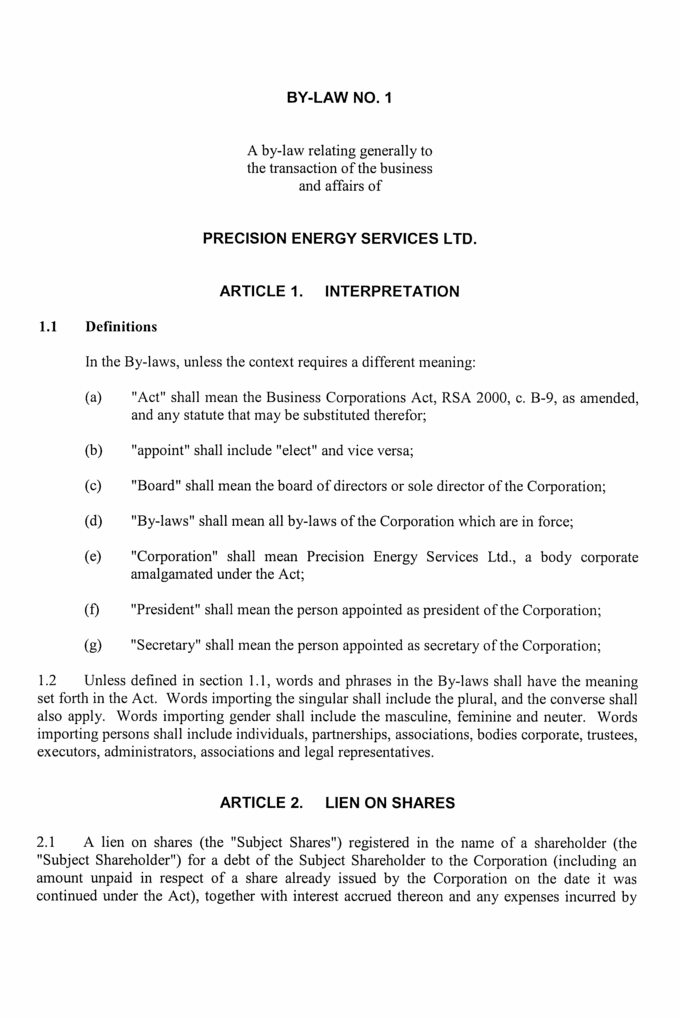
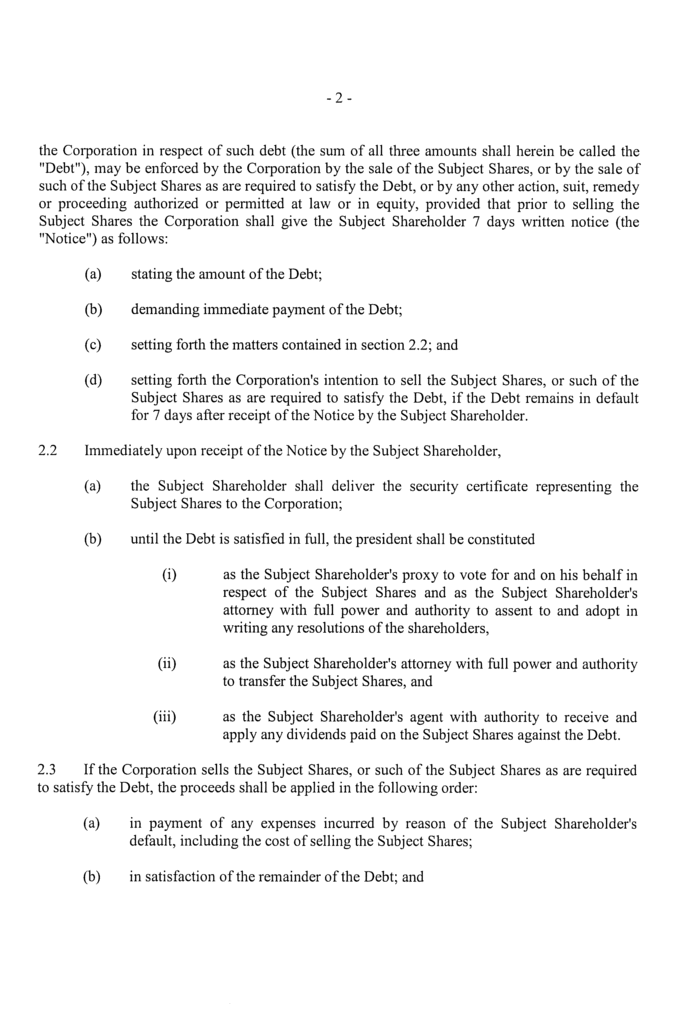
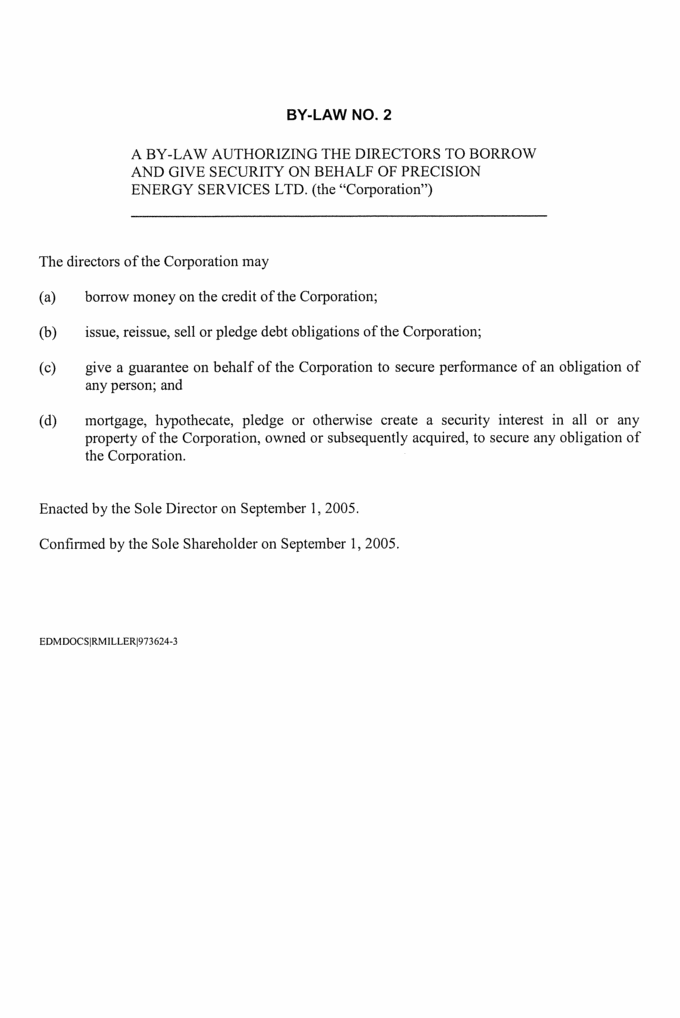
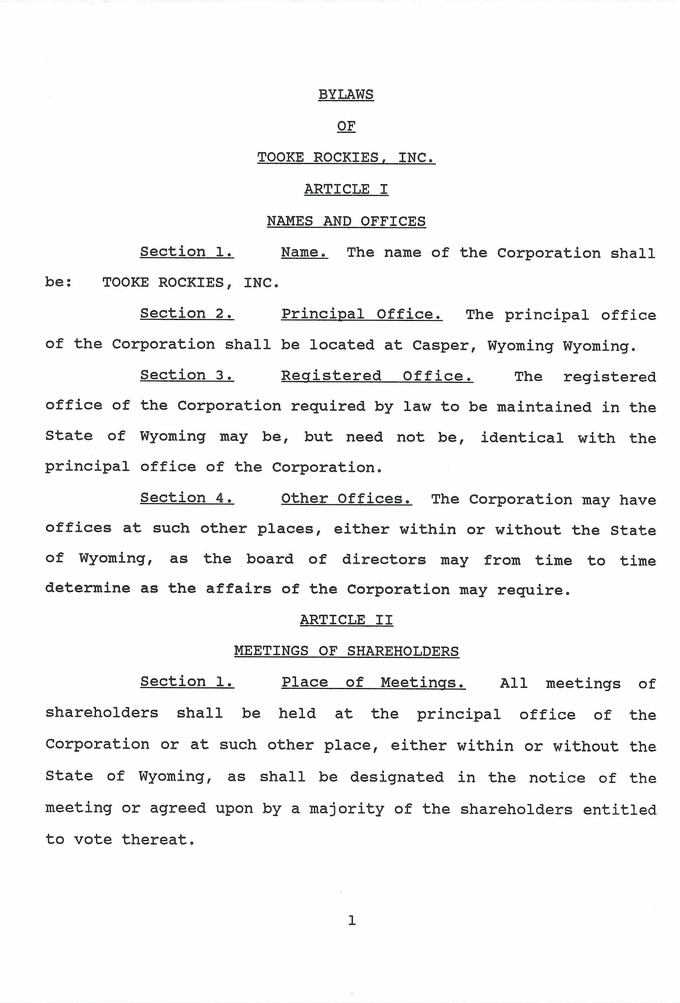
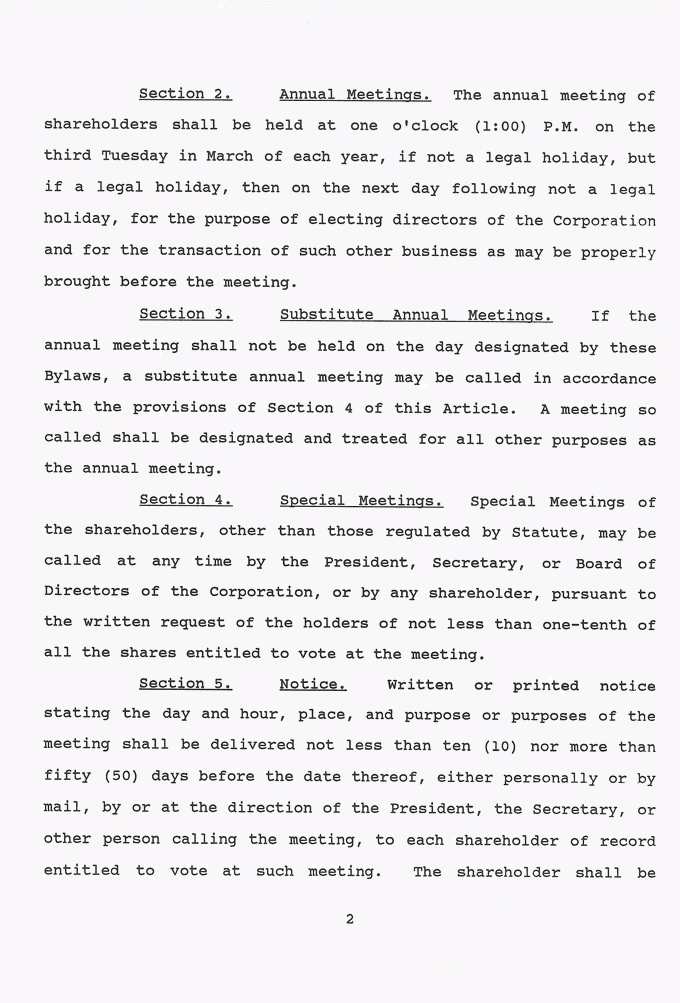
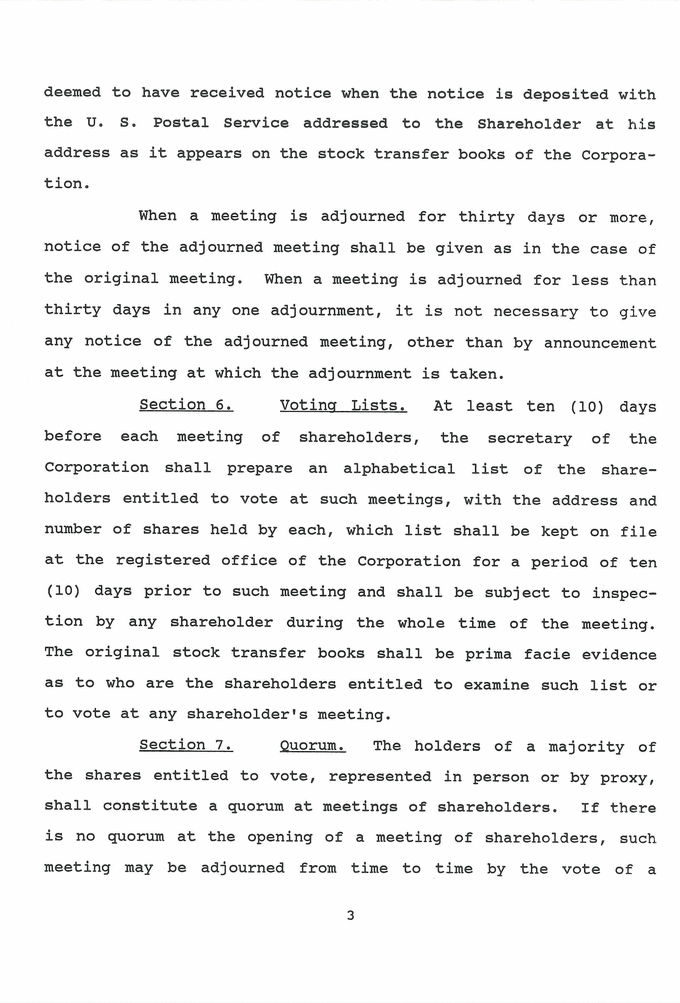



BYLAWS
OF
WARRIOR WELL SERVICES, INC.
A CORPORATION OF THE STATE OF ILLINOIS
ARTICLE I
OFFICES
1. Illinois Registered Office. The Corporation shall continuously maintain in the State of Illinois a registered office and registered agent whose office is identical with such registered office. The address of the initial registered office of the Corporation in the State of Illinois and the name of the initial registered agent of the Corporation are set forth in the Articles of Incorporation.
2. Other Offices. The Corporation may have other offices within or without the State of Illinois. The Corporation’s principal place of business may be located within or without the State of Illinois.
ARTICLE II
SHAREHOLDERS
1. Annual Meeting. Unless otherwise provided in a resolution of the Board of Directors, an annual meeting of the Shareholders shall be held at corporate office on the 2nd Tuesday of July of each year for the purpose of electing directors and for the transaction of such other business as may come before the meeting. If the day fixed for the annual meeting shall be a legal holiday, such meeting shall be held on the next succeeding business day.
2. Special Meetings. Special meetings of the Shareholders may be called either by the President, by the Board of Directors or by the holders of not less than one-fifth of all outstanding shares of the Corporation entitled to vote, for the purpose or purposes stated in the notice of the meeting. No notice shall be required for regular meetings for which the time and place have been fixed.
3. Place of Meeting. The Board of Directors may designate the time and place of any annual meeting or any special meeting called by the Board of Directors. If no designation is made, or if a special meeting be otherwise called, the place of the meeting shall be at the office of the Corporation.
4. Informal Action by Shareholders. Any action required to be taken at a meeting of the Shareholders, or any other action which may be taken at a meeting of the Shareholders, may be taken without a meeting and without a vote, if a consent in writing, setting forth the action so taken, shall be signed:
a) by the holders of outstanding shares having not less than the minimum number of votes that would be necessary to authorize or take such action at a meeting at which all shares entitled to vote thereon were present and voting, or
b) by all of the Shareholders entitled to vote with respect to the subject matter thereof.
If such consent is signed by less than all of the Shareholders entitled to vote, then such consent shall become effective only if at least five days prior to the execution of the consent a notice in writing is delivered to all the Shareholders entitled to vote with respect to the subject matter thereof and, after the effective date of the consent, prompt notice of the taking of the Corporation action without a meeting by less than unanimous written consent be delivered in writing to those shareholders who have not consented to such action in w
5. Notice of Meetings. Written notice stating the place, date and hour of the meeting, and in the case of a special meeting, the purpose or purposes for which the meeting is called, shall be delivered not less than ten nor more than sixty days before the date of the meeting, or in the case of a merger, consolidation, share exchange, dissolution or sale, lease or exchange of assets, not less than twenty nor more than sixty days before the meeting, either personally or by mail, by or at the direction of the President, or the Secretary, or the officer or persons calling the meeting, to each shareholder of record entitled to vote at such meeting. If mailed, such notice shall be deemed to be delivered when deposited in the United States mail,
addressed to the Shareholder at such Shareholder’s address as it appears on the records of the Corporation, with postage thereon prepaid. When a meeting is adjourned to another time or place, notice need not be given of the adjourned meeting if the time and place thereof are announced at the meeting at which the adjournment is taken.
6. Fixing of Record Date: For the purpose of determining the Shareholders entitled to notice of or to vote at any meeting of shareholders or any adjournment thereof, or to express consent to corporate action in writing without a meeting, or to receive payment of any dividend, or any rights in respect of any change, conversion or exchange of share or for the purpose of any other lawful action, the Board of Directors of the Corporation may fix in advance a record date which shall not be more than sixty days and, for a meeting of shareholders, not less than ten days, or in the case of a merger, consolidation, share exchange, dissolution or sale, lease or exchange of assets, not less than twenty days, immediately preceding the date of such meeting. If no record date is fixed, the record date for the determination of shareholders entitled to notice of or to vote at a meeting of shareholders shall be the date on which notice of the meeting is mailed, and the record date for the determination of shareholders for any other purpose shall be the date on which the Board of Directors adopts the resolution relating thereto. A determination of shareholders of record entitled to notice of or to vote at a meeting of shareholders shall apply to any adjournment of the meeting.
7. Voting Lists. The officers or agent having charge of the transfer books for shares of the Corporation shall make, within twenty days after the record date for each meeting of shareholders or ten days before each meeting of shareholders, whichever is earlier, a complete list of the Shareholders entitled to vote at such meeting, arranged in alphabetical order, showing the address of and the number of shares registered in the name of each shareholder, which list, for a period of ten days prior to such meeting, shall be kept on file at the registered office of the Corporation and shall be open to inspection by any shareholder
for any purpose germane to the meeting, and to copying at the Shareholder’s expense, at any time during usual business hours. Such list shall also be produced and kept open at the time and place of the meeting and may be inspected by any shareholder during the whole time of the meeting. The original share ledger or transfer book, or a duplicate thereof kept in Illinois, shall be prima facie evidence as to the identity of the Shareholders entitled to examine such list or share ledger or transfer book or to vote at any meeting of shareholders.
8. Voting of Shares. Except as otherwise provided in the Articles of Incorporation or these Bylaws, each outstanding share, regarding of class, shall be entitled to one vote upon each matter submitted to vote at a meeting of shareholders.
9. Voting of Shares by Certain Holders. Shares standing in the name of another corporation, domestic or foreign, may be voted by such officer, agent or proxy as the Bylaws of such corporation may prescribe, or, in the absence of such provision, as the Board of Directors of such corporation may determine.
a) Shares standing in the name of a deceased person, a minor ward or an incompetent person, may be voted by his administrator, executor, court appointed guardian, or conservator. Shares standing in the name of a trustee may be voted by the Trustee, either in person or by proxy.
b) Shares standing in the name of a receiver may be voted by such receiver, and shares held by or under the control of a receiver may be voted by such receiver without the transfer thereof into the receiver’s name if authority so to do be contained in an appropriate order of the court by which such receiver was appointed.
c) A shareholder whose shares are pledged shall be entitled to vote such shares until the shares have been transferred into the name of the pledgee, and thereafter the pledgee shall be entitled to vote the shares so transferred.
d) One or more shareholders may create a voting trust for the purpose conferring upon a trustee or trustees the right to vote or otherwise represent their shares for a stated duration, which may be perpetual or for a fixed period or may be determined by the occurrence of a stated condition or conditions, by entering into a written voting trust agreement specifying the terms and conditions of the voting trust, and by transferring the subject shares to such trustee or trustees pursuant to the agreement. If the agreement or any amendment thereto does not contain a stated duration, the trust shall terminate ten years after the agreement
first became effective. No voting trust agreement shall be effective until a counterpart of the agreement is deposited at the Corporation’s registered office. The counterpart of the voting trust agreement so deposited shall be subject to examination by any holder of a beneficial interest in the voting trust as if that Holder were a shareholder seeking to examine the books and records of the Corporation.
e) Shareholders may provide for the voting of their shares by signing an agreement for that purpose. A voting agreement under this subsection is not subject to the provisions of subsection (d) above.
f) Share of its own stock belonging to this Corporation shall not be voted, directly or indirectly, at any meting and shall not be counted in determining the total number of outstanding shares at any given time, but shares of its own stock held by it in a fiduciary capacity may be voted and shall be counted in determining the total number of outstanding shares at any given time.
10. Proxies. Each shareholder entitled to vote at a meeting of shareholders or to express consent or dissent to corporate action in writing without a meeting may authorize another person or persons to act for such shareholder by proxy after complying with the requirements of the Business Corporation Act of 1983 of Illinois, as amended (the “Business Corporation Act”), but no such proxy shall be valid after eleven months from the date of its execution, unless otherwise provided in the proxy.
11. Cumulative Voting. Unless otherwise provided in the Articles of Incorporation, in all elections for directors, every shareholder shall have the right to vote, in person or by proxy, the number of shares owned by that Shareholder, for as many persons as there are directors to be elected, or to cumulate such votes, and give one candidate as many votes as the number of directors multiplied by the number of his shares shall equal, or to distribute them on the same principle among as many candidates as he shall see fit.
12. Quorum. The holders of a majority of the votes of the shares of the Corporation entitled to vote, present in person or represented by proxy, shall constitute a quorum at any meeting of shareholders; provided that if less than a majority of the outstanding shares are represented at said meeting, a majority of the votes of the shares so represented may
adjourn the meeting at any time without further notice. If a quorum is present, the affirmative vote of the majority of the votes of the shares represented at the meeting shall be the act of the Shareholders, unless the vote of a greater number or voting by classes is required by the Business Corporation Act, the Articles of Incorporation or these Bylaws. At any adjourned meeting at which a quorum shall be present, any business may be transacted which might have been transacted at the original meeting. Withdrawal of shareholders from any meeting shall not cause failure of a duly constituted quorum at that meeting.
13. Inspectors. At any meeting of shareholders, the Chairman of the meeting may, or upon the request of any shareholder shall, appoint one or more persons as inspectors for such meeting.
a) Such inspectors shall ascertain and report the number of shares represented at the meeting, based upon their determination of the validity and effect of proxies; court all votes and report the results; and do such other acts as are proper to conduct the election and voting with impartiality and fairness to all the Shareholders.
b) Each report of an inspector shall be in writing and signed by such inspector or by a majority of them if there is more than one inspector acting at such meeting. If there is more than one inspector, the report of a majority shall be the report of the inspectors. The report of the inspector or inspectors on the number of shares represented at the meeting and the results of the voting shall be prima facie evidence thereof.
14. Voting by Ballot. Voting on any question or in any election may be by voice unless the presiding officer shall order or any shareholder shall demand that voting be by ballot.
ARTICLES III
DIRECTORS
1. General Powers. The business of the Corporation shall be managed by, or under the direction of, it’s Board of Directors.
2. Number, Tenure and Qualifications: The number of directors of the Corporation shall be two (2). Each director shall hold office until the next annual meeting of shareholders or
until such director’s successor shall have been elected and qualified. Directors need not be residents of Illinois or shareholders of the Corporation. The number of directors may be increased or decreased from time to time by the amendment of this section, but no decrease shall have the effect of shortening the term of any incumbent director.
3. Quorum. A majority of the number of directors fixed by these Bylaws shall constitute a quorum for the transaction of business at any meeting of the Board of Directors. If a quorum shall not be present at any meeting, a majority of the directors present any adjourn the meeting from time to time without further notice, until a quorum shall be present.
4. Manner of Acting. The act of the majority of the Directors present at a meeting at which a quorum is present shall be the act of the Board of Directors, unless the act of a greater number is required by statute, these Bylaws, or the Articles of Incorporation.
5. Regular Meetings. A regular meeting of the Board of Directors shall be held without other notice than this Bylaw, immediately after the annual meeting of shareholders. The Board of Directors may provide, by resolution, the time and place for holding of additional regular meetings without other notice than such resolution.
6. Special Meetings. Special meetings of the Board of Directors may be called by or at the request of the President or any one or more directors. The person or persons authorized to call special meetings of the Board of Directors may fix any place as the place for holding any special meeting of the Board of Directors called by them.
7. Notice. Notice of any special meeting shall be given at least three (3) days previous thereto by written notice to each director. If mailed, such notice shall be deemed to be delivered when deposited in the United States mail so addressed, with postage thereon prepaid. If notice is given by facsimile, such notice shall be deemed to be delivered upon
transmittal. The attendance of a director at any meeting shall constitute a waiver of notice of such meeting, except where a director attends a meeting for the express purpose of objecting to the transaction of any business because the meeting is not lawfully called or convened. Neither the business to be transacted at, not the purpose of, any regular or special meeting of the Board of Directors need be specified in the notice or waiver of notice of such meeting.
8. Vacancies. Any vacancy occurring in the Board of Directors and any directorship to be filled by reason of an increase in the number of directors, may be filled by election at an annual meeting or at a special meeting of shareholders called for that purpose.
9. Removal of Directors. One or more of the directors may be removed, with or without cause, at a meeting of shareholders by the affirmative vote of the holders of a majority of the outstanding shares then entitled to vote at an election of directors, except as follows:
a) No director shall be removed at a meeting of shareholders unless the notice of such meeting shall state that a purpose of the meeting is to vote upon the removal of one or more directors named in the notice. Only the named director or directors may be removed at such meeting.
b) In the event the Corporation has cumulative voting, if less than the entire Board is to be removed, no director may be removed with or without cause, if the votes cast against the Director’s removal would be sufficient to elect the Director if then cumulatively voted at an election of the entire Board of Directors.
c) If a director is elected by a class or series of shares, such director may be removed only by the Shareholders of that class or series.
10. Committees. The Board of Directors, by resolution adopted by a majority of the Directors, may create one or more committees, each to have one or more members, and appoint members of the Board of Directors to serve on the committee(s), which is committee(s), to the extent provided in such resolution, shall have and exercise all of the authority of the Board of Directors in the management of the Corporation, except as otherwise required by law. Members of a committee shall serve at the pleasure of the
Board of Directors. Vacancies in the membership of a committee shall be filled by the Board of Directors at a regular or special meeting of the Board of Directors. A committee(s) shall keep regular minutes of its proceedings and report the same to the Board when required.
11. Action Without a Meeting. Unless specifically prohibited by the Articles of Incorporation or these Bylaws, any action required to be taken at a meeting of the Board of Directors, or any other action which may be taken at a meeting of the Board of Directors or a committee thereof, may be taken without a meeting if a consent in writing, setting forth the action so taken, shall be signed by all the Directors entitled to vote with respect to the subject matter thereof, or by all the members of such committee, as the case may be. Any such consent signed by all the Directors or all the members of the committee shall have the same effect as a unanimous vote, and may be stated as such in any document filed with the Secretary of State or with anyone else.
12. Compensation. The Board of Directors, by the affirmative vote of a majority of Directors then in office, and irrespective of any personal interest of any of its members, shall have authority to establish reasonable compensation of all directors for services to the Corporation as directors, officers or otherwise. By resolution of the Board of Directors, the Directors may be paid their expenses, if any, of attendance at each meeting of the Board. No such payment previously mentioned in this section shall preclude any director from serving the Corporation in any other capacity and receiving compensation therefor.
13. Presumption of Assent. A director of the Corporation who is present at a meeting of the Board of Directors at which action on any corporate matter is taken shall be conclusively presumed to have assented to the action taken unless such Director’s dissent shall be entered in the Minutes of the meeting or unless such Director shall file his written dissent to such action with the person acting as the Secretary of the meeting before the
adjournment thereof or shall forward such dissent by registered mail to the Secretary of the Corporation immediately after the adjournment of the meeting. Such right to dissent shall not apply to a director who voted in favor of such action.
ARTICILES IV
OFFICERS
1. Number. The officers of the Corporation shall be a president, a secretary, a treasurer, one or more vice presidents and any other officers as may be elected or appointed by the Board of Directors. Any two or more offices may be held by the same person.
2. Election and Term of Office. The officers of the Corporation shall be elected or appointed annually by the Board of Directors at the first meeting of the Board of Directors held after each annual meeting of shareholders. If the election of officers shall not be held at such meeting, such election shall be held as soon thereafter as conveniently may be. Vacancies may be filled or new offices created and filled at any meeting of the Board of Directors. Each officer shall hold office until his successor shall have been duly elected and shall have qualified or until his death, or until he shall resign or shall have been removed in the manner hereinafter provided. Election of an officer shall not of itself create contract rights.
3. Removal. Any officer elected or appointed by the Board of Directors may be removed by a majority of the other members of the Board of Directors whenever in their judgment the best interests of the Corporation would be served thereby, but such removal shall be without prejudice to the contract rights, if any, of the person so removed.
4. President. The President shall be the principal executive officer of the Corporation. Subject to the direction and control of the Board of Directors, such President shall be in charge of the business of the Corporation; the president shall see that the resolutions and directions of the Board of Directors are carried into effect except in those instances in
which that responsibility is specifically assigned to some other person by the Board of Directors; and, in general, he shall discharge all duties incident to the office of president and such other duties as may be prescribed by the Board of Directors from time to time. He shall preside at all meetings of the Shareholders and of the Board of Directors. Except in those instances in which the authority to execute is expressly delegated to another officer or agent of the Corporation or a different mode of execution is expressly prescribed by the Board of Directors or these Bylaws, the President may execute for the Corporation certificates for its shares, and any contracts, deeds, mortgages, bonds, or other instruments which the Board of Directors has authorized to be executed, and the President may accomplish such execution either under or without the seal of the Corporation and either individually or with the Secretary, any Assistant Secretary, or any officer thereunto authorized by the Board of Directors, according to the requirements of the form of the instrument. The President may vote all securities which the Corporation is entitled to vote except as and to the extent such authority shall be vested in a different officer or agent of the Corporation by the Board of Directors.
5. The Vice Presidents. The Vice President (or in the event there is more than one vice president, each of the vice presidents) shall assist the President in the discharge of his duties as the President may direct and shall perform such other duties as from time to time may be assigned to the Vice President by the President or by the Board of Directors. In the absence of the President or in the event of the President’s inability or refusal to act, the Vice President (or in the event there is more than one Vice President, the vice presidents in the order designated by the Board of Directors, or by the President if the Board of Directors has not made such a designation, or in the absence of any designation, then in the order of seniority of tenure as vice president) shall perform the duties of the President, and when so acting, shall have all the powers of and be subject to all the
restrictions upon the President. Except in those instances in which the authority to execute is expressly delegated to another officer or agent of the Corporation or a different mode of execution is expressly prescribed by the Board of Directors or these Bylaws, the Vice President (or each of them if there is more than one) may execute for the Corporation certificates for its shares and any contracts, deeds, mortgages, bonds or other instruments which the Board of Directors has authorized to be executed, and the Vice President may accomplish such execution either under or without the seal of the Corporation and either individually or with the Secretary, and Assistant Secretary, or any other officer thereunto authorized by the Board of Directors, according to the requirements of the form of the instrument.
6. The Treasurer. The Treasurer shall be the principal accounting and financial officer of the Corporation. He shall:
a) have charge of and be responsible for the maintenance of adequate books of account for the Corporation;
b) have charge and custody of all funds and securities of the Corporation, and be responsible therefore and for the receipt and disbursement thereof; and
c) perform all the duties incident to the office of Treasurer and such other duties as from time to time may be assigned to the Treasurer by the President or by the Board of Directors.
If required by the Board of Directors, the Treasurer shall give a bond for the faithful discharge of his duties in such sum and with such surety or sureties as the Board of Directors may determine.
7. The Secretary: The Secretary shall:
a) record the minutes of the Shareholders’ and of the Board Directors’ meetings in one or more books provided for that purpose;
b) see that all notices are duly given in accordance with the provisions of these Bylaws or as required by law;
c) be custodian of the corporate records and of the seal of the Corporation;
d) keep a register of the post office address of each Shareholder which shall be furnished to the Secretary by such Shareholder;
e) sign with the President, or a vice president, or any other officer thereunto authorized by the Board of Directors, certificates for shares of the Corporation, the issue of which shall have been authorized by the Board of Directors, and any contracts, deeds, mortgages, bonds, or other instruments which the Board of Directors has authorized to be executed, according to the requirements of the form of the instrument, except when a different mode of execution is expressly prescribed by the Board of Directors or these Bylaws;
f) otherwise certify the Bylaws, resolutions of the Shareholders and Board of Directors and committees thereof, and other documents of the Corporation as true and correct copies thereof;
g) have general charge of the stock transfer books of the Corporation; and
h) perform all duties incident to the office of Secretary and other duties as from time to time may be assigned to the Secretary by the President or by the Board of Directors.
8. Assistant Treasurers and Assistant Secretaries. The assistant treasurers and assistant secretaries, if any, shall perform such duties as shall be assigned to them by the Treasurer or the Secretary, respectively, or by the President or the Board of Directors. The assistant secretaries may sign with the President, or a vice president, or any other officer thereunto authorized by the Board of Directors, certificates for shares of the Corporation, the issue of which shall have been authorized by the Board of Directors, and any contracts, deeds, mortgages, bonds, or other instruments which the Board of Directors has authorized to be executed, according to the requirements of the form of the instrument, except when a different mode of execution is expressly prescribed by the Board of Directors or these Bylaws. The assistant treasurers shall respectively, if required by the Board of Directors, give bonds for the faithful discharge of their duties in such sums and with such sureties as the Board of Directors shall determine.
9. Salaries. The salaries of the officers shall be fixed from time to time by the Board of Directors and no officer shall be prevented from receiving such salary by reason of the
fact that he is also a director of the Corporation.
ARTICLE V
CONTRACTS, LOANS, CHECKS AND DEPOSITS
1. Contracts. The Board of Directors may authorize any officer or officers, agent or agents, to enter into any contract or execute and deliver any instrument in the name of and on behalf of the Corporation, and such authority may be general or confined to specific instances.
2. Loans. No loans shall be contracted on behalf of the Corporation and no evidences of indebtedness shall be issued in its name unless authorized by a resolution of the Board of Directors. Such authority may be general or confined to specific instances.
3. Checks, Drafts, etc. All checks, drafts or other orders for the payment of money, notes or other evidences of indebtedness issued in the name of the Corporation, shall be signed by such officer or officers, agent or agents of the Corporation and in such manner as shall from time to time be determined by resolution of the Board of Directors.
4. Deposits. All funds of the Corporation not otherwise employed shall be deposited from time to time to the credit of the Corporation in such banks, trust companies or other depositories as the Board of Directors may select.
ARTICLE VI
CERTIFICATES FOR SHARES AND THEIR TRANSFER
1. Certificates for Shares. Corporate shares may be represented by certificates or may be uncertificated shares. Certificates representing shares of the Corporation shall be signed by the President or a vice president or by such officer as shall be designated by resolution of the Board of Directors and by the Secretary or an assistant secretary, and shall be sealed with the seal or a facsimile of the seal of the Corporation, if the Corporation uses a seal. If both of the signatures of the officers are by facsimile, the certificate shall be
manually signed by or on behalf of a duly authorized transfer agent or registrar. Each certificate representing shares shall be consecutively numbered or otherwise identified, and shall also state the name of the person to whom issued, the number and class of shares (with designation of series, if any), the date of issue, that the Corporation is organized under Illinois law, and the par value or a statement that the shares are without par value. If the Corporation is authorized and does issue shares of more than one class or of a series within a class, the certificate shall also contain such information or statement as may be required by law. No certificate shall be issued for any share until such share is fully paid. Within a reasonable time after the issuance of uncertificated shares, the Corporation shall send to the registered owner of such shares a written notice containing the information required to be set forth on certificates.
The name and address of each shareholder, the number and class of shares held and the date on which the certificates for the shares were issued shall be entered on the books of the Corporation. The person in whose name shares stand on the books of the Corporation shall be deemed the owner thereof for all purposes as regards the Corporation.
2. Lost Certificates. If a certificate representing shares has allegedly been lost or destroyed, the Board of Directors may in its discretion, except as may be required by law, direct that a new certificate be issued upon such indemnification and other reasonable requirements as it may be impose.
3. Transfers of Shares. Transfers of shares of the Corporation shall be recorded on the books of the Corporation and, except in the case of a lost or destroyed certificate, on surrender for cancellation of the certificate for such shares. A certificate presented for transfer must be duly endorsed and accompanied by proper guaranty of signature and other appropriate assurances that the endorsement is effective.
ARTICLE VII
FISCAL YEAR
Fiscal Year. The fiscal year of the Corporation shall be fixed by resolution of the Board of Directors from time to time.
ARTICLE VIII
DIVIDENDS
Dividends. The Board of Directors may from time to time declare, and the Corporation may pay, dividends on its outstanding shares in the manner and upon the terms and conditions provided by law and its Articles of Incorporation.
ARTICLE IX
SEAL
Seal. The corporate seal, if any, shall have inscribed thereon the name of the Corporation and the words “Corporate Seal, Illinois.” The seal may be used by causing it or a facsimile thereof to be impressed or affixed or in any manner reproduced.
ARTICLE X
WAIVER OF NOTICE
Waiver in Lieu of Notice. Whenever any notice is required to be given under the provisions of these Bylaws or under the provisions of the Articles of Incorporation or under the provisions of the Business Corporation Act, a waiver thereof in writing, signed by the person or persons entitled to such notice, whether before or after the time stated therein, shall be deemed equivalent to the giving of such notice. Attendance at any meeting shall constitute waiver of notice thereof unless the person at the meeting objects to the holding of the meeting because proper notice was not given.
ARTICLE XI
AMENDMENTS
Amendments. Unless reserved to the Shareholders by the Articles of Incorporation, the
Bylaws of the Corporation may be made, altered, amended or repealed by the Shareholders or the Board of Directors, but no Bylaw adopted by the Shareholders may be altered, amended or repealed by the Board of Directors if these Bylaws so provide. The Bylaws may contain any provisions for the regulation and management of the affairs of the Corporation not inconsistent with law or the Articles of Incorporation.
ARTICLE XII
INDEMIFICATION OF OFFICERS,
DIRECTORS, EMPLOYEES AND AGENTS
1. Power to Indemnify in Action Other than by or in the Right of Corporation. The Corporation shall have power to indemnify any person who was or is a party, or is threatened to be made a party to any threatened, pending or completed action, suit or proceeding, whether civil, criminal, administrative or investigative (other than an action by or in the right of the Corporation)by reason of the fact that he or she is or was a director, officer, employee or agent of the Corporation, or who is or was serving at the request of the Corporation as a director, officer, employee or agent of another corporation, partnership, joint venture, trust or other enterprise, against expenses (including attorney’s fees), judgments, fines and amounts paid in settlement actually and reasonable incurred by such person in connection with such action, suit or proceeding, if such person acted in good faith and in a manner he or she reasonably believed to be in, or not opposed to the best interests of the Corporation, and, with respect to any criminal action or proceeding, had no reasonable cause to believe his or her conduct was unlawful. The termination of any action, suit or proceeding by judgment, order, settlement, conviction, or upon a plea of nolo contendere or its equivalent, shall not, of itself, create a presumption that the person did not act in good faith and in a manner which he or she
reasonably believed to be in or not opposed to the best interests of the Corporation or, with respect to any criminal action or proceeding, that the person had reasonable cause to believe that his or her conduct was unlawful.
2. Power to Indemnify in Action by or in the Right of Corporation. The Corporation shall have power to indemnify any person who was or is a party, or is threatened to be made a party to any threatened, pending or completed action or suit by or in the right of the Corporation to procure a judgment in its favor by reason of the fact that such person is or was a director, officer, employee or agent of the Corporation, or is or was serving at the request of the Corporation as a director, officer, employee or agent of another corporation, partnership, joint venture, trust or other enterprise, against expenses (including attorneys’ fees) actually and reasonably incurred by such person in connection with the defense or settlement of such action or suit, if such person acted in good faith and in a manner he or she reasonably believed to be in, or not opposed to, the best interests of the Corporation, provided that no indemnification shall be made in respect of any claim, issue or matter as to which such persons shall have been adjudged to be liable to the Corporation, unless, and only to the extent that the court in which such action or suit was brought shall determine upon application that, despite the adjudication of liability, but in view of all of the circumstances of the case, such person is fairly and reasonably entitled to indemnity for such expenses as the court shall deem proper.
3. Reimbursement of Expenses. To the extent that a present or former director, officer or employee of the Corporation has been successful, on the merits or otherwise, in the defense of any action, suit or proceeding referred to in Sections 1 and 2 above, or in defense of any claim, issue or matter therein, such person shall be indemnified against expenses (including attorneys’ fees) actually and reasonably incurred by such person in connection therewith, if the person acted in good faith and in a manner he or she
reasonably believed to be in, or not opposed to, the best interests of the Corporation.
4. Determination if Indemnification Is Proper. Any indemnification under Sections 1 and 2 above (unless ordered by a court) shall be made by the Corporation only as authorized in the specific case, upon a determination that indemnification of the present or former director, officer, employee or agent is proper in the circumstances because he or she has met the applicable standard of conduct set forth in Sections 1 or 2 above. Such determination shall be made with respect to a person who is a director or officer at the time of the determination:
a) by the majority vote of the Directors who are not parties to such action, suit or proceeding, even though less than a quorum,
b) by a committee of the Directors designated by a majority vote of the Directors, even though less than a quorum,
c) if there are no such Directors, or if the Directors so direct, by independent legal counsel in a written opinion, or
d) by the Shareholders.
5. Advance of Expenses. Expenses (including attorneys’ fees) incurred by an officer or director in defending a civil or criminal action, suit or proceeding may be paid by the Corporation in advance of the final disposition of such action, suit or proceeding upon receipt of an undertaking by or on behalf of the Director or officer to repay such amount if it shall ultimately be determined that such person is not entitled to be indemnified by the Corporation as authorized in this Article. Such expenses (including attorneys’ fees) incurred by former directors and officers or other employees and agents may be so paid on such terms and conditions, if any, as the Corporation deems appropriate.
6. Non-Exclusivity. The indemnification and advancement of expenses provided by or granted by this Article shall not be deemed exclusive of any other rights to which those seeking indemnification or advancement of expenses may be entitled under any Bylaw,
agreement, vote of Shareholders or disinterested Directors, or otherwise, both as to action in his or her official capacity and as to action in another capacity while holding such office, and shall inure to the benefit of the heirs, executors and administrators of such person.
7. Insurance. The Corporation shall have power to purchase and maintain insurance on behalf of any person who is or was a director, officer, employee or agent of the Corporation, or who is or was serving at the request of the Corporation as a director, officer, employee or agent of another corporation, partnership, joint venture, trust or other enterprise, against any liability asserted against such person and incurred by such person in any such capacity, or arising out of his or her status as such, whether or not the Corporation would have the power to indemnify such person against such liability under the provisions of this Article.
8. Notice to Shareholders. If the Corporation indemnifies or advances expenses to a director or officer under Section 2 of this Article above, the Corporation shall report the indemnification or advance in writing to the Shareholders with or before the notice of the next Shareholders’ meeting.
9. Definitions.
a) Corporation. For purposes of this Article, references to “the Corporation” shall include, in addition to the surviving Corporation, any merging corporation (including any corporation having merged with a merging corporation) absorbed in a merger which, if its separate existence had continued, would have had the power and authority to indemnify its directors, officers and employees or agents, so that any person who was a director, officer, employee or agent of such merging corporation, or was serving at the request of such merging corporation as a director, officer, employee or agent of another corporation, partnership, joint venture, trust or other enterprise, shall stand in the same position under the provisions of this Article with respect to the surviving Corporation as such person would have with respect to such merging corporation if it’s separate existence had continued.
b) Miscellaneous. For purposes of this Article, references to “other enterprises” shall include employee benefit plans; and references to “fines” shall include any excise taxes assessed on a person with respect to an employee benefit plan. A person who
acted in good faith and in a manner he or she reasonably believed to be in the best interests of the participants and beneficiaries of an employee benefit plan shall be deemed to have acted in a manner “not opposed to the best interest of the Corporation” as referred to in this Article.
ARTICLES OF ASSOCIATION
OF
WEATHERFORD (NOVA SCOTIA) ULC
INTERPRETATION
1. In these Articles, unless there be something in the subject or context inconsistent therewith:
(1) “Act” means the Companies Act (Nova Scotia);
(2) “Articles” means these Articles of Association of the Company and all amendments hereto;
(3) “Company” means the company named above;
(4) “director” means a director of the Company;
(5) “Memorandum” means the Memorandum of Association of the Company and all amendments thereto;
(6) “month” means calendar month;
(7) “Office” means the registered office of the Company;
(8) “person” includes a body corporate;
(9) “proxyholder” includes an alternate proxyholder;
(10) “Register” means the register of members kept pursuant to the Act, and where the context permits includes a branch register of members;
(11) “Registrar” means the Registrar as defined in the Act;
(12) “Secretary” includes any person appointed to perform the duties of the Secretary temporarily;
(13) “shareholder” means member as that term is used in the Act in connection with an unlimited company having share capital and as that term is used in the Memorandum;
(14) “special resolution” has the meaning assigned by the Act;
(15) “in writing” and “written” includes printing, lithography and other modes of representing or reproducing words in visible form;
(16) words importing number or gender include all numbers and genders unless the context otherwise requires.
2. The regulations in Table A in the First Schedule to the Act shall not apply to the Company.
3. The directors may enter into and carry into effect or adopt and carry into effect any agreement made by the promoters of the Company on behalf of the Company and may agree to any modification in the terms of any such agreement, either before or after its execution.
4. The directors may, out of the funds of the Company, pay all expenses incurred for the incorporation and organization of the Company.
5. The Company may commence business on the day of incorporation or so soon thereafter as the directors think fit, notwithstanding that part only of the shares has been allotted.
SHARES
6. The capital of the company shall consist of 1,000,000,000 common shares without nominal or par value with the power to divide the shares in the capital for the time being into classes or series and to attach thereto respectively any preferred, deferred or qualified rights, privileges or conditions, including restrictions on voting rights and including redemption, purchase and other acquisition of such shares, subject, however, to the provisions of the Act.
7. The directors shall control the shares and, subject to the provisions of these Articles, may allot or otherwise dispose of them to such person at such times, on such terms and conditions and, if the shares have a par value, either at a premium or at par, as they think fit.
8. The directors may pay on behalf of the Company a reasonable commission to any person in consideration of subscribing or agreeing to subscribe (whether absolutely or conditionally) for any shares in the Company, or procuring or agreeing to procure subscriptions (whether absolute or conditional) for any shares in the Company. Subject to the Act, the commission may be paid or satisfied in shares of the Company.
9. On the issue of shares the Company may arrange among the holders thereof differences in the calls to be paid and in the times for their payment.
10. If the whole or part of the allotment price of any shares is, by the conditions of their allotment, payable in instalments, every such instalment shall, when due, be payable to the Company by the person who is at such time the registered holder of the shares.
11. Shares may be registered in the names of joint holders not exceeding three in number.
12. Joint holders of a share shall be jointly and severally liable for the payment of all instalments and calls due in respect of such share. On the death of one or more joint holders of shares the survivor or survivors of them shall alone be recognized by the Company as the registered holder or holders of the shares.
13. Save as herein otherwise provided, the Company may treat the registered holder of any share as the absolute owner thereof and accordingly shall not, except as ordered by a court of competent
jurisdiction or required by statute, be bound to recognize any equitable or other claim to or interest in such share on the part of any other person.
14. The Company is a private company, and:
(1) no transfer of any share or prescribed security of the Company shall be effective unless or until approved by the directors;
(2) the number of holders of issued and outstanding prescribed securities or shares of the Company, exclusive of persons who are in the employment of the Company or in the employment of an affiliate of the Company and exclusive of persons who, having been formerly in the employment of the Company or the employment of an affiliate of the Company, were, while in that employment, and have continued after termination of that employment, to own at least one prescribed security or share of the Company, shall not exceed 50 in number, two or more persons or companies who are the joint registered owners of one or more prescribed securities or shares being counted as one holder; and
(3) the Company shall not invite the public to subscribe for any of its securities.
In this Article, “private company” and “securities” have the meanings ascribed to those terms in the Securities Act (Nova Scotia), and “prescribed security” means any of the securities prescribed by the Nova Scotia Securities Commission from time to time for the purpose of the definition of “private company” in the Securities Act (Nova Scotia).
CERTIFICATES
15. Certificates of title to shares shall comply with the Act and may otherwise be in such form as the directors may from time to time determine. Unless the directors otherwise determine, every certificate of title to shares shall be signed manually by at least one of the Chairman, President, Secretary, Treasurer, a vice-president, an assistant secretary, any other officer of the Company or any director of the Company or by or on behalf of a share registrar transfer agent or branch transfer agent appointed by the Company or by any other person whom the directors may designate. When signatures of more than one person appear on a certificate all but one may be printed or otherwise mechanically reproduced. All such certificates when signed as provided in this Article shall be valid and binding upon the Company. If a certificate contains a printed or mechanically reproduced signature of a person, the Company may issue the certificate, notwithstanding that the person has ceased to be a director or an officer of the Company and the certificate is as valid as if such person were a director or an officer at the date of its issue.
16. Except as the directors may determine, each shareholder’s shares may be evidenced by any number of certificates so long as the aggregate of the shares stipulated in such certificates equals the aggregate registered in the name of the shareholder.
17. Where shares are registered in the names of two or more persons, the Company shall not be bound to issue more than one certificate or set of certificates, and such certificate or set of certificates shall be delivered to the person first named on the Register.
18. Any certificate that has become worn, damaged or defaced may, upon its surrender to the directors, be cancelled and replaced by a new certificate. Any certificate that has become lost or destroyed may be replaced by a new certificate upon proof of such loss or destruction to the satisfaction of the directors and the furnishing to the Company of such undertakings of indemnity as the directors deem adequate.
19. The sum of one dollar or such other sum as the directors from time to time determine shall be paid to the Company for every certificate other than the first certificate issued to any holder in respect of any share or shares.
20. The directors may cause one or more branch Registers of shareholders to be kept in any place or places, whether inside or outside of Nova Scotia.
CALLS
21. The directors may make such calls upon the shareholders in respect of all amounts unpaid on the shares held by them respectively and not made payable at fixed times by the conditions on which such shares were allotted, and each shareholder shall pay the amount of every call so made to the person and at the times and places appointed by the directors. A call may be made payable by instalments.
22. A call shall be deemed to have been made at the time when the resolution of the directors authorizing such call was passed.
23. At least 14 days’ notice of any call shall be given, and such notice shall specify the time and place at which and the person to whom such call shall be paid.
24. If the sum payable in respect of any call or instalment is not paid on or before the day appointed for the payment thereof, the holder for the time being of the share in respect of which the call has been made or the instalment is due shall pay interest on such call or instalment at the rate of 9% per year or such other rate of interest as the directors may determine from the day appointed for the payment thereof up to the time of actual payment.
25. At the trial or hearing of any action for the recovery of any amount due for any call, it shall be sufficient to prove that the name of the shareholder sued is entered on the Register as the holder or one of the holders of the share or shares in respect of which such debt accrued, that the resolution making the call is duly recorded in the minute book and that such notice of such call was duly given to the shareholder sued in pursuance of these Articles. It shall not be necessary to prove the appointment of the directors who made such call or any other matters whatsoever and the proof of the matters stipulated shall be conclusive evidence of the debt.
FORFEITURE OF SHARES
26. If any shareholder fails to pay any call or instalment on or before the day appointed for payment, the directors may at any time thereafter while the call or instalment remains unpaid serve a notice on such shareholder requiring payment thereof together with any interest that may have accrued and all expenses that may have been incurred by the Company by reason of such non-payment.
27. The notice shall name a day (not being less than 14 days after the date of the notice) and a place or places on and at which such call or instalment and such interest and expenses are to be paid. The notice shall also state that, in the event of non-payment on or before the day and at the place or one of the places so named, the shares in respect of which the call was made or instalment is payable will be liable to be forfeited.
28. If the requirements of any such notice are not complied with, any shares in respect of which such notice has been given may at any time thereafter, before payment of all calls or instalments, interest and expenses due in respect thereof, be forfeited by a resolution of the directors to that effect. Such forfeiture shall include all dividends declared in respect of the forfeited shares and not actually paid before the forfeiture.
29. When any share has been so forfeited, notice of the resolution shall be given to the shareholder in whose name it stood immediately prior to the forfeiture and an entry of the forfeiture shall be made in the Register.
30. Any share so forfeited shall be deemed the property of the Company and the directors may sell, re-allot or otherwise dispose of it in such manner as they think fit.
31. The directors may at any time before any share so forfeited has been sold, re-allotted or otherwise disposed of, annul the forfeiture thereof upon such conditions as they think fit.
32. Any shareholder whose shares have been forfeited shall nevertheless be liable to pay and shall forthwith pay to the Company all calls, instalments, interest and expenses owing upon or in respect of such shares at the time of the forfeiture together with interest thereon at the rate of 9% per year or such other rate of interest as the directors may determine from the time of forfeiture until payment. The directors may enforce such payment if they think fit, but are under no obligation to do so.
33. A certificate signed by the Secretary stating that a share has been duly forfeited on a specified date in pursuance of these Articles and the time when it was forfeited shall be conclusive evidence of the facts therein stated as against any person who would have been entitled to the share but for such forfeiture.
LIEN ON SHARES
34. The Company shall have a first and paramount lien upon all shares (other than fully paid-up shares) registered in the name of a shareholder (whether solely or jointly with others) and upon the proceeds from the sale thereof for debts, liabilities and other engagements of the shareholder, solely or jointly with any other person, to or with the Company, whether or not the period for the payment, fulfilment or discharge thereof has actually arrived, and such lien shall extend to all dividends declared in respect of such shares. Unless otherwise agreed, the registration of a transfer of shares shall operate as a waiver of any lien of the Company on such shares.
35. For the purpose of enforcing such lien the directors may sell the shares subject to it in such manner as they think fit, but no sale shall be made until the period for the payment, fulfilment or discharge of such debts, liabilities or other engagements has arrived, and until notice in writing of the intention to sell has been given to such shareholder or the shareholder’s executors or administrators and default has been made by them in such payment, fulfilment or discharge for seven days after such notice.
36. The net proceeds of any such sale after the payment of all costs shall be applied in or towards the satisfaction of such debts, liabilities or engagements and the residue, if any, paid to such shareholder.
VALIDITY OF SALES
37. Upon any sale after forfeiture or to enforce a lien in purported exercise of the powers given by these Articles the directors may cause the purchaser’s name to be entered in the Register in respect of the shares sold, and the purchaser shall not be bound to see to the regularity of the proceedings or to the application of the purchase money, and after the purchaser’s name has been entered in the Register in respect of such shares the validity of the sale shall not be impeached by any person and the remedy of any person aggrieved by the sale shall be in damages only and against the Company exclusively.
TRANSFER OF SHARES
38. The instrument of transfer of any share in the Company shall be signed by the transferor. The transferor shall be deemed to remain the holder of such share until the name of the transferee is entered in the Register in respect thereof and shall be entitled to receive any dividend declared thereon before the registration of the transfer.
39. The instrument of transfer of any share shall be in writing in the following form or to the following effect:
For value received, hereby sell, assign, and transfer unto , shares in the capital of the Company represented by the within certificate, and do hereby irrevocably constitute and appoint attorney to transfer such shares on the books of the Company with full power of substitution in the premises.
Dated the day of ,
Witness:
40. The directors may, without assigning any reason therefor, decline to register any transfer of shares
(1) not fully paid-up or upon which the Company has a lien, or
(2) the transfer of which is restricted by any agreement to which the Company is a party.
41. Every instrument of transfer shall be left for registration at the Office of the Company, or at any office of its transfer agent where a Register is maintained, together with the certificate of the shares to be transferred and such other evidence as the Company may require to prove title to or the right to transfer the shares.
42. The directors may require that a fee determined by them be paid before or after registration of any transfer.
43. Every instrument of transfer shall, after its registration, remain in the custody of the Company. Any instrument of transfer that the directors decline to register shall, except in case of fraud, be returned to the person who deposited it.
TRANSMISSION OF SHARES
44. The executors or administrators of a deceased shareholder (not being one of several joint holders) shall be the only persons recognized by the Company as having any title to the shares registered in the name of such shareholder. When a share is registered in the names of two or more joint holders, the survivor or survivors or the executors or administrators of the deceased shareholder, shall be the only persons recognized by the Company as having any title to, or interest in, such share.
45. Notwithstanding anything in these Articles, if the Company has only one shareholder (not being one of several joint holders) and that shareholder dies, the executors or administrators of the deceased shareholder shall be entitled to register themselves in the Register as the holders of the shares registered in the name of the deceased shareholder whereupon they shall have all the rights given by these Articles and by law to shareholders.
46. Any person entitled to shares upon the death or bankruptcy of any shareholder or in any way other than by allotment or transfer, upon producing such evidence of entitlement as the directors require, may be registered as a shareholder in respect of such shares, or may, without being registered, transfer such shares subject to the provisions of these Articles respecting the transfer of shares. The directors shall have the same right to refuse registration as if the transferee were named in an ordinary transfer presented for registration.
SURRENDER OF SHARES
47. The directors may accept the surrender of any share by way of compromise of any question as to the holder being properly registered in respect thereof. Any share so surrendered may be disposed of in the same manner as a forfeited share.
INCREASE AND REDUCTION OF CAPITAL
48. Subject to the Act, the shareholders may by special resolution amend these Articles to increase or alter the share capital of the Company as they think expedient. Without prejudice to any special rights previously conferred on the holders of existing shares, any share may be issued with such preferred, deferred or other special rights, or with such restrictions, whether in regard to dividends, voting, return of share capital or otherwise, as the shareholders may from time to time determine by special resolution. Except as otherwise provided by the conditions of issue, or by these Articles, any capital raised by the creation of new shares shall be considered part of the original capital and shall be subject to the provisions herein contained with reference to payment of calls and instalments, transfer and transmission, forfeiture, lien and otherwise.
49. The Company may, by special resolution where required, reduce its share capital in any way and with and subject to any incident authorized and consent required by law. Subject to the Act and any provisions attached to such shares, the Company may redeem, purchase or acquire any of its shares and the directors may determine the manner and the terms for redeeming, purchasing or acquiring such shares and may provide a sinking fund on such terms as they think fit for the redemption, purchase or acquisition of shares of any class or series.
MEETINGS AND VOTING BY CLASS OR SERIES
50. Where the holders of shares of a class or series have, under the Act, the terms or conditions attaching to such shares or otherwise, the right to vote separately as a class in respect of any matter then, except as provided in the Act, these Articles or such terms or conditions, all the provisions in these Articles concerning general meetings (including, without limitation, provisions respecting notice, quorum and procedure) shall, mutatis mutandis, apply to every meeting of holders of such class or series of shares convened for the purpose of such vote.
51. Unless the rights, privileges, terms or conditions attached to a class or series of shares provide otherwise, such class or series of shares shall not have the right to vote separately as a class or series upon an amendment to the Memorandum or Articles to:
(1) increase or decrease any maximum number of authorized shares of such class or series, or increase any maximum number of authorized shares of a class or series having rights or privileges equal or superior to the shares of such class or series;
(2) effect an exchange, reclassification or cancellation of all or part of the shares of such class or series; or
(3) create a new class or series of shares equal or superior to the shares of such class or series.
BORROWING POWERS
52. The directors on behalf of the Company may:
(1) raise or borrow money for the purposes of the Company or any of them;
(2) secure, subject to the sanction of a special resolution where required by the Act, the repayment of funds so raised or borrowed in such manner and upon such terms and conditions in all respects as they think fit, and in particular by the execution and delivery of mortgages of the Company’s real or personal property, or by the issue of bonds, debentures or other securities of the Company secured by mortgage or other charge upon all or any part of the property of the Company, both present and future including its uncalled capital for the time being;
(3) sign or endorse bills, notes, acceptances, cheques, contracts, and other evidence of or securities for funds borrowed or to be borrowed for the purposes aforesaid;
(4) pledge debentures as security for loans;
(5) guarantee obligations of any person.
53. Bonds, debentures and other securities may be made assignable, free from any equities between the Company and the person to whom such securities were issued.
54. Any bonds, debentures and other securities may be issued at a discount, premium or otherwise and with special privileges as to redemption, surrender, drawings, allotment of shares, attending and voting at general meetings of the Company, appointment of directors and other matters.
GENERAL MEETINGS
55. Ordinary general meetings of the Company shall be held at least once in every calendar year at such time and place as may be determined by the directors and not later than 15 months after the preceding ordinary general meeting. All other meetings of the Company shall be called special general meetings. Ordinary or special general meetings may be held either within or without the Province of Nova Scotia.
56. The President, a vice-president or the directors may at any time convene a special general meeting, and the directors, upon the requisition of shareholders in accordance with the Act shall forthwith proceed to convene such meeting or meetings to be held at such time and place or times and places as the directors determine.
57. The requisition shall state the objects of the meeting requested, be signed by the requisitionists and deposited at the Office of the Company. It may consist of several documents in like form each signed by one or more of the requisitionists.
58. At least seven clear days’ notice, or such longer period of notice as may be required by the Act, of every general meeting, specifying the place, day and hour of the meeting and, when special business is to be considered, the general nature of such business, shall be given to the shareholders entitled to be present at such meeting by notice given as permitted by these Articles. With the consent in writing of all the shareholders entitled to vote at such meeting, a meeting may be convened by a shorter notice and in any manner they think fit, or notice of the time, place and purpose of the meeting may be waived by all of the shareholders.
59. When it is proposed to pass a special resolution, the two meetings may be convened by the same notice, and it shall be no objection to such notice that it only convenes the second meeting contingently upon the resolution being passed by the requisite majority at the first meeting.
60. The accidental omission to give notice to a shareholder, or non-receipt of notice by a shareholder, shall not invalidate any resolution passed at any general meeting.
RECORD DATES
61. (1) The directors may fix in advance a date as the record date for the determination of shareholders
(a) entitled to receive payment of a dividend or entitled to receive any distribution;
(b) entitled to receive notice of a meeting; or
(c) for any other purpose.
(2) If no record date is fixed, the record date for the determination of shareholders
(a) entitled to receive notice of a meeting shall be the day immediately preceding the day on which the notice is given, or, if no notice is given, the day on which the meeting is held; and
(b) for any other purpose shall be the day on which the directors pass the resolution relating to the particular purpose.
PROCEEDINGS AT GENERAL MEETINGS
62. The business of an ordinary general meeting shall be to receive and consider the financial statements of the Company and the report of the directors and the report, if any, of the auditors, to elect directors in the place of those retiring and to transact any other business which under these Articles ought to be transacted at an ordinary general meeting.
63. No business shall be transacted at any general meeting unless the requisite quorum is present at the commencement of the business. A corporate shareholder of the Company that has a duly authorized agent or representative present at any such meeting shall for the purpose of this Article be deemed to be personally present at such meeting.
64. One person, being a shareholder, proxyholder or representative of a corporate shareholder, present and entitled to vote shall constitute a quorum for a general meeting, and may hold a meeting.
65. The Chairman shall be entitled to take the chair at every general meeting or, if there be no Chairman, or if the Chairman is not present within fifteen 15 minutes after the time appointed for holding the meeting, the President or, failing the President, a vice-president shall be entitled to take the chair. If the Chairman, the President or a vice-president is not present within 15 minutes after the time appointed for holding the meeting or if all such persons present decline to take the chair, the shareholders present entitled to vote at the meeting shall choose another director as chairman and if no director is present or if all the directors present decline to take the chair, then such shareholders shall choose one of their number to be chairman.
66. If within half an hour from the time appointed for a general meeting a quorum is not present, the meeting, if it was convened pursuant to a requisition of shareholders, shall be dissolved; if it was convened in any other way, it shall stand adjourned to the same day, in the next week, at the same time and place. If at the adjourned meeting a quorum is not present within half an hour from the time appointed for the meeting, the shareholders present shall be a quorum and may hold the meeting.
67. Subject to the Act, at any general meeting a resolution put to the meeting shall be decided by a show of hands unless, either before or on the declaration of the result of the show of hands, a poll is demanded by the chairman, a shareholder or a proxyholder; and unless a poll is so demanded, a declaration by the chairman that the resolution has been carried, carried by a particular majority, lost or not carried by a particular majority and an entry to that effect in the Company’s book of proceedings shall be conclusive evidence of the fact without proof of the number or proportion of the votes recorded in favour or against such resolution.
68. When a poll is demanded, it shall be taken in such manner and at such time and place as the chairman directs, and either at once or after an interval or adjournment or otherwise. The result of the poll shall be the resolution of the meeting at which the poll was demanded. The demand of a poll may be withdrawn. When any dispute occurs over the admission or rejection of a vote, it shall be resolved by the chairman and such determination made in good faith shall be final and conclusive.
69. The chairman shall not have a casting vote in addition to any vote or votes that the chairman has as a shareholder.
70. The chairman of a general meeting may with the consent of the meeting adjourn the meeting from time to time and from place to place, but no business shall be transacted at any adjourned meeting other than the business left unfinished at the meeting that was adjourned.
71. Any poll demanded on the election of a chairman or on a question of adjournment shall be taken forthwith without adjournment.
72. The demand of a poll shall not prevent the continuance of a meeting for the transaction of any business other than the question on which a poll has been demanded.
VOTES OF SHAREHOLDERS
73. Subject to the Act and to any provisions attached to any class or series of shares concerning or restricting voting rights:
(1) on a show of hands every shareholder entitled to vote present in person, every duly authorized representative of a corporate shareholder, and, if not prevented from voting by the Act, every proxyholder, shall have one vote; and
(2) on a poll every shareholder present in person, every duly authorized representative of a corporate shareholder, and every proxyholder, shall have one vote for every share held;
whether or not such representative or proxyholder is a shareholder.
74. Any person entitled to transfer shares upon the death or bankruptcy of any shareholder or in any way other than by allotment or transfer may vote at any general meeting in respect thereof in the same manner as if such person were the registered holder of such shares so long as the directors are satisfied at least 48 hours before the time of holding the meeting of such person’s right to transfer such shares.
75. Where there are joint registered holders of any share, any of such holders may vote such share at any meeting, either personally or by proxy, as if solely entitled to it. If more than one joint holder is present at any meeting, personally or by proxy, the one whose name stands first on the Register in respect of such share shall alone be entitled to vote it. Several executors or administrators of a deceased shareholder in whose name any share stands shall for the purpose of this Article be deemed joint holders thereof.
76. Votes may be cast either personally or by proxy or, in the case of a corporate shareholder by a representative duly authorized under the Act.
77. A proxy shall be in writing and executed in the manner provided in the Act. A proxy or other authority of a corporate shareholder does not require its seal.
78. A shareholder of unsound mind in respect of whom an order has been made by any court of competent jurisdiction may vote by guardian or other person in the nature of a guardian appointed by that court, and any such guardian or other person may vote by proxy.
79. A proxy and the power of attorney or other authority, if any, under which it is signed or a notarially certified copy of that power or authority shall be deposited at the Office of the Company or at such other place as the directors may direct. The directors may, by resolution, fix a time not exceeding 48 hours excluding Saturdays and holidays preceding any meeting or adjourned meeting before which time proxies to be used at that meeting must be deposited with the Company at its Office or with an agent of the Company. Notice of the requirement for depositing proxies shall be given in the notice calling the meeting. The chairman of the meeting shall determine all questions as to validity of proxies and other instruments of authority.
80. A vote given in accordance with the terms of a proxy shall be valid notwithstanding the previous death of the principal, the revocation of the proxy, or the transfer of the share in respect of which the vote is given, provided no intimation in writing of the death, revocation or transfer is received at the Office of the Company before the meeting or by the chairman of the meeting before the vote is given.
81. Every form of proxy shall comply with the Act and its regulations and subject thereto may be in the following form:
I, of being a shareholder of hereby appoint of (or failing him/her of ) as my proxyholder to attend and to vote for me and on my behalf at the ordinary/special general meeting of the Company, to be held on the day of and at any adjournment thereof, or at any meeting of the Company which may be held prior to [insert specified date or event]. [If the proxy is solicited by or behalf of the management of the Company, insert a statement to that effect.]
Dated this day of .
|
|
|
|
Shareholder |
|
82. Subject to the Act, no shareholder shall be entitled to be present or to vote on any question, either personally or by proxy, at any general meeting or be reckoned in a quorum while any call is due and payable to the Company in respect of any of the shares of such shareholder.
83. Any resolution passed by the directors, notice of which has been given to the shareholders in the manner in which notices are hereinafter directed to be given and which is, within one month after it has been passed, ratified and confirmed in writing by shareholders entitled on a poll to three-fifths of the votes, shall be as valid and effectual as a resolution of a general meeting. This Article shall not apply to a resolution for winding up the Company or to a resolution dealing with any matter that by statute or these Articles ought to be dealt with by a special resolution or other method prescribed by statute.
84. A resolution, including a special resolution, in writing and signed by every shareholder who would be entitled to vote on the resolution at a meeting is as valid as if it were passed by such shareholders at a meeting and satisfies all of the requirements of the Act respecting meetings of shareholders.
DIRECTORS
85. Unless otherwise determined by resolution of shareholders, the number of directors shall not be less than one or more than ten.
86. Notwithstanding anything herein contained Burt M. Martin shall be the first director of the Company.
87. The directors may be paid out of the funds of the Company as remuneration for their service such sums, if any, as the Company may by resolution of its shareholders determine, and such remuneration shall be divided among them in such proportions and manner as the directors determine. The directors may also be paid their reasonable travelling, hotel and other expenses incurred in attending meetings of directors and otherwise in the execution of their duties as directors.
88. The continuing directors may act notwithstanding any vacancy in their body, but if their number falls below the minimum permitted, the directors shall not, except in emergencies or for the purpose of filling vacancies, act so long as their number is below the minimum.
89. A director may, in conjunction with the office of director, and on such terms as to remuneration and otherwise as the directors arrange or determine, hold any other office or place of profit under the Company or under any company in which the Company is a shareholder or is otherwise interested.
90. The office of a director shall ipso facto be vacated, if the director:
(1) becomes bankrupt or makes an assignment for the benefit of creditors;
(2) is, or is found by a court of competent jurisdiction to be, of unsound mind;
(3) by notice in writing to the Company, resigns the office of director; or
(4) is removed in the manner provided by these Articles.
91. No director shall be disqualified by holding the office of director from contracting with the Company, either as vendor, purchaser, or otherwise, nor shall any such contract, or any contract or arrangement entered into or proposed to be entered into by or on behalf of the Company in which any director is in any way interested, either directly or indirectly, be avoided, nor shall any director so contracting or being so interested be liable to account to the Company for any profit realized by any such contract or arrangement by reason only of such director holding that office or of the fiduciary relations thereby established, provided the director makes a declaration or gives a general notice in accordance with the Act. No director shall, as a director, vote in respect of any contract or arrangement in which the director is so interested, and if the director does so vote, such vote shall not be counted. This prohibition may at any time or times be suspended or relaxed to any extent by a resolution of the shareholders and shall not apply to any contract by or on behalf of the Company to give to the directors or any of them any security for advances or by way of indemnity.
ELECTION OF DIRECTORS
92. At the dissolution of every ordinary general meeting at which their successors are elected, all the directors shall retire from office and be succeeded by the directors elected at such meeting. Retiring directors shall be eligible for re-election.
93. If at any ordinary general meeting at which an election of directors ought to take place no such election takes place, or if no ordinary general meeting is held in any year or period of years, the retiring directors shall continue in office until their successors are elected.
94. The Company may by resolution of its shareholders elect any number of directors permitted by these Articles and may determine or alter their qualification.
95. The Company may, by special resolution or in any other manner permitted by statute, remove any director before the expiration of such director’s period of office and may, if desired, appoint a replacement to hold office during such time only as the director so removed would have held office.
96. The directors may appoint any other person as a director so long as the total number of directors does not at any time exceed the maximum number permitted. No such appointment, except to fill a casual vacancy, shall be effective unless two-thirds of the directors concur in it. Any casual vacancy occurring among the directors may be filled by the directors, but any person so chosen shall retain office only so long as the vacating director would have retained it if the vacating director had continued as director.
MANAGING DIRECTOR
97. The directors may appoint one or more of their body to be managing directors of the Company, either for a fixed term or otherwise , and may remove or dismiss them from office and appoint replacements.
98. Subject to the provisions of any contract between a managing director and the Company, a managing director shall be subject to the same provisions as to resignation and removal as the other directors of the Company. A managing director who for any reason ceases to hold the office of director shall ipso facto immediately cease to be a managing director.
99. The remuneration of a managing director shall from time to time be fixed by the directors and may be by way of any or all of salary, commission and participation in profits.
100. The directors may from time to time entrust to and confer upon a managing director such of the powers exercisable under these Articles by the directors as they think fit, and may confer such powers for such time, and to be exercised for such objects and purposes and upon such terms and conditions, and with such restrictions as they think expedient; and they may confer such powers either collaterally with, or to the exclusion of, and in substitution for, all or any of the powers of the
directors in that behalf; and may from time to time revoke, withdraw, alter or vary all or any of such powers.
CHAIRMAN OF THE BOARD
101. The directors may elect one of their number to be Chairman and may determine the period during which the Chairman is to hold office. The Chairman shall perform such duties and receive such special remuneration as the directors may provide.
PRESIDENT AND VICE-PRESIDENTS
102. The directors shall elect the President of the Company, who need not be a director, and may determine the period for which the President is to hold office. The President shall have general supervision of the business of the Company and shall perform such duties as may be assigned from time to time by the directors.
103. The directors may also elect vice-presidents, who need not be directors, and may determine the periods for which they are to hold office. A vice-president shall, at the request of the President or the directors and subject to the directions of the directors, perform the duties of the President during the absence, illness or incapacity of the President, and shall also perform such duties as may be assigned by the President or the directors.
SECRETARY AND TREASURER
104. The directors shall appoint a Secretary of the Company to keep minutes of shareholders’ and directors’ meetings and perform such other duties as may be assigned by the directors. The directors may also appoint a temporary substitute for the Secretary who shall, for the purposes of these Articles, be deemed to be the Secretary.
105. The directors may appoint a treasurer of the Company to carry out such duties as the directors may assign.
OFFICERS
106. The directors may elect or appoint such other officers of the Company, having such powers and duties, as they think fit.
107. If the directors so decide the same person may hold more than one of the offices provided for in these Articles.
PROCEEDINGS OF DIRECTORS
108. The directors may meet together for the dispatch of business, adjourn and otherwise regulate their meetings and proceedings, as they think fit, and may determine the quorum necessary for the transaction of business. Until otherwise determined, one director shall constitute a quorum and may hold a meeting.
109. If all directors of the Company entitled to attend a meeting either generally or specifically consent, a director may participate in a meeting of directors or of a committee of directors by means of such telephone or other communications facilities as permit all persons participating in the meeting to hear each other, and a director participating in such a meeting by such means is deemed to be present at that meeting for purposes of these Articles.
110. Meetings of directors may be held either within or without the Province of Nova Scotia and the directors may from time to time make arrangements relating to the time and place of holding directors’ meetings, the notices to be given for such meetings and what meetings may be held without notice. Unless otherwise provided by such arrangements:
(1) A meeting of directors may be held at the close of every ordinary general meeting of the Company without notice.
(2) Notice of every other directors’ meeting may be given as permitted by these Articles to each director at least 48 hours before the time fixed for the meeting.
(3) A meeting of directors may be held without formal notice if all the directors are present or if those absent have signified their assent to such meeting or their consent to the business transacted at such meeting.
111. The President or any director may at any time, and the Secretary, upon the request of the President or any director, shall summon a meeting of the directors to be held at the Office of the Company. The President, the Chairman or a majority of the directors may at any time, and the Secretary, upon the request of the President, the Chairman or a majority of the directors shall, summon a meeting to be held elsewhere.
112. (1) Questions arising at any meeting of directors shall be decided by a majority of votes. The chairman of the meeting may vote as a director but shall not have a second or casting vote.
(2) At any meeting of directors the chairman shall receive and count the vote of any director not present in person at such meeting on any question or matter arising at such meeting whenever such absent director has indicated by telegram, letter or other writing lodged with the chairman of such meeting the manner in which the absent director desires to vote on such question or matter and such question or matter has been specifically mentioned in the notice calling the meeting as a question or matter to be discussed or decided thereat. In respect of any such question or matter so mentioned in such notice any director may give to any other director a proxy authorizing such other director to vote for such first named director at such meeting, and the chairman of such meeting, after such proxy has been so lodged, shall receive and count any vote given in pursuance thereof notwithstanding the absence of the director giving such proxy.
113. If no Chairman is elected, or if at any meeting of directors the Chairman is not present within five minutes after the time appointed for holding the meeting, or declines to take the chair, the President, if a director, shall preside. If the President is not a director, is not present at such time or declines to take the chair, a vice-president who is also a director shall preside. If no person described above is present at such time and willing to take the chair, the directors present shall choose some one of their number to be chairman of the meeting.
114. A meeting of the directors at which a quorum is present shall be competent to exercise all or any of the authorities, powers and discretions for the time being vested in or exercisable by the directors generally.
115. The directors may delegate any of their powers to committees consisting of such number of directors as they think fit. Any committee so formed shall in the exercise of the powers so delegated conform to any regulations that may be imposed on them by the directors.
116. The meetings and proceedings of any committee of directors shall be governed by the provisions contained in these Articles for regulating the meetings and proceedings of the directors insofar as they are applicable and are not superseded by any regulations made by the directors.
117. All acts done at any meeting of the directors or of a committee of directors or by any person acting as a director shall, notwithstanding that it is afterwards discovered that there was some defect in the appointment of the director or person so acting, or that they or any of them were disqualified, be as valid as if every such person had been duly appointed and was qualified to be a director.
118. A resolution in writing and signed by every director who would be entitled to vote on the resolution at a meeting is as valid as if it were passed by such directors at a meeting.
119. If any one or more of the directors is called upon to perform extra services or to make any special exertions in going or residing abroad or otherwise for any of the purposes of the Company or the business thereof, the Company may remunerate the director or directors so doing, either by a fixed sum or by a percentage of profits or otherwise. Such remuneration shall be determined by the directors and may be either in addition to or in substitution for remuneration otherwise authorized by these Articles.
REGISTERS
120. The directors shall cause to be kept at the Company’s Office in accordance with the provisions of the Act a Register of the shareholders of the Company, a register of the holders of bonds, debentures and other securities of the Company and a register of its directors. Branch registers of the shareholders and of the holders of bonds, debentures and other securities may be kept elsewhere, either within or without the Province of Nova Scotia, in accordance with the Act.
MINUTES
121. The directors shall cause minutes to be entered in books designated for the purpose:
(1) of all appointments of officers;
(2) of the names of directors present at each meeting of directors and of any committees of directors;
(3) of all orders made by the directors and committees of directors; and
(4) of all resolutions and proceedings of meetings of shareholders and of directors.
Any such minutes of any meeting of directors or of any committee of directors or of shareholders, if purporting to be signed by the chairman of such meeting or by the chairman of the next succeeding meeting, shall be receivable as prima facie evidence of the matters stated in such minutes.
POWERS OF DIRECTORS
122. The management of the business of the Company is vested in the directors who, in addition to the powers and authorities by these Articles or otherwise expressly conferred upon them, may exercise all such powers and do all such acts and things as may be exercised or done by the Company and are not hereby or by statute expressly directed or required to be exercised or done by the shareholders, but subject nevertheless to the provisions of any statute, the Memorandum or these Articles. No modification of the Memorandum or these Articles shall invalidate any prior act of the directors that would have been valid if such modification had not been made.
123. Without restricting the generality of the terms of any of these Articles and without prejudice to the powers conferred thereby, the directors may:
(1) take such steps as they think fit to carry out any agreement or contract made by or on behalf of the Company;
(2) pay costs, charges and expenses preliminary and incidental to the promotion, formation, establishment, and registration of the Company;
(3) purchase or otherwise acquire for the Company any property, rights or privileges that the Company is authorized to acquire, at such price and generally on such terms and conditions as they think fit;
(4) pay for any property, rights or privileges acquired by, or services rendered to the Company either wholly or partially in cash or in shares (fully paid-up or otherwise), bonds, debentures or other securities of the Company;
(5) subject to the Act, secure the fulfilment of any contracts or engagements entered into by the Company by mortgaging or charging all or any of the property of the Company and its unpaid capital for the time being, or in such other manner as they think fit;
(6) appoint, remove or suspend at their discretion such experts, managers, secretaries, treasurers, officers, clerks, agents and servants for permanent, temporary or special services, as they from time to time think fit, and determine their powers and duties and fix their salaries or emoluments and require security in such instances and to such amounts as they think fit;
(7) accept a surrender of shares from any shareholder insofar as the law permits and on such terms and conditions as may be agreed;
(8) appoint any person or persons to accept and hold in trust for the Company any property belonging to the Company, or in which it is interested, execute and do all such deeds and things as may be required in relation to such trust, and provide for the remuneration of such trustee or trustees;
(9) institute, conduct, defend, compound or abandon any legal proceedings by and against the Company, its directors or its officers or otherwise concerning the affairs of the Company, and also compound and allow time for payment or satisfaction of any debts due and of any claims or demands by or against the Company;
(10) refer any claims or demands by or against the Company to arbitration and observe and perform the awards;
(11) make and give receipts, releases and other discharges for amounts payable to the Company and for claims and demands of the Company;
(12) determine who may exercise the borrowing powers of the Company and sign on the Company’s behalf bonds, debentures or other securities, bills, notes, receipts, acceptances, assignments, transfers, hypothecations, pledges, endorsements, cheques, drafts, releases, contracts, agreements and all other instruments and documents;
(13) provide for the management of the affairs of the Company abroad in such manner as they think fit, and in particular appoint any person to be the attorney or agent of the Company with such powers (including power to sub-delegate) and upon such terms as may be thought fit;
(14) invest and deal with any funds of the Company in such securities and in such manner as they think fit; and vary or realize such investments;
(15) subject to the Act, execute in the name and on behalf of the Company in favour of any director or other person who may incur or be about to incur any personal liability for the benefit of the Company such mortgages of the Company’s property, present and future, as they think fit;
(16) give any officer or employee of the Company a commission on the profits of any particular business or transaction or a share in the general profits of the Company;
(17) set aside out of the profits of the Company before declaring any dividend such amounts as they think proper as a reserve fund to meet contingencies or provide for dividends, depreciation, repairing, improving and maintaining any of the property of the Company and such other purposes as the directors may in their absolute discretion think in the interests of the Company; and invest such amounts in such investments as they think fit, and deal with and vary such investments, and dispose of all or any part of them for the benefit of the Company, and divide the reserve fund into such special funds as they think fit, with full power to employ the assets constituting the reserve fund in the business of the Company without being bound to keep them separate from the other assets;
(18) make, vary and repeal rules respecting the business of the Company, its officers and employees, the shareholders of the Company or any section or class of them;
(19) enter into all such negotiations and contracts, rescind and vary all such contracts, and execute and do all such acts, deeds and things in the name and on behalf of the Company as they consider expedient for or in relation to any of the matters aforesaid or otherwise for the purposes of the Company;
(20) provide for the management of the affairs of the Company in such manner as they think fit.
SOLICITORS
124. The Company may employ or retain solicitors any of whom may, at the request or on the instruction of the directors, the Chairman, the President or a managing director, attend meetings of the directors or shareholders, whether or not the solicitor is a shareholder or a director of the Company. A solicitor who is also a director may nevertheless charge for services rendered to the Company as a solicitor.
THE SEAL
125. The directors shall arrange for the safe custody of the common seal of the Company (the “Seal”). The Seal may be affixed to any instrument in the presence of and contemporaneously with the attesting signature of (i) any director or officer acting within such person’s authority or (ii) any person under the authority of a resolution of the directors or a committee thereof. For the purpose of certifying documents or proceedings the Seal may be affixed by any director or the President, a vice-president, the Secretary, an assistant secretary or any other officer of the Company without the authorization of a resolution of the directors.
126. The Company may have facsimiles of the Seal which may be used interchangeably with the Seal.
127. The Company may have for use at any place outside the Province of Nova Scotia, as to all matters to which the corporate existence and capacity of the Company extends, an official seal that is a facsimile of the Seal of the Company with the addition on its face of the name of the place
where it is to be used; and the Company may by writing under its Seal authorize any person to affix such official seal at such place to any document to which the Company is a party.
DIVIDENDS
128. The directors may from time to time declare such dividend as they deem proper upon shares of the Company according to the rights and restrictions attached to any class or series of shares, and may determine the date upon which such dividend will be payable and that it will be payable to the persons registered as the holders of the shares on which it is declared at the close of business upon a record date. No transfer of such shares registered after the record date shall pass any right to the dividend so declared.
129. Dividends may be paid as permitted by law and, without limitation, may be paid out of the profits, retained earnings or contributed surplus of the Company. No interest shall be payable on any dividend except insofar as the rights attached to any class or series of shares provide otherwise.
130. The declaration of the directors as to the amount of the profits, retained earnings or contributed surplus of the Company shall be conclusive.
131. The directors may from time to time pay to the shareholders such interim dividends as in their judgment the position of the Company justifies.
132. Subject to these Articles and the rights and restrictions attached to any class or series of shares, dividends may be declared and paid to the shareholders in proportion to the amount of capital paid-up on the shares (not including any capital paid-up bearing interest) held by them respectively.
133. The directors may deduct from the dividends payable to any shareholder amounts due and payable by the shareholder to the Company on account of calls, instalments or otherwise, and may apply the same in or towards satisfaction of such amounts so due and payable.
134. The directors may retain any dividends on which the Company has a lien, and may apply the same in or towards satisfaction of the debts, liabilities or engagements in respect of which the lien exists.
135. The directors may retain the dividends payable upon shares to which a person is entitled or entitled to transfer upon the death or bankruptcy of a shareholder or in any way other than by allotment or transfer, until such person has become registered as the holder of such shares or has duly transferred such shares.
136. When the directors declare a dividend on a class or series of shares and also make a call on such shares payable on or before the date on which the dividend is payable, the directors may retain all or part of the dividend and set off the amount retained against the call.
137. The directors may declare that a dividend be paid by the distribution of cash, paid-up shares (at par or at a premium), debentures, bonds or other securities of the Company or of any other company or any other specific assets held or to be acquired by the Company or in any one or more of such ways.
138. The directors may settle any difficulty that may arise in regard to the distribution of a dividend as they think expedient, and in particular without restricting the generality of the foregoing may issue fractional certificates, may fix the value for distribution of any specific assets, may determine that cash payments will be made to any shareholders upon the footing of the value so fixed or that fractions may be disregarded in order to adjust the rights of all parties, and may vest cash or specific assets in trustees upon such trusts for the persons entitled to the dividend as may seem expedient to the directors.
139. Any person registered as a joint holder of any share may give effectual receipts for all dividends and payments on account of dividends in respect of such share.
140. Unless otherwise determined by the directors, any dividend may be paid by a cheque or warrant delivered to or sent through the post to the registered address of the shareholder entitled, or, when there are joint holders, to the registered address of that one whose name stands first on the register for the shares jointly held. Every cheque or warrant so delivered or sent shall be made payable to the order of the person to whom it is delivered or sent. The mailing or other transmission to a shareholder at the shareholder’s registered address (or, in the case of joint shareholders at the address of the holder whose name stands first on the register) of a cheque payable to the order of the person to whom it is addressed for the amount of any dividend payable in cash after the deduction of any tax which the Company has properly withheld, shall discharge the Company’s liability for the dividend unless the cheque is not paid on due presentation. If any cheque for a dividend payable in cash is not received, the Company shall issue to the shareholder a replacement cheque for the same amount on such terms as to indemnity and evidence of non-receipt as the directors may impose. No shareholder may recover by action or other legal process against the Company any dividend represented by a cheque that has not been duly presented to a banker of the Company for payment or that otherwise remains unclaimed for 6 years from the date on which it was payable.
ACCOUNTS
141. The directors shall cause proper books of account to be kept of the amounts received and expended by the Company, the matters in respect of which such receipts and expenditures take place, all sales and purchases of goods by the Company, and the assets, credits and liabilities of the Company.
142. The books of account shall be kept at the head office of the Company or at such other place or places as the directors may direct.
143. The directors shall from time to time determine whether and to what extent and at what times and places and under what conditions the accounts and books of the Company or any of them shall be open to inspection of the shareholders, and no shareholder shall have any right to inspect
any account or book or document of the Company except as conferred by statute or authorized by the directors or a resolution of the shareholders.
144. At the ordinary general meeting in every year the directors shall lay before the Company such financial statements and reports in connection therewith as may be required by the Act or other applicable statute or regulation thereunder and shall distribute copies thereof at such times and to such persons as may be required by statute or regulation.
AUDITORS AND AUDIT
145. Except in respect of a financial year for which the Company is exempt from audit requirements in the Act, the Company shall at each ordinary general meeting appoint an auditor or auditors to hold office until the next ordinary general meeting. If at any general meeting at which the appointment of an auditor or auditors is to take place and no such appointment takes place, or if no ordinary general meeting is held in any year or period of years, the directors shall appoint an auditor or auditors to hold office until the next ordinary general meeting.
146. The first auditors of the Company may be appointed by the directors at any time before the first ordinary general meeting and the auditors so appointed shall hold office until such meeting unless previously removed by a resolution of the shareholders, in which event the shareholders may appoint auditors.
147. The directors may fill any casual vacancy in the office of the auditor but while any such vacancy continues the surviving or continuing auditor or auditors, if any, may act.
148. The Company may appoint as auditor any person, including a shareholder, not disqualified by statute.
149. An auditor may be removed or replaced in the circumstances and in the manner specified in the Act.
150. The remuneration of the auditors shall be fixed by the shareholders, or by the directors pursuant to authorization given by the shareholders, except that the remuneration of an auditor appointed to fill a casual vacancy may be fixed by the directors.
151. The auditors shall conduct such audit as may be required by the Act and their report, if any, shall be dealt with by the Company as required by the Act.
NOTICES
152. A notice (including any communication or document) shall be sufficiently given, delivered or served by the Company upon a shareholder, director, officer or auditor by personal delivery at such person’s registered address (or, in the case of a director, officer or auditor, last known address) or by prepaid mail, telegraph, telex, facsimile machine or other electronic means of communication addressed to such person at such address.
153. Shareholders having no registered address shall not be entitled to receive notice.
154. All notices with respect to registered shares to which persons are jointly entitled may be sufficiently given to all joint holders thereof by notice given to whichever of such persons is named first in the Register for such shares.
155. Any notice sent by mail shall be deemed to be given, delivered or served on the earlier of actual receipt and the third business day following that upon which it is mailed, and in proving such service it shall be sufficient to prove that the notice was properly addressed and mailed with the postage prepaid thereon. Any notice given by electronic means of communication shall be deemed to be given when entered into the appropriate transmitting device for transmission. A certificate in writing signed on behalf of the Company that the notice was so addressed and mailed or transmitted shall be conclusive evidence thereof.
156. Every person who by operation of law, transfer or other means whatsoever becomes entitled to any share shall be bound by every notice in respect of such share that prior to such person’s name and address being entered on the Register was duly served in the manner hereinbefore provided upon the person from whom such person derived title to such share.
157. Any notice delivered, sent or transmitted to the registered address of any shareholder pursuant to these Articles, shall, notwithstanding that such shareholder is then deceased and that the Company has notice thereof, be deemed to have been served in respect of any registered shares, whether held by such deceased shareholder solely or jointly with other persons, until some other person is registered as the holder or joint holder thereof, and such service shall for all purposes of these Articles be deemed a sufficient service of such notice on the heirs, executors or administrators of the deceased shareholder and all joint holders of such shares.
158. Any notice may bear the name or signature, manual or reproduced, of the person giving the notice written or printed.
159. When a given number of days’ notice or notice extending over any other period is required to be given, the day of service and the day upon which such notice expires shall not, unless it is otherwise provided, be counted in such number of days or other period.
EXECUTION OF DOCUMENTS AND INSTRUMENTS
160. Deeds, transfers, assignments, contracts, obligations, certificates and other instruments and documents of any description whatsoever shall be effectively authorized by and signed on behalf of the Company if signed by any director or officer acting within such person’s authority, whether under seal or otherwise as such signatories may see fit. In addition, the board of directors or the shareholders may from time to time by resolution direct the manner in which and the person or persons by whom any particular document or instrument or class of documents or instruments may or shall be signed. Any articles, notice, resolution, requisition, statement or other document or instrument required or permitted to be executed by more than one person may be executed in several documents or instruments of like form each of which is executed by one or more of such persons, and such documents or instruments, when duly executed by all persons required or permitted, as the
case may be, to do so, shall be deemed to constitute one document for all relevant purposes. The secretary or any other officer or any director may sign certificates and similar instruments on the Company’s behalf with respect to any factual matters relating to the Company’s business and affairs, including certificates verifying copies of the constating documents, resolutions and minutes of meetings of the Company.
INDEMNITY
161. Every director or officer, former director or officer, or person who acts or acted at the Company’s request, as a director or officer of the Company, a body corporate, partnership or other association of which the Company is or was a shareholder, partner, member or creditor, and the heirs and legal representatives of such person, in the absence of any dishonesty on the part of such person, shall be indemnified by the Company against, and it shall be the duty of the directors out of the funds of the Company to pay, all costs, losses and expenses, including an amount paid to settle an action or claim or satisfy a judgment, that such director, officer or person may incur or become liable to pay in respect of any claim made against such person or civil, criminal or administrative action or proceeding to which such person is made a party by reason of being or having been a director or officer of the Company or such body corporate, partnership or other association, whether the Company is a claimant or party to such action or proceeding or otherwise; and the amount for which such indemnity is proved shall immediately attach as a lien on the property of the Company and have priority as against the shareholders over all other claims.
162. No director or officer, former director or officer, or person who acts or acted at the Company’s request, as a director or officer of the Company, a body corporate, partnership or other association of which the Company is or was a shareholder, partner, member or creditor, in the absence of any dishonesty on such person’s part, shall be liable for the acts, receipts, neglects or defaults of any other director, officer or such person, or for joining in any receipt or other act for conformity, or for any loss, damage or expense happening to the Company through the insufficiency or deficiency of title to any property acquired for or on behalf of the Company, or through the insufficiency or deficiency of any security in or upon which any of the funds of the Company are invested, or for any loss or damage arising from the bankruptcy, insolvency or tortious acts of any person with whom any funds, securities or effects are deposited, or for any loss occasioned by error of judgment or oversight on the part of such person, or for any other loss, damage or misfortune whatsoever which happens in the execution of the duties of such person or in relation thereto.
REMINDERS
163. The directors shall comply with the following provisions of the Act or the Corporations Registration Act (Nova Scotia) where indicated:
(1) Keep a current register of shareholders (Section 42).
(2) Keep a current register of directors, officers and managers, send to the Registrar a copy thereof and notice of all changes therein (Section 98).
(3) Keep a current register of holders of bonds, debentures and other securities (Section 1 1 1 and Third Schedule).
(4) Call a general meeting every year within the proper time (Section 83). Meetings must be held not later than 15 months after the preceding general meeting.
(5) Send to the Registrar copies of all special resolutions (Section 88).
(6) Send to the Registrar notice of the address of the Company’s Office and of all changes in such address (Section 79).
(7) Keep proper minutes of all shareholders’ meetings and directors’ meetings in the Company’s minute book kept at the Company’s Office (Sections 89 and 90).
(8) Obtain a certificate under the Corporations Registration Act (Nova Scotia) as soon as business is commenced.
(9) Send notice of recognized agent to the Registrar under the Corporations Registration Act (Nova Scotia).
|
Name of Subscriber |
|
|
|
|
|
WEATHERFORD CANADA LTD. |
|
|
|
|
|
/s/ Burt M. Martin |
|
|
Per: Burt M. Martin, Senior Vice President & Secretary |
|
|
|
|
|
Dated at Houston in the State of Texas the 23rd day of June, 2004. |
|
|
Witness to above signature: |
|
|
|
|
|
/s/ Nadia Matt |
|
|
|
|
|
Nadia Matt |
|
|
[Name] |
|
|
|
|
|
515 Post Oak Boulevard, Ste. 600, Houston, Texas 77027, U.S.A. |
|
|
[Address] |
|

WEATHERFORD (NOVA SCOTIA) ULC (the “Company”)
CERTIFIED SPECIAL RESOLUTION
December 23, 2014
WHEREAS the authorized capital of the Company consists of 1,000,000,000 common shares without nominal or par value as set out in section 6 of the Articles of Association of the Company (the “Articles”);
AND WHEREAS it is desirable that the authorized capital of the Company he increased as provided below;
NOW THEREFORE BE IT RESOLVED as a special resolution of the Company, that:
1. The authorized capital of the Company be increased by the creation of an unlimited number of common shares without nominal or par value and an unlimited number of Class A preferred shares without nominal or par value, each with the rights, restrictions, conditions and limitations set out in Annex 1 to this resolution, and, to that intent, section 6 of the Articles shall immediately following the enactment of this resolution read as follows:
The Company is authorized to issue an unlimited number of common shares without nominal or par value and an unlimited number of Class A preferred shares without nominal or par value, each with the rights, restrictions, conditions and limitations set out in Annex I hereto and with the power to divide the shares in the capital for the time being into classes or series and to attach thereto respectively any preferred, deferred or qualified rights, privileges or conditions, including restrictions on voting rights and including redemption, purchase and other acquisition of such shares, subject, however, to the provisions of the Act.
2. Annex 1 to this resolution shall become Annexl to the Articles effective immediately.
**************************************
C E R T I F I C A T E
I hereby certify that the foregoing is a true copy of a special resolution duly signed by the sole shareholder of the Company and thereby rendered valid and effectual as if it had been passed at a meeting of the shareholders of the Company duly called and constituted, and that the said resolution is a special resolution in accordance with the provisions of the Companies Act (Nova Scotia).
WITNESS my hand and seal of the Company this 23 day of December, 2014.
|
|
/s/ Tim Bryant | |
|
Name: |
Tim Bryant | |
|
Office: |
Secretary | |
|
Weatherford (Nova Scotia) ULC | ||
|
|
| |
|
|
| |
|
|
| |
|
|
| |

ANNEX 1
SHARE CONDITIONS
WEATHERFORD (NOVA SCOTIA) ULC (the “Company”)
COMMON SHARES
1. Voting Rights: Each holder of common shares shall be entitled to receive notice of and to attend all meetings of shareholders of the Company and to vote thereat, except meetings at which only holders of a specified class of shares (other than common shares) or specified series of shares are entitled to vote. At all meetings of which notice must be given to the holders of the common shares, each holder of common shares shall be entitled to one vote in respect of each common share held by him or her.
2. Dividends: The holders of the common shares shall be entitled, subject to the rights, privileges, restrictions and conditions attaching to any other class of shares of the Company, to receive any dividend declared by the Company. For greater certainty, dividends may be declared to holders of any or all other classes of shares of the Company to the exclusion of the holders of the common shares.
3. Rights on Dissolution: The holders of the common shares shall be entitled, subject to the rights, privileges, restrictions and conditions attaching to any other class of shares of the Company, to receive the remaining property of the Company on a liquidation, dissolution or winding-up of the Company, whether voluntary or involuntary.
CLASS A PREFERRED SHARES
1. Ranking: The Class A preferred shares shall rank senior to any other shares of the Company in respect of repayment of capital.
2. Dividends: The holders of the Class A preferred shares shall be entitled, subject to the rights, privileges, restrictions and conditions attaching to any other class of shares of the Company, to receive any dividend declared by the Company. For greater certainty, dividends may be declared to holders of any or all other classes of shares of the Company to the exclusion of the holders of the Class A preferred shares.
3. No Voting Rights: Subject to the terms of the Third Schedule to Nova Scotia Companies Act (the “Act”), the holders of the Class A preferred shares shall not, as such, be entitled to receive notice of or to attend or vote at meetings of the shareholders of the Company.
4. Rights on Dissolution: In the event of the liquidation, dissolution or winding-up of the Company whether voluntary or involuntary, the holders of the Class A preferred shares shall be entitled to receive in respect of each such share, before any distribution of any part of the assets of the Company among the holders of the common shares and any other class of shares of the Company ranking junior to the Class A preferred shares, an amount equal to the Redemption Amount of the Class A preferred shares held, together with any dividends declared but unpaid upon such shares, and no more.
5. Redemption at the Option of the Company: Subject to the Act, the Company shall, at its option, be entitled to redeem at any time or times all or any part of the Class A preferred shares registered in the name of any holder of any such Class A preferred shares on the books of the Company with or without the consent of such holder by giving notice in writing to such holder specifying:
(a) that the Company desires to redeem all or any part of the Class A preferred shares registered in the name of such holder; and
(b) if part only of the Class A preferred shares registered in the name of such holder is to be redeemed, the number thereof to be so redeemed; and
(c) the business day (in this paragraph referred to as the “Redemption Date”) on which the Company desires to redeem such Class A preferred shares. Such notice shall specify a Redemption Date which shall not be less than thirty (30) days after the date on which the notice is given by the Company or such shorter period of time as the Company and the holder of any such Class A preferred shares may agree; and
(d) the place of redemption.
The Company shall, on the Redemption Date, redeem such Class A preferred shares by paying to the holder(s) thereof, or distributing properties the value of which is equal to the Redemption Amount thereof together with any dividends declared but unpaid upon such shares (which amount shall be, when such term is used in connection with the Class A preferred shares, the “Redemption Price”) on presentation and surrender of the certificate(s) for the Class A preferred shares so called for redemption at such place as may be specified in such notice. The certificate(s) for such Class A preferred shares shall thereupon be cancelled and the Class A preferred shares represented thereby shall thereupon be redeemed. Such payment shall be made by delivery to such holder of a cheque payable in the amount of the aggregate Redemption Price for the Class A preferred shares to be redeemed or payment by such other method as may be acceptable to the holder. From and after the Redemption Date the holder thereof shall not be entitled to exercise any of the rights of holders of Class A preferred shares in respect thereof unless payment of such Redemption Price is not made on the Redemption Date, or on presentation and surrender of the certificate(s) for the Class A preferred shares so called for redemption, whichever is later in which case the rights of the holder of such Class A preferred shares shall remain unaffected until payment in full of the Redemption Price.
Where at any time some but not all of such Class A preferred shares are to be redeemed the Class A preferred shares to be redeemed shall be selected by lot in such manner as the board of directors determines, or as nearly as may be in proportion to the number of Class A preferred shares registered in the name of each holder, or in such other manner as the board of directors determines.
6. Redemption at the Option of the Holder (Retraction): Subject to the Act, the Company shall, at the option of a holder of Class A preferred shares, redeem at any time or times all or any part of the Class A preferred shares registered in the name of such holder of Class
A preferred shares on the books of the Company upon receiving notice from such holder specifying:
(a) that such holder desires to have redeemed all or any part of the Class A preferred shares registered in the name of such holder; and
(b) if part only of the Class A preferred shares registered in the name of such holder is to be redeemed, the number thereof to be so redeemed; and
(c) the business day (in this paragraph referred to as the “Redemption Date”) on which the holder desires the Company to redeem such Class A preferred shares. Such notice shall specify a Redemption Date which shall not be less than thirty (30) days after the date on which the notice is given by the holder or such shorter period of time as the Company and the holder of such Class A preferred shares may agree.
The Company shall, on the Redemption Date, redeem such Class A preferred shares by paying to the holder thereof, or distributing properties the value of which is equal to the Redemption Price for each such Class A preferred share to be redeemed on presentation and surrender of the certificate(s) for the Class A preferred shares so called for redemption at such place as may be specified in such notice. The certificate(s) for such Class A preferred shares shall thereupon be cancelled and the Class A preferred shares represented thereby shall thereupon be redeemed. Such payment shall be made by delivery to such holder of a cheque payable in the amount of the aggregate Redemption Price for the Class A preferred shares to be redeemed or payment by such other method as may be acceptable to the holder. From and after the Redemption Date the holder thereof shall not be entitled to exercise any of the rights of holders of Class A preferred shares in respect thereof unless payment of such Redemption Price is not made on the Redemption Date, or on presentation and surrender of the certificate(s) for the Class A preferred shares so called for redemption, whichever is later in which case the rights of the holder of such Class A preferred shares shall remain unaffected until payment in full of the Redemption Price.
7. Definitions With respect to the Class A preferred shares (and only with respect to the Class A preferred shares), the following terms shall have the meaning ascribed to them below:
(a) “Net Fair Market Value” with respect to the Purchased Assets or other property shall mean the fair market value as at the Transfer Date of the Purchased Assets or other property, as agreed to by the Company and the transferor of the Purchased Assets (collectively the “Parties”) on the Transfer Date.
(b) “Purchased Assets” means any assets transferred to the Company (including any indebtedness of the Company satisfied or otherwise dealt with) in consideration for the issuance of Class A preferred shares and the payment of any non-share consideration.
(c) “Redemption Amount” means the quotient obtained by dividing (i) the sum of any cash consideration for the Class A preferred shares and the Net Fair Market Value
of the Purchased Assets less any non-share consideration given by the Company to the person transferring the Purchased Assets by (ii) the number of Class A preferred shares issued as full or partial consideration for such cash or the Purchased Assets, provided that if subsequent to any determination of the Net Fair Market Value of the Purchased Assets or non-share consideration, the Parties shall agree, or the Department of National Revenue, or any other taxing authority, shall assert by assessment, reassessment or otherwise, within the time period prescribed by the Income Tax Act (Canada), or applicable provincial legislation, for such action, that the Net Fair Market Value of such Purchased Assets or non-share consideration on the Transfer Date was greater or less than the amount determined, then the Redemption Amount of each Class A preferred share shall be deemed to be and always to have been the amount that is determined in the manner described above, provided the Net Fair Market Value of the Purchased Assets and the Net Fair Market Value of the non-share consideration shall be deemed to be such amount as may be finally determined by agreement of the Parties or by agreement among the particular taxing authority and the Parties to have been the Net Fair Market Value of the Purchased Assets and the non-share consideration, as the case may be, on the Transfer Date, or in the absence of such determination, such amount as shall be finally determined by a court having jurisdiction in the matter (after all appeal rights have been exhausted or all time periods for appeal have expired without appeals having been taken) to have been the Net Fair Market Value on the Transfer Date.
If Class A preferred shares are issued on more than one Transfer Date, the Redemption Amount shall be determined based only upon the shares issued, and consideration received therefor, on the first Transfer Date.
The Redemption Amount of each Class A preferred share so adjusted shall be deemed retroactively to the Transfer Date to have been its Redemption Amount; and in the event that any of such Class A preferred shares have been redeemed prior to the date the Net Fair Market Value of the Purchased Assets is ultimately determined as provided herein, a cash or property settlement in the amount or value of any such adjustment shall be made by the holder of Class A preferred shares, or the Company, as the case may be.
The Redemption Amount shall also be adjusted in the event of any return of capital or other amendment to the capital of the Company so that the economic value of the Class A preferred shares, less any amount of capital returned to the holders thereof, remains constant so near as may be. The directors of the Company may determine the adjusted Redemption Amount by resolution in which case their determination shall be Redemption Amount subject to further adjustment in accordance herewith.
(d) “Transfer Date” means the date of transfer to the Company of Purchased Assets or payment of money in consideration for the issue of Class A preferred shares, provided that if Class A preferred shares are issued after the date on which Purchased Assets are transferred or cash is paid in consideration therefor, then the date of such issuance will be the Transfer Date.
LIMITED LIABILITY COMPANY AGREEMENT
OF
WEATHERFORD (PTWI), L.L.C.
This Limited Liability Company Agreement (this “Agreement”) of Weatherford (PTWI), L.L.C. is entered into by Weatherford Holdings (Singapore) Pte. Ltd. (the “Member”) effective as of the 20th day of November, 2009. In consideration of the covenants, conditions and agreements contained herein, the Member, who upon the date hereof is the sole Member, hereby determines as follows:
ARTICLE I
ORGANIZATION OF THE COMPANY
1. Formation.
Weatherford (PTWI), L.L.C. (the “Company”) is a limited liability company organized under the provisions of the Delaware Limited Liability Company Act, as amended from time to time (the “Act”). The Certificate of Formation (the “Certificate”) has been filed on November 20, 2009 with the Secretary of State of the State of Delaware.
2. Name.
The name of the Company is, and the business of the Company shall be conducted under the name of “Weatherford (PTWI), L.L.C.”
3. Term.
The Company commenced its existence on the effective date of the filing of the Certificate and shall continue in existence until it is dissolved and terminated by the affirmative action of the Member.
4. Office.
The registered office of the Company required by the Act to be maintained in the State of Delaware shall be the office of the initial registered agent named in the Certificate, or such other place as the Member may designate in the manner provided by law. The registered agent for service of process at such address shall be the initial registered agent named in the Certificate, or such other person as the Member may designate in the manner provided by law.
5. Purposes and Permitted Activities.
The purposes of the Company are to engage in any business or activity that is not forbidden by the law of the jurisdiction in which the Company engages in that business or activity.
6. Member.
The name and business or mailing address of the Members of the Company are as set forth on Exhibit A attached hereto, as may be amended from time to time.
7. Membership Interests.
(a) The membership interests of the Company shall be represented by, and issued in, unit increments (each, a “Unit” and collectively, the “Units”) as set forth on Exhibit A. The Company is hereby authorized to issue an unlimited number of Units to the Members.
(b) Ownership of Units may be evidenced by certificates at the election and approval of the Members. Any certificate issued to a Member need not bear a seal of the Company but shall be signed by an officer of the Company, certifying the number of Units represented by such certificate. The books reflecting the issuance of any certificates shall be kept by the Secretary of the Company (or the Member in the event no such officer has been appointed). The certificates shall be consecutively numbered and shall be entered in the books of the Company as they are issued and shall exhibit the holder’s name and number of Units. The President, Senior Vice President or Secretary of the Company (or the Member in the event no such officer has been appointed) may determine the conditions upon which a new certificate may be issued in place of a certificate that is alleged to have been lost, stolen or destroyed and may, in his discretion, require the owner of such certificate or its legal representative to give bond, with sufficient surety, to indemnify the Company and any transfer agent and registrar against any and all loss or claims that may arise by reason of the issuance of a new certificate in the place of the one lost, stolen, or destroyed. Each certificate shall bear a legend on the reverse side thereof substantially in the following form:
THIS SECURITY HAS NOT BEEN REGISTERED UNDER THE SECURITIES ACT OF 1933, AS AMENDED (THE “SECURITIES ACT”), AND MAY NOT BE OFFERED OR SOLD, UNLESS IT HAS BEEN REGISTERED UNDER THE SECURITIES ACT OR UNLESS AN EXEMPTION FROM REGISTRATION IS AVAILABLE (AND, IN SUCH CASE, AN OPINION OF COUNSEL REASONABLY SATISFACTORY TO THE COMPANY SHALL HAVE BEEN DELIVERED TO THE COMPANY TO THE EFFECT THAT SUCH OFFER OR SALE IS NOT REQUIRED TO BE REGISTERED UNDER THE SECURITIES ACT). THIS SECURITY IS SUBJECT TO THE TERMS AND CONDITIONS SET FORTH IN THE LIMITED LIABILITY COMPANY AGREEMENT OF THE COMPANY, A COPY OF WHICH MAY BE OBTAINED FROM THE COMPANY AT ITS PRINCIPAL EXECUTIVE OFFICES.
8. Withdrawal by Member.
A Member of the Company may withdraw or resign as a member of the Company at any time.
9. Capital Contribution.
The Member has contributed to the Company the assets described in Exhibit A attached hereto.
10. Additional Contributions.
The Members shall make capital contributions to the Company at such times and in such amounts as determined by the Members.
11. Member Management.
The business and affairs of the Company shall be managed and all its powers shall be exercised by or under the direction of the Members. The Members may take any action consented to in writing by a majority in Membership Interests of the Members or otherwise approved by a majority in Membership Interests of the Members.
12. Officers.
(a) Appointment and Tenure.
(i) The Members may, from time to time, designate officers of the Company to carry out the day-to-day business of the Company.
(ii) The officers of the Company shall be comprised of one or more individuals designated from time to time by the Members. No officer need be a resident of the State of Delaware. Each officer shall hold his offices for such terms and shall have such authority and exercise such powers and perform such duties as shall be determined from time to time by the Members. Any number of officers may be held by the same individual. The salaries or compensation, if any, of the officers and agents of the Company shall be fixed from time to time by the Members.
(iii) The officers of the Company may consist of a president/chief execute officer, a secretary and a treasurer. The Members may also designate one or more vice presidents, assistant secretaries, and assistant treasurers. The Members may designate such other officers and assistant officers and agents as the Members shall deem necessary.
(b) Removal. Any officer may be removed as such at any time by the members, either with or without cause, in the discretion of the Members.
(c) President/Chief Executive Officer. The president/chief executive officer, if one is designated, shall be the chief executive officer of the Company, shall have general and active management of the day-to-day business and affairs of the Company as authorized from time to time by the Members and shall be authorized and directed to implement all orders, resolutions and business plans adopted by the Members.
(d) Vice Presidents. The vice presidents, if any are designated, in the order of their seniority, unless otherwise determined by the Members, shall, in the absence or disability of the president/chief executive officer, perform the duties and have the authority and exercise the powers of the president/chief executive officer. They shall perform such other duties and have such other authority and powers as the Members may from time to time prescribe.
(e) Secretary; Assistant Secretaries. The secretary, if one is designated, shall perform such duties and have such powers as the Members may from time to time prescribe. The assistant secretaries, if any are designated, in the order of their seniority, unless otherwise determined by the Members, shall, in the absence or disability of the secretary, perform the duties and exercise the powers of the Secretary. They shall perform such other duties and have such other powers as the Members may from time to time be prescribed.
(f) Treasurer; Assistant Treasurers. The treasurer, if one is designated, shall have custody of the Company’s funds and securities and shall keep full and accurate accounts and records of receipts, disbursements and other transactions in books belonging to the Company, and shall deposit all moneys and other valuable effects in the name and to the credit of the Company in such depositories as may be designated from time to time by the Members. The treasurer shall disburse the funds of the Company as may be ordered by the Members, taking proper vouchers for such disbursements, and shall render the president/chief executive officer and the Members, when so directed, an account of all his transactions as treasurer and of the financial condition of the Company. The treasurer shall perform such other duties and have such other powers as the Members may from time to time prescribe. If required by the Members, the treasurer shall give the Company a bond of such type, character and amount as the Members may require. The assistant treasurers, if any are designated, in the order of seniority, unless otherwise determined by the Members, shall, in the absence or disability of the treasurer, perform the duties and exercise the powers of the treasurer. They shall perform such other duties and have such other powers as the Members may be from time to time prescribed.
13. Distributions.
The Company shall make cash distributions to the Members at such times and in such amounts as determined by the Members.
14. UCC Election.
The Company hereby irrevocably elects that all Units of the Company shall be securities governed by Article 8 of the Uniform Commercial Code and shall be evidenced by certificates, each of which shall bear the following legend: “This certificate evidences an interest in
Weatherford (PTWI), L.L.C. and shall be a security for purposes of Article 8 of the Uniform Commercial Code.”
15. Indemnification.
(a) The Members and the officers, directors and employees of the Company or an affiliate thereof (individually, an “Indemnitee”) may, upon approval of the Members, be indemnified and held harmless by the Company from and against any and all losses, claims, damages, judgments, liabilities, obligations, penalties, settlements and reasonable expenses (including legal fees) arising from any and all claims, demands, actions, suits or proceedings, civil, criminal, administrative or investigative, in which the Indemnitee may be involved, or threatened to be involved, as a party or otherwise, by reason of its status as a member of the company or an officer, director or employee of the Company of an affiliate thereof, regardless of whether the Indemnitee continues to be a member of the Company or an officer, director or employee or an affiliate thereof at the time any such liability or expense is paid or incurred, unless such indemnification would not be permitted under Delaware law if the Company were a corporation formed under such laws.
(b) The Company may purchase and maintain insurance on behalf of such persons as the Members shall determine against any liability that may be asserted against or expense that may be incurred by such person in connection with the Company’s activities, regardless of whether the Company would have the power to indemnify such person against such liability under the provisions of this Agreement.
(c) Expenses incurred by any Indemnitee in defending any claim with respect to which such Indemnitee may be entitled to indemnification by the Company hereunder (including without limitation reasonable attorneys’ fees and disbursements) may, to the maximum extent that would be permitted under Delaware law if the Company prior to the final disposition of such claim, upon receipt of a written undertaking by or on behalf of such Indemnitee to repay the advanced amount of such expenses if it shall ultimately be determined that the Indemnitee is not entitled to indemnification by the Company under Section 15(a).
(d) The indemnification provided in this Section 15 is the for the benefit of the Indemnitees and shall not be deemed to create any right to indemnification for any other persons.
16. Limitation of Liability.
No Member shall be personally liable for any debts, liabilities or obligations of the Company, except for (i) such Member’s liability to make the capital contributions required in this Agreement, and (ii) the amount of any distributions made to such Member that must be returned to the Company pursuant to the terms hereof or the Act.
17. Governing Law.
This Agreement shall be governed by, and construed under, the laws of the State of Delaware, all rights and remedies being governed by said laws.
18. Subject to All Laws.
The provisions of this Agreement shall be subject to all valid and applicable laws, including, without limitation, the Act, as now or hereafter amended, and in the event that any of the provisions of this Agreement are found to be inconsistent with or contrary to any such valid laws, the latter shall be deemed to control and this Agreement shall be deemed modified accordingly, and, as so modified, to continue in full force and effect.
(Remainder of page intentionally left blank)
IN WITNESS WHEREOF, the Member has executed this Agreement effective as of the date first above written.
|
|
MEMBER: | |
|
|
| |
|
|
WEATHERFORD HOLDINGS (SINGAPORE) PTE. LTD. | |
|
|
| |
|
|
/s/ Joseph C. Henry | |
|
|
By: |
Joseph C. Henry |
|
|
|
Director |
EXHIBIT A
Capital Contribution; Interest
|
Member |
|
Capital Contribution |
|
Units of |
| |
|
|
|
|
|
|
| |
|
Weatherford Holdings (Singapore) Pte. Ltd. |
|
$ |
1,000 |
|
1,000 |
|
LIMITED LIABILITY COMPANY AGREEMENT
OF
WEATHERFORD ARTIFICIAL LIFT SYSTEMS, LLC
March 31, 2013
This Limited Liability Company Agreement (this “Agreement”) of Weatherford Artificial Lift Systems, LLC, a Delaware limited liability company (the “Company”), is entered into by Weatherford International, LLC, a Delaware limited liability company, as the sole member of the Company (together with any person (including an entity) admitted to the Company as a member of the Company pursuant to this Agreement, any such person, a “Member”).
A. The Company was formerly incorporated in the State of Delaware with the Secretary of State of the State of Delaware (the “Delaware Secretary”) on September 2, 1992 as a Delaware corporation under the name Weatherford Artificial Lift Systems, Inc. (the “Corporation”).
B. The board of directors of the Corporation adopted a resolution adopting and approving the conversion of the Corporation to a Delaware limited liability company and the adoption of this Agreement, and recommending the approval and adoption of such conversion and this Agreement to the stockholder of the Corporation, pursuant to Section 266 of the General Corporation Law of the State of Delaware (the “DGCL”).
C. By written consent, the sole stockholder of the Corporation adopted and approved the conversion of the Corporation to a Delaware limited liability company and the adoption of this Agreement pursuant to Section 266 of the DGCL.
D. On the date hereof, the Corporation was converted to a limited liability company (the “Conversion”) pursuant to Section 18-214 of the Delaware Limited Liability Company Act (6 Del. C. § 18-101, et seq.), as amended from time to time (the “Act”) and Section 266 of the DGCL by causing the filing with the Delaware Secretary of State of the Certificate of Conversion to Limited Liability Company of the Corporation to the Company (the “Certificate of Conversion”) and the Certificate of Formation of the Company (the “Certificate of Formation”), each effective on the date hereof at the time designated therein.
E. Pursuant to the Act, for all purposes of the laws of the State of Delaware, all of the rights, privileges and powers of the Corporation which existed prior to the Conversion, and all property, real, personal and mixed, and all debts due to the Corporation, as well as all other things and causes of action belonging to the Corporation, remain vested in the Company, now existing as a Delaware limited liability company, and are the property of the Company after the Conversion, and the title to any real property vested by deed or otherwise in the Company has not reverted or been in any way impaired by reason of the Act; but all rights of creditors and all liens upon any property of the Corporation which existed prior to the Conversion are preserved unimpaired, and all debts, liabilities and duties of the Corporation which existed prior to the Conversion remain attached to the Company, and may be enforced against it to the same extent as if said debts, liabilities and duties had originally been incurred or contracted by it in its capacity as a Delaware limited liability company.
F. Pursuant to this Agreement and the Conversion, all of the shares of capital stock in the Corporation were converted into the limited liability company interests in the Company, and Weatherford International, Inc., as the sole stockholder of the Corporation, which has since been converted to
Weatherford International, LLC, a Delaware limited liability company, was admitted to the Company as the sole Member of the Company and became, and now is, the owner of all of the limited liability company interests in the Company as set forth herein.
G. The Member desires to execute this Agreement in order to set forth in its entirety the terms and conditions with respect to the ownership, operation, and continued existence of the Company.
NOW, THEREFORE, the Member, in consideration of the covenants, conditions and agreements contained herein, and for adequate consideration hereby acknowledged, hereby agrees as follows:
ARTICLE I
ORGANIZATION OF THE COMPANY
1. Conversion/Certificates.
(a) The Company hereby continues as a limited liability company under and pursuant to the provisions of the Act and upon the terms and conditions set forth in this Agreement. The fact that the Certificate of Formation is on file in the Office of the Delaware Secretary shall constitute notice that the Company is a Delaware limited liability company. Effective as of the time of the Conversion, (i) the Certificate of Incorporation of the Corporation and the By-Laws of the Corporation, each in effect on the date hereof, are replaced and superseded in their entirety by this Agreement and the Certificate of Formation in respect of all periods beginning on or after the Conversion, (ii) all of the shares of capital stock in the Corporation issued and outstanding immediately prior to the Conversion are converted to all of the limited liability company interests in the Company, (iii) Weatherford International, Inc., the sole stockholder of the Corporation immediately prior to the Conversion, which has since been converted to Weatherford International, LLC, a Delaware limited liability company, is hereby automatically admitted to the Company as the sole Member of the Company (such admission effective simultaneously with the Conversion) and is the owner of all the limited liability company interests in the Company, (iv) all certificates, if any, evidencing shares of capital stock in the Corporation issued by the Corporation and outstanding immediately prior to the Conversion shall be surrendered to the Company and shall automatically be deemed canceled, (v) the Corporation is being continued without dissolution in the form of a Delaware limited liability company governed by this Agreement, and (vi) in accordance with Section 18-214(g) of the Act, the Company shall constitute a continuation of the existence of the Corporation in the form of a Delaware limited liability company and, for all purposes of the laws of the State of Delaware, shall be deemed to be the same entity as the Corporation.
(b) The execution, delivery and filing of the Certificate of Conversion and the Certificate of Formation with the Delaware Secretary, are hereby ratified, approved and confirmed. The Member and each officer of the Company is hereby designated as an “authorized person” of the Company within the meaning of the Act and shall continue as a designated “authorized person” of the Company within the meaning of the Act. The Member or any officer of the Company, as an “authorized person” of the Company within the meaning of the Act, shall execute, deliver and file, or cause the execution, delivery and filing of, all certificates (and any amendments and/or restatements thereof) required or permitted by the Act to be filed with the Delaware Secretary. The Member or any officer of the Company shall execute, deliver and file, or cause the execution, delivery and filing of any certificates (and any amendments and/or restatements thereof) necessary for the Company to qualify to do business in any jurisdiction in which the Company may wish to conduct business.
2. Name.
The name of the Company is Weatherford Artificial Lift Systems, LLC. All business of the Company shall be conducted under such name and title to all property, real, personal or mixed, owned by or leased to the Company shall continue to be held in such name. Notwithstanding the preceding sentence, the Member(s) may change the name of the Company or adopt such trade or fictitious names as it may determine.
3. Purposes and Permitted Activities.
The Company is formed for the object and purpose of, and the nature of the business to be conducted and promoted by the Company is, engaging in any lawful act or activity for which a limited liability company may be formed under the Act.
4. Powers.
Subject to all of the provisions of this Agreement, the Company shall have all powers necessary, appropriate or incidental to the accomplishment of its purposes and all other powers conferred upon a limited liability company pursuant to the Act.
5. Term.
The term of the Company (in the form of a corporation) commenced on July 17, 1980 when the original Certificate of Incorporation of the Corporation was filed with the Delaware Secretary and such term was not interrupted by the Conversion. The Company continues in existence from such date as the same entity and the term of the Company shall be perpetual, unless it is dissolved sooner in accordance with Section 26(a). Notwithstanding the dissolution of the Company, the existence of the Company as a separate legal entity shall continue until cancellation of the Certificate of Formation in accordance with the Act.
6. Fiscal Year.
The fiscal year of the Company shall begin on January 1 and end on December 31 of each year.
7. Principal Office.
The principal business office of the Company shall be located at such location as may be determined from time to time by the Member.
8. Registered Office.
The registered office of the Company required by the Act to be maintained in the State of Delaware shall be the office of the initial registered agent named in the Certificate of Formation, or such other place as the Member may designate in the manner provided by law. The registered agent for service of process at such address shall be the initial registered agent named in the Certificate of Formation, or such other person as the Member may designate in the manner provided by law.
9. Member.
The name and business or mailing address of the Member of the Company are as set forth on Exhibit A attached hereto.
10. Admittance of Member.
The Member was the sole stockholder of the Corporation prior to the Conversion and, effective simultaneously with the Conversion, the Member was admitted to the Company as the sole Member of the Company upon its execution of this Agreement and issued the number of Units set forth opposite the Member’s name on Exhibit A hereto.
11. Limited Liability Company Interests.
(a) The limited liability company interests of the Company shall be represented by, and issued in, unit increments (each, a “Unit” and collectively, the “Units”) as set forth on Exhibit A. The Company is hereby authorized to issue an unlimited number of Units to its Members.
(b) Ownership of Units may be evidenced by certificates at the election and approval of the Member. Any certificate issued to a Member need not bear a seal of the Company but shall be signed by manual or facsimile signature of the Member or an officer of the Company on behalf of the Company, certifying the number of Units represented by such certificate. The books reflecting the issuance of any certificates shall be kept by the Secretary of the Company (or the Member in the event no such officer has been appointed). The certificates shall be consecutively numbered and shall be entered in the books of the Company as they are issued and shall exhibit the holder’s name and number of Units. The President, Senior Vice President or Secretary of the Company (or the Member in the event no such officer has been appointed) may determine the conditions upon which a new certificate may be issued in place of a certificate that is alleged to have been lost, stolen or destroyed and may, in his discretion, require the owner (as reflected on the books and records of the Company) of such certificate or its legal representative to satisfy any reasonable requirements, including, without limitation, to give bond, with sufficient surety, to indemnify the Company and any transfer agent and registrar against any and all loss or claims that may arise by reason of the issuance of a new certificate in the place of the one lost, stolen, or destroyed. Each certificate shall bear a legend substantially in the following form:
THIS SECURITY HAS NOT BEEN REGISTERED UNDER THE SECURITIES ACT OF 1933, AS AMENDED (THE “SECURITIES ACT”), AND MAY NOT BE OFFERED OR SOLD, UNLESS IT HAS BEEN REGISTERED UNDER THE SECURITIES ACT OR UNLESS AN EXEMPTION FROM REGISTRATION IS AVAILABLE (AND, IN SUCH CASE, AN OPINION OF COUNSEL REASONABLY SATISFACTORY TO THE COMPANY SHALL HAVE BEEN DELIVERED TO THE COMPANY TO THE EFFECT THAT SUCH OFFER OR SALE IS NOT REQUIRED TO BE REGISTERED UNDER THE SECURITIES ACT). THIS SECURITY IS SUBJECT TO THE TERMS AND CONDITIONS SET FORTH IN THE LIMITED LIABILITY COMPANY AGREEMENT OF THE COMPANY, A COPY OF WHICH MAY BE OBTAINED FROM THE COMPANY AT ITS PRINCIPAL EXECUTIVE OFFICES.
(c) The Company shall maintain books for the purpose of registering the transfer of limited liability company interests. In connection with a transfer in accordance with this Agreement of any limited liability company interests in the Company, the certificate(s), if any, evidencing the limited liability company interests shall be delivered to the Company for cancellation, and the Company shall thereupon issue a new certificate to the transferee evidencing the limited liability company interests that were transferred and, if applicable, the Company shall issue a new certificate to the transferor evidencing any limited liability company interests registered in the name of the transferor that were not transferred.
12. UCC Election.
Each Unit shall constitute a “security” within the meaning of, and governed by, (i) Article 8 of the Uniform Commercial Code (including Section 8-102(a)(15) thereof) as in effect from time to time in the State of Delaware, and (ii) the corresponding provisions of the Uniform Commercial Code of any other applicable jurisdiction that now or hereafter substantially includes the 1994 revisions to Article 8 thereof as adopted by the American Law Institute and the National Conference of Commissioners on Uniform State Laws and approved by the American Bar Association on February 14, 1995.
13. Capital Contribution.
The Member’s capital in the Company existing at the time of the Conversion shall continue to be the Member’s capital in the Company immediately subsequent to the Conversion.
14. Additional Contributions.
No Member is required to make any capital contribution to the Company. However, a Member may make additional capital contributions to the Company at any time upon the written consent of such Member.
15. Distributions.
The Company shall make cash distributions to the Member at the times and in the aggregate amounts determined by the Member. Notwithstanding any provision to the contrary contained in this Agreement, the Company shall not make a distribution to the Member on account of its interest in the Company if such distribution would violate the Act or other applicable law.
16. Allocation of Profits and Losses.
The Company’s profits and losses shall be allocated to the Member.
17. Company Books and Records.
The Secretary (or such other officer of the Company as determined herein or as the Member may from time to time determine) will maintain and preserve during the term of the Company all books, certificates, records and other relevant Company documents.
18. Management.
In accordance with Section 18-402 of the Act, management of the Company shall be vested in the Member. The Member shall have the power to do any and all acts necessary, convenient or incidental to the furtherance of the purposes described herein, including all powers, statutory or otherwise, possessed by members of a limited liability company under the law of the State of Delaware. The Member has the authority to bind the Company. The Member may appoint or otherwise contract with any persons or entities for the transaction of the business of the Company or the performance of services for or on behalf of the Company, and the Member may delegate to any such person (who may be designated an officer or authorized person of the Company) or entity such authority to act on behalf of the Company as the Member may from time to time deem appropriate. Notwithstanding any provision of this Agreement, the Member is authorized to execute and deliver any document on behalf of the Company without the consent of any other person or entity.
19. Officers.
(a) Appointment and Tenure.
(i) The Member may, from time to time, designate officers of the Company to carry out the day-to-day business of the Company and may delegate to any officer any of the Member’s powers under this Agreement, including, without limitation, the power to bind the Company.
(ii) The officers of the Company shall be comprised of one or more individuals designated from time to time by the Member. No officer need be a resident of the State of Delaware. Each officer shall hold his offices for such terms and shall have such authority and exercise such powers and perform such duties as shall be determined from time to time by the Member. Any number of offices may be held by the same individual. The salaries or compensation, if any, of the officers of the Company shall be fixed from time to time by the Member.
(iii) The officers of the Company may consist of a president, a secretary and a treasurer. The Member may also designate one or more vice presidents, assistant secretaries, and assistant treasurers and such other officers and assistant officers with any titles as the Member shall deem necessary.
(b) Removal. Any officer may be removed as such at any time by the Member, either with or without cause, through the sole discretion of the Member.
(c) President. The president shall have general and active management of the day-to-day business and affairs of the Company as authorized from time to time by the Member and shall be authorized and directed to implement all orders, resolutions and business plans adopted by the Member.
(d) Vice Presidents. The vice presidents, if any are designated, in the order of their seniority, unless otherwise determined by the Member, shall, in the absence or disability of the president, perform the duties and have the authority and exercise the powers of the president. They shall perform such other duties and have such other authority and powers as the Member may from time to time prescribe.
(e) Secretary; Assistant Secretaries. The secretary, if one is designated, shall perform such duties and have such powers as the Member may from time to time prescribe. The assistant secretaries, if any are designated, in the order of their seniority, unless otherwise determined by the Member, shall, in the absence or disability of the secretary, perform the duties and exercise the powers of the Secretary. They shall perform such other duties and have such other powers as the Member may from time to time prescribe.
(f) Treasurer; Assistant Treasurers. The treasurer, if one is designated, shall have custody of the Company’s funds and securities and shall keep full and accurate accounts and records of receipts, disbursements and other transactions in books belonging to the Company, and shall deposit all moneys and other valuable effects in the name and to the credit of the Company in such depositories as may be designated from time to time by the Member. The treasurer shall disburse the funds of the Company as may be ordered by the Member, taking proper vouchers for such disbursements, and shall render the president and the Member, when so directed by either, an account of all his transactions as treasurer and of the financial condition of the Company. The treasurer shall perform such other duties and have such other powers as the Member may from time to time prescribe. If required by the Member, the treasurer shall give the Company a bond of such type, character and amount as the Member may require. The
assistant treasurers, if any are designated, in the order of seniority, unless otherwise determined by the Member, shall, in the absence or disability of the treasurer, perform the duties and exercise the powers of the treasurer. They shall perform such other duties and have such other powers as the Member may be from time to time prescribe.
20. Other Business.
Notwithstanding any duty (including fiduciary duty) otherwise existing at law or in equity, the Member may engage in or possess an interest in other business ventures (unconnected with the Company) of every kind and description, independently or with others, and he Company shall not have any rights in or to such independent ventures or the income or profits therefrom by virtue of this Agreement.
21. Exculpation, Indemnification and Advancement
(a) To the fullest extent permitted by applicable law, no Indemnitee (as defined below) shall be liable to the Company or any other person or entity who is bound by this Agreement for any loss, damage or claim incurred by reason of any act or omission performed or omitted by such Indemnitee in good faith on behalf of the Company and in a manner reasonably believed to be within the scope of the authority conferred on such Indemnitee (as defined below) by this Agreement. To the fullest extent permitted by law:
(i) the Member and the officers, directors (if any) and managers (if any) of the Company shall, and
(ii) employees of the Company or an affiliate of the Company may, upon approval of the Member (each of the persons listed in clause (i) and clause (ii), an “Indemnitee”),
be indemnified and held harmless by the Company from and against any and all losses, claims, damages, judgments, liabilities, obligations, penalties, settlements and reasonable expenses (including legal fees) arising from any and all claims, demands, actions, suits or proceedings, civil, criminal, administrative or investigative, in which the Indemnitee may be involved, or threatened to be involved, as a party or otherwise, by reason, as applicable, of its status as a Member of the Company or an officer, director, manager or employee of the Company or an affiliate thereof, regardless of whether the Indemnitee continues to be a Member of the Company or an officer, director, manager or employee or an affiliate thereof at the time any such liability or expense is paid or incurred, unless such indemnification would not be permitted under Delaware law.
(b) The Company may purchase and maintain insurance on behalf of such persons as the Members shall determine against any liability that may be asserted against or expense that may be incurred by such person in connection with the Company’s activities, regardless of whether the Company would have the power to indemnify such person against such liability under the provisions of this Agreement.
(c) Expenses incurred by any Indemnitee in defending any claim with respect to which such Indemnitee may be entitled to indemnification by the Company hereunder (including without limitation reasonable attorneys’ fees and disbursements) shall to the maximum extent that would be permitted under Delaware law, be advanced by the Company prior to the final disposition of such claim, upon receipt by the Company of a written undertaking by or on behalf of such Indemnitee to repay the advanced amount of such expenses if it shall ultimately be determined that the Indemnitee is not entitled to indemnification by the Company under Section 21(a).
(d) The indemnification, advancement and exculpation provided in this Section 21 is the for the benefit of the Indemnitees and shall not be deemed to create any right to indemnification, advancement or exculpation for any other persons or entities.
22. Limited Liability.
Except as otherwise expressly provided by the Act, the debts, obligations and liabilities of the Company, whether arising in contract, tort or otherwise, shall be solely the debts, obligations and liabilities of the Company, and neither the Member nor any director (if any) or manager (if any) of the Company shall be obligated personally for any such debt, obligation or liability of the Company solely by reason of being a Member or director or manager of the Company.
23. Assignments.
The Member may assign in whole or in part its limited liability company interest(s) in the Company with written notice to the Company. The transferee of a limited liability company interest in the Company shall be admitted to the Company as a Member of the Company upon its execution of an instrument signifying its agreement to be bound by the terms and conditions of this Agreement, which instrument may be a counterpart to this Agreement. If the Member transfers all of its limited liability company interests in the Company pursuant to this Section 23, such admission shall be deemed effective immediately prior to the transfer, and, immediately following such admission, the transferor Member shall cease to be a Member of the Company.
24. Resignation.
The Member may resign from the Company at any time with written notice to the Company. If the Member resigns pursuant to this Section 24, a person may be admitted to the Company as an additional Member of the Company upon the written consent of the resigning Member and such person’s execution of an instrument signifying its agreement to be bound by the terms and conditions of this Agreement, which instrument may be a counterpart signature page to this Agreement. If a person is admitted to the Company as an additional Member of the Company in connection with the resignation of the Member pursuant to this Section 24, such admission shall be deemed effective immediately prior to the resignation, and, immediately following such admission, the resigning Member shall cease to be a Member of the Company.
25. Admission of Additional Members.
Except as otherwise provided in Section 24, one or more additional Members of the Company may be admitted to the Company with the written consent of the Member. A person shall be admitted to the Company as an additional Member of the Company upon the written consent of the Member and such person’s execution of an instrument signifying its agreement to be bound by the terms and conditions of this Agreement, which instrument may be a counterpart signature page to this Agreement. If additional Members are admitted to the Company as prescribed, all references to a “Member” herein shall be construed to refer to the “Members,” unless the context would require a differing interpretation.
26. Dissolution.
(a) Events Requiring Dissolution.
The Company shall dissolve, and its affairs shall be wound up upon the first to occur of the following: (i) the written consent of the Member to dissolve the Company, (ii) at any time there are no Members of the Company unless the Company is continued without dissolution in a manner permitted by the Act, or (iii) the entry of a decree of judicial dissolution of the Company under Section 18-802 of the Act.
(b) Bankruptcy.
The bankruptcy (as defined in Sections 18-101(1) and 18-304 of the Act) of the Member will not cause the Member to cease to be a Member of the Company and upon the occurrence of such an event, the Company shall continue without dissolution.
(c) Wind-Up.
In the event of dissolution, the Company shall conduct only such activities as are necessary to wind up its affairs (including the sale of the assets of the Company in an orderly manner), and the assets of the Company shall be applied in the manner, and in the order of priority, set forth in Section 18-804 of the Act.
(d) Certificate of Cancellation.
When all debts, liabilities or obligations of the Company have, in accordance with the Act, been paid and discharged, or adequate provisions have been made for their payment or discharge, and all of the remaining property and assets of the Company have been distributed, a certificate of cancellation setting forth the information required by the Act will be executed by one or more authorized persons and filed with the Delaware Secretary. Upon such filing, the existence of the Company will cease,. Subject to the Act, the Member will have authority to distribute any Company property discovered after dissolution, convey real estate and take such other action as may be necessary on behalf of and in the name of the Company.
27. Separable Provisions.
Each provision of this Agreement shall be considered separable and if for any reason any provision or provisions herein are determined to be invalid, unenforceable or illegal under any existing or future law, such invalidity, unenforceability or illegality shall not impair the operation of or affect those portions of this Agreement which are valid, enforceable and legal.
28. No Benefit to Creditors.
None of the provisions of this Agreement are for the benefit of or enforceable by any creditors of the Company.
29. Governing Law.
This Agreement shall be governed by, and construed under, the laws of the State of Delaware (without regard to conflict of law principles), all rights and remedies being governed by said laws.
30. Subject to All Laws.
The provisions of this Agreement shall be subject to all valid and applicable laws, including, without limitation, the Act, as now or hereafter amended, and in the event that any of the provisions of this Agreement are found to be inconsistent with or contrary to any such valid laws, the latter shall be deemed to control and this Agreement shall be deemed modified accordingly, and, as so modified, to continue in full force and effect.
31. Amendments.
This Agreement may only be modified, altered, supplemented or amended by a writing executed and delivered by the Member.
(Remainder of page intentionally left blank.)
IN WITNESS WHEREOF, the Member has executed this Agreement effective as of the date first above written.
|
|
MEMBER: | |
|
|
| |
|
|
WEATHERFORD INTERNATIONAL, LLC | |
|
|
|
|
|
|
By: |
/s/ Joseph C. Henry |
|
|
Name: |
Joseph C. Henry |
|
|
Title: |
Senior Vice President — Legal and Corporate Secretary |
EXHIBIT A
|
|
|
Units of |
|
|
|
|
|
|
Limited Liability |
|
Percentage of Limited Liability |
|
|
Member |
|
Company Interest |
|
Company Interests |
|
|
|
|
|
|
|
|
|
Weatherford International, LLC |
|
100 |
|
100 |
% |
FIRST AMENDMENT TO
LIMITED LIABILITY COMPANY AGREEMENT
This First Amendment to the Limited Liability Company Agreement (the “Agreement”) of Weatherford Artificial Lift Systems, LLC is dated effective as of the 31st day of March 2013, by Weatherford International, LLC, a Delaware limited liability company, the Sole Member of Weatherford Artificial Lift Systems, LLC, a Delaware limited liability company (the “Company”).
Preliminary Statements
WHEREAS, the Sole Member wishes to amend Article I, Section 5 of the Agreement;
Amendment
NOW, THEREFORE, the Sole Member amends the Agreement as follows:
5. Term.
The term of the Company (in the form of a corporation) commenced on September 2, 1992 when the Original Certificate of Incorporation was filed with the Delaware Secretary and such term was not interrupted by the Conversion. The Company continues in existence from such date as the same entity and the term of the Company shall be perpetual, unless it is dissolved sooner in accordance with Section 26(a). Notwithstanding the dissolution of the Company, the existence of the Company as a separate legal entity shall continue until cancellation of the Certificate of Formation in accordance with the Act.
IN WITNESS WHEREOF, the undersigned, intending to be bound hereby, has duly executed this First Amendment to the Limited Liability Company Agreement on this 25th day of June 2013.
|
|
SOLE MEMBER: | |
|
|
| |
|
|
WEATHERFORD INTERNATIONAL, LLC | |
|
|
| |
|
|
|
|
|
|
By: |
/s/ Dharmesh B. Mehta |
|
|
|
Dharmesh B. Mehta |
|
|
|
Executive Vice President |
CORPORATIONS ACT 2001
A PROPRIETORY COMPANY LIMITED BY SHARES
CONSTITUTION
OF
WEATHERFORD AUSTRALIA PTY LIMITED
A.C.N. 008 947395
Incorporated on 25 DECEMBER 1980
ANNEX A
|
|
Constitution of Weatherford Australia Pty Ltd
ACN 008 947 395
Blake Dawson
Level 32, Exchange Plaza 2 The Esplanade Perth WA 6000 Australia T 61 8 9366 8000 F 61 8 9366 8111
Reference MRM LLF 09 1428 3549
© Blake Dawson 2007 |
Blake Dawson
Contents
|
1. |
PRELIMINARY |
4 | |
|
|
|
| |
|
|
1.1 |
Proprietary company |
4 |
|
|
1.2 |
Replaceable rules |
4 |
|
|
1.3 |
Definitions |
4 |
|
|
1.4 |
Interpretation of this document |
5 |
|
|
|
|
|
|
2. |
DIRECTORS |
5 | |
|
|
|
| |
|
|
2.1 |
Number of Directors |
5 |
|
|
2.2 |
Appointment and removal of Directors |
6 |
|
|
2.3 |
No share qualification |
6 |
|
|
2.4 |
Cessation of Director’s appointment |
6 |
|
|
2.5 |
Too few Directors |
6 |
|
|
|
|
|
|
3. |
ALTERNATES |
6 | |
|
|
|
| |
|
|
3.1 |
Appointment of Alternates |
6 |
|
|
3.2 |
Obligations and entitlements of Alternates |
7 |
|
|
|
|
|
|
4. |
POWERS OF THE BOARD |
7 | |
|
|
|
| |
|
|
4.1 |
Powers generally |
7 |
|
|
4.2 |
Exercise of powers |
7 |
|
|
|
|
|
|
5. |
EXECUTING NEGOTIABLE INSTRUMENTS |
7 | |
|
|
|
| |
|
6. |
MANAGING DIRECTOR |
8 | |
|
|
|
| |
|
|
6.1 |
Appointment and power of Managing Director |
8 |
|
|
6.2 |
Termination of appointment of Managing Director |
8 |
|
|
|
|
|
|
7. |
DELEGATION OF BOARD POWERS |
8 | |
|
|
|
| |
|
|
7.1 |
Power to delegate |
8 |
|
|
7.2 |
Power to revoke delegation |
8 |
|
|
7.3 |
Terms of delegation |
8 |
|
|
7.4 |
Proceedings of committees |
8 |
|
|
|
|
|
|
8. |
DIRECTORS’ DUTIES AND INTERESTS |
9 | |
|
|
|
| |
|
|
8.1 |
Compliance with duties under the Act |
9 |
|
|
8.2 |
Director can hold other offices etc. |
9 |
|
|
8.3 |
Disclosure of interests |
9 |
|
|
8.4 |
Director interested in a matter |
9 |
|
|
8.5 |
Agreements with third parties |
9 |
|
|
8.6 |
Directors acting in the best interests of the Holding Company |
9 |
|
|
|
|
|
|
9. |
DIRECTORS’ REMUNERATION AND EXPENSES |
10 | |
|
|
|
| |
|
|
9.1 |
Directors’ remuneration |
10 |
|
|
9.2 |
Directors’ expenses |
10 |
|
|
|
|
|
|
10. |
OFFICERS’ INDEMNITY AND INSURANCE |
10 | |
|
|
|
| |
|
|
10.1 |
Indemnity |
10 |
|
|
10.2 |
Former Officers |
11 |
|
|
10.3 |
Insurance |
11 |
|
|
10.4 |
Deeds |
11 |
|
|
|
|
|
|
11. |
BOARD MEETINGS |
11 | |
|
|
|
| |
|
|
11.1 |
Convening Board meetings |
11 |
|
|
11.2 |
Use of technology |
11 |
|
|
11.3 |
Quorum |
11 |
|
|
11.4 |
Majority decisions |
11 |
|
|
11.5 |
Written resolution |
12 |
|
|
11.6 |
Additional provisions about written resolutions |
12 |
|
|
11.7 |
Valid proceedings |
12 |
|
|
11.8 |
Only 1 Director |
12 |
|
|
|
|
|
|
12. |
MEETINGS OF MEMBERS |
12 | |
|
|
|
| |
|
|
12.1 |
Calling a meeting of members |
12 |
|
|
12.2 |
Notice of meeting |
12 |
|
|
12.3 |
Short notice |
13 |
|
|
12.4 |
Member present at meeting |
13 |
|
|
12.5 |
Quorum |
13 |
|
|
12.6 |
Method of voting |
13 |
|
|
|
|
|
|
13. |
RESOLUTIONS WITHOUT MEETINGS |
13 | |
|
|
|
| |
|
|
13.1 |
Written resolutions |
13 |
|
|
13.2 |
Signature of resolutions |
14 |
|
|
|
|
|
|
14. |
SECRETARY |
14 | |
|
|
|
| |
|
15. |
MINUTES |
14 | |
|
|
|
| |
|
16. |
COMPANY SEALS |
14 | |
|
|
|
| |
|
|
16.1 |
Common seal |
14 |
|
|
16.2 |
Use of seals |
14 |
|
|
16.3 |
Fixing seals to documents |
14 |
|
|
|
|
|
|
17. |
FINANCIAL REPORTS AND AUDIT |
15 | |
|
|
|
| |
|
|
17.1 |
Company to keep financial records |
15 |
|
|
17.2 |
Financial reporting |
15 |
|
|
17.3 |
Audit |
15 |
|
|
|
|
|
|
18. |
SHARES |
15 | |
|
|
|
| |
|
|
18.1 |
Issue at discretion of Board |
15 |
|
|
18.2 |
Preference and redeemable preference shares |
15 |
|
|
|
|
|
|
19. |
CERTIFICATES |
15 | |
|
|
|
| |
|
20. |
PARTLY PAID SHARES |
16 | |
|
|
|
| |
|
|
20.1 |
Fixed instalments |
16 |
|
|
20.2 |
Classes of shares |
16 |
|
|
20.3 |
Forfeiture |
16 |
|
|
20.4 |
Disposal and re-issue of forfeited shares |
16 |
|
21. |
DIVIDENDS |
16 | ||
|
|
|
| ||
|
|
21.1 |
Accumulation of reserves |
16 | |
|
|
21.2 |
Dividends must be paid out of profits |
17 | |
|
|
21.3 |
Payment of dividends |
17 | |
|
|
21.4 |
Amount of dividend |
17 | |
|
|
21.5 |
Dividends in kind |
17 | |
|
|
21.6 |
Payment of dividend by way of securities in another corporation |
17 | |
|
|
|
|
| |
|
22. |
TRANSFER OF SHARES |
17 | ||
|
|
|
| ||
|
|
22.1 |
Instrument of transfer |
17 | |
|
|
22.2 |
Refusal to register transfer |
18 | |
|
|
22.3 |
Transferor remains holder until transfer registered |
18 | |
|
|
|
|
| |
|
23. |
SHARE CAPITAL |
18 | ||
|
|
|
| ||
|
|
23.1 |
Capitalisation of profits |
18 | |
|
|
23.2 |
Conversion of shares |
18 | |
|
|
23.3 |
Reduction of capital |
18 | |
|
|
23.4 |
Payments in kind |
18 | |
|
|
23.5 |
Payment in kind by way of securities in another corporation |
19 | |
|
|
23.6 |
Variation of rights |
19 | |
|
|
|
|
| |
|
24. |
WINDING UP |
19 | ||
|
|
|
| ||
|
|
24.1 |
Entitlement of members |
19 | |
|
|
24.2 |
Distribution of assets generally |
19 | |
|
|
24.3 |
No distribution of liabilities |
19 | |
|
|
24.4 |
Distribution not in accordance with legal rights |
20 | |
|
|
|
|
| |
|
25. |
NOTICES |
20 | ||
|
|
|
| ||
|
|
25.1 |
Notices by Company |
20 | |
|
|
25.2 |
Business days |
20 | |
CONSTITUTION OF
WEATHERFORD AUSTRALIA PTY LTD
ACN 008 947 395
1. PRELIMINARY
1.1 Proprietary company
The Company is a proprietary company and must comply with section 113.
1.2 Replaceable rules
The replaceable rules referred to in section 141 do not apply to the Company and are replaced by the rules set out in this document.
1.3 Definitions
The following definitions apply in this document.
Act means the Corporations Act 2001 (Cth).
Alternate means an alternate Director appointed under rule 3.1.
Appointor in relation to an Alternate, means the Director who appointed the Alternate.
Board means the Directors acting collectively under this document.
Company means the company named at the beginning of this document whatever its name is for the time being.
Director means a person who is, for the time being, a director of the Company including, where appropriate, an Alternate.
dividend includes bonus.
Executive Director means a Director who is an employee of the Company or who acts in an executive capacity for the Company under a contract for services and includes a Managing Director.
Holding Company means the Company’s ultimate holding company, as defined in section 9.
Listed Corporation means a corporation admitted to the official list of ASX Limited.
Listing Rules means the official listing rules of ASX Limited.
Managing Director means a managing director appointed under rule 6.1.
member means a person whose name is entered in the Register as the holder of a share.
Officer means a director or secretary of the Company.
ordinary resolution means a resolution passed at a meeting of members by a majority of the votes cast by members entitled to vote on the resolution.
Register means the register of members kept as required by sections 168 and 169.
Secretary means, during the term of that appointment, a person appointed as a secretary of the Company under rule 14.
special resolution has the meaning given by section 9.
1.4 Interpretation of this document
Headings are for convenience only, and do not affect interpretation. The following rules also apply in interpreting this document, except where the context makes it clear that a rule is not intended to apply.
(a) A reference to:
(i) legislation (including subordinate legislation) is to that legislation as amended, modified in relation to the Company, re-enacted or replaced, and includes any subordinate legislation issued under it;
(ii) a document or agreement, or a provision of a document or agreement, is to that document, agreement or provision as amended, supplemented, replaced or novated;
(iii) a person includes any type of entity or body of persons, whether or not it is incorporated or has a separate legal identity, and any executor, administrator or successor in law of the person; and
(iv) anything (including a right, obligation or concept) includes each part of it.
(b) A singular word includes the plural, and vice versa.
(c) If a word is defined, another part of speech has a corresponding meaning.
(d) If an example is given of anything (including a right or concept), such as by saying it includes something else, the example does not limit the scope of that thing.
(e) The word agreement includes an undertaking or other binding arrangement or understanding, whether or not in writing.
(f) A reference to something being written or in writing includes that thing being represented or reproduced in any mode in a visible form.
(g) A word or term (other than a word or term defined in rule 1.3) which is defined by the Act has the same meaning in this document where it relates to the same matters as the matters for which it is defined in the Act.
(h) A reference to a Chapter, Part, Division, or section is a reference to a Chapter, Part, Division or section of the Act.
2. DIRECTORS
2.1 Number of Directors
Not counting Alternates, the Company must have:
(a) at least 2 Directors; and
(b) until otherwise decided by ordinary resolution, not more than 6 Directors.
2.2 Appointment and removal of Directors
By notice to the Company, the Holding Company may:
(a) subject to the maximum number of Directors for the time being fixed under rule 2.1 not being exceeded, appoint a person to be a Director either to fill a casual vacancy or as an addition to the Board; and
(b) remove a Director from office, whether or not that Director’s appointment was expressed to be for a specified period.
2.3 No share qualification
A Director need not be a member.
2.4 Cessation of Director’s appointment
A person automatically ceases to be a Director if the person:
(a) is not permitted by the Act (or an order made under the Act) to be a director;
(b) becomes disqualified from managing corporations under Part 2D.6 and is not given permission or leave to manage the Company under section 206F or 206G;
(c) becomes of unsound mind or physically or mentally incapable of performing the functions of that office;
(d) fails to attend (either personally or by an Alternate) 4 consecutive Board meetings (not including meetings of a committee of the Board) without leave of absence from the Board;
(e) resigns by notice in writing to the Company;
(f) is removed from office under rule 2.2;
(g) is a Managing Director and ceases to hold that office; or
(h) was appointed to the office for a specified period and that period expires.
2.5 Too few Directors
If the number of Directors is reduced below the minimum required by rule 2.1, the continuing Director may only act as the Board:
(a) to appoint a person or persons approved by the Holding Company to ensure the minimum number of Directors is met;
(b) to convene a meeting of members; and
(c) in emergencies.
3. ALTERNATES
3.1 Appointment of Alternates
A Director (other than an Alternate):
(a) may appoint a person approved by the Holding Company to act as Alternate for a specified period or each time the Appointor is unable to attend a Board meeting or act as a Director;
(b) may revoke the appointment whether or not that appointment is for a specified period; and
(c) must appoint, and revoke the appointment of, any Alternate in writing.
The appointment or revocation is not effective until a copy is provided to the Company. If the Appointor ceases to be a Director, any appointment of an Alternate made by the Appointor immediately ceases.
3.2 Obligations and entitlements of Alternates
An Alternate:
(a) may attend and vote in place of the Appointor at a Board meeting at which the Appointor is not present;
(b) if also a Director, has a separate right to vote as Alternate;
(c) if Alternate for more than 1 Appointor, has a separate right to vote in place of each Appointor;
(d) when acting as Alternate, is an officer of the Company and subject to all the duties, and entitled to exercise all the powers and rights, of the Appointor as a Director; and
(e) is entitled to reasonable travelling, accommodation and other expenses incurred in attending meetings of the Board or of the Company or while otherwise engaged on the business of the Company on the same basis as other Directors but is not entitled to any other remuneration from the Company.
4. POWERS OF THE BOARD
4.1 Powers generally
Except as otherwise required by the Act, any other applicable law, or this document, the Board has power to manage the business of the Company.
4.2 Exercise of powers
A power of the Board can be exercised only:
(a) by resolution passed at a meeting of the Board or otherwise in accordance with rule 11; or
(b) in accordance with a delegation of the power under rule 6 or 7.
5. EXECUTING NEGOTIABLE INSTRUMENTS
Any two directors of the Company, or if the Company has one director, that director, may execute, accept or endorse negotiable instruments on behalf of the Company. The Board may determine that negotiable instruments be executed, accepted or endorsed in a different way, in which case the Company may execute, accept or endorse negotiable instruments only in the manner for the time being decided by the Board.
6. MANAGING DIRECTOR
6.1 Appointment and power of Managing Director
The Board may, with the Holding Company’s approval, appoint 1 or more persons to be a Managing Director either for a specified term or without specifying a term. Subject to this document, a Managing Director has all the duties, and can exercise all the powers and rights, of a Director.
The Board may delegate any of the powers of the Board to a Managing Director:
(a) on the terms and subject to any restrictions the Board decides; and
(b) so as to be concurrent with, or to the exclusion of, the powers of the Board,
and may revoke the delegation at any time.
This rule does not limit rule 7.
6.2 Termination of appointment of Managing Director
The appointment of a Managing Director terminates if:
(a) the Managing Director ceases for any reason to be a Director; or
(b) the Board removes the Managing Director from that office (which, without affecting the rights of the Managing Director under any contract between the Company, or the Holding Company, and the Managing Director, the Board has power to do),
whether or not the appointment was expressed to be for a specified term.
7. DELEGATION OF BOARD POWERS
7.1 Power to delegate
The Board may delegate any of its powers as permitted by section 198D.
7.2 Power to revoke delegation
The Board may revoke a delegation previously made whether or not the delegation is expressed to be for a specified period.
7.3 Terms of delegation
A delegation of powers under rule 7.1 may be made:
(a) for a specified period or without specifying a period; and
(b) on the terms (including power to further delegate) and subject to any restrictions the Board decides.
A document of delegation may contain the provisions for the protection and convenience of those who deal with the delegate that the Board thinks appropriate.
7.4 Proceedings of committees
Subject to the terms on which a power of the Board is delegated to a committee, the meetings and proceedings of committees are, to the greatest extent practical, governed by the rules of this document that regulate the meetings and proceedings of the Board.
8. DIRECTORS’ DUTIES AND INTERESTS
8.1 Compliance with duties under the Act
Each Director must comply with sections 180 to 183.
8.2 Director can hold other offices etc.
A Director may:
(a) hold any office, or position of profit or employment, other than with the Company’s auditor;
(b) be a member of any corporation (including the Company) or partnership other than the Company’s auditor;
(c) be a creditor of any corporation (including the Company) or partnership; or
(d) enter into any agreement with the Company.
8.3 Disclosure of interests
Each director must comply with section 191.
8.4 Director interested in a matter
If a Director has an interest in a matter that relates to the affairs of the Company and either the Director discloses the interest under section 191 or it is not required to be disclosed under section 191:
(a) the Director may be counted in a quorum at a Board meeting that considers, and may vote on, any matter that relates to the interest;
(b) the Company may proceed with any transaction that relates to the interest and the Director may participate in the execution of any relevant document by or on behalf of the Company;
(c) the Director may retain benefits under the transaction even though the Director has the interest; and
(d) the Company cannot avoid the transaction merely because of the existence of the interest.
If the interest is required to be disclosed under section 191, paragraph (c) applies only if it is disclosed before the transaction is entered into.
8.5 Agreements with third parties
The Company cannot avoid an agreement with a third party merely because a Director:
(a) fails to make a disclosure of an interest; or
(b) is present at, or counted in the quorum for, a meeting that considers or votes on that agreement.
8.6 Directors acting in the best interests of the Holding Company
If the Company is a wholly-owned subsidiary of the Holding Company, a Director is authorised to act in the best interests of the Holding Company if:
(a) the Director acts in good faith in the best interests of the Holding Company; and
(b) the Company is not insolvent at the time the Director acts and does not become insolvent because of the Director’s act.
9. DIRECTORS’ REMUNERATION AND EXPENSES
9.1 Directors’ remuneration
Subject to any contract between a Director and the Company or the Holding Company (and if the Company is a subsidiary of a Listed Corporation, to the Listing Rules), the Holding Company may fix each Director’s remuneration, if any, by notice to the Company. A director’s remuneration may consist of salary, bonuses, commission on profits or dividends, participation in profits, or any other elements.
If the Company is a subsidiary of a Listed Corporation, it must not pay Directors remuneration calculated as a commission on, or as a percentage of, profits or operating revenue.
9.2 Directors’ expenses
The Company may pay a Director (in addition to any remuneration) all reasonable expenses (including travelling and accommodation expenses) incurred by the Director:
(a) in attending meetings of the Company, the Board, or a committee of the Board;
(b) on the business of the Company; or
(c) in carrying out duties as a Director.
10. OFFICERS’ INDEMNITY AND INSURANCE
10.1 Indemnity
To the extent permitted by the Act, the Trade Practices Act 1974 (Cth) and any other applicable law:
(a) the Company must, to the extent the Officer is not otherwise indemnified, indemnify every Officer of the Company and its wholly-owned subsidiaries against:
(i) a Liability incurred as such an Officer to a person (other than the Company or a related body corporate); and
(ii) Legal Costs incurred by the Officer; and
(b) the Company may make a payment (whether by way of advance, loan or otherwise) in respect of Legal Costs incurred by the Officer.
In this rule:
(c) Liability means a liability of any kind, whether it is present, future, fixed or unascertained, actual or contingent and includes costs, damages and expenses.
(d) Legal Costs means legal costs on a full indemnity basis incurred in:
(i) defending an action in respect of an alleged or actual Liability referred to in paragraph 10.1(a)(i); or
(ii) in resisting or responding to actions taken by a government agency or liquidator against the Officer in respect of acts or omissions as such an Officer.
10.2 Former Officers
The indemnity under rule 10.1 is a continuing indemnity and applies in respect of all acts done by a person while an Officer of the Company or any of its wholly-owned subsidiaries, or omissions occurring during that period, even though the person is not an Officer at the time the claim is made.
10.3 Insurance
To the extent permitted by the Act and any other applicable law, the Company may enter into, and pay premiums on, a contract of insurance in respect of any person.
10.4 Deeds
To the extent permitted by the Act, the Trade Practices Act 1974 (Cth) and any other applicable law, the Company may, without limiting a person’s rights under this rule 10, enter into an agreement with a person who is or has been an Officer of the Company or any of the Company’s subsidiaries, to give effect to the rights of the person under this rule 10 on any terms and conditions that the Board thinks fit.
11. BOARD MEETINGS
11.1 Convening Board meetings
A Director may at any time, and the Secretary must on request from a Director, convene a Board meeting. The convenor must give reasonable notice to those entitled to attend, but failure to give notice to, or non-receipt of notice by, a Director does not result in a Board meeting being invalid.
11.2 Use of technology
A Board meeting may be held using any means of audio or audio-visual communication by which each participating Director can hear and be heard by each other participating Director or in any other way permitted by section 248D. A Board meeting held solely or partly by technology is treated as held at the place at which the greatest number of the Directors present at the meeting is located or, if an equal number of Directors is located in each of 2 or more places, at the place where the chairman of the meeting is located.
11.3 Quorum
Unless the Board decides otherwise, the quorum for a Board meeting is 2 Directors and a quorum must be present for the whole meeting. An Alternate who is also a Director or a person who is an Alternate for more than 1 Appointor may only be counted once toward a quorum. A Director is treated as present at a meeting held by audio or audio-visual communication if the Director is able to hear and be heard by all others attending. If a meeting is held in another way permitted by section 248D, the Board must resolve the basis on which Directors are treated as present.
11.4 Majority decisions
A resolution of the Board must be passed by a majority of the votes cast by Directors entitled to vote on the resolution. The chairman of a Board meeting does not have a second or casting vote. If an equal number of votes is cast for and against a resolution, the matter is decided in the negative.
11.5 Written resolution
If all the Directors entitled to receive notice of a Board meeting and to vote on the resolution sign a document containing a statement that they are in favour of the resolution set out in the document, a Board resolution in those terms is passed at the time when the last Director signs the document.
11.6 Additional provisions about written resolutions
For the purpose of rule 11.5:
(a) 2 or more separate documents in identical terms, each of which is signed by 1 or more Directors, are treated as 1 document;
(b) signature of a document by an Alternate is not required if the Appointor of that Alternate has signed the document;
(c) signature of a document by the Appointor of an Alternate is not required if that Alternate has signed the document in that capacity; and
(d) a facsimile or electronic message containing the text of the document expressed to have been signed by a Director and sent to the Company is a document signed by that Director at the time of its receipt by the Company.
11.7 Valid proceedings
Each resolution passed or thing done by, or with the participation of, a person acting as a Director or member of a committee is valid even if it is later discovered that:
(a) there was a defect in the appointment of the person; or
(b) the person was disqualified from continuing in office, voting on the resolution or doing the thing done.
11.8 Only 1 Director
If the Company has only 1 Director and the Director is acting under rule 2.5:
(a) rules 11.1 to 11.7 do not apply;
(b) a written record signed by that Director has effect as a resolution.
12. MEETINGS OF MEMBERS
12.1 Calling a meeting of members
The Board:
(a) may at any time; and
(b) must if required by section 249D or by order made under section 249G,
convene a meeting of members or a class of members.
12.2 Notice of meeting
Subject to rule 12.3, at least 21 days’ written notice of a meeting of members or a class of members must be given individually to each member entitled to vote at the meeting, to each Director (other than an Alternate) and to the auditor (if any). Subject to any regulation
made under section 249LA, the notice of meeting must comply with section 249L and may be given in any manner permitted by section 249J(3).
12.3 Short notice
Subject to section 249H(4), a resolution may be proposed and passed at a meeting of which less than 21 days’ notice has been given if all the members entitled to attend and vote agree to the shortened notice.
12.4 Member present at meeting
A member that is a body corporate may appoint an individual to act as its representative at meetings of members as provided in section 250D. A member may appoint a proxy in accordance with section 249X and sections 249Y(3), 250A, 250B and 250D apply to the appointment. If a member has appointed a proxy or attorney or (in the case of a member which is a body corporate) a representative to act at a meeting of members, that member is taken to be present at a meeting at which the proxy, attorney or representative is present.
12.5 Quorum
Subject to section 249B, the quorum for a meeting of members is 2 members each of whom has the right to be present, and to vote on at least 1 item of business to be considered, at the meeting. Each individual present may only be counted once toward a quorum. If a member has appointed more than 1 proxy or representative, only 1 of them may be counted toward a quorum.
12.6 Method of voting
Unless a poll is demanded in accordance with section 250L, a resolution put to the vote at a members’ meeting must be decided on a show of hands. Subject to section 250A(4), and the terms on which shares are issued:
(a) on a show of hands:
(i) if a member has appointed 2 proxies, neither of those proxies may vote;
(ii) a member who is present and entitled to vote, and is also a proxy, attorney or representative of another member, has 1 vote; and
(iii) subject to paragraphs (a)(i) and (a)(ii), every individual present who is a member, or a proxy, attorney or representative of a member, entitled to vote has 1 vote; and
(b) on a poll, a member has 1 vote for every share held.
The chairman of a members’ meeting does not have a second or casting vote. If an equal number of votes is cast for and against a resolution, the matter is decided in the negative.
13. RESOLUTIONS WITHOUT MEETINGS
13.1 Written resolutions
Subject to section 249A(1), the Company may pass a resolution without a general meeting being called or held if the resolution is set out in a document, and the document is signed:
(a) if the Company has only 1 member, in the manner set out in section 249B; or
(b) if the Company has more than 1 member, in the manner set out in section 249A.
13.2 Signature of resolutions
The Company may treat a document on which a facsimile or electronic signature appears, or which is otherwise acknowledged by a member in a manner satisfactory to the Board, as being signed by that member.
14. SECRETARY
The Board may:
(a) appoint 1 or more individuals to be a Secretary either for a specified term or without specifying a term; and
(b) remove a Secretary from that office whether or not the appointment was expressed to be for a specified term.
15. MINUTES
The Board must cause the Company to keep minutes of:
(a) proceedings and resolutions of the Board and the Company’s members;
(b) declarations made by a single Director under rule 11.8; and
(c) disclosures and notices of Directors’ interests,
in accordance with sections 191, 192 and 251A.
16. COMPANY SEALS
16.1 Common seal
The Board:
(a) may decide whether or not the Company has a common seal; and
(b) is responsible for the safe custody of that seal (if any) and any duplicate seal it decides to adopt under section 123(2).
16.2 Use of seals
The common seal and duplicate seal (if any) may only be used with the authority of the Board. The Board may only authorise the use of a seal that complies with section 123.
16.3 Fixing seals to documents
The fixing of the common seal, or any duplicate seal, to a document must be witnessed:
(a) if there is only 1 Director and that Director is acting under rule 2.5 and is also the sole Secretary, by that person; or
(b) otherwise, by 2 Directors, or 1 Director and 1 Secretary; or
(c) (in either case) by any other signatories or in any other way (including the use of facsimile signatures) authorised by the Board.
If the fixing of the seal is witnessed in accordance with rule 16.3(a), a statement by the witness that the witness is the sole director and sole company secretary of the Company should appear next to the signature but the absence of that statement does not affect the validity of the execution.
17. FINANCIAL REPORTS AND AUDIT
17.1 Company to keep financial records
The Board must cause the Company to keep written financial records that:
(a) correctly record and explain its transactions (including transactions undertaken as trustee) and financial position and performance; and
(b) would enable true and fair financial statements to be prepared and audited,
and must allow a Director to inspect those records at all reasonable times.
17.2 Financial reporting
If required by Part 2M.3, the Board must cause the Company to prepare a financial report and a directors’ report that comply with that Part and must report to members in accordance with section 314 no later than the deadline set by section 315.
17.3 Audit
Unless section 301(2) applies, the Board must cause the Company’s financial report (if any) for each financial year to be audited and obtain an auditor’s report. The eligibility, appointment, removal, remuneration, rights and duties of the auditor (if any) are regulated by Division 3 of Part 2M.3, Divisions 1 to 6 of Part 2M.4 and Part 9.2A.
18. SHARES
18.1 Issue at discretion of Board
Subject to section 259C, the Board may, on behalf of the Company, issue, grant options over or otherwise dispose of unissued shares to any person on the terms, with the rights, and at the times the Board decides.
18.2 Preference and redeemable preference shares
The Company may issue preference shares (including preference shares that are liable to be redeemed). The rights attached to preference shares are:
(a) unless other rights have been approved by special resolution of the Company, the rights set out in the schedule; or
(b) the rights approved by special resolution of the Company as applicable to those shares.
19. CERTIFICATES
The Company must issue a certificate of title to shares that complies with section 1070C and deliver it to the holder of those shares in accordance with section 1071H.
20. PARTLY PAID SHARES
20.1 Fixed instalments
If a share is issued on the terms that some or all of the issue price is payable by instalments, the registered holder of the share must pay every instalment to the Company when due. If the registered holder does not do so, rules 20.3 and 20.4 apply as if the registered holder had failed to pay a call.
20.2 Classes of shares
The Board may issue shares on terms as to the amount of calls to be paid and the time for payment of those calls which are different as between the holders of those shares. The Board may make different calls on different classes of shares.
20.3 Forfeiture
At any time until a call is paid, the Board may give the relevant member a notice which requires the member to pay the amount called at a specified time and place.
If the requirements of the notice are not satisfied, the Board may forfeit the share in respect of which that notice was given (and all dividends, interest and other money payable in respect of that share and not actually paid before the forfeiture) by resolution passed before the call is paid.
The Company must promptly enter the forfeiture and its date in the Register.
20.4 Disposal and re-issue of forfeited shares
A share forfeited under rule 20.3 immediately becomes the property of the Company and the Board, on behalf of the Company, may:
(a) re-issue the share with or without any money paid on it by any former holder credited as paid; or
(b) sell or otherwise dispose of the share, and execute and register a transfer of it,
to the person and on the terms it decides.
21. DIVIDENDS
21.1 Accumulation of reserves
Before paying any dividend to members, the Board may:
(a) set aside out of profits of the Company reserves to be applied, in the Board’s discretion, for any purpose it decides and use any sum so set aside in the business of the Company or invest it in investments selected by the Board and vary and deal with those investments as it decides;
(b) carry forward any amount out of profits which the Board decides not to distribute without transferring that amount to a reserve; or
(c) do both.
21.2 Dividends must be paid out of profits
The Company must not pay a dividend except out of profits of the Company. The Company does not incur a debt merely by fixing the amount or time for payment of a dividend. A debt arises only when the time fixed for payment arrives. The decision to pay a dividend may be revoked by the Board at any time before then. A resolution of the Board as to the amount of the Company’s profits and the amount of them available for dividend is conclusive.
21.3 Payment of dividends
Subject to the Act, rules 21.2 and 21.4, and the terms of issue of shares, the Board may resolve to pay any dividend it thinks appropriate and fix the time for payment.
21.4 Amount of dividend
Subject to the terms of issue of shares, the Company may pay a dividend on 1 class of shares to the exclusion of another class. Each share of a class on which the Board resolves to pay a dividend carries the right to participate in the dividend in the same proportion as the amount for the time being paid on the share bears to the total issue price of the share.
21.5 Dividends in kind
The Board may resolve to pay a dividend in cash or satisfy it by distribution of specific assets (including shares or securities of any other corporation), the issue of shares or the grant of options. If the Board satisfies a dividend by distribution of specific assets, the Board may:
(a) fix the value of any asset distributed; and
(b) vest an asset in trustees.
21.6 Payment of dividend by way of securities in another corporation
Where the Company satisfies a dividend by way of distribution of specific assets, being shares or other securities in another corporation, each member is taken to have agreed to become a member of that corporation and to have agreed to be bound by the constitution of that corporation. Each member also appoints each Director and each Secretary as its agent and attorney to:
(a) agree to the member becoming a member of that corporation;
(b) agree to the member being bound by the constitution of that corporation; and
(c) execute any transfer of shares or securities, or other document required to give effect to the distribution of shares or other securities to that member.
22. TRANSFER OF SHARES
22.1 Instrument of transfer
A member may transfer a share by a document the form of which is permitted by law and which is signed by or on behalf of both the transferor and the transferee. The Company must not register a transfer that does not comply with this rule.
22.2 Refusal to register transfer
The Board may, without giving any reason, refuse to register a transfer of shares and, subject to section 259C, must not register a transfer to a subsidiary of the Company. If the Board refuses to register a transfer, the Company must give the transferee notice of the refusal within 2 months after the date on which the transfer was delivered to the Company.
22.3 Transferor remains holder until transfer registered
The transferor of a share remains the holder of it until the transfer is registered and the name of the transferee is entered in the Register in respect of the share.
23. SHARE CAPITAL
23.1 Capitalisation of profits
The Company may capitalise profits, reserves or other amounts available for distribution to members. Subject to the terms of issue of shares, members are entitled to participate in a capital distribution in the same proportions in which they are entitled to participate in dividends.
23.2 Conversion of shares
Subject to Part 2H.1 and rules 18.2 and 23.6, the Company may convert:
(a) an ordinary share into a preference share;
(b) a preference share into an ordinary share; and
(c) by ordinary resolution, all or any of its shares into a larger or smaller number of shares.
23.3 Reduction of capital
The Company may reduce its share capital:
(a) by reduction of capital in accordance with Division 1 of Part 2J.1;
(b) by buying back shares in accordance with Division 2 of Part 2J.1;
(c) in the ways permitted by sections 258E and 258F; or
(d) in any other way for the time being permitted by the Act.
23.4 Payments in kind
Where the Company reduces its share capital in accordance with Division 1 of Part 2J.1, it may do so by way of payment of cash, distribution of specific assets (including shares or other securities in another corporation), or in any other manner permitted by law. If the reduction is by distribution of specific assets, the Board may:
(a) fix the value of any assets distributed;
(b) make cash payments to members on the basis of the value fixed so as to adjust the rights of members between themselves; and
(c) vest an asset in trustees.
23.5 Payment in kind by way of securities in another corporation
Where the Company reduces its share capital by way of distribution of specific assets, being shares or other securities in another corporation, each member is taken to have agreed to become a member of that corporation and to have agreed to be bound by the constitution of that corporation. Each member also appoints each Director and each Secretary its agent and attorney to:
(a) agree to the member becoming a member of that corporation;
(b) agree to the member being bound by the constitution of that corporation; and
(c) execute any transfer of shares or securities, or other document required to give effect to the distribution of shares or other securities to that member.
23.6 Variation of rights
If the Company issues different classes of shares, or divides issued shares into different classes, the rights attached to shares in any class may (subject to sections 246C and 246D) be varied or cancelled only:
(a) with the written consent of the holders of a majority of the issued shares of the class affected; or
(b) by ordinary resolution passed at a meeting of the holders of the issued shares of the class affected.
Subject to the terms of issue of shares, the rights attached to a class of shares are not treated as varied by the issue of further shares of that class.
24. WINDING UP
24.1 Entitlement of members
Subject to the terms of issue of shares and this rule 24.1, the surplus assets of the Company remaining after payment of its debts are divisible among the members in proportion to the number of fully paid shares held by them. For this purpose, a partly paid share is counted as a fraction of a fully paid share equal to the proportion which the amount paid on it bears to the total issue price of the share.
24.2 Distribution of assets generally
If the Company is wound up, the liquidator may, with the sanction of a special resolution:
(a) divide the assets of the Company among the members in kind;
(b) for that purpose fix the value of assets and decide how the division is to be carried out as between the members and different classes of members; and
(c) vest assets of the Company in trustees on any trusts for the benefit of the members the liquidator thinks appropriate.
24.3 No distribution of liabilities
The liquidator cannot compel a member to accept marketable securities in respect of which there is a liability as part of a distribution of assets of the Company.
24.4 Distribution not in accordance with legal rights
If the liquidator decides on a division or vesting of assets of the Company under rule 24.2 which is not in accordance with the legal rights of the contributories, any contributory that would be prejudiced by it has a right to dissent and ancillary rights as if that decision were a special resolution passed under section 507.
25. NOTICES
25.1 Notices by Company
Unless this constitution provides otherwise, a notice is properly given by the Company to a person, or by the Holding Company to the Company, if it is in writing signed on behalf of the Company or the Holding Company (as the case requires and by original or printed signature) and either left at the addressee’s address or sent to the addressee by mail, fax or electronic message.
The notice is taken to have been received:
(a) if delivered personally or sent by fax or electronic message:
(i) by 5 pm (local time in place of receipt) on a business day — on that day; or
(ii) after 5 pm (local time in place of receipt) on a business day, or on a day that is not a business day — on the next business day; and
(b) if sent by mail, 1 business day after posting.
A certificate in writing, signed by a Director or Secretary of the Company stating that a notice was delivered or sent, is conclusive evidence of service.
25.2 Business days
For the purposes of rule 25.1, a business day is a day that is not a Saturday, Sunday or public holiday in the place to which the notice is sent.
SCHEDULE
TERMS OF ISSUE OF PREFERENCE SHARES
1. Definitions
The following definitions apply in relation to a preference share issued under rule 18.2(a).
Dividend Amount for any Dividend Period means the amount calculated as
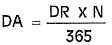
where:
DA = Dividend Amount;
DR = Dividend Rate; and
N = number of days in the relevant Dividend Period.
Dividend Date means a date specified in the Issue Resolution on which a dividend in respect of that preference share is payable.
Dividend Period means:
(a) the period that begins on and includes the Issue Date and ends on and includes the day before the first Dividend Date after the Issue Date; and
(b) the period that begins on and includes each Dividend Date and ends on and includes the day before the next Dividend Date; and
(c) the period that begins on and includes the last Dividend Date and ends on and includes the day before the Redemption Date.
Dividend Rate means the rate specified in the Issue Resolution for the calculation of the amount of dividend to be paid on that preference share on any Dividend Date.
franked dividend means a distribution franked in accordance with section 202-5 of the Tax Act.
Issue Date means the date on which the share is issued.
Issue Resolution means the resolution passed under clause 2 of this schedule.
redeemable preference share means a preference share which the Issue Resolution specifies is liable to be redeemed:
at a fixed time or on the happening of a particular event;
(d) at the Company’s option; or
(e) at the holder’s option.
Redemption Amount in relation to a redeemable preference share means the amount specified in the Issue Resolution to be paid on redemption of that share.
Redemption Date in relation to a redeemable preference share, means the date on which the Issue Resolution requires the Company to redeem that share.
Tax Act means the Income Tax Assessment Act 1936 (Cth), the Income Tax Assessment Act 1997 (Cth), or both, as applicable.
2. Issue Resolution
If the Board resolves to issue a preference share, it must pass an Issue Resolution which specifies:
the Dividend Date;
(f) the Dividend Rate;
(g) whether dividends are cumulative or non-cumulative;
(h) the priority with respect to payment of dividends and repayment of capital over other classes of shares;
(i) whether the share is a redeemable preference share or not, and if so:
(i) the Redemption Amount; and
(ii) if the share is redeemable at the end of a fixed period, the Redemption Date, or otherwise the circumstances (if any) in which the share is redeemable at the option of the holder or of the Company, the way in which that option must be exercised and the way in which the resulting Redemption Date is ascertained,
and may also specify that the dividend must be a franked dividend or must not be a franked dividend.
3. Franked dividends
If the Issue Resolution specifies that the dividend on preference shares must be a franked dividend, it may also specify:
the extent to which the dividend must be franked (within the meaning of the Tax Act); and
(j) the consequences of the dividend not being franked to that extent, which may include an increase of the dividend by an amount equal to the additional amount of franking credit which would have been imputed to the holder of the share under the Tax Act if the dividend had been franked in accordance with the Issue Resolution.
4. Dividend entitlement
The holder of a preference share is entitled to be paid on each Dividend Date, in priority to any payment of dividend on any other class of shares over which the relevant Issue Resolution or rights conferred under rule 18.2(b) give it priority, a preferential dividend of the Dividend Amount for the Dividend Period ending on the day before that Dividend Date. The dividend entitlement is cumulative if the Issue Resolution states that it is cumulative and otherwise is non-cumulative.
5. Priority on winding up
The holder of a preference share is entitled, on a winding up, to payment in cash of:
the amount then paid up on the share; and
(k) if the Issue Resolution states that dividends are cumulative, any arrears of dividend,
in priority to any payment to the holders of ordinary shares and any other class of preference share over which the relevant Issue Resolution or rights conferred under rule 18.2(b) give it priority, but has no right to participate in surplus assets and profits of the Company.
6. Voting
The holder of a preference share has no right to vote at any meeting of members except:
if the Issue Resolution states that dividends are cumulative, during a period during which a dividend on the share is in arrears;
(l) if approval of preference shareholders is required under Part 2J.1:
(i) on a proposal to reduce the Company’s share capital; or
(ii) on a resolution to approve the terms of a buy-back agreement, on that proposal or resolution; or
(m) on a proposal that affects rights attached to the share.
7. Notices and financial reports
The Company must give the holder of a preference share notice of each meeting of members in accordance with rule 12 and send the holder financial reports in accordance with rule 17.2.
8. Redemption of redeemable preference shares
Subject to the Act, the Company must redeem a redeemable preference share on the Redemption Date by paying the Redemption Amount to the holder in cash, by cheque or in any other form that the holder agrees to in writing. If the Company sends the holder of a redeemable preference share a cheque for the Redemption Amount, the share is redeemed on the date on which rule 25.1(b) would treat the cheque as being received by the holder, whether or not the holder has presented the cheque. If the holder of a redeemable preference share does not present a cheque for the Redemption Amount within a reasonable period after it is sent, the Company must deal with the Redemption Amount in accordance with the law relating to unclaimed money in the Company’s jurisdiction of registration.
9. Equal ranking issues
Subject to the terms of issue of any particular class of preference share, the issue of further preference shares that rank equally with any issued preference shares is not taken to affect the rights of the holders of the existing preference share whether or not the Dividend Rate for the new preference share is the same as or different from that applicable to that preference share.
Weatherford Australia Pty Limited (ACN 008 947 395) (the “Company”) Written resolutions of Members dated 4th May 2016
In accordance with section 249A of the Corporations Act 2001 (Cth), we, the undersigned, being the members of the Company entitled to vote on the resolution, state that we are in favour of the resolution set out in paragraph 2 below.
1. Amendment to Constitution
In order for Weatherford International plc, an Irish public limited company (the ultimate holding company of the Company) to secure one or more new credit facilities and/or amend and extend the Existing Revolving Credit Facility with certain financial institutions (“Lenders”) and JPMorgan Chase Bank, NA., as administrative agent, the members of the Company have provided in favour of the Lenders, security over its shares of the Company. The Lenders require various amendments to the Constitution of the Company to be made to remove potential limitations on its ability to register a transfer of shares in the Company on enforcement of the rights of the Lenders under their security.
2. Resolution by the Members
RESOLVED, as a special resolution, that the following new clause be inserted in the Constitution of the Company after clause 22.3:
22.4 Notwithstanding any other provision of this document, where a member of the company has granted over all or any of its shares in the company a mortgage, charge, lien, pledge or other security for the payment of a monetary obligation or the observance of any other obligation (a Security Interest) the directors and/or the Company may not decline to register or suspend a transfer of shares left for registration where the transfer is:
(a) in favour of a person entitled to the benefit of any Security Interest or a person acting as any receiver, receiver and manager, trustee, nominee, agent or attorney of that person (each a Mortgagee); or
(b) by or on behalf of a Mortgagee to any third party upon disposal or realisation of any share or shares following the Mortgagee becoming entitled to exercise or enforce its right under any such Security Interest.
The directors and/or the Company may rely on the certificate of that person that the shares were so secured and/or that the Security Interest has become enforceable as conclusive evidence of that fact.”
3. Necessary and Incidental Actions
RESOLVED, that any Director or Secretary of the Company is authorised to make all necessary and appropriate entries in the books and registers of the Company and to notify the Australian Securities and Investments Commission in relation to the resolutions above.
Confirmed
Signed for and on behalf
of WEATHERFORD DEUTSCHE
HOLDING (CANADA) ULC
by its duly authorised representative
in the presence of:
|
|
|
|
|
Signature of witness |
|
Signature of authorised representative |
|
|
|
|
|
|
|
|
|
|
|
|
|
Name of witness (please print) |
|
Name of authorised representative |
|
|
|
(please print) |
Signed for and on behalf
of WEATHERFORD/LAMB INC
by its duly authorised representative
in the presence of:
|
/s/ Centuryica Jefferson |
|
/s/ Charity R. Kohl |
|
Signature of witness |
|
Signature of authorised representative |
|
|
|
|
|
|
|
|
|
Centuryica Jefferson |
|
Charity R. Kohl |
|
Name of witness (please print) |
|
Name. of authorised representative |
|
|
|
(please print) |
Confirmed
Signed for and on behalf
of WEATHERFORD DEUTSCHE
HOLDING (CANADA) ULC
by its duly authorised representative
in the presence of:
|
/s/ Tamiza Mawani |
|
/s/ Pamela M. Webb |
|
Signature of witness |
|
Signature of authorised representative |
|
|
|
|
|
|
|
|
|
Tamiza Mawani |
|
Pamela M. Webb |
|
Name of witness (please print) |
|
Name of authorised representative |
|
|
|
(please print) |
Signed for and on behalf
of WEATHERFORD/LAMB INC
by its duly authorised representative
in the presence of:
|
|
|
|
|
Signature of witness |
|
Signature of authorised representative |
|
|
|
|
|
|
|
|
|
|
|
|
|
Name of witness (please print) |
|
Name. of authorised representative |
|
|
|
(please print) |
Amended and Restated company bye-laws
BYE-LAWS
of
Weatherford Bermuda Holdings Ltd.
|
|
|
|
|
|
| |
|
|
| |
|
|
/s/ Mark Gregory | |
|
|
Mark Gregory | |
|
| ||
|
| ||
|
| ||
|
|

Adopted: 4 May 2016
BYE-LAWS
OF
WEATHERFORD BERMUDA HOLDINGS LTD.
ADOPTED: 4 May 2016
TABLE OF CONTENTS
|
INTERPRETATION | ||
|
|
|
|
|
1. |
Definitions |
|
|
|
|
|
|
SHARES | ||
|
|
|
|
|
2. |
Power to Issue Shares |
|
|
3. |
Power of the Company to Purchase its Shares |
|
|
4. |
Rights Attaching to Shares |
|
|
5. |
Calls on Shares |
|
|
6. |
Prohibition on Financial Assistance |
|
|
7. |
Forfeiture of Shares |
|
|
8. |
Share Certificates |
|
|
9. |
Fractional Shares |
|
|
|
|
|
|
REGISTRATION OF SHARES | ||
|
|
|
|
|
10. |
Register of Members |
|
|
11. |
Registered Holder Absolute Owner |
|
|
12. |
Transfer of Registered Shares |
|
|
13. |
Transmission of Registered Shares |
|
|
|
|
|
|
ALTERATION OF SHARE CAPITAL | ||
|
|
|
|
|
14. |
Power to Alter Capital |
|
|
15. |
Variation of Rights Attaching to Shares |
|
|
|
|
|
|
DIVIDENDS AND CAPITALISATION | ||
|
|
|
|
|
16. |
Dividends |
|
|
17. |
Power to Set Aside Profits |
|
|
18. |
Method of Payment |
|
|
19. |
Capitalisation |
|
|
|
|
|
|
MEETINGS OF MEMBERS | ||
|
|
|
|
|
20. |
Annual General Meetings |
|
|
21. |
Special General Meetings |
|
|
22. |
Requisitioned General Meetings |
|
|
23. |
Notice |
|
|
24. |
Giving Notice and Access |
|
|
25. |
Postponement of General Meeting |
|
|
26. |
Electronic Participation in Meetings |
|
|
27. |
Quorum at General Meetings |
|
|
28. |
Chairman to Preside at General Meetings |
|
|
29. |
Voting on Resolutions |
|
|
30. |
Power to Demand a Vote on a Poll |
|
|
31. |
Voting by Joint Holders of Shares |
|
|
32. |
Instrument of Proxy |
|
|
33. |
Representation of Corporate Member |
|
|
34. |
Adjournment of General Meeting |
|
|
35. |
Written Resolutions |
|
|
36. |
Directors Attendance at General Meetings |
|
|
|
|
|
|
DIRECTORS AND OFFICERS | ||
|
|
|
|
|
37. |
Election of Directors |
|
|
38. |
Number of Directors |
|
|
39. |
Term of Office of Directors |
|
|
40. |
Alternate Directors |
|
|
41. |
Removal of Directors |
|
|
42. |
Vacancy in the Office of Director |
|
|
43. |
Remuneration of Directors |
|
|
44. |
Defect in Appointment |
|
|
45. |
Directors to Manage Business |
|
|
46. |
Powers of the Board of Directors |
|
|
47. |
Register of Directors and Officers |
|
|
48. |
Appointment of Officers |
|
|
49. |
Appointment of Secretary |
|
|
50. |
Duties of Officers |
|
|
51. |
Remuneration of Officers |
|
|
52. |
Conflicts of Interest |
|
|
53. |
Indemnification and Exculpation of Directors and Officers |
|
|
|
|
|
|
MEETINGS OF THE BOARD OF DIRECTORS | ||
|
|
|
|
|
54. |
Board Meetings |
|
|
55. |
Notice of Board Meetings |
|
|
56. |
Electronic Participation in Meetings |
|
|
57. |
Quorum at Board Meetings |
|
|
58. |
Board to Continue in the Event of Vacancy |
|
|
59. |
Chairman to Preside |
|
|
60. |
Written Resolutions |
|
|
61. |
Validity of Prior Acts of the Board |
|
|
|
|
|
|
CORPORATE RECORDS | ||
|
|
|
|
|
62. |
Minutes |
|
|
63. |
Place Where Corporate Records Kept |
|
|
64. |
Form and Use of Seal |
|
|
|
|
|
|
ACCOUNTS | ||
|
|
|
|
|
65. |
Books of Account |
|
|
66. |
Financial Year End |
|
|
|
|
|
|
AUDITS | ||
|
|
|
|
|
67. |
Annual Audit |
|
|
68. |
Appointment of Auditor |
|
|
69. |
Remuneration of Auditor |
|
|
70. |
Duties of Auditor |
|
|
71. |
Access to Records |
|
|
72. |
Financial Statements |
|
|
73. |
Distribution of Auditor’s Report |
|
|
74. |
Vacancy in the Office of Auditor |
|
|
|
|
|
|
VOLUNTARY WINDING-UP AND DISSOLUTION | ||
|
|
|
|
|
75. |
Winding-Up |
|
|
|
|
|
|
CHANGES TO CONSTITUTION | ||
|
|
|
|
|
76. |
Changes to Bye-laws |
|
|
77. |
Changes to the Memorandum of Association |
|
|
78. |
Discontinuance |
|
Weatherford Bermuda Holdings Ltd.
INTERPRETATION
1. Definitions
1.1 In these Bye-laws, the following words and expressions shall, where not inconsistent with the context, have the following meanings, respectively:
|
Act |
|
the Companies Act 1981 as amended from time to time; |
|
|
|
|
|
Alternate Director |
|
an alternate director appointed in accordance with these Bye-laws; |
|
|
|
|
|
Auditor |
|
includes an individual or partnership; |
|
|
|
|
|
Board |
|
the board of directors appointed or elected pursuant to these Bye-laws and acting by resolution in accordance with the Act and these Bye-laws or the directors present at a meeting of directors at which there is a quorum; |
|
|
|
|
|
Company |
|
the company for which these Bye-laws are approved and confirmed; |
|
|
|
|
|
Director |
|
a director of the Company and shall include an Alternate Director; |
|
|
|
|
|
Member |
|
the person registered in the Register of Members as the holder of shares in the Company and, when two or more persons are so registered as joint holders of shares, means the person whose name stands first in the Register of Members as one of such joint holders or all of such persons, as the context so requires; |
|
|
|
|
|
notice |
|
written notice as further provided in these Bye-laws unless otherwise specifically stated; |
|
|
|
|
|
Officer |
|
any person appointed by the Board to hold an office in the Company; |
|
|
|
|
|
Register of Directors and Officers |
|
the register of directors and officers referred to in these Bye-laws; |
|
|
|
|
|
Register of Members |
|
the register of members referred to in these Bye-laws; |
|
Resident Representative |
|
any person appointed to act as resident representative and includes any deputy or assistant resident representative; |
|
|
|
|
|
Secretary |
|
the person appointed to perform any or all of the duties of secretary of the Company and includes any deputy or assistant secretary and any person appointed by the Board to perform any of the duties of the Secretary; and |
|
|
|
|
|
Treasury Share |
|
a share of the Company that was or is treated as having been acquired and held by the Company and has been held continuously by the Company since it was so acquired and has not been cancelled. |
1.2 In these Bye-laws, where not inconsistent with the context:
(a) words denoting the plural number include the singular number and vice versa;
(b) words denoting the masculine gender include the feminine and neuter genders;
(c) words importing persons include companies, associations or bodies of persons whether corporate or not;
(d) the words:
(i) “may” shall be construed as permissive; and
(ii) “shall” shall be construed as imperative; and
(e) unless otherwise provided herein, words or expressions defined in the Act shall bear the same meaning in these Bye-laws.
1.3 In these Bye-laws expressions referring to writing or its cognates shall, unless the contrary intention appears, include facsimile, printing, lithography, photography, electronic mail and other modes of representing words in visible form.
1.4 Headings used in these Bye-laws are for convenience only and are not to be used or relied upon in the construction hereof.
SHARES
2. Power to Issue Shares
2.1 Subject to these Bye-laws and to any resolution of the Members to the contrary, and without prejudice to any special rights previously conferred on the holders of any existing shares or class of shares, the Board shall have the power to issue any unissued shares on such terms and conditions as it may determine and any shares or class of shares may be issued with such preferred, deferred or other special rights or such restrictions, whether in
regard to dividend, voting, return of capital, or otherwise as the Company may by resolution of the Members prescribe.
2.2 Subject to the Act, any preference shares may be issued or converted into shares that (at a determinable date or at the option of the Company or the holder) are liable to be redeemed on such terms and in such manner as may be determined by the Board (before the issue or conversion).
3. Power of the Company to Purchase its Shares
3.1 The Company may purchase its own shares for cancellation or acquire them as Treasury Shares in accordance with the Act on such terms as the Board shall think fit.
3.2 The Board may exercise all the powers of the Company to purchase or acquire all or any part of its own shares in accordance with the Act.
4. Rights Attaching to Shares
4.1 Subject to any resolution of the Members to the contrary (and without prejudice to any special rights conferred thereby on the holders of any other shares or class of shares), the share capital shall be divided into shares of a single class the holders of which shall, subject to these Bye-laws:
(a) be entitled to one vote per share;
(b) be entitled to such dividends as the Board may from time to time declare;
(c) in the event of a winding-up or dissolution of the Company, whether voluntary or involuntary or for the purpose of a reorganisation or otherwise or upon any distribution of capital, be entitled to the surplus assets of the Company; and
(d) generally be entitled to enjoy all of the rights attaching to shares.
4.2 All the rights attaching to a Treasury Share shall be suspended and shall not be exercised by the Company while it holds such Treasury Share and, except where required by the Act, all Treasury Shares shall be excluded from the calculation of any percentage or fraction of the share capital, or shares, of the Company.
5. Calls on Shares
5.1 The Board may make such calls as it thinks fit upon the Members in respect of any moneys (whether in respect of nominal value or premium) unpaid on the shares allotted to or held by such Members and, if a call is not paid on or before the day appointed for payment thereof, the Member may at the discretion of the Board be liable to pay the Company interest on the amount of such call at such rate as the Board may determine, from the date when such call was payable up to the actual date of payment. The Board may differentiate between the holders as to the amount of calls to be paid and the times of payment of such calls.
5.2 The joint holders of a share shall be jointly and severally liable to pay all calls and any interest, costs and expenses in respect thereof.
5.3 The Company may accept from any Member the whole or a part of the amount remaining unpaid on any shares held by him, although no part of that amount has been called up.
6. Prohibition on Financial Assistance
The Company shall not give, whether directly or indirectly, whether by means of loan, guarantee, provision of security or otherwise, any financial assistance for the purpose of the acquisition or proposed acquisition by any person of any shares in the Company, but nothing in this Bye-law shall prohibit transactions permitted under the Act.
7. Forfeiture of Shares
7.1 If any Member fails to pay, on the day appointed for payment thereof, any call in respect of any share allotted to or held by such Member, the Board may, at any time thereafter during such time as the call remains unpaid, direct the Secretary to forward such Member a notice in writing in the form, or as near thereto as circumstances admit, of the following:
Notice of Liability to Forfeiture for Non-Payment of Call
Weatherford International Ltd. (the “Company”)
You have failed to pay the call of [amount of call] made on the [ ] day of [ ], 200[ ], in respect of the [number] share(s) [number in figures] standing in your name in the Register of Members of the Company, on the [ ] day of [ ], 200[ ], the day appointed for payment of such call. You are hereby notified that unless you pay such call together with interest thereon at the rate of [ ] per annum computed from the said [ ] day of [ ], 200[ ] at the registered office of the Company the share(s) will be liable to be forfeited,
Dated this [ ] day of [ ], 200[ ]
|
|
|
|
|
|
|
[Signature of Secretary] By Order of the Board |
|
7.2 If the requirements of such notice are not complied with, any such share may at any time thereafter before the payment of such call and the interest due in respect thereof be forfeited by a resolution of the Board to that effect, and such share shall thereupon become the property of the Company and may be disposed of as the Board shall determine. Without limiting the generality of the foregoing, the disposal may take place by sale, repurchase, redemption or any other method of disposal permitted by and consistent with these Bye-laws and the Act.
7.3 A Member whose share or shares have been so forfeited shall, notwithstanding such forfeiture, be liable to pay to the Company all calls owing on such share or shares at the
time of the forfeiture, together with all interest due thereon and any costs and expenses incurred by the Company in connection therewith.
7.4 The Board may accept the surrender of any shares which it is in a position to forfeit on such terms and conditions as may be agreed. Subject to those terms and conditions, a surrendered share shall be treated as if it had been forfeited.
8. Share Certificates
8.1 Every Member shall be entitled to a certificate under the common seal (or a facsimile thereof) of the Company or bearing the signature (or a facsimile thereof) of a Director or the Secretary or a person expressly authorised to sign specifying the number and, where appropriate, the class of shares held by such Member and whether the same are fully paid up and, if not, specifying the amount paid on such shares. The Board may by resolution determine, either generally or in a particular case, that any or all signatures on certificates may be printed thereon or affixed by mechanical means.
8.2 The Company shall be under no obligation to complete and deliver a share certificate unless specifically called upon to do so by the person to whom the shares have been allotted.
8.3 If any share certificate shall be proved to the satisfaction of the Board to have been worn out, lost, mislaid, or destroyed the Board may cause a new certificate to be issued and request an indemnity for the lost certificate if it sees fit.
9. Fractional Shares
The Company may issue its shares in fractional denominations and deal with such fractions to the same extent as its whole shares and shares in fractional denominations shall have in proportion to the respective fractions represented thereby all of the rights of whole shares including (but without limiting the generality of the foregoing) the right to vote, to receive dividends and distributions and to participate in a winding-up.
REGISTRATION OF SHARES
10. Register of Members
10.1 The Board shall cause to be kept in one or more books a Register of Members and shall enter therein the particulars required by the Act.
10.2 The Register of Members shall be open to inspection without charge at the registered office of the Company on every business day, subject to such reasonable restrictions as the Board may impose, so that not less than two hours in each business day be allowed for inspection. The Register of Members may, after notice has been given in accordance with the Act, be closed for any time or times not exceeding in the whole thirty days in each year.
11. Registered Holder Absolute Owner
The Company shall be entitled to treat the registered holder of any share as the absolute owner thereof and accordingly shall not be bound to recognise any equitable claim or other claim to, or interest in, such share on the part of any other person.
12. Transfer of Registered Shares
12.1 An instrument of transfer shall be in writing in the form of the following, or as near thereto as circumstances admit, or in such other form as the Board may accept:
Transfer of a Share or Shares
Weatherford International Ltd. (the “Company”)
FOR VALUE RECEIVED [amount], I, [name of transferor] hereby sell, assign and transfer unto [transferee] of [address], [number] shares of the Company.
DATED this [ ] day of [ ], 200[ ]
|
Signed by: |
|
In the presence of: |
|
|
|
|
|
|
|
|
|
Transferor |
|
Witness |
|
|
|
|
|
|
|
|
|
Transferee |
|
Witness |
12.2 Such instrument of transfer shall be signed by or on behalf of the transferor and transferee, provided that, in the case of a fully paid share, the Board may accept the instrument signed by or on behalf of the transferor alone. The transferor shall be deemed to remain the holder of such share until the same has been registered as having been transferred to the transferee in the Register of Members.
12.3 The Board may refuse to recognise any instrument of transfer unless it is accompanied by the certificate in respect of the shares to which it relates and by such other evidence as the Board may reasonably require to show the right of the transferor to make the transfer.
12.4 The joint holders of any share may transfer such share to one or more of such joint holders, and the surviving holder or holders of any share previously held by them jointly with a deceased Member may transfer any such share to the executors or administrators of such deceased Member.
12.5 The Board may in its absolute discretion and without assigning any reason therefor refuse to register the transfer of a share. The Board shall refuse to register a transfer unless all applicable consents, authorisations and permissions of any governmental body or agency in Bermuda have been obtained. If the Board refuses to register a transfer of any share the Secretary shall, within three months after the date on which the transfer was lodged with the Company, send to the transferor and transferee notice of the refusal.
12.6 Notwithstanding anything contained within these Bye-laws the Board shall, subject to any requisite consent of the Bermuda Monetary Authority as required under applicable law, promptly register any transfer of shares and may not suspend registration thereof where such transfer:
(a) is to a bank or institution to which such shares have been mortgaged or charged by way of security whether as agent for a group of banks or institutions or otherwise, or to any nominee or any transferee of such a bank or institution (a “Secured Institution”) in accordance with the terms of the security; or
(b) is delivered to the Company for registration by a Secured Institution or its nominee in order to perfect its security over the shares, in accordance with the terms of the security; or
(c) is executed by a Secured Institution pursuant to the power of sale or other power under and in accordance with the terms of such security.
13. Transmission of Registered Shares
13.1 In the case of the death of a Member, the survivor or survivors where the deceased Member was a joint holder, and the legal personal representatives of the deceased Member where the deceased Member was a sole holder, shall be the only persons recognised by the Company as having any title to the deceased Member’s interest in the shares. Nothing herein contained shall release the estate of a deceased joint holder from any liability in respect of any share which had been jointly held by such deceased Member with other persons. Subject to the Act, for the purpose of this Bye-law, legal personal representative means the executor or administrator of a deceased Member or such other person as the Board may, in its absolute discretion, decide as being properly authorised to deal with the shares of a deceased Member.
13.2 Any person becoming entitled to a share in consequence of the death or bankruptcy of any Member may be registered as a Member upon such evidence as the Board may deem sufficient or may elect to nominate some person to be registered as a transferee of such share, and in such case the person becoming entitled shall execute in favour of such nominee an instrument of transfer in writing in the form, or as near thereto as circumstances admit, of the following:
Transfer by a Person Becoming Entitled on Death/Bankruptcy of a Member
Weatherford International Ltd. (the “Company”)
I/We, having become entitled in consequence of the [death/bankruptcy] of [name and address of deceased/bankrupt Member] to [number] share(s) standing in the Register of Members of the Company in the name of the said [name of deceased/bankrupt Member] instead of being registered myself/ourselves, elect to have [name of transferee] (the “Transferee”) registered as a transferee of such share(s) and I/we do hereby accordingly transfer the said share(s) to the Transferee to hold the same unto the Transferee, his or her executors, administrators and assigns, subject to the conditions on which the same were held at the time of the execution hereof; and the Transferee does hereby agree to take the said share(s) subject to the same conditions.
DATED this [ ] day of [ ], 200[]
|
Signed by: |
|
In the presence of: |
|
|
|
|
|
|
|
|
|
Transferor |
|
Witness |
|
|
|
|
|
|
|
|
|
Transferee |
|
Witness |
13.3 On the presentation of the foregoing materials to the Board, accompanied by such evidence as the Board may require to prove the title of the transferor, the transferee shall be registered as a Member. Notwithstanding the foregoing, the Board shall, in any case, have the same right to decline or suspend registration as it would have had in the case of a transfer of the share by that Member before such Member’s death or bankruptcy, as the case may be.
13.4 Where two or more persons are registered as joint holders of a share or shares, then in the event of the death of any joint holder or holders the remaining joint holder or holders shall be absolutely entitled to such share or shares and the Company shall recognise no claim in respect of the estate of any joint holder except in the case of the last survivor of such joint holders.
ALTERATION OF SHARE CAPITAL
14. Power to Alter Capital
14.1 The Company may if authorised by resolution of the Members increase, divide, consolidate, subdivide, change the currency denomination of, diminish or otherwise alter or reduce its share capital in any manner permitted by the Act.
14.2 Where, on any alteration or reduction of share capital, fractions of shares or some other difficulty would arise, the Board may deal with or resolve the same in such manner as it thinks fit.
15. Variation of Rights Attaching to Shares
If, at any time, the share capital is divided into different classes of shares, the rights attached to any class (unless otherwise provided by the terms of issue of the shares of that class) may, whether or not the Company is being wound-up, be varied with the consent in writing of the holders of three-fourths of the issued shares of that class or with the sanction of a resolution passed by a majority of the votes cast at a separate general meeting of the holders of the shares of the class at which meeting the necessary quorum shall be two persons at least holding or representing by proxy one-third of the issued shares of the class. The rights conferred upon the holders of the shares of any class issued with preferred or other rights shall not, unless otherwise
expressly provided by the terms of issue of the shares of that class, be deemed to be varied by the creation or issue of further shares ranking pari passu therewith.
DIVIDENDS AND CAPITALISATION
16. Dividends
16.1 The Board may, subject to these Bye-laws and in accordance with the Act, declare a dividend to be paid to the Members, in proportion to the number of shares held by them, and such dividend may be paid in cash or wholly or partly in specie in which case the Board may fix the value for distribution in specie of any assets. No unpaid dividend shall bear interest as against the Company.
16.2 The Board may fix any date as the record date for determining the Members entitled to receive any dividend.
16.3 The Company may pay dividends in proportion to the amount paid up on each share where a larger amount is paid up on some shares than on others.
16.4 The Board may declare and make such other distributions (in cash or in specie) to the Members as may be lawfully made out of the assets of the Company. No unpaid distribution shall bear interest as against the Company.
17. Power to Set Aside Profits
The Board may, before declaring a dividend, set aside out of the surplus or profits of the Company, such amount as it thinks proper as a reserve to be used to meet contingencies or for equalising dividends or for any other purpose.
18. Method of Payment
18.1 Any dividend, interest, or other moneys payable in cash in respect of the shares may be paid by cheque or draft sent through the post directed to the Member at such Member’s address in the Register of Members, or to such person and to such address as the holder may in writing direct.
18.2 In the case of joint holders of shares, any dividend, interest or other moneys payable in cash in respect of shares may be paid by cheque or draft sent through the post directed to the address of the holder first named in the Register of Members, or to such person and to such address as the joint holders may in writing direct. If two or more persons are registered as joint holders of any shares any one can give an effectual receipt for any dividend paid in respect of such shares.
18.3 The Board may deduct from the dividends or distributions payable to any Member all moneys due from such Member to the Company on account of calls or otherwise.
19. Capitalisation
19.1 The Board may capitalise any amount for the time being standing to the credit of any of the Company’s share premium or other reserve accounts or to the credit of the profit and loss account or otherwise available for distribution by applying such amount in paying up unissued shares to be allotted as fully paid bonus shares pro rata to the Members.
19.2 The Board may capitalise any amount for the time being standing to the credit of a reserve account or amounts otherwise available for dividend or distribution by applying such amounts in paying up in full, partly or nil paid shares of those Members who would have been entitled to such amounts if they were distributed by way of dividend or distribution.
MEETINGS OF MEMBERS
20. Annual General Meetings
The annual general meeting shall be held in each year (other than the year of incorporation) at such time and place as the President or the Chairman (if any) or any two Directors or any Director and the Secretary or the Board shall appoint.
21. Special General Meetings
The President or the Chairman (if any) or any two Directors or any Director and the Secretary or the Board may convene a special general meeting whenever in their judgment such a meeting is necessary.
22. Requisitioned General Meetings
The Board shall, on the requisition of Members holding at the date of the deposit of the requisition not less than one-tenth of such of the paid-up share capital of the Company as at the date of the deposit carries the right to vote at general meetings, forthwith proceed to convene a special general meeting and the provisions of the Act shall apply.
23. Notice
23.1 At least two days’ notice of an annual general meeting shall be given to each Member entitled to attend and vote thereat, stating the date, place and time at which the meeting is to be held, that the election of Directors will take place thereat, and as far as practicable, the other business to be conducted at the meeting.
23.2 At least two days’ notice of a special general meeting shall be given to each Member entitled to attend and vote thereat, stating the date, time, place and the general nature of the business to be considered at the meeting.
23.3 The Board may fix any date as the record date for determining the Members entitled to receive notice of and to vote at any general meeting.
23.4 A general meeting shall, notwithstanding that it is called on shorter notice than that specified in these Bye-laws, be deemed to have been properly called if it is so agreed by (i) all the Members entitled to attend and vote thereat in the case of an annual general meeting; and (ii) by a majority in number of the Members having the right to attend and vote at the meeting, being a majority together holding not less than 95% in nominal value of the shares giving a right to attend and vote thereat in the case of a special general meeting.
23.5 The accidental omission to give notice of a general meeting to, or the non-receipt of a notice of a general meeting by, any person entitled to receive notice shall not invalidate the proceedings at that meeting.
24. Giving Notice and Access
24.1 A notice may be given by the Company to a Member:
(a) by delivering it to such Member in person; or
(b) by sending it by letter mail or courier to such Member’s address in the Register of Members; or
(c) by transmitting it by electronic means (including facsimile and electronic mail, but not telephone) in accordance with such directions as may be given by such Member to the Company for such purpose; or
(d) in accordance with Bye-law 24.4.
24.2 Any notice required to be given to a Member shall, with respect to any shares held jointly by two or more persons, be given to whichever of such persons is named first in the Register of Members and notice so given shall be sufficient notice to all the holders of such shares.
24.3 Any notice (save for one delivered in accordance with Bye-law 24.4) shall be deemed to have been served at the time when the same would be delivered in the ordinary course of transmission and, in proving such service, it shall be sufficient to prove that the notice was properly addressed and prepaid, if posted, and the time when it was posted, delivered to the courier, or transmitted by electronic means.
24.4 Where a Member indicates his consent (in a form and manner satisfactory to the Board), to receive information, or documents by accessing them on a website rather than by other means, or receipt in this manner is otherwise permitted by the Act, the Board may deliver such information or documents by notifying the Member of their availability and including therein the address of the website, the place on the website where the information or document may be found, and instructions as to how the information or document may be accessed on the website.
24.5 In the case of information or documents delivered in accordance with Bye-law 24.4, service shall be deemed to have occurred when (i) the Member is notified in accordance with that Bye-law; and (ii) the information or document is published on the website.
25. Postponement of General Meeting
The Secretary may postpone any general meeting called in accordance with these Bye-laws (other than a meeting requisitioned under these Bye-laws) provided that notice of postponement is given to the Members before the time for such meeting. Fresh notice of the date, time and place for the postponed meeting shall be given to each Member in accordance with these Bye-laws.
26. Electronic Participation in Meetings
Members may participate in any general meeting by such telephonic, electronic or other communication facilities or means as permit all persons participating in the meeting to communicate with each other simultaneously and instantaneously, and participation in such a meeting shall constitute presence in person at such meeting.
27. Quorum at General Meetings
27.1 At any general meeting two or more persons present in person and representing in person or by proxy in excess of 50% of the total issued voting shares in the Company throughout the meeting shall form a quorum for the transaction of business, provided that if the Company shall at any time have only one Member, one Member present in person or by proxy shall form a quorum for the transaction of business at any general meeting held during such time.
27.2 If within half an hour from the time appointed for the meeting a quorum is not present, then, in the case of a meeting convened on a requisition, the meeting shall be deemed cancelled and, in any other case, the meeting shall stand adjourned to the same day one week later, at the same time and place or to such other day, time or place as the Secretary may determine. Unless the meeting is adjourned to a specific date, time and place announced at the meeting being adjourned, fresh notice of the resumption of the meeting shall be given to each Member entitled to attend and vote thereat in accordance with these Bye-laws.
28. Chairman to Preside at General Meetings
Unless otherwise agreed by a majority of those attending and entitled to vote thereat, the Chairman, if there be one, and if not the President, if there be one, shall act as chairman at all general meetings at which such person is present. In their absence a chairman shall be appointed or elected by those present at the meeting and entitled to vote.
29. Voting on Resolutions
29.1 Subject to the Act and these Bye-laws, any question proposed for the consideration of the Members at any general meeting shall be decided by the affirmative votes of a majority of the votes cast in accordance with these Bye-laws and in the case of an equality of votes the resolution shall fail.
29.2 No Member shall be entitled to vote at a general meeting unless such Member has paid all the calls on all shares held by such Member.
29.3 At any general meeting a resolution put to the vote of the meeting shall, in the first instance, be voted upon by a show of hands and, subject to any rights or restrictions for the time being lawfully attached to any class of shares and subject to these Bye-laws, every Member present in person and every person holding a valid proxy at such meeting shall be entitled to one vote and shall cast such vote by raising his hand.
29.4 In the event that a Member participates in a general meeting by telephone, electronic or other communication facilities or means, the chairman of the meeting shall direct the manner in which such Member may cast his vote on a show of hands.
29.5 At any general meeting if an amendment is proposed to any resolution under consideration and the chairman of the meeting rules on whether or not the proposed amendment is out of order, the proceedings on the substantive resolution shall not be invalidated by any error in such ruling.
29.6 At any general meeting a declaration by the chairman of the meeting that a question proposed for consideration has, on a show of hands, been carried, or carried unanimously, or by a particular majority, or lost, and an entry to that effect in a book containing the minutes of the proceedings of the Company shall, subject to these Bye-laws, be conclusive evidence of that fact.
30. Power to Demand a Vote on a Poll
30.1 Notwithstanding the foregoing, a poll may be demanded by any of the following persons:
(a) the chairman of such meeting; or
(b) at least three Members present in person or represented by proxy; or
(c) any Member or Members present in person or represented by proxy and holding between them not less than one-tenth of the total voting rights of all the Members having the right to vote at such meeting; or
(d) any Member or Members present in person or represented by proxy holding shares in the Company conferring the right to vote at such meeting, being shares on which an aggregate sum has been paid up equal to not less than one-tenth of the total amount paid up on all such shares conferring such right.
30.2 Where a poll is demanded, subject to any rights or restrictions for the time being lawfully attached to any class of shares, every person present at such meeting shall have one vote for each share of which such person is the holder or for which such person holds a proxy and such vote shall be counted by ballot as described herein, or in the case of a general meeting at which one or more Members are present by telephone, electronic or other communication facilities or means, in such manner as the chairman of the meeting may direct and the result of such poll shall be deemed to be the resolution of the meeting at which the poll was demanded and shall replace any previous resolution upon the same matter which has been the subject of a show of bands. A person entitled to more than one vote need not use all his votes or cast all the votes he uses in the same way.
30.3 A poll demanded for the purpose of electing a chairman of the meeting or on a question of adjournment shall be taken forthwith. A poll demanded on any other question shall be taken at such time and in such manner during such meeting as the chairman (or acting chairman) of the meeting may direct. Any business other than that upon which a poll has been demanded may be conducted pending the taking of the poll.
30.4 Where a vote is taken by poll, each person physically present and entitled to vote shall be furnished with a ballot paper on which such person shall record his vote in such manner as shall be determined at the meeting having regard to the nature of the question on which the vote is taken, and each ballot paper shall be signed or initialled or otherwise marked so as to identify the voter and the registered holder in the case of a proxy. Each person present by telephone, electronic or other communication facilities or means shall cast his vote in such manner as the chairman shall direct. At the conclusion of the poll, the ballot papers and votes cast in accordance with such directions shall be examined and counted by a committee of not less than two Members or proxy holders appointed by the chairman for the purpose and the result of the poll shall be declared by the chairman.
31. Voting by Joint Holders of Shares
In the case of joint holders, the vote of the senior who tenders a vote (whether in person or by, proxy) shall be accepted to the exclusion of the votes of the other joint holders, and for this purpose seniority shall be determined by the order in which the names stand in the Register of Members.
32. Instrument of Proxy
32.1 An instrument appointing a proxy shall be in writing in substantially the following form or such other form as the chairman of the meeting shall accept:
Proxy
Weatherford International Ltd. (the “Company”)
If We, [insert names here], being a Member of the Company with [number] shares, HEREBY APPOINT [name] of [address] or failing him, [name] of [address] to be my/our proxy to vote for me/us at the meeting of the Members to be held on the [ ] day of [ ], 200[ ] and at any adjournment thereof. (Any restrictions on voting to be inserted here.)
|
Signed this [ ] day of [ ], 200[ ] |
|
|
|
|
|
|
|
|
Member(s) |
|
32.2 The instrument appointing a proxy must be received by the Company at the registered office or at such other place or in such manner as is specified in the notice convening the meeting or in any instrument of proxy sent out by the Company in relation to the meeting at which the person named in the instrument appointing a proxy proposes to vote, and an instrument appointing a proxy which is not received in the manner so prescribed shall be invalid.
32.3 A Member who is the holder of two or more shares may appoint more than one proxy to represent him and vote on his behalf in respect of different shares.
32.4 Subject to bye-law 32.5, the decision of the chairman of any general meeting as to the validity of any appointment of a proxy shall be final.
32.5 Any Member may irrevocably appoint a proxy and in such case: (i) such appointment shall be irrevocable in accordance with the terms of the instrument of appointment; (ii) the Company shall be given notice of the appointment, such notice to include the name, address, telephone number and electronic mail address of the proxy, and the Company shall give to such proxy notice of all meetings of shareholders of the Company; (iii) such proxy shall be the only person entitled to vote the relevant Shares at any meeting at which such proxy is present; and (iv) the Company shall be obliged to recognise the proxy until such time as such proxy shall notify the Company in writing that the appointment of such proxy is no longer in force.
33. Representation of Corporate Member
33.1 A corporation which is a Member may, by written instrument, authorise such person or persons as it thinks fit to act as its representative at any meeting and any person so authorised shall be entitled to exercise the same powers on behalf of the corporation which such person represents as that corporation could exercise if it were an individual Member, and that Member shall be deemed to be present in person at any such meeting attended by its authorised representative or representatives.
33.2 Notwithstanding the foregoing, the chairman of the meeting may accept such assurances as he thinks fit as to the right of any person to attend and vote at general meetings on behalf of a corporation which is a Member.
34. Adjournment of General Meeting
The chairman of a general meeting may, with the consent of the Members at any general meeting at which a quorum is present, and shall if so directed by the meeting, adjourn the meeting. Unless the meeting is adjourned to a specific date, place and time announced at the meeting being adjourned, fresh notice of the date, place and time for the resumption of the adjourned meeting shall be given to each Member entitled to attend and vote thereat in accordance with these Bye-laws.
35. Written Resolutions
35.1 Subject to these Bye-laws, anything which may be done by resolution of the Company in general meeting or by resolution of a meeting of any class of the Members may, without a meeting be done by written resolution in accordance with this Bye-law.
35.2 Notice of a written resolution shall be given, and a copy of the resolution shall be circulated to all Members who would be entitled to attend a meeting and vote thereon. The accidental omission to give notice to, or the non-receipt of a notice by, any Member does not invalidate the passing of a resolution.
35.3 A written resolution is passed when it is signed by, or in the case of a Member that is a corporation, on behalf of, the Members who at the date that the notice is given represent such majority of votes as would be required if the resolution was voted on at a meeting of Members at which all Members entitled to attend and vote thereat were present and voting.
35.4 A resolution in writing may be signed in any number of counterparts
35.5 A resolution in writing made in accordance with this Bye-law is as valid as if it had been passed by the Company in general meeting or by a meeting of the relevant class of Members, as the case may be, and any reference in any Bye-law to a meeting at which a resolution is passed or to Members voting in favour of a resolution shall be construed accordingly.
35.6 A resolution in writing made in accordance with this Bye-law shall constitute minutes for the purposes of the Act.
35.7 This Bye-law shall not apply to:
(a) a resolution passed to remove an Auditor from office before the expiration of his term of office; or
(b) a resolution passed for the purpose of removing a Director before the expiration of his term of office.
35.8 For the purposes of this Bye-law, the effective date of the resolution is the date when the resolution is signed by, or in the case of a Member that is a corporation whether or not a company within the meaning of the Act, on behalf of, the last Member whose signature results in the necessary voting majority being achieved and any reference in any Bye-law to the date of passing of a resolution is, in relation to a resolution made in accordance with this Bye-law, a reference to such date.
36. Directors Attendance at General Meetings
The Directors shall be entitled to receive notice of, attend and be heard at any general meeting.
DIRECTORS AND OFFICERS
37. Election of Directors
37.1 The Board of Directors shall be elected or appointed in the first place at the statutory meeting of the Company and thereafter, except in the case of a casual vacancy, at the annual general meeting or at any special general meeting called for that purpose.
37.2 At any general meeting the Members may authorise the Board to fill any vacancy in their number left unfilled at a general meeting.
38. Number of Directors
The Board shall consist of one (1) Director or such number in excess thereof as the Members may determine.
39. Term of Office of Directors
Directors shall hold office for such term as the Members may determine or, in the absence of such determination, until the next annual general meeting or until their successors are elected or appointed or their office is otherwise vacated.
40. Alternate Directors
40.1 At any general meeting, the Members may elect a person or persons to act as a Director in the alternative to any one or more Directors or may authorise the Board to appoint such Alternate Directors.
40.2 Unless the Members otherwise resolve, any Director may appoint a person or persons to act as a Director in the alternative to himself by notice deposited with the Secretary. Any person so elected or appointed shall have all the rights and powers of the Director or Directors for whom such person is appointed in the alternative provided that such person shall not be counted more than once in determining whether or not a quorum is present.
40.3 An Alternate Director shall be entitled to receive notice of all meetings of the Board and to attend and vote at any such meeting at which a Director for whom such Alternate Director was appointed in the alternative is not personally present and generally to perform at such meeting all the functions of such Director for whom such Alternate Director was appointed.
40.4 An Alternate Director shall cease to be such if the Director for whom he was appointed to act as a Director in the alternative ceases for any reason to be a Director, but he may be re-appointed by the Board as an alternate to the person appointed to fill the vacancy in accordance with these Bye-laws.
41. Removal of Directors
41.1 Subject to any provision to the contrary in these Bye-laws, the Members entitled to vote for the election of Directors may, at any special general meeting convened and held in accordance with these Bye-laws, remove a Director with or without cause, and notice of such removal shall thereafter be given to such former Director.
41.2 If a Director is removed from the Board under this Bye-law the Members may fill the vacancy at the meeting at which such Director is removed. In the absence of such election or appointment, the Board may fill the vacancy.
42. Vacancy in the Office of Director
42.1 The office of Director shall be vacated if the Director:
(a) is removed from office pursuant to these Bye-laws or is prohibited from being a Director by law;
(b) is or becomes bankrupt, or makes any arrangement or composition with his creditors generally;
(c) is or becomes of unsound mind or dies; or
(d) resigns his office by notice to the Company.
42.2 The Board shall have the power to appoint any person as a Director to fill a vacancy on the Board occurring as a result of the death, disability, disqualification or resignation of any Director and to appoint an Alternate Director to any Director so appointed.
43. Remuneration of Directors
The remuneration (if any) of the Directors shall be determined by the Company in general meeting and shall be deemed to accrue from day to day. The Directors may also be paid all travel, hotel and other expenses properly incurred by them in attending and returning from the meetings of the Board, any committee appointed by the Board, general meetings, or in connection with the business of the Company or their duties as Directors generally.
44. Defect in Appointment
All acts done in good faith by the Board, any Director, a member of a committee appointed by the Board, any person to whom the Board may have delegated any of its powers, or any person acting as a Director shall, notwithstanding that it be afterwards discovered that there was some defect in the appointment of any Director or person acting as aforesaid, or that he was, or any of them were, disqualified, be as valid as if every such person had been duly appointed and was qualified to be a Director or act in the relevant capacity.
45. Directors to Manage Business
The business of the Company shall be managed and conducted by the Board. In managing the business of the Company, the Board may exercise all such powers of the Company as are not, by the Act or by these Bye-laws, required to be exercised by the Company in general meeting.
46. Powers of the Board of Directors
The Board may:
(a) appoint, suspend, or remove any manager, secretary, clerk, agent or employee of the Company and may fix their remuneration and determine their duties;
(b) exercise all the powers of the Company to borrow money and to mortgage or charge or otherwise grant a security interest in its undertaking, property and uncalled capital, or any part thereof, and may issue debentures, debenture stock and other securities whether outright or as security for any debt, liability or obligation of the Company or any third party;
(c) appoint one or more Directors to the office of managing director or chief executive officer of the Company, who shall, subject to the control of the Board, supervise and administer all of the general business and affairs of the Company;
(d) appoint a person to act as manager of the Company’s day-to-day business and may entrust to and confer upon such manager such powers and duties as it deems appropriate for the transaction or conduct of such business;
(e) by power of attorney, appoint any company, firm, person or body of persons, whether nominated directly or indirectly by the Board, to be an attorney of the Company for such purposes and with such powers, authorities and discretions (not exceeding those vested in or exercisable by the Board) and for such period and subject to such conditions as it may think fit and any such power of attorney may contain such provisions for the protection and convenience of persons dealing with any such attorney as the Board may think fit and may also authorise any such attorney to sub-delegate all or any of the powers, authorities and discretions so vested in the attorney;
(f) procure that the Company pays all expenses incurred in promoting and incorporating the Company;
(g) delegate any of its powers (including the power to sub-delegate) to a committee of one or more persons appointed by the Board which may consist partly or entirely of non-Directors, provided that every such committee shall conform to such directions as the Board shall impose on them and provided further that the meetings and proceedings of any such committee shall be governed by the provisions of these Bye-laws regulating the meetings and proceedings of the Board, so far as the same are applicable and are not superseded by directions imposed by the Board;
(h) delegate any of its powers (including the power to sub-delegate) to any person on such terms and in such manner as the Board may see fit;
(i) present any petition and make any application in connection with the liquidation or reorganisation of the Company;
(j) in connection with the issue of any share, pay such commission and brokerage as may be permitted by law; and
(k) authorise any company, firm, person or body of persons to act on behalf of the Company for any specific purpose and in connection therewith to execute any deed, agreement, document or instrument on behalf of the Company.
47. Register of Directors and Officers
The Board shall cause to be kept in one or more books at the registered office of the Company a Register of Directors and Officers and shall enter therein the particulars required by the Act.
48. Appointment of Officers
The Board may appoint such officers (who may or may not be Directors) as the Board may determine.
49. Appointment of Secretary
The Secretary shall be appointed by the Board from time to time.
50. Duties of Officers
The Officers shall have such powers and perform such duties in the management, business and affairs of the Company as may be delegated to them by the Board from time to time.
51. Remuneration of Officers
The Officers shall receive such remuneration as the Board may determine.
52. Conflicts of Interest
52.1 Any Director, or any Director’s firm, partner or any company with whom any Director is associated, may act in any capacity for, be employed by or render services to the Company and such Director or such Director’s firm, partner or company shall be entitled to remuneration as if such Director were not a Director. Nothing herein contained shall authorise a Director or Director’s firm, partner or company to act as Auditor to the Company.
52.2 A Director who is directly or indirectly interested in a contract or proposed contract or arrangement with the Company shall declare the nature of such interest as required by the Act.
52.3 Following a declaration being made pursuant to this Bye-law, and unless disqualified by the chairman of the relevant Board meeting, a Director may vote in respect of any
contract or proposed contract or arrangement in which such Director is interested and may be counted in the quorum for such meeting.
53. Indemnification and Exculpation of Directors and Officers
53.1 The Directors, resident representative, Secretary and other Officers (such term to include any person appointed to any committee by the Board) for the time being acting in relation to any of the affairs of the Company or any subsidiary thereof and the liquidator or trustees (if any) for the time being acting in relation to any of the affairs of the Company or any subsidiary thereof and every one of them, and their heirs, executors and administrators, shall be indemnified and secured harmless out of the assets of the Company from and against all actions, costs, charges, losses, damages and expenses which they or any of them, their heirs, executors or administrators, shall or may incur or sustain by or by reason of any act done, concurred in or omitted in or about the execution of their duty, or supposed duty, or in their respective offices or trusts, and none of them shall be answerable for the acts, receipts, neglects or defaults of the others of them or for joining in any receipts for the sake of conformity, or for any bankers or other persons with whom any moneys or effects belonging to the Company shall or may be lodged or deposited for safe custody, or for insufficiency or deficiency of any security upon which any moneys of or belonging to the Company shall be placed out on or invested, or for any other loss, misfortune or damage which may happen in the execution of their respective offices or trusts, or in relation thereto, PROVIDED THAT this indemnity shall not extend to any matter in respect of any fraud or dishonesty which may attach to any of the said persons. Each Member agrees to waive any claim or right of action such Member might have, whether individually or by or in the right of the Company, against any Director or Officer on account of any action taken by such Director or Officer, or the failure of such Director or Officer to take any action in the performance of his duties with or for the Company or any subsidiary thereof, PROVIDED THAT such waiver shall not extend to any matter in respect of any fraud or dishonesty which may attach to such Director or Officer.
53.2 The Company may purchase and maintain insurance for the benefit of any Director or Officer against any liability incurred by him under the Act in his capacity as a Director or Officer or indemnifying such Director or Officer in respect of any loss arising or liability attaching to him by virtue of any rule of law in respect of any negligence, default, breach of duty or breach of trust of which the Director or Officer may be guilty in relation to the Company or any subsidiary thereof.
53.3 The Company may advance moneys to a Director or Officer for the costs, charges and expenses incurred by the Director or Officer in defending any civil or criminal proceedings against him, on condition that the Director or Officer shall repay the advance if any allegation of fraud or dishonesty is proved against him.
MEETINGS OF THE BOARD OF DIRECTORS
54. Board Meetings
The Board may meet for the transaction of business, adjourn and otherwise regulate its meetings as it sees fit. A resolution put to the vote at a meeting of the Board shall be carried by the affirmative votes of a majority of the votes cast and in the case of an equality of votes the resolution shall fail.
55. Notice of Board Meetings
A Director may, and the Secretary on the requisition of a Director shall, at any time summon a meeting of the Board. Notice of a meeting of the Board shall be deemed to be duly given to a Director if it is given to such Director verbally (including in person or by telephone) or otherwise communicated or sent to such Director by post, electronic means or other mode of representing words in a visible form at such Director’s last known address or in accordance with any other instructions given by such Director to the Company for this purpose.
56. Electronic Participation in Meetings
Directors may participate in any meeting by such telephonic, electronic or other communication facilities or means as permit all persons participating in the meeting to communicate with each other simultaneously and instantaneously, and participation in such a meeting shall constitute presence in person at such meeting.
57. Quorum at Board Meetings
The quorum necessary for the transaction of business at a meeting of the Board shall be two Directors.
58. Board to Continue in the Event of Vacancy
The Board may act notwithstanding any vacancy in its number but, if and so long as its number is reduced below the number fixed by these Bye-laws as the quorum necessary for the transaction of business at meetings of the Board, the continuing Directors or Director may act for the purpose of (i) summoning a general meeting; or (ii) preserving the assets of the Company.
59. Chairman to Preside
Unless otherwise agreed by a majority of the Directors attending, the Chairman, if there be one, and if not, the President, if there be one, shall act as chairman at all meetings of the Board at which such person is present. In their absence a chairman shall be appointed or elected by the Directors present at the meeting.
60. Written Resolutions
A resolution signed by all the Directors, which may be in counterparts, shall be as valid as if it had been passed at a meeting of the Board duly called and constituted, such resolution to be effective on the date on which the last Director signs the resolution. For the purposes of this Bye-law only, “the Directors” shall not include an Alternate Director.
61. Validity of Prior Acts of the Board
No regulation or alteration to these Bye-laws made by the Company in general meeting shall invalidate any prior act of the Board which would have been valid if that regulation or alteration had not been made.
CORPORATE RECORDS
62. Minutes
The Board shall cause minutes to be duly entered in books provided for the purpose:
(a) of all elections and appointments of Officers;
(b) of the names of the Directors present at each meeting of the Board and of any committee appointed by the Board; and
(c) of all resolutions and proceedings of general meetings of the Members, meetings of the Board, meetings of managers and meetings of committees appointed by the Board.
63. Place Where Corporate Records Kept
Minutes prepared in accordance with the Act and these Bye-laws shall be kept by the Secretary at the registered office of the Company.
64. Form and Use of Seal
64.1 The Company may adopt a seal in such form as the Board may determine. The Board may adopt one or more duplicate seals for use in or outside Bermuda.
64.2 A seal may, but need not, be affixed to any deed, instrument or document, and if the seal is to be affixed thereto, it shall be attested by the signature of (i) any Director, or (ii) any Officer, or (iii) the Secretary, or (iv) any person authorised by the Board for that purpose.
64.3 A Resident Representative may, but need not, affix the seal of the Company to certify the authenticity of any copies of documents.
ACCOUNTS
65. Books of Account
65.1 The Board shall cause to be kept proper records of account with respect to all transactions of the Company and in particular with respect to:
(a) all amounts of money received and expended by the Company and the matters in respect of which the receipt and expenditure relates;
(b) all sales and purchases of goods by the Company; and
(c) all assets and liabilities of the Company.
65.2 Such records of account shall be kept at the registered office of the Company, or subject to the Act, at such other place as the Board thinks fit and shall be available for inspection by the Directors during normal business hours.
66. Financial Year End
The financial year end of the Company may be determined by resolution of the Board and failing such resolution shall be 31st December in each year.
AUDITS
67. Annual Audit
Subject to any rights to waive laying of accounts or appointment of an Auditor pursuant to the Act, the accounts of the Company shall be audited at least once in every year.
68. Appointment of Auditor
68.1 Subject to the Act, at the annual general meeting or at a subsequent special general meeting in each year, an independent representative of the Members shall be appointed by them as Auditor of the accounts of the Company.
68.2 The Auditor may be a Member but no Director, Officer or employee of the Company shall, during his continuance in office, be eligible to act as an Auditor of the Company.
69. Remuneration of Auditor
Save in the case of an Auditor appointed pursuant to Bye-law 74, the remuneration of the Auditor shall be fixed by the Company in general meeting or in such manner as the Members may determine. In the case of an Auditor appointed pursuant to Bye-law 74, the remuneration of the Auditor shall be fixed by the Board.
70. Duties of Auditor
70.1 The financial statements provided for by these Bye-laws shall be audited by the Auditor in accordance with generally accepted auditing standards. The Auditor shall make a written report thereon in accordance with generally accepted auditing standards.
70.2 The generally accepted auditing standards referred to in this Bye-law may be those of a country or jurisdiction other than Bermuda or such other generally accepted auditing standards as may be provided for in the Act. If so, the financial statements and the report of the Auditor shall identify the generally accepted auditing standards used.
71. Access to Records
The Auditor shall at all reasonable times have access to all books kept by the Company and to all accounts and vouchers relating thereto, and the Auditor may call on the Directors or Officers for any information in their possession relating to the books or affairs of the Company.
72. Financial Statements
Subject to any rights to waive laying of accounts pursuant to the Act, financial statements as required by the Act shall be laid before the Members in general meeting. A resolution in writing made in accordance with Bye-law 35 receiving, accepting, adopting, approving or otherwise acknowledging financial statements shall be deemed to be the laying of such statements before the Members in general meeting.
73. Distribution of Auditor’s Report
The report of the Auditor shall be submitted to the Members in general meeting.
74. Vacancy in the Office of Auditor
The Board may fill any casual vacancy in the office of the auditor.
VOLUNTARY WINDING-UP AND DISSOLUTION
75. Winding-up
If the Company shall be wound up the liquidator may, with the sanction of a resolution of the Members, divide amongst the Members in specie or in kind the whole or any part of the assets of the Company (whether they shall consist of property of the same kind or not) and may, for such purpose, set such value as he deems fair upon any property to be divided as aforesaid and may determine how such division shall be carried out as between the Members or different classes of Members. The liquidator may, with the like sanction, vest the whole or any part of such assets in the trustees upon such trusts for the benefit of the Members as the liquidator shall think fit, but so that no Member shall be compelled to accept any shares or other securities or assets whereon there is any liability.
CHANGES TO CONSTITUTION
76. Changes to Bye-laws
No Bye-law may be rescinded, altered or amended and no new Bye-law may be made save in accordance with the Act and until the same has been approved by a resolution of the Board and by a resolution of the Members.
77. Changes to the Memorandum of Association
No alteration or amendment to the Memorandum of Association may be made save in accordance with the Act and until same has been approved by a resolution of the Board and by a resolution of the Members.
78. Discontinuance
The Board may exercise all the powers of the Company to discontinue the Company to a jurisdiction outside Bermuda pursuant to the Act.
WEATHERFORD CANADA LTD.
BY-LAW NO. 1
A by-law to regulate generally the
business and affairs of the Corporation.
SHAREHOLDERS
Section 1.01 - Calling of Meetings The board of directors shall call an annual meeting of shareholders not later than 15 months after holding the last preceding annual meeting and may at any time call a special meeting of shareholders to be held at such place within Alberta and at such time as the board of directors shall determine.
Section 1.02 - Notice of Meetings Notice of the time and place of a meeting of shareholders shall be sent not less than 21 days and not more than 50 days before the meeting to each shareholder entitled to vote at the meeting, to each director and to the auditor or accountant of the Corporation, as the case may be. A shareholder may in any manner waive notice of a meeting of shareholders, and attendance of a shareholder at a meeting of shareholders is a waiver of notice of the meeting except when a shareholder attends a meeting for the express purpose of objecting to the transaction of any business on the grounds that the meeting is not lawfully called. The accidental failure to give notice of a meeting of shareholders to any person entitled thereto or any error in such notice not affecting the substance thereof shall not invalidate any action taken at the meeting.
Section 1.03 - Meeting by Telephone A shareholder may participate in a meeting of the shareholders by means of telephone or any other communication facility that permits all persons participating in the meeting to hear each other, and a shareholder participating in a meeting by such means is deemed to be present in person at the meeting.
Section 1.04 - Quorum Except as otherwise provided in the articles of the Corporation, the holders of not less than a majority of the shares entitled to vote at a meeting of shareholders present in person or by proxy shall constitute a quorum.
Section 1.05 - Chairman of Meetings The chairman of any meeting of shareholders shall be the first mentioned of such of the following officers as have been appointed and who is present at the meeting: Chairman of the Board, President or a Vice-President. If all of the foregoing officers are absent, the shareholders entitled to vote at the meeting may choose a chairman.
Section 1.06 - Procedure at Meetings The chairman of any meeting of shareholders shall conduct the procedure thereat in all respects and his decision on all matters or things relating to procedure etc., including, but without in any way limiting the generality of the foregoing, any question regarding the validity or invalidity of any instruments of proxy, shall be conclusive and binding upon the shareholders.
Section 1.07 - Voting Voting at every meeting of the shareholders shall be by a show of hands or verbal poll of those present by telephone or other communication facility except where, either
before or after a show of hands or verbal poll, a ballot is required by the chairman of the meeting or is demanded by any person present and entitled to vote at the meeting.
Section 1.08 - Decision on Questions At every meeting of shareholders all questions proposed for the consideration of shareholders shall be decided by a majority of votes unless otherwise required by the Business Corporations Act (Alberta), as amended or substituted, (the “Act”) or by the articles of the Corporation. In the case of equality of votes, the chairman shall not, either on a show of hands or verbal poll or on a ballot, have a casting vote in addition to the vote or votes to which he may be entitled as a shareholder.
DIRECTORS
Section 2.01 - Number The board of directors shall consist of such number of directors as the shareholders may determine from time to time, provided that there shall be not less than the minimum and not more than the maximum number of directors permitted by the articles of the Corporation at any one time.
Section 2.02 - Election and Term of Office At each annual meeting the shareholders shall elect directors to hold office until their respective successors are elected.
Section 2.03 - Calling of Meetings Meetings of the directors may be called at any time by any director and may be held at the registered office of the Corporation or at any other place determined by the board of directors.
Section 2.04 - Notice of Meetings Notice of the time and place of a meeting of directors shall be sent not less than 5 days before the date fixed for such meeting to each director. A director may in any manner waive notice of a meeting of directors, and attendance of a director at a meeting of directors is a waiver of notice of the meeting except when a director attends a meeting for the express purpose of objecting to the transaction of any business on the grounds that the meeting is not lawfully called. The accidental failure to give notice of a meeting of directors to any director entitled thereto or any error in such notice not affecting the substance thereof shall not invalidate any action taken at the meeting.
Section 2.05 - Meeting by Telephone A director may participate in a meeting of the board of directors by means of telephone or any other communication facility that permits all persons participating in the meeting to hear each other, and a director participating in a meeting by such means is deemed to be present in person at the meeting.
Section 2.06 - Quorum The directors may from time to time fix the quorum for meetings of directors, but unless so fixed a majority of the directors shall constitute a quorum and, to the extent required by the Act, no business shall be transacted unless at least one-half of the directors present are resident Canadians.
Section 2.07 - Chairman of Meetings The chairman of any meeting of the board of directors shall be the first mentioned of such of the following officers as have been appointed and who is a director and is present at the meeting: Chairman of the Board, President or a Vice-President. If all of the foregoing officers are absent, the directors present shall choose one of their number to be chairman of the meeting.
Section 2.08 - Decision on Questions At every meeting of directors all questions proposed for the consideration of the directors shall be decided by a majority of votes. In the case of equality of votes, the chairman shall not have a casting vote.
Section 2.09 - Borrowing Power Without in any way limiting the borrowing powers of the Corporation, the board of directors may, without authorization of the shareholders:
(a) borrow money on the credit of the Corporation;
(b) issue, reissue, sell or pledge debt obligations of the Corporation;
(c) subject to the Act, give a guarantee on behalf of the Corporation to secure performance of an obligation of any person; and
(d) mortgage, hypothecate, pledge or otherwise create a security interest in all or any property of the Corporation, owned or subsequently acquired, to secure any obligation of the Corporation.
The board of directors may, by resolution, delegate to such one or more of the directors and officers of the Corporation or a committee of directors all or any of the powers conferred on the board of directors by this section.
Section 2.10 - Dividends Subject to the Act, the board of directors may declare dividends payable to the shareholders according to their respective rights and interest in the Corporation. Dividends may be paid in money or property or by issuing fully paid shares of the Corporation.
Section 2.11 - Compensation Each director of the Corporation may be paid such fees as may be fixed by the board of directors in addition to transportation and other expenses actually incurred in attending meetings of the directors or in otherwise performing the duties of his office.
Section 2.12 - Limitation of Liability Every director and officer of the Corporation in exercising his powers and discharging his duties shall act honestly and in good faith with a view to the best interests of the Corporation and exercise the care, diligence and skill that a reasonably prudent person would exercise in comparable circumstances. No director or officer shall be liable for the acts, omissions or defaults of any other director or officer or an employee, or for any loss, damage or expense happening to the Corporation through the insufficiency or deficiency of title to any property acquired for or on behalf of the Corporation, or for the insufficiency or deficiency of any security in or upon which any of the monies of the Corporation shall be invested, or for any loss or damage arising from the bankruptcy, insolvency or tortious or criminal acts of any person with whom any of the monies, securities or effects of the Corporation shall be deposited, or for any loss occasioned by any error of judgment or oversight on his part, or for any other loss, damage or misfortune whatever which shall happen in the execution of the duties of his office or in relation to it.
Section 2.13 - Indemnity Subject to the Act, the Corporation shall indemnify a director or officer, a former director or officer, or a person who acts or acted at the Corporation’s request as a director or officer of a body corporate of which the Corporation is or was a shareholder or creditor, and his heirs and legal representatives, against all costs, charges and expenses, including any amount paid to settle an action or satisfy a judgment, reasonably incurred by him in respect of any civil, criminal or administrative action or proceeding to which he is made a
party by reason of being or having been a director or officer of the Corporation or such body corporate, if:
(a) he acted honestly and in good faith with a view to the best interests of the Corporation; and
(b) in the case of a criminal or administrative action or proceeding that is enforced by a monetary penalty, he had reasonable grounds for believing that his conduct was lawful.
The Corporation shall also indemnify such person in such other circumstances as the Act permits or requires. Nothing in this by-law shall limit the right of any person entitled to indemnity to claim indemnity apart from the provisions of this by-law.
Section 2.14 - Insurance The Corporation may purchase and maintain insurance for the benefit of any person referred to in section 2.13 against such liabilities and in such amounts as the board of directors may determine and is permitted by the Act.
AGREEMENT TO GOVERN
Section 3.01 - Unanimous Shareholder Agreement If a unanimous shareholder agreement as contemplated by the Act is entered into or declared by all of the shareholders of the Corporation and any provision set out in such unanimous shareholder agreement is inconsistent or in conflict with any provision or provisions of this by-law or any other by-law of the Corporation, then the provision of such unanimous shareholder agreement shall govern.
ENACTED by the board of directors and confirmed by the shareholders of the Corporation as of January 1, 2003.
|
|
/s/ Burt M. Martin |
|
|
Burt M. Martin - Secretary |
Exhibit T3B-37

TERRITORY OF THE BRITISH VIRGIN ISLANDS
THE BVI BUSINESS COMPANIES ACT
AMENDED AND RESTATED
MEMORANDUM OF ASSOCIATION
AND
ARTICLES OF ASSOCIATION
OF
WEATHERFORD COLOMBIA LIMITED
Incorporated on the 18 March 1994
as an International Business Company,
and was automatically re-registered as a
BVI Business Company on January 1, 2007
Approved by written resolutions of the Shareholders on the
28 April 2016
Filed the 28 April 2016
To disapply Part IV of the
Transitional Provisions
CITCO B.V.I. Limited
Flemming House
P.O. Box 662
Road Town
Tortola
British Virgin Islands
TERRITORY OF THE BRITISH VIRGIN ISLANDS
BVI BUSINESS COMPANIES ACT
AMENDED AND RESTATED
MEMORANDUM OF ASSOCIATION
OF
WEATHERFORD COLOMBIA LIMITED
1. NAME
The name of the company is Weatherford Colombia Limited (the “Company”).
2. STATUS
The Company is a company limited by shares.
The Company was first incorporated as an international business company on 18 March 1994 and was, immediately prior to the date of automatic re-registration in accordance with the BVI Business Companies Act (the “Act”), governed by the International Business Companies Act (Cap 291).
3. REGISTERED OFFICE AND REGISTERED AGENT
At the date of notice to disapply Part IV of Schedule 2 of the Act, the registered office of the Company was Flemming House, P. O. Box 662, Road Town, Tortola, British Virgin Islands.
At the time of notice to disapply Part IV of Schedule 2 of the Act, the registered agent of the Company was CITCO B.V.I. Limited of Flemming House, P. O. Box 662, Road Town, Tortola, British Virgin Islands VG1110.
4. CAPACITY AND POWERS
Subject to the Act and any other British Virgin Islands legislation, the Company has, irrespective of corporate benefit:
(a) full capacity to carry on or undertake any business or activity, do any act or enter into any transaction; and
(b) for the purposes of subparagraph (a), full rights, powers and privileges.
5. NUMBER AND CLASSES OF SHARES
The Company is authorised to issue up to a maximum of 50,000 shares made up of one class and one series of shares of US$1.00 par value each.
6. RIGHTS ATTACHING TO SHARES
Subject to the Articles, the terms of the issue of any share, or any Resolution of Members to the contrary (and, for greater clarity, without prejudice to any special rights conferred thereby on the holders of any other shares), a share of the Company confers on the holder:
(a) the right to one vote at a meeting of the Members or on any Resolution of Members;
(b) the right to an equal share in any Distribution paid by the Company; and
(c) the right to an equal share in the distribution of the surplus assets of the Company on a winding up.
7. VARIATION OF CLASS RIGHTS
The rights attached to any class or series of shares (unless otherwise provided by the terms of issue of the shares of that class or series), whether or not the Company is being wound-up, may be varied with the consent in writing of all the holders of the issued shares of that class or series or with the sanction of a resolution passed by a majority of the votes cast at a separate meeting of the holders of the shares of the class or series.
8. RIGHTS NOT VARIED BY THE ISSUE OF SHARES PARI PASSU
Rights conferred upon the holders of the shares of any class or series issued with preferred or other rights shall not, unless otherwise expressly provided by the terms of issue of the shares of that class or series, be deemed to be varied by the creation or issue of further shares ranking pari passu therewith.
9. REGISTERED SHARES
The Company shall issue registered shares only, and such shares may be in full or fractional form. The Company is not authorised to issue bearer shares, convert registered shares to bearer shares, or exchange registered shares for bearer shares.
10. AMENDMENT OF MEMORANDUM AND ARTICLES OF ASSOCIATION
Subject to Clause 7, the Company may amend its Memorandum or Articles by a Resolution of Members or a Resolution of Directors, save that no amendment may be made by a Resolution of Directors:
(a) to restrict the rights or powers of the Members to amend the Memorandum or Articles;
(b) to change the percentage of Members required to pass a Resolution of Members to amend the Memorandum or Articles;
(c) in circumstances where the Memorandum or Articles cannot be amended by the Members;
(d) to clauses 6, 7, 8 or this clause 10.
11. DEFINITIONS
The meanings of words in this Memorandum are as defined in the Articles annexed hereto.
We, CITCO B.V.I. Limited., registered agent of the Company, of Flemming House, P.O. Box 662, Road Town, Tortola, British Virgin Islands in our capacity as registered agent to the Company hereby apply for the disapplication of Part IV of Schedule 2 of the Act this 28 April 2016.
|
|
CITCO B.V.I Limited |
|
|
Registered Agent |
|
|
|
|
|
/s/ Salemon Weyers /s/ Hannah Sagala |
|
|
Per: Salemon Weyers and Hannah Sagala |
|
|
For and on behalf of |
|
|
CITCO B.V.I. Limited |
TERRITORY OF THE BRITISH VIRGIN ISLANDS
BVI BUSINESS COMPANIES ACT
AMENDED AND RESTATED
ARTICLES OF ASSOCIATION
OF
WEATHERFORD COLOMBIA LIMITED
(a company limited by shares)
TABLE OF CONTENTS
|
INTERPRETATION | ||
|
|
| |
|
1. |
Definitions |
|
|
|
|
|
|
SHARES | ||
|
|
| |
|
2. |
Power to Issue Shares |
|
|
3. |
Power of the Company to Purchase its Shares |
|
|
4. |
Treatment of Purchased, Redeemed or Acquired Shares |
|
|
5. |
Treasury Shares |
|
|
6. |
Consideration |
|
|
7. |
Forfeiture of Shares |
|
|
8. |
Share Certificates |
|
|
9. |
Fractional Shares |
|
|
|
|
|
|
REGISTRATION OF SHARES | ||
|
|
|
|
|
10. |
Register of Members |
|
|
11. |
Registered Holder Absolute Owner |
|
|
12. |
Transfer of Registered Shares |
|
|
13. |
Transmission of Registered Shares |
|
|
14. |
Morgages and Charges of Shares |
|
|
|
|
|
|
ALTERATION OF SHARES | ||
|
|
|
|
|
15. |
Power to Alter Shares |
|
|
16. |
Restrictions on the Division of Shares |
|
|
|
|
|
|
DISTRIBUTIONS | ||
|
|
|
|
|
17. |
Distributions |
|
|
18. |
Power to Set Aside Profits |
|
|
19. |
Unauthorised Distributions |
|
|
20. |
Distributions to Joint Holders of Shares |
|
|
|
|
|
|
MEETINGS OF MEMBERS | ||
|
|
|
|
|
21. |
General Meetings |
|
|
22. |
Location |
|
|
23. |
Requisitioned General Meetings |
|
|
24. |
Notice |
|
|
25. |
Giving Notice |
|
|
26. |
Service of Notice |
|
|
27. |
Participating in Meetings by Telephone |
|
|
28. |
Quorum at General Meetings |
|
|
29. |
Chairman to Preside |
|
|
30. |
Voting on Resolutions |
|
|
31. |
Power to Demand a Vote on a Poll |
|
|
32. |
Voting by Joint Holders of Shares |
|
|
33. |
Instrument of Proxy |
|
|
34. |
Representation of Members |
|
|
35. |
Adjournment of General Meetings |
|
|
36. |
Business at Adjourned Meetings |
|
|
37. |
Directors Attendance at General Meetings |
|
|
DIRECTORS AND OFFICERS | |||||
|
| |||||
|
38. |
Election of Directors | ||||
|
39. |
Number of Directors | ||||
|
40. |
Term of Office of Directors | ||||
|
41. |
Alternate and Reserve Directors | ||||
|
42. |
Removal of Directors | ||||
|
43. |
Vacancy in the Office of Director | ||||
|
44. |
Remuneration of Directors | ||||
|
45. |
Resignation of directors | ||||
|
46. |
Directors to Manage Business | ||||
|
47. |
Committees of Directors | ||||
|
48. |
Officers and Agents | ||||
|
49. |
Removal of Officers and Agents | ||||
|
50. |
Duties of Officers | ||||
|
51. |
Remuneration of Officers | ||||
|
52. |
Standard of Care | ||||
|
53. |
Conflicts of Interest | ||||
|
54. |
Indemnification and Exculpation | ||||
|
|
| ||||
|
MEETINGS OF THE BOARD OF DIRECTORS | |||||
|
|
| ||||
|
55. |
Board Meetings | ||||
|
56. |
Notice of Board Meetings | ||||
|
57. |
Participation in Meetings by Telephone | ||||
|
58. |
Quorum at Board Meetings | ||||
|
59. |
Board to Continue in the Event of Vacancy | ||||
|
60. |
Chairman to Preside | ||||
|
61. |
Powers of Sole Director | ||||
|
62. |
Proceedings if One Director | ||||
|
|
| ||||
|
CORPORATE RECORDS | |||||
|
|
| ||||
|
63. |
Documents to be Kept | ||||
|
64. |
Form and Use of Seal | ||||
|
| |||||
|
ACCOUNTS | |||||
|
|
| ||||
|
65. |
Books of Account | ||||
|
66. |
Form of Records | ||||
|
67. |
Financial Statements | ||||
|
68. |
Distribution of Accounts | ||||
|
| |||||
|
AUDITS | |||||
|
|
| ||||
|
69. |
Audit | ||||
|
70. |
Appointment of Auditor | ||||
|
71. |
Remuneration of Auditor | ||||
|
72. |
Duties of Auditor | ||||
|
73. |
Access to Records | ||||
|
74. |
Auditor Entitled to Notice | ||||
|
|
| ||||
|
VOLUNTARY LIQUIDATION | |||||
|
|
| ||||
|
75. |
Liquidation | ||||
|
|
| ||||
|
FUNDAMENTAL CHANGES | |||||
|
|
|
|
| ||
|
76. |
Changes | ||||
|
77. |
Continuation under Foreign Law | ||||
INTERPRETATION
1. Definitions
1.1 In these Articles, the following words and expressions shall, where not inconsistent with the context, have the following meanings, respectively:
|
Act |
BVI Business Companies Act, as from time to time amended or restated; |
|
|
|
|
Articles |
these Articles of Association as originally registered or as from time to time amended or restated; |
|
|
|
|
Board |
the board of directors appointed or elected pursuant to these Articles and acting by Resolution of Directors; |
|
|
|
|
Company |
Weatherford Colombia Limited; |
|
|
|
|
Distribution |
(a) the direct or indirect transfer of an asset, other than the Company’s own shares, to or for the benefit of a Member; or
(b) the incurring of a debt to or for the benefit of a Member;
in relation to shares held by a Member and whether by means of the purchase of an asset, the purchase, redemption or other acquisition of shares, a transfer of indebtedness or otherwise, and includes a dividend; |
|
|
|
|
Member |
a person whose name is entered in the register of members as the holder of one or more shares, or fractional shares, in the Company; |
|
|
|
|
Memorandum |
the Memorandum of Association of the Company as originally registered or as from time to time amended or restated; |
|
|
|
|
Resolution of Directors |
(a) a resolution approved at a duly constituted meeting of directors or of a committee of directors of the Company by the affirmative |
|
|
vote of a simple majority of the directors present who voted and did not abstain; or
(b) a resolution consented to in writing by all of the directors or of all the members of the committee, as the case may be; |
|
|
|
|
Resolution of Members |
(a) a resolution approved at a duly constituted meeting of Members by the affirmative vote of a simple majority of the votes of those Members entitled to vote and voting on the resolution; or
(b) a resolution consented to in writing by a simple majority of the Members entitled to vote thereon; |
|
|
|
|
Seal |
the common seal of the Company; |
|
|
|
|
Secretary |
the person appointed to perform any or all of the duties of secretary of the Company and includes any deputy or assistant secretary and any person appointed by the Board to perform any of the duties of the Secretary; and |
|
|
|
|
Treasury Share |
a share of the Company that was previously issued but was repurchased, redeemed or otherwise acquired by the Company and not cancelled. |
1.2 In these Articles, where not inconsistent with the context:
(a) words denoting the plural number include the singular number and vice versa;
(b) words denoting the masculine gender include the feminine and neuter genders;
(c) words importing persons include companies, associations or bodies of persons whether corporate or not;
(d) a reference to voting in relation to shares shall be construed as a reference to voting by Members holding the shares, except that it is the votes
allocated to the shares that shall be counted and not the number of Members who actually voted and a reference to shares being present at a meeting shall be given a corresponding construction;
(e) a reference to money is unless otherwise stated a reference to the currency in which shares of the Company shall be issued;
(f) the words:-
(i) “may” shall be construed as permissive; and
(ii) “shall” shall be construed as imperative; and
(g) unless otherwise provided herein, words or expressions defined in the Act shall bear the same meaning in these Articles.
1.3 In these Articles, expressions referring to writing or its cognates shall, unless the contrary intention appears, include facsimile, printing, lithography, photography, electronic mail and other modes of representing words in visible form.
1.4 Headings used in these Articles are for convenience only and are not to be used or relied upon in the construction hereof.
SHARES
2. Power to Issue Shares
Subject to the provisions of the Memorandum, the unissued shares of the Company shall be at the disposal of the Board which may, without prejudice to any rights previously conferred on the holders of any existing shares or class or series of shares, offer, allot, grant options over or otherwise dispose of the shares to such persons, at such times and upon such terms and conditions as the Company may by Resolution of Directors determine.
3. Power of the Company to Purchase its Shares
Subject to these Articles (and in particular, but without limitation, Article 14.4), the Company may by Resolution of Directors purchase, redeem or otherwise acquire and hold its own shares without the consent of the member whose shares are being purchased and on such terms and conditions as the Board may determine in its absolute discretion. Sections 60, 61 and 62 of the Act shall not apply to the Company.
4. Treatment of Purchased, Redeemed or Acquired Shares
4.1 Subject to Article 4.2, a share that the Company purchases, redeems or otherwise acquires may be cancelled or held by the Company as a Treasury Share.
4.2 The Company may only hold a share that has been purchased, redeemed or otherwise acquired as a Treasury Share if the number of shares purchased, redeemed or otherwise acquired, when aggregated with shares of the same class already held by the Company as Treasury Shares, does not exceed 50% of the shares of that class previously issued by the Company, excluding shares that have been cancelled.
5. Treasury Shares
5.1 Treasury Shares may be transferred by the Company and the provisions of the Act, the Memorandum and these Articles that apply to the issue of shares apply to the transfer of Treasury Shares.
5.2 All the rights and obligations attaching to a Treasury Share are suspended and shall not be exercised by or against the Company while it holds the share as a Treasury Share.
6. Consideration
6.1 A share may be issued for consideration, in any form or a combination of forms, including money, a promissory note or other written obligation to contribute money or property, real property, personal property (including goodwill and know-how), services rendered or a contract for future services.
6.2 No share may be issued for a consideration, which is in whole or part, other than money unless the Board passes a resolution stating:
(a) the amount to be credited for the issue of the share; and
(b) that, in its opinion, the present cash value of the non-money consideration and money consideration, if any, is not less than the amount to be credited for the issue of the share.
6.3 No share may be issued by the Company that:
(a) increases the liability of a person to the Company; or
(b) imposes a new liability on a person to the Company,
unless that person, or an authorised agent of that person, agrees in writing to becoming the holder of the share.
6.4 The consideration for a share with par value shall not be less than the par value of the share.
6.5 A bonus share issued by the Company shall be deemed to have been fully paid for on issue.
7. Forfeiture of Shares
7.1 Where a share is not fully paid for on issue, the Board may, subject to the terms on which the share was issued, at any time serve upon the Member a written notice of call specifying a date for payment to be made.
7.2 The written notice of call shall name a further date not earlier than the expiration of fourteen days from the date of service of the notice on or before which the payment required by the notice is to be made and shall contain a statement that in the event of non-payment at or before the time named in the notice, the share will be liable to be forfeited.
7.3 Where a notice complying with the foregoing provisions has been issued and the requirements of the notice have not been complied with, the Board by Resolution of Directors may, at any time before tender of payment forfeit and cancel the share to which the notice relates and direct that the register of members be updated.
7.4 Upon forfeiture and cancellation pursuant to Article 7.3, the Company shall be under no obligation to refund any moneys to that Member and that Member shall be discharged from any further obligation to the Company as regards the forfeited share.
8. Share Certificates
8.1 The Company shall not be required to issue certificates in respect of its shares to a Member, but may elect to do so by the determination of any one director or the Secretary in his sole discretion, upon the request and at the expense of the Member.
8.2 If the Company issues share certificates, the certificates shall be signed by at least one director or such other person who may be authorised by Resolution of Directors to sign share certificates, or shall be under the common seal of the Company, with or without the signature of any director, and the signatures and common seal may be facsimiles.
8.3 Any Member receiving a share certificate for registered shares shall indemnify and hold the Company and its directors and officers harmless from any loss or liability which it or they may incur by reason of wrongful or fraudulent use or
representation made by any person by virtue of the possession thereof. If a share certificate for registered shares is worn out or lost it may be renewed on production of the worn out certificate or on satisfactory proof of its loss together with such indemnity as may be required by a Resolution of Directors.
9. Fractional Shares
The Company may issue fractional shares and a fractional share shall have the corresponding fractional rights, obligations and liabilities of a whole share of the same class or series of shares.
REGISTRATION OF SHARES
10. Register of Members
10.1 The Board shall cause there to be kept a register of members in which there shall be recorded the name and address of each Member, the number of each class and series of shares held by each Member, the date on which the name of each Member was entered in the register of members and the date upon which any person ceased to be a Member.
10.2 The register of members may be in such form as the Board may approve, but if it is in magnetic, electronic or other data storage form, the Company must be able to produce legible evidence of its contents. Unless the Board otherwise determines, the magnetic, electronic or other data storage form shall be the original register of members.
11. Registered Holder Absolute Owner
11.1 The entry of the name of a person in the register of members as a holder of a share in the Company is prima facie evidence that legal title in the share vests in that person.
11.2 The Company may treat the holder of a registered share as the only person entitled to:
(a) exercise any voting rights attaching to the share;
(b) receive notices;
(c) receive a Distribution in respect of the share; and
(d) exercise other rights and powers attaching to the share.
12. Transfer of Registered Shares
12.1 Registered shares in the Company shall only be transferred by a written instrument of transfer signed by the transferor and containing the name and address of the transferee.
12.2 The instrument of transfer shall also be signed by the transferee if registration as a holder of the share imposes a liability to the Company on the transferee.
12.3 The instrument of transfer shall be sent to the Company for registration.
12.4 The Company shall, on receipt of an instrument of transfer, enter the name and address of the transferee of the share in the register of members unless the Board resolves to refuse or delay the registration of the transfer for reasons that shall be specified in the resolution.
12.5 Subject to Article 12.9, the Board is permitted to pass a Resolution of Directors refusing or delaying the registration of a transfer where it reasonably determines that it is in the best interest of the Company to do so. Without limiting the generality of the foregoing, the Board may refuse or delay the registration of a transfer of shares if the transferor has failed to pay an amount due in respect of those shares.
12.6 Where the Board passes a resolution to refuse or delay the registration of a transfer, the Company shall, as soon as practicable, send the transferor and the transferee a notice of the refusal or delay.
12.7 The transfer of a share is effective when the name of the transferee is entered in the register of members and the Company shall not be required to treat a transferee of a share in the Company as a Member until the transferee’s name has been entered in the register of members.
12.8 If the Board is satisfied that an instrument of transfer has been signed but that the instrument has been lost or destroyed, it may resolve:
(a) to accept such evidence of the transfer of the shares as it considers appropriate; and
(b) that the transfer of shares be recorded, including by the entry of the transferee’s name in the register of members.
12.9 Notwithstanding anything to the contrary contained in these Articles, the Board shall not decline to register any transfer of shares, nor may they suspend registration thereof where such transfer is executed by any bank or other person to whom such shares have been charged by way of security, or by any nominee
or agent of such bank or person, whether the transfer is effected for the purpose of any mortgage or pursuant to the power of sale under such mortgage or charge, and a certificate by any officer of such bank or person that the shares were so charged and the transfer was so executed shall be conclusive evidence of such facts.
12.10 Notwithstanding anything to the contrary contained in these Articles, the Board shall not register any shares of the Company or issue any shares in breach of the terms of any charge or other encumbrance over any of the Company’s shares entered into by any of the members of the Company where the Board has notice of the charge or other encumbrance, and for the purpose of this Article 12.10, each Director shall be deemed to have knowledge of (i) any charge or encumbrance details of which have been entered in the register of members of the Company pursuant to Section 66(8) of the Act and Article 14.2 below, and (ii) any subsequent charge or encumbrance over any shares of the Company created pursuant to the terms of any charge or encumbrance referred to in (i) above.
13. Transmission of Registered Shares
13.1 Subject to the Act, the executor or administrator of the estate of a deceased Member, the guardian of an incompetent Member, the liquidator of an insolvent Member or the trustee of a bankrupt Member shall be the only person recognised by the Company as having any title to the Member’s share.
13.2 Any person becoming to a share in consequence of the death, incompetence or bankruptcy of any Member or otherwise by operation of law may be registered as a Member upon such evidence being produced as may reasonably be required by the Board. An application by any such person to be registered as a Member shall for all purposes be deemed to be a transfer of the share of the deceased, incompetent or bankrupt Member and the Board shall treat it as such.
13.3 Any person who has become entitled to a share or shares in consequence of the death, incompetence or bankruptcy of any Member may, instead of being registered himself, request in writing that some person to be named by him be registered as the transferee of such share and such request shall likewise be treated as if it were a transfer.
14. Morgages and Charges of Shares
14.1 Members may mortgage or charge their registered shares in the Company and upon satisfactory evidence thereof the Company shall give effect to the terms of any valid mortgage or charge.
14.2 There may be entered in the register of members of the Company at the request of the registered holder of such shares:
(a) a statement that the shares are mortgaged or charged;
(b) the name of the mortgagee or chargee; and
(c) the date on which the particulars of subparagraphs (a) and (b) are entered in the register of members.
14.3 Where particulars of a mortgage or charge are entered in the register of members, such particulars may be canceled only:
(a) with the written consent of the named mortgagee or chargee or anyone authorised to act on his behalf; or
(b) upon evidence satisfactory to the directors of the discharge of the liability secured by the mortgage or charge and the issue of such indemnities as the directors shall consider necessary or desirable.
14.4 Whilst particulars of a mortgage or charge over shares are entered in the register of members pursuant to this Article:
(a) no transfer of any share the subject of those particulars shall be effected;
(b) the Company may not purchase, redeem or otherwise acquire any such shares; and
(c) no replacement certificate shall be issued in respect of such shares,
in each case without the written consent of the named mortgagee or chargee or anyone authorised to act on his behalf.
ALTERATION OF SHARES
15. Power to Alter Shares
15.1 The Company may amend the Memorandum to increase or reduce the maximum number of shares that the Company is authorised to issue, or to authorise the Company to issue an unlimited number of shares.
15.2 Subject to the Memorandum and these Articles, the Company may:
(a) divide its shares, including issued shares, into a larger number of shares; or
(b) combine its shares, including issued shares, into a smaller number of shares;
provided that, where shares are divided or combined, the aggregate par value (if any) of the new shares must be equal to the aggregate par value (if any) of the original shares.
15.3 A division or combination of shares, including issued shares, of a class or series shall be for a larger or smaller number, as the case may be, of shares in the same class or series.
16. Restrictions on the Division of Shares
The Company shall not divide its shares if it would cause the maximum number of shares that the Company is authorised to issue to be exceeded.
DISTRIBUTIONS
17. Distributions
17.1 The Board may, by Resolution of Directors, authorise a Distribution by the Company to Members at such time and of such an amount as it thinks fit if it is satisfied, on reasonable grounds, that immediately after the Distribution, the value of the Company’s assets exceeds its liabilities and the Company is able to pay its debts as they fall due. The resolution shall include a statement to that effect.
17.2 Notice of any Distribution that may have been authorised shall be given to each Member entitled to the Distribution in the manner provided in Article 25 and all Distributions unclaimed for three years after having been authorised may be forfeited by Resolution of Directors for the benefit of the Company.
18. Power to Set Aside Profits
The Board may, before authorising any Distribution, set aside out of the profits of the Company such sum as it thinks proper as a reserve fund, and may invest the sum so set apart as a reserve fund in such securities as it may select.
19. Unauthorised Distributions
19.1 If, after a Distribution is authorised and before it is made, the Board ceases to be satisfied on reasonable grounds that immediately after the Distribution the value of the Company’s assets exceeds its liabilities and the Company is able to pay its debts as they fall due, such Distribution is deemed not to have been authorised.
19.2 A Distribution made to a Member at a time when, immediately after the Distribution, the value of the Company’s assets did not exceed its liabilities and
the Company was not able to pay its debts as they fell due, is subject to recovery in accordance with the provisions of the Act.
20. Distributions to Joint Holders of Shares
If two or more persons are registered as joint holders of any shares, any one of such persons may give an effectual receipt for any Distribution payable in respect of such shares.
MEETINGS OF MEMBERS
21. General Meetings
The Board, by Resolution of Directors, may convene meetings of the Members of the Company at such times and in such manner as the Board considers necessary or desirable.
22. Location
Any meeting of the Members may be held in such place within or outside the British Virgin Islands as the Board considers appropriate.
23. Requisitioned General Meetings
The Board shall call a meeting of the Members if requested in writing to do so by Members entitled to exercise at least thirty percent of the voting rights in respect of the matter for which the meeting is being requested.
24. Notice
24.1 The Board shall give not less than seven days’ notice of meetings of Members to those persons whose names, on the date the notice is given, appear as Members in the register of members of the Company and are entitled to vote at the meeting.
24.2 A meeting of Members held in contravention of the requirement in Article 24.1 is valid if Members holding a ninety percent majority of the total voting rights on all the matters to be considered at the meeting have waived notice of the meeting and, for this purpose, the presence of a Member at the meeting shall be deemed to constitute waiver on his part.
24.3 The inadvertent failure of the Board to give notice of a meeting to a Member, or the fact that a Member has not received notice, does not invalidate the meeting.
25. Giving Notice
25.1 A notice may be given by the Company to any Member either by delivering it to such Member in person or by sending it to such Member’s address in the register of members or to such other address given for the purpose. Notice may be sent by mail, courier service, cable, telex, telecopier, facsimile or other mode of representing words in a legible form.
25.2 Any notice required to be given to a Member shall, with respect to any shares held jointly by two or more persons, be given to whichever of such persons is named first in the register of members and notice so given shall be sufficient notice to all the holders of such shares.
26. Service of Notice
Any notice shall be deemed to have been served at the time when the same would be delivered in the ordinary course of transmission and, in proving such service, it shall be sufficient to prove that the notice was properly addressed and prepaid, if posted, and the time when it was posted, delivered to the courier or to the cable company or transmitted by telex, facsimile or other method as the case may be.
27. Participating in Meetings by Telephone
A Member shall be deemed to be present at a meeting of Members if he participates by telephone or other electronic means and all Members participating in the meeting are able to hear each other.
28. Quorum at General Meetings
28.1 A meeting of Members is properly constituted if at the commencement of the meeting there are present in person or by proxy not less than fifty percent of the votes of the shares or class or series of shares entitled to vote on Resolutions of Members to be considered at the meeting.
28.2 If within two hours from the time appointed for the meeting a quorum is not present, the meeting, if convened upon the requisition of Members, shall be dissolved; in any other case it shall stand adjourned to the next business day at the same time and place or to such other time and place as the Board may determine, and if at the adjourned meeting there are present within one hour from the time appointed for the meeting in person or by proxy not less than one third of the votes of the shares or each class or series of shares entitled to vote on the resolutions to be considered by the meeting, those present shall constitute a quorum but otherwise the meeting shall be dissolved.
28.3 If a quorum is present, notwithstanding the fact that such quorum may be represented by only one person then such person may resolve any matter and a certificate signed by such person accompanied where such person be a proxy by a copy of the proxy form shall constitute a valid Resolution of Members.
29. Chairman to Preside
At every meeting of Members, the chairman of the Board shall preside as chairman of the meeting. If there is no chairman of the Board or if the chairman of the Board is not present at the meeting, the Members present shall choose one of their number to be the chairman. If the Members are unable to choose a chairman for any reason, then the person representing the greatest number of voting shares present in person or by proxy at the meeting shall preside as chairman.
30. Voting on Resolutions
At any meeting of the Members the chairman shall be responsible for deciding in such manner as he shall consider appropriate whether any resolution has been carried or not and the result of his decision shall be announced to the meeting and recorded in the minutes thereof.
31. Power to Demand a Vote on a Poll
31.1 At any meeting of Members a resolution put to the vote of the meeting shall, in the first instance, be voted upon by a show of hands and, subject to any rights or restrictions for the time being lawfully attached to any class of shares and subject to the provisions of these Articles, every Member present in person and every person holding a valid proxy at such meeting shall be entitled to one vote and shall cast such vote by raising his hand.
31.2 If the chairman shall have any doubt as to the outcome of any resolution put to the vote, he shall cause a poll to be taken of all votes cast upon such resolution, but if the chairman shall fail to take a poll then any Member present in person or by proxy who disputes the announcement by the chairman of the result of any vote may immediately following such announcement demand that a poll be taken and the chairman shall thereupon cause a poll to be taken. If a poll is taken at any meeting, the result thereof shall be duly recorded in the minutes of that meeting by the chairman.
32. Voting by Joint Holders of Shares
The following shall apply where shares are jointly owned: (a) if two or more persons hold shares jointly each of them may be present in person or by proxy at a meeting of Members and may speak as a Member; (b) if only one of the joint owners is present in
person or by proxy he may vote on behalf of all of them; and (c) if two or more of the joint owners are present in person or by proxy they must vote as one.
33. Instrument of Proxy
33.1 A Member may be represented at a meeting of Members by a proxy (who need not be a Member) who may speak and vote on behalf of the Member.
33.2 An instrument appointing a proxy shall be in such form as the Board may from time to time determine or such other form as the chairman of the meeting shall accept as properly evidencing the wishes of the Member appointing the proxy and, subject to Article 33.5, the decision of the chairman of any general meeting as to the validity of any appointment of a proxy shall be final.
33.3 The chairman of any meeting at which a vote is cast by proxy or on behalf of any person other than an individual may call for a notarially certified copy of such proxy or authority which shall be produced within seven days of being so requested or the votes cast by such proxy or on behalf of such person shall be disregarded.
33.4 The instrument appointing a proxy shall be produced at the place appointed for the meeting before the time for holding the meeting at which the person named in such instrument proposes to vote.
33.5 Any Member may irrevocably appoint a proxy and in such case: (i) such appointment shall be irrevocable in accordance with the terms of the instrument of appointment; (ii) the Company shall be given notice of the appointment, such notice to include the name, address, telephone number and electronic mail address of the proxy, and the Company shall give to such proxy notice of all meetings of shareholders of the Company; (iii) such proxy shall be the only person entitled to vote the relevant Shares at any meeting at which such proxy is present; and (iv) the Company shall be obliged to recognise the proxy until such time as such proxy shall notify the Company in writing that the appointment of such proxy is no longer in force
34. Representation of Members
34.1 Any person other than an individual which is a Member may by resolution in writing (certified or signed by a duly authorised person) of its directors or other governing body authorise such person as it thinks fit to act as its representative (in this Article, “Representative”) at any meeting of the Members or at the meeting of the Members of any class or series of shares and the Representative shall be entitled to exercise the same powers on behalf of the Member which he represents as that Member could exercise if it were an individual.
34.2 The right of a Representative shall be determined by the law of the jurisdiction where, and by the documents by which, the Member is constituted or derives its existence. In case of doubt, the Board may in good faith seek legal advice from any qualified person and unless and until a court of competent jurisdiction shall otherwise rule, the Board may rely and act upon such advice without incurring any liability to any Member.
35. Adjournment of General Meetings
The chairman may, with the consent of the meeting, adjourn any meeting from time to time, and from place to place.
36. Business at Adjourned Meetings
No business shall be transacted at any adjourned meeting other than the business left unfinished at the meeting from which the adjournment took place.
37. Directors Attendance at General Meetings
Directors of the Company may attend and speak at any meeting of Members of the Company and at any separate meeting of the holders of any class or series of shares in the Company.
DIRECTORS AND OFFICERS
38. Election of Directors
38.1 The first registered agent of the Company shall, within six months of the date of incorporation of the Company, appoint one or more persons as the first director or directors of the Company. Thereafter, the directors shall be elected by a Resolution of Directors or a Resolution of Members.
38.2 No person shall be appointed as a director or nominated as a reserve director unless he has consented in writing to act as a director or to be nominated as a reserve director.
38.3 A director shall not require a share qualification, and may be an individual or a company.
38.4 Any director which is a body corporate may appoint any person its duly authorised representative for the purpose of representing it at Board meetings or with respect to unanimous written consents.
39. Number of Directors
The maximum number of directors may be fixed either by a Resolution of Directors or a Resolution of Members, provided that if the maximum number of directors is fixed by a Resolution of Members, then any change to the maximum number of directors shall only be made by a Resolution of Members.
40. Term of Office of Directors
Each director shall hold office for the term, if any, as may be specified in the resolution appointing him or until his earlier death, resignation or removal.
41. Alternate and Reserve Directors
41.1 A director may at any time appoint any person (including another director) to be his alternate director and may at any time terminate such appointment. An appointment and a termination of appointment shall be by notice in writing signed by the director and deposited at the Registered Office or delivered at a meeting of the Board.
41.2 The appointment of an alternate director shall terminate on the happening of any event which, if he were a director, would cause him to vacate such office or if his appointor ceases for any reason to be a director.
41.3 An alternate director has the same rights as the appointing director in relation to any directors’ meeting and any written resolution circulated for written consent, save that he may not himself appoint an alternate director or a proxy. Any exercise by the alternate director of the appointing director’s powers in relation to the taking of decisions by the directors is as effective as if the powers were exercised by the appointing director.
41.4 If an alternate director is himself a director or attends a meeting of the Board as the alternate director of more than one director, his voting rights shall be cumulative.
41.5 Unless the Board determines otherwise, an alternate director may also represent his appointor at meetings of any committee of the directors on which his appointor serves; and this Article shall apply equally to such committee meetings as to meetings of the Board.
41.6 Where the Company has only one Member who is an individual and that Member is also the sole director, the sole member/director may, by instrument in writing, nominate a person who is not disqualified from being a director under the Act as a reserve director in the event of his death.
41.7 The nomination of a person as a reserve director ceases to have effect if: (a) before the death of the sole Member/director who nominated him he resigns as reserve director, or the sole Member/director revokes the nomination in writing, or (b) the sole Member/director who nominated him ceases to be the sole Member/director for any reason other than his death.
42. Removal of Directors
42.1 A director may be removed from office, with or without cause:
(a) by a Resolution of Members at a meeting of the Members called for the purpose of removing the director or for purposes including the removal of the director; or
(b) by a Resolution of Members consented to in writing by all of the Members entitled to vote thereon.
42.2 Notice of a meeting called under Article 42.1(a) shall state that the purpose of the meeting is, or the purposes of the meeting include, the removal of a director.
43. Vacancy in the Office of Director
43.1 Notwithstanding Article 38, the Board may appoint one or more directors to fill a vacancy on the Board.
43.2 For the purposes of this Article, there is a vacancy on the Board if a director dies or otherwise ceases to hold office as a director prior to the expiration of his term of office or there is otherwise a vacancy in the number of directors as fixed pursuant to Article 39.
43.3 The term of any appointment under this Article may not exceed the term that remained when the person who has ceased to be a director left or otherwise ceased to hold office.
44. Remuneration of Directors
With the prior or subsequent approval by a Resolution of Members, the Board may, by a Resolution of Directors, fix the emoluments of directors with respect to services to be rendered in any capacity to the Company.
45. Resignation of directors
A director may resign his office by giving written notice of his resignation to the Company and the resignation shall have effect from the date the notice is received by the Company or from such later date as may be specified in the notice.
46. Directors to Manage Business
46.1 The business and affairs of the Company shall be managed by, or under the direction or supervision of, the Board.
46.2 The Board has all the powers necessary for managing, and for directing and supervising, the business and affairs of the Company.
46.3 The Board may authorise the payment of all expenses incurred preliminary to and in connection with the formation and registration of the Company and may exercise all such powers of the Company as are not by the Act or by the Memorandum or these Articles required to be exercised by the Members of the Company, subject to any delegation of such powers as may be authorised by these Articles and to such requirements as may be prescribed by a Resolution of Members; but no requirement made by a Resolution of Members shall prevail if it is inconsistent with these Articles nor shall such requirement invalidate any prior act of the Board which would have been valid if such requirement had not been made.
46.4 Subject to the provisions of the Act, all cheques, promissory notes, draft, bills of exchange and other negotiable instruments and all receipts for moneys paid to the Company, shall be signed, drawn, accepted, endorsed or otherwise executed, as the case may be, in such manner as shall from time to time be determined by Resolution of Directors.
47. Committees of Directors
47.1 The Board may, by a Resolution of Directors, designate one or more committees of directors, each consisting of one or more directors.
47.2 Each committee of directors has such powers and authorities of the Board, including the power and authority to affix the Seal, as are set forth in these Articles or the Resolution of Directors establishing the committee, except that the Board has no power to delegate the following powers to a committee of directors:
(a) to amend the Memorandum or these Articles;
(b) to designate committees of directors;
(c) to delegate powers to a committee of directors;
(d) to appoint or remove directors;
(e) to appoint or remove an agent;
(f) to approve a plan of merger, consolidation or arrangement;
(g) to make a declaration of solvency or approve a liquidation plan; or
(h) to make a determination that the Company will, immediately after a proposed Distribution, meet the solvency test set out in the Act.
47.3 A committee of directors, where authorised by the Board, may appoint a sub-committee.
47.4 The meetings and proceedings of each committee of directors consisting of two or more directors shall be governed mutatis mutandis by the provisions of these Articles regulating the proceedings of directors so far as the same are not superseded by any provisions in the resolution establishing the committee.
48. Officers and Agents
48.1 The Board may, by a Resolution of Directors, appoint any person, including a person who is a director, to be an officer or agent of the Company. Such officers may consist of a chairman of the Board, a vice chairman of the Board, a president and one or more vice presidents, secretaries and treasurers and such other officers as may from time to time be deemed desirable. Any number of offices may be held by the same person.
48.2 Each officer or agent has such powers and authorities of the Board, including the power and authority to affix the Seal, as are set forth in these Articles or the Resolution of Directors appointing the officer or agent, except that no officer or agent has any power or authority with respect to the following:
(a) to amend the Memorandum or these Articles;
(b) to change the registered office or agent;
(c) to designate committees of directors;
(d) to delegate powers to a committee of directors;
(e) to appoint or remove directors;
(f) to appoint or remove an agent;
(g) to fix emoluments of directors;
(h) to approve a plan of merger, consolidation or arrangement;
(i) to make a declaration of solvency or approve a liquidation plan;
(j) to make a determination that the Company will, immediately after a proposed distribution, meet the solvency test set out in the Act; or
(k) to authorise the Company to continue as a company incorporated under the laws of a jurisdiction outside the British Virgin Islands.
49. Removal of Officers and Agents
The officers and agents of the Company shall hold office until their successors are duly elected and qualified, but any officer or agent elected or appointed by the Board may be removed at any time, with or without cause, by Resolution of Directors. Any vacancy occurring in any office of the Company may be filled by Resolution of Directors.
50. Duties of Officers
In the absence of any specific allocation of duties it shall be the responsibility of the chairman of the Board to preside at meetings of directors and Members, the vice chairman to act in the absence of the chairman, the president to manage the day to day affairs of the Company, the vice presidents to act in order of seniority in the absence of the president but otherwise to perform such duties as may be delegated to them by the president, the Secretary to maintain the register of members, register or directors, minute books, records (other than financial records) of the Company, and Seal and to ensure compliance with all procedural requirements imposed on the Company by applicable law, and the treasurer to be responsible for the financial affairs of the Company.
51. Remuneration of Officers
The emoluments of all officers shall be fixed by Resolution of Directors.
52. Standard of Care
A director, when exercising powers or performing duties as a director, shall exercise the care, diligence, and skill that a reasonable director would exercise in the same circumstances taking into account, but without limitation, (a) the nature of the Company, (b) the nature of the decision, and (c) the position of the director and the nature of the responsibilities undertaken by him.
53. Conflicts of Interest
53.1 A director shall, forthwith after becoming aware of the fact that he is interested in a transaction entered into or to be entered into by the Company, disclose the interest to the Board, unless the transaction or proposed transaction (a) is between the director and the Company and (b) is to be entered into in the ordinary course of the Company’s business and on usual terms and conditions.
53.2 A transaction entered into by the Company in respect of which a director is interested is voidable by the Company unless the director complies with Article 53.1 or (a) the material facts of the interest of the director in the transaction are known by the Members entitled to vote at a meeting of Members and the transaction is approved or ratified by a Resolution of Members or (b) the Company received fair value for the transaction.
53.3 For the purposes of this Article, a disclosure is not made to the Board unless it is made or brought to the attention of every director on the Board.
53.4 A director who is interested in a transaction entered into or to be entered into by the Company may vote on a matter relating to the transaction, attend a meeting of directors at which a matter relating to the transaction arises and be included among the directors present at the meeting for the purposes of a quorum and sign a document on behalf of the Company, or do any other thing in his capacity as director that relates to the transaction.
54. Indemnification and Exculpation
54.1 Subject to Article 54.2 the Company shall indemnify against all expenses, including legal fees, and against all judgments, fines and amounts paid in settlement and reasonably incurred in connection with legal, administrative or investigative proceedings any person who:
(a) is or was a party or is threatened to be made a party to any threatened, pending or completed proceedings, whether civil, criminal, administrative or investigative, by reason of the fact that the person is or was a director, an officer or a liquidator of the Company; or
(b) is or was, at the request of the Company, serving as a director, officer or liquidator of, or in any other capacity is or was acting for, another body corporate or a partnership, joint venture, trust or other enterprise.
54.2 Article 54.1 does not apply to a person referred to in that paragraph unless the person acted honestly and in good faith and in what he believed to be the best interests of the Company and, in the case of criminal proceedings, the person had no reasonable cause to believe that his conduct was unlawful.
54.3 The decision of the Board as to whether the person acted honestly and in good faith and in what he believed to be the best interests of the Company and as to whether the person had no reasonable cause to believe that his conduct was unlawful is, in the absence of fraud, sufficient for the purposes of these Articles, unless a question of law is involved.
54.4 The termination of any proceedings by any judgment, order, settlement, conviction or the entering of a nolle prosequi does not, by itself, create a presumption that the person did not act honestly and in good faith and with a view to the best interests of the Company or that the person had reasonable cause to believe that his conduct was unlawful.
54.5 If a person referred to in this Article has been successful in defence of any proceedings referred to therein, the person is entitled to be indemnified against all expenses, including legal fees, and against all judgments, fines and amounts paid in settlement and reasonably incurred by the person in connection with the proceedings.
54.6 Expenses, including legal fees, incurred by a director (or former director) in defending any legal, administrative or investigative proceedings may be paid by the Company in advance of the final disposition of such proceedings upon receipt of an undertaking by or on behalf of the director (or former director, as the case may be) to repay the amount if it shall ultimately be determined that the director (or former director, as the case may be) is not entitled to be indemnified by the Company.
54.7 The indemnification and advancement of expenses provided by, or granted under these Articles are not exclusive of any other rights to which the person seeking indemnification or advancement of expenses may be entitled under any agreement, Resolution of Members, resolution of disinterested directors or otherwise, both as to acting in the person’s official capacity and as to acting in another capacity while serving as a director of the Company.
54.8 The Company may purchase and maintain insurance in relation to any person who is or was a director, an officer or a liquidator of the Company, or who at the request of the Company is or was serving as a director, an officer or a liquidator of, or in any other capacity is or was acting for, another body corporate or a partnership, joint venture, trust or other enterprise, against any liability asserted against the person and incurred by the person in that capacity, whether or not the Company has or would have had the power to indemnify the person against the liability under Article 54.1.
MEETINGS OF THE BOARD OF DIRECTORS
55. Board Meetings
The Board or any committee thereof may meet at such times and in such manner and places within or outside the British Virgin Islands as it may determine to be necessary or desirable. Any director or the Secretary of the Company may call a Board meeting.
56. Notice of Board Meetings
A director shall be given reasonable notice of a Board meeting, but a Board meeting held without reasonable notice having been given to all directors shall be valid if all the directors entitled to vote at the meeting waive notice of the meeting, and for this purpose, the presence of a director at the meeting shall be deemed to constitute waiver on his part (except where a director attends a meeting for the express purpose of objecting to the transaction of business on the grounds that the meeting is not properly called). The inadvertent failure to give notice of a meeting to a director, or the fact that a director has not received the notice, does not invalidate the meeting.
57. Participation in Meetings by Telephone
A director shall be deemed to be present at a meeting of directors if he participates by telephone or other electronic means and all directors participating in the meeting are able to hear each other.
58. Quorum at Board Meetings
The quorum necessary for the transaction of business at a meeting of directors shall be two directors.
59. Board to Continue in the Event of Vacancy
The continuing directors may act notwithstanding any vacancy in their body, save that if their number is reduced below the number fixed by or pursuant to these Articles as the necessary quorum for a Board meeting, the continuing directors or director may act only for the purpose of appointing directors to fill any vacancy that has arisen or summoning a meeting of Members.
60. Chairman to Preside
At every Board meeting the chairman of the Board shall preside as chairman of the meeting. If there is not a chairman of the Board or if the chairman of the Board is not present at the meeting, the vice chairman of the Board shall preside. If there is no vice chairman of the Board or if the vice chairman of the Board is not present at the meeting, the directors present shall choose one of their number to be chairman of the meeting.
61. Powers of Sole Director
If the Company shall have only one director the provisions herein contained for Board meetings shall not apply but such sole director shall have full power to represent and act for the Company in all matters as are not by the Act or the Memorandum or these Articles required to be exercised by the Members of the Company.
62. Proceedings if One Director
If the Company shall have only one director, in lieu of minutes of a meeting the director shall record in writing and sign a note or memorandum (or adopt a resolution in writing) concerning all matters requiring a Resolution of Directors and such note, memorandum or resolution in writing shall be kept in the minute book. Such a note, memorandum or resolution in writing shall constitute sufficient evidence of such resolution for all purposes.
CORPORATE RECORDS
63. Documents to be Kept
63.1 The Company shall keep the following documents at the office of its registered agent:
(a) the Memorandum and these Articles;
(b) the register of members or a copy of the register of members;
(c) the register of directors or a copy of the register of directors;
(d) the register of charges or a copy of the register of charges;
(e) copies of all notices and other documents filed by the Company in the previous ten years.
63.2 Where the Company keeps a copy of its register of members or register of directors at the office of its registered agent, it shall within 15 days of any change in the register, notify the registered agent, in writing, of the change, and it shall provide the registered agent with a written record of the physical address of the place or places at which the original register of members or the original register of directors is kept.
63.3 Where the place at which the original register of members or the original register of directors is changed, the Company shall provide the registered agent with the physical address of the new location of the records within 14 days of the change of location.
63.4 The Company shall keep the following records at the office of its registered agent or at such other place or places, within or outside the British Virgin Islands, as the Board may determine:
(a) the minutes of meetings and Resolutions of Members and of classes of Members; and
(b) the minutes of meetings and Resolutions of Directors and committees of directors.
63.5 Where any of the minutes or resolutions described in the previous paragraph are kept at a place other than at the office of the Company’s registered agent, the Company shall provide the registered agent with a written record of the physical address of the place or places at which the records are kept.
63.6 Where the place at which any of the records described in Article 63.4 is changed, the Company shall provide the registered agent with the physical address of the new location of the records within 14 days of the change of location.
63.7 The Company’s records shall be kept in written form or either wholly or partly as electronic records.
64. Form and Use of Seal
The Board shall provide for the safe custody of the Seal. An imprint thereof shall be kept at the office of the registered agent of the Company. The Seal when affixed to any written instrument shall be witnessed by any one director, the Secretary or Assistant Secretary, or by any person or persons so authorised from time to time by Resolution of Directors.
ACCOUNTS
65. Books of Account
The Company shall keep records and underlying documentation that:
(a) are sufficient to show and explain the Company’s transactions; and
(b) will, at any time, enable the financial position of the Company to be determined with reasonable accuracy.
66. Form of Records
66.1 The records required to be kept by the Company under the Act, the Mutual Legal Assistance (Tax Matters Act), 2003, the Memorandum or these Articles shall be kept in written form or either wholly or partly as electronic records complying with the requirements of the Electronic Transactions Act (British Virgin Islands).
66.2 The records and underlying documentation shall be kept for a period of at least five years from the date of completion of the relevant transaction or the company terminates the business relationship to which the records and underlying documentation relate.
67. Financial Statements
67.1 If required by a Resolution of Members, the Board shall cause to be made out and served on the Members or laid before a meeting of Members a profit and loss account and balance sheet of the Company for such period and on such recurring basis as the Members think fit.
67.2 The Company’s profit and loss account and balance sheet shall be drawn up so as to give respectively a true and fair view of the profit or loss of the Company for that financial period, and a true and fair view of the state of affairs of the Company as at the end of that financial period.
68. Distribution of Accounts
A copy of such profit and loss account and balance sheet shall be served on every Member in the manner and with similar notice to that prescribed herein for calling a meeting of Members or upon such shorter notice as the Members may agree to accept.
AUDITS
69. Audit
The Company may by Resolution of Members call for the accounts to be examined by an auditor.
70. Appointment of Auditor
70.1 The first auditor shall be appointed by Resolution of Directors; subsequent auditors shall be appointed by a Resolution of Members.
70.2 The auditor may be a Member of the Company but no director or other officer shall be eligible to be an auditor of the Company during his continuance in office.
71. Remuneration of Auditor
The remuneration of the auditor of the Company:
(a) in the case of an auditor appointed by the Board, may be fixed by Resolution of Directors; and
(b) subject to the foregoing, shall be fixed by Resolution of Members or in such manner as the Company may by Resolution of Members determine.
72. Duties of Auditor
The auditor shall examine each profit and loss account and balance sheet required to be served on every Member of the Company or laid before a meeting of the Members of the Company and shall state in a written report whether or not:
(a) in its opinion the profit and loss account and balance sheet give a true and fair view respectively of the profit and loss for the period covered by the accounts, and of the state of affairs of the Company at the end of that period; and
(b) all the information and explanations required by the auditor have been obtained.
73. Access to Records
Every auditor of the Company shall have right of access at all times to the books of account of the Company, and shall be entitled to require from the directors and officers of the Company such information and explanations as he thinks necessary for the performance of the duties of the auditor.
74. Auditor Entitled to Notice
The auditor of the Company shall be entitled to receive notice of, and to attend any meetings of Members of the Company at which the Company’s profit and loss account and balance sheet are to be presented.
VOLUNTARY LIQUIDATION
75. Liquidation
The Company may be liquidated in accordance with the Act only if (a) it has no liabilities; or (b) it is able to pay its debts as they fall due and the value of its assets equals or exceeds its liabilities. The Board shall be permitted to pass a Resolution of Directors for the appointment of an eligible individual as a voluntary liquidator (or two or more eligible individuals as joint voluntary liquidators) of the Company if the Members have, by a Resolution of Members, approved the liquidation plan in accordance with the Act.
FUNDAMENTAL CHANGES
76. Changes
Notwithstanding section 175 of the Act, the Board may sell, transfer, lease, exchange or otherwise dispose of the assets of the Company without the sale, transfer, lease, exchange or other disposition being authorised by a Resolution of Members.
77. Continuation under Foreign Law
The Company may by Resolution of Members or by Resolution of Directors continue as a company incorporated under the laws of a jurisdiction outside the British Virgin Islands in the manner provided under those laws.
We, CITCO B.V.I. Limited., registered agent of the Company, of Flemming House, P.O. Box 662, Road Town, Tortola, British Virgin Islands in our capacity as registered agent to the Company hereby apply for the disapplication of Part IV of Schedule 2 of the Act this 28 April 2016.
|
|
CITCO B.V.I Limited |
|
|
Registered Agent |
|
|
|
|
|
/s/ Salemon Weyers /s/ Hannah Sagala |
|
|
Per: Salemon Weyers and Hannah Sagala |
|
|
For and on behalf of |
|
|
CITCO B.V.I. Limited |
BY-LAWS
OF
WEATHERFORD DISC INC.
a Nevada corporation
ARTICLE 1
OFFICES
Section 1.1 The registered office shall be in the State of Nevada.
Section 1.2 The corporation may also have offices at such other places both within and without the State of Nevada as the board of directors may from time to time determine or the business of the corporation may require.
ARTICLE 2
MEETINGS OF STOCKHOLDERS
Section 2.1 All annual meetings of the stockholders shall be held for the election of directors and to transact any other proper business as properly brought before the meeting on a date and at a time and place designated by the board of directors. Special meetings of the stockholders may be held at such time and place within or without the State of Nevada as shall be stated in the notice of the meeting, or in a duly executed waiver of notice thereof.
Section 2.2 The stockholders may elect the board of directors by written consent in lieu of the annual meeting. If the consent is less than unanimous, it will constitute a consent in lieu of the annual meeting only if all of the directorships to which directors could be elected at an annual meeting held at the effective time of the consent were (i) vacant at the effective time and (ii) filled by action of the consent.
Section 2.3 If the annual meeting is not held on the date designated for it or if the board of directors has not been elected by written consent in lieu of an annual meeting, the standing directors shall cause the meeting to be held as soon as is convenient.
Section 2.4 Special meetings of the stockholders, for any purpose or purposes, unless otherwise prescribed by statute or by the articles of incorporation, may be called by the president and shall be called by the president or secretary at the request in writing of a majority of the board of directors, or at the request in writing of stockholders owning a majority in amount of the entire capital stock
of the corporation issued and outstanding and entitled to vote. Such request shall state the purpose or purposes of the proposed meeting.
Section 2.5 Notices of meetings shall be in writing and signed by the president, a vice-president, the secretary, or an assistant secretary, or by such other natural person or persons as the directors shall designate. Such notice shall state the purpose or purposes for which the meeting is called and the time when and the place where it is to be held. A copy of such notice shall be delivered personally, by electronic transmission as permitted by statute, or shall be mailed, postage prepaid, to each stockholder of record entitled to vote at such meeting not less than ten nor more than sixty days before such meeting. If mailed, it shall be directed to a stockholder at his address as it appears upon the records of the corporation and upon such mailing of any such notice, the service thereof shall be complete, and the time of the notice shall begin to run from the date upon which such notice is deposited in the mail for transmission to such stockholder. In the event of the transfer of stock after delivery or mailing of the notice of and prior to the holding of the meeting it shall not be necessary to deliver or mail notice of the meeting to the transferee.
Section 2.6 Business transacted at any special meeting of stockholders shall be limited to the purposes stated in the notice.
Section 2.7 The holders of a majority of the stock issued and outstanding and entitled to vote thereat, present in person or represented by proxy, shall constitute a quorum at all meetings of the stockholders for the transaction of business except as otherwise provided by statute or by the articles of incorporation. If, however, such quorum shall not be present or represented at any meeting of the stockholders, the stockholders entitled to vote thereat, present in person or represented by proxy, shall have power to adjourn the meeting from time to time, without notice other than announcement at the meeting, until a quorum shall be present or represented. At such adjourned meeting at which a quorum shall be present or represented, any business may be transacted which might have been transacted at the meeting as originally notified.
Section 2.8 When a quorum is present or represented at any meeting, the vote of the holders of a majority of the stock having voting power present in person or represented by proxy shall decide any question brought before such meeting, unless the question is one upon which by express provision of the statutes or of the articles of incorporation a different vote is required in which case such express provision shall govern and control the decision of such question.
Section 2.9 Every stockholder of record of the corporation shall be entitled at each meeting of stockholders to one vote for each share of stock standing in his name on the books of the corporation, unless otherwise provided in the articles of incorporation.
Section 2.10 At any meeting of the stockholders, any stockholder may be represented and vote by a proxy or proxies appointed by an instrument in writing. In the event that any such instrument in writing shall designate two or more persons to act as proxies, a majority of such persons present at the meeting, or, if only one shall be present, then that one shall have and may exercise all of the powers conferred by such written instrument upon all of the persons so designated unless the instrument shall otherwise provide. No such proxy shall be valid after the expiration of six months from the date of its execution, unless coupled with an interest, or unless the person executing it
specifies therein the length of time for which it is to continue in force, which in no case shall exceed seven years from the date of its execution. Subject to the above, any proxy duly executed is not revoked and continues in full force and effect until an instrument revoking it or a duly executed proxy bearing a later date is filed with the secretary of the corporation or until the stockholder revokes the proxy by attending the meeting and voting the shares in person.
Section 2.11 Any action, which may be taken by the vote of the stockholders at a meeting, may be taken without a meeting if authorized by the written consent of stockholders holding at least a majority of the voting power, unless the provisions of the statutes or of the articles of incorporation require a greater proportion of voting power to authorize such action in which case such greater proportion of written consents shall be required.
ARTICLE 3
DIRECTORS
Section 3.1 The number of directors which shall constitute the whole board shall be not less than one nor more than five. The directors shall be elected at the annual meeting of the stockholders by plurality vote, unless the articles of incorporation or law provides otherwise, and except as provided in Section 3.2, each director elected shall hold office until his successor is elected and qualified. Directors need not be stockholders.
Section 3.2 Vacancies, including those caused by an increase in the number of directors, may be filled by a majority of the remaining directors though less than a quorum. When one or more directors shall give notice of his or their resignation to the board, effective at a future date, the board shall have power to fill such vacancy or vacancies to take effect when such resignation or resignations shall become effective, each director so appointed to hold office during the remainder of the term of office of the resigning director or directors.
Section 3.3 The business of the corporation shall be managed by its board of directors which may exercise all such powers of the corporation and do all such lawful acts and things as are not by statute or by the articles of incorporation or by these by-laws directed or required to be exercised or done by the stockholders.
MEETINGS OF THE BOARD OF DIRECTORS
Section 3.4 The board of directors of the corporation may hold meetings, both regular and special, either within or without the State of Nevada.
Section 3.5 The first meeting of each newly elected board of directors shall be held at such time and place as shall be fixed by the vote of the stockholders at the annual meeting and no notice of such meeting shall be necessary to the newly elected directors in order legally to constitute the meeting, provided a quorum shall be present. In the event of the failure of the stockholders to fix the time or place of such first meeting of the newly elected board of directors, or in the event such meeting is not held at the time and place so fixed by the stockholders, the meeting may be held at such time and place as shall be specified in a notice given as hereinafter provided for special
meetings of the board of directors, or as shall be specified in a written waiver signed by all of the directors.
Section 3.6 Regular meetings of the board of directors may be held without notice at such time and place as shall from time to time be determined by the board.
Section 3.7 Special meetings of the board of directors may be called by the president or secretary on the written request of two directors. Written notice of special meetings of the board of directors shall be given to each director at least 10 days before the data of the meeting.
Section 3.8 A majority of the board of directors, at a meeting duly assembled, shall be necessary to constitute a quorum for the transaction of business and the act of a majority of the directors present at any meeting at which a quorum is present shall be the act of the board of directors, except as may be otherwise specifically provided by statute or by the articles of incorporation. Any action required or permitted to be taken at a meeting of the directors may be taken without a meeting if a consent in writing or by electronic transmission, setting forth the action so taken, shall be signed by all of the directors entitled to vote with respect to the subject matter thereof.
COMMITTEES OF DIRECTORS
Section 3.9 The board of directors may, by resolution passed by a majority of the whole board, designate one or more committees, each committee to consist of one or more of the directors of the corporation, which, to the extent provided in the resolution, shall have and may exercise the powers of the board of directors in the management of the business and affairs of the corporation, and may have power to authorize the seal of the corporation to be affixed to all papers on which the corporation desires to place a seal. Such committee or committees shall have such name or names as may be determined from time to time by resolution adopted by the board of directors.
Section 3.10 The committees shall keep regular minutes of their proceedings and report the same to the board when required.
COMPENSATION OF DIRECTORS
Section 3.11 The directors may be paid their expenses, if any, for attendance at each meeting of the board of directors and may be paid a fixed sum for attendance at each meeting of the board of directors or a stated salary as director. No such payment shall preclude any director from serving the corporation in any other capacity and receiving compensation therefor. Members of special or standing committees may be allowed like compensation for attending committee meetings.
ARTICLE 4
NOTICES
Section 4.1. Notices to directors and stockholders shall be in writing and delivered personally or mailed to the directors or stockholders at their addresses appearing on the books of the corporation.
Notice by mail shall be deemed to be given at the time when the same shall be mailed. Notice may also be given by electronic transmission, including facsimile telecommunication, as permitted by statute.
Section 4.2 Whenever all parties entitled to vote at any meeting, whether of directors or stockholders, consent, either by a writing on the records of the meeting or filed with the secretary, or by presence at such meeting and oral consent entered on the minutes, or by taking part in the deliberations at such meeting without objection, the doings of such meeting shall be as valid as if had at a meeting regularly called and noticed, and at such meeting any business may be transacted which is not excepted from the written consent or to the consideration of which no objection for want of notice is made at the time, and if any meeting be irregular for want of notice or of such consent, provided a quorum was present at such meeting, the proceedings of said meeting may be ratified and approved and rendered likewise valid and the irregularity or defect therein waived by a writing signed by all parties having the right to vote at such meetings; and such consent or approval of stockholders may be by proxy or attorney, but all such proxies and powers of attorney must be in writing.
Section 4.3 Whenever any notice is required to be given under the provisions of the statutes, of the articles of incorporation or of these by-laws, a waiver thereof in a signed writing or an electronic transmission by the person or persons entitled to said notice, whether before or after the time stated therein, shall be deemed equivalent thereto.
ARTICLE 5
OFFICERS
Section 5.1 The officers of the corporation shall be chosen by the board of directors and shall be a president, a secretary and a treasurer. Any natural person may hold two or more offices.
Section 5.2 The board of directors at its first meeting after each annual meeting of stockholders shall choose a president, a vice president, a secretary and a treasurer, none of whom need be a member of the board.
Section 5.3 The board of directors may appoint vice presidents, and assistant secretaries and assistant treasurers and such other officers and agents as it shall deem necessary who shall hold their offices for such terms and shall exercise such powers and perform such duties as shall be determined from time to time by the board.
Section 5.4 The salaries of all officers and agents of the corporation shall be fixed by the board of directors.
Section 5.5 The officers of the corporation shall hold office until their successors are chosen and qualify. Any officer elected or appointed by the board of directors may be removed at any time by the affirmative vote of a majority of the board of directors. Any vacancy occurring in any office of the corporation by death, resignation, removal or otherwise shall be filled by the board of directors.
THE PRESIDENT
Section 5.6 The president shall be the chief executive officer of the corporation, shall preside at all meetings of the stockholders and the board of directors, shall have general and active management of the business of the corporation, and shall see that all orders and resolutions of the board of directors are carried into effect.
Section 5.7 He shall execute bonds, mortgages and other contracts requiring a seal, under the seal of the corporation, except where required or permitted by law to be otherwise signed and executed and except where the signing and execution thereof shall be expressly delegated by the board of directors to some other officer or agent of the corporation.
THE VICE PRESIDENTS
Section 5.8 The vice presidents shall, in the absence or disability of the president, perform the duties and exercise the powers of the president and shall perform such other duties as the board of directors may from time to time prescribe.
THE SECRETARY
Section 5.9 The secretary shall attend all meetings of the board of directors and all meetings of the stockholders and record all the proceedings of the meetings of the corporation and of the board of directors in a book to be kept for that purpose and shall perform like duties for the standing committees when required. He shall give, or cause to be given, notice of all meetings of the stockholders and special meetings of the board of directors, and shall perform such other duties as may be prescribed by the board of directors or president, under whose supervision he shall be. He shall keep in safe custody the seal of the corporation and, when authorized by the board of directors, affix the same to any instrument requiring it and, when so affixed, it shall be attested by his signature or by the signature of the treasurer or an assistant secretary.
THE TREASURER
Section 5.10 The treasurer shall have the custody of the corporate funds and securities and shall keep full and accurate accounts of receipts and disbursements in books belonging to the corporation and shall deposit all moneys and other valuable effects in the name and to the credit of the corporation in such depositories as may be designated by the board of directors.
Section 5.11 He shall disburse the funds of the corporation as may be ordered by the board of directors taking proper vouchers for such disbursements, and shall render to the president and the board of directors, at the regular meetings of the board, or when the board of directors so requires, an account of all his transactions as treasurer and of the financial condition of the corporation.
Section 5.12 If required by the board of directors, he shall give the corporation a bond in such sum and with such surety or sureties as shall be satisfactory to the board of directors for the faithful performance of the duties of his office and for the restoration to the corporation, in case of his
death, resignation, retirement or removal from office, of all books, papers, vouchers, money and other property of whatever kind in his possession or under his control belonging to the corporation.
ASSISTANT TREASURERS AND ASSISTANT SECRETARIES
Section 5.13 The assistant treasurers and assistant secretaries shall perform all functions and duties which the secretary or treasurer, as the case may be, may assign or delegate; but such assignment or delegation shall not relieve the principal officer from the responsibilities and liabilities of his or her office. In addition, an assistant secretary or an assistant treasurer may sign with the chairman of the board, the president, or a vice president, certificates for shares of stock the board of directors has authorized for issuance; and the assistant secretaries and assistant treasurers shall, in general, perform such duties as the secretary or the treasurer, respectively, or the president or board of directors may from time to time assign to them. The assistant treasurers shall, if required by the board of directors, give bonds for the faithful discharge of their duties in such sums, and with such surety or sureties, as the board of directors shall determine.
ARTICLE 6
CERTIFICATES OF STOCK
Section 6.1 Every stockholder shall be entitled to have a certificate, signed by the president or a vice president and the treasurer or an assistant treasurer, or the secretary or an assistant secretary of the corporation, certifying the number of shares owned by him in the corporation. If the corporation is authorized to issue shares of more than one class or more than one series of any class, there shall be set forth upon the face or back of the certificate, or the certificate shall have a statement that the corporation will furnish to any stockholders upon request and without charge, a full or summary statement of the designations, preferences and relative, participating, optional or other special rights of the various classes of stock or series thereof.
Section 6.2 Whenever any certificate is countersigned or otherwise authenticated by a transfer agent or transfer clerk, and by a registrar, then a facsimile of the signatures of the officers or agents, the transfer agent or transfer clerk or the registrar of the corporation may be printed or lithographed upon such certificate in lieu of the actual signatures. If the corporation uses facsimile signatures of the officers and agents on its stock certificates, it cannot act as registrar of its own stock, but its transfer agent and registrar may be identical if the institution acting in those dual capacities countersigns or otherwise authenticates any stock certificates in both capacities. In case any officer or officers who shall have signed, or whose facsimile signature or signatures shall have been used on, any such certificate or certificates shall cease to be such officer or officers of the corporation, whether because of death, resignation or otherwise, before such certificate or certificates shall have been delivered by the corporation, such certificate or certificates may nevertheless be adopted by the corporation and be issued and delivered as though the person or persons who signed such certificate or certificates, or whose facsimile signature or signatures shall have been used thereon, had not ceased to be an officer or officers of such corporation.
LOST CERTIFICATES
Section 6.3 The board of directors may direct a new certificate or certificates to be issued in place of any certificate or certificates theretofore issued by the corporation alleged to have been lost, stolen, or destroyed, upon the making of an affidavit of that fact by the person claiming the certificate of stock to be lost, stolen, or destroyed. When authorizing such issue of a new certificate or certificates, the board of directors may, in its discretion and as a condition precedent to the issuance thereof, require the owner of such lost, stolen or destroyed certificate or certificates, or his legal representative, to give the corporation a bond or other security in such sum as it may direct as indemnity against any claim that may be made against the corporation with respect to the certificate alleged to have been lost, stolen, or destroyed.
TRANSFER OF STOCK
Section 6.4 Upon surrender to the corporation or the transfer agent of the corporation of a certificate for shares duly endorsed or accompanied by proper evidence of succession, assignment or authority to transfer, it shall be the duty of the corporation to issue a new certificate to the person entitled thereto, cancel the old certificate and record the transaction upon its books.
CLOSING OF TRANSFER BOOKS
Section 6.5 The board of directors may prescribe a period not exceeding sixty days prior to any meeting of the stockholders during which no transfer of stock on the books of the corporation may be made, or may fix a day not more than sixty days or less than 10 days prior to the holding of any such meeting as the day as of which stockholders entitled to notice of and to vote at such meeting shall be determined; and only stockholders of record on such day shall be entitled to notice or to vote at such meeting.
REGISTERED STOCKHOLDERS
Section 6.6 The corporation shall be entitled to recognize the exclusive right of a person registered on its books as the owner of shares to receive dividends, and to vote as such owner, and to hold liable for calls and assessments a person registered on its books as the owner of shares, and shall not be bound to recognize any equitable or other claim to or interest in such share or shares on the part of any other person, whether or not it shall have express or other notice thereof, except as otherwise provided by the laws of Nevada.
ARTICLE 7
INDEMNIFICATION
Section 7.1 The corporation shall have the power to indemnify any person who is or was a director, officer, employee or agent of the corporation, or who is or has served at the request of the corporation as a director, officer, employee or agent of another corporation, partnership, joint venture, trust or other enterprise, in accordance with and to the full extent permitted by the Nevada Revised Statutes as in effect at the time of adoption of this bylaw or as amended from time to time.
Section 7.2 If authorized by the board of directors, the corporation may purchase and maintain insurance on behalf of any person who is or was a director, officer, employee or agent of the corporation, or who is or has served at the request of the corporation as a director, officer, employee or agent of another corporation, partnership, joint venture, trust or other enterprise, to the full extent permitted by the Nevada Revised Statutes as in effect at the time of the adoption of this bylaw or as amended from time to time.
ARTICLE 8
GENERAL PROVISIONS
DIVIDENDS
Section 8.1 Dividends upon the capital stock of the corporation, subject to the provisions of the articles of incorporation, if any, may be declared by the board of directors at any regular or special meeting pursuant to law. Dividends may be paid in cash, in property, or in shares of the capital stock, subject to the provisions of the articles of incorporation.
Section 8.2 Before payment of any dividend, there may be set aside out of any funds of the corporation available for dividends such sum or sums as the directors from time to time, in their absolute discretion, think proper as a reserve or reserves to meet contingencies, or for equalizing dividends, or for repairing or maintaining any property of the corporation, or for such other purpose as the directors shall think conducive to the interest of the corporation, and the directors may modify or abolish any such reserves in the manner in which it was created.
CHECKS
Section 8.3 All checks or demands for money and notes of the corporation shall be signed by such officer or officers or such other person or persons as the board of directors may from time to time designate.
FISCAL YEAR
Section 8.4 The fiscal year of the corporation shall be fixed by resolution of the board of directors.
SEAL
Section 8.5 The corporate seal shall have inscribed thereon the name of the corporation, the year of its incorporation and the words “Corporate Seal, Nevada.”
ARTICLE 9
AMENDMENTS
Section 9.1 These bylaws may be altered, amended or repealed (a) by the affirmative vote of a majority of the stock having voting power present in person or by proxy at any annual meeting of stockholders at which a quorum is present, or at any special meeting of stockholders at which a quorum is present, if notice of the proposed alteration, amendment or repeal is contained in the notice of such special meeting, or (b) by the affirmative vote of a majority of the directors then qualified and acting at any regular or special meeting of the board, if the amended and restated articles of incorporation confers such power upon the board; provided, however, that the stockholders may provide specifically for limitations on the power of directors to amend particular bylaws and, in such event, the directors’ power of amendment shall be so limited; and further provided that no reduction in the number of directors shall have the effect of removing any director prior to the expiration of such director’s term of office.
* * *

TERRITORY OF THE BRITISH VIRGIN ISLANDS
THE BVI BUSINESS COMPANIES ACT
AMENDED AND RESTATED
MEMORANDUM OF ASSOCIATION
AND
ARTICLES OF ASSOCIATION
OF
WEATHERFORD DRILLING INTERNATIONAL (BVI) LTD.
Incorporated on the 14th December 2005
as an International Business Company,
and was automatically re-registered as a
BVI Business Company on the 1st January 2007
Approved by written resolutions of the sole member on
9 May 2016
Filed the 10 day of May 2016
To disapply Part IV of the
Transitional Provisions
Harneys Corporate Services Limited
Craigmuir Chambers
P.O. Box 71
Road Town
Tortola
British Virgin Islands
TERRITORY OF THE BRITISH VIRGIN ISLANDS
BVI BUSINESS COMPANIES ACT
AMENDED AND RESTATED
MEMORANDUM OF ASSOCIATION
OF
WEATHERFORD DRILLING INTERNATIONAL (BVI) LTD.
1. NAME
The name of the company is Weatherford Drilling International (BVI) Ltd. (the “Company”).
2. STATUS
The Company is a company limited by shares.
The Company was first incorporated as an international business company on 14 December 2005 and was, immediately prior to the date of automatic re-registration in accordance with the BVI Business Companies Act (the “Act”), governed by the International Business Companies Act (Cap 291).
3. REGISTERED OFFICE AND REGISTERED AGENT
At the date of notice to disapply Part IV of Schedule 2 of the Act, the registered office of the Company was Craigmuir Chambers, P.O. Box 71, Road Town, Tortola, British Virgin Islands.
At the time of notice to disapply Part IV of Schedule 2 of the Act, the registered agent of the Company was Harneys Corporate Services Limited of Craigmuir Chambers, P.O. Box 71, Road Town, Tortola, British Virgin Islands VG1110.
4. CAPACITY AND POWERS
Subject to the Act and any other British Virgin Islands legislation, the Company has, irrespective of corporate benefit:
(a) full capacity to carry on or undertake any business or activity, do any act or enter
into any transaction; and
(b) for the purposes of subparagraph (a), full rights, powers and privileges.
5. NUMBER AND CLASSES OF SHARES
The Company is authorised to issue up to a maximum of one share made up of one class and one series of shares of US$1.00 par value each.
6. RIGHTS ATTACHING TO SHARES
Subject to the Articles, the terms of the issue of any share, or any Resolution of Members to the contrary (and, for greater clarity, without prejudice to any special rights conferred thereby on the holders of any other shares), a share of the Company confers on the holder:
(a) the right to one vote at a meeting of the Members or on any Resolution of Members;
(b) the right to an equal share in any Distribution paid by the Company; and
(c) the right to an equal share in the distribution of the surplus assets of the Company on a winding up.
7. VARIATION OF CLASS RIGHTS
The rights attached to any class or series of shares (unless otherwise provided by the terms of issue of the shares of that class or series), whether or not the Company is being wound-up, may be varied with the consent in writing of all the holders of the issued shares of that class or series or with the sanction of a resolution passed by a majority of the votes cast at a separate meeting of the holders of the shares of the class or series.
8. RIGHTS NOT VARIED BY THE ISSUE OF SHARES PARI PASSU
Rights conferred upon the holders of the shares of any class or series issued with preferred or other rights shall not, unless otherwise expressly provided by the terms of issue of the shares of that class or series, be deemed to be varied by the creation or issue of further shares ranking pari passu therewith.
9. REGISTERED SHARES
The Company shall issue registered shares only, and such shares may be in full or fractional form. The Company is not authorised to issue bearer shares, convert registered shares to bearer shares, or exchange registered shares for bearer shares.
10. AMENDMENT OF MEMORANDUM AND ARTICLES OF ASSOCIATION
Subject to Clause 7 and Article 14.4(g) of the Articles, the Company may amend its Memorandum or Articles by a Resolution of Members or a Resolution of Directors, save that no amendment may be made by a Resolution of Directors:
(a) to restrict the rights or powers of the Members to amend the Memorandum or Articles;
(b) to change the percentage of Members required to pass a Resolution of Members to amend the Memorandum or Articles;
(c) in circumstances where the Memorandum or Articles cannot be amended by the Members;
(d) to clauses 6, 7, 8 or this clause 10.
11. DEFINITIONS
The meanings of words in this Memorandum are as defined in the Articles annexed hereto.
We, Harneys Corporate Services Limited, registered agent of the Company, of Craigmuir Chambers, P.O. Box 71, Road Town, Tortola, British Virgin Islands in our capacity as registered agent to the Company hereby apply for the disapplication of Part IV of Schedule 2 of the Act this 10 May 2016.
|
|
Harneys Corporate Services Limited |
|
|
Registered Agent |
|
|
|
|
|
/s/ Macia Payne |
|
|
Per: Macia Payne |
|
|
For and on behalf of |
|
|
Harneys Corporate Services Limited |
TERRITORY OF THE BRITISH VIRGIN ISLANDS
BVI BUSINESS COMPANIES ACT
AMENDED AND RESTATED
ARTICLES OF ASSOCIATION
OF
WEATHERFORD DRILLING INTERNATIONAL (BVI) LTD.
(a company limited by shares)
TABLE OF CONTENTS
|
|
INTERPRETATION |
|
|
|
|
|
|
1. |
Definitions |
|
|
|
|
|
|
|
SHARES |
|
|
|
|
|
|
2. |
Power to Issue Shares |
|
|
3. |
Power of the Company to Purchase its Shares |
|
|
4. |
Treatment of Purchased, Redeemed or Acquired Shares |
|
|
5. |
Treasury Shares |
|
|
6. |
Consideration |
|
|
7. |
Forfeiture of Shares |
|
|
8. |
Share Certificates |
|
|
9. |
Fractional Shares |
|
|
|
|
|
|
|
REGISTRATION OF SHARES |
|
|
|
|
|
|
10. |
Register of Members |
|
|
11. |
Registered Holder Absolute Owner |
|
|
12. |
Transfer of Registered Shares |
|
|
13. |
Transmission of Registered Shares |
|
|
14. |
Mortgages and Charges of Shares |
|
|
|
|
|
|
|
ALTERATION OF SHARES |
|
|
|
|
|
|
15. |
Power to Alter Shares |
|
|
16. |
Restrictions on the Division of Shares |
|
|
|
|
|
|
|
DISTRIBUTIONS |
|
|
|
|
|
|
17. |
Distributions |
|
|
18. |
Power to Set Aside Profits |
|
|
19. |
Unauthorised Distributions |
|
|
20. |
Distributions to Joint Holders of Shares |
|
|
|
|
|
|
|
MEETINGS OF MEMBERS |
|
|
|
|
|
|
21. |
General Meetings |
|
|
22. |
Location |
|
|
23. |
Requisitioned General Meetings |
|
|
24. |
Notice |
|
|
25. |
Giving Notice |
|
|
26. |
Service of Notice |
|
|
27. |
Participating in Meetings by Telephone |
|
|
28. |
Quorum at General Meetings |
|
|
29. |
Chairman to Preside |
|
|
30. |
Voting on Resolutions |
|
|
31. |
Power to Demand a Vote on a Poll |
|
|
32. |
Voting by Joint Holders of Shares |
|
|
33. |
Instrument of Proxy |
|
|
34. |
Representation of Members |
|
|
35. |
Adjournment of General Meetings |
|
|
36. |
Business at Adjourned Meetings |
|
|
37. |
Directors Attendance at General Meetings |
|
|
|
DIRECTORS AND OFFICERS |
|
|
|
|
|
|
38. |
Election of Directors |
|
|
39. |
Number of Directors |
|
|
40. |
Term of Office of Directors |
|
|
41. |
Alternate and Reserve Directors |
|
|
42. |
Removal of Directors |
|
|
43. |
Vacancy in the Office of Director |
|
|
44. |
Remuneration of Directors |
|
|
45. |
Resignation of directors |
|
|
46. |
Directors to Manage Business |
|
|
47. |
Committees of Directors |
|
|
48. |
Officers and Agents |
|
|
49. |
Removal of Officers and Agents |
|
|
50. |
Duties of Officers |
|
|
51. |
Remuneration of Officers |
|
|
52. |
Standard of Care |
|
|
53. |
Conflicts of Interest |
|
|
54. |
Indemnification and Exculpation |
|
|
|
|
|
|
|
MEETINGS OF THE BOARD OF DIRECTORS |
|
|
|
|
|
|
55. |
Board Meetings |
|
|
56. |
Notice of Board Meetings |
|
|
57. |
Participation in Meetings by Telephone |
|
|
58. |
Quorum at Board Meetings |
|
|
59. |
Board to Continue in the Event of Vacancy |
|
|
60. |
Chairman to Preside |
|
|
61. |
Powers of Sole Director |
|
|
62. |
Proceedings if One Director |
|
|
|
|
|
|
|
CORPORATE RECORDS |
|
|
|
|
|
|
63. |
Documents to be Kept |
|
|
64. |
Form and Use of Seal |
|
|
|
|
|
|
|
ACCOUNTS |
|
|
|
|
|
|
65. |
Books of Account |
|
|
66. |
Form of Records |
|
|
67. |
Financial Statements |
|
|
68. |
Distribution of Accounts |
|
|
|
|
|
|
|
AUDITS |
|
|
|
|
|
|
69. |
Audit |
|
|
70. |
Appointment of Auditor |
|
|
71. |
Remuneration of Auditor |
|
|
72. |
Duties of Auditor |
|
|
73. |
Access to Records |
|
|
74. |
Auditor Entitled to Notice |
|
|
|
|
|
|
|
VOLUNTARY LIQUIDATION |
|
|
|
|
|
|
75. |
Liquidation |
|
|
|
|
|
|
|
FUNDAMENTAL CHANGES |
|
|
|
|
|
|
76. |
Changes |
|
|
77. |
Continuation under Foreign Law |
|
INTERPRETATION
1. Definitions
1.1 In these Articles, the following words and expressions shall, where not inconsistent with the context, have the following meanings, respectively:
|
Act |
BVI Business Companies Act, as from time to time amended or restated; |
|
|
|
|
Articles |
these Articles of Association as originally registered or as from time to time amended or restated; |
|
|
|
|
Board |
the board of directors appointed or elected pursuant to these Articles and acting by Resolution of Directors; |
|
|
|
|
Company |
Weatherford Drilling International (BVI) Ltd.; |
|
|
|
|
Distribution |
(a) the direct or indirect transfer of an asset, other than the Company’s own shares, to or for the benefit of a Member; or
(b) the incurring of a debt to or for the benefit of a Member;
in relation to shares held by a Member and whether by means of the purchase of an asset, the purchase, redemption or other acquisition of shares, a transfer of indebtedness or otherwise, and includes a dividend; |
|
|
|
|
Member |
a person whose name is entered in the register of members as the holder of one or more shares, or fractional shares, in the Company; |
|
|
|
|
Memorandum |
the Memorandum of Association of the Company as originally registered or as from time to time amended or restated; |
|
|
|
|
Resolution of Directors |
(a) a resolution approved at a duly constituted meeting of directors or of a committee of directors of the Company by the affirmative |
|
|
vote of a simple majority of the directors present who voted and did not abstain; or
(b) a resolution consented to in writing by all of the directors or of all the members of the committee, as the case may be; |
|
|
|
|
Resolution of Members |
(a) a resolution approved at a duly constituted meeting of Members by the affirmative vote of a simple majority of the votes of those Members entitled to vote and voting on the resolution; or
(b) a resolution consented to in writing by a simple majority of the Members entitled to vote thereon; |
|
|
|
|
Seal |
the common seal of the Company; |
|
|
|
|
Secretary |
the person appointed to perform any or all of the duties of secretary of the Company and includes any deputy or assistant secretary and any person appointed by the Board to perform any of the duties of the Secretary; and |
|
|
|
|
Treasury Share |
a share of the Company that was previously issued but was repurchased, redeemed or otherwise acquired by the Company and not cancelled. |
1.2 In these Articles, where not inconsistent with the context:
(a) words denoting the plural number include the singular number and vice versa;
(b) words denoting the masculine gender include the feminine and neuter genders;
(c) words importing persons include companies, associations or bodies of persons whether corporate or not;
(d) a reference to voting in relation to shares shall be construed as a reference to voting by Members holding the shares, except that it is the votes
allocated to the shares that shall be counted and not the number of Members who actually voted and a reference to shares being present at a meeting shall be given a corresponding construction;
(e) a reference to money is unless otherwise stated a reference to the currency in which shares of the Company shall be issued;
(f) the words:-
(i) “may” shall be construed as permissive; and
(ii) “shall” shall be construed as imperative; and
(g) unless otherwise provided herein, words or expressions defined in the Act shall bear the same meaning in these Articles.
1.3 In these Articles, expressions referring to writing or its cognates shall, unless the contrary intention appears, include facsimile, printing, lithography, photography, electronic mail and other modes of representing words in visible form.
1.4 Headings used in these Articles are for convenience only and are not to be used or relied upon in the construction hereof.
SHARES
2. Power to Issue Shares
Subject to the provisions of the Memorandum, the unissued shares of the Company shall be at the disposal of the Board which may, without prejudice to any rights previously conferred on the holders of any existing shares or class or series of shares, offer, allot, grant options over or otherwise dispose of the shares to such persons, at such times and upon such terms and conditions as the Company may by Resolution of Directors determine.
3. Power of the Company to Purchase its Shares
Subject to these Articles (and in particular, but without limitation, Article 14.4), the Company may by Resolution of Directors purchase, redeem or otherwise acquire and hold its own shares. Sections 60, 61 and 62 of the Act shall not apply to the Company.
4. Treatment of Purchased, Redeemed or Acquired Shares
4.1 Subject to Article 4.2, a share that the Company purchases, redeems or otherwise acquires may be cancelled or held by the Company as a Treasury Share.
4.2 The Company may only hold a share that has been purchased, redeemed or otherwise acquired as a Treasury Share if the number of shares purchased, redeemed or otherwise acquired, when aggregated with shares of the same class already held by the Company as Treasury Shares, does not exceed 50% of the shares of that class previously issued by the Company, excluding shares that have been cancelled.
5. Treasury Shares
5.1 Treasury Shares may be transferred by the Company and the provisions of the Act, the Memorandum and these Articles that apply to the issue of shares apply to the transfer of Treasury Shares.
5.2 All the rights and obligations attaching to a Treasury Share are suspended and shall not be exercised by or against the Company while it holds the share as a Treasury Share.
6. Consideration
6.1 A share may be issued for consideration, in any form or a combination of forms, including money, a promissory note or other written obligation to contribute money or property, real property, personal property (including goodwill and know-how), services rendered or a contract for future services.
6.2 No share may be issued for a consideration, which is in whole or part, other than money unless the Board passes a resolution stating:
(a) the amount to be credited for the issue of the share; and
(b) that, in its opinion, the present cash value of the non-money consideration and money consideration, if any, is not less than the amount to be credited for the issue of the share.
6.3 No share may be issued by the Company that:
(a) increases the liability of a person to the Company; or
(b) imposes a new liability on a person to the Company,
unless that person, or an authorised agent of that person, agrees in writing to becoming the holder of the share.
6.4 The consideration for a share with par value shall not be less than the par value of the share.
6.5 A bonus share issued by the Company shall be deemed to have been fully paid for on issue.
7. Forfeiture of Shares
7.1 Where a share is not fully paid for on issue, the Board may, subject to the terms on which the share was issued, at any time serve upon the Member a written notice of call specifying a date for payment to be made.
7.2 The written notice of call shall name a further date not earlier than the expiration of fourteen days from the date of service of the notice on or before which the payment required by the notice is to be made and shall contain a statement that in the event of non-payment at or before the time named in the notice, the share will be liable to be forfeited.
7.3 Where a notice complying with the foregoing provisions has been issued and the requirements of the notice have not been complied with, the Board by Resolution of Directors may, at any time before tender of payment forfeit and cancel the share to which the notice relates and direct that the register of members be updated.
7.4 Upon forfeiture and cancellation pursuant to Article 7.3, the Company shall be under no obligation to refund any moneys to that Member and that Member shall be discharged from any further obligation to the Company as regards the forfeited share.
8. Share Certificates
8.1 The Company shall not be required to issue certificates in respect of its shares to a Member, but may elect to do so by the determination of any one director or the Secretary in his sole discretion, upon the request and at the expense of the Member.
8.2 If the Company issues share certificates, the certificates shall be signed by at least one director or such other person who may be authorized by Resolution of Directors to sign share certificates, or shall be under the common seal of the Company, with or without the signature of any director, and the signatures and common seal may be facsimiles.
8.3 Subject to Article 14.4(c), any Member receiving a share certificate for registered shares shall indemnify and hold the Company and its directors and officers harmless from any loss or liability which it or they may incur by reason of wrongful or fraudulent use or representation made by any person by virtue of the possession thereof. If a share certificate for registered shares is worn out or lost it may be renewed on production of the worn out certificate or on
satisfactory proof of its loss together with such indemnity as may be required by a Resolution of Directors.
9. Fractional Shares
The Company may issue fractional shares and a fractional share shall have the corresponding fractional rights, obligations and liabilities of a whole share of the same class or series of shares.
REGISTRATION OF SHARES
10. Register of Members
10.1 The Board shall cause there to be kept a register of members in which there shall be recorded the name and address of each Member, the number of each class and series of shares held by each Member, the date on which the name of each Member was entered in the register of members and the date upon which any person ceased to be a Member.
10.2 The register of members may be in such form as the Board may approve, but if it is in magnetic, electronic or other data storage form, the Company must be able to produce legible evidence of its contents. Unless the Board otherwise determines, the magnetic, electronic or other data storage form shall be the original register of members.
11. Registered Holder Absolute Owner
11.1 The entry of the name of a person in the register of members as a holder of a share in the Company is prima facie evidence that legal title in the share vests in that person.
11.2 The Company may treat the holder of a registered share as the only person entitled to:
(a) exercise any voting rights attaching to the share;
(b) receive notices;
(c) receive a Distribution in respect of the share; and
(d) exercise other rights and powers attaching to the share.
12. Transfer of Registered Shares
12.1 Registered shares in the Company shall only be transferred by a written instrument of transfer signed by the transferor and containing the name and address of the transferee.
12.2 The instrument of transfer shall also be signed by the transferee if registration as a holder of the share imposes a liability to the Company on the transferee.
12.3 The instrument of transfer shall be sent to the Company for registration.
12.4 The Company shall, on receipt of an instrument of transfer, enter the name and address of the transferee of the share in the register of members unless the Board resolves to refuse or delay the registration of the transfer for reasons that shall be specified in the resolution.
12.5 Subject to Article 12.9, the Board is permitted to pass a Resolution of Directors refusing or delaying the registration of a transfer where it reasonably determines that it is in the best interest of the Company to do so. Without limiting the generality of the foregoing, the Board may refuse or delay the registration of a transfer of shares if the transferor has failed to pay an amount due in respect of those shares.
12.6 Where the Board passes a resolution to refuse or delay the registration of a transfer, the Company shall, as soon as practicable, send the transferor and the transferee a notice of the refusal or delay.
12.7 The transfer of a share is effective when the name of the transferee is entered in the register of members and the Company shall not be required to treat a transferee of a share in the Company as a Member until the transferee’s name has been entered in the register of members.
12.8 If the Board is satisfied that an instrument of transfer has been signed but that the instrument has been lost or destroyed, it may resolve:
(a) to accept such evidence of the transfer of the shares as it considers appropriate; and
(b) that the transfer of shares be recorded, including by the entry of the transferee’s name in the register of members.
12.9 Notwithstanding anything to the contrary contained in these Articles, the Board shall not decline to register any transfer of shares, nor may they suspend registration thereof where such transfer is executed (a) by any bank or other person to whom such shares have been charged by way of security, (b) by any
nominee or agent of such bank or person, or (c) by any receiver, administrative receiver, manager or other person appointed by any bank or other person to whom such shares have been charged pursuant to the relevant security document, whether the transfer is effected for the purpose of any mortgage or pursuant to the power of sale under such mortgage or charge, and a certificate by any officer of such bank or person that the shares were so charged and the transfer was so executed shall be conclusive evidence of such facts.
12.10 Notwithstanding anything to the contrary contained in these Articles, the Board shall not register any shares of the Company or issue any shares in breach of the terms of any charge or other encumbrance over any of the Company’s shares entered into by any of the members of the Company where the Board has notice of the charge or other encumbrance, and for the purpose of this Article 12.10, each Director shall be deemed to have knowledge of (i) any charge or encumbrance details of which have been entered in the register of members of the Company pursuant to Section 66(8) of the Act and Article 14.2 below, and (ii) any subsequent charge or encumbrance over any shares of the Company created pursuant to the terms of any charge or encumbrance referred to in (i) above.
13. Transmission of Registered Shares
13.1 The executor or administrator of the estate of a deceased Member, the guardian of an incompetent Member, the liquidator of an insolvent Member or the trustee of a bankrupt Member shall be the only person recognized by the Company as having any title to the Member’s share.
13.2 Any person becoming entitled by operation of law or otherwise to a share in consequence of the death, incompetence or bankruptcy of any Member may be registered as a Member upon such evidence being produced as may reasonably be required by the Board. An application by any such person to be registered as a Member shall for all purposes be deemed to be a transfer of the share of the deceased, incompetent or bankrupt Member and the Board shall treat it as such.
13.3 Any person who has become entitled to a share or shares in consequence of the death, incompetence or bankruptcy of any Member may, instead of being registered himself, request in writing that some person to be named by him be registered as the transferee of such share and such request shall likewise be treated as if it were a transfer.
14. Mortgages and Charges of Shares
14.1 Members may mortgage or charge their registered shares in the Company and upon satisfactory evidence thereof the Company shall give effect to the terms of any valid mortgage or charge.
14.2 There may be entered in the register of members of the Company at the request of the registered holder of such shares:
(a) a statement that the shares are mortgaged or charged;
(b) the name of the mortgagee or chargee; and
(c) the date on which the particulars of subparagraphs (a) and (b) are entered in the register of members.
14.3 Where particulars of a mortgage or charge are entered in the register of members, such particulars may be canceled only:
(a) with the written consent of the named mortgagee or chargee or anyone authorised to act on his behalf; or
(b) upon evidence satisfactory to the directors of the discharge of the liability secured by the mortgage or charge and the issue of such indemnities as the directors shall consider necessary or desirable.
14.4 Whilst particulars of a mortgage or charge over shares are entered in the register of members pursuant to this Article:
(a) no transfer of any share the subject of those particulars shall be effected;
(b) the Company may not purchase, redeem or otherwise acquire any such shares;
(c) no replacement certificate shall be issued in respect of such shares;
(d) such shares shall be exempt from all liens (whether present or future) in favour of the Company that would otherwise arise pursuant to these Articles;
(e) for so long as such security remains unreleased, the Company shall not claim any lien (howsoever arising) in respect of such share or forfeit, sell or accept as surrendered such share;
(f) any pre-emptive rights or similar rights conferred on existing members or any other party by the Memorandum or Articles, any members’ agreement or otherwise shall not apply to and no such existing member or other party shall be entitled to exercise any such right; and
(g) no amendments may be made to the Memorandum or the Articles,
in each case without the written consent of the named mortgagee or chargee or anyone authorised to act on his behalf.
ALTERATION OF SHARES
15. Power to Alter Shares
15.1 The Company may amend the Memorandum to increase or reduce the maximum number of shares that the Company is authorised to issue, or to authorise the Company to issue an unlimited number of shares.
15.2 Subject to the Memorandum and these Articles, the Company may:
(a) divide its shares, including issued shares, into a larger number of shares; or
(b) combine its shares, including issued shares, into a smaller number of shares;
provided that, where shares are divided or combined, the aggregate par value (if any) of the new shares must be equal to the aggregate par value (if any) of the original shares.
15.3 A division or combination of shares, including issued shares, of a class or series shall be for a larger or smaller number, as the case may be, of shares in the same class or series.
16. Restrictions on the Division of Shares
The Company shall not divide its shares if it would cause the maximum number of shares that the Company is authorised to issue to be exceeded.
DISTRIBUTIONS
17. Distributions
17.1 The Board may, by Resolution of Directors, authorise a Distribution by the Company to Members at such time and of such an amount as it thinks fit if it is satisfied, on reasonable grounds, that immediately after the Distribution, the value of the Company’s assets exceeds its liabilities and the Company is able to pay its debts as they fall due. The resolution shall include a statement to that effect.
17.2 Notice of any Distribution that may have been authorised shall be given to each Member entitled to the Distribution in the manner provided in Article 25 and all
Distributions unclaimed for three years after having been authorised may be forfeited by Resolution of Directors for the benefit of the Company.
18. Power to Set Aside Profits
The Board may, before authorising any Distribution, set aside out of the profits of the Company such sum as it thinks proper as a reserve fund, and may invest the sum so set apart as a reserve fund in such securities as it may select.
19. Unauthorised Distributions
19.1 If, after a Distribution is authorised and before it is made, the Board ceases to be satisfied on reasonable grounds that immediately after the Distribution the value of the Company’s assets exceeds its liabilities and the Company is able to pay its debts as they fall due, such Distribution is deemed not to have been authorised.
19.2 A Distribution made to a Member at a time when, immediately after the Distribution, the value of the Company’s assets did not exceed its liabilities and the Company was not able to pay its debts as they fell due, is subject to recovery in accordance with the provisions of the Act.
20. Distributions to Joint Holders of Shares
If two or more persons are registered as joint holders of any shares, any one of such persons may give an effectual receipt for any Distribution payable in respect of such shares.
MEETINGS OF MEMBERS
21. General Meetings
The Board, by Resolution of Directors, may convene meetings of the Members of the Company at such times and in such manner as the Board considers necessary or desirable.
22. Location
Any meeting of the Members may be held in such place within or outside the British Virgin Islands as the Board considers appropriate.
23. Requisitioned General Meetings
The Board shall call a meeting of the Members if requested in writing to do so by Members entitled to exercise at least thirty percent of the voting rights in respect of the matter for which the meeting is being requested.
24. Notice
24.1 The Board shall give not less than seven days’ notice of meetings of Members to those persons whose names, on the date the notice is given, appear as Members in the register of members of the Company and are entitled to vote at the meeting.
24.2 A meeting of Members held in contravention of the requirement in Article 24.1 is valid if Members holding a ninety percent majority of the total voting rights on all the matters to be considered at the meeting have waived notice of the meeting and, for this purpose, the presence of a Member at the meeting shall be deemed to constitute waiver on his part.
24.3 The inadvertent failure of the Board to give notice of a meeting to a Member, or the fact that a Member has not received notice, does not invalidate the meeting.
25. Giving Notice
25.1 A notice may be given by the Company to any Member either by delivering it to such Member in person or by sending it to such Member’s address in the register of members or to such other address given for the purpose. Notice may be sent by mail, courier service, cable, telex, telecopier, facsimile or other mode of representing words in a legible form.
25.2 Any notice required to be given to a Member shall, with respect to any shares held jointly by two or more persons, be given to whichever of such persons is named first in the register of members and notice so given shall be sufficient notice to all the holders of such shares.
26. Service of Notice
Any notice shall be deemed to have been served at the time when the same would be delivered in the ordinary course of transmission and, in proving such service, it shall be sufficient to prove that the notice was properly addressed and prepaid, if posted, and the time when it was posted, delivered to the courier or to the cable company or transmitted by telex, facsimile or other method as the case may be.
27. Participating in Meetings by Telephone
A Member shall be deemed to be present at a meeting of Members if he participates by telephone or other electronic means and all Members participating in the meeting are able to hear each other.
28. Quorum at General Meetings
28.1 A meeting of Members is properly constituted if at the commencement of the meeting there are present in person or by proxy not less than fifty percent of the votes of the shares or class or series of shares entitled to vote on Resolutions of Members to be considered at the meeting.
28.2 If within two hours from the time appointed for the meeting a quorum is not present, the meeting, if convened upon the requisition of Members, shall be dissolved; in any other case it shall stand adjourned to the next business day at the same time and place or to such other time and place as the Board may determine, and if at the adjourned meeting there are present within one hour from the time appointed for the meeting in person or by proxy not less than one third of the votes of the shares or each class or series of shares entitled to vote on the resolutions to be considered by the meeting, those present shall constitute a quorum but otherwise the meeting shall be dissolved.
28.3 If a quorum is present, notwithstanding the fact that such quorum may be represented by only one person then such person may resolve any matter and a certificate signed by such person accompanied where such person be a proxy by a copy of the proxy form shall constitute a valid Resolution of Members.
29. Chairman to Preside
At every meeting of Members, the chairman of the Board shall preside as chairman of the meeting. If there is no chairman of the Board or if the chairman of the Board is not present at the meeting, the Members present shall choose one of their number to be the chairman. If the Members are unable to choose a chairman for any reason, then the person representing the greatest number of voting shares present in person or by proxy at the meeting shall preside as chairman.
30. Voting on Resolutions
At any meeting of the Members the chairman shall be responsible for deciding in such manner as he shall consider appropriate whether any resolution has been carried or not and the result of his decision shall be announced to the meeting and recorded in the minutes thereof.
31. Power to Demand a Vote on a Poll
31.1 At any meeting of Members a resolution put to the vote of the meeting shall, in the first instance, be voted upon by a show of hands and, subject to any rights or restrictions for the time being lawfully attached to any class of shares and subject to the provisions of these Articles, every Member present in person and every
person holding a valid proxy at such meeting shall be entitled to one vote and shall cast such vote by raising his hand.
31.2 If the chairman shall have any doubt as to the outcome of any resolution put to the vote, he shall cause a poll to be taken of all votes cast upon such resolution, but if the chairman shall fail to take a poll then any Member present in person or by proxy who disputes the announcement by the chairman of the result of any vote may immediately following such announcement demand that a poll be taken and the chairman shall thereupon cause a poll to be taken. If a poll is taken at any meeting, the result thereof shall be duly recorded in the minutes of that meeting by the chairman.
32. Voting by Joint Holders of Shares
The following shall apply where shares are jointly owned: (a) if two or more persons hold shares jointly each of them may be present in person or by proxy at a meeting of Members and may speak as a Member; (b) if only one of the joint owners is present in person or by proxy he may vote on behalf of all of them; and (c) if two or more of the joint owners are present in person or by proxy they must vote as one.
33. Instrument of Proxy
33.1 A Member may be represented at a meeting of Members by a proxy (who need not be a Member) who may speak and vote on behalf of the Member.
33.2 An instrument appointing a proxy shall be in such form as the Board may from time to time determine or such other form as the chairman of the meeting shall accept as properly evidencing the wishes of the Member appointing the proxy and, subject to Article 33.5, the decision of the chairman of any general meeting as to the validity of any appointment of a proxy shall be final.
33.3 The chairman of any meeting at which a vote is cast by proxy or on behalf of any person other than an individual may call for a notarially certified copy of such proxy or authority which shall be produced within seven days of being so requested or the votes cast by such proxy or on behalf of such person shall be disregarded.
33.4 The instrument appointing a proxy shall be produced at the place appointed for the meeting before the time for holding the meeting at which the person named in such instrument proposes to vote.
33.5 Any Member may irrevocably appoint a proxy and in such case: (i) such appointment shall be irrevocable in accordance with the terms of the instrument of appointment; (ii) the Company shall be given notice of the appointment, such notice to include the name, address, telephone number and electronic mail
address of the proxy, and the Company shall give to such proxy notice of all meetings of Members of the Company; (iii) such proxy shall be the only person entitled to vote the relevant shares at any meeting at which such proxy is present; and (iv) the Company shall be obliged to recognise the proxy until such time as such proxy shall notify the Company in writing that the appointment of such proxy is no longer in force
34. Representation of Members
34.1 Any person other than an individual which is a Member may by resolution in writing (certified or signed by a duly authorised person) of its directors or other governing body authorise such person as it thinks fit to act as its representative (in this Article, “Representative”) at any meeting of the Members or at the meeting of the Members of any class or series of shares and the Representative shall be entitled to exercise the same powers on behalf of the Member which he represents as that Member could exercise if it were an individual.
34.2 The right of a Representative shall be determined by the law of the jurisdiction where, and by the documents by which, the Member is constituted or derives its existence. In case of doubt, the Board may in good faith seek legal advice from any qualified person and unless and until a court of competent jurisdiction shall otherwise rule, the Board may rely and act upon such advice without incurring any liability to any Member.
35. Adjournment of General Meetings
The chairman may, with the consent of the meeting, adjourn any meeting from time to time, and from place to place.
36. Business at Adjourned Meetings
No business shall be transacted at any adjourned meeting other than the business left unfinished at the meeting from which the adjournment took place.
37. Directors Attendance at General Meetings
Directors of the Company may attend and speak at any meeting of Members of the Company and at any separate meeting of the holders of any class or series of shares in the Company.
DIRECTORS AND OFFICERS
38. Election of Directors
38.1 The first registered agent of the Company shall, within six months of the date of incorporation of the Company, appoint one or more persons as the first director or directors of the Company. Thereafter, the directors shall be elected by a Resolution of Directors or a Resolution of Members.
38.2 No person shall be appointed as a director or nominated as a reserve director unless he has consented in writing to act as a director or to be nominated as a reserve director.
38.3 A director shall not require a share qualification, and may be an individual or a company.
38.4 Any director which is a body corporate may appoint any person its duly authorised representative for the purpose of representing it at Board meetings or with respect to unanimous written consents.
39. Number of Directors
The maximum number of directors may be fixed either by a Resolution of Directors or a Resolution of Members, provided that if the maximum number of directors is fixed by a Resolution of Members, then any change to the maximum number of directors shall only be made by a Resolution of Members.
40. Term of Office of Directors
Each director shall hold office for the term, if any, as may be specified in the resolution appointing him or until his earlier death, resignation or removal.
41. Alternate and Reserve Directors
41.1 A director may at any time appoint any person (including another director) to be his alternate director and may at any time terminate such appointment. An appointment and a termination of appointment shall be by notice in writing signed by the director and deposited at the Company’s registered office or delivered at a meeting of the Board.
41.2 The appointment of an alternate director shall terminate on the happening of any event which, if he were a director, would cause him to vacate such office or if his appointor ceases for any reason to be a director.
41.3 An alternate director has the same rights as the appointing director in relation to any directors’ meeting and any written resolution circulated for written consent, save that he may not himself appoint an alternate director or a proxy. Any exercise by the alternate director of the appointing director’s powers in relation to the taking of decisions by the directors is as effective as if the powers were exercised by the appointing director.
41.4 If an alternate director is himself a director or attends a meeting of the Board as the alternate director of more than one director, his voting rights shall be cumulative.
41.5 Unless the Board determines otherwise, an alternate director may also represent his appointor at meetings of any committee of the directors on which his appointor serves; and this Article shall apply equally to such committee meetings as to meetings of the Board.
41.6 Where the Company has only one Member who is an individual and that Member is also the sole director, the sole member/director may, by instrument in writing, nominate person who is not disqualified from being a director under the Act as a reserve director in the event of his death.
41.7 The nomination of a person as a reserve director ceases to have effect if: (a) before the death of the sole Member/director who nominated him he resigns as reserve director, or the sole Member/director revokes the nomination in writing, or (b) the sole Member/director who nominated him ceases to be the sole Member/director for any reason other than his death.
42. Removal of Directors
42.1 A director may be removed from office, with or without cause:
(a) by a Resolution of Members at a meeting of the Members called for the purpose of removing the director or for purposes including the removal of the director; or
(b) by a Resolution of Members consented to in writing by all of the Members entitled to vote thereon.
42.2 Notice of a meeting called under Article 42.1(a) shall state that the purpose of the meeting is, or the purposes of the meeting include, the removal of a director.
43. Vacancy in the Office of Director
43.1 Notwithstanding Article 38, the Board may appoint one or more directors to fill a vacancy on the Board.
43.2 For the purposes of this Article, there is a vacancy on the Board if a director dies or otherwise ceases to hold office as a director prior to the expiration of his term of office or there is otherwise a vacancy in the number of directors as fixed pursuant to Article 39.
43.3 The term of any appointment under this Article may not exceed the term that remained when the person who has ceased to be a director left or otherwise ceased to hold office.
44. Remuneration of Directors
With the prior or subsequent approval by a Resolution of Members, the Board may, by a Resolution of Directors, fix the emoluments of directors with respect to services to be rendered in any capacity to the Company.
45. Resignation of directors
A director may resign his office by giving written notice of his resignation to the Company and the resignation shall have effect from the date the notice is received by the Company or from such later date as may be specified in the notice.
46. Directors to Manage Business
46.1 The business and affairs of the Company shall be managed by, or under the direction or supervision of the Board.
46.2 The Board has all the powers necessary for managing, and for directing and supervising, the business and affairs of the Company.
46.3 The Board may authorise the payment of all expenses incurred preliminary to and in connection with the formation and registration of the Company and may exercise all such powers of the Company as are not by the Act or by the Memorandum or these Articles required to be exercised by the Members of the Company, subject to any delegation of such powers as may be authorised by these Articles and to such requirements as may be prescribed by a Resolution of Members; but no requirement made by a Resolution of Members shall prevail if it is inconsistent with these Articles nor shall such requirement invalidate any prior act of the Board which would have been valid if such requirement had not been made.
46.4 Subject to the provisions of the Act, all cheques, promissory notes, draft, bills of exchange and other negotiable instruments and all receipts for moneys paid to the Company, shall be signed, drawn, accepted, endorsed or otherwise executed, as the case may be, in such manner as shall from time to time be determined by Resolution of Directors.
47. Committees of Directors
47.1 The Board may, by a Resolution of Directors, designate one or more committees of directors, each consisting of one or more directors.
47.2 Each committee of directors has such powers and authorities of the Board, including the power and authority to affix the Seal, as are set forth in these Articles or the Resolution of Directors establishing the committee, except that the Board has no power to delegate the following powers to a committee of directors:
(a) to amend the Memorandum or these Articles;
(b) to designate committees of directors;
(c) to delegate powers to a committee of directors;
(d) to appoint or remove directors;
(e) to appoint or remove an agent;
(f) to approve a plan of merger, consolidation or arrangement;
(g) to make a declaration of solvency or approve a liquidation plan; or
(h) to make a determination that the Company will, immediately after a proposed Distribution, meet the solvency test set our in the Act.
47.3 A committee of directors, where authorised by the Board, may appoint a sub-committee.
47.4 The meetings and proceedings or each committee of directors consisting of two or more directors shall be governed mutatis mutandis by the provisions of these Articles regulating the proceedings of directors so far as the same are not superseded by any provisions in the resolution establishing the committee.
48. Officers and Agents
48.1 The Board may, by a Resolution of Directors, appoint any person, including a person who is a director, to be an officer or agent of the Company. Such officers may consist of a chairman of the Board, a vice chairman of the Board, a president and one or more vice presidents, secretaries and treasurers and such other officers as may from time to time be deemed desirable. Any number of offices may be held by the same person.
48.2 Each officer or agent has such powers and authorities of the Board, including the power and authority to affix the Seal, as are set forth in these Articles or the
Resolution of Directors appointing the officer or agent, except that no officer or agent has any power or authority with respect to the following:
(a) to amend the Memorandum or these Articles;
(b) to change the registered office or agent;
(c) to designate committees of directors;
(d) to delegate powers to a committee of directors;
(e) to appoint or remove directors;
(f) to appoint or remove an agent;
(g) to fix emoluments of directors;
(h) to approve a plan of merger consolidation or arrangement;
(i) to make a declaration of solvency or approve a liquidation plan;
(j) to make a determination that the Company will, immediately after a proposed distribution, meet the solvency test set out in the Act; or
(k) to authorise the Company to continue as a company incorporated under the laws of a jurisdiction outside the British Virgin Islands.
49. Removal of Officers and Agents
The officers and agents of the Company shall hold office until their successors are duly elected and qualified, but any officer or agent elected or appointed by the Board may be removed at any time, with or without cause, by Resolution of Directors. Any vacancy occurring in any office of the Company may be filled by Resolution of Directors.
50. Duties of Officers
In the absence of any specific allocation of duties it shall be the responsibility of the chairman of the Board to preside at meetings of directors and Members, the vice chairman to act in the absence of the chairman, the president to manage the day to day affairs of the Company, the vice presidents to act in order of seniority in the absence of the president but otherwise to perform such duties as may be delegated to them by the president, the Secretary to maintain the register of members, register or directors, minute books, records (other than financial records) of the Company, and Seal and to ensure compliance with all procedural requirements imposed on the Company by applicable law, and the treasurer to be responsible for the financial affairs of the Company.
51. Remuneration of Officers
The emoluments of all officers shall be fixed by Resolution of Directors.
52. Standard of Care
A director, when exercising powers or performing duties as a director, shall exercise the care, diligence, and skill that a reasonable director would exercise in the same circumstances taking into account, but without limitation, (a) the nature of the Company, (b) the nature of the decision, and (c) the position of the director and the nature of the responsibilities undertaken by him.
53. Conflicts of Interest
53.1 A director shall, forthwith after becoming aware of the fact that he is interested in a transaction entered into or to be entered into by the Company, disclose the interest to the Board, unless the transaction or proposed transaction (a) is between the director and the Company and (b) is to be entered into in the ordinary course of the Company’s business and on usual terms and conditions.
53.2 A transaction entered into by the Company in respect of which a director is interested is voidable by the Company unless the director complies with Article 53.1 or (a) the material facts of the interest of the director in the transaction are known by the Members entitled to vote at a meeting of Members and the transaction is approved or ratified by a Resolution of Members or (b) the Company received fair value for the transaction.
53.3 For the purposes of this Article, a disclosure is not made to the Board unless it is made or brought to the attention of every director on the Board.
53.4 A director who is interested in a transaction entered into or to be entered into by the Company may vote on a matter relating to the transaction, attend a meeting of directors at which a matter relating to the transaction arises and be included among the directors present at the meeting for the purposes of a quorum and sign a document on behalf of the Company, or do any other thing in his capacity as director that relates to the transaction.
54. Indemnification and Exculpation
54.1 Subject to Article 54.2 the Company shall indemnify against all expenses, including legal fees, and against all judgments, fines and amounts paid in settlement and reasonably incurred in connection with legal, administrative or investigative proceedings any person who:
(a) is or was a party or is threatened to be made a party to any threatened, pending or completed proceedings, whether civil, criminal, administrative or investigative, by reason of the fact that the person is or was a director, an officer or a liquidator of the Company; or
(b) is or was, at the request of the Company, serving as a director, officer or liquidator of, or in any other capacity is or was acting for, another body corporate or a partnership, joint venture, trust or other enterprise.
54.2 Article 54.1 does not apply to a person referred to in that paragraph unless the person acted honestly and in good faith and in what he believed to be the best interests of the Company and, in the case of criminal proceedings, the person had no reasonable cause to believe that his conduct was unlawful.
54.3 The decision of the Board as to whether the person acted honestly and in good faith and in what he believed to be the best interests of the Company and as to whether the person had no reasonable cause to believe that his conduct was unlawful is, in the absence or fraud sufficient for the purposes of these Articles, unless a question of law is involved.
54.4 The termination of any proceeding by any judgment, order, settlement, conviction or the entering of a nolle prosequi does not, by itself, create a presumption that the person did not act honestly and in good faith and with a view to the best interests of the Company or that the person had reasonable cause to believe that his conduct was unlawful.
54.5 If a person referred to in this Article has been successful in defence of any proceedings referred to therein, the person is entitled to be indemnified against all expenses, including legal fees, and against all judgments, fines and amounts paid in settlement and reasonably incurred by the person in connection with the proceedings.
54.6 Expenses, including legal fees, incurred by a director (or former director) in defending any legal, administrative or investigative proceedings may be paid by the Company in advance of the final disposition of such proceedings upon receipt of an undertaking by or on behalf of the director (or former director, as the case may be) to repay the amount if it shall ultimately be determined that the director (or former director, as the case may be) is not entitled to be indemnified by the Company.
54.7 The indemnification and advancement of expenses provided by, or granted under these Articles are not exclusive of any other rights to which the person seeking indemnification or advancement of expenses may be entitled under any agreement, Resolution of Members, resolution of disinterested directors or
otherwise, both as to acting in the person’s official capacity and as to acting in another capacity while serving as a director of the Company.
54.8 The Company may purchase and maintain insurance in relation to any person who is or was a director, an officer or a liquidator of the Company, or who at the request of the Company is or was serving as a director, an officer or a liquidator of, or in any other capacity is or was acting for, another body corporate or a partnership, joint venture, trust or other enterprise, against any liability asserted against the person and incurred by the person in that capacity, whether or not the Company has or would have had the power to indemnify the person against the liability under Article 54.1.
MEETINGS OF THE BOARD OF DIRECTORS
55. Board Meetings
The Board or any committee thereof may meet at such times and in such manner and places within or outside the British Virgin Islands as it may determine to be necessary or desirable. Any director or the Secretary of the Company may call a Board meeting.
56. Notice of Board Meetings
A director shall be given reasonable notice of a Board meeting, but a Board meeting held without reasonable notice having been given to all directors shall be valid if all the directors entitled to vote at the meeting waive notice of the meeting, and for this purpose, the presence of a director at the meeting shall be deemed to constitute waiver on his part (except where a director attends a meeting for the express purpose of objecting to the transaction of business on the grounds that the meeting is not properly called). The inadvertent failure to give notice of a meeting to a director, or the fact that a director has not received the notice, does not invalidate the meeting.
57. Participation in Meetings by Telephone
A director shall be deemed to be present at a meeting of directors if he participates by telephone or other electronic means and all directors participating in the meeting are able to hear each other.
58. Quorum at Board Meetings
The quorum necessary for the transaction of business at a meeting of directors shall be two directors.
59. Board to Continue in the Event of Vacancy
The continuing directors may act notwithstanding any vacancy in their body, save that if their number is reduced below the number fixed by or pursuant to these Articles as the necessary quorum for a Board meeting, the continuing directors or director may act only for the purpose of appointing directors to fill any vacancy that has arisen or summoning a meeting of Members.
60. Chairman to Preside
At every Board meeting the chairman of the Board shall preside as chairman of the meeting. If there is not a chairman of the Board or if the chairman of the Board is not present at the meeting, the vice chairman of the Board shall preside. If there is no vice chairman of the Board or if the vice chairman of the Board is not present at the meeting, the directors present shall choose one of their number to be chairman of the meeting.
61. Powers of Sole Director
If the Company shall have only one director the provisions herein contained for Board meetings shall not apply but such sole director shall have full power to represent and act for the Company in all matters as are not by the Act or the Memorandum or these Articles required to be exercised by the Members of the Company.
62. Proceedings if One Director
If the Company shall have only one director in lieu of minutes of a meeting the director shall record in writing and sign a note or memorandum (or adopt a resolution in writing) concerning all matters requiring a Resolution of Directors and such note, memorandum or resolution in writing shall be kept in the minute book. Such a note, memorandum or resolution in writing shall constitute sufficient evidence of such resolution for all purposes.
CORPORATE RECORDS
63. Documents to be Kept
63.1 The Company shall keep the following documents at the office of its registered agent:
(a) the Memorandum and these Articles;
(b) the register of members or a copy of the register of members;
(c) the register of directors or a copy of the register of directors;
(d) the register of charges or a copy of the register of charges;
(e) copies of all notices and other documents filed by the Company in the previous ten years.
63.2 Where the Company keeps a copy of its register of members or register of directors at the office of its registered agent, it shall within 15 days of any change in the register, notify the registered agent, in writing, of the change, and it shall provide the registered agent with a written record of the physical address of the place or places at which the original register of members or the original register of directors is kept.
63.3 Where the place at which the original register of members or the original register of directors is changed, the Company shall provide the registered agent with the physical address of the new location of the records within 14 days of the change of location.
63.4 The Company shall keep the following records at the office of its registered agent or at such other place or places, within or outside the British Virgin Islands, as the Board may determine:
(a) the minutes of meetings and Resolutions of Members and of classes of Members; and
(b) the minutes of meetings and Resolutions of Directors and committees of directors.
63.5 Where any of the minutes or resolutions described in the previous paragraph are kept at a place other than at the office of the Company’s registered agent, the Company shall provide the registered agent with a written record of the physical address of the place or places at which the records are kept.
63.6 Where the place at which any of the records described in Article 63.4 is changed, the Company shall provide the registered agent with the physical address of the new location of the records within 14 days of the change of location.
63.7 The Company’s records shall be kept in written form or either wholly or partly as electronic records.
64. Form and Use of Seal
The Board shall provide for the safe custody of the Seal. An imprint thereof shall be kept at the office of the registered agent of the Company. The Seal when affixed to any written instrument shall be witnessed by any one director, the Secretary or Assistant Secretary, or by any person or persons so authorised from time to time by Resolution of Directors.
ACCOUNTS
65. Books of Account
The Company shall keep records and underlying documentation that:
(a) are sufficient to show and explain the Company’s transactions; and
(b) will, at any time, enable the financial position of the Company to be determined with reasonable accuracy.
66. Form of Records
66.1 The records required to be kept by the Company under the Act, the Mutual Legal Assistance (Tax Matters Act), 2003, the Memorandum or these Articles shall be kept in written form or either wholly or partly as electronic records complying with the requirements of the Electronic Transactions Act (British Virgin Islands).
66.2 The records and underlying documentation shall be kept for a period of at least five years from the date of completion of the relevant transaction or the company terminates the business relationship to which the records and underlying documentation relate.
67. Financial Statements
67.1 If required by a Resolution of Members, the Board shall cause to be made out and served on the Members or laid before a meeting of Members a profit and loss account and balance sheet of the Company for such period and on such recurring basis as the Members think fit.
67.2 The Company’s profit and loss account and balance sheet shall be drawn up so as to give respectively a true and fair view of the profit or loss of the Company for that financial period, and a true and fair view of the state of affairs of the Company as at the end of that financial period.
68. Distribution of Accounts
A copy of such profit and loss account and balance sheet shall be served on every Member in the manner and with similar notice to that prescribed herein for calling a meeting of Members or upon such shorter notice as the Members may agree to accept.
AUDITS
69. Audit
The Company may by Resolution of Members call for the accounts to be examined by an auditor.
70. Appointment of Auditor
70.1 The first auditor shall be appointed by Resolution of Directors; subsequent auditors shall be appointed by a Resolution of Members.
70.2 The auditor may be a Member of the Company but no director or other officer shall be eligible to be an auditor of the Company during his continuance in office.
71. Remuneration of Auditor
The remuneration of the auditor of the Company:
(a) in the case of an auditor appointed by the Board, may be fixed by Resolution of Directors; and
(b) subject to the foregoing, shall be fixed by Resolution of Members or in such manner as the Company may by Resolution of Members determine.
72. Duties of Auditor
The auditor shall examine each profit and loss account and balance sheet required to be served on every Member of the Company or laid before a meeting of the Members of the Company and shall state in a written report whether or not:
(a) in its opinion the profit and loss account and balance sheet give a true and fair view respectively of the profit and loss for the period covered by the accounts, and of the state of affairs of the Company at the end of that period; and
(b) all the information and explanations required by the auditor have been obtained.
73. Access to Records
Every auditor of the Company shall have right of access at all times to the books of account of the Company, and shall be entitled to require from the directors and officers
of the Company such information and explanations as he thinks necessary for the performance of the duties of the auditor.
74. Auditor Entitled to Notice
The auditor of the Company shall be entitled to receive notice of, and to attend any meetings of Members of the Company at which the Company’s profit and loss account and balance sheet are to be presented.
VOLUNTARY LIQUIDATION
75. Liquidation
The Company may be liquidated in accordance with the Act only if (a) it has no liabilities; or (b) it is able to pay its debts as they fall due and the value of its assets equals or exceeds its liabilities. The Board shall be permitted to pass a Resolution of Directors for the appointment of an eligible individual as a voluntary liquidator (or two or more eligible individuals as joint voluntary liquidators) of the Company if the Members have, by a Resolution of Members, approved the liquidation plan in accordance with the Act.
FUNDAMENTAL CHANGES
76. Changes
Notwithstanding section 175 of the Act, the Board may sell, transfer, lease, exchange or otherwise dispose of the assets of the Company without the sale, transfer, lease, exchange or other disposition being authorised by a Resolution of Members.
77. Continuation under Foreign Law
The Company may by Resolution of Members or by Resolution of Directors continue as a company incorporated under the laws of a jurisdiction outside the British Virgin Islands in the manner provided under those laws.
We, Harneys Corporate Services Limited, registered agent of the Company, of Craigmuir Chambers, P.O. Box 71, Road Town, Tortola, British Virgin Islands in our capacity as registered agent to the Company hereby apply for the disapplication of Part IV of Schedule 2 of the Act this 10 May 2016.
|
|
Harneys Corporate Services Limited |
|
|
|
|
|
/s/ Macia Payne |
|
|
Per: Macia Payne |
|
|
For and on behalf of |
|
|
Harneys Corporate Services Limited |

TERRITORY OF THE BRITISH VIRGIN ISLANDS
THE BVI BUSINESS COMPANIES ACT
AMENDED AND RESTATED
MEMORANDUM OF ASSOCIATION
AND
ARTICLES OF ASSOCIATION
OF
WEATHERFORD DRILLING INTERNATIONAL HOLDINGS (BVI) LTD.
Incorporated on the 22nd July 2005
as an International Business Company,
and was automatically re-registered as a
BVI Business Company on the lst January 2007
Approved by written resolutions of the sole member on
9 May 2016
Filed the 10 day of May 2016
To disapply Part IV of the
Transitional Provisions
Harneys Corporate Services Limited
Craigmuir Chambers
P.O. Box 71
Road Town
Tortola
British Virgin Islands
TERRITORY OF THE BRITISH VIRGIN ISLANDS
BVI BUSINESS COMPANIES ACT
AMENDED AND RESTATED
MEMORANDUM OF ASSOCIATION
OF
WEATHERFORD DRILLING INTERNATIONAL HOLDINGS (BVI) LTD.
1. NAME
The name of the company is Weatherford Drilling International Holdings (BVI) Ltd. (the “Company”).
2. STATUS
The Company is a company limited by shares.
The Company was first incorporated as an international business company on 22 July 2005 and was, immediately prior to the date of automatic re-registration in accordance with the BVI Business Companies Act (the “Act”), governed by the International Business Companies Act (Cap 291).
3. REGISTERED OFFICE AND REGISTERED AGENT
At the date of notice to disapply Part IV of Schedule 2 of the Act, the registered office of the Company was Craigmuir Chambers, P.O. Box 71, Road Town, Tortola, British Virgin Islands.
At the time of notice to disapply Part IV of Schedule 2 of the Act, the registered agent of the Company was Harneys Corporate Services Limited of Craigmuir Chambers, P.O. Box 71, Road Town, Tortola, British Virgin Islands VG1110.
4. CAPACITY AND POWERS
Subject to the Act and any other British Virgin Islands legislation, the Company has, irrespective of corporate benefit:
(a) full capacity to carry on or undertake any business or activity, do any act or enter
into any transaction; and
(b) for the purposes of subparagraph (a), full rights, powers and privileges.
5. NUMBER AND CLASSES OF SHARES
The Company is authorised to issue up to a maximum of 50,000 shares made up of one class and one series of shares of US$1.00 par value each.
6. RIGHTS ATTACHING TO SHARES
Subject to the Articles, the terms of the issue of any share, or any Resolution of Members to the contrary (and, for greater clarity, without prejudice to any special rights conferred thereby on the holders of any other shares), a share of the Company confers on the holder:
(a) the right to one vote at a meeting of the Members or on any Resolution of Members;
(b) the right to an equal share in any Distribution paid by the Company; and
(c) the right to an equal share in the distribution of the surplus assets of the Company on a winding up.
7. VARIATION OF CLASS RIGHTS
The rights attached to any class or series of shares (unless otherwise provided by the terms of issue of the shares of that class or series), whether or not the Company is being wound-up, may be varied with the consent in writing of all the holders of the issued shares of that class or series or with the sanction of a resolution passed by a majority of the votes cast at a separate meeting of the holders of the shares of the class or series.
8. RIGHTS NOT VARIED BY THE ISSUE OF SHARES PARI PASSU
Rights conferred upon the holders of the shares of any class or series issued with preferred or other rights shall not, unless otherwise expressly provided by the terms of issue of the shares of that class or series, be deemed to be varied by the creation or issue of further shares ranking pari passu therewith.
9. REGISTERED SHARES
The Company shall issue registered shares only, and such shares may be in full or fractional form. The Company is not authorised to issue bearer shares, convert registered shares to bearer shares, or exchange registered shares for bearer shares.
10. AMENDMENT OF MEMORANDUM AND ARTICLES OF ASSOCIATION
Subject to Clause 7 and Article 14.4(g) of the Articles, the Company may amend its Memorandum or Articles by a Resolution of Members or a Resolution of Directors, save that no amendment may be made by a Resolution of Directors:
(a) to restrict the rights or powers of the Members to amend the Memorandum or Articles;
(b) to change the percentage of Members required to pass a Resolution of Members to amend the Memorandum or Articles;
(c) in circumstances where the Memorandum or Articles cannot be amended by the Members;
(d) to clauses 6, 7, 8 or this clause 10.
11. DEFINITIONS
The meanings of words in this Memorandum are as defined in the Articles annexed hereto.
We, Harneys Corporate Services Limited, registered agent of the Company, of Craigmuir Chambers, P.O. Box 71, Road Town, Tortola, British Virgin Islands in our capacity as registered agent to the Company hereby apply for the disapplication of Part IV of Schedule 2 of the Act this 10 May 2016.
|
|
Harneys Corporate Services Limited Registered Agent |
|
|
|
|
|
/s/ Macia Payne |
|
|
Per: Macia Payne |
|
|
For and on behalf of |
|
|
Harneys Corporate Services Limited |
TERRITORY OF THE BRITISH VIRGIN ISLANDS
BVI BUSINESS COMPANIES ACT
AMENDED AND RESTATED
ARTICLES OF ASSOCIATION
OF
WEATHERFORD DRILLING INTERNATIONAL HOLDINGS (BVI) LTD.
(a company limited by shares)
TABLE OF CONTENTS
|
|
INTERPRETATION |
|
|
|
|
1. |
Definitions |
|
|
|
|
|
SHARES |
|
|
|
|
2. |
Power to Issue Shares |
|
3. |
Power of the Company to Purchase its Shares |
|
4. |
Treatment of Purchased, Redeemed or Acquired Shares |
|
5. |
Treasury Shares |
|
6. |
Consideration |
|
7. |
Forfeiture of Shares |
|
8. |
Share Certificates |
|
9. |
Fractional Shares |
|
|
|
|
|
REGISTRATION OF SHARES |
|
|
|
|
10. |
Register of Members |
|
11. |
Registered Holder Absolute Owner |
|
12. |
Transfer of Registered Shares |
|
13. |
Transmission of Registered Shares |
|
14. |
Mortgages and Charges of Shares |
|
|
|
|
|
ALTERATION OF SHARES |
|
|
|
|
15. |
Power to Alter Shares |
|
16. |
Restrictions on the Division of Shares |
|
|
|
|
|
DISTRIBUTIONS |
|
|
|
|
17. |
Distributions |
|
18. |
Power to Set Aside Profits |
|
19. |
Unauthorised Distributions |
|
20. |
Distributions to Joint Holders of Shares |
|
|
|
|
|
MEETINGS OF MEMBERS |
|
|
|
|
21. |
General Meetings |
|
22. |
Location |
|
23. |
Requisitioned General Meetings |
|
24. |
Notice |
|
25. |
Giving Notice |
|
26. |
Service of Notice |
|
27. |
Participating in Meetings by Telephone |
|
28. |
Quorum at General Meetings |
|
29. |
Chairman to Preside |
|
30. |
Voting on Resolutions |
|
31. |
Power to Demand a Vote on a Poll |
|
32. |
Voting by Joint Holders of Shares |
|
33. |
Instrument of Proxy |
|
34. |
Representation of Members |
|
35. |
Adjournment of General Meetings |
|
36. |
Business at Adjourned Meetings |
|
37. |
Directors Attendance at General Meetings |
|
|
|
|
|
DIRECTORS AND OFFICERS |
|
|
|
|
38. |
Election of Directors |
|
39. |
Number of Directors |
|
40. |
Term of Office of Directors |
|
41. |
Alternate and Reserve Directors |
|
42. |
Removal of Directors |
|
43. |
Vacancy in the Office of Director |
|
44. |
Remuneration of Directors |
|
45. |
Resignation of directors |
|
46. |
Directors to Manage Business |
|
47. |
Committees of Directors |
|
48. |
Officers and Agents |
|
49. |
Removal of Officers and Agents |
|
50. |
Duties of Officers |
|
51. |
Remuneration of Officers |
|
52. |
Standard of Care |
|
53. |
Conflicts of Interest |
|
54. |
Indemnification and Exculpation |
|
|
MEETINGS OF THE BOARD OF DIRECTORS |
|
|
|
|
55. |
Board Meetings |
|
56. |
Notice of Board Meetings |
|
57. |
Participation in Meetings by Telephone |
|
58. |
Quorum at Board Meetings |
|
59. |
Board to Continue in the Event of Vacancy |
|
60. |
Chairman to Preside |
|
61. |
Powers of Sole Director |
|
62. |
Proceedings if One Director |
|
|
|
|
|
CORPORATE RECORDS |
|
|
|
|
63. |
Documents to be Kept |
|
64. |
Form and Use of Seal |
|
|
|
|
|
ACCOUNTS |
|
|
|
|
65. |
Books of Account |
|
66. |
Form of Records |
|
67. |
Financial Statements |
|
68. |
Distribution of Accounts |
|
|
|
|
|
AUDITS |
|
|
|
|
69. |
Audit |
|
70. |
Appointment of Auditor |
|
71. |
Remuneration of Auditor |
|
72. |
Duties of Auditor |
|
73. |
Access to Records |
|
74. |
Auditor Entitled to Notice |
|
|
|
|
|
VOLUNTARY LIQUIDATION |
|
|
|
|
75. |
Liquidation |
|
|
FUNDAMENTAL CHANGES |
|
|
|
|
76. |
Changes |
|
77. |
Continuation under Foreign Law |
INTERPRETATION
1. Definitions
1.1 In these Articles, the following words and expressions shall, where not inconsistent with the context, have the following meanings, respectively:
|
Act |
|
BVI Business Companies Act, as from time to time amended or restated; |
|
|
|
|
|
Articles |
|
these Articles of Association as originally registered or as from time to time amended or restated; |
|
|
|
|
|
Board |
|
the board of directors appointed or elected pursuant to these Articles and acting by Resolution of Directors; |
|
|
|
|
|
Company |
|
Weatherford Drilling International Holdings (BVI) Ltd.; |
|
|
|
|
|
Distribution |
|
(a) the direct or indirect transfer of an asset, other than the Company’s own shares, to or for the benefit of a Member; or
(b) the incurring of a debt to or for the benefit of a Member; |
|
|
|
|
|
|
|
in relation to shares held by a Member and whether by means of the purchase of an asset, the purchase, redemption or other acquisition of shares, a transfer of indebtedness or otherwise, and includes a dividend; |
|
|
|
|
|
Member |
|
a person whose name is entered in the register of members as the holder of one or more shares, or fractional shares, in the Company; |
|
|
|
|
|
Memorandum |
|
the Memorandum of Association of the Company as originally registered or as from time to time amended or restated; |
|
|
|
|
|
Resolution of Directors |
|
(a) a resolution approved at a duly constituted meeting of directors or of a committee of |
|
|
|
directors of the Company by the affirmative vote of a simple majority of the directors present who voted and did not abstain; or
(b) a resolution consented to in writing by all of the directors or of all the members of the committee, as the case may be; |
|
|
|
|
|
Resolution of Members |
|
(a) a resolution approved at a duly constituted meeting of Members by the affirmative vote of a simple majority of the votes of those Members entitled to vote and voting on the resolution; or |
|
|
|
|
|
|
|
(b) a resolution consented to in writing by a simple majority of the Members entitled to vote thereon; |
|
|
|
|
|
Seal |
|
the common seal of the Company; |
|
|
|
|
|
Secretary |
|
the person appointed to perform any or all of the duties of secretary of the Company and includes any deputy or assistant secretary and any person appointed by the Board to perform any of the duties of the Secretary; and |
|
|
|
|
|
Treasury Share |
|
a share of the Company that was previously issued but was repurchased, redeemed or otherwise acquired by the Company and not cancelled. |
1.2 In these Articles, where not inconsistent with the context:
(a) words denoting the plural number include the singular number and vice versa;
(b) words denoting the masculine gender include the feminine and neuter genders;
(c) words importing persons include companies, associations or bodies of persons whether corporate or not;
(d) a reference to voting in relation to shares shall be construed as a reference to voting by Members holding the shares, except that it is the votes allocated to the shares that shall be counted and not the number of Members who actually voted and a reference to shares being present at a meeting shall be given a corresponding construction;
(e) a reference to money is unless otherwise stated a reference to the currency in which shares of the Company shall be issued;
(f) the words:-
(i) “may” shall be construed as permissive; and
(ii) “shall” shall be construed as imperative; and
(g) unless otherwise provided herein, words or expressions defined in the Act shall bear the same meaning in these Articles.
1.3 In these Articles, expressions referring to writing or its cognates shall, unless the contrary intention appears, include facsimile, printing, lithography, photography, electronic mail and other modes of representing words in visible form.
1.4 Headings used in these Articles are for convenience only and are not to be used or relied upon in the construction hereof.
2. Power to Issue Shares
Subject to the provisions of the Memorandum, the unissued shares of the Company shall be at the disposal of the Board which may, without prejudice to any rights previously conferred on the holders of any existing shares or class or series of shares, offer, allot, grant options over or otherwise dispose of the shares to such persons, at such times and upon such terms and conditions as the Company may by Resolution of Directors determine.
3. Power of the Company to Purchase its Shares
Subject to these Articles (and in particular, but without limitation, Article 14.4), the Company may by Resolution of Directors purchase, redeem or otherwise acquire and hold its own shares. Sections 60, 61 and 62 of the Act shall not apply to the Company.
4. Treatment of Purchased, Redeemed or Acquired Shares
4.1 Subject to Article 4.2, a share that the Company purchases, redeems or otherwise acquires may be cancelled or held by the Company as a Treasury Share.
4.2 The Company may only hold a share that has been purchased, redeemed or otherwise acquired as a Treasury Share if the number of shares purchased, redeemed or otherwise acquired, when aggregated with shares of the same class already held by the Company as Treasury Shares, does not exceed 50% of the shares of that class previously issued by the Company, excluding shares that have been cancelled.
5. Treasury Shares
5.1 Treasury Shares may be transferred by the Company and the provisions of the Act, the Memorandum and these Articles that apply to the issue of shares apply to the transfer of Treasury Shares.
5.2 All the rights and obligations attaching to a Treasury Share are suspended and shall not be exercised by or against the Company while it holds the share as a Treasury Share.
6. Consideration
6.1 A share may be issued for consideration, in any form or a combination of forms, including money, a promissory note or other written obligation to contribute money or property, real property, personal property (including goodwill and know-how), services rendered or a contract for future services.
6.2 No share may be issued for a consideration, which is in whole or part, other than money unless the Board passes a resolution stating:
(a) the amount to be credited for the issue of the share; and
(b) that, in its opinion, the present cash value of the non-money consideration and money consideration, if any, is not less than the amount to be credited for the issue of the share.
6.3 No share may be issued by the Company that:
(a) increases the liability of a person to the Company; or
(b) imposes a new liability on a person to the Company,
unless that person, or an authorised agent of that person, agrees in writing to becoming the holder of the share.
6.4 The consideration for a share with par value shall not be less than the par value of the share.
6.5 A bonus share issued by the Company shall be deemed to have been fully paid for on issue.
7. Forfeiture of Shares
7.1 Where a share is not fully paid for on issue, the Board may, subject to the terms on which the share was issued, at any time serve upon the Member a written notice of call specifying a date for payment to be made.
7.2 The written notice of call shall name a further date not earlier than the expiration of fourteen days from the date of service of the notice on or before which the payment required by the notice is to be made and shall contain a statement that in the event of non-payment at or before the time named in the notice, the share will be liable to be forfeited.
7.3 Where a notice complying with the foregoing provisions has been issued and the requirements of the notice have not been complied with, the Board by Resolution of Directors may, at any time before tender of payment forfeit and cancel the share to which the notice relates and direct that the register of members be updated.
7.4 Upon forfeiture and cancellation pursuant to Article 7.3, the Company shall be under no obligation to refund any moneys to that Member and that Member shall be discharged from any further obligation to the Company as regards the forfeited share.
8. Share Certificates
8.1 The Company shall not be required to issue certificates in respect of its shares to a Member, but may elect to do so by the determination of any one director or the Secretary in his sole discretion, upon the request and at the expense of the Member.
8.2 If the Company issues share certificates, the certificates shall be signed by at least one director or such other person who may be authorised by Resolution of Directors to sign share certificates, or shall be under the common seal of the Company, with or without the signature of any director, and the signatures and common seal may be facsimiles.
8.3 Subject to Article 14.4(c), any Member receiving a share certificate for registered shares shall indemnify and hold the Company and its directors and officers harmless from any loss or liability which it or they may incur by reason of
wrongful or fraudulent use or representation made by any person by virtue of the possession thereof. If a share certificate for registered shares is worn out or lost it may be renewed on production of the worn out certificate or on satisfactory proof of its loss together with such indemnity as may be required by a Resolution of Directors.
9. Fractional Shares
The Company may issue fractional shares and a fractional share shall have the corresponding fractional rights, obligations and liabilities of a whole share of the same class or series of shares.
REGISTRATION OF SHARES
10. Register of Members
10.1 The Board shall cause there to be kept a register of members in which there shall be recorded the name and address of each Member, the number of each class and series of shares held by each Member, the date on which the name of each Member was entered in the register of members and the date upon which any person ceased to be a Member.
10.2 The register of members may be in such form as the Board may approve, but if it is in magnetic, electronic or other data storage form, the Company must be able to produce legible evidence of its contents. Unless the Board otherwise determines, the magnetic, electronic or other data storage form shall be the original register of members.
11. Registered Holder Absolute Owner
11.1 The entry of the name of a person in the register of members as a holder of a share in the Company is prima facie evidence that legal title in the share vests in that person.
11.2 The Company may treat the holder of a registered share as the only person entitled to:
(a) exercise any voting rights attaching to the share;
(b) receive notices;
(c) receive a Distribution in respect of the share; and
(d) exercise other rights and powers attaching to the share.
12. Transfer of Registered Shares
12.1 Registered shares in the Company shall only be transferred by a written instrument of transfer signed by the transferor and containing the name and address of the transferee.
12.2 The instrument of transfer shall also be signed by the transferee if registration as a holder of the share imposes a liability to the Company on the transferee.
12.3 The instrument of transfer shall be sent to the Company for registration.
12.4 The Company shall, on receipt of an instrument of transfer, enter the name and address of the transferee of the share in the register of members unless the Board resolves to refuse or delay the registration of the transfer for reasons that shall be specified in the resolution.
12.5 Subject to Article 12.9, the Board is permitted to pass a Resolution of Directors refusing or delaying the registration of a transfer where it reasonably determines that it is in the best interest of the Company to do so. Without limiting the generality of the foregoing, the Board may refuse or delay the registration of a transfer of shares if the transferor has failed to pay an amount due in respect of those shares.
12.6 Where the Board passes a resolution to refuse or delay the registration of a transfer, the Company shall, as soon as practicable, send the transferor and the transferee a notice of the refusal or delay.
12.7 The transfer of a share is effective when the name of the transferee is entered in the register of members and the Company shall not be required to treat a transferee of a share in the Company as a Member until the transferee’s name has been entered in the register of members.
12.8 If the Board is satisfied that an instrument of transfer has been signed but that the instrument has been lost or destroyed, it may resolve:
(a) to accept such evidence of the transfer of the shares as it considers appropriate; and
(b) that the transfer of shares be recorded, including by the entry of the transferee’s name in the register of members.
12.9 Notwithstanding anything to the contrary contained in these Articles, the Board shall not decline to register any transfer of shares, nor may they suspend registration thereof where such transfer is executed (a) by any bank or other person to whom such shares have been charged by way of security, (b) by any
nominee or agent of such bank or person, or (c) by any receiver, administrative receiver, manager or other person appointed by any bank or other person to whom such shares have been charged pursuant to the relevant security document, whether the transfer is effected for the purpose of any mortgage or pursuant to the power of sale under such mortgage or charge, and a certificate by any officer of such bank or person that the shares were so charged and the transfer was so executed shall be conclusive evidence of such facts.
12.10 Notwithstanding anything to the contrary contained in these Articles, the Board shall not register any shares of the Company or issue any shares in breach of the terms of any charge or other encumbrance over any of the Company’s shares entered into by any of the members of the Company where the Board has notice of the charge or other encumbrance, and for the purpose of this Article 12.10, each Director shall be deemed to have knowledge of (i) any charge or encumbrance details of which have been entered in the register of members of the Company pursuant to Section 66(8) of the Act and Article 14.2 below, and (ii) any subsequent charge or encumbrance over any shares of the Company created pursuant to the terms of any charge or encumbrance referred to in (i) above.
13. Transmission of Registered Shares
13.1 The executor or administrator of the estate of a deceased Member, the guardian of an incompetent Member, the liquidator of an insolvent Member or the trustee of a bankrupt Member shall be the only person recognised by the Company as having any title to the Member’s share.
13.2 Any person becoming entitled by operation of law or otherwise to a share in consequence of the death, incompetence or bankruptcy of any Member may be registered as a Member upon such evidence being produced as may reasonably be required by the Board. An application by any such person to be registered as a Member shall for all purposes be deemed to be a transfer of the share of the deceased, incompetent or bankrupt Member and the Board shall treat it as such.
13.3 Any person who has become entitled to a share or shares in consequence of the death, incompetence or bankruptcy of any Member may, instead of being registered himself, request in writing that some person to be named by him be registered as the transferee of such share and such request shall likewise be treated as if it were a transfer.
14. Mortgages and Charges of Shares
14.1 Members may mortgage or charge their registered shares in the Company and upon satisfactory evidence thereof the Company shall give effect to the terms of any valid mortgage or charge.
14.2 There may be entered in the register of members of the Company at the request of the registered holder of such shares:
(a) a statement that the shares are mortgaged or charged;
(b) the name of the mortgagee or chargee; and
(c) the date on which the particulars of subparagraphs (a) and (b) are entered in the register of members.
14.3 Where particulars of a mortgage or charge are entered in the register of members, such particulars may be canceled only:
(a) with the written consent of the named mortgagee or chargee or anyone authorised to act on his behalf; or
(b) upon evidence satisfactory to the directors of the discharge of the liability secured by the mortgage or charge and the issue of such indemnities as the directors shall consider necessary or desirable.
14.4 Whilst particulars of a mortgage or charge over shares are entered in the register of members pursuant to this Article:
(a) no transfer of any share the subject of those particulars shall be effected;
(b) the Company may not purchase, redeem or otherwise acquire any such shares;
(c) no replacement certificate shall be issued in respect of such shares;
(d) such shares shall be exempt from all liens (whether present or future) in favour of the Company that would otherwise arise pursuant to these Articles;
(e) for so long as such security remains unreleased, the Company shall not claim any lien (howsoever arising) in respect of such share or forfeit, sell or accept as surrendered such share;
(f) any pre-emptive rights or similar rights conferred on existing members or any other party by the Memorandum or Articles, any members’ agreement or otherwise shall not apply to and no such existing member or other party shall be entitled to exercise any such right; and
(g) no amendments may be made to the Memorandum or the Articles,
in each case without the written consent of the named mortgagee or chargee or anyone authorised to act on his behalf.
ALTERATION OF SHARES
15. Power to Alter Shares
15.1 The Company may amend the Memorandum to increase or reduce the maximum number of shares that the Company is authorised to issue, or to authorise the Company to issue an unlimited number of shares.
15.2 Subject to the Memorandum and these Articles, the Company may:
(a) divide its shares, including issued shares, into a larger number of shares; or
(b) combine its shares, including issued shares, into a smaller number of shares;
provided that, where shares are divided or combined, the aggregate par value (if any) of the new shares must be equal to the aggregate par value (if any) of the original shares.
15.3 A division or combination of shares, including issued shares, of a class or series shall be for a larger or smaller number, as the case may be, of shares in the same class or series.
16. Restrictions on the Division of Shares
The Company shall not divide its shares if it would cause the maximum number of shares that the Company is authorised to issue to be exceeded.
DISTRIBUTIONS
17. Distributions
17.1 The Board may, by Resolution of Directors, authorise a Distribution by the Company to Members at such time and of such an amount as it thinks fit if it is satisfied, on reasonable grounds, that immediately after the Distribution, the value of the Company’s assets exceeds its liabilities and the Company is able to pay its debts as they fall due. The resolution shall include a statement to that effect.
17.2 Notice of any Distribution that may have been authorised shall be given to each Member entitled to the Distribution in the manner provided in Article 25 and all
Distributions unclaimed for three years after having been authorised may be forfeited by Resolution of Directors for the benefit of the Company.
18. Power to Set Aside Profits
The Board may, before authorising any Distribution, set aside out of the profits of the Company such sum as it thinks proper as a reserve fund, and may invest the sum so set apart as a reserve fund in such securities as it may select.
19. Unauthorised Distributions
19.1 If, after a Distribution is authorised and before it is made, the Board ceases to be satisfied on reasonable grounds that immediately after the Distribution the value of the Company’s assets exceeds its liabilities and the Company is able to pay its debts as they fall due, such Distribution is deemed not to have been authorised.
19.2 A Distribution made to a Member at a time when, immediately after the Distribution, the value of the Company’s assets did not exceed its liabilities and the Company was not able to pay its debts as they fell due, is subject to recovery in accordance with the provisions of the Act.
20. Distributions to Joint Holders of Shares
If two or more persons are registered as joint holders of any shares, any one of such persons may give an effectual receipt for any Distribution payable in respect of such shares.
MEETINGS OF MEMBERS
21. General Meetings
The Board, by Resolution of Directors, may convene meetings of the Members of the Company at such times and in such manner as the Board considers necessary or desirable.
22. Location
Any meeting of the Members may be held in such place within or outside the British Virgin Islands as the Board considers appropriate.
23. Requisitioned General Meetings
The Board shall call a meeting of the Members if requested in writing to do so by Members entitled to exercise at least thirty percent of the voting rights in respect of the matter for which the meeting is being requested.
24. Notice
24.1 The Board shall give not less than seven days’ notice of meetings of Members to those persons whose names, on the date the notice is given, appear as Members in the register of members of the Company and are entitled to vote at the meeting.
24.2 A meeting of Members held in contravention of the requirement in Article 24.1 is valid if Members holding a ninety percent majority of the total voting rights on all the matters to be considered at the meeting have waived notice of the meeting and, for this purpose, the presence of a Member at the meeting shall be deemed to constitute waiver on his part.
24.3 The inadvertent failure of the Board to give notice of a meeting to a Member, or the fact that a Member has not received notice, does not invalidate the meeting.
25. Giving Notice
25.1 A notice may be given by the Company to any Member either by delivering it to such Member in person or by sending it to such Member’s address in the register of members or to such other address given for the purpose. Notice may be sent by mail, courier service, cable, telex, telecopier, facsimile or other mode of representing words in a legible form.
25.2 Any notice required to be given to a Member shall, with respect to any shares held jointly by two or more persons, be given to whichever of such persons is named first in the register of members and notice so given shall be sufficient notice to all the holders of such shares.
26. Service of Notice
Any notice shall be deemed to have been served at the time when the same would be delivered in the ordinary course of transmission and, in proving such service, it shall be sufficient to prove that the notice was properly addressed and prepaid, if posted, and the time when it was posted, delivered to the courier or to the cable company or transmitted by telex, facsimile or other method as the case may be.
27. Participating in Meetings by Telephone
A Member shall be deemed to be present at a meeting of Members if he participates by telephone or other electronic means and all Members participating in the meeting are able to hear each other.
28. Quorum at General Meetings
28.1 A meeting of Members is properly constituted, if at the commencement of the meeting there are present in person or by proxy not less than fifty percent of the votes of the shares or class or series of shares entitled to vote on Resolutions of Members to be considered at the meeting.
28.2 If within two hours from the time appointed for the meeting a quorum is not present, the meeting, if convened upon the requisition of Members, shall be dissolved; in any other case it shall stand adjourned to the next business day at the same time and place or to such other time and place as the Board may determine, and if at the adjourned meeting there are present within one hour from the time appointed for the meeting in person or by proxy not less than one third of the votes of the shares or each class or series of shares entitled to vote on the resolutions to be considered by the meeting, those present shall constitute a quorum but otherwise the meeting shall be dissolved.
28.3 If a quorum is present, notwithstanding the fact that such quorum may be represented by only one person then such person may resolve any matter and a certificate signed by such person accompanied where such person be a proxy by a copy of the proxy form shall constitute a valid Resolution of Members.
29. Chairman to Preside
At every meeting of Members, the chairman of the Board shall preside as chairman of the meeting. If there is no chairman of the Board or if the chairman of the Board is not present at the meeting, the Members present shall choose one of their number to be the chairman. If the Members are unable to choose a chairman for any reason, then the person representing the greatest number of voting shares present in person or by proxy at the meeting shall preside as chairman.
30. Voting on Resolutions
At any meeting of the Members the chairman shall be responsible for deciding in such manner as he shall consider appropriate whether any resolution has been carried or not and the result of his decision shall be announced to the meeting and recorded in the minutes thereof.
31. Power to Demand a Vote on a Poll
31.1 At any meeting of Members a resolution put to the vote of the meeting shall, in the first instance, be voted upon by a show of hands and, subject to any rights or restrictions for the time being lawfully attached to any class of shares and subject to the provisions of these Articles, every Member present in person and every
person holding a valid proxy at such meeting shall be entitled to one vote and shall cast such vote by raising his hand.
31.2 If the chairman shall have any doubt as to the outcome of any resolution put to the vote, he shall cause a poll to be taken of all votes cast upon such resolution, but if the chairman shall fail to take a poll then any Member present in person or by proxy who disputes the announcement by the chairman of the result of any vote may immediately following such announcement demand that a poll be taken and the chairman shall thereupon cause a poll to be taken. If a poll is taken at any meeting, the result thereof shall be duly recorded in the minutes of that meeting by the chairman.
32. Voting by Joint Holders of Shares
The following shall apply where shares are jointly owned: (a) if two or more persons hold shares jointly each of them may be present in person or by proxy at a meeting of Members and may speak as a Member; (b) if only one of the joint owners is present in person or by proxy he may vote on behalf of all of them; and (c) if two or more of the joint owners are present in person or by proxy they must vote as one.
33. Instrument of Proxy
33.1 A Member may be represented at a meeting of Members by a proxy (who need not be a Member) who may speak and vote on behalf of the Member.
33.2 An instrument appointing a proxy shall be in such form as the Board may from time to time determine or such other form as the chairman of the meeting shall accept as properly evidencing the wishes of the Member appointing the proxy and, subject to Article 33.5, the decision of the chairman of any general meeting as to the validity of any appointment of a proxy shall be final.
33.3 The chairman of any meeting at which a vote is cast by proxy or on behalf of any person other than an individual may call for a notarially certified copy of such proxy or authority which shall be produced within seven days of being so requested or the votes cast by such proxy or on behalf of such person shall be disregarded.
33.4 The instrument appointing a proxy shall be produced at the place appointed for the meeting before the time for holding the meeting at which the person named in such instrument proposes to vote.
33.5 Any Member may irrevocably appoint a proxy and in such case: (i) such appointment shall be irrevocable in accordance with the terms of the instrument of appointment; (ii) the Company shall be given notice of the appointment, such notice to include the name, address, telephone number and electronic mail
address of the proxy, and the Company shall give to such proxy notice of all meetings of Members of the Company; (iii) such proxy shall be the only person entitled to vote the relevant shares at any meeting at which such proxy is present; and (iv) the Company shall be obliged to recognise the proxy until such time as such proxy shall notify the Company in writing that the appointment of such proxy is no longer in force
34. Representation of Members
34.1 Any person other than an individual which is a Member may by resolution in writing (certified or signed by a duly authorised person) of its directors or other governing body authorise such person as it thinks fit to act as its representative (in this Article, “Representative”) at any meeting of the Members or at the meeting of the Members of any class or series of shares and the Representative shall be entitled to exercise the same powers on behalf of the Member which he represents as that Member could exercise if it were an individual.
34.2 The right of a Representative shall be determined by the law of the jurisdiction where, and by the documents by which, the Member is constituted or derives its existence. In case of doubt, the Board may in good faith seek legal advice from any qualified person and unless and until a court of competent jurisdiction shall otherwise rule, the Board may rely and act upon such advice without incurring any liability to any Member.
35. Adjournment of General Meetings
The chairman may, with the consent of the meeting, adjourn any meeting from time to time, and from place to place.
36. Business at Adjourned Meetings
No business shall be transacted at any adjourned meeting other than the business left unfinished at the meeting from which the adjournment took place.
37. Directors Attendance at General Meetings
Directors of the Company may attend and speak at any meeting of Members of the Company and at any separate meeting of the holders of any class or series of shares in the Company.
DIRECTORS AND OFFICERS
38. Election of Directors
38.1 The first registered agent of the Company shall, within six months of the date of incorporation of the Company, appoint one or more persons as the first director or directors of the Company. Thereafter, the directors shall be elected by a Resolution of Directors or a Resolution of Members.
38.2 No person shall be appointed as a director or nominated as a reserve director unless he has consented in writing to act as a director or to be nominated as a reserve director.
38.3 A director shall not require a share qualification, and may be an individual or a company.
38.4 Any director which is a body corporate may appoint any person its duly authorised representative for the purpose of representing it at Board meetings or with respect to unanimous written consents.
39. Number of Directors
The maximum number of directors may be fixed either by a Resolution of Directors or a Resolution of Members, provided that if the maximum number of directors is fixed by a Resolution of Members, then any change to the maximum number of directors shall only be made by a Resolution of Members.
40. Term of Office of Directors
Each director shall hold office for the term, if any, as may be specified in the resolution appointing him or until his earlier death, resignation or removal.
41. Alternate and Reserve Directors
41.1 A director may at any time appoint any person (including another director) to be his alternate director and may at any time terminate such appointment. An appointment and a termination of appointment shall be by notice in writing signed by the director and deposited at the Company’s registered office or delivered at a meeting of the Board.
41.2 The appointment of an alternate director shall terminate on the happening of any event which, if he were a director, would cause him to vacate such office or if his appointor ceases for any reason to be a director.
41.3 An alternate director has the same rights as the appointing director in relation to any directors’ meeting and any written resolution circulated for written consent, save that he may not himself appoint an alternate director or a proxy. Any exercise by the alternate director of the appointing director’s powers in relation to the taking of decisions by the directors is as effective as if the powers were exercised by the appointing director.
41.4 If an alternate director is himself a director or attends a meeting of the Board as the alternate director of more than one director, his voting rights shall be cumulative.
41.5 Unless the Board determines otherwise, an alternate director may also represent his appointor at meetings of any committee of the directors on which his appointor serves; and this Article shall apply equally to such committee meetings as to meetings of the Board.
41.6 Where the Company has only one Member who is an individual and that Member is also the sole director, the sole member/director may, by instrument in writing, nominate a person who is not disqualified from being a director under the Act as a reserve director in the event of his death.
41.7 The nomination of a person as a reserve director ceases to have effect if: (a) before the death of the sole Member/director who nominated him he resigns as reserve director, or the sole Member/director revokes the nomination in writing, or (b) the sole Member/director who nominated him ceases to be the sole Member/director for any reason other than his death.
42. Removal of Directors
42.1 A director may be removed from office, with or without cause:
(a) by a Resolution of Members at a meeting of the Members called for the purpose of removing the director or for purposes including the removal of the director; or
(b) by a Resolution of Members consented to in writing by all of the Members entitled to vote thereon.
42.2 Notice of a meeting called under Article 42.1(a) shall state that the purpose of the meeting is, or the purposes of the meeting include, the removal of a director.
43. Vacancy in the Office of Director
43.1 Notwithstanding Article 38, the Board may appoint one or more directors to fill a vacancy on the Board.
43.2 For the purposes of this Article, there is a vacancy on the Board if a director dies or otherwise ceases to hold office as a director prior to the expiration of his term of office or there is otherwise a vacancy in the number of directors as fixed pursuant to Article 39.
43.3 The term of any appointment under this Article may not exceed the term that remained when the person who has ceased to be a director left or otherwise ceased to hold office.
44. Remuneration of Directors
With the prior or subsequent approval by a Resolution of Members, the Board may, by a Resolution of Directors, fix the emoluments of directors with respect to services to be rendered in any capacity to the Company.
45. Resignation of directors
A director may resign his office by giving written notice of his resignation to the Company and the resignation shall have effect from the date the notice is received by the Company or from such later date as may be specified in the notice.
46. Directors to Manage Business
46.1 The business and affairs of the Company shall be managed by, or under the direction or supervision of, the Board.
46.2 The Board has all the powers necessary for managing, and for directing and supervising, the business and affairs of the Company.
46.3 The Board may authorise the payment of all expenses incurred preliminary to and in connection with the formation and registration of the Company and may exercise all such powers of the Company as are not by the Act or by the Memorandum or these Articles required to be exercised by the Members of the Company, subject to any delegation of such powers as may be authorised by these Articles and to such requirements as may be prescribed by a Resolution of Members; but no requirement made by a Resolution of Members shall prevail if it is inconsistent with these Articles nor shall such requirement invalidate any prior act of the Board which would have been valid if such requirement had not been made.
46.4 Subject to the provisions of the Act, all cheques, promissory notes, draft, bills of exchange and other negotiable instruments and all receipts for moneys paid to the Company, shall be signed, drawn, accepted, endorsed or otherwise executed, as the case may be, in such manner as shall from time to time be determined by Resolution of Directors.
47. Committees of Directors
47.1 The Board may, by a Resolution of Directors, designate one or more committees of directors, each consisting of one or more directors.
47.2 Each committee of directors has such powers and authorities of the Board, including the power and authority to affix the Seal, as are set forth in these Articles or the Resolution of Directors establishing the committee, except that the Board has no power to delegate the following powers to a committee of directors:
(a) to amend the Memorandum or these Articles;
(b) to designate committees of directors;
(c) to delegate powers to a committee of directors;
(d) to appoint or remove directors;
(e) to appoint or remove an agent;
(f) to approve a plan of merger, consolidation or arrangement;
(g) to make a declaration of solvency or approve a liquidation plan; or
(h) to make a determination that the Company will, immediately after a proposed Distribution, meet the solvency test set out in the Act.
47.3 A committee of directors, where authorised by the Board, may appoint a sub-committee.
47.4 The meetings and proceedings of each committee of directors consisting of two or more directors shall be governed mutatis mutandis by the provisions of these Articles regulating the proceedings of directors so far as the same are not superseded by any provisions in the resolution establishing the committee.
48. Officers and Agents
48.1 The Board may, by a Resolution of Directors, appoint any person, including a person who is a director, to be an officer or agent of the Company. Such officers may consist of a chairman of the Board, a vice chairman of the Board, a president and one or more vice presidents, secretaries and treasurers and such other officers as may from time to time be deemed desirable. Any number of offices may be held by the same person.
48.2 Each officer or agent has such powers and authorities of the Board, including the power and authority to affix the Seal, as are set forth in these Articles or the
Resolution of Directors appointing the officer or agent, except that no officer or agent has any power or authority with respect to the following:
(a) to amend the Memorandum or these Articles;
(b) to change the registered office or agent;
(c) to designate committees of directors;
(d) to delegate powers to a committee of directors;
(e) to appoint or remove directors;
(f) to appoint or remove an agent;
(g) to fix emoluments of directors;
(h) to approve a plan of merger, consolidation or arrangement;
(i) to make a declaration of solvency or approve a liquidation plan;
(j) to make a determination that the Company will, immediately after a proposed distribution, meet the solvency test set out in the Act; or
(k) to authorise the Company to continue as a company incorporated under the laws of a jurisdiction outside the British Virgin Islands.
49. Removal of Officers and Agents The officers and agents of the Company shall hold office until their successors are duly elected and qualified, but any officer or agent elected or appointed by the Board may be removed at any time, with or without cause, by Resolution of Directors. Any vacancy occurring in any office of the Company may be filled by Resolution of Directors.
50. Duties of Officers
In the absence of any specific allocation of duties it shall be the responsibility of the chairman of the Board to preside at meetings of directors and Members, the vice chairman to act in the absence of the chairman, the president to manage the day to day affairs of the Company, the vice presidents to act in order of seniority in the absence of the president but otherwise to perform such duties as may be delegated to them by the president, the Secretary to maintain the register of members, register or directors, minute books, records (other than financial records) of the Company, and Seal and to ensure compliance with all procedural requirements imposed on the Company by applicable law, and the treasurer to be responsible for the financial affairs of the Company.
51. Remuneration of Officers
The emoluments of all officers shall be fixed by Resolution of Directors.
52. Standard of Care
A director, when exercising powers or performing duties as a director, shall exercise the care, diligence, and skill that a reasonable director would exercise in the same circumstances taking into account, but without limitation, (a) the nature of the Company, (b) the nature of the decision, and (c) the position of the director and the nature of the responsibilities undertaken by him.
53. Conflicts of Interest
53.1 A director shall, forthwith after becoming aware of the fact that he is interested in a transaction entered into or to be entered into by the Company, disclose the interest to the Board, unless the transaction or proposed transaction (a) is between the director and the Company and (b) is to be entered into in the ordinary course of the Company’s business and on usual terms and conditions.
53.2 A transaction entered into by the Company in respect of which a director is interested is voidable by the Company unless the director complies with Article 53.1 or (a) the material facts of the interest of the director in the transaction are known by the Members entitled to vote at a meeting of Members and the transaction is approved or ratified by a Resolution of Members or (b) the Company received fair value for the transaction.
53.3 For the purposes of this Article, a disclosure is not made to the Board unless it is made or brought to the attention of every director on the Board.
53.4 A director who is interested in a transaction entered into or to be entered into by the Company may vote on a matter relating to the transaction, attend a meeting of directors at which a matter relating to the transaction arises and be included among the directors present at the meeting for the purposes of a quorum and sign a document on behalf of the Company, or do any other thing in his capacity as director that relates to the transaction.
54. Indemnification and Exculpation
54.1 Subject to Article 54.2 the Company shall indemnify against all expenses, including legal fees, and against all judgments, fines and amounts paid in settlement and reasonably incurred in connection with legal, administrative or investigative proceedings any person who:
(a) is or was a party or is threatened to be made a party to any threatened, pending or completed proceedings, whether civil, criminal, administrative or investigative, by reason of the fact that the person is or was a director, an officer or a liquidator of the Company; or
(b) is or was, at the request of the Company, serving as a director, officer or liquidator of, or in any other capacity is or was acting for, another body corporate or a partnership, joint venture, trust or other enterprise.
54.2 Article 54.1 does not apply to a person referred to in that paragraph unless the person acted honestly and in good faith and in what he believed to be the best interests of the Company and, in the case of criminal proceedings, the person had no reasonable cause to believe that his conduct was unlawful.
54.3 The decision of the Board as to whether the person acted honestly and in good faith and in what he believed to be the best interests of the Company and as to whether the person had no reasonable cause to believe that his conduct was unlawful is, in the absence of fraud, sufficient for the purposes of these Articles, unless a question of law is involved.
54.4 The termination of any proceedings by any judgment, order, settlement, conviction or the entering of a nolle prosequi does not, by itself, create a presumption that the person did not act honestly and in good faith and with a view to the best interests of the Company or that the person had reasonable cause to believe that his conduct was unlawful.
54.5 If a person referred to in this Article has been successful in defence of any proceedings referred to therein, the person is entitled to be indemnified against all expenses, including legal fees, and against all judgments, fines and amounts paid in settlement and reasonably incurred by the person in connection with the proceedings.
54.6 Expenses, including legal fees, incurred by a director (or former director) in defending any legal, administrative or investigative proceedings may be paid by the Company in advance of the final disposition of such proceedings upon receipt of an undertaking by or on behalf of the director (or former director, as the case may be) to repay the amount if it shall ultimately be determined that the director (or former director, as the case may be) is not entitled to be indemnified by the Company.
54.7 The indemnification and advancement of expenses provided by, or granted under these Articles are not exclusive of any other rights to which the person seeking indemnification or advancement of expenses may be entitled under any agreement, Resolution of Members, resolution of disinterested directors or
otherwise, both as to acting in the person’s official capacity and as to acting in another capacity while serving as a director of the Company.
54.8 The Company may purchase and maintain insurance in relation to any person who is or was a director, an officer or a liquidator of the Company, or who at the request of the Company is or was serving as a director, an officer or a liquidator of, or in any other capacity is or was acting for, another body corporate or a partnership, joint venture, trust or other enterprise, against any liability asserted against the person and incurred by the person in that capacity, whether or not the Company has or would have had the power to indemnify the person against the liability under Article 54.1.
MEETINGS OF THE BOARD OF DIRECTORS
55. Board Meetings
The Board or any committee thereof may meet at such times and in such manner and places within or outside the British Virgin Islands as it may determine to be necessary or desirable. Any director or the Secretary of the Company may call a Board meeting.
56. Notice of Board Meetings
A director shall be given reasonable notice of a Board meeting, but a Board meeting held without reasonable notice having been given to all directors shall be valid if all the directors entitled to vote at the meeting waive notice of the meeting, and for this purpose, the presence of a director at the meeting shall be deemed to constitute waiver on his part (except where a director attends a meeting for the express purpose of objecting to the transaction of business on the grounds that the meeting is not properly called). The inadvertent failure to give notice of a meeting to a director, or the fact that a director has not received the notice, does not invalidate the meeting.
57. Participation in Meetings by Telephone
A director shall be deemed to be present at a meeting of directors if he participates by telephone or other electronic means and all directors participating in the meeting are able to hear each other.
58. Quorum at Board Meetings
The quorum necessary for the transaction of business at a meeting of directors shall be two directors.
59. Board to Continue in the Event of Vacancy
The continuing directors may act notwithstanding any vacancy in their body, save that if their number is reduced below the number fixed by or pursuant to these Articles as the necessary quorum for a Board meeting, the continuing directors or director may act only for the purpose of appointing directors to fill any vacancy that has arisen or summoning a meeting of Members.
60. Chairman to Preside
At every Board meeting the chairman of the Board shall preside as chairman of the meeting. If there is not a chairman of the Board or if the chairman of the Board is not present at the meeting, the vice chairman of the Board shall preside. If there is no vice chairman of the Board or if the vice chairman of the Board is not present at the meeting, the directors present shall choose one of their number to be chairman of the meeting.
61. Powers of Sole Director
If the Company shall have only one director the provisions herein contained for Board meetings shall not apply but such sole director shall have full power to represent and act for the Company in all matters as are not by the Act or the Memorandum or these Articles required to be exercised by the Members of the Company.
62. Proceedings if One Director
If the Company shall have only one director, in lieu of minutes of a meeting the director shall record in writing and sign a note or memorandum (or adopt a resolution in writing) concerning all matters requiring a Resolution of Directors and such note, memorandum or resolution in writing shall be kept in the minute book. Such a note, memorandum or resolution in writing shall constitute sufficient evidence of such resolution for all purposes.
CORPORATE RECORDS
63. Documents to be Kept
63.1 The Company shall keep the following documents at the office of its registered agent:
(a) the Memorandum and these Articles;
(b) the register of members or a copy of the register of members;
(c) the register of directors or a copy of the register of directors;
(d) the register of charges or a copy of the register of charges;
(e) copies of all notices and other documents filed by the Company in the previous ten years.
63.2 Where the Company keeps a copy of its register of members or register of directors at the office of its registered agent, it shall within 15 days of any change in the register, notify the registered agent, in writing, of the change, and it shall provide the registered agent with a written record of the physical address of the place or places at which the original register of members or the original register of directors is kept.
63.3 Where the place at which the original register of members or the original register of directors is changed, the Company shall provide the registered agent with the physical address of the new location of the records within 14 days of the change of location.
63.4 The Company shall keep the following records at the office of its registered agent or at such other place or places, within or outside the British Virgin Islands, as the Board may determine:
(a) the minutes of meetings and Resolutions of Members and of classes of Members; and
(b) the minutes of meetings and Resolutions of Directors and committees of directors.
63.5 Where any of the minutes or resolutions described in the previous paragraph are kept at a place other than at the office of the Company’s registered agent, the Company shall provide the registered agent with a written record of the physical address of the place or places at which the records are kept.
63.6 Where the place at which any of the records described in Article 63.4 is changed, the Company shall provide the registered agent with the physical address of the new location of the records within 14 days of the change of location.
63.7 The Company’s records shall be kept in written form or either wholly or partly as electronic records.
64. Form and Use of Seal
The Board shall provide for the safe custody of the Seal. An imprint thereof shall be kept at the office of the registered agent of the Company. The Seal when affixed to any written instrument shall be witnessed by any one director, the Secretary or Assistant Secretary, or by any person or persons so authorised from time to time by Resolution of Directors.
ACCOUNTS
65. Books of Account
The Company shall keep records and underlying documentation that:
(a) are sufficient to show and explain the Company’s transactions; and
(b) will, at any time, enable the financial position of the Company to be determined with reasonable accuracy.
66. Form of Records
66.1 The records required to be kept by the Company under the Act, the Mutual Legal Assistance (Tax Matters Act), 2003, the Memorandum or these Articles shall be kept in written form or either wholly or partly as electronic records complying with the requirements of the Electronic Transactions Act (British Virgin Islands).
66.2 The records and underlying documentation shall be kept for a period of at least five years from the date of completion of the relevant transaction or the company terminates the business relationship to which the records and underlying documentation relate.
67. Financial Statements
67.1 If required by a Resolution of Members, the Board shall cause to be made out and served on the Members or laid before a meeting of Members a profit and loss account and balance sheet of the Company for such period and on such recurring basis as the Members think fit.
67.2 The Company’s profit and loss account and balance sheet shall be drawn up so as to give respectively a true and fair view of the profit or loss of the Company for that financial period, and a true and fair view of the state of affairs of the Company as at the end of that financial period.
68. Distribution of Accounts
A copy of such profit and loss account and balance sheet shall be served on every Member in the manner and with similar notice to that prescribed herein for calling a meeting of Members or upon such shorter notice as the Members may agree to accept.
AUDITS
69. Audit
The Company may by Resolution of Members call for the accounts to be examined by an auditor.
70. Appointment of Auditor
70.1 The first auditor shall be appointed by Resolution of Directors; subsequent auditors shall be appointed by a Resolution of Members.
70.2 The auditor may be a Member of the Company but no director or other officer shall be eligible to be an auditor of the Company during his continuance in office.
71. Remuneration of Auditor
The remuneration of the auditor of the Company:
(a) in the case of an auditor appointed by the Board, may be fixed by Resolution of Directors; and
(b) subject to the foregoing, shall be fixed by Resolution of Members or in such manner as the Company may by Resolution of Members determine.
72. Duties of Auditor
The auditor shall examine each profit and loss account and balance sheet required to be served on every Member of the Company or laid before a meeting of the Members of the Company and shall state in a written report whether or not:
(a) in its opinion the profit and loss account and balance sheet give a true and fair view respectively of the profit and loss for the period covered by the accounts, and of the state of affairs of the Company at the end of that period; and
(b) all the information and explanations required by the auditor have been obtained.
73. Access to Records
Every auditor of the Company shall have right of access at all times to the books of account of the Company, and shall be entitled to require from the directors and officers
of the Company such information and explanations as he thinks necessary for the performance of the duties of the auditor.
74. Auditor Entitled to Notice
The auditor of the Company shall be entitled to receive notice of, and to attend any meetings of Members of the Company at which the Company’s profit and loss account and balance sheet are to be presented.
VOLUNTARY LIQUIDATION
75. Liquidation
The Company may be liquidated in accordance with the Act only if (a) it has no liabilities; or (b) it is able to pay its debts as they fall due and the value of its assets equals or exceeds its liabilities. The Board shall be permitted to pass a Resolution of Directors for the appointment of an eligible individual as a voluntary liquidator (or two or more eligible individuals as joint voluntary liquidators) of the Company if the Members have, by a Resolution of Members, approved the liquidation plan in accordance with the Act.
FUNDAMENTAL CHANGES
76. Changes
Notwithstanding section 175 of the Act, the Board may sell, transfer, lease, exchange or otherwise dispose of the assets of the Company without the sale, transfer, lease, exchange or other disposition being authorised by a Resolution of Members.
77. Continuation under Foreign Law
The Company may by Resolution of Members or by Resolution of Directors continue as a company incorporated under the laws of a jurisdiction outside the British Virgin Islands in the manner provided under those laws.
We, Harneys Corporate Services Limited, registered agent of the Company, of Craigmuir Chambers, P.O. Box 71, Road Town, Tortola, British Virgin Islands in our capacity as registered agent to the Company hereby apply for the disapplication of Part IV of Schedule 2 of the Act this 10 May 2016.
|
|
Harneys Corporate Services Limited |
|
|
|
|
|
/s/ Macia Payne |
|
|
Per: Macia Payne |
|
|
For and on behalf of |
|
|
Harneys Corporate Services Limited |
REGULATIONS
OF
GEM-TRIM, L.L.C.
A Louisiana Limited Liability Company
These REGULATIONS OF GEM-TRIM, L.L.C. (these “Regulations”), dated as of December 30, 2004, are (a) adopted by the Managers (as defined below) and (b) executed and agreed to, for good and valuable consideration, by the Members (as defined below).
ARTICLE I
DEFINITIONS
1.01 Definitions. As used in these Regulations, the following terms have the following meanings:
“Act” means the Louisiana Limited Liability Company Act and any successor statute, as amended from time to time.
“Articles” has the meaning given that term in Section 2.01.
“Bankrupt Member” means (except to the extent a Required Interest consents otherwise) any Member (a) that (i) makes a general assignment for the benefit of creditors; (ii) files a voluntary bankruptcy petition; (iii) becomes the subject of an order for relief or is declared insolvent in any federal or state bankruptcy or insolvency proceedings; (iv) files a petition or answer seeking for the Member a reorganization, arrangement, composition, readjustment, liquidation, dissolution, or similar relief under any law; (v) files an answer or other pleading admitting or failing to contest the material allegations of a petition filed against the Member in a Proceeding of the type described in subclauses (i) through (iv) of this clause (a); or (vi) seeks, consents to, or acquiesces in the appointment of a trustee, receiver, or liquidator of the Member’s or of all or any substantial part of the Member’s properties; or (b) against which a Proceeding seeking reorganization, arrangement, composition, readjustment, liquidation, dissolution, or similar relief under any law has been commenced and 120 days have expired without dismissal thereof or with respect to which, without the Member’s consent or acquiescence, a trustee, receiver, or liquidator of the Member or of all or any substantial part of the Member’s properties has been appointed and 90 days have expired without the appointment’s having been vacated or stayed, or 90 days have expired after the date of expiration of a stay, if the appointment has not previously been vacated.
“Business Day” means any day other than a Saturday, a Sunday, or a holiday on which national banking associations in the State of Louisiana are closed.
“Capital Contribution” means any contribution by a Member to the capital of the Company.
“Code” means the Internal Revenue Code of 1986 and any successor statute, as amended from time to time.
“Commitment” means, subject in each case to adjustments on account of Dispositions of Membership Interests permitted by these Regulations, (a) in the case of a Member executing these Regulations or a Person acquiring that Membership Interest, the amount specified for that Member as its Commitment on Exhibit A, and (b) in the case of a Membership Interest issued pursuant to Section 3.04, the Commitment established pursuant thereto.
“Company” means GEM-TRIM, L.L.C., a Louisiana limited liability company.
“Default Interest Rate” means a rate per annum equal to the lesser of (a) two (2%) percent plus a varying rate per annum that is equal to the interest rate publicly quoted by Bank One from time to time as its prime commercial or similar reference interest rate, with adjustments in the varying rate to be made on the same date as any change in that rate, and (b) the maximum rate permitted by applicable law.
“Delinquent Member” has the meaning given that term in Section 4.03(a).
“Dispose,” “Disposing,” or “Disposition” means a sale, assignment, transfer, exchange, mortgage, pledge, grant of a security interest, or other disposition or encumbrance (including without limitation, by operation of law), or the acts thereof.
“Former Member” means any Person who had executed these Regulations, as of the date of these Regulations as a Member, or hereafter admitted to the Company as a Member, as provided in the Regulations, but who is no longer a Member of the Company.
“General Interest Rate” means a rate per annum equal to the lesser of (a) varying rate per annum that is equal to the interest rate publicly quoted by Bank One from time to time as its prime commercial or similar reference interest rate, with adjustments in that varying rate to be made on the same date as any change in that rate, and (b) the maximum rate permitted by applicable law.
“Lending Member” has the meaning given that term in Section 4.03(a)(ii).
“Manager” means any Person named in the Articles as an initial Manager of the Company and any Person hereafter elected as a Manager of the Company as provided in these Regulations, but does not include any Person who has ceased to be a Manager of the Company.
“Member” means any Person executing these Regulations as of the date of these Regulations as a Member or hereafter admitted to the Company as a Member as provided in these Regulations, but does not include any Person who has ceased to be a Member of the Company.
“Membership Interest” means the interest of a Member in the Company, including, without limitation, rights to distributions (liquidating or otherwise), allocations, information, and to consent or approve.
“Permitted Transferee” has the meaning given that term in Section 3.03(b).
“Person” has the meaning given that term in Article 1.02(A)(4) of the Act.
“Proceeding” has the meaning given that term in Section 8.01.
“Regulations” has the meaning given that term in the introductory paragraph.
“Required Interest” means one or more Members having among them more than fifty percent (50%) of the Sharing Ratios of all Members.
“Sharing Ratio” with respect to any Member means a fraction (expressed as a percentage), the numerator of which is that Member’s Commitment and the denominator of which is the sum of the Commitments of all Members as reflected in the Company’s records of the kind described in Article 2.22 of the Act.
“TBCA” means the Louisiana Business Corporation Act and any successor statute, as amended from time to time.
Other terms defined herein have the meaning so given them.
1.02 Construction. Whenever the context requires, the gender of all words used in these Regulations included the masculine, feminine, and neuter. All references to Articles and Sections refer to articles and sections of these Regulations, and all references to Exhibits are to Exhibits attached hereto, each of which is made a part hereof for all purposes.
ARTICLE II
ORGANIZATION
2.01 Formation. The Company has been organized as a Louisiana limited liability company by the filing of Articles of Organization (the “Articles”) under and pursuant to the Act and issuance of a certificate of organization for the Company by the Secretary of State of Louisiana.
2.02 Name. The name of the Company is “GEM-TRIM, L.L.C.” and all Company business must be conducted in that name or such other names that comply with applicable law as the Managers may select from time to time.
2.03 Registered Office, Registered Agent, Principal Office in the United States; Other Offices. The registered office of the Company required by the Act to be maintained in the State of Louisiana shall be the office of the initial registered agent named in the Articles or such other office (which need not be a place of business of the Company) as the Managers may designate from time to time in the manner provided by law. The registered agent of the Company in the State of Louisiana shall be the initial registered agent named in the Articles or such other Person or Persons as the Managers may designate from time to time in the manner provided by law. The principal office of the Company in the United States shall be at such place as the Managers may designate from time to time, which need not be in the State of Louisiana, and the Company shall maintain records there as required by Article 2.22 of the Act and shall keep the street address of such principal office at the registered office of the Company in the State of Louisiana. The Company may have such other offices as the Managers may designate from time to time.
2.04 Purposes. The purposes of the Company are those set forth in the Articles.
2.05 Foreign Qualification. Prior to the Company’s conducting business in any jurisdiction other than Louisiana, the Managers shall cause the Company to comply, to the extent procedures are available and those matters are reasonably within the control of the Managers, with all requirements necessary to qualify the Company as a foreign limited liability company in that jurisdiction. At the request of the Managers, each Member shall execute, acknowledge, swear to, and deliver all certificates and other instruments conforming with these Regulations that are necessary or appropriate to qualify, continue, and terminate the Company as a foreign limited liability company in all such jurisdictions in which the Company may conduct business.
2.06 Term. The Company commenced on the date the Secretary of State of Louisiana issued a certificate of organization for the Company and shall continue in existence for the period fixed in the Articles for the duration of the Company, or such earlier time as these Regulations may specify.
2.07 Mergers and Exchanges. The Company may be a party to (a) a merger, or (b) an exchange or acquisition of the type described in Article 10.06 of the Act, subject to the requirements of Section 6.01(b)(ii).
2.08 No State-Law Partnership. The Members intend that the Company not be a partnership (including, without limitation, a limited partnership) or joint venture, and that no Member or Manager be a partner or joint venturer of any other Member or Manager, for any purposes other than federal and state tax purposes, and these Regulations may not be construed to suggest otherwise.
ARTICLE III
MEMBERSHIP; DISPOSITIONS OF INTERESTS
3.01 Initial Members. The initial Member of the Company is the Person executing these Regulations as of the date of these Regulations as Members, each of which is admitted to the Company as a Member effective contemporaneously with the execution by such Person of these Regulations.
3.02 Representations and Warranties. Each Member hereby represents and warrants to the Company and each other Member that (a) if that Member is a corporation, it is duly organized, validly existing, and in good standing under the law of the state of its incorporation and is duly qualified and in good standing as a foreign corporation in the jurisdiction of its principal place of business (if not incorporated therein); (b) if that Member is a limited liability company, it is duly organized, validly existing, and (if applicable) in good standing under the law of the state of its organization and is duly qualified and (if applicable) in good standing as a foreign limited liability company in the jurisdiction of its principal place of business (if not organized therein); (c) if that Member is a partnership, trust, or other entity, it is duly formed, validly existing, and (if applicable) in good standing under the law of the state of its formation, and if required by law is duly qualified to do business and (if applicable) in good standing in the jurisdiction of its principal place of business (if not formed therein) and the representations and warranties in clause (a), (b) or (c), as applicable, are true and correct with respect to each partner (other than limited partners), trustee, or other member thereof; (d) that Member has full corporate, limited liability company, partnership, trust, or other applicable power and authority to execute and agree to these Regulations and to perform its obligations hereunder and all necessary actions by the board of directors, shareholders, Managers, Members, partners, trustees, beneficiaries, or other Persons necessary for the due authorization, execution, delivery, and performance of these Regulations by that Member have been duly taken; (e) that Member has duly executed and delivered these Regulations; and (f) that Member’s authorization, execution, delivery, and performance of these Regulations do not conflict with any other agreement or arrangement to which that Member is a party of by which it is bound.
3.03 Restrictions on the Disposition of an Interest. (a) A disposition of an interest in the Company may not be effected without the consent of (i) all of the Managers who are Members (excluding the Manager who is making such Disposition), or (ii) if there are no Managers of the type described in clause (i), a Required Interest. Any attempted disposition by a Person of an interest or right, or any part thereof, in or in respect of the Company other than in accordance with this Section 3.03 shall be, and is hereby declared, null and void ab initio.
(b) The interest of any Member in the Company cannot be transferred without the
consent of the Managers or all of the Members if (i) the transfer occurs by reason of or incident to the death, dissolution, divorce, liquidation, merger or termination of the transferor Member, and (ii) the transferee is a Permitted Transferee. A “Permitted Transferee” is any Member of such Member’s immediate family, or a trust corporation, limited liability company, or partnership controlled by such Member or Members of such Member’s immediate family, or another Person controlling, controlled by, or under common control with such Member.
(c) Subject to the provisions of this Section 3.03, (i) a Person to whom an interest in the Company is transferred has the right to be admitted to the Company as a Member with the Sharing Ratio and the Commitment so transferred to such Person, if (A) the Member making such transfer grants the transferee the right to be so admitted, and (B) such transfer is consented to in accordance with Section 3.03(a) and (ii) the Company or (with the permission of the Company, which may be withheld in its sole discretion) a Lending Member may grant the purchaser of a Delinquent Member’s interest in the Company at a foreclosure of the security interest therein granted pursuant to Section 4.03(b) the right to be admitted to the Company as a Member with such Sharing Ratio and such Commitment (no greater than the Sharing Ratio and the Commitment of the Member effecting such Disposition prior thereto) as they may agree.
(d) The Company may not recognize for any purpose any purported Disposition of all or part of a Membership Interest unless and until the other applicable provisions of this Section 3.03 have been satisfied and the Managers have received, on behalf of the Company, a document (i) executed by both the Member effecting the Disposition (or if the transfer is on account of the death, incapacity, or liquidation of the transferor, its representative) and the Person to which the Membership interest or part thereof is Disposed, (ii) including the notice address of any Person to be admitted to the Company as a Member and its agreement to be bound by these Regulations in respect of the Membership Interest or part thereof being obtained, (iii) setting forth the Sharing Ratios and the Commitments after the Disposition of the Member effecting the Disposition and the Person to which the Membership Interest of part thereof is Disposed (which together must total the Sharing Ratio and the Commitment of the Member effecting the Disposition before the Disposition), and (iv) containing a representation and warranty that the disposition was made in accordance with ail applicable laws and regulations (including securities laws) and, if the Person to which the Membership Interest or part thereof is Disposed is to be admitted to the Company, its representation and warranty that the representations and warranties in Section 3.02 are true and correct with respect to that Person. Each disposition and, if applicable, admission complying with the provisions of this Section 3.03(c) is effective as of the first day of the calendar month immediately succeeding the month in which the Managers receive the notification of Disposition and the other requirements of this Section 3.03 have been met.
(e) For the right of a Member to Dispose of a Membership Interest or any part thereof or of any Person to be admitted to the Company in connection therewith to exist or be exercised, (i) either (A) the Membership Interest of part thereof subject to the Disposition or admission must be registered under the Securities Act of 1933, as amended,
and any applicable state securities laws or (B) the Company must receive a favorable opinion of the Company’s legal counsel or of other legal counsel acceptable to the Managers to the effect that the Disposition or admission is exempt from registration under those laws and (ii) the Company must receive a favorable opinion of the Company’s legal counsel or of other legal counsel acceptable to the Managers to the effect that the Disposition or admission, when added to the total of all other sales, assignments, or other dispositions within the preceding 12 months, would not result in the Company’s being considered to have terminated within the meaning of the Code. The Managers, however, may waive the requirements of this Section 3.03(d).
(f) The Member effecting a Disposition and any Person admitted to the Company in connection therewith shall pay, or reimburse the Company for, all costs incurred by the Company in connection with the Disposition or admission (including, without limitation, the legal fees incurred in connection with the legal opinions referred to in Section 3.03(d)) on or before the tenth day after the receipt by that Person of the Company’s invoice for the amount due. If payment is not made by the date due, the Person owing the amount shall pay interest on the unpaid amount from the date due until paid at a rate per annum equal to the Default Interest Rate.
(g) If the interest is transferred by assignment, the fact of assignment itself entitles the assignee to the right of (i) allocation of income, gain, loss, deduction, credit, or similar items, and to receive distributions to which the assignor is entitled to the extent these items were assigned, and (ii) reasonable information or account of transactions of the Company and to make reasonable inspection of the books and records of the Company. If and until the assignee is made a Member by unanimous consent of Members, the assignor continues as a Member. The assignee becomes liable as a Member upon admittance to Membership; and is liable for assignor’s obligations, limited to those obligations that were ascertainable at admittance as a Member from these Regulations. The assignor continues to be liable to the Company regardless of assignment of his interest, in whole or in part.
3.04 Additional Members. Additional Persons may be admitted to the Company as Members and Membership Interests may be created and issued to those Persons and to existing Members at the direction of (a) all Members Managers who are Members, or (b) if there are no Managers who are Members, a Required Interest, on such terms and conditions as the Managers may determine at the time of admission. The terms of admission or issuance must specify the Sharing Ratios and the Commitments applicable thereto and may provide for the creation of different classes or groups of Members and having different rights, powers, and duties. The Managers shall reflect the creation of any new class or group in an amendment to these Regulations indicating the different rights, powers, and duties, and such an amendment need be executed only by the Managers. Any such admission must comply with the provisions of Section 3.03(d)(i) and is effective only after the new Member has executed and delivered to the Managers a document including the new Member’s notice address, its agreement to be bound by these Regulations, and its representation and warranty that the representation and warranties in Section 3.02 are true and correct with respect to the new Member. The provisions of this
Section 3.03(d) shall not apply to dispositions of Membership Interests.
3.05 Interest In a Member. A Member that is not a natural Person may not cause or permit an interest, direct or indirect, in itself to be disposed of such that, after the Disposition, (a) the Company would be considered to have terminated within the meaning of Section 708 of the Code or (b) without the consent of the Managers and a Required Interest, that Member shall cease to be controlled by substantially the same persons who control it as of the date of its admission to the Company. On any breach of the provisions of clause (b) of the immediately preceding sentence, the Company shall have the option to buy, and on exercise of that option the breaching Member shall sell, the breaching Member’s Membership Interest, all in accordance with Section 11.01 as if the breaching Member were a Bankrupt Member.
3.06 Information. (a) In addition to the other rights specifically set forth in these Regulations, each Member is entitled to all information to which that Member is entitled to have access pursuant to Article 2.22 of the Act under the circumstances and subject to the conditions therein stated. The Members agree, however, that the Managers from time to time may determine, due to contractual obligations, business concerns, or other considerations, that certain information regarding the business, affairs, properties, and financial condition of the Company should be kept confidential and not provided to some or all other Members, and that it is not just or reasonable for those Members or assignees or representatives thereof to examine or copy that information.
(b) The Members acknowledge that, from time to time, they may receive information from or regarding the Company in the nature of trade secrets or that otherwise is confidential, the release of which may be damaging to the Company or Persons with which it does business. Each Member shall hold in strict confidence any information it receives regarding the Company that is identified as being confidential (and if that information is provided in writing, that is so marked) and may not disclose it to any Person other than another Member or a Manager, except for disclosures (i) compelled by law (but the Member must notify the Managers promptly of any request for that information, before disclosing it if practicable), (ii) to advisers or representatives of the Member or Persons to which that Member’s Membership Interest may be Disposed as permitted by these Regulations, but only if the recipients have agreed to be bound by the provisions of this Section 3.06(b), or (iii) of information that Member also has received from a source independent of the Company that the Member reasonably believes obtained that information without breach of any obligation of confidentiality. The Members acknowledge that breach of the provisions of this Section 3.06(b) may cause irreparable injury to the Company for which monetary damages are inadequate, difficult to compute, or both. Accordingly, the Members agree that the provisions of this Section 3.06(b) may be enforced by specific performance.
3.07 Liability to Third Parties. No Member or Manager shall be liable for the debts, obligations or liabilities of the Company, including under a judgment decree or order of a court
3.8 Withdrawal. A Member may withdraw from the Company with sixty days notice to the Managers of the Company, subject to dissolution of Section 12.01.
3.9 Lack of Authority. No Member (other than a Manager or an officer) has the authority or power to act for or on behalf of the Company, to do any act that would be binding on the Company, or to incur any expenditures on behalf of the Company.
ARTICLE IV
CAPITAL CONTRIBUTIONS
4.01 Initial Contributions. Contemporaneously with the execution by such Member of these Regulations, each Member shall make the Capital Contributions described for that Member in Exhibit A.
4.02 Subsequent Contributions. Without creating any rights in favor of any third party, each Member shall contribute to the Company, in cash, on or before the date specified as hereinafter described, that Member’s Sharing Ratio of all monies that in the judgment of the Managers are necessary to enable the Company to cause the assets of the Company to be properly operated and maintained and to discharge its costs, expenses, obligations, and liabilities; provided, however, that a Member is not obligated to contribute a total amount that, when added to all Capital Contributions that Member previously has made pursuant to Section 4.01 or this Section 4.02, exceeds that Member’s Commitment. The Managers shall notify each Member of the need for Capital Contributions pursuant to this Section 4.02 when appropriate, which the written notice must include a statement in reasonable detail of the proposed uses of the Capital Contributions and a date (which date may be no earlier that the fifth business day following each Member’s receipt of its notice) before the Capital Contributions must be made. Notices for Capital Contributions must be made to all Members in accordance with their Sharing Ratios.
4.03 Failure to Contribute. (a) If a Member does not contribute by the time required all or any portion of a Capital Contribution that Member is required to make as provided in these Regulations, the Company may exercise, on notice to that Member (the “Delinquent Member”), one or more of the following remedies:
(i) taking such action (including, without limitation, court proceedings) as the Managers may deem appropriate to obtain payment by the Delinquent Member of the portion of the Delinquent Member’s Capital Contribution that is in default, together with interest thereon at the Default interest Rate from the date that the Capital Contribution was due until the date that it is made, ail at the cost and expense of the Delinquent Member;
(ii) permitting the other Members in proportion to their Sharing Ratios or in such other percentages as they may agree (the “Lending Member,” whether one or more), to advance the portion of the Delinquent Member’s Capital Contribution that is in default, with the following results:
(A) the sum advanced constitutes a loan from the Lending Member to the Delinquent Member and a Capital Contribution of that sum to the Company by the Delinquent Member pursuant to the applicable provisions of these Regulations,
(B) the principal balance of the loan and all accrued unpaid interest thereon is due and payable in whole on the tenth day after written demand therefor by the Lending Member to the Delinquent Member,
(C) the amount lent bears interest at the Default Interest Rate from the day that the advance is deemed made until the date that the loan, together with all interest accrued on it, is repaid to the Lending Member,
(D) all distributions from the Company that otherwise would be made to the Delinquent Member (whether before or after dissolution of the Company) instead shall be paid to the Lending Member until the loan and all interest accrued on it have been paid in full to the Lending Member (with payments being applied first to accrued and unpaid interest and then to principal),
(E) the payment of the loan and interest accrued on it is secured by a security interest in the Delinquent Member’s Membership Interest, as more fully set in Section 4.03(b), and
(F) the Lending Member has the right, in addition to the other rights and remedies granted to it pursuant to these Regulations or available to it at law or in equity, to take any action (including, without limitation, court proceedings) that the Lending Member may deem appropriate to obtain payment by the Delinquent Member of the loan and all accrued and unpaid interest on it, at the cost and expense of the Delinquent Member;
(iii) exercising the rights of a secured party under the Uniform Commercial Code of the State of Louisiana, as more fully set forth in Section 4.03(b);
(iv) reducing the Delinquent Member’s Membership Interest or other interest in the Company;
(v) subordination of the Delinquent Member’s interest to the nondefaulting Member;
(vi) a forced sale of the Delinquent Member’s interest;
(vii) forfeiture of the Delinquent Member’s interest;
(viii) determination of the value of the Delinquent Member’s interest by appraisal or by formula and redemption or sale of the interest at that value; or
(ix) exercising any other rights and remedies available at law or in equity.
(b) Each Member grants to the Company, and to each Lending Member with respect to any loans made by the Lending Member to that Member as a Delinquent Member pursuant to Section 4.03(a)(ii), as security, equally and ratably, for the payment of all Capital Contributions that Member has agreed to make and the payment of all loans and interest accrued on them made by Lending Members to that Member as a Delinquent Member pursuant to Section 4.03(a)(ii), a security interest in and a general lien on its Membership Interest and the proceeds thereof, all under the Uniform Commercial Code of the State of Louisiana. On any default in the payment of a Capital Contribution or in the payment of such a loan or interest accrued on it, the Company or the Lending Member, as applicable, is entitled to all the rights and remedies of a secured party under the Uniform Commercial Code of the State of Louisiana with respect to the security interest granted in this Section 4.03(b). Each Member shall execute and deliver to the Company and the other Members all financing statements and other instruments that the Managers or the Lending Member, as applicable, may request to effectuate and carry out the preceding provisions of this Section 4.03(b). At the option of the Managers or a Lending Member, these Regulations or a carbon, photographic, or other copy hereof may serve as a financing statement.
(c) The obligation of a Delinquent Member or its legal representative or successor to make a contribution or otherwise pay cash or transfer property or to return cash or property paid or distributed to the Delinquent Member in violation of the Act or these Regulations may be compromised or released only by consent of all Members. Notwithstanding the compromise or release, a creditor of the Company who extends credit or otherwise acts in reasonable reliance on that obligation, after the Member signs a writing that reflects the obligation and before the writing is amended or canceled to reflect the compromise or release, may enforce the original obligation.
4.4 Return of Contributions. A Member is not entitled to the return of any part of its Capital Contributions or to be paid interest in respect of either its capital account or its Capital Contributions. An unrepaid Capital Contribution is not a liability of the Company or of any Member. A Member is not required to contribute or to lend any cash or property to the Company to enable the Company to return any Member’s Capital Contributions.
4.5 Advances by Members. If the Company does not have sufficient cash to pay its obligations, any Member(s) that may agree to do so with the Managers’ consent may advance all or part of the needed funds to or on behalf of the Company. An advance described in this Section 4.05 constitutes a loan from the Member to the Company, bears interest at the General Interest Rate from the date of the advance until the date of payment, and is not a Capital Contribution.
4.06 Capital Accounts, A capital account shall be established and maintained for each Member. Each Member’s capital account (a) shall be increased by (i) the amount of money contributed by that Member to the Company, (ii) the fair market value of property contributed by that Member to the Company (net of liabilities secured by the contributed property that the Company is considered to assume or take subject to under Section 752 of the Code), and (iii) allocations to that Member of Company income and gain (or items thereof), including income and gain exempt from tax and income and gain described in Treas. Reg. § 1.704-1 (b)(2)(iv)(g), but excluding income and gain described in Treas. Reg. § 1.704-1 (b)(4)(i), and (b) shall be decreased by (i) the amount of money distributed to that Member by the Company, (ii) the fair market value of property distributed to that Member by the Company (net of liabilities secured by the distributed property that the Member is considered to assume or take subject to under section 752 of the Code), (iii) allocations to that Member of expenditures of the Company described in Section 705(a)(2)(B) of the Code, and (iv) allocations of Company loss and deduction (or items thereof), including loss and deduction described in Treas. Reg. § 1.704-1 (b)(2)(iv)(g), but excluding items described in clause (b)(iii) above and loss or deduction described in Treas. Reg. § 1.704-1 (b)(4)(f) or § 1.704-1 (b)(4)(iii), The Member’s capital accounts also shall be maintained and adjusted as permitted by the provisions of Treas. Reg. § 1;704-1 (b)(2)(iv)(f) and as required by the other provisions of Treas Reg. §§ 1.704-1 (b)(2)(iv) and 1.704-1 (b)(4), including adjustments to reflect the allocations to the Members of depreciation, depletion, amortization, and gain or loss as computed for tax purposes, as required by Treas. Reg. §1.704-1 (b)(2)(iv)(g). A Member that has more than one Membership Interest shall have a single capital account that reflects all its Membership Interests, regardless of the class of Membership Interests owned by that Member and regardless of the time or manner in which those Membership Interests were acquired. On the transfer of all or part of a Membership Interest, the capital account of the transferor that is attributable to the transferred Membership Interest or part thereof shall carry over to the transferee Member in accordance with the provisions of Treas. Reg. § 1.704-1 (b)(2)(iv)(l).
ARTICLE V
ALLOCATIONS AND DISTRIBUTIONS
5.01 Allocations. (a) Except as may be required by Section 704 (c) of the Code and Treas. Reg. § 1.704-1 (b)(2)(iv)(f)(4), all items of income, gain, loss, deduction and credit of the Company shall be allocated among the Members in accordance with their Sharing Ratios.
(b) All items of income, gain, loss, deduction, and credit allocable to any Membership Interest that may have been transferred shall be allocated between the transferor and the transferee based on the portion of the calendar year during which each was recognized as owning that Membership interest, without regard to the results of Company operations during any particular portion of that calendar year and without regard to whether cash distributions were made to the transferor or the transferee during that calendar year; provided, however, that this allocation must be made in accordance with a
method permissible under Section 706 of the Code and the regulations thereunder.
5.02 Distributions. (a) From time to time (but at least once each calendar quarter) the Managers shall determine in their reasonable judgment to what extent (if any) the Company’s cash on hand exceeds its current and anticipated needs, including, without limitation, for operating expenses, debt service, acquisitions, and a reasonable contingency reserve. If such an excess exists, the Managers shall cause the Company to distribute to the Members, in accordance with their Sharing Ratios, an amount in cash equal to that excess.
(b) From time to time the Managers also may cause property of the Company other than cash to be distributed to the Members, which distribution must be made in accordance with their Sharing Ratios and may be made subject to existing liabilities and obligations. Immediately prior to such a distribution, the capital accounts of the Members shall be adjusted as provided in Treas. Reg. § 1.704-1(b)(2)(iv)(f).
ARTICLE VI
MANAGERS
6.01 Management by Managers. (a) Except for situations in which the approval of the Members is required by these Regulations or by nonwaivable provisions of applicable law, and subject to the provisions of Section 6.02, (i) the powers of the Company shall be exercised by or under the authority of, and the business and affairs of the Company shall be managed under the direction of, the Managers; and (ii) the Managers may make all decisions and take all actions for the Company not otherwise provided for in these Regulations, including, without limitation, the following:
(i) entering into, making, and performing contracts, agreements, and other undertakings binding the Company that may be necessary, appropriate, or advisable in furtherance of the purposes of the Company and making all decisions and waivers thereunder;
(ii) opening and maintaining bank and investment accounts and arrangements, drawing checks and other orders for the payment of money, and designating individuals with authority to sign or give instructions with respect to those accounts and arrangements;
(iii) maintaining the assets of the Company in good order;
(iv) collecting sums due the Company;
(v) to the extent that funds of the Company are available therefor, paying debts and obligations of the Company;
(vi) acquiring, utilizing for Company purposes, and Disposing of any
asset of the Company;
(vii) borrowing money or otherwise committing the credit of the Company for Company activities and voluntary prepayments or extensions of debt;
(viii) selecting, removing, and changing the authority and responsibility of lawyers, accountants, and other advisers and consultants;
(ix) obtaining insurance for the Company;
(x) determining distributions of Company cash and other property as provided in Section 5.02; and
(xi) establishing a seal for the Company.
(b) Notwithstanding the provisions of Section 6.01(a), the Managers may not cause the Company to do any of the following without complying with the applicable requirements set forth below:
(i) sell, lease, exchange or otherwise dispose of (other than by way of a pledge, mortgage, deed of trust or trust indenture) all or substantially all the Company’s property and assets (with or without good will), other than in the usual and regular course of the Company’s business, without complying with the applicable procedures set forth in the Act and the TBCA, including, without limitation, the requirement in Article 5.10 of the TBCA regarding approval by the Members (unless such provision is rendered inapplicable by another provision of applicable law); or
(ii) be a party to (A) a merger, or (B) an exchange or acquisition of the type described in Article 10.06 of the Act, without complying with the applicable procedures set forth in the Act and the TBCA, including, without limitation, the requirement in Article 5.03 of the TBCA regarding approval by the Members (unless such provision is rendered inapplicable by another provision of applicable law).
6.02 Actions by Managers, Committee, Delegation of Authority and Duties. (a) In managing the business and affairs of the Company and exercising its powers, the Managers shall act (i) collectively through meetings and written consents pursuant to Article VII; (ii) through committees pursuant to this Section 6.02(b); and (iii) through Managers to whom authority and duties have been delegated pursuant to this Section 6.02(c).
(b) The Managers may, from time to time, designate one or more committees, each of which shall be comprised of one or more Managers. Any such committee, to the extent
provided in such resolution or in the Articles or these Regulations, shall have and may exercise all of the authority of the Managers, subject to the limitations set forth in the Act and the TBCA. At every meeting of any such committee, the presence of a majority of all the members thereof shall constitute a quorum, and the affirmative vote of a majority of the members present shall be necessary for the adoption of any resolution. The Managers may dissolve any committee at any time, unless otherwise provided in the Articles or these Regulations.
(c) The Managers may, from time to time, delegate to one or more Managers such authority and duties as the Managers may deem advisable. In addition, the Managers may assign titles (including, without limitation, president, vice president, secretary, assistant secretary, treasurer and assistant treasurer) to any such Manager. Unless the Managers decide otherwise, if the title is one commonly used for officers of a business corporation formed under the TBCA, the assignment of such title shall constitute the delegation to such Manager of the authority and duties that are normally associated with that office, subject to any specific delegation of authority and duties made pursuant to the first sentence of this Section 6.02(c). Any number of titles may be held by the same Manager. Any delegation pursuant to this Section 6.02(c) may be revoked at any time by the Managers.
(d) Any Person dealing with the Company, other than a Member, may rely on the authority of any Manager or officer in taking any action in the name of the Company without inquiry into the provisions of these Regulations or compliance herewith, regardless of whether that action actually is taken in accordance with the provision of these Regulations.
6.03 Number and Term of Office. The number of Managers of the Company shall be determined from time to time by resolution of the Managers; provided, however, that no decrease in the number of Managers that would have the effect of shortening the term of an incumbent Manager may be made by the Managers. If the Managers make no such determination, the number of Managers shall be the number set forth in the Articles as the number of Managers constituting the initial Managers. Each Manager shall hold office for the term for which he is elected and thereafter until his successor shall have been elected and qualified, or until his earlier death, resignation or removal. Unless otherwise provided in the Articles, Managers need not be Members or residents of the State of Louisiana.
6.04 Classification of Managers. The number of classes of Managers may be determined from time to time, each of which to be the number and term of each class to be determined at such time of their creation, at a meeting of Members. The whole number of Managers of the Company need not be elected annually or at any scheduled meeting of the Members. At each meeting at which the Managers are to be elected, the number of Managers equal to the number of classes whose term expires at the time of such meeting shall be elected to hold office until the next succeeding meeting at which the successors to be Managers are to be elected.
6.05 Vacancies; Removal; Resignation. Any Manager position to be filled by reason of an increase in the number of Managers or other reason may be filled by election
at an annual or special meeting of Members called for that purpose. A Manager elected to fill a vacancy occurring other than by reason of an increase in the number of Managers shall be elected for the unexpired term of his predecessor in office. At any meeting of Members at which a quorum of Members is present called expressly for that purpose, or pursuant to a written consent adopted pursuant to these Regulations, any Manager may be removed, with or without cause, by a Required Interest. Any Manager may resign at any time. Such resignation shall be made in writing and shall take effect at the time specified therein, or if no time be specified, at the time of its receipt by the remaining Managers. The acceptance of a resignation shall not be necessary to make it effective, unless expressly so provided in the resignation.
6.06 Meetings. (a) Unless otherwise required by law or provided in the Articles or these Regulations, a majority of the total number of Managers fixed by, or in the manner provided in, the Articles or these Regulations shall constitute a quorum for the transaction of business of the Managers, and the act of a majority of the Managers present at a meeting at which a quorum is present shall be the act of the Managers. A Manager who is present at a meeting of the Managers at which action on any Company matter is taken shall be presumed to have assented to the action unless his dissent shall be entered in the minutes of the meeting or unless he shall file his written dissent to such action with the Person acting as secretary of the meeting before the adjournment thereof or shall deliver such dissent to the Company immediately after the adjournment of the meeting. Such right to dissent shall not apply to a Manager who voted in favor of such action.
(b) Meetings of the Managers may be held at such place or places as shall be determined from time to time by resolution of the Managers. At all meetings of the Managers, business shall be transacted in such order as shall from time to time be determined by resolution of the Managers. Attendance of a Manager at a meeting shall constitute a waiver of notice of such meeting, except where a Manager attends a meeting for the purpose of objecting to the transaction of any business on the ground that the meeting is not lawfully called or convened.
(c) In connection with any annual meeting of Members at which Managers were elected, the Managers may, if a quorum is present, hold its first meeting for the transaction of business immediately after and at the same place as such annual meeting of the Members. Notice of such meeting at such time and place shall not be required.
(d) Regular meetings of the Managers shall be held at such times and places as shall be designated from time to time by resolution of the Managers. Notice of such regular meetings shall not be required.
(e) Special meetings of the Managers may be called by any Manager on at least 24 hours notice to each other Manager. Such notice need not state the purpose or purposes of, nor the business to be transacted at, such meeting, except as may otherwise be required by law or provided for by the Articles or these Regulations.
6.07 Approval or Ratification of Acts or Contracts by Members. The Managers
in their discretion may submit any act or contract for approval or ratification at any annual meeting of the Members, or at any special meeting of the Members called for the purpose of considering any such act or contract, and any act or contract that shall be approved or be ratified by a Required Interest shall be as valid and as binding upon the Company and upon all the Members as if it shall have been approved or ratified by every Member of the Company.
6.08 Action by Written Consent, Telephone Conference or Other Remote Communications Technology. Any action permitted or required by the Act, the TBCA, the Articles or these Regulations to be taken at a meeting of the Managers or any committee designated by the Managers may be taken without a meeting if a consent in writing, setting forth the action to be taken, is signed by all the Managers or members of such committee, as the case may be. Such consent shall have the same force and effect as a unanimous vote at a meeting and may be stated as such in any document or instrument filed with the Secretary of State of Louisiana, and the execution of such consent shall constitute attendance or presence in Person at a meeting of the Managers or any such committee, as the case may be. Subject to the requirements of the Act, the TBCA, the Articles or these Regulations for notice of meetings, unless otherwise restricted by the Articles, Managers, or members of any committee designated by the Managers, may participate in and hold a meeting of the Managers or any committee of Managers, as the case may be, by means of conference telephone or similar communications equipment by which all Persons participating in the meeting can hear each other. Or, another suitable electronic communications system may be used including videoconferencing technology or the Internet, but only if, each Manager entitled to participate in the meeting consents to the meeting being held by means of that system and the system provides access to the meeting in a manner or using a method by which each Manager participating in the meeting can communicate concurrently with each other participant. Participation in such meeting shall constitute attendance and presence in person at such meeting, except where a Person participates in the meeting for the express purpose of objecting to the transaction of any business on the ground that the meeting is not lawfully called or convened.
6.09 Compensation. The Managers shall receive such compensation, if any, for their services as may be designated from time to time by the Managers. In addition, the Managers shall be entitled to be reimbursed for out-of-pocket costs and expenses incurred in the course of their service hereunder, including the portion of their overhead reasonably allocable to Company activities.
6.10 Conflicts of Interest. Subject to the other express provisions of these Regulations, each Manager, Member and officer of the Company at any time and from time to time may engage in and possess interests in other business ventures of any and every type and description, independently or with others, including ones in competition with the Company, with no obligation to offer to the Company or any other Member, Manager or officer the right to participate therein. The Company may transact business with any Manager, Member, officer or Affiliate thereof, provided the terms of those transactions are
no less favorable than those the Company could obtain from unrelated third parties.
6.11 Officers. (a) The Managers may, from time to time, designate one or more Persons to be officers of the Company. No officer need be a resident of the State of Louisiana, a Member or a Manager. Any officers so designated shall have such authority and perform such duties as the Managers may, from time to time, delegate to them. The Managers may assign titles to particular officers. Unless the Managers decide otherwise, if the title is one commonly used for officers of a business corporation formed under the TBCA, the assignment of such title shall constitute the delegation to such officer of the authority and duties that are normally associated with that office, subject to (i) any specific delegation of authority and duties made to such officer by the Managers pursuant to the third sentence of this Section 6.011(b), or (ii) any delegation of authority and duties made to one or more Managers pursuant to Section 6.02(a). Each officer shall hold office until his successor shall be duly designated and shall qualify or until his death or until he shall resign or shall have been removed in the manner hereinafter provided. Any number of offices may be held by the Person. The salaries or other compensation, if any, of the officers and agents of the Company shall be fixed from time to time by the Managers.
(b) Any officer may resign as such at any time. Such resignation shall be made in writing and shall take effect at the time specified therein, or if no time be specified, at the time of its receipt by the Managers. The acceptance of a resignation shall not be necessary to make it effective, unless expressly so provided in the resignation. Any officer may be removed as such, either with or without cause, by the Managers whenever in their judgment the best interests of the Company will be served thereby; provided, however, that such removal shall be without prejudice to the contract rights, if any, of the Person so removed. Designation of an officer shall not of itself create contract rights. Any vacancy occurring in any office of the Company (other than Manager) may be filled by the Managers.
ARTICLE VII
MEETING OF MEMBERS
7.01 Meetings. (a) A quorum shall be present at a meeting of Members if the holders of a Required Interest are represented at the meeting in person or by proxy. With respect to any matter, other than a matter for which the affirmative vote of the holders of a specified portion of the Sharing Ratios of all Members entitled to vote is required by the Act or these Regulations, the affirmative vote of a Required Interest at a meeting of Members at which a quorum is present shall be the act of the Members.
(b) All meetings of the Members shall be held at the principal place of business of the Company or at such other place within or without the State of Louisiana as shall be
specified or fixed in the notices or waivers of notice thereof; provided that any or all Members may participate in any such meetings by means of conference telephone or similar communications equipment pursuant to Section 7.05.
(c) Notwithstanding the other provisions of the Articles or these Regulations, the chairman of the meeting or the holders of a Required Interest shall have the power to adjourn such meeting from time to time, without any notice other than announcement at the meeting of the time and place of the holding of the adjourned meeting. If such meeting is adjourned by the Members, such time and place shall be determined by a vote of the holders of a Required Interest. Upon the resumption of such adjourned meeting, any business may be transacted that might have been transacted at the meeting as originally called.
(d) An annual meeting of the Members, for the election of the Managers and for the transaction of such other business as may properly come before the meeting, shall be held at such place, within or without the State of Louisiana, on such date and at such time as the Managers shall fix and set forth in the notice of the meeting, which date shall be within thirteen months subsequent to the date of organization of the Company or the last annual meeting of Members, whichever most recently occurred.
(e) Special meetings of the Members for any proper purpose or purposes may be called at any time by the Managers or the holders of at least ten percent of the Sharing Ratios of all Members. If not otherwise stated in or fixed in accordance with the remaining provisions hereof, the record date for determining Members entitled to call a special meeting is the date any Member first signs the notice of that meeting. Only business within the purpose or purposes described in the notice (or waiver thereof) required by these Regulations may be conducted at a special meeting of the Members.
(f) Written or printed notice stating the place, day and hour of the meeting and, in the case of a special meeting, the purpose or purposes for which the meeting is called, shall be delivered not less than ten nor more than sixty days before the date of the meeting, either personally or by mail, by or at the direction of the Managers or Person calling the meeting, to each Member entitled to vote at such meeting. If mailed, any such notice shall be deemed to be delivered when deposited in the United States mail, addressed to the Member at his address provided for in Section 13.02, with postage thereon prepaid.
(g) The date on which notice of a meeting of Members is mailed or the date on which the resolution of the Managers declaring a distribution is adopted, as the case may be, shall be the record date for the determination of the Members entitled to notice of or to vote at such meeting, including any adjournment thereof, or the Members entitled to receive such distribution.
(h) The right of Members to cumulative voting in the election of Managers is expressly prohibited.
7.02 Voting List. The Managers shall make, at least ten days before each meeting of Members, a complete list of the Members entitled to vote at such meeting or any adjournment thereof, arranged in alphabetical order, with the address of and the Sharing Ratios held by each, which list, for a period often days prior to such meeting, shall be kept on file at the registered office or principal place of business of the Company and shall be subject to inspection by any Member at any time during usual business hours. Such list shall also be produced and kept open at the time and place of the meeting and shall be subject to the inspection of any Member during the whole time of the meeting. The original membership records shall be prima-facie evidence as to who are the Members entitled to examine such list or transfer records or to vote at any meeting of Members. Failure to comply with the requirements of this Section shall not affect the validity of any action taken at the meeting.
7.03 Proxies. A Member may vote either in person or by proxy executed in writing by the Member. A telegram, telex, cablegram or similar transmission by the Member, or a photographic, photostatic, facsimile or similar reproduction of a writing executed by the Member shall be treated as an execution in writing for purposes of this Section. Proxies for use at any meeting of Members or in connection with the taking of any action by written consent shall be filed with the Managers, before or at the time of the meeting or execution of the written consent, as the case may be. All proxies shall be received and taken charge of and all ballots shall be received and canvassed by the Managers, who shall decide all questions touching upon the qualification of voters, the validity of the proxies, and the acceptance or rejection of votes, unless an inspector or inspectors shall have been appointed by the chairman of the meeting, in which event such inspector or inspectors shall decide all such questions. No proxy shall be valid after eleven months from the date of its execution unless otherwise provided in the proxy. A proxy shall be revocable unless the proxy form conspicuously states that the proxy is irrevocable and the proxy is coupled with an interest. Should a proxy designate two or more Persons to act as proxies, unless that instrument shall provide to the contrary, a majority of such Persons present at any meeting at which their powers thereunder are to be exercised shall have and may exercise all the powers of voting or giving consents thereby conferred, or if only one be present, then such powers may be exercised by that one; or, if an even number attend and a majority do not agree on any particular issue, the Company shall not be required to recognize such proxy with respect to such issue if such proxy does not specify how the Sharing Ratios that are the subject of such proxy are to be voted with respect to such issue.
7.04 Conduct of Meetings. All meetings of the Members shall be presided over by the chairman of the meeting, who shall be a Manager (or representative thereof) designated by a majority of the Managers. The chairman of any meeting of Members shall determine the order of business and the procedure at the meeting, including such regulation of the manner of voting and the conduct of discussion as seem to him in order.
7.05 Action by Written Consent, Telephone Conference or Other Remote Communications Technology. (a) Any action required or permitted to be taken at any
annual or special meeting of Members may be taken without a meeting, without prior notice, and without a vote, if a consent or consents in writing, setting forth the action so taken, shall be signed by Members, Managers, or committee members, as the case may be, having not fewer than the minimum number of votes that would be necessary to take the action at a meeting at which ail Members, Managers, or committee members, as the case may be, entitled to vote on the action were present and voted. Every written consent shall bear the date of signature of each Member who signs the consent. No written consent shall be effective to take the action that is the subject to the consent unless, within sixty days after the date of the earliest dated consent delivered to the Company in the manner required by this Section, a consent or consents signed by not fewer than the minimum number of votes that would be necessary to take action at a meeting that would be entitled to vote on the action if present and voted are delivered to the Company by delivery to its registered office, its principal place of business, or the Managers. Delivery shall be by hand or certified or registered mail, return receipt requested. Delivery to the Company’s principal place of business shall be addressed to the Managers. A telegram, telex, cablegram or similar transmission by a Member, or a photographic, photostatic, facsimile or similar reproduction of a writing signed by a Member, shall be regarded as signed by the Member for purposes of this Section. Prompt notice of the taking of any action by Members without a meeting by less than unanimous written consent shall be given to those Members who did not consent in writing to the action.
(b) The record date for determining Members entitled to consent to action in writing without a meeting shall be the first date on which a signed written consent setting forth the action taken or proposed to be taken is delivered to the Company by delivery to its registered office, its principal place of business, or the Managers. Delivery shall be by hand or by certified or registered mail, return receipt requested. Delivery to the Company’s principal place of business shall be addressed to the Managers.
(c) If any action by Members is taken by written consent, any articles or documents filed with the Secretary of State of Louisiana as a result of the taking of the action shall state, in lieu of any statement required by the Act or the TBCA concerning any vote of Members, that written consent has been given in accordance with the provisions of the Act and the TBCA and that any written notice required by the Act and the TBCA has been given.
(d) Members may participate in and hold a meeting by means of conference telephone or similar communications equipment by means of conference telephone or similar communications equipment by which all Persons participating in the meeting can hear each other. Or, another suitable electronic communications system may be used including videoconferencing technology or the Internet, but only if, each Member entitled to participate in the meeting consents to the meeting being held by means of that system and the system provides access to the meeting in a manner or using a method by which each Member participating in the meeting can communicate concurrently with each other participant. Participation in such meeting shall constitute attendance and presence in person at such meeting, except where a Person participates in the meeting for the express
purpose of objecting to the transaction of any business on the ground that the meeting is not lawfully called or convened.
7.06 Member’s Consent Required. Consent of a majority of Members is required, in accordance with Article 2.23(D) of the Act, to: (a) change the status of the Company from one which management is vested in one or more Managers, or vice versa; (b) approve any merger, conversion, share or interest exchange, or other transaction authorized by or subject to provisions of Part Ten of the Act; (c) voluntarily cause the dissolution of the Company; (d) authorize any transaction, agreement, or action on behalf of the Company that is unrelated to its purpose as set forth in the Regulations or Articles or that otherwise contravenes these Regulations; or (e) authorize any act that would make it impossible to carry on the ordinary business of the Company.
Pursuant to Article 2.23(G) and (H) of the Act, consent of all of the Members is required to amend the Articles if any capital has been paid into the Company. If no capital has been paid into the Company, a majority of the Membersor Managers may amend the Articles.
7.07 Classes of Members; Voting. At an annual or special meeting called for that purpose, the Members may from time to time establish classes or groups of Members. One or more of the Members’ groups or classes may have certain expressed relative rights, powers, and duties, including voting rights, to be established at the time when the classes or groups are created, with seniority granted to one or more class or group as designated by the Members.
ARTICLE VIII
INDEMNIFICATION
8.01 Right to Indemnification. Subject to the limitations and conditions as provided in this Article VIII, each Person who was or is made a party or is threatened to be made a party to or is involved in any threatened, pending or completed action, suit or proceeding, whether civil, criminal, administrative, arbitrative or investigative (hereinafter a “Proceeding”), or any appeal in such a Proceeding or any inquiry or investigation that could lead to such a Proceeding, by reason of the fact that he or she, or a Person of whom he or she is the legal representative, is or was a Manager of the Company or while a Manager of the Company is or was serving at the request of the Company as a Manager, director, officer, partner, venturer, proprietor, trustee, employee, agent, or similar functionary of another foreign or domestic limited liability company, corporation, partnership, joint venture, sole proprietorship, trust, employee benefit plan or other enterprise shall be indemnified by the Company to the fullest extent permitted by the Act and the TBCA, as the same exist or may hereafter be amended (but, in the case of any such amendment, only to the extent that such amendment permits the Company to provide broader indemnification rights than said law permitted the Company to provide prior to such amendment) against judgments, penalties (including excise and similar taxes and punitive damages), fines, settlements and
reasonable expenses (including, without limitation, attorney’s fees) actually incurred by such Person in connection with such Proceeding, and indemnification under this Article VIII shall continue as to a Person who has ceased to serve in the capacity which initially entitled such Person to indemnity hereunder. The rights granted pursuant to this Article VIII shall be deemed contract rights, and no amendments, modification or repeal of this Article VIII shall have the effect of limiting or denying any such rights with respect to actions taken or Proceeding arising prior to any such amendment, modification or repeal. It is expressly acknowledged that the indemnification provided in this Article VIII could involve indemnification for negligence or under theories of strict liability.
8.02 Advance Payment. The right to indemnification conferred in this Article VIII shall include the right to be paid or reimbursed by the Company the reasonable expenses incurred by a Person of the type entitled to be indemnified under Section 8.01 who was, is or is threatened to be made a named defendant or respondent in a Proceeding in advance of the final disposition of the Proceeding and without any determination as to the Person’s ultimate entitlement to indemnification; provided, however, that the payment of such expenses incurred by any such Person in advance of the final disposition of a Proceeding, shall be made only upon delivery to the Company of a written affirmation by such Manager of his or her good faith belief that he has met the standard of conduct necessary for indemnification under this Article VIII and a written undertaking, by or on behalf of such Person, to repay all amounts so advanced if it shall ultimately be determined that such indemnified Person is not entitled to be indemnified under this Article VIII or otherwise.
8.03 Indemnification of Officers, Employees and Agents. The Company, by adoption of a resolution of the Managers, may indemnify and advance expenses to an officer, employee or agent of the Company to the same extent and subject to the same conditions under which it may indemnify and advance expenses to Managers under this Article VIII; and, the Company may indemnify and advance expenses to Persons who are not or were not Managers, officers, employees, or agents of the Company but who are or were serving at the request of the Company as a Manager, director, officer, partner, venturer, proprietor, trustee, employee, agent or similar functionary of another foreign or domestic limited liability company, corporation, partnership, joint venture, sole proprietorship, trust, employee benefit plan or other enterprise against any liability asserted against him and incurred by him in such a capacity or arising out of his status as such a Person to the same extent that it may indemnify and advance expenses to Managers under this Article VIII.
8.04 Appearance as a Witness. Notwithstanding any other provision of this Article VIII, the Company may pay or reimburse expenses incurred by a Manager in connection with his appearance as a witness or other participation in a Proceeding at a time when he is not a named defendant or respondent in the Proceeding,
8.05 Nonexclusivity of Rights. The right to indemnification and the advancement and payment of expenses conferred in this Article VIII shall not be exclusive of any other right which a Manager or other Person indemnified pursuant to Section 8.03 may have or
hereafter acquire under any law (common or statutory), provision of the Articles or these Regulations, agreement, vote of disinterested Managers or otherwise.
8.06 Insurance. The Company may purchase and maintain insurance, at its expense, to protect itself and any Person who is or was serving as a Manager, officer, employee or agent of the Company or is or was serving at the request of the Company as a Manager, director, officer, partner, venturer, proprietor, trustee, employee, agent or similar functionary of another foreign or domestic limited liability company, corporation, partnership, joint venture, sole proprietorship, trust, employee benefit plan or other enterprise against any expense, liability or loss, whether or not the Company would have the power to indemnify such Person against such expense, liability or loss under this Article VIII.
8.07 Member Notification. To the extent required by law, any indemnification of or advance of expenses to a Manager in accordance with this Article VIII shall be reported in writing to the Members with or before the notice or waiver of notice of the next Members’ meeting or with or before the next submission to Members of a consent to action without a meeting and, in any case, within the twelve month period immediately following the date of the indemnification or advance.
8.08 Savings Clause. If this Article VIII or any portion hereof shall be invalidated on any ground by any court of competent jurisdiction, then the Company shall nevertheless indemnify and hold harmless each Manager or any other Person indemnified pursuant to this Article VIII as to costs, charges, and expenses (including attorney’s fees), judgments, fines and amounts paid in settlement with respect to any action, suit or Proceeding, whether civil, criminal, administrative or investigative to the full extent permitted by any applicable portion of this Article VIII that shall not have been invalidated and to the fullest extent permitted by applicable law.
ARTICLE IX
TAXES
9.01 Tax Returns. The Managers shall cause to be prepared and filed all necessary federal and state income tax returns for the Company, including making the elections described in Section 9.02. Each Member shall furnish to the Managers all pertinent information in its possession relating to Company operations that is necessary to enable the Company’s income tax returns to be prepared and filed.
9.02 Tax Elections. The Company shall make the following elections on the appropriate tax returns:
(a) to adopt the calendar year as the Company’s fiscal year;
(b) to adopt the cash method of accounting and to keep the Company’s
books and records on the income-tax method;
(c) if a distribution of Company property as described in Section 734 of the Code occurs or if a transfer of a Membership Interest as described in Section 743 of the Code occurs, on written request of any Member, to elect, pursuant to Section 754 of the Code, to adjust the basis of Company properties;
(d) to elect to amortize the organizational expenses of the Company and the startup expenditures of the Company under Section 195 of the Code ratably over a period of sixty months as permitted by Section 709(b) of the Code; and
(e) any other election the Managers may deem appropriate and in the best interest of the Members.
Neither the Company nor any Manager or Member may make an election for the Company to be excluded from the application of the provisions of subchapter K of chapter 1 subtitle A of the Code of any similar provisions of applicable state law, and no provision of these Regulations (including, without limitation, Section 2.08) shall be construed to sanction or approve such an election.
9,03 “Tax Matters Partner.” A majority of the Managers who are Members shall designate one Manager that is a Member to be the “tax matters partner” of the Company pursuant to Section 6231(a)(7) of the Code; or, if there is no Manager that is a Member, the “tax matters partner” shall be a Member that is designated as such by a Required Interest. Any Member who is designated “tax matters partner” shall take such action as may be necessary to cause each other Member to become a “notice partner” within the meaning of Section 6223 of the Code. Any Member who is designated “tax matters partner” shall inform each other Member of all significant matters that may come to its attention in its capacity as “tax matters partner” by giving notice thereof on or before the fifth Business Day after becoming aware thereof and, within that time, shall forward to each other Member copies of all significant written communications it may receive in that capacity. Any Member who is designated “tax matters partner” may not take action contemplated by Section 6222 through 6232 of the Code without the consent of a Required Interest, but this sentence does not authorize such Manager (or any other Manager) to take any action left to the determination of an individual Member under Sections 6222 through 6232 of the Code.
ARTICLE X
BOOKS, RECORDS, REPORTS, AND BANK ACCOUNTS
10.01 Maintenance of Books. The Company shall keep books and records of accounts and shall keep minutes of the proceedings of its Members, its Managers and each committee of the Managers. The books of account for the Company shall be maintained on a cash basis in accordance with the terms of these Regulations, except that
the capital accounts of the Members shall be maintained in accordance with Section 4.06. The calendar year shall be the accounting year of the Company.
10.02 Reports. On or before the 120th day following the end of each fiscal year during the term of the Company, the Managers shall cause each Member to be furnished with a balance sheet, an income statement, and a statement of changes in Members’ capital of the Company for, or as of the end of, that year certified by a recognized firm of certified public accountants. These financial statements must be prepared in accordance with accounting principles generally employed for cash-basis records consistently applied (except as therein noted) and must be accompanied by a report of the certified public accountants certifying the statements and stating that (a) their examination was made in accordance with generally accepted auditing standards and, in their opinion, the financial statements fairly present the financial position, financial results of operations, and changes in Members’ capital in accordance with accounting principles generally employed for cash-basis records consistently applied (except as therein noted) and (b) in making the examination and reporting on the financial statements described above, nothing came to their attention that caused them to believe that (i) the income and revenues were not paid or credited in accordance with the financial and accounting provisions of these Regulations, (ii) the costs and expenses were not charged in accordance with the financial and accounting provisions of these Regulations, or (iii) the Managers or any Member failed to comply in any material respect with the financial and accounting provisions of these Regulations, or if they do conclude that the Managers or a Member so failed, specifying the nature and period of existence of the failure. The Managers also may cause to be prepared or delivered such other reports as they may deem appropriate. The Company shall bear the costs of all these reports.
10.03 Accounts. The Managers shall establish and maintain one or more separate bank and investment accounts and arrangements for Company funds in the Company name with financial institutions and firms that the Managers determine. The Managers may not commingle the Company’s funds with the funds of any Member; however, Company funds may be invested in a manner the same as or similar to the Managers’ investment of their own funds or investments by their Affiliates.
ARTICLE XI
BANKRUPTCY OF A MEMBER
11.01 Bankrupt Members. If any Member becomes a Bankrupt Member, the Company shall have the option, exercisable by notice from the Managers to the Bankrupt Member (or its representative) at any time prior to the 180th day after receipt of notice of the occurrence of the event causing it to become a Bankrupt Member, to buy, and on the exercise of this option the Bankrupt Member or its representative shall sell, its Membership Interest. The purchase price shall be an amount equal to the fair market value thereof determined by agreement by the Bankrupt Member (or its representative) and the Managers; however, if those Persons do not agree on the fair market value on or before
the thirtieth day following the exercise of the option, either such Person, by notice to the other, may require the determination of fair market value to be made by an independent appraiser specified in that notice. If the Person receiving that notice objects on or before the tenth day following receipt to the independent appraiser designated in that notice, and those Persons otherwise fail to agree on an independent appraiser, either such Person may petition the United States District Judge who is then senior in service, for the District and Division in which the registered office is located, to designate an independent appraiser. The determination of the independent appraiser, however designated, is final and binding on all parties. The Bankrupt Member and the Company each shall pay one-half of the costs of the appraisal. The purchaser shall pay the fair market value as so determined in four equal cash installments, the first due on closing and the remainder (together with accumulated interest on the amount unpaid at the General Interest Rate) due on each of the first three anniversaries thereof. The payment to be made to the Bankrupt Member or its representative pursuant to this Section 11.01 is in complete liquidation and satisfaction of all the rights and interest of the Bankrupt Member and its representative (and of all Persons claiming by, through, or under the Bankrupt Member and its representative) in and in respect of the Company, including, without limitation, any Membership Interest, any rights in specific Company property, and any rights against the Company and (insofar as the affairs of the Company are concerned) against the Members, and constitutes a compromise to which all Members have agreed pursuant to Article 5.02(D) of the Act.
ARTICLE XII
DISSOLUTION, LIQUIDATION, AND TERMINATION
12.01 Dissolution. The Company shall dissolve and its affairs shall be wound up on the first to occur of the following:
(a) the written consent of a Required Interest;
(b) entry of a decree of judicial dissolution of the Company under Article 6.02 of the Act; and
(c) by the act of a majority of the Membersor Managers, if no capital has been paid into the Company;
Death, expulsion, withdrawal, bankruptcy, or dissolution of a Member, or any other event that terminates the continued membership of a Member in the Company, shall not dissolve the Company if there are at least 1 remaining Member and if all Member so agree to continue the business of the Company, within ninety days after the date of dissolution. If ninety days have expired, the Member must amend the Articles during the three year period following the event of dissolution, to exclude the event of dissolution, as applicable.
12.02 Purchase of Former Member’s Membership Interest, (a) Upon events of
Section 12.01, the Company’s books shall be closed upon the date of the dissolution event, so as to determine the Former Member’s Membership Interest value on the date ending all of the Former Member’s financial interest in the Company.
(b) The Company shall purchase the Membership Interest at its fair market value thereof, considering the valuation of Membership Interest in this Section 12.02(b), as agreed upon the Former Member or its successor in interest and the Managers. If these parties cannot agree on the fair market value on or before the thirtieth day following the exercise of the option, either such Person, by notice to the other, may require the determination of fair market value to be made by an independent appraiser specified in that notice. If the Person receiving that notice objects on or before the tenth day following receipt to the independent appraiser designated in that notice, and those Persons otherwise fail to agree on an independent appraiser, either such Person may petition the United States District Judge who is then senior in service, for the District and Division in which the registered office is located, to designate’ an independent appraiser. The determination of the independent appraiser, however designated, is final and binding on all parties. The Former Member or its successor and the Company each shall pay one-hatf of the costs of the appraisal. The purchaser shall pay the fair market value as so determined in four equal cash installments, the first due on closing and the remainder (together with accumulated interest on the amount unpaid at the General Interest Rate) due on each of the first three anniversaries thereof. The payment to be made to the Former Member or its successor in interest pursuant to this Section 11.01 is in complete liquidation and satisfaction of all the rights and interest of the Former Member or its successor in interest in and in respect of the Company, including, without limitation, any Membership Interest, any rights in specific Company property, and any rights against the Company and (insofar as the affairs of the Company are concerned) against the Members, and constitutes a compromise to which all Members have agreed pursuant to Article 5.02(D) of the Act.
12.03 Liquidation and Termination. On dissolution of the Company, the Managers shall act as liquidator or may appoint one or more Members as liquidator. The liquidator shall proceed diligently to wind up the affairs of the Company and make final distributions as provided herein and in the Act. The costs of liquidation shall be borne as a Company expense. Until final distribution, the liquidator shall continue to operate the Company properties with all of the power and authority of the Managers. The steps to be accomplished by the liquidator are as follows:
(a) as promptly as possible after dissolution and again after final liquidation, the liquidator shall cause a proper accounting to be made by a recognized firm of certified public accountants of the Company’s assets, liabilities, and operations through the last day of the calendar month in which the dissolution occurs or the final liquidation is completed, as applicable;
(b) the liquidator shall cause the notice described in Article 6.05(A)(2) of the Act to be mailed to each known creditor of and claimant against the Company in the manner described in such Article 6.05(A)(2);
(c) the liquidator shall pay, satisfy or discharge from Company funds all of the debts, liabilities and obligations of the Company (including, without limitation, all expenses incurred in liquidation and any advances described in Section 4.05) or otherwise make adequate provision for payment and discharge thereof (including, without limitation, the establishment of a cash escrow fund for contingent liabilities in such amount and for such term as the liquidator may reasonably determine); and
(d) all remaining assets of the Company shall be distributed to the Members as follows:
(i) the liquidator may sell any or all Company property, including to Members, and any resulting gain or loss from each sale shall be computed and allocated to the capital accounts of the Members;
(ii) with respect to all Company property that has not been sold, the fair market value of that property shall be determined and the capital accounts of the Members shall be adjusted to reflect the manner in which the unrealized income, gain, loss, and deduction inherent in property that has not been reflected in the capital accounts previously would be allocated among the Members if there were a taxable disposition of that property for the fair market value of that property on the date of distribution; and
(iii) Company property shall be distributed among the Members in accordance with the positive capital account balances of the Members, as determined after taking into account all capital account adjustments for the taxable year of the Company during which the liquidation of the partnership occurs (other than those made by reason of this clause (iii)); and those distributions shall be made by the end of the taxable year of the Company during which the liquidation of the Company occurs (or, if later, ninety days after the date of liquidation).
All distributions in kind to the Members shall be made subject to the liability of each distributee for costs, expenses, and liabilities theretofore incurred or for which the Company has committed prior to the date of termination and those costs, expenses, and liabilities shall be allocated to the distributee pursuant to this Section 12.02 constitutes a complete return to the Member of its Capital Contributions and a complete distribution to the Member of its Membership Interest and all the Company’s property and constitutes a compromise to which all Members have consented within the meaning of Article 5.02(D) of the Act. To the extent that a Member returns funds to the Company, it has no claim against any other Member for those funds.
12.04 Deficit Capital Accounts. Notwithstanding anything to the contrary contained in these Regulations, and notwithstanding any custom or rule of law to the contrary, to the extent that the deficit, if any, in the capital account of any Member results from or is attributable to deductions and losses of the Company (including non-cash items
such as depreciation), or distributions of money pursuant to these Regulations to all Members in proportion to their respective Sharing Ratios, upon dissolution of the Company such deficit shall not be an asset of the Company and such Members shall not be obligated to contribute such amount to the Company to bring the balance of such Member’s capital account to zero.
12.05 Articles of Dissolution. On completion of the distribution of Company assets as provided herein, the Company is terminated, and the Managers (or such other Person or Persons as the Act may require or permit) shall file Articles of Dissolution pursuant to Articles 6.07 and 6.08 of the Act with the Secretary of State of Louisiana along with a certificate from the comptroller that all franchise taxes have been paid, cancel any other filings made pursuant to Section 2.05, and take such other actions as may be necessary to terminate the Company.
ARTICLE XIII
GENERAL PROVISIONS
13.01 Offset. Whenever the Company is to pay any sum to any Member, any amounts that Member owes the Company may be deducted from that sum before payment.
13.02 Notices. Except as expressly set forth to the contrary in these Regulations, all notices, requests, or consents provided for or permitted to be given under these Regulations must be in writing and must be given either by depositing that writing in the United States mail, addressed to the recipient, postage paid, and registered or certified with return receipt requested or by delivering that writing to the recipient in person, by courier, or by facsimile transmission; and a notice, request, or consent given under these Regulations is effective on receipt by the Person to receive it. All notices, requests, and consents to be sent to a Member must be sent to or made at the addresses given for that Member on Exhibit A or in the instrument described in Section 3.03(d) or 3.04, or such other address as that Member may specify by notice to the other Members. Any notice, request, or consent to the Company or the Managers must be given to the Managers at the following address: 800 Gessner, Suite 1200, Houston, Louisiana 77024. Whenever any notice is required to be given by law, the Articles or these Regulations, a written waiver thereof, signed by the Person entitled to notice, whether before or after the time stated therein, shall be deemed equivalent to the giving of such notice.
13.03 Entire Agreement; Supersedure. These Regulations include the entire agreement of the Members and their Affiliates relating to the Company and supersedes all prior contracts or agreements with respect to the Company, whether oral or written.
13.04 Effect of Waiver or Consent. A waiver or consent, express or implied, to or of any breach or default by any Person in the performance by that Person of its obligations with respect to the Company is not a consent or waiver to or of any other breach or default in the performance by that Person of the same or any other obligations of that Person with respect to the Company. Failure on the part of a Person to complain of any act of any
Person or to declare any Person in default with respect to the Company, irrespective of how long that failure continues, does not constitute a waiver by that Person of its rights with respect to that default until the applicable statute-of-limitations period has run.
13.05 Amendment or Modification. These Regulations may be amended or modified from time to time only by a written instrument adopted by the Managers and executed and agreed to by a Required Interest; provided, however, that (a) an amendment or modification reducing a Member’s Sharing Ratio or increasing its Commitment (other than to reflect changes otherwise provided by these Regulations) is effective only with that Member’s consent, (b) an amendment or modification reducing the required Sharing Ratio or other measure for any consent or vote in these Regulations is effective only with the consent or vote of Members having the Sharing Ratio or other measure theretofore required, and (c) amendments of the type described in Section 3.04 may be adopted as herein provided, (d) amendments to establish the relative rights and preferences of the Membership Interests of any class or series may be made by a committee of Managers, within the authority of Managers or otherwise provided in the Articles, the Act, or resolutions by Members forming the committee.
13.06 Binding Effect. Subject to the restrictions on Dispositions set forth in these Regulations, these Regulations are binding on and inures to the benefit of the Members and their respective heirs, legal representatives, successors, and assigns.
13.07 Governing Law; Severability. THESE REGULATIONS ARE GOVERNED BY AND SHALL BE CONSTRUED IN ACCORDANCE WITH THE LAW OF THE STATE OF Louisiana, EXCLUDING ANY CONFLICT-OF-LAWS RULE OR PRINCIPLE THAT MIGHT REFER THE GOVERNANCE OR THE CONSTRUCTION OF THESE REGULATIONS TO THE LAW OF ANOTHER JURISDICTION. In the event of a direct conflict between the provisions of these Regulations and (a) any provision of the Articles, or (b) any mandatory provision of the Act or (to the extent such statutes are incorporated into the Act) the TBCA or the Louisiana Miscellaneous Corporation Laws Act, the application provision of the Articles, the Act, the TBCA or the Louisiana Miscellaneous Corporation Laws Act shall control. If any provision of these Regulations or the application thereof to any Person or circumstance is held invalid or unenforceable to any extent, the remainder of these Regulations and the application of that provision to other Persons or circumstances is not affected thereby and that provision shall be enforced to the greatest extent permitted by law.
13.08 Further Assurances. In connection with these Regulations and the transactions contemplated hereby, each Member shall execute and deliver any additional documents and instruments and perform any additional acts that may be necessary or appropriate to effectuate and perform the provisions of these Regulations and those transactions.
13.09 Waiver of Certain Rights. Each Member irrevocably waives any right it may have to maintain any action for dissolution of the Company or for partition of the property of
the Company.
13.10 Indemnification. To the fullest extent permitted by law, each Member shall indemnify the Company, each Manager and each other Member and hold them harmless from and against all losses, costs, liabilities, damages, and expenses (including, without limitation, costs of suit and attorney’s fees) they may incur on account of any breach by that Member of these Regulations.
13.11 Notice to Members of Provisions of this Agreement. By executing these Regulations, each Member acknowledges that it has actual notice of (a) all of the provisions of this agreement, including, without limitation, the restrictions on the transfer of Membership Interests set forth in Article III, and (b) all of the provisions of the Articles, including, without limitation, the fact that the Articles provide that no Member shall have the preemptive right to acquire any Membership Interests or securities of any class that may at any time be issued, sold or offered for sale by the Company. Each Member hereby agrees that these Regulations constitute adequate notice of all such provisions, including, without limitation, any notice requirement under Article 2.19(D) of the TBCA and Chapter 8 of the Louisiana Uniform Commercial Code, and each Member hereby waives any requirement that any further notice thereunder be given.
13.12 Counterparts. These Regulations may be executed in any number of counterparts with the same effect as if all signing parties had signed the same instrument.
IN WITNESS HEREOF, following adoption of these Regulations by the Managers, the Members have executed these Regulations as of the date first set forth above.
|
|
MEMBERS: | |
|
|
| |
|
|
TRUST FOR DARRELL R. PENNINGTON | |
|
|
|
|
|
|
|
|
|
|
By: |
/s/ Roland Randolph Pennington, Trustee |
|
|
| |
|
|
|
Roland Randolph Pennington, Trustee |
EXHIBIT A
MEMBERS OF GEM-TRIM, L.L.C.
|
|
|
|
|
|
|
|
|
Initial |
| ||
|
|
|
Member’s |
|
Initial Capital |
|
|
|
Sharing |
| ||
|
|
|
Name and Address |
|
Contribution |
|
Commitment |
|
Ratio |
| ||
|
1. |
|
Randy Pennington, Trustee |
|
|
|
|
|
|
| ||
|
|
|
The Darrell Pennington Trust |
|
|
|
|
|
|
| ||
|
|
|
P.O. Box 266307 |
|
|
|
|
|
|
| ||
|
|
|
Houston, Texas 77207 |
|
$ |
1,000.00 |
|
$ |
1,000.00 |
|
100.00 |
% |
AMENDMENT TO
REGULATIONS OF
WEATHERFORD INDUSTRIAL VALVES, L.L.C.
This amendment (the “Amendment”) to the Regulations of Weatherford Industrial Valves, L.L.C. (the “Regulations”) is entered into as of the 22nd day of March 2017.
WHEREAS, the Manager has consented to change the name of the Company to Weatherford Global Services LLC; and
NOW, THEREFORE, the Manager hereto hereby agrees to amend the Regulations as follows:
Amendment of Section 2.02 of the Regulations. This section shall be amended to read in its entirety as follows:
“2.02. Name. The name of the Company is Weatherford Global Services LLC.”
IN WITNESS WHEREOF, the undersigned Manager has executed this Amendment effective as of the date first above written.
|
|
WEATHERFORD INDUSTRIAL VALVES, L.L.C. |
|
|
|
|
|
/s/ Charity R. Kohl |
|
|
Charity R. Kohl |
|
|
Manager |
BYE-LAWS
of
Weatherford Holdings (Bermuda) Ltd.
|
|
[ILLEGIBLE] |
|
|
|
For and on behalf of Codan Services Limited |
|
|
|
Secretary |
|
ADOPTED: 14th November, 2016
BYE-LAWS
OF
Weatherford Holdings (Bermuda) Ltd.
TABLE OF CONTENTS
|
INTERPRETATION | |
|
| |
|
1. |
Definitions |
|
|
|
|
SHARES | |
|
|
|
|
2. |
Power to Issue Shares |
|
3. |
Power of the Company to Purchase its Shares |
|
4. |
Rights Attaching to Shares |
|
5. |
Calls on Shares |
|
6. |
Forfeiture of Shares |
|
7. |
Share Certificates |
|
8. |
Fractional Shares |
|
|
|
|
REGISTRATION OF SHARES | |
|
|
|
|
9. |
Register of Members |
|
10. |
Registered Holder Absolute Owner |
|
11. |
Transfer of Registered Shares |
|
12. |
Transmission of Registered Shares |
|
|
|
|
ALTERATION OF SHARE CAPITAL | |
|
|
|
|
13. |
Power to Alter Capital |
|
14. |
Variation of Rights Attaching to Shares |
|
|
|
|
DIVIDENDS AND CAPITALISATION | |
|
|
|
|
15. |
Dividends |
|
16. |
Power to Set Aside Profits |
|
17. |
Method of Payment |
|
18. |
Capitalisation |
|
|
|
|
MEETINGS OF MEMBERS | |
|
|
|
|
19. |
Annual General Meetings |
|
20. |
Special General Meetings |
|
21. |
Requisitioned General Meetings |
|
22. |
Notice |
|
23. |
Giving Notice and Access |
|
24. |
Postponement of General Meeting |
|
25. |
Electronic Participation in Meetings |
|
26. |
Quorum at General Meetings |
|
27. |
Chairman to Preside at General Meetings |
|
28. |
Voting on Resolutions |
|
29. |
Power to Demand a Vote on a Poll |
|
30. |
Voting by Joint Holders of Shares |
|
31. |
Instrument of Proxy |
|
32. |
Representation of Corporate Member |
|
33. |
Adjournment of General Meeting |
|
34. |
Written Resolutions |
|
35. |
Directors Attendance at General Meetings |
|
|
|
|
DIRECTORS AND OFFICERS | |
|
|
|
|
36. |
Election of Directors |
|
37. |
Number of Directors |
|
38. |
Term of Office of Directors |
|
39. |
Alternate Directors |
|
40. |
Removal of Directors |
|
41. |
Vacancy in the Office of Director |
|
42. |
Remuneration of Directors |
|
43. |
Defect in Appointment |
|
44. |
Directors to Manage Business |
|
45. |
Powers of the Board of Directors |
|
46. |
Register of Directors and Officers |
|
47. |
Appointment of Officers |
|
48. |
Appointment of Secretary |
|
49. |
Duties of Officers |
|
50. |
Remuneration of Officers |
|
51. |
Conflicts of Interest |
|
52. |
Indemnification and Exculpation of Directors and Officers |
|
|
|
|
MEETINGS OF THE BOARD OF DIRECTORS | |
|
|
|
|
53. |
Board Meetings |
|
54. |
Notice of Board Meetings |
|
55. |
Electronic Participation in Meetings |
|
56. |
Representation of Corporate Director |
|
57. |
Quorum at Board Meetings |
|
58. |
Board to Continue in the Event of Vacancy |
|
59. |
Chairman to Preside |
|
60. |
Written Resolutions |
|
61. |
Validity of Prior Acts of the Board |
|
|
|
|
CORPORATE RECORDS | |
|
|
|
|
62. |
Minutes |
|
63. |
Place Where Corporate Records Kept |
|
64. |
Form and Use of Seal |
|
ACCOUNTS | |
|
|
|
|
65. |
Records of Account |
|
66. |
Financial Year End |
|
|
|
|
AUDITS | |
|
|
|
|
67. |
Annual Audit |
|
68. |
Appointment of Auditor |
|
69. |
Remuneration of Auditor |
|
70. |
Duties of Auditor |
|
71. |
Access to Records |
|
72. |
Financial Statements and the Auditor’s Report |
|
73. |
Vacancy in the Office of Auditor |
|
|
|
|
VOLUNTARY WINDING-UP AND DISSOLUTION | |
|
|
|
|
74. |
Winding-Up |
|
|
|
|
CHANGES TO CONSTITUTION | |
|
|
|
|
75. |
Changes to Bye-laws |
|
76. |
Changes to the Memorandum of Association |
|
77. |
Discontinuance |
INTERPRETATION
1. Definitions
1.1 In these Bye-laws, the following words and expressions shall, where not inconsistent with the context, have the following meanings, respectively:
|
Act |
|
the Companies Act 1981; |
|
|
|
|
|
Alternate Director |
|
an alternate director appointed in accordance with these Bye-laws; |
|
|
|
|
|
Auditor |
|
includes an individual, company or partnership; |
|
|
|
|
|
Board |
|
the board of directors (including, for the avoidance of doubt, a sole director) appointed or elected pursuant to these Bye-laws and acting by resolution in accordance with the Act and these Bye-laws or the directors present at a meeting of directors at which there is a quorum; |
|
|
|
|
|
Company |
|
the company for which these Bye-laws are approved and confirmed; |
|
|
|
|
|
Director |
|
a director of the Company and shall include an Alternate Director; |
|
|
|
|
|
Member |
|
the person registered in the Register of Members as the holder of shares in the Company and, when two or more persons are so registered as joint holders of shares, means the person whose name stands first in the Register of Members as one of such joint holders or all of such persons, as the context so requires; |
|
|
|
|
|
notice |
|
written notice as further provided in these Bye-laws unless otherwise specifically stated; |
|
|
|
|
|
Officer |
|
any person appointed by the Board to hold an office in the Company; |
|
|
|
|
|
Register of Directors and Officers |
|
the register of directors and officers referred to in these Bye-laws; |
|
|
|
|
|
Register of Members |
|
the register of Members referred to in these Bye-laws; |
|
Resident Representative |
|
any person appointed to act as resident representative and includes any deputy or assistant resident representative; |
|
|
|
|
|
Secretary |
|
the person appointed to perform any or all of the duties of secretary of the Company and includes any deputy or assistant secretary and any person appointed by the Board to perform any of the duties of the Secretary; and |
|
|
|
|
|
Treasury Share |
|
a share of the Company that was or is treated as having been acquired and held by the Company and has been held continuously by the Company since it was so acquired and has not been cancelled. |
1.2 In these Bye-laws, where not inconsistent with the context:
(a) words denoting the plural number include the singular number and vice versa;
(b) words denoting the masculine gender include the feminine and neuter genders;
(c) words importing persons include companies, associations or bodies of persons whether corporate or not;
(d) the words:-
(i) “may” shall be construed as permissive; and
(ii) “shall” shall be construed as imperative;
(e) a reference to statutory provision shall be deemed to include any amendment or re-enactment thereof;
(f) the word “corporation” means a corporation whether or not a company within the meaning of the Act; and
(g) unless otherwise provided herein, words or expressions defined in the Act shall bear the same meaning in these Bye-laws.
1.3 In these Bye-laws expressions referring to writing or its cognates shall, unless the contrary intention appears, include facsimile, printing, lithography, photography, electronic mail and other modes of representing words in visible form.
1.4 Headings used in these Bye-laws are for convenience only and are not to be used or relied upon in the construction hereof.
SHARES
2. Power to Issue Shares
2.1 Subject to these Bye-laws and to any resolution of the Members to the contrary, and without prejudice to any special rights previously conferred on the holders of any existing shares or class of shares, the Board shall have the power to issue any unissued shares on such terms and conditions as it may determine and any shares or class of shares may be issued with such preferred, deferred or other special rights or such restrictions, whether in regard to dividend, voting, return of capital, or otherwise as the Company may by resolution of the Members prescribe.
2.2 Subject to the Act, any preference shares may be issued or converted into shares that (at a determinable date or at the option of the Company or the holder) are liable to be redeemed on such terms and in such manner as may be determined by the Board (before the issue or conversion).
3. Power of the Company to Purchase its Shares
3.1 The Company may purchase its own shares for cancellation or acquire them as Treasury Shares in accordance with the Act on such terms as the Board shall think fit.
3.2 The Board may exercise all the powers of the Company to purchase or acquire all or any part of its own shares in accordance with the Act.
4. Rights Attaching to Shares
4.1 Subject to any resolution of the Members to the contrary (and without prejudice to any special rights conferred thereby on the holders of any other shares or class of shares), the share capital shall be divided into shares of a single class the holders of which shall, subject to these Bye-laws:
(a) be entitled to one vote per share;
(b) be entitled to such dividends as the Board may from time to time declare;
(c) in the event of a winding-up or dissolution of the Company, whether voluntary or involuntary or for the purpose of a reorganisation or otherwise or upon any distribution of capital, be entitled to the surplus assets of the Company; and
(d) generally be entitled to enjoy all of the rights attaching to shares.
4.2 All the rights attaching to a Treasury Share shall be suspended and shall not be exercised by the Company while it holds such Treasury Share and, except where required by the Act, all Treasury Shares shall be excluded from the calculation of any percentage or fraction of the share capital, or shares, of the Company.
5. Calls on Shares
5.1 The Board may make such calls as it thinks fit upon the Members in respect of any monies (whether in respect of nominal value or premium) unpaid on the shares allotted to or held by such Members and, if a call is not paid on or before the day appointed for payment thereof, the Member may at the discretion of the Board be liable to pay the Company interest on the amount of such call at such rate as the Board may determine, from the date when such call was payable up to the actual date of payment. The Board may differentiate between the holders as to the amount of calls to be paid and the times of payment of such calls.
5.2 The joint holders of a share shall be jointly and severally liable to pay all calls and any interest, costs and expenses in respect thereof.
5.3 The Company may accept from any Member the whole or a part of the amount remaining unpaid on any shares held by him, although no part of that amount has been called up.
6. Forfeiture of Shares
6.1 If any Member fails to pay, on the day appointed for payment thereof, any call in respect of any share allotted to or held by such Member, the Board may, at any time thereafter during such time as the call remains unpaid, direct the Secretary to forward such Member a notice in writing in the form, or as near thereto as circumstances admit, of the following:
Notice of Liability to Forfeiture for Non-Payment of Call
[Name of Company] (the “Company”)
You have failed to pay the call of [amount of call] made on [date], in respect of the [number] share(s) [number in figures] standing in your name in the Register of Members of the Company, on [date], the day appointed for payment of such call. You are hereby notified that unless you pay such call together with interest thereon at the rate of [ ] per annum computed from the said [date] at the registered office of the Company the share(s) will be liable to be forfeited.
|
Dated this [date] |
|
|
|
|
|
|
|
|
|
|
|
[Signature of Secretary] By Order of the Board |
|
6.2 If the requirements of such notice are not complied with, any such share may at any time thereafter before the payment of such call and the interest due in respect thereof be forfeited by a resolution of the Board to that effect, and such share shall thereupon become the property of the Company and may be disposed of as the Board shall determine. Without limiting the generality of the foregoing, the disposal may take place by sale, repurchase, redemption or any other method of disposal permitted by and consistent with these Bye-laws and the Act.
6.3 A Member whose share or shares have been so forfeited shall, notwithstanding such forfeiture, be liable to pay to the Company all calls owing on such share or shares at the time of the forfeiture, together with all interest due thereon and any costs and expenses incurred by the Company in connection therewith.
6.4 The Board may accept the surrender of any shares which it is in a position to forfeit on such terms and conditions as may be agreed. Subject to those terms and conditions, a surrendered share shall be treated as if it had been forfeited.
7. Share Certificates
7.1 Every Member shall be entitled to a certificate under the common seal (or a facsimile thereof) of the Company or bearing the signature (or a facsimile thereof) of a Director or the Secretary or a person expressly authorised to sign specifying the number and, where appropriate, the class of shares held by such Member and whether the same are fully paid up and, if not, specifying the amount paid on such shares. The Board may by resolution determine, either generally or in a particular case, that any or all signatures on certificates may be printed thereon or affixed by mechanical means.
7.2 The Company shall be under no obligation to complete and deliver a share certificate unless specifically called upon to do so by the person to whom the shares have been allotted.
7.3 If any share certificate shall be proved to the satisfaction of the Board to have been worn out, lost, mislaid, or destroyed the Board may cause a new certificate to be issued and request an indemnity for the lost certificate if it sees fit.
8. Fractional Shares
The Company may issue its shares in fractional denominations and deal with such fractions to the same extent as its whole shares and shares in fractional denominations shall have in proportion to the respective fractions represented thereby all of the rights of whole shares including (but without limiting the generality of the foregoing) the right to vote, to receive dividends and distributions and to participate in a winding-up.
REGISTRATION OF SHARES
9. Register of Members
9.1 The Board shall cause to be kept in one or more books a Register of Members and shall enter therein the particulars required by the Act.
9.2 The Register of Members shall be open to inspection without charge at the registered office of the Company on every business day, subject to such reasonable restrictions as the Board may impose, so that not less than two hours in each business day be allowed for inspection. The Register of Members may, after notice has been given in accordance with the Act, be closed for any time or times not exceeding in the whole thirty days in each year.
10. Registered Holder Absolute Owner
The Company shall be entitled to treat the registered holder of any share as the absolute owner thereof and accordingly shall not be bound to recognise any equitable claim or other claim to, or interest in, such share on the part of any other person.
11. Transfer of Registered Shares
11.1 An instrument of transfer shall be in writing in the form of the following, or as near thereto as circumstances admit, or in such other form as the Board may accept:
Transfer of a Share or Shares
[Name of Company] (the “Company”)
FOR VALUE RECEIVED [amount], I, [name of transferor] hereby sell, assign and transfer unto [transferee] of [address], [number] shares of the Company.
|
DATED this [date] |
|
|
|
|
|
|
|
Signed by: |
|
In the presence of: |
|
|
|
|
|
|
|
|
|
Transferor |
|
Witness |
|
|
|
|
|
|
|
|
|
Signed by: |
|
In the presence of: |
|
|
|
|
|
|
|
|
|
Transferee |
|
Witness |
11.2 Such instrument of transfer shall be signed by (or in the case of a party that is a corporation, on behalf of) the transferor and transferee, provided that, in the case of a fully paid share, the Board may accept the instrument signed by or on behalf of the transferor alone. The transferor shall be deemed to remain the holder of such share until the same has been registered as having been transferred to the transferee in the Register of Members.
11.3 The Board may refuse to recognise any instrument of transfer unless it is accompanied by the certificate in respect of the shares to which it relates and by such other evidence as the Board may reasonably require showing the right of the transferor to make the transfer.
11.4 The joint holders of any share may transfer such share to one or more of such joint holders, and the surviving holder or holders of any share previously held by them jointly with a deceased Member may transfer any such share to the executors or administrators of such deceased Member.
11.5 The Board may in its absolute discretion and without assigning any reason therefor refuse to register the transfer of a share. The Board shall refuse to register a transfer unless all applicable consents, authorisations and permissions of any governmental body or agency in Bermuda have been obtained. If the Board refuses to register a transfer of any share the Secretary shall, within three months after the date on which the transfer was lodged with the Company, send to the transferor and transferee notice of the refusal.
11.6 Notwithstanding anything to the contrary in these Bye-laws, shares that are listed or admitted to trading on an appointed stock exchange may be transferred in accordance with the rules and regulations of such exchange.
11.7 Notwithstanding anything contained within these Bye-laws the Board shall, subject to any requisite consent of the Bermuda Monetary Authority as required under applicable law, promptly register any transfer of shares and may not suspend registration thereof where such transfer:
(a) is to a bank or institution to which such shares have been mortgaged or charged by way of security whether as agent for a group of banks or institutions or otherwise, or to any nominee or any transferee of such a bank or institution (a “Secured Institution”) in accordance with the terms of the security; or
(b) is delivered to the Company for registration by a Secured Institution or its nominee in order to perfect its security over the shares, in accordance with the terms of the security; or
(c) is executed by a Secured Institution pursuant to the power of sale or other power under and in accordance with the terms of such security.
12. Transmission of Registered Shares
12.1 In the case of the death of a Member, the survivor or survivors where the deceased Member was a joint holder, and the legal personal representatives of the deceased Member where the deceased Member was a sole holder, shall be the only persons recognised by the Company as having any title to the deceased Member’s interest in the shares. Nothing herein contained shall release the estate of a deceased joint holder from any liability in respect of any share which had been jointly held by such deceased Member with other persons. Subject to the Act, for the purpose of this Bye-law, legal personal representative means the executor or administrator of a deceased Member or such other person as the Board may, in its absolute discretion, decide as being properly authorised to deal with the shares of a deceased Member.
12.2 Any person becoming entitled to a share in consequence of the death or bankruptcy of any Member may be registered as a Member upon such evidence as the Board may deem sufficient or may elect to nominate some person to be registered as a transferee of such share, and in such case the person becoming entitled shall execute in favour of such nominee an instrument of transfer in writing in the form, or as near thereto as circumstances admit, of the following:
Transfer by a Person Becoming Entitled on Death/Bankruptcy of a
Member
[Name of Company] (the “Company”)
I/We, having become entitled in consequence of the [death/bankruptcy] of [name and address of deceased/bankrupt Member] to [number] share(s) standing in the Register of Members of the Company in the
name of the said [name of deceased/bankrupt Member] instead of being registered myself/ourselves, elect to have [name of transferee] (the “Transferee”) registered as a transferee of such share(s) and I/we do hereby accordingly transfer the said share(s) to the Transferee to hold the same unto the Transferee, his or her executors, administrators and assigns, subject to the conditions on which the same were held at the time of the execution hereof; and the Transferee does hereby agree to take the said share(s) subject to the same conditions.
|
DATED this [date] |
|
|
|
|
|
|
|
Signed by: |
|
In the presence of: |
|
|
|
|
|
|
|
|
|
Transferor |
|
Witness |
|
|
|
|
|
Signed by: |
|
In the presence of: |
|
|
|
|
|
|
|
|
|
Transferee |
|
Witness |
12.3 On the presentation of the foregoing materials to the Board, accompanied by such evidence as the Board may require to prove the title of the transferor, the transferee shall be registered as a Member. Notwithstanding the foregoing, the Board shall, in any case, have the same right to decline or suspend registration as it would have had in the case of a transfer of the share by that Member before such Member’s death or bankruptcy, as the case may be.
12.4 Where two or more persons are registered as joint holders of a share or shares, then in the event of the death of any joint holder or holders the remaining joint holder or holders shall be absolutely entitled to such share or shares and the Company shall recognise no claim in respect of the estate of any joint holder except in the case of the last survivor of such joint holders.
ALTERATION OF SHARE CAPITAL
13. Power to Alter Capital
13.1 The Company may if authorised by resolution of the Members increase, divide, consolidate, subdivide, change the currency denomination of, diminish or otherwise alter or reduce its share capital in any manner permitted by the Act.
13.2 Where, on any alteration or reduction of share capital, fractions of shares or some other difficulty would arise, the Board may deal with or resolve the same in such manner as it thinks fit.
14. Variation of Rights Attaching to Shares
If, at any time, the share capital is divided into different classes of shares, the rights attached to any class (unless otherwise provided by the terms of issue of the shares of that class) may, whether or not the Company is being wound-up, be varied with the consent in writing of the holders of three-fourths of the issued shares of that class or with the sanction of a resolution passed by a majority of the votes cast at a separate general meeting of the holders of the shares of the class at which meeting the necessary quorum shall be two persons at least holding or representing by proxy one-third of the issued shares of the class. The rights conferred upon the holders of the shares of any class or series issued with preferred or other rights shall not, unless otherwise expressly provided by the terms of issue of the shares of that class or series, be deemed to be varied by the creation or issue of further shares ranking pari passu therewith.
DIVIDENDS AND CAPITALISATION
15. Dividends
15.1 The Board may, subject to these Bye-laws and in accordance with the Act, declare a dividend to be paid to the Members, in proportion to the number of shares held by them, and such dividend may be paid in cash or wholly or partly in specie in which case the Board may fix the value for distribution in specie of any assets. No unpaid dividend shall bear interest as against the Company.
15.2 The Board may fix any date as the record date for determining the Members entitled to receive any dividend.
15.3 The Company may pay dividends in proportion to the amount paid up on each share where a larger amount is paid up on some shares than on others.
15.4 The Board may declare and make such other distributions (in cash or in specie) to the Members as may be lawfully made out of the assets of the Company. No unpaid distribution shall bear interest as against the Company.
16. Power to Set Aside Profits
The Board may, before declaring a dividend, set aside out of the surplus or profits of the Company, such amount as it thinks proper as a reserve to be used to meet contingencies or for equalising dividends or for any other purpose.
17. Method of Payment
17.1 Any dividend, interest, or other monies payable in cash in respect of the shares may be paid by cheque or draft sent through the post directed to the Member at such Member’s address in the Register of Members, or to such person and to such address as the holder may in writing direct.
17.2 In the case of joint holders of shares, any dividend, interest or other monies payable in cash in respect of shares may be paid by cheque or draft sent through the post directed to the address of the holder first named in the Register of Members, or to such person and to such address as the joint holders may in writing direct. If two or more persons are registered as joint holders of any shares any one can give an effectual receipt for any dividend paid in respect of such shares.
17.3 The Board may deduct from the dividends or distributions payable to any Member all monies due from such Member to the Company on account of calls or otherwise.
18. Capitalisation
18.1 The Board may capitalise any amount for the time being standing to the credit of any of the Company’s share premium or other reserve accounts or to the credit of the profit and loss account or otherwise available for distribution by applying such amount in paying up unissued shares to be allotted as fully paid bonus shares pro rata to the Members.
18.2 The Board may capitalise any amount for the time being standing to the credit of a reserve account or amounts otherwise available for dividend or distribution by applying such amounts in paying up in full, partly or nil paid shares of those Members who would have been entitled to such amounts if they were distributed by way of dividend or distribution.
MEETINGS OF MEMBERS
19. Annual General Meetings
Subject to an election made by the Company in accordance with the Act to dispense with the holding of annual general meetings, an annual general meeting shall be held in each year (other than the year of incorporation) at such time and place as the president or the chairman of the Company (if any) or any two Directors or any Director and the Secretary or the Board shall appoint.
20. Special General Meetings
The president or the chairman of the Company (if any) or any two Directors or any Director and the Secretary or the Board may convene a special general meeting whenever in their judgment such a meeting is necessary.
21. Requisitioned General Meetings
The Board shall, on the requisition of Members holding at the date of the deposit of the requisition not less than one-tenth of such of the paid-up share capital of the Company as at the date of the deposit carries the right to vote at general meetings, forthwith proceed to convene a special general meeting and the provisions of the Act shall apply.
22. Notice
22.1 At least five days’ notice of an annual general meeting shall be given to each Member entitled to attend and vote thereat, stating the date, place and time at which the meeting is to be held, that the election of Directors will take place thereat, and as far as practicable, the other business to be conducted at the meeting.
22.2 At least five days’ notice of a special general meeting shall be given to each Member entitled to attend and vote thereat, stating the date, time, place and the general nature of the business to be considered at the meeting.
22.3 The Board may fix any date as the record date for determining the Members entitled to receive notice of and to vote at any general meeting.
22.4 A general meeting shall, notwithstanding that it is called on shorter notice than that specified in these Bye-laws, be deemed to have been properly called if it is so agreed by (i) all the Members entitled to attend and vote thereat in the case of an annual general meeting; and (ii) by a majority in number of the Members having the right to attend and vote at the meeting, being a majority together holding not less than 95% in nominal value of the shares giving a right to attend and vote thereat in the case of a special general meeting.
22.5 The accidental omission to give notice of a general meeting to, or the non-receipt of a notice of a general meeting by, any person entitled to receive notice shall not invalidate the proceedings at that meeting.
23. Giving Notice and Access
23.1 A notice may be given by the Company to a Member:
(a) by delivering it to such Member in person, in which case the notice shall be deemed to have been served upon such delivery; or
(b) by sending it by post to such Member’s address in the Register of Members, in which case the notice shall be deemed to have been served seven days after the date on which it is deposited, with postage prepaid, in the mail; or
(c) by sending it by courier to such Member’s address in the Register of Members, in which case the notice shall be deemed to have been served two days after the date on which it is deposited, with courier fees paid, with the courier service; or
(d) by transmitting it by electronic means (including facsimile and electronic mail, but not telephone) in accordance with such directions as may be given by such Member to the Company for such purpose, in which case the notice shall be deemed to have been served at the time that it would in the ordinary course be transmitted; or
(e) by delivering it in accordance with the provisions of the Act pertaining to delivery of electronic records by publication on a website, in which case the notice shall be deemed to have been served at the time when the requirements of the Act in that regard have been met.
23.2 Any notice required to be given to a Member shall, with respect to any shares held jointly by two or more persons, be given to whichever of such persons is named first in the Register of Members and notice so given shall be sufficient notice to all the holders of such shares.
23.3 In proving service under paragraphs 23.1(b), (c) and (d), it shall be sufficient to prove that the notice was properly addressed and prepaid, if posted or sent by courier, and the time when it was posted, deposited with the courier, or transmitted by electronic means.
24. Postponement of General Meeting
The Secretary may postpone any general meeting called in accordance with these Bye-laws (other than a meeting requisitioned under these Bye-laws) provided that notice of postponement is given to the Members before the time for such meeting. Fresh notice of the date, time and place for the postponed meeting shall be given to each Member in accordance with these Bye-laws.
25. Electronic Participation in Meetings
Members may participate in any general meeting by such telephonic, electronic or other communication facilities or means as permit all persons participating in the meeting to communicate with each other simultaneously and instantaneously, and participation in such a meeting shall constitute presence in person at such meeting.
26. Quorum at General Meetings
26.1 At any general meeting two or more persons present in person and representing in person or by proxy in excess of 50% of the total issued voting shares in the Company throughout the meeting shall form a quorum for the transaction of business, provided that if the Company shall at any time have only one Member, one Member present in person or by proxy shall form a quorum for the transaction of business at any general meeting held during such time.
26.2 If within half an hour from the time appointed for the meeting a quorum is not present, then, in the case of a meeting convened on a requisition, the meeting shall be deemed cancelled and, in any other case, the meeting shall stand adjourned to the same day one week later, at the same time and place or to such other day, time or place as the Secretary may determine. Unless the meeting is adjourned to a specific date, time and place announced at the meeting being adjourned, fresh notice of the resumption of the meeting shall be given to each Member entitled to attend and vote thereat in accordance with these Bye-laws.
27. Chairman to Preside at General Meetings
Unless otherwise agreed by a majority of those attending and entitled to vote thereat, the chairman or the president of the Company, if there be one, shall act as chairman of the meeting at all general meetings at which such person is present. In their absence a chairman of the meeting shall be appointed or elected by those present at the meeting and entitled to vote.
28. Voting on Resolutions
28.1 Subject to the Act and these Bye-laws, any question proposed for the consideration of the Members at any general meeting shall be decided by the affirmative votes of a majority of the votes cast in accordance with these Bye-laws and in the case of an equality of votes the resolution shall fail.
28.2 No Member shall be entitled to vote at a general meeting unless such Member has paid all the calls on all shares held by such Member.
28.3 At any general meeting a resolution put to the vote of the meeting shall, in the first instance, be voted upon by a show of hands and, subject to any rights or restrictions for the time being lawfully attached to any class of shares and subject to these Bye-laws, every Member present in person and every person holding a valid proxy at such meeting shall be entitled to one vote and shall cast such vote by raising his hand.
28.4 In the event that a Member participates in a general meeting by telephone, electronic or other communication facilities or means, the chairman of the meeting shall direct the manner in which such Member may cast his vote on a show of hands.
28.5 At any general meeting if an amendment is proposed to any resolution under consideration and the chairman of the meeting rules on whether or not the proposed amendment is out of order, the proceedings on the substantive resolution shall not be invalidated by any error in such ruling.
28.6 At any general meeting a declaration by the chairman of the meeting that a question proposed for consideration has, on a show of hands, been carried, or carried unanimously, or by a particular majority, or lost, and an entry to that effect in a book containing the minutes of the proceedings of the Company shall, subject to these Bye-laws, be conclusive evidence of that fact.
29. Power to Demand a Vote on a Poll
29.1 Notwithstanding the foregoing, a poll may be demanded by any of the following persons:
(a) the chairman of such meeting; or
(b) at least three Members present in person or represented by proxy; or
(c) any Member or Members present in person or represented by proxy and holding between them not less than one-tenth of the total voting rights of all the Members having the right to vote at such meeting; or
(d) any Member or Members present in person or represented by proxy holding shares in the Company conferring the right to vote at such meeting, being shares on which an aggregate sum has been paid up equal to not less than one-tenth of the total amount paid up on all such shares conferring such right.
29.2 Where a poll is demanded, subject to any rights or restrictions for the time being lawfully attached to any class of shares, every person present at such meeting shall have one vote for each share of which such person is the holder or for which such person holds a proxy and such vote shall be counted by ballot as described herein, or in the case of a general meeting at which one or more Members are present by telephone, electronic or other communication facilities or means, in such manner as the chairman of the meeting may direct and the result of such poll shall be deemed to be the resolution of the meeting at which the poll was demanded and shall replace any previous resolution upon the same matter which has been the subject of a show of hands. A person entitled to more than one vote need not use all his votes or cast all the votes he uses in the same way.
29.3 A poll demanded for the purpose of electing a chairman of the meeting or on a question of adjournment shall be taken forthwith. A poll demanded on any other question shall be taken at such time and in such manner during such meeting as the chairman (or acting chairman) of the meeting may direct. Any business other than that
upon which a poll has been demanded may be conducted pending the taking of the poll.
29.4 Where a vote is taken by poll, each person physically present and entitled to vote shall be furnished with a ballot paper on which such person shall record his vote in such manner as shall be determined at the meeting having regard to the nature of the question on which the vote is taken, and each ballot paper shall be signed or initialled or otherwise marked so as to identify the voter and the registered holder in the case of a proxy. Each person present by telephone, electronic or other communication facilities or means shall cast his vote in such manner as the chairman of the meeting shall direct. At the conclusion of the poll, the ballot papers and votes cast in accordance with such directions shall be examined and counted by a committee of not less than two Members or proxy holders appointed by the chairman of the meeting for the purpose and the result of the poll shall be declared by the chairman of the meeting.
30. Voting by Joint Holders of Shares
In the case of joint holders, the vote of the senior who tenders a vote (whether in person or by proxy) shall be accepted to the exclusion of the votes of the other joint holders, and for this purpose seniority shall be determined by the order in which the names stand in the Register of Members.
31. Instrument of Proxy
31.1 An instrument appointing a proxy shall be in writing in substantially the following form or such other form as the chairman of the meeting shall accept:
Proxy
[Name of Company] (the “Company”)
I/We, [insert names here], being a Member of the Company with [number] shares, HEREBY APPOINT [name] of [address] or failing him, [name] of [address] to be my/our proxy to vote for me/us at the meeting of the Members to be held on [date] and at any adjournment thereof. [Any restrictions on voting to be inserted here.]
|
Signed this [date] |
|
|
|
|
|
|
|
|
|
|
|
Member(s) |
|
|
31.2 The instrument appointing a proxy must be received by the Company at the registered office or at such other place or in such manner as is specified in the notice convening the meeting or in any instrument of proxy sent out by the Company in relation to the
meeting at which the person named in the instrument appointing a proxy proposes to vote, and an instrument appointing a proxy which is not received in the manner so prescribed shall be invalid.
31.3 A Member who is the holder of two or more shares may appoint more than one proxy to represent him and vote on his behalf in respect of different shares.
31.4 Subject to bye-law 31.5, the decision of the chairman of any general meeting as to the validity of any appointment of a proxy shall be final.
31.5 Any Member may irrevocably appoint a proxy and in such case: (i) such appointment shall be irrevocable in accordance with the terms of the instrument of appointment; (ii) the Company shall be given notice of the appointment, such notice to include the name, address, telephone number and electronic mail address of the proxy, and the Company shall give to such proxy notice of all meetings of shareholders of the Company; (iii) such proxy shall be the only person entitled to vote the relevant Shares at any meeting at which such proxy is present; and (iv) the Company shall be obliged to recognise the proxy until such time as such proxy shall notify the Company in writing that the appointment of such proxy is no longer in force.
32. Representation of Corporate Member
32.1 A corporation which is a Member may, by written instrument, authorise such person or persons as it thinks fit to act as its representative at any meeting and any person so authorised shall be entitled to exercise the same powers on behalf of the corporation which such person represents as that corporation could exercise if it were an individual Member, and that Member shall be deemed to be present in person at any such meeting attended by its authorised representative or representatives.
32.2 Notwithstanding the foregoing, the chairman of the meeting may accept such assurances as he thinks fit as to the right of any person to attend and vote at general meetings on behalf of a corporation which is a Member.
33. Adjournment of General Meeting
The chairman of a general meeting may, with the consent of the Members at any general meeting at which a quorum is present, and shall if so directed by the meeting, adjourn the meeting. Unless the meeting is adjourned to a specific date, place and time announced at the meeting being adjourned, fresh notice of the date, place and time for the resumption of the adjourned meeting shall be given to each Member entitled to attend and vote thereat in accordance with these Bye-laws.
34. Written Resolutions
34.1 Subject to these Bye-laws, anything which may be done by resolution of the Company in general meeting or by resolution of a meeting of any class of the Members may be done without a meeting by written resolution in accordance with this Bye-law.
34.2 Notice of a written resolution shall be given, and a copy of the resolution shall be circulated to all Members who would be entitled to attend a meeting and vote thereon. The accidental omission to give notice to, or the non-receipt of a notice by, any Member does not invalidate the passing of a resolution.
34.3 A written resolution is passed when it is signed by (or in the case of a Member that is a corporation, on behalf of) the Members who at the date that the notice is given represent such majority of votes as would be required if the resolution was voted on at a meeting of Members at which all Members entitled to attend and vote thereat were present and voting.
34.4 A resolution in writing may be signed in any number of counterparts.
34.5 A resolution in writing made in accordance with this Bye-law is as valid as if it had been passed by the Company in general meeting or by a meeting of the relevant class of Members, as the case may be, and any reference in any Bye-law to a meeting at which a resolution is passed or to Members voting in favour of a resolution shall be construed accordingly.
34.6 A resolution in writing made in accordance with this Bye-law shall constitute minutes for the purposes of the Act.
34.7 This Bye-law shall not apply to:
(a) a resolution passed to remove an Auditor from office before the expiration of his term of office; or
(b) a resolution passed for the purpose of removing a Director before the expiration of his term of office.
34.8 For the purposes of this Bye-law, the effective date of the resolution is the date when the resolution is signed by (or in the case of a Member that is a corporation, on behalf of) the last Member whose signature results in the necessary voting majority being achieved and any reference in any Bye-law to the date of passing of a resolution is, in relation to a resolution made in accordance with this Bye-law, a reference to such date.
35. Directors Attendance at General Meetings
The Directors shall be entitled to receive notice of, attend and be heard at any general meeting.
DIRECTORS AND OFFICERS
36. Election of Directors
36.1 The Board shall be elected or appointed in the first place at the statutory meeting of the Company and thereafter, except in the case of a casual vacancy, at the annual general meeting or at any special general meeting called for that purpose.
36.2 At any general meeting the Members may authorise the Board to fill any vacancy in their number left unfilled at a general meeting.
37. Number of Directors
The Board shall consist of not less than one Director or such number in excess thereof as the Members may determine.
38. Term of Office of Directors
Directors shall hold office for such term as the Members may determine or, in the absence of such determination, until the next annual general meeting or until their successors are elected or appointed or their office is otherwise vacated.
39. Alternate Directors
39.1 At any general meeting, the Members may elect a person or persons to act as a Director in the alternative to any one or more Directors or may authorise the Board to appoint such Alternate Directors.
39.2 Unless the Members otherwise resolve, any Director may appoint a person or persons to act as a Director in the alternative to himself by notice deposited with the Secretary.
39.3 Any person elected or appointed pursuant to this Bye-law shall have all the rights and powers of the Director or Directors for whom such person is elected or appointed in the alternative, provided that such person shall not be counted more than once in determining whether or not a quorum is present.
39.4 An Alternate Director shall be entitled to receive notice of all Board meetings and to attend and vote at any such meeting at which a Director for whom such Alternate Director was appointed in the alternative is not personally present and generally to perform at such meeting all the functions of such Director for whom such Alternate Director was appointed.
39.5 An Alternate Director’s office shall terminate –
(a) in the case of an alternate elected by the Members:
(i) on the occurrence in relation to the Alternate Director of any event which, if it occurred in relation to the Director for whom he was elected to act, would result in the termination of that Director; or
(ii) if the Director for whom he was elected in the alternative ceases for any reason to be a Director, provided that the alternate removed in these circumstances may be re-appointed by the Board as an alternate to the person appointed to fill the vacancy; and
(b) in the case of an alternate appointed by a Director:
(i) on the occurrence in relation to the Alternate Director of any event which, if it occurred in relation to his appointor, would result in the termination of the appointor’s directorship; or
(ii) when the Alternate Director’s appointor revokes the appointment by notice to the Company in writing specifying when the appointment is to terminate; or
(iii) if the Alternate Director’s appointor ceases for any reason to be a Director.
40. Removal of Directors
40.1 Subject to any provision to the contrary in these Bye-laws, the Members entitled to vote for the election of Directors may, at any special general meeting convened and held in accordance with these Bye-laws, remove a Director provided that the notice of any such meeting convened for the purpose of removing a Director shall contain a statement of the intention so to do and be served on such Director not less than 14 days before the meeting and at such meeting the Director shall be entitled to be heard on the motion for such Director’s removal.
40.2 If a Director is removed from the Board under this Bye-law the Members may fill the vacancy at the meeting at which such Director is removed. In the absence of such election or appointment, the Board may fill the vacancy.
41. Vacancy in the Office of Director
41.1 The office of Director shall be vacated if the Director:
(a) is removed from office pursuant to these Bye-laws or is prohibited from being a Director by law;
(b) is or becomes bankrupt, or makes any arrangement or composition with his creditors generally;
(c) is or becomes of unsound mind or dies; or
(d) resigns his office by notice to the Company.
41.2 The Board shall have the power to appoint any person as a Director to fill a vacancy on the Board occurring as a result of the death, disability, disqualification or resignation of any Director and to appoint an Alternate Director to any Director so appointed.
42. Remuneration of Directors
The remuneration (if any) of the Directors shall be determined by the Company in general meeting and shall be deemed to accrue from day to day. The Directors may also be paid all travel, hotel and other expenses properly incurred by them (or in the case of a director that is a corporation, by its representative or representatives) in attending and returning from Board meetings, meetings of any committee appointed by the Board or general meetings, or in connection with the business of the Company or their duties as Directors generally.
43. Defect in Appointment
All acts done in good faith by the Board, any Director, a member of a committee appointed by the Board, any person to whom the Board may have delegated any of its powers, or any person acting as a Director shall, notwithstanding that it be afterwards discovered that there was some defect in the appointment of any Director or person acting as aforesaid, or that he was, or any of them were, disqualified, be as valid as if every such person had been duly appointed and was qualified to be a Director or act in the relevant capacity.
44. Directors to Manage Business
The business of the Company shall be managed and conducted by the Board. In managing the business of the Company, the Board may exercise all such powers of the Company as are not, by the Act or by these Bye-laws, required to be exercised by the Company in general meeting.
45. Powers of the Board of Directors
The Board may:
(a) appoint, suspend, or remove any manager, secretary, clerk, agent or employee of the Company and may fix their remuneration and determine their duties;
(b) exercise all the powers of the Company to borrow money and to mortgage or charge or otherwise grant a security interest in its undertaking, property and uncalled capital, or any part thereof, and may issue debentures, debenture stock and other securities whether outright or as security for any debt, liability or obligation of the Company or any third party;
(c) appoint one or more Directors to the office of managing director or chief executive officer of the Company, who shall, subject to the control of the Board, supervise and administer all of the general business and affairs of the Company;
(d) appoint a person to act as manager of the Company’s day-to-day business and may entrust to and confer upon such manager such powers and duties as it deems appropriate for the transaction or conduct of such business;
(e) by power of attorney, appoint any company, firm, person or body of persons, whether nominated directly or indirectly by the Board, to be an attorney of the Company for such purposes and with such powers, authorities and discretions (not exceeding those vested in or exercisable by the Board) and for such period and subject to such conditions as it may think fit and any such power of attorney may contain such provisions for the protection and convenience of persons dealing with any such attorney as the Board may think fit and may also authorise any such attorney to sub-delegate all or any of the powers, authorities and discretions so vested in the attorney;
(f) procure that the Company pays all expenses incurred in promoting and incorporating the Company;
(g) delegate any of its powers (including the power to sub-delegate) to a committee of one or more persons appointed by the Board which may consist partly or entirely of non-Directors, provided that every such committee shall conform to such directions as the Board shall impose on them and provided further that the meetings and proceedings of any such committee shall be governed by the provisions of these Bye-laws regulating the meetings and proceedings of the Board, so far as the same are applicable and are not superseded by directions imposed by the Board;
(h) delegate any of its powers (including the power to sub-delegate) to any person on such terms and in such manner as the Board may see fit;
(i) present any petition and make any application in connection with the liquidation or reorganisation of the Company;
(j) in connection with the issue of any share, pay such commission and brokerage as may be permitted by law; and
(k) authorise any company, firm, person or body of persons to act on behalf of the Company for any specific purpose and in connection therewith to execute any deed, agreement, document or instrument on behalf of the Company.
46. Register of Directors and Officers
The Board shall cause to be kept in one or more books at the registered office of the Company a Register of Directors and Officers and shall enter therein the particulars required by the Act.
47. Appointment of Officers
The Board may appoint such Officers (who may or may not be Directors) as the Board may determine for such terms as the Board deems fit.
48. Appointment of Secretary
The Secretary shall be appointed by the Board from time to time for such term as the Board deems fit.
49. Duties of Officers
The Officers shall have such powers and perform such duties in the management, business and affairs of the Company as may be delegated to them by the Board from time to time.
50. Remuneration of Officers
The Officers shall receive such remuneration as the Board may determine.
51. Conflicts of Interest
51.1 Any Director, or any Director’s firm, partner or any company with whom any Director is associated, may act in any capacity for, be employed by or render services to the Company on such terms, including with respect to remuneration, as may be agreed between the parties. Nothing herein contained shall authorise a Director or a Director’s firm, partner or company to act as Auditor to the Company.
51.2 A Director who is directly or indirectly interested in a contract or proposed contract with the Company (an “Interested Director”) shall declare the nature of such interest as required by the Act.
51.3 An Interested Director who has complied with the requirements of the foregoing Bye-law may:
(a) vote in respect of such contract or proposed contract; and/or
(b) be counted in the quorum for the meeting at which the contract or proposed contract is to be voted on,
and no such contract or proposed contract shall be void or voidable by reason only that the Interested Director voted on it or was counted in the quorum of the relevant
meeting and the Interested Director shall not be liable to account to the Company for any profit realised thereby.
52. Indemnification and Exculpation of Directors and Officers
52.1 The Directors, Resident Representative, Secretary and other Officers (such term to include any person appointed to any committee by the Board) acting in relation to any of the affairs of the Company or any subsidiary thereof and the liquidator or trustees (if any) acting in relation to any of the affairs of the Company or any subsidiary thereof and every one of them (whether for the time being or formerly), and their heirs, executors and administrators (each of which an “indemnified party”), shall be indemnified and secured harmless out of the assets of the Company from and against all actions, costs, charges, losses, damages and expenses which they or any of them, their heirs, executors or administrators, shall or may incur or sustain by or by reason of any act done, concurred in or omitted in or about the execution of their duty, or supposed duty, or in their respective offices or trusts, and no indemnified party shall be answerable for the acts, receipts, neglects or defaults of the others of them or for joining in any receipts for the sake of conformity, or for any bankers or other persons with whom any monies or effects belonging to the Company shall or may be lodged or deposited for safe custody, or for insufficiency or deficiency of any security upon which any monies of or belonging to the Company shall be placed out on or invested, or for any other loss, misfortune or damage which may happen in the execution of their respective offices or trusts, or in relation thereto, PROVIDED THAT this indemnity shall not extend to any matter in respect of any fraud or dishonesty in relation to the Company which may attach to any of the indemnified parties. Each Member agrees to waive any claim or right of action such Member might have, whether individually or by or in the right of the Company, against any Director or Officer on account of any action taken by such Director or Officer, or the failure of such Director or Officer to take any action in the performance of his duties with or for the Company or any subsidiary thereof, PROVIDED THAT such waiver shall not extend to any matter in respect of any fraud or dishonesty in relation to the Company which may attach to such Director or Officer.
52.2 The Company may purchase and maintain insurance for the benefit of any Director or Officer against any liability incurred by him under the Act in his capacity as a Director or Officer or indemnifying such Director or Officer in respect of any loss arising or liability attaching to him by virtue of any rule of law in respect of any negligence, default, breach of duty or breach of trust of which the Director or Officer may be guilty in relation to the Company or any subsidiary thereof.
52.3 The Company may advance monies to a Director or Officer for the costs, charges and expenses incurred by the Director or Officer in defending any civil or criminal proceedings against him, on condition that the Director or Officer shall repay the
advance if any allegation of fraud or dishonesty in relation to the Company is proved against him.
MEETINGS OF THE BOARD OF DIRECTORS
53. Board Meetings
The Board may meet for the transaction of business, adjourn and otherwise regulate its meetings as it sees fit. A resolution put to the vote at a Board meeting shall be carried by the affirmative votes of a majority of the votes cast and in the case of an equality of votes the resolution shall fail.
54. Notice of Board Meetings
A Director may, and the Secretary on the requisition of a Director shall, at any time summon a Board meeting. Notice of a Board meeting shall be deemed to be duly given to a Director if it is given to such Director verbally (including in person or by telephone) or otherwise communicated or sent to such Director by post, electronic means or other mode of representing words in a visible form at such Director’s last known address or in accordance with any other instructions given by such Director to the Company for this purpose.
55. Electronic Participation in Meetings
Directors may participate in any meeting by such telephonic, electronic or other communication facilities or means as permit all persons participating in the meeting to communicate with each other simultaneously and instantaneously, and participation in such a meeting shall constitute presence in person at such meeting.
56. Representation of Corporate Director
56.1 A Director which is a corporation may, by written instrument, authorise such person or persons as it thinks fit to act as its representative at any meeting and any person so authorised shall be entitled to exercise the same powers on behalf of the corporation which such person represents as that corporation could exercise if it were an individual Director, and that Director shall be deemed to be present in person at any such meeting attended by its authorised representative or representatives.
56.2 Notwithstanding the foregoing, the chairman of the meeting may accept such assurances as he thinks fit as to the right of any person to attend and vote at Board meetings on behalf of a corporation which is a Director.
57. Quorum at Board Meetings
The quorum necessary for the transaction of business at a Board meeting shall be two Directors, provided that if there is only one Director for the time being in office the quorum shall be one.
58. Board to Continue in the Event of Vacancy
The Board may act notwithstanding any vacancy in its number but, if and so long as its number is reduced below the number fixed by these Bye-laws as the quorum necessary for the transaction of business at Board meetings, the continuing Directors or Director may act for the purpose of (i) summoning a general meeting; or (ii) preserving the assets of the Company.
59. Chairman to Preside
Unless otherwise agreed by a majority of the Directors attending, the chairman or the president of the Company, if there be one, shall act as chairman of the meeting at all Board meetings at which such person is present. In their absence a chairman of the meeting shall be appointed or elected by the Directors present at the meeting.
60. Written Resolutions
A resolution signed by (or in the case of a Director that is a corporation, on behalf of) all the Directors, which may be in counterparts, shall be as valid as if it had been passed at a Board meeting duly called and constituted, such resolution to be effective on the date on which the resolution is signed by (or in the case of a Director that is a corporation, on behalf of) the last Director. For the purposes of this Bye-law only, “the Directors” shall not include an Alternate Director.
61. Validity of Prior Acts of the Board
No regulation or alteration to these Bye-laws made by the Company in general meeting shall invalidate any prior act of the Board which would have been valid if that regulation or alteration had not been made.
CORPORATE RECORDS
62. Minutes
The Board shall cause minutes to be duly entered in books provided for the purpose:
(a) of all elections and appointments of Officers;
(b) of the names of the Directors present at each Board meeting and of any committee appointed by the Board; and
(c) of all resolutions and proceedings of general meetings of the Members, Board meetings, meetings of managers and meetings of committees appointed by the Board.
63. Place Where Corporate Records Kept
Minutes prepared in accordance with the Act and these Bye-laws shall be kept by the Secretary at the registered office of the Company.
64. Form and Use of Seal
64.1 The Company may adopt a seal in such form as the Board may determine. The Board may adopt one or more duplicate seals for use in or outside Bermuda.
64.2 A seal may, but need not, be affixed to any deed, instrument or document, and if the seal is to be affixed thereto, it shall be attested by the signature of (i) any Director, or (ii) any Officer, or (iii) the Secretary, or (iv) any person authorised by the Board for that purpose.
64.3 A Resident Representative may, but need not, affix the seal of the Company to certify the authenticity of any copies of documents.
ACCOUNTS
65. Records of Account
65.1 The Board shall cause to be kept proper records of account with respect to all transactions of the Company and in particular with respect to:
(a) all amounts of money received and expended by the Company and the matters in respect of which the receipt and expenditure relates;
(b) all sales and purchases of goods by the Company; and
(c) all assets and liabilities of the Company.
65.2 Such records of account shall be kept at the registered office of the Company or, subject to the Act, at such other place as the Board thinks fit and shall be available for inspection by the Directors during normal business hours.
65.3 Such records of account shall be retained for a minimum period of five years from the date on which they are prepared.
66. Financial Year End
The financial year end of the Company may be determined by resolution of the Board and failing such resolution shall be 31st December in each year.
AUDITS
67. Annual Audit
Subject to any rights to waive laying of accounts or appointment of an Auditor pursuant to the Act, the accounts of the Company shall be audited at least once in every year.
68. Appointment of Auditor
68.1 Subject to the Act, the Members shall appoint an auditor to the Company to hold office for such term as the Members deem fit or until a successor is appointed.
68.2 The Auditor may be a Member but no Director, Officer or employee of the Company shall, during his continuance in office, be eligible to act as an Auditor of the Company.
69. Remuneration of Auditor
69.1 The remuneration of an Auditor appointed by the Members shall be fixed by the Company in general meeting or in such manner as the Members may determine.
69.2 The remuneration of an Auditor appointed by the Board to fill a casual vacancy in accordance with these Bye-laws shall be fixed by the Board.
70. Duties of Auditor
70.1 The financial statements provided for by these Bye-laws shall be audited by the Auditor in accordance with generally accepted auditing standards. The Auditor shall make a written report thereon in accordance with generally accepted auditing standards.
70.2 The generally accepted auditing standards referred to in this Bye-law may be those of a country or jurisdiction other than Bermuda or such other generally accepted auditing standards as may be provided for in the Act. If so, the financial statements and the report of the Auditor shall identify the generally accepted auditing standards used.
71. Access to Records
The Auditor shall at all reasonable times have access to all books kept by the Company and to all accounts and vouchers relating thereto, and the Auditor may call on the Directors or Officers for any information in their possession relating to the books or affairs of the Company.
72. Financial Statements and the Auditor’s Report
72.1 Subject to the following bye-law, the financial statements and/or the auditor’s report as required by the Act shall
(a) be laid before the Members at the annual general meeting; or
(b) be received, accepted, adopted, approved or otherwise acknowledged by the Members by written resolution passed in accordance with these Bye-laws; or
(c) in circumstances where the Company has elected to dispense with the holding of an annual general meeting, be made available to the Members in accordance with the Act in such manner as the Board shall determine.
72.2 If all Members and Directors shall agree, either in writing or at a meeting, that in respect of a particular interval no financial statements and/or auditor’s report thereon need be made available to the Members, and/or that no auditor shall be appointed then there shall be no obligation on the Company to do so.
73. Vacancy in the Office of Auditor
The Board may fill any casual vacancy in the office of the auditor.
VOLUNTARY WINDING-UP AND DISSOLUTION
74. Winding-Up
If the Company shall be wound up the liquidator may, with the sanction of a resolution of the Members, divide amongst the Members in specie or in kind the whole or any part of the assets of the Company (whether they shall consist of property of the same kind or not) and may, for such purpose, set such value as he deems fair upon any property to be divided as aforesaid and may determine how such division shall be carried out as between the Members or different classes of Members. The liquidator may, with the like sanction, vest the whole or any part of such assets in the trustees upon such trusts for the benefit of the Members as the liquidator shall think fit, but so that no Member shall be compelled to accept any shares or other securities or assets whereon there is any liability.
CHANGES TO CONSTITUTION
75. Changes to Bye-laws
No Bye-law may be rescinded, altered or amended and no new Bye-law may be made save in accordance with the Act and until the same has been approved by a resolution of the Board and by a resolution of the Members.
76. Changes to the Memorandum of Association
No alteration or amendment to the Memorandum of Association may be made save in accordance with the Act and until same has been approved by a resolution of the Board and by a resolution of the Members.
77. Discontinuance
The Board may exercise all the powers of the Company to discontinue the Company to a jurisdiction outside Bermuda pursuant to the Act.

TERRITORY OF THE BRITISH VIRGIN ISLANDS
THE BVI BUSINESS COMPANIES ACT
AMENDED AND RESTATED
MEMORANDUM OF ASSOCIATION
AND
ARTICLES OF ASSOCIATION
OF
WEATHERFORD HOLDINGS (BVI) LTD.
Incorporated on the 1st September 2004
as an International Business Company,
and was automatically re-registered as a
BVI Business Company on the 1st January 2007
Approved by written resolutions of the sole member on
9 May 2016
Filed the 10 day of May 2016
To disapply Part IV of the
Transitional Provisions
Harneys Corporate Services Limited
Craigmuir Chambers
P.O. Box 71
Road Town
Tortola
British Virgin Islands
TERRITORY OF THE BRITISH VIRGIN ISLANDS
BVI BUSINESS COMPANIES ACT
AMENDED AND RESTATED
MEMORANDUM OF ASSOCIATION
OF
WEATHERFORD HOLDINGS (BVI) LTD.
1. NAME
The name of the company is Weatherford Holdings (BVI) Ltd. (the “Company”).
2. STATUS
The Company is a company limited by shares.
The Company was first incorporated as an international business company on 1 September 2004 and was, immediately prior to the date of automatic re-registration in accordance with the BVI Business Companies Act (the “Act”), governed by the International Business Companies Act (Cap 291).
3. REGISTERED OFFICE AND REGISTERED AGENT
At the date of notice to disapply Part IV of Schedule 2 of the Act, the registered office of the Company was Craigmuir Chambers, P.O. Box 71, Road Town, Tortola, British Virgin Islands.
At the time of notice to disapply Part IV of Schedule 2 of the Act, the registered agent of the Company was Harneys Corporate Services Limited of Craigmuir Chambers, P.O. Box 71, Road Town, Tortola, British Virgin Islands VG1110.
4. CAPACITY AND POWERS
Subject to the Act and any other British Virgin Islands legislation, the Company has, irrespective of corporate benefit:
(a) full capacity to carry on or undertake any business or activity, do any act or enter
into any transaction; and
(b) for the purposes of subparagraph (a), full rights, powers and privileges.
5. NUMBER AND CLASSES OF SHARES
The Company is authorised to issue up to a maximum of 10,000 shares made up of one class and one series of shares of US$1.00 par value each.
6. RIGHTS ATTACHING TO SHARES
Subject to the Articles, the terms of the issue of any share, or any Resolution of Members to the contrary (and, for greater clarity, without prejudice to any special rights conferred thereby on the holders of any other shares), a share of the Company confers on the holder:
(a) the right to one vote at a meeting of the Members or on any Resolution of Members;
(b) the right to an equal share in any Distribution paid by the Company; and
(c) the right to an equal share in the distribution of the surplus assets of the Company on a winding up.
7. VARIATION OF CLASS RIGHTS
The rights attached to any class or series of shares (unless otherwise provided by the terms of issue of the shares of that class or series), whether or not the Company is being wound-up, may be varied with the consent in writing of all the holders of the issued shares of that class or series or with the sanction of a resolution passed by a majority of the votes cast at a separate meeting of the holders of the shares of the class or series.
8. RIGHTS NOT VARIED BY THE ISSUE OF SHARES PARI PASSU
Rights conferred upon the holders of the shares of any class or series issued with preferred or other rights shall not, unless otherwise expressly provided by the terms of issue of the shares of that class or series, be deemed to be varied by the creation or issue of further shares ranking pari passu therewith.
9. REGISTERED SHARES
The Company shall issue registered shares only, and such shares may be in full or fractional form. The Company is not authorised to issue bearer shares, convert registered shares to bearer shares, or exchange registered shares for bearer shares.
10. AMENDMENT OF MEMORANDUM AND ARTICLES OF ASSOCIATION
Subject to Clause 7 and Article 14.4(g) of the Articles, the Company may amend its Memorandum or Articles by a Resolution of Members or a Resolution of Directors, save that no amendment may be made by a Resolution of Directors:
(a) to restrict the rights or powers of the Members to amend the Memorandum or Articles;
(b) to change the percentage of Members required to pass a Resolution of Members to amend the Memorandum or Articles;
(c) in circumstances where the Memorandum or Articles cannot be amended by the Members;
(d) to clauses 6, 7, 8 or this clause 10.
11. DEFINITIONS
The meanings of words in this Memorandum are as defined in the Articles annexed hereto.
We, Harneys Corporate Services Limited, registered agent of the Company, of Craigmuir Chambers, P.O. Box 71, Road Town, Tortola, British Virgin Islands in our capacity as registered agent to the Company hereby apply for the disapplication of Part IV of Schedule 2 of the Act this 10 May 2016.
|
|
Harneys Corporate Services Limited |
|
|
|
|
|
/s/ Macia Payne |
|
|
Per: Macia Payne |
TERRITORY OF THE BRITISH VIRGIN ISLANDS
BVI BUSINESS COMPANIES ACT
AMENDED AND RESTATED
ARTICLES OF ASSOCIATION
OF
WEATHERFORD HOLDINGS (BVI) LTD.
(a company limited by shares)
TABLE OF CONTENTS
|
|
INTERPRETATION |
|
|
|
|
|
|
1. |
Definitions |
|
|
|
|
|
|
|
SHARES |
|
|
2. |
Power to Issue Shares |
|
|
3. |
Power of the Company to Purchase its Shares |
|
|
4. |
Treatment of Purchased, Redeemed or Acquired |
|
|
|
Shares |
|
|
5. |
Treasury Shares |
|
|
6. |
Consideration |
|
|
7. |
Forfeiture of Shares |
|
|
8. |
Share Certificates |
|
|
9. |
Fractional Shares |
|
|
|
|
|
|
|
REGISTRATION OF SHARES |
|
|
|
|
|
|
10. |
Register of Members |
|
|
11. |
Registered Holder Absolute Owner |
|
|
12. |
Transfer of Registered Shares |
|
|
13. |
Transmission of Registered Shares |
|
|
14. |
Mortgages and Charges of Shares |
|
|
|
|
|
|
|
ALTERATION OF SHARES |
|
|
|
|
|
|
15. |
Power to Alter Shares |
|
|
16. |
Restrictions on the Division of Shares |
|
|
|
|
|
|
|
DISTRIBUTIONS |
|
|
|
|
|
|
17. |
Distributions |
|
|
18. |
Power to Set Aside Profits |
|
|
19. |
Unauthorised Distributions |
|
|
20. |
Distributions to Joint Holders of Shares |
|
|
|
|
|
|
|
MEETINGS OF MEMBERS |
|
|
|
|
|
|
21. |
General Meetings |
|
|
22. |
Location |
|
|
23. |
Requisitioned General Meetings |
|
|
24. |
Notice |
|
|
25. |
Giving Notice |
|
|
26. |
Service of Notice |
|
|
27. |
Participating in Meetings by Telephone |
|
|
28. |
Quorum at General Meetings |
|
|
29. |
Chairman to Preside |
|
|
30. |
Voting on Resolutions |
|
|
31. |
Power to Demand a Vote on a Poll |
|
|
32. |
Voting by Joint Holders of Shares |
|
|
33. |
Instrument of Proxy |
|
|
34. |
Representation of Members |
|
|
35. |
Adjournment of General Meetings |
|
|
36. |
Business at Adjourned Meetings |
|
|
37. |
Directors Attendance at General Meetings |
|
|
|
|
|
|
|
DIRECTORS AND OFFICERS |
|
|
|
|
|
|
38. |
Election of Directors |
|
|
39. |
Number of Directors |
|
|
40. |
Term of Office of Directors |
|
|
41. |
Alternate and Reserve Directors |
|
|
42. |
Removal of Directors |
|
|
43. |
Vacancy in the Office of Director |
|
|
44. |
Remuneration of Directors |
|
|
45. |
Resignation of directors |
|
|
46. |
Directors to Manage Business |
|
|
47. |
Committees of Directors |
|
|
48. |
Officers and Agents |
|
|
49. |
Removal of Officers and Agents |
|
|
50. |
Duties of Officers |
|
|
51. |
Remuneration of Officers |
|
|
52. |
Standard of Care |
|
|
53. |
Conflicts of Interest |
|
|
54. |
Indemnification and Exculpation |
|
|
|
|
|
|
|
MEETINGS OF THE BOARD OF DIRECTORS |
|
|
|
|
|
|
55. |
Board Meetings |
|
|
56. |
Notice of Board Meetings |
|
|
57. |
Participation in Meetings by Telephone |
|
|
58. |
Quorum at Board Meetings |
|
|
59. |
Board to Continue in the Event of Vacancy |
|
|
60. |
Chairman to Preside |
|
|
61. |
Powers of Sole Director |
|
|
62. |
Proceedings if One Director |
|
|
|
|
|
|
|
CORPORATE RECORDS |
|
|
|
|
|
|
63. |
Documents to be Kept |
|
|
64. |
Form and Use of Seal |
|
|
|
|
|
|
|
ACCOUNTS |
|
|
|
|
|
|
65. |
Books of Account |
|
|
66. |
Form of Records |
|
|
67. |
Financial Statements |
|
|
68. |
Distribution of Accounts |
|
|
|
|
|
|
|
AUDITS |
|
|
|
|
|
|
69. |
Audit |
|
|
70. |
Appointment of Auditor |
|
|
71. |
Remuneration of Auditor |
|
|
72. |
Duties of Auditor |
|
|
73. |
Access to Records |
|
|
74. |
Auditor Entitled to Notice |
|
|
|
|
|
|
|
VOLUNTARY LIQUIDATION |
|
|
|
|
|
|
75. |
Liquidation |
|
|
|
FUNDAMENTAL CHANGES |
|
|
|
|
|
|
76. |
Changes |
|
|
77. |
Continuation under Foreign Law |
|
INTERPRETATION
1. Definitions
1.1 In these Articles, the following words and expressions shall, where not inconsistent with the context, have the following meanings, respectively:
|
Act |
|
BVI Business Companies Act, as from time to time amended or restated; |
|
|
|
|
|
Articles |
|
these Articles of Association as originally registered or as from time to time amended or restated; |
|
|
|
|
|
Board |
|
the board of directors appointed or elected pursuant to. these Articles and acting by Resolution of Directors; |
|
|
|
|
|
Company |
|
Weatherford Holdings (BVI) Ltd.; |
|
|
|
|
|
Distribution |
|
(a) the direct or indirect transfer of an asset, other than the Company’s own shares, to or for the benefit of a Member; or (b) the incurring of a debt to or for the benefit of a Member; in relation to shares held by a Member and whether by means of the purchase of an asset, the purchase, redemption or other acquisition of shares, a transfer of indebtedness or otherwise, and includes a dividend; |
|
|
|
|
|
Member |
|
a person whose name is entered in the register of members as the holder of one or more shares, or fractional shares, in the Company; |
|
|
|
|
|
Memorandum |
|
the Memorandum of Association of the Company as originally registered or as from time to time amended or restated; |
|
|
|
|
|
Resolution of Directors |
|
(a) a resolution approved at a duly constituted meeting of directors or of a committee of directors of the Company by the affirmative |
|
|
|
vote of a simple majority of the directors present who voted and did not abstain; or |
|
|
|
|
|
|
|
(b) a resolution consented to in writing by all of the directors or of all the members of the committee, as the case may be; |
|
|
|
|
|
Resolution of Members |
|
(a) a resolution approved at a duly constituted meeting of Members by the affirmative vote of a simple majority of the votes of those Members entitled to vote and voting on the resolution; or |
|
|
|
|
|
|
|
(b) a resolution consented to in writing by a simple majority of the Members entitled to vote thereon; |
|
|
|
|
|
Seal |
|
the common seal of the Company; |
|
|
|
|
|
Secretary |
|
the person appointed to perform any or all of the duties of secretary of the Company and includes any deputy or assistant secretary and any person appointed by the Board to perform any of the duties of the Secretary; and |
|
|
|
|
|
Treasury Share |
|
a share of the Company that was previously issued but was repurchased, redeemed or otherwise acquired by the Company and not cancelled. |
1.2 In these Articles, where not inconsistent with the context:
(a) words denoting the plural number include the singular number and vice versa;
(b) words denoting the masculine gender include the feminine and neuter genders;
(c) words importing persons include companies, associations or bodies of persons whether corporate or not;
(d) a reference to voting in relation to shares shall be construed as a reference to voting by Members holding the shares, except that it is the votes
allocated to the shares that shall be counted and not the number of Members who actually voted and a reference to shares being present at a meeting shall be given a corresponding construction;
(e) a reference to money is unless otherwise stated a reference to the currency in which shares of the Company shall be issued;
(f) the words:-
(i) “may” shall be construed as permissive; and
(ii) “shall” shall be construed as imperative; and
(g) unless otherwise provided herein, words or expressions defined in the Act shall,bear the same meaning in these Articles.
1.3 In these Articles, expressions referring to writing or its cognates shall, unless the contrary intention . appears, include facsimile, printing, lithography, photography, electronic mail and other modes of representing words in visible form.
1.4 Headings used in these Articles are for convenience only and are not to be used or relied upon in the construction hereof.
SHARES
2. Power to Issue Shares
Subject to the provisions of the Memorandum, the unissued shares of the Company shall be at the disposal of the Board which may, without prejudice to any rights previously conferred on the holders of any existing shares or class or series of shares, offer, allot, grant options over or otherwise dispose of the shares to such persons, at such times and upon such terms and conditions as the Company may by Resolution of Directors determine.
3. Power of the Company to Purchase its Shares
Subject to these Articles (and in particular, but without limitation, Article 14.4), the Company may by Resolution of Directors purchase, redeem or otherwise acquire and hold its own shares. Sections 60, 61 and 62 of the Act shall not apply to the Company.
4. Treatment of Purchased, Redeemed or Acquired Shares
4.1 Subject to Article 4.2, a share that the Company purchases, redeems or otherwise acquires may be cancelled or held by the Company as a Treasury Share.
4.2 The Company may only hold a share that has been purchased, redeemed or otherwise acquired as a Treasury Share if the number of shares purchased, redeemed or otherwise acquired, when aggregated with shares of the same class already held by the Company as Treasury Shares, does not exceed 50% of the shares of that class previously issued by the Company, excluding shares that have been cancelled.
5. Treasury Shares
5.1 Treasury Shares may be transferred by the Company and the provisions of the Act, the Memorandum and these Articles that apply to the issue of shares apply to the transfer of Treasury Shares.
5.2 All the rights and obligations attaching to a Treasury Share are suspended and shall not be exercised by or against the Company while it holds the share as a Treasury Share.
6. Consideration
6.1 A share may be issued for consideration, in any form or a combination of forms, including money, a promissory note or other written obligation to contribute money or property, real property, personal property (including goodwill and know-how), services rendered or a contract for future services.
6.2 No share may be issued for a consideration, which is in whole or part, other than money unless the Board passes a resolution stating:
(a) the amount to be credited for the issue of the share; and
(b) that, in its opinion, the present cash value of the non-money consideration and money consideration, if any, is not less than the amount to be credited for the issue of the share.
6.3 No share may be issued by the Company that:
(a) increases the liability of a person to the Company; or
(b) imposes a new liability on a person to the Company,
unless that person, or an authorised agent of that person, agrees in writing to becoming the holder of the share.
6.4 The consideration for a share with par value shall not be less than the par value of the share.
6.5 A bonus share issued by the Company shall be deemed to have been fully paid for on issue.
7. Forfeiture of Shares
7.1 Where a share is not fully paid for on issue, the Board may, subject to the terms on which the share was issued, at any time serve upon the Member a written notice of call specifying a date for payment to be made.
7.2 The written notice of call shall name a further date not earlier than the expiration of fourteen days from the date of service of the notice on or before which the payment required by the notice is to be made and shall contain a statement that in the event of non-payment at or before the time named in the notice, the share will be liable to be forfeited.
7.3 Where a notice complying with the foregoing provisions has been issued and the requirements of the notice have not been complied with, the Board by Resolution of Directors may, at any time before tender of payment forfeit and cancel the share to which the. notice relates and direct that the register of members be updated.
7.4 Upon forfeiture and cancellation pursuant to Article 7.3, the Company shall be under no obligation to refund any moneys to that Member and that Member shall be discharged from any further obligation to the Company as regards the forfeited share.
8. Share Certificates
8.1 The Company shall not be required to issue certificates in respect of its shares to a Member, but may elect to do so by the determination of any one director or the Secretary in his sole discretion, upon the request and at the expense of the Member.
8.2 If the Company issues share certificates, the certificates shall be signed by at least one director or such other person who may be authorised by Resolution of Directors to sign share certificates, or shall be under the common seal of the Company, with or without the signature of any director, and the signatures and common seal may be facsimiles.
8.3 Subject to Article 14.4(c), any Member receiving a share certificate for registered shares shall indemnify and hold the Company and its directors and officers harmless from any loss or liability which it or they may incur by reason of wrongful or fraudulent use or representation made by any person by virtue of the possession thereof. If a share certificate for registered shares is worn out or lost it may be renewed on production of the worn out certificate or on
satisfactory proof of its loss together with such indemnity as may be required by a Resolution of Directors.
9. Fractional Shares
The Company may issue fractional shares and a fractional share shall have the corresponding fractional rights, obligations and liabilities of a whole share of the same class or series of shares.
REGISTRATION OF SHARES
10. Register of Members
10.1 The Board shall cause there to be kept a register of members in which there shall be recorded the name and address of each Member, the number of each class and series of shares held by each Member, the date on which the name of each Member was entered in the register of members and the date upon which any person ceased to be a Member.
10.2 The register of members may be in such form as the Board may approve, but if it is in magnetic, electronic or other data storage form, the Company must be able to produce legible evidence of its contents. Unless the Board otherwise determines, the magnetic, electronic or other data storage form shall be the original register of members.
11. Registered Holder Absolute Owner
11.1 The entry of the name of a person in the register of members as a holder of a share in the Company is prima facie evidence that legal title in the share vests in that person.
11.2 The Company may treat the holder of a registered share as the only person entitled to:
(a) exercise any voting rights attaching to the share;
(b) receive notices;
(c) receive a Distribution in respect of the share; and
(d) exercise other rights and powers attaching to the share.
12. Transfer of Registered Shares
12.1 Registered shares in the Company shall only be transferred by a written instrument of transfer signed by the transferor and containing the name and address of the transferee.
12.2 The instrument of transfer shall also be signed by the transferee if registration as a holder of the share imposes a liability to the Company on the transferee.
12.3 The instrument of transfer shall be sent to the Company for registration.
12.4 The Company shall, on receipt of an instrument of transfer, enter the name and address of the transferee of the share in the register of members unless the Board resolves to refuse or delay the registration of the transfer for reasons that shall be specified in the resolution.
12.5 Subject to Article 12.9, the Board is permitted to pass a Resolution of Directors refusing or delaying the registration of a transfer where it reasonably determines that it is in the best interest of the Company to do so. Without limiting the generality of the foregoing, the Board may refuse or delay the registration of a transfer of shares if the transferor has failed to pay an amount due in respect of those shares.
12.6 Where the Board passes a resolution to refuse or delay the registration of a transfer, the Company shall, as soon as practicable, send the transferor and the transferee a notice of the refusal or delay.
12.7 The transfer of a share is effective when the name of the transferee is entered in the register of members and the Company shall not be required to treat a transferee of a share in the Company as a Member until the transferee’s name has been entered in the register of members.
12.8 If the Board is satisfied that an instrument of transfer has been signed but that the instrument has been lost or destroyed, it may resolve:
(a) to accept such evidence of the transfer of the shares as it considers appropriate; and
(b) that the transfer of shares be recorded, including by the entry of the transferee’s name in the register of members.
12.9 Notwithstanding anything to the contrary contained in these Articles, the Board shall not decline to register any transfer of shares, nor may they suspend registration thereof where such transfer is executed (a) by any bank or other person to whom such shares have been charged by way of security, (b) by any
nominee or agent of such bank or person, or (c) by any receiver, administrative receiver, manager or other person appointed by any bank or other person to whom such shares have been charged pursuant to the relevant security document, whether the transfer is effected for the purpose of any mortgage or pursuant to the power of sale under such mortgage or charge, and a certificate by any officer of such bank or person that the shares were so charged and the transfer was so executed shall be conclusive evidence of such facts.
12.10 Notwithstanding anything to the contrary contained in these Articles, the Board shall not register any shares of the Company or issue any shares in breach of the terms of any charge or other encumbrance over any of the Company’s shares entered into by any of the members of the Company where the Board has notice of the charge or other encumbrance, and for the purpose of this Article 12.10, each Director shall be deemed to have knowledge of (i) any charge or encumbrance details of which have been entered in the register of members of the Company pursuant to Section 66(8) of the Act and Article 14.2 below, and (ii) any subsequent charge or encumbrance over any shares of the Company created pursuant to the terms of any charge or encumbrance referred to in (i) above.
13. Transmission of Registered Shares
13.1 The executor or administrator of the estate of a deceased Member, the guardian of an incompetent Member, the liquidator of an insolvent Member or the trustee of a bankrupt Member shall be the only person recognised by the Company as having any title to the Member’s share.
13.2 Any person becoming entitled by operation of law or otherwise to a share in consequence of the death, incompetence or bankruptcy of any Member may be registered as a Member upon such evidence being produced as may reasonably be required by the Board. An application by any such person to be registered as a Member shall for all purposes be deemed to be a transfer of the share of the deceased, incompetent or bankrupt Member and the Board shall treat it as such.
13.3 Any person who has become entitled to a share or shares in consequence of the death, incompetence or bankruptcy of any Member may, instead of being registered himself, request in writing that some person to be named by him be registered as the transferee of such share and such request shall likewise be treated as if it were a transfer.
14. Mortgages and Charges of Shares
14.1 Members may mortgage or charge their registered shares in the Company and upon satisfactory evidence thereof the Company shall give effect to the terms of any valid mortgage or charge.
14.2 There may be entered in the register of members of the Company at the request of the registered holder of such shares:
(a) a statement that the shares are mortgaged or charged;
(b) the name of the mortgagee or chargee; and
(c) the date on which the particulars of subparagraphs (a) and (b) are entered in the register of members.
14.3 Where particulars of a mortgage or charge are entered in the register of members, such particulars may be canceled only:
(a) with the written consent of the named mortgagee or chargee or anyone authorised to act on his behalf; or
(b) upon evidence satisfactory to the directors of the discharge of the liability secured by the mortgage or charge and the issue of such indemnities as the directors shall consider necessary or desirable.
14.4 Whilst particulars of a mortgage or charge over shares are entered in the register of members pursuant to this Article:
(a) no transfer of any share the subject of those particulars shall be effected;
(b) the Company may not purchase, redeem or otherwise acquire any such shares;
(c) no replacement certificate shall be issued in respect of such shares;
(d) such shares shall be exempt from all liens (whether present or future) in favour of the Company that would otherwise arise pursuant to these Articles;
(e) for so long as such security remains unreleased, the Company shall not claim any lien (howsoever arising) in respect of such share or forfeit, sell or accept as surrendered such share;
(f) any pre-emptive rights or similar rights conferred on existing members or any other party by the Memorandum or Articles, any members’ agreement or otherwise shall not apply to and no such existing member or other party shall be entitled to exercise any such right; and
(g) no amendments may be made to the Memorandum or the Articles,
in each case without the written consent of the named mortgagee or chargee or anyone authorised to act on his behalf.
ALTERATION OF SHARES
15. Power to Alter Shares
15.1 The Company may amend the Memorandum to increase or reduce the maximum number of shares that the Company is authorised to issue, or to authorise the Company to issue an unlimited number of shares.
15.2 Subject to the Memorandum and these Articles, the Company may:
(a) divide its shares, including issued shares, into a larger number of shares; or
(b) combine its shares, including issued shares, into a smaller number of shares;
provided that, where shares are divided or combined, the aggregate par value (if any) of the new shares must be equal to the aggregate par value (if any) of the original shares.
15.3 A division or combination of shares, including issued shares, of a class or series shall be for a larger or smaller number, as the case may be, of shares in the same class or series.
16. Restrictions on the Division of Shares
The Company shall not divide its shares if it would cause the maximum number of shares that the Company is authorised to issue to be exceeded.
DISTRIBUTIONS
17. Distributions
17.1 The Board may, by Resolution of Directors, authorise a Distribution by the Company to Members at such time and of such an amount as it thinks fit if it is satisfied, on reasonable grounds, that immediately after the Distribution, the value of the Company’s assets exceeds its liabilities and the Company is able to pay its debts as they fall due. The resolution shall include a statement to that effect.
17.2 Notice of any Distribution that may have been authorised shall be given to each Member entitled to the Distribution in the manner provided in Article 25 and all
Distributions unclaimed for three years after having been authorised may be forfeited by Resolution of Directors for the benefit of the Company.
18. Power to Set Aside Profits
The Board may, before authorising any Distribution, set aside out of the profits of the Company such sum as it thinks proper as a reserve fund, and may invest the sum so set apart as a reserve fund in such securities as it may select.
19. Unauthorised Distributions
19.1 If, after a Distribution is authorised and before it is made, the Board ceases to be satisfied on reasonable grounds that immediately after the Distribution the value of the Company’s assets exceeds its liabilities and the Company is able to pay its debts as they fall due, such Distribution is deemed not to have been authorised.
19.2 A Distribution made to a Member at a time when, immediately after the Distribution, the value of the Company’s assets did not exceed its liabilities and the Company was not able to pay its debts as they fell due, is subject to recovery in accordance with the provisions of the Act.
20. Distributions to Joint Holders of Shares
If two or more persons are registered as joint holders of any shares, any one of such persons may give an effectual receipt for any Distribution payable in respect of such shares.
MEETINGS OF MEMBERS
21. General Meetings
The Board, by Resolution of Directors, may convene meetings of the Members of the Company at such times and in such manner as the Board considers necessary or desirable.
22. Location
Any meeting of the Members may be held in such place within or outside the British Virgin Islands as the Board considers appropriate.
23. Requisitioned General Meetings
The Board shall call a meeting of the Members if requested in writing to do so by Members entitled to exercise at least thirty percent of the voting rights in respect of the matter for which the meeting is being requested.
24. Notice
24.1 The Board shall give not less than seven days’ notice of meetings of Members to those persons whose names, on the date the notice is given, appear as Members in the register of members of the Company and are entitled to vote at the meeting.
24.2 A meeting of Members held in contravention of the requirement in Article 24.1 is valid if Members holding a ninety percent majority of the total voting rights on all the matters to be considered at the meeting have waived notice of the meeting and, for this purpose, the presence of a Member at the meeting shall be deemed to constitute waiver on his part.
24.3 The inadvertent failure of the Board to give notice of a meeting to a Member, or the fact that a Member has not received notice, does not invalidate the meeting.
25. Giving Notice
25.1 A notice may be given by the Company to any Member either by delivering it to such Member in person or by sending it to such Member’s address in the register of members or to such other address given for the purpose. Notice may be sent by mail, courier service, cable, telex, telecopier, facsimile or other mode of representing words in a legible form.
25.2 Any notice required to be given to a Member shall, with respect to any shares held jointly by two or more persons, be given to whichever of such persons is named first in the register of members and notice so given shall be sufficient notice to all the holders of such shares.
26. Service of Notice
Any notice shall be deemed to have been served at the time when the same would be delivered in the ordinary course of transmission and, in proving such service, it shall be sufficient to prove that the notice was properly addressed and prepaid, if posted, and the time when it was posted, delivered to the courier or to the cable company or transmitted by telex, facsimile or other method as the case may be.
27. Participating in Meetings by Telephone
A Member shall be deemed to be present at a meeting of Members if he participates by telephone or other electronic means and all Members participating in the meeting are able to hear each other.
28. Quorum at General Meetings
28.1 A meeting of Members is properly constituted if at the commencement of the meeting there are present in person or by proxy not less than fifty percent of the votes of the shares or class or series of shares entitled to vote on Resolutions of Members to be considered at the meeting.
28.2 If within two hours from the time appointed for the meeting a quorum is not present, the meeting, if convened upon the requisition of Members, shall be dissolved; in any other case it shall stand adjourned to the next business day at the same time and place or to such other time and place as the Board may determine, and if at the adjourned meeting there are present within one hour from the time appointed for the meeting in person or by proxy not less than one third of the votes of the shares or each class or series of shares entitled to vote on the resolutions to be considered by. the meeting, those present shall constitute a quorum but otherwise the meeting shall be dissolved.
28.3 If a quorum is present, notwithstanding the fact that such quorum may be represented by only one person then such person may resolve any matter and a certificate signed by such person accompanied where such person be a proxy by a copy of the proxy form shall constitute a valid Resolution of Members.
29. Chairman to Preside
At every meeting of Members, the chairman of the Board shall preside as chairman of the meeting. If there is no chairman of the Board or if the chairman of the Board is not present at the meeting, the Members present shall choose one of their number to be the chairman. If the Members are unable to choose a chairman for any reason, then the person representing the greatest number of voting shares present in person or by proxy at the meeting shall preside as chairman.
30. Voting on Resolutions
At any meeting of the Members the chairman shall be responsible for deciding in such manner as he shall consider appropriate whether any resolution has been carried or not and the result of his decision shall be announced to the meeting and recorded in the minutes thereof.
31. Power to Demand a Vote on a Poll
31.1 At any meeting of Members a resolution put to the vote of the meeting shall, in the first instance, be voted upon by a show of hands and, subject to any rights or restrictions for the time being lawfully attached to any class of shares and subject to the provisions of these Articles, every Member present in person and every
person holding a valid proxy at such meeting shall be entitled to one vote and shall cast such vote by raising his hand.
31.2 If the chairman shall have any doubt as to the outcome of any resolution put to the vote, he shall cause a poll to be taken of all votes cast upon such resolution, but if the chairman shall fail to take a poll then any Member present in person or by proxy who disputes the announcement by the chairman of the result of any vote may immediately following such announcement demand that a poll be taken and the chairman shall thereupon cause a poll to be taken. If a poll is taken at any meeting, the result thereof shall be duly recorded in the minutes of that meeting by the chairman.
32. Voting by Joint Holders of Shares
The following shall apply where shares are jointly owned: (a) if two or more persons hold shares jointly each of them may be present in person or by proxy at a meeting of Members and may speak as a Member; (b) if only one of the joint owners is present in person or by proxy he may vote on behalf of all of them; and (c) if two or more of the joint owners are present in person or by proxy they must vote as one.
33. Instrument of Proxy
33.1 A Member may be represented at a meeting of Members by a proxy (who need not be a Member) who may speak and vote on behalf of the Member.
33.2 An instrument appointing a proxy shall be in such form as the Board may from time to time determine or such other form as the chairman of the meeting shall accept as properly evidencing the wishes of the Member appointing the proxy and, subject to Article 33.5, the decision of the chairman of any general meeting as to the validity of any appointment of a proxy shall be final.
33.3 The chairman of any meeting at which a vote is cast by proxy or on behalf of any person other than an individual may call for a notarially certified copy of such proxy or authority which shall be produced within seven days of being so requested or the votes cast by such proxy or on behalf of such person shall be disregarded.
33.4 The instrument appointing a proxy shall be produced at the place appointed for the meeting before the time for holding the meeting at which the person named in such instrument proposes to vote.
33.5 Any Member may irrevocably appoint a proxy and in such case: (i) such appointment shall be irrevocable in accordance with the terms of the instrument of appointment; (ii) the Company shall be given notice of the appointment, such notice to include the name, address, telephone number and electronic mail
address of the proxy, and the Company shall give to such proxy notice of all meetings of Members of the Company; (iii) such proxy shall be the only person entitled to vote the relevant shares at any meeting at which such proxy is present; and (iv) the Company shall be obliged to recognise the proxy until such time as such proxy shall notify the Company in writing that the appointment of such proxy is no longer in force
34. Representation of Members
34.1 Any person other than an individual which is a Member may by resolution in writing (certified or signed by a duly authorised person) of its directors or other governing body authorise such person as it thinks fit to act as its representative (in this Article, “Representative”) at any meeting of the Members or at the meeting of the Members of any class or series of shares and the Representative shall be entitled to exercise the same powers on behalf of the Member which he represents as that Member could exercise if it were an individual.
34.2 The right of a Representative shall be determined by the law of the jurisdiction where, and by the documents by which, the Member is constituted or derives its existence. In case of doubt, the Board may in good faith seek legal advice from any qualified person and unless and until a court of competent jurisdiction shall otherwise rule, the Board may rely and act upon such advice without incurring any liability to any Member.
35. Adjournment of General Meetings
The chairman may, with the consent of the meeting, adjourn any meeting from time to time, and from place to place.
36. Business at Adjourned Meetings
No business shall be transacted at any adjourned meeting other than the business left unfinished at the meeting from which the adjournment took place.
37. Directors Attendance at General Meetings
Directors of the Company may attend and speak at any meeting of Members of the Company and at any separate meeting of the holders of any class or series of shares in the Company.
DIRECTORS AND OFFICERS
38. Election of Directors
38.1 The first registered agent of the Company shall, within six months of the date of incorporation of the Company, appoint one or more persons as the first director or directors of the Company. Thereafter, the directors shall be elected by a Resolution of Directors or a Resolution of Members.
38.2 No person shall be appointed as a director or nominated as a reserve director unless he has consented in writing to act as a director or to be nominated as a reserve director.
38.3 A director shall not require a share qualification, and may be an individual or a company.
38.4 Any director which is a body corporate may appoint any person its duly authorised representative for the purpose of representing it at Board meetings or with respect to unanimous written consents.
39. Number of Directors
The maximum number of directors may be fixed either by a Resolution of Directors or a Resolution of Members, provided that if the maximum number of directors is fixed by a Resolution of Members, then any change to the maximum number of directors shall only be made by a Resolution of Members.
40. Term of Office of Directors
Each director shall hold office for the term, if any, as may be specified in the resolution appointing him or until his earlier death, resignation or removal.
41. Alternate and Reserve Directors
41.1 A director may at any time appoint any person (including another director) to be his alternate director and may at any time terminate such appointment. An appointment and a termination of appointment shall be by notice in writing signed by the director and deposited at the Company’s registered office or delivered at a meeting of the Board.
41.2 The appointment of an alternate director shall terminate on the happening of any event which, if he were a director, would cause him to vacate such office or if his appointor ceases for any reason to be a director.
41.3 An alternate director has the same rights as the appointing director in relation to any directors’ meeting and any written resolution circulated for written consent, save that he may not himself appoint an alternate director or a proxy. Any exercise by the alternate director of the appointing director’s powers in relation to the taking of decisions by the directors is as effective as if the powers were exercised by the appointing director.
41.4 If an alternate director is himself a director or attends a meeting of the Board as the alternate director of more than one director, his voting rights shall be cumulative.
41.5 Unless the Board determines otherwise, an alternate director may also represent his appointor at meetings of any committee of the directors on which his appointor serves; and this Article shall apply equally to such committee meetings as to meetings of the Board.
41.6 Where the Company has only one Member who is an individual and that Member is also the sole director, the sole member/director may, by instrument in writing, nominate a person who is not disqualified from being a director under the Act as a reserve director in the event of his death.
41.7 The nomination of a person as a reserve director ceases to have effect if: (a) before the death of the sole Member/director who nominated him he resigns as reserve director, or the sole Member/director revokes the nomination in writing, or (b) the sole Member/director who nominated him ceases to be the sole Member/director for any reason other than his death.
42. Removal of Directors
42.1 A director may be removed from office, with or without cause:
(a) by a Resolution of Members at a meeting of the Members called for the purpose of removing the director or for purposes including the removal of the director; or
(b) by a Resolution of Members consented to in writing by all of the Members entitled to vote thereon.
42.2 Notice of a meeting called under Article 42.1(a) shall state that the purpose of the meeting is, or the purposes of the meeting include, the removal of a director.
43. Vacancy in the Office of Director
43.1 Notwithstanding Article 38, the Board may appoint one or more directors to fill a vacancy on the Board.
43.2 For the purposes of this Article, there is a vacancy on the Board if a director dies or otherwise ceases to hold office as a director prior to the expiration of his term of office or there is otherwise a vacancy in the number of directors as fixed pursuant to Article 39.
43.3 The term of any appointment under this Article may not exceed the term that remained when the person who has ceased to be a director left or otherwise ceased to hold office.
44. Remuneration of Directors
With the prior or subsequent approval by a Resolution of Members, the Board may, by a Resolution of Directors, fix the emoluments of directors with respect to services to be rendered in any capacity to the Company.
45. Resignation of directors
A director may resign his office by giving written notice of his resignation to the Company and the resignation shall have effect from the date the notice is received by the Company or from such later date as may be specified in the notice.
46. Directors to Manage Business
46.1 The business and affairs of the Company shall be managed by, or under the direction or supervision of, the Board.
46.2 The Board has all the powers necessary for managing, and for directing and supervising, the business and affairs of the Company.
46.3 The Board may authorise the payment of all expenses incurred preliminary to and in connection with the formation and registration of the Company and may exercise all such powers of the Company as are not by the Act or by the Memorandum or these Articles required to be exercised by the Members of the Company, subject to any delegation of such powers as may be authorised by these Articles and to such requirements as may be prescribed by a Resolution of Members; but no requirement made by a Resolution of Members shall prevail if it is inconsistent with these Articles nor shall such requirement invalidate any prior act of the Board which would have been valid if such requirement had not been made.
46.4 Subject to the provisions of the Act, all cheques, promissory notes, draft, bills of exchange and other negotiable instruments and all receipts for moneys paid to the Company, shall be signed, drawn, accepted, endorsed or otherwise executed, as the case may be, in such manner as shall from time to time be determined by Resolution of Directors.
47. Committees of Directors
47.1 The Board may, by a Resolution of Directors, designate one or more committees of directors, each consisting of one or more directors.
47.2 Each committee of directors has such powers and authorities of the Board, including the power and authority to affix the Seal, as are set forth in these Articles or the Resolution of Directors establishing the committee, except that the Board has no power to delegate the following powers to a committee of directors:
(a) to amend the Memorandum or these Articles;
(b) to designate committees of directors;
(c) to delegate powers to a committee of directors;
(d) to appoint or remove directors;
(e) to appoint or remove an agent;
(f) to approve a plan of merger, consolidation or arrangement;
(g) to make a declaration of solvency or approve a liquidation plan; or
(h) to make a determination that the Company will, immediately after a proposed Distribution, meet the solvency test set out in the Act.
47.3 A committee of directors, where authorised by the Board, may appoint a subcommittee.
47.4 The meetings and proceedings of each committee of directors consisting of two or more directors shall be governed mutatis mutandis by the provisions of these Articles regulating the proceedings of directors so far as the same are not superseded by any provisions in the resolution establishing the committee.
48. Officers and Agents
48.1 The Board may, by a Resolution of Directors, appoint any person, including a person who is a director, to be an officer or agent of the Company. Such officers may consist of a chairman of the Board, a vice chairman of the Board, a president and one or more vice presidents, secretaries and treasurers and such other officers as may from time to time be deemed desirable. Any number of offices may be held by the same person.
48.2 Each officer or agent has such powers and authorities of the Board, including the power and authority to affix the Seal, as are set forth in these Articles or the
Resolution of Directors appointing the officer or agent, except that no officer or agent has any power or authority with respect to the following:
(a) to amend the Memorandum or these Articles;
(b) to change the registered office or agent;
(c) to designate committees of directors;
(d) to delegate powers to a committee of directors;
(e) to appoint or remove directors;
(f) to appoint or remove an agent;
(g) to fix emoluments of directors;
(h) to approve a plan of merger, consolidation or arrangement;
(i) to make a declaration of solvency or approve a liquidation plan;
(j) to make a determination that the Company will, immediately after a proposed distribution, meet the solvency test set out in the Act; or
(k) to authorise the Company to continue as a company incorporated under the laws of a jurisdiction outside the British Virgin Islands.
49. Removal of Officers and Agents
The officers and agents of the Company shall hold office until their successors are duly elected and qualified, but any officer or agent elected or appointed by the Board may be removed at any time, with or without cause, by Resolution of Directors. Any vacancy occurring in any office of the Company may be filled by Resolution of Directors.
50. Duties of Officers
In the absence of any specific allocation of duties it shall be the responsibility of the chairman of the Board to preside at meetings of directors and Members, the vice chairman to act in the absence of the chairman, the president to manage the day to day affairs of the Company, the vice presidents to act in order of seniority in the absence of the president but otherwise to perform such duties as may be delegated to them by the president, the Secretary to maintain the register of members, register or directors, minute books, records (other than financial records) of the Company, and Seal and to ensure compliance with all procedural requirements imposed on the Company by applicable law, and the treasurer to be responsible for the financial affairs of the Company.
51. Remuneration of Officers
The emoluments of all officers shall be fixed by Resolution of Directors.
52. Standard of Care
A director, when exercising powers or performing duties as a director, shall exercise the care, diligence, and skill that a reasonable director would exercise in the same circumstances taking into account, but without limitation, (a) the nature of the Company, (b) the nature of the decision, and (c) the position of the director and the nature of the responsibilities undertaken by him.
53. Conflicts of Interest
53.1 A director shall, forthwith after becoming aware of the fact that he is interested in a transaction entered into or to be entered into by the Company, disclose the interest to the Board, unless the transaction or proposed transaction (a) is between the director and the Company and (b) is to be entered into in the ordinary course of the Company’s business and on usual terms and conditions.
53.2 A transaction entered into by the Company in respect of which a director is interested is voidable by the Company unless the director complies with Article 53.1 or (a) the material facts of the interest of the director in the transaction are known by the Members entitled to vote at a meeting of Members and the transaction is approved or ratified by a Resolution of Members or (b) the Company received fair value for the transaction.
53.3 For the purposes of this Article, a disclosure is not made to the Board unless it is made or brought to the attention of every director on the Board.
53.4 A director who is interested in a transaction entered into or to be entered into by the Company may vote on a matter relating to the transaction, attend a meeting of directors at which a matter relating to the transaction arises and be included among the directors present at the meeting for the purposes of a quorum and sign a document on behalf of the Company, or do any other thing in his capacity as director that relates to the transaction.
54. Indemnification and Exculpation
54.1 Subject to Article 54.2 the Company shall indemnify against all expenses, including legal fees, and against all judgments, fines and amounts paid in settlement and reasonably incurred in connection with legal, administrative or investigative proceedings any person who:
(a) is or was a party or is threatened to be made a party to any threatened, pending or completed proceedings, whether civil, criminal, administrative or investigative, by reason of the fact that the person is or was a director, an officer or a liquidator of the Company; or
(b) is or was, at the request of the Company, serving as a director, officer or liquidator of, or in any other capacity is or was acting for, another body corporate or a partnership, joint venture, trust or other enterprise.
54.2 Article 54.1 does not apply to a person referred to in that paragraph unless the person acted honestly and in good faith and in what he believed to be the best interests of the Company and, in the case of criminal proceedings, the person had no reasonable cause to believe that his conduct was unlawful.
54.3 The decision of the Board as to whether the person acted honestly and in good faith and in what he believed to be the best interests of the Company and as to whether the person had no reasonable cause to believe that his conduct was unlawful is, in the absence of fraud, sufficient for the purposes of these Articles, unless a question of law is involved.
54.4 The termination of any proceedings by any judgment, order, settlement, conviction or the entering of a nolle prosequi does not, by itself, create a presumption that the person did not act honestly and in good faith and with a view to the best interests of the Company or that the person had reasonable cause to believe that this conduct was unlawful.
54.5 If a person referred to in this Article has been successful in defence of any proceedings referred to therein, the person is entitled to be indemnified against all expenses, including legal fees, and against all judgments, fines and amounts paid in settlement and reasonably incurred by the person in connection with the proceedings.
54.6 Expenses, including legal fees, incurred by a director (or former director) in defending any legal, administrative or investigative proceedings may be paid by the Company in advance of the final disposition of such proceedings upon receipt of an undertaking by or on behalf of the director (or former director, as the case may be) to repay the amount if it shall ultimately be determined that the director (or former director, as the case may be) is not entitled to be indemnified by the Company.
54.7 The indemnification and advancement of expenses provided by, or granted under these Articles are not exclusive of any other rights to which the person seeking indemnification or advancement of expenses may be entitled under any agreement, Resolution of Members, resolution of disinterested directors or
otherwise, both as to acting in the person’s official capacity and as to acting in another capacity while serving as a director of the Company.
54.8 The Company may purchase and maintain insurance in relation to any person who is or was a director, an officer or a liquidator of the Company, or who at the request of the Company is or was serving as a director, an officer or a liquidator of, or in any other capacity is or was acting for, another body corporate or a partnership, joint venture, trust or other enterprise, against any liability asserted against the person and incurred by the person in that capacity, whether or not the Company has or would have had the power to indemnify the person against the liability under Article 54.1.
MEETINGS OF THE BOARD OF DIRECTORS
55. Board Meetings
The Board or any committee thereof may meet at such times and in such manner and places within or outside the British Virgin Islands as it may determine to be necessary or desirable. Any director or the Secretary of the Company may call a Board meeting.
56. Notice of Board Meetings
A director shall be given reasonable notice of a Board meeting, but a Board meeting held without reasonable notice having been given to all directors shall be valid if all the directors entitled to vote at the meeting waive notice of the meeting, and for this purpose, the presence of a director at the meeting shall be deemed to constitute waiver on his part (except where a director attends a meeting for the express purpose of objecting to the transaction of business on the grounds that the meeting is not properly called). The inadvertent failure to give notice of a meeting to a director, or the fact that a director has not received the notice, does not invalidate the meeting.
57. Participation in Meetings by Telephone
A director shall be deemed to be present at a meeting of directors if he participates by telephone or other electronic means and all directors participating in the meeting are able to hear each other.
58. Quorum at Board Meetings
The quorum necessary for the transaction of business at a meeting of directors shall be two directors.
59. Board to Continue in the Event of Vacancy
The continuing directors may act notwithstanding any vacancy in their body, save that if their number is reduced below the number fixed by or pursuant to these Articles as the necessary quorum for a Board meeting, the continuing directors or director may act only for the purpose of appointing directors to fill any vacancy that has arisen or summoning a meeting of Members.
60. Chairman to Preside
At every Board meeting the chairman of the Board shall preside as chairman of the meeting. If there is not a chairman of the Board or if the chairman of the Board is not present at the meeting, the vice chairman of the Board shall preside. If there is no vice chairman of the Board or if the vice chairman of the Board is not present at the meeting, the directors present shall choose one of their number to be chairman of the meeting.
61. Powers of Sole Director
If the Company shall have only one director the provisions herein contained for Board meetings shall not apply but such sole director shall have full power to represent and act for the Company in all matters as are not by the Act or the Memorandum or these Articles required to be exercised by the Members of the Company.
62. Proceedings if One Director
If the Company shall have only one director, in lieu of minutes of a meeting the director shall record in writing and sign a note or memorandum (or adopt a resolution in writing) concerning all matters requiring a Resolution of Directors and such note, memorandum or resolution in writing shall be kept in the minute book. Such a note, memorandum or resolution in writing shall constitute sufficient evidence of such resolution for all purposes.
CORPORATE RECORDS
63. Documents to be Kept
63.1 The Company shall keep the following documents at the office of its registered agent:
(a) the Memorandum and these Articles;
(b) the register of members or a copy of the register of members;
(c) the register of directors or a copy of the register of directors;
(d) the register of charges or a copy of the register of charges;
(e) copies of all notices and other documents filed by the Company in the previous ten years.
63.2 Where the Company keeps a copy of its register of members or register of directors at the office of its registered agent, it shall within 15 days of any change in the register, notify the registered agent, in writing, of the change, and it shall provide the registered agent with a written record of the physical address of the place or places at which the original register of members or the original register of directors is kept.
63.3 Where the place at which the original register of members or the original register of directors is changed, the Company shall provide the registered agent with the physical address of the new location of the records within 14 days of the change of location.
63.4 The Company shall keep the following records at the office of its registered agent or at such other place or places, within or outside the British Virgin Islands, as the Board may determine:
(a) the minutes of meetings and Resolutions of Members and of classes of Members; and
(b) the minutes of meetings and Resolutions of Directors and committees of directors.
63.5 Where any of the minutes or resolutions described in the previous paragraph are kept at a place other than at the office of the Company’s registered agent, the Company shall provide the registered agent with a written record of the physical address of the place or places at which the records are kept.
63.6 Where the place at which any of the records described in Article 63.4 is changed, the Company shall provide the registered agent with the physical address of the new location of the records within 14 days of the change of location.
63.7 The Company’s records shall be kept in written form or either wholly or partly as electronic records.
64. Form and Use of Seal
The Board shall provide for the safe custody of the Seal. An imprint thereof shall be kept at the office of the registered agent of the Company. The Seal when affixed to any written instrument shall be witnessed by any one director, the Secretary or Assistant Secretary, or by any person or persons so authorised from time to time by Resolution of Directors.
ACCOUNTS
65. Books of Account
The Company shall keep records and underlying documentation that:
(a) are sufficient to show and explain the Company’s transactions; and
(b) will, at any time, enable the financial position of the Company to be determined with reasonable accuracy.
66. Form of Records
66.1 The records required to be kept by the Company under the Act, the Mutual Legal Assistance (Tax Matters Act), 2003, the Memorandum or these Articles shall be kept in written form or either wholly or partly as electronic records complying with the requirements of the Electronic Transactions Act (British Virgin Islands).
66.2 The records and underlying documentation shall be kept for a period of at least five years from the date of completion of the relevant transaction or the company terminates the business relationship to which the records and underlying documentation relate.
67. Financial Statements
67.1 If required by a Resolution of Members, the Board shall cause to be made out and served on the Members or laid before a meeting of Members a profit and loss account and balance sheet of the Company for such period and on such recurring basis as the Members think fit.
67.2 The Company’s profit and loss account and balance sheet shall be drawn up so as to give respectively a true and fair view of the profit or loss of the Company for that financial period, and a true and fair view of the state of affairs of the Company as at the end of that financial period.
68. Distribution of Accounts
A copy of such profit and loss account and balance sheet shall be served on every Member in the manner and with similar notice to that prescribed herein for calling a meeting of Members or upon such shorter notice as the Members may agree to accept.
AUDITS
69. Audit
The Company may by Resolution of Members call for the accounts to be examined by an auditor.
70. Appointment of Auditor
70.1 The first auditor shall be appointed by Resolution of Directors; subsequent auditors shall be appointed by a Resolution of Members.
70.2 The auditor may be a Member of the Company but no director or other officer shall be eligible to be an auditor of the Company during his continuance in office.
71. Remuneration of Auditor
The remuneration of the auditor of the Company:
(a) in the case of an auditor appointed by the Board, may be fixed by Resolution of Directors; and
(b) subject to the foregoing, shall be fixed by Resolution of Members or in such manner as the Company may by Resolution of Members determine.
72. Duties of Auditor
The auditor shall examine each profit and loss account and balance sheet required to be served on every Member of the Company or laid before a meeting of the Members of the Company and shall state in a written report whether or not:
(a) in its opinion the profit and loss account and balance sheet give a true and fair view respectively of the profit and loss for the period covered by the accounts, and of the state of affairs of the Company at the end of that period; and
(b) all the information and explanations required by the auditor have been obtained.
73. Access to Records
Every auditor of the Company shall have right of access at all times to the books of account of the Company, and shall be entitled to require from the directors and officers
of the Company such information and explanations as he thinks necessary for the performance of the duties of the auditor.
74. Auditor Entitled to Notice
The auditor of the Company shall be entitled to receive notice of, and to attend any meetings of Members of the Company at which the Company’s profit and loss account and balance sheet are to be presented.
VOLUNTARY LIQUIDATION
75. Liquidation
The Company may be liquidated in accordance with the Act only if (a) it has no liabilities; or (b) it is able to pay its debts as they fall due and the value of its assets equals or exceeds its liabilities. The Board shall be permitted to pass a Resolution of Directors for the appointment of an eligible individual as a voluntary liquidator (or two or more eligible individuals as joint voluntary liquidators) of the Company if the Members have, by a Resolution of Members, approved the liquidation plan in accordance with the Act.
FUNDAMENTAL CHANGES
76. Changes
Notwithstanding section 175 of the Act, the Board may sell, transfer, lease, exchange or otherwise dispose of the assets of the Company without the sale, transfer, lease, exchange or other disposition being authorised by a Resolution of Members.
77. Continuation under Foreign Law
The Company may by Resolution of Members or by Resolution of Directors continue as a company incorporated under the laws of a jurisdiction outside the British Virgin Islands in the manner provided under those laws.
We, Harneys Corporate Services Limited, registered agent of the Company, of Craigmuir Chambers, P.O. Box 71, Road Town, Tortola, British Virgin Islands in our capacity as registered agent to the Company hereby apply for the disapplication of Part IV of Schedule 2 of the Act this 10 May 2016.
|
|
|
Harneys Corporate Services Limited |
|
|
|
Registered Agent |
|
|
|
|
|
|
|
/s/ Macia Payne |
|
|
|
Per: Macia Payne |
|
|
|
For and on behalf of |
|
|
|
Harneys Corporate Services Limited |
SECOND AMENDED AND RESTATED
LIMITED LIABILITY COMPANY AGREEMENT
OF
Weatherford Holdings U.S. LLC
This Second Amended and Restated Limited Liability Company Agreement (this “Agreement”) is effective on February 7, 2018 for the organization and operation of Weatherford Holdings U.S. LLC, a Delaware limited liability company (the “Company”), formed pursuant to and in accordance with the Delaware Limited Liability Company Act, as amended from to time to time (the “Act”).
RECITALS
WHEREAS, the original Limited Liability Company Agreement of the Company was effective as of June 29, 2015 (the “LLC Agreement”), at which time Weatherford Worldwide Holdings GmbH (“WWH”) was the sole member;
WHEREAS, the LLC Agreement was amended and restated in its entirety in that certain Amended and Restated Limited Liability Company Agreement of the Company dated as of November 14, 2016 (the “A&R LLC Agreement”), at which time Weatherford Holdings (Switzerland) GmbH and Weatherford Holdings (Swiss) 1 GmbH were the members of the Company;
WHEREAS, subsequent to a series of transactions involving the ownership of the Company, the membership interests of the Company were consolidated under WWH;
WHEREAS, this Agreement amends and restates in its entirety the A&R LLC Agreement in order to reflect the consolidated ownership of the Company under WWH and to convert the membership interests into units; and
WHEREAS, immediately subsequent to this Agreement, the Company, WWH and affiliates of the Company and WWH anticipate entering into a series of transactions involving the ownership of the Company after which it is contemplated that the ownership of the Company will be as set forth on Exhibit A-1.
NOW, THEREFORE, the Member, in consideration of the covenants, conditions and agreements contained herein, and for adequate consideration hereby acknowledged, hereby agrees as follows:
ARTICLE I
ORGANIZATION OF THE COMPANY
1. Formation. Weatherford Holdings U.S. LLC (the “Company”) is a limited liability company organized under the provisions of the Delaware Limited Liability Company 429881
Act, as amended from time to time (the “Act”). The Certificate of Formation (the “Certificate”) has been filed on June 26, 2015 with the Secretary of State of the State of Delaware.
2. Name. The name of the Company is, and the business of the Company shall be conducted under the name of, “Weatherford Holdings U.S. LLC.”
3. Term. The Company commenced its existence on the effective date of the filing of the Certificate and shall continue in existence until it is dissolved and terminated by the affirmative action of the Members.
4. Office. The registered office of the Company required by the Act to be maintained in the State of Delaware shall be the office of the initial registered agent named in the Certificate, or such other place as the Members may designate in the manner provided by law. The registered agent for service of process at such address shall be the initial registered agent named in the Certificate, or such other person as the Members may designate in the manner provided by law.
5. Purposes and Permitted Activities. The purposes of the Company are to engage in any business or activity that is not forbidden by the law of the jurisdiction in which the Company engages in that business or activity.
6. Powers. Subject to all of the provisions of this Agreement, the Company shall have all powers necessary, appropriate or incidental to the accomplishment of its purposes and all other powers conferred upon a limited liability company pursuant to the Act.
7. Fiscal Year. The fiscal year of the Company shall begin on January 1 and end on December 31 of each year.
8. Member. The name and business or mailing address of the Members of the Company are as set forth on Exhibit A attached hereto, as may be amended from time to time.
9. Units. The capital of the Company will be represented by units. The term “Units” as used in this Agreement shall be a measure of ownership interest in the Company and shall represent a limited liability company interest and all rights, powers, and obligations possessed by a member of the Company under the Act and this Agreement. Any person to whom all or a part of a Unit is transferred shall become a member of the Company within the meaning of the Act (a “Member”) upon such transfer. Alternatively, a person or entity may become a Member upon the approval of all of the Members of the Company. A person shall cease to be a Member when all of such person’s Units have been conveyed to another person. The Units of the Members are reflected on Exhibit A, as the same may be amended from time to time by the Members. The Members may make such rules and regulations as they may deem appropriate concerning the issuance and registration of Units, including the issuance of certificates representing Units. Unless the Members decide otherwise, Units will be issued without certificates.
10. Withdrawal by Member. A Member of the Company may withdraw or resign as a member of the Company at any time.
11. Capital Contribution. The Members have contributed to the Company the assets recorded in the books and records of the Company.
12. Additional Capital Contributions. No Member is required to make any capital contribution to the Company. However, a Member may make additional capital contributions to the Company at any time upon the written consent of such Member.
13. Distributions. The Company shall make cash distributions to the Members at such times and in such amounts as determined by the Members.
14. Member Management. The business and affairs of the Company shall be managed and all its powers shall be exercised by or under the direction of the Members. The Members may take any action consented to in writing by a majority in Units of the Members or otherwise approved by a majority in Units of the Members.
15. Officers.
(a) Appointment and Tenure.
(i) The Members may, from time to time, designate officers of the Company to carry out the day-to-day business of the Company.
(ii) The officers of the Company shall be comprised of one or more individuals designated from time to time by the Members. No officer need be a resident of the State of Delaware. Each officer shall hold his offices for such terms and shall have such authority and exercise such powers and perform such duties as shall be determined from time to time by the Members. Any number of officers may be held by the same individual. The salaries or compensation, if any, of the officers and agents of the Company shall be fixed from time to time by the Members.
(iii) The officers of the Company may consist of a president and chief executive officer, a secretary and a treasurer. The Members may also designate one or more vice presidents, assistant secretaries, and assistant treasurers. The Members may designate such other officers and assistant officers and agents as the Members shall deem necessary.
(b) Removal. Any officer may be removed as such at any time by the members, either with or without cause, in the discretion of the Members.
(c) President and Chief Executive Officer. The president and chief executive officer, if one is designated, shall be the chief executive officer of the Company, shall have general and active management of the day-to-day business and affairs of the Company as authorized from
time to time by the Members and shall be authorized and directed to implement all orders, resolutions and business plans adopted by the Members.
(d) Vice Presidents. The vice presidents, if any are designated, in the order of their seniority, unless otherwise determined by the Members, shall, in the absence or disability of the president/chief executive officer, perform the duties and have the authority and exercise the powers of the president/chief executive officer. They shall perform such other duties and have such other authority and powers as the Members may from time to time prescribe.
(e) Secretary; Assistant Secretaries. The secretary, if one is designated, shall perform such duties and have such powers as the Members may from time to time prescribe. The assistant secretaries, if any are designated, in the order of their seniority, unless otherwise determined by the Members, shall, in the absence or disability of the secretary, perform the duties and exercise the powers of the Secretary. They shall perform such other duties and have such other powers as the Members may from time to time be prescribed.
(f) Treasurer; Assistant Treasurers. The treasurer, if one is designated, shall have custody of the Company’s funds and securities and shall keep full and accurate accounts and records of receipts, disbursements and other transactions in books belonging to the Company, and shall deposit all moneys and other valuable effects in the name and to the credit of the Company in such depositories as may be designated from time to time by the Members. The treasurer shall disburse the funds of the Company as may be ordered by the Members, taking proper vouchers for such disbursements, and shall render the president/chief executive officer and the Members, when so directed, an account of all his transactions as treasurer and of the financial condition of the Company. The treasurer shall perform such other duties and have such other powers as the Members may from time to time prescribe. If required by the Members, the treasurer shall give the Company a bond of such type, character and amount as the Members may require. The assistant treasurers, if any are designated, in the order of seniority, unless otherwise determined by the Members, shall, in the absence or disability of the treasurer, perform the duties and exercise the powers of the treasurer. They shall perform such other duties and have such other powers as the Members may be from time to time prescribed.
16. Exculpation, Indemnification and Advancement
(a) To the fullest extent permitted by applicable law, no Indemnitee (as defined below) shall be liable to the Company or any other person or entity who is bound by this Agreement for any loss, damage or claim incurred by reason of any act or omission performed or omitted by such Indemnitee in good faith on behalf of the Company and in a manner reasonably believed to be within the scope of the authority conferred on such Indemnitee (as defined below) by this Agreement. To the fullest extent permitted by law:
(i) the Member and the officers, directors (if any) and managers (if any) of the Company shall, and
(ii) employees of the Company or an affiliate of the Company may, upon approval of the Member (each of the persons listed in clause (i) and clause (ii), an “Indemnitee”),
be indemnified and held harmless by the Company from and against any and all losses, claims, damages, judgments, liabilities, obligations, penalties, settlements and reasonable expenses (including legal fees) arising from any and all claims, demands, actions, suits or proceedings, civil, criminal, administrative or investigative, in which the Indemnitee may be involved, or threatened to be involved, as a party or otherwise, by reason, as applicable, of its status as a Member of the Company or an officer, director, manager or employee of the Company or an affiliate thereof, regardless of whether the Indemnitee continues to be a Member of the Company or an officer, director, manager or employee or an affiliate thereof at the time any such liability or expense is paid or incurred, unless such indemnification would not be permitted under Delaware law.
(b) The Company may purchase and maintain insurance on behalf of such persons as the Members shall determine against any liability that may be asserted against or expense that may be incurred by such person in connection with the Company’s activities, regardless of whether the Company would have the power to indemnify such person against such liability under the provisions of this Agreement.
(c) Expenses incurred by any Indemnitee in defending any claim with respect to which such Indemnitee may be entitled to indemnification by the Company hereunder (including without limitation reasonable attorneys’ fees and disbursements) shall to the maximum extent that would be permitted under Delaware law, be advanced by the Company prior to the final disposition of such claim, upon receipt by the Company of a written undertaking by or on behalf of such Indemnitee to repay the advanced amount of such expenses if it shall ultimately be determined that the Indemnitee is not entitled to indemnification by the Company under Section 16(a).
(d) The indemnification, advancement and exculpation provided in this Section 16 is the for the benefit of the Indemnitees and shall not be deemed to create any right to indemnification, advancement or exculpation for any other persons or entities.
17. Limitation of Liability. No Member shall be personally liable for any debts, liabilities or obligations of the Company, except for (i) such Member’s liability to make the capital contributions required in this Agreement, and (ii) the amount of any distributions made to such Member that must be returned to the Company pursuant to the terms hereof or the Act.
18. Governing Law. This Agreement shall be governed by, and construed under, the laws of the State of Delaware (without regard to conflict of law principles), all rights and remedies being governed by said laws.
19. Subject to All Laws. The provisions of this Agreement shall be subject to all valid and applicable laws, including, without limitation, the Act, as now or hereafter amended, and in the event that any of the provisions of this Agreement are found to be inconsistent with or contrary to any such valid laws, the latter shall be deemed to control and this Agreement shall be deemed modified accordingly, and, as so modified, to continue in full force and effect.
20. Amendments. This Agreement may only be modified, altered, supplemented or amended by a writing executed and delivered by the Member.
(Remainder of page intentionally left blank)
IN WITNESS WHEREOF, the Member has executed this Agreement effective as of the date first above written.
|
|
|
MEMBER: |
|
|
|
|
|
|
|
Weatherford Worldwide Holdings GmbH |
|
|
|
|
|
|
|
|
|
|
|
/s/ Timothy Bryant |
|
|
|
By: Timothy Bryant |
EXHIBIT A
Members; Ownership Interest
|
Member Name |
|
Units |
|
Weatherford Worldwide Holdings GmbH |
|
|
|
Weststrasse 1, Baar, 6340 Switzerland |
|
53,340.42 |
EXHIBIT A-l
Effective as of February 7, 2018 at 11:02 a.m. Central Time, Exhibit A shall be amended as follows:
EXHIBIT A
Members; Ownership Interest
|
Member Name |
|
Units |
|
Weatherford Worldwide Holdings GmbH |
|
|
|
Weststrasse 1, Baar, 6340 Switzerland |
|
53,340.42 |
|
|
|
|
|
Weatherford Investment Holding LLC |
|
|
|
2000 St. James Place, Houston, Texas 77056 U.S.A. |
|
234,088.54 |

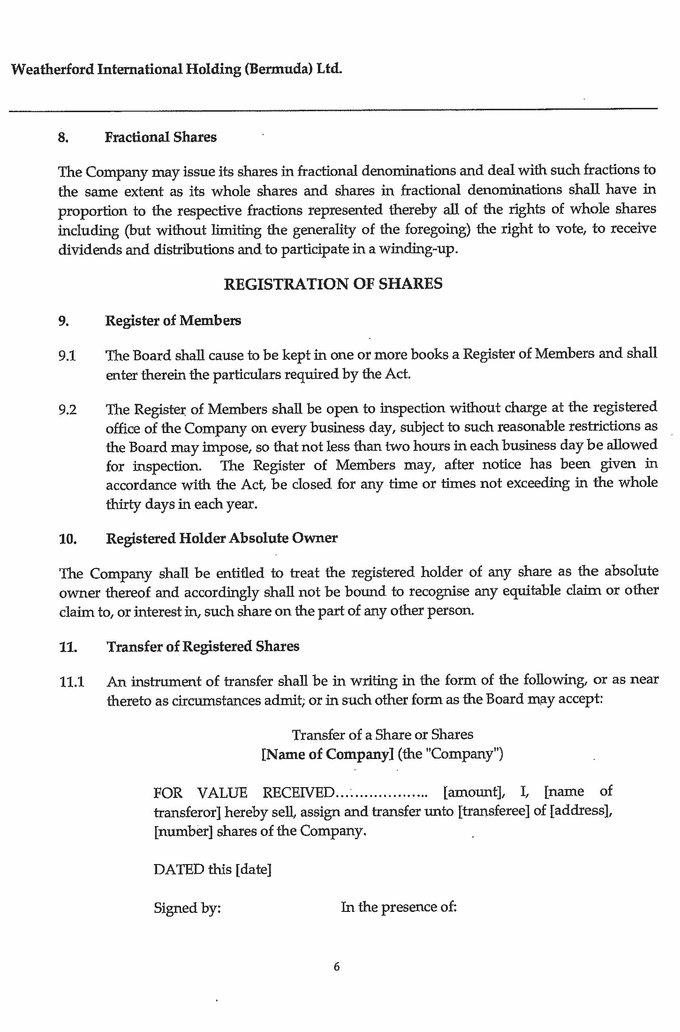
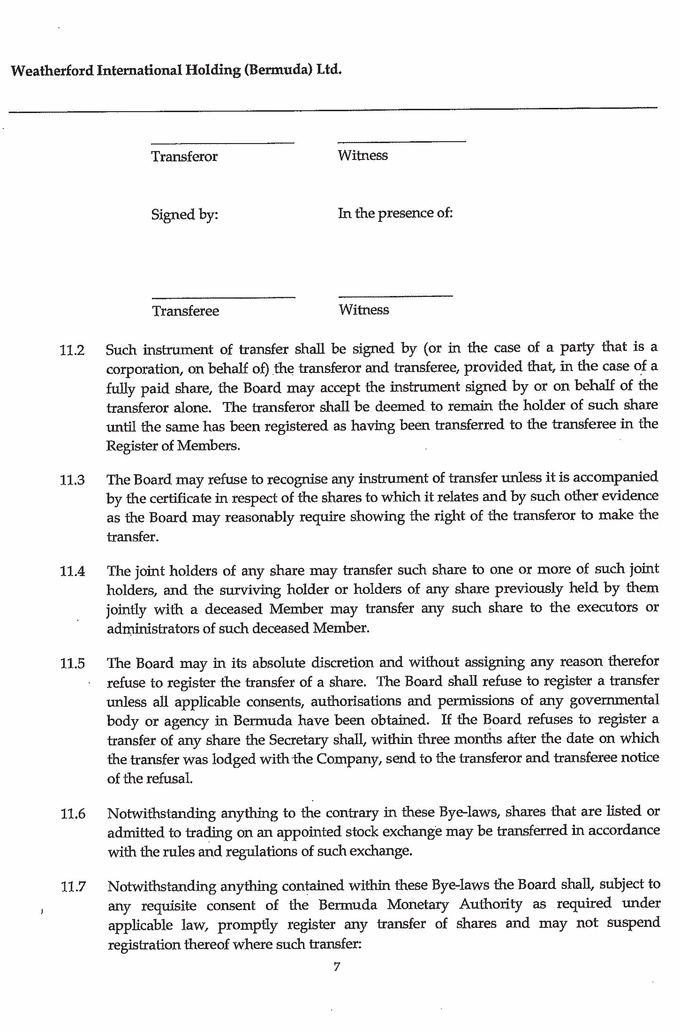
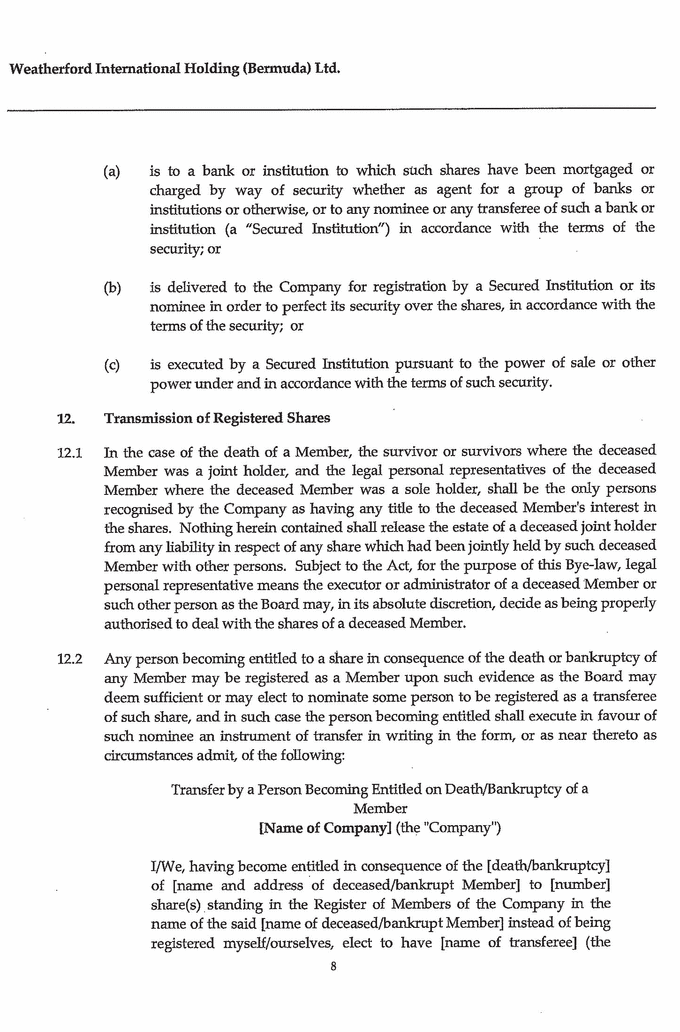

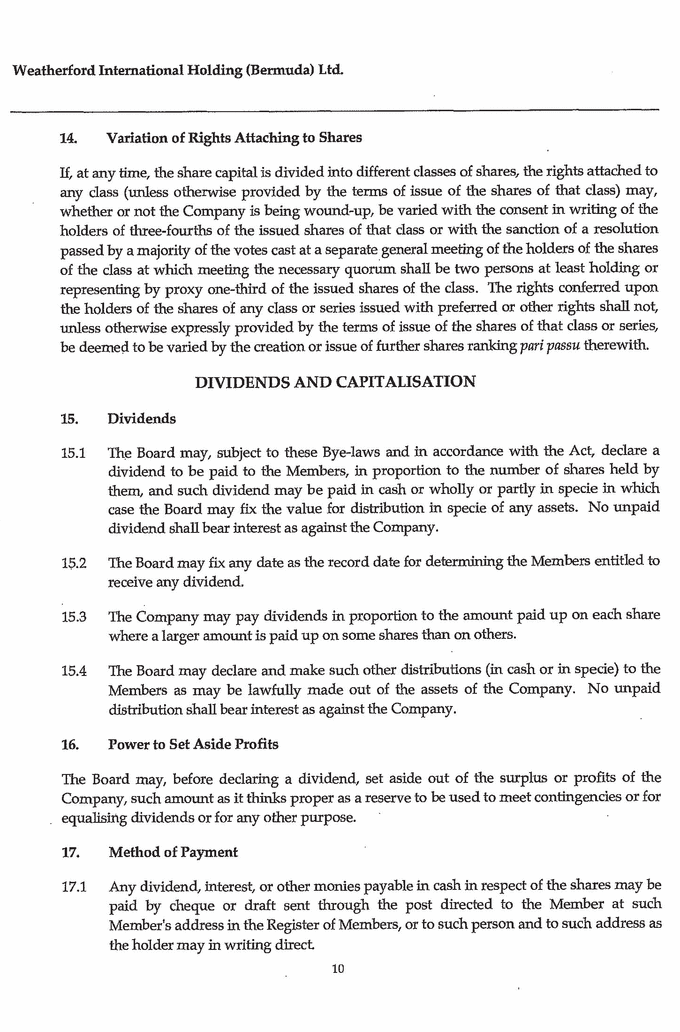


Exhibit T3B-46
Logo
Logo
Logo
Logo
Logo
Logo
Logo
Logo
Logo
Logo
Logo
Logo

Logo
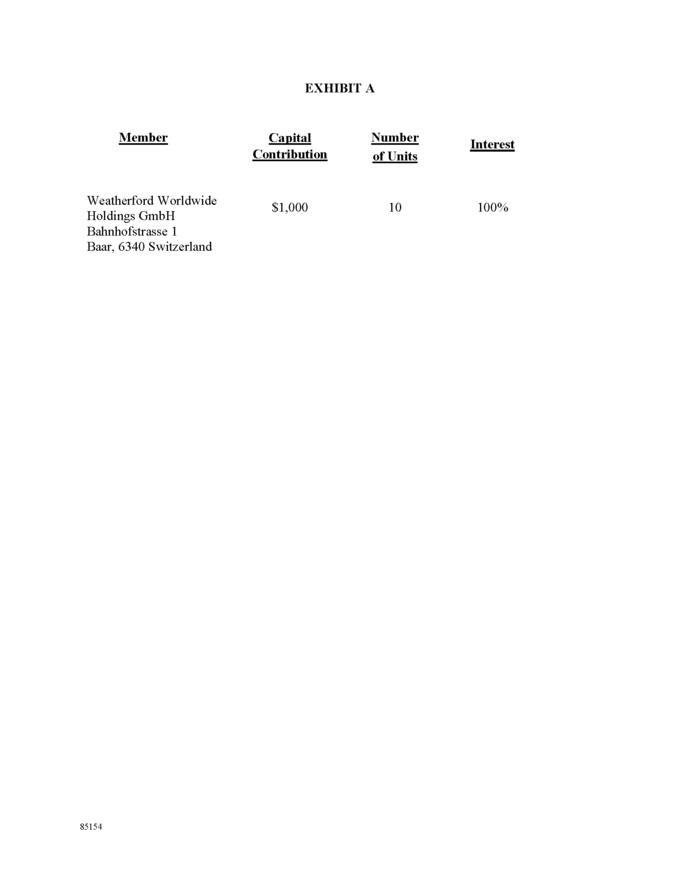
Logo
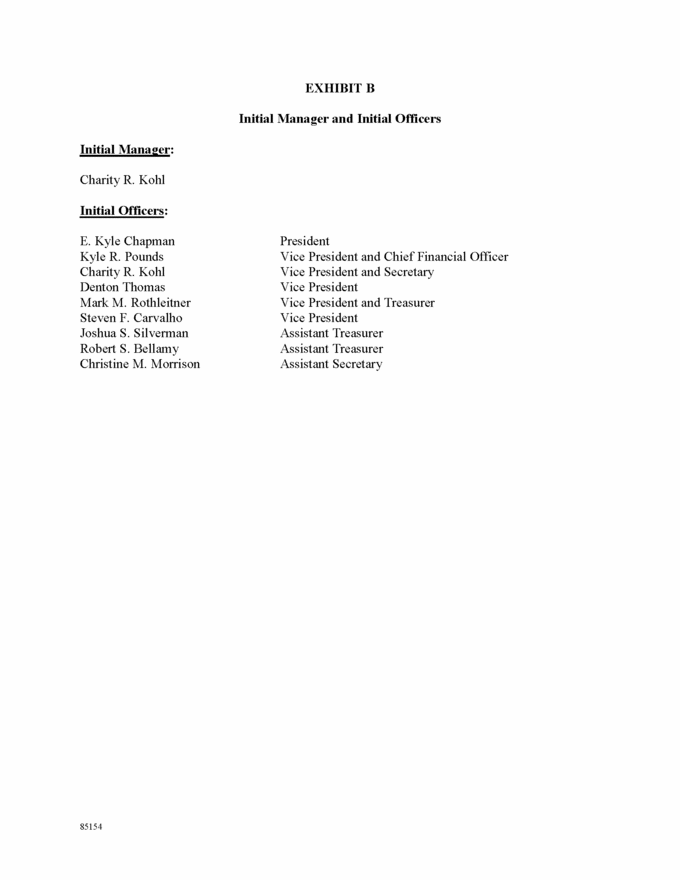
Exhibit T3B-47
Logo
Logo
Logo
Logo
Logo
Logo
Logo
Logo
Logo
Logo
Logo
Logo

Exhibit T3B-48
Logo
Logo
Logo
Logo
Logo
Logo

Logo
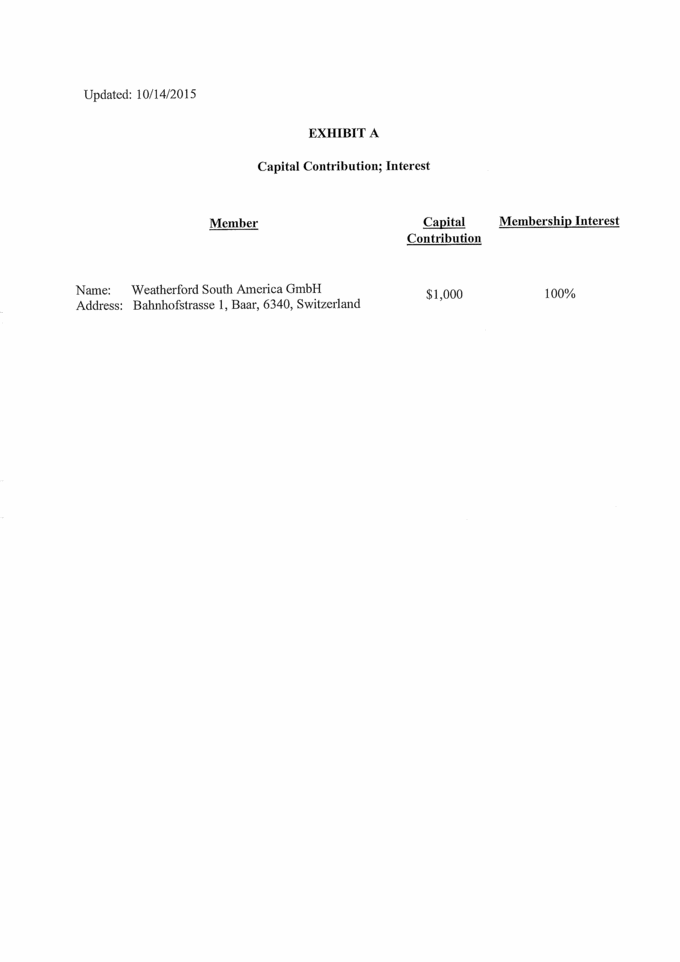
Exhibit T3B-49
Logo
Logo
Logo
Logo
Logo
Logo
Logo
Logo
Logo
Logo
Logo
Logo
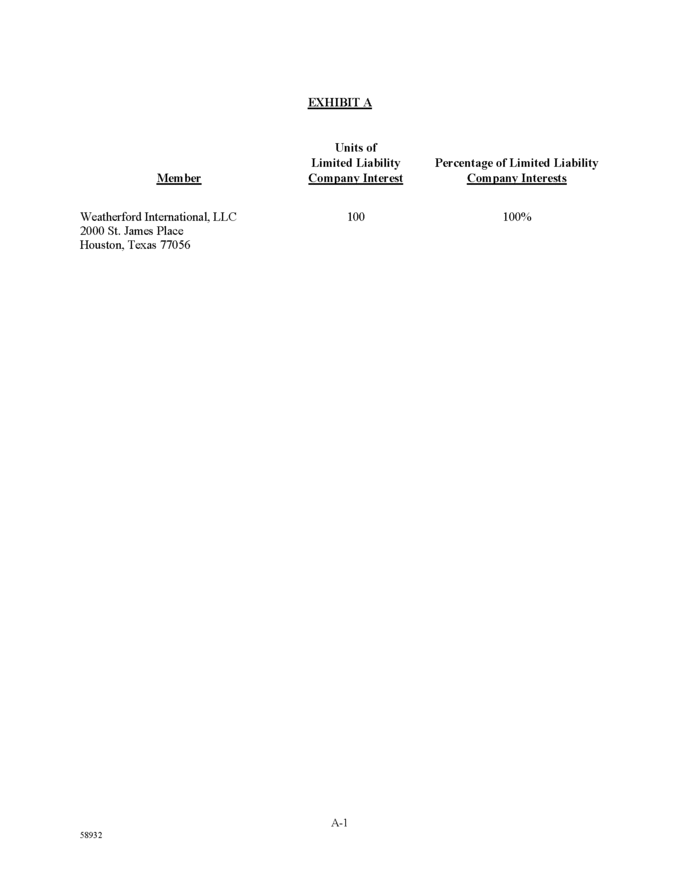
Logo
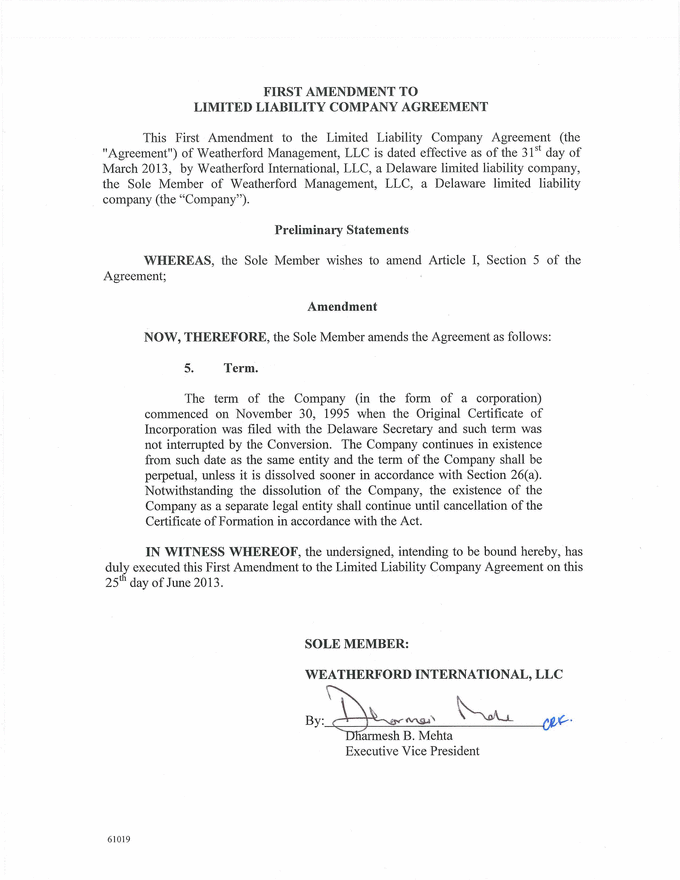

TERRITORY OF THE BRITISH VIRGIN ISLANDS
THE BVI BUSINESS COMPANIES ACT
AMENDED AND RESTATED
MEMORANDUM OF ASSOCIATION
AND
ARTICLES OF ASSOCIATION
OF
WEATHERFORD OIL TOOL MIDDLE EAST LIMITED
Incorporated on the 22nd September 1992
as an International Business Company,
and was automatically re-registered as a
BVI Business Company on the 1st January 2007
Approved by written resolutions of the sole member on
9 May 2016
Filed the 10 day of May 2016
To disapply Part IV of the
Transitional Provisions
Harneys Corporate Services Limited
Craigmuir Chambers
P.O. Box 71
Road Town
Tortola
British Virgin Islands
TERRITORY OF THE BRITISH VIRGIN ISLANDS
BVI BUSINESS COMPANIES ACT
AMENDED AND RESTATED
MEMORANDUM OF ASSOCIATION
OF
WEATHERFORD OIL TOOL MIDDLE EAST LIMITED
1. NAME
The name of the company is Weatherford Oil Tool Middle East Limited (the “Company”).
2. STATUS
The Company is a company limited by shares.
The Company was first incorporated as an international business company on 22 September 1992 and was, immediately prior to the date of automatic re-registration in accordance with the BVI Business Companies Act (the “Act”), governed by the International Business Companies Act (Cap 291).
3. REGISTERED OFFICE AND REGISTERED AGENT
At the date of notice to disapply Part IV of Schedule 2 of the Act, the registered office of the Company was Craigmuir Chambers, P.O. Box 71, Road Town, Tortola, British Virgin Islands.
At the time of notice to disapply Part IV of Schedule 2 of the Act, the registered agent of the Company was Harneys Corporate Services Limited of Craigmuir Chambers, P.O. Box 71, Road Town, Tortola, British Virgin Islands VG1110.
4. CAPACITY AND POWERS
Subject to the Act and any other British Virgin Islands legislation, the Company has, irrespective of corporate benefit:
(a) full capacity to carry on or undertake any business or activity, do any act or enter
into any transaction; and
(b) for the purposes of subparagraph (a), full rights, powers and privileges.
5. NUMBER AND CLASSES OF SHARES
The Company is authorised to issue up to a maximum of 50,000 shares made up of one class and one series of shares of US$1.00 par value each.
6. RIGHTS ATTACHING TO SHARES
Subject to the Articles, the terms of the issue of any share, or any Resolution of Members to the contrary (and, for greater clarity, without prejudice to any special rights conferred thereby on the holders of any other shares), a share of the Company confers on the holder:
(a) the right to one vote at a meeting of the Members or on any Resolution of Members;
(b) the right to an equal share in any Distribution paid by the Company; and
(c) the right to an equal share in the distribution of the surplus assets of the Company on a winding up.
7. VARIATION OF CLASS RIGHTS
The rights attached to any class or series of shares (unless otherwise provided by the terms of issue of the shares of that class or series), whether or not the Company is being wound-up, may be varied with the consent in writing of all the holders of the issued shares of that class or series or with the sanction of a resolution passed by a majority of the votes cast at a separate meeting of the holders of the shares of the class or series.
8. RIGHTS NOT VARIED BY THE ISSUE OF SHARES PARI PASSU
Rights conferred upon the holders of the shares of any class or series issued with preferred or other rights shall not, unless otherwise expressly provided by the terms of issue of the shares of that class or series, be deemed to be varied by the creation or issue of further shares ranking pari passu therewith.
9. REGISTERED SHARES
The Company shall issue registered shares only, and such shares may be in full or fractional form. The Company is not authorised to issue bearer shares, convert registered shares to bearer shares, or exchange registered shares for bearer shares.
10. AMENDMENT OF MEMORANDUM AND ARTICLES OF ASSOCIATION
Subject to Clause 7 and Article 14.4(g) of the Articles, the Company may amend its Memorandum or Articles by a Resolution of Members or a Resolution of Directors, save that no amendment may be made by a Resolution of Directors:
(a) to restrict the rights or powers of the Members to amend the Memorandum or Articles;
(b) to change the percentage of Members required to pass a Resolution of Members to amend the Memorandum or Articles;
(c) in circumstances where the Memorandum or Articles cannot be amended by the Members;
(d) to clauses 6, 7, 8 or this clause 10.
11. DEFINITIONS
The meanings of words in this Memorandum are as defined in the Articles annexed hereto.
We, Harneys Corporate Services Limited, registered agent of the Company, of Craigmuir Chambers, P.O. Box 71, Road Town, Tortola, British Virgin Islands in our capacity as registered agent to the Company hereby apply for the disapplication of Part IV of Schedule 2 of the Act this 10 May 2016.
|
|
Harneys Corporate Services Limited |
|
|
Registered Agent |
|
|
|
|
|
|
|
|
/s/ Macia Payne |
|
|
Per: Macia Payne |
|
|
For and on behalf of |
|
|
Harneys Corporate Services Limited |
TERRITORY OF THE BRITISH VIRGIN ISLANDS
BVI BUSINESS COMPANIES ACT
AMENDED AND RESTATED
ARTICLES OF ASSOCIATION
OF
WEATHERFORD OIL TOOL MIDDLE EAST LIMITED
(a company limited by shares)
TABLE OF CONTENTS
|
INTERPRETATION | ||
|
|
|
|
|
1. |
|
Definitions |
|
|
|
|
|
SHARES | ||
|
|
|
|
|
2. |
|
Power to Issue Shares |
|
3. |
|
Power of the Company to Purchase its Shares |
|
4. |
|
Treatment of Purchased, Redeemed or Acquired Shares |
|
5. |
|
Treasury Shares |
|
6. |
|
Consideration |
|
7. |
|
Forfeiture of Shares |
|
8. |
|
Share Certificates |
|
9. |
|
Fractional Shares |
|
|
|
|
|
REGISTRATION OF SHARES | ||
|
|
|
|
|
10. |
|
Register of Members |
|
11. |
|
Registered Holder Absolute Owner |
|
12. |
|
Transfer of Registered Shares |
|
13. |
|
Transmission of Registered Shares |
|
14. |
|
Mortgages and Charges of Shares |
|
|
|
|
|
ALTERATION OF SHARES | ||
|
|
|
|
|
15. |
|
Power to Alter Shares |
|
16. |
|
Restrictions on the Division of Shares |
|
|
|
|
|
DISTRIBUTIONS | ||
|
|
|
|
|
17. |
|
Distributions |
|
18. |
|
Power to Set Aside Profits |
|
19. |
|
Unauthorised Distributions |
|
20. |
|
Distributions to Joint Holders of Shares |
|
|
|
|
|
MEETINGS OF MEMBERS | ||
|
|
|
|
|
21. |
|
General Meetings |
|
22. |
|
Location |
|
23. |
|
Requisitioned General Meetings |
|
24. |
|
Notice |
|
25. |
|
Giving Notice |
|
26. |
|
Service of Notice |
|
27. |
|
Participating in Meetings by Telephone |
|
28. |
|
Quorum at General Meetings |
|
29. |
|
Chairman to Preside |
|
30. |
|
Voting on Resolutions |
|
31. |
|
Power to Demand a Vote on a Poll |
|
32. |
|
Voting by Joint Holders of Shares |
|
33. |
|
Instrument of Proxy |
|
34. |
|
Representation of Members |
|
35. |
|
Adjournment of General Meetings |
|
36. |
|
Business at Adjourned Meetings |
|
37. |
|
Directors Attendance at General Meetings |
|
|
|
|
|
DIRECTORS AND OFFICERS | ||
|
|
|
|
|
38. |
|
Election of Directors |
|
39. |
|
Number of Directors |
|
40. |
|
Term of Office of Directors |
|
41. |
|
Alternate and Reserve Directors |
|
42. |
|
Removal of Directors |
|
43. |
|
Vacancy in the Office of Director |
|
44. |
|
Remuneration of Directors |
|
45. |
|
Resignation of directors |
|
46. |
|
Directors to Manage Business |
|
47. |
|
Committees of Directors |
|
48. |
|
Officers and Agents |
|
49. |
|
Removal of Officers and Agents |
|
50. |
|
Duties of Officers |
|
51. |
|
Remuneration of Officers |
|
52. |
|
Standard of Care |
|
53. |
|
Conflicts of Interest |
|
54. |
|
Indemnification and Exculpation |
|
|
|
|
|
MEETINGS OF THE BOARD OF DIRECTORS | ||
|
|
|
|
|
55. |
|
Board Meetings |
|
56. |
|
Notice of Board Meetings |
|
57. |
|
Participation in Meetings by Telephone |
|
58. |
|
Quorum at Board Meetings |
|
59. |
|
Board to Continue in the Event of Vacancy |
|
60. |
|
Chairman to Preside |
|
61. |
|
Powers of Sole Director |
|
62. |
|
Proceedings if One Director |
|
|
|
|
|
CORPORATE RECORDS | ||
|
|
|
|
|
63. |
|
Documents to be Kept |
|
64. |
|
Form and Use of Seal |
|
|
|
|
|
ACCOUNTS | ||
|
|
|
|
|
65. |
|
Books of Account |
|
66. |
|
Form of Records |
|
67. |
|
Financial Statements |
|
68. |
|
Distribution of Accounts |
|
|
|
|
|
AUDITS | ||
|
|
|
|
|
69. |
|
Audit |
|
70. |
|
Appointment of Auditor |
|
71. |
|
Remuneration of Auditor |
|
72. |
|
Duties of Auditor |
|
73. |
|
Access to Records |
|
74. |
|
Auditor Entitled to Notice |
|
|
|
|
|
VOLUNTARY LIQUIDATION | ||
|
|
|
|
|
75. |
|
Liquidation |
|
FUNDAMENTAL CHANGES | ||
|
|
|
|
|
76. |
|
Changes |
|
77. |
|
Continuation under Foreign Law |
INTERPRETATION
1. Definitions
1.1 In these Articles, the following words and expressions shall, where not inconsistent with the context, have the following meanings, respectively:
|
Act |
|
BVI Business Companies Act, as from time to time amended or restated; |
|
|
|
|
|
Articles |
|
these Articles of Association as originally registered or as from time to time amended or restated; |
|
|
|
|
|
Board |
|
the board of directors appointed or elected pursuant to these Articles and acting by Resolution of Directors; |
|
|
|
|
|
Company |
|
Weatherford Oil Tool Middle East Limited; |
|
|
|
|
|
Distribution |
|
(a) the direct or indirect transfer of an asset, other than the Company’s own shares, to or for the benefit of a Member; or |
|
|
|
|
|
|
|
(b) the incurring of a debt to or for the benefit of a Member; |
|
|
|
|
|
|
|
in relation to shares held by a Member and whether by means of the purchase of an asset, the purchase, redemption or other acquisition of shares, a transfer of indebtedness or otherwise, and includes a dividend; |
|
|
|
|
|
Member |
|
a person whose name is entered in the register of members as the holder of one or more shares, or fractional shares, in the Company; |
|
|
|
|
|
Memorandum |
|
the Memorandum of Association of the Company as originally registered or as from time to time amended or restated; |
|
|
|
|
|
Resolution of Directors |
|
(a) a resolution approved at a duly constituted meeting of directors or of a committee of directors of the Company by the affirmative |
|
|
|
vote of a simple majority of the directors present who voted and did not abstain; or |
|
|
|
|
|
|
|
(b) a resolution consented to in writing by all of the directors or of all the members of the committee, as the case may be; |
|
|
|
|
|
Resolution of Members |
|
(a) a resolution approved at a duly constituted meeting of Members by the affirmative vote of a simple majority of the votes of those Members entitled to vote and voting on the resolution; or |
|
|
|
|
|
|
|
(b) a resolution consented to in writing by a simple majority of the Members entitled to vote thereon; |
|
|
|
|
|
Seal |
|
the common seal of the Company; |
|
|
|
|
|
Secretary |
|
the person appointed to perform any or all of the duties of secretary of the Company and includes any deputy or assistant secretary and any person appointed by the Board to perform any of the duties of the Secretary; and |
|
|
|
|
|
Treasury Share |
|
a share of the Company that was previously issued but was repurchased, redeemed or otherwise acquired by the Company and not cancelled. |
1.2 In these Articles, where not inconsistent with the context:
(a) words denoting the plural number include the singular number and vice versa;
(b) words denoting the masculine gender include the feminine and neuter genders;
(c) words importing persons include companies, associations or bodies of persons whether corporate or not;
(d) a reference to voting in relation to shares shall be construed as a reference to voting by Members holding the shares, except that it is the votes
allocated to the shares that shall be counted and not the number of Members who actually voted and a reference to shares being present at a meeting shall be given a corresponding construction;
(e) a reference to money is unless otherwise stated a reference to the currency in which shares of the Company shall be issued;
(f) the words:-
(i) “may” shall be construed as permissive; and
(ii) “shall” shall be construed as imperative; and
(g) unless otherwise provided herein, words or expressions defined in the Act shall bear the same meaning in these Articles.
1.3 In these Articles, expressions referring to writing or its cognates shall, unless the contrary intention appears, include facsimile, printing, lithography, photography, electronic mail and other modes of representing words in visible form.
1.4 Headings used in these Articles are for convenience only and are not to be used or relied upon in the construction hereof
SHARES
2. Power to Issue Shares
Subject to the provisions of the Memorandum, the unissued shares of the Company shall be at the disposal of the Board which may, without prejudice to any rights previously conferred on the holders of any existing shares or class or series of shares, offer, allot, grant options over or otherwise dispose of the shares to such persons, at such times and upon such terms and conditions as the Company may by Resolution of Directors determine.
3. Power of the Company to Purchase its Shares
Subject to these Articles (and in particular, but without limitation, Article 14.4), the Company may by Resolution of Directors purchase, redeem or otherwise acquire and hold its own shares. Sections 60, 61 and 62 of the Act shall not apply to the Company.
4. Treatment of Purchased, Redeemed or Acquired Shares
4.1 Subject to Article 4.2, a share that the Company purchases, redeems or otherwise acquires may be cancelled or held by the Company as a Treasury Share.
4.2 The Company may only hold a share that has been purchased, redeemed or otherwise acquired as a Treasury Share if the number of shares purchased, redeemed or otherwise acquired, when aggregated with shares of the same class already held by the Company as Treasury Shares, does not exceed 50% of the shares of that class previously issued by the Company, excluding shares that have been cancelled.
5. Treasury Shares
5.1 Treasury Shares may be transferred by the Company and the provisions of the Act, the Memorandum and these Articles that apply to the issue of shares apply to the transfer of Treasury Shares.
5.2 All the rights and obligations attaching to a Treasury Share are suspended and shall not be exercised by or against the Company while it holds the share as a Treasury Share.
6. Consideration
6.1 A share may be issued for consideration, in any form or a combination of forms, including money, a promissory note or other written obligation to contribute money or property, real property, personal property (including goodwill and know-how), services rendered or a contract for future services.
6.2 No share may be issued for a consideration, which is in whole or part, other than money unless the Board passes a resolution stating:
(a) the amount to be credited for the issue of the share; and
(b) that, in its opinion, the present cash value of the non-money consideration and money consideration, if any, is not less than the amount to be credited for the issue of the share.
6.3 No share may be issued by the Company that:
(a) increases the liability of a person to the Company; or
(b) imposes a new liability on a person to the Company,
unless that person, or an authorised agent of that person, agrees in writing to becoming the holder of the share.
6.4 The consideration for a share with par value shall not be less than the par value of the share.
6.5 A bonus share issued by the Company shall be deemed to have been fully paid for on issue.
7. Forfeiture of Shares
7.1 Where a share is not fully paid for on issue, the Board may, subject to the terms on which the share was issued, at any time serve upon the Member a written notice of call specifying a date for payment to be made.
7.2 The written notice of call shall name a further date not earlier than the expiration of fourteen days from the date of service of the notice on or before which the payment required by the notice is to be made and shall contain a statement that in the event of non-payment at or before the time named in the notice, the share will be liable to be forfeited.
7.3 Where a notice complying with the foregoing provisions has been issued and the requirements of the notice have not been complied with, the Board by Resolution of Directors may, at any time before tender of payment forfeit and cancel the share to which the notice relates and direct that the register of members be updated.
7.4 Upon forfeiture and cancellation pursuant to Article 7.3, the Company shall be under no obligation to refund any moneys to that Member and that Member shall be discharged from any further obligation to the Company as regards the forfeited share.
8. Share Certificates
8.1 The Company shall not be required to issue certificates in respect of its shares to a Member, but may elect to do so by the determination of any one director or the Secretary in his sole discretion, upon the request and at the expense of the Member.
8.2 If the Company issues share certificates, the certificates shall be signed by at least one director or such other person who may be authorised by Resolution of Directors to sign share certificates, or shall be under the common seal of the Company, with or without the signature of any director, and the signatures and common seal may be facsimiles.
8.3 Subject to Article 14.4(c), any Member receiving a share certificate for registered shares shall indemnify and hold the Company and its directors and officers harmless from any loss or liability which it or they may incur by reason of wrongful or fraudulent use or representation made by any person by virtue of the possession thereof. If a share certificate for registered shares is worn out or lost it may be renewed on production of the worn out certificate or on
satisfactory proof of its loss together with such indemnity as may be required by a Resolution of Directors.
9. Fractional Shares
The Company may issue fractional shares and a fractional share shall have the corresponding fractional rights, obligations and liabilities of a whole share of the same class or series of shares.
REGISTRATION OF SHARES
10. Register of Members
10.1 The Board shall cause there to be kept a register of members in which there shall be recorded the name and address of each Member, the number of each class and series of shares held by each Member, the date on which the name of each Member was entered in the register of members and the date upon which any person ceased to be a Member.
10.2 The register of members may be in such form as the Board may approve, but if it is in magnetic, electronic or other data storage form, the Company must be able to produce legible evidence of its, contents. Unless the Board otherwise determines, the magnetic, electronic or other data storage form shall be the original register of members.
11. Registered Holder Absolute Owner
11.1 The entry of the name of a person in the register of members as a holder of a share in the Company is prima facie evidence that legal title in the share vests in that person.
11.2 The Company may treat the holder of a registered share as the only person entitled to:
(a) exercise any voting rights attaching to the share;
(b) receive notices;
(c) receive a Distribution in respect of the share; and
(d) exercise other rights and powers attaching to the share.
12. Transfer of Registered Shares
12.1 Registered shares in the Company shall only be transferred by a written instrument of transfer signed by the transferor and containing the name and address of the transferee.
12.2 The instrument of transfer shall also be signed by the transferee if registration as a holder of the share imposes a liability to the Company on the transferee.
12.3 The instrument of transfer shall be sent to the Company for registration.
12.4 The Company shall, on receipt of an instrument of transfer, enter the name and address of the transferee of the share in the register of members unless the Board resolves to refuse or delay the registration of the transfer for reasons that shall be specified in the resolution.
12.5 Subject to Article 12.9, the Board is permitted to pass a Resolution of Directors refusing or delaying the registration of a transfer where it reasonably determines that it is in the best interest of the Company to do so. Without limiting the generality of the foregoing, the Board may refuse or delay the registration of a transfer of shares if the transferor has failed to pay an amount due in respect of those shares.
12.6 Where the Board passes a resolution to refuse or delay the registration of a transfer, the Company shall, as soon as practicable, send the transferor and the transferee a notice of the refusal or delay.
12.7 The transfer of a share is effective when the name of the transferee is entered in the register of members and the Company shall not be required to treat a transferee of a share in the Company as a Member until the transferee’s name has been entered in the register of members.
12.8 If the Board is satisfied that an instrument of transfer has been signed but that the instrument has been lost or destroyed, it may resolve:
(a) to accept such evidence of the transfer of the shares as it considers appropriate; and
(b) that the transfer of shares be recorded, including by the entry of the transferee’s name in the register of members.
12.9 Notwithstanding anything to the contrary contained in these Articles, the Board shall not decline to register any transfer of shares, nor may they suspend registration thereof where such transfer is executed (a) by any bank or other person to whom such shares have been charged by way of security, (b) by any
nominee or agent of such bank or person, or (c) by any receiver, administrative receiver, manager or other person appointed by any bank or other person to whom such shares have been charged pursuant to the relevant security document, whether the transfer is effected for the purpose of any mortgage or pursuant to the power of sale under such mortgage or charge, and a certificate by any officer of such bank or person that the shares were so charged and the transfer was so executed shall be conclusive evidence of such facts.
12.10 Notwithstanding anything to the contrary contained in these Articles, the Board shall not register any shares of the Company or issue any shares in breach of the terms of any charge or other encumbrance over any of the Company’s shares entered into by any of the members of the Company where the Board has notice of the charge or other encumbrance, and for the purpose of this Article 12.10, each Director shall be deemed to have knowledge of (i) any charge or encumbrance details of which have been entered in the register of members of the Company pursuant to Section 66(8) of the Act and Article 14.2 below, and (ii) any subsequent charge or encumbrance over any shares of the Company created pursuant to the terms of any charge or encumbrance referred to in (i) above.
13. Transmission of Registered Shares
13.1 The executor or administrator of the estate of a deceased Member, the guardian of an incompetent Member, the liquidator of an insolvent Member or the trustee of a bankrupt Member shall be the only person recognised by the Company as having any title to the Member’s share.
13.2 Any person becoming entitled by operation of law or otherwise to a share in consequence of the death, incompetence or bankruptcy of any Member may be registered as a Member upon such evidence being produced as may reasonably be required by the Board. An application by any such person to be registered as a Member shall for all purposes be deemed to be a transfer of the share of the deceased, incompetent or bankrupt Member and the Board shall treat it as such.
13.3 Any person who has become entitled to a share or shares in consequence of the death, incompetence or bankruptcy of any Member may, instead of being registered himself, request in writing that some person to be named by him be registered as the transferee of such share and such request shall likewise be treated as if it were a transfer.
14. Mortgages and Charges of Shares
14.1 Members may mortgage or charge their registered shares in the Company and upon satisfactory evidence thereof the Company shall give effect to the terms of any valid mortgage or charge.
14.2 There may be entered in the register of members of the Company at the request of the registered holder of such shares:
(a) a statement that the shares are mortgaged or charged;
(b) the name of the mortgagee or chargee; and
(c) the date on which the particulars of subparagraphs (a) and (b) are entered in the register of members.
14.3 Where particulars of a mortgage or charge are entered in the register of members, such particulars may be canceled only:
(a) with the written consent of the named mortgagee or chargee or anyone authorised to act on his behalf; or
(b) upon evidence satisfactory to the directors of the discharge of the liability secured by the mortgage or charge and the issue of such indemnities as the directors shall consider necessary or desirable.
14.4 Whilst particulars of a mortgage or charge over shares are entered in the register of members pursuant to this Article:
(a) no transfer of any share the subject of those particulars shall be effected;
(b) the Company may not purchase, redeem or otherwise acquire any such shares;
(c) no replacement certificate shall be issued in respect of such shares;
(d) such shares shall be exempt from all liens (whether present or future) in favour of the Company that would otherwise arise pursuant to these Articles;
(e) for so long as such security remains unreleased, the Company shall not claim any lien (howsoever arising) in respect of such share or forfeit, sell or accept as surrendered such share;
(f) any pre-emptive rights or similar rights conferred on existing members or any other party by the Memorandum or Articles, any members’ agreement or otherwise shall not apply to and no such existing member or other party shall be entitled to exercise any such right; and
(g) no amendments may be made to the Memorandum or the Articles,
in each case without the written consent of the named mortgagee or chargee or anyone authorised to act on his behalf.
ALTERATION OF SHARES
15. Power to Alter Shares
15.1 The Company may amend the Memorandum to increase or reduce the maximum number of shares that the Company is authorised to issue, or to authorise the Company to issue an unlimited number of shares.
15.2 Subject to the Memorandum and these Articles, the Company may:
(a) divide its shares, including issued shares, into a larger number of shares; or
(b) combine its shares, including issued shares, into a smaller number of shares;
provided that, where shares are divided or combined, the aggregate par value (if any) of the new shares must be equal to the aggregate par value (if any) of the original shares.
15.3 A division or combination of shares, including issued shares, of a class or series shall be for a larger or smaller number, as the case may be, of shares in the same class or series.
16. Restrictions on the Division of Shares
The Company shall not divide its shares if it would cause the maximum number of shares that the Company is authorised to issue to be exceeded.
DISTRIBUTIONS
17. Distributions
17.1 The Board may, by Resolution of Directors, authorise a Distribution by the Company to Members at such time and of such an amount as it thinks fit if it is satisfied, on reasonable grounds, that immediately after the Distribution, the value of the Company’s assets exceeds its liabilities and the Company is able to pay its debts as they fall due. The resolution shall include a statement to that effect.
17.2 Notice of any Distribution that may have been authorised shall be given to each Member entitled to the Distribution in the manner provided in Article 25 and all
Distributions unclaimed for three years after having been authorised may be forfeited by Resolution of Directors for the benefit of the Company.
18. Power to Set Aside Profits
The Board may, before authorising any Distribution, set aside out of the profits of the Company such sum as it thinks proper as a reserve fund, and may invest the sum so set apart as a reserve fund in such securities as it may select.
19. Unauthorised Distributions
19.1 If, after a Distribution is authorised and before it is made, the Board ceases to be satisfied on reasonable grounds that immediately after the Distribution the value of the Company’s assets exceeds its liabilities and the Company is able to pay its debts as they fall due, such Distribution is deemed not to have been authorised.
19.2 A Distribution made to a Member at a time when, immediately after the Distribution, the value of the Company’s assets did not exceed its liabilities and the Company was not able to pay its debts as they fell due, is subject to recovery in accordance with the provisions of the Act.
20. Distributions to Joint Holders of Shares
If two or more persons are registered as joint holders of any shares, any one of such persons may give an effectual receipt for any Distribution payable in respect of such shares.
MEETINGS OF MEMBERS
21. General Meetings
The Board, by Resolution of Directors, may convene meetings of the Members of the Company at such times and in such manner as the Board considers necessary or desirable.
22. Location
Any meeting of the Members may be held in such place within or outside the British Virgin Islands as the Board considers appropriate.
23. Requisitioned General Meetings
The Board shall call a meeting of the Members if requested in writing to do so by Members entitled to exercise at least thirty percent of the voting rights in respect of the matter for which the meeting is being requested.
24. Notice
24.1 The Board shall give not less than seven days’ notice of meetings of Members to those persons whose names, on the date the notice is given, appear as Members in the register of members of the Company and are entitled to vote at the meeting.
24.2 A meeting of Members held in contravention of the requirement in Article 24.1 is valid if Members holding a ninety percent majority of the total voting rights on all the matters to be considered at the meeting have waived notice of the meeting and, for this purpose, the presence of a Member at the meeting shall be deemed to constitute waiver on his part.
24.3 The inadvertent failure of the Board to give notice of a meeting to a Member, or the fact that a Member has not received notice, does not invalidate the meeting.
25. Giving Notice
25.1 A notice may be given by the Company to any Member either by delivering it to such Member in person or by sending it to such Member’s address in the register of members or to such other address given for the purpose. Notice may be sent by mail, courier service, cable, telex, telecopier, facsimile or other mode of representing words in a legible form.
25.2 Any notice required to be given to a Member shall, with respect to any shares held jointly by two or more persons, be given to whichever of such persons is named first in the register of members and notice so given shall be sufficient notice to all the holders of such shares.
26. Service of Notice
Any notice shall be deemed to have been served at the time when the same would be delivered in the ordinary course of transmission and, in proving such service, it shall be sufficient to prove that the notice was properly addressed and prepaid, if posted, and the time when it was posted, delivered to the courier or to the cable company or transmitted by telex, facsimile or other method as the case may be.
27. Participating in Meetings by Telephone
A Member shall be deemed to be present at a meeting of Members if he participates by telephone or other electronic means and all Members participating in the meeting are able to hear each other.
28. Quorum at General Meetings
28.1 A meeting of Members is properly constituted if at the commencement of the meeting there are present in person or by proxy not less than fifty percent of the votes of the shares or class or series of shares entitled to vote on Resolutions of Members to be considered at the meeting.
28.2 If within two hours from the time appointed for the meeting a quorum is not present, the meeting, if convened upon the requisition of Members, shall be dissolved; in any other case it shall stand adjourned to the next business day at the same time and place or to such other time and place as the Board may determine, and if at the adjourned meeting there are present within one hour from the time appointed for the meeting in person or by proxy not less than one third of the votes of the shares or each class or series of shares entitled to vote on the resolutions to be considered by the meeting, those present shall constitute a quorum but otherwise the meeting shall be dissolved.
28.3 If a quorum is present, notwithstanding the fact that such quorum may be represented by only one person then such person may resolve any matter and a certificate signed by such person accompanied where such person be a proxy by a copy of the proxy form shall constitute a valid Resolution of Members.
29. Chairman to Preside
At every meeting of Members, the chairman of the Board shall preside as chairman of the meeting. If there is no chairman of the Board or if the chairman of the Board is not present at the meeting, the Members present shall choose one of their number to be the chairman. If the Members are unable to choose a chairman for any reason, then the person representing the greatest number of voting shares present in person or by proxy at the meeting shall preside as chairman.
30. Voting on Resolutions
At any meeting of the Members the chairman shall be responsible for deciding in such manner as he shall consider appropriate whether any resolution has been carried or not and the result of his decision shall be announced to the meeting and recorded in the minutes thereof.
31. Power to Demand a Vote on a Poll
31.1 At any meeting of Members a resolution put to the vote of the meeting shall, in the first instance, be voted upon by a show of hands and, subject to any rights or restrictions for the time being lawfully attached to any class of shares and subject to the provisions of these Articles, every Member present in person and every
person holding a valid proxy at such meeting shall be entitled to one vote and shall cast such vote by raising his hand.
31.2 If the chairman shall have any doubt as to the outcome of any resolution put to the vote, he shall cause a poll to be taken of all votes cast upon such resolution, but if the chairman shall fail to take a poll then any Member present in person or by proxy who disputes the announcement by the chairman of the result of any vote may immediately following such announcement demand that a poll be taken and the chairman shall thereupon cause a poll to be taken. If a poll is taken at any meeting, the result thereof shall be duly recorded in the minutes of that meeting by the chairman.
32. Voting by Joint Holders of Shares
The following shall apply where shares are jointly owned: (a) if two or more persons hold shares jointly each of them may be present in person or by proxy at a meeting of Members and may speak as a Member; (b) if only one of the joint owners is present in person or by proxy he may vote on behalf of all of them; and (c) if two or more of the joint owners are present in person or by proxy they must vote as one.
33. Instrument of Proxy
33.1 A Member may be represented at a meeting of Members by a proxy (who need not be a Member) who may speak and vote on behalf of the Member.
33.2 An instrument appointing a proxy shall be in such form as the Board may from time to time determine or such other form as the chairman of the meeting shall accept as properly evidencing the wishes of the Member appointing the proxy and, subject to Article 33.5, the decision of the chairman of any general meeting as to the validity of any appointment of a proxy shall be final.
33.3 The chairman of any meeting at which a vote is cast by proxy or on behalf of any person other than an individual may call for a notarially certified copy of such proxy or authority which shall be produced within seven days of being so requested or the votes cast by such proxy or on behalf of such person shall be disregarded.
33.4 The instrument appointing a proxy shall be produced at the place appointed for the meeting before the time for holding the meeting at which the person named in such instrument proposes to vote.
33.5 Any Member may irrevocably appoint a proxy and in such case: (i) such appointment shall be irrevocable in accordance with the terms of the instrument of appointment; (ii) the Company shall be given notice of the appointment, such notice to include the name, address, telephone number and electronic mail
address of the proxy, and the Company shall give to such proxy notice of all meetings of Members of the Company; (iii) such proxy shall be the only person entitled to vote the relevant shares at any meeting at which such proxy is present; and (iv) the Company shall be obliged to recognise the proxy until such time as such proxy shall notify the Company in writing that the appointment of such proxy is no longer in force
34. Representation of Members
34.1 Any person other than an individual which is a Member may by resolution in writing (certified or signed by a duly authorised person) of its directors or other governing body authorise such person as it thinks fit to act as its representative (in this Article, “Representative”) at any meeting of the Members or at the meeting of the Members of any class or series of shares and the Representative shall be entitled to exercise the same powers on behalf of the Member which he represents as that Member could exercise if it were an individual.
34.2 The right of a Representative shall be determined by the law of the jurisdiction where, and by the documents by which, the Member is constituted or derives its existence. In case of doubt, the Board may in good faith seek legal advice from any qualified person and unless and until a court of competent jurisdiction shall otherwise rule, the Board may rely and act upon such advice without incurring any liability to any Member.
35. Adjournment of General Meetings
The chairman may, with the consent of the meeting, adjourn any meeting from time to time, and from place to place.
36. Business at Adjourned Meetings
No business shall be transacted at any adjourned meeting other than the business left unfinished at the meeting from which the adjournment took place.
37. Directors Attendance at General Meetings
Directors of the Company may attend and speak at any meeting of Members of the Company and at any separate meeting of the holders of any class or series of shares in the Company.
DIRECTORS AND OFFICERS
38. Election of Directors
38.1 The first registered agent of the Company shall, within six months of the date of incorporation of the Company, appoint one or more persons as the first director or directors of the Company. Thereafter, the directors shall be elected by a Resolution of Directors or a Resolution of Members.
38.2 No person shall be appointed as a director or nominated as a reserve director unless he has consented in writing to act as a director or to be nominated as a reserve director.
38.3 A director shall not require a share qualification, and may be an individual or a company.
38.4 Any director which is a body corporate may appoint any person its duly authorised representative for the purpose of representing it at Board meetings or with respect to unanimous written consents.
39. Number of Directors
The maximum number of directors may be fixed either by a Resolution of Directors or a Resolution of Members, provided that if the maximum number of directors is fixed by a Resolution of Members, then any change to the maximum number of directors shall only be made by a Resolution of Members.
40. Term of Office of Directors
Each director shall hold office for the term, if any, as may be specified in the resolution appointing him or until his earlier death, resignation or removal.
41. Alternate and Reserve Directors
41.1 A director may at any time appoint any person (including another director) to be his alternate director and may at any time terminate such appointment. An appointment and a termination of appointment shall be by notice in writing signed by the director and deposited at the Company’s registered office or delivered at a meeting of the Board.
41.2 The appointment of an alternate director shall terminate on the happening of any event which, if he were a director, would cause him to vacate such office or if his appointor ceases for any reason to be a director.
41.3 An alternate director has the same rights as the appointing director in relation to any directors’ meeting and any written resolution circulated for written consent, save that he may not himself appoint an alternate director or a proxy. Any exercise by the alternate director of the appointing director’s powers in relation to the taking of decisions by the directors is as effective as if the powers were exercised by the appointing director.
41.4 If an alternate director is himself a director or attends a meeting of the Board as the alternate director of more than one director, his voting rights shall be cumulative.
41.5 Unless the Board determines otherwise, an alternate director may also represent his appointor at meetings of any committee of the directors on which his appointor serves; and this Article shall apply equally to such committee meetings as to meetings of the Board.
41.6 Where the Company has only one Member who is an individual and that Member is also the sole director, the sole member/director may, by instrument in writing, nominate a person who is not disqualified from being a director under the Act as a reserve director in the event of his death.
41.7 The nomination of a person as a reserve director ceases to have effect if: (a) before the death of the sole Member/director who nominated him he resigns as reserve director, or the sole Member/director revokes the nomination in writing, or (b) the sole Member/director who nominated him ceases to be the sole Member/director for any reason other than his death.
42. Removal of Directors
42.1 A director may be removed from office, with or without cause:
(a) by a Resolution of Members at a meeting of the Members called for the purpose of removing the director or for purposes including the removal of the director; or
(b) by a Resolution of Members consented to in writing by all of the Members entitled to vote thereon.
42.2 Notice of a meeting called under Article 42.1(a) shall state that the purpose of the meeting is, or the purposes of the meeting include, the removal of a director.
43. Vacancy in the Office of Director
43.1 Notwithstanding Article 38, the Board may appoint one or more directors to fill a vacancy on the Board.
43.2 For the purposes of this Article, there is a vacancy on the Board if a director dies or otherwise ceases to hold office as a director prior to the expiration of his term of office or there is otherwise a vacancy in the number of directors as fixed pursuant to Article 39.
43.3 The term of any appointment under this Article may not exceed the term that remained when the person who has ceased to be a director left or otherwise ceased to hold office.
44. Remuneration of Directors
With the prior or subsequent approval by a Resolution of Members, the Board may, by a Resolution of Directors, fix the emoluments of directors with respect to services to be rendered in any capacity to the Company.
45. Resignation of directors
A director may resign his office by giving written notice of his resignation to the Company and the resignation shall have effect from the date the notice is received by the Company or from such later date as may be specified in the notice.
46. Directors to Manage Business
46.1 The business and affairs of the Company shall be managed by, or under the direction or supervision of, the Board.
46.2 The Board has all the powers necessary for managing, and for directing and supervising, the business and affairs of the Company.
46.3 The Board may authorise the payment of all expenses incurred preliminary to and in connection with the formation and registration of the Company and may exercise all such powers of the Company as are not by the Act or by the Memorandum or these Articles required to be exercised by the Members of the Company, subject to any delegation of such powers as may be authorised by these Articles and to such requirements as may be prescribed by a Resolution of Members; but no requirement made by a Resolution of Members shall prevail if it is inconsistent with these Articles nor shall such requirement invalidate any prior act of the Board which would have been valid if such requirement had not been made.
46.4 Subject to the provisions of the Act, all cheques, promissory notes, draft, bills of exchange and other negotiable instruments and all receipts for moneys paid to the Company, shall be signed, drawn, accepted, endorsed or otherwise executed, as the case may be, in such manner as shall from time to time be determined by Resolution of Directors.
47. Committees of Directors
47.1 The Board may, by a Resolution of Directors, designate one or more committees of directors, each consisting of one or more directors.
47.2 Each committee of directors has such powers and authorities of the Board, including the power and authority to affix the Seal, as are set forth in these Articles or the Resolution of Directors establishing the committee, except that the Board has no power to delegate the following powers to a committee of directors:
(a) to amend the Memorandum or these Articles;
(b) to designate committees of directors;
(c) to delegate powers to a committee of directors;
(d) to appoint or remove directors;
(e) to appoint or remove an agent;
(f) to approve a plan of merger; consolidation or arrangement;
(g) to make a declaration of solvency or a approve liquidation plan; or
(h) to make a determination that the Company will, immediately after a proposed Distribution, meet the solvency test set out in the Act.
47.3 A committee of directors, where authorised by the Board, may appoint a sub-committee.
47.4 The meetings and proceedings of each committee of directors consisting of two or more directors shall be governed mutatis mutandis by the provisions of these Articles regulating the proceedings of directors so far as the same are not superseded by any provisions in the resolution establishing the committee.
48. Officers and Agents
48.1 The Board may, by a Resolution of Directors, appoint any person, including a person who is a director, to be an officer or agent of the Company. Such officers may consist of a chairman of the Board, a vice chairman of the Board, a president and one or more vice presidents, secretaries and treasurers and such other officers as may from time to time be deemed desirable. Any number of offices may be held by the same person.
48.2 Each officer or agent has such powers and authorities of the Board, including the power and authority to affix the Seal, as are set forth in these Articles or the
Resolution of Directors appointing the officer or agent, except that no officer or agent has any power or authority with respect to the following:
(a) to amend the Memorandum or these Articles;
(b) to change the registered office or agent;
(c) to designate committees of directors;
(d) to delegate powers to a committee of directors;
(e) to appoint or remove directors;
(f) to appoint or remove an agent;
(g) to fix emoluments of directors;
(h) to approve a plan of merger, consolidation or arrangement;
(i) to make a declaration of solvency or approve a liquidation plan;
(j) to make a determination that the Company will, immediately after a proposed distribution, meet the solvency test set out in the Act; or
(k) to authorise the Company to continue as a company incorporated under the laws of a jurisdiction outside the British Virgin Islands.
49. Removal of Officers and Agents
The officers and agents of the Company shall hold office until their successors are duly elected and qualified, but any officer or agent elected or appointed by the Board may be removed at any time, with or without cause, by Resolution of Directors. Any vacancy occurring in any office of the Company may be filled by Resolution of Directors.
50. Duties of Officers
In the absence of any specific allocation of duties it shall be the responsibility of the chairman of the Board to preside at meetings of directors and Members, the vice chairman to act in the absence of the chairman, the president to manage the day to day affairs of the Company, the vice presidents to act in order of seniority in the absence of the president but otherwise to perform such duties as may be delegated to them by the president, the Secretary to maintain the register of members, register or directors, minute books, records (other than financial records) of the Company, and Seal and to ensure compliance with all procedural requirements imposed on the Company by applicable law, and the treasurer to be responsible for the financial affairs of the Company.
51. Remuneration of Officers
The emoluments of all officers shall be fixed by Resolution of Directors.
52. Standard of Care
A director, when exercising powers or performing duties as a director, shall exercise the care, diligence, and skill that a reasonable director would exercise in the same circumstances taking into account, but without limitation, (a) the nature of the Company, (b) the nature of the decision, and (c) the position of the director and the nature of the responsibilities undertaken by him.
53. Conflicts of Interest
53.1 A director shall, forthwith after becoming aware of the fact that he is interested in a transaction entered into or to be entered into by the Company, disclose the interest to the Board, unless the transaction or proposed transaction (a) is between the director and the Company and (b) is to be entered into in the ordinary course of the Company’s business and on usual terms and conditions.
53.2 A transaction entered into by the Company in respect of which a director is interested is voidable by the Company unless the director complies with Article 53.1 or (a) the material facts of the interest of the director in the transaction are known by the Members entitled to vote at a meeting of Members and the transaction is approved or ratified by a Resolution of Members or (b) the Company received fair value for the transaction.
53.3 For the purposes of this Article, a disclosure is not made to the Board unless it is made or brought to the attention of every director on the Board.
53.4 A director who is interested in a transaction entered into or to be entered into by the Company may vote on a matter relating to the transaction, attend a meeting of directors at which a matter relating to the transaction arises and be included among the directors present at the meeting for the purposes of a quorum and sign a document on behalf of the Company, or do any other thing in his capacity as director that relates to the transaction.
54. Indemnification and Exculpation
54.1 Subject to Article 54.2 the Company shall indemnify against all expenses, including legal fees, and against all judgments, fines and amounts paid in settlement and reasonably incurred in connection with legal, administrative or investigative proceedings any person who:
(a) is or was a party or is threatened to be made a party to any threatened, pending or completed proceedings, whether civil, criminal, administrative or investigative, by reason of the fact that the person is or was a director, an officer or a liquidator of the Company; or
(b) is or was, at the request of the Company, serving as a director, officer or liquidator of, or in any other capacity is or was acting for, another body corporate or a partnership, joint venture, trust or other enterprise.
54.2 Article 54.1 does not apply to a person referred to in that paragraph unless the person acted honestly and in good faith and in what he believed to be the best interests of the Company and, in the case of criminal proceedings, the person had no reasonable cause to believe that his conduct was unlawful.
54.3 The decision of the Board as to whether the person acted honestly and in good faith and in what he believed to be the best interests of the Company and as to whether the person had no reasonable cause to believe that his conduct was unlawful is, in the absence of fraud, sufficient for the purposes of these Articles, unless a question of law is involved.
54.4 The termination of any proceedings by any judgment, order, settlement, conviction or the entering of a nolle prosequi does not, by itself, create a presumption that the person did not act honestly and in good faith and with a view to the best interests of the Company or that the person had reasonable cause to believe that his conduct was unlawful.
54.5 If a person referred to in this Article has been successful in defence of any proceedings referred to therein, the person is entitled to be indemnified against all expenses, including legal fees, and against all judgments, fines and amounts paid in settlement and reasonably incurred by the person in connection with the proceedings.
54.6 Expenses, including legal fees, incurred by a director (or former director) in defending any legal, administrative or investigative proceedings may be paid by the Company in advance of the final disposition of such proceedings upon receipt of an undertaking by or on behalf of the director (or former director, as the case may be) to repay the amount if it shall ultimately be determined that the director (or former director, as the case may be) is not entitled to be indemnified by the Company.
54.7 The indemnification and advancement of expenses provided by, or granted under these Articles are not exclusive of any other rights to which the person seeking indemnification or advancement of expenses may be entitled under any agreement, Resolution of Members, resolution of disinterested directors or
otherwise, both as to acting in the person’s official capacity and as to acting in another capacity while serving as a director of the Company.
54.8 The Company may purchase and maintain insurance in relation to any person who is or was a director, an officer or a liquidator of the Company, or who at the request of the Company is or was serving as a director, an officer or a liquidator of, or in any other capacity is or was acting for, another body corporate or a partnership, joint venture, trust or other enterprise, against any liability asserted against the person and incurred by the person in that capacity, whether or not the Company has or would have had the power to indemnify the person against the liability under Article 54.1.
MEETINGS OF THE BOARD OF DIRECTORS
55. Board Meetings
The Board or any committee thereof may meet at such times and in such manner and places within or outside the British Virgin Islands as it may determine to be necessary or desirable. Any director or the Secretary of the Company may call a Board meeting.
56. Notice of Board Meetings
A director shall be given reasonable notice of a Board meeting, but a Board meeting held without reasonable notice having been given to all directors shall be valid if all the directors entitled to vote at the meeting waive notice of the meeting, and for this purpose, the presence of a director at the meeting shall be deemed to constitute waiver on his part (except where a director attends a meeting for the express purpose of objecting to the transaction of business on the grounds that the meeting is not properly called). The inadvertent failure to give notice of a meeting to a director, or the fact that a director has not received the notice, does not invalidate the meeting.
57. Participation in Meetings by Telephone
A director shall be deemed to be present at a meeting of directors if he participates by telephone or other electronic means and all directors participating in the meeting are able to hear each other.
58. Quorum at Board Meetings
The quorum necessary for the transaction of business at a meeting of directors shall be two directors.
59. Board to Continue in the Event of Vacancy
The continuing directors may act notwithstanding any vacancy in their body, save that if their number is reduced below the number fixed by or pursuant to these Articles as the necessary quorum for a Board meeting, the continuing directors or director may act only for the purpose of appointing directors to fill any vacancy that has arisen or summoning a meeting of Members.
60. Chairman to Preside
At every Board meeting the chairman of the Board shall preside as chairman of the meeting. If there is not a chairman of the Board or if the chairman of the Board is not present at the meeting, the vice chairman of the Board shall preside. If there is no vice chairman of the Board or if the vice chairman of the Board is not present at the meeting, the directors present shall choose one of their number to be chairman of the meeting.
61. Powers of Sole Director
If the Company shall have only one director the provisions herein contained for Board meetings shall not apply but such sole director shall have full power to represent and act for the Company in all matters as are not by the Act, or the Memorandum or these Articles required to be exercised by the Members of the Company.
62. Proceedings if One Director
If the Company shall have only one director, in lieu of minutes of a meeting the director shall record in writing and sign a note or memorandum (or adopt a resolution in writing) concerning all matters requiring a Resolution of Directors and such note, memorandum or resolution in writing shall be kept in the minute book. Such a note, memorandum or resolution in writing shall constitute sufficient evidence of such resolution for all purposes.
CORPORATE RECORDS
63. Documents to be Kept
63.1 The Company shall keep the following documents at the office of its registered agent:
(a) the Memorandum and these Articles;
(b) the register of members or a copy of the register of members;
(c) the register of directors or a copy of the register of directors;
(d) the register of charges or a copy of the register of charges;
(e) copies of all notices and other documents filed by the Company in the previous ten years.
63.2 Where the Company keeps a copy of its register of members or register of directors at the office of its registered agent, it shall within 15 days of any change in the register, notify the registered agent, in writing, of the change, and it shall provide the registered agent with a written record of the physical address of the place or places at which the original register of members or the original register of directors is kept.
63.3 Where the place at which the original register of members or the original register of directors is changed, the Company shall provide the registered agent with the physical address of the new location of the records within 14 days of the change of location.
63.4 The Company shall keep the following records at the office of its registered agent or at such other place or plaees, within or outside the British Virgin Islands, as the Board may determine:
(a) the minutes of meetings and Resolutions of Members and of classes of Members; and
(b) the minutes of meetings and Resolutions of Directors and committees of directors.
63.5 Where any of the minutes or resolutions described in the previous paragraph are kept at a place other than at the office of the Company’s registered agent, the Company shall provide the registered agent with a written record of the physical address of the place or places at which the records are kept.
63.6 Where the place at which any of the records described in Article 63.4 is changed, the Company shall provide the registered agent with the physical address of the new location of the records within 14 days of the change of location.
63.7 The Company’s records shall be kept in written form or either wholly or partly as electronic records.
64. Form and Use of Seal
The Board shall provide for the safe custody of the Seal. An imprint thereof shall be kept at the office of the registered agent of the Company. The Seal when affixed to any written instrument shall be witnessed by any one director, the Secretary or Assistant Secretary, or by any person or persons so authorised from time to time by Resolution of Directors.
ACCOUNTS
65. Books of Account
The Company shall keep records and underlying documentation that:
(a) are sufficient to show and explain the Company’s transactions; and
(b) will, at any time, enable the financial position of the Company to be determined with reasonable accuracy.
66. Form of Records
66.1 The records required to be kept by the Company under the Act, the Mutual Legal Assistance (Tax Matters Act), 2003, the Memorandum or these Articles shall be kept in written form or either wholly or partly as electronic records complying with the requirements of the Electronic Transactions Act (British Virgin Islands).
66.2 The records and underlying documentation shall be kept for a period of at least five years from the date of completion of the relevant transaction or the company terminates the business relationship to which the records and underlying documentation relate.
67. Financial Statements
67.1 If required by a Resolution of Members, the Board shall cause to be made out and served on the Members or laid before a meeting of Members a profit and loss account and balance sheet of the Company for such period and on such recurring basis as the Members think fit.
67.2 The Company’s profit and loss account and balance sheet shall be drawn up so as to give respectively a true and fair view of the profit or loss of the Company for that financial period, and a true and fair view of the state of affairs of the Company as at the end of that financial period.
68. Distribution of Accounts
A copy of such profit and loss account and balance sheet shall be served on every Member in the manner and with similar notice to that prescribed herein for calling a meeting of Members or upon such shorter notice as the Members may agree to accept.
AUDITS
69. Audit
The Company may by Resolution of Members call for the accounts to be examined by an auditor.
70. Appointment of Auditor
70.1 The first auditor shall be appointed by Resolution of Directors; subsequent auditors shall be appointed by a Resolution of Members.
70.2 The auditor may be a Member of the Company but no director or other officer shall be eligible to be an auditor of the Company during his continuance in office.
71. Remuneration of Auditor
The remuneration of the auditor of the Company:
(a) in the case of an auditor appointed by the Board, may be fixed by Resolution of Directors; and
(b) subject to the foregoing, shall be fixed by Resolution of Members or in such manner as the Company may by Resolution of Members determine.
72. Duties of Auditor
The auditor shall examine each profit and loss account and balance sheet required to be served on every Member of the Company or laid before a meeting of the Members of the Company and shall state in a written report whether or not:
(a) in its opinion the profit and loss account and balance sheet give a true and fair view respectively of the profit and loss for the period covered by the accounts, and of the state of affairs of the Company at the end of that period; and
(b) all the information and explanations required by the auditor have been obtained.
73. Access to Records
Every auditor of the Company shall have right of access at all times to the books of account of the Company, and shall be entitled to require from the directors and officers
of the Company such information and explanations as he thinks necessary for the performance of the duties of the auditor.
74. Auditor Entitled to Notice
The auditor of the Company shall be entitled to receive notice of, and to attend any meetings of Members of the Company at which the Company’s profit and loss account and balance sheet are to be presented.
VOLUNTARY LIQUIDATION
75. Liquidation
The Company may be liquidated in accordance with the Act only if (a) it has no liabilities; or (b) it is able to pay its debts as they fall due and the value of its assets equals or exceeds its liabilities. The Board shall be permitted to pass a Resolution of Directors for the appointment of an eligible individual as a voluntary liquidator (or two or more eligible individuals as joint voluntary liquidators) of the Company if the Members have, by a Resolution of Members approved the liquidation plan in accordance with the Act.
FUNDAMENTAL CHANGES
76. Changes
Notwithstanding section 175 of the Act, the Board may Sell, transfer, lease, exchange or otherwise dispose of the assets of the Company without the sale, transfer, lease, exchange or other disposition being authorised by a Resolution of Members.
77. Continuation under Foreign Law
The Company may by Resolution of Members or by Resolution of Directors continue as a company incorporated under the laws of a jurisdiction outside the British Virgin Islands in the manner provided under those laws.
We, Harneys Corporate Services Limited, registered agent of the Company, of Craigmuir Chambers, P.O. Box 71, Road Town, Tortola, British Virgin Islands in our capacity as registered agent to the Company hereby apply for the disapplication of Part IV of Schedule 2 of the Act this 10 May 2016.
|
|
Harneys Corporate Services Limited |
|
|
Registered Agent |
|
|
|
|
|
|
|
|
/s/ Macia Payne |
|
|
Per: Macia Payne |
|
|
For and on behalf of |
|
|
Harneys Corporate Services Limited |
Exhibit T3B-51
Amended and Restated company bye-laws
BYE-LAWS
of
Weatherford Pangaea Holdings Ltd.
|
|
/s/ Mark Gregory |
|
|
|
Mark Gregory |
|
|
|
for and on behalf of |
|
|
|
Codan Services Limited |
|
|
|
Secretary |
|

Adopted: 4 May 2016
BYE-LAWS
OF
Weatherford Pangaea Holdings Ltd.
TABLE OF CONTENTS
|
INTERPRETATION | ||
|
|
|
|
|
1. |
|
Definitions |
|
|
|
|
|
SHARES | ||
|
|
|
|
|
2. |
|
Power to Issue Shares |
|
3. |
|
Power of the Company to Purchase its Shares |
|
4. |
|
Rights Attaching to Shares |
|
5. |
|
Calls on Shares |
|
6. |
|
Forfeiture of Shares |
|
7. |
|
Share Certificates |
|
8. |
|
Fractional Shares |
|
|
|
|
|
REGISTRATION OF SHARES | ||
|
|
|
|
|
9. |
|
Register of Members |
|
10. |
|
Registered Holder Absolute Owner |
|
11. |
|
Transfer of Registered Shares |
|
12. |
|
Transmission of Registered Shares |
|
|
|
|
|
ALTERATION OF SHARE CAPITAL | ||
|
|
|
|
|
13. |
|
Power to Alter Capital |
|
14. |
|
Variation of Rights Attaching to Shares |
|
|
|
|
|
DIVIDENDS AND CAPITALISATION | ||
|
|
|
|
|
15. |
|
Dividends |
|
16. |
|
Power to Set Aside Profits |
|
17. |
|
Method of Payment |
|
18. |
|
Capitalisation |
|
|
|
|
|
MEETINGS OF MEMBERS | ||
|
|
|
|
|
19. |
|
Annual General Meetings |
|
20. |
|
Special General Meetings |
|
21. |
|
Requisitioned General Meetings |
|
22. |
|
Notice |
|
23. |
|
Giving Notice and Access |
|
24. |
|
Postponement of General Meeting |
|
25. |
|
Electronic Participation in Meetings |
|
26. |
|
Quorum at General Meetings |
|
27. |
|
Chairman to Preside at General Meetings |
|
28. |
|
Voting on Resolutions |
|
29. |
|
Power to Demand a Vote on a Poll |
|
30. |
|
Voting by Joint Holders of Shares |
|
31. |
|
Instrument of Proxy |
|
31.5 |
|
Any Member may irrevocably appoint a proxy and in such case: (i) such appointment shall be irrevocable in accordance with the terms of the instrument of appointment; (ii) the Company shall be given notice of the appointment, such notice to include the name, address, telephone number and electronic mail address of the proxy, and the Company shall give to such proxy notice of all meetings of shareholders of the Company; (iii) such proxy shall be the only person entitled to vote the relevant Shares at any meeting at which such proxy is present; and (iv) the Company shall be obliged to recognise the proxy until such time as such proxy shall notify the Company in writing that the appointment of such proxy is no longer in force. |
|
32. |
|
Representation of Corporate Member |
|
33. |
|
Adjournment of General Meeting |
|
34. |
|
Written Resolutions |
|
35. |
|
Directors Attendance at General Meetings |
|
|
|
|
|
DIRECTORS AND OFFICERS | ||
|
|
|
|
|
36. |
|
Election of Directors |
|
37. |
|
Number of Directors |
|
38. |
|
Term of Office of Directors |
|
39. |
|
Alternate Directors |
|
40. |
|
Removal of Directors |
|
41. |
|
Vacancy in the Office of Director |
|
42. |
|
Remuneration of Directors |
|
43. |
|
Defect in Appointment |
|
44. |
|
Directors to Manage Business |
|
45. |
|
Powers of the Board of Directors |
|
46. |
|
Register of Directors and Officers |
|
47. |
|
Appointment of Officers |
|
48. |
|
Appointment of Secretary |
|
49. |
|
Duties of Officers |
|
50. |
|
Remuneration of Officers |
|
51. |
|
Conflicts of Interest |
|
52. |
|
Indemnification and Exculpation of Directors and Officers |
|
|
|
|
|
MEETINGS OF THE BOARD OF DIRECTORS | ||
|
|
|
|
|
53. |
|
Board Meetings |
|
54. |
|
Notice of Board Meetings |
|
55. |
|
Electronic Participation in Meetings |
|
56. |
|
Representation of Corporate Director |
|
57. |
|
Quorum at Board Meetings |
|
58. |
|
Board to Continue in the Event of Vacancy |
|
59. |
|
Chairman to Preside |
|
60. |
|
Written Resolutions |
|
61. |
|
Validity of Prior Acts of the Board |
|
|
|
|
|
CORPORATE RECORDS | ||
|
|
|
|
|
62. |
|
Minutes |
|
63. |
|
Place Where Corporate Records Kept |
|
64. |
|
Form and Use of Seal |
|
|
|
|
|
ACCOUNTS | ||
|
|
|
|
|
65. |
|
Records of Account |
|
66. |
|
Financial Year End |
|
|
|
|
|
AUDITS | ||
|
|
|
|
|
67. |
|
Annual Audit |
|
68. |
|
Appointment of Auditor |
|
69. |
|
Remuneration of Auditor |
|
70. |
|
Duties of Auditor |
|
71. |
|
Access to Records |
|
72. |
|
Financial Statements and the Auditor’s Report |
|
73. |
|
Vacancy in the Office of Auditor |
|
|
|
|
|
VOLUNTARY WINDING-UP AND DISSOLUTION | ||
|
|
|
|
|
74. |
|
Winding-Up |
|
|
|
|
|
CHANGES TO CONSTITUTION | ||
|
|
|
|
|
75. |
|
Changes to Bye-laws |
|
76. |
|
Changes to the Memorandum of Association |
|
77. |
|
Discontinuance |
Weatherford Pangaea Holdings Ltd.
INTERPRETATION
1. Definitions
1.1 In these Bye-laws, the following words and expressions shall, where not inconsistent with the context, have the following meanings, respectively:
|
Act |
|
the Companies Act 1981; |
|
|
|
|
|
Alternate Director |
|
an alternate director appointed in accordance with these Bye-laws; |
|
|
|
|
|
Auditor |
|
includes an individual, company or partnership; |
|
|
|
|
|
Board |
|
the board of directors (including, for the avoidance of doubt, a sole director) appointed or elected pursuant to these Bye-laws and acting by resolution in accordance with the Act and these Bye-laws or the directors present at a meeting of directors at which there is a quorum; |
|
|
|
|
|
Company |
|
the company for which these Bye-laws are approved and confirmed; |
|
|
|
|
|
Director |
|
a director of the Company and shall include an Alternate Director; |
|
|
|
|
|
Member |
|
the person registered in the Register of Members as the holder of shares in the Company and, when two or more persons are so registered as joint holders of shares, means the person whose name stands first in the Register of Members as one of such joint holders or all of such persons, as the context so requires; |
|
|
|
|
|
notice |
|
written notice as further provided in these Bye-laws unless otherwise specifically stated; |
|
|
|
|
|
Officer |
|
any person appointed by the Board to hold an office in the Company; |
|
|
|
|
|
Register of Directors and |
|
the register of directors and officers referred to in these Bye-laws; |
|
Officers |
|
|
|
|
|
|
|
Register of Members |
|
the register of Members referred to in these Bye- |
|
|
|
laws; |
|
|
|
|
|
Resident Representative |
|
any person appointed to act as resident representative and includes any deputy or assistant resident representative; |
|
|
|
|
|
Secretary |
|
the person appointed to perform any or all of the duties of secretary of the Company and includes any deputy or assistant secretary and any person appointed by the Board to perform any of the duties of the Secretary; and |
|
|
|
|
|
Treasury Share |
|
a share of the Company that was or is treated as having been acquired and held by the Company and has been held continuously by the Company since it was so acquired and has not been cancelled. |
1.2 In these Bye-laws, where not inconsistent with the context:
(a) words denoting the plural number include the singular number and vice versa;
(b) words denoting the masculine gender include the feminine and neuter genders;
(c) words importing persons include companies, associations or bodies of persons whether corporate or not;
(d) the words:-
(i) “may” shall be construed as permissive; and
(ii) “shall” shall be construed as imperative;
(e) a reference to statutory provision shall be deemed to include any amendment or re-enactment thereof;
(f) the word “corporation” means a corporation whether or not a company within the meaning of the Act; and
(g) unless otherwise provided herein, words or expressions defined in the Act shall bear the same meaning in these Bye-laws.
1.3 In these Bye-laws expressions referring to writing or its cognates shall, unless the contrary intention appears, include facsimile, printing, lithography, photography, electronic mail and other modes of representing words in visible form.
1.4 Headings used in these Bye-laws are for convenience only and are not to be used or relied upon in the construction hereof.
SHARES
2. Power to Issue Shares
2.1 Subject to these Bye-laws and to any resolution of the Members to the contrary, and without prejudice to any special rights previously conferred on the holders of any existing shares or class of shares, the Board shall have the power to issue any unissued shares on such terms and conditions as it may determine and any shares or class of shares may be issued with such preferred, deferred or other special rights or such restrictions, whether in regard to dividend, voting, return of capital, or otherwise as the Company may by resolution of the Members prescribe.
2.2 Subject to the Act, any preference shares may be issued or converted into shares that (at a determinable date or at the option of the Company or the holder) are liable to be redeemed on such terms and in such manner as may be determined by the Board (before the issue or conversion).
3. Power of the Company to Purchase its Shares
3.1 The Company may purchase its own shares for cancellation or acquire them as Treasury Shares in accordance with the Act on such terms as the Board shall think fit.
3.2 The Board may exercise all the powers of the Company to purchase or acquire all or any part of its own shares in accordance with the Act.
4 Rights Attaching to Shares
4.1 Subject to any resolution of the Members to the contrary (and without prejudice to any special rights conferred thereby on the holders of any other shares or class of shares), the share capital shall be divided into shares of a single class the holders of which shall, subject to these Bye-laws:
(a) be entitled to one vote per share;
(b) be entitled to such dividends as the Board may from time to time declare;
(c) in the event of a winding-up or dissolution of the Company, whether voluntary or involuntary or for the purpose of a reorganisation or otherwise or upon any distribution of capital, be entitled to the surplus assets of the Company; and
(d) generally be entitled to enjoy all of the rights attaching to shares.
4.2 All the rights attaching to a Treasury Share shall be suspended and shall not be exercised by the Company while it holds such Treasury Share and, except where required by the Act, all Treasury Shares shall be excluded from the calculation of any percentage or fraction of the share capital, or shares, of the Company.
5. Calls on Shares
5.1 The Board may make such calls as it thinks fit upon the Members in respect of any monies (whether in respect of nominal value or premium) unpaid on the shares allotted to or held by such Members and, if a call is not paid on or before the day appointed for payment thereof, the Member may at the discretion of the Board be liable to pay the Company interest on the amount of such call at such rate as the Board may determine, from the date when such call was payable up to the actual date of payment. The Board may differentiate between the holders as to the amount of calls to be paid and the times of payment of such calls.
5.2 The joint holders of a share shall be jointly and severally liable to pay all calls and any interest, costs and expenses in respect thereof.
5.3 The Company may accept from any Member the whole or a part of the amount remaining unpaid on any shares held by him, although no part of that amount has been called up.
6. Forfeiture of Shares
6.1 If any Member fails to pay, on the day appointed for payment thereof, any call in respect of any share allotted to or held by such Member, the Board may, at any time thereafter during such time as the call remains unpaid, direct the Secretary to forward such Member a notice in writing in the form, or as near thereto as circumstances admit, of the following:
Notice of Liability to Forfeiture for Non-Payment of Call
[Name of Company] (the “Company”)
You have failed to pay the call of [amount of call] made on [date], in respect of the [number] share(s) [number in figures] standing in your name in the Register of Members of the Company, on [date], the day appointed for payment of such call. You are hereby notified that unless you pay such call together with interest thereon at the rate of [ ] per annum computed from the said [date] at the registered office of the Company the share(s) will be liable to be forfeited.
Dated this [date]
|
|
|
|
|
|
|
|
|
|
[Signature of Secretary] By Order of the Board |
|
6.2 If the requirements of such notice are not complied with, any such share may at any time thereafter before the payment of such call and the interest due in respect thereof be forfeited by a resolution of the Board to that effect, and such share shall thereupon become the property of the Company and may be disposed of as the Board shall determine. Without limiting the generality of the foregoing, the disposal may take place by sale, repurchase, redemption or any other method of disposal permitted by and consistent with these Bye-laws and the Act.
6.3 A Member whose share or shares have been so forfeited shall, notwithstanding such forfeiture, be liable to pay to the Company all calls owing on such share or shares at the time of the forfeiture, together with all interest due thereon and any costs and expenses incurred by the Company in connection therewith.
6.4 The Board may accept the surrender of any shares which it is in a position to forfeit on such terms and conditions as may be agreed. Subject to those terms and conditions, a surrendered share shall be treated as if it had been forfeited.
7. Share Certificates
7.1 Every Member shall be entitled to a certificate under the common seal (or a facsimile thereof) of the Company or bearing the signature (or a facsimile thereof) of a Director or the Secretary or a person expressly authorised to sign specifying the number and, where appropriate, the class of shares held by such Member and whether the same are fully paid up and, if not, specifying the amount paid on such shares. The Board may by resolution determine, either generally or in a particular case, that any or all signatures on certificates may be printed thereon or affixed by mechanical means.
7.2 The Company shall be under no obligation to complete and deliver a share certificate unless specifically called upon to do so by the person to whom the shares have been allotted.
7.3 If any share certificate shall be proved to the satisfaction of the Board to have been worn out, lost, mislaid, or destroyed the Board may cause a new certificate to be issued and request an indemnity for the lost certificate if it sees fit.
8. Fractional Shares
The Company may issue its shares in fractional denominations and deal with such fractions to the same extent as its whole shares and shares in fractional denominations shall have in proportion to the respective fractions represented thereby all of the rights of whole shares including (but without limiting the generality of the foregoing) the right to vote, to receive dividends and distributions and to participate in a winding-up.
REGISTRATION OF SHARES
9. Register of Members
9.1 The Board shall cause to be kept in one or more books a Register of Members and shall enter therein the particulars required by the Act.
9.2 The Register of Members shall be open to inspection without charge at the registered office of the Company on every business day, subject to such reasonable restrictions as the Board may impose, so that not less than two hours in each business day be allowed for inspection. The Register of Members may, after notice has been given in accordance with the Act, be closed for any time or times not exceeding in the whole thirty days in each year.
10. Registered Holder Absolute Owner
The Company shall be entitled to treat the registered holder of any share as the absolute owner thereof and accordingly shall not be bound to recognise any equitable claim or other claim to, or interest in, such share on the part of any other person.
11. Transfer of Registered Shares
11.1 An instrument of transfer shall be in writing in the form of the following, or as near thereto as circumstances admit, or in such other form as the Board may accept;
Transfer of a Share or Shares
[Name of Company] (the “Company”)
FOR VALUE RECEIVED [amount], I, [name of transferor] hereby sell, assign and transfer unto [transferee] of [address], [number] shares of the Company.
|
|
DATED this [date] |
|
|
|
|
|
|
|
|
|
Signed by: |
|
In the presence of: |
|
|
|
|
|
|
|
|
Transferor |
|
Witness |
|
|
|
|
|
|
|
|
|
|
|
|
|
|
|
Signed by: |
|
In the presence of: |
|
|
|
|
|
|
|
|
|
|
|
|
|
|
|
|
|
|
|
|
|
Transferee |
|
Witness |
|
11.2 Such instrument of transfer shall be signed by (or in the case of a party that is a corporation, on behalf of) the transferor and transferee, provided that, in the case of a fully paid share, the Board may accept the instrument signed by or on behalf of the transferor alone. The transferor shall be deemed to remain the holder of such share until the same has been registered as having been transferred to the transferee in the Register of Members.
11.3 The Board may refuse to recognise any instrument of transfer unless it is accompanied by the certificate in respect of the shares to which it relates and by such other evidence as the Board may reasonably require showing the right of the transferor to make the transfer.
11.4 The joint holders of any share may transfer such share to one or more of such joint holders, and the surviving holder or holders of any share previously held by them jointly with a deceased Member may transfer any such share to the executors or administrators of such deceased Member.
11.5 The Board may in its absolute discretion and without assigning any reason therefor refuse to register the transfer of a share. The Board shall refuse to register a transfer unless all applicable consents, authorisations and permissions of any governmental body or agency in Bermuda have been obtained. If the Board refuses to register a transfer of any share the Secretary shall, within three months after the date on which the transfer was lodged with the Company, send to the transferor and transferee notice of the refusal.
11.6 Notwithstanding anything to the contrary in these Bye-laws, shares that are listed or admitted to trading on an appointed stock exchange may be transferred in accordance with the rules and regulations of such exchange.
11.7 Notwithstanding anything contained within these Bye-laws the Board shall, subject to any requisite consent of the Bermuda Monetary Authority as required under applicable law, promptly register any transfer of shares and may not suspend registration thereof where such transfer:
(a) is to a bank or institution to which such shares have been mortgaged or charged by way of security whether as agent for a group of banks or institutions or otherwise, or to any nominee or any transferee of such a bank or institution (a “Secured Institution”) in accordance with the terms of the security; or
(b) is delivered to the Company for registration by a Secured Institution or its nominee in order to perfect its security over the shares, in accordance with the terms of the security; or
(c) is executed by a Secured Institution pursuant to the power of sale or other power under and in accordance with the terms of such security.
12. Transmission of Registered Shares
12.1 In the case of the death of a Member, the survivor or survivors where the deceased Member was a joint holder, and the legal personal representatives of the deceased Member where the deceased Member was a sole holder, shall be the only persons recognised by the Company as having any title to the deceased Member’s interest in the shares. Nothing herein contained shall release the estate of a deceased joint holder from any liability in respect of any share which had been jointly held by such deceased Member with other persons. Subject to the Act, for the purpose of this Bye-law, legal personal representative means the executor or administrator of a deceased Member or such other person as the Board may, in its absolute discretion, decide as being properly authorised to deal with the shares of a deceased Member.
12.2 Any person becoming entitled to a share in consequence of the death or bankruptcy of any Member may be registered as a Member upon such evidence as the Board may deem sufficient or may elect to nominate some person to be registered as a transferee of such share, and in such case the person becoming entitled shall execute in favour of such nominee an instrument of transfer in writing in the form, or as near thereto as circumstances admit, of the following:
Transfer by a Person Becoming Entitled on Death/Bankruptcy of a
Member
[Name of Company] (the “Company”)
I/We, having become entitled in consequence of the [death/bankruptcy] of [name and address of deceased/bankrupt Member] to [number] share(s) standing in the Register of Members of the Company in the name of the said [name of deceased/bankrupt Member] instead of being
registered myself/ourselves, elect to have [name of transferee] (the ‘Transferee”) registered as a transferee of such share(s) and I/we do hereby accordingly transfer the said share(s) to the Transferee to hold the same unto the Transferee, his or her executors, administrators and assigns, subject to the conditions on which the same were held at the time of the execution hereof; and the Transferee does hereby agree to take the said share(s) subject to the same conditions.
|
|
DATED this [date] |
|
|
|
|
|
|
|
|
|
|
|
Signed by: |
|
In the presence of: |
|
|
|
|
|
|
|
|
|
|
|
|
|
|
|
|
|
|
|
|
|
Transferor |
|
Witness |
|
|
|
|
|
|
|
|
|
Signed by: |
|
In the presence of: |
|
|
|
|
|
|
|
|
|
|
|
|
|
|
|
|
|
|
|
|
|
Transferee |
|
Witness |
|
12.3 On the presentation of the foregoing materials to the Board, accompanied by such evidence as the Board may require to prove the title of the transferor, the transferee shall be registered as a Member. Notwithstanding the foregoing, the Board shall, in any case, have the same right to decline or suspend registration as it would have had in the case of a transfer of the share by that Member before such Member’s death or bankruptcy, as the case may be.
12.4 Where two or more persons are registered as joint holders of a share or shares, then in the event of the death of any joint holder or holders the remaining joint holder or holders shall be absolutely entitled to such share or shares and the Company shall recognise no claim in respect of the estate of any joint holder except in the case of the last survivor of such joint holders.
ALTERATION OF SHARE CAPITAL
13. Power to Alter Capital
13.1 The Company may if authorised by resolution of the Members increase, divide, consolidate, subdivide, change the currency denomination of, diminish or otherwise alter or reduce its share capital in any manner permitted by the Act.
13.2 Where, on any alteration or reduction of share capital, fractions of shares or some other difficulty would arise, the Board may deal with or resolve the same in such manner as it thinks fit.
14. Variation of Rights Attaching to Shares
If, at any time, the share capital is divided into different classes of shares, the rights attached to any class (unless otherwise provided by the terms of issue of the shares of that class) may, whether or not the Company is being wound-up, be varied with the consent in writing of the holders of three-fourths of the issued shares of that class or with the sanction of a resolution passed by a majority of the votes cast at a separate general meeting of the holders of the shares of the class at which meeting the necessary quorum shall be two persons at least holding or representing by proxy one-third of the issued shares of the class. The rights conferred upon the holders of the shares of any class or series issued with preferred or other rights shall not, unless otherwise expressly provided by the terms of issue of the shares of that class or series, be deemed to be varied by the creation or issue of further shares ranking pari passu therewith.
DIVIDENDS AND CAPITALISATION
15. Dividends
15.1 The Board may, subject to these Bye-laws and in accordance with the Act, declare a dividend to be paid to the Members, in proportion to the number of shares held by them, and such dividend may be paid in cash or wholly or partly in specie in which case the Board may fix the value for distribution in specie of any assets. No unpaid dividend shall bear interest as against the Company.
15.2 The Board may fix any date as the record date for determining the Members entitled to receive any dividend.
15.3 The Company may pay dividends in proportion to the amount paid up on each share where a larger amount is paid up on some shares than on others.
15.4 The Board may declare and make such other distributions (in cash or in specie) to the Members as may be lawfully made out of the assets of the Company. No unpaid distribution shall bear interest as against the Company.
16. Power to Set Aside Profits
The Board may, before declaring a dividend, set aside out of the surplus or profits of the Company, such amount as it thinks proper as a reserve to be used to meet contingencies or for equalising dividends or for any other purpose.
17. Method of Payment
17.1 Any dividend, interest, or other monies payable in cash in respect of the shares may be paid by cheque or draft sent through the post directed to the Member at such Member’s address in the Register of Members, or to such person and to such address as the holder may in writing direct.
17.2 In the case of joint holders of shares, any dividend, interest or other monies payable in cash in respect of shares may be paid by cheque or draft sent through the post directed to the address of the holder first named in the Register of Members, or to such person and to such address as the joint holders may in writing direct. If two or more persons are registered as joint holders of any shares any one can give an effectual receipt for any dividend paid in respect of such shares.
17.3 The Board may deduct from the dividends or distributions payable to any Member all monies due from such Member to the Company on account of calls or otherwise.
18. Capitalisation
18.1 The Board may capitalise any amount for the time being standing to the credit of any of the Company’s share premium or other reserve accounts or to the credit of the profit and loss account or otherwise available for distribution by applying such amount in paying up unissued shares to be allotted as fully paid bonus shares pro rata to the Members.
18.2 The Board may capitalise any amount for the time being standing to the credit of a reserve account or amounts otherwise available for dividend or distribution by applying such amounts in paying up in full, partly or nil paid shares of those Members who would have been entitled to such amounts if they were distributed by way of dividend or distribution.
MEETINGS OF MEMBERS
19. Annual General Meetings
Subject to an election made by the Company in accordance with the Act to dispense with the holding of annual general meetings, an annual general meeting shall be held in each year (other than the year of incorporation) at such time and place as the president or the chairman of the Company (if any) or any two Directors or any Director and the Secretary or the Board shall appoint.
20. Special General Meetings
The president or the chairman of the Company (if any) or any two Directors or any Director and the Secretary or the Board may convene a special general meeting whenever in their judgment such a meeting is necessary.
21. Requisitioned General Meetings
The Board shall, on the requisition of Members holding at the date of the deposit of the requisition not less than one-tenth of such of the paid-up share capital of the Company as at
the date of the deposit carries the right to vote at general meetings, forthwith proceed to convene a special general meeting and the provisions of the Act shall apply.
22. Notice
22.1 At least five days’ notice of an annual general meeting shall be given to each Member entitled to attend and vote thereat, stating the date, place and time at which the meeting is to be held, that the election of Directors will take place thereat, and as far as practicable, the other business to be conducted at the meeting.
22.2 At least five days’ notice of a special general meeting shall be given to each Member entitled to attend and vote thereat, stating the date, time, place and the general nature of the business to be considered at the meeting.
22.3 The Board may fix any date as the record date for determining the Members entitled to receive notice of and to vote at any general meeting.
22.4 A general meeting shall, notwithstanding that it is called on shorter notice than that specified in these Bye-laws, be deemed to have been properly called if it is so agreed by (i) all the Members entitled to attend and vote thereat in the case of an annual general meeting; and (ii) by a majority in number of the Members having the right to attend and vote at the meeting, being a majority together holding not less than 95% in nominal value of the shares giving a right to attend and vote thereat in the case of a special general meeting.
22.5 The accidental omission to give notice of a general meeting to, or the non-receipt of a notice of a general meeting by, any person entitled to receive notice shall not invalidate the proceedings at that meeting.
23. Giving Notice and Access
23.1 A notice may be given by the Company to a Member:
(a) by delivering it to such Member in person, in which case the notice shall be deemed to have been served upon such delivery; or
(b) by sending it by post to such Member’s address in the Register of Members, in which case the notice shall be deemed to have been served seven days after the date on which it is deposited, with postage prepaid, in the mail; or
(c) by sending it by courier to such Member’s address in the Register of Members, in which case the notice shall be deemed to have been served two days after the date on which it is deposited, with courier fees paid, with the courier service; or
(d) by transmitting it by electronic means (including facsimile and electronic mail, but not telephone) in accordance with such directions as may be given by such Member to the Company for such purpose, in which case the notice shall be deemed to have been served at the time that it would in the ordinary course be transmitted; or
(e) by delivering it in accordance with the provisions of the Act pertaining to delivery of electronic records by publication on a website, in which case the notice shall be deemed to have been served at the time when the requirements of the Act in that regard have been met.
23.2 Any notice required to be given to a Member shall, with respect to any shares held jointly by two or more persons, be given to whichever of such persons is named first in the Register of Members and notice so given shall be sufficient notice to all the holders of such shares.
23.3 In proving service under paragraphs 23.1(b), (c) and (d), it shall be sufficient to prove that the notice was properly addressed and prepaid, if posted or sent by courier, and the time when it was posted, deposited with the courier, or transmitted by electronic means.
24. Postponement of General Meeting
The Secretary may postpone any general meeting called in accordance with these Bye-laws (other than a meeting requisitioned under these Bye-laws) provided that notice of postponement is given to the Members before the time for such meeting. Fresh notice of the date, time and place for the postponed meeting shall be given to each Member in accordance with these Bye-laws.
25. Electronic Participation in Meetings
Members may participate in any general meeting by such telephonic, electronic or other communication facilities or means as permit all persons participating in the meeting to communicate with each other simultaneously and instantaneously, and participation in such a meeting shall constitute presence in person at such meeting.
26. Quorum at General Meetings
26.1 At any general meeting two or more persons present in person and representing in person or by proxy in excess of 50% of the total issued voting shares in the Company throughout the meeting shall form a quorum for the transaction of business, provided that if the Company shall at any time have only one Member, one Member present in person or by proxy shall form a quorum for the transaction of business at any general meeting held during such time.
26.2 If within half an hour from the time appointed for the meeting a quorum is not present, then, in the case of a meeting convened on a requisition, the meeting shall be deemed cancelled and, in any other case, the meeting shall stand adjourned to the same day one week later, at the same time and place or to such other day, time or place as the Secretary may determine. Unless the meeting is adjourned to a specific date, time and place announced at the meeting being adjourned, fresh notice of the resumption of the meeting shall be given to each Member entitled to attend and vote thereat in accordance with these Bye-laws.
27. Chairman to Preside at General Meetings
Unless otherwise agreed by a majority of those attending and entitled to vote thereat, the chairman or the president of the Company, if there be one, shall act as chairman of the meeting at all general meetings at which such person is present. In their absence a chairman of the meeting shall be appointed or elected by those present at the meeting and entitled to vote.
28. Voting on Resolutions
28.1 Subject to the Act and these Bye-laws, any question proposed for the consideration of the Members at any general meeting shall be decided by the affirmative votes of a majority of the votes cast in accordance with these Bye-laws and in the case of an equality of votes the resolution shall fail.
28.2 No Member shall be entitled to vote at a general meeting unless such Member has paid all the calls on all shares held by such Member.
28.3 At any general meeting a resolution put to the vote of the meeting shall, in the first instance, be voted upon by a show of hands and, subject to any rights or restrictions for the time being lawfully attached to any class of shares and subject to these Bye-laws, every Member present in person and every person holding a valid proxy at such meeting shall be entitled to one vote and shall cast such vote by raising his hand.
28.4 In the event that a Member participates in a general meeting by telephone, electronic or other communication facilities or means, the chairman of the meeting shall direct the manner in which such Member may cast his vote on a show of hands.
28.5 At any general meeting if an amendment is proposed to any resolution under consideration and the chairman of the meeting rules on whether or not the proposed amendment is out of order, the proceedings on the substantive resolution shall not be invalidated by any error in such ruling.
28.6 At any general meeting a declaration by the chairman of the meeting that a question proposed for consideration has, on a show of hands, been carried, or carried unanimously, or by a particular majority, or lost, and an entry to that effect in a book
containing the minutes of the proceedings of the Company shall, subject to these Bye-laws, be conclusive evidence of that fact.
29. Power to Demand a Vote on a Poll
29.1 Notwithstanding the foregoing, a poll may be demanded by any of the following persons:
(a) the chairman of such meeting; or
(b) at least three Members present in person or represented by proxy; or
(c) any Member or Members present in person or represented by proxy and holding between them not less than one-tenth of the total voting rights of all the Members having the right to vote at such meeting; or
(d) any Member or Members present in person or represented by proxy holding shares in the Company conferring the right to vote at such meeting, being shares on which an aggregate sum has been paid up equal to not less than one-tenth of the total amount paid up on all such shares conferring such right.
29.2 Where a poll is demanded, subject to any rights or restrictions for the time being lawfully attached to any class of shares, every person present at such meeting shall have one vote for each share of which such person is the holder or for which such person holds a proxy and such vote shall be counted by ballot as described herein, or in the case of a general meeting at which one or more Members are present by telephone, electronic or other communication facilities or means, in such manner as the chairman of the meeting may direct and the result of such poll shall be deemed to be the resolution of the meeting at which the poll was demanded and shall replace any previous resolution upon the same matter which has been the subject of a show of hands. A person entitled to more than one vote need not use all his votes or cast all the votes he uses in the same way.
29.3 A poll demanded for the purpose of electing a chairman of the meeting or on a question of adjournment shall be taken forthwith. A poll demanded on any other question shall be taken at such time and in such manner during such meeting as the chairman (or acting chairman) of the meeting may direct. Any business other than that upon which a poll has been demanded may be conducted pending the taking of the poll.
29.4 Where a vote is taken by poll, each person physically present and entitled to vote shall be furnished with a ballot paper on which such person shall record his vote in such manner as shall be determined at the meeting having regard to the nature of the question on which the vote is taken, and each ballot paper shall be signed or initialled or otherwise marked so as to identify the voter and the registered holder in the case of
a proxy. Each person present by telephone, electronic or other communication facilities or means shall cast his vote in such manner as the chairman of the meeting shall direct. At the conclusion of the poll, the ballot papers and votes cast in accordance with such directions shall be examined and counted by a committee of not less than two Members or proxy holders appointed by the chairman of the meeting for the purpose and the result of the poll shall be declared by the chairman of the meeting.
30. Voting by Joint Holders of Shares
In the case of joint holders, the vote of the senior who tenders a vote (whether in person or by proxy) shall be accepted to the exclusion of the votes of the other joint holders, and for this purpose seniority shall be determined by the order in which the names stand in the Register of Members.
31. Instrument of Proxy
31.1 An instrument appointing a proxy shall be in writing in substantially the following form or such other form as the chairman of the meeting shall accept:
Proxy
[Name of Company] (the “Company”)
I/We, [insert names here], being a Member of the Company with [number] shares, HEREBY APPOINT [name] of [address] or failing him, [name] of [address] to be my/our proxy to vote for me/us at the meeting of the Members to be held on [date] and at any adjournment thereof. [Any restrictions on voting to be inserted here.]
|
|
Signed this [date] |
|
|
|
|
|
|
|
|
|
|
|
|
|
|
|
Member(s) |
|
31.2 The instrument appointing a proxy must be received by the Company at the registered office or at such other place or in such manner as is specified in the notice convening the meeting or in any instrument of proxy sent out by the Company in relation to the meeting at which the person named in the instrument appointing a proxy proposes to vote, and an instrument appointing a proxy which is not received in the manner so prescribed shall be invalid.
31.3 A Member who is the holder of two or more shares may appoint more than one proxy to represent him and vote on his behalf in respect of different shares.
31.4 Subject to bye-law 31.5, the decision of the chairman of any general meeting as to the validity of any appointment of a proxy shall be final.
31.5 Any Member may irrevocably appoint a proxy and in such case: (i) such appointment shall be irrevocable in accordance with the terms of the instrument of appointment; (ii) the Company shall be given notice of the appointment, such notice to include the name, address, telephone number and electronic mail address of the proxy, and the Company shall give to such proxy notice of all meetings of shareholders of the Company; (iii) such proxy shall be the only person entitled to vote the relevant Shares at any meeting at which such proxy is present; and (iv) the Company shall be obliged to recognise the proxy until such time as such proxy shall notify the Company in writing that the appointment of such proxy is no longer in force.
32. Representation of Corporate Member
32.1 A corporation which is a Member may, by written instrument, authorise such person or persons as it thinks fit to act as its representative at any meeting and any person so authorised shall be entitled to exercise the same powers on behalf of the corporation which such person represents as that corporation could exercise if it were an individual Member, and that Member shall be deemed to be present in person at any such meeting attended by its authorised representative or representatives.
32.2 Notwithstanding the foregoing, the chairman of the meeting may accept such assurances as he thinks fit as to the right of any person to attend and vote at general meetings on behalf of a corporation which is a Member.
33. Adjournment of General Meeting
The chairman of a general meeting may, with the consent of the Members at any general meeting at which a quorum is present, and shall if so directed by the meeting, adjourn the meeting. Unless the meeting is adjourned to a specific date, place and time announced at the meeting being adjourned, fresh notice of the date, place and time for the resumption of the adjourned meeting shall be given to each Member entitled to attend and vote thereat in accordance with these Bye-laws.
34. Written Resolutions
34.1 Subject to these Bye-laws, anything which may be done by resolution of the Company in general meeting or by resolution of a meeting of any class of the Members may be done without a meeting by written resolution in accordance with this Bye-law.
34.2 Notice of a written resolution shall be given, and a copy of the resolution shall be circulated to all Members who would be entitled to attend a meeting and vote thereon.
The accidental omission to give notice to, or the non-receipt of a notice by, any Member does not invalidate the passing of a resolution.
34.3 A written resolution is passed when it is signed by (or in the case of a Member that is a corporation, on behalf of) the Members who at the date that the notice is given represent such majority of votes as would be required if the resolution was voted on at a meeting of Members at which all Members entitled to attend and vote thereat were present and voting.
34.4 A resolution in writing may be signed in any number of counterparts.
34.5 A resolution in writing made in accordance with this Bye-law is as valid as if it had been passed by the Company in general meeting or by a meeting of the relevant class of Members, as the case may be, and any reference in any Bye-law to a meeting at which a resolution is passed or to Members voting in favour of a resolution shall be construed accordingly,
34.6 A resolution in writing made in accordance with this Bye-law shall constitute minutes for the purposes of the Act.
34.7 This Bye-law shall not apply to:
(a) a resolution passed to remove an Auditor from office before the expiration of his term of office; or
(b) a resolution passed for the purpose of removing a Director before the expiration of his term of office.
34.8 For the purposes of this Bye-law, the effective date of the resolution is the date when the resolution is signed by (or in the case of a Member that is a corporation, on behalf of) the last Member whose signature results in the necessary voting majority being achieved and any reference in any Bye-law to the date of passing of a resolution is, in relation to a resolution made in accordance with this Bye-law, a reference to such date.
35. Directors Attendance at General Meetings
The Directors shall be entitled to receive notice of, attend and be heard at any general meeting.
DIRECTORS AND OFFICERS
36. Election of Directors
36.1 The Board shall be elected or appointed in the first place at the statutory meeting of the Company and thereafter, except in the case of a casual vacancy, at the annual general meeting or at any special general meeting called for that purpose.
36.2 At any general meeting the Members may authorise the Board to fill any vacancy in their number left unfilled at a general meeting.
37. Number of Directors
The Board shall consist of not less than one Director or such number in excess thereof as the Members may determine.
38. Term of Office of Directors
Directors shall hold office for such term as the Members may determine or, in the absence of such determination, until the next annual general meeting or until their successors are elected or appointed or their office is otherwise vacated.
39. Alternate Directors
39.1 At any general meeting, the Members may elect a person or persons to act as a Director in the alternative to any one or more Directors or may authorise the Board to appoint such Alternate Directors.
39.2 Unless the Members otherwise resolve, any Director may appoint a person or persons to act as a Director in the alternative to himself by notice deposited with the Secretary.
39.3 Any person elected or appointed pursuant to this Bye-law shall have all the rights and powers of the Director or Directors for whom such person is elected or appointed in the alternative, provided that such person shall not be counted more than once in determining whether or not a quorum is present.
39.4 An Alternate Director shall be entitled to receive notice of all Board meetings and to attend and vote at any such meeting at which a Director for whom such Alternate Director was appointed in the alternative is not personally present, and generally to perform at such meeting all the functions of such Director for whom such Alternate Director was appointed.
39.5 An Alternate Director’s office shall terminate –
(a) in the case of an alternate elected by the Members:
(i) on the occurrence in relation to the Alternate Director of any event which, if it occurred in relation to the Director for whom he was elected to act, would result in the termination of that Director; or
(ii) if the Director for whom he was elected in the alternative ceases for any reason to be a Director, provided that the alternate removed in these
circumstances may be’ re-appointed by the Board as art alternate to the person appointed to fill the vacancy; and
(b) in the case of an alternate appointed by a Director:
(i) on the occurrence in relation to the Alternate Director of any event which, if it occurred in relation to his appointor, would result in the termination of the appointor’s directorship; or
(ii) when the Alternate Director’s appointor revokes the appointment by notice to the Company in writing specifying when the appointment is to terminate; or
(iii) if the Alternate Director’s appointor ceases for any reason to be a Director.
40. Removal of Directors
40.1 Subject to any provision to the contrary in these Bye-laws, the Members entitled to vote for the election of Directors may, at any special general meeting convened and held in accordance with these Bye-laws, remove a Director provided that the notice of any such meeting convened for the purpose of removing a Director shall contain a statement of the intention so to do and be served on such Director not less than 14 days before the meeting and at such meeting the Director shall be entitled to be heard on the motion for such Director’s removal.
40.2 If a Director is removed from the Board under this Bye-law the Members may fill the vacancy at the meeting at which such Director is removed. In the absence of such election or appointment, the Board may fill the vacancy.
41, Vacancy in the Office of Director
41.1 The office of Director shall be vacated if the Director:
(a) is removed from office pursuant to these Bye-laws or is prohibited from being a Director by law;
(b) is or becomes bankrupt, or makes any arrangement or composition with his creditors generally;
(c) is or becomes of unsound mind or dies; or
(d) resigns his office by notice to the Company.
41.2 The Board shall have the power to appoint any person as a Director to fill a vacancy on the Board occurring as a result of the death, disability, disqualification or resignation of any Director and to appoint an Alternate Director to any Director so appointed.
42. Remuneration of Directors
The remuneration (if any) of the Directors shall be determined by the Company in general meeting and shall be deemed to accrue from day to day. The Directors may also be paid all travel, hotel and other expenses properly incurred by them (or in the case of a director that is a corporation, by its representative or representatives) in attending and returning from Board meetings, meetings of any committee appointed by the Board or general meetings, or in connection with the business of the Company or their duties as Directors generally.
43. Defect in Appointment
All acts done in good faith by the Board, any Director, a member of a committee appointed by the Board, any person to whom the Board may have delegated any of its powers, or any person acting as a Director shall, notwithstanding that it be afterwards discovered that there was some defect in the appointment of any Director or person acting as aforesaid, or that he was, or any of them were, disqualified, be as valid as if every such person had been duly appointed and was qualified to be a Director or act in the relevant capacity.
44. Directors to Manage Business
The business of the Company shall be managed and conducted by the Board. In managing the business of the Company, the Board may exercise all such powers of the Company as are not, by the Act or by these Bye-laws, required to be exercised by the Company in general meeting.
45. Powers of the Board of Directors
The Board may;
(a) appoint, suspend, or remove any manager, secretary, clerk, agent or employee of the Company and may fix their remuneration and determine their duties;
(b) exercise all the powers of the Company to borrow money and to mortgage or charge or otherwise grant a security interest in its undertaking, property and uncalled capital, or any part thereof, and may issue debentures, debenture stock and other securities whether outright or as security for any debt, liability or obligation of the Company or any third party;
(c) appoint one or more Directors to the office of managing director or chief executive officer of the Company, who shall, subject to the control of the Board, supervise and administer all of the general business and affairs of the Company;
(d) appoint a person to act as manager of the Company’s day-to-day business and may entrust to and confer upon such manager such powers and duties as it deems appropriate for the transaction or conduct of such business;
(e) by power of attorney, appoint any company, firm, person or body of persons, whether nominated directly or indirectly by the Board, to be an attorney of the Company for such purposes and with such powers, authorities and discretions (not exceeding those vested in or exercisable by the Board) and for such period and subject to such conditions as it may think fit and any such power of attorney may contain such provisions for the protection and convenience of persons dealing with any such attorney as the Board may think fit and may also authorise any such attorney to sub-delegate all or any of the powers, authorities and discretions so vested in the attorney;
(f) procure that the Company pays all expenses incurred in promoting and incorporating the Company;
(g) delegate any of its powers (including the power to sub-delegate) to a committee of one or more persons appointed by the Board which may consist partly or entirely of non-Directors, provided that every such committee shall conform to such directions as the Board shall impose on them and provided further that the meetings and proceedings of any such committee shall be governed by the provisions of these Bye-laws regulating the meetings and proceedings of the Board, so far as the same are applicable and are not superseded by directions imposed by the Board;
(h) delegate any of its powers (including the power to sub-delegate) to any person on such terms and in such manner as the Board may see fit;
(i) present any petition and make any application in connection with the liquidation or reorganisation of the Company;
(j) in connection with the issue of any share, pay such commission and brokerage as may be permitted by law; and
(k) authorise any company, firm, person or body of persons to act on behalf of the Company for any specific purpose and in connection therewith to execute any deed, agreement, document or instrument on behalf of the Company.
46. Register of Directors and Officers
The Board shall cause to be kept in one or more books at the registered office of the Company a Register of Directors and Officers and shall enter therein the particulars required by the Act.
47. Appointment of Officers
The Board may appoint such Officers (who may or may not be Directors) as the Board may determine for such terms as the Board deems fit.
48. Appointment of Secretary
The Secretary shall be appointed by the Board from time to time for such term as the Board deems fit.
49. Duties of Officers
The Officers shall have such powers and perform such duties in the management, business and affairs of the Company as may be delegated to them by the Board from time to time.
50. Remuneration of Officers
The Officers shall receive such remuneration as the Board may determine.
51. Conflicts of Interest
51.1 Any Director, or any Director’s firm, partner or any company with whom any Director is associated, may act in any capacity for, be employed by or render services to the Company on such terms, including with respect to remuneration, as may be agreed between the parties. Nothing herein contained shall authorise a Director or a Director’s firm, partner or company to act as Auditor to the Company.
51.2 A Director who is directly or indirectly interested in a contract or proposed contract with the Company (an “Interested Director”) shall declare the nature of such interest as required by the Act,
51.3 An Interested Director who has complied with the requirements of the foregoing Bye-law may:
(a) vote in respect of such contract or proposed contract; and/or
(b) be counted in the quorum for the meeting at which the contract or proposed contract is to be voted on,
and no such contract or proposed contract shall be void or voidable by reason only that the Interested Director voted on it or was counted in the quorum of the relevant meeting and the Interested Director shall not be liable to account to the Company for any profit realised thereby.
52. Indemnification and Exculpation of Directors and Officers
52.1 The Directors, Resident Representative, Secretary and other Officers (such term to include any person appointed to any committee by the Board) acting in relation to any of the affairs of the Company or any subsidiary thereof and the liquidator or trustees (if any) acting in relation to any of the affairs of the Company or any subsidiary thereof and every one of them (whether for the time being or formerly), and their heirs, executors and administrators (each of which an “indemnified party”), shall be indemnified and secured harmless out of the assets of the Company from and against all actions, costs, charges, losses, damages and expenses which they or any of them, their heirs, executors or administrators, shall or may incur or sustain by or by reason of any act done, concurred in or omitted in or about the execution of their duty, or supposed duty, or in their respective offices or trusts, and no indemnified party shall be answerable for the acts, receipts, neglects or defaults of the others of them or for joining in any receipts for the sake of conformity, or for any bankers or other persons with whom any monies or effects belonging to the Company shall or may be lodged or deposited for safe custody, or for insufficiency or deficiency of any security upon which any monies of or belonging to the Company shall be placed out on or invested, or for any other loss, misfortune or damage which may happen in the execution of their respective offices or trusts, or in relation thereto, PROVIDED THAT this indemnity shall not extend to any matter in respect of any fraud or dishonesty in relation to the Company which may attach to any of the indemnified parties. Each Member agrees to waive any claim or right of action such Member might have, whether individually or by or in the right of the Company, against any Director or Officer on account of any action taken by such Director or Officer, or the failure of such Director or Officer to take any action in the performance of his duties with or for the Company or any subsidiary thereof, PROVIDED THAT such waiver shall not extend to any matter in respect of any fraud or dishonesty in relation to the Company which may attach to such Director or Officer.
52.2 The Company may purchase and maintain insurance for the benefit of any Director or Officer against any liability incurred by him under the Act in his capacity as a Director or Officer or indemnifying such Director or Officer in respect of any loss arising or liability attaching to him by virtue of any rule of law in respect of any negligence, default, breach of duty or breach of trust of which the Director or Officer may be guilty in relation to the Company or any subsidiary thereof.
52.3 The Company may advance monies to a Director or Officer for the costs, charges and expenses incurred by the Director or Officer in defending any civil or criminal proceedings against him, on condition that the Director or Officer shall repay the advance if any allegation of fraud or dishonesty in relation to the Company is proved against him.
MEETINGS OF THE BOARD OF DIRECTORS
53. Board Meetings
The Board may meet for the transaction of business, adjourn and otherwise regulate its meetings as it sees fit. A resolution put to the vote at a Board meeting shall be carried by the affirmative votes of a majority of the votes cast and in the case of an equality of votes the resolution shall fail.
54. Notice of Board Meetings
A Director may, and the Secretary on the requisition of a Director shall, at any time summon a Board meeting. Notice of a Board meeting shall be deemed to be duly given to a Director if it is given to such Director verbally (including in person or by telephone) or otherwise communicated or sent to such Director by post, electronic means or other mode of representing words in a visible form at such Director’s last known address or in accordance with any other instructions given by such Director to the Company for this purpose.
55. Electronic Participation in Meetings
Directors may participate in any meeting by such telephonic, electronic or other communication facilities or means as permit all persons participating in the meeting to communicate with each other simultaneously and instantaneously, and participation in such a meeting shall constitute presence in person at such meeting.
56. Representation of Corporate Director
56.1 A Director which is a corporation may, by written instrument, authorise such person or persons as it thinks fit to act as its representative at any meeting and any person so authorised shall be entitled to exercise the same powers on behalf of the corporation which such person represents as that corporation could exercise if it were an individual Director, and that Director shall be deemed to be present in person at any such meeting attended by its authorised representative or representatives.
56.2 Notwithstanding the foregoing, the chairman of the meeting may accept such assurances as he thinks fit as to the right of any person to attend and vote at Board meetings on behalf of a corporation which is a Director.
57. Quorum at Board Meetings
The quorum necessary for the transaction of business at a Board meeting shall be two Directors, provided that if there is only one Director for the time being in office the quorum shall be one.
58. Board to Continue in the Event of Vacancy
The Board may act notwithstanding any vacancy in its number but, if and so long as its number is reduced below the number fixed by these Bye-laws as the quorum necessary for the transaction of business at Board meetings, the continuing Directors or Director may act for the purpose of (i) summoning a general meeting; or (if) preserving the assets of the Company.
59. Chairman to Preside
Unless otherwise agreed by a majority of the Directors attending, the chairman or the president of the Company, if there be one, shall act as chairman of the meeting at all Board meetings at which such person is present. In their absence a chairman of the meeting shall be appointed or elected by the Directors present at the meeting.
60. Written Resolutions
A resolution signed by (or in the case of a Director that is a corporation, on behalf of) all the Directors, which may be in counterparts, shall be as valid as if it had been passed at a Board meeting duly called and constituted, such resolution to be effective on the date on which the resolution is signed by (or in the case of a Director that is a corporation, on behalf of) the last Director. For the purposes of this Bye-law only, “the Directors” shall not include an Alternate Director.
61. Validity of Prior Acts of the Board
No regulation or alteration to these Bye-laws made by the Company in general meeting shall invalidate any prior act of the Board which would have been valid if that regulation or alteration had not been made.
CORPORATE RECORDS
62. Minutes
The Board shall cause minutes to be duly entered in books provided for the purpose:
(a) of all elections and appointments of Officers;
(b) of the names of the Directors present at each Board meeting and of any committee appointed by the Board; and
(c) of all resolutions and proceedings of general meetings of the Members, Board meetings, meetings of managers and meetings of committees appointed by the Board.
63. Place Where Corporate Records Kept
Minutes prepared in accordance with the Act and these Bye-laws shall be kept by the Secretary at the registered office of the Company.
64. Form and Use of Seal
64.1 The Company may adopt a seal in such form as the Board may determine. The Board may adopt one or more duplicate seals for use in or outside Bermuda.
64.2 A seal may, but need not, be affixed to any deed, instrument or document, and if the seal is to be affixed thereto, it shall be attested by the signature of (i) any Director, or (ii) any Officer, or (iii) the Secretary, or (iv) any person authorised by the Board for that purpose.
64.3 A Resident Representative may, but need not, affix the seal of the Company to certify the authenticity of any copies of documents.
ACCOUNTS
65. Records of Account
65.1 The Board shall cause to be kept proper records of account with respect to all transactions of the Company and in particular with respect to:
(a) all amounts of money received and expended by the Company and the matters in respect of which the receipt and expenditure relates;
(b) all sales and purchases of goods by the Company; and
(c) all assets and liabilities of the Company.
65.2 Such records of account shall be kept at the registered office of the Company or, subject to the Act, at such other place as the Board thinks fit and shall be available for inspection by the Directors during normal business hours.
65.3 Such records of account shall be retained for a minimum period of five years from the date on which they are prepared.
66. Financial Year End
The financial year end of the Company may be determined by resolution of the Board and failing such resolution shall be 31st December in each year.
AUDITS
67. Annual Audit
Subject to any rights to waive laying of accounts or appointment of an Auditor pursuant to the Act, the accounts of the Company shall be audited at least once in every year.
68. Appointment of Auditor
68.1 Subject to the Act, the Members shall appoint an auditor to the Company to hold office for such term as the Members deem fit or until a successor is appointed.
68.2 The Auditor may be a Member but no Director, Officer or employee of the Company shall, during his continuance in office, be eligible to act as an Auditor of the Company.
69. Remuneration of Auditor
69.1 The remuneration of an Auditor appointed by the Members shall be fixed by the Company in general meeting or in such manner as the Members may determine.
69.2 The remuneration of an Auditor appointed by the Board to fill a casual vacancy in accordance with these Bye-laws shall be fixed by the Board.
70. Duties of Auditor
70.1 The financial statements provided for by these Bye-laws shall be audited by the Auditor in accordance with generally accepted auditing standards. The Auditor shall make a written report thereon in accordance with generally accepted auditing standards.
70.2 The generally accepted auditing standards referred to in this Bye-law may be those of a country or jurisdiction other than Bermuda or such other generally accepted auditing standards as may be provided for in the Act. If so, the financial statements and the report of the Auditor shall identify the generally accepted auditing standards used.
71. Access to Records
The Auditor shall at all reasonable times have access to all books kept by the Company and to all accounts and vouchers relating thereto, and the Auditor may call on the Directors or Officers for any information in their possession relating to the books or affairs of the Company,
72. Financial Statements and the Auditor’s Report
72.1 Subject to the following bye-law, the financial statements and/or the auditor’s report as required by the Act shall
(a) be laid before the Members at the annual general meeting; or
(b) be received, accepted, adopted, approved or otherwise acknowledged by the Members by written resolution passed in accordance with these-Bye-laws; or
(c) in circumstances where the Company has elected to dispense with the holding of an annual general meeting, be made available to the Members in accordance with the Act in such manner as the Board shall determine.
72.2 If all Members and Directors shall agree, either in writing or at a meeting, that in respect of a particular interval no financial statements and/or auditor’s report thereon need be made available to the Members, and/or that no auditor shall be appointed then there shall be no obligation on the Company to do so.
73. Vacancy in the Office of Auditor
The Board may fill any casual vacancy in the office of the auditor.
VOLUNTARY WINDING-UP AND DISSOLUTION
74. Winding-Up
If the Company shall be wound up the liquidator may, with the sanction of a resolution of the Members, divide amongst the Members in specie or in kind the whole or any part of the assets of the Company (whether they shall consist of property of the same kind or not) and may, for such purpose, set such value as he deems fair upon any property to be divided as aforesaid and may determine how such division shall be carried out as between the Members or different classes of Members. The liquidator may, with the like sanction, vest the whole or any part of such assets in the trustees upon such trusts for the benefit of the Members as the liquidator shall think fit, but so that no Member shall be compelled to accept any shares or other securities or assets whereon there is any liability.
CHANGES TO CONSTITUTION
75. Changes to Bye-laws
No Bye-law may be rescinded, altered or amended and no new Bye-law may be made save in accordance with the Act and until the same has been approved by a resolution of the Board and by a resolution of the Members.
76. Changes to the Memorandum of Association
No alteration or amendment to the Memorandum of Association may be made save in accordance with the Act and until same has been approved by a resolution of the Board and by a resolution of the Members.
77. Discontinuance
The Board may exercise all the powers of the Company to discontinue the Company to a jurisdiction outside Bermuda pursuant to the Act.
Amended and Restated company bye-laws
BYE-LAWS
of
WEATHERFORD SERVICES, LTD.
|
|
|
|
|
|
| |
|
|
| |
|
|
| |
|
|
/s/ Mark Gregory | |
|
|
Mark Gregory | |
|
|
Assistant Secretary | |
|
|
| |
|
|
|

Adopted: 4 May 2016
AMENDED AND RESTATED
BYE-LAWS
of
WEATHERFORD SERVICES, LTD.
TABLE OF CONTENTS
Bye-Law
|
1 |
Interpretation |
|
2 |
Board of Directors |
|
3 |
Management of the Company |
|
4 |
Power to appoint managing director or chief executive officer |
|
5 |
Power to appoint manager |
|
6 |
Power to authorise specific actions |
|
7 |
Power to appoint attorney |
|
8 |
Power to delegate to a committee |
|
9 |
Power to appoint and dismiss employees |
|
10 |
Power to borrow and charge property |
|
11 |
Exercise of power to purchase shares of or discontinue the Company |
|
12 |
Election of Directors |
|
13 |
Defects in appointment of Directors |
|
14 |
Alternate Directors |
|
15 |
Removal of Directors |
|
16 |
Vacancies on the Board |
|
17 |
Notice of meetings of the Board |
|
18 |
Quorum at meetings of the Board |
|
19 |
Meetings of the Board |
|
20 |
Unanimous written resolutions |
|
21 |
Contracts and disclosure of Directors’ interests |
|
22 |
Remuneration of Directors |
|
23 |
Officers of the Company |
|
24 |
Appointment of Officers |
|
25 |
Remuneration of Officers |
|
26 |
Duties of Officers |
|
27 |
Chairman of meetings |
|
28 |
Register of Directors and Officers |
|
29 |
Obligations of Board to keep minutes |
|
30 |
Indemnification of Directors and Officers of the Company |
|
31 |
Waiver of claim by Member |
|
32 |
Notice of annual general meeting |
|
33 |
Notice of special general meeting |
|
34 |
Accidental omission of notice of general meeting |
|
35 |
Meeting called on requisition of members |
|
36 |
Short notice |
|
37 |
Postponement of meetings |
|
38 |
Quorum for general meeting |
|
39 |
Adjournment of meetings |
|
40 |
Attendance at meetings |
|
41 |
Written resolutions |
|
42 |
Attendance of Directors |
|
43 |
Voting at meetings |
|
44 |
Voting on show of hands |
|
45 |
Decision of chairman |
|
46 |
Demand for a poll |
|
47 |
Seniority of joint holders voting |
|
48 |
Instrument of proxy |
|
49 |
Representation of corporations at meetings |
|
50 |
Rights of shares |
|
51 |
Power to issue shares |
|
52 |
Variation of rights, alteration of share capital and purchase of shares of the Company |
|
53 |
Registered holder of shares |
|
54 |
Death of a joint holder |
|
55 |
Share certificates |
|
56 |
Calls on shares |
|
57 |
Forfeiture of Shares |
|
58 |
Contents of Register of Members |
|
59 |
Inspection of Register of Members |
|
60 |
Determination of record dates |
|
61 |
Instrument of transfer |
|
62 |
Restriction on Transfer |
|
63 |
Transfers by joint holders |
|
64 |
Representative of deceased Member |
|
65 |
Registration on death or bankruptcy |
|
66 |
Declaration of dividends by Board |
|
67 |
Other distributions |
|
68 |
Reserve fund |
|
69 |
Deduction of amounts due to the Company |
|
70 |
Issue of bonus shares |
|
71 |
Records of account |
|
72 |
Financial year end |
|
73 |
Financial statements |
|
74 |
Appointment of Auditor |
|
75 |
Remuneration of Auditor |
|
76 |
Vacation of office of Auditor |
|
77 |
Access to books of the Company |
|
78 |
Report of the Auditor |
|
79 |
Notices to Members of the Company |
|
80 |
Notices to joint Members |
|
81 |
Service and delivery of notice |
|
82 |
The seal |
|
83 |
Manner in which seal is to be affixed |
|
84 |
Winding-up/distribution by liquidator |
|
85 |
Alteration of Bye-laws |
Schedule - Form A (Bye-law 48)
Schedule - Form B (Bye-law 57)
Schedule - Form C (Bye-law 61)
Schedule - Form D (Bye-law 65)
INTERPRETATION
1. Interpretation
(1) In these Bye-laws the following words and expressions shall, where not inconsistent with the context, have the following meanings respectively:-
(a) “Act” means the Companies Act 1981 as amended from time to time;
(b) “Alternate Director” means an alternate Director appointed in accordance with these Bye-laws;
(c) “Auditor” includes any individual or partnership;
(d) “Board” means the Board of Directors appointed or elected pursuant to these Bye-laws and acting by resolution in accordance with the Act and these Bye-laws or the Directors present at a meeting of Directors at which there is a quorum;
(e) “Company” means the company for which these Bye-laws are approved and confirmed;
(f) “Director” means a director of the Company and shall include an Alternate Director;
(g) “Member” means the person registered in the Register of Members as the holder of shares in the Company and, when two or more persons are so registered as joint holders of shares, means the person whose name stands first in the Register of Members as one of such joint holders or all of such persons as the context so requires;
(h) “notice” means written notice as further defined in these Bye-laws unless otherwise specifically stated;
(i) “Officer” means any person appointed by the Board to hold an office in the Company;
(j) “Register of Directors and Officers” means the Register of Directors and Officers referred to in these Bye-laws;
(k) “Register of Members” means the Register of Members referred to in these Bye-laws; and
(l) “Resident Representative” means any person appointed to act as resident representative and includes any deputy or assistant resident representative.
(m) “Secretary” means the person appointed to perform any or all the duties of secretary of the Company and includes any deputy or assistant secretary.
(2) In these Bye-laws, where not inconsistent with the context:-
(a) words denoting the plural number include the singular number and vice versa;
(b) words denoting the masculine gender include the feminine gender;
(c) words importing persons include companies, associations or bodies of persons whether corporate or not;
(d) the word:-
(i) “may” shall be construed as permissive;
(ii) “shall” shall be construed as imperative; and
(e) unless otherwise provided herein words or expressions defined in the Act shall bear the same meaning in these Bye-laws.
(3) Expressions referring to writing or written shall, unless the contrary intention appears, include facsimile, printing, lithography, photography and other modes of representing words in a visible form.
(4) Headings used in these Bye-laws are for convenience only and are not to be used or relied upon in the construction hereof.
BOARD OF DIRECTORS
2. Board of Directors
The business of the Company shall be managed and conducted by the Board.
3. Management of the Company
(1) In managing the business of the Company, the Board may exercise all such powers of the Company as are not, by statute or by these Bye-laws, required to be exercised by the Company in general meeting subject, nevertheless, to these Bye-laws, the provisions of any statute and to such directions as may be prescribed by the Company in general meeting.
(2) No regulation or alteration to these Bye-laws made by the Company in general meeting shall invalidate any prior act of the Board which would have been valid if that regulation or alteration had not been made.
(3) The Board may procure that the Company pays all expenses incurred in promoting and incorporating the Company.
4. Power to appoint managing director or chief executive officer
The Board may from time to time appoint one or more Directors to the office of managing director or chief executive officer of the Company who shall, subject to the control of the Board, supervise and administer all of the general business and affairs of the Company.
5. Power to appoint manager
The Board may appoint a person to act as manager of the Company’s day to day business and may entrust to and confer upon such manager such powers and duties as it deems appropriate for the transaction or conduct of such business.
6. Power to authorise specific actions
The Board may from time to time and at any time authorise any company, firm, person or body of persons to act on behalf of the Company for any specific purpose and in connection therewith to execute any agreement, document or instrument on behalf of the Company.
7. Power to appoint attorney
The Board may from time to time and at any time by power of attorney appoint any company, firm, person or body of persons, whether nominated directly or indirectly by the Board, to be an attorney of the Company for such purposes and with such powers, authorities and discretions (not exceeding those vested in or exercisable by the Board) and for such period and subject to such conditions as it may think fit and any such power of attorney may contain such provisions for the protection and convenience of persons dealing with any such attorney as the Board may think fit and may also authorise any such attorney to sub-delegate all or any of the powers, authorities and discretions so vested in the attorney. Such attorney may, if so authorised under the seal of the Company, execute any deed or instrument under such
attorney’s personal seal with the same effect as the affixation of the seal of the Company.
8. Power to delegate to a committee
The Board may delegate any of its powers to a committee appointed by the Board which may consist partly or entirely of non-Directors and every such committee shall conform to such directions as the Board shall impose on them. The meetings and proceedings of any such committee shall be governed by the provisions of these Bye-laws regulating the meetings and proceedings of the Board, so far as the same are applicable and are not superseded by directions imposed by the Board.
9. Power to appoint and dismiss employees
The Board may appoint, suspend or remove any manager, secretary, clerk, agent or employee of the Company and may fix their remuneration and determine their duties.
10. Power to borrow and charge property
The Board may exercise all the powers of the Company to borrow money and to mortgage or charge its undertaking, property and uncalled capital, or any part thereof, and may issue debentures, debenture stock and other securities whether outright or as security for any debt, liability or obligation of the Company or any third party.
11. Exercise of power to purchase shares of or discontinue the Company
(1) The Board may exercise all the powers of the Company to purchase all or any part of its own shares pursuant to Section 42A of the Act.
(2) The Board may exercise all the powers of the Company to discontinue the Company to a named country or jurisdiction outside Bermuda pursuant to Section 132G of the Act.
12. Election of Directors
The Board shall consist of not less than two Directors or such number in excess thereof as the Members may from time to time determine who shall be elected or appointed in the first place at the statutory meeting of the Company and thereafter, except in the case of casual vacancy, at the annual general meeting or at any special general meeting called for the purpose and who shall hold office for such term as the Members may determine or, in the absence of such determination, until the next annual general meeting or until their successors are elected or appointed or their office is otherwise vacated, and any general meeting may authorise the Board to fill any vacancy in their number left unfilled at a general meeting.
13. Defects in appointment of Directors
All acts done bona fide by any meeting of the Board or by a committee of the Board or by any person acting as a Director shall, notwithstanding that it be afterwards discovered that there was some defect in the appointment of any Director or person
acting as aforesaid, or that they or any of them were disqualified, be as valid as if every such person had been duly appointed and was qualified to be a Director.
14. Alternate Directors
(1) Any general meeting of the Company may elect a person or persons to act as a Director in the alternative to any one or more of the Directors of the Company or may authorise the Board to appoint such Alternate Directors. Unless the Members otherwise resolve, any Director may appoint a person or persons to act as a Director in the alternative to himself or herself by notice in writing deposited with the Secretary. Any person so elected or appointed shall have all the rights and powers of the Director or Directors for whom such person is appointed in the alternative provided that such person shall not be counted more than once in determining whether or not a quorum is present.
(2) An Alternate Director shall be entitled to receive notice of all meetings of the Board and to attend and vote at any such meeting at which a Director for whom such Alternate Director was appointed in the alternative is not personally present and generally to perform at such meeting all the functions of such Director for whom such Alternate Director was appointed.
(3) An Alternate Director shall cease to be such if the Director for whom such Alternate Director was appointed ceases for any reason to be a Director but may be re-appointed by the Board as alternate to the person appointed to fill the vacancy in accordance with these Bye-laws.
15. Removal of Directors
(1) Subject to any provision to the contrary in these Bye-laws, the Members may, at any special general meeting convened and held in accordance with these Bye-laws, remove a Director provided that the notice of any such meeting convened for the purpose of removing a Director shall contain a statement of the intention so to do and be served on such Director not less than 14 days before the meeting and at such meeting such Director shall be entitled to be heard on the motion for such Director’s removal.
(2) A vacancy on the Board created by the removal of a Director under the provisions of subparagraph (1) of this Bye-law may be filled by the Members at the meeting at which such Director is removed and, in the absence of such election or appointment, the Board may fill the vacancy.
16. Vacancies on the Board
(1) The Board shall have the power from time to time and at any time to appoint any person as a Director to fill a vacancy on the Board occurring as the result of the
death, disability, disqualification or resignation of any Director and to appoint an Alternate Director to any Director so appointed.
(2) The Board may act notwithstanding any vacancy in its number but, if and so long as its number is reduced below the number fixed by these Bye-laws as the quorum necessary for the transaction of business at meetings of the Board, the continuing Directors or Director may act for the purpose of (i) summoning a general meeting of the Company or (ii) preserving the assets of the Company.
(3) The office of Director shall be vacated if the Director:-
(a) is removed from office pursuant to these Bye-laws or is prohibited from being a Director by law;
(b) is or becomes bankrupt or makes any arrangement or composition with his creditors generally;
(c) is or becomes of unsound mind or dies;
(d) resigns his or her office by notice in writing to the Company.
17. Notice of meetings of the Board
(1) A Director may, and the Secretary on the requisition of a Director shall, at any time summon a meeting of the Board.
(2) Notice of a meeting of the Board shall be deemed to be duly given to a Director if it is given to such Director verbally in person or by telephone or otherwise communicated or sent to such Director by post, cable, telex, telecopier, facsimile or other mode of representing words in a legible and non-transitory form at such Director’s last known address or any other address given by such Director to the Company for this purpose.
18. Quorum at meetings of the Board
The quorum necessary for the transaction of business at a meeting of the Board shall be two Directors.
19. Meetings of the Board
(1) The Board may meet for the transaction of business, adjourn and otherwise regulate its meetings as it sees fit.
(2) Directors may participate in any meeting of the Board by means of such telephone, electronic or other communication facilities as permit all persons participating in the meeting to communicate with each other simultaneously and
instantaneously, and participation in such a meeting shall constitute presence in person at such meeting.
(3) A resolution put to the vote at a meeting of the Board shall be carried by the affirmative votes of a majority of the votes cast and in the case of an equality of votes the resolution shall fail.
20. Unanimous written resolutions
A resolution in writing signed by all the Directors which may be in counterparts, shall be as valid as if it had been passed at a meeting of the Board duly called and constituted, such resolution to be effective on the date on which the last Director signs the resolution. For the purposes of this Bye-law only, “Director” shall not include an Alternate Director.
21. Contracts and disclosure of Directors’ interests
(1) Any Director, or any Director’s firm, partner or any company with whom any Director is associated, may act in a professional capacity for the Company and such Director or such Director’s firm, partner or such company shall be entitled to remuneration for professional services as if such Director were not a Director, provided that nothing herein contained shall authorise a Director or Director’s firm, partner or such company to act as Auditor of the Company.
(2) A Director who is directly or indirectly interested in a contract or proposed contract or arrangement with the Company shall declare the nature of such interest as required by the Act.
(3) Following a declaration being made pursuant to this Bye-law, and unless disqualified by the chairman of the relevant Board meeting, a Director may vote in respect of any contract or proposed contract or arrangement in which such Director is interested and may be counted in the quorum at such meeting.
22. Remuneration of Directors
The remuneration (if any) of the Directors shall be determined by the Company in general meeting and shall be deemed to accrue from day to day. The Directors may also be paid all travel, hotel and other expenses properly incurred by them in attending and returning from meetings of the Board, any committee appointed by the Board, general meetings of the Company, or in connection with the business of the Company or their duties as Directors generally.
OFFICERS
23. Officers of the Company
The Officers of the Company shall consist of a President and a Vice President or a Chairman and a Deputy Chairman, a Secretary and such additional Officers as the
Board may from time to time determine all of whom shall be deemed to be Officers for the purposes of these Bye-laws.
24. Appointment of Officers
(1) The Board shall, as soon as possible after the statutory meeting of Members and after each annual general meeting, appoint a President and a Vice President or a Chairman and a Deputy Chairman who shall be Directors.
(2) The Secretary and additional Officers, if any, shall be appointed by the Board from time to time.
25. Remuneration of Officers
The Officers shall receive such remuneration as the Board may from time to time determine.
26. Duties of Officers
The Officers shall have such powers and perform such duties in the management, business and affairs of the Company as may be delegated to them by the Board from time to time.
27. Chairman of meetings
Unless otherwise agreed by a majority of those attending and entitled to attend and vote thereat, the Chairman, if there be one, and if not the President shall act as chairman at all meetings of the Members and of the Board at which such person is present. In their absence the Deputy Chairman or Vice President, if present, shall act as chairman and in the absence of all of them a chairman shall be appointed or elected by those present at the meeting and entitled to vote.
28. Register of Directors and Officers
The Board shall cause to be kept in one or more books at the registered office of the Company a Register of Directors and Officers and shall enter therein the particulars required by the Act.
MINUTES
29. Obligations of Board to keep minutes
(1) The Board shall cause minutes to be duly entered in books provided for the purpose:-
(a) of all elections and appointments of Officers;
(b) of the names of the Directors present at each meeting of the Board and of any committee appointed by the Board; and
(c) of all resolutions and proceedings of general meetings of the Members, meetings of the Board, meetings of managers and meetings of committees appointed by the Board.
(2) Minutes prepared in accordance with the Act and these Bye-laws shall be kept by the Secretary at the registered office of the Company.
INDEMNITY
30. Indemnification of Directors and Officers of the Company
The Directors, Secretary and other Officers (such term to include, for the purposes of Bye-laws 30 and 31 any person appointed to any committee by the Board) for the time being acting in relation to any of the affairs of the Company and the liquidator or trustees (if any) for the time being acting in relation to any of the affairs of the Company and every one of them, and their heirs, executors and administrators, shall be indemnified and secured harmless out of the assets of the Company from and against all actions, costs, charges, losses, damages and expenses which they or any of them, their heirs, executors or administrators, shall or may incur or sustain by or by reason of any act done, concurred in or omitted in or about the execution of their duty, or supposed duty, or in their respective offices or trusts, and none of them shall be answerable for the acts, receipts, neglects or defaults of the others of them or for joining in any receipts for the sake of conformity, or for any bankers or other persons with whom any moneys or effects belonging to the Company shall or may be lodged or deposited for safe custody, or for insufficiency or deficiency of any security upon which any moneys of or belonging to the Company shall be placed out on or invested, or for any other loss, misfortune or damage which may happen in the execution of their respective offices or trusts, or in relation thereto, PROVIDED THAT this indemnity shall not extend to any matter in respect of any fraud or dishonesty which may attach to any of said persons.
31. Waiver, of claim by Member
Each Member agrees to waive any claim or right of action such Member might have, whether individually or by or in the right of the Company, against any Director or Officer on account of any action taken by such Director or Officer, or the failure of such Director or Officer to take any action in the performance of his duties with or for the Company, PROVIDED THAT such waiver shall not extend to any matter in respect of any fraud or dishonesty which may attach to such Director or Officer.
MEETINGS
32. Notice of annual general meeting
The annual general meeting of the Company shall be held in each year other than the year of incorporation at such time and place as the President or the Chairman or any two Directors or any Director and the Secretary or the Board shall appoint. At least five days notice of such meeting shall he given to each Member stating the date, place and time at which the meeting is to be held, that the election of Directors will take place thereat, and as far as practicable, the other business to be conducted at the meeting.
33. Notice of special general meeting
The President or the Chairman or any two Directors or any Director and the Secretary or the Board may convene a special general meeting of the Company whenever in their judgment such a meeting is necessary, upon not less than five days’ notice which shall state the date, time, place and the general nature of the business to be considered at the meeting.
34. Accidental omission of notice of general meeting
The accidental omission to give notice of a general meeting to, or the non-receipt of notice of a general meeting by, any person entitled to receive notice shall not invalidate the proceedings at that meeting.
35. Meeting called on requisition of Members
Notwithstanding anything herein, the Board shall, on the requisition of Members holding at the date of the deposit of the requisition not less than one-tenth of such of the paid-up share capital of the Company as at the date of the deposit carries the right to vote at general meetings of the Company, forthwith proceed to convene a special general meeting of the Company and the provisions of Section 74 of the Act shall apply.
36. Short notice
A general meeting of the Company shall, notwithstanding that it is called by shorter notice than that specified in these Bye-laws, be deemed to have been properly called if it is so agreed by (i) all the Members entitled to attend and vote thereat in the case of an annual general meeting; and (ii) by a majority in number of the Members having the right to attend and vote at the meeting, being a majority together holding not less than 95% in nominal value of the shares giving a right to attend and vote thereat in the case of a special general meeting.
37. Postponement of meetings
The Secretary may postpone any general meeting called in accordance with the provisions of these Bye-laws (other than a meeting requisitioned under these Bye-laws) provided that notice of postponement is given to each Member before the
time for such meeting. Fresh notice of the date, time and place for the postponed meeting shall be given to each Member in accordance with the provisions of these Bye-laws.
38. Quorum for general meeting
At any general meeting of the Company two or more persons present in person and representing in person or by proxy in excess of 50% of the total issued voting shares in the Company throughout the meeting shall form a quorum for the transaction of business, PROVIDED that if the Company shall at any time have only one Member, one Member present in person or by proxy shall form a quorum for the transaction of business at any general meeting of the Company held during such time. If within half an hour from the time appointed for the meeting a quorum is not present, the meeting shall stand adjourned to the same day one week later, at the same time and place or to such other day, time or place as the Secretary may determine.
39. Adjournment of meetings
The chairman of a general meeting may, with the consent of the Members at any general meeting at which a quorum is present (and shall if so directed), adjourn the meeting. Unless the meeting is adjourned to a specific date and time, fresh notice of the date, time and place for the resumption of the adjourned meeting shall be given to each Member in accordance with the provisions of these Bye-laws.
40. Attendance at meetings
Members may participate in any general meeting by means of such telephone, electronic or other communication facilities as permit all persons participating in the meeting to communicate with each other simultaneously and instantaneously, and participation in such a meeting shall constitute presence in person at such meeting.
41. Written resolutions
(1) Subject to subparagraph (6), anything which may be done by resolution of the Company in general meeting or by resolution of a meeting of any class of the Members of the Company, may, without a meeting and without any previous notice being required, be done by resolution in writing signed by, or, in the case of a Member that is a corporation whether or not a company within the meaning of the Act, on behalf of, all the Members who at the date of the resolution would be entitled to attend the meeting and vote on the resolution.
(2) A resolution in writing may be signed by, or, in the case of a Member that is a corporation whether or not a company within the meaning of the Act, on behalf of, all the Members, or any class thereof, in as many counterparts as may be necessary.
(3) For the purposes of this Bye-law, the date of the resolution is the date when the resolution is signed by, or, in the case of a Member that is a corporation whether
or not a company within the meaning of the Act, on behalf of, the last Member to sign and any reference in any Bye-law to the date of passing of a resolution is, in relation to a resolution made in accordance with this Bye-law, a reference to such date.
(4) A resolution in writing made in accordance with this Bye-law is as valid as if it had been passed by the Company in general meeting or by a meeting of the relevant class of Members, as the case may be, and any reference in any Bye-law to a meeting at which a resolution is passed or to Members voting in favour of a resolution shall be construed accordingly.
(5) A resolution in writing made in accordance with this Bye-law shall constitute minutes for the purposes of Sections 81 and 82 of the Act.
(6) This Bye-law shall not apply to:-
(a) a resolution passed pursuant to Section 89(5) of the Act; or
(b) a resolution passed for the purpose of removing a Director before the expiration of his term of office under these Bye-laws.
42. Attendance of Directors
The Directors of the Company shall be entitled to receive notice of and to attend and be heard at any general meeting.
43. Voting at meetings
(1) Subject to the provisions of the Act and these Bye-laws, any question proposed for the consideration of the Members at any general meeting shall be decided by the affirmative votes of a majority of the votes cast in accordance with the provisions of these Bye-laws and in the case of an equality of votes the resolution shall fail.
(2) No Member shall be entitled to vote at any general meeting unless such Member has paid all the calls on all shares held by such Member.
44. Voting on show of hands
At any general meeting a resolution put to the vote of the meeting shall, in the first instance, be voted upon by a show of hands and, subject to any rights or restrictions for the time being lawfully attached to any class of shares and subject to the provisions of these Bye-laws, every Member present in person and every person holding a valid proxy at such meeting shall be entitled to one vote and shall cast such vote by raising his or her hand.
45. Decision of chairman
At any general meeting a declaration by the chairman of the meeting that a question proposed for consideration has, on a show of hands, been carried, or carried unanimously, or by a particular majority, or lost, and an entry to that effect in a book containing the minutes of the proceedings of the Company shall, subject to the provisions of these Bye-laws, be conclusive evidence of that fact.
46. Demand for a poll
(1) Notwithstanding the provisions of the immediately preceding two Bye-laws, at any general meeting of the Company, in respect of any question proposed for the consideration of the Members (whether before or on the declaration of the result of a show of hands as provided for in these Bye-laws), a poll may be demanded by any of the following persons:-
(a) the chairman of such meeting; or
(b) at least three Members present in person or represented by proxy; or
(c) any Member or Members present in person or represented by proxy and holding between them not less than one-tenth of the total voting rights of all the Members having the right to vote at such meeting; or
(d) any Member or Members present in person or represented by proxy holding shares in the Company conferring the right to vote at such meeting, being shares on which an aggregate sum has been paid up equal to not less than one-tenth of the total sum paid up on all such shares conferring such right.
(2) Where, in accordance with the provisions of subparagraph (1) of this Bye-law, a poll is demanded, subject to any rights or restrictions for the time being lawfully attached to any class of shares, every person present at such meeting shall have one vote for each share of which such person is the holder or for which such person holds a proxy and such vote shall be counted in the manner set out in subparagraph (4) of this Bye-Law or in the case of a general meeting at which one or more Members are present by telephone in such manner as the chairman of the meeting may direct and the result of such poll shall be deemed to be the resolution of the meeting at which the poll was demanded and shall replace any previous resolution upon the same matter which has been the subject of a show of hands.
(3) A poll demanded in accordance with the provisions of subparagraph (1) of this Bye-law, for the purpose of electing a chairman of the meeting or on a question of adjournment, shall be taken forthwith and a poll demanded on any other question shall be taken in such manner and at such time and place as the
Chairman (or acting chairman) may direct and any business other than that upon which a poll has been demanded may be proceeded with pending the taking of the poll.
(4) Where a vote is taken by poll, each person present and entitled to vote shall be furnished with a ballot paper on which such person shall record his or her vote in such manner as shall be determined at the meeting having regard to the nature of the question on which the vote is taken, and each ballot paper shall be signed or initialled or otherwise marked so as to identify the voter and the registered holder in the case of a proxy. At the conclusion of the poll, the ballot papers shall be examined and counted by a committee of not less than two Members or proxy holders appointed by the chairman for the purpose and the result of the poll shall be declared by the chairman.
47. Seniority of joint holders voting
In the case of joint holders the vote of the senior who tenders a vote, whether in person or by proxy, shall be accepted to the exclusion of the votes of the other joint holders, and for this purpose seniority shall be determined by the order in which the names stand in the Register of Members.
48. Instrument of proxy
(1) Subject to bye-law 48.2, the decision of the chairman of any general meeting as to the validity of any appointment of a proxy shall be final.
(2) Any Member may irrevocably appoint a proxy and in such case: (i) such appointment shall be irrevocable in accordance with the terms of the instrument of appointment; (ii) the Company shall be given notice of the appointment, such notice to include the name, address, telephone number and electronic mail address of the proxy, and the Company shall give to such proxy notice of all meetings of shareholders of the Company; (iii) such proxy shall be the only person entitled to vote the relevant Shares at any meeting at which such proxy is present; and (iv) the Company shall be obliged to recognise the proxy until such time as such proxy shall notify the Company in writing that the appointment of such proxy is no longer in force.
49. Representation of corporations at meetings
A corporation which is a Member may, by written instrument, authorise such person as it thinks fit to act as its representative at any meeting of the Members and the person so authorised shall be entitled to exercise the same powers on behalf of the corporation which such person represents as that corporation could exercise if it were an individual Member. Notwithstanding the foregoing, the chairman of the meeting may accept such assurances as he or she thinks fit as to the right of any person to attend and vote at general meetings on behalf of a corporation which is a Member.
SHARE CAPITAL AND SHARES
50. Rights of shares
Subject to any resolution of the Members to the contrary and without prejudice to any special rights previously conferred on the holders of any existing shares or class of shares, the share capital of the Company shall be divided into shares of a single class the holders of which shall, subject to the provisions of these Bye-laws:-
(a) be entitled to one vote per share;
(b) be entitled to such dividends as the Board may from time to time declare;
(c) in the event of a winding-up or dissolution of the Company, whether voluntary or involuntary or for the purpose of a reorganisation or otherwise or upon any distribution of capital, be entitled to the surplus assets of the Company; and
(d) generally be entitled to enjoy all of the rights attaching to shares.
51. Power to issue shares
(1) Subject to these Bye-laws and to any resolution of the Members to the contrary and without prejudice to any special rights previously conferred on the holders of any existing shares or class of shares, the Board shall have power to issue any unissued shares of the Company on such terms and conditions as it may determine and any shares or class of shares may be issued with such preferred, deferred or other special rights or such restrictions, whether in regard to dividend, voting, return of capital or otherwise as the Company may from time to time by resolution of the Members prescribe.
(2) The Board shall, in connection with the issue of any share, have the power to pay such commission and brokerage as may be permitted by law.
(3) The Company shall not give, whether directly or indirectly, whether by means of loan, guarantee, provision of security or otherwise, any financial assistance for the purpose of a purchase or subscription made or to be made by any person of or for any shares in the Company, but nothing in this Bye-Law shall prohibit transactions mentioned in Sections 39A, 39B and 39C of the Act.
(4) The Company may from time to time do any one or more of the following things:
(a) make arrangements on the issue of shares for a difference between the Members in the amounts and times of payments of calls on their shares;
(b) accept from any Member the whole or a part of the amount remaining unpaid on any shares held by him, although no part of that amount has been called up;
(c) pay dividends in proportion to the amount paid up on each share where a larger amount is paid up on some shares than on others; and
(d) issue its shares in fractional denominations and deal with such fractions to the same extent as its whole shares and shares in fractional denominations shall have in proportion to the respective fractions represented thereby all of the rights of whole shares including (but without limiting the generality of the foregoing) the right to vote, to receive dividends and distributions and to participate in a winding up.
52. Variation of rights, alteration of share capital and purchase of shares of the Company
(1) Subject to the provisions of Sections 42 and 43 of the Act any preference shares may be issued or converted into shares that, at a determinable date or at the option of the Company, are liable to be redeemed on such terms and in such manner as the Company before the issue or conversion may by resolution of the Members determine.
(2) If at any time the share capital is divided into different classes of shares, the rights attached to any class (unless otherwise provided by the terms of issue of the shares of that class) may, whether or not the Company is being wound-up, be varied with the consent in writing of the holders of three-fourths of the issued shares of that class or with the sanction of a resolution passed by a majority of the votes cast at a separate general meeting of the holders of the shares of the class in accordance with Section 47(7) of the Act. The rights conferred upon the holders of the shares of any class or series issued with preferred or other rights shall not, unless otherwise expressly provided by the terms of issue of the shares of that class or series, be deemed to be varied by the creation or issue of further shares ranking pari passu therewith.
(3) The Company may from time to time by resolution of the Members change the currency denomination of, increase, alter or reduce its share capital in accordance with the provisions of Sections 45 and 46 of the Act. Where, on any alteration of share capital, fractions of shares or some other difficulty would arise, the Board may deal with or resolve the same in such manner as it thinks fit including,
without limiting the generality of the foregoing, the issue to Members, as appropriate, of fractions of shares and/or arranging for the sale or transfer of the fractions of shares of Members.
(4) The Company may from time to time purchase its own shares in accordance with the provisions of Section 42A of the Act.
53. Registered holder of shares
(1) The Company shall be entitled to treat the registered holder of any share as the absolute owner thereof and accordingly shall not be bound to recognise any equitable or other claim to, or interest in, such share on the part of any other person.
(2) Any dividend, interest or other moneys payable in cash in respect of shares may be paid by cheque or draft sent through the post directed to the Member at such Member’s address in the Register of Members or, in the case of joint holders, to such address of the holder first named in the Register of Members, or to such person and to such address as the holder or joint holders may in writing direct. If two or more persons are registered as joint holders of any shares any one can give an effectual receipt for any dividend paid in respect of such shares.
54. Death of a joint holder
Where two or more persons are registered as joint holders of a share or shares then in the event of the death of any joint holder or holders the remaining joint holder or holders shall be absolutely entitled to the said share or shares and the Company shall recognise no claim in respect of the estate of any joint holder except in the case of the last survivor of such joint holders.
55. Share certificates
(1) Every Member shall be entitled to a certificate under the seal of the Company (or a facsimile thereof) specifying the number and, where appropriate, the class of shares held by such Member and whether the same are fully paid up and, if not, how much has been paid thereon. The Board may by resolution determine, either generally or in a particular case, that any or all signatures on certificates may be printed thereon or affixed by mechanical means.
(2) The Company shall be under no obligation to complete and deliver a share certificate unless specifically called upon to do so by the person to whom such shares have been allotted.
(3) If any such certificate shall be proved to the satisfaction of the Board to have been worn out, lost, mislaid or destroyed the Board may cause a new certificate to be issued and request an indemnity for the lost certificate if it sees fit.
56. Calls on shares
(1) The Board may from time to time make such calls as it thinks fit upon the Members in respect of any monies unpaid on the shares allotted to or held by such Members and, if a call is not paid on or before the day appointed for payment thereof, the Member may at the discretion of the Board be liable to pay the Company interest on the amount of such call at such rate as the Board may determine, from the date when such call was payable up to the actual date of payment. The joint holders of a share shall be jointly and severally liable to pay all calls in respect thereof.
(2) The Board may, on the issue of shares, differentiate between the holders as to the amount of calls to be paid and the times of payment of such calls.
57. Forfeiture of shares
(1) If any Member fails to pay, on the day appointed for payment thereof, any call in respect of any share allotted to or held by such Member, the Board may, at any time thereafter during such time as the call remains unpaid, direct the Secretary to forward to such Member a notice in the form, or as near thereto as circumstances admit, of Form “B” in the Schedule hereto.
(2) If the requirements of such notice are not complied with, any such share may at any time thereafter before the payment of such call and the interest due in respect thereof be forfeited by a resolution of the Board to that effect, and such share shall thereupon become the property of the Company and may be disposed of as the Board shall determine.
(3) A Member whose share or shares have been forfeited as aforesaid shall, notwithstanding such forfeiture, be liable to pay to the Company all calls owing on such share or shares at the time of the forfeiture and all interest due thereon.
REGISTER OF MEMBERS
58. Contents of Register of Members
The Board shall cause to be kept in one or more books a Register of Members and shall enter therein the particulars required by the Act.
59. Inspection of Register of Members
The Register of Members shall be open to inspection at the registered office of the Company on every business day, subject to such reasonable restrictions as the Board may impose, so that not less than two hours in each business day be allowed for inspection. The Register of Members may, after notice has been given by advertisement in an appointed newspaper to that effect, be closed for any time or times not exceeding in the whole thirty days in each year.
60. Determination of record dates
Notwithstanding any other provision of these Bye-laws, the Board may fix any date as the record date for:-
(a) determining the Members entitled to receive any dividend; and
(b) determining the Members entitled to receive notice of and to vote at any general meeting of the Company.
TRANSFER OF SHARES
61. Instrument of transfer
(1) An instrument of transfer shall be in the form or as near thereto as circumstances admit of Form “C” in the Schedule hereto or in such other common form as the Board may accept. Such instrument of transfer shall be signed by or on behalf of the transferor and transferee provided that, in the case of a fully paid share, the Board may accept the instrument signed by or on behalf of the transferor alone. The transferor shall be deemed to remain the holder of such share until the same has been transferred to the transferee in the Register of Members.
(2) The Board may refuse to recognise any instrument of transfer unless it is accompanied by the certificate in respect of the shares to which it relates and by such other evidence as the Board may reasonably require to show the right of the transferor to make the transfer.
62. Restriction on transfer
(1) The Board may in its absolute discretion and without assigning any reason therefor refuse to register the transfer of a share. The Board shall refuse to register a transfer unless all applicable consents, authorisations and permissions of any governmental body or agency in Bermuda have been obtained.
(2) If the Board refuses to register a transfer of any share the Secretary shall, within three months after the date on which the transfer was lodged with the Company, send to the transferor and transferee notice of the refusal.
(3) Notwithstanding anything contained within these Bye-Laws the Board shall, subject to any requisite consent of the Bermuda Monetary Authority as required under applicable law, promptly register any transfers of shares andy may not suspend registration thereof where such transfer:
(a) is to a bank institution to which such shares have been mortgaged or charged by way of security whether as agent for a group of banks or institutions or otherwise, or to any nominee or any transferee of such a bank or institution (a “Secured Institution”) in accordance with the terms of the security; or
(b) is delivered to the Company for registration by a Secured Institution or its nominee in order to perfect its security over the shares, in accordance with the terms of the security; or
(c) is executed by a Secured Institution pursuant to the power of sale or other power under and in accordance with the terms of such security.
63. Transfers by joint holders
The joint holders of any share or shares may transfer such share or shares to one or more of such joint holders, and the surviving holder or holders of any share or shares previously held by them jointly with a deceased Member may transfer any such share to the executors or administrators of such deceased Member.
TRANSMISSION OF SHARES
64. Representative of deceased Member
In the case of the death of a Member, the survivor or survivors where the deceased Member was a joint holder, and the legal personal representatives of the deceased Member where the deceased Member was a sole holder, shall be the only persons recognised by the Company as having any title to the deceased Member’s interest in the shares. Nothing herein contained shall release the estate of a deceased joint holder from any liability in respect of any share which had been jointly held by such deceased Member with other persons. Subject to the provisions of Section 52 of the Act, for the purpose of this Bye-law, legal personal representative means the executor or administrator of a deceased Member or such other person as the Board may in its absolute discretion decide as being properly authorised to deal with the shares of a deceased Member.
65. Registration on death or bankruptcy
Any person becoming entitled to a share in consequence of the death or bankruptcy of any Member may be registered as a Member upon such evidence as the Board may deem sufficient or may elect to nominate some person to be registered as a transferee of such share, and in such case the person becoming entitled shall execute in favour of such nominee an instrument of transfer in the form, or as near thereto as circumstances admit, of Form “D” in the Schedule hereto. On the presentation thereof to the Board, accompanied by such evidence as the Board may require to prove the title of the transferor, the transferee shall be registered as a Member but the Board shall, in either case, have the same right to decline or suspend registration as it would have had in the case of a transfer of the share by that Member before such Member’s death or bankruptcy, as the case may be.
DIVIDENDS AND OTHER DISTRIBUTIONS
66. Declaration of dividends by the Board
The Board may, subject to these Bye-laws and in accordance with Section 54 of the Act, declare a dividend to be paid to the Members, in proportion to the number of shares held by them, and such dividend may be paid in cash or wholly or partly in specie in which case the Board may fix the value for distribution in specie of any assets.
67. Other distributions
The Board may declare and make such other distributions (in cash or in specie) to the Members as may be lawfully made out of the assets of the Company.
68. Reserve fund
The Board may from time to time before declaring a dividend set aside, out of the surplus or profits of the Company, such sum as it thinks proper as a reserve to be used to meet contingencies or for equalising dividends or for any other special purpose.
69. Deduction of Amounts due to the Company
The Board may deduct from the dividends or distributions payable to any Member all monies due from such Member to the Company on account of calls or otherwise.
CAPITALISATION
70. Issue of bonus shares
(1) The Board may resolve to capitalise any part of the amount for the time being standing to the credit of any of the Company’s share premium or other reserve accounts or to the credit of the profit and loss account or otherwise available for distribution by applying such sum in paying up unissued shares to be allotted as fully paid bonus shares pro rata to the Members.
(2) The Company may capitalise any sum standing to the credit of a reserve account or sums otherwise available for dividend or distribution by applying such amounts in paying up in full partly paid shares of those Members who would have been entitled to such sums if they were distributed by way of dividend or distribution.
ACCOUNTS AND FINANCIAL STATEMENTS
71. Records of account
The Board shall cause to be kept proper records of account with respect to all transactions of the Company and in particular with respect to:-
(a) all sums of money received and expended by the Company and the matters in respect of which the receipt and expenditure relates;
(b) all sales and purchases of goods by the Company; and
(c) the assets and liabilities of the Company.
Such records of account shall be kept at the registered office of the Company or, subject to Section 83 (2) of the Act, at such other place as the Board thinks fit and shall be available for inspection by the Directors during normal business hours.
72. Financial year end
The financial year end of the Company may be determined by resolution of the Board and failing such resolution shall be 31st December in each year.
73. Financial statements
Subject to any rights to waive laying of accounts pursuant to Section 88 of the Act, financial statements as required by the Act shall be laid before the Members in general meeting.
AUDIT
74. Appointment of Auditor
Subject to Section 88 of the Act, at the annual general meeting or at a subsequent special general meeting in each year, an independent representative of the Members shall be appointed by them as Auditor of the accounts of the Company. Such Auditor may be a Member but no Director, Officer or employee of the Company shall, during his or her continuance in office, be eligible to act as an Auditor of the Company.
75. Remuneration of Auditor
The remuneration of the Auditor shall be fixed by the Company in general meeting or in such manner as the Members may determine.
76. Vacation of office of Auditor
If the office of Auditor becomes vacant by the resignation or death of the Auditor, or by the Auditor becoming incapable of acting by reason of illness or other disability at a time when the Auditor’s services are required, the Board shall, as soon as practicable, convene a special general meeting to fill the vacancy thereby created.
77. Access to books of the Company
The Auditor shall at all reasonable times have access to all books kept by the Company and to all accounts and vouchers relating thereto, and the Auditor may call on the Directors or Officers of the Company for any information in their possession relating to the books or affairs of the Company.
78. Report of the Auditor
(1) Subject to any rights to waive laying of accounts or appointment of an Auditor pursuant to Section 88 of the Act, the accounts of the Company shall be audited at least once in every year.
(2) The financial statements provided for by these Bye-laws shall be audited by the Auditor in accordance with generally accepted auditing standards. The Auditor shall make a written report thereon in accordance with generally accepted auditing standards and the report of the Auditor shall be submitted to the Members in general meeting.
(3) The generally accepted auditing standards referred to in subparagraph (2) of this Bye-law may be those of a country or jurisdiction other than Bermuda. If so, the financial statements and the report of the Auditor must disclose this fact and name such country or jurisdiction.
NOTICES
79. Notices to Members of the Company
A notice may be given by the Company to any Member either by delivering it to such Member in person or by sending it to such Member’s address in the Register of Members or to such other address given for the purpose. For the purposes of this Bye-law, a notice may be sent by mail, courier service, cable, telex, telecopier, facsimile or other mode of representing words in a legible and non-transitory form.
80. Notices to joint Members
Any notice required to be given to a Member shall, with respect to any shares held jointly by two or more persons, be given to whichever of such persons is named first in the Register of Members and notice so given shall be sufficient notice to all the holders of such shares.
81. Service and delivery of notice
Any notice shall be deemed to have been served at the time when the same would be delivered in the ordinary course of transmission and, in proving such service, it shall be sufficient to prove that the notice was properly addressed and prepaid, if posted, and the time when it was posted, delivered to the courier or to the cable company or transmitted by telex, facsimile or other method as the case may be.
SEAL OF THE COMPANY
82. The seal
The seal of the Company shall be in such form as the Board may from time to time determine. The Board may adopt one or more duplicate seals for use outside Bermuda.
83. Manner in which seal is to be affixed
The seal of the Company shall not be affixed to any instrument except attested by the signature of a Director and the Secretary or any two Directors, or any person appointed by the Board for the purpose, provided that any Director, Officer or Resident Representative, may affix the seal of the Company attested by such Director, Officer or Resident Representative’s signature to any authenticated copies of these Bye-laws, the incorporating documents of the Company, the minutes of any meetings or any other documents required to be authenticated by such Director, Officer or Resident Representative.
WINDING-UP
84. Winding-up/distribution by liquidator
If the Company shall be wound up the liquidator may, with the sanction of a resolution of the Members, divide amongst the Members in specie or in kind the whole or any part of the assets of the Company (whether they shall consist of property of the same kind or not) and may, for such purpose, set such value as he or she deems fair upon any property to be divided as aforesaid and may determine how such division shall be carried out as between the Members or different classes of Members. The liquidator may, with the like sanction, vest the whole or any part of such assets in trustees upon such trusts for the benefit of the Members as the liquidator shall think fit, but so that no Member shall be compelled to accept any shares or other securities or assets whereon there is any liability.
ALTERATION OF BYE-LAWS
85. Alteration of Bye-laws
No Bye-law shall be rescinded, altered or amended and no new Bye-law shall be made until the same has been approved by a resolution of the Board and by a resolution of the Members.
******
SCHEDULE - FORM A (Bye-law 48)
PROXY
I/We
of
the holder(s) of share(s) in the above-named company hereby appoint or failing him/her or failing him/her as my/our proxy to vote on my/our behalf at the general meeting of the Company to be held on the day of , 20 , and at any adjournment thereof.
Dated this day of , 20
|
*GIVEN under the seal of the Company |
|
|
*Signed by the above-named |
|
|
|
|
|
|
|
|
|
|
|
|
|
|
|
|
|
Witness |
|
*Delete as applicable.
SCHEDULE - FORM B (Bye-law 57)
NOTICE OF LIABILITY TO FORFEITURE FOR NON PAYMENT OF CALL
You have failed to pay the call of [amount of call] made on the day of , 20 last, in respect of the [number] share(s) [numbers in figures] standing in your name in the Register of Members of the Company, on the day of , 20 last, the day appointed for payment of such call. You are hereby notified that unless you pay such call together with interest thereon at the rate of per annum computed from the said day of , 20 last, on or before the day of , 20 next at the place of business of the Company the share(s) will be liable to be forfeited.
Dated this day of , 20
[Signature of Secretary]
By order of the Board
SCHEDULE - FORM C (Bye-law 61)
TRANSFER OF A SHARE OR SHARES
FOR VALUE RECEIVED [amount] [transferor] hereby sell assign and transfer unto [transferee] of [address] [number of shares] shares of [name of Company]
|
Dated |
|
|
|
|
|
|
| |
|
|
|
| |
|
|
|
|
|
|
|
|
|
(Transferor) |
|
|
| ||
|
In the presence of: |
| ||
|
|
| ||
|
|
|
| |
|
(Witness) |
| ||
|
|
| ||
|
|
| ||
|
|
|
| |
|
|
(Transferee) | ||
|
|
| ||
|
In the presence of: |
| ||
|
|
| ||
|
|
|
| |
|
(Witness) |
| ||
SCHEDULE - FORM D (Bye-law 65)
TRANSFER BY A PERSON BECOMING ENTITLED ON DEATH/BANKRUPTCY OF A MEMBER
I/We having become entitled in consequence of the [death/bankruptcy] of [name of the deceased Member] to [number] share(s) standing in the register of members of [Company] in the name of the said [name of deceased Member] instead of being registered myself/ourselves elect to have [name of transferee] (the “Transferee”) registered as a transferee of such share(s) and I/we do hereby accordingly transfer the said share(s) to the Transferee to hold the same unto the Transferee his or her executors administrators and assigns subject to the conditions on which the same were held at the time of the execution thereof; and the Transferee does hereby agree to take the said share(s) subject to the same conditions.
WITNESS our hands this day of , 20
|
Signed by the above-named |
) |
|
[person or persons entitled] |
) |
|
in the presence of: |
) |
|
|
|
|
|
|
|
Signed by the above-named |
) |
|
[transferee] |
) |
|
in the presence of: |
) |
LIMITED LIABILITY COMPANY AGREEMENT
OF
WEATHERFORD JSB LLC
This Limited Liability Company Agreement (this “Agreement”) of Weatherford JSB LLC is entered into by WEUS Holding, Inc. (the “Member”) as of the 8th day of November, 2010. In consideration of the covenants, conditions and agreements contained herein, the Member, who upon the date hereof is the sole Member, hereby determines as follows:
ARTICLE I
ORGANIZATION OF THE COMPANY
1. Formation.
Weatherford JSB LLC (the “Company”) is a limited liability company organized under the provisions of the Delaware Limited Liability Company Act, as amended from time to time (the “Act”). The Certificate of Formation (the “Certificate”) has been filed on November 8, 2010 with the Secretary of State of the State of Delaware.
2. Name.
The name of the Company is, and the business of the Company shall be conducted under the name of “Weatherford JSB LLC”.
3. Term.
The Company commenced its existence on the effective date of the filing of the Certificate and shall continue in existence until it is dissolved and terminated by the affirmative action of the Member.
4. Office.
The registered office of the Company required by the Act to be maintained in the State of Delaware shall be the office of the initial registered agent named in the Certificate, or such other place as the Member may designate in the manner provided by law. The registered agent for service of process at such address shall be the initial registered agent named in the Certificate, or such other person as the Member may designate in the manner provided by law.
5. Purposes and Permitted Activities.
The purposes of the Company are to engage in any business or activity that is not forbidden by the law of the jurisdiction in which the Company engages in that business or activity.
6. Member.
The name, business or mailing address and Units of the Members (each as defined below) of the Company are set forth on Exhibit A.
7. Membership Interests.
(a) The membership interests of the Company shall be represented by, and issued in, unit increments (each, a “Unit” and collectively, the “Units”). The Company is hereby authorized to issue an unlimited number of Units to the Members.
(b) Ownership of Units may be evidenced by certificates if the Managers shall approve. Any certificate issued to a Member need not bear a seal of the Company but shall be signed by an officer of the Company, certifying the number of Units represented by such certificate. The books reflecting the issuance of any certificates shall be kept by the Secretary of the Company. The certificates shall be consecutively numbered and shall be entered in the books of the Company as they are issued and shall exhibit the holder’s name and number of Units. The President, Senior Vice President or Secretary of the Company may determine the conditions upon which a new certificate may be issued in place of a certificate that is alleged to have been lost, stolen or destroyed and may, in his discretion, require the owner of such certificate or its legal representative to give bond, with sufficient surety, to indemnify the Company and any transfer agent and registrar against any and all loss or claims that may arise by reason of the issuance of a new certificate in the place of the one lost, stolen, or destroyed. Each certificate shall bear a legend on the reverse side thereof substantially in the following form:
THIS SECURITY HAS NOT BEEN REGISTERED UNDER THE SECURITIES ACT OF 1933, AS AMENDED (THE “SECURITIES ACT”), AND MAY NOT BE OFFERED OR SOLD, UNLESS IT HAS BEEN REGISTERED UNDER THE SECURITIES ACT OR UNLESS AN EXEMPTION FROM REGISTRATION IS AVAILABLE (AND, IN SUCH CASE, AN OPINION OF COUNSEL REASONABLY SATISFACTORY TO THE COMPANY SHALL HAVE BEEN DELIVERED TO THE COMPANY TO THE EFFECT THAT SUCH OFFER OR SALE IS NOT REQUIRED TO BE REGISTERED UNDER THE SECURITIES ACT). THIS SECURITY IS SUBJECT TO THE TERMS AND CONDITIONS SET FORTH IN THE LIMITED LIABILITY COMPANY AGREEMENT OF THE COMPANY, A COPY OF WHICH MAY BE OBTAINED FROM THE COMPANY AT ITS PRINCIPAL EXECUTIVE OFFICES.
8. Withdrawal by Member.
A Member of the Company may withdraw or resign as a member of the Company at any time.
9. Management.
9.1 Management by Managers.
(a) The Company shall be managed by “managers” (as such term is used in the Act) according to the remaining provisions of this Section 9 and, except with respect to certain consent or approval requirements provided in this Agreement, no Member, by virtue of having the status of a Member, shall have any management power over the business and affairs of the Company or actual or apparent authority to enter into contracts on behalf of, or to otherwise bind, the Company. Except as described in the preceding sentence, the business and affairs of the Company shall be managed by the Managers elected in accordance with Section 9.2 acting exclusively through the Board of Managers of the Company (the “Board”) in accordance with this Agreement. Under the direction of the Board, the day-to-day activities of the Company may be conducted on the Company’s behalf by the Officers, who shall be agents of the Company. In addition to the powers that now or hereafter can be granted under the Act and to all other powers granted under any other provision of this Agreement, the Board and the Officers (subject to Section 9.5 and the direction of the Board) shall have full power and authority to do all things on such terms as they may deem necessary or appropriate to conduct, or cause to be conducted, the business and affairs of the Company, including, without limitation, (i) the making of any expenditures, the lending or borrowing of money, the assumption or guarantee of, or other contracting for, indebtedness and other liabilities, the issuance of evidences of indebtedness and the incurring of any other obligations; (ii) the making of tax, regulatory and other filings, or rendering of periodic or other reports to governmental or other agencies having jurisdiction over the business or assets of the Company; (iii) the merger or other combination or conversion of the Company with or into another person; (iv) the use of the assets of the Company (including cash on hand) for any purpose consistent with the terms of this Agreement and the repayment of obligations of the Company; (v) the negotiation, execution and performance of any contracts, conveyances or other instruments; (vi) the distribution of Company cash; (vii) the selection, engagement and dismissal of Officers, employees and agents, outside attorneys, accountants, engineers, consultants and contractors and the determination of their compensation and other terms of employment or hiring; (viii) the maintenance of such insurance for the benefit of the Company as it deems necessary or appropriate; (ix) the acquisition or disposition of assets; (x) the formation of, or acquisition of assets of or an interest in, or the contribution of property to, any person; (xi) the control of any matters affecting the rights and obligations of the Company, including the commencement, prosecution and defense of actions at law or in equity and otherwise engaging in the conduct of litigation and the incurring of legal expense and the settlement of claims and litigation; (xii) the indemnification of any person against liabilities and contingencies to the extent permitted by law and this Agreement and (xiii) the issuance of previously authorized Units.
(b) Notwithstanding the general authority of the Managers (as hereinafter defined), the following items shall require the prior affirmative consent of the Members: (i) borrowing of money and/or refinancing by the Company, (ii) the sale or disposition of all or substantially all of the assets of the Company, and (iii) the voluntary bankruptcy or dissolution of the Company.
9.2 Board of Managers.
(a) Composition; Initial Managers. The Board shall initially consist of one (1) natural person who need not be a Member or resident of the State of Delaware (the “Manager”). The initial Board (and the initial Managers) shall consist of the persons listed on Exhibit B. Any successor or substituted Managers shall be elected as provided in Section 9.2(b). Subject to any limitations specified by law, the number of Managers may be increased or decreased by resolution adopted by a majority of the Managers then in office. No decrease in the number of Managers shall have the effect of shortening the term of any incumbent Manager. For such period that the Board consists of only one Manager, the actions and decisions of such Manager shall be deemed to be the actions and decisions of the Board without necessity of further action, meeting, approval or adoption of resolutions.
(b) Election and Term of Office. The Managers shall be elected at any annual or any special meeting of the Members (except as otherwise provided in this Agreement). Each Manager elected shall hold office until his successor shall be elected at a meeting of the Members and shall qualify, or until his death, resignation or removal in the manner hereinafter provided.
(c) Resignation. Any Manager may resign at any time by giving written notice to the chief executive officer or the President of the Company. Such resignation shall take effect at the time specified therein, and unless otherwise specified therein, the acceptance of such resignation shall not be necessary to make it effective.
(d) Removal. At any special meeting of the Members called expressly for that purpose, any Manager or Managers, including all of the Managers, may be removed, either with or without cause, and another person or persons may be elected to serve for the remainder of his or their term by a vote of a majority of the Members entitled to vote at an election of Managers. In case any vacancy so created shall not be filled by the Members at such meeting, such vacancy may be filled by the Managers as provided in Section 9.2(e). Whenever the holders of any class or series of membership interests are entitled to elect one or more Managers by the provisions of this Agreement, only the holders of that class or series of membership interests shall be entitled to vote for or against removal of the Managers elected by the holders of that class or series of membership interests.
(e) Vacancies. Any vacancy occurring in the Board (except by reason of an increase in the number of Managers) may be filled in accordance with subsection (b) of this Section or may be filled by the affirmative vote of a majority of the remaining Managers though less than a quorum of the Managers or by a sole remaining Manager. A Manager elected to fill a vacancy shall be elected for the unexpired term of his predecessor in office. Any vacancy occurring in the Managers or any managerial position to be filled by reason of an increase in the number of Managers may be filled by election at an annual meeting of Members or special meeting of Members called for that purpose. Notwithstanding the foregoing, whenever the holders of any class or series of Units are entitled to elect one or more Managers by this Agreement, any vacancies, and any newly created Managers of such class or series to be filled by reason of an increase in the number of such Managers, may be filled by the affirmative vote of a majority of the Managers elected by such class or series then in office or by the sole remaining Manager so
elected, or by the vote of the holders of the outstanding membership interests of such class or series, and such vacancy shall not in any case be filled by the vote of the remaining Managers or the membership interests as a whole.
(f) Quorum; Required Vote for Board Action. At all meetings of the Managers, the presence of a majority of the number of Managers fixed by or in accordance with this Agreement shall be necessary and sufficient to constitute a quorum for the transaction of business. The act of a majority of the Managers at any meeting at which a quorum is present shall be the act of the Managers unless the act of a greater number is required by law, the Certificate or this Agreement. If a quorum shall not be present at any meeting of Managers, the Managers present may adjourn the meeting from time to time without notice other than announcement at the meeting until a quorum shall be present.
(g) Location; Order of Business. The Board may hold its meetings and may have an office and keep the books of the Company, in such place or places, within or without the State of Delaware, as the Board may from time to time determine by resolution. At all meetings of the Board, business shall be transacted in such order as shall from time to time be determined by resolution of the Board.
(h) Meetings of the Board. Regular meetings of the Board shall be held at such places as shall be designated from time to time by resolution of the Board. Special meetings of the Board may be called by the Chairman of the Board (if any), the President or, upon written request of any Manager, by the Secretary. The notice of any such special meeting shall state the purpose or purposes of such meeting. Unless determined by the Board pursuant to resolution, notice of any meeting (whether the first meeting, a regular meeting or a special meeting) shall not be required.
(i) Compensation. Managers, in their capacity as such, shall receive such compensation, if any, for their services as the Board shall determine. In addition, the Managers shall be entitled to be reimbursed by the Company for their respective reasonable out-of-pocket costs and expenses incurred in the course of their services as such.
9.3 Meetings of the Members.
(a) Place of Meetings. All meetings of the Members shall be held at the principal office of the Company, or at such other place within or without the State of Delaware as shall be specified or fixed in the notices (or waivers of notice) thereof.
(b) Quorum; Required Vote for Member Action; Adjournment of Meetings.
(i) Except as expressly provided otherwise by this Agreement, a majority, present in person or represented by proxy, shall constitute a quorum at any such meeting for the transaction of business, and the affirmative vote of the holders of a majority of the Units, if any have been authorized and issued, or, if no Units have been authorized and issued, then of holders of a majority of the limited liability company interests held by all of the members of the Company, so present or represented at such meeting at which a quorum is present and entitled to vote thereat shall constitute the act of the Members. The Members
present at a duly organized meeting may continue to transact business until adjournment, notwithstanding the withdrawal of sufficient Members to destroy the quorum.
(ii) Notwithstanding any other provision in this Agreement to the contrary, the chairman of the meeting of Members or holders of a majority of the Units, if any have been authorized and issued, or, if no Units have been authorized and issued, then of holders of a majority of the limited liability company interests held by all of the members of the Company, present in person or represented by proxy and entitled to vote thereat, whether or not a quorum is present, shall have the power to adjourn such meeting from time to time, without any notice other than announcement at the meeting of the time and place of the holding of the adjourned meeting. If the adjournment is for more than thirty days, or if subsequent to the adjournment a new record date is fixed for the adjourned meeting, a notice of the adjourned meeting shall be given to each Member of record entitled to vote at such meeting. At such adjourned meeting at which a quorum shall be present or represented by proxy, any business may be transacted that might have been transacted at the meeting as originally called.
(c) Annual Meetings. An annual meeting of the Members for the election of Managers to succeed those Managers serving on the Board whose terms expire and for the transaction of such other business as may properly be considered at the meeting, may be, but is not required to be, held at such place, within or without the State of Delaware, on such date, and at such time as the Board shall fix and set forth in the notice of the meeting. If the Board has not fixed a place for the holding of the annual meeting of Members, in accordance with this Section 9.3, such annual meeting shall be held at the principal place of business of the Company.
(d) Special Meetings.
(i) Special meetings of the Members for any proper purpose or purposes may be called at any time by the Chairman of the Board (if any), the Board, the President or the holder(s) of at least 10% of the Units, if any have been authorized and issued, or, if no Units have been authorized and issued, then holders of at least 10% of the limited liability company interests held by all of the Members, entitled to vote at the proposed special meeting.
(ii) If not otherwise stated in or fixed in accordance with the remaining provisions hereof, the record date for determining Members entitled to call a special meeting shall be the date any Member first signs the notice of that meeting. Only business within the proper purpose or purposes described in the notice (or waiver thereof) required by this Agreement may be conducted at a special meeting of the Members.
9.4 Provisions Applicable to All Meetings.
In connection with any meeting of the Board or the Members, the following provisions shall apply:
(a) Place of Meeting. Any such meeting shall be held at the principal place of business of the Company, unless the notice of such meeting specifies a different place, which need not be in the State of Delaware.
(b) Waiver of Notice Through Attendance. Attendance of a person at such meeting (including pursuant to Section 9.4(e)) shall constitute a waiver of notice of such meeting, except where such person attends the meeting for the express purpose of objecting to the transaction of any business on the ground that the meeting is not lawfully called or convened.
(c) Proxies. A person may vote at such meeting by a written proxy executed by that person and delivered to the Secretary of the Company or to another Manager, in the case of Managers, or to another Member, in the case of the Members. A proxy shall be revocable unless it is stated to be irrevocable.
(d) Action by Written Consent. Subject to compliance with the notice requirements set forth in this Agreement, to the extent applicable to the particular meeting, any action required or permitted to be taken at such a meeting may be taken without a meeting, and without a vote if a consent or consents in writing, setting forth the action so taken, is signed by the Managers or the Members, as applicable, having not fewer than the minimum number of votes that would be necessary to take the action at a meeting at which all Managers or the Members, as applicable, entitled to vote on the action were present and voted.
(e) Meetings by Telephone. The Managers or the Members, as applicable, may participate in and hold meetings by means of conference telephone, video conference or similar communications equipment by means of which all persons participating in the meeting can hear each other.
9.5 Officers.
(a) Generally. The Board may appoint certain agents of the Company, as set forth below in this Section 9.5, to be referred to as “Officers” of the Company. Unless otherwise provided by resolution of the Board, the Officers shall have the titles, power, authority and duties described below in this Section 9.5.
(b) Number, Titles and Term of Office. The officers of the Company may include any one or more of the following: a President, one or more Vice Presidents (any one or more of whom may be designated Executive Vice President or Senior Vice President), a Treasurer, a Secretary and, if the Board so elects, a Chairman of the Board and such other officers as the Board may from time to time elect or appoint. Each officer shall hold office until his successor shall be duly elected and shall qualify or until his death or until he shall resign or shall have been removed in the manner hereinafter provided. Any number of offices may be held by the same person. Except for the Chairman of the Board, if any, no officer need be a Manager.
(c) Salaries. The salaries or other compensation, if any, of the Officers shall be fixed from time to time by the Board.
(d) Removal. Any Officer elected or appointed by the Board may, subject to any contractual obligations of the Company with respect to such officer, be removed, either with or without cause, by the vote of a majority of the whole Board at any regular meeting, or at a special meeting called for such purpose, provided the notice for such meeting shall specify that such proposed removal will be considered at the meeting; provided, however, that such removal shall be without prejudice to the contractual rights, if any, of the person so removed. Election or appointment of an Officer shall not of itself create contractual rights.
(e) Vacancies. Any vacancy occurring in any office of the Company may be filled by the Board.
(f) Powers and Duties of the Chief Executive Officer. The President shall be the chief executive officer of the Company unless the Board designates the Chairman of the Board or other officer as the chief executive officer. Subject to the control of the Board and the other terms of this Agreement, the chief executive officer shall have general executive charge, management and control of the properties, business and operations of the Company with all such powers as may be reasonably incident to such responsibilities; subject to Section 9.1, he may agree upon and execute all leases, contracts, evidences of indebtedness and other obligations in the name of the Company and may sign all certificates for Units of the Company; and he shall have such other powers and duties as may be assigned to him from time to time by the Board.
(g) Powers and Duties of the Chairman of the Board. The Chairman of the Board (if any) shall preside at all meetings of the Members and of the Board; and he shall have such other powers and duties as may be assigned to him from time to time by the Board.
(h) Powers and Duties of the President. Unless otherwise determined by the Board, the President shall have the authority to agree upon and execute all leases, contracts, evidences of indebtedness and other obligations in the name of the Company, and he shall, in the absence of the Chairman of the Board or if there be no Chairman of the Board, preside at all meetings of the Members and of the Board; and the President shall have such other powers and duties as may be assigned to him from time to time by the Board.
(i) Vice Presidents. Each Vice President shall perform such duties and have such powers as the Board may from time to time prescribe. In addition, in the absence of the Chairman of the Board (if any) and the President, or in the event of their inability or refusal to act, a Vice President designated by the Board or, in the absence of such designation, the Vice President who is present and who is senior in terms of time as a Vice President of the Company, shall perform the duties of the Chairman of the Board (if any) and the President, as the case may be, and when so acting shall have all the powers of and be subject to all the restrictions upon the Chairman of the Board (if any) and the President, as the case may be; provided, however, that such Vice President shall not preside at meetings of the Board unless he is a Manager.
(j) Treasurer. The Treasurer shall have responsibility for the custody and control of all the funds and securities of the Company, and he shall have such other powers and duties as may be prescribed from time to time by the Board. He shall perform all acts incident to the position of Treasurer, subject to the control of the chief executive officer and the Board; the
Treasurer shall, if required by the Board, give such bond for the faithful discharge of his duties in such form as the Board may require.
(k) Assistant Treasurers. Each Assistant Treasurer (if any) shall have the usual powers and duties pertaining to his office, together with such other powers and duties as may be prescribed from time to time by the Treasurer, the chief executive officer or the Board. The Assistant Treasurers shall exercise the powers of the Treasurer during the Treasurer’s absence or inability or refusal to act.
(l) Secretary. The Secretary shall keep the minutes of all meetings of the Board and of the Members in books provided for such purpose; he shall attend to the giving and serving of all notices; he may in the name of the Company affix the seal (if any) of the Company to all contracts of the Company and attest thereto; he may sign with the other appointed Officers all certificates for Units; he shall have charge of the certificate books, Unit transfer books and Unit ledgers, and such other books and papers as the Board may direct, all of which shall at all reasonable times be open to inspection by any Manager upon application at the office of the Company during business hours; he shall have such other powers and duties as may be prescribed from time to time by the Board; and he shall in general perform all acts incident to the office of Secretary, subject to the control of the chief executive officer and the Board.
(m) Assistant Secretaries. Each Assistant Secretary (if any) shall have the usual powers and duties pertaining to his office, together with such other powers and duties as may be prescribed from time to time by the chief executive officer, the Board or the Secretary. The Assistant Secretaries may sign with the other appointed Officers all certificates for Units and shall exercise the powers of the Secretary during the Secretary’s absence or inability or refusal to act.
(n) Action with Respect to Securities of Other Companies. Unless otherwise determined by the Board, the chief executive officer shall have the power to vote and to otherwise act on behalf of the Company, in person or by proxy, at any meeting of security holders of any other company, or with respect to any action of security holders thereof, in which the Company may hold securities and otherwise to exercise any and all rights and powers which the Company may possess by reason of its ownership of securities in such other company.
10. Capital Contribution.
The Member has contributed to the Company the assets described on Exhibit A attached hereto.
11. Additional Contributions; No Negative Capital Account Makeup.
Except as described in Exhibit C attached hereto, the Member is not required to make any additional capital contributions to the Company. No Member shall have any obligation to restore any negative balance in any capital account maintained for such Member in accordance with applicable law and regulations promulgated under or in connection with the internal Revenue Code of 1986, as amended (“IRC”), upon liquidation or dissolution of the Company.
12. Allocation of Profits and Losses.
With the written consent of the Member, the Board may authorize and issue Units, which may be segregated into different classes and provide for different rights and benefits. Initially, however, there is no need to authorize or issue such Units, and an undivided one hundred percent (100%) of the limited liability company interest in and to the Company shall be allocated to the sole Member.
13. Distributions; Tax Matters Partner.
Distributions shall be made one hundred percent (100%) to the Member of the Company at the times and in the aggregate amounts determined by the Member. WEUS Holding, Inc., as the sole Member of the Company, is hereby designated as the initial tax matters partner (as defined in the IRC) on behalf of the Company.
14. UCC Election.
The Company hereby irrevocably elects that all Units of the Company shall be securities governed by Article 8 of the Uniform Commercial Code and shall be evidenced by certificates, each of which shall bear the following legend: “This certificate evidences an interest in Weatherford JSB LLC and shall be a security for purposes of Article 8 of the Uniform Commercial Code.”
15. Indemnification.
(a) No Member shall be liable to the Company for any act or omission based upon errors of judgment or other fault in connection with the business or affairs of the Company if such Member’s conduct shall not have constituted gross negligence or willful misconduct.
(b) To the fullest extent permitted by law, each Member shall be indemnified and held harmless by the Company from and against any and all losses, claims, damages, settlements and other amounts (collectively, “Losses”) arising from any and all claims (including attorneys’ fees and expenses, as such fees and expenses are incurred), demands, actions, suits or proceedings (civil, criminal, administrative or investigative), in which such Member may be involved, as a party or otherwise, by reason of the management of the affairs of the Company, whether or not such Member continued to be a Member or involved in management of the affairs of the Company at the time any such liability or expense is paid or incurred; provided that the Member shall not be entitled to the foregoing indemnification if a court of competent jurisdiction shall have determined that such Losses resulted primarily from the gross negligence or willful misconduct of the Member. The termination of a proceeding by judgment, order, settlement or conviction under a plea of nolo contendere, or its equivalent, shall not, of itself, create any presumption that such Losses resulted primarily from the gross negligence or willful misconduct of the Member or that the conduct giving rise to such liability was not in the best interest of the Company. The Company shall also indemnify the Member if the Member is or was a party or is threatened to be made a party to any threatened, pending or completed action by or in the right of the Company to procure a judgment in its favor by reason of the fact that the Member is or was an agent of the Company, or any affiliate of the Company at the request of the Company, against
any Losses incurred by the Member in connection with the defense or settlement of such action; provided that the Member shall not be entitled to the foregoing indemnification if a court of competent jurisdiction shall have determined that any such Losses resulted from the gross negligence or willful misconduct of the Member. The Company may advance the Member any expenses (including, without limitation, attorneys’ fees and expenses) incurred as a result of any demand, action, suit or proceeding referred to in this paragraph (b) provided that (i) the legal action relates to the performance of duties or services by the Member on behalf of the Company or any affiliate of the Company at the request of the Company; and (ii) the Member provides a written undertaking to repay to the Company the amounts of such advances in the event that the Member is determined to be not entitled to indemnification hereunder.
(c) The indemnification provided pursuant to this Section 15 shall not be deemed to be exclusive of any other rights to which the Members may be entitled under any agreement, as a matter of law, in equity or otherwise, and shall inure to the benefit of the successors, assigns and administrators of the Members.
(d) Any indemnification pursuant to this Section 15 shall be payable only from the assets of the Company.
16. Dissolution.
16.1 Events Requiring Dissolution.
The Company shall be dissolved upon the occurrence of any of the following events:
(a) any event that would make unlawful under the laws of Delaware or the United States of America the continuing existence of the Company;
(b) a vote of a majority in interest of the Members; or
(c) the entry of a decree of judicial dissolution pursuant to Section 18-802 of the Act.
16.2 Distribution Upon Dissolution.
Upon dissolution of the Company, the affairs of the Company shall be wound up in accordance with this Section 16.2, The fair market value of the assets of the Company (other than cash) shall be determined by the Board. If the Board is unable to determine the fair market value of the assets, then the fair market value of the assets of the Company (other than cash) shall be determined by an independent appraiser selected by the Board. Any gains or losses (including unrealized gains and losses from property to be distributed in kind) from disposition shall be allocated among the Members as provided in Section 12. Thereafter, the assets of the Company shall be distributed in the following manner and order: (i) first, to the claims of all creditors of the Company, including Members who are creditors, to the extent permitted by law, in satisfaction of liabilities of the Company and (ii) second, to the Members in accordance with
the positive balances in the respective capital account maintained for each Member by the Company.
17. Limitation of Liability.
No Member shall be personally liable for any debts, liabilities or obligations of the Company, except for (i) such Member’s liability to make the capital contributions required in this Agreement, and (ii) the amount of any distributions made to such Member that must be returned to the Company pursuant to the terms hereof or the Act. No Manager, by reason of his or her acting as a Manager of the Company, shall be obligated personally for any debts, obligations or liabilities of the Company.
18. Governing Law.
This Agreement shall be governed by, and construed under, the laws of the State of Delaware, all rights and remedies being governed by said laws.
19. Subject to All Laws.
The provisions of this Agreement shall be subject to all valid and applicable laws, including, without limitation, the Act, as now or hereafter amended, and in the event that any of the provisions of this Agreement are found to be inconsistent with or contrary to any such valid laws, the latter shall be deemed to control and this Agreement shall be deemed modified accordingly, and, as so modified, to continue in full force and effect.
[Remainder of Page Intentionally Blank]
IN WITNESS WHEREOF, the Member has executed this Agreement effective as of the date first above written.
|
|
MEMBER: | |
|
|
| |
|
|
WEUS HOLDING, INC. | |
|
|
| |
|
|
| |
|
|
/s/ Joseph C. Henry | |
|
|
By: |
Joseph C. Henry |
|
|
|
President and Secretary |
EXHIBIT A
Capital Contribution; Interest
|
|
|
|
|
Units of |
| |
|
Member |
|
Capital Contribution |
|
Membership Interest |
| |
|
|
|
|
|
|
| |
|
WEUS Holding, Inc. |
|
$ |
1,000 |
|
1,000 |
|
|
515 Post Oak Boulevard |
|
|
|
|
| |
|
Suite 600 |
|
|
|
|
| |
|
Houston, Texas 77027 |
|
|
|
|
| |
THIRD AMENDED AND RESTATED
LIMITED LIABILITY COMPANY AGREEMENT
OF
WEATHERFORD U.S. HOLDINGS, L.L.C.
This Third Amended and Restated Limited Liability Company Agreement is made and adopted on this 21th day of April 2016 (the “Agreement”), for the organization and operation of Weatherford U.S. Holdings, L.L.C. (the “Company”), a Delaware limited liability company formed pursuant to and in accordance with the Delaware Limited Liability Company Act (6 Del.C. § 18-101, et seq.), as amended from time to time (the “Act”). This Agreement amends and restates in its entirety that certain Second Amended and Restated Limited Liability Company Agreement of the Company dated December 9, 2009, including all amendments thereto (the “Prior LLC Agreement”).
PRELIMINARY STATEMENT
WHEREAS, in connection with an internal restructuring (Project Simplification) of certain subsidiaries of Weatherford international plc, an Irish public company and indirect parent of the Company, multiple transfers and mergers occurred ultimately affecting the members of the Company and their respective ownership interests;
WHEREAS, in order to reflect the current members of the Company, current ownership interests and to combine various amendments to the Prior LLC Agreement, the Members desire to adopt this Agreement;
WHEREAS, the Members agree that their respective rights, powers, duties and obligations as Members of the Company, and the management, operations and activities of the Company, shall be governed by this Agreement.
AGREEMENT
The Members, intending to be legally bound, agree as follows:
1. Name. The name of the limited liability company continued hereby is Weatherford U.S. Holdings, L.L.C.
2. Purpose. The purpose for which the Company is organized is to transact any and all lawful business for which limited liability companies may be organized under the Act.
3. Registered Office. The registered office of the Company in the State of Delaware is c/o Corporation Trust Center, 1209 Orange Street, Wilmington, Delaware 19801, U.S.A.
4. Registered Agent. The name and address of the registered agent of the Company for service of process on the Company in the State of Delaware is c/o The Corporation Trust Company, Corporation Trust Center, 1209 Orange Street, Wilmington, Delaware 19801, U.S.A.
5. Principal Office. The principal office of the Company (at which the books and records of the Company shall be maintained) shall be at 2000 St. James P1., Houston, Texas 77056, U.S.A.
6. Current Members. The name, business or mailing address and Shares of the Members (each as defined below) of the Company are set forth on Schedule A.
7. Shares. The capital of the Company will be represented by shares. The term “Shares” as used in this Agreement shall be a measure of ownership interest in the Company and shall represent a limited liability company interest and all rights, powers, and obligations possessed by a member of the Company under the Act and this Agreement. Shares may be common shares or preferred shares and may be in one or more classes or series, voting or non-voting. “Preferred Shares” as used in this Agreement may be designated by the Members. Preferred Shares shall have all rights, preferences, privileges, qualifications, limitations and restrictions as determined by the Members. Any Shares shall include such rules and regulations as deemed appropriate by the Members concerning the issuance and registration of Shares, including the issuance of certificates representing Shares. Unless the Member resolves otherwise, Shares will be issued with certificates. Each outstanding Share shall be entitled to one vote on each matter submitted to a vote at any meeting of the Members unless the designation with respect to the class or series of Shares provides otherwise.
Any person to whom all or a part of a Share is transferred shall become a member of the Company within the meaning of the Act (a “Member”) upon such transfer. Alternatively, a person or entity may become a Member upon the approval of all of the Members of the Company. A person shall cease to be a Member when all of such person’s Shares have been conveyed to another person.
8. Capital and Capital Contributions. The amount of the consideration so determined to be capital with regards to any Shares shall be the stated capital of such shares (the “Capital”). The Capital of the Company may be increased from time to time by resolution of the Members directing that a portion of the net assets of the Company in excess of the amount so determined to be Capital be transferred to the capital account. The Member may direct that the portion of such net assets so transferred shall be treated as Capital in respect of any Shares of the Company of any designated class or classes. The excess, if any, at any given time, of the net assets of the Company over the amount so determined to be Capital shall be surplus (the “Surplus”). Net assets means the amount by which total assets exceed total liabilities. Capital and surplus are not liabilities for this purpose.
The Members shall make capital contributions to the Company at such times and in such amounts as determined by the Members. The capital contributions of the members shall be recorded in the books and records of the Company.
9. Powers. The Company shall have the power and authority to take any and all actions necessary, appropriate, proper, advisable, convenient or incidental to or for the furtherance of the purposes set forth in Section 2, including any and all powers set forth in the Act.
10. Term. The term of the Company shall commence on the date of the filing of a Certificate of Formation in the Office of the Secretary of State of the State of Delaware and shall be perpetual, unless the Company is dissolved pursuant to Section 15.
11. Management.
11.1 Management by Managers.
(a) The Company shall be managed by “managers” (as such term is used in the Act) according to the remaining provisions of this Section 11 and, except with respect to certain consent or approval requirements provided in this Agreement, no Member, by virtue of having the status of a Member, shall have any management power over the business and affairs of the Company or actual or apparent authority to enter into contracts on behalf of, or to otherwise bind, the Company. Except as described in the preceding sentence, the business and affairs of the Company shall be managed by the Managers elected in accordance with Section 11.2 acting exclusively through the Board of Managers of the Company (the “Board”) in accordance with this Agreement. Under the direction of the Board, the day-to-day activities of the Company may be conducted on the Company’s behalf by the Officers, who shall be agents of the Company. In addition to the powers that now or hereafter can be granted under the Act and to all other powers granted under any other provision of the Agreement, the Board and the Officers (subject to Section 11.5 and the direction of the Board) shall have full power and authority to do all things on such terms as they may deem necessary or appropriate to conduct, or cause to be conducted, the business and affairs of the Company, including, without limitation, (i) the making of any expenditures, the lending or borrowing of money, the assumption or guarantee of, or other contracting for, indebtedness and other liabilities, the issuance of evidences of indebtedness and the incurring of any other obligations; (ii) the making of tax, regulatory and other filings, or rendering of periodic or other reports to governmental or other agencies having jurisdiction over the business or assets of the Company; (iii) the merger or other combination or conversion of the Company with or into another person; (iv) the use of the assets of the Company (including cash on hand) for any purpose consistent with the terms of this Agreement and the repayment of obligations of the Company; (v) the negotiation, execution and performance of any contracts, conveyances or other instruments; (vi) the distribution of Company cash; (vii) the selection,
engagement and dismissal of Officers, employees and agents, outside attorneys, . accountants, engineers, consultants and contractors and the determination of their compensation and other terms of employment or hiring; (viii) the maintenance of such insurance for the benefit of the Company as it deems necessary or appropriate; (ix) the acquisition or disposition of assets; (x) the formation of, or acquisition of assets of or an interest in, or the contribution of property to, any person; (xi) the control of any matters affecting the rights and obligations of the Company, including the commencement, prosecution and defense of actions at law or in equity and otherwise engaging in the conduct of litigation and the incurring of legal expense and the settlement of claims and litigation; (xii) the indemnification of any person against liabilities and contingencies to the extent permitted by law and this Agreement and (xiii) the issuance of previously authorized Shares,
(b) Notwithstanding the general authority of the Managers (as hereinafter defined), the following items shall require the prior affirmative consent of the Members: (i) borrowing of money and/or refinancing above USD100 million by the Company, (ii) the sale or disposition of all or substantially all of the assets of the Company, and (iii) the voluntary bankruptcy or dissolution of the Company.
11.2 Board of Managers,
(a) Composition; Initial Managers. The Board shall consist of one (1) natural person who cannot be a Member (the “Manager”). The Board (and the Manager) shall consist of the person listed on Schedule B. Any successor or substituted Managers shall be elected as provided in Section 11.2(b). Subject to any limitations specified by law, the number of Managers may be increased or decreased by resolution adopted by a majority of the Managers then in office. No decrease in the number of Managers shall have the effect of shortening the term of any incumbent Manager. For such period that the Board consists of only one Manager, the actions and decisions of such Manager shall be deemed to be the actions and decisions of the Board without necessity of further action, meeting, approval or adoption of resolutions.
(b) Election and Term of Office. The Managers shall be elected at any annual or any special meeting of the Members (except as otherwise provided in this Agreement). Each Manager elected shall hold office until his successor shall be elected at a meeting of the Members and shall qualify, or until his death, resignation or removal in the manner hereinafter provided.
(c) Resignation. Any Manager may resign at any time by giving written notice to the chief executive officer or the President of the Company. Such resignation shall take effect at the time specified therein, and unless otherwise specified therein, the acceptance of such resignation shall not be necessary to make it effective.
(d) Removal. At any special meeting of the Members called expressly for that purpose, any Manager or Managers, including all of the Managers, may be removed, either with or without cause, and another person or persons may be elected to serve for the remainder of his or their term by a vote of a majority of the Members entitled to vote at an election of Managers. In case any vacancy so created shall not be filled by the Members at such meeting, such vacancy may be filled by the Managers as provided in Section 11.2(e). Whenever the holders of any class or series of membership interests are entitled to elect one of more Managers by the provisions of this Agreement, only the holders of that class or series of membership interests shall be entitled to vote for or against removal of the Managers elected by the holders of that class or series of membership interests.
(e) Vacancies. Any vacancy occurring in the Board (except by reason of an increase in the number of Managers) may be filled in accordance with subsection (b) of this Section or may be filled by the affirmative vote of a majority of the remaining Managers though less than a quorum of the Managers or by a sole remaining Manager, A Manager elected to fill a vacancy shall be elected for the unexpired term of his predecessor in office. Any vacancy occurring in the Managers or any managerial position to be filled by reason of an increase in the number of Managers may be filled by election at an annual meeting of Members or special meeting of Members called for that purpose. Notwithstanding the foregoing, whenever the holders of any class or series of Shares are entitled to elect one or more Managers by this Agreement, any vacancies, and any newly created Managers of such class or series to be filled by reason of an increase in the number of such Managers, may be filled by the affirmative vote of a majority of the Managers elected by such class or series then in office or by the sole remaining Manager so elected, or by the vote of the holders of the outstanding membership interests of such class or series, and such vacancy shall not in any case be filled by the vote of the remaining Managers or the membership interests as a whole.
(f) Quorum; Required Vote for Board Action. At all meetings of the Managers, the presence of a majority of the number of Managers fixed by or in accordance with this Agreement shall be necessary and sufficient to constitute a quorum for the transaction of business. The act of a majority of the Managers at any meeting at which a quorum is present shall be the act of the Managers unless the act of a greater number is required by law, the Certificate or this Agreement If a quorum shall not be present at any meeting of Managers, the Managers present may adjourn the meeting from time to time without notice other than announcement at the meeting until a quorum shall be present.
(g) Location: Order of Business. The Board may hold its meetings and may have an office and keep the books of the Company, in such place or places, within or without the State of Delaware, as the Board may from
time to time determine by resolution, At all meetings of the Board, business shall be transacted in such order as shall from time to time be determined by resolution of the Board.
(h) Meetings of the Board. Regular meetings of the Board shall be held at such places as shall be designated from time to time by resolution of the Board. Special meetings of the Board may be called by the Chairman of the Board (if any), the President or, upon written request of any Manager, by the Secretary. The notice of any such special meeting shall state the purpose or purposes of such meeting. Unless determined by the Board pursuant to resolution, notice of any meeting (whether the first meeting, a regular meeting or a special meeting) shall not be required.
(i) Compensation. Managers, in their capacity as such, shall receive such compensation, if any, for their services as the Board shall determine. In addition, the Managers shall be entitled to be reimbursed by the Company for their respective reasonable out-of-pocket costs and expenses incurred in the course of their services as such.
11.3 Meetings of the Members.
(a) Place of Meetings. All meetings of the Members shall be held at the principal office of the Company, or at such other place within or without the State of Delaware as shall be specified or fixed in the notices (or waivers of notice) thereof.
(b) Quorum; Required Vote for Member Action; Adjournment of Meetings.
(i) Except as expressly provided otherwise by this Agreement, a majority, present in person of represented by proxy, shall constitute a quorum at any such meeting for the transaction of business, and the affirmative vote of the holders of a majority of the Shares, if any have been authorized and issued, or, if no Shares have been authorized and issued, then of holders of a majority of the limited liability company interests held by all of the members of the Company, so present or represented at such meeting at which a quorum is present and entitled to vote thereat shall constitute the act of the Members. The Members present at a duly organized meeting may continue to transact business until adjournment, notwithstanding the withdrawal of sufficient Members to destroy the quorum.
(ii) Notwithstanding any other provision in this Agreement to the contrary, the chairman of the meeting of Members or holders of a majority of the Shares, if any have been authorized and issued, or, if no Shares have been authorized and issued, then of holders of
a majority of the limited liability company interests held by all of the members of the Company, present in person or represented by proxy and entitled to vote thereat, whether or not a quorum is present, shall have the power to adjourn such meeting from time to time, without any notice other than announcement at the meeting of the time and place of the holding of the adjourned meeting. If the adjournment is for more than thirty days, or if subsequent to the adjournment a new record date is fixed for the adjourned meeting, a notice of the adjourned meeting shall be given to each Member of record entitled to vote at such meeting. At such adjourned meeting at which a quorum shall be present or represented by proxy, any business may be transacted that might have been transacted at the meeting as originally called.
(c) Annual Meetings. An annual meeting of the Members for the election of Managers to succeed those Managers serving on the Board whose terms expire and for the transaction of such other business as may properly be considered at the meeting, may be, but is not required to be, held at such place, within or without the State of Delaware, on such date, and at such time as the Board shall fix and set forth in the notice of the meeting. If the Board has not fixed a place for the holding of the annual meeting of Members in accordance with this Section 11.3, such annual meeting shall be held at the principal place of business of the Company.
(d) Special Meetings.
(i) Special meetings of the Members for any proper purpose or purposes may be called at any time by the Chairman of the Board (if any), the Board, the President or the holder(s) of at least 10% of the Shares, if any have been authorized and issued, or, if no Shares have been authorized and issued, then holders of at least 10% of the limited liability company interests held by all of the Members, entitled to vote at the proposed special meeting.
(ii) If not otherwise stated in or fixed in accordance with the remaining provisions hereof, the record date for determining Members entitled to call a special meeting shall be the date any Member first signs the notice of that meeting. Only business within the proper purpose or purposes described in the notice (or waiver thereof) required by this Agreement may be conducted at a special meeting of the Members.
11.4 Provisions Applicable to All Meetings.
In connection with any meeting of the Board or the Members, the following provisions shall apply:
(a) Place of Meeting. Any such meeting shall be held at the. principal place of business of the Company, unless the notice of such meeting specifies a different place, which need not be in the State of Delaware.
(b) Waiver of Notice Through Attendance. Attendance of a person at such meeting (including pursuant to Section 11.4(e)) shall constitute a waiver of notice of such meeting, except where such person attends the meeting for the express purpose of objecting to the transaction of any business on the ground that the meeting is not lawfully called or convened.
(c) Proxies. A person may vote at such meeting by a written proxy executed by that person and delivered to the Secretary of the Company or to another Manager, in the case of Managers, or to another Member, in the case of the Members. A proxy shall be revocable unless it is stated to be irrevocable.
(d) Action by Written Consent. Subject to compliance with the notice requirements set forth in this Agreement, to the extent applicable to the particular meeting, any action required or permitted to be taken at such a meeting may be taken without a meeting, and without a vote if a consent or consents in writing, setting forth the action so taken, is signed by the Managers or the Members, as applicable, having not fewer than the minimum number of votes that would be necessary to take the action at a meeting at which all Managers or the Members, as applicable, entitled to vote on the action were present and voted.
(e) Meetings by Telephone. The Managers or the Members, as applicable, may participate in and hold meetings by means of conference telephone, video conference or similar communications equipment by means of which all persons participating in the meeting can hear each other.
11.5 Officers.
(a) Generally. The Board may appoint certain agents of the Company, as set forth below in this Section 11.5, to be referred to as “Officers” of the Company. Unless otherwise provided by resolution of the Board, the Officers shall have the titles, power, authority and duties described below in this Section 11.5.
(b) Number, Titles and Term of Office. The officers of the Company may include any one or more of the following: a President, one or more Vice Presidents (any one or more of whom may be designated Executive Vice President or Senior Vice President), a Treasurer, a Secretary and, if the Board so elects, a Chairman of the Board and such other officers as the Board may from time to time elect or appoint. Each officer shall hold office until his successor shall be duly elected and shall qualify or until his death or until he shall resign or shall have been removed in the manner hereinafter provided. Any
number of offices may be held by the same person. Except for the Chairman of the Board, if any, no officer need be a Manager.
(c) Salaries. The salaries or other compensation, if any, of the Officers shall be fixed from time to time by the Board.
(d) Removal. Any Officer elected or appointed by the Board may, subject to any contractual obligations of the Company with respect to such officer, be removed, either with or without cause, by the vote of a majority of the whole Board at any regular meeting, or at a special meeting called for such purpose, provided the notice for such meeting shall specify that such proposed removal will be considered at the meeting; provided, however, that such removal shall be without prejudice to the contractual rights, if any, of the person so removed. Election or appointment of an Officer shall not of itself create contractual rights.
(e) Vacancies. Any vacancy occurring in any office of the Company may be filled by the Board.
(f) Powers and Duties of the Chief Executive Officer. The President shall be the chief executive officer of the Company unless the Board designates the Chairman of the Board or other officer as the chief executive officer. Subject to the control of the Board and the other terms of this Agreement, the chief executive officer shall have general executive charge, management and control of the properties, business and operations of the Company with all such powers as may be reasonably incident to such responsibilities; subject to Section 9.1, he may agree upon and execute all leases, contracts, evidences of indebtedness and other obligations in the name of the Company and may sign all certificates for Shares of the Company; and he shall have such other powers and duties as may be assigned to him from time to time by the Board.
(g) Powers and Duties of the Chairman of the Board. The Chairman of the Board (if any) shall preside at all meetings of the Members and of the Board; and he shall have such other powers and duties as may be assigned to him from time to time by the Board.
(h) Powers and Duties of the President. Unless otherwise determined by the Board, the President shall have the authority to agree upon and execute all leases, contracts, evidences of indebtedness and other obligations in the name of the Company and he shall, in the absence of the Chairman of the Board or if there be no Chairman of the Board, preside at all meetings of the Members and of the Board; and the President shall have such other powers and duties as may be assigned to him from time to time by the Board.
(i) Vice Presidents. Each Vice President shall perform such duties and have such powers as the Board may from time to time prescribe. In
addition, in the absence of the Chairman of the Board (if any) and the President or in the event of their inability or refusal to act, a Vice President designated by the Board or, in the absence of such designation, the Vice President who is present and who is senior in terms of time as a Vice President of the Company, shall perform the duties of the Chairman of the Board (if any) and the President, as the case may be, and when so acting shall have all the powers of and be subject to all the restrictions upon the Chairman of the Board (if any) and the President, as the case may he; provided, however, that such Vice President shall not preside at meetings of the Board unless he is a Manager.
(j) Treasurer. The Treasurer shall have responsibility for the custody and control of all the funds and securities of the Company, and he shall have such other powers and duties as may be prescribed from time to time by the Board. He shall perform all acts incident to the position of Treasurer, subject to the control of the chief executive officer and the Board; the Treasurer shall, if required by the Board, give such bond for the faithful discharge of his duties in such form as the Board may require.
(k) Assistant Treasurers. Each Assistant Treasurer (if any) shall have the usual powers and duties pertaining to his office, together with such other powers and duties as may be prescribed from time to time by the Treasurer, the chief executive officer or the Board. The Assistant Treasurers shall exercise the powers of the Treasurer during the Treasurer’s absence or inability or refusal to act.
(l) Secretary. The Secretary shall keep the minutes of all meetings of the Board and of the Members in books provided for such purpose; he shall attend to the giving and serving of all notices; he may in the name of the Company affix the seal (if any) of the Company to all contracts of the Company and attest thereto; he may sign, with the other appointed Officers all certificates for Shares; he shall have charge of the certificate books, Share transfer books and Share ledgers, and such other books and papers as the Board may direct, all of which shall at all reasonable times be open to inspection by any Manager upon application at the office of the Company during business hours; he shall have such other powers and duties as may be prescribed from time to time by the Board; and he shall in general perform all acts incident to the office of Secretary, subject to the control of the chief executive officer and the Board.
(m) Assistant Secretaries. Each Assistant Secretary (if any) shall have the usual powers and duties pertaining to his office, together with such other powers and duties as may be prescribed from time to time by the chief executive officer, the Board or the Secretary. The Assistant Secretaries may sign with the other appointed Officers all certificates for Shares and shall exercise the powers of the Secretary during the Secretary’s absence or inability or refusal to act.
(n) Action with Respect to Securities of Other Companies. Unless otherwise determined by the Board, the chief executive officer shall have the power to vote and to otherwise act on behalf of the Company, in person or by proxy, at any meeting of security holders of any other company, or with respect to any action of security holders thereof, in which the Company may hold securities and otherwise to exercise any and all rights and powers which the Company may possess by reason of its ownership of securities in such other company.
12. Distributions.
(a) The Members may declare a distribution upon the Shares either (1) out of its Surplus or (2) in case there shall be no such Surplus, out of its net profits for the fiscal year in which the distribution is declared and/or the preceding fiscal year.
(b) If the Capital of the Company is diminished by depreciation in the value of its property, or by losses, or otherwise, to an amount less than the aggregate amount of the Capital represented by the issued and outstanding Shares having a preference upon the distribution of assets, the Members shall not declare and pay out of such net profits any distribution upon any Shares until the deficiency in the amount of Capital represented by the issued and outstanding Shares having a preference upon the distribution of assets shall have been repaired.
(c) All distributions shall be subject to Sections 18-607 and 18-804 of the Act and other applicable laws.
(d) Upon dissolution and winding-up of the Company, liquidating distributions will be made in accordance with Section 16 hereof.
13. Redemption. The Company may redeem its Shares subject to the following limitations:
(a) The Company shall not redeem its Shares for cash or other property when the Capital is impaired or when such purchase or redemption would cause any impairment in the Capital or if such redemption would violate the Act or applicable law.
(b) The Company may redeem out of Capital any of its Shares which are entitled upon any distribution of its assets, whether by distribution or in liquidation, to a preference over any of its own Shares, if such Shares will be retired upon their acquisition and the capital of the corporation reduced.
(c) The Company may not purchase any of its Shares for more than the price at which they may be redeemed.
(d) Immediately following a redemption of Shares, the Company shall always have outstanding one or more Shares, which Share, or Shares together, shall have the full voting powers.
(e) The Company may resell any of its Shares redeemed out of surplus and which have not been retired, for such consideration as shall be fixed by the Member.
(f) A redemption of Shares shall be considered a return to Capital.
(g) Shares which have been called for redemption shall not be deemed to be outstanding shares for the purpose of voting or determining the total number of shares entitled to vote on any matter on and after the date on which written notice of redemption has been sent to the holders thereof and a sum sufficient to redeem such Shares has been irrevocably deposited or set aside to pay the redemption price to the holders of the Shares.
14. Indemnification.
(a) To the fullest extent permitted by law, the Members and the officers, directors, managers and employees of the Company or an affiliate thereof (individually, an “Indemnitee”) may, upon approval of the Members, be indemnified and held harmless by the Company from and against any and all losses, claims, damages, judgments, liabilities, obligations, penalties, settlements and reasonable expenses (including legal fees) arising from any and all claims, demands, actions, suits or proceedings, civil, criminal, administrative or investigative, in which the Indemnitee may be involved, or threatened to be involved, as a party or otherwise, by reason of its status as a member of the Company or an officer, director, manager or employee of the Company or an affiliate thereof, regardless of whether the Indemnitee continues to be a member of the Company or an officer, director, manager or employee or an affiliate thereof at the time any such liability or expense is paid or incurred, unless such indemnification would not be permitted under Delaware law if the Company were a corporation formed under such laws.
(b) The Company may purchase and maintain insurance on behalf of such persons as the Members shall determine against any liability that may be asserted against or expense that may be incurred by such person in connection with the Company’s activities, regardless of whether the Company would have the power to indemnify such person against such liability under the provisions of this Agreement.
(c) Expenses incurred by any Indemnitee in defending any claim with respect to which such Indemnitee may be entitled to indemnification by the Company hereunder (including without limitation reasonable attorneys’ fees and disbursements) may, to the maximum extent that would be permitted under Delaware law if the Company were a corporation formed under such laws, be advanced by the Company prior to the final disposition of such claim, upon receipt of a written undertaking by or on behalf of such Indemnitee to repay the advanced amount of such expenses if it shall
ultimately be determined that the Indemnitee is not entitled to indemnification by the Company under Section 14(a).
(d) The indemnification provided in this Section 14 is for the benefit of the Indemnitees and shall not be deemed to create any right to indemnification for any other persons.
15. Dissolution.
(a) The Company will be dissolved only upon the occurrence of any of the following events:
(i) by the unanimous written decision of the Members;
(ii) any time there are no members of the Company unless the Company is continued in accordance with the Act; or
(iii) upon the entry of a decree of judicial dissolution under Section 18-802 of the Delaware Act.
(b) Dissolution of the Company will be effective on the day on which an event described in Section 15(a) occurs, but the Company will not terminate until after the assets of the Company are distributed as provided in Section 16, winding up of the Company is complete and a certificate of cancellation is filed with the Secretary of State of the State of Delaware. Notwithstanding the dissolution of the Company, prior to the termination of the Company, the business of the Company and the affairs of the Members with respect to the Company will continued to be governed by this Agreement.
16. Winding-Up, Liquidation and Distribution of Assets. Upon dissolution, an accounting will be made of the Company’s assets, liabilities and operations, from the date of the last previous accounting until the date of dissolution. The Member will:
(a) sell or otherwise liquidate all of the Company’s assets as promptly as practicable;
(b) discharge or otherwise satisfy all liabilities of the Company, including liabilities to. the Member as a creditor of the Company to the extent permitted by law, excluding liabilities for distributions to Members; and
(c) distribute all remaining assets to the Member.
17. Governing Law. This Agreement shall be governed by, and construed under, the laws of the State of Delaware, all rights and remedies being governed by said laws.
18. Amendments. This Agreement may not be modified, altered, supplemented or amended other than by approval of holders of a majority of the Shares in the Company; provided, that any modification, alteration, supplement or amendment to any provision of this Agreement that requires the act of holders of more than a majority of Shares must be approved by Members holding Shares representing no less than the number of Shares required to approve such act; provided, further, that the Company may amend and restate Schedule A to this Agreement from time to time to reflect the current membership of the Company.
(Remainder of page intentionally left blank)
IN WITNESS WHEREOF, the undersigned, intending to be bound hereby, has duly executed this Third Amended and Restated Limited Liability Company Agreement on the date first set forth in this Agreement.
|
|
WEATHERFORD INTERMEDIATE HOLDINGS (WOTME) LTD. | |
|
|
| |
|
|
| |
|
|
/s/ Mohammed Dadhiwala | |
|
|
Name: |
Mohammed Dadhiwala |
|
|
Title: |
Director |
|
|
| |
|
|
WEATHERFORD INTERMEDIATE HOLDINGS (WSL) LTD. | |
|
|
| |
|
|
| |
|
|
/s/ Charity R. Kohl | |
|
|
Name: |
Charity R. Kohl |
|
|
Title: |
Director |
|
|
| |
|
|
WEATHERFORD HOLDINGS U.S. LLC | |
|
|
| |
|
|
| |
|
|
/s/ Charity R. Kohl | |
|
|
Name: |
Charity R. Kohl |
|
|
Title: |
Vice President |
|
|
| |
|
|
WEATHERFORD/LAMB, INC. | |
|
|
| |
|
|
| |
|
|
/s/ Charity R. Kohl | |
|
|
Name: |
Charity R. Kohl |
|
|
Title: |
Vice President |
SCHEDULE A
|
MEMBERS |
|
SHARES |
|
|
Weatherford Intermediate Holdings (WOTME) Ltd. |
|
31,767.6140 |
|
|
Clarendon House, 2 Church Street |
|
Series A |
|
|
Hamilton, HM11, Bermuda |
|
Preferred |
|
|
|
|
Shares |
|
|
|
|
|
|
|
Weatherford Intermediate Holdings (WSL) Ltd. |
|
28,762.6309 |
|
|
Romasco Place, Wickhams Cay 1 |
|
Series A |
|
|
PO Box 3140 |
|
Preferred |
|
|
Road Town, Tortola |
|
Shares |
|
|
British Virgin Islands, VG 1110 |
|
|
|
|
|
|
|
|
|
Weatherford Holdings U.S. LLC |
|
6,537,986.000 |
|
|
2000 St. James Pl. |
|
|
|
|
Houston, TX 77056 |
|
|
|
|
|
|
|
|
|
Weatherford/Lamb, Inc. |
|
1,156,163.000 |
|
|
2000 St. James Pl. |
|
|
|
|
Houston, TX 77056 |
|
|
|
TABLE OF CONTENTS
|
ARTICLE 1 |
DEFINITIONS |
2 |
|
|
|
|
|
ARTICLE 2 |
FORMATION OF PARTNERSHIP |
3 |
|
2.1 |
Formation |
3 |
|
2.2 |
Name |
3 |
|
2.3 |
Term |
4 |
|
2.4 |
Perfection of Limited Partnership |
4 |
|
2.5 |
Place of Business, Registered Agent and Addresses |
4 |
|
2.6 |
Purpose |
4 |
|
|
|
|
|
ARTICLE 3 |
CAPITAL CONTRIBUTIONS AND IABILITY OF LIMITED PARTNER |
5 |
|
3.1 |
Capital Contributions |
5 |
|
3.2 |
Liability of Limited Partner |
5 |
|
|
|
|
|
ARTICLE 4 |
PARTNERSHIP UNITS |
5 |
|
4.1 |
Units |
5 |
|
4.2 |
Distributions |
5 |
|
4.3 |
Special Voting Requirements |
6 |
|
|
|
|
|
ARTICLE 5 |
ALLOCATIONS AND DISTRIBUTIONS |
6 |
|
5.1 |
Tax Allocations |
6 |
|
5.2 |
Distributions |
6 |
|
5.3 |
Limitation on Distributions |
6 |
|
|
|
|
|
ARTICLE 6 |
MANAGEMENT |
7 |
|
6.1 |
Management and Control of the Partnership |
7 |
|
6.2 |
Powers of the Board of Directors |
7 |
|
6.3 |
Officers |
8 |
|
6.4 |
Compensation |
10 |
|
|
|
|
|
ARTICLE 7 |
MEETINGS OF THE BOARD OF DIRECTORS |
10 |
|
7.1 |
Place |
10 |
|
7.2 |
Meetings; Notice |
10 |
|
7.3 |
Quorum; Acts of the Board |
10 |
|
7.4 |
Action by Unanimous Written Consent |
11 |
|
7.5 |
Meetings by Telephone or Similar Communication |
11 |
|
ARTICLE 8 |
WITHDRAWAL OR EXPULSION OF A PARTNER AND TRANSFERABILITY OF PARTNER’S INTEREST |
11 |
|
8.1 |
Withdrawal or Expulsion of a Partner |
11 |
|
8.2 |
Transfer of a Partner’s Interest |
11 |
|
8.3 |
Incapacity of a Partner |
12 |
|
|
|
|
|
ARTICLE 9 |
TERMINATION AND DISSOLUTION |
12 |
|
9.1 |
Dissolution of the Partnership |
12 |
|
9.2 |
Liquidation and Termination |
12 |
|
|
|
|
|
ARTICLE 10 |
LIMITATION OF LIABILITY; INDEMNIFICATION |
13 |
|
10.1 |
Limitation of Liability |
13 |
|
10.2 |
Right to Indemnification |
13 |
|
10.3 |
Advance Payment |
14 |
|
10.4 |
Nonexclusivity of Rights |
14 |
|
10.5 |
Insurance |
14 |
|
10.6 |
Savings Clause |
14 |
|
|
|
|
|
ARTICLE 11 |
BOOKS AND RECORDS; ACCOUNTING; TAX ELECTIONS; ETC. |
14 |
|
11.1 |
Books and Records |
14 |
|
11.2 |
Accounting Basis for Tax and Reporting Purposes; Fiscal Year |
14 |
|
11.3 |
Elections |
15 |
|
|
|
|
|
ARTICLE 12 |
MISCELLANEOUS |
15 |
|
12.1 |
Appointment of Attorney-in-Fact |
15 |
|
12.2 |
Amendment |
15 |
|
12.3 |
Binding Provisions |
15 |
|
12.4 |
Applicable Law |
15 |
|
12.5 |
Counterparts |
16 |
|
12.6 |
Separability of Provisions |
16 |
|
12.7 |
Entire Agreement |
16 |
|
12.8 |
Titles |
16 |
AMENDED AND RESTATED
ARTICLES OF PARTNERSHIP IN COMMENDAM OF
WEATHERFORD U.S., L.P.
THESE AMENDED AND RESTATED ARTICLES OF PARTNERSHIP IN COMMENDAM are entered into this 10th day of December, 2002, by and between WUS Holding, L.L.C., a Delaware limited liability company, as general partner, and Weatherford Limited Partner, L.L.C., a Delaware limited liability company, as limited partner.
WHEREAS, Weatherford Enterra U.S., Inc. a Delaware corporation, as general partner, and WEUS Holding, Inc. (formerly known as CRC-Evans Automatic Welding Limited), a Delaware corporation, as limited partner (the “Original Limited Partner”), formed Weatherford Enterra U.S., Limited Partnership, a Louisiana limited partnership, and were parties to that certain Articles of Partnership in Commendam of Weatherford Enterra U.S., Limited Partnership, dated as of December 27, 1995 (the “Original Agreement”);
WHEREAS, the Original Agreement has subsequently been amended to reflect, among other things, the (i) modification of certain allocations effective as of January 1, 1996, (ii) change of the partnership’s name to Weatherford U.S., L.P. (the “Partnership”) as filed with the Secretary of State of Louisiana on December 3, 1998, (iii) transfer of the general partner’s interest to WUS Holding, L.L.C. to become the new general partner of the Partnership as filed with the Secretary of Sate of Louisiana on January 3, 2001, and (iv) admission of Weatherford Limited Partner, L.L.C. as a new limited partner of the Partnership effective as of December 1, 2001, as filed with the Secretary of State of Louisiana on December 20, 2001;
WHEREAS, pursuant to an Act of Contribution, dated as of the date hereof, the Original Limited Partner transferred its 50% capital interest in the Partnership to Weatherford Limited Partner, L.L.C. by transferring 50 Class B Units to Weatherford Limited Partner, L.L.C. such that the Original Limited Partner is no longer a limited partner of the Partnership and Weatherford Limited Partner, L.L.C. is the sole limited partner of the Partnership;
WHEREAS, the parties hereto agree that the Original Agreement should be further amended to, among other things, reflect that Weatherford Limited Partner, L.L.C. is the sole limited partner of the Partnership; and
WHEREAS, in connection with further amending the Original Agreement, the parties hereto have decided that it would be appropriate to restate the Original Agreement, as amended, in its entirety;
NOW THEREFORE, in consideration of the mutual promises made herein, the parties, intending to be legally bound, hereby agree as follows:
ARTICLE 1
DEFINITIONS
The following terms have the following respective definitions (unless the context otherwise requires). The singular shall include the plural, and the masculine gender shall include the feminine and neuter, and conversely, as the context requires.
1.1 “Act” shall mean the provisions of Title XI of Book III of the Louisiana Civil Code of 1870, Of Partnership, consisting of Articles 2801 to 2848, as amended, or any successor articles thereto.
1.2 “Affiliate” when used with reference to a specified Person, means: (i) any Person that, directly or indirectly, owns or controls the outstanding voting securities or other equity interests of the specified Person; (ii) any Person whose outstanding voting securities are, directly or indirectly, owned or controlled by the specified Person; or (iii) any Person, directly or indirectly, controlling, controlled by, or under common control with the specified Person.
1.3 “Agreement” means these Amended and Restated Articles of Partnership in Commendam, as the same may be amended, modified or supplemented from time to time.
1.4 “Board of Directors” means the board of directors of the Partnership as established in Section 6.1 of this Agreement.
1.5 “Capital Contribution” shall mean the fair market value (net of liabilities assumed or taken subject to) of property and the total amount of cash contributed to the Partnership by each Partner in exchange for Units.
1.6 “Class A Unit” shall mean a unit of Partnership Interest held by a General Partner and represented by a Capital Contribution to the Partnership of TEN AND 00/100 DOLLARS ($10.00), or such other amount as determined from time to time by the Board of Directors.
1.7 “Class B Unit” shall mean a unit of Partnership Interest held by a Limited Partner and represented by a Capital Contribution to the Partnership of TEN AND 00/100 DOLLARS ($10.00), or such other amount as determined from time to time by the Board of Directors.
1.8 “Code” shall mean the Internal Revenue Code of 1986, as the same may be amended from time to time, or any successor laws.
1.9 “Fiscal Period” shall mean the period starting on the date of formation of the Partnership and otherwise on the day after the end of the previous fiscal period and ending on (i) the last day of each calendar quarter or (ii) such other date as the Board of Directors shall, in its sole and absolute discretion, determine necessary.
1.10 “General Partner” shall mean WUS Holding, L.L.C., a Delaware limited liability company, acting in such capacity, and any other Person who is admitted as an additional or substituted General Partner pursuant to the terms of this Agreement.
1.11 “Incapacity” shall mean, with respect to any Partner, any event that is specified by the Act as an event that would cause the Partner to cease to be a member of the Partnership.
1.12 “Interest” means the entire legal and equitable ownership interest of a Partner in the Partnership at any particular time.
1.13 “Limited Partner” means Weatherford Limited Partner, L.L.C., a Delaware limited liability company, and any other Person who is admitted as an additional or substituted Limited Partner pursuant to the terms of this Agreement.
1.14 “Liquidator” shall mean the Board of Directors or such other Person who may be appointed in accordance with this Agreement or applicable law.
1.15 “Original Limited Partner” shall mean WEUS Holding, Inc.
1.16 “Partner” means either a General Partner or a Limited Partner of the Partnership, as the context may require.
1.17 “Partnership” means Weatherford U.S., L.P.
1.18 “Person” means any individual, partnership, corporation, limited liability company, association, trust or other entity, and any government or political subdivision or agency, authority or department thereof.
1.19 “Termination Event” shall mean any event that is specified by the Act as an event that would cause the termination or dissolution of the Partnership.
1.20 “Transferee” shall mean, with respect to any Unit, any Person to which such Unit is transferred or assigned including, but not limited to, any legal representative, successor or assignee of the Unit of an Incapacitated Partner, as that term is defined in Section 8.3(b) of this Agreement.
1.21 “Unit” means either a Class A Unit of a Class B Unit.
ARTICLE 2
FORMATION OF PARTNERSHIP
2.1 Formation. Subject to the provisions of this Agreement, the parties hereto do hereby form a partnership in commendam pursuant to the provisions of the Act.
2.2 Name. The name of the Partnership shall be “Weatherford U.S., L.P.” Subject to all applicable laws, the business of the Partnership shall be conducted in the name of the Partnership, unless under the law of some jurisdiction in which the Partnership does business such business must be conducted under another name. In such a case, the business of the Partnership in such jurisdiction may be conducted under such other name or names as the Board of Directors of the Partnership shall determine to be necessary.
2.3 Term. The Partnership shall commence on the date of filing of this Agreement with the Secretary of State of Louisiana and shall have perpetual existence. Notwithstanding the provisions of the Act, including, but not limited to the provisions of Article 2826 of the Act or any event which would constitute a Termination Event, the Partnership shall not be dissolved following the Incapacity of any Partner or the occurrence of any Termination Event. The Partnership shall be dissolved only upon the affirmative vote of the holders of all of the outstanding Units. In all other events, the Partnership shall continue in existence.
2.4 Perfection of Limited Partnership. The Secretary or Assistant Secretary of the Partnership shall do all acts and things (including publication or periodic filings of any documents) that may now or hereafter be necessary or advisable for (a) the perfection and continued maintenance of the Partnership as a partnership in commendam under the Act, (b) in order to form or qualify the Partnership under the laws of any jurisdiction in which the Partnership is doing business or in which such formation or qualification is necessary in order to protect the limited liability of the Limited Partners as limited partners under the Act or as limited partners under the laws of any other jurisdiction, (c) in order to continue in effect such formation or qualification and (d) as may otherwise be determined by the Board of Directors.
2.5 Place of Business, Registered Agent and Addresses.
(a) The principal office and place of business of the Partnership and street address shall be 515 Post Oak Boulevard, Suite 600, Houston, Texas 77027. The Board of Directors, at any time and from time to time, may change the location of the Partnership’s office and place of business and may establish such additional place or places of business of the Partnership as the Board of Directors shall determine to be necessary or desirable.
(b) The registered office and principal place of business of the Partnership in Louisiana shall be 202 Industrial Boulevard, Houma, Louisiana 70363, and the registered agent for service of process on the Partnership shall be CT Corporation System, with offices on the date hereof at 8550 United Plaza Boulevard, Baton Rouge, Louisiana 70809. The Board of Directors, at any time and from time to time, may change the Partnership’s registered office, registered agent, or both by complying with provisions of the Act and may establish, appoint and change additional registered offices and registered agents of the Partnership in such other states or jurisdictions as the Board of Directors shall determine to be necessary or advisable.
(c) The address of the General Partner is 515 Post Oak Boulevard, Houston, Texas 77027.
(d) The address of the Limited Partner is 300 Delaware Avenue, 9th Floor, Washington, Delaware 19801.
2.6 Purpose. The purpose of the Partnership is to carry on any business which is permitted under the Act.
ARTICLE 3
CAPITAL CONTRIBUTIONS AND LIABILITY OF LIMITED PARTNER
3.1 Capital Contributions.
(a) The General Partner shall contribute the sum of TEN AND 00/100 DOLLARS ($10.00) to the capital of the Partnership as its initial Capital Contribution and shall receive one (1) Class A Unit in exchange therefor.
(b) The Limited Partner shall contribute the sum of NINE HUNDRED NINETY AND 00/100 ($990.00) to the capital of the Partnership as its initial Capital Contribution and shall receive ninety-nine (99) Class B Units in exchange therefor. Upon the contribution of additional property to the Partnership, the Board of Directors shall authorize the issuance of additional Class B Units to the Limited Partner.
(c) The issuance of each additional Unit shall constitute evidence of a Capital Contribution by the Partner of TEN AND 00/100 DOLLARS ($10.00).
(d) No Partner shall be entitled to the return of its Capital Contributions or any part of its consideration otherwise paid to the Partnership for any Units and no interest shall be paid in respect thereto.
(e) Except as otherwise provided in this Agreement, no Partner shall be required to contribute or lend any cash or property to the Partnership.
3.2 Liability of Limited Partner. The Limited Partner shall not be personally liable for any debts, liabilities, contracts or obligations of the Partnership.
ARTICLE 4
PARTNERSHIP UNITS
4.1 Units. Interests in the Partnership shall be divided into and consist of ten (10) Class A Units and one hundred thousand (100,000) Class B Units, or such other number of Class A Units or Class B Units as may be authorized from time to time by the Board of Directors. In addition to the Units issued pursuant to Section 3.1, the Board of Directors may, from time to time, issue additional Units in exchange for cash or other property. A Class A Unit shall represent an Interest in the Partnership as a General Partner and a Class B Unit shall represent an Interest in the Partnership as a Limited Partner. Each Unit shall be in all respects equal to every other Unit and shall be entitled to one vote on all matters for which Partners are entitled to vote as provided in this Agreement. The rights and powers represented by the Units shall include (a) the right to receive distributions, including liquidating distributions, from the Partnership and (b) all other rights, benefits, and privileges enjoyed by the Partners (under the Act and this Agreement) in their capacities as either a General Partner or a Limited Partner, as the case may be, including rights to vote, consent, and approve as provided in this Agreement.
4.2 Distributions. The holders of Units shall be entitled to such distributions, if any, as shall be provided thereon from time to time by the Board of Directors in proportion to the
allocation of profits and losses as set forth in Section 5.1, except (a) that upon liquidation or dissolution of the Partnership the Partners shall be entitled to all remaining assets after satisfaction of the Partnership’s liabilities to creditors in the ratio of the then positive balances in their capital accounts and (b) shall not be subject to any right of redemption of the Partnership.
4.3 Special Voting Requirements. The approval of the Partners holding all of the outstanding Units shall be required with respect to: (a) the amendment of this Agreement; (b) the merger or consolidation of the Partnership with or into another entity; (c) the sale, exchange, lease, or other transfer of all or substantially all of the assets of the Partnership (other than any mortgage, pledge or other security transaction authorized by the Board of Directors); and (d) the dissolution of the Partnership.
ARTICLE 5
ALLOCATIONS AND DISTRIBUTIONS
5.1 Tax Allocations. (a) Profits and losses of the Partnership for each fiscal year shall be allocated among the Partners as follows:
(i) 99% to Weatherford Limited Partnership, L.L.C.; and
(ii) 1% to WUS Holding, L.L.C.
(b) Notwithstanding anything in these Articles to the contrary, no loss shall be allocated to any Partner to the extent that such allocation would result in a deficit in its capital account balance while any other Partner continues to have a positive capital account balance; in such event losses shall first be allocated to Partners with positive capital account balances, and in proportion to such balances, to the extent necessary to reduce their positive capital account balances to zero.
5.2 Distributions. Subject to Section 5.3, the Board of Directors may from time to time declare, and the Partnership may distribute to the Partners, such amount of cash or other property that the Board of Directors determines is not necessary for the continuing operation of the Partnership. All distributions made by the Partnership shall be made to the Partners in proportion to the allocation of profits and losses as set forth in Section 5.1 herein. The effect of a distribution pursuant to this Section 5.2 shall be measured as of the date upon which the distribution is authorized if the payment occurs within 120 days after the date of authorization, or the date upon which payment is made if it occurs more than 120 days after the date of authorization.
5.3 Limitation on Distributions. No distribution shall be made by the Partnership if, after giving effect to the distribution (i) the Partnership would not be able to pay its debts as they become due in the ordinary course of business; or (ii) the Partnership’s total assets would be less than the sum of its total liabilities. The Partnership may base a determination that a distribution is not prohibited under this Section 5.3(a) either on financial statements prepared on the basis of accounting practices and principles that are reasonable under the circumstances or a fair valuation or other method that is reasonable under the circumstances. For purposes of this Section 5.3(a) generally accepted accounting principles are deemed to be reasonable.
ARTICLE 6
MANAGEMENT
6.1 Management and Control of the Partnership.
(a) All management powers and authority over the business and affairs of the Partnership shall be exclusively vested in the Board of Directors and, subject to the direction of the Board of Directors, the Officers elected by the Board of Directors in accordance with the terms of this Agreement. The Board of Directors shall consist of three (3) individuals unless such number of directors is otherwise fixed, from time to time, by the unanimous consent of all of the Partners. The individuals comprising the Board of Directors shall be elected annually by the Partners. No other Partner, by virtue of having the status of a Partner, shall have any management power or authority over the business and affairs of the Partnership or actual or apparent authority to enter into contracts on behalf of, or to otherwise bind, the Partnership. Except as otherwise specifically provided in this Agreement, the authority and functions of the Board of Directors on the one hand and of the Officers on the other shall be identical to the authority and functions of the board of directors and officers, respectively, of a corporation organized under the Louisiana Business Corporation Law. Thus, except as otherwise specifically provided in this Agreement, the business and affairs of the Partnership shall be managed under the direction of the Board of Directors, and the day-to-day activities of the Partnership shall be conducted on the Partnership’s behalf by the Officers, who shall be agents of the Partnership. In addition to the powers that now or hereafter can be granted to Partners under the Act and to all other powers granted under any other provision of this Agreement, the Board of Directors, the Officers and the General Partner shall have full power and authority to do all things on such terms as they, in their sole discretion, may deem necessary or appropriate to conduct, or cause to be conducted, the business and affairs of the Partnership.
(b) No Limited Partner shall participate in the management of or have any control of the Partnership’s business and affairs, nor shall any Limited Partner have the power to represent, act for, sign for or bind the General Partner or the Partnership. The Limited Partner hereby consents to the exercise by the Board of Directors and, if applicable, the Officers and the General Partner, of the authority and powers granted to them by this Agreement.
(c) Persons dealing with the Partnership may rely upon a certificate of the Secretary, Assistant Secretary or Treasurer of the Partnership to establish the status of a Partner, the authenticity of any records of the Partnership, or the authority of any Person to act on behalf of the Partnership.
6.2 Powers of the Board of Directors.
(a) Except as otherwise provided in this Agreement, the Board of Directors shall have the right, power and authority, in the management of the business and affairs of the Partnership, to do or cause to be done any and all acts or things deemed by the Board of Directors to be necessary or appropriate to carry out or further the business,
purposes and objectives of the Partnership. The power and authority of the Board of Directors pursuant to this Agreement shall be liberally construed and shall include, without limitation, the power and authority on behalf of the Partnership to: (i) make expenditures, incur indebtedness for borrowed money and incur any obligations it deems necessary for the conduct of the activities of the Partnership; (ii) purchase, acquire, trade, invest in, dispose of, mortgage, pledge, encumber, hypothecate or exchange any assets of the Partnership; (iii) use the assets of the Partnership (including, without limitation, cash on hand) for any purpose and on any terms it deems appropriate; (iv) negotiate and execute (on any terms it deems desirable including, but not limited to, the inclusion of customary Louisiana security provisions including pact de non alienando, confession of judgment, waiver of appraisal, and right to executory process) any contracts, conveyances, mortgages, guaranties, security instruments, or other instruments that it considers useful or necessary in connection with the conduct of the Partnership’s operations or the implementation of its powers under this Agreement; (v) distribute Partnership cash or other property; (vi) issue additional Units in exchange for cash or other property; (vii) select and dismiss outside attorneys, accountants, consultants and contractors and determine their compensation and other terms of hiring; (viii) maintain such insurance for the benefit of the Partnership and the Partners as it deems necessary; (ix) form any further limited or general partnerships, joint ventures or other entities, that it deems desirable to conduct the Partnership’s business; (x) control any matters affecting the rights and obligations of the Partnership, including the conduct of litigation and incurring of legal expenses and the settlement of claims and litigation; and (xi) carry on any other activities necessary to, in connection with, or incidental to any of, the foregoing or the Partnership’s business.
(b) The Board of Directors shall appoint agents of the Partnership, as set forth in Section 6.3, who shall be referred to herein as “Officers” of the Partnership. Unless provided otherwise by resolution of the Board of Directors, the Officers shall have the titles, power, authority and duties described below in Section 6.3.
6.3 Officers.
(a) Titles and Number. The Officers of the Partnership shall be the Chairman of the Board (unless the Board of Directors provides otherwise), the President, any Senior Vice Presidents, Vice Presidents, the Secretary and any Treasurer and any and all Assistant Secretaries and Assistant Treasurers. There shall be appointed from time to time, in accordance with Section 6.3(b), such Senior Vice Presidents, Vice Presidents, Secretaries, Assistant Secretaries, Treasurers and Assistant Treasurers as the Board of Directors may desire. Any Person may hold two or more offices.
(b) Appointment and Term of Office. The Officers shall be appointed by the Board of Directors at such time and for such term as the Board of Directors shall determine. Any Officer may be removed, with or without cause, only by the Board of Directors. Vacancies in any office may be filled only by the Board of Directors.
(c) Chairman of the Board. The Chairman of the Board shall be the chief executive officer of the Partnership and shall have the general powers, duties and
responsibilities of supervision and management inherent in such office as well as such additional powers and duties as the Board of Directors may from time to time prescribe. The Chairman of the Board shall preside at all meetings of the Board of Directors and Partners, if any, and perform such other duties as may be designated by the Board of Directors or this Agreement. He shall be an ex-officio member of all committees of the Board of Directors, except that he shall be a full member and entitled to all rights and privileges pertaining thereto with respect to committees on which he is named a full member.
(d) President. The President, subject to the direction of the Board of Directors and the Chairman of the Board, shall be responsible for the management and direction of the day-to-day business and affairs of the Partnership, its other Officers, employees and agents, shall supervise generally the affairs of the Partnership and shall have full authority to execute all documents and take all actions that the Partnership may legally take. The President shall exercise such other powers and perform such other duties as may be assigned to him by this Agreement, the Board of Directors and the Chairman of the Board.
(e) Senior Vice Presidents or Vice Presidents. In the absence of the President, each Senior Vice President or Vice President appointed by the Board of Directors shall have all of the powers and duties conferred upon the President, including the same power as the President to execute documents on behalf of the Partnership. Each such Senior Vice President or Vice President shall perform such other duties and may exercise such other powers as may from time to time be assigned to him by the Board of Directors or the President.
(f) Secretary and Assistant Secretaries. The Secretary shall record or cause to be recorded in books provided for that purpose the minutes of the meetings or actions of the Board of Directors, shall see that all notices are duly given in accordance with the provisions of this Agreement and as required by law, shall be custodian of all records (other than financial), shall see that the books, reports, statements, certificates and all other documents and records required by law are properly kept and filed, and, in general, shall perform all duties incident to the office of Secretary and such other duties as may, from time to time, be assigned to him by this Agreement, the Board of Directors or the President. The Assistant Secretaries shall exercise the powers of the Secretary during that Officer’s absence or inability or refusal to act.
(g) Treasurer and Assistant Treasurers. The Treasurer shall keep or cause to be kept the books of account of the Partnership and shall render statements of the financial affairs of the Partnership in such form and as often as required by this Agreement, the Board of Directors or the President. The Treasurer, subject to the order of the Board of Directors, shall have the custody of all funds and securities of the Partnership. The Treasurer shall perform all other duties commonly incident to his office and shall perform such other duties and have such other powers as this Agreement, the Board of Directors or the President shall designate from time to time. The Assistant Treasurers shall exercise the power of the Treasurer during that Officer’s absence or inability or refusal to act. Each of the Assistant Treasurers shall possess the same power
as the Treasurer to sign all certificates, contracts, obligations and other instruments of the Partnership.
(h) Powers of Attorney. The Board of Directors may grant powers of attorney or other authority as appropriate to establish and evidence the authority of the Officers and other Persons to represent or act on behalf of the Partnership.
(i) Delegation of Authority. Unless otherwise provided by resolution of the Board of Directors, no Officer shall have the power or authority to delegate to any Person such Officer’s rights and powers as an Officer to manage the business and affairs of the Partnership.
6.4 Compensation. The Officers shall receive such compensation for their services as may be designated by the Board of Directors. In addition, the Officers shall be entitled to be reimbursed for out-of-pocket costs and expenses incurred in the course of their service hereunder. In addition, the members of the Board of Directors shall be entitled to be reimbursed for out-of-pocket costs and expenses incurred in the course of their service hereunder.
ARTICLE 7
MEETINGS OF THE BOARD OF DIRECTORS
7.1 Place. The meetings of the Board of Directors may be held at the principal office of the Partnership or at such other place, within or without the State of Louisiana, as may be designated by the Board of Directors.
7.2 Meetings; Notice. Regular meetings of the Board of Directors shall be held at such times as the Board of Directors may from time to time determine. Notice of regular meetings of the Board of Directors shall be required, but no special form of notice or time of notice shall be necessary. Special meetings of the Board of Directors may be called by the Chairman of the Board on no less than two days’ notice given to each director, either personally or by telephone, mail, facsimile transmission or any other comparable form of communication. Notwithstanding the above, a meeting of each newly-elected Board of Directors shall be held at least annually at a time and place to be determined by the Board of Directors, and no notice of such meeting of the Board of Directors shall be necessary to legally constitute the meeting, provided a quorum shall be present. Members of the Board of Directors present or represented at any meeting shall be deemed to have received due notice, or to have waived, notice thereof.
7.3 Quorum; Acts of the Board. A majority of the Board of Directors shall be necessary to constitute a quorum for the transaction of business. If a quorum is not present at any meeting of the Board of Directors, the Board of Directors present may adjourn the meeting without notice other than announcement at the meeting, until a quorum is present. If a quorum is present when the meeting is convened, the members present may continue to do business notwithstanding the withdrawal of enough members to leave less than a quorum or the refusal of any members present to vote. The act of a majority of the members present shall be the act of the Board of Directors.
7.4 Action by Unanimous Written Consent. Any action which may be taken at a meeting of the Board of Directors may be taken by a consent in writing signed by all of the members of the Board of Directors and filed with the records of proceedings of the Board of Directors.
7.5 Meetings by Telephone or Similar Communication. Members of the Board of Directors may participate at and be present at any meeting of the Board of Directors by means of conference telephone or similar communications equipment if all Persons participating in such meeting can hear and communicate with each other.
ARTICLE 8
WITHDRAWAL OR EXPULSION OF A
PARTNER AND TRANSFERABILITY OF PARTNER’S INTEREST
8.1 Withdrawal or Expulsion of a Partner.
(a) Partners may not be expelled from the Partnership or withdraw from the Partnership, except as otherwise provided in this Article 8.
(b) The General Partner shall have no right or power to withdraw from the Partnership for any reason without the approval of the Board of Directors. The Board of Directors may approve the withdrawal of the General Partner (the “Withdrawing General Partner”) from the Partnership only if (i) at the effective time of the withdrawal of the Withdrawing General Partner there is at least one other General Partner and at least one other Limited Partner or (ii) the General Partner’s Class A Units are transferred as permitted in this Agreement. If the Withdrawing General Partner is the sole general partner in the Partnership at the time it wishes to withdraw from the Partnership, the Board of Directors shall not approve, and shall have no right or power to approve, the withdrawal of the Withdrawing General Partner unless prior to the effective time of the withdrawal of the Withdrawing General Partner either (x) another General Partner is admitted to the Partnership and issued at least one Class A Unit or (y) the entire Interest of the sole remaining General Partner is transferred to another Person and such other Person is admitted as a General Partner prior to the effective time of the withdrawal of the Withdrawing General Partner.
(c) A Limited Partner may withdraw from the Partnership only upon the transfer of its Class B Units to a Transferee as provided in this Article 8.
8.2 Transfer of a Partner’s Interest. All Units shall be freely transferable and no consent, approval or action of any other Partner, the Board of Directors, or any Officer shall be required to effect a transfer of any Unit. As a result of any such transfer of any Unit, the Transferee of the transferred Unit shall be deemed to be automatically admitted as and shall become a substituted Partner in the Partnership with respect to the transferred Unit without any action whatsoever taken or required to be taken by the Partnership, the Board of Directors, any Officer, or any Partner, and the transferor of such transferred Unit shall cease to be a Partner with respect to the transferred Unit. As a substituted Partner, the Transferee shall have all the rights, privileges and obligations of a Partner under the Act and this Agreement to the extent
attributable to the Units. The Partnership shall recognize a transfer or assignment of any Unit provided that the Board of Directors is notified in writing of such transfer or assignment. The Transferee, as a result of the transfer or assignment, shall be admitted as a Partner, and shall become bound by this Agreement, if such Transferee executes this Agreement or, without such execution, if such Transferee purchases or otherwise lawfully acquires any Unit in accordance with the provisions of this Agreement.
8.3 Incapacity of a Partner.
(a) The Incapacity of a Partner shall not cause the termination of the Partnership. The Partnership shall continue without interruption upon the Incapacity of a Partner.
(b) Upon the Incapacity of a Partner (the “Incapacitated Partner”), (i) the Incapacitated Partner’s Units shall be deemed to be automatically transferred to the Transferee of the Incapacitated Partner’s Units, (ii) such Transferee shall be deemed to be automatically admitted as and shall become a substituted Partner in the Partnership with respect to the transferred Units without any action whatsoever taken or required to be taken by the Partnership, the Board of Directors, any Officer, or any Parmer, (iii) such Transferee shall have all the rights, powers, and obligations of a Partner with respect to the transferred Units, and (iv) the Incapacitated Partner shall automatically cease to be a Parmer with respect to the transferred Units.
ARTICLE 9
TERMINATION AND DISSOLUTION
9.1 Dissolution of the Partnership. The Partnership shall be dissolved and its affairs shall be wound up only upon the affirmative vote of all of the holders of the outstanding Units. No other event including, but not limited to, the Incapacity of any Partner or the occurrence of any Termination Event, shall cause the termination or dissolution of the Partnership. Dissolution of the Partnership shall be effective on the day on which the Partners unanimously agree to dissolve the Partnership, but the Partnership shall not terminate until: (a) the Partnership has taken all actions required under the Act to dissolve the Partnership; (b) the Partnership has complied with the laws of the other states in which it owns property or does business; and (c) the assets of the Partnership have been distributed as provided in Section 9.2.
9.2 Liquidation and Termination. Upon the dissolution of the Partnership, the Liquidator shall proceed diligently to wind up the affairs of the Partnership and make final distributions as provided herein. The costs of liquidation shall be borne as a Partnership expense. Until final distribution, the Liquidator shall continue to operate the Partnership’s business with all of the power and authority of the Board of Directors. The steps to be accomplished by the Liquidator are as follows:
(a) the Liquidator shall take such actions and file such documents with the Louisiana Secretary of State as required by the Act;
(b) as promptly as possible after dissolution and again after final liquidation, the Liquidator shall cause a proper accounting to be made by a recognized firm of certified public accountants of the Partnership’s assets, liabilities and operations through the last day of the calendar month in which the dissolution occurs or the final liquidation is completed, as applicable;
(c) the Liquidator shall pay, satisfy or discharge from Partnership funds all of the debts, liabilities and obligations of the Partnership (including, without limitation, all expenses incurred in liquidation) or otherwise make adequate provision for payment and discharge thereof (including, without limitation, the establishment of a cash escrow fund for contingent liabilities in such amount and for such term as the Liquidator may reasonably determine); and
(d) all remaining assets of the Partnership shall be distributed to the Partners as follows:
(i) the Liquidator may sell any or all Partnership property, including to Partners; and
(ii) liquidation proceeds shall be identical with respect to each outstanding Unit.
(e) on completion of the distribution of Partnership assets as provided herein, the Partnership is terminated, and the Liquidator shall file such documents stating that the Partnership has been liquidated and is dissolved and take such other actions as may be necessary to terminate the Partnership.
ARTICLE 10
LIMITATION OF LIABILITY; INDEMNIFICATION
10.1 Limitation of Liability. No member of the Board of Directors (a “Director”) and no Officer shall be personally liable for monetary damages for breach of any duty provided for in the Act; provided, that this Section shall not limit or eliminate the liability of any Director or Officer for the amount of a financial benefit received by the Director or Officer to which he or she is not entitled or for an intentional violation of a criminal law.
10.2 Right to Indemnification. Each Person who is involved in any threatened, pending, or completed action, suit, or proceeding, whether civil, criminal, administrative, arbitrative, or investigative (hereinafter a “Proceeding”), or any appeal in such a Proceeding, or any inquiry or investigation that could lead to such a Proceeding, by reason of the fact that he or she is or was a Director or Officer of the Partnership shall be indemnified by the Partnership to the fullest extent permitted by law, as the same exists or may hereafter be in effect (but, in the case of any subsequent change in the law, only to the extent that such change permits the Partnership to provide broader indemnification rights than were permitted prior to such amendment) against judgments, penalties (including excise and similar taxes and punitive damages), fines, settlements, and reasonable expenses (including, without limitation, attorneys’ fees) actually incurred by such Person in connection with such Proceeding, and indemnification
under this Article 10 shall continue as to any Person who has ceased to serve as a Director or Officer. The rights granted pursuant to this Article 10 shall be deemed contract rights, and no amendment, modification, or repeal of this Article 10 shall have the effect of limiting or denying any such rights with respect to actions taken or Proceedings arising prior to any such amendment, modification or repeal.
10.3 Advance Payment. The right to indemnification conferred in this Article 10 shall include the right to be paid or reimbursed by the Partnership the reasonable expenses incurred by a Person of the type entitled to be indemnified under this Article 10 who was, is, or is threatened to be made a named defendant or respondent in a Proceeding in advance of the final disposition of the Proceeding and without any determination as to the Person’s ultimate entitlement to indemnification; provided, however, that the payment of such expenses incurred by any such Person in advance of the final disposition of a Proceeding shall be made only upon delivery to the Partnership of (a) a written affirmation by such Person of his or her good faith belief that he or she has met the standard of conduct necessary for indemnification under this Article 10, and (b) a written undertaking, by or on behalf of such Person, to repay all amounts so advanced if it shall ultimately be determined that such indemnified Person is not entitled to be indemnified under this Article 10 or otherwise.
10.4 Nonexclusivity of Rights. The right to indemnification and the advancement and payment of expenses conferred in this Article 10 shall not be exclusive of any other right which a Director or Officer may have or hereafter acquire under any law (common or statutory), provision of this Agreement, any agreement, or otherwise.
10.5 Insurance. The Partnership may purchase and maintain insurance, at its expense, to protect itself, and any Person who is or was serving as a Director or Officer of the Partnership, against any expense, liability, or loss, whether or not the Partnership would have the power to indemnify such Person against such expense, liability, or loss under this Article 10.
10.6 Savings Clause. If this Article 10 or any portion hereof shall be invalidated on any ground by any court of competent jurisdiction, then the Partnership shall nevertheless indemnify and hold harmless each Director or Officer indemnified pursuant to this Article as to costs, charges and expenses (including attorneys’ fees), judgments, fines, and amounts paid in settlement with respect to any action, suit, or proceeding, whether civil, criminal, administrative, or investigative to the full extent permitted by any applicable portion of this Article 10 that shall not have been invalidated and to the fullest extent permitted by applicable law.
ARTICLE 11
BOOKS AND RECORDS; ACCOUNTING; TAX ELECTIONS; ETC.
11.1 Books and Records. The books and records of the Partnership and the minutes of all meetings of the Board of Directors shall be maintained by the Partnership at the office of the Partnership and shall be available for examination there by any Partner or its duly authorized representative(s) at any and all reasonable times.
11.2 Accounting Basis for Tax and Reporting Purposes; Fiscal Year. The books and records of the Partnership for tax purposes, for purposes of this Agreement, and for the purpose
of reports to the Partners shall be kept on such method of accounting as provided in this Agreement and otherwise as the Board of Directors shall determine in its sole and absolute discretion. The fiscal year of the Partnership shall be the calendar year (or such other fiscal year as may be approved by the Internal Revenue Service).
11.3 Elections. The Board of Directors shall, in its sole and absolute discretion, cause the Partnership to make all elections required or permitted to be made by the Partnership under the Code and not otherwise expressly provided for in this Agreement.
ARTICLE 12
MISCELLANEOUS
12.1 Appointment of Attorney-in-Fact.
(a) The Limited Partner, by the execution of this Agreement, irrevocably constitutes and appoints each member of the Board of Directors as its true and lawful agent and attorney-in-fact with full power and authority in its name, place and stead to execute, acknowledge, deliver, swear to, file and record at the appropriate public offices all documents that may be necessary or appropriate to carry out the provisions or purposes of this Agreement, including without limitation: (i) all certificates and other instruments (including counterparts of this Agreement), and any amendment thereof, that the Board of Directors deems appropriate to form, reform, qualify or continue the Partnership as a limited partnership in the jurisdictions in which the Partnership may conduct business; (ii) all amendments contemplated by this Agreement; (iii) all instruments that the Board of Directors deems appropriate to reflect a change or modification of the Partnership; and (iv) all conveyances and other instruments that the Board of Directors deems appropriate to reflect the dissolution and termination of the Partnership.
(b) The appointment by the Limited Partner of each member of the Board of Directors as agent and attorney-in-fact shall be deemed irrevocable and to be a power coupled with an interest in recognition of the fact that all of the Partners under this Agreement shall be relying upon the power of each member of the Board of Directors to act as contemplated by this Agreement in any filing and other action by it on behalf of the Partnership, and shall survive the Incapacity of any Person hereby giving such power and the transfer or assignment of all or any part of the Interest held by such Person.
12.2 Amendment. This Agreement may be amended or modified from time to time only by the unanimous consent of all of the Partners.
12.3 Binding Provisions. The covenants and agreements contained herein shall be binding upon and inure to the benefit of the heirs, executors, administrators, successors and assigns of the respective parties hereto.
12.4 Applicable Law. This Agreement shall be construed and enforced in accordance with the internal laws of the State of Louisiana, applicable to contracts made and to be performed wholly within such State.
12.5 Counterparts. This Agreement may be executed in several counterparts, all of which together shall constitute one agreement binding on all parties hereto, notwithstanding that all the parties have not signed the same counterpart, except that no counterpart shall be binding unless signed by the General Partner.
12.6 Separability of Provisions. If for any reason any provision or provisions hereof which are not material to the purposes or business of the Partnership are determined to be invalid and contrary to any existing or future law, such invalidity shall not impair the operation of or affect those portions of this Agreement that are valid.
12.7 Entire Agreement. This Agreement constitutes the entire agreement among the parties. This Agreement supersedes any prior agreement or understanding among the parties and may not be modified or amended in any manner other than as set forth herein.
12.8 Titles. Article, Section, subsection and paragraph titles are for descriptive purposes only and shall not control or alter the meaning of this Agreement as set forth in the text.
[SIGNATURES BEGIN ON FOLLOWING PAGE]
IN WITNESS WHEREOF, the parties hereto have caused this Agreement to be duly executed and delivered by their proper and duly authorized officers as of the date and year first above written.
|
|
GENERAL PARTNER: | |||
|
|
|
| ||
|
|
WUS HOLDING, L.L.C. | |||
|
|
|
| ||
|
|
|
BY: WEUS HOLDING, INC., its sole member | ||
|
|
|
| ||
|
|
|
|
|
|
|
|
|
|
By: |
/s/ George W. Ribble |
|
|
|
|
|
Name: George W. Ribble |
|
|
|
|
|
Title: President |
|
|
|
| ||
|
|
|
| ||
|
|
LIMITED PARTNER: | |||
|
|
|
| ||
|
|
WEATHERFORD LIMITED PARTNER, L.L.C. | |||
|
|
|
| ||
|
|
|
BY: WEUS HOLDING, INC., its sole member | ||
|
|
|
| ||
|
|
|
|
|
|
|
|
|
|
By: |
/s/ George W. Ribble |
|
|
|
|
|
Name: George W. Ribble |
|
|
|
|
|
Title: President |
AMENDMENT TO AMENDED AND RESTATED ARTICLES OF
PARTNERSHIP IN COMMENDAM OF WEATHERFORD U.S., L.P.
This Amendment (this “Amendment”) to Amended and Restated Articles of Partnership in Commendam of Weatherford U.S., L.P. (the “Partnership”) is entered into as of the 29 day of April, 2016, by and between WUS Holding, L.L.C., a Delaware limited liability company, as general partner (the “General Partner”), and Weatherford Limited Partner, L.L.C., a Delaware limited liability company, as limited partner (together with the General Partner, the “Partners”). Capitalized terms used but not defined herein shall have the meanings assigned to them in the Amended and Restated Articles of Partnership in Commendam entered into by the Partners the 10th day of December 2002 (the “Amended and Restated Articles”), which are being amended by this Amendment.
WHEREAS, the Partners desire to correct, modify, and amend the Amended and Restated Articles to clarify that the General Partner is, and has the powers and rights of, a general partner under La. Civ. Code art. 2837, and that the Board of Directors acts as the General Partner’s designee or representative; and
WHEREAS, Sections 4.3 and 12.2 of the Amended and Restated Articles provides that the Amended and Restated Articles may be amended from time to time upon the unanimous consent of the Partners.
NOW, THEREFORE, for good and valuable consideration, the receipt and sufficiency of which are hereby acknowledged, the parties hereto hereby agree as follows:
1. Amendment to Section 6.1(a) of the Amended and Restated Articles. Section 6.1(a) of the Amended and Restated Articles is hereby corrected, amended, and modified to including the following at the end of Section 6.1(a) of the Amended and Restated Articles:
Notwithstanding anything to the contrary in this Agreement, to the extent required by applicable law, including without limitation the Act, the General Partner is, and has the powers and rights of, a general partner under La. Civ. Code art. 2837, and the Board of Directors shall exercise its powers and authority under this Agreement at the direction and control of the General Partner as its designee or representative.
2. Limited Effect. Except as expressly amended and modified by this Amendment, the Amended and Restated Articles shall continue to be, and shall remain, in full force and effect in accordance with their terms. However, to the extent any provision of this Amendment conflicts with any provision of the Amended and Restated Articles, the provisions of this Amendment shall prevail.
3. Successors. All agreements of the parties to this Amendment shall bind their respective successors.
4. Counterparts. This Amendment may be executed in two or more counterparts, each of which shall be deemed an original, but all of which together shall constitute one and the same instrument. Delivery of an executed counterpart of a signature page of this Amendment by facsimile or e-mail transmission shall be effective as delivery of a manually executed counterpart of this Amendment.
5. Governing Law. THIS AMENDMENT AND ALL ISSUES HEREUNDER SHALL BE CONSTRUED IN ACCORDANCE WITH AND GOVERNED BY THE INTERNAL LAWS OF THE STATE OF LOUISIANA.
6. Severability. In case any one or more of the provisions in this Amendment shall be held invalid, illegal or unenforceable, in any respect for any reason, the validity, legality and enforceability of any such provision in every other respect and of the remaining provisions shall not in any way be affected or impaired thereby, it being intended that all of the provisions hereof shall be enforceable to the full extent permitted by law.
7. Headings. The headings of the Sections of this Amendment have been inserted for convenience of reference only, are not to be considered a part of this Amendment and shall in no way modify or restrict any of the term or provisions of this Amendment.
IN WITNESS WHEREOF, the parties hereto have caused this Amendment to be executed by their respective duly authorized officers or representatives as of the date first above written.
|
GENERAL PARTNER: |
|
LIMITED PARTNER: | ||
|
|
|
| ||
|
WUS HOLDING, L.L.C. |
|
WEATHERFORD LIMITED PARTNER, L.L.C. | ||
|
By: WEUS Holding, LLC, its sole member |
|
| ||
|
|
|
| ||
|
|
|
|
|
|
|
By: |
/s/ Charity R. Kohl |
|
By: |
/s/ David W. Novak |
|
Name: |
Charity R. Kohl |
|
Name: |
David W. Novak |
|
Title: |
Vice President |
|
Title: |
Director |
|
|
|
| ||
|
|
|
|
| |
|
|
|
By: |
/s/ John J. Koach | |
|
|
|
Name: |
John J. Koach | |
|
|
|
Title: |
Director | |
SECOND AMENDMENT
TO THE
AMENDED AND RESTATED
ARTICLES OF PARTNERSHIP IN COMMENDAM
OF
WEATHERFORD U.S., L.P.
This Second Amendment (this “Amendment”) to Amended and Restated Articles of Partnership in Commendam of Weatherford U.S., L.P. (the “Partnership”) is entered into as of the 20th day of February, 2019, by and between WUS Holding, L.L.C., a Delaware limited liability company, as general partner (the “General Partner”), and Weatherford U.S. Holdings, L.L.C., a Delaware limited liability company, as the successor to Weatherford Limited Partner, L.L.C., (the “Limited Partner”, and together with the General Partner, the “Partners”). Capitalized terms used but not defined herein shall have the meanings assigned to them in the Amended and Restated Articles of Partnership in Commendam entered into by the Partners the 10th day of December 2002 (as amended, the “Amended and Restated Articles”), which are being further amended by this Amendment.
WHEREAS, the Partners desire to correct, modify and amend the Amended and Restated Articles to reflect the decision adopted by the Unanimous Consent of Partners in Lieu of an Organization Meeting, on October 27, 2006 to fix the number of directors of the Partnership at one; and
WHEREAS, the Partners desire to correct, modify and amend the Amended and Restated Articles to reflect Weatherford U.S. Holdings, L.L.C. as the substituted limited partner following the merger of Weatherford Limited Partner, L.L.C. with and into Weatherford U.S. Holdings, L.L.C. effective December 27, 2018; and
WHEREAS, Section 8.2 allows for the transfer of Units and admission of a substituted Partner upon notice to the Partnership; and
WHEREAS, Sections 4.3 and 12.2 of the Amended and Restated Articles provides that the Amended and Restated Articles may be amended from time to time upon the unanimous consent of the Partners.
NOW, THEREFORE, for good and valuable consideration, the receipt and sufficiency of which are hereby acknowledged, the parties hereto hereby agree as follows:
1. Amendment to Section 1.13 of the Amended and Restated Articles. Section 1.13 of the Amended and Restated Articles is hereby deleted and replaced in its entirety with the following:
1.13 “Limited Partner” means Weatherford U.S. Holdings, L.L.C., a Delaware limited liability Company, and any other Person who is admitted as an additional or substituted Limited Partner pursuant to the terms of this Agreement.
2. Amendment to Section 2.5(c) of the Amended and Restated Articles. Section 2.5(c) of the Amended and Restated Articles is hereby deleted and replaced in its entirety with the following:
(c) The address of the General Partner is 2000 St. James Place, Houston, Texas 77056.
3. Amendment to Section 2.5(d) of the Amended and Restated Articles. Section 2.5(d) of the Amended and Restated Articles is hereby deleted and replaced in its entirety with the following:
(d) The address of the Limited Partner is 2000 St. James Place, Houston, Texas 77056.
4. Amendment to Section 5.1(a) of the Amended and Restated Articles. Section 5.1(a) of the Amended and Restated Articles is hereby deleted and replaced in its entirety with the following:
5.1 Tax Allocations. (a) Profits and losses of the Partnership for each fiscal year shall be allocated among the Partners as follows:
(i) 99% to the Limited Partner(s); and
(ii) 1% to the General Partner.
5. Amendment to Section 6.1(a) of the Amended and Restated Articles. The second sentence of Section 6.1(a) of the Amended and Restated Articles is hereby deleted replaced in its entirety with the following:
The Board of Directors shall consist of one (1) individual unless such number of directors is otherwise fixed, from time to time, by the unanimous consent of all of the Partners.
6. Limited Effect. Except as expressly amended and modified by this Amendment, the Amended and Restated Articles shall continue to be, and shall remain, in full force and effect in accordance with their terms. However, to the extent any provision of this Amendment conflicts with any provision of the Amended and Restated Articles, the provisions of this Amendment shall prevail.
7. Successors. All agreements of the parties to this Amendment shall bind their respective successors.
8. Counterparts. This Amendment may be executed in two or more counterparts, each of which shall be deemed an original, but all of which together shall constitute one and the same instrument. Delivery of an executed counterpart of a signature page of this Amendment by facsimile or e-mail transmission shall be effective as delivery of a manually executed counterpart of this Amendment.
9. Governing Law. THIS AMENDMENT AND ALL ISSUES HEREUNDER SHALL BE CONSTRUED IN ACCORDANCE WITH AND GOVERNED BY THE INTERNAL LAWS OF THE STATE OF LOUISIANA.
10. Severability. In case any one or more of the provisions in this Amendment shall be held invalid, illegal or unenforceable, in any respect for any reason, the validity, legality and enforceability of any such provision in every other respect and of the remaining provisions shall not in any way be affected or impaired thereby, it being intended that all of the provisions hereof shall be enforceable to the full extent permitted by law.
11. Headings. The headings of the Sections of this Amendment have been inserted for convenience of reference only, are not to be considered a part of this Amendment and shall in no way modify or restrict any of the term or provisions of this Amendment.
IN WITNESS WHEREOF, the parties hereto have caused this Amendment to be executed by their respective duly authorized officers or representatives as of the date first above written.
|
GENERAL PARTNER: |
|
LIMITED PARTNER: | ||
|
|
|
| ||
|
WUS HOLDING, L.L.C. |
|
WEATHERFORD U.S. HOLDINGS, L.L.C. | ||
|
By: WEUS Holding, LLC, its sole member |
|
| ||
|
|
|
| ||
|
|
|
|
|
|
|
By: |
/s/ Christine M. Morrison |
|
By: |
/s/ Christine M. Morrison |
|
Name: |
Christine M. Morrison |
|
Name: |
Christine M. Morrison |
|
Title: |
Vice President |
|
Title: |
Sole Manager |
LIMITED LIABILITY COMPANY AGREEMENT
OF
WEATHERFORD URS HOLDINGS, LLC
This Limited Liability Company Agreement (this “Agreement”) of Weatherford URS Holdings, LLC is entered into by Weatherford U.S. Holdings, L.L.C., a Delaware limited liability company (the “Member”), effective as of the 27th day of June 2016. In consideration of the covenants, conditions and agreements contained herein, the Member, who upon the date hereof is the sole Member, hereby determines as follows:
ARTICLE I
ORGANIZATION OF THE COMPANY
1. Formation.
Weatherford URS Holdings, LLC (the “Company”) is a limited liability company organized under the provisions of the Delaware Limited Liability Company Act, as amended from time to time (the “Act”). The Certificate of Formation (the “Certificate”) has been filed on June 27, 2016 with the Secretary of State of the State of Delaware.
2. Name.
The name of the Company is, and the business of the Company shall be conducted under the name of “Weatherford URS Holdings, LLC”.
3. Term.
The Company commenced its existence on the effective date of the filing of the Certificate and shall continue in existence until it is dissolved and terminated by the affirmative action of the Member.
4. Office.
The registered office of the Company required by the Act to be maintained in the State of Delaware shall be the office of the initial registered agent named in the Certificate, or such other place as the Member may designate in the manner provided by law. The registered agent for service of process at such address shall be the initial registered agent named in the Certificate, or such other person as the Member may designate in the manner provided by law.
5. Purposes and Permitted Activities.
The purposes of the Company are to engage in any business or activity that is not forbidden by the law of the jurisdiction in which the Company engages in that business or activity.
6. Powers.
Subject to all of the provisions of this Agreement, the Company shall have all powers necessary, appropriate or incidental to the accomplishment of its purposes and all other powers conferred upon a limited liability company pursuant to the Act.
7. Fiscal Year.
The fiscal year of the Company shall begin on January 1 and end on December 31 of each year.
8. Member.
The name, business or mailing address of the Members (each as defined below) of the Company are set forth on Exhibit A attached hereto, as may be amended from time to time.
9. Membership.
Membership Interests.
(a) The membership interests of the Company shall be represented by, and issued in, unit increments (each, a “Unit” and collectively, the “Units”). The Company is hereby authorized to issue an unlimited number of Units to the Members.
(b) Ownership of Units may be evidenced by certificates if the Managers shall approve. Any certificate issued to a Member need not bear a seal of the Company but shall be signed by an officer of the Company, certifying the number of Units represented by such certificate. The books reflecting the issuance of any certificates shall be kept by the Secretary of the Company. The certificates shall be consecutively numbered and shall be entered in the books of the Company as they are issued and shall exhibit the holder’s name and number of Units. The President, Senior Vice President or Secretary of the Company may determine the conditions upon which a new certificate may be issued in place of a certificate that is alleged to have been lost, stolen or destroyed and may, in his discretion, require the owner of such certificate or its legal representative to give bond, with sufficient surety, to indemnify the Company and any transfer agent and registrar against any and all loss or claims that may arise by reason of the issuance of a new certificate in the place of the one lost, stolen, or destroyed. Each certificate shall bear a legend on the reverse side thereof substantially in the following form:
THIS SECURITY HAS NOT BEEN REGISTERED UNDER THE SECURITIES ACT OF 1933, AS AMENDED (THE “SECURITIES ACT”), AND MAY NOT BE OFFERED OR SOLD, UNLESS IT HAS BEEN REGISTERED UNDER THE SECURITIES ACT OR UNLESS AN EXEMPTION FROM REGISTRATION IS AVAILABLE (AND, IN SUCH CASE, AN OPINION OF COUNSEL REASONABLY SATISFACTORY TO THE COMPANY SHALL HAVE BEEN DELIVERED TO THE COMPANY TO THE EFFECT THAT SUCH OFFER OR SALE IS NOT REQUIRED TO BE REGISTERED UNDER THE SECURITIES ACT). THIS SECURITY IS SUBJECT TO THE TERMS AND
CONDITIONS SET FORTH IN THE LIMITED LIABILITY COMPANY AGREEMENT OF THE COMPANY, A COPY OF WHICH MAY BE OBTAINED FROM THE COMPANY AT ITS PRINCIPAL EXECUTIVE OFFICES.
10. Withdrawal by Member.
A Member of the Company may withdraw or resign as a member of the Company at any time.
11. Management.
11.1 Management by Managers.
(a) The Company shall be managed by “managers” (as such term is used in the Act) according to the remaining provisions of this Section 11 and, except with respect to certain consent or approval requirements provided in this Agreement, no Member, by virtue of having the status of a Member, shall have any management power over the business and affairs of the Company or actual or apparent authority to enter into contracts on behalf of, or to otherwise bind, the Company. Except as described in the preceding sentence, the business and affairs of the Company shall be managed by the Managers elected in accordance with Section 11.2 acting exclusively through the Board of Managers of the Company (the “Board”) in accordance with this Agreement. Under the direction of the Board, the day-to-day activities of the Company may be conducted on the Company’s behalf by the Officers, who shall be agents of the Company. In addition to the powers that now or hereafter can be granted under the Act and to all other powers granted under any other provision of this Agreement, the Board and the Officers (subject to Section 11.5 and the direction of the Board) shall have full power and authority to do all things on such terms as they may deem necessary or appropriate to conduct, or cause to be conducted, the business and affairs of the Company, including, without limitation, (i) the making of any expenditures, the lending or borrowing of money, the assumption or guarantee of, or other contracting for, indebtedness and other liabilities, the issuance of evidences of indebtedness and the incurring of any other obligations; (ii) the making of tax, regulatory and other filings, or rendering of periodic or other reports to governmental or other agencies having jurisdiction over the business or assets of the Company; (iii) the merger or other combination or conversion of the Company with or into another person; (iv) the use of the assets of the Company (including cash on hand) for any purpose consistent with the terms of this Agreement and the repayment of obligations of the Company; (v) the negotiation, execution and performance of any contracts, conveyances or other instruments; (vi) the distribution of Company cash; (vii) the selection, engagement and dismissal of Officers, employees and agents, outside attorneys, accountants, engineers, consultants and contractors and the determination of their compensation and other terms of employment or hiring; (viii) the maintenance of such insurance for the benefit of the Company as it deems necessary or appropriate; (ix) the acquisition or disposition of assets; (x) the formation of, or acquisition of assets of or an interest in, or the contribution of property to, any person; (xi) the control of any matters affecting the rights and obligations of the Company, including the commencement, prosecution and defense of actions at law or in equity and otherwise engaging in the conduct of litigation and the incurring of legal expense and the settlement of claims and litigation; (xii) the indemnification of any person against liabilities and
contingencies to the extent permitted by law and this Agreement and (xiii) the issuance of previously authorized Units.
(b) Notwithstanding the general authority of the Managers (as hereinafter defined), the following items shall require the prior affirmative consent of the Members: (i) the sale or disposition of all or substantially all of the assets of the Company, and (ii) the voluntary bankruptcy or dissolution of the Company.
11.2 Board of Managers.
(a) Composition; Initial Managers. The Board shall initially consist of one (1) natural person who need not be a Member or resident of the State of Delaware (the “Manager”). The initial Board (and the initial Managers) shall consist of the persons listed on Exhibit B. Any successor or substituted Managers shall be elected as provided in Section 11.2(b). Subject to any limitations specified by law, the number of Managers may be increased or decreased by resolution adopted by either (i) the Member or (ii) a majority of the Managers then in office. No decrease in the number of Managers shall have the effect of shortening the term of any incumbent Manager. For such period that the Board consists of only one Manager, the actions and decisions of such Manager shall be deemed to be the actions and decisions of the Board without necessity of further action, meeting, approval or adoption of resolutions.
(b) Election and Term of Office. The Managers shall be elected at any annual or any special meeting of the Members (except as otherwise provided in this Agreement). Each Manager elected shall hold office until his successor shall be elected at a meeting of the Members and shall qualify, or until his death, resignation or removal in the manner hereinafter provided.
(c) Resignation. Any Manager may resign at any time by giving written notice to the chief executive officer or the President of the Company. Such resignation shall take effect at the time specified therein, and unless otherwise specified therein, the acceptance of such resignation shall not be necessary to make it effective.
(d) Removal. At any special meeting of the Members called expressly for that purpose, any Manager or Managers, including all of the Managers, may be removed, either with or without cause, and another person or persons may be elected to serve for the remainder of his or their term by a vote of a majority of the Members entitled to vote at an election of Managers. In case any vacancy so created shall not be filled by the Members at such meeting, such vacancy may be filled by the Managers as provided in Section 11.2(e). Whenever the holders of any class or series of membership interests are entitled to elect one or more Managers by the provisions of this Agreement, only the holders of that class or series of membership interests shall be entitled to vote for or against removal of the Managers elected by the holders of that class or series of membership interests.
(e) Vacancies. Any vacancy occurring in the Board (except by reason of an increase in the number of Managers) may be filled in accordance with subsection (b) of this Section or may be filled by the affirmative vote of a majority of the remaining Managers though less than a
quorum of the Managers or by a sole remaining Manager. A Manager elected to fill a vacancy shall be elected for the unexpired term of his predecessor in office. Any vacancy occurring in the Managers or any managerial position to be filled by reason of an increase in the number of Managers may be filled by election at an annual meeting of Members or special meeting of Members called for that purpose. Notwithstanding the foregoing, whenever the holders of any class or series of Units are entitled to elect one or more Managers by this Agreement, any vacancies, and any newly created Managers of such class or series to be filled by reason of an increase in the number of such Managers, may be filled by the affirmative vote of a majority of the Managers elected by such class or series then in office or by the sole remaining Manager so elected, or by the vote of the holders of the outstanding membership interests of such class or series, and such vacancy shall not in any case be filled by the vote of the remaining Managers or the membership interests as a whole.
(f) Quorum; Required Vote for Board Action. At all meetings of the Managers, the presence of a majority of the number of Managers fixed by or in accordance with this Agreement shall be necessary and sufficient to constitute a quorum for the transaction of business. The act of a majority of the Managers at any meeting at which a quorum is present shall be the act of the Managers unless the act of a greater number is required by law, the Certificate or this Agreement. If a quorum shall not be present at any meeting of Managers, the Managers present may adjourn the meeting from time to time without notice other than announcement at the meeting until a quorum shall be present.
(g) Location; Order of Business. The Board may hold its meetings and may have an office and keep the books of the Company, in such place or places, within or without the State of Delaware, as the Board may from time to time determine by resolution. At all meetings of the Board, business shall be transacted in such order as shall from time to time be determined by resolution of the Board.
(h) Meetings of the Board. Regular meetings of the Board shall be held at such places as shall be designated from time to time by resolution of the Board. Special meetings of the Board may be called by the Chairman of the Board (if any), the President or, upon written request of any Manager, by the Secretary. The notice of any such special meeting shall state the purpose or purposes of such meeting. Unless determined by the Board pursuant to resolution, notice of any meeting (whether the first meeting, a regular meeting or a special meeting) shall not be required.
(i) Compensation. Managers, in their capacity as such, shall receive such compensation, if any, for then services as the Board shall determine. In addition, the Managers shall be entitled to be reimbursed by the Company for their respective reasonable out-of-pocket costs and expenses incurred in the course of their services as such.
11.3 Meetings of the Members.
(a) Place of Meetings. All meetings of the Members shall be held at the principal office of the Company, or at such other place within or without the State of Delaware as shall be specified or fixed in the notices (or waivers of notice) thereof.
(b) Quorum; Required Vote for Member Action; Adjournment of Meetings.
(i) Except as expressly provided otherwise by this Agreement, a majority, present in person or represented by proxy, shall constitute a quorum at any such meeting for the transaction of business, and the affirmative vote of the holders of a majority of the Units, if any have been authorized and issued, or, if no Units have been authorized and issued, then of holders of a majority of the limited liability company interests held by all of the members of the Company, so present or represented at such meeting at which a quorum is present and entitled to vote thereat shall constitute the act of the Members. The Members present at a duly organized meeting may continue to transact business until adjournment, notwithstanding the withdrawal of sufficient Members to destroy the quorum.
(ii) Notwithstanding any other provision in this Agreement to the contrary, the chairman of the meeting of Members or holders of a majority of the Units, if any have been authorized and issued, or, if no Units have been authorized and issued, then of holders of a majority of the limited liability company interests held by all of the members of the Company, present in person or represented by proxy and entitled to vote thereat, whether or not a quorum is present, shall have the power to adjourn such meeting from time to time, without any notice other than announcement at the meeting of the time and place of the holding of the adjourned meeting. If the adjournment is for more than thirty days, or if subsequent to the adjournment a new record date is fixed for the adjourned meeting, a notice of the adjourned meeting shall be given to each Member of record entitled to vote at such meeting. At such adjourned meeting at which a quorum shall be present or represented by proxy, any business may be transacted that might have been transacted at the meeting as originally called.
(c) Annual Meetings. An annual meeting of the Members for the election of Managers to succeed those Managers serving on the Board whose terms expire and for the transaction of such other business as may properly be considered at the meeting, may be, but is not required to be, held at such place, within or without the State of Delaware, on such date, and at such time as the Board shall fix and set forth in the notice of the meeting. If the Board has not fixed a place for the holding of the annual meeting of Members in accordance with this Section 9.3, such annual meeting shall be held at the principal place of business of the Company.
(d) Special Meetings.
(i) Special meetings of the Members for any proper purpose or purposes may be called at any time by the Chairman of the Board (if any), the Board, the President or the holder(s) of at least 10% of the Units, if any have been authorized and issued, or, if no Units have been authorized and issued, then holders of at least 10% of the limited liability company interests held by all of the Members, entitled to vote at the proposed special meeting.
(ii) If not otherwise stated in or fixed in accordance with the remaining provisions hereof, the record date for determining Members entitled to call a special meeting shall
be the date any Member first signs the notice of that meeting. Only business within the proper purpose or purposes described in the notice (or waiver thereof) required by this Agreement may be conducted at a special meeting of the Members.
11.4 Provisions Applicable to All Meetings.
In connection with any meeting of the Board or the Members, the following provisions shall apply:
(a) Place of Meeting. Any such meeting shall be held at the principal place of business of the Company, unless the notice of such meeting specifies a different place, which need not be in the State of Delaware.
(b) Waiver of Notice Through Attendance. Attendance of a person at such meeting (including pursuant to Section 9.4(e)) shall constitute a waiver of notice of such meeting, except where such person attends the meeting for the express purpose of objecting to the transaction of any business on the ground that the meeting is not lawfully called or convened.
(c) Proxies. A person may vote at such meeting by a written proxy executed by that person and delivered to the Secretary of the Company or to another Manager, in the case of Managers, or to another Member, in the case of the Members. A proxy shall be revocable unless it is stated to be irrevocable.
(d) Action by Written Consent. Subject to compliance with the notice requirements set forth in this Agreement, to the extent applicable to the particular meeting, any action required or permitted to be taken at such a meeting may be taken without a meeting, and without a vote if a consent or consents in writing, setting forth the action so taken, is signed by the Managers or the Members, as applicable, having not fewer than the minimum number of votes that would be necessary to take the action at a meeting at which all Managers or the Members, as applicable, entitled to vote on the action were present and voted.
(e) Meetings by Telephone. The Managers or the Members, as applicable, may participate in and hold meetings by means of conference telephone, video conference or similar communications equipment by means of which all persons participating in the meeting can hear each other.
11.5 Officers.
(a) Generally. The Board may appoint certain agents of the Company, as set forth below in this Section 11.5, to be referred to as “Officers” of the Company. Unless otherwise provided by resolution of the Board, the Officers shall have the titles, power, authority and duties described below in this Section 11.5.
(b) Number, Titles and Term of Office. The officers of the Company may include any one or more of the following: a President, one or more Vice Presidents (any one or more of whom may be designated Executive Vice President or Senior Vice President), a Treasurer, a
Secretary and, if the Board so elects, a Chairman of the Board and such other officers as the Board may from time to time elect or appoint. Each officer shall hold office until his successor shall be duly elected and shall qualify or until his death or until he shall resign or shall have been removed in the manner hereinafter provided. Any number of offices may be held by the same person. Except for the Chairman of the Board, if any, no officer need be a Manager.
(c) The initial officers of the Company are as set forth on Exhibit B.
(d) Salaries. The salaries or other compensation, if any, of the Officers shall be fixed from time to time by the Board.
(e) Removal. Any Officer elected or appointed by the Board may, subject to any contractual obligations of the Company with respect to such officer, be removed, either with or without cause, by the vote of a majority of the whole Board at any regular meeting, or at a special meeting called for such purpose, provided the notice for such meeting shall specify that such proposed removal will be considered at the meeting; provided, however, that such removal shall be without prejudice to the contractual rights, if any, of the person so removed. Election or appointment of an Officer shall not of itself create contractual rights.
(f) Vacancies. Any vacancy occurring in any office of the Company may be filled by the Board.
(g) Powers and Duties of the Chief Executive Officer. The President shall be the chief executive officer of the Company unless the Board designates the Chairman of the Board or other officer as the chief executive officer. Subject to the control of the Board and the other terms of this Agreement, the chief executive officer shall have general executive charge, management and control of the properties, business and operations of the Company with all such powers as may be reasonably incident to such responsibilities; subject to Section 11.1, he may agree upon and execute all leases, contracts, evidences of indebtedness and other obligations in the name of the Company and may sign all certificates for Units of the Company; and he shall have such other powers and duties as may be assigned to him from time to time by the Board.
(l) Powers and Duties of the Chairman of the Board. The Chairman of the Board (if any) shall preside at all meetings of the Members and of the Board; and he shall have such other powers and duties as may be assigned to him from time to time by the Board.
(m) Powers and Duties of the President. Unless otherwise determined by the Board, the President shall have the authority to agree upon and execute all leases, contracts, evidences of indebtedness and other obligations in the name of the Company, and he shall, in the absence of the Chairman of the Board or if there be no Chairman of the Board, preside at all meetings of the Members and of the Board; and the President shall have such other powers and duties as may be assigned to him from time to time by the Board.
(n) Vice Presidents. Each Vice President shall perform such duties and have such powers as the Board may from time to time prescribe. In addition, in the absence of the Chairman of the Board (if any) and the President, or in the event of their inability or refusal to
act, a Vice President designated by the Board or, in the absence of such designation, the Vice President who is present and who is senior in terms of time as a Vice President of the Company, shall perform the duties of the Chairman of the Board (if any) and the President, as the case may be, and when so acting shall have all the powers of and be subject to all the restrictions upon the Chairman of the Board (if any) and the President, as the case may be; provided, however, that such Vice President shall not preside at meetings of the Board unless he is a Manager.
(o) Treasurer. The Treasurer shall have responsibility for the custody and control of all the funds and securities of the Company, and he shall have such other powers and duties as may be prescribed from time to time by the Board. He shall perform all acts incident to the position of Treasurer, subject to the control of the chief executive officer and the Board; the Treasurer shall, if required by the Board, give such bond for the faithful discharge of his duties in such form as the Board may require.
(p) Assistant Treasurers. Each Assistant Treasurer (if any) shall have the usual powers and duties pertaining to his office, together with such other powers and duties as may be prescribed from time to time by the Treasurer, the chief executive officer or the Board. The Assistant Treasurers shall exercise the powers of the Treasurer during the Treasurer’s absence or inability or refusal to act.
(q) Secretary. The Secretary shall keep the minutes of all meetings of the Board and of the Members in books provided for such purpose; he shall attend to the giving and serving of all notices; he may in the name of the Company affix the seal (if any) of the Company to all contracts of the Company and attest thereto; he may sign with the other appointed Officers all certificates for Units; he shall have charge of the certificate books, Unit transfer books and Unit ledgers, and such other books and papers as the Board may direct, all of which shall at all reasonable times be open to inspection by any Manager upon application at the office of the Company during business hours; he shall have such other powers and duties as may be prescribed from time to time by the Board; and he shall in general perform all acts incident to the office of Secretary, subject to the control of the chief executive officer and the Board.
(r) Assistant Secretaries. Each Assistant Secretary (if any) shall have the usual powers and duties pertaining to his office, together with such other powers and duties as may be prescribed from time to time by the chief executive officer, the Board or the Secretary. The Assistant Secretaries may sign with the other appointed Officers all certificates for Units and shall exercise the powers of the Secretary during the Secretary’s absence or inability or refusal to act.
(s) Action with Respect to Securities of Other Companies. Unless otherwise determined by the Board, the chief executive officer shall have the power to vote and to otherwise act on behalf of the Company, in person or by proxy, at any meeting of security holders of any other company, or with respect to any action of security holders thereof, in which the Company may hold securities and otherwise to exercise any and all rights and powers which the Company may possess by reason of its ownership of securities in such other company.
12. Capital Contribution.
The Member has contributed to the Company the assets described on Exhibit A attached hereto.
13. Additional Contributions.
No member is required to make any capital contribution to the Company. However, a Member may make additional capital contributions to the Company at any time upon the written consent of such Member.
14. Distributions.
The Company shall make distributions to the Members at such times and in such amounts as determined by the Members.
16. Indemnification.
(a) To the fullest extent permitted by applicable law, no Indemnitee (as defined below) shall be liable to the Company or any other person or entity who is bound by this Agreement for any loss, damage or claim incurred by reason of any act or omission performed or omitted by such Indemnitee in good faith on behalf of the Company and in a manner reasonably believed to be within the scope of the authority conferred on such Indemnitee (as defined below) by this Agreement. To the fullest extent permitted by law:
(i) the Member and the officers, directors (if any) and managers (if any) of the Company shall, and
(ii) employees of the Company or an affiliate of the Company may, upon approval of the Member (each of the persons listed in clause (i) and clause (ii), an “Indemnitee”),
be indemnified and held harmless by the Company from and against any and all losses, claims, damages, judgments, liabilities, obligations, penalties, settlements and reasonable expenses (including legal fees) arising from any and all claims, demands, actions, suits or proceedings, civil, criminal, administrative or investigative, in which the Indemnitee may be involved, or threatened to be involved, as a party or otherwise, by reason, as applicable, of its status as a Member of the Company or an officer, director, manager or employee of the Company or an affiliate thereof, regardless of whether the Indemnitee continues to be a Member of the Company or an officer, director, manager or employee or an affiliate thereof at the time any such liability or expense is paid or incurred, unless such indemnification would not be permitted under Delaware law.
(b) The Company may purchase and maintain insurance on behalf of such persons as the Members shall determine against any liability that may be asserted against or expense that may be incurred by such person in connection with the Company’s activities, regardless of
whether the Company would have the power to indemnify such person against such liability under the provisions of this Agreement.
(c) Expenses incurred by any Indemnitee in defending any claim with respect to which such Indemnitee may be entitled to indemnification by the Company hereunder (including without limitation reasonable attorneys’ fees and disbursements) shall to the maximum extent that would be permitted under Delaware law, be advanced by the Company prior to the final disposition of such claim, upon receipt by the Company of a written undertaking by or on behalf of such Indemnitee to repay the advanced amount of such expenses if it shall ultimately be determined that the Indemnitee is not entitled to indemnification by the Company under Section 16(a).
(d) The indemnification, advancement and exculpation provided in this Section 16 is the for the benefit of the Indemnitees and shall not be deemed to create any right to indemnification, advancement or exculpation for any other persons or entities.
17. Limitation of Liability.
No Member shall be personally liable for any debts, liabilities or obligations of the Company, except for (i) such Member’s liability to make the capital contributions required in this Agreement, and (ii) the amount of any distributions made to such Member that must be returned to the Company pursuant to the terms hereof or the Act. No Manager, by reason of his or her acting as a Manager of the Company, shall be obligated personally for any debts, obligations or liabilities of the Company.
18. Governing Law.
This Agreement shall be governed by, and construed under, the laws of the State of Delaware, all rights and remedies being governed by said laws.
19. Subject to All Laws.
The provisions of this Agreement shall be subject to all valid and applicable laws, including, without limitation, the Act, as now or hereafter amended, and in the event that any of the provisions of this Agreement are found to be inconsistent with or contrary to any such valid laws, the latter shall be deemed to control and this Agreement shall be deemed modified accordingly, and, as so modified, to continue in full force and effect.
(Remainder of page intentionally left blank)
IN WITNESS WHEREOF, the Member has executed this Agreement effective as of the date first above written.
|
|
MEMBER: | |
|
|
| |
|
|
WEATHERFORD U.S. HOLDINGS, L.L.C. | |
|
|
| |
|
|
/s/ Charity R. Kohl | |
|
|
By: |
Charity R. Kohl |
|
|
|
Vice President |
EXHIBIT A
|
|
|
Capital |
|
Number |
|
|
| |
|
Member |
|
Contribution |
|
of Units |
|
Interest |
| |
|
Weatherford U.S. Holdings, L.L.C. |
|
$ |
1,000 |
|
10 |
|
100 |
% |
|
2000 St. James Place, |
|
|
|
|
|
|
| |
|
Houston, Texas 77056 |
|
|
|
|
|
|
| |
EXHIBIT B
Initial Manager and Initial Officers
|
Initial Manager: |
|
|
|
|
|
Charity R. Kohl |
|
|
|
|
|
Initial Officers: |
|
|
|
|
|
E. Kyle Chapman |
President |
|
Kyle R. Pounds |
Vice President and Chief Financial Officer |
|
Charity R. Kohl |
Vice President and Secretary |
|
Denton Thomas |
Vice President |
|
Joshua M. McMorrow |
Vice President |
|
Mark M. Rothleitner |
Vice President and Treasurer |
|
Steven F. Carvalho |
Vice President |
|
Joshua S. Silverman |
Assistant Treasurer |
|
Robert S. Bellamy |
Assistant Treasurer |
|
Christine M. Morrison |
Assistant Secretary |
BYLAWS
OF
WEATHERFORD/LAMB, INC.
Adopted on October 1, 1992
ARTICLE I
OFFICES
SECTION 1.01. Registered Office. The registered office of the corporation in the State of Delaware shall be in the City of Dover, County of Kent, and the name of its registered agent shall be The Prentice-Hall Corporation System, Inc.
SECTION 1.02. Other Offices. The corporation may also have offices at such other places both within and without the State of Delaware as the Board of Directors may from time to time determine or the business of the corporation may require.
ARTICLE II
MEETINGS OF STOCKHOLDERS
SECTION 2.01. Place of Meeting. All meetings of stockholders for the election of directors shall be held at such place, either within or without the State of Delaware, as shall be designated from time to time by the Board of Directors and stated in the notice of the meeting.
SECTION 2.02. Annual Meeting. The annual meeting of stockholders shall be held at such date and time as shall be designated from time to time by the Board of Directors and stated in the notice of the meeting.
SECTION 2.03. Voting List. The officer who has charge of the stock ledger of the corporation shall prepare and make, at least 10 days before every meeting of stockholders, a complete list of the stockholders entitled to vote at the meeting, arranged in alphabetical order, and showing the address of each stockholder and the number of shares registered in the name of each stockholder. Such list shall be open to the examination of any stockholder, for any purpose germane to the meeting, during ordinary business hours, for a period of at least 10 days prior to the meeting, either at a place within the city where the meeting is to be held, which place shall be specified in the notice, or if not so specified, at the place where the meeting is to be held. The list shall also be produced and kept at the time and place of the meeting during the whole time thereof, and may be inspected by any stockholder who is present.
SECTION 2.04. Special Meeting. Special meetings of the stockholders, for any purpose or purposes, unless otherwise prescribed by statute or by the Certificate of Incorporation, may be called by the Chairman of the Board or by the President of the corporation or by the Board of Directors or by written order of a majority of the directors and shall be called by the President
or the Secretary at the request in writing of stockholders owning a majority in amount of the entire capital stock of the corporation issued and outstanding and entitled to vote. Such request shall state the purposes of the proposed meeting. The Chairman of the Board or the President of the corporation or directors so calling, or the stockholders so requesting, any such meeting shall fix the time and any place, either within or without the State of Delaware, as the place for holding such meeting.
SECTION 2.05. Notice of Meeting. Written notice of the annual, and each special meeting of stockholders, stating the time, place, and purpose or purposes thereof, shall be given to each stockholder entitled to vote thereat, not less than 10 nor more than 60 days before the meeting.
SECTION 2.06. Quorum. The holders of a majority of the shares of the corporation’s capital stock issued and outstanding and entitled to vote thereat, present in person or represented by proxy, shall constitute a quorum at any meeting of stockholders for the transaction of business, except as otherwise provided by statute or by the Certificate of Incorporation. Notwithstanding the other provisions of the Certificate of Incorporation or these bylaws, the holders of a majority of the shares of the corporation’s capital stock entitled to vote thereat, present in person or represented by proxy, whether or not a quorum is present, shall have power to adjourn the meeting from time to time, without notice other than announcement at the meeting, until a quorum shall be present or represented. If the adjournment is for more than 30 days, or if after the adjournment a new record date is fixed for the adjourned meeting, a notice of the adjourned meeting shall be given to each stockholder of record entitled to vote at the meeting. At such adjourned meeting at which a quorum shall be present or represented, any business may be transacted which might have been transacted at the meeting as originally notified.
SECTION 2.07. Voting. When a quorum is present at any meeting of the stockholders, the vote of the holders of a majority of the shares of the corporation’s capital stock having voting power present in person or represented by proxy shall decide any question brought before such meeting, unless the question is one upon which, by express provision of the statutes, of the Certificate of Incorporation or of these bylaws, a different vote is required, in which case such express provision shall govern and control the decision of such question. Every stockholder having the right to vote shall be entitled to vote in person, or by proxy appointed by an instrument in writing subscribed by such stockholder, bearing a date not more than three years prior to voting, unless such instrument provides for a longer period, and filed with the Secretary of the corporation before, or at the time of, the meeting. If such instrument shall designate two or more persons to act as proxies, unless such instrument shall provide the contrary, a majority of such persons present at any meeting at which their powers thereunder are to be exercised shall have and may exercise all the powers of voting or giving consents thereby conferred, or if only one be present, then such powers may be exercised by that one; or, if an even number attend and a majority do not agree on any particular issue, each proxy so attending shall be entitled to exercise such powers in respect of the same portion of the shares as he is of the proxies representing such shares.
SECTION 2.08. Consent of Stockholders. Whenever the vote of stockholders at a meeting thereof is required or permitted to be taken for or in connection with any corporate action by any provision of the statutes, the meeting and vote of stockholders may be dispensed with if all the stockholders who would have been entitled to vote upon the action if such meeting were held shall consent in writing to such corporate action being taken; or on the written consent of the holders of shares of the corporation’s capital stock having not less than the minimum percentage of the vote
required by statute for the proposed corporate action, and provided that prompt notice must be given to all stockholders of the taking of corporate action without a meeting and by less than unanimous written consent.
SECTION 2.09. Voting of Stock of Certain Holders. Shares of the corporation’s capital stock standing in the name of another corporation, domestic or foreign, may be voted by such officer, agent, or proxy as the bylaws of such corporation may prescribe, or in the absence of such provision, as the Board of Directors of such corporation may determine. Shares standing in the name of a deceased person may be voted by the executor or administrator of such deceased person, either in person or by proxy. Shares standing in the name of a guardian, conservator, or trustee may be voted by such fiduciary, either in person or by proxy, but no such fiduciary shall be entitled to vote shares held in such fiduciary capacity without a transfer of such shares into the name of such fiduciary. Shares standing in the name of a receiver may be voted by such receiver. A stockholder whose shares are pledged shall be entitled to vote such shares, unless in the transfer by the pledgor on the books of the corporation, he has expressly empowered the pledgee to vote thereon, in which case only the pledgee, or his proxy, may represent the stock and vote thereon.
SECTION 2.10. Treasury Stock. The corporation shall not vote, directly or indirectly, shares of its own capital stock owned by it; and such shares shall not be counted in determining the total number of outstanding shares of the corporation’s capital stock.
SECTION 2.11. Fixing Record Date. The Board of Directors may fix in advance a date, which shall not be more than 60 days nor less than 10 days preceding the date of any meeting of stockholders, nor more than 60 days preceding the date for payment of any dividend or distribution, or the date for the allotment of rights, or the date when any change, or conversion or exchange of capital stock shall go into effect, or a date in connection with obtaining a consent, as a record date for the determination of the stockholders entitled to notice of, and to vote at, any such meeting and any adjournment thereof or entitled to receive payment of any such dividend or distribution, or to receive any such allotment of rights, or to exercise the rights in respect of any such change, conversion or exchange of capital stock, or to give such consent, and in such case such stockholders and only such stockholders as shall be stockholders of record on the date so fixed, shall be entitled to such notice of, and to vote at, any such meeting and any adjournment thereof, or to receive payment of such dividend or distribution, or to receive such allotment of rights, or to exercise such rights, or to give such consent, as the case may be, notwithstanding any transfer of any stock on the books of the corporation after any such record date fixed as aforesaid.
ARTICLE III
BOARD OF DIRECTORS
SECTION 3.01. Powers. The business and affairs of the corporation shall be managed by its Board of Directors, which may exercise all such powers of the corporation and do all such lawful acts and things as are not by statute or by the Certificate of Incorporation or by these bylaws directed or required to be exercised or done by the stockholders.
SECTION 3.02. Number, Election and Term. The number of directors that shall constitute the whole Board of Directors shall be not less than one. Such number of directors shall from time to time be fixed and determined by the directors and shall be set forth in the notice of any meeting of stockholders held for the purpose of electing directors. The directors shall be elected at
the annual meeting of stockholders, except as provided in Section 3.03, and each director elected shall hold office until his successor shall be elected and shall qualify. Directors need not be residents of Delaware or stockholders of the corporation.
SECTION 3.03. Vacancies, Additional Directors, and Removal From Office. If any vacancy occurs in the Board of Directors caused by death, resignation, retirement, disqualification, or removal from office of any director, or otherwise, or if any new directorship is created by an increase in the authorized number of directors, a majority of the directors then in office, though less than a quorum, or a sole remaining director, may choose a successor or fill the newly created directorship; and a director so chosen shall hold office until the next election and until his successor shall be duly elected and shall qualify, unless sooner displaced. Any director may be removed either for or without cause at any special meeting of stockholders duly called and held for such purpose.
SECTION 3.04. Regular Meeting. A regular meeting of the Board of Directors shall be held each year, without other notice than this bylaw, at the place of, and immediately following, the annual meeting of stockholders; and other regular meetings of the Board of Directors shall be held each year, at such time and place as the Board of Directors may provide, by resolution, either within or without the State of Delaware, without other notice than such resolution.
SECTION 3.05. Special Meeting. A special meeting of the Board of Directors may be called by the Chairman of the Board of Directors or by the President of the corporation and shall be called by the Secretary on the written request of any two directors. The Chairman or President so calling, or the directors so requesting, any such meeting shall fix the time and any place, either within or without the State of Delaware, as the place for holding such meeting.
SECTION 3.06. Notice of Special Meeting. Written notice of special meetings of the Board of Directors shall be given to each director at least 48 hours prior to the time of such meeting. Any director may waive notice of any meeting. The attendance of a director at any meeting shall constitute a waiver of notice of such meeting, except where a director attends a meeting for the purpose of objecting to the transaction of any business because the meeting is not lawfully called or convened. Neither the business to be transacted at, nor the purpose of, any special meeting of the Board of Directors need be specified in the notice or waiver of notice of such meeting, except that notice shall be given of any proposed amendment to the bylaws if it is to be adopted at any special meeting or with respect to any other matter where notice is required by statute.
SECTION 3.07. Quorum. A majority of the Board of Directors shall constitute a quorum for the transaction of business at any meeting of the Board of Directors, and the act of a majority of the directors present at any meeting at which there is a quorum shall be the act of the Board of Directors, except as may be otherwise specifically provided by statute, by the Certificate of Incorporation or by these bylaws. If a quorum shall not be present at any meeting of the Board of Directors, the directors present thereat may adjourn the meeting from time to time, without notice other than announcement at the meeting, until a quorum shall be present.
SECTION 3.08. Action Without Meeting. Unless otherwise restricted by the Certificate of Incorporation or these bylaws, any action required or permitted to be taken at any meeting of the Board of Directors, or of any committee thereof as provided in Article IV of these bylaws, may be taken without a meeting, if a written consent thereto is signed by all members of the
Board of Directors or of such committee, as the case may be, and such written consent is filed with the minutes of proceedings of the Board of Directors or such committee.
SECTION 3.09. Compensation. Directors, as such, shall not be entitled to any stated salary for their services unless voted by the stockholders or the Board of Directors; but by resolution of the Board of Directors, a fixed sum and expenses of attendance, if any, may be allowed for attendance at each regular or special meeting of the Board of Directors or any meeting of a committee of directors. No provision of these bylaws shall be construed to preclude any director from serving the corporation in any other capacity and receiving compensation therefor.
ARTICLE IV
COMMITTEE OF DIRECTORS
SECTION 4.01. Designation, Powers and Name. The Board of Directors may, by resolution passed by a majority of the whole Board of Directors, designate one or more committees, including, if they shall so determine, an Executive Committee, each such committee to consist of two or more of the directors of the corporation. The committee shall have and may exercise such of the powers of the Board of Directors in the management of the business and affairs of the corporation as may be provided in such resolution. The committee may authorize the seal of the corporation to be affixed to all papers that may require it. The Board of Directors may designate one or more directors as alternate members of any committee, who may replace any absent or disqualified member at any meeting of such committee. In the absence or disqualification of any member of such committee or committees, the member or members thereof present at any meeting and not disqualified from voting, whether or not he or they constitute a quorum, may unanimously appoint another member of the Board of Directors to act at the meeting in the place of any such absent or disqualified member. Such committee or committees shall have such name or names and such limitations of authority as may be determined from time to time by resolution adopted by the Board of Directors.
SECTION 4.02. Minutes. Each committee of directors shall keep regular minutes of its proceedings and report the same to the Board of Directors when required.
SECTION 4.03. Compensation. Members of special or standing committees may be allowed compensation for attending committee meetings, if the Board of Directors shall so determine.
ARTICLE V
NOTICE
SECTION 5.01. Methods of Giving Notice. Whenever under the provisions of applicable statutes, the Certificate of Incorporation or these bylaws, notice is required to be given to any director, member of any committee, or stockholder, such notice shall be in writing and delivered personally or mailed to such director, member, or stockholder; provided that in the case of a director or a member of any committee such notice may be given orally or by telephone or telegram. If mailed, notice to a director, member of a committee, or stockholder shall be deemed to be given when deposited in the United States mail first class in a sealed envelope, with postage thereon prepaid, addressed, in the case of a stockholder, to the stockholder at the stockholder’s
address as it appears on the records of the corporation or, in the case of a director or a member of a committee, to such person at his business address. If sent by telegraph, notice to a director or member of a committee shall be deemed to be given when the telegram, so addressed, is delivered to the telegraph company.
SECTION 5.02. Written Waiver. Whenever any notice is required to be given under the provisions of an applicable statute, the Certificate of Incorporation, or these bylaws, a waiver thereof in writing, signed by the person or persons entitled to said notice, whether before or after the time stated therein, shall be deemed equivalent thereto.
ARTICLE VI
OFFICERS
SECTION 6.01. Officers. The officers of the corporation shall be a Chairman of the Board and a Vice Chairman of the Board (if such offices are created by the Board), a President, one or more Vice Presidents, any one or more of which may be designated Executive Vice President or Senior Vice President, a Secretary and a Treasurer. The Board of Directors may appoint such other officers and agents, including Assistant Vice Presidents, Assistant Secretaries, and Assistant Treasurers, in each case as the Board of Directors shall deem necessary, who shall hold their offices for such terms and shall exercise such powers and perform such duties as shall be determined by the Board. Any two or more offices may be held by the same person. No officer shall execute, acknowledge, verify or countersign any instrument on behalf of the corporation in more than one capacity, if such instrument is required by law, by these bylaws or by any act of the corporation to be executed, acknowledged, verified, or countersigned by two or more officers. The Chairman and Vice Chairman of the Board shall be elected from among the directors. With the foregoing exceptions, none of the other officers need be a director, and none of the officers need be a stockholder of the corporation.
SECTION 6.02. Election and Term of Office. The officers of the corporation shall be elected annually by the Board of Directors at its first regular meeting held after the annual meeting of stockholders or as soon thereafter as conveniently possible. Each officer shall hold office until his successor shall have been chosen and shall have qualified or until his death or the effective date of his resignation or removal, or until he shall cease to be a director in the case of the Chairman and the Vice Chairman.
SECTION 6.03. Removal and Resignation. Any officer or agent elected or appointed by the Board of Directors may be removed without cause by the affirmative vote of a majority of the Board of Directors whenever, in its judgment, the best interests of the corporation shall be served thereby, but such removal shall be without prejudice to the contractual rights, if any, of the person so removed. Any officer may resign at any time by giving written notice to the corporation. Any such resignation shall take effect at the date of the receipt of such notice or at any later time specified therein, and unless otherwise specified therein, the acceptance of such resignation shall not be necessary to make it effective.
SECTION 6.04. Vacancies. Any vacancy occurring in any office of the corporation by death, resignation, removal, or otherwise, may be filled by the Board of Directors for the unexpired portion of the term.
SECTION 6.05. Salaries. The salaries of all officers and agents of the corporation shall be fixed by the Board of Directors or pursuant to its direction; and no officer shall be prevented from receiving such salary by reason of his also being a director.
SECTION 6.06. Chairman of the Board. The Chairman of the Board (if such office is created by the Board) shall preside at all meetings of the Board of Directors or of the stockholders of the corporation. The Chairman shall formulate and submit to the Board of Directors or the Executive Committee matters of general policy for the corporation and shall perform such other duties as usually appertain to the office or as may be prescribed by the Board of Directors or the Executive Committee.
SECTION 6.07. Vice Chairman of the Board. The Vice Chairman of the Board (if such office is created by the Board) shall, in the absence or disability of the Chairman of the Board, perform the duties and exercise the powers of the Chairman of the Board. The Vice Chairman shall perform such other duties as from time to time may be prescribed by the Board of Directors or the Executive Committee or assigned by the Chairman of the Board.
SECTION 6.08. President. The President shall be the chief executive officer of the corporation and, subject to the control of the Board of Directors, shall in general supervise and control the business and affairs of the corporation. In the absence of the Chairman of the Board or the Vice Chairman of the Board (if such offices are created by the Board), the President shall preside at all meetings of the Board of Directors and of the stockholders. He may also preside at any such meeting attended by the Chairman or Vice Chairman of the Board if he is so designated by the Chairman, or in the Chairman’s absence by the Vice Chairman. He shall have the power to appoint and remove subordinate officers, agents and employees, except those elected or appointed by the Board of Directors. The President shall keep the Board of Directors and the Executive Committee fully informed and shall consult them concerning the business of the corporation. He may sign with the Secretary or any other officer of the corporation thereunto authorized by the Board of Directors, certificates for shares of the corporation and any deeds, bonds, mortgages, contracts, checks, notes, drafts, or other instruments that the Board of Directors has authorized to be executed, except in cases where the signing and execution thereof has been expressly delegated by these bylaws or by the Board of Directors to some other officer or agent of the corporation, or shall be required by law to be otherwise executed. He shall vote, or give a proxy to any other officer of the corporation to vote, all shares of stock of any other corporation standing in the name of the corporation and in general he shall perform all other duties normally incident to the office of President and such other duties as may be prescribed by the stockholders, the Board of Directors, or the Executive Committee from time to time.
SECTION 6.09. Vice Presidents. In the absence of the President, or in the event of his inability or refusal to act, the Executive Vice President (or in the event there shall be no Vice President designated Executive Vice President, any Vice President designated by the Board) shall perform the duties and exercise the powers of the President. Any Vice President may sign, with the Secretary or Assistant Secretary, certificates for shares of the corporation. The Vice Presidents shall perform such other duties as from time to time may be assigned to them by the President, the Board of Directors or the Executive Committee.
SECTION 6.10. Secretary. The Secretary shall (a) keep the minutes of the meetings of the stockholders, the Board of Directors and committees of directors; (b) see that all notices are duly given in accordance with the provisions of these bylaws and as required by law;
(c) be custodian of the corporate records and of the seal of the corporation, and see that the seal of the corporation or a facsimile thereof is affixed to all certificates for shares prior to the issue thereof and to all documents, the execution of which on behalf of the corporation under its seal is duly authorized in accordance with the provisions of these bylaws; (d) keep or cause to be kept a register of the post office address of each stockholder which shall be furnished by such stockholder; (e) sign with the President, or an Executive Vice President or Vice President, certificates for shares of the corporation, the issue of which shall have been authorized by resolution of the Board of Directors; (f) have general charge of the stock transfer books of the corporation; and (g) in general, perform all duties normally incident to the office of Secretary and such other duties as from time to time may be assigned to him by the President, the Board of Directors or the Executive Committee.
SECTION 6.11. Treasurer. If required by the Board of Directors, the Treasurer shall give a bond for the faithful discharge of his duties in such sum and with such surety or sureties as the Board of Directors shall determine. He shall (a) have charge and custody of and be responsible for all funds and securities of the corporation; (b) receive and give receipts for moneys due and payable to the corporation from any source whatsoever and deposit all such moneys in the name of the corporation in such banks, trust companies, or other depositories as shall be selected in accordance with the provisions of Section 7.03 of these bylaws; (c) prepare, or cause to be prepared, for submission at each regular meeting of the Board of Directors, at each annual meeting of the stockholders, and at such other times as may be required by the Board of Directors, the President or the Executive Committee, a statement of financial condition of the corporation in such detail as may be required; and (d) in general, perform all the duties incident to the office of Treasurer and such other duties as from time to time may be assigned to him by the President, the Board of Directors or the Executive Committee.
SECTION 6.12. Assistant Secretary and Treasurer. The Assistant Secretaries and Assistant Treasurers shall, in general, perform such duties as shall be assigned to them by the Secretary or the Treasurer, respectively, or by the President, the Board of Directors, or the Executive Committee. The Assistant Secretaries and Assistant Treasurers shall, in the absence of the Secretary or Treasurer, respectively, perform all functions and duties which such absent officers may delegate, but such delegation shall not relieve the absent officer from the responsibilities and liabilities of his office. The Assistant Secretaries may sign, with the President or a Vice President, certificates for shares of the corporation, the issue of which shall have been authorized by a resolution of the Board of Directors. The Assistant Treasurers shall respectively, if required by the Board of Directors, give bonds for the faithful discharge of their duties in such sums and with such sureties as the Board of Directors shall determine.
ARTICLE VII
CONTRACTS, CHECKS AND DEPOSITS
SECTION 7.01. Contracts. Subject to the provisions of Section 6.01, the Board of Directors may authorize any officer, officers, agent, or agents, to enter into any contract or execute and deliver any instrument in the name of and on behalf of the corporation, and such authority may be general or confined to specific instances.
SECTION 7.02. Checks. All checks, demands, drafts, or other orders for the payment of money, notes, or other evidences of indebtedness issued in the name of the corporation,
shall be signed by such officer or officers or such agent or agents of the corporation, and in such manner, as shall be determined by the Board of Directors.
SECTION 7.03. Deposits. All funds of the corporation not otherwise employed shall be deposited from time to time to the credit of the corporation in such banks, trust companies, or other depositories as the Board of Directors may select.
ARTICLE VIII
CERTIFICATES OF STOCK
SECTION 8.01. Issuance. Each stockholder of this corporation shall be entitled to a certificate or certificates showing the number of shares of capital stock registered in his name on the books of the corporation. The certificates shall be in such form as may be determined by the Board of Directors, shall be issued in numerical order and shall be entered in the books of the corporation as they are issued. They shall exhibit the holder’s name and number of shares and shall be signed by the President or a Vice President and by the Secretary or an Assistant Secretary. If any certificate is countersigned (1) by a transfer agent other than the corporation or any employee of the corporation, or (2) by a registrar other than the corporation or any employee of the corporation, any other signature on the certificate may be a facsimile. If the corporation shall be authorized to issue more than one class of stock or more than one series of any class, the designations, preferences, and relative participating, optional, or other special rights of each class of stock or series thereof and the qualifications, limitations, or restrictions of such preferences and rights shall be set forth in full or summarized on the face or back of the certificate which the corporation shall issue to represent such class of stock; provided that, except as otherwise provided by statute, in lieu of the foregoing requirements there may be set forth on the face or back of the certificate which the corporation shall issue to represent such class or series of stock, a statement that the corporation will furnish to each stockholder who so requests the designations, preferences and relative, participating, optional or other special rights of each class of stock or series thereof and the qualifications, limitations, or restrictions of such preferences and rights. All certificates surrendered to the corporation for transfer shall be canceled and no new certificate shall be issued until the former certificate for a like number of shares shall have been surrendered and canceled, except that in the case of a lost, stolen, destroyed, or mutilated certificate a new one may be issued therefor upon such terms and with such indemnity, if any, to the corporation as the Board of Directors may prescribe. Certificates shall not be issued representing fractional shares of stock.
SECTION 8.02. Lost Certificates. The Board of Directors may direct a new certificate or certificates to be issued in place of any certificate or certificates theretofore issued by the corporation alleged to have been lost, stolen, or destroyed, upon the making of an affidavit of that fact by the person claiming the certificate of stock to be lost, stolen or destroyed. When authorizing such issue of a new certificate or certificates, the Board of Directors may, in its discretion and as a condition precedent to the issuance thereof, require (1) the owner of such lost, stolen, or destroyed certificate or certificates, or his legal representative, to advertise the same in such manner as it shall require, (2) such owner to give the corporation a bond in such sum as it may direct as indemnity against any claim that may be made against the corporation with respect to the certificate or certificates alleged to have been lost, stolen, or destroyed, or (3) both.
SECTION 8.03. Transfers. Upon surrender to the corporation or the transfer agent of the corporation of a certificate for shares duly endorsed or accompanied by proper evidence
of succession, assignment, or authority to transfer, it shall be the duty of the corporation to issue a new certificate to the person entitled thereto, cancel the old certificate, and record the transaction upon its books. Transfers of shares shall be made only on the books of the corporation by the registered holder thereof, or by his attorney thereunto authorized by power of attorney and filed with the Secretary of the corporation or the Transfer Agent.
SECTION 8.04. Registered Stockholders. The corporation shall be entitled to treat the holder of record of any share or shares of the corporation’s capital stock as the holder in fact thereof and, accordingly, shall not be bound to recognize any equitable or other claim to or interest in such share or shares on the part of any other person, whether or not it shall have express or other notice thereof, except as otherwise provided by the laws of the State of Delaware.
ARTICLE IX
DIVIDENDS
SECTION 9.01. Declaration. Dividends with respect to the shares of the corporation’s capital stock, subject to the provisions of the Certificate of Incorporation, if any, may be declared by the Board of Directors at any regular or special meeting, pursuant to applicable law. Dividends may be paid in cash, in property, or in shares of capital stock, subject to the provisions of the Certificate of Incorporation.
SECTION 9.02. Reserve. Before payment of any dividend, there may be set aside out of any funds of the corporation available for dividends such sum or sums as the Board of Directors from time to time, in their absolute discretion, think proper as a reserve or reserves to meet contingencies, or for equalizing dividends, or for repairing or maintaining any property of the corporation, or for such other purpose as the Board of Directors shall think conducive to the interest of the corporation, and the Board of Directors may modify or abolish any such reserve in the manner in which it was created.
ARTICLE X
INDEMNIFICATION
SECTION 10.01. Third Party Actions. The corporation shall indemnify any director or officer of the corporation, and may indemnify any other person, who was or is a party or is threatened to be made a party to any threatened, pending, or completed action, suit, or proceeding, whether civil, criminal, administrative or investigative (other than an action by or in the right of the corporation) by reason of the fact that he is or was a director, officer, employee, or agent of the corporation, or is or was serving at the request of the corporation as a director, officer, employee, or agent of another corporation, partnership, joint venture, trust, or other enterprise, against expenses (including attorneys’ fees), judgments, fines, and amounts paid in settlement actually and reasonably incurred by him in connection with such action, suit, or proceeding if he acted in good faith and in a manner he reasonably believed to be in or not opposed to the best interests of the corporation, and, with respect to any criminal action or proceeding, had no reasonable cause to believe his conduct was unlawful. The termination of any action, suit, or proceeding by judgment, order, settlement, or conviction, or upon a plea of nolo contendere or its equivalent, shall not, of itself, create a presumption that the person did not act in good faith and in a manner which he
reasonably believed to be in or not opposed to the best interests of the corporation, and, with respect to any criminal action or proceeding, had reasonable cause to believe that his conduct was unlawful.
SECTION 10.02. Actions by or in the Right of the Corporation. The corporation shall indemnify any director or officer and may indemnify any other person who was or is a party or is threatened to be made a party to any threatened, pending, or completed action or suit by or in the right of the corporation to procure a judgment in its favor by reason of the fact that he is or was a director, officer, employee, or agent of the corporation, or is or was serving at the request of the corporation as a director, officer, employee, or agent of another corporation, partnership, joint venture, trust, or other enterprise against expenses (including attorneys’ fees) actually and reasonably incurred by him in connection with the defense or settlement of such action or suit if he acted in good faith and in a manner he reasonably believed to be in or not opposed to the best interests of the corporation and except that no indemnification shall be made in respect of any claim, issue, or matter as to which such person shall have been adjudged to be liable to the corporation unless and only to the extent that the Court of Chancery or the court in which such action or suit was brought shall determine upon application that, despite the adjudication of liability but in view of all the circumstances of the case, such person is fairly and reasonably entitled to indemnity for such expenses as the Court of Chancery or such other court shall deem proper.
SECTION 10.03. Mandatory Indemnification. To the extent that a director, officer, employee, or agent of the corporation has been successful on the merits or otherwise in defense of any action, suit, or proceeding referred to in Sections 10.01 and 10.02, or in defense of any claim, issue, or matter therein, he shall be indemnified against expenses (including attorneys’ fees) actually and reasonably incurred by him in connection therewith.
SECTION 10.04. Determination of Conduct. The determination that a director, officer, employee, or agent has met the applicable standard of conduct set forth in Sections 10.01 and 10,02 (unless indemnification is ordered by a court) shall be made (1) by the Board of Directors by a majority vote of a quorum consisting of directors who were not parties to such action, suit, or proceeding, or (2) if such quorum is not obtainable, or, even if obtainable a quorum of disinterested directors so directs, by independent legal counsel in a written opinion, or (3) by the stockholders.
SECTION 10.05. Payment of Expenses in Advance. Expenses incurred in defending a civil or criminal action, suit, or proceeding shall be paid by the corporation in advance of the final disposition of such action, suit, or proceeding upon receipt of an undertaking by or on behalf of the director, officer, employee, or agent to repay such amount if it shall ultimately be determined that he is not entitled to be indemnified by the corporation as authorized in this Article X.
SECTION 10.06. Indemnity Not Exclusive. The indemnification and advancement of expenses provided or granted hereunder shall not be deemed exclusive of any other rights to which those seeking indemnification or advancement of expenses may be entitled under the Certificate of Incorporation, any other bylaw, agreement, vote of stockholders, or disinterested directors or otherwise, both as to action in his official capacity and as to action in another capacity while holding such office.
SECTION 10.07. Definitions. For purposes of this Article X:
(a) “the corporation” shall include, in addition to the resulting corporation, any constituent corporation (including any constituent of a constituent)
absorbed in a consolidation or merger that, if its separate existence had continued, would have had power and authority to indemnify its directors, officers, and employees or agents, so that any person who is or was a director, officer, employee, or agent of such constituent corporation, or is or was serving at the request of such constituent corporation as a director, officer, employee, or agent of another corporation, partnership, joint venture, trust, or other enterprise, shall stand in the same position under this Article X with respect to the resulting or surviving corporation as he would have with respect to such constituent corporation if its separate existence had continued;
(b) “other enterprises” shall include employee benefit plans;
(c) “fines” shall include any excise taxes assessed on a person with respect to any employee benefit plan;
(d) “serving at the request of the corporation” shall include any service as a director, officer, employee, or agent of the corporation that imposes duties on, or involves services by, such director, officer, employee, or agent with respect to an employee benefit plan, its participants or beneficiaries; and
(e) a person who acted in good faith and in a manner he reasonably believed to be in the interest of the participants and beneficiaries of an employee benefit plan shall be deemed to have acted in a manner “not opposed to the best interests of the corporation” as referred to in this Article X.
SECTION 10.08. Continuation of Indemnity. The indemnification and advancement of expenses provided or granted hereunder shall, unless otherwise provided when authorized or ratified, continue as to a person who has ceased to be a director, officer, employee, or agent and shall inure to the benefit of the heirs, executors, and administrators of such a person.
ARTICLE XI
MISCELLANEOUS
SECTION 11.01. Seal. The corporate seal, if one is authorized by the Board of Directors, shall have inscribed thereon the name of the corporation, and the words “Corporate Seal, Delaware.” The seal may be used by causing it or a facsimile thereof to be impressed or affixed or otherwise reproduced.
SECTION 11.02. Books. The books of the corporation may be kept (subject to any provision contained in the statutes) outside the State of Delaware at the offices of the corporation in Houston, Texas, or at such other place or places as may be designated from time to time by the Board of Directors.
ARTICLE XII
AMENDMENT
These bylaws may be altered, amended, or repealed by a majority of the number of directors then constituting the Board of Directors at any regular meeting of the Board of Directors without prior notice, or at any special meeting of the Board of Directors if notice of such alteration, amendment, or repeal be contained in the notice of such special meeting.
LIMITED LIABILITY COMPANY AGREEMENT
OF
WEUS HOLDING, LLC
March 31, 2013
This Limited Liability Company Agreement (this “Agreement”) of WEUS Holding, LLC, a Delaware limited liability company (the “Company”), is entered into by Weatherford International, LLC, a Delaware limited liability company, as the sole member of the Company (together with any person (including an entity) admitted to the Company as a member of the Company pursuant to this Agreement, any such person, a “Member”).
A. The Company was formerly incorporated in the State of Delaware with the Secretary of State of the State of Delaware (the “Delaware Secretary”) on March 31, 1975 as a Delaware corporation under the name WEUS Holding, Inc. (the “Corporation”).
B. The board of directors of the Corporation adopted a resolution adopting and approving the conversion of the Corporation to a Delaware limited liability company and the adoption of this Agreement, and recommending the approval and adoption of such conversion and this Agreement to the stockholder of the Corporation, pursuant to Section 266 of the General Corporation Law of the State of Delaware (the “DGCL”).
C. By written consent, the sole stockholder of the Corporation adopted and approved the conversion of the Corporation to a Delaware limited liability company and the adoption of this Agreement pursuant to Section 266 of the DGCL.
D. On the date hereof, the Corporation was converted to a limited liability company (the “Conversion”) pursuant to Section 18-214 of the Delaware Limited Liability Company Act (6 Del. C. § 18-101, et seq.), as amended from time to time (the “Act”) and Section 266 of the DGCL by causing the filing with the Delaware Secretary of State of the Certificate of Conversion to Limited Liability Company of the Corporation to the Company (the “Certificate of Conversion”) and the Certificate of Formation of the Company (the “Certificate of Formation”), each effective on the date hereof at the time designated therein.
E. Pursuant to the Act, for all purposes of the laws of the State of Delaware, all of the rights, privileges and powers of the Corporation which existed prior to the Conversion, and all property, real, personal and mixed, and all debts due to the Corporation, as well as all other things and causes of action belonging to the Corporation, remain vested in the Company, now existing as a Delaware limited liability company, and are the property of the Company after the Conversion, and the title to any real property vested by deed or otherwise in the Company has not reverted or been in any way impaired by reason of the Act; but all rights of creditors and all liens upon any property of the Corporation which existed prior to the Conversion are preserved unimpaired, and all debts, liabilities and duties of the Corporation which existed prior to the Conversion remain attached to the Company, and may be enforced against it to the same extent as if said debts, liabilities and duties had originally been incurred or contracted by it in its capacity as a Delaware limited liability company.
F. Pursuant to this Agreement and the Conversion, all of the shares of capital stock in the Corporation were converted into the limited liability company interests in the Company, and Weatherford International, Inc., as the sole stockholder of the Corporation, which has since been converted to
Weatherford International, LLC, a Delaware limited liability company, was admitted to the Company as the sole Member of the Company and became, and is now, the owner of all of the limited liability company interests in the Company as set forth, herein.
G. The Member desires to execute this Agreement in order to set forth in its entirety the terms and conditions with respect to the ownership, operation, and continued existence of the Company.
NOW, THEREFORE, the Member, in consideration of the covenants, conditions and agreements contained herein, and for adequate consideration hereby acknowledged, hereby agrees as follows:
ARTICLE I
ORGANIZATION OF THE COMPANY
1. Conversion/Certificates.
(a) The Company hereby continues as a limited liability company under and pursuant to the provisions of the Act and upon the terms and conditions set forth in this Agreement. The fact that the Certificate of Formation is on file in the Office of the Delaware Secretary shall constitute notice that the Company is a Delaware limited liability company. Effective as of the time of the Conversion, (i) the Certificate of Incorporation of the Corporation and the By-Laws of the Corporation, each in effect on the date hereof, are replaced and superseded in their entirety by this Agreement and the Certificate of Formation in respect of all periods beginning on or after the Conversion, (ii) all of the shares of capital stock in the Corporation issued and outstanding immediately prior to the Conversion are converted to all of the limited liability company interests in the Company, (iii) Weatherford international, Inc., the sole stockholder of the Corporation immediately prior to the Conversion, which has since been converted to Weatherford International, LLC, a Delaware limited liability company, is hereby automatically admitted to the Company as the sole Member of the Company (such admission effective simultaneously with the Conversion) and is the owner of all the limited liability company interests in the Company, (iv) all certificates, if any, evidencing shares of capital stock in the Corporation issued by the Corporation and outstanding immediately prior to the Conversion shall be surrendered to the Company and shall automatically be deemed canceled, (v) the Corporation is being continued without dissolution in the form of a Delaware limited liability company governed by this Agreement, and (vi) in accordance with Section 18-214(g) of the Act, the Company shall constitute a continuation of the existence of the Corporation in the form of a Delaware limited liability company and, for all purposes of the laws of the State of Delaware, shall be deemed to be the same entity as the Corporation.
(b) The execution, delivery and filing of the Certificate of Conversion and the Certificate of Formation with the Delaware Secretary, are hereby ratified, approved and confirmed. The Member and each officer of the Company is hereby designated as an “authorized person” of the Company within the meaning of the Act and shall continue as a designated “authorized person” of the Company within the meaning of the Act. The Member or any officer of the Company, as an “authorized person” of the Company within the meaning of the Act, shall execute, deliver and file, or cause the execution, delivery and filing of, all certificates (and any amendments and/or restatements thereof) required or permitted by the Act to be filed with the Delaware Secretary. The Member or any officer of the Company shall execute, deliver and file, or cause the execution, delivery and filing of any certificates (and any amendments and/or restatements thereof) necessary for the Company to qualify to do business in any jurisdiction in which the Company may wish to conduct business.
2. Name.
The name of the Company is WEUS Holding, LLC. All business of the Company shall be conducted under such name and title to all property, real, personal or mixed, owned by or leased to the Company shall continue to be held in such name. Notwithstanding the preceding sentence, the Member(s) may change the name of the Company or adopt such trade or fictitious names as it may determine.
3. Purposes and Permitted Activities.
The Company is formed for the object and purpose of, and the nature of the business to be conducted and promoted by the Company is, engaging in any lawful act or activity for which a limited liability company may be formed under the Act.
4. Powers.
Subject to all of the provisions of this Agreement, the Company shall have all powers necessary, appropriate or incidental to the accomplishment of its purposes and all other powers conferred upon a limited liability company pursuant to the Act.
5. Term.
The term of the Company (in the form of a corporation) commenced on July 17, 1980 when the original Certificate of Incorporation of the Corporation was filed with the Delaware Secretary and such term was not interrupted by the Conversion. The Company continues in existence from such date as the same entity and the term of the Company shall be perpetual, unless it is dissolved sooner in accordance with Section 26(a). Notwithstanding the dissolution of the Company, the existence of the Company as a separate legal entity shall continue until cancellation of the Certificate of Formation in accordance with the Act.
6. Fiscal Year.
The fiscal year of the Company shall begin on January 1 and end on December 31 of each year.
7. Principal Office.
The principal business office of the Company shall be located at such location as may be determined from time to time by the Member.
8. Registered Office.
The registered office of the Company required by the Act to be maintained in the State of Delaware shall be the office of the initial registered agent named in the Certificate of Formation, or such other place as the Member may designate in the manner provided by law. The registered agent for service of process at such address shall be the initial registered agent named in the Certificate of Formation, or such other person as the Member may designate in the manner provided by law.
9. Member.
The name and business or mailing address of the Member of the Company are as set forth on Exhibit A attached hereto.
10. Admittance of Member.
The Member was the sole stockholder of the Corporation prior to the Conversion and, effective simultaneously with the Conversion, the Member was admitted to the Company as the sole Member of the Company upon its execution of this Agreement and issued the number of Units set forth opposite the Member’s name on Exhibit A hereto.
11. Limited Liability Company Interests.
(a) The limited liability company interests of the Company shall be represented by, and issued in, unit increments (each, a “Unit” and collectively, the “Units”) as set forth on Exhibit A. The Company is hereby authorized to issue an unlimited number of Units to its Members.
(b) Ownership of Units may be evidenced by certificates at the election and approval of the Member. Any certificate issued to a Member need not bear a seal of the Company but shall be signed by manual or facsimile signature of the Member or an officer of the Company on behalf of the Company, certifying the number of Units represented by such certificate. The books reflecting the issuance of any certificates shall be kept by the Secretary of the Company (or the Member in the event no such officer has been appointed). The certificates shall be consecutively numbered and shall be entered in the books of the Company as they are issued and shall exhibit the holder’s name and number of Units. The President, Senior Vice President or Secretary of the Company (or the Member in the event no such officer has been appointed) may determine the conditions upon which a new certificate may be issued in place of a certificate that is alleged to have been lost, stolen or destroyed and may, in his discretion, require the owner (as reflected on the books and records of the Company) of such certificate or its legal representative to satisfy any reasonable requirements, including, without limitation, to give bond, with sufficient surety, to indemnify the Company and any transfer agent and registrar against any and all loss or claims that may arise by reason of the issuance of a new certificate in the place of the one lost, stolen, or destroyed Each certificate shall bear a legend substantially in the following form:
THIS SECURITY HAS NOT BEEN REGISTERED UNDER THE SECURITIES ACT OF 1933, AS AMENDED (THE “SECURITIES ACT”), AND MAY NOT BE OFFERED OR SOLD, UNLESS IT HAS BEEN REGISTERED UNDER THE SECURITIES ACT OR UNLESS AN EXEMPTION FROM REGISTRATION IS AVAILABLE (AND, IN SUCH CASE, AN OPINION OF COUNSEL REASONABLY SATISFACTORY TO THE COMPANY SHALL HAVE BEEN DELIVERED TO THE COMPANY TO THE EFFECT THAT SUCH OFFER OR SALE IS NOT REQUIRED TO BE REGISTERED UNDER THE SECURITIES ACT). THIS SECURITY IS SUBJECT TO THE TERMS AND CONDITIONS SET FORTH IN THE LIMITED LIABILITY COMPANY AGREEMENT OF THE COMPANY, A COPY OF WHICH MAY BE OBTAINED FROM THE COMPANY AT ITS PRINCIPAL EXECUTIVE OFFICES.
(c) The Company shall maintain books for the purpose of registering the transfer of limited liability company interests. In connection with a transfer in accordance with this Agreement of any limited liability company interests in the Company, the certificate(s), if any, evidencing the limited liability company interests shall be delivered to the Company for cancellation, and the Company shall thereupon issue a new certificate to the transferee evidencing the limited liability company interests that were transferred and, if applicable, the Company shall issue a new certificate to the transferor evidencing any limited liability company interests registered in the name of the transferor that were not transferred.
12. UCC Election.
Each Unit shall constitute a “security” within the meaning of, and governed by, (i) Article 8 of the Uniform Commercial Code (including Section 8-102(a)(15) thereof) as in effect from time to time in the State of Delaware, and (ii) the corresponding provisions of the Uniform Commercial Code of any other applicable jurisdiction that now or hereafter substantially includes the 1994 revisions to Article 8 thereof as adopted by the American Law Institute and the National Conference of Commissioners on Uniform State Laws and approved by the American Bar Association on February 14, 1995.
13. Capital Contribution.
The Member’s capital in the Company existing at the time of the Conversion shall continue to be the Member’s capital in the Company immediately subsequent to the Conversion.
14. Additional Contributions.
No Member is required to make any capital contribution to the Company. However, a Member may make additional capital contributions to the Company at any time upon the written consent of such Member.
15. Distributions.
The Company shall make cash distributions to the Member at the times and in the aggregate amounts determined by the Member. Notwithstanding any provision to the contrary contained in this Agreement, the Company shall not make a distribution to the Member on account of its interest in the Company if such distribution would violate the Act or other applicable law.
16. Allocation of Profits and Losses.
The Company’s profits and losses shall be allocated to the Member.
17. Company Books and Records.
The Secretary (or such other officer of the Company as determined herein or as the Member may from time to time determine) will maintain and preserve during the term of the Company all books, certificates, records and other relevant Company documents.
18. Management.
In accordance with Section 18-402 of the Act, management of the Company shall be vested in the Member. The Member shall have the power to do any and all acts necessary, convenient or incidental to the furtherance of the purposes described herein, including all powers, statutory or otherwise, possessed by members of a limited liability company under the law of the State of Delaware. The Member has the authority to bind the Company. The Member may appoint or otherwise contract with any persons or entities for the transaction of the business of the Company or the performance of services for or on behalf of the Company, and the Member may delegate to any such person (who may be designated an officer or authorized person of the Company) or entity such authority to act on behalf of the Company as the Member may from time to time deem appropriate. Notwithstanding any provision of this Agreement, the Member is authorized to execute and deliver any document on behalf of the Company without the consent of any other person or entity.
19. Officers.
(a) Appointment and Tenure.
(i) The Member may, from time to time, designate officers of the Company to carry out the day-to-day business of the Company and may delegate to any officer any of the Member’s powers under this Agreement, including, without limitation, the power to bind the Company.
(ii) The officers of the Company shall be comprised of one or more individuals designated from time to time by the Member. No officer need be a resident of the State of Delaware. Each officer shall hold his offices for such terms and shall have such authority and exercise such powers and perform such duties as shall be determined from time to time by the Member. Any number of offices may be held by the same individual. The salaries or compensation, if any, of the officers of the Company shall be fixed from time to time by the Member.
(iii) The officers of the Company may consist of a president, a secretary and a treasurer. The Member may also designate one or more vice presidents, assistant secretaries, and assistant treasurers and such other officers and assistant officers with any titles as the Member shall deem necessary.
(b) Removal. Any officer may be removed as such at any time by the Member, either with or without cause, through the sole discretion of the Member.
(c) President. The president shall have general and active management of the day-to-day business and affairs of the Company as authorized from time to time by the Member and shall be authorized and directed to implement all orders, resolutions and business plans adopted by the Member.
(d) Vice Presidents. The vice presidents, if any are designated, in the order of their seniority, unless otherwise determined by the Member, shall, in the absence or disability of the president, perform the duties and have the authority and exercise the powers of the president. They shall perform such other duties and have such other authority and powers as the Member may from time to time prescribe.
(e) Secretary; Assistant Secretaries. The secretary, if one is designated, shall perform such duties and have such powers as the Member may from time to time prescribe. The assistant secretaries, if any are designated, in the order of their seniority, unless otherwise determined by the Member, shall, in the absence or disability of the secretary, perform the duties and exercise the powers of the Secretary. They shall perform such other duties and have such other powers as the Member may from time to time prescribe.
(f) Treasurer; Assistant Treasurers. The treasurer, if one is designated, shall have custody of the Company’s funds and securities and shall keep full and accurate accounts and records of receipts, disbursements and other transactions in books belonging to the Company, and shall deposit all moneys and other valuable effects in the name and to the credit of the Company in such depositories as may be designated from time to time by the Member. The treasurer shall disburse the funds of the Company as may be ordered by the Member, taking proper vouchers for such disbursements, and shall render the president and the Member, when so directed by either, an account of all his transactions as treasurer and of the financial condition of the Company. The treasurer shall perform such other duties and have such other powers as the Member may from time to time prescribe. If required by the Member, the treasurer shall give the Company a bond of such type, character and amount as the Member may require. The
assistant treasurers, if any are designated, in the order of seniority, unless otherwise determined by the Member, shall, in the absence or disability of the treasurer, perform the duties and exercise the powers of the treasurer. They shall perform such other duties and have such other powers as the Member may be from time to time prescribe.
20. Other Business.
Notwithstanding any duty (including fiduciary duty) otherwise existing at law or in equity, the Member may engage in or possess an interest in other business ventures (unconnected with the Company) of every kind and description, independently or with others, and he Company shall not have any rights in or to such independent ventures or the income or profits therefrom by virtue of this Agreement.
21. Exculpation, Indemnification and Advancement
(a) To the fullest extent permitted by applicable law, no Indemnitee (as defined below) shall be liable to the Company or any other person or entity who is bound by this Agreement for any loss, damage or claim incurred by reason of any act or omission performed or omitted by such Indemnitee in good faith on behalf of the Company and in a manner reasonably believed to be within the scope of the authority conferred on such Indemnitee (as defined below) by this Agreement. To the fullest extent permitted by law:
(i) the Member and the officers, directors (if any) and managers (if any) of the Company shall, and
(ii) employees of the Company or an affiliate of the Company may, upon approval of the Member (each of the persons listed in clause (i) and clause (ii), an “Indemnitee”),
be indemnified and held harmless by the Company from and against any and all losses, claims, damages, judgments, liabilities, obligations, penalties, settlements and reasonable expenses (including legal fees) arising from any and all claims, demands, actions, suits or proceedings, civil, criminal, administrative or investigative, in which the Indemnitee may be involved, or threatened to be involved, as a party or otherwise, by reason, as applicable, of its status as a Member of the Company or an officer, director, manager or employee of the Company or an affiliate thereof, regardless of whether the Indemnitee continues to be a Member of the Company or an officer, director, manager or employee or an affiliate thereof at the time any such liability or expense is paid or incurred, unless such indemnification would not be permitted under Delaware law.
(b) The Company may purchase and maintain insurance on behalf of such persons as the Members shall determine against any liability that may be asserted against or expense that may be incurred by such person in connection with the Company’s activities, regardless of whether the Company would have the power to indemnify such person against such liability under the provisions of this Agreement.
(c) Expenses incurred by any Indemnitee in defending any claim with respect to which such Indemnitee may be entitled to indemnification by the Company hereunder (including without limitation reasonable attorneys’ fees and disbursements) shall to the maximum extent that would be permitted under Delaware law, be advanced by the Company prior to the final disposition of such claim, upon receipt by the Company of a written undertaking by or on behalf of such Indemnitee to repay the advanced amount of such expenses if it shall ultimately be determined that the Indemnitee is not entitled to indemnification by the Company under Section 21(a).
(d) The indemnification, advancement and exculpation provided in this Section 21 is the for the benefit of the Indemnitees and shall not be deemed to create any right to indemnification, advancement or exculpation for any other persons or entities.
22. Limited Liability.
Except as otherwise expressly provided by the Act, the debts, obligations and liabilities of the Company, whether arising in contract, tort or otherwise, shall be solely the debts, obligations and liabilities of the Company, and neither the Member nor any director (if any) or manager (if any) of the Company shall be obligated personally for any such debt, obligation or liability of the Company solely by reason of being a Member or director or manager of the Company.
23. Assignments.
The Member may assign in whole or in part its limited liability company interest(s) in the Company with written notice to the Company. The transferee of a limited liability company interest in the Company shall be admitted to the Company as a Member of the Company upon its execution of an instrument signifying its agreement to be bound by the terms and conditions of this Agreement, which instrument may be a counterpart to this Agreement. If the Member transfers all of its limited liability company interests in the Company pursuant to this Section 23, such admission shall be deemed effective immediately prior to the transfer, and, immediately following such admission, the transferor Member shall cease to be a Member of the Company.
24. Resignation.
The Member may resign from the Company at any time with written notice to the Company. If the Member resigns pursuant to this Section 24, a person may be admitted to the Company as an additional Member of the Company upon the written consent of the resigning Member and such person’s execution of an instrument signifying its agreement to be bound by the terms and conditions of this Agreement, which instrument may be a counterpart signature page to this Agreement. If a person is admitted to the Company as an additional Member of the Company in connection with the resignation of the Member pursuant to this Section 24, such admission shall be deemed effective immediately prior to the resignation, and, immediately following such admission, the resigning Member shall cease to be a Member of the Company.
25. Admission of Additional Members.
Except as otherwise provided in Section 24, one or more additional Members of the Company may be admitted to the Company with the written consent of the Member, A person shall be admitted to the Company as an additional Member of the Company upon the written consent of the Member and such person’s execution of an instrument signifying its agreement to be bound by the terms and conditions of this Agreement, which instrument may be a counterpart signature page to this Agreement. If additional Members are admitted to the Company as prescribed, all references to a “Member” herein shall be construed to refer to the “Members,” unless the context would require a differing interpretation.
26. Dissolution.
(a) Events Requiring Dissolution.
The Company shall dissolve, and its affairs shall be wound up upon the first to occur of the following: (i) the written consent of the Member to dissolve the Company, (ii) at any time there are no Members of the Company unless the Company is continued without dissolution in a manner permitted by the Act, or (iii) the entry of a decree of judicial dissolution of the Company under Section 18-802 of the Act.
(b) Bankruptcy.
The bankruptcy (as defined in Sections 18-101(1) and 18-304 of the Act) of the Member will not cause the Member to cease to be a Member of the Company and upon the occurrence of such an event, the Company shall continue without dissolution.
(c) Wind-Up.
In the event of dissolution, the Company shall conduct only such activities as are necessary to wind up its affairs (including the sale of the assets of the Company in an orderly manner), and the assets of the Company shall be applied in the manner, and in the order of priority, set forth in Section 18-804 of the Act.
(d) Certificate of Cancellation.
When all debts, liabilities or obligations of the Company have, in accordance with the Act, been paid and discharged, or adequate provisions have been made for their payment or discharge, and all of the remaining property and assets of the Company have been distributed, a certificate of cancellation setting forth the information required by the Act will be executed by one or more authorized persons and filed with the Delaware Secretary. Upon such filing, the existence of the Company will cease,. Subject to the Act, the Member will have authority to distribute any Company property discovered after dissolution, convey real estate and take such other action as may be necessary on behalf of and in the name of the Company.
27. Separable Provisions.
Each provision of this Agreement shall be considered separable and if for any reason any provision or provisions herein are determined to be invalid, unenforceable or illegal under any existing or future law, such invalidity, unenforceability or illegality shall not impair the operation of or affect those portions of this Agreement which are valid, enforceable and legal.
28. No Benefit to Creditors.
None of the provisions of this Agreement are for the benefit of or enforceable by any creditors of the Company.
29. Governing Law.
This Agreement shall be governed by, and construed under, the laws of the State of Delaware (without regard to conflict of law principles), all rights and remedies being governed by said laws.
30. Subject to All Laws.
The provisions of this Agreement shall be subject to all valid and applicable laws, including, without limitation, the Act, as now or hereafter amended, and in the event that any of the provisions of this Agreement are found to be inconsistent with or contrary to any such valid laws, the latter shall be deemed to control and this Agreement shall be deemed modified accordingly, and, as so modified, to continue in full force and effect.
31. Amendments.
This Agreement may only be modified, altered, supplemented or amended by a writing executed and delivered by the Member.
(Remainder of page intentionally left blank)
IN WITNESS WHEREOF, the Member has executed this Agreement effective as of the date first above written.
|
|
MEMBER: | |
|
|
| |
|
|
WEATHERFORD INTERNATIONAL, LLC | |
|
|
| |
|
|
By: |
/s/ Joseph C. Henry |
|
|
Name: |
Joseph C. Henry |
|
|
Title: |
Senior Vice President — Legal and Corporate Secretary |
EXHIBIT A
|
|
|
Units of |
|
|
|
|
|
|
Limited Liability |
|
Percentage of Limited Liability |
|
|
Member |
|
Company Interest |
|
Company Interests |
|
|
Weatherford International, LLC |
|
100 |
|
100 |
% |
|
2000 St. James Place |
|
|
|
|
|
|
Houston, Texas 77056 |
|
|
|
|
|
FIRST AMENDMENT TO
LIMITED LIABILITY COMPANY AGREEMENT
This First Amendment to the Limited Liability Company Agreement (the “Agreement”) of WEUS Holding, LLC is dated effective as of the 31st day of March 2013, by Weatherford International, LLC, a Delaware limited liability company, the Sole Member of WEUS Holding, LLC, a Delaware limited liability company (the “Company”).
Preliminary Statements
WHEREAS, the Sole Member wishes to amend Article I, Section 5 of the Agreement;
Amendment
NOW, THEREFORE, the Sole Member amends the Agreement as follows:
5. Term.
The term of the Company (in the form of a corporation) commenced on March 31, 1975 when the Original Certificate of Incorporation was filed with the Delaware Secretary and such term was not interrupted by the Conversion. The Company continues in existence from such date as the same entity and the term of the Company shall be perpetual, unless it is dissolved sooner in accordance with Section 26(a). Notwithstanding the dissolution of the Company, the existence of the Company as a separate legal entity shall continue until cancellation of the Certificate of Formation in accordance with the Act.
IN WITNESS WHEREOF, the undersigned, intending to be bound hereby, has duly executed this First Amendment to the Limited Liability Company Agreement on this 25th day of June 2013.
|
|
SOLE MEMBER: | |
|
|
| |
|
|
WEATHERFORD INTERNATIONAL, LLC | |
|
|
| |
|
|
By: |
/s/ Dharmesh B. Mehta |
|
|
|
Dharmesh B. Mehta |
|
|
|
Executive Vice President |
LIMITED LIABILITY COMPANY AGREEMENT
OF
WIHBV LLC
This Limited Liability Company Agreement (this “Agreement”) of WIHBV LLC is entered into by Weatherford/Lamb, Inc., a Delaware corporation (the “Member”), effective as of the 16th day of January 2018. In consideration of the covenants, conditions and agreements contained herein, the Member, who upon the date hereof is the sole Member, hereby determines as follows:
ARTICLE I
ORGANIZATION OF THE COMPANY
1. Formation.
WIHBV LLC (the “Company”) is a limited liability company organized under the provisions of the Delaware Limited Liability Company Act, as amended from time to time (the “Act”). The Certificate of Formation (the “Certificate”) has been filed on January 16, 2018 with the Secretary of State of the State of Delaware.
2. Name.
The name of the Company is, and the business of the Company shall be conducted under the name of “WIHBV LLC”.
3. Term.
The Company commenced its existence on the effective date of the filing of the Certificate and shall continue in existence until it is dissolved and terminated by the affirmative action of the Member.
4. Office.
The registered office of the Company required by the Act to be maintained in the State of Delaware shall be the office of the initial registered agent named in the Certificate, or such other place as the Member may designate in the manner provided by law. The registered agent for service of process at such address shall be the initial registered agent named in the Certificate, or such other person as the Member may designate in the manner provided by law.
5. Purposes and Permitted Activities.
The purposes of the Company are to engage in any business or activity that is not forbidden by the law of the jurisdiction in which the Company engages in that business or activity.
6. Powers.
Subject to all of the provisions of this Agreement, the Company shall have all powers necessary, appropriate or incidental to the accomplishment of its purposes and all other powers conferred upon a limited liability company pursuant to the Act.
7. Fiscal Year.
The fiscal year of the Company shall begin on January 1 and end on December 31 of each year.
8. Member.
The name, business or mailing address of the Members (each as defined below) of the Company are set forth on Exhibit A attached hereto, as may be amended from time to time.
9. Membership Interests.
A “Membership Interest” in the Company shall mean a limited liability company interest and all rights, powers, and obligations possessed by a member of a limited liability company under the Act. Any person to whom all or a part of a Membership Interest is transferred shall become a member of the Company within the meaning of the Act (a “Member”) upon such transfer. Alternatively, a person or entity may become a Member upon the approval of all of the Members of the Company. A person shall cease to be a Member when all of such person’s Membership Interest has been conveyed to another person.
10. Withdrawal by Member.
A Member of the Company may withdraw or resign as a member of the Company at any time.
11. Management.
11.1 Management by Managers.
(a) The Company shall be managed by “managers” (as such term is used in the Act) according to the remaining provisions of this Section 11 and, except with respect to certain consent or approval requirements provided in this Agreement, no Member, by virtue of having the status of a Member, shall have any management power over the business and affairs of the Company or actual or apparent authority to enter into contracts on behalf of, or to otherwise bind, the Company. Except as described in the preceding sentence, the business and affairs of the Company shall be managed by the Managers elected in accordance with Section 11.2 acting exclusively through the Board of Managers of the Company (the “Board”) in accordance with this Agreement. Under the direction of the Board, the day-to-day activities of the Company may be conducted on the Company’s behalf by the Officers, who shall be agents of the Company. In addition to the powers that now or hereafter can be granted under the Act and to all other powers
granted under any other provision of this Agreement, the Board and the Officers (subject to Section 11.5 and the direction of the Board) shall have full power and authority to do all things on such terms as they may deem necessary or appropriate to conduct, or cause to be conducted, the business and affairs of the Company, including, without limitation, (i) the making of any expenditures, the lending or borrowing of money, the assumption or guarantee of, or other contracting for, indebtedness and other liabilities, the issuance of evidences of indebtedness and the incurring of any other obligations; (ii) the making of tax, regulatory and other filings, or rendering of periodic or other reports to governmental or other agencies having jurisdiction over the business or assets of the Company; (iii) the merger or other combination or conversion of the Company with or into another person; (iv) the use of the assets of the Company (including cash on hand) for any purpose consistent with the terms of this Agreement and the repayment of obligations of the Company; (v) the negotiation, execution and performance of any contracts, conveyances or other instruments; (vi) the distribution of Company cash; (vii) the selection, engagement and dismissal of Officers, employees and agents, outside attorneys, accountants, engineers, consultants and contractors and the determination of their compensation and other terms of employment or hiring; (viii) the maintenance of such insurance for the benefit of the Company as it deems necessary or appropriate; (ix) the acquisition or disposition of assets; (x) the formation of, or acquisition of assets of or an interest in, or the contribution of property to, any person; (xi) the control of any matters affecting the rights and obligations of the Company, including the commencement, prosecution and defense of actions at law or in equity and otherwise engaging in the conduct of litigation and the incurring of legal expense and the settlement of claims and litigation; (xii) the indemnification of any person against liabilities and contingencies to the extent permitted by law and this Agreement and (xiii) the issuance of previously authorized Units.
(b) Notwithstanding the general authority of the Managers (as hereinafter defined), the following items shall require the prior affirmative consent of the Members: (i) the sale or disposition of all or substantially all of the assets of the Company, and (ii) the voluntary bankruptcy or dissolution of the Company.
11.2 Board of Managers.
(a) Composition; Initial Managers. The Board shall initially consist of one (1) natural person who need not be a Member or resident of the State of Delaware (the “Manager”). The initial Board (and the initial Managers) shall consist of the persons listed on Exhibit B. Any successor or substituted Managers shall be elected as provided in Section 11.2(b). Subject to any limitations specified by law, the number of Managers may be increased or decreased by resolution adopted by either (i) the Member or (ii) a majority of the Managers then in office. No decrease in the number of Managers shall have the effect of shortening the term of any incumbent Manager. For such period that the Board consists of only one Manager, the actions and decisions of such Manager shall be deemed to be the actions and decisions of the Board without necessity of further action, meeting, approval or adoption of resolutions.
(b) Election and Term of Office. The Managers shall be elected at any annual or any special meeting of the Members (except as otherwise provided in this Agreement). Each Manager elected shall hold office until his successor shall be elected at a meeting of the
Members and shall qualify, or until his death, resignation or removal in the manner hereinafter provided.
(c) Resignation. Any Manager may resign at any time by giving written notice to the chief executive officer or the President of the Company. Such resignation shall take effect at the time specified therein, and unless otherwise specified therein, the acceptance of such resignation shall not be necessary to make it effective.
(d) Removal. At any special meeting of the Members called expressly for that purpose, any Manager or Managers, including all of the Managers, may be removed, either with or without cause, and another person or persons may be elected to serve for the remainder of his or their term by a vote of a majority of the Members entitled to vote at an election of Managers. In case any vacancy so created shall not be filled by the Members at such meeting, such vacancy may be filled by the Managers as provided in Section 11.2(e). Whenever the holders of any class or series of membership interests are entitled to elect one or more Managers by the provisions of this Agreement, only the holders of that class or series of membership interests shall be entitled to vote for or against removal of the Managers elected by the holders of that class or series of membership interests.
(e) Vacancies. Any vacancy occurring in the Board (except by reason of an increase in the number of Managers) may be filled in accordance with subsection (b) of this Section or may be filled by the affirmative vote of a majority of the remaining Managers though less than a quorum of the Managers or by a sole remaining Manager. A Manager elected to fill a vacancy shall be elected for the unexpired term of his predecessor in office. Any vacancy occurring in the Managers or any managerial position to be filled by reason of an increase in the number of Managers may be filled by election at an annual meeting of Members or special meeting of Members called for that purpose. Notwithstanding the foregoing, whenever the holders of any class or series of Units are entitled to elect one or more Managers by this Agreement, any vacancies, and any newly created Managers of such class or series to be filled by reason of an increase in the number of such Managers, may be filled by the affirmative vote of a majority of the Managers elected by such class or series then in office or by the sole remaining Manager so elected, or by the vote of the holders of the outstanding membership interests of such class or series, and such vacancy shall not in any case be filled by the vote of the remaining Managers or the membership interests as a whole.
(f) Quorum; Required Vote for Board Action. At all meetings of the Managers, the presence of a majority of the number of Managers fixed by or in accordance with this Agreement shall be necessary and sufficient to constitute a quorum for the transaction of business. The act of a majority of the Managers at any meeting at which a quorum is present shall be the act of the Managers unless the act of a greater number is required by law, the Certificate or this Agreement. If a quorum shall not be present at any meeting of Managers, the Managers present may adjourn the meeting from time to time without notice other than announcement at the meeting until a quorum shall be present.
(g) Location; Order of Business. The Board may hold its meetings and may have an office and keep the books of the Company, in such place or places, within or without the State of
Delaware, as the Board may from time to time determine by resolution. At all meetings of the Board, business shall be transacted in such order as shall from time to time be determined by resolution of the Board.
(h) Meetings of the Board. Regular meetings of the Board shall be held at such places as shall be designated from time to time by resolution of the Board. Special meetings of the Board may be called by the Chairman of the Board (if any), the President or, upon written request of any Manager, by the Secretary. The notice of any such special meeting shall state the purpose or purposes of such meeting. Unless determined by the Board pursuant to resolution, notice of any meeting (whether the first meeting, a regular meeting or a special meeting) shall not be required.
(i) Compensation. Managers, in their capacity as such, shall receive such compensation, if any, for their services as the Board shall determine. In addition, the Managers shall be entitled to be reimbursed by the Company for their respective reasonable out-of-pocket costs and expenses incurred in the course of their services as such.
11.3 Meetings of the Members.
(a) Place of Meetings. All meetings of the Members shall be held at the principal office of the Company, or at such other place within or without the State of Delaware as shall be specified or fixed in the notices (or waivers of notice) thereof.
(b) Quorum; Required Vote for Member Action; Adjournment of Meetings.
(i) Except as expressly provided otherwise by this Agreement, a majority, present in person or represented by proxy, shall constitute a quorum at any such meeting for the transaction of business, and the affirmative vote of the holders of a majority of the Units, if any have been authorized and issued, or, if no Units have been authorized and issued, then of holders of a majority of the limited liability company interests held by all of the members of the Company, so present or represented at such meeting at which a quorum is present and entitled to vote thereat shall constitute the act of the Members. The Members present at a duly organized meeting may continue to transact business until adjournment, notwithstanding the withdrawal of sufficient Members to destroy the quorum.
(ii) Notwithstanding any other provision in this Agreement to the contrary, the chairman of the meeting of Members or holders of a majority of the Units, if any have been authorized and issued, or, if no Units have been authorized and issued, then of holders of a majority of the limited liability company interests held by all of the members of the Company, present in person or represented by proxy and entitled to vote thereat, whether or not a quorum is present, shall have the power to adjourn such meeting from time to time, without any notice other than announcement at the meeting of the time and place of the holding of the adjourned meeting. If the adjournment is for more than thirty days, or if subsequent to the adjournment a new record date is fixed for the adjourned meeting, a notice of the adjourned meeting shall be given to each Member of record entitled to vote at such meeting. At such adjourned meeting at which a quorum shall be
present or represented by proxy, any business may be transacted that might have been transacted at the meeting as originally called.
(c) Annual Meetings. An annual meeting of the Members for the election of Managers to succeed those Managers serving on the Board whose terms expire and for the transaction of such other business as may properly be considered at the meeting, may be, but is not required to be, held at such place, within or without the State of Delaware, on such date, and at such time as the Board shall fix and set forth in the notice of the meeting. If the Board has not fixed a place for the holding of the annual meeting of Members in accordance with this Section 9.3, such annual meeting shall be held at the principal place of business of the Company.
(d) Special Meetings.
(i) Special meetings of the Members for any proper purpose or purposes may be called at any time by the Chairman of the Board (if any), the Board, the President or the holder(s) of at least 10% of the Units, if any have been authorized and issued, or, if no Units have been authorized and issued, then holders of at least 10% of the limited liability company interests held by all of the Members, entitled to vote at the proposed special meeting.
(ii) If not otherwise stated in or fixed in accordance with the remaining provisions hereof, the record date for determining Members entitled to call a special meeting shall be the date any Member first signs the notice of that meeting. Only business within the proper purpose or purposes described in the notice (or waiver thereof) required by this Agreement may be conducted at a special meeting of the Members.
11.4 Provisions Applicable to All Meetings.
In connection with any meeting of the Board or the Members, the following provisions shall apply:
(a) Place of Meeting. Any such meeting shall be held at the principal place of business of the Company, unless the notice of such meeting specifies a different place, which need not be in the State of Delaware.
(b) Waiver of Notice Through Attendance. Attendance of a person at such meeting (including pursuant to Section 9.4(e)) shall constitute a waiver of notice of such meeting, except where such person attends the meeting for the express purpose of objecting to the transaction of any business on the ground that the meeting is not lawfully called or convened.
(c) Proxies. A person may vote at such meeting by a written proxy executed by that person and delivered to the Secretary of the Company or to another Manager, in the case of Managers, or to another Member, in the case of the Members. A proxy shall be revocable unless it is stated to be irrevocable.
(d) Action by Written Consent. Subject to compliance with the notice requirements set forth in this Agreement, to the extent applicable to the particular meeting, any action required or permitted to be taken at such a meeting may be taken without a meeting, and without a vote if a consent or consents in writing, setting forth the action so taken, is signed by the Managers or the Members, as applicable, having not fewer than the minimum number of votes that would be necessary to take the action at a meeting at which all Managers or the Members, as applicable, entitled to vote on the action were present and voted.
(e) Meetings by Telephone. The Managers or the Members, as applicable, may participate in and hold meetings by means of conference telephone, video conference or similar communications equipment by means of which all persons participating in the meeting can hear each other.
11.5 Officers.
(a) Generally. The Board may appoint certain agents of the Company, as set forth below in this Section 11.5, to be referred to as “Officers” of the Company. Unless otherwise provided by resolution of the Board, the Officers shall have the titles, power, authority and duties described below in this Section 11.5.
(b) Number, Titles and Term of Office. The officers of the Company may include any one or more of the following: a President, one or more Vice Presidents (any one or more of whom may be designated Executive Vice President or Senior Vice President), a Treasurer, a Secretary and, if the Board so elects, a Chairman of the Board and such other officers as the Board may from time to time elect or appoint. Each officer shall hold office until his successor shall be duly elected and shall qualify or until his death or until he shall resign or shall have been removed in the manner hereinafter provided. Any number of offices may be held by the same person. Except for the Chairman of the Board, if any, no officer need be a Manager.
(c) The initial officers of the Company are as set forth on Exhibit B.
(d) Salaries. The salaries or other compensation, if any, of the Officers shall be fixed from time to time by the Board.
(e) Removal. Any Officer elected or appointed by the Board may, subject to any contractual obligations of the Company with respect to such officer, be removed, either with or without cause, by the vote of a majority of the whole Board at any regular meeting, or at a special meeting called for such purpose, provided the notice for such meeting shall specify that such proposed removal will be considered at the meeting; provided, however, that such removal shall be without prejudice to the contractual rights, if any, of the person so removed. Election or appointment of an Officer shall not of itself create contractual rights.
(f) Vacancies. Any vacancy occurring in any office of the Company may be filled by the Board.
(g) Powers and Duties of the Chief Executive Officer. The President shall be the chief executive officer of the Company unless the Board designates the Chairman of the Board or other officer as the chief executive officer. Subject to the control of the Board and the other terms of this Agreement, the chief executive officer shall have general executive charge, management and control of the properties, business and operations of the Company with all such powers as may be reasonably incident to such responsibilities; subject to Section 11.1, he may agree upon and execute all leases, contracts, evidences of indebtedness and other obligations in the name of the Company and may sign all certificates for Units of the Company; and he shall have such other powers and duties as may be assigned to him from time to time by the Board.
(l) Powers and Duties of the Chairman of the Board. The Chairman of the Board (if any) shall preside at all meetings of the Members and of the Board; and he shall have such other powers and duties as may be assigned to him from time to time by the Board.
(m) Powers and Duties of the President. Unless otherwise determined by the Board, the President shall have the authority to agree upon and execute all leases, contracts, evidences of indebtedness and other obligations in the name of the Company, and he shall, in the absence of the Chairman of the Board or if there be no Chairman of the Board, preside at all meetings of the Members and of the Board; and the President shall have such other powers and duties as may be assigned to him from time to time by the Board.
(n) Vice Presidents. Each Vice President shall perform such duties and have such powers as the Board may from time to time prescribe. In addition, in the absence of the Chairman of the Board (if any) and the President, or in the event of their inability or refusal to act, a Vice President designated by the Board or, in the absence of such designation, the Vice President who is present and who is senior in terms of time as a Vice President of the Company, shall perform the duties of the Chairman of the Board (if any) and the President, as the case may be, and when so acting shall have all the powers of and be subject to all the restrictions upon the Chairman of the Board (if any) and the President, as the case may be; provided, however, that such Vice President shall not preside at meetings of the Board unless he is a Manager.
(o) Treasurer. The Treasurer shall have responsibility for the custody and control of all the funds and securities of the Company, and he shall have such other powers and duties as may be prescribed from time to time by the Board. He shall perform all acts incident to the position of Treasurer, subject to the control of the chief executive officer and the Board; the Treasurer shall, if required by the Board, give such bond for the faithful discharge of his duties in such form as the Board may require.
(p) Assistant Treasurers. Each Assistant Treasurer (if any) shall have the usual powers and duties pertaining to his office, together with such other powers and duties as may be prescribed from time to time by the Treasurer, the chief executive officer or the Board. The Assistant Treasurers shall exercise the powers of the Treasurer during the Treasurer’s absence or inability or refusal to act.
(q) Secretary. The Secretary shall keep the minutes of all meetings of the Board and of the Members in books provided for such purpose; he shall attend to the giving and serving of
all notices; he may in the name of the Company affix the seal (if any) of the Company to all contracts of the Company and attest thereto; he may sign with the other appointed Officers all certificates for Units; he shall have charge of the certificate books, Unit transfer books and Unit ledgers, and such other books and papers as the Board may direct, all of which shall at all reasonable times be open to inspection by any Manager upon application at the office of the Company during business hours; he shall have such other powers and duties as may be prescribed from time to time by the Board; and he shall in general perform all acts incident to the office of Secretary, subject to the control of the chief executive officer and the Board.
(r) Assistant Secretaries. Each Assistant Secretary (if any) shall have the usual powers and duties pertaining to his office, together with such other powers and duties as may be prescribed from time to time by the chief executive officer, the Board or the Secretary. The Assistant Secretaries may sign with the other appointed Officers all certificates for Units and shall exercise the powers of the Secretary during the Secretary’s absence or inability or refusal to act.
(s) Action with Respect to Securities of Other Companies. Unless otherwise determined by the Board, the chief executive officer shall have the power to vote and to otherwise act on behalf of the Company, in person or by proxy, at any meeting of security holders of any other company, or with respect to any action of security holders thereof, in which the Company may hold securities and otherwise to exercise any and all rights and powers which the Company may possess by reason of its ownership of securities in such other company.
12. Capital Contribution.
The Member has contributed to the Company the assets described on Exhibit A attached hereto.
13. Additional Contributions.
No member is required to make any capital contribution to the Company. However, a Member may make additional capital contributions to the Company at any time upon the written consent of such Member.
14. Distributions.
The Company shall make distributions to the Members at such times and in such amounts as determined by the Members.
15. Indemnification.
(a) To the fullest extent permitted by applicable law, no Indemnitee (as defined below) shall be liable to the Company or any other person or entity who is bound by this Agreement for any loss, damage or claim incurred by reason of any act or omission performed or omitted by such Indemnitee in good faith on behalf of the Company and in a manner reasonably
believed to be within the scope of the authority conferred on such Indemnitee (as defined below) by this Agreement. To the fullest extent permitted by law:
(i) the Member and the officers, directors (if any) and managers (if any) of the Company shall, and
(ii) employees of the Company or an affiliate of the Company may, upon approval of the Member (each of the persons listed in clause (i) and clause (ii), an “Indemnitee”),
be indemnified and held harmless by the Company from and against any and all losses, claims, damages, judgments, liabilities, obligations, penalties, settlements and reasonable expenses (including legal fees) arising from any and all claims, demands, actions, suits or proceedings, civil, criminal, administrative or investigative, in which the Indemnitee may be involved, or threatened to be involved, as a party or otherwise, by reason, as applicable, of its status as a Member of the Company or an officer, director, manager or employee of the Company or an affiliate thereof, regardless of whether the Indemnitee continues to be a Member of the Company or an officer, director, manager or employee or an affiliate thereof at the time any such liability or expense is paid or incurred, unless such indemnification would not be permitted under Delaware law.
(b) The Company may purchase and maintain insurance on behalf of such persons as the Members shall determine against any liability that may be asserted against or expense that may be incurred by such person in connection with the Company’s activities, regardless of whether the Company would have the power to indemnify such person against such liability under the provisions of this Agreement.
(c) Expenses incurred by any Indemnitee in defending any claim with respect to which such Indemnitee may be entitled to indemnification by the Company hereunder (including without limitation reasonable attorneys’ fees and disbursements) shall to the maximum extent that would be permitted under Delaware law, be advanced by the Company prior to the final disposition of such claim, upon receipt by the Company of a written undertaking by or on behalf of such Indemnitee to repay the advanced amount of such expenses if it shall ultimately be determined that the Indemnitee is not entitled to indemnification by the Company under Section 16(a).
(d) The indemnification, advancement and exculpation provided in this Section 16 is the for the benefit of the Indemnitees and shall not be deemed to create any right to indemnification, advancement or exculpation for any other persons or entities.
16. Limitation of Liability.
No Member shall be personally liable for any debts, liabilities or obligations of the Company, except for (i) such Member’s liability to make the capital contributions required in this Agreement, and (ii) the amount of any distributions made to such Member that must be returned to the Company pursuant to the terms hereof or the Act. No Manager, by reason of his
or her acting as a Manager of the Company, shall be obligated personally for any debts, obligations or liabilities of the Company.
17. Governing Law.
This Agreement shall be governed by, and construed under, the laws of the State of Delaware, all rights and remedies being governed by said laws.
18. Subject to All Laws.
The provisions of this Agreement shall be subject to all valid and applicable laws, including, without limitation, the Act, as now or hereafter amended, and in the event that any of the provisions of this Agreement are found to be inconsistent with or contrary to any such valid laws, the latter shall be deemed to control and this Agreement shall be deemed modified accordingly, and, as so modified, to continue in full force and effect.
(Remainder of page intentionally left blank)
IN WITNESS WHEREOF, the Member has executed this Agreement effective as of the date first above written.
|
|
MEMBER: | |
|
|
| |
|
|
WEATHERFORD/LAMB, INC. | |
|
|
| |
|
|
/s/ Charity R. Kohl | |
|
|
By: |
Charity R. Kohl |
|
|
|
Vice President |
EXHIBIT A
|
Member |
|
Capital Contribution |
|
Membership |
| |
|
Weatherford/Lamb, Inc. |
|
$ |
1,000 |
|
100 |
% |
EXHIBIT B
Initial Manager and Initial Officers
Initial Manager:
Charity R. Kohl
Initial Officers:
|
E. Kyle Chapman |
President |
|
Charity R. Kohl |
Vice President and Secretary |
|
Denton Thomas |
Vice President |
|
Joshua M. McMorrow |
Vice President |
|
Mark M. Rothleitner |
Vice President and Treasurer |
|
Steven F. Carvalho |
Vice President |
|
Joshua S. Silverman |
Assistant Treasurer |
|
Robert S. Bellamy |
Assistant Treasurer |
|
Christine M. Morrison |
Assistant Secretary |
Amended and Restated company bye-laws
BYE-LAWS
of
WOFS Assurance Limited
|
|
/s/ Mark Gregory |
|
|
|
Mark Gregory
| |
|
| ||
|
| ||
|
|

Adopted: 10 May 2016
BYE-LAWS
OF
WOFS Assurance Limited
|
TABLE OF CONTENTS | |
|
|
|
|
INTERPRETATION | |
|
|
|
|
1. |
Definitions |
|
|
|
|
SHARES | |
|
|
|
|
2. |
Power to Issue Shares |
|
3. |
Power of the Company to Purchase its Shares |
|
4. |
Rights Attaching to Shares |
|
5. |
Calls on Shares |
|
6. |
Forfeiture of Shares |
|
7. |
Share Certificates |
|
8. |
Fractional Shares |
|
|
|
|
REGISTRATION OF SHARES | |
|
|
|
|
9. |
Register of Members |
|
10. |
Registered Holder Absolute Owner |
|
11. |
Transfer of Registered Shares |
|
12. |
Transmission of Registered Shares |
|
|
|
|
ALTERATION OF SHARE CAPITAL | |
|
|
|
|
13. |
Power to Alter Capital |
|
14. |
Variation of Rights Attaching to Shares |
|
|
|
|
DIVIDENDS AND CAPITALISATION | |
|
|
|
|
15. |
Dividends |
|
16. |
Power to Set Aside Profits |
|
17. |
Method of Payment |
|
18. |
Capitalisation |
|
|
|
|
MEETINGS OF MEMBERS | |
|
|
|
|
19. |
Annual General Meetings |
|
20. |
Special General Meetings |
|
21. |
Requisitioned General Meetings |
|
22. |
Notice |
|
23. |
Giving Notice and Access |
|
24. |
Postponement of General Meeting |
|
25. |
Electronic Participation in Meetings |
|
26. |
Quorum at General Meetings |
|
27. |
Chairman to Preside at General Meetings |
|
28. |
Voting on Resolutions |
|
29. |
Power to Demand a Vote on a Poll |
|
30. |
Voting by Joint Holders of Shares |
|
31. |
Instrument of Proxy |
|
31.5 |
Any Member may irrevocably appoint a proxy and in such case: (i) such appointment shall be irrevocable in accordance with the terms of the instrument of appointment; (ii) the Company shall be given notice of the appointment, such notice to include the name, address, telephone number and electronic mail address of the proxy, and the Company shall give to such proxy notice of all meetings of shareholders of the Company; (iii) such proxy shall be the only person entitled to vote the relevant Shares at any meeting at which such proxy is present; and (iv) the Company shall be obliged to recognise the proxy until such time as such proxy shall notify the Company in writing that the appointment of such proxy is no longer in force |
|
32. |
Representation of Corporate Member |
|
33. |
Adjournment of General Meeting |
|
34. |
Written Resolutions |
|
35. |
Directors Attendance at General Meetings |
|
|
|
|
DIRECTORS AND OFFICERS | |
|
|
|
|
36. |
Election of Directors |
|
37. |
Number of Directors |
|
38. |
Term of Office of Directors |
|
39. |
Alternate Directors |
|
40. |
Removal of Directors |
|
41. |
Vacancy in the Office of Director |
|
42. |
Remuneration of Directors |
|
43. |
Defect in Appointment |
|
44. |
Directors to Manage Business |
|
45. |
Powers of the Board of Directors |
|
46. |
Register of Directors and Officers |
|
47. |
Appointment of Officers |
|
48. |
Appointment of Secretary |
|
49. |
Duties of Officers |
|
50. |
Remuneration of Officers |
|
51. |
Conflicts of Interest |
|
52. |
Indemnification and Exculpation of Directors and Officers |
|
|
|
|
MEETINGS OF THE BOARD OF DIRECTORS | |
|
|
|
|
53. |
Board Meetings |
|
54. |
Notice of Board Meetings |
|
55. |
Electronic Participation in Meetings |
|
56. |
Representation of Corporate Director |
|
57. |
Quorum at Board Meetings |
|
58. |
Board to Continue in the Event of Vacancy |
|
59. |
Chairman to Preside |
|
60. |
Written Resolutions |
|
61. |
Validity of Prior Acts of the Board |
|
|
|
|
CORPORATE RECORDS | |
|
|
|
|
62. |
Minutes |
|
63. |
Place Where Corporate Records Kept |
|
64. |
Form and Use of Seal |
|
|
|
|
ACCOUNTS | |
|
|
|
|
65. |
Records of Account |
|
66. |
Financial Year End |
|
|
|
|
AUDITS | |
|
|
|
|
67. |
Annual Audit |
|
68. |
Appointment of Auditor |
|
69. |
Remuneration of Auditor |
|
70. |
Duties of Auditor |
|
71. |
Access to Records |
|
72. |
Financial Statements and the Auditor’s Report |
|
73. |
Vacancy in the Office of Auditor |
|
|
|
|
VOLUNTARY WINDING-UP AND DISSOLUTION | |
|
|
|
|
74. |
Winding-Up |
|
|
|
|
CHANGES TO CONSTITUTION | |
|
|
|
|
75. |
Changes to Bye-laws |
|
76. |
Changes to the Memorandum of Association |
|
77. |
Discontinuance |
WOFS Assurance Limited
INTERPRETATION
1. Definitions
1.1 In these Bye-laws, the following words and expressions shall, where not inconsistent with the context, have the following meanings, respectively:
|
Act |
the Companies Act 1981; |
|
|
|
|
Alternate Director |
an alternate director appointed in accordance with these Bye-laws; |
|
|
|
|
Auditor |
includes an individual, company or partnership; |
|
|
|
|
Board |
the board of directors (including, for the avoidance of doubt, a sole director) appointed or elected pursuant to these Bye-laws and acting by resolution in accordance with the Act and these Bye-laws or the directors present at a meeting of directors at which there is a quorum; |
|
|
|
|
Company |
the company for which these Bye-laws are approved and confirmed; |
|
|
|
|
Director |
a director of the Company and shall include an Alternate Director; |
|
|
|
|
Member |
the person registered in the Register of Members as the holder of shares in the Company and, when two or more persons are so registered as joint holders of shares, means the person whose name stands first in the Register of Members as one of such joint holders or all of such persons, as the context so requires; |
|
|
|
|
notice |
written notice as further provided in these Bye-laws unless otherwise specifically stated; |
|
|
|
|
Officer |
any person appointed by the Board to hold an office in the Company; |
|
|
|
|
Register of Directors and Officers |
the register of directors and officers referred to in these Bye-laws; |
|
|
|
|
Register of Members |
the register of Members referred to in these Bye- |
|
|
laws; |
|
|
|
|
Resident Representative |
any person appointed to act as resident representative and includes any deputy or assistant resident representative; |
|
|
|
|
Secretary |
the person appointed to perform any or all of the duties of secretary of the Company and includes any deputy or assistant secretary and any person appointed by the Board to perform any of the duties of the Secretary; and |
|
|
|
|
Treasury Share |
a share of the Company that was or is treated as having been acquired and held by the Company and has been held continuously by the Company since it was so acquired and has not been cancelled. |
1.2 In these Bye-laws, where not inconsistent with the context:
(a) words denoting the plural number include the singular number and vice versa;
(b) words denoting the masculine gender include the feminine and neuter genders;
(c) words importing persons include companies, associations or bodies of persons whether corporate or not;
(d) the words:-
(i) “may” shall be construed as permissive; and
(ii) “shall” shall be construed as imperative;
(e) a reference to statutory provision shall be deemed to include any amendment or re-enactment thereof;
(f) the word “corporation” means a corporation whether or not a company within the meaning of the Act; and
(g) unless otherwise provided herein, words or expressions defined in the Act shall bear the same meaning in these Bye-laws.
1.3 In these Bye-laws expressions referring to writing or its cognates shall, unless the contrary intention appears, include facsimile, printing, lithography, photography, electronic mail and other modes of representing words in visible form.
1.4 Headings used in these Bye-laws are for convenience only and are not to be used or relied upon in the construction hereof.
SHARES
2. Power to Issue Shares
2.1 Subject to these Bye-laws and to any resolution of the Members to the contrary, and without prejudice to any special rights previously conferred on the holders of any existing shares or class of shares, the Board shall have the power to issue any unissued shares on such terms and conditions as it may determine and any shares or class of shares may be issued with such preferred, deferred or other special rights or such restrictions, whether in regard to dividend, voting, return of capital, or otherwise as the Company may by resolution of the Members prescribe.
2.2 Subject to the Act, any preference shares may be issued or converted into shares that (at a determinable date or at the option of the Company or the holder) are liable to be redeemed on such terms and in such manner as may be determined by the Board (before the issue or conversion).
3. Power of the Company to Purchase its Shares
3.1 The Company may purchase its own shares for cancellation or acquire them as Treasury Shares in accordance with the Act on such terms as the Board shall think fit.
3.2 The Board may exercise all the powers of the Company to purchase or acquire all or any part of its own shares in accordance with the Act.
4. Rights Attaching to Shares
4.1 Subject to any resolution of the Members to the contrary (and without prejudice to any special rights conferred thereby on the holders of any other shares or class of shares), the share capital shall be divided into shares of a single class the holders of which shall, subject to these Bye-laws:
(a) be entitled to one vote per share;
(b) be entitled to such dividends as the Board may from time to time declare;
(c) in the event of a winding-up or dissolution of the Company, whether voluntary or involuntary or for the purpose of a reorganisation or otherwise or upon any distribution of capital, be entitled to the surplus assets of the Company; and
(d) generally be entitled to enjoy all of the rights attaching to shares.
4.2 All the rights attaching to a Treasury Share shall be suspended and shall not be exercised by the Company while it holds such Treasury Share and, except where required by the Act, all Treasury Shares shall be excluded from the calculation of any percentage or fraction of the share capital, or shares, of the Company.
5. Calls on Shares
5.1 The Board may make such calls as it thinks fit upon the Members in respect of any monies (whether in respect of nominal value or premium) unpaid on the shares allotted to or held by such Members and, if a call is not paid on or before the day appointed for payment thereof, the Member may at the discretion of the Board be liable to pay the Company interest on the amount of such call at such rate as the Board may determine, from the date when such call was payable up to the actual date of payment. The Board may differentiate between the holders as to the amount of calls to be paid and the times of payment of such calls.
5.2 The joint holders of a share shall be jointly and severally liable to pay all calls and any interest, costs and expenses in respect thereof.
5.3 The Company may accept from any Member the whole or a part of the amount remaining unpaid on any shares held by him, although no part of that amount has been called up.
6. Forfeiture of Shares
6.1 If any Member fails to pay, on the day appointed for payment thereof, any call in respect of any share allotted to or held by such Member, the Board may, at any time thereafter during such time as the call remains unpaid, direct the Secretary to forward such Member a notice in writing in the form, or as near thereto as circumstances admit, of the following:
Notice of Liability to Forfeiture for Non-Payment of Call
[Name of Company] (the “Company”)
You have failed to pay the call of [amount of call] made on [date], in respect of the [number] share(s) [number in figures] standing in your name in the Register of Members of the Company, on [date], the day appointed for payment of such call. You are hereby notified that unless you pay such call together with interest thereon at the rate of [ ] per annum computed from the said [date] at the registered office of the Company the share(s) will be liable to be forfeited.
Dated this [date]
|
|
|
|
|
|
|
[Signature of Secretary] By Order of the Board |
|
6.2 If the requirements of such notice are not complied with, any such share may at any time thereafter before the payment of such call and the interest due in respect thereof be forfeited by a resolution of the Board to that effect, and such share shall thereupon become the property of the Company and may be disposed of as the Board shall determine. Without limiting the generality of the foregoing, the disposal may take place by sale, repurchase, redemption or any other method of disposal permitted by and consistent with these Bye-laws and the Act.
6.3 A Member whose share or shares have been so forfeited shall, notwithstanding such forfeiture, be liable to pay to the Company all calls owing on such share or shares at the time of the forfeiture, together with all interest due thereon and any costs and expenses incurred by the Company in connection therewith.
6.4 The Board may accept the surrender of any shares which it is in a position to forfeit on such terms and conditions as may be agreed. Subject to those terms and conditions, a surrendered share shall be treated as if it had been forfeited.
7. Share Certificates
7.1 Every Member shall be entitled to a certificate under the common seal (or a facsimile thereof) of the Company or bearing the signature (or a facsimile thereof) of a Director or the Secretary or a person expressly authorised to sign specifying the number and, where appropriate, the class of shares held by such Member and whether the same are fully paid up and, if not, specifying the amount paid on such shares. The Board may by resolution determine, either generally or in a particular case, that any or all signatures on certificates may be printed thereon or affixed by mechanical means.
7.2 The Company shall be under no obligation to complete and deliver a share certificate unless specifically called upon to do so by the person to whom the shares have been allotted.
7.3 If any share certificate shall be proved to the satisfaction of the Board to have been worn out, lost, mislaid, or destroyed the Board may cause a new certificate to be issued and request an indemnity for the lost certificate if it sees fit.
8. Fractional Shares
The Company may issue its shares in fractional denominations and deal with such fractions to the same extent as its whole shares and shares in fractional denominations shall have in proportion to the respective fractions represented thereby all of the rights of whole shares including (but without limiting the generality of the foregoing) the right to vote, to receive dividends and distributions and to participate in a winding-up.
REGISTRATION OF SHARES
9. Register of Members
9.1 The Board shall cause to be kept in one or more books a Register of Members and shall enter therein the particulars required by the Act.
9.2 The Register of Members shall be open to inspection without charge at the registered office of the Company on every business day, subject to such reasonable restrictions as the Board may impose, so that not less than two hours in each business day be allowed for inspection. The Register of Members may, after notice has been given in accordance with the Act, be closed for any time or times not exceeding in the whole thirty days in each year.
10. Registered Holder Absolute Owner
The Company shall be entitled to treat the registered holder of any share as the absolute owner thereof and accordingly shall not be bound to recognise any equitable claim or other claim to, or interest in, such share on the part of any other person.
11. Transfer of Registered Shares
11.1 An instrument of transfer shall be in writing in the form of the following, or as near thereto as circumstances admit, or in such other form as the Board may accept:
Transfer of a Share or Shares
[Name of Company] (the “Company”)
FOR VALUE RECEIVED [amount], I, [name of transferor] hereby sell, assign and transfer unto [transferee] of [address], [number] shares of the Company.
DATED this [date]
Signed by: In the presence of:
|
|
|
|
|
Transferor |
|
Witness |
|
|
|
|
|
Signed by: |
|
In the presence of: |
|
|
|
|
|
|
|
|
|
Transferee |
|
Witness |
11.2 Such instrument of transfer shall be signed by (or in the case of a party that is a corporation, on behalf of) the transferor and transferee, provided that, in the case of a fully paid share, the Board may accept the instrument signed by or on behalf of the transferor alone. The transferor shall be deemed to remain the holder of such share until the same has been registered as having been transferred to the transferee in the Register of Members.
11.3 The Board may refuse to recognise any instrument of transfer unless it is accompanied by the certificate in respect of the shares to which it relates and by such other evidence as the Board may reasonably require showing the right of the transferor to make the transfer.
11.4 The joint holders of any share may transfer such share to one or more of such joint holders, and the surviving holder or holders of any share previously held by them jointly with a deceased Member may transfer any such share to the executors or administrators of such deceased Member.
11.5 The Board may in its absolute discretion and without assigning any reason therefor refuse to register the transfer of a share. The Board shall refuse to register a transfer unless all applicable consents, authorisations and permissions of any governmental body or agency in Bermuda have been obtained. If the Board refuses to register a transfer of any share the Secretary shall, within three months after the date on which the transfer was lodged with the Company, send to the transferor and transferee notice of the refusal.
11.6 Notwithstanding anything to the contrary in these Bye-laws, shares that are listed or admitted to trading on an appointed stock exchange may be transferred in accordance with the rules and regulations of such exchange.
11.7 Notwithstanding anything contained within these Bye-laws the Board shall, subject to any requisite consent of the Bermuda Monetary Authority as required under applicable law, promptly register any transfer of shares and may not suspend registration thereof where such transfer:
(a) is to a bank or institution to which such shares have been mortgaged or charged by way of security whether as agent for a group of banks or institutions or otherwise, or to any nominee or any transferee of such a bank or institution (a “Secured Institution”) in accordance with the terms of the security; or
(b) is delivered to the Company for registration by a Secured Institution or its nominee in order to perfect its security over the shares, in accordance with the terms of the security; or
(c) is executed by a Secured Institution pursuant to the power of sale or other power under and in accordance with the terms of such security.
12. Transmission of Registered Shares
12.1 In the case of the death of a Member, the survivor or survivors where the deceased Member was a joint holder, and the legal personal representatives of the deceased Member where the deceased Member was a sole holder, shall be the only persons recognised by the Company as having any title to the deceased Member’s interest in the shares. Nothing herein contained shall release the estate of a deceased joint holder from any liability in respect of any share which had been jointly held by such deceased Member with other persons. Subject to the Act, for the purpose of this Bye-law, legal personal representative means the executor or administrator of a deceased Member or such other person as the Board may, in its absolute discretion, decide as being properly authorised to deal with the shares of a deceased Member.
12.2 Any person becoming entitled to a share in consequence of the death or bankruptcy of any Member may be registered as a Member upon such evidence as the Board may deem sufficient or may elect to nominate some person to be registered as a transferee of such share, and in such case the person becoming entitled shall execute in favour of such nominee an instrument of transfer in writing in the form, or as near thereto as circumstances admit, of the following:
Transfer by a Person Becoming Entitled on Death/Bankruptcy of a Member
[Name of Company] (the “Company”)
I/We, having become entitled in consequence of the [death/bankruptcy] of [name and address of deceased/bankrupt Member] to [number] share(s) standing in the Register of Members of the Company in the name of the said [name of deceased/bankrupt Member] instead of being
registered myself/ourselves, elect to have [name of transferee] (the “Transferee”) registered as a transferee of such share(s) and I/we do hereby accordingly transfer the said share(s) to the Transferee to hold the same unto the Transferee, his or her executors, administrators and assigns, subject to the conditions on which the same were held at the time of the execution hereof; and the Transferee does hereby agree to take the said share(s) subject to the same conditions.
|
DATED this [date] |
|
|
|
|
|
|
|
Signed by: |
|
In the presence of: |
|
|
|
|
|
|
|
|
|
Transferor |
|
Witness |
|
|
|
|
|
Signed by: |
|
In the presence of: |
|
|
|
|
|
|
|
|
|
Transferee |
|
Witness |
12.3 On the presentation of the foregoing materials to the Board, accompanied by such evidence as the Board may require to prove the title of the transferor, the transferee shall be registered as a Member. Notwithstanding the foregoing, the Board shall, in any case, have the same right to decline or suspend registration as it would have had in the case of a transfer of the share by that Member before such Member’s death or bankruptcy, as the case may be.
12.4 Where two or more persons are registered as joint holders of a share or shares, then in the event of the death of any joint holder or holders the remaining joint holder or holders shall be absolutely entitled to such share or shares and the Company shall recognise no claim in respect of the estate of any joint holder except in the case of the last survivor of such joint holders.
ALTERATION OF SHARE CAPITAL
13. Power to Alter Capital
13.1 The Company may if authorised by resolution of the Members increase, divide, consolidate, subdivide, change the currency denomination of, diminish or otherwise alter or reduce its share capital in any manner permitted by the Act.
13.2 Where, on any alteration or reduction of share capital, fractions of shares or some other difficulty would arise, the Board may deal with or resolve the same in such manner as it thinks fit.
14. Variation of Rights Attaching to Shares
If, at any time, the share capital is divided into different classes of shares, the rights attached to any class (unless otherwise provided by the terms of issue of the shares of that class) may, whether or not the Company is being wound-up, be varied with the consent in writing of the holders of three-fourths of the issued shares of that class or with the sanction of a resolution passed by a majority of the votes cast at a separate general meeting of the holders of the shares of the class at which meeting the necessary quorum shall be two persons at least holding or representing by proxy one-third of the issued shares of the class. The rights conferred upon the holders of the shares of any class or series issued with preferred or other rights shall not, unless otherwise expressly provided by the terms of issue of the shares of that class or series, be deemed to be varied by the creation or issue of further shares ranking pari passu therewith.
DIVIDENDS AND CAPITALISATION
15. Dividends
15.1 The Board may, subject to these Bye-laws and in accordance with the Act, declare a dividend to be paid to the Members, in proportion to the number of shares held by them, and such dividend may be paid in cash or wholly or partly in specie in which case the Board may fix the value for distribution in specie of any assets. No unpaid dividend shall bear interest as against the Company.
15.2 The Board may fix any date as the record date for determining the Members entitled to receive any dividend.
15.3 The Company may pay dividends in proportion to the amount paid up on each share where a larger amount is paid up on some shares than on others.
15.4 The Board may declare and make such other distributions (in cash or in specie) to the Members as may be lawfully made out of the assets of the Company. No unpaid distribution shall bear interest as against the Company.
16. Power to Set Aside Profits
The Board may, before declaring a dividend, set aside out of the surplus or profits of the Company, such amount as it thinks proper as a reserve to be used to meet contingencies or for equalising dividends or for any other purpose.
17. Method of Payment
17.1 Any dividend, interest, or other monies payable in cash in respect of the shares may be paid by cheque or draft sent through the post directed to the Member at such Member’s address in the Register of Members, or to such person and to such address as the holder may in writing direct.
17.2 In the case of joint holders of shares, any dividend, interest or other monies payable in cash in respect of shares may be paid by cheque or draft sent through the post directed to the address of the holder first named in the Register of Members, or to such person and to such address as the joint holders may in writing direct. If two or more persons are registered as joint holders of any shares any one can give an effectual receipt for any dividend paid in respect of such shares.
17.3 The Board may deduct from the dividends or distributions payable to any Member all monies due from such Member to the Company on account of calls or otherwise.
18. Capitalisation
18.1 The Board may capitalise any amount for the time being standing to the credit of any of the Company’s share premium or other reserve accounts or to the credit of the profit and loss account or otherwise available for distribution by applying such amount in paying up unissued shares to be allotted as fully paid bonus shares pro rata to the Members.
18.2 The Board may capitalise any amount for the time being standing to the credit of a reserve account or amounts otherwise available for dividend or distribution by applying such amounts in paying up in full, partly or nil paid shares of those Members who would have been entitled to such amounts if they were distributed by way of dividend or distribution.
MEETINGS OF MEMBERS
19. Annual General Meetings
Subject to an election made by the Company in accordance with the Act to dispense with the holding of annual general meetings, an annual general meeting shall be held in each year (other than the year of incorporation) at such time and place as the president or the chairman of the Company (if any) or any two Directors or any Director and the Secretary or the Board shall appoint.
20. Special General Meetings
The president or the chairman of the Company (if any) or any two Directors or any Director and the Secretary or the Board may convene a special general meeting whenever in their judgment such a meeting is necessary.
21. Requisitioned General Meetings
The Board shall, on the requisition of Members holding at the date of the deposit of the requisition not less than one-tenth of such of the paid-up share capital of the Company as at
the date of the deposit carries the right to vote at general meetings, forthwith proceed to convene a special general meeting and the provisions of the Act shall apply.
22. Notice
22.1 At least five days’ notice of an annual general meeting shall be given to each Member entitled to attend and vote thereat, stating the date, place and time at which the meeting is to be held, that the election of Directors will take place thereat, and as far as practicable, the other business to be conducted at the meeting.
22.2 At least five days’ notice of a special general meeting shall be given to each Member entitled to attend and vote thereat, stating the date, time, place and the general nature of the business to be considered at the meeting.
22.3 The Board may fix any date as the record date for determining the Members entitled to receive notice of and to vote at any general meeting.
22.4 A general meeting shall, notwithstanding that it is called on shorter notice than that specified in these Bye-laws, be deemed to have been properly called if it is so agreed by (i) all the Members entitled to attend and vote thereat in the case of an annual general meeting; and (ii) by a majority in number of the Members having the right to attend and vote at the meeting, being a majority together holding not less than 95% in nominal value of the shares giving a right to attend and vote thereat in the case of a special general meeting.
22.5 The accidental omission to give notice of a general meeting to, or the non-receipt of a notice of a general meeting by, any person entitled to receive notice shall not invalidate the proceedings at that meeting.
23. Giving Notice and Access
23.1 A notice may be given by the Company to a Member:
(a) by delivering it to such Member in person, in which case the notice shall be deemed to have been served upon such delivery; or
(b) by sending it by post to such Member’s address in the Register of Members, in which case the notice shall be deemed to have been served seven days after the date on which it is deposited, with postage prepaid, in the mail; or
(c) by sending it by courier to such Member’s address in the Register of Members, in which case the notice shall be deemed to have been served two days after the date on which it is deposited, with courier fees paid, with the courier service; or
(d) by transmitting it by electronic means (including facsimile and electronic mail, but not telephone) in accordance with such directions as may be given by such Member to the Company for such purpose, in which case the notice shall be deemed to have been served at the time that it would in the ordinary course be transmitted; or
(e) by delivering it in accordance with the provisions of the Act pertaining to delivery of electronic records by publication on a website, in which case the notice shall be deemed to have been served at the time when the requirements of the Act in that regard have been met.
23.2 Any notice required to be given to a Member shall, with respect to any shares held jointly by two or more persons, be given to whichever of such persons is named first in the Register of Members and notice so given shall be sufficient notice to all the holders of such shares.
23.3 In proving service under paragraphs 23.1(b), (c) and (d), it shall be sufficient to prove that the notice was properly addressed and prepaid, if posted or sent by courier, and the time when it was posted, deposited with the courier, or transmitted by electronic means.
24. Postponement of General Meeting
The Secretary may postpone any general meeting called in accordance with these Bye-laws (other than a meeting requisitioned under these Bye-laws) provided that notice of postponement is given to the Members before the time for such meeting. Fresh notice of the date, time and place for the postponed meeting shall be given to each Member in accordance with these Bye-laws.
25. Electronic Participation in Meetings
Members may participate in any general meeting by such telephonic, electronic or other communication facilities or means as permit all persons participating in the meeting to communicate with each other simultaneously and instantaneously, and participation in such a meeting shall constitute presence in person at such meeting.
26. Quorum at General Meetings
26.1 At any general meeting two or more persons present in person and representing in person or by proxy in excess of 50% of the total issued voting shares in the Company throughout the meeting shall form a quorum for the transaction of business, provided that if the Company shall at any time have only one Member, one Member present in person or by proxy shall form a quorum for the transaction of business at any general meeting held during such time.
26.2 If within half an hour from the time appointed for the meeting a quorum is not present, then, in the case of a meeting convened on a requisition, the meeting shall be deemed cancelled and, in any other case, the meeting shall stand adjourned to the same day one week later, at the same time and place or to such other day, time or place as the Secretary may determine. Unless the meeting is adjourned to a specific date, time and place announced at the meeting being adjourned, fresh notice of the resumption of the meeting shall be given to each Member entitled to attend and vote thereat in accordance with these Bye-laws.
27. Chairman to Preside at General Meetings
Unless otherwise agreed by a majority of those attending and entitled to vote thereat, the chairman or the president of the Company, if there be one, shall act as chairman of the meeting at all general meetings at which such person is present. In their absence a chairman of the meeting shall be appointed or elected by those present at the meeting and entitled to vote.
28. Voting on Resolutions
28.1 Subject to the Act and these Bye-laws, any question proposed for the consideration of the Members at any general meeting shall be decided by the affirmative votes of a majority of the votes cast in accordance with these Bye-laws and in the case of an equality of votes the resolution shall fail.
28.2 No Member shall be entitled to vote at a general meeting unless such Member has paid all the calls on all shares held by such Member.
28.3 At any general meeting a resolution put to the vote of the meeting shall, in the first instance, be voted upon by a show of hands and, subject to any rights or restrictions for the time being lawfully attached to any class of shares and subject to these Bye-laws, every Member present in person and every person holding a valid proxy at such meeting shall be entitled to one vote and shall cast such vote by raising his hand.
28.4 In the event that a Member participates in a general meeting by telephone, electronic or other communication facilities or means, the chairman of the meeting shall direct the manner in which such Member may cast his vote on a show of hands.
28.5 At any general meeting if an amendment is proposed to any resolution under consideration and the chairman of the meeting rules on whether or not the proposed amendment is out of order, the proceedings on the substantive resolution shall not be invalidated by any error in such ruling.
28.6 At any general meeting a declaration by the chairman of the meeting that a question proposed for consideration has, on a show of hands, been carried, or carried unanimously, or by a particular majority, or lost, and an entry to that effect in a book
containing the minutes of the proceedings of the Company shall, subject to these Bye-laws, be conclusive evidence of that fact.
29. Power to Demand a Vote on a Poll
29.1 Notwithstanding the foregoing, a poll may be demanded by any of the following persons:
(a) the chairman of such meeting; or
(b) at least three Members present in person or represented by proxy; or
(c) any Member or Members present in person or represented by proxy and holding between them not less than one-tenth of the total voting rights of all the Members having the right to vote at such meeting; or
(d) any Member or Members present in person or represented by proxy holding shares in the Company conferring the right to vote at such meeting, being shares on which an aggregate sum has been paid up equal to not less than one-tenth of the total amount paid up on all such shares conferring such right.
29.2 Where a poll is demanded, subject to any rights or restrictions for the time being lawfully attached to any class of shares, every person present at such meeting shall have one vote for each share of which such person is the holder or for which such person holds a proxy and such vote shall be counted by ballot as described herein, or in the case of a general meeting at which one or more Members are present by telephone, electronic or other communication facilities or means, in such manner as the chairman of the meeting may direct and the result of such poll shall be deemed to be the resolution of the meeting at which the poll was demanded and shall replace any previous resolution upon the same matter which has been the subject of a show of hands. A person entitled to more than one vote need not use all his votes or cast all the votes he uses in the same way.
29.3 A poll demanded for the purpose of electing a chairman of the meeting or on a question of adjournment shall be taken forthwith. A poll demanded on any other question shall be taken at such time and in such manner during such meeting as the chairman (or acting chairman) of the meeting may direct. Any business other than that upon which a poll has been demanded may be conducted pending the taking of the poll.
29.4 Where a vote is taken by poll, each person physically present and entitled to vote shall be furnished with a ballot paper on which such person shall record his vote in such manner as shall be determined at the meeting having regard to the nature of the question on which the vote is taken, and each ballot paper shall be signed or initialled or otherwise marked so as to identify the voter and the registered holder in the case of
a proxy. Each person present by telephone, electronic or other communication facilities or means shall cast his vote in such manner as the chairman of the meeting shall direct. At the conclusion of the poll, the ballot papers and votes cast in accordance with such directions shall be examined and counted by a committee of not less than two Members or proxy holders appointed by the chairman of the meeting for the purpose and the result of the poll shall be declared by the chairman of the meeting.
30. Voting by Joint Holders of Shares
In the case of joint holders, the vote of the senior who tenders a vote (whether in person or by proxy) shall be accepted to the exclusion of the votes of the other joint holders, and for this purpose seniority shall be determined by the order in which the names stand in the Register of Members.
31. Instrument of Proxy
31.1 An instrument appointing a proxy shall be in writing in substantially the following form or such other form as the chairman of the meeting shall accept:
Proxy
[Name of Company] (the “Company”)
I/We, [insert names here], being a Member of the Company with [number] shares, HEREBY APPOINT [name] of [address] or failing him, [name] of [address] to be my/our proxy to vote for me/us at the meeting of the Members to be held on [date] and at any adjournment thereof. [Any restrictions on voting to be inserted here.]
|
| |
|
|
|
|
|
|
|
Member(s) |
|
31.2 The instrument appointing a proxy must be received by the Company at the registered office or at such other place or in such manner as is specified in the notice convening the meeting or in any instrument of proxy sent out by the Company in relation to the meeting at which the person named in the instrument appointing a proxy proposes to vote, and an instrument appointing a proxy which is not received in the manner so prescribed shall be invalid.
31.3 A Member who is the holder of two or more shares may appoint more than one proxy to represent him and vote on his behalf in respect of different shares.
31.4 Subject to bye-law 31.5, the decision of the chairman of any general meeting as to the validity of any appointment of a proxy shall be final.
31.5 Any Member may irrevocably appoint a proxy and in such case: (i) such appointment shall be irrevocable in accordance with the terms of the instrument of appointment; (ii) the Company shall be given notice of the appointment, such notice to include the name, address, telephone number and electronic mail address of the proxy, and the Company shall give to such proxy notice of all meetings of shareholders of the Company; (iii) such proxy shall be the only person entitled to vote the relevant Shares at any meeting at which such proxy is present; and (iv) the Company shall be obliged to recognise the proxy until such time as such proxy shall notify the Company in writing that the appointment of such proxy is no longer in force.
32. Representation of Corporate Member
32.1 A corporation which is a Member may, by written instrument, authorise such person or persons as it thinks fit to act as its representative at any meeting and any person so authorised shall be entitled to exercise the same powers on behalf of the corporation which such person represents as that corporation could exercise if it were an individual Member, and that Member shall be deemed to be present in person at any such meeting attended by its authorised representative or representatives.
32.2 Notwithstanding the foregoing, the chairman of the meeting may accept such assurances as he thinks fit as to the right of any person to attend and vote at general meetings on behalf of a corporation which is a Member.
33. Adjournment of General Meeting
The chairman of a general meeting may, with the consent of the Members at any general meeting at which a quorum is present, and shall if so directed by the meeting, adjourn the meeting. Unless the meeting is adjourned to a specific date, place and time announced at the meeting being adjourned, fresh notice of the date, place and time for the resumption of the adjourned meeting shall be given to each Member entitled to attend and vote thereat in accordance with these Bye-laws.
34. Written Resolutions
34.1 Subject to these Bye-laws, anything which may be done by resolution of the Company in general meeting or by resolution of a meeting of any class of the Members may be done without a meeting by written resolution in accordance with this Bye-law.
34.2 Notice of a written resolution shall be given, and a copy of the resolution shall be circulated to all Members who would be entitled to attend a meeting and vote thereon.
The accidental omission to give notice to, or the non-receipt of a notice by, any Member does not invalidate the passing of a resolution.
34.3 A written resolution is passed when it is signed by (or in the case of a Member that is a corporation, on behalf of) the Members who at the date that the notice is given represent such majority of votes as would be required if the resolution was voted on at a meeting of Members at which all Members entitled to attend and vote thereat were present and voting.
34.4 A resolution in writing may be signed in any number of counterparts.
34.5 A resolution in writing made in accordance with this Bye-law is as valid as if it had been passed by the Company in general meeting or by a meeting of the relevant class of Members, as the case may be, and any reference in any Bye-law to a meeting at which a resolution is passed or to Members voting in favour of a resolution shall be construed accordingly.
34.6 A resolution in writing made in accordance with this Bye-law shall constitute minutes for the purposes of the Act.
34.7 This Bye-law shall not apply to:
(a) a resolution passed to remove an Auditor from office before the expiration of his term of office; or
(b) a resolution passed for the purpose of removing a Director before the expiration of his term of office.
34.8 For the purposes of this Bye-law, the effective date of the resolution is the date when the resolution is signed by (or in the case of a Member that is a corporation, on behalf of) the last Member whose signature results in the necessary voting majority being achieved and any reference in any Bye-law to the date of passing of a resolution is, in relation to a resolution made in accordance with this Bye-law, a reference to such date.
35. Directors Attendance at General Meetings
The Directors shall be entitled to receive notice of, attend and be heard at any general meeting.
DIRECTORS AND OFFICERS
36. Election of Directors
36.1 The Board shall be elected or appointed in the first place at the statutory meeting of the Company and thereafter, except in the case of a casual vacancy, at the annual general meeting or at any special general meeting called for that purpose.
36.2 At any general meeting the Members may authorise the Board to fill any vacancy in their number left unfilled at a general meeting.
37. Number of Directors
The Board shall consist of not less than one Director or such number in excess thereof as the Members may determine.
38. Term of Office of Directors
Directors shall hold office for such term as the Members may determine or, in the absence of such determination, until the next annual general meeting or until their successors are elected or appointed or their office is otherwise vacated.
39. Alternate Directors
39.1 At any general meeting, the Members may elect a person or persons to act as a Director in the alternative to any one or more Directors or may authorise the Board to appoint such Alternate Directors.
39.2 Unless the Members otherwise resolve, any Director may appoint a person or persons to act as a Director in the alternative to himself by notice deposited with the Secretary.
39.3 Any person elected or appointed pursuant to this Bye-law shall have all the rights and powers of the Director or Directors for whom such person is elected or appointed in the alternative, provided that such person shall not be counted more than once in determining whether or not a quorum is present.
39.4 An Alternate Director shall be entitled to receive notice of all Board meetings and to attend and vote at any such meeting at which a Director for whom such Alternate Director was appointed in the alternative is not personally present and generally to perform at such meeting all the functions of such Director for whom such Alternate Director was appointed.
39.5 An Alternate Director’s office shall terminate —
(a) in the case of an alternate elected by the Members:
(i) on the occurrence in relation to the Alternate Director of any event which, if it occurred in relation to the Director for whom he was elected to act, would result in the termination of that Director; or
(ii) if the Director for whom he was elected in the alternative ceases for any reason to be a Director, provided that the alternate removed in these
circumstances may be re-appointed by the Board as an alternate to the person appointed to fill the vacancy; and
(b) in the case of an alternate appointed by a Director:
(i) on the occurrence in relation to the Alternate Director of any event which, if it occurred in relation to his appointor, would result in the termination of the appointor’s directorship; or
(ii) when the Alternate Director’s appointor revokes the appointment by notice to the Company in writing specifying when the appointment is to terminate; or
(iii) if the Alternate Director’s appointor ceases for any reason to be a Director.
40. Removal of Directors
40.1 Subject to any provision to the contrary in these Bye-laws, the Members entitled to vote for the election of Directors may, at any special general meeting convened and held in accordance with these Bye-laws, remove a Director provided that the notice of any such meeting convened for the purpose of removing a Director shall contain a statement of the intention so to do and be served on such Director not less than 14 days before the meeting and at such meeting the Director shall be entitled to be heard on the motion for such Director’s removal.
40.2 If a Director is removed from the Board under this Bye-law the Members may fill the vacancy at the meeting at which such Director is removed. In the absence of such election or appointment, the Board may fill the vacancy.
41. Vacancy in the Office of Director
41.1 The office of Director shall be vacated if the Director:
(a) is removed from office pursuant to these Bye-laws or is prohibited from being a Director by law;
(b) is or becomes bankrupt, or makes any arrangement or composition with his creditors generally;
(c) is or becomes of unsound mind or dies; or
(d) resigns his office by notice to the Company.
41.2 The Board shall have the power to appoint any person as a Director to fill a vacancy on the Board occurring as a result of the death, disability, disqualification or resignation of any Director and to appoint an Alternate Director to any Director so appointed.
42. Remuneration of Directors
The remuneration (if any) of the Directors shall be determined by the Company in general meeting and shall be deemed to accrue from day to day. The Directors may also be paid all travel, hotel and other expenses properly incurred by them (or in the case of a director that is a corporation, by its representative or representatives) in attending and returning from Board meetings, meetings of any committee appointed by the Board or general meetings, or in connection with the business of the Company or their duties as Directors generally.
43. Defect in Appointment
All acts done in good faith by the Board, any Director, a member of a committee appointed by the Board, any person to whom the Board may have delegated any of its powers, or any person acting as a Director shall, notwithstanding that it be afterwards discovered that there was some defect in the appointment of any Director or person acting as aforesaid, or that he was, or any of them were, disqualified, be as valid as if every such person had been duly appointed and was qualified to be a Director or act in the relevant capacity.
44. Directors to Manage Business
The business of the Company shall be managed and conducted by the Board. In managing the business of the Company, the Board may exercise all such powers of the Company as are not, by the Act or by these Bye-laws, required to be exercised by the Company in general meeting.
45. Powers of the Board of Directors
The Board may:
(a) appoint, suspend, or remove any manager, secretary, clerk, agent or employee of the Company and may fix their remuneration and determine their duties;
(b) exercise all the powers of the Company to borrow money and to mortgage or charge or otherwise grant a security interest in its undertaking, property and uncalled capital, or any part thereof, and may issue debentures, debenture stock and other securities whether outright or as security for any debt, liability or obligation of the Company or any third party;
(c) appoint one or more Directors to the office of managing director or chief executive officer of the Company, who shall, subject to the control of the Board, supervise and administer all of the general business and affairs of the Company;
(d) appoint a person to act as manager of the Company’s day-to-day business and may entrust to and confer upon such manager such powers and duties as it deems appropriate for the transaction or conduct of such business;
(e) by power of attorney, appoint any company, firm, person or body of persons, whether nominated directly or indirectly by the Board, to be an attorney of the Company for such purposes and with such powers, authorities and discretions (not exceeding those vested in or exercisable by the Board) and for such period and subject to such conditions as it may think fit and any such power of attorney may contain such provisions for the protection and convenience of persons dealing with any such attorney as the Board may think fit and may also authorise any such attorney to sub-delegate all or any of the powers, authorities and discretions so vested in the attorney;
(f) procure that the Company pays all expenses incurred in promoting and incorporating the Company;
(g) delegate any of its powers (including the power to sub-delegate) to a committee of one or more persons appointed by the Board which may consist partly or entirely of non-Directors, provided that every such committee shall conform to such directions as the Board shall impose on them and provided further that the meetings and proceedings of any such committee shall be governed by the provisions of these Bye-laws regulating the meetings and proceedings of the Board, so far as the same are applicable and are not superseded by directions imposed by the Board;
(h) delegate any of its powers (including the power to sub-delegate) to any person on such terms and in such manner as the Board may see fit;
(i) present any petition and make any application in connection with the liquidation or reorganisation of the Company;
(j) in connection with the issue of any share, pay such commission and brokerage as may be permitted by law; and
(k) authorise any company, firm, person or body of persons to act on behalf of the Company for any specific purpose and in connection therewith to execute any deed, agreement, document or instrument on behalf of the Company.
46. Register of Directors and Officers
The Board shall cause to be kept in one or more books at the registered office of the Company a Register of Directors and Officers and shall enter therein the particulars required by the Act.
47. Appointment of Officers
The Board may appoint such Officers (who may or may not be Directors) as the Board may determine for such terms as the Board deems fit.
48. Appointment of Secretary
The Secretary shall be appointed by the Board from time to time for such term as the Board deems fit.
49. Duties of Officers
The Officers shall have such powers and perform such duties in the management, business and affairs of the Company as may be delegated to them by the Board from time to time.
50. Remuneration of Officers
The Officers shall receive such remuneration as the Board may determine.
51. Conflicts of Interest
51.1 Any Director, or any Director’s firm, partner or any company with whom any Director is associated, may act in any capacity for, be employed by or render services to the Company on such terms, including with respect to remuneration, as may be agreed between the parties. Nothing herein contained shall authorise a Director or a Director’s firm, partner or company to act as Auditor to the Company.
51.2 A Director who is directly or indirectly interested in a contract or proposed contract with the Company (an “Interested Director”) shall declare the nature of such interest as required by the Act.
51.3 An Interested Director who has complied with the requirements of the foregoing Bye-law may:
(a) vote in respect of such contract or proposed contract; and/or
(b) be counted in the quorum for the meeting at which the contract or proposed contract is to be voted on,
and no such contract or proposed contract shall be void or voidable by reason only that the Interested Director voted on it or was counted in the quorum of the relevant meeting and the Interested Director shall not be liable to account to the Company for any profit realised thereby.
52. Indemnification and Exculpation of Directors and Officers
52.1 The Directors, Resident Representative, Secretary and other Officers (such term to include any person appointed to any committee by the Board) acting in relation to any of the affairs of the Company or any subsidiary thereof and the liquidator or trustees (if any) acting in relation to any of the affairs of the Company or any subsidiary thereof and every one of them (whether for the time being or formerly), and their heirs, executors and administrators (each of which an “indemnified party”), shall be indemnified and secured harmless out of the assets of the Company from and against all actions, costs, charges, losses, damages and expenses which they or any of them, their heirs, executors or administrators, shall or may incur or sustain by or by reason of any act done, concurred in or omitted in or about the execution of their duty, or supposed duty, or in their respective offices or trusts, and no indemnified party shall be answerable for the acts, receipts, neglects or defaults of the others of them or for joining in any receipts for the sake of conformity, or for any bankers or other persons with whom any monies or effects belonging to the Company shall or may be lodged or deposited for safe custody, or for insufficiency or deficiency of any security upon which any monies of or belonging to the Company shall be placed out on or invested, or for any other loss, misfortune or damage which may happen in the execution of their respective offices or trusts, or in relation thereto, PROVIDED THAT this indemnity shall not extend to any matter in respect of any fraud or dishonesty in relation to the Company which may attach to any of the indemnified parties. Each Member agrees to waive any claim or right of action such Member might have, whether individually or by or in the right of the Company, against any Director or Officer on account of any action taken by such Director or Officer, or the failure of such Director or Officer to take any action in the performance of his duties with or for the Company or any subsidiary thereof, PROVIDED THAT such waiver shall not extend to any matter in respect of any fraud or dishonesty in relation to the Company which may attach to such Director or Officer.
52.2 The Company may purchase and maintain insurance for the benefit of any Director or Officer against any liability incurred by him under the Act in his capacity as a Director or Officer or indemnifying such Director or Officer in respect of any loss arising or liability attaching to him by virtue of any rule of law in respect of any negligence, default, breach of duty or breach of trust of which the Director or Officer may be guilty in relation to the Company or any subsidiary thereof.
52.3 The Company may advance monies to a Director or Officer for the costs, charges and expenses incurred by the Director or Officer in defending any civil or criminal proceedings against him, on condition that the Director or Officer shall repay the advance if any allegation of fraud or dishonesty in relation to the Company is proved against him.
MEETINGS OF THE BOARD OF DIRECTORS
53. Board Meetings
The Board may meet for the transaction of business, adjourn and otherwise regulate its meetings as it sees fit. A resolution put to the vote at a Board meeting shall be carried by the affirmative votes of a majority of the votes cast and in the case of an equality of votes the resolution shall fail.
54. Notice of Board Meetings
A Director may, and the Secretary on the requisition of a Director shall, at any time summon a Board meeting. Notice of a Board meeting shall be deemed to be duly given to a Director if it is given to such Director verbally (including in person or by telephone) or otherwise communicated or sent to such Director by post, electronic means or other mode of representing words in a visible form at such Director’s last known address or in accordance with any other instructions given by such Director to the Company for this purpose.
55. Electronic Participation in Meetings
Directors may participate in any meeting by such telephonic, electronic or other communication facilities or means as permit all persons participating in the meeting to communicate with each other simultaneously and instantaneously, and participation in such a meeting shall constitute presence in person at such meeting.
56. Representation of Corporate Director
56.1 A Director which is a corporation may, by written instrument, authorise such person or persons as it thinks fit to act as its representative at any meeting and any person so authorised shall be entitled to exercise the same powers on behalf of the corporation which such person represents as that corporation could exercise if it were an individual Director, and that Director shall be deemed to be present in person at any such meeting attended by its authorised representative or representatives.
56.2 Notwithstanding the foregoing, the chairman of the meeting may accept such assurances as he thinks fit as to the right of any person to attend and vote at Board meetings on behalf of a corporation which is a Director.
57. Quorum at Board Meetings
The quorum necessary for the transaction of business at a Board meeting shall be two Directors, provided that if there is only one Director for the time being in office the quorum shall be one.
58. Board to Continue in the Event of Vacancy
The Board may act notwithstanding any vacancy in its number but, if and so long as its number is reduced below the number fixed by these Bye-laws as the quorum necessary for the transaction of business at Board meetings, the continuing Directors or Director may act for the purpose of (i) summoning a general meeting; or (ii) preserving the assets of the Company.
59. Chairman to Preside
Unless otherwise agreed by a majority of the Directors attending, the chairman or the president of the Company, if there be one, shall act as chairman of the meeting at all Board meetings at which such person is present. In their absence a chairman of the meeting shall be appointed or elected by the Directors present at the meeting.
60. Written Resolutions
A resolution signed by (or in the case of a Director that is a corporation, on behalf of) all the Directors, which may be in counterparts, shall be as valid as if it had been passed at a Board meeting duly called and constituted, such resolution to be effective on the date on which the resolution is signed by (or in the case of a Director that is a corporation, on behalf of) the last Director. For the purposes of this Bye-law only, “the Directors” shall not include an Alternate Director.
61. Validity of Prior Acts of the Board
No regulation or alteration to these Bye-laws made by the Company in general meeting shall invalidate any prior act of the Board which would have been valid if that regulation or alteration had not been made.
CORPORATE RECORDS
62. Minutes
The Board shall cause minutes to be duly entered in books provided for the purpose:
(a) of all elections and appointments of Officers;
(b) of the names of the Directors present at each Board meeting and of any committee appointed by the Board; and
(c) of all resolutions and proceedings of general meetings of the Members, Board meetings, meetings of managers and meetings of committees appointed by the Board.
63. Place Where Corporate Records Kept
Minutes prepared in accordance with the Act and these Bye-laws shall be kept by the Secretary at the registered office of the Company.
64. Form and Use of Seal
64.1 The Company may adopt a seal in such form as the Board may determine. The Board may adopt one or more duplicate seals for use in or outside Bermuda.
64.2 A seal may, but need not, be affixed to any deed, instrument or document, and if the seal is to be affixed thereto, it shall be attested by the signature of (i) any Director, or (ii) any Officer, or (iii) the Secretary, or (iv) any person authorised by the Board for that purpose.
64.3 A Resident Representative may, but need not, affix the seal of the Company to certify the authenticity of any copies of documents.
ACCOUNTS
65. Records of Account
65.1 The Board shall cause to be kept proper records of account with respect to all transactions of the Company and in particular with respect to:
(a) all amounts of money received and expended by the Company and the matters in respect of which the receipt and expenditure relates;
(b) all sales and purchases of goods by the Company; and
(c) all assets and liabilities of the Company.
65.2 Such records of account shall be kept at the registered office of the Company or, subject to the Act, at such other place as the Board thinks fit and shall be available for inspection by the Directors during normal business hours.
65.3 Such records of account shall be retained for a minimum period of five years from the date on which they are prepared.
66. Financial Year End
The financial year end of the Company may be determined by resolution of the Board and failing such resolution shall be 31st December in each year.
AUDITS
67. Annual Audit
Subject to any rights to waive laying of accounts or appointment of an Auditor pursuant to the Act, the accounts of the Company shall be audited at least once in every year.
68. Appointment of Auditor
68.1 Subject to the Act, the Members shall appoint an auditor to the Company to hold office for such term as the Members deem fit or until a successor is appointed.
68.2 The Auditor may be a Member but no Director, Officer or employee of the Company shall, during his continuance in office, be eligible to act as an Auditor of the Company.
69. Remuneration of Auditor
69.1 The remuneration of an Auditor appointed by the Members shall be fixed by the Company in general meeting or in such manner as the Members may determine.
69.2 The remuneration of an Auditor appointed by the Board to fill a casual vacancy in accordance with these Bye-laws shall be fixed by the Board.
70. Duties of Auditor
70.1 The financial statements provided for by these Bye-laws shall be audited by the Auditor in accordance with generally accepted auditing standards. The Auditor shall make a written report thereon in accordance with generally accepted auditing standards.
70.2 The generally accepted auditing standards referred to in this Bye-law may be those of a country or jurisdiction other than Bermuda or such other generally accepted auditing standards as may be provided for in the Act. If so, the financial statements and the report of the Auditor shall identify the generally accepted auditing standards used.
71. Access to Records
The Auditor shall at all reasonable times have access to all books kept by the Company and to all accounts and vouchers relating thereto, and the Auditor may call on the Directors or Officers for any information in their possession relating to the books or affairs of the Company.
72. Financial Statements and the Auditor’s Report
72.1 Subject to the following bye-law, the financial statements and/or the auditor’s report as required by the Act shall
(a) be laid before the Members at the annual general meeting; or
(b) be received, accepted, adopted, approved or otherwise acknowledged by the Members by written resolution passed in accordance with these Bye-laws; or
(c) in circumstances where the Company has elected to dispense with the holding of an annual general meeting, be made available to the Members in accordance with the Act in such manner as the Board shall determine.
72.2 If all Members and Directors shall agree, either in writing or at a meeting, that in respect of a particular interval no financial statements and/or auditor’s report thereon need be made available to the Members, and/or that no auditor shall be appointed then there shall be no obligation on the Company to do so.
73. Vacancy in the Office of Auditor
The Board may fill any casual vacancy in the office of the auditor.
VOLUNTARY WINDING-UP AND DISSOLUTION
74. Winding-Up
If the Company shall be wound up the liquidator may, with the sanction of a resolution of the Members, divide amongst the Members in specie or in kind the whole or any part of the assets of the Company (whether they shall consist of property of the same kind or not) and may, for such purpose, set such value as he deems fair upon any property to be divided as aforesaid and may determine how such division shall be carried out as between the Members or different classes of Members. The liquidator may, with the like sanction, vest the whole or any part of such assets in the trustees upon such trusts for the benefit of the Members as the liquidator shall think fit, but so that no Member shall be compelled to accept any shares or other securities or assets whereon there is any liability.
CHANGES TO CONSTITUTION
75. Changes to Bye-laws
No Bye-law may be rescinded, altered or amended and no new Bye-law may be made save in accordance with the Act and until the same has been approved by a resolution of the Board and by a resolution of the Members.
76. Changes to the Memorandum of Association
No alteration or amendment to the Memorandum of Association may be made save in accordance with the Act and until same has been approved by a resolution of the Board and by a resolution of the Members.
77. Discontinuance
The Board may exercise all the powers of the Company to discontinue the Company to a jurisdiction outside Bermuda pursuant to the Act.
Exhibit T3B-61
Limited Liability Company Agreement
of
WUS HOLDING, L.L.C.
This Limited Liability Company Agreement (this “Agreement”) of WUS Holding, L.L.C, is entered into by Weatherford International, Inc., a Delaware corporation (the “Initial Member”), to form a Delaware limited liability company pursuant to and in accordance with the Delaware Limited Liability Company Act (6 Del.C. § 18-101, et seq.) (the “Act”). The Initial Member hereby agrees as follows:
1. Name. The name of the limited liability company formed hereby is WUS Holding, L.L.C. (the “Company”).
2. Purpose. The purpose for which the Company is organized is to transact any and all lawful business for which limited liability companies may be organized under the Act.
3. Registered Office. The registered office of the Company in the State of Delaware is c/o The Corporation Service Company, 1013 Centre Road, Wilmington, Delaware 19805.
4. Registered Agent. The name and address of the registered agent of the Company for service of process on the Company in the State of Delaware is c/o The Corporation Service Company, 1013 Centre Road, Wilmington, Delaware 19805 .
5. Principal Office. The principal office of the Company (at which the books and records of the Company shall be maintained) shall be at 515 Post Oak Blvd., Suite 600, Houston, Texas 77027.
6. Initial Member. The name and the mailing address of the Initial Member is as follows:
Weatherford International, Inc.
515 Post Oak Boulevard
Suite 600
Houston, Texas 77027
7. Membership. A “Membership Interest” in the Company shall mean a limited liability company interest and all rights, powers, and obligations possessed by a member of a limited liability company under the Act. Any person to whom all or a part of a Membership Interest is transferred shall become a member of the Company within the meaning of the Act (a “Member”) upon such transfer. Alternatively, a person or entity may become a Member upon the approval of all of the Members of the Company. A person shall cease to be a Member when all of such person’s
Membership Interest has been conveyed to another person. The Initial Member is the sole Member and initially holds all of the Membership Interest in the Company.
8. Powers. The Company shall have the power and authority to take any and all actions necessary, appropriate, proper, advisable, convenient or incidental to or for the furtherance of the purposes set forth in Section 2, including any and all powers set forth in the Act.
9. Term. The term of the Company shall commence on the date of the filing of a Certificate of Formation in the Office of the Secretary of State of the State of Delaware and shall be perpetual, unless it is dissolved sooner as a result of: (a) the written election of the Member, (b) the sale of the Company or other disposition of its interest in all or substantially all of its property, or (c) any other event causing dissolution under the Act.
10. Capital Contributions. The Members shall make capital contributions to the Company at such times and in such amounts as determined by the Members.
11. Member Management.
The business and affairs of the Company shall be managed and all its powers shall be exercised by or under the direction of the Members. The Members may take any action consented to in writing by a majority in Membership Interests of the Members or otherwise approved by a majority in Membership Interests of the Members.
12. Officers.
(a) Appointment and Tenure.
(i) The Members may, from time to time, designate officers of the Company to carry out the day-to-day business of the Company.
(ii) The officers of the Company shall be comprised of one or more individuals designated from time to time by the Members. No officer need be a resident of the State of Delaware. Each officer shall hold his offices for such terms and shall have such authority and exercise such powers and perform such duties as shall be determined from time to time by the Members. Any number of offices may be held by the same individual. The salaries or other compensation, if any, of the officers and agents of the Company shall be fixed from time to time by the Members.
(iii) The officers of the Company may consist of a president/chief executive officer, a secretary and a treasurer. The Members may also designate one or more vice presidents, assistant secretaries, and assistant treasurers. The Members may designate such other officers and assistant officers and agents as the Members shall deem necessary.
(b) Removal. Any officer may be removed as such at any time by the Members, either with or without cause, in the discretion of the Members.
(c) President/Chief Executive Officer. The president/chief executive officer, if one is designated, shall be the chief executive officer of the Company, shall have general and active management of the day-to-day business and affairs of the Company as authorized from time to time by the Members and shall be authorized and directed to implement all orders, resolutions and business plans adopted by the Members.
(d) Vice Presidents. The vice presidents, if any are designated, in the order of their seniority, unless otherwise determined by the Members, shall, in the absence or disability of the president/chief executive officer, perform the duties and have the authority and exercise the powers of the president/chief executive officer. They shall perform such other duties and have such other authority and powers as the Members may from time to time prescribe.
(e) Secretary; Assistant Secretaries. The secretary, if one is designated, shall perform such duties and have such powers as the Members may from time to time prescribe. The assistant secretaries, if any are designated, in the order of their seniority, unless otherwise determined by the Members, shall, in the absence or disability of the secretary, perform the duties and exercise the powers of the Secretary. They shall perform such other duties and have such other powers as the Members may from time to time prescribe.
(f) Treasurer; Assistant Treasurers. The treasurer, if one is designated, shall have custody of the Company’s funds and securities and shall keep full and accurate accounts and records of receipts, disbursements and other transactions in books belonging to the Company, and shall deposit all moneys and other valuable effects in the name and to the credit of the Company in such depositories as may be designated from time to time by the Members. The treasurer shall disburse the funds of the Company as may be ordered by the Members, taking proper vouchers for such disbursements, and shall render the president/chief executive officer and the Members, when so directed, an account of all his transactions as treasurer and of the financial condition of the Company. The treasurer shall perform such other duties and have such other powers as the Members may from time to time prescribe. If required by the Members, the treasurer shall give the Company a bond of such type, character and amount as the Members may require. The assistant treasurers, if any are designated, in the order of their seniority, unless otherwise determined by the Members, shall, in the absence or disability of the treasurer, perform the duties and exercise the powers of the treasurer. They shall perform such other duties and have such other powers as the Members may from time to time prescribe.
13. Distributions. The Company shall make cash distributions to the Members at such times and in such amounts as determined by the Members.
14. Indemnification.
(a) The Members and the officers, directors and employees of the Company or an affiliate thereof (individually, an “Indemnitee”) may, upon approval of the Members, be indemnified and held harmless by the Company from and against any and all losses, claims, damages, judgments, liabilities, obligations, penalties, settlements and reasonable expenses (including legal fees) arising from any and all claims, demands, actions, suits or proceedings, civil, criminal, administrative or investigative, in which the Indemnitee may be involved, or threatened to be involved, as a party or otherwise, by reason of its status as a member of the Company or an officer, director or employee of the Company or an affiliate thereof, regardless of whether the Indemnitee continues to be a member of the Company or an officer, director or employee or an affiliate thereof at the time any such liability or expense is paid or incurred, unless such indemnification would not be permitted under Delaware law if the Company were a corporation formed under such laws.
(b) The Company may purchase and maintain insurance on behalf of such persons as the Members shall determine against any liability that may be asserted against or expense that may be incurred by such person in connection with the Company’s activities, regardless of whether the Company would have the power to indemnify such person against such liability under the provisions of this Agreement.
(c) Expenses incurred by any Indemnitee in defending any claim with respect to which such Indemnitee may be entitled to indemnification by the Company hereunder (including without limitation reasonable attorneys’ fees and disbursements) may, to the maximum extent that would be permitted under Delaware law if the Company were a corporation formed under such laws, be advanced by the Company prior to the final disposition of such claim, upon receipt of a written undertaking by or on behalf of such Indemnitee to repay the advanced amount of such expenses if it shall ultimately be determined that the Indemnitee is not entitled to indemnification by the Company under Section 14(a).
(d) The indemnification provided in this Section 14 is for the benefit of the Indemnitees and shall not be deemed to create any right to indemnification for any other persons.
15. Governing Law. This Agreement shall be governed by, and construed under, the laws of the State of Delaware, all rights and remedies being governed by said laws.
IN WITNESS WHEREOF, the undersigned, intending to be bound hereby, has duly executed this Limited Liability Company Agreement this 31st day of December, 1999.
|
|
WEATHERFORD INTERNATIONAL, INC. | |
|
|
| |
|
|
By: |
/s/ Curtis W. Huff |
|
|
|
Curtis W. Huff |
|
|
|
Senior Vice President |
WEATHERFORD INTERNATIONAL, LLC,
a Delaware limited liability company,
as Issuer,
WEATHERFORD INTERNATIONAL PLC,
an Irish public limited company,
as Parent Guarantor,
WEATHERFORD INTERNATIONAL LTD.,
a Bermuda exempted company
as Subsidiary Guarantor, and
DEUTSCHE BANK TRUST COMPANY AMERICAS,
as Trustee
INDENTURE
dated as of [·], 2019
8.000% Senior Notes due 2026
CROSS-REFERENCE TABLE
|
TIA |
|
|
|
Indenture |
|
Section |
|
|
|
Section |
|
310 |
|
(a)(1) |
|
609 |
|
|
|
(a)(2) |
|
609 |
|
|
|
(a)(3) |
|
N.A. |
|
|
|
(a)(4) |
|
N.A. |
|
|
|
(b) |
|
608 |
|
|
|
(b) |
|
610 |
|
311 |
|
(a) |
|
613 |
|
|
|
(b) |
|
613 |
|
312 |
|
(a) |
|
701 |
|
|
|
(a) |
|
702 |
|
|
|
(b) |
|
702 |
|
|
|
(c) |
|
702 |
|
313 |
|
(a) |
|
703 |
|
|
|
(b) |
|
703 |
|
|
|
(c) |
|
703 |
|
|
|
(d) |
|
703 |
|
314 |
|
(a) |
|
704 |
|
|
|
(a)(4) |
|
101 |
|
|
|
(a)(4) |
|
1004 |
|
|
|
(b) |
|
N.A. |
|
|
|
(c)(1) |
|
102 |
|
|
|
(c)(2) |
|
102 |
|
|
|
(c)(3) |
|
N.A. |
|
|
|
(d) |
|
N.A. |
|
|
|
(e) |
|
102 |
|
315 |
|
(a) |
|
601;603 |
|
|
|
(b) |
|
602 |
|
|
|
(c) |
|
601 |
|
|
|
(d)(1) |
|
601 |
|
|
|
(d)(2) |
|
601 |
|
|
|
(d)(3) |
|
N.A. |
|
|
|
(e) |
|
514 |
|
316 |
|
(a)(1)(A) |
|
N.A. |
|
|
|
(a)(1)(A) |
|
N.A. |
|
|
|
(a)(1)(B) |
|
N.A. |
|
|
|
(a)(2) |
|
N.A. |
|
|
|
(b) |
|
508 |
|
|
|
(c) |
|
104 |
|
317 |
|
(a)(1) |
|
503 |
|
|
|
(a)(2) |
|
504 |
|
|
|
(b) |
|
1003 |
|
318 |
|
(a) |
|
107 |
N.A. means Not Applicable
CROSS-REFERENCE TABLE
NOTE: This Cross Reference Table shall not, for any purpose, be deemed to be a part of the Indenture.
TABLE OF CONTENTS
|
|
ARTICLE ONE |
|
|
|
DEFINITIONS AND OTHER PROVISIONS |
|
|
|
OF GENERAL APPLICATION |
|
|
|
|
|
|
Section 101. |
Definitions |
1 |
|
Section 102. |
Compliance Certificates and Opinions |
31 |
|
Section 103. |
Form of Documents Delivered to Trustee |
32 |
|
Section 104. |
Acts of Holders; Record Dates |
32 |
|
Section 105. |
Notices, Etc., to Trustee, Issuer and Guarantors |
34 |
|
Section 106. |
Notice to Holders; Waiver |
35 |
|
Section 107. |
Conflict with Trust Indenture Act |
35 |
|
Section 108. |
Effect of Headings and Table of Contents |
35 |
|
Section 109. |
Successors and Assigns |
35 |
|
Section 110. |
Separability Clause |
35 |
|
Section 111. |
Benefits of Indenture |
36 |
|
Section 112. |
Governing Law; Submission to Jurisdiction |
36 |
|
Section 113. |
Legal Holidays |
37 |
|
Section 114. |
No Personal Liability of Directors, Officers, Employees and Shareholders |
37 |
|
Section 115. |
No Adverse Interpretation of Other Agreements |
37 |
|
Section 116. |
U.S.A. PATRIOT Act |
37 |
|
Section 117. |
Payment in Required Currency; Judgment Currency |
37 |
|
Section 118. |
Language of Notices, Etc |
38 |
|
Section 119. |
Counterpart Originals |
38 |
|
|
|
|
|
|
ARTICLE TWO |
|
|
|
NOTE FORMS |
|
|
|
|
|
|
Section 201. |
Forms Generally |
38 |
|
Section 202. |
Legends for Notes |
39 |
|
Section 203. |
Global Notes |
39 |
|
|
|
|
|
|
ARTICLE THREE |
|
|
|
THE NOTES |
|
|
|
|
|
|
Section 301. |
Title and Terms |
39 |
|
Section 302. |
Denominations |
40 |
|
Section 303. |
Execution, Authentication, Delivery and Dating |
40 |
|
Section 304. |
Temporary Notes |
41 |
|
Section 305. |
Registrar, Global Notes and Definitive Notes |
41 |
|
Section 306. |
Mutilated, Destroyed, Lost and Stolen Notes |
43 |
|
Section 307. |
Payment of Interest; Interest Rights Preserved |
44 |
|
Section 308. |
Persons Deemed Owners |
44 |
|
Section 309. |
Cancellation |
45 |
|
Section 310. |
Computation of Interest |
45 |
|
Section 311. |
Transfer and Exchange |
45 |
|
Section 312. |
When Securities Disregarded |
47 |
|
Section 313. |
Calculation of Specified Percentage of Notes |
47 |
|
|
|
|
|
|
ARTICLE FOUR |
|
|
|
SATISFACTION AND DISCHARGE |
|
|
|
|
|
|
Section 401. |
Satisfaction and Discharge of Indenture |
47 |
|
Section 402. |
Application of Trust Money |
49 |
|
|
|
|
|
|
ARTICLE FIVE |
|
|
|
REMEDIES |
|
|
|
|
|
|
Section 501. |
Events of Default |
49 |
|
Section 502. |
Acceleration of Maturity; Rescission and Annulment |
51 |
|
Section 503. |
Collection of Indebtedness and Suits for Enforcement by Trustee |
52 |
|
Section 504. |
Trustee May File Proofs of Claim |
52 |
|
Section 505. |
Trustee May Enforce Claims Without Possession of Notes |
53 |
|
Section 506. |
Application of Money Collected |
53 |
|
Section 507. |
Limitation on Suits |
53 |
|
Section 508. |
Unconditional Right of Holders to Receive Principal, Premium and Interest |
54 |
|
Section 509. |
Restoration of Rights and Remedies |
54 |
|
Section 510. |
Rights and Remedies Cumulative |
54 |
|
Section 511. |
Delay or Omission Not Waiver |
55 |
|
Section 512. |
Control by Holders |
55 |
|
Section 513. |
Waiver of Existing Defaults |
55 |
|
Section 514. |
Undertaking for Costs |
56 |
|
Section 515. |
Waiver of Usury, Stay or Extension Laws |
56 |
|
|
|
|
|
|
ARTICLE SIX |
|
|
|
THE TRUSTEE |
|
|
|
|
|
|
Section 601. |
Certain Duties and Responsibilities |
56 |
|
Section 602. |
Notice of Defaults |
56 |
|
Section 603. |
Certain Rights of Trustee |
57 |
|
Section 604. |
Not Responsible for Recitals or Issuance of Notes |
58 |
|
Section 605. |
May Hold Notes |
58 |
|
Section 606. |
Money Held in Trust |
58 |
|
Section 607. |
Compensation and Reimbursement |
58 |
|
Section 608. |
Conflicting Interests |
59 |
|
Section 609. |
Corporate Trustee Required; Eligibility |
60 |
|
Section 610. |
Resignation and Removal; Appointment of Successor |
60 |
|
Section 611. |
Acceptance of Appointment by Successor |
61 |
|
Section 612. |
Merger, Conversion, Consolidation or Succession to Business |
61 |
|
Section 613. |
Preferential Collection of Claims Against Issuer |
62 |
|
Section 614. |
Appointment of Authenticating Agent |
62 |
|
|
|
|
|
|
ARTICLE SEVEN |
|
|
|
HOLDERS’ LISTS AND REPORTS BY TRUSTEE AND ISSUER |
|
|
|
|
|
|
Section 701. |
Issuer to Furnish Trustee Names and Addresses of Holders |
63 |
|
Section 702. |
Preservation of Information; Communications to Holders |
64 |
|
Section 703. |
Reports by Trustee |
64 |
|
Section 704. |
Reports by Issuer |
64 |
|
|
|
|
|
|
ARTICLE EIGHT |
|
|
|
CONSOLIDATION, MERGER, CONVEYANCE, TRANSFER OR LEASE |
|
|
|
|
|
|
Section 801. |
Issuer and Guarantors May Consolidate, Etc., Only on Certain Terms |
65 |
|
Section 802. |
Successor Substituted |
66 |
|
|
|
|
|
|
ARTICLE NINE |
|
|
|
SUPPLEMENTAL INDENTURES |
|
|
|
|
|
|
Section 901. |
Supplemental Indentures Without Consent of Holders |
66 |
|
Section 902. |
Supplemental Indentures With Consent of Holders |
67 |
|
Section 903. |
Execution of Supplemental Indentures |
68 |
|
Section 904. |
Effect of Supplemental Indentures |
68 |
|
Section 905. |
Conformity with Trust Indenture Act |
68 |
|
Section 906. |
Reference in Notes to Supplemental Indentures |
68 |
|
|
|
|
|
|
ARTICLE TEN |
|
|
|
COVENANTS |
|
|
|
|
|
|
Section 1001. |
Payment of Principal, Premium, Interest and Additional Amounts |
69 |
|
Section 1002. |
Maintenance of Office or Agency |
69 |
|
Section 1003. |
Money for Notes Payments to Be Held in Trust |
70 |
|
Section 1004. |
Annual Compliance Certificate; Statement by Officers as to Default |
71 |
|
Section 1005. |
Existence |
71 |
|
Section 1006. |
Limitation on Designation of Unrestricted Subsidiaries |
71 |
|
Section 1007. |
Purchase of Notes Upon a Change of Control |
73 |
|
Section 1008. |
Limitation on Additional Indebtedness |
75 |
|
Section 1009. |
Limitation on Restricted Payments |
78 |
|
Section 1010. |
Limitation on Liens |
81 |
|
Section 1011. |
Limitation on Dividends and Other Restrictions Affecting Restricted Subsidiaries |
83 |
|
Section 1012. |
Limitation on Asset Sales |
85 |
|
Section 1013. |
Limitation on Affiliate Transactions |
88 |
|
Section 1014. |
Additional Guarantees |
90 |
|
Section 1015. |
Covenant Suspension |
90 |
|
|
|
|
|
|
ARTICLE ELEVEN |
|
|
|
REDEMPTION OF NOTES |
|
|
|
|
|
|
Section 1101. |
Applicability of Article |
91 |
|
Section 1102. |
Election to Redeem; Notice to Trustee |
91 |
|
Section 1103. |
Optional Redemption |
91 |
|
Section 1104. |
Selection by Trustee of Notes to Be Redeemed |
93 |
|
Section 1105. |
Notice of Redemption |
93 |
|
Section 1106. |
Deposit of Redemption Price |
94 |
|
Section 1107. |
Notes Payable on Redemption Date |
94 |
|
Section 1108. |
Notes Redeemed in Part |
94 |
|
|
ARTICLE TWELVE |
|
|
|
SINKING FUND; OTHER ACQUISITIONS OF NOTES |
|
|
|
|
|
|
Section 1201. |
Mandatory Redemption, Etc. |
94 |
|
|
|
|
|
|
ARTICLE THIRTEEN |
|
|
|
LEGAL DEFEASANCE AND COVENANT DEFEASANCE |
|
|
|
|
|
|
Section 1301. |
Issuer’s Option to Effect Legal Defeasance or Covenant Defeasance |
95 |
|
Section 1302. |
Defeasance and Discharge |
95 |
|
Section 1303. |
Covenant Defeasance |
95 |
|
Section 1304. |
Conditions to Legal Defeasance or Covenant Defeasance |
96 |
|
Section 1305. |
Deposited Money and U.S. Government Obligations to Be Held in Trust; Miscellaneous Provisions |
97 |
|
Section 1306. |
Reinstatement |
97 |
|
|
|
|
|
|
ARTICLE FOURTEEN |
|
|
|
GUARANTEES |
|
|
|
|
|
|
Section 1401. |
Unconditional Guarantee |
98 |
|
Section 1402. |
Subsidiary Guarantee Evidenced by Indenture |
100 |
|
Section 1403. |
Limitation on Guarantors’ Liability |
100 |
|
Section 1404. |
Release of Guarantors from Guarantees |
101 |
|
Section 1405. |
Guarantor Contribution |
102 |
|
|
|
|
|
|
ANNEX A |
|
|
|
|
|
|
FORM OF NOTE |
A-1 | |
|
|
|
|
|
|
ANNEX B |
|
|
|
|
|
|
FORM OF SUPPLEMENTAL INDENTURE |
B-1 | |
THIS INDENTURE (herein called the “Indenture”), dated as of [·], 2019, is among Weatherford International, LLC, a Delaware limited liability company (herein called the “Issuer”), Weatherford International plc, an Irish public limited company (herein called the “Parent Guarantor”), Weatherford International Ltd., a Bermuda exempted company (herein called a “Subsidiary Guarantor”), and Deutsche Bank Trust Company Americas, as Trustee (herein called the “Trustee”).
NOW, THEREFORE, THE INDENTURE WITNESSETH:
For and in consideration of the premises and the purchase of the Notes by the Holders thereof, it is mutually agreed, for the equal and proportionate benefit of all Holders of the Notes of each series as follows:
ARTICLE ONE
DEFINITIONS AND OTHER PROVISIONS
OF GENERAL APPLICATION
Section 101. Definitions.
For all purposes of the Indenture, except as otherwise expressly provided or unless the context otherwise requires:
(1) the terms defined in this Article have the meanings assigned to them in this Article and include the plural as well as the singular;
(2) all other terms used herein which are defined in the Trust Indenture Act, in the Exchange Act or in the Securities Act, either directly or by reference therein, have the meanings assigned to them therein;
(3) all accounting terms not otherwise defined herein have the meanings assigned to them in accordance with GAAP;
(4) unless the context otherwise requires, any reference to an “Article” or a “Section” refers to an Article or a Section, as the case may be, of the Indenture;
(5) unless the context otherwise requires, the word “will” shall be interpreted to express a command;
(6) references to sections of or rules under the Securities Act, Trust Indenture Act or Exchange Act will be deemed to include substitute, replacement of successor sections or rules that come into force from time to time; and
(7) the words “herein,” “hereof” and “hereunder” and other words of similar import refer to the Indenture as a whole and not to any particular Article, Section or other subdivision.
“acceleration declaration” has the meaning specified in Section 502.
“Acquired Indebtedness” means (1) with respect to any Person that becomes a Restricted Subsidiary after the Issue Date, Indebtedness of such Person and its Subsidiaries (including, for the avoidance of doubt, Indebtedness incurred in the ordinary course of such Person’s business to acquire assets used or useful in its business) existing at the time such Person becomes a Restricted Subsidiary and (2) with respect to the Parent Guarantor or any Restricted Subsidiary, any Indebtedness of a Person (including, for the avoidance of doubt, Indebtedness incurred in the ordinary course of such Person’s business to acquire assets used or useful in its business), other than the Parent Guarantor or a Restricted Subsidiary, existing at the time such Person is merged with or into the Parent Guarantor or a Restricted Subsidiary, or Indebtedness expressly assumed by the Parent Guarantor or any Restricted Subsidiary in connection with the acquisition of an asset or assets from another Person.
“Act,” when used with respect to any Holder, has the meaning specified in Section 104.
“Additional Assets” means:
1. any assets used or useful in a Permitted Business, other than cash, Cash Equivalents, Indebtedness or Capital Stock;
2. Equity Interests of a Person that becomes a Restricted Subsidiary as a result of the acquisition of such Equity Interests by the Parent Guarantor or any of its Restricted Subsidiaries; or
3. Equity Interests in any Person that at such time is a Restricted Subsidiary;
provided, however, that any such Restricted Subsidiary described in clause (2) or (3) is primarily engaged in a Permitted Business.
“Affiliate” of any specified Person means any other Person directly or indirectly controlling or controlled by, or under direct or indirect common control with, such specified Person. For purposes of this definition, “control” when used with respect to any specified Person means the power to direct the management and policies of such Person, directly or indirectly, whether through the ownership of voting securities, by contract or otherwise; and the terms “controlling” and “controlled” have meanings correlative to the foregoing.
“Affiliate Transaction” has the meaning specified in Section 1013.
“Agent Members” has the meaning specified in Section 305.
“amend” means to amend, supplement, restate, amend and restate or otherwise modify, including successively, and “amendment” shall have a correlative meaning.
“Applicable Banking Laws” has the meaning specified in Section 116.
“Asset Acquisition” means:
(1) an Investment by the Parent Guarantor or any Restricted Subsidiary in any other Person if, as a result of such Investment, such Person shall become a Restricted Subsidiary of the Parent Guarantor, or shall be merged with or into the Parent Guarantor or any of its Restricted Subsidiaries, or
(2) the acquisition by the Parent Guarantor or any of its Restricted Subsidiaries of all or substantially all of the properties and assets of any other Person (other than a Restricted Subsidiary of the Parent Guarantor) or any division or line of business of any such other Person (other than in the ordinary course of business).
“Asset Sale” means:
1. the sale, lease (other than operating leases entered into in the ordinary course of business), conveyance or other disposition of any properties or assets (including by way of a Sale-Leaseback Transaction or mergers, amalgamations, consolidations or otherwise); and
2. the issuance of Equity Interests in any of the Parent Guarantor’s Restricted Subsidiaries or the sale by the Parent Guarantor or any Restricted Subsidiary of Equity Interests in any of the Parent Guarantor’s Restricted Subsidiaries (in either case other than Preferred Stock of any Restricted Subsidiary issued in compliance with the Indenture and directors’ qualifying shares or shares required by applicable law to be held by a Person other than the Parent Guarantor or a Restricted Subsidiary);
provided that, in the case of (1) or (2), the sale, assignment, transfer, lease, conveyance or other disposition of all or substantially all of the properties or assets of the Parent Guarantor and its Restricted Subsidiaries (including by way of a merger, amalgamation or consolidation) will be governed by Section 801 and not by the provisions of Section 1012.
Notwithstanding the preceding, the following items will not be deemed to be Asset Sales:
1. any single transaction or series of related transactions that involves properties, assets or Equity Interests having a Fair Market Value of less than $[10.0] million;
2. a transfer or other disposition of assets between or among any of the Parent Guarantor and its Restricted Subsidiaries;
3. an issuance or sale or other disposition of Equity Interests by a Restricted Subsidiary to the Parent Guarantor or to another Restricted Subsidiary;
4. the sale or other disposition of Receivables in connection with any Permitted Factoring Transaction;
5. the sale, lease or other disposition of equipment, inventory, products, services, accounts receivable or other properties or assets in the ordinary
course of business and any sale or other disposition of surplus, damaged, worn-out or obsolete assets;
6. the sale or other disposition of (a) financial instruments in the ordinary course of business or (b) cash or Cash Equivalents;
7. a disposition of properties or assets that constitutes (or results in by virtue of the consideration received for such disposition) either a Restricted Payment that does not violate Section 1009 or a Permitted Investment;
8. the creation or perfection of a Permitted Lien and dispositions in connection with Permitted Liens and the exercise by any Person in whose favor a Permitted Lien is granted of any of its rights in respect of that Permitted Lien;
9. a surrender or waiver of contract rights or the settlement, release or surrender of contract, tort or other claims of any kind;
10. the grant in the ordinary course of business of any non-exclusive license or sublicense of patents, trademarks, registrations therefor and other similar intellectual property;
11. the disposition of assets or Equity Interests received in settlement of debts owing to a Person as a result of foreclosure, perfection or enforcement of any Lien or debt, which debts were owing to such Person;
12. any sale or other disposition of Equity Interests in, or Indebtedness or other securities of, an Unrestricted Subsidiary; and
13. any expropriation, taking, sale or other disposition of assets (including any receipt of proceeds related thereto) by any foreign government or any of its political subdivisions, agencies or controlled entities.
“Asset Sale Offer” has the meaning set forth in Section 1012.
“Attributable Indebtedness” means, with respect to any Sale-Leaseback Transaction as of any particular time, the present value (discounted at the rate of interest implicit in the terms of the lease) of the obligations of the lessee under such lease for net rental payments during the remaining term of the lease (including any period for which such lease has been extended). For purposes of this definition, “net rental payments” under any lease for any period means the sum of the rental payments required to be paid in such period by the lessee thereunder, not including, however, any amounts required to be paid by such lessee (whether or not designated as rental or additional rental) on account of maintenance and repairs, insurance, taxes, assessments or similar charges required to be paid by such lessee thereunder contingent upon the amount of sales or deliveries, maintenance and repairs, insurance, taxes, assessments or similar charges.
“Authenticating Agent” means any Person authorized by the Trustee pursuant to Section 614 to act on behalf of the Trustee to authenticate Notes.
“Bankruptcy Law” means Title 11, United States Code, or any similar U.S. federal or state of non-U.S. law for relief of creditors.
“Board of Directors” means, with respect to any Person, (i) in the case of any corporation, the board of directors of such Person and (ii) in any other case, the functional equivalent of the foregoing or, in each case, other than for purposes of the definition of “Change of Control,” any duly authorized committee of such body.
“Board Resolution” means a copy of a resolution certified by the Secretary or an Assistant Secretary of the Parent Guarantor, the Issuer or a Guarantor, the principal financial officer of the Parent Guarantor, the Issuer or such Guarantor, any other authorized officer of the Issuer or such Guarantor, or a person duly authorized by any of them, in each case as applicable, to have been duly adopted by the Board of Directors of the Issuer or such Guarantor, as applicable, and to be in full force and effect on the date of such certification, and delivered to the Trustee. Where any provision of the Indenture refers to action to be taken pursuant to a Board Resolution, such action may be taken by any committee, officer or employee of the Parent Guarantor, the Issuer or the Guarantor, as applicable, authorized to take such action by its Board of Directors as evidenced by a Board Resolution.
“Business Day” means each Monday, Tuesday, Wednesday, Thursday and Friday which is not a day on which banking institutions in the City and State of New York are authorized or obligated by law, executive order or regulation to close.
“Capitalized Lease” means a lease required to be capitalized for financial reporting purposes in accordance with GAAP. Notwithstanding the foregoing, any lease that would have been classified as an operating lease pursuant to GAAP as in effect on [December 31, 2018] shall be deemed not to be a Capitalized Lease.
“Capitalized Lease Obligations” of any Person means the obligations of such Person to pay rent or other amounts under a Capitalized Lease, and the amount of such obligation shall be the capitalized amount thereof determined in accordance with GAAP, excluding liabilities resulting from a change in GAAP subsequent to the date of the Indenture, and the Stated Maturity thereof shall be the date of the last payment of rent or any other amount due under such lease prior to the first date upon which such lease may be prepaid by the lessee without payment of a penalty.
“Cash Equivalents” means:
(1) direct obligations of, or obligations the principal of and interest on which are unconditionally guaranteed by, the United States (or any agency thereof to the extent such obligations are backed by the full faith and credit of the United States), in each case maturing within one year from the date of acquisition thereof;
(2) investments in commercial paper maturing within 270 days from the date of acquisition thereof and having, at such date of acquisition, the highest credit rating obtained from S&P or from Moody’s;
(3) investments in certificates of deposit, bankers’ acceptances and time deposits maturing within 180 days from the date of acquisition thereof issued or guaranteed by or placed with, and money market deposit accounts issued or offered by, any domestic office of any commercial bank organized under the laws of the United States or any State thereof which has a combined capital and surplus and undivided profits of not less than $500.0 million;
(4) fully collateralized repurchase agreements with a term of not more than 30 days for securities described in clause (1) above and entered into with a financial institution satisfying the criteria described in clause (3) above;
(5) money market funds that (i) comply with the criteria set forth in SEC Rule 2a-7 under the Investment Company Act, (ii) are rated AAA by S&P and Aaa by Moody’s and (iii) have portfolio assets of at least $5.0 billion; and
(6) in the case of any Foreign Restricted Subsidiary, other investments that are analogous to the items specified in clauses (1) through (5) above, are of comparable credit quality and are customarily used by companies in the jurisdiction of such Foreign Restricted Subsidiary for cash management purposes.
“Change of Control” means the occurrence of any of the following: (a) the direct or indirect sale, transfer, conveyance or other disposition (other than by way of merger, amalgamation, consolidation, plan or scheme of arrangement, exchange offer, business combination or similar transaction of the Weatherford Parent Company), in one or a series of related transactions, of all or substantially all of the properties or assets of the Weatherford Parent Company and its Restricted Subsidiaries taken as a whole to any person (as such term is used in Section 13(d) of the Exchange Act) other than the Weatherford Parent Company or one of its Subsidiaries or a Person controlled by the Weatherford Parent Company or one of its Restricted Subsidiaries; (b) the consummation of any transaction (including, without limitation, any merger, amalgamation, consolidation, plan or scheme of arrangement, exchange offer, business combination or similar transaction) the result of which is that any person (as such term is used in Section 13(d) of the Exchange Act) other than the Permitted Holders becomes the beneficial owner, directly or indirectly, of more than 50% of the then outstanding Voting Stock of the Weatherford Parent Company (excluding a Redomestication of the Weatherford Parent Company); and (c) the first day on which a majority of the members of the Weatherford Parent Company Board of Directors are not Continuing Directors.
“Change of Control Offer” has the meaning specified in Section 1007.
“Change of Control Payment” has the meaning specified in Section 1007.
“Change of Control Payment Date” has the meaning specified in Section 1007.
“Code” has the meaning specified in Section 1001.
“Common Stock” means with respect to any Person, any and all shares, interest or other participations in, and other equivalents (however designated and whether voting or nonvoting) of
such Person’s common stock or common shares whether or not outstanding on the Issue Date, and includes, without limitation, all series and classes of such common stock.
“Consolidated Amortization Expense” for any period means the amortization expense of the relevant Person and the Restricted Subsidiaries for such period, determined on a consolidated basis in accordance with GAAP.
“Consolidated Cash Flow” for any period means, with respect to any specified Person and its Restricted Subsidiaries, without duplication, the sum of the amounts for such period of:
(1) Consolidated Net Income, plus
(2) in each case only to the extent deducted in determining Consolidated Net Income,
(a) Consolidated Income Tax Expense,
(b) Consolidated Amortization Expense,
(c) Consolidated Depreciation Expense,
(d) Consolidated Interest Expense, and
(e) all other non-cash items reducing the Consolidated Net Income (excluding any non-cash charge that results in an accrual of a reserve for cash charges in any future period) for such period, minus
(3) the aggregate amount of all non-cash items, determined on a consolidated basis, to the extent such items increased Consolidated Net Income for such period (excluding any non-cash items to the extent they represent the reversal of an accrual of a reserve for a potential cash item that reduced Consolidated Cash Flow in any prior period); and
(4) to the extent included in Consolidated Net Income, any nonrecurring or unusual gain or income (or nonrecurring or unusual loss or expense), together with any related provision for taxes on any such nonrecurring or unusual gain or income (or the tax effect of any such nonrecurring or unusual loss or expense), realized by such Person or any of its Restricted Subsidiaries during such period, shall be excluded.
“Consolidated Depreciation Expense” for any period means the depreciation expense of the relevant Person and its Restricted Subsidiaries for such period, determined on a consolidated basis in accordance with GAAP.
“Consolidated Income Tax Expense” for any period means the provision for taxes of the relevant Person and its Restricted Subsidiaries, determined on a consolidated basis in accordance with GAAP.
“Consolidated Interest Coverage Ratio” means, on any date of determination, with respect to any Person, the ratio of (x) Consolidated Cash Flow of such Person during the most recent four consecutive full fiscal quarters for which financial statements prepared on a consolidated basis in accordance with GAAP are available (the “Four-Quarter Period”) ending on or prior to the date of the transaction giving rise to the need to calculate the Consolidated Interest Coverage Ratio (the “Transaction Date”) to (y) Consolidated Interest Expense of such Person for the Four-Quarter Period. For purposes of this definition, Consolidated Cash Flow and Consolidated Interest Expense shall be calculated after giving effect on a pro forma basis for the period of such calculation to:
(1) the incurrence of any Indebtedness or the issuance of any Disqualified Equity Interests of such Person or Preferred Stock of any Restricted Subsidiary of such Person (and the application of the proceeds thereof) and any repayment, repurchase or redemption of other Indebtedness or other Disqualified Equity Interests or Preferred Stock (and the application of the proceeds therefrom) (other than the incurrence or repayment of Indebtedness in the ordinary course of business for working capital purposes pursuant to any revolving credit arrangement) occurring during the Four-Quarter Period or at any time subsequent to the last day of the Four-Quarter Period and on or prior to the Transaction Date, as if such incurrence, repayment, repurchase, issuance or redemption, as the case may be (and the application of the proceeds thereof), occurred on the first day of the Four-Quarter Period; and
(2) any asset sale outside the ordinary course of business or Asset Acquisition (including, without limitation, any Asset Acquisition giving rise to the need to make such calculation as a result of the Parent Guarantor or any Restricted Subsidiary (including any Person who becomes a Restricted Subsidiary as a result of such Asset Acquisition) incurring Acquired Indebtedness and also including any Consolidated Cash Flow (including any pro forma expense and cost reductions that have occurred or are reasonably expected to occur within the next 12 months)) in each case occurring during the Four-Quarter Period or at any time subsequent to the last day of the Four-Quarter Period and on or prior to the Transaction Date, as if such asset sale or Asset Acquisition (including the incurrence of, or assumption or liability for, any such Indebtedness or Acquired Indebtedness) occurred on the first day of the Four-Quarter Period; provided, that such pro forma calculations shall be determined in good faith by a responsible financial or accounting officer of the Parent Guarantor whether or not such pro forma adjustments would be permitted under SEC rules or guidelines.
In calculating Consolidated Interest Expense for purposes of determining the denominator (but not the numerator) of this Consolidated Interest Coverage Ratio:
(1) interest on outstanding Indebtedness determined on a fluctuating basis as of the Transaction Date and which will continue to be so determined thereafter shall be deemed to have accrued at a fixed rate per annum equal to the rate of interest on such Indebtedness in effect on the Transaction Date;
(2) if interest on any Indebtedness actually incurred on the Transaction Date may optionally be determined at an interest rate based upon a factor of a prime or similar
rate, a eurocurrency interbank offered rate, or other rates, then the interest rate in effect on the Transaction Date will be deemed to have been in effect during the Four- Quarter Period; and
(3) notwithstanding clause (1) or (2) above, interest on Indebtedness determined on a fluctuating basis, to the extent such interest is covered by agreements relating to Hedging Obligations, shall be deemed to accrue at the rate per annum resulting after giving effect to the operation of such agreements.
“Consolidated Interest Expense” for any period means the sum, without duplication, of the total interest expense of the relevant Person and its Restricted Subsidiaries for such period, determined on a consolidated basis in accordance with GAAP, including, without duplication:
(1) imputed interest on Capitalized Lease Obligations and Attributable Indebtedness;
(2) the net costs associated with Hedging Obligations related to interest rates;
(3) amortization of debt issuance costs, debt discount or premium and other financing fees and expenses;
(4) the interest portion of any deferred payment obligations;
(5) all other non-cash interest expense;
(6) capitalized interest;
(7) all dividend payments on any series of Disqualified Equity Interests of the Parent Guarantor or any Preferred Stock of any Restricted Subsidiary (other than dividends on Equity Interests payable solely in Qualified Equity Interests of the Parent Guarantor or to the Parent Guarantor or a Restricted Subsidiary);
(8) all interest payable with respect to discontinued operations; and
(9) all interest on any Indebtedness described in clause (6) or (7) of the definition of Indebtedness.
“Consolidated Net Income” for any period means the net income (or loss) of a specified Person and its Restricted Subsidiaries, in each case for such period determined on a consolidated basis in accordance with GAAP; provided that there shall be excluded in calculating such net income (or loss), to the extent otherwise included therein, without duplication:
(1) the net income (or loss) of any Person (other than a Restricted Subsidiary) in which the specified Person or its Restricted Subsidiaries has an ownership interest, except to the extent that cash in an amount equal to any such income has actually been received by the specified Person or any of its Restricted Subsidiaries during such period;
(2) except to the extent includible in the net income (or loss) of the specified Person pursuant to the foregoing clause (1), the net income (or loss) of any other Person that accrued prior to the date that (a) such other Person becomes a Restricted Subsidiary of the specified Person or is merged into or consolidated with the specified Person or any of its Restricted Subsidiaries or (b) the assets of such other Person are acquired by the specified Person or any of its Restricted Subsidiaries;
(3) the net income of any Restricted Subsidiary of the specified Person (other than the Issuer or a Subsidiary Guarantor) during such period to the extent that the declaration or payment of dividends or similar distributions by such Restricted Subsidiary of that income is not permitted by operation of the terms of its charter or any agreement, instrument, judgment, decree, order, statute, rule or governmental regulation applicable to that Subsidiary during such period, unless such restriction with respect to the payment of dividends has been legally waived;
(4) gains or losses attributable to discontinued operations;
(5) any gain (or loss), together with any related provisions for taxes on any such gain (or the tax effect of any such loss), realized during such period by the Parent Guarantor or any Restricted Subsidiary upon the acquisition of any securities, or the extinguishment of any Indebtedness, of the specified Person or any Restricted Subsidiary;
(6) gains and losses due solely to fluctuations in currency values and the related tax effects according to GAAP;
(7) unrealized gains and losses with respect to Hedging Obligations;
(8) the cumulative effect of any change in accounting principles or policies;
(9) extraordinary gains and losses and the related tax effect;
(10) non-cash charges or expenses with respect to the grant of stock options, restricted stock or other equity compensation awards; and
(11) goodwill write-downs or other non-cash impairments of assets.
“Consolidated Tangible Assets” means, with respect to any Person as of any date, the amount which, in accordance with GAAP, would be set forth under the caption “Total Assets” (or any like caption) on a consolidated balance sheet of such Person and its Restricted Subsidiaries determined in accordance with GAAP, less, to the extent included in a determination of “Total Assets,” and without duplication, all goodwill, patents, tradenames, trademarks, copyrights, franchises, experimental expenses, organization expenses and any other amounts classified as intangible assets in accordance with GAAP.
“Continuing Directors” means, as of any date of determination, any member of the Board of Directors of the Weatherford Parent Company who (a) was a member of such Board of Directors on the date of the issuance of the Notes or (b) was nominated for election
or appointed or elected to such Board of Directors with the approval of a majority of the Continuing Directors who were members of such Board of Directors at the time of such nomination, appointment or election (either by a specific vote or by approval of the Weatherford Parent Company’s proxy statement in which such member was named as a nominee for election as a director, without objection to such nomination).
“Corporate Trust Office” means the office of the Trustee at which at any particular time its corporate trust business in relation to the Notes shall be administered, which office on the date hereof is located at [·], or such other address as the Trustee may designate from time to time by notice to the Holders and the Issuer, or the principal corporate trust office of any successor Trustee (or such other address as such successor Trustee may designate from time to time by notice to the Holders and the Issuer).
“corporation” includes corporations, companies, associations, partnerships, limited partnerships, limited liability companies, joint-stock companies and trusts.
“Covenant Defeasance” has the meaning specified in Section 1303.
“Coverage Ratio Exception” has the meaning set forth in the proviso in the first paragraph of Section 1008.
“Credit Agreement” means the [Credit Agreement dated as of [·], 2019], among the Issuer, the Parent Guarantor, the other Subsidiaries of the Parent Guarantor from time to time party thereto, [·], as administrative agent and swingline lender, and the several lenders and other agents party thereto, including any notes, guarantees, collateral and security documents, instruments and agreements executed in connection therewith (including Hedging Obligations related to the Indebtedness incurred thereunder), and in each case as such agreement or facility may be amended (including any amendment or restatement thereof), supplemented or otherwise modified from time to time, including any agreement made in the commercial bank market exchanging, extending the maturity of, refinancing, renewing, replacing, substituting or otherwise restructuring (including increasing the amount of available borrowings thereunder or adding or removing Subsidiaries as borrowers or guarantors thereunder) all or any portion of the Indebtedness under such agreement or facility or any successor or replacement agreement or facility.(1)
“Credit Facilities” means one or more debt facilities or indentures (which may be outstanding at the same time and including, without limitation, the Credit Agreement) providing for revolving credit loans, swingline loans, term loans, overdraft loans, debt securities, term loans, receivables financing or letters of credit and, in each case, as such agreements may be amended, refinanced, restated, refunded or otherwise restructured, in whole or in part from time to time (including increasing the amount of available borrowings thereunder or adding Subsidiaries of the Parent Guarantor as additional borrowers or guarantors thereunder) with respect to all or any portion of the Indebtedness under such agreement or agreements or any
(1) NTD: to be updated.
successor or replacement agreement or agreements and whether by the same or any other agent, lender, group of lenders or institutional lenders or investors.
“Customary Recourse Exceptions” means, with respect to any Non-Recourse Debt of an Unrestricted Subsidiary, exclusions from the exculpation provisions with respect to such Non-Recourse Debt for the voluntary bankruptcy of such Unrestricted Subsidiary, fraud, misapplication of cash, environmental claims, waste, willful destruction and other circumstances customarily excluded by lenders from exculpation provisions or included in separate indemnification agreements in non-recourse financings.
“Debt” means any obligation created or assumed by any Person for the repayment of money borrowed and any Purchase Money Indebtedness created or assumed by such Person and any guarantee of the foregoing.
“Default” means any event, act or condition that, after notice or the passage of time or both, would be an Event of Default.
“Defaulted Interest” has the meaning specified in Section 307.
“Definitive Notes” means certificated Notes that are not required to bear the legend set forth in the first paragraph of Section 202.
“Depositary” means, with respect to Notes issued in whole or in part in the form of one or more Global Notes, The Depository Trust Company (“DTC”) or any other clearing agency registered under the Exchange Act that is designated to act as successor Depositary for such Notes.
“Designation” has the meaning given to this term in Section 1006.
“Designation Amount” has the meaning given to this term in Section 1006.
“Disqualified Equity Interests” of any Person means any class of Equity Interests of such Person that, by its terms, or by the terms of any related agreement or of any security into which it is convertible, puttable or exchangeable (in each case, at the option of the holder thereof), is, or upon the happening of any event or the passage of time would be, required to be redeemed by such Person, at the option of the holder thereof, or matures or is mandatorily redeemable, pursuant to a sinking fund obligation or otherwise, in whole or in part, on or prior to the date which is 91 days after the Stated Maturity of the Notes; provided, however, that any class of Equity Interests of such Person that, by its terms, authorizes such Person to satisfy in full its obligations with respect to the payment of dividends or upon maturity, redemption (pursuant to a sinking fund or otherwise) or repurchase thereof or otherwise by the delivery of Equity Interests that are not Disqualified Equity Interests, and that is not convertible, puttable or exchangeable for Disqualified Equity Interests or Indebtedness, will not be deemed to be Disqualified Equity Interests so long as such Person satisfies its obligations with respect thereto solely by the delivery of Equity Interests that are not Disqualified Equity Interests; provided, further, however, that any Equity Interests that would not constitute Disqualified Equity Interests but for provisions thereof giving holders thereof (or the holders of any security into or for which such Equity Interests are convertible, exchangeable or exercisable) the right to require such Person to
repurchase or redeem such Equity Interests upon the occurrence of a change of control occurring prior to the 91st day after the Stated Maturity of the Notes shall not constitute Disqualified Equity Interests if the change of control provisions applicable to such Equity Interests are no more favorable to such holders than the provisions of Section 1007, and such Equity Interests specifically provide that the Issuer will not repurchase or redeem any such Equity Interests pursuant to such provisions prior to the Issuer’s purchase of the Notes as required pursuant to the provisions of Section 1007.
“Dollars,” “U.S. dollars” or “$” shall mean the coin or currency of the United States of America, which at the time of payment is legal tender for the payment of public and private debts.
“DTC” has the meaning specified in the definition of Depositary.
“Equity Interests” of any Person means (1) any and all shares or other equity interests (including Common Stock, Preferred Stock, limited liability company interests, trust units and partnership interests) in such Person and (2) all rights to purchase, warrants or options (whether or not currently exercisable), participations or other equivalents of or interests in (however designated) such shares or other interests in such Person, but excluding from all of the foregoing any debt securities convertible into Equity Interests, regardless of whether such debt securities include any right of participation with Equity Interests.
“Event of Default” has the meaning specified in Section 501.
“Excess Proceeds” has the meaning specified in Section 1012.
“Exchange Act” means the U.S. Securities Exchange Act of 1934, as amended.
“Expiration Date” has the meaning specified in Section 104.
“Fair Market Value” means, with respect to any asset, the price (after taking into account any liabilities relating to such asset) that would be negotiated in an arm’s-length transaction for cash between a willing seller and a willing and able buyer, neither of which is under any compulsion to complete the transaction as such price is determined in good faith by management of the Parent Guarantor.
“Foreign Restricted Subsidiary” means any Restricted Subsidiary not organized or existing under the laws of the United States, any State thereof or the District of Columbia, other than a Guarantor.
“Funding Guarantor” has the meaning specified in Section 1405.
“GAAP” means generally accepted accounting principles in the United States set forth in the opinions and pronouncements of the Accounting Principles Board of the American Institute of Certified Public Accountants and statements and pronouncements of the Financial Accounting Standards Board or in such other statements by such other entity as may be approved by a significant segment of the accounting profession of the United States, as in effect from time to time.
“Global Notes” means a permanent global Note bearing the legend set forth in Section 201.
“guarantee” means a direct or indirect guarantee by any Person of any Indebtedness or other obligation of any other Person and includes any obligation, direct or indirect, contingent or otherwise, of such Person entered into for purposes of assuring in any other manner the obligee of such Indebtedness of the payment thereof or to protect such obligee against loss in respect thereof (in whole or in part); “guarantee,” when used as a verb, and “guaranteed” have correlative meanings.
“Guarantee” means, individually, any guarantee of payment of the Notes by a Guarantor pursuant to the terms of the Indenture and any supplemental indenture thereto, and, collectively, all such guarantees.
“Guarantors” means the Parent Guarantor and each Subsidiary Guarantor, until such Person is released from its Guarantee in accordance with the terms of the Indenture.
“Hedging Obligations” of any Person means the obligations of such Person under option, swap, cap, collar, forward purchase or similar agreements or arrangements intended to manage exposure to interest rates or currency exchange rates or commodity prices (including, without limitation, for purposes of this definition, rates for electrical power used in the ordinary course of business), either generally or under specific contingencies.
“Holder” means any registered holder, from time to time, of the Notes.
“incur” means, with respect to any Indebtedness or Obligation, incur, create, issue, assume, guarantee or otherwise become directly or indirectly liable, contingently or otherwise, with respect to such Indebtedness or Obligation; provided that (1) the Indebtedness of a Person existing at the time such Person becomes a Restricted Subsidiary of the Parent Guarantor shall be deemed to have been incurred by such Restricted Subsidiary at the time it becomes a Restricted Subsidiary and (2) neither the accrual of interest nor the accretion of original issue discount or the accretion or accumulation of dividends on any Equity Interests shall be deemed to be an incurrence of Indebtedness.
“Indebtedness” of any Person at any date means, without duplication:
(1) all liabilities, contingent or otherwise, of such Person for borrowed money (whether or not the recourse of the lender is to the whole of the assets of such Person or only to a portion thereof);
(2) all obligations of such Person evidenced by bonds, debentures, bankers’ acceptances, notes or other similar instruments;
(3) all non-contingent reimbursement obligations of such Person in respect of letters of credit, letters of guaranty and similar credit transactions;
(4) all obligations of such Person to pay the deferred and unpaid purchase price of property or services, except deferred compensation, trade payables and other
obligations and accrued expenses incurred by such Person in the ordinary course of business in connection with obtaining goods, materials or services and not overdue by more than 180 days unless subject to a bona fide dispute;
(5) the maximum fixed redemption or repurchase price of all Disqualified Equity Interests of such Person or, with respect to any Subsidiary of such Person, any Preferred Stock;
(6) all Capitalized Lease Obligations of such Person to the extent such obligations would appear as a liability on a balance sheet (excluding the footnotes thereto) of such Person prepared in accordance with GAAP;
(7) all Indebtedness of others secured by a Lien on any asset of such Person, whether or not such Indebtedness is assumed by such Person;
(8) all Indebtedness of others guaranteed by such Person to the extent of such guarantee; provided that Indebtedness of such Person or its Subsidiaries that is guaranteed by such Person or its Subsidiaries shall only be counted once in the calculation of the amount of Indebtedness of such Person and its Subsidiaries on a consolidated basis; and
(9) to the extent not otherwise included in this definition, net Hedging Obligations of such Person to the extent such obligations would appear as a liability on a balance sheet (excluding the footnotes thereto) of such Person prepared in accordance with GAAP.
The amount of any Indebtedness which is incurred at a discount to the principal amount at maturity thereof as of any date shall be deemed to have been incurred at the accreted value thereof as of such date. The amount of Indebtedness of any Person at any date shall be the outstanding balance at such date of all unconditional obligations as described above, the maximum liability of such Person for any such contingent obligations at such date and, in the case of clause (7), the lesser of (a) the Fair Market Value of any asset subject to a Lien securing the Indebtedness of others on the date that the Lien attaches and (b) the amount of the Indebtedness secured. For purposes of clause (5), the “maximum fixed redemption or repurchase price” of any Disqualified Equity Interests or Preferred Stock that do not have a fixed redemption or repurchase price shall be calculated in accordance with the terms of such Disqualified Equity Interests or Preferred Stock, as applicable, as if such Disqualified Equity Interests or Preferred Stock were redeemed or repurchased on any date on which an amount of Indebtedness outstanding shall be required to be determined pursuant to the Indenture.
The term “Indebtedness” excludes any repayment or reimbursement obligation of such Person or any of its Subsidiaries with respect to Customary Recourse Exceptions, unless and until an event or circumstance occurs that triggers the Person’s or such Subsidiary’s direct repayment or reimbursement obligation (as opposed to contingent or performance obligations) to the lender or other Person to whom such obligation is actually owed, in which case the amount of such direct payment or reimbursement obligation shall constitute Indebtedness.
“Indenture” has the meaning stated in the first paragraph of the Indenture.
“Indenture Obligations” has the meaning specified in Section 1401.
“Independent Director” means a director of the Parent Guarantor who is independent with respect to the transaction at issue.
“Insolvency or Liquidation Proceeding” has the meaning specified in Section 607.
“Interest Payment Date,” when used with respect to any Note, means the Stated Maturity of an installment of interest on such Note.
“Investment Company Act” means the Investment Company Act of 1940 and any statute successor thereto, in each case as amended from time to time.
“Investment Grade Rating” means, with respect to the Notes, a rating equal to or higher than Baa3 (or the equivalent under any successor ratings categories of Moody’s) by Moody’s and BBB- (or the equivalent under any successor ratings categories by S&P) by S&P.
“Investments” of any Person means:
(1) all direct or indirect investments by such Person in any other Person (including Affiliates) in the form of loans, advances or capital contributions or other credit extensions constituting Indebtedness of such other Person, and any guarantee of Indebtedness of any other Person;
(2) all purchases (or other acquisitions for consideration) by such Person of Indebtedness, Equity Interests or other securities of any other Person (other than any such purchase that constitutes a Restricted Payment of the type described in clause (2) of the definition thereof);
(3) all other items that would be classified as investments in another Person on a balance sheet of such Person prepared in accordance with GAAP; and
(4) the Designation of any Subsidiary as an Unrestricted Subsidiary.
Except as otherwise expressly specified in this definition, the amount of any Investment (other than an Investment made in cash) shall be the Fair Market Value thereof on the date such Investment is made. The amount of an Investment pursuant to clause (4) shall be the Designation Amount determined in accordance with Section 1006. If the Parent Guarantor or any Restricted Subsidiary sells or otherwise disposes of any Equity Interests of any Restricted Subsidiary, or any Restricted Subsidiary issues any Equity Interests, in either case, such that, after giving effect to any such sale or disposition, such Person is no longer a Subsidiary, the Parent Guarantor shall be deemed to have made an Investment on the date of any such sale or other disposition equal to the Fair Market Value of the Equity Interests of and all other Investments in such Restricted Subsidiary retained. Notwithstanding the foregoing, purchases or redemptions of Equity Interests of the Parent Guarantor shall be deemed not to be Investments.
“Issue Date” means the first date on which the Notes are issued under the Indenture.
“Issuer” means the Person named as the “Issuer” in the first paragraph of the Indenture until a successor Person shall have become such pursuant to the applicable provisions of the Indenture, and thereafter “Issuer” shall mean such successor Person.
“Issuer Request” or “Issuer Order” means a written request or order signed in the name of the Issuer by an Officer and delivered to the Trustee.
“Judgment Currency” has the meaning specified in Section 117.
“Legal Defeasance” has the meaning specified in Section 1302.
“Lien” means any mortgage, pledge, security interest, charge, lien or other encumbrance of any kind, whether or not filed, recorded or perfected under applicable law; provided that “Lien” shall not include or cover setoff rights and other standard arrangements for netting payment obligations in the settlement of obligations arising under (i) ISDA standard documents or agreements otherwise customary in swap or hedging transactions, (ii) deposit, securities and commodity accounts and (iii) banking services (credit cards for commercial customers (including commercial credit cards and purchasing cards), stored value cards, merchant processing services and treasury management services (including controlled disbursement, automated clearinghouse transactions, return items, any direct debit scheme or arrangement, overdrafts and interstate depository network services)).
“Make Whole Premium” means, with respect to a Note at any time as calculated by the Issuer, the excess, if any, of (a) the present value at such time of (i) the redemption price of such Note at [ ], 2022 pursuant to Section 1103(a) plus (ii) any required interest payments due on such Note through [ ], 2022 (except for currently accrued and unpaid interest), computed using a discount rate equal to the Treasury Rate at such time plus 50 basis points, discounted to the redemption date on a semi-annual basis (assuming a 360-day year consisting of twelve 30-day months), over (b) the principal amount of such Note.
“Moody’s” means Moody’s Investors Service, Inc., and its successors.
“Net Proceeds” means the aggregate cash proceeds and Cash Equivalents received by the Parent Guarantor or any of its Restricted Subsidiaries in respect of any Asset Sale (including, without limitation, any cash or Cash Equivalents received upon the sale or other disposition of any noncash consideration received in any Asset Sale but excluding any non-cash consideration deemed to be cash or Cash Equivalents pursuant to Section 1012), net of:
(1) the direct costs relating to such Asset Sale, including, without limitation, legal, accounting and investment banking fees, title and recording tax expenses and sales commissions, severance and associated costs, expenses and charges of personnel and any relocation expenses relating to the properties or assets subject to or incurred as a result of the Asset Sale;
(2) taxes paid or payable or required to be accrued as a liability under GAAP as a result of the Asset Sale, in each case, after taking into account any available tax credits or deductions and any tax sharing arrangements;
(3) amounts required to be applied to the repayment of Indebtedness secured by a Lien on the properties or assets that were the subject of such Asset Sale;
(4) all distributions and other payments required to be made to minority interest holders in Restricted Subsidiaries or joint ventures as a result of such Asset Sale; and
(5) any amounts to be set aside in any reserve established in accordance with GAAP or any amount placed in escrow, in either case for adjustment in respect of the sale price of such properties or assets or for liabilities associated with such Asset Sale and retained by the Parent Guarantor or any of its Restricted Subsidiaries (including, without limitation, pension and other post-employment benefit liabilities and liabilities related to environmental matters or against any indemnification obligations associated with such transaction) until such time as such reserve is reversed or such escrow arrangement is terminated, in which case Net Proceeds shall include only the amount of the reserve so reversed or the amount returned to the Parent Guarantor or its Restricted Subsidiaries from such escrow arrangement, as the case may be.
“Non-Recourse Debt” means Indebtedness of an Unrestricted Subsidiary:
(1) as to which neither the Parent Guarantor nor any Restricted Subsidiary (a) provides credit support of any kind (including any undertaking, agreement or instrument that would constitute Indebtedness), except for Customary Recourse Exceptions, (b) is directly or indirectly liable as a guarantor or otherwise, or (c) constitutes the lender; and
(2) no default with respect to which (including any rights that the holders thereof may have to take enforcement action against an Unrestricted Subsidiary) would permit upon notice, lapse of time or both any holder of any other Indebtedness of the Parent Guarantor or any Restricted Subsidiary to declare a default on the other Indebtedness or cause the payment thereof to be accelerated or payable prior to its Stated Maturity.
“Notes” means the 8.000% Senior Notes due 2026 issued by the Issuer under the Indenture.
“Obligation” means any principal, interest, penalties, fees, indemnification, reimbursements, costs, expenses, damages and other liabilities payable under the documentation governing any Indebtedness.
“Officer” means any of the following of the Issuer or any Guarantor: the Chairman of the Board, the Chief Executive Officer, the President, any Vice President, or any other duly authorized officer of the Issuer or such Guarantor, as the case may be, or (save in the case of the Parent Guarantor) any other person duly authorized by any such person.
“Officers’ Certificate” means a certificate signed on behalf of the Issuer or a Guarantor, as appropriate, by two of its Officers, one of whom, in the case of any Officers’ Certificate delivered pursuant to Section 1004, must be the principal/chief executive officer,
the principal/chief financial officer or the principal/chief accounting officer of the Issuer, that meets the requirements of Section 102 hereof.
“Opinion of Counsel” means a written opinion from counsel, who may be an employee of or counsel for the Issuer, a Guarantor or a Restricted Subsidiary, as the case may be, but in the case of New York or U.S. federal law, will be reputable outside counsel, and in each case, who shall be reasonably acceptable to the Trustee.
“Outstanding,” when used with respect to the Notes, means, as of the date of determination, all Notes theretofore authenticated and delivered under the Indenture, except:
(1) Notes theretofore cancelled by the Trustee or delivered to the Trustee for cancellation;
(2) Notes for whose payment or redemption money in the necessary amount has been theretofore deposited with the Trustee or any Paying Agent (other than the Issuer or an Affiliate of the Issuer) in trust or set aside and segregated in trust by the Issuer (if the Issuer or an Affiliate of the Issuer shall act as its own Paying Agent) for the Holders of such Notes; provided that, if such Notes are to be redeemed, notice of such redemption has been duly given pursuant to the Indenture or provision therefor satisfactory to the Trustee has been made;
(3) Notes as to which Legal Defeasance has been effected pursuant to Section 1302; and
(4) Notes which have been paid pursuant to Section 306 or in exchange for or in lieu of which other Notes have been authenticated and delivered pursuant to the Indenture, other than any such Notes in respect of which there shall have been presented to the Trustee proof satisfactory to it that such Notes are held by a protected purchaser in whose hands such Notes are valid obligations of the Issuer.
“Parent Guarantor” means the Person named as the “Parent Guarantor” in the first paragraph of the Indenture until a successor Person shall have become such pursuant to the applicable provisions of the Indenture, and thereafter “Parent Guarantor” shall mean such successor Person.
“Pari Passu Indebtedness” means any Indebtedness of the Parent Guarantor that is not Subordinated Indebtedness.
“Paying Agent” means any Person authorized by the Issuer to pay the principal of or any premium or interest on any Notes on behalf of the Issuer.
“Permitted Business” means the businesses engaged in by the Parent Guarantor and its Subsidiaries on the Issue Date and businesses that are reasonably related, incidental or ancillary thereto or reasonable extensions thereof as determined by the Board of Directors of Parent Guarantor.
“Permitted Business Investment” means Investments in any Person (other than an Unrestricted Subsidiary) made in the course of conducting a Permitted Business, whether through agreements, transactions, joint ventures, expenditures or other arrangements that permit one to share risks or costs of such activities or comply with regulatory requirements regarding local ownership, including, without limitation, direct or indirect ownership interests in all types of drilling, transportation and oilfield services assets, property and equipment.
“Permitted Factoring Transactions” means receivables purchase facilities and factoring transactions in existence on the Issue Date or entered into by Parent Guarantor or any Restricted Subsidiary with respect to Receivables originated by Parent Guarantor or such Restricted Subsidiary in the ordinary course of business, which may contain Standard Securitization Undertakings.
“Permitted Holders” means [·].
“Permitted Indebtedness” has the meaning set forth in the second paragraph of Section 1008.
“Permitted Investment” means:
(1) Investments by the Parent Guarantor or any Restricted Subsidiary in (a) any Restricted Subsidiary or (b) any Person that will become immediately after such Investment a Restricted Subsidiary or that will merge or consolidate into the Parent Guarantor or any Restricted Subsidiary and any Investment held by any such Person at such time that was not incurred in contemplation of such acquisition, merger or consolidation;
(2) Investments in the Parent Guarantor by any Restricted Subsidiary;
(3) loans and advances to directors, employees and officers of the Parent Guarantor and its Restricted Subsidiaries in the ordinary course of business;
(4) Hedging Obligations entered into in the ordinary course of business for bona fide hedging purposes of the Parent Guarantor or any Restricted Subsidiary not for the purpose of speculation;
(5) Investments in cash and Cash Equivalents;
(6) receivables owing to the Parent Guarantor or any Restricted Subsidiary if created or acquired in the ordinary course of business; provided, however, that such trade terms may include such concessionary trade terms as the Parent Guarantor or any such Restricted Subsidiary deems reasonable under the circumstances;
(7) Investments in securities of trade creditors or customers received pursuant to any plan of reorganization or similar arrangement upon the bankruptcy or insolvency of such trade creditors or customers or received in compromise or resolution of litigation, arbitration or other disputes with such parties;
(8) Investments evidencing the right to receive a deferred purchase price or other consideration for the disposition of Receivables and Receivables Related Security in connection with any Permitted Factoring Transaction;
(9) guarantees of performance or similar obligations (other than Indebtedness) arising in the ordinary course of business;
(10) lease, utility and other similar deposits in the ordinary course of business;
(11) stock, obligations or securities received in settlement of debts created in the ordinary course of business and owing to the Parent Guarantor or any Restricted Subsidiary or in satisfaction of judgments;
(12) Permitted Business Investments;
(13) guarantees of Indebtedness of the Parent Guarantor or any of its Restricted Subsidiaries permitted in accordance with Section 1008;
(14) repurchases of, or other Investments in, the Notes, Secured Indebtedness, and Pari Passu Indebtedness;
(15) advances or extensions of credit in the nature of accounts receivable arising from the sale or lease of goods or services, the leasing of equipment or the licensing of property in the ordinary course of business and payable or dischargeable in accordance with customary trade terms; provided that such trade terms may include such concessionary trade terms as the Parent Guarantor or the applicable Restricted Subsidiary deems reasonable under the circumstances;
(16) Investments made pursuant to commitments in effect on the Issue Date;
(17) Investments the payment for which consists of Equity Interests (exclusive of Disqualified Equity Interests) of the Parent Guarantor; provided, however, that such Equity Interests will not increase the amount available for Restricted Payments under the Restricted Payments Basket;
(18) Investments consisting of the licensing or contribution of intellectual property pursuant to joint marketing arrangements with other Persons;
(19) other Investments in any Person having an aggregate Fair Market Value (measured on the date each such Investment was made and without giving effect to subsequent changes in value) that, when taken together with all other Investments made pursuant to this clause (19) since the Issue Date and then outstanding, do not exceed the
greater of (i) $100 million and (ii) [·]% of the Parent Guarantor’s Consolidated Tangible Assets;(2) and
(20) performance guarantees of any trade or non-financial operating contract (other than such contract that itself constitutes Indebtedness) in the ordinary course of business.
In determining whether any Investment is a Permitted Investment, the Parent Guarantor may allocate or reallocate all or any portion of an Investment among the clauses of this definition and any of the provisions of Section 1009.
“Permitted Liens” means the following types of Liens: (i) any governmental Lien, mechanics’, materialmen’s, carriers’ or similar Lien incurred in the ordinary course of business which is not overdue for more than 60 days or which is being contested in good faith by appropriate proceedings and any undetermined Lien which is incidental to construction; (ii) the right reserved to, or vested in, any municipality or public authority by the terms of any right, power, franchise, grant, license, permit or by any provision of law, to purchase or recapture or to designate a purchaser of, any property, (iii) Liens of taxes and assessments which are (A) for the then current year, (B) not at the time delinquent, or (C) delinquent but the validity of which is being contested at the time by the Parent Guarantor or any Subsidiary in good faith; (iv) Liens of, or to secure performance of, leases; (v) any Lien upon, or deposits of, any assets in favor of any surety company or clerk of court for the purpose of obtaining indemnity or stay of judicial proceedings; (vi) any Lien upon property or assets acquired or sold by the Parent Guarantor or any Subsidiary resulting from the exercise of any rights arising out of defaults or receivables; (vii) any Lien incurred in the ordinary course of business in connection with workmen’s compensation, unemployment insurance, temporary disability, social security, retiree health or similar laws or regulations or to secure obligations imposed by statute or governmental regulations; (viii) any Lien incurred to secure the performance of tenders, bids, leases, statutory obligations, surety and appeal bonds, government contracts, performance and return-of-money bonds and other obligations of a like nature incurred in the ordinary course of business; (ix) any Lien upon any property or assets in accordance with customary banking practice to secure any Indebtedness incurred by the Parent Guarantor or any Subsidiary in connection with the exporting of goods to, or between, or the marketing of goods in, or the importing of goods from, foreign countries; (x) any Lien upon property or assets in accordance with non-contingent reimbursement obligations of the Parent Guarantor or any Subsidiary in respect of letters of credit, letters of guaranty and similar credit transactions; (xi) any Lien in favor of the United States or any State thereof, or any other country, or any political subdivision of any of the foregoing, to secure partial, progress, advance, or other payments pursuant to any contract or statute, or any Lien securing industrial development, pollution control, or similar revenue bonds; or (xii) additional Liens securing obligations not to exceed the greater of (a) $125 million and (b) [·]% of the Parent Guarantor’s Consolidated Tangible Assets at any one time;(3) (xiii) easements, rights-of-way, use restrictions, minor defects or irregularities in title, reservations (including reservations in any original grant from any government of any land or interests therein and statutory exceptions to title) and other similar encumbrances incurred in the ordinary course of
(2) NTD: CTA grower component of basket to be set to corresponding percentage after “fresh start accounting.”
(3) NTD: CTA grower component of basket to be set to corresponding percentage after “fresh start accounting.”
business which, in the aggregate, are not substantial in amount and which do not in any case materially detract from the value of the property subject thereto or materially interfere with the ordinary conduct of the business of the Issuer, the Parent Guarantor or any other Guarantor hereto; and (xiv) judgment and attachment Liens not giving rise to an Event of Default or Liens created by or existing from any litigation or legal proceeding that are currently being contested in good faith by appropriate proceedings, promptly instituted and diligently conducted, and for which adequate reserves have been made to the extent required by GAAP.
“Person” means any individual, corporation, company, limited liability company, partnership, limited partnership, joint venture, association, joint-stock company, trust, other legal entity of any kind, unincorporated organization or government or agency or political subdivision thereof.
“Place of Payment” means the place or places where the principal of and any premium and interest on the Notes are payable as specified in Section 1002.
“Predecessor Note” of any particular Note means every previous Note evidencing all or a portion of the same debt as that evidenced by such particular Note; and, for the purposes of this definition, any Note authenticated and delivered under Section 306 in exchange for or in lieu of a mutilated, destroyed, lost or stolen Note shall be deemed to evidence the same debt as the mutilated, destroyed, lost or stolen Note.
“Preferred Stock” means, with respect to any Person, any and all preferred or preference stock or shares or other Equity Interests (however designated) of such Person whether now outstanding or issued after the Issue Date that is preferred as to the payment of dividends upon liquidation, dissolution or winding up.
“Process Agent” has the meaning specified in Section 112.
“Purchase Money Indebtedness” means Indebtedness, including Capitalized Lease Obligations and Attributable Indebtedness, of the Parent Guarantor or any Restricted Subsidiary incurred for the purpose of financing all or any part of the purchase price of property, plant or equipment used in the business of the Parent Guarantor or any Restricted Subsidiary or the cost of design, installation, construction or improvement thereof; provided, however, that the amount of such Indebtedness shall not exceed such purchase price or cost.
“Qualified Equity Interests” of any Person means Equity Interests of such Person other than Disqualified Equity Interests; provided that such Equity Interests shall not be deemed Qualified Equity Interests to the extent sold or owed to a Subsidiary of such Person or financed, directly or indirectly, using funds (1) borrowed from such Person or any Subsidiary of such Person until and to the extent such borrowing is repaid or (2) contributed, extended, guaranteed or advanced by such Person or any Subsidiary of such Person (including, without limitation, in respect of any employee stock ownership or benefit plan). Unless otherwise specified, Qualified Equity Interests refer to Qualified Equity Interests of the Parent Guarantor.
“Rating Agencies” means (1) each of Moody’s and S&P and (2) if either of Moody’s or S&P ceases to rate the Notes or fails to make a rating of the Notes publicly available for reasons outside of the Weatherford Parent Company’s control, a “nationally recognized statistical rating
organization” within the meaning of Rule 15c3-1(c)(2)(vi)(F) under the Exchange Act, selected by the Weatherford Parent Company (as certified by a resolution of the Weatherford Parent Company’s Board of Directors) as a replacement agency for Moody’s or S&P, or both of them, as the case may be.
“Receivables” means any right to payment of Parent Guarantor or any Restricted Subsidiary created by or arising from sales of goods, leases of goods or the rendition of services rendered no matter how evidenced and whether or not earned by performance (and whether constituting accounts, general intangibles, chattel paper or otherwise).
“Receivables Related Security” means all contracts, contract rights, guarantees and other obligations related to Receivables, all proceeds and collections of Receivables and all other assets and security of a type that are customarily sold or transferred in connection with receivables purchase facilities and factoring transactions of a type that could constitute Permitted Factoring Transactions.
“Receivables Repurchase Obligation” means any obligation of a seller of Receivables to repurchase Receivables arising as a result of a breach of a representation, warranty or covenant or otherwise, including as a result of a Receivable or portion thereof becoming subject to any asserted defense, dispute, off-set or counterclaim of any kind as a result of any action taken by, any failure to take action by or any other event relating to the seller.
“Redemption Date,” when used with respect to any Note to be redeemed, means the date fixed for such redemption by or pursuant to the Indenture.
“Redemption Price,” when used with respect to any Note to be redeemed, means the price at which it is to be redeemed pursuant to the Indenture.
“Redesignation” has the meaning given to such term in Section 1006.
“Redomestication” means:
(a) any amalgamation, merger, plan or scheme of arrangement, exchange offer, business combination, reincorporation, reorganization, consolidation or similar action of the Weatherford Parent Company with or into any other person (as such term is used in Section 13(d) of the Exchange Act), or of any other person (as such term is used in Section 13(d) of the Exchange Act) with or into the Weatherford Parent Company, or the sale, distribution or other disposition (other than by lease) of all or substantially all of the properties or assets of the Weatherford Parent Company and its Subsidiaries taken as a whole to any other person (as such term is used in Section 13(d) of the Exchange Act),
(b) any continuation, discontinuation, domestication, redomestication, amalgamation, merger, plan or scheme of arrangement, exchange offer, business combination, reincorporation, reorganization, conversion, consolidation or similar action with respect to the Weatherford Parent Company pursuant to the law of the jurisdiction of its organization and of any other jurisdiction, or
(c) the formation of a Person that becomes, as part of the transaction or series of related transactions, the direct or indirect owner of substantially all of the voting shares of the Weatherford Parent Company (the “New Parent”),
if as a result thereof
(x) in the case of any action specified in clause (a), the entity that is the surviving, resulting or continuing Person in such amalgamation, merger, plan or scheme of arrangement, exchange offer, business combination, reincorporation, reorganization, consolidation or similar action, or the transferee in such sale, distribution or other disposition,
(y) in the case of any action specified in clause (b), the entity that constituted the Weatherford Parent Company immediately prior thereto (but disregarding for this purpose any change in its jurisdiction of organization), or
(z) in the case of any action specified in clause (c), the New Parent
(in any such case, the “Surviving Person”) is a corporation or other entity, validly incorporated or formed and existing in good standing (to the extent the concept of good standing is applicable) under the laws of any jurisdiction, whose voting shares of each class of capital stock issued and outstanding immediately following such action, and giving effect thereto, shall be beneficially owned by substantially the same Persons, in substantially the same percentages, as was such capital stock or shares of the entity constituting the Weatherford Parent Company immediately prior thereto and, if the Surviving Person is the New Parent, the Surviving Person continues to be owned, directly or indirectly, by substantially all of the Persons who were shareholders of the Weatherford Parent Company immediately prior to such transaction.
“refinance” means to refinance, repay, prepay, replace, renew or refund.
“Refinancing Indebtedness” means Indebtedness of the Parent Guarantor or a Restricted Subsidiary incurred in exchange for, or the proceeds of which are used to refinance, in whole or in part, any Indebtedness of the Parent Guarantor or any Restricted Subsidiary (the “Refinancing Indebtedness”); provided that:
(1) the principal amount (or accreted value, in the case of Indebtedness issued at a discount) of the Refinancing Indebtedness (including undrawn or available committed amounts) does not exceed the principal amount of the Refinanced Indebtedness (including undrawn or available committed amounts) plus the amount of accrued and unpaid interest on the Refinanced Indebtedness, any premium paid to the holders of the Refinanced Indebtedness and reasonable expenses incurred in connection with the incurrence of the Refinancing Indebtedness;
(2) the obligor of the Refinancing Indebtedness does not include any Person (other than the Issuer or any Guarantor) that is not an obligor of the Refinanced Indebtedness, unless the inclusion of such obligor on the Refinancing Indebtedness would not require it to guarantee the Notes under Section 1014;
(3) if the Refinanced Indebtedness was subordinated in right of payment to the Notes or the Guarantees, as the case may be, then such Refinancing Indebtedness, by its terms, is subordinate in right of payment to the Notes or the Guarantees, as the case may be, at least to the same extent as the Refinanced Indebtedness;
(4) the Refinancing Indebtedness has a Stated Maturity either (a) no earlier than the Refinanced Indebtedness being repaid or amended or (b) no earlier than 91 days after the maturity date of the Notes; and
(5) the portion, if any, of the Refinancing Indebtedness that is scheduled to mature on or prior to the maturity date of the Notes has a Weighted Average Life to Maturity at the time such Refinancing Indebtedness is incurred that is equal to or greater than the Weighted Average Life to Maturity of the portion of the Refinanced Indebtedness being repaid that is scheduled to mature on or prior to the maturity date of the Notes.
“Regular Record Date” for the interest payable on any Interest Payment Date on the Notes means the date specified for that purpose as contemplated by Section 301.
“Related Taxes” means, without duplication:
(1) any taxes, including sales, use, transfer, rental, ad valorem, value added, stamp, property, consumption, franchise, license, capital, registration, business, customs, net worth, gross receipts, excise, occupancy, intangibles or similar taxes (other than (x) taxes measured by income and (y) withholding imposed on payments made by any Successor Parent), required to be paid (provided such taxes are in fact paid) by any Successor Parent by virtue of its:
(a) being organized or having Equity Interests outstanding (but not by virtue of owning stock or other Equity Interests of any corporation or other entity other than, directly or indirectly, the Parent Guarantor or any of the Parent Guarantor’s Subsidiaries);
(b) being a holding company parent, directly or indirectly, of the Parent Guarantor or any of the Parent Guarantor’s Subsidiaries;
(c) receiving dividends from or other distributions in respect of the Equity Interests of, directly or indirectly, the Parent Guarantor or any of the Parent Guarantor’s Subsidiaries; or
(d) having made any payment in respect to any of the items for which the Parent Guarantor or any of the Parent Guarantor’s Subsidiaries is permitted to make payments to any Successor Parent pursuant to Section 1009; and
(2) if and for so long as the Parent Guarantor or any of the Parent Guarantor’s Subsidiaries is a member of a group filing a consolidated, unitary or combined tax return with any Successor Parent or is a pass-through entity for applicable tax purposes, any taxes measured by income for which such Successor
Parent is liable up to an amount not to exceed with respect to such taxes the amount of any such taxes that Parent Guarantor and its Subsidiaries would have been required to pay on a separate company basis or on a consolidated basis if Parent Guarantor and its Subsidiaries had paid tax on a consolidated, combined, group, affiliated or unitary basis on behalf of an affiliated group consisting only of Parent Guarantor and its Subsidiaries.
“Required Currency” has the meaning specified in Section 117.
“Responsible Officer,” when used with respect to the Trustee, means any officer within the corporate trust department of the Trustee, including any director, managing director, vice president, assistant vice president, assistant secretary, assistant treasurer, associate, trust officer or any other officer of the Trustee who customarily performs functions similar to those performed by the persons who at the time shall be such officers, respectively, or to whom any corporate trust matter is referred because of such person’s knowledge of and familiarity with the particular subject and who shall have direct responsibility for the administration of the Indenture.
“Restricted Payment” means any of the following:
(1) the declaration or payment of any dividend or any other distribution (whether made in cash, securities or other property) on or in respect of Equity Interests of the Parent Guarantor or any Restricted Subsidiary or any payment made to the direct or indirect holders (in their capacities as such) of Equity Interests of the Parent Guarantor or any Restricted Subsidiary, including, without limitation, any payment in connection with any merger, amalgamation or consolidation involving the Parent Guarantor or any of its Restricted Subsidiaries but excluding (a) dividends or distributions payable solely in Qualified Equity Interests or through accretion or accumulation of such dividends on such Equity Interests and (b) in the case of Restricted Subsidiaries, dividends or distributions payable to the Parent Guarantor or to a Restricted Subsidiary (and if such Restricted Subsidiary is not a Wholly-Owned Subsidiary, to its other holders of its Equity Interests on a pro rata basis);
(2) the purchase, redemption, defeasance or other acquisition or retirement for value of any Equity Interests of the Parent Guarantor or any other direct or indirect parent of the Issuer held by Persons other than the Parent Guarantor or a Restricted Subsidiary (including, without limitation, any payment in connection with any merger, amalgamation or consolidation involving the Parent Guarantor);
(3) any Investment other than a Permitted Investment; or
(4) any principal payment on, purchase, redemption, defeasance, prepayment, decrease or other acquisition or retirement for value prior to any scheduled maturity or prior to any scheduled repayment of principal or sinking fund payment, as the case may be, in respect of Subordinated Indebtedness (other than any such payment made within one year of any such scheduled maturity or scheduled repayment or sinking fund payment and other than any Subordinated Indebtedness owed to and held by the Parent Guarantor or any Restricted Subsidiary permitted under clause (6) of the definition of “Permitted Indebtedness”).
“Restricted Payments Basket” has the meaning given to such term in the first paragraph of Section 1009.
“Restricted Subsidiary” means any Subsidiary of the Parent Guarantor other than an Unrestricted Subsidiary.
“Reversion Date” has the meaning specified in Section 1015.
“S&P” means S&P Global Ratings, a division of The McGraw-Hill Companies, Inc., and its successors.
“Sale-Leaseback Transaction” means any arrangement with any Person providing for the leasing by the Parent Guarantor or any Subsidiary, for a period of more than three years, of any real or personal property, which property has been or is to be sold or transferred by the Parent Guarantor or such Subsidiary to such Person in contemplation of such leasing.
“SEC” means the U.S. Securities and Exchange Commission.
“Secured Indebtedness” means all Indebtedness of the Parent Guarantor or any of its Restricted Subsidiaries outstanding under the Credit Agreement or otherwise secured by a Lien permitted hereunder, in each case, together with all obligations with respect thereto.
“Securities Act” means the U.S. Securities Act of 1933, as amended.
“Securities Custodian” means the custodian with respect to a Global Note (as appointed by the Depositary), or any successor Person thereto and shall initially be the Trustee.
“Security Register” and “Registrar” have the respective meanings specified in Section 305.
“Significant Subsidiary” means the Issuer and any Restricted Subsidiary that would be a “significant subsidiary” as defined in Rule 1-02 of Regulation S-X promulgated pursuant to the Securities Act as such Regulation was in effect on the Issue Date.
“Special Record Date” for the payment of any Defaulted Interest means a date fixed by the Trustee pursuant to Section 307.
“Specified Cash Management Agreements” means any agreement providing for treasury, depositary, purchasing card or cash management services, including in connection with any automated clearing house transfers of funds or any similar transactions between the Parent Guarantor or any Restricted Subsidiary and any lender.
“Specified Holders” means any Person that is both (a) not the Issuer or any Guarantor or any Person directly or indirectly controlled by the Issuer or any Guarantor and (b) (1) a Permitted Holder, (2) any controlling stockholder, controlling member, general partner, majority owned Subsidiary, or spouse or immediate family member (in the case of an individual) of any Specified Holder, (3) any estate, trust, corporation, partnership or other entity, the beneficiaries, stockholders, partners, owners or Persons holding a controlling interest of which consist solely of
one or more Persons referred to in the immediately preceding clauses (1) and (2), (4) any executor, administrator, trustee, manager, director or other similar fiduciary of any Person referred to in the immediately preceding clause (3) acting solely in such capacity, (5) any investment fund or other entity controlled by, or under common control with, a Specified Holder or the principals that control a Specified Holder, or (6) upon the liquidation of any entity of the type described in the immediately preceding clause (5), the former partners or beneficial owners thereof.
“Standard Securitization Undertakings” means representations, warranties, covenants, indemnities and guarantees of performance entered into by Parent Guarantor or any Restricted Subsidiary thereof which Parent Guarantor has determined in good faith to be customary in a receivables financing, it being understood that any Receivables Repurchase Obligation shall be deemed to be a Standard Securitization Undertaking.
“Stated Maturity” means, with respect to any Indebtedness, the date specified in the agreement governing or certificate relating to such Indebtedness as the fixed date on which the final payment of principal of such Indebtedness is due and payable, including pursuant to any mandatory redemption provision, but shall not include any contingent obligations to repay, redeem or repurchase any such principal prior to the date originally scheduled for the payment thereof.
“Subordinated Indebtedness” means Indebtedness of the Issuer or any Guarantor that is expressly subordinated in right of payment to the Notes or any Guarantee, respectively.
“Subsidiary” means, with respect to any Person:
(1) any corporation of which more than 50.0% of the total voting power of the Voting Stock thereof is at the time owned, directly or indirectly, by such Person or one or more of the other Subsidiaries of such Person; and
(2) any partnership or similar business organization more than 50.0% of the ownership interests having ordinary voting power of which shall at the time be so owned.
Unless otherwise specified, “Subsidiary” refers to a Subsidiary of the Parent Guarantor. Notwithstanding the foregoing, none of Weatherford\Al-Rushaid Limited, Weatherford Saudi Arabia Limited or Al-Shaheen Weatherford shall be considered a “Subsidiary” for purposes of the Indenture.
“Subsidiary Guarantor” means any Person named as a “Subsidiary Guarantor” in the first paragraph of the Indenture and any other Restricted Subsidiary that after the Issue Date becomes a party to the Indenture for purposes of providing a Guarantee with respect to the Notes, in each case, until such Person is released from its Guarantee in accordance with the terms of the Indenture.
“Successor Parent” means any Person which legally and beneficially owns more than 50% of the Voting Stock and/or Equity Interests of the Parent Guarantor or any Restricted Subsidiary, either directly or through one or more Subsidiaries.
“Successor Person” has the meaning set forth in Section 801.
“Suspended Covenants” has the meaning set forth in Section 1015.
“Suspension Period” has the meaning set forth in Section 1015.
“Swiss Financial Institution” has the meaning specified in Section 1001.
“Tranche A Notes” means the Issuer’s [8.00%]/[9.00%](4) Senior Notes due 2024 in an aggregate principal amount of $1,250,000,000.
“Treasury Rate” means the yield to maturity at the time of computation of United States Treasury securities with a constant maturity (as compiled and published in the most recent Federal Reserve Statistical Release H.15(519) which has become publicly available at least two Business Days prior to the redemption date (or, if such Statistical Release is no longer published, any publicly available source of similar market data)) most nearly equal to the period from the redemption date to [ ], 2022; provided, however, that if such period is not equal to the constant maturity of a United States Treasury security for which a weekly average yield is given, the Issuer shall obtain the Treasury Rate by linear interpolation (calculated to the nearest one-twelfth of a year) from the weekly average yields of United States Treasury securities for which such yields are given, except that if the period from the redemption date to [ ], 2022 is less than one year, the weekly average yield on actually traded United States Treasury securities adjusted to a constant maturity of one year shall be used. The Issuer will (a) calculate the Treasury Rate on the second Business Day preceding the applicable redemption date and (b) prior to such redemption date file with the Trustee an Officers’ Certificate setting forth the Make Whole Premium and the Treasury Rate and showing the calculation of each in reasonable detail.
“Trust Indenture Act” means the Trust Indenture Act of 1939 as in force at the date as of which the Indenture was executed; provided, however, that in the event the Trust Indenture Act of 1939 is amended after such date “Trust Indenture Act” means, to the extent required by any such amendment, the Trust Indenture Act of 1939 as so amended.
“Trustee” means the Person named as the “Trustee” in the first paragraph of the Indenture until a successor Trustee shall have become such pursuant to the applicable provisions of the Indenture, and thereafter “Trustee” shall mean or include each Person who is then a Trustee under the Indenture, and if at any time there is more than one such Person, “Trustee” shall mean the Trustee with respect to the Notes.
“United States” or “U.S.” means the United States of America.
“Unrestricted Subsidiary” means (1) any Subsidiary that at the time of determination shall be designated an Unrestricted Subsidiary by the Board of Directors of the Parent Guarantor in accordance with Section 1006 and (2) any Subsidiary of an Unrestricted Subsidiary. Notwithstanding the preceding, if at any time, any Unrestricted Subsidiary
(4) NTD: Interest to be determined at the time of Closing based on rating by Moody’s.
would fail to meet the requirements as an Unrestricted Subsidiary in Section 1006, it shall thereafter cease to be an Unrestricted Subsidiary for purposes of the Indenture.
“U.S. Government Obligations” means securities which are (i) direct obligations of the United States for the payment of which its full faith and credit is pledged or (ii) obligations of a Person controlled or supervised by and acting as an agency or instrumentality of the United States, the payment of which is unconditionally guaranteed as a full faith and credit obligation by the United States, each of which are not callable or redeemable at the option of the issuer thereof.
“Voting Stock” with respect to any Person, means securities of any class of Equity Interests of such Person entitling the holders thereof (whether at all times or only so long as no senior class of stock or other relevant Equity Interest has voting power by reason of any contingency) to vote in the election of members of the Board of Directors of such Person.
“Weatherford Parent Company” means initially the Parent Guarantor or, if a Redomestication has occurred subsequent to the Issue Date and prior to the event in question or the date of determination, the Surviving Person resulting from such prior Redomestication.
“Weighted Average Life to Maturity” when applied to any Indebtedness at any date, means the number of years obtained by dividing (1) the sum of the products obtained by multiplying (a) the amount of each then remaining installment, sinking fund, serial maturity or other required payment of principal, including payment at Stated Maturity, in respect thereof by (b) the number of years (calculated to the nearest one-twelfth) that will elapse between such date and the making of such payment by (2) the then outstanding principal amount of such Indebtedness.
“Wholly-Owned Subsidiary” means a Restricted Subsidiary, all of the Equity Interests of which (other than directors’ qualifying shares) are owned by the Parent Guarantor or another Wholly-Owned Subsidiary.
Section 102. Compliance Certificates and Opinions.
Upon any application or request by the Issuer or any Guarantor to the Trustee to take or refrain from taking any action under any provision of the Indenture, the Issuer or such Guarantor, as the case may be, shall furnish to the Trustee such certificates and opinions as may be required under the Trust Indenture Act. Each such certificate or opinion shall be given in the form of an Officers’ Certificate, if to be given by the Issuer or a Guarantor, or an Opinion of Counsel, if to be given by counsel, and shall comply with the requirements of the Trust Indenture Act and any other requirements set forth in the Indenture.
Every certificate or opinion with respect to compliance with a condition or covenant provided for in the Indenture shall include,
(1) a statement that each individual signing such certificate or opinion has read such covenant or condition and the definitions herein relating thereto;
(2) a brief statement as to the nature and scope of the examination or investigation upon which the statements or opinions contained in such certificate or opinion are based;
(3) a statement that, in the opinion of each such individual, he has made such examination or investigation as is necessary to enable him to express an informed opinion as to whether or not such covenant or condition has been complied with; and
(4) a statement as to whether or not, in the opinion of each such individual, such condition or covenant has been complied with.
Section 103. Form of Documents Delivered to Trustee.
In any case where several matters are required to be certified by, or covered by an opinion of, any specified person, it is not necessary that all such matters be certified by, or covered by the opinion of, only one such person, or that they be so certified or covered by only one document, but one such person may certify or give an opinion with respect to some matters and one or more other such persons as to other matters, and any such person may certify or give an opinion as to such matters in one or several documents.
Any certificate or opinion of an Officer of the Issuer or a Guarantor may be based, insofar as it relates to legal matters, upon a certificate or opinion of, or representations by, counsel, unless such Officer knows, or in the exercise of reasonable care should know, that the certificate or opinion or representations with respect to the matters upon which his certificate or opinion is based are erroneous. Any such certificate or Opinion of Counsel may be based, insofar as it relates to factual matters, upon a certificate or opinion of, or representations by, an Officer or Officers of the Issuer stating that the information with respect to such factual matters is in the possession of the Issuer, unless such counsel knows, or in the exercise of reasonable care should know, that the certificate or opinion or representations with respect to such matters are erroneous.
Where any Person is required to make, give or execute two or more applications, requests, consents, certificates, statements, opinions or other instruments under the Indenture, they may, but need not, be consolidated and form one instrument.
Section 104. Acts of Holders; Record Dates.
Any request, demand, authorization, direction, notice, consent, waiver or other action provided or permitted by the Indenture to be given, made or taken by Holders of the Notes may be embodied in and evidenced by one or more instruments of substantially similar tenor signed (either physically or by means of a facsimile or an electronic transmission, provided that such electronic transmission is transmitted through the facilities of a Depositary) by such Holders in person or by agent duly appointed in writing; and, except as herein otherwise expressly provided, such action shall become effective when such instrument or instruments are delivered to the Trustee and, where it is hereby expressly required, to the Issuer or the Guarantors. Such instrument or instruments (and the action embodied therein and evidenced thereby) are herein sometimes referred to as the “Act” of the Holders signing such instrument or instruments. Proof of execution of any such instrument or of a writing
appointing any such agent shall be sufficient for any purpose of the Indenture and conclusive in favor of the Trustee and the Issuer and, if applicable, the Subsidiary Guarantors, if made in the manner provided in this Section.
The fact and date of the execution by any Person of any such instrument or writing may be proved by the affidavit of a witness of such execution or by a certificate of a notary public or other officer authorized by law to take acknowledgments of deeds, certifying that the individual signing such instrument or writing acknowledged to him the execution thereof. Where such execution is by a signer acting in a capacity other than his individual capacity, such certificate or affidavit shall also constitute sufficient proof of his authority.
The ownership, principal amount and serial numbers of Notes held by any Person, and the date of commencement of such Person’s holding of same, shall be proved by the Security Register.
Any request, demand, authorization, direction, notice, consent, waiver or other Act of the Holder of any Note shall bind every future Holder of Notes and the Holder of every Note issued upon the registration of transfer thereof or in exchange therefor or in lieu thereof in respect of anything done, omitted or suffered to be done by the Trustee or the Issuer or, if applicable, the Subsidiary Guarantors in reliance thereon, whether or not notation of such action is made upon such Note.
The Issuer may set any day as a record date for the purpose of determining the Holders of Outstanding Notes entitled to give, make or take any request, demand, authorization, direction, notice, consent, waiver or other Act provided or permitted by the Indenture to be given, made or taken by Holders of Notes, provided that the Issuer may not set a record date for, and the provisions of this paragraph shall not apply with respect to, the giving or making of any notice, declaration, request or direction referred to in the next paragraph. If any record date is set pursuant to this paragraph, the Holders of Outstanding Notes on such record date, and no other Holders, shall be entitled to take the relevant action, whether or not such Holders remain Holders after such record date; provided that no such action shall be effective hereunder unless taken on or prior to the applicable Expiration Date by Holders of the requisite principal amount of Outstanding Notes on such record date. Nothing in this paragraph shall be construed to prevent the Issuer from setting a new record date for any action for which a record date has previously been set pursuant to this paragraph (whereupon the record date previously set shall automatically and with no action by any Person be cancelled and of no effect), and nothing in this paragraph shall be construed to render ineffective any action taken by Holders of the requisite principal amount of Outstanding Notes on the date such action is taken. Promptly after any record date is set pursuant to this paragraph, the Issuer, at its own expense, shall cause notice of such record date, the proposed action by Holders and the applicable Expiration Date to be given to the Trustee in writing and to each Holder of Notes in the manner set forth in Section 106.
The Trustee may set any day as a record date for the purpose of determining the Holders of Notes entitled to join in the giving or making of (i) any notice of Default, (ii) any declaration of acceleration referred to in Section 502, (iii) any request to institute proceedings referred to in Section 507(2) or (iv) any direction referred to in Section 512. If any record date is set pursuant to this paragraph, the Holders of Outstanding Notes on such record date, and no other Holders,
shall be entitled to join in such notice, declaration, request or direction, whether or not such Holders remain Holders after such record date; provided that no such action shall be effective hereunder unless taken on or prior to the applicable Expiration Date by Holders of the requisite principal amount of Outstanding Notes on such record date. Nothing in this paragraph shall be construed to prevent the Trustee from setting a new record date for any action for which a record date has previously been set pursuant to this paragraph (whereupon the record date previously set shall automatically and with no action by any Person be cancelled and of no effect), and nothing in this paragraph shall be construed to render ineffective any action taken by Holders of the requisite principal amount of Outstanding Notes on the date such action is taken. Promptly after any record date is set pursuant to this paragraph, the Trustee, at the Issuer’s expense, shall cause notice of such record date, the proposed action by Holders and the applicable Expiration Date to be given to the Issuer in writing and to each Holder of Notes in the manner set forth in Section 106.
With respect to any record date set pursuant to this Section, the party hereto which sets such record date may designate any day as the “Expiration Date” and from time to time may change the Expiration Date to any earlier or later day; provided that no such change shall be effective unless notice of the proposed new Expiration Date is given to each other party hereto in writing, and to each Holder of Notes in the manner set forth in Section 106, on or prior to the existing Expiration Date. If an Expiration Date is not designated with respect to any record date set pursuant to this Section, the party hereto which set such record date shall be deemed to have initially designated the 180th day after such record date as the Expiration Date with respect thereto, subject to its right to change the Expiration Date as provided in this paragraph. Notwithstanding the foregoing, no Expiration Date shall be later than the 180th day after the applicable record date.
Without limiting the foregoing, a Holder entitled hereunder to take any action hereunder with regard to the Notes may do so with regard to all or any part of the principal amount of such Note or by one or more duly appointed agents each of which may do so pursuant to such appointment with regard to all or any part of such principal amount.
Section 105. Notices, Etc., to Trustee, Issuer and Guarantors.
Any request, demand, authorization, direction, notice, consent, waiver or other Act of Holders or other document provided or permitted by the Indenture to be made upon, given or furnished to, or filed with,
(1) the Trustee by any Holder or by the Issuer or by any Guarantor shall be sufficient for every purpose hereunder if made, given, furnished or filed in writing to or with the Trustee at its Corporate Trust Office, or
(2) the Issuer or a Guarantor by the Trustee or by any Holder shall be sufficient for every purpose hereunder (unless otherwise herein expressly provided) if in writing and mailed, first-class postage prepaid, addressed to the Issuer or the Guarantor, as the case may be, in c/o Weatherford International, LLC, at 2000 St. James Place, Houston, Texas 77056, Attention: Corporate Secretary, or at any other address previously furnished in writing to the Trustee by the Issuer or the Guarantors.
Section 106. Notice to Holders; Waiver.
Where the Indenture provides for notice to Holders of any event, such notice shall be sufficiently given (unless otherwise herein expressly provided) if in writing and mailed, first-class postage prepaid (or sent electronically in accordance with the procedures of the Depositary in cases where the Holder is the Depositary or its nominee) to each Holder affected by such event, at its address as it appears in the Security Register, not later than the latest date (if any), and not earlier than the earliest date (if any), prescribed for the giving of such notice. In any case where notice to Holders is given by mail, neither the failure to mail such notice, nor any defect in any notice so mailed, to any particular Holder shall affect the sufficiency of such notice with respect to other Holders. If notice is mailed to Holders in the manner provided in this Section 106, it is duly given, whether or not the addressee receives it. Where the Indenture provides for notice in any manner, such notice may be waived in writing by the Person entitled to receive such notice, either before or after the event, and such waiver shall be the equivalent of such notice. Waivers of notice by Holders shall be filed with the Trustee, but such filing shall not be a condition precedent to the validity of any action taken in reliance upon such waiver.
In case by reason of the suspension of regular mail service or by reason of any other cause it shall be impracticable to give such notice by mail, then such notification as shall be made with the approval of the Trustee shall constitute a sufficient notification for every purpose hereunder.
Section 107. Conflict with Trust Indenture Act.
If any provision of the Indenture limits, qualifies or conflicts, with the duties imposed by Section 318(c) of the Trust Indenture Act, the imposed duties will control. If any provision hereof limits, qualifies or conflicts with a provision of the Trust Indenture Act which is required under the Trust Indenture Act to be a part of and govern the Indenture, such required provision of the Trust Indenture Act shall control. If any provision of the Indenture modifies or excludes any provision of the Trust Indenture Act which may be so modified or excluded, the Trust Indenture Act provision shall be deemed to apply to the Indenture as so modified or shall be excluded, as the case may be.
Section 108. Effect of Headings and Table of Contents.
The Article and Section headings herein and the Table of Contents are for convenience only and shall not affect the construction hereof.
Section 109. Successors and Assigns.
All covenants and agreements in the Indenture by the Issuer, the Guarantors or the Trustee shall bind their respective successors and assigns, whether so expressed or not.
Section 110. Separability Clause.
In case any provision in the Indenture or the Notes shall be invalid, illegal or unenforceable, the validity, legality and enforce ability of the remaining provisions shall not in any way be affected or impaired thereby.
Section 111. Benefits of Indenture.
Nothing in the Indenture or the Notes, express or implied, shall give to any Person, other than the parties hereto and their successors hereunder and the Holders, any benefit or any legal or equitable right, remedy or claim under the Indenture. Notwithstanding the foregoing sentence, the Trustee, in each of its representative capacities hereunder, including as Registrar and Paying Agent, shall have all the rights, benefits, protections and immunities afforded by the Indenture to the Trustee in its capacity as such.
Section 112. Governing Law; Submission to Jurisdiction.
THE INDENTURE, THE NOTES AND THE GUARANTEES SHALL BE GOVERNED BY AND CONSTRUED IN ACCORDANCE WITH THE LAWS OF THE STATE OF NEW YORK.
To the fullest extent permitted by applicable law, each of the Issuer and the Guarantors hereby irrevocably submits to the non-exclusive jurisdiction of any Federal or state court located in the Borough of Manhattan in New York, New York in any suit, action or proceeding based on or arising out of or relating to the Indenture or the Notes and irrevocably agrees that all claims in respect of such suit or proceeding may be determined in any such court. Each of the Issuer and the Guarantors irrevocably waives, to the fullest extent permitted by law, any objection which it may have to the laying of the venue of any such suit, action or proceeding brought in an inconvenient forum. Each of the Issuer and the Guarantors agrees that final judgment in any such suit, action or proceeding brought in such a court shall be conclusive and binding and may be enforced in the courts of Bermuda (or any other courts of any other jurisdiction to which either of them is subject) by a suit upon such judgment, provided that service of process is effected upon the Issuer. Each of the Issuer and the Guarantors hereby irrevocably designates and appoints [CT Corporation Systems, New York, New York] (the “Process Agent”) as its authorized agent for purposes of this Section 112, it being understood that the designation and appointment of the Process Agent as such authorized agent shall become effective immediately without any further action on the part of the Issuer or such Guarantor, as the case may be. Each of the Issuer and the Guarantors further agrees that, unless otherwise required by law, service of process upon the Process Agent and written notice of said service to the Issuer or a Guarantor, as the case may be, mailed by prepaid registered first class mail or delivered to the Process Agent at its principal office, shall be deemed in every respect effective service of process upon the Issuer or such Guarantor, as the case may be, in any such suit or proceeding. Each of the Issuer and the Guarantors further agrees to take any and all action, including the execution and filing of any and all such documents and instruments as may be necessary, to continue such designation and appointment of the Process Agent in full force and effect so long as the Issuer or such Guarantor, as the case may be, has any outstanding obligations under the Indenture. To the extent the Issuer or a Guarantor, as the case may be, has or hereafter may acquire any immunity from jurisdiction of any court or from any legal process (whether through service of notice, attachment prior to judgment, attachment in aid of execution, executor or otherwise) with respect to itself or its property, each of the Issuer and such Guarantor hereby irrevocably waives such immunity in respect of its obligations under the Indenture to the extent permitted by law.
Section 113. Legal Holidays.
In any case where any Interest Payment Date, Redemption Date, purchase date or Stated Maturity of any Note shall not be a Business Day, then (notwithstanding any other provision of the Indenture or of the Notes), payment of interest or principal (and premium, if any) may be made on the next succeeding Business Day with the same force and effect as if made on the Interest Payment Date, Redemption Date or purchase date, or at the Stated Maturity, and no additional interest will accrue solely as a result of such delayed payment.
Section 114. No Personal Liability of Directors, Officers, Employees and Shareholders.
No director, officer, employee, incorporator or shareholder of the Issuer or any Guarantor, as such, shall have any liability for any Indebtedness, obligations or liabilities of the Issuer under the Notes or the Indenture or of any Guarantor under its Guarantee or for any claim based on, in respect of, or by reason of, such Indebtedness, obligations or liabilities or their creation. Each Holder by accepting a Note waives and releases all such liability. The waiver and release are part of the consideration for issuance of the Notes and the Guarantees.
Section 115. No Adverse Interpretation of Other Agreements.
The Indenture may not be used to interpret any other indenture, loan or debt agreement of the Issuer or its Subsidiaries or of any other Person. Any such indenture, loan or debt agreement may not be used to interpret the Indenture.
Section 116. U.S.A. PATRIOT Act.
In order to comply with the laws, rules, regulations and executive orders in effect from time to time applicable to banking institutions, including, without limitation, those relating to the funding of terrorist activities and money laundering, including Section 326 of the U.S.A. PATRIOT Act (“Applicable Banking Laws”), the Trustee is required to obtain, verify, record and update certain information relating to individuals and entities which maintain a business relationship with the Trustee. Accordingly, each of the parties agrees to provide to the Trustee, upon its request from time to time, such identifying information and documentation as may be available for such parties in order to enable the Trustee to comply with Applicable Banking Laws.
Section 117. Payment in Required Currency; Judgment Currency.
Each of the Issuer and the Guarantors agrees, to the fullest extent that it may effectively do so under applicable law, that (a) if for the purpose of obtaining judgment in any court it is necessary to convert the sum due in Dollars in respect of the principal of, or premium, if any, or interest on, the Notes (the “Required Currency”) into another currency in which a judgment will be rendered (the “Judgment Currency”), the rate of exchange used shall be the rate at which in accordance with normal banking procedures the Trustee could purchase in New York, New York the Required Currency with the Judgment Currency on the day on which final non-appealable judgment is entered, unless such day is not a Business Day, then, to the extent permitted by applicable law, the rate of exchange used shall be the rate at which in accordance with normal banking procedures the Trustee could purchase in New York, New York the Required Currency with the Judgment Currency on the Business Day next preceding the day on which final non-appealable judgment is entered and (b) its obligations under the Indenture to make payments in
the Required Currency (i) shall not be discharged or satisfied by any tender, or any recovery pursuant to any judgment (whether or not entered in accordance with subclause (a)), in any currency other than the Required Currency, except to the extent that such tender or recovery shall result in the actual receipt, by the payee, of the full amount of the Required Currency expressed to be payable in respect of such payments, (ii) shall be enforceable as an alternative or additional cause of action for the purpose of recovering in the Required Currency the amount, if any, by which such actual receipt shall fall short of the full amount of the Required Currency so expressed to be payable and (iii) shall not be affected by judgment being obtained for any other sum due under the Indenture.
Section 118. Language of Notices, Etc.
Any request, demand, authorization, direction, notice, consent, waiver or Act required or permitted under the Indenture shall be in the English language, except that any published notice may be in an official language of the country of publication.
Section 119. Counterpart Originals.
The parties may sign any number of copies of the Indenture, and each party hereto may sign any number of separate copies of the Indenture. Each signed copy shall be an original, but all of them together represent the same agreement. The exchange of copies of the Indenture and of signature pages by facsimile or PDF transmission shall constitute effective execution and delivery of the Indenture as to the parties hereto and may be used in lieu of the original Indenture for all purposes. Signatures of the parties hereto transmitted by facsimile or PDF shall be deemed to be their original signatures for all purposes.
ARTICLE TWO
NOTE FORMS
Section 201. Forms Generally.
[The Notes and the Trustee’s certificate of authentication shall be in substantially the respective forms set forth in Annex A hereto, and the notations of Guarantee shall be in substantially the form set forth in Annex B hereto. The Notes may have such appropriate insertions, omissions, substitutions and other variations as are required or permitted by the Indenture, and may have such letters, numbers or other marks of identification and such legends or endorsements placed thereon as may be required to comply with the rules of any securities exchange or Depositary therefor or as may, consistently herewith, be determined by the Officers executing such Notes as evidenced by their execution thereof.
The Notes shall be printed, lithographed or engraved on steel engraved borders or may be produced in any other manner, all as determined by the Officers executing such Notes, as evidenced by their execution of such Notes.
As provided in Section 203, the Notes shall be issued initially in the form of one or more Global Notes, which shall be deposited with the Trustee, as Securities Custodian for the Depositary.
Section 202. Legends for Notes.
Every Global Note authenticated and delivered under the Indenture shall bear a legend in substantially the following form:
THIS NOTE IS A GLOBAL NOTE WITHIN THE MEANING OF THE INDENTURE HEREINAFTER REFERRED TO AND IS REGISTERED IN THE NAME OF A DEPOSITARY OR A NOMINEE THEREOF. THIS NOTE MAY NOT BE EXCHANGED IN WHOLE OR IN PART FOR A NOTE REGISTERED, AND NO TRANSFER OF THIS NOTE IN WHOLE OR IN PART MAY BE REGISTERED, IN THE NAME OF ANY PERSON OTHER THAN SUCH DEPOSITARY OR A NOMINEE THEREOF, EXCEPT IN THE LIMITED CIRCUMSTANCES DESCRIBED IN THE INDENTURE.
UNLESS THIS CERTIFICATE IS PRESENTED BY AN AUTHORIZED REPRESENTATIVE OF THE DEPOSITORY TRUST COMPANY, A NEW YORK CORPORATION (“DTC”), NEW YORK, NEW YORK, TO THE ISSUER OR ITS AGENT FOR REGISTRATION OF TRANSFER, EXCHANGE OR PAYMENT, AND ANY CERTIFICATE ISSUED IS REGISTERED IN THE NAME OF CEDE & CO. OR IN SUCH OTHER NAME AS IS REQUESTED BY AN AUTHORIZED REPRESENTATIVE OF DTC (AND ANY PAYMENT IS MADE TO CEDE & CO. OR TO SUCH OTHER ENTITY AS IS REQUESTED BY AN AUTHORIZED REPRESENTATIVE OF DTC), ANY TRANSFER, PLEDGE OR OTHER USE HEREOF FOR VALUE OR OTHERWISE BY OR TO ANY PERSON IS WRONGFUL INASMUCH AS THE REGISTERED OWNER HEREOF, CEDE & CO., HAS AN INTEREST HEREIN.
Section 203. Global Notes
The Notes are being issued pursuant to an exercise of rights to acquire the Notes obtained in an offering exempt from registration under the Securities Act in reliance on Section 1145 of the Bankruptcy Law, in the form of a permanent Global Note substantially in the form of Annex A, including appropriate legends as set forth in Section 202, duly executed by the Issuer and authenticated by the Trustee as herein provided and deposited upon issuance with the Trustee, as Securities Custodian. The Global Note may be represented by more than one certificate, if so required by DTC’s rules regarding the maximum principal amount to be represented by a single certificate. The aggregate principal amount of the Global Note may from time to time be increased or decreased by adjustments made on the records of the Trustee, as Securities Custodian, as hereinafter provided.
ARTICLE THREE
THE NOTES
Section 301. Title and Terms.
The Notes shall be entitled the “8.000% Senior Notes due 2026.” The Trustee shall authenticate and deliver on the Issue Date $1,250,000,000 in aggregate principal amount of the Notes, upon delivery of an Issuer Order.
The Notes will mature on [·], 2026. Interest on the Notes will accrue at the rate of 8.000% per annum, and will be payable semiannually in cash on each [·] and [·], commencing on [·], to the Persons who are registered Holders of Notes at the close of business on the [·] and [·] immediately preceding the applicable Interest Payment Date. Interest on the Notes will accrue from the most recent date to which interest has been paid or, if no interest has been paid, from and including the date of issuance to but excluding the actual Interest Payment Date.
The Notes shall be redeemable as provided in Article Eleven and subject to Legal Defeasance and Covenant Defeasance as provided in Article Thirteen. The Notes shall have such other terms as are indicated in Annex A.
Section 302. Denominations.
The Notes shall be issuable only in fully registered form without coupons and only in denominations of $2,000 and any integral multiple of $1,000 in excess thereof.
Section 303. Execution, Authentication, Delivery and Dating.
The Notes shall be executed on behalf of the Issuer by one of its Officers. If its corporate seal is reproduced thereon, it shall be attested by the Secretary or an Assistant Secretary of the Issuer. The signature of any of these officers on the Notes may be manual or facsimile.
If the Issuer elects to reproduce its corporate seal on the Notes, then such seal may be in the form of a facsimile thereof and may be impressed, affixed, imprinted or otherwise reproduced on the Notes.
Notes bearing the manual or facsimile signatures of individuals who were at any time the proper Officers of the Issuer shall bind the Issuer, notwithstanding the fact that such individuals or any of them have ceased to hold such offices prior to the authentication and delivery of such Notes or did not hold such offices at the date of such Notes.
At any time and from time to time after the execution and delivery of the Indenture and as provided in Section 301, the Issuer may deliver Notes executed by the Issuer to the Trustee for authentication, together with an Issuer Order for the authentication and delivery of such Notes, and the Trustee in accordance with the Issuer Order shall authenticate and deliver such Notes.
Each Note shall be dated the date of its authentication.
No Note shall be entitled to any benefit under the Indenture or be valid or obligatory for any purpose unless there appears on such Note a certificate of authentication substantially in the form provided for in Annex A, signed manually in the name of the Trustee by an authorized signatory, and such certificate upon any Note shall be conclusive evidence, and the only evidence, that such Note has been duly authenticated and delivered hereunder. Notwithstanding the foregoing, if any Note shall have been authenticated and delivered hereunder but never issued and sold by the Issuer, and the Issuer shall deliver such Note to the Trustee for cancellation as provided in Section 309, for all purposes of the Indenture such Note shall be deemed never to have been authenticated and delivered hereunder and shall never be entitled to the benefits of the Indenture.
Section 304. Temporary Notes.
Pending the preparation of definitive Notes, the Issuer may execute, and upon Issuer Order the Trustee shall authenticate and deliver, temporary Notes which are printed, lithographed, typewritten, mimeographed or otherwise produced, in any authorized denomination, substantially of the tenor of the definitive Notes in lieu of which they are issued and with such appropriate insertions, omissions, substitutions and other variations as the Officers executing such Notes may determine, as evidenced by their execution of such Notes.
If temporary Notes are issued, the Issuer will cause definitive Notes in either global or certificated form, as appropriate, in each case, in registered form, to be prepared without unreasonable delay. After the preparation of definitive Notes, the temporary Notes shall be exchangeable for definitive Notes upon surrender of the temporary Notes at the office or agency of the Issuer in a Place of Payment, without charge to the Holder. Upon surrender for cancellation of any one or more temporary Notes, the Issuer shall execute and the Trustee shall authenticate and deliver in exchange therefor one or more definitive Notes, of any authorized denominations and of like tenor and aggregate principal amount. Until so exchanged, the temporary Notes shall in all respects be entitled to the same benefits under the Indenture as definitive Notes.
Section 305. Registrar, Global Notes and Definitive Notes.
The Issuer shall cause to be kept at the Corporate Trust Office of the Trustee a register (the register maintained in such office and in any other office or agency of the Issuer being herein sometimes collectively referred to as the “Security Register”) in which, subject to such reasonable regulations as it may prescribe, the Issuer shall provide for the registration of Notes and of transfers of Notes. The Trustee is hereby appointed “Registrar” for the purpose of registering Notes and transfers of Notes as herein provided.
Book-Entry Provisions. The provisions of clauses (1) through (6) below shall apply only to Global Notes:
(1) Each Global Note authenticated under the Indenture shall be registered in the name of the Depositary designated for such Global Note or a nominee thereof, delivered to the Trustee, as Securities Custodian, and bear appropriate legends as set forth in Section 202. Transfers of a Global Note (but not a beneficial interest therein).will be limited to transfers thereof in whole, but not in part, to the Depositary, its successors or their respective nominees, except as set forth in this Section 305. If a beneficial interest in a Global Note is transferred or exchanged for a beneficial interest in another Global Note, the Trustee will (x) record a decrease in the principal amount of the Global Note being transferred or exchanged equal to the principal amount of such transfer or exchange and (y) record a like increase in the principal amount of the other Global Note. Any beneficial interest in one Global Note that is transferred to a Person who takes delivery in the form of an interest in another Global Note, or exchanged for an interest in another Global Note, will, upon transfer or exchange, cease to be an interest in such Global Note and become an interest in the other Global Note and, accordingly, will thereafter be
subject to all transfer and exchange restrictions, if any, and other procedures applicable to beneficial interests in such other Global Note for as long as it remains such an interest.
(2) Members of, or participants in, DTC (“Agent Members”) shall have no rights under the Indenture with respect to any Global Note held on their behalf by DTC or by the Trustee as the Securities Custodian, and DTC may be treated by the Issuer, the Guarantors, the Trustee and any agent of the Issuer, the Guarantors or the Trustee as the absolute owner of such Global Note for all purposes whatsoever. Notwithstanding the foregoing, nothing herein shall prevent the Issuer, the Guarantors, the Trustee or any agent of the Issuer, the Guarantors or the Trustee from giving effect to any written certification, proxy or other authorization furnished by DTC or impair, as between DTC and its Agent Members, the operation of customary practices of DTC governing the exercise of the rights of a Holder of a beneficial interest in any Global Note.
(3) In connection with any transfer of a portion of the beneficial interest in a Global Note pursuant to this Article Three to beneficial owners who are required to hold Definitive Notes, the Securities Custodian shall reflect on its books and records the date and a decrease in the principal amount of such Global Note in an amount equal to the principal amount of the beneficial interest in the Global Note to be transferred, and the Issuer shall execute, and the Trustee shall authenticate and make available for delivery, one or more Definitive Notes of like tenor and amount.
(4) In connection with the transfer of an entire Global Note to beneficial owners pursuant to this this Article Three, such Global Note shall be deemed to be surrendered to the Trustee for cancellation, and the Issuer shall execute, and the Trustee shall authenticate and make available for delivery, to each beneficial owner identified by DTC in exchange for its beneficial interest in such Global Note, an equal aggregate principal amount of Definitive Notes of authorized denominations.
(5) The registered Holder of a Global Note may grant proxies and otherwise authorize any Person, including Agent Members and Persons that may hold interests through Agent Members, to take any action which a Holder is entitled to take under the Indenture or the Notes.
(6) Any Holder of a Global Note shall, by acceptance of such Global Note, agree that transfers of beneficial interests in such Global Note may be effected only through a book-entry system maintained by (a) the Holder of such Global Note (or its agent) or (b) any holder of a beneficial interest in such Global Note, and that ownership of a beneficial interest in such Global Note shall be required to be reflected in a book entry.
Definitive Notes. The provision of clauses (i) — (iii) below shall apply only to Definitive Notes.
(i) Except as provided below, owners of beneficial interests in Global Notes will not be entitled to receive Definitive Notes. If required to do so pursuant to any applicable law or regulation, beneficial owners may obtain Definitive Notes in exchange
for their beneficial interests in a Global Note upon written request in accordance with DTC’s and the Registrar’s procedures. In addition, Definitive Notes shall be transferred to all beneficial owners in exchange for their beneficial interests in a Global Note if (A) DTC notifies the Issuer that it is unwilling or unable to continue as depositary for such Global Note or DTC ceases to be a clearing agency registered under the Exchange Act, at a time when DTC is required to be so registered in order to act as Depositary, and in each case a successor Depositary is not appointed by the Issuer within 90 days of such notice, (B) subject to DTC’s rules, the Issuer, at its option, delivers to the Trustee and Registrar written notice stating that such Global Note shall be so exchangeable or (C) an Event of Default has occurred and is continuing and DTC notifies the Issuer and the Trustee of DTC’s decision to exchange such Global Note for Definitive Notes. In the event of the occurrence of any of the events specified in the second preceding sentence or in clause (A), (B) or (C) of the immediately preceding sentence, Definitive Notes delivered in exchange for any Global Note or beneficial interests therein will be registered in the names, and issued in any approved denominations, requested by or on behalf of DTC (in accordance with its customary procedures).
(iii) If a Definitive Note is transferred or exchanged for a beneficial interest in a Global Note, the Trustee will (x) cancel such Definitive Note, (y) record an increase in the principal amount of such Global Note equal to the principal amount of such transfer or exchange and (z) in the event that such transfer or exchange involves less than the entire principal amount of the canceled Definitive Note, the Issuer shall execute, and the Trustee shall authenticate and make available for delivery, to the transferring Holder a new Definitive Note representing the principal amount not so transferred.
(iv) If a Definitive Note is transferred or exchanged for another Definitive Note, (x) the Trustee will cancel the Definitive Note being transferred or exchanged, (y) the Issuer shall execute, and the Trustee shall authenticate and make available for delivery, one or more new Definitive Notes in authorized denominations having an aggregate principal amount equal to the principal amount of such transfer or exchange to the transferee (in the case of a transfer) or the Holder of the canceled Definitive Note (in the case of an exchange), registered in the name of such transferee or Holder, as applicable, and (z) if such transfer or exchange involves less than the entire principal amount of the canceled Definitive Note, the Issuer shall execute, and the Trustee shall authenticate and make available for delivery to the Holder thereof, one or more Definitive Notes in authorized denominations having an aggregate principal amount equal to the untransferred or unexchanged portion of the canceled Definitive Notes, registered in the name of the Holder thereof.
Section 306. Mutilated, Destroyed, Lost and Stolen Notes.
If any mutilated Note is surrendered to the Trustee, the Issuer shall execute and the Trustee shall authenticate and deliver in exchange therefor a new Note of like tenor and principal amount and bearing a number not contemporaneously outstanding.
If there shall be delivered to the Issuer and the Trustee (i) evidence to their satisfaction of the destruction, loss or theft of any Note and (ii) such security or indemnity as may be required
by them to save each of them and any agent of either of them harmless, then, in the absence of notice to the Issuer or the Trustee that such Note has been acquired by a protected purchaser, the Issuer shall execute and the Trustee shall authenticate and deliver, in lieu of any such destroyed, lost or stolen Note, a new Note of like tenor and principal amount and bearing a number not contemporaneously outstanding.
In case any such mutilated, destroyed, lost or stolen Note has become or is about to become due and payable, the Issuer in its discretion may, instead of issuing a new Note, pay such Note.
Upon the issuance of any new Note under this Section, the Issuer may require the payment of a sum sufficient to cover any tax or other governmental charge that may be imposed in relation thereto and any other expenses (including the fees and expenses of the Trustee) connected therewith.
Every new Note issued pursuant to this Section in lieu of any destroyed, lost or stolen Note shall constitute an original additional contractual obligation of the Issuer whether or not the destroyed, lost or stolen Note shall be at any time enforceable by anyone, and shall be entitled to all the benefits of the Indenture equally and proportionately with any and all other Notes duly issued hereunder.
The provisions of this Section are exclusive and shall preclude (to the extent lawful) all other rights and remedies with respect to the replacement or payment of mutilated, destroyed, lost or stolen Notes.
Section 307. Payment of Interest; Interest Rights Preserved.
If the Issuer defaults in a payment of principal, interest or premium, if any, on the Notes, the Issuer shall pay defaulted interest (plus interest on such defaulted interest to the extent lawful) in any lawful manner at the rate provided in the Notes (“Defaulted Interest”). The Issuer may pay the Defaulted Interest to the Persons who are Holders on a subsequent special record date. The Issuer shall fix or cause to be fixed any such special record date and payment date to the reasonable satisfaction of the Trustee and shall promptly mail to each Holder a notice that states the special record date, the payment date and the amount of Defaulted Interest to be paid.
Subject to the foregoing provisions of this Section, each Note delivered under the Indenture upon registration of transfer of or in exchange for or in lieu of any other Note shall carry the rights to interest accrued and unpaid, and to accrue, which were carried by such other Note.
Section 308. Persons Deemed Owners.
Prior to due presentment of a Note for registration of transfer, the Issuer, the Guarantors, the Trustee and any agent of the Issuer, the Guarantors or the Trustee may treat the Person in whose name such Note is registered as the owner of such Note for the purpose of receiving payment of principal of and any premium and (subject to Section 307) any interest on such Note and for all other purposes whatsoever (except as required by applicable tax laws), whether or not
such Note be overdue, and none of the Issuer, the Guarantors, the Trustee nor any of their respective agents shall be affected by notice to the contrary.
None of the Issuer, the Guarantors, the Trustee, nor any of their respective agents will have any responsibility or liability for any aspect of the records relating to, or payments made on account of, beneficial ownership interests of a Note or for maintaining, supervising or reviewing any records relating to such beneficial ownership interests.
Section 309. Cancellation.
All Notes surrendered for payment, redemption, purchase, registration of transfer or exchange shall, if surrendered to any Person other than the Trustee, be delivered to the Trustee and shall be promptly cancelled by it. The Issuer may at any time deliver to the Trustee for cancellation any Notes previously authenticated and delivered hereunder which the Issuer may have acquired in any manner whatsoever, and may deliver to the Trustee (or to any other Person for delivery to the Trustee) for cancellation any Notes previously authenticated hereunder which the Issuer has not issued and sold, and all Notes so delivered shall be promptly cancelled by the Trustee. No Notes shall be authenticated in lieu of or in exchange for any Notes cancelled as provided in this Section, except as expressly permitted by the Indenture. All cancelled Notes held by the Trustee shall be disposed of in accordance with the Trustee’s standard provisions or as directed by an Issuer Order.
Section 310. Computation of Interest.
Interest on the Notes shall be computed on the basis of a 360-day year of twelve 30-day months.
Section 311. Transfer and Exchange.
General Provisions. A Holder may transfer a Note (or a beneficial interest therein) to another Person or exchange a Note (or a beneficial interest therein) for another Note or Notes of any authorized denomination by presenting to the Trustee a written request therefor stating the name of the proposed transferee or requesting such an exchange, accompanied by any certification, opinion or other document required by this Section 311. The Trustee shall promptly register any transfer or exchange that meets the requirements of this Section 311 by noting the same in the Security Register maintained by the Trustee for the purpose, and no transfer or exchange shall be effective until it is registered in such register. The transfer or exchange of any Note (or a beneficial interest therein) may only be made in accordance with this Section 311 and Section 203, as applicable, and, in the case of a Global Note (or a beneficial interest therein), the applicable rules and procedures of the Depository. The Trustee shall refuse to register any requested transfer or exchange that does not comply with this paragraph.
Retention of Written Communications. The Registrar shall retain copies of all letters, notices and other written communications received pursuant to this Section 311. The Issuer shall have the right to inspect and make copies of all such letters, notices or other written communications at any reasonable time upon the giving of reasonable prior written notice to the Registrar.
Obligations with Respect to Transfers and Exchanges of Notes.
(i) To permit registrations of transfers and exchanges, the Issuer shall, subject to the other terms and conditions of this Article Two, execute and the Trustee shall authenticate Definitive Notes and Global Notes at the Registrar’s request.
(ii) No service charge shall be made to a Holder for any registration of transfer or exchange, but the Issuer may require the Holder to pay a sum sufficient to cover any transfer tax or similar governmental charge payable in connection therewith (other than any such transfer taxes or similar governmental charges payable upon an exchange pursuant to Section 304, 906, 1007, 1012 or 1108 not involving any transfer).
(iii) The Issuer (and the Registrar) shall not be required to register the transfer of or exchange of any Note
(A) for a period (1) of 15 days before giving any notice of redemption of Notes or (2) beginning 15 days before an Interest Payment Date and ending on such Interest Payment Date or (B) selected for redemption, except the unredeemed portion of any Note being redeemed in part.
(iv) Prior to the due presentation for registration of transfer of any Note, the Issuer, any Guarantor, the Trustee, the Paying Agent or the Registrar may deem and treat the Person in whose name a Note is registered as the owner of such Note for the purpose of receiving any payment on such Note and for all other purposes whatsoever, including the transfer or exchange of such Note, whether or not such Note is overdue, and none of the Issuer, any Guarantor, the Trustee, the Paying Agent or the Registrar shall be affected by notice to the contrary.
(v) All Notes issued upon any transfer or exchange pursuant to the terms of the Indenture shall evidence the same debt and shall be entitled to the same benefits under the Indenture as the Notes surrendered upon such transfer or exchange.
No Obligation of the Trustee. The Trustee shall have no responsibility or obligation to any beneficial owner of a Global Note, Agent Member or other Person with respect to the accuracy of the records of DTC or its nominee or of any participant or member thereof, with respect to any ownership interest in the Notes or with respect to the delivery to any participant, member, beneficial owner or other Person (other than DTC) of any notice (including any notice of redemption or purchase) or the payment of any amount or delivery of any Notes (or other security or property) under or with respect to such Notes. All notices and communications to be given to the Holders and all payments to be made to Holders in respect of the Notes shall be given or made only to or upon the order of the registered Holders (which shall be DTC or its nominee in the case of a Global Note). The rights of beneficial owners in any Global Note shall be exercised only through DTC subject to the applicable rules and procedures of DTC. The Trustee may conclusively rely and shall be fully protected in so relying upon information furnished by DTC with respect to its Agent Members and any beneficial owners. The Trustee shall have no obligation or duty to monitor, determine or inquire as to compliance with any restrictions on transfer imposed under the Indenture or under applicable law with respect to any
transfer of any interest in any Note (including any transfers between or among Agent Members or beneficial owners in any Global Note) other than to require delivery of such certificates and other documentation or evidence as are expressly required by, and to do so if and when expressly required by, the terms of the Indenture, and to examine the same to determine substantial compliance as to form with the express requirements hereof.
Affiliate Holders. After the Issue Date, by accepting a beneficial interest in a Global Note, any Person that is an Affiliate of the Issuer agrees to give notice to the Issuer, the Trustee and the Registrar of the acquisition and its Affiliate status.
Section 312. When Securities Disregarded.
Notwithstanding anything to the contrary in the Indenture, each of Section 315(d)(3) and Section 316(a)(1) of the Trust Indenture Act is hereby expressly excluded from the Indenture for all purposes. In determining whether the Holders of the required principal amount of Outstanding Notes have concurred in any direction, waiver, consent, approval or other action of Holders, Notes owned by the Issuer, any Guarantor or by any Person directly or indirectly controlling or controlled by or under direct or indirect common control with the Issuer or any Guarantor shall be disregarded, except that (a) Notes owned by Specified Holders shall not be so disregarded and (b) for the purpose of determining whether the Trustee shall be protected in relying on any such direction, waiver, consent, approval or other action of Holders, only Notes that the Trustee knows are so owned shall be so disregarded. Notes so owned that have been pledged in good faith shall not be so disregarded if the pledgee establishes to the satisfaction of the Trustee the pledgee’s right to deliver any such direction, waiver, consent, approval or other action of Holders with respect to the Notes and that the pledgee is either (i) not the Issuer any Guarantor or any Person directly or indirectly controlled by the Issuer or any Guarantor or (ii) a Specified Holder. Also, subject to the foregoing, only Notes Outstanding at the time shall be considered in any such determination.
Section 313. Calculation of Specified Percentage of Notes.
With respect to any matter requiring consent, waiver, approval or other action of the Holders of a specified percentage of the principal amount of all the Outstanding Notes, such percentage shall be calculated, on the relevant date of determination, by dividing (a) the principal amount, as of such date of determination, of the Notes then Outstanding, the Holders of which have so consented by (b) the aggregate principal amount, as of such date of determination, of the Notes then Outstanding, in each case, as determined in accordance with Section 312 of the Indenture. Any such calculation made pursuant to this Section 313 shall be made by the Issuer and delivered to the Trustee pursuant to an Officers’ Certificate.
ARTICLE FOUR
SATISFACTION AND DISCHARGE
Section 401. Satisfaction and Discharge of Indenture.
The Indenture shall be discharged and shall cease to be of further effect, and the Trustee, upon Issuer Request and at the expense of the Issuer, shall execute proper instruments acknowledging satisfaction and discharge of the Indenture, when
(1) either
(a) all Notes theretofore authenticated and delivered (other than Notes which have been destroyed, lost or stolen and which have been replaced or paid as provided in Section 306 and Notes for whose payment money has theretofore been deposited in trust or segregated and held in trust by the Issuer and thereafter repaid to the Issuer or discharged from such trust, as provided in Section 1003) have been delivered to the Trustee for cancellation; or
(b) all Notes not theretofore delivered to the Trustee for cancellation
(i) have become due and payable, or
(ii) will become due and payable at their Stated Maturity within one year, or are to be called for redemption within one year under arrangements satisfactory to the Trustee for the giving of notice of redemption by the Trustee in the name, and at the expense, of the Issuer, or
(iii) have been called for redemption pursuant to the provisions of Article Eleven,
and the Issuer or any Guarantor in the case of (i), (ii) or (iii) of subclause (b), has irrevocably deposited or caused to be irrevocably deposited or caused to be deposited with the Trustee as trust funds, in trust solely for the benefit of the Holders, cash in Dollars, U.S. Government Obligations or a combination thereof, in such amounts as will be sufficient, without consideration of any reinvestment of interest, to pay and discharge the entire Indebtedness on the Notes not theretofore delivered to the Trustee for cancellation, for principal and any premium and accrued interest to the date of such deposit (in the case of Notes which have become due and payable) or to the Stated Maturity or Redemption Date, as the case may be;
(2) the Issuer has paid or caused to be paid all other sums payable under the Indenture by the Issuer;
(3) the Issuer has delivered irrevocable instructions to the Trustee to apply the deposited funds towards the payment of the Notes at Stated Maturity or on the Redemption Date, as the case may be; and
(4) the Issuer has delivered to the Trustee an Officers’ Certificate and an Opinion of Counsel, each stating that all conditions precedent in the Indenture to the satisfaction and discharge of the Indenture have been Complied with.
Notwithstanding the satisfaction and discharge of the Indenture, the obligations of the Issuer to the Holders under Sections 305 and 306, the obligations of the Issuer to the Trustee under Section 607, the obligations of the Trustee to any Authenticating Agent under Section 614 and, if cash or U.S. Government Obligations shall have been deposited with the Trustee pursuant
to subclause (b) of clause (1) of this Section, the obligations of the Trustee under Section 402 and the last paragraph of Section 1003 shall survive so long as any Notes are Outstanding.
Section 402. Application of Trust Money.
Subject to the provisions of the last paragraph of Section 1003, all cash and U.S. Government Obligations.(including the proceeds thereof) deposited with the Trustee pursuant to Section 401 shall be held in trust and applied by it, in accordance with the provisions of the Notes and the Indenture, to the payment, either directly or through any Paying Agent (including the Issuer or a Subsidiary acting as its own Paying Agent) as the Trustee may determine, to the Persons entitled thereto, of the principal and any premium and interest for whose payment such cash and U.S. Government. Obligations (including the proceeds thereof) have been deposited with the Trustee.
ARTICLE FIVE
REMEDIES
Section 501. Events of Default.
An “Event of Default,” wherever used herein, means any one of the following events (whatever the reason for such Event of Default and whether it shall be voluntary or involuntary or be effected by operation of law or pursuant to any judgment, decree or order of any court or any order, rule or regulation of any administrative or governmental body):
(1) failure to pay interest on any of the Notes when the same becomes due and payable and the continuance of any such failure for 30 days;
(2) failure to pay principal of or premium, if any, on any of the Notes when it becomes due and payable, whether at Stated Maturity, upon redemption, required purchase, acceleration or otherwise;
(3) failure by the Issuer or any Guarantors to comply with any of their respective agreements or covenants under Article Eight or failure by the Issuer to comply in respect of its obligations to make a Change of Control Offer under Section 1007;
(4) (a) except with respect to the covenant contained in Section 704 or as described in clause (3) above, failure by the Parent Guarantor or any Restricted Subsidiary to comply with any other covenant or agreement contained in the Indenture and continuance of this failure for 60 days after notice of the failure has been given to the Issuer by the Trustee or to the Issuer and the Trustee by the Holders of at least 25.0% of the aggregate principal amount of the Notes then Outstanding, or (b) failure by the Parent Guarantor for 180 days after notice of the failure has been given to the Issuer by the Trustee or by the Holders of at least 25.0% of the aggregate principal amount of the Notes then Outstanding to comply with the covenant contained in Section 704;
(5) default by the Parent Guarantor or any Restricted Subsidiary under any mortgage, indenture or other instrument or agreement under which there is issued or by which there is secured or evidenced Indebtedness for borrowed money by the
Parent Guarantor or any Restricted Subsidiary, whether such Indebtedness now exists or is incurred after the Issue Date, which default:
(a) is caused by a failure to pay at its Stated Maturity principal on such Indebtedness within the applicable express grace period and any extensions thereof, or
(b) results in the acceleration of such Indebtedness prior to its Stated Maturity (which acceleration is not rescinded, annulled or otherwise cured within 30 days of receipt by the Parent Guarantor or such Restricted Subsidiary of notice of any such acceleration),
and, in each case, the principal amount of such Indebtedness, together with the principal amount of any other Indebtedness with respect to which an event described in clause (a) or (b) has occurred and is continuing aggregates $75.0 million or more;
(6) one or more judgments (to the extent not covered by insurance) for the payment of money in an aggregate amount in excess of $100.0 million shall be rendered against the Parent Guarantor, any of its Significant Subsidiaries or any combination thereof and the same shall remain undischarged for a period of 60 consecutive days during which execution shall not be effectively stayed;
(7) the entry by a court having jurisdiction in the premises of (A) a decree or order for relief in respect of the Parent Guarantor or a Significant Subsidiary or group of Restricted Subsidiaries that, taken together (as of the latest audited consolidated financial statements for the Parent Guarantor and its Restricted Subsidiaries), would constitute a Significant Subsidiary in an involuntary case or proceeding under any applicable Bankruptcy Law or (B) a decree or order adjudging the Parent Guarantor a bankrupt or insolvent, or approving as properly filed a petition seeking reorganization, arrangement, adjustment or composition of or in respect of the Parent Guarantor or a Significant Subsidiary or group of Restricted Subsidiaries that, taken together (as of the latest audited consolidated financial statements for the Parent Guarantor and its Restricted Subsidiaries) would constitute a Significant Subsidiary, under any applicable Bankruptcy Law, or appointing a custodian, receiver, liquidator, assignee, trustee, sequestrator or other similar official of the Parent Guarantor or a Significant Subsidiary or group of Restricted Subsidiaries that, taken together (as of the latest audited consolidated financial statements for the Parent Guarantor and its Restricted Subsidiaries) would constitute a Significant Subsidiary, or of any substantial part of its or their property, or ordering the winding up or liquidation of its or their affairs, and the continuance of any such decree or order for relief or any such other decree or order unstayed and in effect for a period of 60 consecutive days;
(8) (i) the commencement by the Parent Guarantor or a Significant Subsidiary or group of Restricted Subsidiaries that, taken together (as of the latest audited consolidated financial statements for the Parent Guarantor and its Restricted Subsidiaries) would constitute a Significant Subsidiary of a voluntary case or proceeding under any
applicable Bankruptcy Law or of any other case or proceeding to be adjudicated a bankrupt or insolvent or (ii) the consent by it or them to the entry of a decree or order for relief in respect of the Parent Guarantor or a Significant Subsidiary or group of Restricted Subsidiaries that, taken together (as of the latest audited consolidated financial statements for the Parent Guarantor and its Restricted Subsidiaries) would constitute a Significant Subsidiary in an involuntary case or proceeding under any applicable Bankruptcy Law or to the commencement of any bankruptcy or insolvency case or proceeding against it or them, or (iii) the filing by it or them of a petition or answer or consent seeking reorganization or relief under any applicable Bankruptcy Law, or (iv) the consent by it or them to the filing of such petition or to the appointment of or taking possession by a custodian, receiver, liquidator, assignee, trustee, sequestrator or other similar official of the Parent Guarantor or a Significant Subsidiary or group of Restricted Subsidiaries that, taken together (as of the last audited consolidated financial statements for the Parent Guarantor and its Restricted Subsidiaries) would constitute a Significant Subsidiary or of any substantial part of its or their property, or (v) the making by it or them of an assignment for the benefit of creditors, or the admission by it or them in writing of its or their inability to pay its or their debts generally as they become due; or
(9) any Guarantee of the Notes ceases to be in full force and effect (other than in accordance with the terms of such Guarantee and the Indenture) or is declared null and void and unenforceable or found to be invalid or any Guarantor denies its liability under the Guarantee of such Guarantor (other than by reason of release of such Guarantor from its Guarantee in accordance with the terms of the Indenture and the Guarantee).
Section 502. Acceleration of Maturity; Rescission and Annulment.
If an Event of Default (other than an Event of Default specified in Section 501(7) or 501(8) with respect to the Parent Guarantor) shall have occurred and be continuing, the Trustee, by written notice to the Issuer, or the Holders of at least 25% in aggregate principal amount of the Notes then Outstanding, by written notice to the Issuer and the Trustee, may declare (an “acceleration declaration”) all amounts owing under the Notes to be due and payable, and upon any such declaration the aggregate principal of and accrued and unpaid interest on all of the Outstanding Notes shall become due and payable immediately. If an Event of Default specified in Section 501(7) or 501(8) occurs with respect to the Parent Guarantor, the principal of, premium, if any, and accrued and unpaid interest, if any, on all of the Outstanding Notes shall become immediately due and payable, without any further action or notice to the extent permitted by law.
At any time after such an acceleration declaration occurs, but before a judgment or decree based on acceleration the Holders of a majority in aggregate principal amount of the Notes, by written notice to the Issuer and the Trustee, may rescind and annul such acceleration declaration and its consequences if
(a) such rescission would not conflict with any judgment or decree of a court of competent jurisdiction;
(b) the Issuer has paid or deposited with the Trustee a sum sufficient to pay
(A) all overdue interest on all the Notes,
(B) the principal of (and premium, if any, on) any such Notes which have become due otherwise than by such acceleration declaration and any interest thereon at the rate or rates prescribed therefor in the Notes,
(C) to the extent that payment of such interest is lawful, interest upon overdue interest at the rate prescribed therefor in the Notes, and
(D) all sums paid or advanced by the Trustee hereunder and the reasonable compensation, expenses, disbursements and advances of the Trustee, its agents and counsel; and
(c) all Events of Default, other than the non-payment of the principal of, and interest on, the Notes that have become due solely by such acceleration declaration, have been cured or waived as provided in Section 513.
No such rescission shall affect any subsequent default or impair any right consequent thereon.
Section 503. Collection of Indebtedness and Suits for Enforcement by Trustee.
If an Event of Default occurs and is continuing, the Trustee, in its own name and as trustee of an express trust, shall be entitled and empowered to institute any action or proceedings at law or in equity for the collection of the sums so due and unpaid or enforce the performance of any provision of the Notes or the Indenture, and may prosecute any such action or proceedings to judgment or final decree, and may enforce any such judgment or final decree against the Issuer or any other obligor upon the Notes (and collect in the manner provided by law out of the property of the Issuer or any other obligor upon the Notes wherever situated the moneys adjudged or decreed to be payable).
Section 504. Trustee May File Proofs of Claim.
In case of any judicial proceeding relative to the Issuer, the Guarantors or any other obligor upon the Notes, or the property or creditors of the Issuer or the Guarantors, the Trustee shall be entitled and empowered, by intervention in such proceeding or otherwise, to take any and all actions authorized under the Trust Indenture Act in order to have claims of the Holders and the Trustee allowed in any such proceeding. In particular, the Trustee shall be authorized to collect and receive any moneys or other property payable or deliverable on any such claims and to distribute the same; and any custodian, receiver, assignee, trustee, liquidator, sequestrator or other similar official in any such judicial proceeding is hereby authorized by each Holder to make such payments to the Trustee and, in the event that the Trustee shall consent to the making of such payments directly to the Holders, to pay to the Trustee any amount due it for the
compensation, expenses, disbursements and advances of the Trustee, its agents and counsel, and any other amounts due the Trustee under Section 607.
No provision of the Indenture shall be deemed to authorize the Trustee to authorize or consent to or accept or adopt on behalf of any Holder any plan of reorganization, arrangement, adjustment or composition affecting the Notes or the rights of any Holder thereof or to authorize the Trustee to vote in respect of the claim of any Holder in any such proceeding; provided, however, that the Trustee may, on behalf of the Holders, vote for the election of a trustee in bankruptcy or similar official and be a member of a creditors’ or other similar committee.
Section 505. Trustee May Enforce Claims Without Possession of Notes.
All rights of action and claims under the Indenture or the Notes may be prosecuted and enforced by the Trustee without the possession of any of the Notes or the production thereof in any proceeding relating thereto, and any such proceeding instituted by the Trustee shall be brought in its own name as trustee of an express trust, and any recovery of judgment shall, after provision for the payment of the compensation, expenses, disbursements and advances of the Trustee, its agents and counsel, be for the ratable benefit of the Holders of the Notes in respect of which such judgment has been recovered.
Section 506. Application of Money Collected.
Any money collected by the Trustee pursuant to this Article shall be applied in the following order, at the date or dates fixed by the Trustee and, in case of the distribution of such money on account of principal or any premium or interest, upon presentation of the Notes and the notation thereon of the payment if only partially paid and upon surrender thereof if fully paid:
FIRST: To the payment of all amounts due the Trustee under Section 607;
SECOND: To the payment of the amounts then due and unpaid for principal of and any premium and interest on the Notes, ratably, without preference or priority of any kind, according to the amounts due and payable on the Notes for principal and any premium and interest, respectively; and
THIRD: The remainder, if any, shall be paid to the Guarantors or the Issuer, as applicable, or to whomsoever may be lawfully entitled to receive the same, or as a court of competent jurisdiction may direct.
Section 507. Limitation on Suits.
A Holder of Notes may not institute any proceeding, judicial or otherwise, with respect to the Indenture or the Notes, or for the appointment of a receiver or trustee, or for any other remedy hereunder, unless:
(1) the Holder gives to the Trustee written notice of a continuing Event of Default;
(2) the Holder or Holders of at least 25.0% in aggregate principal amount of the Outstanding Notes make a written request to the Trustee to pursue the remedy;
(3) such Holder or Holders offer the Trustee indemnity satisfactory to the Trustee against any costs, liability or expense;
(4) the Trustee does not comply with the request within 60 days after receipt of the request and the offer of indemnity; and
(5) during such 60-day period, the Holders of a majority in aggregate principal amount of the Outstanding Notes do not give the Trustee a direction that is inconsistent with the request.
A Holder may not use the Indenture to prejudice the rights of another Holder or to obtain a preference or priority over another Holder (it being understood that the Trustee does not have an affirmative duty to ascertain whether or not any such use by a Holder prejudices the rights of any other Holders or obtains a preference or priority over such other Holders).
Section 508. Unconditional Right of Holders to Receive Principal, Premium and Interest.
Notwithstanding any other provision in the Indenture, the Holder of any Notes shall have the right, which is absolute and unconditional, to receive payment of the principal of and any premium and (subject to Section 307) interest on such Notes on the Stated Maturity expressed in such Notes (or, in the case of redemption or offer by the Issuer to purchase the Notes pursuant to the terms of the Indenture, on the Redemption Date or purchase date, as applicable), and to bring suit for the enforcement of any such payment, which right shall not be impaired without the consent of such Holder.
Section 509. Restoration of Rights and Remedies.
If the Trustee or any Holder has instituted any proceeding to enforce any right or remedy under the Indenture and such proceeding has been discontinued or abandoned for any reason, or has been determined adversely to the Trustee or to such Holder, then and in every such case, subject to any determination in such proceeding, the Issuer, the Guarantors, the Trustee and the Holders shall be restored severally and respectively to their former positions hereunder and thereafter all rights and remedies of the Trustee and the Holders shall continue as though no such proceeding had been instituted.
Section 510. Rights and Remedies Cumulative.
Except as otherwise provided with respect to the replacement or payment of mutilated, destroyed, lost or stolen Notes in the last paragraph of Section 306, no right or remedy herein conferred upon or reserved to the Trustee or to the Holders is intended to be exclusive of any other right or remedy, and every right and remedy shall, to the extent permitted by law, be cumulative and in addition to every other right and remedy given hereunder or now or hereafter existing at law or in equity or otherwise. The assertion or employment of any right or remedy
hereunder, or otherwise, shall not prevent the concurrent assertion or employment of any other appropriate right or remedy.
Section 511. Delay or Omission Not Waiver.
No delay or omission of the Trustee or of any Holder to exercise any right or remedy accruing upon any Event of Default shall impair any such right or remedy or constitute a waiver of any such Event of Default or an acquiescence therein. Every right and remedy given by this Article or by law to the Trustee or to the Holders may be exercised from time to time, and as often as may be deemed expedient, by the Trustee or by the Holders, as the case may be.
Section 512. Control by Holders.
Subject to Section 603(5), the Holders of a majority in aggregate principal amount of the then Outstanding Notes shall have the right to direct the time, method and place of conducting any proceeding for exercising any remedy available to the Trustee, or exercising any trust or power conferred on the Trustee, provided that
(1) the Trustee may refuse to follow any direction that conflicts with any rule of law or with the Indenture, that may involve the Trustee in personal liability, or that the Trustee determines in good faith may be unduly prejudicial to the rights of Holders of Notes not joining in the giving of such direction, and
(2) the Trustee may take any other action deemed proper by the Trustee that is not inconsistent with any such direction received from such Holders of Notes.
Section 513. Waiver of Existing Defaults.
The Holders of a majority in aggregate principal amount of the Outstanding Notes may, on behalf of the Holders of all the Notes, waive any existing Default or Event of Default and its consequences under the Indenture, except a continuing Default or Event of Default
(1) in the payment of the principal of or any premium or interest on the Notes (including any Note which is required to have been purchased by the Issuer pursuant to an offer to purchase by the Issuer made pursuant to the terms of the Indenture), or
(2) in respect of a covenant or provision hereof which under Article Nine cannot be modified or amended without the consent of the Holder of each Outstanding Note affected.
Upon any such waiver with respect to an existing default, such default shall cease to exist, and any Event of Default arising therefrom shall be deemed to have been cured, for every purpose of the Indenture; but no such waiver shall extend to any subsequent or other default or impair any right consequent thereon.
Section 514. Undertaking for Costs.
In any suit for the enforcement of any right or remedy under the Indenture, or in any suit against the Trustee for any action taken, suffered or omitted by it as Trustee, a court may require any party litigant in such suit to file an undertaking to pay the costs of such suit, and may assess costs against any such party litigant, in the manner and to the extent provided in the Trust Indenture Act; provided that neither this Section nor the Trust Indenture Act shall be deemed to authorize any court to require such an undertaking or to make such an assessment in any suit instituted by the Issuer.
Section 515. Waiver of Usury, Stay or Extension Laws.
Each of the Issuer and the Guarantors covenants (to the extent that it may lawfully do so) that it will not at any time insist upon, or plead, or in any manner whatsoever claim or take the benefit or advantage of, any usury, stay or extension law wherever enacted, now or at any time hereafter in force, which may affect the covenants or the performance of the Indenture; and each of the Issuer and the Guarantors (to the extent that it may lawfully do so) hereby expressly waives all benefit or advantage of any such law and covenants that it will not hinder, delay or impede the execution of any power herein granted to the Trustee, but will suffer and permit the execution of every such power as though no such law had been enacted.
ARTICLE SIX
THE TRUSTEE
Section 601. Certain Duties and Responsibilities.
The duties and responsibilities of the Trustee shall be as provided by the Trust Indenture Act. Notwithstanding the foregoing, no implied covenants shall be read into the Indenture against the Trustee, and no provision of the Indenture shall require the Trustee to expend or risk its own funds or otherwise incur any financial liability in the performance of any of its duties hereunder, or in the exercise of any of its rights or powers, if it shall have reasonable grounds for believing that repayment of such funds or adequate indemnity against such risk or liability is not reasonably assured to it. Whether or not therein expressly so provided, every provision of the Indenture relating to the conduct or affecting the liability of or affording protection to the Trustee shall be subject to the provisions of this Section.
Section 602. Notice of Defaults.
If a default occurs hereunder which is actually known to a Responsible Officer of the Trustee, the Trustee shall give the Holders of the Notes notice of such default as and to the extent provided by the Trust Indenture Act; provided, however, that in the case of any default of the character specified in Section 501(4) or 501(5), no such notice to Holders shall be given until at least 30 days after the occurrence thereof. For the purpose of this Section, the term “default” means any Event of Default and any event which is, or after notice or lapse of time or both would become, an Event of Default.
The Trustee shall not be deemed to have notice of any default unless a Responsible Officer of the Trustee has actual knowledge thereof or unless written notice of any event which is in fact such a default is received by the Trustee from the Issuer or a Holder at the
Corporate Trust Office of the Trustee, and such notice references such Notes and the Indenture.
Section 603. Certain Rights of Trustee.
Subject to the provisions of Section 601:
(1) the Trustee may rely and shall be protected in acting or refraining from acting upon any resolution, certificate, statement, instrument, opinion, report, notice, request, direction, consent, order, bond, debenture, note, other evidence of Indebtedness or other paper or document believed by it to be genuine and to have been signed or presented by the proper party or parties;
(2) any request or direction of the Issuer mentioned herein shall be sufficiently evidenced by an Issuer Request or Issuer Order, and any resolution of the Board of Directors shall be sufficiently evidenced by a Board Resolution;
(3) whenever in the administration of the Indenture the Trustee shall deem it desirable that a matter be proved or established prior to taking, suffering or omitting any action hereunder, the Trustee (unless other evidence be herein specifically prescribed) may, in the absence of bad faith on its part, rely upon an Officers’ Certificate;
(4) the Trustee may consult with counsel and the written advice of such counsel or any Opinion of Counsel shall be full and complete authorization and protection in respect of any action taken, suffered or omitted by it hereunder in good faith and in reliance thereon;
(5) the Trustee shall be under no obligation to exercise any of the rights or powers vested in it by the Indenture at the request or direction of any of the Holders pursuant to the Indenture, unless such Holders shall have offered to the Trustee security or indemnity satisfactory to the Trustee against the costs, expenses and liabilities which might be incurred by it in compliance with such request or direction;
(6) the Trustee shall not be bound to make any investigation into the facts or matters stated in any resolution, certificate, statement, instrument, opinion, report, notice, request, direction, consent, order, bond, debenture, note, other evidence of Indebtedness or other paper or document, but the Trustee, in its discretion, may make such further inquiry or investigation into such facts or matters as it may see fit, and, if the Trustee shall determine to make such further inquiry or investigation, it shall be entitled to examine the books, records and premises of the Issuer, personally or by agent or attorney;
(7) the Trustee may execute any of the trusts or powers hereunder or perform any duties hereunder either directly or by or through agents or attorneys and the Trustee shall not be responsible for any misconduct or negligence on the part of any agent or attorney appointed with due care by it hereunder;
(8) The Trustee shall not be liable for any action it takes or omits to take in good faith which it believes authorized or within its rights;
(9) The Trustee shall not incur any liability for not performing any act or fulfilling any duty, obligation or responsibility hereunder by reason of any occurrence beyond the control of the Trustee (including but not limited to any act or provision of any present or future law or regulation or governmental authority, any act of God or war, civil unrest, local or national disturbance or disaster, any act of terrorism, or the unavailability of the Federal Reserve Bank wire or facsimile or other wire or communication facility);
(10) The Trustee shall be entitled to conclusively rely upon any order, judgment, certification, demand, notice, instrument or other writing delivered to it hereunder without being required to determine the authenticity or the correctness of any fact stated therein or the propriety or validity or the service thereof. The Trustee may act in conclusive reliance upon any instrument or signature believed by it to be genuine and may assume that any person purporting to give receipt or advice to make any statement or execute any document in connection with the provisions hereof has been duly authorized to do so; and
(11) In no event shall the Trustee be responsible or liable for special, indirect, punitive or consequential loss or damage of any kind whatsoever (including, but not limited to, loss of profit) irrespective of whether such Trustee has been advised of the likelihood of such loss or damage and regardless of the form of action.
Section 604. Not Responsible for Recitals or Issuance of Notes.
The recitals contained herein and in the Notes, except the Trustee’s certificates of authentication, shall be taken as the statements of the Issuer and neither the Trustee nor any Authenticating Agent assumes any responsibility for their correctness. The Trustee makes no representations as to the validity or sufficiency of the Indenture or of the Notes. Neither the Trustee nor any Authenticating Agent shall be accountable for the use or application by the Issuer of Notes or the proceeds thereof.
Section 605. May Hold Notes.
The Trustee, any Authenticating Agent, any Paying Agent, any Registrar or any other agent of the Issuer, in its individual or any other capacity, may become the owner or pledgee of Notes and, subject to Sections 608 and 613, may otherwise deal with the Issuer with the same rights it would have if it were not Trustee, Authenticating Agent, Paying Agent, Registrar or such other agent.
Section 606. Money Held in Trust.
Money and U.S. Government Obligations held by the Trustee in trust hereunder need not be segregated from other funds except to the extent required by law. The Trustee shall be under no liability for interest on any money received by it hereunder except as otherwise agreed with the Issuer.
Section 607. Compensation and Reimbursement.
The Issuer agrees:
(1) to pay to the Trustee from time to time compensation for all services rendered by it hereunder (which compensation shall not be limited by any provision of law in regard to the compensation of a trustee of an express trust);
(2) except as otherwise expressly provided herein, to reimburse the Trustee upon its request for all expenses, disbursements and advances incurred or made by the Trustee in accordance with any provision of the Indenture (including the compensation and the expenses and disbursements of its agents and counsel), except any such expense, disbursement or advance as may be attributable to its gross negligence or willful misconduct; and
(3) to indemnify the Trustee for, and to hold it harmless against, any loss, liability or expense incurred without gross negligence or willful misconduct on its part, arising out of or in connection with the acceptance or administration of the trust or trusts hereunder, including the costs and expenses of defending itself against any claim or liability in connection with the exercise or performance of any of its powers or duties hereunder. When the Trustee incurs expenses or renders services after the occurrence of an Event of Default specified in paragraph
(4) or (8) of Section 501 of the Indenture, such expenses and the compensation for such services are intended to constitute expenses of administration under any Insolvency or Liquidation Proceeding. For the purposes of this paragraph, “Insolvency or Liquidation Proceeding” means, with respect to any Person, (a) an insolvency or bankruptcy case or proceeding, or any receivership, liquidation, reorganization or similar case or proceeding in connection therewith, relative to such Person or its creditors, as such, or its assets, or (b) any liquidation, dissolution or other winding-up proceeding of such Person, whether voluntary or involuntary and whether or not involving insolvency or bankruptcy or (c) any assignment for the benefit of creditors or any other marshaling of assets and liabilities of such Person.
The obligations of the Issuer under this Section 607 shall survive the satisfaction and discharge of the Indenture.
To secure the Issuer’s payment obligations in this Section 607, the Trustee shall have a Lien prior to the Notes on all money or property held or collected by the Trustee, except that held in trust to pay principal and interest on particular Notes. Such Lien shall survive the satisfaction and discharge of the Indenture.
Section 608. Conflicting Interests.
If the Trustee has or shall acquire a conflicting interest within the meaning of the Trust Indenture Act, the Trustee shall either eliminate such interest or, except as otherwise provided in Section 310(b) of the Trust Indenture Act, resign, to the extent and in the manner provided by, and subject to the provisions of, the Trust Indenture Act and the Indenture.
Section 609. Corporate Trustee Required; Eligibility.
There shall at all times be one (and only one) Trustee hereunder. Each Trustee shall be a Person that is eligible pursuant to the Trust Indenture Act to act as such, and has a combined capital and surplus of at least $50.0 million. If any such Person publishes reports of condition at least annually, pursuant to law or to the requirements of its supervising or examining authority, then for the purposes of this Section and to the extent permitted by the Trust Indenture Act, the combined capital and surplus of such Person shall be deemed to be its combined capital and surplus as set forth in its most recent report of condition so published. If at any time the Trustee shall cease to be eligible in accordance with the provisions of this Section, it shall resign immediately in the manner and with the effect hereinafter specified in this Article.
Section 610. Resignation and Removal; Appointment of Successor.
No resignation or removal of the Trustee and no appointment of a successor Trustee pursuant to this Article shall become effective until the acceptance of appointment by the successor Trustee in accordance with the applicable requirements of Section 611.
The Trustee may resign at any time by giving written notice thereof to the Issuer. If the instrument of acceptance by a successor Trustee required by Section 611 shall not have been delivered to the Trustee within 30 days after the giving of such notice of resignation, the resigning Trustee may petition any court of competent jurisdiction for the appointment of a successor Trustee.
The Trustee may be removed at any time by Act of the Holders of a majority in aggregate principal amount of the Outstanding Notes (voting as a single class), delivered to the Trustee and to the Issuer.
If at any time:
(1) the Trustee shall fail to comply with Section 608 after written request therefor by the Issuer or by any Holder who has been a bona fide Holder of a Note for at least six months;
(2) the Trustee shall cease to be eligible under Section 609 and shall fail to resign after written request therefor by the Issuer or by any such Holder; or
(3) the Trustee shall become incapable of acting or shall be adjudged a bankrupt or insolvent or a receiver of the Trustee or of its property shall be appointed or any public officer shall take charge or control of the Trustee or of its property or affairs for the purpose of rehabilitation, conservation or liquidation,
then, in any such case, (A) the Issuer by a resolution duly passed by its Board of Directors may remove the Trustee, or (B) subject to Section 514, any Holder who has been a bona fide Holder of a Note for at least six months may, on behalf of himself and all others similarly situated, petition any court of competent jurisdiction for the removal of the Trustee and the appointment of a successor Trustee or Trustees.
If the Trustee shall resign, be removed or become incapable of acting, or if a vacancy shall occur in the office of Trustee for any cause, with respect to the Notes, the Issuer, by a
resolution duly passed by its Board of Directors, shall promptly appoint a successor Trustee and shall comply with the applicable requirements of Section 611. If, within one year after such resignation, removal or incapability, or the occurrence of such vacancy, a successor Trustee with respect to the Notes shall be appointed by Act of the Holders of a majority in aggregate principal amount of the Outstanding Notes (voting as a single class) delivered to the Issuer and the retiring Trustee, the successor Trustee so appointed shall, forthwith upon its acceptance of such appointment in accordance with the applicable requirements of Section 611, become the successor Trustee and to that extent supersede the successor Trustee appointed by the Issuer. If no successor Trustee shall have been so appointed by the Issuer or the Holders and accepted appointment in the manner required by Section 611, any Holder who has been a bona fide Holder of a Note for at least six months may, on behalf of himself and all others similarly situated, petition any court of competent jurisdiction for the appointment of a successor Trustee.
The Issuer shall give notice of each resignation and each removal of the Trustee and each appointment of a successor Trustee to all Holders of Notes in the manner provided in Section 106. Each notice shall include the name of the successor Trustee and the address of its Corporate Trust Office.
Section 611. Acceptance of Appointment by Successor.
In case of the appointment hereunder of a successor Trustee, every such successor Trustee so appointed shall execute, acknowledge and deliver to the Issuer and to the retiring Trustee an instrument accepting such appointment, and thereupon the resignation or removal of the retiring Trustee shall become effective and such successor Trustee, without any further act, deed or conveyance, shall become vested with all the rights, powers, trusts and duties of the retiring Trustee; but, on the request of the Issuer or the successor Trustee, such retiring Trustee shall, upon payment of its charges, execute and deliver an instrument transferring to such successor Trustee all the rights, powers and trusts of the retiring Trustee and shall duly assign, transfer and deliver to such successor Trustee all property and money held by such retiring Trustee hereunder.
Upon request of any such successor Trustee, the Issuer shall execute any and all instruments for more fully and certainly vesting in and confirming to such successor Trustee all such rights, powers and trusts referred to in the first or second preceding paragraph, as the case may be.
No successor Trustee shall accept its appointment unless at the time of such acceptance such successor Trustee shall be qualified and eligible under this Article.
Section 612. Merger, Conversion, Consolidation or Succession to Business.
Any corporation into which the Trustee may be merged or converted or with which it may be consolidated, or any corporation resulting from any merger, conversion or consolidation to which the Trustee shall be a party, or any corporation succeeding to all or substantially all the corporate trust business of the Trustee, shall be the successor of the Trustee hereunder, provided such corporation shall be otherwise qualified and eligible under this Article, without the execution or filing of any paper or any further act on the part of any of the parties hereto. In case
any Notes shall have been authenticated, but not delivered, by the Trustee then in office, any successor by merger, conversion or consolidation to such authenticating Trustee may adopt such authentication and deliver the Notes so authenticated with the same effect as if such successor Trustee had itself authenticated such Notes.
Section 613. Preferential Collection of Claims Against Issuer.
If and when the Trustee shall be or become a creditor of the Issuer or any other obligor upon the Notes, the Trustee shall be subject to the provisions of the Trust Indenture Act regarding the collection of claims against the Issuer or any such other obligor.
Section 614. Appointment of Authenticating Agent.
The Trustee may appoint an Authenticating Agent or Agents which shall be authorized to act on behalf of the Trustee to authenticate Notes issued upon original issue and upon exchange, registration of transfer or partial redemption thereof or pursuant to Section 306, and Notes so authenticated shall be entitled to the benefits of the Indenture and shall be valid and obligatory for all purposes as if authenticated by the Trustee hereunder. Wherever reference is made in the Indenture to the authentication and delivery of Notes by the Trustee or the Trustee’s certificate of authentication, such reference shall be deemed to include authentication and delivery on behalf of the Trustee by an Authenticating Agent and a certificate of authentication executed on behalf of the Trustee by an Authenticating Agent. Each Authenticating Agent shall be acceptable to the Issuer and shall at all times be a corporation organized and doing business under the laws of the United States of America, any State thereof or the District of Columbia, authorized under such laws to act as Authenticating Agent, having a combined capital and surplus of not less than $50.0 million and subject to supervision or examination by Federal or State authority. If such Authenticating Agent publishes reports of condition at least annually, pursuant to law or to the requirements of said supervising or examining authority, then for the purposes of this Section, the combined capital and surplus of such Authenticating Agent shall be deemed to be its combined capital and surplus as set forth in its most recent report of condition so published. If at any time an Authenticating Agent shall cease to be eligible in accordance with the provisions of this Section, such Authenticating Agent shall resign immediately in the manner and with the effect specified in this Section.
Any corporation into which an Authenticating Agent may be merged or converted or with which it may be consolidated, or any corporation resulting from any merger, conversion or consolidation to which such Authenticating Agent shall be a party, or any corporation succeeding to the corporate agency or corporate trust business of an Authenticating Agent, shall continue to be an Authenticating Agent, provided such corporation shall be otherwise eligible under this Section, without the execution or filing of any paper or any further act on the part of the Trustee or the Authenticating Agent.
An Authenticating Agent may resign at any time by giving written notice thereof to the Trustee and to the Issuer. The Trustee may at any time terminate the agency of an Authenticating Agent by giving written notice thereof to such Authenticating Agent and to the Issuer. Upon receiving such a notice of resignation or upon such a termination, or in case at any time such Authenticating Agent shall cease to be eligible in accordance with the
provisions of this Section, the Trustee may appoint a successor Authenticating Agent which shall be acceptable to the Issuer and shall give notice of such appointment in the manner provided in Section 106 to all Holders of Notes with respect to which such Authenticating Agent will serve. Any successor Authenticating Agent upon acceptance of its appointment hereunder shall become vested with all the rights, powers and duties of its predecessor hereunder, with like effect as if originally named as an Authenticating Agent. No successor Authenticating Agent shall be appointed unless eligible under the provisions of this Section.
The Trustee agrees to pay to each Authenticating Agent from time to time reasonable compensation for its services under this Section, and the Trustee shall be entitled to be reimbursed for such payments, subject to the provisions of Section 607.
If an appointment is made pursuant to this Section, the Notes may have endorsed thereon, in addition to the Trustee’s certificate of authentication, an alternative certificate of authentication in the following form:
This is one of the Notes designated therein referred to in the within-mentioned Indenture.
|
|
DEUTSCHE BANK TRUST COMPANY AMERICAS, | |
|
|
as Trustee | |
|
|
| |
|
|
By: |
|
|
|
|
As Authenticating Agent |
|
|
| |
|
|
By: |
|
|
|
|
Authorized Officer |
ARTICLE SEVEN
HOLDERS’ LISTS AND REPORTS BY TRUSTEE AND ISSUER
Section 701. Issuer to Furnish Trustee Names and Addresses of Holders.
The Issuer will furnish or cause to be furnished to the Trustee
(1) semi-annually, not later than each Interest Payment Date in each year, a list, in such form as the Trustee may reasonably require, of the names and addresses of the Holders of Notes as of the preceding Regular Record Date, and
(2) at such other times as the Trustee may request in writing, within 30 days after the receipt by the Issuer of any such request, a list of similar form and content as of a date not more than 15 days prior to the time such list is furnished;
excluding from any such list names and addresses received by the Trustee in its capacity as Registrar.
Section 702. Preservation of Information; Communications to Holders.
The Trustee shall preserve, in as current a form as is reasonably practicable, the names and addresses of Holders contained in the most recent list furnished to the Trustee as provided in Section 701 and the names and addresses of Holders received by the Trustee in its capacity as Registrar. The Trustee may destroy any list furnished to it as provided in Section 701 upon receipt of a new list so furnished.
The rights of Holders to communicate with other Holders with respect to their rights under the Indenture or under the Notes, and the corresponding rights and privileges of the Trustee, shall be as provided by the Trust Indenture Act.
Every Holder of Notes, by receiving and holding the same, agrees with the Issuer and the Trustee that neither the Issuer nor the Trustee nor any agent of any of them shall be held accountable by reason of any disclosure of information as to names and addresses of Holders made pursuant to the Trust Indenture Act.
Section 703. Reports by Trustee.
The Trustee shall transmit to Holders such reports concerning the Trustee and its actions under the Indenture as may be required pursuant to the Trust Indenture Act at the times and in the manner provided pursuant thereto.
A copy of each such report shall, at the time of such transmission to Holders, be filed by the Trustee with each stock exchange upon which the Notes are listed, with the SEC and with the Issuer. The Issuer will notify the Trustee when any Notes are listed on any stock exchange
Section 704. Reports by Issuer.
(a) Whether or not required by the SEC, so long as any Notes are Outstanding, the Parent Guarantor will furnish to the Trustee and the Holders of Notes, or, to the extent permitted by the SEC, file electronically with the SEC through the SEC’s Electronic Data Gathering, Analysis and Retrieval System (or any successor system) within the time periods specified in the SEC’s rules and regulations:
(2) all quarterly and annual reports that would be required to be filed with the SEC on Forms 10-Q and 10-K if the Parent Guarantor were required to file such reports; and
(3) all current reports that would be required to be filed with the SEC on Form 8-K if the Parent Guarantor were required to file such reports.
(b) If the Parent Guarantor has designated any of its Subsidiaries as Unrestricted Subsidiaries, and such Unrestricted Subsidiaries, individually or taken together, would constitute a Significant Subsidiary, then the quarterly and annual financial information required by the preceding paragraph will include a reasonably detailed presentation, either on the face of the financial statements or in the footnotes thereto, and in Management’s Discussion and Analysis of Financial Condition and Results of Operations, of the financial condition and results
of operations of the Parent Guarantor and its Restricted Subsidiaries excluding the Unrestricted Subsidiaries.
(c) For so long as any Notes remain outstanding and constitute ‘‘restricted securities’’ under Rule 144, the Parent Guarantor will furnish to the holders of the Notes, and to securities analysts and prospective investors, upon their request, the information required to be delivered pursuant to Rule 144A(d)(4) under the Securities Act.
(d) Delivery of reports, information and documents to the Trustee under this Section 704 is for informational purposes only and the Trustee’s receipt of the foregoing shall not constitute constructive notice of any information contained therein or determinable from information contained therein.
ARTICLE EIGHT
CONSOLIDATION, MERGER, CONVEYANCE, TRANSFER OR LEASE
Section 801. Issuer and Guarantors May Consolidate, Etc., Only on Certain Terms.
Neither the Issuer nor any Guarantor shall consolidate or amalgamate with, or merge into, any other Person, or convey, transfer or lease its properties and assets as, or substantially as, an entirety to any Person unless:
(1) the Person formed by such consolidation or amalgamation or into which the Issuer or such Guarantor, as the case may be, is merged or the Person which acquires by conveyance or transfer, or which leases the properties and assets of the Issuer or such Guarantor, as the case may be, as, or substantially as, an entirety shall be a corporation (the “Successor Person”) and shall expressly assume, by a supplemental indenture, executed and delivered to the Trustee, (a) in the case of a Successor Person to the Issuer, the due and punctual payment of the principal of and any premium and interest on all the Notes and the performance or observance of every covenant of the Indenture then in effect on the part of the Issuer to be performed or observed or (b) in the case of a Successor Person to such Guarantor, all of the obligations of such Guarantor under the Guarantee of such Guarantor and the performance or observance of every covenant of the Indenture then in effect on the part of such Guarantor to be performed or observed;
(2) immediately after giving effect to such transaction, no Event of Default and no Default shall have occurred and be continuing; and
(3) the Issuer or such Guarantor, as the case may be, shall have delivered to the Trustee an Officers’ Certificate and an Opinion of Counsel, each stating that such consolidation, amalgamation, merger, conveyance, sale, transfer or lease and such supplemental indenture, if any, comply with this covenant and that all conditions precedent provided for in the Indenture relating to such transaction have been complied with.
However, clause (1) of this Section 801 shall not apply in circumstances under which Section 1404 provides for the release of the Guarantee of such Guarantor.
Section 802. Successor Substituted.
Upon any consolidation or amalgamation of the Issuer or a Guarantor, as the case may be, with or merger of the Issuer or a Guarantor, as the case may be, into, any other Person or any conveyance, transfer or lease of the properties and assets of the Issuer or a Guarantor, as the case may be, as, or substantially as, an entirety in accordance with Section 801, the Successor Person will succeed to, and be substituted for, and may exercise every right and power of, the Issuer or such Guarantor under the Indenture with the same effect as if such Successor Person had been named therein as the Issuer or such Guarantor, as the case may be, and thereafter, except in the case of a lease, the Issuer or such Guarantor, as the case may be, will be released from all obligations and covenants under the Indenture, the Notes and the Guarantees, as the case may be, and may liquidated and dissolve.
ARTICLE NINE
SUPPLEMENTAL INDENTURES
Section 901. Supplemental Indentures Without Consent of Holders.
Without the consent of any Holders, the Issuer, the Guarantors and the Trustee, at any time and from time to time, may enter into one or more indentures supplemental hereto in order to amend or supplement the Indenture, the Guarantees or the Notes for any of the following purposes:
(1) to cure any ambiguity, defect or inconsistency;
(2) to provide for uncertificated Notes in addition to or in place of certificated Notes (provided, that, any such Note will be in registered form for U.S. federal income tax purposes);
(3) to provide for the assumption of the Issuer’s or a Guarantor’s obligations to the Holders in the case of a consolidation, amalgamation, merger or other transaction in compliance with Article Eight;
(4) to add any Guarantor or to acknowledge the release of any Guarantor from any of its obligations under its Guarantee and the other provisions of the Indenture (to the extent in accordance with the Indenture);
(5) to make any change that would provide any additional rights or benefits to the Holders or that does not materially adversely affect the rights of any Holder;
(6) to effect or maintain the qualification of the Indenture under the Trust Indenture Act;
(7) to secure the Notes or any Guarantees or any other obligation under the Indenture;
(8) to evidence and provide for the acceptance of appointment by a successor trustee; or
The Trustee is hereby authorized to join with the Issuer and the Guarantors in the execution of any such supplemental indenture, to make any further appropriate agreements and stipulations which may be therein contained and to accept the conveyance, transfer, assignment, mortgage or pledge of any property thereunder.
Any supplemental indenture authorized by the provisions of this Section 901 may be executed by the Issuer, the Guarantors and the Trustee without the consent of the Holders, notwithstanding any of the provisions of Section 902.
Section 902. Supplemental Indentures With Consent of Holders.
With the consent of the Holders of a majority in aggregate principal amount of the Outstanding Notes affected thereby (voting as a separate class), including, without limitation, consents obtained in connection with a purchase of, or tender offer or exchange offer for, the Notes, the Issuer, the Guarantors and the Trustee may amend or supplement the Indenture, the Notes or any Guarantees or, subject to Section 513, waive any existing Default or Event of Default or compliance with any provision of the Indenture (which may include consents obtained in connection with a purchase of, or tender offer or exchange offer for, the Notes). However, without the consent of each Holder affected thereby, no such amendment, supplement or waiver may (with respect to any Note held by a non-consenting Holder):
(1) reduce, or change the maturity of, the principal of any Note;
(2) reduce the rate of or extend the time for payment of interest on any Note;
(3) reduce any premium payable upon redemption of the Notes or change the date on which any Notes are subject to redemption (other than the notice provisions) or waive any payment with respect to the redemption of the Notes; provided, however, that solely for the avoidance of doubt, and without any other implication, any purchase or repurchase of Notes (including pursuant to Section 1007) shall not be deemed a redemption of the Notes;
(4) make any Note payable in money or currency other than that stated in the Notes;
(5) modify or change any provision of the Indenture or the related definitions to affect the ranking of the Notes or any Guarantee in a manner that adversely affects the Holders;
(6) reduce the percentage of Holders necessary to consent to an amendment, supplement or waiver to the Indenture, the Guarantees or the Notes;
(7) waive a default in the payment of principal of, or premium, if any, or interest on, any Notes (except a rescission of acceleration of the Notes by the Holders
thereof as provided in the Indenture and a waiver of the payment default that resulted from such acceleration);
(8) impair the rights of Holders to receive payments of principal of or interest or premium, if any, on the Notes on or after the due date therefor or to institute suit for the enforcement of any payment on the Notes;
(9) release any Guarantor from any of its obligations under its Guarantee or the Indenture, except as permitted by the Indenture; or
(10) make any change in these amendment, supplement and waiver provisions.
It shall not be necessary for any Act of Holders under this Section to approve the particular form of any proposed supplemental indenture or waiver, but it shall be sufficient if such Act shall approve the substance thereof.
After an amendment or supplement under this Section 902 becomes effective, the Issuer shall send to the Holders a notice briefly describing such amendment or supplement. However, the failure to give such notice to all such Holders, or any defect in the notice, will not impair or affect the validity of the amendment or supplement.
Section 903. Execution of Supplemental Indentures.
In executing, or accepting the additional trusts created by, any supplemental indenture permitted by this Article or the modifications thereby of the trusts created by the Indenture, the Trustee shall be entitled to receive, and shall be fully protected in relying upon, an Officers’ Certificate and Opinion of Counsel stating that the execution of such supplemental indenture is authorized or permitted by the Indenture. The Trustee may, but shall not be obligated to, enter into any such supplemental indenture which affects the Trustee’s own rights, duties or immunities under the Indenture or otherwise.
Section 904. Effect of Supplemental Indentures.
Upon the execution of any supplemental indenture under this Article, the Indenture shall be modified in accordance therewith, and such supplemental indenture shall form a part of the Indenture for all purposes; and every Holder of Notes theretofore or thereafter authenticated and delivered hereunder shall be bound thereby.
Section 905. Conformity with Trust Indenture Act.
Subject to Section 312, every supplemental indenture executed pursuant to this Article shall conform to the requirements of the Trust Indenture Act.
Section 906. Reference in Notes to Supplemental Indentures.
Notes authenticated and delivered after the execution of any supplemental indenture pursuant to this Article may, and shall if so required by the Trustee, bear a notation in form
approved by the Trustee as to any matter provided for in such supplemental indenture. If the Issuer shall so determine, new Notes so modified as to conform, in the opinion of the Trustee and the Issuer, to any such supplemental indenture may be prepared and executed by the Issuer and such new Notes may be authenticated and delivered by the Trustee in exchange for Outstanding Notes.
ARTICLE TEN
COVENANTS
Section 1001. Payment of Principal, Premium and Interest.
The Issuer covenants and agrees for the benefit of the Holders of the Notes that it will duly and punctually pay the principal of and any premium and interest on the Notes in accordance with the terms of the Notes and the Indenture. Principal, premium, if any, and interest will be considered paid on the date due if a Paying Agent, if other than the Issuer or a Subsidiary thereof, holds as of 11:00 a.m., New York City time, on the due date money deposited by the Issuer in immediately available funds and designated for and sufficient to pay all principal, premium, if any, and interest then due.
The Issuer will pay interest (including post-petition interest in any proceeding under any applicable Federal or State bankruptcy, insolvency, reorganization or similar law) on overdue principal and premium, if any, at the interest rate specified in the Notes to the extent lawful; and it will pay interest (including post-petition interest in any proceeding under any applicable Federal or State bankruptcy, insolvency, reorganization or similar law) on overdue installments of interest (without regard to any applicable grace period) at the same rate to the extent lawful.
Section 1002. Maintenance of Office or Agency.
The Issuer will maintain, in the City and State of New York and in any other Place of Payment, an office or agency where Notes may be presented or surrendered for payment, and it will maintain an office or agency in the continental United States where Notes may be surrendered for registration of transfer or exchange and where notices and demands to or upon the Issuer in respect of the Notes and the Indenture may be served. The Issuer will give prompt written notice to the Trustee of the location, and any change in the location, of such office or agency. If at any time the Issuer shall fail to maintain any such required office or agency or shall fail to furnish the Trustee with the address thereof, such presentations, surrenders, notices and demands may be made or served at the Corporate Trust Office of the Trustee, and the Issuer hereby appoints the Trustee as its agent to receive all such presentations, surrenders, notices and demands. The Issuer hereby irrevocably designates as a Place of Payment for the Notes the City and State of New York, and initially appoints [·] as the Issuer’s office or agency in such city where the Notes may be presented or surrendered for payment.
The Issuer or any Subsidiary may act as Registrar or Paying Agent. The Issuer may also from time to time designate one or more other offices or agencies where the Notes may be presented or surrendered for any or all such purposes and may from time to time rescind such designations, in each case without notice to the Holders; provided, however, that the Issuer will
maintain a Paying Agent and Registrar in the City and State of New York so long as any Notes are Outstanding. The Issuer will give prompt written notice to the Trustee of any such designation or rescission and of any change in the location of any such other office or agency.
Section 1003. Money for Notes Payments to Be Held in Trust.
If the Issuer or any Subsidiary shall at any time act as its own Paying Agent, it will, before 11:00 a.m., New York City time, on each due date of the principal of or any premium or interest on any of the Notes, segregate and hold in trust for the benefit of the Persons entitled thereto a sum sufficient to pay the principal and any premium and interest so becoming due until such sums shall be paid to such Persons or otherwise disposed of as herein provided and will promptly notify the Trustee of its action or failure so to act.
Whenever the Issuer shall have one or more Paying Agents for the Notes, it will, prior to 11:00 a.m., New York City time, on each due date of the principal of or any premium or interest on the Notes, deposit with a Paying Agent a sum sufficient to pay such amount, such sum to be held as provided by the Trust Indenture Act, and (unless such Paying Agent is the Trustee) the Issuer will promptly notify the Trustee of its action or failure so to act.
The Issuer will cause each Paying Agent other than the Trustee to execute and deliver to the Trustee an instrument in which such Paying Agent shall agree with the Trustee, subject to the provisions of this Section, that such Paying Agent will (1) comply with the provisions of the Trust Indenture Act applicable to it as a Paying Agent and (2).during the continuance of any default by the Issuer or any other obligor upon the Notes in the making of any payment in respect of the Notes, upon the written request of the Trustee, forthwith pay to the Trustee all sums held in trust by such Paying Agent for payment in respect of the Notes.
The Issuer may at any time, for the purpose of obtaining the satisfaction and discharge of the Indenture or for any other purpose, pay, or by Issuer Order direct any Paying Agent to pay, to the Trustee all sums held in trust by the Issuer or such Paying Agent, such sums to be held by the Trustee upon the same trusts as those upon which such sums were held by the Issuer or such Paying Agent; and, upon such payment by any Paying Agent to the Trustee, such Paying Agent shall be released from all further liability with respect to such money.
Any money deposited with the Trustee or any Paying Agent, or then held by the Issuer or a Subsidiary, in trust for the payment of the principal of or any premium or interest on the Notes and remaining unclaimed for two years after such principal, premium or interest has become due and payable shall be paid to the Issuer on Issuer Request, or (if then held by the Issuer) shall be discharged from such trust; and the Holder of such Notes shall thereafter, as an unsecured general creditor, look only to the Issuer for payment thereof, and all liability of the Trustee or such Paying Agent with respect to such trust money, and all liability of the Issuer as trustee thereof, shall thereupon cease; provided, however, that, if there are then Outstanding any Notes not in global form, the Trustee or such Paying Agent, before being required to make any such repayment, may at the expense of the Issuer cause to be published once, in a newspaper published in the English language, customarily published on each Business Day and of general circulation in the City and State of New York notice that such money remains unclaimed and
that, after a date specified therein, which shall not be less than 30 days from the date of such publication, any unclaimed balance of such money then remaining will be repaid to the Issuer.
Section 1004. Annual Compliance Certificate; Statement by Officers as to Default.
(a) The Issuer shall deliver to the Trustee within 120 days after the end of each fiscal year of the Issuer ending after the Issue Date an Officers’ Certificate signed by the principal executive officer, the principal accounting officer or the principal financial officer of the Issuer, stating that a review of the activities of the Parent Guarantor and its Restricted Subsidiaries during the preceding fiscal year has been made under the supervision of the signing Officer with a view to determining whether each of the Issuer and the Guarantors has performed its obligations under the Indenture, and further stating whether or not the signers know of any Default or Event of Default that occurred during such period. If they do, the certificate shall describe such Default or Event of Default, its status and what action the Issuer is taking or proposes to take with respect thereto.
(b) The Issuer shall, so long as any Note is Outstanding, deliver to the Trustee within 30 days after the occurrence of a Default, written notice (which need not be an Officers’ Certificate) specifying such Default, and what action the Issuer is taking or proposes to take with respect thereto.
Section 1005. Existence.
Subject to Article Eight, the Issuer and each Guarantor will do or cause to be done all things necessary to preserve and keep in full force and effect its existence, rights (charter and statutory) and franchises; provided, however, that the Issuer and, if applicable, the Guarantors shall not be required to preserve any such right or franchise if the Board of Directors shall determine that the preservation thereof is no longer desirable in the conduct of the business of the Issuer or such Guarantor, as the case may be.
Section 1006. Limitation on Designation of Unrestricted Subsidiaries.
The Board of Directors of the Parent Guarantor may designate any Subsidiary (including any newly formed or newly acquired Subsidiary or a Person becoming a Subsidiary through merger or consolidation or Investment therein) of the Parent Guarantor as an “Unrestricted Subsidiary” under the Indenture (a “Designation”) only if:
(1) no Default shall have occurred and be continuing at the time of or after giving effect to such Designation; and
(2) the Parent Guarantor would be permitted to make, at the time of such Designation, (a) a Permitted
Investment or (b) an Investment pursuant to Section 1009, in either case, in an amount (the “Designation Amount”) equal to the Fair Market Value of the Parent Guarantor’s proportionate interest in such Subsidiary on such date.
No Subsidiary shall be Designated as an “Unrestricted Subsidiary” unless:
(1) all of the Indebtedness of such Subsidiary and its Subsidiaries shall, at the date of Designation, consist of Non-Recourse Debt, except for any guarantee given solely to support the pledge by the Parent Guarantor or any Restricted Subsidiary of the Equity Interests of such Unrestricted Subsidiary, which guarantee is not recourse to the Parent Guarantor or any Restricted Subsidiary, and except for any guarantee of Indebtedness of such Subsidiary by the Parent Guarantor or a Restricted Subsidiary that is permitted as both an incurrence of Indebtedness and an Investment (in each case in an amount equal to the amount of such Indebtedness so guaranteed) permitted by Section 1008;
(2) on the date such Subsidiary is Designated an Unrestricted Subsidiary, such Subsidiary is not party to any agreement, contract, arrangement or understanding (other than a guarantee permitted under clause (1) above) with the Parent Guarantor or any Restricted Subsidiary unless the terms of the agreement, contract, arrangement or understanding are not materially less favorable to the Parent Guarantor or the Restricted Subsidiary than those that could reasonably be expected to have been obtained at the time from Persons who are not Affiliates of the Parent Guarantor; and
(3) such Subsidiary is a Person with respect to which neither the Parent Guarantor nor any of its Restricted Subsidiaries has any direct or indirect obligation (a) to subscribe for additional Equity Interests of such Person or
(a) to maintain or preserve the Person’s financial condition or to cause the Person to achieve any specified levels of operating results (in each case other than a guarantee permitted under clause (1) above) (it being understood that any contractual arrangements between the Parent Guarantor or any of its Restricted Subsidiaries and such Subsidiary pursuant to which such Subsidiary sells products or provides services to the Parent Guarantor or such Restricted Subsidiary in the ordinary course of business are not included in this clause (3)).
Any such Designation by the Board of Directors of the Parent Guarantor shall be evidenced to the Trustee by filing with the Trustee a Board Resolution of the Parent Guarantor giving effect to such Designation and an Officers’ Certificate certifying that such Designation complies with the foregoing conditions. If, at any time, any Unrestricted Subsidiary fails to meet the preceding requirements as an Unrestricted Subsidiary, it shall thereafter cease to be an Unrestricted Subsidiary for purposes of the Indenture and any Indebtedness of the Subsidiary and any Liens on assets of such Subsidiary shall be deemed to be incurred by a Restricted Subsidiary at such time and, if the Indebtedness is not permitted to be incurred under Section 1008 or the Lien is not permitted under Section 1010, the Parent Guarantor shall be in default of the applicable covenant.
The Board of Directors of the Parent Guarantor may redesignate an Unrestricted Subsidiary as a Restricted Subsidiary (a “Redesignation”) only if:
(1) no Default shall have occurred and be continuing at the time of and after giving effect to such Redesignation; and
(2) all Liens, Indebtedness and Investments of such Unrestricted Subsidiary outstanding immediately following such Redesignation would, if incurred or made at such time, have been permitted to be incurred or made for all purposes of the Indenture.
Any such Redesignation shall be evidenced to the Trustee by filing with the Trustee a Board Resolution of the Parent Guarantor giving effect to such designation and an Officers’ Certificate certifying that such Redesignation complies with the foregoing conditions.
Section 1007. Purchase of Notes Upon a Change of Control.
Upon the occurrence of a Change of Control, unless the Issuer has previously or concurrently exercised its right to redeem all of the Notes under Section 1103, each Holder of Notes will have the right, except as provided below, to require that the Issuer purchase all or any part (equal to $2,000 or an integral multiple of $1,000 in excess thereof) of that Holder’s Notes for a cash price equal to 101.0% of the aggregate principal amount of the Notes to be purchased, plus accrued and unpaid interest, if any, thereon to the date of purchase (the “Change of Control Payment”).
Not later than 30 days following any Change of Control, the Issuer will deliver, or cause to be delivered, to the Holders, with a copy to the Trustee, a notice:
(1) describing the transaction or transactions that constitute the Change of Control;
(2) offering to purchase, pursuant to the procedures required hereby and described in the notice (a “Change of Control Offer”), on a date specified in the notice, which shall be a Business Day not earlier than 30 days, nor later than 60 days, from the date the notice is delivered (the “Change of Control Payment Date”), and for the Change of Control Payment, all Notes that are properly tendered by such Holder pursuant to such Change of Control Offer prior to 5:00 p.m., New York City time, on the second Business Day preceding the Change of Control Payment Date; and
(3) describing the procedures, as determined by the Issuer, consistent with the Indenture, that Holders must follow to accept the Change of Control Offer.
On or before the Change of Control Payment Date, the Issuer will, to the extent lawful, deposit with the Paying Agent an amount equal to the Change of Control Payment in respect of the Notes or portions of Notes properly tendered.
On the Change of Control Payment Date, the Issuer will, to the extent lawful:
(1) accept for payment all Notes or portions of Notes (of $2,000 or integral multiples of $1,000 in excess thereof) properly tendered pursuant to the Change of Control Offer; and
(2) deliver or cause to be delivered to the Trustee the Notes so accepted together with an Officers’ Certificate stating the aggregate principal amount of Notes or portions of Notes being purchased by the Issuer.
The Paying Agent will promptly deliver to each Holder who has so tendered Notes the Change of Control Payment for such Notes, and the Trustee will promptly authenticate and mail (or cause to be transferred by book-entry) to each Holder a new Note equal in principal amount to any unpurchased portion of the Notes so tendered, if any; provided that each such new Note will be in a principal amount of $2,000 or integral multiples of $1,000 in excess thereof.
If the Change of Control Payment Date is on or after an interest record date and on or before the related Interest Payment Date, any accrued and unpaid interest, if any, will be paid on the relevant Interest Payment Date to the Person in whose name a Note is registered at the close of business on such record date.
A Change of Control Offer will be required to remain open for at least 20 Business Days or for such longer period as is required by law. The Issuer will publicly announce the results of the Change of Control Offer on or as soon as practicable after the date of purchase.
The Issuer will not be required to make a Change of Control Offer upon a Change of Control if (i) a third party makes the Change of Control Offer in the manner, at the times and otherwise in compliance with the requirements set forth in the Indenture applicable to a Change of Control Offer made by the Issuer and purchases all Notes properly tendered and not withdrawn under such Change of Control Offer or (ii) the Issuer has given notice of the redemption of all of the Notes then Outstanding under Section 1103, unless and until there is a default in the payment of the applicable Redemption Price.
If Holders of not less than 90.0% in aggregate principal amount of the Outstanding Notes validly tender and do not withdraw such Notes in a Change of Control Offer and the Issuer, or any third party making a Change of Control Offer in lieu of the Issuer as described above, purchases all of the Notes validly tendered and not withdrawn by such Holders, the Issuer will have the right, upon not less than 30 nor more than 60 days’ prior notice, given not more than 30 days following such purchase pursuant to the Change of Control Offer to redeem all Notes that remain Outstanding following such purchase at a Redemption Price in cash equal to the applicable Change of Control Payment, plus, to the extent not included in the Change of Control Payment price, accrued and unpaid interest, if any, to the date of redemption.
The Issuer will comply with all applicable securities legislation in the United States, including, without limitation the requirements of Rule 14e-1 under the Exchange Act and any other applicable laws and regulations in connection with the purchase of Notes pursuant to a Change of Control Offer. To the extent that the provisions of any applicable securities laws or regulations conflict with this Section 1007, the Issuer shall comply with the applicable securities laws and regulations and will not be deemed to have breached its obligations under this Section 1007 by virtue of such compliance.
Notwithstanding anything to the contrary contained herein, a Change of Control Offer may be made in advance of a Change of Control, conditional upon such Change of Control, if a definitive agreement is in place for the Change of Control at the time of making of the Change of Control Offer.
Section 1008. Limitation on Additional Indebtedness.
The Parent Guarantor will not, and will not permit any Restricted Subsidiary to, directly or indirectly, incur any Indebtedness (including Acquired Indebtedness); provided that the Parent Guarantor or any Restricted Subsidiary may incur additional Indebtedness (including Acquired Indebtedness), in each case, if, after giving effect thereto on a pro forma basis (including giving pro forma effect to the application of the proceeds thereof), the Parent Guarantor’s Consolidated Interest Coverage Ratio would be at least 2.00 to 1.00 (the “Coverage Ratio Exception”).
Notwithstanding the above, each of the following incurrences of Indebtedness shall be permitted (the “Permitted Indebtedness”):
(1) Indebtedness of the Parent Guarantor or any Restricted Subsidiary under one or more Credit Facilities in an aggregate principal amount at any time outstanding, including the issuance and creation of letters of credit and bankers’ acceptances thereunder (with letters of credit and bankers’ acceptances being deemed to have a principal amount equal to the face amount thereof), not to exceed the greater of (x) $1,000.0 million and (y) 125% of the Consolidated Cash Flow prepared on a consolidated basis in accordance with GAAP for the most recently ended four fiscal quarter period for which financial statements are available;
(2) Indebtedness under (a) the Notes and (b) the Guarantees of the Notes;
(3) Indebtedness (a) of the Parent Guarantor and its Restricted Subsidiaries to the extent outstanding on the Issue Date (other than Indebtedness referred to in clauses (1), (2) and (6) of this paragraph) and (b) under the Tranche A Notes issued on the Issue Date and Guarantees of the Tranche A Notes;
(4) (a) guarantees by the Issuer or any Guarantor of Indebtedness permitted to be incurred in accordance with the provisions of the Indenture; provided that in the event such Indebtedness that is being guaranteed is Subordinated Indebtedness, then the related guarantee shall be subordinated in right of payment to the Notes or the Guarantees, as the case may be, and (b) guarantees of Indebtedness incurred by Restricted Subsidiaries that are not Guarantors;
(5) Indebtedness under Hedging Obligations entered into for bona fide hedging purposes of the Parent Guarantor or any Restricted Subsidiary and not for the purpose of speculation;
(6) Indebtedness of the Parent Guarantor owed to and held by a Restricted Subsidiary and Indebtedness of any Restricted Subsidiary owed to and held by the Parent Guarantor or any other Restricted Subsidiary; provided, however, that (i) any subsequent issuance or transfer of Equity Interests or any other event which results in any such Indebtedness being held by a Person other than the Parent Guarantor or any other Restricted Subsidiary and (ii) any sale or other transfer of any such Indebtedness to a Person other than the Parent Guarantor or any other Restricted Subsidiary shall be
deemed, in each case of this proviso, to constitute an incurrence of such Indebtedness not permitted by this clause (6);
(7) Indebtedness of the Parent Guarantor or any Restricted Subsidiary in respect of workers’ compensation claims, bank guarantees, warehouse receipt or similar facilities, property, casualty or liability insurance, take-or-pay obligations in supply arrangements, self-insurance obligations or completion, performance, bid performance, appeal, customs, advance payment or surety bonds or similar instruments in the ordinary course of business, including guarantees or obligations with respect to letters of credit supporting such workers’ compensation claims, bank guarantees, warehouse receipt or similar facilities, property, casualty or liability insurance, and letters of credit supporting performance or other obligations of the Parent Guarantor or any Restricted Subsidiary, take-or-pay obligations in supply arrangements, self-insurance obligations or completion, performance, bid performance, appeal, customs, advance payment or surety bonds or similar instruments;
(8) Purchase Money Indebtedness incurred by the Parent Guarantor or any Restricted Subsidiary after the Issue Date in an aggregate principal amount, taken together with Refinancing Indebtedness in respect thereof, not to exceed at any time outstanding the greater of (a) $250 million and (b) [•]% of the Parent Guarantor’s Consolidated Tangible Assets determined at the time of incurrence;(5)
(9) Indebtedness of the Parent Guarantor or any Restricted Subsidiary arising from the honoring by a bank or other financial institution of a check, draft or similar instrument drawn against insufficient funds in the ordinary course of business;
(10) Indebtedness of the Parent Guarantor or any Restricted Subsidiary arising in connection with endorsement of instruments for deposit in the ordinary course of business;
(11) Refinancing Indebtedness with respect to Indebtedness incurred pursuant to the Coverage Ratio Exception or with respect to Indebtedness incurred pursuant to clause (2), (3) or (8) above, this clause (11), or clause (13) or (15) below;
(12) indemnification, adjustment of purchase price, earn-out or similar obligations, in each case, incurred or assumed in connection with the acquisition or disposition of any business or assets of the Parent Guarantor or any Restricted Subsidiary or Equity Interests of a Restricted Subsidiary, other than guarantees of Indebtedness incurred by any Person acquiring all or any portion of such business, assets or Equity Interests for the purpose of financing or in contemplation of any such acquisition;
(13) additional Indebtedness of the Parent Guarantor or any Restricted Subsidiary in an aggregate principal amount which, when taken together with the principal amount of all other Indebtedness incurred pursuant to this clause (13) and any Refinancing Indebtedness thereof and then outstanding, will not exceed the greater of (a)
(5) NTD: CTA grower component of basket to be set to corresponding percentage after “fresh start accounting.”
$[500] million and (b) [·]% of the Parent Guarantor’s Consolidated Tangible Assets determined at the time of incurrence;(6)
(14) Indebtedness in respect of Specified Cash Management Agreements entered into in the ordinary course of business;
(15) Indebtedness incurred in connection with a Permitted Factoring Transaction that is not recourse to the Parent Guarantor or any Restricted Subsidiary (except for Standard Securitization Undertakings); and
(16) Indebtedness of Persons incurred and outstanding on the date on which such Person was acquired by the Parent Guarantor or any Restricted Subsidiary, or merged or consolidated with or into the Parent Guarantor or any Restricted Subsidiary (other than Indebtedness incurred in connection with, or in contemplation of, such acquisition, merger or consolidation); provided, however, that at the time such Person or its assets are acquired by the Parent Guarantor or a Restricted Subsidiary, or merged or consolidated with the Parent Guarantor or any Restricted Subsidiary and after giving pro forma effect to the incurrence of such Indebtedness pursuant to this clause (16) and any other related Indebtedness, either (i) the Parent Guarantor would have been able to incur $1.00 of additional Indebtedness pursuant to the Coverage Ratio Exception; or (ii) the Consolidated Interest Coverage Ratio of the Parent Guarantor and its Restricted Subsidiaries would be greater than or equal to such Consolidated Interest Coverage Ratio immediately prior to such acquisition, merger or consolidation.
For purposes of determining compliance with this Section 1008, in the event that an item of Indebtedness meets the criteria of more than one of the categories of Permitted Indebtedness described in clauses (1) through (16) above or is entitled to be incurred pursuant to the Coverage Ratio Exception, the Parent Guarantor shall, in its sole discretion, classify such item of Indebtedness and may divide and classify such Indebtedness in more than one of the types of Indebtedness described (except that Indebtedness incurred under the Credit Agreement on the Issue Date, after giving effect to the application of the proceeds of this offering, shall be deemed to have been incurred under clause (1) above and may not be reclassified) and may later reclassify any item of Indebtedness described in clauses (2) through (16) above (provided that at the time of reclassification it meets the criteria in such category or categories). In addition, for purposes of determining any particular amount of Indebtedness under this covenant, (i) guarantees, Liens or letter of credit obligations supporting Indebtedness otherwise included in the determination of such particular amount shall not be included so long as incurred by a Person that could have incurred such Indebtedness and (ii) the amount of Indebtedness issued at a price that is less than the principal amount thereof will be equal to the amount of the liability in respect thereof determined in accordance with GAAP.
The accrual of interest, the accretion or amortization of original issue discount and the payment of interest on any Indebtedness, including in the form of additional Indebtedness with the same terms, will not be deemed to be an incurrence of Indebtedness
(6) NTD: CTA grower component of basket to be set to corresponding percentage after “fresh start accounting.”
of this Section 1008; provided, in each such case, that the amount thereof is included in Consolidated Interest Expense of the Parent Guarantor as accrued.
For the purposes of determining compliance with any U.S. dollar-denominated restriction on the incurrence of Indebtedness denominated in a foreign currency, the U.S. dollar-equivalent principal amount of such Indebtedness incurred pursuant thereto shall be calculated based on the relevant currency exchange rate in effect on the earlier of the date that such Indebtedness was incurred, in the case of term Indebtedness, or first committed, in the case of revolving credit Indebtedness; provided that if such Indebtedness is incurred to refinance other Indebtedness denominated in a foreign currency, and such refinancing would cause the applicable U.S. dollar-denominated restriction to be exceeded if calculated at the relevant currency exchange rate in effect on the date of such refinancing, such U.S. dollar-denominated restriction shall be deemed not to have been exceeded so long as the principal amount of such Refinancing Indebtedness does not exceed the principal amount of such Indebtedness being refinanced. The principal amount of any Indebtedness incurred to refinance other Indebtedness, if incurred in a different currency from the Indebtedness being refinanced, shall be calculated based on the currency exchange rate applicable to the currencies in which such Refinancing Indebtedness is denominated that is in effect on the date of such refinancing.
If at any time an Unrestricted Subsidiary becomes a Restricted Subsidiary, any Indebtedness of such Subsidiary shall be deemed to be incurred by a Restricted Subsidiary as of such date (and, if such Indebtedness is not permitted to be incurred as of such date under this Section 1008, the Issuer shall be in Default of this covenant).
Section 1009. Limitation on Restricted Payments.
The Parent Guarantor will not, and will not permit any Restricted Subsidiary to, directly or indirectly, make any Restricted Payment if at the time of such Restricted Payment:
(1) a Default shall have occurred and be continuing or shall occur as a consequence thereof;
(2) the Parent Guarantor is not able to incur at least $1.00 of additional Indebtedness pursuant to the Coverage Ratio Exception; or
(3) the amount of such Restricted Payment, when added to the aggregate amount of all other Restricted Payments made after the Issue Date (other than Restricted Payments made pursuant to clauses (2) through (11) of the next paragraph), exceeds the sum (the “Restricted Payments Basket”) of (without duplication):
(a) 50.0% of Consolidated Net Income of the Parent Guarantor and the Restricted Subsidiaries for the period (taken as one accounting period) commencing on [·], 2019 to and including the last day of the fiscal quarter ended immediately prior to the date of such calculation for which consolidated financial statements are available (or, if such Consolidated Net Income shall be a deficit, minus 100.0% of such deficit), plus
(b) 100.0% of (A) (i) the aggregate net cash proceeds and (ii) the Fair Market Value of (x) marketable securities (other than marketable securities of the Parent Guarantor), (y) Equity Interests of a Person (other than the Parent Guarantor or a Subsidiary of the Parent Guarantor) engaged in a Permitted Business and (z) other assets used in any Permitted Business, received by the Parent Guarantor or its Restricted Subsidiaries after the Issue Date, in each case as a contribution to the Parent Guarantor’s or its Restricted Subsidiaries’ common equity capital or from the issue or sale of Qualified Equity Interests of the Parent Guarantor or from the issue or sale of convertible or exchangeable Disqualified Equity Interests of the Parent Guarantor or convertible or exchangeable debt securities of the Parent Guarantor that have been converted into or exchanged for such Qualified Equity Interests (other than Equity Interests or debt securities sold to a Subsidiary of the Parent Guarantor), and (B) the aggregate net cash proceeds, if any, received by the Parent Guarantor or any of its Restricted Subsidiaries upon any conversion or exchange described in clause (A) above, plus
(c) in the case of the disposition or repayment of or return on any Investment that was treated as a Restricted Payment after the Issue Date, an amount (to the extent not included in the computation of Consolidated Net Income) equal to 100.0% of the aggregate amount received by the Parent Guarantor or any Restricted Subsidiary in cash or other property (valued at the Fair Market Value thereof) as the return of capital with respect to such Investment, plus
(d) upon a Redesignation of an Unrestricted Subsidiary as a Restricted Subsidiary, an amount (to the extent not included in the computation of Consolidated Net Income) equal to the lesser of (i) the Fair Market Value of the Parent Guarantor’s proportionate interest in such Subsidiary immediately following such Redesignation, and (ii) the aggregate amount of the Parent Guarantor’s Investments in such Subsidiary to the extent such Investments reduced the Restricted Payments Basket and were not previously repaid or otherwise reduced.
Notwithstanding the foregoing, the provisions set forth in the immediately preceding paragraph will not prohibit:
(1) the payment of any dividend or redemption payment or the making of any distribution within 60 days after the date of declaration thereof if, on the date of declaration, the dividend, redemption or distribution payment, as the case may be, would have complied with the provisions of the Indenture;
(2) any Restricted Payment made in exchange for, or out of the proceeds of, the substantially concurrent issuance and sale of Qualified Equity Interests;
(3) the purchase, repurchase, redemption, defeasance or other acquisition or retirement for value of Subordinated Indebtedness of the Parent Guarantor or any Restricted Subsidiary in exchange for, or out of the proceeds of, the substantially
concurrent incurrence of, Refinancing Indebtedness permitted to be incurred under Section 1008 and the other terms of the Indenture;
(4) the purchase, repurchase, redemption, defeasance or other acquisition or retirement for value of Subordinated Indebtedness of the Parent Guarantor or any Restricted Subsidiary at a purchase price not greater than 101.0% of the principal amount of such Subordinated Indebtedness in the event of a Change of Control in accordance with provisions similar to Section 1007; provided that, prior to or simultaneously with such purchase, repurchase, redemption, defeasance or other acquisition or retirement, the Issuer has made the Change of Control Offer as provided in Section 1007 and has completed the repurchase or redemption of all Notes validly tendered for payment in connection with such Change of Control Offer;
(5) so long as no Default or Event of Default has occurred and is continuing or would result therefrom, the redemption, repurchase or other acquisition or retirement for value of Equity Interests of the Parent Guarantor held by officers, directors or employees or former officers, directors or employees (or their transferees, estates or beneficiaries under their estates), either (x) upon any such individual’s death, disability, retirement, severance or termination of employment or service or (y) pursuant to any equity subscription agreement, stock option agreement, restricted stock agreement, restricted stock unit agreement, stockholders’ agreement or similar agreement; provided, in any case, that the aggregate cash consideration paid for all such redemptions, repurchases or other acquisitions or retirements shall not exceed (A) $25.0 million during any calendar year (with unused amounts in any calendar year being carried forward to the next succeeding calendar year) plus (B) the amount of any net cash proceeds received by or contributed to the Parent Guarantor from the issuance and sale after the Issue Date of Qualified Equity Interests to its officers, directors or employees that have not been applied to the payment of Restricted Payments pursuant to this clause (5), plus (C) the net cash proceeds of any “key-man” life insurance policies that have not been applied to the payment of Restricted Payments pursuant to this clause (5); and provided further that cancellation of Indebtedness owing to the Parent Guarantor from members of management of the Parent Guarantor or any Restricted Subsidiary in connection with a repurchase of Equity Interests of the Parent Guarantor will not be deemed to constitute a Restricted Payment for purposes of this covenant or any other provision of the Indenture;
(6) (a) repurchases, redemptions or other acquisitions or retirements for value of Equity Interests of the Parent Guarantor or its Restricted Subsidiaries deemed to occur upon the exercise of stock options, warrants, rights to acquire Equity Interests of the Parent Guarantor or its Restricted Subsidiaries or other convertible securities to the extent such Equity Interests of the Parent Guarantor or its Restricted Subsidiaries represent a portion of the exercise or exchange price thereof and (b) any repurchase, redemptions or other acquisitions or retirements for value of Equity Interests of the Parent Guarantor or its Restricted Subsidiaries made in lieu of withholding taxes in connection with any exercise or exchange of stock options, warrants or similar rights;
(7) dividends or distributions on Disqualified Equity Interests of the Parent Guarantor or on any Preferred Stock of any Restricted Subsidiary, in each
case issued in compliance with Section 1008 to the extent such dividends or distributions are included in the definition of Consolidated Interest Expense;
(8) the payment of cash in lieu of fractional Equity Interests;
(9) payments or distributions to dissenting stockholders pursuant to applicable law in connection with a merger, consolidation or amalgamation that complies with the provisions of Section 801;
(10) purchases of receivables pursuant to a Receivables Repurchase Obligation in connection with a Permitted Factoring Transaction and the payment or distribution of fees related thereto;
(11) cash distributions by the Parent Guarantor to the holders of Equity Interests of the Parent Guarantor in accordance with a distribution reinvestment plan or dividend reinvestment plan to the extent such payments are applied to the purchase of Equity Interests directly from the Parent Guarantor;
(12) payment of other Restricted Payments from time to time in an aggregate amount since the Issue Date not to exceed the greater of (i) $[200] million and (ii) [·]% of the Parent Guarantor’s Consolidated Tangible Assets determined at the time made;(7) or
(13) dividends, loans, advances or distributions to any Successor Parent or other payments by the Parent Guarantor or any of the Parent Guarantor’s Subsidiaries in amounts required for any Successor Parent to pay any Related Taxes;
provided that no issuance and sale of Qualified Equity Interests used to make a payment pursuant to clauses (2) or (5)(B) above shall increase the Restricted Payments Basket to the extent of such payment.
For the purposes of determining compliance with any U.S. dollar-denominated restriction on Restricted Payments denominated in a foreign currency, the U.S. dollar-equivalent amount of such Restricted Payment shall be calculated based on the relevant currency exchange rate in effect on the date that such Restricted Payment was made. The amount of any Restricted Payment (other than cash) will be the Fair Market Value on the date of the Restricted Payment (or, in the case of a dividend, on the date of declaration) of the assets or securities proposed to be transferred or issued by the Parent Guarantor or a Restricted Subsidiary, as the case may be, pursuant to the Restricted Payment.
Section 1010. Limitation on Liens.
The Parent Guarantor will not, nor will it permit any Restricted Subsidiary to, create, assume, incur or suffer to exist any Lien upon any property, whether owned or leased on the Issue Date or thereafter acquired, without in any such case making effective provision whereby
(7) NTD: CTA grower component of basket to be set to corresponding percentage after “fresh start accounting.”
all of the Notes then Outstanding shall be secured equally and ratably with, or prior to, such obligations so long as such obligations shall be so secured. This restriction shall not apply to:
(1) Liens (i) existing on the Issue Date, (ii) provided for under the terms of agreements existing on such date securing Indebtedness existing on such date, (iii) under the terms of a Credit Facility securing Indebtedness incurred pursuant to clause (1) of the definition of Permitted Indebtedness or (iv) Liens securing the Notes and the Guarantees of the Notes;
(2) Liens on property acquired, constructed, altered or improved by the Parent Guarantor or any Restricted Subsidiary after the date of the Indenture which are created or assumed contemporaneously with, or within one year after, such acquisition (or in the case of property constructed, altered or improved, after the completion and commencement of commercial operation of such property, whichever is later) to secure or provide for the payment of any part of the purchase price of such property or the cost of such construction, alteration or improvement, it being understood that if a commitment for such a financing is obtained prior to or within such one year period, the applicable Lien shall be deemed to be included in this clause (2) whether or not such Lien is created within such one year period; provided that in the case of any such construction, alteration or improvement the Lien shall not apply to any property theretofore owned by the Parent Guarantor or any Restricted Subsidiary, other than (i) the property so altered or improved and (ii) any theretofore unimproved real property on which the property so constructed or altered, or the improvement, is located;
(3) Liens on any property existing at the time of acquisition thereof (including Liens on any property acquired from or held by a Person which is consolidated or amalgamated with or merged with or into the Parent Guarantor or a Restricted Subsidiary) and Liens outstanding at the time any Person becomes a Restricted Subsidiary of the Parent Guarantor that are not incurred in connection with such entity becoming a Restricted Subsidiary of the Parent Guarantor;
(4) Liens in favor of the Parent Guarantor or any Restricted Subsidiary;
(5) Liens on any property (i) in favor of the United States, any State thereof, any foreign country or any department, agency, instrumentality or political subdivision of any such jurisdiction, to secure partial, progress, advance or other payments pursuant to any contract or statute, (ii) securing any indebtedness incurred for the purpose of financing all or any part of the purchase price or the cost of constructing, installing or improving the property subject to such Liens, including, without limitation, Liens to secure Indebtedness of the pollution control or industrial revenue bond type, or (iii) securing indebtedness issued or guaranteed by the United States, any State thereof, any foreign country, or any department, agency, instrumentality or political subdivision of any such jurisdiction;
(6) precautionary Liens on Receivables arising in connection with Permitted Factoring Transactions;
(7) Permitted Liens; and
(8) any extension, renewal, or replacement (or successive extensions, renewals or replacements), in whole or in part, of any Lien referred to in any of the foregoing clauses (1), (2), (3), (4), (5), (6) and (7) to the extent such extension, renewal or replacement (or successive extensions, renewals or replacements) involves a Lien described in the foregoing clauses; provided, however, that the principal amount of Indebtedness secured thereby shall not exceed the principal amount of Indebtedness so secured at the time of such extension, renewal or replacement, together with the reasonable costs related to such extension, renewal or replacement, and that such extension, renewal or replacement shall be limited to all or a part of the property which secured the Lien so extended, renewed or replaced (plus improvements on such property).(8)
Section 1011. Limitation on Dividends and Other Restrictions Affecting Restricted Subsidiaries.
The Parent Guarantor will not, and will not permit any Restricted Subsidiary (other than the Issuer or a Subsidiary Guarantor) to, directly or indirectly, create or otherwise cause or permit to exist or become effective any consensual encumbrance or consensual restriction on the ability of such Restricted Subsidiary to:
(a) pay dividends or make any other distributions on or in respect of its Equity Interests to the Parent Guarantor or any of its other Restricted Subsidiaries, or with respect to any other interest or participation in, or measured by, its profits (it being understood that the priority of any Preferred Stock in receiving dividends or liquidating distributions prior to dividends or liquidating distributions being paid on Common Stock shall not be deemed a restriction on the ability to make distributions on Equity Interests);
(b) make loans or advances, or pay any Indebtedness or other obligation owed, to the Parent Guarantor or any other Restricted Subsidiary (it being understood that the subordination of loans or advances made to the Parent Guarantor or any Restricted Subsidiary to other Indebtedness or obligations incurred by the Parent Guarantor or any Restricted Subsidiary shall not be deemed a restriction on the ability to make loans or advances); or
(c) transfer any of its property or assets to the Parent Guarantor or any other Restricted Subsidiary (it being understood that such transfers shall not include any type of transfer described in clause (a) or (b) above);
except for, in each case:
(1) encumbrances or restrictions existing under agreements existing on the Issue Date (including, without limitation, the Credit Agreement) as in effect on that date;
(8) NTD: Confirm no other carve outs to lien covenant should be included after review of the Term Loan and Revolver.
(2) encumbrances or restrictions existing under the Indenture, the Notes and the Guarantees;
(3) any instrument governing Acquired Indebtedness or Equity Interests of a Person acquired by the Parent Guarantor or any of its Restricted Subsidiaries, which encumbrance or restriction is not applicable to any Person, or the properties or assets of any Person, other than the Person or the properties or assets of the Person so acquired;
(4) any agreement or other instrument of a Person acquired by the Parent Guarantor or any of its Restricted Subsidiaries in existence at the time of such acquisition (but not created in contemplation thereof), which encumbrance or restriction is not applicable to any Person, or the properties or assets of any Person, other than the Person and its Subsidiaries, or the property or assets of the Person and its Subsidiaries, so acquired (including after acquired property);
(5) any amendment, restatement, modification, renewal, increases, supplement, refunding, replacement or refinancing of an agreement referred to in clauses (1), (2), (3), (4), (5), or (10); provided, however, that such amendments, restatements, modifications, renewals, increases, supplements, refunding, replacements or refinancing are, in the good faith judgment of the Parent Guarantor, not materially more restrictive, taken as a whole, than the encumbrances and restrictions contained in the agreements referred to in such clauses on the Issue Date or the date such Restricted Subsidiary became a Restricted Subsidiary or was merged into a Restricted Subsidiary, whichever is applicable;
(6) encumbrances or restrictions existing under or by reason of applicable law, regulation or order;
(7) customary restrictions or limitations in leases, licenses or other agreements restricting the assignment thereof or the assignment of the property that is the subject of such agreement;
(8) in the case of clause (c) above, Liens permitted to be incurred under Section 1010 that limit the right of the debtor to dispose of the assets securing such Indebtedness;
(9) restrictions imposed under any agreement to sell Equity Interests or assets to any Person pending the closing of such sale;
(10) any other agreement governing Indebtedness or other obligations entered into after the Issue Date that either (A) contains encumbrances and restrictions that in the good faith judgment of the Parent Guarantor are not materially more restrictive, taken as a whole, with respect to any Restricted Subsidiary than those in effect on the Issue Date with respect to that Restricted Subsidiary pursuant to agreements in effect on the Issue Date or those contained in the Indenture, the Notes and the Guarantees or (B) any such encumbrance or restriction contained in agreements or instruments governing such Indebtedness that is customary and does not prohibit (except upon a default or an event of
default thereunder) the payment of dividends in an amount sufficient, as determined by the Issuer in good faith, to make scheduled payments of cash interest and principal on the Notes when due;
(11) provisions in partnership agreements, limited liability company organizational governance documents, joint venture agreements, shareholder agreements and other similar agreements that restrict the disposition or distribution of ownership interests in or assets of such partnership, limited liability company, joint venture, corporation or similar Person;
(12) Purchase Money Indebtedness and any Refinancing Indebtedness in respect thereof incurred in compliance with Section 1008 that imposes restrictions of the nature described in clause (c) above on the assets acquired;
(13) restrictions on cash or other deposits or net worth imposed by customers, suppliers or landlords under contracts entered into in the ordinary course of business;
(14) any encumbrance or restriction with respect to an Unrestricted Subsidiary pursuant to or by reason of an agreement that the Unrestricted Subsidiary is a party to entered into before the date on which such Unrestricted Subsidiary became a Restricted Subsidiary; provided that such agreement was not entered into in anticipation of the Unrestricted Subsidiary becoming a Restricted Subsidiary and any such encumbrance or restriction shall not extend to any assets or property of the Parent Guarantor or any other Restricted Subsidiary other than the assets and property so acquired;
(15) with respect to any Foreign Restricted Subsidiary, any encumbrance or restriction contained in the terms of any Indebtedness or any agreement pursuant to which such Indebtedness was incurred if either (A) the encumbrance or restriction applies only in the event of a payment default or a default with respect to a financial covenant in such Indebtedness or agreement or (B) the Parent Guarantor determines that any such encumbrance or restriction will not materially affect the Issuer’s ability to make principal or interest payments on the Notes, as determined in good faith by the Board of Directors of the Issuer, whose determination shall be conclusive;
(16) any Permitted Investment or Restricted Payments which are made in accordance with Section 1009;
(17) restrictions contained in Standard Securitization Undertakings; and
(18) supermajority voting requirements existing under corporate charters, by-laws, stockholders agreements and similar documents and agreements.
Section 1012. Limitation on Asset Sales.
The Parent Guarantor shall not, and shall not permit any of its Restricted Subsidiaries to, consummate an Asset Sale unless:
(1) the Parent Guarantor (or the Restricted Subsidiary, as the case may be) receives consideration (including by way of relief from, or any Person assuming responsibilities for, any liabilities, contingent or otherwise) at the time of the Asset Sale at least equal to the Fair Market Value (measured as of the date of the definitive agreement with respect to such Asset Sale) of the assets or Equity Interests issued or sold or otherwise disposed of; and
(2) at least 75% of the aggregate consideration received by the Parent Guarantor and its Restricted Subsidiaries in the Asset Sale and all other Asset Sales since the date of the Indenture is in the form of cash or Cash Equivalents. For purposes of this provision, each of the following will be deemed to be cash:
(a) any liabilities, as shown on the Parent Guarantor’s or any Restricted Subsidiary’s most recent consolidated balance sheet, of the Parent Guarantor or such Restricted Subsidiary (other than contingent liabilities and liabilities that are by their terms subordinated in right of payment to the Notes or any Subsidiary Guarantee) that are assumed by the transferee of any such assets pursuant to a novation or indemnity agreement that releases the Parent Guarantor or such Restricted Subsidiary from further liability (or in lieu of such absence of liability, the acquiring Person or its parent company agrees to indemnify and hold the Parent Guarantor or such Restricted Subsidiary harmless from and against any loss, liability or cost in respect of such assumed liabilities accompanied by the posting of a letter of credit (issued by a commercial bank of national standing) in favor of the Parent Guarantor or such Restricted Subsidiary for the full amount of such liabilities and for so long as such liabilities remain outstanding unless such indemnifying party (or its long term debt securities) shall have an investment grade rating (with no indication of a negative outlook or credit watch with negative implications, in any case, that contemplates such indemnifying party (or its long term debt securities) failing to have an investment grade rating) at the time the indemnity is entered into) or that are otherwise cancelled or terminated in connection with the transaction with such transferee;
(b) any securities, notes or other obligations received by the Parent Guarantor or any such Restricted Subsidiary from such transferee that are, within 180 days after the Asset Sale, converted by the Parent Guarantor or such Restricted Subsidiary into cash, to the extent of the cash received in that conversion; and
(c) Additional Assets.
Within 365 days after the receipt of any Net Proceeds from an Asset Sale, the Parent Guarantor (or any Restricted Subsidiary) may apply those Net Proceeds at its option to any combination of the following:
(I) to prepay, repay, redeem or repurchase Secured Indebtedness; provided, however, that, in connection with any prepayment, repayment, redemption repurchase of Indebtedness pursuant to this clause (I), the Parent Guarantor or such Restricted Subsidiary will retire such Indebtedness and, in the case of revolving Indebtedness, will cause the related commitment (if any) to be permanently reduced in an amount equal to the principal amount so retired;
(II) to purchase Notes;
(III) purchase or repay on a permanent basis other Indebtedness (excluding (i) any Subordinated Indebtedness and (ii) any Notes or other Indebtedness owed to the Issuer or an Affiliate of the Issuer); provided that the Issuer shall equally and ratably redeem or purchase Notes as described under “—Optional Redemption,” through open market purchases (to the extent such purchases are at or above 100% of the principal amount thereof) or by making an offer (in accordance with the procedures set forth below for an Asset Offer) to all Holders to purchase the Notes at 100% of the principal amount thereof, plus the amount of accrued but unpaid interest, if any, on the amount of Notes that would otherwise be prepaid;
(IV) to invest in or acquire Additional Assets; or
(V) to make capital expenditures in respect of the Parent Guarantor’s or its Restricted Subsidiaries’ Permitted Business.
Any Net Proceeds from Asset Sales that are not applied or invested as provided in the second preceding paragraph will constitute “Excess Proceeds.”
If on the 366th day after an Asset Sale the aggregate amount of Excess Proceeds then exceeds $25.0 million, within five days after such date, the Issuer will make an offer (the “Asset Sale Offer”) to all Holders of Notes, and all holders of other Indebtedness that is Pari Passu Indebtedness containing provisions similar to those set forth in the Indenture with respect to offers to purchase, prepay or redeem with the proceeds of sales of assets, to purchase, prepay or redeem on a pro rata basis (based on principal amounts of Notes and Pari Passu Indebtedness (or, in the case of Pari Passu Indebtedness issued with significant original issue discount, based on the accreted value thereof) tendered) the maximum principal amount of Notes and such other Pari Passu Indebtedness (plus all accrued interest on the Indebtedness and the amount of all fees and expenses, including premiums, incurred in connection therewith) that may be purchased, prepaid or redeemed out of the Excess Proceeds. The offer price in any Asset Sale Offer will be equal to 100% of principal amount plus accrued and unpaid interest, if any, to the date of settlement, subject to the right of Holders of record on the relevant record date to receive interest due on an interest payment date that is on or prior to the date of settlement, and will be payable in cash. If any Excess Proceeds remain after consummation of an Asset Sale Offer, the Parent Guarantor or any Restricted Subsidiary may use those Excess Proceeds for any purpose not otherwise prohibited by the Indenture. If the aggregate principal amount of Notes tendered into such Asset Sale Offer exceeds the amount of Excess Proceeds allocated to the purchase of Notes, the Trustee will select the Notes to be purchased on a pro rata basis (except that any Notes represented by a note in global form will be selected by such method as DTC or its nominee or successor may require or, where such nominee or successor is the Trustee, a method that most nearly approximates pro rata selection as the Trustee deems fair and appropriate), based on the principal amounts tendered (with such adjustments as may be deemed appropriate by the Issuer so that only Notes in denominations of $2,000, or an integral multiple of $1,000 thereof, will be purchased). Upon completion of each Asset Sale Offer, the amount of Excess Proceeds will be reset at zero. The Parent Guarantor may satisfy the foregoing obligation with respect to any Excess Proceeds by making an Asset Sale Offer prior to the expiration of the relevant 365-day period or with respect to Excess Proceeds of $25.0 million or less.
The provisions under the Indenture relative to the Parent Guarantor’s obligation to make an offer to repurchase the Notes as a result of an Asset Sale may be waived or modified with the written consent of a majority in principal amount of the outstanding Notes.
The Issuer will comply with the requirements of Rule 14e-1 under the Exchange Act and any other securities laws and regulations thereunder to the extent those laws and regulations are applicable in connection with each repurchase of Notes pursuant to an Asset Sale Offer. To the extent that the provisions of any securities laws or regulations conflict with the provisions of this Section 1012, the Issuer will comply with the applicable securities laws and regulations and will not be deemed to have breached its obligations under such provisions by virtue of such compliance.
Section 1013. Limitation on Affiliate Transactions.
The Parent Guarantor will not, and will not permit any of its Restricted Subsidiaries to, directly or indirectly, in one transaction or a series of related transactions, sell, lease, transfer or otherwise dispose of any of its assets to, or purchase any assets from, or enter into any contract, agreement, understanding, loan, advance or guarantee with, or for the benefit of, any Affiliate involving aggregate value in excess of $40.0 million (an “Affiliate Transaction”), unless:
(1) the terms of such Affiliate Transaction are not materially less favorable to the Parent Guarantor or such Restricted Subsidiary, as the case may be, than those that could reasonably be expected to have been obtained in a comparable transaction at the time of such transaction in arm’s-length dealings with a Person who is not such an Affiliate, or if in the good faith judgment of the Parent Guarantor’s Board of Directors no comparable transaction is available with which to compare such Affiliate Transaction, or are otherwise fair to the Parent Guarantor or such Restricted Subsidiary from a financial point of view; and
(2) the Parent Guarantor delivers to the Trustee, with respect to any Affiliate Transaction involving aggregate value in excess of $75.0 million, an Officers’ Certificate certifying that such Affiliate Transaction complies with clause (1) above and which sets forth and authenticates a resolution that has been adopted by the Independent Directors approving such Affiliate Transaction.
The foregoing restrictions shall not apply to:
(1) transactions to the extent between or among (a) the Parent Guarantor and one or more Restricted Subsidiaries or (b) Restricted Subsidiaries;
(2) director, trustee, officer and employee compensation (including bonuses) and other benefits (including pursuant to any employment agreement or any retirement, health, stock option or other benefit plan), payments or loans (or cancellation of loans) to employees of the Parent Guarantor or its Restricted Subsidiaries and indemnification arrangements, in each case, as determined in good faith by the Parent Guarantor’s Board of Directors or senior management;
(3) Permitted Investments (other than those made under clause (1) of such definition) or Restricted Payments which are made in accordance with Section 1009;
(4) any agreement in effect on the Issue Date or as thereafter amended or replaced in any manner that, taken as a whole, is not materially less advantageous to the Parent Guarantor or any of its Restricted Subsidiaries, as applicable, than such agreement as it was in effect on the Issue Date;
(5) any transaction with a Person (other than an Unrestricted Subsidiary of the Parent Guarantor) which would constitute an Affiliate of the Parent Guarantor solely because the Parent Guarantor or a Restricted Subsidiary owns an Equity Interest in or otherwise controls such Person;
(6) transactions with customers, clients, suppliers, or purchasers or sellers of goods or services, in each case in the ordinary course of business and otherwise in compliance with the terms of the Indenture; provided that in the reasonable determination of the senior management of the Parent Guarantor, such transactions are on terms not materially less favorable to the Parent Guarantor or the relevant Restricted Subsidiary than those that could reasonably be expected to be obtained in a comparable transaction at such time on an arm’s-length basis from a Person that is not an Affiliate of the Parent Guarantor;
(7) the issuance or sale of any Qualified Equity Interests of the Parent Guarantor and the granting of registration and other customary rights in connection therewith to, or the receipt of capital contributions from, Affiliates of the Parent Guarantor;
(8) pledging of Equity Interests of Unrestricted Subsidiaries;
(9) any transaction effected as part of a Permitted Factoring Transaction;
(10) any transaction where the only consideration paid by the Parent Guarantor or the relevant Restricted Subsidiary is Qualified Equity Interests of the Parent Guarantor;
(11) non-exclusive licenses of patents, copyrights, trademarks, trade secrets and other intellectual property;
(12) transactions between the Parent Guarantor or any Restricted Subsidiary and any Person, a director of which is also a director of the Parent Guarantor, and such director is the sole cause for such Person to be deemed an Affiliate of the Parent Guarantor or any Restricted Subsidiary; provided, however, that such director shall abstain from voting as a director of the Parent Guarantor on any matter involving such other Person; and
(13) agreements and transactions entered into or effected in connection with the payment of Related Taxes.
Section 1014. Additional Guarantees.
If, after the Issue Date, any Restricted Subsidiary of the Parent Guarantor, other than the Issuer or a Guarantor, shall guarantee any Debt of the Parent Guarantor, the Issuer or any other Guarantor (excluding any Debt under a Credit Facility incurred pursuant to clause (1) of the definition of Permitted Indebtedness) in an aggregate principal amount in excess of $100.0 million, then the [Parent Guarantor] shall, within thirty (30) days thereof, cause such Restricted Subsidiary to execute and deliver to the Trustee a supplemental indenture substantially in the form of Annex E pursuant to which such Restricted Subsidiary shall become a Guarantor with respect to the Notes, upon the terms and subject to the release provisions and other limitations in Article Fourteen.
Section 1015. Covenant Suspension.
Following the first date that the Notes have an Investment Grade Rating and no Default or Event of Default has occurred and is then continuing, then upon delivery by the Issuer to the Trustee of an Officer’s Certificate to the foregoing effect and each day thereafter until a Reversion Date, if any (as described in this Section 1015), the following covenants (the “Suspended Covenants”) will be suspended and the Parent Guarantor and its Restricted Subsidiaries will no longer be subject to the Suspended Covenants:
(1) Section 1006;
(2) Section 1008;
(3) Section 1009;
(4) Section 1011;
(5) Section 1012; and
(6) Section 1013
During any period that the foregoing covenants have been suspended (each such period, a “Suspension Period”), the Issuer’s Board of Directors may not designate any of its Restricted Subsidiaries as Unrestricted Subsidiaries pursuant to Section 1006 and the definition of “Unrestricted Subsidiary.”
Notwithstanding the foregoing, if the rating assigned by either Moody’s or S&P should subsequently decline to below Baa3 or BBB- (or the equivalent under any successor ratings categories of Moody’s) or BBB- (or the equivalent under any successor ratings categories of S&P), respectively, the Suspended Covenants will be reinstituted as of and from the date of such rating decline (such date, a “Reversion Date”) and on the Reversion Date and on each date thereafter (subject to the provisions of the first paragraph of Section 1015) the Issuer and the Restricted Subsidiaries shall be subject to (and shall be required to comply with) the Suspended Covenants.
For purposes of calculating the amount available to be made as Restricted Payments under Section 1009(3), calculations under that clause will be made with reference to the date of the Restricted Payment, as set forth in that clause. Accordingly (x) Restricted Payments made during the Suspension Period that would not otherwise be permitted pursuant to any of clauses (1) through (12) of the second paragraph of Section 1009 will reduce the amount available to be made as Restricted Payments under Section 1009(3); provided, however, that the amount available to be made as a Restricted Payment shall not be reduced to below zero solely as a result of such Restricted Payments but may be reduced to below zero as a result of negative cumulative Consolidated Net Income during the Suspension Period for purposes of Section 1009(3)(a) and (y) the items specified in clauses (3)(a) through (d) of Section 1009 that occur during the Suspension Period will increase the amount available to be made as Restricted Payments under Section 1009(3). For purposes of Section 1012, on each Reversion Date, the unutilized Excess Proceeds will be reset to zero. No Default or Event of Default will be deemed to have occurred or exist on a Reversion Date (or thereafter) under any Suspended Covenant, solely as a result of, or as a result of the continued existence on or after a Reversion Date of facts and circumstances arising from, any actions taken by the Issuer or any Restricted Subsidiaries thereof, or events occurring, or performance on or after a Reversion Date of any obligations arising from transactions which occurred, during a Suspension Period.
ARTICLE ELEVEN
REDEMPTION OF NOTES
Section 1101. Applicability of Article.
The Notes shall be redeemable at the election of the Issuer in accordance with their terms and in accordance with this Article.
Section 1102. Election to Redeem; Notice to Trustee.
In case of any redemption of less than all Notes, the Issuer shall, at least 5 Business Days prior to the last date a notice of redemption may be provided to Holders under Section 1105 (unless a shorter notice shall be satisfactory to the Trustee), notify the Trustee of such Redemption Date and of the principal amount of Notes to be redeemed. In the case of any redemption of Notes prior to the expiration of any restriction on such redemption provided in the terms of such Notes or elsewhere in the Indenture, the Issuer shall furnish the Trustee, prior to giving notice of such redemption, with an Officers’ Certificate evidencing compliance with such restriction.
Section 1103. Optional Redemption.
(a) Except as set forth in clause[s] (b) [and (c)] of this Section 1103, the Issuer shall not have the option to redeem the Notes pursuant to this Section 1103 prior to [·], 2022. On or after [·], 2022, on any one or more occasions, the Issuer shall have the option to redeem the Notes, in whole or in part at any time, at the redemption prices (expressed as percentages of principal amount of the Notes redeemed) set forth below, plus accrued and unpaid
interest on the Notes redeemed to the applicable redemption date (subject to the right of Holders of record on the relevant record date to receive interest due on an interest payment date that is on or prior to the redemption date), if redeemed during the twelve-month period beginning on [·] of the years indicated below:
|
YEAR |
|
PERCENTAGE |
|
|
|
|
|
|
|
2022 |
|
106.000 |
% |
|
|
|
|
|
|
2023 |
|
104.000 |
% |
|
|
|
|
|
|
2024 |
|
102.000 |
% |
|
|
|
|
|
|
2025 and thereafter |
|
100.000 |
% |
(b) Prior to [·], 2022, the Issuer may redeem on one or more occasions all or part of the Notes at a redemption price equal to the sum of:
(i) the principal amount thereof, plus
(ii) the Make Whole Premium at the redemption date, plus
(iii) accrued and unpaid interest, if any, to the redemption date (subject to the right of Holders of record on the relevant record date to receive interest due on an interest payment date that is on or prior to the redemption date).
(c) The Notes may be redeemed, as a whole, following certain Change of Control Offers pursuant to Section 1007, at the Redemption Price and subject to the conditions set forth in such Section.
(d) If a Redemption Date is after a record date and on or before the next Interest Payment Date, then (i) the Holder of a Note at the close of business on such record date will be entitled, notwithstanding such redemption, to receive, on such Redemption Date, the unpaid interest that would have accrued on such Note to such Redemption Date and (ii) the Redemption Price will not include accrued and unpaid interest on such Note to such Redemption Date.
(e) Notes called for redemption must be delivered to the Paying Agent (in the case of certificated Notes) or the Depositary’s procedures must be complied with (in the case of Global Notes) for the Holder of those Notes to be entitled to receive the Redemption Price.
(f) Notwithstanding anything to the contrary in this Section 1103, the Issuer may not redeem any Notes if the principal amount of the Notes has been accelerated and such acceleration has not been rescinded on or before the Redemption Date (including as a result of the payment of the related Redemption Price and any related interest on the Redemption Date).
Section 1104. Selection by Trustee of Notes to Be Redeemed.
In the event that less than all of the Notes are to be redeemed at any time pursuant to an optional redemption, the Trustee will select the Notes for redemption in compliance with the requirements of the principal national securities exchange, if any, on which the Notes are listed or, if the Notes are not then listed on a national security exchange, on a pro rata basis, by lot or by such method as the Trustee in its sole discretion shall deem fair and appropriate (except that any Notes represented by a Global Note will be redeemed by such method as the Depositary may require); provided, however, that no Notes of a principal amount of $2,000 in original principal amount or less shall be redeemed in part.
For all purposes of the Indenture, unless the context otherwise requires, all provisions relating to the redemption of Notes shall relate, in the case of any Notes redeemed or to be redeemed only in part, to the portion of the principal amount of such Notes which has been or is to be redeemed.
Section 1105. Notice of Redemption.
Notice of redemption shall be given by first-class mail, postage prepaid, mailed (or, in the case of any notice to the Holder of a Global Note, sent electronically in accordance with the Depositary’s procedures) not less than 30 nor more than 60 days prior to the Redemption Date, to (i) each Holder of Notes to be redeemed, at its address appearing in the Security Register and (ii) in the case of any redemption pursuant to Section 1103(c), to any beneficial owner of an interest in a Global Note, if required by applicable law, except that redemption notices may be sent more than 60 days prior to a Redemption Date if the notice is issued in connection with a Legal Defeasance or Covenant Defeasance of the Notes or a satisfaction and discharge of the Indenture pursuant to Article Four.
All notices of redemption shall state:
(1) the Redemption Date,
(2) the Redemption Price, if then determined and otherwise the manner of calculation thereof,
(3) if less than all the Outstanding Notes are to be redeemed, the identification (and, in the case of partial redemption of any such Notes, the principal amounts) of the particular Notes to be redeemed,
(4) that on the Redemption Date the Redemption Price will become due and payable upon each such Note be redeemed and that interest thereon will cease to accrue on and after said date,
(5) the place or places where each such Note is to be surrendered for payment of the Redemption Price,
(6) the CUSIP/ISIN numbers of the Notes; and
(7) any conditions precedent for the redemption or notice of redemption.
Notice of redemption of Notes to be redeemed at the election of the Issuer shall be given by the Issuer or, at the Issuer’s request, by the Trustee in the name and at the expense of the Issuer and shall be irrevocable. Any redemption or notice of redemption may, at the Issuer’s discretion, be subject to one or more conditions precedent
Section 1106. Deposit of Redemption Price.
Prior to 11:00 a.m., New York City time, on any Redemption Date, the Issuer shall deposit with the Trustee or with a Paying Agent (or, if the Issuer or a Subsidiary is acting as its own Paying Agent, segregate and hold in trust as provided in Section 1003) an amount of money sufficient to pay the Redemption Price of, and (except if the Redemption Date shall be an Interest Payment Date) accrued interest on, all the Notes which are to be redeemed on that date.
Section 1107. Notes Payable on Redemption Date.
Notice of redemption having been given as aforesaid, the Notes so to be redeemed shall, on the Redemption Date, become due and payable at the Redemption Price therein specified, and from and after such date (unless the Issuer shall default in the payment of the Redemption Price and accrued interest) such Notes shall cease to bear interest. Upon surrender of any such Notes for redemption in accordance with said notice, such Notes shall be paid by the Issuer at the Redemption Price, together with accrued interest to the Redemption Date, except as provided in Section 1103(e).
If any Note called for redemption shall not be so paid upon surrender thereof for redemption, the principal and any premium shall, until paid, bear interest from the Redemption Date at the rate prescribed therefor in the Note.
Section 1108. Notes Redeemed in Part.
Any Note which is to be redeemed only in part shall be surrendered at a Place of Payment therefor (with, if the Issuer or the Trustee so requires, due endorsement by, or a written instrument of transfer in form satisfactory to the Issuer and the Trustee duly executed by, the Holder thereof or its attorney duly authorized in writing), and the Issuer shall execute and the Trustee shall authenticate and deliver to the Holder of such Note without service charge, a new Note or Notes of like tenor, and of any authorized denomination as requested by such Holder, in aggregate principal amount equal to and in exchange for the unredeemed portion of the principal of the Note so surrendered.
ARTICLE TWELVE
SINKING FUND; OTHER ACQUISITIONS OF NOTES
Section 1201. Mandatory Redemption, Etc.
The Issuer will not be required to make mandatory redemption or sinking fund payments with respect to the Notes. The Issuer may purchase Notes in the market from time to time in its discretion.
The Issuer may acquire Notes by means other than a redemption, whether pursuant to a tender offer, open market purchase, negotiated transaction or otherwise, in accordance with applicable securities laws.
ARTICLE THIRTEEN
LEGAL DEFEASANCE AND COVENANT DEFEASANCE
Section 1301. Issuer’s Option to Effect Legal Defeasance or Covenant Defeasance.
The Issuer may elect, at its option at any time, to have Section 1302 or Section 1303 applied to the Notes, upon compliance with the conditions set forth below in this Article. Any such election shall be evidenced in or pursuant to a Board Resolution delivered to the Trustee.
Section 1302. Defeasance and Discharge.
Upon the Issuer’s exercise of its option to have this Section applied to the Notes, the Issuer and the Guarantors shall be deemed to have been discharged from their respective obligations hereunder as provided in this Section on and after the date the conditions set forth in Section 1304 are satisfied (hereinafter called “Legal Defeasance”). For this purpose, such Legal Defeasance means that the Issuer and the Guarantors shall be deemed to have paid and discharged the entire indebtedness represented by the Notes and the Guarantees and to have satisfied all their other respective obligations under the Indenture (and the Trustee, upon Issuer Request and at the expense of the Issuer, shall execute proper instruments acknowledging the same), and the Indenture shall cease to be of further effect as to all Outstanding Notes and all Guarantees, except as to the following, which shall survive until otherwise terminated or discharged hereunder: (1) the rights of Holders of the Notes to receive, solely from the trust fund described in Section 1304 and as more fully set forth in such Section, payments in respect of the principal of, and interest and premium, if any, on, the Notes when payments are due, (2) the Issuer’s obligations under Sections 304, 305, 306, 1002, 1003 and 1004(a) and its obligations under Section 314(a) of the Trust Indenture Act, (3) the rights, powers, trusts, duties and immunities of the Trustee hereunder and the obligations of the Issuer and the Guarantors in connection therewith and (4) this Article. If the Issuer exercises its defeasance option pursuant to this Section 1302, the payment of the defeased Notes may not be accelerated pursuant to Section 502 because of an Event of Default. Subject to compliance with this Article, the Issuer may exercise its option (if any) to have this Section applied to the Notes notwithstanding the prior exercise of its option (if any) to have Section 1303 applied to the Notes.
Section 1303. Covenant Defeasance.
Upon the Issuer’s exercise of its option to have this Section applied to the Notes, (1) the Issuer shall be released from its obligations under Section 801(3) and Sections 1006 through 1014, inclusive; (2) the occurrence of any event specified in Sections 501(3) (with respect only to the obligation under Section 801(3)), 501(4), 501(5), 501(6), 501(7) (with respect only to Significant Subsidiaries) or 501(8) (with respect only to Significant Subsidiaries) and 501(9)shall be deemed not to be or to result in a Default or an Event of Default, and (3) the Guarantees shall be automatically released, in each case as provided in this Section on and after the date the conditions set forth in Section 1304 are satisfied (hereinafter called “Covenant Defeasance”).
For this purpose, such Covenant Defeasance means that the Issuer may omit to comply with and shall have no liability in respect of any term, condition or limitation set forth in any such specified Section, whether directly or indirectly by reason of any reference elsewhere herein to any such Section or Article or by reason of any reference in any such Section or Article to any other provision herein or in any other document, and any such omission will not constitute a Default or an Event of Default.
Section 1304. Conditions to Legal Defeasance or Covenant Defeasance.
The following shall be the conditions to the application of Section 1302 or 1303:
(1) the Issuer must irrevocably deposit with the Trustee, as trust funds, in trust solely for the benefit of the Holders, Dollars, U.S. Government Obligations or a combination thereof, in such amounts as will be sufficient (without consideration of any reinvestment of interest) in the opinion of a nationally recognized investment bank, appraisal firm or firm of independent public accountants selected by the Issuer and delivered to the Trustee, to pay the principal of and interest and premium, if any, on the Outstanding Notes on the stated date for payment thereof or on the applicable Redemption Date, as the case may be,
(2) in the case of Legal Defeasance, the Issuer shall have delivered to the Trustee an Opinion of Counsel in the United States confirming that:
(a) the Issuer has received from, or there has been published by the Internal Revenue Service, a ruling; or
(b) since the date of the Indenture, there has been a change in the applicable U.S. federal income tax law
in either case to the effect that, and based thereon such Opinion of Counsel shall confirm that, the Holders of the Outstanding Notes will not recognize income, gain or loss for U.S. federal income tax purposes as a result of the Legal Defeasance and will be subject to U.S. federal income tax on the same amounts, in the same manner and at the same times as would have been the case if such Legal Defeasance had not occurred,
(3) in the case of Covenant Defeasance, the Issuer shall have delivered to the Trustee an Opinion of Counsel in the United States reasonably acceptable to the Trustee confirming that the Holders of the Outstanding Notes will not recognize income, gain or loss for U.S. federal income tax purposes as a result of the Covenant Defeasance and will be subject to U.S. federal income tax on the same amounts, in the same manner and at the same times as would have been the case if the Covenant Defeasance had not occurred,
(4) no Default shall have occurred and be continuing on the date of such deposit (other than a Default resulting from the borrowing of funds to be applied to such deposit and the grant of any Lien securing such borrowings),
(5) the Legal Defeasance or Covenant Defeasance shall not result in a breach or violation of, or constitute a default under any other material agreement or instrument (other than the Indenture and the agreements governing any other Indebtedness being defeased, discharged or replaced) to which the Parent Guarantor or any of its Subsidiaries is a party or by which the Parent Guarantor or any of its Subsidiaries is bound,
(6) the Issuer shall have delivered to the Trustee an Officers’ Certificate stating that the deposit was not made by it with the intent of preferring the Holders over any other of its creditors or with the intent of defeating, hindering, delaying or defrauding any other of its creditors or others, and
(7) the Issuer shall have delivered to the Trustee an Officers’ Certificate and an Opinion of Counsel to the effect that the conditions precedent provided for in clauses (1) through (6) have been complied with.
Section 1305. Deposited Money and U.S. Government Obligations to Be Held in Trust; Miscellaneous Provisions.
Subject to the provisions of the last paragraph of Section 1003, all money and U.S. Government Obligations (including the proceeds thereof) deposited with the Trustee pursuant to Section 1304 in respect of any Notes shall be held in trust and applied by the Trustee, in accordance with the provisions of such Notes and the Indenture, to the payment, either directly or through any such Paying Agent (including the Issuer acting as its own Paying Agent) as the Trustee may determine, to the Holders of such Notes, of all sums due and to become due thereon in respect of principal and any premium and interest, but money so held in trust need not be segregated from other funds except to the extent required by law.
The Issuer shall pay and indemnify the Trustee against any tax, fee or other charge imposed on or assessed against the U.S. Government Obligations deposited pursuant to Section 1304 or the principal and interest received in respect thereof other than any such tax, fee or other charge which by law is for the account of the Holders of Outstanding Notes.
Anything in this Article to the contrary notwithstanding, the Trustee shall deliver or pay to the Issuer from time to time upon Issuer Request any money or U.S. Government Obligations held by it as provided in Section 1304 which, in the opinion of a nationally recognized firm of independent public accountants expressed in a written certification thereof delivered to the Trustee, are in excess of the amount thereof which would then be required to be deposited to effect Legal Defeasance or Covenant Defeasance, as the case may be.
Section 1306. Reinstatement.
If the Trustee or any Paying Agent is unable to apply any money in accordance with this Article with respect to any Notes by reason of any order or judgment of any court or governmental authority enjoining, restraining or otherwise prohibiting such application, then the obligations under the Indenture and the Notes from which the Issuer has been discharged or released pursuant to Section 1302 or 1303 shall be revived and reinstated as though no deposit had occurred pursuant to this Article, until such time as the Trustee or Paying Agent is permitted to apply all money held in trust pursuant to Section 1305 in accordance with
this Article; provided, however, that if the Issuer makes any payment of principal of or any premium or interest on any Note following such reinstatement of its obligations, the Issuer shall be subrogated to the rights (if any) of the Holders to receive such payment from the money so held in trust.
ARTICLE FOURTEEN
GUARANTEES
Section 1401. Unconditional Guarantee.
(a) For value received, each of the Guarantors hereby fully, irrevocably, unconditionally and absolutely guarantees to the Holders and to the Trustee the due and punctual payment of the principal of, and premium, if any, and interest on the Notes and all other amounts due and payable under the Indenture and the Notes by the Issuer (collectively, the “Indenture Obligations”), when and as such principal, premium, if any, and interest shall become due and payable, whether at the Stated Maturity or by declaration of acceleration, call for redemption or otherwise, according to the terms of the Notes and the Indenture, subject to the limitations set forth in Section 1403. Without limiting the generality of the foregoing, the Guarantors’ liability shall extend to all amounts that constitute part of the Indenture Obligations and would be owed by the Issuer to the Trustee or the Holders under the Indenture and the Notes but for the fact that they are unenforceable, reduced, limited, impaired, suspended or not allowable due to the existence of a bankruptcy, reorganization or similar proceeding involving the Issuer.
(b) Failing payment when due of any amount guaranteed pursuant to its Guarantee, for whatever reason, each of the Guarantors will be jointly and severally obligated (to the fullest extent permitted by law) to pay the same immediately to the Trustee, without set-off or counterclaim or other reduction whatsoever (whether for taxes, withholding or otherwise). Each Guarantee hereunder is intended to be a general, unsecured, senior obligation of the applicable Guarantor and will rank pari passu in right of payment with all debt of such Guarantor that is not, by its terms, expressly subordinated in right of payment to such Guarantee. Each of the Guarantors hereby agrees that (to the fullest extent permitted by law) its obligations hereunder shall be full, irrevocable, unconditional and absolute, irrespective of the validity, regularity or enforceability of the Notes, the Guarantee of any other Guarantor or the Indenture, the absence of any action to enforce the same, any waiver or consent by any Holder of the Notes with respect to any provisions hereof or thereof, the recovery of any judgment against the Issuer or any other Guarantor, or any action to enforce the same or any other circumstances which might otherwise constitute a legal or equitable discharge or defense of such Guarantor. Each of the Guarantors hereby agrees that in the event of a default in payment of the principal of, or premium, if any, or interest on the Notes, whether at the Stated Maturity or by declaration of acceleration, call for redemption or otherwise, legal proceedings may be instituted by the Trustee on behalf of the Holders or, subject to Section 507, by the Holders, on the terms and conditions set forth in the Indenture, directly against such Guarantor to enforce its Guarantee without first proceeding against the Issuer or any other Guarantor.
(c) To the fullest extent permitted by applicable law, the obligations of each of the Guarantors under this Article shall be as aforesaid full, irrevocable, unconditional and
absolute and shall not be impaired, modified, released or limited by any occurrence or condition whatsoever, including, without limitation, (A) any compromise, settlement, release, waiver, renewal, extension, indulgence or modification of, or any change in, any of the obligations and liabilities of the Issuer or any of the other Guarantors contained in the Notes or the Indenture, (B) any impairment, modification, release or limitation of the liability of the Issuer, any of the other Guarantors or any of their estates in bankruptcy, or any remedy for the enforcement thereof, resulting from the operation of any present or future provision of any applicable Bankruptcy Law, or other statute or from the decision of any court, (C) the assertion or exercise by the Trustee or any Holder of any rights or remedies under the Notes or the Indenture or their delay in or failure to assert or exercise any such rights or remedies, (D) the assignment or the purported assignment of any property as security for the Notes, including all or any part of the rights of the Issuer or any of the Guarantors under the Indenture, (E) the extension of the time for payment by the Issuer or any of the Guarantors of any payments or other sums or any part thereof owing or payable under any of the terms and provisions of the Notes or the Indenture or of the time for performance by the Issuer or any of the Guarantors of any other obligations under or arising out of any such terms and provisions or the extension or the renewal of any thereof, (F) the modification or amendment (whether material or otherwise) of any duty, agreement or obligation of the Issuer or any of the Guarantors set forth in the Indenture, (G) the voluntary or involuntary liquidation, dissolution, sale or other disposition of all or substantially all of the assets, marshaling of assets and liabilities, receivership, insolvency, bankruptcy, assignment for the benefit of creditors, reorganization, arrangement, composition or readjustment of, or other similar proceeding affecting, the Issuer or any of the Guarantors or any of their respective assets, or the disaffirmance of any of the Notes, the Guarantees or the Indenture in any such proceeding, (H) the release or discharge of the Issuer or any of the Guarantors from the performance or observance of any agreement, covenant, term or condition contained in any of such instruments by operation of law, (I) the unenforceability of the Notes, the Guarantees or the Indenture or (J) any other circumstances (other than payment in full or discharge of all amounts guaranteed pursuant to the Guarantees) which might otherwise constitute a legal or equitable discharge of a surety or guarantor.
(d) To the fullest extent permitted by applicable law, each of the Guarantors hereby (A) waives diligence, presentment, demand of payment, notice of acceptance, filing of claims with a court in the event of the merger, insolvency or bankruptcy of the Issuer or any of the Guarantors, and all demands and notices whatsoever, (B) acknowledges that any agreement, instrument or document evidencing its Guarantee may be transferred and that the benefit of its obligations hereunder shall extend to each holder of any agreement, instrument or document evidencing the Guarantee without notice to it and (C) covenants that its Guarantee will not be discharged except by complete performance of the Guarantee. To the fullest extent permitted by applicable law, each of the Guarantors further agrees that if at any time all or any part of any payment theretofore applied by any Person to its Guarantee is, or must be, rescinded or returned for any reason whatsoever, including without limitation, the insolvency, bankruptcy or reorganization of the Issuer or any of the Guarantors, such Guarantee shall, to the extent that such payment is or must be rescinded or returned, be deemed to have continued in existence notwithstanding such application, and the Guarantee shall continue to be effective or be reinstated, as the case may be, as though such application had not been made.
(e) Each of the Guarantors shall be subrogated to all rights of the Holders and the Trustee against the Issuer in respect of any amounts paid by such Guarantor pursuant to the provisions of the Indenture, provided, however, that such Guarantor, shall not be entitled to enforce or to receive any payments arising out of, or based upon, such right of subrogation until all of the Notes and the Guarantees shall have been paid in full or discharged.
(f) To the fullest extent permitted by applicable law, no failure to exercise and no delay in exercising, on the part of the Trustee or the Holders, any right, power, privilege or remedy under this Article Fourteen and the Guarantees shall operate as a waiver thereof, nor shall any single or partial exercise of any rights, power, privilege or remedy preclude any other or further exercise thereof, or the exercise of any other rights, powers, privileges or remedies. The rights and remedies herein provided for are cumulative and not exclusive of any rights or remedies provided in law or equity. Nothing contained in this Article Fourteen shall limit the right of the Trustee or the Holders to take any action to accelerate the maturity of the Notes pursuant to Article Five or to pursue any other rights or remedies hereunder or under applicable law.
Section 1402. Subsidiary Guarantee Evidenced by Indenture.
The Guarantee of any Guarantor shall be evidenced solely by its execution and delivery of the Indenture (or, in the case of any Guarantor that is not party to the Indenture on the Issue Date, a supplemental indenture hereto) and not by an endorsement on, or attachment to, any Note or any guarantee or notation thereof.
Each Guarantor hereby agrees that its Guarantee set forth in Section 1401 hereof will remain in full force and effect notwithstanding any failure to endorse on each Note a notation of such Guarantee.
The delivery of any Note by the Trustee, after the authentication thereof hereunder, will constitute due delivery of the Guarantee set forth in the Indenture on behalf of the Guarantors.
In the event that the Issuer, the Parent Guarantor or any of their respective Restricted Subsidiaries creates or acquires any Restricted Subsidiary after the Issue Date, if required by Section 1014 hereof, the Issuer or the Parent Guarantor, as applicable, will cause such Restricted Subsidiary to comply with the provisions of Section 1014 hereof and this Article Fourteen, to the extent applicable.
Section 1403. Limitation on Guarantors’ Liability.
Each Guarantor and by its acceptance hereof each Holder of a Note entitled to the benefits of the Guarantees hereby confirm that it is the intention of all such parties that the guarantee by such Guarantor pursuant to its Guarantee not constitute a fraudulent conveyance, fraudulent preference or fraudulent transfer or otherwise reviewable transaction under applicable law. To effectuate the foregoing intention, each of the Holders of a Note entitled to the benefits of the Guarantees and the Guarantors hereby irrevocably agree that the obligations of each Guarantor under its Guarantee shall be limited to the maximum amount as will, after giving effect to all other contingent and fixed liabilities of such Guarantor (including, without
limitation, any guarantees under the Credit Agreement) and after giving effect to any collections from or payments made by or on behalf of any other Guarantor in respect of the obligations of such other Guarantor under its Guarantee, result in the obligations of such Guarantor under its Guarantee not constituting a fraudulent conveyance, fraudulent preference or fraudulent transfer or otherwise reviewable transaction under applicable law.
Section 1404. Release of Guarantors from Guarantees.
(a) Notwithstanding any other provisions of the Indenture, the Guarantee of any Guarantor shall be released upon the terms and subject to the conditions set forth in this Section 1404. A Guarantor shall be released automatically from its obligations under its Guarantee and its other obligations under the Indenture upon:
(1)
(a) in the case of a Subsidiary Guarantor, any disposition of such Subsidiary Guarantor’s properties and assets as, or substantially as, an entirety (whether by consolidation, amalgamation, merger, conveyance, transfer or otherwise) to a Person that is not (either before or after giving effect to such transaction) the Parent Guarantor or a Restricted Subsidiary;
(b) in the case of a Subsidiary Guarantor, any disposition (whether by consolidation, amalgamation, merger, conveyance, transfer or otherwise) of the Equity Interests of such Subsidiary Guarantor after which the Subsidiary Guarantor is no longer a Restricted Subsidiary;
(c) in the case of a Subsidiary Guarantor, the proper designation of such Subsidiary Guarantor as an Unrestricted Subsidiary;
(d) in the case of a Subsidiary Guarantor, provided that no Event of Default has occurred and is continuing, all Debt which required such Subsidiary Guarantor to guarantee the Notes pursuant to Section 1014 is no longer outstanding;
(e) Legal Defeasance or Covenant Defeasance or satisfaction and discharge of the Indenture as provided in Article Four; or
(f) liquidation and dissolution of such Guarantor, provided no Default or Event of Default has occurred that is continuing; and
(2) the Issuer delivering to the Trustee an Officers’ Certificate and an Opinion of Counsel to the effect that all conditions precedent provided for in this Section 1404 relating to the release of such Guarantor’s Guarantee and its other obligations under the Indenture have been complied with.
(b) The Trustee shall deliver an appropriate instrument evidencing any release of a Guarantor from its Guarantee upon receipt of an Issuer Request accompanied by
an Officers’ Certificate and an Opinion of Counsel the Subsidiary Guarantor is entitled to such release in accordance with the provisions of the Indenture.
(c) Any Guarantor not released in accordance with the provisions of the Indenture will remain liable for the full amount of principal of (and premium, if any, on) and interest on the Notes as provided in this Article Fourteen, subject to the limitations of Section 1403.
Section 1405. Guarantor Contribution.
In order to provide for just and equitable contribution among the Guarantors, the Guarantors hereby agree, inter se, that in the event any payment or distribution is made by any Guarantor (a “Funding Guarantor”) under its Guarantee, such Funding Guarantor shall be entitled to a contribution from each other Guarantor (if any) in a pro rata amount based on the respective net assets (as determined at such time in accordance with GAAP) of all of the Guarantors (including the Funding Guarantor) for all payments, damages and expenses incurred by that Funding Guarantor in discharging the Indenture Obligations or any other Guarantor’s obligations with respect to its Guarantee.
The Trustee hereby accepts the trusts in the Indenture upon the terms and conditions herein set forth.
[Signature Page Follows]
IN WITNESS WHEREOF, the parties hereto have caused the Indenture to be duly executed as of the day and year first above written.
|
|
WEATHERFORD INTERNATIONAL, LLC, | ||
|
|
a Delaware limited liability company | ||
|
|
| ||
|
|
By: |
| |
|
|
|
Name: | |
|
|
|
Title: | |
|
|
| ||
|
|
WEATHERFORD INTERNATIONAL LTD, | ||
|
|
|
a Bermuda exempted company | |
|
|
| ||
|
|
By: |
| |
|
|
|
Name: | |
|
|
|
Title: | |
|
|
| ||
|
|
WEATHERFORD INTERNATIONAL PLC, | ||
|
|
an Irish public limited company | ||
|
|
| ||
|
|
By: |
| |
|
|
|
Name: | |
|
|
|
Title: | |
|
|
| ||
|
|
[Signature Blocks for additional guarantors] | ||
|
|
| ||
|
|
DEUTSCHE BANK TRUST COMPANY AMERICAS, | ||
|
|
as Trustee | ||
|
|
| ||
|
|
By: |
| |
|
|
|
Name: | |
|
|
|
Title: | |
ANNEX A
CUSIP
ISIN
[Form of Face of Note]
[If a Global Note, insert the Global Note Legend.]
WEATHERFORD INTERNATIONAL, LLC
8.000% Senior Note due 2026
|
No. |
$ |
Weatherford International, LLC, a Delaware limited liability company (herein called the “Issuer,” which term includes any successor Person under the Indenture hereinafter referred to), for value received, hereby promises to pay to , or registered assigns, the principal sum of U.S. dollars on [·], 2026, [if this Note is a Global Note, insert — or such greater or lesser amount as may be indicated on the Schedule of Exchanges of Interests in the Global Note attached hereto,] and to pay interest thereon from [·] or from the most recent Interest Payment Date to which interest has been paid or duly provided for, semi-annually on [·] and [·] in each year, commencing [·], at the rate of 8.000% per annum, until the principal hereof is paid or made available for payment. The interest so payable, and punctually paid or duly provided for, on any Interest Payment Date will, as provided in such Indenture, be paid to the Person in whose name this Note (or one or more Predecessor Notes) is registered at the close of business on the Regular Record Date for such interest, which shall be the [·] or [·] (whether or not a Business Day), as the case may be, next preceding such Interest Payment Date. The Issuer shall pay (i) Defaulted Interest (including post-petition interest in any proceeding under any Bankruptcy Law) on overdue principal and premium, if any, from time to time on demand at a rate that is 2% higher than the applicable interest rate on the Notes to the extent lawful and (ii) Defaulted Interest (including post-petition interest in any proceeding under any Bankruptcy Law) on overdue installments of interest (without regard to any applicable grace periods) from time to time on demand at the rate that is 2% higher than the applicable interest rate on the Notes to the extent lawful.
If the Holder of this Note has given wire transfer instructions to the Trustee at least ten Business Days prior to the applicable payment date, the Issuer will make all payments on this Note by wire transfer of immediately available funds to the account in the City and State of New York specified in those instructions. Otherwise, payment of the principal of (and premium, if any) and any such interest on this Note will be made at the office or agency of the Issuer maintained for that purpose in the City and State of New York in such coin or currency of the United States of America as at the time of payment is legal tender for payment of public and private debts; provided, however, that, at the option of the Issuer, payment of interest may be made by check mailed to the address of the Person entitled thereto as such address shall appear in the Security Register.
Reference is hereby made to the further provisions of this Note set forth on the reverse hereof, which further provisions shall for all purposes have the same effect as if set forth at this place.
Unless the certificate of authentication hereon has been manually signed in the name of the Trustee referred to on the reverse hereof by an authorized signatory, this Note shall not be entitled to any benefit under the Indenture or be valid or obligatory for any purpose.
IN WITNESS WHEREOF, the Issuer has caused this Note to be duly executed by its undersigned officer.
|
|
WEATHERFORD INTERNATIONAL, LLC, | |
|
|
a Delaware limited liability company | |
|
|
| |
|
|
By: |
|
Trustee’s Certificate of Authentication
This is one of the 8.000% Senior Notes due 2026 referred to in the within-mentioned Indenture.
|
|
DEUTSCHE BANK TRUST COMPANY AMERICAS, | |
|
|
as Trustee | |
|
|
| |
|
|
By: |
|
|
|
|
Authorized Signatory |
|
|
| |
|
Dated: |
| |
[Form of Reverse of Note]
This Note is one of a duly authorized series of securities of the Issuer (herein called the “Notes”), issued under an Indenture, dated as of [·], 2019 (the “Indenture”), among the Issuer, the Guarantors named therein and Deutsche Bank Trust Company Americas, as Trustee (herein called the “Trustee,” which term includes any successor trustee under the Indenture), and reference is hereby made to the Indenture for a statement of the respective rights, limitations of rights, duties and immunities thereunder of the Issuer, the Guarantors, the Trustee and the Holders of the Notes and of the terms upon which the Notes are, and are to be, authenticated and delivered. This Note is one of the series designated on the face hereof, initially limited in aggregate principal amount to $1,250,000,000 but subject to re-opening as provided in the Indenture.
Except as set forth below and in the Indenture, the Issuer shall not have the option to redeem the Notes prior to [·], 2022. On or after [·], 2022, on any one or more occasions, the Issuer shall have the option to redeem the Notes, in whole or in part at any time, at the redemption prices (expressed as percentages of principal amount of the Notes redeemed) set forth below, plus accrued and unpaid interest on the Notes redeemed to the applicable redemption date (subject to the right of Holders of record on the relevant record date to receive interest due on an interest payment date that is on or prior to the redemption date), if redeemed during the twelve-month period beginning on [·] of the years indicated below:
|
YEAR |
|
PERCENTAGE |
|
|
|
|
|
|
|
2022 |
|
106.000 |
% |
|
|
|
|
|
|
2023 |
|
104.000 |
% |
|
|
|
|
|
|
2024 |
|
102.000 |
% |
|
|
|
|
|
|
2025 thereafter |
|
100.000 |
% |
Prior to [·], 2022, the Issuer may redeem on one or more occasions all or part of the Notes at a redemption price equal to the sum of:
(i) the principal amount thereof, plus
(ii) the Make Whole Premium at the redemption date, plus
(iii) accrued and unpaid interest, if any, to the redemption date (subject to the right of Holders of record on the relevant record date to receive interest due on an interest payment date that is on or prior to the redemption date).
The Notes may also be redeemed, as a whole, at the Issuer’s option, following Change of Control Offers, at the respective Redemption Prices and subject to the conditions set forth in Section[s 1103(d) and ]1007 of the Indenture[, respectively].
Any notice of redemption may, at the Issuer’s discretion, be subject to one or more conditions precedent specified in such notice of redemption.
In the event of redemption of this Note in part only, a new Note or Notes of like tenor for the unredeemed portion hereof will be issued in the name of the Holder hereof upon the cancellation hereof.
The Indenture contains provisions for defeasance at any time of the entire indebtedness of this Note as well as certain restrictive covenants and Events of Default, as well as provisions for the satisfaction and discharge of the Indenture, in each case upon compliance with certain conditions set forth in the Indenture.
The Indenture permits, with certain exceptions as therein provided, the amendment thereof and the modification of the rights and obligations of the Issuer and the rights of the Holders of the Notes to be affected under the Indenture at any time by the Issuer, the Guarantors and the Trustee with the consent of the Holders of a majority in aggregate principal amount of the then Outstanding Notes affected thereby (voting as a separate series). The Indenture also contains provisions permitting the Holders of specified percentages in aggregate principal amount of the Outstanding Notes, on behalf of the Holders of all Notes, to waive compliance with certain covenants or provisions of the Indenture and certain existing defaults under the Indenture and their consequences. Any such consent or waiver by the Holder of this Note shall be conclusive and binding upon such Holder and upon all future Holders of this Note and of any Note issued upon the registration of transfer hereof or in exchange herefor or in lieu hereof, whether or not notation of such consent or waiver is made upon this Note.
Each of Section 315(d)(3) and Section 316(a)(1) of the Trust Indenture Act is expressly excluded from the Indenture for all purposes. In determining whether the Holders of the required principal amount of Outstanding Notes have concurred in any direction, waiver, consent, approval or other action of Holders, Notes owned by the Issuer, any Guarantor or by any Person directly or indirectly controlling or controlled by or under direct or indirect common control with the Issuer or any Guarantor shall be disregarded, except that Notes owned by Specified Holders (as defined in the Indenture) shall not be so disregarded.
If an Event of Default shall occur and be continuing, the Notes may be declared (or shall automatically become) due and payable in the manner and with the effect provided in the Indenture.
As provided in and subject to the provisions of the Indenture, the Holder of this Note shall not have the right to institute any proceeding with respect to the Indenture or the Notes, or for the appointment of a receiver or trustee, or for any other remedy thereunder, unless such Holder gives the Trustee written notice of a continuing Event of Default, the Holders of at least 25% in aggregate principal amount of the Outstanding Notes make a written request to the Trustee to pursue the remedy and offer the Trustee security or indemnity satisfactory to the Trustee, the Trustee does not comply with the request within 60 days after receipt of the request and the offer of security or indemnity, and during such 60-day period the Holders of a majority in aggregate principal amount of the Outstanding Notes do not give the Trustee a direction that is
inconsistent with such request. The foregoing shall not apply to any suit instituted by the Holder of this Note for the enforcement of any payment of principal hereof or any premium or interest hereon on or after the respective due dates expressed herein.
No reference herein to the Indenture and no provision of this Note or of the Indenture shall alter or impair the obligation of the Issuer, which is absolute and unconditional, to pay the principal of and any premium and interest on this Note at the times, place and rate, and in the coin or currency, herein prescribed.
As provided in the Indenture and subject to certain limitations therein set forth, the transfer of this Note is registrable in the Security Register, upon surrender of this Note for registration of transfer at the office of the Registrar, duly endorsed by, or accompanied by a written instrument of transfer in form satisfactory to the Issuer and the Registrar duly executed by, the Holder hereof or its attorney duly authorized in writing, and thereupon one or more new Notes of like tenor, of authorized denominations and for the same aggregate principal amount, will be issued to the designated transferee or transferees.
The Notes are issuable only in registered form without coupons in denominations of $2,000 and any integral multiple of $1,000 in excess thereof. As provided in the Indenture and subject to certain limitations therein set forth, Notes are exchangeable for a like aggregate principal amount of Notes of like tenor of a different authorized denomination, as requested by the Holder surrendering the same.
No service charge shall be made for any such registration of transfer or exchange, but the Issuer may require payment of a sum sufficient to cover any transfer tax or similar governmental charge, subject to the exceptions set forth in the Indenture.
Prior to due presentment of this Note for registration of transfer, the Issuer, the Guarantors, the Trustee and any agent of the Issuer, the Guarantors or the Trustee may treat the Person in whose name this Note is registered as the owner hereof for all purposes (except as required by applicable tax laws), whether or not this Note be overdue, and neither the Issuer, the Guarantors, the Trustee nor any such agent shall be affected by notice to the contrary.
No director, officer, employee, incorporator or shareholder of the Issuer or any Guarantor, as such, shall have any liability for any indebtedness, obligations or liabilities of the Issuer under the Notes or the Indenture or of any Guarantor under its Guarantee or for any claim based on, in respect of, or by reason of, such indebtedness, obligations or liabilities or their creation. Each Holder by accepting a Note waives and releases all such liability. The waiver and release are part of the consideration for issuance of the Notes and the Guarantees.
All terms used in this Note which are defined in the Indenture but not defined herein shall have the meanings assigned to them in the Indenture.
The Notes, the Guarantees and the Indenture shall be governed by and construed in accordance with the laws of the State of New York.
ASSIGNMENT FORM
To assign this Note, fill in the form below:
|
(I) or (we) assign and transfer this Security to: |
|
|
|
(Insert assignee’s legal name) |
|
|
|
(Insert assignee’s soc. sec. or tax I.D. no.) |
|
|
|
|
|
|
|
|
|
|
|
(Print or type assignee’s name, address and zip code) |
and irrevocably appoint to transfer this Note on the books of the Issuer. The agent may substitute another to act for him.
|
Date: |
|
|
|
|
| |||
|
|
|
|
|
| ||||
|
|
|
Your Signature: |
|
| ||||
|
|
|
|
(Sign exactly as your name appears on the face of this Note) |
| ||||
|
|
|
|
|
| ||||
|
Signature Guarantee:‡‡‡ |
|
|
|
|
|
| ||
‡‡‡ Participant in a recognized Signature Guarantee Medallion Program (or other signature guarantor acceptable to the Trustee).
Option of Holder to Elect Purchase
If you want to elect to have this Note purchased by the Issuer pursuant to Section 1007 or Section 1012 of the Indenture, check the appropriate box below:
o Section 1007 o Section 1012
If you want to elect to have only part of the Note purchased by the Issuer pursuant to Section 1007 or Section 1012 of the Indenture, state the amount you elect to have purchased:
|
|
$ | |||||
|
|
| |||||
|
Date: |
|
|
| |||
|
|
| |||||
|
|
Your Signature: |
| ||||
|
|
| |||||
|
|
(Sign exactly as your name appears on the face of this Note) | |||||
|
|
| |||||
|
|
Tax Identification No.: | |||||
|
|
| |||||
|
Signature Guarantee:* |
|
|
| |||
* Participant in a recognized Signature Guarantee Medallion Program (or other signature guarantor acceptable to the Trustee).
SCHEDULE OF EXCHANGES OF INTERESTS IN THE GLOBAL NOTE*
The following exchanges of a part of this Global Note for other Notes have been made:
|
Date of Exchange |
|
Amount of |
|
Amount of |
|
Principal Amount |
|
Signature of |
|
|
|
|
|
|
|
|
|
|
|
|
|
|
|
|
|
|
|
|
|
|
|
|
|
|
|
|
|
|
|
|
|
|
* This schedule should be included only if the Note is issued in global form.
ANNEX B
FORM OF SUPPLEMENTAL INDENTURE
TO BE DELIVERED BY FUTURE SUBSIDIARY GUARANTORS
THIS SUPPLEMENTAL INDENTURE (this “Supplemental Indenture”), dated as of , 20 , is among [Name of Future Subsidiary Guarantor] (the “New Subsidiary Guarantor”), a subsidiary of Weatherford International plc, an Irish public limited company [or its permitted successor] (the “Parent Guarantor”), Weatherford International Ltd., a Bermuda exempted company (“Weatherford Bermuda”) , each other existing Subsidiary Guarantor (as defined in the Indenture referred to herein), Weatherford International, LLC, a Delaware limited liability company (the “Issuer”), the Parent Guarantor and Deutsche Bank Trust Company Americas, as trustee under the Indenture referred to herein (the “Trustee”). The New Subsidiary Guarantor and the existing Subsidiary Guarantors are sometimes referred to collectively herein as the “Subsidiary Guarantors,” or individually as a “Subsidiary Guarantor.”
W I T N E S S E T H:
WHEREAS, the Issuer, the Parent Guarantor, Weatherford Bermuda and the Trustee are parties to an Indenture, dated as of [•], relating to the 8.000% Senior Notes due 2026 (the “Notes”) of the Issuer;
WHEREAS, Section 1014 of the Indenture obligates the Issuer to cause certain Restricted Subsidiaries to become Subsidiary Guarantors by executing a supplemental indenture as provided in such Section; and
WHEREAS, pursuant to Section 901 of the Indenture, the Issuer, the Parent Guarantor, the Subsidiary Guarantors and the Trustee are authorized to execute and deliver this Supplemental Indenture to amend or supplement the Indenture without the consent of any Holder;
NOW, THEREFORE, to comply with the provisions of the Indenture and in consideration of the foregoing and for other good and valuable consideration, the receipt of which is hereby acknowledged, the New Subsidiary Guarantor, the other Subsidiary Guarantors, the Issuer, the Parent Guarantor and the Trustee mutually covenant and agree for the equal and ratable benefit of the Holders of the Notes as follows:
1. CAPITALIZED TERMS. Capitalized terms used herein without definition shall have the meanings assigned to them in the Indenture.
2. AGREEMENT TO GUARANTEE. The New Subsidiary Guarantor hereby agrees, jointly and severally, with the Parent Guarantor and all other Subsidiary Guarantors, to fully and unconditionally guarantee to each Holder and to the Trustee the Indenture Obligations, to the extent set forth in Article Fourteen of the Indenture and subject to the provisions thereof. The obligations of the Subsidiary Guarantors to the Holders of Notes and to the Trustee pursuant to the Subsidiary Guarantees are expressly set forth in Article Fourteen of the Indenture, and reference is hereby made to such Article for the precise terms of the Subsidiary Guarantees.
3. NEW YORK LAW TO GOVERN. THE LAWS OF THE STATE OF NEW YORK SHALL GOVERN AND BE USED TO CONSTRUE AND ENFORCE THIS SUPPLEMENTAL INDENTURE.
4. COUNTERPARTS. The parties may sign any number of copies of this Supplemental Indenture. Each signed copy shall be an original, but all of them together represent the same agreement. This Supplemental Indenture may be executed in multiple counterparts which, when taken together, shall constitute one instrument.
5. EFFECT OF HEADINGS. The Section headings herein are for convenience only and shall not affect the construction hereof.
6. THE TRUSTEE. Except as otherwise expressly provided herein, no duties, responsibilities or liabilities are assumed, or shall be construed to be assumed, by the Trustee by reason of this Supplemental Indenture. This Supplemental Indenture is executed and accepted by the Trustee subject to all the terms and conditions set forth in the Indenture with the same force and effect as if those terms and conditions were repeated at length herein and made applicable to the Trustee with respect hereto.
[Remainder of Page Intentionally Left Blank.
Signature Page Follows.]
IN WITNESS WHEREOF, the parties hereto have caused this Supplemental Indenture to be duly executed and attested, all as of the date first above written.
Dated: , 20
|
|
NEW SUBSIDIARY GUARANTOR | |
|
|
| |
|
|
By: |
|
|
|
|
Name: |
|
|
|
Title: |
|
|
| |
|
|
WEATHERFORD INTERNATIONAL LLC | |
|
|
a Delaware limited liability company | |
|
|
| |
|
|
By: |
|
|
|
|
Name: |
|
|
|
Title: |
|
|
| |
|
|
WEATHERFORD INTERNATIONAL LTD. | |
|
|
a Bermuda exempted company | |
|
|
| |
|
|
By: |
|
|
|
|
Name: |
|
|
|
Title: |
|
|
| |
|
|
[OTHER SUBSIDIARY GUARANTORS] | |
|
|
| |
|
|
By: |
|
|
|
|
Name: |
|
|
|
Title: |
|
|
| |
|
|
WEATHERFORD INTERNATIONAL PLC | |
|
|
an Irish public limited company | |
|
|
| |
|
|
By: |
|
|
|
|
Name: |
|
|
|
Title: |
|
|
| |
|
|
DEUTSCHE BANK TRUST COMPANY AMERICAS, | |
|
|
as Trustee | |
|
|
| |
|
|
By: |
|
|
|
|
Name: |
|
|
|
Title: |
WEATHERFORD INTERNATIONAL LTD.,
a Bermuda exempted company,
as Issuer,
WEATHERFORD INTERNATIONAL PLC,
an Irish public limited company,
as Parent Guarantor,
WEATHERFORD INTERNATIONAL, LLC,
a Delaware limited liability company
as Subsidiary Guarantor, and
DEUTSCHE BANK TRUST COMPANY AMERICAS,
as Trustee
INDENTURE
dated as of [·], 2019
8.000% Senior Notes due 2026
CROSS-REFERENCE TABLE
|
TIA |
|
Indenture | |
|
310 |
(a)(1) |
|
609 |
|
|
(a)(2) |
|
609 |
|
|
(a)(3) |
|
N.A. |
|
|
(a)(4) |
|
N.A. |
|
|
(b) |
|
608 |
|
|
(b) |
|
610 |
|
311 |
(a) |
|
613 |
|
|
(b) |
|
613 |
|
312 |
(a) |
|
701 |
|
|
(a) |
|
702 |
|
|
(b) |
|
702 |
|
|
(c) |
|
702 |
|
313 |
(a) |
|
703 |
|
|
(b) |
|
703 |
|
|
(c) |
|
703 |
|
|
(d) |
|
703 |
|
314 |
(a) |
|
704 |
|
|
(a)(4) |
|
101 |
|
|
(a)(4) |
|
1004 |
|
|
(b) |
|
N.A. |
|
|
(c)(1) |
|
102 |
|
|
(c)(2) |
|
102 |
|
|
(c)(3) |
|
N.A. |
|
|
(d) |
|
N.A. |
|
|
(e) |
|
102 |
|
315 |
(a) |
|
601;603 |
|
|
(b) |
|
602 |
|
|
(c) |
|
601 |
|
|
(d)(1) |
|
601 |
|
|
(d)(2) |
|
601 |
|
|
(d)(3) |
|
N.A. |
|
|
(e) |
|
514 |
|
316 |
(a)(1)(A) |
|
N.A. |
|
|
(a)(1)(A) |
|
N.A. |
|
|
(a)(1)(B) |
|
N.A. |
|
|
(a)(2) |
|
N.A. |
|
|
(b) |
|
508 |
|
|
(c) |
|
104 |
|
317 |
(a)(1) |
|
503 |
|
|
(a)(2) |
|
504 |
|
|
(b) |
|
1003 |
|
318 |
(a) |
|
107 |
N.A. means Not Applicable
CROSS-REFERENCE TABLE
NOTE: This Cross Reference Table shall not, for any purpose, be deemed to be a part of the Indenture.
TABLE OF CONTENTS
|
|
ARTICLE ONE |
|
|
|
DEFINITIONS AND OTHER PROVISIONS |
|
|
|
OF GENERAL APPLICATION |
|
|
|
|
|
|
Section 101. |
Definitions |
1 |
|
Section 102. |
Compliance Certificates and Opinions |
31 |
|
Section 103. |
Form of Documents Delivered to Trustee |
32 |
|
Section 104. |
Acts of Holders; Record Dates |
32 |
|
Section 105. |
Notices, Etc., to Trustee, Issuer and Guarantors |
34 |
|
Section 106. |
Notice to Holders; Waiver |
35 |
|
Section 107. |
Conflict with Trust Indenture Act |
35 |
|
Section 108. |
Effect of Headings and Table of Contents |
35 |
|
Section 109. |
Successors and Assigns |
35 |
|
Section 110. |
Separability Clause |
35 |
|
Section 111. |
Benefits of Indenture |
36 |
|
Section 112. |
Governing Law; Submission to Jurisdiction |
36 |
|
Section 113. |
Legal Holidays |
37 |
|
Section 114. |
No Personal Liability of Directors, Officers, Employees and Shareholders |
37 |
|
Section 115. |
No Adverse Interpretation of Other Agreements |
37 |
|
Section 116. |
U.S.A. PATRIOT Act |
37 |
|
Section 117. |
Payment in Required Currency; Judgment Currency |
37 |
|
Section 118. |
Language of Notices, Etc |
38 |
|
Section 119. |
Counterpart Originals |
38 |
|
|
|
|
|
|
ARTICLE TWO |
|
|
|
NOTE FORMS |
|
|
|
|
|
|
Section 201. |
Forms Generally |
38 |
|
Section 202. |
Legends for Notes |
39 |
|
Section 203. |
Global Notes |
39 |
|
|
|
|
|
|
ARTICLE THREE |
|
|
|
THE NOTES |
|
|
|
|
|
|
Section 301. |
Title and Terms |
39 |
|
Section 302. |
Denominations |
40 |
|
Section 303. |
Execution, Authentication, Delivery and Dating |
40 |
|
Section 304. |
Temporary Notes |
41 |
|
Section 305. |
Registrar, Global Notes and Definitive Notes |
41 |
|
Section 306. |
Mutilated, Destroyed, Lost and Stolen Notes |
43 |
|
Section 307. |
Payment of Interest; Interest Rights Preserved |
44 |
|
Section 308. |
Persons Deemed Owners |
44 |
|
Section 309. |
Cancellation |
45 |
|
Section 310. |
Computation of Interest |
45 |
|
Section 311. |
Transfer and Exchange |
45 |
|
Section 312. |
When Securities Disregarded |
47 |
|
Section 313. |
Calculation of Specified Percentage of Notes |
47 |
|
|
|
|
|
|
ARTICLE FOUR |
|
|
|
SATISFACTION AND DISCHARGE |
|
|
|
|
|
|
Section 401. |
Satisfaction and Discharge of Indenture |
47 |
|
Section 402. |
Application of Trust Money |
49 |
|
|
|
|
|
|
ARTICLE FIVE |
|
|
|
REMEDIES |
|
|
|
|
|
|
Section 501. |
Events of Default |
49 |
|
Section 502. |
Acceleration of Maturity; Rescission and Annulment |
51 |
|
Section 503. |
Collection of Indebtedness and Suits for Enforcement by Trustee |
52 |
|
Section 504. |
Trustee May File Proofs of Claim |
52 |
|
Section 505. |
Trustee May Enforce Claims Without Possession of Notes |
53 |
|
Section 506. |
Application of Money Collected |
53 |
|
Section 507. |
Limitation on Suits |
53 |
|
Section 508. |
Unconditional Right of Holders to Receive Principal, Premium and Interest |
54 |
|
Section 509. |
Restoration of Rights and Remedies |
54 |
|
Section 510. |
Rights and Remedies Cumulative |
54 |
|
Section 511. |
Delay or Omission Not Waiver |
55 |
|
Section 512. |
Control by Holders |
55 |
|
Section 513. |
Waiver of Existing Defaults |
55 |
|
Section 514. |
Undertaking for Costs |
56 |
|
Section 515. |
Waiver of Usury, Stay or Extension Laws |
56 |
|
|
|
|
|
|
ARTICLE SIX |
|
|
|
THE TRUSTEE |
|
|
|
|
|
|
Section 601. |
Certain Duties and Responsibilities |
56 |
|
Section 602. |
Notice of Defaults |
56 |
|
Section 603. |
Certain Rights of Trustee |
57 |
|
Section 604. |
Not Responsible for Recitals or Issuance of Notes |
58 |
|
Section 605. |
May Hold Notes |
58 |
|
Section 606. |
Money Held in Trust |
58 |
|
Section 607. |
Compensation and Reimbursement |
58 |
|
Section 608. |
Conflicting Interests |
59 |
|
Section 609. |
Corporate Trustee Required; Eligibility |
60 |
|
Section 610. |
Resignation and Removal; Appointment of Successor |
60 |
|
Section 611. |
Acceptance of Appointment by Successor |
61 |
|
Section 612. |
Merger, Conversion, Consolidation or Succession to Business |
61 |
|
Section 613. |
Preferential Collection of Claims Against Issuer |
62 |
|
Section 614. |
Appointment of Authenticating Agent |
62 |
|
|
|
|
|
|
ARTICLE SEVEN |
|
|
|
HOLDERS’ LISTS AND REPORTS BY TRUSTEE AND ISSUER |
|
|
|
|
|
|
Section 701. |
Issuer to Furnish Trustee Names and Addresses of Holders |
63 |
|
Section 702. |
Preservation of Information; Communications to Holders |
64 |
|
Section 703. |
Reports by Trustee |
64 |
|
Section 704. |
Reports by Issuer |
64 |
|
|
|
|
|
|
ARTICLE EIGHT |
|
|
|
CONSOLIDATION, MERGER, CONVEYANCE, TRANSFER OR LEASE |
|
|
|
|
|
|
Section 801. |
Issuer and Guarantors May Consolidate, Etc., Only on Certain Terms |
65 |
|
Section 802. |
Successor Substituted |
66 |
|
|
|
|
|
|
ARTICLE NINE |
|
|
|
SUPPLEMENTAL INDENTURES |
|
|
|
|
|
|
Section 901. |
Supplemental Indentures Without Consent of Holders |
66 |
|
Section 902. |
Supplemental Indentures With Consent of Holders |
67 |
|
Section 903. |
Execution of Supplemental Indentures |
68 |
|
Section 904. |
Effect of Supplemental Indentures |
68 |
|
Section 905. |
Conformity with Trust Indenture Act |
68 |
|
Section 906. |
Reference in Notes to Supplemental Indentures |
68 |
|
|
|
|
|
|
ARTICLE TEN |
|
|
|
COVENANTS |
|
|
|
|
|
|
Section 1001. |
Payment of Principal, Premium, Interest and Additional Amounts |
69 |
|
Section 1002. |
Maintenance of Office or Agency |
69 |
|
Section 1003. |
Money for Notes Payments to Be Held in Trust |
70 |
|
Section 1004. |
Annual Compliance Certificate; Statement by Officers as to Default |
71 |
|
Section 1005. |
Existence |
71 |
|
Section 1006. |
Limitation on Designation of Unrestricted Subsidiaries |
71 |
|
Section 1007. |
Purchase of Notes Upon a Change of Control |
73 |
|
Section 1008. |
Limitation on Additional Indebtedness |
75 |
|
Section 1009. |
Limitation on Restricted Payments |
78 |
|
Section 1010. |
Limitation on Liens |
81 |
|
Section 1011. |
Limitation on Dividends and Other Restrictions Affecting Restricted Subsidiaries |
83 |
|
Section 1012. |
Limitation on Asset Sales |
85 |
|
Section 1013. |
Limitation on Affiliate Transactions |
88 |
|
Section 1014. |
Additional Guarantees |
90 |
|
Section 1015. |
Covenant Suspension |
90 |
|
|
|
|
|
|
ARTICLE ELEVEN |
|
|
|
REDEMPTION OF NOTES |
|
|
|
|
|
|
Section 1101. |
Applicability of Article |
91 |
|
Section 1102. |
Election to Redeem; Notice to Trustee |
91 |
|
Section 1103. |
Optional Redemption |
91 |
|
Section 1104. |
Selection by Trustee of Notes to Be Redeemed |
93 |
|
Section 1105. |
Notice of Redemption |
93 |
|
Section 1106. |
Deposit of Redemption Price |
94 |
|
Section 1107. |
Notes Payable on Redemption Date |
94 |
|
Section 1108. |
Notes Redeemed in Part |
94 |
|
|
ARTICLE TWELVE |
|
|
|
SINKING FUND; OTHER ACQUISITIONS OF NOTES |
|
|
|
|
|
|
Section 1201. |
Mandatory Redemption, Etc. |
94 |
|
|
|
|
|
|
ARTICLE THIRTEEN |
|
|
|
LEGAL DEFEASANCE AND COVENANT DEFEASANCE |
|
|
|
|
|
|
Section 1301. |
Issuer’s Option to Effect Legal Defeasance or Covenant Defeasance |
95 |
|
Section 1302. |
Defeasance and Discharge |
95 |
|
Section 1303. |
Covenant Defeasance |
95 |
|
Section 1304. |
Conditions to Legal Defeasance or Covenant Defeasance |
96 |
|
Section 1305. |
Deposited Money and U.S. Government Obligations to Be Held in Trust; Miscellaneous Provisions |
97 |
|
Section 1306. |
Reinstatement |
97 |
|
|
|
|
|
|
ARTICLE FOURTEEN |
|
|
|
GUARANTEES |
|
|
|
|
|
|
Section 1401. |
Unconditional Guarantee |
98 |
|
Section 1402. |
Subsidiary Guarantee Evidenced by Indenture |
100 |
|
Section 1403. |
Limitation on Guarantors’ Liability |
100 |
|
Section 1404. |
Release of Guarantors from Guarantees |
101 |
|
Section 1405. |
Guarantor Contribution |
102 |
|
|
|
|
|
|
ANNEX A |
|
|
|
|
A-1 |
|
FORM OF NOTE |
| |
|
|
ANNEX B |
|
|
FORM OF SUPPLEMENTAL INDENTURE |
B-1 | |
THIS INDENTURE (herein called the “Indenture”), dated as of [•], 2019, is among Weatherford International Ltd., a Bermuda exempted company (herein called the “Issuer”), Weatherford International plc, an Irish public limited company (herein called the “Parent Guarantor”), Weatherford International, LLC, a Delaware limited liability company (herein called a “Subsidiary Guarantor”), and Deutsche Bank Trust Company Americas, as Trustee (herein called the “Trustee”).
NOW, THEREFORE, THE INDENTURE WITNESSETH:
For and in consideration of the premises and the purchase of the Notes by the Holders thereof, it is mutually agreed, for the equal and proportionate benefit of all Holders of the Notes of each series as follows:
ARTICLE ONE
DEFINITIONS AND OTHER PROVISIONS
OF GENERAL APPLICATION
Section 101. Definitions.
For all purposes of the Indenture, except as otherwise expressly provided or unless the context otherwise requires:
(1) the terms defined in this Article have the meanings assigned to them in this Article and include the plural as well as the singular;
(2) all other terms used herein which are defined in the Trust Indenture Act, in the Exchange Act or in the Securities Act, either directly or by reference therein, have the meanings assigned to them therein;
(3) all accounting terms not otherwise defined herein have the meanings assigned to them in accordance with GAAP;
(4) unless the context otherwise requires, any reference to an “Article” or a “Section” refers to an Article or a Section, as the case may be, of the Indenture;
(5) unless the context otherwise requires, the word “will” shall be interpreted to express a command;
(6) references to sections of or rules under the Securities Act, Trust Indenture Act or Exchange Act will be deemed to include substitute, replacement of successor sections or rules that come into force from time to time; and
(7) the words “herein,” “hereof” and “hereunder” and other words of similar import refer to the Indenture as a whole and not to any particular Article, Section or other subdivision.
“acceleration declaration” has the meaning specified in Section 502.
“Acquired Indebtedness” means (1) with respect to any Person that becomes a Restricted Subsidiary after the Issue Date, Indebtedness of such Person and its Subsidiaries (including, for the avoidance of doubt, Indebtedness incurred in the ordinary course of such Person’s business to acquire assets used or useful in its business) existing at the time such Person becomes a Restricted Subsidiary and (2) with respect to the Parent Guarantor or any Restricted Subsidiary, any Indebtedness of a Person (including, for the avoidance of doubt, Indebtedness incurred in the ordinary course of such Person’s business to acquire assets used or useful in its business), other than the Parent Guarantor or a Restricted Subsidiary, existing at the time such Person is merged with or into the Parent Guarantor or a Restricted Subsidiary, or Indebtedness expressly assumed by the Parent Guarantor or any Restricted Subsidiary in connection with the acquisition of an asset or assets from another Person.
“Act,” when used with respect to any Holder, has the meaning specified in Section 104.
“Additional Amounts” has the meaning specified in Section 1001.
“Additional Assets” means:
1. any assets used or useful in a Permitted Business, other than cash, Cash Equivalents, Indebtedness or Capital Stock;
2. Equity Interests of a Person that becomes a Restricted Subsidiary as a result of the acquisition of such Equity Interests by the Parent Guarantor or any of its Restricted Subsidiaries; or
3. Equity Interests in any Person that at such time is a Restricted Subsidiary;
provided, however, that any such Restricted Subsidiary described in clause (2) or (3) is primarily engaged in a Permitted Business.
“Affiliate” of any specified Person means any other Person directly or indirectly controlling or controlled by, or under direct or indirect common control with, such specified Person. For purposes of this definition, “control” when used with respect to any specified Person means the power to direct the management and policies of such Person, directly or indirectly, whether through the ownership of voting securities, by contract or otherwise; and the terms “controlling” and “controlled” have meanings correlative to the foregoing.
“Affiliate Transaction” has the meaning specified in Section 1013.
“Agent Members” has the meaning specified in Section 305.
“amend” means to amend, supplement, restate, amend and restate or otherwise modify, including successively, and “amendment” shall have a correlative meaning.
“Applicable Banking Laws” has the meaning specified in Section 116.
“Applicable Taxes” has the meaning specified in Section 1001.
“Asset Acquisition” means:
(1) an Investment by the Parent Guarantor or any Restricted Subsidiary in any other Person if, as a result of such Investment, such Person shall become a Restricted Subsidiary of the Parent Guarantor, or shall be merged with or into the Parent Guarantor or any of its Restricted Subsidiaries, or
(2) the acquisition by the Parent Guarantor or any of its Restricted Subsidiaries of all or substantially all of the properties and assets of any other Person (other than a Restricted Subsidiary of the Parent Guarantor) or any division or line of business of any such other Person (other than in the ordinary course of business).
“Asset Sale” means:
1. the sale, lease (other than operating leases entered into in the ordinary course of business), conveyance or other disposition of any properties or assets (including by way of a Sale-Leaseback Transaction or mergers, amalgamations, consolidations or otherwise); and
2. the issuance of Equity Interests in any of the Parent Guarantor’s Restricted Subsidiaries or the sale by the Parent Guarantor or any Restricted Subsidiary of Equity Interests in any of the Parent Guarantor’s Restricted Subsidiaries (in either case other than Preferred Stock of any Restricted Subsidiary issued in compliance with the Indenture and directors’ qualifying shares or shares required by applicable law to be held by a Person other than the Parent Guarantor or a Restricted Subsidiary);
provided that, in the case of (1) or (2), the sale, assignment, transfer, lease, conveyance or other disposition of all or substantially all of the properties or assets of the Parent Guarantor and its Restricted Subsidiaries (including by way of a merger, amalgamation or consolidation) will be governed by Section 801 and not by the provisions of Section 1012.
Notwithstanding the preceding, the following items will not be deemed to be Asset Sales:
1. any single transaction or series of related transactions that involves properties, assets or Equity Interests having a Fair Market Value of less than $[10.0] million;
2. a transfer or other disposition of assets between or among any of the Parent Guarantor and its Restricted Subsidiaries;
3. an issuance or sale or other disposition of Equity Interests by a Restricted Subsidiary to the Parent Guarantor or to another Restricted Subsidiary;
4. the sale or other disposition of Receivables in connection with any Permitted Factoring Transaction;
5. the sale, lease or other disposition of equipment, inventory, products, services, accounts receivable or other properties or assets in the ordinary course of business and any sale or other disposition of surplus, damaged, worn-out or obsolete assets;
6. the sale or other disposition of (a) financial instruments in the ordinary course of business or (b) cash or Cash Equivalents;
7. a disposition of properties or assets that constitutes (or results in by virtue of the consideration received for such disposition) either a Restricted Payment that does not violate Section 1009 or a Permitted Investment;
8. the creation or perfection of a Permitted Lien and dispositions in connection with Permitted Liens and the exercise by any Person in whose favor a Permitted Lien is granted of any of its rights in respect of that Permitted Lien;
9. a surrender or waiver of contract rights or the settlement, release or surrender of contract, tort or other claims of any kind;
10. the grant in the ordinary course of business of any non-exclusive license or sublicense of patents, trademarks, registrations therefor and other similar intellectual property;
11. the disposition of assets or Equity Interests received in settlement of debts owing to a Person as a result of foreclosure, perfection or enforcement of any Lien or debt, which debts were owing to such Person;
12. any sale or other disposition of Equity Interests in, or Indebtedness or other securities of, an Unrestricted Subsidiary; and
13. any expropriation, taking, sale or other disposition of assets (including any receipt of proceeds related thereto) by any foreign government or any of its political subdivisions, agencies or controlled entities.
“Asset Sale Offer” has the meaning set forth in Section 1012.
“Attributable Indebtedness” means, with respect to any Sale-Leaseback Transaction as of any particular time, the present value (discounted at the rate of interest implicit in the terms of the lease) of the obligations of the lessee under such lease for net rental payments during the remaining term of the lease (including any period for which such lease has been extended). For purposes of this definition, “net rental payments” under any lease for any period means the sum of the rental payments required to be paid in such period by the lessee thereunder, not including, however, any amounts required to be paid by such lessee (whether or not designated as rental or additional rental) on account of maintenance and repairs, insurance, taxes, assessments or similar
charges required to be paid by such lessee thereunder contingent upon the amount of sales or deliveries, maintenance and repairs, insurance, taxes, assessments or similar charges.
“Authenticating Agent” means any Person authorized by the Trustee pursuant to Section 614 to act on behalf of the Trustee to authenticate Notes.
“Bankruptcy Law” means Title 11, United States Code, or any similar U.S. federal or state of non-U.S. law for relief of creditors.
“Board of Directors” means, with respect to any Person, (i) in the case of any corporation, the board of directors of such Person and (ii) in any other case, the functional equivalent of the foregoing or, in each case, other than for purposes of the definition of “Change of Control,” any duly authorized committee of such body.
“Board Resolution” means a copy of a resolution certified by the Secretary or an Assistant Secretary of the Parent Guarantor, the Issuer or a Guarantor, the principal financial officer of the Parent Guarantor, the Issuer or such Guarantor, any other authorized officer of the Issuer or such Guarantor, or a person duly authorized by any of them, in each case as applicable, to have been duly adopted by the Board of Directors of the Issuer or such Guarantor, as applicable, and to be in full force and effect on the date of such certification, and delivered to the Trustee. Where any provision of the Indenture refers to action to be taken pursuant to a Board Resolution, such action may be taken by any committee, officer or employee of the Parent Guarantor, the Issuer or the Guarantor, as applicable, authorized to take such action by its Board of Directors as evidenced by a Board Resolution.
“Business Day” means each Monday, Tuesday, Wednesday, Thursday and Friday which is not a day on which banking institutions in the City and State of New York are authorized or obligated by law, executive order or regulation to close.
“Capitalized Lease” means a lease required to be capitalized for financial reporting purposes in accordance with GAAP. Notwithstanding the foregoing, any lease that would have been classified as an operating lease pursuant to GAAP as in effect on [December 31, 2018] shall be deemed not to be a Capitalized Lease.
“Capitalized Lease Obligations” of any Person means the obligations of such Person to pay rent or other amounts under a Capitalized Lease, and the amount of such obligation shall be the capitalized amount thereof determined in accordance with GAAP, excluding liabilities resulting from a change in GAAP subsequent to the date of the Indenture, and the Stated Maturity thereof shall be the date of the last payment of rent or any other amount due under such lease prior to the first date upon which such lease may be prepaid by the lessee without payment of a penalty.
“Cash Equivalents” means:
(1) direct obligations of, or obligations the principal of and interest on which are unconditionally guaranteed by, the United States (or any agency thereof to the extent such obligations are backed by the full faith and credit of the United States), in each case maturing within one year from the date of acquisition thereof;
(2) investments in commercial paper maturing within 270 days from the date of acquisition thereof and having, at such date of acquisition, the highest credit rating obtained from S&P or from Moody’s;
(3) investments in certificates of deposit, bankers’ acceptances and time deposits maturing within 180 days from the date of acquisition thereof issued or guaranteed by or placed with, and money market deposit accounts issued or offered by, any domestic office of any commercial bank organized under the laws of the United States or any State thereof which has a combined capital and surplus and undivided profits of not less than $500.0 million;
(4) fully collateralized repurchase agreements with a term of not more than 30 days for securities described in clause (1) above and entered into with a financial institution satisfying the criteria described in clause (3) above;
(5) money market funds that (i) comply with the criteria set forth in SEC Rule 2a-7 under the Investment Company Act, (ii) are rated AAA by S&P and Aaa by Moody’s and (iii) have portfolio assets of at least $5.0 billion; and
(6) in the case of any Foreign Restricted Subsidiary, other investments that are analogous to the items specified in clauses (1) through (5) above, are of comparable credit quality and are customarily used by companies in the jurisdiction of such Foreign Restricted Subsidiary for cash management purposes.
“Change of Control” means the occurrence of any of the following: (a) the direct or indirect sale, transfer, conveyance or other disposition (other than by way of merger, amalgamation, consolidation, plan or scheme of arrangement, exchange offer, business combination or similar transaction of the Weatherford Parent Company), in one or a series of related transactions, of all or substantially all of the properties or assets of the Weatherford Parent Company and its Restricted Subsidiaries taken as a whole to any person (as such term is used in Section 13(d) of the Exchange Act) other than the Weatherford Parent Company or one of its Subsidiaries or a Person controlled by the Weatherford Parent Company or one of its Restricted Subsidiaries; (b) the consummation of any transaction (including, without limitation, any merger, amalgamation, consolidation, plan or scheme of arrangement, exchange offer, business combination or similar transaction) the result of which is that any person (as such term is used in Section 13(d) of the Exchange Act) other than the Permitted Holders becomes the beneficial owner, directly or indirectly, of more than 50% of the then outstanding Voting Stock of the Weatherford Parent Company (excluding a Redomestication of the Weatherford Parent Company); and (c) the first day on which a majority of the members of the Weatherford Parent Company Board of Directors are not Continuing Directors.
“Change of Control Offer” has the meaning specified in Section 1007.
“Change of Control Payment” has the meaning specified in Section 1007.
“Change of Control Payment Date” has the meaning specified in Section 1007.
“Code” has the meaning specified in Section 1001.
“Common Stock” means with respect to any Person, any and all shares, interest or other participations in, and other equivalents (however designated and whether voting or nonvoting) of such Person’s common stock or common shares whether or not outstanding on the Issue Date, and includes, without limitation, all series and classes of such common stock.
“Consolidated Amortization Expense” for any period means the amortization expense of the relevant Person and the Restricted Subsidiaries for such period, determined on a consolidated basis in accordance with GAAP.
“Consolidated Cash Flow” for any period means, with respect to any specified Person and its Restricted Subsidiaries, without duplication, the sum of the amounts for such period of:
(1) Consolidated Net Income, plus
(2) in each case only to the extent deducted in determining Consolidated Net Income,
(a) Consolidated Income Tax Expense,
(b) Consolidated Amortization Expense,
(c) Consolidated Depreciation Expense,
(d) Consolidated Interest Expense, and
(e) all other non-cash items reducing the Consolidated Net Income (excluding any non-cash charge that results in an accrual of a reserve for cash charges in any future period) for such period, minus
(3) the aggregate amount of all non-cash items, determined on a consolidated basis, to the extent such items increased Consolidated Net Income for such period (excluding any non-cash items to the extent they represent the reversal of an accrual of a reserve for a potential cash item that reduced Consolidated Cash Flow in any prior period); and
(4) to the extent included in Consolidated Net Income, any nonrecurring or unusual gain or income (or nonrecurring or unusual loss or expense), together with any related provision for taxes on any such nonrecurring or unusual gain or income (or the tax effect of any such nonrecurring or unusual loss or expense), realized by such Person or any of its Restricted Subsidiaries during such period, shall be excluded.
“Consolidated Depreciation Expense” for any period means the depreciation expense of the relevant Person and its Restricted Subsidiaries for such period, determined on a consolidated basis in accordance with GAAP.
“Consolidated Income Tax Expense” for any period means the provision for taxes of the relevant Person and its Restricted Subsidiaries, determined on a consolidated basis in accordance with GAAP.
“Consolidated Interest Coverage Ratio” means, on any date of determination, with respect to any Person, the ratio of (x) Consolidated Cash Flow of such Person during the most recent four consecutive full fiscal quarters for which financial statements prepared on a consolidated basis in accordance with GAAP are available (the “Four-Quarter Period”) ending on or prior to the date of the transaction giving rise to the need to calculate the Consolidated Interest Coverage Ratio (the “Transaction Date”) to (y) Consolidated Interest Expense of such Person for the Four-Quarter Period. For purposes of this definition, Consolidated Cash Flow and Consolidated Interest Expense shall be calculated after giving effect on a pro forma basis for the period of such calculation to:
(1) the incurrence of any Indebtedness or the issuance of any Disqualified Equity Interests of such Person or Preferred Stock of any Restricted Subsidiary of such Person (and the application of the proceeds thereof) and any repayment, repurchase or redemption of other Indebtedness or other Disqualified Equity Interests or Preferred Stock (and the application of the proceeds therefrom) (other than the incurrence or repayment of Indebtedness in the ordinary course of business for working capital purposes pursuant to any revolving credit arrangement) occurring during the Four-Quarter Period or at any time subsequent to the last day of the Four-Quarter Period and on or prior to the Transaction Date, as if such incurrence, repayment, repurchase, issuance or redemption, as the case may be (and the application of the proceeds thereof), occurred on the first day of the Four-Quarter Period; and
(2) any asset sale outside the ordinary course of business or Asset Acquisition (including, without limitation, any Asset Acquisition giving rise to the need to make such calculation as a result of the Parent Guarantor or any Restricted Subsidiary (including any Person who becomes a Restricted Subsidiary as a result of such Asset Acquisition) incurring Acquired Indebtedness and also including any Consolidated Cash Flow (including any pro forma expense and cost reductions that have occurred or are reasonably expected to occur within the next 12 months)) in each case occurring during the Four-Quarter Period or at any time subsequent to the last day of the Four-Quarter Period and on or prior to the Transaction Date, as if such asset sale or Asset Acquisition (including the incurrence of, or assumption or liability for, any such Indebtedness or Acquired Indebtedness) occurred on the first day of the Four-Quarter Period; provided, that such pro forma calculations shall be determined in good faith by a responsible financial or accounting officer of the Parent Guarantor whether or not such pro forma adjustments would be permitted under SEC rules or guidelines.
In calculating Consolidated Interest Expense for purposes of determining the denominator (but not the numerator) of this Consolidated Interest Coverage Ratio:
(1) interest on outstanding Indebtedness determined on a fluctuating basis as of the Transaction Date and which will continue to be so determined thereafter shall be deemed to have accrued at a fixed rate per annum equal to the rate of interest on such Indebtedness in effect on the Transaction Date;
(2) if interest on any Indebtedness actually incurred on the Transaction Date may optionally be determined at an interest rate based upon a factor of a prime or similar
rate, a eurocurrency interbank offered rate, or other rates, then the interest rate in effect on the Transaction Date will be deemed to have been in effect during the Four- Quarter Period; and
(3) notwithstanding clause (1) or (2) above, interest on Indebtedness determined on a fluctuating basis, to the extent such interest is covered by agreements relating to Hedging Obligations, shall be deemed to accrue at the rate per annum resulting after giving effect to the operation of such agreements.
“Consolidated Interest Expense” for any period means the sum, without duplication, of the total interest expense of the relevant Person and its Restricted Subsidiaries for such period, determined on a consolidated basis in accordance with GAAP, including, without duplication:
(1) imputed interest on Capitalized Lease Obligations and Attributable Indebtedness;
(2) the net costs associated with Hedging Obligations related to interest rates;
(3) amortization of debt issuance costs, debt discount or premium and other financing fees and expenses;
(4) the interest portion of any deferred payment obligations;
(5) all other non-cash interest expense;
(6) capitalized interest;
(7) all dividend payments on any series of Disqualified Equity Interests of the Parent Guarantor or any Preferred Stock of any Restricted Subsidiary (other than dividends on Equity Interests payable solely in Qualified Equity Interests of the Parent Guarantor or to the Parent Guarantor or a Restricted Subsidiary);
(8) all interest payable with respect to discontinued operations; and
(9) all interest on any Indebtedness described in clause (6) or (7) of the definition of Indebtedness.
“Consolidated Net Income” for any period means the net income (or loss) of a specified Person and its Restricted Subsidiaries, in each case for such period determined on a consolidated basis in accordance with GAAP; provided that there shall be excluded in calculating such net income (or loss), to the extent otherwise included therein, without duplication:
(1) the net income (or loss) of any Person (other than a Restricted Subsidiary) in which the specified Person or its Restricted Subsidiaries has an ownership interest, except to the extent that cash in an amount equal to any such income has actually been received by the specified Person or any of its Restricted Subsidiaries during such period;
(2) except to the extent includible in the net income (or loss) of the specified Person pursuant to the foregoing clause (1), the net income (or loss) of any other Person that accrued prior to the date that (a) such other Person becomes a Restricted Subsidiary of the specified Person or is merged into or consolidated with the specified Person or any of its Restricted Subsidiaries or (b) the assets of such other Person are acquired by the specified Person or any of its Restricted Subsidiaries;
(3) the net income of any Restricted Subsidiary of the specified Person (other than the Issuer or a Subsidiary Guarantor) during such period to the extent that the declaration or payment of dividends or similar distributions by such Restricted Subsidiary of that income is not permitted by operation of the terms of its charter or any agreement, instrument, judgment, decree, order, statute, rule or governmental regulation applicable to that Subsidiary during such period, unless such restriction with respect to the payment of dividends has been legally waived;
(4) gains or losses attributable to discontinued operations;
(5) any gain (or loss), together with any related provisions for taxes on any such gain (or the tax effect of any such loss), realized during such period by the Parent Guarantor or any Restricted Subsidiary upon the acquisition of any securities, or the extinguishment of any Indebtedness, of the specified Person or any Restricted Subsidiary;
(6) gains and losses due solely to fluctuations in currency values and the related tax effects according to GAAP;
(7) unrealized gains and losses with respect to Hedging Obligations;
(8) the cumulative effect of any change in accounting principles or policies;
(9) extraordinary gains and losses and the related tax effect;
(10) non-cash charges or expenses with respect to the grant of stock options, restricted stock or other equity compensation awards; and
(11) goodwill write-downs or other non-cash impairments of assets.
“Consolidated Tangible Assets” means, with respect to any Person as of any date, the amount which, in accordance with GAAP, would be set forth under the caption “Total Assets” (or any like caption) on a consolidated balance sheet of such Person and its Restricted Subsidiaries determined in accordance with GAAP, less, to the extent included in a determination of “Total Assets,” and without duplication, all goodwill, patents, tradenames, trademarks, copyrights, franchises, experimental expenses, organization expenses and any other amounts classified as intangible assets in accordance with GAAP.
“Continuing Directors” means, as of any date of determination, any member of the Board of Directors of the Weatherford Parent Company who (a) was a member of such Board of Directors on the date of the issuance of the Notes or (b) was nominated for election
or appointed or elected to such Board of Directors with the approval of a majority of the Continuing Directors who were members of such Board of Directors at the time of such nomination, appointment or election (either by a specific vote or by approval of the Weatherford Parent Company’s proxy statement in which such member was named as a nominee for election as a director, without objection to such nomination).
“Corporate Trust Office” means the office of the Trustee at which at any particular time its corporate trust business in relation to the Notes shall be administered, which office on the date hereof is located at [•], or such other address as the Trustee may designate from time to time by notice to the Holders and the Issuer, or the principal corporate trust office of any successor Trustee (or such other address as such successor Trustee may designate from time to time by notice to the Holders and the Issuer).
“corporation” includes corporations, companies, associations, partnerships, limited partnerships, limited liability companies, joint-stock companies and trusts.
“Covenant Defeasance” has the meaning specified in Section 1303.
“Coverage Ratio Exception” has the meaning set forth in the proviso in the first paragraph of Section 1008.
“Credit Agreement” means the [Credit Agreement dated as of [•], 2019], among the Issuer, the Parent Guarantor, the other Subsidiaries of the Parent Guarantor from time to time party thereto, [•], as administrative agent and swingline lender, and the several lenders and other agents party thereto, including any notes, guarantees, collateral and security documents, instruments and agreements executed in connection therewith (including Hedging Obligations related to the Indebtedness incurred thereunder), and in each case as such agreement or facility may be amended (including any amendment or restatement thereof), supplemented or otherwise modified from time to time, including any agreement made in the commercial bank market exchanging, extending the maturity of, refinancing, renewing, replacing, substituting or otherwise restructuring (including increasing the amount of available borrowings thereunder or adding or removing Subsidiaries as borrowers or guarantors thereunder) all or any portion of the Indebtedness under such agreement or facility or any successor or replacement agreement or facility.(1)
“Credit Facilities” means one or more debt facilities or indentures (which may be outstanding at the same time and including, without limitation, the Credit Agreement) providing for revolving credit loans, swingline loans, term loans, overdraft loans, debt securities, term loans, receivables financing or letters of credit and, in each case, as such agreements may be amended, refinanced, restated, refunded or otherwise restructured, in whole or in part from time to time (including increasing the amount of available borrowings thereunder or adding Subsidiaries of the Parent Guarantor as additional borrowers or guarantors thereunder) with respect to all or any portion of the Indebtedness under such agreement or agreements or any
(1) NTD: to be updated.
successor or replacement agreement or agreements and whether by the same or any other agent, lender, group of lenders or institutional lenders or investors.
“Customary Recourse Exceptions” means, with respect to any Non-Recourse Debt of an Unrestricted Subsidiary, exclusions from the exculpation provisions with respect to such Non-Recourse Debt for the voluntary bankruptcy of such Unrestricted Subsidiary, fraud, misapplication of cash, environmental claims, waste, willful destruction and other circumstances customarily excluded by lenders from exculpation provisions or included in separate indemnification agreements in non-recourse financings.
“Debt” means any obligation created or assumed by any Person for the repayment of money borrowed and any Purchase Money Indebtedness created or assumed by such Person and any guarantee of the foregoing.
“Default” means any event, act or condition that, after notice or the passage of time or both, would be an Event of Default.
“Defaulted Interest” has the meaning specified in Section 307.
“Definitive Notes” means certificated Notes that are not required to bear the legend set forth in the first paragraph of Section 202.
“Depositary” means, with respect to Notes issued in whole or in part in the form of one or more Global Notes, The Depository Trust Company (“DTC”) or any other clearing agency registered under the Exchange Act that is designated to act as successor Depositary for such Notes.
“Designation” has the meaning given to this term in Section 1006.
“Designation Amount” has the meaning given to this term in Section 1006.
“Disqualified Equity Interests” of any Person means any class of Equity Interests of such Person that, by its terms, or by the terms of any related agreement or of any security into which it is convertible, puttable or exchangeable (in each case, at the option of the holder thereof), is, or upon the happening of any event or the passage of time would be, required to be redeemed by such Person, at the option of the holder thereof, or matures or is mandatorily redeemable, pursuant to a sinking fund obligation or otherwise, in whole or in part, on or prior to the date which is 91 days after the Stated Maturity of the Notes; provided, however, that any class of Equity Interests of such Person that, by its terms, authorizes such Person to satisfy in full its obligations with respect to the payment of dividends or upon maturity, redemption (pursuant to a sinking fund or otherwise) or repurchase thereof or otherwise by the delivery of Equity Interests that are not Disqualified Equity Interests, and that is not convertible, puttable or exchangeable for Disqualified Equity Interests or Indebtedness, will not be deemed to be Disqualified Equity Interests so long as such Person satisfies its obligations with respect thereto solely by the delivery of Equity Interests that are not Disqualified Equity Interests; provided, further, however, that any Equity Interests that would not constitute Disqualified Equity Interests but for provisions thereof giving holders thereof (or the holders of any security into or for which such Equity Interests are convertible, exchangeable or exercisable) the right to require such Person to
repurchase or redeem such Equity Interests upon the occurrence of a change of control occurring prior to the 91st day after the Stated Maturity of the Notes shall not constitute Disqualified Equity Interests if the change of control provisions applicable to such Equity Interests are no more favorable to such holders than the provisions of Section 1007, and such Equity Interests specifically provide that the Issuer will not repurchase or redeem any such Equity Interests pursuant to such provisions prior to the Issuer’s purchase of the Notes as required pursuant to the provisions of Section 1007.
“Dollars,” “U.S. dollars” or “$” shall mean the coin or currency of the United States of America, which at the time of payment is legal tender for the payment of public and private debts.
“DTC” has the meaning specified in the definition of Depositary.
“Equity Interests” of any Person means (1) any and all shares or other equity interests (including Common Stock, Preferred Stock, limited liability company interests, trust units and partnership interests) in such Person and (2) all rights to purchase, warrants or options (whether or not currently exercisable), participations or other equivalents of or interests in (however designated) such shares or other interests in such Person, but excluding from all of the foregoing any debt securities convertible into Equity Interests, regardless of whether such debt securities include any right of participation with Equity Interests.
“Event of Default” has the meaning specified in Section 501.
“Excess Proceeds” has the meaning specified in Section 1012.
“Exchange Act” means the U.S. Securities Exchange Act of 1934, as amended.
“Expiration Date” has the meaning specified in Section 104.
“Fair Market Value” means, with respect to any asset, the price (after taking into account any liabilities relating to such asset) that would be negotiated in an arm’s-length transaction for cash between a willing seller and a willing and able buyer, neither of which is under any compulsion to complete the transaction as such price is determined in good faith by management of the Parent Guarantor.
“Foreign Restricted Subsidiary” means any Restricted Subsidiary not organized or existing under the laws of the United States, any State thereof or the District of Columbia, other than a Guarantor.
“Funding Guarantor” has the meaning specified in Section 1405.
“GAAP” means generally accepted accounting principles in the United States set forth in the opinions and pronouncements of the Accounting Principles Board of the American Institute of Certified Public Accountants and statements and pronouncements of the Financial Accounting Standards Board or in such other statements by such other entity as may be approved by a significant segment of the accounting profession of the United States, as in effect from time to time.
“Global Notes” means a permanent global Note bearing the legend set forth in Section 201.
“guarantee” means a direct or indirect guarantee by any Person of any Indebtedness or other obligation of any other Person and includes any obligation, direct or indirect, contingent or otherwise, of such Person entered into for purposes of assuring in any other manner the obligee of such Indebtedness of the payment thereof or to protect such obligee against loss in respect thereof (in whole or in part); “guarantee,” when used as a verb, and “guaranteed” have correlative meanings.
“Guarantee” means, individually, any guarantee of payment of the Notes by a Guarantor pursuant to the terms of the Indenture and any supplemental indenture thereto, and, collectively, all such guarantees.
“Guarantors” means the Parent Guarantor and each Subsidiary Guarantor, until such Person is released from its Guarantee in accordance with the terms of the Indenture.
“Hedging Obligations” of any Person means the obligations of such Person under option, swap, cap, collar, forward purchase or similar agreements or arrangements intended to manage exposure to interest rates or currency exchange rates or commodity prices (including, without limitation, for purposes of this definition, rates for electrical power used in the ordinary course of business), either generally or under specific contingencies.
“Holder” means any registered holder, from time to time, of the Notes.
“incur” means, with respect to any Indebtedness or Obligation, incur, create, issue, assume, guarantee or otherwise become directly or indirectly liable, contingently or otherwise, with respect to such Indebtedness or Obligation; provided that (1) the Indebtedness of a Person existing at the time such Person becomes a Restricted Subsidiary of the Parent Guarantor shall be deemed to have been incurred by such Restricted Subsidiary at the time it becomes a Restricted Subsidiary and (2) neither the accrual of interest nor the accretion of original issue discount or the accretion or accumulation of dividends on any Equity Interests shall be deemed to be an incurrence of Indebtedness.
“Indebtedness” of any Person at any date means, without duplication:
(1) all liabilities, contingent or otherwise, of such Person for borrowed money (whether or not the recourse of the lender is to the whole of the assets of such Person or only to a portion thereof);
(2) all obligations of such Person evidenced by bonds, debentures, bankers’ acceptances, notes or other similar instruments;
(3) all non-contingent reimbursement obligations of such Person in respect of letters of credit, letters of guaranty and similar credit transactions;
(4) all obligations of such Person to pay the deferred and unpaid purchase price of property or services, except deferred compensation, trade payables and other
obligations and accrued expenses incurred by such Person in the ordinary course of business in connection with obtaining goods, materials or services and not overdue by more than 180 days unless subject to a bona fide dispute;
(5) the maximum fixed redemption or repurchase price of all Disqualified Equity Interests of such Person or, with respect to any Subsidiary of such Person, any Preferred Stock;
(6) all Capitalized Lease Obligations of such Person to the extent such obligations would appear as a liability on a balance sheet (excluding the footnotes thereto) of such Person prepared in accordance with GAAP;
(7) all Indebtedness of others secured by a Lien on any asset of such Person, whether or not such Indebtedness is assumed by such Person;
(8) all Indebtedness of others guaranteed by such Person to the extent of such guarantee; provided that Indebtedness of such Person or its Subsidiaries that is guaranteed by such Person or its Subsidiaries shall only be counted once in the calculation of the amount of Indebtedness of such Person and its Subsidiaries on a consolidated basis; and
(9) to the extent not otherwise included in this definition, net Hedging Obligations of such Person to the extent such obligations would appear as a liability on a balance sheet (excluding the footnotes thereto) of such Person prepared in accordance with GAAP.
The amount of any Indebtedness which is incurred at a discount to the principal amount at maturity thereof as of any date shall be deemed to have been incurred at the accreted value thereof as of such date. The amount of Indebtedness of any Person at any date shall be the outstanding balance at such date of all unconditional obligations as described above, the maximum liability of such Person for any such contingent obligations at such date and, in the case of clause (7), the lesser of (a) the Fair Market Value of any asset subject to a Lien securing the Indebtedness of others on the date that the Lien attaches and (b) the amount of the Indebtedness secured. For purposes of clause (5), the “maximum fixed redemption or repurchase price” of any Disqualified Equity Interests or Preferred Stock that do not have a fixed redemption or repurchase price shall be calculated in accordance with the terms of such Disqualified Equity Interests or Preferred Stock, as applicable, as if such Disqualified Equity Interests or Preferred Stock were redeemed or repurchased on any date on which an amount of Indebtedness outstanding shall be required to be determined pursuant to the Indenture.
The term “Indebtedness” excludes any repayment or reimbursement obligation of such Person or any of its Subsidiaries with respect to Customary Recourse Exceptions, unless and until an event or circumstance occurs that triggers the Person’s or such Subsidiary’s direct repayment or reimbursement obligation (as opposed to contingent or performance obligations) to the lender or other Person to whom such obligation is actually owed, in which case the amount of such direct payment or reimbursement obligation shall constitute Indebtedness.
“Indenture” has the meaning stated in the first paragraph of the Indenture.
“Indenture Obligations” has the meaning specified in Section 1401.
“Independent Director” means a director of the Parent Guarantor who is independent with respect to the transaction at issue.
“Insolvency or Liquidation Proceeding” has the meaning specified in Section 607.
“Interest Payment Date,” when used with respect to any Note, means the Stated Maturity of an installment of interest on such Note.
“Investment Company Act” means the Investment Company Act of 1940 and any statute successor thereto, in each case as amended from time to time.
“Investment Grade Rating” means, with respect to the Notes, a rating equal to or higher than Baa3 (or the equivalent under any successor ratings categories of Moody’s) by Moody’s and BBB- (or the equivalent under any successor ratings categories by S&P) by S&P.
“Investments” of any Person means:
(1) all direct or indirect investments by such Person in any other Person (including Affiliates) in the form of loans, advances or capital contributions or other credit extensions constituting Indebtedness of such other Person, and any guarantee of Indebtedness of any other Person;
(2) all purchases (or other acquisitions for consideration) by such Person of Indebtedness, Equity Interests or other securities of any other Person (other than any such purchase that constitutes a Restricted Payment of the type described in clause (2) of the definition thereof);
(3) all other items that would be classified as investments in another Person on a balance sheet of such Person prepared in accordance with GAAP; and
(4) the Designation of any Subsidiary as an Unrestricted Subsidiary.
Except as otherwise expressly specified in this definition, the amount of any Investment (other than an Investment made in cash) shall be the Fair Market Value thereof on the date such Investment is made. The amount of an Investment pursuant to clause (4) shall be the Designation Amount determined in accordance with Section 1006. If the Parent Guarantor or any Restricted Subsidiary sells or otherwise disposes of any Equity Interests of any Restricted Subsidiary, or any Restricted Subsidiary issues any Equity Interests, in either case, such that, after giving effect to any such sale or disposition, such Person is no longer a Subsidiary, the Parent Guarantor shall be deemed to have made an Investment on the date of any such sale or other disposition equal to the Fair Market Value of the Equity Interests of and all other Investments in such Restricted Subsidiary retained. Notwithstanding the foregoing, purchases or redemptions of Equity Interests of the Parent Guarantor shall be deemed not to be Investments.
“Issue Date” means the first date on which the Notes are issued under the Indenture.
“Issuer” means the Person named as the “Issuer” in the first paragraph of the Indenture until a successor Person shall have become such pursuant to the applicable provisions of the Indenture, and thereafter “Issuer” shall mean such successor Person.
“Issuer Request” or “Issuer Order” means a written request or order signed in the name of the Issuer by an Officer and delivered to the Trustee.
“Judgment Currency” has the meaning specified in Section 117.
“Legal Defeasance” has the meaning specified in Section 1302.
“Lien” means any mortgage, pledge, security interest, charge, lien or other encumbrance of any kind, whether or not filed, recorded or perfected under applicable law; provided that “Lien” shall not include or cover setoff rights and other standard arrangements for netting payment obligations in the settlement of obligations arising under (i) ISDA standard documents or agreements otherwise customary in swap or hedging transactions, (ii) deposit, securities and commodity accounts and (iii) banking services (credit cards for commercial customers (including commercial credit cards and purchasing cards), stored value cards, merchant processing services and treasury management services (including controlled disbursement, automated clearinghouse transactions, return items, any direct debit scheme or arrangement, overdrafts and interstate depository network services)).
“Make Whole Premium” means, with respect to a Note at any time as calculated by the Issuer, the excess, if any, of (a) the present value at such time of (i) the redemption price of such Note at [ ], 2022 pursuant to Section 1103(a) plus (ii) any required interest payments due on such Note through [ ], 2022 (except for currently accrued and unpaid interest), computed using a discount rate equal to the Treasury Rate at such time plus 50 basis points, discounted to the redemption date on a semi-annual basis (assuming a 360-day year consisting of twelve 30-day months), over (b) the principal amount of such Note.
“Moody’s” means Moody’s Investors Service, Inc., and its successors.
“Net Proceeds” means the aggregate cash proceeds and Cash Equivalents received by the Parent Guarantor or any of its Restricted Subsidiaries in respect of any Asset Sale (including, without limitation, any cash or Cash Equivalents received upon the sale or other disposition of any noncash consideration received in any Asset Sale but excluding any non-cash consideration deemed to be cash or Cash Equivalents pursuant to Section 1012), net of:
(1) the direct costs relating to such Asset Sale, including, without limitation, legal, accounting and investment banking fees, title and recording tax expenses and sales commissions, severance and associated costs, expenses and charges of personnel and any relocation expenses relating to the properties or assets subject to or incurred as a result of the Asset Sale;
(2) taxes paid or payable or required to be accrued as a liability under GAAP as a result of the Asset Sale, in each case, after taking into account any available tax credits or deductions and any tax sharing arrangements;
(3) amounts required to be applied to the repayment of Indebtedness secured by a Lien on the properties or assets that were the subject of such Asset Sale;
(4) all distributions and other payments required to be made to minority interest holders in Restricted Subsidiaries or joint ventures as a result of such Asset Sale; and
(5) any amounts to be set aside in any reserve established in accordance with GAAP or any amount placed in escrow, in either case for adjustment in respect of the sale price of such properties or assets or for liabilities associated with such Asset Sale and retained by the Parent Guarantor or any of its Restricted Subsidiaries (including, without limitation, pension and other post-employment benefit liabilities and liabilities related to environmental matters or against any indemnification obligations associated with such transaction) until such time as such reserve is reversed or such escrow arrangement is terminated, in which case Net Proceeds shall include only the amount of the reserve so reversed or the amount returned to the Parent Guarantor or its Restricted Subsidiaries from such escrow arrangement, as the case may be.
“Non-Recourse Debt” means Indebtedness of an Unrestricted Subsidiary:
(1) as to which neither the Parent Guarantor nor any Restricted Subsidiary (a) provides credit support of any kind (including any undertaking, agreement or instrument that would constitute Indebtedness), except for Customary Recourse Exceptions, (b) is directly or indirectly liable as a guarantor or otherwise, or (c) constitutes the lender; and
(2) no default with respect to which (including any rights that the holders thereof may have to take enforcement action against an Unrestricted Subsidiary) would permit upon notice, lapse of time or both any holder of any other Indebtedness of the Parent Guarantor or any Restricted Subsidiary to declare a default on the other Indebtedness or cause the payment thereof to be accelerated or payable prior to its Stated Maturity.
“Notes” means the 8.000% Senior Notes due 2026 issued by the Issuer under the Indenture.
“Obligation” means any principal, interest, penalties, fees, indemnification, reimbursements, costs, expenses, damages and other liabilities payable under the documentation governing any Indebtedness.
“Officer” means any of the following of the Issuer or any Guarantor: the Chairman of the Board, the Chief Executive Officer, the President, any Vice President, or any other duly authorized officer of the Issuer or such Guarantor, as the case may be, or (save in the case of the Parent Guarantor) any other person duly authorized by any such person.
“Officers’ Certificate” means a certificate signed on behalf of the Issuer or a Guarantor, as appropriate, by two of its Officers, one of whom, in the case of any Officers’ Certificate delivered pursuant to Section 1004, must be the principal/chief executive officer,
the principal/chief financial officer or the principal/chief accounting officer of the Issuer, that meets the requirements of Section 102 hereof.
“Opinion of Counsel” means a written opinion from counsel, who may be an employee of or counsel for the Issuer, a Guarantor or a Restricted Subsidiary, as the case may be, but in the case of New York or U.S. federal law, will be reputable outside counsel, and in each case, who shall be reasonably acceptable to the Trustee.
“Outstanding,” when used with respect to the Notes, means, as of the date of determination, all Notes theretofore authenticated and delivered under the Indenture, except:
(1) Notes theretofore cancelled by the Trustee or delivered to the Trustee for cancellation;
(2) Notes for whose payment or redemption money in the necessary amount has been theretofore deposited with the Trustee or any Paying Agent (other than the Issuer or an Affiliate of the Issuer) in trust or set aside and segregated in trust by the Issuer (if the Issuer or an Affiliate of the Issuer shall act as its own Paying Agent) for the Holders of such Notes; provided that, if such Notes are to be redeemed, notice of such redemption has been duly given pursuant to the Indenture or provision therefor satisfactory to the Trustee has been made;
(3) Notes as to which Legal Defeasance has been effected pursuant to Section 1302; and
(4) Notes which have been paid pursuant to Section 306 or in exchange for or in lieu of which other Notes have been authenticated and delivered pursuant to the Indenture, other than any such Notes in respect of which there shall have been presented to the Trustee proof satisfactory to it that such Notes are held by a protected purchaser in whose hands such Notes are valid obligations of the Issuer.
“Parent Guarantor” means the Person named as the “Parent Guarantor” in the first paragraph of the Indenture until a successor Person shall have become such pursuant to the applicable provisions of the Indenture, and thereafter “Parent Guarantor” shall mean such successor Person.
“Pari Passu Indebtedness” means any Indebtedness of the Parent Guarantor that is not Subordinated Indebtedness.
“Paying Agent” means any Person authorized by the Issuer to pay the principal of or any premium or interest on any Notes on behalf of the Issuer.
“Permitted Business” means the businesses engaged in by the Parent Guarantor and its Subsidiaries on the Issue Date and businesses that are reasonably related, incidental or ancillary thereto or reasonable extensions thereof as determined by the Board of Directors of Parent Guarantor.
“Permitted Business Investment” means Investments in any Person (other than an Unrestricted Subsidiary) made in the course of conducting a Permitted Business, whether through agreements, transactions, joint ventures, expenditures or other arrangements that permit one to share risks or costs of such activities or comply with regulatory requirements regarding local ownership, including, without limitation, direct or indirect ownership interests in all types of drilling, transportation and oilfield services assets, property and equipment.
“Permitted Factoring Transactions” means receivables purchase facilities and factoring transactions in existence on the Issue Date or entered into by Parent Guarantor or any Restricted Subsidiary with respect to Receivables originated by Parent Guarantor or such Restricted Subsidiary in the ordinary course of business, which may contain Standard Securitization Undertakings.
“Permitted Holders” means [·].
“Permitted Indebtedness” has the meaning set forth in the second paragraph of Section 1008.
“Permitted Investment” means:
(1) Investments by the Parent Guarantor or any Restricted Subsidiary in (a) any Restricted Subsidiary or (b) any Person that will become immediately after such Investment a Restricted Subsidiary or that will merge or consolidate into the Parent Guarantor or any Restricted Subsidiary and any Investment held by any such Person at such time that was not incurred in contemplation of such acquisition, merger or consolidation;
(2) Investments in the Parent Guarantor by any Restricted Subsidiary;
(3) loans and advances to directors, employees and officers of the Parent Guarantor and its Restricted Subsidiaries in the ordinary course of business;
(4) Hedging Obligations entered into in the ordinary course of business for bona fide hedging purposes of the Parent Guarantor or any Restricted Subsidiary not for the purpose of speculation;
(5) Investments in cash and Cash Equivalents;
(6) receivables owing to the Parent Guarantor or any Restricted Subsidiary if created or acquired in the ordinary course of business; provided, however, that such trade terms may include such concessionary trade terms as the Parent Guarantor or any such Restricted Subsidiary deems reasonable under the circumstances;
(7) Investments in securities of trade creditors or customers received pursuant to any plan of reorganization or similar arrangement upon the bankruptcy or insolvency of such trade creditors or customers or received in compromise or resolution of litigation, arbitration or other disputes with such parties;
(8) Investments evidencing the right to receive a deferred purchase price or other consideration for the disposition of Receivables and Receivables Related Security in connection with any Permitted Factoring Transaction;
(9) guarantees of performance or similar obligations (other than Indebtedness) arising in the ordinary course of business;
(10) lease, utility and other similar deposits in the ordinary course of business;
(11) stock, obligations or securities received in settlement of debts created in the ordinary course of business and owing to the Parent Guarantor or any Restricted Subsidiary or in satisfaction of judgments;
(12) Permitted Business Investments;
(13) guarantees of Indebtedness of the Parent Guarantor or any of its Restricted Subsidiaries permitted in accordance with Section 1008;
(14) repurchases of, or other Investments in, the Notes, Secured Indebtedness, and Pari Passu Indebtedness;
(15) advances or extensions of credit in the nature of accounts receivable arising from the sale or lease of goods or services, the leasing of equipment or the licensing of property in the ordinary course of business and payable or dischargeable in accordance with customary trade terms; provided that such trade terms may include such concessionary trade terms as the Parent Guarantor or the applicable Restricted Subsidiary deems reasonable under the circumstances;
(16) Investments made pursuant to commitments in effect on the Issue Date;
(17) Investments the payment for which consists of Equity Interests (exclusive of Disqualified Equity Interests) of the Parent Guarantor; provided, however, that such Equity Interests will not increase the amount available for Restricted Payments under the Restricted Payments Basket;
(18) Investments consisting of the licensing or contribution of intellectual property pursuant to joint marketing arrangements with other Persons;
(19) other Investments in any Person having an aggregate Fair Market Value (measured on the date each such Investment was made and without giving effect to subsequent changes in value) that, when taken together with all other Investments made pursuant to this clause (19) since the Issue Date and then outstanding, do not exceed the
greater of (i) $100 million and (ii) [·]% of the Parent Guarantor’s Consolidated Tangible Assets;(2) and
(20) performance guarantees of any trade or non-financial operating contract (other than such contract that itself constitutes Indebtedness) in the ordinary course of business.
In determining whether any Investment is a Permitted Investment, the Parent Guarantor may allocate or reallocate all or any portion of an Investment among the clauses of this definition and any of the provisions of Section 1009.
“Permitted Liens” means the following types of Liens: (i) any governmental Lien, mechanics’, materialmen’s, carriers’ or similar Lien incurred in the ordinary course of business which is not overdue for more than 60 days or which is being contested in good faith by appropriate proceedings and any undetermined Lien which is incidental to construction; (ii) the right reserved to, or vested in, any municipality or public authority by the terms of any right, power, franchise, grant, license, permit or by any provision of law, to purchase or recapture or to designate a purchaser of, any property, (iii) Liens of taxes and assessments which are (A) for the then current year, (B) not at the time delinquent, or (C) delinquent but the validity of which is being contested at the time by the Parent Guarantor or any Subsidiary in good faith; (iv) Liens of, or to secure performance of, leases; (v) any Lien upon, or deposits of, any assets in favor of any surety company or clerk of court for the purpose of obtaining indemnity or stay of judicial proceedings; (vi) any Lien upon property or assets acquired or sold by the Parent Guarantor or any Subsidiary resulting from the exercise of any rights arising out of defaults or receivables; (vii) any Lien incurred in the ordinary course of business in connection with workmen’s compensation, unemployment insurance, temporary disability, social security, retiree health or similar laws or regulations or to secure obligations imposed by statute or governmental regulations; (viii) any Lien incurred to secure the performance of tenders, bids, leases, statutory obligations, surety and appeal bonds, government contracts, performance and return-of-money bonds and other obligations of a like nature incurred in the ordinary course of business; (ix) any Lien upon any property or assets in accordance with customary banking practice to secure any Indebtedness incurred by the Parent Guarantor or any Subsidiary in connection with the exporting of goods to, or between, or the marketing of goods in, or the importing of goods from, foreign countries; (x) any Lien upon property or assets in accordance with non-contingent reimbursement obligations of the Parent Guarantor or any Subsidiary in respect of letters of credit, letters of guaranty and similar credit transactions; (xi) any Lien in favor of the United States or any State thereof, or any other country, or any political subdivision of any of the foregoing, to secure partial, progress, advance, or other payments pursuant to any contract or statute, or any Lien securing industrial development, pollution control, or similar revenue bonds; or (xii) additional Liens securing obligations not to exceed the greater of (a) $125 million and (b) [·]% of the Parent Guarantor’s Consolidated Tangible Assets at any one time;(3) (xiii) easements, rights-of-way, use restrictions, minor defects or irregularities in title, reservations (including reservations in any original grant from any government of any land or interests therein and statutory exceptions to title) and other similar encumbrances incurred in the ordinary course of
(2) NTD: CTA grower component of basket to be set to corresponding percentage after “fresh start accounting.”
(3) NTD: CTA grower component of basket to be set to corresponding percentage after “fresh start accounting.”
business which, in the aggregate, are not substantial in amount and which do not in any case materially detract from the value of the property subject thereto or materially interfere with the ordinary conduct of the business of the Issuer, the Parent Guarantor or any other Guarantor hereto; and (xiv) judgment and attachment Liens not giving rise to an Event of Default or Liens created by or existing from any litigation or legal proceeding that are currently being contested in good faith by appropriate proceedings, promptly instituted and diligently conducted, and for which adequate reserves have been made to the extent required by GAAP.
“Person” means any individual, corporation, company, limited liability company, partnership, limited partnership, joint venture, association, joint-stock company, trust, other legal entity of any kind, unincorporated organization or government or agency or political subdivision thereof.
“Place of Payment” means the place or places where the principal of and any premium and interest on the Notes are payable as specified in Section 1002.
“Predecessor Note” of any particular Note means every previous Note evidencing all or a portion of the same debt as that evidenced by such particular Note; and, for the purposes of this definition, any Note authenticated and delivered under Section 306 in exchange for or in lieu of a mutilated, destroyed, lost or stolen Note shall be deemed to evidence the same debt as the mutilated, destroyed, lost or stolen Note.
“Preferred Stock” means, with respect to any Person, any and all preferred or preference stock or shares or other Equity Interests (however designated) of such Person whether now outstanding or issued after the Issue Date that is preferred as to the payment of dividends upon liquidation, dissolution or winding up.
“Process Agent” has the meaning specified in Section 112.
“Purchase Money Indebtedness” means Indebtedness, including Capitalized Lease Obligations and Attributable Indebtedness, of the Parent Guarantor or any Restricted Subsidiary incurred for the purpose of financing all or any part of the purchase price of property, plant or equipment used in the business of the Parent Guarantor or any Restricted Subsidiary or the cost of design, installation, construction or improvement thereof; provided, however, that the amount of such Indebtedness shall not exceed such purchase price or cost.
“Qualified Equity Interests” of any Person means Equity Interests of such Person other than Disqualified Equity Interests; provided that such Equity Interests shall not be deemed Qualified Equity Interests to the extent sold or owed to a Subsidiary of such Person or financed, directly or indirectly, using funds (1) borrowed from such Person or any Subsidiary of such Person until and to the extent such borrowing is repaid or (2) contributed, extended, guaranteed or advanced by such Person or any Subsidiary of such Person (including, without limitation, in respect of any employee stock ownership or benefit plan). Unless otherwise specified, Qualified Equity Interests refer to Qualified Equity Interests of the Parent Guarantor.
“Rating Agencies” means (1) each of Moody’s and S&P and (2) if either of Moody’s or S&P ceases to rate the Notes or fails to make a rating of the Notes publicly available for reasons outside of the Weatherford Parent Company’s control, a “nationally recognized statistical rating
organization” within the meaning of Rule 15c3-1(c)(2)(vi)(F) under the Exchange Act, selected by the Weatherford Parent Company (as certified by a resolution of the Weatherford Parent Company’s Board of Directors) as a replacement agency for Moody’s or S&P, or both of them, as the case may be.
“Receivables” means any right to payment of Parent Guarantor or any Restricted Subsidiary created by or arising from sales of goods, leases of goods or the rendition of services rendered no matter how evidenced and whether or not earned by performance (and whether constituting accounts, general intangibles, chattel paper or otherwise).
“Receivables Related Security” means all contracts, contract rights, guarantees and other obligations related to Receivables, all proceeds and collections of Receivables and all other assets and security of a type that are customarily sold or transferred in connection with receivables purchase facilities and factoring transactions of a type that could constitute Permitted Factoring Transactions.
“Receivables Repurchase Obligation” means any obligation of a seller of Receivables to repurchase Receivables arising as a result of a breach of a representation, warranty or covenant or otherwise, including as a result of a Receivable or portion thereof becoming subject to any asserted defense, dispute, off-set or counterclaim of any kind as a result of any action taken by, any failure to take action by or any other event relating to the seller.
“Redemption Date,” when used with respect to any Note to be redeemed, means the date fixed for such redemption by or pursuant to the Indenture.
“Redemption Price,” when used with respect to any Note to be redeemed, means the price at which it is to be redeemed pursuant to the Indenture.
“Redesignation” has the meaning given to such term in Section 1006.
“Redomestication” means:
(a) any amalgamation, merger, plan or scheme of arrangement, exchange offer, business combination, reincorporation, reorganization, consolidation or similar action of the Weatherford Parent Company with or into any other person (as such term is used in Section 13(d) of the Exchange Act), or of any other person (as such term is used in Section 13(d) of the Exchange Act) with or into the Weatherford Parent Company, or the sale, distribution or other disposition (other than by lease) of all or substantially all of the properties or assets of the Weatherford Parent Company and its Subsidiaries taken as a whole to any other person (as such term is used in Section 13(d) of the Exchange Act),
(b) any continuation, discontinuation, domestication, redomestication, amalgamation, merger, plan or scheme of arrangement, exchange offer, business combination, reincorporation, reorganization, conversion, consolidation or similar action with respect to the Weatherford Parent Company pursuant to the law of the jurisdiction of its organization and of any other jurisdiction, or
(c) the formation of a Person that becomes, as part of the transaction or series of related transactions, the direct or indirect owner of substantially all of the voting shares of the Weatherford Parent Company (the “New Parent”),
if as a result thereof
(x) in the case of any action specified in clause (a), the entity that is the surviving, resulting or continuing Person in such amalgamation, merger, plan or scheme of arrangement, exchange offer, business combination, reincorporation, reorganization, consolidation or similar action, or the transferee in such sale, distribution or other disposition,
(y) in the case of any action specified in clause (b), the entity that constituted the Weatherford Parent Company immediately prior thereto (but disregarding for this purpose any change in its jurisdiction of organization), or
(z) in the case of any action specified in clause (c), the New Parent
(in any such case, the “Surviving Person”) is a corporation or other entity, validly incorporated or formed and existing in good standing (to the extent the concept of good standing is applicable) under the laws of any jurisdiction, whose voting shares of each class of capital stock issued and outstanding immediately following such action, and giving effect thereto, shall be beneficially owned by substantially the same Persons, in substantially the same percentages, as was such capital stock or shares of the entity constituting the Weatherford Parent Company immediately prior thereto and, if the Surviving Person is the New Parent, the Surviving Person continues to be owned, directly or indirectly, by substantially all of the Persons who were shareholders of the Weatherford Parent Company immediately prior to such transaction.
“refinance” means to refinance, repay, prepay, replace, renew or refund.
“Refinancing Indebtedness” means Indebtedness of the Parent Guarantor or a Restricted Subsidiary incurred in exchange for, or the proceeds of which are used to refinance, in whole or in part, any Indebtedness of the Parent Guarantor or any Restricted Subsidiary (the “Refinancing Indebtedness”); provided that:
(1) the principal amount (or accreted value, in the case of Indebtedness issued at a discount) of the Refinancing Indebtedness (including undrawn or available committed amounts) does not exceed the principal amount of the Refinanced Indebtedness (including undrawn or available committed amounts) plus the amount of accrued and unpaid interest on the Refinanced Indebtedness, any premium paid to the holders of the Refinanced Indebtedness and reasonable expenses incurred in connection with the incurrence of the Refinancing Indebtedness;
(2) the obligor of the Refinancing Indebtedness does not include any Person (other than the Issuer or any Guarantor) that is not an obligor of the Refinanced Indebtedness, unless the inclusion of such obligor on the Refinancing Indebtedness would not require it to guarantee the Notes under Section 1014;
(3) if the Refinanced Indebtedness was subordinated in right of payment to the Notes or the Guarantees, as the case may be, then such Refinancing Indebtedness, by its terms, is subordinate in right of payment to the Notes or the Guarantees, as the case may be, at least to the same extent as the Refinanced Indebtedness;
(4) the Refinancing Indebtedness has a Stated Maturity either (a) no earlier than the Refinanced Indebtedness being repaid or amended or (b) no earlier than 91 days after the maturity date of the Notes; and
(5) the portion, if any, of the Refinancing Indebtedness that is scheduled to mature on or prior to the maturity date of the Notes has a Weighted Average Life to Maturity at the time such Refinancing Indebtedness is incurred that is equal to or greater than the Weighted Average Life to Maturity of the portion of the Refinanced Indebtedness being repaid that is scheduled to mature on or prior to the maturity date of the Notes.
“Regular Record Date” for the interest payable on any Interest Payment Date on the Notes means the date specified for that purpose as contemplated by Section 301.
“Related Taxes” means, without duplication:
(1) any taxes, including sales, use, transfer, rental, ad valorem, value added, stamp, property, consumption, franchise, license, capital, registration, business, customs, net worth, gross receipts, excise, occupancy, intangibles or similar taxes (other than (x) taxes measured by income and (y) withholding imposed on payments made by any Successor Parent), required to be paid (provided such taxes are in fact paid) by any Successor Parent by virtue of its:
(a) being organized or having Equity Interests outstanding (but not by virtue of owning stock or other Equity Interests of any corporation or other entity other than, directly or indirectly, the Parent Guarantor or any of the Parent Guarantor’s Subsidiaries);
(b) being a holding company parent, directly or indirectly, of the Parent Guarantor or any of the Parent Guarantor’s Subsidiaries;
(c) receiving dividends from or other distributions in respect of the Equity Interests of, directly or indirectly, the Parent Guarantor or any of the Parent Guarantor’s Subsidiaries; or
(d) having made any payment in respect to any of the items for which the Parent Guarantor or any of the Parent Guarantor’s Subsidiaries is permitted to make payments to any Successor Parent pursuant to Section 1009; and
(2) if and for so long as the Parent Guarantor or any of the Parent Guarantor’s Subsidiaries is a member of a group filing a consolidated, unitary or combined tax return with any Successor Parent or is a pass-through entity for applicable tax purposes, any taxes measured by income for which such Successor
Parent is liable up to an amount not to exceed with respect to such taxes the amount of any such taxes that Parent Guarantor and its Subsidiaries would have been required to pay on a separate company basis or on a consolidated basis if Parent Guarantor and its Subsidiaries had paid tax on a consolidated, combined, group, affiliated or unitary basis on behalf of an affiliated group consisting only of Parent Guarantor and its Subsidiaries.
“Relevant Taxing Jurisdiction” has the meaning specified in Section 1001.
“Required Currency” has the meaning specified in Section 117.
“Responsible Officer,” when used with respect to the Trustee, means any officer within the corporate trust department of the Trustee, including any director, managing director, vice president, assistant vice president, assistant secretary, assistant treasurer, associate, trust officer or any other officer of the Trustee who customarily performs functions similar to those performed by the persons who at the time shall be such officers, respectively, or to whom any corporate trust matter is referred because of such person’s knowledge of and familiarity with the particular subject and who shall have direct responsibility for the administration of the Indenture.
“Restricted Payment” means any of the following:
(1) the declaration or payment of any dividend or any other distribution (whether made in cash, securities or other property) on or in respect of Equity Interests of the Parent Guarantor or any Restricted Subsidiary or any payment made to the direct or indirect holders (in their capacities as such) of Equity Interests of the Parent Guarantor or any Restricted Subsidiary, including, without limitation, any payment in connection with any merger, amalgamation or consolidation involving the Parent Guarantor or any of its Restricted Subsidiaries but excluding (a) dividends or distributions payable solely in Qualified Equity Interests or through accretion or accumulation of such dividends on such Equity Interests and (b) in the case of Restricted Subsidiaries, dividends or distributions payable to the Parent Guarantor or to a Restricted Subsidiary (and if such Restricted Subsidiary is not a Wholly-Owned Subsidiary, to its other holders of its Equity Interests on a pro rata basis);
(2) the purchase, redemption, defeasance or other acquisition or retirement for value of any Equity Interests of the Parent Guarantor or any other direct or indirect parent of the Issuer held by Persons other than the Parent Guarantor or a Restricted Subsidiary (including, without limitation, any payment in connection with any merger, amalgamation or consolidation involving the Parent Guarantor);
(3) any Investment other than a Permitted Investment; or
(4) any principal payment on, purchase, redemption, defeasance, prepayment, decrease or other acquisition or retirement for value prior to any scheduled maturity or prior to any scheduled repayment of principal or sinking fund payment, as the case may be, in respect of Subordinated Indebtedness (other than any such payment made within one year of any such scheduled maturity or scheduled repayment or sinking fund payment and other than any Subordinated Indebtedness owed to and held by the Parent
Guarantor or any Restricted Subsidiary permitted under clause (6) of the definition of “Permitted Indebtedness”).
“Restricted Payments Basket” has the meaning given to such term in the first paragraph of Section 1009.
“Restricted Subsidiary” means any Subsidiary of the Parent Guarantor other than an Unrestricted Subsidiary.
“Reversion Date” has the meaning specified in Section 1015.
“S&P” means S&P Global Ratings, a division of The McGraw-Hill Companies, Inc., and its successors.
“Sale-Leaseback Transaction” means any arrangement with any Person providing for the leasing by the Parent Guarantor or any Subsidiary, for a period of more than three years, of any real or personal property, which property has been or is to be sold or transferred by the Parent Guarantor or such Subsidiary to such Person in contemplation of such leasing.
“SEC” means the U.S. Securities and Exchange Commission.
“Secured Indebtedness” means all Indebtedness of the Parent Guarantor or any of its Restricted Subsidiaries outstanding under the Credit Agreement or otherwise secured by a Lien permitted hereunder, in each case, together with all obligations with respect thereto.
“Securities Act” means the U.S. Securities Act of 1933, as amended.
“Securities Custodian” means the custodian with respect to a Global Note (as appointed by the Depositary), or any successor Person thereto and shall initially be the Trustee.
“Security Register” and “Registrar” have the respective meanings specified in Section 305.
“Significant Subsidiary” means the Issuer and any Restricted Subsidiary that would be a “significant subsidiary” as defined in Rule 1-02 of Regulation S-X promulgated pursuant to the Securities Act as such Regulation was in effect on the Issue Date.
“Special Record Date” for the payment of any Defaulted Interest means a date fixed by the Trustee pursuant to Section 307.
“Specified Cash Management Agreements” means any agreement providing for treasury, depositary, purchasing card or cash management services, including in connection with any automated clearing house transfers of funds or any similar transactions between the Parent Guarantor or any Restricted Subsidiary and any lender.
“Specified Holders” means any Person that is both (a) not the Issuer or any Guarantor or any Person directly or indirectly controlled by the Issuer or any Guarantor and (b) (1) a Permitted Holder, (2) any controlling stockholder, controlling member, general partner, majority owned
Subsidiary, or spouse or immediate family member (in the case of an individual) of any Specified Holder, (3) any estate, trust, corporation, partnership or other entity, the beneficiaries, stockholders, partners, owners or Persons holding a controlling interest of which consist solely of one or more Persons referred to in the immediately preceding clauses (1) and (2), (4) any executor, administrator, trustee, manager, director or other similar fiduciary of any Person referred to in the immediately preceding clause (3) acting solely in such capacity, (5) any investment fund or other entity controlled by, or under common control with, a Specified Holder or the principals that control a Specified Holder, or (6) upon the liquidation of any entity of the type described in the immediately preceding clause (5), the former partners or beneficial owners thereof.
“Standard Securitization Undertakings” means representations, warranties, covenants, indemnities and guarantees of performance entered into by Parent Guarantor or any Restricted Subsidiary thereof which Parent Guarantor has determined in good faith to be customary in a receivables financing, it being understood that any Receivables Repurchase Obligation shall be deemed to be a Standard Securitization Undertaking.
“Stated Maturity” means, with respect to any Indebtedness, the date specified in the agreement governing or certificate relating to such Indebtedness as the fixed date on which the final payment of principal of such Indebtedness is due and payable, including pursuant to any mandatory redemption provision, but shall not include any contingent obligations to repay, redeem or repurchase any such principal prior to the date originally scheduled for the payment thereof.
“Subordinated Indebtedness” means Indebtedness of the Issuer or any Guarantor that is expressly subordinated in right of payment to the Notes or any Guarantee, respectively.
“Subsidiary” means, with respect to any Person:
(1) any corporation of which more than 50.0% of the total voting power of the Voting Stock thereof is at the time owned, directly or indirectly, by such Person or one or more of the other Subsidiaries of such Person; and
(2) any partnership or similar business organization more than 50.0% of the ownership interests having ordinary voting power of which shall at the time be so owned.
Unless otherwise specified, “Subsidiary” refers to a Subsidiary of the Parent Guarantor. Notwithstanding the foregoing, none of Weatherford\Al-Rushaid Limited, Weatherford Saudi Arabia Limited or Al-Shaheen Weatherford shall be considered a “Subsidiary” for purposes of the Indenture.
“Subsidiary Guarantor” means any Person named as a “Subsidiary Guarantor” in the first paragraph of the Indenture and any other Restricted Subsidiary that after the Issue Date becomes a party to the Indenture for purposes of providing a Guarantee with respect to the Notes, in each case, until such Person is released from its Guarantee in accordance with the terms of the Indenture.
“Successor Parent” means any Person which legally and beneficially owns more than 50% of the Voting Stock and/or Equity Interests of the Parent Guarantor or any Restricted Subsidiary, either directly or through one or more Subsidiaries.
“Successor Person” has the meaning set forth in Section 801.
“Suspended Covenants” has the meaning set forth in Section 1015.
“Suspension Period” has the meaning set forth in Section 1015.
“Swiss Financial Institution” has the meaning specified in Section 1001.
“Tranche A Notes” means the Issuer’s [8.00%]/[9.00%](4) Senior Notes due 2024 in an aggregate principal amount of $1,250,000,000.
“Transfer Taxes” has the meaning specified in Section 1001.
“Treasury Rate” means the yield to maturity at the time of computation of United States Treasury securities with a constant maturity (as compiled and published in the most recent Federal Reserve Statistical Release H.15(519) which has become publicly available at least two Business Days prior to the redemption date (or, if such Statistical Release is no longer published, any publicly available source of similar market data)) most nearly equal to the period from the redemption date to [ ], 2022; provided, however, that if such period is not equal to the constant maturity of a United States Treasury security for which a weekly average yield is given, the Issuer shall obtain the Treasury Rate by linear interpolation (calculated to the nearest one-twelfth of a year) from the weekly average yields of United States Treasury securities for which such yields are given, except that if the period from the redemption date to [ ], 2022 is less than one year, the weekly average yield on actually traded United States Treasury securities adjusted to a constant maturity of one year shall be used. The Issuer will (a) calculate the Treasury Rate on the second Business Day preceding the applicable redemption date and (b) prior to such redemption date file with the Trustee an Officers’ Certificate setting forth the Make Whole Premium and the Treasury Rate and showing the calculation of each in reasonable detail.
“Trust Indenture Act” means the Trust Indenture Act of 1939 as in force at the date as of which the Indenture was executed; provided, however, that in the event the Trust Indenture Act of 1939 is amended after such date “Trust Indenture Act” means, to the extent required by any such amendment, the Trust Indenture Act of 1939 as so amended.
“Trustee” means the Person named as the “Trustee” in the first paragraph of the Indenture until a successor Trustee shall have become such pursuant to the applicable provisions of the Indenture, and thereafter “Trustee” shall mean or include each Person who is then a Trustee under the Indenture, and if at any time there is more than one such Person, “Trustee” shall mean the Trustee with respect to the Notes.
“United States” or “U.S.” means the United States of America.
(4) NTD: Interest to be determined at the time of Closing based on rating by Moody’s.
“Unrestricted Subsidiary” means (1) any Subsidiary that at the time of determination shall be designated an Unrestricted Subsidiary by the Board of Directors of the Parent Guarantor in accordance with Section 1006 and (2) any Subsidiary of an Unrestricted Subsidiary. Notwithstanding the preceding, if at any time, any Unrestricted Subsidiary would fail to meet the requirements as an Unrestricted Subsidiary in Section 1006, it shall thereafter cease to be an Unrestricted Subsidiary for purposes of the Indenture.
“U.S. Government Obligations” means securities which are (i) direct obligations of the United States for the payment of which its full faith and credit is pledged or (ii) obligations of a Person controlled or supervised by and acting as an agency or instrumentality of the United States, the payment of which is unconditionally guaranteed as a full faith and credit obligation by the United States, each of which are not callable or redeemable at the option of the issuer thereof.
“Voting Stock” with respect to any Person, means securities of any class of Equity Interests of such Person entitling the holders thereof (whether at all times or only so long as no senior class of stock or other relevant Equity Interest has voting power by reason of any contingency) to vote in the election of members of the Board of Directors of such Person.
“Weatherford Parent Company” means initially the Parent Guarantor or, if a Redomestication has occurred subsequent to the Issue Date and prior to the event in question or the date of determination, the Surviving Person resulting from such prior Redomestication.
“Weighted Average Life to Maturity” when applied to any Indebtedness at any date, means the number of years obtained by dividing (1) the sum of the products obtained by multiplying (a) the amount of each then remaining installment, sinking fund, serial maturity or other required payment of principal, including payment at Stated Maturity, in respect thereof by (b) the number of years (calculated to the nearest one-twelfth) that will elapse between such date and the making of such payment by (2) the then outstanding principal amount of such Indebtedness.
“Wholly-Owned Subsidiary” means a Restricted Subsidiary, all of the Equity Interests of which (other than directors’ qualifying shares) are owned by the Parent Guarantor or another Wholly-Owned Subsidiary.
Section 102. Compliance Certificates and Opinions.
Upon any application or request by the Issuer or any Guarantor to the Trustee to take or refrain from taking any action under any provision of the Indenture, the Issuer or such Guarantor, as the case may be, shall furnish to the Trustee such certificates and opinions as may be required under the Trust Indenture Act. Each such certificate or opinion shall be given in the form of an Officers’ Certificate, if to be given by the Issuer or a Guarantor, or an Opinion of Counsel, if to be given by counsel, and shall comply with the requirements of the Trust Indenture Act and any other requirements set forth in the Indenture.
Every certificate or opinion with respect to compliance with a condition or covenant provided for in the Indenture shall include,
(1) a statement that each individual signing such certificate or opinion has read such covenant or condition and the definitions herein relating thereto;
(2) a brief statement as to the nature and scope of the examination or investigation upon which the statements or opinions contained in such certificate or opinion are based;
(3) a statement that, in the opinion of each such individual, he has made such examination or investigation as is necessary to enable him to express an informed opinion as to whether or not such covenant or condition has been complied with; and
(4) a statement as to whether or not, in the opinion of each such individual, such condition or covenant has been complied with.
Section 103. Form of Documents Delivered to Trustee.
In any case where several matters are required to be certified by, or covered by an opinion of, any specified person, it is not necessary that all such matters be certified by, or covered by the opinion of, only one such person, or that they be so certified or covered by only one document, but one such person may certify or give an opinion with respect to some matters and one or more other such persons as to other matters, and any such person may certify or give an opinion as to such matters in one or several documents.
Any certificate or opinion of an Officer of the Issuer or a Guarantor may be based, insofar as it relates to legal matters, upon a certificate or opinion of, or representations by, counsel, unless such Officer knows, or in the exercise of reasonable care should know, that the certificate or opinion or representations with respect to the matters upon which his certificate or opinion is based are erroneous. Any such certificate or Opinion of Counsel may be based, insofar as it relates to factual matters, upon a certificate or opinion of, or representations by, an Officer or Officers of the Issuer stating that the information with respect to such factual matters is in the possession of the Issuer, unless such counsel knows, or in the exercise of reasonable care should know, that the certificate or opinion or representations with respect to such matters are erroneous.
Where any Person is required to make, give or execute two or more applications, requests, consents, certificates, statements, opinions or other instruments under the Indenture, they may, but need not, be consolidated and form one instrument.
Section 104. Acts of Holders; Record Dates.
Any request, demand, authorization, direction, notice, consent, waiver or other action provided or permitted by the Indenture to be given, made or taken by Holders of the Notes may be embodied in and evidenced by one or more instruments of substantially similar tenor signed (either physically or by means of a facsimile or an electronic transmission, provided that such electronic transmission is transmitted through the facilities of a Depositary) by such Holders in person or by agent duly appointed in writing; and, except as herein otherwise expressly provided, such action shall become effective when such instrument or instruments are delivered to the Trustee and, where it is hereby expressly required, to the Issuer or the
Guarantors. Such instrument or instruments (and the action embodied therein and evidenced thereby) are herein sometimes referred to as the “Act” of the Holders signing such instrument or instruments. Proof of execution of any such instrument or of a writing appointing any such agent shall be sufficient for any purpose of the Indenture and conclusive in favor of the Trustee and the Issuer and, if applicable, the Subsidiary Guarantors, if made in the manner provided in this Section.
The fact and date of the execution by any Person of any such instrument or writing may be proved by the affidavit of a witness of such execution or by a certificate of a notary public or other officer authorized by law to take acknowledgments of deeds, certifying that the individual signing such instrument or writing acknowledged to him the execution thereof. Where such execution is by a signer acting in a capacity other than his individual capacity, such certificate or affidavit shall also constitute sufficient proof of his authority.
The ownership, principal amount and serial numbers of Notes held by any Person, and the date of commencement of such Person’s holding of same, shall be proved by the Security Register.
Any request, demand, authorization, direction, notice, consent, waiver or other Act of the Holder of any Note shall bind every future Holder of Notes and the Holder of every Note issued upon the registration of transfer thereof or in exchange therefor or in lieu thereof in respect of anything done, omitted or suffered to be done by the Trustee or the Issuer or, if applicable, the Subsidiary Guarantors in reliance thereon, whether or not notation of such action is made upon such Note.
The Issuer may set any day as a record date for the purpose of determining the Holders of Outstanding Notes entitled to give, make or take any request, demand, authorization, direction, notice, consent, waiver or other Act provided or permitted by the Indenture to be given, made or taken by Holders of Notes, provided that the Issuer may not set a record date for, and the provisions of this paragraph shall not apply with respect to, the giving or making of any notice, declaration, request or direction referred to in the next paragraph. If any record date is set pursuant to this paragraph, the Holders of Outstanding Notes on such record date, and no other Holders, shall be entitled to take the relevant action, whether or not such Holders remain Holders after such record date; provided that no such action shall be effective hereunder unless taken on or prior to the applicable Expiration Date by Holders of the requisite principal amount of Outstanding Notes on such record date. Nothing in this paragraph shall be construed to prevent the Issuer from setting a new record date for any action for which a record date has previously been set pursuant to this paragraph (whereupon the record date previously set shall automatically and with no action by any Person be cancelled and of no effect), and nothing in this paragraph shall be construed to render ineffective any action taken by Holders of the requisite principal amount of Outstanding Notes on the date such action is taken. Promptly after any record date is set pursuant to this paragraph, the Issuer, at its own expense, shall cause notice of such record date, the proposed action by Holders and the applicable Expiration Date to be given to the Trustee in writing and to each Holder of Notes in the manner set forth in Section 106.
The Trustee may set any day as a record date for the purpose of determining the Holders of Notes entitled to join in the giving or making of (i) any notice of Default, (ii) any declaration
of acceleration referred to in Section 502, (iii) any request to institute proceedings referred to in Section 507(2) or (iv) any direction referred to in Section 512. If any record date is set pursuant to this paragraph, the Holders of Outstanding Notes on such record date, and no other Holders, shall be entitled to join in such notice, declaration, request or direction, whether or not such Holders remain Holders after such record date; provided that no such action shall be effective hereunder unless taken on or prior to the applicable Expiration Date by Holders of the requisite principal amount of Outstanding Notes on such record date. Nothing in this paragraph shall be construed to prevent the Trustee from setting a new record date for any action for which a record date has previously been set pursuant to this paragraph (whereupon the record date previously set shall automatically and with no action by any Person be cancelled and of no effect), and nothing in this paragraph shall be construed to render ineffective any action taken by Holders of the requisite principal amount of Outstanding Notes on the date such action is taken. Promptly after any record date is set pursuant to this paragraph, the Trustee, at the Issuer’s expense, shall cause notice of such record date, the proposed action by Holders and the applicable Expiration Date to be given to the Issuer in writing and to each Holder of Notes in the manner set forth in Section 106.
With respect to any record date set pursuant to this Section, the party hereto which sets such record date may designate any day as the “Expiration Date” and from time to time may change the Expiration Date to any earlier or later day; provided that no such change shall be effective unless notice of the proposed new Expiration Date is given to each other party hereto in writing, and to each Holder of Notes in the manner set forth in Section 106, on or prior to the existing Expiration Date. If an Expiration Date is not designated with respect to any record date set pursuant to this Section, the party hereto which set such record date shall be deemed to have initially designated the 180th day after such record date as the Expiration Date with respect thereto, subject to its right to change the Expiration Date as provided in this paragraph. Notwithstanding the foregoing, no Expiration Date shall be later than the 180th day after the applicable record date.
Without limiting the foregoing, a Holder entitled hereunder to take any action hereunder with regard to the Notes may do so with regard to all or any part of the principal amount of such Note or by one or more duly appointed agents each of which may do so pursuant to such appointment with regard to all or any part of such principal amount.
Section 105. Notices, Etc., to Trustee, Issuer and Guarantors.
Any request, demand, authorization, direction, notice, consent, waiver or other Act of Holders or other document provided or permitted by the Indenture to be made upon, given or furnished to, or filed with,
(1) the Trustee by any Holder or by the Issuer or by any Guarantor shall be sufficient for every purpose hereunder if made, given, furnished or filed in writing to or with the Trustee at its Corporate Trust Office, or
(2) the Issuer or a Guarantor by the Trustee or by any Holder shall be sufficient for every purpose hereunder (unless otherwise herein expressly provided) if in writing and mailed, first-class postage prepaid, addressed to the Issuer or the Guarantor,
as the case may be, in c/o Weatherford International, LLC, at 2000 St. James Place, Houston, Texas 77056, Attention: Corporate Secretary, or at any other address previously furnished in writing to the Trustee by the Issuer or the Guarantors.
Section 106. Notice to Holders; Waiver.
Where the Indenture provides for notice to Holders of any event, such notice shall be sufficiently given (unless otherwise herein expressly provided) if in writing and mailed, first-class postage prepaid (or sent electronically in accordance with the procedures of the Depositary in cases where the Holder is the Depositary or its nominee) to each Holder affected by such event, at its address as it appears in the Security Register, not later than the latest date (if any), and not earlier than the earliest date (if any), prescribed for the giving of such notice. In any case where notice to Holders is given by mail, neither the failure to mail such notice, nor any defect in any notice so mailed, to any particular Holder shall affect the sufficiency of such notice with respect to other Holders. If notice is mailed to Holders in the manner provided in this Section 106, it is duly given, whether or not the addressee receives it. Where the Indenture provides for notice in any manner, such notice may be waived in writing by the Person entitled to receive such notice, either before or after the event, and such waiver shall be the equivalent of such notice. Waivers of notice by Holders shall be filed with the Trustee, but such filing shall not be a condition precedent to the validity of any action taken in reliance upon such waiver.
In case by reason of the suspension of regular mail service or by reason of any other cause it shall be impracticable to give such notice by mail, then such notification as shall be made with the approval of the Trustee shall constitute a sufficient notification for every purpose hereunder.
Section 107. Conflict with Trust Indenture Act.
If any provision of the Indenture limits, qualifies or conflicts, with the duties imposed by Section 318(c) of the Trust Indenture Act, the imposed duties will control. If any provision hereof limits, qualifies or conflicts with a provision of the Trust Indenture Act which is required under the Trust Indenture Act to be a part of and govern the Indenture, such required provision of the Trust Indenture Act shall control. If any provision of the Indenture modifies or excludes any provision of the Trust Indenture Act which may be so modified or excluded, the Trust Indenture Act provision shall be deemed to apply to the Indenture as so modified or shall be excluded, as the case may be.
Section 108. Effect of Headings and Table of Contents.
The Article and Section headings herein and the Table of Contents are for convenience only and shall not affect the construction hereof.
Section 109. Successors and Assigns.
All covenants and agreements in the Indenture by the Issuer, the Guarantors or the Trustee shall bind their respective successors and assigns, whether so expressed or not.
Section 110. Separability Clause.
In case any provision in the Indenture or the Notes shall be invalid, illegal or unenforceable, the validity, legality and enforce ability of the remaining provisions shall not in any way be affected or impaired thereby.
Section 111. Benefits of Indenture.
Nothing in the Indenture or the Notes, express or implied, shall give to any Person, other than the parties hereto and their successors hereunder and the Holders, any benefit or any legal or equitable right, remedy or claim under the Indenture. Notwithstanding the foregoing sentence, the Trustee, in each of its representative capacities hereunder, including as Registrar and Paying Agent, shall have all the rights, benefits, protections and immunities afforded by the Indenture to the Trustee in its capacity as such.
Section 112. Governing Law; Submission to Jurisdiction.
THE INDENTURE, THE NOTES AND THE GUARANTEES SHALL BE GOVERNED BY AND CONSTRUED IN ACCORDANCE WITH THE LAWS OF THE STATE OF NEW YORK.
To the fullest extent permitted by applicable law, each of the Issuer and the Guarantors hereby irrevocably submits to the non-exclusive jurisdiction of any Federal or state court located in the Borough of Manhattan in New York, New York in any suit, action or proceeding based on or arising out of or relating to the Indenture or the Notes and irrevocably agrees that all claims in respect of such suit or proceeding may be determined in any such court. Each of the Issuer and the Guarantors irrevocably waives, to the fullest extent permitted by law, any objection which it may have to the laying of the venue of any such suit, action or proceeding brought in an inconvenient forum. Each of the Issuer and the Guarantors agrees that final judgment in any such suit, action or proceeding brought in such a court shall be conclusive and binding and may be enforced in the courts of Bermuda (or any other courts of any other jurisdiction to which either of them is subject) by a suit upon such judgment, provided that service of process is effected upon the Issuer. Each of the Issuer and the Guarantors hereby irrevocably designates and appoints [CT Corporation Systems, New York, New York] (the “Process Agent”) as its authorized agent for purposes of this Section 112, it being understood that the designation and appointment of the Process Agent as such authorized agent shall become effective immediately without any further action on the part of the Issuer or such Guarantor, as the case may be. Each of the Issuer and the Guarantors further agrees that, unless otherwise required by law, service of process upon the Process Agent and written notice of said service to the Issuer or a Guarantor, as the case may be, mailed by prepaid registered first class mail or delivered to the Process Agent at its principal office, shall be deemed in every respect effective service of process upon the Issuer or such Guarantor, as the case may be, in any such suit or proceeding. Each of the Issuer and the Guarantors further agrees to take any and all action, including the execution and filing of any and all such documents and instruments as may be necessary, to continue such designation and appointment of the Process Agent in full force and effect so long as the Issuer or such Guarantor, as the case may be, has any outstanding obligations under the Indenture. To the extent the Issuer or a Guarantor, as the case may be, has or hereafter may acquire any immunity from jurisdiction of any court or from any legal process (whether through service of notice, attachment prior to judgment, attachment in aid of execution, executor or otherwise) with respect to itself or its
property, each of the Issuer and such Guarantor hereby irrevocably waives such immunity in respect of its obligations under the Indenture to the extent permitted by law.
Section 113. Legal Holidays.
In any case where any Interest Payment Date, Redemption Date, purchase date or Stated Maturity of any Note shall not be a Business Day, then (notwithstanding any other provision of the Indenture or of the Notes), payment of interest or principal (and premium, if any) may be made on the next succeeding Business Day with the same force and effect as if made on the Interest Payment Date, Redemption Date or purchase date, or at the Stated Maturity, and no additional interest will accrue solely as a result of such delayed payment.
Section 114. No Personal Liability of Directors, Officers, Employees and Shareholders.
No director, officer, employee, incorporator or shareholder of the Issuer or any Guarantor, as such, shall have any liability for any Indebtedness, obligations or liabilities of the Issuer under the Notes or the Indenture or of any Guarantor under its Guarantee or for any claim based on, in respect of, or by reason of, such Indebtedness, obligations or liabilities or their creation. Each Holder by accepting a Note waives and releases all such liability. The waiver and release are part of the consideration for issuance of the Notes and the Guarantees.
Section 115. No Adverse Interpretation of Other Agreements.
The Indenture may not be used to interpret any other indenture, loan or debt agreement of the Issuer or its Subsidiaries or of any other Person. Any such indenture, loan or debt agreement may not be used to interpret the Indenture.
Section 116. U.S.A. PATRIOT Act.
In order to comply with the laws, rules, regulations and executive orders in effect from time to time applicable to banking institutions, including, without limitation, those relating to the funding of terrorist activities and money laundering, including Section 326 of the U.S.A. PATRIOT Act (“Applicable Banking Laws”), the Trustee is required to obtain, verify, record and update certain information relating to individuals and entities which maintain a business relationship with the Trustee. Accordingly, each of the parties agrees to provide to the Trustee, upon its request from time to time, such identifying information and documentation as may be available for such parties in order to enable the Trustee to comply with Applicable Banking Laws.
Section 117. Payment in Required Currency; Judgment Currency.
Each of the Issuer and the Guarantors agrees, to the fullest extent that it may effectively do so under applicable law, that (a) if for the purpose of obtaining judgment in any court it is necessary to convert the sum due in Dollars in respect of the principal of, or premium, if any, or interest on, the Notes (the “Required Currency”) into another currency in which a judgment will be rendered (the “Judgment Currency”), the rate of exchange used shall be the rate at which in accordance with normal banking procedures the Trustee could purchase in New York, New York the Required Currency with the Judgment Currency on the day on which final non-appealable
judgment is entered, unless such day is not a Business Day, then, to the extent permitted by applicable law, the rate of exchange used shall be the rate at which in accordance with normal banking procedures the Trustee could purchase in New York, New York the Required Currency with the Judgment Currency on the Business Day next preceding the day on which final non-appealable judgment is entered and (b) its obligations under the Indenture to make payments in the Required Currency (i) shall not be discharged or satisfied by any tender, or any recovery pursuant to any judgment (whether or not entered in accordance with subclause (a)), in any currency other than the Required Currency, except to the extent that such tender or recovery shall result in the actual receipt, by the payee, of the full amount of the Required Currency expressed to be payable in respect of such payments, (ii) shall be enforceable as an alternative or additional cause of action for the purpose of recovering in the Required Currency the amount, if any, by which such actual receipt shall fall short of the full amount of the Required Currency so expressed to be payable and (iii) shall not be affected by judgment being obtained for any other sum due under the Indenture.
Section 118. Language of Notices, Etc.
Any request, demand, authorization, direction, notice, consent, waiver or Act required or permitted under the Indenture shall be in the English language, except that any published notice may be in an official language of the country of publication.
Section 119. Counterpart Originals.
The parties may sign any number of copies of the Indenture, and each party hereto may sign any number of separate copies of the Indenture. Each signed copy shall be an original, but all of them together represent the same agreement. The exchange of copies of the Indenture and of signature pages by facsimile or PDF transmission shall constitute effective execution and delivery of the Indenture as to the parties hereto and may be used in lieu of the original Indenture for all purposes. Signatures of the parties hereto transmitted by facsimile or PDF shall be deemed to be their original signatures for all purposes.
ARTICLE TWO
NOTE FORMS
Section 201. Forms Generally.
[The Notes and the Trustee’s certificate of authentication shall be in substantially the respective forms set forth in Annex A hereto, and the notations of Guarantee shall be in substantially the form set forth in Annex B hereto. The Notes may have such appropriate insertions, omissions, substitutions and other variations as are required or permitted by the Indenture, and may have such letters, numbers or other marks of identification and such legends or endorsements placed thereon as may be required to comply with the rules of any securities exchange or Depositary therefor or as may, consistently herewith, be determined by the Officers executing such Notes as evidenced by their execution thereof.
The Notes shall be printed, lithographed or engraved on steel engraved borders or may be produced in any other manner, all as determined by the Officers executing such Notes, as evidenced by their execution of such Notes.
As provided in Section 203, the Notes shall be issued initially in the form of one or more Global Notes, which shall be deposited with the Trustee, as Securities Custodian for the Depositary.
Section 202. Legends for Notes.
Every Global Note authenticated and delivered under the Indenture shall bear a legend in substantially the following form:
THIS NOTE IS A GLOBAL NOTE WITHIN THE MEANING OF THE INDENTURE HEREINAFTER REFERRED TO AND IS REGISTERED IN THE NAME OF A DEPOSITARY OR A NOMINEE THEREOF. THIS NOTE MAY NOT BE EXCHANGED IN WHOLE OR IN PART FOR A NOTE REGISTERED, AND NO TRANSFER OF THIS NOTE IN WHOLE OR IN PART MAY BE REGISTERED, IN THE NAME OF ANY PERSON OTHER THAN SUCH DEPOSITARY OR A NOMINEE THEREOF, EXCEPT IN THE LIMITED CIRCUMSTANCES DESCRIBED IN THE INDENTURE.
UNLESS THIS CERTIFICATE IS PRESENTED BY AN AUTHORIZED REPRESENTATIVE OF THE DEPOSITORY TRUST COMPANY, A NEW YORK CORPORATION (“DTC”), NEW YORK, NEW YORK, TO THE ISSUER OR ITS AGENT FOR REGISTRATION OF TRANSFER, EXCHANGE OR PAYMENT, AND ANY CERTIFICATE ISSUED IS REGISTERED IN THE NAME OF CEDE & CO. OR IN SUCH OTHER NAME AS IS REQUESTED BY AN AUTHORIZED REPRESENTATIVE OF DTC (AND ANY PAYMENT IS MADE TO CEDE & CO. OR TO SUCH OTHER ENTITY AS IS REQUESTED BY AN AUTHORIZED REPRESENTATIVE OF DTC), ANY TRANSFER, PLEDGE OR OTHER USE HEREOF FOR VALUE OR OTHERWISE BY OR TO ANY PERSON IS WRONGFUL INASMUCH AS THE REGISTERED OWNER HEREOF, CEDE & CO., HAS AN INTEREST HEREIN.
Section 203. Global Notes
The Notes are being issued pursuant to an exercise of rights to acquire the Notes obtained in an offering exempt from registration under the Securities Act in reliance on Section 1145 of the Bankruptcy Law, in the form of a permanent Global Note substantially in the form of Annex A, including appropriate legends as set forth in Section 202, duly executed by the Issuer and authenticated by the Trustee as herein provided and deposited upon issuance with the Trustee, as Securities Custodian. The Global Note may be represented by more than one certificate, if so required by DTC’s rules regarding the maximum principal amount to be represented by a single certificate. The aggregate principal amount of the Global Note may from time to time be increased or decreased by adjustments made on the records of the Trustee, as Securities Custodian, as hereinafter provided.
ARTICLE THREE
THE NOTES
Section 301. Title and Terms.
The Notes shall be entitled the “8.000% Senior Notes due 2026.” The Trustee shall authenticate and deliver on the Issue Date $1,250,000,000 in aggregate principal amount of the Notes, upon delivery of an Issuer Order.
The Notes will mature on [·], 2026. Interest on the Notes will accrue at the rate of 8.000% per annum, and will be payable semiannually in cash on each [·] and [·], commencing on [·], to the Persons who are registered Holders of Notes at the close of business on the [·] and [·] immediately preceding the applicable Interest Payment Date. Interest on the Notes will accrue from the most recent date to which interest has been paid or, if no interest has been paid, from and including the date of issuance to but excluding the actual Interest Payment Date.
The Notes shall be redeemable as provided in Article Eleven and subject to Legal Defeasance and Covenant Defeasance as provided in Article Thirteen. The Notes shall have such other terms as are indicated in Annex A.
Section 302. Denominations.
The Notes shall be issuable only in fully registered form without coupons and only in denominations of $2,000 and any integral multiple of $1,000 in excess thereof.
Section 303. Execution, Authentication, Delivery and Dating.
The Notes shall be executed on behalf of the Issuer by one of its Officers. If its corporate seal is reproduced thereon, it shall be attested by the Secretary or an Assistant Secretary of the Issuer. The signature of any of these officers on the Notes may be manual or facsimile.
If the Issuer elects to reproduce its corporate seal on the Notes, then such seal may be in the form of a facsimile thereof and may be impressed, affixed, imprinted or otherwise reproduced on the Notes.
Notes bearing the manual or facsimile signatures of individuals who were at any time the proper Officers of the Issuer shall bind the Issuer, notwithstanding the fact that such individuals or any of them have ceased to hold such offices prior to the authentication and delivery of such Notes or did not hold such offices at the date of such Notes.
At any time and from time to time after the execution and delivery of the Indenture and as provided in Section 301, the Issuer may deliver Notes executed by the Issuer to the Trustee for authentication, together with an Issuer Order for the authentication and delivery of such Notes, and the Trustee in accordance with the Issuer Order shall authenticate and deliver such Notes.
Each Note shall be dated the date of its authentication.
No Note shall be entitled to any benefit under the Indenture or be valid or obligatory for any purpose unless there appears on such Note a certificate of authentication substantially in the form provided for in Annex A, signed manually in the name of the Trustee by an authorized signatory, and such certificate upon any Note shall be conclusive evidence, and the only evidence, that such Note has been duly authenticated and delivered hereunder. Notwithstanding the foregoing, if any Note shall have been authenticated and delivered hereunder but never
issued and sold by the Issuer, and the Issuer shall deliver such Note to the Trustee for cancellation as provided in Section 309, for all purposes of the Indenture such Note shall be deemed never to have been authenticated and delivered hereunder and shall never be entitled to the benefits of the Indenture.
Section 304. Temporary Notes.
Pending the preparation of definitive Notes, the Issuer may execute, and upon Issuer Order the Trustee shall authenticate and deliver, temporary Notes which are printed, lithographed, typewritten, mimeographed or otherwise produced, in any authorized denomination, substantially of the tenor of the definitive Notes in lieu of which they are issued and with such appropriate insertions, omissions, substitutions and other variations as the Officers executing such Notes may determine, as evidenced by their execution of such Notes.
If temporary Notes are issued, the Issuer will cause definitive Notes in either global or certificated form, as appropriate, in each case, in registered form, to be prepared without unreasonable delay. After the preparation of definitive Notes, the temporary Notes shall be exchangeable for definitive Notes upon surrender of the temporary Notes at the office or agency of the Issuer in a Place of Payment, without charge to the Holder. Upon surrender for cancellation of any one or more temporary Notes, the Issuer shall execute and the Trustee shall authenticate and deliver in exchange therefor one or more definitive Notes, of any authorized denominations and of like tenor and aggregate principal amount. Until so exchanged, the temporary Notes shall in all respects be entitled to the same benefits under the Indenture as definitive Notes.
Section 305. Registrar, Global Notes and Definitive Notes.
The Issuer shall cause to be kept at the Corporate Trust Office of the Trustee a register (the register maintained in such office and in any other office or agency of the Issuer being herein sometimes collectively referred to as the “Security Register”) in which, subject to such reasonable regulations as it may prescribe, the Issuer shall provide for the registration of Notes and of transfers of Notes. The Trustee is hereby appointed “Registrar” for the purpose of registering Notes and transfers of Notes as herein provided.
Book-Entry Provisions. The provisions of clauses (1) through (6) below shall apply only to Global Notes:
(1) Each Global Note authenticated under the Indenture shall be registered in the name of the Depositary designated for such Global Note or a nominee thereof, delivered to the Trustee, as Securities Custodian, and bear appropriate legends as set forth in Section 202. Transfers of a Global Note (but not a beneficial interest therein).will be limited to transfers thereof in whole, but not in part, to the Depositary, its successors or their respective nominees, except as set forth in this Section 305. If a beneficial interest in a Global Note is transferred or exchanged for a beneficial interest in another Global Note, the Trustee will (x) record a decrease in the principal amount of the Global Note being transferred or exchanged equal to the principal amount of such transfer or exchange and (y) record a like increase in the principal amount of the other Global Note. Any
beneficial interest in one Global Note that is transferred to a Person who takes delivery in the form of an interest in another Global Note, or exchanged for an interest in another Global Note, will, upon transfer or exchange, cease to be an interest in such Global Note and become an interest in the other Global Note and, accordingly, will thereafter be subject to all transfer and exchange restrictions, if any, and other procedures applicable to beneficial interests in such other Global Note for as long as it remains such an interest.
(2) Members of, or participants in, DTC (“Agent Members”) shall have no rights under the Indenture with respect to any Global Note held on their behalf by DTC or by the Trustee as the Securities Custodian, and DTC may be treated by the Issuer, the Guarantors, the Trustee and any agent of the Issuer, the Guarantors or the Trustee as the absolute owner of such Global Note for all purposes whatsoever. Notwithstanding the foregoing, nothing herein shall prevent the Issuer, the Guarantors, the Trustee or any agent of the Issuer, the Guarantors or the Trustee from giving effect to any written certification, proxy or other authorization furnished by DTC or impair, as between DTC and its Agent Members, the operation of customary practices of DTC governing the exercise of the rights of a Holder of a beneficial interest in any Global Note.
(3) In connection with any transfer of a portion of the beneficial interest in a Global Note pursuant to this Article Three to beneficial owners who are required to hold Definitive Notes, the Securities Custodian shall reflect on its books and records the date and a decrease in the principal amount of such Global Note in an amount equal to the principal amount of the beneficial interest in the Global Note to be transferred, and the Issuer shall execute, and the Trustee shall authenticate and make available for delivery, one or more Definitive Notes of like tenor and amount.
(4) In connection with the transfer of an entire Global Note to beneficial owners pursuant to this this Article Three, such Global Note shall be deemed to be surrendered to the Trustee for cancellation, and the Issuer shall execute, and the Trustee shall authenticate and make available for delivery, to each beneficial owner identified by DTC in exchange for its beneficial interest in such Global Note, an equal aggregate principal amount of Definitive Notes of authorized denominations.
(5) The registered Holder of a Global Note may grant proxies and otherwise authorize any Person, including Agent Members and Persons that may hold interests through Agent Members, to take any action which a Holder is entitled to take under the Indenture or the Notes.
(6) Any Holder of a Global Note shall, by acceptance of such Global Note, agree that transfers of beneficial interests in such Global Note may be effected only through a book-entry system maintained by (a) the Holder of such Global Note (or its agent) or (b) any holder of a beneficial interest in such Global Note, and that ownership of a beneficial interest in such Global Note shall be required to be reflected in a book entry.
Definitive Notes. The provision of clauses (i) — (iii) below shall apply only to Definitive Notes.
(i) Except as provided below, owners of beneficial interests in Global Notes will not be entitled to receive Definitive Notes. If required to do so pursuant to any applicable law or regulation, beneficial owners may obtain Definitive Notes in exchange for their beneficial interests in a Global Note upon written request in accordance with DTC’s and the Registrar’s procedures. In addition, Definitive Notes shall be transferred to all beneficial owners in exchange for their beneficial interests in a Global Note if (A) DTC notifies the Issuer that it is unwilling or unable to continue as depositary for such Global Note or DTC ceases to be a clearing agency registered under the Exchange Act, at a time when DTC is required to be so registered in order to act as Depositary, and in each case a successor Depositary is not appointed by the Issuer within 90 days of such notice, (B) subject to DTC’s rules, the Issuer, at its option, delivers to the Trustee and Registrar written notice stating that such Global Note shall be so exchangeable or (C) an Event of Default has occurred and is continuing and DTC notifies the Issuer and the Trustee of DTC’s decision to exchange such Global Note for Definitive Notes. In the event of the occurrence of any of the events specified in the second preceding sentence or in clause (A), (B) or (C) of the immediately preceding sentence, Definitive Notes delivered in exchange for any Global Note or beneficial interests therein will be registered in the names, and issued in any approved denominations, requested by or on behalf of DTC (in accordance with its customary procedures).
(iii) If a Definitive Note is transferred or exchanged for a beneficial interest in a Global Note, the Trustee will (x) cancel such Definitive Note, (y) record an increase in the principal amount of such Global Note equal to the principal amount of such transfer or exchange and (z) in the event that such transfer or exchange involves less than the entire principal amount of the canceled Definitive Note, the Issuer shall execute, and the Trustee shall authenticate and make available for delivery, to the transferring Holder a new Definitive Note representing the principal amount not so transferred.
(iv) If a Definitive Note is transferred or exchanged for another Definitive Note, (x) the Trustee will cancel the Definitive Note being transferred or exchanged, (y) the Issuer shall execute, and the Trustee shall authenticate and make available for delivery, one or more new Definitive Notes in authorized denominations having an aggregate principal amount equal to the principal amount of such transfer or exchange to the transferee (in the case of a transfer) or the Holder of the canceled Definitive Note (in the case of an exchange), registered in the name of such transferee or Holder, as applicable, and (z) if such transfer or exchange involves less than the entire principal amount of the canceled Definitive Note, the Issuer shall execute, and the Trustee shall authenticate and make available for delivery to the Holder thereof, one or more Definitive Notes in authorized denominations having an aggregate principal amount equal to the untransferred or unexchanged portion of the canceled Definitive Notes, registered in the name of the Holder thereof.
Section 306. Mutilated, Destroyed, Lost and Stolen Notes.
If any mutilated Note is surrendered to the Trustee, the Issuer shall execute and the Trustee shall authenticate and deliver in exchange therefor a new Note of like tenor and principal amount and bearing a number not contemporaneously outstanding.
If there shall be delivered to the Issuer and the Trustee (i) evidence to their satisfaction of the destruction, loss or theft of any Note and (ii) such security or indemnity as may be required by them to save each of them and any agent of either of them harmless, then, in the absence of notice to the Issuer or the Trustee that such Note has been acquired by a protected purchaser, the Issuer shall execute and the Trustee shall authenticate and deliver, in lieu of any such destroyed, lost or stolen Note, a new Note of like tenor and principal amount and bearing a number not contemporaneously outstanding.
In case any such mutilated, destroyed, lost or stolen Note has become or is about to become due and payable, the Issuer in its discretion may, instead of issuing a new Note, pay such Note.
Upon the issuance of any new Note under this Section, the Issuer may require the payment of a sum sufficient to cover any tax or other governmental charge that may be imposed in relation thereto and any other expenses (including the fees and expenses of the Trustee) connected therewith.
Every new Note issued pursuant to this Section in lieu of any destroyed, lost or stolen Note shall constitute an original additional contractual obligation of the Issuer whether or not the destroyed, lost or stolen Note shall be at any time enforceable by anyone, and shall be entitled to all the benefits of the Indenture equally and proportionately with any and all other Notes duly issued hereunder.
The provisions of this Section are exclusive and shall preclude (to the extent lawful) all other rights and remedies with respect to the replacement or payment of mutilated, destroyed, lost or stolen Notes.
Section 307. Payment of Interest; Interest Rights Preserved.
If the Issuer defaults in a payment of principal, interest or premium, if any, on the Notes, the Issuer shall pay defaulted interest (plus interest on such defaulted interest to the extent lawful) in any lawful manner at the rate provided in the Notes (“Defaulted Interest”). The Issuer may pay the Defaulted Interest to the Persons who are Holders on a subsequent special record date. The Issuer shall fix or cause to be fixed any such special record date and payment date to the reasonable satisfaction of the Trustee and shall promptly mail to each Holder a notice that states the special record date, the payment date and the amount of Defaulted Interest to be paid.
Subject to the foregoing provisions of this Section, each Note delivered under the Indenture upon registration of transfer of or in exchange for or in lieu of any other Note shall carry the rights to interest accrued and unpaid, and to accrue, which were carried by such other Note.
Section 308. Persons Deemed Owners.
Prior to due presentment of a Note for registration of transfer, the Issuer, the Guarantors, the Trustee and any agent of the Issuer, the Guarantors or the Trustee may treat the Person in whose name such Note is registered as the owner of such Note for the purpose of receiving
payment of principal of and any premium and (subject to Section 307) any interest on such Note and for all other purposes whatsoever (except as required by applicable tax laws), whether or not such Note be overdue, and none of the Issuer, the Guarantors, the Trustee nor any of their respective agents shall be affected by notice to the contrary.
None of the Issuer, the Guarantors, the Trustee, nor any of their respective agents will have any responsibility or liability for any aspect of the records relating to, or payments made on account of, beneficial ownership interests of a Note or for maintaining, supervising or reviewing any records relating to such beneficial ownership interests.
Section 309. Cancellation.
All Notes surrendered for payment, redemption, purchase, registration of transfer or exchange shall, if surrendered to any Person other than the Trustee, be delivered to the Trustee and shall be promptly cancelled by it. The Issuer may at any time deliver to the Trustee for cancellation any Notes previously authenticated and delivered hereunder which the Issuer may have acquired in any manner whatsoever, and may deliver to the Trustee (or to any other Person for delivery to the Trustee) for cancellation any Notes previously authenticated hereunder which the Issuer has not issued and sold, and all Notes so delivered shall be promptly cancelled by the Trustee. No Notes shall be authenticated in lieu of or in exchange for any Notes cancelled as provided in this Section, except as expressly permitted by the Indenture. All cancelled Notes held by the Trustee shall be disposed of in accordance with the Trustee’s standard provisions or as directed by an Issuer Order.
Section 310. Computation of Interest.
Interest on the Notes shall be computed on the basis of a 360-day year of twelve 30-day months.
Section 311. Transfer and Exchange.
General Provisions. A Holder may transfer a Note (or a beneficial interest therein) to another Person or exchange a Note (or a beneficial interest therein) for another Note or Notes of any authorized denomination by presenting to the Trustee a written request therefor stating the name of the proposed transferee or requesting such an exchange, accompanied by any certification, opinion or other document required by this Section 311. The Trustee shall promptly register any transfer or exchange that meets the requirements of this Section 311 by noting the same in the Security Register maintained by the Trustee for the purpose, and no transfer or exchange shall be effective until it is registered in such register. The transfer or exchange of any Note (or a beneficial interest therein) may only be made in accordance with this Section 311 and Section 203, as applicable, and, in the case of a Global Note (or a beneficial interest therein), the applicable rules and procedures of the Depository. The Trustee shall refuse to register any requested transfer or exchange that does not comply with this paragraph.
Retention of Written Communications. The Registrar shall retain copies of all letters, notices and other written communications received pursuant to this Section 311. The Issuer shall have the right to inspect and make copies of all such letters, notices or other written
communications at any reasonable time upon the giving of reasonable prior written notice to the Registrar.
Obligations with Respect to Transfers and Exchanges of Notes.
(i) To permit registrations of transfers and exchanges, the Issuer shall, subject to the other terms and conditions of this Article Two, execute and the Trustee shall authenticate Definitive Notes and Global Notes at the Registrar’s request.
(ii) No service charge shall be made to a Holder for any registration of transfer or exchange, but the Issuer may require the Holder to pay a sum sufficient to cover any Transfer Tax or similar governmental charge payable in connection therewith (other than any such Transfer Taxes or similar governmental charges payable upon an exchange pursuant to Section 304, 906, 1007, 1012 or 1108 not involving any transfer).
(iii) The Issuer (and the Registrar) shall not be required to register the transfer of or exchange of any Note
(A) for a period (1) of 15 days before giving any notice of redemption of Notes or (2) beginning 15 days before an Interest Payment Date and ending on such Interest Payment Date or (B) selected for redemption, except the unredeemed portion of any Note being redeemed in part.
(iv) Prior to the due presentation for registration of transfer of any Note, the Issuer, any Guarantor, the Trustee, the Paying Agent or the Registrar may deem and treat the Person in whose name a Note is registered as the owner of such Note for the purpose of receiving any payment on such Note and for all other purposes whatsoever, including the transfer or exchange of such Note, whether or not such Note is overdue, and none of the Issuer, any Guarantor, the Trustee, the Paying Agent or the Registrar shall be affected by notice to the contrary.
(v) All Notes issued upon any transfer or exchange pursuant to the terms of the Indenture shall evidence the same debt and shall be entitled to the same benefits under the Indenture as the Notes surrendered upon such transfer or exchange.
No Obligation of the Trustee. The Trustee shall have no responsibility or obligation to any beneficial owner of a Global Note, Agent Member or other Person with respect to the accuracy of the records of DTC or its nominee or of any participant or member thereof, with respect to any ownership interest in the Notes or with respect to the delivery to any participant, member, beneficial owner or other Person (other than DTC) of any notice (including any notice of redemption or purchase) or the payment of any amount or delivery of any Notes (or other security or property) under or with respect to such Notes. All notices and communications to be given to the Holders and all payments to be made to Holders in respect of the Notes shall be given or made only to or upon the order of the registered Holders (which shall be DTC or its nominee in the case of a Global Note). The rights of beneficial owners in any Global Note shall be exercised only through DTC subject to the applicable rules and procedures of DTC. The Trustee may conclusively rely and shall be fully protected in so relying upon information furnished by DTC with respect to its Agent Members and any beneficial owners. The Trustee
shall have no obligation or duty to monitor, determine or inquire as to compliance with any restrictions on transfer imposed under the Indenture or under applicable law with respect to any transfer of any interest in any Note (including any transfers between or among Agent Members or beneficial owners in any Global Note) other than to require delivery of such certificates and other documentation or evidence as are expressly required by, and to do so if and when expressly required by, the terms of the Indenture, and to examine the same to determine substantial compliance as to form with the express requirements hereof.
Affiliate Holders. After the Issue Date, by accepting a beneficial interest in a Global Note, any Person that is an Affiliate of the Issuer agrees to give notice to the Issuer, the Trustee and the Registrar of the acquisition and its Affiliate status.
Section 312. When Securities Disregarded.
Notwithstanding anything to the contrary in the Indenture, each of Section 315(d)(3) and Section 316(a)(1) of the Trust Indenture Act is hereby expressly excluded from the Indenture for all purposes. In determining whether the Holders of the required principal amount of Outstanding Notes have concurred in any direction, waiver, consent, approval or other action of Holders, Notes owned by the Issuer, any Guarantor or by any Person directly or indirectly controlling or controlled by or under direct or indirect common control with the Issuer or any Guarantor shall be disregarded, except that (a) Notes owned by Specified Holders shall not be so disregarded and (b) for the purpose of determining whether the Trustee shall be protected in relying on any such direction, waiver, consent, approval or other action of Holders, only Notes that the Trustee knows are so owned shall be so disregarded. Notes so owned that have been pledged in good faith shall not be so disregarded if the pledgee establishes to the satisfaction of the Trustee the pledgee’s right to deliver any such direction, waiver, consent, approval or other action of Holders with respect to the Notes and that the pledgee is either (i) not the Issuer any Guarantor or any Person directly or indirectly controlled by the Issuer or any Guarantor or (ii) a Specified Holder. Also, subject to the foregoing, only Notes Outstanding at the time shall be considered in any such determination.
Section 313. Calculation of Specified Percentage of Notes.
With respect to any matter requiring consent, waiver, approval or other action of the Holders of a specified percentage of the principal amount of all the Outstanding Notes, such percentage shall be calculated, on the relevant date of determination, by dividing (a) the principal amount, as of such date of determination, of the Notes then Outstanding, the Holders of which have so consented by (b) the aggregate principal amount, as of such date of determination, of the Notes then Outstanding, in each case, as determined in accordance with Section 312 of the Indenture. Any such calculation made pursuant to this Section 313 shall be made by the Issuer and delivered to the Trustee pursuant to an Officers’ Certificate.
ARTICLE FOUR
SATISFACTION AND DISCHARGE
Section 401. Satisfaction and Discharge of Indenture.
The Indenture shall be discharged and shall cease to be of further effect, and the Trustee, upon Issuer Request and at the expense of the Issuer, shall execute proper instruments acknowledging satisfaction and discharge of the Indenture, when
(1) either
(a) all Notes theretofore authenticated and delivered (other than Notes which have been destroyed, lost or stolen and which have been replaced or paid as provided in Section 306 and Notes for whose payment money has theretofore been deposited in trust or segregated and held in trust by the Issuer and thereafter repaid to the Issuer or discharged from such trust, as provided in Section 1003) have been delivered to the Trustee for cancellation; or
(b) all Notes not theretofore delivered to the Trustee for cancellation
(i) have become due and payable, or
(ii) will become due and payable at their Stated Maturity within one year, or are to be called for redemption within one year under arrangements satisfactory to the Trustee for the giving of notice of redemption by the Trustee in the name, and at the expense, of the Issuer, or
(iii) have been called for redemption pursuant to the provisions of Article Eleven,
and the Issuer or any Guarantor in the case of (i), (ii) or (iii) of subclause (b), has irrevocably deposited or caused to be irrevocably deposited or caused to be deposited with the Trustee as trust funds, in trust solely for the benefit of the Holders, cash in Dollars, U.S. Government Obligations or a combination thereof, in such amounts as will be sufficient, without consideration of any reinvestment of interest, to pay and discharge the entire Indebtedness on the Notes not theretofore delivered to the Trustee for cancellation, for principal and any premium and accrued interest to the date of such deposit (in the case of Notes which have become due and payable) or to the Stated Maturity or Redemption Date, as the case may be;
(2) the Issuer has paid or caused to be paid all other sums payable under the Indenture by the Issuer;
(3) the Issuer has delivered irrevocable instructions to the Trustee to apply the deposited funds towards the payment of the Notes at Stated Maturity or on the Redemption Date, as the case may be; and
(4) the Issuer has delivered to the Trustee an Officers’ Certificate and an Opinion of Counsel, each stating that all conditions precedent in the Indenture to the satisfaction and discharge of the Indenture have been Complied with.
Notwithstanding the satisfaction and discharge of the Indenture, the obligations of the Issuer to the Holders under Sections 305 and 306, the obligations of the Issuer to the Trustee under Section 607, the obligations of the Trustee to any Authenticating Agent under Section 614 and, if cash or U.S. Government Obligations shall have been deposited with the Trustee pursuant to subclause (b) of clause (1) of this Section, the obligations of the Trustee under Section 402 and the last paragraph of Section 1003 shall survive so long as any Notes are Outstanding.
Section 402. Application of Trust Money.
Subject to the provisions of the last paragraph of Section 1003, all cash and U.S. Government Obligations.(including the proceeds thereof) deposited with the Trustee pursuant to Section 401 shall be held in trust and applied by it, in accordance with the provisions of the Notes and the Indenture, to the payment, either directly or through any Paying Agent (including the Issuer or a Subsidiary acting as its own Paying Agent) as the Trustee may determine, to the Persons entitled thereto, of the principal and any premium and interest for whose payment such cash and U.S. Government. Obligations (including the proceeds thereof) have been deposited with the Trustee.
ARTICLE FIVE
REMEDIES
Section 501. Events of Default.
An “Event of Default,” wherever used herein, means any one of the following events (whatever the reason for such Event of Default and whether it shall be voluntary or involuntary or be effected by operation of law or pursuant to any judgment, decree or order of any court or any order, rule or regulation of any administrative or governmental body):
(1) failure to pay interest on any of the Notes when the same becomes due and payable and the continuance of any such failure for 30 days;
(2) failure to pay principal of or premium, if any, on any of the Notes when it becomes due and payable, whether at Stated Maturity, upon redemption, required purchase, acceleration or otherwise;
(3) failure by the Issuer or any Guarantors to comply with any of their respective agreements or covenants under Article Eight or failure by the Issuer to comply in respect of its obligations to make a Change of Control Offer under Section 1007;
(4) (a) except with respect to the covenant contained in Section 704 or as described in clause (3) above, failure by the Parent Guarantor or any Restricted Subsidiary to comply with any other covenant or agreement contained in the Indenture and continuance of this failure for 60 days after notice of the failure has been given to the Issuer by the Trustee or to the Issuer and the Trustee by the Holders of at least 25.0% of the aggregate principal amount of the Notes then Outstanding, or (b) failure by the Parent Guarantor for 180 days after notice of the failure has been given to the Issuer by the Trustee or by the Holders of at least 25.0% of the aggregate principal amount of the Notes then Outstanding to comply with the covenant contained in Section 704;
(5) default by the Parent Guarantor or any Restricted Subsidiary under any mortgage, indenture or other instrument or agreement under which there is issued or by which there is secured or evidenced Indebtedness for borrowed money by the Parent Guarantor or any Restricted Subsidiary, whether such Indebtedness now exists or is incurred after the Issue Date, which default:
(a) is caused by a failure to pay at its Stated Maturity principal on such Indebtedness within the applicable express grace period and any extensions thereof, or
(b) results in the acceleration of such Indebtedness prior to its Stated Maturity (which acceleration is not rescinded, annulled or otherwise cured within 30 days of receipt by the Parent Guarantor or such Restricted Subsidiary of notice of any such acceleration),
and, in each case, the principal amount of such Indebtedness, together with the principal amount of any other Indebtedness with respect to which an event described in clause (a) or (b) has occurred and is continuing aggregates $75.0 million or more;
(6) one or more judgments (to the extent not covered by insurance) for the payment of money in an aggregate amount in excess of $100.0 million shall be rendered against the Parent Guarantor, any of its Significant Subsidiaries or any combination thereof and the same shall remain undischarged for a period of 60 consecutive days during which execution shall not be effectively stayed;
(7) the entry by a court having jurisdiction in the premises of (A) a decree or order for relief in respect of the Parent Guarantor or a Significant Subsidiary or group of Restricted Subsidiaries that, taken together (as of the latest audited consolidated financial statements for the Parent Guarantor and its Restricted Subsidiaries), would constitute a Significant Subsidiary in an involuntary case or proceeding under any applicable Bankruptcy Law or (B) a decree or order adjudging the Parent Guarantor a bankrupt or insolvent, or approving as properly filed a petition seeking reorganization, arrangement, adjustment or composition of or in respect of the Parent Guarantor or a Significant Subsidiary or group of Restricted Subsidiaries that, taken together (as of the latest audited consolidated financial statements for the Parent Guarantor and its Restricted Subsidiaries) would constitute a Significant Subsidiary, under any applicable Bankruptcy Law, or appointing a custodian, receiver, liquidator, assignee, trustee, sequestrator or other similar official of the Parent Guarantor or a Significant Subsidiary or group of Restricted Subsidiaries that, taken together (as of the latest audited consolidated financial statements for the Parent Guarantor and its Restricted Subsidiaries) would constitute a Significant Subsidiary, or of any substantial part of its or their property, or ordering the winding up or liquidation of its or their affairs, and the continuance of any such decree or order for relief or any such other decree or order unstayed and in effect for a period of 60 consecutive days;
(8) (i) the commencement by the Parent Guarantor or a Significant Subsidiary or group of Restricted Subsidiaries that, taken together (as of the latest audited consolidated financial statements for the Parent Guarantor and its Restricted Subsidiaries) would constitute a Significant Subsidiary of a voluntary case or proceeding under any applicable Bankruptcy Law or of any other case or proceeding to be adjudicated a bankrupt or insolvent or (ii) the consent by it or them to the entry of a decree or order for relief in respect of the Parent Guarantor or a Significant Subsidiary or group of Restricted Subsidiaries that, taken together (as of the latest audited consolidated financial statements for the Parent Guarantor and its Restricted Subsidiaries) would constitute a Significant Subsidiary in an involuntary case or proceeding under any applicable Bankruptcy Law or to the commencement of any bankruptcy or insolvency case or proceeding against it or them, or (iii) the filing by it or them of a petition or answer or consent seeking reorganization or relief under any applicable Bankruptcy Law, or (iv) the consent by it or them to the filing of such petition or to the appointment of or taking possession by a custodian, receiver, liquidator, assignee, trustee, sequestrator or other similar official of the Parent Guarantor or a Significant Subsidiary or group of Restricted Subsidiaries that, taken together (as of the last audited consolidated financial statements for the Parent Guarantor and its Restricted Subsidiaries) would constitute a Significant Subsidiary or of any substantial part of its or their property, or (v) the making by it or them of an assignment for the benefit of creditors, or the admission by it or them in writing of its or their inability to pay its or their debts generally as they become due; or
(9) any Guarantee of the Notes ceases to be in full force and effect (other than in accordance with the terms of such Guarantee and the Indenture) or is declared null and void and unenforceable or found to be invalid or any Guarantor denies its liability under the Guarantee of such Guarantor (other than by reason of release of such Guarantor from its Guarantee in accordance with the terms of the Indenture and the Guarantee).
Section 502. Acceleration of Maturity; Rescission and Annulment.
If an Event of Default (other than an Event of Default specified in Section 501(7) or 501(8) with respect to the Parent Guarantor) shall have occurred and be continuing, the Trustee, by written notice to the Issuer, or the Holders of at least 25% in aggregate principal amount of the Notes then Outstanding, by written notice to the Issuer and the Trustee, may declare (an “acceleration declaration”) all amounts owing under the Notes to be due and payable, and upon any such declaration the aggregate principal of and accrued and unpaid interest on all of the Outstanding Notes shall become due and payable immediately. If an Event of Default specified in Section 501(7) or 501(8) occurs with respect to the Parent Guarantor, the principal of, premium, if any, and accrued and unpaid interest, if any, on all of the Outstanding Notes shall become immediately due and payable, without any further action or notice to the extent permitted by law.
At any time after such an acceleration declaration occurs, but before a judgment or decree based on acceleration the Holders of a majority in aggregate principal amount of the Notes, by written notice to the Issuer and the Trustee, may rescind and annul such acceleration declaration and its consequences if
(a) such rescission would not conflict with any judgment or decree of a court of competent jurisdiction;
(b) the Issuer has paid or deposited with the Trustee a sum sufficient to pay
(A) all overdue interest on all the Notes,
(B) the principal of (and premium, if any, on) any such Notes which have become due otherwise than by such acceleration declaration and any interest thereon at the rate or rates prescribed therefor in the Notes,
(C) to the extent that payment of such interest is lawful, interest upon overdue interest at the rate prescribed therefor in the Notes, and
(D) all sums paid or advanced by the Trustee hereunder and the reasonable compensation, expenses, disbursements and advances of the Trustee, its agents and counsel; and
(c) all Events of Default, other than the non-payment of the principal of, and interest on, the Notes that have become due solely by such acceleration declaration, have been cured or waived as provided in Section 513.
No such rescission shall affect any subsequent default or impair any right consequent thereon.
Section 503. Collection of Indebtedness and Suits for Enforcement by Trustee.
If an Event of Default occurs and is continuing, the Trustee, in its own name and as trustee of an express trust, shall be entitled and empowered to institute any action or proceedings at law or in equity for the collection of the sums so due and unpaid or enforce the performance of any provision of the Notes or the Indenture, and may prosecute any such action or proceedings to judgment or final decree, and may enforce any such judgment or final decree against the Issuer or any other obligor upon the Notes (and collect in the manner provided by law out of the property of the Issuer or any other obligor upon the Notes wherever situated the moneys adjudged or decreed to be payable).
Section 504. Trustee May File Proofs of Claim.
In case of any judicial proceeding relative to the Issuer, the Guarantors or any other obligor upon the Notes, or the property or creditors of the Issuer or the Guarantors, the Trustee shall be entitled and empowered, by intervention in such proceeding or otherwise, to take any and all actions authorized under the Trust Indenture Act in order to have claims of the Holders and the Trustee allowed in any such proceeding. In particular, the Trustee shall be authorized to collect and receive any moneys or other property payable or deliverable on any such claims and to distribute the same; and any custodian, receiver, assignee, trustee, liquidator, sequestrator or other similar official in any such judicial proceeding is hereby authorized by each Holder to
make such payments to the Trustee and, in the event that the Trustee shall consent to the making of such payments directly to the Holders, to pay to the Trustee any amount due it for the compensation, expenses, disbursements and advances of the Trustee, its agents and counsel, and any other amounts due the Trustee under Section 607.
No provision of the Indenture shall be deemed to authorize the Trustee to authorize or consent to or accept or adopt on behalf of any Holder any plan of reorganization, arrangement, adjustment or composition affecting the Notes or the rights of any Holder thereof or to authorize the Trustee to vote in respect of the claim of any Holder in any such proceeding; provided, however, that the Trustee may, on behalf of the Holders, vote for the election of a trustee in bankruptcy or similar official and be a member of a creditors’ or other similar committee.
Section 505. Trustee May Enforce Claims Without Possession of Notes.
All rights of action and claims under the Indenture or the Notes may be prosecuted and enforced by the Trustee without the possession of any of the Notes or the production thereof in any proceeding relating thereto, and any such proceeding instituted by the Trustee shall be brought in its own name as trustee of an express trust, and any recovery of judgment shall, after provision for the payment of the compensation, expenses, disbursements and advances of the Trustee, its agents and counsel, be for the ratable benefit of the Holders of the Notes in respect of which such judgment has been recovered.
Section 506. Application of Money Collected.
Any money collected by the Trustee pursuant to this Article shall be applied in the following order, at the date or dates fixed by the Trustee and, in case of the distribution of such money on account of principal or any premium or interest, upon presentation of the Notes and the notation thereon of the payment if only partially paid and upon surrender thereof if fully paid:
FIRST: To the payment of all amounts due the Trustee under Section 607;
SECOND: To the payment of the amounts then due and unpaid for principal of and any premium and interest on the Notes, ratably, without preference or priority of any kind, according to the amounts due and payable on the Notes for principal and any premium and interest, respectively; and
THIRD: The remainder, if any, shall be paid to the Guarantors or the Issuer, as applicable, or to whomsoever may be lawfully entitled to receive the same, or as a court of competent jurisdiction may direct.
Section 507. Limitation on Suits.
A Holder of Notes may not institute any proceeding, judicial or otherwise, with respect to the Indenture or the Notes, or for the appointment of a receiver or trustee, or for any other remedy hereunder, unless:
(1) the Holder gives to the Trustee written notice of a continuing Event of Default;
(2) the Holder or Holders of at least 25.0% in aggregate principal amount of the Outstanding Notes make a written request to the Trustee to pursue the remedy;
(3) such Holder or Holders offer the Trustee indemnity satisfactory to the Trustee against any costs, liability or expense;
(4) the Trustee does not comply with the request within 60 days after receipt of the request and the offer of indemnity; and
(5) during such 60-day period, the Holders of a majority in aggregate principal amount of the Outstanding Notes do not give the Trustee a direction that is inconsistent with the request.
A Holder may not use the Indenture to prejudice the rights of another Holder or to obtain a preference or priority over another Holder (it being understood that the Trustee does not have an affirmative duty to ascertain whether or not any such use by a Holder prejudices the rights of any other Holders or obtains a preference or priority over such other Holders).
Section 508. Unconditional Right of Holders to Receive Principal, Premium and Interest.
Notwithstanding any other provision in the Indenture, the Holder of any Notes shall have the right, which is absolute and unconditional, to receive payment of the principal of and any premium and (subject to Section 307) interest on such Notes on the Stated Maturity expressed in such Notes (or, in the case of redemption or offer by the Issuer to purchase the Notes pursuant to the terms of the Indenture, on the Redemption Date or purchase date, as applicable), and to bring suit for the enforcement of any such payment, which right shall not be impaired without the consent of such Holder.
Section 509. Restoration of Rights and Remedies.
If the Trustee or any Holder has instituted any proceeding to enforce any right or remedy under the Indenture and such proceeding has been discontinued or abandoned for any reason, or has been determined adversely to the Trustee or to such Holder, then and in every such case, subject to any determination in such proceeding, the Issuer, the Guarantors, the Trustee and the Holders shall be restored severally and respectively to their former positions hereunder and thereafter all rights and remedies of the Trustee and the Holders shall continue as though no such proceeding had been instituted.
Section 510. Rights and Remedies Cumulative.
Except as otherwise provided with respect to the replacement or payment of mutilated, destroyed, lost or stolen Notes in the last paragraph of Section 306, no right or remedy herein conferred upon or reserved to the Trustee or to the Holders is intended to be exclusive of any other right or remedy, and every right and remedy shall, to the extent permitted by law, be cumulative and in addition to every other right and remedy given hereunder or now or hereafter existing at law or in equity or otherwise. The assertion or employment of any right or remedy
hereunder, or otherwise, shall not prevent the concurrent assertion or employment of any other appropriate right or remedy.
Section 511. Delay or Omission Not Waiver.
No delay or omission of the Trustee or of any Holder to exercise any right or remedy accruing upon any Event of Default shall impair any such right or remedy or constitute a waiver of any such Event of Default or an acquiescence therein. Every right and remedy given by this Article or by law to the Trustee or to the Holders may be exercised from time to time, and as often as may be deemed expedient, by the Trustee or by the Holders, as the case may be.
Section 512. Control by Holders.
Subject to Section 603(5), the Holders of a majority in aggregate principal amount of the then Outstanding Notes shall have the right to direct the time, method and place of conducting any proceeding for exercising any remedy available to the Trustee, or exercising any trust or power conferred on the Trustee, provided that
(1) the Trustee may refuse to follow any direction that conflicts with any rule of law or with the Indenture, that may involve the Trustee in personal liability, or that the Trustee determines in good faith may be unduly prejudicial to the rights of Holders of Notes not joining in the giving of such direction, and
(2) the Trustee may take any other action deemed proper by the Trustee that is not inconsistent with any such direction received from such Holders of Notes.
Section 513. Waiver of Existing Defaults.
The Holders of a majority in aggregate principal amount of the Outstanding Notes may, on behalf of the Holders of all the Notes, waive any existing Default or Event of Default and its consequences under the Indenture, except a continuing Default or Event of Default
(1) in the payment of the principal of or any premium or interest on the Notes (including any Note which is required to have been purchased by the Issuer pursuant to an offer to purchase by the Issuer made pursuant to the terms of the Indenture), or
(2) in respect of a covenant or provision hereof which under Article Nine cannot be modified or amended without the consent of the Holder of each Outstanding Note affected.
Upon any such waiver with respect to an existing default, such default shall cease to exist, and any Event of Default arising therefrom shall be deemed to have been cured, for every purpose of the Indenture; but no such waiver shall extend to any subsequent or other default or impair any right consequent thereon.
Section 514. Undertaking for Costs.
In any suit for the enforcement of any right or remedy under the Indenture, or in any suit against the Trustee for any action taken, suffered or omitted by it as Trustee, a court may require any party litigant in such suit to file an undertaking to pay the costs of such suit, and may assess costs against any such party litigant, in the manner and to the extent provided in the Trust Indenture Act; provided that neither this Section nor the Trust Indenture Act shall be deemed to authorize any court to require such an undertaking or to make such an assessment in any suit instituted by the Issuer.
Section 515. Waiver of Usury, Stay or Extension Laws.
Each of the Issuer and the Guarantors covenants (to the extent that it may lawfully do so) that it will not at any time insist upon, or plead, or in any manner whatsoever claim or take the benefit or advantage of, any usury, stay or extension law wherever enacted, now or at any time hereafter in force, which may affect the covenants or the performance of the Indenture; and each of the Issuer and the Guarantors (to the extent that it may lawfully do so) hereby expressly waives all benefit or advantage of any such law and covenants that it will not hinder, delay or impede the execution of any power herein granted to the Trustee, but will suffer and permit the execution of every such power as though no such law had been enacted.
ARTICLE SIX
THE TRUSTEE
Section 601. Certain Duties and Responsibilities.
The duties and responsibilities of the Trustee shall be as provided by the Trust Indenture Act. Notwithstanding the foregoing, no implied covenants shall be read into the Indenture against the Trustee, and no provision of the Indenture shall require the Trustee to expend or risk its own funds or otherwise incur any financial liability in the performance of any of its duties hereunder, or in the exercise of any of its rights or powers, if it shall have reasonable grounds for believing that repayment of such funds or adequate indemnity against such risk or liability is not reasonably assured to it. Whether or not therein expressly so provided, every provision of the Indenture relating to the conduct or affecting the liability of or affording protection to the Trustee shall be subject to the provisions of this Section.
Section 602. Notice of Defaults.
If a default occurs hereunder which is actually known to a Responsible Officer of the Trustee, the Trustee shall give the Holders of the Notes notice of such default as and to the extent provided by the Trust Indenture Act; provided, however, that in the case of any default of the character specified in Section 501(4) or 501(5), no such notice to Holders shall be given until at least 30 days after the occurrence thereof. For the purpose of this Section, the term “default” means any Event of Default and any event which is, or after notice or lapse of time or both would become, an Event of Default.
The Trustee shall not be deemed to have notice of any default unless a Responsible Officer of the Trustee has actual knowledge thereof or unless written notice of any event which is in fact such a default is received by the Trustee from the Issuer or a Holder at the
Corporate Trust Office of the Trustee, and such notice references such Notes and the Indenture.
Section 603. Certain Rights of Trustee.
Subject to the provisions of Section 601:
(1) the Trustee may rely and shall be protected in acting or refraining from acting upon any resolution, certificate, statement, instrument, opinion, report, notice, request, direction, consent, order, bond, debenture, note, other evidence of Indebtedness or other paper or document believed by it to be genuine and to have been signed or presented by the proper party or parties;
(2) any request or direction of the Issuer mentioned herein shall be sufficiently evidenced by an Issuer Request or Issuer Order, and any resolution of the Board of Directors shall be sufficiently evidenced by a Board Resolution;
(3) whenever in the administration of the Indenture the Trustee shall deem it desirable that a matter be proved or established prior to taking, suffering or omitting any action hereunder, the Trustee (unless other evidence be herein specifically prescribed) may, in the absence of bad faith on its part, rely upon an Officers’ Certificate;
(4) the Trustee may consult with counsel and the written advice of such counsel or any Opinion of Counsel shall be full and complete authorization and protection in respect of any action taken, suffered or omitted by it hereunder in good faith and in reliance thereon;
(5) the Trustee shall be under no obligation to exercise any of the rights or powers vested in it by the Indenture at the request or direction of any of the Holders pursuant to the Indenture, unless such Holders shall have offered to the Trustee security or indemnity satisfactory to the Trustee against the costs, expenses and liabilities which might be incurred by it in compliance with such request or direction;
(6) the Trustee shall not be bound to make any investigation into the facts or matters stated in any resolution, certificate, statement, instrument, opinion, report, notice, request, direction, consent, order, bond, debenture, note, other evidence of Indebtedness or other paper or document, but the Trustee, in its discretion, may make such further inquiry or investigation into such facts or matters as it may see fit, and, if the Trustee shall determine to make such further inquiry or investigation, it shall be entitled to examine the books, records and premises of the Issuer, personally or by agent or attorney;
(7) the Trustee may execute any of the trusts or powers hereunder or perform any duties hereunder either directly or by or through agents or attorneys and the Trustee shall not be responsible for any misconduct or negligence on the part of any agent or attorney appointed with due care by it hereunder;
(8) The Trustee shall not be liable for any action it takes or omits to take in good faith which it believes authorized or within its rights;
(9) The Trustee shall not incur any liability for not performing any act or fulfilling any duty, obligation or responsibility hereunder by reason of any occurrence beyond the control of the Trustee (including but not limited to any act or provision of any present or future law or regulation or governmental authority, any act of God or war, civil unrest, local or national disturbance or disaster, any act of terrorism, or the unavailability of the Federal Reserve Bank wire or facsimile or other wire or communication facility);
(10) The Trustee shall be entitled to conclusively rely upon any order, judgment, certification, demand, notice, instrument or other writing delivered to it hereunder without being required to determine the authenticity or the correctness of any fact stated therein or the propriety or validity or the service thereof. The Trustee may act in conclusive reliance upon any instrument or signature believed by it to be genuine and may assume that any person purporting to give receipt or advice to make any statement or execute any document in connection with the provisions hereof has been duly authorized to do so; and
(11) In no event shall the Trustee be responsible or liable for special, indirect, punitive or consequential loss or damage of any kind whatsoever (including, but not limited to, loss of profit) irrespective of whether such Trustee has been advised of the likelihood of such loss or damage and regardless of the form of action.
Section 604. Not Responsible for Recitals or Issuance of Notes.
The recitals contained herein and in the Notes, except the Trustee’s certificates of authentication, shall be taken as the statements of the Issuer and neither the Trustee nor any Authenticating Agent assumes any responsibility for their correctness. The Trustee makes no representations as to the validity or sufficiency of the Indenture or of the Notes. Neither the Trustee nor any Authenticating Agent shall be accountable for the use or application by the Issuer of Notes or the proceeds thereof.
Section 605. May Hold Notes.
The Trustee, any Authenticating Agent, any Paying Agent, any Registrar or any other agent of the Issuer, in its individual or any other capacity, may become the owner or pledgee of Notes and, subject to Sections 608 and 613, may otherwise deal with the Issuer with the same rights it would have if it were not Trustee, Authenticating Agent, Paying Agent, Registrar or such other agent.
Section 606. Money Held in Trust.
Money and U.S. Government Obligations held by the Trustee in trust hereunder need not be segregated from other funds except to the extent required by law. The Trustee shall be under no liability for interest on any money received by it hereunder except as otherwise agreed with the Issuer.
Section 607. Compensation and Reimbursement.
The Issuer agrees:
(1) to pay to the Trustee from time to time compensation for all services rendered by it hereunder (which compensation shall not be limited by any provision of law in regard to the compensation of a trustee of an express trust);
(2) except as otherwise expressly provided herein, to reimburse the Trustee upon its request for all expenses, disbursements and advances incurred or made by the Trustee in accordance with any provision of the Indenture (including the compensation and the expenses and disbursements of its agents and counsel), except any such expense, disbursement or advance as may be attributable to its gross negligence or willful misconduct; and
(3) to indemnify the Trustee for, and to hold it harmless against, any loss, liability or expense incurred without gross negligence or willful misconduct on its part, arising out of or in connection with the acceptance or administration of the trust or trusts hereunder, including the costs and expenses of defending itself against any claim or liability in connection with the exercise or performance of any of its powers or duties hereunder. When the Trustee incurs expenses or renders services after the occurrence of an Event of Default specified in paragraph
(4) or (8) of Section 501 of the Indenture, such expenses and the compensation for such services are intended to constitute expenses of administration under any Insolvency or Liquidation Proceeding. For the purposes of this paragraph, “Insolvency or Liquidation Proceeding” means, with respect to any Person, (a) an insolvency or bankruptcy case or proceeding, or any receivership, liquidation, reorganization or similar case or proceeding in connection therewith, relative to such Person or its creditors, as such, or its assets, or (b) any liquidation, dissolution or other winding-up proceeding of such Person, whether voluntary or involuntary and whether or not involving insolvency or bankruptcy or (c) any assignment for the benefit of creditors or any other marshaling of assets and liabilities of such Person.
The obligations of the Issuer under this Section 607 shall survive the satisfaction and discharge of the Indenture.
To secure the Issuer’s payment obligations in this Section 607, the Trustee shall have a Lien prior to the Notes on all money or property held or collected by the Trustee, except that held in trust to pay principal and interest on particular Notes. Such Lien shall survive the satisfaction and discharge of the Indenture.
Section 608. Conflicting Interests.
If the Trustee has or shall acquire a conflicting interest within the meaning of the Trust Indenture Act, the Trustee shall either eliminate such interest or, except as otherwise provided in Section 310(b) of the Trust Indenture Act, resign, to the extent and in the manner provided by, and subject to the provisions of, the Trust Indenture Act and the Indenture.
Section 609. Corporate Trustee Required; Eligibility.
There shall at all times be one (and only one) Trustee hereunder. Each Trustee shall be a Person that is eligible pursuant to the Trust Indenture Act to act as such, and has a combined capital and surplus of at least $50.0 million. If any such Person publishes reports of condition at least annually, pursuant to law or to the requirements of its supervising or examining authority, then for the purposes of this Section and to the extent permitted by the Trust Indenture Act, the combined capital and surplus of such Person shall be deemed to be its combined capital and surplus as set forth in its most recent report of condition so published. If at any time the Trustee shall cease to be eligible in accordance with the provisions of this Section, it shall resign immediately in the manner and with the effect hereinafter specified in this Article.
Section 610. Resignation and Removal; Appointment of Successor.
No resignation or removal of the Trustee and no appointment of a successor Trustee pursuant to this Article shall become effective until the acceptance of appointment by the successor Trustee in accordance with the applicable requirements of Section 611.
The Trustee may resign at any time by giving written notice thereof to the Issuer. If the instrument of acceptance by a successor Trustee required by Section 611 shall not have been delivered to the Trustee within 30 days after the giving of such notice of resignation, the resigning Trustee may petition any court of competent jurisdiction for the appointment of a successor Trustee.
The Trustee may be removed at any time by Act of the Holders of a majority in aggregate principal amount of the Outstanding Notes (voting as a single class), delivered to the Trustee and to the Issuer.
If at any time:
(1) the Trustee shall fail to comply with Section 608 after written request therefor by the Issuer or by any Holder who has been a bona fide Holder of a Note for at least six months;
(2) the Trustee shall cease to be eligible under Section 609 and shall fail to resign after written request therefor by the Issuer or by any such Holder; or
(3) the Trustee shall become incapable of acting or shall be adjudged a bankrupt or insolvent or a receiver of the Trustee or of its property shall be appointed or any public officer shall take charge or control of the Trustee or of its property or affairs for the purpose of rehabilitation, conservation or liquidation,
then, in any such case, (A) the Issuer by a resolution duly passed by its Board of Directors may remove the Trustee, or (B) subject to Section 514, any Holder who has been a bona fide Holder of a Note for at least six months may, on behalf of himself and all others similarly situated, petition any court of competent jurisdiction for the removal of the Trustee and the appointment of a successor Trustee or Trustees.
If the Trustee shall resign, be removed or become incapable of acting, or if a vacancy shall occur in the office of Trustee for any cause, with respect to the Notes, the Issuer, by a
resolution duly passed by its Board of Directors, shall promptly appoint a successor Trustee and shall comply with the applicable requirements of Section 611. If, within one year after such resignation, removal or incapability, or the occurrence of such vacancy, a successor Trustee with respect to the Notes shall be appointed by Act of the Holders of a majority in aggregate principal amount of the Outstanding Notes (voting as a single class) delivered to the Issuer and the retiring Trustee, the successor Trustee so appointed shall, forthwith upon its acceptance of such appointment in accordance with the applicable requirements of Section 611, become the successor Trustee and to that extent supersede the successor Trustee appointed by the Issuer. If no successor Trustee shall have been so appointed by the Issuer or the Holders and accepted appointment in the manner required by Section 611, any Holder who has been a bona fide Holder of a Note for at least six months may, on behalf of himself and all others similarly situated, petition any court of competent jurisdiction for the appointment of a successor Trustee.
The Issuer shall give notice of each resignation and each removal of the Trustee and each appointment of a successor Trustee to all Holders of Notes in the manner provided in Section 106. Each notice shall include the name of the successor Trustee and the address of its Corporate Trust Office.
Section 611. Acceptance of Appointment by Successor.
In case of the appointment hereunder of a successor Trustee, every such successor Trustee so appointed shall execute, acknowledge and deliver to the Issuer and to the retiring Trustee an instrument accepting such appointment, and thereupon the resignation or removal of the retiring Trustee shall become effective and such successor Trustee, without any further act, deed or conveyance, shall become vested with all the rights, powers, trusts and duties of the retiring Trustee; but, on the request of the Issuer or the successor Trustee, such retiring Trustee shall, upon payment of its charges, execute and deliver an instrument transferring to such successor Trustee all the rights, powers and trusts of the retiring Trustee and shall duly assign, transfer and deliver to such successor Trustee all property and money held by such retiring Trustee hereunder.
Upon request of any such successor Trustee, the Issuer shall execute any and all instruments for more fully and certainly vesting in and confirming to such successor Trustee all such rights, powers and trusts referred to in the first or second preceding paragraph, as the case may be.
No successor Trustee shall accept its appointment unless at the time of such acceptance such successor Trustee shall be qualified and eligible under this Article.
Section 612. Merger, Conversion, Consolidation or Succession to Business.
Any corporation into which the Trustee may be merged or converted or with which it may be consolidated, or any corporation resulting from any merger, conversion or consolidation to which the Trustee shall be a party, or any corporation succeeding to all or substantially all the corporate trust business of the Trustee, shall be the successor of the Trustee hereunder, provided such corporation shall be otherwise qualified and eligible under this Article, without the execution or filing of any paper or any further act on the part of any of the parties hereto. In case
any Notes shall have been authenticated, but not delivered, by the Trustee then in office, any successor by merger, conversion or consolidation to such authenticating Trustee may adopt such authentication and deliver the Notes so authenticated with the same effect as if such successor Trustee had itself authenticated such Notes.
Section 613. Preferential Collection of Claims Against Issuer.
If and when the Trustee shall be or become a creditor of the Issuer or any other obligor upon the Notes, the Trustee shall be subject to the provisions of the Trust Indenture Act regarding the collection of claims against the Issuer or any such other obligor.
Section 614. Appointment of Authenticating Agent.
The Trustee may appoint an Authenticating Agent or Agents which shall be authorized to act on behalf of the Trustee to authenticate Notes issued upon original issue and upon exchange, registration of transfer or partial redemption thereof or pursuant to Section 306, and Notes so authenticated shall be entitled to the benefits of the Indenture and shall be valid and obligatory for all purposes as if authenticated by the Trustee hereunder. Wherever reference is made in the Indenture to the authentication and delivery of Notes by the Trustee or the Trustee’s certificate of authentication, such reference shall be deemed to include authentication and delivery on behalf of the Trustee by an Authenticating Agent and a certificate of authentication executed on behalf of the Trustee by an Authenticating Agent. Each Authenticating Agent shall be acceptable to the Issuer and shall at all times be a corporation organized and doing business under the laws of the United States of America, any State thereof or the District of Columbia, authorized under such laws to act as Authenticating Agent, having a combined capital and surplus of not less than $50.0 million and subject to supervision or examination by Federal or State authority. If such Authenticating Agent publishes reports of condition at least annually, pursuant to law or to the requirements of said supervising or examining authority, then for the purposes of this Section, the combined capital and surplus of such Authenticating Agent shall be deemed to be its combined capital and surplus as set forth in its most recent report of condition so published. If at any time an Authenticating Agent shall cease to be eligible in accordance with the provisions of this Section, such Authenticating Agent shall resign immediately in the manner and with the effect specified in this Section.
Any corporation into which an Authenticating Agent may be merged or converted or with which it may be consolidated, or any corporation resulting from any merger, conversion or consolidation to which such Authenticating Agent shall be a party, or any corporation succeeding to the corporate agency or corporate trust business of an Authenticating Agent, shall continue to be an Authenticating Agent, provided such corporation shall be otherwise eligible under this Section, without the execution or filing of any paper or any further act on the part of the Trustee or the Authenticating Agent.
An Authenticating Agent may resign at any time by giving written notice thereof to the Trustee and to the Issuer. The Trustee may at any time terminate the agency of an Authenticating Agent by giving written notice thereof to such Authenticating Agent and to the Issuer. Upon receiving such a notice of resignation or upon such a termination, or in case at any time such Authenticating Agent shall cease to be eligible in accordance with the
provisions of this Section, the Trustee may appoint a successor Authenticating Agent which shall be acceptable to the Issuer and shall give notice of such appointment in the manner provided in Section 106 to all Holders of Notes with respect to which such Authenticating Agent will serve. Any successor Authenticating Agent upon acceptance of its appointment hereunder shall become vested with all the rights, powers and duties of its predecessor hereunder, with like effect as if originally named as an Authenticating Agent. No successor Authenticating Agent shall be appointed unless eligible under the provisions of this Section.
The Trustee agrees to pay to each Authenticating Agent from time to time reasonable compensation for its services under this Section, and the Trustee shall be entitled to be reimbursed for such payments, subject to the provisions of Section 607.
If an appointment is made pursuant to this Section, the Notes may have endorsed thereon, in addition to the Trustee’s certificate of authentication, an alternative certificate of authentication in the following form:
This is one of the Notes designated therein referred to in the within-mentioned Indenture.
|
|
DEUTSCHE BANK TRUST COMPANY AMERICAS, | |
|
|
as Trustee | |
|
|
| |
|
|
By: |
|
|
|
|
As Authenticating Agent |
|
|
| |
|
|
By: |
|
|
|
|
Authorized Officer |
ARTICLE SEVEN
HOLDERS’ LISTS AND REPORTS BY TRUSTEE AND ISSUER
Section 701. Issuer to Furnish Trustee Names and Addresses of Holders.
The Issuer will furnish or cause to be furnished to the Trustee
(1) semi-annually, not later than each Interest Payment Date in each year, a list, in such form as the Trustee may reasonably require, of the names and addresses of the Holders of Notes as of the preceding Regular Record Date, and
(2) at such other times as the Trustee may request in writing, within 30 days after the receipt by the Issuer of any such request, a list of similar form and content as of a date not more than 15 days prior to the time such list is furnished;
excluding from any such list names and addresses received by the Trustee in its capacity as Registrar.
Section 702. Preservation of Information; Communications to Holders.
The Trustee shall preserve, in as current a form as is reasonably practicable, the names and addresses of Holders contained in the most recent list furnished to the Trustee as provided in Section 701 and the names and addresses of Holders received by the Trustee in its capacity as Registrar. The Trustee may destroy any list furnished to it as provided in Section 701 upon receipt of a new list so furnished.
The rights of Holders to communicate with other Holders with respect to their rights under the Indenture or under the Notes, and the corresponding rights and privileges of the Trustee, shall be as provided by the Trust Indenture Act.
Every Holder of Notes, by receiving and holding the same, agrees with the Issuer and the Trustee that neither the Issuer nor the Trustee nor any agent of any of them shall be held accountable by reason of any disclosure of information as to names and addresses of Holders made pursuant to the Trust Indenture Act.
Section 703. Reports by Trustee.
The Trustee shall transmit to Holders such reports concerning the Trustee and its actions under the Indenture as may be required pursuant to the Trust Indenture Act at the times and in the manner provided pursuant thereto.
A copy of each such report shall, at the time of such transmission to Holders, be filed by the Trustee with each stock exchange upon which the Notes are listed, with the SEC and with the Issuer. The Issuer will notify the Trustee when any Notes are listed on any stock exchange
Section 704. Reports by Issuer.
(a) Whether or not required by the SEC, so long as any Notes are Outstanding, the Parent Guarantor will furnish to the Trustee and the Holders of Notes, or, to the extent permitted by the SEC, file electronically with the SEC through the SEC’s Electronic Data Gathering, Analysis and Retrieval System (or any successor system) within the time periods specified in the SEC’s rules and regulations:
(2) all quarterly and annual reports that would be required to be filed with the SEC on Forms 10-Q and 10-K if the Parent Guarantor were required to file such reports; and
(3) all current reports that would be required to be filed with the SEC on Form 8-K if the Parent Guarantor were required to file such reports.
(b) If the Parent Guarantor has designated any of its Subsidiaries as Unrestricted Subsidiaries, and such Unrestricted Subsidiaries, individually or taken together, would constitute a Significant Subsidiary, then the quarterly and annual financial information required by the preceding paragraph will include a reasonably detailed presentation, either on the face of the financial statements or in the footnotes thereto, and in Management’s Discussion and Analysis of Financial Condition and Results of Operations, of the financial condition and results
of operations of the Parent Guarantor and its Restricted Subsidiaries excluding the Unrestricted Subsidiaries.
(c) For so long as any Notes remain outstanding and constitute ‘‘restricted securities’’ under Rule 144, the Parent Guarantor will furnish to the holders of the Notes, and to securities analysts and prospective investors, upon their request, the information required to be delivered pursuant to Rule 144A(d)(4) under the Securities Act.
(d) Delivery of reports, information and documents to the Trustee under this Section 704 is for informational purposes only and the Trustee’s receipt of the foregoing shall not constitute constructive notice of any information contained therein or determinable from information contained therein.
ARTICLE EIGHT
CONSOLIDATION, MERGER, CONVEYANCE, TRANSFER OR LEASE
Section 801. Issuer and Guarantors May Consolidate, Etc., Only on Certain Terms.
Neither the Issuer nor any Guarantor shall consolidate or amalgamate with, or merge into, any other Person, or convey, transfer or lease its properties and assets as, or substantially as, an entirety to any Person unless:
(1) the Person formed by such consolidation or amalgamation or into which the Issuer or such Guarantor, as the case may be, is merged or the Person which acquires by conveyance or transfer, or which leases the properties and assets of the Issuer or such Guarantor, as the case may be, as, or substantially as, an entirety shall be a corporation (the “Successor Person”) and shall expressly assume, by a supplemental indenture, executed and delivered to the Trustee, (a) in the case of a Successor Person to the Issuer, the due and punctual payment of the principal of and any premium and interest on all the Notes and the performance or observance of every covenant of the Indenture then in effect on the part of the Issuer to be performed or observed or (b) in the case of a Successor Person to such Guarantor, all of the obligations of such Guarantor under the Guarantee of such Guarantor and the performance or observance of every covenant of the Indenture then in effect on the part of such Guarantor to be performed or observed;
(2) immediately after giving effect to such transaction, no Event of Default and no Default shall have occurred and be continuing; and
(3) the Issuer or such Guarantor, as the case may be, shall have delivered to the Trustee an Officers’ Certificate and an Opinion of Counsel, each stating that such consolidation, amalgamation, merger, conveyance, sale, transfer or lease and such supplemental indenture, if any, comply with this covenant and that all conditions precedent provided for in the Indenture relating to such transaction have been complied with.
However, clause (1) of this Section 801 shall not apply in circumstances under which Section 1404 provides for the release of the Guarantee of such Guarantor.
Section 802. Successor Substituted.
Upon any consolidation or amalgamation of the Issuer or a Guarantor, as the case may be, with or merger of the Issuer or a Guarantor, as the case may be, into, any other Person or any conveyance, transfer or lease of the properties and assets of the Issuer or a Guarantor, as the case may be, as, or substantially as, an entirety in accordance with Section 801, the Successor Person will succeed to, and be substituted for, and may exercise every right and power of, the Issuer or such Guarantor under the Indenture with the same effect as if such Successor Person had been named therein as the Issuer or such Guarantor, as the case may be, and thereafter, except in the case of a lease, the Issuer or such Guarantor, as the case may be, will be released from all obligations and covenants under the Indenture, the Notes and the Guarantees, as the case may be, and may liquidated and dissolve.
ARTICLE NINE
SUPPLEMENTAL INDENTURES
Section 901. Supplemental Indentures Without Consent of Holders.
Without the consent of any Holders, the Issuer, the Guarantors and the Trustee, at any time and from time to time, may enter into one or more indentures supplemental hereto in order to amend or supplement the Indenture, the Guarantees or the Notes for any of the following purposes:
(1) to cure any ambiguity, defect or inconsistency;
(2) to provide for uncertificated Notes in addition to or in place of certificated Notes (provided, that, any such Note will be in registered form for U.S. federal income tax purposes);
(3) to provide for the assumption of the Issuer’s or a Guarantor’s obligations to the Holders in the case of a consolidation, amalgamation, merger or other transaction in compliance with Article Eight;
(4) to add any Guarantor or to acknowledge the release of any Guarantor from any of its obligations under its Guarantee and the other provisions of the Indenture (to the extent in accordance with the Indenture);
(5) to make any change that would provide any additional rights or benefits to the Holders or that does not materially adversely affect the rights of any Holder;
(6) to effect or maintain the qualification of the Indenture under the Trust Indenture Act;
(7) to secure the Notes or any Guarantees or any other obligation under the Indenture;
(8) to evidence and provide for the acceptance of appointment by a successor trustee; or
The Trustee is hereby authorized to join with the Issuer and the Guarantors in the execution of any such supplemental indenture, to make any further appropriate agreements and stipulations which may be therein contained and to accept the conveyance, transfer, assignment, mortgage or pledge of any property thereunder.
Any supplemental indenture authorized by the provisions of this Section 901 may be executed by the Issuer, the Guarantors and the Trustee without the consent of the Holders, notwithstanding any of the provisions of Section 902.
Section 902. Supplemental Indentures With Consent of Holders.
With the consent of the Holders of a majority in aggregate principal amount of the Outstanding Notes affected thereby (voting as a separate class), including, without limitation, consents obtained in connection with a purchase of, or tender offer or exchange offer for, the Notes, the Issuer, the Guarantors and the Trustee may amend or supplement the Indenture, the Notes or any Guarantees or, subject to Section 513, waive any existing Default or Event of Default or compliance with any provision of the Indenture (which may include consents obtained in connection with a purchase of, or tender offer or exchange offer for, the Notes). However, without the consent of each Holder affected thereby, no such amendment, supplement or waiver may (with respect to any Note held by a non-consenting Holder):
(1) reduce, or change the maturity of, the principal of any Note;
(2) reduce the rate of or extend the time for payment of interest on any Note;
(3) reduce any premium payable upon redemption of the Notes or change the date on which any Notes are subject to redemption (other than the notice provisions) or waive any payment with respect to the redemption of the Notes; provided, however, that solely for the avoidance of doubt, and without any other implication, any purchase or repurchase of Notes (including pursuant to Section 1007) shall not be deemed a redemption of the Notes;
(4) make any Note payable in money or currency other than that stated in the Notes;
(5) modify or change any provision of the Indenture or the related definitions to affect the ranking of the Notes or any Guarantee in a manner that adversely affects the Holders;
(6) reduce the percentage of Holders necessary to consent to an amendment, supplement or waiver to the Indenture, the Guarantees or the Notes;
(7) waive a default in the payment of principal of, or premium, if any, or interest on, any Notes (except a rescission of acceleration of the Notes by the Holders
thereof as provided in the Indenture and a waiver of the payment default that resulted from such acceleration);
(8) impair the rights of Holders to receive payments of principal of or interest or premium, if any, on the Notes on or after the due date therefor or to institute suit for the enforcement of any payment on the Notes;
(9) release any Guarantor from any of its obligations under its Guarantee or the Indenture, except as permitted by the Indenture; or
(10) make any change in these amendment, supplement and waiver provisions.
It shall not be necessary for any Act of Holders under this Section to approve the particular form of any proposed supplemental indenture or waiver, but it shall be sufficient if such Act shall approve the substance thereof.
After an amendment or supplement under this Section 902 becomes effective, the Issuer shall send to the Holders a notice briefly describing such amendment or supplement. However, the failure to give such notice to all such Holders, or any defect in the notice, will not impair or affect the validity of the amendment or supplement.
Section 903. Execution of Supplemental Indentures.
In executing, or accepting the additional trusts created by, any supplemental indenture permitted by this Article or the modifications thereby of the trusts created by the Indenture, the Trustee shall be entitled to receive, and shall be fully protected in relying upon, an Officers’ Certificate and Opinion of Counsel stating that the execution of such supplemental indenture is authorized or permitted by the Indenture. The Trustee may, but shall not be obligated to, enter into any such supplemental indenture which affects the Trustee’s own rights, duties or immunities under the Indenture or otherwise.
Section 904. Effect of Supplemental Indentures.
Upon the execution of any supplemental indenture under this Article, the Indenture shall be modified in accordance therewith, and such supplemental indenture shall form a part of the Indenture for all purposes; and every Holder of Notes theretofore or thereafter authenticated and delivered hereunder shall be bound thereby.
Section 905. Conformity with Trust Indenture Act.
Subject to Section 312, every supplemental indenture executed pursuant to this Article shall conform to the requirements of the Trust Indenture Act.
Section 906. Reference in Notes to Supplemental Indentures.
Notes authenticated and delivered after the execution of any supplemental indenture pursuant to this Article may, and shall if so required by the Trustee, bear a notation in form
approved by the Trustee as to any matter provided for in such supplemental indenture. If the Issuer shall so determine, new Notes so modified as to conform, in the opinion of the Trustee and the Issuer, to any such supplemental indenture may be prepared and executed by the Issuer and such new Notes may be authenticated and delivered by the Trustee in exchange for Outstanding Notes.
ARTICLE TEN
COVENANTS
Section 1001. Payment of Principal, Premium, Interest and Additional Amounts.
The Issuer covenants and agrees for the benefit of the Holders of the Notes that it will duly and punctually pay the principal of and any premium and interest on the Notes[, including any Additional Amounts,] in accordance with the terms of the Notes and the Indenture. Principal, premium, if any, and interest will be considered paid on the date due if a Paying Agent, if other than the Issuer or a Subsidiary thereof, holds as of 11:00 a.m., New York City time, on the due date money deposited by the Issuer in immediately available funds and designated for and sufficient to pay all principal, premium, if any, and interest then due.
The Issuer will pay interest (including post-petition interest in any proceeding under any applicable Federal or State bankruptcy, insolvency, reorganization or similar law) on overdue principal and premium, if any, at the interest rate specified in the Notes to the extent lawful; and it will pay interest (including post-petition interest in any proceeding under any applicable Federal or State bankruptcy, insolvency, reorganization or similar law) on overdue installments of interest (without regard to any applicable grace period) at the same rate to the extent lawful.
All payments and deliveries made by or on behalf of the Issuer or a Guarantor, or any successor to any of them, under or with respect to the Notes, including, but not limited to payments of principal and interest and any payments under the Guarantees, will be made without withholding or deduction for, or on account of, any present or future taxes, duties, imposts, assessments or governmental charges of whatever nature imposed or levied (including any penalties and interest related thereto) (“Applicable Taxes”) by or within (1) Ireland (meaning Ireland exclusive of Northern Ireland) or Bermuda (or any political subdivision or taxing authority thereof or therein), (2) any jurisdiction in which the Issuer, a Guarantor or any of their respective successors is, for tax purposes, incorporated, organized or resident, or, as a result of activities carried on by the Issuer, a Guarantor or any successor has otherwise created a taxable presence (or any political subdivision or taxing authority thereof or therein) or (3) any jurisdiction (or any political subdivision or taxing authority thereof or therein) from or through which payment on the Notes or under the Guarantees is made by or on behalf of the Issuer or a Guarantor (including the jurisdiction of any Paying Agent), in each case, excluding the United States and any political subdivision thereof (each jurisdiction described in (1), (2) or (3), as applicable, a “Relevant Taxing Jurisdiction”), unless such withholding or deduction is required by law or by the interpretation or administration thereof. In the event that any such withholding or deduction is so required by any Relevant Taxing Jurisdiction, the Issuer or the Guarantor, as appropriate, will pay such additional amounts (the “Additional Amounts”) as may be necessary to ensure that the net amount received by the beneficial owners of the Notes after such withholding or deduction (and after deducting any Applicable Taxes on the Additional Amounts)
will equal the amounts that would have been received by such holder had no such withholding or deduction been required; provided that no Additional Amounts will be payable:
(1) for or on account of:
(a) any Applicable Taxes that would not have been imposed but for:
(i) the existence of any present or former connection between the relevant Holder (or a fiduciary settlor, beneficiary, member, partner or shareholder of, or possessor of power over, the relevant Holder, if the relevant Holder is an estate, nominee, trust, partnership, limited liability company or corporation) or beneficial owner of such Note and the Relevant Taxing Jurisdiction (other than merely acquiring or holding such Note or the receipt of payments or the exercise or enforcement of rights under the Notes or the Guarantees) including, without limitation, such Holder or beneficial owner being or having been a national, domiciliary or resident of, or incorporated in, such Relevant Taxing Jurisdiction or treated as a resident thereof or being or having been physically present or engaged in a trade or business therein or having or having had a permanent establishment therein;
(ii) the presentation of such Note (in cases in which presentation is required) more than 30 days after the later of the date on which the payment on such Note became due and payable pursuant to the terms thereof or was made or duly provided for (except to the extent that the Holder or beneficial owner would have been entitled to Additional Amounts had the Note been presented on the last day of such 30-day period); or
(iii) the failure of the Holder or beneficial owner to provide a declaration of non-residence or other similar claim or certification concerning nationality, residency or identity or other similar form for exemption or to present any applicable form or certificate that is required or imposed by statute, treaty, regulation or administrative practice, in each case, within a reasonable period of time following a reasonable written request from us; provided that the Holder or beneficial owner is legally entitled to provide such declaration, claim form or certificate and that upon the making of such declaration or claim or presentation of such form or certificate, the Holder or beneficial owner would have been able to avoid such deduction or withholding;
(b) any estate, inheritance, gift, sale, transfer, personal property or similar Applicable Taxes;
(c) any Applicable Taxes that are payable otherwise than by withholding or deduction from payments under or with respect to the Notes or the Guarantees;
(d) any taxes payable by or on behalf of a Holder who would have been able to avoid such withholding or deduction by presenting the Notes or request for payment under the Guarantees to another Paying Agent designated by the Issuer pursuant to the Indenture; and
(e) any combination of Applicable Taxes referred to in the preceding clauses (a), (b), (c) and (d);
(2) if the Holder is a fiduciary, partnership or person other than the sole beneficial owner of that payment, to the extent that the relevant payment would be required under the laws of the Relevant Taxing Jurisdiction to be included for tax purposes in the income of a beneficiary or settlor with respect to the fiduciary, a member of that partnership or a beneficial owner who would not have been entitled to such Additional Amounts had that beneficiary, settlor, partner or beneficial owner been the Holder thereof;
(3) any final withholding tax withheld by a Swiss bank or similar Swiss financial institution (a “Swiss Financial Institution”) that is imposed with respect to a Holder of a Note through an account with a Swiss Financial Institution, to the extent that such withholding tax would not have been imposed, if such holder had not voluntarily opted for imposition of such withholding tax in lieu of disclosure that would otherwise be required under a bilateral tax cooperation agreement between Switzerland and the country in which the holder is tax resident; and
(4) any taxes imposed pursuant to Sections 1471 through 1474 of the U.S. Internal Revenue Code of 1986 (the “Code”) and any amended or successor version that is substantively comparable and not materially more onerous to comply with, any current or future regulations or official interpretations thereof, any agreements entered into pursuant to Section 1471(b)(1) of the Code, or any law or regulation implementing an intergovernmental agreement between a non-U.S. jurisdiction and the United States with respect to the foregoing.
In addition to the foregoing, the Issuer will also pay and indemnify the Holder for any present or future stamp, issue, registration, value added, court or documentary taxes, or any other excise or property taxes, charges or similar levies or taxes (including penalties, interest and any other reasonable expenses related thereto) which are levied by any Relevant Taxing Jurisdiction (“Transfer Taxes”) on the execution, delivery, registration or enforcement of any of the Notes, the Indenture or any other document or instrument referred to therein or the receipt of payments with respect thereto (subject to the exclusions described above, other than the exclusion described in clause 1(c) of this Section 1001). For the avoidance of doubt, the indemnification provided in this paragraph shall not include any Transfer Taxes or stamp duty arising from the transfer of Notes between Holders (including the transfer from an initial purchaser of the Notes to subsequent Holders).
If, after the Issue Date, the Issuer or a Guarantor becomes obligated to pay Additional Amounts with respect to any payment under or with respect to the Notes, the Issuer will deliver to the Trustee on a date that is at least 30 days prior to the date of that payment (unless the obligation to pay Additional Amounts arises after the 30th day prior to that payment date, in which case the Issuer will notify the Trustee promptly thereafter) an Officers’ Certificate stating the fact that Additional Amounts will be payable and the amount estimated to be so payable. The Officers’ Certificate must also set forth any other information reasonably necessary to enable the Paying Agent to pay Additional Amounts to Holders on the relevant payment date. The Trustee shall be entitled to rely solely on such Officers’ Certificate as conclusive proof that such payments are necessary. The Issuer will provide the Trustee with satisfactory documentation evidencing the payment of Additional Amounts.
The Issuer or the Guarantors, as appropriate, will make all withholdings and deductions required by law and will remit the full amount deducted or withheld to the relevant tax authority in accordance with applicable law. Upon request, the Issuer will provide to the Trustee an official receipt or, if official receipts are not obtainable, other satisfactory documentation evidencing the payment of any Applicable Taxes so deducted or withheld. Upon written request, copies of those receipts or other documentation, as the case may be, will be made available by the Trustee to the Holders of the Notes.
Whenever there is mentioned in the Indenture or the Notes in any context the payment of interest on any Note or any other amount payable with respect to such Note, such mention shall be deemed to include payment of Additional Amounts provided for in this Section 1001 to the extent that, in such context, Additional Amounts are, were or would be payable in respect thereof.
Section 1002. Maintenance of Office or Agency.
The Issuer will maintain, in the City and State of New York and in any other Place of Payment, an office or agency where Notes may be presented or surrendered for payment, and it will maintain an office or agency in the continental United States where Notes may be surrendered for registration of transfer or exchange and where notices and demands to or upon the Issuer in respect of the Notes and the Indenture may be served. The Issuer will give prompt written notice to the Trustee of the location, and any change in the location, of such office or agency. If at any time the Issuer shall fail to maintain any such required office or agency or shall fail to furnish the Trustee with the address thereof, such presentations, surrenders, notices and demands may be made or served at the Corporate Trust Office of the Trustee, and the Issuer hereby appoints the Trustee as its agent to receive all such presentations, surrenders, notices and demands. The Issuer hereby irrevocably designates as a Place of Payment for the Notes the City and State of New York, and initially appoints [·] as the Issuer’s office or agency in such city where the Notes may be presented or surrendered for payment.
The Issuer or any Subsidiary may act as Registrar or Paying Agent. The Issuer may also from time to time designate one or more other offices or agencies where the Notes may be
presented or surrendered for any or all such purposes and may from time to time rescind such designations, in each case without notice to the Holders; provided, however, that the Issuer will maintain a Paying Agent and Registrar in the City and State of New York so long as any Notes are Outstanding. The Issuer will give prompt written notice to the Trustee of any such designation or rescission and of any change in the location of any such other office or agency.
Section 1003. Money for Notes Payments to Be Held in Trust.
If the Issuer or any Subsidiary shall at any time act as its own Paying Agent, it will, before 11:00 a.m., New York City time, on each due date of the principal of or any premium or interest on any of the Notes, segregate and hold in trust for the benefit of the Persons entitled thereto a sum sufficient to pay the principal and any premium and interest so becoming due until such sums shall be paid to such Persons or otherwise disposed of as herein provided and will promptly notify the Trustee of its action or failure so to act.
Whenever the Issuer shall have one or more Paying Agents for the Notes, it will, prior to 11:00 a.m., New York City time, on each due date of the principal of or any premium or interest on the Notes, deposit with a Paying Agent a sum sufficient to pay such amount, such sum to be held as provided by the Trust Indenture Act, and (unless such Paying Agent is the Trustee) the Issuer will promptly notify the Trustee of its action or failure so to act.
The Issuer will cause each Paying Agent other than the Trustee to execute and deliver to the Trustee an instrument in which such Paying Agent shall agree with the Trustee, subject to the provisions of this Section, that such Paying Agent will (1) comply with the provisions of the Trust Indenture Act applicable to it as a Paying Agent and (2).during the continuance of any default by the Issuer or any other obligor upon the Notes in the making of any payment in respect of the Notes, upon the written request of the Trustee, forthwith pay to the Trustee all sums held in trust by such Paying Agent for payment in respect of the Notes.
The Issuer may at any time, for the purpose of obtaining the satisfaction and discharge of the Indenture or for any other purpose, pay, or by Issuer Order direct any Paying Agent to pay, to the Trustee all sums held in trust by the Issuer or such Paying Agent, such sums to be held by the Trustee upon the same trusts as those upon which such sums were held by the Issuer or such Paying Agent; and, upon such payment by any Paying Agent to the Trustee, such Paying Agent shall be released from all further liability with respect to such money.
Any money deposited with the Trustee or any Paying Agent, or then held by the Issuer or a Subsidiary, in trust for the payment of the principal of or any premium or interest on the Notes and remaining unclaimed for two years after such principal, premium or interest has become due and payable shall be paid to the Issuer on Issuer Request, or (if then held by the Issuer) shall be discharged from such trust; and the Holder of such Notes shall thereafter, as an unsecured general creditor, look only to the Issuer for payment thereof, and all liability of the Trustee or such Paying Agent with respect to such trust money, and all liability of the Issuer as trustee thereof, shall thereupon cease; provided, however, that, if there are then Outstanding any Notes not in global form, the Trustee or such Paying Agent, before being required to make any such repayment, may at the expense of the Issuer cause to be published once, in a newspaper
published in the English language, customarily published on each Business Day and of general circulation in the City and State of New York notice that such money remains unclaimed and that, after a date specified therein, which shall not be less than 30 days from the date of such publication, any unclaimed balance of such money then remaining will be repaid to the Issuer.
Section 1004. Annual Compliance Certificate; Statement by Officers as to Default.
(a) The Issuer shall deliver to the Trustee within 120 days after the end of each fiscal year of the Issuer ending after the Issue Date an Officers’ Certificate signed by the principal executive officer, the principal accounting officer or the principal financial officer of the Issuer, stating that a review of the activities of the Parent Guarantor and its Restricted Subsidiaries during the preceding fiscal year has been made under the supervision of the signing Officer with a view to determining whether each of the Issuer and the Guarantors has performed its obligations under the Indenture, and further stating whether or not the signers know of any Default or Event of Default that occurred during such period. If they do, the certificate shall describe such Default or Event of Default, its status and what action the Issuer is taking or proposes to take with respect thereto.
(b) The Issuer shall, so long as any Note is Outstanding, deliver to the Trustee within 30 days after the occurrence of a Default, written notice (which need not be an Officers’ Certificate) specifying such Default, and what action the Issuer is taking or proposes to take with respect thereto.
Section 1005. Existence.
Subject to Article Eight, the Issuer and each Guarantor will do or cause to be done all things necessary to preserve and keep in full force and effect its existence, rights (charter and statutory) and franchises; provided, however, that the Issuer and, if applicable, the Guarantors shall not be required to preserve any such right or franchise if the Board of Directors shall determine that the preservation thereof is no longer desirable in the conduct of the business of the Issuer or such Guarantor, as the case may be.
Section 1006. Limitation on Designation of Unrestricted Subsidiaries.
The Board of Directors of the Parent Guarantor may designate any Subsidiary (including any newly formed or newly acquired Subsidiary or a Person becoming a Subsidiary through merger or consolidation or Investment therein) of the Parent Guarantor as an “Unrestricted Subsidiary” under the Indenture (a “Designation”) only if:
(1) no Default shall have occurred and be continuing at the time of or after giving effect to such Designation; and
(2) the Parent Guarantor would be permitted to make, at the time of such Designation, (a) a Permitted
Investment or (b) an Investment pursuant to Section 1009, in either case, in an amount (the “Designation Amount”) equal to the Fair Market Value of the Parent Guarantor’s proportionate interest in such Subsidiary on such date.
No Subsidiary shall be Designated as an “Unrestricted Subsidiary” unless:
(1) all of the Indebtedness of such Subsidiary and its Subsidiaries shall, at the date of Designation, consist of Non-Recourse Debt, except for any guarantee given solely to support the pledge by the Parent Guarantor or any Restricted Subsidiary of the Equity Interests of such Unrestricted Subsidiary, which guarantee is not recourse to the Parent Guarantor or any Restricted Subsidiary, and except for any guarantee of Indebtedness of such Subsidiary by the Parent Guarantor or a Restricted Subsidiary that is permitted as both an incurrence of Indebtedness and an Investment (in each case in an amount equal to the amount of such Indebtedness so guaranteed) permitted by Section 1008;
(2) on the date such Subsidiary is Designated an Unrestricted Subsidiary, such Subsidiary is not party to any agreement, contract, arrangement or understanding (other than a guarantee permitted under clause (1) above) with the Parent Guarantor or any Restricted Subsidiary unless the terms of the agreement, contract, arrangement or understanding are not materially less favorable to the Parent Guarantor or the Restricted Subsidiary than those that could reasonably be expected to have been obtained at the time from Persons who are not Affiliates of the Parent Guarantor; and
(3) such Subsidiary is a Person with respect to which neither the Parent Guarantor nor any of its Restricted Subsidiaries has any direct or indirect obligation (a) to subscribe for additional Equity Interests of such Person or
(a) to maintain or preserve the Person’s financial condition or to cause the Person to achieve any specified levels of operating results (in each case other than a guarantee permitted under clause (1) above) (it being understood that any contractual arrangements between the Parent Guarantor or any of its Restricted Subsidiaries and such Subsidiary pursuant to which such Subsidiary sells products or provides services to the Parent Guarantor or such Restricted Subsidiary in the ordinary course of business are not included in this clause (3)).
Any such Designation by the Board of Directors of the Parent Guarantor shall be evidenced to the Trustee by filing with the Trustee a Board Resolution of the Parent Guarantor giving effect to such Designation and an Officers’ Certificate certifying that such Designation complies with the foregoing conditions. If, at any time, any Unrestricted Subsidiary fails to meet the preceding requirements as an Unrestricted Subsidiary, it shall thereafter cease to be an Unrestricted Subsidiary for purposes of the Indenture and any Indebtedness of the Subsidiary and any Liens on assets of such Subsidiary shall be deemed to be incurred by a Restricted Subsidiary at such time and, if the Indebtedness is not permitted to be incurred under Section 1008 or the Lien is not permitted under Section 1010, the Parent Guarantor shall be in default of the applicable covenant.
The Board of Directors of the Parent Guarantor may redesignate an Unrestricted Subsidiary as a Restricted Subsidiary (a “Redesignation”) only if:
(1) no Default shall have occurred and be continuing at the time of and after giving effect to such Redesignation; and
(2) all Liens, Indebtedness and Investments of such Unrestricted Subsidiary outstanding immediately following such Redesignation would, if incurred or made at such time, have been permitted to be incurred or made for all purposes of the Indenture.
Any such Redesignation shall be evidenced to the Trustee by filing with the Trustee a Board Resolution of the Parent Guarantor giving effect to such designation and an Officers’ Certificate certifying that such Redesignation complies with the foregoing conditions.
Section 1007. Purchase of Notes Upon a Change of Control.
Upon the occurrence of a Change of Control, unless the Issuer has previously or concurrently exercised its right to redeem all of the Notes under Section 1103, each Holder of Notes will have the right, except as provided below, to require that the Issuer purchase all or any part (equal to $2,000 or an integral multiple of $1,000 in excess thereof) of that Holder’s Notes for a cash price equal to 101.0% of the aggregate principal amount of the Notes to be purchased, plus accrued and unpaid interest, if any, thereon to the date of purchase (the “Change of Control Payment”).
Not later than 30 days following any Change of Control, the Issuer will deliver, or cause to be delivered, to the Holders, with a copy to the Trustee, a notice:
(1) describing the transaction or transactions that constitute the Change of Control;
(2) offering to purchase, pursuant to the procedures required hereby and described in the notice (a “Change of Control Offer”), on a date specified in the notice, which shall be a Business Day not earlier than 30 days, nor later than 60 days, from the date the notice is delivered (the “Change of Control Payment Date”), and for the Change of Control Payment, all Notes that are properly tendered by such Holder pursuant to such Change of Control Offer prior to 5:00 p.m., New York City time, on the second Business Day preceding the Change of Control Payment Date; and
(3) describing the procedures, as determined by the Issuer, consistent with the Indenture, that Holders must follow to accept the Change of Control Offer.
On or before the Change of Control Payment Date, the Issuer will, to the extent lawful, deposit with the Paying Agent an amount equal to the Change of Control Payment in respect of the Notes or portions of Notes properly tendered.
On the Change of Control Payment Date, the Issuer will, to the extent lawful:
(1) accept for payment all Notes or portions of Notes (of $2,000 or integral multiples of $1,000 in excess thereof) properly tendered pursuant to the Change of Control Offer; and
(2) deliver or cause to be delivered to the Trustee the Notes so accepted together with an Officers’ Certificate stating the aggregate principal amount of Notes or portions of Notes being purchased by the Issuer.
The Paying Agent will promptly deliver to each Holder who has so tendered Notes the Change of Control Payment for such Notes, and the Trustee will promptly authenticate and mail (or cause to be transferred by book-entry) to each Holder a new Note equal in principal amount to any unpurchased portion of the Notes so tendered, if any; provided that each such new Note will be in a principal amount of $2,000 or integral multiples of $1,000 in excess thereof.
If the Change of Control Payment Date is on or after an interest record date and on or before the related Interest Payment Date, any accrued and unpaid interest, if any, will be paid on the relevant Interest Payment Date to the Person in whose name a Note is registered at the close of business on such record date.
A Change of Control Offer will be required to remain open for at least 20 Business Days or for such longer period as is required by law. The Issuer will publicly announce the results of the Change of Control Offer on or as soon as practicable after the date of purchase.
The Issuer will not be required to make a Change of Control Offer upon a Change of Control if (i) a third party makes the Change of Control Offer in the manner, at the times and otherwise in compliance with the requirements set forth in the Indenture applicable to a Change of Control Offer made by the Issuer and purchases all Notes properly tendered and not withdrawn under such Change of Control Offer or (ii) the Issuer has given notice of the redemption of all of the Notes then Outstanding under Section 1103, unless and until there is a default in the payment of the applicable Redemption Price.
If Holders of not less than 90.0% in aggregate principal amount of the Outstanding Notes validly tender and do not withdraw such Notes in a Change of Control Offer and the Issuer, or any third party making a Change of Control Offer in lieu of the Issuer as described above, purchases all of the Notes validly tendered and not withdrawn by such Holders, the Issuer will have the right, upon not less than 30 nor more than 60 days’ prior notice, given not more than 30 days following such purchase pursuant to the Change of Control Offer to redeem all Notes that remain Outstanding following such purchase at a Redemption Price in cash equal to the applicable Change of Control Payment, plus, to the extent not included in the Change of Control Payment price, accrued and unpaid interest, if any, to the date of redemption.
The Issuer will comply with all applicable securities legislation in the United States, including, without limitation the requirements of Rule 14e-1 under the Exchange Act and any other applicable laws and regulations in connection with the purchase of Notes pursuant to a Change of Control Offer. To the extent that the provisions of any applicable securities laws or regulations conflict with this Section 1007, the Issuer shall comply with the applicable securities laws and regulations and will not be deemed to have breached its obligations under this Section 1007 by virtue of such compliance.
Notwithstanding anything to the contrary contained herein, a Change of Control Offer may be made in advance of a Change of Control, conditional upon such Change of Control, if a definitive agreement is in place for the Change of Control at the time of making of the Change of Control Offer.
Section 1008. Limitation on Additional Indebtedness.
The Parent Guarantor will not, and will not permit any Restricted Subsidiary to, directly or indirectly, incur any Indebtedness (including Acquired Indebtedness); provided that the Parent Guarantor or any Restricted Subsidiary may incur additional Indebtedness (including Acquired Indebtedness), in each case, if, after giving effect thereto on a pro forma basis (including giving pro forma effect to the application of the proceeds thereof), the Parent Guarantor’s Consolidated Interest Coverage Ratio would be at least 2.00 to 1.00 (the “Coverage Ratio Exception”).
Notwithstanding the above, each of the following incurrences of Indebtedness shall be permitted (the “Permitted Indebtedness”):
(1) Indebtedness of the Parent Guarantor or any Restricted Subsidiary under one or more Credit Facilities in an aggregate principal amount at any time outstanding, including the issuance and creation of letters of credit and bankers’ acceptances thereunder (with letters of credit and bankers’ acceptances being deemed to have a principal amount equal to the face amount thereof), not to exceed the greater of (x) $1,000.0 million and (y) 125% of the Consolidated Cash Flow prepared on a consolidated basis in accordance with GAAP for the most recently ended four fiscal quarter period for which financial statements are available;
(2) Indebtedness under (a) the Notes and (b) the Guarantees of the Notes;
(3) Indebtedness (a) of the Parent Guarantor and its Restricted Subsidiaries to the extent outstanding on the Issue Date (other than Indebtedness referred to in clauses (1), (2) and (6) of this paragraph) and (b) under the Tranche A Notes issued on the Issue Date and Guarantees of the Tranche A Notes;
(4) (a) guarantees by the Issuer or any Guarantor of Indebtedness permitted to be incurred in accordance with the provisions of the Indenture; provided that in the event such Indebtedness that is being guaranteed is Subordinated Indebtedness, then the related guarantee shall be subordinated in right of payment to the Notes or the Guarantees, as the case may be, and (b) guarantees of Indebtedness incurred by Restricted Subsidiaries that are not Guarantors;
(5) Indebtedness under Hedging Obligations entered into for bona fide hedging purposes of the Parent Guarantor or any Restricted Subsidiary and not for the purpose of speculation;
(6) Indebtedness of the Parent Guarantor owed to and held by a Restricted Subsidiary and Indebtedness of any Restricted Subsidiary owed to and held by the Parent Guarantor or any other Restricted Subsidiary; provided, however, that (i) any subsequent
issuance or transfer of Equity Interests or any other event which results in any such Indebtedness being held by a Person other than the Parent Guarantor or any other Restricted Subsidiary and (ii) any sale or other transfer of any such Indebtedness to a Person other than the Parent Guarantor or any other Restricted Subsidiary shall be deemed, in each case of this proviso, to constitute an incurrence of such Indebtedness not permitted by this clause (6);
(7) Indebtedness of the Parent Guarantor or any Restricted Subsidiary in respect of workers’ compensation claims, bank guarantees, warehouse receipt or similar facilities, property, casualty or liability insurance, take-or-pay obligations in supply arrangements, self-insurance obligations or completion, performance, bid performance, appeal, customs, advance payment or surety bonds or similar instruments in the ordinary course of business, including guarantees or obligations with respect to letters of credit supporting such workers’ compensation claims, bank guarantees, warehouse receipt or similar facilities, property, casualty or liability insurance, and letters of credit supporting performance or other obligations of the Parent Guarantor or any Restricted Subsidiary, take-or-pay obligations in supply arrangements, self-insurance obligations or completion, performance, bid performance, appeal, customs, advance payment or surety bonds or similar instruments;
(8) Purchase Money Indebtedness incurred by the Parent Guarantor or any Restricted Subsidiary after the Issue Date in an aggregate principal amount, taken together with Refinancing Indebtedness in respect thereof, not to exceed at any time outstanding the greater of (a) $250 million and (b) [·]% of the Parent Guarantor’s Consolidated Tangible Assets determined at the time of incurrence;(5)
(9) Indebtedness of the Parent Guarantor or any Restricted Subsidiary arising from the honoring by a bank or other financial institution of a check, draft or similar instrument drawn against insufficient funds in the ordinary course of business;
(10) Indebtedness of the Parent Guarantor or any Restricted Subsidiary arising in connection with endorsement of instruments for deposit in the ordinary course of business;
(11) Refinancing Indebtedness with respect to Indebtedness incurred pursuant to the Coverage Ratio Exception or with respect to Indebtedness incurred pursuant to clause (2), (3) or (8) above, this clause (11), or clause (13) or (15) below;
(12) indemnification, adjustment of purchase price, earn-out or similar obligations, in each case, incurred or assumed in connection with the acquisition or disposition of any business or assets of the Parent Guarantor or any Restricted Subsidiary or Equity Interests of a Restricted Subsidiary, other than guarantees of Indebtedness incurred by any Person acquiring all or any portion of such business, assets or Equity Interests for the purpose of financing or in contemplation of any such acquisition;
(5) NTD: CTA grower component of basket to be set to corresponding percentage after “fresh start accounting.”
(13) additional Indebtedness of the Parent Guarantor or any Restricted Subsidiary in an aggregate principal amount which, when taken together with the principal amount of all other Indebtedness incurred pursuant to this clause (13) and any Refinancing Indebtedness thereof and then outstanding, will not exceed the greater of (a) $[500] million and (b) [·]% of the Parent Guarantor’s Consolidated Tangible Assets determined at the time of incurrence;(6)
(14) Indebtedness in respect of Specified Cash Management Agreements entered into in the ordinary course of business;
(15) Indebtedness incurred in connection with a Permitted Factoring Transaction that is not recourse to the Parent Guarantor or any Restricted Subsidiary (except for Standard Securitization Undertakings); and
(16) Indebtedness of Persons incurred and outstanding on the date on which such Person was acquired by the Parent Guarantor or any Restricted Subsidiary, or merged or consolidated with or into the Parent Guarantor or any Restricted Subsidiary (other than Indebtedness incurred in connection with, or in contemplation of, such acquisition, merger or consolidation); provided, however, that at the time such Person or its assets are acquired by the Parent Guarantor or a Restricted Subsidiary, or merged or consolidated with the Parent Guarantor or any Restricted Subsidiary and after giving pro forma effect to the incurrence of such Indebtedness pursuant to this clause (16) and any other related Indebtedness, either (i) the Parent Guarantor would have been able to incur $1.00 of additional Indebtedness pursuant to the Coverage Ratio Exception; or (ii) the Consolidated Interest Coverage Ratio of the Parent Guarantor and its Restricted Subsidiaries would be greater than or equal to such Consolidated Interest Coverage Ratio immediately prior to such acquisition, merger or consolidation.
For purposes of determining compliance with this Section 1008, in the event that an item of Indebtedness meets the criteria of more than one of the categories of Permitted Indebtedness described in clauses (1) through (16) above or is entitled to be incurred pursuant to the Coverage Ratio Exception, the Parent Guarantor shall, in its sole discretion, classify such item of Indebtedness and may divide and classify such Indebtedness in more than one of the types of Indebtedness described (except that Indebtedness incurred under the Credit Agreement on the Issue Date, after giving effect to the application of the proceeds of this offering, shall be deemed to have been incurred under clause (1) above and may not be reclassified) and may later reclassify any item of Indebtedness described in clauses (2) through (16) above (provided that at the time of reclassification it meets the criteria in such category or categories). In addition, for purposes of determining any particular amount of Indebtedness under this covenant, (i) guarantees, Liens or letter of credit obligations supporting Indebtedness otherwise included in the determination of such particular amount shall not be included so long as incurred by a Person that could have incurred such Indebtedness and (ii) the amount of Indebtedness issued at a price that is less than the principal amount thereof will be equal to the amount of the liability in respect thereof determined in accordance with GAAP.
(6) NTD: CTA grower component of basket to be set to corresponding percentage after “fresh start accounting.”
The accrual of interest, the accretion or amortization of original issue discount and the payment of interest on any Indebtedness, including in the form of additional Indebtedness with the same terms, will not be deemed to be an incurrence of Indebtedness of this Section 1008; provided, in each such case, that the amount thereof is included in Consolidated Interest Expense of the Parent Guarantor as accrued.
For the purposes of determining compliance with any U.S. dollar-denominated restriction on the incurrence of Indebtedness denominated in a foreign currency, the U.S. dollar-equivalent principal amount of such Indebtedness incurred pursuant thereto shall be calculated based on the relevant currency exchange rate in effect on the earlier of the date that such Indebtedness was incurred, in the case of term Indebtedness, or first committed, in the case of revolving credit Indebtedness; provided that if such Indebtedness is incurred to refinance other Indebtedness denominated in a foreign currency, and such refinancing would cause the applicable U.S. dollar-denominated restriction to be exceeded if calculated at the relevant currency exchange rate in effect on the date of such refinancing, such U.S. dollar-denominated restriction shall be deemed not to have been exceeded so long as the principal amount of such Refinancing Indebtedness does not exceed the principal amount of such Indebtedness being refinanced. The principal amount of any Indebtedness incurred to refinance other Indebtedness, if incurred in a different currency from the Indebtedness being refinanced, shall be calculated based on the currency exchange rate applicable to the currencies in which such Refinancing Indebtedness is denominated that is in effect on the date of such refinancing.
If at any time an Unrestricted Subsidiary becomes a Restricted Subsidiary, any Indebtedness of such Subsidiary shall be deemed to be incurred by a Restricted Subsidiary as of such date (and, if such Indebtedness is not permitted to be incurred as of such date under this Section 1008, the Issuer shall be in Default of this covenant).
Section 1009. Limitation on Restricted Payments.
The Parent Guarantor will not, and will not permit any Restricted Subsidiary to, directly or indirectly, make any Restricted Payment if at the time of such Restricted Payment:
(1) a Default shall have occurred and be continuing or shall occur as a consequence thereof;
(2) the Parent Guarantor is not able to incur at least $1.00 of additional Indebtedness pursuant to the Coverage Ratio Exception; or
(3) the amount of such Restricted Payment, when added to the aggregate amount of all other Restricted Payments made after the Issue Date (other than Restricted Payments made pursuant to clauses (2) through (11) of the next paragraph), exceeds the sum (the “Restricted Payments Basket”) of (without duplication):
(a) 50.0% of Consolidated Net Income of the Parent Guarantor and the Restricted Subsidiaries for the period (taken as one accounting period) commencing on [·], 2019 to and including the last day of the fiscal quarter ended immediately prior to the date of such calculation for which
consolidated financial statements are available (or, if such Consolidated Net Income shall be a deficit, minus 100.0% of such deficit), plus
(b) 100.0% of (A) (i) the aggregate net cash proceeds and (ii) the Fair Market Value of (x) marketable securities (other than marketable securities of the Parent Guarantor), (y) Equity Interests of a Person (other than the Parent Guarantor or a Subsidiary of the Parent Guarantor) engaged in a Permitted Business and (z) other assets used in any Permitted Business, received by the Parent Guarantor or its Restricted Subsidiaries after the Issue Date, in each case as a contribution to the Parent Guarantor’s or its Restricted Subsidiaries’ common equity capital or from the issue or sale of Qualified Equity Interests of the Parent Guarantor or from the issue or sale of convertible or exchangeable Disqualified Equity Interests of the Parent Guarantor or convertible or exchangeable debt securities of the Parent Guarantor that have been converted into or exchanged for such Qualified Equity Interests (other than Equity Interests or debt securities sold to a Subsidiary of the Parent Guarantor), and (B) the aggregate net cash proceeds, if any, received by the Parent Guarantor or any of its Restricted Subsidiaries upon any conversion or exchange described in clause (A) above, plus
(c) in the case of the disposition or repayment of or return on any Investment that was treated as a Restricted Payment after the Issue Date, an amount (to the extent not included in the computation of Consolidated Net Income) equal to 100.0% of the aggregate amount received by the Parent Guarantor or any Restricted Subsidiary in cash or other property (valued at the Fair Market Value thereof) as the return of capital with respect to such Investment, plus
(d) upon a Redesignation of an Unrestricted Subsidiary as a Restricted Subsidiary, an amount (to the extent not included in the computation of Consolidated Net Income) equal to the lesser of (i) the Fair Market Value of the Parent Guarantor’s proportionate interest in such Subsidiary immediately following such Redesignation, and (ii) the aggregate amount of the Parent Guarantor’s Investments in such Subsidiary to the extent such Investments reduced the Restricted Payments Basket and were not previously repaid or otherwise reduced.
Notwithstanding the foregoing, the provisions set forth in the immediately preceding paragraph will not prohibit:
(1) the payment of any dividend or redemption payment or the making of any distribution within 60 days after the date of declaration thereof if, on the date of declaration, the dividend, redemption or distribution payment, as the case may be, would have complied with the provisions of the Indenture;
(2) any Restricted Payment made in exchange for, or out of the proceeds of, the substantially concurrent issuance and sale of Qualified Equity Interests;
(3) the purchase, repurchase, redemption, defeasance or other acquisition or retirement for value of Subordinated Indebtedness of the Parent Guarantor or any Restricted Subsidiary in exchange for, or out of the proceeds of, the substantially concurrent incurrence of, Refinancing Indebtedness permitted to be incurred under Section 1008 and the other terms of the Indenture;
(4) the purchase, repurchase, redemption, defeasance or other acquisition or retirement for value of Subordinated Indebtedness of the Parent Guarantor or any Restricted Subsidiary at a purchase price not greater than 101.0% of the principal amount of such Subordinated Indebtedness in the event of a Change of Control in accordance with provisions similar to Section 1007; provided that, prior to or simultaneously with such purchase, repurchase, redemption, defeasance or other acquisition or retirement, the Issuer has made the Change of Control Offer as provided in Section 1007 and has completed the repurchase or redemption of all Notes validly tendered for payment in connection with such Change of Control Offer;
(5) so long as no Default or Event of Default has occurred and is continuing or would result therefrom, the redemption, repurchase or other acquisition or retirement for value of Equity Interests of the Parent Guarantor held by officers, directors or employees or former officers, directors or employees (or their transferees, estates or beneficiaries under their estates), either (x) upon any such individual’s death, disability, retirement, severance or termination of employment or service or (y) pursuant to any equity subscription agreement, stock option agreement, restricted stock agreement, restricted stock unit agreement, stockholders’ agreement or similar agreement; provided, in any case, that the aggregate cash consideration paid for all such redemptions, repurchases or other acquisitions or retirements shall not exceed (A) $25.0 million during any calendar year (with unused amounts in any calendar year being carried forward to the next succeeding calendar year) plus (B) the amount of any net cash proceeds received by or contributed to the Parent Guarantor from the issuance and sale after the Issue Date of Qualified Equity Interests to its officers, directors or employees that have not been applied to the payment of Restricted Payments pursuant to this clause (5), plus (C) the net cash proceeds of any “key-man” life insurance policies that have not been applied to the payment of Restricted Payments pursuant to this clause (5); and provided further that cancellation of Indebtedness owing to the Parent Guarantor from members of management of the Parent Guarantor or any Restricted Subsidiary in connection with a repurchase of Equity Interests of the Parent Guarantor will not be deemed to constitute a Restricted Payment for purposes of this covenant or any other provision of the Indenture;
(6) (a) repurchases, redemptions or other acquisitions or retirements for value of Equity Interests of the Parent Guarantor or its Restricted Subsidiaries deemed to occur upon the exercise of stock options, warrants, rights to acquire Equity Interests of the Parent Guarantor or its Restricted Subsidiaries or other convertible securities to the extent such Equity Interests of the Parent Guarantor or its Restricted Subsidiaries represent a portion of the exercise or exchange price thereof and (b) any repurchase, redemptions or other acquisitions or retirements for value of Equity Interests of the Parent Guarantor or its Restricted Subsidiaries made in lieu of withholding taxes in connection with any exercise or exchange of stock options, warrants or similar rights;
(7) dividends or distributions on Disqualified Equity Interests of the Parent Guarantor or on any Preferred Stock of any Restricted Subsidiary, in each case issued in compliance with Section 1008 to the extent such dividends or distributions are included in the definition of Consolidated Interest Expense;
(8) the payment of cash in lieu of fractional Equity Interests;
(9) payments or distributions to dissenting stockholders pursuant to applicable law in connection with a merger, consolidation or amalgamation that complies with the provisions of Section 801;
(10) purchases of receivables pursuant to a Receivables Repurchase Obligation in connection with a Permitted Factoring Transaction and the payment or distribution of fees related thereto;
(11) cash distributions by the Parent Guarantor to the holders of Equity Interests of the Parent Guarantor in accordance with a distribution reinvestment plan or dividend reinvestment plan to the extent such payments are applied to the purchase of Equity Interests directly from the Parent Guarantor;
(12) payment of other Restricted Payments from time to time in an aggregate amount since the Issue Date not to exceed the greater of (i) $[200] million and (ii) [·]% of the Parent Guarantor’s Consolidated Tangible Assets determined at the time made;(7) or
(13) dividends, loans, advances or distributions to any Successor Parent or other payments by the Parent Guarantor or any of the Parent Guarantor’s Subsidiaries in amounts required for any Successor Parent to pay any Related Taxes;
provided that no issuance and sale of Qualified Equity Interests used to make a payment pursuant to clauses (2) or (5)(B) above shall increase the Restricted Payments Basket to the extent of such payment.
For the purposes of determining compliance with any U.S. dollar-denominated restriction on Restricted Payments denominated in a foreign currency, the U.S. dollar-equivalent amount of such Restricted Payment shall be calculated based on the relevant currency exchange rate in effect on the date that such Restricted Payment was made. The amount of any Restricted Payment (other than cash) will be the Fair Market Value on the date of the Restricted Payment (or, in the case of a dividend, on the date of declaration) of the assets or securities proposed to be transferred or issued by the Parent Guarantor or a Restricted Subsidiary, as the case may be, pursuant to the Restricted Payment.
Section 1010. Limitation on Liens.
The Parent Guarantor will not, nor will it permit any Restricted Subsidiary to, create, assume, incur or suffer to exist any Lien upon any property, whether owned or leased on the Issue Date or thereafter acquired, without in any such case making effective provision whereby
(7) NTD: CTA grower component of basket to be set to corresponding percentage after “fresh start accounting.”
all of the Notes then Outstanding shall be secured equally and ratably with, or prior to, such obligations so long as such obligations shall be so secured. This restriction shall not apply to:
(1) Liens (i) existing on the Issue Date, (ii) provided for under the terms of agreements existing on such date securing Indebtedness existing on such date, (iii) under the terms of a Credit Facility securing Indebtedness incurred pursuant to clause (1) of the definition of Permitted Indebtedness or (iv) Liens securing the Notes and the Guarantees of the Notes;
(2) Liens on property acquired, constructed, altered or improved by the Parent Guarantor or any Restricted Subsidiary after the date of the Indenture which are created or assumed contemporaneously with, or within one year after, such acquisition (or in the case of property constructed, altered or improved, after the completion and commencement of commercial operation of such property, whichever is later) to secure or provide for the payment of any part of the purchase price of such property or the cost of such construction, alteration or improvement, it being understood that if a commitment for such a financing is obtained prior to or within such one year period, the applicable Lien shall be deemed to be included in this clause (2) whether or not such Lien is created within such one year period; provided that in the case of any such construction, alteration or improvement the Lien shall not apply to any property theretofore owned by the Parent Guarantor or any Restricted Subsidiary, other than (i) the property so altered or improved and (ii) any theretofore unimproved real property on which the property so constructed or altered, or the improvement, is located;
(3) Liens on any property existing at the time of acquisition thereof (including Liens on any property acquired from or held by a Person which is consolidated or amalgamated with or merged with or into the Parent Guarantor or a Restricted Subsidiary) and Liens outstanding at the time any Person becomes a Restricted Subsidiary of the Parent Guarantor that are not incurred in connection with such entity becoming a Restricted Subsidiary of the Parent Guarantor;
(4) Liens in favor of the Parent Guarantor or any Restricted Subsidiary;
(5) Liens on any property (i) in favor of the United States, any State thereof, any foreign country or any department, agency, instrumentality or political subdivision of any such jurisdiction, to secure partial, progress, advance or other payments pursuant to any contract or statute, (ii) securing any indebtedness incurred for the purpose of financing all or any part of the purchase price or the cost of constructing, installing or improving the property subject to such Liens, including, without limitation, Liens to secure Indebtedness of the pollution control or industrial revenue bond type, or (iii) securing indebtedness issued or guaranteed by the United States, any State thereof, any foreign country, or any department, agency, instrumentality or political subdivision of any such jurisdiction;
(6) precautionary Liens on Receivables arising in connection with Permitted Factoring Transactions;
(7) Permitted Liens; and
(8) any extension, renewal, or replacement (or successive extensions, renewals or replacements), in whole or in part, of any Lien referred to in any of the foregoing clauses (1), (2), (3), (4), (5), (6) and (7) to the extent such extension, renewal or replacement (or successive extensions, renewals or replacements) involves a Lien described in the foregoing clauses; provided, however, that the principal amount of Indebtedness secured thereby shall not exceed the principal amount of Indebtedness so secured at the time of such extension, renewal or replacement, together with the reasonable costs related to such extension, renewal or replacement, and that such extension, renewal or replacement shall be limited to all or a part of the property which secured the Lien so extended, renewed or replaced (plus improvements on such property).(8)
Section 1011. Limitation on Dividends and Other Restrictions Affecting Restricted Subsidiaries.
The Parent Guarantor will not, and will not permit any Restricted Subsidiary (other than the Issuer or a Subsidiary Guarantor) to, directly or indirectly, create or otherwise cause or permit to exist or become effective any consensual encumbrance or consensual restriction on the ability of such Restricted Subsidiary to:
(a) pay dividends or make any other distributions on or in respect of its Equity Interests to the Parent Guarantor or any of its other Restricted Subsidiaries, or with respect to any other interest or participation in, or measured by, its profits (it being understood that the priority of any Preferred Stock in receiving dividends or liquidating distributions prior to dividends or liquidating distributions being paid on Common Stock shall not be deemed a restriction on the ability to make distributions on Equity Interests);
(b) make loans or advances, or pay any Indebtedness or other obligation owed, to the Parent Guarantor or any other Restricted Subsidiary (it being understood that the subordination of loans or advances made to the Parent Guarantor or any Restricted Subsidiary to other Indebtedness or obligations incurred by the Parent Guarantor or any Restricted Subsidiary shall not be deemed a restriction on the ability to make loans or advances); or
(c) transfer any of its property or assets to the Parent Guarantor or any other Restricted Subsidiary (it being understood that such transfers shall not include any type of transfer described in clause (a) or (b) above);
except for, in each case:
(1) encumbrances or restrictions existing under agreements existing on the Issue Date (including, without limitation, the Credit Agreement) as in effect on that date;
(8) NTD: Confirm no other carve outs to lien covenant should be included after review of the Term Loan and Revolver.
(2) encumbrances or restrictions existing under the Indenture, the Notes and the Guarantees;
(3) any instrument governing Acquired Indebtedness or Equity Interests of a Person acquired by the Parent Guarantor or any of its Restricted Subsidiaries, which encumbrance or restriction is not applicable to any Person, or the properties or assets of any Person, other than the Person or the properties or assets of the Person so acquired;
(4) any agreement or other instrument of a Person acquired by the Parent Guarantor or any of its Restricted Subsidiaries in existence at the time of such acquisition (but not created in contemplation thereof), which encumbrance or restriction is not applicable to any Person, or the properties or assets of any Person, other than the Person and its Subsidiaries, or the property or assets of the Person and its Subsidiaries, so acquired (including after acquired property);
(5) any amendment, restatement, modification, renewal, increases, supplement, refunding, replacement or refinancing of an agreement referred to in clauses (1), (2), (3), (4), (5), or (10); provided, however, that such amendments, restatements, modifications, renewals, increases, supplements, refunding, replacements or refinancing are, in the good faith judgment of the Parent Guarantor, not materially more restrictive, taken as a whole, than the encumbrances and restrictions contained in the agreements referred to in such clauses on the Issue Date or the date such Restricted Subsidiary became a Restricted Subsidiary or was merged into a Restricted Subsidiary, whichever is applicable;
(6) encumbrances or restrictions existing under or by reason of applicable law, regulation or order;
(7) customary restrictions or limitations in leases, licenses or other agreements restricting the assignment thereof or the assignment of the property that is the subject of such agreement;
(8) in the case of clause (c) above, Liens permitted to be incurred under Section 1010 that limit the right of the debtor to dispose of the assets securing such Indebtedness;
(9) restrictions imposed under any agreement to sell Equity Interests or assets to any Person pending the closing of such sale;
(10) any other agreement governing Indebtedness or other obligations entered into after the Issue Date that either (A) contains encumbrances and restrictions that in the good faith judgment of the Parent Guarantor are not materially more restrictive, taken as a whole, with respect to any Restricted Subsidiary than those in effect on the Issue Date with respect to that Restricted Subsidiary pursuant to agreements in effect on the Issue Date or those contained in the Indenture, the Notes and the Guarantees or (B) any such encumbrance or restriction contained in agreements or instruments governing such Indebtedness that is customary and does not prohibit (except upon a default or an event of
default thereunder) the payment of dividends in an amount sufficient, as determined by the Issuer in good faith, to make scheduled payments of cash interest and principal on the Notes when due;
(11) provisions in partnership agreements, limited liability company organizational governance documents, joint venture agreements, shareholder agreements and other similar agreements that restrict the disposition or distribution of ownership interests in or assets of such partnership, limited liability company, joint venture, corporation or similar Person;
(12) Purchase Money Indebtedness and any Refinancing Indebtedness in respect thereof incurred in compliance with Section 1008 that imposes restrictions of the nature described in clause (c) above on the assets acquired;
(13) restrictions on cash or other deposits or net worth imposed by customers, suppliers or landlords under contracts entered into in the ordinary course of business;
(14) any encumbrance or restriction with respect to an Unrestricted Subsidiary pursuant to or by reason of an agreement that the Unrestricted Subsidiary is a party to entered into before the date on which such Unrestricted Subsidiary became a Restricted Subsidiary; provided that such agreement was not entered into in anticipation of the Unrestricted Subsidiary becoming a Restricted Subsidiary and any such encumbrance or restriction shall not extend to any assets or property of the Parent Guarantor or any other Restricted Subsidiary other than the assets and property so acquired;
(15) with respect to any Foreign Restricted Subsidiary, any encumbrance or restriction contained in the terms of any Indebtedness or any agreement pursuant to which such Indebtedness was incurred if either (A) the encumbrance or restriction applies only in the event of a payment default or a default with respect to a financial covenant in such Indebtedness or agreement or (B) the Parent Guarantor determines that any such encumbrance or restriction will not materially affect the Issuer’s ability to make principal or interest payments on the Notes, as determined in good faith by the Board of Directors of the Issuer, whose determination shall be conclusive;
(16) any Permitted Investment or Restricted Payments which are made in accordance with Section 1009;
(17) restrictions contained in Standard Securitization Undertakings; and
(18) supermajority voting requirements existing under corporate charters, by-laws, stockholders agreements and similar documents and agreements.
Section 1012. Limitation on Asset Sales.
The Parent Guarantor shall not, and shall not permit any of its Restricted Subsidiaries to, consummate an Asset Sale unless:
(1) the Parent Guarantor (or the Restricted Subsidiary, as the case may be) receives consideration (including by way of relief from, or any Person assuming responsibilities for, any liabilities, contingent or otherwise) at the time of the Asset Sale at least equal to the Fair Market Value (measured as of the date of the definitive agreement with respect to such Asset Sale) of the assets or Equity Interests issued or sold or otherwise disposed of; and
(2) at least 75% of the aggregate consideration received by the Parent Guarantor and its Restricted Subsidiaries in the Asset Sale and all other Asset Sales since the date of the Indenture is in the form of cash or Cash Equivalents. For purposes of this provision, each of the following will be deemed to be cash:
(a) any liabilities, as shown on the Parent Guarantor’s or any Restricted Subsidiary’s most recent consolidated balance sheet, of the Parent Guarantor or such Restricted Subsidiary (other than contingent liabilities and liabilities that are by their terms subordinated in right of payment to the Notes or any Subsidiary Guarantee) that are assumed by the transferee of any such assets pursuant to a novation or indemnity agreement that releases the Parent Guarantor or such Restricted Subsidiary from further liability (or in lieu of such absence of liability, the acquiring Person or its parent company agrees to indemnify and hold the Parent Guarantor or such Restricted Subsidiary harmless from and against any loss, liability or cost in respect of such assumed liabilities accompanied by the posting of a letter of credit (issued by a commercial bank of national standing) in favor of the Parent Guarantor or such Restricted Subsidiary for the full amount of such liabilities and for so long as such liabilities remain outstanding unless such indemnifying party (or its long term debt securities) shall have an investment grade rating (with no indication of a negative outlook or credit watch with negative implications, in any case, that contemplates such indemnifying party (or its long term debt securities) failing to have an investment grade rating) at the time the indemnity is entered into) or that are otherwise cancelled or terminated in connection with the transaction with such transferee;
(b) any securities, notes or other obligations received by the Parent Guarantor or any such Restricted Subsidiary from such transferee that are, within 180 days after the Asset Sale, converted by the Parent Guarantor or such Restricted Subsidiary into cash, to the extent of the cash received in that conversion; and
(c) Additional Assets.
Within 365 days after the receipt of any Net Proceeds from an Asset Sale, the Parent Guarantor (or any Restricted Subsidiary) may apply those Net Proceeds at its option to any combination of the following:
(I) to prepay, repay, redeem or repurchase Secured Indebtedness; provided, however, that, in connection with any prepayment, repayment, redemption repurchase of Indebtedness pursuant to this clause (I), the Parent Guarantor or such Restricted Subsidiary will retire such Indebtedness and, in the case of revolving Indebtedness, will cause the related commitment (if any) to be permanently reduced in an amount equal to the principal amount so retired;
(II) to purchase Notes;
(III) purchase or repay on a permanent basis other Indebtedness (excluding (i) any Subordinated Indebtedness and (ii) any Notes or other Indebtedness owed to the Issuer or an Affiliate of the Issuer); provided that the Issuer shall equally and ratably redeem or purchase Notes as described under “—Optional Redemption,” through open market purchases (to the extent such purchases are at or above 100% of the principal amount thereof) or by making an offer (in accordance with the procedures set forth below for an Asset Offer) to all Holders to purchase the Notes at 100% of the principal amount thereof, plus the amount of accrued but unpaid interest, if any, on the amount of Notes that would otherwise be prepaid;
(IV) to invest in or acquire Additional Assets; or
(V) to make capital expenditures in respect of the Parent Guarantor’s or its Restricted Subsidiaries’ Permitted Business.
Any Net Proceeds from Asset Sales that are not applied or invested as provided in the second preceding paragraph will constitute “Excess Proceeds.”
If on the 366th day after an Asset Sale the aggregate amount of Excess Proceeds then exceeds $25.0 million, within five days after such date, the Issuer will make an offer (the “Asset Sale Offer”) to all Holders of Notes, and all holders of other Indebtedness that is Pari Passu Indebtedness containing provisions similar to those set forth in the Indenture with respect to offers to purchase, prepay or redeem with the proceeds of sales of assets, to purchase, prepay or redeem on a pro rata basis (based on principal amounts of Notes and Pari Passu Indebtedness (or, in the case of Pari Passu Indebtedness issued with significant original issue discount, based on the accreted value thereof) tendered) the maximum principal amount of Notes and such other Pari Passu Indebtedness (plus all accrued interest on the Indebtedness and the amount of all fees and expenses, including premiums, incurred in connection therewith) that may be purchased, prepaid or redeemed out of the Excess Proceeds. The offer price in any Asset Sale Offer will be equal to 100% of principal amount plus accrued and unpaid interest, if any, to the date of settlement, subject to the right of Holders of record on the relevant record date to receive interest due on an interest payment date that is on or prior to the date of settlement, and will be payable in cash. If any Excess Proceeds remain after consummation of an Asset Sale Offer, the Parent Guarantor or any Restricted Subsidiary may use those Excess Proceeds for any purpose not otherwise prohibited by the Indenture. If the aggregate principal amount of Notes tendered into such Asset Sale Offer exceeds the amount of Excess Proceeds allocated to the purchase of Notes, the Trustee will select the Notes to be purchased on a pro rata basis (except that any Notes represented by a note in global form will be selected by such method as DTC or its nominee or successor may require or, where such nominee or successor is the Trustee, a method that most nearly approximates pro rata selection as the Trustee deems fair and appropriate), based on the principal amounts tendered (with such adjustments as may be deemed appropriate by the Issuer so that only Notes in denominations of $2,000, or an integral multiple of $1,000 thereof, will be purchased). Upon completion of each Asset Sale Offer, the amount of Excess Proceeds will be reset at zero. The Parent Guarantor may satisfy the foregoing obligation with respect to any Excess Proceeds by making an Asset Sale Offer prior to the expiration of the relevant 365-day period or with respect to Excess Proceeds of $25.0 million or less.
The provisions under the Indenture relative to the Parent Guarantor’s obligation to make an offer to repurchase the Notes as a result of an Asset Sale may be waived or modified with the written consent of a majority in principal amount of the outstanding Notes.
The Issuer will comply with the requirements of Rule 14e-1 under the Exchange Act and any other securities laws and regulations thereunder to the extent those laws and regulations are applicable in connection with each repurchase of Notes pursuant to an Asset Sale Offer. To the extent that the provisions of any securities laws or regulations conflict with the provisions of this Section 1012, the Issuer will comply with the applicable securities laws and regulations and will not be deemed to have breached its obligations under such provisions by virtue of such compliance.
Section 1013. Limitation on Affiliate Transactions.
The Parent Guarantor will not, and will not permit any of its Restricted Subsidiaries to, directly or indirectly, in one transaction or a series of related transactions, sell, lease, transfer or otherwise dispose of any of its assets to, or purchase any assets from, or enter into any contract, agreement, understanding, loan, advance or guarantee with, or for the benefit of, any Affiliate involving aggregate value in excess of $40.0 million (an “Affiliate Transaction”), unless:
(1) the terms of such Affiliate Transaction are not materially less favorable to the Parent Guarantor or such Restricted Subsidiary, as the case may be, than those that could reasonably be expected to have been obtained in a comparable transaction at the time of such transaction in arm’s-length dealings with a Person who is not such an Affiliate, or if in the good faith judgment of the Parent Guarantor’s Board of Directors no comparable transaction is available with which to compare such Affiliate Transaction, or are otherwise fair to the Parent Guarantor or such Restricted Subsidiary from a financial point of view; and
(2) the Parent Guarantor delivers to the Trustee, with respect to any Affiliate Transaction involving aggregate value in excess of $75.0 million, an Officers’ Certificate certifying that such Affiliate Transaction complies with clause (1) above and which sets forth and authenticates a resolution that has been adopted by the Independent Directors approving such Affiliate Transaction.
The foregoing restrictions shall not apply to:
(1) transactions to the extent between or among (a) the Parent Guarantor and one or more Restricted Subsidiaries or (b) Restricted Subsidiaries;
(2) director, trustee, officer and employee compensation (including bonuses) and other benefits (including pursuant to any employment agreement or any retirement, health, stock option or other benefit plan), payments or loans (or cancellation of loans) to employees of the Parent Guarantor or its Restricted Subsidiaries and indemnification arrangements, in each case, as determined in good faith by the Parent Guarantor’s Board of Directors or senior management;
(3) Permitted Investments (other than those made under clause (1) of such definition) or Restricted Payments which are made in accordance with Section 1009;
(4) any agreement in effect on the Issue Date or as thereafter amended or replaced in any manner that, taken as a whole, is not materially less advantageous to the Parent Guarantor or any of its Restricted Subsidiaries, as applicable, than such agreement as it was in effect on the Issue Date;
(5) any transaction with a Person (other than an Unrestricted Subsidiary of the Parent Guarantor) which would constitute an Affiliate of the Parent Guarantor solely because the Parent Guarantor or a Restricted Subsidiary owns an Equity Interest in or otherwise controls such Person;
(6) transactions with customers, clients, suppliers, or purchasers or sellers of goods or services, in each case in the ordinary course of business and otherwise in compliance with the terms of the Indenture; provided that in the reasonable determination of the senior management of the Parent Guarantor, such transactions are on terms not materially less favorable to the Parent Guarantor or the relevant Restricted Subsidiary than those that could reasonably be expected to be obtained in a comparable transaction at such time on an arm’s-length basis from a Person that is not an Affiliate of the Parent Guarantor;
(7) the issuance or sale of any Qualified Equity Interests of the Parent Guarantor and the granting of registration and other customary rights in connection therewith to, or the receipt of capital contributions from, Affiliates of the Parent Guarantor;
(8) pledging of Equity Interests of Unrestricted Subsidiaries;
(9) any transaction effected as part of a Permitted Factoring Transaction;
(10) any transaction where the only consideration paid by the Parent Guarantor or the relevant Restricted Subsidiary is Qualified Equity Interests of the Parent Guarantor;
(11) non-exclusive licenses of patents, copyrights, trademarks, trade secrets and other intellectual property;
(12) transactions between the Parent Guarantor or any Restricted Subsidiary and any Person, a director of which is also a director of the Parent Guarantor, and such director is the sole cause for such Person to be deemed an Affiliate of the Parent Guarantor or any Restricted Subsidiary; provided, however, that such director shall abstain from voting as a director of the Parent Guarantor on any matter involving such other Person; and
(13) agreements and transactions entered into or effected in connection with the payment of Related Taxes.
Section 1014. Additional Guarantees.
If, after the Issue Date, any Restricted Subsidiary of the Parent Guarantor, other than the Issuer or a Guarantor, shall guarantee any Debt of the Parent Guarantor, the Issuer or any other Guarantor (excluding any Debt under a Credit Facility incurred pursuant to clause (1) of the definition of Permitted Indebtedness) in an aggregate principal amount in excess of $100.0 million, then the [Parent Guarantor] shall, within thirty (30) days thereof, cause such Restricted Subsidiary to execute and deliver to the Trustee a supplemental indenture substantially in the form of Annex E pursuant to which such Restricted Subsidiary shall become a Guarantor with respect to the Notes, upon the terms and subject to the release provisions and other limitations in Article Fourteen.
Section 1015. Covenant Suspension.
Following the first date that the Notes have an Investment Grade Rating and no Default or Event of Default has occurred and is then continuing, then upon delivery by the Issuer to the Trustee of an Officer’s Certificate to the foregoing effect and each day thereafter until a Reversion Date, if any (as described in this Section 1015), the following covenants (the “Suspended Covenants”) will be suspended and the Parent Guarantor and its Restricted Subsidiaries will no longer be subject to the Suspended Covenants:
(1) Section 1006;
(2) Section 1008;
(3) Section 1009;
(4) Section 1011;
(5) Section 1012; and
(6) Section 1013
During any period that the foregoing covenants have been suspended (each such period, a “Suspension Period”), the Issuer’s Board of Directors may not designate any of its Restricted Subsidiaries as Unrestricted Subsidiaries pursuant to Section 1006 and the definition of “Unrestricted Subsidiary.”
Notwithstanding the foregoing, if the rating assigned by either Moody’s or S&P should subsequently decline to below Baa3 or BBB- (or the equivalent under any successor ratings categories of Moody’s) or BBB- (or the equivalent under any successor ratings categories of S&P), respectively, the Suspended Covenants will be reinstituted as of and from the date of such rating decline (such date, a “Reversion Date”) and on the Reversion Date and on each date thereafter (subject to the provisions of the first paragraph of Section 1015) the Issuer and the Restricted Subsidiaries shall be subject to (and shall be required to comply with) the Suspended Covenants.
For purposes of calculating the amount available to be made as Restricted Payments under Section 1009(3), calculations under that clause will be made with reference to the date of the Restricted Payment, as set forth in that clause. Accordingly (x) Restricted Payments made during the Suspension Period that would not otherwise be permitted pursuant to any of clauses (1) through (12) of the second paragraph of Section 1009 will reduce the amount available to be made as Restricted Payments under Section 1009(3); provided, however, that the amount available to be made as a Restricted Payment shall not be reduced to below zero solely as a result of such Restricted Payments but may be reduced to below zero as a result of negative cumulative Consolidated Net Income during the Suspension Period for purposes of Section 1009(3)(a) and (y) the items specified in clauses (3)(a) through (d) of Section 1009 that occur during the Suspension Period will increase the amount available to be made as Restricted Payments under Section 1009(3). For purposes of Section 1012, on each Reversion Date, the unutilized Excess Proceeds will be reset to zero. No Default or Event of Default will be deemed to have occurred or exist on a Reversion Date (or thereafter) under any Suspended Covenant, solely as a result of, or as a result of the continued existence on or after a Reversion Date of facts and circumstances arising from, any actions taken by the Issuer or any Restricted Subsidiaries thereof, or events occurring, or performance on or after a Reversion Date of any obligations arising from transactions which occurred, during a Suspension Period.
ARTICLE ELEVEN
REDEMPTION OF NOTES
Section 1101. Applicability of Article.
The Notes shall be redeemable at the election of the Issuer in accordance with their terms and in accordance with this Article.
Section 1102. Election to Redeem; Notice to Trustee.
In case of any redemption of less than all Notes, the Issuer shall, at least 5 Business Days prior to the last date a notice of redemption may be provided to Holders under Section 1105 (unless a shorter notice shall be satisfactory to the Trustee), notify the Trustee of such Redemption Date and of the principal amount of Notes to be redeemed. In the case of any redemption of Notes prior to the expiration of any restriction on such redemption provided in the terms of such Notes or elsewhere in the Indenture, the Issuer shall furnish the Trustee, prior to giving notice of such redemption, with an Officers’ Certificate evidencing compliance with such restriction.
Section 1103. Optional Redemption.
(a) Except as set forth in clause[s] (b) [and (c)] of this Section 1103, the Issuer shall not have the option to redeem the Notes pursuant to this Section 1103 prior to [·], 2022. On or after [·], 2022, on any one or more occasions, the Issuer shall have the option to redeem the Notes, in whole or in part at any time, at the redemption prices (expressed as percentages of principal amount of the Notes redeemed) set forth below, plus accrued and unpaid
interest on the Notes redeemed to the applicable redemption date (subject to the right of Holders of record on the relevant record date to receive interest due on an interest payment date that is on or prior to the redemption date), if redeemed during the twelve-month period beginning on [·] of the years indicated below:
|
YEAR |
|
PERCENTAGE |
|
|
2022 |
|
106.000 |
% |
|
2023 |
|
104.000 |
% |
|
2024 |
|
102.000 |
% |
|
2025 and thereafter |
|
100.000 |
% |
(b) Prior to [·], 2022, the Issuer may redeem on one or more occasions all or part of the Notes at a redemption price equal to the sum of:
(i) the principal amount thereof, plus
(ii) the Make Whole Premium at the redemption date, plus
(iii) accrued and unpaid interest, if any, to the redemption date (subject to the right of Holders of record on the relevant record date to receive interest due on an interest payment date that is on or prior to the redemption date).
(c) The Notes may be redeemed, as a whole, following certain Change of Control Offers pursuant to Section 1007, at the Redemption Price and subject to the conditions set forth in such Section.
(d) [Prior to the Stated Maturity of the Notes, if the Issuer or a Guarantor has, or on the next Interest Payment Date would, become obligated to pay to the Holder or beneficial owner of any Note, Additional Amounts as a result of any change or amendment on or after the Issue Date in the laws or any rules or regulations of a Relevant Taxing Jurisdiction or any change on or after the Issue Date in an interpretation, administration or application of such laws, rules or regulations by any legislative body, court, governmental agency, taxing authority or regulatory or administrative authority of such Relevant Taxing Jurisdiction (including the enactment of any legislation and the formal announcement or publication of any judicial decision or regulatory or administrative interpretation or determination), then the Issuer may, at its option, redeem all, but not less than all, of the Note, for cash at a Redemption Price equal to 100% of the principal amount thereof, together with accrued and unpaid interest, if any, to the Redemption Date. The Redemption Date will be a Business Day of the Issuer’s choosing that is no more than 60, nor less than 30, calendar days after the date the related redemption notice is sent pursuant to Section 1105.]
(e) If a Redemption Date is after a record date and on or before the next Interest Payment Date, then (i) the Holder of a Note at the close of business on such record date will be entitled, notwithstanding such redemption, to receive, on such Redemption Date, the
unpaid interest that would have accrued on such Note to such Redemption Date and (ii) the Redemption Price will not include accrued and unpaid interest on such Note to such Redemption Date.
(f) Notes called for redemption must be delivered to the Paying Agent (in the case of certificated Notes) or the Depositary’s procedures must be complied with (in the case of Global Notes) for the Holder of those Notes to be entitled to receive the Redemption Price.
(g) Notwithstanding anything to the contrary in this Section 1103, the Issuer may not redeem any Notes if the principal amount of the Notes has been accelerated and such acceleration has not been rescinded on or before the Redemption Date (including as a result of the payment of the related Redemption Price and any related interest on the Redemption Date).
Section 1104. Selection by Trustee of Notes to Be Redeemed.
In the event that less than all of the Notes are to be redeemed at any time pursuant to an optional redemption, the Trustee will select the Notes for redemption in compliance with the requirements of the principal national securities exchange, if any, on which the Notes are listed or, if the Notes are not then listed on a national security exchange, on a pro rata basis, by lot or by such method as the Trustee in its sole discretion shall deem fair and appropriate (except that any Notes represented by a Global Note will be redeemed by such method as the Depositary may require); provided, however, that no Notes of a principal amount of $2,000 in original principal amount or less shall be redeemed in part.
For all purposes of the Indenture, unless the context otherwise requires, all provisions relating to the redemption of Notes shall relate, in the case of any Notes redeemed or to be redeemed only in part, to the portion of the principal amount of such Notes which has been or is to be redeemed.
Section 1105. Notice of Redemption.
Notice of redemption shall be given by first-class mail, postage prepaid, mailed (or, in the case of any notice to the Holder of a Global Note, sent electronically in accordance with the Depositary’s procedures) not less than 30 nor more than 60 days prior to the Redemption Date, to (i) each Holder of Notes to be redeemed, at its address appearing in the Security Register and (ii) in the case of any redemption pursuant to Section 1103(c), to any beneficial owner of an interest in a Global Note, if required by applicable law, except that redemption notices may be sent more than 60 days prior to a Redemption Date if the notice is issued in connection with a Legal Defeasance or Covenant Defeasance of the Notes or a satisfaction and discharge of the Indenture pursuant to Article Four.
All notices of redemption shall state:
(1) the Redemption Date,
(2) the Redemption Price, if then determined and otherwise the manner of calculation thereof,
(3) if less than all the Outstanding Notes are to be redeemed, the identification (and, in the case of partial redemption of any such Notes, the principal amounts) of the particular Notes to be redeemed,
(4) that on the Redemption Date the Redemption Price will become due and payable upon each such Note be redeemed and that interest thereon will cease to accrue on and after said date,
(5) the place or places where each such Note is to be surrendered for payment of the Redemption Price,
(6) the CUSIP/ISIN numbers of the Notes; and
(7) any conditions precedent for the redemption or notice of redemption.
Notice of redemption of Notes to be redeemed at the election of the Issuer shall be given by the Issuer or, at the Issuer’s request, by the Trustee in the name and at the expense of the Issuer and shall be irrevocable. Any redemption or notice of redemption may, at the Issuer’s discretion, be subject to one or more conditions precedent
Section 1106. Deposit of Redemption Price.
Prior to 11:00 a.m., New York City time, on any Redemption Date, the Issuer shall deposit with the Trustee or with a Paying Agent (or, if the Issuer or a Subsidiary is acting as its own Paying Agent, segregate and hold in trust as provided in Section 1003) an amount of money sufficient to pay the Redemption Price of, and (except if the Redemption Date shall be an Interest Payment Date) accrued interest on, all the Notes which are to be redeemed on that date.
Section 1107. Notes Payable on Redemption Date.
Notice of redemption having been given as aforesaid, the Notes so to be redeemed shall, on the Redemption Date, become due and payable at the Redemption Price therein specified, and from and after such date (unless the Issuer shall default in the payment of the Redemption Price and accrued interest) such Notes shall cease to bear interest. Upon surrender of any such Notes for redemption in accordance with said notice, such Notes shall be paid by the Issuer at the Redemption Price, together with accrued interest to the Redemption Date, except as provided in Section 1103(e).
If any Note called for redemption shall not be so paid upon surrender thereof for redemption, the principal and any premium shall, until paid, bear interest from the Redemption Date at the rate prescribed therefor in the Note.
Section 1108. Notes Redeemed in Part.
Any Note which is to be redeemed only in part shall be surrendered at a Place of Payment therefor (with, if the Issuer or the Trustee so requires, due endorsement by, or a written instrument of transfer in form satisfactory to the Issuer and the Trustee duly executed by, the
Holder thereof or its attorney duly authorized in writing), and the Issuer shall execute and the Trustee shall authenticate and deliver to the Holder of such Note without service charge, a new Note or Notes of like tenor, and of any authorized denomination as requested by such Holder, in aggregate principal amount equal to and in exchange for the unredeemed portion of the principal of the Note so surrendered.
ARTICLE TWELVE
SINKING FUND; OTHER ACQUISITIONS OF NOTES
Section 1201. Mandatory Redemption, Etc.
The Issuer will not be required to make mandatory redemption or sinking fund payments with respect to the Notes. The Issuer may purchase Notes in the market from time to time in its discretion.
The Issuer may acquire Notes by means other than a redemption, whether pursuant to a tender offer, open market purchase, negotiated transaction or otherwise, in accordance with applicable securities laws.
ARTICLE THIRTEEN
LEGAL DEFEASANCE AND COVENANT DEFEASANCE
Section 1301. Issuer’s Option to Effect Legal Defeasance or Covenant Defeasance.
The Issuer may elect, at its option at any time, to have Section 1302 or Section 1303 applied to the Notes, upon compliance with the conditions set forth below in this Article. Any such election shall be evidenced in or pursuant to a Board Resolution delivered to the Trustee.
Section 1302. Defeasance and Discharge.
Upon the Issuer’s exercise of its option to have this Section applied to the Notes, the Issuer and the Guarantors shall be deemed to have been discharged from their respective obligations hereunder as provided in this Section on and after the date the conditions set forth in Section 1304 are satisfied (hereinafter called “Legal Defeasance”). For this purpose, such Legal Defeasance means that the Issuer and the Guarantors shall be deemed to have paid and discharged the entire indebtedness represented by the Notes and the Guarantees and to have satisfied all their other respective obligations under the Indenture (and the Trustee, upon Issuer Request and at the expense of the Issuer, shall execute proper instruments acknowledging the same), and the Indenture shall cease to be of further effect as to all Outstanding Notes and all Guarantees, except as to the following, which shall survive until otherwise terminated or discharged hereunder: (1) the rights of Holders of the Notes to receive, solely from the trust fund described in Section 1304 and as more fully set forth in such Section, payments in respect of the principal of, and interest and premium, if any, on, the Notes when payments are due, (2) the Issuer’s obligations under Sections 304, 305, 306, 1002, 1003 and 1004(a) and its obligations under Section 314(a) of the Trust Indenture Act, (3) the rights, powers, trusts, duties and immunities of the Trustee hereunder and the obligations of the Issuer and the Guarantors in connection therewith and (4) this Article. If the Issuer exercises its defeasance option pursuant to this Section 1302, the payment of the defeased Notes may not be accelerated pursuant to
Section 502 because of an Event of Default. Subject to compliance with this Article, the Issuer may exercise its option (if any) to have this Section applied to the Notes notwithstanding the prior exercise of its option (if any) to have Section 1303 applied to the Notes.
Section 1303. Covenant Defeasance.
Upon the Issuer’s exercise of its option to have this Section applied to the Notes, (1) the Issuer shall be released from its obligations under Section 801(3) and Sections 1006 through 1014, inclusive; (2) the occurrence of any event specified in Sections 501(3) (with respect only to the obligation under Section 801(3)), 501(4), 501(5), 501(6), 501(7) (with respect only to Significant Subsidiaries) or 501(8) (with respect only to Significant Subsidiaries) and 501(9)shall be deemed not to be or to result in a Default or an Event of Default, and (3) the Guarantees shall be automatically released, in each case as provided in this Section on and after the date the conditions set forth in Section 1304 are satisfied (hereinafter called “Covenant Defeasance”). For this purpose, such Covenant Defeasance means that the Issuer may omit to comply with and shall have no liability in respect of any term, condition or limitation set forth in any such specified Section, whether directly or indirectly by reason of any reference elsewhere herein to any such Section or Article or by reason of any reference in any such Section or Article to any other provision herein or in any other document, and any such omission will not constitute a Default or an Event of Default.
Section 1304. Conditions to Legal Defeasance or Covenant Defeasance.
The following shall be the conditions to the application of Section 1302 or 1303:
(1) the Issuer must irrevocably deposit with the Trustee, as trust funds, in trust solely for the benefit of the Holders, Dollars, U.S. Government Obligations or a combination thereof, in such amounts as will be sufficient (without consideration of any reinvestment of interest) in the opinion of a nationally recognized investment bank, appraisal firm or firm of independent public accountants selected by the Issuer and delivered to the Trustee, to pay the principal of and interest and premium, if any, on the Outstanding Notes on the stated date for payment thereof or on the applicable Redemption Date, as the case may be,
(2) in the case of Legal Defeasance, the Issuer shall have delivered to the Trustee an Opinion of Counsel in the United States confirming that:
(a) the Issuer has received from, or there has been published by the Internal Revenue Service, a ruling; or
(b) since the date of the Indenture, there has been a change in the applicable U.S. federal income tax law
in either case to the effect that, and based thereon such Opinion of Counsel shall confirm that, the Holders of the Outstanding Notes will not recognize income, gain or loss for U.S. federal income tax purposes as a result of the Legal Defeasance and will be subject to U.S. federal income tax on the same amounts,
in the same manner and at the same times as would have been the case if such Legal Defeasance had not occurred,
(3) in the case of Covenant Defeasance, the Issuer shall have delivered to the Trustee an Opinion of Counsel in the United States reasonably acceptable to the Trustee confirming that the Holders of the Outstanding Notes will not recognize income, gain or loss for U.S. federal income tax purposes as a result of the Covenant Defeasance and will be subject to U.S. federal income tax on the same amounts, in the same manner and at the same times as would have been the case if the Covenant Defeasance had not occurred,
(4) no Default shall have occurred and be continuing on the date of such deposit (other than a Default resulting from the borrowing of funds to be applied to such deposit and the grant of any Lien securing such borrowings),
(5) the Legal Defeasance or Covenant Defeasance shall not result in a breach or violation of, or constitute a default under any other material agreement or instrument (other than the Indenture and the agreements governing any other Indebtedness being defeased, discharged or replaced) to which the Parent Guarantor or any of its Subsidiaries is a party or by which the Parent Guarantor or any of its Subsidiaries is bound,
(6) the Issuer shall have delivered to the Trustee an Officers’ Certificate stating that the deposit was not made by it with the intent of preferring the Holders over any other of its creditors or with the intent of defeating, hindering, delaying or defrauding any other of its creditors or others, and
(7) the Issuer shall have delivered to the Trustee an Officers’ Certificate and an Opinion of Counsel to the effect that the conditions precedent provided for in clauses (1) through (6) have been complied with.
Section 1305. Deposited Money and U.S. Government Obligations to Be Held in Trust; Miscellaneous Provisions.
Subject to the provisions of the last paragraph of Section 1003, all money and U.S. Government Obligations (including the proceeds thereof) deposited with the Trustee pursuant to Section 1304 in respect of any Notes shall be held in trust and applied by the Trustee, in accordance with the provisions of such Notes and the Indenture, to the payment, either directly or through any such Paying Agent (including the Issuer acting as its own Paying Agent) as the Trustee may determine, to the Holders of such Notes, of all sums due and to become due thereon in respect of principal and any premium and interest, but money so held in trust need not be segregated from other funds except to the extent required by law.
The Issuer shall pay and indemnify the Trustee against any tax, fee or other charge imposed on or assessed against the U.S. Government Obligations deposited pursuant to Section 1304 or the principal and interest received in respect thereof other than any such tax, fee or other charge which by law is for the account of the Holders of Outstanding Notes.
Anything in this Article to the contrary notwithstanding, the Trustee shall deliver or pay to the Issuer from time to time upon Issuer Request any money or U.S. Government Obligations held by it as provided in Section 1304 which, in the opinion of a nationally recognized firm of independent public accountants expressed in a written certification thereof delivered to the Trustee, are in excess of the amount thereof which would then be required to be deposited to effect Legal Defeasance or Covenant Defeasance, as the case may be.
Section 1306. Reinstatement.
If the Trustee or any Paying Agent is unable to apply any money in accordance with this Article with respect to any Notes by reason of any order or judgment of any court or governmental authority enjoining, restraining or otherwise prohibiting such application, then the obligations under the Indenture and the Notes from which the Issuer has been discharged or released pursuant to Section 1302 or 1303 shall be revived and reinstated as though no deposit had occurred pursuant to this Article, until such time as the Trustee or Paying Agent is permitted to apply all money held in trust pursuant to Section 1305 in accordance with this Article; provided, however, that if the Issuer makes any payment of principal of or any premium or interest on any Note following such reinstatement of its obligations, the Issuer shall be subrogated to the rights (if any) of the Holders to receive such payment from the money so held in trust.
ARTICLE FOURTEEN
GUARANTEES
Section 1401. Unconditional Guarantee.
(a) For value received, each of the Guarantors hereby fully, irrevocably, unconditionally and absolutely guarantees to the Holders and to the Trustee the due and punctual payment of the principal of, and premium, if any, and interest on the Notes and all other amounts due and payable under the Indenture and the Notes by the Issuer (collectively, the “Indenture Obligations”), when and as such principal, premium, if any, and interest shall become due and payable, whether at the Stated Maturity or by declaration of acceleration, call for redemption or otherwise, according to the terms of the Notes and the Indenture, subject to the limitations set forth in Section 1403. Without limiting the generality of the foregoing, the Guarantors’ liability shall extend to all amounts that constitute part of the Indenture Obligations and would be owed by the Issuer to the Trustee or the Holders under the Indenture and the Notes but for the fact that they are unenforceable, reduced, limited, impaired, suspended or not allowable due to the existence of a bankruptcy, reorganization or similar proceeding involving the Issuer.
(b) Failing payment when due of any amount guaranteed pursuant to its Guarantee, for whatever reason, each of the Guarantors will be jointly and severally obligated (to the fullest extent permitted by law) to pay the same immediately to the Trustee, without set-off or counterclaim or other reduction whatsoever (whether for taxes, withholding or otherwise). Each Guarantee hereunder is intended to be a general, unsecured, senior obligation of the applicable Guarantor and will rank pari passu in right of payment with all debt of such Guarantor that is not, by its terms, expressly subordinated in right of payment to such Guarantee. Each of the Guarantors hereby agrees that (to the
fullest extent permitted by law) its obligations hereunder shall be full, irrevocable, unconditional and absolute, irrespective of the validity, regularity or enforceability of the Notes, the Guarantee of any other Guarantor or the Indenture, the absence of any action to enforce the same, any waiver or consent by any Holder of the Notes with respect to any provisions hereof or thereof, the recovery of any judgment against the Issuer or any other Guarantor, or any action to enforce the same or any other circumstances which might otherwise constitute a legal or equitable discharge or defense of such Guarantor. Each of the Guarantors hereby agrees that in the event of a default in payment of the principal of, or premium, if any, or interest on the Notes, whether at the Stated Maturity or by declaration of acceleration, call for redemption or otherwise, legal proceedings may be instituted by the Trustee on behalf of the Holders or, subject to Section 507, by the Holders, on the terms and conditions set forth in the Indenture, directly against such Guarantor to enforce its Guarantee without first proceeding against the Issuer or any other Guarantor.
(c) To the fullest extent permitted by applicable law, the obligations of each of the Guarantors under this Article shall be as aforesaid full, irrevocable, unconditional and absolute and shall not be impaired, modified, released or limited by any occurrence or condition whatsoever, including, without limitation, (A) any compromise, settlement, release, waiver, renewal, extension, indulgence or modification of, or any change in, any of the obligations and liabilities of the Issuer or any of the other Guarantors contained in the Notes or the Indenture, (B) any impairment, modification, release or limitation of the liability of the Issuer, any of the other Guarantors or any of their estates in bankruptcy, or any remedy for the enforcement thereof, resulting from the operation of any present or future provision of any applicable Bankruptcy Law, or other statute or from the decision of any court, (C) the assertion or exercise by the Trustee or any Holder of any rights or remedies under the Notes or the Indenture or their delay in or failure to assert or exercise any such rights or remedies, (D) the assignment or the purported assignment of any property as security for the Notes, including all or any part of the rights of the Issuer or any of the Guarantors under the Indenture, (E) the extension of the time for payment by the Issuer or any of the Guarantors of any payments or other sums or any part thereof owing or payable under any of the terms and provisions of the Notes or the Indenture or of the time for performance by the Issuer or any of the Guarantors of any other obligations under or arising out of any such terms and provisions or the extension or the renewal of any thereof, (F) the modification or amendment (whether material or otherwise) of any duty, agreement or obligation of the Issuer or any of the Guarantors set forth in the Indenture, (G) the voluntary or involuntary liquidation, dissolution, sale or other disposition of all or substantially all of the assets, marshaling of assets and liabilities, receivership, insolvency, bankruptcy, assignment for the benefit of creditors, reorganization, arrangement, composition or readjustment of, or other similar proceeding affecting, the Issuer or any of the Guarantors or any of their respective assets, or the disaffirmance of any of the Notes, the Guarantees or the Indenture in any such proceeding, (H) the release or discharge of the Issuer or any of the Guarantors from the performance or observance of any agreement, covenant, term or condition contained in any of such instruments by operation of law, (I) the unenforceability of the Notes, the Guarantees or the Indenture or (J) any other circumstances (other than payment in full or discharge of all amounts guaranteed pursuant to the Guarantees) which might otherwise constitute a legal or equitable discharge of a surety or guarantor.
(d) To the fullest extent permitted by applicable law, each of the Guarantors hereby (A) waives diligence, presentment, demand of payment, notice of acceptance, filing of claims with a court in the event of the merger, insolvency or bankruptcy of the Issuer or any of the Guarantors, and all demands and notices whatsoever, (B) acknowledges that any agreement, instrument or document evidencing its Guarantee may be transferred and that the benefit of its obligations hereunder shall extend to each holder of any agreement, instrument or document evidencing the Guarantee without notice to it and (C) covenants that its Guarantee will not be discharged except by complete performance of the Guarantee. To the fullest extent permitted by applicable law, each of the Guarantors further agrees that if at any time all or any part of any payment theretofore applied by any Person to its Guarantee is, or must be, rescinded or returned for any reason whatsoever, including without limitation, the insolvency, bankruptcy or reorganization of the Issuer or any of the Guarantors, such Guarantee shall, to the extent that such payment is or must be rescinded or returned, be deemed to have continued in existence notwithstanding such application, and the Guarantee shall continue to be effective or be reinstated, as the case may be, as though such application had not been made.
(e) Each of the Guarantors shall be subrogated to all rights of the Holders and the Trustee against the Issuer in respect of any amounts paid by such Guarantor pursuant to the provisions of the Indenture, provided, however, that such Guarantor, shall not be entitled to enforce or to receive any payments arising out of, or based upon, such right of subrogation until all of the Notes and the Guarantees shall have been paid in full or discharged.
(f) To the fullest extent permitted by applicable law, no failure to exercise and no delay in exercising, on the part of the Trustee or the Holders, any right, power, privilege or remedy under this Article Fourteen and the Guarantees shall operate as a waiver thereof, nor shall any single or partial exercise of any rights, power, privilege or remedy preclude any other or further exercise thereof, or the exercise of any other rights, powers, privileges or remedies. The rights and remedies herein provided for are cumulative and not exclusive of any rights or remedies provided in law or equity. Nothing contained in this Article Fourteen shall limit the right of the Trustee or the Holders to take any action to accelerate the maturity of the Notes pursuant to Article Five or to pursue any other rights or remedies hereunder or under applicable law.
Section 1402. Subsidiary Guarantee Evidenced by Indenture.
The Guarantee of any Guarantor shall be evidenced solely by its execution and delivery of the Indenture (or, in the case of any Guarantor that is not party to the Indenture on the Issue Date, a supplemental indenture hereto) and not by an endorsement on, or attachment to, any Note or any guarantee or notation thereof.
Each Guarantor hereby agrees that its Guarantee set forth in Section 1401 hereof will remain in full force and effect notwithstanding any failure to endorse on each Note a notation of such Guarantee.
The delivery of any Note by the Trustee, after the authentication thereof hereunder, will constitute due delivery of the Guarantee set forth in the Indenture on behalf of the Guarantors.
In the event that the Issuer, the Parent Guarantor or any of their respective Restricted Subsidiaries creates or acquires any Restricted Subsidiary after the Issue Date, if required by Section 1014 hereof, the Issuer or the Parent Guarantor, as applicable, will cause such Restricted Subsidiary to comply with the provisions of Section 1014 hereof and this Article Fourteen, to the extent applicable.
Section 1403. Limitation on Guarantors’ Liability.
Each Guarantor and by its acceptance hereof each Holder of a Note entitled to the benefits of the Guarantees hereby confirm that it is the intention of all such parties that the guarantee by such Guarantor pursuant to its Guarantee not constitute a fraudulent conveyance, fraudulent preference or fraudulent transfer or otherwise reviewable transaction under applicable law. To effectuate the foregoing intention, each of the Holders of a Note entitled to the benefits of the Guarantees and the Guarantors hereby irrevocably agree that the obligations of each Guarantor under its Guarantee shall be limited to the maximum amount as will, after giving effect to all other contingent and fixed liabilities of such Guarantor (including, without limitation, any guarantees under the Credit Agreement) and after giving effect to any collections from or payments made by or on behalf of any other Guarantor in respect of the obligations of such other Guarantor under its Guarantee, result in the obligations of such Guarantor under its Guarantee not constituting a fraudulent conveyance, fraudulent preference or fraudulent transfer or otherwise reviewable transaction under applicable law.
Section 1404. Release of Guarantors from Guarantees.
(a) Notwithstanding any other provisions of the Indenture, the Guarantee of any Guarantor shall be released upon the terms and subject to the conditions set forth in this Section 1404. A Guarantor shall be released automatically from its obligations under its Guarantee and its other obligations under the Indenture upon:
(1)
(a) in the case of a Subsidiary Guarantor, any disposition of such Subsidiary Guarantor’s properties and assets as, or substantially as, an entirety (whether by consolidation, amalgamation, merger, conveyance, transfer or otherwise) to a Person that is not (either before or after giving effect to such transaction) the Parent Guarantor or a Restricted Subsidiary;
(b) in the case of a Subsidiary Guarantor, any disposition (whether by consolidation, amalgamation, merger, conveyance, transfer or otherwise) of the Equity Interests of such Subsidiary Guarantor after which the Subsidiary Guarantor is no longer a Restricted Subsidiary;
(c) in the case of a Subsidiary Guarantor, the proper designation of such Subsidiary Guarantor as an Unrestricted Subsidiary;
(d) in the case of a Subsidiary Guarantor, provided that no Event of Default has occurred and is continuing, all Debt which required such Subsidiary
Guarantor to guarantee the Notes pursuant to Section 1014 is no longer outstanding;
(e) Legal Defeasance or Covenant Defeasance or satisfaction and discharge of the Indenture as provided in Article Four; or
(f) liquidation and dissolution of such Guarantor, provided no Default or Event of Default has occurred that is continuing; and
(2) the Issuer delivering to the Trustee an Officers’ Certificate and an Opinion of Counsel to the effect that all conditions precedent provided for in this Section 1404 relating to the release of such Guarantor’s Guarantee and its other obligations under the Indenture have been complied with.
(b) The Trustee shall deliver an appropriate instrument evidencing any release of a Guarantor from its Guarantee upon receipt of an Issuer Request accompanied by an Officers’ Certificate and an Opinion of Counsel the Subsidiary Guarantor is entitled to such release in accordance with the provisions of the Indenture.
(c) Any Guarantor not released in accordance with the provisions of the Indenture will remain liable for the full amount of principal of (and premium, if any, on) and interest on the Notes as provided in this Article Fourteen, subject to the limitations of Section 1403.
Section 1405. Guarantor Contribution.
In order to provide for just and equitable contribution among the Guarantors, the Guarantors hereby agree, inter se, that in the event any payment or distribution is made by any Guarantor (a “Funding Guarantor”) under its Guarantee, such Funding Guarantor shall be entitled to a contribution from each other Guarantor (if any) in a pro rata amount based on the respective net assets (as determined at such time in accordance with GAAP) of all of the Guarantors (including the Funding Guarantor) for all payments, damages and expenses incurred by that Funding Guarantor in discharging the Indenture Obligations or any other Guarantor’s obligations with respect to its Guarantee.
The Trustee hereby accepts the trusts in the Indenture upon the terms and conditions herein set forth.
[Signature Page Follows]
IN WITNESS WHEREOF, the parties hereto have caused the Indenture to be duly executed as of the day and year first above written.
|
|
WEATHERFORD INTERNATIONAL LTD., | |
|
|
a Bermuda exempted company | |
|
|
| |
|
|
By: |
|
|
|
|
Name: |
|
|
|
Title: |
|
|
| |
|
|
WEATHERFORD INTERNATIONAL, LLC, | |
|
|
a Delaware limited liability company | |
|
|
| |
|
|
By: |
|
|
|
|
Name: |
|
|
|
Title: |
|
|
| |
|
|
WEATHERFORD INTERNATIONAL PLC, | |
|
|
an Irish public limited company | |
|
|
| |
|
|
By: |
|
|
|
|
Name: |
|
|
|
Title: |
|
|
| |
|
|
[Signature Blocks for additional guarantors] | |
|
|
| |
|
|
DEUTSCHE BANK TRUST COMPANY AMERICAS, | |
|
|
as Trustee | |
|
|
| |
|
|
By: |
|
|
|
|
Name: |
|
|
|
Title: |
ANNEX A
CUSIP
ISIN
[Form of Face of Note]
[If a Global Note, insert the Global Note Legend.]
WEATHERFORD INTERNATIONAL LTD.
8.000% Senior Note due 2026
|
No. |
$ |
Weatherford International Ltd., a Bermuda exempted company (herein called the “Issuer,” which term includes any successor Person under the Indenture hereinafter referred to), for value received, hereby promises to pay to , or registered assigns, the principal sum of U.S. dollars on [·], 2026, [if this Note is a Global Note, insert — or such greater or lesser amount as may be indicated on the Schedule of Exchanges of Interests in the Global Note attached hereto,] and to pay interest thereon from [·] or from the most recent Interest Payment Date to which interest has been paid or duly provided for, semi-annually on [·] and [·] in each year, commencing [·], at the rate of 8.000% per annum, until the principal hereof is paid or made available for payment. The interest so payable, and punctually paid or duly provided for, on any Interest Payment Date will, as provided in such Indenture, be paid to the Person in whose name this Note (or one or more Predecessor Notes) is registered at the close of business on the Regular Record Date for such interest, which shall be the [·] or [·] (whether or not a Business Day), as the case may be, next preceding such Interest Payment Date. The Issuer shall pay (i) Defaulted Interest (including post-petition interest in any proceeding under any Bankruptcy Law) on overdue principal and premium, if any, from time to time on demand at a rate that is 2% higher than the applicable interest rate on the Notes to the extent lawful and (ii) Defaulted Interest (including post-petition interest in any proceeding under any Bankruptcy Law) on overdue installments of interest (without regard to any applicable grace periods) from time to time on demand at the rate that is 2% higher than the applicable interest rate on the Notes to the extent lawful.
If the Holder of this Note has given wire transfer instructions to the Trustee at least ten Business Days prior to the applicable payment date, the Issuer will make all payments on this Note by wire transfer of immediately available funds to the account in the City and State of New York specified in those instructions. Otherwise, payment of the principal of (and premium, if any) and any such interest on this Note will be made at the office or agency of the Issuer maintained for that purpose in the City and State of New York in such coin or currency of the United States of America as at the time of payment is legal tender for payment of public and private debts; provided, however, that, at the option of the Issuer, payment of interest may be made by check mailed to the address of the Person entitled thereto as such address shall appear in the Security Register.
Reference is hereby made to the further provisions of this Note set forth on the reverse hereof, which further provisions shall for all purposes have the same effect as if set forth at this place.
Unless the certificate of authentication hereon has been manually signed in the name of the Trustee referred to on the reverse hereof by an authorized signatory, this Note shall not be entitled to any benefit under the Indenture or be valid or obligatory for any purpose.
IN WITNESS WHEREOF, the Issuer has caused this Note to be duly executed by its undersigned officer.
|
|
WEATHERFORD INTERNATIONAL LTD., | |
|
|
a Bermuda exempted | |
|
|
| |
|
|
By: |
|
Trustee’s Certificate of Authentication
This is one of the 8.000% Senior Notes due 2026 referred to in the within-mentioned Indenture.
|
|
DEUTSCHE BANK TRUST COMPANY | |
|
|
AMERICAS, | |
|
|
as Trustee | |
|
|
| |
|
|
By: |
|
|
|
|
Authorized Signatory |
|
|
| |
|
Dated: |
| |
[Form of Reverse of Note]
This Note is one of a duly authorized series of securities of the Issuer (herein called the “Notes”), issued under an Indenture, dated as of [·], 2019 (the “Indenture”), among the Issuer, the Guarantors named therein and Deutsche Bank Trust Company Americas, as Trustee (herein called the “Trustee,” which term includes any successor trustee under the Indenture), and reference is hereby made to the Indenture for a statement of the respective rights, limitations of rights, duties and immunities thereunder of the Issuer, the Guarantors, the Trustee and the Holders of the Notes and of the terms upon which the Notes are, and are to be, authenticated and delivered. This Note is one of the series designated on the face hereof, initially limited in aggregate principal amount to $1,250,000,000 but subject to re-opening as provided in the Indenture.
Except as set forth below and in the Indenture, the Issuer shall not have the option to redeem the Notes prior to [·], 2022. On or after [·], 2022, on any one or more occasions, the Issuer shall have the option to redeem the Notes, in whole or in part at any time, at the redemption prices (expressed as percentages of principal amount of the Notes redeemed) set forth below, plus accrued and unpaid interest on the Notes redeemed to the applicable redemption date (subject to the right of Holders of record on the relevant record date to receive interest due on an interest payment date that is on or prior to the redemption date), if redeemed during the twelve-month period beginning on [·] of the years indicated below:
|
YEAR |
|
PERCENTAGE |
|
|
|
|
|
|
|
2022 |
|
106.000 |
% |
|
|
|
|
|
|
2023 |
|
104.000 |
% |
|
|
|
|
|
|
2024 |
|
102.000 |
% |
|
|
|
|
|
|
2025 thereafter |
|
100.000 |
% |
Prior to [·], 2022, the Issuer may redeem on one or more occasions all or part of the Notes at a redemption price equal to the sum of:
(i) the principal amount thereof, plus
(ii) the Make Whole Premium at the redemption date, plus
(iii) accrued and unpaid interest, if any, to the redemption date (subject to the right of Holders of record on the relevant record date to receive interest due on an interest payment date that is on or prior to the redemption date).
The Notes may also be redeemed, as a whole, at the Issuer’s option, following [certain changes in tax law or] Change of Control Offers, at the respective Redemption Prices and subject to the conditions set forth in Section[s 1103(d) and ]1007 of the Indenture[, respectively].
Any notice of redemption may, at the Issuer’s discretion, be subject to one or more conditions precedent specified in such notice of redemption.
In the event of redemption of this Note in part only, a new Note or Notes of like tenor for the unredeemed portion hereof will be issued in the name of the Holder hereof upon the cancellation hereof.
The Indenture contains provisions for defeasance at any time of the entire indebtedness of this Note as well as certain restrictive covenants and Events of Default, as well as provisions for the satisfaction and discharge of the Indenture, in each case upon compliance with certain conditions set forth in the Indenture.
The Indenture permits, with certain exceptions as therein provided, the amendment thereof and the modification of the rights and obligations of the Issuer and the rights of the Holders of the Notes to be affected under the Indenture at any time by the Issuer, the Guarantors and the Trustee with the consent of the Holders of a majority in aggregate principal amount of the then Outstanding Notes affected thereby (voting as a separate series). The Indenture also contains provisions permitting the Holders of specified percentages in aggregate principal amount of the Outstanding Notes, on behalf of the Holders of all Notes, to waive compliance with certain covenants or provisions of the Indenture and certain existing defaults under the Indenture and their consequences. Any such consent or waiver by the Holder of this Note shall be conclusive and binding upon such Holder and upon all future Holders of this Note and of any Note issued upon the registration of transfer hereof or in exchange herefor or in lieu hereof, whether or not notation of such consent or waiver is made upon this Note.
Each of Section 315(d)(3) and Section 316(a)(1) of the Trust Indenture Act is expressly excluded from the Indenture for all purposes. In determining whether the Holders of the required principal amount of Outstanding Notes have concurred in any direction, waiver, consent, approval or other action of Holders, Notes owned by the Issuer, any Guarantor or by any Person directly or indirectly controlling or controlled by or under direct or indirect common control with the Issuer or any Guarantor shall be disregarded, except that Notes owned by Specified Holders (as defined in the Indenture) shall not be so disregarded.
If an Event of Default shall occur and be continuing, the Notes may be declared (or shall automatically become) due and payable in the manner and with the effect provided in the Indenture.
As provided in and subject to the provisions of the Indenture, the Holder of this Note shall not have the right to institute any proceeding with respect to the Indenture or the Notes, or for the appointment of a receiver or trustee, or for any other remedy thereunder, unless such Holder gives the Trustee written notice of a continuing Event of Default, the Holders of at least 25% in aggregate principal amount of the Outstanding Notes make a written request to the Trustee to pursue the remedy and offer the Trustee security or indemnity satisfactory to the Trustee, the Trustee does not comply with the request within 60 days after receipt of the request and the offer of security or indemnity, and during such 60-day period the Holders of a majority in aggregate principal amount of the Outstanding Notes do not give the Trustee a direction that is
inconsistent with such request. The foregoing shall not apply to any suit instituted by the Holder of this Note for the enforcement of any payment of principal hereof or any premium or interest hereon on or after the respective due dates expressed herein.
No reference herein to the Indenture and no provision of this Note or of the Indenture shall alter or impair the obligation of the Issuer, which is absolute and unconditional, to pay the principal of and any premium and interest on this Note at the times, place and rate, and in the coin or currency, herein prescribed.
As provided in the Indenture and subject to certain limitations therein set forth, the transfer of this Note is registrable in the Security Register, upon surrender of this Note for registration of transfer at the office of the Registrar, duly endorsed by, or accompanied by a written instrument of transfer in form satisfactory to the Issuer and the Registrar duly executed by, the Holder hereof or its attorney duly authorized in writing, and thereupon one or more new Notes of like tenor, of authorized denominations and for the same aggregate principal amount, will be issued to the designated transferee or transferees.
The Notes are issuable only in registered form without coupons in denominations of $2,000 and any integral multiple of $1,000 in excess thereof. As provided in the Indenture and subject to certain limitations therein set forth, Notes are exchangeable for a like aggregate principal amount of Notes of like tenor of a different authorized denomination, as requested by the Holder surrendering the same.
No service charge shall be made for any such registration of transfer or exchange, but the Issuer may require payment of a sum sufficient to cover any transfer tax or similar governmental charge, subject to the exceptions set forth in the Indenture.
Prior to due presentment of this Note for registration of transfer, the Issuer, the Guarantors, the Trustee and any agent of the Issuer, the Guarantors or the Trustee may treat the Person in whose name this Note is registered as the owner hereof for all purposes (except as required by applicable tax laws), whether or not this Note be overdue, and neither the Issuer, the Guarantors, the Trustee nor any such agent shall be affected by notice to the contrary.
No director, officer, employee, incorporator or shareholder of the Issuer or any Guarantor, as such, shall have any liability for any indebtedness, obligations or liabilities of the Issuer under the Notes or the Indenture or of any Guarantor under its Guarantee or for any claim based on, in respect of, or by reason of, such indebtedness, obligations or liabilities or their creation. Each Holder by accepting a Note waives and releases all such liability. The waiver and release are part of the consideration for issuance of the Notes and the Guarantees.
All terms used in this Note which are defined in the Indenture but not defined herein shall have the meanings assigned to them in the Indenture.
The Notes, the Guarantees and the Indenture shall be governed by and construed in accordance with the laws of the State of New York.
ASSIGNMENT FORM
To assign this Note, fill in the form below:
|
(I) or (we) assign and transfer this Security to: |
|
|
|
(Insert assignee’s legal name) |
(Insert assignee’s soc. sec. or tax I.D. no.)
|
|
|
|
|
|
|
|
|
|
|
|
|
|
(Print or type assignee’s name, address and zip code)
and irrevocably appoint to transfer this Note on the books of the Issuer. The agent may substitute another to act for him.
|
Date: |
|
|
| |
|
|
| |||
|
|
Your Signature: |
| ||
|
|
|
(Sign exactly as your name appears on the face of this Note) | ||
|
Signature Guarantee:**** |
|
|
|
**** Participant in a recognized Signature Guarantee Medallion Program (or other signature guarantor acceptable to the Trustee).
Option of Holder to Elect Purchase
If you want to elect to have this Note purchased by the Issuer pursuant to Section 1007 or Section 1012 of the Indenture, check the appropriate box below:
|
o Section 1007 |
o Section 1012 |
If you want to elect to have only part of the Note purchased by the Issuer pursuant to Section 1007 or Section 1012 of the Indenture, state the amount you elect to have purchased:
$
|
Date: |
|
|
|
| |||
|
|
|
| |||||
|
|
Your Signature: |
| |||||
|
|
|
| |||||
|
|
(Sign exactly as your name appears on the face of this Note) | ||||||
|
|
| ||||||
|
|
Tax Identification No.: |
| |||||
|
|
|
| |||||
|
Signature Guarantee:* |
|
|
|
| |||
* Participant in a recognized Signature Guarantee Medallion Program (or other signature guarantor acceptable to the Trustee).
SCHEDULE OF EXCHANGES OF INTERESTS IN THE GLOBAL NOTE*
The following exchanges of a part of this Global Note for other Notes have been made:
|
Date of Exchange |
|
Amount of |
|
Amount of |
|
Principal Amount |
|
Signature of |
|
|
|
|
|
|
|
|
|
|
|
|
|
|
|
|
|
|
|
|
|
|
|
|
|
|
|
|
|
|
* This schedule should be included only if the Note is issued in global form.
ANNEX B
FORM OF SUPPLEMENTAL INDENTURE
TO BE DELIVERED BY FUTURE SUBSIDIARY GUARANTORS
THIS SUPPLEMENTAL INDENTURE (this “Supplemental Indenture”), dated as of , 20 , is among [Name of Future Subsidiary Guarantor] (the “New Subsidiary Guarantor”), a subsidiary of Weatherford International plc, an Irish public limited company [or its permitted successor] (the “Parent Guarantor”), Weatherford International, LLC, a Delaware limited liability company (“Weatherford Delaware”) , each other existing Subsidiary Guarantor (as defined in the Indenture referred to herein), Weatherford International Ltd., a Bermuda exempted company (the “Issuer”), the Parent Guarantor and Deutsche Bank Trust Company Americas, as trustee under the Indenture referred to herein (the “Trustee”). The New Subsidiary Guarantor and the existing Subsidiary Guarantors are sometimes referred to collectively herein as the “Subsidiary Guarantors,” or individually as a “Subsidiary Guarantor.”
W I T N E S S E T H:
WHEREAS, the Issuer, the Parent Guarantor, Weatherford Delaware and the Trustee are parties to an Indenture, dated as of [·], relating to the 8.000% Senior Notes due 2026 (the “Notes”) of the Issuer;
WHEREAS, Section 1014 of the Indenture obligates the Issuer to cause certain Restricted Subsidiaries to become Subsidiary Guarantors by executing a supplemental indenture as provided in such Section; and
WHEREAS, pursuant to Section 901 of the Indenture, the Issuer, the Parent Guarantor, the Subsidiary Guarantors and the Trustee are authorized to execute and deliver this Supplemental Indenture to amend or supplement the Indenture without the consent of any Holder;
NOW, THEREFORE, to comply with the provisions of the Indenture and in consideration of the foregoing and for other good and valuable consideration, the receipt of which is hereby acknowledged, the New Subsidiary Guarantor, the other Subsidiary Guarantors, the Issuer, the Parent Guarantor and the Trustee mutually covenant and agree for the equal and ratable benefit of the Holders of the Notes as follows:
1. CAPITALIZED TERMS. Capitalized terms used herein without definition shall have the meanings assigned to them in the Indenture.
2. AGREEMENT TO GUARANTEE. The New Subsidiary Guarantor hereby agrees, jointly and severally, with the Parent Guarantor and all other Subsidiary Guarantors, to fully and unconditionally guarantee to each Holder and to the Trustee the Indenture Obligations, to the extent set forth in Article Fourteen of the Indenture and subject to the provisions thereof. The obligations of the Subsidiary Guarantors to the Holders of Notes and to the Trustee pursuant to the Subsidiary Guarantees are expressly set forth in Article Fourteen of the Indenture, and reference is hereby made to such Article for the precise terms of the Subsidiary Guarantees.
3. NEW YORK LAW TO GOVERN. THE LAWS OF THE STATE OF NEW YORK SHALL GOVERN AND BE USED TO CONSTRUE AND ENFORCE THIS SUPPLEMENTAL INDENTURE.
4. COUNTERPARTS. The parties may sign any number of copies of this Supplemental Indenture. Each signed copy shall be an original, but all of them together represent the same agreement. This Supplemental Indenture may be executed in multiple counterparts which, when taken together, shall constitute one instrument.
5. EFFECT OF HEADINGS. The Section headings herein are for convenience only and shall not affect the construction hereof.
6. THE TRUSTEE. Except as otherwise expressly provided herein, no duties, responsibilities or liabilities are assumed, or shall be construed to be assumed, by the Trustee by reason of this Supplemental Indenture. This Supplemental Indenture is executed and accepted by the Trustee subject to all the terms and conditions set forth in the Indenture with the same force and effect as if those terms and conditions were repeated at length herein and made applicable to the Trustee with respect hereto.
[Remainder of Page Intentionally Left Blank.
Signature Page Follows.]
IN WITNESS WHEREOF, the parties hereto have caused this Supplemental Indenture to be duly executed and attested, all as of the date first above written.
|
Dated: , 20 |
| ||
|
|
| ||
|
|
[NEW SUBSIDIARY GUARANTOR] | ||
|
|
| ||
|
|
By: |
| |
|
|
|
Name: | |
|
|
|
Title: | |
|
|
| ||
|
|
WEATHERFORD INTERNATIONAL LTD. | ||
|
|
a Bermuda exempted company | ||
|
|
| ||
|
|
By: |
| |
|
|
|
Name: | |
|
|
|
Title: | |
|
|
| ||
|
|
WEATHERFORD INTERNATIONAL, LLC | ||
|
|
a Delaware limited liability company | ||
|
|
| ||
|
|
By: |
| |
|
|
|
Name: | |
|
|
|
Title: | |
|
|
| ||
|
|
[OTHER SUBSIDIARY GUARANTORS] | ||
|
|
| ||
|
|
By: |
| |
|
|
|
Name: | |
|
|
|
Title: | |
|
|
| ||
|
|
WEATHERFORD INTERNATIONAL PLC | ||
|
|
an Irish public limited company | ||
|
|
| ||
|
|
By: |
| |
|
|
|
Name: | |
|
|
|
Title: | |
|
|
| ||
|
|
DEUTSCHE BANK TRUST COMPANY AMERICAS, | ||
|
|
as Trustee | ||
|
|
| ||
|
|
By: |
| |
|
|
|
Name: | |
|
|
|
Title: | |
UNITED STATES
SECURITIES AND EXCHANGE COMMISSION
WASHINGTON, D.C. 20549
FORM T-1
STATEMENT OF ELIGIBILITY UNDER THE TRUST INDENTURE ACT OF 1939 OF A CORPORATION DESIGNATED TO ACT AS TRUSTEE
o CHECK IF AN APPLICATION TO DETERMINE ELIGIBILITY OF A TRUSTEE PURSUANT TO SECTION 305(b)(2)
DEUTSCHE BANK TRUST COMPANY AMERICAS
(formerly BANKERS TRUST COMPANY)
(Exact name of trustee as specified in its charter)
|
NEW YORK |
|
13-4941247 |
|
(Jurisdiction of Incorporation or |
|
(I.R.S. Employer |
|
organization if not a U.S. national bank) |
|
Identification no.) |
|
|
|
|
|
60 WALL STREET, NEW YORK, NEW YORK |
|
10005 |
|
(Address of principal |
|
(Zip Code) |
|
executive offices) |
|
|
Deutsche Bank Trust Company Americas
Attention: Catherine Wang
Legal Department
60 Wall Street, 36th Floor
New York, New York 10005
(212) 250 — 7544
(Name, address and telephone number of agent for service)
WEATHERFORD INTERNATIONAL, LLC
(Exact name of obligor as specified in its charter)
|
DELAWARE |
|
04-2515019 |
|
(State or other jurisdiction of |
|
(I.R.S. Employer |
|
incorporation or organization) |
|
Identification No.) |
|
|
|
|
|
2000 ST. JAMES PLACE, HOUSTON |
|
77056 |
|
(Address of principal executive offices) |
|
(Zip code) |
- OR -
WEATHERFORD INTERNATIONAL LTD.
(Exact name of obligor as specified in its charter)
|
BERMUDA |
|
98-0371344 |
|
(State or other jurisdiction of |
|
(I.R.S. Employer |
|
incorporation or organization) |
|
Identification No.) |
|
|
|
|
|
2000 ST. JAMES PLACE, HOUSTON |
|
77056 |
|
(Address of principal executive offices) |
|
(Zip code) |
8.00% Senior Unsecured Notes due 2026
(Title of the indenture securities)
Item 1. General Information.
Furnish the following information as to the trustee.
(a) Name and address of each examining or supervising authority to which it is subject.
|
Name |
|
Address |
|
|
|
|
|
Federal Reserve Bank (2nd District) |
|
New York, NY |
|
Federal Deposit Insurance Corporation |
|
Washington, D.C. |
|
New York State Banking Department |
|
Albany, NY |
(b) Whether it is authorized to exercise corporate trust powers.
Yes.
Item 2. Affiliations with the obligor.
If the obligor is an affiliate of the Trustee, describe each such affiliation.
Not applicable.
Item 3. Voting securities of the trustee.
Furnish the following information as to each class of voting securities of the trustee:
As of June 27, 2019 (Insert date within 31 days).
|
Title of Class |
|
Amount Outstanding |
|
|
|
|
|
Common Shares |
|
212,730,867 shares |
Item 4. Trusteeships under other indentures.
Deutsche Bank Trust Company Americas (“DBTCA”) is the indenture trustee under (a) that certain Indenture, dated as of October 1, 2003, as amended, restated, modified, supplemented or replaced from time to time (the “2003 Indenture”), by and among DBTCA, as Trustee, Weatherford International Ltd. (“Weatherford Bermuda”), as Issuer, and Weatherford International, plc (“Weatherford Ireland”) and Weatherford International, LLC (f/k/a Weatherford International, Inc.) (“Weatherford Delaware”, and collectively with Weatherford Bermuda and Weatherford Ireland, “Weatherford”), as Guarantors, pursuant to which Weatherford Bermuda issued (i) those certain 5.125% Senior Notes due 2020; (ii) those certain 7.75% Senior Notes due 2021; (iii) those certain 5.875% Exchangeable Senior Notes due 2021; (iv) those certain 4.50% Senior Notes due 2022; (v) those certain 8.25% Senior Notes due 2023; (vi) those certain 9.875% Senior Notes due 2024; (vii) those certain 6.50% Senior Notes due 2036; (viii) those certain 7.00% Senior Notes due 2038; (ix) those certain 9.875% Senior Notes due 2039; (x) those certain 6.75% Senior Notes due 2040; and (xi) those certain 5.95% Senior Notes due 2042; and (b) that certain Indenture, dated as of June 18, 2007, as amended, restated, modified, supplemented or replaced from time to time (the “2007 Indenture”, and together with the 2003 Indenture, the “Indentures”, and each an “Indenture”), by and among DBTCA, as Trustee, Weatherford Delaware, as Issuer, and Weatherford Ireland and Weatherford Bermuda, as Guarantors, pursuant to which Weatherford Delaware issued (i) those certain 9.875% Senior Notes due 2025; and (ii) those certain 6.80% Senior Notes due 2037. The notes listed above issued pursuant to the Indentures are referred to herein collectively as the “Outstanding Notes”.
A default has occurred under the 2003 Indenture with respect to the 7.75% Senior Notes due 2021 and the 8.25% Senior Notes due 2023, and under the 2007 Indenture with respect to the 6.80% Senior Notes due 2037, based on the failure of the respective Issuer and Guarantors to pay the interest payment due under the terms of the applicable Indenture on June 15, 2019. Such default for non-payment of interest when due will become an Event of Default under the terms of the applicable Indenture in the event it continues for a period of thirty (30) days past June 15, 2019.
In addition, as set forth in the Restructuring Support Agreement (“RSA”), dated May 10, 2019, entered into among Weatherford and certain beneficial owners of the Outstanding Notes, it is contemplated that Weatherford will file by no later than July 15, 2019, voluntary petitions for relief under chapter 11 of the U.S. Bankruptcy Code (the “Chapter 11 Cases”) in the U.S. Bankruptcy Court for the Southern District of Texas, Houston Division. An Event of Default will
occur under the terms of the Indentures with respect to all of the Outstanding Notes in the event Weatherford files the Chapter 11 Cases.
As set forth in the RSA, Weatherford contemplates entering into four new indentures (and issuing notes thereunder) following confirmation of Weatherford’s chapter 11 plan of reorganization (the “Plan”) and the occurrence of the effective date of the Plan (the “Effective Date”). These new indentures (together, the “New Indentures”) would include (i) two indentures, each to be dated on or after the Effective Date, among Weatherford Delaware or Weatherford Bermuda, as applicable, as Issuer, certain affiliates of such Issuer, as Guarantors, and DBTCA, as Trustee, relating to the issuance of $1,250,000,000 aggregate principal amount of [8.00]/[9.00]% Senior Notes due 2024 (referred to as the “Tranche A Exit Senior Unsecured Notes” in the RSA) (the “2024 Notes Indentures”), with respect to which 2024 Notes Indentures a separate Form T-1 is being filed contemporaneously herewith as an exhibit to the Form T-3 being filed to qualify such 2024 Notes Indentures; and (ii) two indentures, each to be dated on or after the Effective Date, among Weatherford Bermuda or Weatherford Delaware, as applicable, as Issuer, certain affiliates of such Issuer, as Guarantors, and DBTCA, as Trustee, relating to the issuance of $1,250,000,000 aggregate principal amount of 8.00% Senior Notes due 2026 (referred to as the “Tranche B Exit Senior Unsecured Notes” in the RSA) (the “2026 Notes Indentures”), with respect to which 2026 Notes Indentures this Form T-1 is being filed as an exhibit to the Form T-3 being filed to qualify such 2026 Notes Indentures. As set forth in the Form T-3 being filed to qualify the 2026 Notes Indentures, the notes issued thereunder will be issued by either Weatherford Delaware or Weatherford Bermuda, and such entity that does not issue such notes will guarantee such notes. Pursuant to the contemplated terms of the Plan, the proceeds of the Tranche A Exit Senior Unsecured Notes would be used to among other things repay outstanding amounts under the DIP Facilities, and the Tranche B Exit Senior Unsecured Notes would replace all indebtedness evidenced by the Indentures and all of the Outstanding Notes.
There would be no “conflicting interest” within the meaning of Section 310(b)(1) of the Trust Indenture Act of 1939 based on DBTCA acting as indenture trustee under the 2026 Notes Indentures because, pursuant to the contemplated terms of the Plan, the Indentures and all of the Outstanding Notes shall be fully released, terminated, extinguished and discharged on the Effective Date of the Plan and before the execution of the New Indentures and the issuance of the notes thereunder (except that the Indentures and all of the Outstanding Notes shall continue in effect for the limited purpose of allowing holders of claims thereunder to receive, and the indenture trustee to make, distributions thereunder, and permitting the indenture trustee to exercise its charging lien against such distributions for payment of any unpaid portion of its fees and expenses, and shall terminate completely upon completion of the distribution with respect to specific claims, all in connection with the Chapter 11 Cases and as set forth in the Plan).
Items 5 - 12. Not applicable.
Item 13. Defaults by the obligor. See response to Item 4.
Items 14 — 15. Not applicable.
Item 16. List of exhibits.
|
Exhibit 1 - |
Restated Organization Certificate of Bankers Trust Company dated August 31, 1998; Certificate of Amendment of the Organization Certificate of Bankers Trust Company dated September 25, 1998; Certificate of Amendment of the Organization Certificate of Bankers Trust Company dated December 18, 1998; Certificate of Amendment of the Organization Certificate of Bankers Trust Company dated September 3, 1999; and Certificate of Amendment of the Organization Certificate of Bankers Trust Company dated March 14, 2002, incorporated herein by reference to Exhibit 1 filed with Form T-1 Statement, Registration No. 333-201810. |
|
|
|
|
Exhibit 2 - |
Certificate of Authority to commence business, incorporated herein by reference to Exhibit 2 filed with Form T-1 Statement, Registration No. 333-201810. |
|
|
|
|
Exhibit 3 - |
Authorization of the Trustee to exercise corporate trust powers, incorporated herein by reference to Exhibit 3 filed with Form T-1 Statement, Registration No. 333-201810. |
|
|
|
|
Exhibit 4 - |
Existing By-Laws of Deutsche Bank Trust Company Americas - filed herewith. |
|
|
|
|
Exhibit 5 - |
Each Indenture referred to in Item 4 under which the obligor is currently in default, including the (i) Indenture, dated October 1, 2003, among Weatherford Bermuda, Weatherford Delaware, and Deutsche Bank Trust Company Americas, incorporated herein by reference to Exhibit 4.1 to Weatherford Bermuda’s Current Report on Form 8-K filed October 2, 2003, File No. 1-31339, (ii) Tenth Supplemental Indenture dated June 17, 2016, among Weatherford Bermuda, Weatherford Ireland, Weatherford Delaware and Deutsche Bank Trust Company Americas, as trustee, to the indenture dated as of October 1, 2003, incorporated herein by reference to Exhibit 4.1 to Weatherford Ireland’s Current Report on Form 8-K filed June 17, 2016, File No. 1-36504, (iii) Indenture, dated June 18, 2007, among Weatherford Delaware, Weatherford Bermuda and Deutsche Bank Trust Company Americas, incorporated herein by reference to Exhibit 4.1 to Weatherford Bermuda’s Current Report on Form 8-K filed on June 18, 2007, File No. 1-31339 and (iv) First Supplemental Indenture, dated June 18, 2007, among Weatherford Delaware, Weatherford Bermuda, and Deutsche Bank Trust Company Americas (including forms of notes), incorporated herein by reference to Exhibit 4.2 to Weatherford Bermuda’s Current Report on Form 8-K filed on June 18, 2007, File No. 1-31339. |
|
Exhibit 6 - |
Consent of Bankers Trust Company required by Section 321(b) of the Act, incorporated herein by reference to Exhibit 6 filed with Form T-1 Statement, Registration No. 333-201810. |
|
|
|
|
Exhibit 7 - |
A copy of the latest report of condition of the trustee published pursuant to law or the requirements of its supervising or examining authority - filed herewith. |
|
|
|
|
Exhibit 8 - |
Not applicable. |
|
|
|
|
Exhibit 9 - |
Not applicable. |
SIGNATURE
Pursuant to the requirements of the Trust Indenture Act of 1939, as amended, the trustee, Deutsche Bank Trust Company Americas, a corporation organized and existing under the laws of the State of New York, has duly caused this statement of eligibility to be signed on its behalf by the undersigned, thereunto duly authorized, all in The City of New York, and State of New York, on this 28th day of June, 2019.
|
|
DEUTSCHE BANK TRUST COMPANY AMERICAS | |||
|
|
|
| ||
|
|
|
/s/ Irina Golovashchuk | ||
|
|
By: |
Name: |
Irina Golovashchuk | |
|
|
|
Title: |
Vice President | |
AMENDED AND RESTATED
BY-LAWS
OF
DEUTSCHE BANK TRUST COMPANY AMERICAS
ARTICLE I
STOCKHOLDERS
Section 1.01. Annual Meeting. The annual meeting of the stockholders of Deutsche Bank Trust Company Americas (the “Company”) shall be held in the City of New York within the State of New York within the first four months of the Company’s fiscal year, on such date and at such time and place as the board of directors of the Company (“Board of Directors” or “Board”) may designate in the call or in a waiver of notice thereof, for the purpose of electing directors and for the transaction of such other business as may properly be brought before the meeting.
Section 1.02. Special Meetings. Special meetings of the stockholders of the Company may be called by the Board of Directors or by the President, and shall be called by the President or by the Secretary upon the written request of the holders of record of at least twenty-five percent (25%) of the shares of stock of the Company issued and outstanding and entitled to vote, at such times. If for a period of thirteen months after the last annual meeting, there is a failure to elect a sufficient number of directors to conduct the business of the Company, the Board of Directors shall call a special meeting for the election of directors within two weeks after the expiration of such period; otherwise, holders of record of ten percent (10%) of the shares of stock of the Company entitled to vote in an election of directors may, in writing, demand the call of a special meeting at the office of the Company for the election of directors, specifying the date and month thereof, but not less than two nor more than three months from the date of such call. At any such special meeting called on demand of stockholders, the stockholders attending, in person or by proxy, and entitled to vote in an election of directors shall constitute a quorum for the purpose of electing directors, but not for the transaction of any other business.
Section 1.03. Notice of Meetings. Notice of the time, place and purpose of every meeting of stockholders shall be delivered personally or mailed not less than 10 nor more than 50 days before the date of such meeting (or any other action) to each stockholder of record entitled to vote, at his post office address appearing upon the records of the Company or at such other address as shall be furnished in writing by him to the Secretary of the Company for such purpose. Such further notice shall be given as may be required by law or by these By-Laws. Any meeting may be held without notice if all stockholders entitled to vote are present in person or by proxy, or if notice is waived in writing, either before or after the meeting, by those not present.
Section 1.04. Quorum. The holders of record of at least a majority of the shares of the stock of the Company issued and outstanding and entitled to vote, present in person or by proxy, shall, except as otherwise provided by law, by the Company’s Organization Certificate or by these By-Laws, constitute a quorum at all meetings of the stockholders; if there be no such quorum, the holders of a majority of such shares so present or represented may adjourn the meeting from time to time until a quorum shall have been obtained.
Section 1.05. Organization of Meetings. Meetings of the stockholders shall be presided over by the Chairman of the Board or, if he is not present, by the President or, if he is not present, by a chairman to be chosen at the meeting. The Secretary of the Company, or in his absence an Assistant Secretary, shall act as secretary of the meeting, if present.
Section 1.06. Voting. At each meeting of stockholders, except as otherwise provided by statute, the Company’s Organization Certificate or these By-Laws, every holder of record of stock entitled to vote shall be entitled to one vote in person or by proxy for each share of such stock standing in his name on the records of the Company. Elections of directors shall be determined by a plurality of the votes cast thereat and, except as otherwise provided by statute, the Company’s Organization Certificate or these By-Laws, all other action shall be determined by a majority of the votes cast at such meeting.
At all elections of directors, the voting shall be by ballot or in such other manner as may be determined by the stockholders present in person or by proxy entitled to vote at such election.
Section 1.07. Action by Consent. Except as may otherwise be provided in the Company’s Organization Certificate, any action required or permitted to be taken at any meeting of stockholders may be taken without a meeting, without prior notice and without a vote if, prior to such action, a written consent or consents thereto, setting forth such action, is signed by all the holders of record of shares of the stock of the Company, issued and outstanding and entitled to vote thereon, having not less than the minimum number of votes that would be necessary to authorize or take such action at a meeting at which all shares entitled to vote thereon were present and voted.
ARTICLE II
DIRECTORS
Section 2.01. Chairman of the Board. Following the election of the Board of Directors at each annual meeting, the elected Board shall appoint one of its members as Chairman. The Chairman of the Board shall preside at all meetings of the Board of Directors and of the stockholders, and he shall perform such other duties and have such other powers as from time to time may be prescribed by the Board of Directors.
Section 2.02. Lead Independent Director. Following the election of the Board of Directors at each annual meeting, the elected Board may appoint one of its independent members as its Lead Independent Director. When the Chairman of the Board is not present at a meeting of the Board of Directors, the Lead Independent Director, if there be one, shall preside.
Section 2.03. Powers, Number, Quorum, Term, Vacancies, Removal. The business and affairs of the Company shall be managed by or under the direction of the Board of Directors which may exercise all such powers of the Company and do all such lawful acts and things as are not by statute or by the Company’s Organization Certificate or by these By-Laws required to be exercised or done by the stockholders.
The number of directors may be changed by a resolution passed by a majority of the members of the Board of Directors or by a vote of the holders of record of at least a majority of the shares of stock of the Company issued and outstanding and entitled to vote, but at all times the Board of Directors must consist of not less than seven nor more than thirty directors. No more than one-third of the directors shall be active officers or employees of the Company. At least one-half of the directors must be citizens of the United States at the time of their election and during their continuance in office.
Except as otherwise required by law, rule or regulation, or by the Company’s Organization Certificate, at all meetings of the Board of Directors or any committee thereof, a majority of the entire Board of Directors or a majority of the directors constituting such committee, as the case may be, shall constitute a quorum for the transaction of business and the act of a majority of the
directors or committee members present at any meeting at which there is a quorum shall be the act of the Board of Directors, or such committee, as applicable. Any one or more members of the Board may participate in a meeting of the Board by means of a conference telephone or video, or other similar communications equipment allowing all persons participating in the meeting to hear each other at the same time. Participation by such means shall constitute presence in person at a meeting. Whether or not a quorum shall be present at any meeting of the Board of Directors or a committee thereof, a majority of the directors present thereat may adjourn the meeting from time to time; notice of the adjourned meeting shall be given to the directors who were not present at the time of the adjournment, but if the time and place of the adjourned meeting are announced, no additional notice shall be required to be given to the directors present at the time of adjournment.
Directors shall hold office until the next annual election and until their successors shall have been elected and shall have qualified. Director vacancies not exceeding one-third of the whole number of the Board of Directors may be filled by the affirmative vote of a majority of the directors then in office, and the directors so elected shall hold office for the balance of the unexpired term.
Any one or more of the directors of the Company may be removed either with or without cause at any time by a vote of the holders of record of at least a majority of the shares of stock of the Company, issued and outstanding and entitled to vote, and thereupon the term of the director or directors who shall have been so removed shall forthwith terminate and there shall be a vacancy or vacancies in the Board of Directors, to be filled by a vote of the stockholders as provided in these By-Laws.
Section 2.04. Meetings, Notice. Meetings of the Board of Directors shall be held at such place either within or without the State of New York, as may from time to time be fixed by resolution of the Board, or as may be specified in the call or in a waiver of notice thereof. Regular meetings of the Board of Directors and its Executive Committee shall be held as often as may be required under applicable law, and special meetings may be held at any time upon the call of two directors, the Chairman of the Board or the President, by oral, telegraphic or written notice duly served on or sent or mailed to each director not less than two days before such meeting. Any meeting may be held without notice, if all directors are present, or if notice is waived in writing, either before or after the meeting, by those not present.
Section 2.05. Compensation. The Board of Directors may determine, from time to time, the amount of compensation, which shall be paid to its members. The Board of Directors shall also have power, in its discretion, to allow a fixed sum and expenses for attendance at each regular or special meeting of the Board, or of any committee of the Board. The Board of Directors shall also have power, in its discretion, to provide for and pay to directors rendering services to the Company not ordinarily rendered by directors, as such, special compensation appropriate to the value of such services, as determined by the Board from time to time.
ARTICLE III
COMMITTEES
Section 3.01. Executive Committee. There shall be an Executive Committee of the Board who shall be appointed annually by resolution adopted by the majority of the entire Board of Directors. The Chairman of the Board shall preside at meetings of the Executive Committee. In his absence, the Chief Executive Officer or, in his absence, the President or any Co-President or, in their absence, such other member of the Executive Committee as the Executive Committee from time to time may designate shall preside at such meetings.
Section 3.02. Audit and Fiduciary Committee. There shall be an Audit and Fiduciary Committee appointed annually by resolution adopted by a majority of the entire Board of Directors which shall consist of such number of independent directors, as may from time to time be fixed by the Audit and Fiduciary Committee charter adopted by the Board of Directors.
Section 3.03. Other Committees. The Board of Directors shall have the power to appoint any other Committees as may seem necessary, and from time to time to suspend or continue the powers and duties of such Committees. Each Committee appointed pursuant to this Article shall serve at the pleasure of the Board of Directors.
Section 3.04. Limitations. No committee shall have the authority as to the following matters: (i) the submission to stockholders of any action that needs stockholders’ authorization under New York Banking Law; (ii) the filling of vacancies in the Board of Directors or in any such committee; (iii) the fixing of compensation of the directors for serving on the Board of Directors or on any committee; (iv) the amendment or repeal of these By-Laws, or the adoption of new by-laws; (v) the amendment or repeal of any resolution of the Board of Directors which by its terms shall not be so amendable or repealable; or (vi) the taking of action which is expressly required by any provision of New York Banking Law to be taken at a meeting of the Board of Directors or by a specified proportion of the directors.
ARTICLE IV
OFFICERS
Section 4.01. Titles and Election. The officers of the Company, who shall be chosen by the Board of Directors within twenty-five days after each annual meeting of stockholders, shall be a President, Chief Executive Officer, Chief Risk Officer, Chief Financial Officer, Treasurer, Secretary, and a General Auditor. The Board of Directors from time to time may elect one or more Managing Directors, Directors, Vice Presidents, Assistant Secretaries, Assistant Treasurers and such other officers and agents as it shall deem necessary, and may define their powers and duties. Any number of offices may be held by the same person, except the offices of President and Secretary.
Section 4.02. Terms of Office. Each officer shall hold office for the term for which he is elected or appointed, and until his successor has been elected or appointed and qualified.
Section 4.03. Removal. Any officer may be removed, either with or without cause, at any time, by the affirmative vote of a majority of the Board of Directors.
Section 4.04. Resignations. Any officer may resign at any time by giving written notice to the Board of Directors or to the Secretary. Such resignation shall take effect at the time specified therein and, unless otherwise specified therein, the acceptance of such resignation shall not be necessary to make it effective.
Section 4.05. Vacancies. If the office of any officer or agent becomes vacant by reason of death, resignation, retirement, disqualification, removal from office or otherwise, the Board of Directors may choose a successor, who shall hold office for the unexpired term in respect of which such vacancy occurred.
Section 4.06. President. The President shall have general authority to exercise all the powers necessary for the President of the Company. In the absence of the Chairman and the Lead Independent Director, the President shall preside at all meetings of the Board of Directors and
of the stockholders. The President shall have the power to execute bonds, mortgages and other contracts, agreements and instruments of the Company, and he shall perform such other duties and have such other powers as may be incident to the office of the president of a corporation and as from time to time may otherwise be prescribed by the Board of Directors.
Section 4.07. Chief Executive Officer. Unless otherwise determined by the Board of Directors, the President shall be the Chief Executive Officer of the Company. The Chief Executive Officer shall exercise the powers and perform the duties usual to the chief executive officer and, subject to the control of the Board of Directors, shall have general management and control of the affairs and business of the Company; he shall appoint and discharge employees and agents of the Company (other than officers elected by the Board of Directors); he shall see that all orders and resolutions of the Board of Directors are carried into effect; he shall have the power to execute bonds, mortgages and other contracts, agreements and instruments of the Company, and he shall perform such other duties and have such other powers as may be incident to the office of the chief executive officer of a corporation and as from time to time may otherwise be prescribed by the Board of Directors.
Section 4.08. Chief Risk Officer. The Chief Risk Officer shall have the responsibility for the risk management and monitoring of the Company. The Chief Risk Officer shall have the power to execute bonds, notes, mortgages and other contracts, agreements and instruments of the Company, and he shall perform such other duties and have such other powers as may be incident to his office and as from time to time may otherwise be prescribed by the Board of Directors.
Section 4.09. Chief Financial Officer. The Chief Financial Officer shall have the responsibility for reporting to the Board of Directors on the financial condition of the Company, preparing and submitting all financial reports required by applicable law, and preparing annual financial statements of the Company and coordinating with qualified third party auditors to ensure such financial statements are audited in accordance with applicable law.
Section 4.10. Treasurer. The Treasurer shall have the custody of the corporate funds and securities and shall keep full and accurate accounts of receipts and disbursements in books belonging to the Company and shall deposit all moneys, and other valuable effects in the name and to the credit of the Company, in such depositories as may be designated by the Board of Directors. He shall disburse the funds of the Company as may be ordered by the Board, taking proper vouchers for such disbursements, and shall render to the directors whenever they may require it an account of all his transactions as Treasurer and of the financial condition of the Company.
Section 4.11. Secretary. The Secretary shall attend all sessions of the Board of Directors and all meetings of the stockholders and record all votes and the minutes of proceedings in records or books to be kept for that purpose. He shall give, or cause to be given, notice of all meetings of the stockholders and of the Board of Directors and shall perform such other duties and have such other powers as may be incident to the office of the secretary of a corporation and as from time to time may otherwise be prescribed by the Board of Directors. The Secretary shall have and be the custodian of the stock records and all other books, records and papers of the Company (other than financial) and shall see that all books, reports, statements, certificates and other documents and records required by law are properly kept and filed.
Section 4.12. General Auditor. The General Auditor shall be responsible, through the Audit and Fiduciary Committee, to the Board of Directors for the determination of the program of the internal audit function and the evaluation of the adequacy of the system of internal controls. Subject to the Board of Directors, the General Auditor shall have and may exercise all the powers and shall perform all the duties usual to such office and shall have such other powers as may be prescribed
or assigned to him from time to time by the Board of Directors or vested in him by law or by these By-Laws. He shall perform such other duties and shall make such investigations, examinations and reports as may be prescribed or required by the Audit and Fiduciary Committee. The General Auditor shall have unrestricted access to all records and premises of the Company and shall delegate such authority to his subordinates. He shall have the duty to report to the Audit and Fiduciary Committee on all matters concerning the internal audit program and the adequacy of the system of internal controls of the Company which he deems advisable or which the Audit and Fiduciary Committee may request.
Section 4.13. Managing Directors, Directors and Vice Presidents. If chosen, the Managing Directors, Directors and Vice Presidents, in the order of their seniority, shall, in the absence or disability of the President, exercise all of the powers and duties of the President. Such Managing Directors, Directors and Vice Presidents shall have the power to execute bonds, notes, mortgages and other contracts, agreements and instruments of the Company, and they shall perform such other duties and have such other powers as may be incident to their respective offices and as from time to time may be prescribed by the Board of Directors or the President.
Section 4.14. Duties of Officers may be Delegated. In case of the absence or disability of any officer of the Company, or for any other reason that the Board may deem sufficient, the Board may delegate, for the time being, the powers or duties, or any of them, of such officer to any other officer.
ARTICLE V
INDEMNIFICATION OF DIRECTORS, OFFICERS AND OTHERS
Section 5.01. Power to Indemnify in Actions, Suits or Proceedings other than Those by or in the Right of the Company. Subject to the other provisions of this Article V, and subject to applicable law, the Company shall indemnify any person made or threatened to be made a party to an action or proceeding (other than one by or in the right of the Company to procure a judgment in its favor), whether civil or criminal, including an action by or in the right of any other corporation of any type or kind, domestic or foreign, or any partnership, joint venture, trust, employee benefit plan or other enterprise, which any director or officer of the Company served in any capacity at the request of the Company, by reason of the fact that such person, his or her testator or intestate, was a director or officer of the Company, or served such other corporation, partnership, joint venture, trust, employee benefit plan or other enterprise in any capacity, against judgments, fines, amounts paid in settlement and reasonable expenses, including attorneys’ fees actually and necessarily incurred as a result of such action or proceeding, or any appeal therein, if such director or officer acted, in good faith, for a purpose which such person reasonably believed to be in, or, in the case of service for any other corporation or any partnership, joint venture, trust, employee benefit plan or other enterprise, not opposed to, the best interests of the Company, and had no reasonable cause to believe that such person’s conduct was unlawful.
Section 5.02. Power to Indemnify in Actions, Suits or Proceedings by or in the Right of the Company. Subject to the other provisions of this Article V, and subject to applicable law, the Company shall indemnify any person made, or threatened to be made, a party to an action by or in the right of the Company to procure a judgment in its favor by reason of the fact that such person, his or her testator or intestate, is or was a director or officer of the Company, or is or was serving at the request of the Company as a director or officer of any other corporation of any type or kind, domestic or foreign, of any partnership, joint venture, trust, employee benefit plan or other enterprise, against amounts paid in settlement and reasonable expenses, including attorneys’ fees, actually and necessarily incurred by such person in connection with the defense or settlement of such action, or in connection with an appeal therein, if such director or officer acted, in good faith, for a purpose
which he reasonably believed to be in, or, in the case of service for any other corporation or any partnership, joint venture, trust, employee benefit plan or other enterprise, not opposed to, the best interests of the Company, except that no indemnification under this Section 5.02 shall be made in respect of (a) a threatened action, or a pending action which is settled or otherwise disposed of, or (b) any claim, issue or matter as to which such person shall have been adjudged to be liable to the Company, unless and only to the extent that the court in which the action was brought, or, if no action was brought, any court of competent jurisdiction, determines upon application that, in view of all the circumstances of the case, the person is fairly and reasonably entitled to indemnity for such portion of the settlement amount and expenses as the court deems proper.
Section 5.03. Authorization of Indemnification. Any indemnification under this Article V (unless ordered by a court) shall be made by the Company only if authorized in the specific case (i) by the Board acting by a quorum consisting of directors who are not parties to such action or proceeding upon a finding that the director or officer has met the standard of conduct set forth in Section 5.01 or Section 5.02, as the case may be; or (ii) if a quorum is not obtainable or, even if obtainable, a quorum of disinterested directors so directs, (x) by the Board upon the opinion in writing of independent legal counsel that indemnification is proper in the circumstances because the applicable standard of conduct set forth in Section 5.01 or Section 5.02, as the case may be, has been met by such director or officer; or (y) by the stockholders upon a finding that the director or officer has met the applicable standard of conduct set forth in Section 5.01 or Section 5.02, as the case may be. A person who has been successful on the merits or otherwise, in the defense of a civil or criminal action or proceeding of the character described in Sections 5.01 or 5.02, shall be entitled to indemnification as authorized in such section.
Section 5.04. Good Faith Defined. For purposes of any determination under Section 5.03, a person shall be deemed to have acted in good faith and in a manner such person reasonably believed to be in or not opposed to the best interests of the Company, or to have had no reasonable cause to believe such person’s conduct was unlawful, if such person’s action is based on the records or books of account of the Company or another enterprise, or on information supplied to such person by the officers of the Company or another enterprise in the course of their duties, or on the advice of legal counsel for the Company or another enterprise or on information or records given or reports made to the Company or another enterprise by an independent certified public accountant or by an appraiser or other expert selected with reasonable care by the Company or another enterprise. The provisions of this Section 5.04 shall not be deemed to be exclusive or to limit in any way the circumstances in which a person may be deemed to have met the applicable standard of conduct set forth in Section 5.01 or Section 5.02, as the case may be.
Section 5.05. Serving an Employee Benefit Plan on behalf of the Company. For the purpose of this Article V, the Company shall be deemed to have requested a person to serve an employee benefit plan where the performance by such person of his duties to the Company also imposes duties on, or otherwise involves services by, such person to the plan or participants or beneficiaries of the plan; excise taxes assessed on a person with respect to an employee benefit plan pursuant to applicable law shall be considered fines; and action taken or omitted by a person with respect to an employee benefit plan in the performance of such person’s duties for a purpose reasonably believed by such person to be in the interest of the participants and beneficiaries of the plan shall be deemed to be for a purpose which is not opposed to the best interests of the Company.
Section 5.06. Indemnification upon Application to a Court. Notwithstanding the failure of the Company to provide indemnification and despite any contrary resolution of the Board or stockholders under Section 5.03, or in the event that no determination has been made within ninety days after receipt of the Company of a written claim therefor, upon application to a court by a director or officer, indemnification shall be awarded by a court to the extent authorized in Section 5.01 or Section 5.02. Such application shall be upon notice to the Company. Neither a contrary determination
in the specific case under Section 5.03 nor the absence of any determination thereunder shall be a defense to such application or create a presumption that the director or officer seeking indemnification has not met any applicable standard of conduct.
Section 5.07. Expenses Payable in Advance. Subject to the other provisions of this Article V, and subject to applicable law, expenses incurred in defending a civil or criminal action or proceeding may be paid by the Company in advance of the final disposition of such action or proceeding upon receipt of an undertaking by or on behalf of such director or officer to repay such amount (i) if it shall ultimately be determined that such person is not entitled to be indemnified by the Company as authorized in this Article V, (ii) where indemnification is granted, to the extent expenses so advanced by the Company or allowed by a court exceed the indemnification to which such person is entitled and (iii) upon such other terms and conditions, if any, as the Company deems appropriate. Any such advancement of expenses shall be made in the sole and absolute discretion of the Company only as authorized in the specific case upon a determination made, with respect to a person who is a director or officer at the time of such determination, (i) by the Board acting by a quorum consisting of directors who are not parties to such action or proceeding, or (ii) if a quorum is not obtainable or, even if obtainable, if a quorum of disinterested directors so directs, (x) by the Board upon the opinion in writing of independent legal counsel or (y) by the stockholders and, with respect to former directors and officers, by any person or persons having the authority to act on the matter on behalf of the Company. Without limiting the foregoing, the Company reserves the right in its sole and absolute discretion to revoke at any time any approval previously granted in respect of any such request for the advancement of expenses or to, in its sole and absolute discretion, impose limits or conditions in respect of any such approval.
Section 5.08. Nonexclusivity of Indemnification and Advancement of Expenses. The indemnification and advancement of expenses granted pursuant to, or provided by, this Article V shall not be deemed exclusive of any other rights to which a director or officer seeking indemnification or advancement of expenses may be entitled whether contained in the Company’s Organization Certificate, these By-Laws or, when authorized by the Organization Certificate or these By-Laws, (i) a resolution of stockholders, (ii) a resolution of directors, or (iii) an agreement providing for such indemnification, provided that no indemnification may be made to or on behalf of any director or officer if a judgment or other final adjudication adverse to the director or officer establishes that his acts were committed in bad faith or were the result of active and deliberate dishonesty and were material to the cause of action so adjudicated, or that he personally gained in fact a financial profit or other advantage to which he was not legally entitled. Nothing contained in this Article V shall affect any rights to indemnification to which corporate personnel other than directors and officers may be entitled by contract or otherwise under law.
Section 5.09. Insurance. Subject to the other provisions of this Article V, the Company may purchase and maintain insurance (in a single contract or supplement thereto, but not in a retrospective rated contract): (i) to indemnify the Company for any obligation which it incurs as a result of the indemnification of directors and officers under the provisions of this Article V, (ii) to indemnify directors and officers in instances in which they may be indemnified by the Company under the provisions of this Article V and applicable law, and (iii) to indemnify directors and officers in instances in which they may not otherwise be indemnified by the Company under the provisions of this Article V, provided the contract of insurance covering such directors and officers provides, in a manner acceptable to the New York Superintendent of Financial Services, for a retention amount and for co-insurance. Notwithstanding the foregoing, any such insurance shall be subject to the provisions of, and the Company shall comply with the requirements set forth in, Section 7023 of the New York State Banking Law.
Section 5.10. Limitations on Indemnification and Insurance. All indemnification and insurance provisions contained in this Article V are subject to any limitations and prohibitions under
applicable law, including but not limited to Section 7022 (with respect to indemnification, advancement or allowance) and Section 7023 (with respect to insurance) of the New York State Banking Law and the Federal Deposit Insurance Act (with respect to administrative proceedings or civil actions initiated by any federal banking agency). Notwithstanding anything contained in this Article V to the contrary, no indemnification, advancement or allowance shall be made (i) to or on behalf of any director or officer if a judgment or other final adjudication adverse to the director or officer establishes that his acts were committed in bad faith or were the result of active and deliberate dishonesty and were material to the cause of action so adjudicated, or that he personally gained in fact a financial profit or other advantage to which he was not legally entitled, or (ii) in any circumstance where it appears (a) that the indemnification would be inconsistent with a provision of the Company’s Organization Certificate, these By-Laws, a resolution of the Board or of the stockholders, an agreement or other proper corporate action, in effect at the time of the accrual of the alleged cause of action asserted in the threatened or pending action or proceeding in which the expenses were incurred or other amounts were paid, which prohibits or otherwise limits indemnification; or (b) if there has been a settlement approved by the court, that the indemnification would be inconsistent with any condition with respect to indemnification expressly imposed by the court in approving the settlement.
Notwithstanding anything contained in this Article V to the contrary, but subject to any requirements of applicable law, (i) except for proceedings to enforce rights to indemnification (which shall be governed by Section 5.06), the Company shall not be obligated to indemnify any director or officer (or his testators intestate) or advance expenses in connection with a proceeding (or part thereof) initiated by such person unless such proceeding (or part thereof) was authorized or consented to by the Board of Directors of the Company, (ii) with respect to indemnification or advancement of expenses relating to attorneys’ fees under this Article V, counsel for the present or former director or officer must be reasonably acceptable to the Company (and the Company may, in its sole and absolute discretion, establish a panel of approved law firms for such purpose, out of which the present or former director or officer could be required to select an approved law firm to represent him), (iii) indemnification in respect of amounts paid in settlement shall be subject to the prior consent of the Company (not to be unreasonably withheld), (iv) any and all obligations of the Corporation under this Article V shall be subject to applicable law, (v) in no event shall any payments pursuant to this Article V be made if duplicative of any indemnification or advancement of expenses or other reimbursement available to the applicable director or officer (other than for coverage maintained by such person in his individual capacity), and (vi) no indemnification or advancement of expenses shall be provided under these By-Laws to any person in respect of any expenses, judgments, fines or amounts paid in settlement to the extent incurred by such person in his capacity or position with another entity (including, without limitation, an entity that is a stockholder of the Company or any of the branches or affiliates of such stockholder), except as expressly provided in these By-Laws in respect of such person’s capacity and position as a director or officer of the Company or such person is a director or officer of the Company serving at the request of the Company as a director, officer, employee or agent of another corporation, partnership, joint venture, trust or other enterprise.
Section 5.11. Indemnification of Other Persons. The Company may, to the extent authorized from time to time by the Board of Directors, provide rights to indemnification and to the advancement of expenses (whether pursuant to an adoption of a policy or otherwise) to employees and agents of the Company (whether similar to those conferred in this Article V upon directors and officers of the Company or on other terms and conditions authorized from time to time by the Board of Directors), as well as to employees of direct and indirect subsidiaries of the Company and to other persons (or categories of persons) approved from time to time by the Board of Directors.
Section 5.12. Repeal. Any repeal or modification of this Article V shall not adversely affect any rights to indemnification and to the advancement of expenses of a director, officer,
employee or agent of the Company existing at the time of such repeal or modification with respect to any acts or omissions occurring prior to such repeal or modification.
ARTICLE VI
CAPITAL STOCK
Section 6.01. Certificates. The interest of each stockholder of the Company shall be evidenced by certificates for shares of stock in such form as the Board of Directors may from time to time prescribe. The certificates of stock shall be signed by the Chairman of the Board or the President or a Managing Director or a Director or a Vice President and by the Secretary, or the Treasurer, or an Assistant Secretary, or an Assistant Treasurer, sealed with the seal of the Company or a facsimile thereof, and countersigned and registered in such manner, if any, as the Board of Directors may by resolution prescribe. Where any such certificate is countersigned by a transfer agent other than the Company or its employee, or registered by a registrar other than the Company or its employee, the signature of any such officer may be a facsimile signature. In case any officer or officers who shall have signed, or whose facsimile signature or signatures shall have been used on, any such certificate or certificates shall cease to be such officer or officers of the Company, whether because of death, resignation, retirement, disqualification, removal or otherwise, before such certificate or certificates shall have been delivered by the Company, such certificate or certificates may nevertheless be adopted by the Company and be issued and delivered as though the person or persons who signed such certificate or certificates or whose facsimile signature or signatures shall have been used thereon had not ceased to be such officer or officers of the Company.
Section 6.02. Transfer. The shares of stock of the Company shall be transferred only upon the books of the Company by the holder thereof in person or by his attorney, upon surrender for cancellation of certificates for the same number of shares, with an assignment and power of transfer endorsed thereon or attached thereto, duly executed, with such proof of the authenticity of the signature as the Company or its agents may reasonably require.
Section 6.03. Record Dates. The Board of Directors may fix in advance a date, not less than 10 nor more than 50 days preceding the date of any meeting of stockholders, or the date for the payment of any dividend, or the date for the distribution or allotment of any rights, or the date when any change, conversion or exchange of capital stock shall go into effect, as a record date for the determination of the stockholders entitled to notice of, and to vote at, any such meeting, or entitled to receive payment of any such dividend, or to receive any distribution or allotment of such rights, or to exercise the rights in respect of any such change, conversion or exchange of capital stock, and in such case only such stockholders as shall be stockholders of record on the date so fixed shall be entitled to such notice of, and to vote at, such meeting, or to receive payment of such dividend, or to receive such distribution or allotment or rights or to exercise such rights, as the case may be, notwithstanding any transfer of any stock on the books of the Company after any such record date fixed as aforesaid.
Section 6.04. Lost Certificates. In the event that any certificate of stock is lost, stolen, destroyed or mutilated, the Board of Directors may authorize the issuance of a new certificate of the same tenor and for the same number of shares in lieu thereof. The Board may in its discretion, before the issuance of such new certificate, require the owner of the lost, stolen, destroyed or mutilated certificate or the legal representative of the owner to make an affidavit or affirmation setting forth such facts as to the loss, destruction or mutilation as it deems necessary and to give the Company a bond in such reasonable sum as it directs to indemnify the Company.
ARTICLE VII
CHECKS, NOTES, ETC.
Section 7.01. Checks, Notes, Etc. All checks and drafts on the Company’s bank accounts and all bills of exchange and promissory notes, and all acceptances, obligations and other instruments for the payment of money, may be signed by the President or any Managing Director or any Director or any Vice President and may also be signed by such other officer or officers, agent or agents, as shall be thereunto authorized from time to time by the Board of Directors.
ARTICLE VIII
MISCELLANEOUS PROVISIONS
Section 8.01. Fiscal Year. The fiscal year of the Company shall be from January 1 to December 31, unless changed by the Board of Directors.
Section 8.02. Books. There shall be kept at such office of the Company as the Board of Directors shall determine, within or without the State of New York, correct books and records of account of all its business and transactions, minutes of the proceedings of its stockholders, Board of Directors and committees, and the stock book, containing the names and addresses of the stockholders, the number of shares held by them, respectively, and the dates when they respectively became the owners of record thereof, and in which the transfer of stock shall be registered, and such other books and records as the Board of Directors may from time to time determine.
Section 8.03. Voting of Stock. Unless otherwise specifically authorized by the Board of Directors, all stock owned by the Company, other than stock of the Company, shall be voted, in person or by proxy, by the President or any Managing Director or any Director or any Vice President of the Company on behalf of the Company.
ARTICLE IX
AMENDMENTS
Section 9.01. Amendments. The vote of the holders of at least a majority of the shares of stock of the Company issued and outstanding and entitled to vote shall be necessary at any meeting of stockholders to amend or repeal these By-Laws or to adopt new by-laws. These By-Laws may also be amended or repealed, or new by-laws adopted, at any meeting of the Board of Directors by the vote of at least a majority of the entire Board, provided that any by-law adopted by the Board may be amended or repealed by the stockholders in the manner set forth above.
Any proposal to amend or repeal these By-Laws or to adopt new by-laws shall be stated in the notice of the meeting of the Board of Directors or the stockholders or in the waiver of notice thereof, as the case may be, unless all of the directors or the holders of record of all of the shares of stock of the Company issued and outstanding and entitled to vote are present at such meeting.
OMB Number 7100-0036 OMB Number 3064-0052 OMB Number 1557-0081 Approval expires March 31, 2022 Page 1 of 87 Board of Governors of the Federal Reserve System Federal Deposit Insurance Corporation Office of the Comptroller of the Currency Federal Financial Institutions Examination Council Consolidated Reports of Condition and Income for a Bank with Domestic Offices Only—FFIEC 041 Report at the close of business March 31, 2019 This report is required by law: 12 U.S.C. § 324 (State member banks); 12 U.S.C. §1817 (State nonmember banks); 12 U.S.C. §161 (National banks); and 12 U.S.C. §1464 (Savings associations). 20190331 (RCON 9999) Unless the context indicates otherwise, the term “bank” in this report form refers to both banks and savings associations. This report form is to be filed by banks with domestic offices only and total consolidated assets of less than those banks that file the FFIEC 051. $100 billion, except NOTE: Each bank’s board of directors and senior management are responsible for establishing and maintaining an effective system of internal control, including controls over the Reports of Condition and Income. The Reports of Condition and Income are to be prepared in accordance with federal regulatory authority instructions. The Reports of Condition and Income must be signed by the Chief Financia Officer (CFO) of the reporting bank (or by the individual performing an equivalent function) and attested to by not less than two directors (trustees) for state nonmember banks and three directors for state member banks, national banks, and savings associations. schedules) for this report date have been mance with the instructions issued by the prepared in confor-appropriate Federal regulatory authority and are true and correct to the best of my knowledge and belief. We, the undersigned directors (trustees), attest to the correctness of the Reports of Condition and Income (including the supporting schedules) for this report date and declare that the Reports of Condition and Income have been examined by us and to the best of our knowledge and belief have been prepared in conformance with the instructions issued by the appropriate Federal regulatory authority and are true and correct. I, the undersigned CFO (or equivalent) of the named bank, attest that the Reports of Condition and Income (including the supporting Director (Trustee) Signature of Chief Financial Officer (or Equivalent) 04/30/2019 Director (Trustee) Date of Signature Director (Trustee) Submission of Reports Each bank must file its Report) data by either: Reports of Condition and Income (Call To fulfill the signature and attestation requirement for the Reports of Condition and Income for this report date, attach your bank’s completed signature page (or a photocopy or a computer gener-ated version of this page) to the hard-copy record of the data file submitted to the CDR that your bank must place in its files. (a) Using computer software to prepare its Call Report and then submitting the report data directly to the FFIEC’s Central Data Repository (CDR), an Internet-based system for data collec-tion (https://cdr.ffiec.gov/cdr/), or The appearance of your bank’s hard-copy record of the submitted data file need not match exactly the appearance of the FFIEC’s sample report forms, but should show at least the caption of each Call Report item and the reported amount. (b) Completing its Call Report in paper form and arranging with a software vendor or another party to convert the data into the electronic format that can be processed by the CDR. The software vendor or other party then must electronically submit the bank’s data file to the CDR. DEUTSCHE BANK TRUST COMPANY AMERICAS Legal Title of Bank (RSSD 9017) For technical assistance with submissions to the CDR, please contact the CDR Help Desk by telephone at (888) CDR-3111, by fax at (703) 774-3946, or by e-mail at CDR.Help@ffiec.gov. New York City (RSSD 9130) FDIC Certificate Number NY 10005 State Abbreviation (RSSD 9200) Legal Entity Identifier (LEI) Zip Code (RSSD 9220) (RSSD 9050) (Report only if your institution already has an LEI.) (RCON 9224) The estimated average burden associated with this information collection is 55.71 hours per respondent and is expected to vary by institution, depending on individual circumstances. Burden estimates include the time for reviewing instructions, gathering and maintaining data in the required form, and completing the information collection, but exclude the time for compiling and maintaining business records in the normal course of a respondent’s activities. A Federal agency may not conduct or sponsor, and an organization (or a person) is not required to respond to a collection of information, unless it displays a currently valid OMB control number. Comments concerning the accuracy of this burden estimate and suggestions for reducing this burden should be directed to the Office of Information and Regulatory Affairs, Office of Management and Budget, Washington, DC 20503, and to one of the following: Secretary, Board of Governors of the Federal Reserve System, 20th and C Streets, NW, Washington, DC 20551; Legislative and Regulatory Analysis Division, Office of the Comptroller of the Currency, Washington, DC 20219; Assistant Executive Secretary, Federal Deposit Insurance Corporation, Washington, DC 20429. 03/2019 8EWQ2UQKS07AKK8ANH81 623
FFIEC 041 Page 17 of 87 RC-1 Consolidated Report of Condition for Insured Banks and Savings Associations for March 31, 2019 All schedules are to be reported in thousands of dollars. Unless otherwise indicated, report the amount outstanding as of the last business day of the quarter. Schedule RC—Balance Sheet 1.a. 1.b. 2.a. 2.b. 2.c. 3.a. 3.b. 4.a. 4.b. 4.c. 4.d. 5. 6. 7. 8. 9. 10. 11. 12. RC-E)………………… 2200 13.a. 13.a.(1) 13.a.(2) Interest-bearing………………………………………………… 6636 14.a. 14.b. 15. 16. ……………………………………………………………… 3200 1. Includes cash items in process of collection and unposted debits. 2. Includes time certificates of deposit not held for trading. 19. 3. Institutions that have adopted ASU 2016-13 should report in item 2.a amounts net of any applicable allowance for credit losses, and item 2.a should equal Schedule RC-B, item 8, column A, less Schedule RI-B, Part II, item 7, column B. 4. Item 2.c is to be completed only by institutions that have adopted ASU 2016-01, which includes provisions governing the accounting for investments in equity securities. See the instructions for further detail on ASU 2016-01. 5. Includes all securities resale agreements, regardless of maturity. 6. Institutions that have adopted ASU 2016-13 should report in items 3.b and 11 amounts net of any applicable allowance for credit losses. 7. Institutions that have adopted ASU 2016-13 should report in item 4.c the allowance for credit losses on loans and leases. 8. Includes noninterest-bearing demand, time, and savings deposits. 9. Report overnight Federal Home Loan Bank advances in Schedule RC, item 16, "Other borrowed money." 10. Includes all securities repurchase agreements, regardless of maturity. 11. Includes limited-life preferred stock and related surplus. 03/2019 Dollar Amounts in Thousands RCON Amount Assets 1. Cash and balances due from depository institutions (from Schedule RC-A): a. Noninterest-bearing balances and currency and coin (1)…………………………….…….…... b. Interest-bearing balances (2)………………………………………………………...................... 2. Securities: a. Held-to-maturity securities (from Schedule RC-B, column A) (3)……………………………...... b. Available-for-sale securities (from Schedule RC-B, column D)…………………….…….......... c. Equity securities with readily determinable fair values not held for trading (4)………………… 3. Federal funds sold and securities purchased under agreements to resell a. Federal funds sold………………………………………………………....................................... b. Securities purchased under agreements to resell (5, 6) …………………………....................... 4. Loans and lease financing receivables (from Schedule RC-C): a. Loans and leases held for sale………………………………………………………..……........... 0081 33,000 0071 16,966,000 JJ34 0 1773 0 JA22 5,000 B987 0 B989 13,287,000 5369 0 b. Loans and leases held for investment………………................... c. LESS: Allowance for loan and lease losses…………….............. B528 10,109,000 3123 9,000 d. Loans and leases held for investment, net of allowance (item 4.b minus 4.c) (7)………......... 5. Trading assets (from Schedule RC-D)…………………………………………………….……......... 6. Premises and fixed assets (including capitalized leases)…………………………………….......... 7. Other real estate owned (from Schedule RC-M)………………………………………………......... 8. Investments in unconsolidated subsidiaries and associated companies……………………......... 9. Direct and indirect investments in real estate ventures...................................……...................... 10. Intangible assets (from Schedule RC-M)…………………………………………………………… 11. Other assets (from Schedule RC-F) (6)……………………………………………………………...... 12. Total assets (sum of items 1 through 11)……………………………………………………….......... Liabilities 13. Deposits: a. In domestic offices (sum of totals of columns A and C from Schedule B529 10,100,000 3545 0 2145 28,000 2150 1,000 2130 0 3656 0 2143 19,000 2160 1,299,000 2170 41,738,000 28,602,000 (1) Noninterest-bearing (8)……………………………………… (2) 6631 20,889,000 7,713,000 b. Not applicable 14. Federal funds purchased and securities sold under agreements to repurchase: a. Federal funds purchased (9)………………………………………..…………............................ b. Securities sold under agreements to repurchase (10)…………………………………………… 15. Trading liabilities (from Schedule RC-D)…………………………………………………..…………. 16. Other borrowed money (includes mortgage indebtedness and obligations under capitalized leases) (from Schedule RC-M)…………………………………………………………… 17. and 18. Not applicable 19. Subordinated notes and debentures (11) B993 902,000 B995 0 3548 0 3190 856,000 0
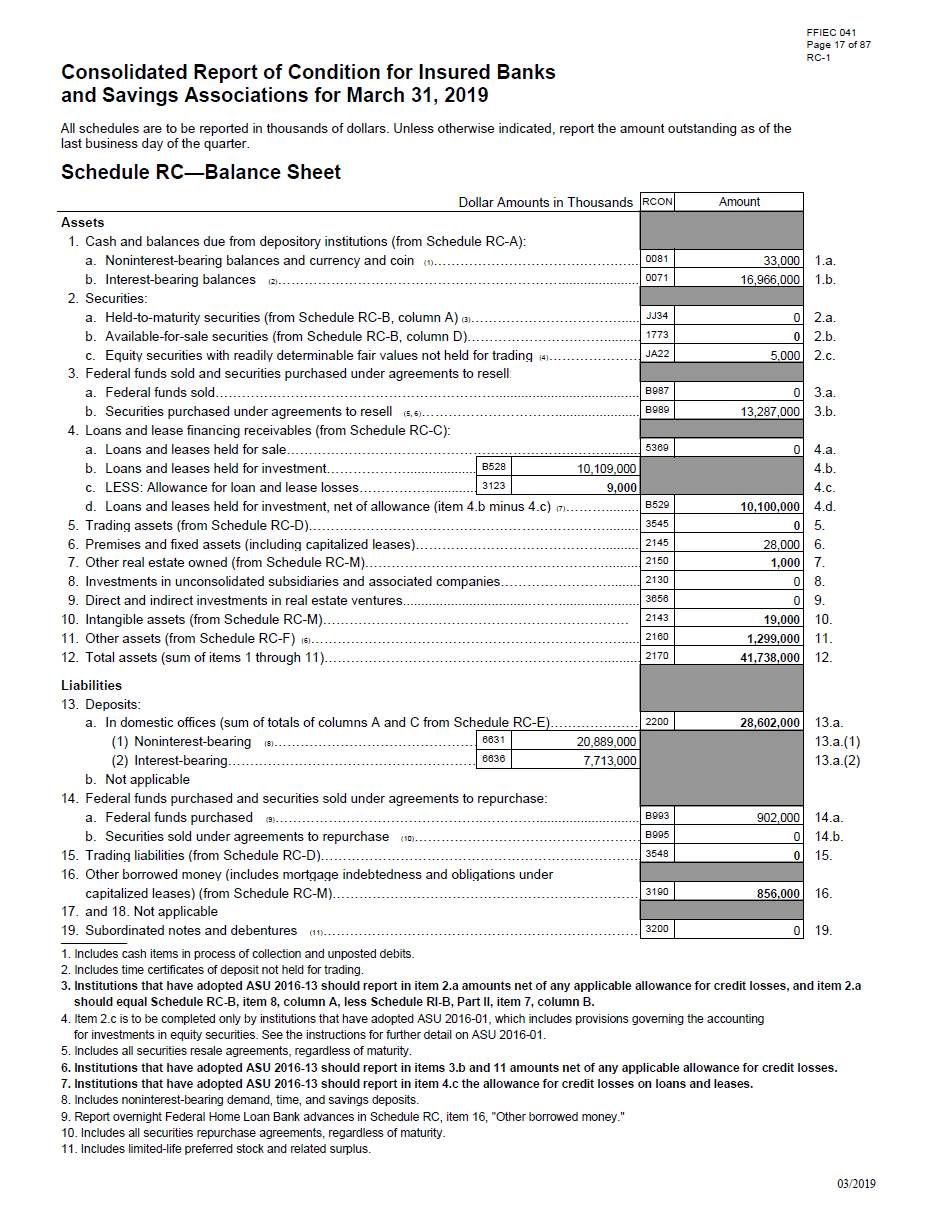
FFIEC 041 Page 18 of 87 RC-2 Schedule RC—Continued 20. 21. 20)……………………………………………………………………… 2948 23. 24. 25. 26.a. 26.b. 26.c. 27.a. 27.b. 28. 29. stock)………………………………………………..…………3839 Memoranda To be reported with the March Report of Condition. 1. Indicate in the box at the right the number of the statement below that best describes the most comprehensive level of auditing work performed for the bank by independent external auditors as of any date during 2018……………………………………………………………………………………............... M.1. 1a = An integrated audit of the reporting institution’s financial statements and its internal control over financial reporting conducted in accordance with the standards of the American Institute of Certified Public Accountants (AICPA) or Public Company Accounting Oversight Board (PCAOB) by an indepen-dent public accountant that submits a report on the institution 1b = An audit of the reporting institution's financial statements only conducted in accordance with the auditing standards of the AICPA or the PCAOB by an independent public accountant that submits a report on the institution 2a = An integrated audit of the reporting institution's parent holding company's consolidated financial statements and its internal control over financial reporting conducted in accordance with the standards of the AICPA or the PCAOB by an independent public accountant that submits a report on the consolidated holding company (but not on the institution separately) 2b = An audit of the reporting institution's parent holding company's consolidated financial statements only conducted in accordance with the auditing standards of the AICPA or the PCAOB by an independent public accountant that submits a report on the consolidated holding company (but not on the institution separately) 3 = This number is not to be used 4 = Directors’ examination of the bank conducted in accordance with generally accepted auditing standards by a certified public accounting firm (may be required by state-chartering authority) 5 = Directors’ examination of the bank performed by other external auditors (may be required by state-chartering authority) 6 = Review of the bank’s financial statements by external auditors 7 = Compilation of the bank’s financial statements by external auditors 8 = Other audit procedures (excluding tax preparation work) 9 = No external audit work To be reported with the March Report of Condition. 2. Bank's fiscal year-end date (report the date in MMDD format)..................................................................... M.2. 1. Includes, but is not limited to, net unrealized holding gains (losses) on available-for-sale securities, accumulated net gains (losses) on cash flow hedges, and accumulated defined benefit pension and other postretirement plan adjustments. 2. Includes treasury stock and unearned Employee Stock Ownership Plan shares. 03/2019 RCON Date 8678 1231 RCON Number 6724 2a Dollar Amounts in Thousands RCON Amount Liabilities—continued 20. Other liabilities (from Schedule RC-G)…………………………………………………………………….……… 21. Total liabilities (sum of items 13 through 22. Not applicable Equity Capital Bank Equity Capital 23. Perpetual preferred stock and related surplus…………………………………………………………………… 24. Common stock……………………………………………………………………………………………….……… 25. Surplus (exclude all surplus related to preferred 26. a. Retained earnings………………………………………………………………………………………..……… b. Accumulated other comprehensive income (1)………………………………………………………….…… c. Other equity capital components (2)…………………………………………………………………………… 27. a. Total bank equity capital (sum of items 23 through 26.c)…………………………………………………..… b. Noncontrolling (minority) interests in consolidated subsidiaries…………………………………….……..... 28. Total equity capital (sum of items 27.a and 27.b)………………………………………………………..……… 29. Total liabilities and equity capital (sum of items 21 and 28)……………………………………………..……… 2930 1,977,000 32,337,000 3838 0 3230 2,127,000 752,000 3632 6,523,000 B530 (1,000) A130 0 3210 9,401,000 3000 0 G105 9,401,000 3300 41,738,000
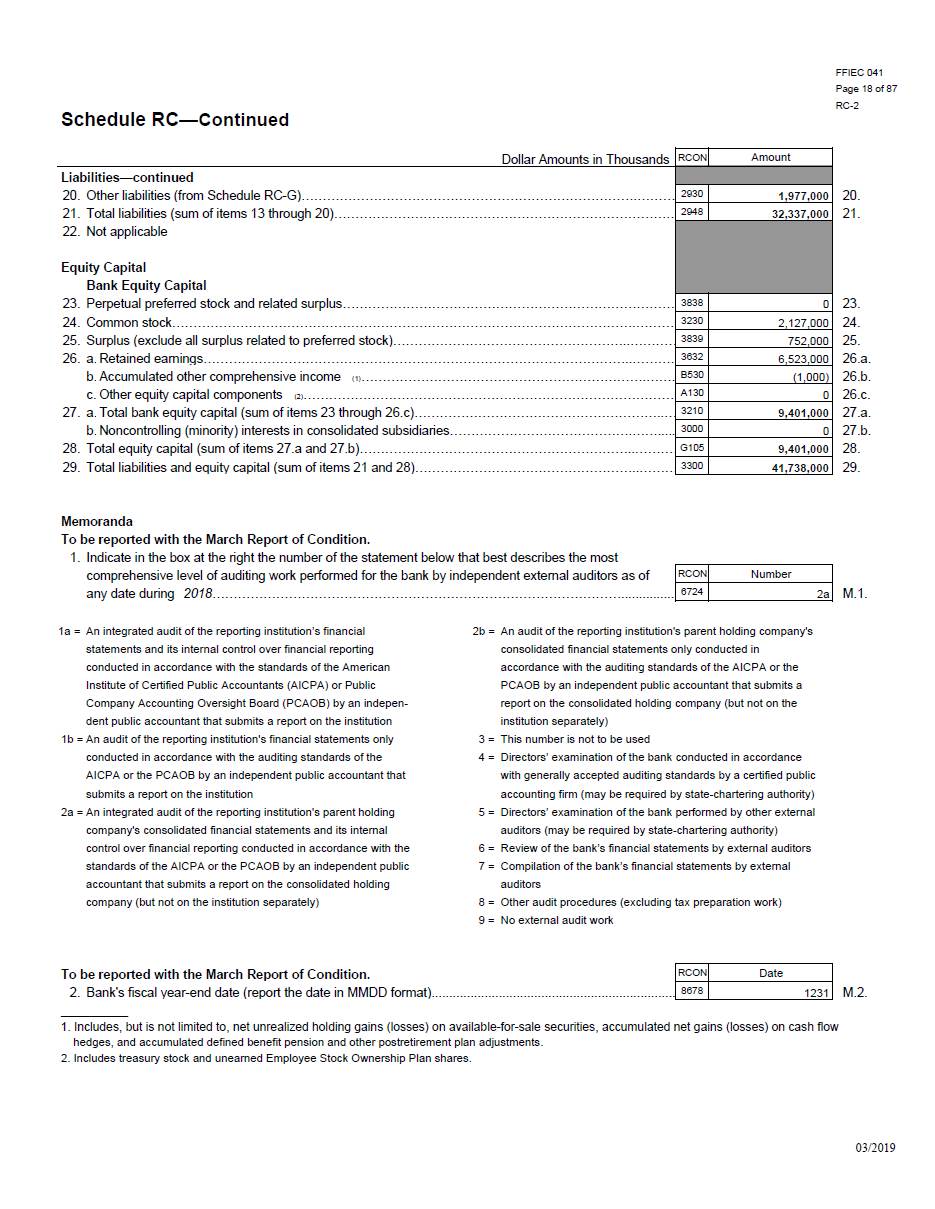
Weatherford International plc Weatherford Guarantor Information Weatherford Switzerland Trading and Development GmbH Switzerland FSZ0788 Weatherford Investment Holding Delaware D0993 FSZ0989 Holdings U.S. LLC (81.44%) Holdings, L.L.C. (80.72%) P Inc. Limited (51.2%) Precision Drilling GP, LLC Delaware D0578 Visual Systems, Inc. California D0870 Solutions, LLC FLU0811 Wrd eatherfo L.L.C. Services, Inc. Colombia Limited FVI0112 Services Inc. Integrity, Inc. In accordance with Instruction 4 to Item 3 173 foreign subsidiaries have been omitted from the diagram Ownership is 100% unless otherwise indicated Page 1 Weatherford International Public Limited Company Ireland FEI0934 Guarantor Weatherford Products GmbH Switzerland FSZ0961 Weatherford Management Company Switzerland Sarl Switzerland FSZ0947 Weatherford Worldwide Holdings GmbH Switzerland FSZ0817 Holdings (Switzerland) GmbH Switzerland WOFS Swiss Finance GmbH Switzerland FSZ0919 Weatherford DISC Inc. Nevada D0939 Weatherford Norge AS Norway FNO0009 Weatherford Netherlands B.V. Netherlands FNL0625 WOFS Assurance Limited Bermuda FBD0973 Weatherford South America GmbH Switzerland FPM0457 Weatherford Central Europe GmbH Germany FGM0983 Weatherford Pangaea Holdings Ltd. Bermuda FBD0959 Rigs Weatherford LLC Weatherford Holdings (Bermuda) Ltd. Bermuda FBD0990 WOFS International Finance GmbH Switzerland FSZ0920 Weatherford Canada Ltd. Canada FCA0991 P Weatherford Latin America LLC Delaware D0977 Weatherford Holding GmbH Germany FGM0044 (89%) Sabre Drilling Ltd. Bermuda FBD0949 Rigs Weatherford United States D0976 Weatherford International Holding (Bermuda) Ltd. Bermuda FBD0985 Precision Energy Services Colombia Ltd. Canada FCA0560 Weatherford Australia Pty Limited Australia FAS0026 (63.78%) Precision Energy Services ULC Canada FCA0563 P Weatherford (Nova Scotia) ULC Canada FCA0511 P Weatherford Services S. de R.L. Panama FPM0019 (99.99%) Weatherford Drilling International Holdings (BVI) Ltd. British Virgin Islands FVI0599 Rigs Benmore In-Depth Corp. Texas D0908 Edinburgh Petroleum Services Americas Incorporated Texas D0494 Weatherford U.S. Delaware D0467 Precision Energy International Ltd. Canada FCA0557 Sunbreeze Limited Cyprus FCY0654 Weatherford U.S., L.P. Louisiana D522 (99%) Weatherford URS Holdings, LLC Delaware D0987 Weatherford International, LLC Delaware D0001 Key International Drilling Company Limited Bermuda FBD0530 Rigs Weatherford Drilling International (BVI) Ltd. British Virgin Islands FVI0598 Rigs In-Depth Systems, Texas D0909 Weatherford International Ltd. Bermuda FBD0465 Colombia Petroleum Services Corp. Delaware D0350 Weatherford Global Services LLC Louisiana D522U Weatherford Eurasia England FUK0012 Weatherford U.K. Limited England FUK0014 WEUS Holding, LLC Delaware D521A Weatherford Management, LLC Delaware D0204 Weatherford Artificial Lift Systems, LLC Delaware D201A Weatherford Bermuda Holdings Ltd. Bermuda FBD0466 WUS Holding, L.L.C. Delaware D521F Stealth Oil & Gas, Inc. Delaware D0196 eProduction Texas D0195 Case Services, Inc. Texas D0519 Weatherford Holdings (BVI) Ltd. British Virgin Islands FVI0513 Weatherford International (Luxembourg) Holdings S.a.r.l. Luxembourg Weatherford Holdings (Singapore) Pte. Ltd. Singapore FSN0651 Weatherford/Lamb, Inc. Delaware D002 PD Holdings (USA), Delaware D580 (99%) L.P. Weatherford Services, Ltd. Bermuda FBD0118 Weatherford Oil Tool Middle East Limited British Virgin Islands FVI0027 European Holdings (Luxembourg) S.a.r.l. Luxembourg Weatherford (PTWI), Delaware D0832 Datalog Acquisition, LLC Delaware D0773 Weatherford Technology Holdings, LLC Delaware D0865 WIHBV LLC Delaware D1001 Weatherford Investment Inc. UnitedStates D0446 (95.01%) Intern Loggin Californi ational g LLC a D0744 FLU0815 Precision Oilfield Services, LLP Texas D0588 (99%) Columbia Oilfield Supply, Inc. Delaware D0582 Precision Energy Delaware D0585 Weatherford British Virgin Islands International Logging S.A., LLC Nevada D0763 Tooke Rockies, Inc. Wyoming D0772 Discovery Logging, Inc. Texas D0771 Warrior Well Services, Inc. Illinois D0671 Visean Information Texas D0662 Advantage R&D, Inc. Delaware D0587 High Pressure Louisiana D0629 Issuer Chain
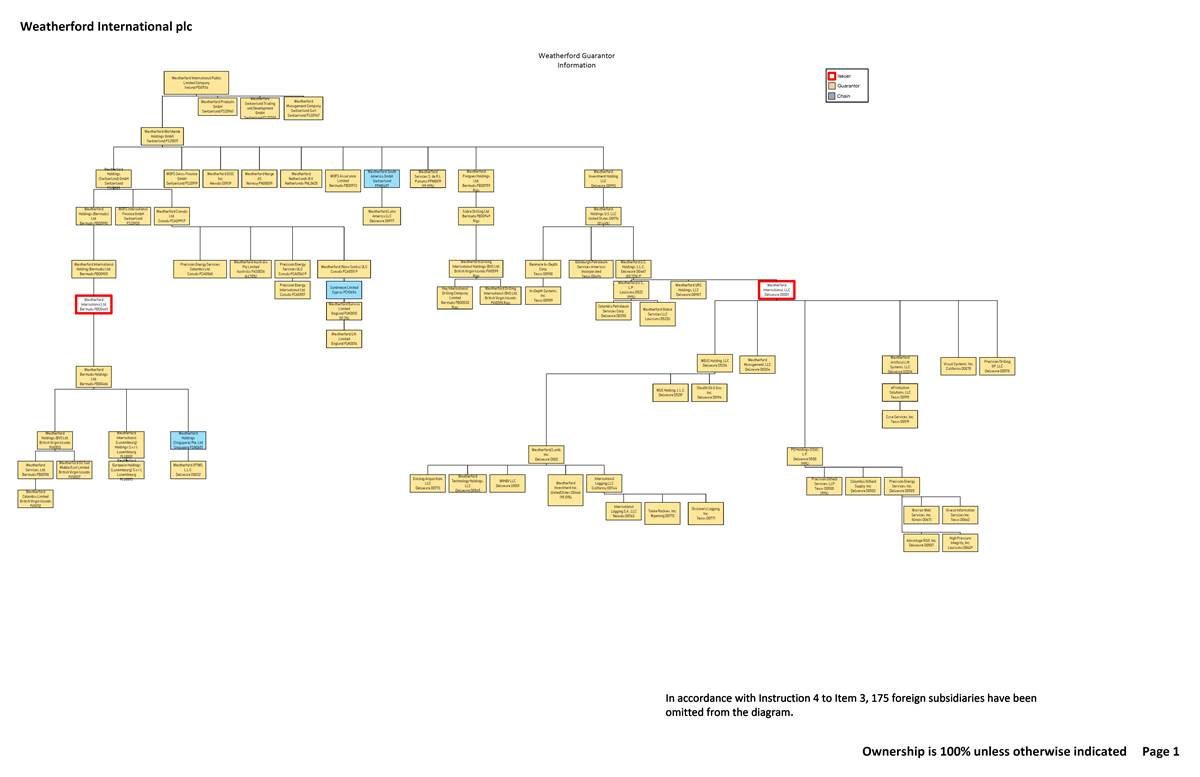
Directors, Executive Officers and Capitalization of each Applicant
|
Name of Guarantor |
|
Title of Class |
|
Amount |
|
Amount |
|
Officers |
|
Directors/Managing |
|
Advantage R&D, Inc. |
|
Common Stock |
|
1,000 |
|
1,000 |
|
E. Kyle Chapman (President) Danielle J.M. Nicholas (Vice President) Steven F. Carvalho (Vice President) Christine M. Morrison (Vice President And Secretary) Mark M. Rothleitner (Vice President and Treasurer) Joshua S. Silverman (Assistant Treasurer) |
|
Christine M. Morrison |
|
Benmore In-Depth Corp. |
|
Common Stock |
|
1,000,000 |
|
1,000 |
|
E. Kyle Chapman (President) Danielle J.M. Nicholas (Vice President) Steven F. Carvalho (Vice President) William Marchant (Vice President) Christine M. Morrison (Vice President and Secretary) Mark M. Rothleitner (Vice President and Treasurer) Joshua S. Silverman (Assistant Treasurer) |
|
Christine M. Morrison |
|
Case Services, Inc. |
|
Common Stock |
|
1,000 |
|
1,000 |
|
E. Kyle Chapman (President) Danielle J.M. Nicholas (Vice President) Steven F. Carvalho (Vice President) Christine M. Morrison (Vice President and Secretary) Mark M. Rothleitner (Vice President and Treasurer) Joshua S. Silverman (Assistant Treasurer) |
|
Christine M. Morrison |
|
Colombia Petroleum Services Corp. |
|
Common Stock |
|
1,000 |
|
1,000 |
|
E. Kyle Chapman (President) Danielle J.M. Nicholas (Vice President) Steven F. Carvalho (Vice President) Christine M. Morrison (Vice President and Secretary) Mark M. Rothleitner (Vice President and Treasurer) Joshua S. Silverman (Assistant Treasurer) |
|
Christine M. Morrison |
|
Columbia Oilfield Supply, Inc. |
|
Common Stock |
|
1,000 |
|
100 |
|
E. Kyle Chapman (President) Danielle J.M. Nicholas (Vice President) Steven F. Carvalho (Vice President) Christine M. Morrison (Vice President and Secretary) Mark M. Rothleitner (Vice President and Treasurer) Joshua S. Silverman (Assistant Treasurer) |
|
Christine M. Morrison |
|
Datalog Acquisition, LLC |
|
Membership Units |
|
Unlimited |
|
100 |
|
E. Kyle Chapman (President) Charles L. Miller (Vice President) Chris L. Marshall (Vice President) Danielle J.M. Nicholas (Vice President) David Morris (Vice President) Dean Bell (Vice President) Ellen Chin (Vice President) Etienne Roux (Vice President) Lawrence Allen Sinor (Vice President) Marco E. Boos (Vice President) Mark Hopmann (Vice President) Maximiliano Alberto Kricorian Sanchez Moreno (Vice President) Steven F. Carvalho (Vice President) William Marchant (Vice President) Christine M. Morrison (Vice President and Secretary) Mark M. Rothleitner (Vice President and Treasurer) Joshua S. Silverman (Assistant Treasurer) |
|
Christine M. Morrison |
|
Discovery Logging, Inc. |
|
Common Stock |
|
20,000 |
|
2,500 |
|
E. Kyle Chapman (President and Vice President) Danielle J.M. Nicholas (Vice President) David Morris (Vice President) Dean Bell (Vice President) Ellen Chin (Vice President) Etienne Roux (Vice President) Lawrence Allen Sinor (Vice President) Marco E. Boos (Vice President) Mark Hopmann (Vice President) Maximiliano Alberto Kricorian Sanchez Moreno (Vice President) Steven F. Carvalho (Vice President) William Marchant (Vice President) Christine M. Morrison (Vice President and Secretary) Mark M. Rothleitner (Vice President and Treasurer) |
|
Christine M. Morrison |
|
|
|
|
|
|
|
|
|
Joshua S. Silverman (Assistant Treasurer) |
|
|
|
Edinburgh Petroleum Services Americas Incorporated |
|
Common Stock |
|
10,000 |
|
1,000 |
|
E. Kyle Chapman (President) Danielle J.M. Nicholas (Vice President) Steven F. Carvalho (Vice President) William Marchant (Vice President) Christine M. Morrison (Vice President and Secretary) Mark M. Rothleitner (Vice President and Treasurer) Joshua S. Silverman (Assistant Treasurer) |
|
Christine M. Morrison |
|
eProduction Solutions, LLC |
|
Membership Units |
|
Unlimited |
|
1,000 |
|
E. Kyle Chapman (President) Chris L. Marshall (Vice President) Danielle J.M. Nicholas (Vice President) David Morris (Vice President) Dean Bell (Vice President) Ellen Chin (Vice President) Etienne Roux (Vice President) Marco E. Boos (Vice President) Mark Hopmann (Vice President) Maximiliano Alberto Kricorian Sanchez Moreno (Vice President) Oscar Rivera (Vice President) Steven F. Carvalho (Vice President) William Marchant (Vice President) Christine M. Morrison (Vice President and Secretary) Mark M. Rothleitner (Vice President and Treasurer) Joshua S. Silverman (Assistant Treasurer) |
|
Weatherford Artificial Lift Systems, LLC |
|
High Pressure Integrity, Inc. |
|
Common Stock |
|
10,000 |
|
125 |
|
E. Kyle Chapman (President) Danielle J.M. Nicholas (Vice President) Dean Bell (Vice President) Etienne Roux (Vice President) Mark Hopmann (Vice President) Maximiliano Alberto Kricorian Sanchez Moreno (Vice President) Steven F. Carvalho (Vice President) Christine M. Morrison (Vice President and Secretary) Mark M. Rothleitner (Vice President and Treasurer) Joshua S. Silverman (Assistant Treasurer) |
|
Christine M. Morrison |
|
In-Depth Systems, Inc. |
|
Common Stock |
|
5,000,000 |
|
1,545,827 |
|
E. Kyle Chapman (President) Danielle J.M. Nicholas (Vice President) Steven F. Carvalho (Vice President) Christine M. Morrison (Vice President and Secretary) Mark M. Rothleitner (Vice President and Treasurer) Joshua S. Silverman (Assistant Treasurer) |
|
Christine M. Morrison |
|
International Logging LLC |
|
Membership Units |
|
100 |
|
100 |
|
Charles L. Miller (President) Danielle J.M. Nicholas (Vice President) Dean Bell (Vice President) E. Kyle Chapman (Vice President) Etienne Roux (Vice President) Mark Hopmann (Vice President) Maximiliano Alberto Kricorian Sanchez Moreno (Vice President) Steven F. Carvalho (Vice President) William Marchant (Vice President) Christine M. Morrison (Vice President and Secretary) Mark M. Rothleitner (Vice President and Treasurer) Joshua S. Silverman (Assistant Treasurer) |
|
Christine M. Morrison |
|
International Logging S.A., LLC |
|
Membership Units |
|
Unlimited |
|
100 |
|
Charles L. Miller (President) Danielle J.M. Nicholas (Vice President) Dean Bell (Vice President) E. Kyle Chapman (Vice President) Etienne Roux (Vice President) Mark Hopmann (Vice President) Steven F. Carvalho (Vice President) William Marchant (Vice President) Christine M. Morrison (Vice President and Secretary) Mark M. Rothleitner (Vice President and Treasurer) Joshua S. Silverman (Assistant Treasurer) |
|
Christine M. Morrison |
|
Key International Drilling Company Limited |
|
Common Stock |
|
12,000 |
|
12,000 |
|
Andrew Gold (President) Stuart Fraser (Senior Vice President) Danielle J.M. Nicholas (Vice President) Mark M. Rothleitner (Vice President and Treasurer) Conyers Corporate Services (Bermuda) Limited (Secretary) Christine M. Morrison (Assistant Secretary) |
|
Andrew Gold |
|
|
|
|
|
|
|
|
|
Joshua S. Silverman (Assistant Treasurer) |
|
|
|
PD Holdings (USA), L.P. |
|
Partnership Interests |
|
N/A |
|
N/A |
|
E. Kyle Chapman (President) Danielle J.M. Nicholas (Vice President) Steven F. Carvalho (Vice President) Christine M. Morrison (Vice President and Secretary) Mark M. Rothleitner (Vice President and Treasurer) Joshua S. Silverman (Assistant Treasurer) |
|
Christine M. Morrison |
|
Precision Drilling GP, LLC |
|
Membership Units |
|
Unlimited |
|
300 |
|
John David Reed (President) Christine M. Morrison (Vice President and Secretary) Mark M. Rothleitner (Treasurer) |
|
Weatherford International, LLC |
|
Precision Energy International Ltd. |
|
Common Stock Preferred Stock |
|
Unlimited Unlimited |
|
1 |
|
J. David Reed (Vice President) Pamela M. Webb (Vice President and Assistant Secretary) Mark M. Rothleitner (Vice President and Treasurer) Christine M. Morrison (Secretary) Joshua S. Silverman (Assistant Treasurer) |
|
J. David Reed Pamela M. Webb |
|
Precision Energy Services Colombia Ltd. |
|
Common Stock |
|
Unlimited |
|
100 |
|
J. David Reed (Vice President) Pamela M. Webb (Vice President and Assistant Secretary) Mark M. Rothleitner (Vice President and Treasurer) Christine M. Morrison (Secretary) Joshua S. Silverman (Assistant Treasurer) |
|
J. David Reed Pamela M. Webb |
|
Precision Energy Services ULC |
|
Common Stock Preferred Stock |
|
Unlimited 1,000,000 |
|
908,868,693 |
|
J. David Reed (Vice President) Pamela M. Webb (Vice President and Assistant Secretary) Mark M. Rothleitner (Vice President and Treasurer) Christine M. Morrison (Secretary) Joshua S. Silverman (Assistant Treasurer) |
|
J. David Reed Pamela M. Webb |
|
Precision Energy Services, Inc. |
|
Common Stock |
|
1,100 |
|
1,010 |
|
E. Kyle Chapman (President) Chris L. Marshall (Vice President) Danielle J.M. Nicholas (Vice President) David Morris (Vice President) Dean Bell (Vice President) Ellen Chin (Vice President) Etienne Roux (Vice President) Lawrence Allen Sinor (Vice President) Marco E. Boos (Vice President) Mark Hopmann (Vice President) Maximiliano Alberto Kricorian Sanchez Moreno (Vice President) Steven F. Carvalho (Vice President) William Adey (Vice President) William Marchant (Vice President) Christine M. Morrison (Vice President and Secretary) Mark M. Rothleitner (Vice President and Treasurer) Joshua S. Silverman (Assistant Treasurer) |
|
Christine M. Morrison |
|
Precision Oilfield Services, LLP |
|
Partnership Interests |
|
N/A |
|
N/A |
|
Danielle J.M. Nicholas (Vice President) E. Kyle Chapman (Vice President) Steven F. Carvalho (Vice President) Christine M. Morrison (Vice President and Secretary) Mark M. Rothleitner (Vice President and Treasurer) Joshua S. Silverman (Assistant Treasurer) |
|
Precision Energy Services, Inc. (General Partner) |
|
Sabre Drilling Ltd. |
|
Common Stock |
|
100 |
|
100 |
|
Miguel Sanchez (Vice President) Peter A. White (Vice President) Tan Kah Huan (Vice President) Mohammed Dadhiwala (Vice President) Christine M. Morrison (Vice President and Assistant Secretary) Mark M. Rothleitner (Vice President and Treasurer) Conyers Corporate Services (Bermuda) Limited (Secretary) Joshua S. Silverman (Assistant Treasurer) |
|
Tan Kah Huan |
|
Stealth Oil & Gas, Inc. |
|
Common Stock |
|
1,000 |
|
100 |
|
E. Kyle Chapman (President) Danielle J.M. Nicholas (Vice President) Steven F. Carvalho (Vice President) William Marchant (Vice President) Christine M. Morrison (Vice President and Secretary) Mark M. Rothleitner (Vice President and Treasurer) Joshua S. Silverman (Assistant Treasurer) |
|
Christine M. Morrison |
|
Tooke Rockies, Inc. |
|
Common Stock |
|
50,000 |
|
1,960 |
|
Charles L. Miller (President) Danielle J.M. Nicholas (Vice President) Dean Bell (Vice President) E. Kyle Chapman (Vice President) Etienne Roux (Vice President) Lawrence Allen Sinor (Vice President) |
|
Christine M. Morrison |
|
|
|
|
|
|
|
|
|
Mark Hopmann (Vice President) Steven F. Carvalho (Vice President) William Marchant (Vice President) Christine M. Morrison (Vice President and Secretary) Mark M. Rothleitner (Vice President and Treasurer) Joshua S. Silverman (Assistant Treasurer) |
|
|
|
Visean Information Services Inc. |
|
Common Stock |
|
100,000 |
|
1,000 |
|
Danielle J.M. Nicholas (Vice President) E. Kyle Chapman (Vice President) Steven F. Carvalho (Vice President) Christine M. Morrison (Vice President and Secretary) Mark M. Rothleitner (Vice President and Treasurer) Joshua S. Silverman (Assistant Treasurer) |
|
Christine M. Morrison |
|
Visual Systems, Inc. |
|
Common Stock |
|
1,000 |
|
100 |
|
E. Kyle Chapman (President) Charles L. Miller (Vice President) Danielle J.M. Nicholas (Vice President) Mark Hopmann (Vice President) Steven F. Carvalho (Vice President) William Marchant (Vice President) Christine M. Morrison (Vice President and Secretary) Mark M. Rothleitner (Vice President and Treasurer) Joshua S. Silverman (Assistant Treasurer) |
|
Christine M. Morrison |
|
Warrior Well Services, Inc. |
|
Common Stock |
|
100,000 |
|
50,000 |
|
E. Kyle Chapman (President) Danielle J.M. Nicholas (Vice President) Steven F. Carvalho (Vice President) William Marchant (Vice President) Christine M. Morrison (Vice President and Secretary) Mark M. Rothleitner (Vice President and Treasurer) Joshua S. Silverman (Assistant Treasurer) |
|
Christine M. Morrison |
|
Weatherford (Nova Scotia) ULC |
|
Common Stock Preferred Stock |
|
Unlimited Unlimited |
|
9,990 1,738 |
|
J. David Reed (Vice President) Pamela M. Webb (Vice President and Assistant Secretary) Mark M. Rothleitner (Vice President and Treasurer) Christine M. Morrison (Secretary) Joshua S. Silverman (Assistant Treasurer) |
|
J. David Reed Pamela M. Webb |
|
Weatherford (PTWI), L.L.C. |
|
Membership Units |
|
Unlimited |
|
1,000 |
|
E. Kyle Chapman (President) Mohammed Dadhiwala (Vice President) Steven F. Carvalho (Vice President) Tan Kah Huan (Vice President) William Marchant (Vice President) Christine M. Morrison (Vice President and Secretary) Mark M. Rothleitner (Vice President and Treasurer) Joshua S. Silverman (Assistant Treasurer) |
|
Weatherford Holdings (Singapore) PTE. Ltd. |
|
Weatherford Artificial Lift Systems, LLC |
|
Membership Units |
|
Unlimited |
|
100 |
|
E. Kyle Chapman (President) Chris L. Marshall (Vice President) Danielle J.M. Nicholas (Vice President) David Morris (Vice President) Dean Bell (Vice President) Ellen Chin (Vice President) Etienne Roux (Vice President) Jeff J. Lembcke (Vice President) Lawrence Allen Sinor (Vice President) Marco E. Boos (Vice President) Mark Hopmann (Vice President) Marwan Sabah (Vice President) Philip Scott (Vice President) Robert McDonald (Vice President) Steven F. Carvalho (Vice President) William Marchant (Vice President) Christine M. Morrison (Vice President and Secretary) Mark M. Rothleitner (Vice President and Treasurer) Joshua S. Silverman (Assistant Treasurer) |
|
Weatherford International, LLC |
|
Weatherford Australia Pty Limited |
|
Ordinary Shares |
|
1,746,760 |
|
N/A |
|
N/A |
|
Antonino Gullotti Robert Antonio DeGasperis |
|
Weatherford Bermuda Holdings Ltd. |
|
Common Stock |
|
14,000 |
|
14,000 |
|
Stuart Fraser (Vice President) Peter A. White (Vice President) Tan Kah Huan (Vice President) Mohammed Dadhiwala (Vice President) Christine M. Morrison (Vice President and Assistant Secretary) Mark M. Rothleitner (Vice President and Treasurer) Mark Gregory (Secretary) |
|
Peter A. White Tan Kah Huan Mohammed Dadhiwala |
|
|
|
|
|
|
|
|
|
Conyers Corporate Services (Bermuda) Limited (Assistant Secretary) Joshua S. Silverman (Assistant Treasurer) |
|
|
|
Weatherford Canada Ltd. |
|
Common Stock Class A Preferred Stock Class B Preferred Stock |
|
Unlimited Unlimited
1,000,000 |
|
5,927,913 3,390,000 |
|
J. David Reed (Vice President) Pamela M. Webb (Vice President and Assistant Secretary) Ryan Leskiw (Director Sales, Canada) Mark M. Rothleitner (Vice President and Treasurer) Christine M. Morrison (Secretary) Joshua S. Silverman (Assistant Treasurer) |
|
J. David Reed Pamela M. Webb Shekhar Patel
|
|
Weatherford Colombia Limited |
|
Common Stock |
|
50,000 |
|
7,500 |
|
E. Kyle Chapman (President) Peter A. White (Vice President) Tan Kah Huan (Vice President) Mohammed Dadhiwala (Vice President) Gustavo Torres Abraham (Vice President) Christine M. Morrison (Vice President and Secretary) Mark M. Rothleitner (Vice President and Treasurer) Joshua S. Silverman (Assistant Treasurer) |
|
Christine M. Morrison |
|
Weatherford DISC Inc. |
|
Common Stock |
|
100 |
|
100 |
|
E. Kyle Chapman (President) Steven F. Carvalho (Vice President) Christine M. Morrison (Vice President and Secretary) Mark M. Rothleitner (Vice President and Treasurer) Joshua S. Silverman (Assistant Treasurer) |
|
Christine M. Morrison |
|
Weatherford Drilling International (BVI) Ltd. |
|
Common Stock |
|
1 |
|
1 |
|
Andrew Gold (President) Tan Kah Huan (Senior Vice President) Mohammed Dadhiwala (Vice President) Mark M. Rothleitner (Controller and Assistant Secretary) Christine M. Morrison (Secretary) Joshua S. Silverman (Assistant Treasurer) |
|
Tan Kah Huan |
|
Weatherford Drilling International Holdings (BVI) Ltd. |
|
Common Stock |
|
50,000 |
|
5,359.7478 |
|
Miguel Sanchez (Vice President) Peter A. White (Vice President) Tan Kah Huan (Vice President) Mohammed Dadhiwala (Vice President) Christine M. Morrison (Vice President and Secretary) Mark M. Rothleitner (Vice President and Treasurer) Joshua S. Silverman (Assistant Treasurer) |
|
Peter A. White Tan Kah Huan Mohammed Dadhiwala |
|
Weatherford Eurasia Limited |
|
Ordinary Shares |
|
97,650,438 |
|
N/A |
|
N/A |
|
Richard Strachan Neil MacLeod |
|
Weatherford European Holdings (Luxembourg) S.à r.l. |
|
Common Shares |
|
1,308,755 |
|
1,308,755 |
|
N/A |
|
Dragos Cioaca Mathias Neuenschwander Roberto Marchetti Sebastien Francois |
|
Weatherford Global Services LLC |
|
Membership Interest |
|
N/A |
|
N/A |
|
E. Kyle Chapman (President) Steven F. Carvalho (Vice President) Stuart Fraser (Vice President) Christine M. Morrison (Vice President and Secretary) Mark M. Rothleitner (Vice President and Treasurer) Joshua S. Silverman (Assistant Treasurer) |
|
Christine M. Morrison |
|
Weatherford Holdings (Bermuda) Ltd. |
|
Common Stock |
|
100 |
|
10 |
|
Stuart Fraser (Vice President) Peter A. White (Vice President) Tan Kah Huan (Vice President) Mohammed Dadhiwala (Vice President) Christine M. Morrison (Vice President and Assistant Secretary) Mark M. Rothleitner (Vice President and Treasurer) Mark Gregory (Secretary) Conyers Corporate Services (Bermuda) Limited (Assistant Secretary) Joshua S. Silverman (Assistant Treasurer) |
|
Peter A. White Tan Kah Huan Mohammed Dadhiwala |
|
Weatherford Holdings (BVI) Ltd. |
|
Common Stock |
|
10,000 |
|
3,421 |
|
Tan Kah Huan (President and General Manager) Mohammed Dadhiwala (Senior Vice President) Mark M. Rothleitner (Vice President and Treasurer) Christine M. Morrison (Secretary) Joshua S. Silverman (Assistant Treasurer) |
|
Tan Kah Huan |
|
Weatherford Holdings (Switzerland) GmbH |
|
Quotas |
|
200 |
|
200 |
|
N/A |
|
Andrzej Puchala Mathias Neuenschwander Valentin Mueller |
|
Weatherford Holdings U.S. LLC |
|
Membership Units |
|
N/A |
|
N/A |
|
E. Kyle Chapman (President) Steven F. Carvalho (Vice President) Christine M. Morrison (Vice President and Secretary) Mark M. Rothleitner (Vice President and Treasurer) Joshua S. Silverman (Assistant Treasurer) |
|
Weatherford Investment Holding LLC Weatherford Worldwide Holdings GmbH |
|
Weatherford International (Luxembourg) Holdings S.à r.l. |
|
Initial Shares Class A Shares Class B Shares Class C Shares Class D Shares Class E Shares Class F Shares Class G Shares Class H Shares Class I Shares |
|
800 58,719 58,719 58,719 58,719 58,719 58,719 58,719 58,719 58,719 |
|
800 58,719 58,719 58,719 58,719 58,719 58,719 58,719 58,719 58,719 |
|
N/A |
|
Dragos Cioaca Mathias Neuenschwander Roberto Marchetti Sebastien Francois |
|
Weatherford International Holding (Bermuda) Ltd. |
|
Common Stock |
|
100 |
|
10 |
|
Stuart Fraser (Vice President) Peter A. White (Vice President) Tan Kah Huan (Vice President) Mohammed Dadhiwala (Vice President) Christine M. Morrison (Vice President and Assistant Secretary) Mark M. Rothleitner (Vice President and Treasurer) Mark Gregory (Secretary) Conyers Corporate Services (Bermuda) Limited (Assistant Secretary) Joshua S. Silverman (Assistant Treasurer) |
|
Peter A. White Tan Kah Huan Mohammed Dadhiwala |
|
Weatherford International Ltd. |
|
Common Shares Preferred Shares |
|
1,000,000,000 10,000,000 |
|
481,001,513 0 |
|
Christoph Bausch (President and Chief Financial Officer) Stuart Fraser (Vice President and Chief Accounting Officer) Peter A. White (Vice President) Tan Kah Huan (Vice President) Mohammed Dadhiwala (Vice President) Christine M. Morrison (Vice President and Assistant Secretary) Mark M. Rothleitner (Vice President and Treasurer) Mark Gregory (Secretary) Conyers Corporate Services (Bermuda) Limited (Assistant Secretary) Joshua S. Silverman (Assistant Treasurer) |
|
Peter A. White Tan Kah Huan Mohammed Dadhiwala |
|
Weatherford International plc |
|
Deferred Ordinary Shares Common Stock |
|
40,000
1,354,000,000 |
|
0
1,004,079,258 |
|
Mark A. McCollum (President and Chief Executive Officer) Christoph Bausch (Executive Vice President and Chief Financial Officer) Christina M. Ibrahim (Executive Vice President, General Counsel, Chief Compliance Officer and Corporate Secretary) Karl Blanchard (Executive Vice President and Chief Operating Officer) Stuart Fraser (Vice President and Chief Accounting Officer) Karl Blanchard (Executive Vice President and Chief Operating Officer) Frederico Justus (President, Eastern Hemisphere) Mark D. Swift (President, Western Hemisphere) E. Kyle Chapman (Vice President) Ellen Chin Vice (Vice President) Steven F. Carvalho (Vice President) Valentin Mueller (Vice President) Karen David-Green (Vice President) Mark M. Rothleitner (Vice President and Treasurer) Christine M. Morrison (Assistant Secretary) Joshua S. Silverman (Assistant Treasurer) |
|
Mohamed A. Awad Roxanne J. Decyk John D. Gass Emyr Jones Parry Francis S. Kalman David S. King William E. Macaulay Mark A. McCollum Angela A. Minas Guillermo Ortiz |
|
Weatherford International, LLC |
|
Membership Units |
|
Unlimited |
|
100 |
|
E. Kyle Chapman (President) Chris L. Marshall (Vice President) Danielle J.M. Nicholas (Vice President) David Morris (Vice President) Dean Bell (Vice President) Ellen Chin (Vice President) Etienne Roux (Vice President) Jeff J. Lembcke (Vice President) Lawrence Allen Sinor (Vice President) Marco E. Boos (Vice President) Mark Hopmann (Vice President) Maximiliano Alberto Kricorian Sanchez Moreno (Vice President) Oscar Rivera (Vice President) Philip Scott (Vice President) Richard Warren (Vice President) Steven F. Carvalho (Vice President) William M. Imwalle (Vice President) William Marchant (Vice President) Stuart Fraser (Vice President and Chief Financial Officer) |
|
Weatherford U.S. Holdings, L.L.C. |
|
|
|
|
|
|
|
|
|
Christine M. Morrison (Vice President and Secretary) Mark M. Rothleitner (Vice President and Treasurer) Joe B. Dillard, Jr. (Manager) Joshua S. Silverman (Assistant Treasurer) |
|
|
|
Weatherford Investment Holding LLC |
|
Membership Units |
|
Unlimited |
|
10 |
|
E. Kyle Chapman (President) Maximiliano Alberto Kricorian Sanchez Moreno (Vice President and Chief Financial Officer) Steven F. Carvalho (Vice President) Christine M. Morrison (Vice President and Secretary) Mark M. Rothleitner (Vice President and Treasurer) Joshua S. Silverman (Assistant Treasurer) |
|
Christine M. Morrison |
|
Weatherford Investment Inc. |
|
Common Stock |
|
5,000 |
|
1,953.09 |
|
E. Kyle Chapman (President) Maximiliano Alberto Kricorian Sanchez Moreno (Vice President and Chief Financial Officer) Steven F. Carvalho (Vice President) Christine M. Morrison (Vice President and Secretary) Mark M. Rothleitner (Vice President and Treasurer) Joshua S. Silverman (Assistant Treasurer) |
|
Christine M. Morrison |
|
Weatherford Latin America LLC |
|
Membership Interest |
|
N/A |
|
N/A |
|
E. Kyle Chapman (President) Steven F. Carvalho (Vice President) Christine M. Morrison (Vice President and Secretary) Mark M. Rothleitner (Vice President and Treasurer) Wesley Shields (Assistant Secretary) Joshua S. Silverman (Assistant Treasurer) |
|
Weatherford South America GmbH |
|
Weatherford Management Company Switzerland Sàrl |
|
Quotas |
|
200 |
|
200 |
|
E. Kyle Chapman (President) Christina M. Ibrahim (Executive Vice President, General Counsel and Secretary) Karen David-Green (Vice President) Mark M. Rothleitner (Vice President and Treasurer) Joshua S. Silverman (Assistant Treasurer) |
|
Andrzej Puchala Mathias Neuenschwander Steven F. Carvalho Valentin Mueller |
|
Weatherford Management, LLC |
|
Membership Units |
|
Unlimited |
|
100 |
|
E. Kyle Chapman (President) Steven F. Carvalho (Vice President) Christine M. Morrison (Vice President and Secretary) Mark M. Rothleitner (Vice President and Treasurer) Joshua S. Silverman (Assistant Treasurer) |
|
Weatherford International, LLC |
|
Weatherford Netherlands B.V. |
|
Registered Shares |
|
900 |
|
N/A |
|
N/A |
|
August Willem Versteeg Marcus Johannes van Dijk |
|
Weatherford Norge AS |
|
Registered Shares |
|
3,385 |
|
N/A |
|
N/A |
|
Geir Egil Moller Olsen Arve Eide Haraldsen Hege Juul Bruheim Aadne Aasheim Andersen Bernt Tore Lilleeng Tore Simonsen Espen Sirevag Stig Magne Eik Terje Nysted |
|
Weatherford Oil Tool Middle East Limited |
|
Common Stock |
|
50,000 |
|
10,000 |
|
Tan Kah Huan (President) Mohammed Dadhiwala (Senior Vice President) Tony Azizi (Vice President) Torman Limited (Secretary) Christine M. Morrison (Assistant Secretary) Mark M. Rothleitner (Treasurer) Joshua S. Silverman (Assistant Treasurer) |
|
Tan Kah Huan Tony Azizi Mohammed Dadhiwala |
|
Weatherford Pangaea Holdings Ltd. |
|
Common Stock |
|
100 |
|
100 |
|
Miguel Sanchez (Vice President) Peter A. White (Vice President) Tan Kah Huan (Vice President) Mohammed Dadhiwala (Vice President) Christine M. Morrison (Vice President and Assistant Secretary) Mark M. Rothleitner (Vice President and Treasurer) Mark Gregory (Secretary) Conyers Corporate Services (Bermuda) Limited (Secretary) Joshua S. Silverman (Assistant Treasurer) |
|
Tan Kah Huan |
|
Weatherford Products GmbH |
|
Quotas |
|
100 |
|
100 |
|
N/A |
|
Andrzej Puchala Mathias Neuenschwander Steven F. Carvalho |
|
Weatherford Services S. de R.L. |
|
Quotas |
|
50,000 |
|
50,000 |
|
Christine M. Morrison Mohammed Dadhiwala Steven F. Carvalho Tan Kah Huan |
|
Weatherford Worldwide Holding GmbH & Weatherford Services, Ltd. |
|
Weatherford Services, Ltd. |
|
Common Stock Preferred Stock |
|
1,012,000 5,000 |
|
12,000 5,000 |
|
E. Kyle Chapman (President) Danielle J.M. Nicholas (Vice President) Frederico Justus (Vice President) Timothy J. Bryant (Vice President) Christine M. Morrison (Vice President and Secretary) Mark M. Rothleitner (Vice President and Treasurer) Joshua S. Silverman (Assistant Treasurer) Conyers Corporate Services (Bermuda) Limited (Resident Representative and Assistant Secretary) |
|
Mohammed Dadhiwala Timothy J. Bryant |
|
Weatherford Switzerland Trading and Development GmbH |
|
Quotas |
|
20 |
|
20 |
|
Mark M. Rothleitner (Vice President and Treasurer) Joshua S. Silverman (Assistant Treasurer) |
|
Andrzej Puchala Mathias Neuenschwander Steven F. Carvalho |
|
Weatherford Technology Holdings, LLC |
|
Membership Units |
|
Unlimited |
|
100 |
|
E. Kyle Chapman (President) Steven F. Carvalho (Vice President) William M. Imwalle (Vice President) Christine M. Morrison (Vice President and Secretary) Mark M. Rothleitner (Vice President and Treasurer) Joshua S. Silverman (Assistant Treasurer) |
|
Christine M. Morrison |
|
Weatherford U.K. Limited |
|
Ordinary Shares Preference Shares |
|
1,000 6,154,000 |
|
N/A |
|
N/A |
|
Richard Strachan Alexander Olsson |
|
Weatherford U.S. Holdings, L.L.C. |
|
Common Shares Series A Preferred Shares |
|
70,000 |
|
N/A |
|
E. Kyle Chapman (President) Steven F. Carvalho (Vice President) Christine M. Morrison (Vice President and Secretary) Mark M. Rothleitner (Vice President and Treasurer) Joshua S. Silverman (Assistant Treasurer) |
|
Christine M. Morrison |
|
Weatherford U.S., L.P. |
|
Class A Units Class B Units |
|
10 100,000 |
|
1 |
|
E. Kyle Chapman (President) Charles L. Miller (Vice President) Chris L. Marshall (Vice President) Danielle J.M. Nicholas (Vice President) David Morris (Vice President) Dean Bell (Vice President) Ellen Chin (Vice President) Etienne Roux (Vice President) Jeff J. Lembcke (Vice President) Lawrence Allen Sinor (Vice President) Marco E. Boos (Vice President) Mark Hopmann (Vice President) Maximiliano Alberto Kricorian Sanchez Moreno (Vice President) Oscar Rivera (Vice President) Philip Scott (Vice President) Richard Warren (Vice President) Steven F. Carvalho (Vice President) William M. Imwalle (Vice President) William Marchant (Vice President) Christine M. Morrison (Vice President and Secretary) Mark M. Rothleitner (Vice President and Treasurer) Joe B. Dillard, Jr. (Manager) Joshua S. Silverman (Assistant Treasurer) |
|
Christine M. Morrison |
|
Weatherford URS Holdings, LLC |
|
Membership Units |
|
Unlimited |
|
10 |
|
E. Kyle Chapman (President) Steven F. Carvalho (Vice President) Christine M. Morrison (Vice President and Secretary) Mark M. Rothleitner (Vice President and Treasurer) Joshua S. Silverman (Assistant Treasurer) |
|
Christine M. Morrison |
|
Weatherford Worldwide Holdings GmbH |
|
Quotas |
|
21 |
|
21 |
|
Mark M. Rothleitner (Vice President and Treasurer) Joshua S. Silverman (Assistant Treasurer) |
|
Philipp Andermatt Mathias Neuenschwander Steven F. Carvalho Valentin Mueller |
|
Weatherford/Lamb, Inc. |
|
Common Stock |
|
200,000 |
|
184,522 |
|
E. Kyle Chapman (President) Danielle J.M. Nicholas (Vice President) Steven F. Carvalho (Vice President) William M. Imwalle (Vice President) Christine M. Morrison (Vice President, Secretary and Assistant Secretary) Mark M. Rothleitner (Vice President and Treasurer) Joshua S. Silverman (Assistant Treasurer) |
|
Christine M. Morrison |
|
WEUS Holding, LLC |
|
Membership Units |
|
Unlimited |
|
100 |
|
E. Kyle Chapman (President) Steven F. Carvalho (Vice President) Christine M. Morrison (Vice President and Secretary) Mark M. Rothleitner (Vice President and Treasurer) Joshua S. Silverman (Assistant Treasurer) |
|
Weatherford International, LLC |
|
WIHBV LLC |
|
Membership Interests |
|
N/A |
|
N/A |
|
E. Kyle Chapman (President) Maximiliano Alberto Kricorian Sanchez Moreno (Vice President and Chief Financial Officer) Steven F. Carvalho (Vice President) Christine M. Morrison (Vice President and Secretary) Mark M. Rothleitner (Vice President and Treasurer) Joshua S. Silverman (Assistant Treasurer) |
|
Christine M. Morrison |
|
WOFS Assurance Limited |
|
Common Stock |
|
12,000,000 |
|
12,000,000 |
|
Neil Alexander MacLeod (President) Stuart Fraser (Chief Financial Officer) Javier B Garcia (Vice President) Mohammed Dadhiwala (Vice President) Tan Kah Huan (Vice President) Conyers Corporate Services (Bermuda) Limited (Secretary) Christine M. Morrison (Assistant Secretary) Mark M. Rothleitner (Treasurer) Joshua S. Silverman (Assistant Treasurer) |
|
Mark M. Rothleitner Neil Alexander MacLeod Javier B Garcia Sophia Greaves
William Cooper (Alternate Director) |
|
WOFS International Finance GmbH |
|
Quotas |
|
200 |
|
200 |
|
N/A |
|
Andrzej Puchala Mathias Neuenschwander Steven F. Carvalho |
|
WOFS Swiss Finance GmbH |
|
Class A Quotas Class B Quotas |
|
298 287 |
|
298 287 |
|
N/A |
|
Arjana Cabariu-Truong Philipp Andermatt |
|
WUS Holding, L.L.C. |
|
Membership Interests |
|
100 |
|
100 |
|
E. Kyle Chapman (President) Danielle J.M. Nicholas (Vice President) Steven F. Carvalho (Vice President) Christine M. Morrison (Vice President and Secretary) Mark M. Rothleitner (Vice President and Treasurer) Joshua S. Silverman (Assistant Treasurer) |
|
WEUS Holding, LLC |
Principal Ownership of Voting Securities of each Applicant
|
Name of Guarantor |
|
Record Owner |
|
Title of Class Owned |
|
Amount Owned |
|
Percentage of Voting |
|
Advantage R&D, Inc. |
|
Precision Energy Services, Inc. |
|
Common Stock |
|
1,000 |
|
100% |
|
Benmore In-Depth Corp. |
|
Weatherford Holdings U.S. LLC |
|
Common Stock |
|
1,000 |
|
100% |
|
Case Services, Inc. |
|
eProduction Solutions, LLC |
|
Common Stock |
|
1,000 |
|
100% |
|
Colombia Petroleum Services Corp. |
|
Weatherford U.S., L.P. |
|
Common Stock |
|
1,000 |
|
100% |
|
Columbia Oilfield Supply, Inc. |
|
PD Holdings (USA), L.P. |
|
Common Stock |
|
100 |
|
100% |
|
Datalog Acquisition, LLC |
|
Weatherford/Lamb, Inc. |
|
Membership Units |
|
100 |
|
100% |
|
Discovery Logging, Inc. |
|
International Logging LLC |
|
Common Stock |
|
2,500 |
|
100% |
|
Edinburgh Petroleum Services Americas Incorporated |
|
Weatherford Holdings U.S. LLC |
|
Common Stock |
|
1,000 |
|
100% |
|
eProduction Solutions, LLC |
|
Weatherford Artificial Lift Systems, LLC |
|
Membership Units |
|
1,000 |
|
100% |
|
High Pressure Integrity, Inc. |
|
Precision Energy Services, Inc. |
|
Common Stock |
|
125 |
|
100% |
|
In-Depth Systems, Inc. |
|
Benmore In-Depth Corp. |
|
Common Stock |
|
1,545,827 |
|
100% |
|
International Logging LLC |
|
Weatherford/Lamb, Inc. |
|
Membership Units |
|
100 |
|
100% |
|
International Logging S.A., LLC |
|
International Logging LLC |
|
Membership Units |
|
100 |
|
100% |
|
Key International Drilling Company Limited |
|
Weatherford Drilling International Holdings (BVI) Ltd. |
|
Common Stock |
|
12,000 |
|
100% |
|
PD Holdings (USA), L.P. |
|
Weatherford International, LLC |
|
Partnership Interests |
|
N/A |
|
100% |
|
Precision Drilling GP, LLC |
|
Weatherford International, LLC |
|
Membership Units |
|
100 |
|
100% |
|
Precision Energy International Ltd. |
|
Precision Energy Services ULC |
|
Common Stock Preferred Stock |
|
1 |
|
100% |
|
Precision Energy Services Colombia Ltd. |
|
Weatherford Canada Ltd. |
|
Common Stock |
|
100 |
|
100% |
|
Precision Energy Services ULC |
|
Weatherford Canada Ltd. |
|
Common Stock Preferred Stock |
|
908,868,693 |
|
100% |
|
Precision Energy Services, Inc. |
|
PD Holdings (USA), L.P. |
|
Common Stock |
|
1,010 |
|
100% |
|
Precision Oilfield Services, LLP |
|
PD Holdings (USA) L.P. |
|
Partnership Interests |
|
N/A |
|
100% |
|
Sabre Drilling Ltd. |
|
Weatherford Pangaea Holdings Ltd. |
|
Common Stock |
|
100 |
|
100% |
|
Stealth Oil & Gas, Inc. |
|
WEUS Holding, LLC |
|
Common Stock |
|
100 |
|
100% |
|
Tooke Rockies, Inc. |
|
International Logging LLC |
|
Common Stock |
|
1,960 |
|
100% |
|
Visean Information Services Inc. |
|
Precision Energy Services, Inc. |
|
Common Stock |
|
1,000 |
|
100% |
|
Visual Systems, Inc. |
|
Weatherford International, LLC |
|
Common Stock |
|
100 |
|
100% |
|
Warrior Well Services, Inc. |
|
Precision Energy Services, Inc. |
|
Common Stock |
|
50,000 |
|
100% |
|
Weatherford (Nova Scotia) ULC |
|
Weatherford Canada Ltd. |
|
Common Stock Preferred Stock |
|
9,990 1,738 |
|
100% |
|
Weatherford (PTWI), L.L.C. |
|
Weatherford Holdings (Singapore) Pte. Ltd. |
|
Membership Units |
|
1,000 |
|
100% |
|
Weatherford Artificial Lift Systems, LLC |
|
Weatherford International, LLC |
|
Membership Units |
|
100 |
|
100% |
|
Weatherford Australia Pty Limited |
|
Weatherford Canada Ltd. |
|
Ordinary Shares |
|
N/A |
|
100% |
|
Weatherford Bermuda Holdings Ltd. |
|
Weatherford International Ltd. |
|
Common Stock |
|
14,000 |
|
100% |
|
Weatherford Canada Ltd. |
|
Weatherford Holdings (Switzerland) GmbH |
|
Common Stock Class A Preferred Stock Class B Preferred Stock |
|
5,927,913 3,390,000 |
|
100% |
|
Weatherford Colombia Limited |
|
Weatherford Services, Ltd. |
|
Common Stock |
|
7,500 |
|
100% |
|
Weatherford DISC Inc. |
|
Weatherford Worldwide Holdings GmbH |
|
Common Stock |
|
100 |
|
100% |
|
Weatherford Drilling International (BVI) Ltd. |
|
Weatherford Drilling International Holdings (BVI) Ltd. |
|
Common Stock |
|
1 |
|
100% |
|
Weatherford Drilling International Holdings (BVI) Ltd. |
|
Sabre Drilling Ltd. |
|
Common Stock |
|
5,359.7478 |
|
100% |
|
Weatherford Eurasia Limited |
|
Sunbreeze Limited |
|
Ordinary Shares |
|
N/A |
|
51% |
|
Weatherford European Holdings (Luxembourg) S.à r.l. |
|
Weatherford International (Luxembourg) Holdings S.à r.l. |
|
Common Shares |
|
1,308,755 |
|
100% |
|
Weatherford Global Services LLC |
|
Weatherford U.S., L.P. |
|
Membership Interests |
|
100% |
|
100% |
|
Weatherford Holdings (Bermuda) Ltd. |
|
Weatherford Holdings (Switzerland) GmbH |
|
Common Stock |
|
10 |
|
100% |
|
Weatherford Holdings (BVI) Ltd. |
|
Weatherford Bermuda Holdings Ltd. |
|
Common Stock |
|
3,421 |
|
100% |
|
Weatherford Holdings (Switzerland) GmbH |
|
Weatherford Worldwide Holdings GmbH |
|
Quotas |
|
200 |
|
100% |
|
Weatherford Holdings U.S. LLC |
|
Weatherford Investment Holding LLC Weatherford Worldwide Holdings GmbH |
|
Membership Units |
|
234,088.54 53,340.42 |
|
81.44% 18.56% |
|
Weatherford International (Luxembourg) Holdings S.à r.l. |
|
Weatherford Bermuda Holdings Ltd. |
|
Initial Shares Class A Shares Class B Shares Class C Shares Class D Shares Class E Shares Class F Shares Class G Shares Class H Shares Class I Shares |
|
800 58,719 58,719 58,719 58,719 58,719 58,719 58,719 58,719 58,719 |
|
100% |
|
Weatherford International Holding (Bermuda) Ltd. |
|
Weatherford Holdings (Bermuda) Ltd. |
|
Common Stock |
|
10 |
|
100% |
|
Weatherford International Ltd. |
|
Weatherford International Holding (Bermuda) Ltd. |
|
Common Shares |
|
481,001,513
|
|
100% |
|
Weatherford International plc |
|
N/A |
|
Deferred Ordinary Shares Common Stock |
|
N/A |
|
N/A |
|
Weatherford International, LLC |
|
Weatherford U.S. Holdings, L.L.C. |
|
Membership Units |
|
100 |
|
100% |
|
Weatherford Investment Holding LLC |
|
Weatherford Worldwide Holdings GmbH |
|
Membership Units |
|
10 |
|
100% |
|
Weatherford Investment Inc. |
|
Weatherford/Lamb, Inc. Weatherford U.S. Holdings, L.L.C. |
|
Common Stock |
|
1,855.66 97.43 |
|
95.01% 4.99% |
|
Weatherford Latin America LLC |
|
Weatherford South America GmbH |
|
Membership Interests |
|
100% |
|
100% |
|
Weatherford Management Company Switzerland Sàrl |
|
Weatherford International plc |
|
Quotas |
|
200 |
|
100% |
|
Weatherford Management, LLC |
|
Weatherford International, LLC |
|
Membership Units |
|
100 |
|
100% |
|
Weatherford Netherlands B.V. |
|
Weatherford Worldwide Holdings GmbH |
|
Registered Shares |
|
N/A |
|
100% |
|
Weatherford Norge AS |
|
Weatherford Worldwide Holdings GmbH |
|
Registered Shares |
|
N/A |
|
100% |
|
Weatherford Oil Tool Middle East Limited |
|
Weatherford Holdings (BVI) Ltd. |
|
Common Stock |
|
10,000 |
|
100% |
|
Weatherford Pangaea Holdings Ltd. |
|
Weatherford Worldwide Holdings GmbH |
|
Common Stock |
|
100 |
|
100% |
|
Weatherford Products GmbH |
|
Weatherford International plc |
|
Quotas |
|
100 |
|
100% |
|
Weatherford Services S. de R.L. |
|
Weatherford Worldwide Holding GmbH Weatherford Services, Ltd. |
|
Quotas |
|
49,999
1 |
|
99.99%
0.01% |
|
Weatherford Services, Ltd. |
|
Weatherford Holdings (BVI) Ltd. |
|
Common Stock Preferred Stock |
|
12,000 5,000 |
|
100% |
|
Weatherford Switzerland Trading and Development GmbH |
|
Weatherford International plc |
|
Quotas |
|
20 |
|
100% |
|
Weatherford Technology Holdings, LLC |
|
Weatherford/Lamb, Inc. |
|
Membership Units |
|
100 |
|
100% |
|
Weatherford U.K. Limited |
|
Weatherford Eurasia Limited |
|
Ordinary Shares Preference Shares |
|
N/A |
|
100% |
|
Weatherford U.S. Holdings, L.L.C. |
|
Weatherford Holdings U.S. LLC |
|
Common Shares Series A Preferred Shares |
|
N/A |
|
100% |
|
Weatherford U.S., L.P. |
|
Weatherford U.S. Holdings, L.L.C. WUS Holding, L.L.C. |
|
Class A Units Class B Units |
|
1 |
|
99% 1% |
|
Weatherford URS Holdings, LLC |
|
Weatherford U.S. Holdings, L.L.C. |
|
Membership Units |
|
10 |
|
100% |
|
Weatherford Worldwide Holdings GmbH |
|
Weatherford International plc |
|
Quotas |
|
21 |
|
100% |
|
Weatherford/Lamb, Inc. |
|
WEUS Holding, LLC |
|
Common Stock |
|
184,522 |
|
100% |
|
WEUS Holding, LLC |
|
Weatherford International, LLC |
|
Membership Units |
|
100 |
|
100% |
|
WIHBV LLC |
|
Weatherford/Lamb, Inc. |
|
Membership Interests |
|
100% |
|
100% |
|
WOFS Assurance Limited |
|
Weatherford Worldwide Holdings GmbH |
|
Common Stock |
|
12,000,000 |
|
100% |
|
WOFS International Finance GmbH |
|
Weatherford Holdings (Switzerland) GmbH |
|
Quotas |
|
200 |
|
100% |
|
WOFS Swiss Finance GmbH |
|
Weatherford Worldwide Holdings GmbH |
|
Class A Quotas Class B Quotas |
|
298 287 |
|
100% |
|
WUS Holding, L.L.C. |
|
WEUS Holding, LLC |
|
Membership Interests |
|
100 |
|
100% |